Digital Hall of Fame ARIA-Orientation Audit for Tabbed Inductee Navigation
A digital hall of fame ARIA-orientation audit is the process of examining every tabbed navigation component on your school’s recognition website and touchscreen kiosk—sport-category tab strips, inductee-profile section tabs, award-type tab selectors, and any composite widget that groups inductee content behind a row or column of tabs—to verify that each tablist element correctly declares aria-orientation="horizontal" or aria-orientation="vertical" and that the keyboard arrow-key behavior implemented in JavaScript matches the declared orientation. The aria-orientation attribute tells supporting screen readers (NVDA, JAWS, VoiceOver, TalkBack) and keyboard handlers which axis the widget operates along: a horizontal tablist expects Left Arrow and Right Arrow to move between tabs; a vertical tablist expects Up Arrow and Down Arrow. When the declared orientation does not match the actual keyboard behavior—or when aria-orientation is missing and the default assumption conflicts with the visual layout—a keyboard-only visitor may press arrow keys in the expected direction and receive no response, while a screen-reader user receives incorrect directional guidance about how to navigate the tab strip. A digital hall of fame ARIA-orientation audit maps every tabbed navigation component on the recognition platform to a clear pass, remediate, or not-applicable decision, so that blind alumni, parents with visual impairments, and community members who rely on keyboard navigation or assistive technology receive the same efficient, predictable tab-switching experience as every other visitor.
Read More
Digital Hall of Fame ARIA-Rowcount and ARIA-Rowindex Audit for Virtualized Inductee Tables
A digital hall of fame ARIA-rowcount ARIA-rowindex audit is the process of examining every large inductee table on your school’s recognition website and touchscreen kiosk to verify that aria-rowcount and aria-rowindex are correctly applied whenever the platform renders only a portion of a large inductee collection rather than every row in the DOM simultaneously. When a roster of 400 inducted athletes is too large to render as 400 table rows without degrading page performance, the display platform typically uses virtualization—rendering only the 20–30 rows currently visible in the viewport and swapping new rows into the DOM as the visitor scrolls, while removing rows that have scrolled out of view. Without aria-rowcount and aria-rowindex, a screen reader examining the rendered table sees only the 20–30 DOM-resident rows, announces the table as having 20–30 rows, and has no indication that 370–380 additional inductees exist. A digital hall of fame ARIA-rowcount ARIA-rowindex audit verifies that the rendering platform supplies the correct total row count on the table element and the correct position index on each rendered row, so that assistive technology can communicate both “this inductee is row 47 of 400” and “the full inductee archive contains 400 entries”—giving screen-reader users the same spatial orientation within the recognition collection that a sighted visitor derives from a scrollbar position indicator.
Read More
Digital Hall of Fame ARIA-Owns Audit for Composite Widgets
A digital hall of fame ARIA-owns audit is the process of examining every composite widget on your school’s recognition website and touchscreen kiosk—inductee search autocomplete dropdowns, sport and year filter panels, comparison tools, and tabbed inductee profile viewers—to verify that each widget correctly uses the aria-owns attribute whenever a widget’s associated content is rendered in a separate location in the DOM from the controlling element. The aria-owns attribute tells a screen reader’s accessibility tree that a specific element is the logical owner of one or more other elements that are not its DOM descendants—establishing the parent-child ownership relationship in the accessibility tree even when the HTML structure places those elements in a different branch of the document. Without aria-owns, a dropdown listbox that a JavaScript framework appends to the document body to avoid CSS clipping issues is invisible to the accessibility tree as a child of the combobox input that controls it; a screen-reader user who navigates by widget structure cannot find the suggestion list because, from the accessibility tree’s perspective, the input and the listbox are siblings in the body element rather than a combobox and its controlled popup. A digital hall of fame ARIA-owns audit maps every composite widget on the recognition platform to a clear pass, remediate, or remove decision, ensuring that blind alumni, parents with visual impairments, and community members who rely on assistive technology receive an accurate, navigable picture of the recognition interface regardless of where JavaScript frameworks choose to render widget content in the DOM.
Read More
Digital Hall of Fame ARIA-Modal Audit for Inductee Dialogs
A digital hall of fame ARIA-modal audit is the process of examining every dialog element on your school’s recognition website and touchscreen kiosk—inductee biography overlays, fullscreen media viewers, award-detail panels, and records pop-ups—to verify that each dialog correctly declares aria-modal="true", exposes an accessible name through aria-labelledby, manages keyboard focus on open and close, and traps focus within the dialog boundary while it is visible. The aria-modal="true" attribute tells supporting screen readers (NVDA, JAWS, VoiceOver, TalkBack) to hide background page content from their virtual buffers while a dialog is open, so that a visitor who relies on assistive technology cannot accidentally read or navigate content outside the modal boundary. Without this attribute, a screen-reader user may browse past the inductee biography overlay and into the underlying roster, sponsor ribbon, or site navigation—experiencing the modal as a transparent layer rather than a confined interaction context. A digital hall of fame ARIA-modal audit maps every dialog on the recognition platform to a clear pass, remediate, or remove decision, so that blind alumni, parents with visual impairments, and community members who use assistive technology receive the same focused, unambiguous inductee experience as every other visitor.
Read MoreDigital Hall of Fame ARIA-Roledescription Audit for Custom Touchscreen Controls
A digital hall of fame ARIA-roledescription audit is the process of examining every custom widget on your school’s recognition touchscreen and web directory to determine whether the aria-roledescription attribute has been applied appropriately—and, where it has been applied, whether it preserves the base ARIA semantics that screen-reader users depend on to navigate and operate the interface. The aria-roledescription attribute allows developers to replace the default role announcement (such as “button,” “slider,” or “tab”) with a human-readable description that better reflects the widget’s purpose in context. On a digital hall of fame platform, a sport-filter carousel might carry aria-roledescription="inductee category selector" instead of the default “group” announcement, or a decade-range draggable control might carry aria-roledescription="era selector" instead of “slider.” The WAI-ARIA specification is explicit: aria-roledescription must be used sparingly, only when the native or mapped role description is genuinely inadequate for the widget’s context, and never in a way that removes the behavioral cues—“press Space to activate,” “use Arrow keys to navigate”—that screen readers derive from the base role. A digital hall of fame ARIA-roledescription audit is the structured workflow that maps every custom touchscreen widget to a clear “use,” “revise,” or “remove” decision for its role description, so that visitors who rely on NVDA, JAWS, VoiceOver, or TalkBack can understand what each control does and how to operate it.
Read More
Interactive Touch Screen Digital Signage: How It Works and What You Need
Intent: Define — Interactive touch screen digital signage puts live, searchable content directly at a visitor’s fingertips, turning a passive display into a two-way experience where users search, explore, and discover information on their own terms. For schools, universities, and athletic programs looking to modernize recognition walls, halls of fame, and lobby displays, understanding how this technology works—and what you actually need to deploy it well—is the starting point for any planning conversation.
Read More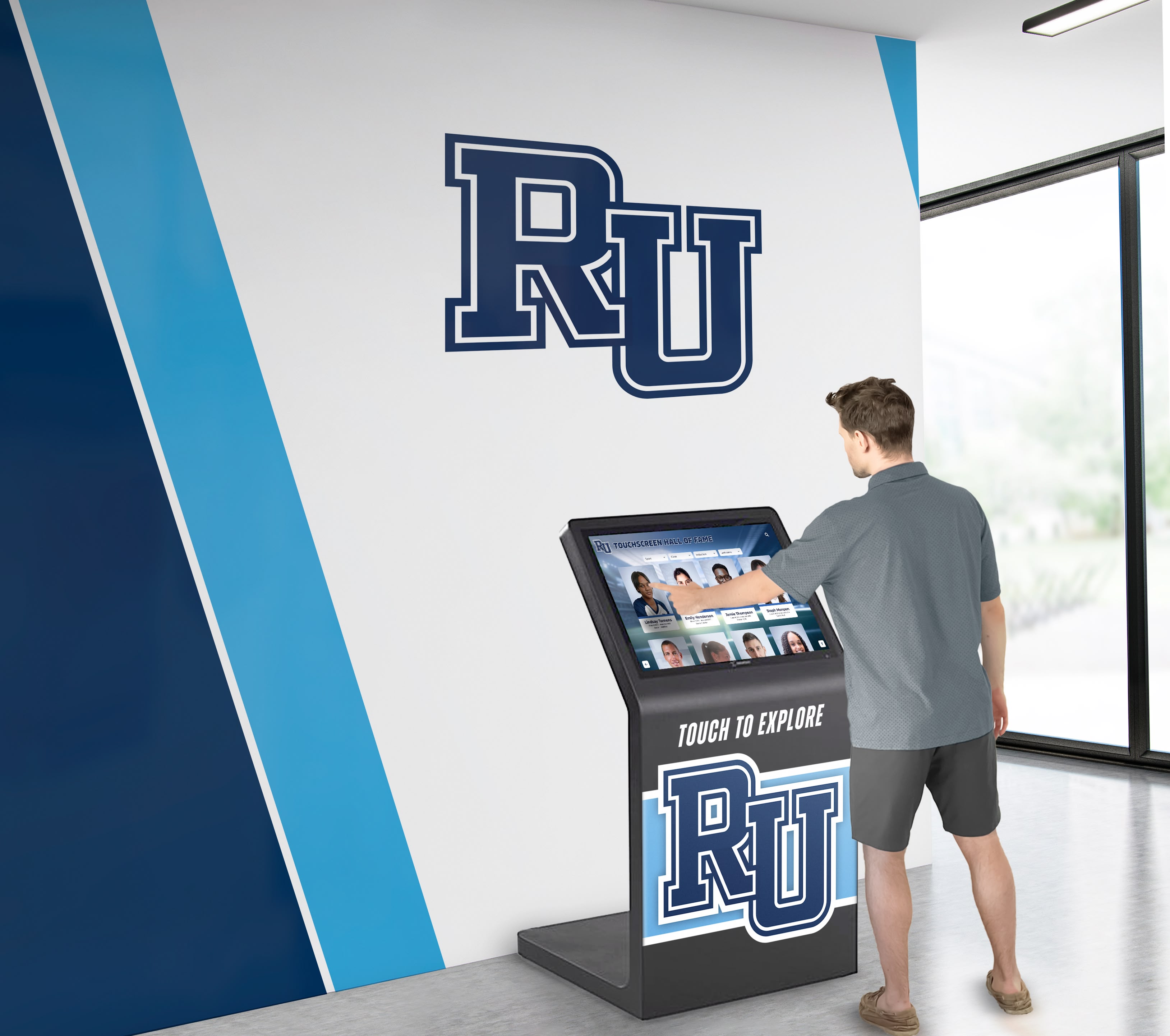
Touchscreen Building Directory: Interactive Wayfinding and Recognition Integration Guide
Intent: Define — Understanding touchscreen building directory systems and how to implement interactive wayfinding solutions that combine practical navigation with institutional recognition, engagement, and storytelling.
Read More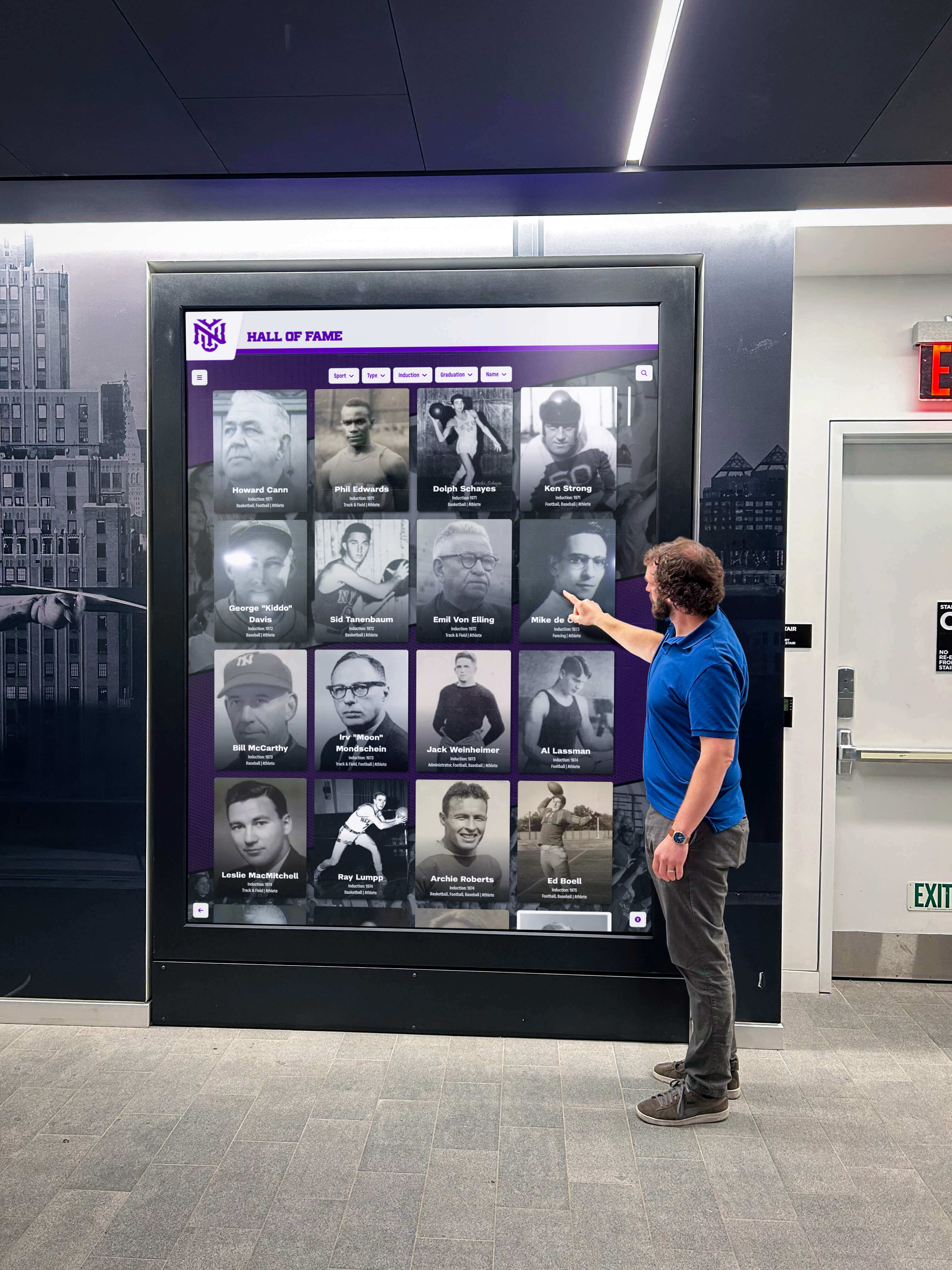
Dementia Memory Display: Affordable Touchscreen Kiosk Solutions for Family Caregivers in 2026
When caring for family members with dementia, creating meaningful daily experiences that stimulate memory and provide comfort becomes paramount. Traditional photo albums and scrapbooks serve important purposes, but modern digital memory displays offer interactive experiences that engage individuals with cognitive decline in ways static materials cannot match. These touchscreen solutions enable loved ones to explore cherished memories at their own pace while providing family caregivers with flexible, manageable systems that grow and adapt alongside changing needs.
Read More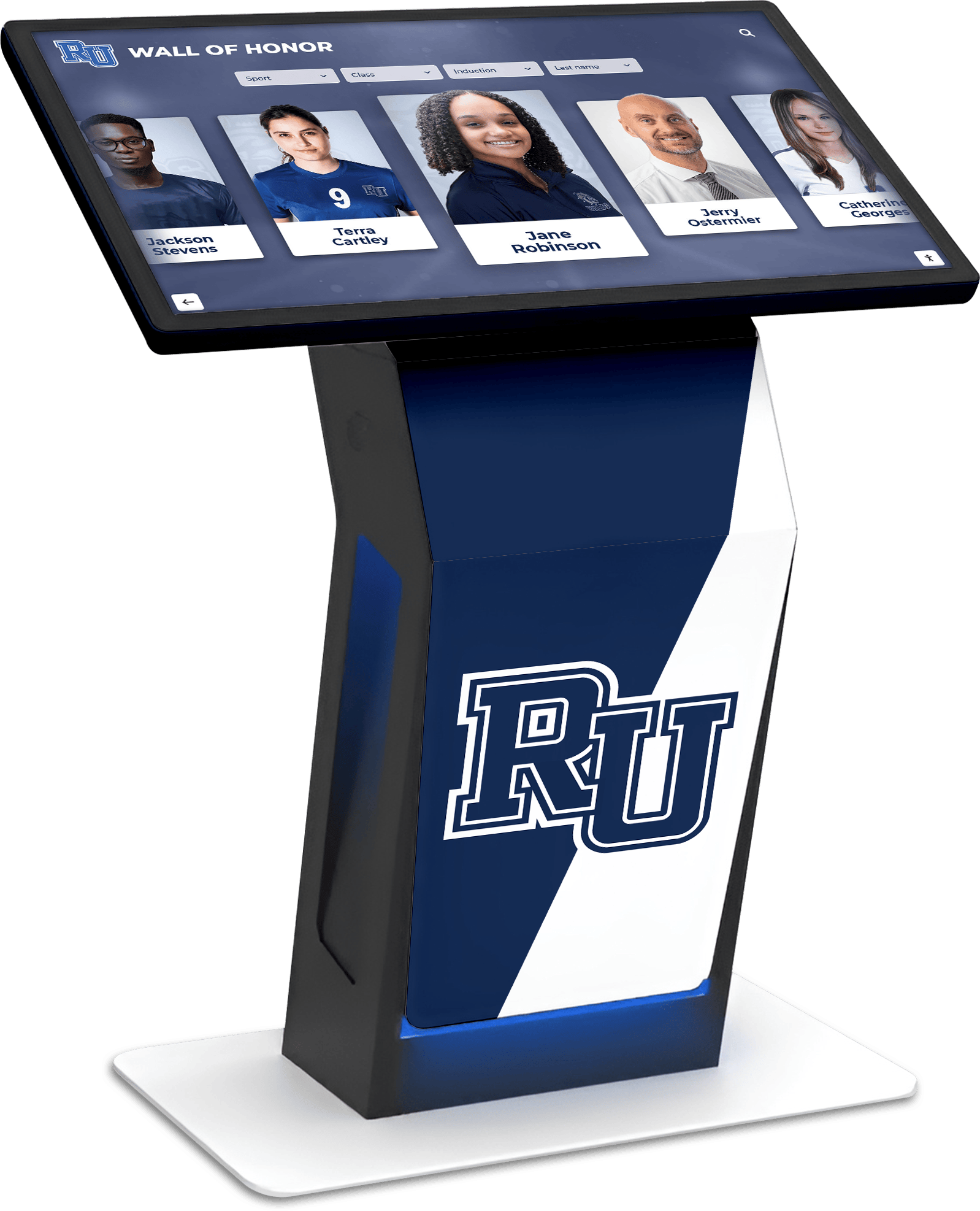
Digital Display Services for Touchscreen Kiosks and Digital Signage: Multi-Screen Management with Built-In Widgets
Organizations managing multiple digital displays face a common challenge: how to deliver engaging, dynamic content across touchscreen kiosks and digital signage screens without requiring programming expertise or expensive custom development. Schools need recognition displays alongside announcements. Businesses want lobby directories with weather and news. Athletic facilities require stats boards combined with social media feeds. The need is universal—professional digital display management with flexible split-screen layouts, integrated data widgets, and centralized multi-screen control.
Read MoreTouchscreen Kiosk for Events and Functions: Complete Guide to Interactive Equipment Display Technology in 2026
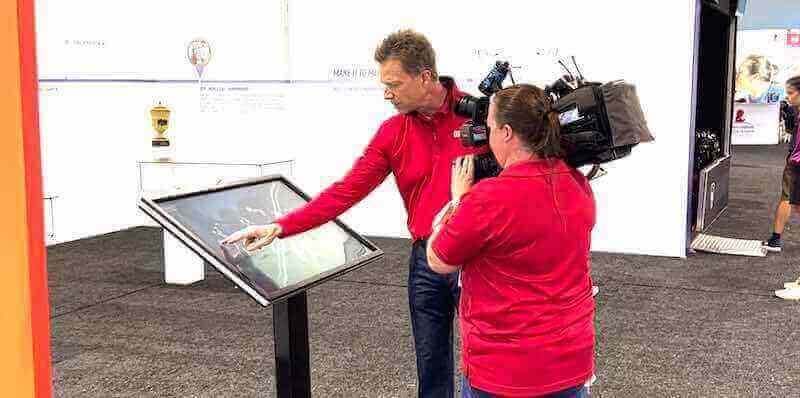
Equipment manufacturers face a persistent challenge at trade shows, open houses, and functions: how to communicate complex product features clearly while capturing audience attention in busy, competitive environments. Traditional static displays and printed brochures fail to engage modern audiences, while live demonstrations demand significant staff time and limit how many prospects can learn about products simultaneously.
Read More