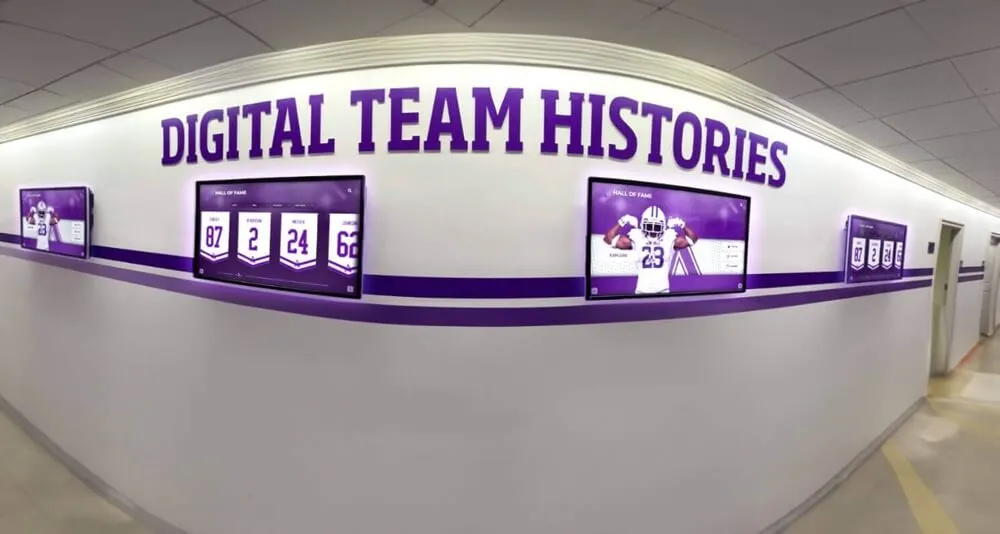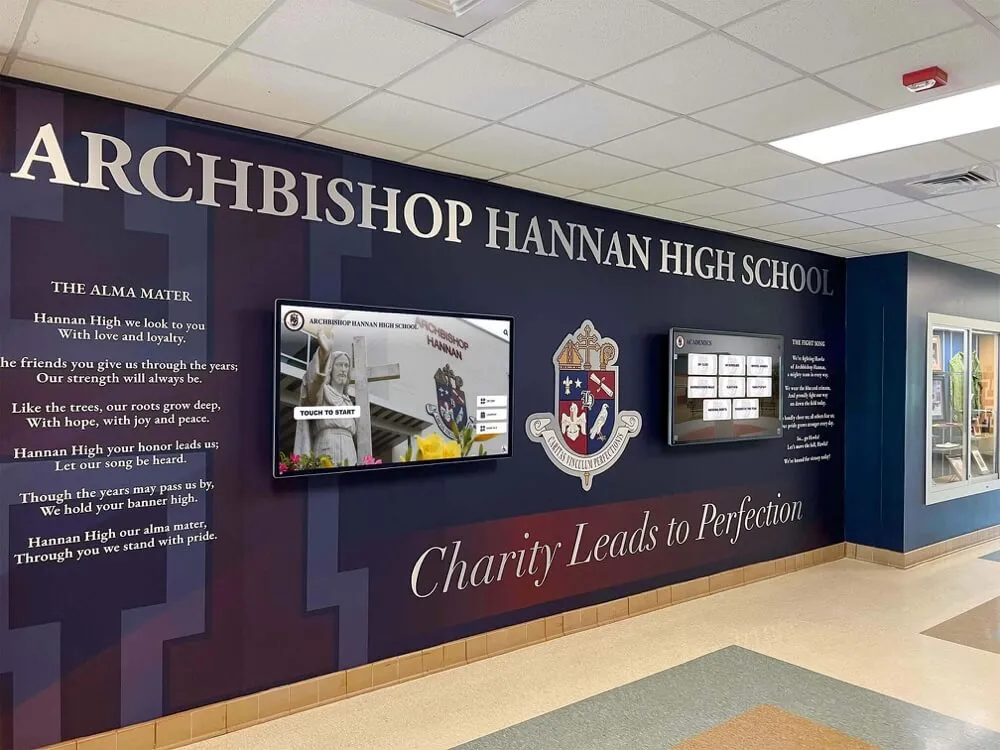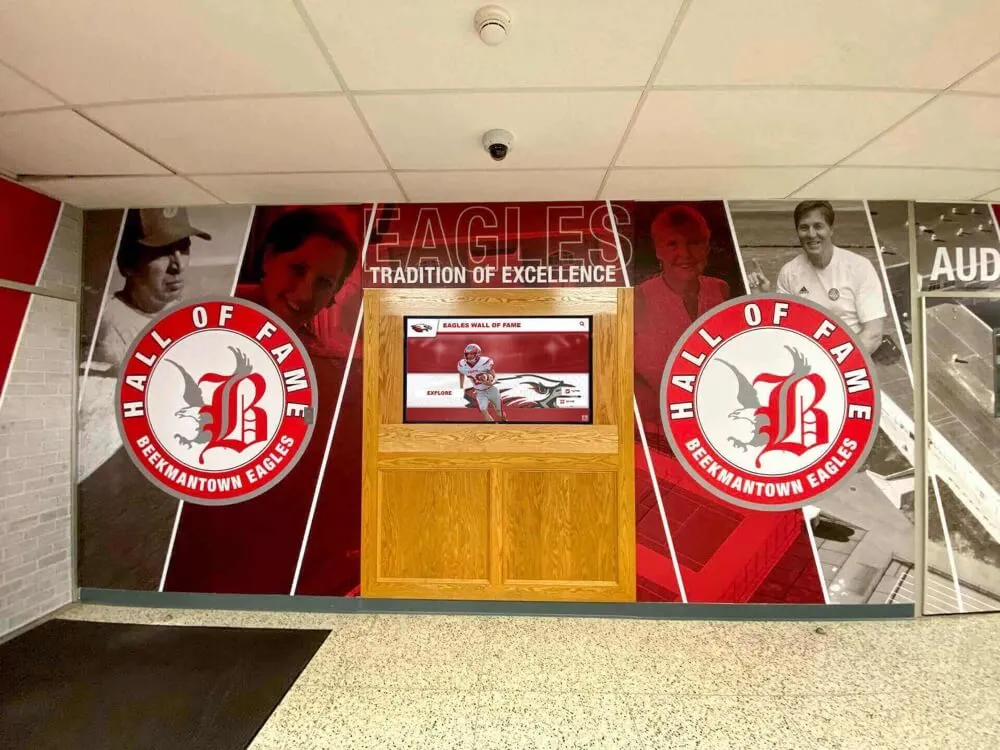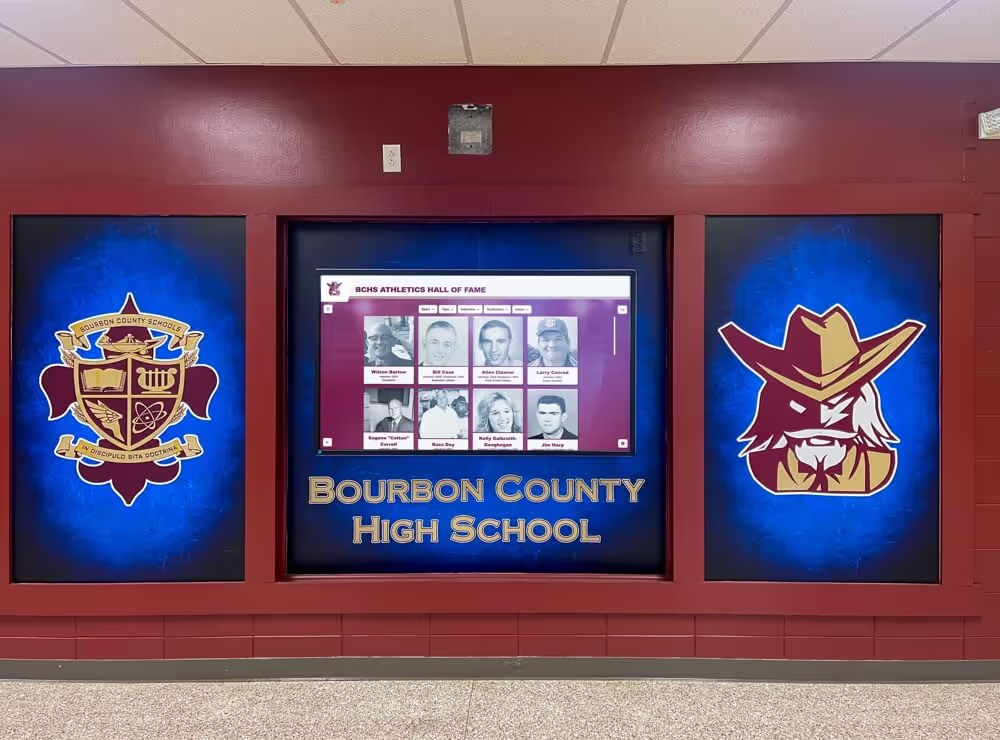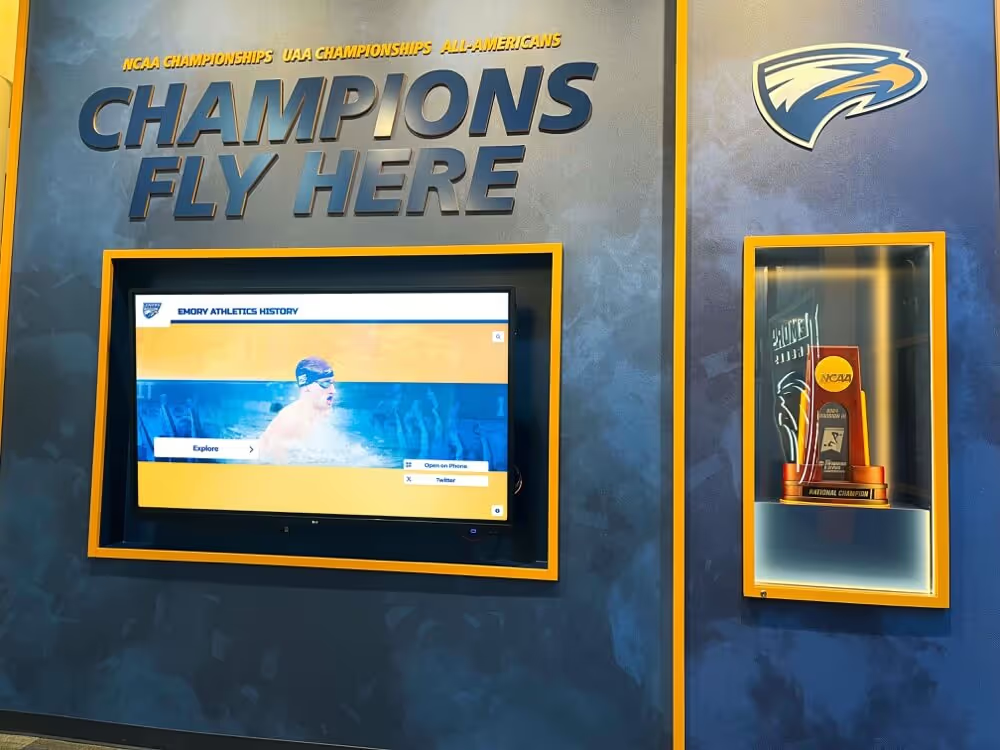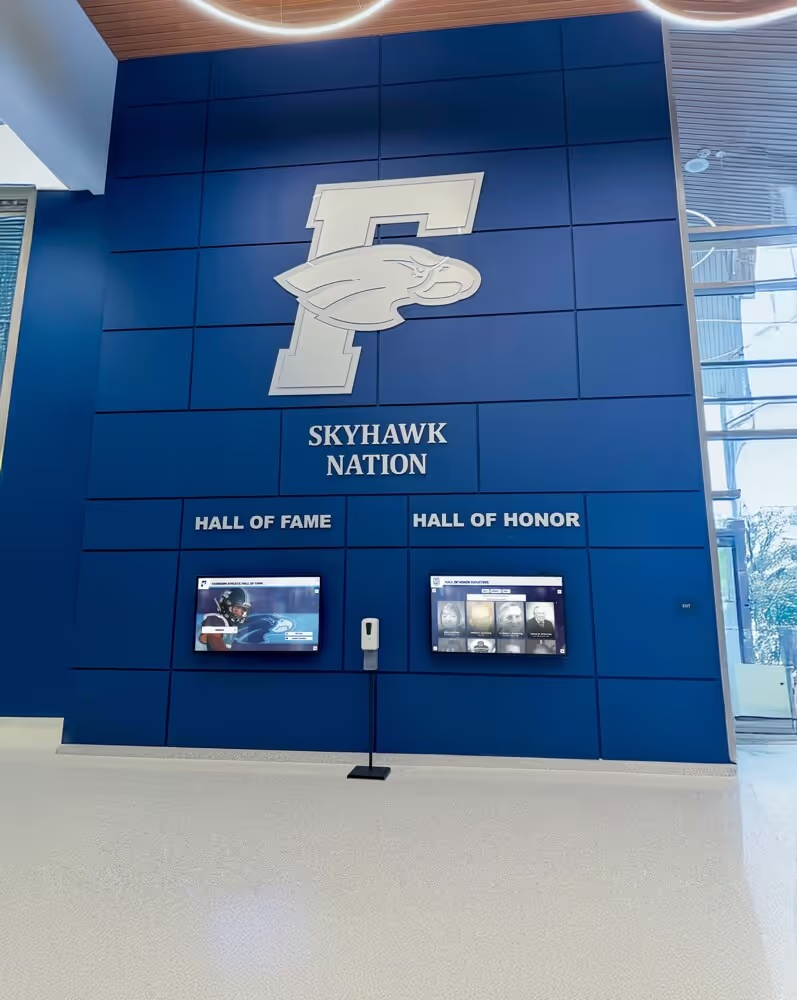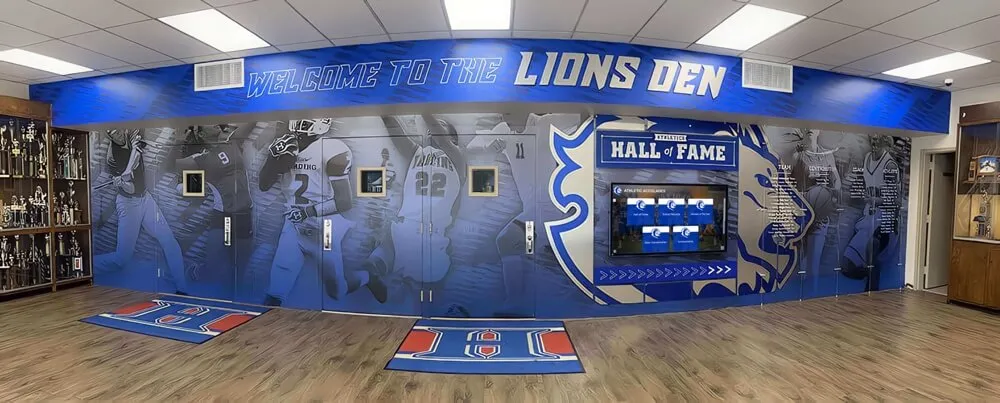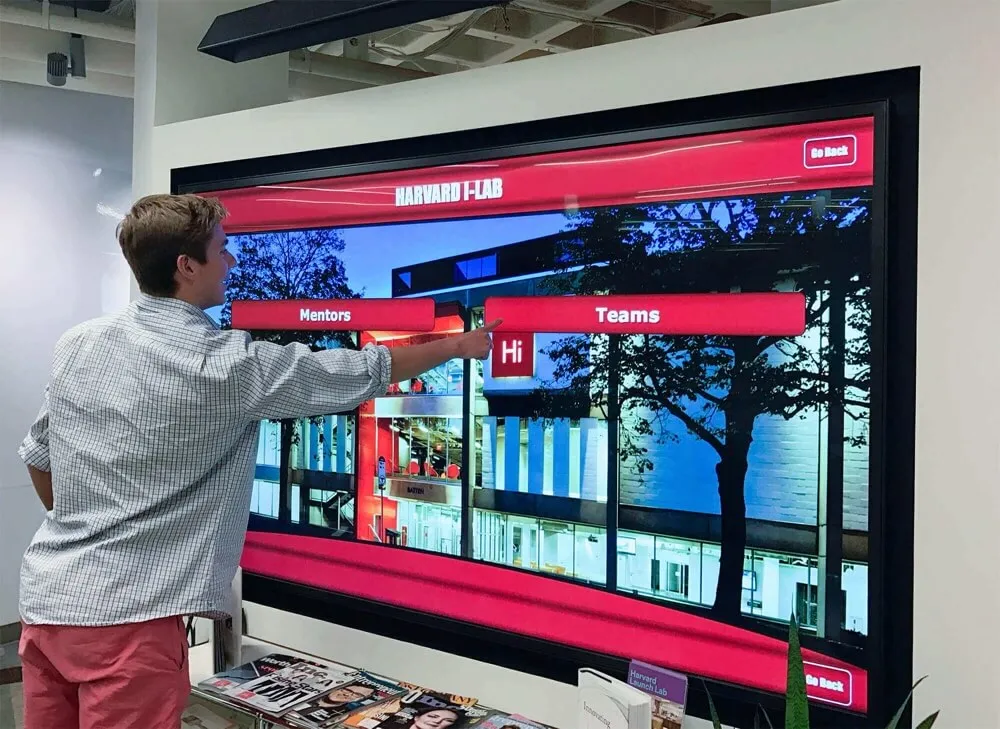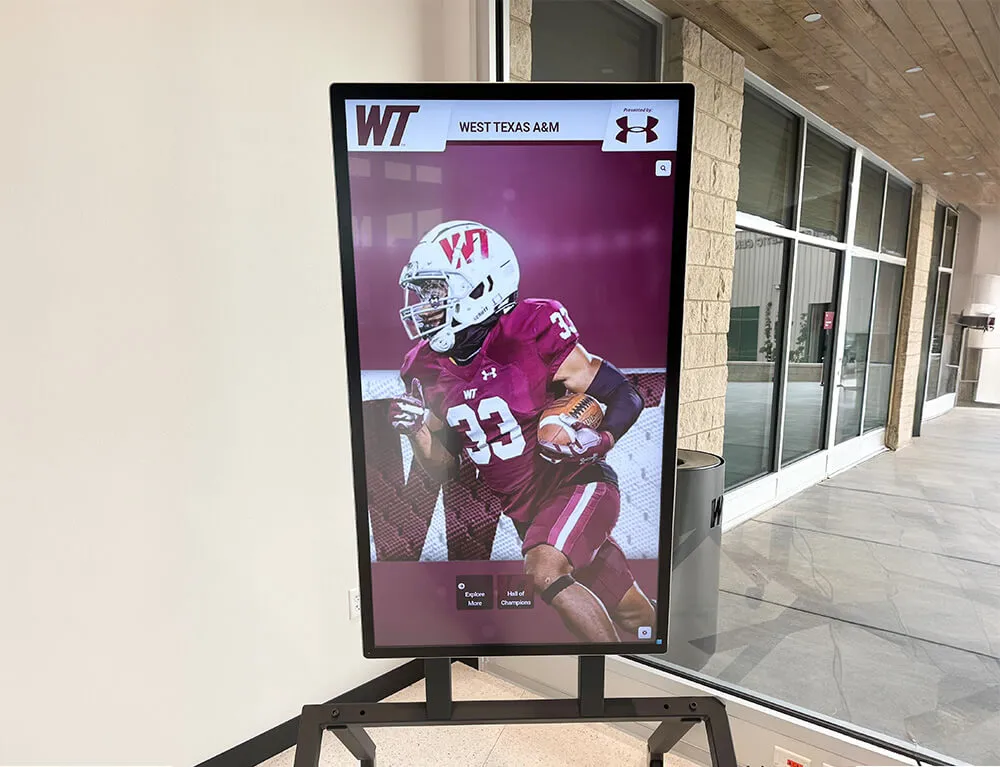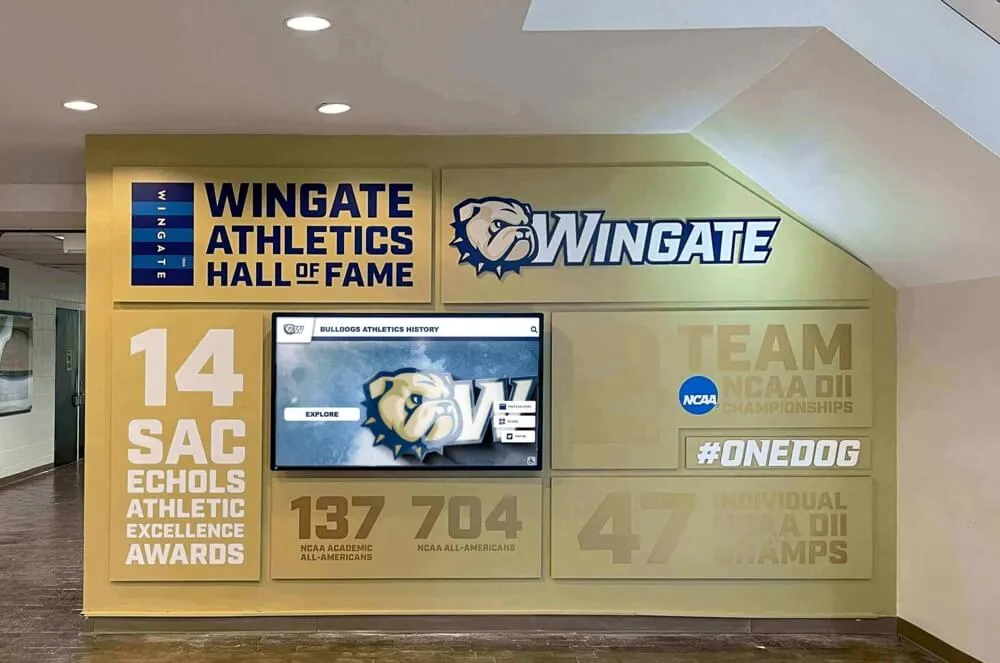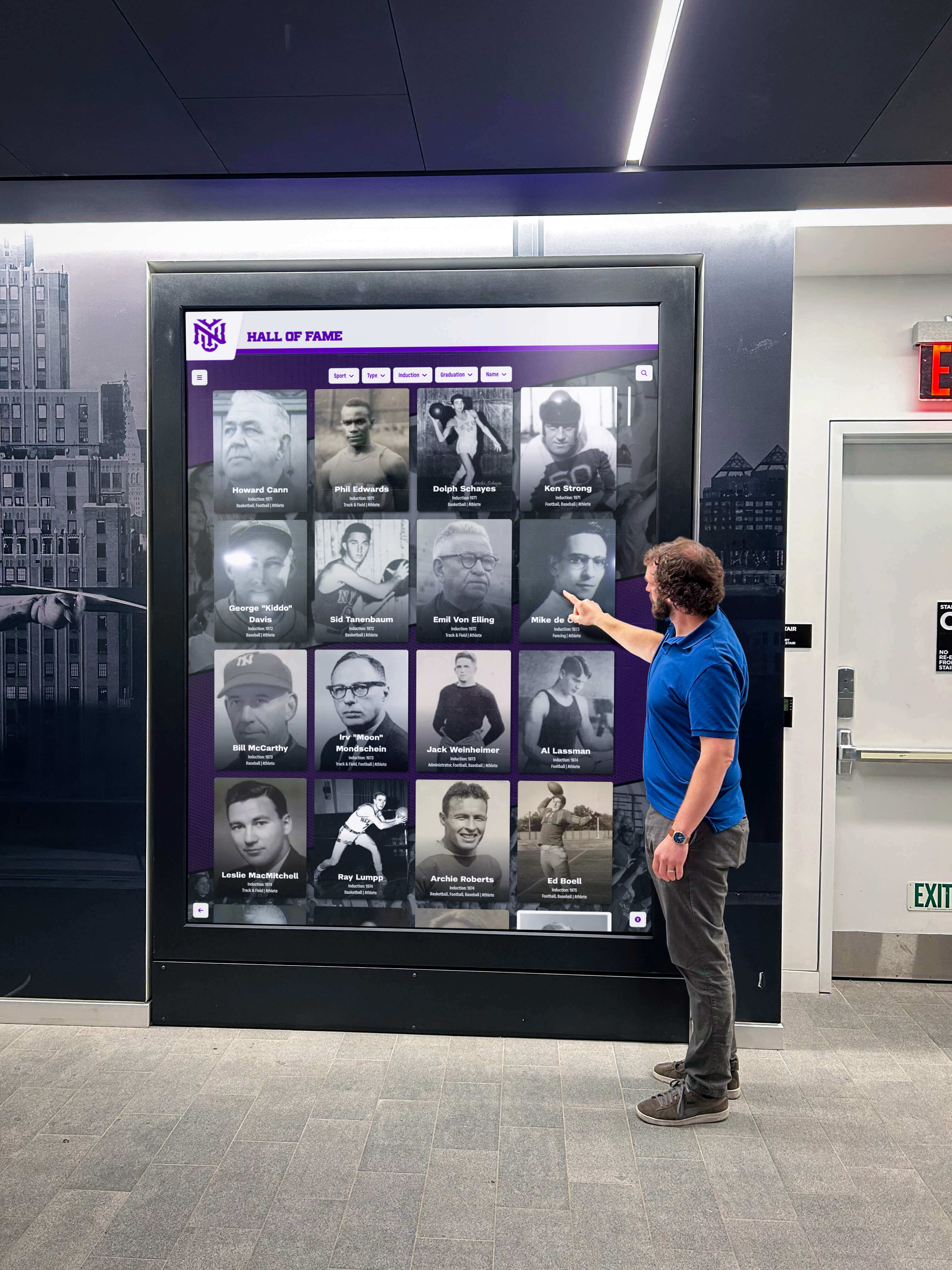




A digital hall of fame is an interactive recognition system that uses touchscreen technology and cloud-based software to celebrate unlimited achievements through searchable databases, multimedia content, and engaging discovery experiences. Unlike traditional plaques or trophy cases constrained by physical space, digital halls of fame showcase thousands of honorees with complete biographical profiles, photographs, videos, statistics, and historical context—transforming how organizations honor excellence while preserving institutional heritage for current and future generations.
Whether you’re an athletic director modernizing your sports recognition program, a school administrator exploring comprehensive achievement displays, an activities coordinator planning student honors, or an organizational leader establishing institutional recognition systems, understanding what digital halls of fame are, how they work, and what benefits they deliver helps determine whether interactive recognition technology aligns with your community’s needs and goals.
This comprehensive guide answers every fundamental question about digital halls of fame, exploring technology components, comparing advantages versus traditional approaches, examining real-world applications across institutional contexts, and providing practical implementation insights for organizations considering interactive recognition investments.
Traditional recognition approaches have always forced difficult choices—which achievements receive limited space, whose names appear on restricted plaques, what accomplishments justify expensive engraving. Digital halls of fame eliminate these constraints entirely, enabling comprehensive equitable recognition celebrating every worthy achievement while creating engaging experiences impossible with static displays.

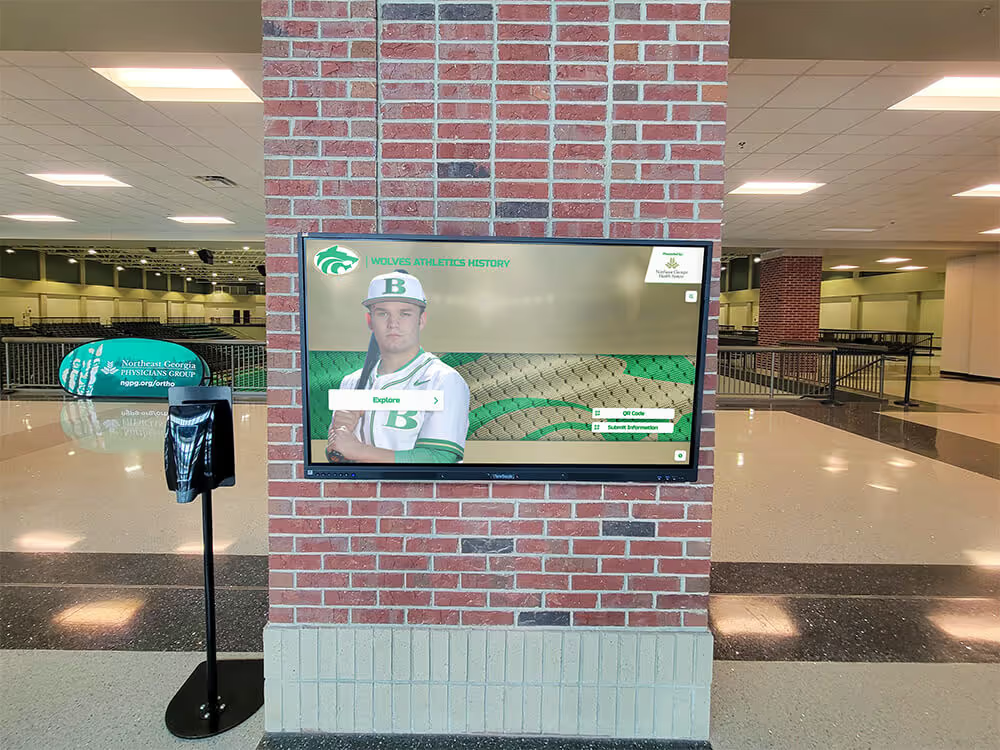
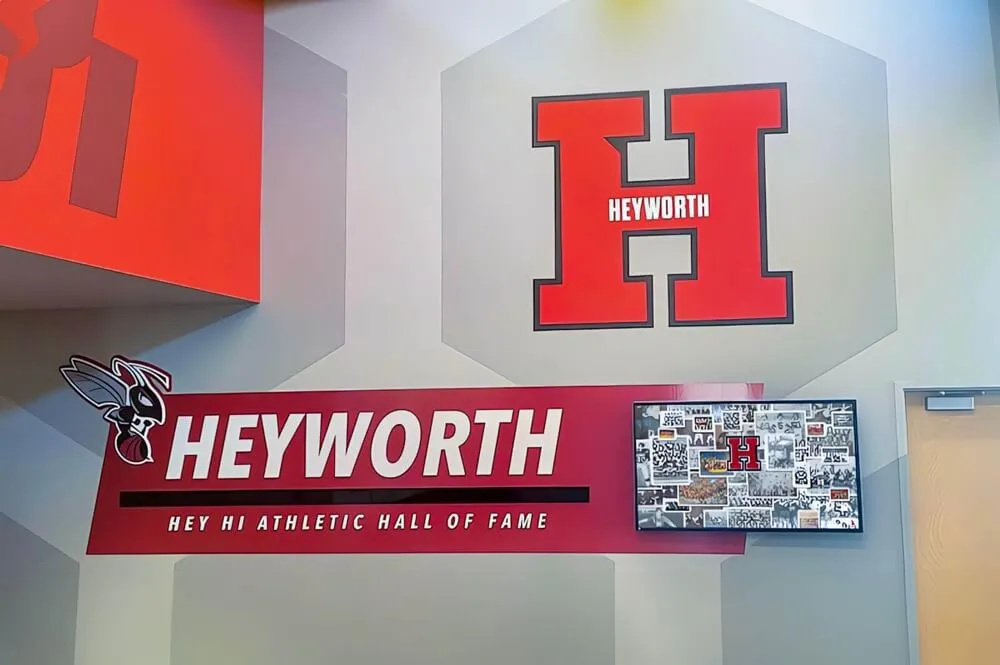
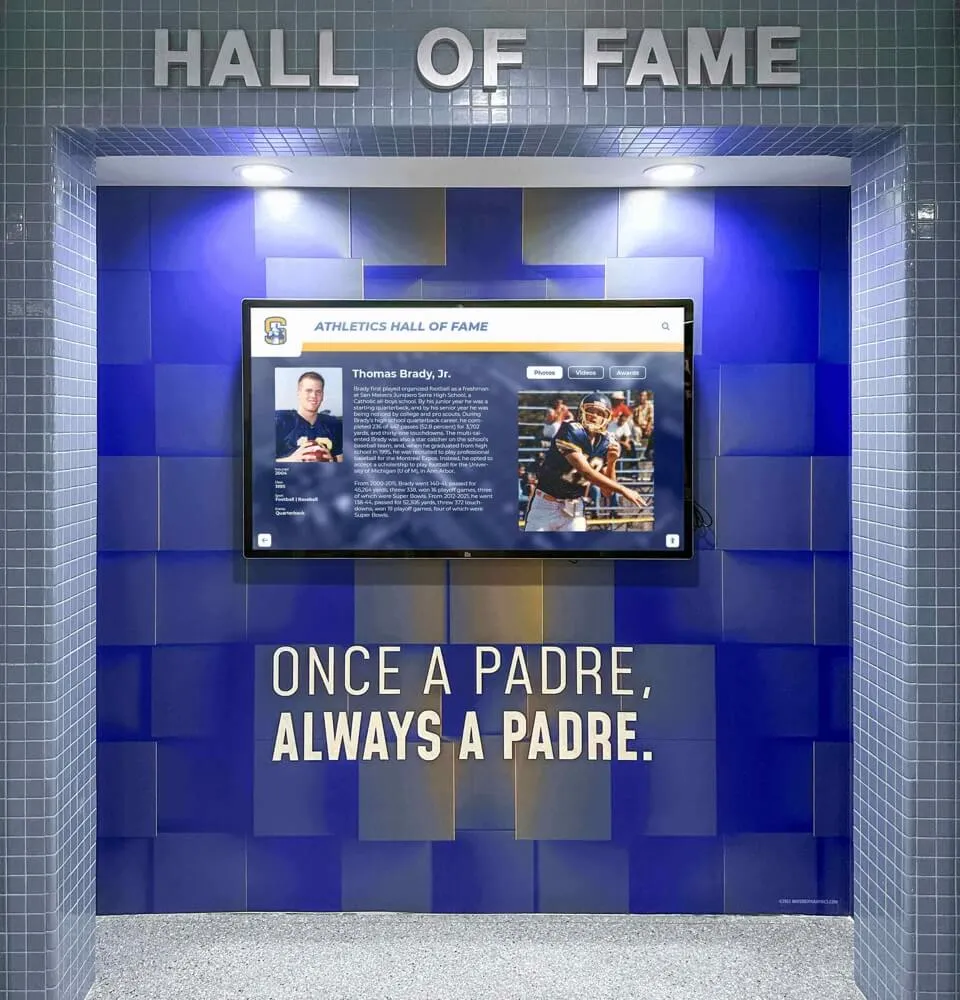
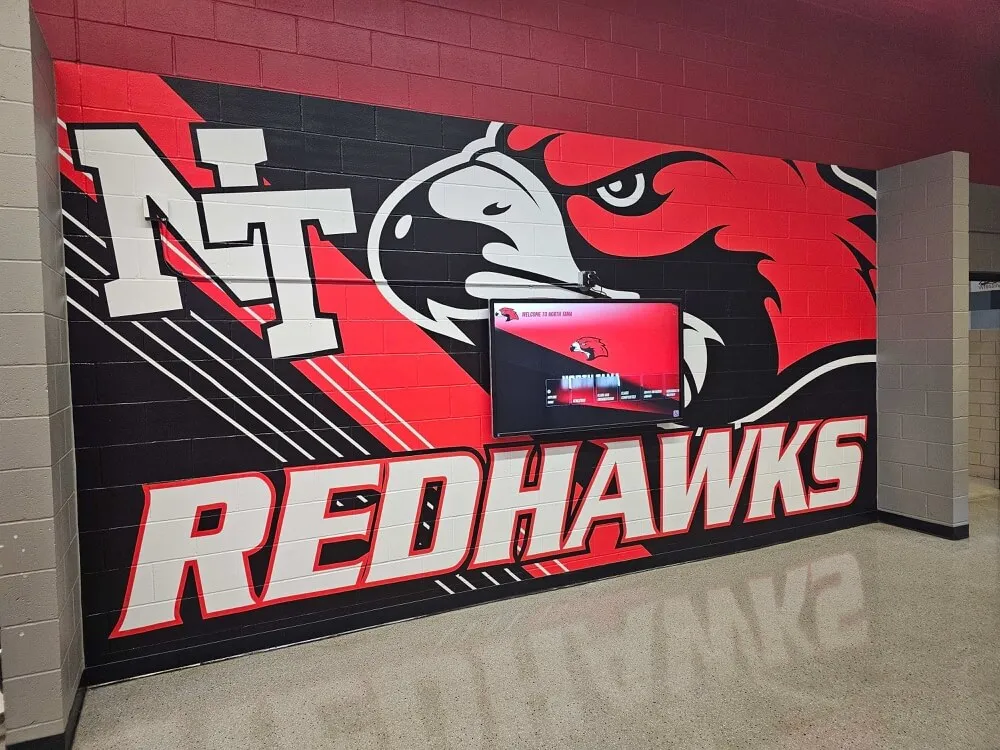
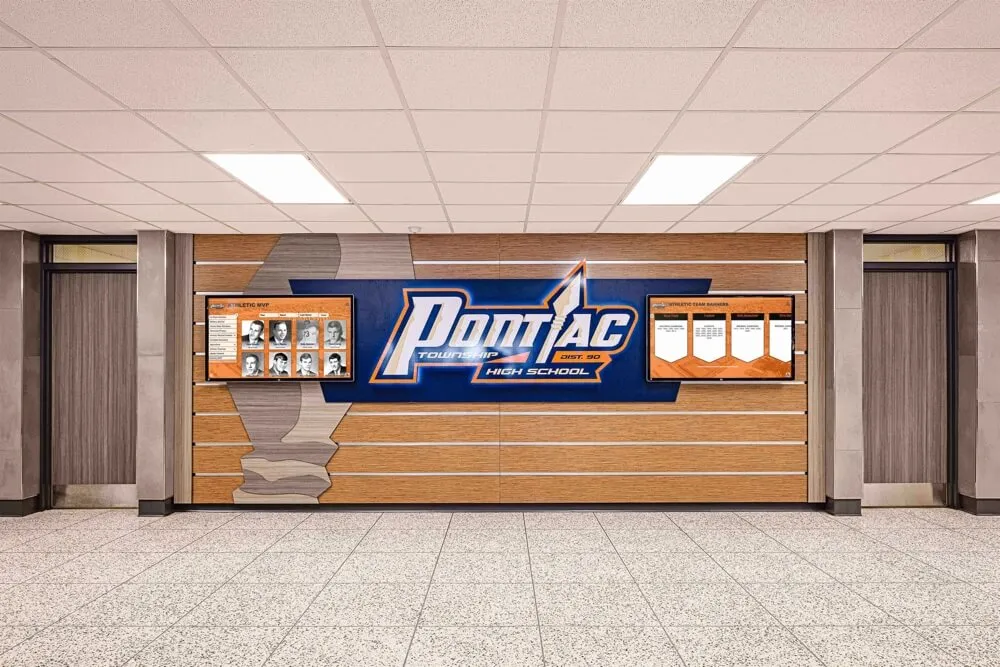
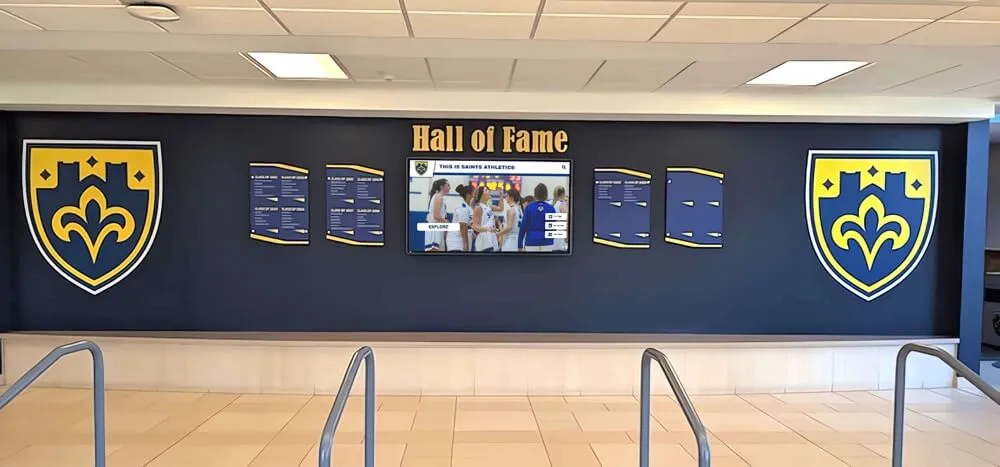
Digital halls of fame transform passive name displays into interactive exploration experiences connecting communities with inspiring achievement stories
Understanding Digital Hall of Fame Technology
Digital halls of fame combine several integrated technology components creating comprehensive recognition systems fundamentally different from traditional static displays.
Core Technology Components
Interactive Touchscreen Displays
Physical hardware forms the visible recognition interface:
- Commercial-grade touchscreens ranging from 43 to 86 inches designed for continuous public operation
- Capacitive or infrared touch technology providing smartphone-like responsiveness and intuitive interaction
- High-resolution 1080p or 4K displays ensuring clarity for photographs, text, and video content
- Commercial panels rated for 50,000-100,000 operating hours (approximately 6-10+ years continuous use)
- Protective tempered glass surfaces resisting damage from daily public touchscreen interaction
- Brightness specifications (300-500 nits) maintaining visibility in various ambient lighting conditions
- Professional mounting options including wall installations or freestanding kiosk enclosures
These displays differ substantially from consumer televisions in durability specifications, operating hour ratings, warranty coverage, and reliability under demanding institutional environments requiring years of continuous public use.
Purpose-Built Recognition Software
Specialized platforms designed specifically for hall of fame applications include:
- Profile database systems organizing unlimited individual and team achievements without capacity constraints
- Multimedia content management supporting photographs, videos, documents, statistics, and historical archives
- Intuitive touchscreen-optimized interfaces enabling exploration by visitors of all ages without instruction
- Powerful search capabilities with filtering, browsing, and discovery features finding specific content instantly
- Web-accessible platforms extending recognition globally beyond physical display locations
- Cloud-based architecture eliminating local server requirements and enabling remote content management
- Analytics tracking engagement patterns, popular content, search queries, and visitor behavior
Generic digital signage software serves communication needs but lacks specialized features required for comprehensive permanent recognition programs including searchable databases, individual profile pages, and long-term content organization.
Cloud-Based Content Management Systems
Administrative platforms determining program sustainability include:
- Web-based control panels accessible from any internet-connected device without specialized software installation
- Bulk upload tools efficiently adding entire graduating classes, championship teams, or large induction groups
- Template systems ensuring consistent professional presentation automatically applied across all profiles
- Approval workflows supporting quality review before content publication to public-facing displays
- Role-based permissions controlling which administrators can edit different content categories or sections
- Scheduled publishing enabling coordinated recognition releases tied to ceremonies, events, or announcements
- Version history tracking all changes with rollback capabilities if corrections become necessary
Solutions like Rocket Alumni Solutions provide integrated platforms combining hardware, software, and content management specifically designed for institutional recognition applications across schools, universities, organizations, and communities.
Learn about touchscreen technology selection approaches that ensure reliable performance for recognition displays.
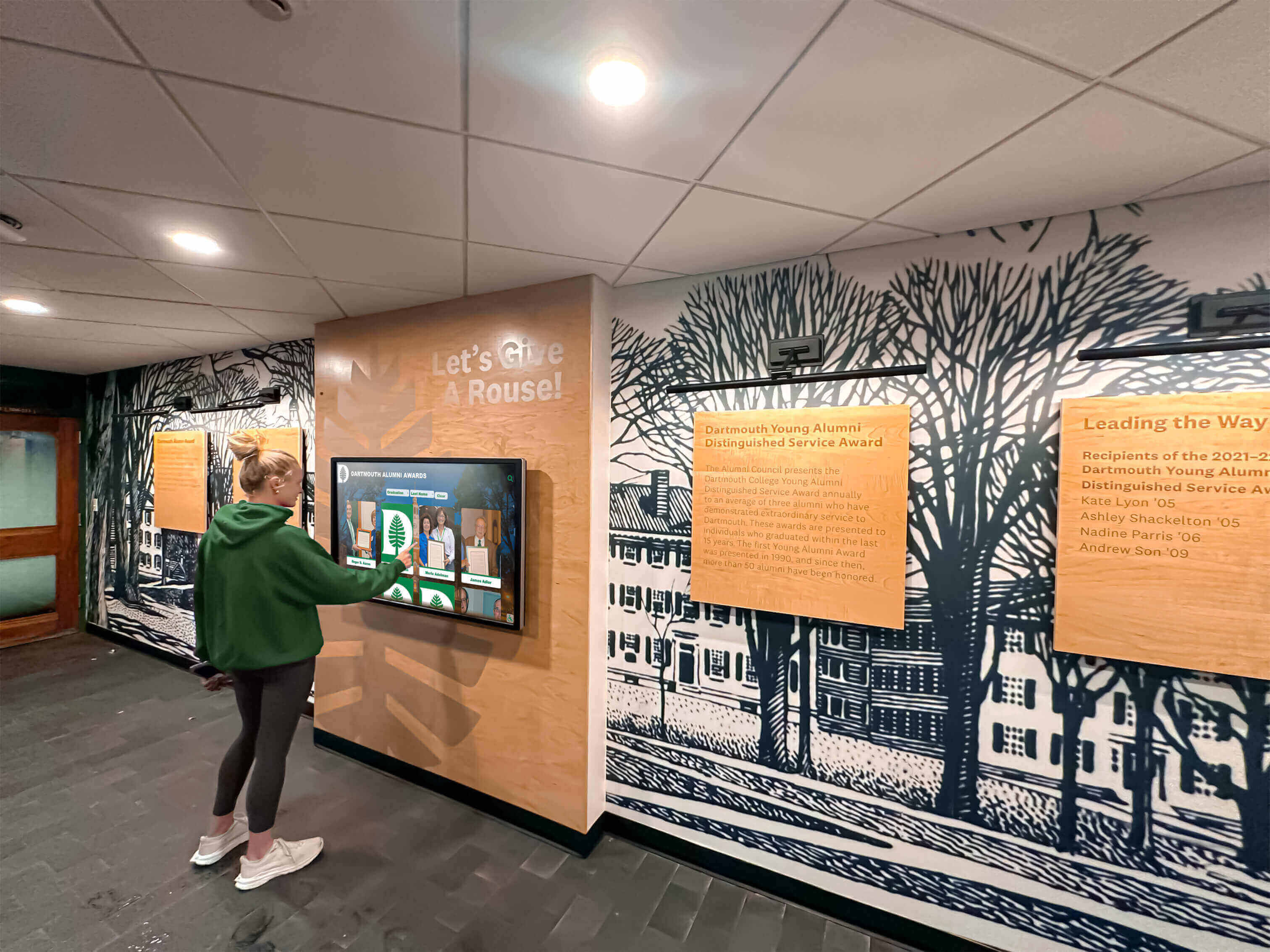
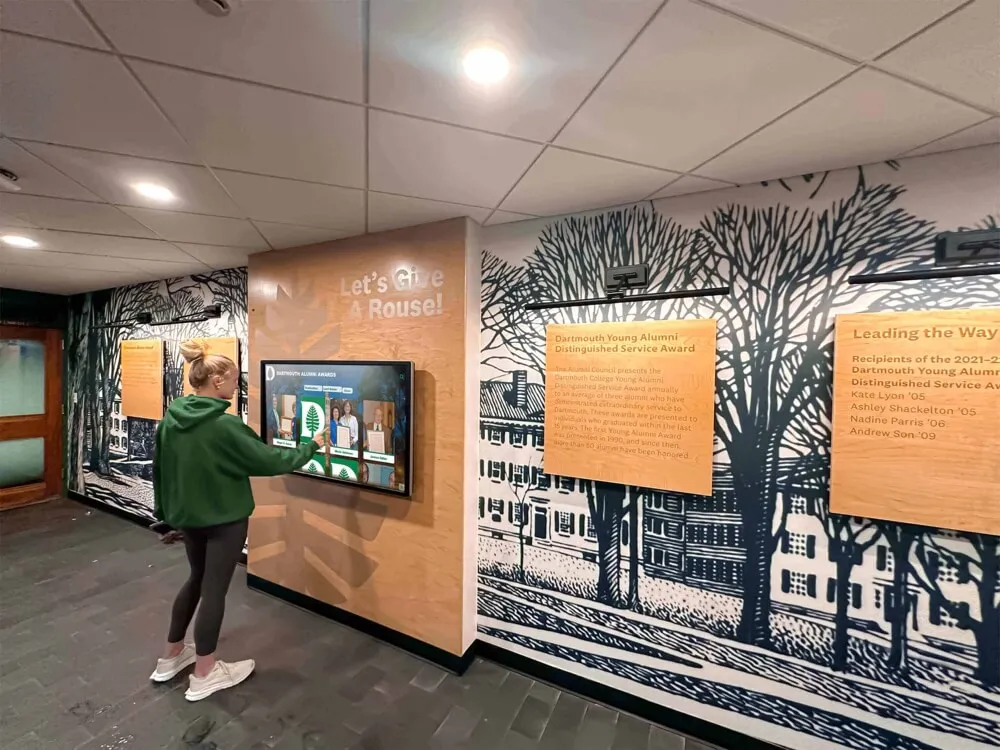
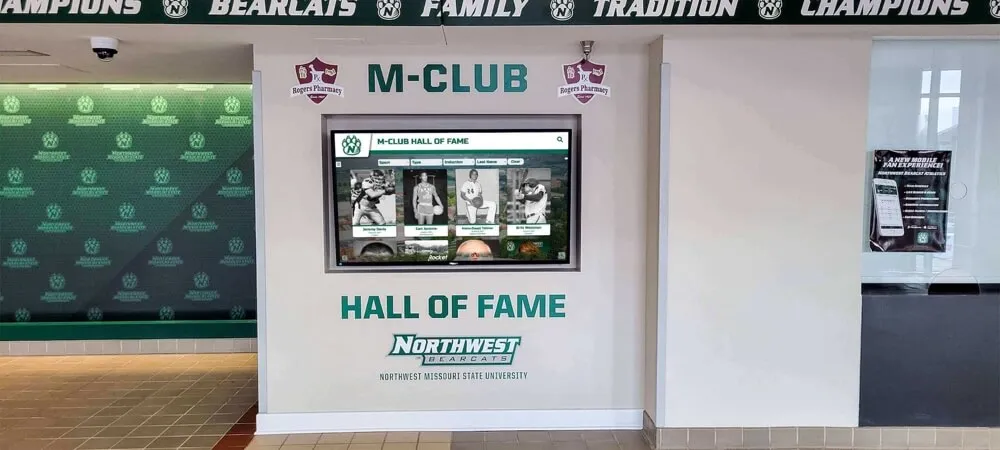
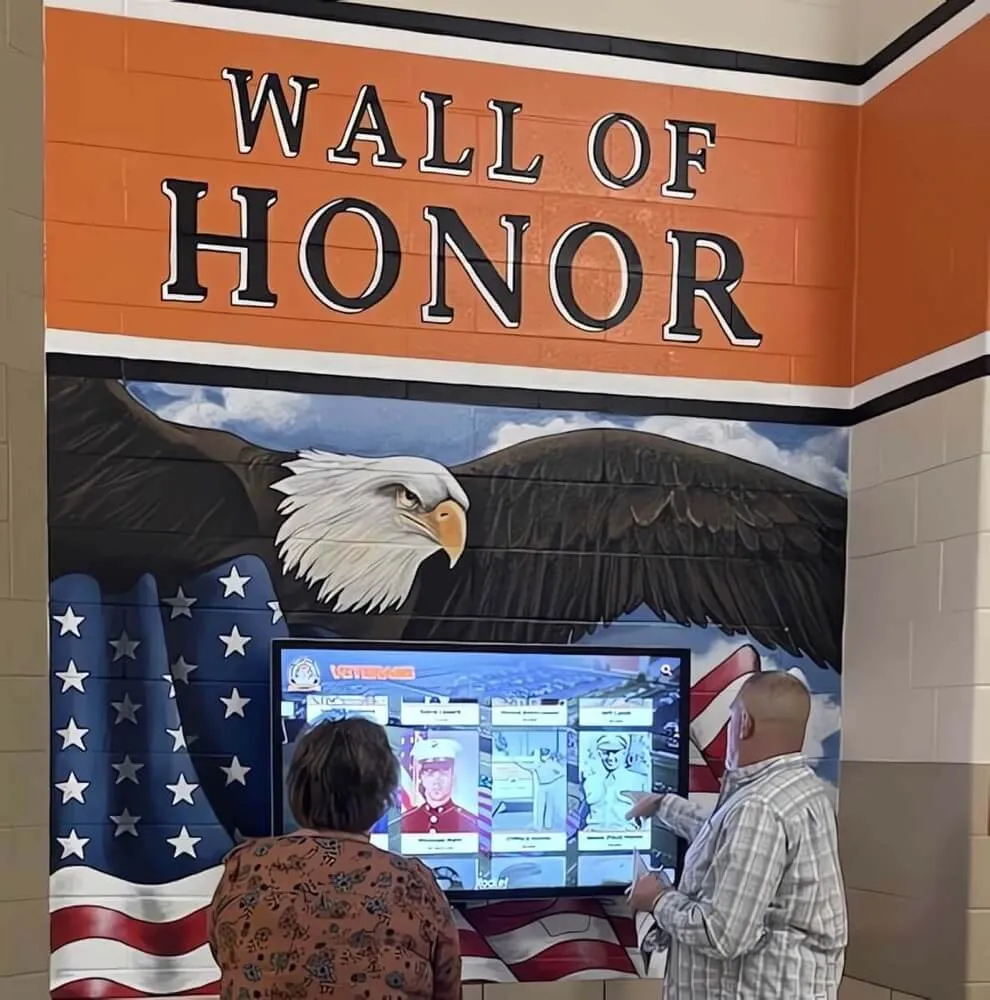
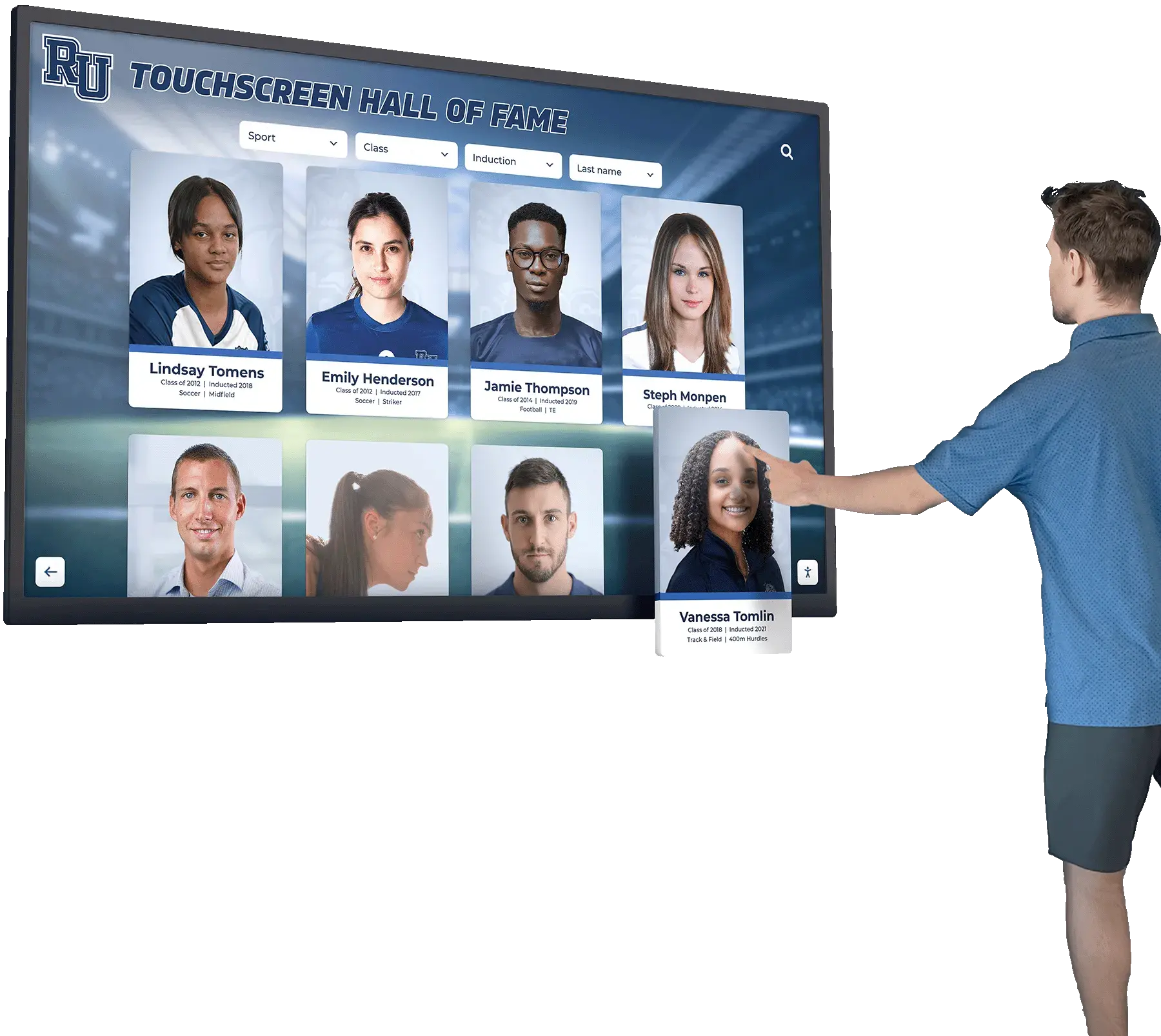
Intuitive interfaces enable independent exploration across all ages without requiring instruction or technical assistance
How Digital Halls of Fame Work
Understanding the complete system operation clarifies how technology enables superior recognition:
Content Creation and Organization
Administrators develop recognition content through cloud-based platforms:
- Profile Development: Staff create individual honoree pages including names, photographs, biographical information, achievements, statistics, awards, and supporting details
- Multimedia Integration: Upload photos, videos, documents, newspaper clippings, certificates, and historical materials enriching basic biographical data
- Categorization: Organize content by achievement type, graduation year, sport or activity, recognition category, or custom classifications
- Relationship Mapping: Connect related profiles including teammates, coaches, family members, or associated achievements
- Quality Review: Implement approval workflows ensuring accuracy before publishing content to public displays
- Publication: Schedule or immediately publish content appearing simultaneously on physical displays and web platforms
This cloud-based approach means administrators manage recognition from office computers, home devices, or anywhere with internet access—never requiring direct display interaction or specialized software installation.
Visitor Interaction and Discovery
Community members explore recognition through multiple pathways:
Search Functionality: Type names, keywords, years, or achievements into search bars with auto-complete suggestions and spelling tolerance ensuring discovery despite misspellings or incomplete information.
Filtering Capabilities: Narrow large databases by graduation year, achievement category, sport or activity, award type, or custom criteria quickly finding relevant recognition.
Browsing Options: Explore alphabetically organized directories, chronological timelines, categorical groupings, or featured content highlighting significant or interesting achievements.
Profile Viewing: Select individual honorees accessing complete biographical pages with photographs, videos, achievements, statistics, historical context, and related content connections.
Social Sharing: Share favorite profiles to Facebook, Instagram, LinkedIn, or other platforms enabling honorees and families to celebrate with extended networks.
Web Access: Experience identical content and functionality through web browsers on smartphones, tablets, or computers from anywhere globally.
This multi-pathway discovery ensures every profile remains accessible regardless of archive size—unlike physical plaques where location determines visibility and forgotten names receive no recognition.
Explore effective digital hall of fame implementation strategies that maximize community engagement and recognition impact.
System Integration and Management
Modern platforms integrate with broader institutional technology:
- Student information systems automatically updating rosters and achievements
- Athletic management software connections reducing duplicate data entry across systems
- Alumni databases enriching recognition with current contact information and career updates
- Donor recognition platforms transparently acknowledging philanthropic support alongside achievement recognition
- Website content management systems displaying recognition on institutional sites automatically
- Social media automation sharing new inductees across Facebook, Instagram, and LinkedIn channels
These integrations reduce administrative burden while ensuring recognition accuracy and currency across multiple institutional touchpoints.
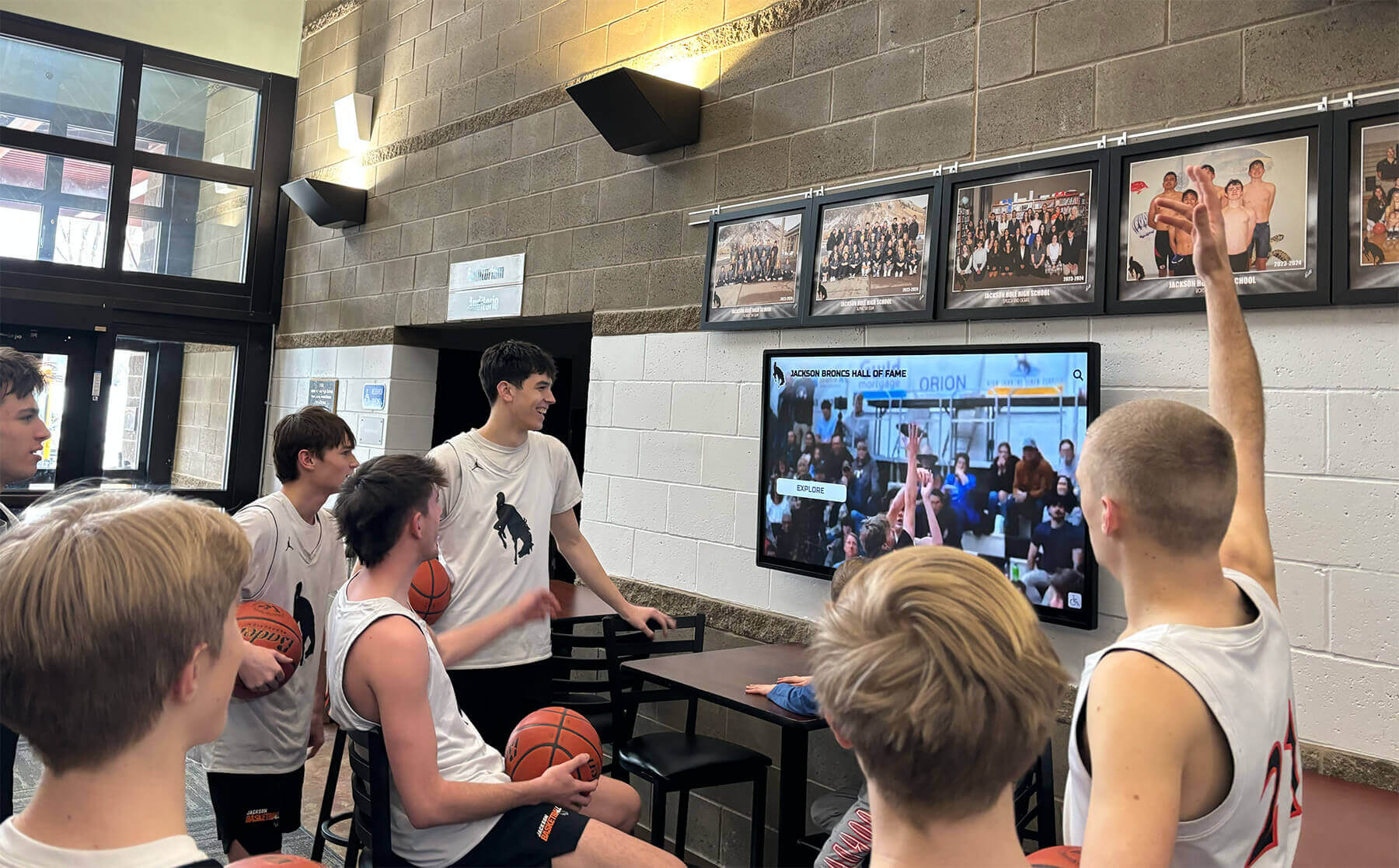
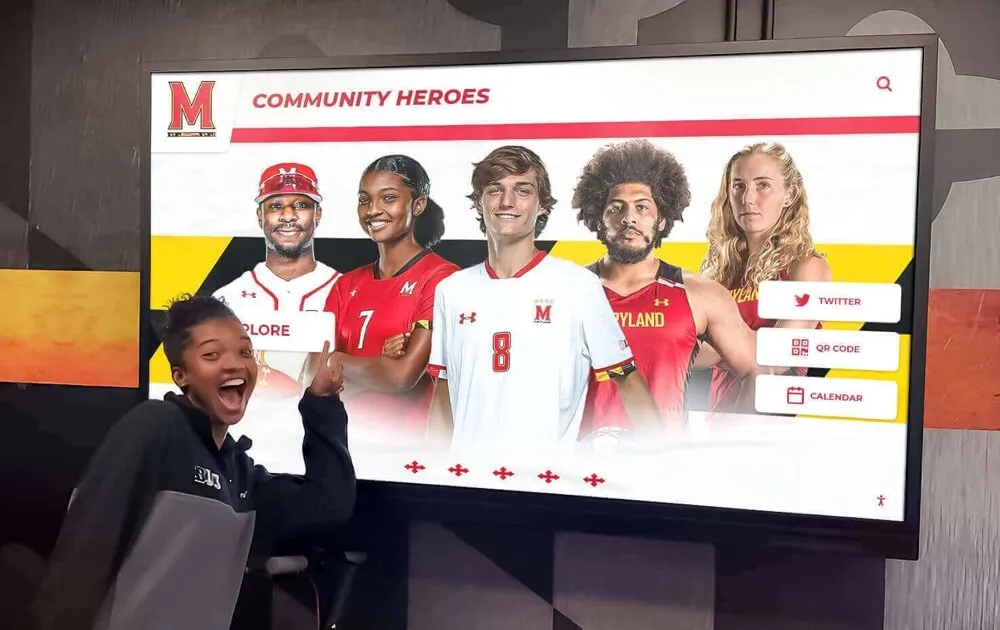
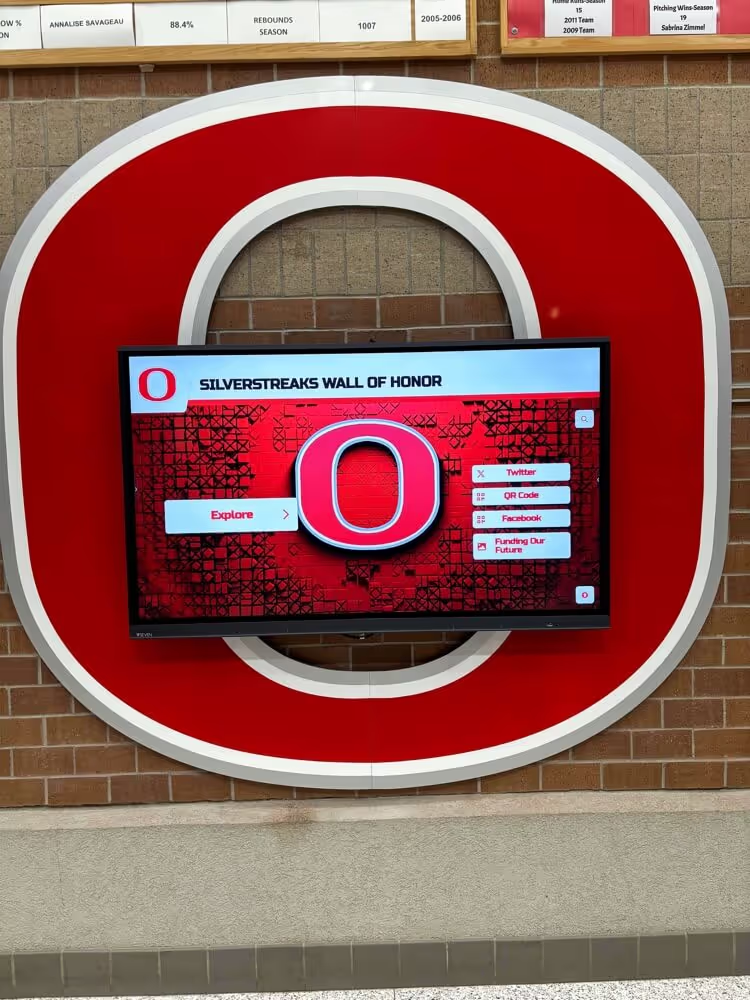
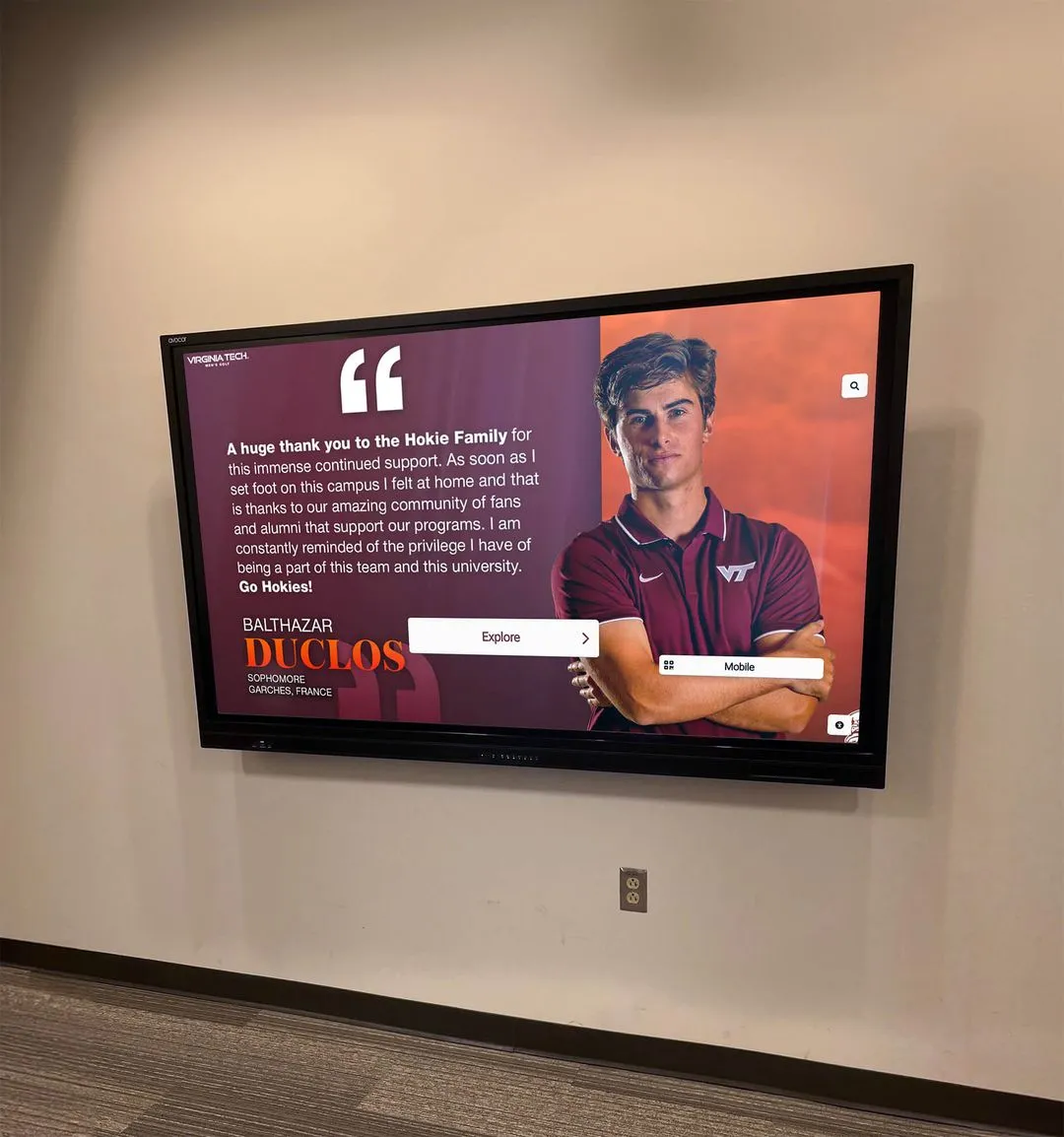
Interactive displays create social gathering points where communities explore achievements together and share discovery experiences
Digital Hall of Fame Benefits Over Traditional Recognition
Interactive systems deliver substantial advantages across multiple dimensions important to institutions and communities.
Unlimited Recognition Capacity
The most significant benefit eliminating fundamental space constraints:
Comprehensive Achievement Celebration
Traditional approaches force selective recognition decisions:
- Physical plaques accommodate 200-300 names before requiring expensive facility expansion
- Trophy cases hold 50-100 items before filling completely and requiring display removal
- Banner space limits how many championships, teams, or individuals receive permanent visibility
- Budget constraints on physical materials restrict recognition to most prestigious achievements only
These limitations create inequitable recognition where some equally-deserving accomplishments go unacknowledged simply because physical space filled years or decades earlier.
Digital halls of fame eliminate these constraints:
- Single displays showcase unlimited honorees across all achievement categories and historical periods
- Complete historical archives preserving decades or centuries of institutional accomplishments comprehensively
- No need removing previous recognition to accommodate new honorees—everyone remains permanently honored
- Equal recognition opportunity for all achievement types regardless of physical space availability or limitations
- Comprehensive documentation without requiring facility construction or expensive physical expansion projects
Organizations implementing digital recognition consistently report that ability recognizing every deserving achievement rather than selective few delivers the most significant value—enabling truly comprehensive equitable recognition programs honoring all excellence appropriately.
Multi-Dimensional Content Depth
While traditional plaques display names and dates, digital profiles include:
- High-resolution photographs showing honorees and their achievements in meaningful visual context
- Complete biographical information and detailed accomplishment descriptions explaining significance and impact
- Video highlights capturing performances, speeches, interviews, ceremonies, and memorable moments
- Statistics and records providing quantitative achievement documentation across careers or seasons
- Audio content including interviews, musical performances, speeches, or historical recordings
- Documents such as certificates, newspaper articles, programs, and supporting materials
- Historical context connecting individual accomplishments to institutional traditions and program evolution
- Links to related achievements, championship teams, coaches, mentors, and family members
This multimedia capability transforms simple name recognition into comprehensive storytelling honoring accomplishments fully while engaging audiences meaningfully through rich content impossible with traditional static approaches.
Consider comprehensive recognition program approaches that celebrate diverse achievement types equitably.
Enhanced Engagement and Community Connection
Interactive displays fundamentally change how audiences experience recognition:
Active Exploration vs. Passive Viewing
Traditional static displays receive brief glances as visitors pass by reading names without deeper engagement. Touchscreen halls of fame invite active participation:
- Visitors interact directly with displays rather than simply reading engraved names on distant plaques
- Search functionality enables finding specific individuals, teams, coaches, or achievements instantly
- Filtering by year, category, achievement type, or custom criteria navigating large archives efficiently
- Browsing related accomplishments and discovering connected honorees creates serendipitous exploration
- Examining photographs in detail and watching video content brings recognition to life emotionally
- Sharing favorite profiles through social media extends celebration beyond facility visits
- Discovering unexpected connections, interesting stories, and forgotten achievements through exploration
This active engagement creates personal connections impossible with passive displays. Museum research demonstrates interactive exhibits generate 3-5 times longer visitor engagement compared to static displays, with touchscreen features transforming brief acknowledgments into meaningful discovery experiences lasting several minutes.
Motivational Impact on Current Participants
Visible, accessible, comprehensive recognition motivates those pursuing excellence:
- Clear examples demonstrating what’s possible within institutional programs and activities
- Understanding of standards defining excellence and achievements worthy of permanent recognition
- Personal connections to recognition through coaches, mentors, or community members they know
- Aspiration to contribute their own accomplishments to institutional legacy and tradition
- Concrete evidence that achievements will be remembered and honored permanently rather than forgotten
Athletic directors and activities coordinators report that comprehensive recognition demonstrating institutional value placed on diverse achievements motivates broader participation across programs while raising performance standards as students see tangible examples of excellence worth pursuing.
Global Accessibility and Extended Reach
Web-accessible recognition amplifies impact exponentially:
- Same content on facility displays simultaneously available online globally to unlimited audiences
- Alumni and former members worldwide explore current and historical recognition from anywhere
- Family members and supporters access recognition remotely without requiring facility visits
- Prospective members evaluate programs through authentic achievement evidence during recruitment research
- Media and researchers access comprehensive achievement archives for stories and historical documentation
- Community members engage without requiring facility access during specific operating hours
This extended accessibility means recognition created by organizations reaches audiences of tens of thousands globally rather than hundreds locally—maximizing impact, strengthening community connections, and demonstrating program quality to prospective participants and supporters.
Discover approaches for displaying institutional history that combine physical and digital recognition touchpoints effectively.
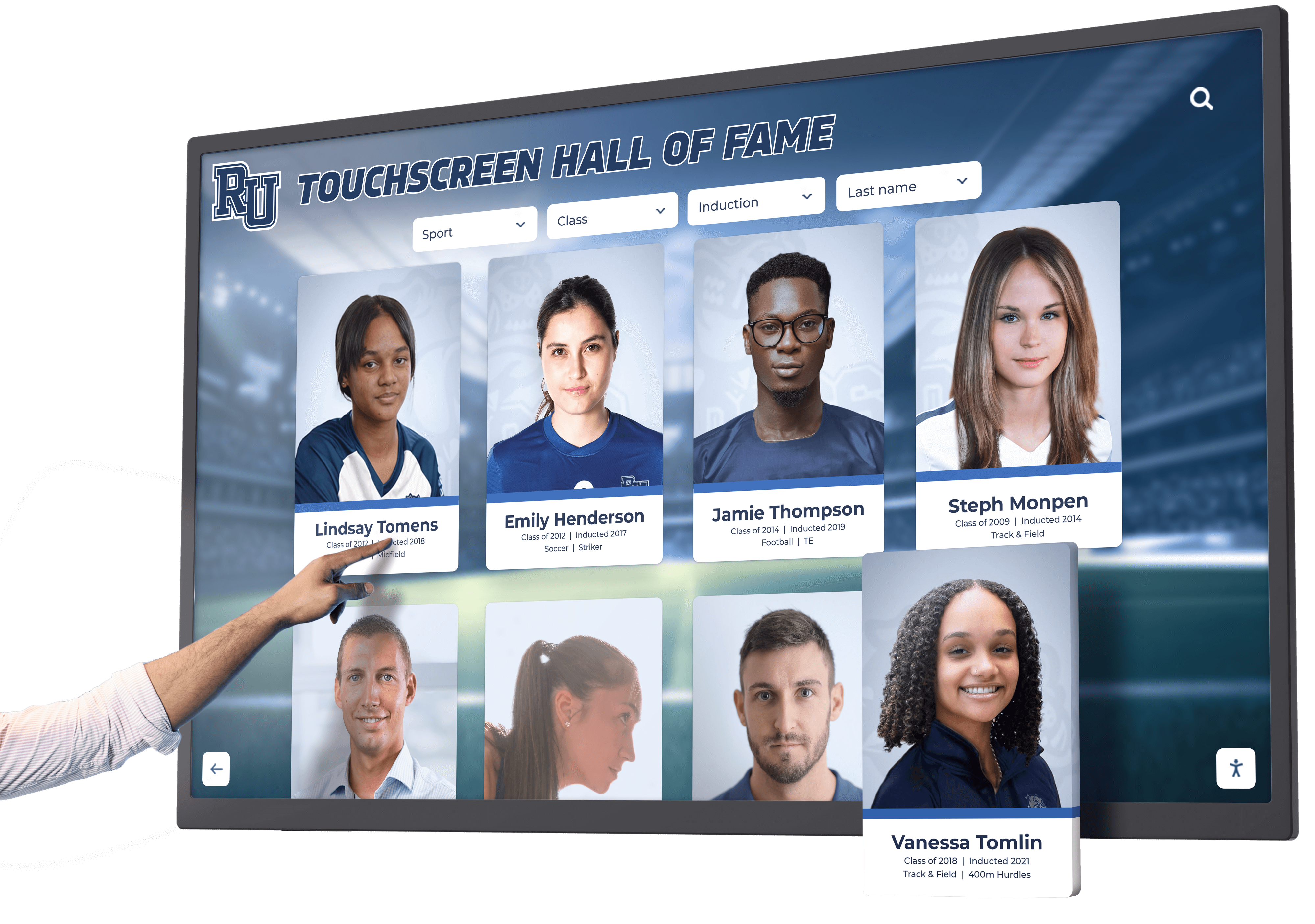
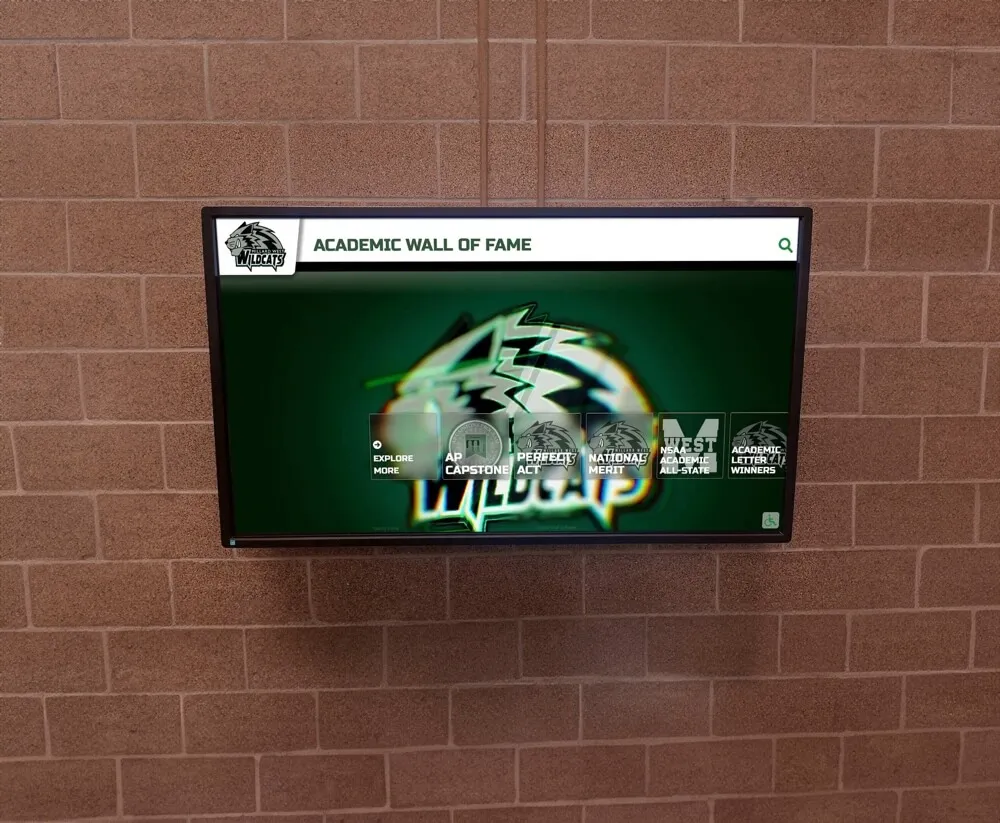
Touchscreen technology provides intuitive smartphone-like interaction enabling effortless exploration across comprehensive achievement archives
Administrative Efficiency and Long-Term Sustainability
Digital systems dramatically reduce ongoing management burden compared to traditional physical recognition:
Simplified Updates and Content Management
Traditional physical recognition requires substantial recurring labor and expense:
- Physical printing, engraving, or fabrication of new plaques, banners, and displays for each recognition addition
- Professional installation or mounting requiring contractors, specialized equipment, and facility scheduling
- Removal and storage of replaced materials when limited physical space fills completely
- Ongoing cleaning, repair, and maintenance of degrading physical displays in public environments
- Redesign and reconstruction projects when expanding recognition capacity or updating outdated designs
- Significant time investment from already-overburdened athletic directors, administrators, and staff members
Digital touchscreens eliminate these requirements entirely:
- Cloud-based content management accessible from any internet-connected device without facility visits
- Instant updates appearing immediately across all displays and web platforms simultaneously worldwide
- Zero physical materials, printing, engraving, fabrication, or installation expenses for content additions
- Automated scheduling enabling timed recognition publication coordinated with ceremonies or announcements
- Bulk upload tools efficiently adding entire graduating classes, championship teams, or large groups simultaneously
- Simple editing and correction of any information without reinstallation, replacement, or physical material expenses
- Centralized management even across multiple display locations throughout campuses or districts
Schools and organizations consistently report 80-90% reduction in administrative time spent on recognition management after implementing digital systems—with time savings enabling more comprehensive recognition rather than forcing selective display due to unsustainable management burden.
Long-Term Cost Efficiency
While digital halls of fame require upfront technology investment, long-term economics often favor interactive approaches substantially:
Traditional Recognition Ongoing Costs:
- Continuous materials expenses for plaques, engraving, printing, banners ($1,000-5,000 annually typically)
- Physical installation labor or contractor fees for mounting and display work ($2,000-5,000 per project)
- Replacement expenses when materials degrade, damage occurs, or design updates become necessary
- Facility expansion construction when physical space fills requiring additional recognition areas ($10,000-50,000+)
- Storage costs for replaced materials no longer displayed but retained for historical preservation
- Limited recognition capacity due to cost constraints making comprehensive celebration financially impractical
Digital Hall of Fame Cost Structure:
- One-time hardware investment for displays and installation ($5,000-20,000 for complete systems typically)
- Predictable annual software subscription covering platform access, hosting, support, updates ($1,500-4,000 annually)
- Minimal ongoing maintenance limited to periodic display cleaning and basic upkeep
- Zero materials or installation costs for any content updates, additions, or corrections
- Zero physical space expansion requirements regardless of recognition growth over decades
- Comprehensive recognition economically sustainable indefinitely without recurring project expenses
Many organizations find digital systems achieve return on investment within 3-5 years compared to ongoing traditional recognition costs, while simultaneously delivering substantially superior recognition capacity, engagement quality, and institutional value throughout 10-20+ years of operation.
Learn about cost-effective recognition solutions that maximize value while minimizing ongoing expenses.
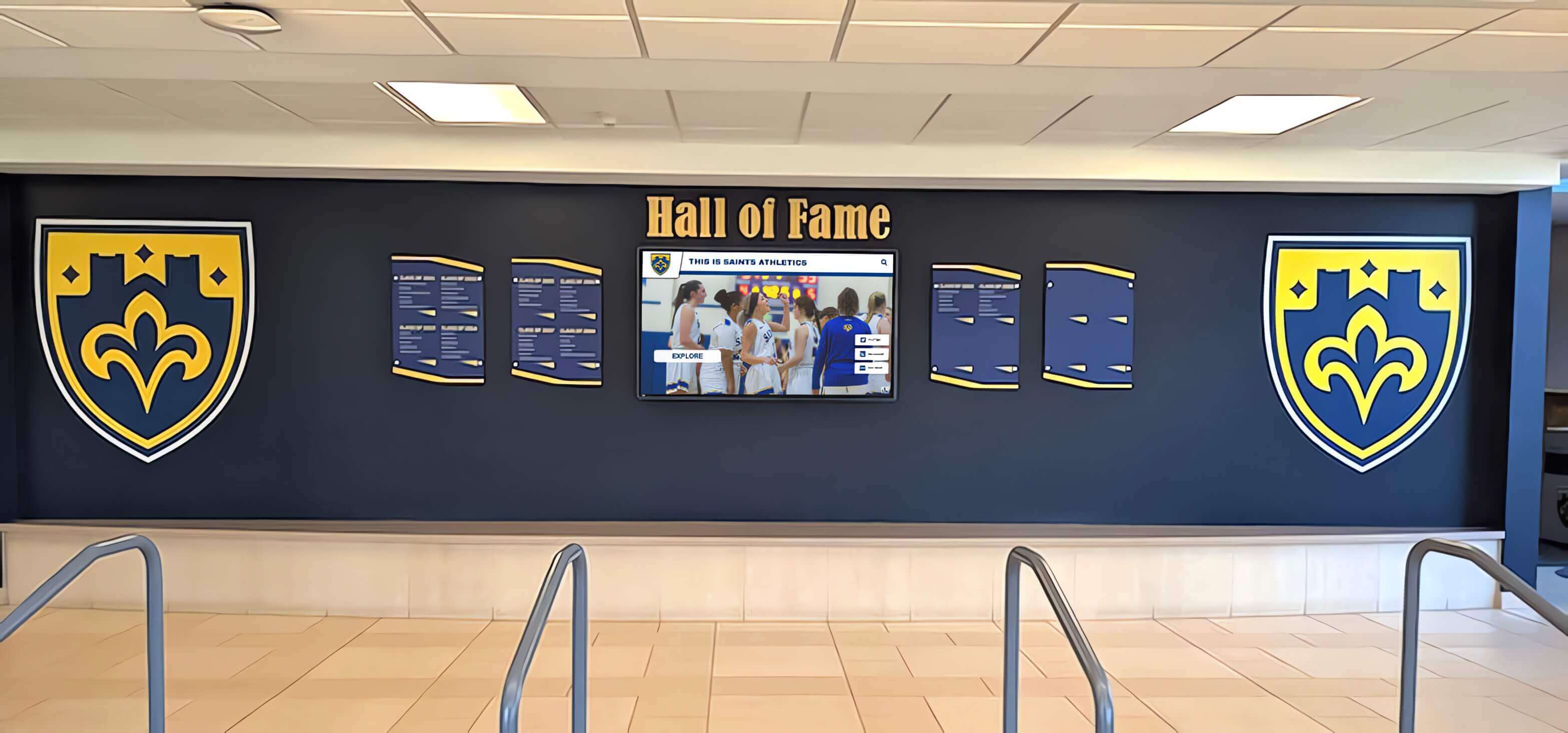
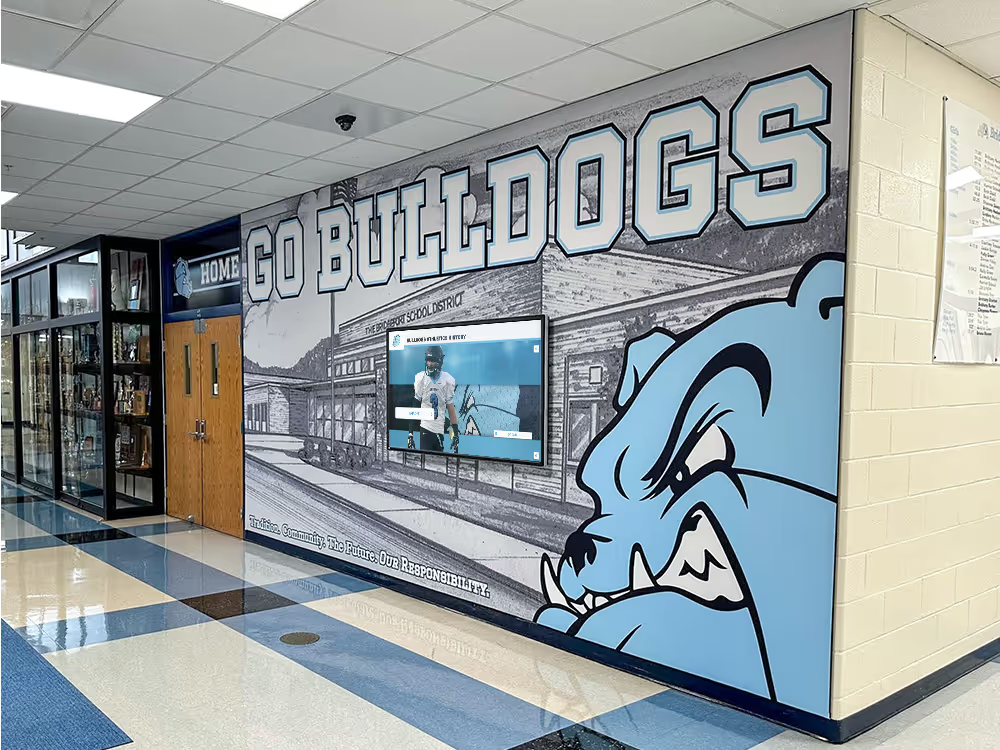
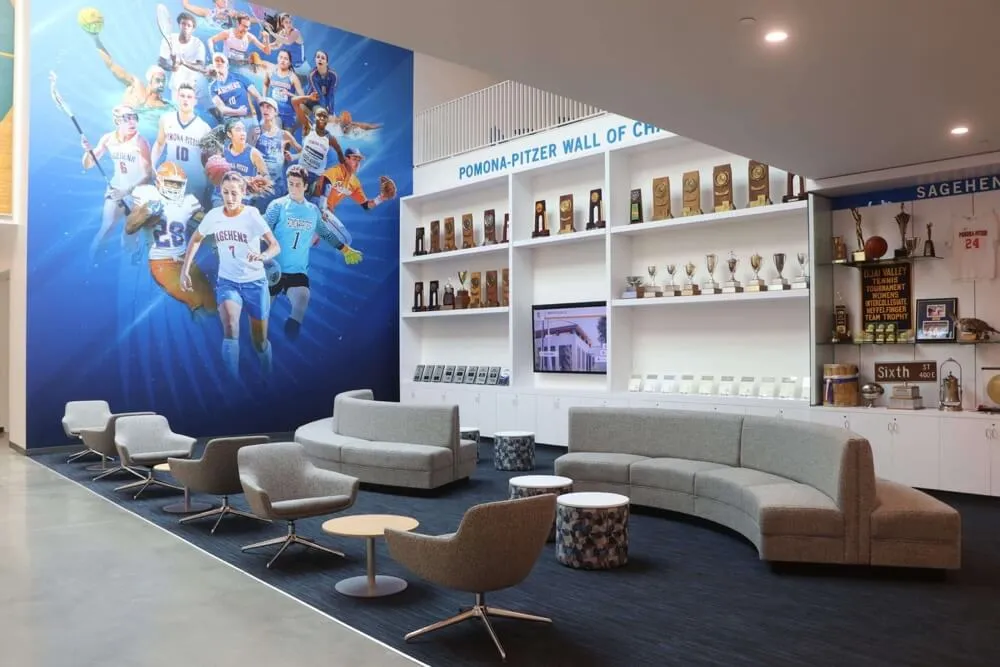
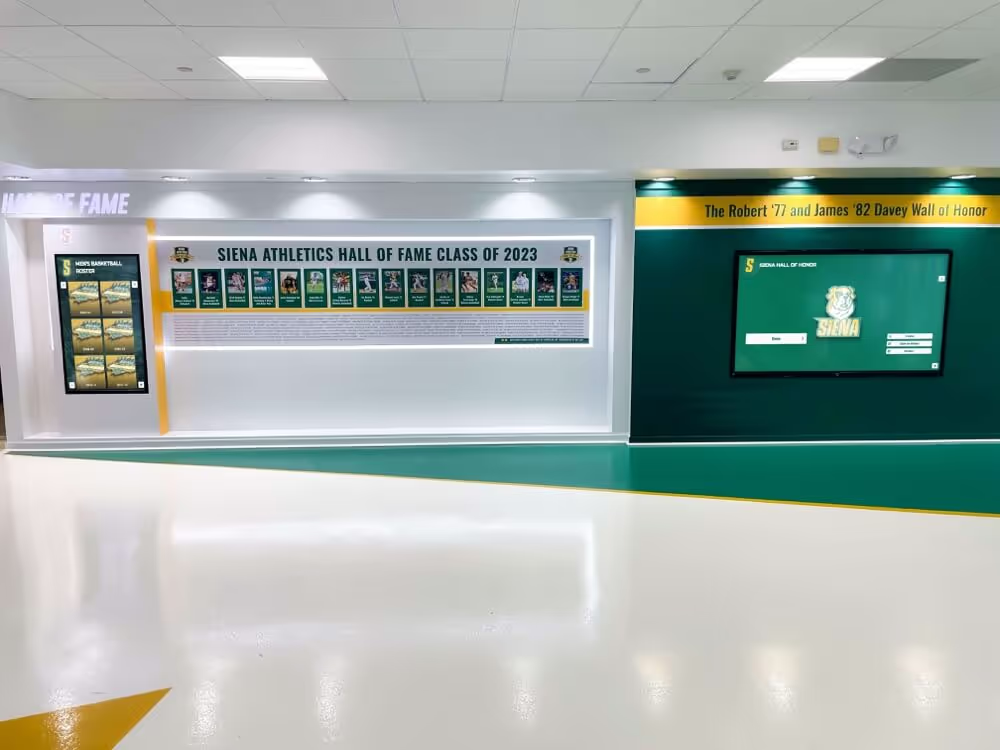
Professional installations create impressive focal points celebrating achievement while enhancing facility aesthetics and institutional pride
Program Snapshot: Digital Hall of Fame Recognition Systems
Before exploring implementation details, understanding complete digital hall of fame program characteristics helps organizations assess whether interactive recognition aligns with institutional needs and capabilities.
| Program Element | Description | Key Considerations |
|---|---|---|
| Target Audience | Current members, alumni, prospective participants, families, community supporters, donors, visitors | Different audiences require different content types and discovery pathways |
| Recognition Capacity | Unlimited honorees across all achievement categories and complete historical periods | Eliminates space constraints forcing selective recognition decisions |
| Primary Outcomes | Comprehensive achievement celebration, enhanced engagement, preserved heritage, strengthened community connections, institutional pride | Success requires measurable goals beyond simply “having a digital display” |
| Technology Components | Interactive touchscreen displays, web-accessible platforms, cloud-based content management systems, analytics | Purpose-built recognition platforms deliver superior results versus generic signage |
| Content Requirements | Photos, biographies, statistics, videos, achievements, historical context for all honorees | Comprehensive content development represents substantial but essential investment |
| Launch Timeline | Typically 3-6 months from initial planning through public unveiling ceremony | Rushed implementations with inadequate preparation consistently disappoint communities |
| Ongoing Management | Monthly content updates, annual induction cycles, quarterly program reviews, technology maintenance | Sustainable operations require realistic staff capacity and clear responsibilities |
| Budget Considerations | Initial investment $8,000-35,000+; annual operating costs $1,500-5,000 typically | Complete budgets must include hardware, software, training, support, content development |
Content Architecture: Organizing Recognition for Interactive Discovery
Digital halls of fame structure achievement celebration through specialized content modules specifically designed for touchscreen exploration:
Individual Honoree Profiles
Each inductee receives comprehensive digital recognition including:
- High-resolution portrait and action photographs capturing individuals and their achievements
- Complete biographical information with graduation year, position, role, hometown, and current location details
- Detailed achievement descriptions explaining accomplishments, significance, impact, and historical context
- Career statistics and quantitative accomplishment documentation across seasons or organizational tenure
- Video highlights, interviews, performance footage, or historical recordings when available
- Awards, honors, and special recognition received during participation or subsequently
- Historical context connecting individual achievements to institutional traditions and program evolution
- Related content linking associated teams, coaches, mentors, family members, or connected achievements
Team and Group Recognition
Championship and milestone teams deserve collective celebration:
- Team photographs with all members, coaches, support staff, and contributors properly identified
- Season records, statistics, game results, and tournament progression documentation
- Individual roster information showing each team member’s position, role, and specific contributions
- Season narratives describing challenges overcome, memorable moments, and championship journey
- Coach perspectives on team chemistry, preparation strategies, and success factors
- Long-term program impact from championship seasons and milestone achievements on institutional culture
Historical Context and Institutional Memory
Comprehensive programs preserve complete heritage:
- Program timelines showing evolution from founding through present day operations
- Coaching histories tracking leadership across decades of program development
- Championship and milestone documentation preserving significant moments and accomplishments
- Facility development showing where historic achievements occurred and venue evolution
- Era-specific context explaining how programs, rules, competition, and opportunities evolved over time
- Anniversary and commemorative content marking significant milestones and special occasions
Interactive Discovery Features
Modern digital halls of fame enable multiple exploration pathways:
Search Capabilities
- Full-text search across names, achievements, years, statistics, and keyword content
- Auto-complete suggestions reducing typing errors and speeding discovery process
- Spelling tolerance ensuring misspellings don’t prevent finding desired honorees
- Multiple simultaneous search criteria narrowing large archives efficiently
Filtering and Browsing Options
- Year-based filtering showing specific graduating classes, championship seasons, or recognition periods
- Achievement category organization separating athletics, academics, arts, service, leadership, and specialized honors
- Sport or activity-specific views for programs with multiple recognition types
- Alphabetical browsing when visitors know names but not specific years or categories
- Featured content highlighting notable achievements, interesting stories, and significant milestones
Engagement Features
- Social sharing enabling honorees to celebrate accomplishments with extended personal and professional networks
- QR code generation linking physical spaces to specific digital profiles for targeted access
- Analytics tracking which content attracts most community interest guiding future development
- Related content suggestions connecting associated achievements and individuals creating discovery journeys
Explore comprehensive digital hall of fame features that maximize recognition effectiveness and community engagement.
Cloud-based management enables updating displays from any location with internet access without requiring technical expertise
Digital Hall of Fame Applications Across Institution Types
Interactive recognition serves diverse organizational contexts with customized approaches:
Educational Institutions (Schools, Colleges, Universities)
Academic environments implement comprehensive recognition celebrating:
Recognition Categories
- Athletic achievements across all sports, levels, and competitive divisions
- Academic excellence including valedictorians, National Merit Scholars, academic all-state, and scholarship recipients
- Performing arts achievements in music, theater, dance, and creative disciplines
- Community service and leadership contributions to school and broader communities
- Alumni accomplishments and philanthropic support demonstrating long-term institutional impact
- Faculty and staff recognition honoring educators and contributors to institutional success
- Historical institutional milestones including anniversaries, facility dedications, and significant events
Educational institutions benefit from comprehensive platforms supporting diverse achievement types rather than athletics-only solutions limited to sports recognition.
Student Privacy and Permission Management
Schools require appropriate controls:
- Photo and information releases for public display ensuring legal compliance
- FERPA compliance protecting student information privacy according to federal requirements
- Age-appropriate content for minor students considering developmental appropriateness
- Opt-out procedures respecting privacy preferences and family concerns
- Data security protecting student information from unauthorized access or breaches
Educational institutions should prioritize platforms with appropriate privacy controls and permission management supporting regulatory compliance while enabling comprehensive recognition.
Sports Organizations (Professional Teams, Leagues, Clubs)
Athletic organizations emphasize specialized features:
Statistics and Records Integration
- Season and career statistics automatically compiled from game data
- Record identification and tracking showing evolution over time
- Performance comparisons across eras enabling historical context
- Championship and tournament results documentation
- Individual awards and honors received during careers
Sports-focused platforms with statistics integration provide substantial value for athletic organizations where quantitative performance documentation forms recognition foundations.
Fan Engagement Features
- Interactive games and trivia testing knowledge about team history
- Social media integration enabling easy sharing and viral promotion
- Fantasy roster creation from historical players sparking discussion
- Video highlight galleries showcasing memorable moments and performances
- Fan voting and favorites creating community participation
Sports organizations benefit from engagement features creating entertainment value beyond simple recognition display.
Corporate and Professional Organizations
Business environments prioritize different recognition elements:
Professional Achievement Recognition
- Sales performance milestones and top producer acknowledgment
- Years of service and tenure recognition celebrating loyalty and longevity
- Leadership development and promotion milestones marking career advancement
- Innovation and improvement contributions driving organizational success
- Safety records and compliance achievements in regulated industries
Corporate recognition emphasizes measurable performance metrics and professional accomplishments demonstrating individual contributions to organizational goals.
Brand Alignment and Corporate Identity
- Custom design reflecting corporate branding, colors, and visual identity precisely
- Integration with corporate communication systems and employee platforms
- Support for multiple locations and divisions with centralized management
- Professional appearance meeting corporate standards for public-facing displays
- Analytics demonstrating program value and engagement to leadership stakeholders
Corporate environments require professional polish and brand consistency throughout recognition systems maintaining organizational standards.
Discover recognition strategies across institutional contexts that celebrate achievement effectively.
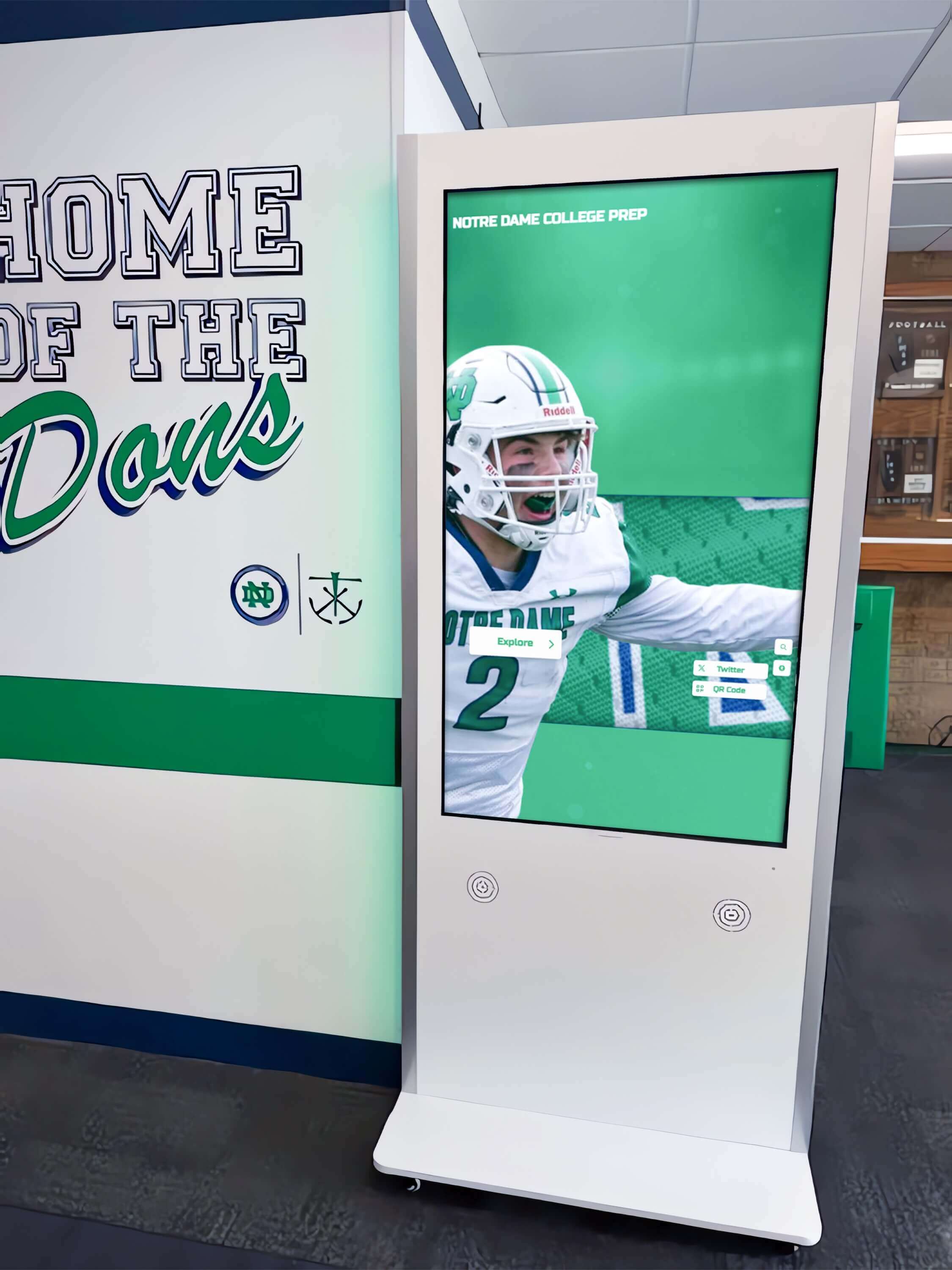
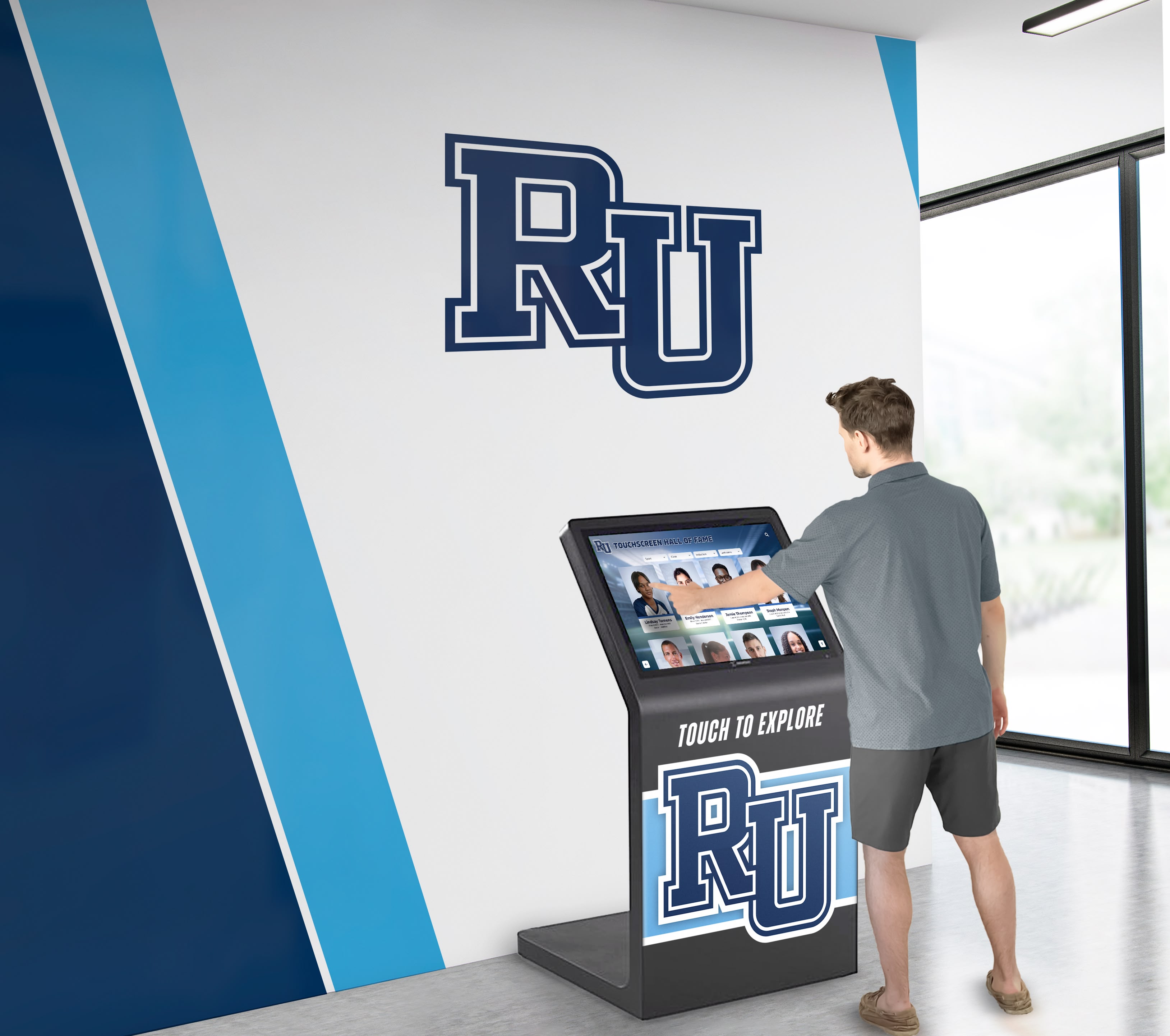
Freestanding kiosk enclosures provide complete professional installations without requiring wall mounting or facility modifications
Implementation Best Practices for Digital Halls of Fame
Successful programs require thoughtful planning and systematic execution beyond simply purchasing impressive technology.
Strategic Planning and Goal Setting
Clear objectives guide effective implementation:
Define Recognition Scope
- Determine which achievement categories receive recognition inclusion based on institutional values
- Establish selection criteria and eligibility requirements ensuring equitable transparent standards
- Decide historical depth defining how far back recognition extends and archival priorities
- Identify target audiences and prioritize their discovery needs, preferences, and access patterns
- Set measurable success metrics defining program effectiveness and community impact indicators
- Secure administrative support and budget authorization covering complete implementation and operations
Assess Organizational Capabilities
- Evaluate available staff time and technical capabilities for ongoing program management realistically
- Review network infrastructure and connectivity supporting cloud-based systems reliably
- Identify optimal display placement locations based on traffic patterns and thematic connections
- Inventory existing recognition archives requiring digitization and content development
- Establish realistic budgets covering initial investment and ongoing operational expenses
- Develop governance structure assigning clear responsibilities across stakeholders and avoiding ambiguity
Technology Evaluation and Selection
Appropriate platform selection determines long-term success:
Distinguish Recognition Platforms from Generic Signage
Critical differences between purpose-built recognition systems and communication displays:
- Recognition platforms provide searchable databases; signage shows rotating slides without search capabilities
- Recognition systems offer individual profile pages; signage displays temporary announcements
- Recognition platforms enable filtering and discovery; signage provides passive linear viewing only
- Recognition systems include web accessibility; signage remains facility-bound without online access
- Recognition platforms provide specialized content management; signage offers basic scheduling tools only
Organizations implementing generic signage for recognition consistently express regret once limitations become apparent and comprehensive recognition proves impossible.
Evaluate Essential Features
- Intuitive touchscreen interfaces requiring no instruction for users of all ages and abilities
- Powerful search and filtering capabilities making every profile discoverable regardless of archive size
- Comprehensive multimedia support including photos, videos, documents, and interactive elements
- User-friendly content management enabling non-technical administrators to maintain programs confidently
- Web platform accessibility extending recognition globally beyond physical facility locations
- Analytics and reporting demonstrating engagement patterns and measuring program impact
- Vendor support quality through conversations with current customers about responsiveness and helpfulness
Consider Total Cost of Ownership
- Hardware costs including displays, installation, mounting, and electrical infrastructure
- Software subscription fees covering platform access, cloud hosting, updates, and support
- Training and implementation services ensuring confident administrator capability
- Content development assistance if historical archives require external support
- Ongoing operational expenses including electricity, maintenance, and future replacements
Comprehensive proposals should include detailed 5-year cost projections covering all expenses ensuring budget adequacy for sustainable operations rather than creating abandoned investments.
Content Development Strategy
Recognition quality depends fundamentally on content comprehensiveness:
Initial Archive Development
Launch with substantial recognition establishing immediate program value:
- Historical archives providing immediate depth demonstrating institutional commitment and recognition scope
- Current recognition showing ongoing relevance and active programs rather than purely historical focus
- Variety across achievement categories and member populations ensuring broad community representation
- High-quality photography and complete biographical information meeting professional presentation standards
- Video content when available bringing recognition to life emotionally through multimedia storytelling
- Balance between prominent legendary figures and broader community representation avoiding elitism
Comprehensive initial content creates immediate engagement and demonstrates platform value rather than disappointing early users with sparse incomplete recognition undermining program credibility and community enthusiasm.
Ongoing Content Management
Sustainable programs require systematic workflows:
- Defined processes for adding recognition as achievements occur throughout academic or fiscal years
- Clear responsibility assignment for various content categories, programs, and recognition types
- Quality standards ensuring consistent professional presentation across all profiles and content
- Student or member involvement opportunities where appropriate creating ownership and learning experiences
- Community contribution systems enabling submissions from alumni, families, or participants
- Regular content audits identifying gaps, outdated information, or needed corrections and updates
- Anniversary and milestone recognition maintaining ongoing engagement beyond initial launch enthusiasm
Recognition programs evolve from temporary projects into sustainable institutional practices through systematic workflows and clear ownership preventing abandonment as staff priorities change or administrators transition.
Learn about effective content strategies for recognition programs that preserve institutional heritage comprehensively.
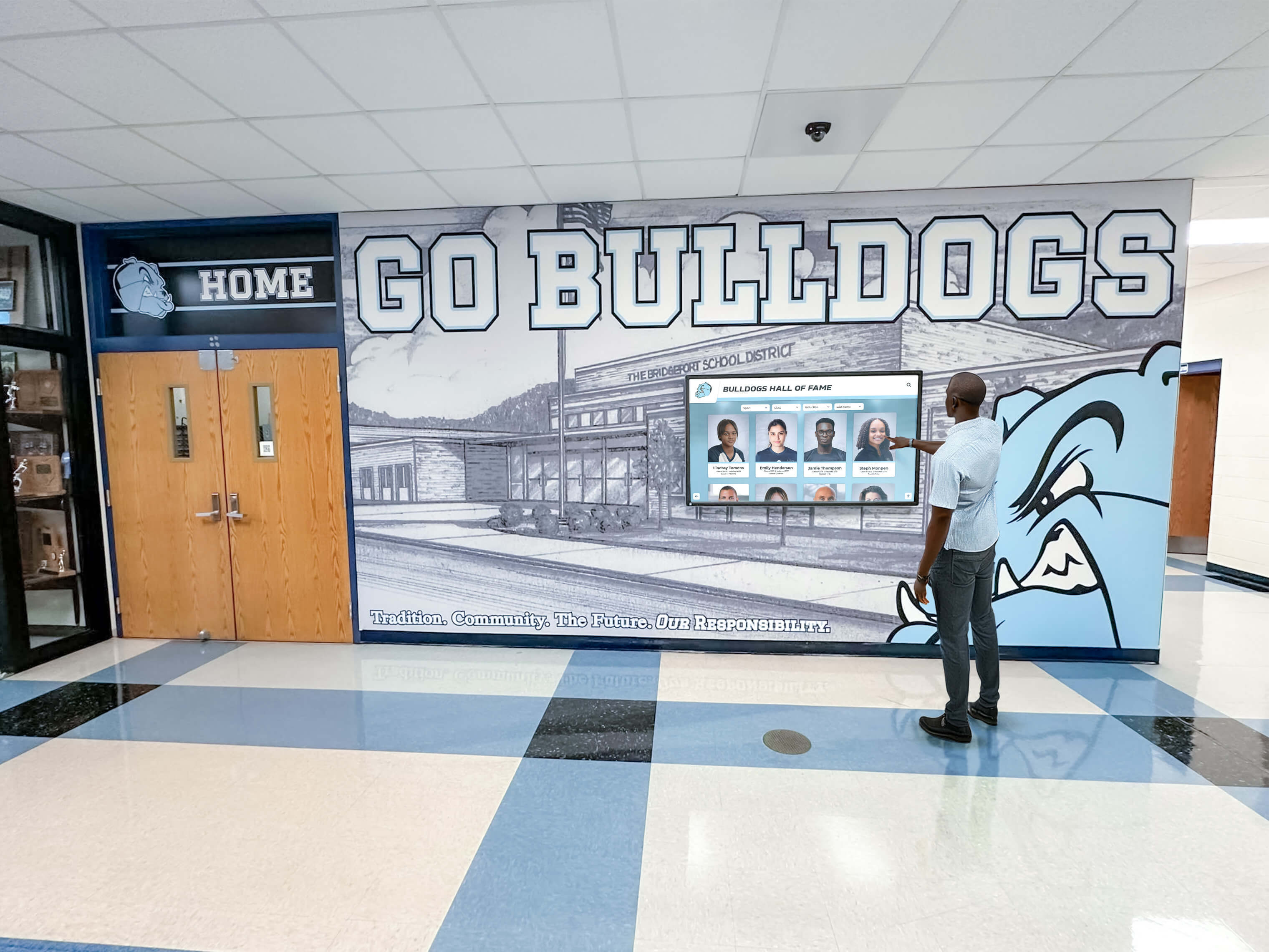
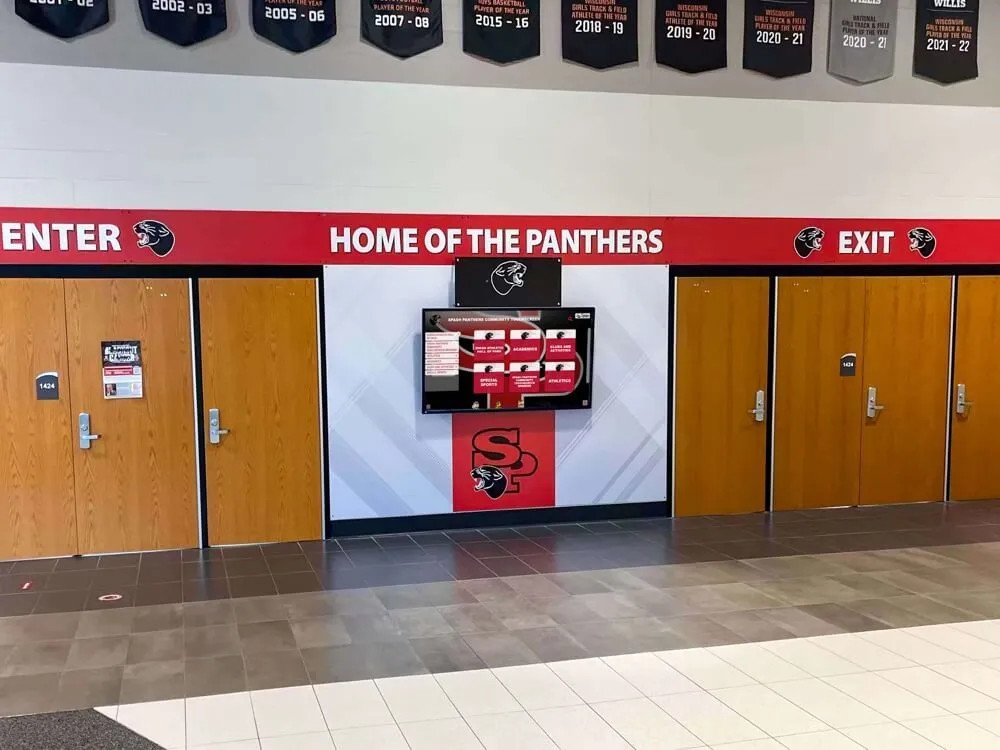
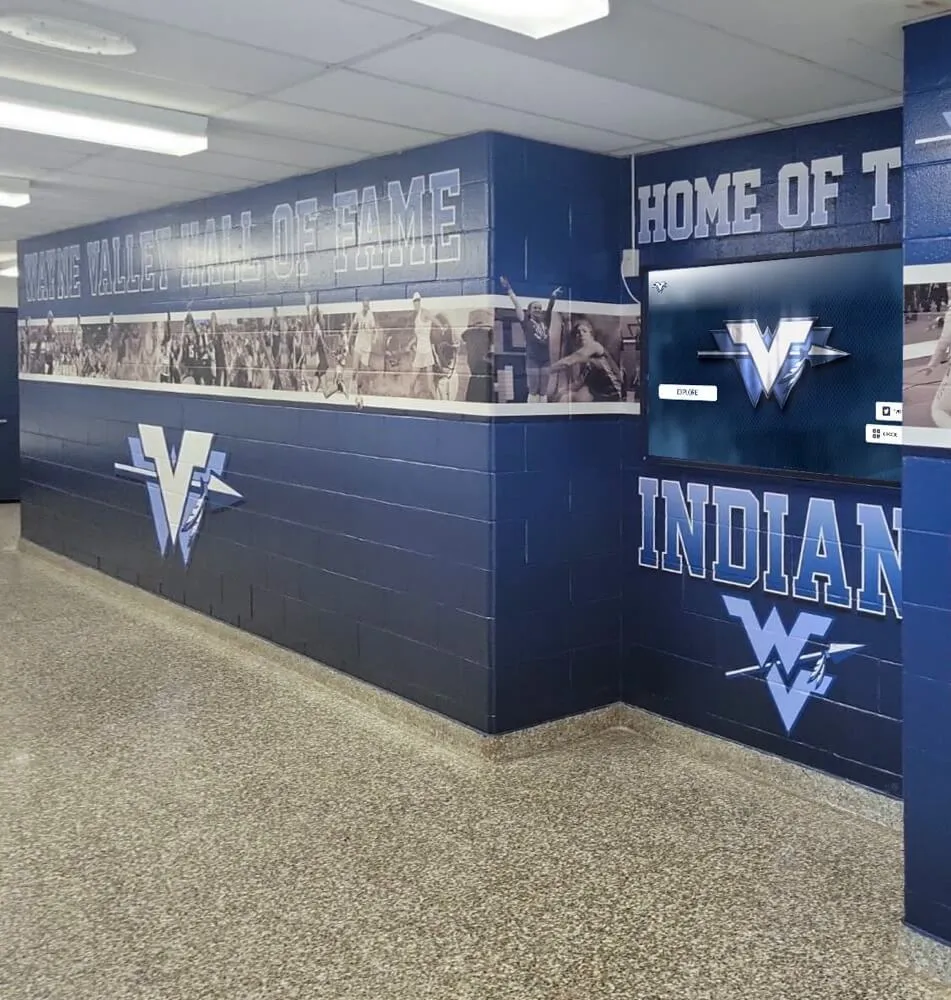
Strategic placement in high-traffic hallways ensures digital halls of fame reach broad audiences during daily facility use
Common Digital Hall of Fame Questions and Concerns
Organizations considering interactive recognition often have similar questions:
How Much Do Digital Halls of Fame Cost?
Complete digital hall of fame investments typically range $8,000-35,000+ initially depending on display size, platform selection, installation complexity, and initial content development scope. Annual operating costs run $1,500-5,000 covering software subscriptions, support, and minimal maintenance. Many organizations achieve cost-neutral operation within 3-5 years compared to ongoing traditional recognition expenses while delivering superior capacity and engagement throughout 10-20+ years of operation.
What Happens to Existing Physical Recognition?
Digital halls of fame complement rather than replace traditional displays. Many organizations maintain existing plaques, banners, and trophies while adding interactive displays expanding recognition capacity and engagement. Physical displays provide visual impact and traditional aesthetic appeal while digital systems enable comprehensive searchable archives, multimedia content, and unlimited capacity traditional approaches cannot deliver.
How Long Does Implementation Take?
Typical digital hall of fame implementation spans 3-6 months from initial planning through public unveiling including technology evaluation (4-6 weeks), initial content development (8-16 weeks), hardware installation (2-4 weeks), administrator training (1-2 weeks), and launch preparation. Organizations can accelerate timelines by starting content development immediately, engaging implementation services for content assistance, or launching with focused initial content and systematically expanding archives over subsequent months.
What Technical Skills Are Required?
Purpose-built recognition platforms require no specialized technical expertise. Administrators with basic computer skills and web browser familiarity can confidently manage content through intuitive cloud-based interfaces similar to social media platforms or email systems. Initial training typically provides sufficient preparation, with ongoing support addressing any questions or challenges as they arise during normal operations.
How Do We Measure Success?
Digital hall of fame success assessment includes quantitative metrics (display interactions, average session duration, web platform visits, search queries, geographic reach) and qualitative indicators (stakeholder feedback, community pride, recruitment impact, sustained engagement over time). Analytics built into recognition platforms provide detailed engagement data while surveys, conversations, and observation reveal community satisfaction and recognition impact on institutional culture and pride.
What About Privacy and Permissions?
Educational institutions must ensure appropriate photo releases, information permissions, and FERPA compliance before publicly recognizing students. Recognition platforms should provide permission management tools, opt-out capabilities, and privacy controls ensuring legal compliance while enabling comprehensive celebration. Adult alumni, professional athletes, and organizational members generally have fewer restrictions, but confirming appropriate permissions before publication remains best practice across institutional contexts.
Explore comprehensive implementation guidance addressing common questions and concerns about digital recognition.
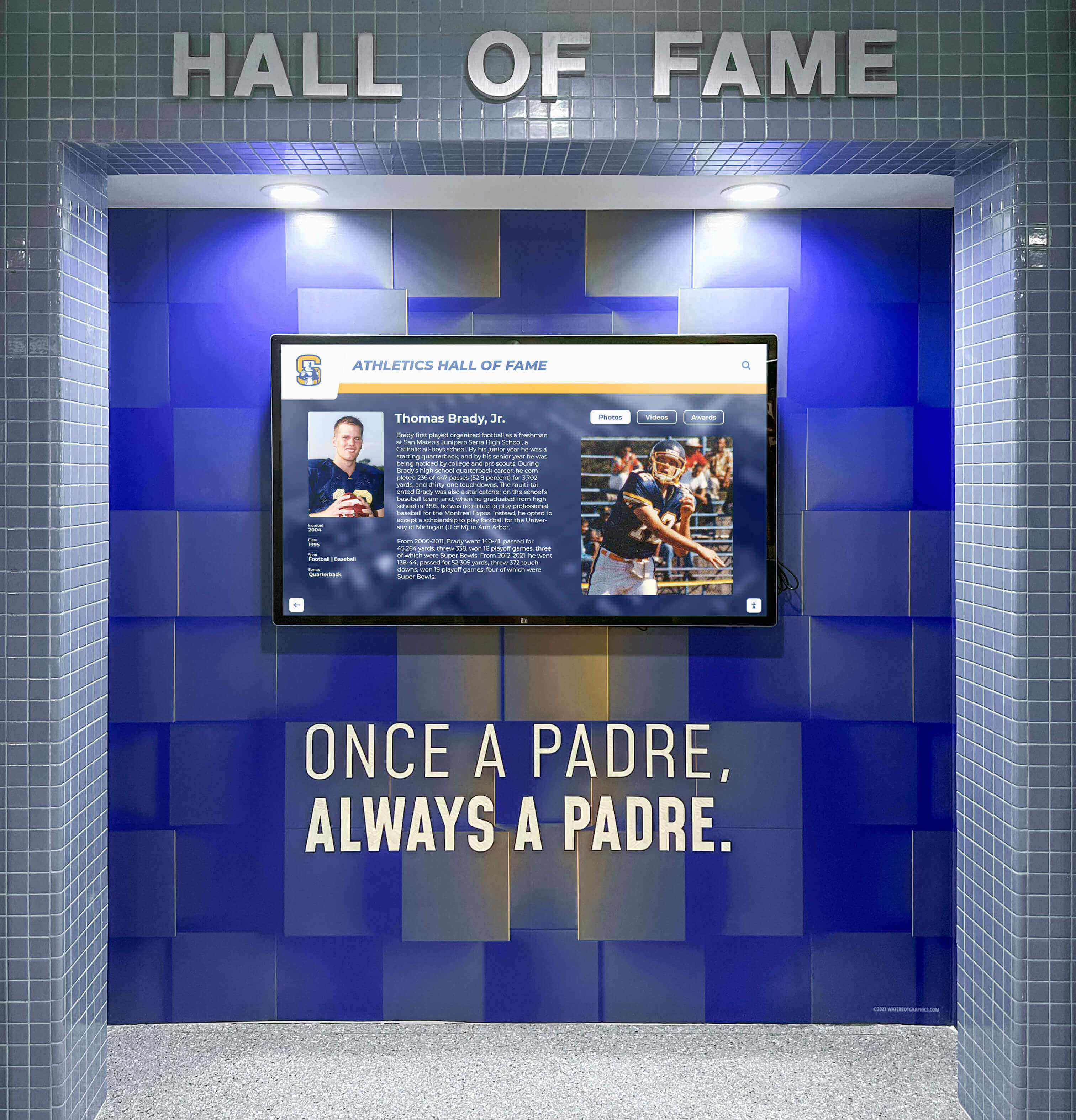
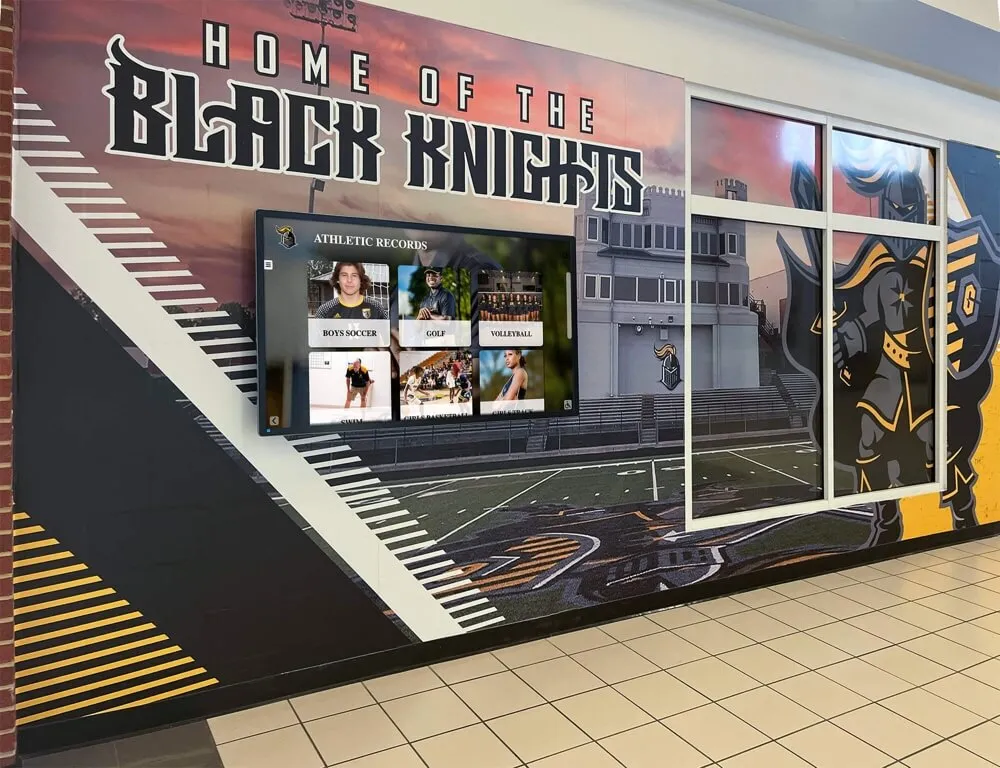
Athletic facility installations create natural thematic connections between recognition and current programs while inspiring participants
Future Trends in Digital Hall of Fame Technology
Interactive recognition continues evolving with emerging capabilities:
Artificial Intelligence Integration
AI features enhancing recognition experiences:
- Facial recognition enabling photo search and automatic identification across historical archives
- Natural language search understanding conversational queries rather than requiring specific keywords
- Content recommendations suggesting related achievements and profiles based on viewing patterns
- Automatic photo enhancement optimizing historical images improving visual quality
- Predictive analytics identifying engagement patterns and content opportunities guiding development
- Voice interaction for hands-free navigation supporting accessibility and convenience
AI capabilities will increasingly personalize recognition experiences while reducing content management burden through automation.
Augmented and Virtual Reality
Immersive technologies expanding recognition:
- Virtual reality tours of recognition spaces accessible remotely from anywhere globally
- Augmented reality overlays enhancing physical displays with additional digital content layers
- 3D artifacts and memorabilia viewable from all angles in virtual environments
- Virtual ceremonies and induction events reaching global audiences without travel requirements
- Location-based mobile experiences activated at physical recognition sites through smartphones
AR and VR technologies will bridge physical and digital recognition creating seamless experiences across environments and removing geographic barriers to participation.
Advanced Analytics and Impact Measurement
Data-driven insights demonstrating value:
- Detailed engagement metrics showing specific content performance and visitor behavior patterns
- Demographic analysis ensuring equitable recognition across populations and identifying gaps
- Longitudinal studies connecting recognition programs to participant outcomes and institutional success
- User journey mapping understanding discovery patterns and exploration behaviors
- A/B testing optimizing content presentation and interface design based on actual usage data
- Social listening tracking recognition sharing and discussion across platforms measuring viral impact
Sophisticated analytics will help organizations continuously improve recognition programs and demonstrate institutional value through compelling data supporting continued investment and program expansion.
Conclusion: Transforming Recognition Through Digital Halls of Fame
Digital halls of fame represent more than modern replacements for traditional plaques—they enable fundamentally different approaches to recognition celebrating unlimited achievements comprehensively, creating engaging discovery experiences impossible with static displays, and preserving institutional heritage in accessible formats serving current and future generations effectively.
When organizations thoughtfully evaluate technology distinguishing purpose-built recognition platforms from generic alternatives, implement systems aligned with institutional capabilities and resources, develop comprehensive content strategies honoring achievements meaningfully, and commit to sustained excellence beyond initial launch enthusiasm, digital recognition transforms from theoretical possibility to practical reality delivering lasting value to communities while strengthening institutional pride and connections.
Ready to explore how digital halls of fame can transform recognition at your institution? Modern interactive recognition solutions help organizations celebrate unlimited achievements while creating engaging experiences and preserving heritage comprehensively. Solutions like Rocket Alumni Solutions provide comprehensive platforms specifically designed for institutional recognition, combining purpose-built software with professional hardware recommendations, implementation support, and ongoing training ensuring successful long-term programs becoming valued institutional centerpieces.
Your implementation journey begins with clear planning defining recognition philosophy and scope, continues through thoughtful technology selection ensuring platforms match your specific needs and capabilities, advances with systematic content development creating meaningful achievement celebration, and sustains through ongoing commitment making digital recognition permanent institutional practice rather than temporary initiative. Book a demo to explore how digital halls of fame can appropriately honor your community’s excellence and heritage.
Your community’s achievements deserve recognition technology celebrating accomplishments appropriately while creating meaningful engagement and lasting impact. The most important consideration isn’t selecting the most expensive hardware or most sophisticated software—it’s choosing solutions aligned with your recognition values, sustainable within your resources, and designed to serve your specific community needs effectively throughout decades of operation. Your achievers deserve comprehensive equitable recognition celebrating their excellence meaningfully. Digital halls of fame make that vision achievable and sustainable for generations to come.