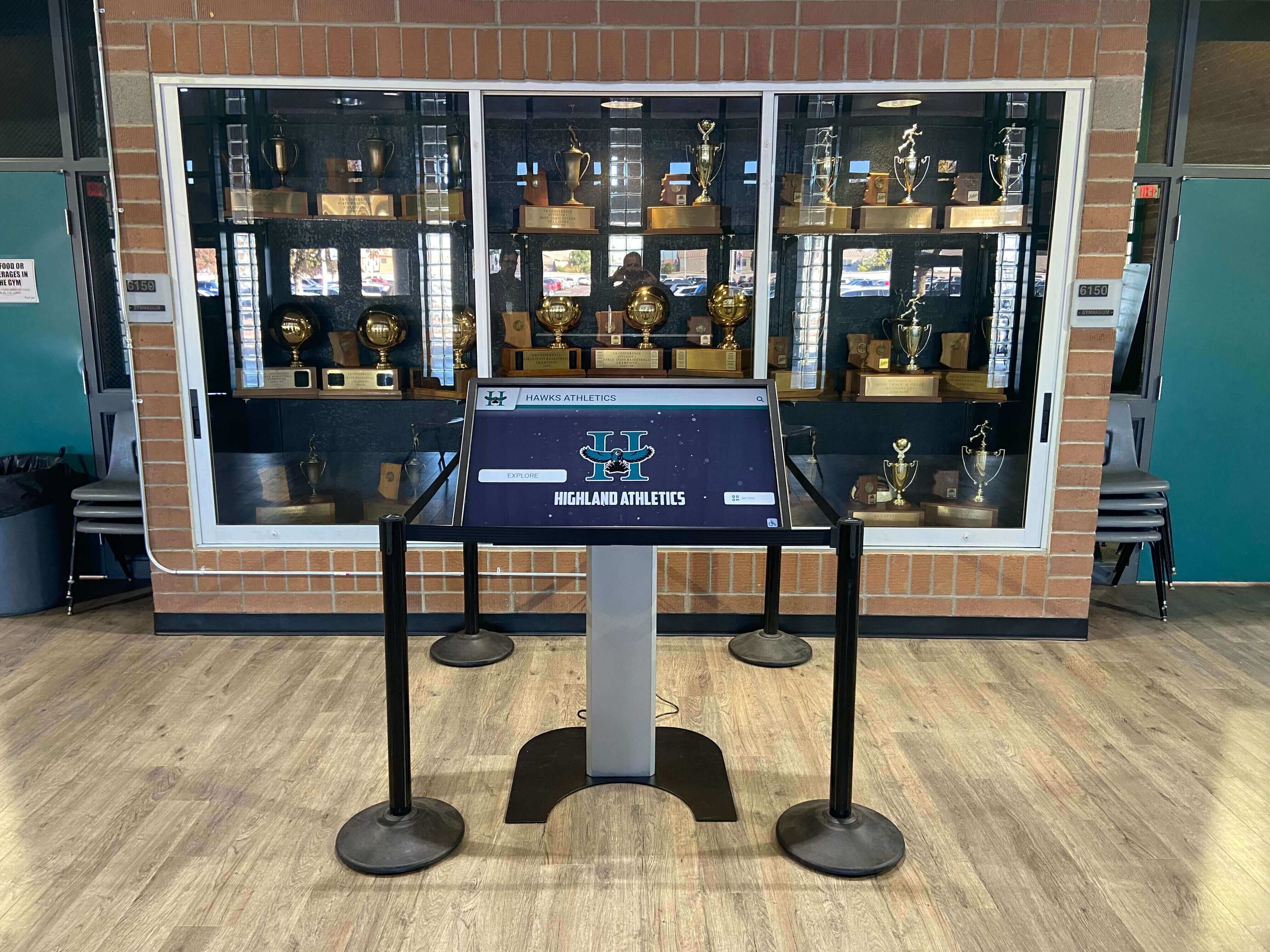




High school athletic programs accumulate trophies and recognition awards at rates that quickly overwhelm traditional display capacity. Gym lobbies and athletic facilities become cluttered with overcrowded trophy cases that force impossible choices about which achievements receive visibility while countless others languish in storage rooms or administrative offices. Every championship season adds more awards competing for increasingly limited space, creating recognition inequity where recent achievements displace historical excellence or prominent sports overshadow smaller programs deserving equal celebration.
Touchscreen displays offer comprehensive solutions to trophy overcrowding challenges facing high school athletic departments. Interactive digital platforms showcase unlimited achievements without physical space constraints, provide engaging exploration experiences that static trophy cases cannot match, and enable schools to honor every program and accomplishment comprehensively. Modern touchscreen systems transform gym lobby recognition from frustrating spatial puzzles into dynamic digital showcases that celebrate athletic excellence across all sports, teams, and eras equally.
This comprehensive guide explores how high schools implement touchscreen displays in gym lobbies for digital trophy recognition, addressing common overcrowding challenges while creating professional recognition programs that honor athletic achievement appropriately, engage students and visitors effectively, and preserve school heritage accessibly for current and future communities.
High school gym lobbies serve as primary gathering spaces where students, families, visiting teams, and community members experience school athletic culture first-hand. Touchscreen displays positioned strategically in these high-traffic locations transform trophy recognition from passive viewing into interactive exploration while solving practical problems that limit traditional trophy case effectiveness.

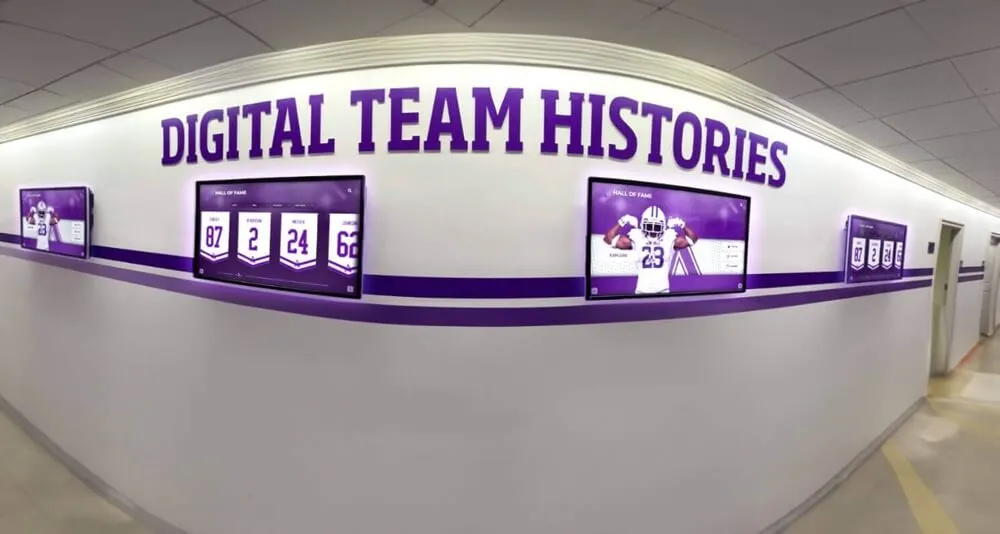
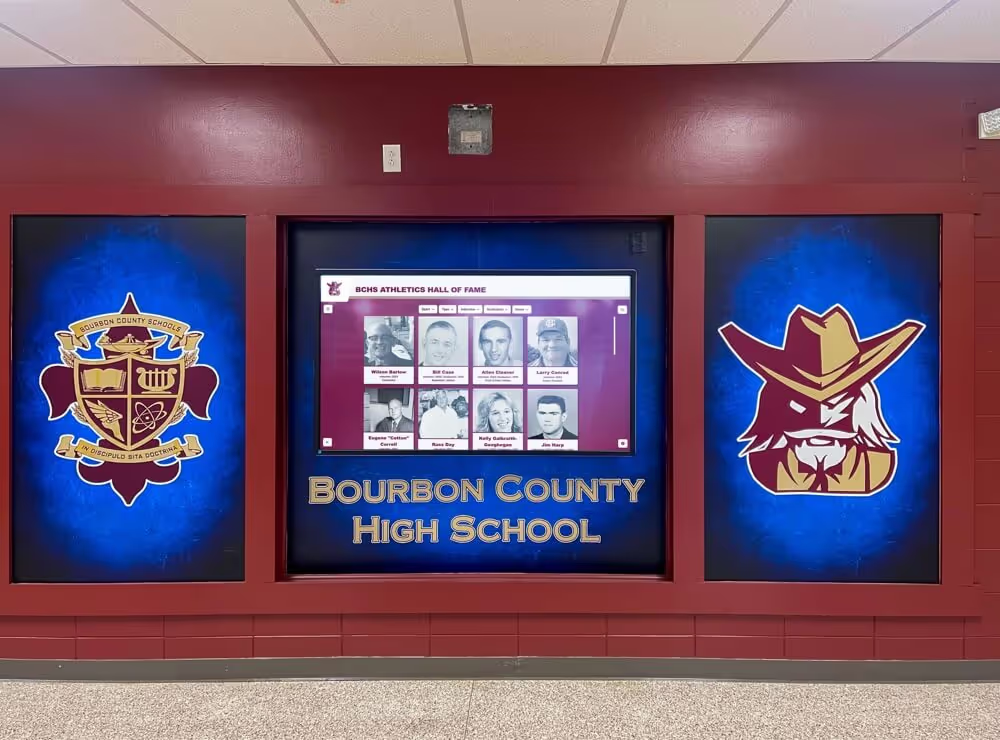
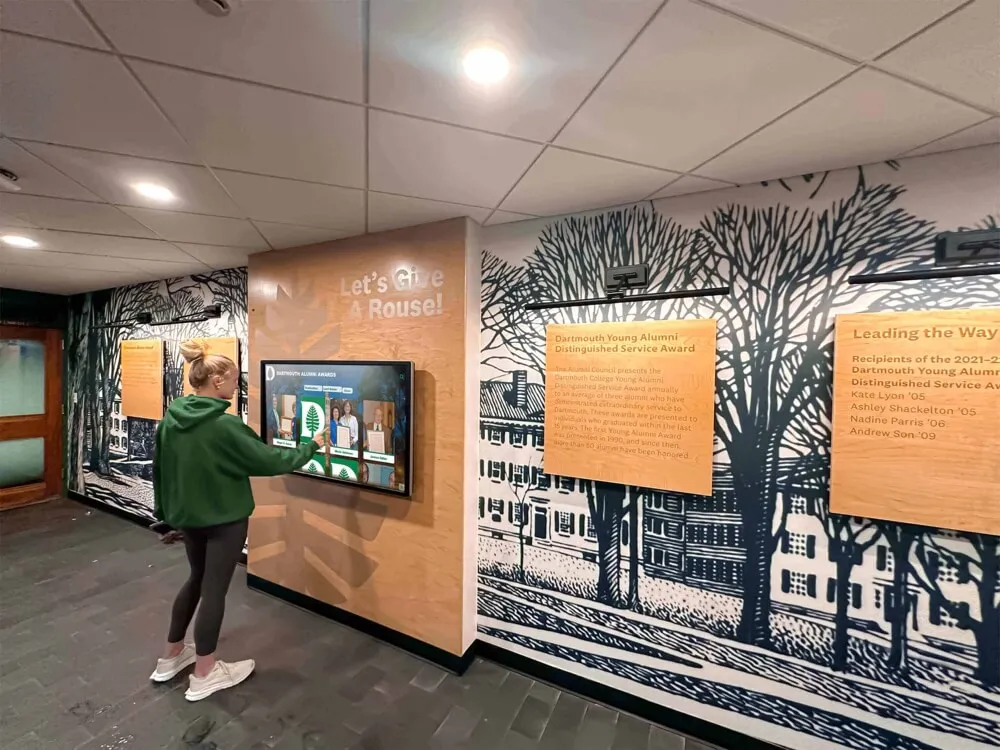
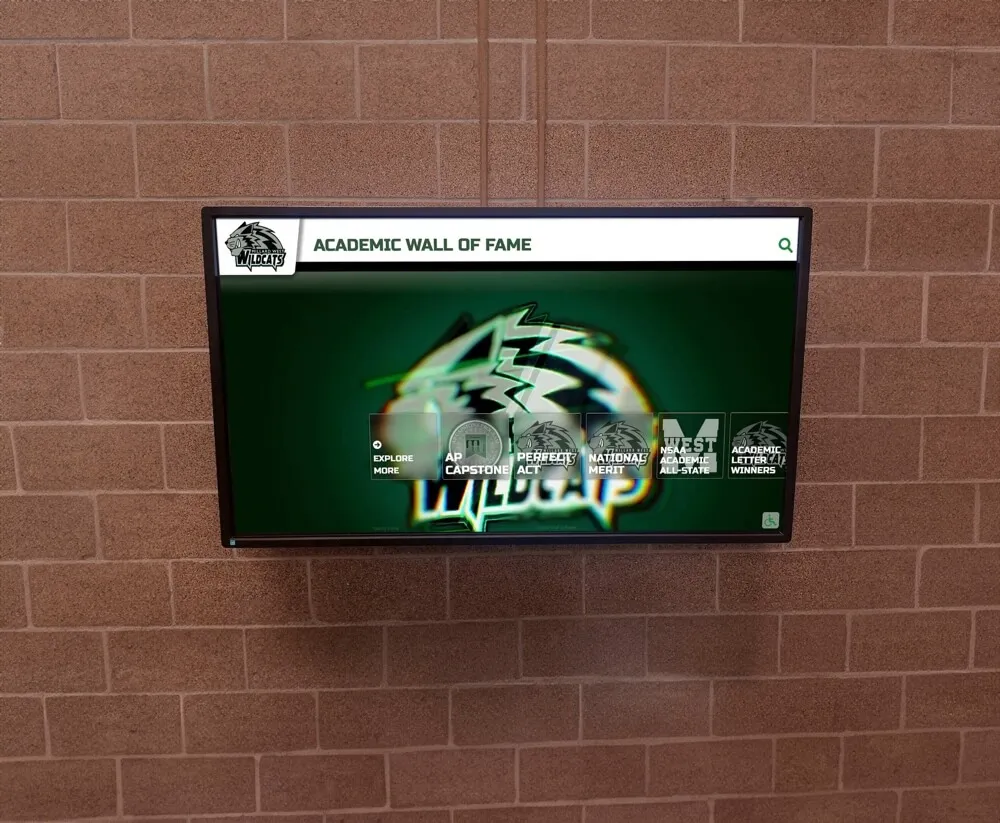
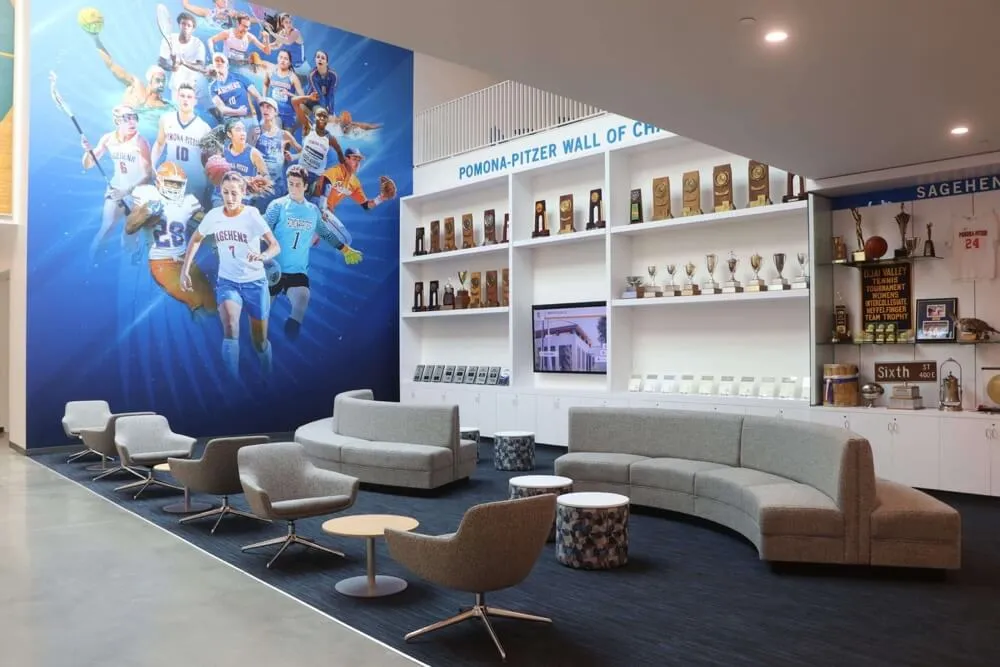
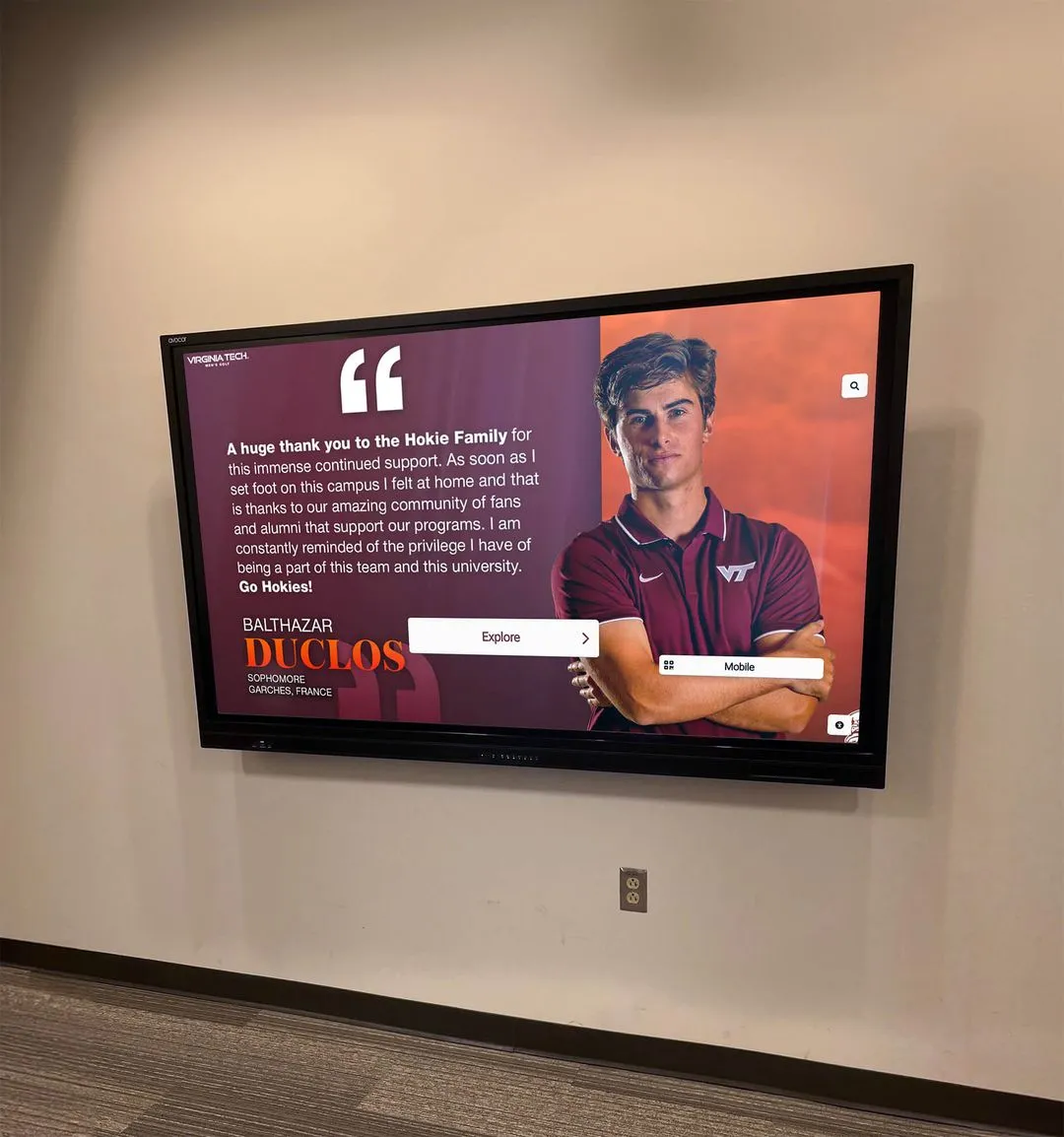
Modern touchscreen kiosks integrate seamlessly with existing trophy cases to provide unlimited digital recognition capacity
Program Snapshot: Digital Trophy Recognition for High School Gym Lobbies
Understanding comprehensive program scope helps athletic directors assess whether touchscreen displays align with recognition needs and facility opportunities.
| Program Element | Description | Key Advantages |
|---|---|---|
| Primary Challenge Addressed | Trophy case overcrowding forcing removal of deserving achievements or limiting recognition scope | Unlimited digital capacity eliminating space constraints |
| Target Audience | Current students, athletes, families, visiting teams, alumni, prospective families during tours | Creates engaging experiences for diverse gymnasium visitors |
| Recognition Capacity | Unlimited trophies, championships, and achievements without physical space requirements | Every program and accomplishment receives equal prominence |
| Core Features | Trophy browsing, team rosters, championship details, video highlights, statistical records | Far exceeds information possible with traditional trophy case labels |
| Display Options | Freestanding kiosks, wall-mounted touchscreens, integrated hybrid installations | Multiple configurations fitting various gym lobby layouts |
| Update Capability | Instant remote updates adding new trophies, correcting information, or featuring current seasons | Eliminates engraving delays and physical case rearrangement |
| Content Depth | Photos, videos, team rosters, game statistics, championship stories, historical context | Transforms simple trophy display into rich athletic heritage documentation |
Understanding Trophy Overcrowding Challenges in High School Gyms
Before exploring touchscreen solutions, examining specific problems facing athletic departments clarifies how digital platforms address real operational challenges.
Space Limitation Crisis
Traditional trophy cases create impossible recognition decisions:
Physical Capacity Constraints
High school athletic facilities face severe limitations:
- Trophy cases typically accommodate 40-80 awards before becoming overcrowded
- Championship trophies vary dramatically in size consuming disproportionate space
- Successful programs accumulate hundreds of trophies across decades exceeding any reasonable display capacity
- Multiple sports programs compete for limited gym lobby wall space
- Building codes and safety regulations restrict case expansion options
- Budget constraints prevent continuous case addition as trophy collections grow
- Historical trophies deteriorate from age requiring removal regardless of significance
Many athletic directors report that 60-70% of earned trophies remain in storage because physical display space cannot accommodate comprehensive recognition.
Recognition Inequity
Space limitations force difficult choices creating unfair outcomes:
- Recent championships displace historical achievements losing institutional memory
- Prominent sports receive priority while smaller programs lack visibility
- Large trophies crowd out numerous smaller but equally meaningful awards
- State championships appear while conference or district titles disappear
- Team accomplishments overshadow individual athletic achievements
- Boys’ and girls’ programs compete for balanced representation
- Rotation systems mean most trophies stay hidden majority of time
These inequities undermine program culture by signaling that some achievements matter more than others based not on merit but on physical display constraints.
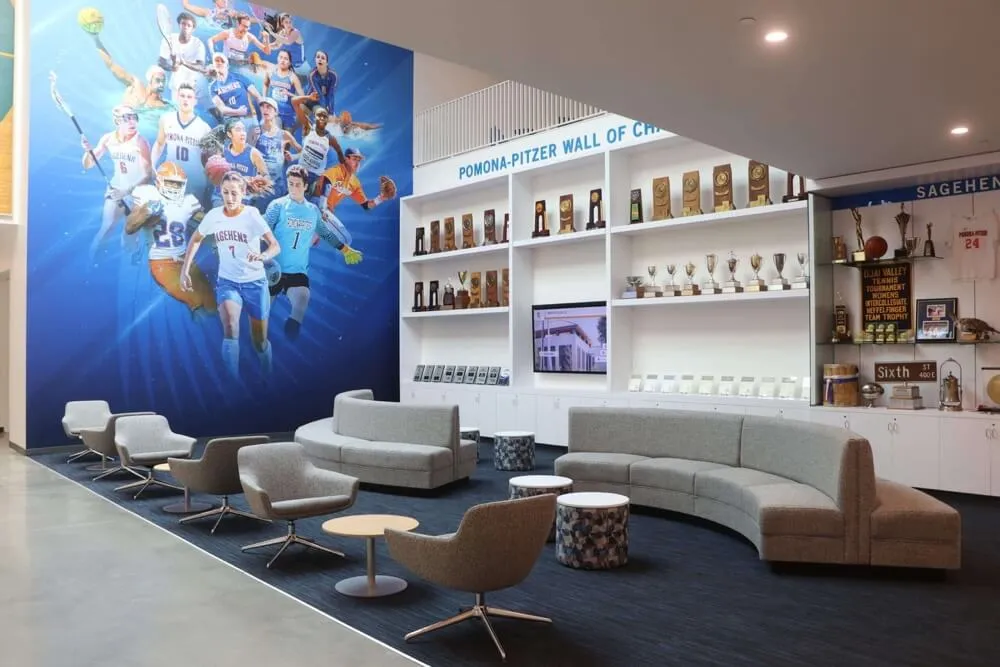
Even impressive trophy installations eventually reach capacity limits requiring difficult decisions about which achievements remain visible
Maintenance and Management Burden
Physical trophy cases require substantial ongoing effort:
Administrative Requirements
Traditional recognition demands continuous attention:
- Trophy cleaning, dusting, and case maintenance consuming custodial time
- Physical rearrangement whenever new trophies arrive requiring careful planning
- Engraving or labeling services with weeks of lead time delaying recognition
- Display decisions about trophy placement, grouping, and rotation
- Security concerns preventing theft or vandalism of valuable awards
- Lock repairs, glass replacement, and lighting maintenance
- Documentation tracking which trophies appear where and which remain in storage
Athletic directors and facilities managers consistently report that trophy case management consumes 3-5 hours monthly even with limited collections, time that could address other program priorities.
Information Limitations
Physical displays provide minimal achievement context:
- Simple labels showing trophy name, year, and perhaps sport
- No team rosters identifying championship participants
- No game statistics, scores, or competition details
- No photos documenting championship moments or team members
- No video highlights preserving athletic performances
- No connections between related achievements across multiple years
- No search capabilities helping visitors find specific information
This minimal context limits educational value and emotional connection while failing to preserve institutional knowledge that becomes increasingly valuable over time.
Schools implementing digital trophy displays report dramatic reductions in management time while simultaneously expanding recognition capacity and information richness.
Visitor Engagement Challenges
Traditional trophy cases generate limited interaction:
Passive Viewing Patterns
Static displays create brief, shallow engagement:
- Average trophy case viewing time typically 30-60 seconds as visitors pass through lobbies
- Cluttered cases overwhelm viewers preventing focused examination of specific achievements
- Small labels require close viewing difficult for groups or visitors at various heights
- No interactive elements inviting active exploration rather than passive glancing
- Repeat visitors experience unchanged displays reducing long-term interest
- Prospective families touring facilities receive minimal championship context
- Alumni returning for events cannot explore their era’s specific achievements easily
Research on visitor behavior shows that interactive displays generate 8-10 times longer engagement than static exhibits, transforming brief glances into meaningful exploration sessions.
Discovery Limitations
Physical arrangements prevent personalized discovery:
- No ability to search for specific teams, years, or achievement types
- Linear arrangement requires viewing everything to locate specific trophies
- No filtering by sport, championship level, or time period
- Difficult to compare achievements across different eras or programs
- No connections highlighting athlete participation across multiple championship teams
- Limited ability to feature current season achievements without physical rearrangement
These limitations mean visitors experience only what happens to be physically displayed rather than discovering content specifically relevant to their interests or connections.
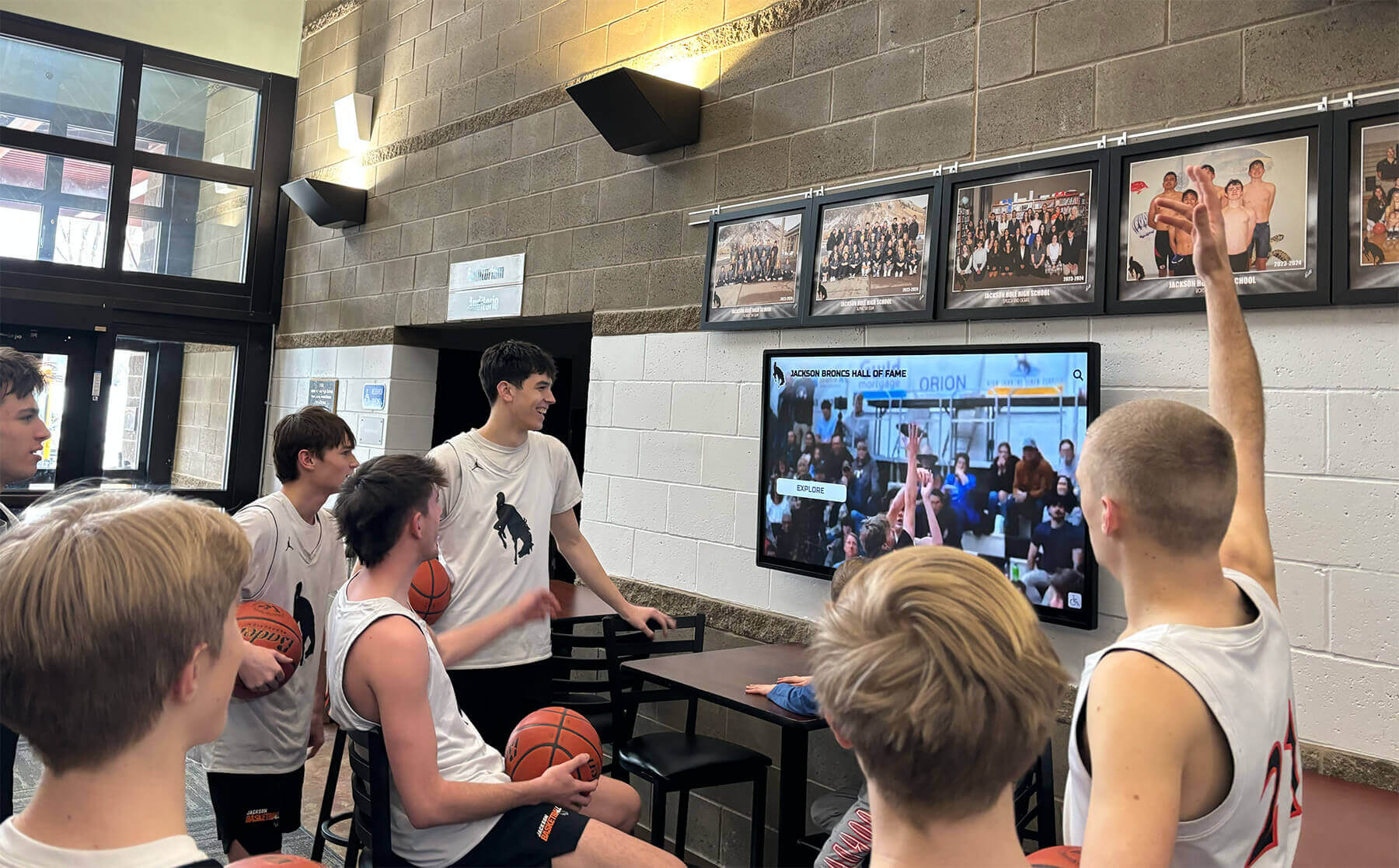
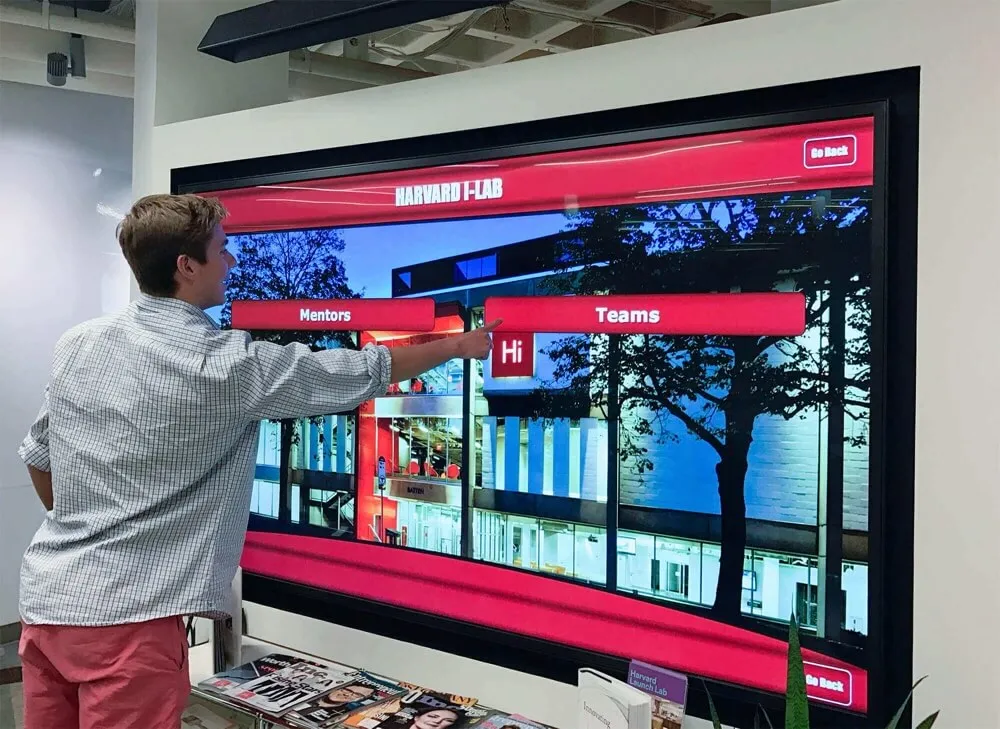
Interactive touchscreens create natural gathering points where students explore championships and watch highlight videos together
Content Architecture: Organizing Digital Trophy Recognition for Gym Lobby Displays
Effective touchscreen systems structure trophy content specifically for gymnasium visitor needs and interactive exploration patterns.
Trophy Database Organization
Comprehensive digital platforms require thoughtful information architecture:
Core Trophy Records
Individual trophy entries include essential details:
- Trophy name and championship type (state, conference, district, invitational)
- Sport or activity associated with the recognition
- Season and year earned with specific dates when available
- Competition level and classification (division, enrollment category)
- Team roster with complete participant names and positions
- Coaching staff receiving championship recognition
- Final competition results (scores, rankings, times, distances)
- Tournament bracket or season record context
- Championship location and significant game details
Complete records transform simple trophy acknowledgment into comprehensive achievement documentation preserving institutional history.
Multimedia Content Integration
Rich media brings trophies to life:
- High-resolution trophy photographs from multiple angles
- Championship team photos showing all participants
- Game action photographs documenting competition moments
- Video highlight reels preserving key plays and performances
- Championship ceremony or celebration photos
- Newspaper articles and media coverage from award recognition
- Historical context explaining championship significance within program history
- Audio recordings of radio broadcasts or ceremony speeches
Multimedia content creates emotional connections while preserving information that becomes increasingly valuable as years pass and participant memories fade.
Learn how schools develop effective athletic recognition content that honors championships comprehensively while engaging modern audiences.
Navigation and Discovery Patterns
User interfaces must enable both browsing and targeted discovery:
Primary Navigation Approaches
Multiple pathways serve different visitor intentions:
- Sport-based browsing - Filtering by specific sports showing all related championships
- Chronological exploration - Timeline views displaying trophies by year or decade
- Championship type filtering - Separating state, conference, and other award categories
- Recent additions - Featuring newly won trophies from current or recent seasons
- Featured collections - Curated showcases highlighting significant milestone achievements
- Team roster search - Finding specific individuals across multiple championship teams
- All-time leaders - Statistical views showing program records and top performers
Flexible navigation accommodates casual browsers exploring randomly alongside specific visitors seeking particular information.
Search Functionality Requirements
Comprehensive systems provide robust search capabilities:
- Instant keyword search with auto-complete suggestions
- Team name, sport, or championship type searching
- Year or date range filtering
- Player or coach name searching across all trophies
- Trophy location or competition venue searching
- Advanced combination filters refining results by multiple criteria
- Search result highlighting showing matched terms
- Recent search history enabling quick return to previous queries
Search transforms digital trophy displays from browsing-only systems into research tools supporting specific information discovery.
Explore strategies for interactive athletic displays that balance ease of use with comprehensive functionality.
Connection to Broader Recognition Programs
Trophy displays work best when integrated with comprehensive athletic recognition:
Linked Recognition Systems
Connections enhance overall program value:
- Championship trophies linking to complete team rosters with individual athlete profiles
- Athlete profiles showing all trophies earned across multiple sports or years
- Coach profiles highlighting all championship teams led during tenure
- School records and statistical leaderboards showing context for outstanding performances
- Hall of fame profiles featuring trophy contributions alongside broader career achievements
- Historical timelines connecting championships to facility development or program milestones
- Rivalry game records and traditions associated with specific trophy competitions
Integration creates comprehensive athletic heritage documentation rather than isolated trophy catalogs lacking broader context.
Current Season Integration
Dynamic systems connect historical and present achievements:
- Current season schedules, results, and standings
- Live scoring updates during home competitions
- Player spotlight features highlighting current athletes
- Season goal tracking showing progress toward championship qualification
- Comparison views showing current teams relative to championship predecessors
- Social media feeds displaying real-time athletic program updates
- Upcoming event promotions building attendance and community engagement
Current content maintains display relevance preventing touchscreen systems from becoming static historical archives disconnected from ongoing programs.
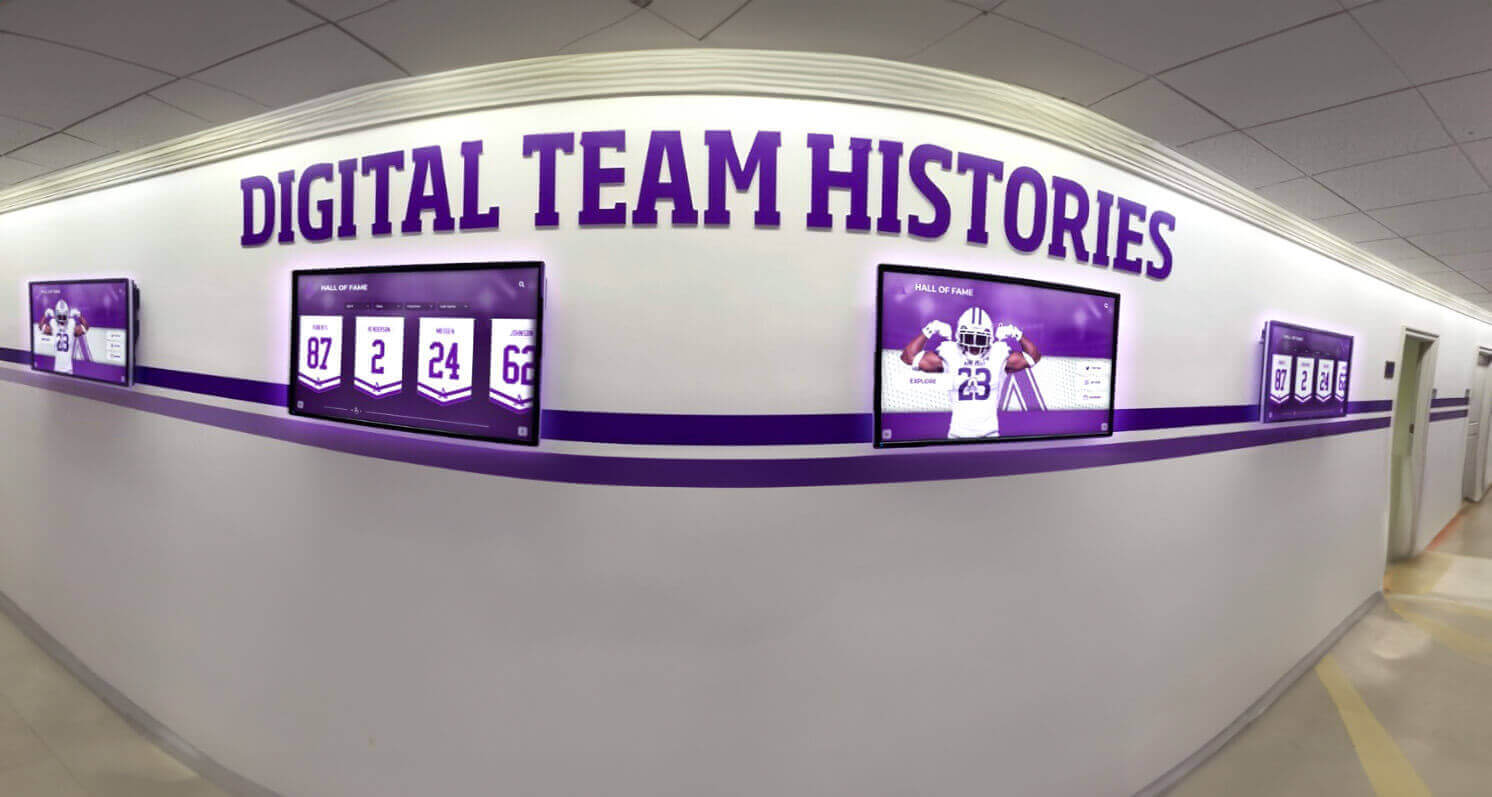
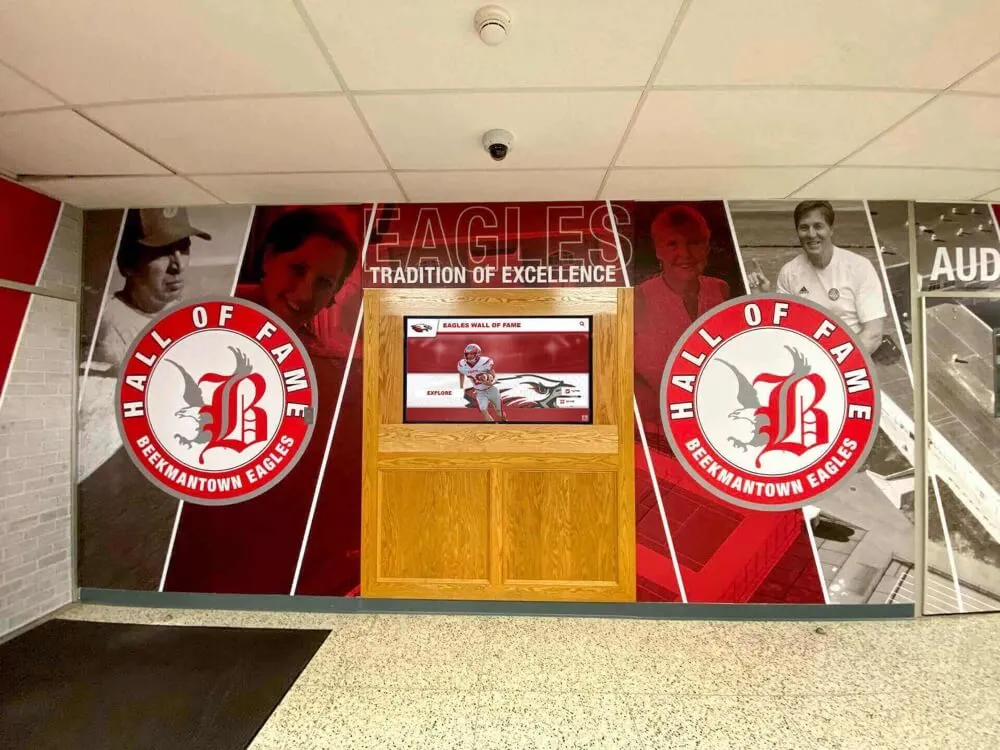
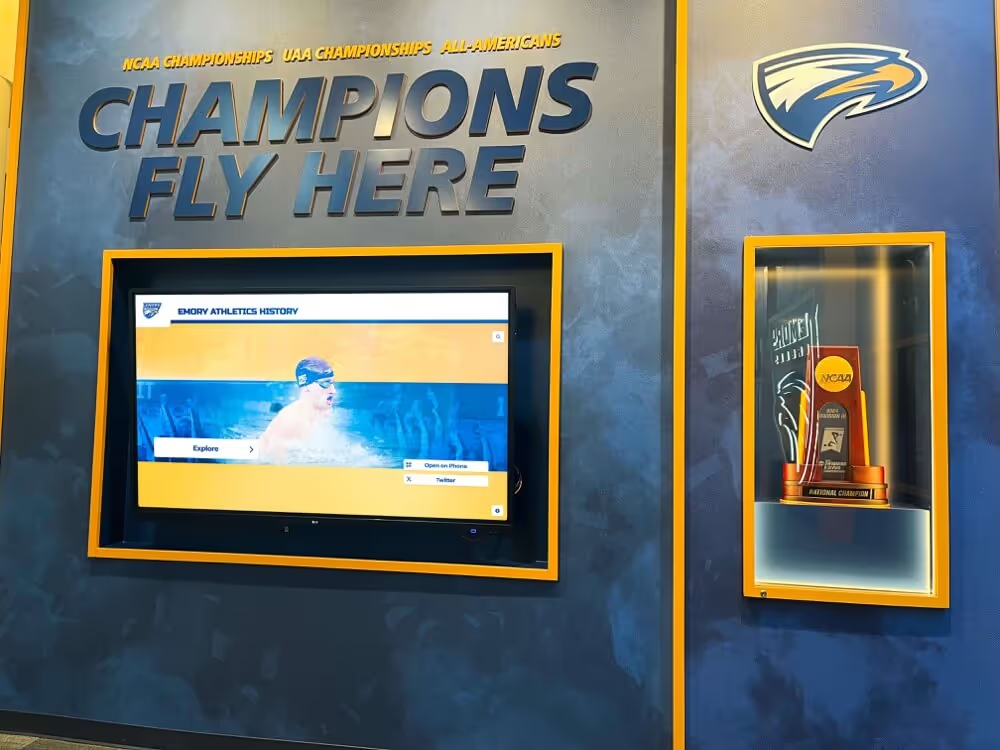
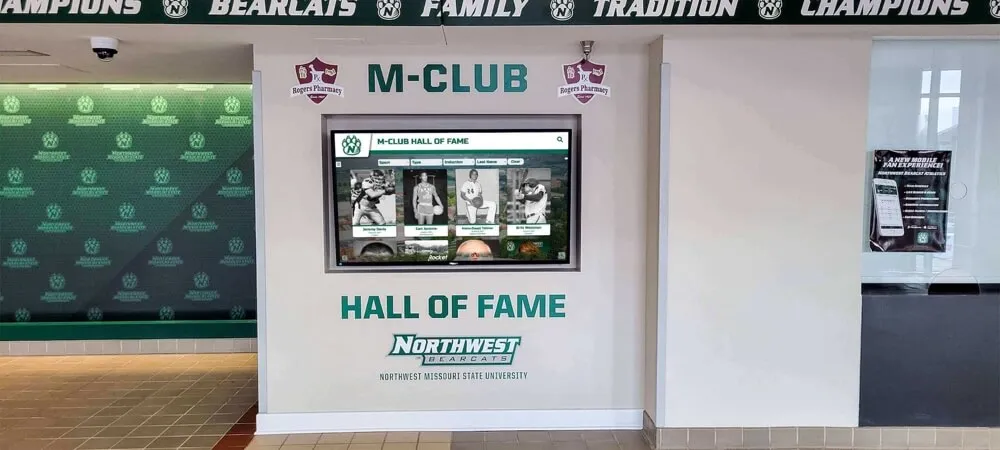
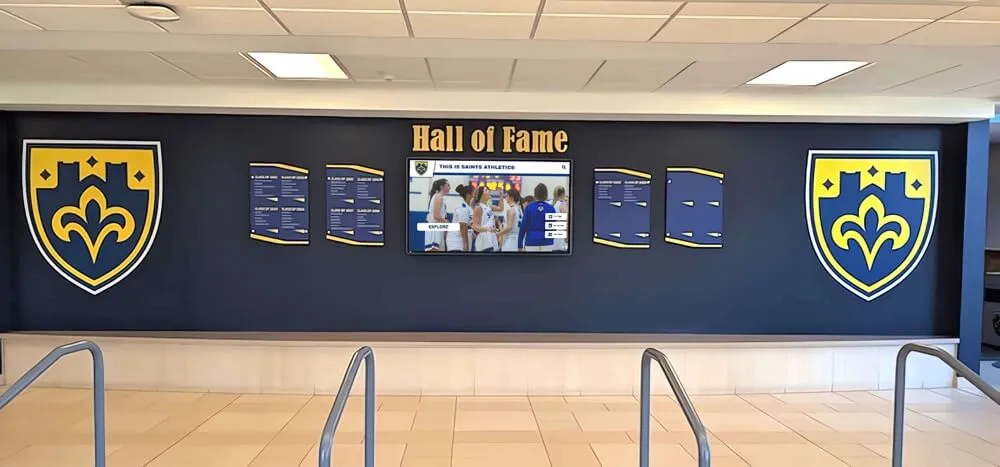
Coordinated display systems throughout athletic facilities create comprehensive recognition environments celebrating all program achievements
Execution Timeline: Implementing Touchscreen Trophy Displays in Gym Lobbies
Successful installations follow systematic phases ensuring thoughtful planning and professional execution.
Phase 1: Needs Assessment and Planning (Weeks 1-4)
Trophy Collection Inventory
Understand current recognition scope:
- Complete trophy audit documenting all awards currently in cases and storage
- Trophy categorization by sport, year, championship type, and size
- Condition assessment identifying awards requiring restoration or special handling
- Historical gap identification revealing which eras lack adequate documentation
- Current display evaluation measuring which trophies appear and which remain hidden
- Recognition priorities determining which achievements receive emphasis
- Growth projections estimating trophy accumulation rates for capacity planning
Comprehensive inventory establishes baseline understanding enabling appropriate solution sizing and content development planning.
Facility Assessment
Evaluate gym lobby opportunities and constraints:
- Available wall space and traffic flow patterns
- Electrical infrastructure and network connectivity
- Lighting conditions affecting screen visibility
- Viewing distances and display size requirements
- ADA compliance requirements for wheelchair accessibility
- Integration opportunities with existing trophy cases or recognition displays
- Security considerations protecting valuable equipment in public spaces
- Installation timing minimizing facility disruption during seasons
Physical assessment ensures selected solutions fit spaces appropriately while meeting technical requirements for reliable operation.
Stakeholder Input Gathering
Engage key decision makers and users:
- Athletic director priorities and vision for recognition program enhancement
- Coaching staff input about sport-specific recognition needs
- Booster club perspectives on community engagement and fundraising connections
- Student athlete feedback about desired features and content types
- Facilities management concerns about installation, maintenance, and operations
- Administration perspectives on budget, timeline, and approval processes
- Technology staff requirements for network integration and support capabilities
Broad stakeholder engagement builds support while surfacing requirements that might otherwise emerge late causing delays or dissatisfaction.
Phase 2: Technology Selection and Content Development (Weeks 5-12)
Platform Evaluation Criteria
Distinguish purpose-built recognition systems from generic signage:
- Trophy-specific content management enabling efficient championship documentation
- Flexible navigation supporting both browsing and targeted search
- Multimedia hosting accommodating photos, videos, and rich content
- Mobile-responsive web platforms extending access beyond physical displays
- Intuitive administrative interfaces enabling non-technical staff updates
- Proven reliability in educational institutional environments
- Professional design templates maintaining quality without custom development
- Comprehensive implementation support including training and ongoing assistance
Solutions like Rocket Alumni Solutions provide purpose-built platforms specifically designed for athletic recognition, with features addressing challenges schools face when showcasing achievements comprehensively through touchscreen displays.
Hardware Specifications
Commercial-grade equipment ensures reliable operation:
- 55-75 inch touchscreen displays sized appropriately for viewing distances
- Commercial displays rated for continuous 16+ hour daily operation
- Capacitive touch technology providing smartphone-like responsiveness
- 50,000+ hour lifespans delivering 6-8 years of reliable performance
- Enhanced brightness (400-700 nits) ensuring visibility in bright gym lobbies
- Tempered glass protection resisting damage in high-traffic environments
- Freestanding kiosk enclosures or secure wall-mount configurations
- Professional-grade media players or integrated computing systems
Quality hardware prevents frequent replacement while ensuring positive visitor experiences that reflect well on athletic programs.
Consult comprehensive guides to digital trophy display technology for detailed specifications and selection criteria.
Trophy Content Creation
Launch success depends on comprehensive initial content:
- High-quality trophy photography documenting all awards systematically
- Trophy information compilation including all relevant championship details
- Team roster research identifying participants for historical trophies
- Championship documentation gathering game results, statistics, and context
- Media archive digitization preserving newspaper clippings and historical materials
- Video content editing creating highlight reels and championship compilations
- Quality control processes ensuring accuracy before publication
Schools typically allocate 40-80 hours for initial content development depending on trophy collection size and historical documentation availability. Some athletic departments handle content creation internally while others engage implementation partners providing turnkey services.
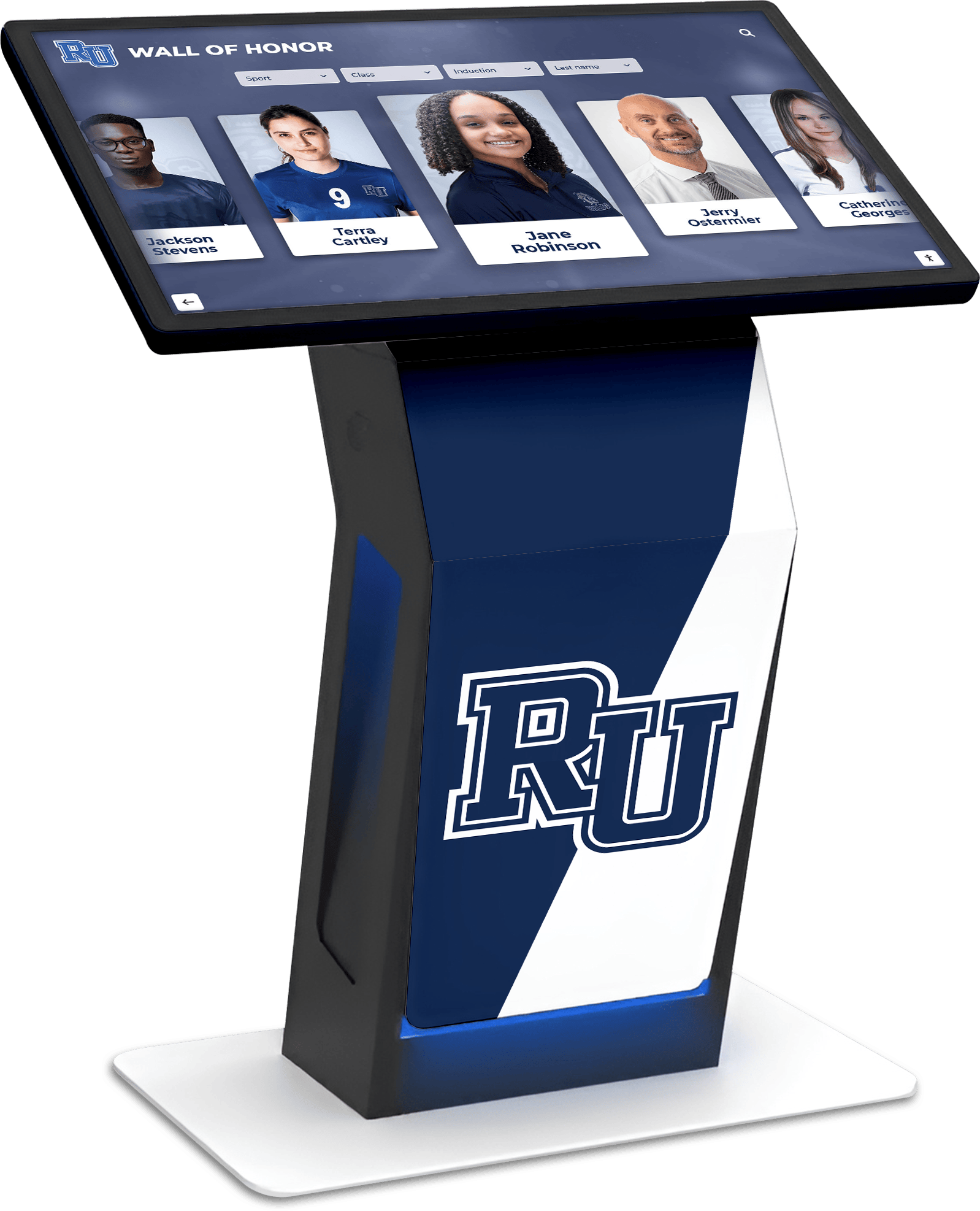
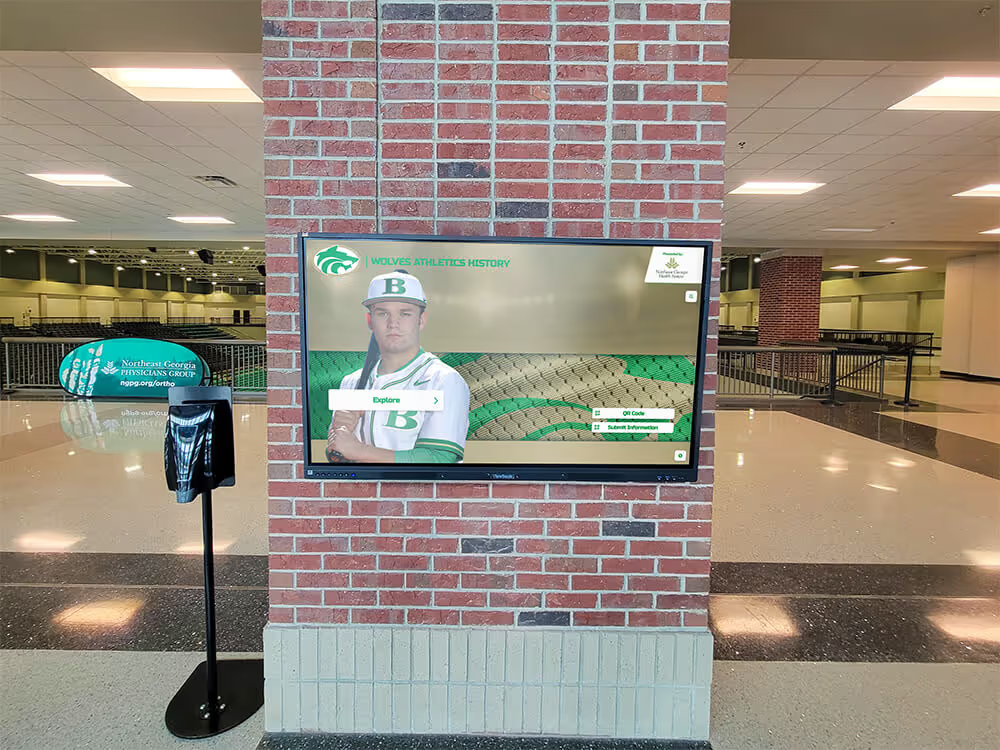
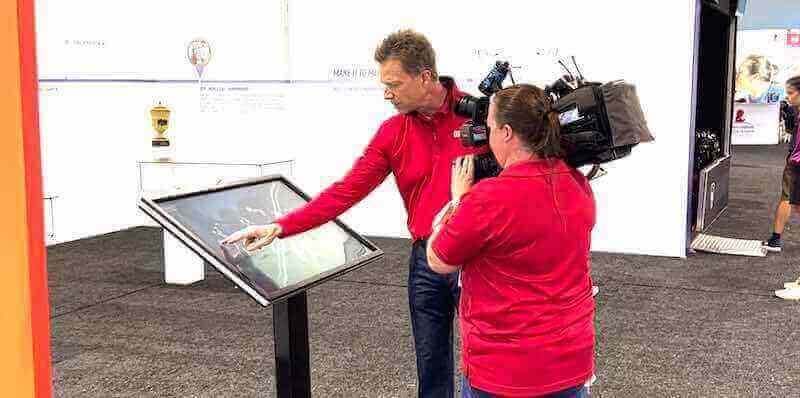
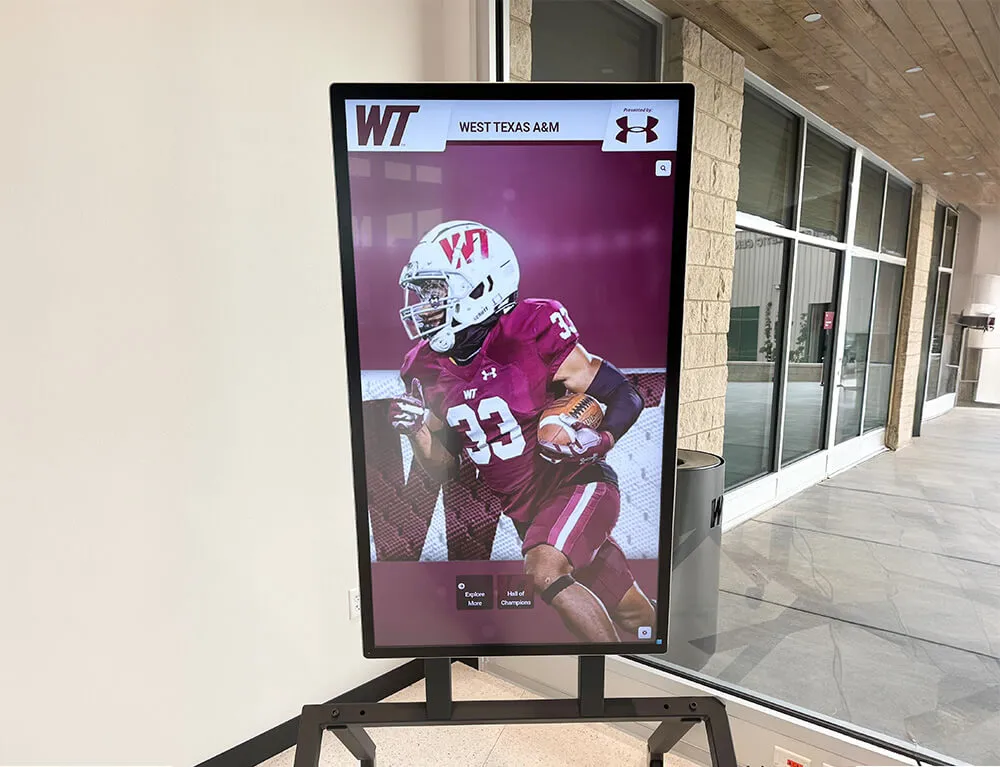
Professional freestanding kiosks provide complete touchscreen solutions without requiring wall mounting or extensive installation
Phase 3: Installation and Launch (Weeks 13-16)
Professional Display Installation
Quality installation ensures long-term reliability:
- Proper mounting with structural support appropriate for display weight
- Clean cable management creating polished finished appearance
- Network connectivity verification ensuring reliable cloud access
- ADA-compliant positioning accommodating wheelchair users
- Lighting optimization preventing glare while maintaining visibility
- Security measures protecting equipment from theft or vandalism
- Integration with existing trophy cases when using hybrid approaches
- Testing protocols verifying all functions operate correctly
Professional installers familiar with institutional environments deliver superior results compared to in-house or general AV contractors lacking educational facility experience.
Staff Training and Capability Building
Technology succeeds only when staff can manage systems confidently:
- Hands-on content management training with actual trophy entry and updates
- Annual workflow practice adding new season championships
- Bulk upload procedures efficiently importing team rosters and statistics
- Quality control review processes ensuring accuracy before publication
- Analytics and reporting features demonstrating engagement and program value
- Troubleshooting basics addressing common issues independently
- Ongoing support access through documentation and responsive helpdesk
Comprehensive training prevents systems from becoming neglected after initial enthusiasm fades because staff lack confidence managing updates independently.
Community Launch and Promotion
Celebratory unveiling builds awareness and encourages exploration:
- Dedication ceremony during homecoming, athletic banquet, or winter sports season
- Guided demonstration sessions teaching visitors how to explore touchscreen features
- Social media campaigns showcasing trophy collections and encouraging facility visits
- Media coverage generating community awareness and athletic program visibility
- Student athlete ambassadors demonstrating systems to touring prospective families
- Booster club integration connecting recognition displays with fundraising programs
- QR code marketing linking mobile devices to web-accessible trophy collections
Launch promotion establishes touchscreen displays as significant investments worthy of attention rather than minor additions easily overlooked by busy athletic communities.
Phase 4: Ongoing Management and Enhancement (Week 17+)
Sustainable Update Workflows
Long-term success requires systematic processes:
- Post-season trophy documentation procedures capturing championships immediately
- Photography standards ensuring consistent professional presentation
- Content approval workflows maintaining quality before publication
- Regular content reviews identifying outdated information requiring correction
- Feature showcases rotating highlighted trophies seasonally
- Analytics monitoring revealing which content generates most engagement
- Periodic content audits ensuring comprehensive coverage across all sports and eras
Documented procedures prevent trophy additions from becoming burdensome while ensuring displays remain current and relevant year after year.
Discover approaches for maintaining digital recognition programs that remain engaging and accurate across leadership transitions.
Display Integration: Creating Engaging Gym Lobby Experiences
Effective implementations combine strategic placement with intuitive interface design that invites exploration.
Physical Placement Strategy
Display location significantly impacts engagement and recognition effectiveness:
High-Traffic Location Selection
Optimal gym lobby placement includes:
- Primary entrance areas greeting all gymnasium visitors
- Ticket booth or concession stand areas with waiting crowds
- Pathways connecting main entrances to gymnasium seating
- Lobby areas where teams gather before competitions
- Corridors connecting athletic facilities to main school buildings
- Near existing trophy cases creating comprehensive recognition zones
- Adjacent to locker room or team areas where athletes naturally congregate
Locations combining high foot traffic with sufficient dwell time generate maximum engagement while ensuring trophy recognition reaches broad audiences.
Viewing Environment Optimization
Physical factors affect user experience quality:
- Adequate space in front accommodating group viewing and multiple simultaneous users
- Lighting assessment preventing glare washing out screens
- Comfortable viewing height serving both standing adults and wheelchair users
- Minimal competing distractions or visual elements
- Clear sightlines from main traffic flows attracting attention
- Complementary wall graphics or murals reinforcing athletic branding
- Directional signage guiding visitors to recognition displays from building entrances
Thoughtful environmental design maximizes touchscreen visibility while creating welcoming spaces that invite extended exploration rather than hurried interaction.
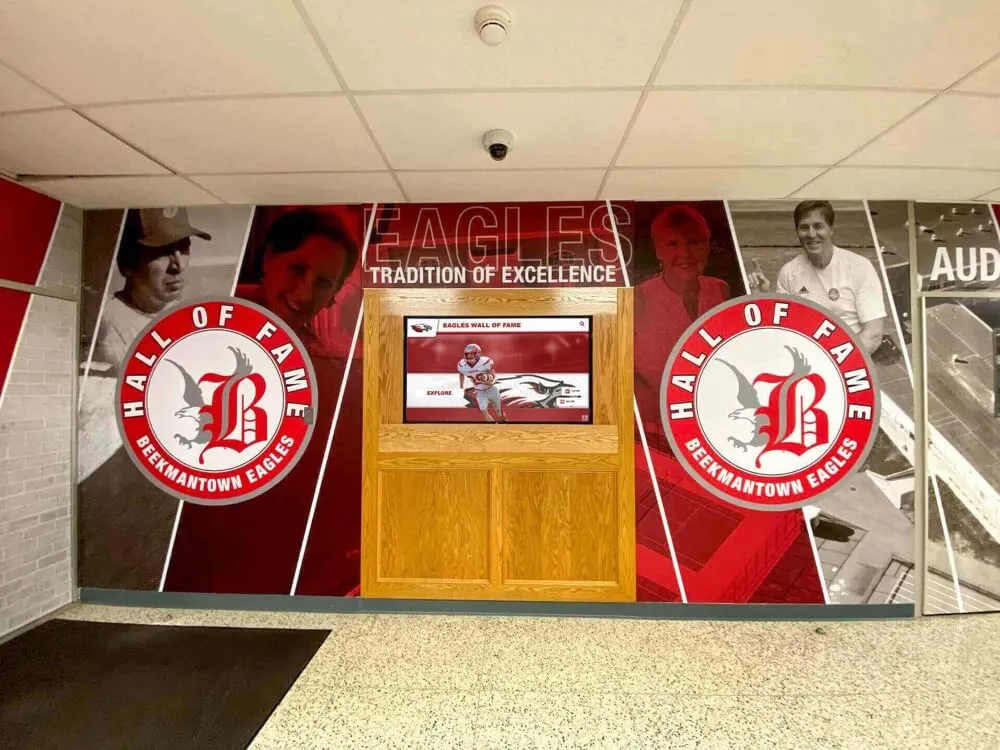
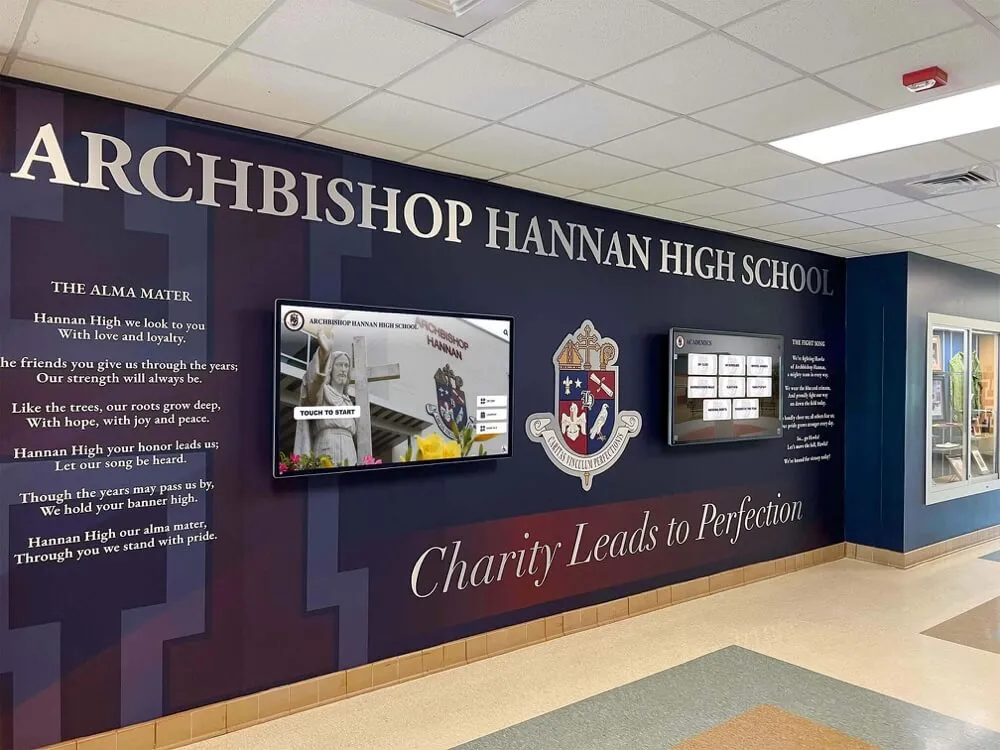
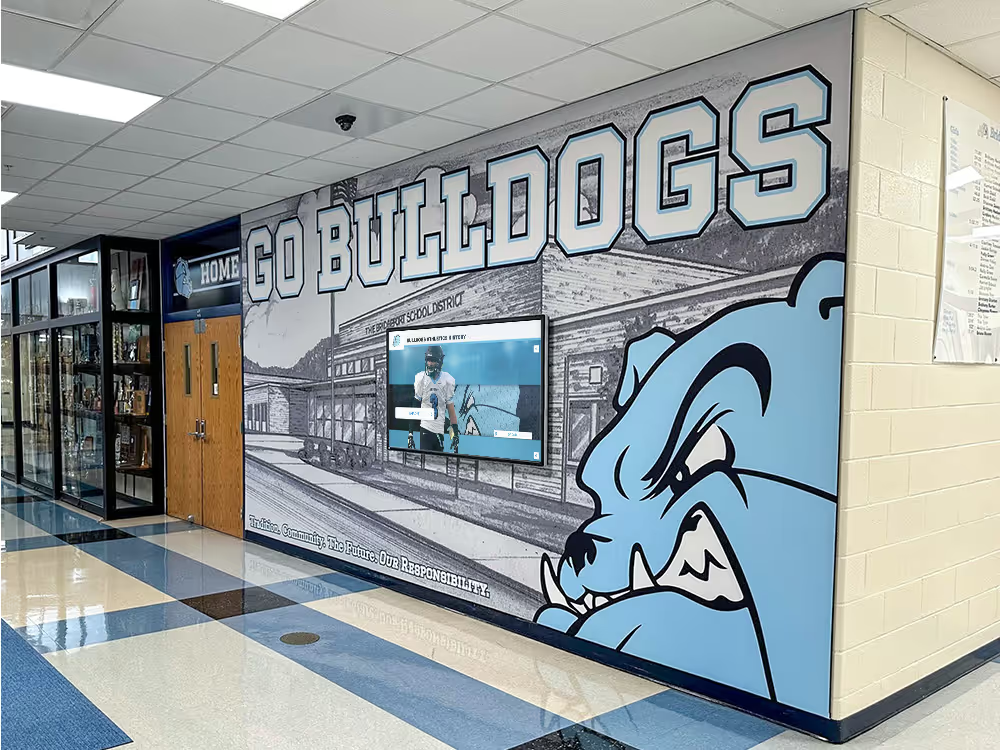
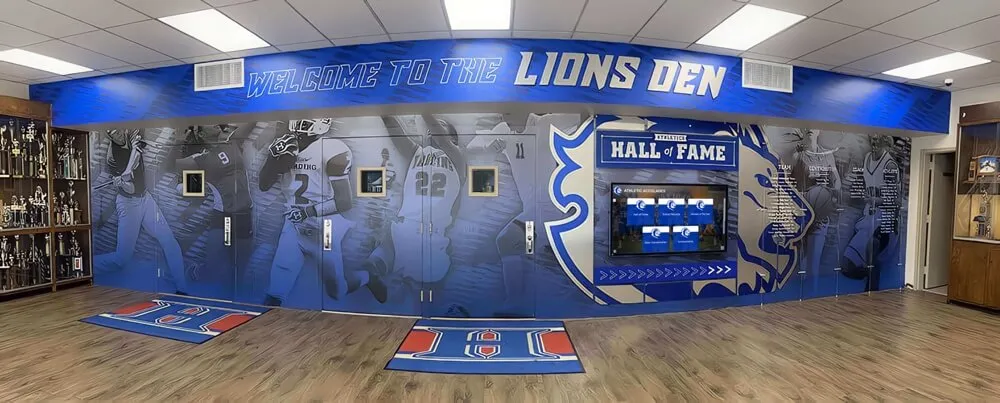
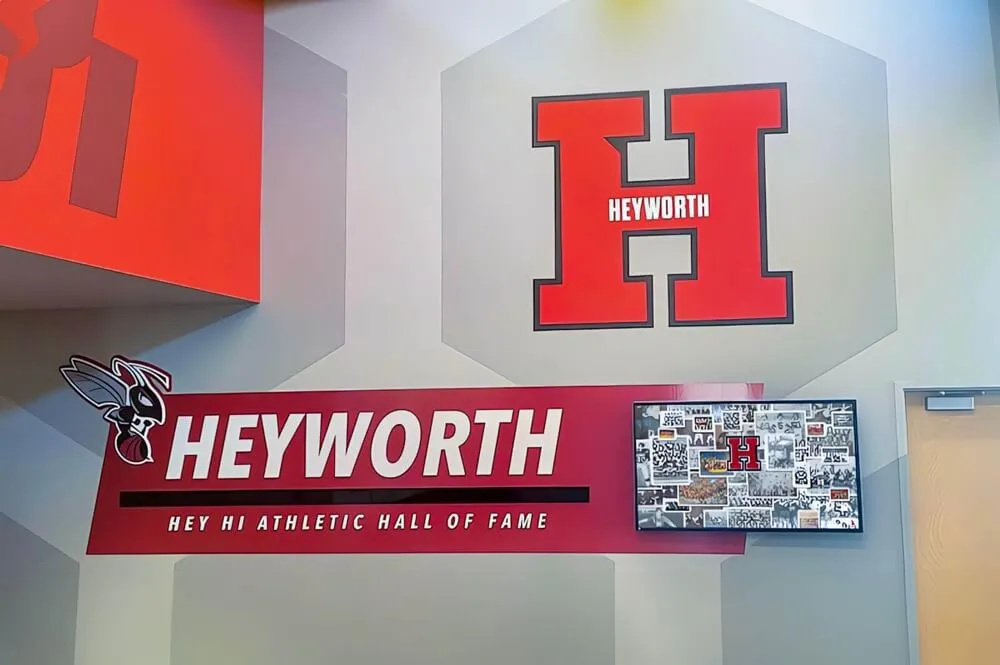
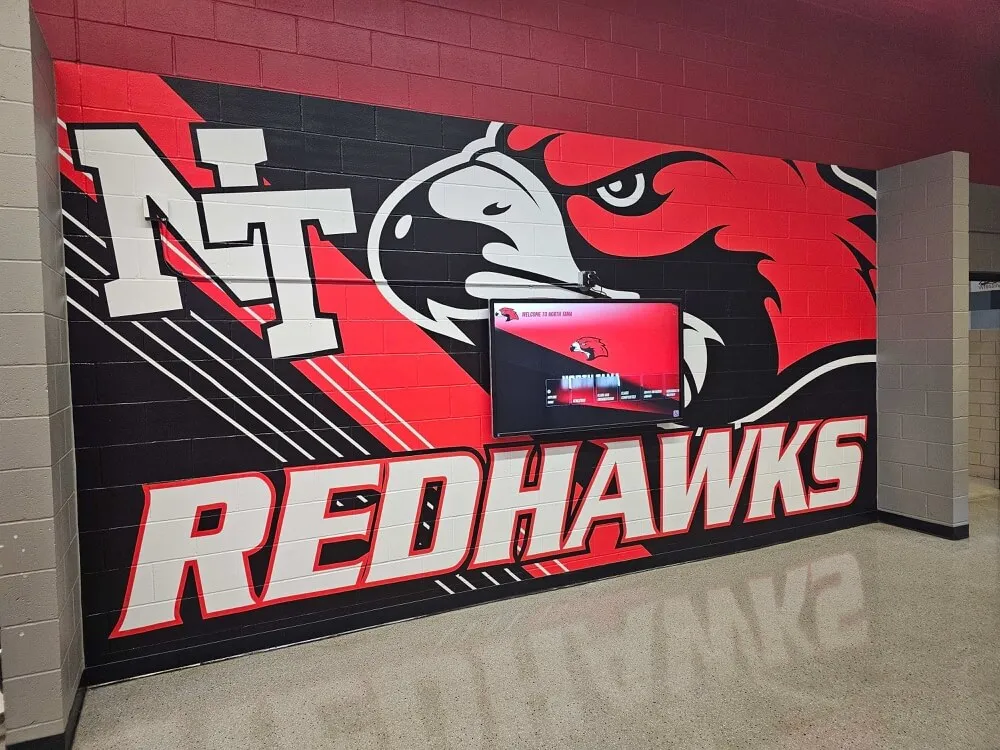
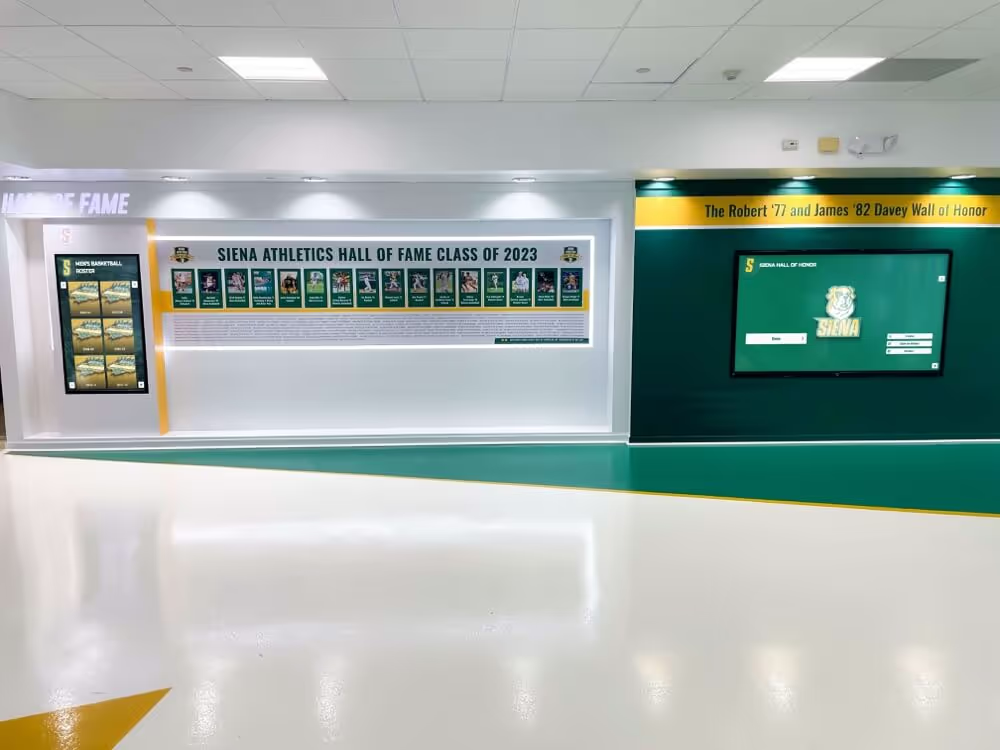
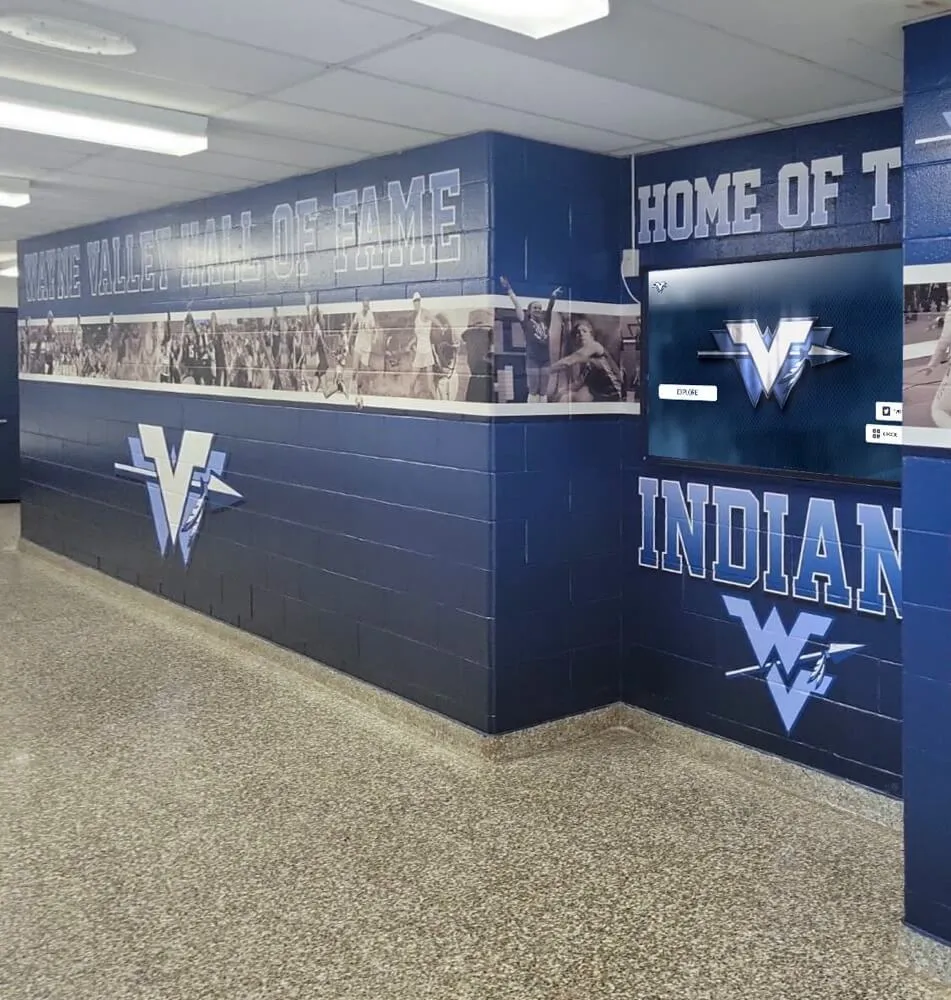
Integrated wall systems combining physical displays with digital touchscreens create destination recognition areas in gym lobbies
Interface Design Principles
User experience determines whether touchscreens achieve engagement potential:
Attract-State Content
Displays must invite interaction when idle:
- Rotating featured trophies highlighting significant championships
- Recent additions showcasing current season achievements
- Championship video highlights playing automatically
- Scrolling team photos from various eras and sports
- Milestone celebrations marking anniversary achievements
- Clear touch prompts inviting visitor interaction
- School branding and athletic identity reinforcement
Engaging idle content transforms blank screens into active attraction elements that draw visitors toward interaction.
Intuitive Touch Interactions
Touchscreen interfaces require specific design considerations:
- Large clearly-defined touch targets preventing frustration
- Gesture support including swiping through galleries and pinching photos
- Immediate visual feedback confirming successful touches
- Minimal typing reducing keyboard use challenges
- Auto-complete and suggestions accelerating search
- Prominent back navigation enabling easy return to previous screens
- Automatic timeout returning to attract-state after inactivity
Smartphone-familiar interactions enable visitors of all ages to explore independently without instruction or staff assistance.
Content Presentation Hierarchy
Information architecture guides exploration effectively:
- Trophy overview pages showing key details at glance
- Expandable sections revealing additional details on demand
- Photo galleries with thumbnail grids and full-screen viewing
- Video players with clear play controls and progress indicators
- Related content suggestions connecting trophies to teams and athletes
- Breadcrumb navigation showing current location within content structure
- Consistent layout patterns across all trophy types and sports
Clear hierarchy balances comprehensive information with approachable presentation preventing visitor overwhelm while enabling deep exploration for interested users.
Review best practices for designing recognition display interfaces that engage diverse audiences effectively.
Measurement Block: Tracking Digital Trophy Display Success
Systematic evaluation demonstrates program value while guiding continuous improvement.
Engagement Metrics
Track concrete measures demonstrating community connection:
- Total touchscreen interactions showing usage frequency
- Average session duration indicating exploration depth
- Most viewed trophies revealing high-interest championships
- Search query patterns showing what visitors seek
- Peak usage times informing content update scheduling
- Return visitor frequency demonstrating sustained engagement
- Feature utilization rates showing which capabilities receive most use
Schools implementing digital trophy displays consistently report 10-15 times more trophy-related interactions compared to traditional case viewing, with average engagement sessions lasting 4-6 minutes versus brief glances at physical displays.
Community Impact
Assess broader effects beyond immediate metrics:
- Student athlete motivation from visible comprehensive program recognition
- Alumni engagement increases during facility visits and events
- Prospective family impressions during campus tours
- Community awareness of athletic program excellence
- Media coverage featuring championship documentation
- Social media sharing amplifying recognition reach
- Fundraising connections through booster club integration
Athletic directors report that comprehensive digital trophy recognition strengthens program culture by demonstrating institutional commitment to celebrating all achievements equally regardless of sport, gender, or era.
Operational Efficiency
Compare digital approaches to traditional trophy management:
- Administrative time required for trophy updates and maintenance
- Cost savings from eliminated case expansion and engraving
- Storage space recovery from trophies no longer requiring physical display
- Update speed from championship recognition to published display
- Error correction efficiency through instant digital edits
- Preservation benefits protecting irreplaceable physical trophies
High schools consistently report 80-90% reduction in trophy management time after implementing digital displays, with time savings enabling more comprehensive recognition of all programs and achievements.
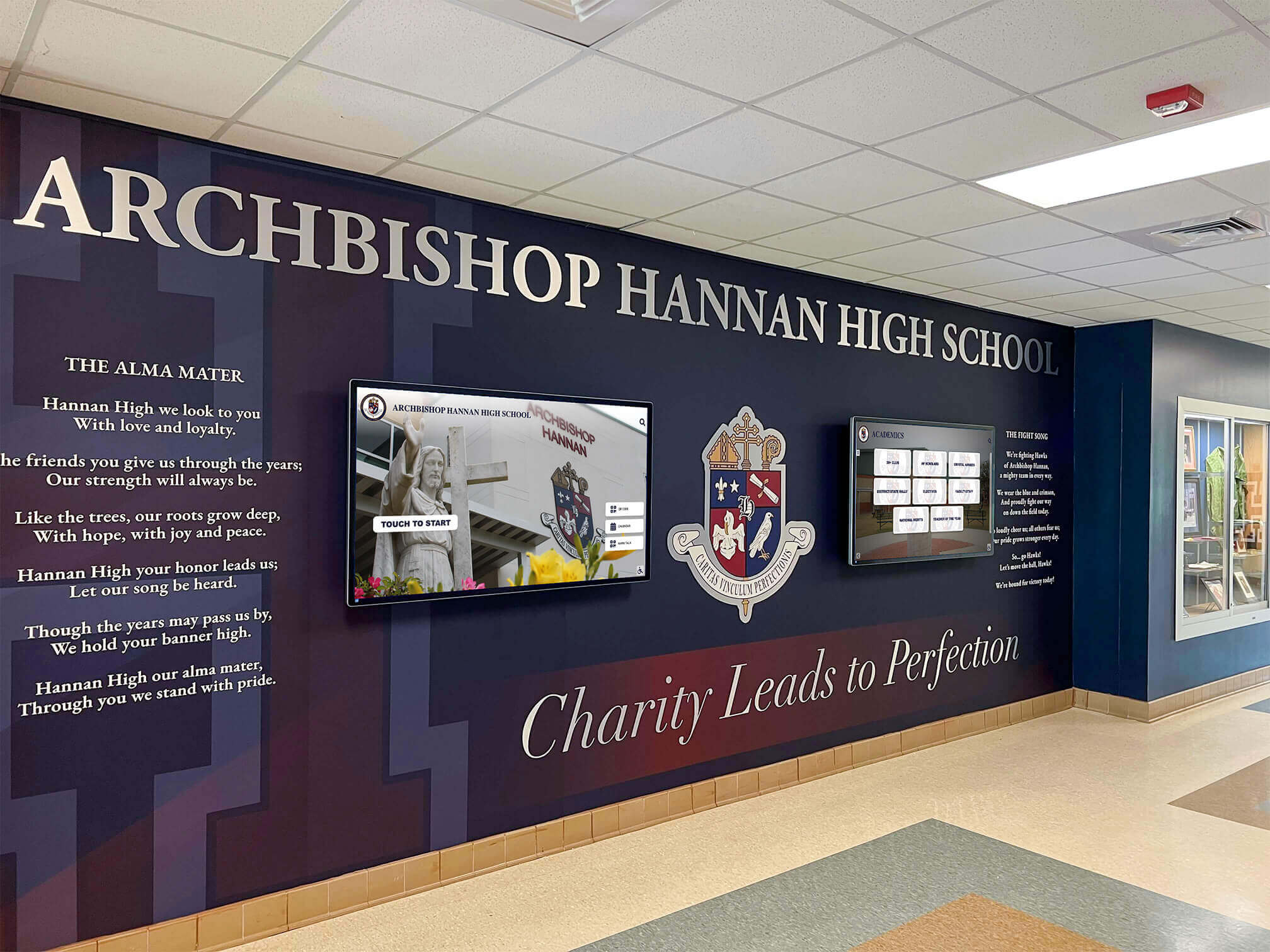
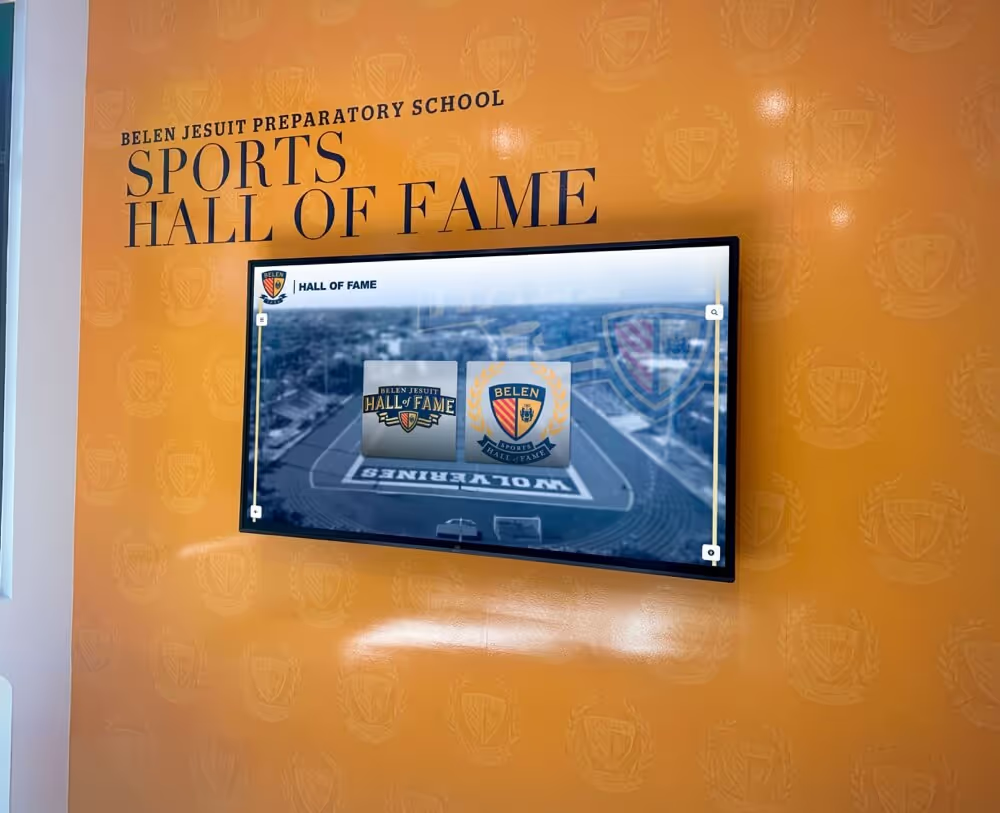
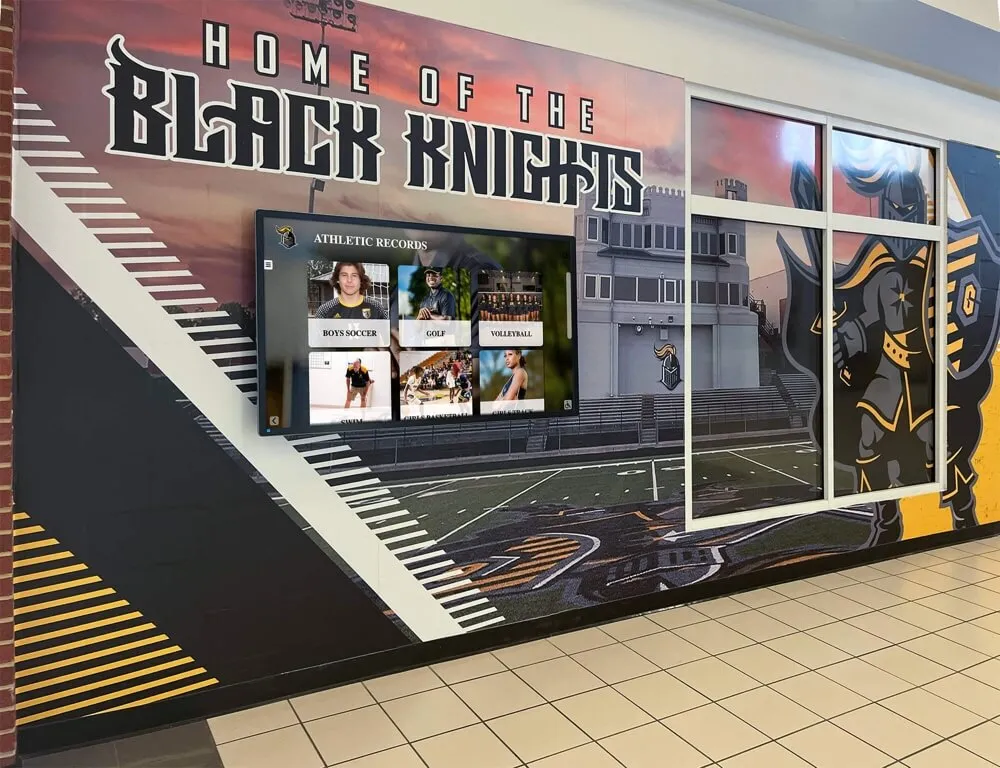
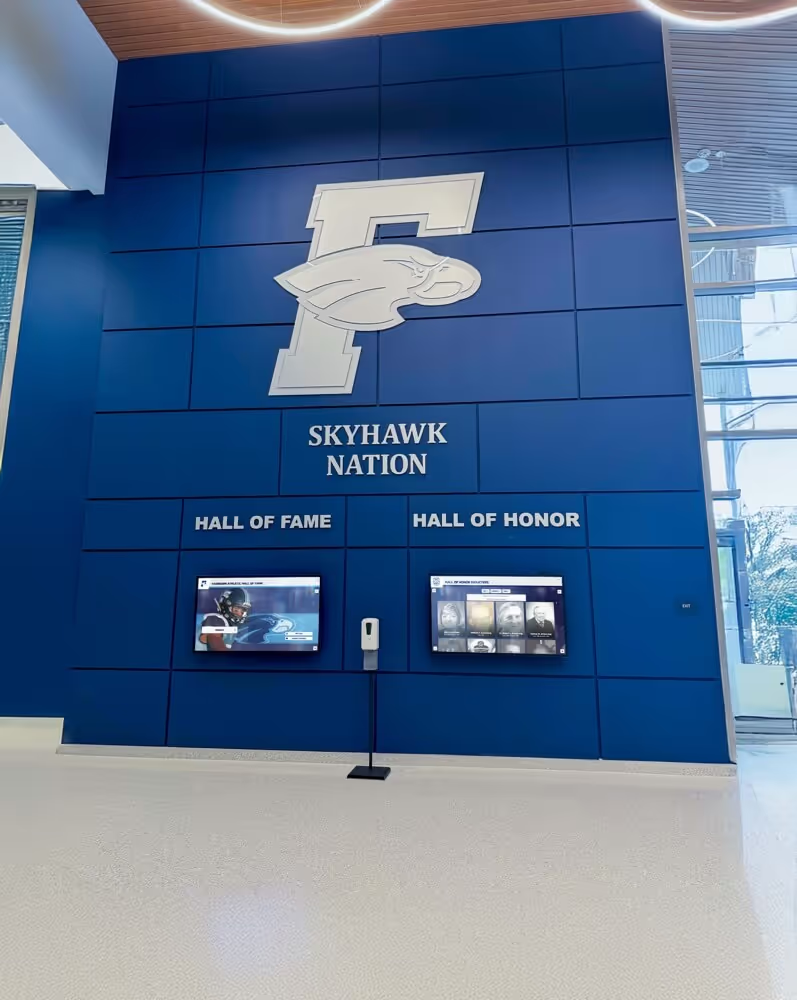
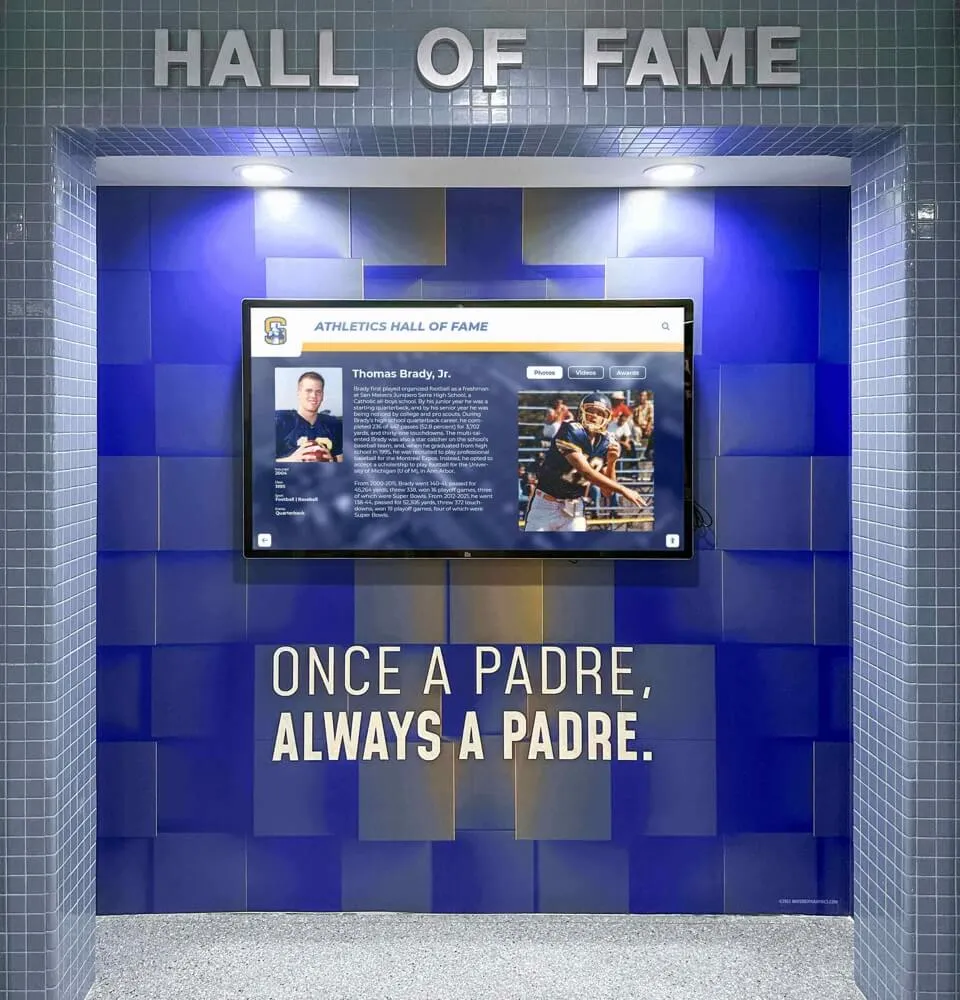
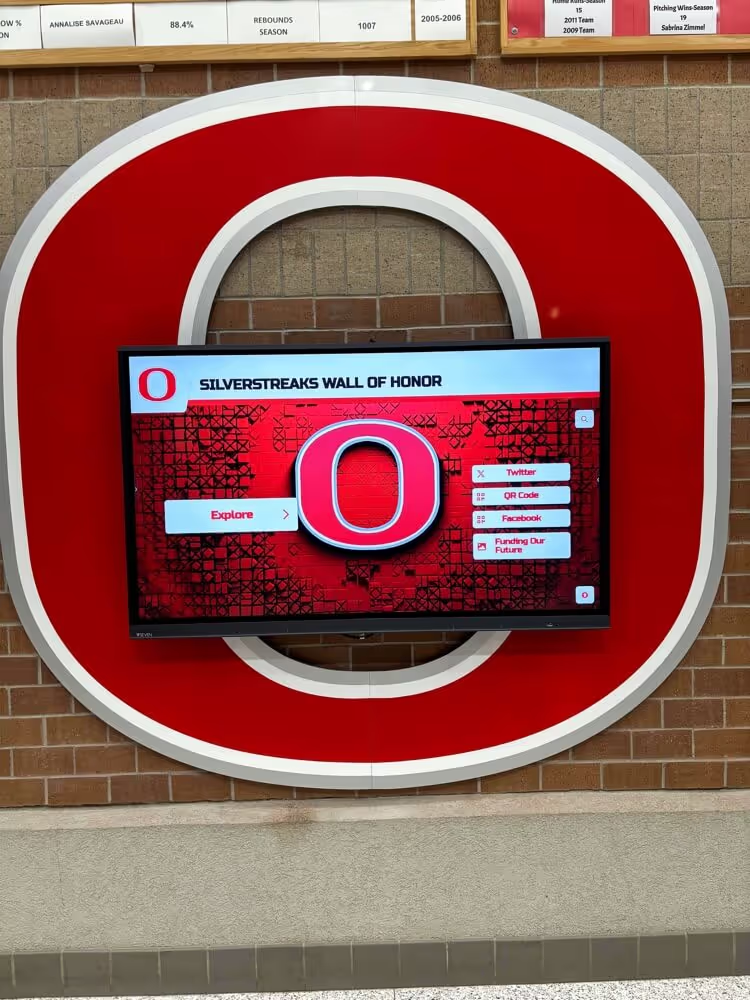
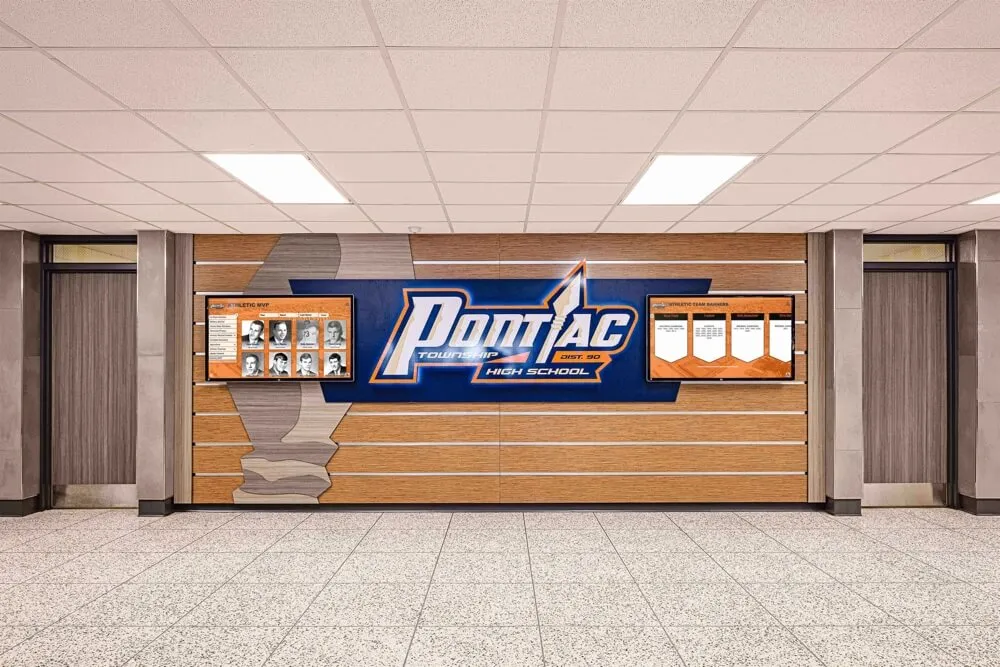
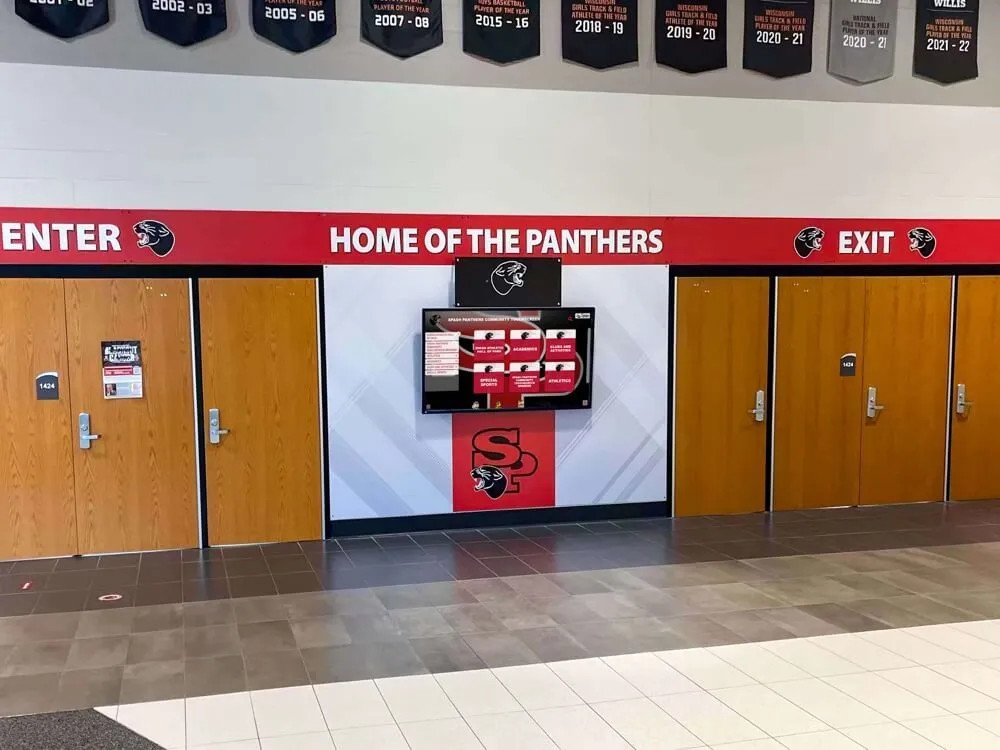
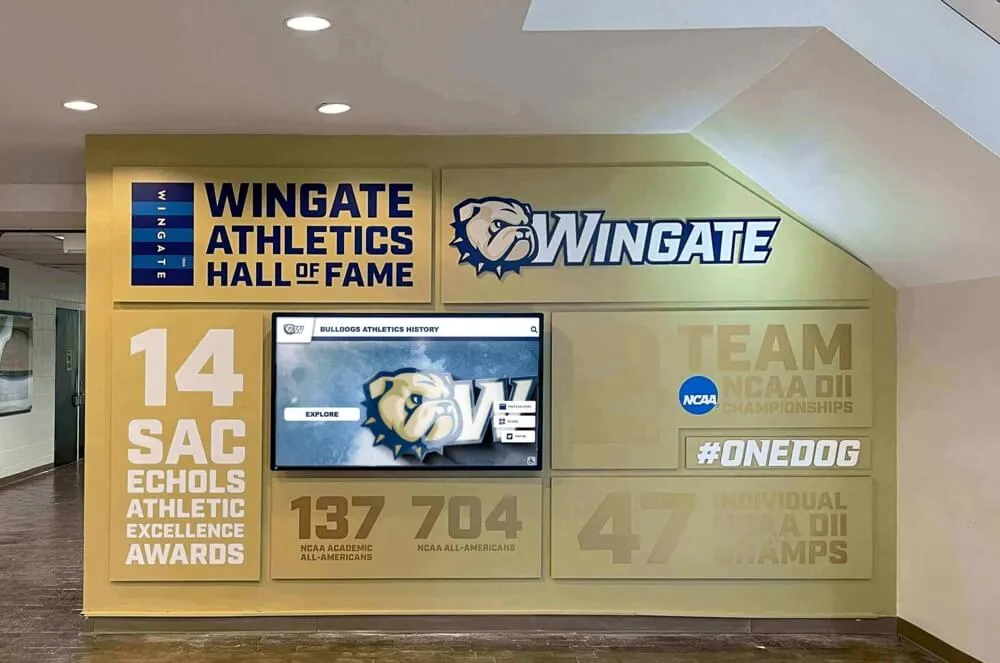
Professional lobby installations integrate touchscreen displays with school branding creating impressive athletic facility entrances
Cost Considerations and Budget Planning
Understanding investment requirements helps athletic departments plan appropriately for touchscreen trophy display implementations.
Initial Investment Components
Total project costs include several categories:
Hardware Costs
- 55-65 inch commercial touchscreen display: $5,000-8,000
- 65-75 inch commercial touchscreen display: $7,500-12,000
- Freestanding kiosk enclosure: $2,000-4,000 additional
- Professional installation: $1,000-2,500
- Network infrastructure upgrades if needed: $500-2,000
- Mounting hardware and accessories: $300-800
Software and Platform Costs
- Purpose-built trophy recognition platform: $1,500-5,000 annual subscription
- Initial setup and configuration: Often included or $500-2,000
- Training and implementation support: Often included or $1,000-3,000
- Custom design and school branding: $500-2,000 one-time
- Ongoing support, hosting, and updates: Typically included in subscription
Initial Trophy Content Development
- Trophy photography and digitization: $500-2,000
- Championship research and documentation: $1,000-3,000 or internal effort
- Team roster compilation: $500-1,500 or internal effort
- Video editing and multimedia production: $1,000-3,000 optional
- Historical archive digitization: Variable based on scope
Total Initial Investment Range: $10,000-30,000 depending on display size, content development scope, and implementation approach, with most single-display installations falling in the $12,000-20,000 range.
Ongoing Operational Costs
Annual expenses after initial implementation:
Software and Services
- Platform subscription: $1,500-5,000 annually
- Cloud hosting and storage: Typically included
- Technical support: Typically included
- Annual training for new staff: Minimal or included
Hardware Maintenance
- Display cleaning: Minimal staff time
- Extended warranty coverage: $400-1,000 annually optional
- Energy costs: Approximately $75-150 annually per display
Content Management
- Staff time for trophy updates: 2-4 hours monthly typically
- New season photography: Absorbed within athletic operations
Total Annual Operating Costs: $1,500-6,000 with most expenses being predictable subscription fees.
Return on Investment
Digital trophy displays deliver value justifying investment:
Eliminated Traditional Costs
- New trophy case purchases ($2,000-8,000 per case)
- Trophy engraving and labeling ($30-100 per trophy)
- Physical case expansion and facility modifications
- Trophy cleaning and maintenance labor
Non-Monetary Value
- Comprehensive recognition impossible with physical space constraints
- Enhanced student athlete motivation and program pride
- Improved prospective family impressions during tours
- Preserved championship history in accessible formats
- Strengthened community engagement and awareness
- Administrative time savings enabling other priorities
Most schools find digital trophy displays achieve cost-neutral operation within 3-5 years compared to traditional approaches while delivering substantially superior recognition capacity and engagement throughout decades of operation.
Learn about digital trophy display pricing and comprehensive budget planning for athletic recognition programs.
Common Implementation Challenges and Proven Solutions
Learning from frequent pitfalls helps athletic departments avoid expensive mistakes.
Challenge 1: Incomplete Trophy Documentation
The Problem: Athletic departments discover that historical trophy documentation is far less complete than initially believed—missing photos, unclear championship details, incomplete team rosters, or entire seasons lacking records. Launching with sparse content disappoints visitors expecting comprehensive recognition.
The Solution: Conduct thorough trophy audit during planning realistically documenting what exists versus what requires research. Implement phased launch starting with well-documented recent trophies establishing credibility before systematically adding historical content through dedicated projects. Engage alumni volunteers or student researchers specifically assigned to historical documentation. Accept that some older trophies may receive basic recognition until enhanced details become available through ongoing research.
Challenge 2: Staff Technology Anxiety
The Problem: Athletic administrators or support staff responsible for maintaining touchscreen content feel overwhelmed by technology, fearing they lack skills to manage systems effectively. This anxiety leads to outdated displays undermining investment value.
The Solution: Select platforms specifically designed for non-technical users with intuitive interfaces requiring minimal training. Provide hands-on training with actual trophy entry practice during implementation. Create simple documented procedures with screenshots for common tasks. Establish vendor support relationships providing responsive help when questions arise. Start with partial responsibility allowing gradual confidence building before expecting independent management.
Challenge 3: Competing with Smartphones
The Problem: Students and visitors glued to personal devices ignore touchscreen displays regardless of content quality. Schools worry expensive installations become underutilized novelties.
The Solution: Design idle-state content specifically to attract attention from passing visitors through movement, video, or compelling visuals. Position displays at natural waiting points where visitors have time available. Integrate with mobile devices through QR codes linking to web-accessible trophy collections enabling exploration continuation on personal devices. Feature current season content and recent championships maintaining relevance. Create social sharing features enabling trophy celebration through personal networks.
Challenge 4: Physical Trophy Preservation Concerns
The Problem: School communities accustomed to physical trophy displays worry that digital systems diminish recognition value or signal disrespect to athletic achievements.
The Solution: Use hybrid approaches maintaining physical display of premier trophies while digital systems provide unlimited comprehensive recognition. Position touchscreens adjacent to existing trophy cases showing complementary relationship. Frame digital implementation as enhancement rather than replacement. Preserve all physical trophies even when not displayed recognizing their artifact value. Communicate that digital platforms honor achievements more comprehensively than physical space constraints allow.
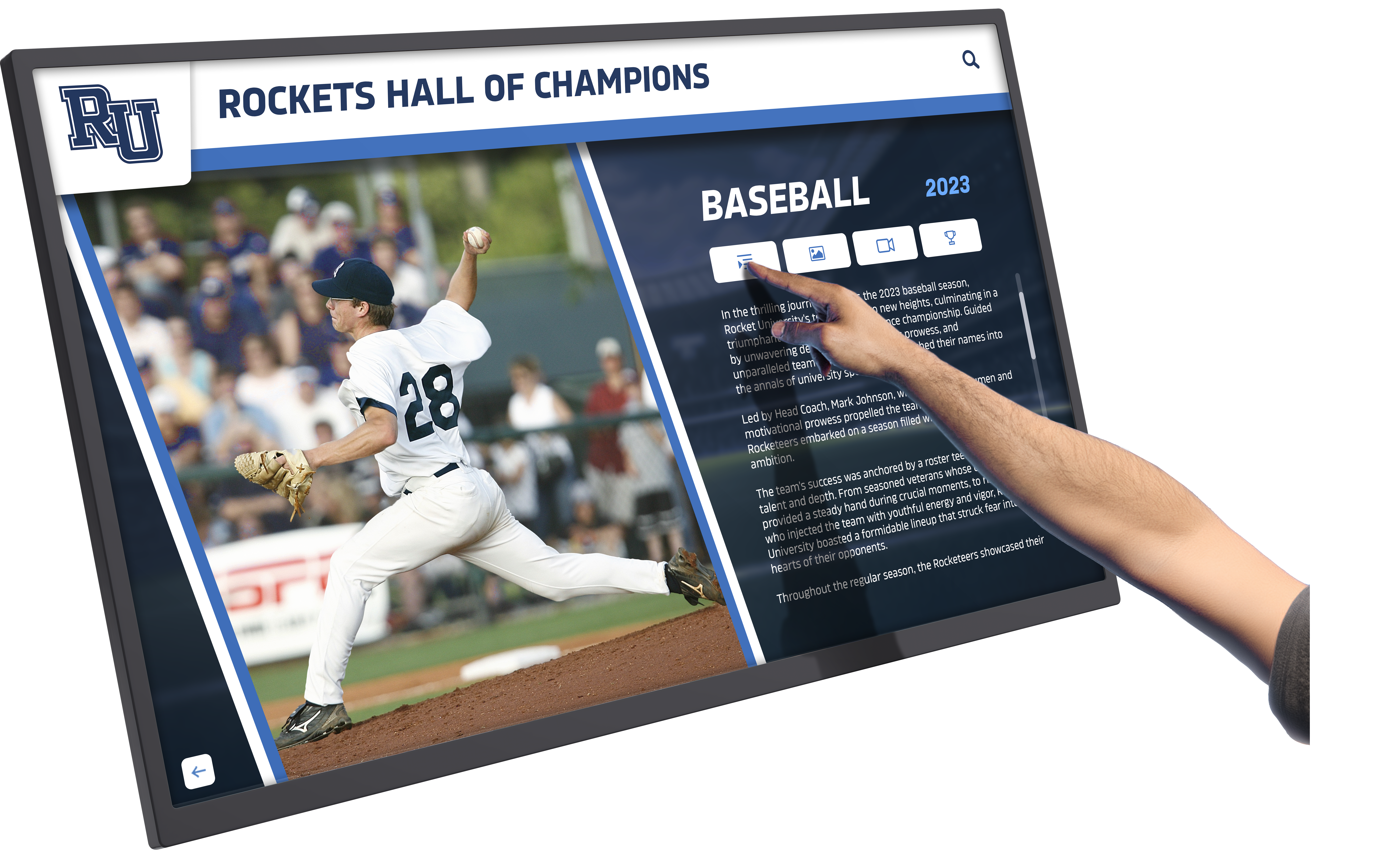
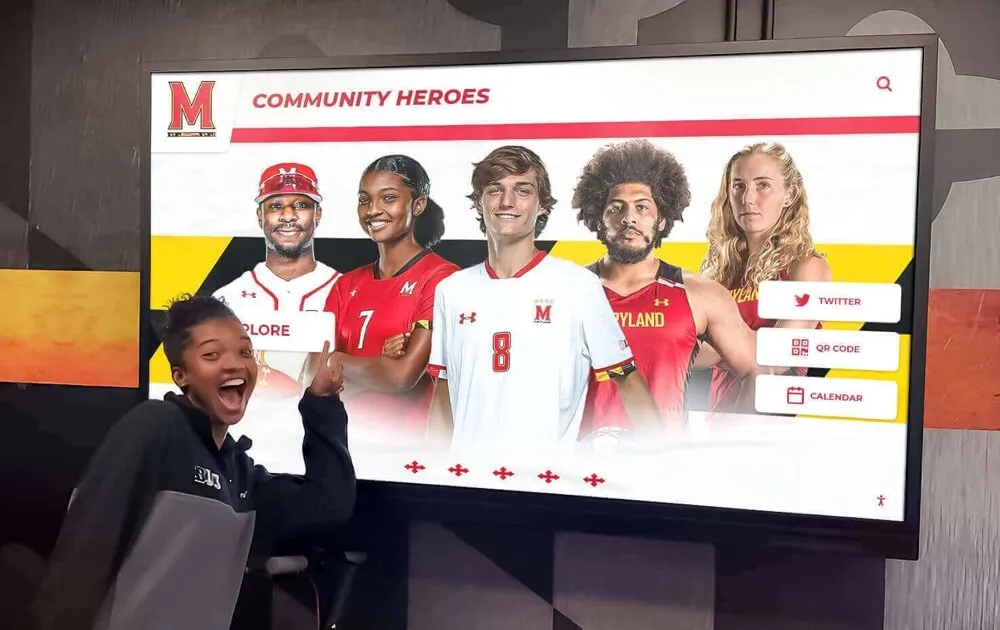
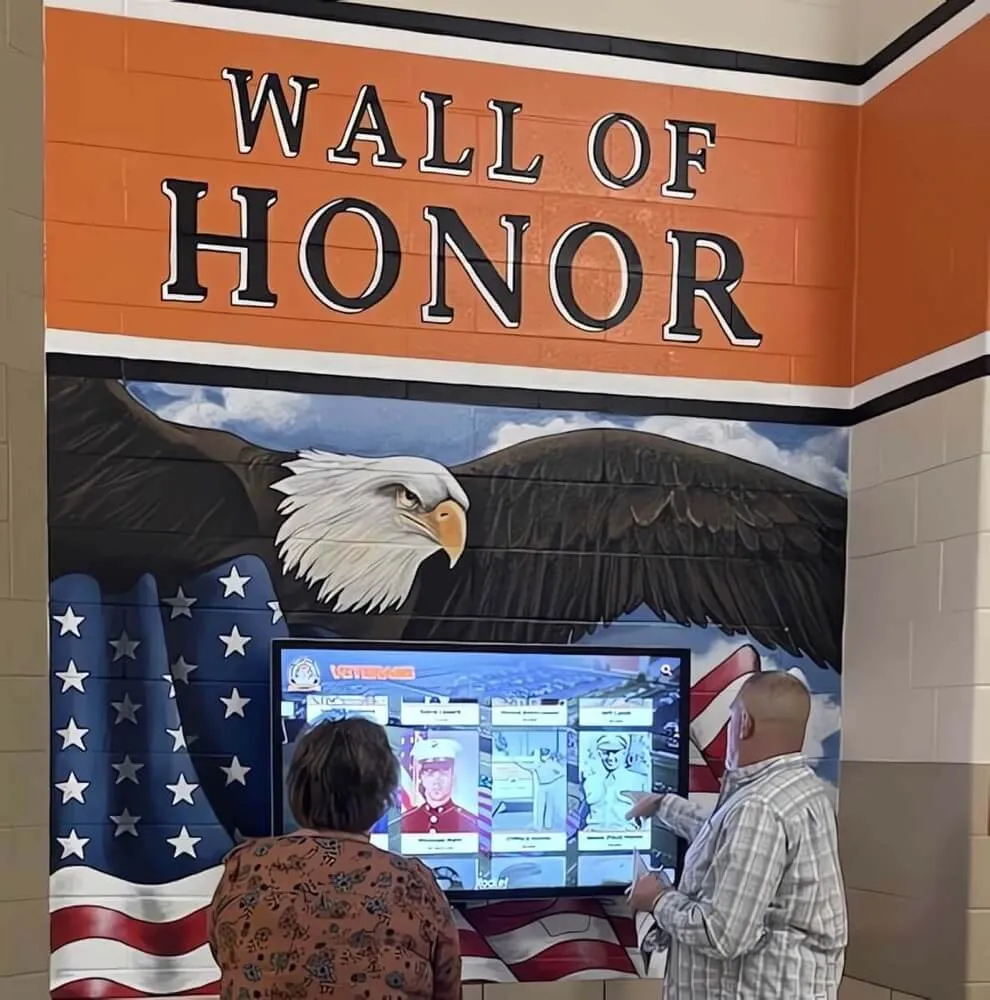
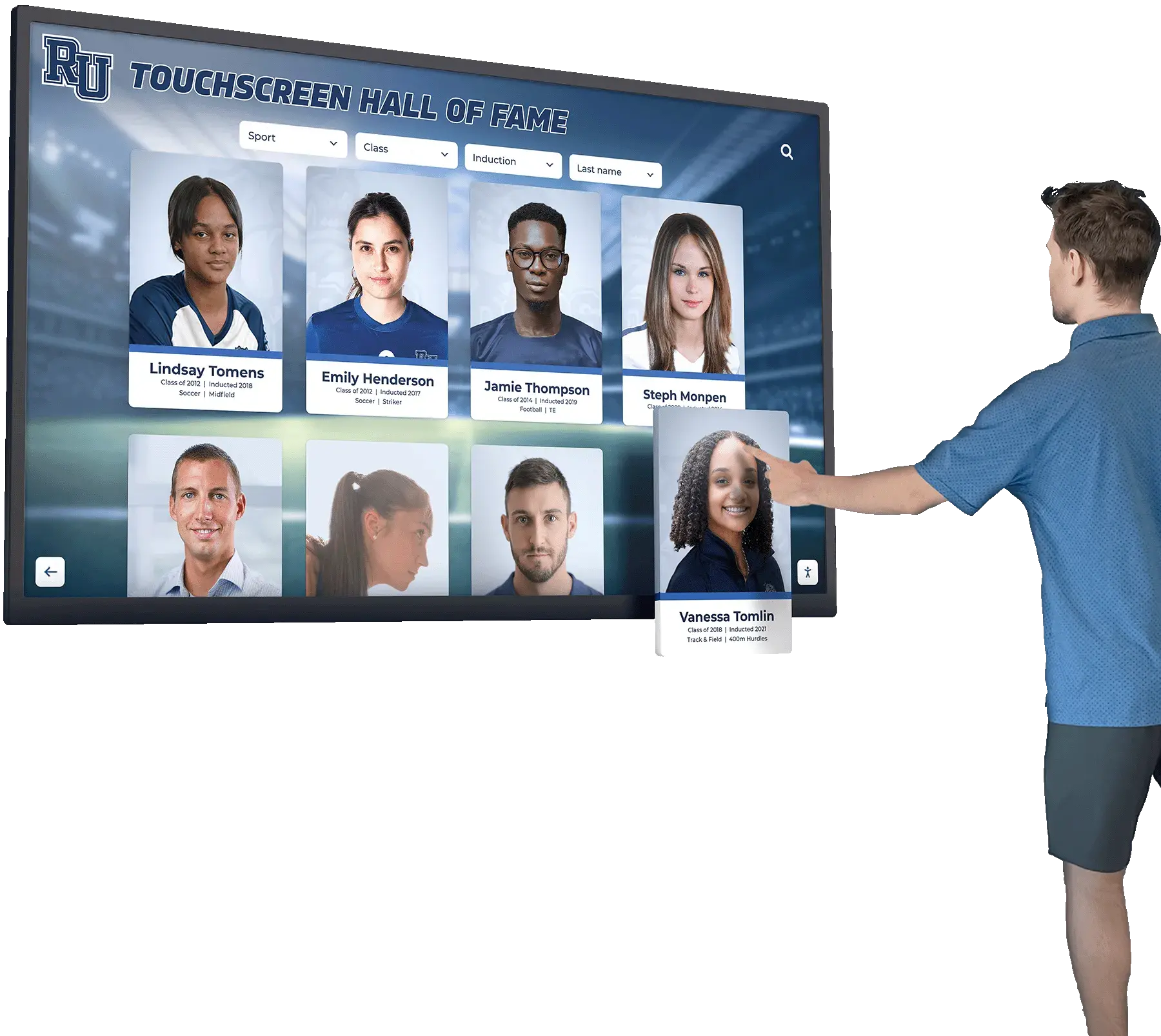
Intuitive touchscreen interfaces enable visitors to explore championship details, team rosters, and individual athlete achievements easily
Building Your Digital Trophy Recognition Program: Implementation Resources
Athletic departments ready to transform trophy recognition from physical constraints to unlimited digital capacity should follow systematic approaches.
Immediate Next Steps for Getting Started
Assess Current Trophy Situation (Week 1)
- Inventory all trophies currently displayed and stored
- Identify overcrowding challenges and recognition gaps
- Evaluate gym lobby display opportunities
- Gather stakeholder input about desired improvements
- Document budget availability for initial investment
- Review current trophy management time requirements
Define Digital Recognition Scope (Weeks 2-3)
- Determine which trophies receive priority for initial launch
- Establish content standards for championship documentation
- Identify technology requirements including display specifications
- Assign content development responsibilities
- Set realistic timeline expectations
- Plan for sustainable annual update workflows
Research and Evaluate Technology Solutions (Weeks 4-6)
- Request demonstrations from vendors showing trophy-specific platforms
- Verify purpose-built recognition systems rather than generic signage
- Assess content management usability for staff skill levels
- Compare total cost of ownership across 5-year horizon
- Speak with current customers about implementation experiences
- Evaluate training comprehensiveness and ongoing support quality
Plan Content Development and Installation (Weeks 7-8)
- Obtain quotes for trophy photography and documentation services
- Estimate realistic time requirements for content creation
- Create phased launch plan enabling meaningful debut
- Schedule professional installation minimizing facility disruption
- Allocate budget for external assistance if internal capacity insufficient
- Establish celebration and promotion plans for community launch
Long-Term Success Factors
Sustainable Annual Workflows
- Document clear procedures for adding new season trophies
- Establish efficient photography and documentation processes
- Assign specific staff responsibilities with backup coverage
- Integrate trophy updates into athletic calendar rhythms
- Conduct annual program reviews assessing effectiveness
- Maintain administrative support ensuring ongoing capacity
Continuous Community Engagement
- Promote digital trophy displays regularly through school communications
- Feature championship stories creating timely relevance
- Integrate displays into facility tours for prospective families
- Celebrate new trophy additions through social media
- Track engagement analytics demonstrating program value
- Solicit community feedback guiding enhancement priorities
Platform Evolution
- Implement new features as technology capabilities advance
- Expand content types incorporating additional multimedia
- Enhance search and discovery based on usage patterns
- Optimize interface design improving usability
- Maintain current software ensuring security and reliability
- Plan for eventual hardware replacement as displays age
Ready to transform your trophy recognition program? Solutions like Rocket Alumni Solutions provide comprehensive platforms specifically designed for athletic trophy recognition, combining unlimited capacity with intuitive interfaces, professional hardware recommendations, thorough training, and proven reliability across hundreds of successful high school implementations.
Conclusion: Honoring All Achievements Through Digital Innovation
High school gym lobbies deserve trophy recognition systems that honor every championship comprehensively rather than forcing impossible choices about which achievements receive visibility. Touchscreen displays solve fundamental overcrowding challenges facing athletic departments while creating engaging interactive experiences that transform trophy recognition from passive viewing into active exploration celebrating school athletic heritage across all programs, teams, and eras equally.
The transition from physical trophy cases to digital platforms represents more than technology adoption—it demonstrates institutional commitment to comprehensive equitable recognition, efficient resource management, and creating experiences that preserve athletic excellence accessibly for current and future school communities. Modern touchscreen systems honor traditions while solving real limitations that compromise recognition quality and fairness when physical space constraints force difficult decisions.
Transform your gym lobby trophy recognition from overcrowded cases forcing difficult decisions to unlimited digital displays celebrating every championship comprehensively. Modern touchscreen systems solve space constraint challenges while creating engaging experiences that honor athletic achievement across all sports and programs equally.
Whether you’re enhancing existing physical trophy cases with digital augmentation, completely transitioning to touchscreen-based recognition, or establishing first-ever systematic championship documentation, purpose-built platforms designed specifically for athletic institutions deliver superior results compared to generic signage systems. Explore how comprehensive digital trophy solutions celebrate your complete athletic heritage while creating engaging experiences that strengthen school pride for decades to come.
Your athletic programs deserve recognition technology that celebrates every championship appropriately, preserves school heritage permanently, enables intuitive discovery through interactive exploration, and creates engaging experiences that strengthen connections between current students, alumni, and broader communities. Touchscreen displays make this vision achievable—honoring tradition while solving practical problems that limit traditional trophy case effectiveness.
Begin your digital trophy journey by assessing current overcrowding challenges, defining recognition scope and priorities, evaluating purpose-built platforms designed for athletic recognition, planning systematic content development, and committing to sustainable workflows ensuring programs remain current year after year. The framework exists, proven solutions are readily available, and high schools nationwide demonstrate measurable success—the question is when your athletic department will transform trophy recognition for lasting community benefit.
Most importantly, digital trophy displays demonstrate institutional values—that every championship matters regardless of sport or era, that comprehensive recognition receives appropriate priority and investment, that all athletes and programs deserve equal celebration rather than selective visibility determined by physical space limitations, and that visitor experience matters through engaging exploration rather than frustrating crowded cases. Book a demo to discover how modern touchscreen platforms create the trophy recognition your athletic programs deserve—solving overcrowding while honoring every achievement comprehensively through thoughtful digital innovation.