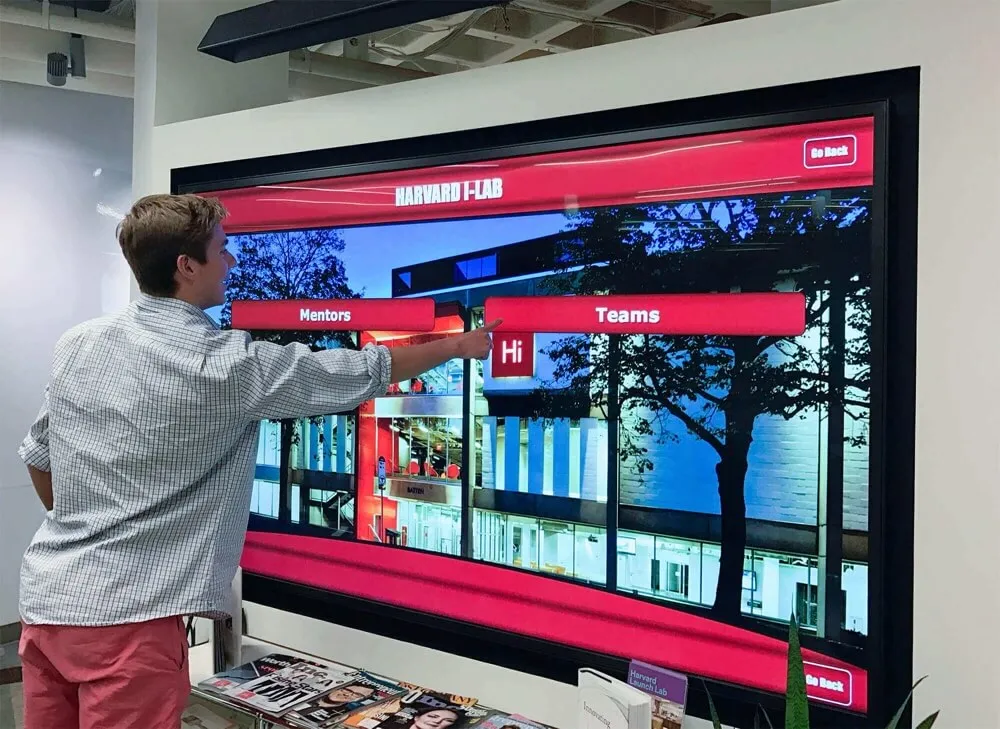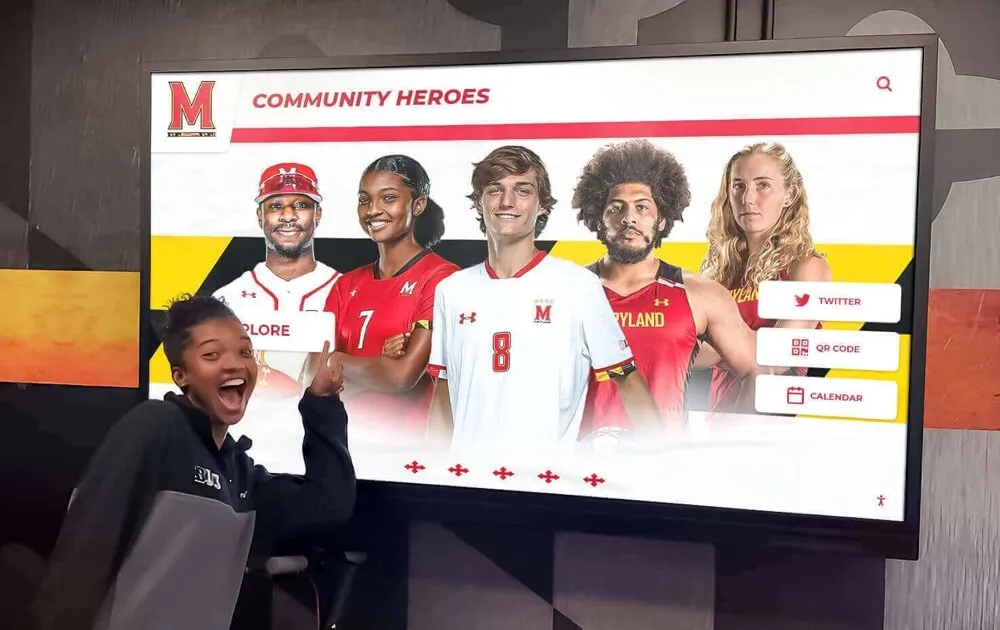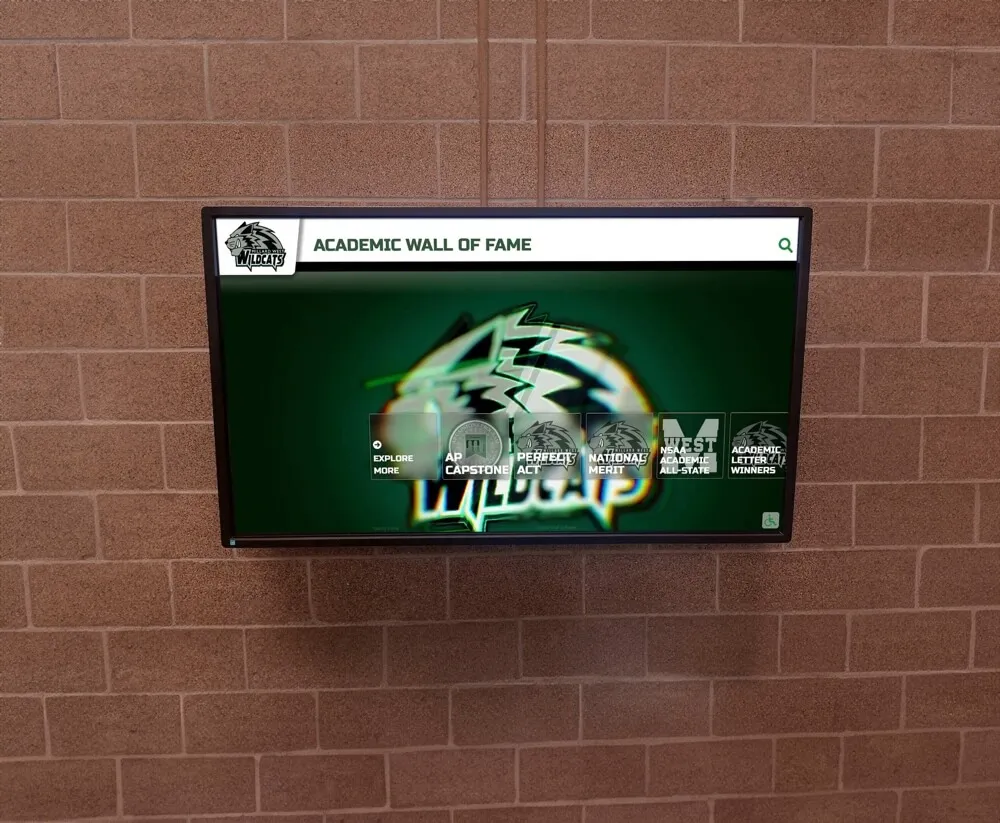




Swim team plaque display digital systems represent the evolution of aquatic achievement recognition, transforming how schools, universities, clubs, and recreation centers celebrate pool records, team accomplishments, and individual swimmer excellence. These interactive touchscreen platforms eliminate the severe space constraints and maintenance burdens of traditional engraved plaques while creating engaging recognition experiences that honor unlimited swimmers, preserve complete historical records, and inspire continued athletic excellence throughout aquatic programs.
Traditional swim team recognition—individual engraved plaques mounted on natatorium walls that fill available space within 2-3 years, painted record boards requiring expensive repainting when times improve, or static trophy displays that quickly become outdated—fails to comprehensively celebrate the depth and breadth of swimming achievement. Programs forced to remove previous record holders to accommodate current swimmers experience difficult decisions about whose accomplishments deserve permanent recognition. Meanwhile, visitors exploring pool facilities encounter minimal contextual information beyond names, times, and years, missing the compelling stories behind championship performances and program traditions.
This comprehensive guide explores how swim team plaque display digital systems overcome fundamental limitations through interactive technology, unlimited recognition capacity, rich multimedia content showcasing championship races and team celebrations, and sustainable management approaches that keep aquatic recognition current and engaging without overwhelming already-busy coaching staff and athletic administrators.
Digital recognition platforms specifically designed for swimming programs address the unique challenges aquatic sports present—multiple pool configurations requiring separate record tracking, complex event structures spanning distances and strokes, relay team recognition alongside individual achievements, and humid natatorium environments challenging traditional display materials. Modern interactive systems solve these specialized requirements while creating compelling recognition that engages swimmers, families, alumni, and prospective athletes throughout pool facilities and online platforms.

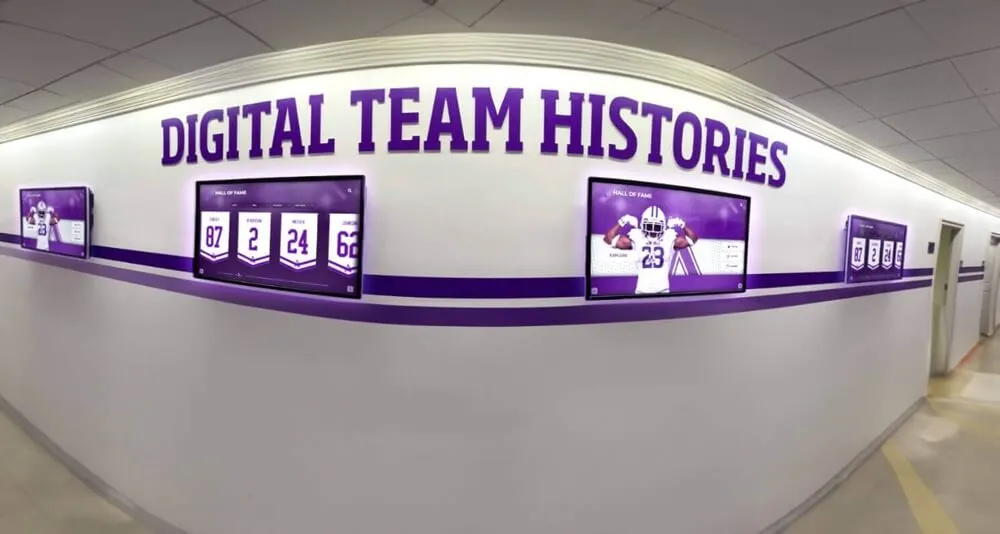
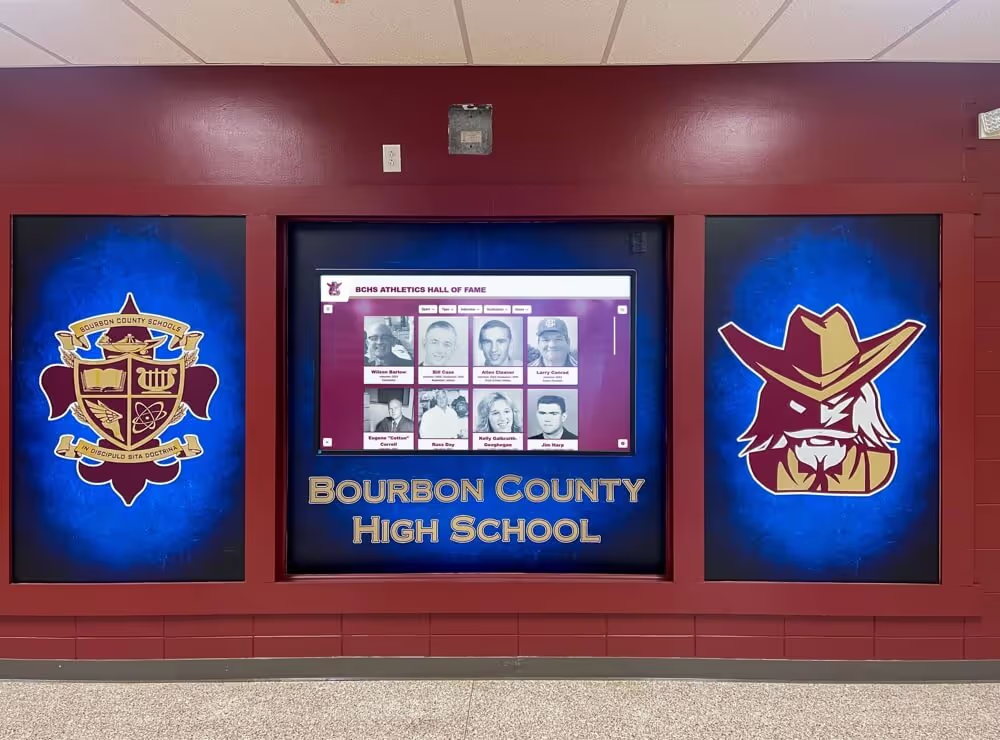
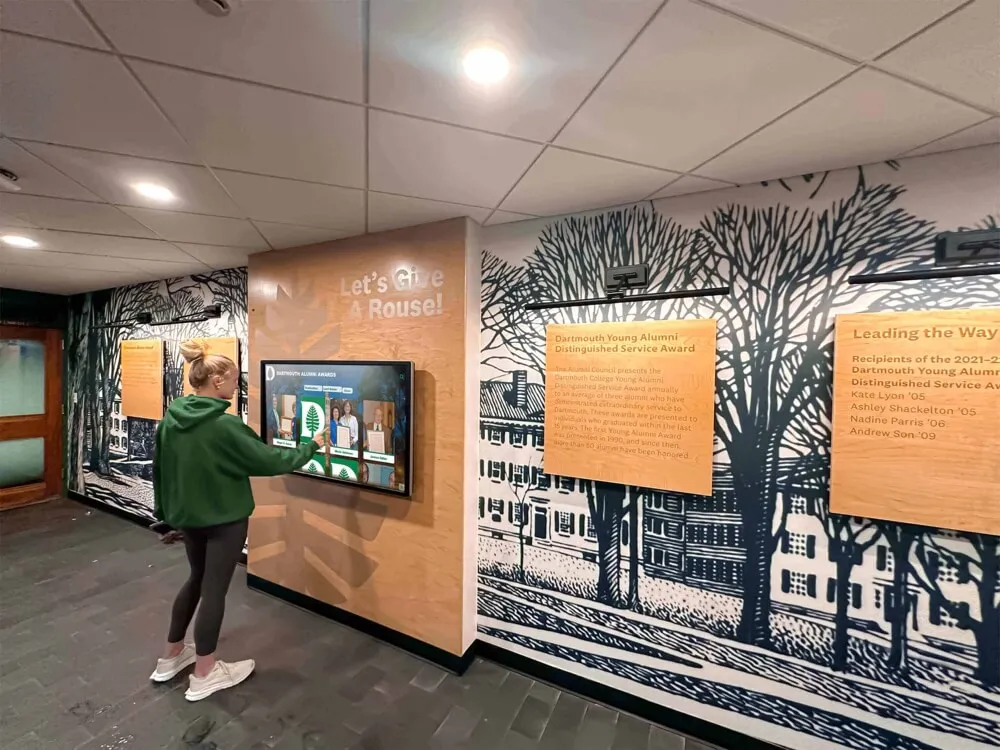
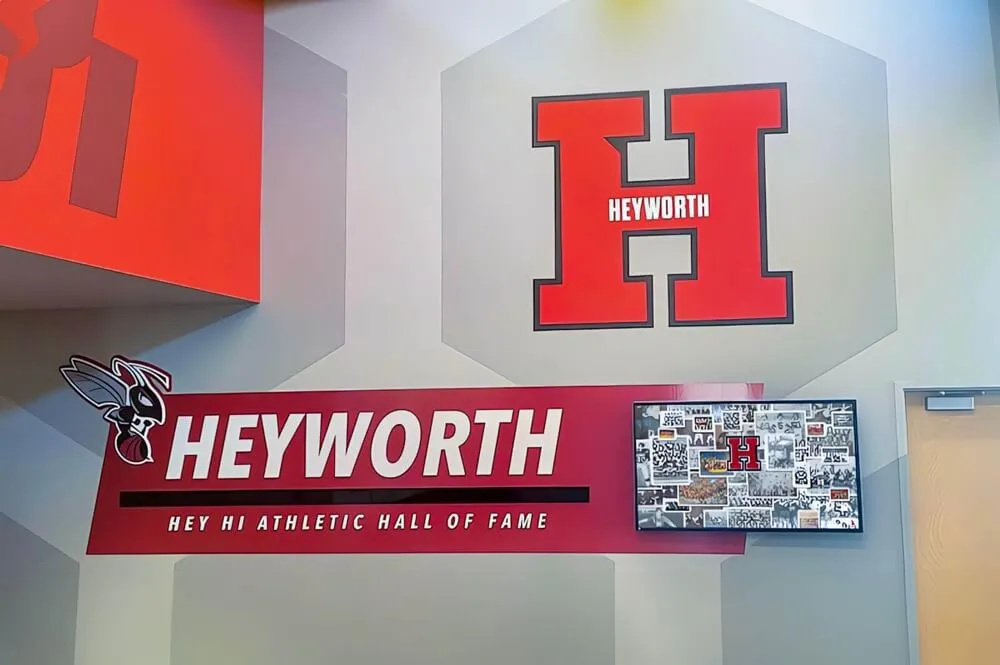
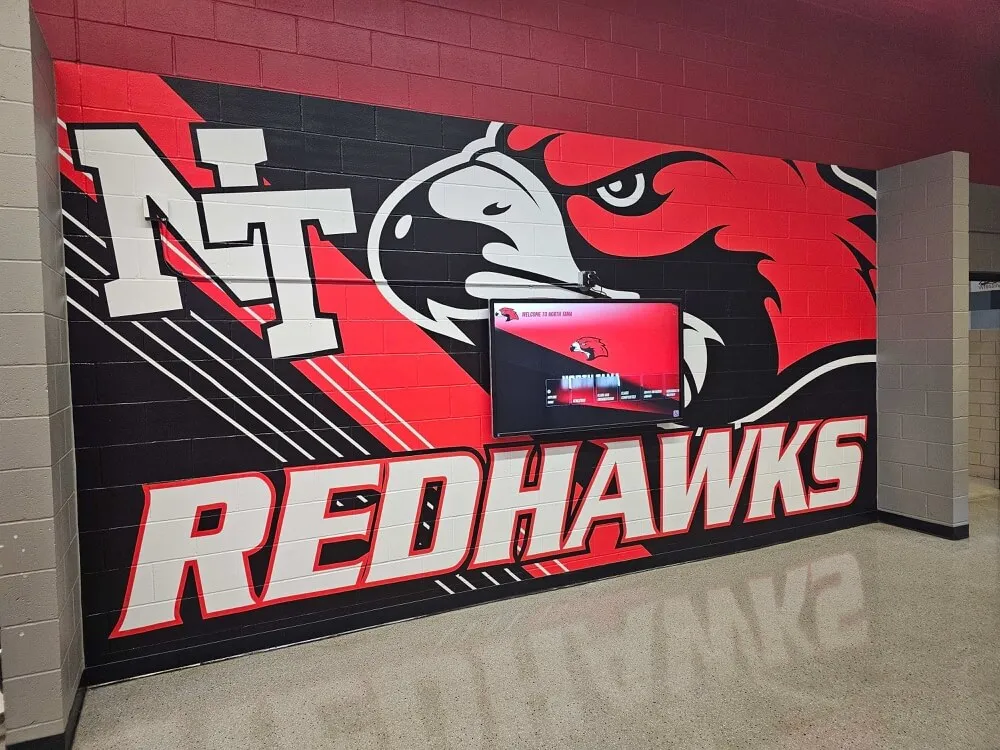
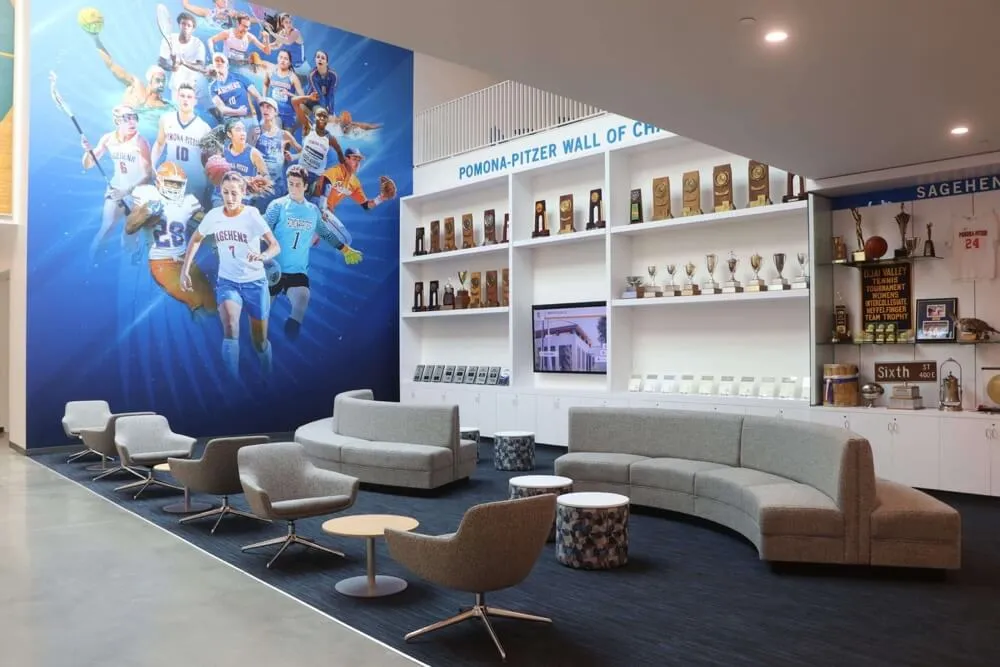
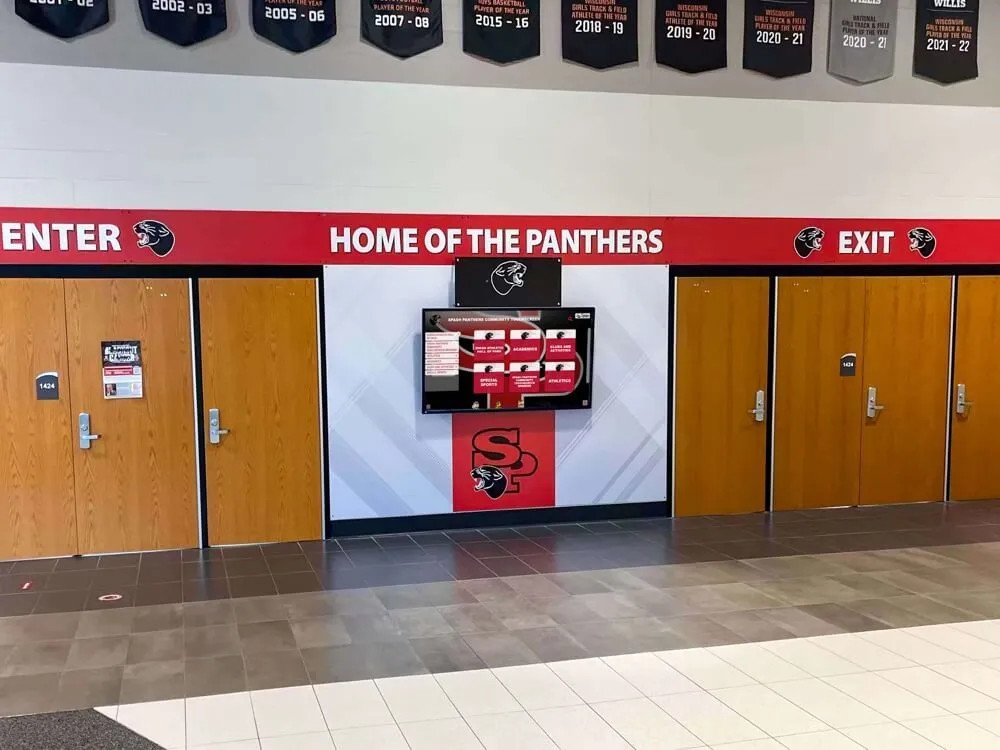
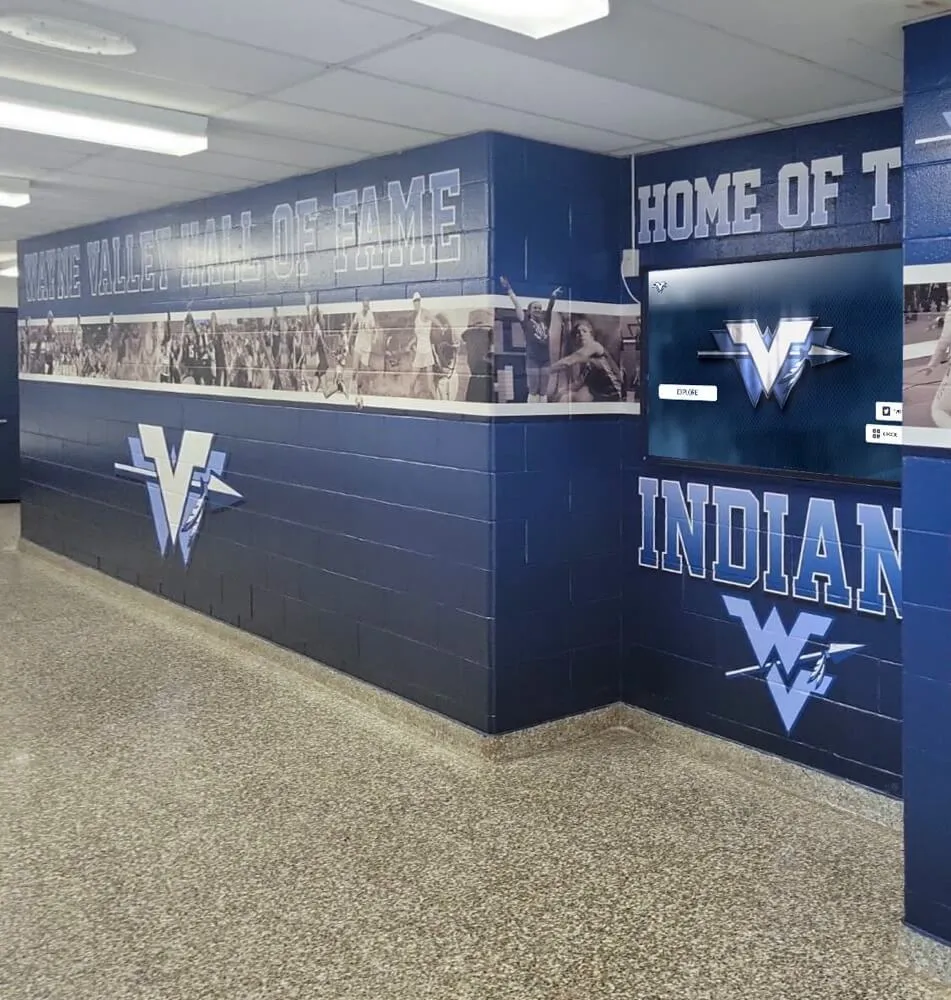
Modern digital recognition systems complement traditional athletic displays while providing unlimited capacity for celebrating comprehensive swimming achievements
Understanding Swim Team Digital Plaque Display Technology
Before exploring specific benefits and implementation strategies, understanding what distinguishes swim-specific digital recognition from generic displays helps programs make informed decisions aligned with aquatic recognition goals.
Core Components of Swimming Recognition Systems
Effective digital plaque displays integrate several specialized elements designed specifically for aquatic athletic recognition needs:
Interactive Touchscreen Hardware
Physical display technology serves as the primary engagement point:
- Commercial-grade touchscreen displays engineered for continuous institutional operation
- Screen sizes typically 55-75 inches balancing visibility with space constraints in pool facilities
- Moisture-resistant enclosures protecting electronics in humid natatorium environments
- High-brightness displays (400-700 nits) ensuring visibility despite reflective pool water and windows
- Capacitive touch technology providing responsive, smartphone-like interaction swimmers recognize
- Protective glass surfaces resisting damage from athletic environments while maintaining clarity
- Strategic mounting locations in pool lobbies, hallways connecting to natatoriums, or athlete areas
These displays create interactive recognition stations where swimmers, families, and visitors actively explore achievements rather than passively viewing static plaques or painted boards.
Swimming-Specific Recognition Software
Purpose-built platforms address aquatic sports’ unique organizational requirements:
- Event-based database structures managing all swimming and diving competitions separately
- Pool configuration management tracking short course yards (25Y), short course meters (25M), and long course meters (50M) records independently
- Gender and age group categorization ensuring appropriate record comparisons
- Individual event organization from sprint freestyle through distance events, all four competitive strokes, and individual medley
- Relay team management tracking 4-person combinations across relay events
- Split time capabilities for distance events showing intermediate performance data
- Season and career achievement tracking beyond single-race records
- Championship meet results documenting conference, district, regional, and state competition outcomes
Generic digital signage or basic recognition platforms typically lack these swimming-specific organizational structures, making purpose-built aquatic recognition systems essential for comprehensive, accurate swim team celebration.
Cloud-Based Content Management
Administrative systems enable sustainable recognition programs:
- Intuitive web interfaces requiring no technical expertise to operate confidently
- Meet result import tools efficiently adding entire competition outcomes simultaneously
- Bulk upload capabilities for historical records and legacy plaque information digitization
- Immediate publication updating all displays and web platforms instantly
- Template-based profile creation ensuring consistent professional presentation automatically
- Role-based permissions enabling coaches, athletic directors, and support staff appropriate access
- Automated backup systems preventing loss of irreplaceable historical swimming records
Solutions like Rocket Alumni Solutions provide comprehensive platforms specifically designed for athletic recognition needs, with features addressing the particular challenges swimming programs face when celebrating achievements comprehensively across multiple pool configurations, numerous events, and decades of team history.
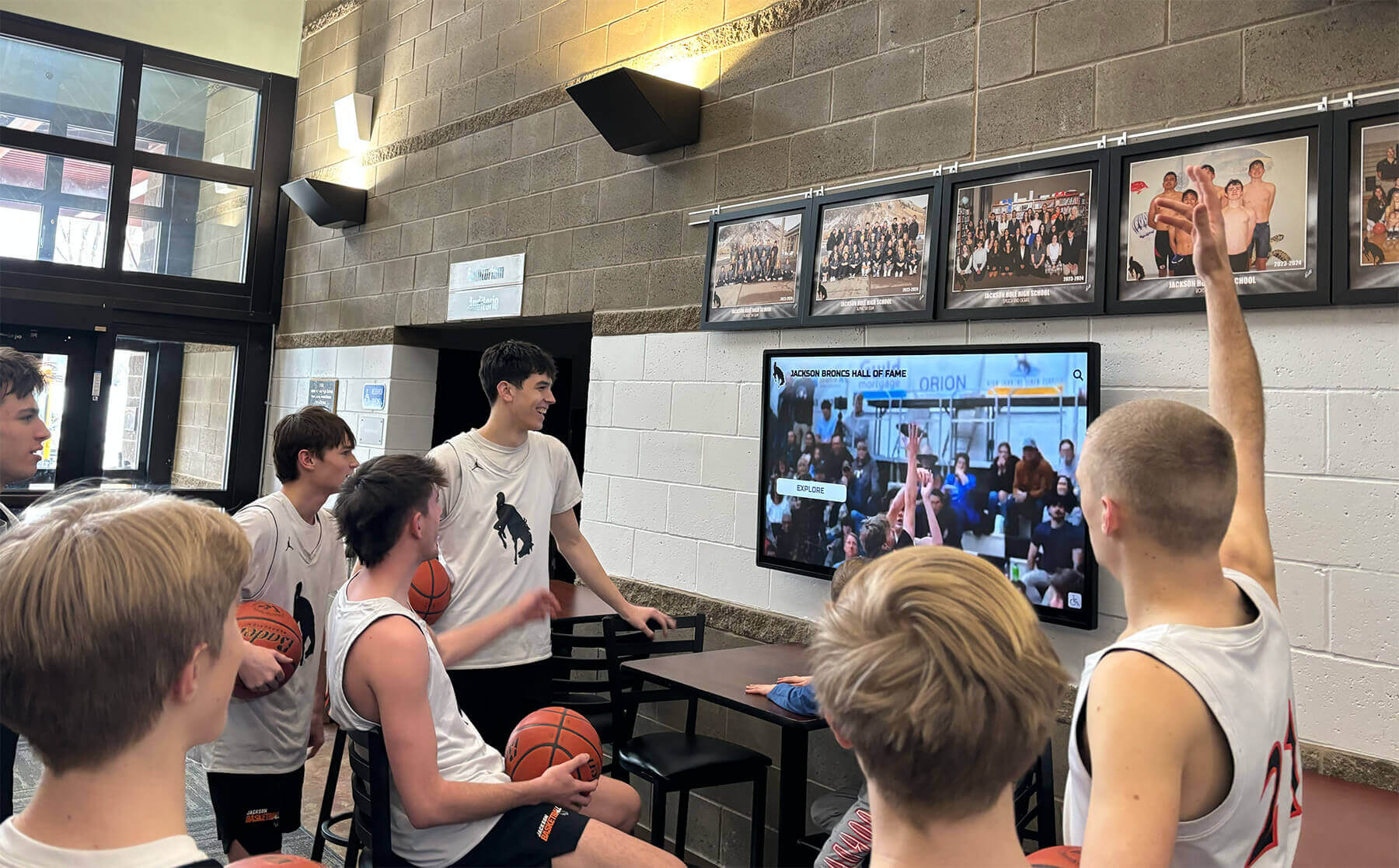
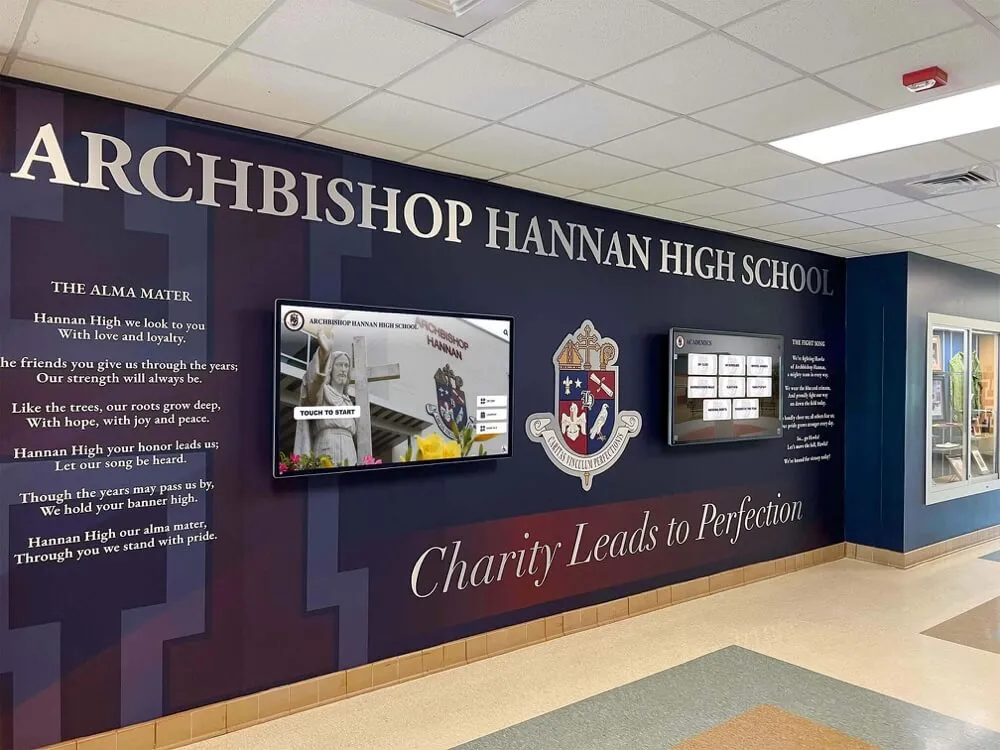
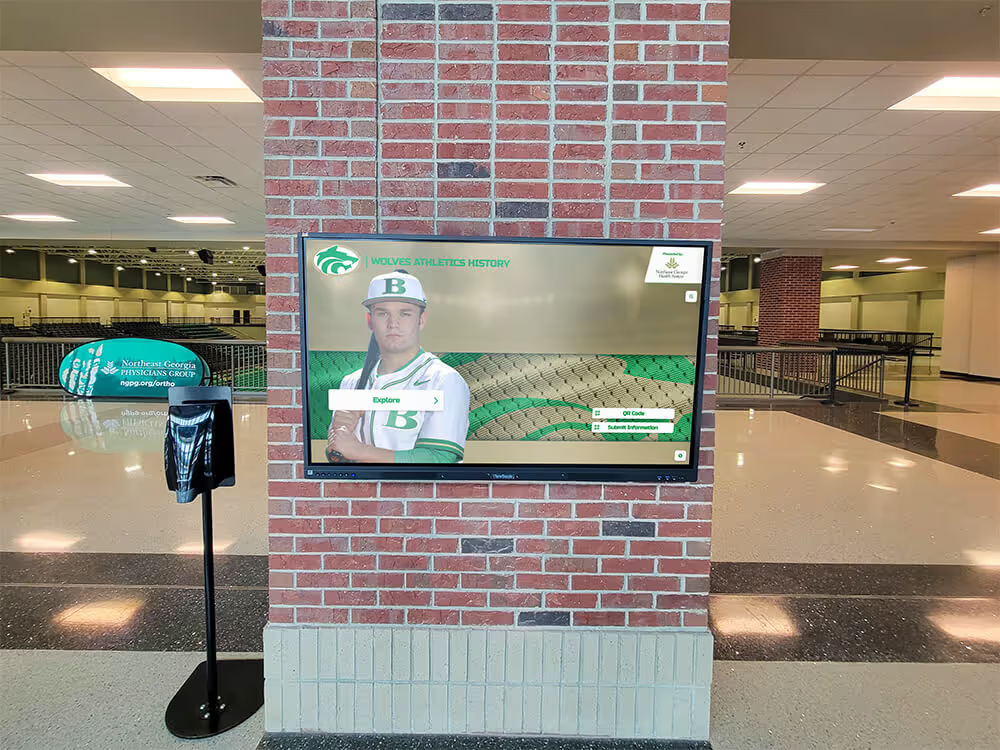
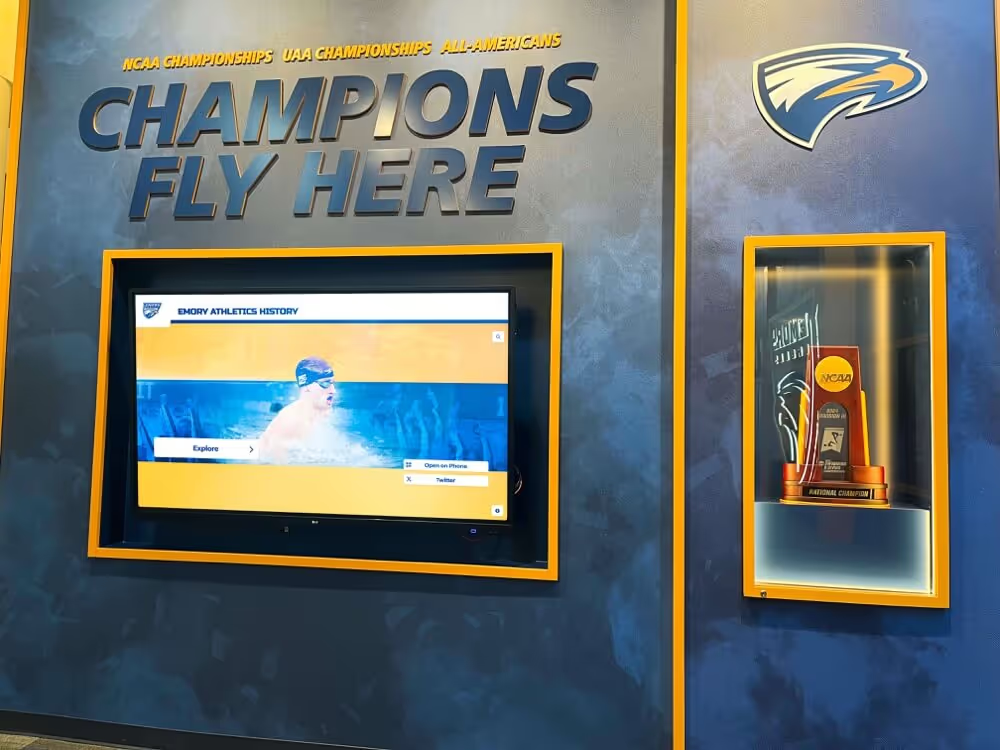
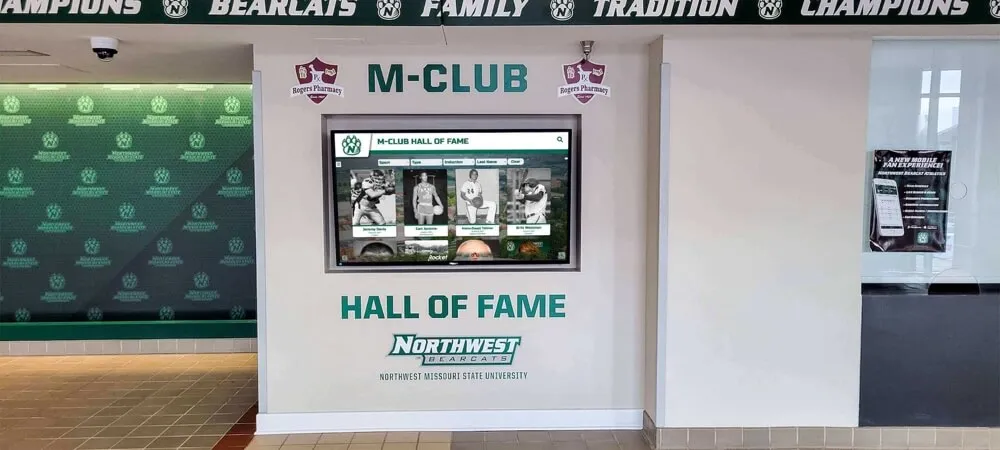
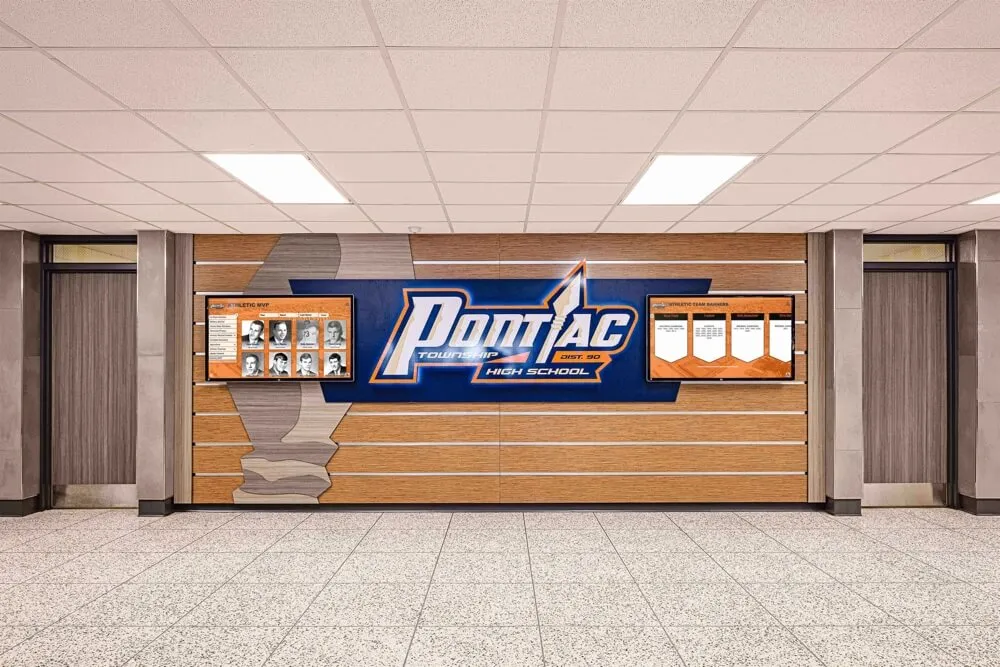
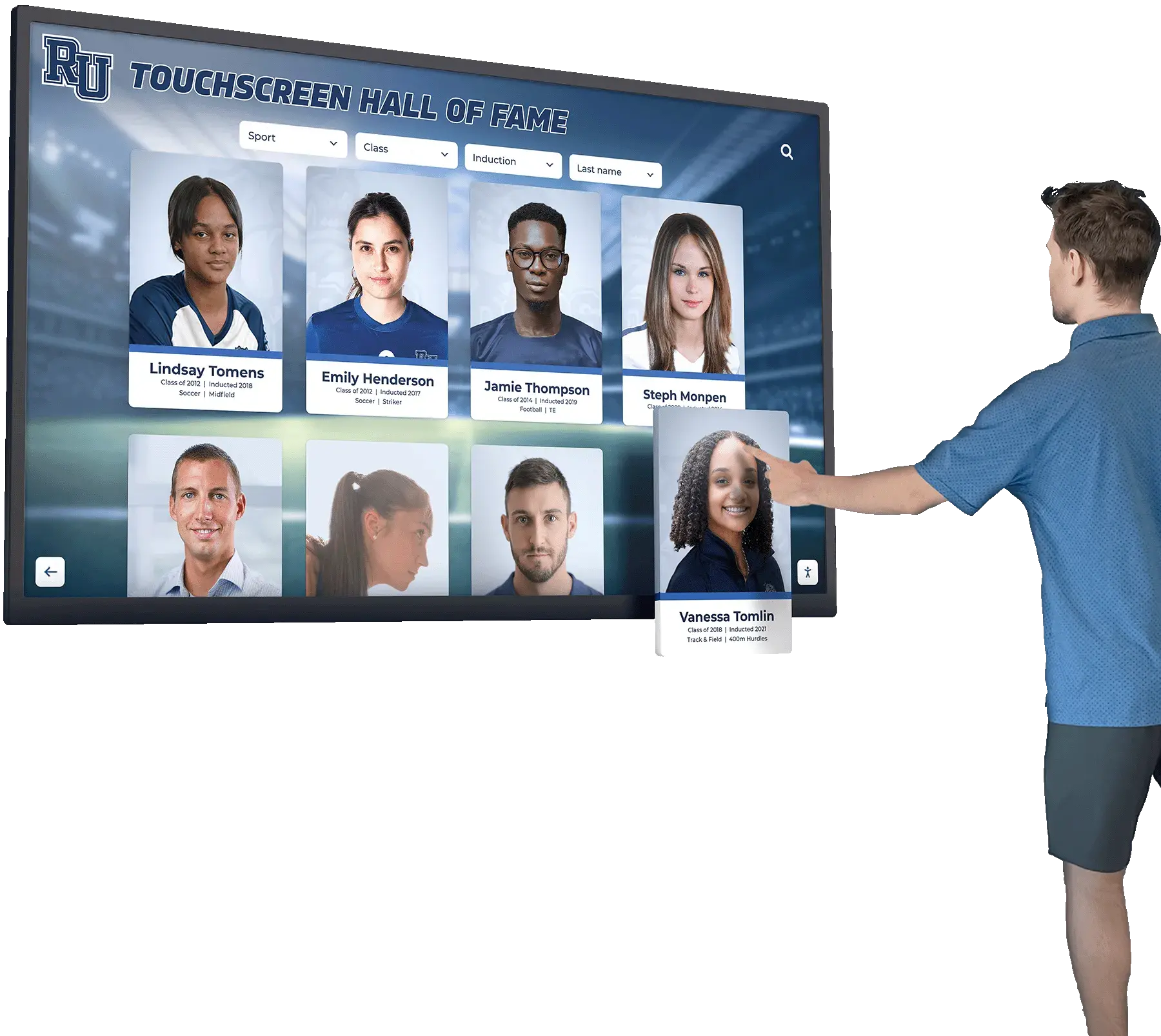
Interactive displays create natural gathering points where swimmers explore team history, record progressions, and championship achievements together
Key Differences from Traditional Plaque Recognition
Understanding fundamental advantages helps clarify the value proposition digital systems offer swimming programs:
Capacity and Space Utilization
Traditional engraved plaques encounter severe constraints:
- Individual plaques typically 6x8 to 8x10 inches consume substantial wall space quickly
- Most natatorium walls accommodate 50-100 plaques before running out of suitable mounting locations
- Relay team plaques listing all four swimmers require even more space
- Multiple pool configurations multiply space requirements threefold when tracking all record types
- Diving achievement plaques compete for limited wall space with swimming records
- Conference championship, team records, and individual honors all require separate plaque areas
- Physical space limitations force difficult decisions about whose achievements merit permanent recognition
Digital recognition systems eliminate capacity constraints entirely:
- Single touchscreen display showcases unlimited swimming records across all pool configurations
- Complete historical archives preserving every record holder throughout program history accessible instantly
- Relay teams receive comprehensive recognition without consuming additional physical space
- All events receive equal display opportunity regardless of popularity or frequency of record improvement
- Championship meet results, season honors, and career milestones all share unlimited digital capacity
- No requirement to remove previous record holders to accommodate current swimmers
- Comprehensive recognition economically sustainable regardless of program size or achievement depth
Swimming programs implementing digital recognition consistently report that unlimited capacity represents the most transformative benefit, enabling genuinely equitable celebration of all deserving swimmers rather than selective recognition constrained by available wall space.
Information Depth and Context
Traditional engraved plaques provide minimal detail:
- Name, event, time or score, and date represent typical plaque content
- No contextual information about race conditions, competition level, or achievement significance
- Limited space prevents biographical information or swimmer accomplishments beyond single record
- Static presentation with no ability to show race video, splits, or championship meet context
- Relay plaques list names but provide no information about individual team members
- Historical progression showing how records improved over time remains invisible
Digital plaque displays deliver rich multimedia content:
- Complete swimmer profiles including photos, biographical information, and career achievements
- Championship race video footage showing record-setting performances
- Split time breakdowns for distance events demonstrating race strategy and execution
- Competition context explaining where records occurred and competitive field strength
- Comparative analytics showing how close current swimmers are to existing records
- Historical timeline visualizations demonstrating record progression across decades
- Related achievements connecting records to championship meets, team successes, and program milestones
- Diving achievement details including degree of difficulty, judge scores, and technique descriptions
This comprehensive content honors swimming achievements fully while educating viewers about program excellence, individual dedication, and competitive swimming’s nuances that casual observers might not appreciate from simple time listings.
Maintenance and Update Complexity
Traditional recognition requires substantial ongoing effort:
- Engraved plaques take weeks to produce after records fall during competition season
- Professional engraving costs typically $50-150 per plaque accumulating significant expense annually
- Physical mounting requires tools, hardware, and wall damage from drilling
- Painted record boards need complete repainting ($500-2,000) when multiple records improve
- Deciding optimal layout as new plaques are added creates ongoing planning burden
- Physical materials deteriorate in humid natatorium environments requiring replacement
- Historical records stored in boxes or files become inaccessible once removed from displays
Digital systems dramatically simplify recognition management:
- New records added within minutes through cloud-based administrative interfaces
- No physical materials, engraving, or installation required for any recognition updates
- Immediate publication means records acknowledged day of achievement rather than weeks later
- Template systems ensure consistent professional presentation without design decisions
- Meet result import tools efficiently add entire competition outcomes simultaneously
- No physical deterioration or environmental damage requiring replacement
- Complete historical archives remain accessible indefinitely without physical storage requirements
Athletic directors and coaches report 85-90% reduction in time spent managing swimming recognition after implementing digital systems, with efficiency gains enabling more comprehensive celebration of all achievements rather than limiting recognition to highest-profile records only.
Explore comprehensive approaches to digital athletic record boards that transform how swimming programs celebrate achievements.
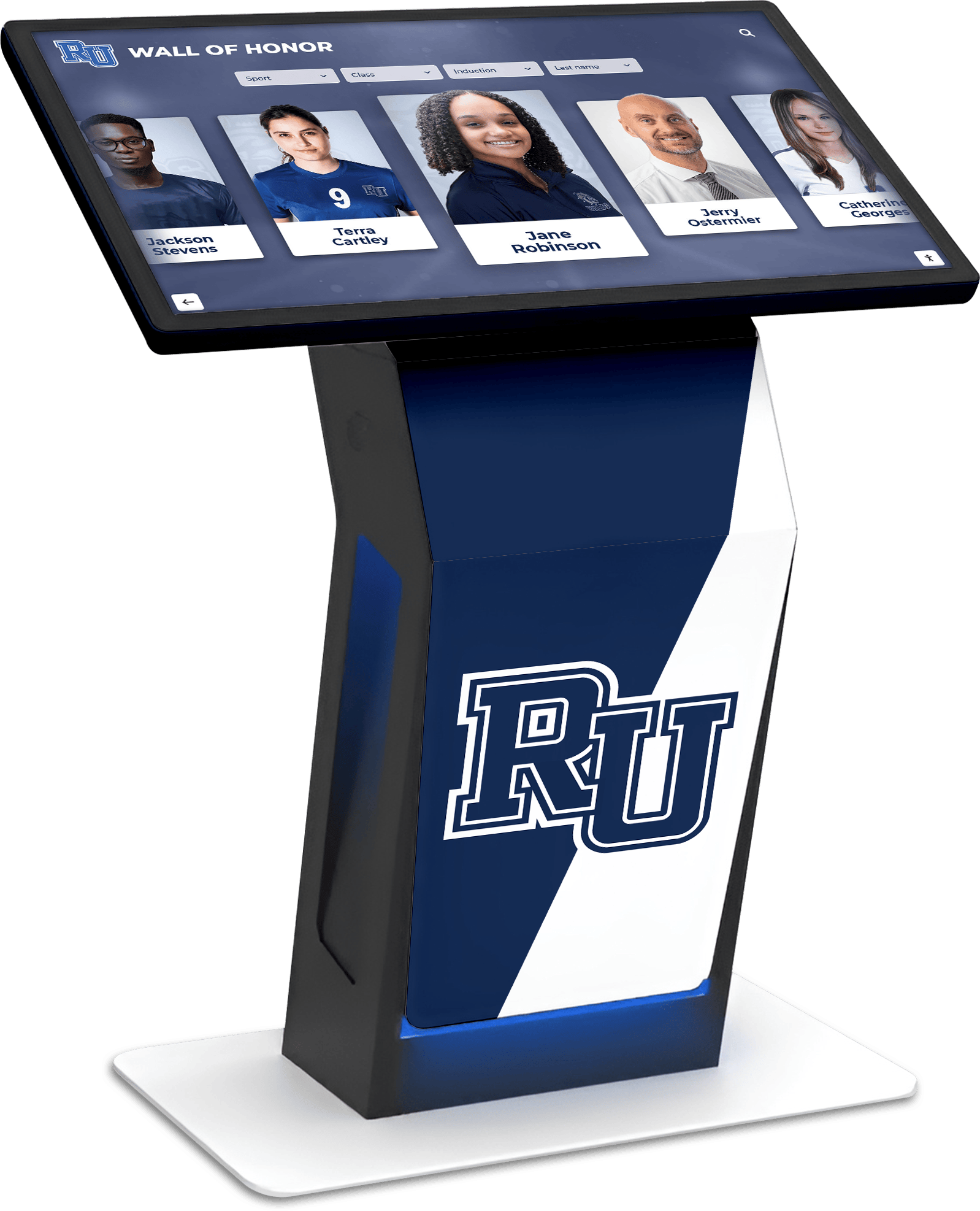
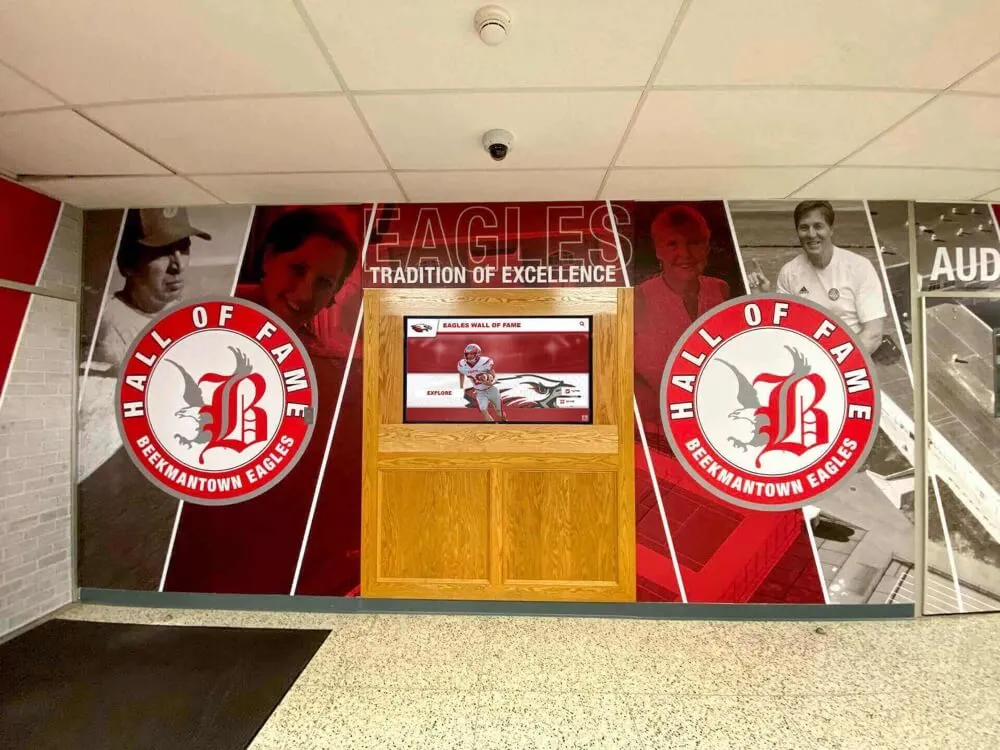
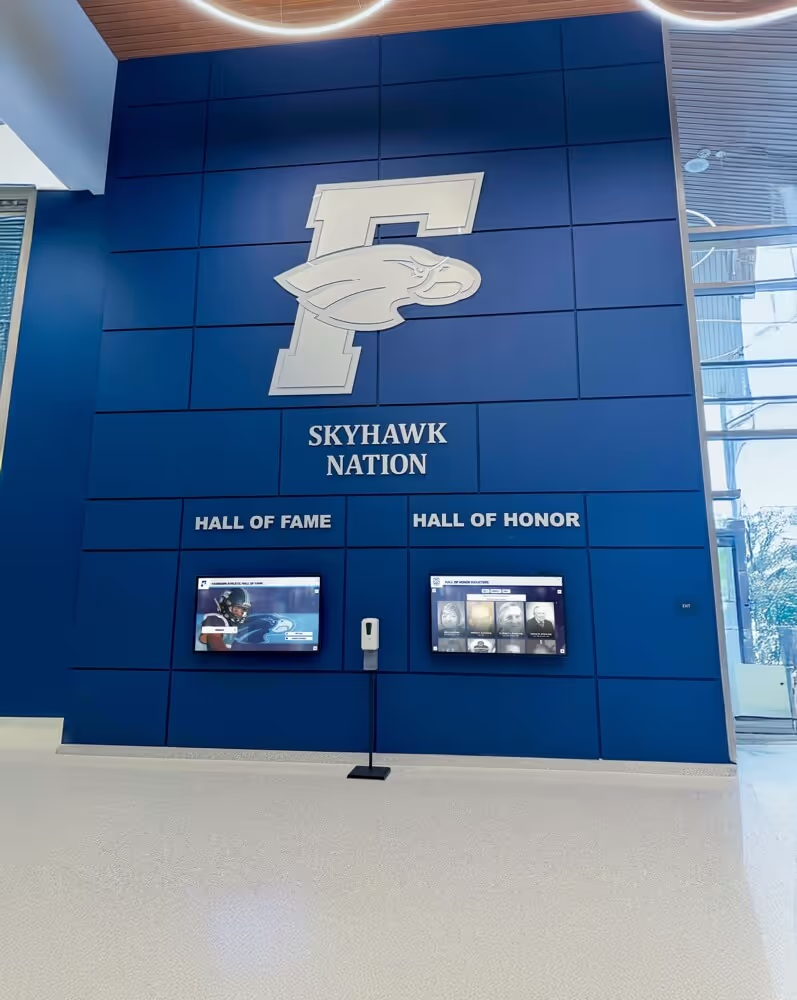
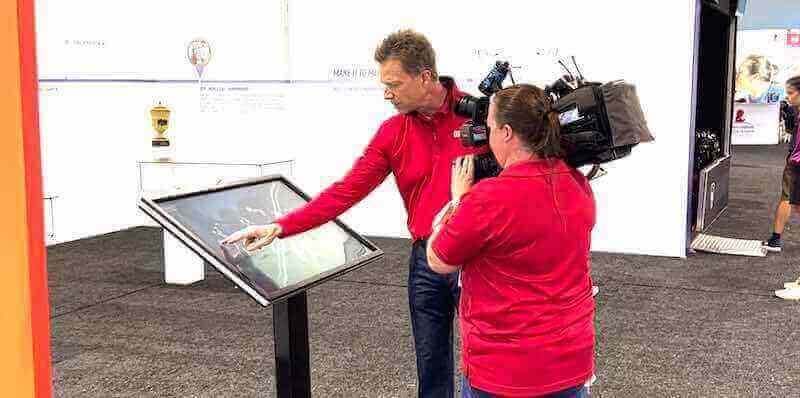
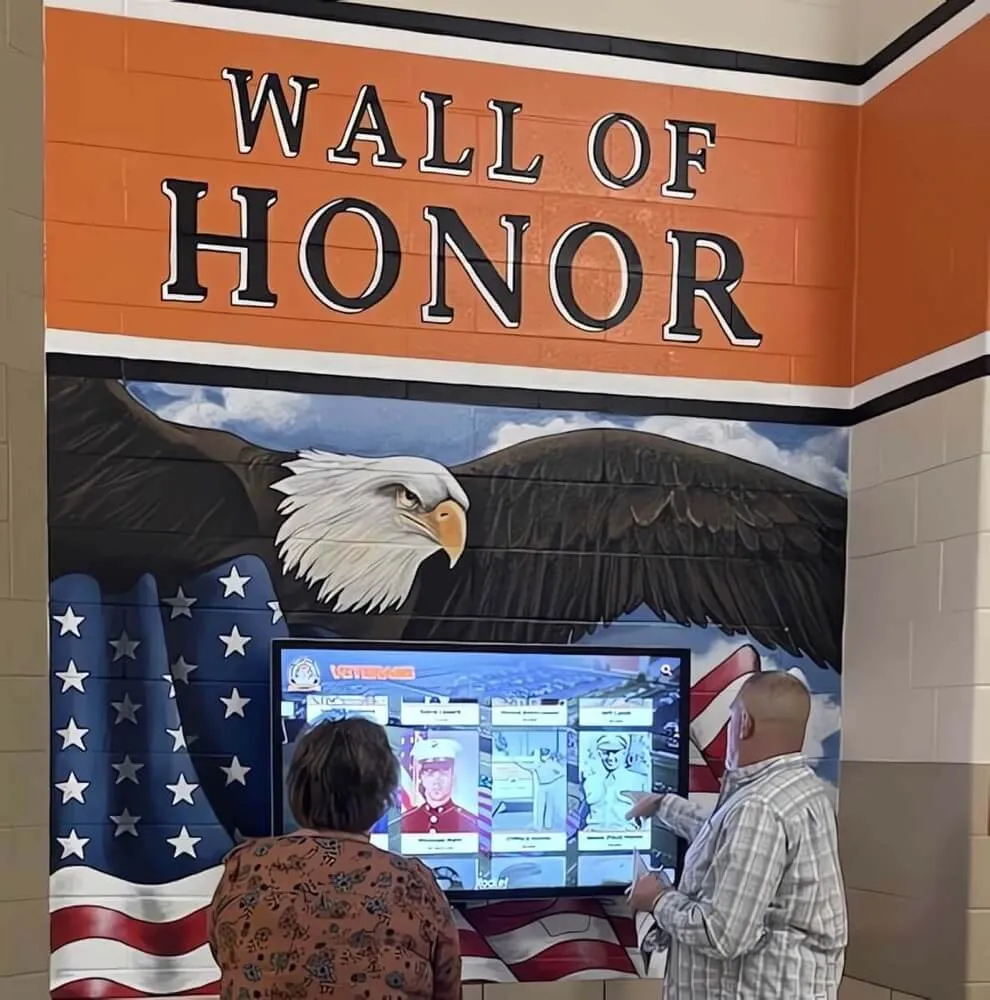
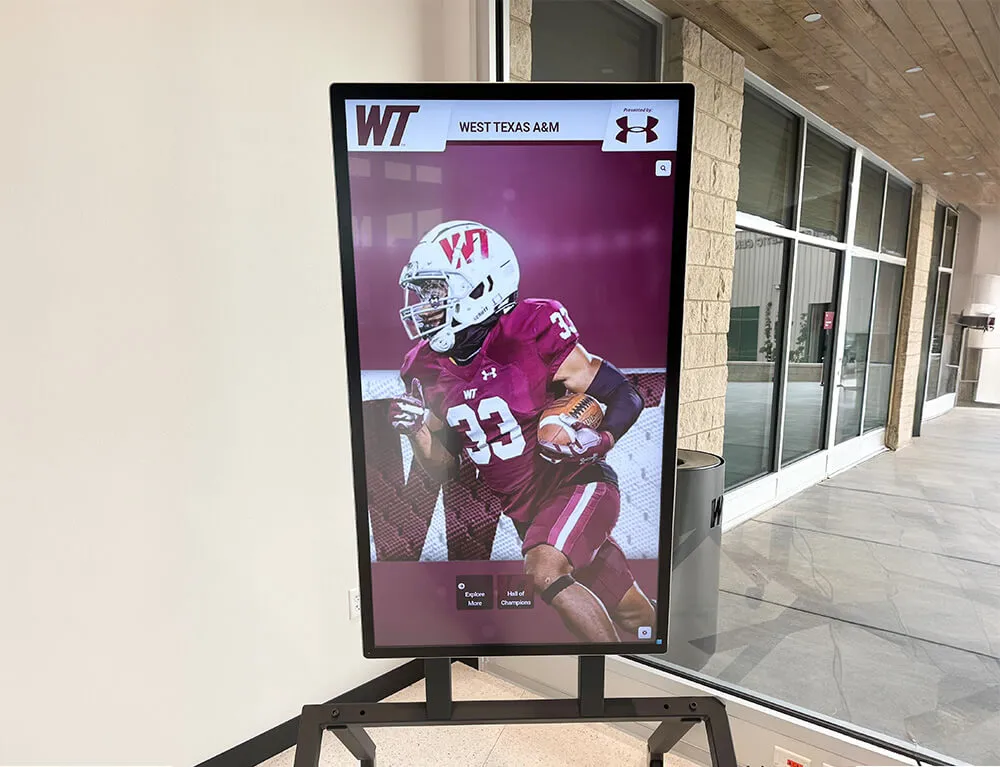
Professional kiosk installations provide complete swimming recognition solutions without requiring extensive wall mounting or construction modifications in pool facilities
Transformative Benefits of Digital Swimming Recognition
Interactive plaque display systems overcome traditional limitations while creating engagement and program impact impossible with engraved plaques or painted boards.
Unlimited Recognition Capacity Across All Pool Configurations
The most frequently cited benefit addresses swimming’s fundamental recognition challenge:
The Pool Configuration Challenge
Competitive swimming maintains records across multiple pool lengths:
- Short Course Yards (25Y): Standard American high school and college training pool configuration
- Short Course Meters (25M): International training pool standard used worldwide
- Long Course Meters (50M): Olympic and international championship competition standard
Serious swimming programs maintain separate records for each configuration because performances vary significantly based on pool length—short course records run faster due to additional turns providing underwater advantages. This tripling of record categories multiplies traditional plaque requirements dramatically.
Traditional Capacity Constraints
Physical recognition approaches struggle with swimming’s complexity:
- Three separate record boards or plaque walls required for different pool configurations
- Individual events: Freestyle (50Y/M through 500Y or 1500M), Backstroke, Breaststroke, Butterfly (50-200), Individual Medley (100-400)
- Relay events: Freestyle relays (200, 400, 800) and Medley relays (200, 400)
- Gender separation doubles all record categories
- Age group or class year divisions multiply capacity requirements further
- Diving events (1-meter, 3-meter) require separate recognition space
- Most natatoriums lack wall space for even one complete record set
- Difficult decisions about which pool configurations or events receive plaque recognition
Many swimming programs abandon comprehensive recognition entirely, displaying only championship banners or most prestigious records due to space impossibility of honoring all deserving swimmers adequately.
Digital Recognition Solutions
Interactive systems accommodate swimming’s organizational complexity effortlessly:
- Single touchscreen displays unlimited records across all pool configurations simultaneously
- Intuitive filtering enabling instant toggling between 25Y, 25M, and 50M record views
- Complete event coverage including every individual and relay event without capacity constraints
- Gender, age group, and competition level categorization without additional space requirements
- Historical archives preserving every record holder throughout program history accessible instantly
- Diving achievements integrated seamlessly alongside swimming records
- Team championships, season honors, and special recognition sharing unlimited digital capacity
- Economic sustainability regardless of how many categories or records programs maintain
Swimming programs implementing comprehensive digital recognition report showcasing 5-10 times more achievements than previous physical displays allowed, creating equitable recognition where every deserving swimmer receives appropriate celebration rather than selective acknowledgment constrained by natatorium wall space.
Relay Team Recognition Excellence
Relay events present particular recognition challenges:
- Four swimmers contribute to every relay record requiring comprehensive team acknowledgment
- Traditional plaques listing all four names consume double the space of individual event plaques
- Swimmers participating in multiple relay records quickly fill available wall space
- Team member biographical information and individual contributions go unrecognized in name-only listings
Digital systems honor relay achievements comprehensively:
- Relay record listings including full team rosters with swimmer names and class years
- Individual swimmer profiles accessible directly from relay team displays
- Multiple relay participation tracking showing swimmers who contributed to various records
- Split time displays crediting specific swimmers with particular relay legs
- Championship meet context explaining competitive field and achievement significance
- Photo galleries and race videos showing relay team celebrations and performances
- Related content connecting relay records to individual achievements and season championships
This comprehensive relay recognition honors team achievements fully while acknowledging individual contributions—strengthening team culture that swimming programs intentionally develop.
Learn about strategies for showcasing team athletics records through digital recognition platforms.
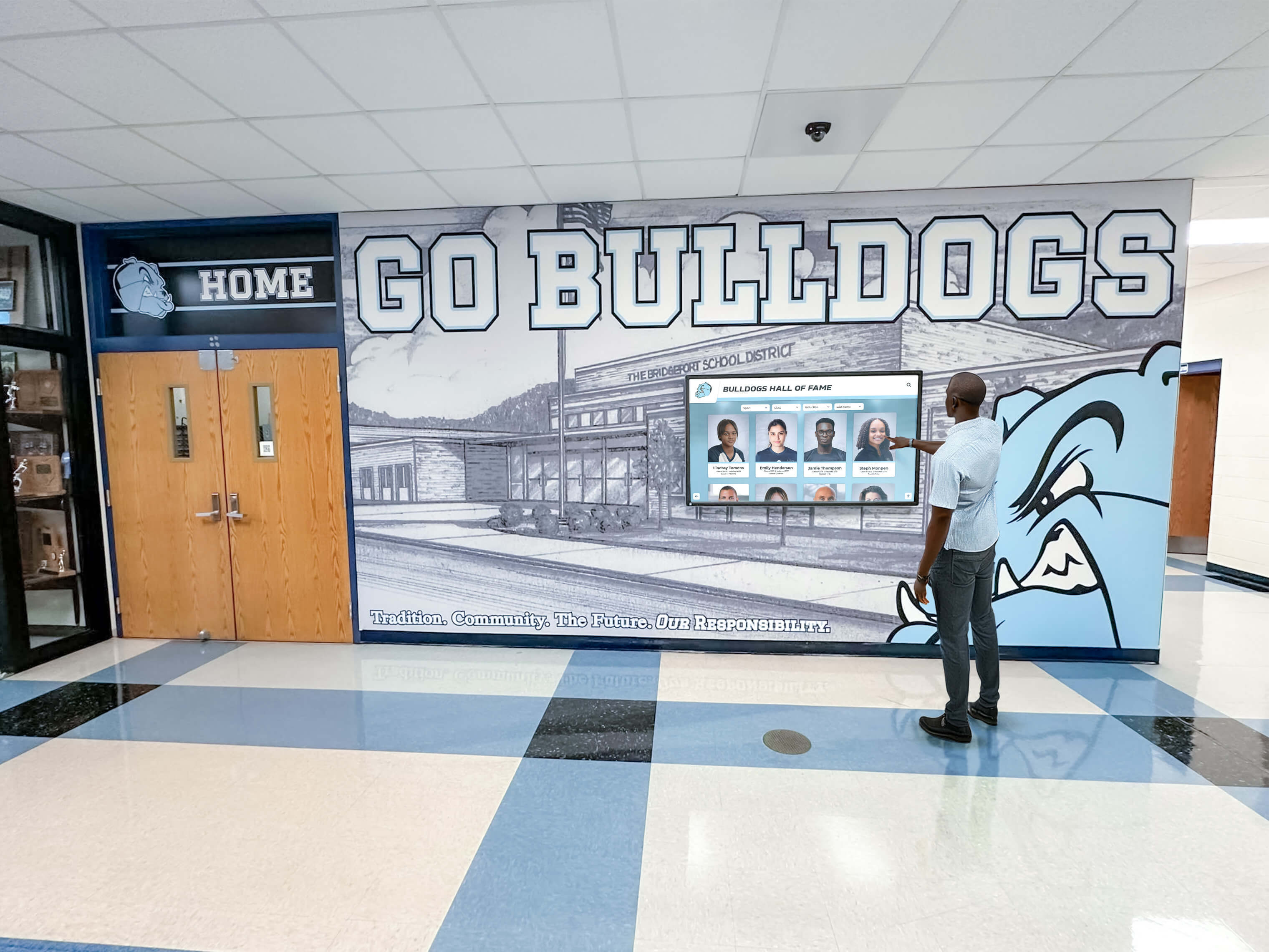
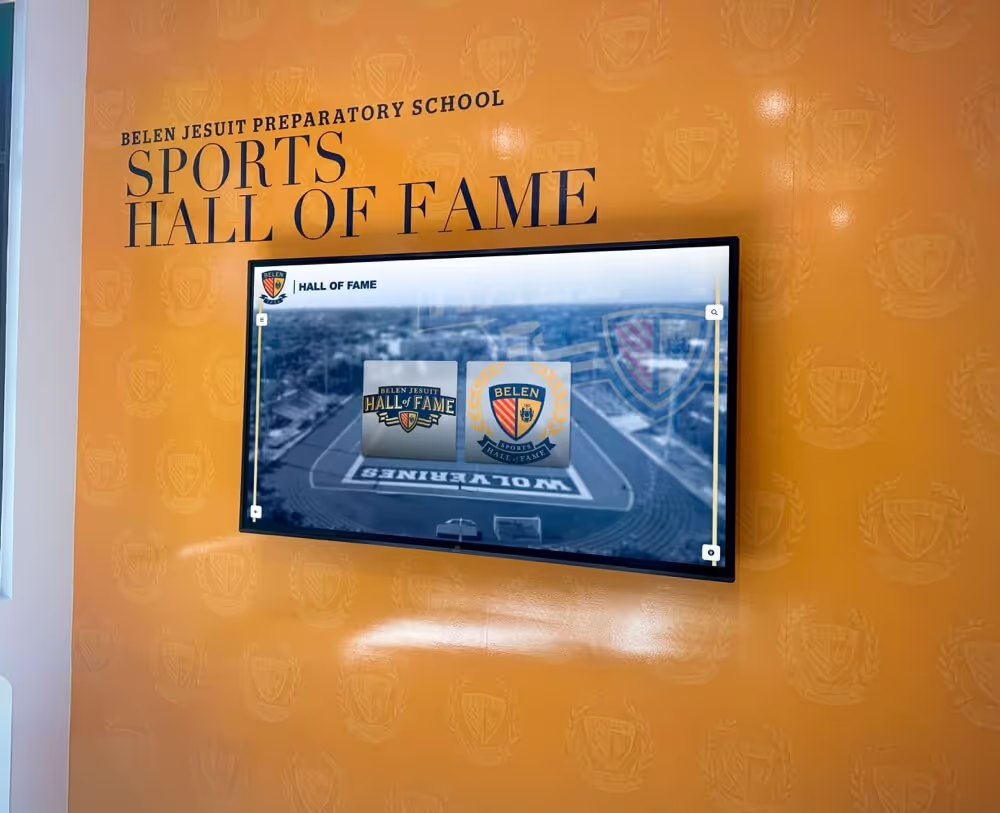
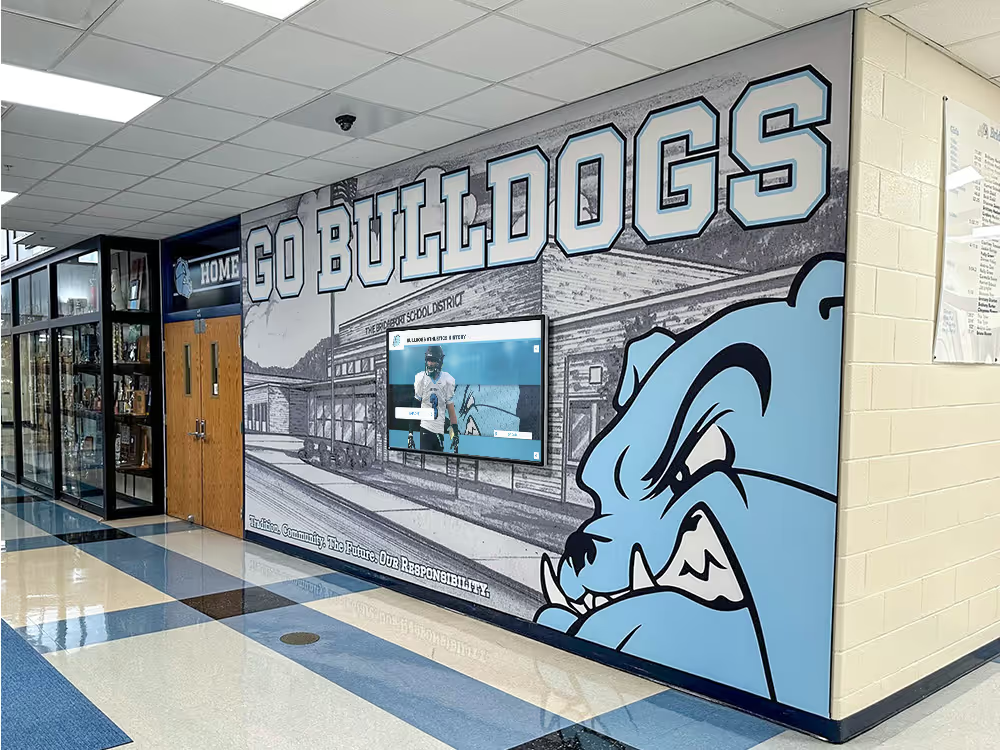
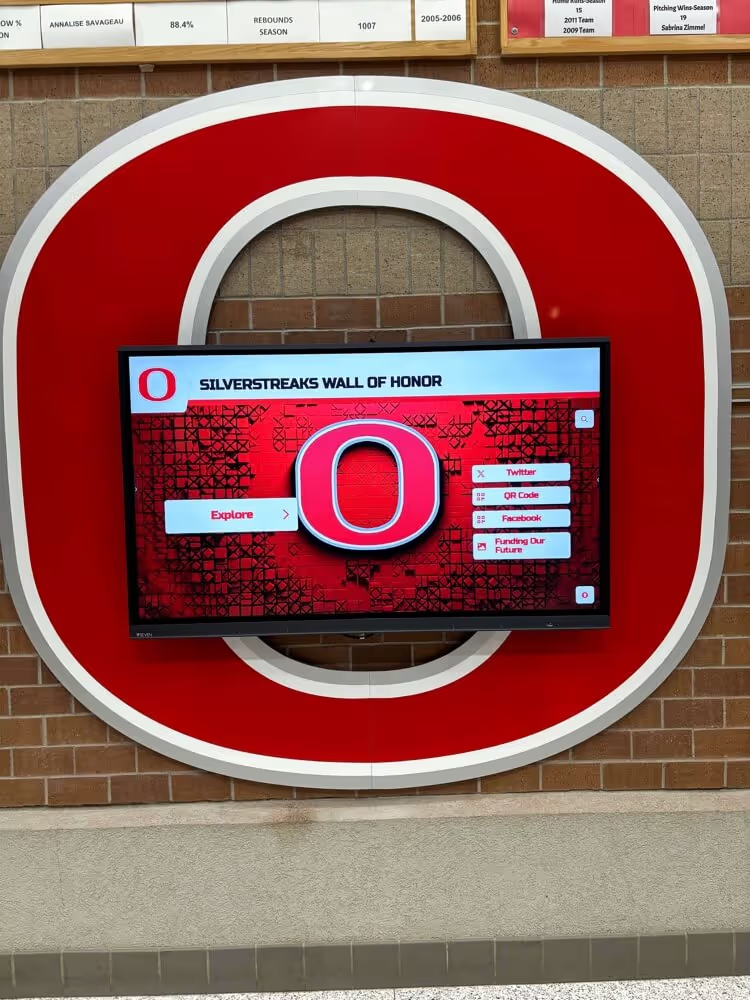
Strategic placement in high-traffic hallways connecting to pool facilities ensures swimming recognition reaches entire school communities and facility visitors
Creating Swimmer Engagement Through Interactive Experiences
Digital recognition transforms passive plaque viewing into active exploration that dramatically increases recognition impact and program engagement:
Traditional Recognition Limitations
Conventional plaques generate minimal interaction:
- Swimmers briefly scan wall displays looking only for their own names or familiar teammates
- Visitors walk past plaques without pausing to read individual achievements
- No mechanism for discovering historical records or program progression over time
- Static presentation unchanged during multiple facility visits
- Zero engagement opportunity beyond reading basic engraved information
- Average viewing time typically 15-30 seconds for entire plaque wall
This passive recognition exposure creates minimal motivational impact, particularly for younger swimmers who see no connection to historical records and may question whether excellence they see is achievable through their own efforts.
Interactive Digital Exploration
Touchscreen displays create fundamentally different experiences:
- Swimmers actively navigate through records, team history, and individual profiles via intuitive touch interface
- Powerful search functionality enables instant location of specific swimmers, events, or years
- Event filtering allowing focus on particular stroke or distance specialties
- Pool configuration toggling comparing performance across 25Y, 25M, and 50M records
- Historical timeline exploration showing how program records progressed across decades
- “How Close Are You?” comparison tools letting current swimmers measure their times against records
- Championship meet results revealing competitive contexts and team scoring contributions
- Video content showcasing race footage, championship celebrations, and program traditions
- Extended interaction sessions averaging 5-8 minutes rather than brief glances
Educational psychology research consistently demonstrates that active engagement creates substantially stronger motivational impact compared to passive information exposure. Swimmers who interact with digital recognition displays report significantly greater awareness of program standards, stronger aspiration toward record achievement, and deeper connection to team traditions and excellence cultures.
Peer Modeling and Team Culture Development
Interactive recognition leverages social dynamics powerfully:
- Visible teammate achievements create natural conversations about training approaches and performance improvement
- Relay team displays demonstrate how individual excellence contributes to collective success
- Historical records show that current standards represent decades of progressive improvement
- Recent graduate achievements prove that excellence represents attainable goals rather than impossible standards
- Multiple record listings across events normalize high performance throughout entire team
- Alumni success stories connect program training to college swimming and lifetime sport participation
- Social interaction with displays creates positive peer pressure supporting excellence commitment
Swimming coaches consistently identify team culture as the most powerful determinant of individual athlete development and program success. Digital recognition contributes to positive culture development by making excellence visible, achievement normal, and team traditions tangible to every swimmer from novices through senior leaders.
Discover comprehensive approaches to digital athletic recognition programs that maximize team impact.
Swimming-Specific Features Enhancing Recognition Value
Purpose-built platforms provide specialized capabilities particularly valuable for aquatic programs:
Split Time Display and Analysis
Distance events require detailed performance documentation:
- 200-yard/meter and longer events involve complex race strategies and pacing
- Split times at each 50 or 100 interval reveal race execution and tactical approaches
- Negative splitting (faster second half) represents optimal distance race strategy
- Comparative split analysis helps current swimmers understand what record-level pacing requires
- Historical split time tracking shows evolution of race strategies across program eras
- Coaching education opportunities demonstrating how elite swimmers manage distance events
Digital systems can display complete split breakdowns for every record swim, providing educational value that simple final time listings never achieve.
Conversion and Comparison Tools
Swimming times require contextual understanding:
- Short course (25Y or 25M) versus long course (50M) performance conversion calculators
- Age-based standards showing how swimmer performances compare to national qualifying times
- Historical comparison adjusted for swimsuit technology changes (pre-2008 versus modern suits)
- Power point systems translating times into universal performance scales
- Improvement tracking showing percentage gains and time drops across seasons
- Relay split contribution calculations crediting individual swimmers appropriately
These analytical tools transform simple record listings into comprehensive performance databases supporting athlete development and coaching education.
Championship Meet Recognition
Swimming programs compete in progressive championship structures:
- Conference or league championships determining regional supremacy
- District or sectional meets qualifying top performers for state competitions
- State championships representing highest state-level achievement
- National meets (Junior Nationals, Senior Nationals) showcasing elite performances
- Individual event finals, consolation finals, and relay team achievements all merit recognition
Digital platforms organize championship achievements comprehensively:
- Complete meet results showing all individual and relay performances
- Event-by-event breakdowns with heat, semi-final, and final swim times
- Team scoring summaries demonstrating how individual swims contributed to overall placement
- Championship photo galleries capturing medal ceremonies and celebration moments
- Historical championship comparison showing program’s most successful seasons
- All-conference and all-state recognition alongside championship meet results
This systematic championship documentation honors the full scope of competitive swimming achievement—acknowledging not just record holders but all swimmers whose performances contributed to team success at various championship levels.
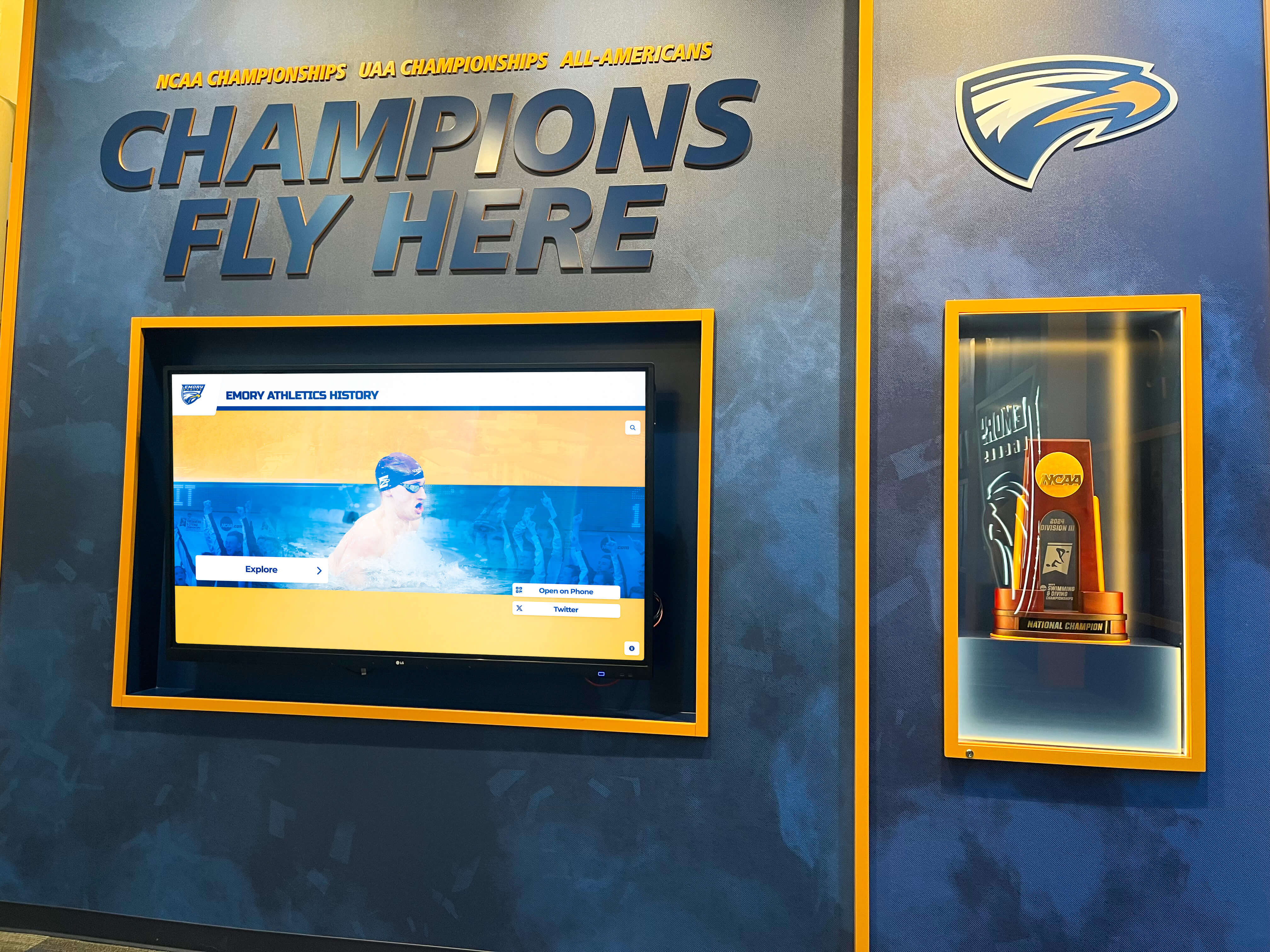
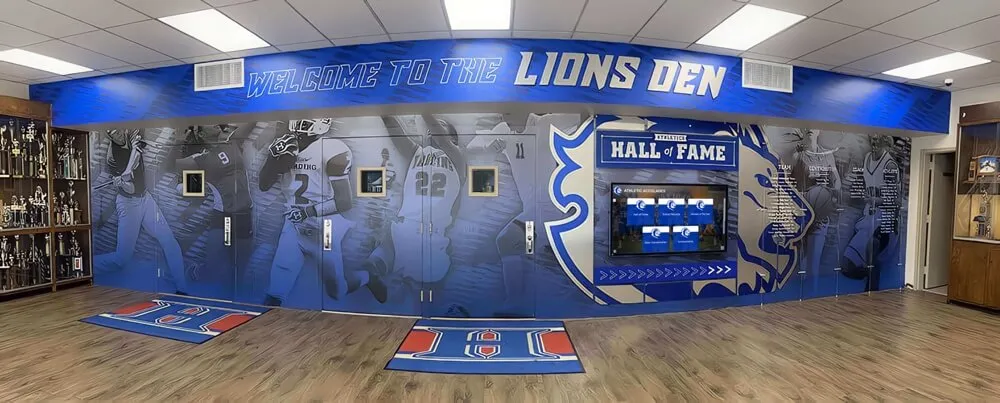
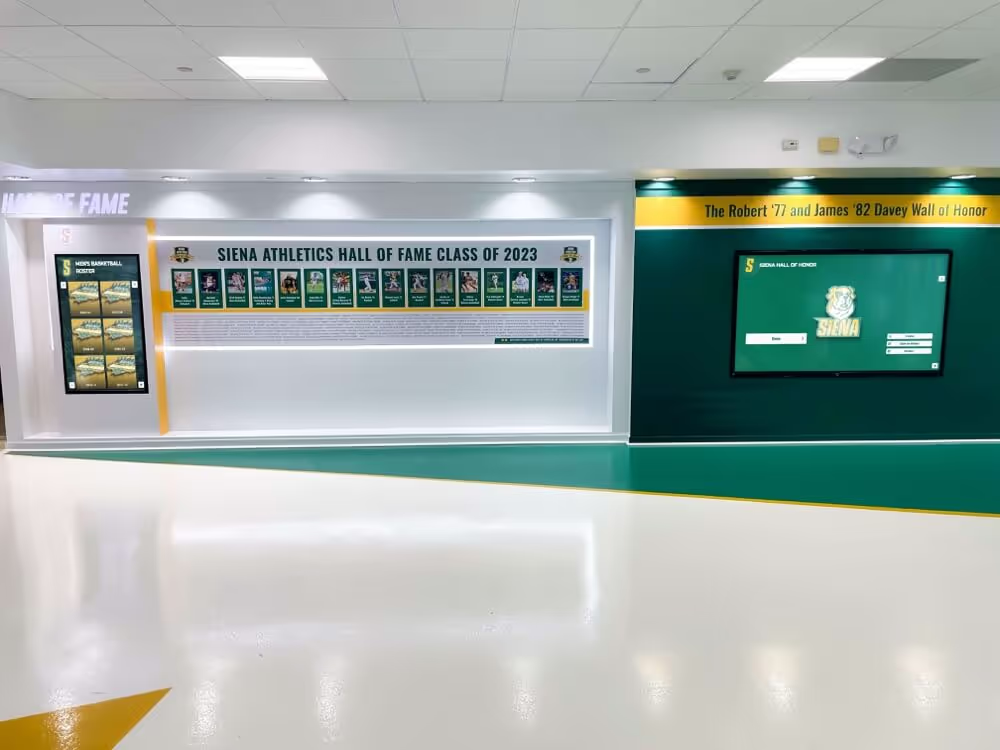
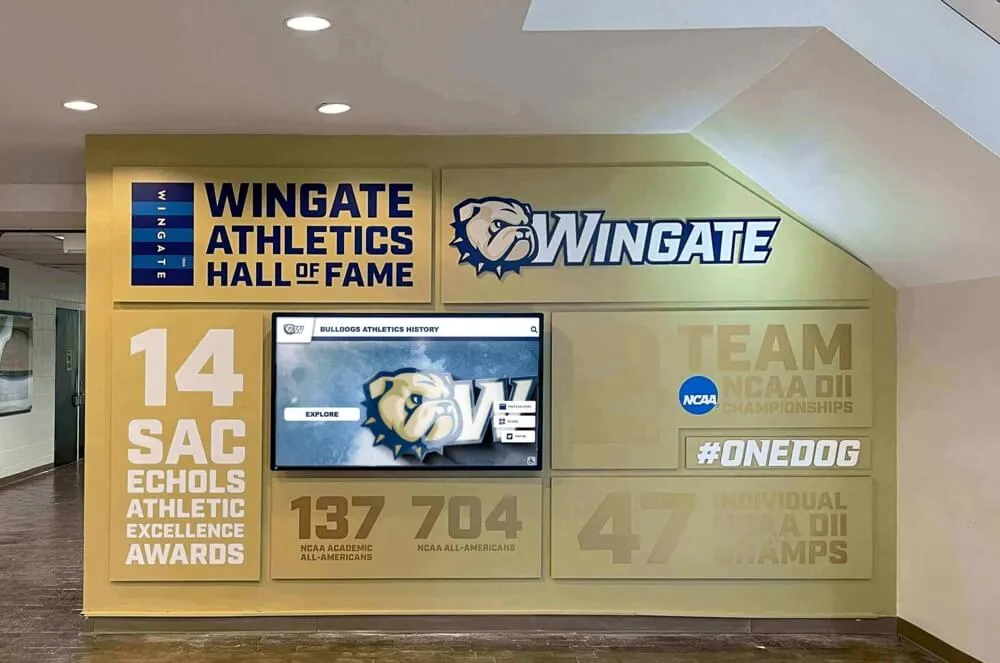
Comprehensive recognition systems celebrate diverse swimming achievements including conference championships, individual records, and team honors
Administrative Efficiency and Long-Term Sustainability
Reduced management burden represents critical advantage ensuring recognition programs remain current and comprehensive:
Traditional Recognition Workload
Conventional approaches require substantial coaching and administrative effort:
- Season-ending review identifying all swimmers who achieved new records
- Individual plaque design and engraving ordering from trophy vendors
- 4-8 week production time means recognition delayed significantly after season conclusion
- Coordination with facilities staff for wall mounting and installation
- Layout planning determining where new plaques fit within existing displays
- Budget management for engraving costs accumulating $500-2,000+ annually for active programs
- Historical record verification ensuring accuracy before permanent engraving
- Storage of displaced plaques when wall space requires difficult removal decisions
This workload typically consumes 8-12 hours annually for swimming-specific coaching staff—time coaches consistently describe as better spent on athlete development, parent communication, and program planning. Many well-intentioned recognition programs fade as ongoing burden becomes unsustainable despite continued commitment to swimmer acknowledgment.
Digital Recognition Efficiency
Cloud-based management streamlines administration dramatically:
- Meet result files import directly from timing system software (Hy-Tek, SwimCloud, others)
- Bulk upload tools add entire championship meet outcomes simultaneously in minutes
- New records automatically identified through database comparison with existing standards
- Immediate publication means recognition current same week as achievement
- Template-based presentation ensures consistent quality without design decisions
- Remote access enables updates from home, office, or pool deck via smartphone
- Role-based permissions allow assistant coaches or team managers to contribute appropriately
- Zero physical materials, vendor coordination, or installation requirements
Swimming coaches report 85-90% reduction in recognition management time after implementing digital systems—typically 1-2 hours annually compared to 8-12 hours for traditional plaque approaches. This efficiency enables more comprehensive recognition including championship meet results, season honors, and special achievements beyond record-setting performances only.
Budget Considerations and Economic Value
While digital systems require upfront investment, long-term economics favor interactive platforms:
Traditional Plaque Ongoing Costs:
- Individual engraving: $50-150 per plaque
- Relay team plaques: $75-200 each (larger size accommodating four names)
- Active programs: 5-15 new plaques annually averaging $750-1,500 yearly
- Mounting hardware and installation: $100-300 annually
- Record board repainting: $500-2,000 every 3-5 years
- Cumulative 10-year cost: $8,000-18,000 for modest recognition programs
Digital Recognition Cost Structure:
- One-time hardware investment: $5,000-12,000 for complete system
- Annual software subscription: $500-2,500 covering unlimited swimmers
- Minimal ongoing costs beyond predictable licensing
- No per-swimmer or per-achievement charges regardless of recognition volume
- 10-year total cost: $10,000-30,000 with vastly superior capacity and engagement
Many programs achieve cost-neutral operation within 4-6 years compared to traditional plaque expenses while delivering dramatically superior recognition capacity, engagement, and administrative efficiency throughout decades of reliable operation. Additionally, digital systems provide web accessibility extending recognition reach exponentially without incremental cost.
Explore detailed analysis of digital recognition display costs and budget planning strategies.
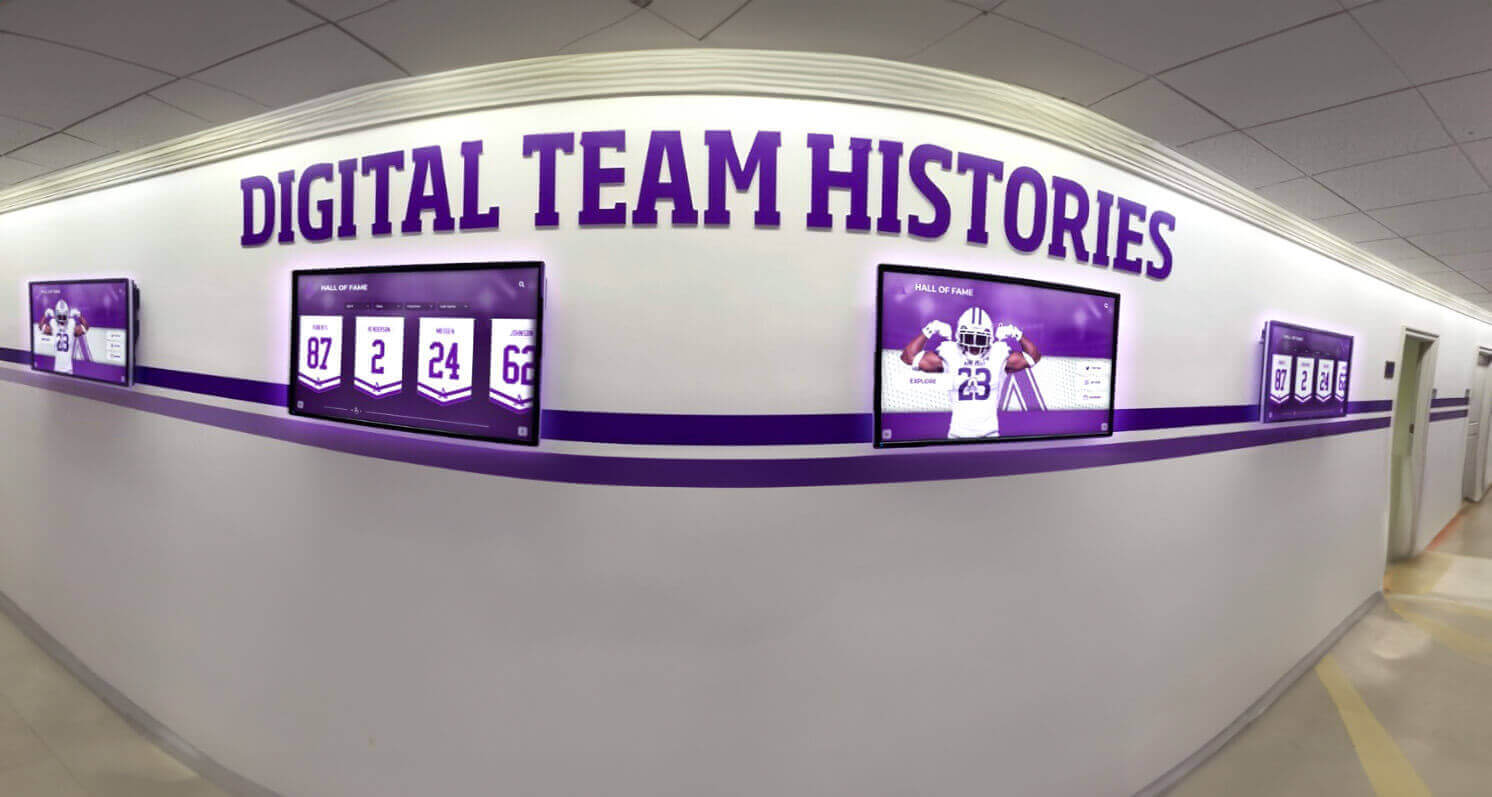
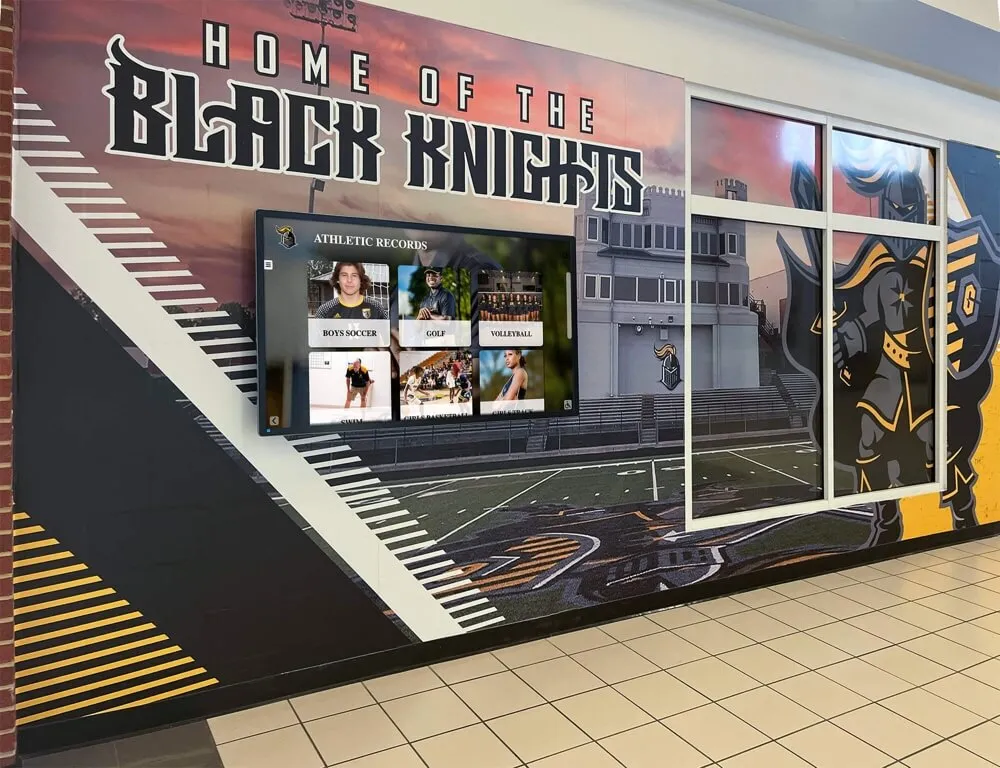
Comprehensive installations can include multiple coordinated displays highlighting various recognition categories and program achievements throughout aquatic facilities
Implementing Digital Swimming Recognition Systems
Successful implementation requires thoughtful planning ensuring recognition serves program goals while remaining operationally sustainable.
Planning and Needs Assessment
Clear objectives guide technology selection and content strategy:
Defining Swimming Program Recognition Goals
Specific objectives inform all implementation decisions:
- Celebrate individual swimming records appropriately across all pool configurations and events
- Honor relay team achievements comprehensively acknowledging all contributors
- Document championship meet results beyond record performances alone
- Recognize season honors including all-conference, all-state, and academic achievement
- Preserve complete program history accessible to current and future swimmers
- Inspire younger swimmers through visible evidence of achievable excellence
- Engage alumni maintaining connections to program traditions and current team success
- Provide families accessible documentation of swimmer achievements for college recruiting
- Build community awareness of program quality and competitive excellence
These objectives determine content priorities, software feature requirements, and success measurement approaches—ensuring recognition investments deliver intended outcomes rather than creating impressive displays that fail to advance program goals meaningfully.
Understanding Current Recognition Assets
Inventory existing materials and information:
- Current plaque displays documenting recent records and achievements
- Historical files, programs, or records from previous coaches and athletic directors
- Archived meet results from past seasons stored in filing cabinets or digital formats
- Photo collections from championship meets, senior recognition, and team celebrations
- Video footage from important races, meets, or program milestones
- Alumni networks who may possess historical information or materials
- School yearbooks and publications documenting swimming program history
This asset inventory helps programs plan historical content development scope while identifying gaps requiring research or information gathering before launch.
Facility Assessment and Placement Planning
Natatorium environments require specific considerations:
Environmental Factors:
- High humidity levels characteristic of indoor pool facilities
- Temperature variations between pool deck and outer facility areas
- Potential for water exposure in certain locations
- Bright natural lighting from windows common in modern aquatic centers
- Ventilation patterns and air movement affecting display mounting
- Chemical exposure (chlorine, cleaning products) in immediate pool areas
Optimal Display Locations:
- Pool facility lobbies greeting all swimmers, families, and visitors entering
- Hallways connecting locker rooms to pool deck where athletes pass daily
- Team meeting rooms or athlete lounges with extended viewing time
- Fitness or dryland training areas adjacent to natatoriums
- Athletic facility main entrances showcasing swimming alongside other sports
- Alumni gathering areas in comprehensive recreation complexes
Display location significantly impacts engagement frequency and recognition effectiveness—balancing high-traffic accessibility with appropriate environmental protection ensuring long-term reliable operation.
Discover strategies for athletic facility digital displays and placement planning.
Technology Selection and Installation
Choosing appropriate systems determines long-term program success:
Hardware Specifications for Pool Facilities
Aquatic environments require specific equipment considerations:
Environmental Protection Requirements:
- Commercial-grade displays rated for higher humidity environments than consumer displays
- Moisture-resistant mounting hardware and enclosures preventing electronic damage
- Sealed rear enclosures preventing humid air infiltration damaging internal components
- Appropriate ventilation ensuring heat dissipation without humidity exposure
- Corrosion-resistant mounting brackets and hardware withstanding chemical exposure
- Strategic placement minimizing direct water exposure while maximizing visibility
Display Quality and Performance:
- 55-65 inch displays: Optimal for most hallway and lobby installations
- 65-75 inch displays: Appropriate for large gathering spaces or facility main entrances
- High brightness (450-700 nits): Essential for well-lit pool facilities with significant windows
- Commercial panels (50,000+ hour lifespan): Ensuring 6-8 years of reliable continuous operation
- Wide viewing angles (178 degrees): Maintaining image quality from various positions in busy spaces
- Responsive capacitive touchscreens: Providing smartphone-like interaction swimmers recognize immediately
Installation Infrastructure:
- Reliable network connectivity (wired Ethernet preferred over WiFi for permanent installations)
- Professional electrical installation meeting code requirements for public facilities
- Secure mounting preventing theft or damage in unsupervised areas
- ADA-compliant height and clearance ensuring accessibility for all community members
- Cable management creating polished professional appearance
Schools and facilities should work with experienced integrators familiar with aquatic facility requirements rather than attempting DIY installations risking equipment damage or code violations.
Swimming Recognition Software Selection
Platform capabilities determine functionality and user experience:
Essential Features for Swimming Programs:
- Event-based organization managing all individual and relay swimming and diving events
- Pool configuration management tracking 25Y, 25M, and 50M records independently
- Gender and age group categorization ensuring appropriate comparison contexts
- Historical archives preserving complete program records across decades
- Powerful search and filtering by swimmer name, event, year, or achievement type
- Meet result import compatible with major swimming timing systems (Hy-Tek, SwimCloud)
- Unlimited swimmer capacity accommodating programs of any size without additional licensing
- Web accessibility extending recognition beyond physical displays to online engagement
Advanced Capabilities to Consider:
- Split time display for distance event races showing interval pacing
- Comparison tools calculating how current times relate to existing records
- Video hosting for championship race footage and program celebrations
- Photo galleries documenting meets, senior recognition, and team traditions
- Alumni profile integration connecting historical swimmers to current program
- Social media sharing enabling easy celebration across multiple platforms
- Analytics tracking engagement patterns and popular content
Purpose-built athletic recognition platforms like Rocket Alumni Solutions offer comprehensive features specifically designed for swimming programs, with intuitive interfaces enabling coaches to maintain current recognition without requiring technical expertise or extensive training.
Professional Installation and Testing
Quality installation ensures reliable long-term operation:
- Licensed electrical work meeting all code requirements for public facilities
- Secure mounting appropriate for traffic levels and supervision patterns
- Network configuration ensuring reliable connectivity
- Environmental protection verification for humid pool facility conditions
- Complete testing before public launch confirming all functionality
- Basic troubleshooting training for on-site staff
- Documentation of all technical specifications and vendor contacts
Budget 10-15% of total hardware costs for professional installation rather than attempting in-house work risking improper mounting, environmental damage, or connectivity problems requiring expensive remediation.
Review comprehensive touchscreen hardware selection guides for athletic facilities.
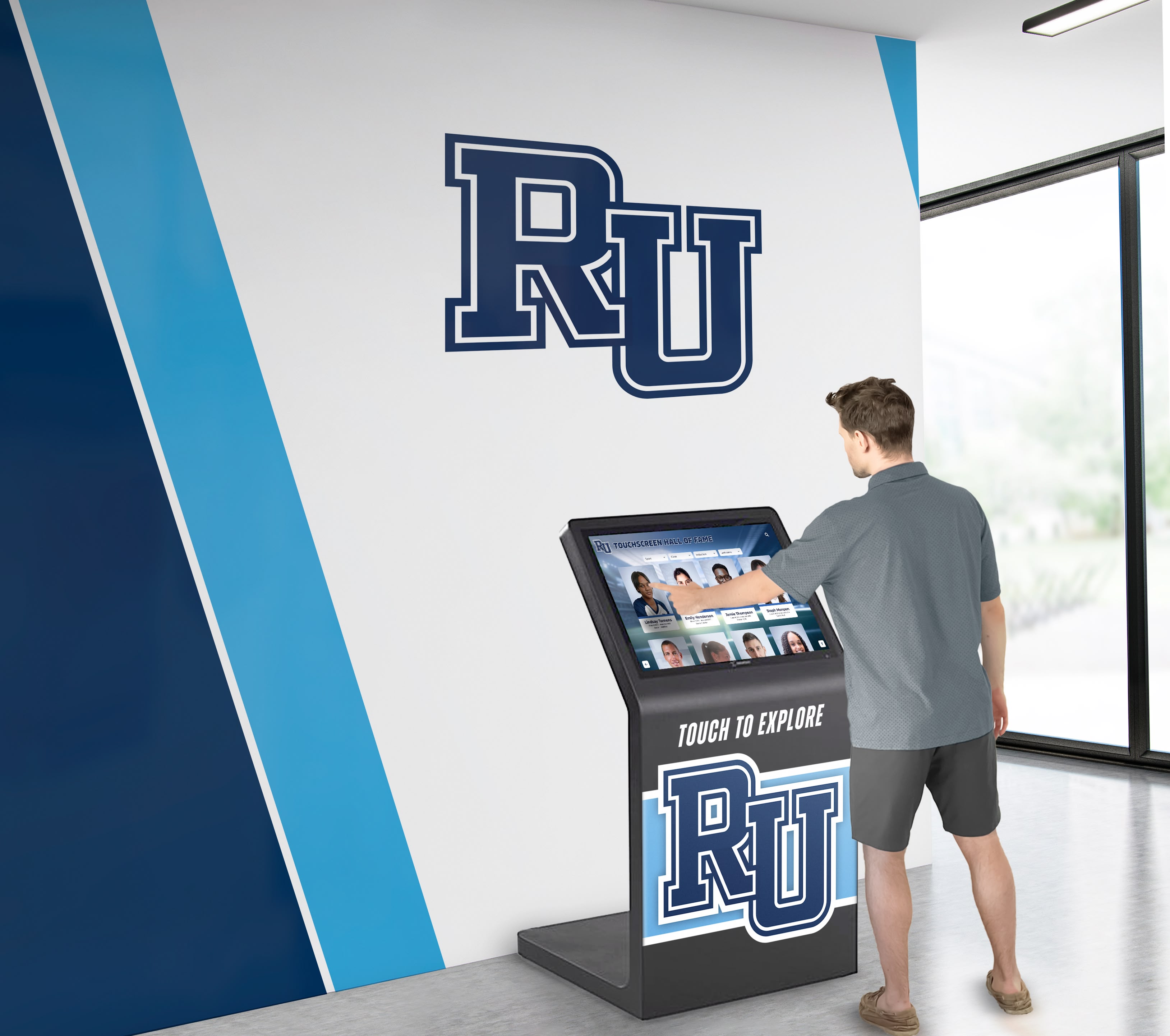
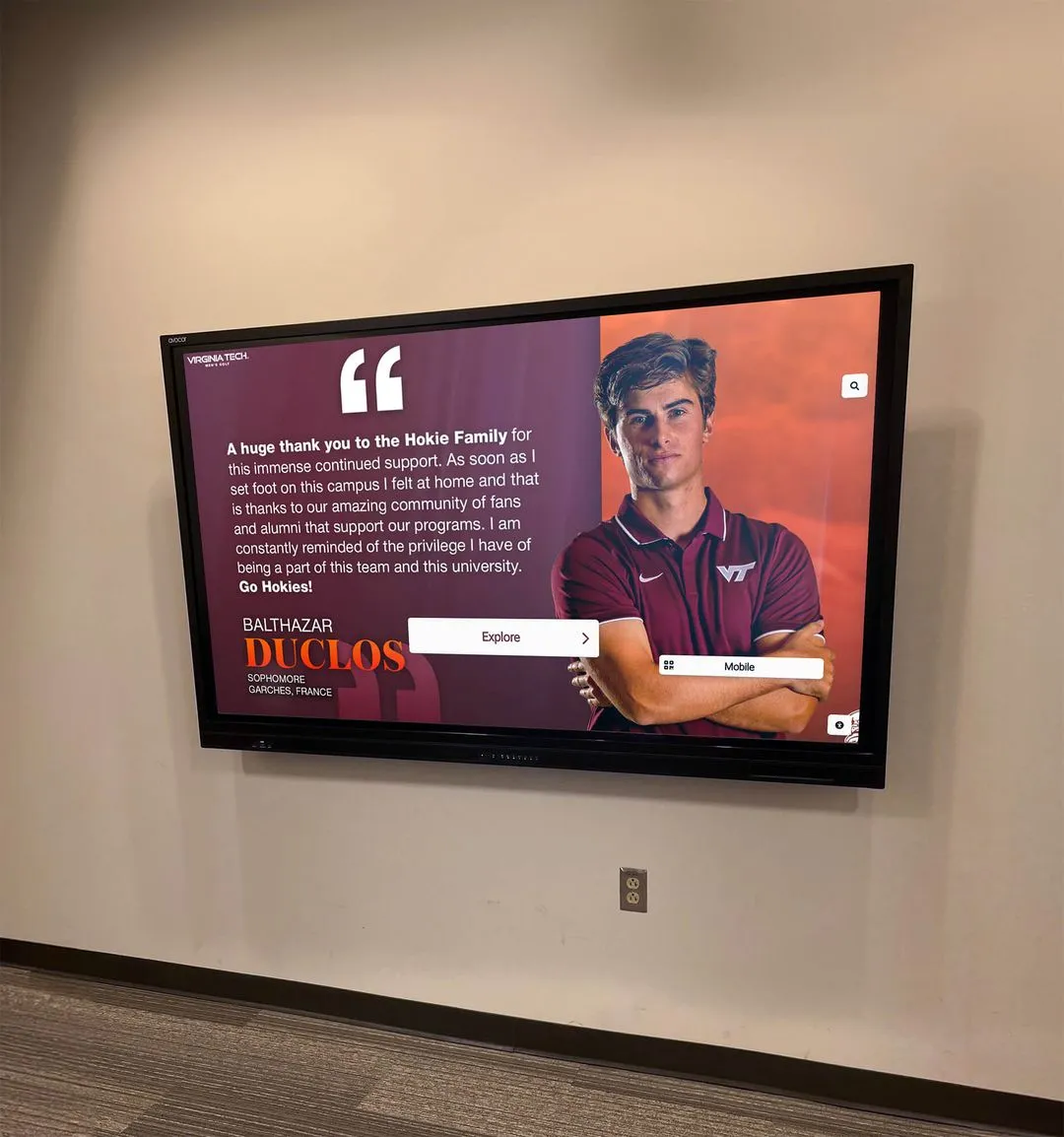
User-friendly interfaces enable swimmers and visitors of all technical comfort levels to explore recognition independently without instruction
Content Development and Launch Strategy
Recognition value depends fundamentally on content quality and comprehensiveness:
Historical Record Digitization
Comprehensive launch content creates immediate engagement:
Current Records:
- All existing pool records across 25Y, 25M, and 50M configurations
- Individual events for both genders across all competitive distances and strokes
- Relay team records including full rosters identifying all four swimmers
- Diving records for all offered board heights and competition levels
- Swimmer photos obtained from yearbooks, team pictures, or individual contributions
- Basic biographical information and class years
Historical Archives:
- Previous record holders creating complete historical progression timelines
- Championship meet results from recent seasons showing team success beyond records
- All-conference and all-state recognition from past years
- Team captains, senior awards, and special honors
- Alumni who competed collegiately or achieved post-high school swimming success
- Program milestone documentation including team championships or facility dedications
Ongoing Content Addition Workflows
Sustainable programs require systematic processes:
- Defined responsibility for adding new records immediately after season-ending championship meets
- Standardized swimmer information collection during season (photos, bios, achievements)
- Meet result file retention and import procedures
- Championship photo collection protocols
- Quality review ensuring accuracy before publication
- Senior recognition content development each spring
- Alumni update procedures for graduated swimmers’ college or career achievements
Launch Event and Promotion
Formal unveiling creates memorable experiences:
- Timing coordinated with senior night, championship celebration, or awards banquet
- Invitations to record holders, team captains, and program alumni
- Interactive demonstrations enabling attendees to explore recognition directly
- Photo opportunities for record holders with their displayed achievements
- Social media coverage extending event reach beyond physical attendees
- Local media invitations showcasing program excellence and recognition innovation
- Website integration providing prominent links to online recognition platforms
Successful launches position digital recognition as program investment in excellence culture rather than simply technology installation—building community awareness and engagement supporting long-term utilization.
Learn about effective athletic program recognition strategies and content development approaches.
Maximizing Swimming Recognition Impact
Strategic approaches amplify recognition effectiveness beyond basic implementation:
Integrating Recognition with Athlete Development
Leverage visibility to strengthen training culture and goal-setting practices:
Goal-Setting and Progress Tracking
Use recognition strategically supporting swimmer development:
- Meet qualifying time standards displayed alongside records showing achievable progression paths
- Historical time progressions demonstrating how current records developed across multiple seasons
- Comparison tools enabling swimmers to measure current performance against various standards
- Age group records providing appropriate aspiration targets for younger swimmers
- Split time analysis helping distance swimmers understand pacing requirements for excellence
- Relay contribution tracking showing how individual improvement benefits team success
Swimming coaches identify goal-setting as critical for athlete motivation and performance improvement. Digital recognition provides concrete, visible targets supporting systematic goal development while demonstrating that excellence represents achievable outcomes through dedicated training rather than innate talent alone.
Alumni Connection and Mentorship
Connect current swimmers with program graduates:
- Alumni profiles including college swimming participation and achievements
- Career information showing how swimming discipline benefits broader life success
- Contact information for alumni willing to mentor current swimmers
- Return visit documentation when alumni attend meets or team events
- College commitment announcements and recruiting journey stories
- Post-collegiate swimming participation (Masters, triathlons, coaching) demonstrating lifetime sport value
These connections help younger swimmers envision swimming beyond high school while accessing experienced mentors who understand program culture and competitive demands.
Team Culture and Tradition Development
Use recognition reinforcing positive program values:
- Sportsmanship awards and citizenship recognition alongside competitive achievement
- Academic all-conference honor rolls celebrating scholar-athletes
- Team leadership acknowledgment for captains and senior contributors
- Most improved swimmer recognition honoring dedication and growth
- Relay team emphasis demonstrating how individual excellence serves collective goals
- Historical program milestone celebration connecting current swimmers to traditions
Comprehensive recognition celebrating diverse contributions beyond fastest times alone creates inclusive cultures where all swimmers feel valued and motivated to contribute at their capability level.
Explore approaches to building athletic excellence cultures through recognition programs.
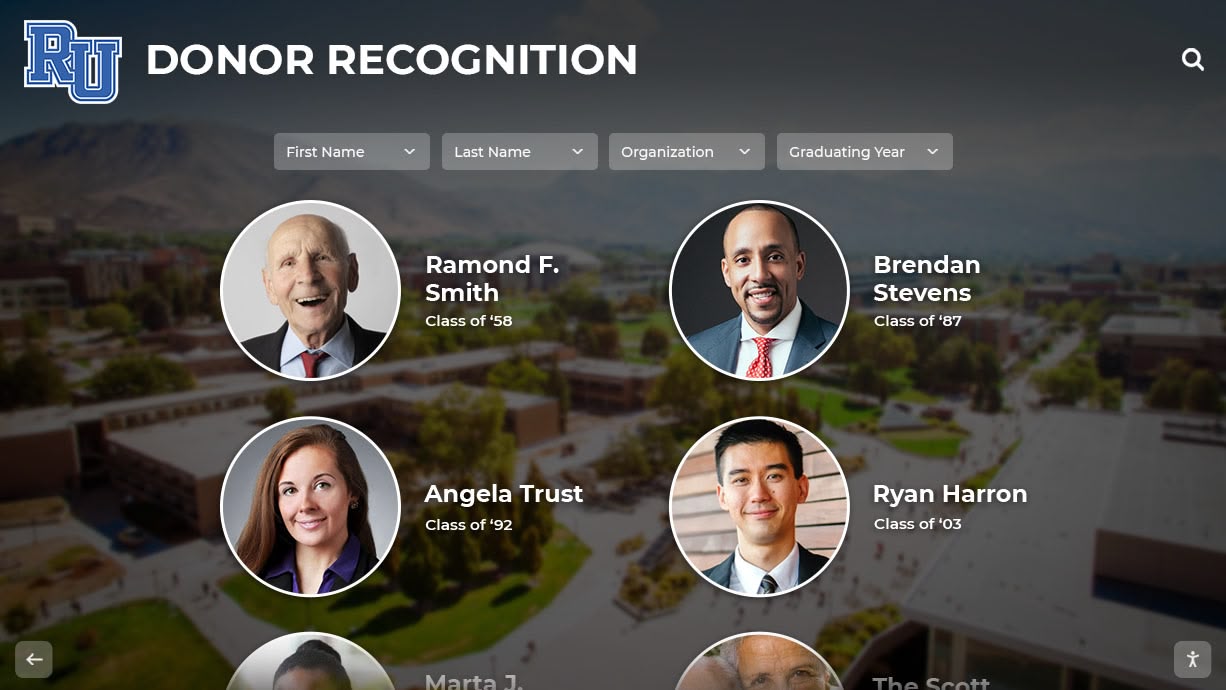
Professional recognition systems honor diverse achievements while maintaining cohesive presentation celebrating program excellence comprehensively
Extending Recognition Through Web and Mobile Platforms
Digital systems amplify impact by extending celebration beyond pool facilities:
Web Accessibility for Families and Alumni
Online platforms multiply recognition reach substantially:
- Families anywhere view swimmer achievements regardless of geographic distance from facility
- Extended family members unable to attend meets regularly access achievement information conveniently
- College coaches and recruiters research swimmer performances evaluating recruitment prospects
- Alumni worldwide explore current team maintaining program connections and engagement
- Prospective families evaluating programs assess competitive standards and team culture authenticity
- Mobile-responsive designs ensure excellent smartphone and tablet experiences
This extended accessibility means swimming recognition created by programs reaches audiences of thousands rather than hundreds limited to pool facility visitors—multiplying family engagement and community awareness exponentially.
Social Media Integration and Celebration
Digital recognition enables broader achievement sharing:
- Swimmers share individual record achievements to Instagram, Twitter, and other social networks
- Families distribute championship meet results celebrating accomplishments with extended networks
- Programs systematically promote team success through authentic evidence rather than generic claims
- Alumni share historical records demonstrating program legacy and tradition
- Recruiting exposure as performances appear in searchable databases college coaches access
- Community engagement building spectator support, sponsorship interest, and program reputation
Swimming programs implementing comprehensive web-accessible recognition report measurable increases in social media engagement, meet attendance, and community support as authentic achievement visibility creates compelling evidence of program quality.
Recruiting Support and Documentation
Accessible recognition provides practical recruiting benefits:
- Permanent achievement documentation easily shared with college coaches
- Championship meet results providing performance evidence beyond verbal descriptions
- Team success context demonstrating competitive environment quality
- Historical comparison showing improvement trajectory across seasons
- Video footage enabling technique evaluation by college coaching staffs
- Website integration creating professional impression during recruiting correspondence
Many swimmers report that accessible digital recognition simplified college recruiting by providing convenient, professional documentation of their competitive achievements and team success that coaches could easily explore when evaluating recruitment prospects.
Discover strategies for showcasing athletic achievements that support recruiting and program promotion.
Measuring Recognition Program Effectiveness
Regular assessment ensures recognition achieves intended goals:
Quantitative Success Metrics
Objective measurement includes:
Participation and Achievement Data:
- Total record improvements annually showing achievement depth
- Percentage of team members achieving personal records demonstrating broad development
- Championship qualification rates indicating program competitive quality
- Trend analysis showing record progression and program improvement over time
- Historical comparison documenting recognition impact on culture and achievement
Engagement Analytics:
- Physical display interaction frequency showing how often swimmers and visitors explore recognition
- Average session duration indicating depth of engagement with content
- Web platform visits and page views demonstrating extended reach
- Popular content identification revealing which achievements attract most interest
- Search pattern analysis showing what information swimmers and visitors seek
Qualitative Assessment:
Complement quantitative data with stakeholder feedback:
- Swimmer perception surveys about recognition awareness, motivational impact, and program pride
- Family satisfaction with recognition visibility, accessibility, and celebration meaningfulness
- Alumni engagement feedback about connection to program traditions and current team
- Coaching staff assessment of cultural impact, goal-setting effectiveness, and administrative sustainability
- Community perception of program quality, facility excellence, and institutional commitment to athletics
Continuous Improvement:
Use assessment data systematically:
- Annual review identifying successful recognition elements and improvement opportunities
- Content strategy refinement based on engagement analytics and stakeholder feedback
- Communication approach adjustment ensuring recognition awareness across all constituencies
- Historical content expansion addressing identified gaps in program documentation
- Technology updates as new features or capabilities become available
Regular assessment enables continuous improvement ensuring swimming recognition remains effective, engaging, and aligned with evolving program goals while demonstrating return on recognition investment to administrators, boards, and community stakeholders.
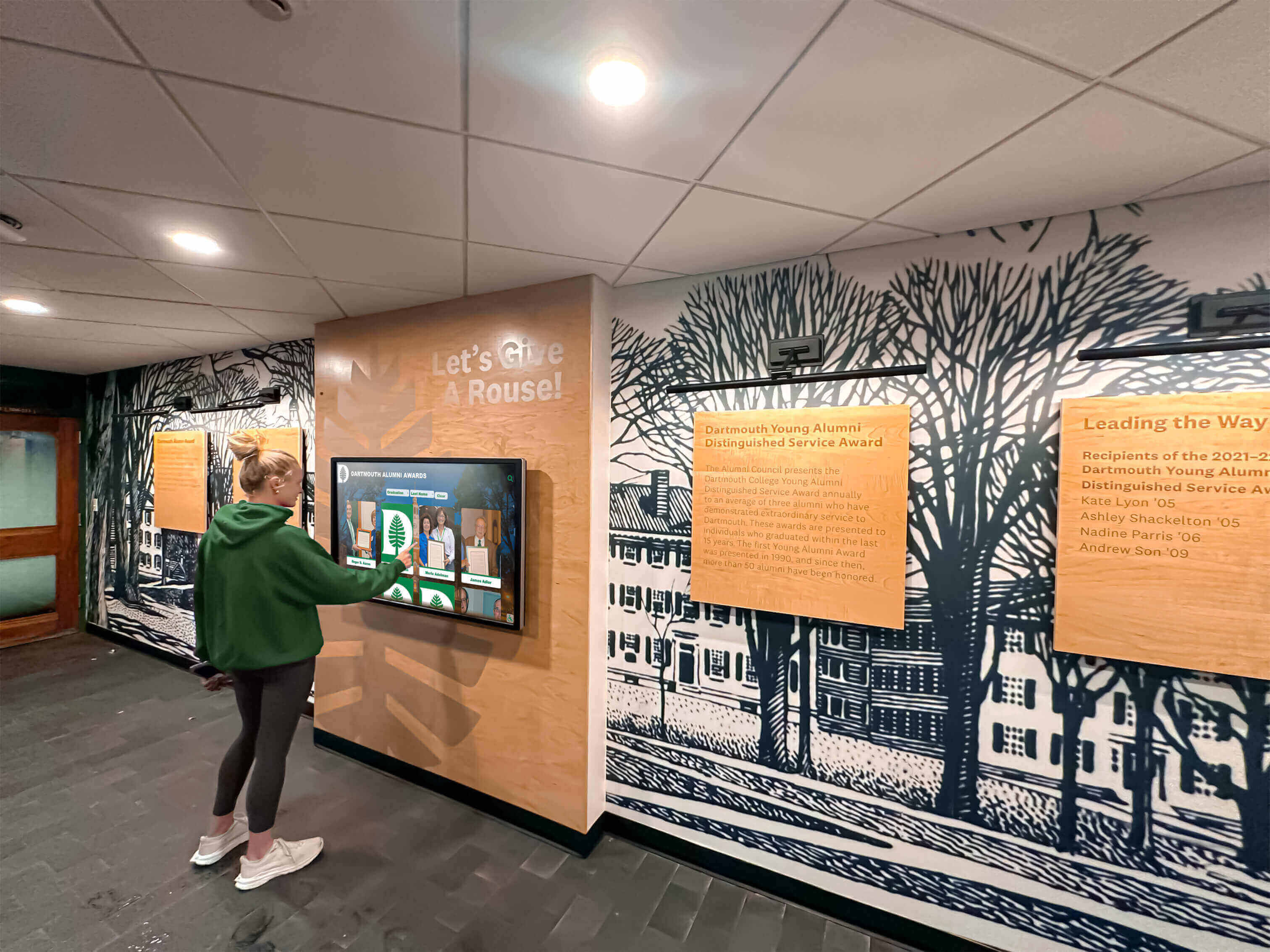
Strategic recognition placement in athlete gathering areas ensures daily engagement supporting culture development and team pride
Special Considerations for Aquatic Recognition
Several factors specific to swimming programs require particular attention:
Environmental Protection and Durability
Pool facilities present unique challenges:
Humidity Management:
- Natatorium environments typically maintain 50-70% relative humidity
- Commercial displays require environmental rating appropriate for sustained humidity exposure
- Moisture-resistant mounting and enclosures preventing electronic component damage
- Strategic placement balancing visibility with environmental protection
- Regular inspection schedules ensuring seals and protection remain effective
- Manufacturer warranty verification covering humidity-related issues
Chemical Exposure Considerations:
- Chlorine and pool chemicals creating corrosive environment over time
- Ventilation patterns potentially exposing displays to chemical air currents
- Mounting hardware requiring corrosion-resistant materials
- Protective enclosures preventing chemical contact with display surfaces
- Cleaning protocols using appropriate materials not damaging display coatings
Temperature Variations:
- Pool deck areas typically warmer and more humid than outer facility spaces
- Display placement in climate-controlled areas outside immediate pool deck when possible
- Ventilation ensuring displays don’t overheat in enclosed spaces
- Seasonal temperature variations in facilities without year-round climate control
Work with commercial display vendors experienced in aquatic facility installations ensuring equipment specifications and mounting approaches appropriate for natatorium environments specifically.
Multi-Sport Integration and Athletic Department Coordination
Swimming programs often operate within comprehensive athletic departments:
Coordinated Recognition Approach:
- Consistent recognition platforms across all sports creating cohesive athletic department identity
- Shared administrative interfaces enabling centralized management when desired
- Common design templates reflecting institutional and athletic branding appropriately
- Budget efficiency through multi-sport implementation reducing per-program costs
- Facility integration where swimming displays complement other athletic recognition throughout campus
Swimming-Specific Needs Within General Platforms:
- Event organizational structures unique to swimming requiring specialized features
- Pool configuration management not applicable to other sports
- Split time capabilities particularly valuable for swimming distance events
- Meet result import compatibility with swimming timing system formats
Purpose-built platforms can address swimming-specific needs while maintaining consistency with broader athletic recognition approaches—ensuring swimming receives specialized features required while participating in coordinated department-wide recognition systems.
Learn about comprehensive athletic recognition programs integrating multiple sports effectively.
Alumni Engagement and Historical Preservation
Swimming programs often maintain strong alumni connections:
Alumni Profile Development:
- Graduated swimmer profiles including college swimming participation
- Career achievement and life success stories demonstrating program impact
- Return visit documentation when alumni attend meets or special events
- Mentorship opportunities connecting current swimmers with program graduates
- Lifetime swimming participation showing sport’s sustained value
Historical Research and Documentation:
- Collaboration with alumni gathering historical record information
- Team photo collection from past decades preserving program visual history
- Championship meet program and result collection documenting competitive history
- Facility evolution documentation showing pool and program development
- Coach and contributor recognition honoring those who built program excellence
These historical elements create institutional memory preserving program legacy while strengthening alumni engagement and institutional pride throughout communities.
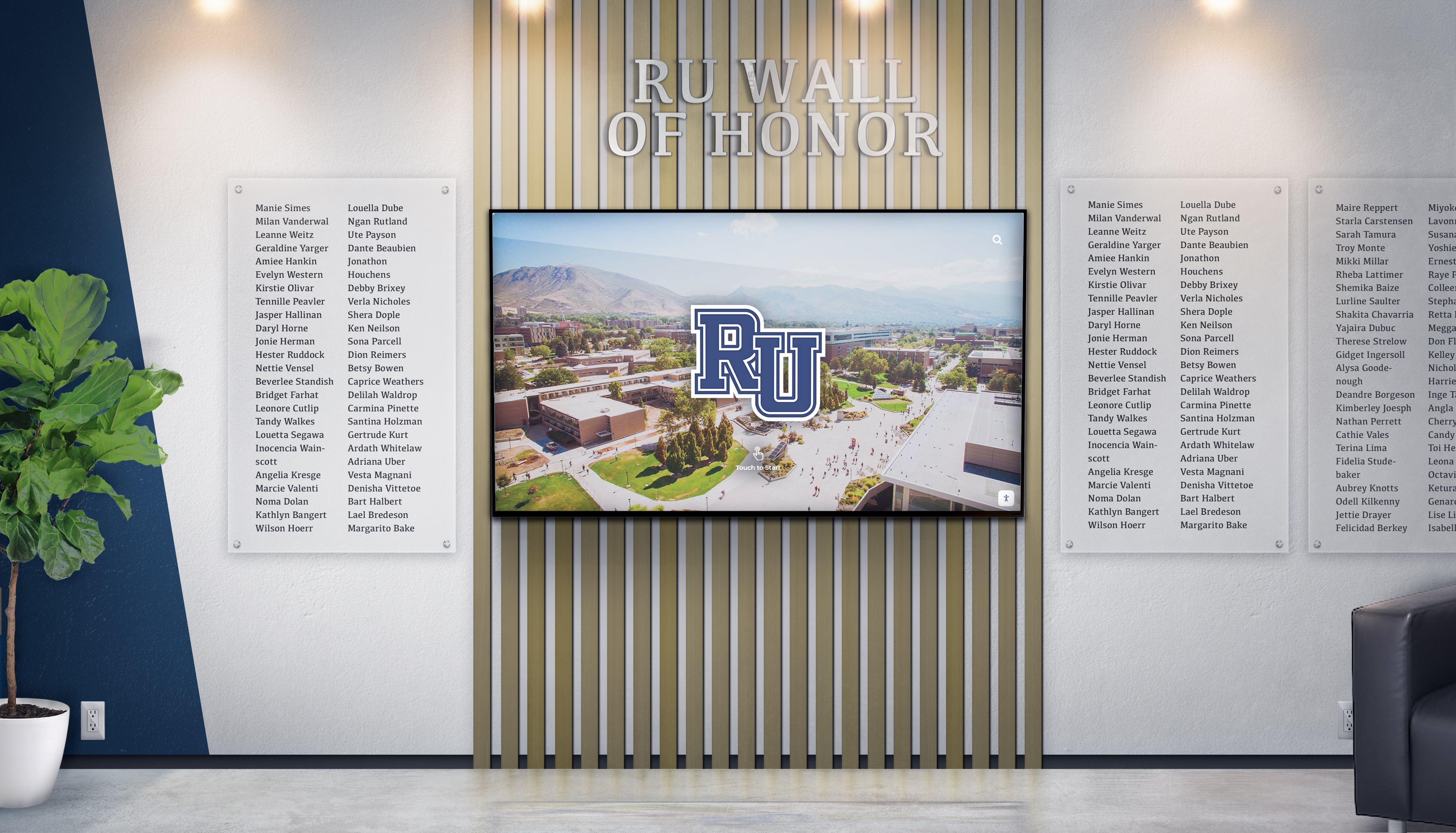
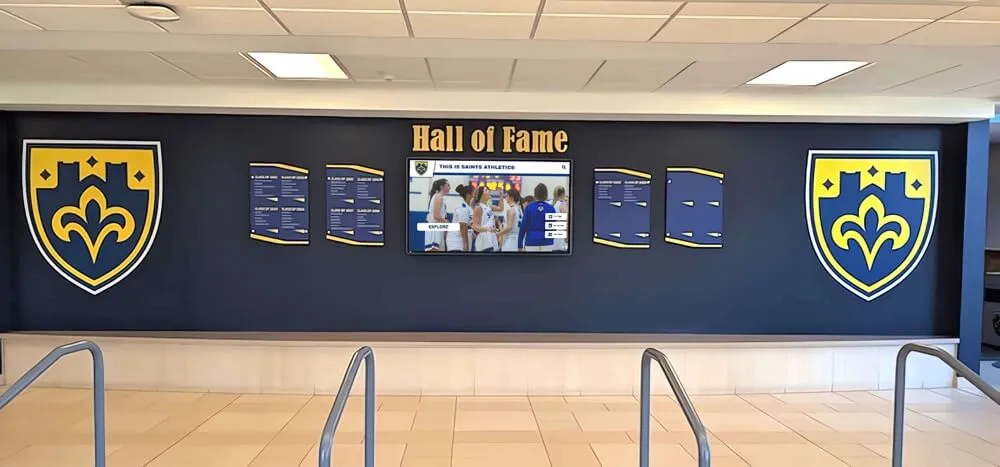
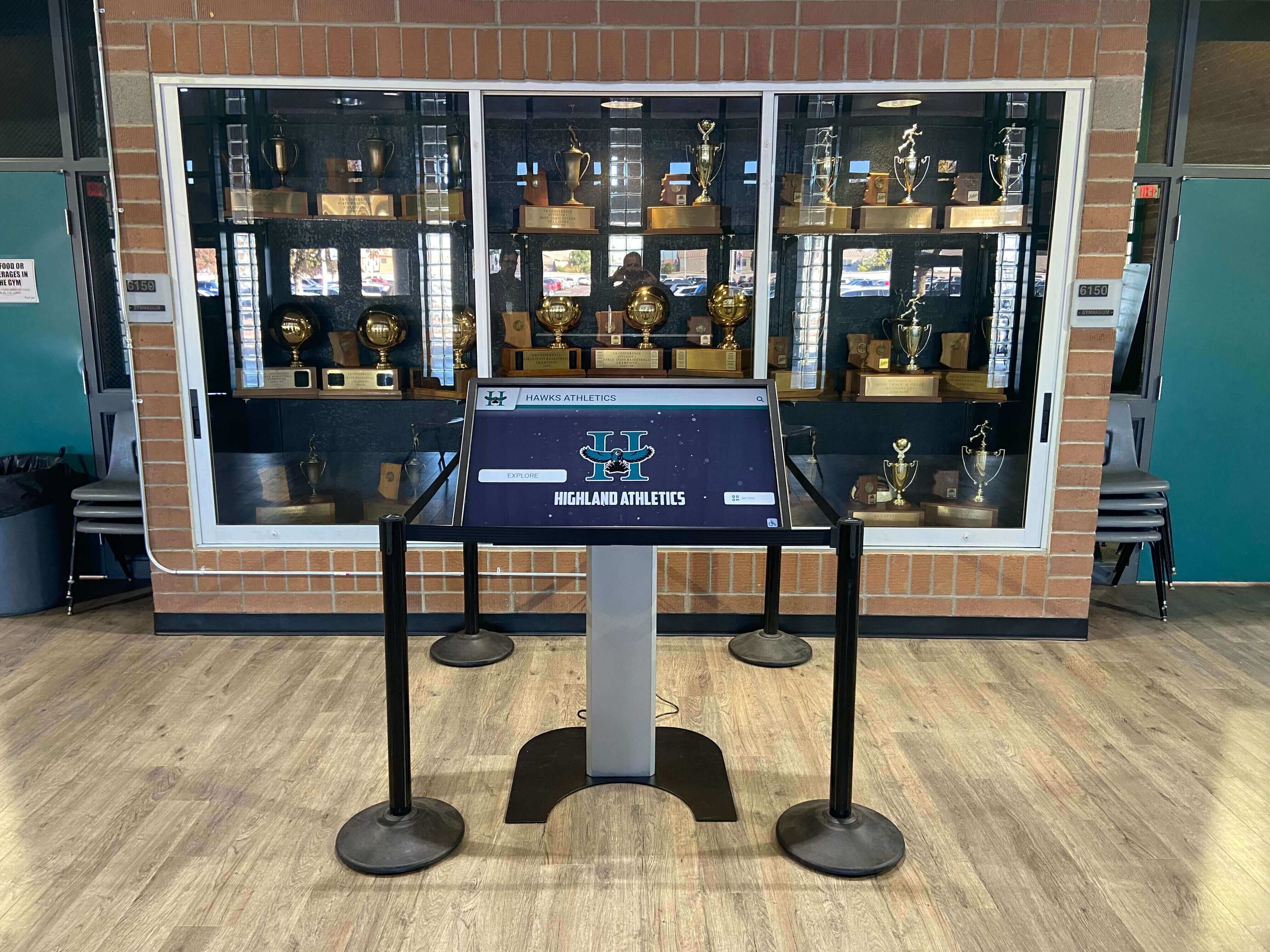
Integrated approaches can combine digital recognition providing unlimited capacity with traditional plaque elements honoring heritage and maintaining familiar recognition formats
Conclusion: Transforming Swim Team Recognition Through Digital Innovation
Swim team plaque display digital systems represent far more than simple replacements for engraved plaques or painted record boards—they enable fundamentally different approaches to aquatic achievement recognition that celebrate unlimited swimmers, create engaging exploration experiences, and preserve program excellence in ways physical displays never could. When swimming programs thoughtfully select hardware appropriate for natatorium environments, implement purpose-built recognition platforms addressing aquatic sports’ unique organizational requirements, and develop comprehensive content honoring all deserving swimmers, digital systems transform from theoretical possibility to practical reality delivering lasting value to athletes, families, alumni, and communities.
The considerations explored throughout this guide provide frameworks for evaluating digital recognition options, making informed decisions, and implementing systems that serve program goals effectively while remaining administratively sustainable long-term. From understanding swimming-specific software requirements and environmental protection needs to maximizing recognition impact through athlete development integration and web accessibility, each decision affects program success and community engagement.
Ready to explore how digital recognition can transform swimming achievement celebration at your facility? Modern interactive systems help schools, universities, clubs, and recreation centers honor unlimited swimmers while creating engaging experiences and preserving aquatic excellence comprehensively. Solutions like Rocket Alumni Solutions provide comprehensive platforms specifically designed for athletic recognition, combining swimming-specific organizational features with intuitive content management, environmental protection guidance, and implementation support ensuring successful long-term programs.
Whether establishing first-ever digital swimming recognition or replacing outdated physical displays, the key is selecting technology aligned with aquatic program needs, ensuring platforms provide swimming-specific features your records require, and implementing solutions sustainable within your operational capabilities and resources.
Your swimmers deserve recognition technology that honors achievements appropriately while creating meaningful engagement and lasting program impact. With thoughtful evaluation, appropriate technology selection, and authentic commitment to comprehensive swimmer celebration, you can implement digital recognition systems that motivate current athletes, engage broader communities, and preserve excellence for generations to come.
The most important consideration isn’t selecting the most expensive hardware or most sophisticated software—it’s choosing solutions aligned with your program goals, sustainable within your resources, and designed to serve your specific community needs effectively. Your swimming achievements deserve recognition that celebrates accomplishments meaningfully while building positive team culture, supporting athlete development, and creating pride throughout your program and community. Digital recognition makes that comprehensive, engaging acknowledgment achievable and sustainable.
Ready to begin exploring digital recognition options for your swimming program? Start by inventorying your current records and recognition assets, evaluating your facility opportunities and environmental constraints, and connecting with providers who understand aquatic athletic recognition specifically rather than simply selling generic display hardware or digital signage platforms. Review swimming-specific recognition guides and touchscreen display implementation strategies for understanding platform capabilities and making informed technology decisions that serve your program effectively for years to come.