



Every school wants to celebrate students—but the gap between good intentions and an effective recognition program often comes down to one thing: not knowing what to actually say. Student spotlight examples give administrators, counselors, and recognition committees a concrete model to work from rather than starting with a blank page. Whether your school is launching a brand-new spotlight program or refreshing one that’s grown stale, the examples and frameworks in this guide are designed to be copied, adapted, and displayed.
This guide walks through real student spotlight examples across academic, athletic, arts, leadership, and community categories—then shows how schools are moving those spotlights off bulletin boards and onto permanent digital displays that keep recognition visible year-round.
Strong student spotlight programs do two things at once: they honor individual students in a way that feels personal, and they send a signal to the entire school community about what the institution values. When a student sees a peer recognized not just for a championship but for perseverance through injury, or not just for grades but for tutoring classmates, the definition of success in that school expands. That’s the long-term culture work that student spotlight examples make possible.

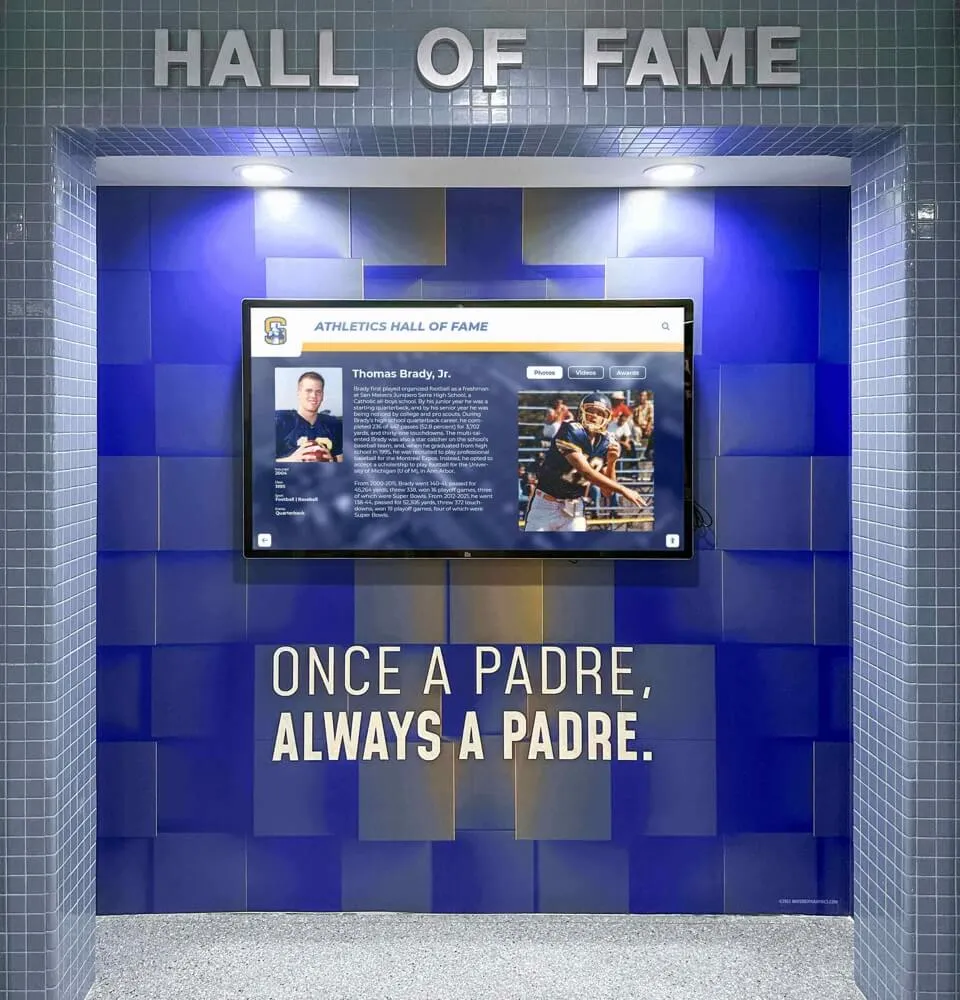
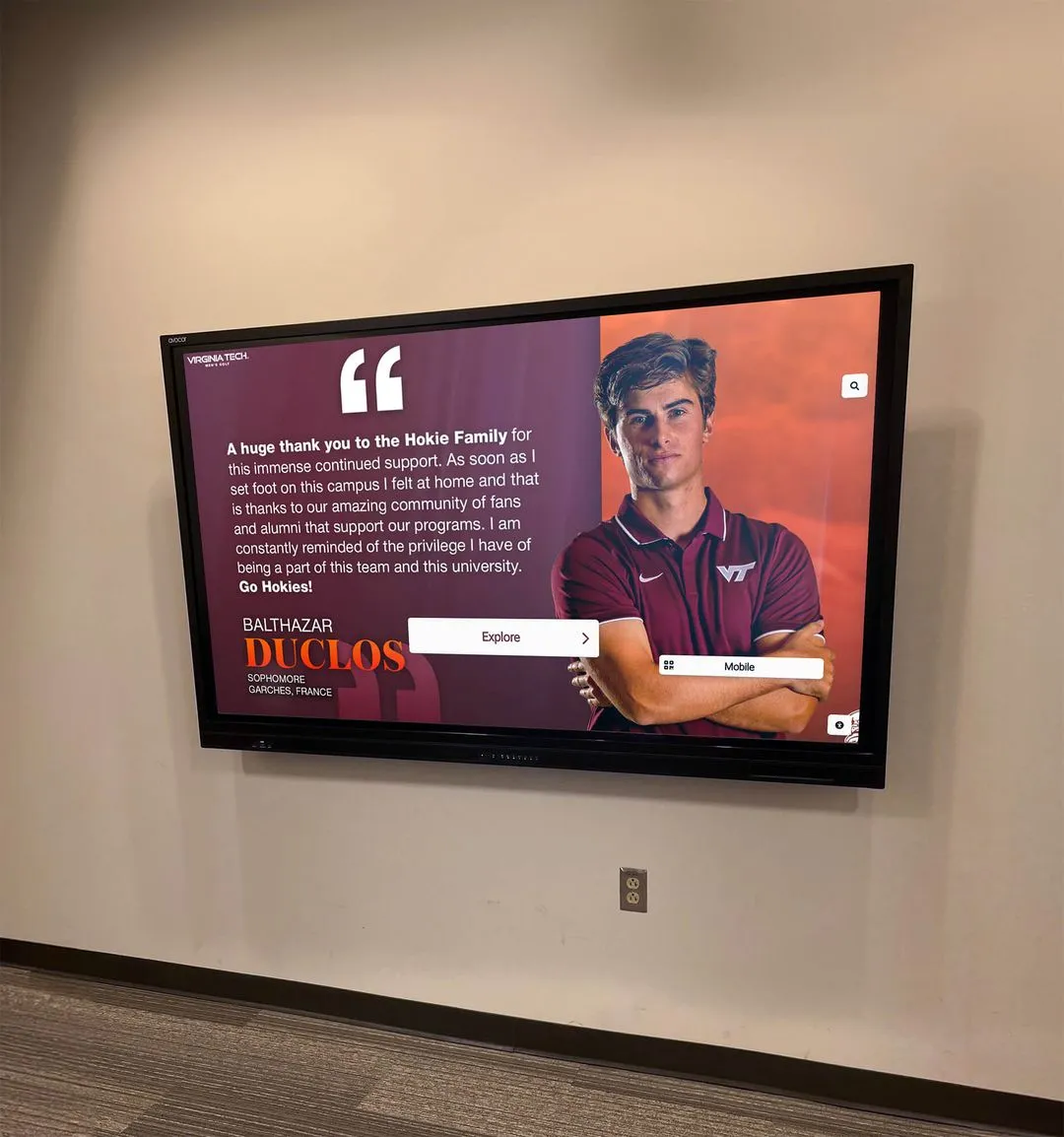
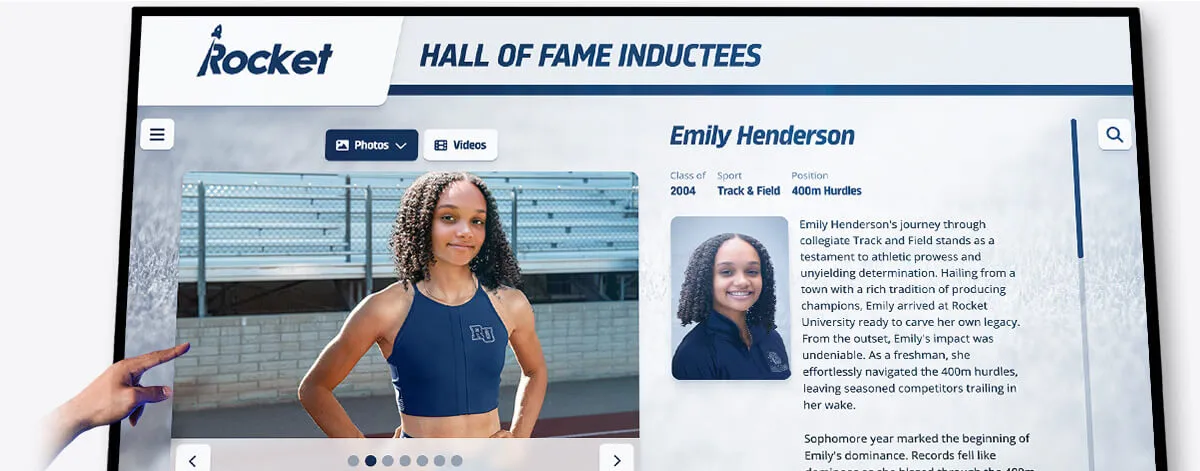
A well-designed student spotlight profile captures the full story: event, achievement, stats, and a photograph that makes the recognition feel personal rather than generic
Program Snapshot: Student Spotlight Framework
Before building individual spotlight profiles, define the scope and cadence of your program. The table below maps common spotlight formats to their audience, effort level, and permanence.
| Spotlight Format | Primary Audience | Prep Time | Permanence |
|---|---|---|---|
| Weekly hallway display | Students, staff, daily visitors | 1–2 hours per cycle | Low — rotates out |
| Monthly digital profile | School community + website visitors | 3–5 hours per cycle | Medium — archivable |
| Semester recognition wall | Students, families, prospective visitors | 4–8 hours per semester | High — visible all year |
| Annual digital hall of fame inductee | All community, alumni, future students | 8–15 hours per cycle | Very high — permanent archive |
| Social media spotlight series | Families, alumni, community | 1–2 hours per post | Medium — shareable, indexed |
Choosing the right format depends on your school’s capacity and goals. A weekly program keeps energy high but demands consistent logistics. An annual induction creates prestige but requires patient community-building. Many schools run both: a rotating weekly spotlight feeds a cumulative archive that grows into a searchable hall of fame over time.
What Makes a Student Spotlight Actually Work
Content Architecture: The Five Elements of a Strong Spotlight
Every effective student spotlight—regardless of category—contains five core elements. Map these to your display format before writing a single word:
1. The Recognizable Name and Face A photo and full name are non-negotiable. Spotlights without a photo feel institutional, not personal. Action shots (at a competition, performing, volunteering) carry more emotional weight than posed portraits.
2. The Achievement in Plain Language State what the student did, not what category they fall into. “Scored 36 on the ACT” is stronger than “Academic Excellence Award.” “Led the robotics team to a state semifinal finish in their first competitive season” beats “Outstanding STEM Student.” Specificity builds credibility.
3. The Human Detail One sentence about who the student is beyond the achievement: their grade level, a future plan, a personal interest, a challenge they overcame. This element is what separates a spotlight from a stat line.
4. The Quote or Testimonial A direct quote from the student, a coach, a teacher, or a parent grounds the recognition in real voice. Even a single sentence—“She approaches every setback as a rehearsal, not a failure”—transforms a profile from informational to memorable.
5. The Institution’s Voice Close with one sentence that connects the student’s achievement to school values. This makes the spotlight feel curated and intentional rather than auto-generated.
Designing academic recognition programs that motivate every student offers deeper guidance on aligning spotlight content with your school’s educational mission and recognition philosophy.
12 Student Spotlight Examples Schools Can Copy
The examples below are structured to show the pattern, not prescribe the exact words. Adapt each to your school’s voice, mascot, and community.
1. Academic High Achiever Spotlight
The pattern: Name + grade + specific GPA or test score + coursework context + one sentence about what they plan to study + a quote from the student.
Example structure:
[Student Name], Grade 12 — Valedictorian Four-year GPA of 4.0 unweighted. Completed seven AP courses including AP Physics C and AP Literature. Earned a perfect score in AP Calculus BC. Plans to study biomedical engineering at [University]. “The teachers here pushed me to figure out problems I didn’t know I could solve.”
For schools building out formal honor roll recognition alongside spotlight programs, honor roll digital recognition systems show how academic achievements can be displayed persistently rather than printed and filed away.
2. Growth and Improvement Spotlight
The pattern: Starting point + specific improvement metric + context for what made it challenging + what the student did differently + brief future outlook.
Example structure:
[Student Name], Grade 10 — Most Improved Reader Entered 9th grade reading two years below grade level. This year, she completed 22 chapter books and reached grade-level benchmarks in both fluency and comprehension. Worked with the reading specialist three days a week for two full years. “I used to hate reading. Now I do it for fun.” — [Teacher Name]
This category matters because it celebrates the process of achievement rather than only the endpoint—a cultural signal worth sending explicitly.
3. Athletic Achievement Spotlight
The pattern: Sport + specific stat or record + context (team record, opponent difficulty, injury overcome) + quote from coach.
Example structure:
[Student Name], Grade 11 — Girls Soccer Scored 23 goals in 18 games this season, setting a program record that stood for eleven years. Named to the All-State second team. Returned to full competition in October after a torn ACL ended her sophomore season. “She didn’t just come back—she came back better.” — Head Coach [Name]
All-state athlete recognition display strategies offer detailed guidance on how schools commemorate athletic milestones in permanent visual formats.
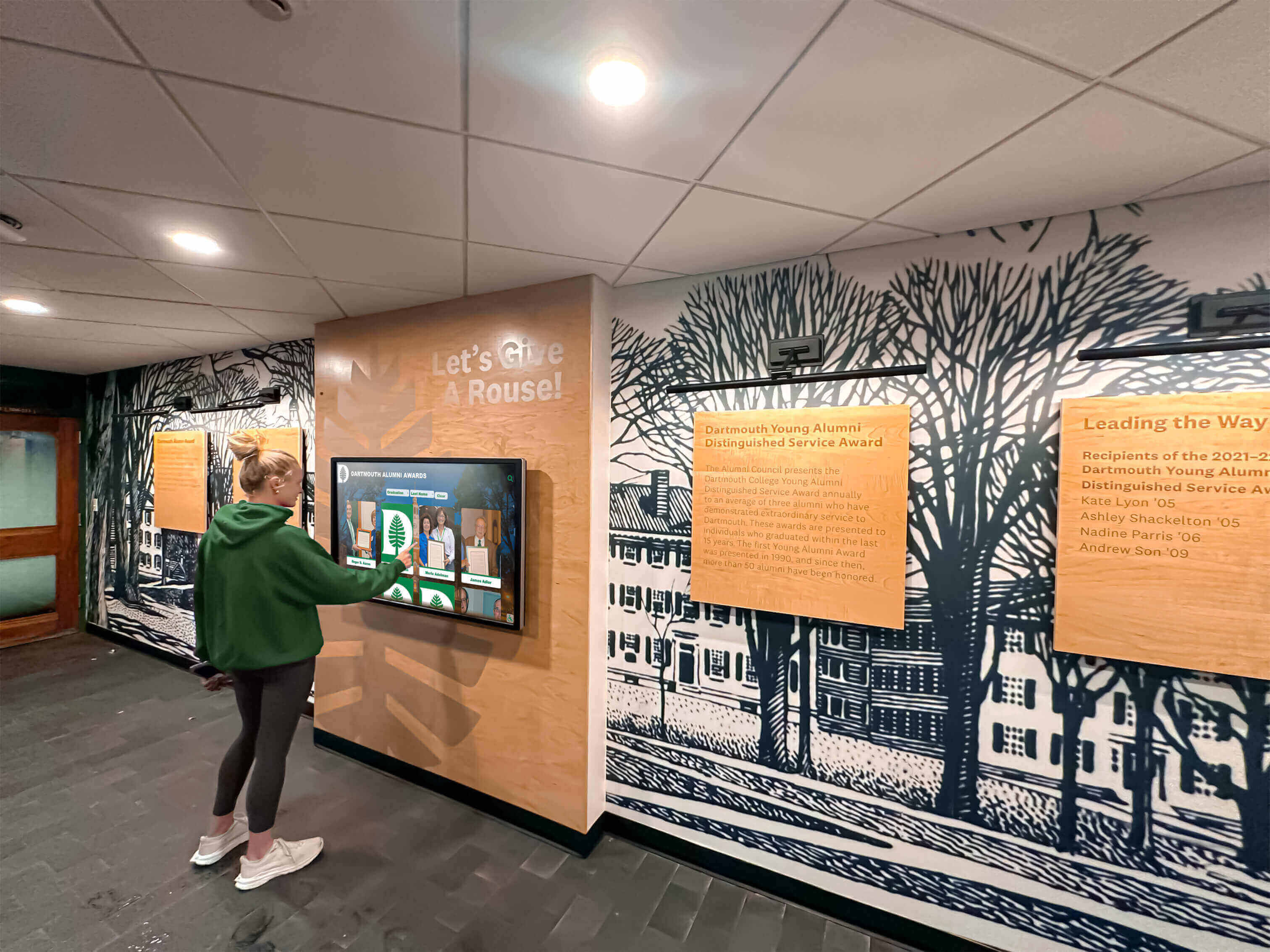
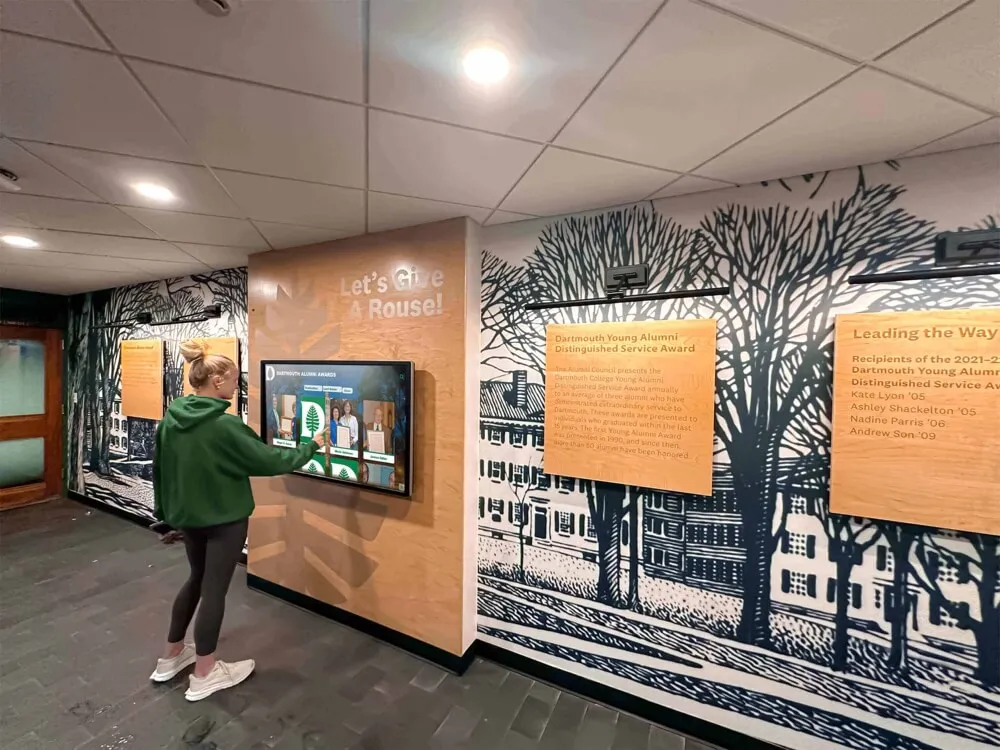
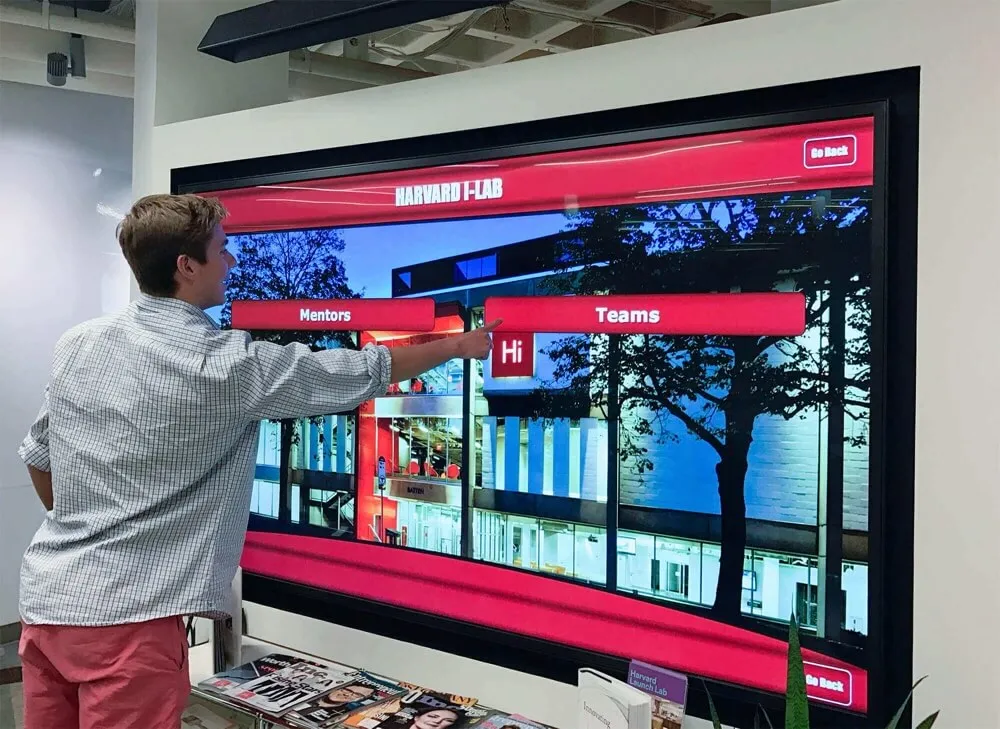
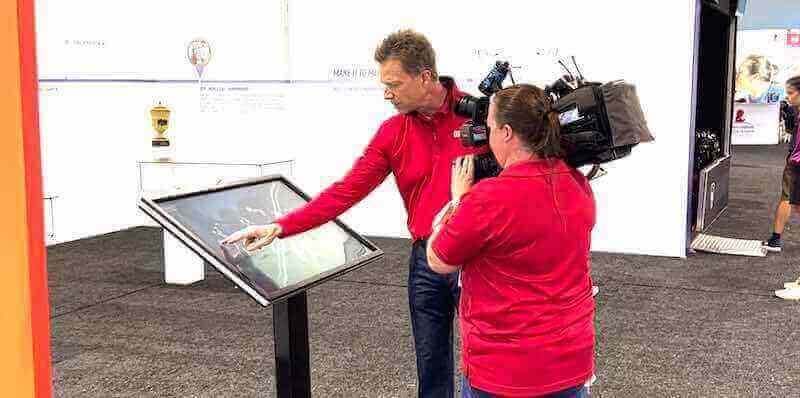
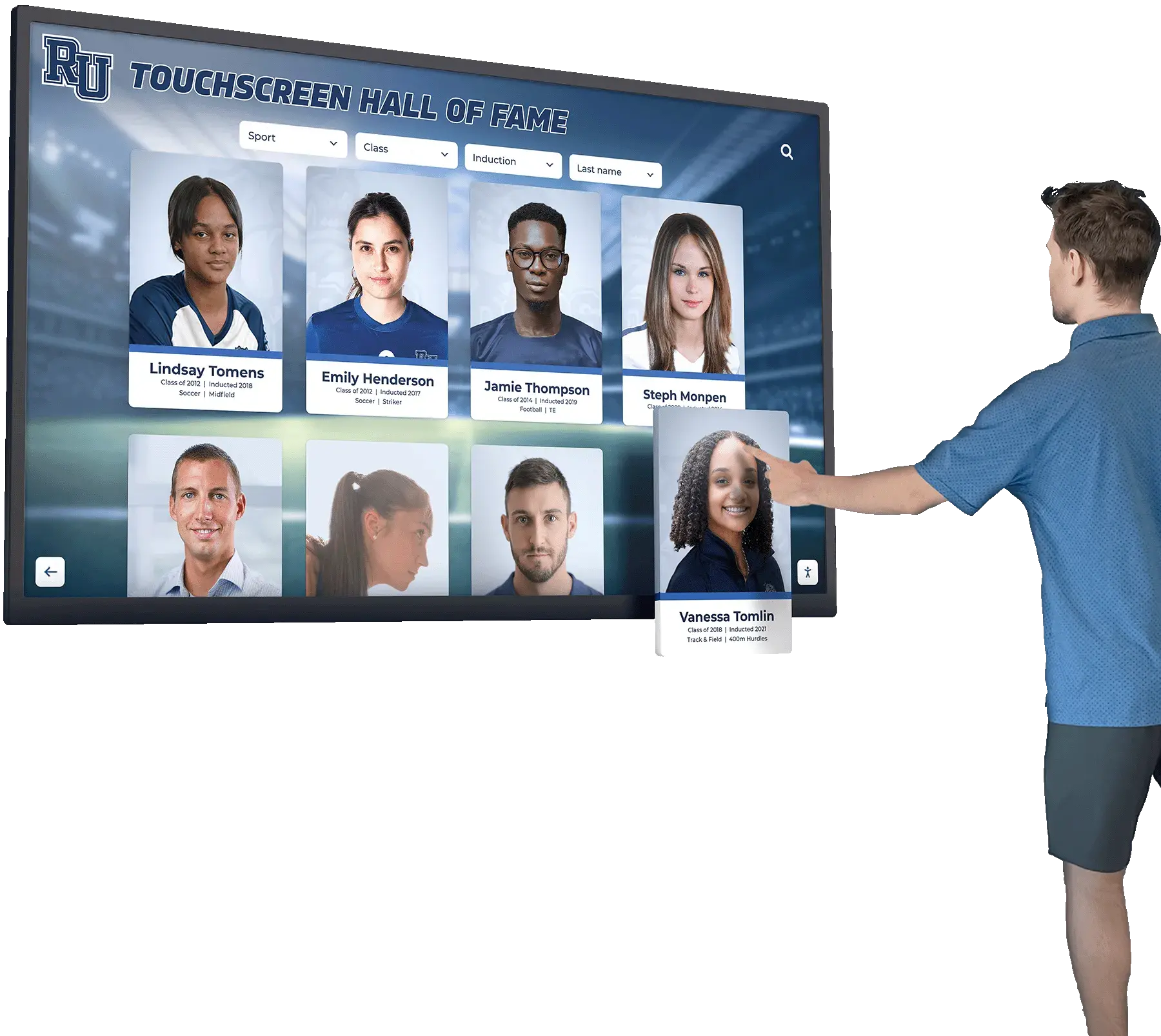
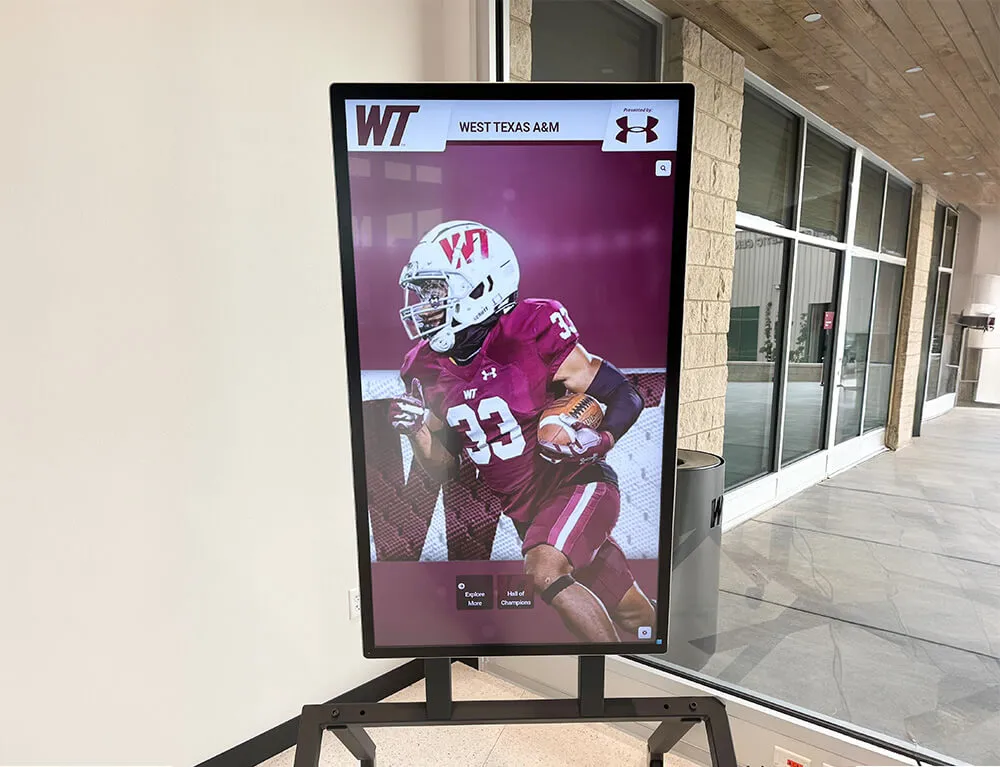
Interactive touchscreen displays let students browse spotlight profiles at their own pace—deepening the reach of recognition beyond the moment of announcement
4. Senior Night Recognition Spotlight
The pattern: Sport + four-year program contribution + personal milestone + message for underclassmen.
Example structure:
[Student Name], Grade 12 — Senior Night, Cross Country Four-year letter winner. Team captain during the school’s first regional championship in eight years. Volunteered as a youth track coach at [Community Center] throughout high school. “Wear the jersey like it means something, because it does.”
Senior nights benefit from this format because the spotlight captures a student’s entire program contribution rather than a single performance. Memorable senior night celebration and recognition ideas expand on how recognition at this milestone can create lasting school culture.
5. Fine Arts and Performance Spotlight
The pattern: Art form + specific accomplishment + production or competition context + what the craft means to the student.
Example structure:
[Student Name], Grade 12 — Theater Played the lead in six consecutive school productions. Selected as a delegate to the Regional Theater Festival for two years running. Spent four summers as a drama counselor at a regional youth arts camp. “Every performance taught me something that a class couldn’t.”
Arts spotlights often get underrepresented in school recognition programs. Creating a consistent arts spotlight pipeline communicates that creative excellence has the same institutional value as athletic achievement.
6. Community Service and Volunteerism Spotlight
The pattern: Service focus + hours or measurable impact + what motivated the student + a specific story detail.
Example structure:
[Student Name], Grade 11 — Community Leadership Organized a school-wide food drive that collected 1,400 pounds of donations for the local food pantry—37% more than the previous year’s record. Coordinated 60 student volunteers across six homerooms. Has volunteered at the pantry personally every Saturday since Grade 9. “The school helped me understand I could actually organize something real, not just participate.”
7. Student Leadership Spotlight
The pattern: Leadership role + specific initiative or project + outcome + what leadership means to this student.
Example structure:
[Student Name], Grade 12 — Student Council President Launched the school’s first peer mediation program, training 24 student mediators who resolved 41 conflicts without administrative intervention this year. Advocated for extended library hours and secured administrative approval for a Friday open-study block. “Leadership here meant solving problems people were too tired to solve themselves.”
Student council leadership development and recognition ideas provide frameworks for building recognition programs around student government work.
8. STEM and Innovation Spotlight
The pattern: Project or competition + what they built or solved + team or individual context + next step.
Example structure:
[Student Name], Grade 10 — Science Olympiad Designed and built a structural engineering model that withstood the highest load in regional competition for the second consecutive year. Teaches a weekly after-school coding club for middle school students. Competing at nationals in May. “The best part is that other students are going to do it better next year. That’s the goal.”
9. Multilingual and ESL Achievement Spotlight
The pattern: Language context + academic accomplishment + adjustment story + future direction.
Example structure:
[Student Name], Grade 11 — English Language Achievement Arrived speaking no English three years ago. Achieved proficiency on state language assessment in eighteen months—the fastest in the program’s history. Now earns A’s in AP English Language and serves as an interpreter for families at new student orientation. “I want to be a teacher. I know what it feels like not to understand.”
This category of spotlight communicates that the path to achievement matters, not only the level of achievement at a single point in time.
10. Career and College Pathway Spotlight
The pattern: Career interest + what the student did to pursue it + any external validation or experience + brief future plan.
Example structure:
[Student Name], Grade 12 — Healthcare Pathway Completed the school’s Certified Nursing Assistant program and passed state licensure as a junior. Worked 200 clinical hours at [Regional Medical Center] this year. Plans to study nursing at [State University] on an academic scholarship. “Patients in the hospital don’t need pity. They need competent people who care.”
Interactive career pathways boards in school facilities show how schools are connecting student spotlight stories directly to career and college pathway displays that inspire current students.
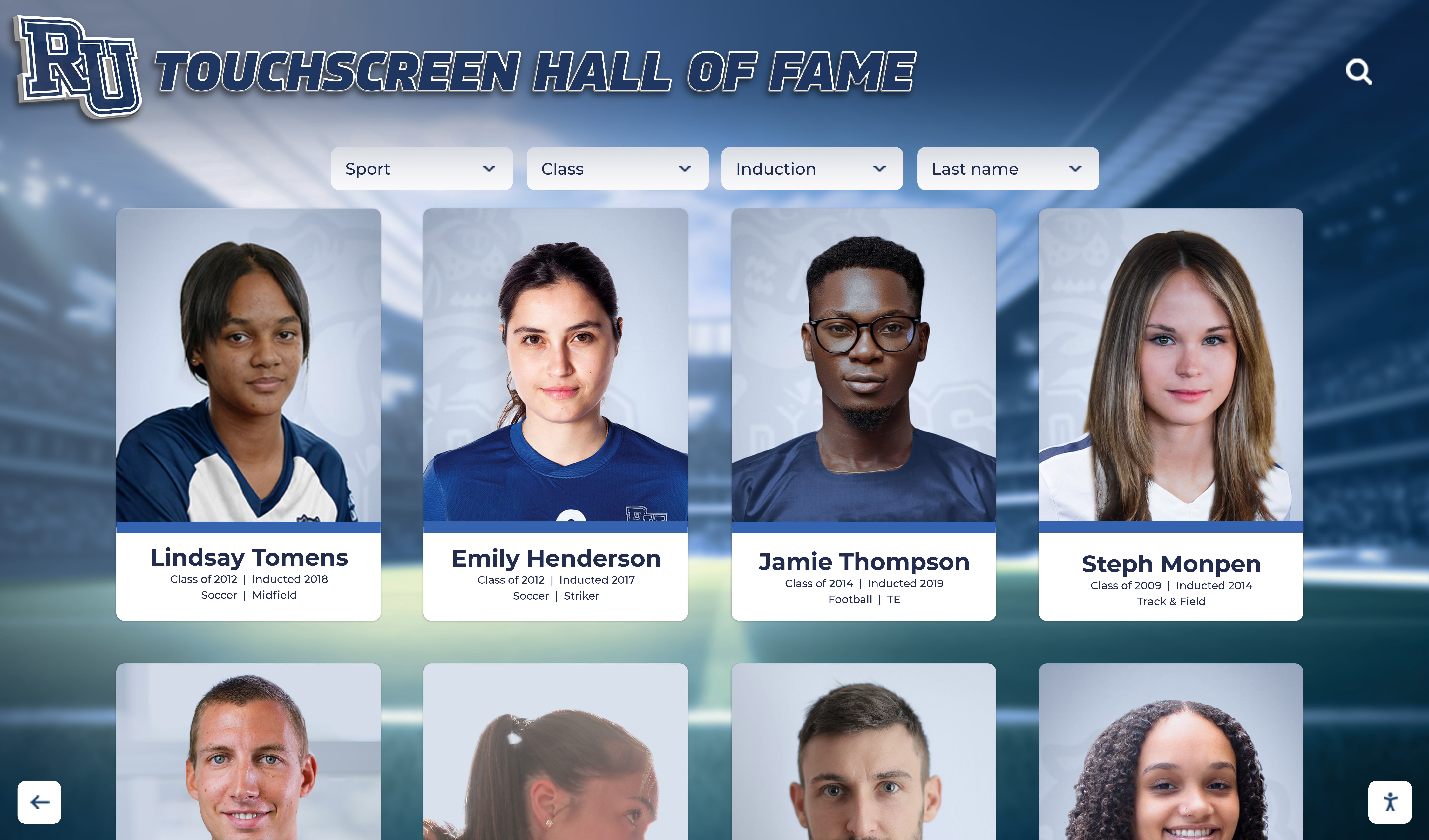
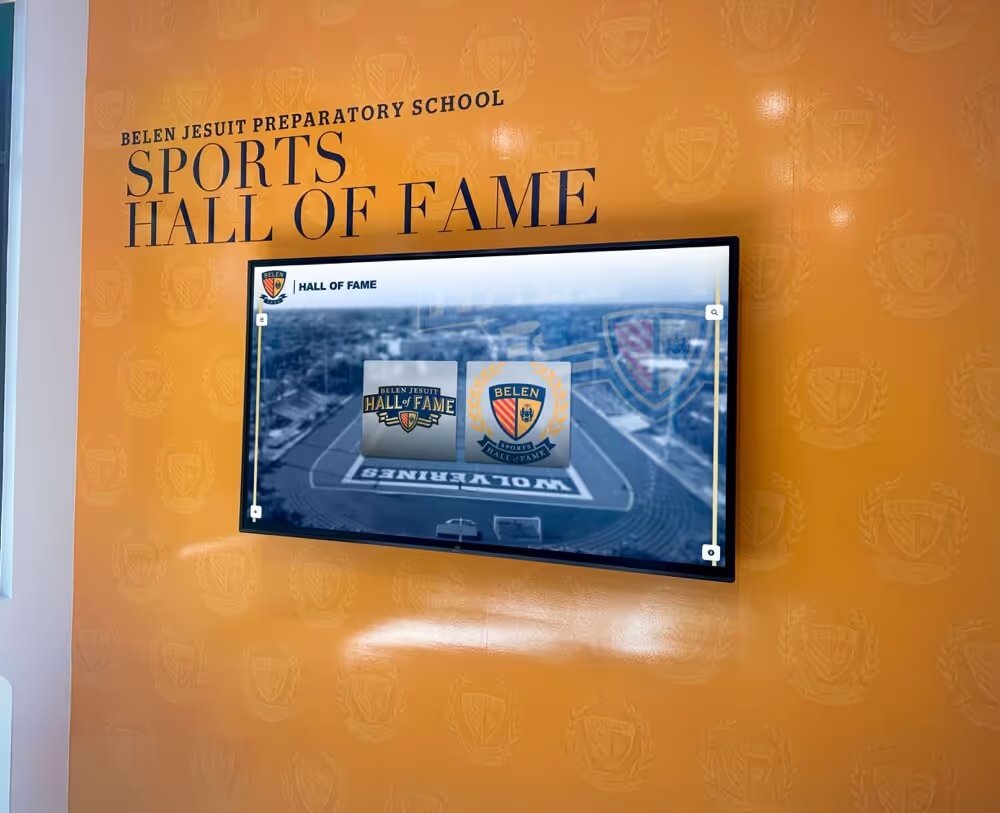
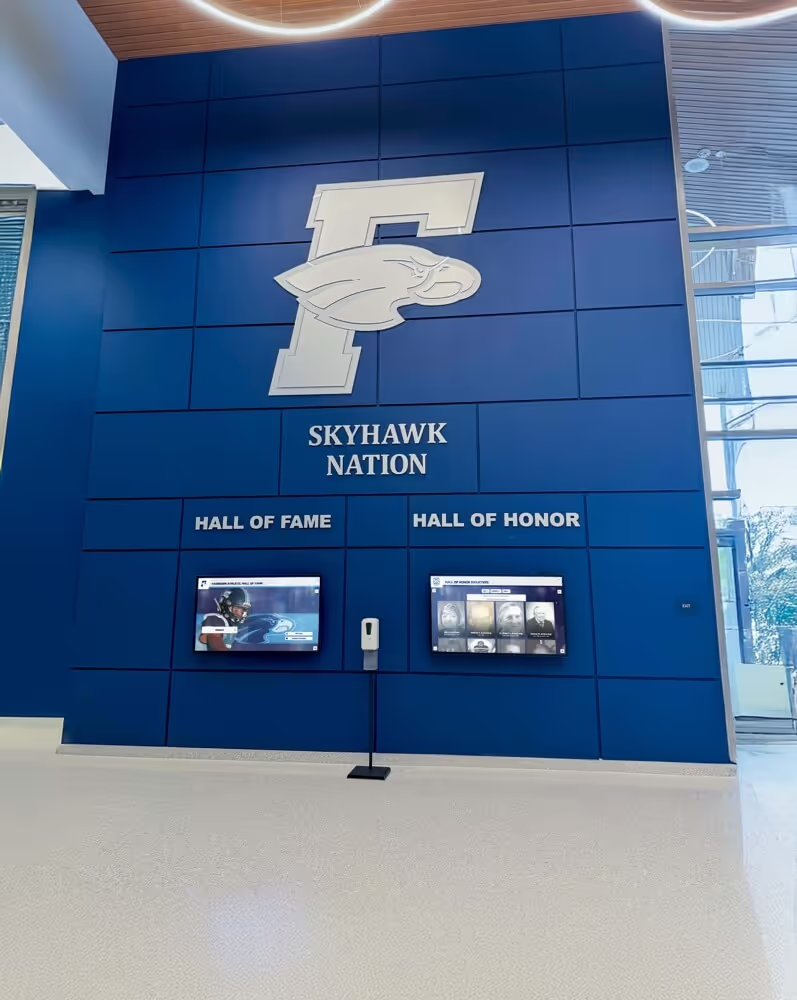
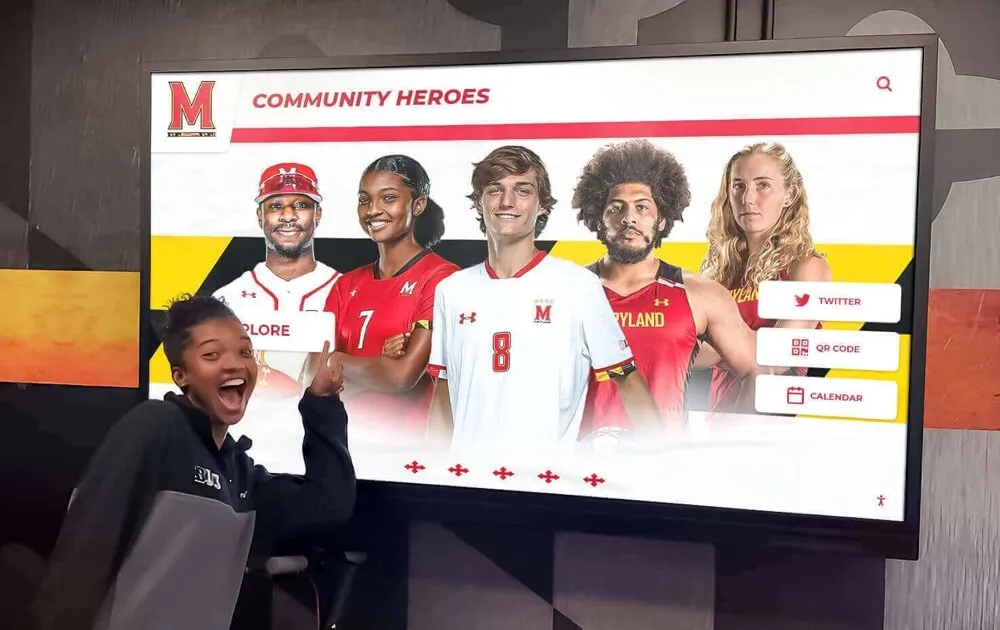
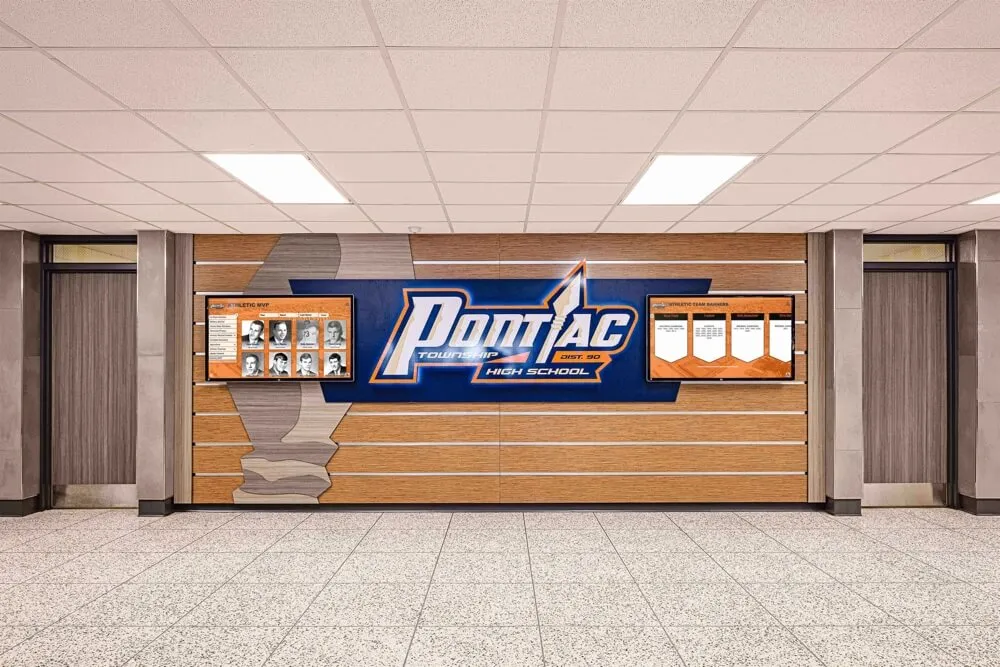
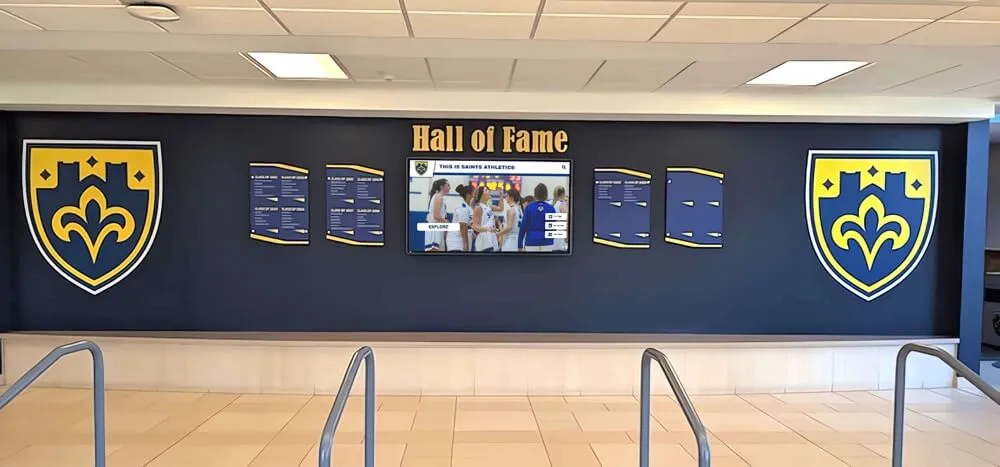
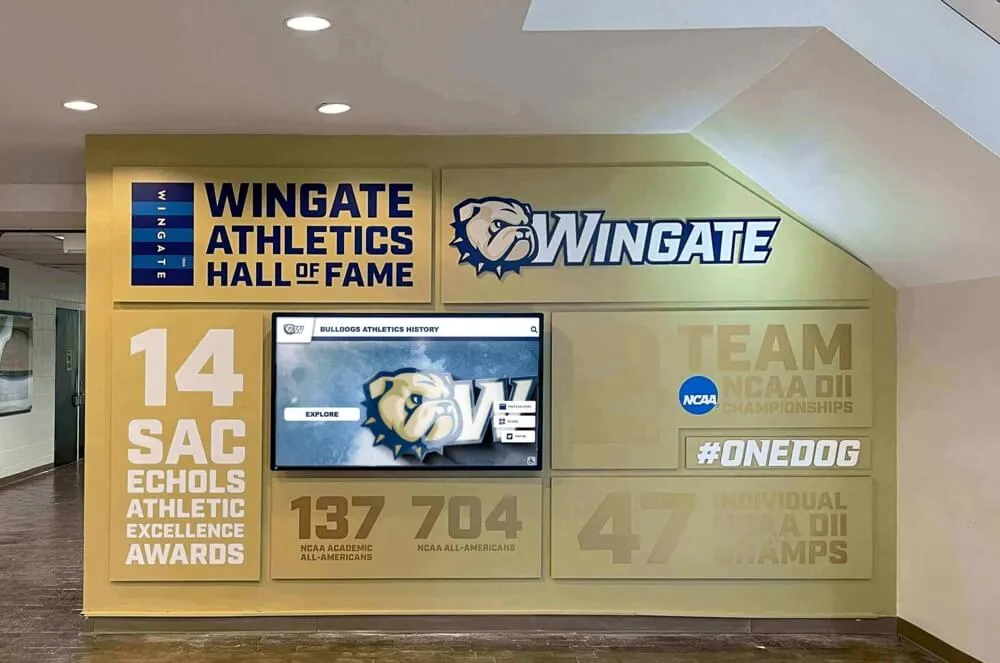
Digital display systems that organize student spotlight profiles by category allow visitors to search by sport, subject, or graduation year—transforming a single recognition moment into a searchable archive
11. End-of-Year Award Spotlight
The pattern: Award title + why it exists + selection criteria + what this year’s recipient did + brief quote from nominator.
Example structure:
[Student Name], Grade 12 — [School Name] Citizenship Award Given annually to the graduating senior who best demonstrates the school’s commitment to community, integrity, and inclusion. [Student Name] was nominated by seven staff members—the most in the award’s history. “She didn’t wait to be asked. She saw what needed doing and did it.” — [Nominating Teacher]
End-of-year awards for students: categories and ceremony ideas offers a comprehensive inventory of award categories that generate strong spotlight content.
12. Overcame Adversity Spotlight
The pattern: Challenge (described with care for privacy) + how the student responded + what the school community can learn from this recognition.
Example structure:
[Student Name], Grade 12 — Perseverance Recognition Managed a serious health condition throughout high school that required multiple hospitalizations and periods of remote learning. Maintained a 3.7 GPA, participated in orchestra for four years, and mentored incoming freshmen navigating chronic illness accommodations. “The school never made me feel like a burden. That made me want to show up.”
Handle this category with intentional care: always have the student’s explicit consent, involve the school counselor in profile review, and frame the adversity as context rather than definition.
A Copy-Ready Student Spotlight Template
Use this fill-in-the-blank framework for any spotlight category:
[STUDENT NAME], Grade [X] — [Category/Award/Activity]

[One sentence describing the specific achievement with a real number, record, or outcome.]

[One sentence of context: what made this achievement meaningful, challenging, or unusual.]

[One sentence about who this student is beyond the achievement — a future plan, a personal interest, or a detail that makes them human.]

"[Direct quote from the student, a teacher, coach, or parent — 1–2 sentences maximum.]"

[Optional: One sentence from the school connecting this achievement to institutional values.]
This template is designed to be completed in under 30 minutes once you’ve gathered the core information. Staff who run monthly spotlight programs often find the collection of the quote is the most time-consuming step—build that into your intake process by asking teachers and coaches for one-sentence recommendations in the nomination form.
Execution Timeline: Plan → Build → Launch → Refresh
| Phase | Timeline | Activities |
|---|---|---|
| Plan | 4–6 weeks before launch | Define categories, nomination process, display format, and cadence |
| Build | 2–4 weeks before launch | Gather student information, collect photos, write profiles using template |
| Launch | Launch week | Display profiles, announce via school communications, post on social media |
| Refresh | Ongoing (weekly/monthly/semester) | Collect new nominations, update archive, notify recognized students and families |
The most common failure point is the transition from Build to Refresh. Schools launch a spotlight program with strong initial energy, then struggle to maintain consistent content collection. Solve this at the Plan phase: assign a single owner for nominations each cycle and build the intake process into existing teacher workflows (homeroom, advisory period, department meetings) rather than creating a separate ask.
Modernizing school recognition walls for current and future students addresses the specific challenge of keeping recognition fresh after the initial installation excitement fades.
Display Integration: Moving Spotlights Off the Bulletin Board
The bulletin board—a printout, a photo, and a laminated card—is still the most common student spotlight display format in American schools. It’s also the format most likely to fade, fall, and get replaced without anyone noticing. If the goal is to honor students in a way that lasts, the display infrastructure needs to match the ambition of the content.
Digital Hallway Displays
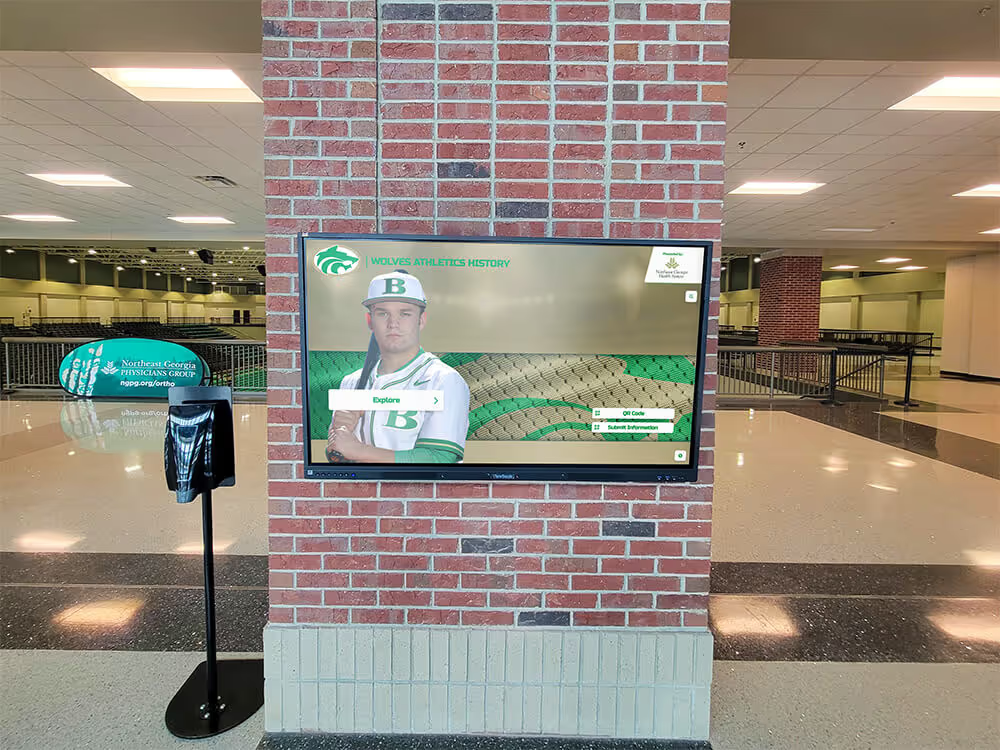
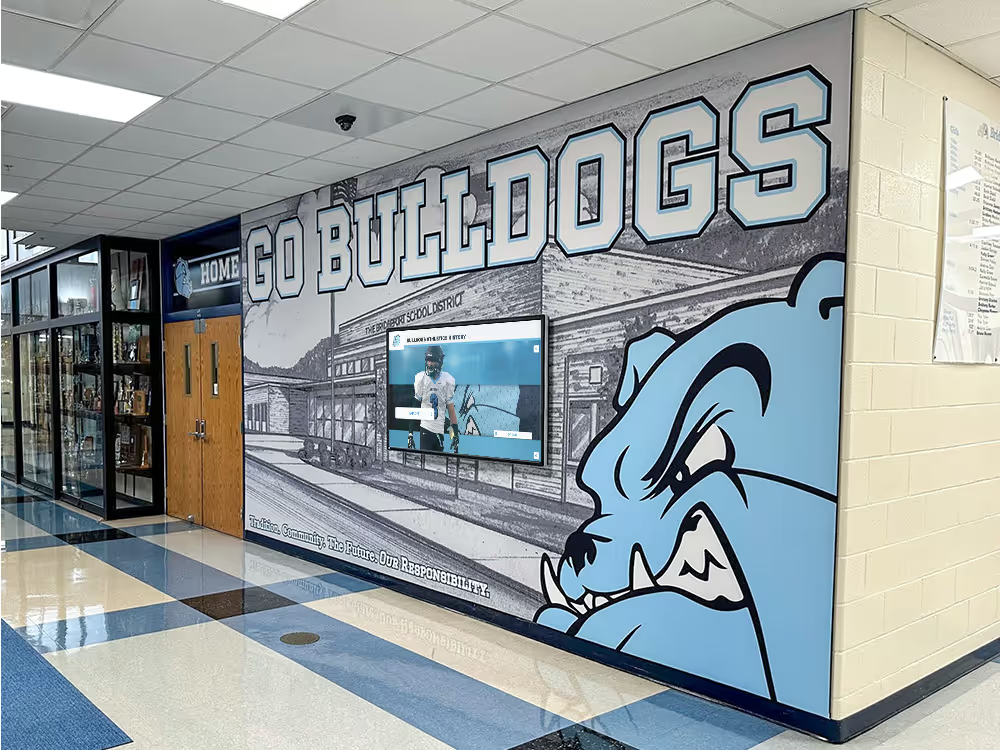
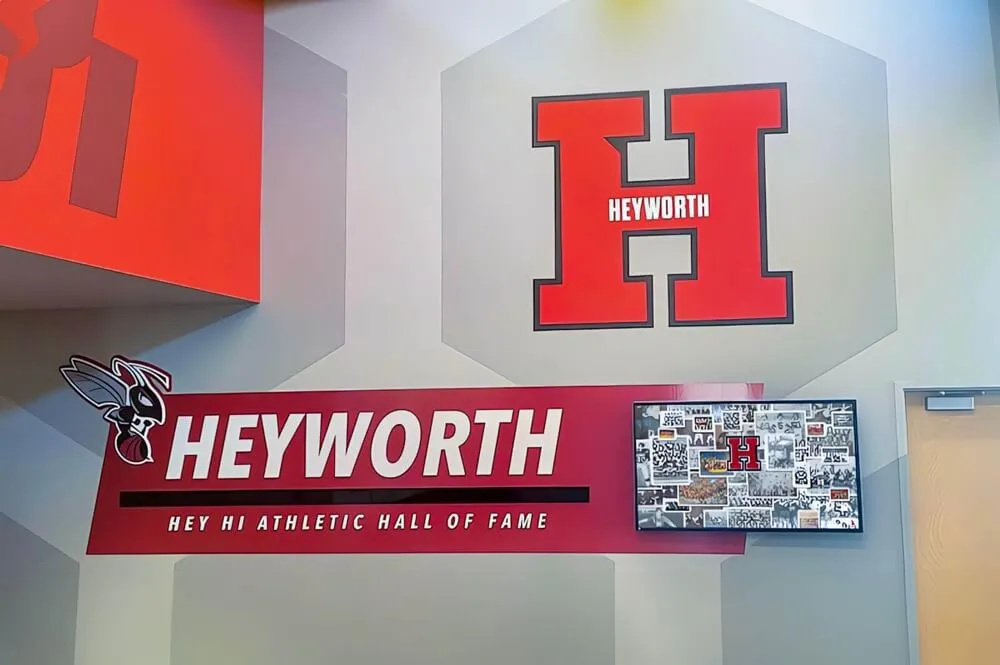
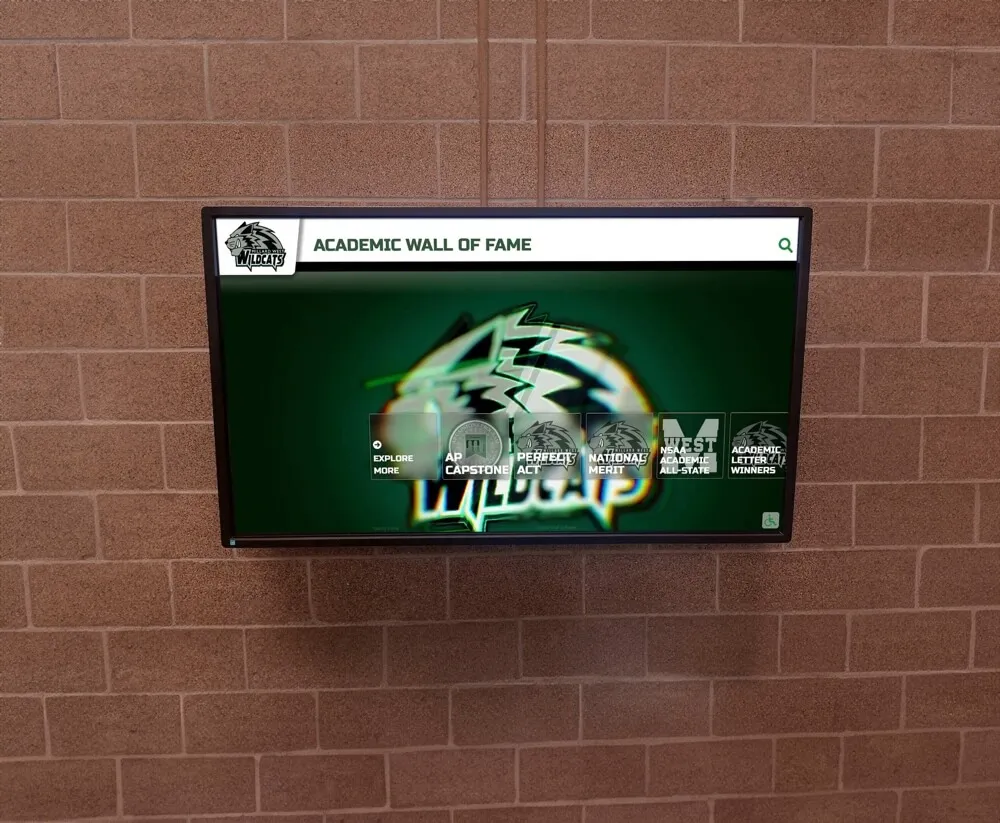
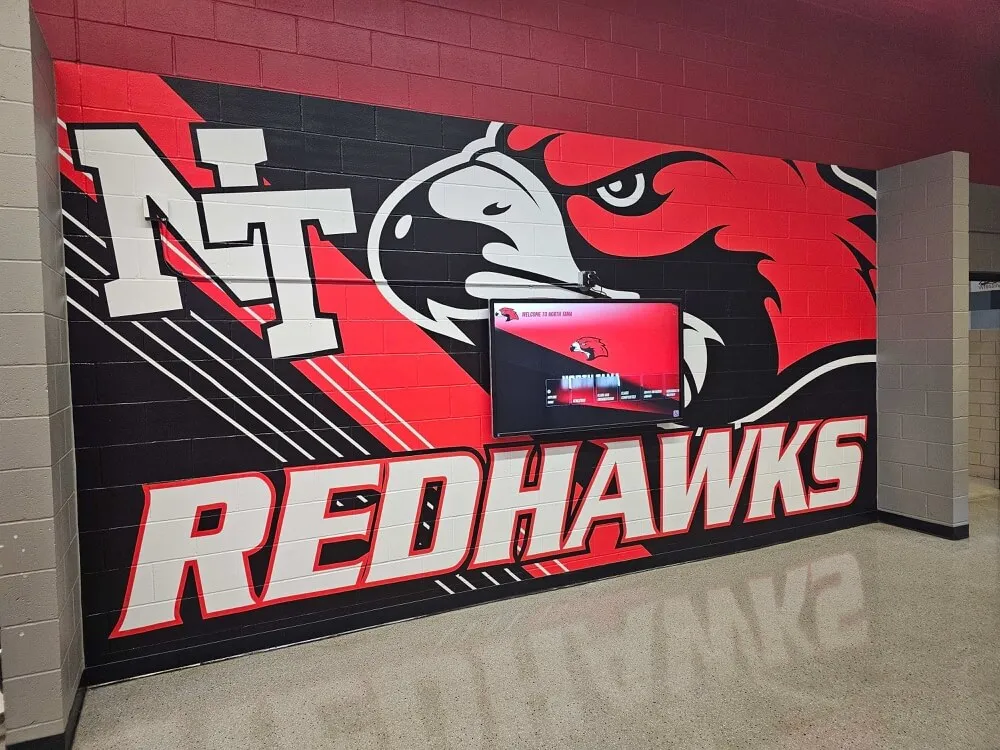
A dedicated digital screen in a main hallway, near the main office, or in the library can rotate student spotlight profiles throughout the day. Unlike a bulletin board, digital displays update without printing, never fade, and can feature photos, video clips, quotes, and stats in a format that students actually stop to read.
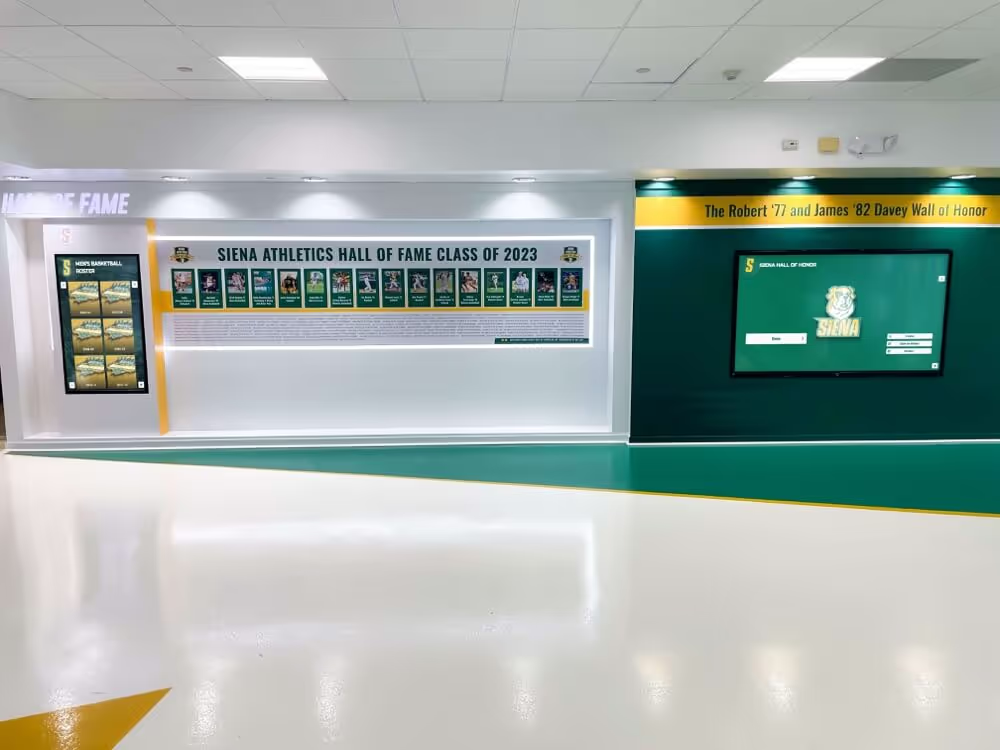
Schools using digital wall of fame display systems typically see higher student engagement with recognition content because the display format matches what students are accustomed to—clean, visual, and updated regularly.
Interactive Touchscreen Spotlight Kiosks
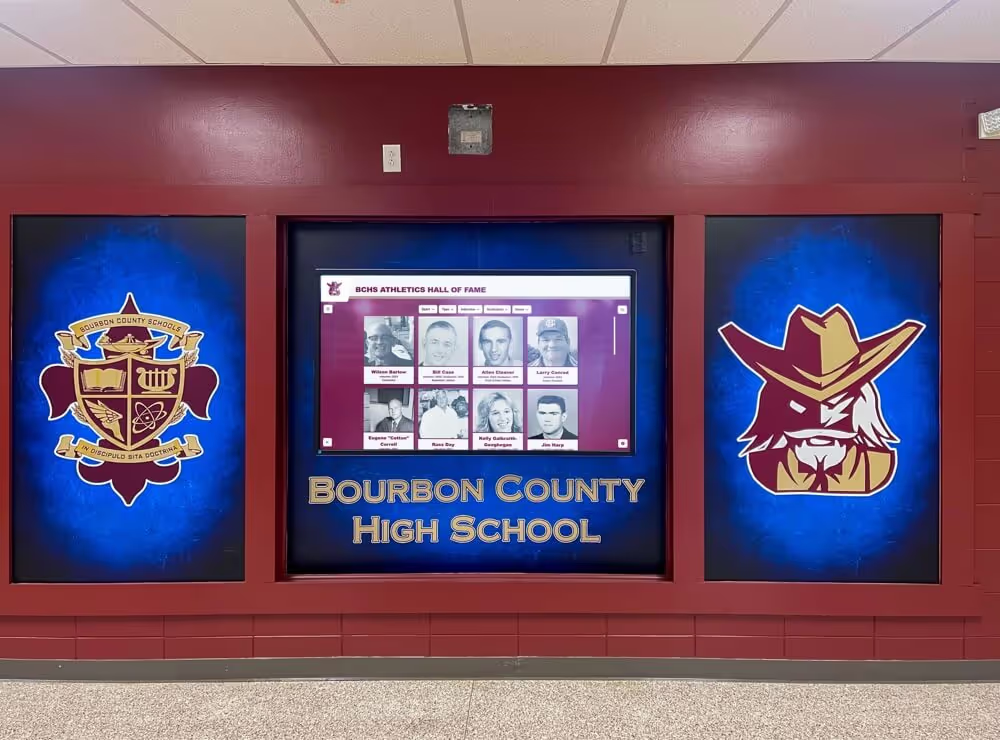
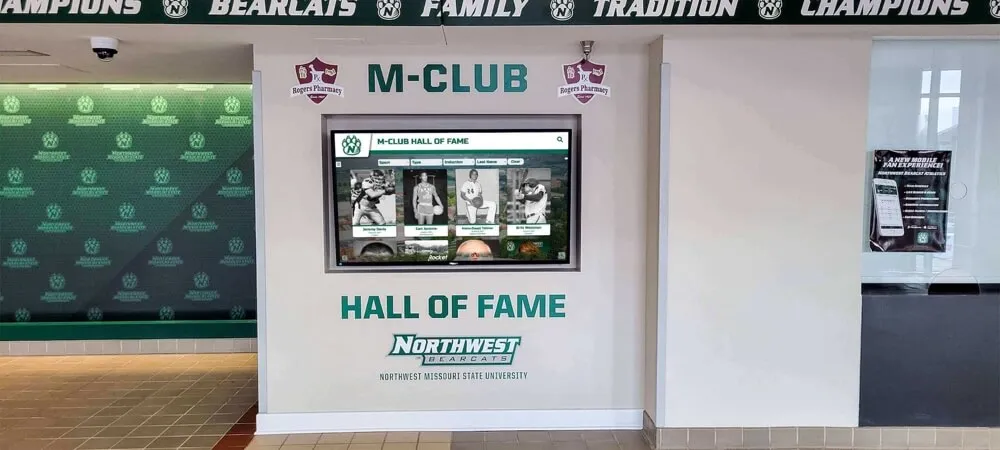
For schools that want to build a searchable archive of student spotlights over multiple years, interactive touchscreen kiosks are the most scalable format. Students and visitors can browse spotlights by graduation year, achievement category, name, or sport. A spotlight profile added today remains discoverable by students five years from now.
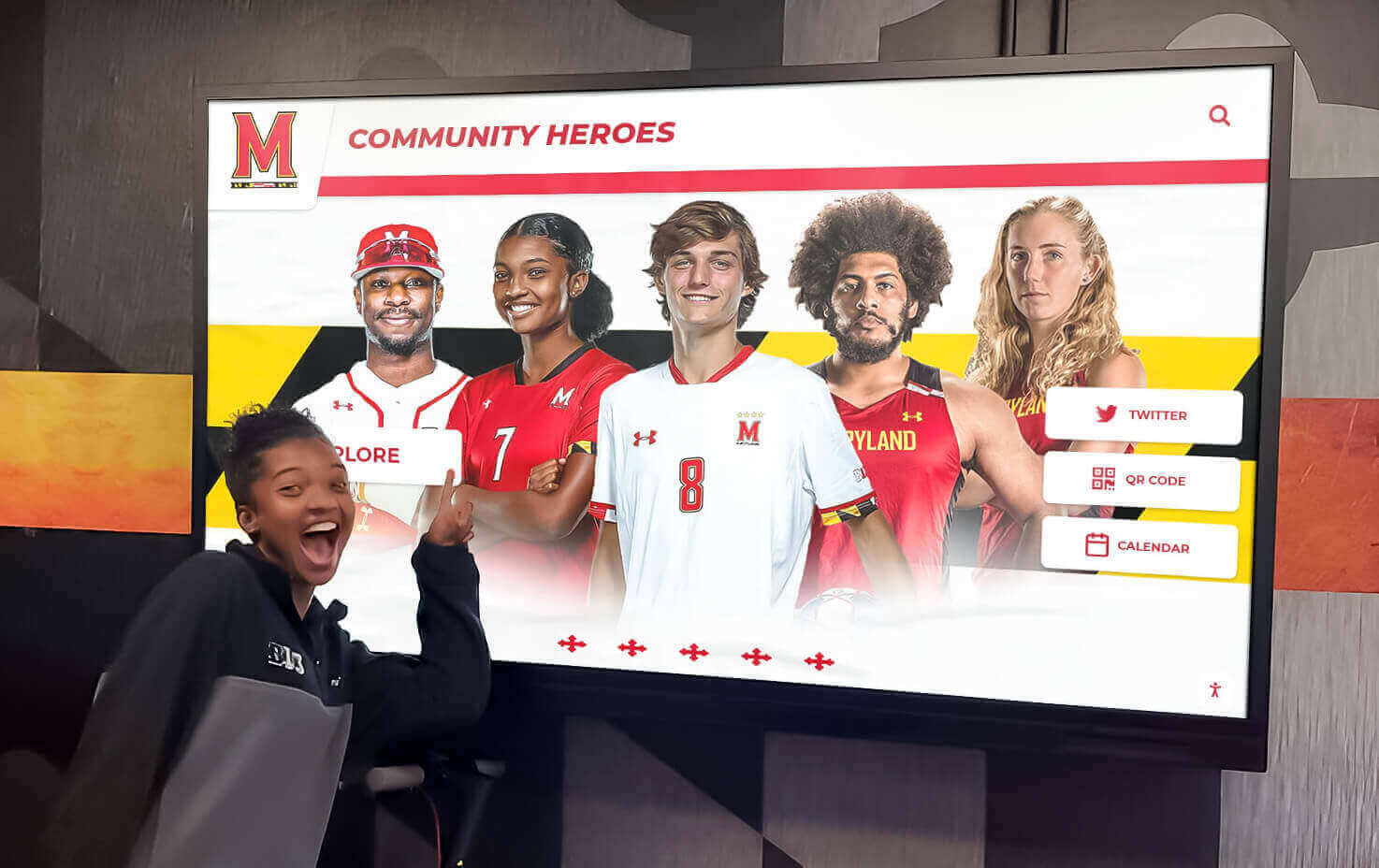
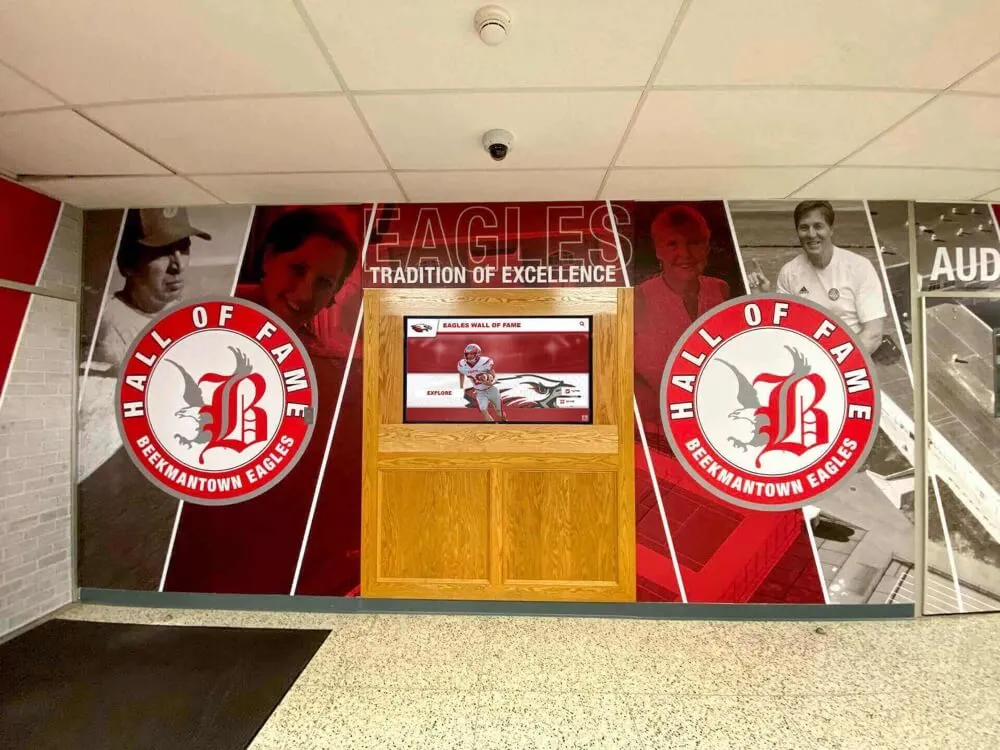
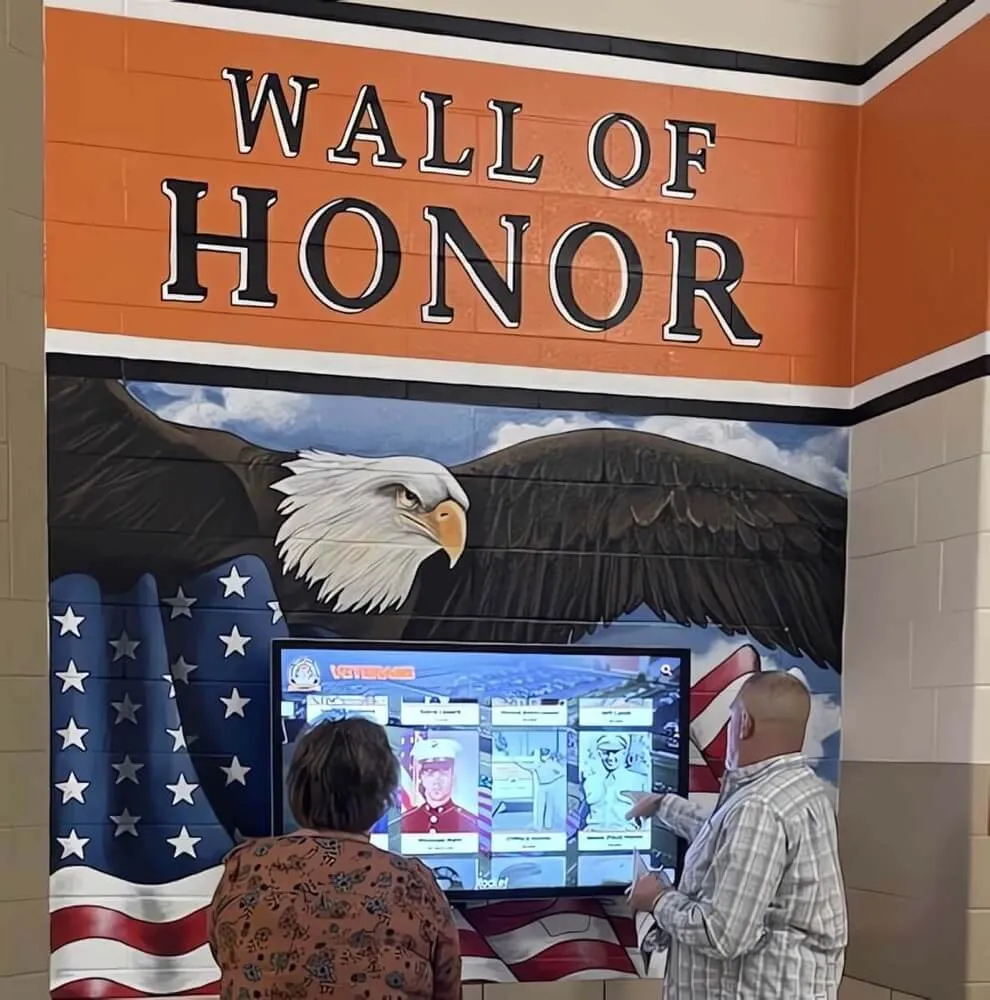
Digital recognition kiosks create a self-directed exploration experience—students seek out their own recognition and discover peers they may not have known about
Integrating Spotlights with Trophy and Award Displays
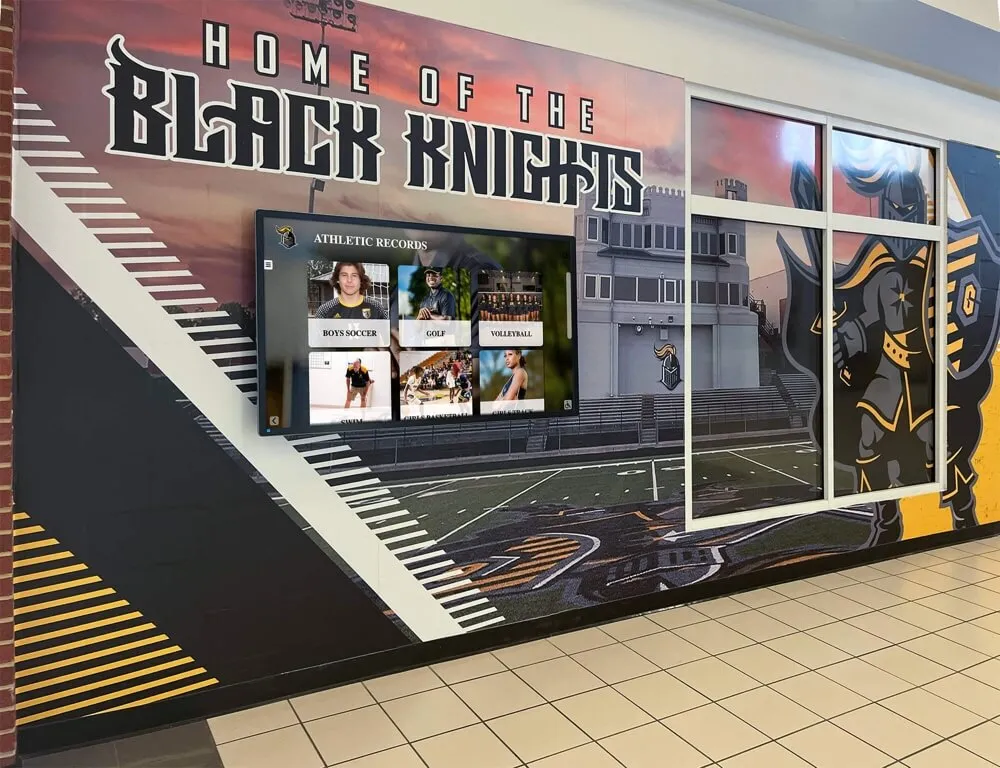
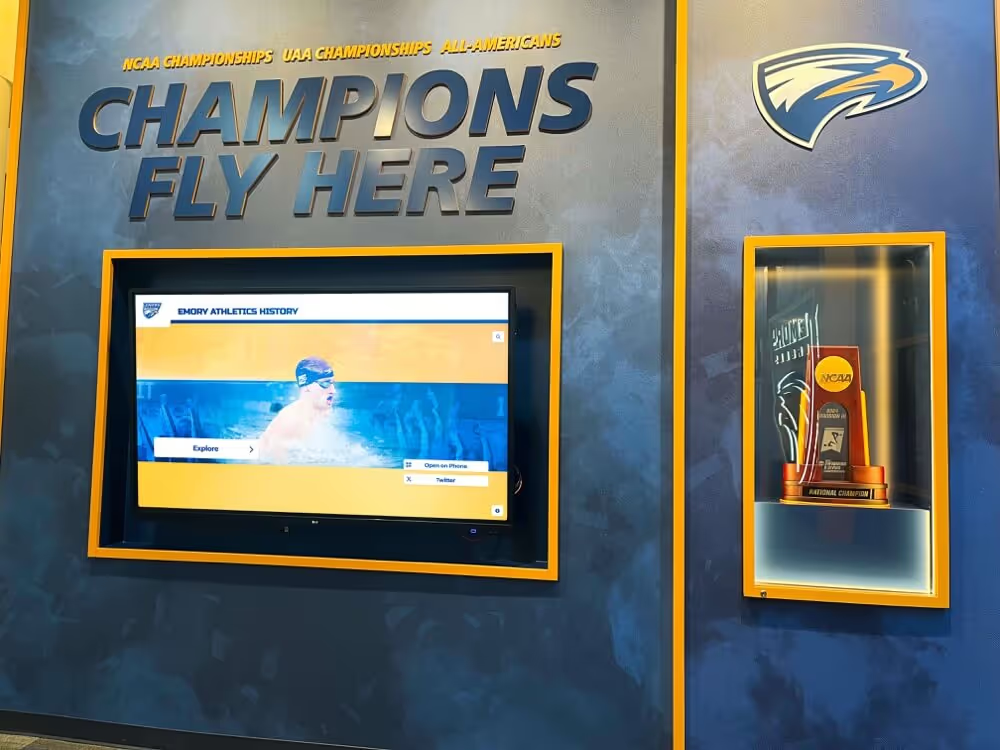
Many schools already have trophy cases in main hallways or gyms. Student spotlight profiles displayed alongside physical trophies—either on integrated digital screens or on framed portrait panels—give the display context and human story that a trophy alone can’t provide. Trophy display case and recognition guide strategies address how schools are integrating digital content with physical award collections.
ADA and Remote Management
Any permanent student spotlight display should meet WCAG 2.1 AA accessibility standards: sufficient color contrast, legible font sizes at typical viewing distances, and touchscreen interfaces mounted at ADA-compliant heights. Cloud-based display management means a counselor can add a new spotlight profile from their desk without touching the screen physically—a practical requirement for programs that need to run reliably across an entire school year.
School awards for students: programs and display strategies offers a broader inventory of how display systems support the full range of school awards programs, not just spotlights.
Measuring the Impact of Student Spotlight Programs
Recognition programs should produce measurable effects on school culture, even if some of those effects are qualitative:
Nomination volume over time: Does the number of nominations submitted each cycle grow, hold steady, or decline? Growing nomination volume indicates that faculty and students see the program as meaningful enough to participate in. Declining volume signals that the program needs a structural refresh.
Representation across categories: Are the same departments or coaches submitting most nominations? A healthy spotlight program reaches across academic departments, arts programs, athletics, and student life. If one domain dominates, adjust the intake process to reach underrepresented programs actively.
Display engagement: How many students pause at the display during passing periods? Schools with interactive touchscreen systems can measure dwell time and profile views to understand which spotlight categories generate the most engagement.
Family response: Do families of recognized students share spotlights on social media or mention them at school events? Family amplification extends the reach of recognition far beyond the school building—and families who feel seen by the school become more engaged community members.
Longitudinal archive value: Is your spotlight program building a searchable archive that future students can browse? A program that creates a growing recognition record has compound value—each new spotlight adds to a database that tells your school’s story.
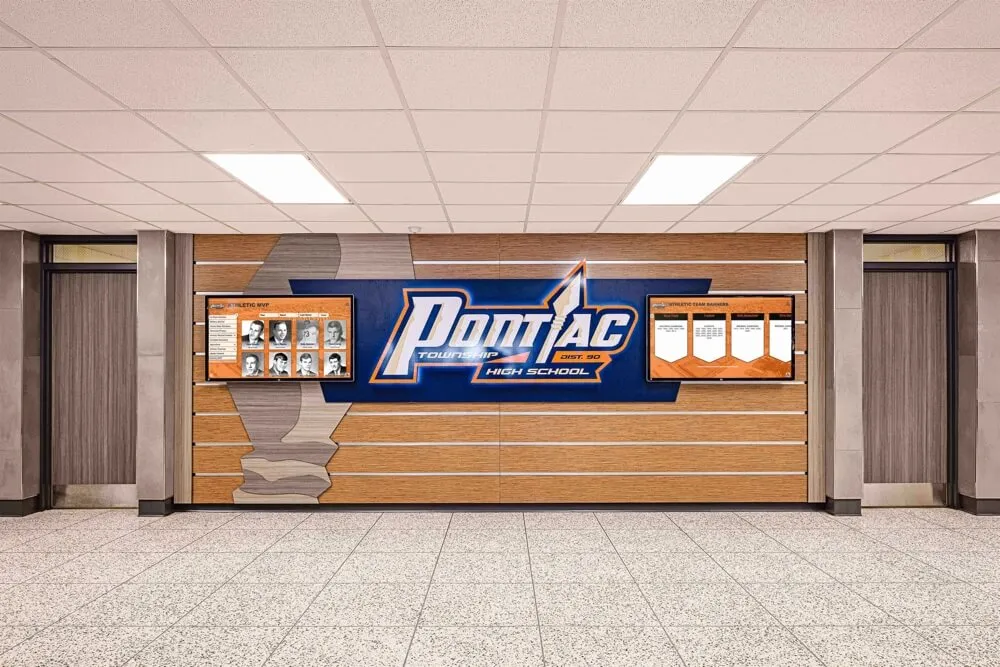
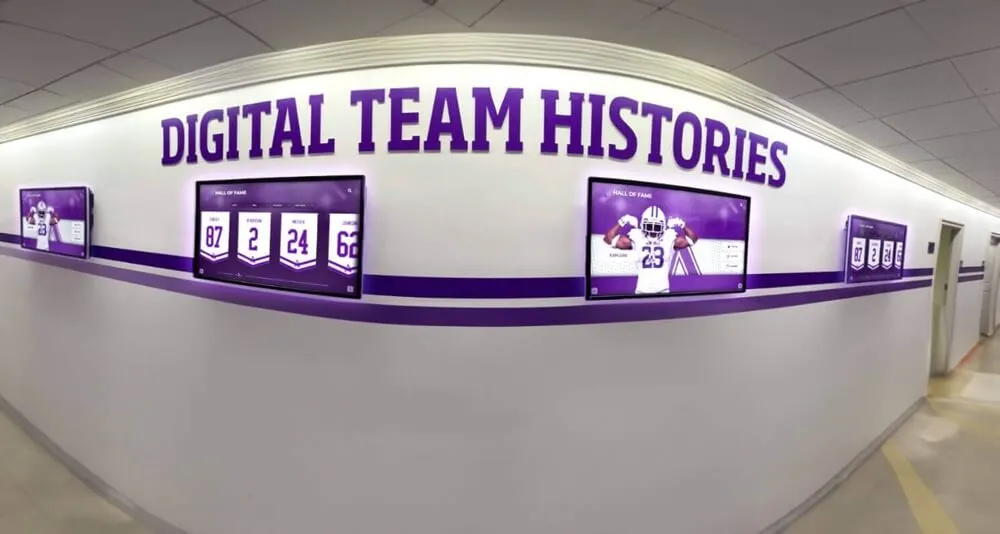
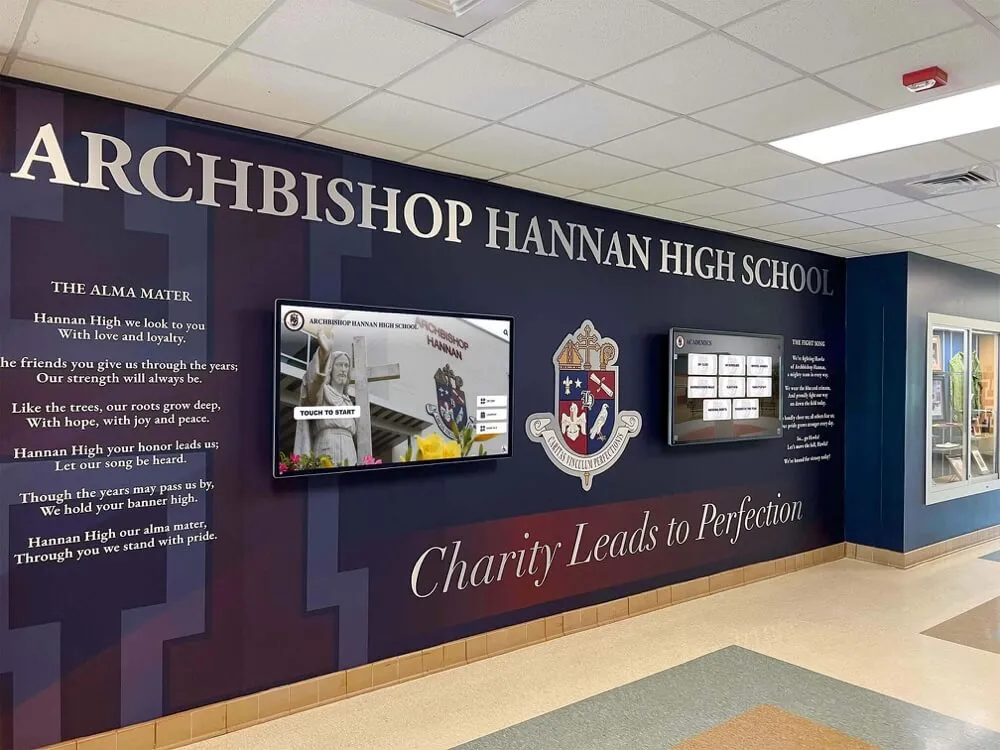
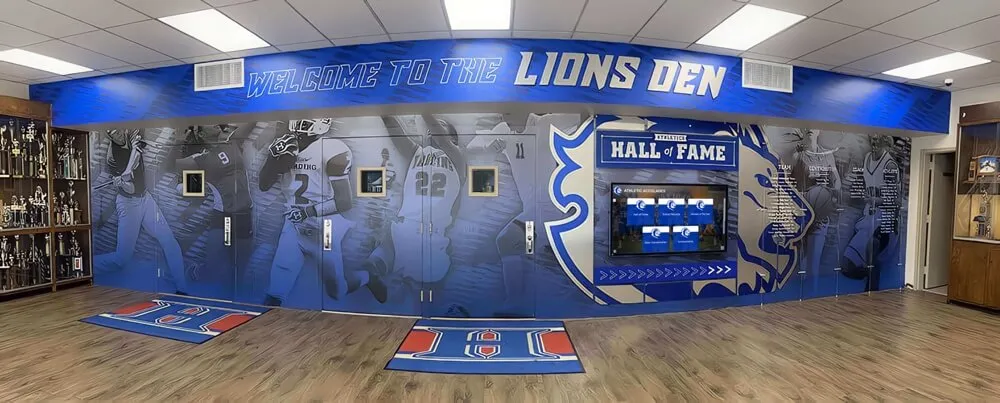
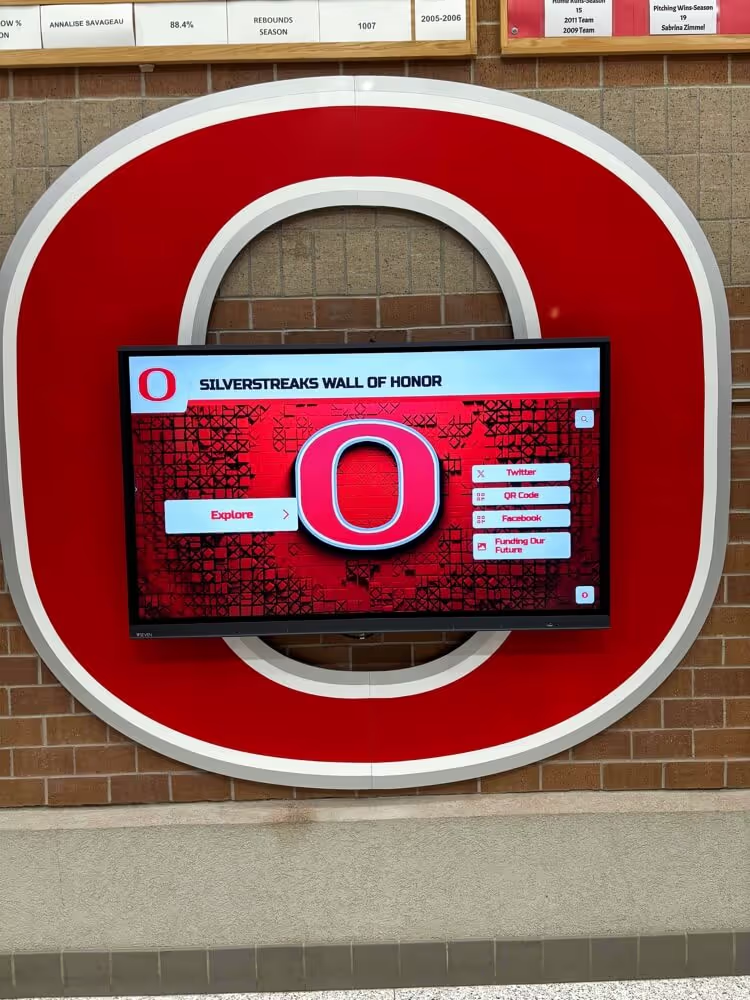
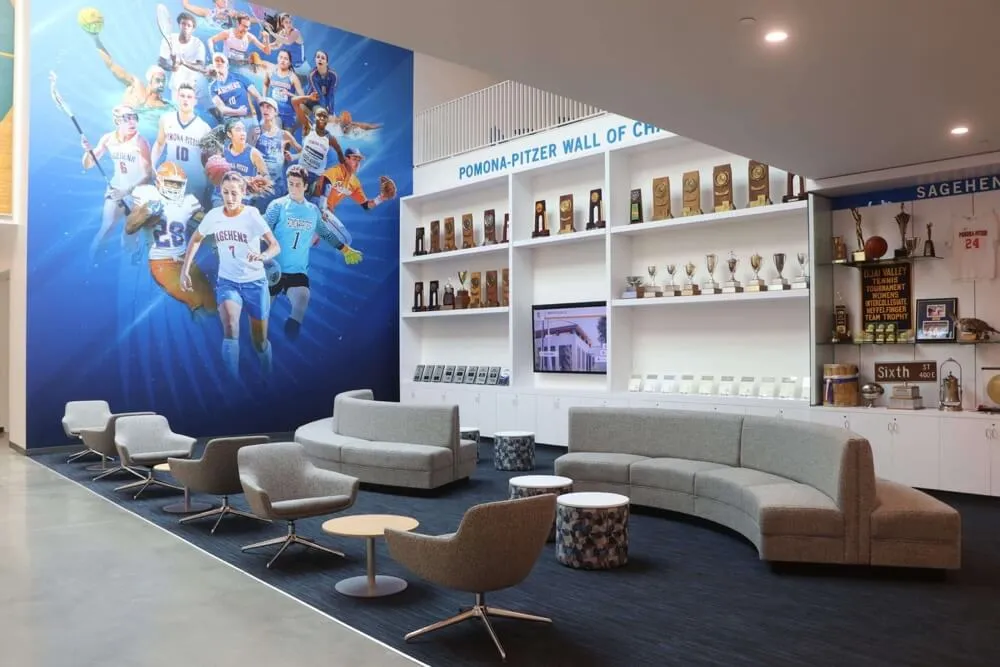
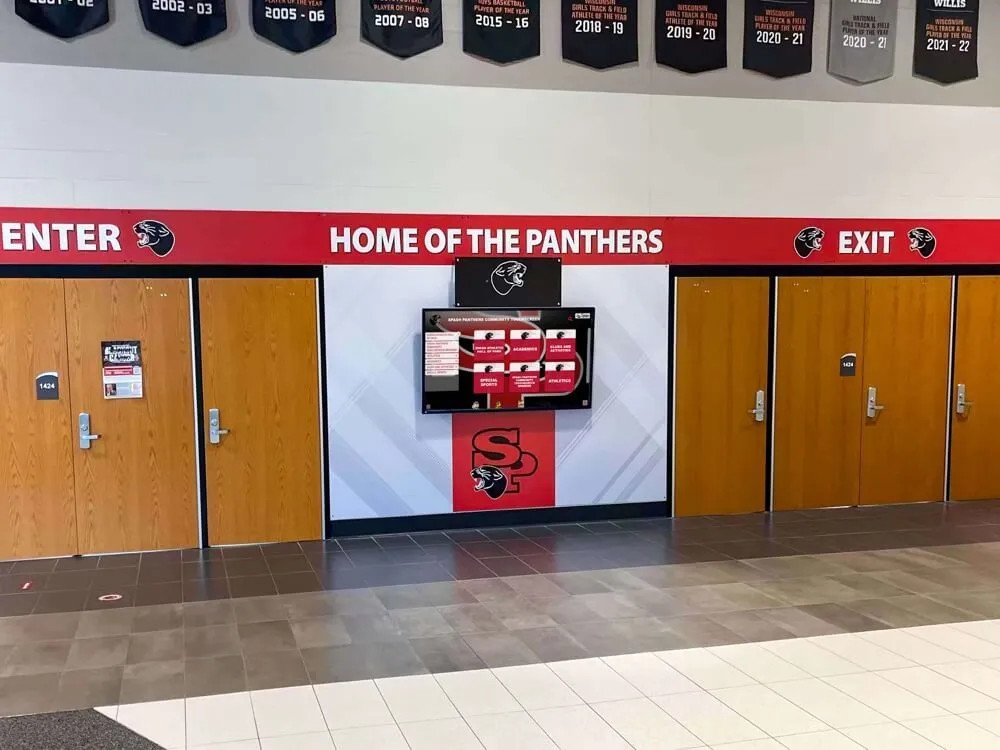
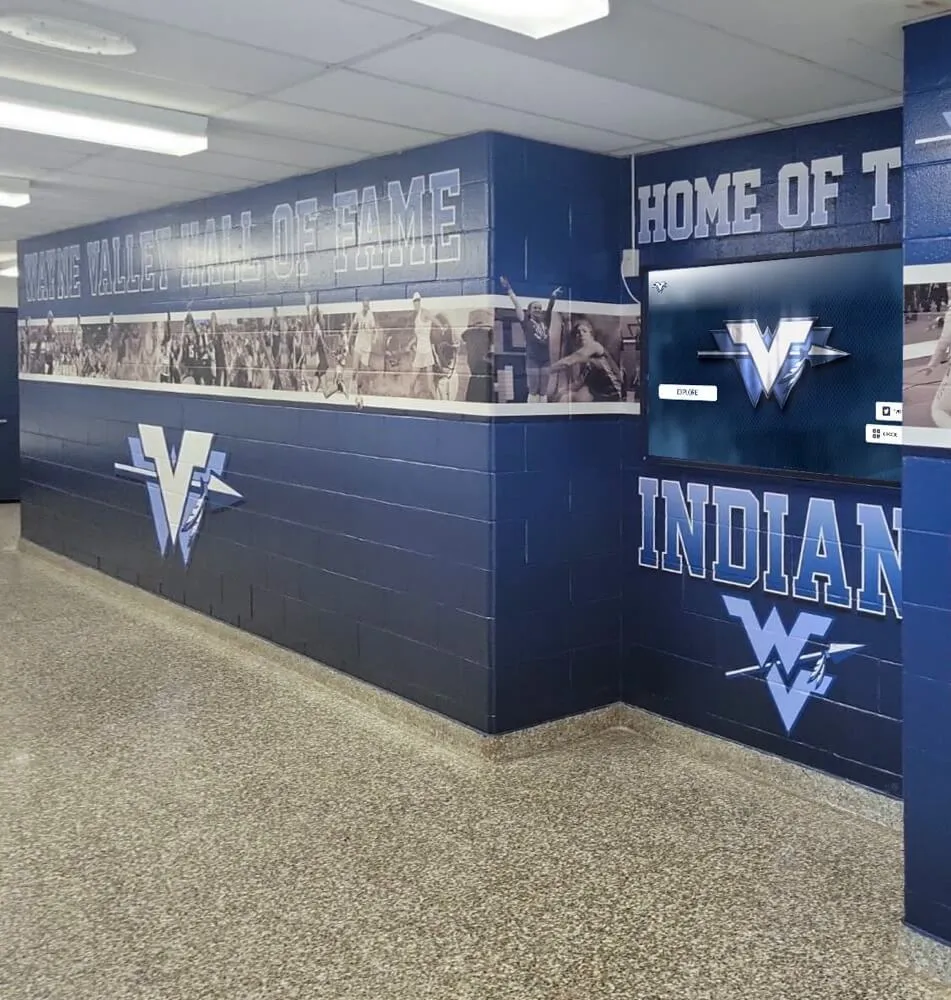
Dedicated recognition walls in school hallways transform daily traffic into repeated exposure—every student who passes sees the school's values made visible
Frequently Asked Questions About Student Spotlight Programs
What should a student spotlight include?
A strong student spotlight includes: the student’s name and photo, a specific description of the achievement (with real numbers or outcomes where possible), one sentence of human context (a future plan, personal detail, or challenge overcome), a quote from the student or a nominator, and a brief institutional statement connecting the recognition to school values. Five elements, completed in under one page.
How often should schools run student spotlights?
The cadence should match your school’s capacity to maintain consistent quality. Weekly spotlights require a reliable nomination pipeline and a designated owner; they keep energy high but create significant ongoing workload. Monthly spotlights allow for more thorough profiles and are sustainable for most schools. Semester or annual programs create prestige but require longer build windows. Many schools combine a high-frequency social media spotlight (weekly) with a lower-frequency permanent display program (monthly or semester).
What categories work best for student spotlight programs?
The most effective programs include categories that reach different parts of the student population. Academic achievement (both top GPA and most-improved), athletics, fine arts, community service, student leadership, STEM/innovation, and career pathway spotlights together ensure that students from every corner of the school have a pathway to recognition.
How are student spotlights different from honor roll?
Honor roll is a threshold-based recognition: students who meet a GPA cutoff are listed. Student spotlights are narrative-based: they tell a story about a specific student’s achievement, character, or contribution. Both have value, but spotlights reach students who may not qualify for honor roll while also going deeper for students who do. The two formats work best as complementary systems rather than substitutes for each other.
How do you display student spotlights permanently?
Permanent display options range from framed portrait panels in hallways (low technology, high visibility) to cloud-based interactive touchscreen kiosks (high technology, searchable archive). The right choice depends on your school’s budget, technical capacity, and goals. Schools looking to build programs that grow over years typically invest in digital display platforms that allow unlimited additions without redesigning the physical display.
Conclusion: From Examples to a Living Recognition Culture
The twelve student spotlight examples in this guide are starting points, not endpoints. The school that copies one template this month and another next month and refines both based on what students and staff respond to will, over a few years, have built something genuinely original: a recognition culture that reflects its community.
The shift from a bulletin board to a digital display is not merely cosmetic. A permanent, searchable archive of student spotlights tells every incoming freshman: people like you have done extraordinary things here, and the school has been paying attention. That message—delivered consistently, across academic, athletic, arts, and community categories—is one of the most powerful things a school can communicate.
Ready to move your student spotlight program from a bulletin board to a permanent digital archive? Rocket Alumni Solutions builds interactive hall of fame displays and digital recognition systems for schools that want their student spotlight profiles to be visible, searchable, and lasting—not just for the week they’re posted. Explore how schools across the country are turning recognition into a permanent part of their institutional story.