Senior Yearbook Ads From Parents: 25 Tribute Examples for Honoring Graduating Seniors
- Home /
- Digital Hall of Fame Insights & Resources /
- Senior Yearbook Ads From Parents: 25 Tribute Examples for Honoring Graduating Seniors
The Easiest Touchscreen Solution




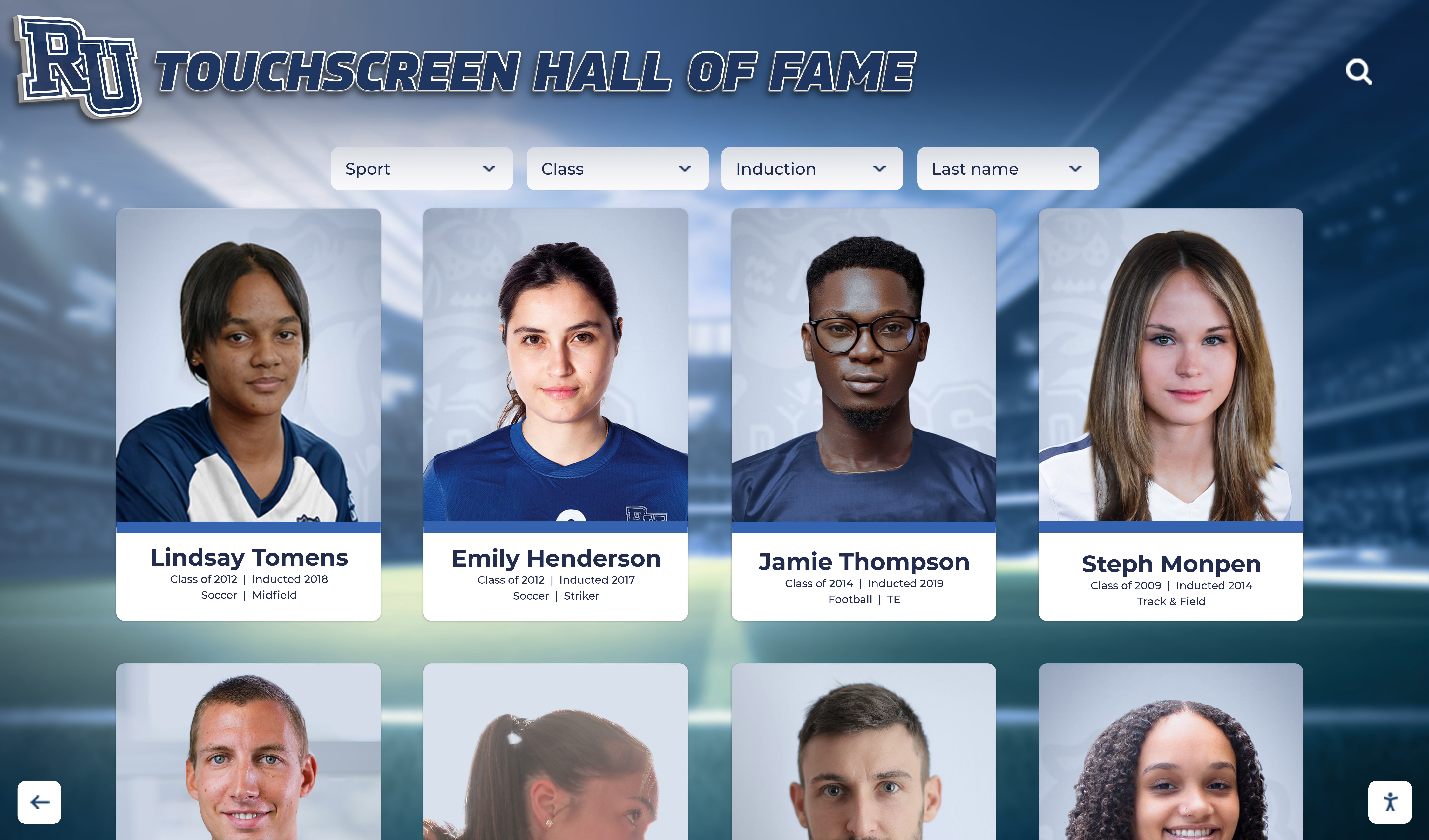
Live Example: Rocket Alumni Solutions Touchscreen Display
Interact with a live example (16:9 scaled 1920x1080 display). All content is automatically responsive to all screen sizes and orientations.
Senior yearbook ads from parents represent one of the most personal forms of tribute a family can offer a graduating senior. These purchased ad spaces—quarter-page, half-page, or full-page sections typically placed at the back of the yearbook—give parents the editorial role once, creating a public love letter, a collection of memories, or a declaration of pride their graduate will carry for decades.
Yet most parents stare at a blank page unsure where to begin. What tone works? How personal is too personal? What belongs in a quarter page versus a full page?
This guide delivers 25 senior yearbook ads from parents examples organized by tone and content goal, plus a practical writing framework and sizing guide that helps any parent craft an ad their graduate will treasure—alongside strategies for extending that recognition beyond a single printed page.
Senior yearbook ads are permanent. Unlike a toast at graduation dinner or a social media post that scrolls away, the printed tribute stays inside a book that graduates pull from shelves at reunions, on milestone birthdays, and when they want to show their own children who they were at eighteen. The pressure to get it right is real—and the 25 examples below make it manageable.

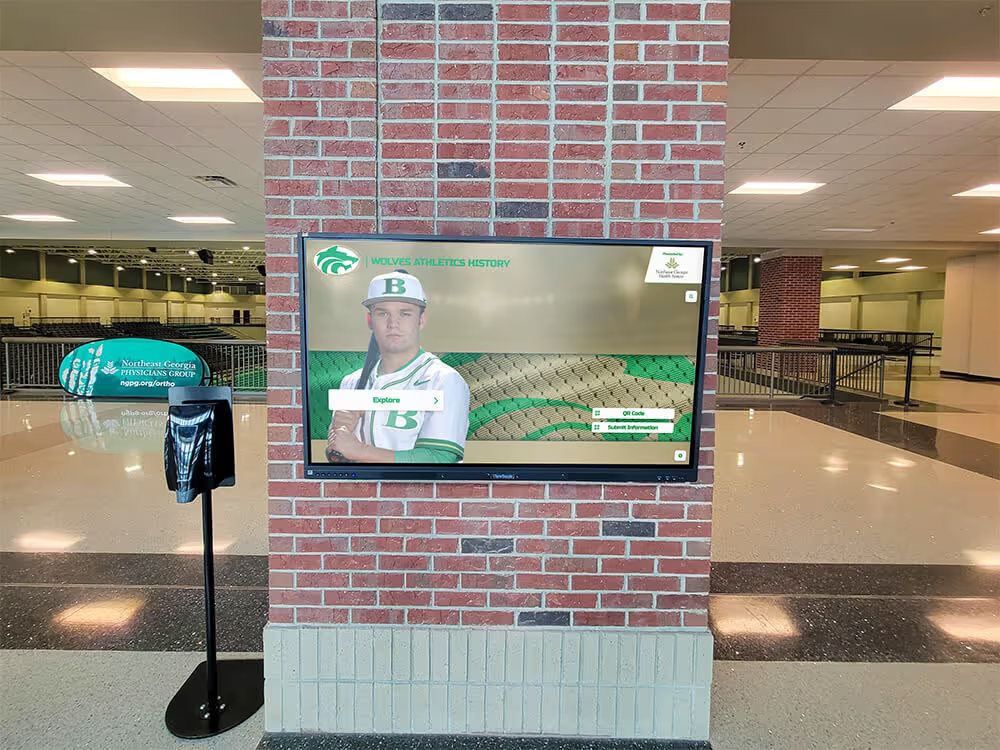
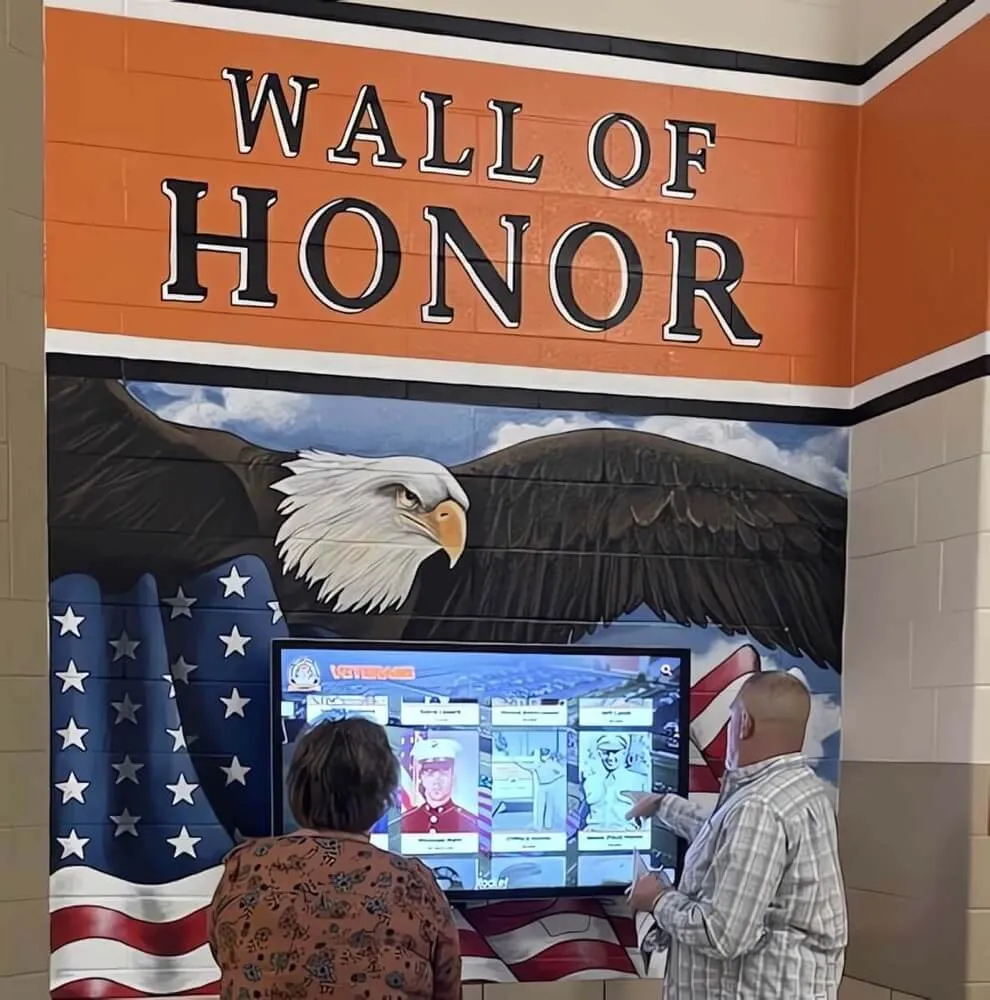
Senior recognition—whether in a printed yearbook ad or a permanent digital display—centers on the individual portrait and the story behind it
Program Snapshot: Senior Yearbook Tribute Ads
| Program Element | Details |
|---|---|
| Primary purchasers | Parents, grandparents, extended family, close family friends |
| Ad formats | Business card, quarter page, half page, full page |
| Content elements | Photos, written tribute, quotes, childhood memories, well wishes |
| Submission deadline | Typically February–March of senior year (varies by school) |
| Word count guide | 25–50 words (business card), 75–150 (quarter page), 150–300 (half page), 300–600 (full page) |
| Photo requirements | High-resolution JPEG or PNG, typically 300 DPI minimum for print quality |
| Design approach | Yearbook staff designs from submitted text and photos, or families submit print-ready files |
| Cost range | $25–$300+ depending on ad size and school market |
| Archival potential | Yearbook preservation, digital scanning, school hall of fame integration |
What Makes a Senior Yearbook Ad Work
Before reaching the examples, understanding what separates memorable tributes from forgettable ones shapes every word choice.
The four elements that anchor strong senior ads:
Specificity over sentiment. Generic praise (“you’ve worked so hard”) disappears quickly. Specific details (“you memorized the entire periodic table for extra credit and then stayed to help your lab partner do the same”) create the recognition that feels earned.
Voice authenticity. The best ads sound like the family—whether that family is funny, formal, or openly emotional. Readers notice when tribute language doesn’t match the relationship.
Future permission. Strong ads give graduates something to carry forward, not just a summary of what has already happened. A sentence that says “you are ready” lands differently than “you have done well.”
Photo selection. One well-chosen candid moment—rather than a duplicate of the graduation portrait appearing elsewhere in the book—doubles the emotional impact of the written tribute.
Schools pairing yearbook tribute traditions with permanent digital recognition can explore how senior composite displays extend individual portrait recognition beyond graduation year into lasting campus archives.
Content Architecture: What Goes in Each Ad Size
Matching content to ad dimensions prevents overcrowding and simplifies submission.
Business Card / Eighth Page (25–50 Words)
At this size, every word earns its place. Use one photo maximum and no more than three sentences.
Ideal content:
- First name or nickname the family uses
- One defining characteristic or memory
- One forward-looking statement
- Names of who is writing
Quarter Page (75–150 Words)
The most common senior yearbook ad format. Room for one to two photos, a headline, a main tribute paragraph, and a closing line.
Ideal content:
- Opening line or quote
- Two to three sentences of specific tribute
- Brief future wish
- From: [Family names]
Half Page (150–300 Words)
Enough space for a short narrative structure: opening memory, achievement acknowledgment, character tribute, and closing encouragement.
Ideal content:
- Engaging first memory or observation
- One or two specific accomplishments named
- What the graduate means to the family
- Where the family believes they are headed
- Closing signature
Full Page (300–600 Words)
Letter format territory. Full pages support multiple photos, a headline, and a complete narrative tribute.
Ideal content:
- Personal letter opening (“Dear [Name]”)
- Chronological memories or thematic sections
- Specific accomplishments named with real details
- Family’s hopes for the future
- Signatures from all contributors
Explore yearbook senior page design layouts that complement parent tribute ads with strong visual presentation and intentional page structure.
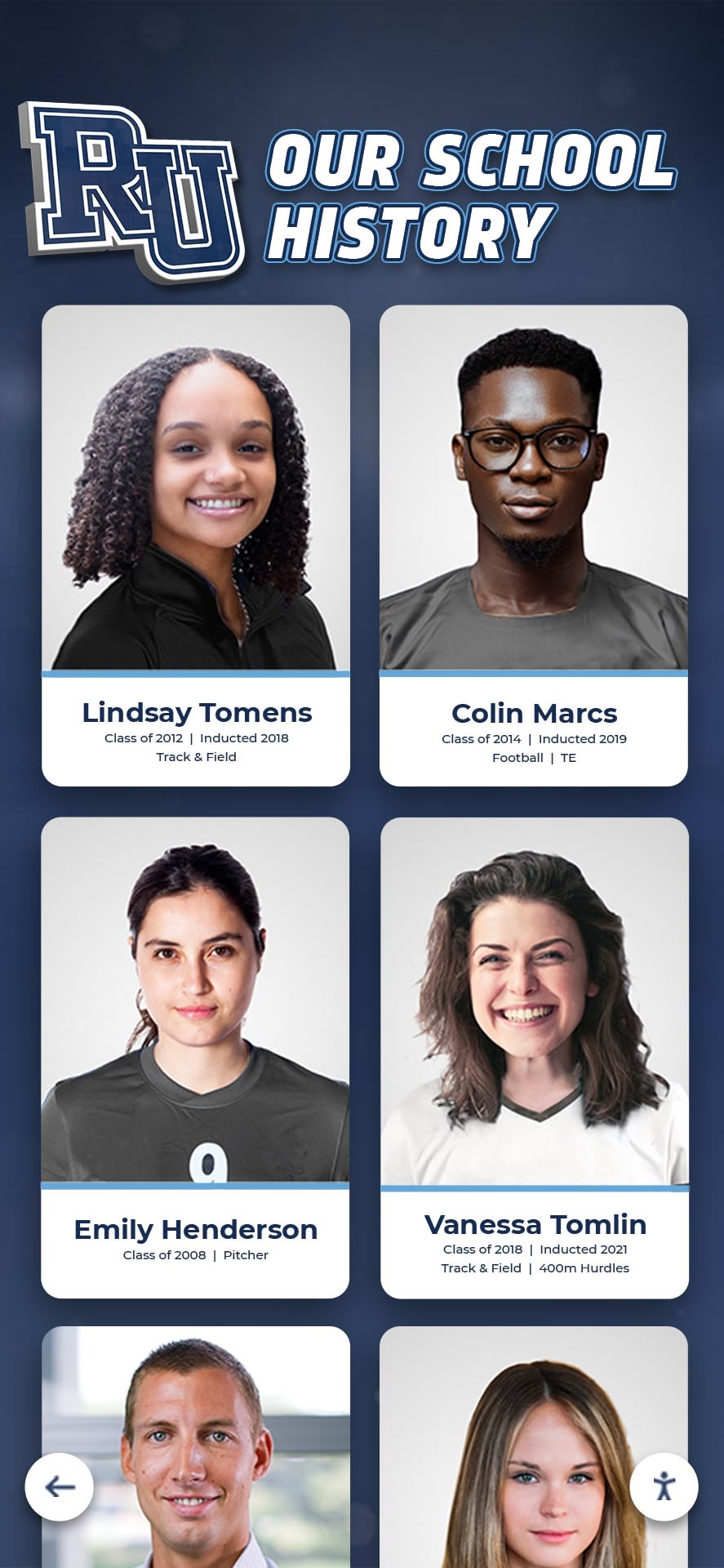
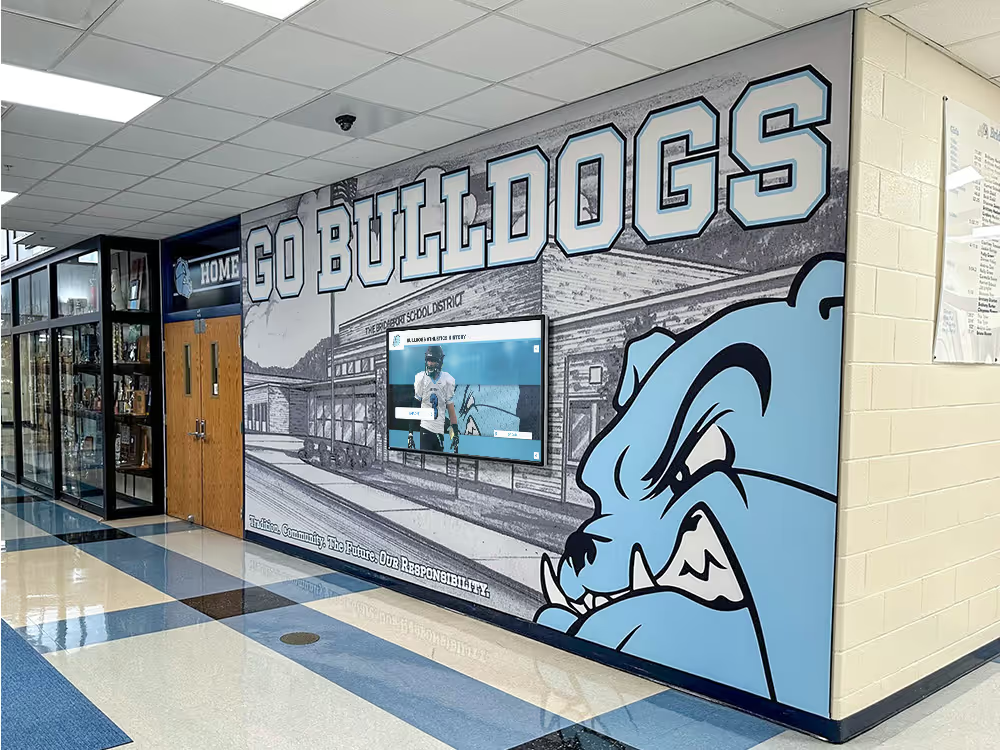
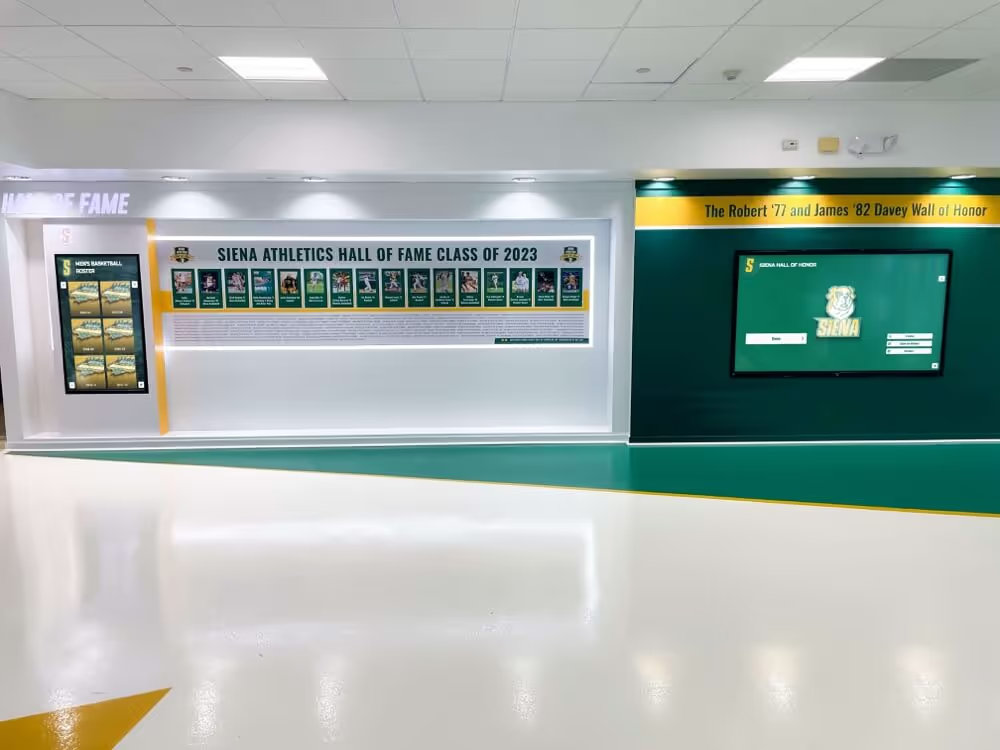
Individual portrait recognition—in yearbooks, display walls, or digital archives—creates the documentation graduates return to across decades
25 Senior Yearbook Ads From Parents: Tribute Examples
The examples below use [Name] as a placeholder. Adapt tone, detail, and length to fit your family and your selected ad size.
Category 1: Brief and Elegant Tributes
These examples pack emotional weight into a small footprint. Ideal for business card or quarter-page formats where brevity is required.
Example 1 — The One-Line Declaration
We have watched you become exactly who you were always going to be. Proud doesn’t begin to cover it.
Love, Mom and Dad
Best for: Families who prefer understated elegance over lengthy prose. Add a candid childhood photo to complete the space.
Example 2 — The Permission Slip
You don’t need our permission to go chase whatever’s next—but you have it anyway, completely and without conditions. Go.
All our love, [Family]
Best for: Seniors headed into ambitious or unconventional next chapters. Works as a standalone quarter-page with one current photo.
Example 3 — The Short Inventory
Kind. Curious. Stubborn in the best possible way. Ready.
We love you, [Name].
— Mom, Dad, and [Sibling]
Best for: Families who want the tribute to feel more like a character portrait than a speech. Three or four carefully chosen adjectives are more powerful than two paragraphs of praise.
Example 4 — The Thank You
Thank you for being the easiest part of raising a kid. You made us better parents just by being you.
Love always, Mom and Dad
Best for: Expressing genuine gratitude in a way that feels different from standard parent pride. Works beautifully in a small-format space.
Example 5 — The Observation
From the day you figured out how to open every childproof cabinet in the house, we knew this world had better pay attention.
Congratulations, [Name]. We love you.
Best for: Families with a light touch and a specific early memory that captures the graduate’s personality in one image.
Category 2: Nostalgic and Memory-Based Tributes
These examples anchor the tribute in specific moments, using memory as the vehicle for expressing pride and love.
Example 6 — The Earliest Memory
The first time you grabbed our finger at the hospital, you held on like you knew exactly where you were going and just needed a moment to orient yourself. That’s still you.
We love you more than we’ll ever say out loud.
— Mom and Dad
Best for: Parents who want to frame the entire school career within a larger story that started at birth.
Example 7 — The Recurring Scene
Every Saturday morning for ten years, you sat at the kitchen table before anyone else was awake and read. We never asked you to. You just did. Whatever you become, that quiet, self-directed version of you is the foundation.
Congratulations, [Name]. Love, Mom
Best for: Highlighting a habit or behavior that reveals character. The specificity of “Saturday mornings” and “ten years” makes this feel observed rather than composed.
Example 8 — The Car Ride Confession
Some of our best conversations happened at traffic lights on the way home from practice. You never knew how much we looked forward to them. You do now.
We’re so proud of you. Love always, Mom and Dad
Best for: Parents who want to capture the texture of daily life rather than milestone moments. Resonates especially with athletic families.
Example 9 — The Younger Sibling Voice
To my big brother/sister [Name]: You taught me what working hard looks like, what being cool looks like, and what it means to be kind when you don’t have to be. I’m going to miss having you in the next room.
Love, [Sibling’s name]
Best for: Families who want to give a sibling a voice in the tribute. Adds a dimension parents cannot write themselves.
Example 10 — The Photograph in Words
We keep a photo from your third-grade science fair on the refrigerator. Same expression you had last fall when your research paper came back with a note from your teacher that said “remarkable.” We framed that one too.
Nothing about who you are surprises us anymore. We’re just endlessly grateful.
Love, Mom and Dad
Best for: Demonstrating continuity between childhood and the senior-year graduate—the same person, grown.
Category 3: Achievement-Focused Tributes
These examples lead with accomplishments while keeping the emotional core of the tribute intact.
Example 11 — The Academic Milestone
Four years of honor roll. Two AP exams with scores your teachers still mention. A senior thesis that made us feel like we were the students. But what we’ll tell people forever is that you always stayed after class to help your classmates understand the material.
That’s the part that matters most.
Congratulations, [Name]. Love, Mom and Dad
Best for: Families of high-achieving students who want to honor academic excellence without reducing the tribute to a résumé summary.
Example 12 — The Athlete Tribute
[Number] seasons. [Number] starts. One tournament run that kept the whole town up past midnight. But the trophy you gave us is the one we can’t hang on a wall—watching you lose gracefully and win without gloating, season after season.
We love you, [Name]. — Mom, Dad, and the whole sideline section
Best for: Athletic seniors, especially those whose team had a notable shared moment. Fill in the specific numbers and details from your graduate’s career.
Example 13 — The Leader
You’ve been president, captain, and chair of more things than we can list here. But we watched how you ran meetings—how you listened before you spoke, how you made sure quieter voices got heard. That’s the leadership that doesn’t show up on a résumé until it does.
We’re proud of you. Love, Mom and Dad
Best for: Seniors with strong student government, club leadership, or team captain experience.
Example 14 — The Artist
The day we found your sketchbooks in your closet—the ones you’d been filling for three years without ever showing us—we understood something new about who you are. Art isn’t what you do. It’s how you see. Carry that everywhere.
We love you completely. — Mom and Dad
Best for: Creative seniors—visual artists, musicians, writers, performers—whose talent runs deeper than their public output.
Example 15 — The First-Generation College Student
You’re going somewhere none of us have been before. We didn’t have a map to give you, but you drew your own, and it’s better than any we could have made. First in the family to walk across that stage. Not the last.
We love you, [Name]. This is everything.
Best for: First-generation college students and their families. Few tributes carry more weight than this one.
Category 4: Character and Values Tributes
These examples focus on who the graduate is as a person rather than what they have accomplished.
Example 16 — The Compass
You’ve always known what you believe and why. That clarity—at eighteen—is rarer than you know. The world will test it. We have no doubt it will hold.
Congratulations, [Name]. Love always, Mom and Dad
Best for: Graduates with strong values, faith, or personal conviction. Honors depth of character without naming specific beliefs.
Example 17 — The Empathist
You are the person your friends call first—not because you have all the answers, but because you listen without rushing to fix anything. That capacity for presence is a gift most adults spend decades trying to develop.
We’re in awe of you. Love, Mom and Dad
Best for: Graduates known for emotional intelligence, kindness, and being a reliable support for others.
Example 18 — The Resilient One
This wasn’t an easy four years, and you know that better than anyone. You bent. You didn’t break. You showed up on days you had every reason to stay home, and you showed the people around you what perseverance actually looks like.
We are so proud of you. Love, Mom and Dad
Best for: Families who navigated illness, loss, or hardship during the high school years. Acknowledges difficulty honestly without dwelling on it.
Example 19 — The Quiet Achiever
You never needed the spotlight. You did the work, showed up when you said you would, and let your results speak for themselves. In a world that rewards performance over substance, you are a reminder that integrity is a competitive advantage.
We love you. — Mom and Dad
Best for: Graduates who accomplish a great deal without seeking recognition—steady, reliable, understated achievers.
Example 20 — The One Who Raised the Room
Every teacher who wrote us a note about you mentioned the same thing: not what you achieved, but how you made the people around you want to try harder. You raised the room. You still do.
Congratulations, [Name]. Love always, Mom and Dad
Best for: Students with notable positive influence on classmates, teammates, or school culture.
Category 5: Looking Forward Tributes
These examples face outward, using the tribute space to launch rather than solely celebrate.
Example 21 — The Open Road
Wherever you go, carry your laugh. The version of you that shows up fully—curious, generous, and a little reckless with kindness—is the version the world needs. Don’t edit that down for anyone.
We love you to the edges of everything. — Mom and Dad
Best for: Seniors headed into any next chapter: college, work, travel, or service. Focuses on character rather than destination.
Example 22 — The Family’s Bet
We’ve placed every bet we have on you—not because of what you’ve already done, but because of how you think about what comes next. You ask questions other people don’t think to ask. Follow those questions.
We love you, [Name].
Best for: Intellectually curious, exploratory seniors who approach life with genuine inquiry.
Example 23 — The Simple Wish
May you always have a good book, a warm meal, at least one person who really knows you, and work that means something.
That’s all we want for you. Love, Mom and Dad
Best for: Families who want the tribute to feel like a wish rather than a retrospective. Clean, memorable, and quotable.
Example 24 — The College-Bound Letter Opening
Dear [Name],
By the time someone reads these words at a reunion, you’ll have forgotten most of junior year and remembered everything that mattered. That’s how it works.
What you won’t forget: that you earned every moment of this. That we were here for all of it. That we will be wherever “next” turns out to be.
Go do something worth coming back to talk about.
All our love, Mom and Dad
Best for: Half-page or full-page formats. Opens like a letter and earns the space given to it.
Example 25 — The Full-Page Legacy Tribute
Dear [Name],
We’ve been your parents for eighteen years. We’ve watched you learn to walk, read, fail, try again, lead, lose, and choose. Most of what we did right was staying out of your way while you figured out who you are.
Here’s what we know: you are someone who finishes what you start. You are someone who tells the truth even when it’s inconvenient. You are someone whose friends trust without reservation.
The years you’re stepping into will move fast and ask everything of you. Let them.
You’ve spent four years preparing for exactly what’s next—in classrooms, on [the field / the stage / the practice floor], and in the quieter moments that shaped your character when no one was watching.
The family name gets carried forward by people like you. We are unbelievably proud to have front-row seats.
Come home when you need to. Go when you’re ready.
With all the love we have, Mom, Dad, and [siblings / grandparents / family names]
Best for: Full-page formats. Covers the emotional full range: reflection, specific tribute, forward encouragement, and a loving release.
Writing Tips: Turning a Template Into Something They Keep
The examples above become your own when specific details replace the placeholders. These four steps take any template from good to memorable.
Step 1: Name One Specific Moment
Before writing anything, recall one specific scene—a morning, a competition, a conversation, or a moment you watched your graduate from a distance. That image, even referenced briefly, grounds abstract praise in something real.
Step 2: Choose a Tone Before You Write
Read the examples above and identify two or three that feel closest to how your family communicates. Humor that doesn’t fit your family will read as strained. Formality that doesn’t reflect your relationship will feel distant. Match voice before you match format.
Step 3: Acknowledge Something They Struggled With
Tributes seniors remember longest are the ones that saw them clearly—including the difficult parts. A single sentence acknowledging hard work, setback, or resilience gives the praise around it more weight.
Step 4: End With Permission
Tributes that close with a wish, a release, or an expression of confidence give seniors something to carry forward. “We’re proud of you” is a past-facing statement. “You’re ready for what comes next” hands them something to use.
Detailed strategies for recognizing student accomplishments connect yearbook tribute approaches to the broader school recognition programs that give those tributes lasting visibility.
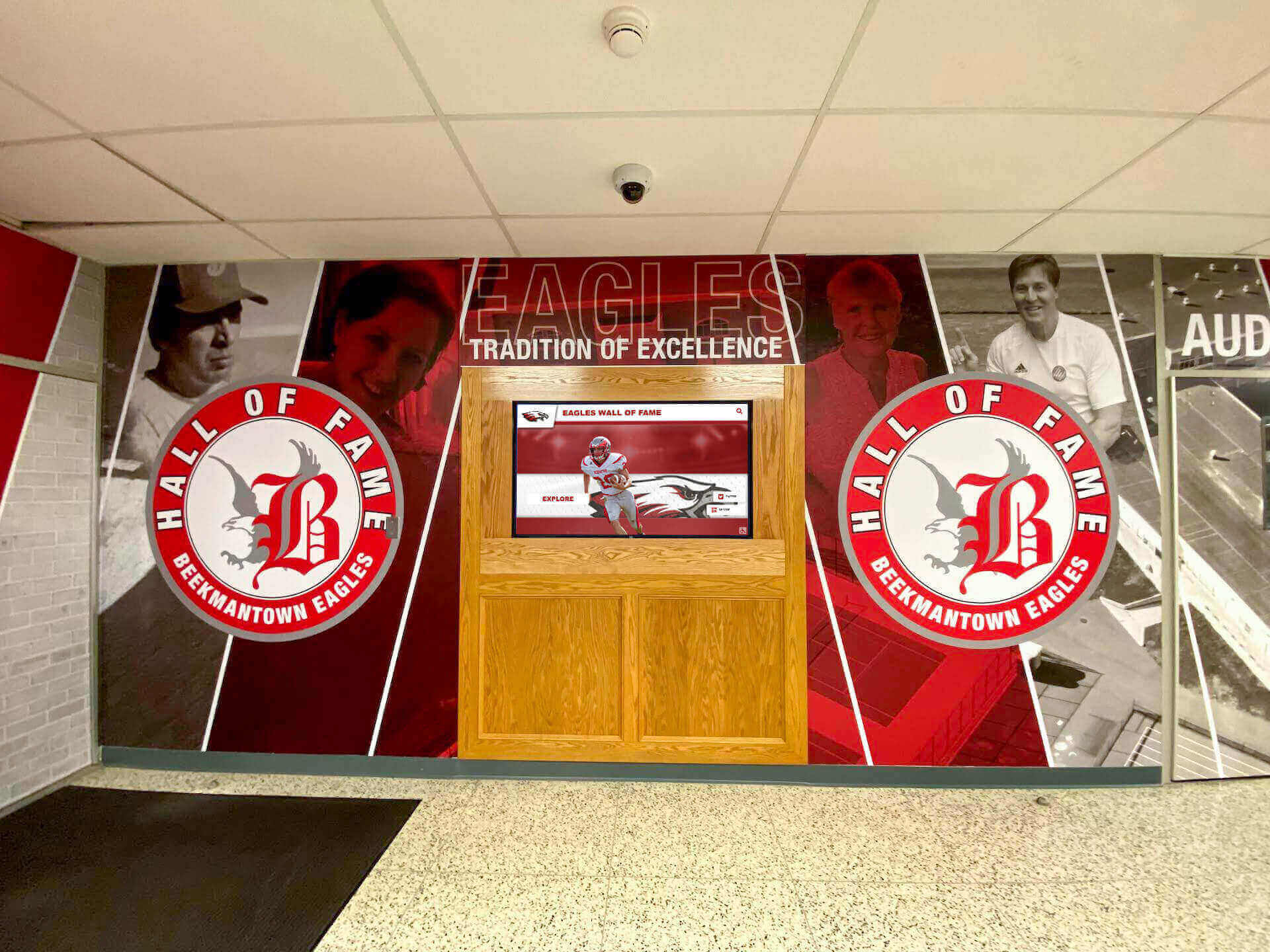
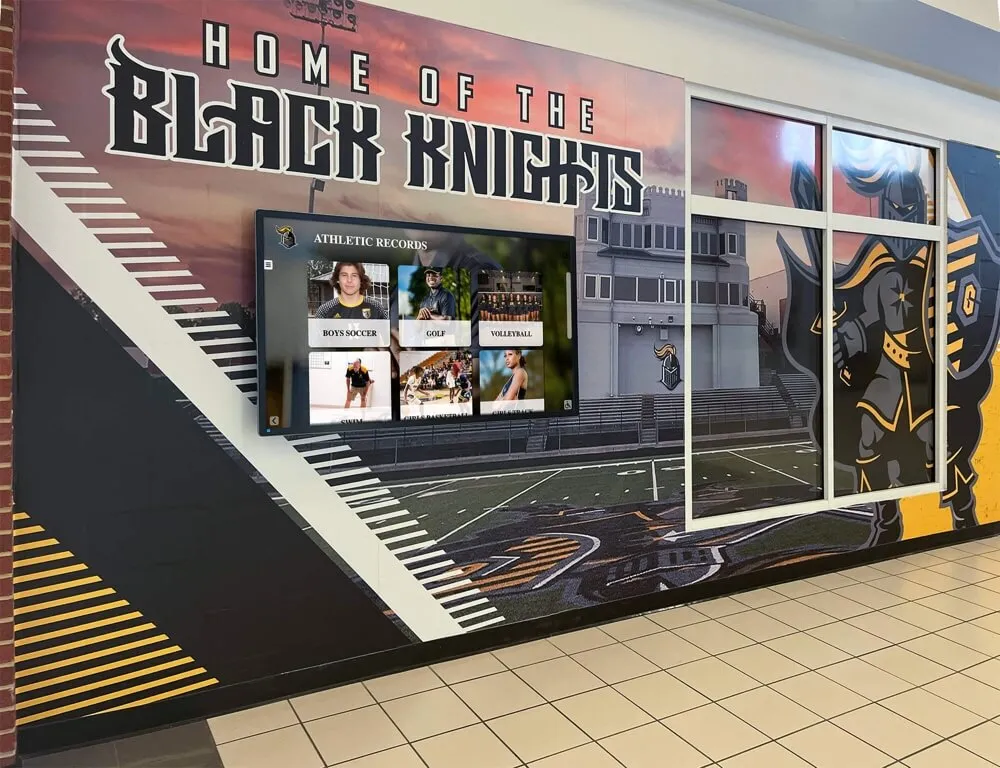
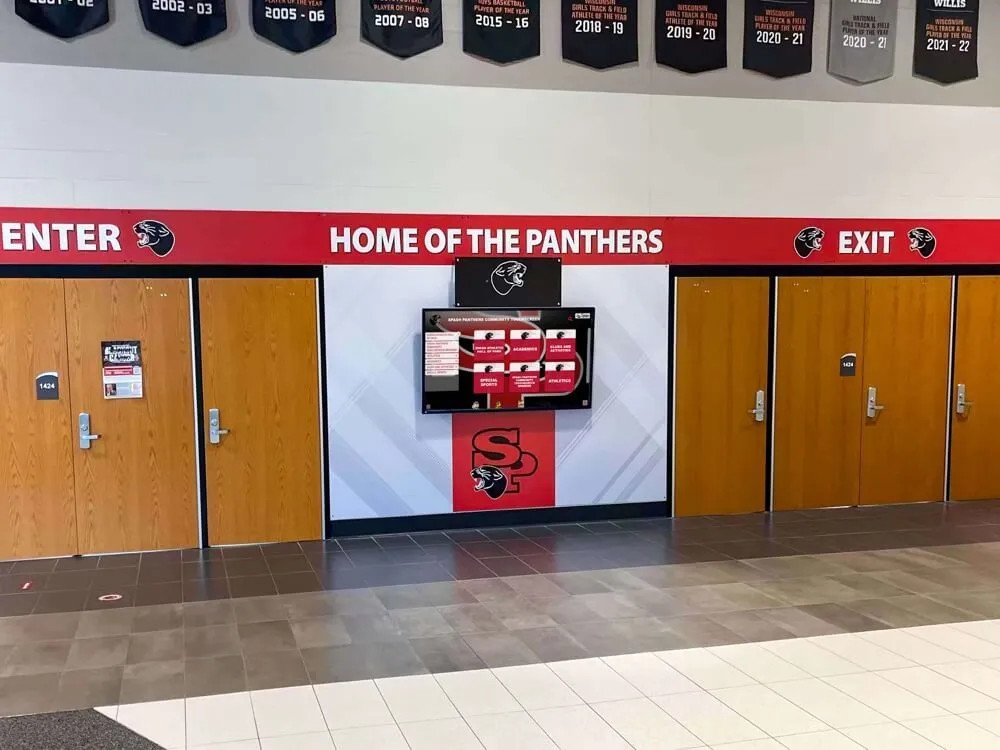
Schools that invest in permanent recognition infrastructure provide a lasting home for the same stories that begin in yearbook tribute ads
Execution Timeline: Submitting Your Senior Yearbook Ad on Time
Missing the yearbook ad submission deadline is the most common reason families end up without a tribute in print. This timeline keeps submissions on track.
Phase 1: Preparation (September–November of Senior Year)
September–October
- Contact the school’s yearbook staff or adviser to request the senior ad packet, which includes sizing options, pricing, submission deadline, photo specifications, and file format requirements
- Review samples from previous years if the school makes them available
- Begin collecting candidate photos—graduation portraits are typically available in October or November, but candid and childhood photos can be gathered at any time
November
- Confirm the final deadline date in writing; some schools offer early-bird pricing that ends in November
- Begin drafting tribute language using the examples above as starting points
- Identify all contributors: both parents, grandparents, or siblings who want a voice in the tribute
Phase 2: Creation (December–January)
December
- Finalize photo selection; request high-resolution files from photographers if using professional images
- Draft and revise tribute language; read drafts aloud to test for authentic voice
- Consult with yearbook staff about whether they handle layout or whether families submit print-ready files
January
- Complete layout or finalize text for submission to yearbook staff
- Proofread carefully—names, dates, and spelling errors in print are permanent
- Submit ahead of the stated deadline to allow revision time if the yearbook staff needs adjustments
Phase 3: Review and Submission (February–March)
Most schools set final senior ad deadlines between late January and mid-March. Exact dates vary significantly—confirm your school’s specific deadline during Phase 1 rather than assuming a standard timing window.
Submission checklist:
- Written tribute at appropriate word count for selected ad size
- High-resolution photos meeting the school’s minimum DPI requirement (typically 300 DPI)
- Payment processed according to the school’s accepted method
- Confirmation email or receipt from yearbook staff
- Name spelled exactly as it should appear in print
For schools managing the yearbook production process, resources on professional yearbook scanning and preservation help ensure senior tribute pages remain accessible for future generations long after the original books show wear.
Phase 4: Extended Recognition (Post-Graduation)
After the yearbook ships, families can extend the tribute’s reach through:
- High-quality scanning of the finished yearbook page for digital preservation
- Sharing the tribute page at graduation parties and family gatherings
- Framing the printed page as a permanent keepsake display
- Contributing digitized copies to school archives for historical documentation
Schools with active senior class awards display programs can extend senior tribute narratives into visible hallway recognition that complements what lives in the printed yearbook.
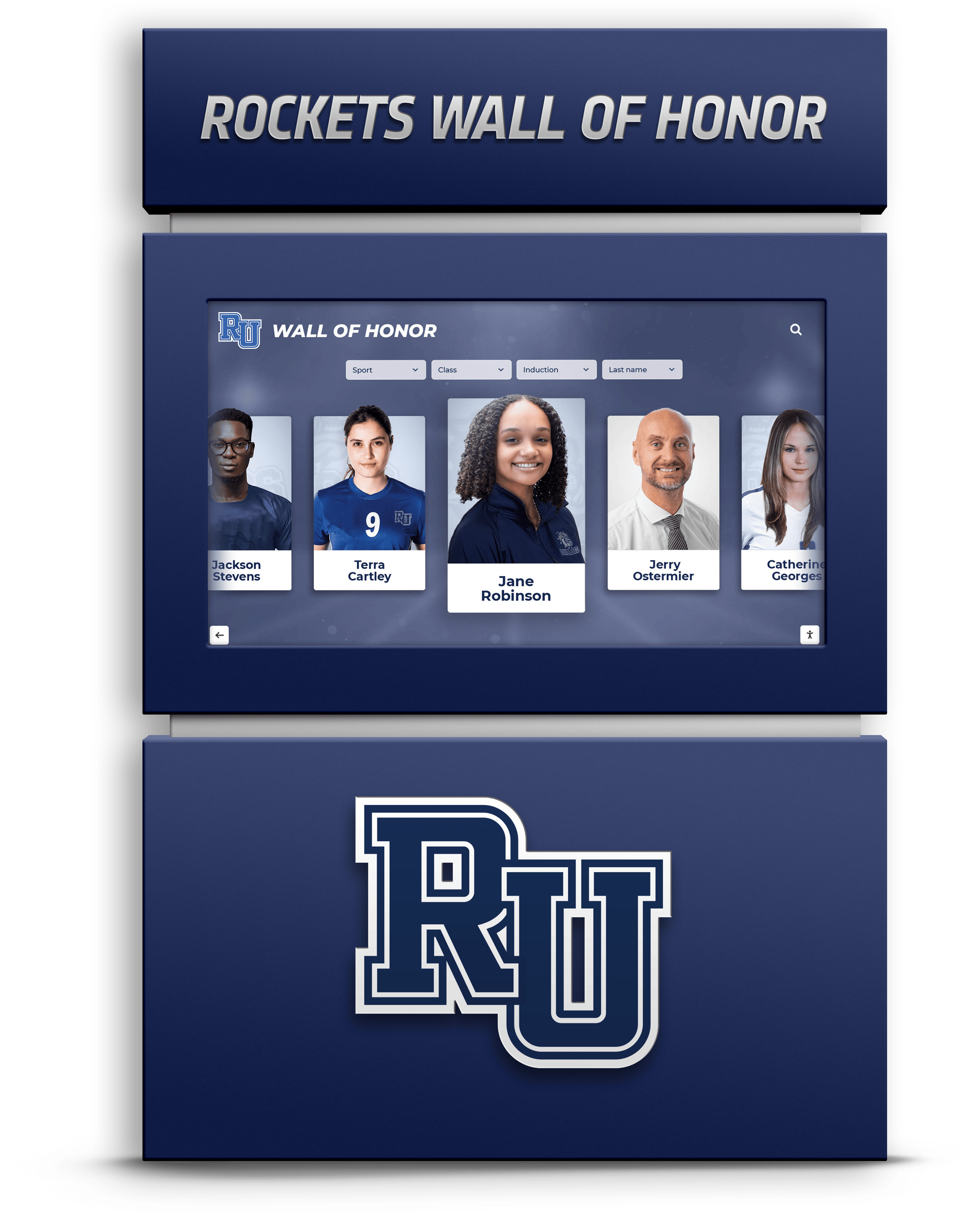
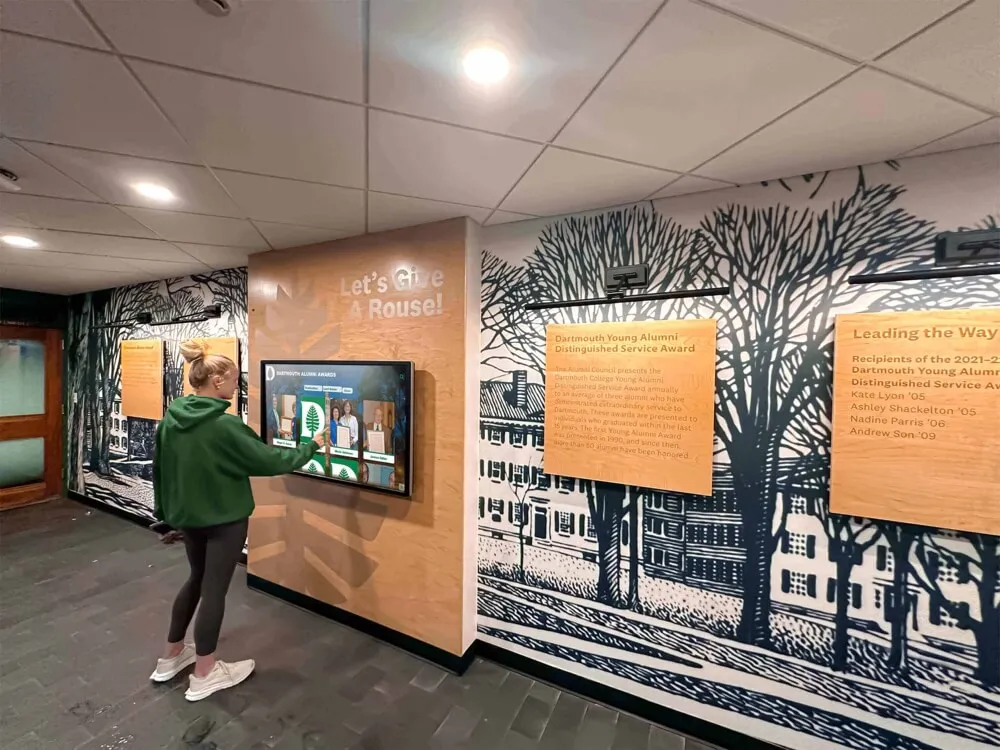
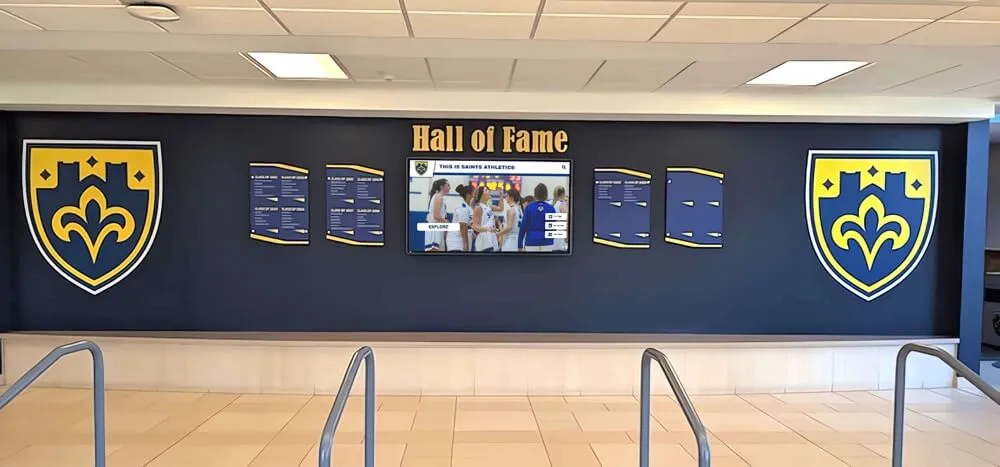
Digital recognition walls translate the individual tribute from yearbook page to permanent campus display—giving senior recognition year-round visibility beyond graduation
Display Integration: Extending Yearbook Tributes Into Permanent School Recognition
Senior yearbook ads capture a moment. Schools that build permanent digital recognition infrastructure give that moment a permanent address.
From Yearbook Page to Display Wall
The same tribute content that works in a yearbook ad—individual portrait, brief narrative, key achievements—translates directly into digital recognition display profiles.
Content overlap between senior yearbook ads and digital recognition profiles:
| Yearbook Ad Element | Digital Display Equivalent |
|---|---|
| Senior portrait photo | Primary profile image |
| Written tribute | Bio text module |
| Listed accomplishments | Achievement tags and stats panel |
| Family names | “Honored by” attribution field |
| Graduation year | Class year and cohort grouping |
| Childhood or candid photos | Photo gallery module |
| Future plans | Post-graduation update field |
Recognition Infrastructure Schools Use
Schools that want to honor graduates beyond the yearbook typically implement one or more of the following:
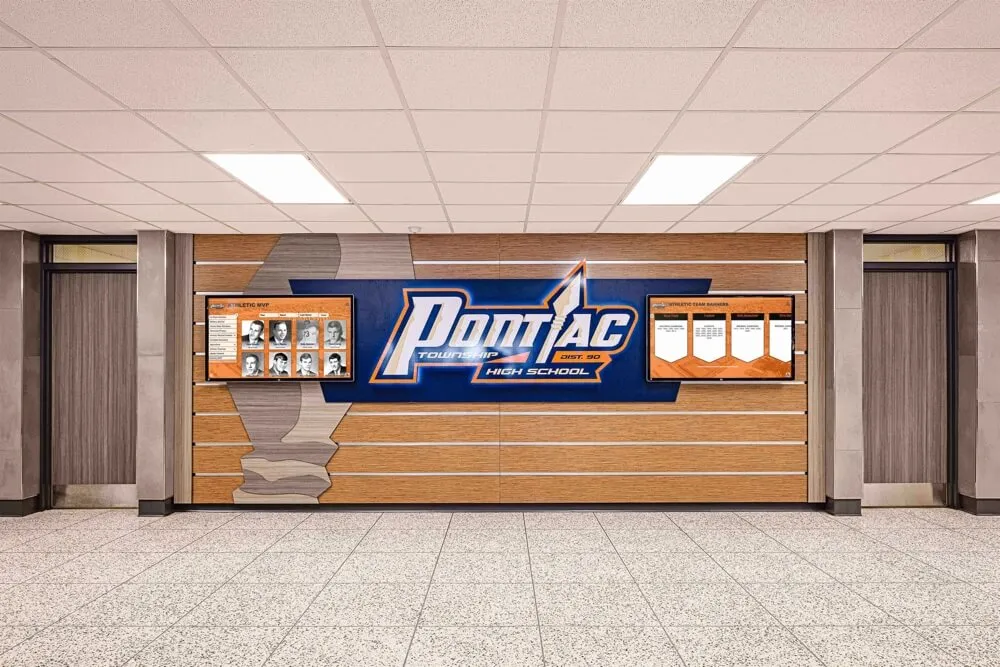
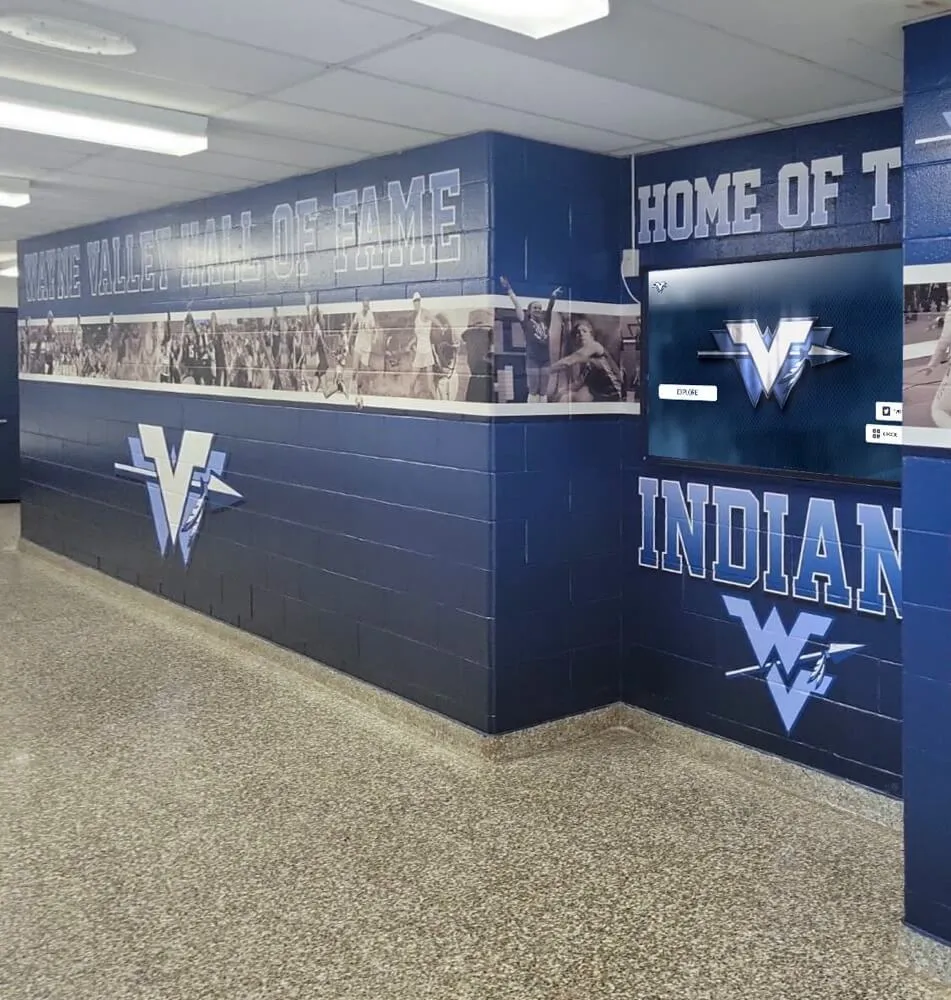
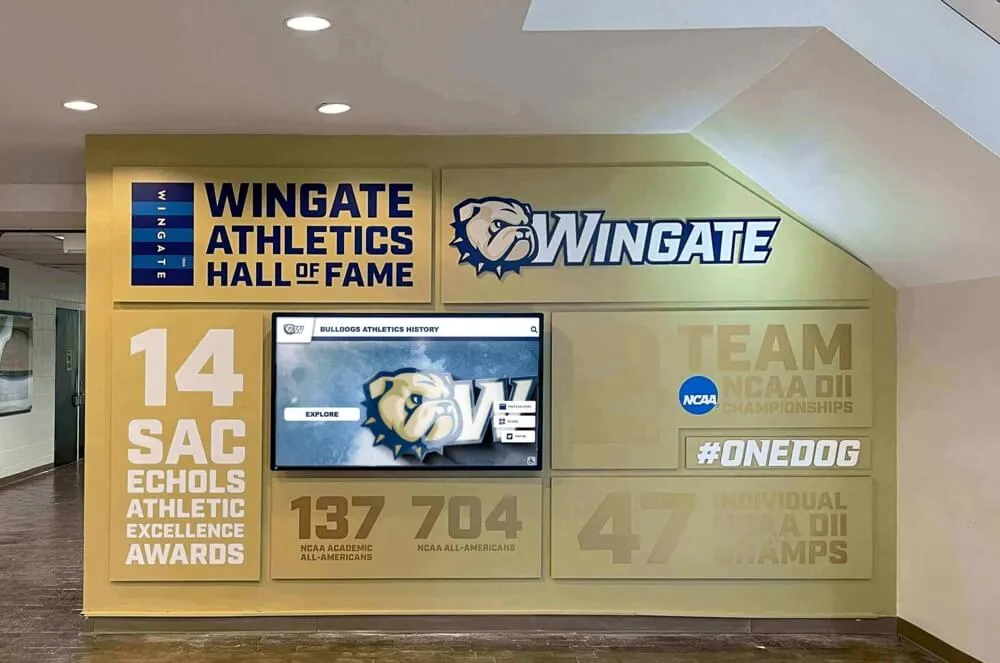
Senior composite displays in main hallways document each graduating class as a visual record accessible to future students, alumni, and families. The senior composite display guide covers how schools approach individual portrait recognition at scale across multiple graduating classes.
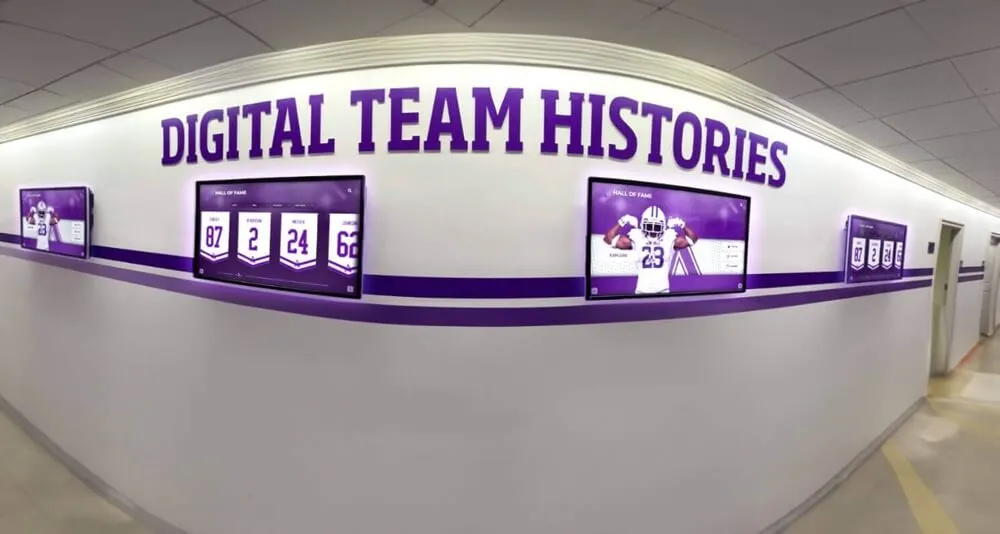
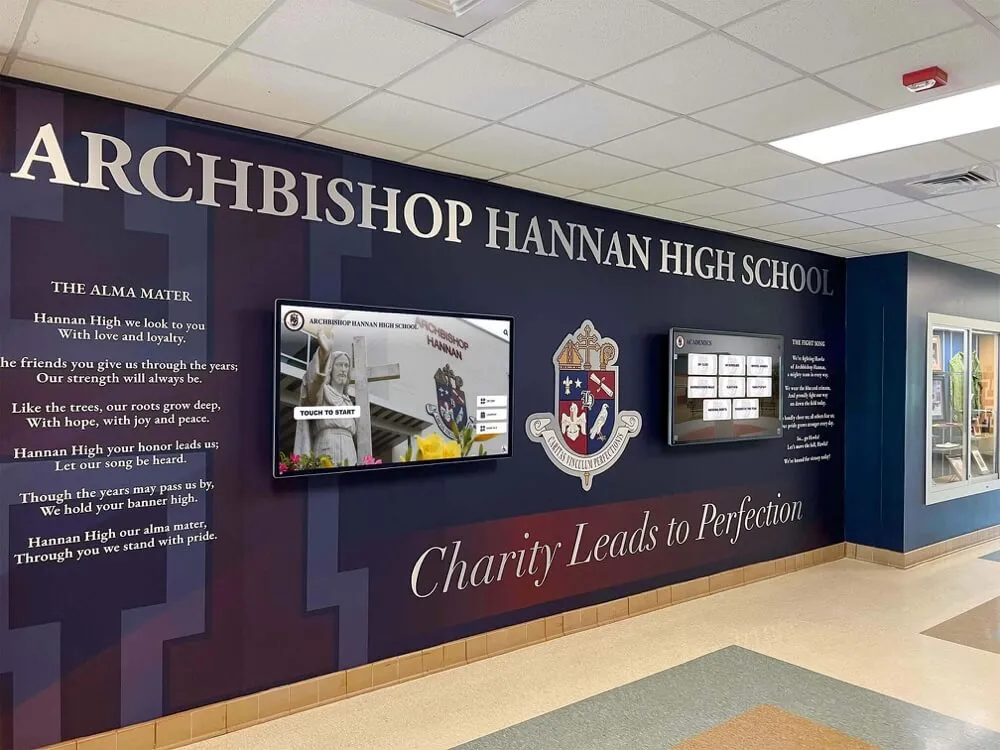
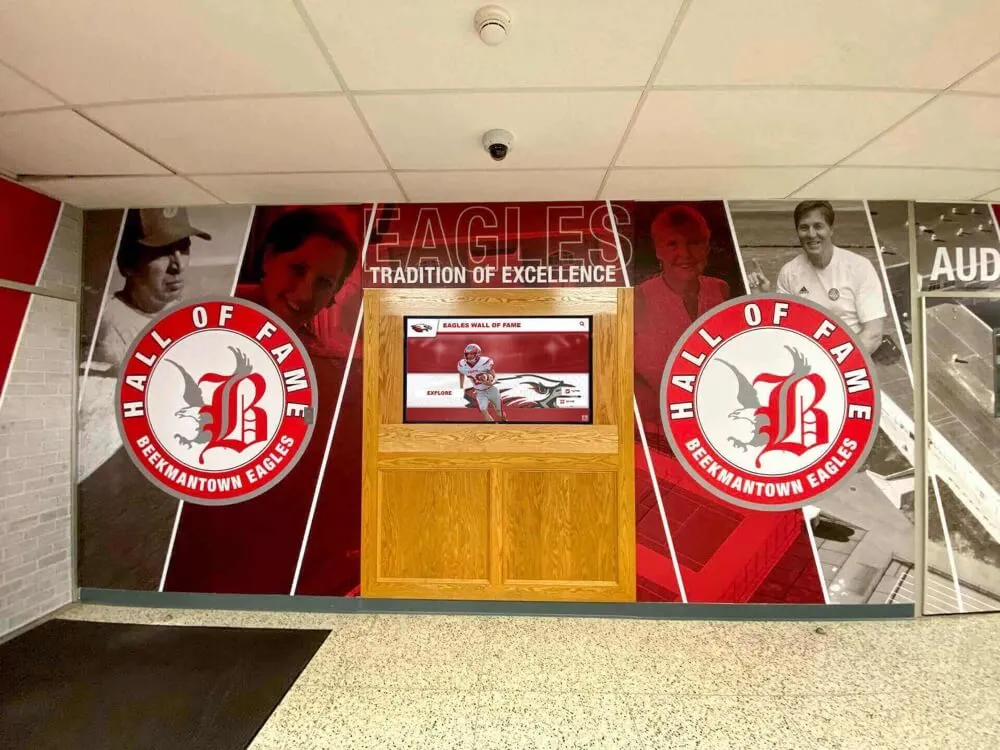
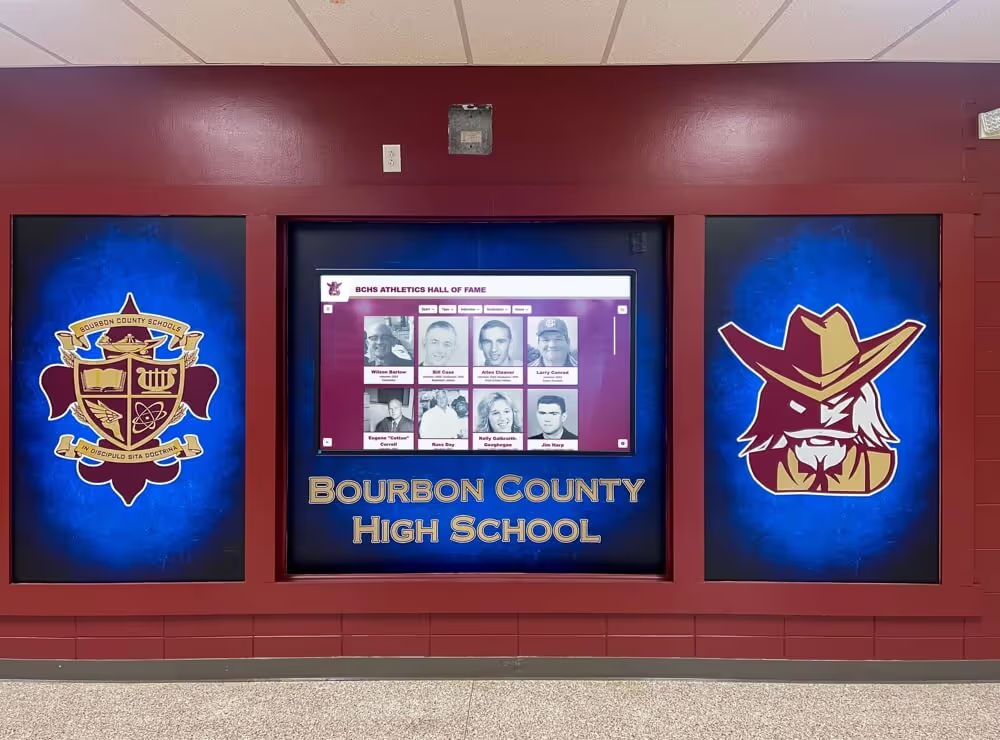
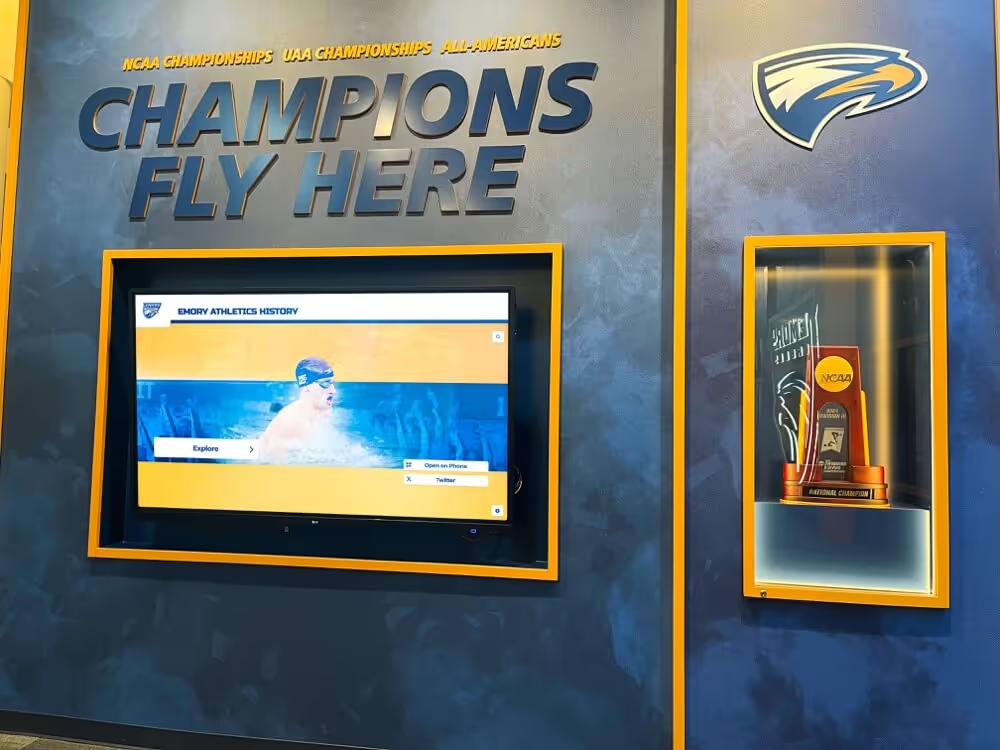
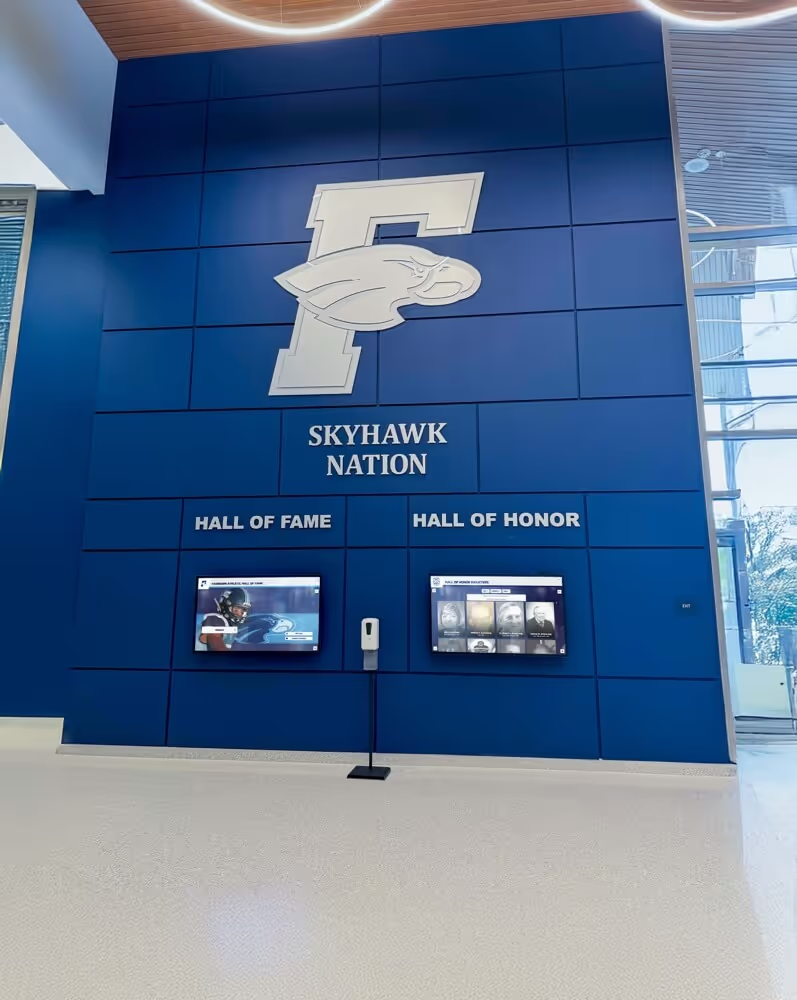
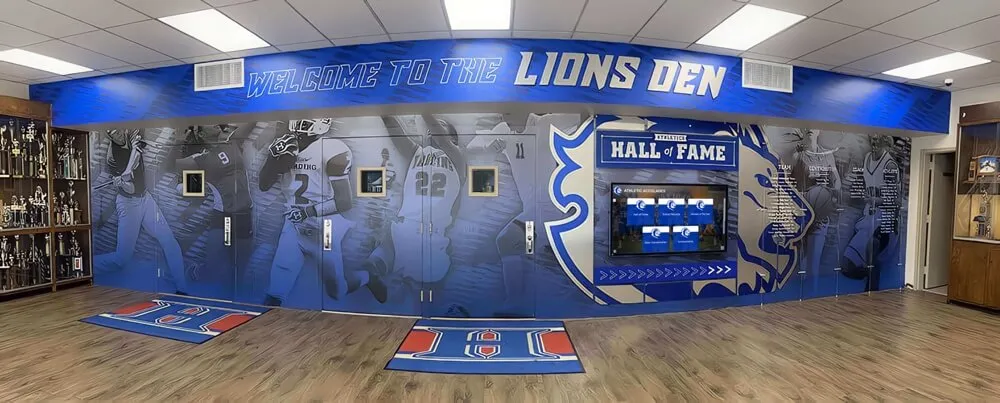
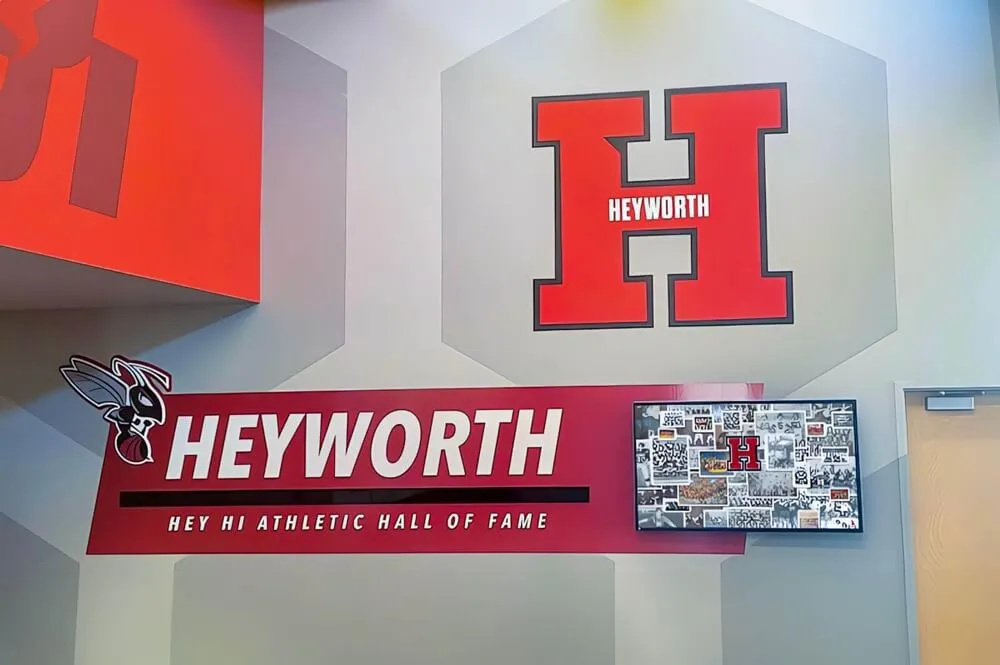
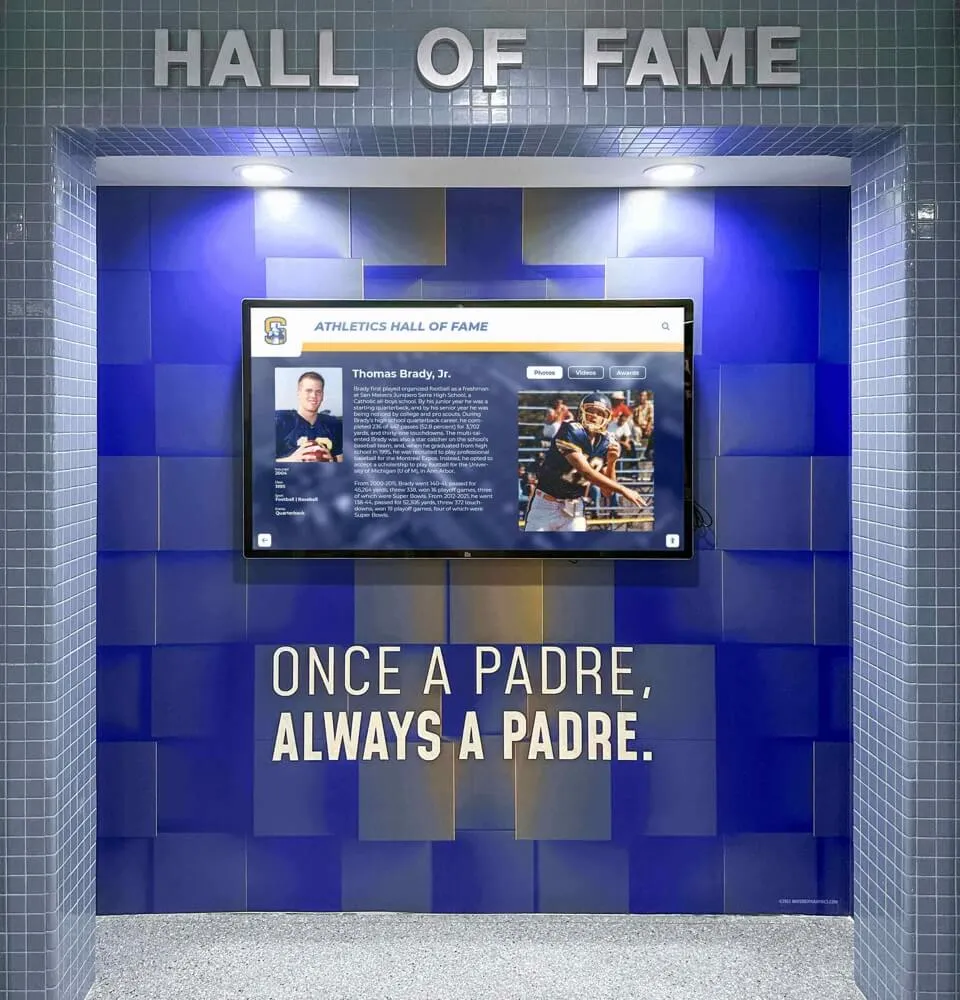
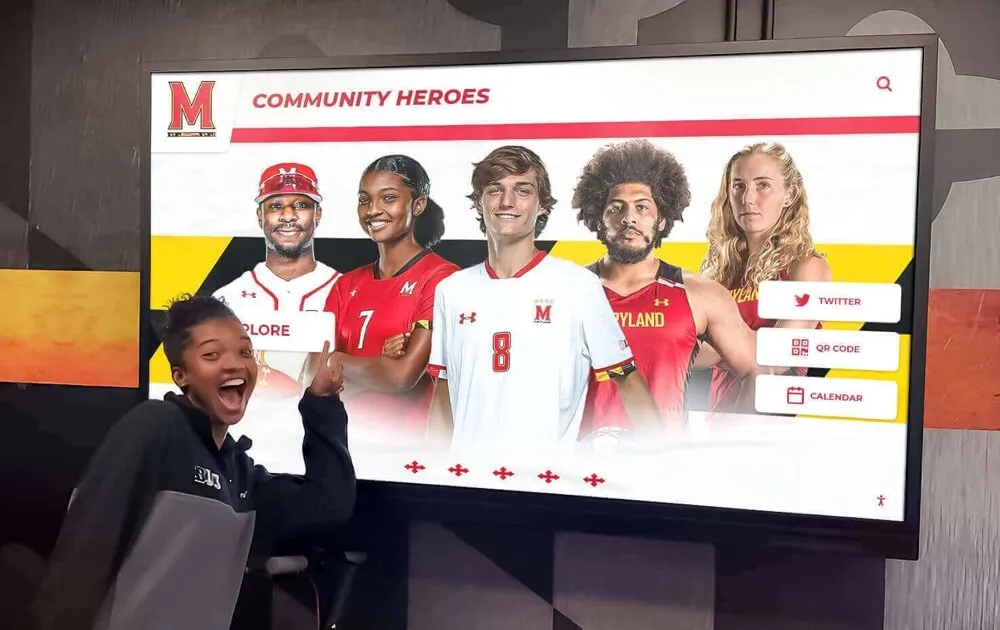
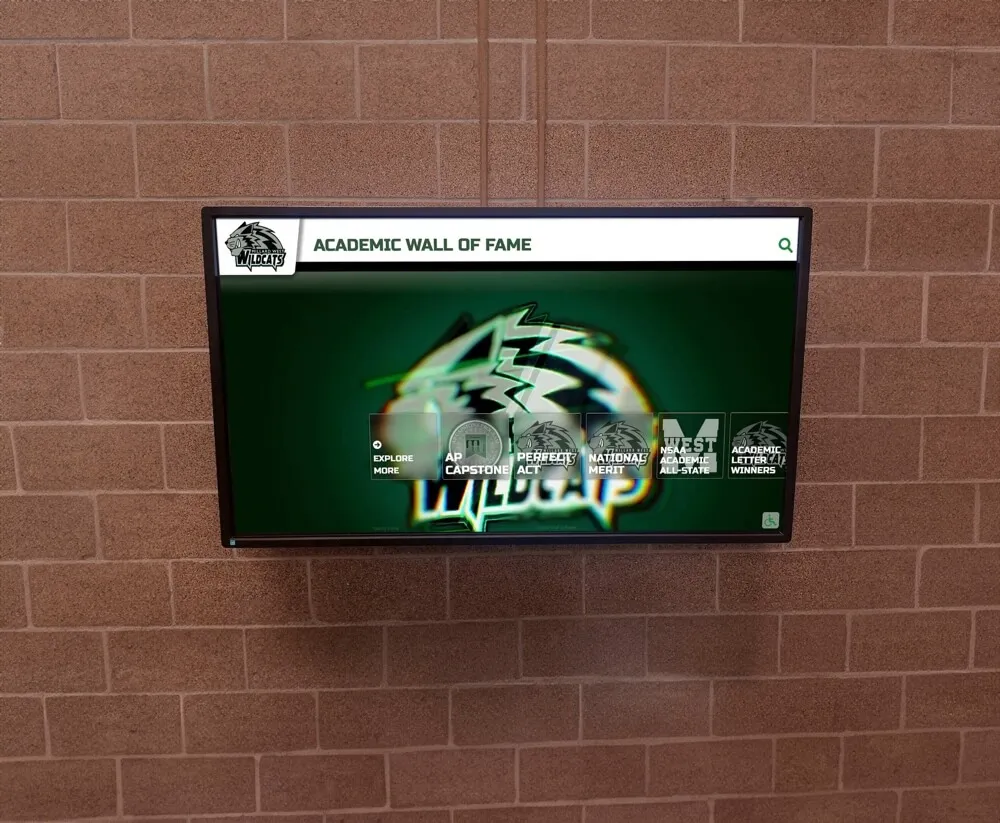
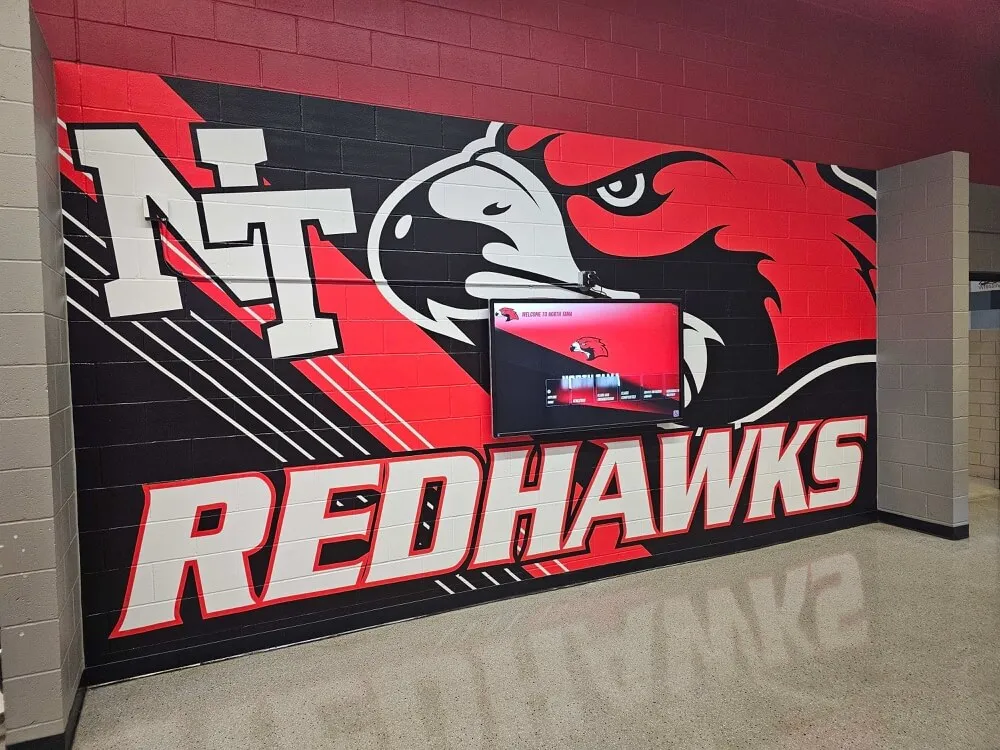
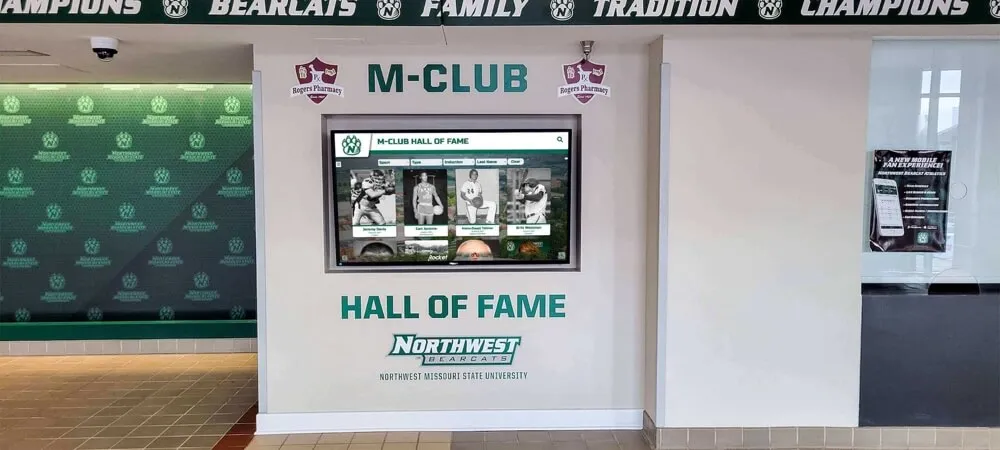
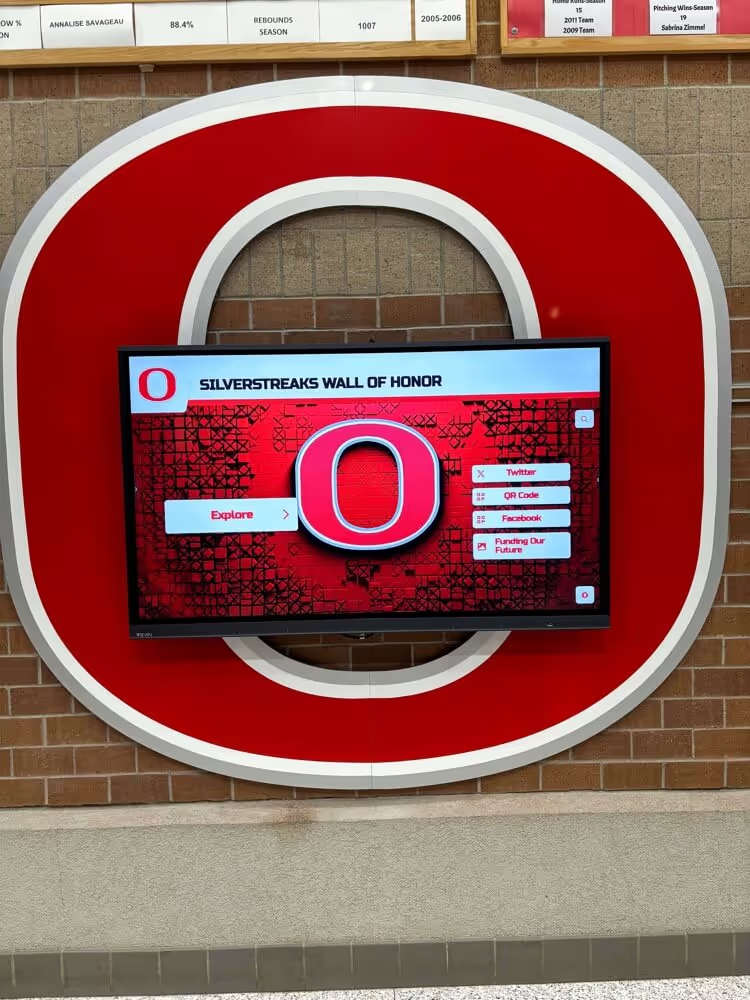
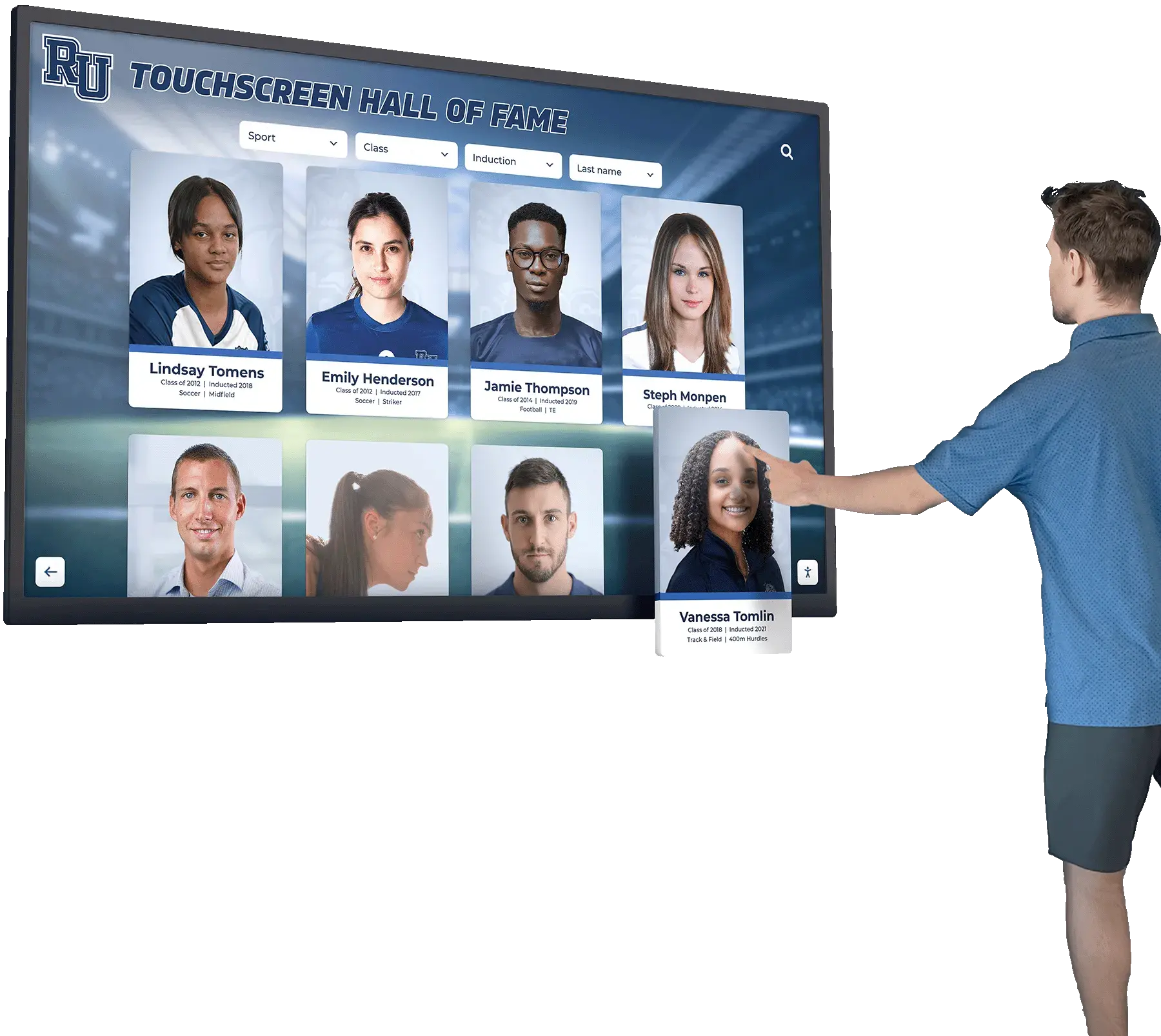
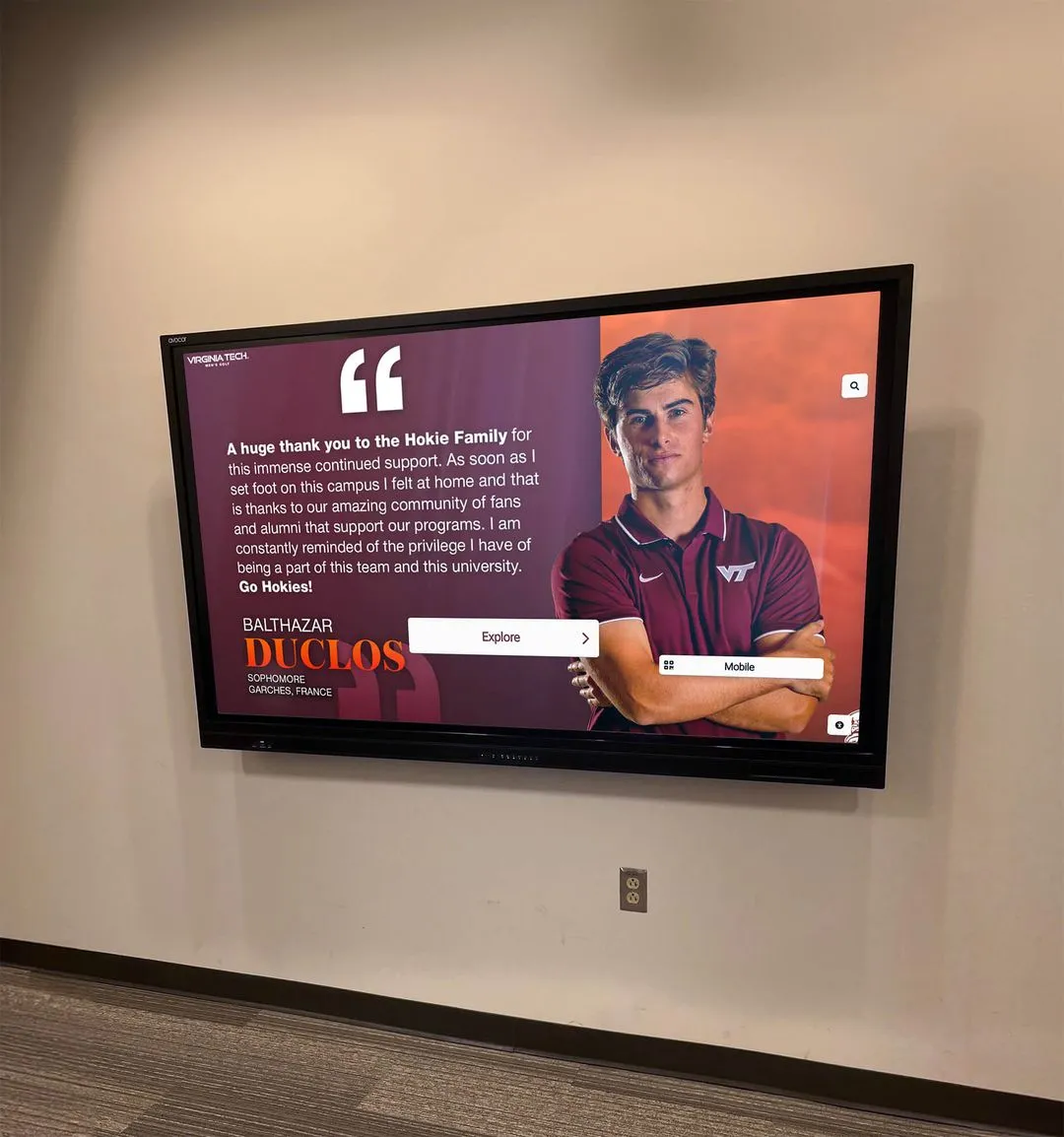
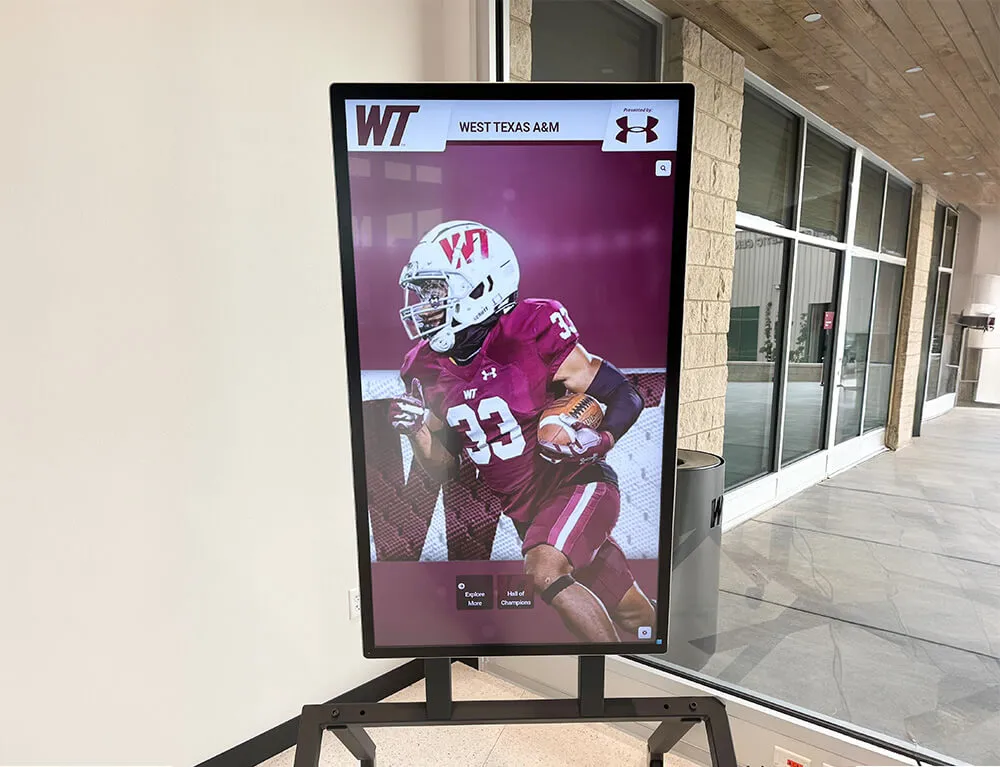
Interactive touchscreen recognition walls extend tribute content beyond static print. Visitors can search for specific graduates, browse graduating classes, and engage with achievement histories that continue to grow as alumni accomplish things post-graduation. Platforms like Rocket Alumni Solutions provide the cloud-based software and touchscreen hardware schools use to host this recognition permanently—with unlimited inductees and ADA-compliant interfaces designed specifically for school recognition environments.
Digital yearbook archives enable remote access to tribute pages, making them available to family members who could not be present at graduation and alumni who want to revisit their senior-year recognition years later. Approaches for yearbook spread design and student recognition pages show how digital archives can complement print traditions rather than replace them.
ADA and Accessibility Considerations
When extending senior recognition to permanent digital displays, schools should confirm that platforms meet WCAG 2.1 AA accessibility standards—including sufficient color contrast ratios, keyboard navigation support, and screen-reader compatibility—so all community members can access graduate recognition regardless of ability or device.
For a complete look at the hardware, software, and compliance requirements involved, the digital signage for schools guide covers everything from display sizing to content management workflows for school recognition installations.

Modern recognition platforms deliver senior tribute content across all devices, ensuring family members and alumni can access graduate profiles from anywhere at any time
Measurement: What Successful Senior Recognition Looks Like
Parents measure success intuitively—their graduate reads the ad, gets emotional, and keeps the book. Schools measure it more systematically.
For yearbook programs:
- Ad sell-through rate: percentage of eligible families who purchase a senior ad (strong programs reach 60–80%)
- Submission compliance rate: percentage of paid ads submitted by deadline without last-minute scrambles
- Feedback from graduates and families post-distribution
- Year-over-year repeat: whether families who bought ads for older siblings consistently buy them for subsequent children
For schools with permanent recognition infrastructure:
- Dwell time on digital recognition displays in hallway locations
- Touchscreen interaction counts showing which senior profiles generate the most engagement
- Alumni return visits to recognition platforms post-graduation
- Yearbook scanning and archival requests indicating sustained demand for historical preservation
Schools with comprehensive honor roll digital recognition programs apply similar engagement metrics across recognition formats to understand which displays earn sustained community attention.
Frequently Asked Questions About Senior Yearbook Ads From Parents
How long should a senior yearbook ad be?
Length depends on the size purchased. Business card formats work with 25–50 words. Quarter pages handle 75–150 words comfortably. Half pages support 150–300 words. Full pages accommodate up to 600 words in letter format. The yearbook design staff can advise on word counts specific to your school’s column widths and formatting.
Can grandparents or other family members buy senior yearbook ads?
Yes. Many schools allow any family member or close family friend to purchase a senior ad. Some schools distinguish between parent ads and “family and friends” ads with separate sections in the back pages. Contact the yearbook adviser to confirm your school’s specific policy before purchasing.
What photos work best in senior yearbook ads?
Use photos that are distinctly different from the graduation portrait appearing elsewhere in the book. Strong choices include candid childhood photos, action shots from sports or activities, travel photos, or meaningful family moments. Submit the highest-resolution files available—typically 300 DPI minimum for clean print reproduction.
What if the deadline has already passed?
Contact the yearbook adviser immediately. Some programs offer late submission options with additional fees. If print production has already closed, ask whether the school offers digital yearbook access where supplemental pages can sometimes be added.
How do senior yearbook ads from parents differ from senior quotes?
Senior quotes are brief statements selected by graduates themselves, typically appearing beside their portrait photo in the main senior section. Senior yearbook ads are purchased by parents or family members, placed in the advertising section at the back of the book, and give families full editorial control over length, photos, and content.
What is the difference between a full-page and half-page senior ad?
A half-page ad typically accommodates one to two photos and 150–300 words of tribute text—enough for a short narrative structure. A full-page ad provides room for multiple photos, a complete letter format, and signatures from multiple family members, usually 300–600 words. Most schools offer intermediate sizes as well; the yearbook adviser will share all available options.
Conclusion: The Recognition That Stays
Senior yearbook ads from parents occupy a unique space in the landscape of graduation recognition. They are not a ceremony or a program—they are a document. One the graduate takes home, stores, and returns to.
The 25 examples above cover the full range of what these tributes can do: honor specific achievements, capture the texture of daily family life, express pride without sentimentality, acknowledge struggle honestly, and send graduates forward with clear encouragement. Every family’s voice is different. These examples are starting points, not scripts.
Schools that invest in both print yearbook traditions and permanent digital recognition infrastructure give graduates two forms of permanence: the book they carry away, and the display wall they can always come back to.
Ready to build permanent senior recognition that lives beyond the yearbook? Rocket Alumni Solutions provides the touchscreen displays and cloud-based platform schools use to host senior tribute content, graduate portraits, and achievement histories permanently—with unlimited inductees, ADA-compliant interfaces, and remote content management that keeps recognition current year after year. Request a free custom demo to see how your school’s senior recognition program can extend from the yearbook page into the hallway.
Live Example: Rocket Alumni Solutions Touchscreen Display
Interact with a live example (16:9 scaled 1920x1080 display). All content is automatically responsive to all screen sizes and orientations.