



School hallway signs serve a dual purpose that’s often underappreciated: they guide visitors through your building while simultaneously communicating your institution’s values, achievements, and identity. When students, parents, and community members navigate your hallways, every sign they encounter either strengthens or weakens their impression of your school.
The challenge facing today’s school administrators isn’t just about putting up directional arrows or room number plates—it’s about creating a cohesive signage system that makes navigation intuitive while reinforcing school pride, celebrating achievements, and creating an environment where everyone feels they belong. With hundreds of people moving through school hallways daily, including first-time visitors, substitute teachers, parent volunteers, and prospective families, effective hallway signage becomes a critical infrastructure element rather than an aesthetic afterthought.
This comprehensive guide explores proven strategies for designing school hallway signs that accomplish both practical wayfinding and powerful branding objectives, covering everything from traditional permanent signage to modern digital displays that can transform hallways into dynamic celebration spaces.
School hallway signs represent one of the most visible and frequently encountered touchpoints in your facility. Unlike promotional materials that reach limited audiences or announcements that may be ignored, hallway signage commands attention from everyone who navigates your building—making strategic sign design one of the highest-ROI investments for improving both operational efficiency and school culture.

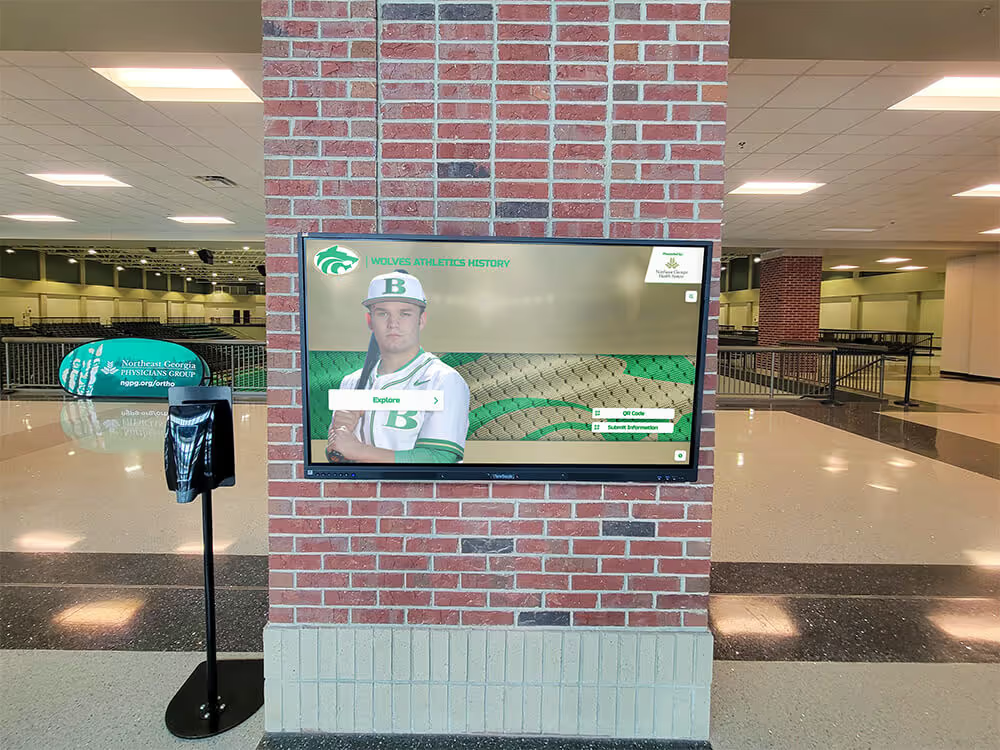
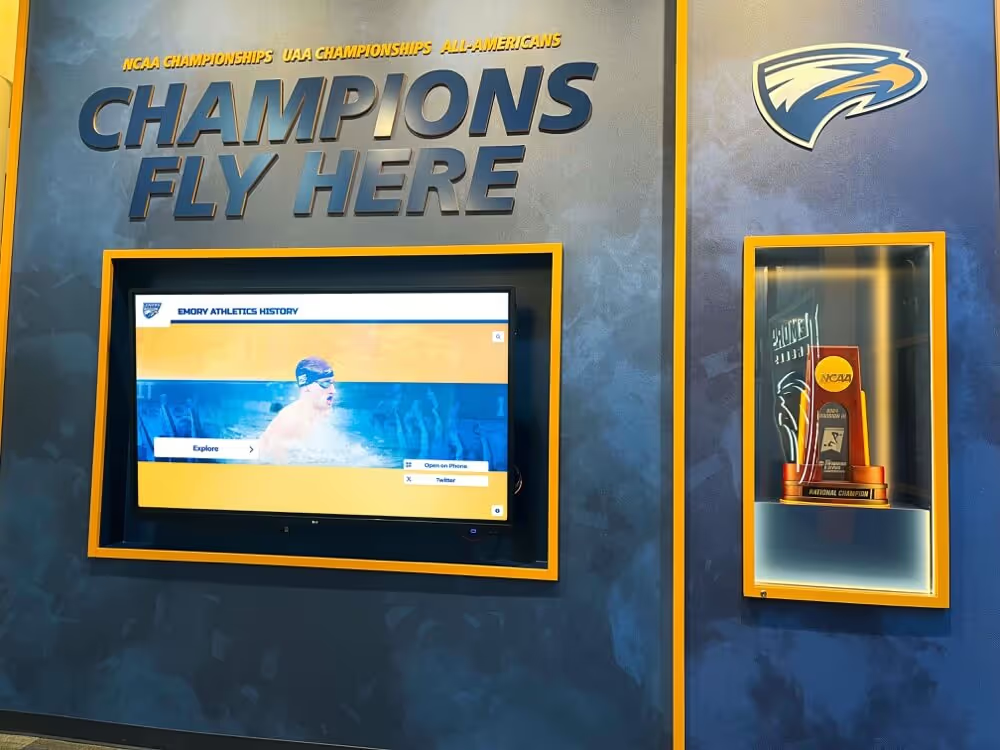
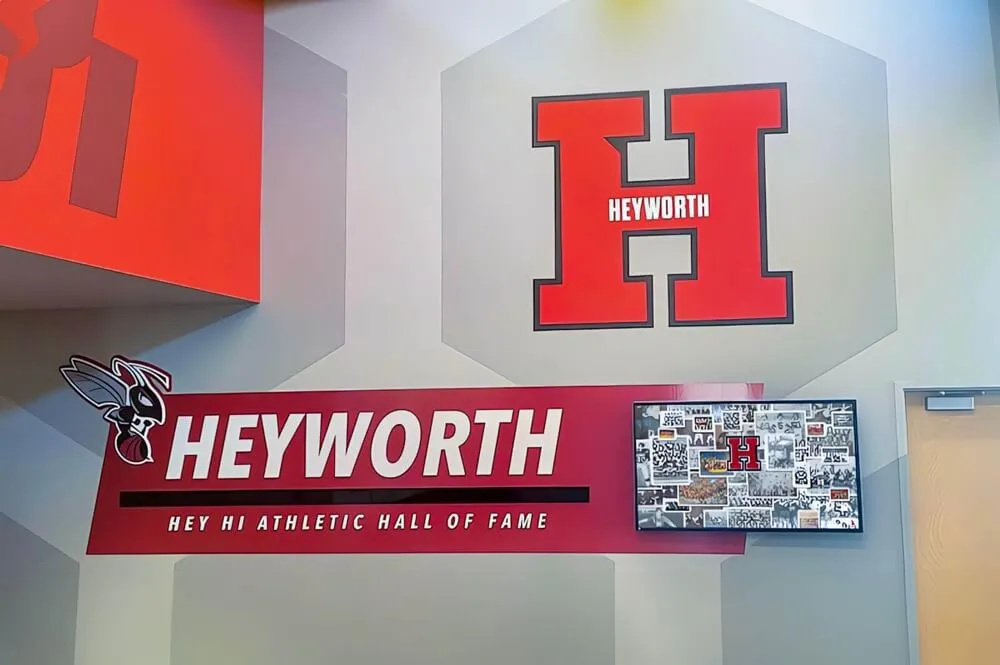
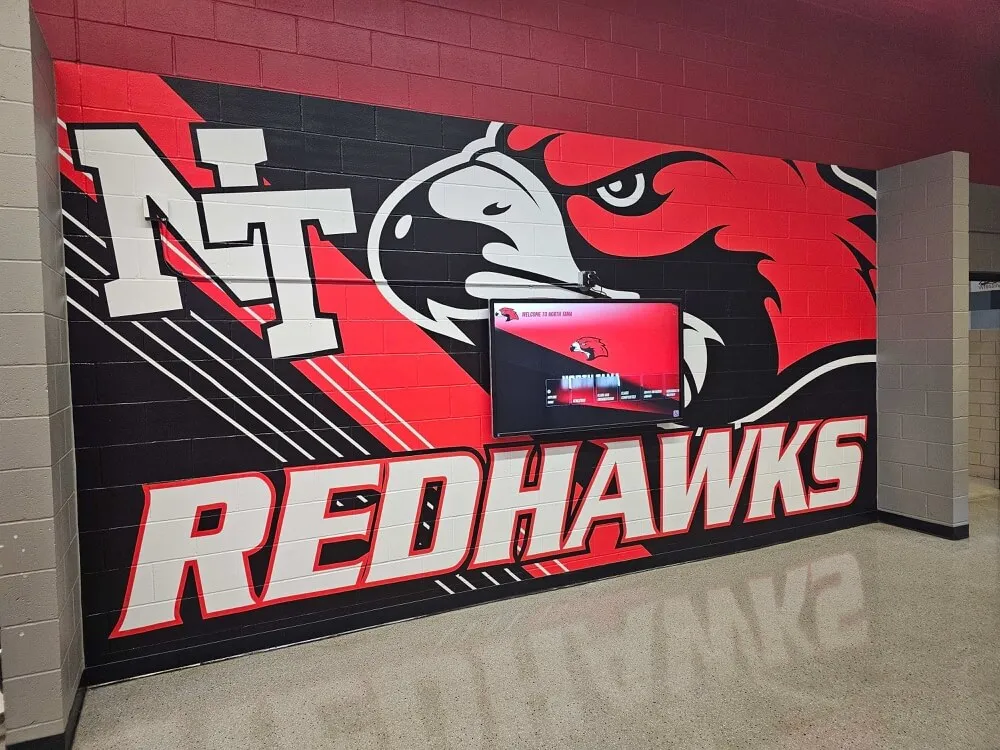
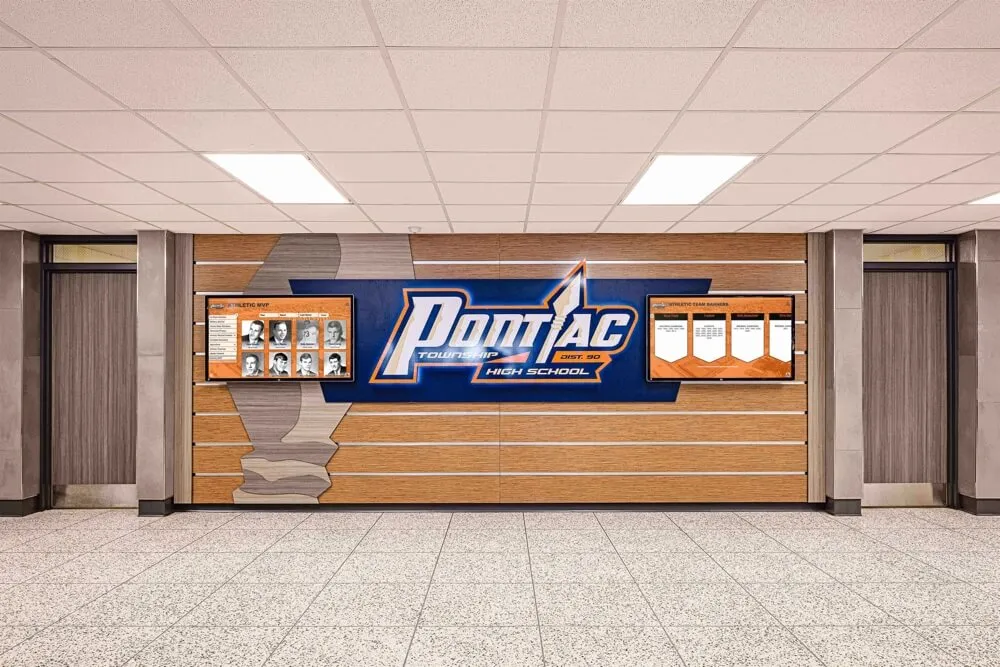
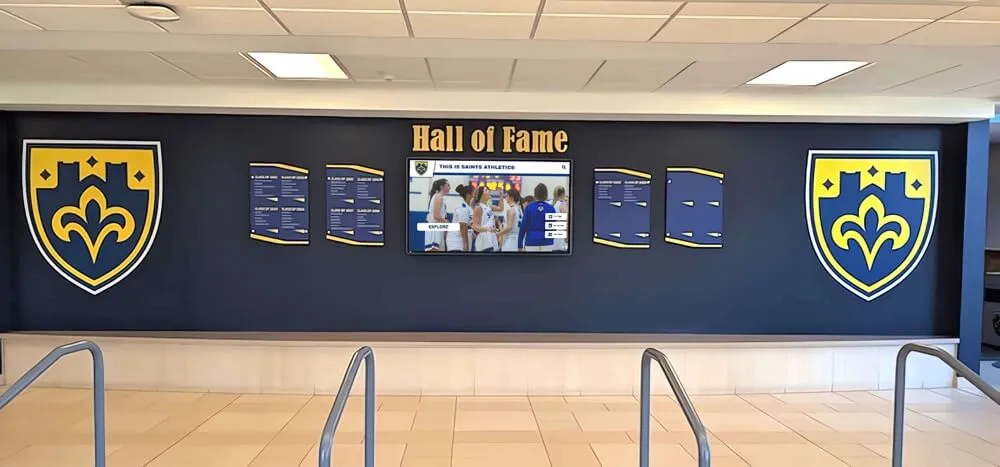
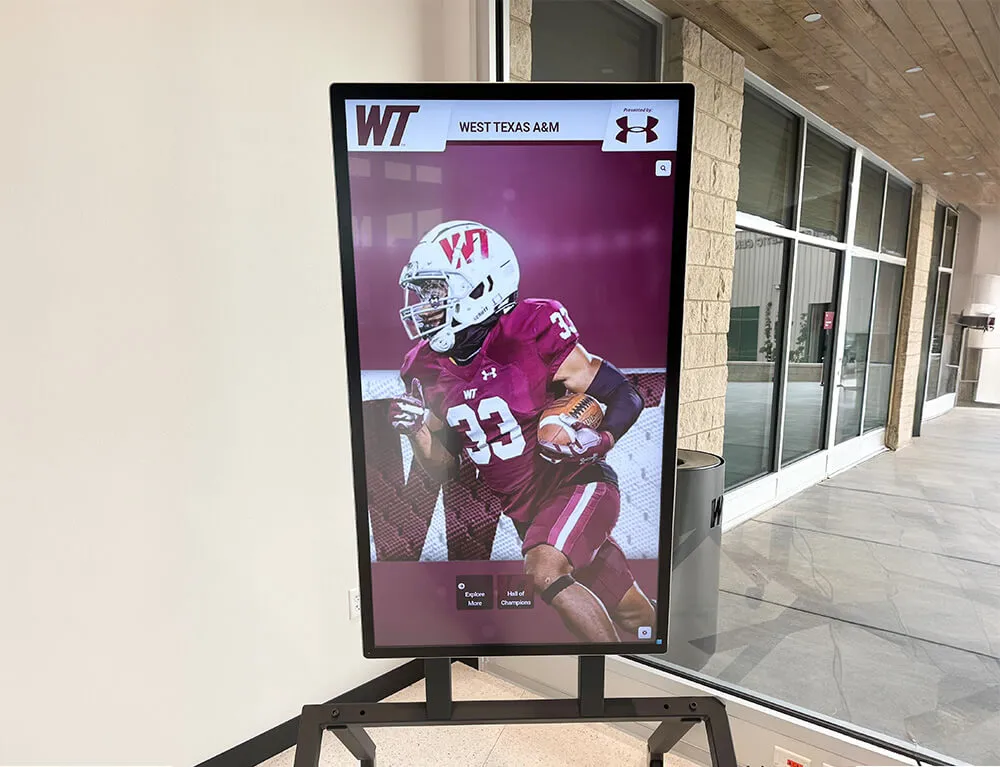
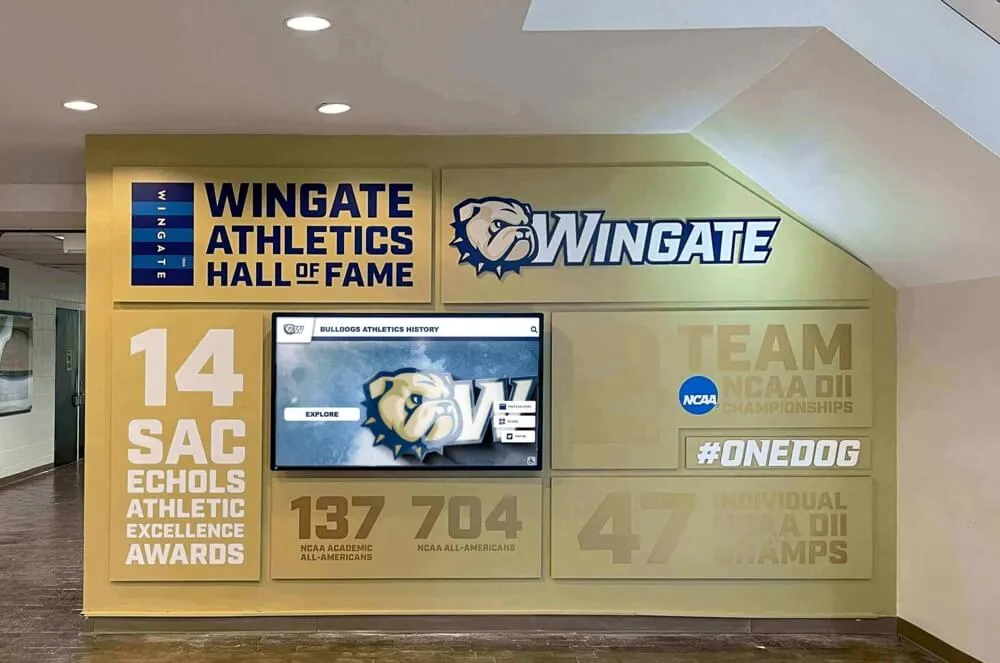
Effective school hallway signage combines practical wayfinding with powerful branding elements that reinforce school identity and celebrate achievements
Program Snapshot: Comprehensive School Hallway Sign System
Understanding the components of an effective hallway signage system helps schools plan strategic installations that serve multiple purposes simultaneously.
| Sign System Element | Details |
|---|---|
| Primary Functions | Wayfinding navigation, room identification, school branding, achievement recognition |
| Target Audiences | Students, staff, parents, visitors, prospective families, substitute teachers |
| Key Sign Categories | Directional, identification, informational, motivational, recognition, regulatory |
| Design Considerations | Visibility, readability, ADA compliance, brand consistency, durability, maintenance |
| Material Options | Acrylic panels, vinyl graphics, dimensional letters, painted murals, digital displays |
| Location Strategy | Entry points, intersections, corridor sections, outside classrooms, stairwells, common areas |
| Update Frequency | Permanent (architectural), semi-permanent (seasonal/annual), dynamic (digital/changeable) |
| Budget Range | $2,000-$15,000+ depending on scope, materials, and digital integration |
| Implementation Timeline | Planning (4-8 weeks), design approval (2-4 weeks), production (4-6 weeks), installation (1-2 weeks) |
The Strategic Importance of Hallway Signage in Schools
School hallway signs accomplish far more than basic navigation—they create the environmental context that shapes how everyone experiences your institution.
Navigation Efficiency and Visitor Experience
First-time visitors to school buildings frequently report confusion and anxiety about finding specific locations. Parents arriving for conferences, guest speakers heading to classrooms, substitute teachers locating their assigned rooms, and prospective families touring facilities all depend on clear wayfinding systems. Poor signage creates frustration, causes tardiness, interrupts classes with direction-seeking interruptions, and leaves negative impressions that undermine confidence in school operations.
Effective hallway signs eliminate these problems by providing intuitive navigation that allows people to confidently find destinations without assistance. Schools that invest in comprehensive wayfinding systems report significant reductions in front office interruptions, fewer missed meetings due to visitors getting lost, and improved first impressions during school tours and open house events.
School Identity and Brand Reinforcement
Every sign in your hallways contributes to—or detracts from—your school’s brand identity. When signage incorporates consistent colors, logos, mascots, and messaging, it creates an immersive environment that strengthens school pride and reinforces what makes your institution distinctive. Students who spend seven hours daily surrounded by branded environmental graphics develop stronger emotional connections to school identity compared to those navigating generic institutional hallways with utilitarian signs.
This brand reinforcement extends beyond current students to influence prospective families touring facilities, community members attending events, and alumni returning for visits. School lobby design sets initial expectations, but hallway signage throughout the building determines whether that positive first impression continues or dissipates as visitors explore your facility.
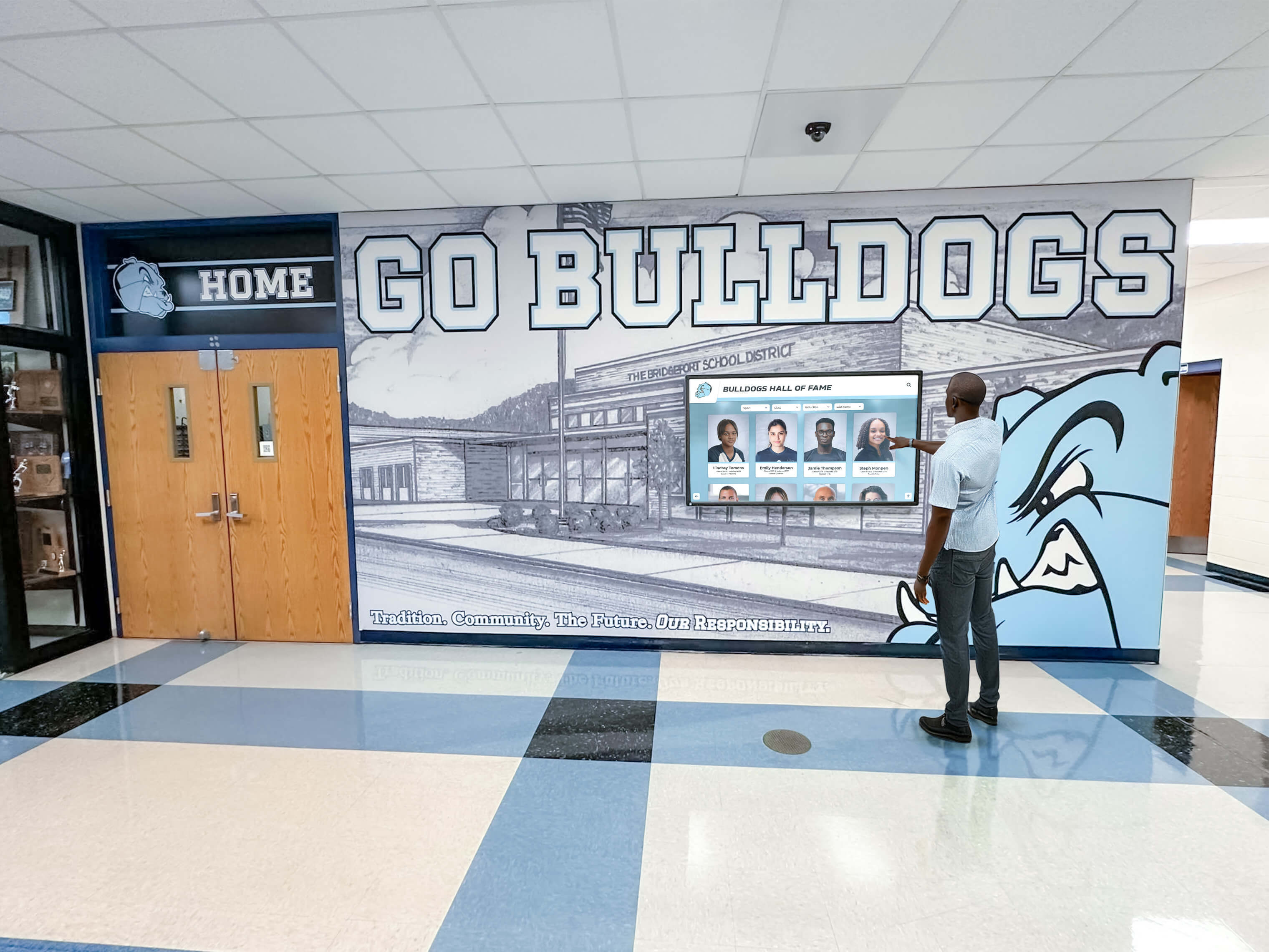
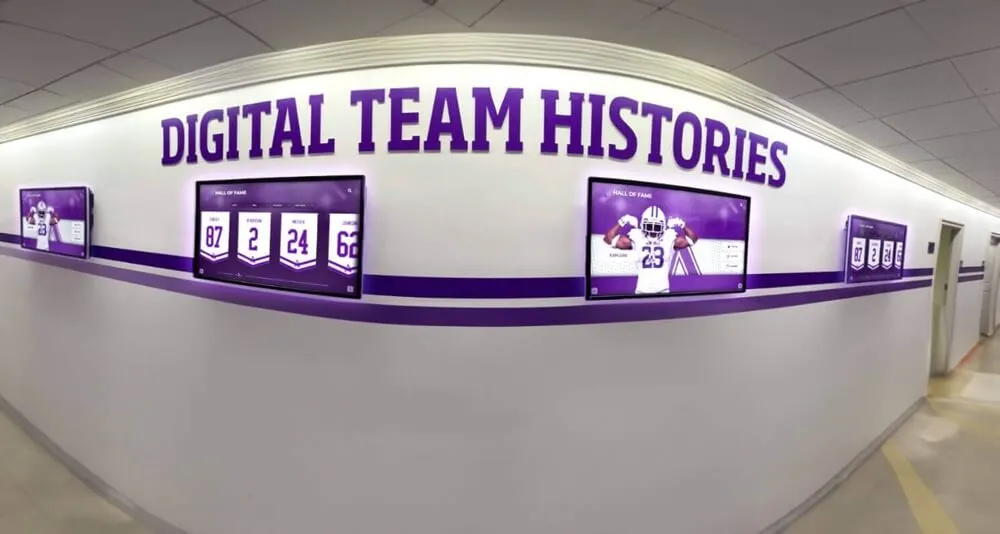
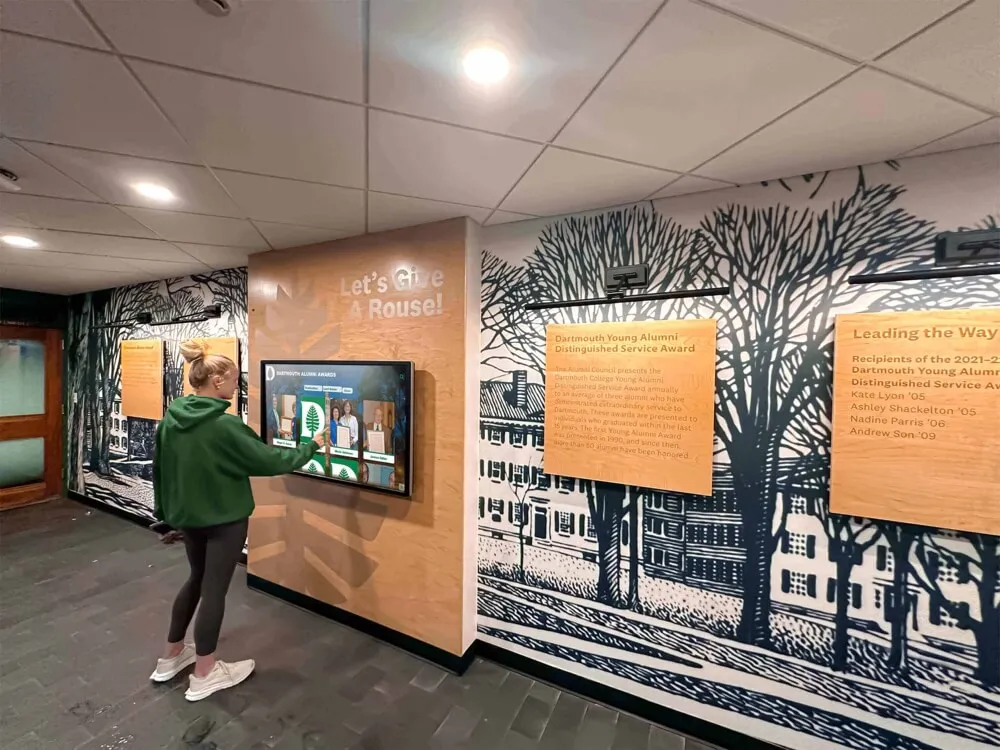
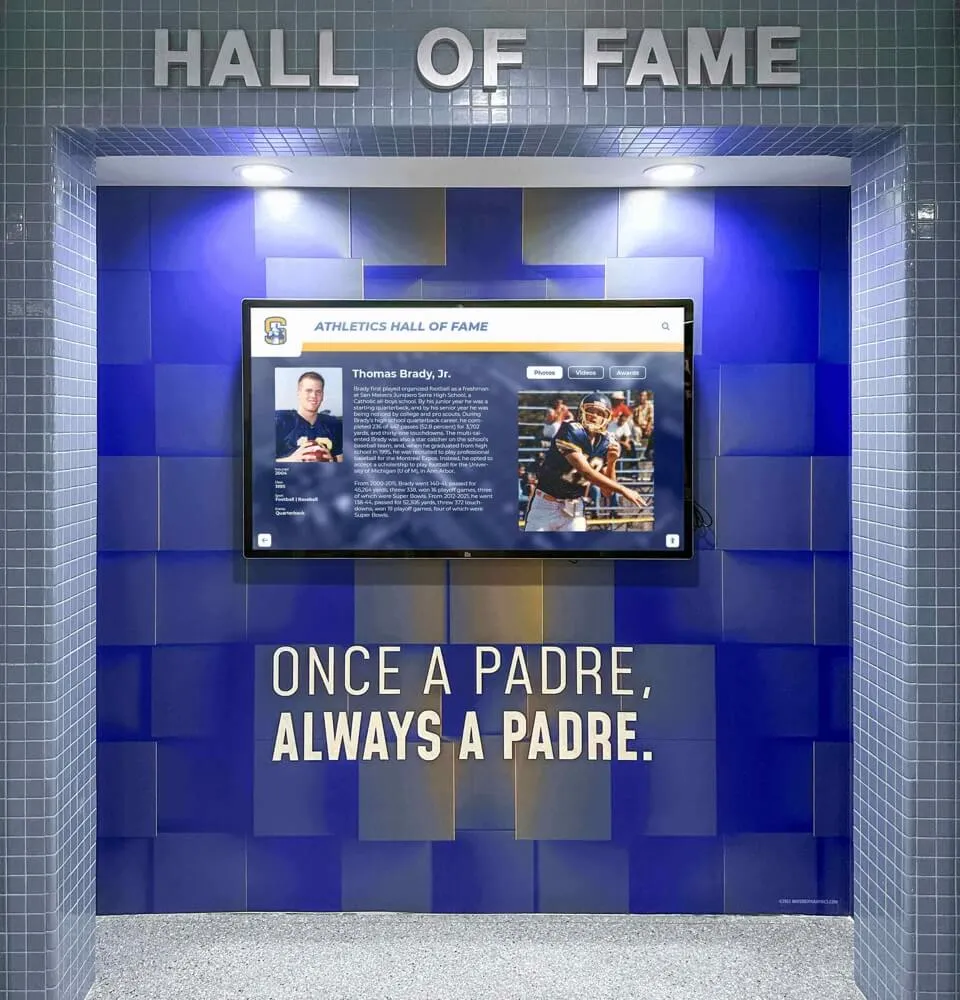
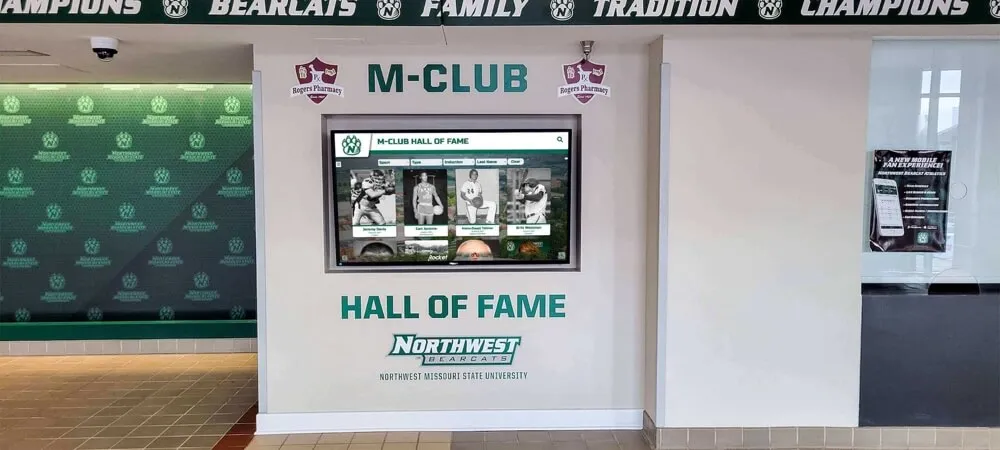
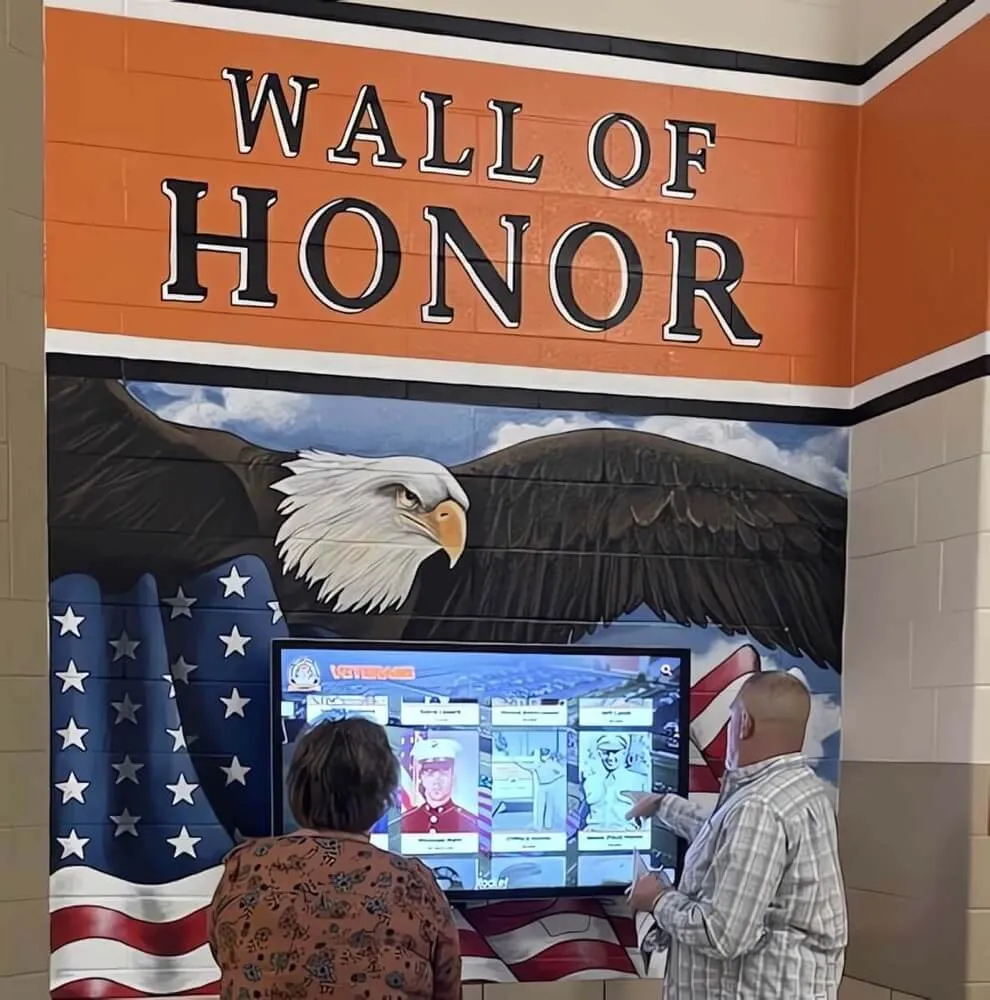
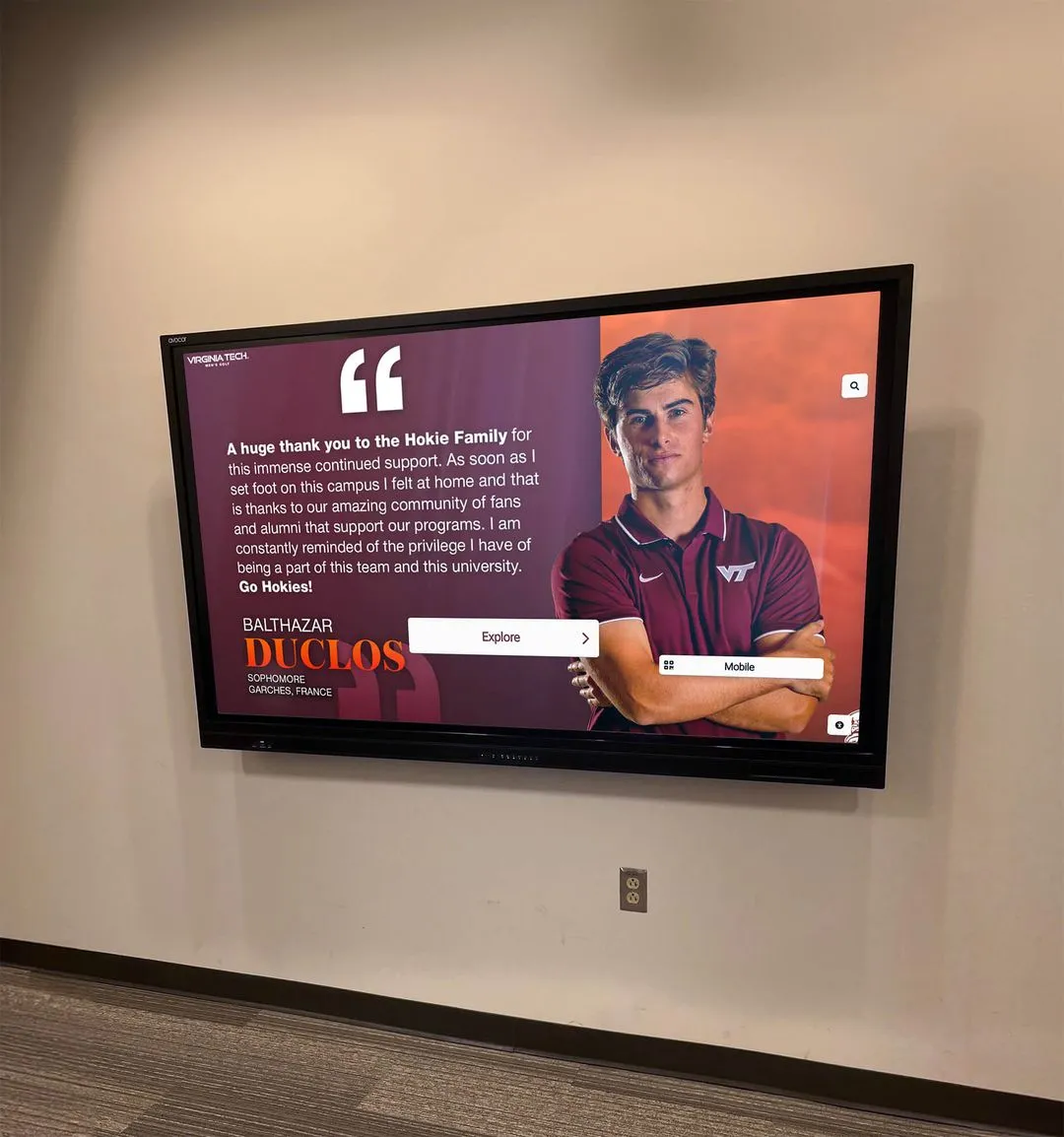
Digital displays integrated into hallway environments combine wayfinding functionality with dynamic recognition content celebrating school achievements
Achievement Recognition and Student Motivation
Strategic placement of recognition signage in high-traffic hallways creates daily touchpoints where students encounter visible evidence of what excellence looks like at your school. When students pass displays celebrating student achievement awards, athletic accomplishments, arts excellence, and academic honors multiple times daily, these environmental cues reinforce achievement-oriented culture more effectively than occasional announcements or newsletters.
The visibility of recognition signage also validates honored students’ accomplishments through public acknowledgment, creates aspirational targets for younger students who see upperclassmen featured, and communicates to parents and community members what types of achievements your school values and celebrates.
Core Categories of School Hallway Signs
Effective hallway environments incorporate multiple sign types, each serving distinct purposes while contributing to cohesive overall design.
Directional Wayfinding Signs
Directional signs guide people to destinations by indicating which direction to proceed from decision points (intersections, stairwell landings, entry points). Effective directional signage requires:
Strategic Placement at Decision Points: Position directional signs anywhere visitors must choose between multiple path options. School entrances need comprehensive directional signs pointing toward main offices, gymnasiums, auditoriums, cafeterias, and classroom wings. Hallway intersections require signs indicating what destinations lie in each direction. Stairwell landings benefit from signs showing what facilities exist on each floor.
Clear Destination Labeling: Use terminology that matches how visitors think about locations. Instead of “Administration,” use “Main Office” or “Front Office.” Replace “Student Commons” with “Cafeteria” for external visitors. Include room number ranges (“Rooms 100-125”) alongside facility names when appropriate.
Consistent Directional Conventions: Establish and maintain consistent visual language for directional indicators. If using arrows, maintain consistent style, size, and placement across all signs. Consider using color coding for different building wings or floor levels to create intuitive mental maps.
Multilevel Wayfinding: Recognize that effective wayfinding often requires multiple sign encounters before visitors reach destinations. A visitor entering your building should see signs at: (1) the entry point indicating general direction, (2) the first intersection confirming they’re proceeding correctly, (3) the relevant hallway showing specific room locations, and (4) the destination itself with clear identification.
Identification Signs
Identification signs label specific locations—classrooms, offices, facilities, and functional spaces. These signs enable visitors who’ve followed directional signage to confirm they’ve reached the correct destination.
Room Number and Name Plates: Standard classroom identification requires clear room numbers visible from hallway distances, supplemented by teacher names when applicable. Consider including subject area or grade level on classroom signs to help visitors distinguish between rooms with similar numbers.
Facility Labels: Restrooms, storage areas, mechanical rooms, emergency exits, and specialized spaces need clear identification. Beyond basic labels, include relevant symbols (restroom gender icons, accessible facility indicators, emergency exit symbols) that communicate function without requiring text reading.
Office Directory Signs: Administrative areas benefit from comprehensive directories listing staff names, titles, and room numbers. Place these directories at administrative wing entry points so visitors can determine specific offices before proceeding into staff areas.
Digital Identification Integration: Modern schools increasingly supplement traditional identification signs with digital displays that can show not only room identification but also current class schedules, teacher availability, and relevant announcements. Solutions like Rocket Alumni Solutions enable schools to deploy hallway displays that serve both wayfinding and recognition purposes, showing directory information alongside celebration content.
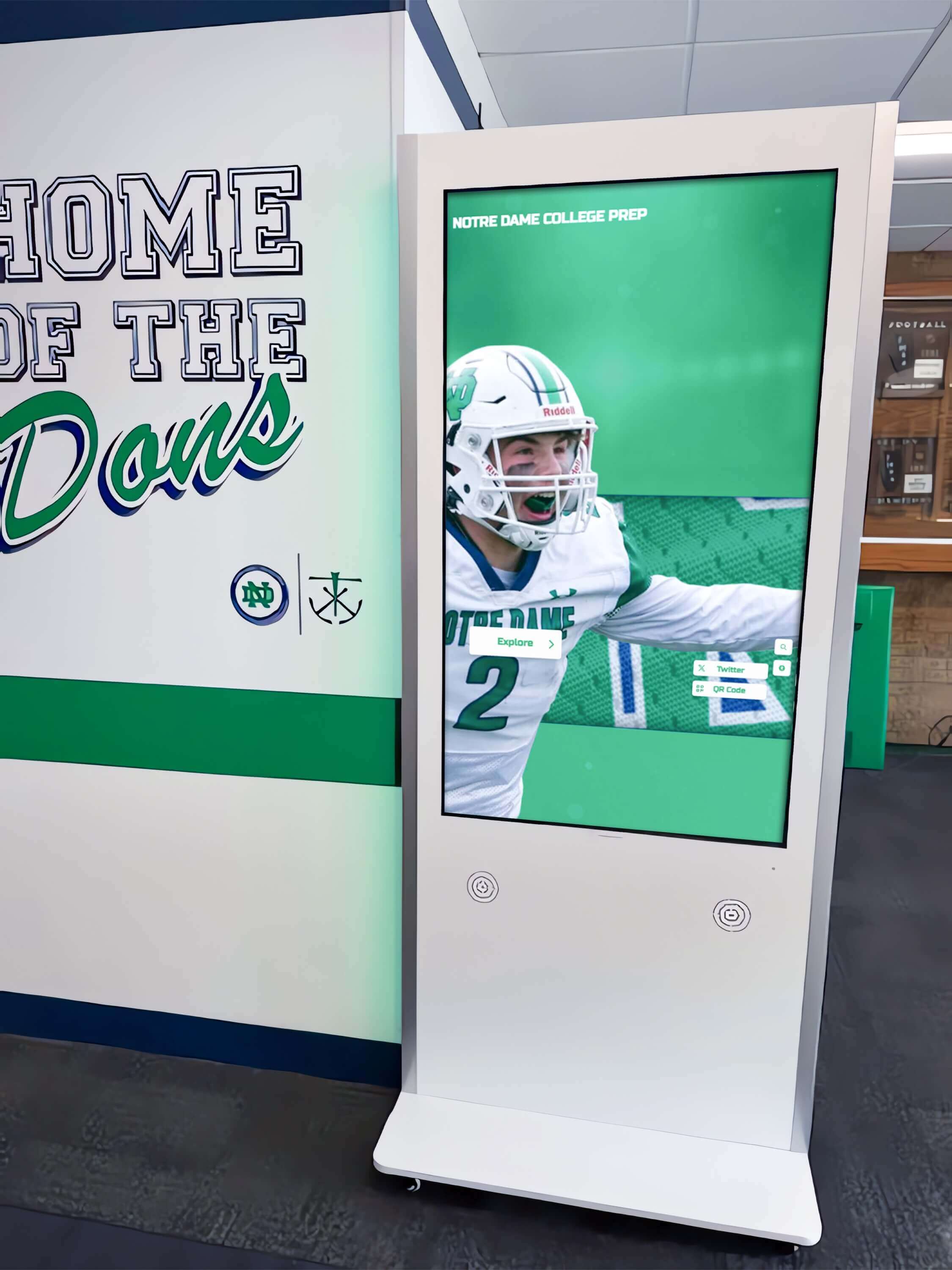
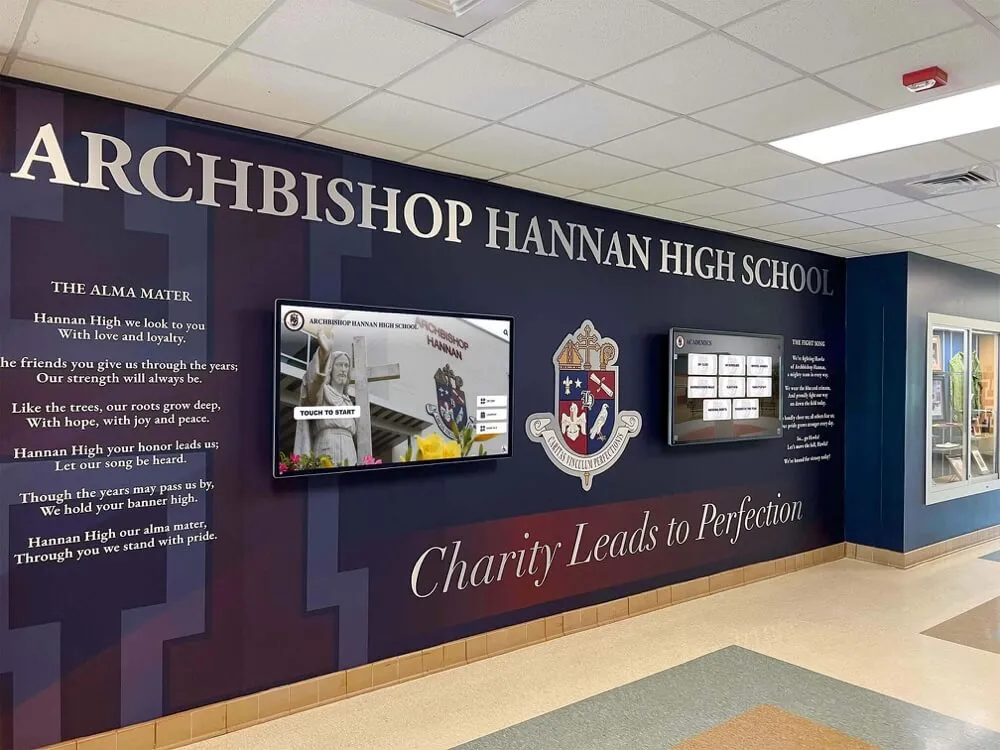
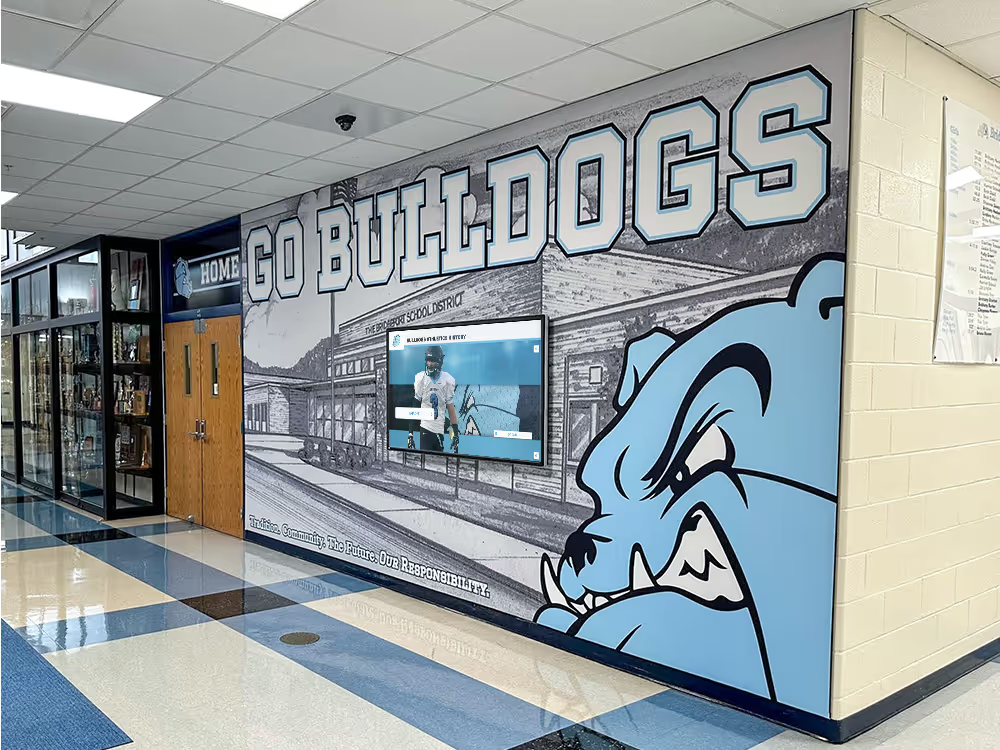
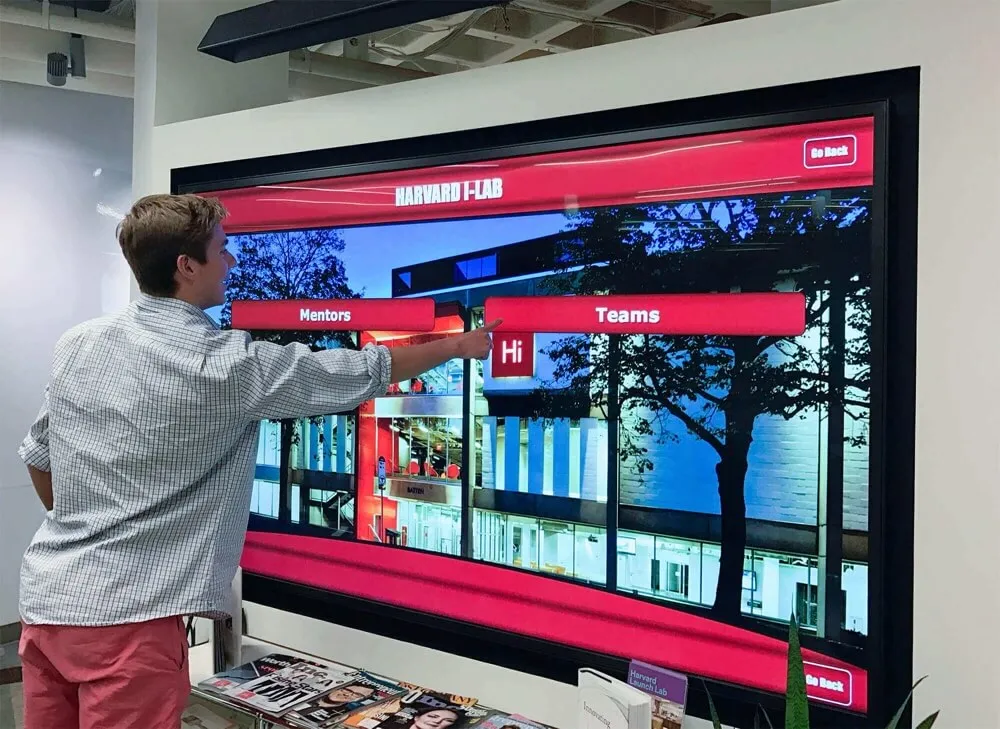
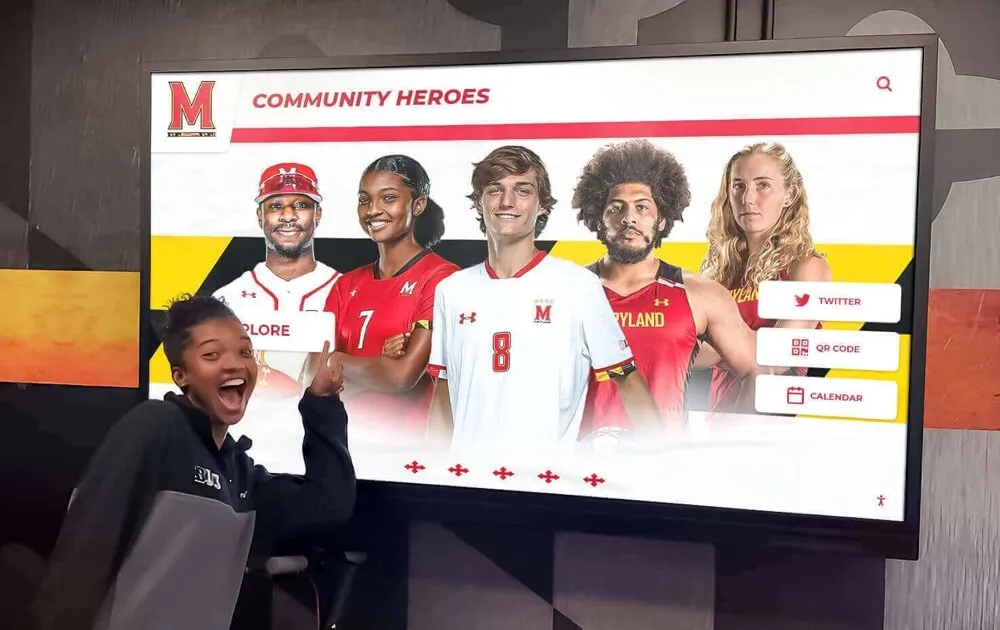
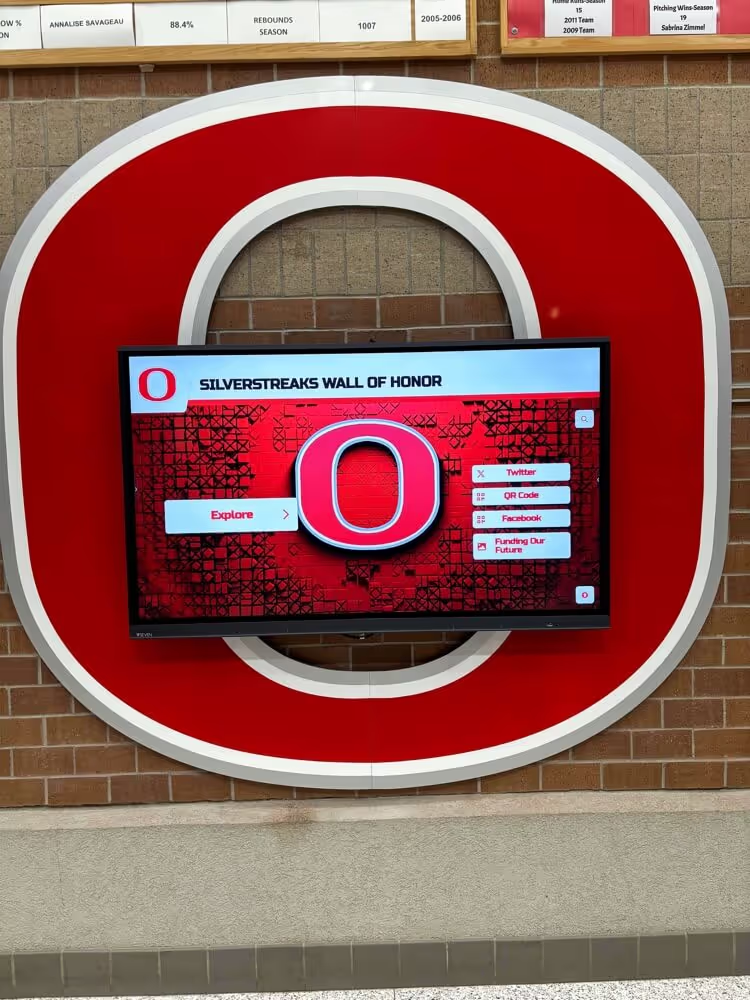
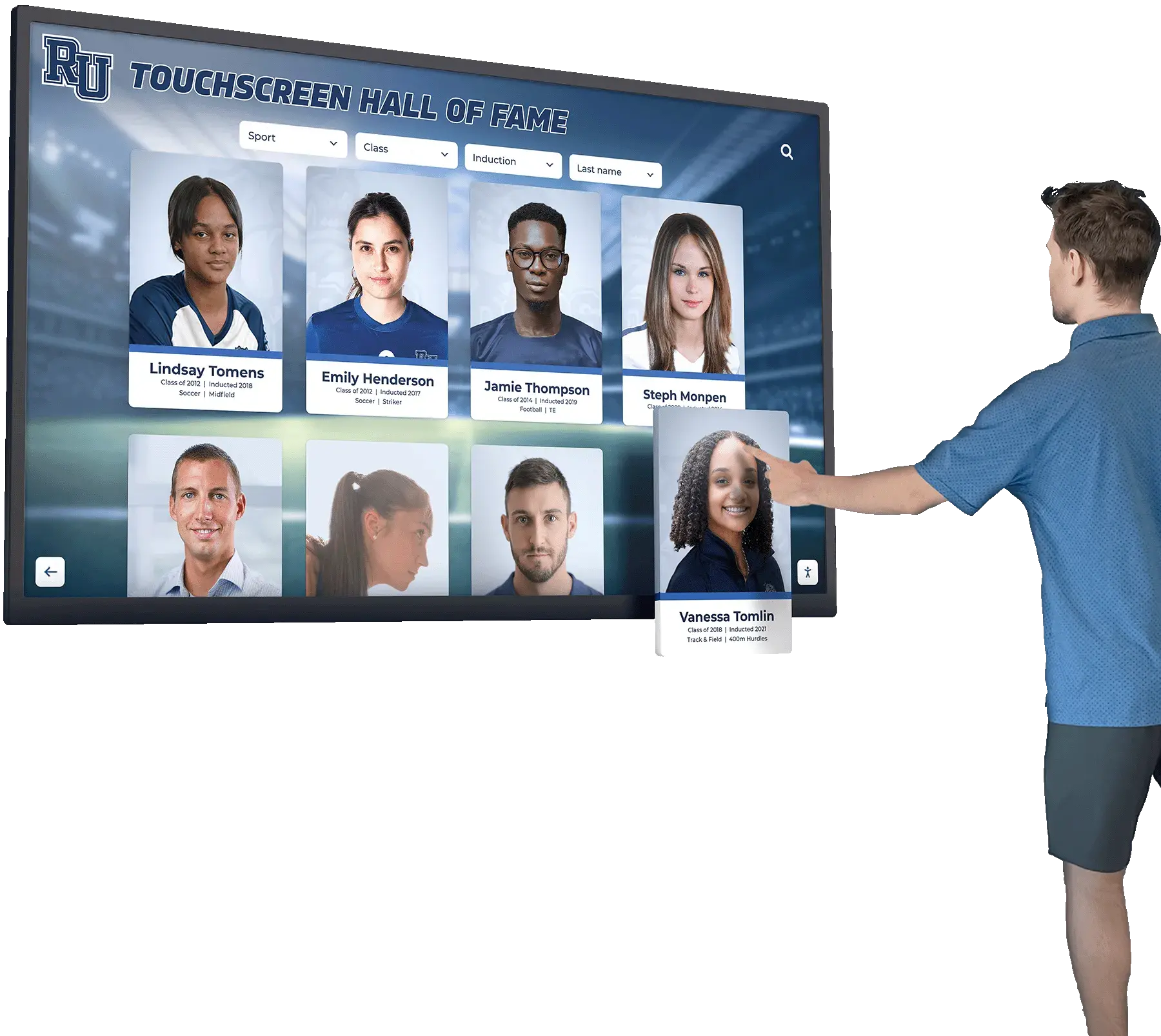
Interactive hallway kiosks provide dynamic wayfinding information while showcasing school achievements and program highlights
Motivational and Inspirational Signs
Motivational signage leverages high-traffic hallway locations to reinforce school values, celebrate achievements, and inspire excellence through environmental messaging.
Mission and Values Displays: Strategic placement of school mission statements, core values, and guiding principles creates consistent messaging that shapes school culture. Rather than relegating mission statements to lobbies where they’re encountered once, incorporate values-based messaging throughout hallways where students see it daily.
Achievement Celebration Signs: Permanent or semi-permanent signs celebrating significant school achievements—championship victories, academic distinctions, notable alumni, historical milestones—create environmental pride that influences both current students and visitors. High school sports banners exemplify how recognition signage transforms utilitarian hallways into celebration spaces.
Inspirational Quote Graphics: Well-designed quote displays featuring relevant messages about learning, growth, perseverance, and excellence provide positive environmental cues. The most effective approaches connect quotes to specific school contexts rather than using generic inspiration—quotes from notable alumni, district founders, or historical figures connected to your community create more meaningful resonance than purchased generic motivational posters.
Student Work Showcases: Dedicated display areas showing exemplary student work, project outcomes, and creative achievements turn hallways into galleries demonstrating what’s possible. These displays serve both recognition and inspirational functions, validating featured students while showing other students aspirational examples.
Regulatory and Safety Signs
Required safety and compliance signage addresses legal obligations while contributing to safe building operations.
Emergency Exit and Evacuation Signs: Building codes mandate clear emergency exit identification, evacuation route indicators, and assembly point designations. Design these required elements to align with overall hallway aesthetics while maintaining regulatory compliance and visibility standards.
ADA Compliance Signage: Federal accessibility requirements mandate specific signage characteristics including tactile (braille) elements, appropriate height mounting, color contrast standards, and accessible facility identification. Work with experienced signage professionals to ensure all hallway signs meet WCAG 2.2 AA accessibility standards and ADA requirements.
Behavioral and Policy Signs: Schools may require signage addressing specific behaviors (quiet zones near testing rooms, no food/drink areas, visitor check-in reminders) or policies. Design these necessary but potentially negative signs to maintain overall hallway aesthetics—use consistent brand colors and styling rather than generic yellow-and-black warning aesthetics that create institutional rather than welcoming environments.
Design Principles for Effective School Hallway Signs
Strategic design transforms functional signage into powerful branding and culture-building tools.
Brand Consistency and Visual Identity
Every hallway sign should reinforce rather than dilute school brand identity. This requires establishing and documenting comprehensive signage standards:
Color Palette Consistency: Restrict hallway signage to official school colors rather than introducing competing color schemes. If school colors present readability challenges (light colors on light backgrounds), establish approved contrast combinations documented in brand guidelines.
Typography Standards: Specify approved typefaces for different sign categories—perhaps a distinctive display font for headers with a highly readable sans-serif for body text and directions. Avoid mixing numerous typefaces that create visual chaos.
Logo and Mascot Usage: Determine where and how school logos and mascot imagery should appear on different sign types. Establish sizing standards that maintain recognizability without overwhelming functional content.
Material and Finish Guidelines: Specify whether signs should feature matte or glossy finishes, what materials are appropriate for different contexts, and what mounting methods align with overall aesthetics.
Readability and Visibility Standards
Signs that can’t be easily read fail their primary purpose regardless of how well-branded they appear.
Appropriate Size and Scale: Calculate minimum text sizes based on viewing distances. Hallway signs viewed from 10-15 feet require larger text than door-mounted signs viewed from 3-5 feet. A standard guideline suggests 1 inch of letter height for every 10 feet of viewing distance, though this varies based on typeface and contrast.
High Contrast Combinations: Ensure sufficient contrast between text and backgrounds. Light-colored text on dark backgrounds or dark text on light backgrounds both work; mid-tone combinations create readability problems. Online contrast checkers help verify that color combinations meet accessibility standards.
Lighting Considerations: Evaluate how hallway lighting affects sign visibility. Signs positioned in dimly lit corridor sections may require internal illumination or higher contrast ratios. Glossy finishes can create glare problems under direct lighting. Consider how signs appear during both day (with natural light from windows) and evening (with only artificial lighting) conditions.
Visual Hierarchy: Use size, weight, color, and positioning to establish clear information hierarchy. Most important information (room numbers, primary directions) should be immediately apparent; secondary details (teacher names, supplementary information) can be smaller and subordinate.
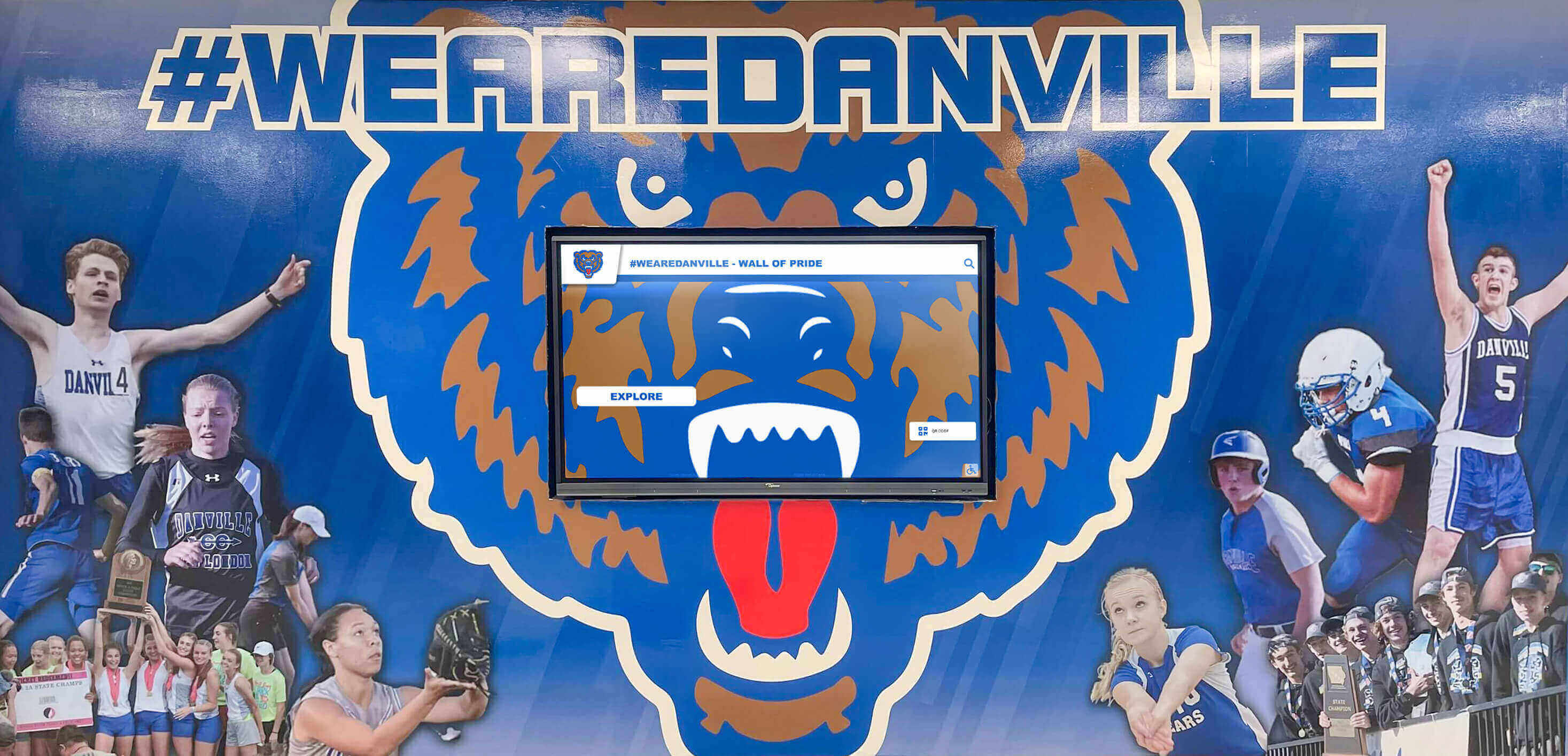
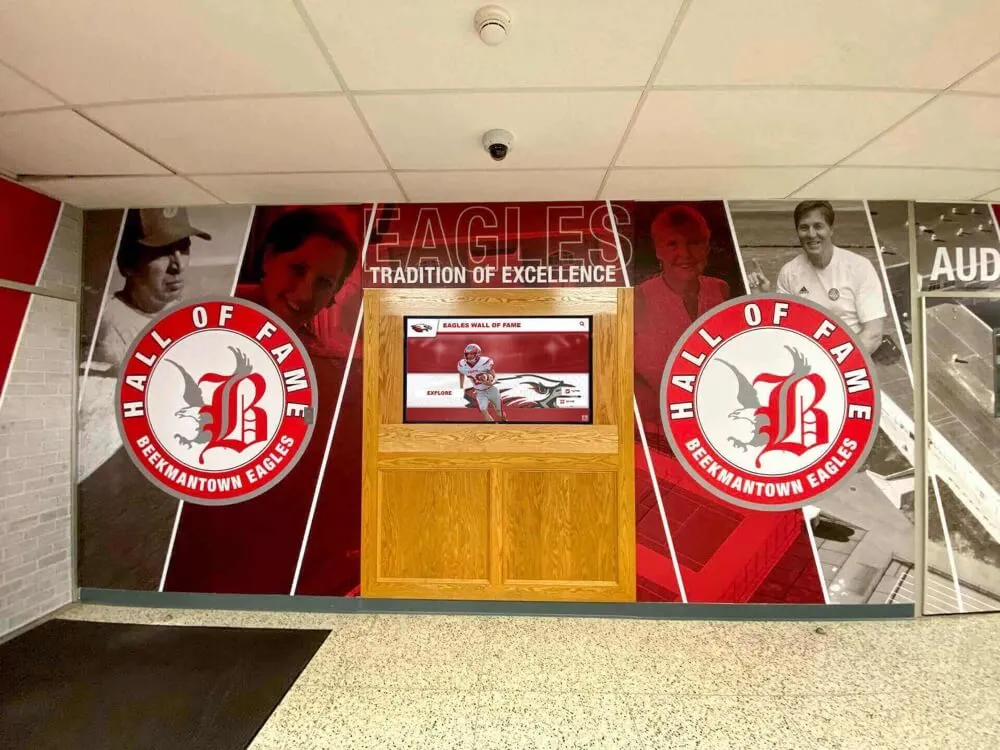
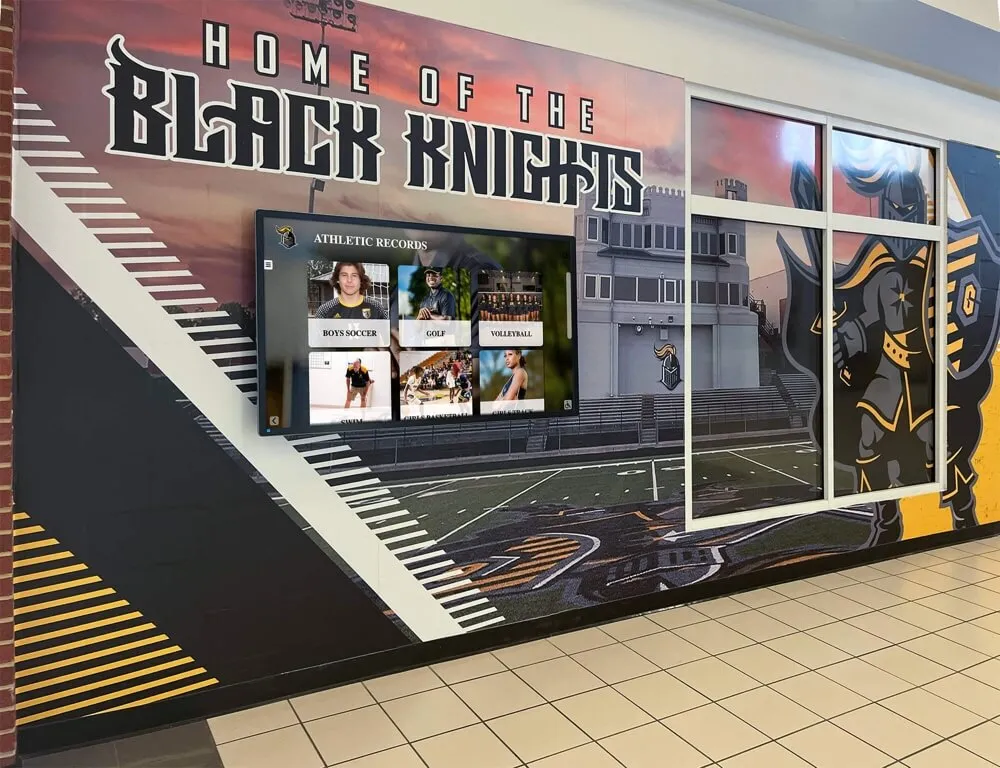
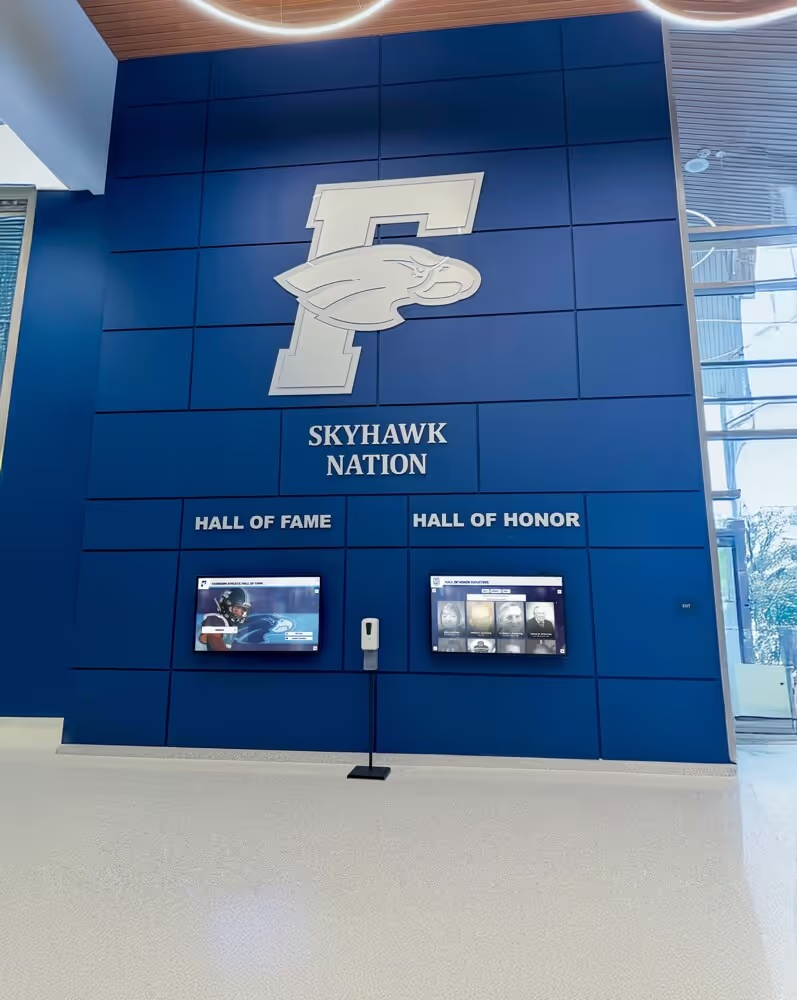
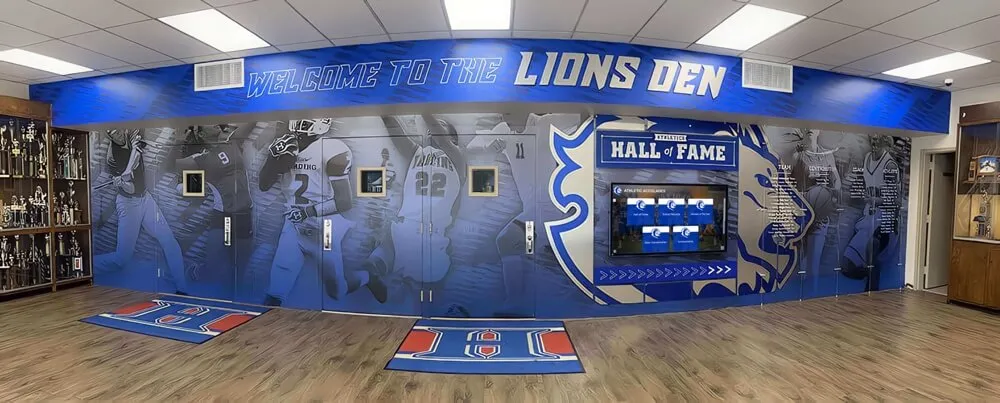
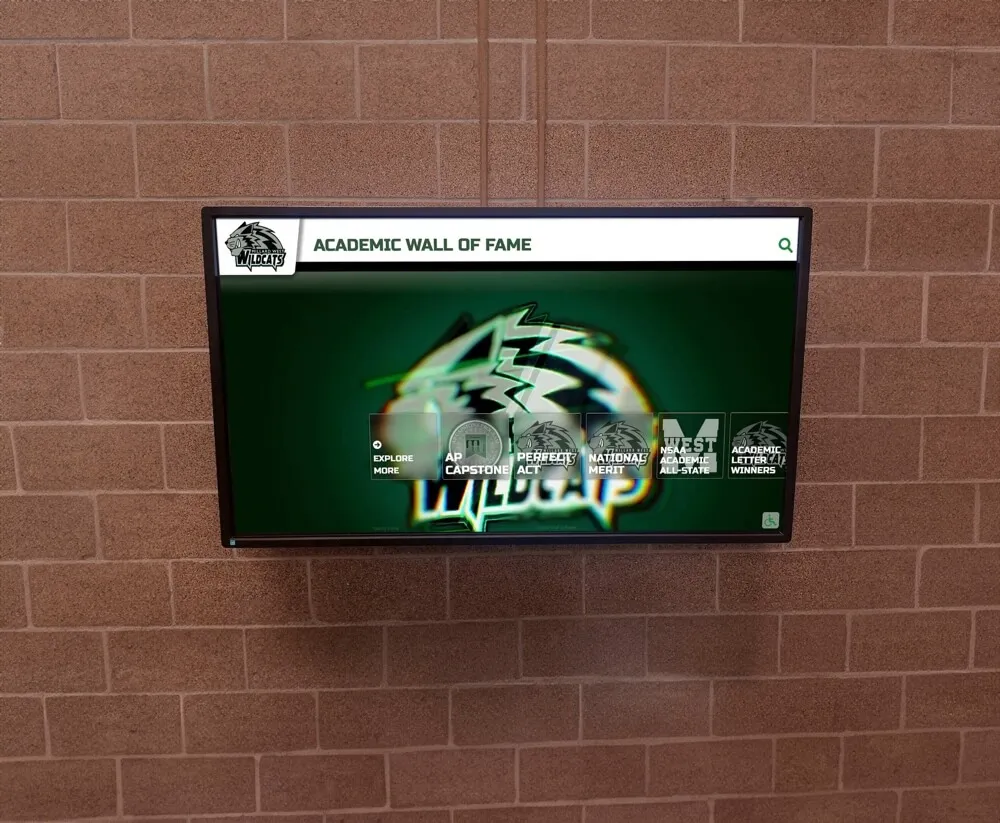
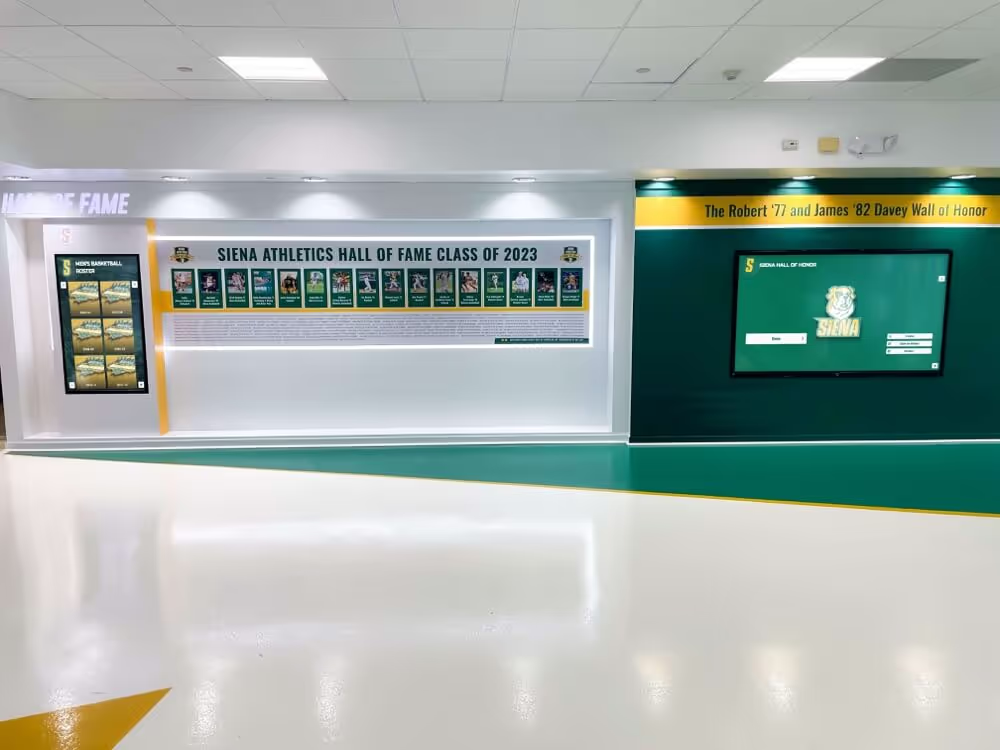
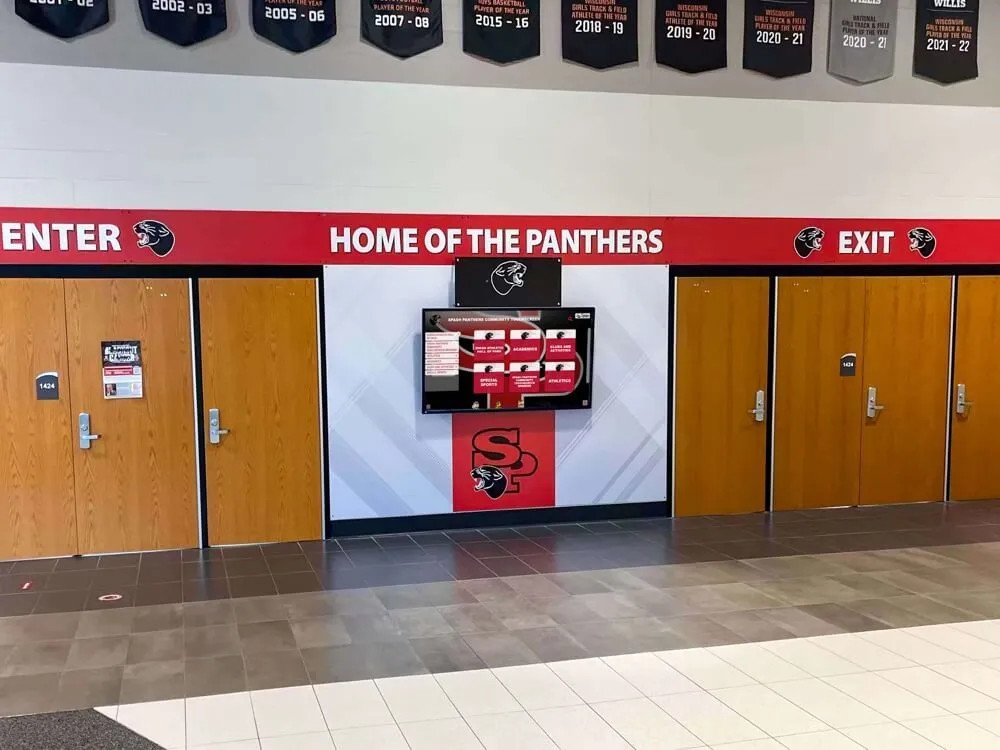
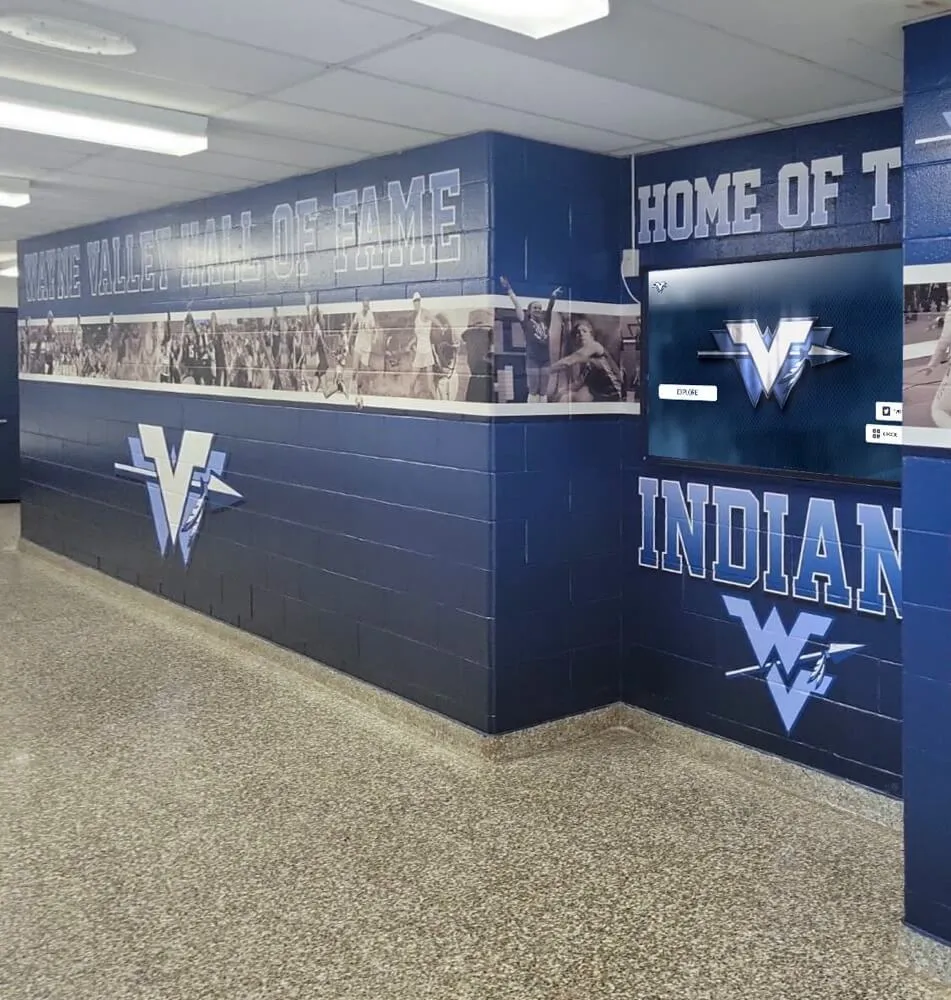
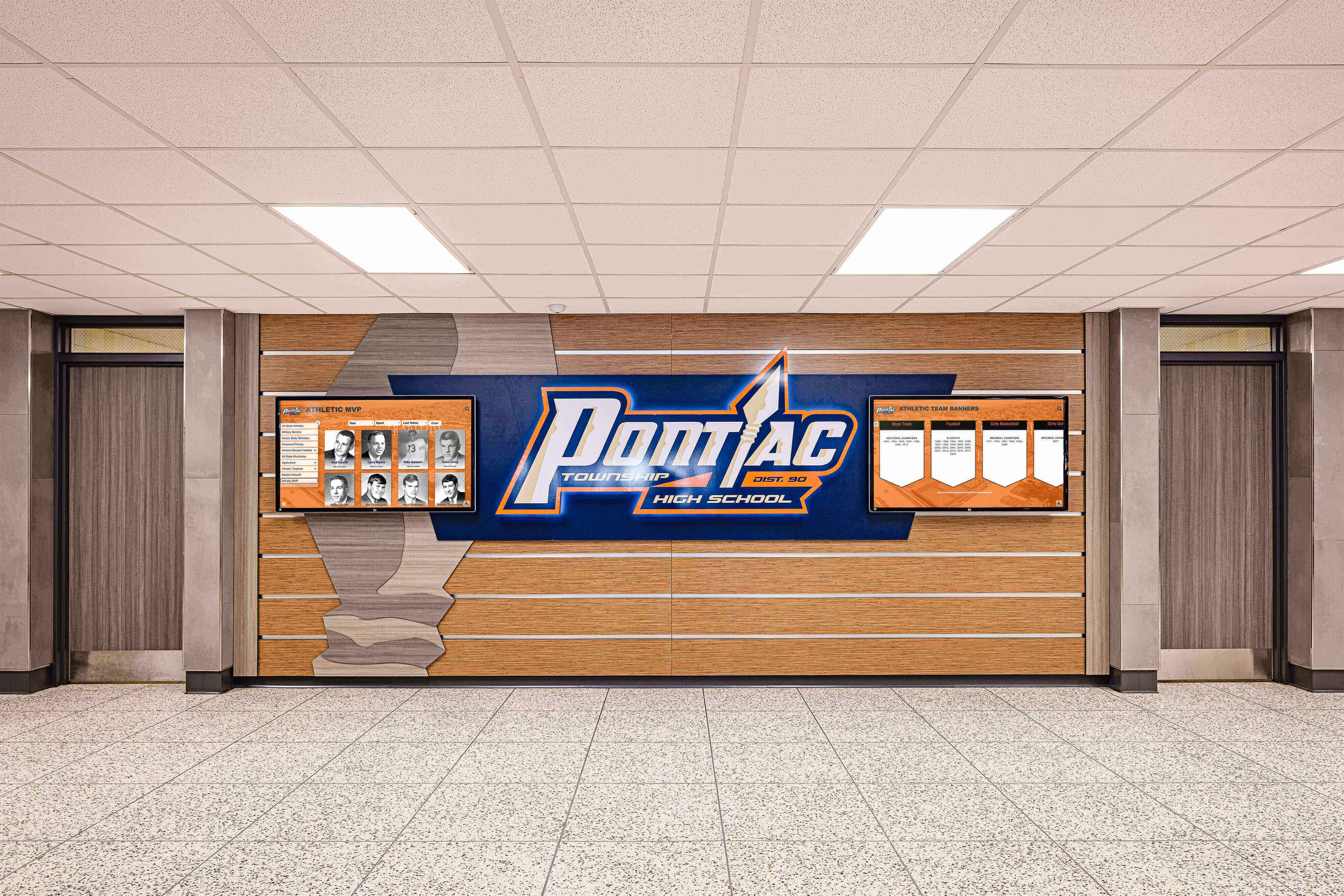
Cohesive hallway environments integrate traditional graphic elements with modern digital displays creating branded spaces that serve multiple communication purposes
Durability and Maintenance Planning
Hallway signs must withstand years of exposure to student traffic, occasional impact, cleaning procedures, and environmental factors.
Material Selection: Choose materials appropriate for school environments where durability matters more than in corporate or retail settings. Acrylic panels withstand impact better than glass. Vinyl graphics protected by laminate layers resist scratching. Powder-coated aluminum outlasts painted wood. Factor replacement costs and timelines into material decisions—cheaper options requiring frequent replacement may cost more long-term than durable alternatives.
Mounting Methods: Specify mounting approaches that prevent tampering while allowing replacement when necessary. Standoffs create dimensional depth that enhances visibility and perceived quality. Flush-mounted signs present clean profiles that minimize protrusion into hallways. Consider whether signs might need updating (teacher name changes, room reassignments) when selecting mounting methods.
Cleaning Compatibility: Verify that sign materials withstand standard school cleaning procedures and chemicals. Custodial staff should receive guidance about appropriate cleaning methods for different sign types to prevent damage from harsh chemicals or abrasive cleaning tools.
Vandalism Resistance: While no sign is entirely vandalism-proof, some approaches minimize vulnerability. Anti-graffiti laminates allow marker removal without damaging underlying graphics. Recessed or protected mounting reduces direct access. Durable materials resist scratching better than soft surfaces. Balance vandalism resistance against costs—the goal is reasonable durability, not fortress-grade protection.
Traditional vs. Digital Hallway Signage Approaches
Schools face strategic decisions about balancing permanent traditional signage with dynamic digital display options.
Traditional Permanent Signage Benefits
Conventional hallway signs using physical materials offer several advantages:
No Ongoing Technical Management: Once installed, traditional signs require no software updates, network connectivity, power sources, or technical troubleshooting. For schools with limited IT resources, this simplicity has real value.
Proven Longevity: Quality traditional signage can last 10-20+ years with minimal maintenance. This durability makes permanent signs cost-effective for information that rarely changes—building wings, permanent facilities, established programs.
No Learning Curve: Traditional signs require no training for either staff who maintain them or audiences who reference them. Everyone understands how to read wall-mounted signs.
Budget Predictability: Traditional signage involves defined upfront costs with minimal ongoing expenses. Budgeting is straightforward: design, production, installation, occasional replacement.
Digital Display Advantages
Modern digital signage solutions address traditional signage limitations while enabling new possibilities:
Dynamic Content Flexibility: Digital displays can show different content throughout the day—morning announcements during arrival, event promotions during passing periods, achievement celebrations during dismissal. This flexibility maximizes value from limited hallway space by using single displays for multiple purposes.
Instant Updates Without Physical Labor: Updating digital content requires minutes of remote access rather than hours of physical sign replacement. Announce today’s schedule changes, celebrate yesterday’s victory, or promote tomorrow’s event without printing, laminating, or mounting anything.
Rich Media Capabilities: Digital displays support video highlights, photo slideshows, animated graphics, and interactive elements impossible with traditional signs. This richness creates more engaging experiences that capture and hold attention better than static signs.
Recognition at Scale: Schools can celebrate far more students and achievements through digital displays than through limited physical trophy case space. Digital trophy cases enable unlimited inductees, comprehensive achievement documentation, and searchable archives that traditional displays cannot match.
Analytics and Engagement Tracking: Interactive digital displays can track engagement metrics—what content gets viewed, how long people interact, which categories generate interest—providing data impossible to gather from traditional signs.
Hybrid Approaches: The Practical Middle Ground
Most schools benefit from strategic combinations of permanent and digital signage rather than all-or-nothing approaches:
Permanent Core Infrastructure: Use traditional signage for information that never or rarely changes—wing identification, major facility locations, permanent room numbers, established program names, regulatory signs. This creates reliable baseline wayfinding that functions even during power outages or technical issues.
Digital Recognition and Celebration: Deploy digital displays for dynamic content that changes frequently—achievement celebrations, current events, rotating student work, daily announcements, athletic recognition programs, schedule updates. This maximizes the value digital flexibility provides while avoiding the need to digitize every directional sign.
Complementary Integration: Design permanent and digital elements to work together cohesively. A traditional directional sign might point toward “Athletic Hall of Fame,” where a digital display provides the rich content. Permanent section headers can identify hallway wings while digital displays show detailed directory information and achievements relevant to that area.
Strategic Placement: Where Different Sign Types Deliver Maximum Impact
Thoughtful placement multiplies signage effectiveness by matching sign types to locations where they’ll be most valuable.
Entry Points and First Impressions
Building entrances represent the highest-priority signage locations because they’re guaranteed touchpoints for every visitor:
Comprehensive Directional Signage: Entrance areas require master directories showing major destinations and which direction to proceed. Include both text lists and simplified facility maps when complex buildings warrant. Welcome back to school signs set positive tones while providing needed wayfinding information.
School Identity Branding: Entrance signage should prominently feature school names, logos, mascots, and identity elements establishing clear sense of place. This is where brand impression matters most since it shapes visitor mindset before they proceed further into the building.
Visitor Protocol Information: Clear signage directing visitors to check in at main offices, visitor badge requirements, and appropriate procedures ensures security protocols are followed while making expectations clear.
Hallway Intersections and Decision Points
Anywhere people must choose between multiple path options requires confirmation and directional guidance:
Consistent Directional Format: Establish standard formats for intersection signage—perhaps overhead hanging signs, wall-mounted directional panels, or floor decals with arrows and destinations. Consistency helps visitors recognize decision-point signage throughout the building.
Confirmation of Correct Route: Intersection signs should confirm people are heading correctly while indicating upcoming destinations. Someone looking for Room 237 benefits from seeing “Rooms 220-250 Ahead” at intersections, confirming they haven’t missed their turn.
Visual Landmarks: Combine functional directional signage with distinctive visual landmarks—mascot murals, school color schemes, dimensional letters—that help people mentally map the building. “Turn left at the eagle mural” creates more memorable navigation cues than “Turn left at hallway intersection 3.”
High-Traffic Corridor Sections
Long straight hallways where students and visitors spend time transitioning between destinations provide prime opportunities for recognition and motivational signage:
Achievement Celebration Zones: Dedicate corridor sections to celebrating specific programs—athletic achievements, academic excellence, arts accomplishments, community service. This transforms utilitarian pass-through spaces into engaging environments. College signing day celebrations exemplify how dedicated recognition spaces elevate program visibility.
Historical Timelines: Corridor walls can display school history timelines, decade-by-decade highlights, or evolution of programs and facilities. These displays engage people during transit time while building connection to institutional legacy.
Student Work Galleries: Rotating displays showcasing exemplary student work from various classes and programs turn hallways into functional gallery spaces. Clear identification of featured work and creators provides recognition while demonstrating program outcomes to visitors.
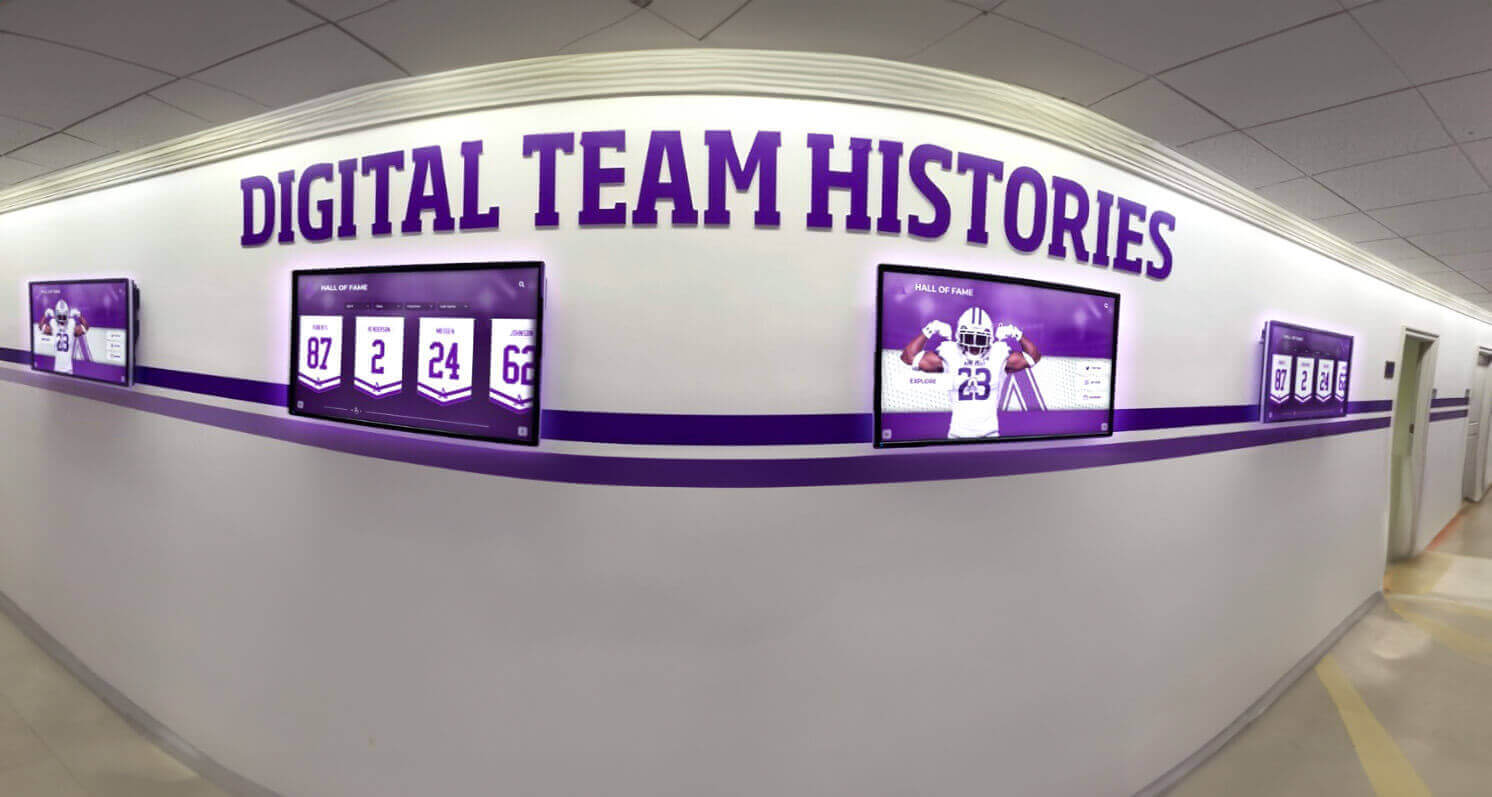
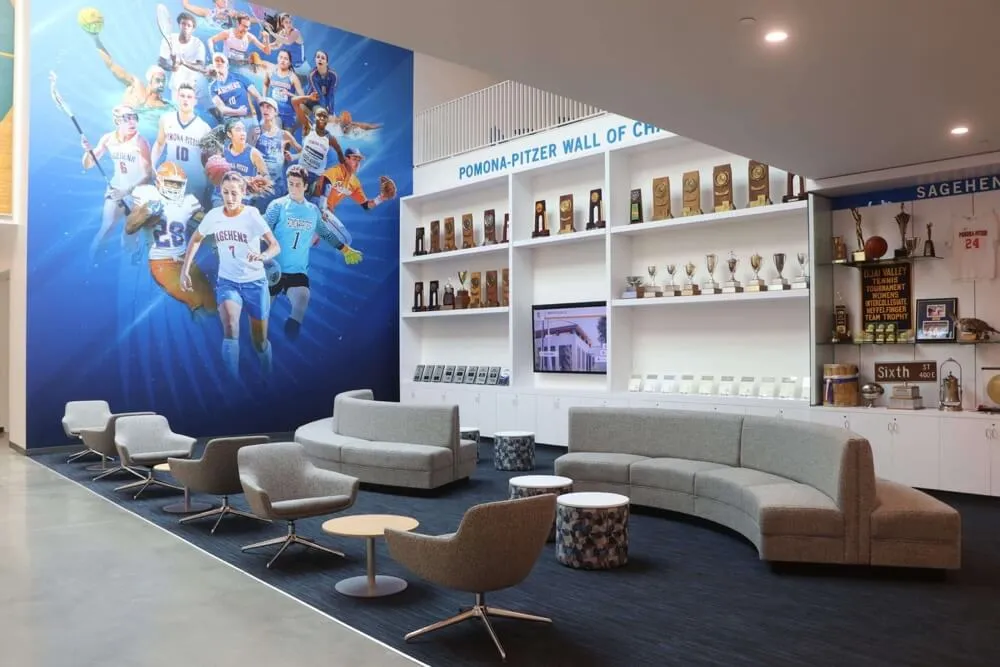
Coordinated digital display installations in hallway corridors create comprehensive recognition zones celebrating multiple programs and achievement categories
Common Areas and Gathering Spaces
Lobbies, commons areas, cafeteria entrances, and gymnasium lobbies receive high traffic and dwell time, making them premium signage locations:
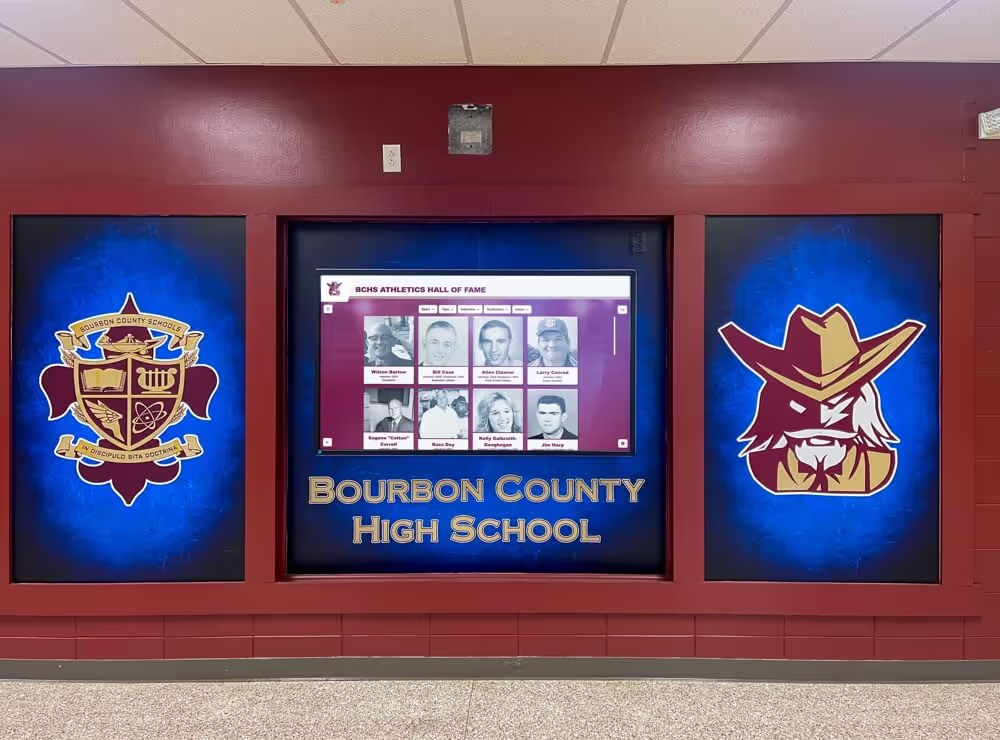
Interactive Digital Displays: Locations where people naturally pause provide ideal settings for interactive touchscreen displays that invite exploration. Students waiting for classes to start, parents arriving early for events, and visitors exploring facilities are more likely to engage with interactive content in these gathering spaces than in busy corridors.
Feature Recognition Installations: Common areas can accommodate larger-scale recognition installations—hall of fame displays, championship trophy presentations, donor recognition, alumni legacy walls—that would overwhelm narrower hallways. These prominent placements signal institutional priorities while creating focal points that define space character.
Community Information Centers: Common areas benefit from comprehensive information displays addressing upcoming events, daily schedules, menu information, activity calendars, and community announcements. Digital displays can rotate through multiple information categories throughout the day, maximizing limited space.
Implementation Process: From Concept to Completed Installation
Strategic planning ensures hallway signage investments deliver intended results while avoiding expensive mistakes.
Phase 1: Assessment and Planning (4-8 Weeks)
Conduct Comprehensive Facility Audit: Document all current signage locations, types, conditions, and deficiencies. Map hallway traffic patterns, decision points, and high-visibility locations. Survey staff and visitors about navigation challenges and confusing areas.
Define Objectives and Priorities: Clarify whether primary goals emphasize wayfinding improvement, brand enhancement, achievement recognition, or balanced combinations. Identify which building areas or sign categories represent highest priorities versus nice-to-have improvements.
Establish Budget Parameters: Determine available funding and whether implementation will occur in single comprehensive phases or staged rollouts over multiple budget cycles. Factor both initial installation costs and ongoing maintenance or update expenses.
Research Regulatory Requirements: Verify ADA compliance requirements, local building codes affecting signage, fire marshal regulations about corridor obstructions, and any district policies governing facility signage. Address these requirements during planning rather than discovering them after design completion.
Phase 2: Design Development (2-4 Weeks)
Create Comprehensive Signage Standards: Document all design specifications including typography, color palettes, materials, mounting methods, sizing standards, and placement guidelines. These standards ensure consistency across all sign types and enable future additions to match established systems.
Develop Sign Type Specifications: Design template approaches for each major category—directional signs, identification signs, recognition displays, informational signs. Show how standard designs adapt to different locations and content needs while maintaining consistency.
Produce Sample Mockups: Create realistic visualizations showing how proposed signage will appear in actual locations. Photograph current conditions and overlay design concepts so stakeholders can evaluate appearance in context rather than reviewing abstract concepts.
Gather Stakeholder Feedback: Share design concepts with administrators, facility managers, teachers, students, and parent representatives. Diverse perspectives help identify potential issues before production begins. Consider conducting small focus groups or surveys to gather structured feedback.
Phase 3: Approval and Production (4-6 Weeks)
Secure Formal Approvals: Obtain necessary approvals from administrators, school boards, facility managers, and any other stakeholders with authority over facility modifications. Document approved designs to prevent scope creep during production.
Select Qualified Vendors: Choose signage vendors with relevant school experience, comprehensive portfolios, appropriate production capabilities, and strong reputations. Request multiple quotes but evaluate vendors on quality and service, not just pricing—the cheapest option often proves expensive when problems arise.
Manage Production Process: Maintain communication with vendors during production to address questions, review proofs, and monitor progress. Specify delivery timelines that accommodate installation schedules, particularly if work must occur during specific breaks or summer periods.
Coordinate Installation Logistics: Plan installation timing to minimize disruption—summer breaks for comprehensive projects, long weekends for smaller additions, or after-hours work for urgent needs. Ensure custodial staff and security personnel understand when contractors will be accessing facilities.
Phase 4: Installation and Launch (1-2 Weeks)
Prepare Installation Sites: Complete any necessary surface preparation, painting, patching, or cleaning before installers arrive. Address any last-minute changes to room assignments or facility uses that might affect sign content.
Supervise Installation Quality: Designate facility staff to monitor installation work, verify signs are placed in correct locations with proper mounting, and identify any issues requiring correction before contractors leave.
Conduct Final Inspection: Walk through all installed signage checking for correct information, straight mounting, clean finishes, and overall quality. Create punch lists documenting any corrections needed and establish timelines for addressing them.
Document Completed Work: Photograph all installed signage creating visual records useful for insurance purposes, future matching work, and documentation of facility improvements. Store design files, specifications, and vendor information where future administrators can access them.
Maintenance and Updates: Keeping Hallway Signage Current and Effective
Even excellent initial installations deteriorate without ongoing maintenance and strategic updates.
Regular Maintenance Procedures
Routine Cleaning Schedules: Include signage in standard custodial cleaning routines using appropriate methods for different materials. Acrylic signs may need different cleaning approaches than vinyl graphics or painted surfaces.
Damage Inspection and Repair: Conduct quarterly walk-throughs specifically focused on signage condition, identifying scratches, graffiti, fading, loose mounting, or other issues requiring attention. Address problems promptly before minor damage escalates.
Digital Display Technical Maintenance: For digital signage, establish regular maintenance checking screen functionality, software updates, content display accuracy, and interactive feature operation. Develop troubleshooting protocols for common issues.
Content Updates and Refreshes
Scheduled Content Reviews: Even permanent signage requires periodic review ensuring information remains accurate as staff changes, rooms get reassigned, and programs evolve. Establish annual or biannual audits checking that all signs reflect current reality.
Recognition Display Updates: Create regular schedules for updating achievement displays, rotating student work showcases, and refreshing celebration content. Digital displays should feature fresh content at least monthly to maintain engagement; physical recognition displays might refresh annually or seasonally.
Temporary and Seasonal Signage: Develop systems for managing temporary signs related to specific events, seasonal activities, or short-term needs without compromising overall hallway aesthetics. Establish clear policies about where, when, and how temporary signs can be posted.
Measuring Hallway Signage Effectiveness
Strategic assessment helps verify that signage investments deliver intended results and identifies opportunities for improvement.
Navigation Performance Metrics
Reduced Direction-Seeking Interruptions: Track front office inquiries asking for directions before and after signage improvements. Significant reductions indicate improved wayfinding effectiveness.
Visitor Survey Feedback: Ask tour groups, event attendees, and parent volunteers about navigation ease using simple surveys or feedback forms. Consistent positive responses validate wayfinding success; recurring confusion about specific locations suggests signage gaps.
Staff Time Savings: Survey staff about time spent providing directions or helping confused visitors before and after signage improvements. Document hours saved for cost-benefit analyses justifying signage investments.
Brand and Culture Impact
School Pride Indicators: Monitor student and staff pride metrics through surveys, focus groups, or established school climate assessments. While signage alone doesn’t create pride, it contributes to overall environmental quality that influences pride indicators.
First Impression Assessments: Ask prospective families touring facilities about their impressions of school environment and whether they felt welcomed and oriented. Professional hallway signage contributes to positive facility impressions that influence enrollment decisions.
Recognition Program Engagement: For digital displays showing achievement content, track interaction rates, viewing duration, and content popularity. Analytics help identify what recognition content resonates most with your community, informing future programming decisions.
Budget Considerations and Cost Management
Understanding cost factors helps schools make informed decisions balancing effectiveness and affordability.
Traditional Signage Cost Factors
Material and Production Costs: Basic vinyl signs might cost $50-$150 per sign, acrylic panels with graphics range $150-$400, dimensional letters run $200-$800 depending on size and materials, and custom murals or large-format graphics span $1,000-$5,000+.
Installation Expenses: Professional installation adds 20-40% to material costs for standard signs, more for complex installations requiring specialized mounting, electrical work, or structural modifications.
Design Fees: Professional signage design typically costs $1,000-$5,000 depending on project scope and complexity. This investment ensures cohesive systems that look professionally executed rather than piecemeal additions.
Digital Display Investment
Hardware Costs: Commercial-grade digital displays suitable for school environments range from $2,000-$8,000 per screen depending on size, features, and durability. Interactive touchscreens cost more than standard displays but enable engagement impossible with view-only screens.
Software and Content Management: Digital signage requires content management systems enabling remote updates, scheduled publishing, and multi-display coordination. Cloud-based solutions like Rocket Alumni Solutions provide comprehensive platforms managing not just signage but entire recognition programs, typically ranging $1,500-$3,000 annually depending on features and scale.
Installation and Infrastructure: Digital displays require power sources, network connectivity, and professional mounting that may add $500-$2,000 per location depending on existing infrastructure and installation complexity.
Ongoing Costs: Budget for electricity (minimal for LED displays), occasional hardware replacement (5-7 year lifespan typical), software subscriptions, and content development time.
Cost-Effective Strategies
Phased Implementation: Rather than attempting comprehensive building-wide improvements simultaneously, prioritize highest-impact locations and implement in phases as budget allows. Begin with entry points and main hallways where signage reaches the most people.
Hybrid Traditional-Digital Approaches: Use durable traditional signage for permanent information and limited digital displays for dynamic content. This balances benefits and costs by deploying each approach where it offers most value.
Standardization Economies: Developing standard sign templates used in multiple locations reduces both design costs and production expenses through volume pricing.
Student and Community Involvement: Consider involving art classes, student government, or community volunteers in creating certain signage elements. While professional design ensures quality core systems, supplementary elements can engage stakeholders while managing costs.
Real-World Considerations: Common Challenges and Solutions
Schools implementing hallway signage improvements frequently encounter predictable challenges—anticipating them enables proactive solutions.
Challenge: Inconsistent Existing Signage
Many schools have accumulated signage over decades resulting in inconsistent styles, materials, colors, and quality levels creating visual chaos rather than cohesive environments.
Solution: Rather than attempting to replace everything immediately, establish clear standards for new signage and systematically replace worst existing signs first. Over 3-5 years, inconsistent legacy signage gradually gets replaced with cohesive elements. Document the master plan so different administrators maintain consistency as implementation proceeds.
Challenge: Limited Budget for Comprehensive Improvements
Schools often recognize signage needs but lack funding for complete overhauls.
Solution: Identify highest-impact improvements delivering disproportionate benefits—main entrance signs, primary corridor wayfinding, visitor-facing directories—and focus limited resources there. As additional funding becomes available, expand systematically following documented master plans. Many schools successfully fund recognition displays through booster clubs, alumni associations, or memorial gift programs.
Challenge: Resistance to Digital Displays
Some stakeholders prefer traditional approaches, viewing digital displays as expensive distractions or unnecessary technology.
Solution: Start with pilot installations in high-visibility locations demonstrating value. When stakeholders see engagement levels, content flexibility, and recognition capabilities digital displays enable, resistance typically diminishes. Emphasize that digital displays supplement rather than replace traditional signage, addressing different needs rather than representing either/or choices.
Challenge: Keeping Digital Content Fresh and Relevant
Schools sometimes invest in digital displays but struggle to maintain fresh content, resulting in stale displays showing outdated information that undermines rather than enhances credibility.
Solution: Establish clear content responsibility assigning specific staff members to manage updates. Choose digital signage platforms with intuitive interfaces enabling quick updates without technical expertise. Create content libraries with evergreen material that remains relevant between specific updates. Solutions like Rocket Alumni Solutions automate many content updates by integrating with existing data sources and enabling community submissions.
Conclusion: Hallway Signage as Strategic Infrastructure
School hallway signs represent far more than decorative elements or basic navigation tools—they’re strategic infrastructure shaping how everyone experiences your institution. Every person moving through your hallways encounters signage multiple times daily, making these touchpoints among the most frequent and visible communications your school produces.
Effective hallway signage simultaneously solves practical wayfinding challenges while reinforcing brand identity, celebrating achievements, and creating environments where students feel pride and visitors form positive impressions. Schools that approach signage strategically—balancing traditional and digital approaches, maintaining brand consistency, prioritizing both function and aesthetics, and keeping content current—transform institutional corridors into engaging environments that actively support school culture and operational efficiency.
Whether you’re planning comprehensive building-wide signage overhauls or targeted improvements to specific areas, the principles outlined in this guide provide frameworks for making decisions that deliver lasting value. By understanding the full range of purposes hallway signage serves, establishing clear standards, implementing thoughtfully, and maintaining consistently, schools create hallway environments that guide, inspire, and celebrate everyone who walks through them.
Ready to transform your school hallways with digital recognition displays that combine wayfinding functionality with powerful achievement celebration? Explore how Rocket Alumni Solutions creates cohesive hallway environments showcasing your school’s achievements while providing the modern digital infrastructure today’s recognition programs require.