



School cafeterias serve far more than meals—they function as social hubs where students gather throughout the day, community centers hosting events and assemblies, and high-visibility spaces visited by every student, teacher, and staff member multiple times weekly. Yet many schools underutilize these critical facilities, treating them as purely functional dining areas rather than strategic spaces for building school culture, recognizing achievement, and creating welcoming environments that strengthen community identity.
Modern school administrators increasingly recognize cafeteria potential extending beyond lunch service. These spaces offer unique opportunities for student recognition displays, community information systems, school spirit reinforcement, and environmental design that influences student behavior and engagement. Smart cafeteria design transforms necessary infrastructure into active contributors to positive school culture.
This comprehensive guide explores practical school cafeteria ideas covering layout optimization, recognition display integration, community engagement features, and design strategies that transform dining spaces into vibrant school centers supporting academic mission and student development.
The most effective school cafeterias balance functional efficiency with environmental design that promotes positive student interaction, reinforces institutional values, and creates spaces students genuinely want to occupy. Schools that excel at cafeteria design understand that every element—from traffic flow patterns to wall displays to seating configurations—contributes to overall school culture.

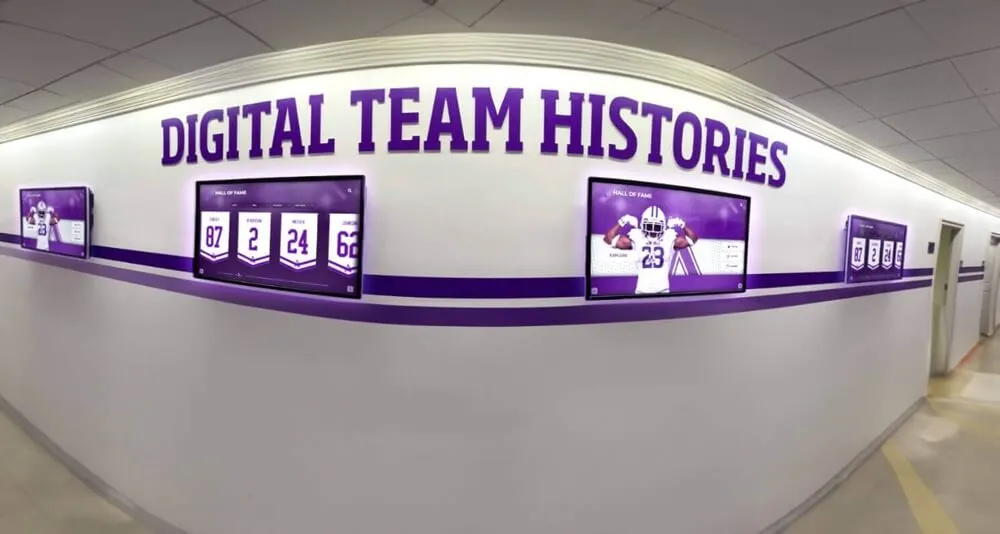
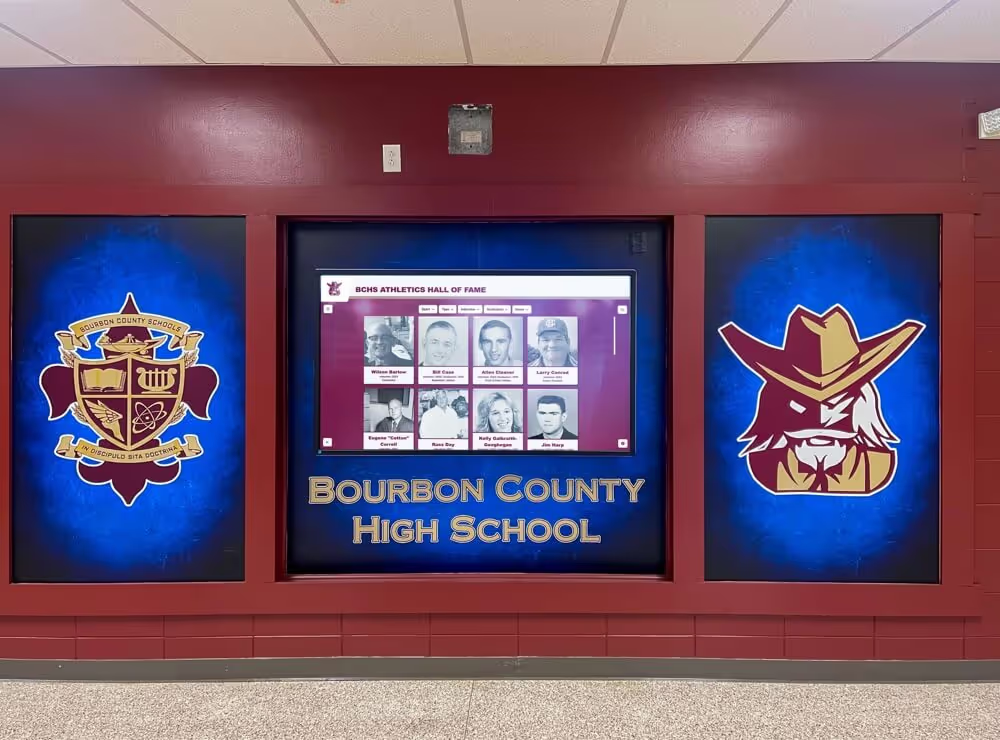
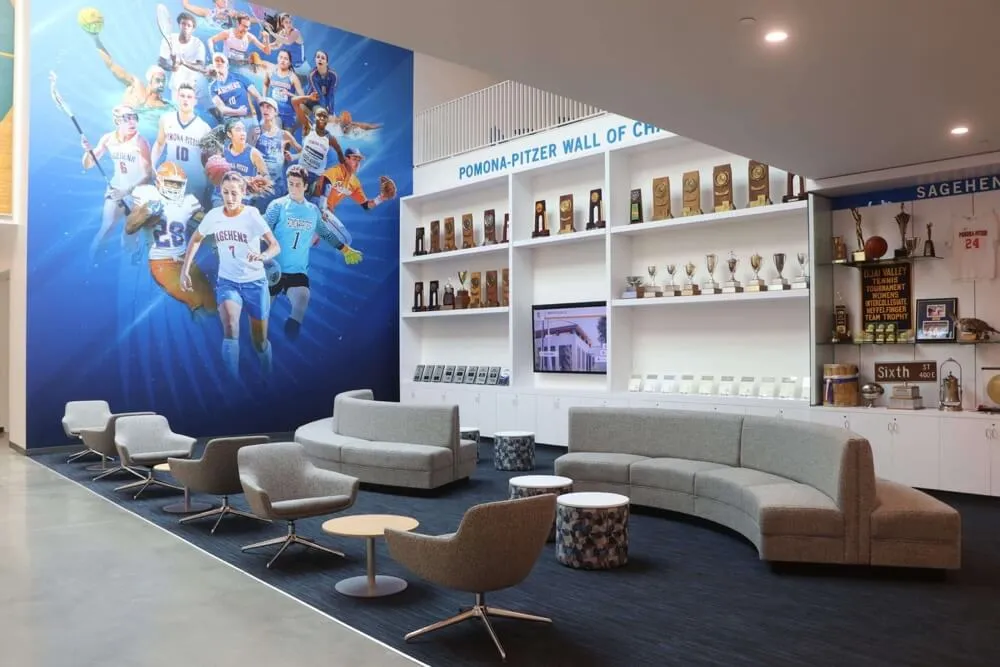
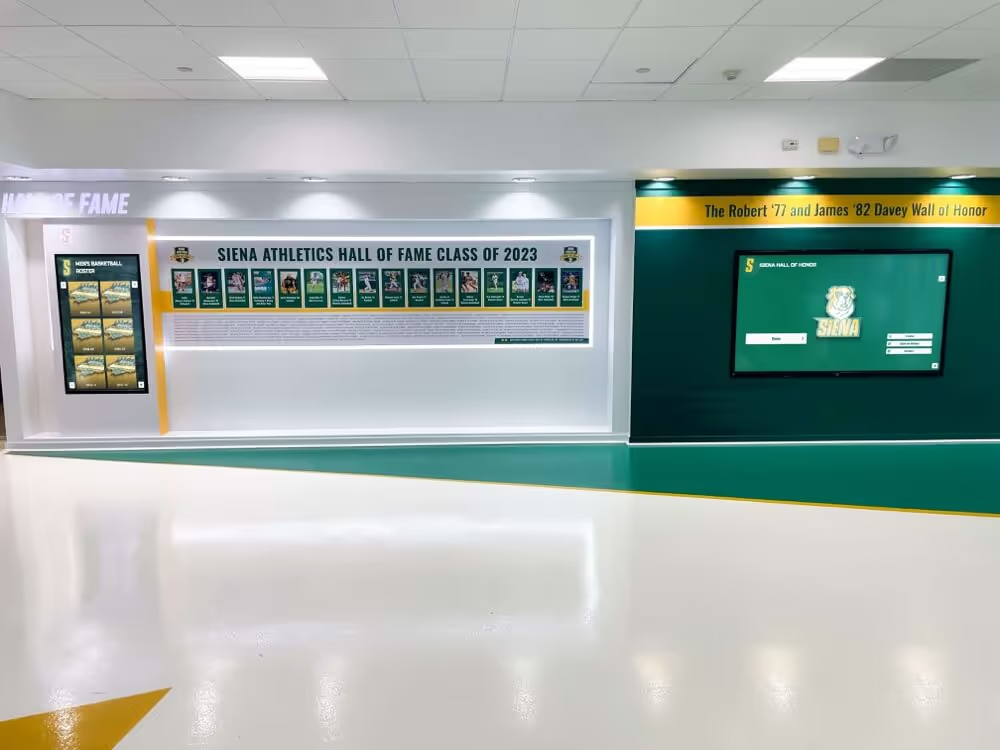
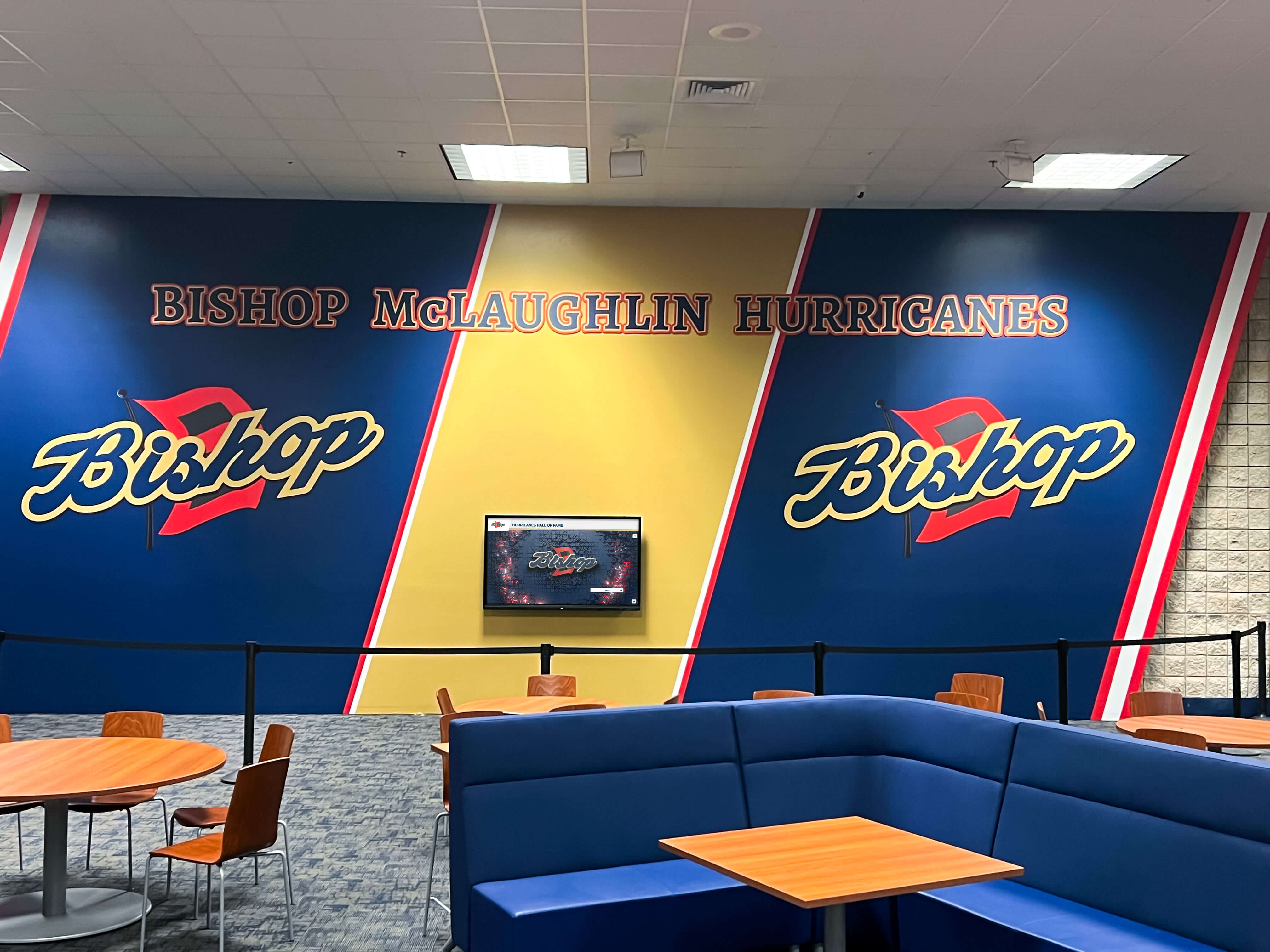
Modern cafeteria designs integrate school branding and flexible seating to create welcoming environments beyond traditional dining halls
Understanding Cafeteria’s Role in School Culture
Before implementing design changes, understanding how cafeterias function within broader school ecosystems helps administrators create spaces serving multiple institutional priorities.
The Multi-Functional School Cafeteria
Contemporary school cafeterias serve diverse functions extending far beyond meal service:
Primary Dining Function
- Breakfast and lunch service for hundreds or thousands of students daily
- Staff dining areas and faculty social spaces
- Special event meals and celebration dinners
- Community meal programs and family dining events
Social and Community Hub
- Informal student gathering space during free periods
- Before-school and after-school congregation areas
- Club meetings and small group activities
- Student government and organization events
Institutional Event Space
- School-wide assemblies and presentations
- Parent information nights and community meetings
- Athletic team meals and recognition dinners
- Arts performances and talent showcases
Communication and Recognition Platform
- High-visibility location for school announcements and information
- Strategic placement for student achievement recognition
- Community bulletin boards and event promotion
- School spirit displays and tradition showcases
This functional diversity means cafeteria design must accommodate varied uses while maintaining primary dining efficiency.
High-Traffic Visibility Opportunity
School cafeterias represent arguably the highest-traffic interior spaces in educational facilities:
Universal Daily Presence Every student, regardless of grade level, academic program, or extracurricular involvement, visits the cafeteria multiple times weekly. This universal presence makes cafeterias ideal locations for:
- Student recognition displays ensuring all students see achievements celebrated
- Important announcements and deadline reminders reaching entire populations
- School culture reinforcement through environmental design
- Community information systems accessed by all stakeholders
Extended Dwell Time Unlike hallways where students pass through quickly, cafeterias involve extended occupancy. Students spend 20-40 minutes during lunch periods, providing substantial opportunity for engagement with environmental elements including recognition displays, informational content, and cultural messaging.
Strategic use of this attention creates meaningful impact on school culture and student engagement.
Behavior and Environmental Design Connection
Research in environmental psychology demonstrates that physical space design significantly influences occupant behavior and social interaction:
Positive Behavioral Influence
- Thoughtful seating arrangements encourage positive social groupings
- Natural lighting improves mood and reduces behavioral incidents
- Appropriate noise management creates comfortable environments
- Visual interest reduces restlessness and inappropriate behavior
- School pride elements encourage respectful space treatment
Community Building Through Design
- Inclusive seating options accommodate diverse social preferences
- Recognition displays validate student achievement publicly
- Cultural representation creates belonging for all students
- Flexible spaces support varied interaction styles
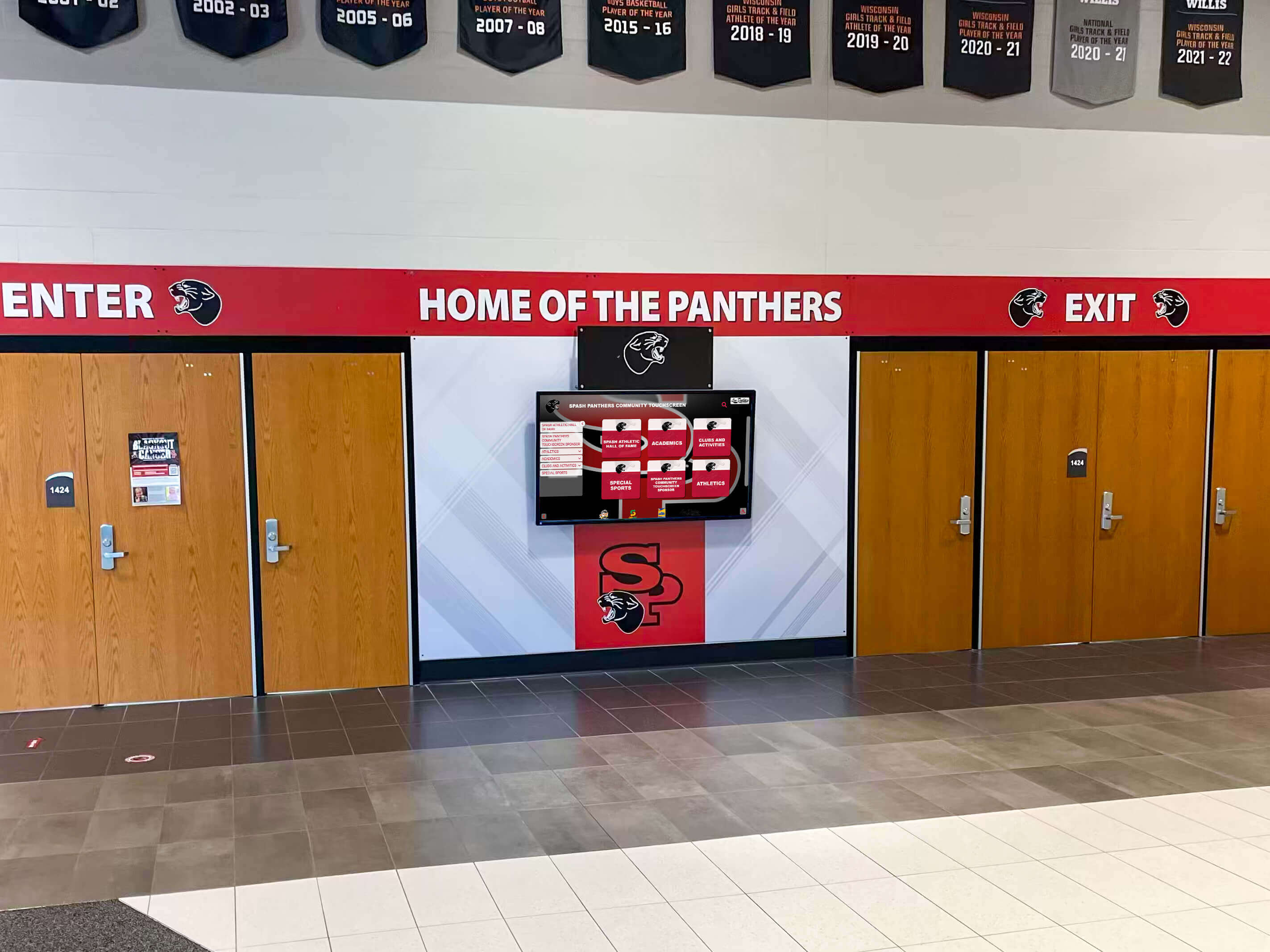
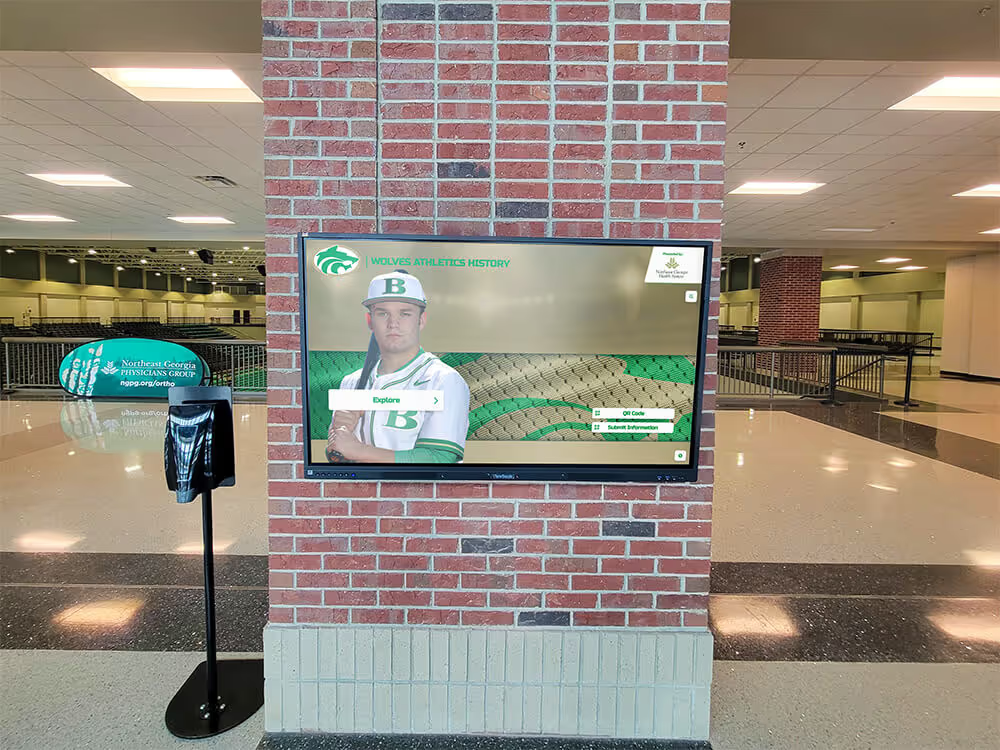
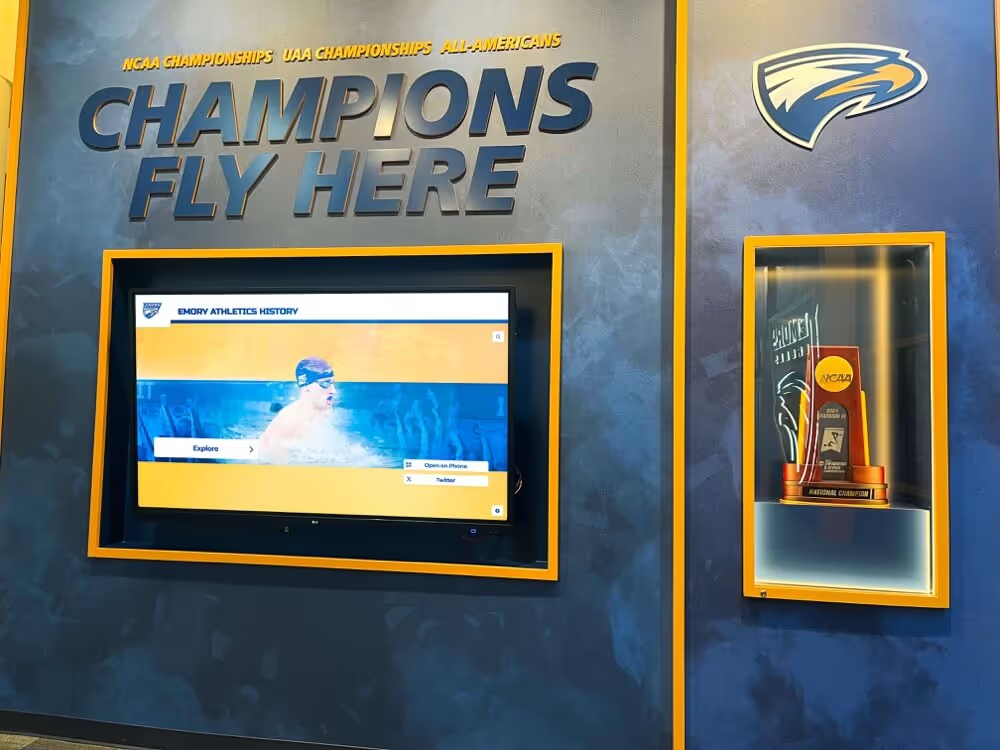
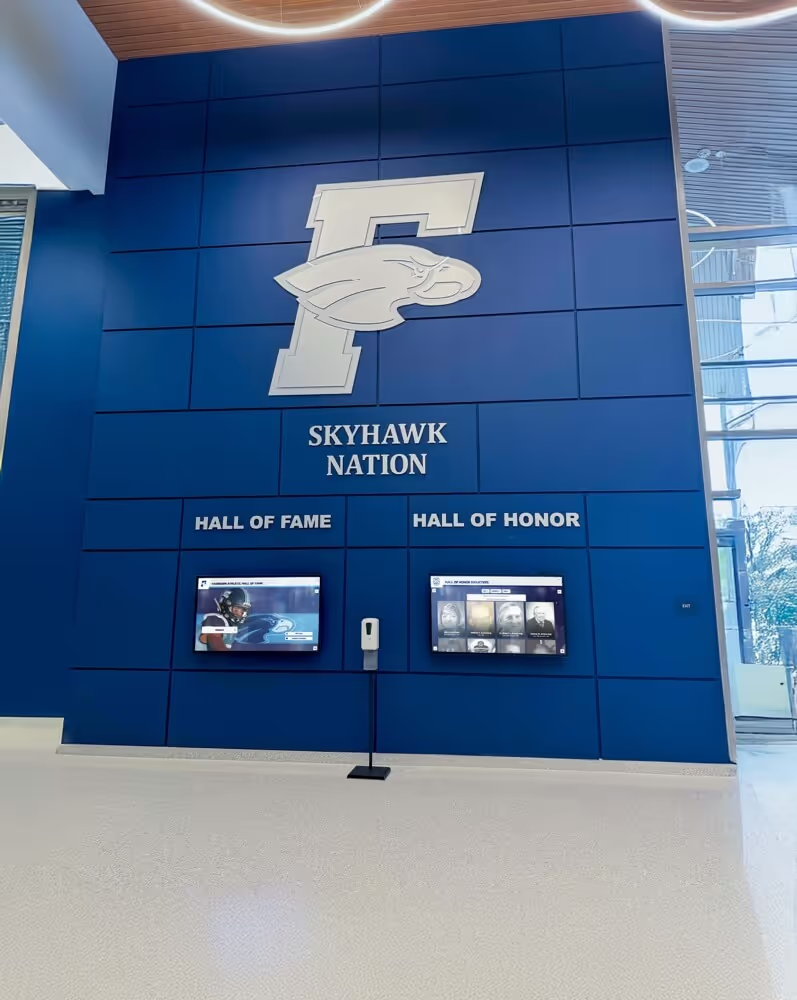
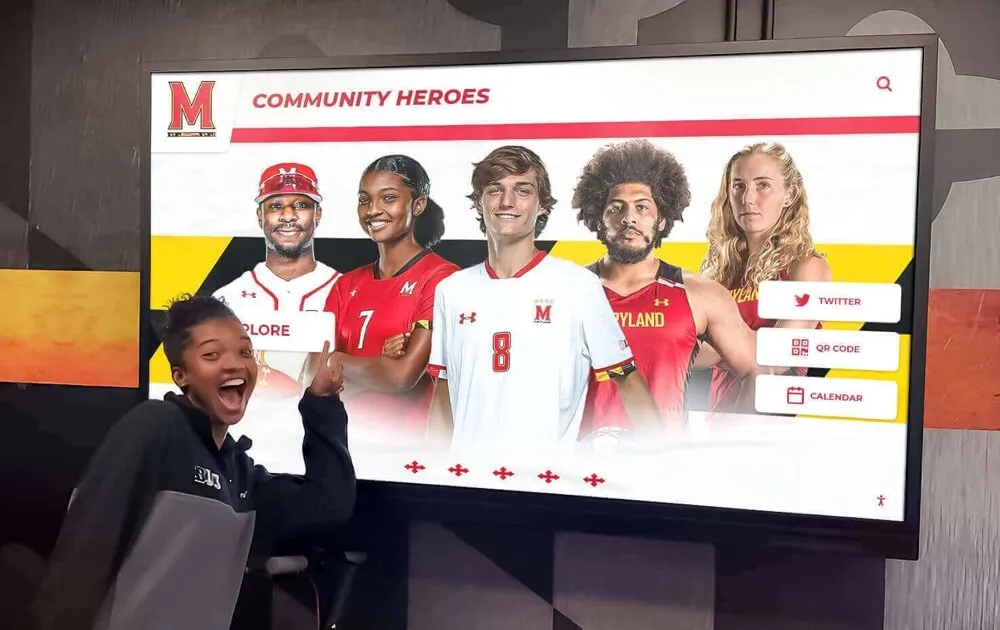
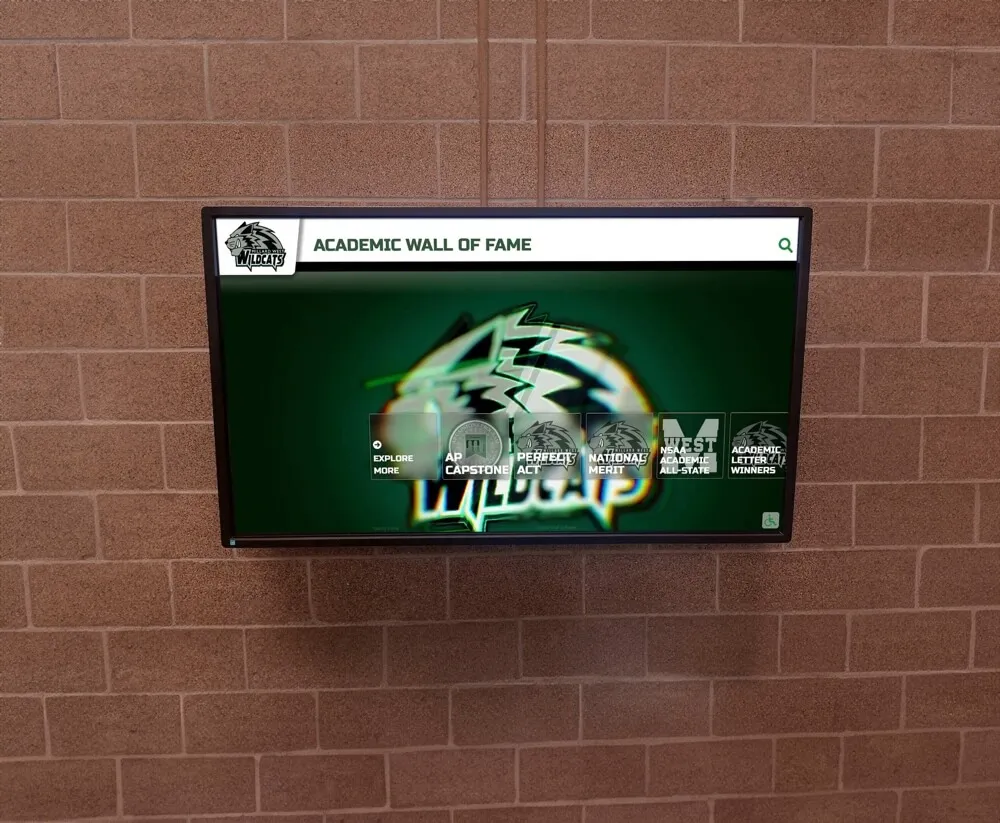
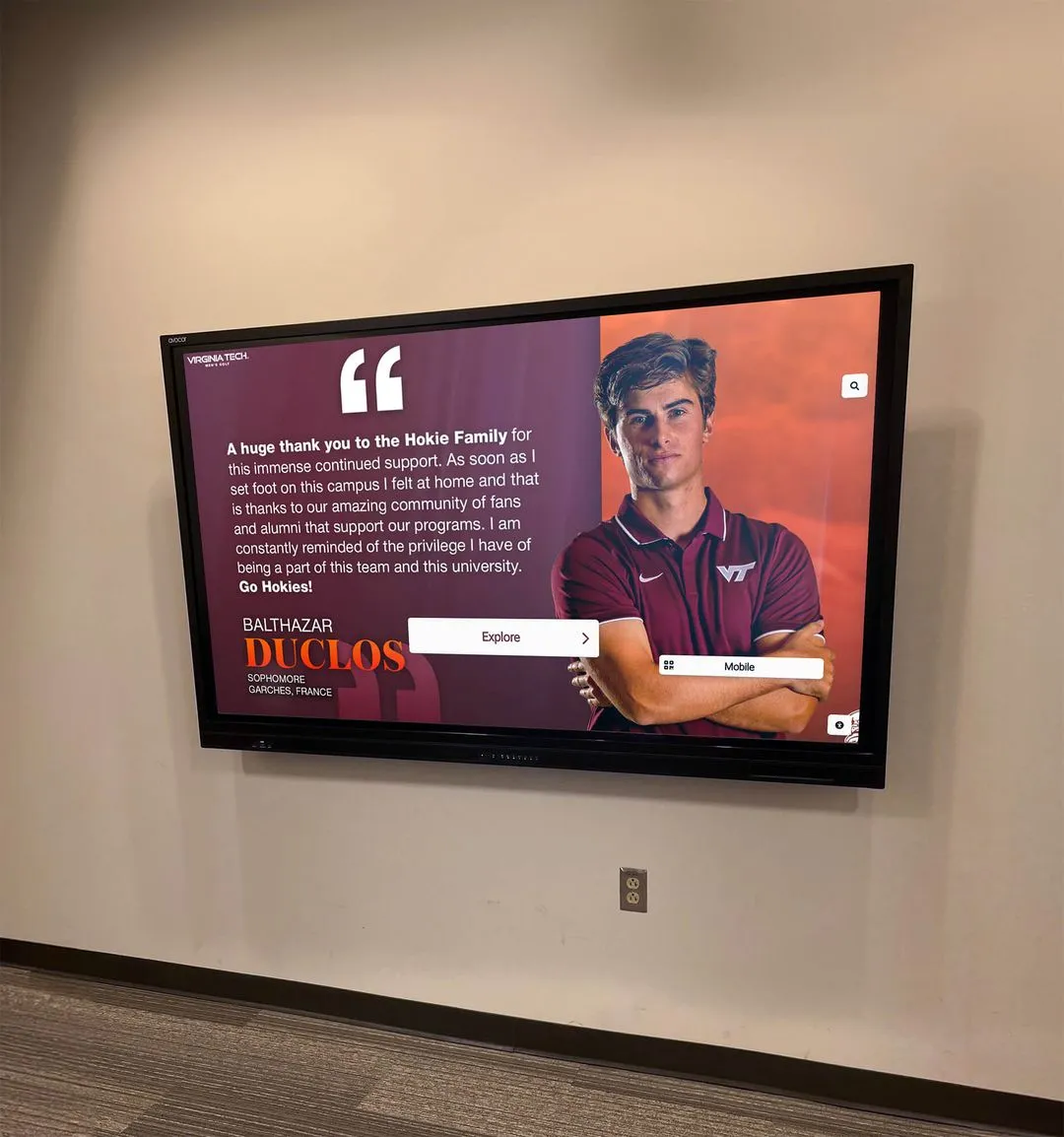
Digital displays in high-traffic areas ensure important information and student recognition reach entire school populations
Cafeteria design represents opportunity to intentionally shape student experience and school culture through environmental choices.
Cafeteria Layout and Traffic Flow Optimization
Efficient cafeteria layout improves student experience while reducing administrative challenges and behavioral issues.
Strategic Space Planning
Service Area Configuration Serving line design dramatically impacts traffic flow and wait times:
- Multiple service stations reducing bottlenecks during peak periods
- Clear queue lines and directional signage guiding student movement
- Separate beverage and condiment stations preventing congestion
- Point-of-sale locations minimizing backup at serving stations
- Express service options for students with limited lunch windows
- Salad bars and self-service areas distributing traffic across space
Seating Zone Design Thoughtful seating organization improves social dynamics:
- Varied table sizes accommodating different group preferences (2-person, 4-person, 6-person, 8-person options)
- Mix of traditional cafeteria tables with alternative seating like booths or high-top tables
- Quiet zones for students preferring calmer environments
- Social zones for group interaction and conversation
- Study-friendly areas with appropriate lighting for students working during lunch
- Clear pathways between seating areas preventing trapped students
Traffic Pattern Management One-way traffic flows and clear circulation paths reduce chaos:
- Designated entry and exit points preventing collision
- Wide main aisles accommodating peak traffic volumes
- Visual cues (floor markings, signage) guiding student movement
- Separate traffic lanes for students entering, dining, and exiting
- Strategic trash and tray return locations preventing backup
- Emergency egress routes maintained clear per safety codes
For schools managing recognition across multiple facilities, digital trophy case solutions provide comprehensive platforms extending into cafeterias and other common areas.
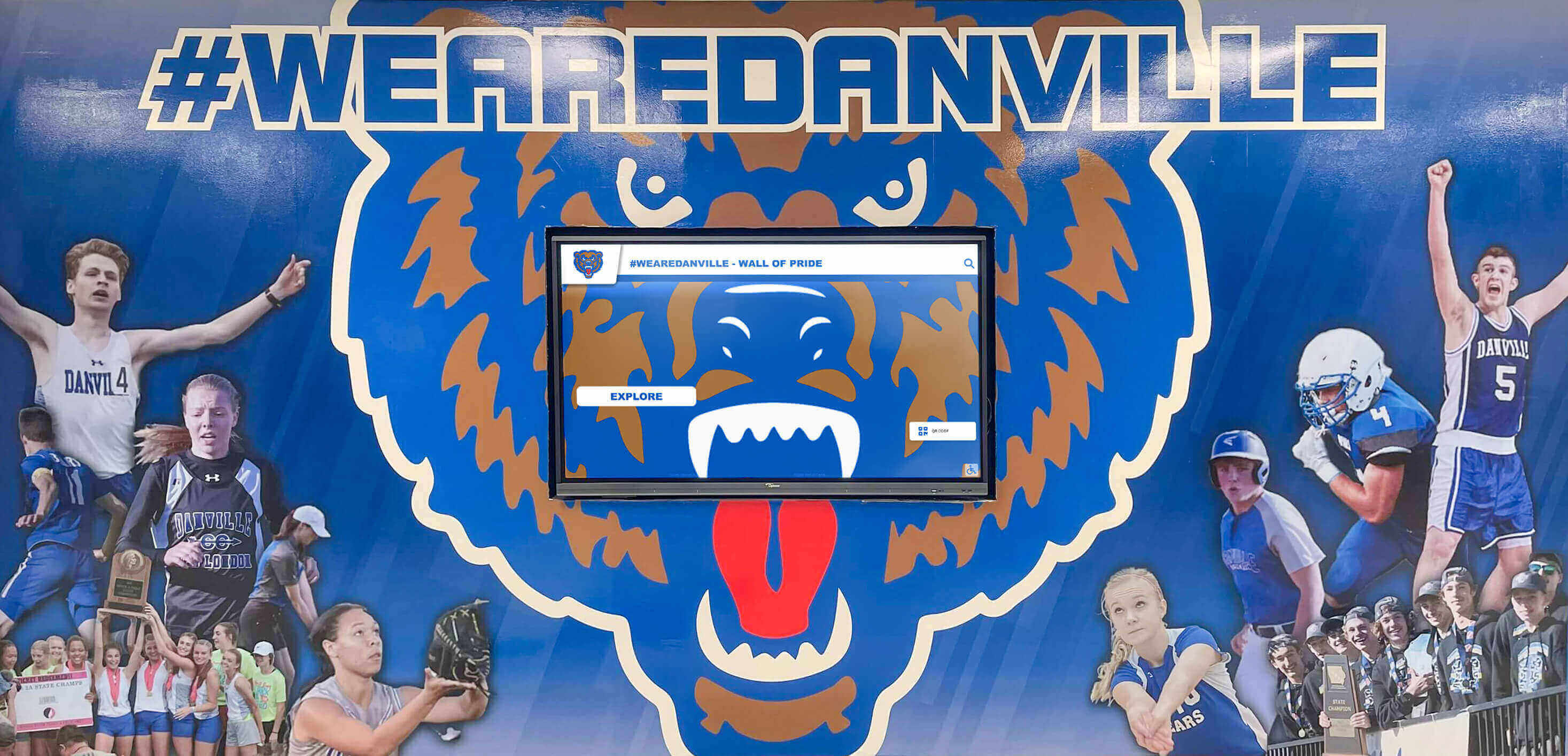
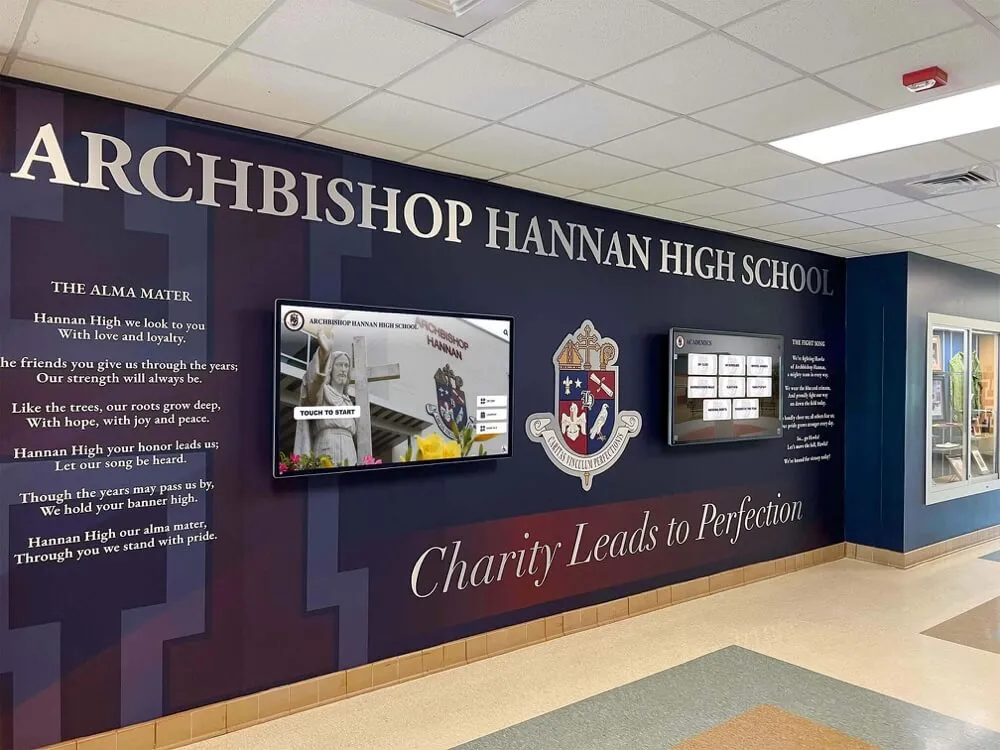
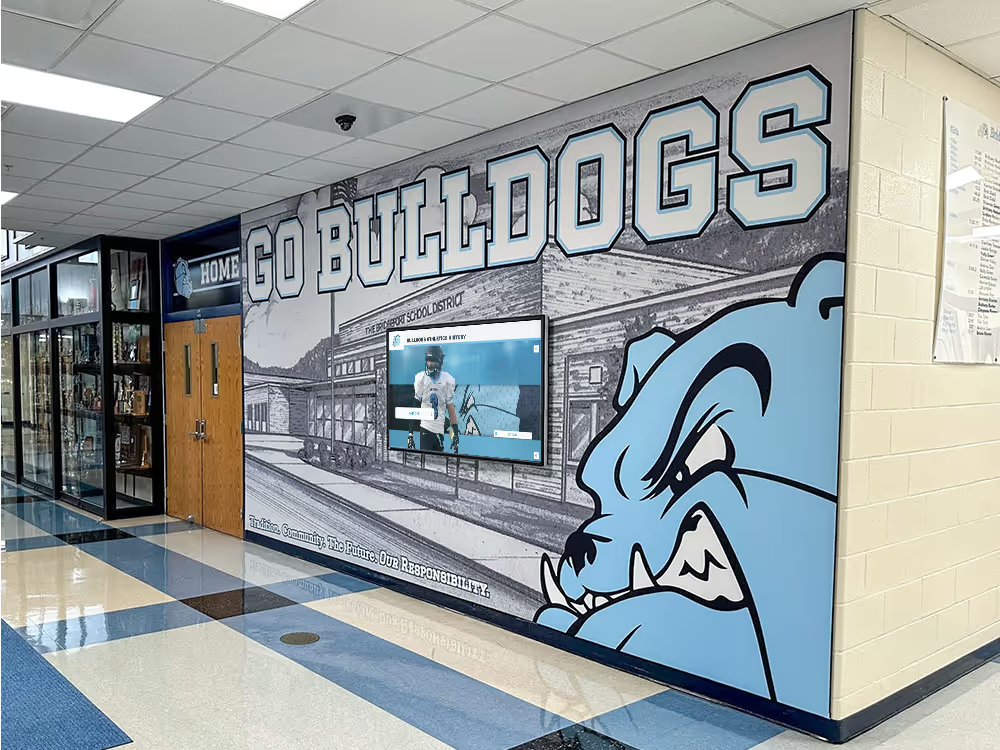
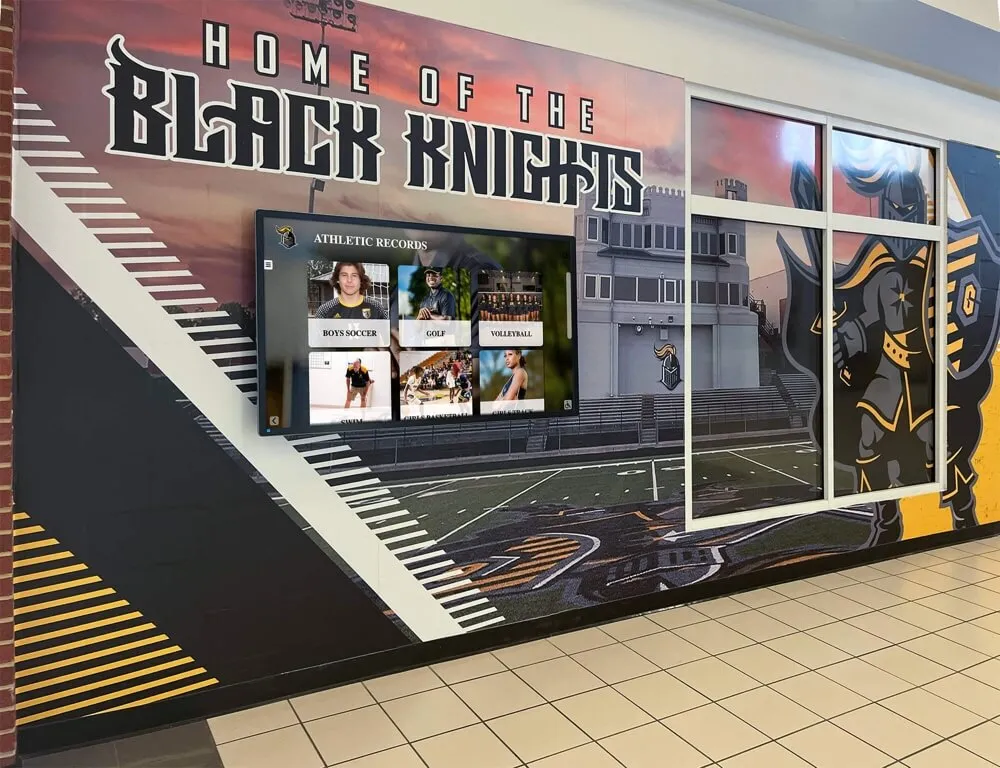
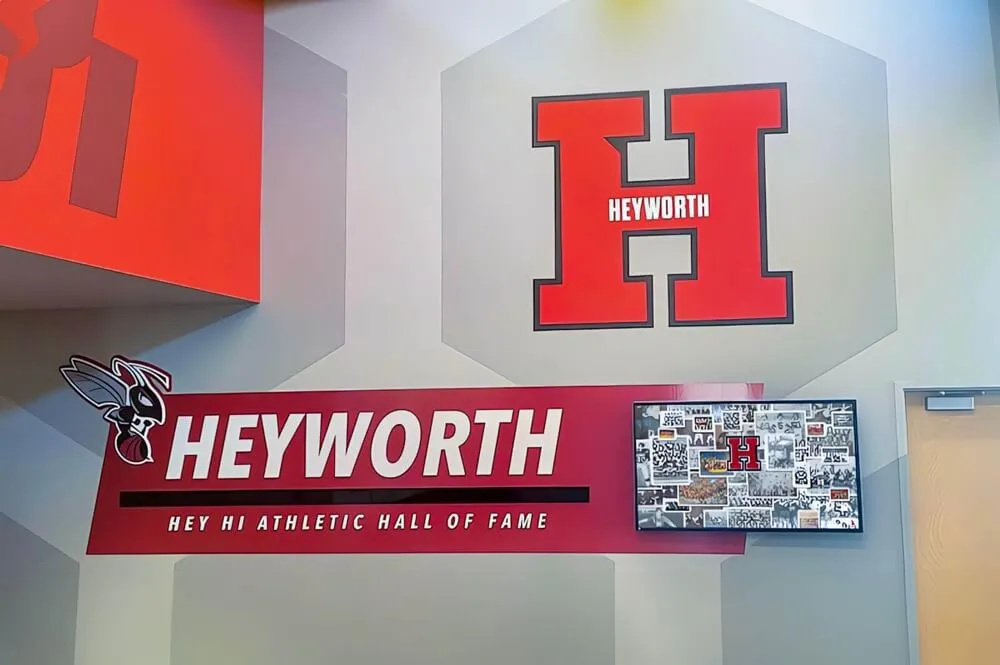
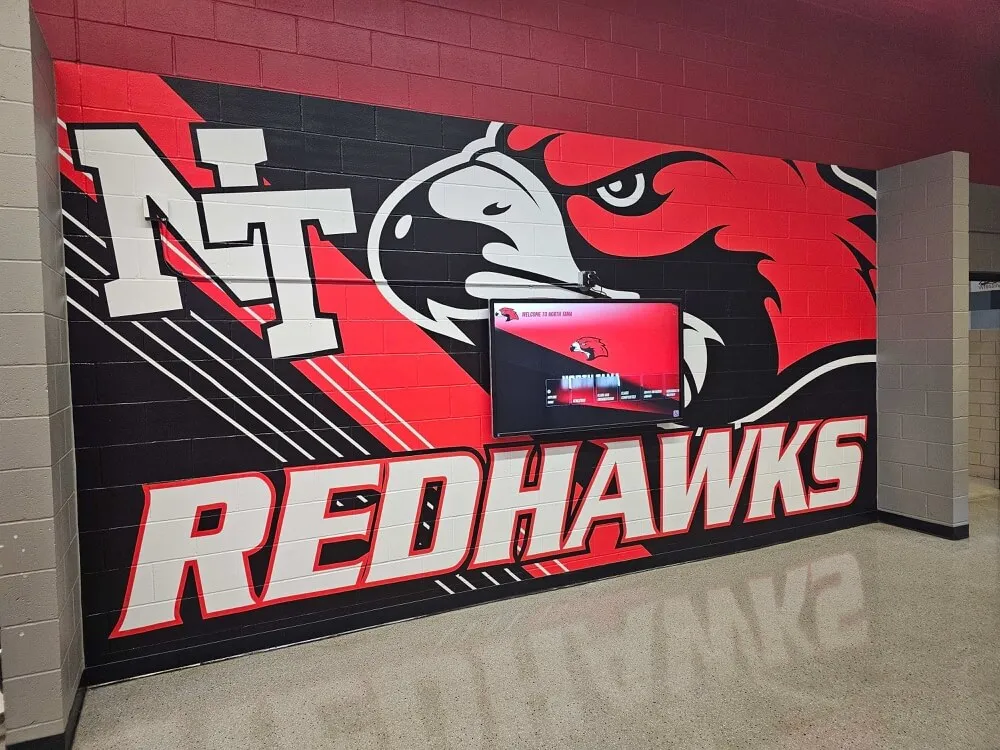
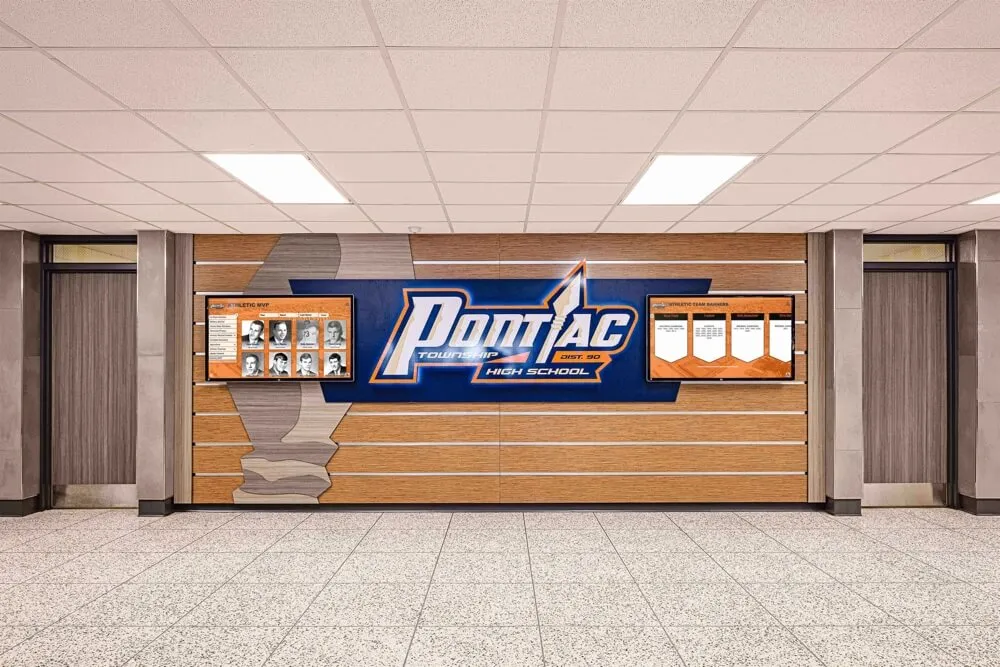
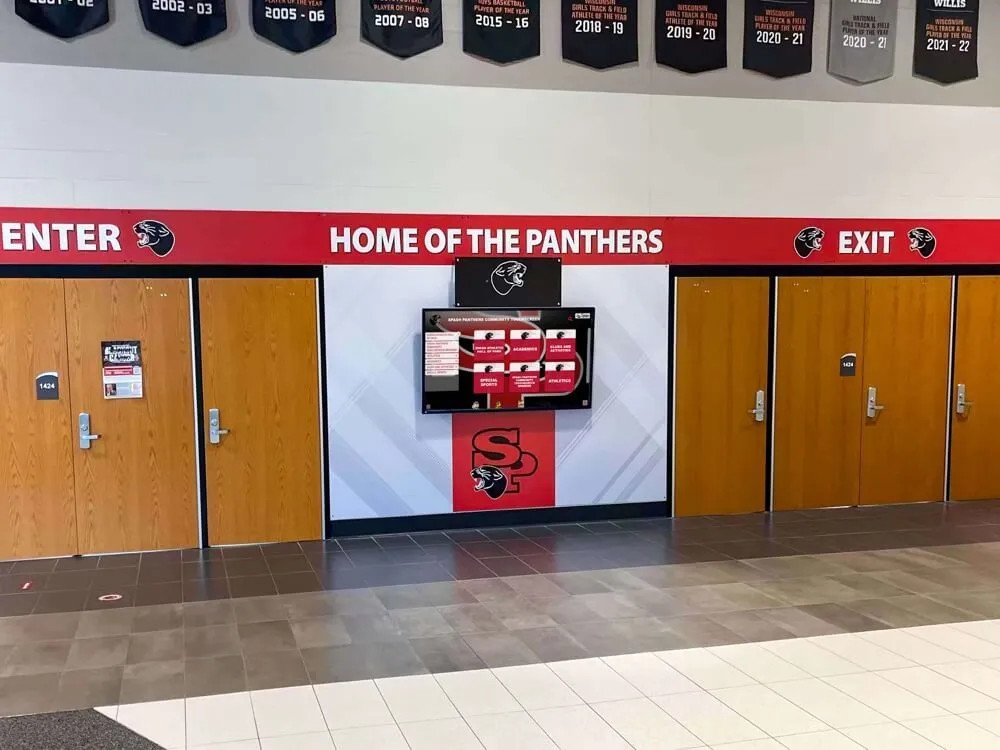
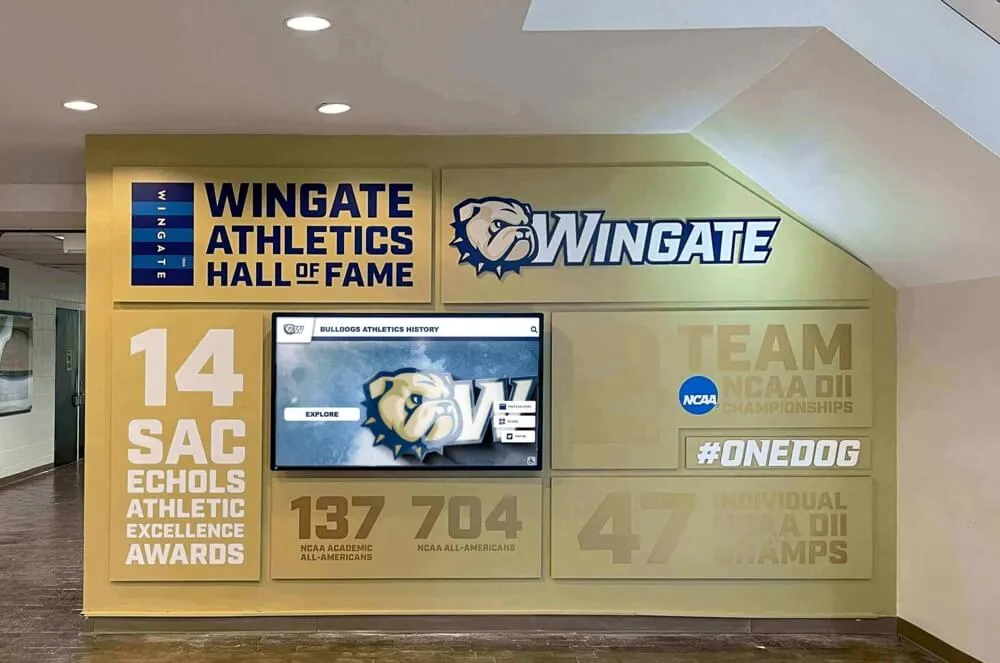
Strategic integration of digital displays with traditional branding elements creates cohesive visual identity throughout school facilities
Flexible Furniture and Adaptable Spaces
Modern cafeterias increasingly incorporate flexibility supporting varied uses beyond meal service.
Mobile Furniture Systems
- Folding tables that store efficiently for assembly or event use
- Stackable chairs reducing setup and breakdown time
- Rolling cart storage for quick space transformation
- Modular seating units that reconfigure for different events
- Lightweight materials enabling easy student participation in setup
Multi-Purpose Infrastructure
- Retractable projection screens for presentations and assemblies
- Integrated sound systems supporting varied event needs
- Adjustable lighting enabling ambiance appropriate for different functions
- Technology integration points for charging stations and device connectivity
- Designated performance areas for student talent showcases
Storage Solutions Adequate storage enables cafeteria flexibility:
- Equipment closets adjacent to serving areas
- Furniture storage accessible without disrupting dining
- Supplies organization supporting event setup
- Secure storage for valuable technology and equipment
- Janitor closets supporting efficient cleaning and maintenance
Recognition Displays in Cafeteria Environments
Cafeterias provide ideal high-visibility locations for student achievement recognition and community information systems.
Digital Recognition Display Benefits
Modern digital recognition platforms transform how schools celebrate student achievement in cafeteria environments:
Unlimited Recognition Capacity Traditional static displays force impossible choices about whose achievements receive visibility. Digital systems eliminate space constraints:
- Every academic honor roll student receives recognition regardless of list length
- All athletic letter winners appear without physical space limitations
- Multiple achievement categories display simultaneously through rotating content
- Historical archives preserve past honorees while highlighting current students
- Special recognitions add easily without removing existing content
Engaging Visual Presentation Dynamic content captures and maintains student attention during extended cafeteria dwell time:
- Photo galleries showcasing student achievements and school events
- Video highlights from athletic competitions and performances
- Slideshow presentations celebrating recent accomplishments
- Animated content more engaging than static bulletin boards
- Professional presentation quality elevating perceived importance of recognition
Effortless Content Updates Web-based content management enables immediate recognition updates:
- Add new honor roll students immediately after grade posting
- Update athletic recognition after weekend competitions
- Modify displayed content for special events or themes
- Schedule content changes in advance for automated updates
- Remote management from any location with internet access
Solutions like Rocket Alumni Solutions provide comprehensive digital recognition platforms specifically designed for educational environments, combining unlimited recognition capacity with intuitive content management and professional hardware appropriate for cafeteria installations.
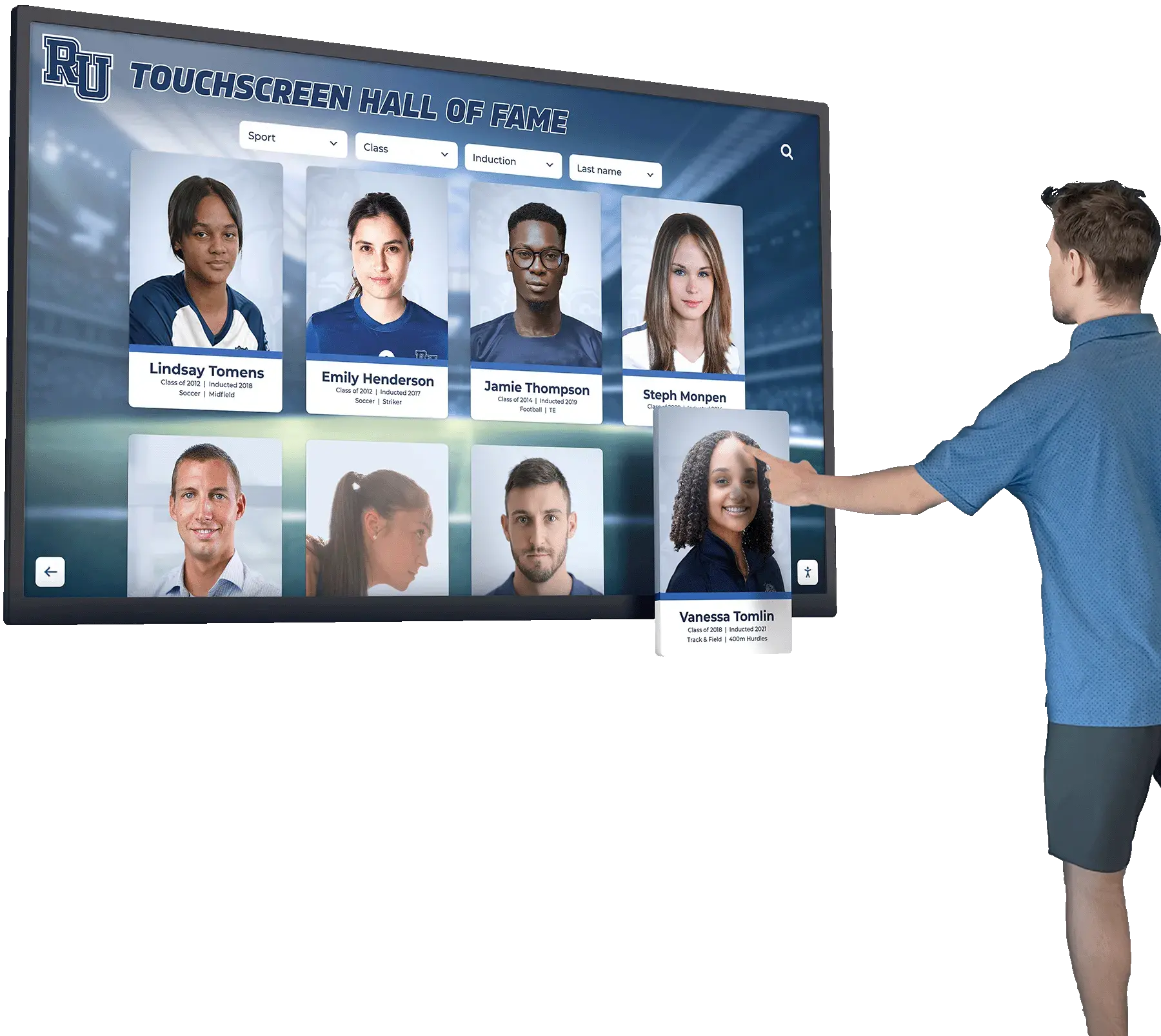
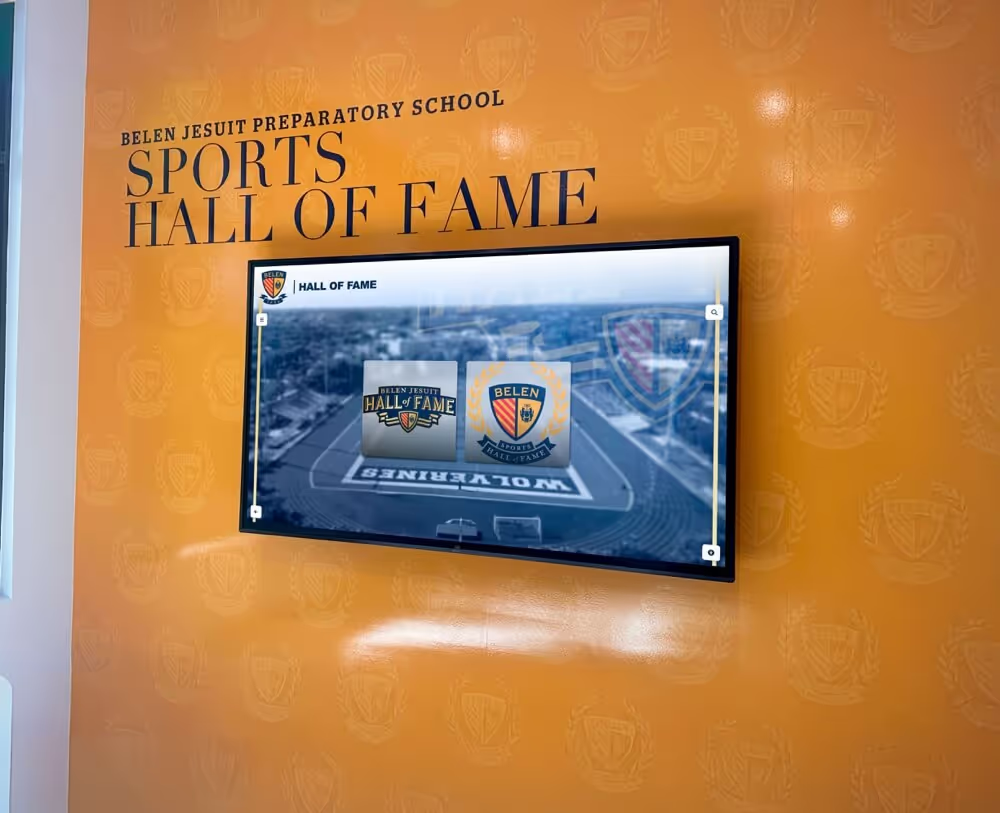
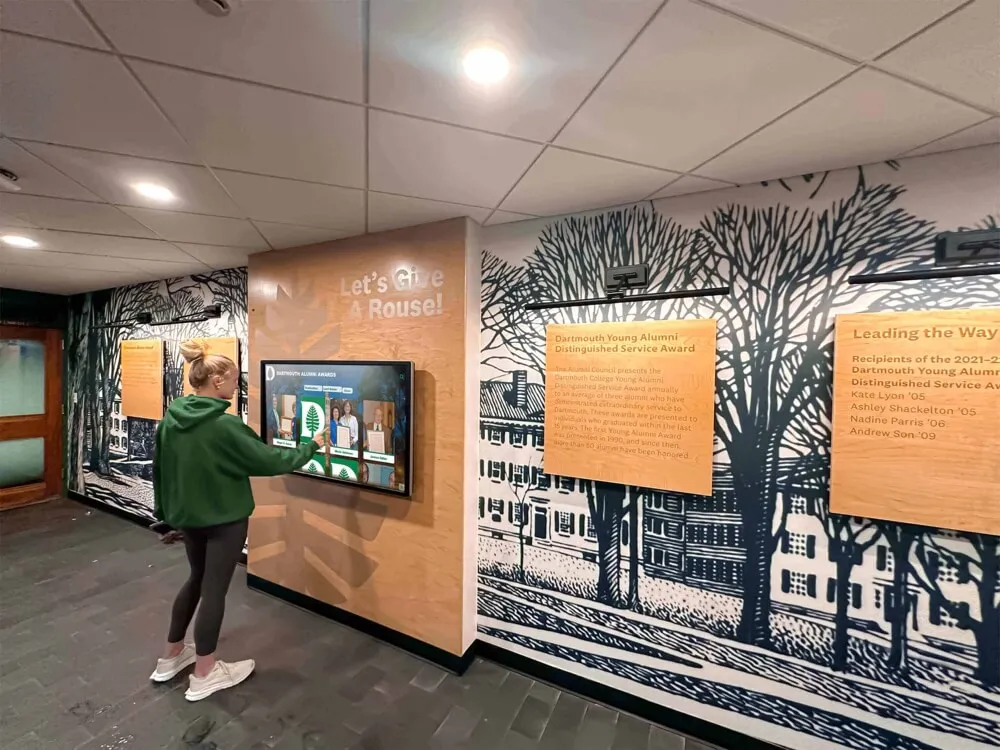
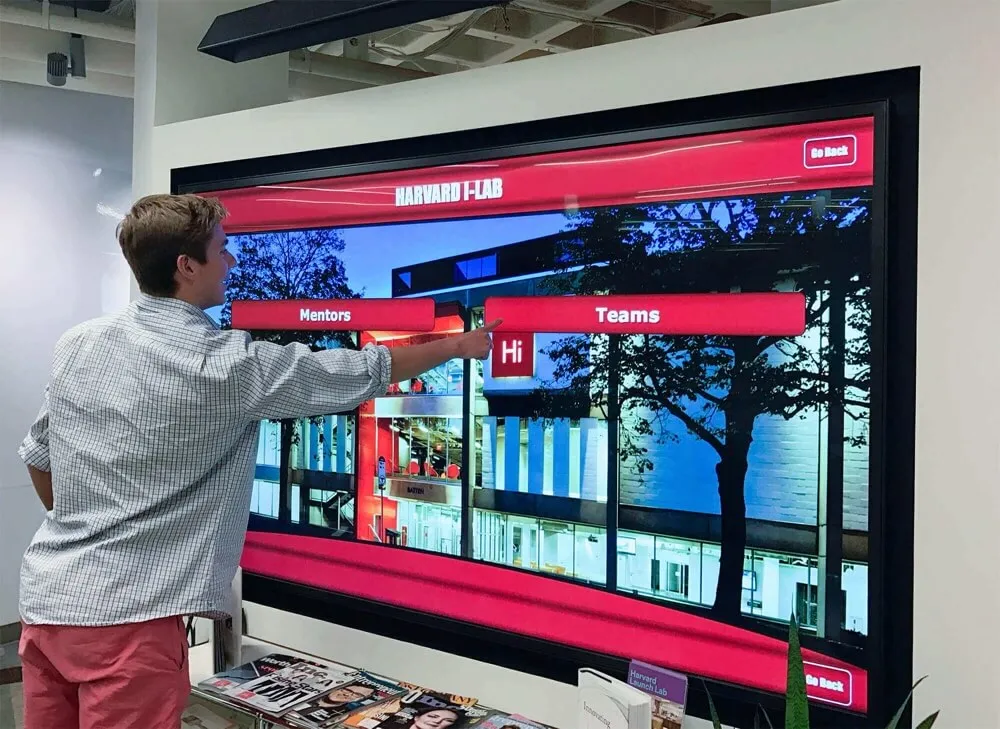
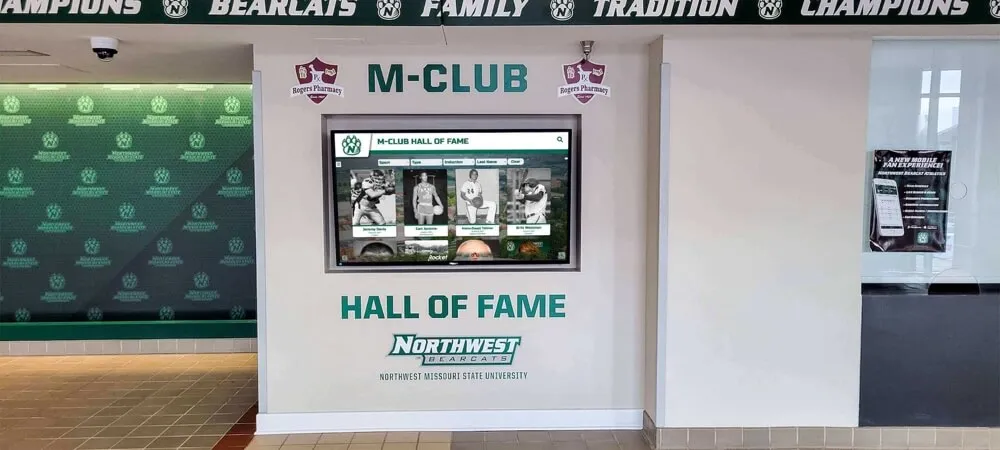
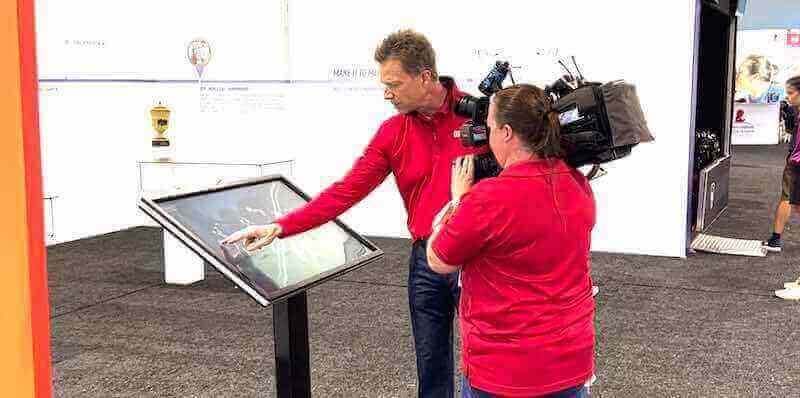
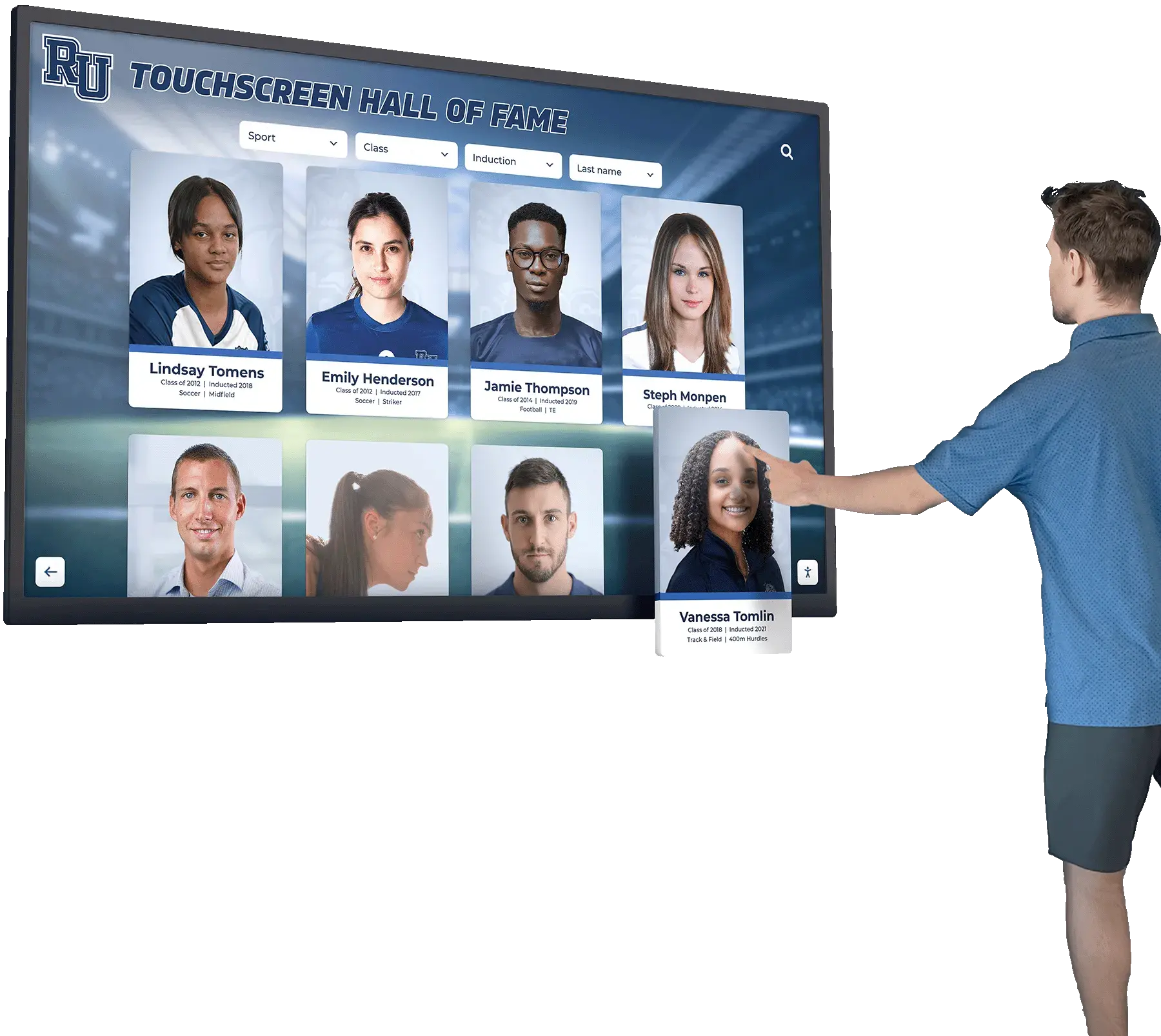
Interactive touchscreen displays enable students to explore achievements, search for peers, and engage with school recognition content during cafeteria visits
Strategic Display Placement in Cafeterias
Location determines recognition display effectiveness in cafeteria environments.
High-Visibility Mounting Locations Position displays where students naturally look during extended cafeteria presence:
- Above serving lines where students stand while waiting in queue
- On walls facing main seating areas visible to dining students
- At cafeteria entrances greeting students as they arrive
- Near exits where students congregate while leaving
- In staging areas where students wait for service to begin
Multiple Display Strategies Larger cafeterias benefit from multiple coordinated displays:
- Matching displays on opposite walls ensuring visibility from all seating areas
- Different content on each display serving varied purposes (academic recognition on one display, athletic achievement on another)
- Synchronized displays showing identical content for maximum visibility
- Interactive touchscreen in prominent locations enabling student exploration
- Wall-mounted displays for passive viewing combined with interactive kiosks for active engagement
Technical Considerations for Cafeteria Installations Environmental factors influence display hardware selection:
- High-brightness displays remaining visible despite significant ambient lighting
- Durable commercial-grade hardware withstanding high-traffic environments
- Protective enclosures preventing damage from thrown objects or tampering
- Secure mounting systems preventing theft or vandalism
- Weatherproof specifications if cafeteria includes outdoor components
Content Strategies for Cafeteria Recognition Displays
Effective content maximizes recognition impact while maintaining student interest.
Academic Recognition Content Celebrate intellectual achievement prominently:
- Honor roll recognition displays showcasing high-achieving students each grading period
- National Merit Scholars and standardized testing excellence
- AP Scholar awards and advanced course achievements
- Academic competition team accomplishments
- Perfect attendance and consistent achievement recognition
- Dean’s List and GPA milestone celebrations
Athletic Achievement Recognition Sports accomplishments deserve prominent cafeteria visibility:
- Varsity letter winners across all sports programs
- Conference and state championship celebrations
- Individual athletic records and milestone achievements
- Senior night recognition honoring graduating athletes
- College athletic commitment announcements
- Athletic hall of fame inductee profiles
Arts and Activities Recognition Beyond academics and athletics, celebrate comprehensive excellence:
- Theater cast and production crew recognition
- Music competition achievements and festival selections
- Visual arts award winners and exhibition participants
- Academic team and quiz bowl success
- Student government leaders and class officers
- Community service award recipients
School Information and Communication Balance recognition with practical communication:
- Daily announcements and upcoming events calendar
- Athletic competition schedules and results
- Menu information and nutrition education
- School spirit messaging and tradition reinforcement
- Important deadlines and procedure reminders
- Emergency information and safety protocols when needed
Comprehensive approaches to student achievement tracking ensure consistent recognition across multiple display locations.
Creating Welcoming Cafeteria Atmospheres
Beyond functional efficiency, cafeteria environmental design influences student experience and school culture.
Visual Design and Branding
School Identity Reinforcement Cafeterias provide opportunity for prominent school pride display:
- Large-scale mascot murals creating visual focal points
- School colors incorporated throughout furniture and décor choices
- Trophy cases or display areas celebrating institutional achievements
- Historical photo galleries documenting school traditions
- Mission statement and values prominently displayed
- Alumni recognition connecting current students to broader legacy
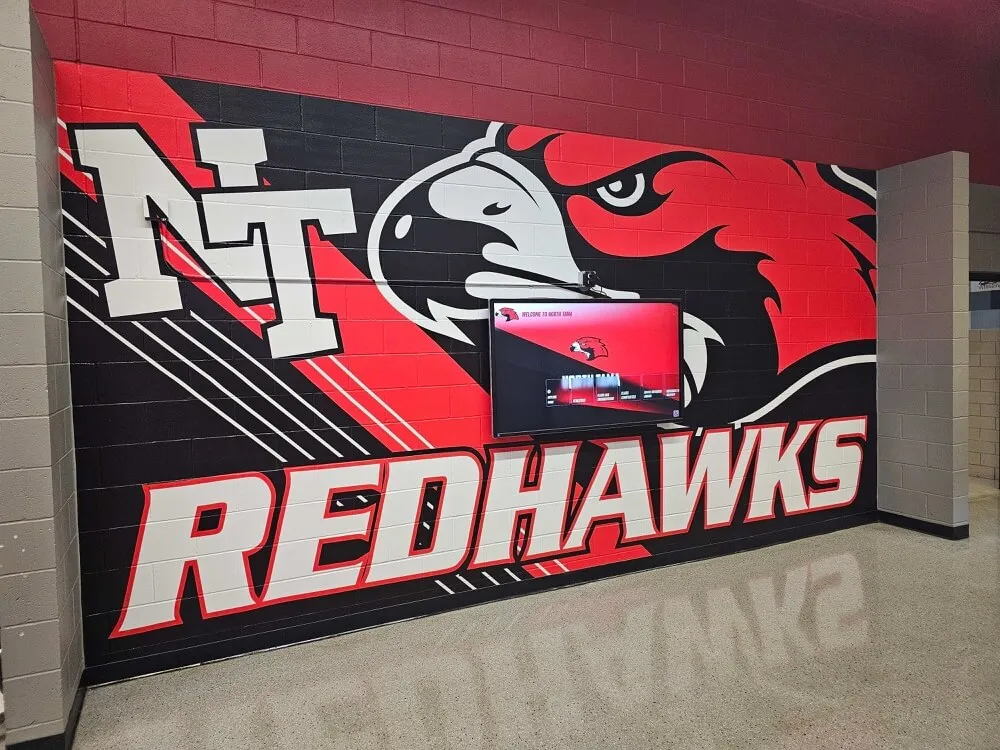
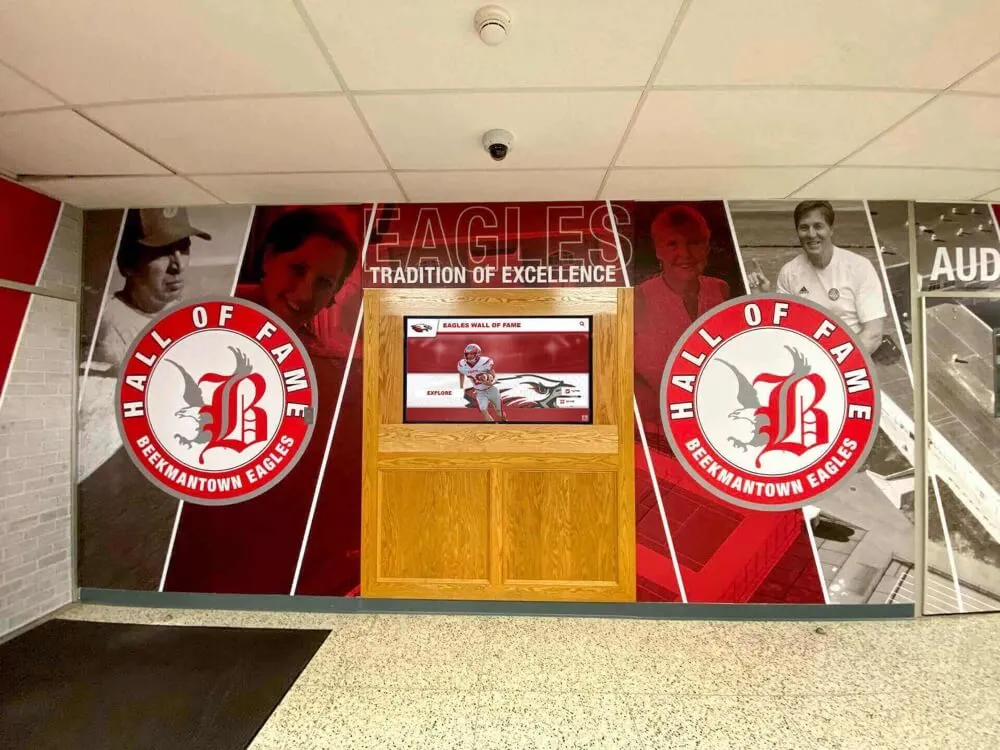
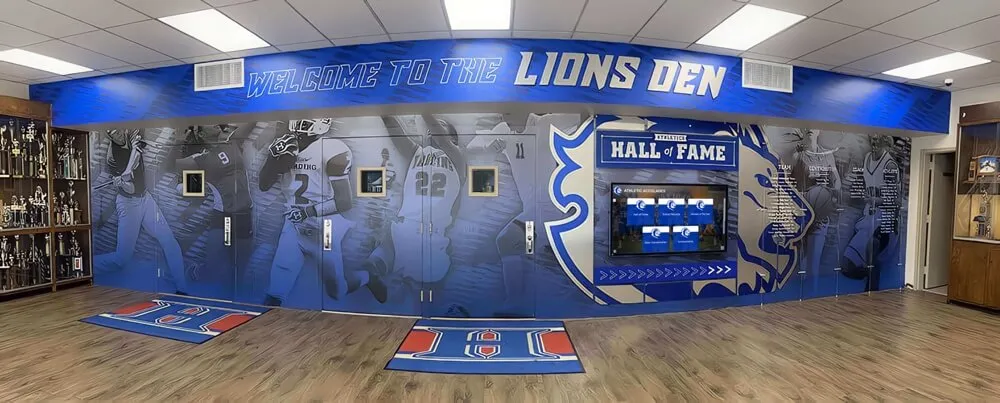
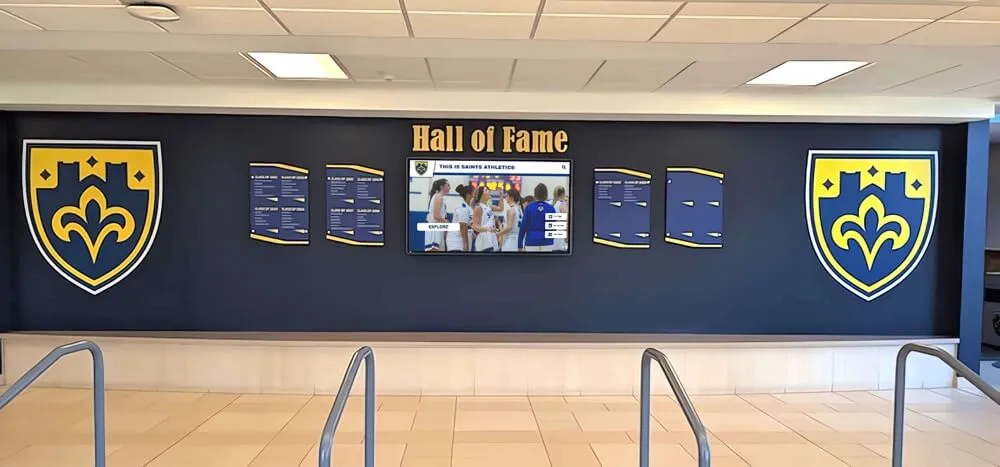
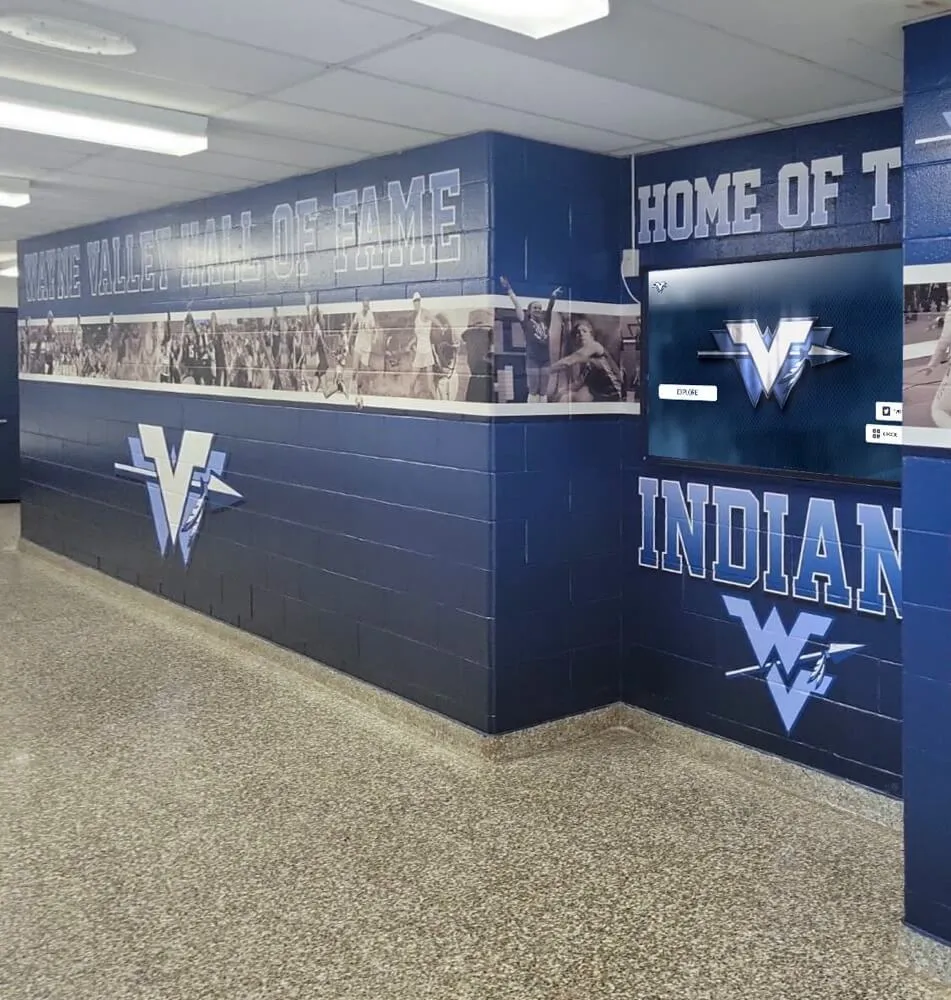
Large-scale branding murals combined with digital displays create strong visual identity while serving practical communication functions
Color Psychology Application Paint colors and design choices influence mood and behavior:
- Warm colors (reds, oranges, yellows) stimulating conversation and social interaction
- Cool colors (blues, greens) promoting calm and reducing noise levels
- Accent walls creating visual interest without overwhelming
- School color integration reinforcing institutional identity
- Light colors making spaces feel larger and more open
- Durable finishes withstanding high-traffic wear
Lighting Design Illumination dramatically impacts cafeteria atmosphere:
- Natural lighting through windows and skylights improving mood and behavior
- Appropriate artificial lighting levels for various functions
- Task lighting over serving areas ensuring food safety and quality visibility
- Ambient lighting in dining areas creating comfortable environment
- Accent lighting highlighting recognition displays and focal points
- Energy-efficient LED systems reducing operational costs
Acoustic Management
Cafeteria noise levels significantly impact student experience and behavior.
Sound Absorption Strategies Reduce excessive noise through strategic material selection:
- Acoustic ceiling tiles absorbing sound rather than reflecting
- Wall panels with sound-dampening properties in high-volume areas
- Carpet or sound-absorbing flooring in appropriate zones
- Fabric furnishings reducing sound reflection compared to hard surfaces
- Strategic placement of soft materials breaking sound travel paths
Architectural Sound Management Building design choices influence acoustic performance:
- Higher ceilings reducing perceived noise despite volume
- Separate dining zones breaking large spaces into manageable acoustic areas
- Physical barriers between louder and quieter areas
- Strategic furniture placement blocking direct sound pathways
- Music systems providing ambient sound masking excessive conversation volume
Better acoustic environments reduce student stress and behavioral incidents while creating more pleasant dining experiences.
Technology Integration in Modern Cafeterias
Beyond recognition displays, various technologies enhance cafeteria function and student experience.
Digital Menu Boards and Nutrition Information
Dynamic Menu Display Digital systems provide flexible menu communication:
- Real-time menu updates reflecting daily offerings and changes
- Nutritional information display supporting informed food choices
- Allergen warnings and dietary accommodation information
- Pricing clearly displayed for all menu items
- Visual food photography making offerings more appealing
- Promotional highlighting for special meals or new items
Compliance and Education Federal nutrition requirements create information mandates:
- Calorie and nutrition facts display meeting regulatory requirements
- Ingredient information for students with allergies or restrictions
- Educational content about healthy eating and nutrition
- Local food source highlighting when applicable
- Sustainability messaging about waste reduction and composting
Point-of-Sale and Payment Systems
Modern payment technology improves efficiency while supporting various student needs.
Cashless Payment Options
- Student account systems enabling prepaid meal purchases
- Biometric identification (fingerprint, facial recognition) eliminating need for cards or cash
- Mobile payment options for students with smartphones
- Parent portal access enabling remote account funding and monitoring
- Automatic free and reduced lunch processing maintaining student privacy
Data and Analytics Digital systems provide valuable operational insights:
- Purchase pattern analysis informing menu planning
- Peak traffic time identification enabling staffing optimization
- Inventory management supporting efficient ordering
- Waste tracking informing portion and production decisions
- Nutritional analysis of student consumption patterns
Student Convenience Technology
Charging Stations Built-in device charging accommodates student needs:
- USB charging ports at select tables enabling device power during lunch
- Secure charging lockers for device storage during activities
- Solar-powered charging stations in outdoor dining areas
- Wireless charging pads embedded in tables for compatible devices
WiFi Access Connectivity enables productive lunch period use:
- Guest WiFi networks for student device access during free time
- Content filtering ensuring appropriate use
- Bandwidth management preventing network slowdown
- Coverage extending throughout cafeteria and adjacent outdoor areas
For schools implementing comprehensive technology initiatives, interactive kiosk solutions provide frameworks extending beyond cafeterias to multiple campus locations.
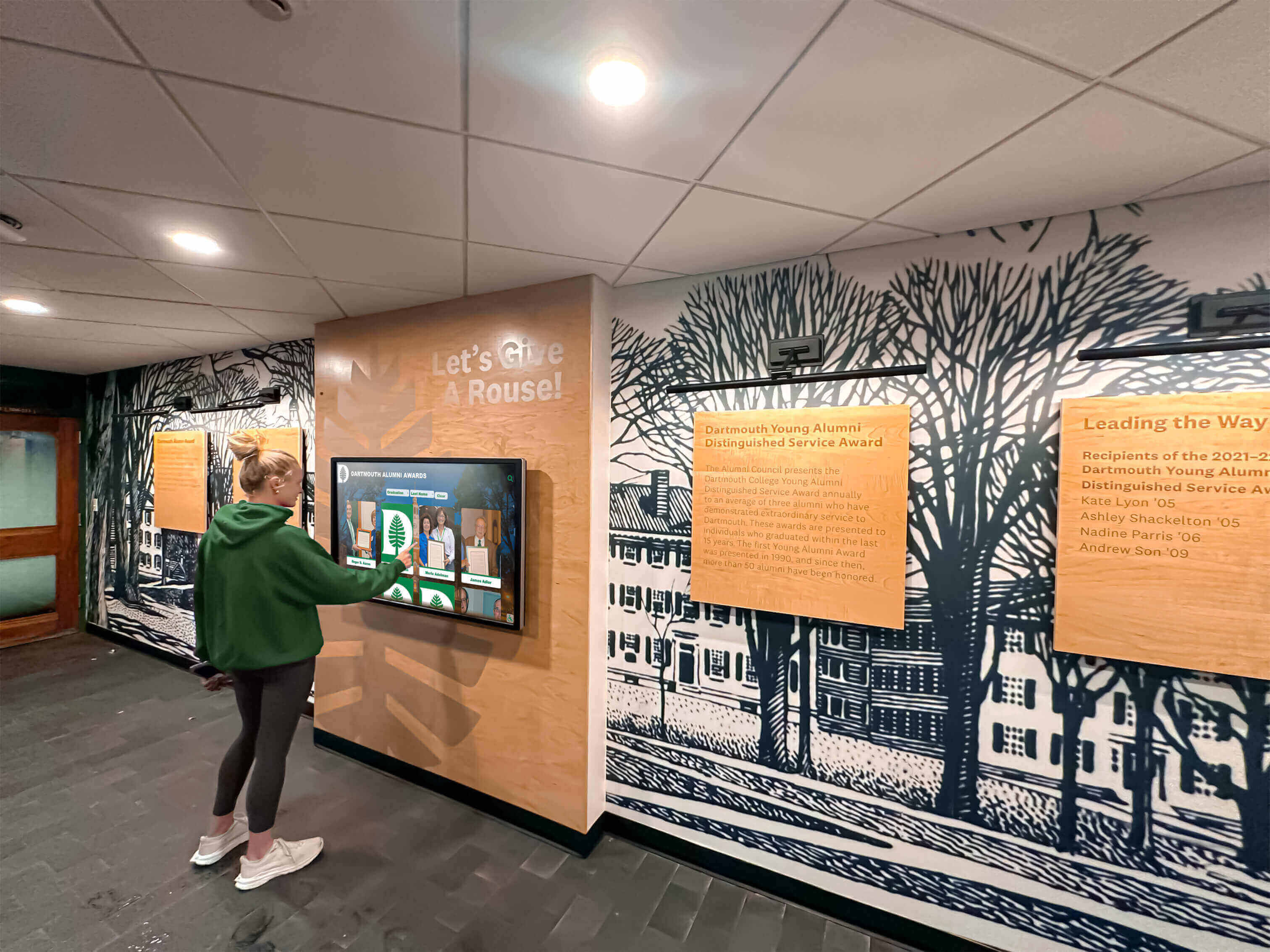
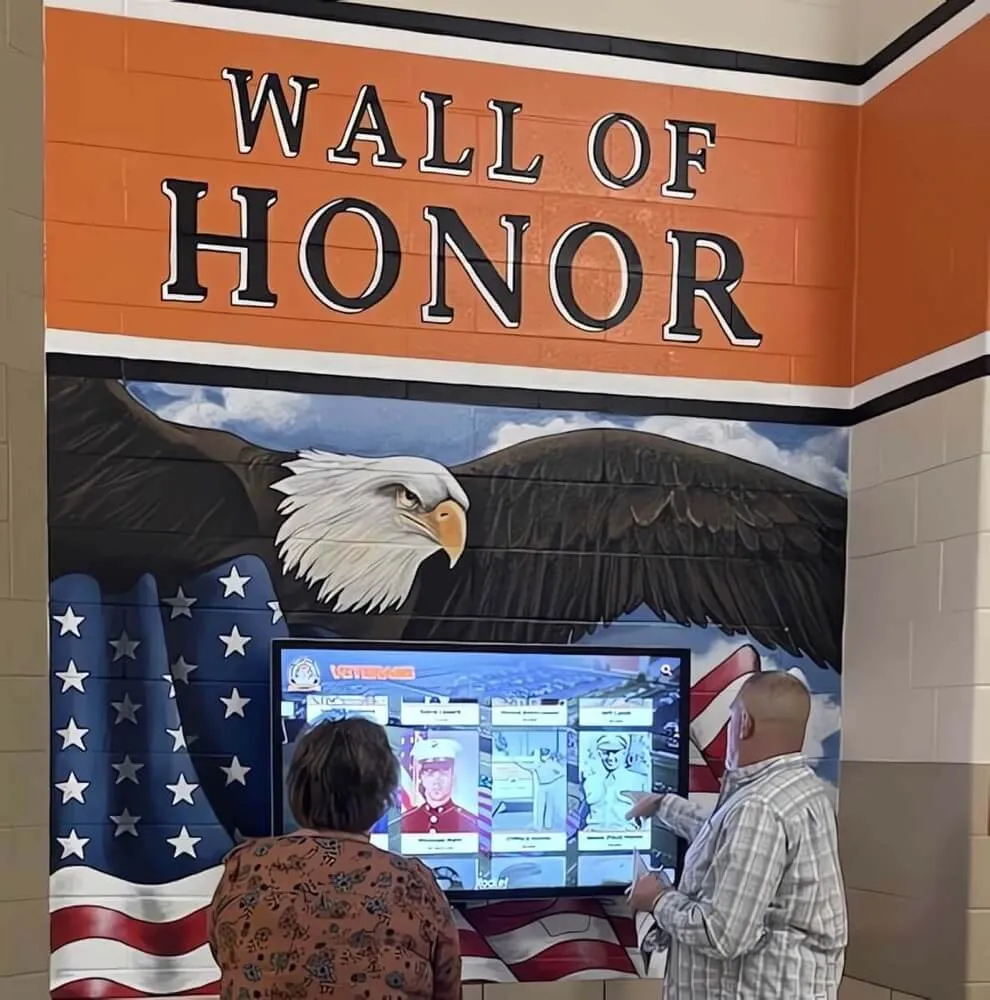
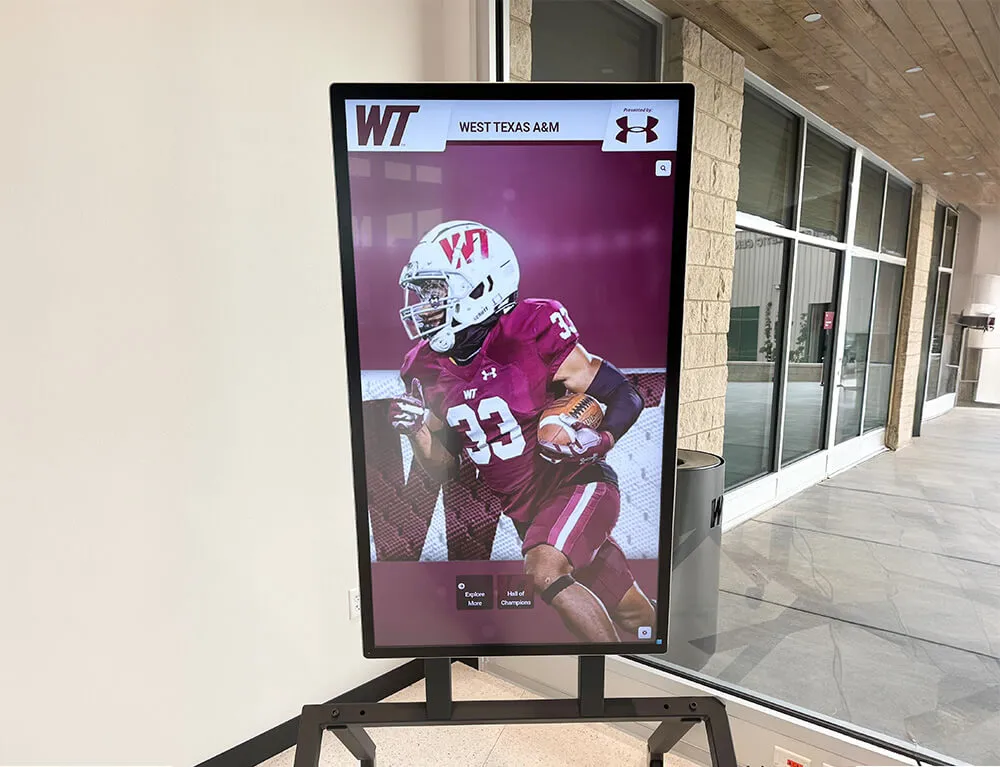
Student-friendly interactive systems enable self-directed exploration of achievements, school information, and community content
Outdoor Dining and Alternative Spaces
Weather-permitting outdoor cafeteria extensions create additional capacity and varied dining experiences.
Outdoor Dining Area Design
Functional Outdoor Spaces Extend cafeteria capacity through adjacent outdoor areas:
- Covered patios or pavilions providing weather protection
- Shaded areas using umbrellas, awnings, or natural tree cover
- Appropriate outdoor furniture designed for weather exposure
- Waste receptacles and recycling bins readily accessible
- Walking pathways connecting outdoor areas to main cafeteria
- Supervision sight lines ensuring staff visibility of all areas
Student Experience Enhancement Outdoor options improve cafeteria appeal:
- Fresh air and natural environment during meal periods
- Social spaces feeling less institutional than indoor cafeteria
- Flexible seating arrangements including picnic tables, benches, and casual seating
- Garden areas or green spaces creating pleasant environments
- Outdoor performance or gathering areas for special events
Practical Considerations Climate and weather influence outdoor dining feasibility:
- Regional climate determining useful season length
- Drainage ensuring usable spaces after rain
- Pest control measures preventing insect problems
- Security and boundary definition preventing unauthorized departure
- Adequate supervision staffing for multiple locations
Alternative Dining Locations
Some schools supplement traditional cafeterias with flexible dining options.
Distributed Dining Concept Multiple smaller dining areas reduce crowding:
- Classroom lunch options for upper-grade students
- Outdoor courtyard dining during pleasant weather
- Library café areas for quiet lunch environments
- Student union or commons spaces with casual seating
- Senior-only dining areas providing privileges to upper-class students
Benefits and Challenges Distributed dining offers advantages with complexity tradeoffs:
- Reduced crowding in main cafeteria improving experience
- Varied environments accommodating different student preferences
- Challenges in supervision and food service logistics
- Potential for increased cleanup and maintenance needs
- Equity considerations ensuring all students have quality options
Special Cafeteria Programs and Community Building
Beyond daily lunch service, strategic programming transforms cafeterias into active community centers.
Recognition and Celebration Events
Student Achievement Celebrations Host recognition events showcasing accomplishments:
- Academic awards banquets honoring honor roll students and scholars
- Athletic team banquets celebrating seasonal achievements
- Arts program recognition dinners for performers and artists
- Senior breakfast or luncheon honoring graduating class
- National Honor Society induction ceremonies
- Perfect attendance and citizenship award recognition
Community Engagement Events Open cafeterias to broader school community:
- Family dining nights building parent connections
- Grandparents’ lunch programs involving extended families
- Cultural celebration meals highlighting diverse traditions
- Fundraising dinners supporting school programs and activities
- Alumni gatherings connecting graduates to current students
- Community partner appreciation events recognizing local support
Thematic Programs and Spirit Building
Special Lunch Themes Creative programming builds school culture:
- College colors days supporting local universities
- Cultural heritage celebrations throughout the school year
- Holiday-themed meals and decorations
- School spirit weeks with daily themes
- Career day professional dining etiquette practice
- International food festivals celebrating diversity
Student Leadership Opportunities Involve students in cafeteria culture creation:
- Student committees planning special events and themes
- Peer ambassador programs welcoming new students
- Student DJ or music selection for background atmosphere
- Décor committees changing displays seasonally
- Student feedback mechanisms improving cafeteria experience
For schools developing comprehensive student engagement initiatives, employee recognition ideas translate effectively to student recognition programs in cafeteria environments.
Budget-Conscious Cafeteria Improvements
Meaningful cafeteria enhancements don’t require complete renovations or unlimited budgets.
Low-Cost High-Impact Changes
Paint and Decoration Transform appearance through surface treatments:
- Fresh paint in school colors creating renewed environment
- Student-created murals providing cost-effective large-scale art
- Removable wall decals enabling temporary decoration changes
- Strategic accent walls creating focal points without painting entire space
- Community volunteer paint days reducing labor costs
Furniture and Layout Modifications Refresh spaces without complete replacement:
- Rearrange existing furniture optimizing traffic flow and creating varied zones
- Reupholster chairs in school colors extending furniture life
- Add area rugs defining distinct zones and improving acoustics
- Incorporate donated or repurposed furniture adding variety
- Create DIY benches or seating from materials like pallets or lumber
Recognition Display Creation Start recognition programs modestly:
- Bulletin board transformations using fabric, borders, and professional layouts
- Photo collage displays celebrating student achievements
- Laminated poster-size recognition certificates
- Rotating displays highlighting different programs monthly
- Student work showcases creating gallery atmosphere
Phased Technology Investment
Strategic technology implementation spreads costs across multiple budget cycles.
Year One: Essential Infrastructure
- Single digital display in highest-traffic location demonstrating value
- Basic content management system enabling easy updates
- Professional mounting and installation ensuring quality appearance
- Essential connectivity infrastructure supporting future expansion
Year Two: Expanded Recognition
- Additional displays in secondary cafeteria locations
- Interactive touchscreen enabling student exploration
- Enhanced content creation including video and animation
- Integration with school websites and existing systems
Year Three: Comprehensive System
- Complete cafeteria coverage ensuring all areas have recognition visibility
- Advanced features like social media integration or mobile access
- Training programs ensuring staff maximize system capabilities
- Assessment and refinement based on first two years’ experience
Many schools find digital recognition systems provide better long-term value than repeatedly updating static displays. Research subscription pricing options spreading costs across budget years rather than requiring large single-year expenditures.
Leveraging Community and Business Partnerships
External support can fund cafeteria improvements schools couldn’t afford independently.
Local Business Sponsorships
- Digital display sponsorships in exchange for recognition on screens
- Equipment donations or discounted pricing from vendors
- Professional services donated (design, installation, technology) by businesses with school connections
- Corporate grant programs funding educational facility improvements
Parent and Alumni Fundraising
- Targeted campaigns for specific cafeteria enhancements
- Memorial or honorary naming opportunities for major donations
- Alumni class reunions including facility improvement fundraising components
- Parent organization initiatives focused on student experience improvements
Grant Opportunities
- Federal nutrition programs including funding for cafeteria modernization
- State educational facility improvement grants
- Corporate foundation grants supporting educational environments
- Health and wellness grants emphasizing nutrition education and healthy eating environments
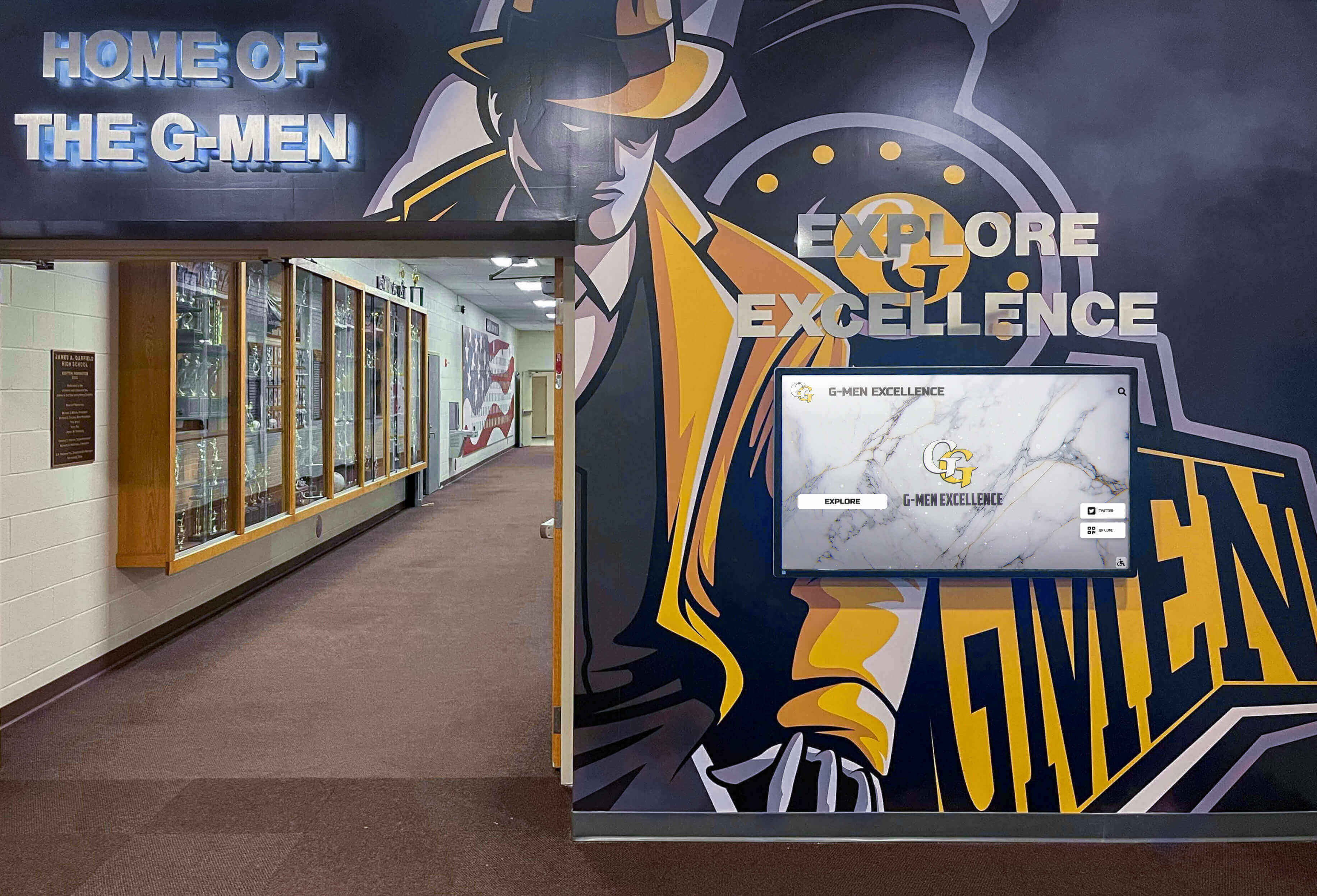
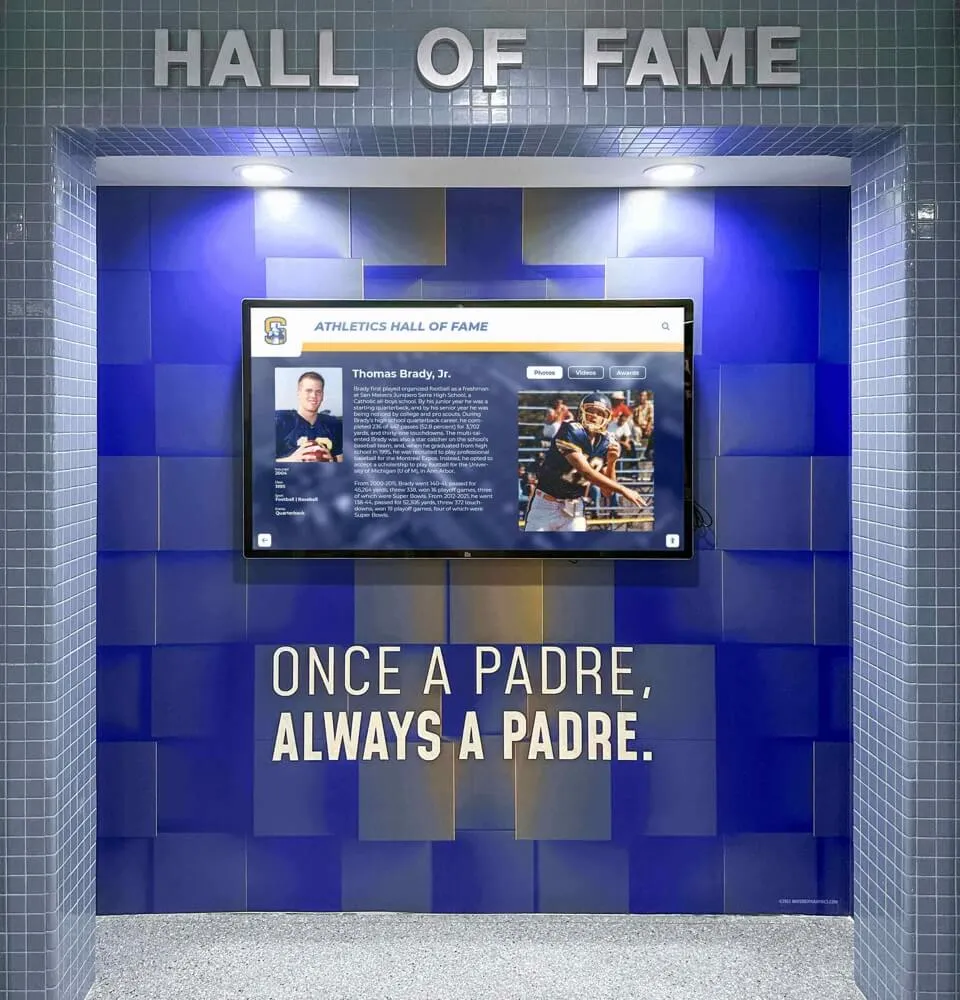
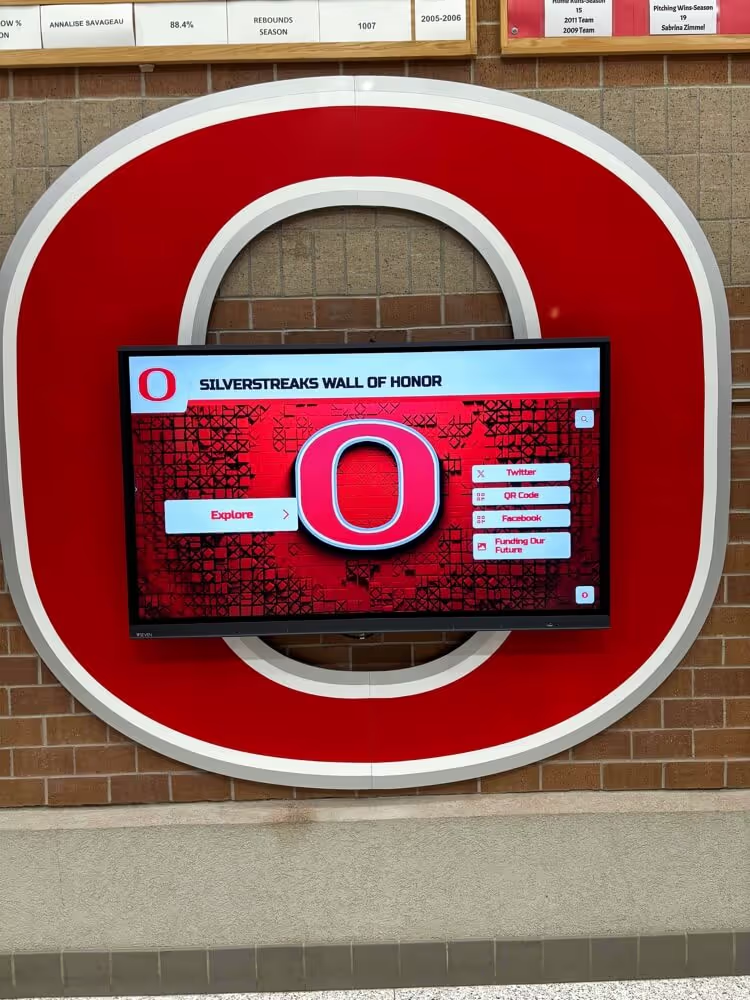
Integration of traditional and digital recognition elements creates comprehensive achievement showcases throughout school facilities
Safety, Supervision, and Behavioral Management
Cafeteria design influences safety and reduces behavioral issues requiring administrative intervention.
Supervision and Monitoring
Sight Line Optimization Design choices facilitate effective supervision:
- Furniture arrangements ensuring unobstructed staff views of all areas
- Elevated monitoring positions for staff supervision
- Convex mirrors eliminating blind spots behind columns or corners
- Open layouts reducing hidden areas where problems develop unobserved
- Clear designation of permissible versus prohibited areas
Staff Positioning Strategy Systematic staff placement improves supervision:
- Multiple staff members providing coverage of large cafeterias
- Strategic positioning at entry/exit points and high-traffic areas
- Roving staff circulating among seated students
- Designated staff responsibilities for specific zones
- Communication systems enabling rapid staff coordination during incidents
Safety Infrastructure
Emergency Preparedness Cafeterias require robust safety systems:
- Clear egress routes maintaining capacity during events
- Emergency lighting and communication systems
- Food safety equipment properly maintained
- First aid supplies and trained staff readily available
- Crisis response procedures practiced regularly
- Lockdown capabilities if required by school safety plans
Incident Prevention Through Design Thoughtful choices reduce safety problems:
- Durable furniture designed without sharp edges or injury hazards
- Slip-resistant flooring reducing fall risks
- Adequate lighting eliminating dark areas where incidents occur
- Secure mounting for displays and equipment preventing tip-over
- Appropriate spacing between furniture enabling movement without collision
Measuring Cafeteria Program Success
Assessment ensures cafeteria improvements achieve intended goals while justifying resource investments.
Student Experience Metrics
Satisfaction Assessment Regular feedback reveals student perspectives:
- Anonymous surveys asking about cafeteria experience and satisfaction
- Focus groups with diverse student representatives
- Suggestion boxes or digital feedback systems
- Observation of student behavior and space usage patterns
- Participation rates in cafeteria events and programs
Behavioral Indicators Positive cafeteria culture manifests through reduced problems:
- Disciplinary incident frequency in cafeteria settings
- Waste and cleanliness issues requiring intervention
- Noise complaints and acoustic comfort
- Traffic flow problems and congestion issues
- Student respect for facilities and property
Operational Efficiency Metrics
Service Effectiveness Functional improvements demonstrate operational success:
- Average wait times in serving lines
- Meal participation rates and changes over time
- Food waste measurements indicating satisfaction
- Point-of-sale transaction speed and efficiency
- Facility utilization rates for varied functions
Financial Performance Budget metrics validate investment decisions:
- Per-meal costs and operational efficiency
- Revenue from meal sales and participation
- Maintenance and repair expense trends
- Energy consumption in modernized facilities
- Technology system total cost of ownership analysis
Conclusion: Transforming Cafeterias Into Community Centers
School cafeterias represent far more than food service facilities—they function as social centers, recognition platforms, community gathering spaces, and environments significantly influencing daily student experience. Strategic cafeteria design transforms necessary infrastructure into active contributors to positive school culture, student engagement, and institutional pride.
The practical strategies explored in this guide provide frameworks for enhancing cafeterias at every budget level and facility scale. From traffic flow optimization through recognition display integration to community programming and technology implementation, these approaches help schools create cafeteria environments students genuinely appreciate while serving essential institutional functions.
Most importantly, cafeteria improvements demonstrate institutional commitment to comprehensive student experience. When schools invest attention and resources in spaces students occupy daily, they communicate that student comfort, achievement recognition, and community building matter as much as academic instruction alone.
Ready to transform your school cafeteria into a vibrant recognition hub that celebrates student achievement and builds school culture? Modern digital recognition displays provide powerful platforms for showcasing academic honors, athletic accomplishments, and comprehensive student success in high-traffic cafeteria environments where every student will see achievements celebrated.
Solutions like Rocket Alumni Solutions offer comprehensive digital recognition platforms specifically designed for educational institutions, combining unlimited recognition capacity with intuitive content management, professional hardware appropriate for cafeteria installations, and support helping schools maximize these strategic investments.
Whether implementing first-time recognition systems or enhancing existing cafeteria environments, success requires understanding how these spaces function within broader school ecosystems, strategic placement ensuring maximum visibility and impact, compelling content celebrating diverse student achievements, and ongoing assessment ensuring continued effectiveness.
Your cafeteria sees hundreds or thousands of students daily—make every visit an opportunity to reinforce school culture, celebrate achievement, and build community connections. The most effective cafeteria improvements don’t require unlimited budgets or complete renovations—they require strategic thinking about how these critical spaces can serve institutional mission beyond meal service alone.
Start with improvements you can implement immediately—optimized traffic flow, strategic recognition displays, enhanced environmental design—then systematically enhance toward comprehensive cafeteria experiences your students and community deserve. When students feel proud of their school’s spaces, see their achievements recognized prominently, and experience cafeteria environments designed thoughtfully for their needs, these functional facilities become active contributors to the positive school culture supporting academic success and personal development.
Your cafeteria is more than a lunch room—it’s a daily touchpoint with every student, a canvas for celebrating excellence, and a community center strengthening bonds throughout your school. Transform this strategic space into the vibrant hub it deserves to be.