Scholar-Athlete Recognition Ideas for Schools: A Complete Program Blueprint
- Home /
- Digital Hall of Fame Insights & Resources /
- Scholar-Athlete Recognition Ideas for Schools: A Complete Program Blueprint
The Easiest Touchscreen Solution




Live Example: Rocket Alumni Solutions Touchscreen Display
Interact with a live example (16:9 scaled 1920x1080 display). All content is automatically responsive to all screen sizes and orientations.
Every school has students who refuse to choose between the weight room and the library. Student athlete scholars—those who maintain strong academic performance while competing in varsity or club sports—represent some of the most disciplined, balanced individuals in any student body. Yet most schools’ recognition systems aren’t built to celebrate this dual achievement. Academic honor rolls don’t mention sport performance. Athletic awards don’t reflect the classroom work happening alongside practice schedules. The gap between these two worlds means that the students who bridge them most impressively often receive the least intentional acknowledgment for doing so.
Building a dedicated scholar-athlete recognition program corrects that gap. It sends a signal to every student who is grinding through calculus after conditioning that both sides of their effort are visible, valued, and worth celebrating. This guide walks through practical scholar-athlete recognition ideas for schools of all sizes—from eligibility criteria and award categories to ceremony formats, display strategies, and the digital tools that make these programs sustainable over time.
Scholar-athlete recognition programs work best when they are structured deliberately rather than improvised annually. The schools that do this well treat scholar-athlete honors as a distinct program with its own criteria, calendar, and display infrastructure—not as a footnote in the athletic banquet or the academic honor roll announcement.

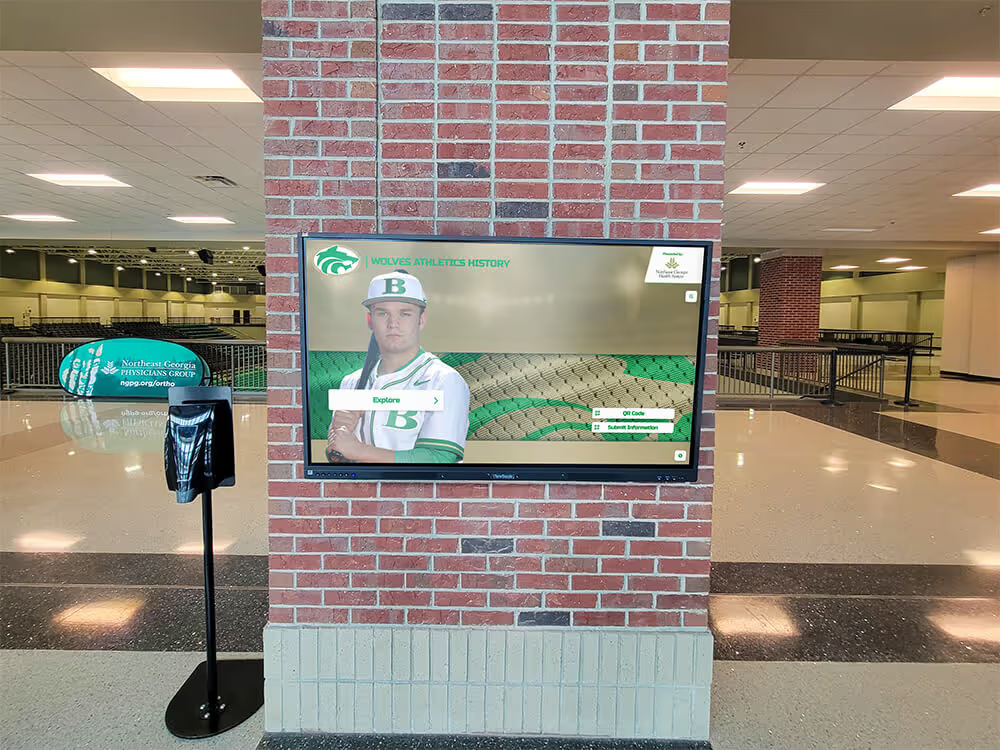
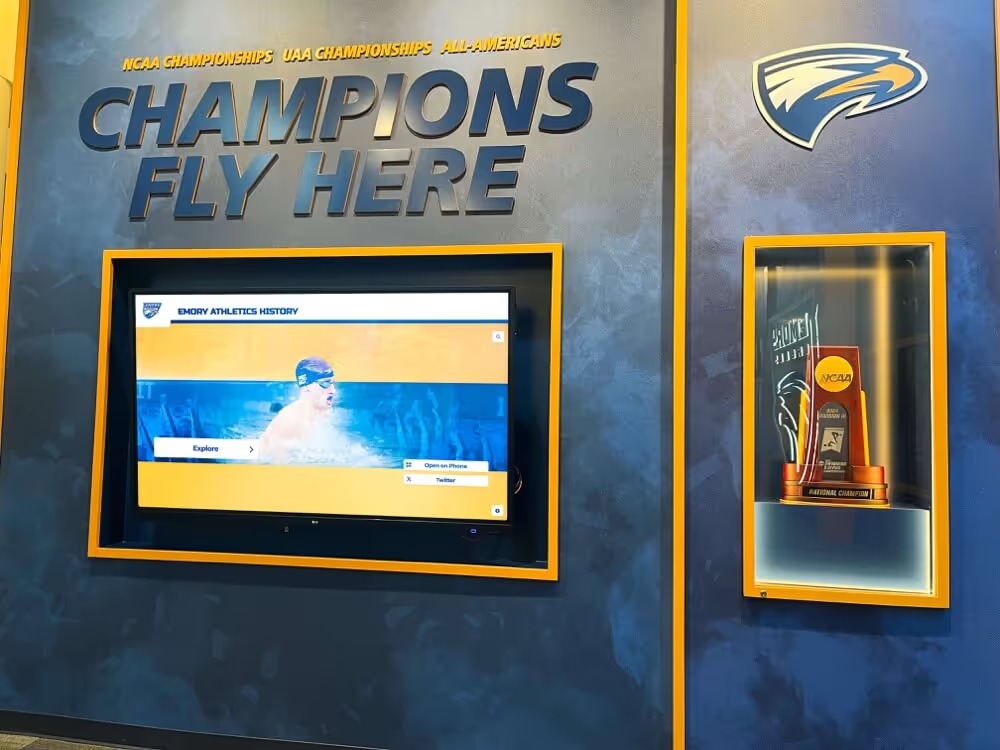
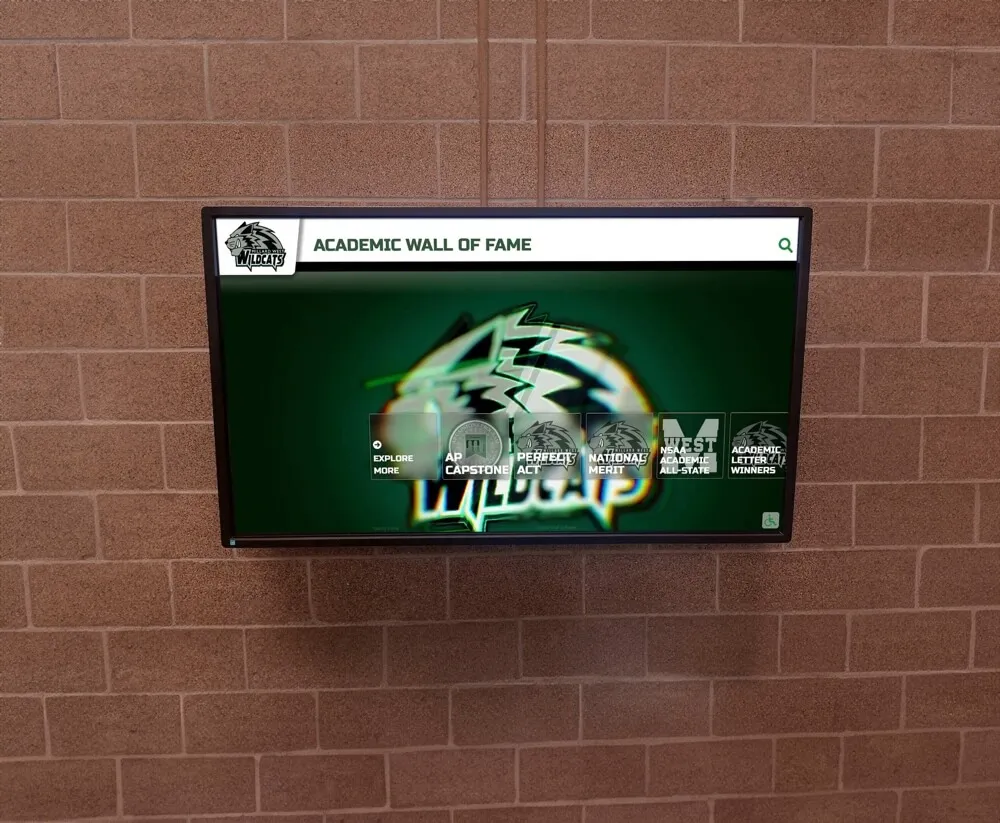
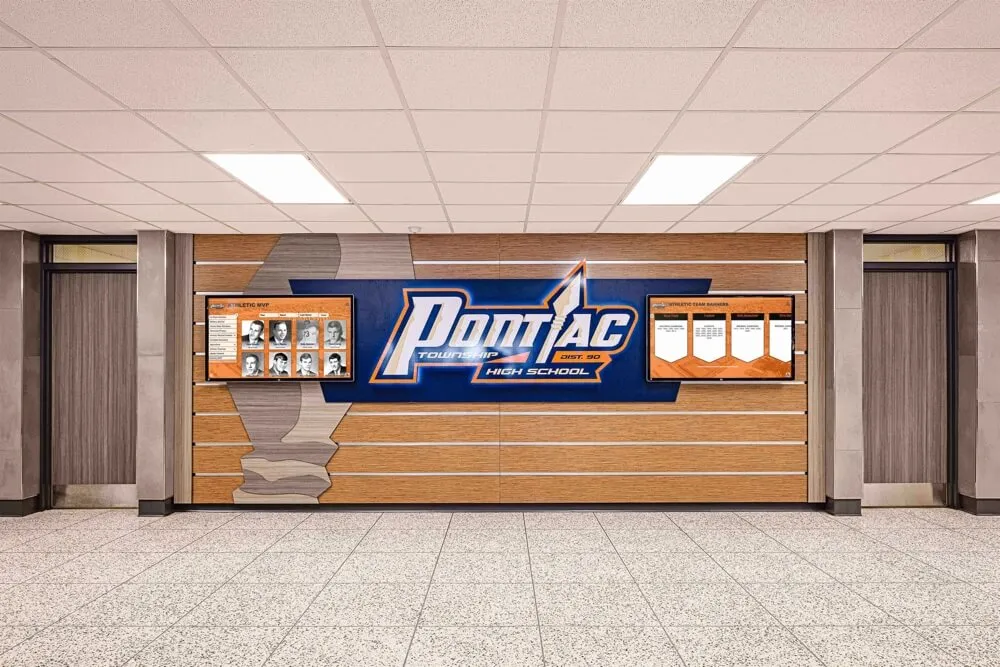
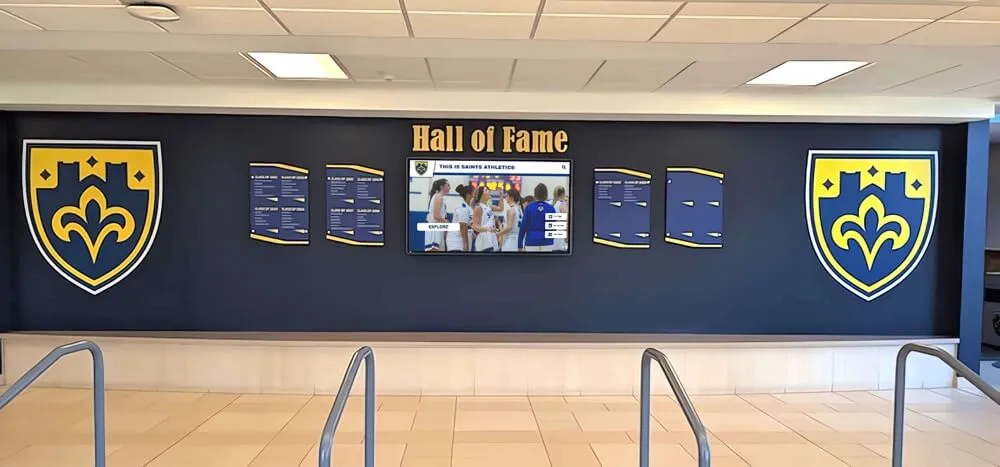
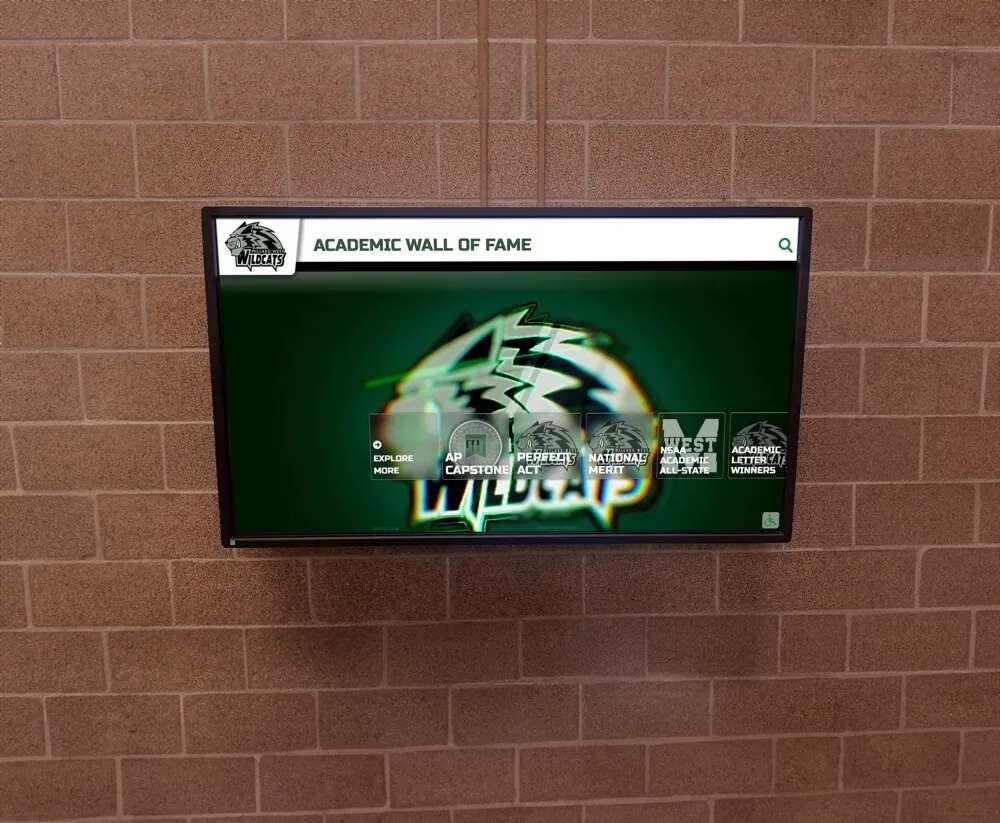
A dedicated academic wall of fame that integrates athletic achievement sets the foundation for sustainable scholar-athlete recognition programs
Program Snapshot: Scholar-Athlete Recognition Framework
Before diving into individual recognition ideas, a program snapshot helps athletic directors and academic coordinators align on scope and structure.
| Program Element | Details |
|---|---|
| Honoree Profile | Student-athletes meeting both GPA thresholds and active varsity/club sport participation |
| Typical GPA Threshold | 3.0–3.5+ on a 4.0 scale (varies by program tier) |
| Athletic Requirement | Varsity letter, minimum playing time, or active roster status |
| Recognition Frequency | Each semester, annually, or at athletic banquet season |
| Primary Audience | Current students, families, coaches, alumni, prospective recruits |
| Display Locations | Athletic lobbies, academic hallways, main office, athletic facility |
| Key Stakeholders | Athletic director, academic advisor, principal, coaches, booster club |
| Program Outcomes | Improved academic culture in athletics, recruit appeal, student motivation, community pride |
| Content Needed | Student photo, GPA or academic honors, sport/position, years of participation, quote or goal |
Why Scholar-Athlete Programs Deserve a Dedicated Structure
Many schools treat scholar-athlete acknowledgment as an add-on to existing programs rather than a recognition category with its own infrastructure. The result is inconsistency: some years a coach mentions the honor roll athletes at the banquet, other years it slips. A student who earned recognition three years in a row has nothing cumulative to point to.
A dedicated program changes this. When eligibility criteria are published in advance, students and families plan around them. When recognition is displayed permanently—on a digital academic wall of fame or interactive hallway display—each year’s honorees become part of an ongoing institutional record rather than a single-event acknowledgment that fades from memory.
The advancement director role in building recognition programs increasingly includes managing scholar-athlete recognition as a recruitment and retention asset—both for students and for coaching staff who want to demonstrate that their programs value the full student experience.
Defining Eligibility Criteria for Student Athlete Scholars
The first step in any scholar-athlete recognition program is publishing eligibility criteria that are specific, verifiable, and fair across all sports and academic tracks.
Academic Requirements
GPA Threshold
Most high school scholar-athlete programs require a minimum cumulative GPA—commonly 3.0, 3.25, or 3.5 on a 4.0 scale—maintained across all subjects at the time of recognition. Some programs weight GPA differently for students in AP, IB, or dual-enrollment courses, awarding separate tiers based on academic rigor.
No Failing Grades
Many programs add a “no failing grades in any subject” standard that functions as a floor regardless of overall GPA. A student with a 3.2 GPA who earned a D in one class may not qualify under this criterion.
Academic Good Standing
Eligibility often ties to the school’s own academic standing policy—meaning a student on academic probation or with outstanding incomplete coursework is ineligible regardless of cumulative GPA.
Athletic Requirements
Active Participation
Most programs require the student-athlete to be rostered on an active varsity or junior varsity team during the recognition period. Some schools extend eligibility to club sports when those students carry the same academic load.
Minimum Playing Time or Letter Criteria
Schools that use letter criteria (earned varsity letters) as the athletic benchmark tie scholar-athlete recognition to the same bar coaches use for athletic achievement, which creates natural alignment across both programs.
Number of Sports
Some schools recognize “multi-sport scholar-athletes” separately—students who meet the academic standard while competing in two or more sports in the same academic year. This category honors the additional scheduling demands these students manage.
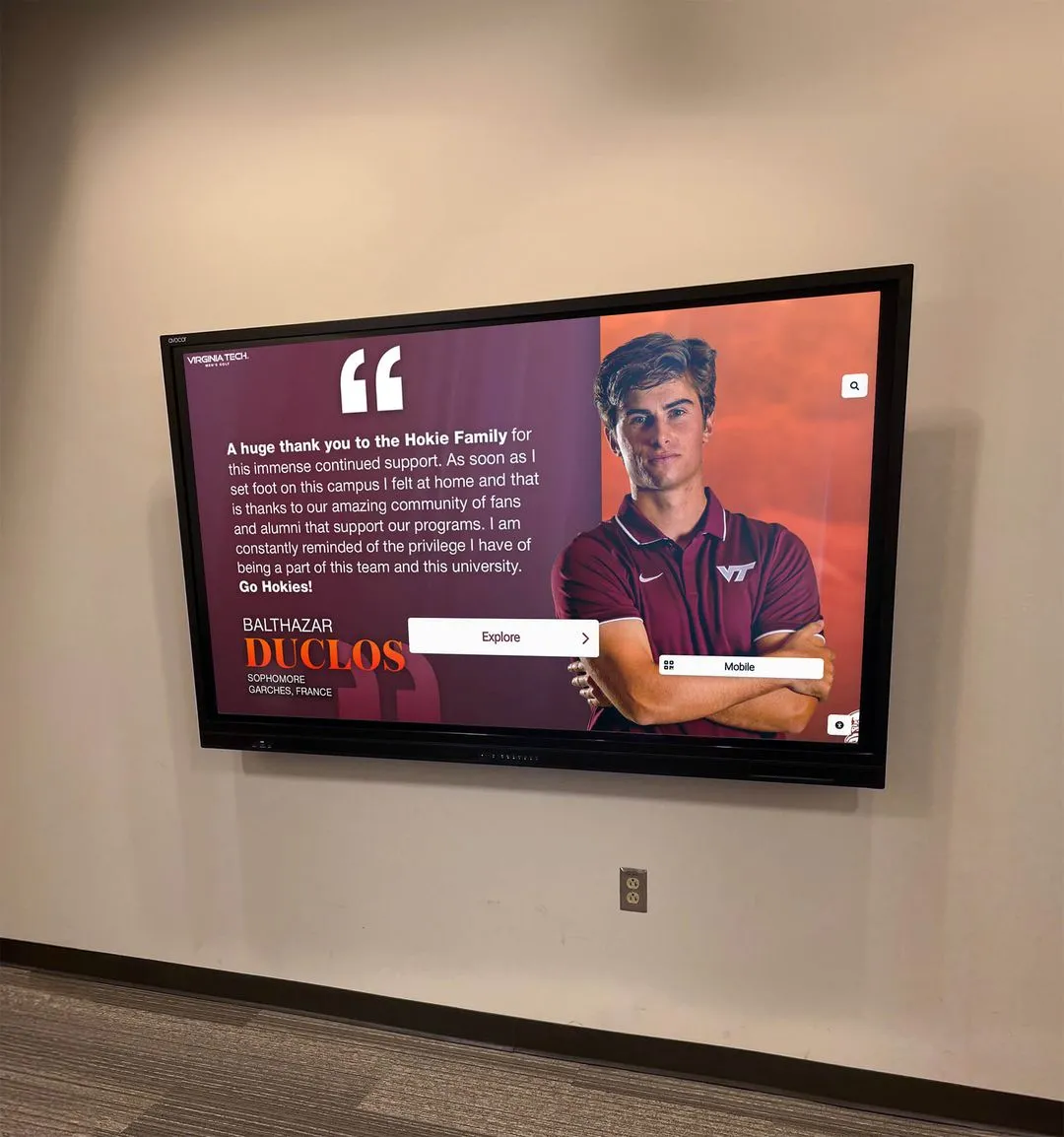
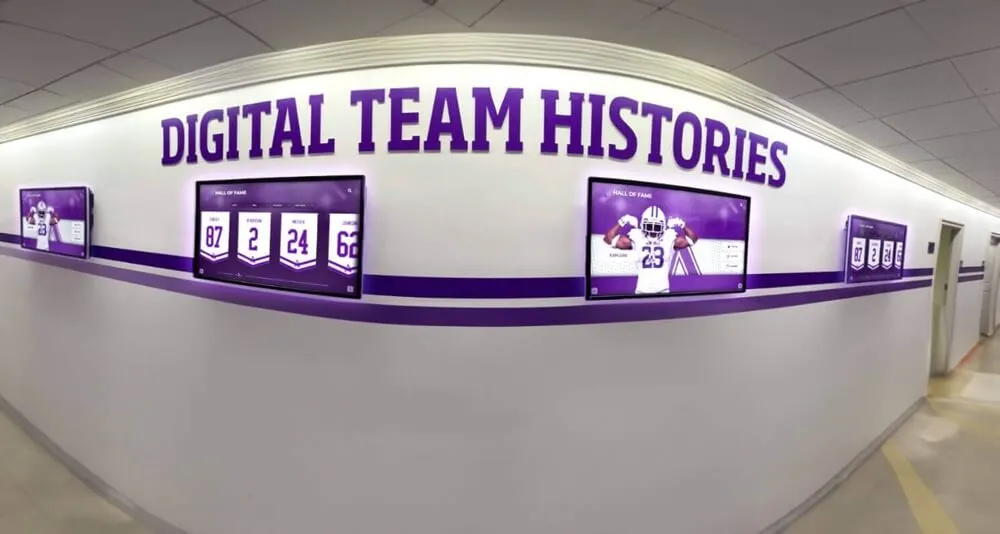
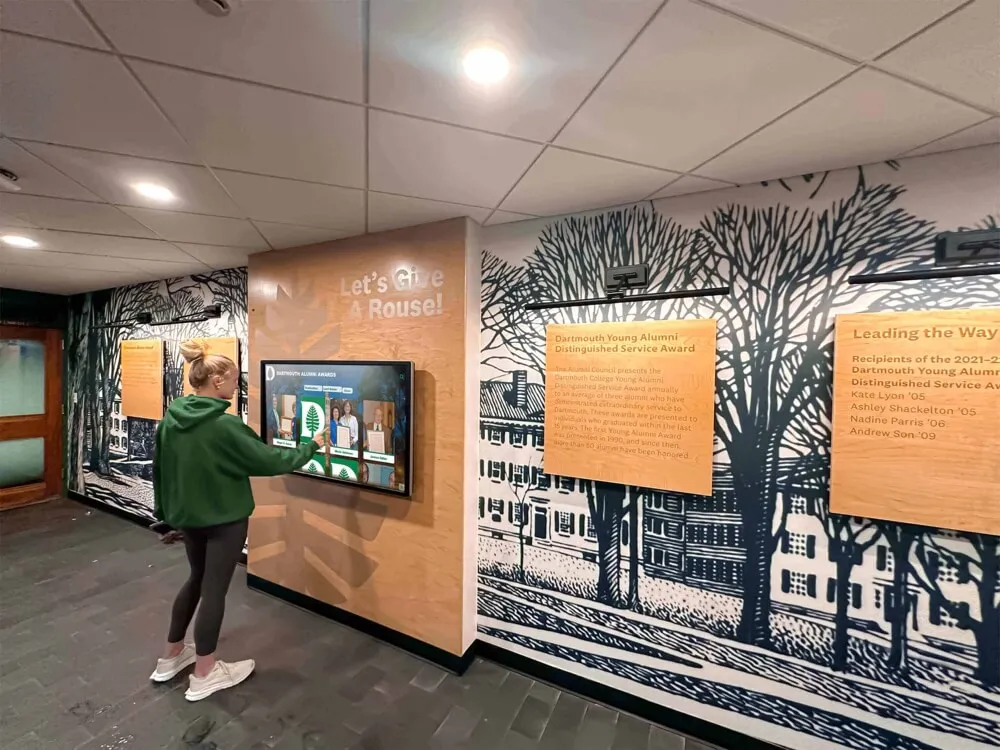
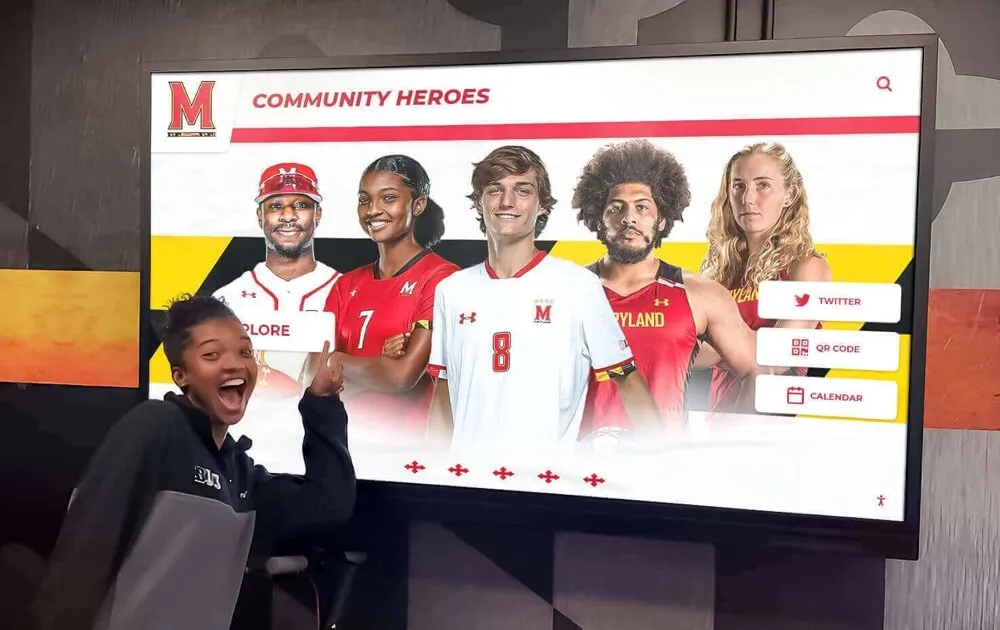
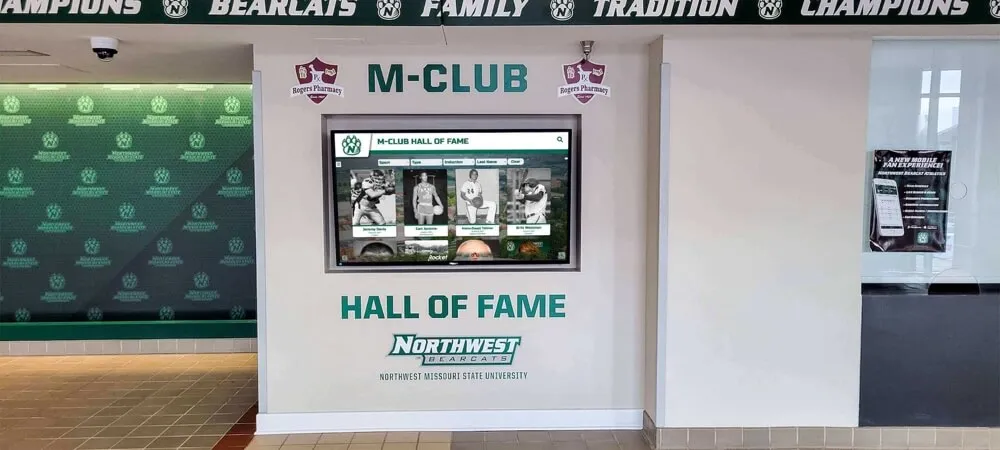
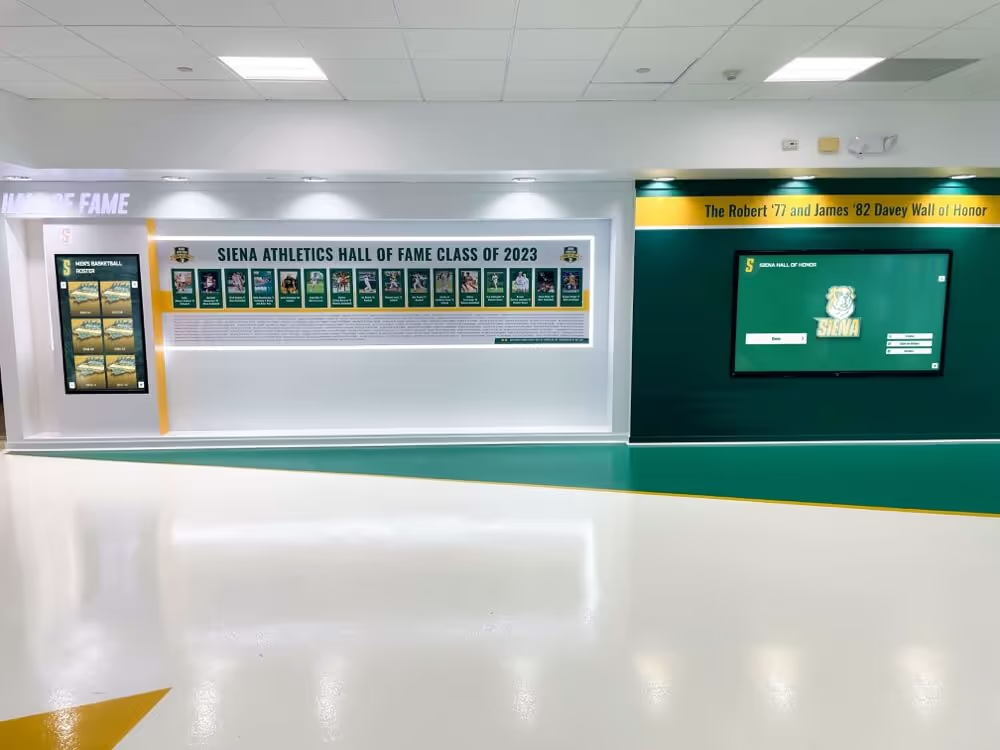
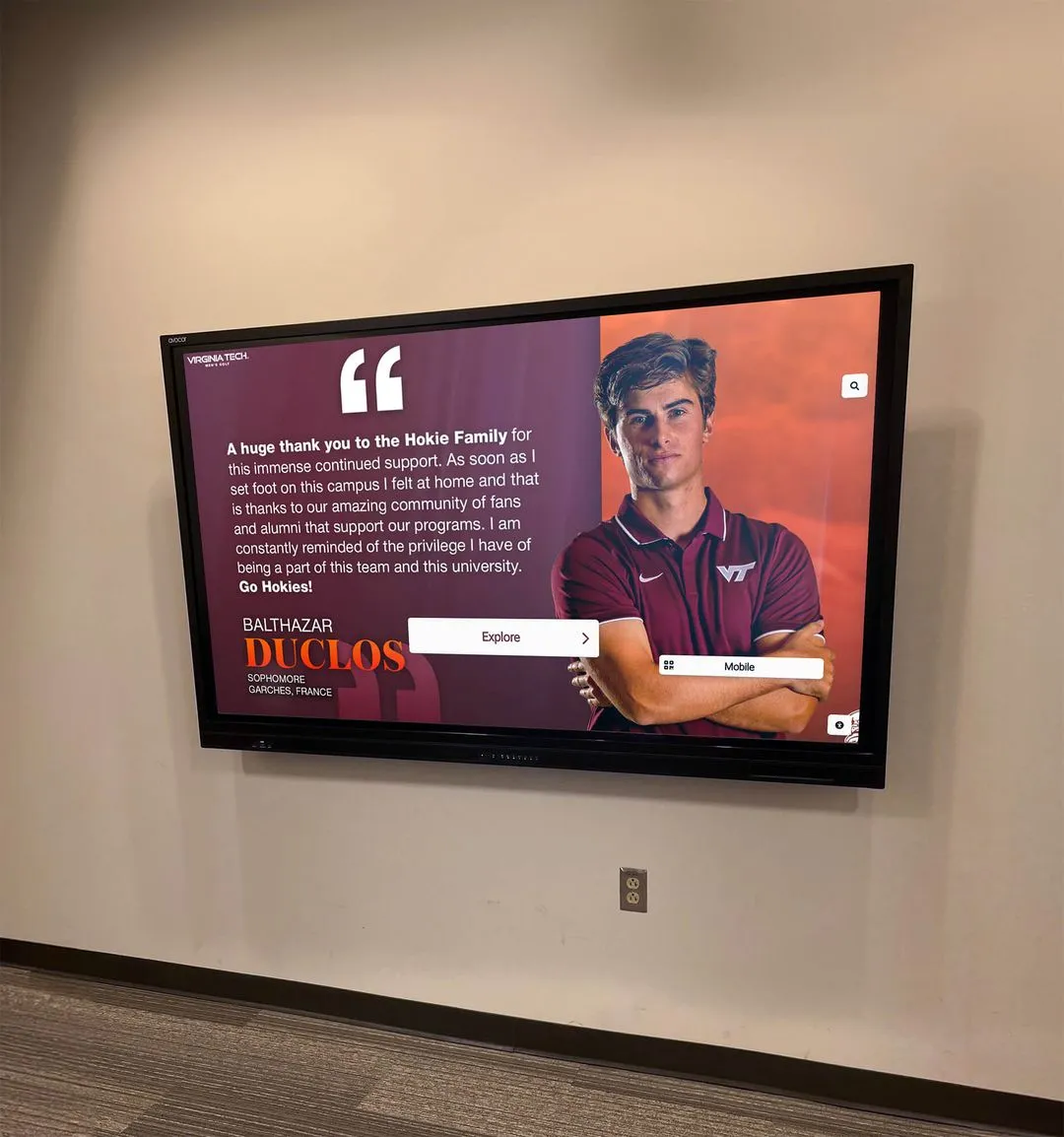
University-level programs provide a model for how dedicated scholar-athlete display walls can recognize academic and athletic achievement in the same space
Scholar-Athlete Recognition Ideas by Category
Once eligibility criteria are established, schools have a wide range of recognition formats to choose from. The most effective programs layer several categories rather than relying on a single award.
1. Scholar-Athlete of the Year Award
A flagship annual award recognizing one male and one female student-athlete—or one per sport, or one per grade level, depending on program size—who best represents the combination of academic achievement, athletic performance, and character. Selection typically involves a committee of coaches, teachers, and administrators reviewing both academic transcripts and coach recommendations.
Recognition deliverables: Custom award or plaque, profile feature in school newsletter, permanent name addition to a scholar-athlete recognition board, photo display in athletic facility.
2. Scholar-Athlete Honor Roll
A semester-based list recognizing every student-athlete who meets the published GPA threshold while maintaining active sport participation. Unlike a single award, the honor roll has the advantage of recognizing many students simultaneously, creating a broad culture of academic acknowledgment within athletic programs.
Recognition deliverables: Published list in school website and newsletter, certificate of recognition, name displayed on digital honor board, verbal recognition at athletic banquet.
3. All-Academic Team by Sport
Modeled after all-conference athletic selections, an all-academic team recognizes the top academic performers within each varsity sport. Every team selects its academic honorees, creating recognition across the entire athletic program rather than concentrating it in a single award.
The all-state athlete recognition display guide offers a parallel framework for how sport-specific academic recognition can be structured and displayed alongside athletic achievement records.
Recognition deliverables: Team-specific certificate, recognition at individual sport banquets, cumulative display showing all-academic team members across all sports.
4. Multi-Year Scholar-Athlete Recognition
Students who maintain scholar-athlete status for multiple consecutive years demonstrate a sustained commitment to dual excellence that deserves separate acknowledgment. A four-year scholar-athlete who maintained eligibility from freshman to senior year represents something distinct from a single-year honoree.
Recognition deliverables: Differentiated award (color-coded pin, different plaque style, or additional designation), cumulative profile on digital display showing full academic and athletic history, mention at graduation ceremony.
5. Team Scholar-Athlete Award
Recognizes the entire team within a sport that achieves the highest collective GPA during the season. This shifts recognition from individual to collective, incentivizing teams to support each other’s academic performance and creating a culture where coaches celebrate classroom success as visibly as on-field results.
Recognition deliverables: Team banner or plaque, recognition at all-school assembly, feature in athletic department communications.
6. Scholar-Athlete Signing Day
Modeled after athletic signing days, a scholar-athlete signing event celebrates seniors who have earned academic scholarships—merit awards, departmental honors, or state scholar recognition—while also completing their athletic careers. The event provides a ceremonial moment that parallels athletic scholarship signings and signals institutional investment in academic achievement within the athletic community.
For schools that already run an annual alumni golf event that honors scholar-athletes, a scholar-athlete signing day provides natural program content that carries forward into alumni engagement.
7. Cross-Domain Recognition (Athletics + Arts + Academics)
Some students demonstrate excellence across multiple performance domains simultaneously: a varsity athlete who also earns All-State honors in music or visual arts, and maintains a strong academic record, represents a version of multi-domain achievement that standard scholar-athlete programs miss entirely. A dedicated cross-domain recognition tier captures this and connects athletic and fine arts programs in ways that build broader institutional culture.
The all-state musician recognition guide and the approach to recognizing all-state musicians alongside scholars both offer models for how schools have built recognition infrastructure that spans performance domains.
Reusable Scholar-Athlete Nomination Checklist
Use this checklist when collecting nominations each recognition cycle.
Student Information
- Full name, graduation year, grade level
- Current cumulative GPA (verified by registrar)
- Courses enrolled (including AP/IB/dual enrollment designations)
- Any academic honors, awards, or distinctions this term
Athletic Information
- Sport(s) and position
- Varsity/JV/club designation
- Years of participation
- Letter(s) earned
- Team captain or leadership role (if applicable)
Coach Recommendation
- Brief statement on character, leadership, and team contribution
- Confirmation of active roster status during eligibility period
Supporting Materials
- Student headshot (for display use)
- Student-written goal or reflection (optional but recommended for digital display)
- Parent/guardian acknowledgment for minors
Eligibility Verification
- GPA meets or exceeds published threshold
- No academic probation or incomplete grades
- Active sport participation confirmed by athletic director
Content Architecture: Mapping Recognition to Display Modules
Recognition programs gain lasting value when their content maps to visible, accessible display infrastructure. Student athlete scholars who earn recognition in a ceremony may never see their name displayed again unless the school has invested in permanent or semi-permanent recognition channels.
Portrait and Profile Cards
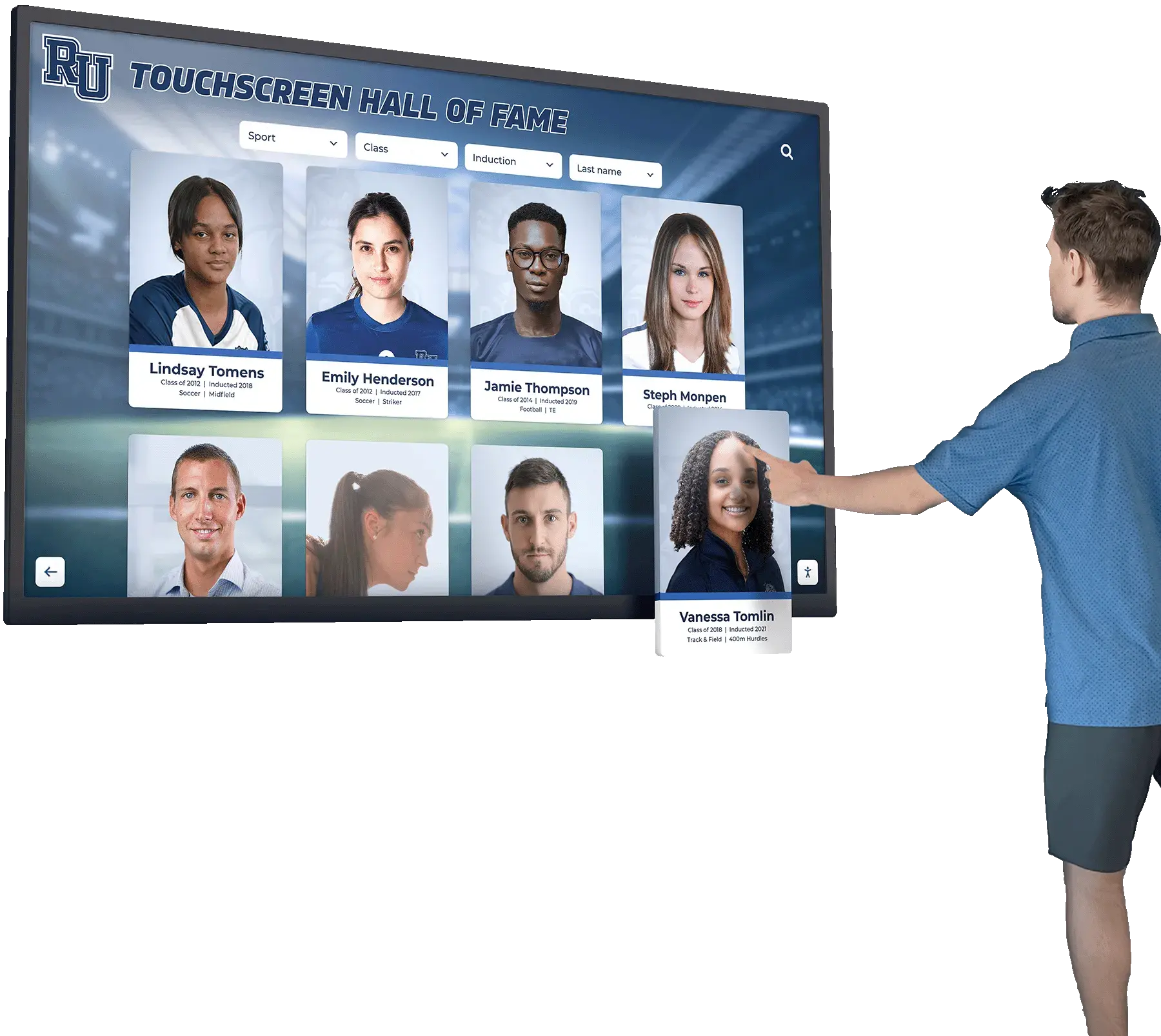
The most effective scholar-athlete displays combine athletic imagery—action photos, jersey numbers, position data—with academic credentials: GPA tier, academic honors, college destination, and major. This dual-column approach makes the “student-athlete” identity visually explicit rather than implied.
Running Honor Roll Boards
Digital displays can cycle through all current semester scholar-athletes on a rotation that updates each recognition period. This creates a living board rather than a static plaque, and ensures visibility for every honoree rather than only the top award winners.
Historical Archive View
Searchable displays that allow visitors to browse scholar-athlete honorees by year, sport, or GPA tier create an institutional record that grows more valuable over time. A senior who was recognized as a freshman can point to the display and see their multi-year legacy in one place.
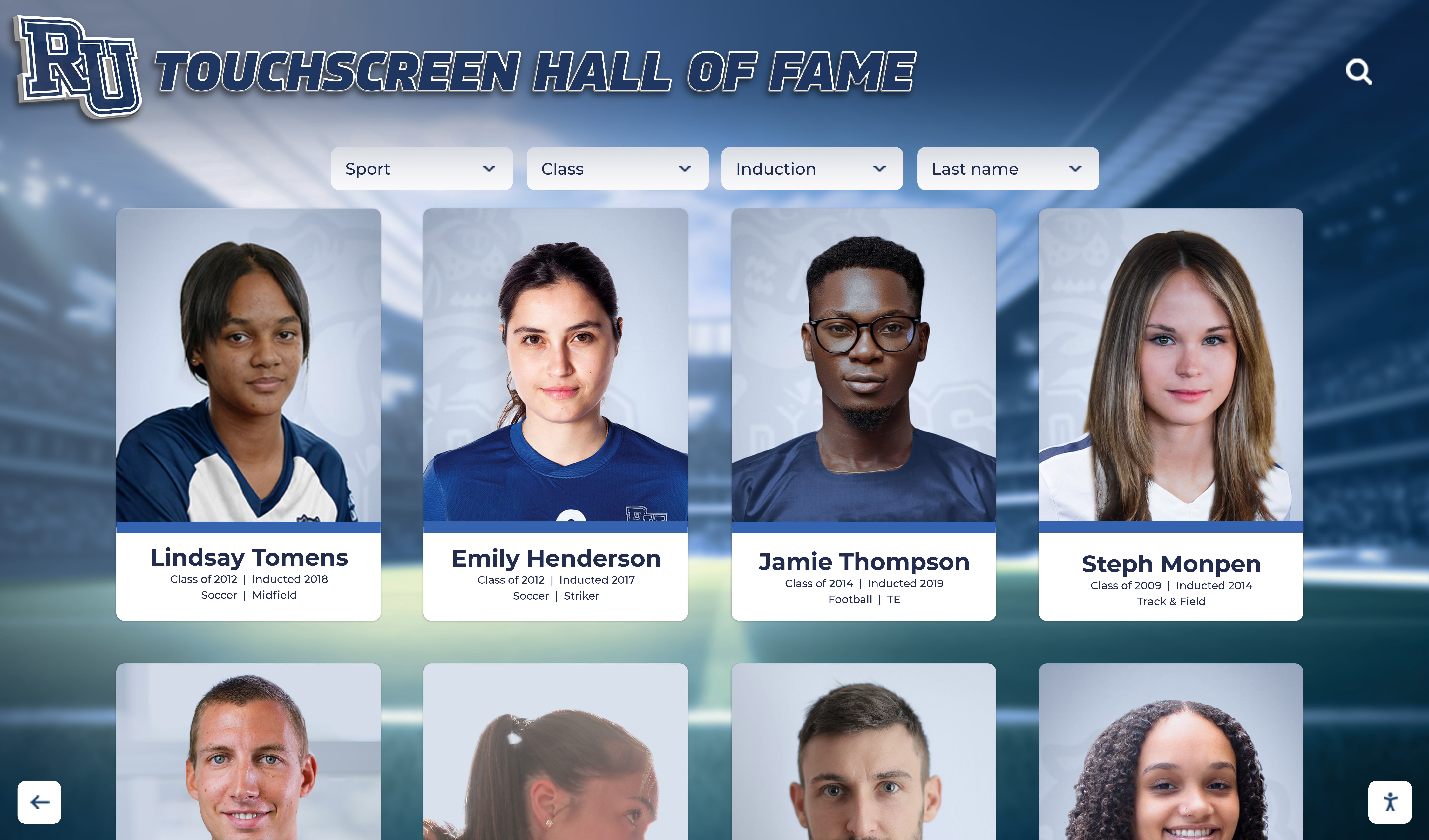
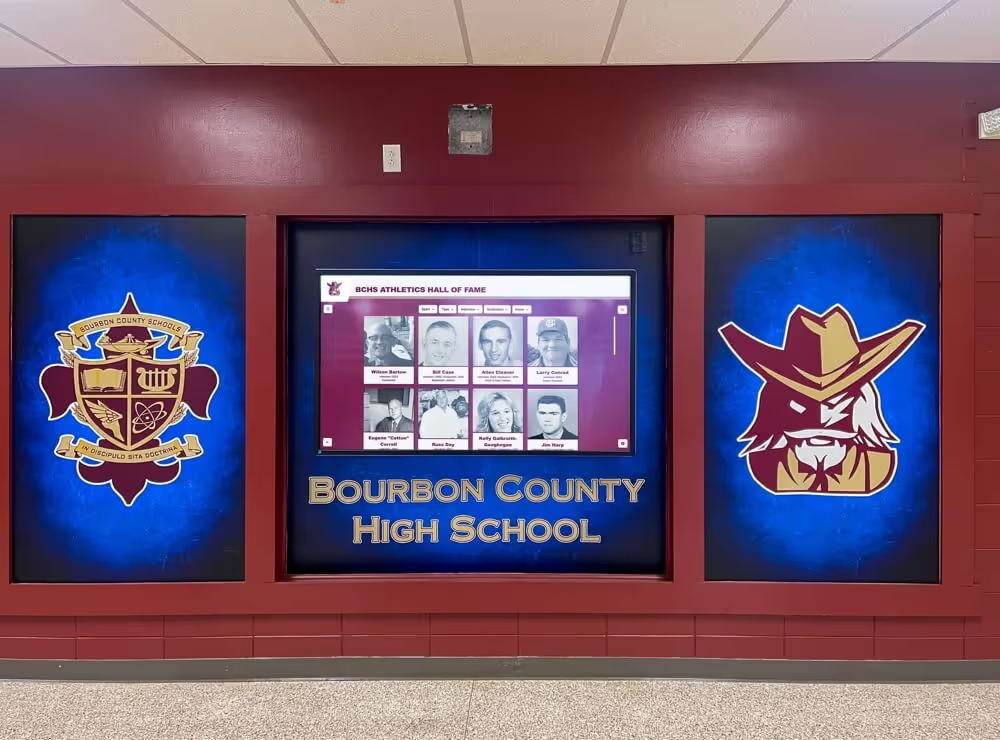
Portrait-card displays that combine athletic and academic achievement data give student athlete scholars a professional, lasting recognition presence
Integration with Existing Hall of Fame
Schools that already operate a hall of fame for athletic legends can add a scholar-athlete wing or section—either as a physical zone on an existing wall or as a distinct module within a digital display. This integration signals that academic excellence is a pathway to institutional recognition equal in visibility to championship performance.
AI-powered personalization for school recognition is making it possible for displays to surface scholar-athlete profiles to specific visitors—highlighting content relevant to the sport a prospective recruit plays, or showing academic achievement data to parents visiting during a campus tour.
Execution Timeline: Plan → Build → Launch → Refresh
Successful scholar-athlete programs follow a repeatable cycle, not a one-time implementation.
Phase 1: Plan (8–12 Weeks Before Recognition Event)
- Confirm eligibility criteria with athletic director and principal
- Communicate criteria to all coaches and academic advisors
- Set nomination deadline (typically 4–6 weeks before event)
- Assign eligibility verification responsibility (registrar or counselor)
- Confirm display or announcement channel for recognition
Phase 2: Build (4–6 Weeks Before Event)
- Collect and verify all nominations against eligibility criteria
- Gather photos and supporting content for each honoree
- Draft certificates, plaques, or award materials
- Prepare digital display content for upload
- Confirm ceremony logistics: date, venue, presenters, run-of-show
Phase 3: Launch (Event Week)
- Final display content uploaded and tested
- Honorees and families notified privately before public announcement
- Recognition event or ceremony executed
- Social media posts published with honoree permission
- Newsletter or website update published
Phase 4: Refresh (Ongoing)
- Archive current honorees in permanent historical record
- Reset eligibility tracking for next recognition cycle
- Solicit feedback from coaches and honorees on program structure
- Update criteria if needed based on participation and feedback
- Plan next cycle’s communication to students and coaches
Schools using cloud-based CMS platforms for their recognition displays can complete Phase 4 in under 30 minutes—uploading new semester honorees, archiving prior ones, and refreshing the display without any on-site hardware changes.
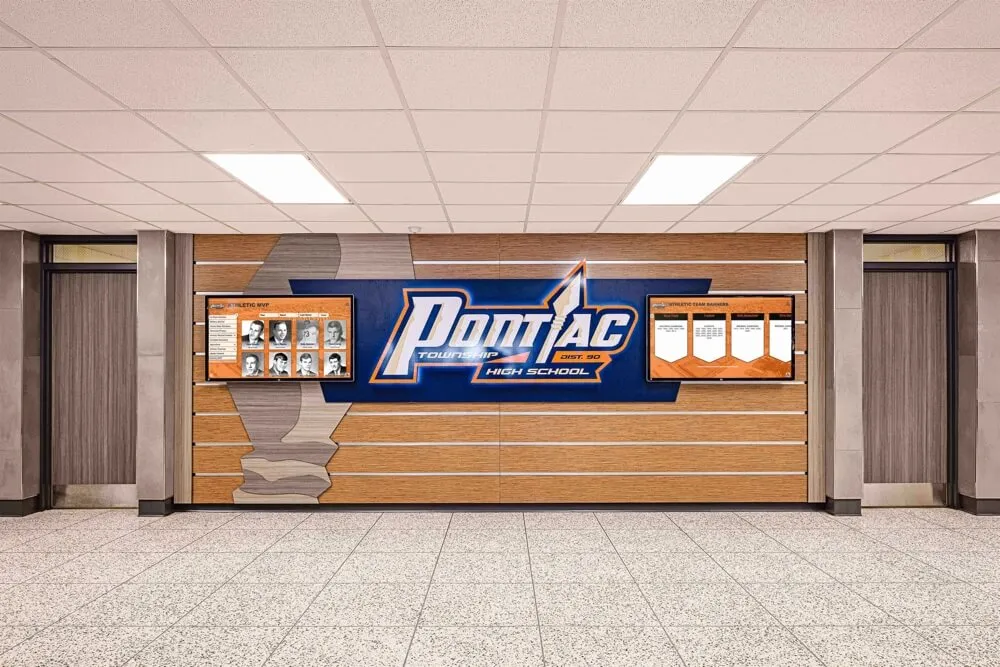
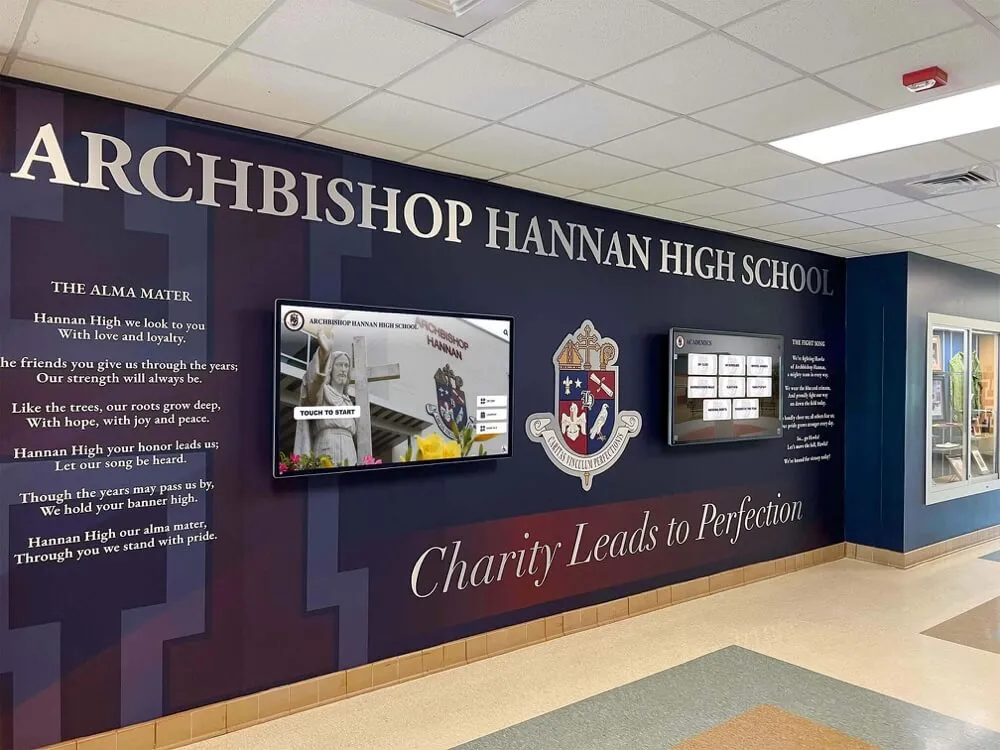
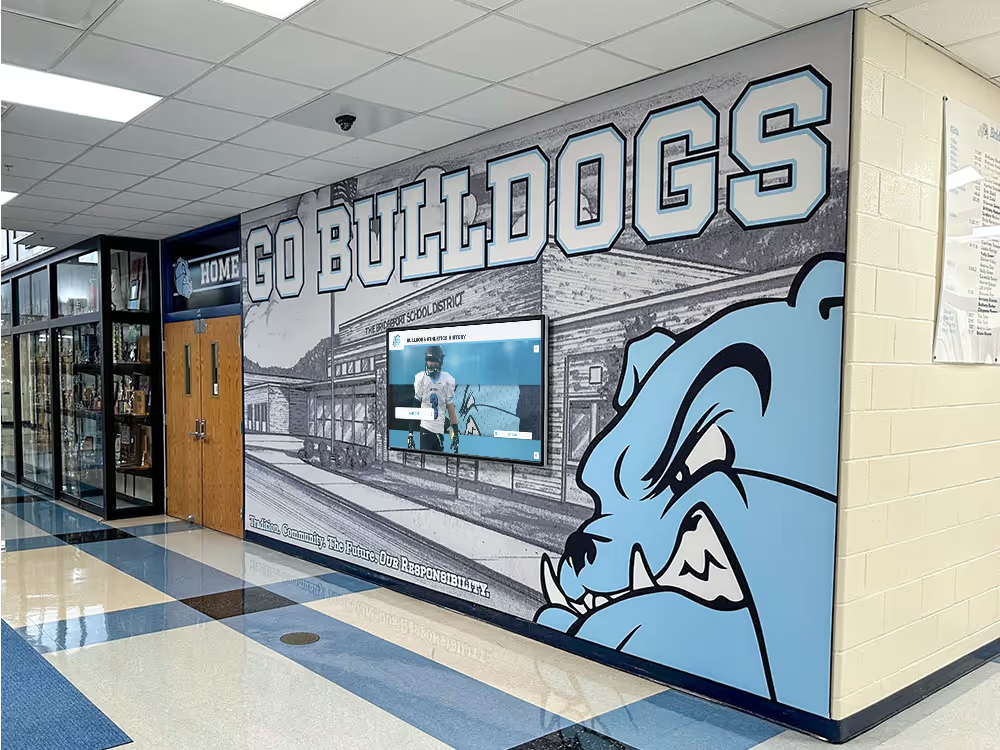
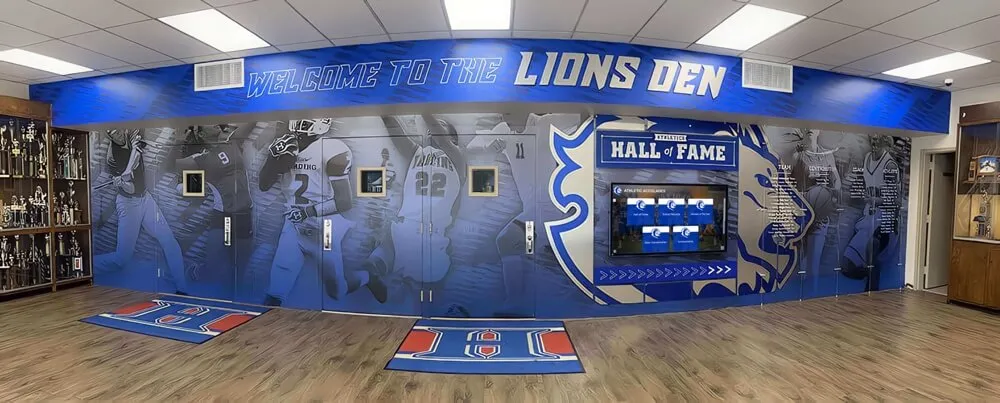
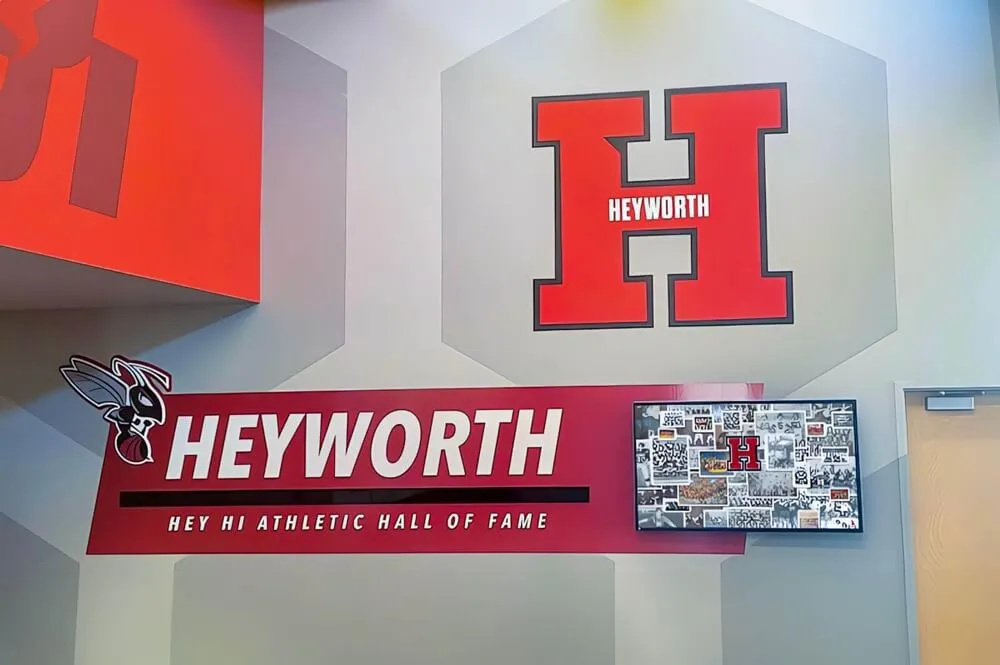
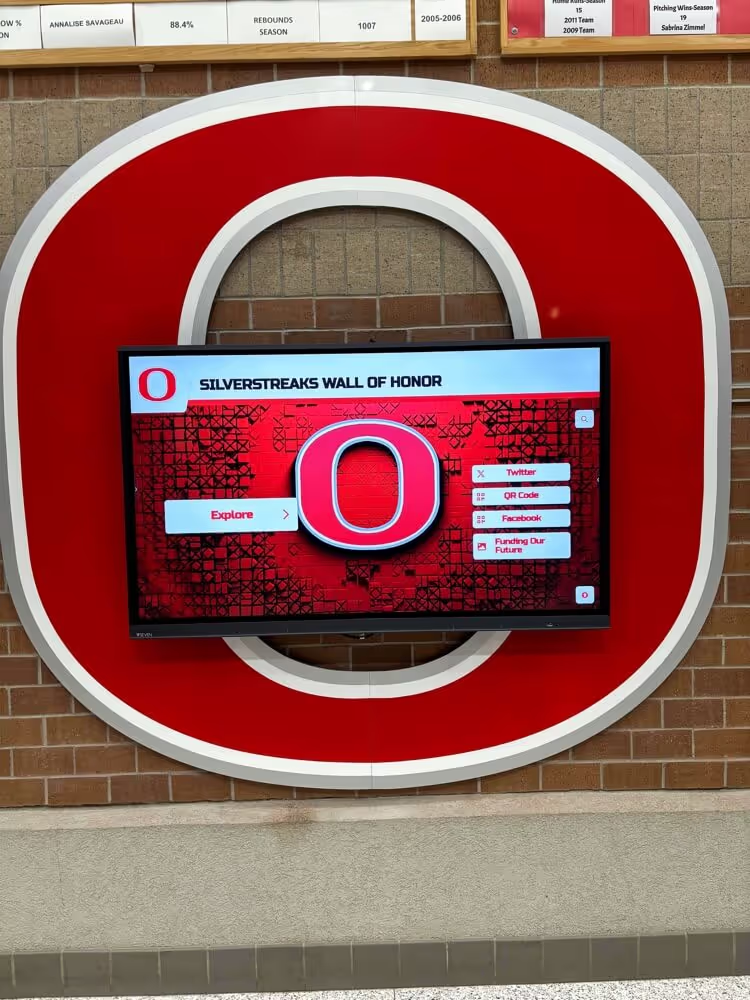
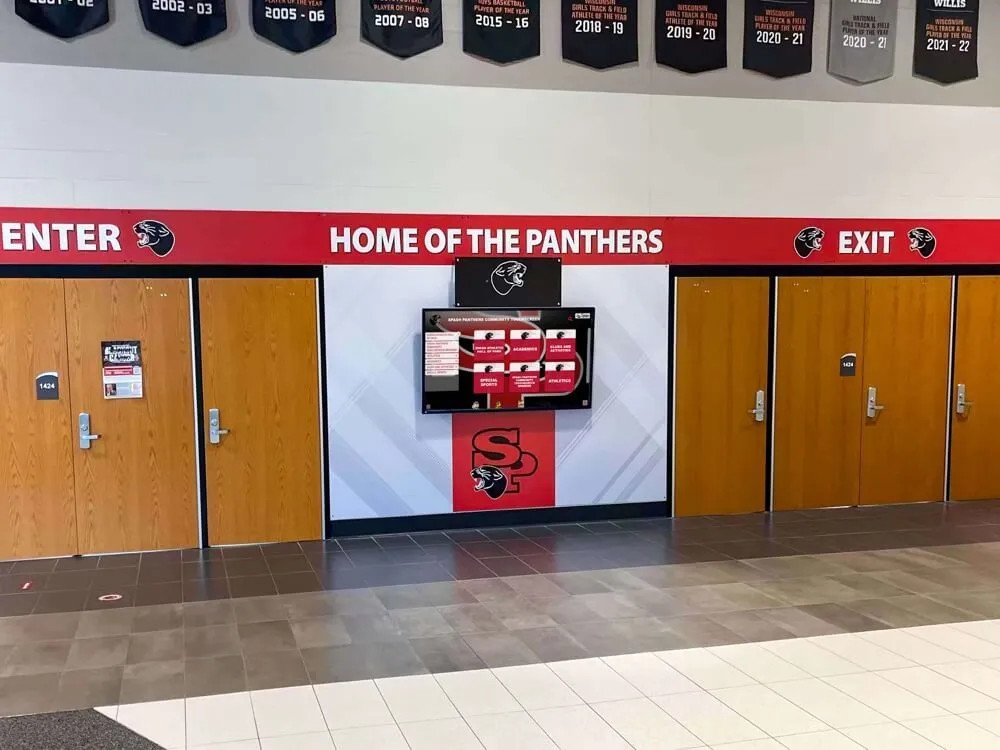
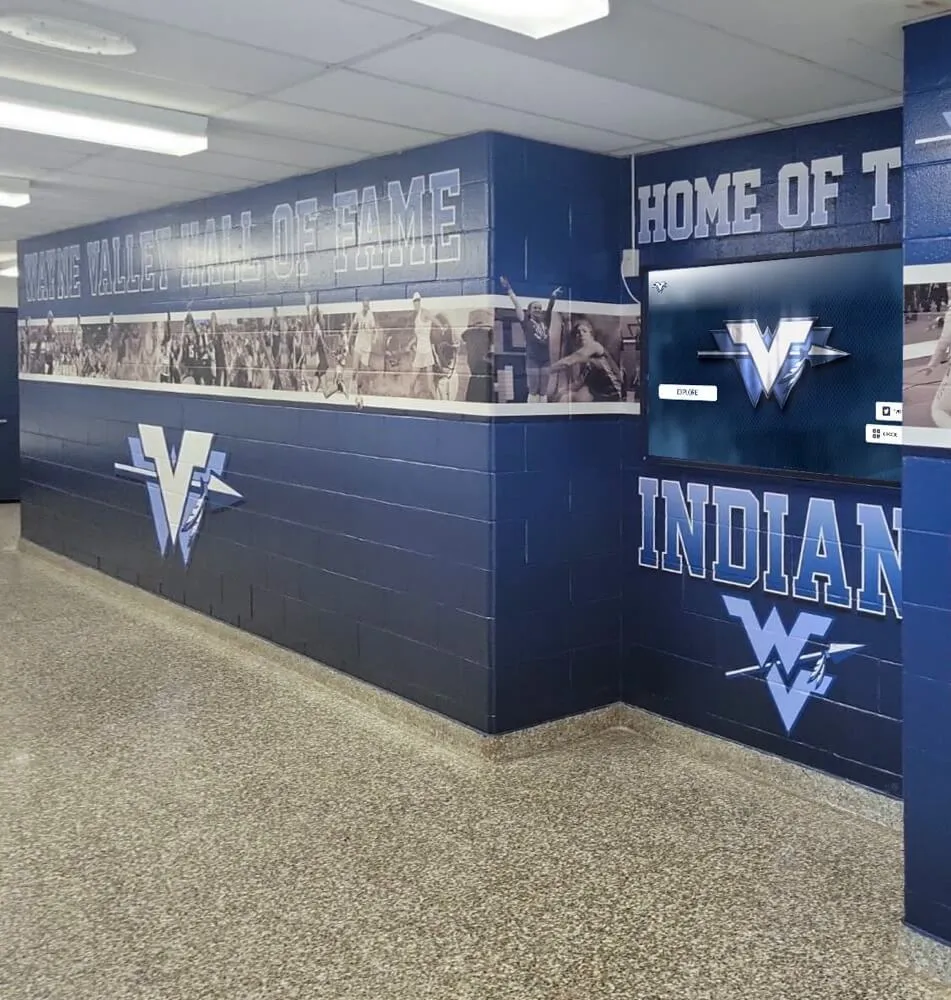
Dedicated honor walls in school hallways create year-round visibility for scholar-athletes rather than limiting recognition to ceremony moments
Display Integration: Connecting Scholar-Athlete Recognition to Physical Spaces
The most common reason scholar-athlete programs lose momentum over time is that recognition exists only at the ceremony moment. Once the plaque is handed out and the banquet ends, there is no ongoing, visible reminder of who earned the honor or what it represents.
Physical and digital display integration solves this problem by creating permanent or semi-permanent recognition surfaces that function independently of scheduled events.
Display Zones for Scholar-Athlete Content
Athletic Facility Lobby
The entry point for every visitor, parent, and recruit who walks through the building. Scholar-athlete portraits and academic profiles displayed alongside athletic records and team histories position dual achievement as a program value from the first moment of contact.
Academic Wing or Counseling Center
A separate display near academic spaces—the library, counseling hallway, or honors classroom corridor—serves a different audience: students who may not identify primarily as athletes, academic staff who rarely see the athletic side of their students’ lives, and parents visiting for academic events. This location reinforces the “student” side of the student-athlete identity.
Athletic Locker Room Corridor
Displaying scholar-athlete recognition in the athlete’s own space—where they see it before practice and after games—creates peer-level visibility. Teammates seeing their colleagues’ academic achievements displayed alongside their jersey numbers normalizes academic investment within the athletic culture.
ADA and Accessibility Considerations
Any recognition display installed in a school must meet accessibility standards. An ADA-accessible recognition display checklist covers mounting height requirements (48-inch reach range for interactive elements), contrast ratios (minimum 4.5:1 for text), and touch target sizing for kiosk-style displays. Schools should verify these standards before installation to avoid retrofitting costs later.
JROTC and Multi-Domain Scholar Programs
Schools with JROTC programs often find that cadets represent a distinct population of high-performing dual achievers—students who are excelling academically while also progressing through leadership and physical training curricula. Integrating JROTC cadet and scholar-leader recognition with scholar-athlete programs creates a broader “excellence across domains” culture that reaches beyond the varsity athletic population.
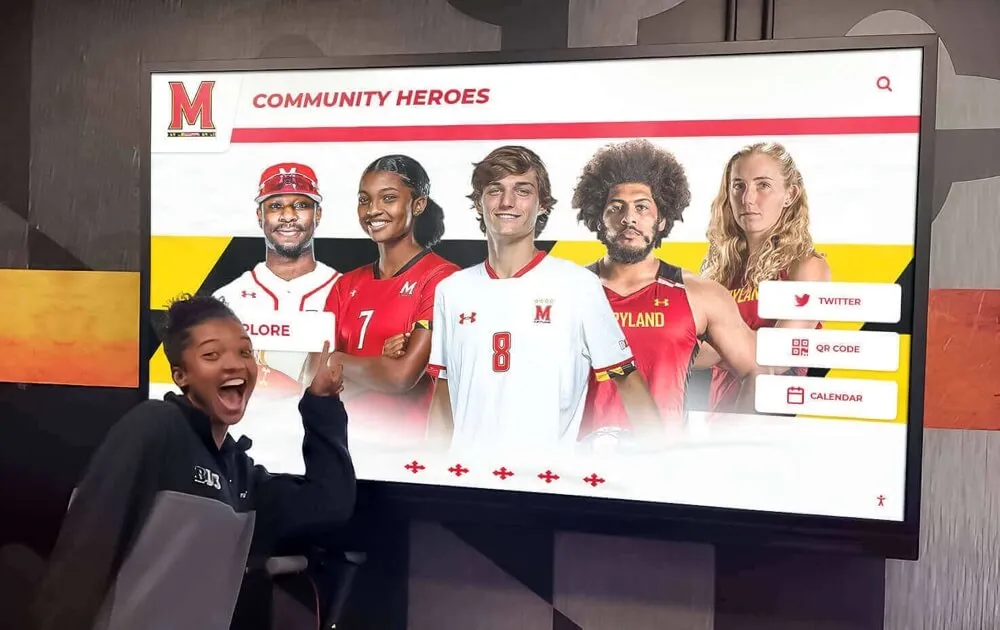
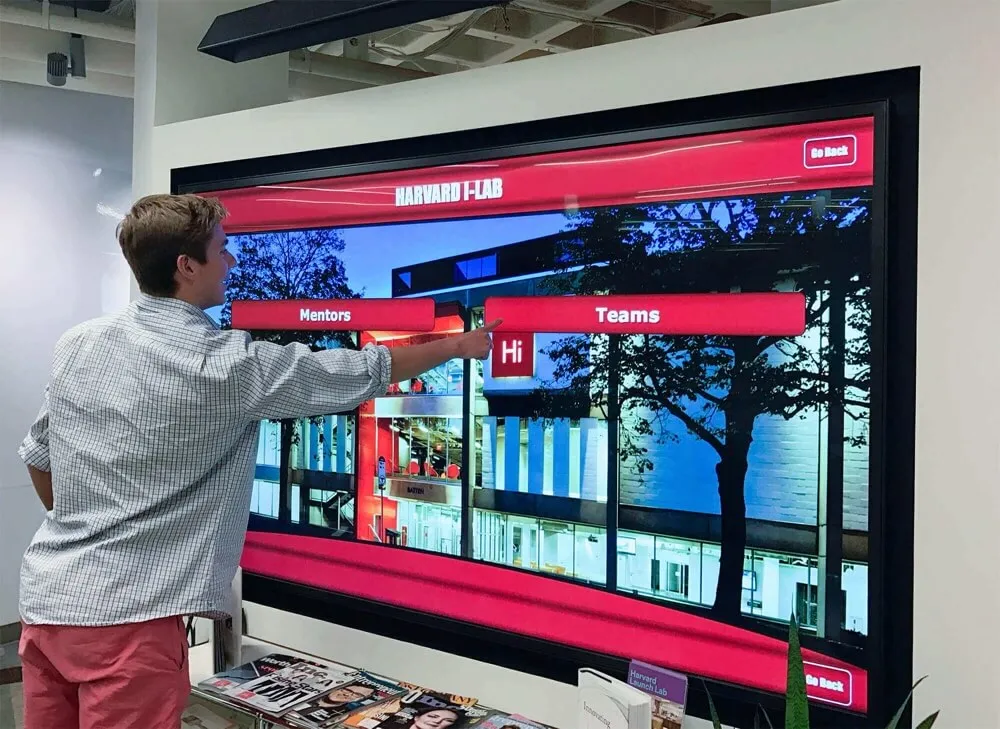
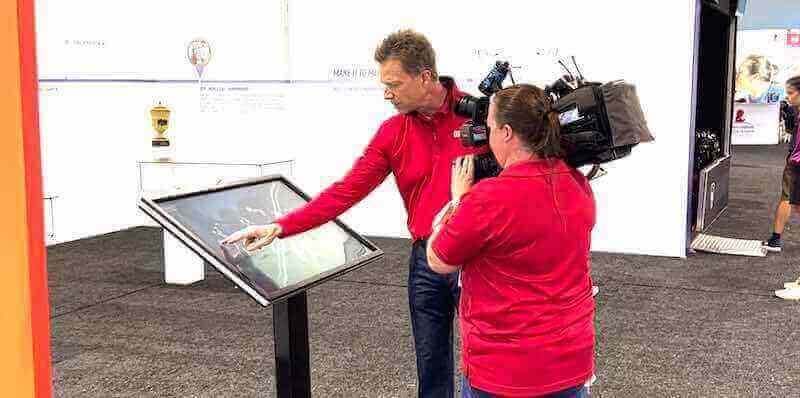
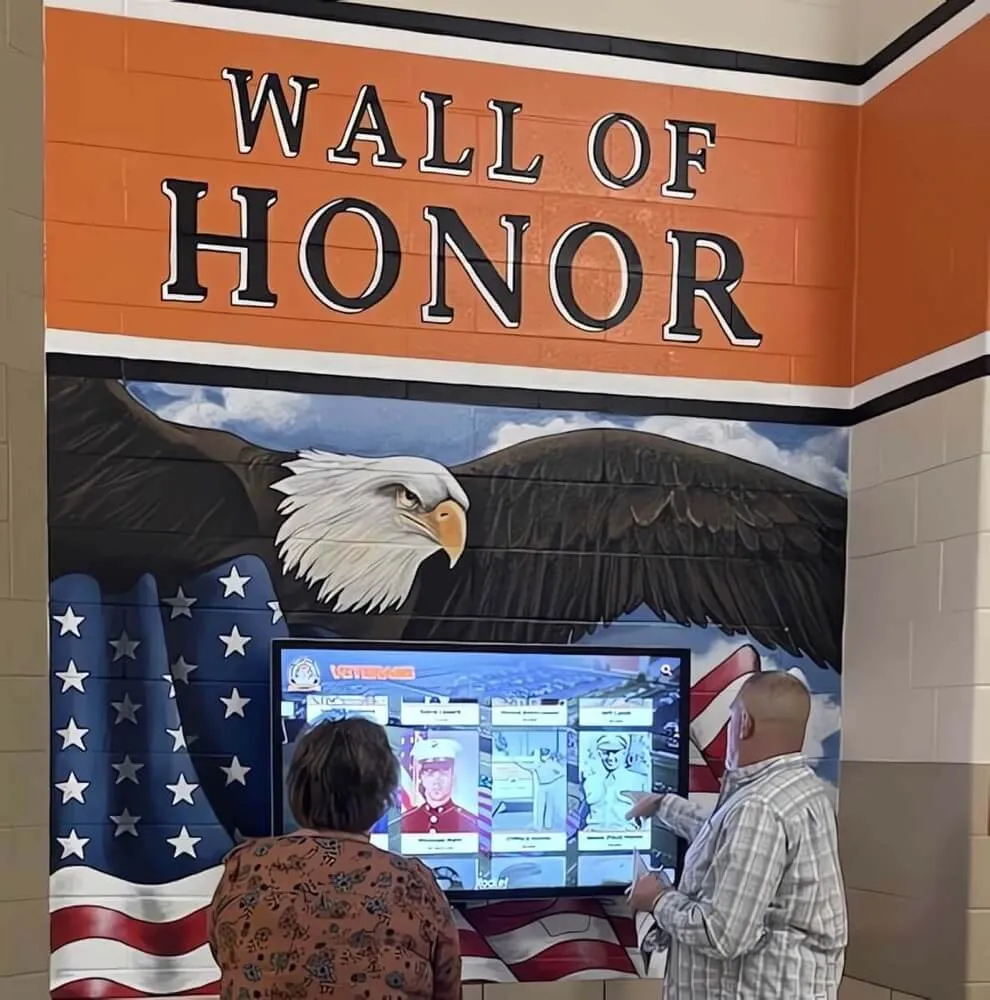
Interactive recognition displays engage current students with the achievements of their predecessors—creating inspiration rather than passive observation
Remote Management and Scheduled Publishing
One of the most practical advantages of digital over static recognition displays is the ability to update content without physical intervention. Schools using cloud-managed systems can:
- Upload new scholar-athlete classes remotely from any device
- Schedule display updates to go live on the night of the recognition ceremony
- Archive previous honorees without removing them from the searchable record
- Push seasonal messaging (nomination windows, eligibility reminders) to the display alongside recognition content
- Manage multiple display locations from a single dashboard
This remote-management capability means the athletic director or academic coordinator can refresh the scholar-athlete display at 9 PM from home on the day of the banquet, ensuring visitors see the new class of honorees first thing the next morning.
Measurement: Tracking Scholar-Athlete Program Impact
Recognition programs earn institutional investment when they produce measurable outcomes. These metrics help schools demonstrate program value to administrators, boards, and donors.
Academic Metrics
- Percentage of varsity athletes meeting scholar-athlete GPA threshold (track semester over semester to identify trends)
- Team-level GPA averages across all sports
- Change in academic standing for athletes recognized in the program vs. non-recognized peers
- Percentage of honorees earning post-secondary scholarships (academic and athletic)
Program Engagement Metrics
- Nomination volume each cycle (growth indicates program awareness)
- Attendance at scholar-athlete recognition events
- Social media reach for honoree features
- Display dwell time for digital recognition installations
Recruitment Impact Metrics
- Percentage of admitted recruits who cited scholar-athlete culture in campus visit feedback
- Number of families referencing the recognition program in enrollment conversations
- Alumni donations tied to scholar-athlete program naming or sponsorship
For schools investing in digital recognition infrastructure, measuring recognition display engagement and ROI provides a framework for connecting display analytics—interactions, dwell time, section engagement—to program outcomes like attendance and donation correlation.
Sample Scholar-Athlete Recognition Ceremony Run of Show
This template can be adapted for athletic banquets, end-of-semester ceremonies, or dedicated scholar-athlete recognition events.
| Time | Segment | Presenter |
|---|---|---|
| 0:00 | Welcome and program overview | Athletic Director |
| 0:05 | Academic year in review—athletic and academic highlights | Principal or VP |
| 0:15 | Presentation: All-Academic Teams by Sport | Coaches (each team) |
| 0:40 | Scholar-Athlete Honor Roll announcement | Academic Advisor |
| 0:50 | Multi-Year Scholar-Athlete recognition (3- and 4-year honorees) | Athletic Director |
| 1:00 | Scholar-Athlete of the Year presentation (female) | Coach + Principal |
| 1:10 | Scholar-Athlete of the Year presentation (male) | Coach + Principal |
| 1:20 | Display dedication or unveiling (if new installation) | AD + Honorees |
| 1:30 | Closing remarks and social reception | Athletic Director |
This 90-minute format is compact enough to maintain engagement while recognizing every tier of honorees. Schools with larger programs can extend the All-Academic Team segment or add a video tribute reel for senior scholar-athletes.
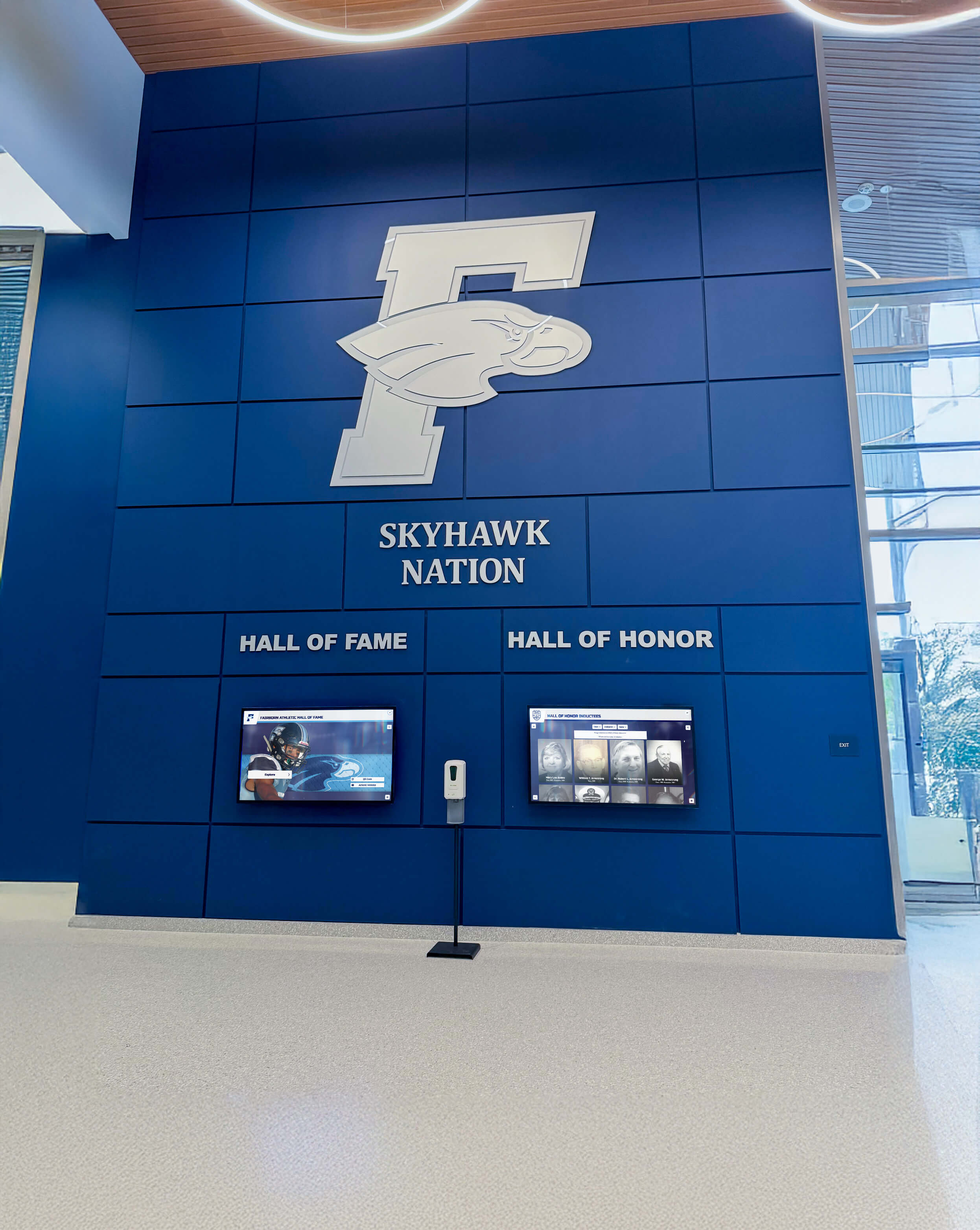
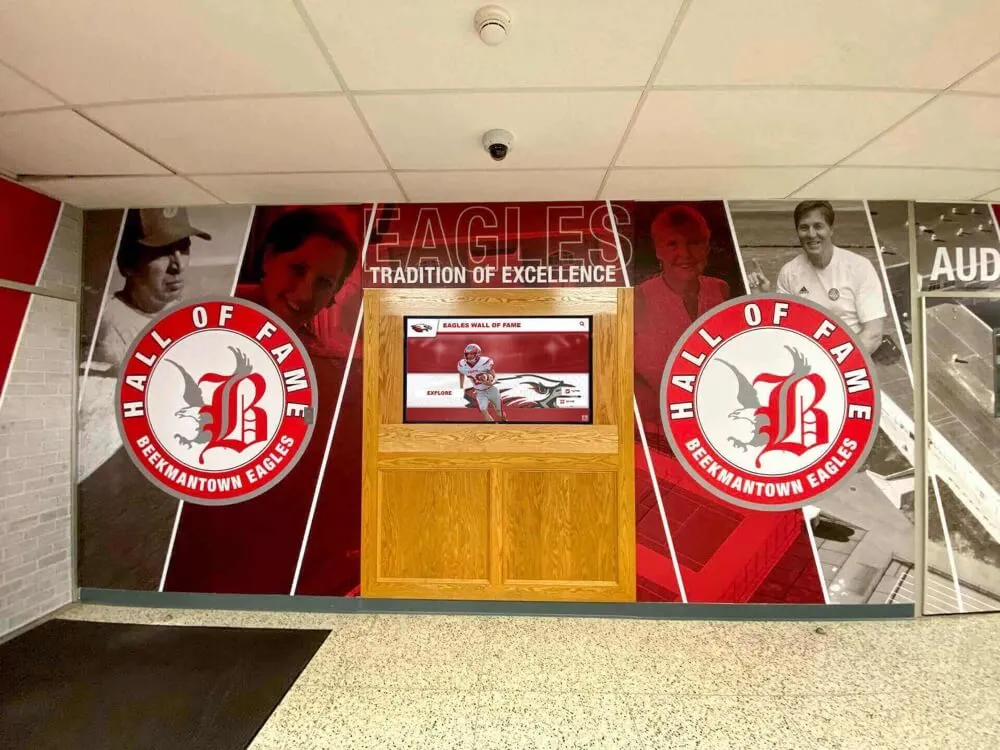
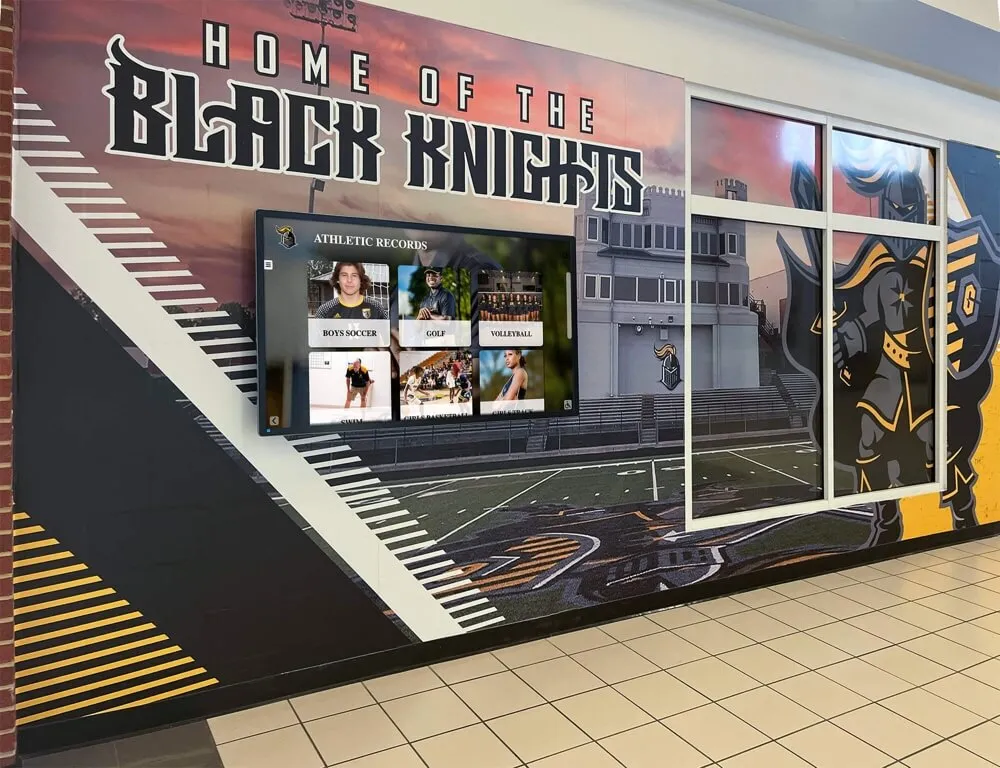
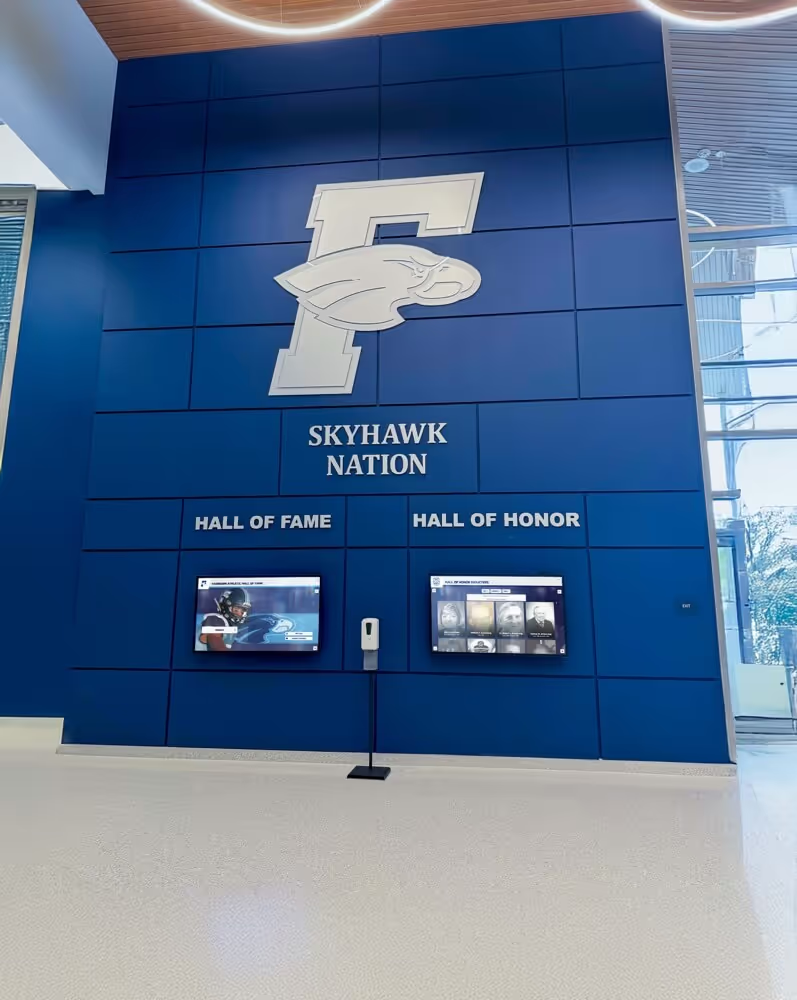
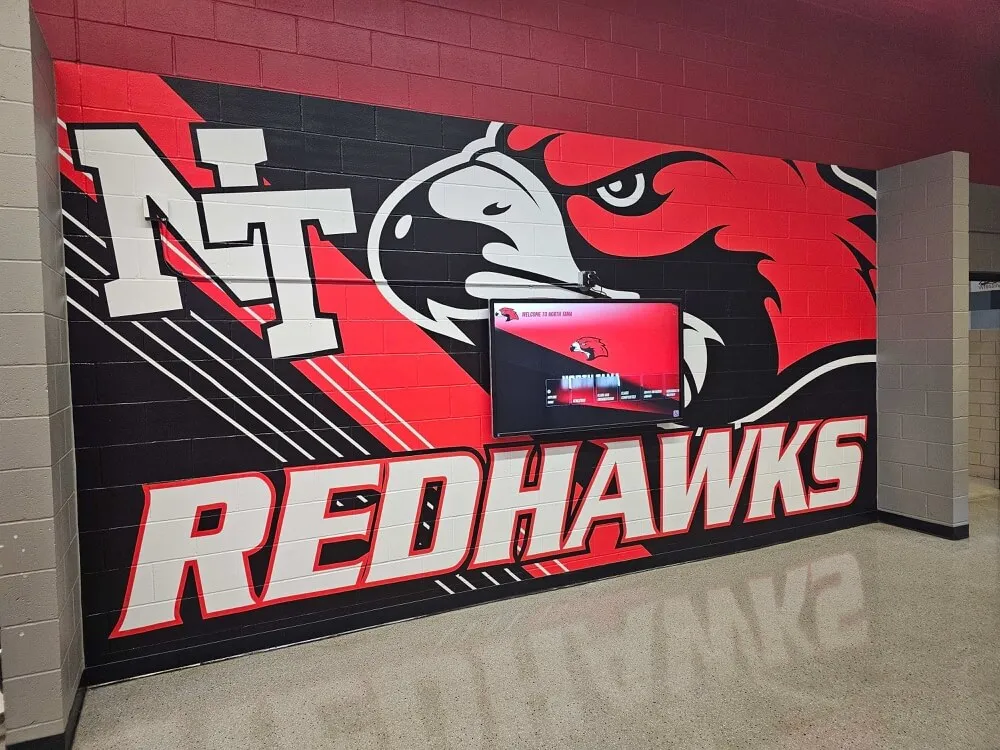
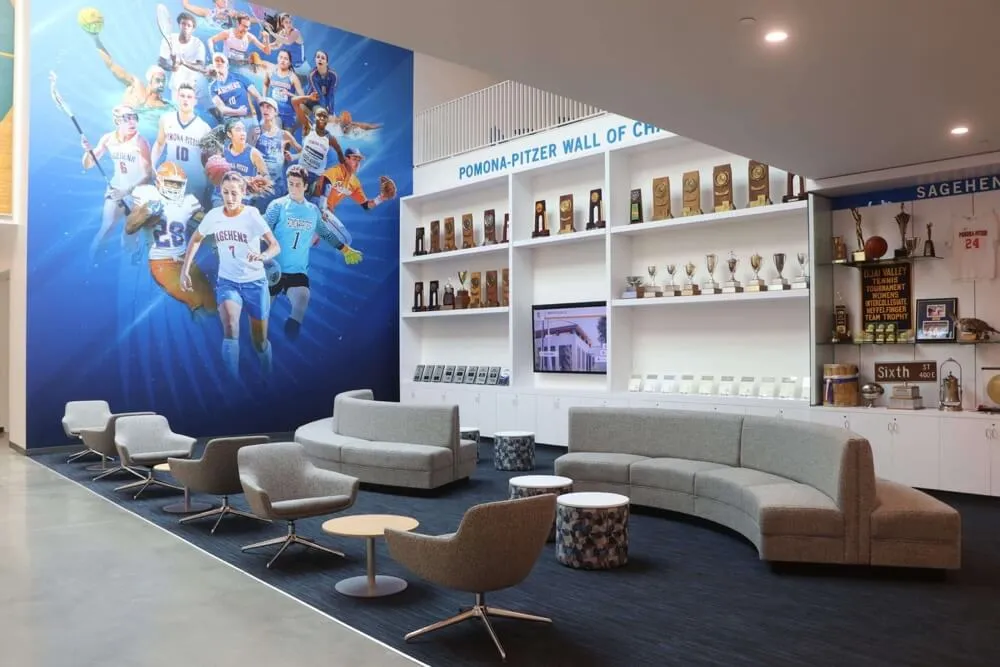
Dedicated lobby recognition walls that integrate academic and athletic honors signal institutional values to every visitor who enters the building
Building a Scholar-Athlete Program That Lasts
The schools with the most durable scholar-athlete recognition programs share a few structural characteristics. They publish eligibility criteria before the season begins so students can plan around them. They use multiple recognition tiers so a wide range of students feel the program is accessible to them—not just the 4.0 athletes competing at the highest levels. They connect recognition moments to visible, permanent displays so honors accumulate into an institutional record rather than existing only in ceremony programs that eventually get recycled.
They also treat the program as a living document, reviewing criteria annually and adjusting thresholds based on participation rates. A program that recognizes 40% of the athletic roster is probably calibrated well. One that recognizes only 3% may have set criteria so high that it inadvertently signals academic achievement is only for the elite—undermining the culture it is trying to build.
Student athlete scholars don’t need outsized ceremonies or expensive trophies. They need consistent, institutional acknowledgment that both sides of what they do are seen, recorded, and valued. A well-designed program delivers exactly that—each semester, for every student who earns it, in a format that outlasts the moment and accumulates over time.
Rocket Alumni Solutions builds the digital display infrastructure that schools connect to scholar-athlete recognition programs—interactive touchscreen walls of fame, digital record boards, and searchable alumni displays that make academic and athletic achievement permanently visible to current students, families, recruits, and community members year-round.
Ready to give your student athlete scholars a recognition program that lasts beyond the ceremony? Rocket Alumni Solutions designs and installs interactive scholar-athlete recognition displays, digital honor rolls, and hall of fame walls customized for schools of every size. See how your program would look with a free custom demo.
Live Example: Rocket Alumni Solutions Touchscreen Display
Interact with a live example (16:9 scaled 1920x1080 display). All content is automatically responsive to all screen sizes and orientations.