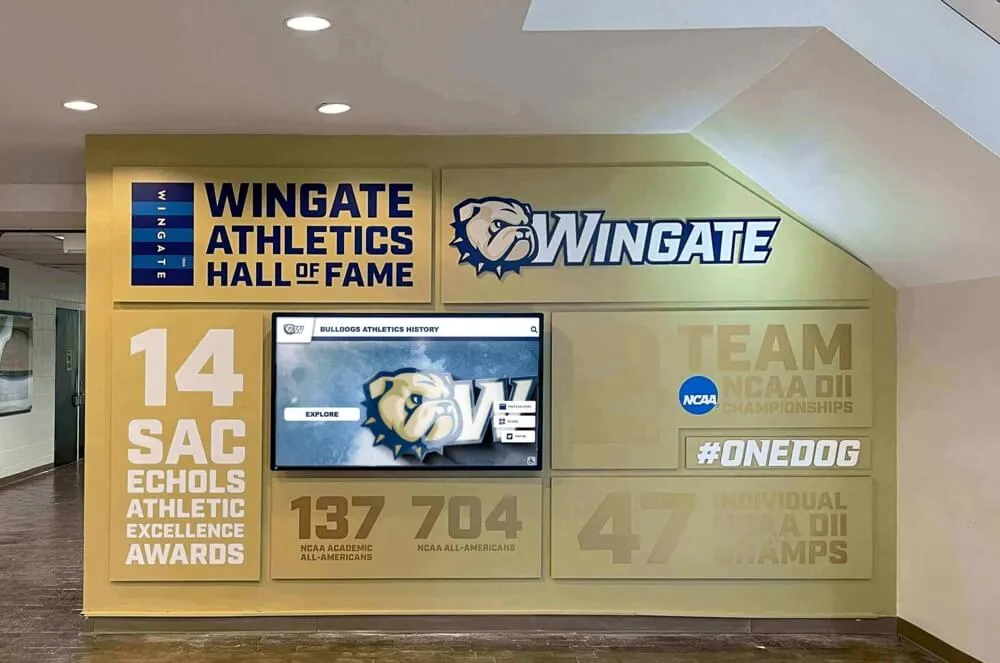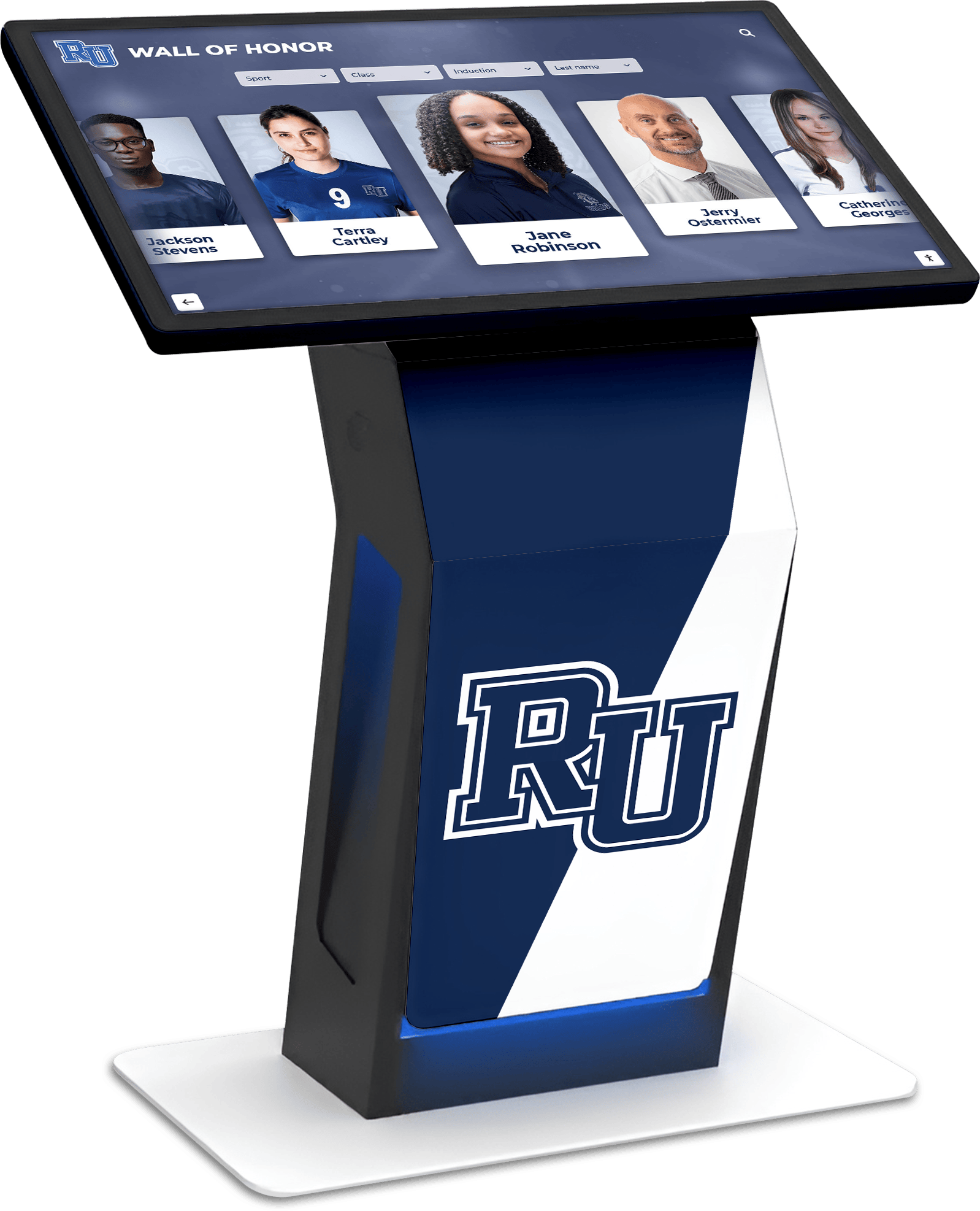




Recognition matters. Whether celebrating athletic championships, honoring academic excellence, preserving institutional heritage, or acknowledging donor contributions, how organizations recognize achievement directly influences culture, motivation, and community identity. Traditional recognition methods—plaques, trophy cases, printed programs—face inherent limitations: finite physical space, static presentation, minimal information capacity, and accessibility constraints that limit who can engage with recognition content.
Rocket Recognition represents a comprehensive digital recognition platform specifically designed to address these limitations while creating engaging, professional experiences that honor unlimited achievements across all categories and time periods. Developed by Rocket Alumni Solutions, this innovative system combines interactive touchscreen displays, cloud-based content management, rich multimedia capabilities, and web accessibility—transforming how schools, universities, nonprofit organizations, and community institutions celebrate excellence and build lasting connections.
This comprehensive guide explores what makes Rocket Recognition distinctive, how organizations implement these systems effectively, the specific capabilities and features that create superior recognition experiences, and practical approaches for leveraging this technology to honor diverse contributions while strengthening institutional culture and community engagement.
Recognition programs serve fundamental purposes across all institutional types: they validate individual contributions and achievements, strengthen organizational culture and shared identity, preserve institutional memory and heritage, motivate continued excellence and engagement, communicate organizational values and priorities, and create welcoming environments that inspire pride and belonging.

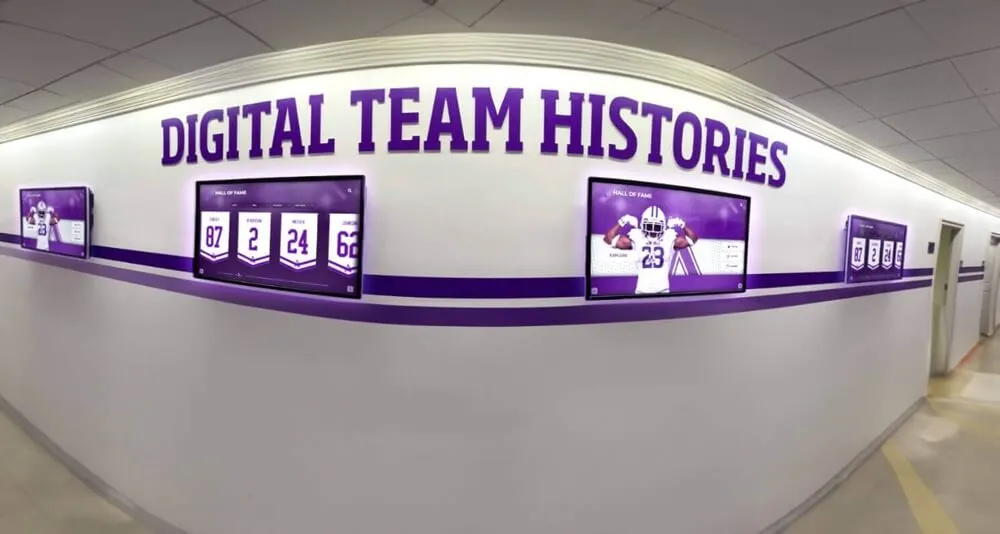
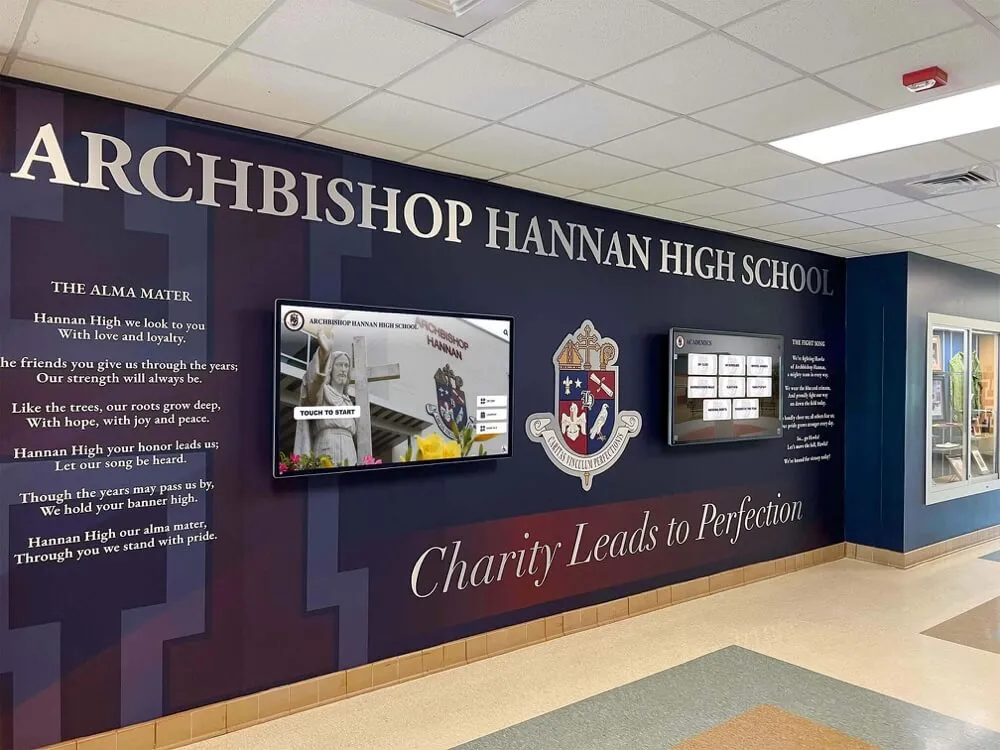
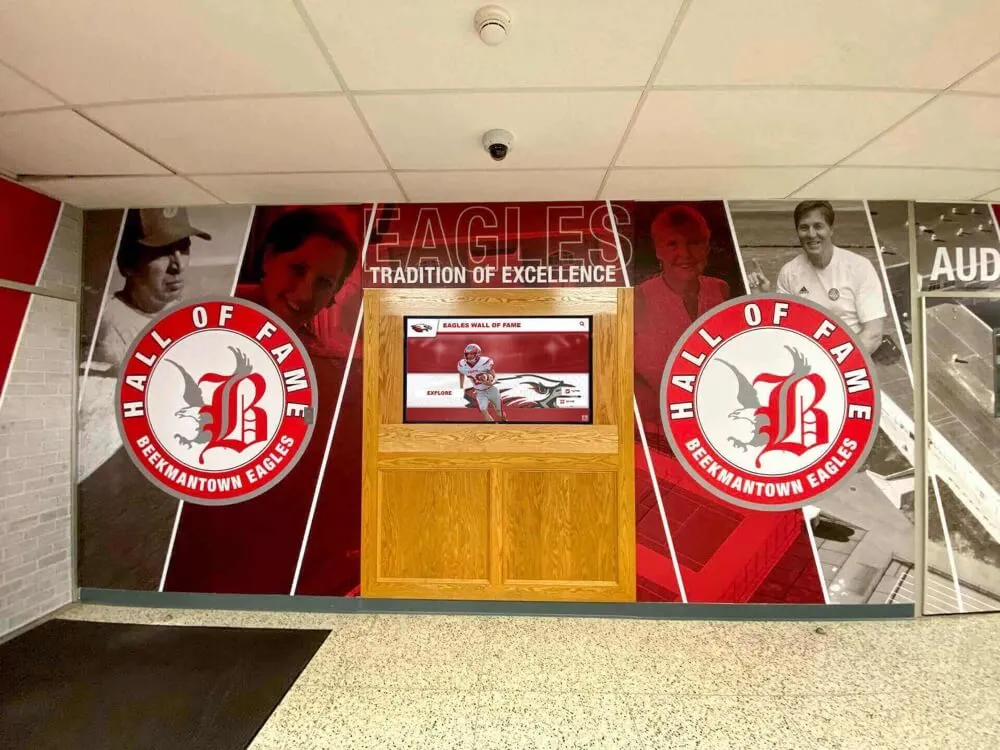
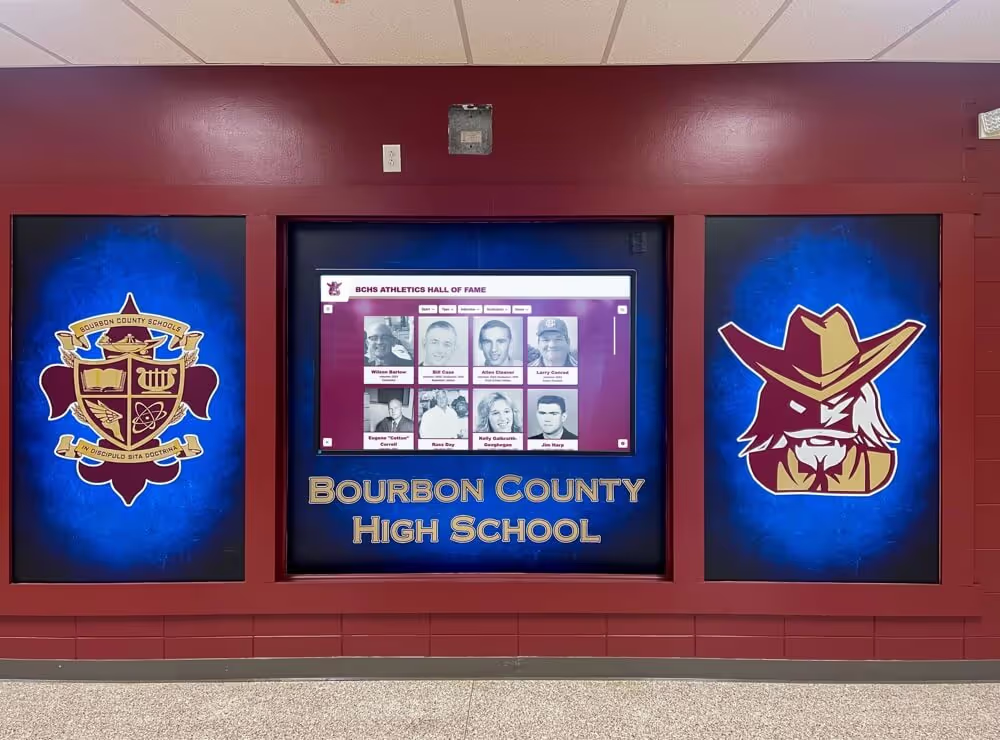
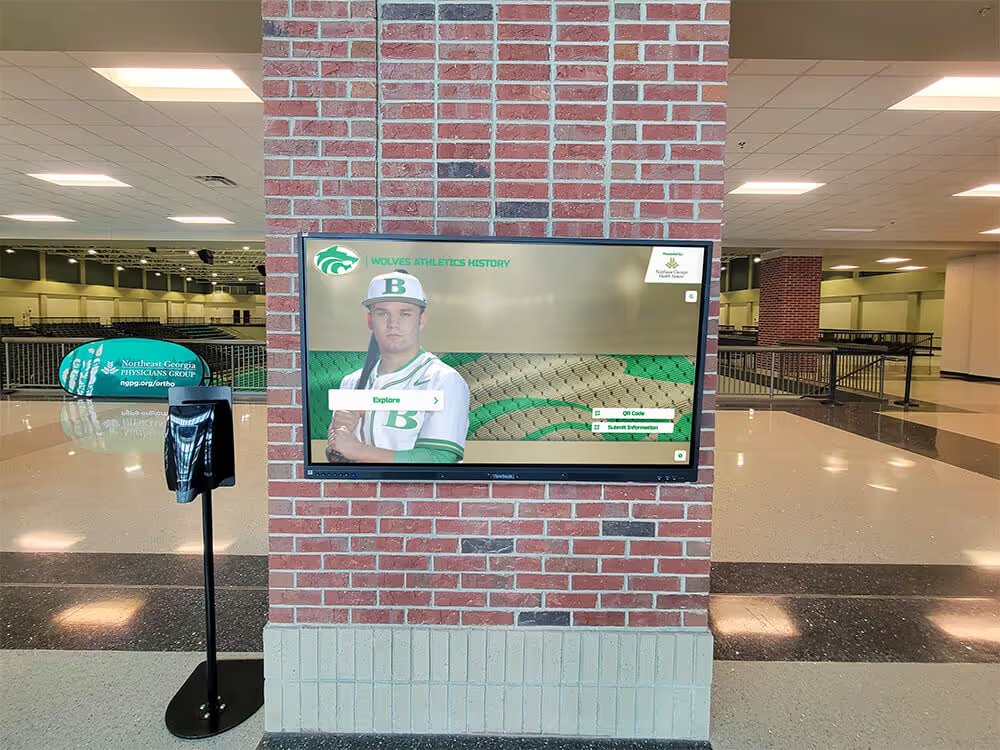
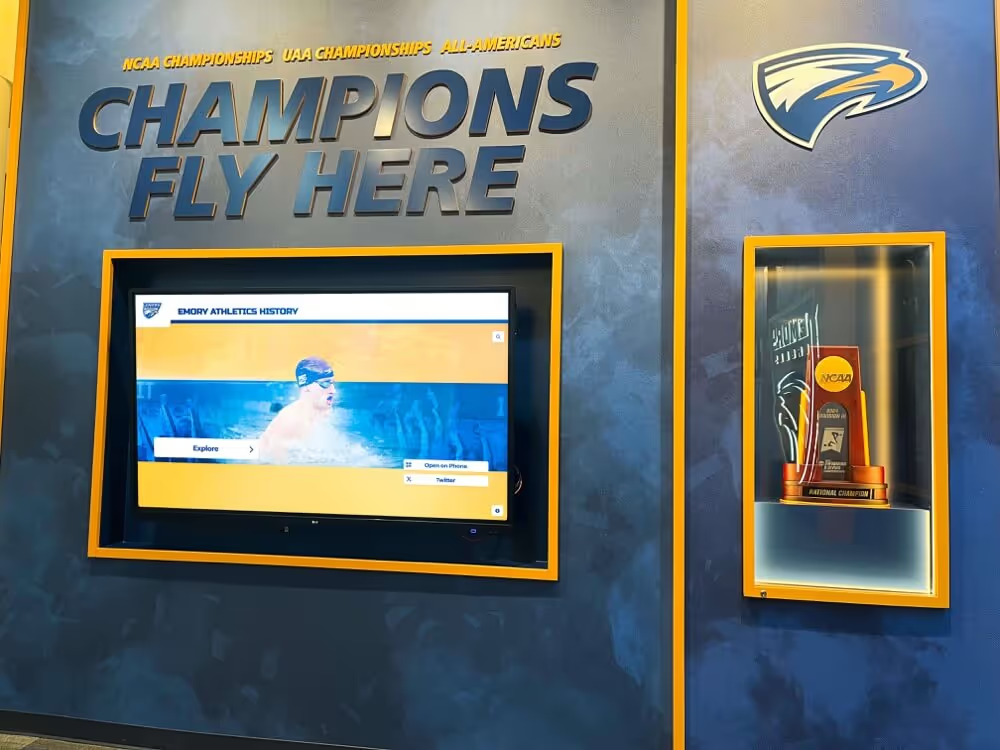
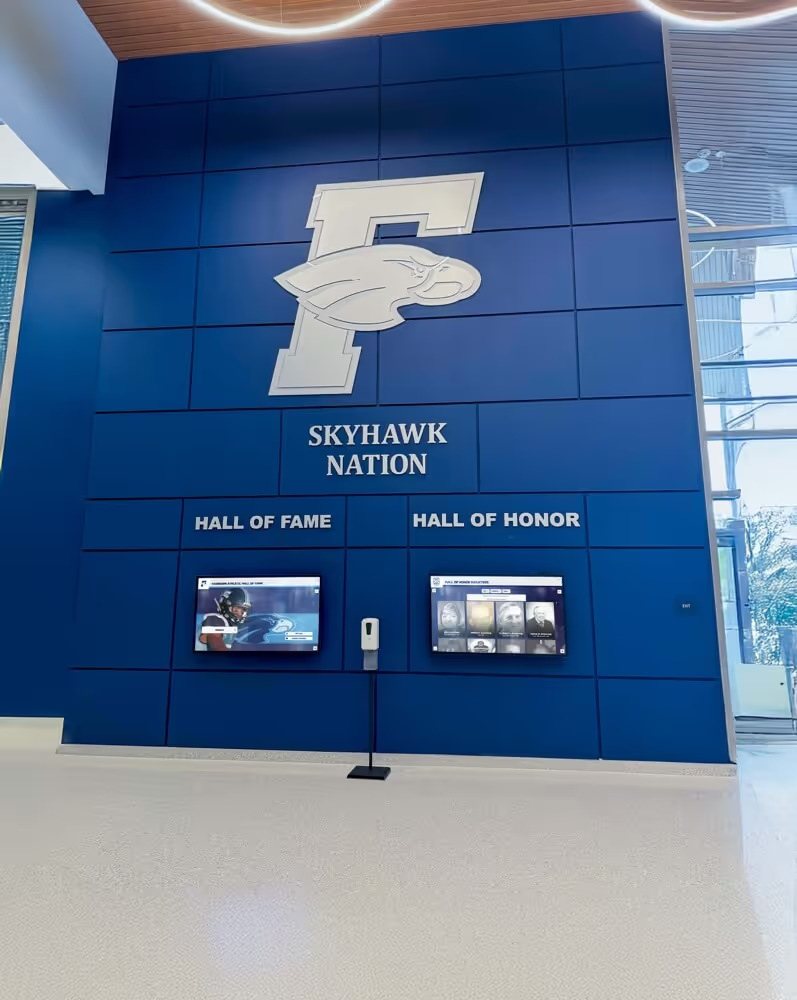
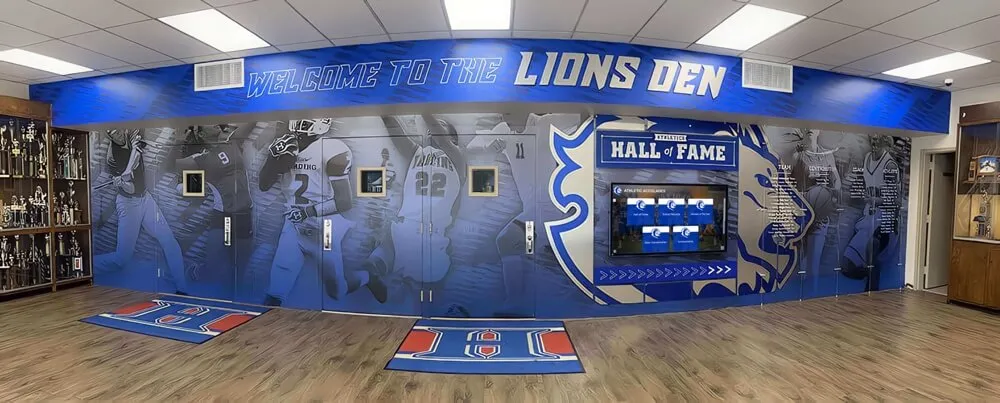
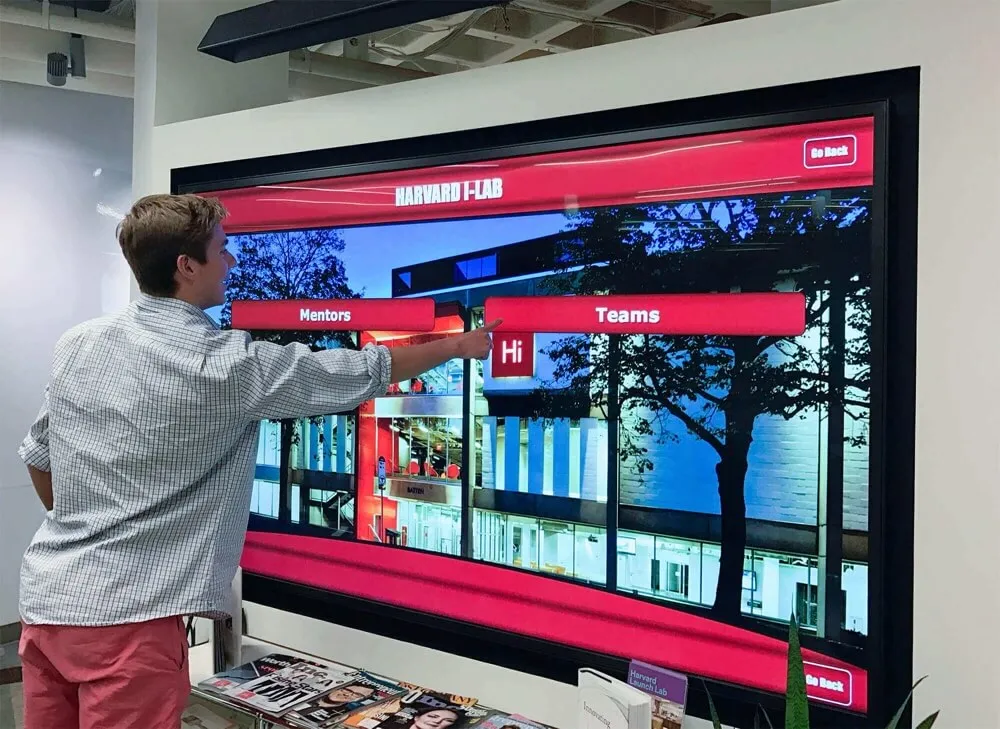
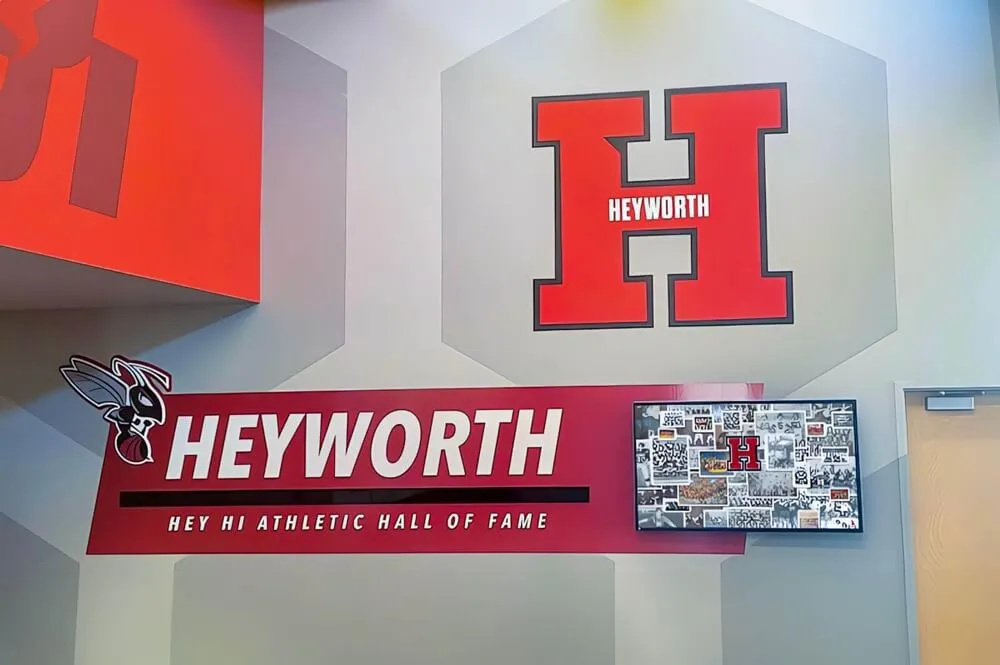
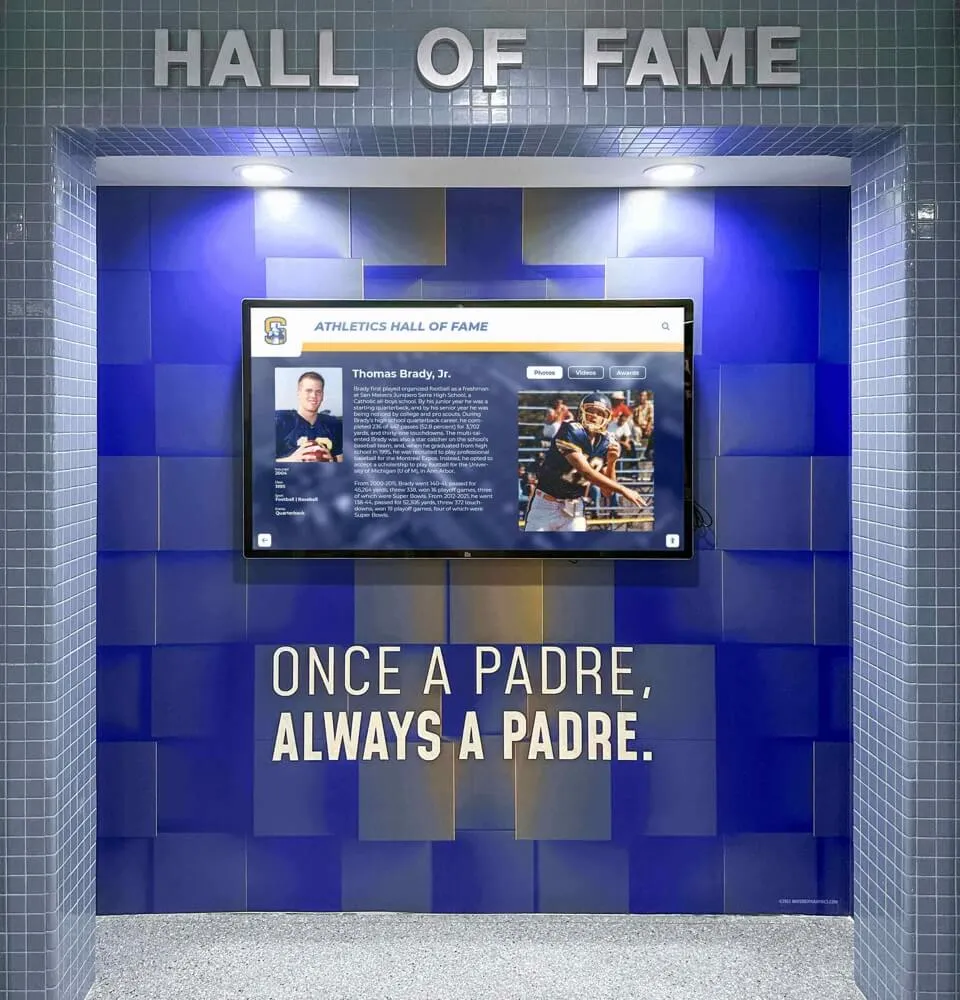
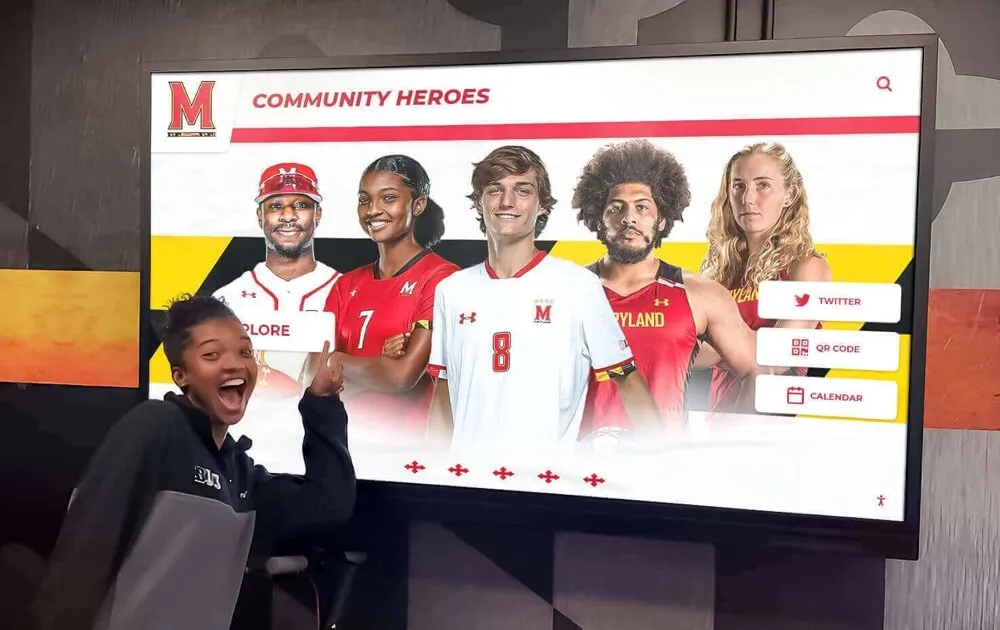
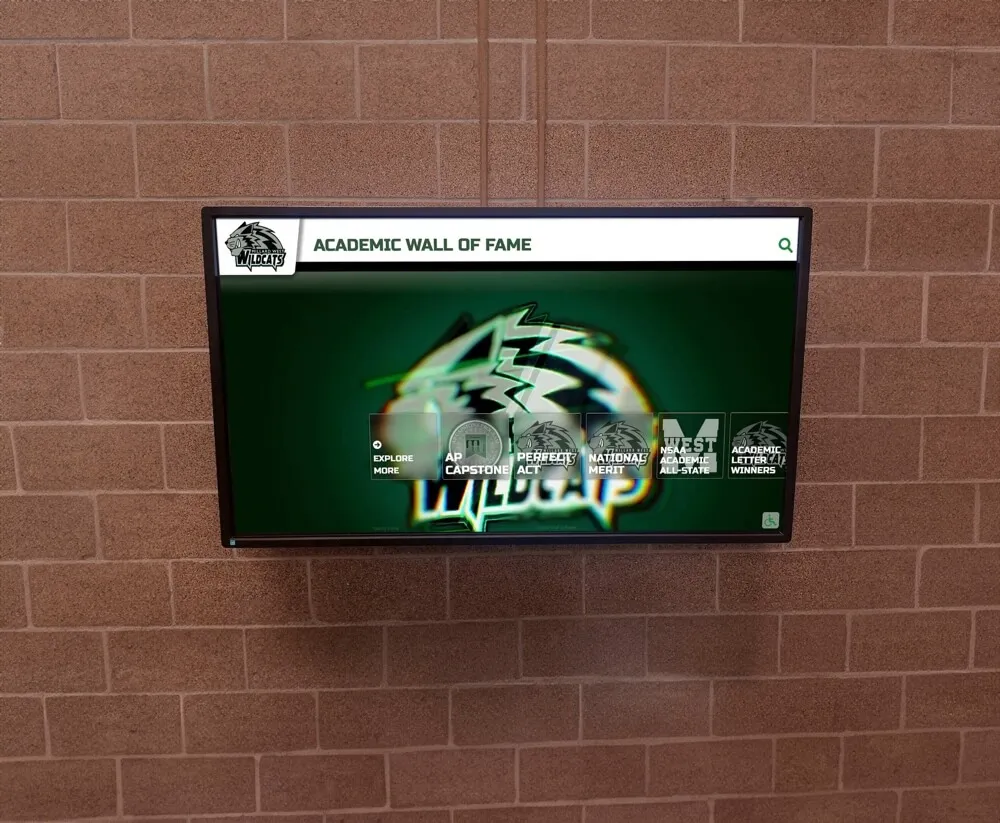
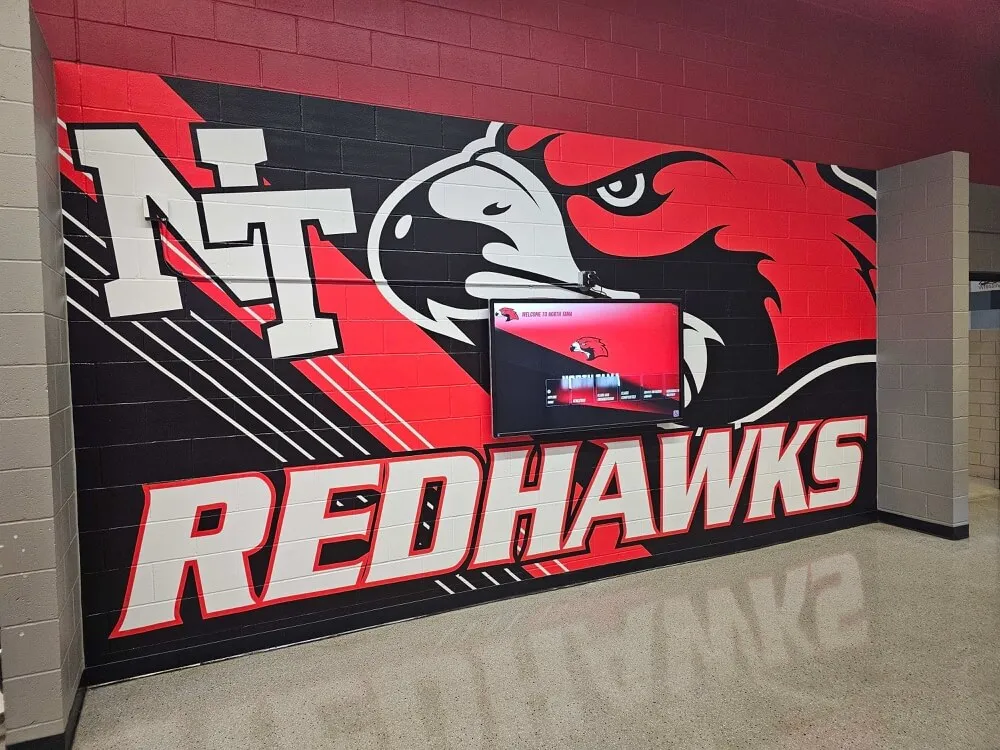
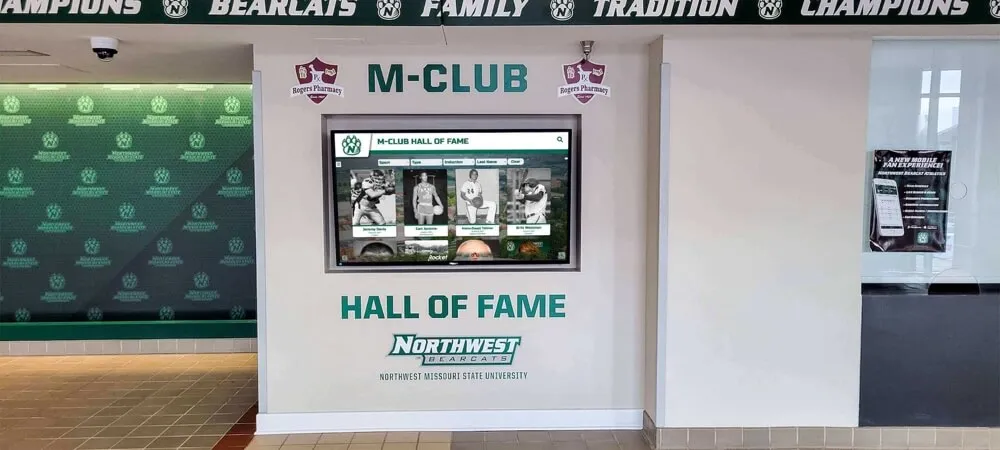
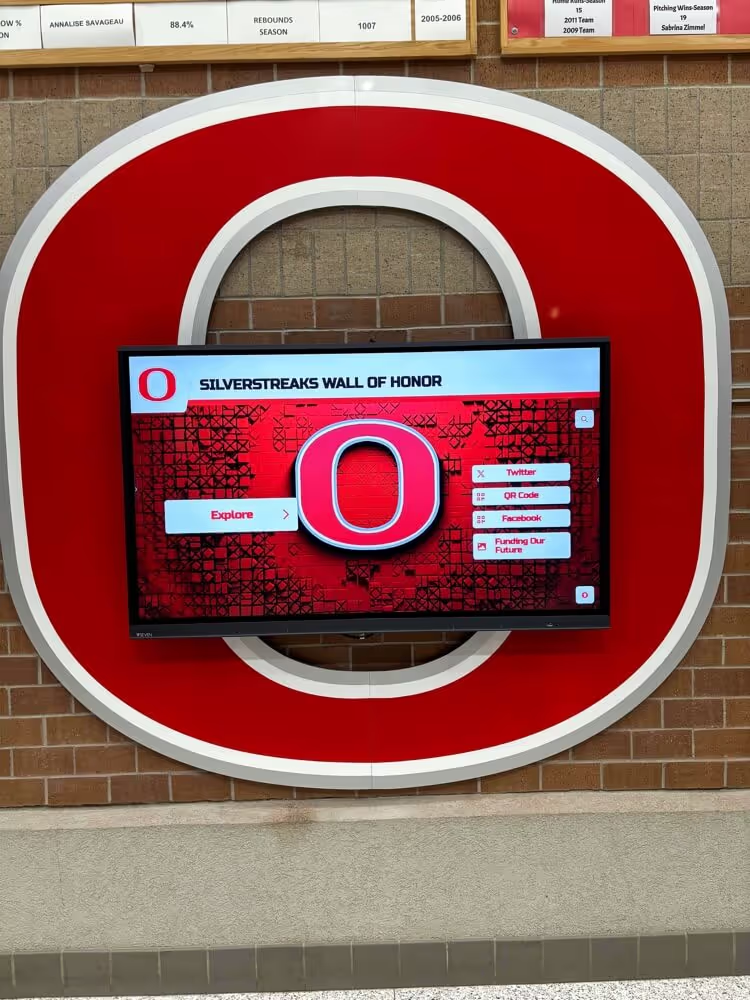
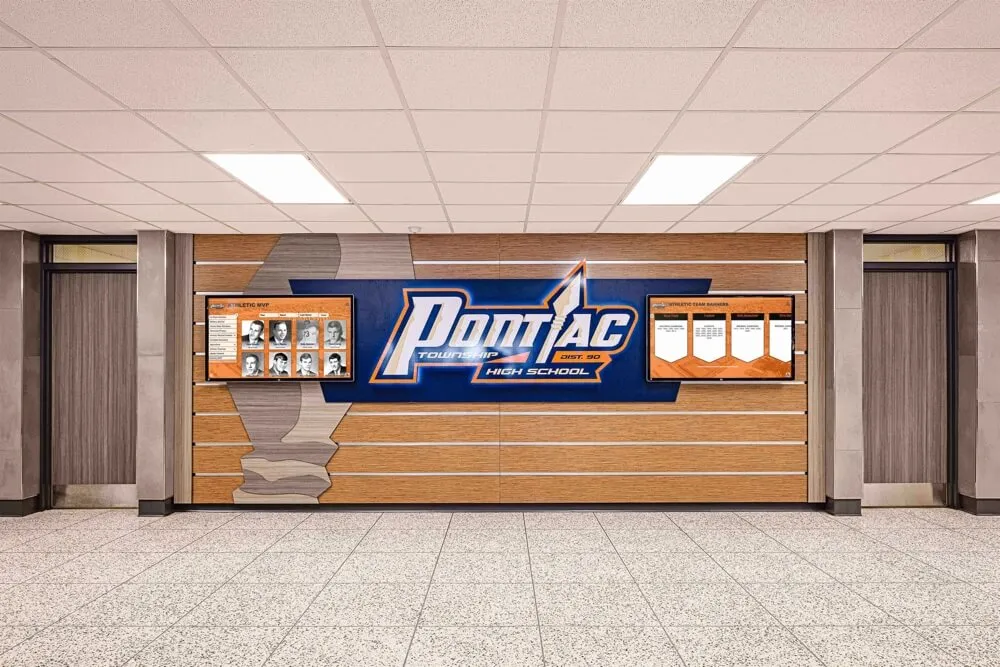
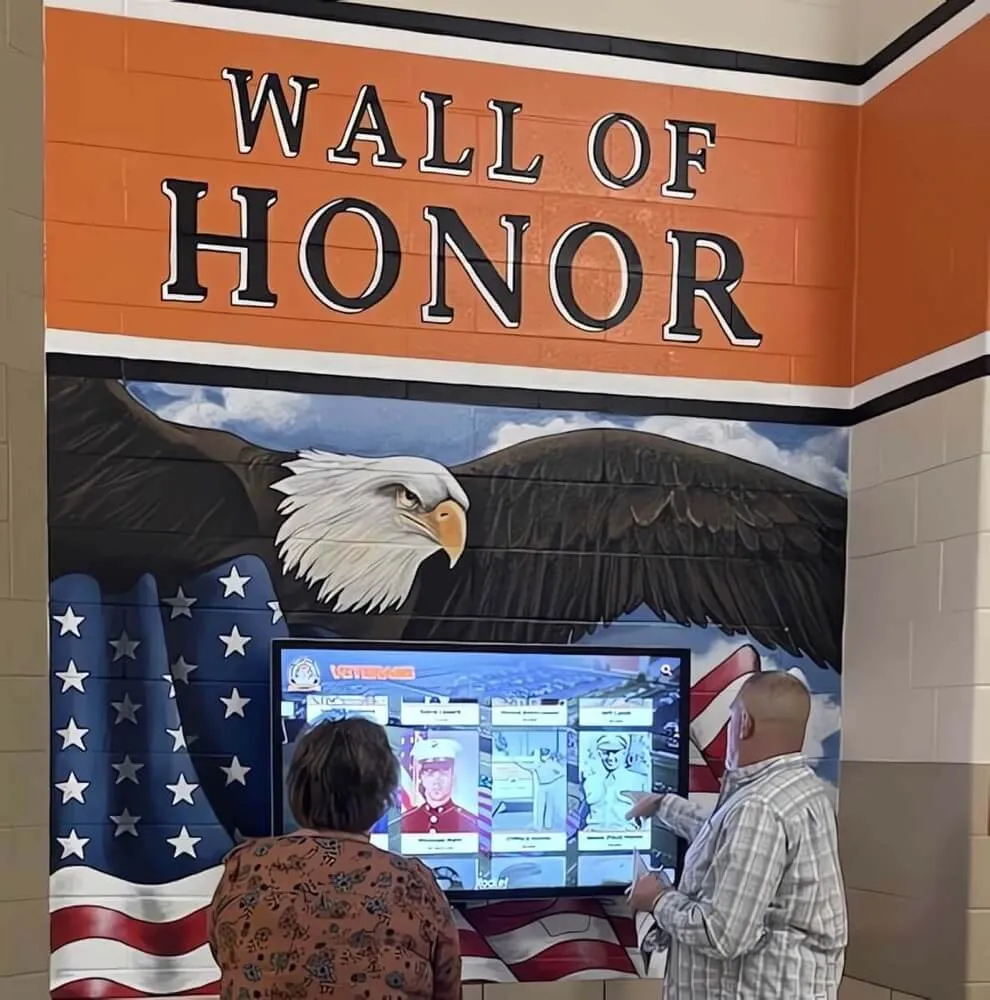
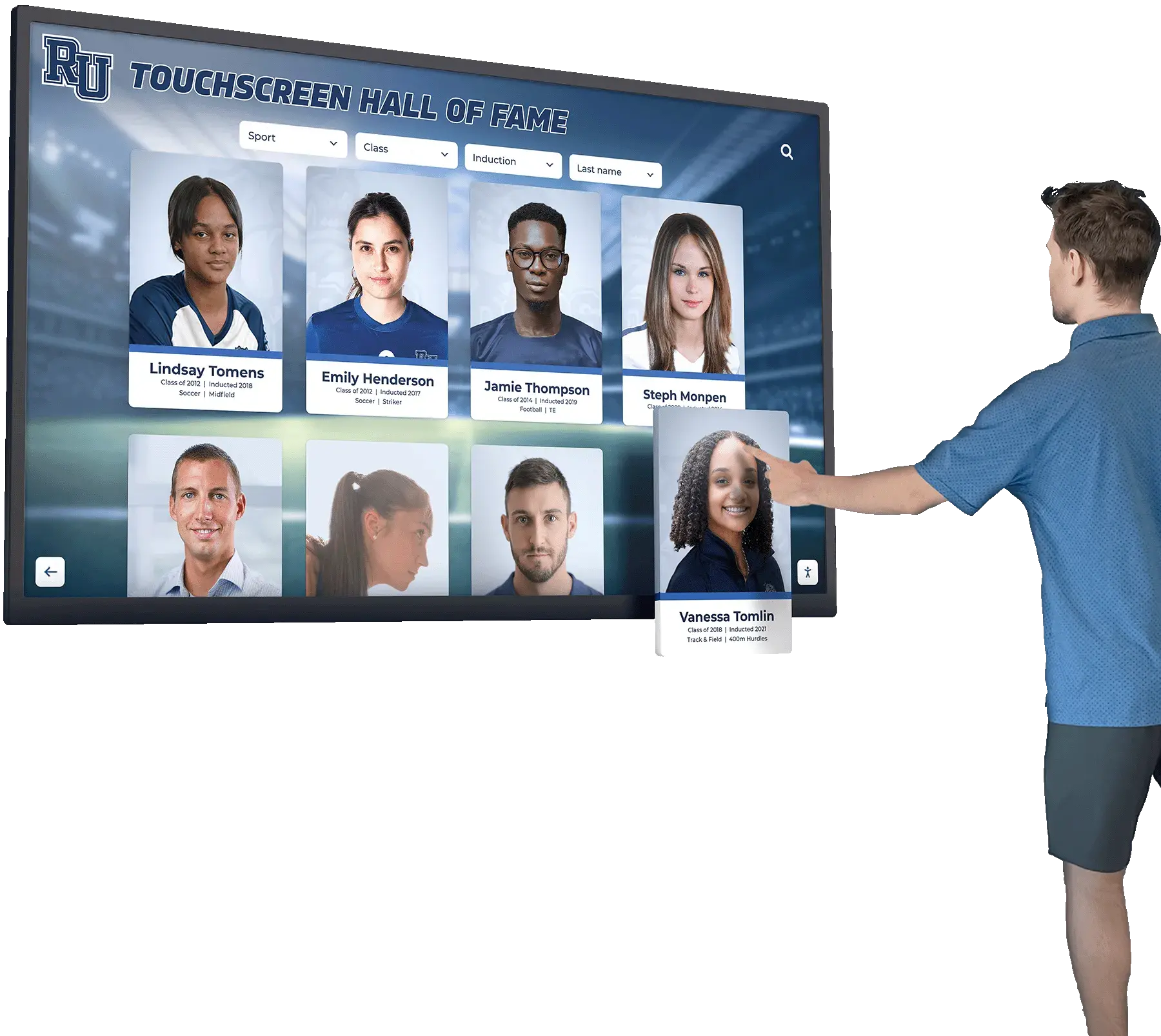
Rocket Recognition creates professional, engaging recognition experiences through interactive touchscreen technology
Understanding Rocket Recognition: What Makes It Different
Before exploring implementation details, it’s essential to understand what distinguishes Rocket Recognition from both traditional approaches and other digital recognition solutions.
The Recognition Challenge in Modern Institutions
Organizations across sectors face similar recognition obstacles that traditional methods struggle to address effectively:
Space and Capacity Limitations
Physical recognition systems encounter fundamental constraints:
- Trophy cases fill completely as organizations accumulate achievements over time
- Wall plaques consume limited space requiring difficult decisions about what gets displayed
- Championship banners reach ceiling capacity forcing removal of historical recognition
- Donor walls run out of physical space preventing acknowledgment of new contributors
- Static displays cannot expand to accommodate growing recognition needs
Successful organizations generating consistent achievement inevitably face choices between recognizing new accomplishments and preserving historical recognition—an impossible dilemma that undervalues either current or past excellence.
Limited Information and Storytelling
Traditional recognition methods convey minimal content:
- Plaques typically include only names, dates, and brief achievement descriptions
- Trophy cases display physical awards but provide little context or story
- Printed programs document achievements temporarily before becoming obsolete
- Static displays cannot include photographs, videos, or comprehensive narratives
- No search or discovery features enable exploration of recognition archives
This information poverty reduces recognition to simple documentation rather than meaningful celebration that honors individuals comprehensively while preserving institutional stories.
Accessibility and Engagement Barriers
Conventional approaches limit who can access recognition:
- Physical displays require in-person visits restricting engagement to those who can travel
- Static presentation generates minimal engagement beyond brief glances
- No interactivity prevents personalized exploration or discovery
- Alumni and community members living remotely cannot access recognition
- Visitors unfamiliar with organizational context lack background information
These limitations mean recognition reaches small fractions of potential audiences—dramatically reducing impact and value compared to what genuinely accessible systems accomplish.
Explore how recognition programs influence organizational culture across institutions.
Core Principles Behind Rocket Recognition
Rocket Recognition was developed specifically to address these fundamental challenges through several guiding principles:
Unlimited Capacity and Scalability
The platform eliminates space constraints entirely:
- Single installations accommodate unlimited profiles across all achievement categories
- No removal of historical recognition necessary when adding new honorees
- Complete archives preserve institutional memory from inception forward
- Sustainable approach supports unlimited future growth without physical limitations
- Equitable recognition across all programs, sports, departments, and time periods
Organizations implementing Rocket Recognition consistently identify unlimited capacity as the most transformative benefit—enabling genuinely comprehensive celebration rather than selective recognition constrained by physical space.
Rich Multimedia Storytelling
Digital platforms support diverse content types creating substantive recognition:
- High-resolution photographs showcasing individuals professionally
- Video interviews bringing subjects to life through their own voices
- Historical documentation preserving heritage and context
- Comprehensive biographies honoring contributions thoroughly
- Statistical achievements and detailed accomplishment records
- Multiple media types within single profiles creating engaging narratives
This multimedia richness honors individuals comprehensively rather than reducing accomplishments to names on plaques or trophies in cases.
Interactive Exploration and Discovery
Active engagement transforms recognition experiences:
- Intuitive search finding specific individuals, achievements, or time periods instantly
- Powerful filtering by category, sport, department, achievement type, or era
- Chronological browsing revealing institutional evolution across decades
- Connection discovery showing relationships between individuals and programs
- Personalized experiences enabling self-directed exploration based on individual interests
Research demonstrates interactive recognition generates substantially deeper engagement than passive viewing—with average interaction sessions extending 4-8 minutes compared to seconds for static displays.
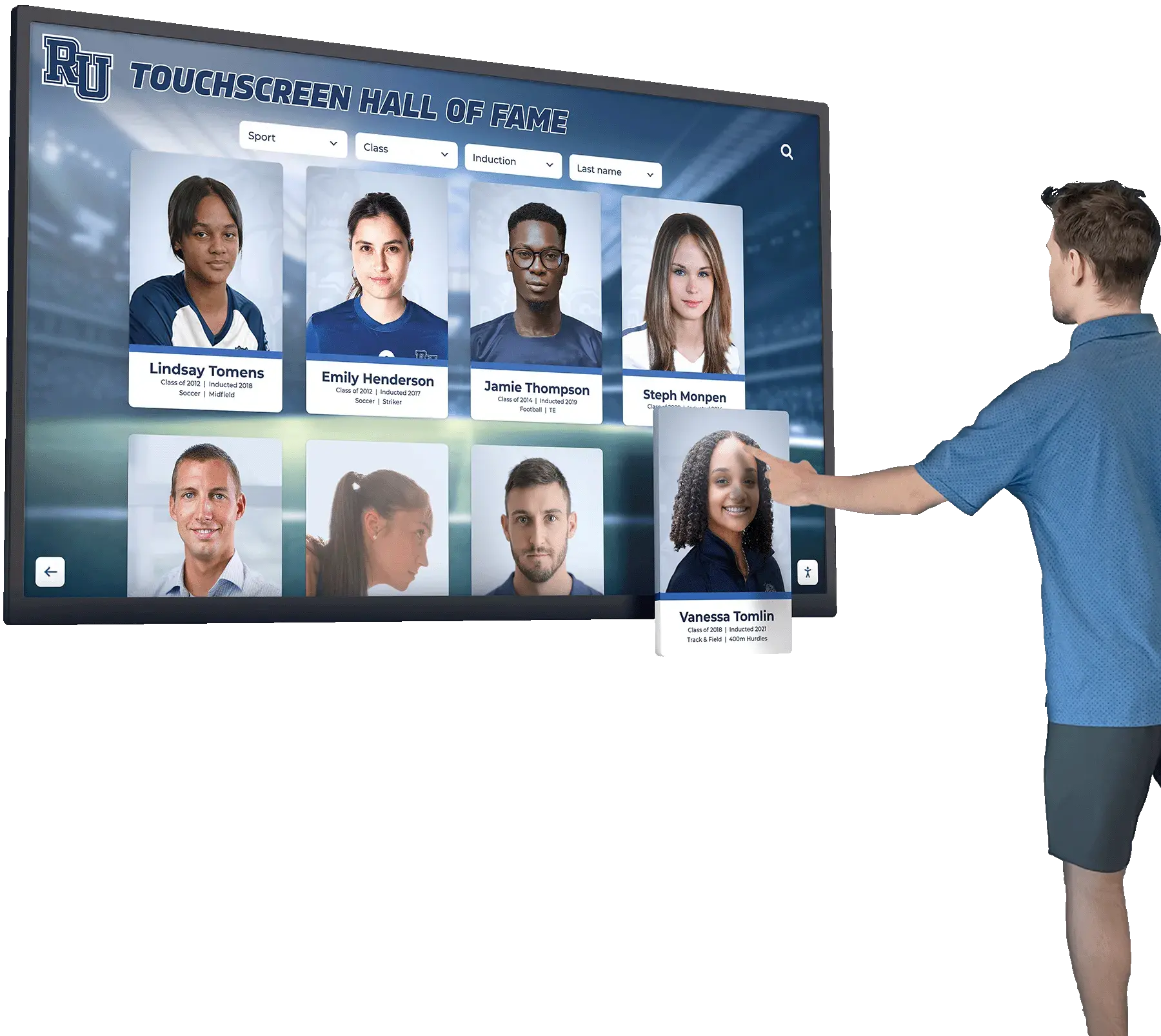
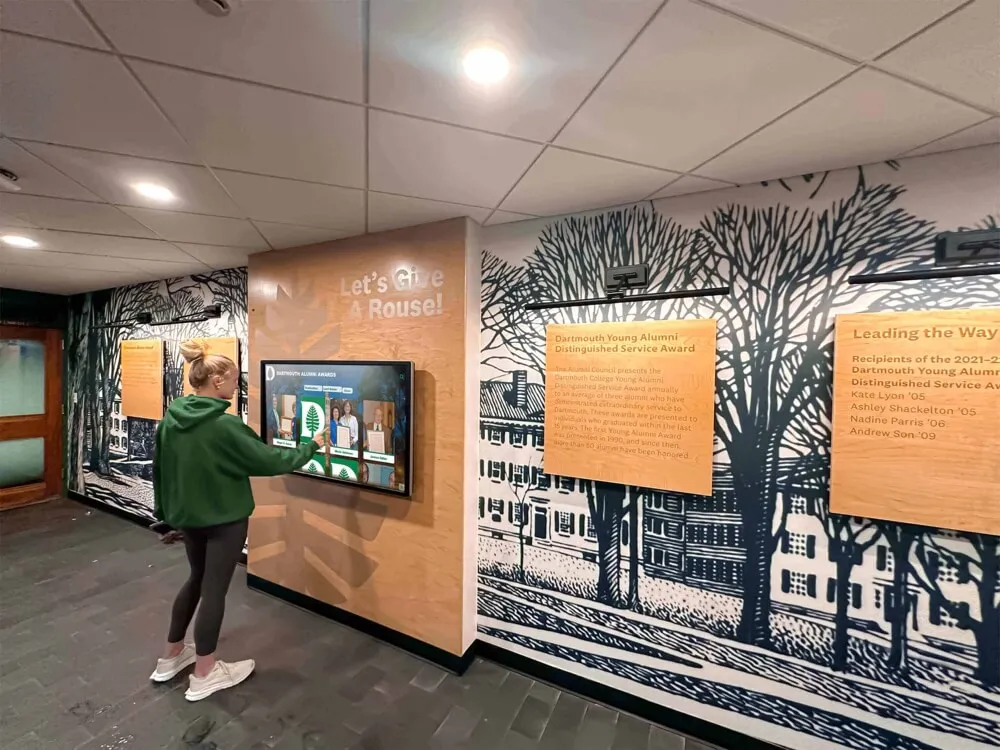
Interactive features enable deep exploration creating meaningful engagement with recognition content
Technical Architecture and Platform Design
Rocket Recognition delivers these capabilities through comprehensive technical architecture:
Hardware Components
Physical installations utilize commercial-grade equipment:
- Professional touchscreen displays (43-75 inches) designed for continuous operation
- High-resolution screens ensuring exceptional visual quality and detail
- Responsive touch technology providing intuitive, immediate interaction
- Commercial displays built for reliability in high-traffic environments
- Multiple mounting options including wall-mount, kiosk enclosures, or freestanding installations
- ADA-compliant positioning ensuring accessibility for all users
Cloud-Based Content Management
Remote administration enables efficient operation:
- Intuitive web interface requiring no technical expertise or coding knowledge
- Instant updates taking effect immediately across all displays
- Collaborative management with multiple authorized users and permission levels
- Complete version history preserving all recognition updates permanently
- Automated backups preventing content loss
- Scheduled publishing coordinating recognition with specific dates or events
This cloud approach means designated staff update content remotely from any location—maintaining current recognition without requiring physical access to display locations or technical support.
Multi-Platform Accessibility
Recognition extends beyond physical installations:
- Responsive web platforms accessible from desktop computers, tablets, and smartphones
- Native mobile experience optimized for on-the-go exploration
- Social media integration enabling recognition sharing across networks
- QR code connectivity linking physical spaces to digital exploration
- Unlimited simultaneous access accommodating any number of users
Web accessibility multiplies engagement exponentially—family members view recognition globally, prospective members evaluate organizational quality remotely, and alumni maintain connections regardless of geographic location.
Learn about touchscreen software options for recognition applications.
Key Features and Capabilities
Understanding specific features helps organizations evaluate how Rocket Recognition addresses their unique needs.
Comprehensive Recognition Categories
The platform accommodates diverse recognition types across organizational contexts:
Athletic Recognition
Sports programs generate substantial achievement worthy of systematic celebration:
- Championship teams across all sports and competition levels
- Individual athletic records, milestones, and statistical achievements
- All-conference, all-state, and national honors
- Hall of fame inductees with comprehensive biographical profiles
- Coaching excellence and program builder recognition
- Scholarship recipients and college athlete documentation
- Season highlights, memorable games, and tournament runs
Digital capacity enables recognition of every deserving athlete across complete program histories—eliminating space-based prioritization that undervalues specific sports or time periods.
Discover approaches for creating digital athletic halls of fame that celebrate comprehensive excellence.
Academic Excellence
Intellectual achievement deserves visibility comparable to athletics:
- Honor roll recipients across all grading periods and academic years
- Valedictorians, salutatorians, and top scholars
- Perfect attendance achievements
- Academic competition success (science fair, debate, mathematics, etc.)
- Scholarship award recipients
- National Honor Society and academic organization members
- Subject-area excellence awards and departmental honors
Comprehensive academic recognition communicates that intellectual accomplishment matters equally—influencing institutional culture while motivating student achievement.
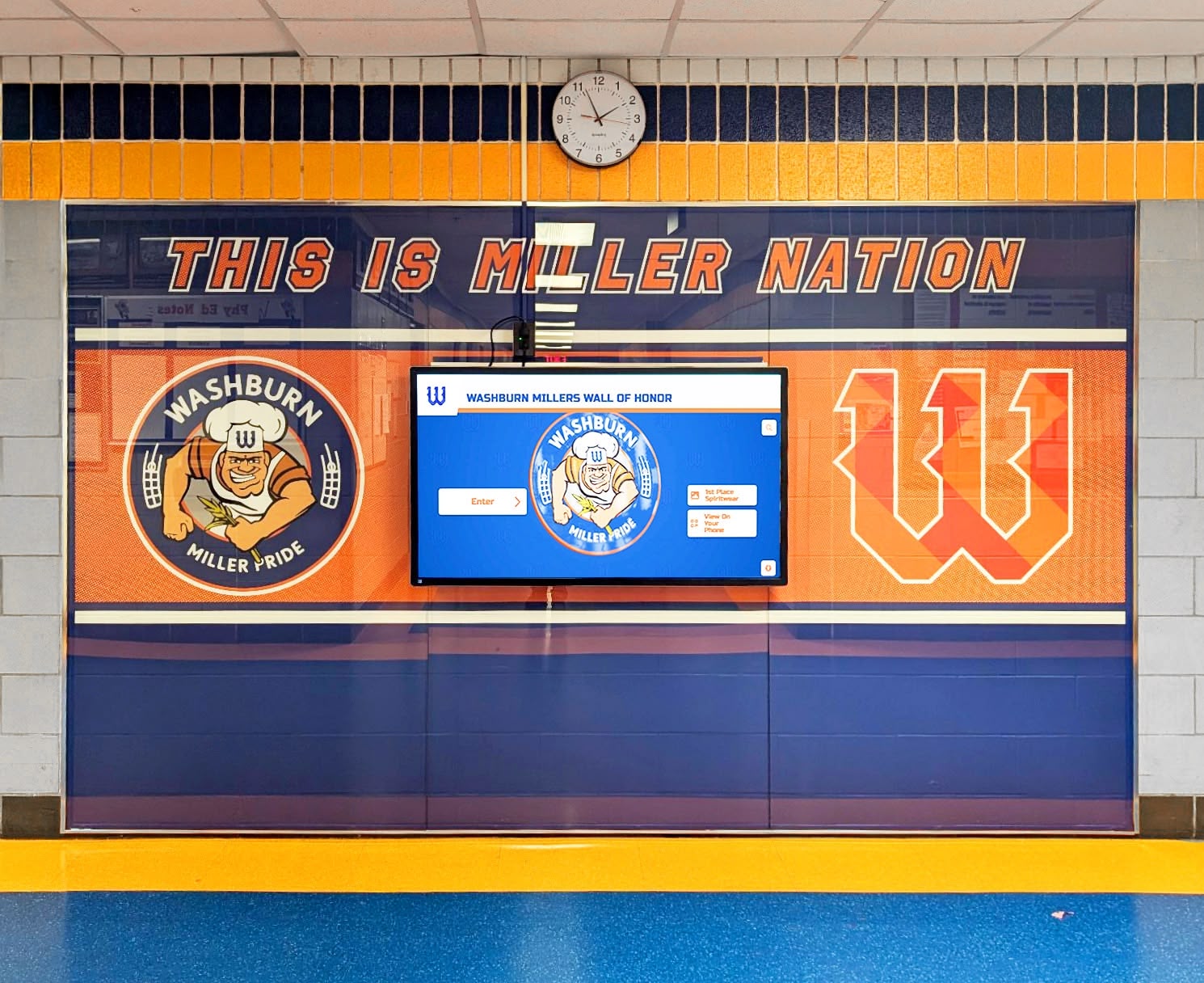
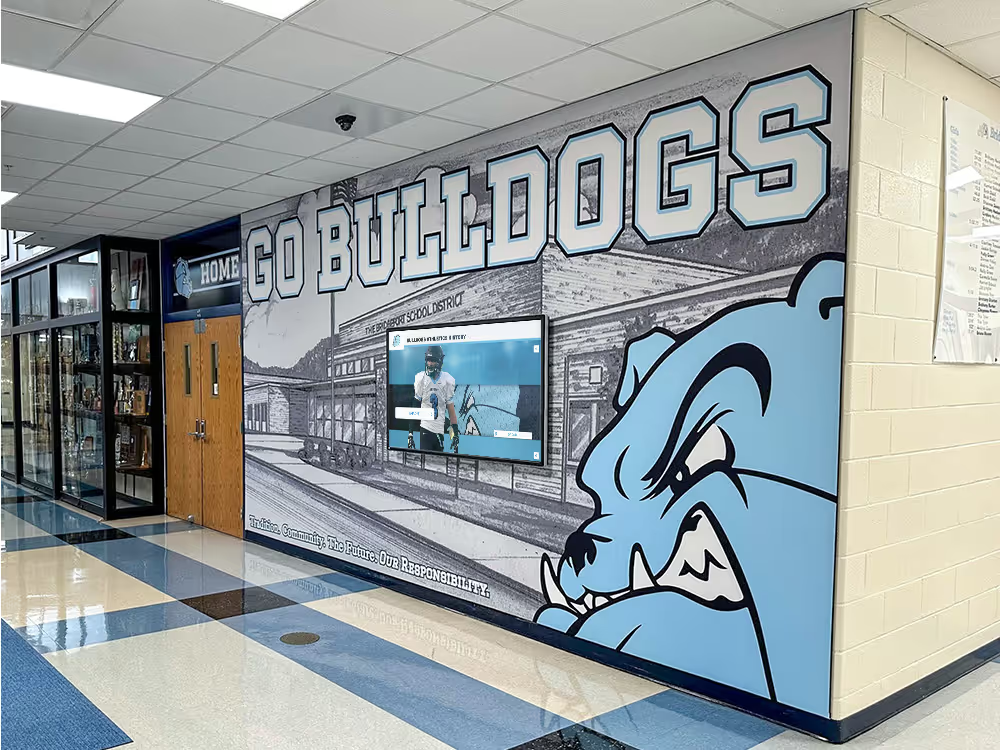
Strategic placement integrates recognition into daily institutional experience
Alumni Achievement and Notable Graduates
Professional success demonstrates long-term institutional impact:
- Career accomplishments and leadership positions
- Entrepreneurship and business success
- Public service and civic contributions
- Creative and artistic achievement
- Academic research and scholarly contributions
- Professional athletic careers
- Philanthropic impact and community service
Alumni recognition proves institutional value for prospective members while strengthening connections with graduates who appreciate acknowledgment of their accomplishments.
Donor Recognition and Fundraising
Financial contributions sustain organizational missions:
- Major gift donors at all recognition levels
- Campaign participation and annual fund contributors
- Planned giving and estate commitments
- Naming opportunity documentation
- Corporate and foundation partnerships
- Volunteer leadership and board service
- Multi-year giving history and cumulative contributions
Professional donor recognition demonstrates appreciation while encouraging continued support through visible acknowledgment that validates philanthropic partnerships.
Explore comprehensive donor recognition strategies for nonprofit organizations.
Historical Preservation and Heritage
Institutional memory strengthens identity and connection:
- Founding history and organizational evolution
- Leadership timelines documenting key figures across eras
- Facility development and architectural evolution
- Program launches and milestone achievements
- Significant events and institutional responses
- Yearbook digitization and historical photography
- Tradition documentation preserving cultural heritage
Heritage preservation creates connections between past and present—enabling current members to understand organizational evolution while preserving stories that would otherwise disappear.
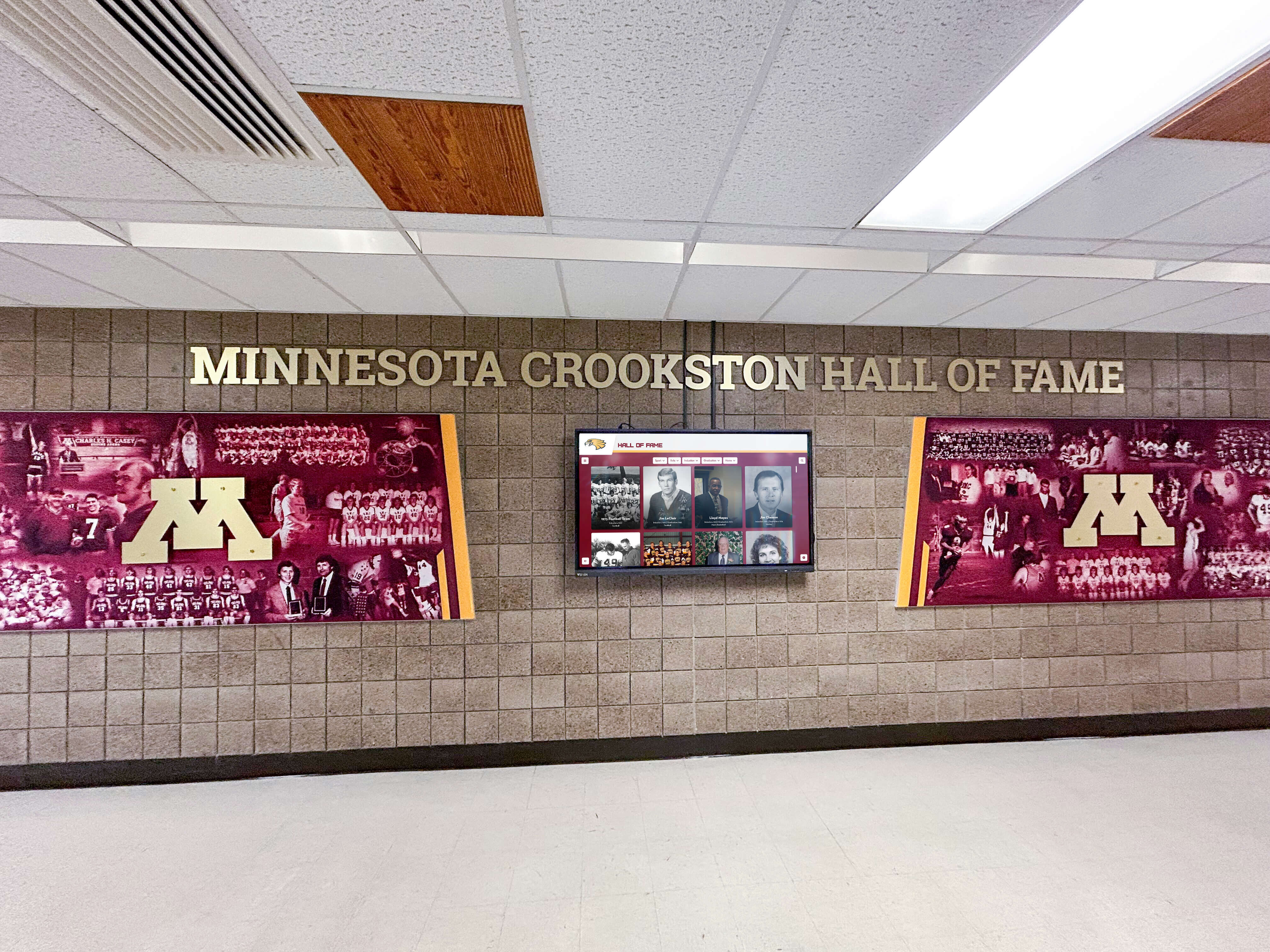
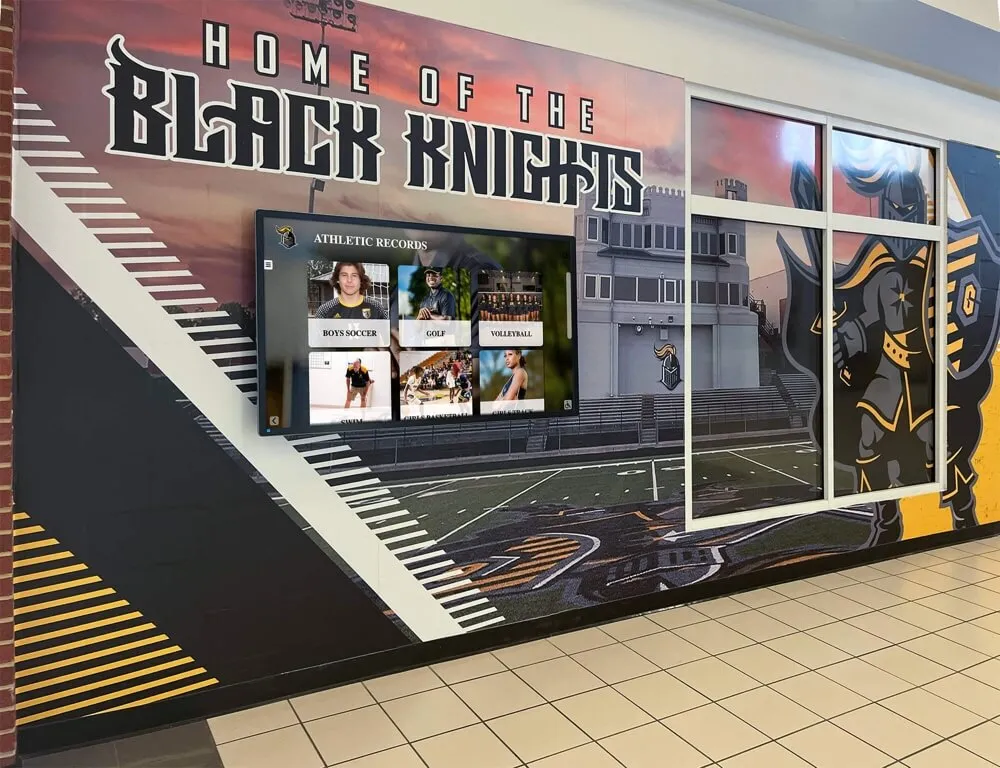
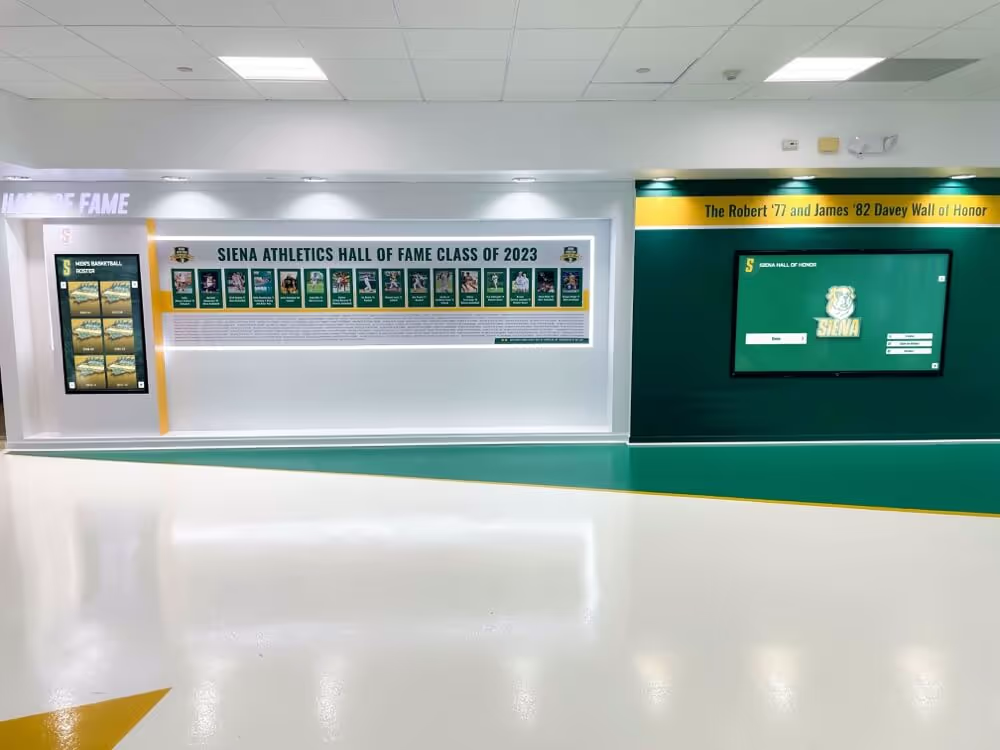
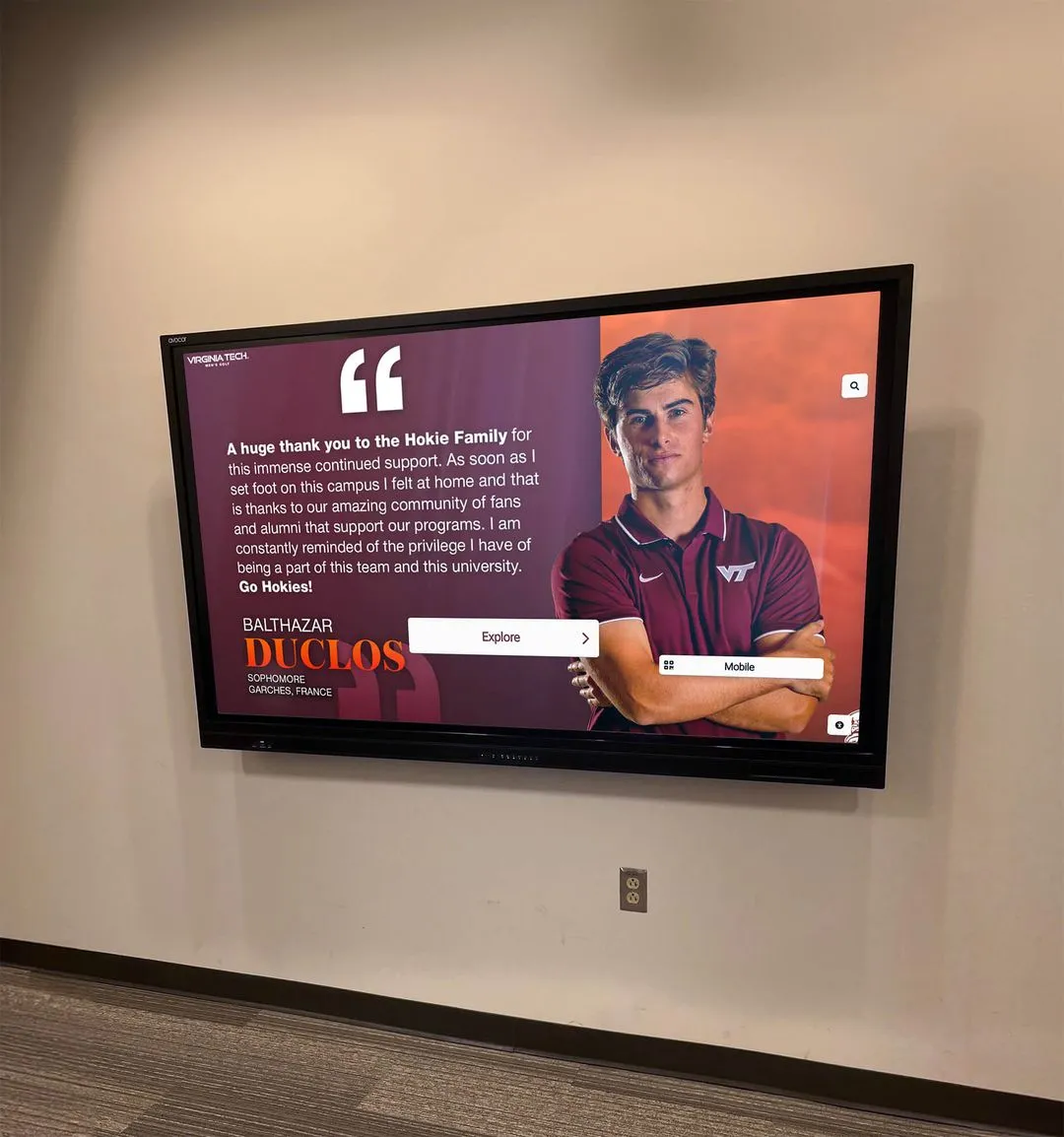
Professional installations create impressive focal points celebrating institutional excellence
Content Management and Administration
Efficient administration ensures recognition remains current and sustainable:
Intuitive Interface Design
Content management requires no technical expertise:
- Visual editors similar to familiar word processing applications
- Template-based profile creation ensuring consistency
- Drag-and-drop media uploads for photographs and videos
- Bulk import tools for efficient large-scale content addition
- Preview functionality showing exactly how content appears
- Mobile-responsive administration enabling updates from any device
Collaborative Workflows
Multiple stakeholders contribute appropriately:
- Role-based permissions defining what each user can access and modify
- Department-specific management enabling distributed responsibility
- Approval workflows ensuring content quality and accuracy
- Comment and collaboration features facilitating team communication
- Activity logs documenting all changes with user attribution
- Version history enabling restoration of previous content states
This collaborative approach distributes workload while maintaining appropriate oversight and quality standards.
Flexible Organization Systems
Content structure adapts to institutional needs:
- Custom categories matching organizational structure and priorities
- Tagging systems enabling multiple classification schemes simultaneously
- Search optimization ensuring content appears in relevant queries
- Relationship linking connecting related individuals and achievements
- Featured content highlighting priority profiles
- Seasonal or event-specific collections for temporary emphasis
Organizations configure systems reflecting their unique contexts rather than conforming to rigid predetermined structures.
Discover strategies for managing digital recognition content effectively.
Engagement Features and Analytics
Understanding recognition impact enables continuous improvement:
User Interaction Tracking
Analytics reveal how audiences engage:
- Total interactions and unique users over specific time periods
- Session duration indicating engagement depth
- Most-viewed profiles showing which content generates greatest interest
- Search query analysis revealing what information users seek
- Category performance comparing engagement across different recognition types
- Peak usage patterns informing content strategy and refresh timing
These insights demonstrate recognition value quantitatively while guiding content development and enhancement priorities.
Discovery and Sharing Tools
Features extend recognition reach:
- Social media sharing enabling family networks to celebrate achievements
- Email profile links for direct sharing with specific recipients
- QR code generation connecting physical spaces to digital content
- Favorite saving for return visits to specific profiles
- Playlist creation grouping related profiles for storytelling
- Download options for personal record keeping
These capabilities transform passive displays into active community resources generating broader engagement than institutional teams alone could achieve.
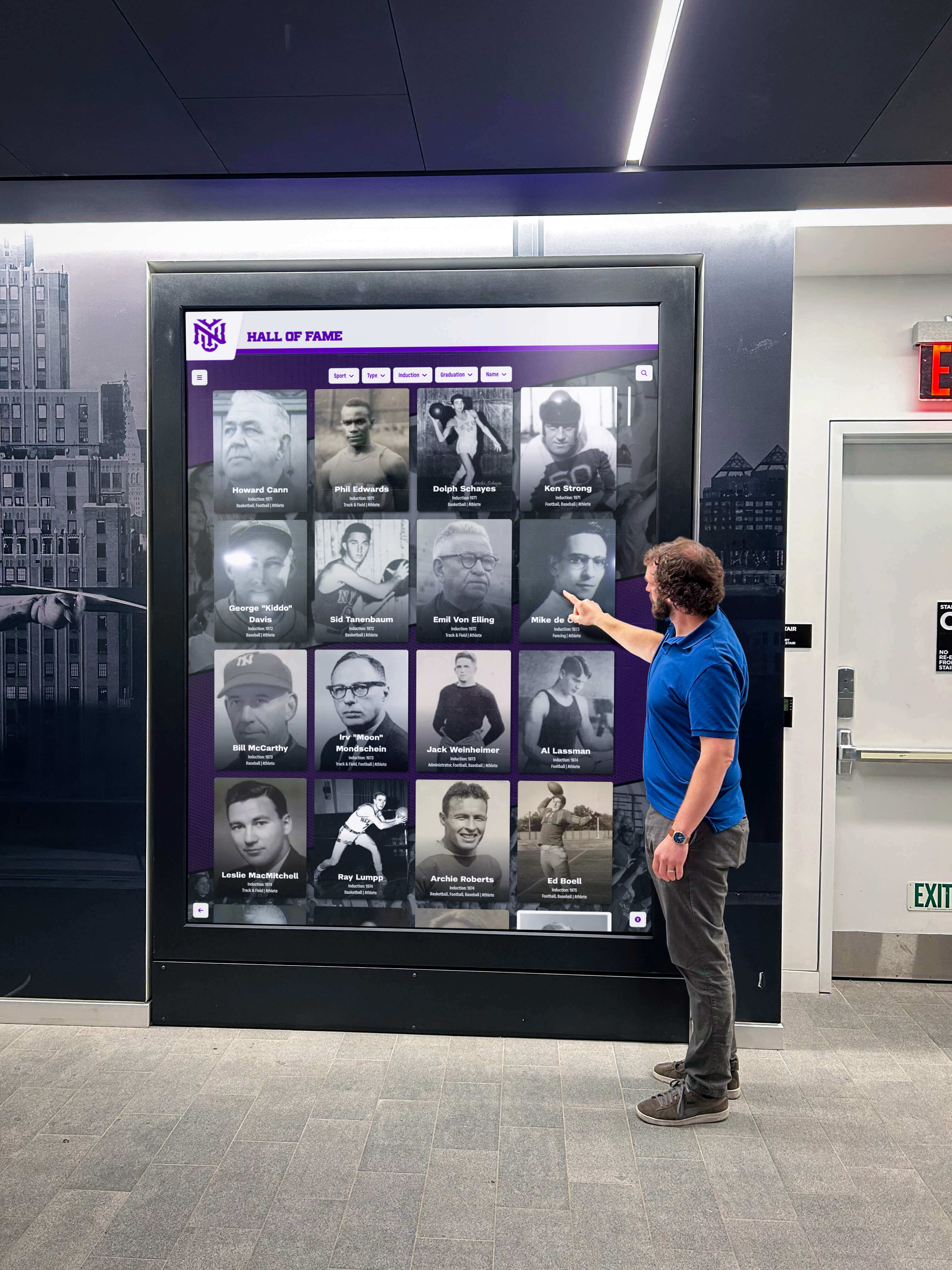
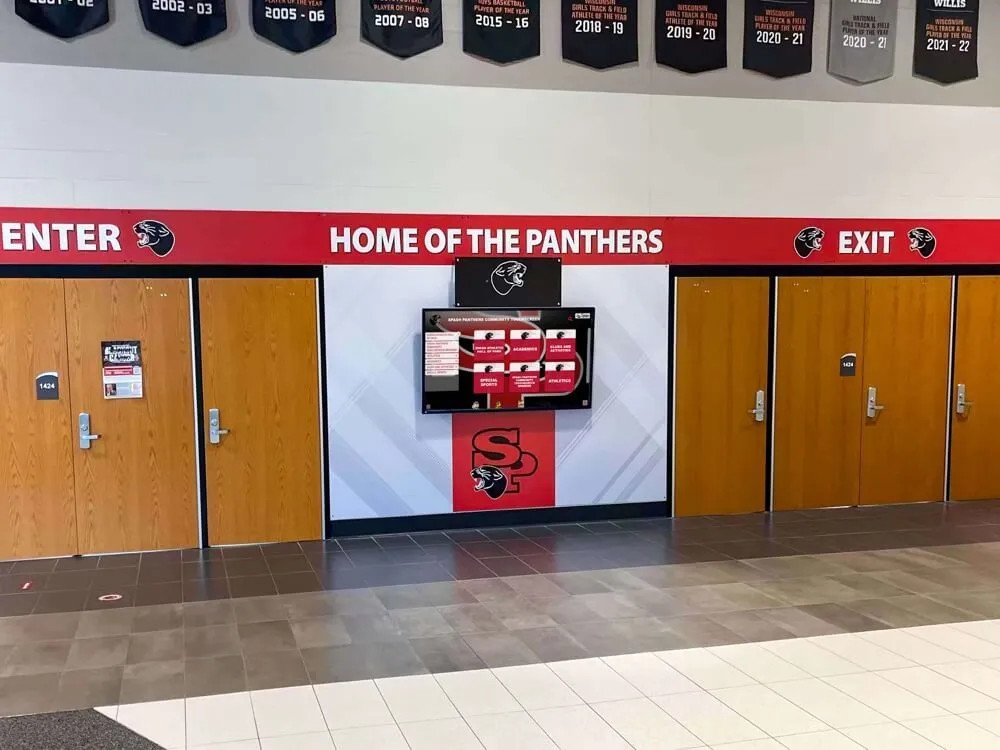
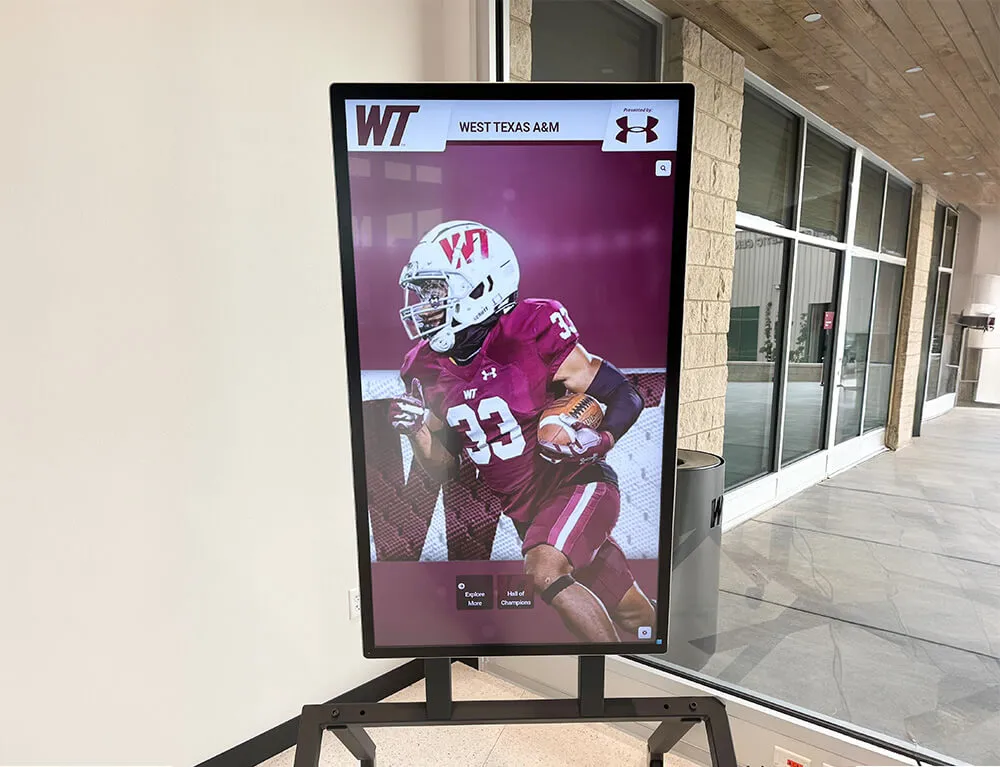
Strategic placement in high-traffic areas maximizes recognition visibility and engagement
Implementation Process and Best Practices
Successful Rocket Recognition implementation requires systematic planning addressing goals, content, technology, and sustainability.
Planning and Needs Assessment
Defining Recognition Objectives
Clarify what you aim to accomplish:
- Who will be recognized and for what specific achievements
- What time period the recognition will cover (current only, historical archive, comprehensive)
- What stories and information profiles should include
- Where displays will be located physically within facilities
- How content will be accessed digitally beyond physical installations
- What resources are available for implementation and ongoing operation
- What defines program success and how impact will be measured
Clear objective definition prevents implementing solutions that fail to address actual organizational needs and priorities.
Stakeholder Engagement and Input
Successful programs require broad support:
- Leadership providing resources, direction, and institutional priority
- Staff managing content, administration, and ongoing operations
- Honorees as recognition recipients deserving genuine acknowledgment
- Families as primary audiences celebrating achievements
- Alumni contributing stories, engagement, and potential financial support
- Donors potentially funding implementation or specific recognition categories
Early stakeholder engagement builds ownership while identifying concerns before implementation—increasing likelihood of long-term program sustainability and success.
Technology Infrastructure Assessment
Verify technical requirements:
- Reliable internet connectivity at planned display locations
- Adequate electrical infrastructure and installation
- Network security protocols and approval processes
- IT department coordination for implementation and support
- Physical space assessment for display positioning
- ADA compliance verification for accessibility
Address infrastructure needs early preventing implementation delays or compromised installations requiring expensive post-installation corrections.
Content Development and Strategy
Historical Research and Information Gathering
Comprehensive recognition requires systematic collection:
- Existing records from institutional archives, yearbooks, and publications
- Staff and administrator knowledge and documentation
- Community member submissions and nominations
- Media coverage from newspapers and local sources
- Existing recognition systems providing baseline information
- Interview-based oral history with long-time members
Most organizations underestimate content development effort—particularly historical recognition requiring research, digitization, and verification consuming substantial time and resources.
Quality Standards and Consistency
Recognition quality depends fundamentally on content:
- Professional photographs at adequate resolution (minimum 1000x1000 pixels)
- Consistent information formats creating cohesive experiences
- Fact-checking processes ensuring accuracy and credibility
- Appropriate tone matching institutional values and culture
- Comprehensive profiles providing meaningful rather than minimal information
- Regular updates preventing dated content that undermines recognition relevance
Better to begin with focused content executed excellently than comprehensive scope delivered poorly with inconsistent or low-quality materials.
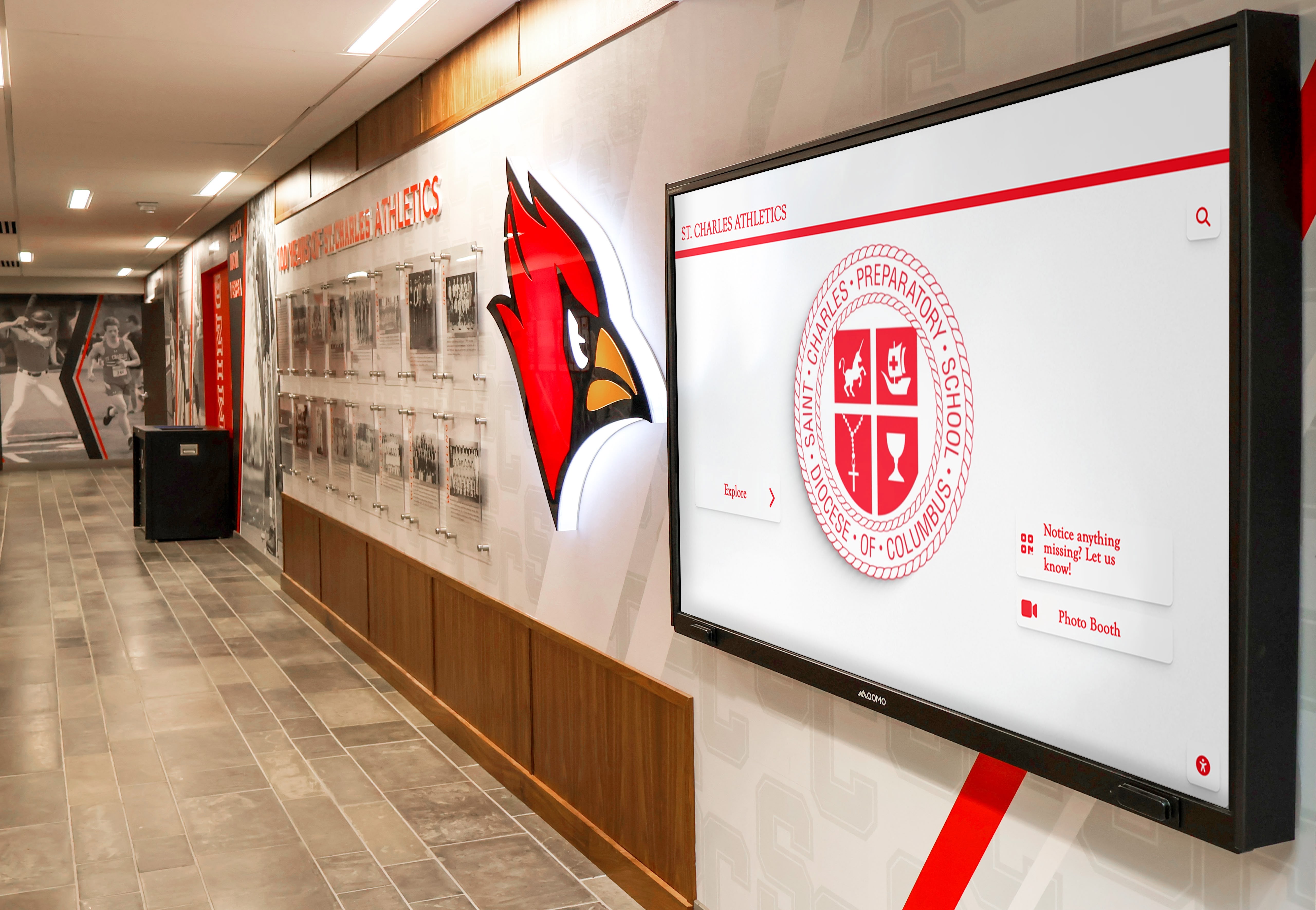
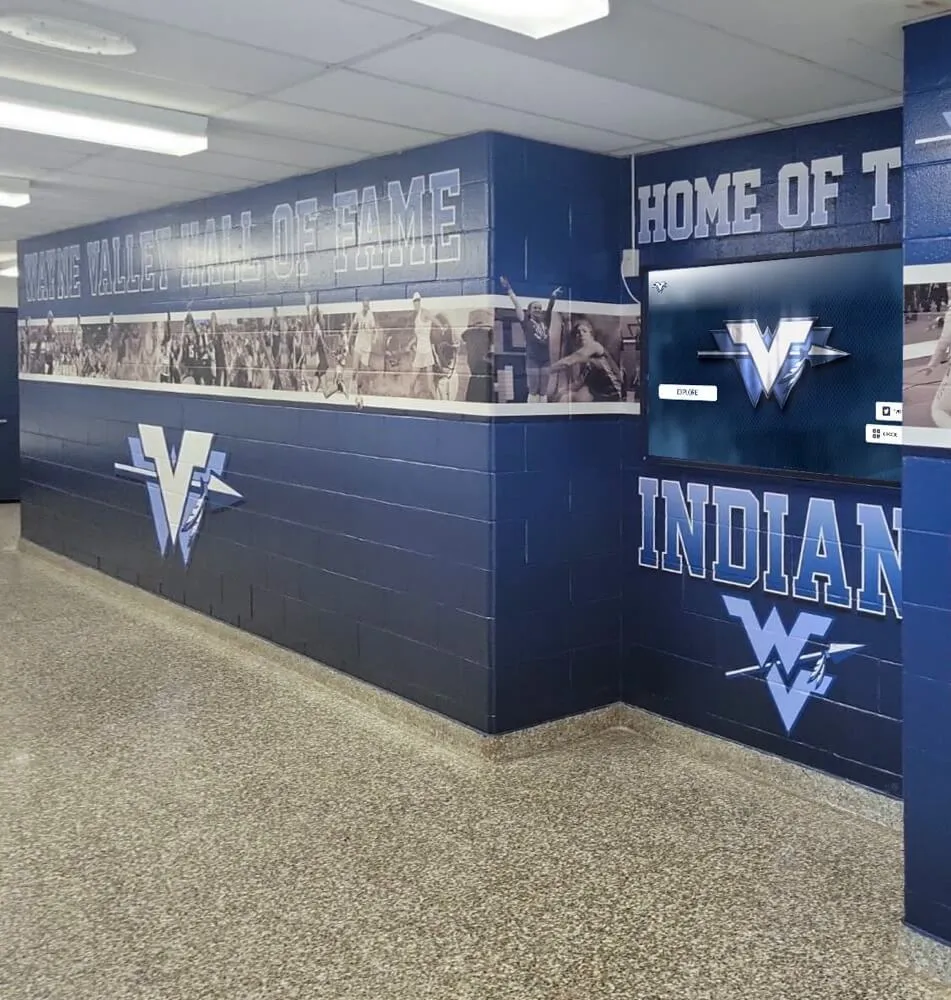
Coordinated visual design integrates recognition with broader facility branding
Media Collection and Documentation
Effective recognition requires diverse assets:
- Professional photographs of individuals
- Video interviews and testimonials
- Historical images and archival documents
- Achievement certificates, awards, and memorabilia
- News coverage and media mentions
- Event documentation and celebration photos
Integrate documentation into ongoing processes ensuring recognition happens systematically rather than requiring separate retrospective effort that may be neglected when staff face time constraints.
Learn about digitizing historical archives for recognition programs.
Installation and Technology Setup
Hardware Selection and Placement
Choose appropriate equipment and positioning:
- Display size matching viewing distance and space characteristics
- Touchscreen capability for interactive exploration features
- Commercial-grade equipment designed for continuous operation
- Quantity and placement ensuring optimal visibility across facilities
- Mounting approach (wall-mount, kiosk, freestanding) appropriate to locations
- ADA-compliant positioning ensuring accessibility for all users
Strategic placement transforms recognition from hidden features into prominent institutional elements encountered regularly by all community members.
Professional Installation
Proper implementation ensures reliability and appearance:
- Network connectivity verification and configuration
- Secure mounting following manufacturer specifications
- Cable management creating professional, finished appearance
- Testing all functionality before official launch
- Staff training on content management and basic troubleshooting
- Documentation of technical specifications and support contacts
Professional installation prevents ongoing problems resulting from compromised implementations—worthwhile investment ensuring long-term satisfaction.
Launch Strategy and Promotion
Effective launches require adequate initial content:
- Sufficient profiles creating immediate value rather than sparse displays
- Featured content representing recognition program diversity
- Multimedia examples demonstrating platform capabilities
- Web platform launch coordinating with physical installation
- Communication and promotion generating awareness and engagement
Successful launches establish recognition as significant institutional investments worthy of attention rather than minor additions easily overlooked by busy communities.
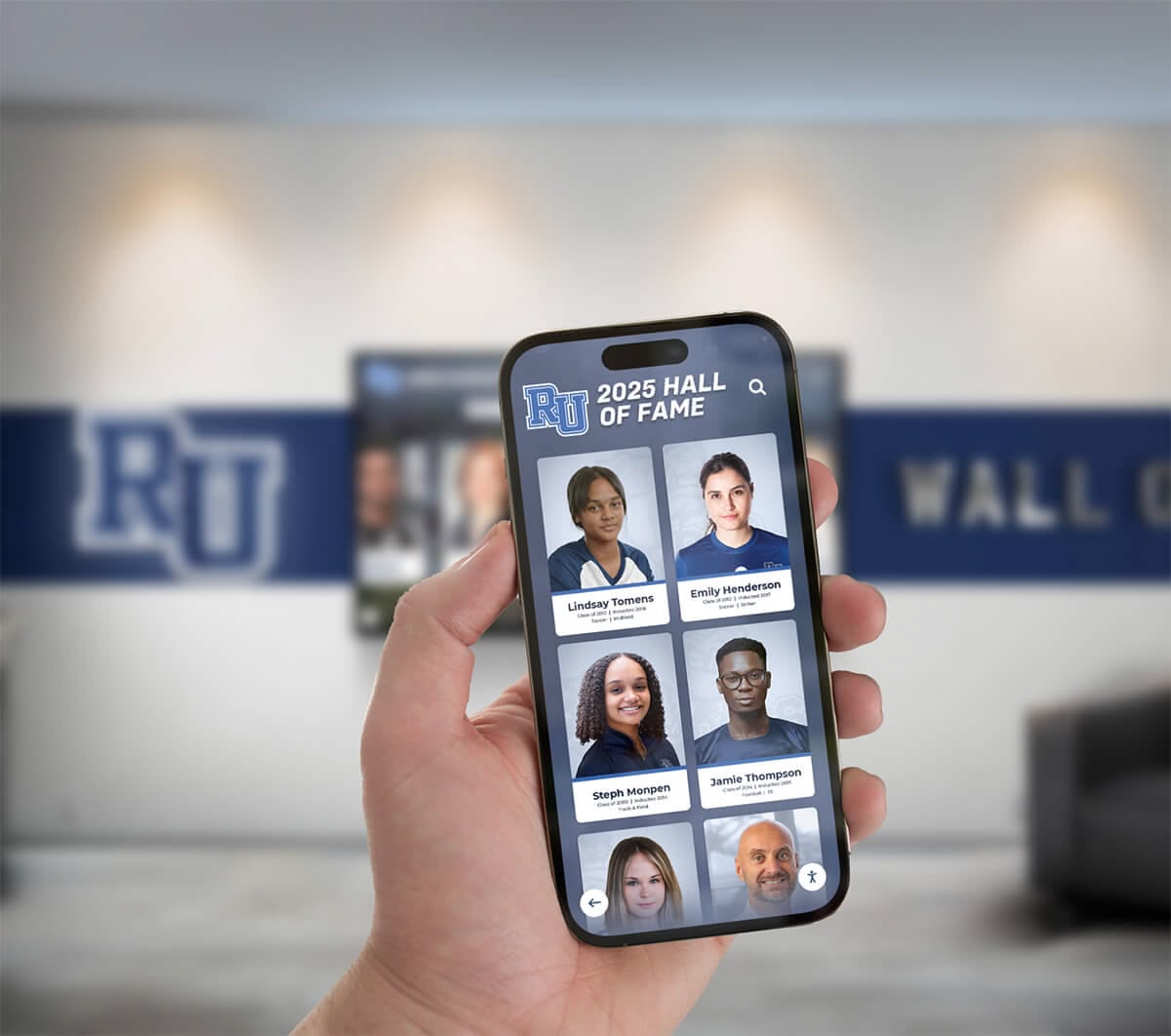
Mobile accessibility extends recognition engagement beyond physical installation locations
Rocket Recognition Across Different Institutional Contexts
While core capabilities remain consistent, implementation approaches vary across organizational types and specific needs.
K-12 Schools and High School Athletics
Secondary education represents the primary Rocket Recognition application context:
Comprehensive Athletic Programs
High school sports generate substantial recognition opportunities:
- Every sport receiving equitable visibility regardless of size or profile
- Championship documentation across all competition levels
- Individual records and statistical achievements
- Multi-sport athlete recognition celebrating versatility
- Coaching history and program builder acknowledgment
- Alumni athletic career tracking from high school through professional levels
Unlimited digital capacity solves championship banner space constraints while ensuring all sports receive appropriate recognition—particularly important for Title IX equity considerations.
Academic and Co-Curricular Recognition
Non-athletic achievement deserves comparable visibility:
- Honor roll and academic excellence across all grading periods
- Academic competition success (debate, science fair, mathematics, etc.)
- Fine arts achievement (theater, music, visual arts)
- Student leadership and service
- Club and organization accomplishments
- Career and technical education awards
Comprehensive recognition communicates that schools value diverse excellence rather than prioritizing athletics exclusively.
Explore high school recognition strategies that celebrate multiple achievement types.
Higher Education and University Applications
Colleges and universities implement recognition programs serving multiple constituencies:
Alumni Achievement Networks
Professional success demonstrates institutional impact:
- Notable graduates across all fields and professions
- Geographic distribution showing institutional reach
- Career milestones and leadership achievements
- Research contributions and scholarly impact
- Entrepreneurship and economic development
- Creative and artistic accomplishments
Alumni recognition strengthens institutional pride while supporting recruitment, fundraising, and reputation enhancement.
Academic and Research Excellence
Intellectual achievement represents core mission:
- Faculty accomplishments and scholarly contributions
- Research awards and competitive grants
- Distinguished teaching recognition
- Student academic competition success
- Graduation honors across all degree programs
- Graduate school and professional school placements
Academic recognition reinforces institutional priorities while celebrating the intellectual community generating educational value.
Donor Recognition and Development
Major gifts sustain institutional excellence:
- Comprehensive donor recognition at all giving levels
- Campaign documentation and milestone celebration
- Naming opportunity acknowledgment
- Planned giving and estate commitments
- Corporate partnership documentation
- Multi-generational family giving
Professional donor recognition demonstrates appreciation while encouraging continued philanthropic engagement supporting institutional priorities.
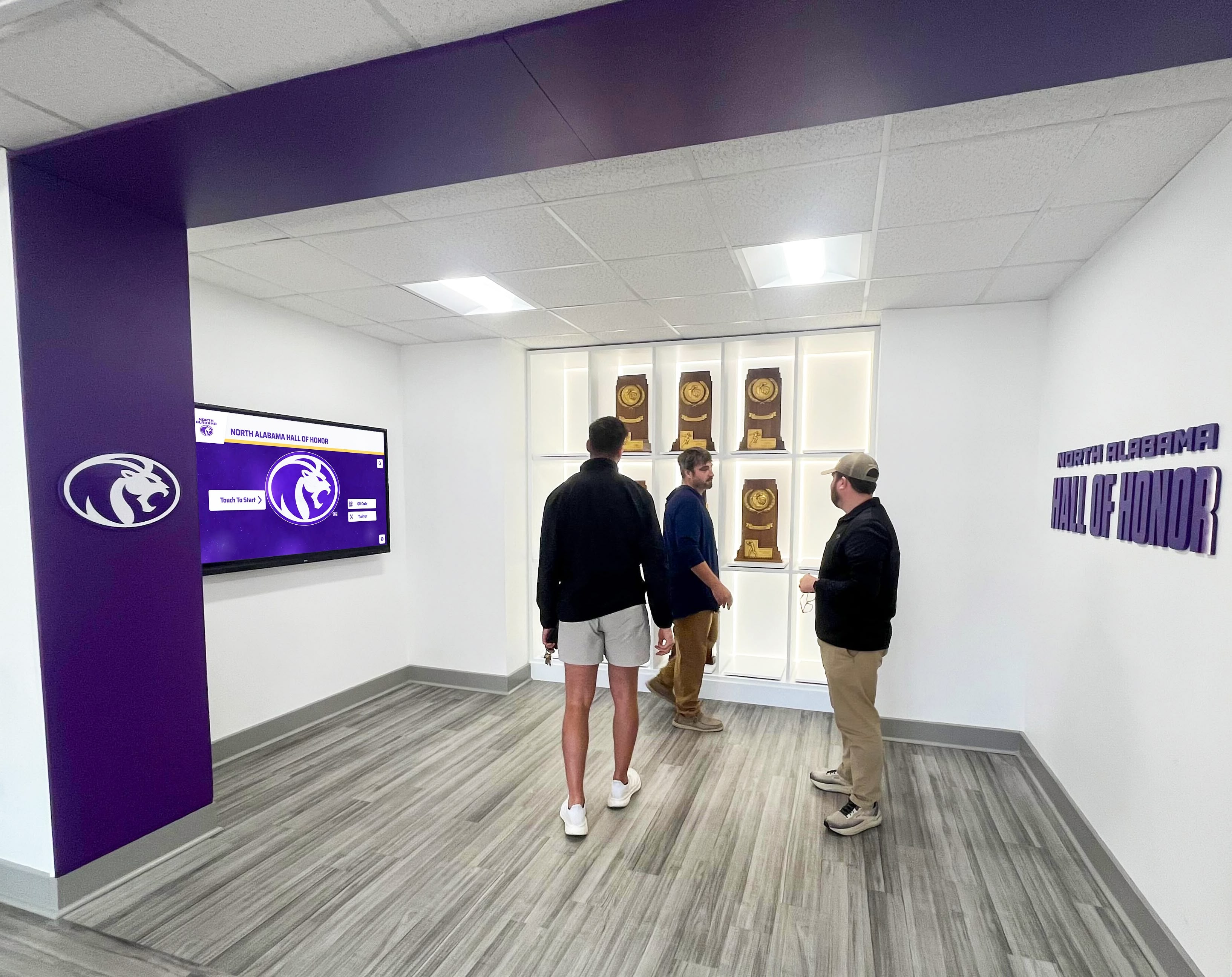
University recognition installations celebrate diverse achievements across institutional contexts
Nonprofit Organizations and Community Institutions
Beyond education, diverse organizations benefit from systematic recognition:
Volunteer and Service Recognition
Community organizations depend on volunteer contributions:
- Volunteer hour milestones and sustained service
- Board member and leadership documentation
- Event committee and project team recognition
- Skilled professional services (pro bono legal, accounting, medical)
- Corporate volunteer programs and community partnerships
Visible volunteer recognition strengthens engagement while encouraging continued service by demonstrating that contributions receive genuine acknowledgment.
Program Impact and Beneficiary Stories
Mission-driven organizations celebrate community impact:
- Program participant success stories
- Service recipient testimonials
- Community transformation documentation
- Partnership and collaboration highlights
- Volunteer and staff profiles showing organizational culture
Impact storytelling supports fundraising, volunteer recruitment, and community awareness while honoring individuals whose lives reflect organizational mission.
Heritage Preservation for Historical Organizations
Museums, historical societies, and heritage organizations preserve community stories:
- Historical timeline documentation
- Significant event and milestone recognition
- Community leader profiles across generations
- Architectural and cultural evolution
- Artifact documentation and exhibition archives
- Oral history integration and multimedia preservation
Digital preservation ensures community heritage survives even as physical materials deteriorate—creating permanent accessible archives serving research, education, and community connection.
Discover approaches for museum interactive displays and heritage preservation.
Benefits and Impact of Digital Recognition
Organizations implementing Rocket Recognition consistently report multiple positive outcomes across different stakeholder groups.
Enhanced Engagement and Motivation
Comprehensive recognition influences community culture measurably:
Increased Achievement Motivation
Visible recognition creates psychological incentives:
- Students and athletes observe that excellence receives genuine acknowledgment
- Multi-year archives demonstrate sustained institutional commitment to recognition
- Peer examples provide achievable role models and concrete goals
- Specific recognition criteria clarify performance expectations
- Individual profile detail honors accomplishments thoroughly rather than superficially
Schools implementing comprehensive digital recognition report increased competition for recognized achievements—with honor roll applications, academic competition participation, and athletic dedication strengthening as students internalize that accomplishments receive lasting visibility.
Strengthened Institutional Connection
Recognition builds belonging and loyalty:
- Honorees feel valued by institutions taking time to celebrate contributions properly
- Families appreciate recognition honoring student or family member achievements
- Alumni maintain connections strengthened through visible acknowledgment
- Community members develop pride in institutional excellence
- Prospective members evaluate culture and values through recognition priorities
Strong institutional connections translate to measurable outcomes including improved retention, increased giving, stronger volunteer engagement, and enhanced reputation within broader communities.
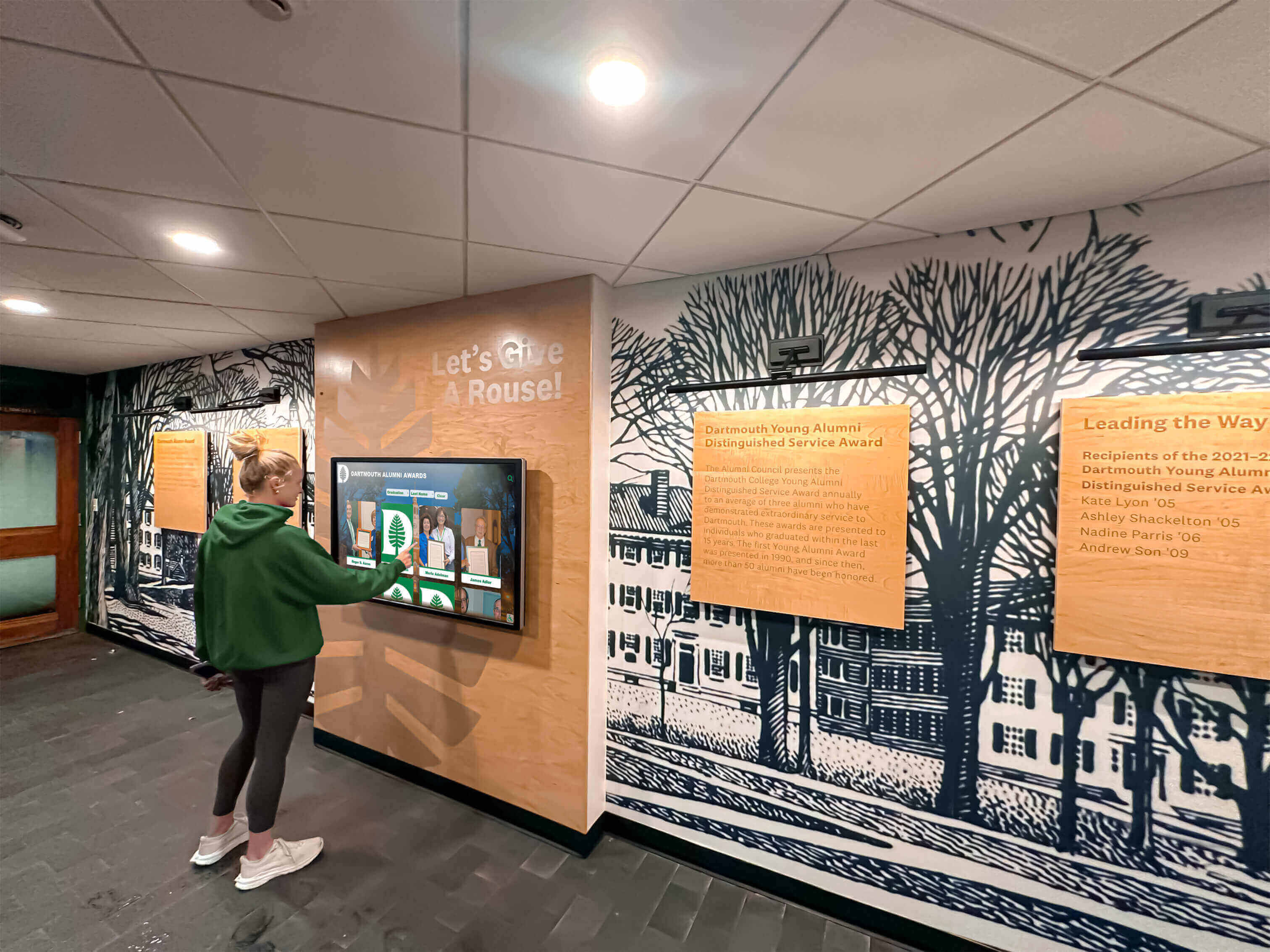
Interactive recognition creates meaningful engagement experiences for all community members
Administrative Efficiency and Sustainability
Modern platforms reduce recognition management burden:
Time Savings Compared to Traditional Methods
Digital systems streamline recognition processes:
- No physical plaque production, installation scheduling, or ongoing maintenance
- Instant content updates requiring minutes rather than weeks for physical fabrication
- Template-based profile creation reducing time per individual profile
- Bulk import capabilities enabling efficient large-scale recognition
- Error corrections taking seconds rather than requiring replacement production
- Content reuse across multiple categories and collections without duplication effort
Athletic directors and recognition coordinators consistently report that digital systems reduce administrative time 60-80% compared to traditional approaches—enabling recognition of substantially more individuals with existing staff resources.
Enhanced Collaboration and Distributed Management
Cloud platforms enable team-based approaches:
- Department-specific content management distributing responsibility
- Permission systems preventing unauthorized changes while enabling appropriate access
- Approval workflows ensuring quality without bottlenecks
- Comment features facilitating communication without separate systems
- Activity tracking documenting contributions and changes
Distributed management prevents single-person dependencies that create sustainability risks when key staff depart or face competing priorities.
Cost Efficiency Over Multi-Year Periods
While initial digital investments exceed single plaque costs, long-term economics favor comprehensive platforms:
- Unlimited recognition capacity eliminating ongoing per-honoree costs
- No removal and reinstallation expenses as recognition grows
- Reduced staff time converting to cost savings
- Enhanced capability justifying investment through superior recognition experiences
- Technology serving multiple recognition categories simultaneously
- Platform updates adding features without additional investment
Most organizations realize positive return on investment within 3-5 years compared to ongoing traditional recognition expenses—while delivering substantially superior recognition experiences that benefit all stakeholders.
Learn about recognition program budgeting and cost considerations.
Equity and Inclusivity Benefits
Digital recognition solves fairness challenges inherent in physical systems:
Equitable Recognition Across All Categories
Unlimited capacity prevents prioritization:
- Every deserving individual receives recognition regardless of achievement category
- All sports, programs, and departments acknowledged equally
- Historical achievements preserved alongside current recognition
- No removal of past honorees necessary to accommodate new recognition
- Minority and underrepresented achievement receives equal visibility
- Complete documentation eliminating selective recognition that undervalues specific contributions
Organizations implementing digital systems report that equitable recognition strengthens culture by demonstrating genuine institutional commitment to valuing all excellence rather than prioritizing high-profile achievements exclusively.
Accessibility for Diverse Audiences
Web platforms extend recognition reach:
- Geographic accessibility enabling engagement from anywhere globally
- Language translation options serving diverse communities
- Screen reader compatibility for visually impaired users
- Mobile optimization for on-the-go access
- No physical mobility requirements restricting access
- Anytime availability accommodating varied schedules and time zones
Extended accessibility dramatically increases who engages with recognition—multiplying impact while demonstrating inclusive institutional values.

Professional athletic recognition creates focal points celebrating program excellence comprehensively
Measuring Success and Continuous Improvement
Systematic assessment ensures recognition programs achieve intended goals while identifying enhancement opportunities.
Key Performance Indicators
Track metrics demonstrating recognition impact:
Engagement Metrics
Digital analytics reveal usage patterns:
- Total interactions and unique users over specific periods
- Average session duration indicating engagement depth
- Most-viewed content showing which recognition generates greatest interest
- Search queries revealing what information audiences seek
- Category performance comparing engagement across recognition types
- Peak usage times informing content refresh strategies
These quantitative measures demonstrate recognition value while guiding content development and resource allocation decisions.
Recognition Coverage
Monitor comprehensiveness across categories:
- Percentage of eligible individuals receiving recognition
- Distribution across different achievement types and time periods
- Demographic representation in recognized populations
- Sports or department equity ensuring balanced visibility
- Historical coverage documenting progress on archive completion
Coverage metrics identify gaps requiring attention ensuring recognition serves all constituencies appropriately.
Community Feedback
Qualitative insights reveal dimensions analytics cannot capture:
- User surveys about awareness, satisfaction, and impact
- Honoree interviews asking about recognition experience and value
- Stakeholder focus groups exploring recognition priorities and effectiveness
- Observational studies documenting actual usage in context
- Unsolicited feedback from community members and visitors
This feedback reveals how recognition influences motivation, connection, and institutional culture—outcomes that matter more than raw engagement numbers.
Ongoing Enhancement and Evolution
Effective programs improve continuously:
Regular Content Updates
Maintain recognition currency:
- Timely addition of new honorees and achievements
- Ongoing historical research expanding archive coverage
- Media enrichment adding photographs, videos, and documents
- Profile enhancement increasing detail and storytelling quality
- Featured content rotation highlighting different recognition categories
- Seasonal collections coordinating with events and ceremonies
Regular updates demonstrate sustained institutional commitment while keeping recognition relevant and engaging for repeat visitors.
Feature Utilization and Platform Evolution
Maximize platform capabilities:
- Training ensuring staff understand all available features
- Technology updates implementing new capabilities as released
- User experience refinement based on feedback and analytics
- Integration expansion connecting recognition with other institutional systems
- Best practice adoption learning from similar organizations
Continuous learning ensures organizations extract maximum value from recognition investments while adapting to evolving needs and expectations.
Strategic Planning and Goal Alignment
Connect recognition to broader objectives:
- Annual recognition program assessment evaluating goals and outcomes
- Alignment verification ensuring recognition supports institutional priorities
- Resource evaluation confirming adequate investment and support
- Stakeholder satisfaction measurement across all constituencies
- Benchmark comparison identifying improvement opportunities
This strategic approach ensures recognition remains central to institutional culture rather than becoming disconnected add-ons gradually losing relevance and support.
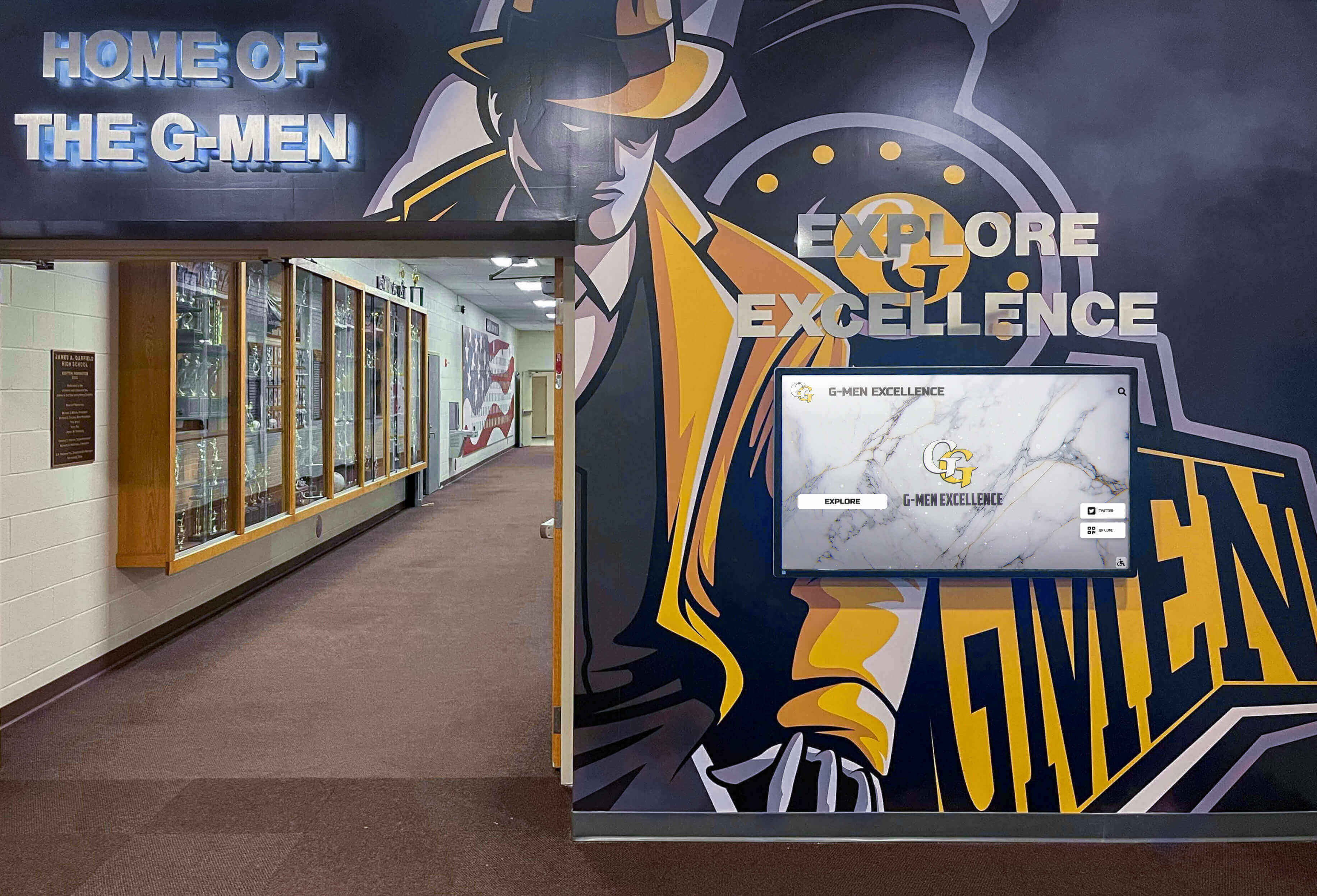
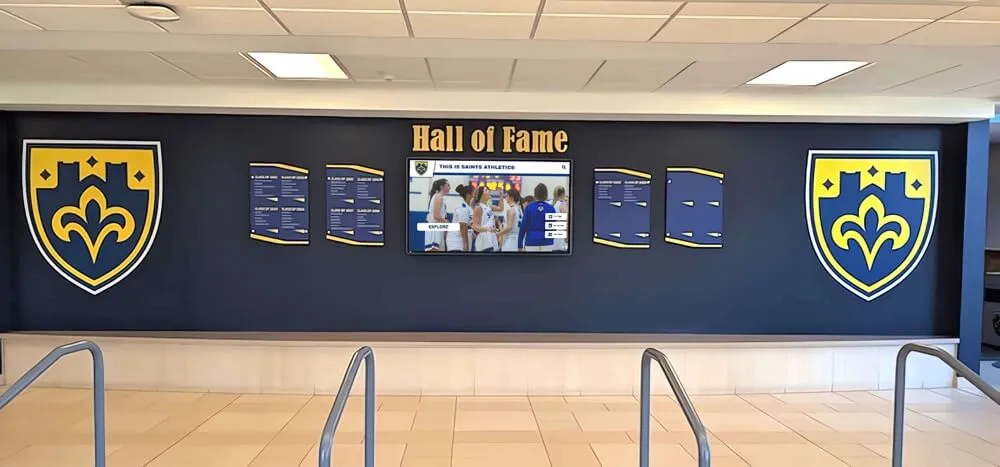
Comprehensive recognition environments integrate traditional and digital elements effectively
Getting Started with Rocket Recognition
Organizations interested in implementing digital recognition follow systematic processes ensuring successful deployment.
Initial Consultation and Needs Assessment
Begin with thorough planning:
Discovery and Goal Definition
Clarify recognition objectives:
- What specific challenges are you attempting to address
- Who will be recognized and for what achievement types
- What time period will recognition cover (current, historical, comprehensive)
- Where will recognition be accessed (physical displays, web, mobile, all)
- What resources are available for implementation and ongoing operation
- What stakeholders must be involved in planning and approval
- What defines program success and how will impact be measured
Thorough discovery prevents misalignment between solutions and actual organizational needs.
Site Evaluation and Technical Assessment
Verify implementation feasibility:
- Facility visit assessing potential display locations
- Network infrastructure evaluation confirming connectivity
- Electrical capacity verification for installations
- IT department coordination addressing security and support
- ADA compliance assessment ensuring accessibility
- Physical space measurement for equipment specification
Technical assessment identifies potential obstacles early enabling proactive solutions rather than expensive post-installation corrections.
Budget Development and Financial Planning
Understand investment requirements:
- Hardware costs for displays and installation
- Software platform subscription fees
- Content development expenses for initial population
- Training and staff support requirements
- Ongoing operation and maintenance budgets
- Potential external funding sources (donors, grants, booster clubs)
Realistic budget development prevents mid-implementation surprises while enabling creative financing approaches leveraging multiple resources.
System Design and Customization
Tailor recognition to specific contexts:
Visual Design and Branding
Create cohesive institutional integration:
- Color schemes matching organizational branding
- Logo and mascot incorporation
- Typography consistent with institutional standards
- Template design reflecting recognition priorities
- Photography style guidelines ensuring quality and consistency
- User interface customization optimizing experience for specific audiences
Professional design creates polished recognition experiences demonstrating that institutions value honored individuals enough to invest in presentation quality.
Content Architecture and Organization
Structure recognition logically:
- Category definition matching organizational structure
- Navigation design enabling intuitive exploration
- Search functionality optimized for common queries
- Filtering systems providing powerful discovery options
- Featured content highlighting priority recognition
- Collection development for special contexts or events
Thoughtful architecture ensures audiences find relevant content easily while discovering unexpected connections during exploration.
Integration Planning
Connect recognition with broader institutional systems:
- Website integration embedding recognition in digital presence
- Social media connectivity enabling sharing and promotion
- Event coordination for ceremonies and celebrations
- Database integration importing information from existing systems
- Digital signage extension expanding recognition visibility
- Mobile app development for enhanced accessibility
Strategic integration amplifies recognition impact while creating cohesive experiences across all institutional touchpoints.
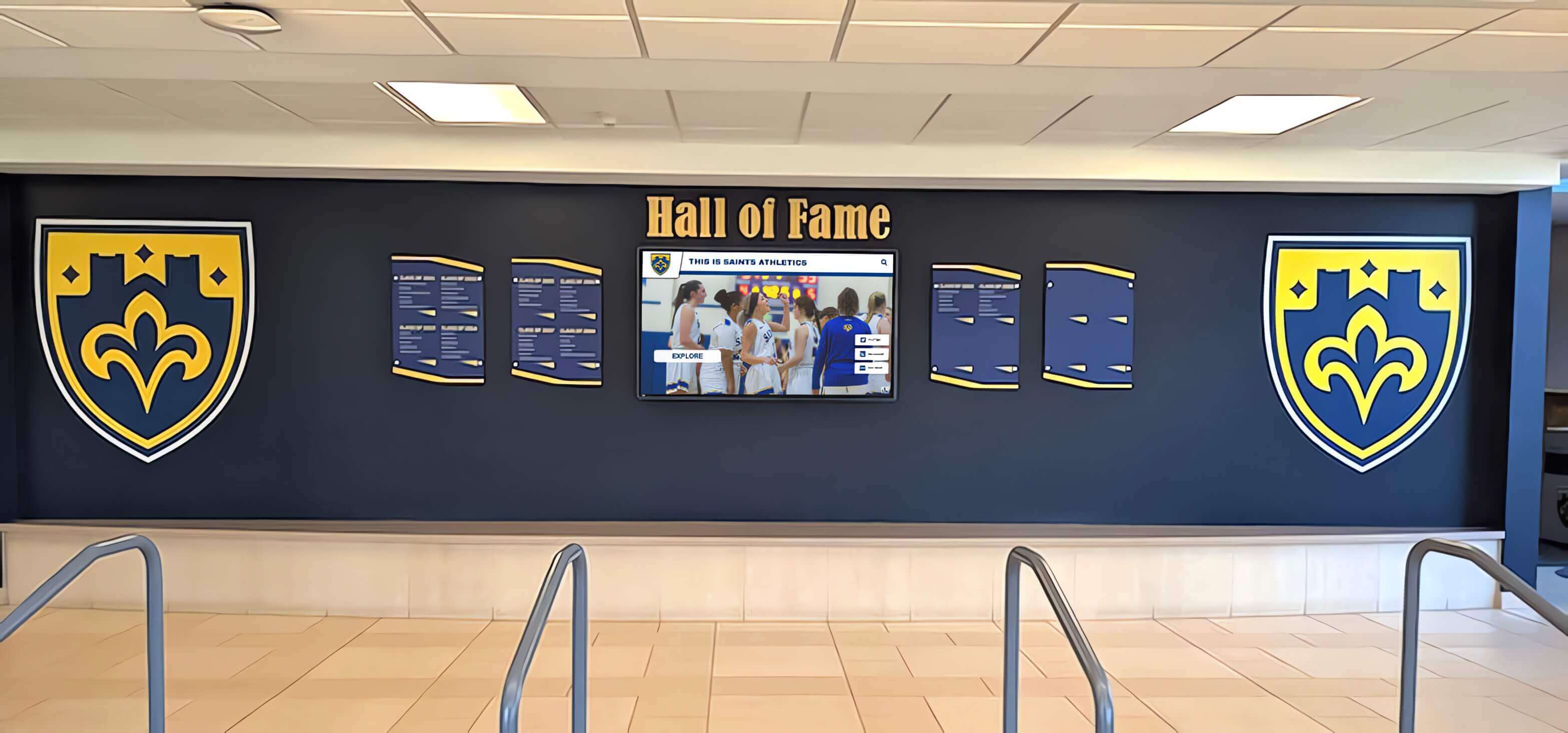
Hybrid approaches combine traditional recognition elements with modern digital capabilities
Implementation and Launch
Execute deployment systematically:
Content Migration and Initial Population
Build recognition foundation:
- Historical research gathering achievement information
- Data entry and profile creation following quality standards
- Media collection and digitization for photographs and documents
- Content review ensuring accuracy and completeness
- Testing and preview verification before public access
- Phased approach launching recognition categories systematically
Adequate initial content creates immediate value rather than disappointing sparse displays that undermine confidence in recognition programs.
Training and Staff Enablement
Ensure sustainable administration:
- Content management training for designated staff
- Quality standard documentation for consistency
- Workflow definition clarifying roles and processes
- Technical support procedures for issue resolution
- Best practice guidance for effective recognition
- Ongoing learning resources for continuous improvement
Proper training prevents administration challenges that compromise recognition sustainability as staff face competing priorities or personnel changes occur.
Community Launch and Promotion
Generate awareness and engagement:
- Dedication ceremonies celebrating recognition programs
- Media coverage generating broader community awareness
- Social media campaigns driving exploration
- Staff and student demonstrations of features and content
- Alumni outreach encouraging engagement and contributions
- Ongoing communication maintaining visibility
Effective launches establish recognition as significant institutional features worthy of sustained attention rather than minor additions easily overlooked.
Conclusion: Building Culture Through Comprehensive Recognition
Recognition shapes organizational culture fundamentally—communicating what institutions value, motivating continued excellence, preserving heritage connecting generations, and creating environments where contributions receive appropriate acknowledgment. Traditional recognition approaches serve important functions but face inherent limitations: finite physical space forcing difficult prioritization decisions, minimal information reducing recognition to simple documentation, static presentation generating brief engagement, and accessibility barriers restricting who can experience recognition.
Rocket Recognition addresses these fundamental challenges through comprehensive digital platforms combining unlimited capacity with rich multimedia storytelling, interactive exploration, and broad accessibility. Organizations implementing these systems consistently report transformative outcomes: more comprehensive and equitable recognition across all achievement types and time periods, substantially deeper community engagement through interactive rather than passive experiences, administrative efficiency enabling recognition of more individuals with existing resources, and measurable cultural impact strengthening motivation, connection, and institutional pride.
Whether establishing first-ever systematic recognition programs, modernizing existing approaches facing capacity constraints, or enhancing traditional recognition through complementary digital capabilities, the key involves genuine organizational commitment to valuing contributions through appropriate resources and sustained visibility. Rocket Recognition provides the platform and capabilities—but meaningful impact requires institutional dedication to honoring excellence comprehensively and permanently.
Ready to transform how your organization celebrates achievement and preserves heritage? Comprehensive recognition solutions create the visibility and engagement that honor contributions appropriately while strengthening community culture and identity. Rocket Alumni Solutions provides specialized Rocket Recognition platforms designed specifically for schools, universities, nonprofit organizations, and community institutions—combining unlimited capacity, rich multimedia content, intuitive management, and accessible experiences that serve all stakeholders effectively.
Whether implementing comprehensive athletic recognition, honoring academic excellence, acknowledging donor contributions, preserving institutional heritage, or celebrating diverse community achievements, professional digital recognition creates the sustainable programs that organizations deserve. The individuals you recognize poured dedication, excellence, and commitment into creating positive impact—they deserve acknowledgment that tells their stories comprehensively while inspiring others to pursue their own paths toward achievement.
Your community members generate excellence daily across diverse categories worthy of systematic celebration. Comprehensive recognition programs ensure these contributions receive appropriate visibility while preserving institutional memory for generations to come. With thoughtful planning, quality content development, and genuine commitment to honoring all deserving individuals equitably, you can create recognition cultures that strengthen every aspect of organizational life—from motivation and engagement to belonging and pride.
The most important element isn’t budget size or technology sophistication—it’s authentic organizational commitment to valuing contributions with appropriate resources and sustained attention. Start planning your comprehensive recognition program today, and create the culture of excellence and appreciation your community deserves. Explore recognition solutions that transform how organizations honor achievement across all contexts and constituencies.