



The U.S. Open Tennis Championships, held annually at the USTA Billie Jean King National Tennis Center in Queens, New York, stands as one of the world’s most prestigious sporting events. Since 1881, this Grand Slam tournament has witnessed extraordinary moments—from Billie Jean King’s pioneering advocacy to Serena Williams’ record-breaking 23 Grand Slam singles titles. The 2025 tournament broke records with a $90 million prize pool, the largest in tennis history, with singles champions Carlos Alcaraz and Aryna Sabalenka each claiming $5 million. Yet preserving and sharing this rich championship heritage presents ongoing challenges: limited physical space for recognition displays at the venue, traditional trophy cases that can’t capture the depth of tennis history, and the need to engage modern fans who expect interactive, multimedia experiences.
While the venue has undergone significant digital display upgrades—including a massive 3840×1080 pixel “superwall” at the south entrance of Arthur Ashe Stadium and 204 Hawk-Eye cameras tracking play across 17 courts—these installations primarily serve live match presentation, advertising, and line-calling rather than comprehensive historical recognition and fan engagement with the tournament’s legendary past. The actual U.S. Open championship trophies travel to the International Tennis Hall of Fame in Newport, Rhode Island, for year-round display, creating a geographic separation between championship celebration and tournament atmosphere.
What if interactive touchscreen technology could transform how fans connect with U.S. Open history, explore legendary champions’ achievements, and experience the stories that make this Grand Slam tournament truly iconic? This comprehensive guide explores how digital recognition solutions—specifically systems like Rocket Alumni Solutions’ interactive displays—could revolutionize historical engagement at premier tennis venues and sporting events, using the U.S. Open as the ultimate case study for championship recognition programs.
Interactive touchscreen displays represent more than modern replacements for static plaques—they enable fundamentally different approaches to tournament recognition that honor unlimited champions, create personalized exploration experiences, and preserve sporting legacy in ways traditional methods never could. Venues successfully implementing these technologies create memorable experiences that deepen fan connections while celebrating the athletes and moments that define championship history.

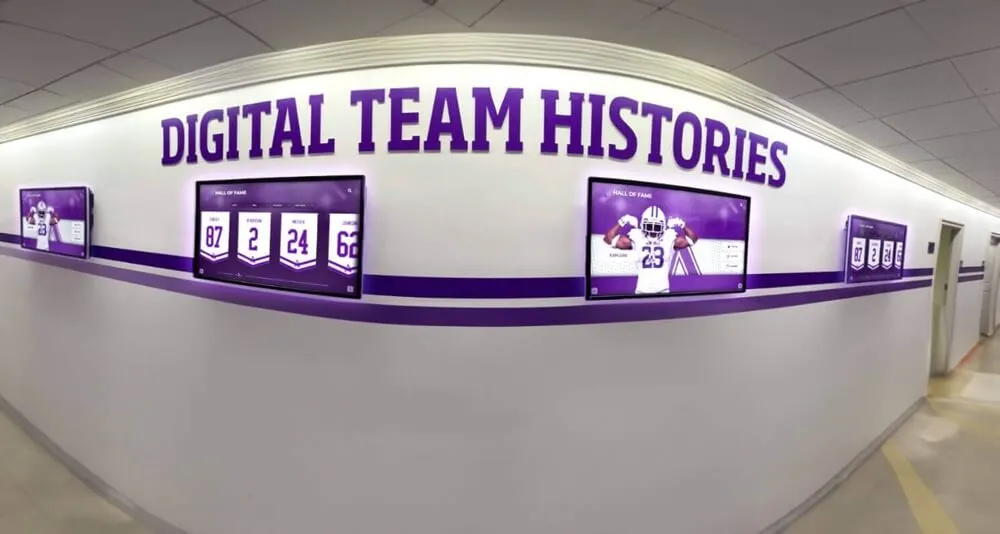
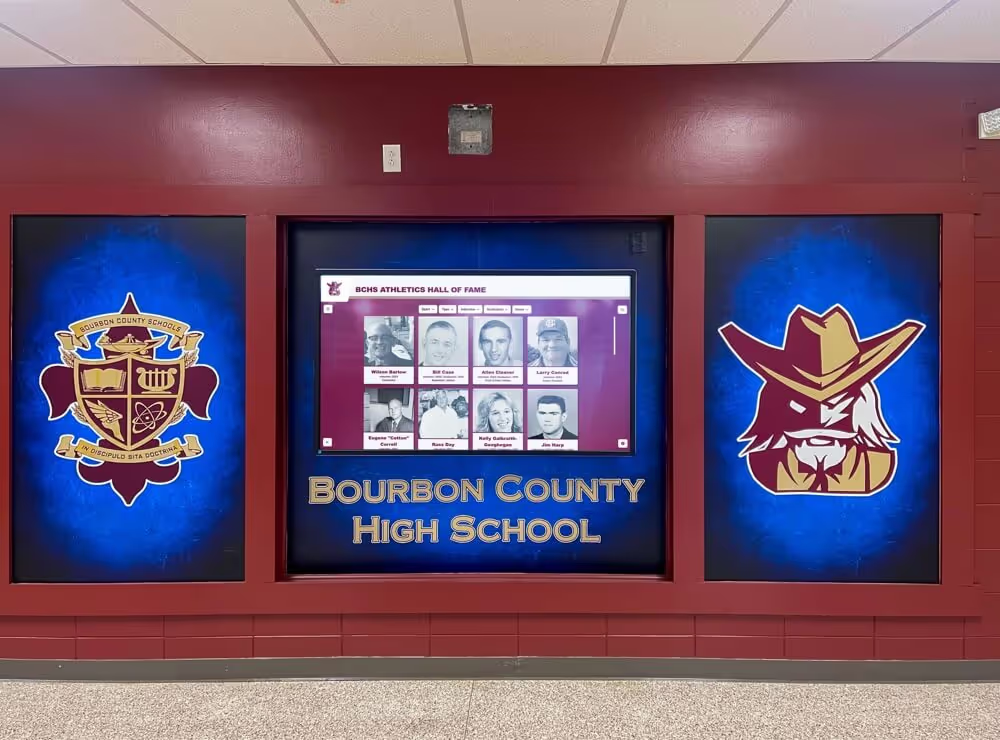
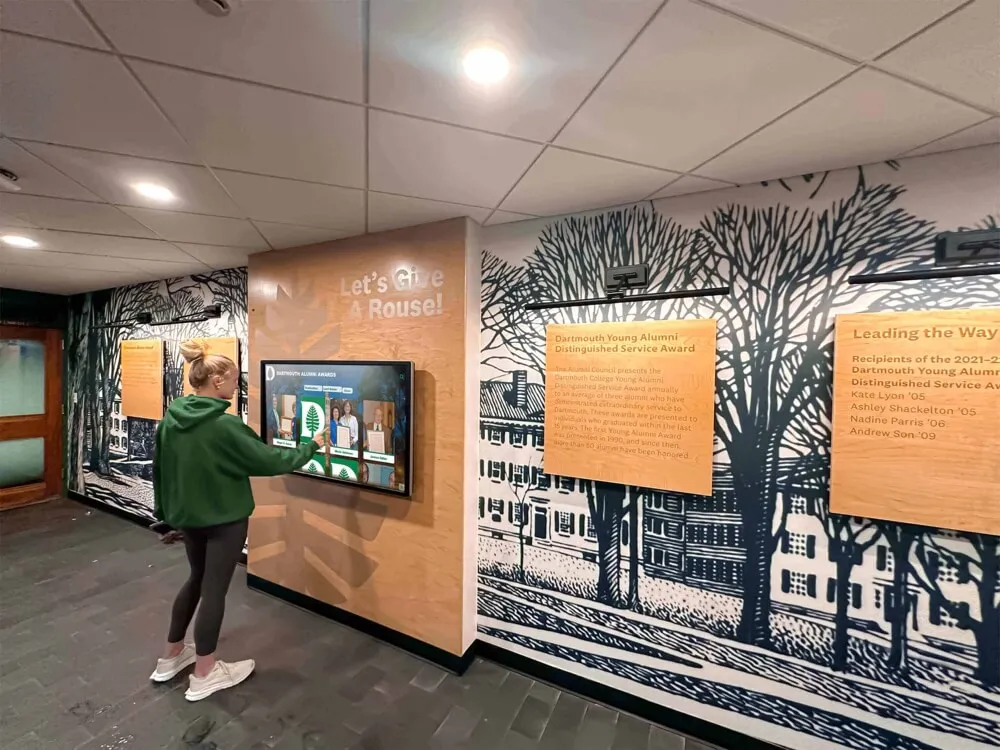
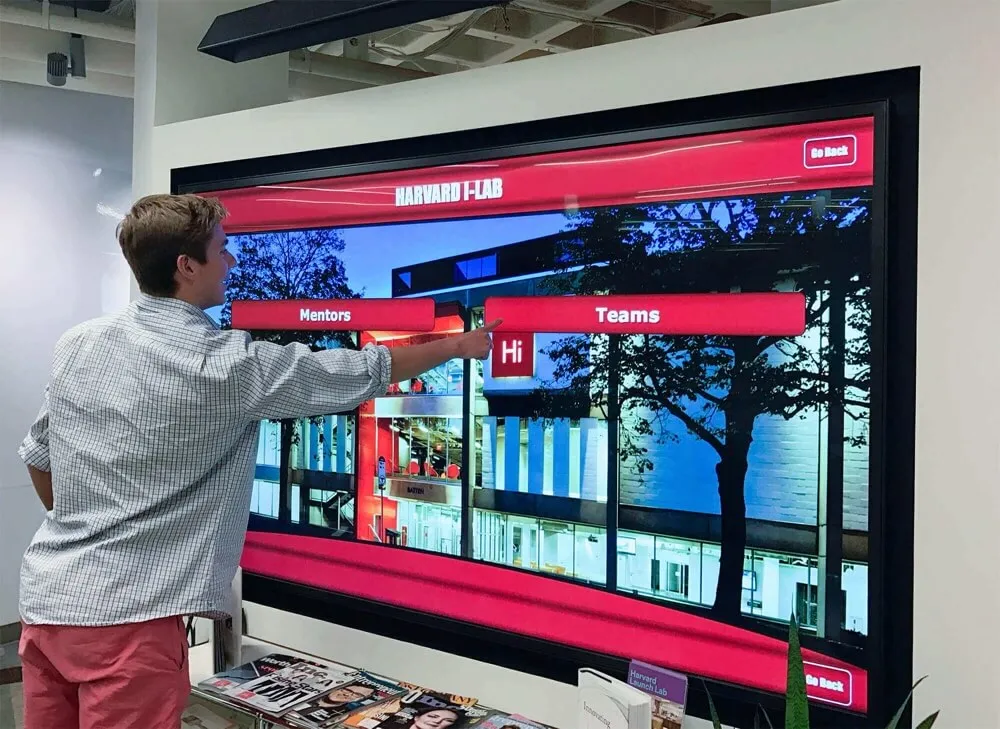
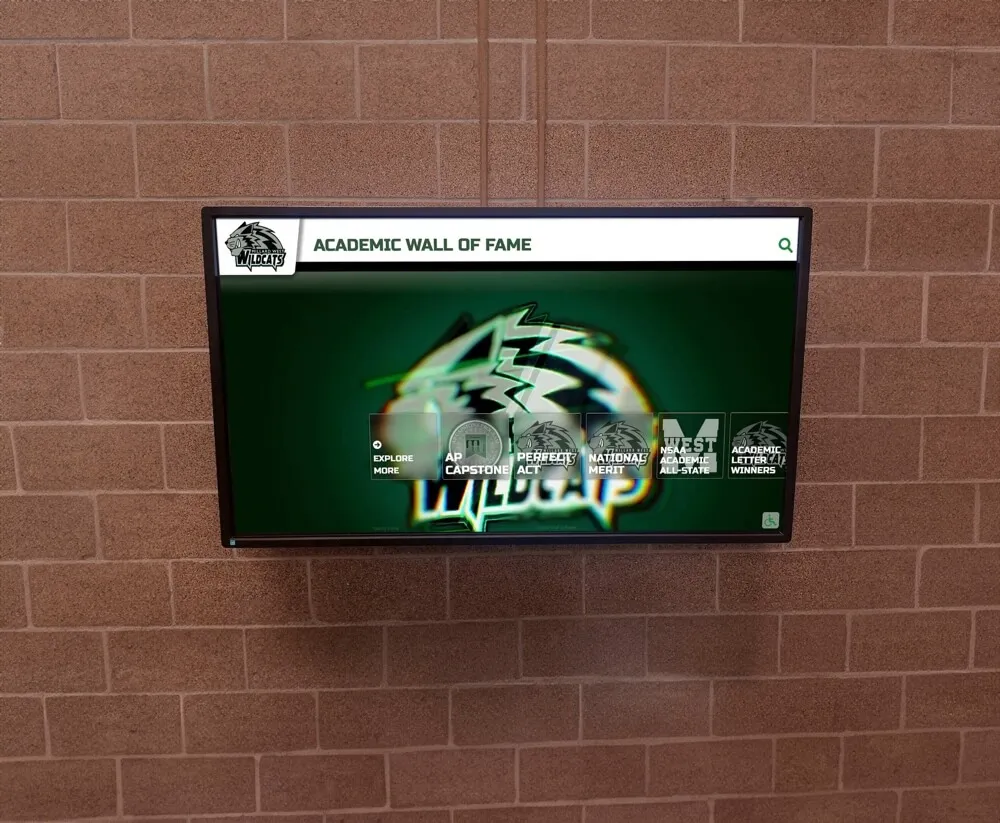
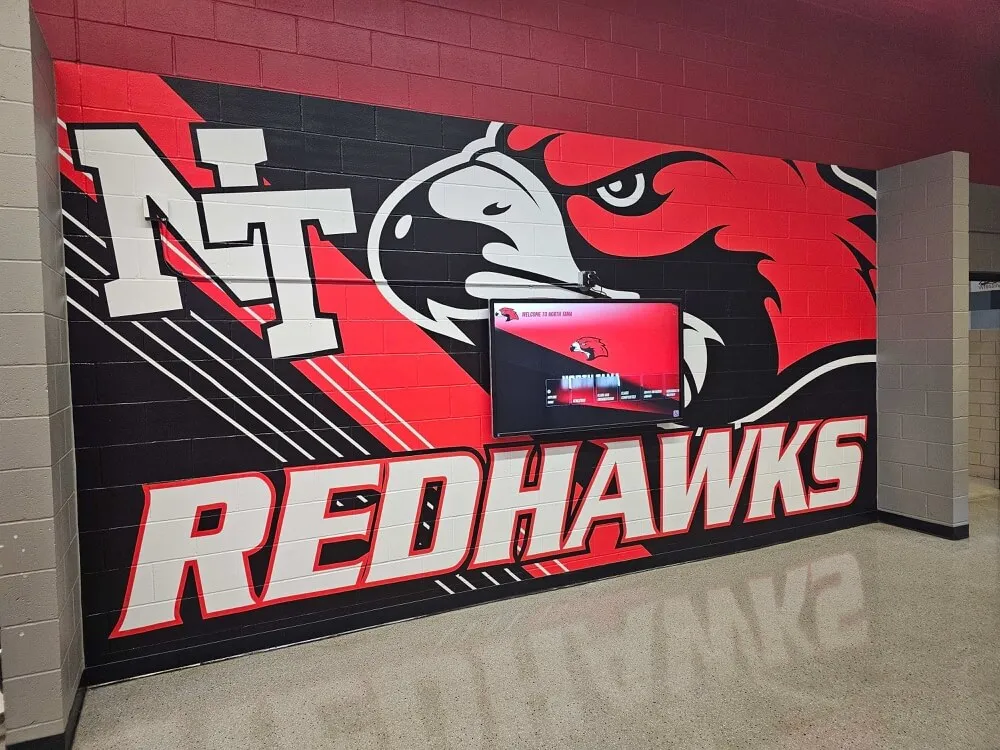
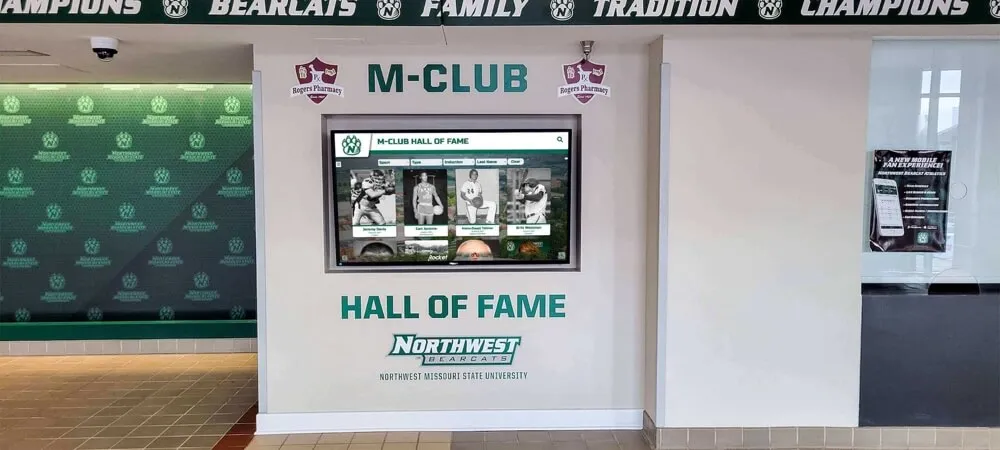
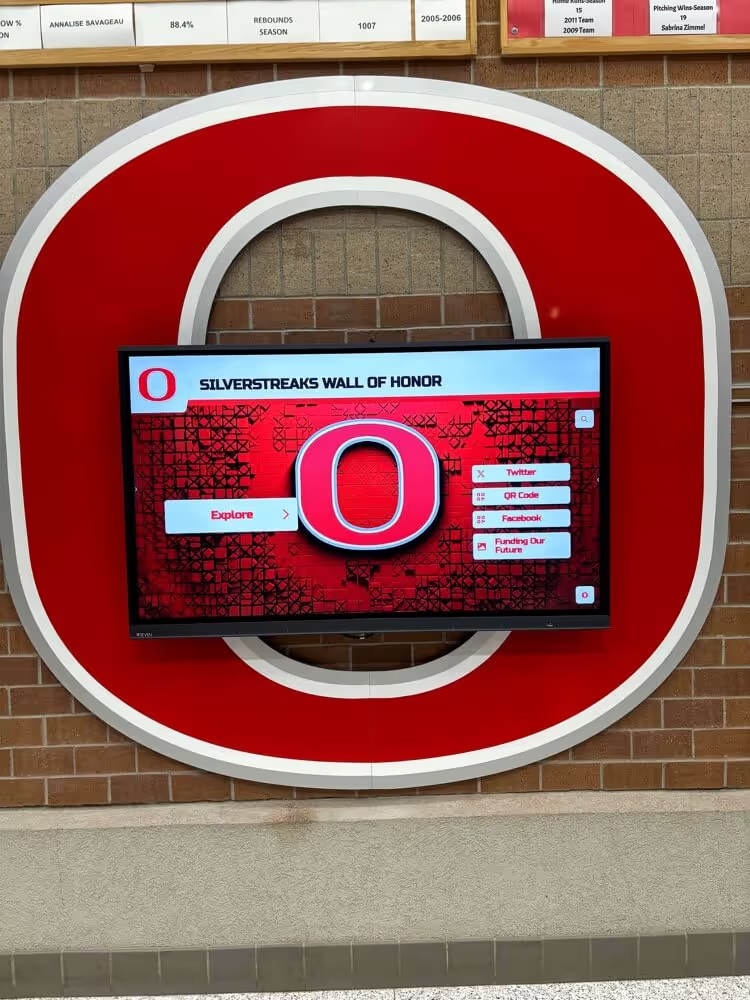
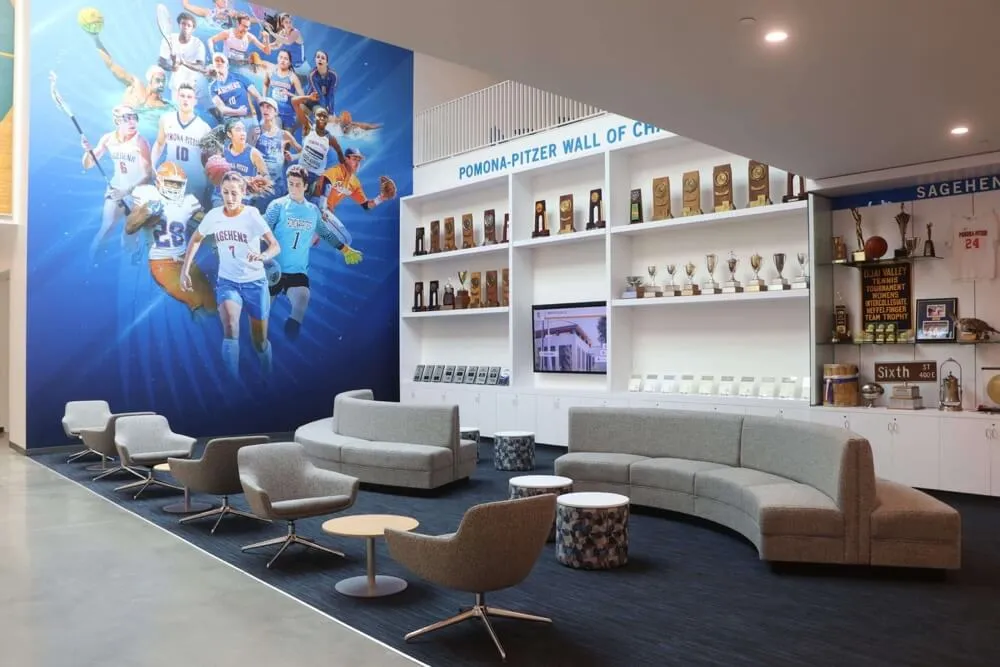
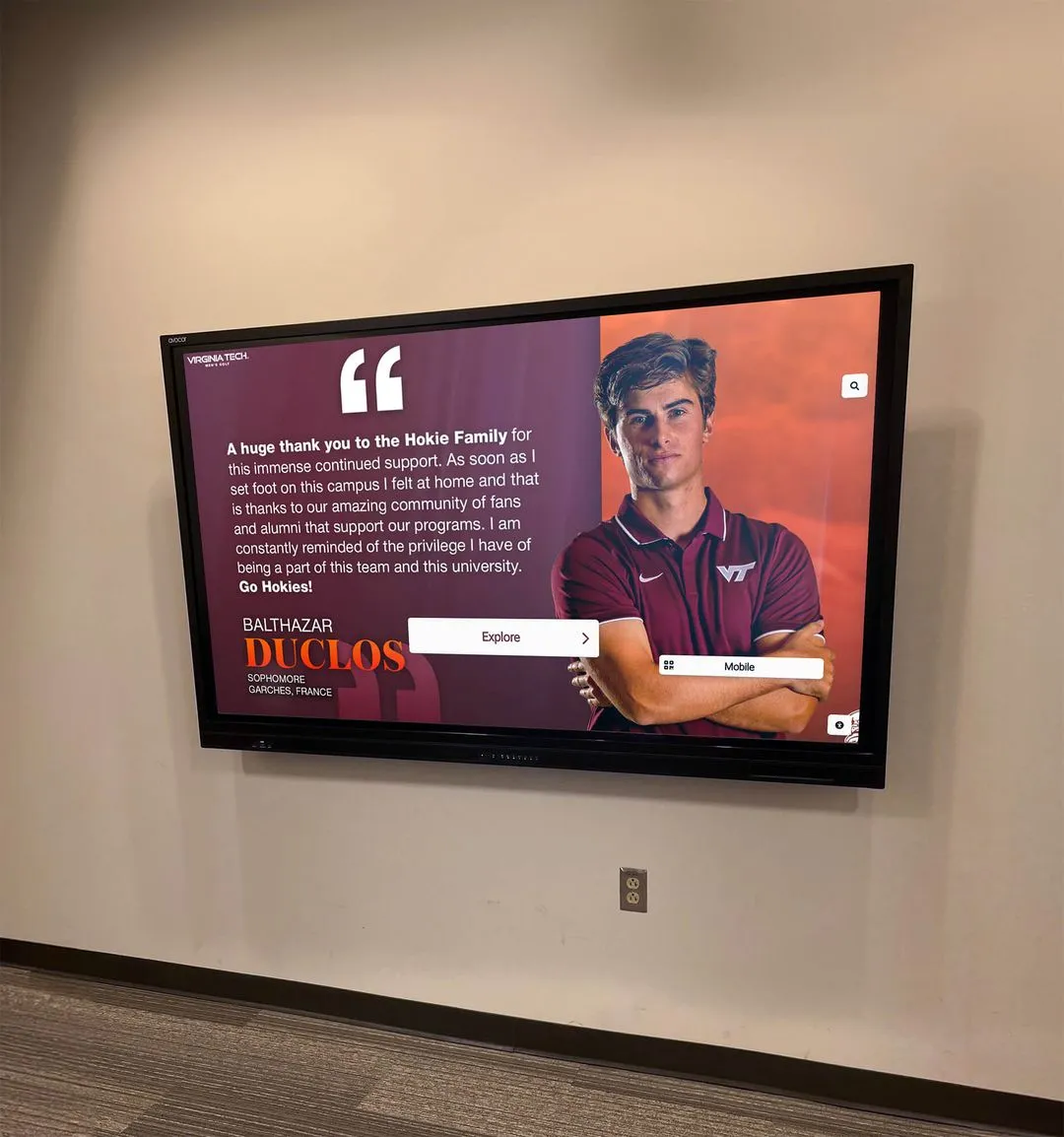
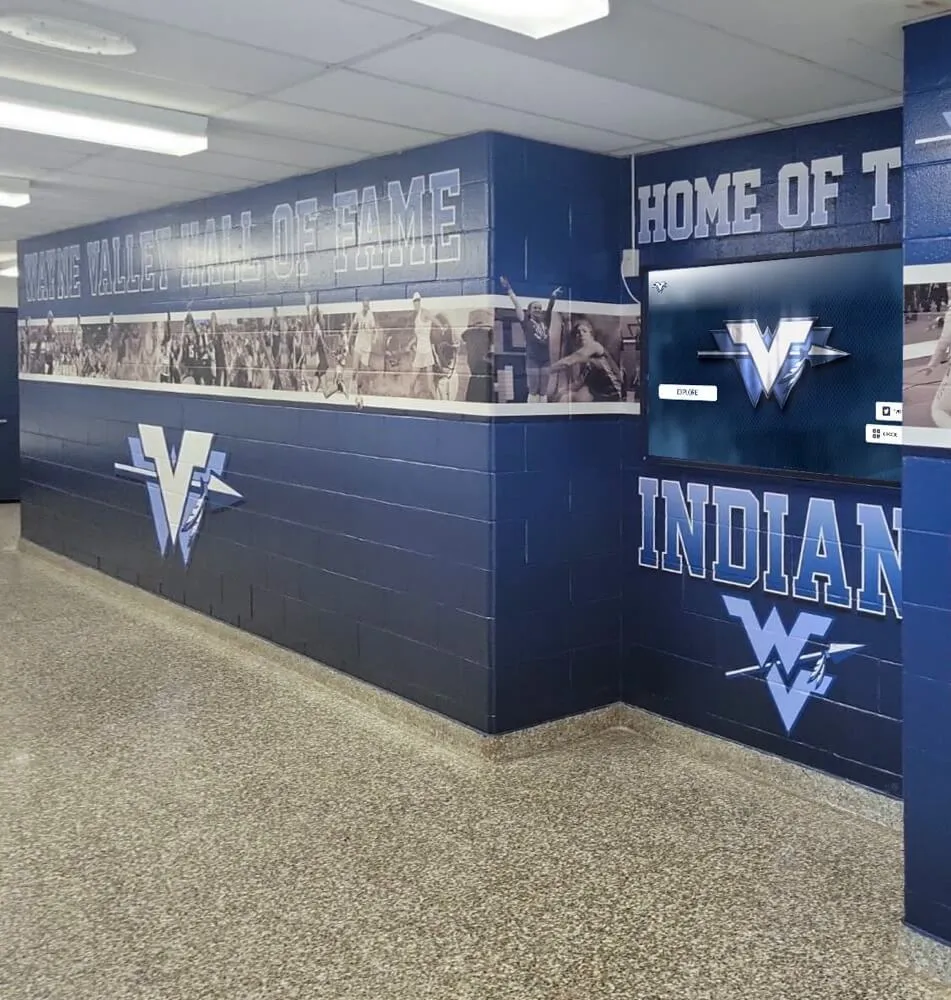
Interactive touchscreen displays enable fans to explore champion histories, achievements, and memorable matches through engaging digital interfaces
The U.S. Open: A Legacy Demanding Modern Recognition
Understanding the U.S. Open’s unique position in tennis history reveals why traditional recognition approaches fall short of celebrating this extraordinary championship legacy.
The Rich History of America’s Grand Slam
The U.S. Open’s heritage spans multiple eras and transformation periods, creating recognition complexity that few tournaments match:
Tournament Evolution and Milestone Moments
The championship’s journey from Newport Casino to national prominence includes defining periods:
- First U.S. National Lawn Tennis Championship contested in Newport, Rhode Island in 1881
- Tournament held at Newport Casino annually until 1914 before moving to New York
- Open Era beginning in 1968, allowing professional players to compete alongside amateurs
- Venue establishment at the USTA Billie Jean King National Tennis Center in 1978
- Equal prize money for men and women instituted in 1973, making U.S. Open the first Grand Slam to achieve parity
- $600 million renovation completed in 2018 with retractable roof on Arthur Ashe Stadium
- Record-breaking $90 million prize pool in 2025, the largest in tennis history
According to the International Tennis Hall of Fame archives, the perpetual U.S. Open trophies are displayed in Newport year-round and transported to New York every August for the tournament, creating a unique connection between championship history and contemporary competition.
Champion Recognition Across Generations
The U.S. Open has crowned legendary champions deserving comprehensive recognition:
- Singles champions spanning 144 years from Richard Sears (1881) to current champions
- Multiple Grand Slam winners including Serena Williams’ record 23 singles titles
- Historic firsts including Arthur Ashe becoming the first African American men’s singles champion in 1968
- International champions representing 27 different countries in Hall of Fame recognition
- Memorable matches including longest battles and dramatic comeback victories
- Doubles and mixed doubles champions creating additional recognition depth
- Wheelchair tennis champions since the event’s addition to the tournament
- Junior champions who later achieved professional success
The International Tennis Hall of Fame has enshrined 262 distinguished inductees since 1955, many of whom won U.S. Open championships. Yet traditional displays at tournament venues can showcase perhaps 2-3% of deserving recognition, forcing impossible choices about whose achievements receive visibility during the event.
Learn comprehensive approaches to digital hall of fame recognition that accommodate unlimited champions and achievements.
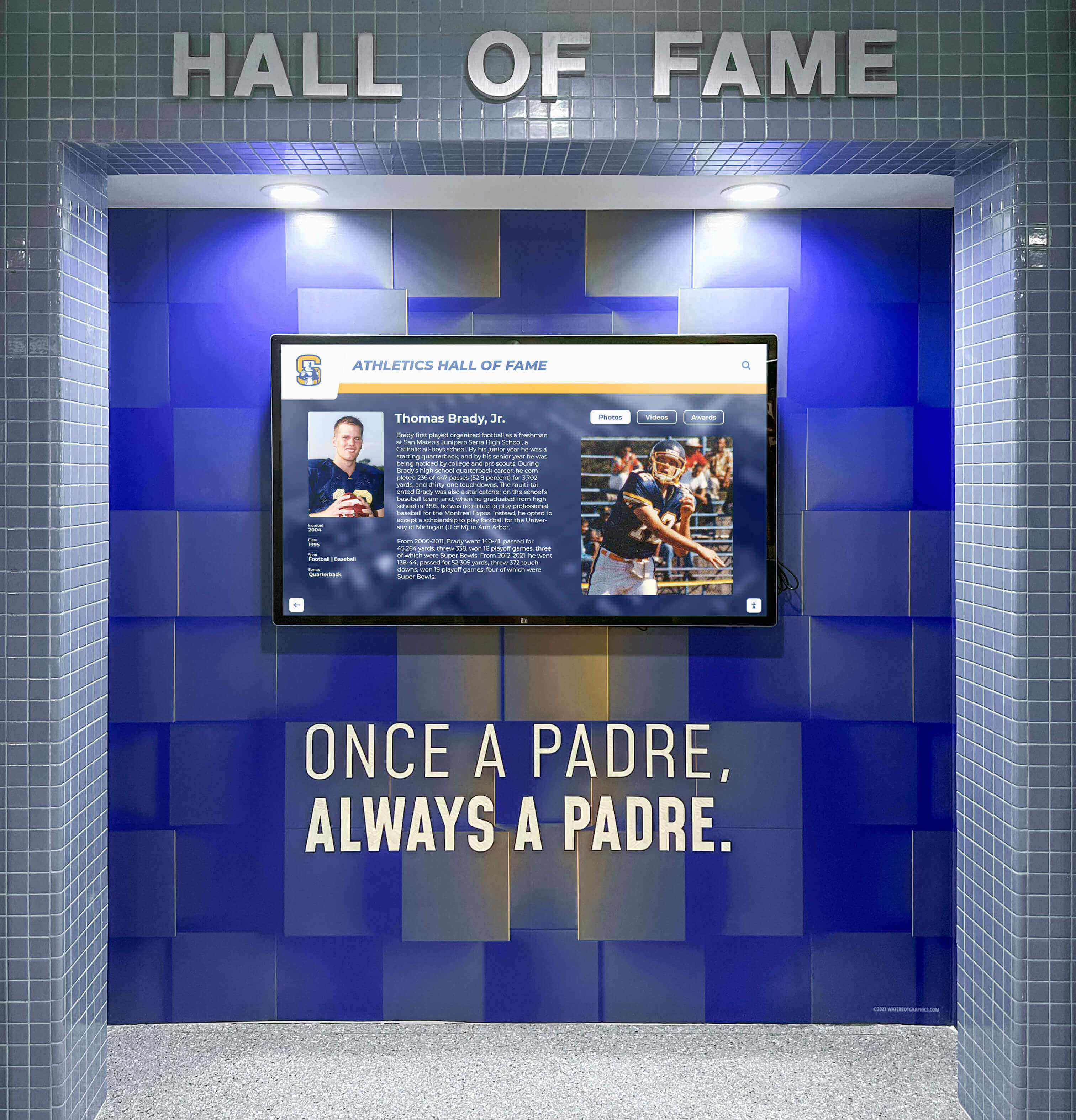
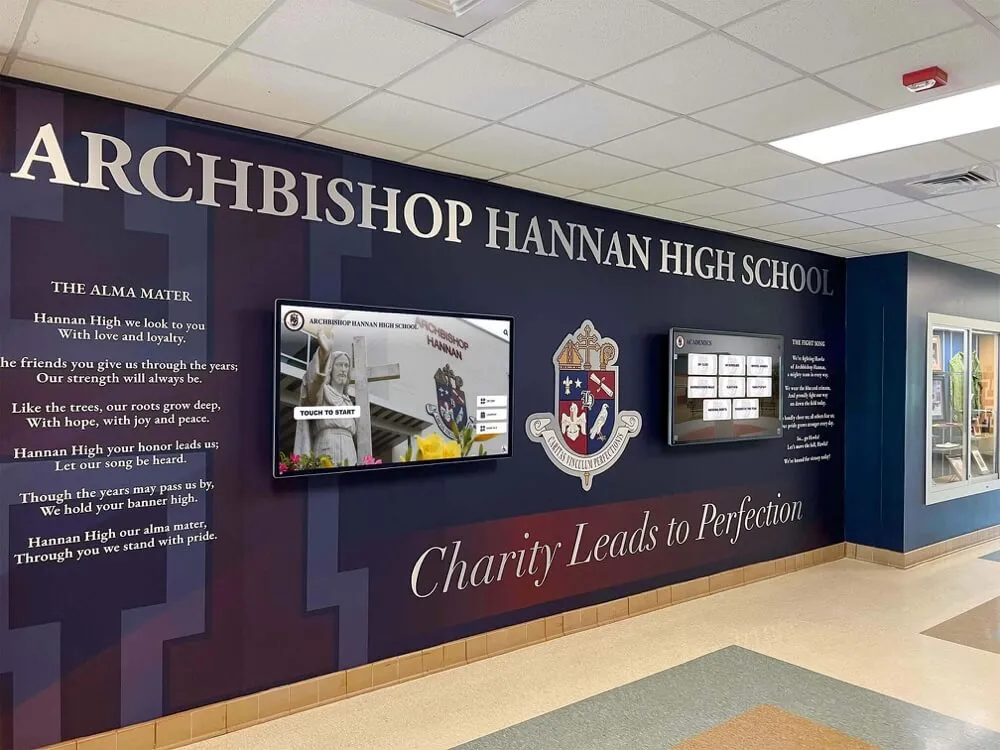
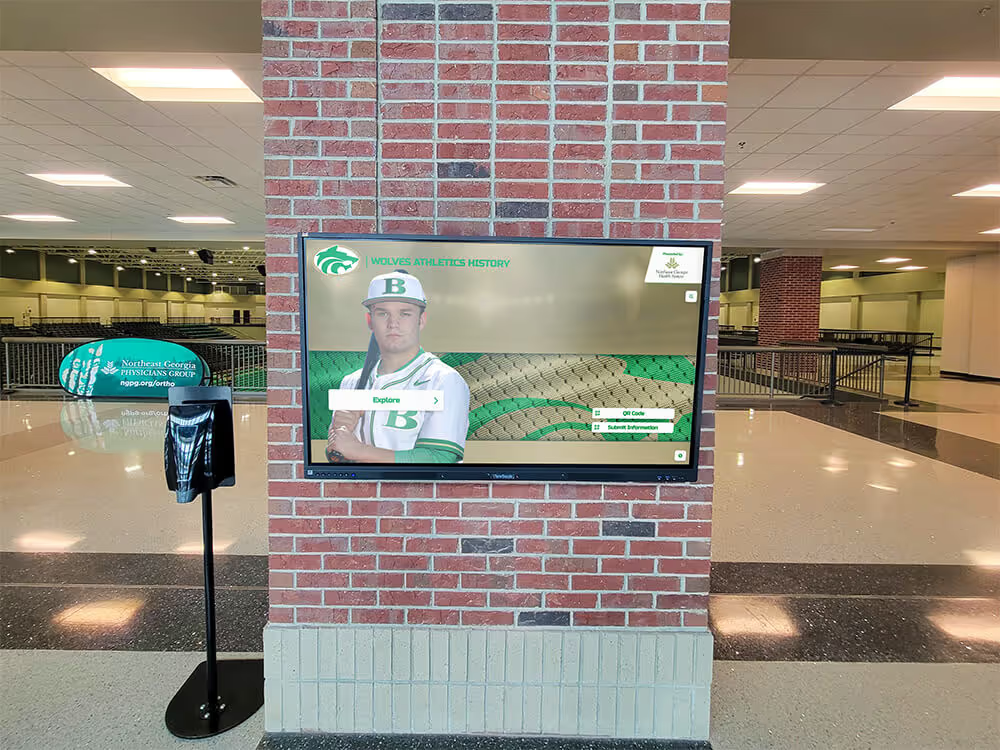
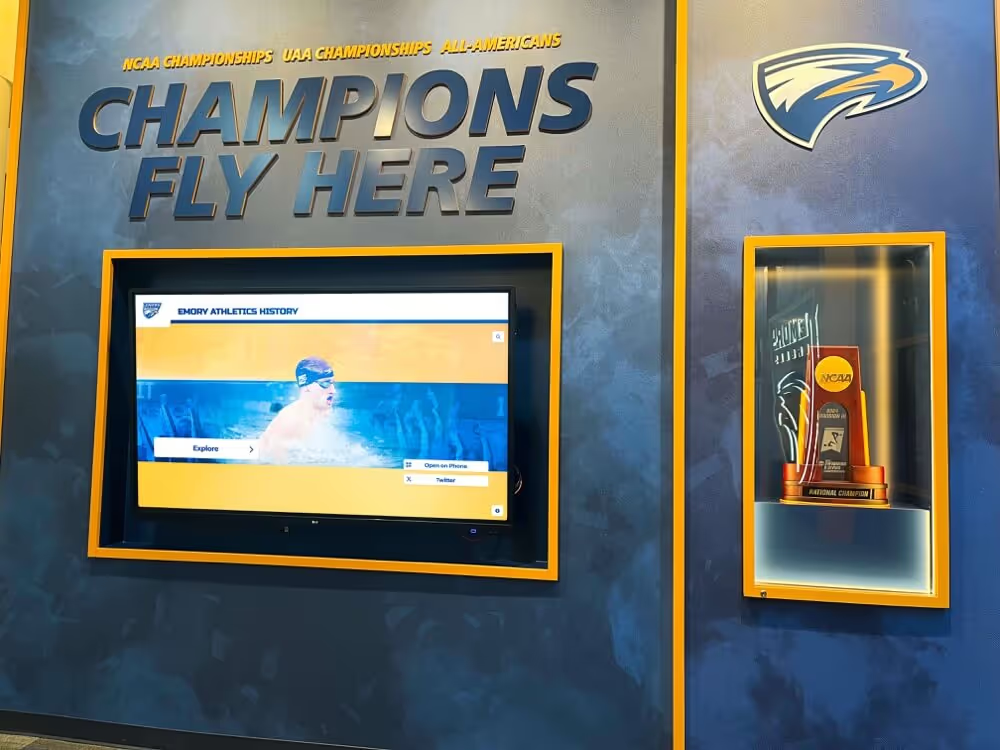
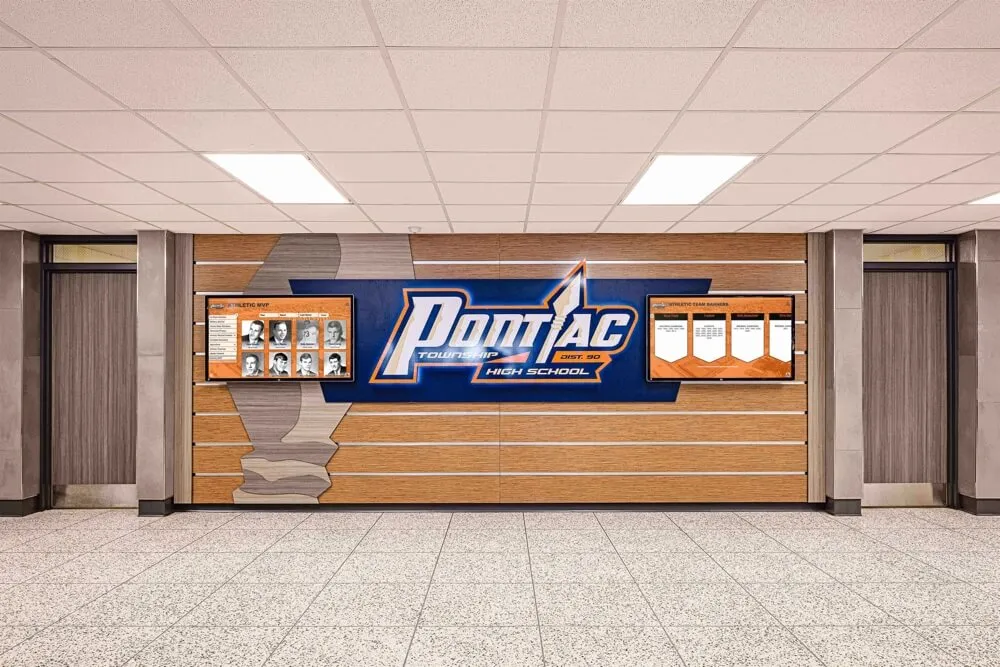
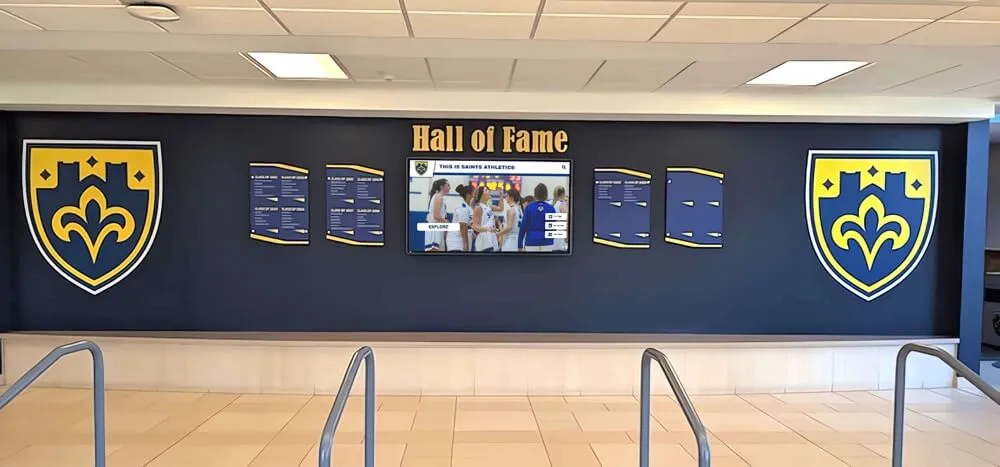
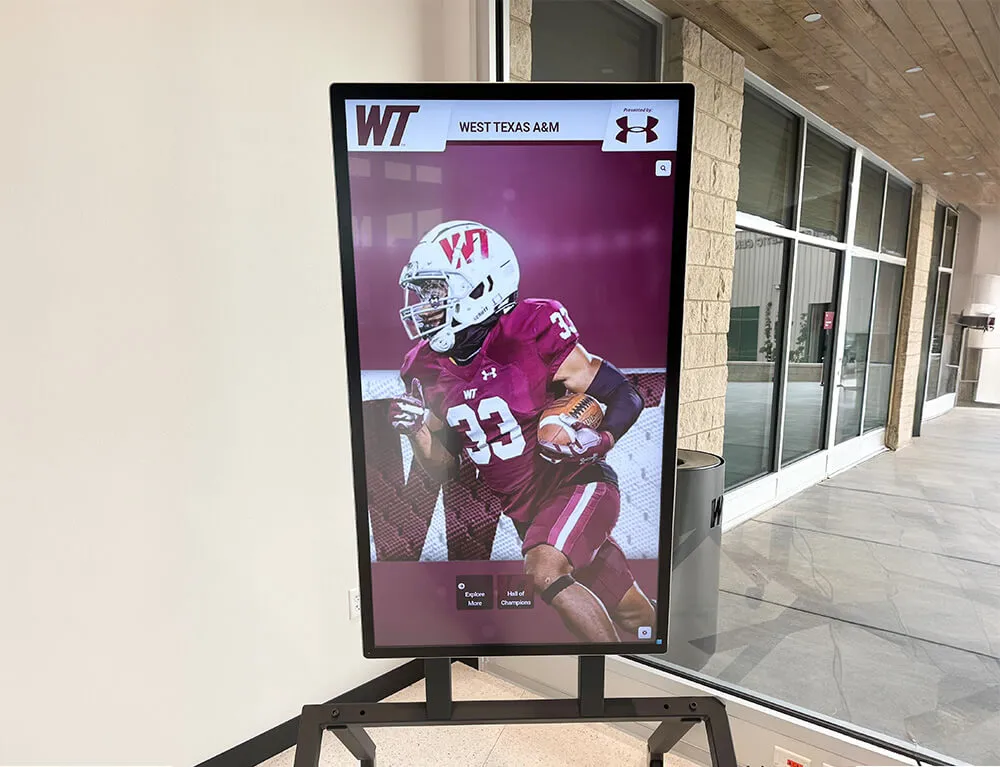
Professional digital installations create permanent recognition while enabling unlimited capacity for champion profiles
The Recognition Capacity Challenge at Major Sporting Events
Even the world’s premier tennis tournament faces fundamental space and engagement constraints:
Physical Space Limitations
Despite the USTA Billie Jean King National Tennis Center’s 46.5-acre campus and world-class facilities, recognition displays compete with operational priorities:
- Concourse space valued for concessions, merchandise, and premium fan experiences
- Limited permanent wall space along public walkways serving over 700,000 annual attendees
- Temporary event infrastructure requiring annual setup and teardown
- High-traffic flow requirements preventing recognition installations that impede movement
- Commercial partnerships requiring prominent visibility for sponsor activations
- Player areas and operational facilities occupying substantial venue space
- Security requirements constraining public access to certain facility areas
The Impossible Selection Dilemma
Traditional physical recognition forces difficult decisions about championship representation:
- 144 years of champions across singles, doubles, and mixed doubles categories
- Wheelchair tennis champions since 1976 when exhibition events began
- Junior champions showcasing future professional stars
- Memorable matches and historic moments beyond championship results
- International diversity with champions from dozens of countries
- Behind-the-scenes figures who built tournament excellence
- Qualifying rounds and early-round upsets creating memorable moments
- Statistical leaders and record holders across multiple performance categories
A single interactive touchscreen installation could showcase thousands of profiles across all categories, eliminating the impossible task of selecting the “most deserving” few while everyone else remains unrecognized despite significant championships and contributions.
Explore strategies for comprehensive athletic recognition programs that celebrate unlimited achievements across multiple sports and categories.
Engaging Modern Tennis Fans and Tournament Attendees
Today’s sports fans expect interactive, personalized experiences that traditional displays cannot deliver:
Changing Fan Behaviors at Major Tournaments
Contemporary tennis audiences arrive with different engagement patterns compared to previous generations:
- Smartphone-native attendees expecting touch interaction and immediate information access
- Social media habits integrating tournament experiences with digital sharing
- Research behaviors including real-time player statistics and historical comparison discovery
- Shorter attention spans requiring immediate engagement to capture interest during downtime
- Expectation for personalized experiences rather than one-size-fits-all presentation
- Preference for video content and match highlights over text-based information
- International audience requiring multilingual content and diverse champion representation
According to sports venue research, over 70% of millennial and Gen Z fans actively engage with digital content during event attendance, creating opportunities for historical recognition that complements live matches rather than competing for attention during play.
Traditional Display Limitations
Static plaques and trophy cases fail to meet modern engagement expectations:
- Minimal information forcing oversimplification of complex championship stories and career achievements
- No ability to search, filter, or personalize content exploration by country, era, or playing style
- Lack of multimedia integration beyond occasional static photography
- Inability to update or expand recognition without costly physical modifications
- No connection to fans’ digital lives and social sharing behaviors
- Passive viewing that generates brief glances rather than engaged exploration
- Geographic separation when trophies travel to separate museum facilities
This engagement gap means tournaments invest substantial resources in recognition that delivers minimal impact beyond baseline visibility, missing opportunities to create meaningful fan connections with championship heritage that could enhance tournament atmosphere and attendee satisfaction.
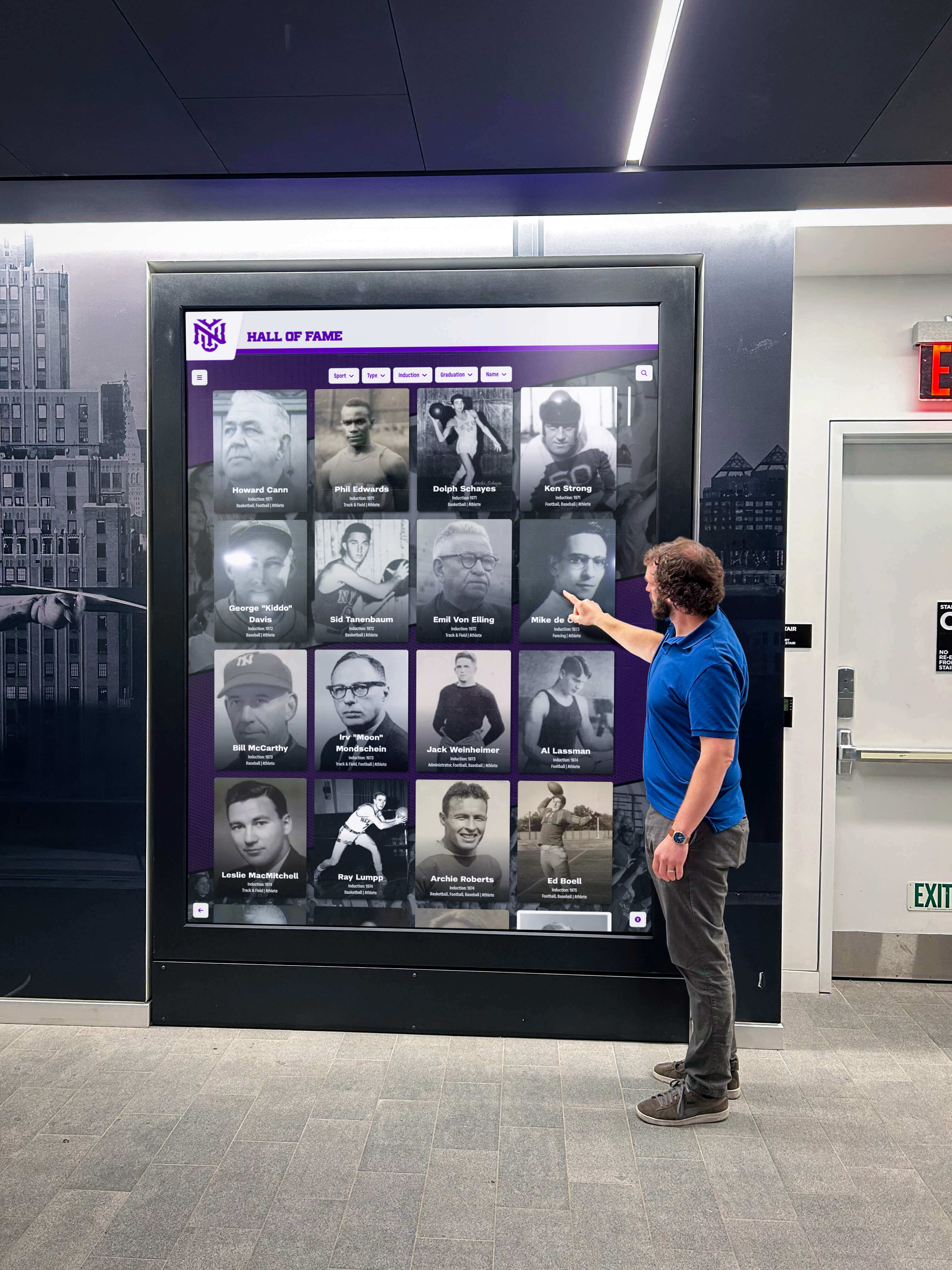
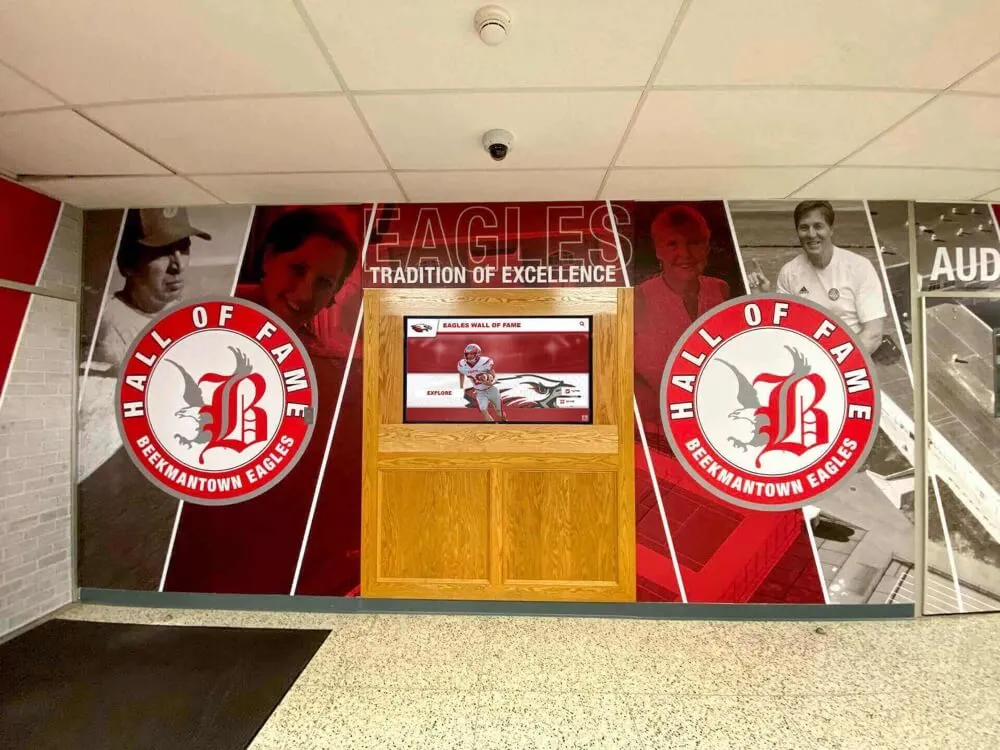
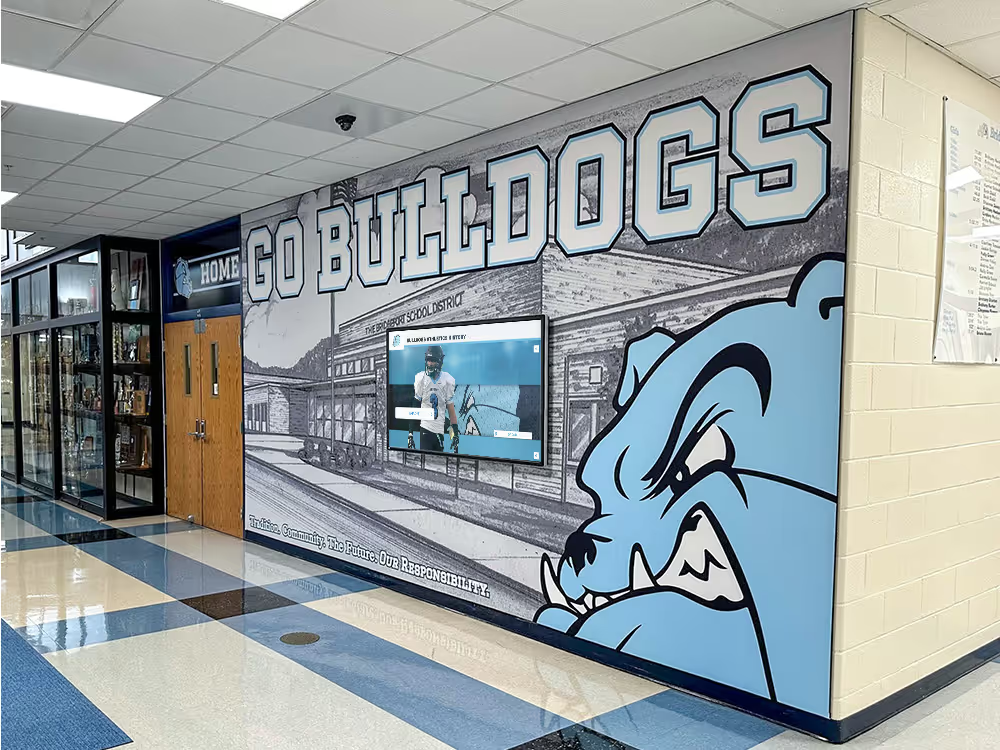
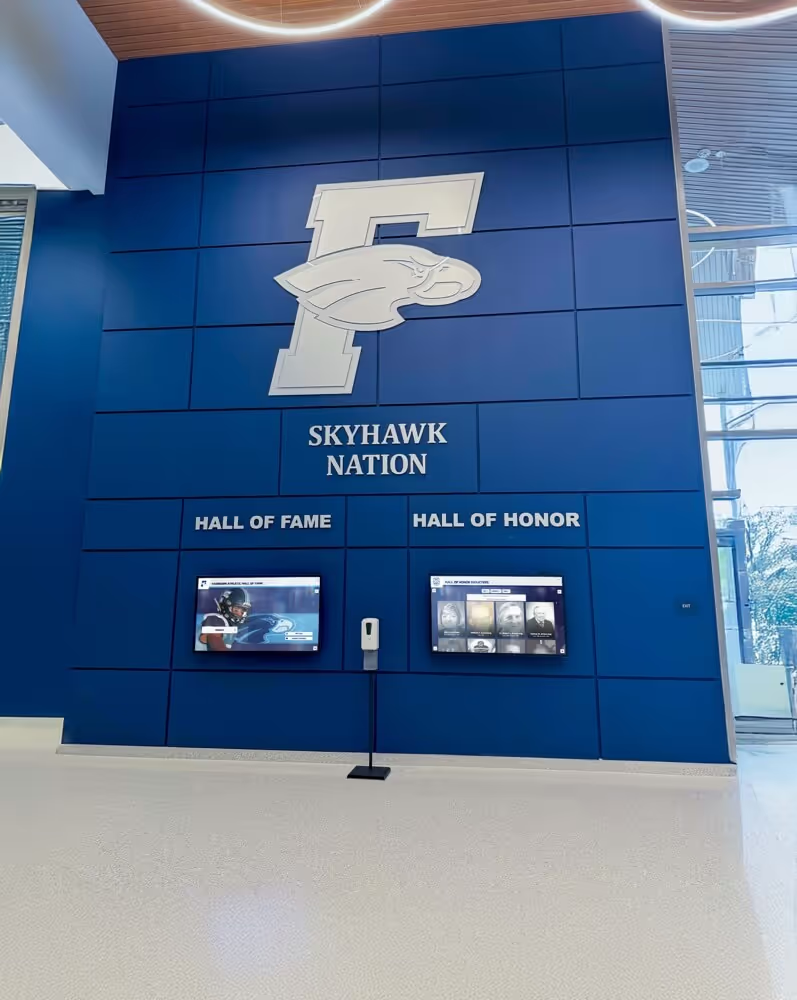
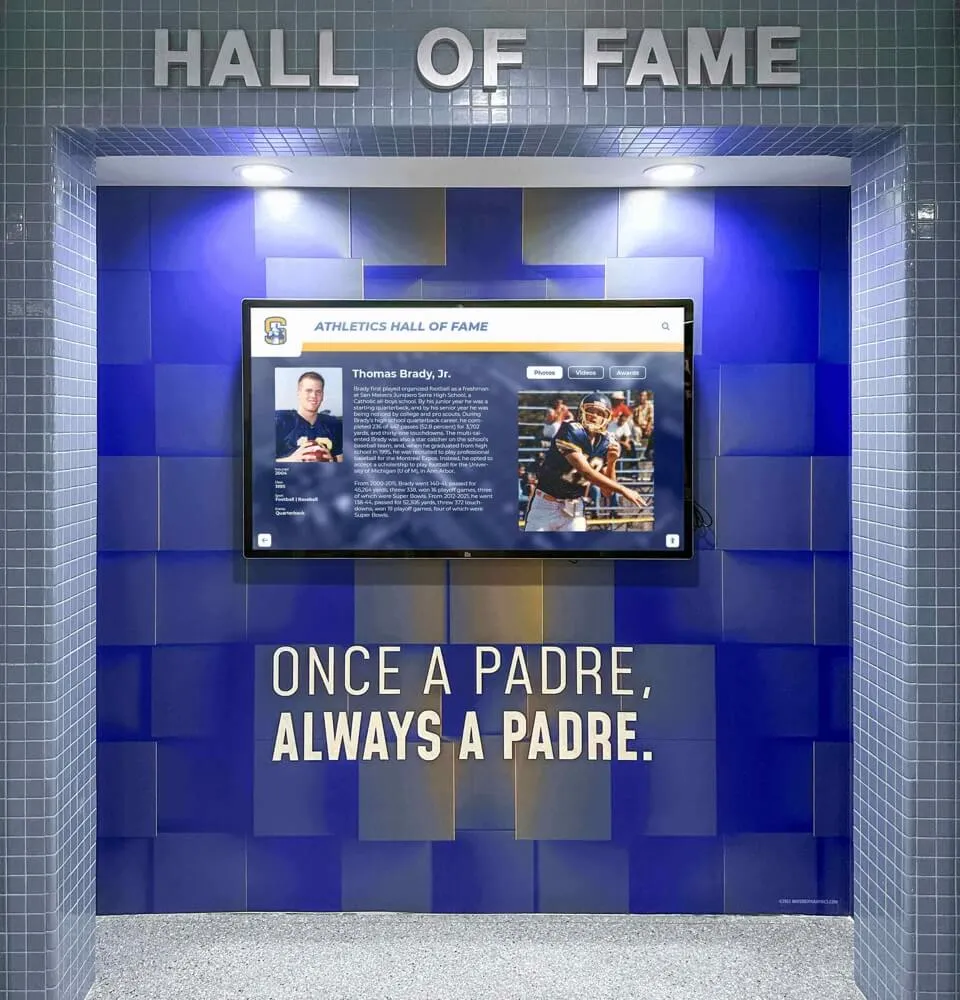
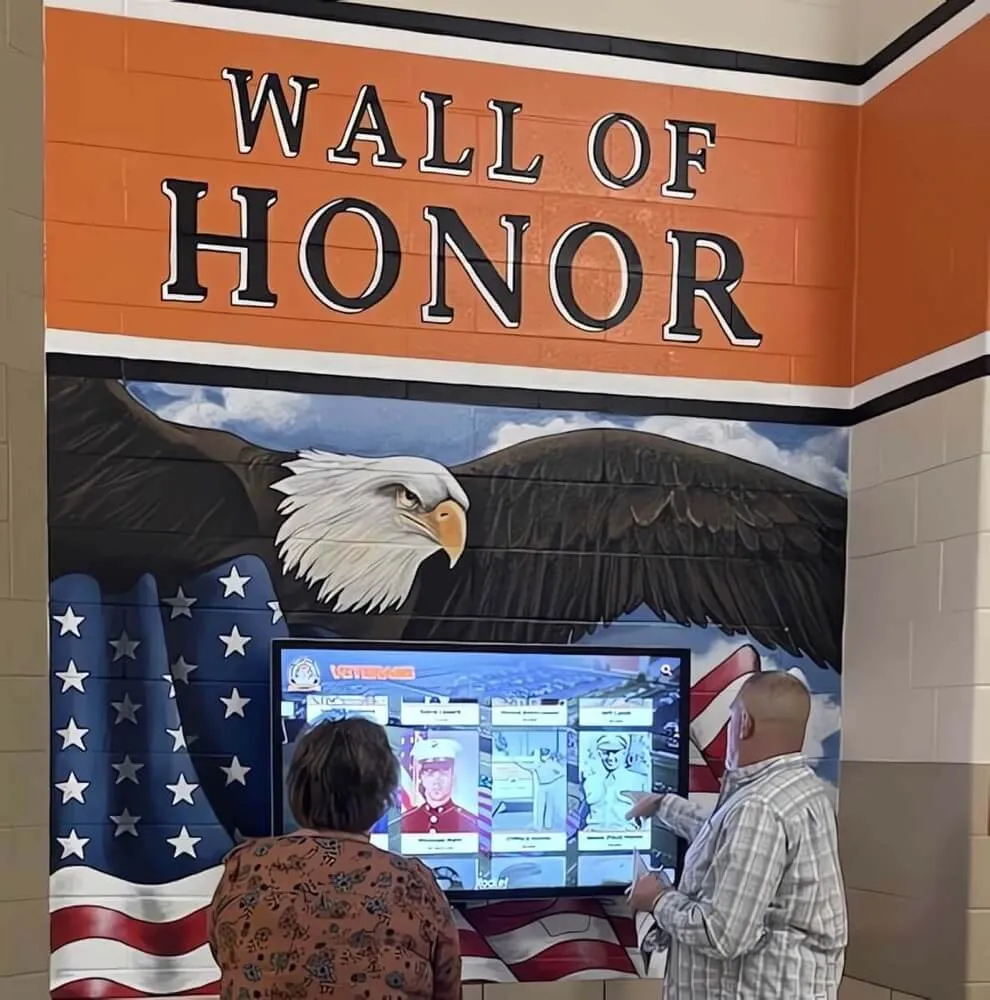
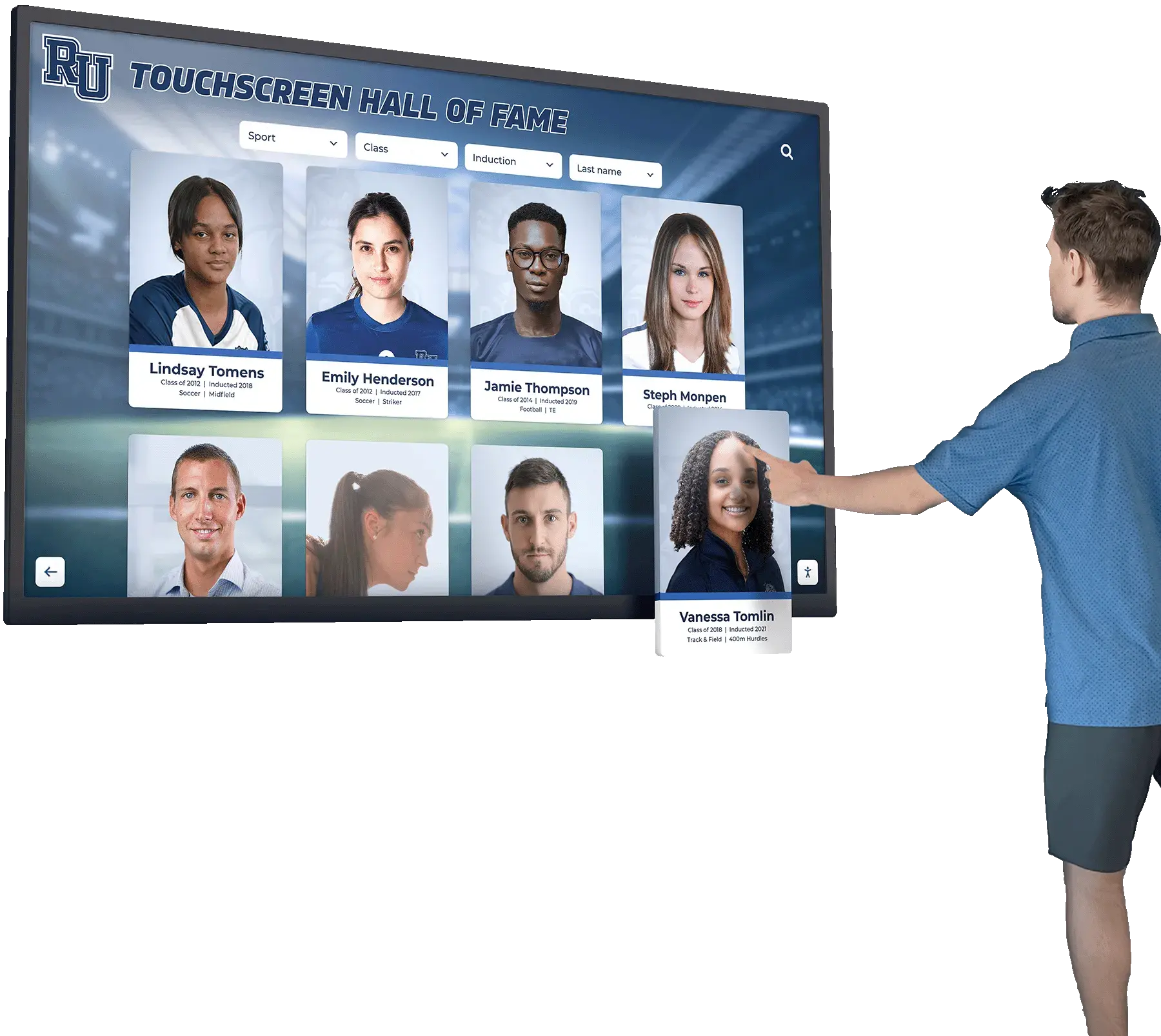
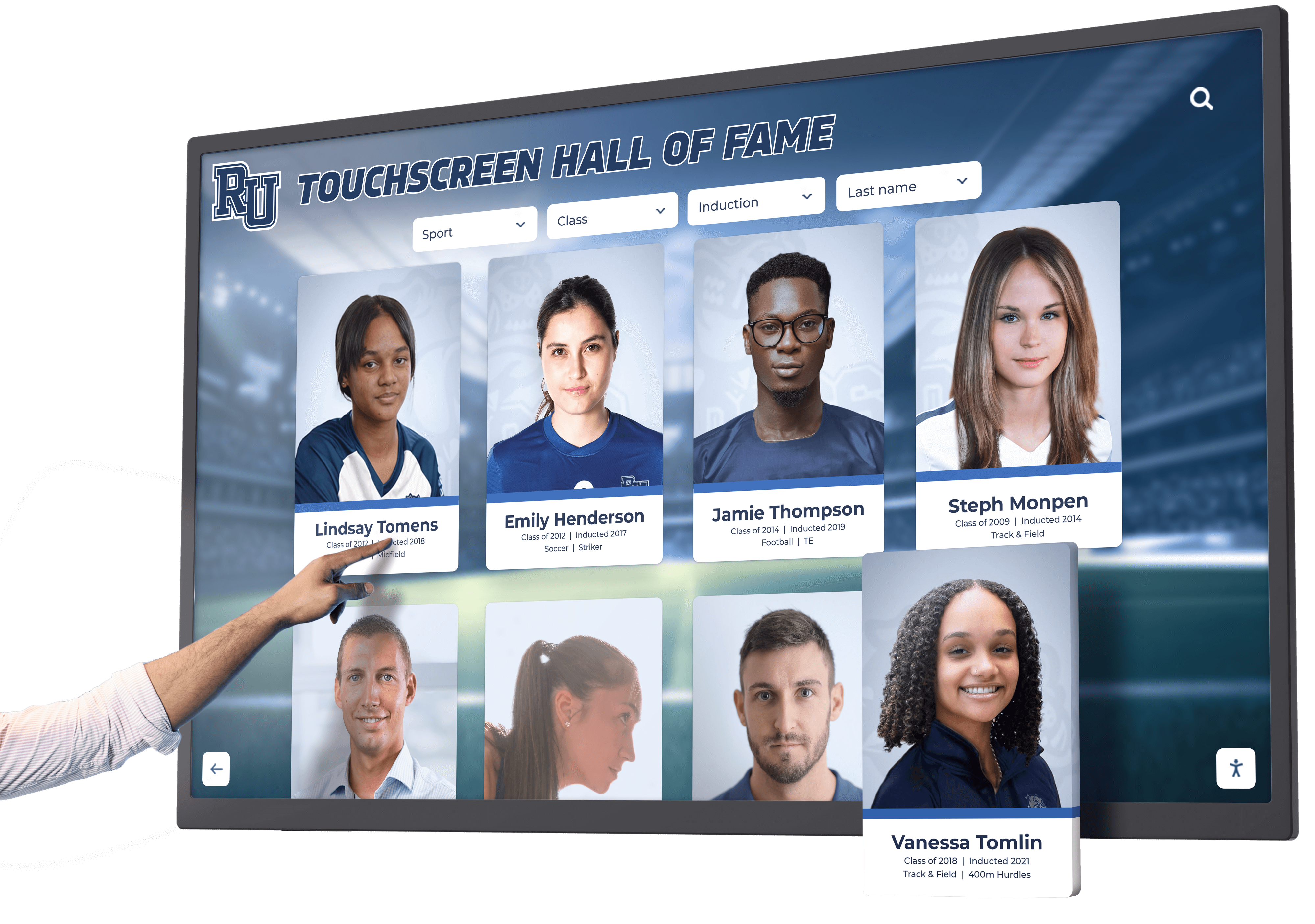
Intuitive touchscreen interfaces invite active exploration rather than passive viewing of championship history
How Interactive Touchscreens Transform Tournament Recognition
Digital recognition platforms address traditional limitations while creating entirely new engagement possibilities perfect for premier sporting events like the U.S. Open.
Unlimited Recognition Capacity
Interactive systems eliminate the space constraint that has always limited physical championship recognition:
Comprehensive Historical Archives
A strategically placed touchscreen installation at the USTA Billie Jean King National Tennis Center could showcase:
- Complete champion records for singles, doubles, and mixed doubles since 1881
- Every championship match with detailed scoring, statistics, and match narratives
- All-time tournament leaders in dozens of performance categories and records
- Award winners and special recognition spanning decades of excellence
- Memorable matches and historic upsets with video highlights and context
- Qualifying round successes and breakthrough performances by emerging players
- International diversity showcasing champions from all continents
- Behind-the-scenes figures who contributed to tournament excellence
- Statistical comparisons showing evolution of playing styles across eras
- Career trajectories before and after U.S. Open championship victories
Rather than selecting a few dozen champions for limited display space, digital platforms celebrate everyone who competed at the highest level, creating truly comprehensive and equitable recognition that honors the tournament’s complete history.
Multi-Dimensional Content Integration
Digital recognition supports rich multimedia impossible with traditional trophy case approaches:
- High-resolution photography from multiple eras showing uniform and equipment evolution
- Video highlights capturing championship points and signature performances
- Audio recordings of historic match commentary and memorable interviews
- Statistical comparisons contextualizing achievements across different playing eras
- Contemporary media coverage and newspaper archives providing historical perspective
- Interactive timelines showing career progression and Grand Slam tournament development
- Connected content linking opponents, doubles partners, and rival champions
- 360-degree views of championship trophies and memorabilia
- Court surface evolution showing transition from grass to hard courts
- Tournament logistics changes including scheduling and prize money growth
This depth transforms simple name recognition into comprehensive storytelling that educates and engages international audiences at levels traditional displays never achieve.
Discover approaches to Olympic athlete recognition programs that showcase achievements across multiple events and years.
Personalized Fan Engagement
Interactive platforms enable individualized exploration aligned with specific interests:
Advanced Search and Discovery
Touchscreen systems provide exploration capabilities that transform passive viewing into active discovery:
- Name search finding specific champions, players, or matches instantly
- Country filtering showing all champions from specific nations
- Era selection exploring specific decades or championship periods
- Playing style filtering by serve-and-volley, baseline, or all-court game
- Statistical searches identifying leaders in specific performance categories
- Match date discovery for finding specific championship finals
- Opponent connection showing memorable rivalries and repeated matchups
- Grand Slam comparison tracking champions across all four majors
Rather than hoping relevant content appears in limited displays, fans actively search for information matching their specific interests, creating personalized experiences that traditional recognition cannot provide.
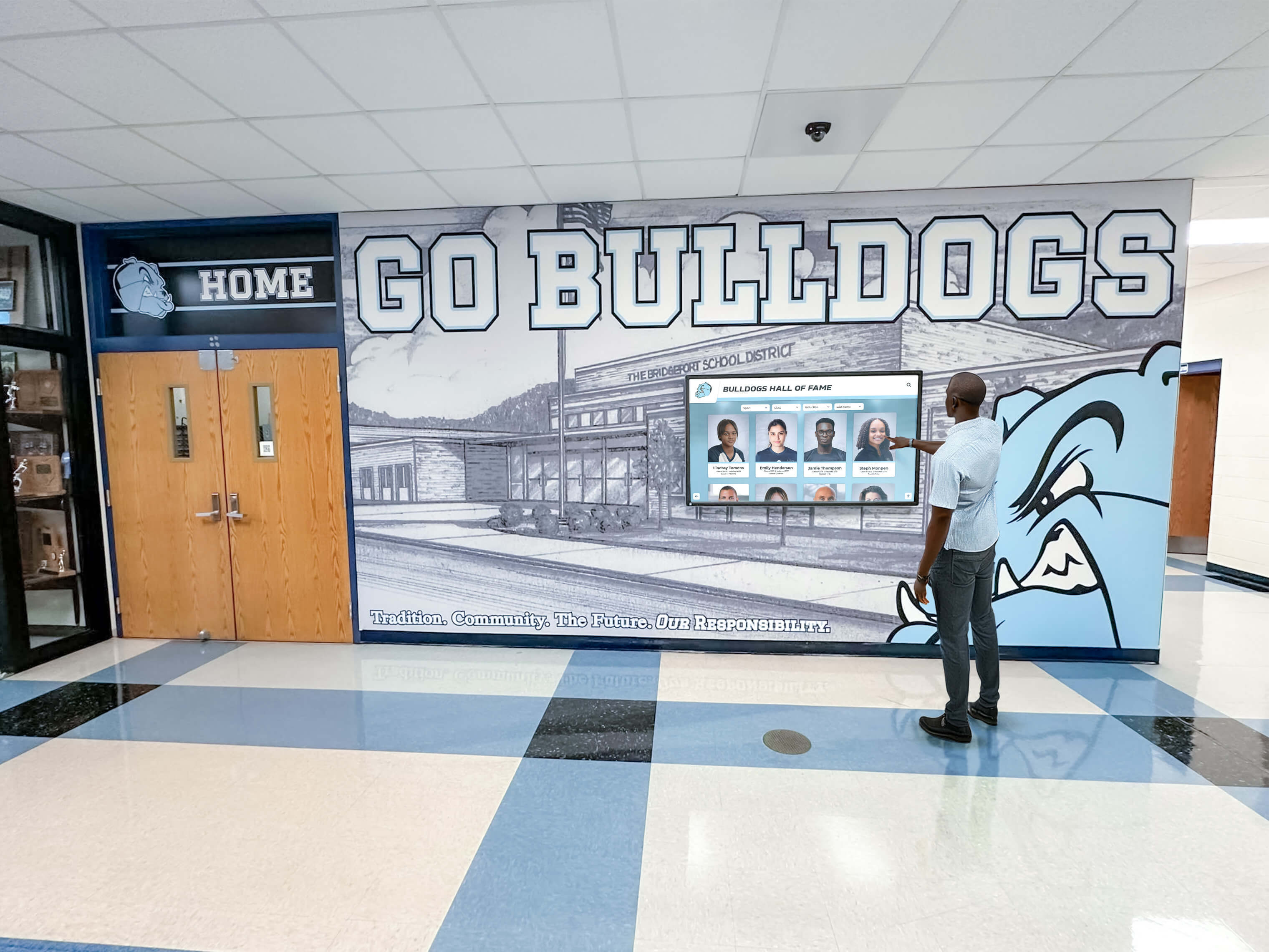
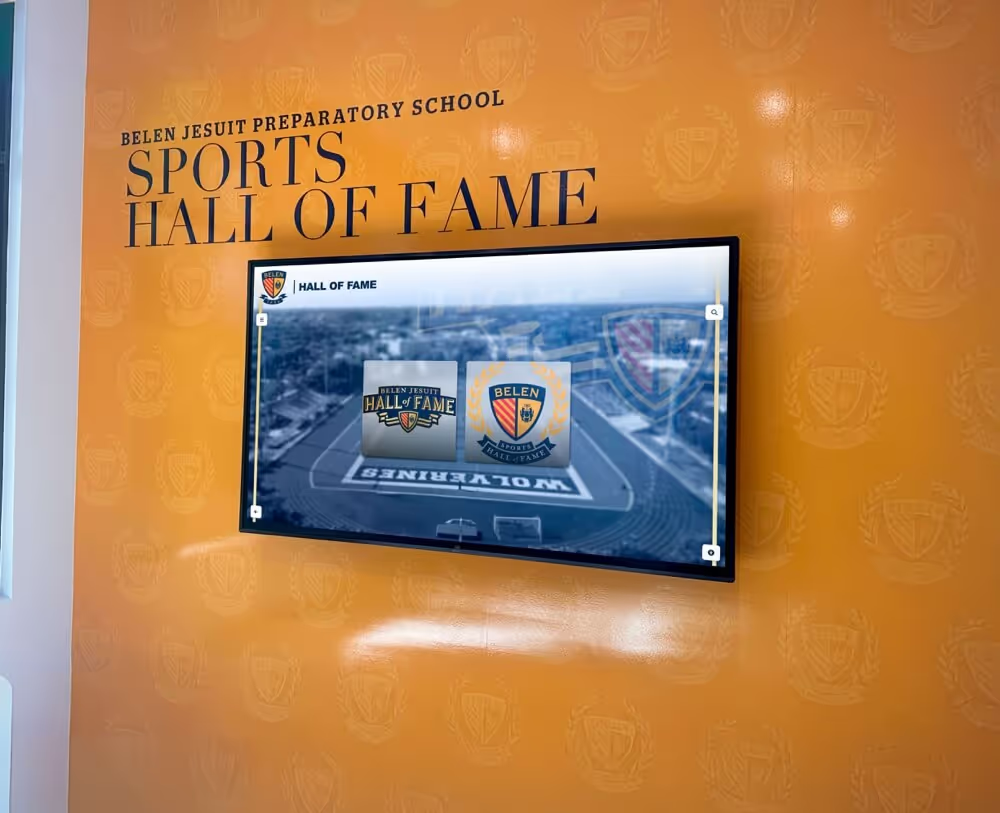
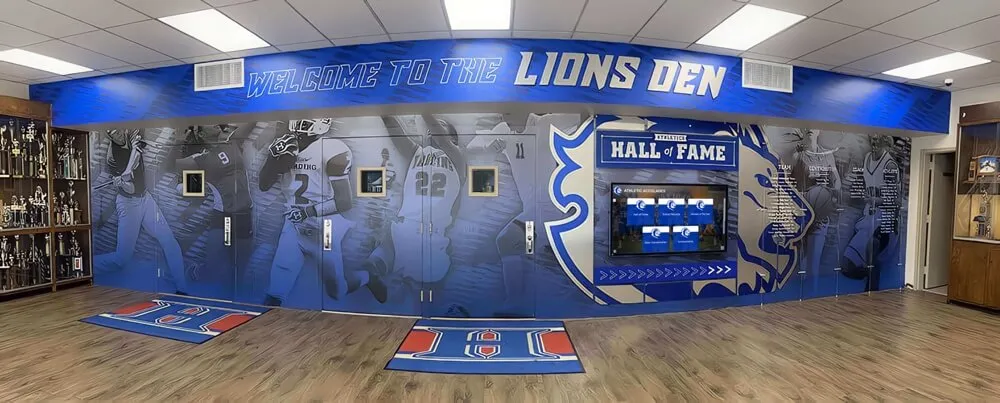
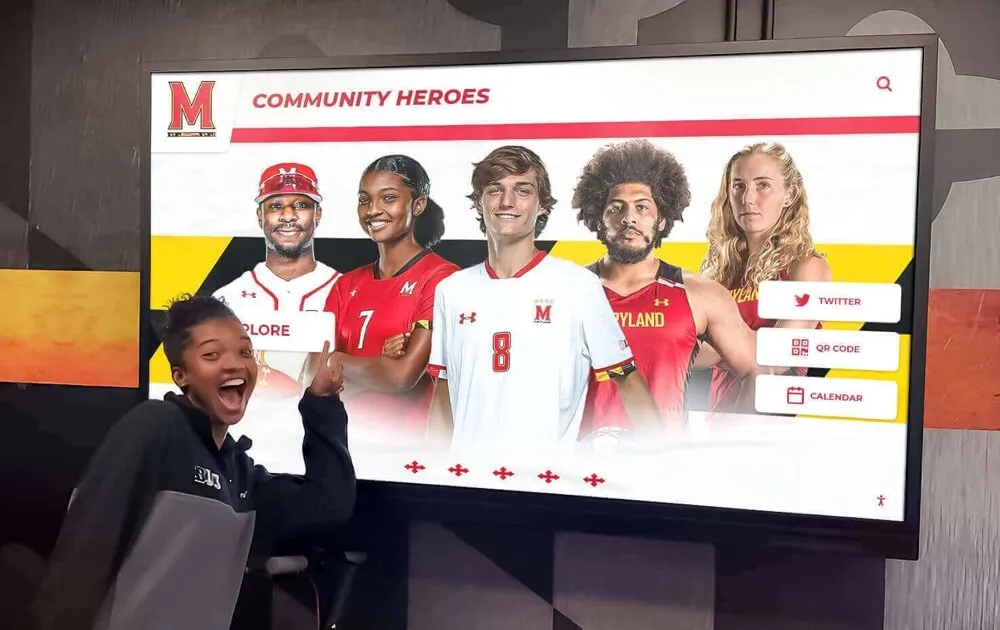
All ages can independently explore championship content through intuitive touch interfaces
Social Integration and Extended Engagement
Modern systems connect tournament experiences with fans’ digital lives:
- Direct social media sharing of favorite champions and memorable match moments
- Photo opportunities with digital championship artifacts and historic content
- QR codes enabling continued exploration on personal devices after leaving venue
- Email capture building ongoing engagement relationships beyond tournament attendance
- Competition and trivia games rewarding tennis knowledge with prizes or exclusive content
- User-generated content submission opportunities for fan memories and personal tournament stories
- Multilingual support engaging international audiences in their native languages
- Celebrity fan interaction when notable attendees share their favorite champions
According to venue technology research, installations enabling social sharing generate 5-10 times more total impressions than standalone displays, extending recognition impact far beyond physical tournament attendance and creating viral opportunities when extraordinary content reaches broader global tennis audiences.
Dynamic Content Management
Digital platforms provide unprecedented flexibility for maintaining current, relevant championship recognition:
Instant Updates and Additions
Cloud-based content management enables real-time recognition adjustments:
- Same-day addition of new champions immediately following championship matches
- Real-time statistical updates reflecting current tournament progression and records
- Breaking news integration during upset victories and milestone achievements
- Scheduled content releases for anniversary commemorations of historic matches
- A/B testing different content presentations for engagement optimization
- Remote management from any internet-connected device without venue access
- Tournament-specific customization highlighting current year champions and storylines
- Historical comparison features showing how current players compare to legends
This agility means recognition remains perpetually current rather than becoming outdated between tournament years or requiring expensive physical updates that can only occur during limited offseason maintenance windows.
Event-Specific Customization
Touchscreen displays adapt to tournament circumstances and special occasions:
- Featured content highlighting defending champions before their matches
- Anniversary celebrations surfacing historic achievements on significant dates
- International audience customization emphasizing champions from specific countries
- Rivalry content highlighting memorable past matches between current competitors
- Special event programming for ceremonies, inductions, and milestone celebrations
- Weather delay entertainment engaging fans during rain interruptions with classic matches
- Qualifying round recognition showcasing breakthrough performances by emerging players
- Post-tournament content celebrating new champions and updating historical records
This flexibility transforms static recognition into dynamic programming that enhances every tournament visit with contextually relevant content that feels fresh and timely rather than permanent and unchanging.
Learn about interactive touchscreen software platforms and effective championship content management strategies.
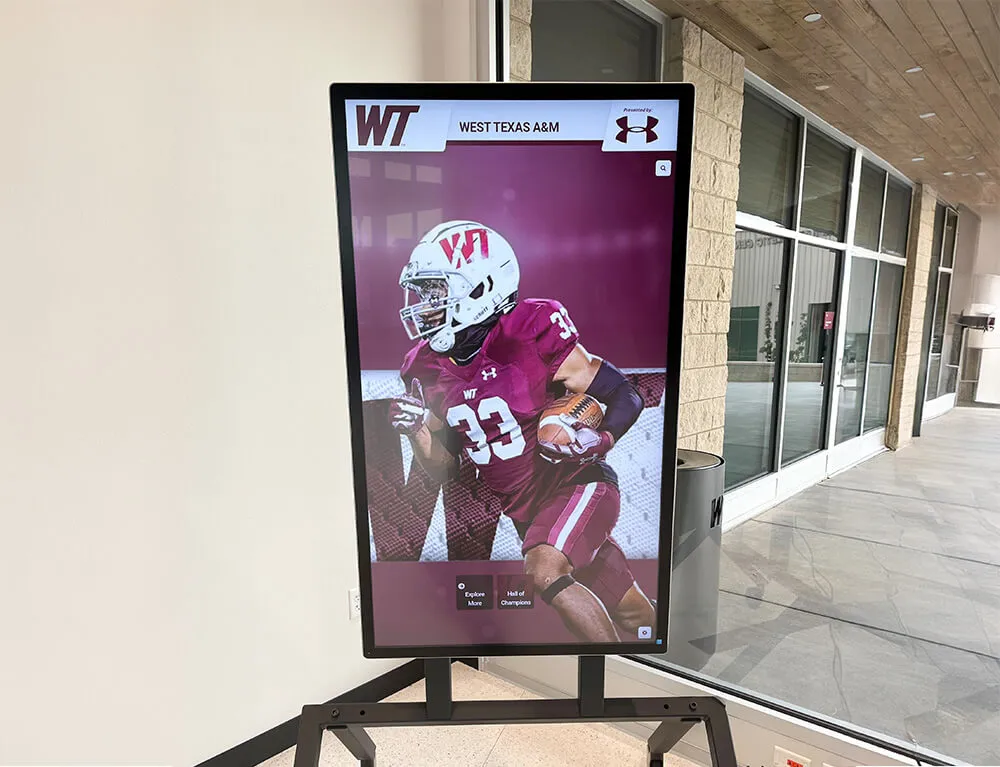
Professional venue installations combine commercial-grade hardware with purpose-built recognition software for lasting impact
Implementation Vision: Interactive Recognition at the U.S. Open
How could touchscreen technology specifically transform the fan experience at America’s premier tennis championship?
Strategic Installation Locations
Several high-traffic areas would maximize engagement and recognition impact throughout the USTA Billie Jean King National Tennis Center:
Main Entrance Plaza and South Entrance
The primary entrance at Arthur Ashe Stadium offers ideal positioning for maximum visibility:
- All attendees pass through main entrances creating guaranteed exposure
- Extended dwell time as fans wait to enter, meet groups, or purchase day-of tickets
- Natural gathering points before gates open and during match changeovers
- Proximity to the existing 3840×1080 pixel “superwall” creating integrated recognition experience
- Connection to ticketing and membership areas for premium fan engagement
- Weather-protected installations ensuring year-round reliability during tournament weeks
Multiple large-format touchscreens (65-75 inches) could create an impressive recognition plaza greeting every visitor with U.S. Open history before they even enter the stadium grounds, establishing championship context and building anticipation for the matches they’re attending.
Concourse Recognition Gallery
Main concourse areas around Arthur Ashe Stadium and Louis Armstrong Stadium provide sustained engagement opportunities:
- Fans circulating throughout matches passing displays multiple times
- Concession and restroom lines creating natural viewing and exploration opportunities
- Protected from weather in covered concourse areas with climate control
- Strategic placement near pro shops and merchandise areas connecting products with history
- Opportunity for multiple coordinated displays creating comprehensive championship gallery
- Integration with existing digital signage for seamless technology experience
A series of touchscreens along primary concourses could create a digital museum walk celebrating different championship eras, playing styles, and country representation, transforming circulation time into engaged historical exploration and tournament education.
Premium Spaces and Hospitality Areas
Luxury suites and club seating areas offer focused engagement with highly invested fans:
- Corporate clients and season ticket holders with strong tennis affinity and tournament loyalty
- Extended time in spaces before, during, and between matches
- Quieter environments conducive to deeper historical exploration and conversation
- Integration with premium amenities creating enhanced championship experiences
- Networking conversation starters for business entertainment purposes and client hosting
- Enhanced perceived value of premium seating investments and multi-year packages
Smaller format displays (43-55 inches) in intimate club settings enable personal exploration by the most engaged fan segments who frequently attend and deeply appreciate tennis history and championship achievement.
Explore recognition strategies for major sporting venues and comprehensive facility programs that engage diverse audiences.
Content Categories and Organization
Comprehensive championship recognition at the U.S. Open requires thoughtful information architecture spanning tournament history:
Singles Champions Recognition
Men’s Singles Championship Legacy
- Complete champion database spanning tournament history from 1881 to present
- Championship match details with full scoring, statistics, and match narratives
- All-time statistical leaders and single-tournament record performances
- International Tennis Hall of Fame inductees and U.S. Open legends
- Multiple championship winners including Jimmy Connors, Pete Sampras, Roger Federer
- Memorable championship matches with video highlights of decisive moments
- Playing style evolution showing serve-and-volley era to modern baseline power
- Grand Slam career tracking showing champions who won multiple major titles
Women’s Singles Championship Heritage
- Comprehensive champion profiles from first women’s tournament in 1887
- Serena Williams’ record-breaking achievements and championship dominance
- Multiple title winners including Chris Evert, Steffi Graf, and Martina Navratilova
- Milestone moments including equal prize money implementation in 1973
- International diversity showcasing champions from all continents
- Playing style comparisons across different championship eras
- Career progression showing breakthrough victories and sustained excellence
- Historic firsts including youngest and oldest champions
Learn approaches to athletic hall of fame displays that translate championship celebration across different sports contexts.
Doubles and Mixed Doubles Recognition
Championship teams deserve systematic recognition:
- Men’s doubles champions and memorable partnership achievements
- Women’s doubles teams including sister duos and legendary partnerships
- Mixed doubles champions creating unique cross-gender recognition
- Career doubles specialists who excelled in team competition
- Singles champions who also achieved doubles success
- International partnerships representing global tennis cooperation
- Evolution of doubles tactics and team strategy across eras
- Family connections including siblings and multi-generational champions
Special Categories and Milestone Recognition
Event-based storytelling captures defining tournament moments:
- Wheelchair tennis champions since exhibition events began in 1976
- Junior champions including future professional stars in their breakthrough performances
- Qualifying round success stories and unseeded champion breakthroughs
- Longest matches and most dramatic five-set championship battles
- Upset victories including lowest-seeded champions and unexpected results
- Attendance records and milestone tournament moments beyond match play
- Behind-the-scenes figures including tournament directors and USTA leadership
- Court surface evolution from grass to clay to hard court championships
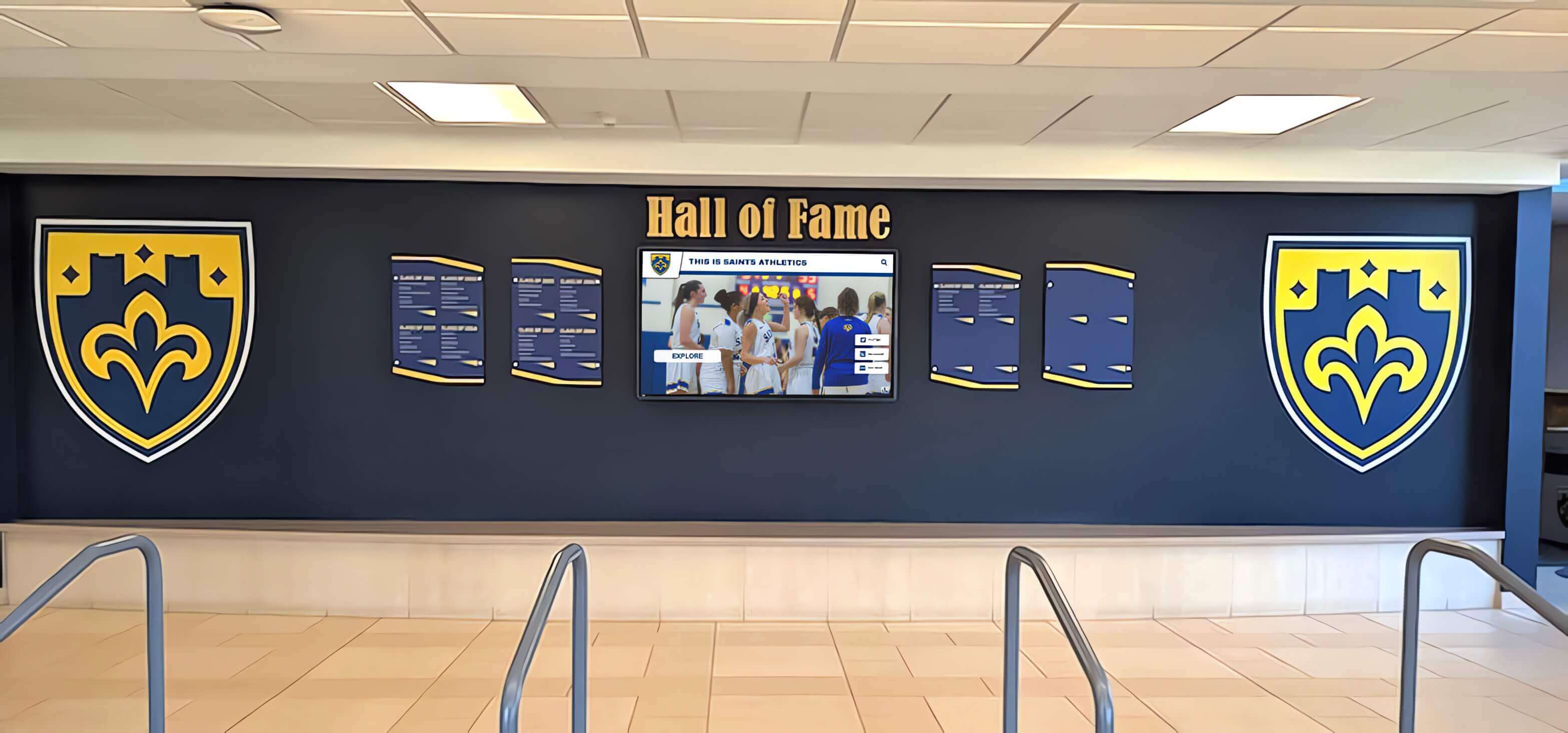
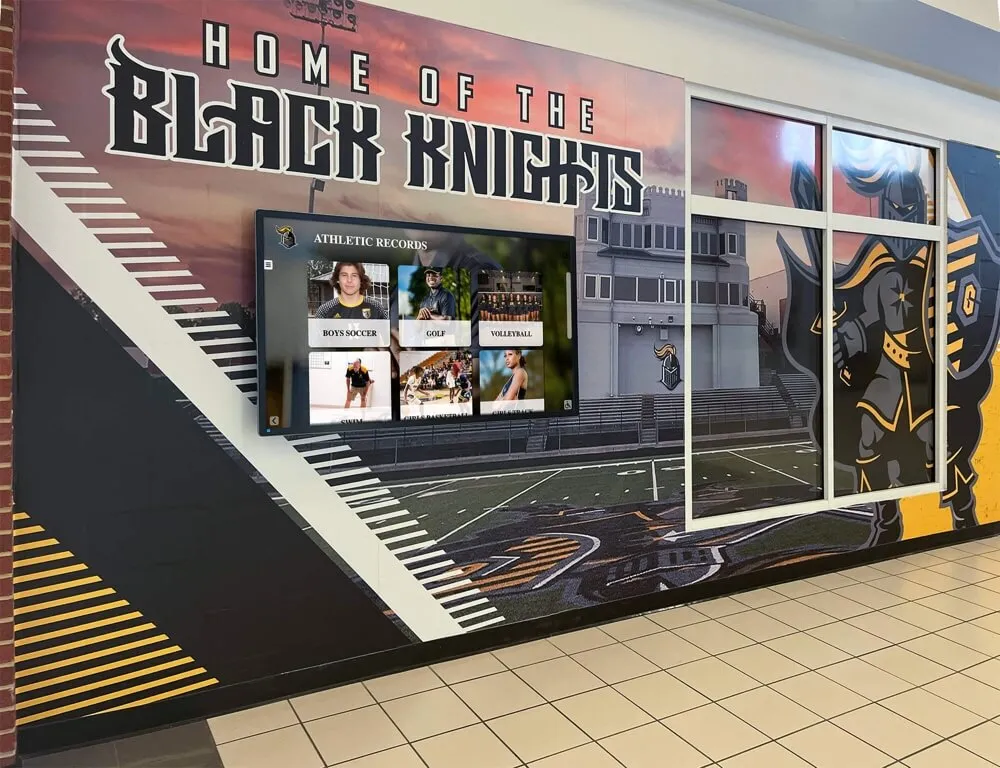
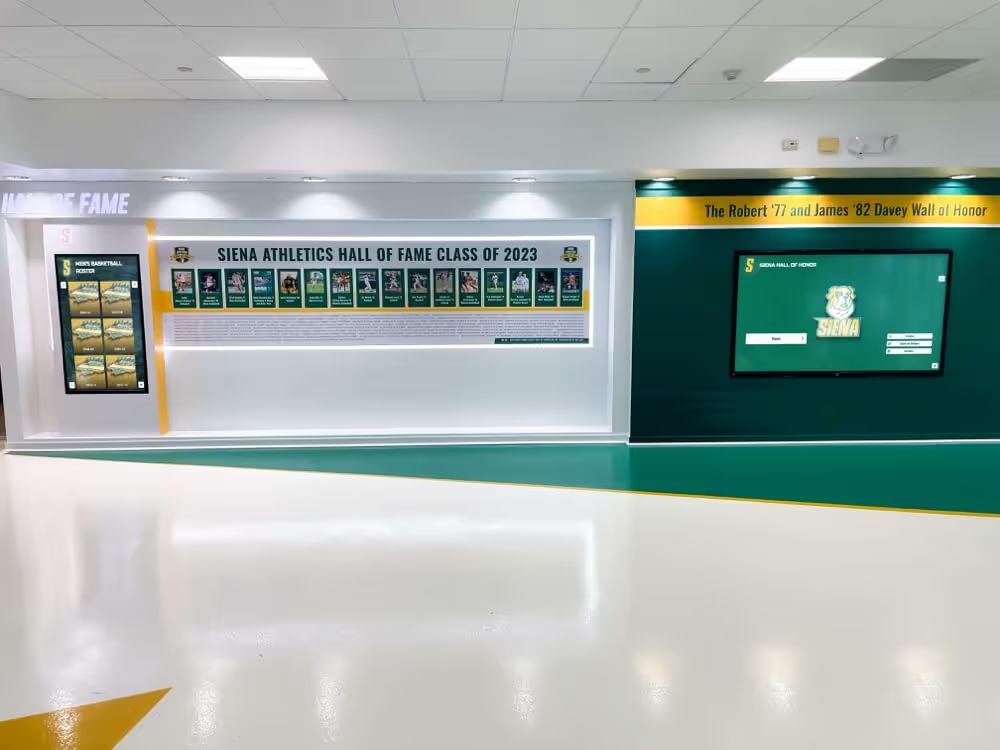
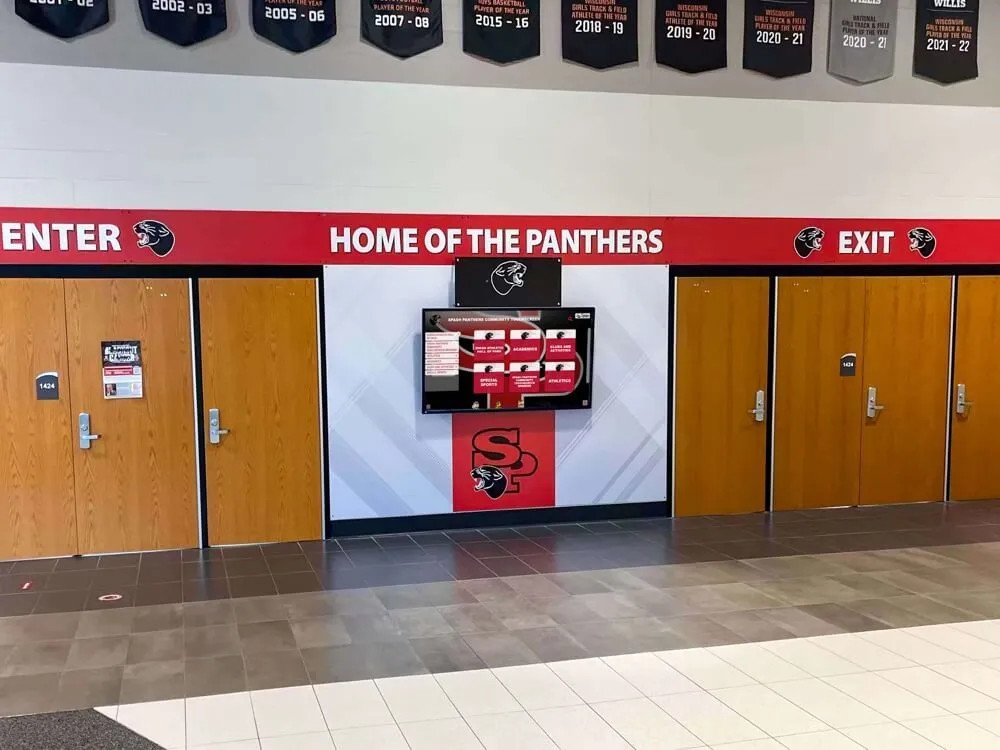
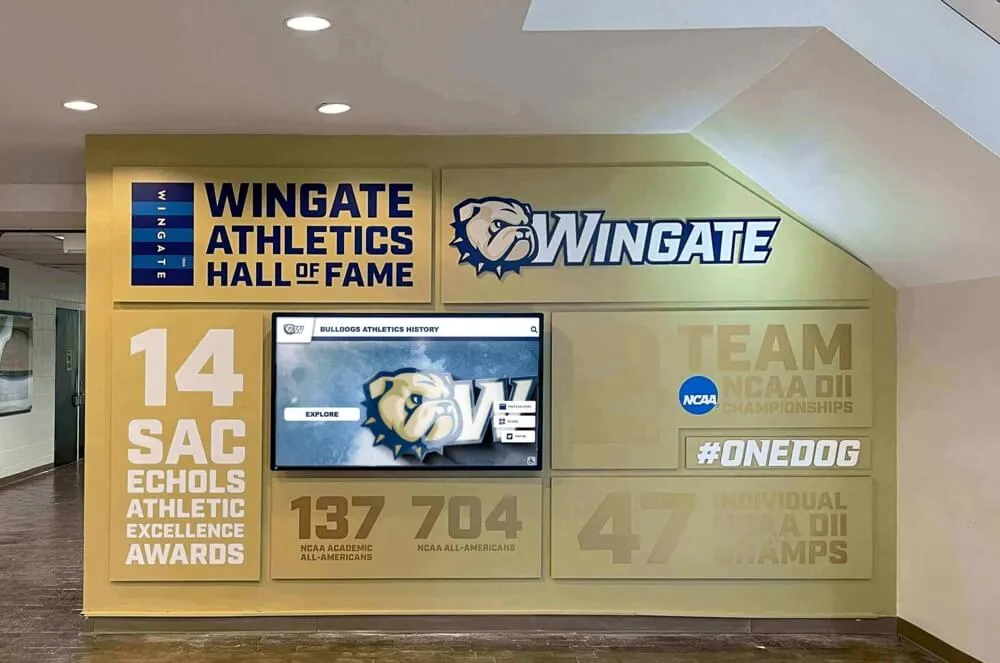
Comprehensive installations can integrate traditional aesthetic elements with modern interactive technology for cohesive venue experiences
Technical Considerations for Premier Tournament Installations
The U.S. Open’s high-profile status and demanding operational environment require premium technology implementation:
Hardware Requirements for World-Class Sporting Events
Premier tennis tournaments require robust, professional-grade installations that withstand intensive usage:
Display Quality and Specifications
The USTA Billie Jean King National Tennis Center deserves best-in-class touchscreen hardware:
- Commercial displays rated for continuous operation during two-week tournament schedule
- 4K resolution ensuring clarity from various viewing distances in crowded concourses
- High brightness specifications (500+ nits minimum) for visibility in natural light conditions
- Wide viewing angles (178 degrees) accommodating multiple simultaneous viewers and groups
- Protective tempered glass withstanding thousands of daily public interactions during tournament
- Anti-glare coatings reducing reflections in challenging outdoor and semi-outdoor lighting
- Commercial warranties appropriate for mission-critical installations at premier events
- Weatherproof enclosures for installations in semi-outdoor locations around stadium grounds
According to commercial display specifications, premier venue installations require displays rated for at least 50,000-100,000 hours of operation—approximately 6-10+ years of continuous use—compared to 20,000-30,000 hours for consumer displays that would fail quickly under tournament usage demands and intensive daily interaction.
Touch Technology and Responsiveness
User experience depends on premium touchscreen implementation meeting high standards:
- Capacitive touchscreens providing smartphone-like instant responsiveness and natural interaction
- Multi-touch support enabling gesture controls and natural pinch-to-zoom interaction patterns
- Response times under 10 milliseconds providing immediate visual feedback during user interaction
- Consistent accuracy across entire display surface preventing dead zones or calibration issues
- Durability specifications supporting thousands of daily interactions from diverse international users
- Palm rejection technology preventing accidental inputs during normal browsing and exploration
- Antibacterial coatings appropriate for high-contact public installations with intensive use
- Easy cleaning protocols maintaining hygiene standards during multi-week tournament periods
Poor touchscreen implementation creates frustration that damages the tournament’s premium brand and international reputation, making touch quality among the most critical hardware considerations for high-profile sporting event installations.
Environmental Considerations for Tennis Venues
Tournament environments present unique installation challenges requiring specialized solutions:
- Variable lighting from bright outdoor courts to dramatic evening stadium conditions
- Temperature fluctuations from summer heat to evening cooling and air conditioning
- Humidity variations requiring moisture-resistant construction in New York summer weather
- High-decibel audio environments during crowd reactions and match celebrations
- Vibration from crowd noise and nearby subway system infrastructure
- Security requirements protecting expensive equipment in high-traffic public spaces
- Temporary infrastructure coordination with annual tournament setup and breakdown
- Power reliability ensuring continuous operation during critical championship matches
Learn about professional hardware selection for recognition displays and appropriate technology choices for demanding venues.
Software and Platform Requirements
Backend systems determine long-term program success and sustainable championship recognition:
Purpose-Built Recognition Platforms
Tournament applications require specialized software capabilities beyond generic digital signage:
- Database architecture supporting tens of thousands of individual champion profiles and matches
- Robust media management handling extensive photo and video libraries across 144 years
- Powerful search and filtering across multiple content dimensions and championship categories
- Responsive touchscreen interfaces optimized for public interaction and intuitive navigation
- Web accessibility extending content beyond physical displays to global audiences and mobile devices
- Comprehensive analytics tracking engagement patterns and popular content discovery
- Multi-display coordination ensuring consistent experiences across distributed venue installations
- Cloud-based management enabling updates without venue access or tournament disruption
- Multilingual support accommodating international audience and diverse fan base
- Integration capabilities with existing tournament systems and USTA databases
Solutions like Rocket Alumni Solutions provide purpose-built platforms designed specifically for sports recognition applications, addressing challenges that generic digital signage software cannot accommodate while delivering superior user experiences optimized for championship celebration.
Content Management Workflows
Sustainable recognition programs require efficient administration supporting long-term success:
- Cloud-based management accessible from any location without requiring venue physical access
- Role-based permissions controlling content access across departments and stakeholder groups
- Approval workflows ensuring quality and accuracy before public publication
- Scheduled publishing enabling timed content releases for current champions and anniversaries
- Bulk import tools for efficient historical archive additions across championship decades
- Simple editing interfaces requiring minimal technical expertise for content updates
- Integration capabilities with existing databases, media archives, and historical records
- Version control preserving complete content history and editorial changes
- Asset management organizing thousands of photos, videos, and documents efficiently
- Automated backups protecting irreplaceable historical content and championship records
The most sophisticated hardware delivers poor results without appropriate software supporting sustainable content management by tournament staff rather than requiring expensive consultants for routine updates and champion additions.
Analytics and Engagement Measurement
Data-driven insights optimize championship recognition programs and justify ongoing investment:
- Interaction tracking showing usage patterns by location, time, and tournament day
- Popular content identification informing future development priorities and investment
- Search query analysis revealing fan interests and information discovery needs
- Session duration metrics indicating engagement depth and content effectiveness
- Heat mapping showing most-viewed content areas within displays and popular champions
- Demographic insights when integrated with ticketing and membership systems
- International audience analysis showing country-specific interests and champion preferences
- Return visitor tracking showing sustained engagement across multiple tournament days
- Social sharing metrics measuring extended reach beyond physical venue attendance
- Comparative analytics across multiple display locations optimizing placement strategies
This data enables continuous improvement ensuring recognition programs deliver maximum fan value while demonstrating return on investment to justify ongoing content development, system expansion, and long-term program sustainability.
Explore touchscreen software selection criteria and choosing appropriate platforms for championship recognition applications.
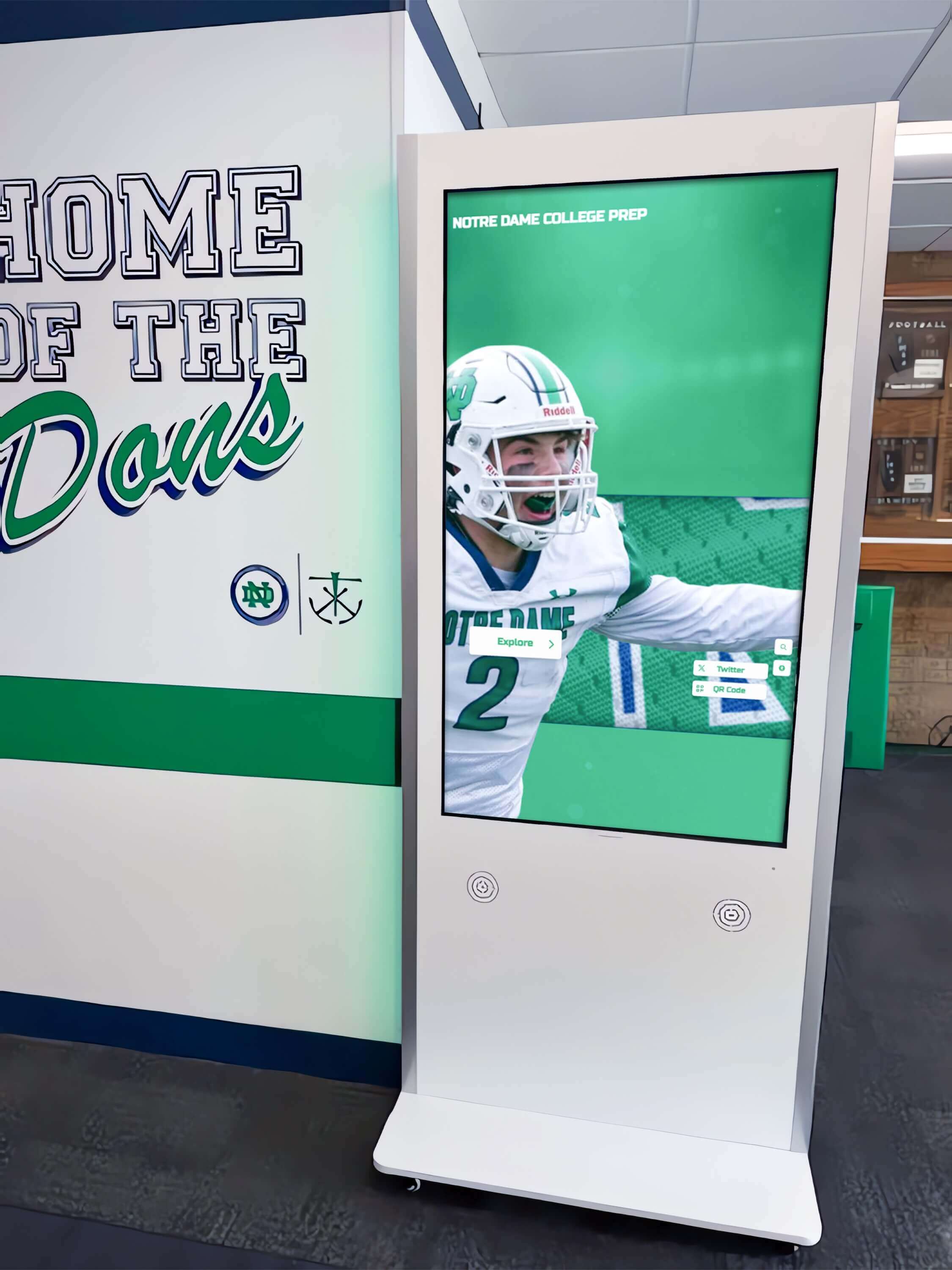
Professional kiosk installations provide complete solutions including display, computing systems, protective enclosures, and mounting hardware
Beyond Fan Engagement: Additional Value for the U.S. Open
Interactive recognition systems deliver benefits across multiple organizational dimensions beyond enhanced attendee experiences and tournament atmosphere.
Revenue Enhancement Opportunities
Digital platforms create monetization possibilities that traditional static displays and trophy cases cannot:
Sponsorship Integration
Championship recognition systems offer subtle corporate partnership opportunities aligned with premium brand values:
- Presenting sponsor identification for historical content sections and championship eras
- Category sponsorships for specific content areas like international champions or memorable matches
- Sponsor-funded content development and historical research initiatives preserving tournament legacy
- Premium positioning for long-term corporate partners aligned with tennis heritage
- Brand alignment with excellence and achievement creating positive associations with champions
- Integrated advertising alongside historical content where appropriate and non-intrusive
- Title sponsorship opportunities for recognition gallery naming rights
- Technology partner recognition for organizations providing hardware or software support
Unlike obtrusive advertising that damages premium fan experiences and detracts from tournament focus, sponsorship of historical recognition aligns corporate values with championship heritage, creating positive brand associations while generating incremental revenue that can fund ongoing content development, system expansion, and archive preservation.
Premium Experience Enhancement
Recognition adds tangible value justifying luxury pricing and differentiating premium offerings:
- Exclusive content accessible only in premium hospitality areas and luxury suites
- Behind-the-scenes footage and interviews with tournament legends and past champions
- Advanced statistical analysis and performance metrics unavailable in general displays
- First access to newly released historical content and championship archives
- Personalized content recommendations based on seating location and attendance history
- Integration with concierge services and premium amenities for coordinated experiences
- Private viewing options enabling undisturbed exploration during matches
- Commemorative digital content delivery creating lasting memories beyond tournament attendance
This enhanced experience helps justify premium pricing while differentiating luxury offerings from standard ticketing, creating competitive advantage in the high-stakes premium seating and corporate hospitality market where differentiation drives sustained revenue growth.
Learn about donor and sponsor recognition programs that integrate partnership acknowledgment with championship celebration effectively and appropriately.
Marketing and Brand Building
Historical recognition strengthens tournament positioning and international marketing efforts:
Authentic Heritage Storytelling
Digital championship recognition creates compelling marketing content for year-round promotion:
- Historical moment anniversaries generating media coverage opportunities and press interest
- Social media content celebrating legendary performances and memorable championship matches
- Documentary-style storytelling highlighting tournament significance and championship legacy
- Influencer and content creator partnerships exploring archives and creating viral content
- Educational programming demonstrating cultural importance and tennis history preservation
- Tourism marketing emphasizing historical significance attracting international visitors
- Partnership opportunities with Tennis Channel and ESPN for content distribution
- Off-season engagement maintaining tournament awareness during non-championship months
This authentic content marketing proves more effective than paid advertising while strengthening the tournament’s brand as a legendary Grand Slam event worthy of premium pricing, international travel, and cultural significance beyond pure sporting competition.
Fan Loyalty and Community Building
Systematic championship recognition strengthens emotional connections across generations:
- Multi-generational fans sharing tournament experiences and champion memories across age groups
- Personal connections to recognized champions creating loyalty and sustained attendance
- Community identity around shared tournament heritage and championship traditions
- Nostalgia-driven engagement particularly effective with long-time tennis fans
- Educational value attracting new fans interested in tennis history and Grand Slam achievements
- Social bonding around shared discovery and exploration experiences during tournament attendance
- International connections celebrating champions from diverse countries and continents
- Celebrity engagement when notable figures share their favorite champions and tournament memories
These emotional connections translate to ticket sales, merchandise purchases, broadcast viewership, and sustained engagement that drives long-term tournament success beyond individual match quality or current player popularity.
Historical Preservation and Cultural Stewardship
Digital systems preserve tennis heritage that might otherwise be lost or inaccessible:
Comprehensive Archival Excellence
Interactive platforms create systematic championship preservation meeting museum standards:
- Digitization of photographs, videos, and documents preventing physical deterioration and loss
- Oral history interviews capturing first-person perspectives from champions before they’re lost
- Statistical compilation ensuring performance records remain accessible across eras
- Document preservation protecting irreplaceable historical materials and tournament records
- Continuous updating ensuring new championships receive immediate comprehensive documentation
- Professional-quality preservation meeting archival standards for cultural institutions
- Redundant storage protecting against catastrophic loss of irreplaceable content
- Accessibility features ensuring historical content reaches diverse audiences globally
This preservation work benefits researchers, tennis historians, and future generations while fulfilling cultural stewardship responsibilities for landmark sporting events with international significance.
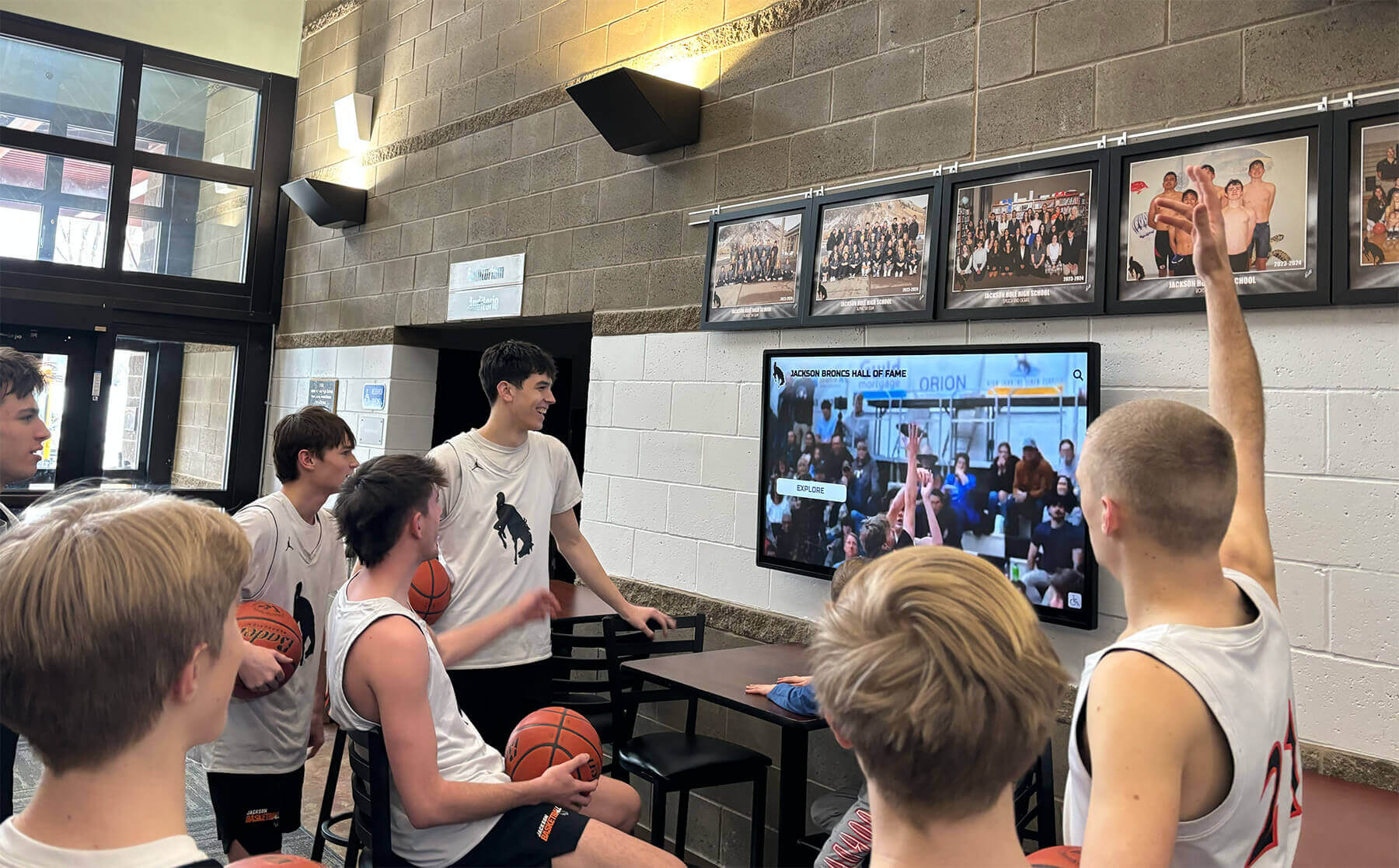
Digital displays create shared experiences and intergenerational connections through championship heritage and collective memory
Implementation Roadmap for Major Tennis Tournaments
Successful installation at a premier sporting event requires systematic planning and phased deployment respecting operational constraints.
Phase 1: Planning and Content Development
Foundation work ensures long-term championship recognition program success:
Historical Archive Assessment
Begin with comprehensive inventory of available championship content and materials:
- Existing photography and video asset identification across USTA departments and archives
- Statistical database compilation and historical verification ensuring accuracy
- Biographical information collection requiring research on historic champions
- Media rights clearance and licensing for video content from broadcast partners
- Gap identification revealing areas requiring new content development or research
- Priority determination for initial launch content maximizing immediate impact
- Partnership coordination with International Tennis Hall of Fame for shared resources
- Collaboration with ATP and WTA for player biographical data and career statistics
Stakeholder Engagement
Involve key constituencies in planning and championship recognition goal-setting:
- USTA leadership and executive team establishing vision and budget commitment
- Tournament director and operations staff defining engagement objectives and constraints
- Marketing and fan experience teams integrating recognition with broader initiatives
- Broadcast partners coordinating digital content with television coverage
- Corporate partnerships teams integrating sponsorship considerations appropriately
- Technology and facilities staff planning installation logistics and power requirements
- International Tennis Hall of Fame coordinating content sharing and partnership opportunities
- Historical research organizations providing expertise and content development support
Vendor Selection
Choose appropriate technology partners with sporting event implementation experience:
- Recognition platform providers with sports venue expertise and proven tournament installations
- Hardware suppliers offering commercial-grade equipment meeting demanding specifications
- Installation contractors familiar with tournament constraints and temporary infrastructure
- Content development partners with tennis storytelling expertise and championship knowledge
- Ongoing support providers ensuring long-term system reliability throughout tournament operations
- Integration specialists coordinating with existing venue technology and digital signage systems
Organizations benefit from selecting integrated providers offering complete championship recognition solutions rather than assembling components from multiple vendors requiring extensive coordination and complex project management.
Learn about comprehensive digital recognition planning and implementation approaches for major sporting venues.
Phase 2: Pilot Installation and Validation
Start with limited deployment validating approaches before full tournament commitment:
Initial Installation Location
Select strategic pilot location for testing and refinement during tournament operations:
- High-traffic area ensuring significant usage, visibility, and fan interaction
- Representative environment testing actual operating conditions during championship matches
- Accessible location enabling iterative adjustments based on real-time feedback
- Sufficient content variety demonstrating full platform capabilities and championship depth
- Timeline allowing thorough evaluation before broader rollout investment decisions
- Integration opportunity with existing digital signage testing coordination approaches
- Staff support proximity enabling observation and issue resolution during tournament
Content Population
Launch with comprehensive initial championship content creating immediate fan value:
- Multiple content categories demonstrating breadth, variety, and historical depth
- Historical span covering multiple championship eras showing complete tournament heritage
- Mix of well-known legends and lesser-known champions ensuring comprehensive recognition
- Rich multimedia including photographs, videos, match highlights, and comprehensive statistics
- Interconnected content enabling discovery pathways through related champions and opponents
- Recent champions ensuring current relevance alongside historical context
- International diversity representing global tennis excellence and cultural breadth
- Special features highlighting memorable matches and tournament milestone moments
Insufficient initial content disappoints early users and undermines platform value perception, making comprehensive launch content critical for pilot success, stakeholder confidence, and justification for broader system deployment investment.
Feedback Collection and Iteration
Gather systematic user input informing refinements before broader deployment:
- Observational research documenting actual fan interactions, behaviors, and engagement patterns
- User interviews gathering qualitative feedback, suggestions, and content requests
- Analytics data revealing usage patterns, popular champions, and search behaviors
- Staff feedback from personnel observing fan engagement throughout tournament days
- Technical performance monitoring identifying reliability issues or system constraints
- International audience testing ensuring multilingual support and cultural appropriateness
- Accessibility evaluation confirming usability for diverse abilities and age groups
- Social sharing analysis measuring extended reach beyond physical venue interactions
This feedback enables content refinement, interface optimization, and technical adjustment before broader deployment commits significant resources to approaches that may require modification based on real-world usage patterns during actual championship tournament operations.
Phase 3: Expanded Deployment and Optimization
Scale successful pilot to comprehensive venue-wide championship recognition program:
Strategic Rollout
Expand systematically across tournament venue maximizing impact and operational efficiency:
- Sequential installation during offseason minimizing disruption to tournament operations
- Coordinated content across multiple displays creating cohesive championship experience
- Marketing campaign building awareness among tennis fans and season ticket holders
- Staff training ensuring support capabilities across departments and venue locations
- Grand opening event celebrating launch during pre-tournament press activities
- Media coverage generating awareness through tennis publications and broadcast partners
- Integration with tournament mobile app extending recognition beyond physical displays
- International outreach engaging global tennis community and international fans
Ongoing Content Development
Maintain perpetually fresh championship recognition engaging return visitors across tournament years:
- Immediate additions of new champions and milestone achievements after championship matches
- Anniversary content highlighting historical championship milestones on significant dates
- Seasonal programming aligned with tennis calendar and Grand Slam schedule
- Fan-requested content responding to engagement patterns, search queries, and submissions
- Continuous historical research expanding archives with newly discovered materials and stories
- Partner content from International Tennis Hall of Fame and tennis historians
- Player interviews and first-person narratives adding depth to championship profiles
- Statistical analysis identifying emerging records and milestone achievement tracking
Performance Optimization
Continuously improve based on data, feedback, and evolving technology capabilities:
- Analytics review identifying popular and underutilized content requiring adjustment
- User experience refinement based on interaction patterns, behaviors, and engagement metrics
- Technical optimization ensuring system reliability throughout demanding tournament operations
- Content presentation testing evaluating different approaches to championship storytelling
- Promotional strategies increasing awareness and driving usage among tournament attendees
- Hardware upgrades incorporating improved display technology as it becomes available
- Software feature additions expanding capabilities and engagement opportunities
- Accessibility improvements ensuring universal design and inclusive experiences
This iterative improvement ensures championship recognition programs deliver sustained value rather than becoming stale installations that fans ignore after initial novelty wears off or that fail to evolve with changing technology capabilities and fan expectations.
Explore content strategy approaches for recognition programs and maintaining engagement long-term across multiple seasons and championship years.
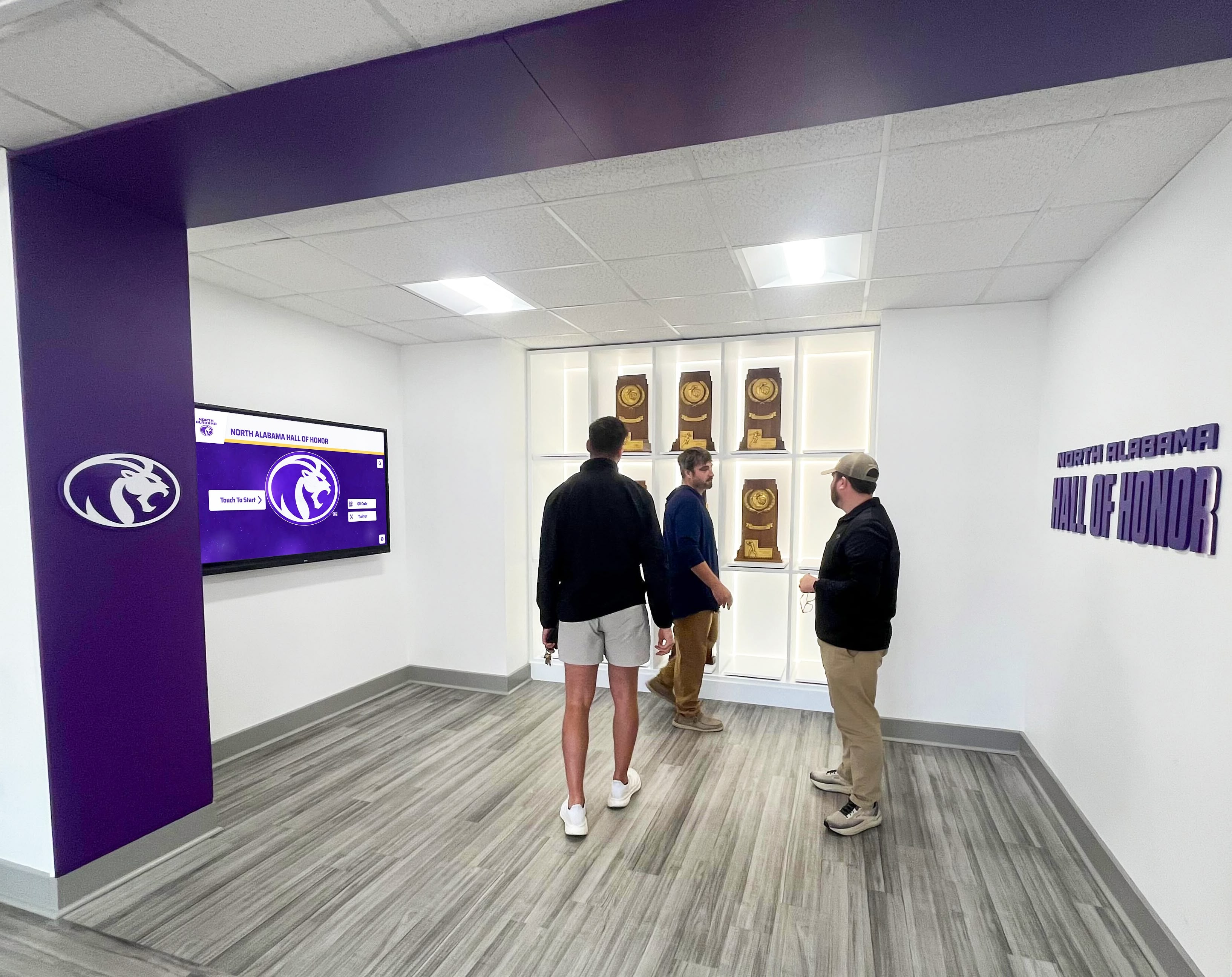
Professional installations create gathering spaces where fans engage with championship history together, fostering community and shared experiences
Addressing Implementation Concerns
Several questions typically arise when premier sporting events consider digital recognition investments and technology adoption.
Technology Reliability and Tournament Operations
Events worry about equipment failures during critical championship periods and technical disruptions:
Commercial-Grade Reliability Standards
Appropriate hardware specifications minimize reliability concerns during tournament operations:
- Commercial displays engineered specifically for continuous operation under demanding conditions
- Industrial computing systems built for reliability with redundant components and failover capabilities
- Extended warranties protecting substantial investments over many years of operation
- Remote monitoring enabling proactive maintenance before failures occur during tournament
- Redundant systems preventing complete service interruptions during critical championship matches
- Established vendor support ensuring rapid response and parts availability during events
- Uninterruptible power supplies protecting against electrical issues and ensuring continuous operation
- Preventive maintenance protocols identifying potential issues before tournament begins
According to commercial display specifications and venue installation standards, properly specified tournament equipment delivers 50,000-100,000 hours of reliable operation—over 10 years of continuous use—when maintained appropriately and meeting demanding usage requirements.
Future-Proof Technology Architecture
Software platforms prevent premature obsolescence and protect long-term investment:
- Cloud-based systems automatically receiving updates, improvements, and security patches
- Content ownership preventing vendor lock-in and enabling platform migration if needed
- Standard formats ensuring long-term accessibility regardless of future platform changes
- Scalable architecture accommodating future expansion, new venues, and capability additions
- Regular feature additions enhancing functionality over time without hardware replacement
- API access enabling integration with emerging technologies and future tournament systems
- Mobile compatibility ensuring content accessibility on evolving device platforms
- Backward compatibility maintaining historical content access across system upgrades
The most significant risk isn’t technology failure—it’s selecting inappropriate platforms that don’t support evolving championship recognition needs or create vendor dependency limiting future flexibility and requiring costly migration projects.
Investment and Return on Value
Understanding comprehensive costs helps justify substantial tournament investments in recognition technology:
Complete Cost Analysis
Premier tournament installations typically require investment across multiple categories:
- Hardware investment: $10,000-$25,000 per display installation depending on size and specifications
- Software licensing: $3,000-$8,000 annually for comprehensive recognition platforms with unlimited content
- Initial content development: $20,000-$50,000 depending on historical archive scope, depth, and media requirements
- Installation and integration: $5,000-$15,000 per display location including mounting and network connectivity
- Ongoing maintenance and support: $2,000-$5,000 annually per display ensuring reliability and updates
Total investment for a comprehensive 5-8 display tournament installation might range from $125,000-$250,000+ initial cost with $20,000-$50,000+ ongoing annual expenses depending on scale, content ambitions, and support requirements across multiple venue locations.
Value Delivered Across Multiple Dimensions
Returns include both quantifiable benefits and strategic championship advantages:
- Enhanced fan engagement measurable through interaction analytics, dwell time, and satisfaction surveys
- Increased sponsorship revenue from recognition and historical content partnership opportunities
- Premium experience enhancement justifying luxury pricing differentiating exclusive seating
- Marketing content value through social sharing, media coverage, and viral championship moments
- Community relations and brand building through cultural stewardship and historical preservation
- Preserved tournament heritage preventing historical loss as time passes and champions age
- Operational efficiency eliminating ongoing costs for physical plaque production and installation
- Educational programming supporting tennis development and youth engagement initiatives
- International reach extending tournament brand beyond domestic market through global champion celebration
- Year-round engagement maintaining relevance during offseason months between championships
Many venues find that comprehensive digital championship recognition programs achieve cost neutrality within 5-7 years through eliminated traditional recognition expenses, incremental sponsorship revenue, and premium seating differentiation, while delivering substantially superior fan engagement and historical preservation throughout decades of operation serving multiple generations.
Explore budget guidance for recognition programs and cost-effective approaches for championship celebration.
The Future of Championship Recognition Technology
Emerging technologies will further enhance recognition capabilities at tournaments like the U.S. Open and other premier sporting events.
Artificial Intelligence and Machine Learning Applications
AI features will personalize and dramatically enhance championship recognition experiences:
Intelligent Content Discovery
AI-powered capabilities could revolutionize how fans explore tennis history:
- Natural language search understanding conversational fan queries like “greatest five-set matches”
- Personalized recommendations based on interaction patterns, search history, and preferences
- Facial recognition enabling photo search and automatic champion identification in historical images
- Automated content generation summarizing careers, playing styles, and championship achievements
- Predictive analytics identifying trending content, popular champions, and emerging fan interests
- Voice interaction enabling hands-free navigation and accessibility for diverse abilities
- Translation services providing real-time multilingual support for international audiences
- Pattern recognition identifying similar playing styles and career trajectories across eras
Augmented and Virtual Reality Integration
Immersive technologies will expand championship recognition possibilities beyond physical displays:
Mobile AR Applications
Smartphone apps could enable entirely new championship exploration experiences:
- Point devices at physical court locations triggering historical championship match overlays
- Virtual champion appearances superimposed in actual stadium locations and court positions
- Historical match overlays showing past championship finals in current venue context
- Scavenger hunt experiences encouraging venue exploration and championship discovery
- Personalized tours adapted to individual interests, favorite players, and playing styles
- Social sharing integrating physical and digital recognition experiences seamlessly
- Stadium wayfinding incorporating championship history into navigation assistance
- Interactive statistics appearing when pointing at specific court areas or seating locations
Virtual Reality Experiences
VR could transport tennis fans to championship moments across tournament history:
- Immersive match replays experiencing championships from courtside perspectives and player views
- Virtual venue tours spanning different historical eras and championship periods
- Behind-the-scenes access to restricted areas, locker rooms, and championship ceremonies
- Interactive documentaries with viewer control over exploration and content discovery
- Training and preparation insights from legendary champions and coaching perspectives
- Championship point experiences placing fans in decisive match moments
- Historical venue recreation showing tournament evolution across decades
- Multi-match viewing enabling simultaneous exploration of parallel championship narratives
These emerging capabilities will continue enhancing recognition effectiveness and fan engagement, with forward-thinking tournaments selecting platforms positioned to incorporate innovations as they mature, become commercially viable, and deliver measurable value enhancements justifying implementation investment.
Discover museum-style display approaches and future championship recognition trends incorporating emerging technologies.
Conclusion: The Future of Recognition at America’s Tennis Championship
The U.S. Open stands as a pinnacle of tennis achievement, a Grand Slam tournament where the world’s greatest athletes compete for championship glory across two dramatic weeks every summer. Yet preserving and sharing this extraordinary heritage through traditional recognition approaches falls short of what modern technology enables and contemporary international audiences expect. Interactive touchscreen displays—particularly comprehensive platforms like those provided by Rocket Alumni Solutions—offer transformative opportunities to honor U.S. Open championship history comprehensively while creating engaging experiences that deepen fan connections, preserve tournament legacy, and celebrate tennis excellence for future generations who deserve access to this remarkable sporting heritage.
The vision explored throughout this guide demonstrates how strategic implementation of interactive recognition technology could revolutionize historical engagement at the U.S. Open and similar premier tennis tournaments worldwide. From unlimited recognition capacity eliminating impossible selection decisions about worthy champions to personalized exploration enabling individual discovery based on specific interests to rich multimedia storytelling bringing championship history to life through video highlights and comprehensive statistics, digital platforms address fundamental limitations while creating entirely new engagement possibilities that traditional trophy cases and static plaques simply cannot match.
Ready to explore how interactive touchscreen technology can transform championship recognition at your sporting event or tennis facility? Modern recognition solutions help tournaments and athletic venues celebrate unlimited achievements while creating engaging fan experiences and preserving institutional heritage comprehensively. Solutions like Rocket Alumni Solutions provide comprehensive platforms specifically designed for sports recognition, combining intuitive software with professional hardware recommendations and implementation support to ensure successful long-term programs that deliver measurable value and sustained fan engagement.
Whether managing a legendary Grand Slam tournament, a professional tennis venue, or a community tennis center with proud championship tradition, fundamental challenges remain similar: limited physical space for recognition, growing legacy demanding comprehensive preservation, and changing engagement expectations from modern audiences expecting interactive digital experiences. Interactive touchscreen technology solves these challenges while honoring tradition and creating experiences that inspire current athletes, engage diverse fans meaningfully, and preserve championship history appropriately for generations to come.
The most important consideration isn’t whether to embrace digital championship recognition—it’s selecting appropriate technology aligned with your tournament’s unique character, operational requirements, and implementing systems that deliver sustained value matching your organizational needs, audience expectations, and budget constraints. Your champions, tennis fans, and international community deserve recognition technology that celebrates achievements appropriately while creating meaningful engagement and lasting impact that extends well beyond individual championship matches and tournament attendance.
The U.S. Open’s legendary status derives not from its physical venue but from the extraordinary champions, unforgettable matches, and iconic moments that have unfolded on its courts across more than 140 years of championship tennis. Interactive recognition technology ensures those stories remain accessible, engaging, and inspirational for everyone who attends the tournament—today and for generations to come. The right technology makes comprehensive, equitable championship recognition achievable and sustainable, transforming static historical displays into living heritage that connects past excellence with present experiences and future tennis aspirations.
Ready to begin exploring interactive touchscreen options for your championship recognition program? Start by defining your recognition goals and what achievements deserve celebration, evaluating your facility opportunities and constraints including power and network infrastructure, gathering your historical archives and identifying content gaps requiring research, and connecting with providers who understand sports recognition specifically rather than simply selling generic display hardware or digital signage platforms that cannot deliver the specialized functionality championship recognition applications require. Your tournament legacy deserves technology that honors it appropriately while creating fan experiences that will be remembered long after they leave your venue and return home inspired by tennis excellence.