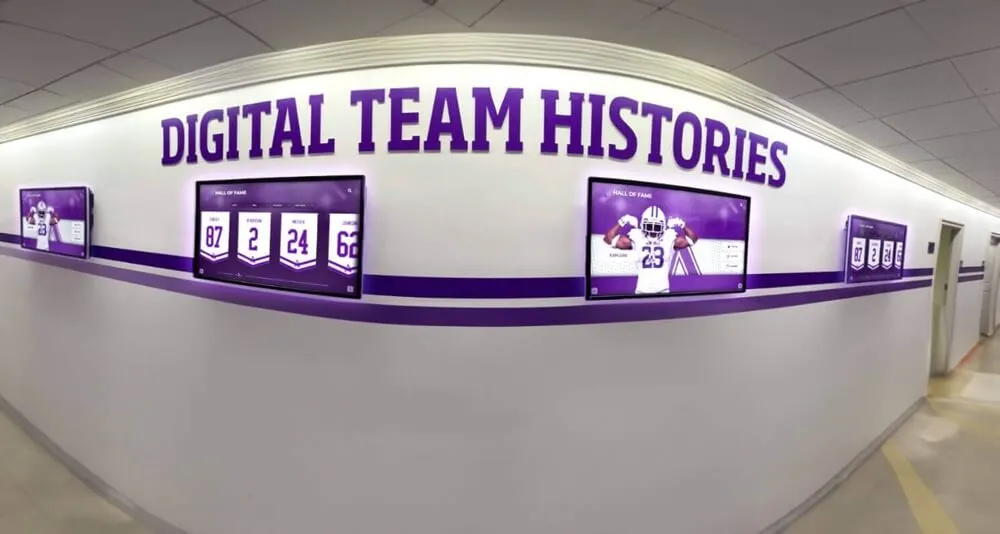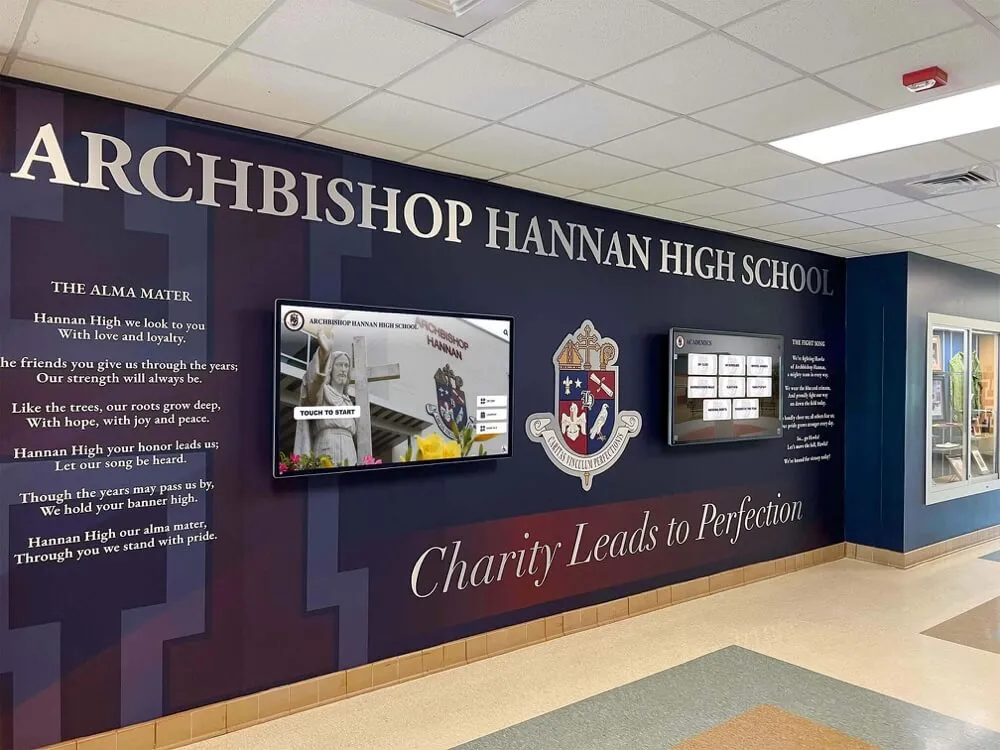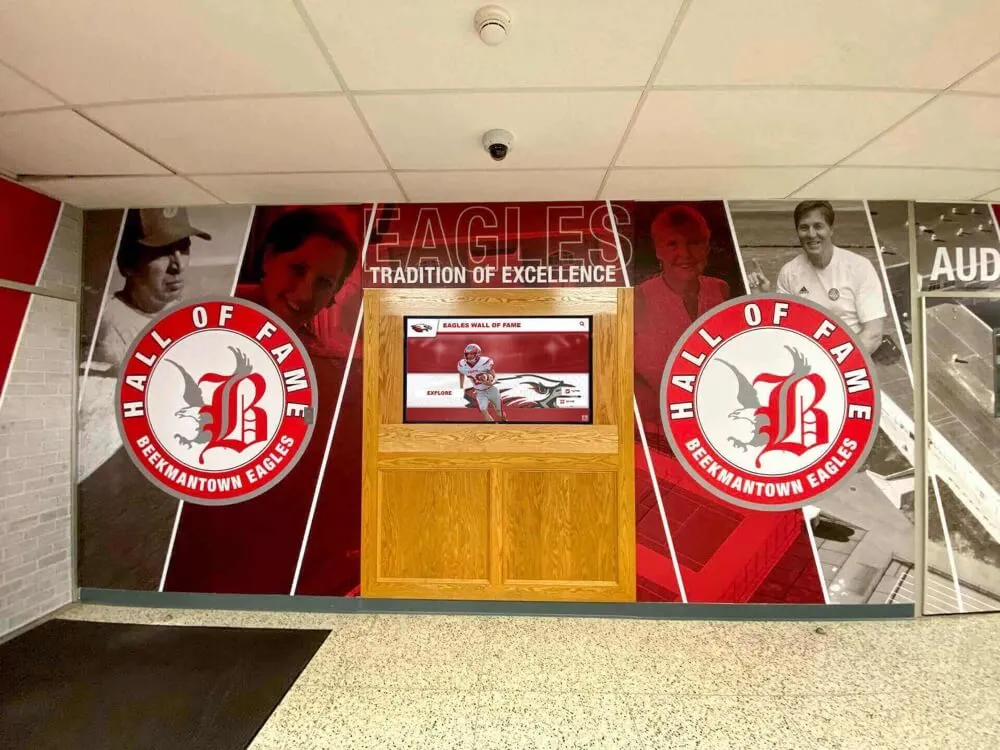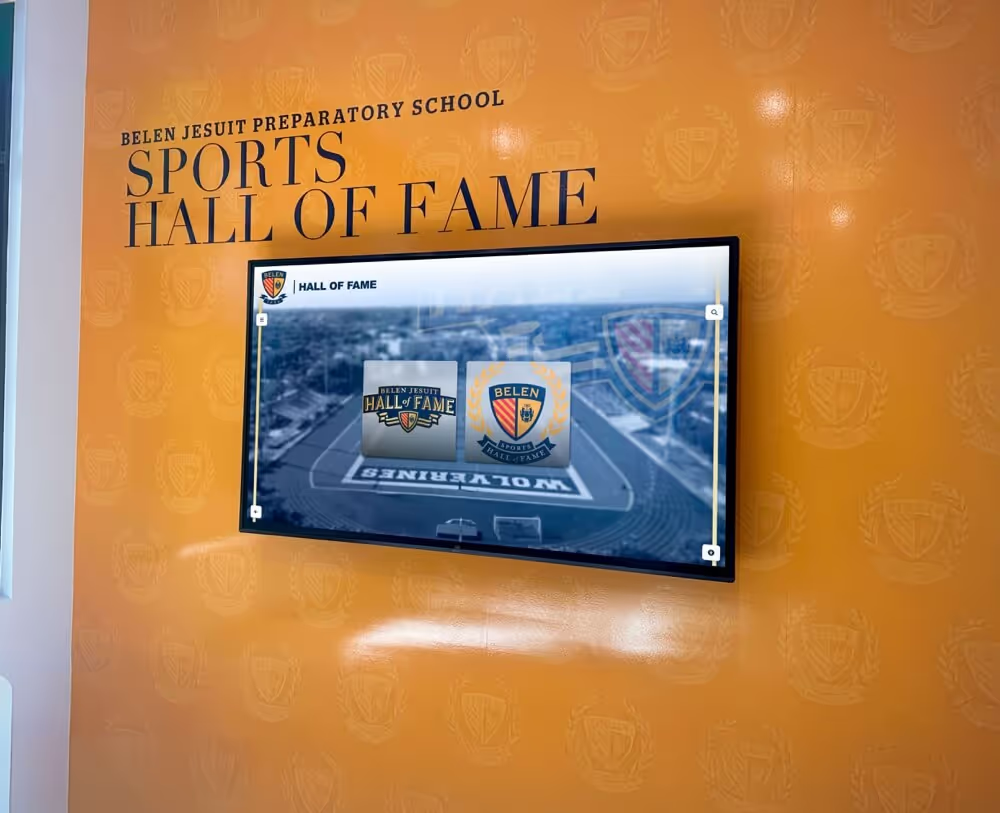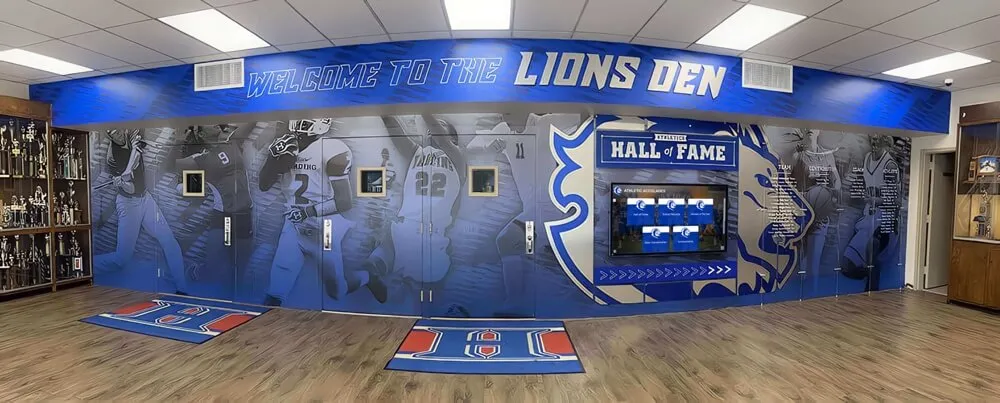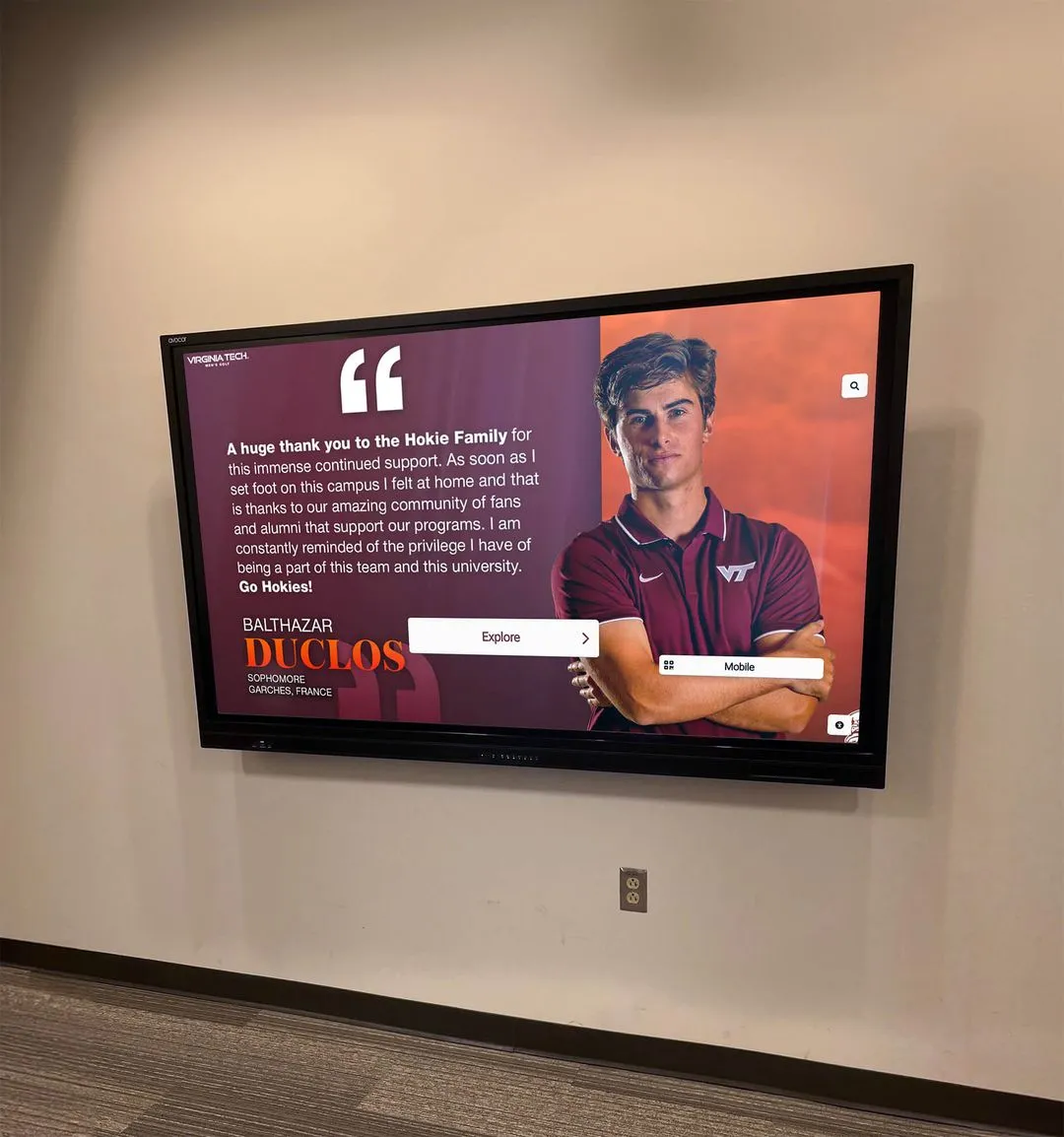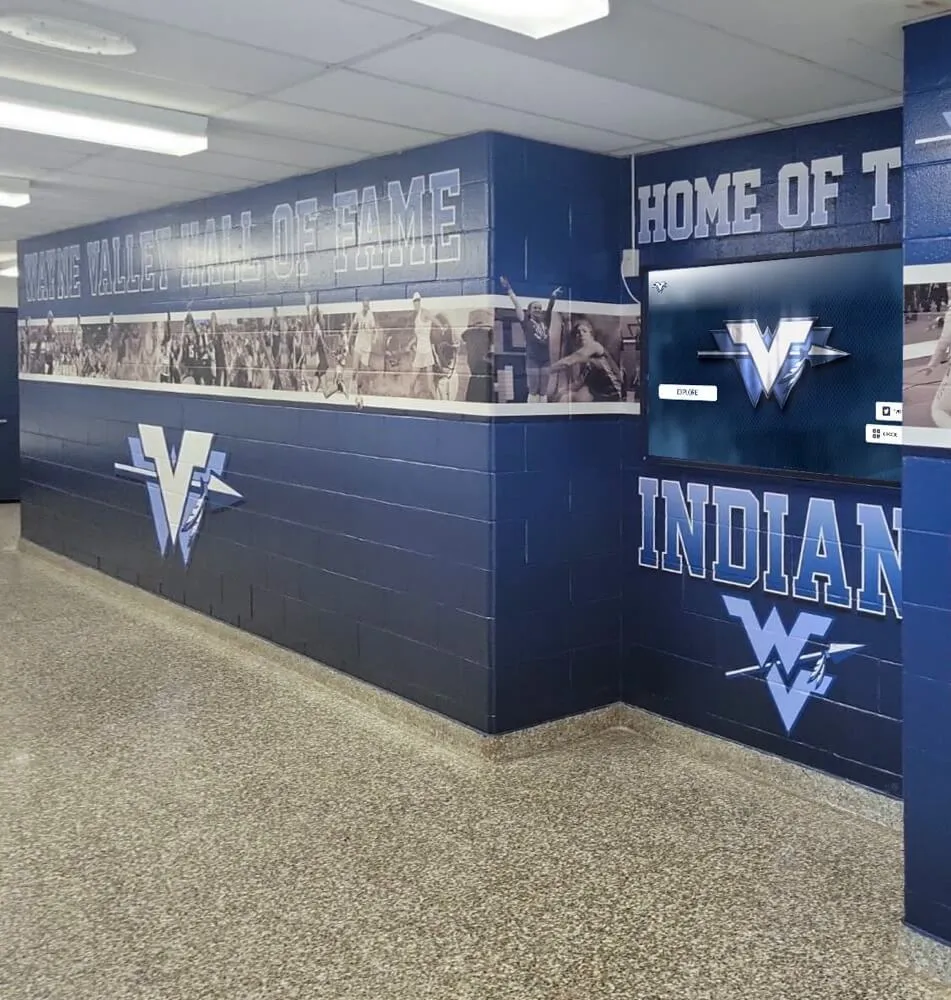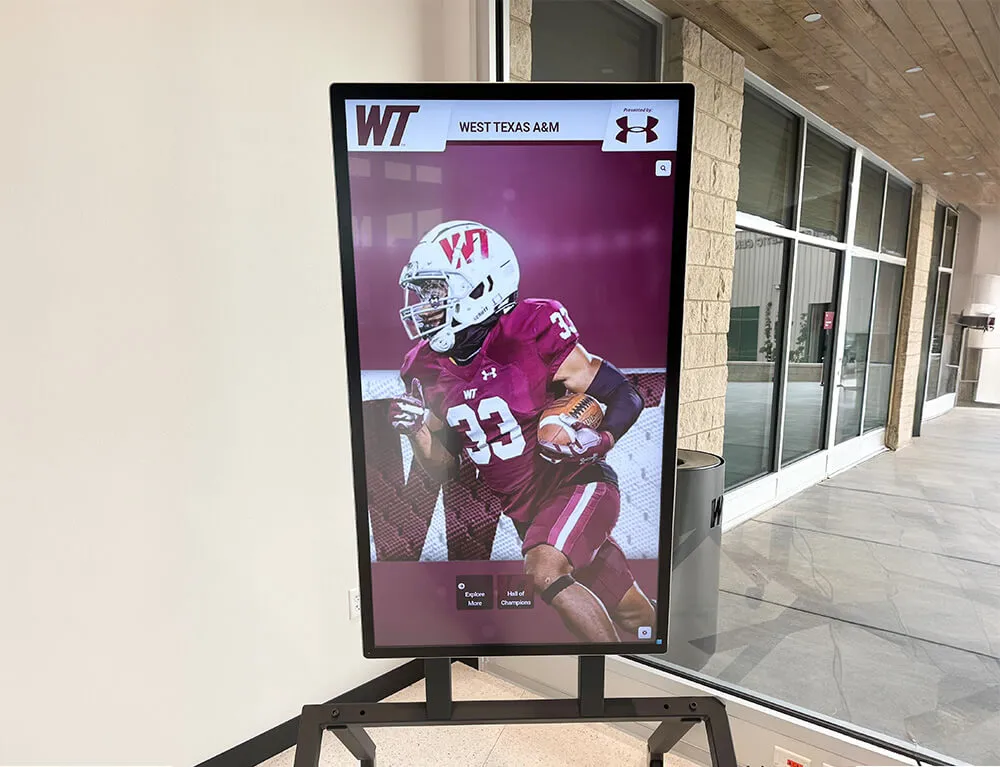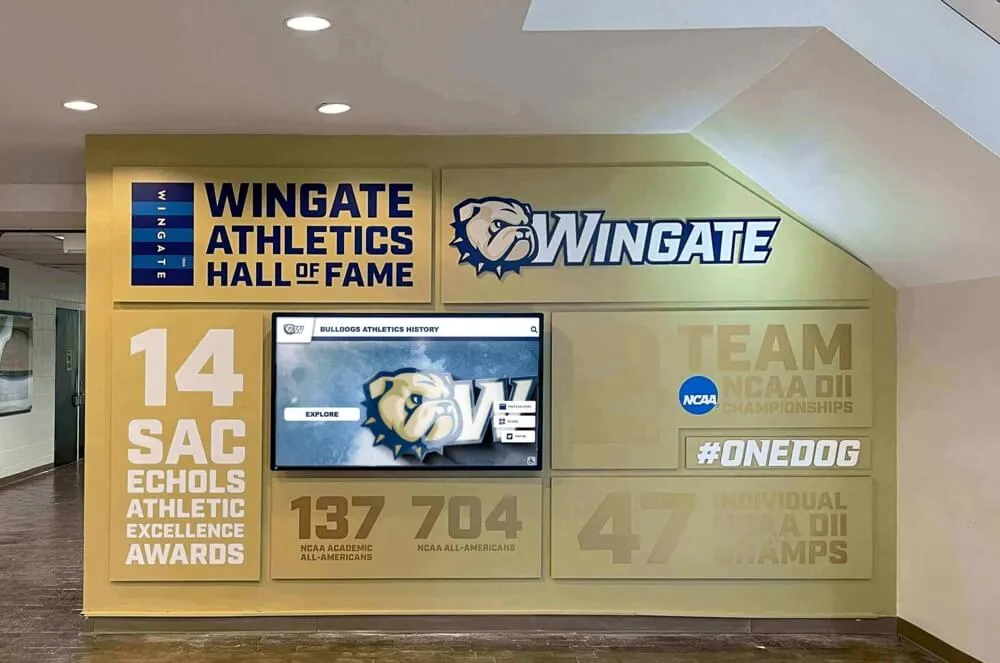




The University of Rhode Island, nestled in Kingston, Rhode Island, boasts a proud athletic tradition spanning over a century. The URI Rams compete in NCAA Division I athletics, with teams across 18 sports representing the university in the Atlantic 10 Conference and Colonial Athletic Association. Since the opening of the Thomas M. Ryan Center in 2002, URI has possessed a state-of-the-art athletics facility serving as home to basketball teams and hosting major events. The Ryan Center features an Alumni Room housing the URI Hall of Fame, where plaques honoring enshrined athletes line the facility walls, and custom adhesive murals surround recognition areas showcasing past athletes who have impacted URI programs.
Yet even with these thoughtful recognition efforts, the university faces challenges common to collegiate athletic programs nationwide: limited physical space for honoring deserving athletes, traditional plaques that cannot capture the depth of individual achievements and career statistics, the need to engage modern student-athletes and alumni who expect interactive digital experiences, and the ongoing challenge of keeping recognition current as new achievements accumulate each season. While the Ryan Center features Daktronics LED video boards for game presentation and an LED ribbon wrap throughout the arena bowl, these systems primarily serve live event entertainment rather than comprehensive historical recognition and sustained fan engagement with Rams athletic heritage.
What if interactive touchscreen technology could transform how the University of Rhode Island celebrates its athletic legacy, enables alumni to explore their predecessors’ achievements, and creates engaging experiences that honor Rams excellence comprehensively? This guide explores how digital recognition solutions—specifically platforms like Rocket Alumni Solutions’ interactive displays—could revolutionize athletic recognition at URI and similar collegiate programs, addressing fundamental space and engagement limitations while preserving institutional history for future generations of Rams athletes, students, and supporters.
Interactive touchscreen displays represent more than digital replacements for traditional plaques—they enable fundamentally different approaches to athletic recognition that honor unlimited individuals, create personalized discovery experiences, and preserve university legacy in ways physical displays never could. Universities successfully implementing these technologies create memorable experiences that strengthen alumni connections, build institutional pride, and celebrate the student-athletes who define their competitive identity.

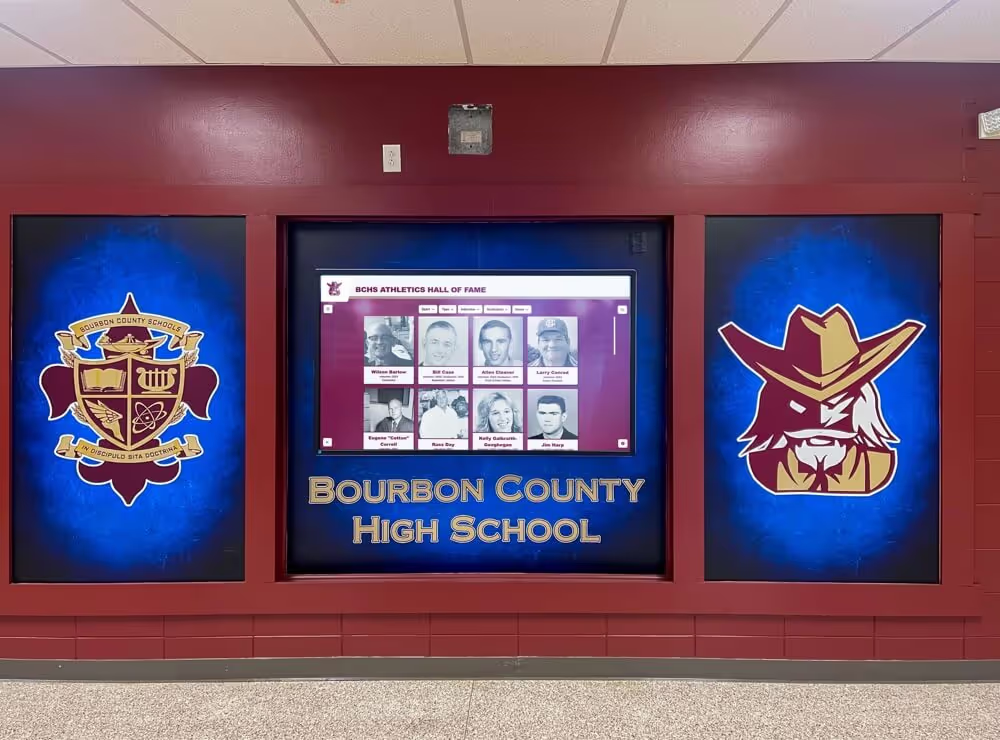
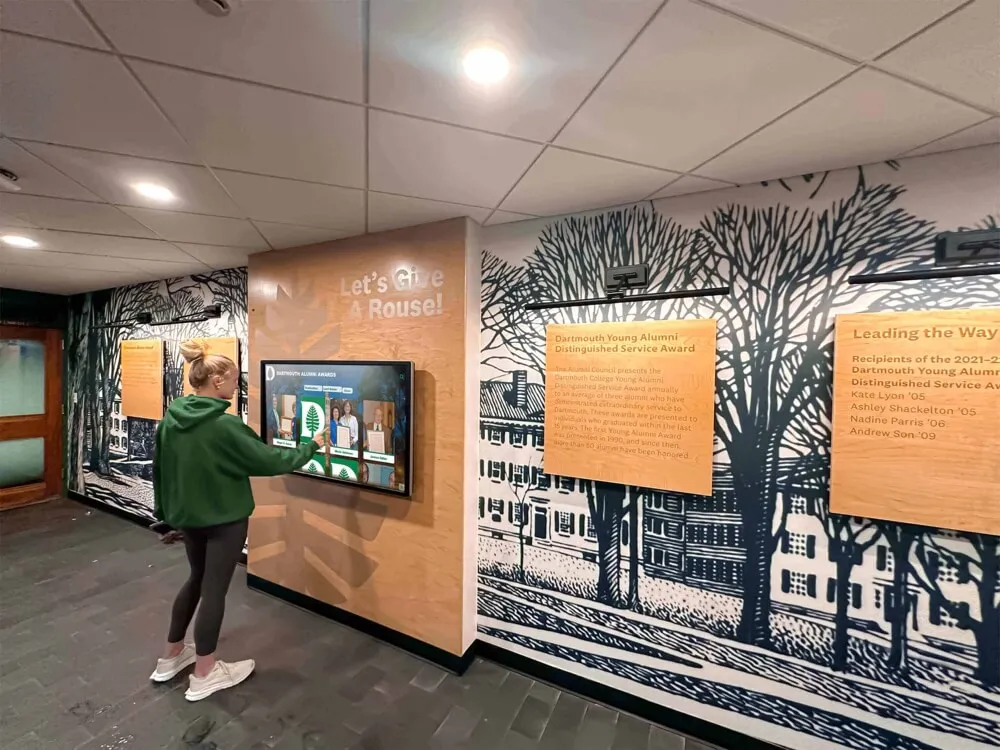
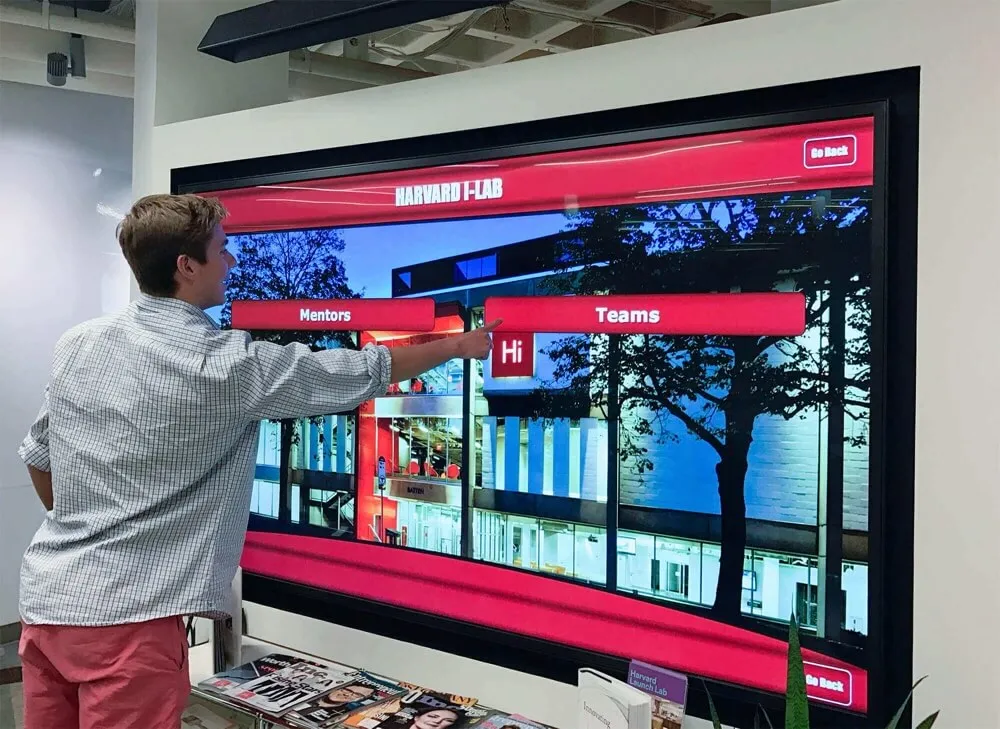
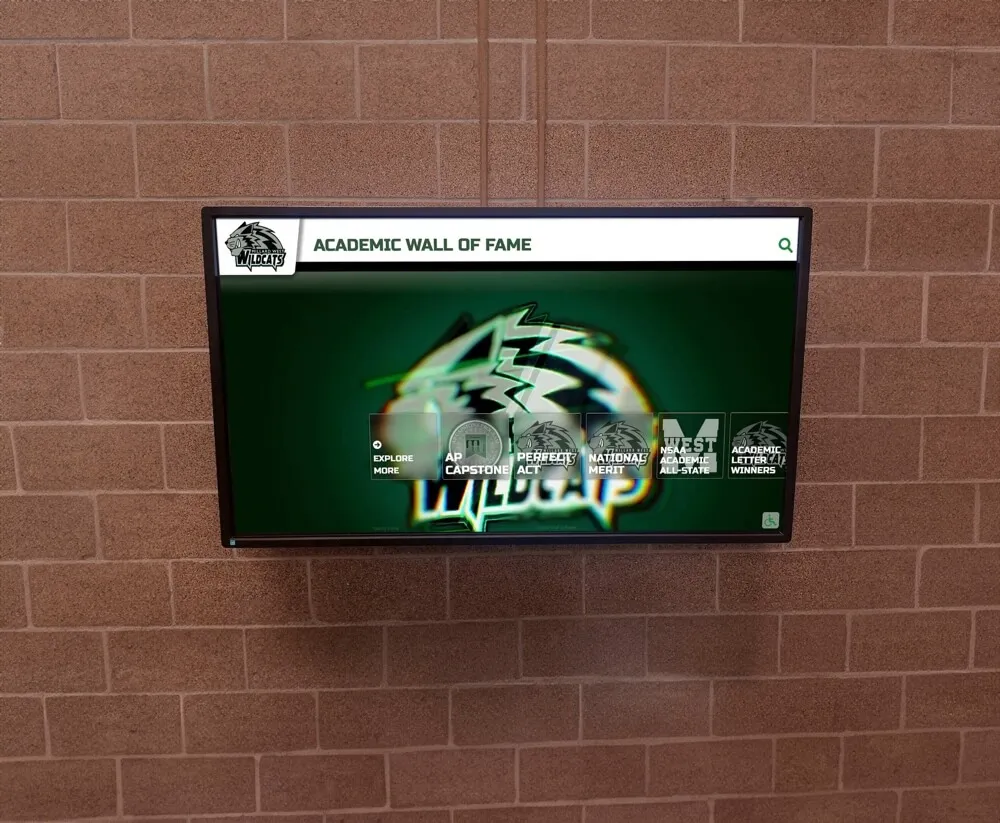
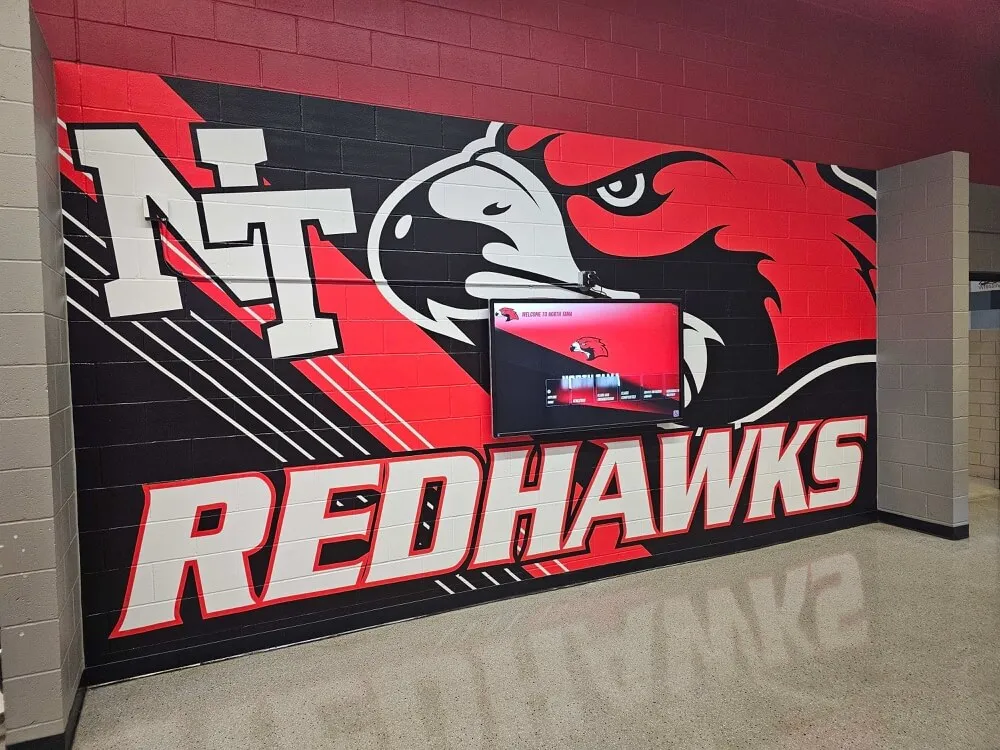
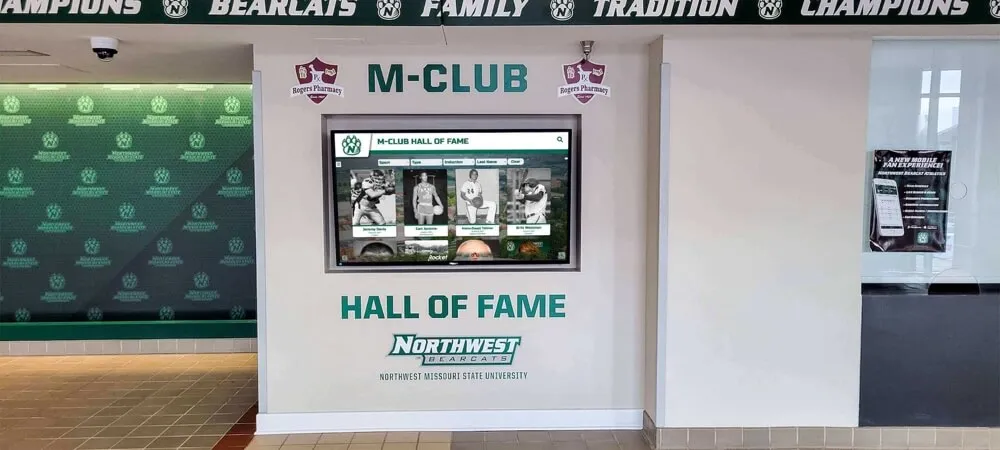
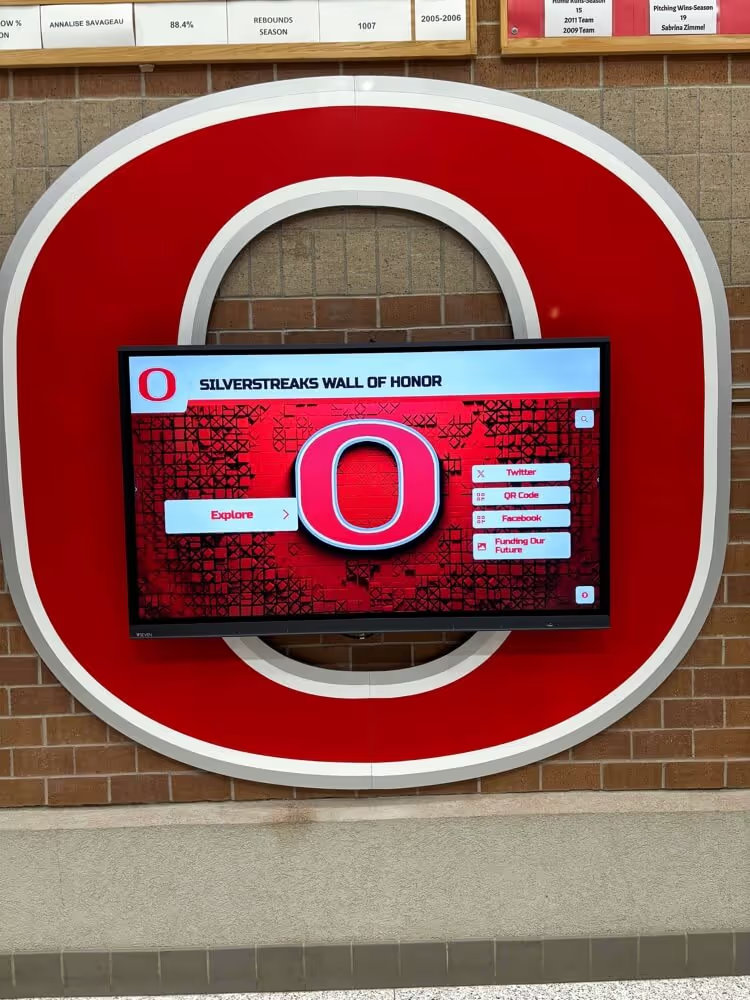
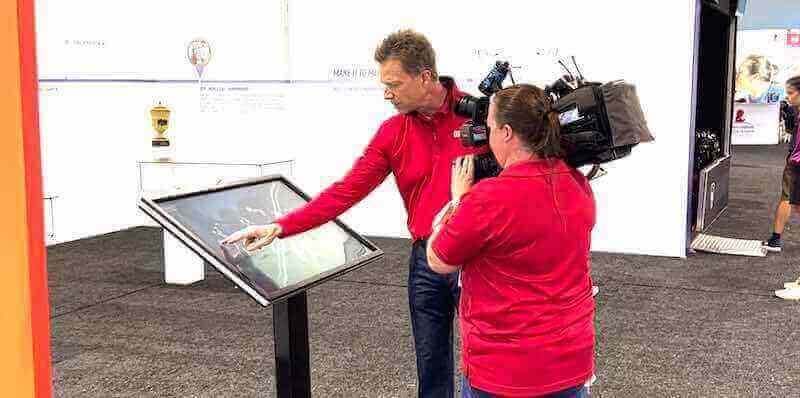
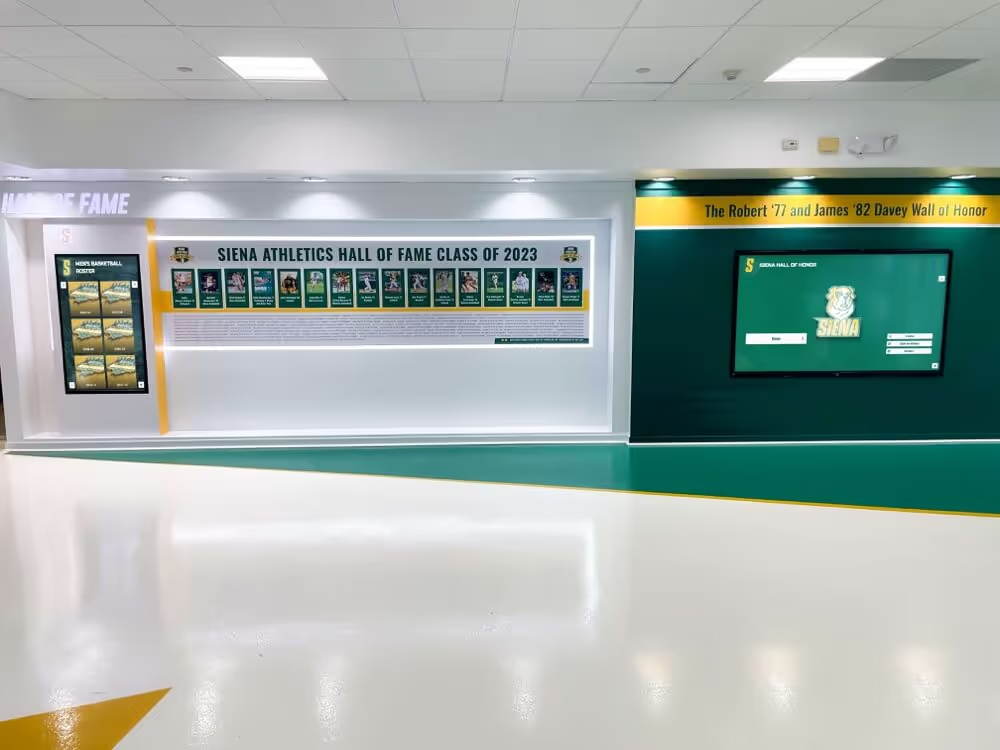
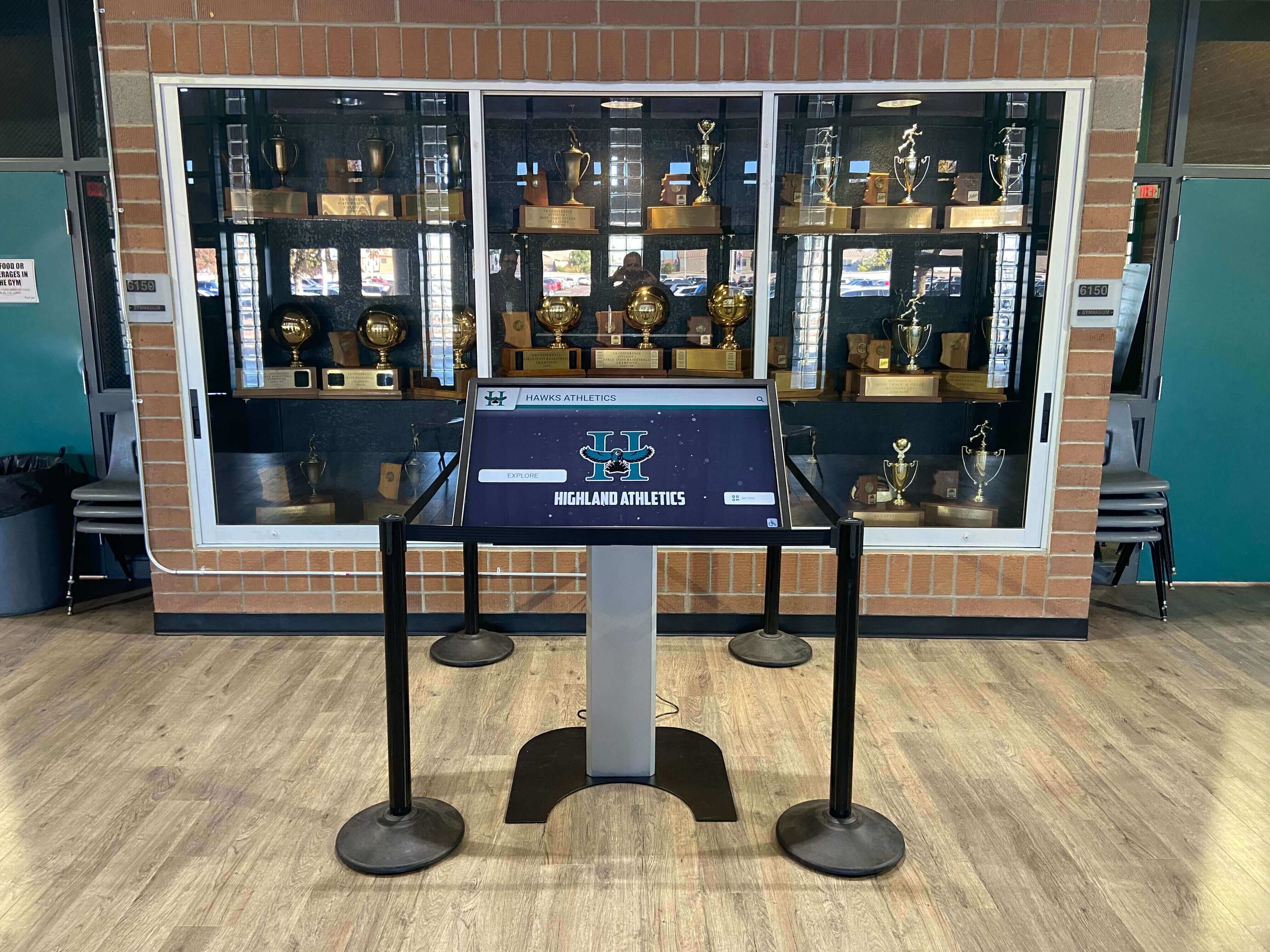
Interactive touchscreen installations integrate seamlessly with existing athletic recognition areas, enhancing rather than replacing traditional displays
The University of Rhode Island Athletic Legacy: A History Worth Celebrating
Understanding URI’s distinctive athletic heritage reveals why modern recognition approaches can better serve this comprehensive legacy than traditional methods alone.
URI Rams Athletics: Excellence Across Multiple Sports
The University of Rhode Island’s athletic programs have produced remarkable achievements deserving systematic recognition:
Basketball Excellence and Tradition
URI basketball has created defining moments and developed exceptional talent:
- Men’s basketball teams reaching NCAA tournament multiple times with memorable performances
- Women’s basketball building competitive programs and developing professional players
- All-time three-point shooting records held by Rams legends
- Atlantic 10 Conference championships and tournament success across decades
- NBA alumni including players who reached professional basketball’s highest levels
- Keaney Gymnasium legacy before transition to modern Ryan Center facility
- Student sections creating intimidating home court advantages
- Coaching legends who built competitive programs and developed championship teams
According to Atlantic 10 Conference records, URI has been a member institution since 1980, competing against nationally recognized programs and establishing itself as a consistent competitor in one of college basketball’s most competitive mid-major conferences.
Football Program History and Achievement
The Rams football program competes in the Colonial Athletic Association:
- Meade Stadium serving as home field for URI football since 1928
- NFL alumni including Super Bowl champions who began careers as Rams
- Conference championships and playoff appearances across program history
- Individual awards recognizing excellence in performance and character
- Historic rivalries creating memorable games and competitive traditions
- All-conference selections across offensive, defensive, and special teams positions
- Statistical leaders in rushing, passing, receiving, and defensive categories
- Coaching excellence building competitive programs across multiple eras
Stephen Robert Furness, who attended URI, earned four Super Bowl rings as a member of the Pittsburgh Steelers’ famed Steel Curtain defense, demonstrating the professional potential developed within the Rams football program.
Discover comprehensive approaches to Division I athletic recognition systems that accommodate multi-sport programs.
Olympic Sports and Championship Programs
URI’s athletic excellence extends across numerous Olympic sports:
- Soccer programs producing MLS players and national team members
- Track and field athletes achieving All-American honors and conference championships
- Swimming and diving teams competing in the Atlantic 10 Championship
- Volleyball programs building competitive success and individual recognition
- Tennis teams developing conference champions and professional players
- Cross country teams earning conference honors and NCAA regional appearances
Geoff Cameron, who played soccer at URI, became an MLS All-Star and starter on the 2014 World Cup US Men’s National Soccer Team, showcasing the pathway from URI athletics to international competition in Olympic sports.
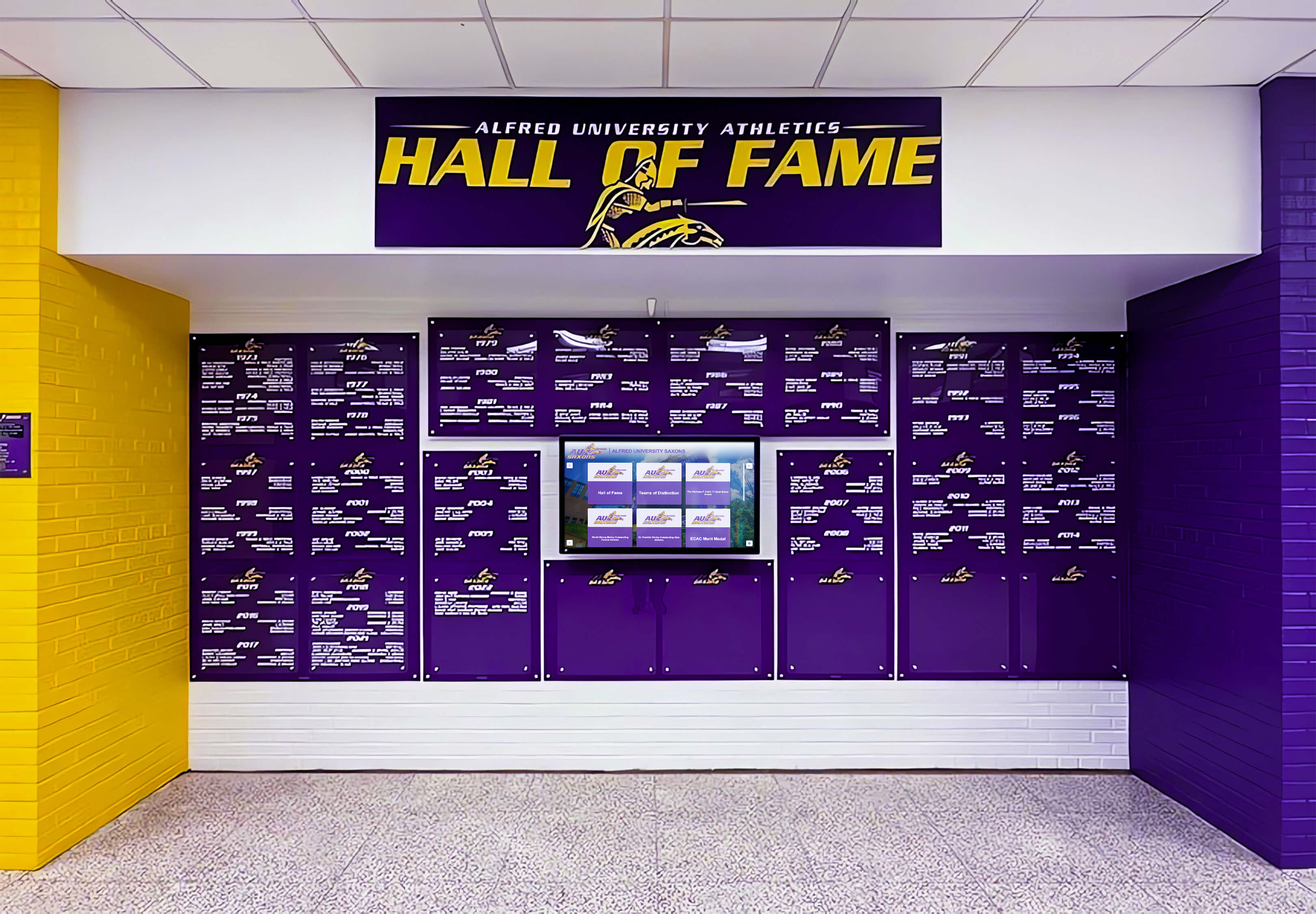
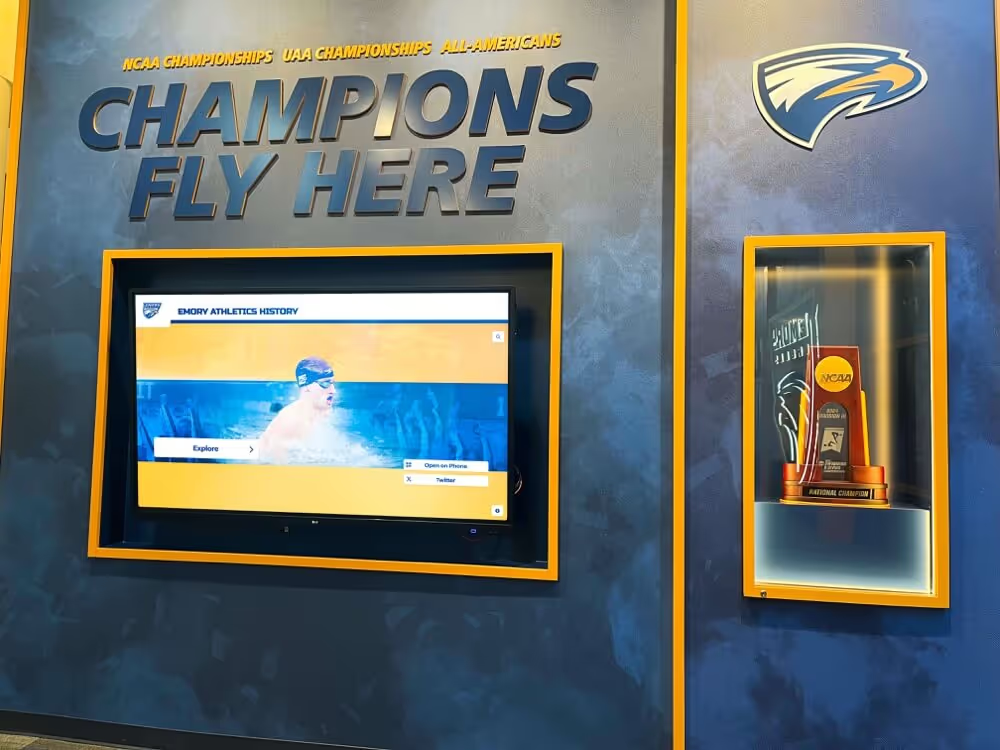
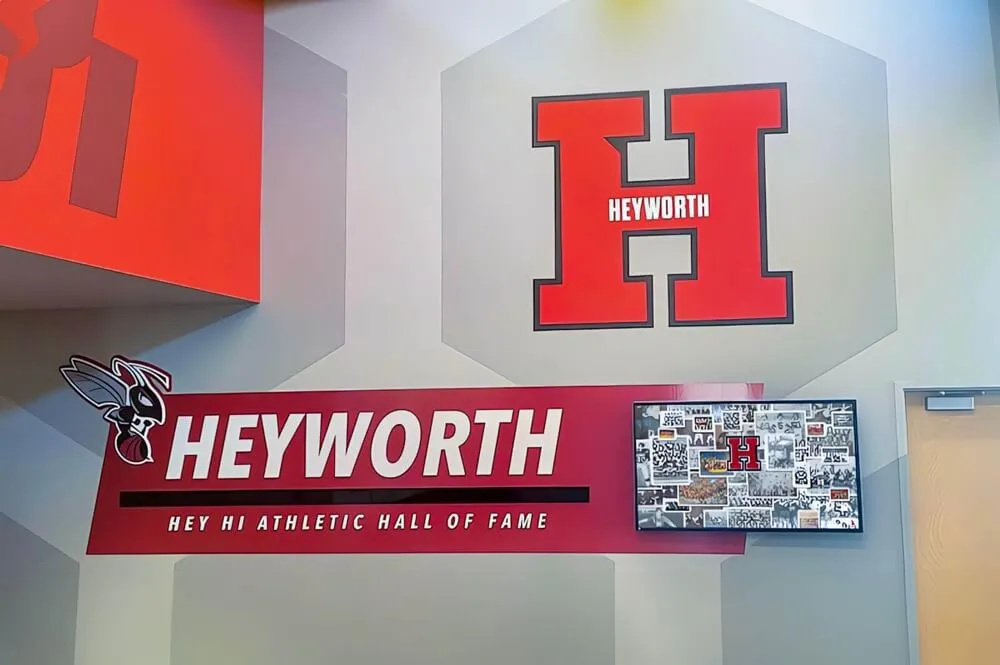
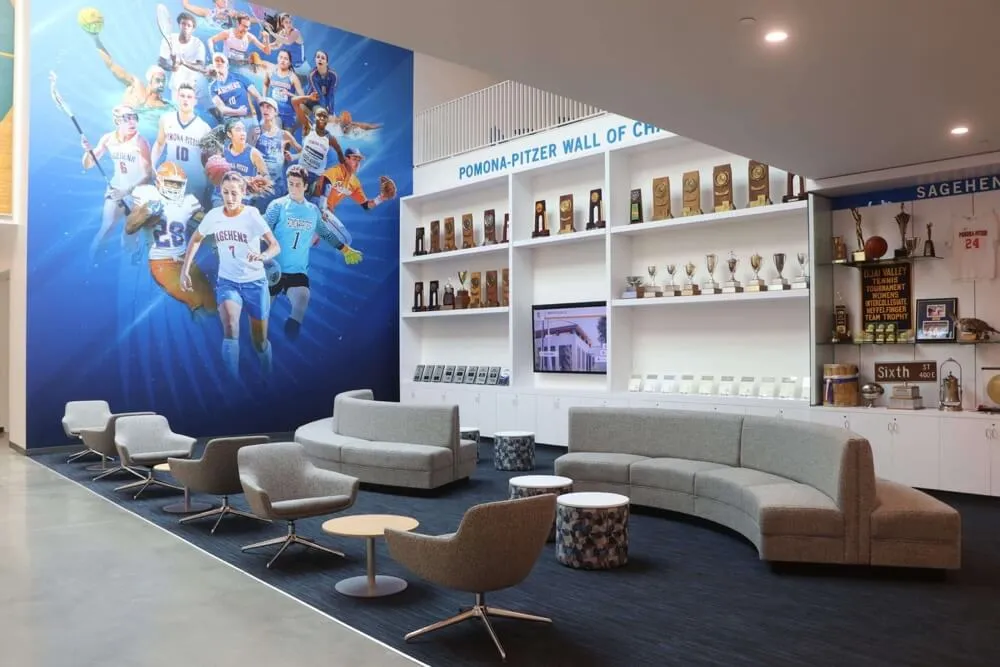
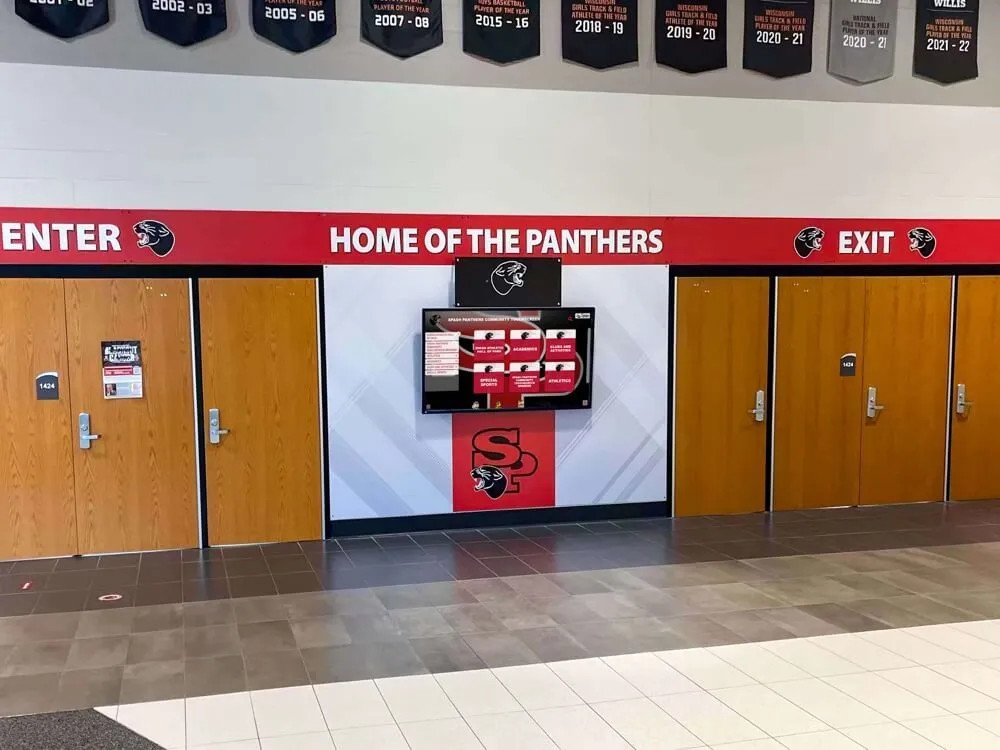
Traditional university athletic halls of fame provide foundational recognition but face inherent space constraints limiting comprehensive athlete celebration
The URI Hall of Fame: Honoring Excellence
The University of Rhode Island Athletic Hall of Fame recognizes individuals who have made extraordinary contributions:
Hall of Fame Recognition Categories
Current Hall of Fame recognition at URI includes:
- Distinguished athletes who achieved excellence during their collegiate careers
- Coaches who built successful programs and developed championship teams
- Administrators and staff who supported athletic excellence
- Teams that achieved conference championships or milestone accomplishments
- Honored jersey numbers representing legendary careers
- Championship banners hanging from Ryan Center rafters
- Wall displays and plaques throughout the Ryan Center concourse
- Alumni Room showcasing Hall of Fame inductees in dedicated space
The Alumni Room at the Ryan Center serves as home to the URI Hall of Fame, featuring recognition for up to 125 people in this beautifully outfitted lounge, while additional Hall of Fame class displays appear throughout the concourse in the form of photographs and plaques honoring enshrined members.
Recognition Capacity Challenges at Collegiate Athletic Programs
Despite thoughtful implementation, traditional recognition faces fundamental constraints:
- Limited wall space along concourses serving thousands of game attendees
- Physical plaques accommodating minimal biographical information and statistics
- Selection decisions about which athletes receive limited display space
- Maintenance challenges updating information as new inductees join Hall of Fame
- Inability to showcase complete career statistics and performance context
- Limited multimedia integration beyond static photography
- Geographic constraints separating recognition from areas with sustained fan traffic
- Accessibility concerns ensuring all visitors can view and engage with displays
According to university facilities research, even premier collegiate athletic centers allocate less than 2-3% of public space to historical recognition, forcing impossible decisions about whose achievements receive visibility despite hundreds of deserving athletes contributing to institutional legacy across decades of competition.
Explore strategies for comprehensive college history timeline development that preserves institutional athletic heritage.
Engaging Modern Student-Athletes and Alumni
Today’s university communities expect interactive, accessible experiences that traditional plaques cannot deliver:
Changing Engagement Expectations Among College Audiences
Contemporary student-athletes, current students, and alumni arrive with different behaviors:
- Smartphone-native generations expecting touch interaction and immediate information access
- Social media habits integrating university experiences with digital content sharing
- Research behaviors including statistics lookup and performance comparisons across eras
- Expectation for personalized exploration rather than one-size-fits-all presentation
- Preference for video highlights and multimedia content over text-only information
- Shorter attention spans requiring immediate engagement to capture interest during events
- Alumni expectations for modern recognition matching workplace and consumer technology experiences
According to higher education technology research, over 75% of millennial and Gen Z alumni prefer interactive digital experiences when engaging with their alma mater, creating opportunities for athletic recognition that complements game attendance, alumni events, and campus visits rather than serving as static displays that receive brief glances.
Traditional Display Limitations at University Athletic Facilities
Static recognition systems fail to meet modern engagement expectations and operational needs:
- Minimal information capacity forcing oversimplification of complex athletic careers and achievements
- No search functionality enabling alumni to find themselves or contemporaries quickly
- Lack of statistical depth contextualizing performances across different competitive eras
- Inability to update recognition without expensive physical plaque modifications and reinstallation
- No connection to alumni digital engagement and fundraising platforms
- Passive viewing generating brief acknowledgment rather than sustained exploration
- Limited accessibility for individuals with vision or mobility limitations
- No multilingual support for international student-athletes and diverse university communities
This engagement gap means universities invest substantial resources creating recognition that delivers minimal impact beyond baseline visibility, missing opportunities to strengthen alumni relationships, build institutional pride, and celebrate athletic excellence comprehensively.
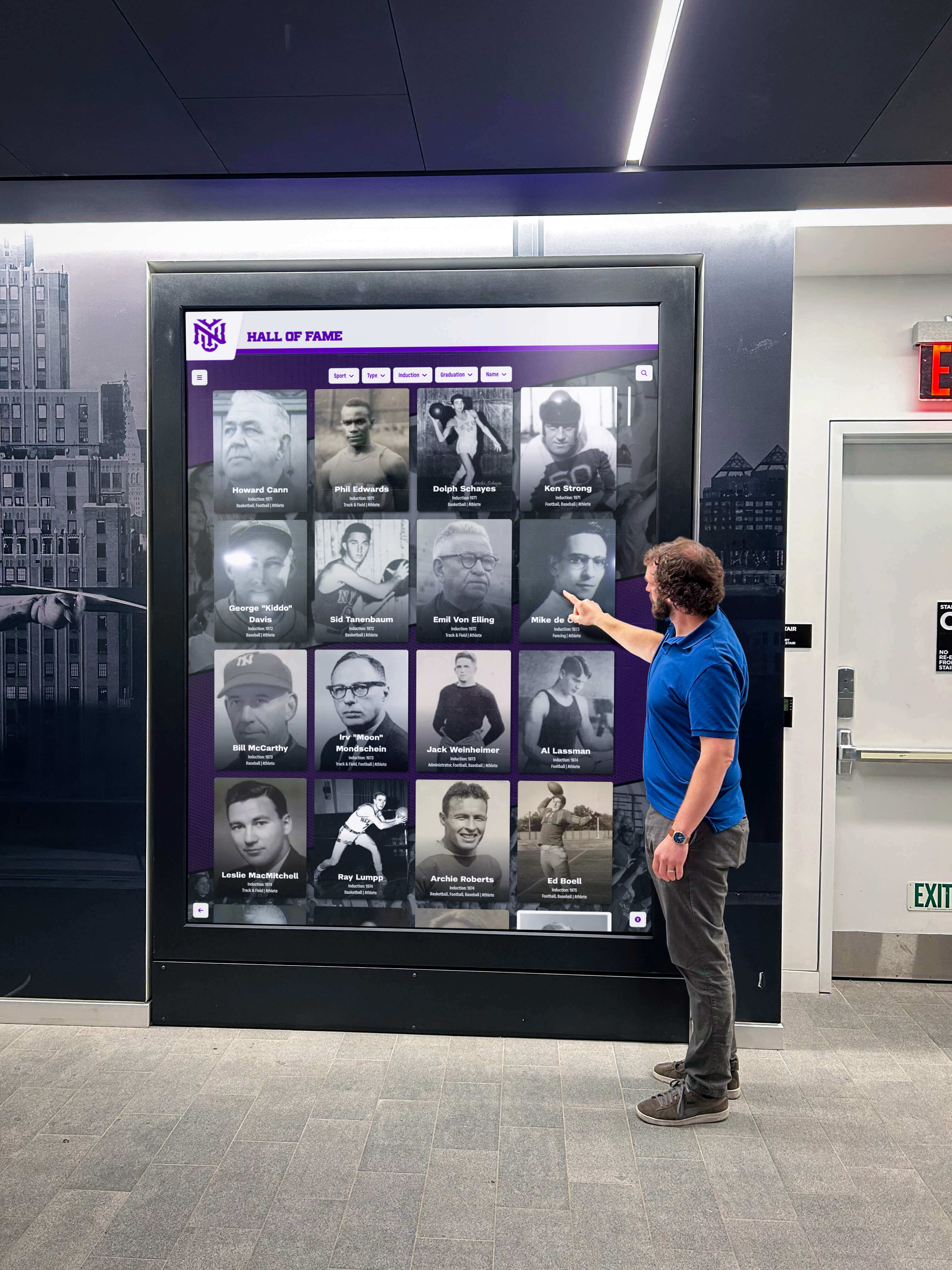
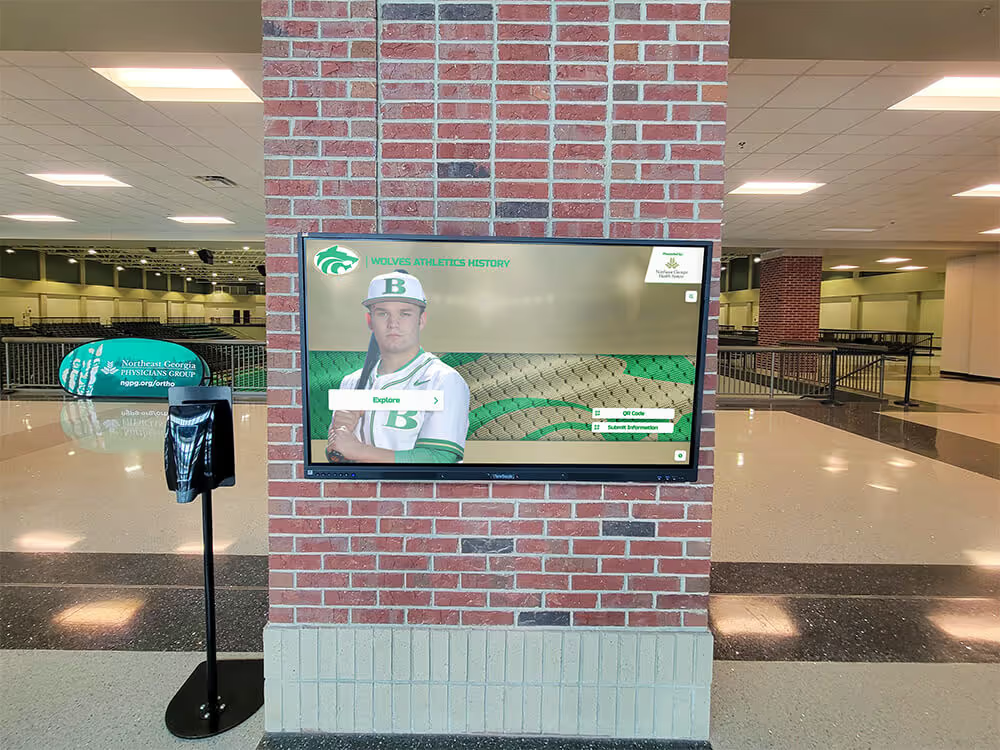
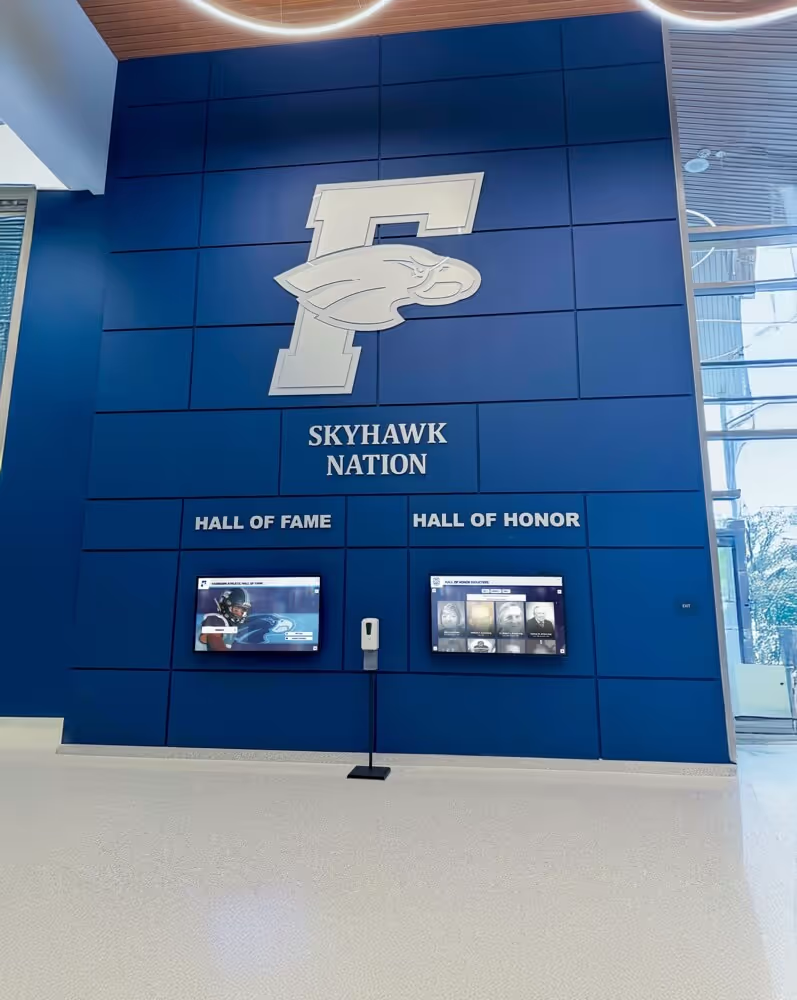
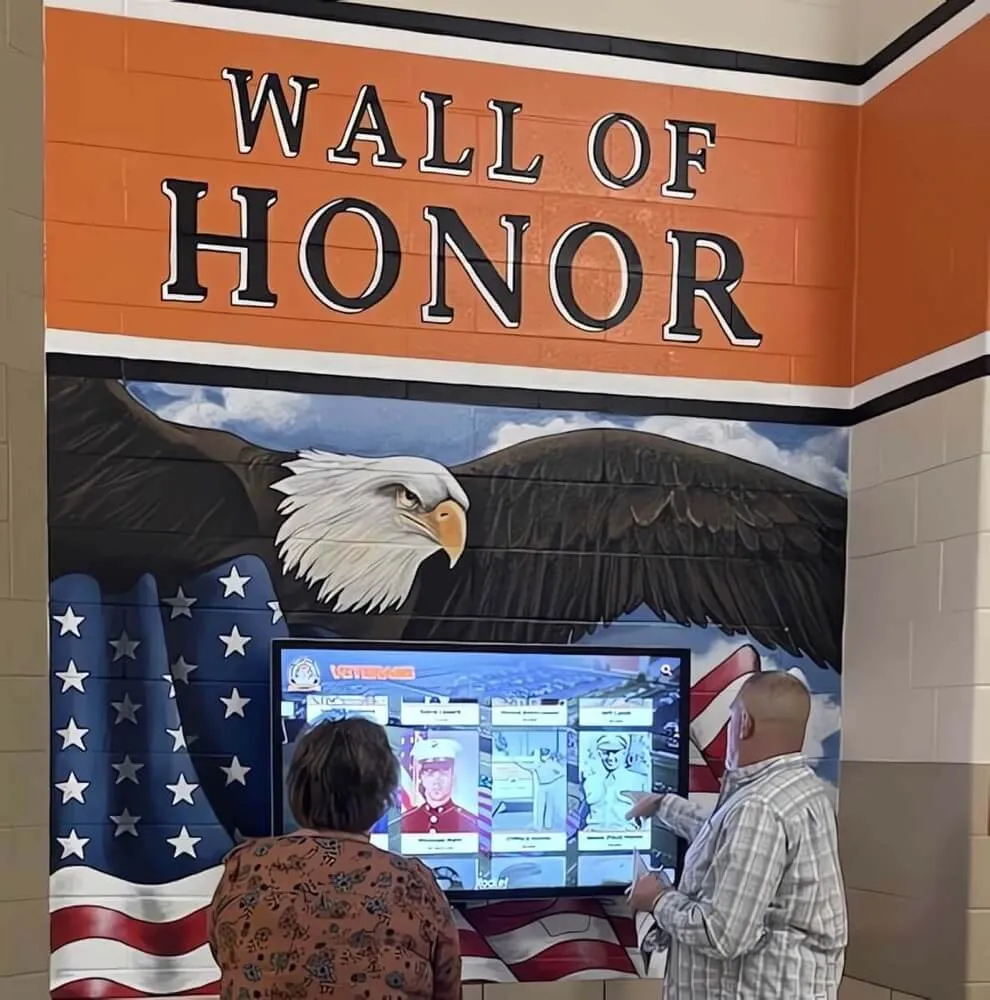
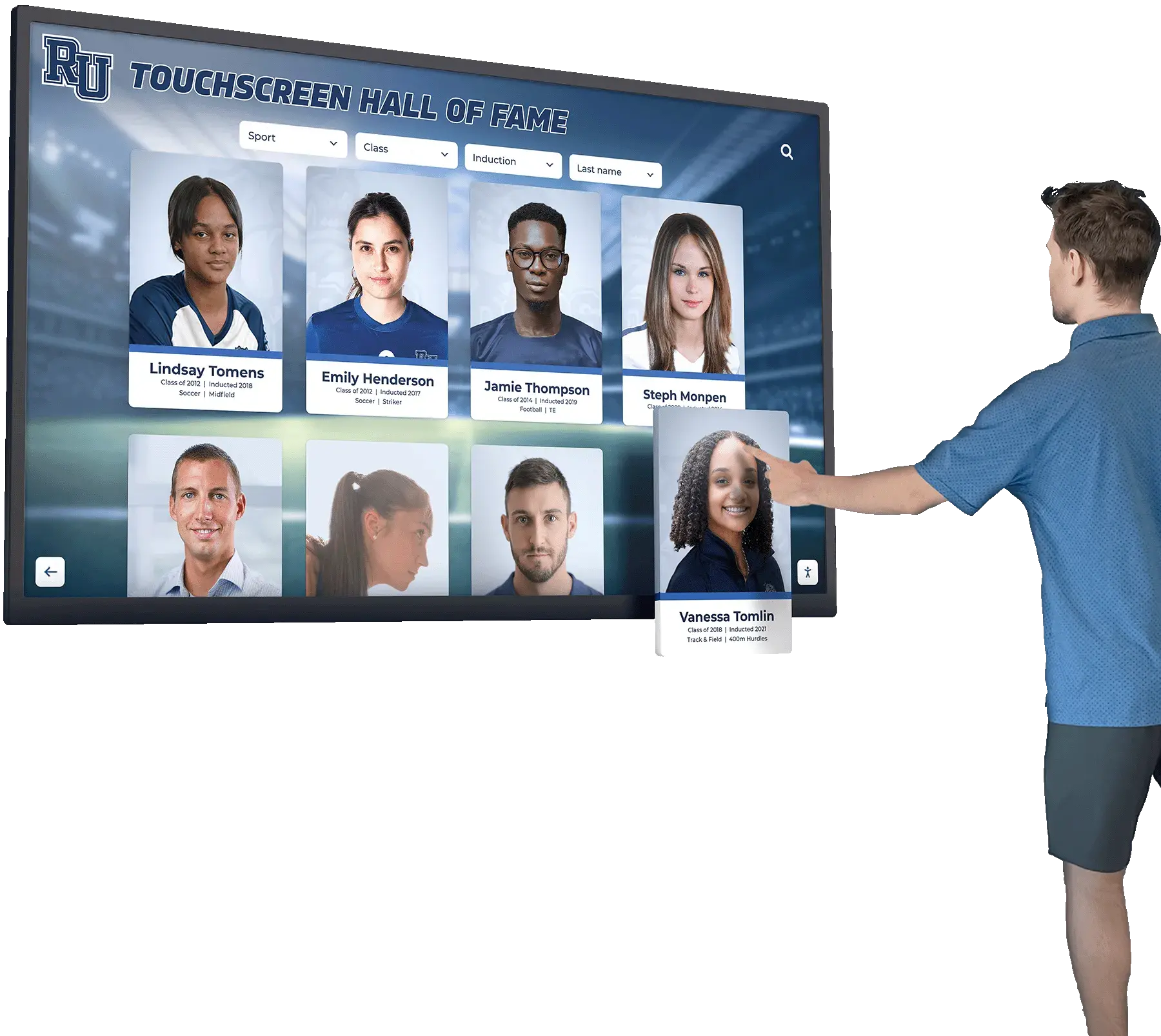
Interactive touchscreen displays invite active exploration and discovery rather than passive viewing of athletic achievements
How Interactive Touchscreens Transform University Athletic Recognition
Digital recognition platforms address traditional limitations while creating entirely new engagement possibilities perfectly suited for collegiate athletic programs like URI.
Unlimited Recognition Capacity for All Deserving Athletes
Interactive systems eliminate the space constraint that has always limited physical athletic recognition:
Comprehensive Athlete Archives Across All Sports
A strategically placed touchscreen installation at the Ryan Center could showcase:
- Complete rosters for all URI athletic teams across decades of competition
- Every letterwinner with biographical information, academic major, and hometown representation
- All-time statistical leaders in dozens of performance categories across all sports
- All-conference selections, All-American honors, and individual award recipients
- Championship teams with full rosters, season narratives, and statistical summaries
- Professional athletes who competed at URI before reaching next competitive levels
- Academic achievement recognizing scholar-athletes and Academic All-American selections
- Behind-the-scenes figures including trainers, strength coaches, and support staff
- Coaching trees showing assistants who became head coaches at other institutions
- URI opponents in memorable games creating historical context for rivalries
Rather than selecting a few dozen individuals for limited plaque space, digital platforms celebrate everyone who contributed to Rams athletic excellence, creating truly comprehensive and equitable recognition that honors the university’s complete competitive history.
Learn about athletic history display approaches that accommodate unlimited athletes across multiple sports.
Multi-Dimensional Content Integration Bringing Athletics to Life
Digital recognition supports rich multimedia impossible with traditional plaque approaches:
- High-resolution photography from multiple eras showing uniform evolution and facility changes
- Video highlights capturing signature performances, game-winning plays, and championship moments
- Audio recordings of historic play-by-play calls and memorable post-game interviews
- Statistical comparisons contextualizing achievements across different competitive eras
- Newspaper archives and contemporary media coverage providing historical perspective
- Interactive timelines showing career progression from freshman to senior seasons
- Connected content linking teammates, opponents, and contemporaries across sports
- 360-degree views of championship trophies, awards, and historical memorabilia
- Social media feeds when athletes achieve professional or personal milestones
- Updated career tracking as alumni achieve post-URI success in athletics or other fields
This depth transforms simple name recognition into comprehensive storytelling that educates current student-athletes, engages alumni meaningfully, and preserves university legacy at levels traditional displays never achieve.
Personalized Exploration for Every Visitor
Interactive platforms enable individualized discovery aligned with specific interests and connections:
Advanced Search and Discovery Capabilities
Touchscreen systems provide exploration capabilities that transform passive viewing into active engagement:
- Name search finding specific athletes, coaches, or teams instantly across decades
- Sport filtering showing all participants in specific athletic programs
- Era selection exploring specific decades or championship periods
- Hometown search enabling community members to discover local athletes who competed at URI
- Academic major filtering connecting current students with alumni from their departments
- Achievement filtering by All-Conference, All-American, or professional career status
- Statistical searches identifying leaders in specific performance categories
- Team discovery finding complete rosters and season narratives for specific years
- Coach searches showing complete tenures with career records and notable achievements
Rather than hoping relevant content appears in limited displays, visitors actively search for information matching their specific interests, creating personalized experiences that traditional recognition cannot provide.
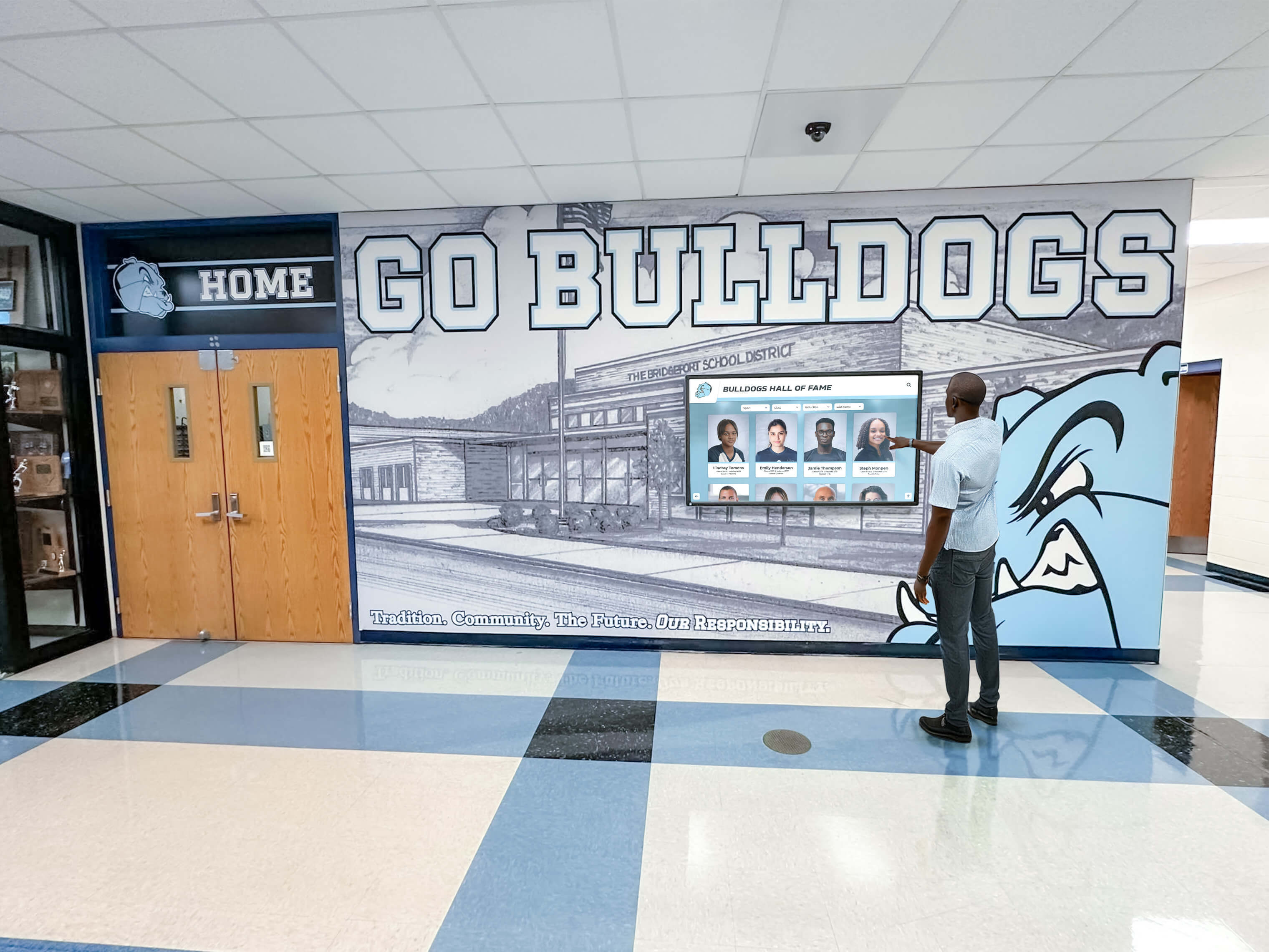
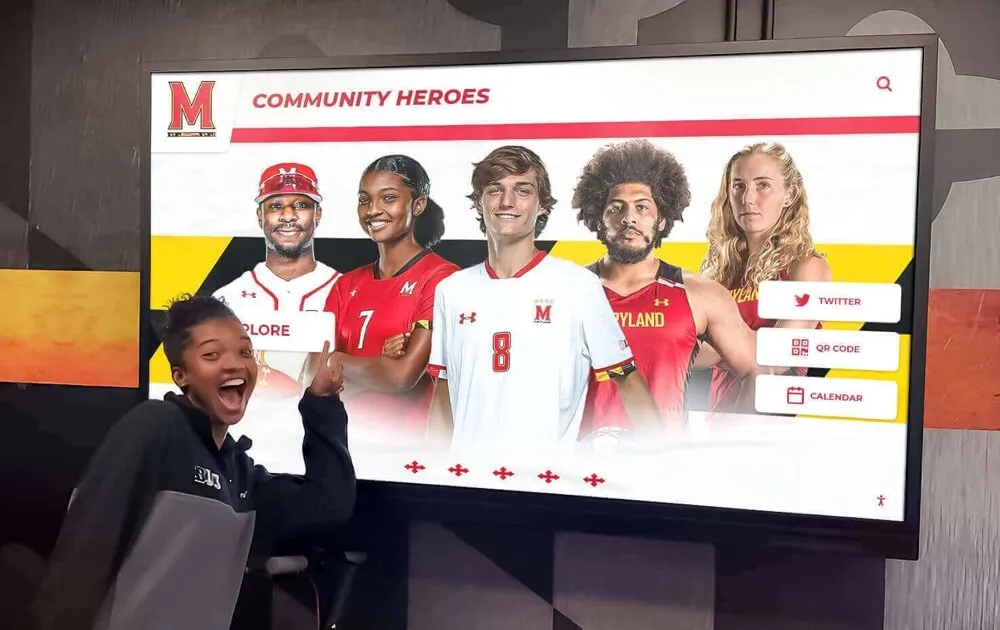
Intuitive touchscreen interfaces enable visitors of all ages to independently explore athletic content matching their specific interests
Social Integration and Alumni Engagement
Modern systems connect Ryan Center experiences with visitors’ digital lives and alumni relationships:
- Direct social media sharing of favorite athletes and memorable career achievements
- Photo opportunities with digital content creating shareable moments at Ryan Center
- QR codes enabling continued exploration on personal devices after leaving facility
- Email capture building ongoing engagement relationships with alumni affairs and fundraising
- Competition and trivia games rewarding Rams knowledge with prizes or exclusive content
- User-generated content submission opportunities for alumni memories and personal stories
- Connection to alumni directory and networking platforms building professional relationships
- Integration with advancement systems tracking engagement for fundraising purposes
- Event promotion highlighting homecoming weekends, reunion years, and special ceremonies
- News feeds announcing recent achievements by current student-athletes and alumni
According to university advancement research, installations enabling social sharing and digital connection generate 5-10 times more total impressions than standalone displays, extending recognition impact far beyond physical Ryan Center visits while creating valuable alumni engagement data that supports fundraising and relationship management efforts.
Dynamic Content Management for Sustained Relevance
Digital platforms provide unprecedented flexibility for maintaining current, meaningful athletic recognition:
Instant Updates Throughout Competitive Seasons
Cloud-based content management enables real-time recognition adjustments:
- Same-day addition of new achievements, records, and milestone accomplishments
- Real-time statistical updates reflecting current season performances and rankings
- Breaking news integration during championships, awards, and special recognitions
- Scheduled content releases for anniversaries, commemorations, and reunion weekends
- Featured content highlighting specific sports during their competitive seasons
- Alumni spotlight rotation ensuring diverse representation and sustained engagement
- A/B testing different content presentations for optimization based on interaction data
- Remote management from any internet-connected device without requiring Ryan Center access
This agility means recognition remains perpetually current rather than becoming outdated between infrequent physical updates that require contractor work, facility access during limited maintenance windows, and substantial expense for even minor modifications.
Event-Specific Customization for Maximum Relevance
Touchscreen displays adapt to university circumstances and special occasions:
- Homecoming weekend customization highlighting specific class years and reunion groups
- Game day content featuring alumni from opponent institutions who competed at URI
- Senior day recognition celebrating graduating student-athletes and their careers
- Hall of Fame induction ceremony programming showcasing new inductees before ceremonies
- Athletic department fundraising events highlighting donor-supported programs and facilities
- Alumni weekend programming tailored to returning graduates from specific eras
- Recruiting visit content showcasing program tradition and athlete development
- Championship celebrations highlighting team achievements and individual performances
- Rivalry game content emphasizing memorable contests and historical series records
- Season opener programming building anticipation and celebrating returning talent
This flexibility transforms static recognition into dynamic programming that enhances every Ryan Center visit with contextually relevant content that feels fresh, timely, and specifically designed for each audience rather than permanent and unchanging.
Discover interactive touchscreen display strategies for educational institutions and athletic programs.
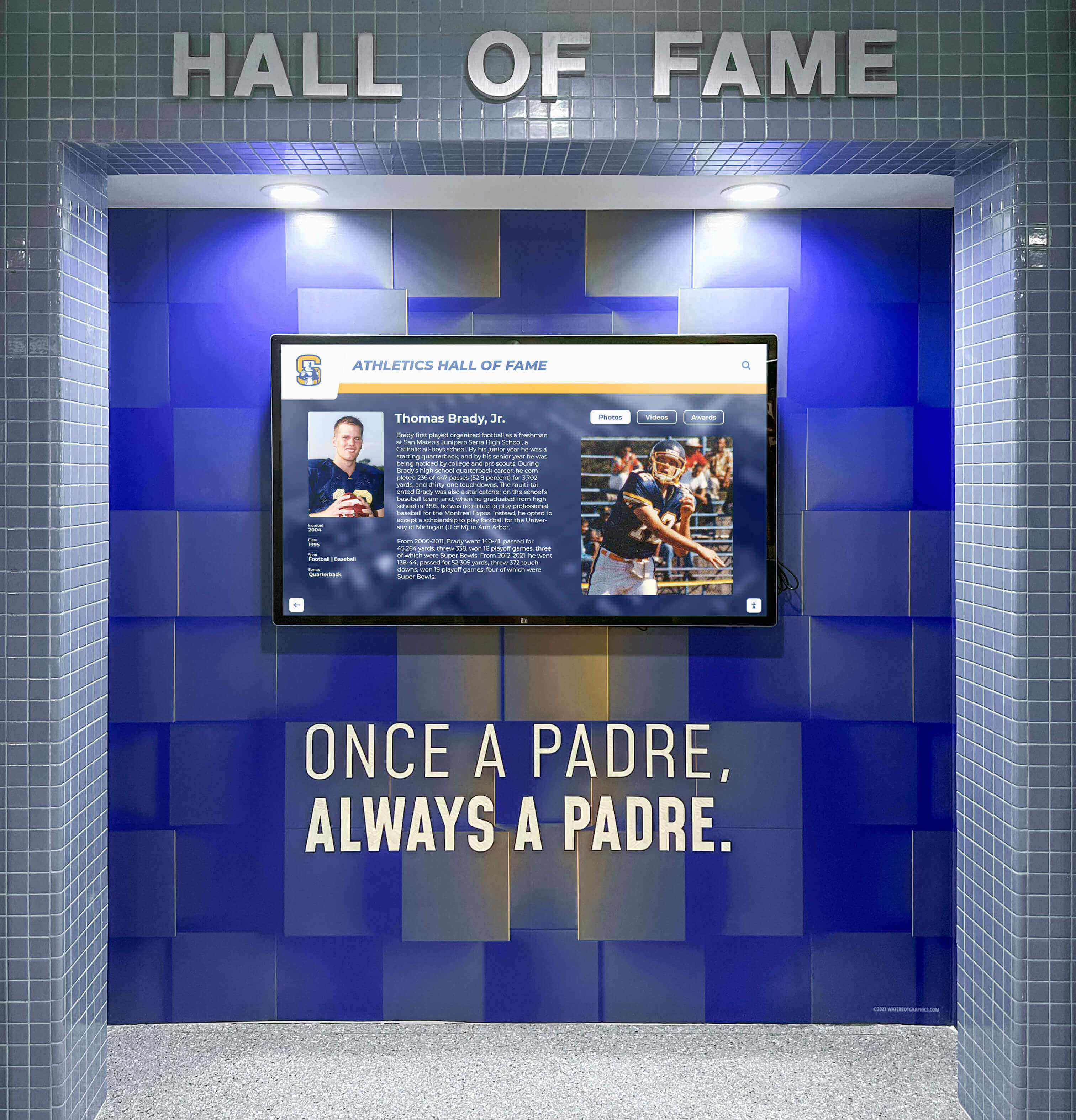
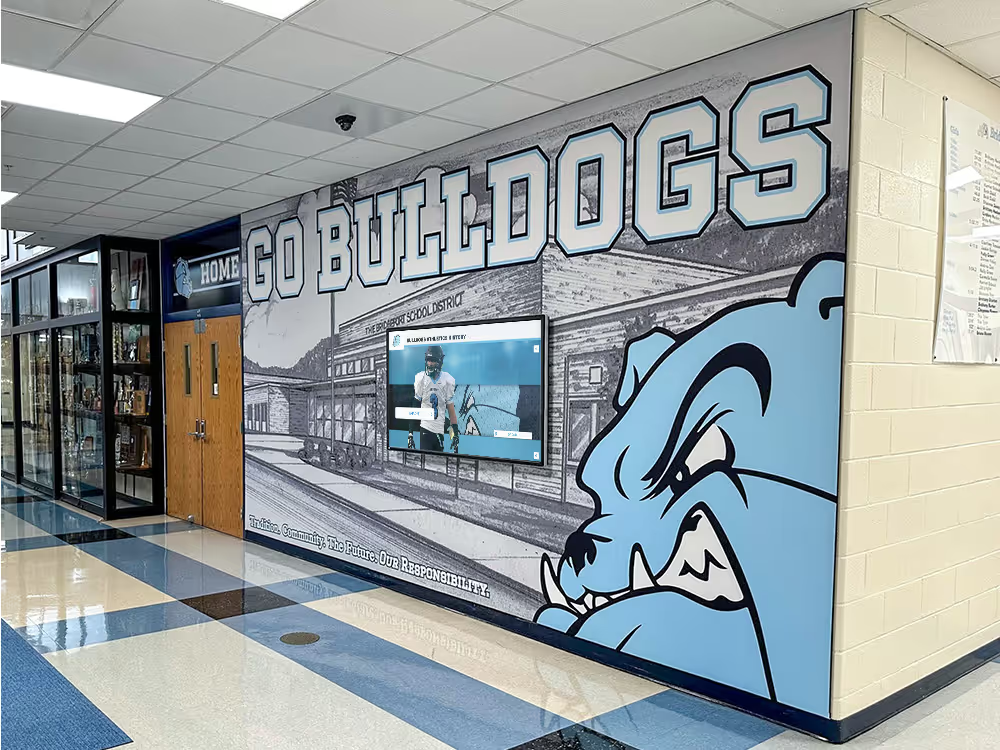
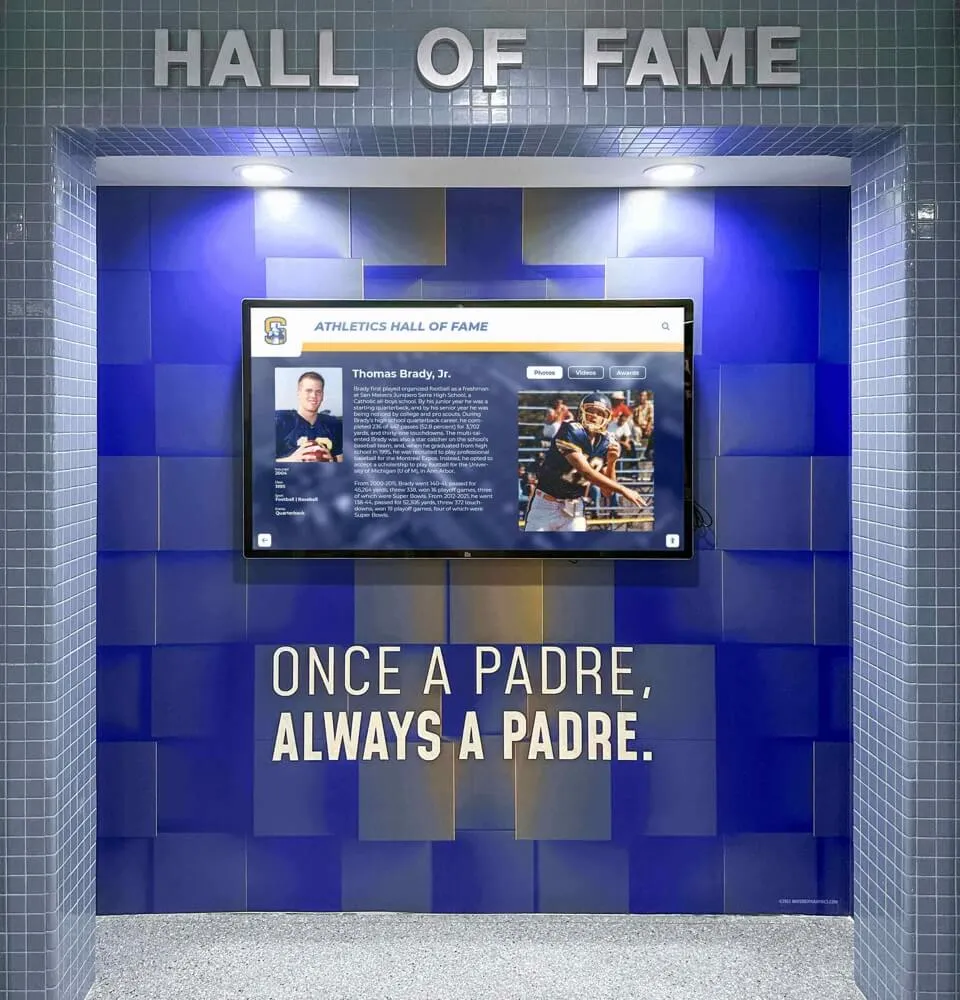
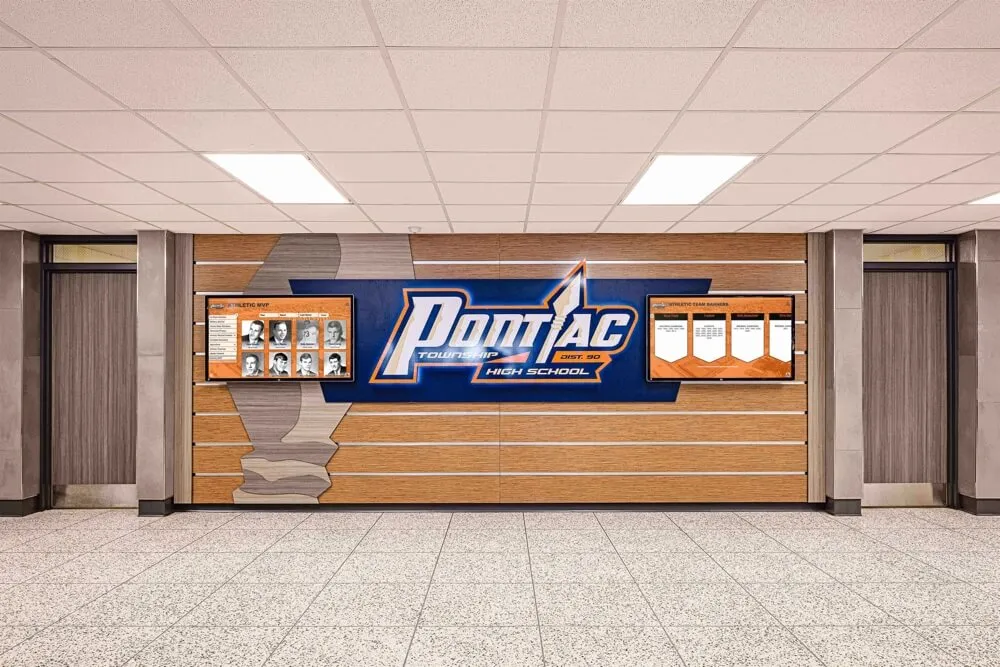
Professional wall-mounted installations create prominent recognition while enabling unlimited content capacity and easy updates
Implementation Vision: Interactive Recognition at the Ryan Center
How could touchscreen technology specifically transform the fan and alumni experience at the University of Rhode Island’s premier athletic facility?
Strategic Installation Locations Maximizing Impact
Several high-traffic areas within and around the Ryan Center would maximize engagement and recognition impact:
Main Entrance and Lobby Area
The primary Ryan Center entrance offers ideal positioning for maximum visibility:
- All visitors pass through main entrances creating guaranteed exposure to recognition displays
- Extended dwell time as fans wait for doors to open, meet groups, or purchase tickets
- Natural gathering points before games and during halftime providing sustained viewing opportunities
- Weather-protected installations ensuring year-round reliability and continuous operation
- Proximity to box office and will-call areas connecting recognition with ticketing experiences
- Connection to alumni check-in areas during special events and reunion weekends
- Integration opportunity with existing Hall of Fame displays creating comprehensive experience
- ADA accessibility ensuring all visitors can comfortably view and interact with displays
Multiple large-format touchscreens (55-65 inches) could create an impressive recognition plaza greeting every visitor with Rams athletic history before they enter the arena bowl, establishing historical context and building institutional pride.
Alumni Room Enhancement
The existing Hall of Fame Alumni Room presents perfect opportunity for interactive enhancement:
- Dedicated space specifically designed for recognition and event hosting purposes
- Controlled environment with climate control and lighting optimization
- Capacity for 125 people creating opportunities for group viewing during events
- Function room usage during receptions, ceremonies, and special gatherings
- Premium setting appropriate for Hall of Fame induction ceremonies and donor events
- Quieter environment conducive to extended exploration and conversation
- Integration with existing Hall of Fame plaques creating hybrid traditional-digital experience
- Event programming opportunities during homecoming, reunions, and special occasions
A centerpiece touchscreen installation (65-75 inches) could serve as the focal point for the Alumni Room, complementing existing plaques while providing depth impossible with physical displays alone, creating an immersive experience during Hall of Fame events and providing sustained value during regular facility operations.
Concourse Recognition Gallery
Main concourse areas around the arena bowl provide sustained engagement during events:
- Fans circulating throughout games passing displays multiple times per visit
- Concession and restroom lines creating natural viewing opportunities and extended dwell time
- Protected from weather in climate-controlled concourse areas
- Strategic placement near merchandise areas connecting products with athletic heritage
- Opportunity for multiple coordinated displays creating comprehensive gallery experience
- Integration with existing murals and championship banners for cohesive aesthetic
- High visibility ensuring maximum impressions across diverse audiences
- Traffic flow considerations ensuring displays enhance rather than impede movement
A series of medium-format touchscreens (43-55 inches) along primary concourses could create a digital museum walk celebrating different sports, eras, and achievement categories, transforming circulation time into engaged historical exploration.
Explore athletic facility display strategies that engage diverse audiences throughout university facilities.
Content Categories and Organization for Comprehensive Recognition
Thoughtful information architecture ensures visitors can discover relevant content efficiently while celebrating URI’s complete athletic legacy:
Sport-Specific Recognition Showcasing Each Program
Basketball Programs (Men’s and Women’s)
- Complete player databases spanning program history from earliest teams to present
- All-time statistical leaders in points, rebounds, assists, steals, and other categories
- Season-by-season team records with complete rosters and coaching information
- NCAA tournament appearances with game-by-game results and memorable performances
- Atlantic 10 Conference champions and tournament success across decades
- 1,000-point club members with career statistics and biographical information
- All-Conference selections and individual award recipients by season
- NBA and professional players with career tracking after leaving URI
- Coaching trees showing assistants who became head coaches elsewhere
- Notable games and rivalries with video highlights and historical context
Football Program Recognition
- Letterwinner database spanning Rams football history across all positions
- All-time statistical leaders in rushing, passing, receiving, tackles, and other categories
- Colonial Athletic Association championships and playoff appearances
- All-Conference selections across offensive, defensive, and special teams
- NFL players and professional football careers following URI experience
- Meade Stadium history and facility evolution across decades
- Historic rivalries and memorable games with scoring summaries
- Coaching excellence and program builders across different eras
- Super Bowl champions and professional achievement recognition
- Team captains and leadership award recipients by season
Learn approaches to 1,000-point scorer recognition that translate across different sports and achievement milestones.
Olympic Sports Comprehensive Coverage
- Soccer programs (men’s and women’s) with MLS players and national team members
- Track and field All-Americans and conference championship performances
- Swimming and diving team achievements and individual records
- Volleyball programs with statistical leaders and conference honors
- Tennis teams with conference champions and professional players
- Cross country teams with NCAA regional qualifiers and individual honors
- Golf programs with tournament victories and individual achievements
- Rowing and sailing programs unique to Rhode Island’s coastal location
Academic Achievement Recognition
Student-athlete academic excellence deserves systematic celebration:
- Academic All-Conference selections across all sports by season
- Academic All-American honorees recognized for athletic and academic excellence
- Scholar-athlete awards and departmental academic honors
- Graduation rates by sport demonstrating student-athlete success beyond competition
- Rhodes Scholars, Fulbright recipients, and prestigious fellowship winners
- Academic major distribution showing diverse intellectual pursuits
- GPA leaders and Dean’s List appearances by sport and season
- Post-graduate achievements in graduate school, professional careers, and community leadership
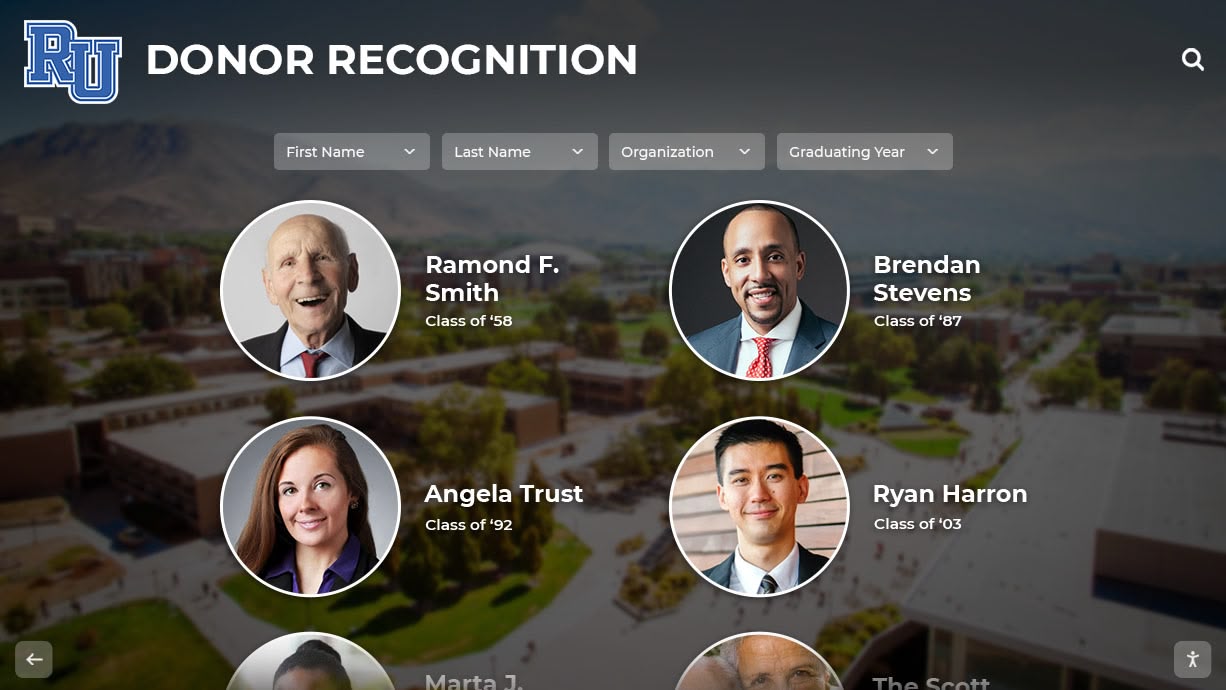
Comprehensive digital systems celebrate both athletic and academic achievements, recognizing the complete student-athlete experience
Hall of Fame and Special Recognition
Systematic organization of URI’s highest honors:
- Hall of Fame inductee complete profiles with career narratives and achievements
- Induction class groupings enabling reunion and ceremony planning
- Retired jersey numbers with explanation of selection criteria and career highlights
- Championship team recognition with full rosters and season narratives
- Individual awards and honors by category and sport
- Behind-the-scenes contributors including trainers, equipment staff, and administrators
- Coaching excellence and career achievement recognition across all sports
- Facility namesakes and major donors who enabled athletic program excellence
- Historical timeline showing program evolution and milestone achievements
- Connected content linking teammates, opponents, and contemporaries across eras
Technical Considerations for University Athletic Installations
Collegiate athletic facilities like the Ryan Center require professional-grade technology implementation supporting long-term institutional use:
Hardware Requirements for Educational Institution Standards
University applications demand robust, reliable installations meeting institutional expectations:
Commercial Display Quality and Specifications
URI deserves professional-grade touchscreen hardware appropriate for educational institutions:
- Commercial displays rated for continuous operation in high-traffic public facilities
- 4K resolution ensuring clarity from various viewing distances in open concourses
- High brightness specifications (400-500 nits) for visibility in variable facility lighting
- Wide viewing angles (178 degrees) accommodating multiple simultaneous viewers and groups
- Protective tempered glass withstanding thousands of daily interactions from students and visitors
- Anti-glare coatings reducing reflections in challenging lighting conditions throughout facility
- Commercial warranties (3-5 years) appropriate for institutional capital equipment
- Energy efficiency certifications meeting university sustainability standards and operational budgets
According to commercial display specifications, institutional installations require displays rated for at least 50,000-80,000 hours of operation—approximately 8-12+ years of typical university facility use—compared to consumer displays that would fail within 2-3 years under continuous public interaction demands.
Touch Technology Meeting Accessibility Standards
User experience and accessibility depend on appropriate touchscreen implementation:
- Capacitive touchscreens providing smartphone-like instant responsiveness and natural interaction
- Multi-touch support enabling gesture controls and intuitive navigation patterns
- Response times under 10 milliseconds providing immediate visual feedback during interaction
- Consistent accuracy across entire display surface preventing dead zones or calibration issues
- ADA compliance ensuring accessibility for individuals with diverse abilities
- Height considerations enabling wheelchair users to comfortably reach and interact with displays
- Clear visual feedback meeting WCAG standards for contrast and readability
- Antibacterial coatings appropriate for high-contact public installations in educational settings
Poor touchscreen implementation creates frustration that damages the university’s commitment to excellence and accessibility, making touch quality among the most critical hardware considerations for educational institution installations.
Environmental Considerations for Athletic Facilities
Ryan Center environments present unique installation challenges requiring specialized solutions:
- Variable lighting from bright concourse areas to arena lighting during events
- Temperature fluctuations from HVAC systems, crowd presence, and seasonal changes
- Humidity variations in Rhode Island climate requiring moisture-resistant construction
- High-decibel audio environments during games, concerts, and special events
- Vibration from crowd noise and event activities throughout facility
- Security requirements protecting expensive equipment in public spaces with limited supervision
- Cleaning protocols compatible with university facilities maintenance procedures
- Power reliability and backup systems ensuring continuous operation during events
Discover hardware selection guidance for recognition displays and appropriate technology choices for educational institutions.
Software and Platform Requirements for Sustainable Programs
Backend systems determine long-term program success and operational sustainability:
Purpose-Built Recognition Platforms for Athletic Applications
University athletic applications require specialized software capabilities beyond generic digital signage:
- Database architecture supporting tens of thousands of individual athlete profiles across decades
- Robust media management handling extensive photo and video libraries across all sports
- Powerful search and filtering across multiple content dimensions and achievement categories
- Responsive touchscreen interfaces optimized for public interaction and intuitive navigation
- Web accessibility extending content beyond physical displays to athletics websites and apps
- Comprehensive analytics tracking engagement patterns and popular content discovery
- Multi-display coordination ensuring consistent experiences across distributed installations
- Cloud-based management enabling updates without facility access or technical expertise
- Integration capabilities with existing university systems including athletics databases and websites
- Multi-user permissions enabling different departments to manage relevant content areas
Solutions like Rocket Alumni Solutions provide purpose-built platforms designed specifically for educational institution recognition applications, addressing challenges that generic digital signage software cannot accommodate while delivering superior user experiences optimized for athletic celebration and institutional engagement.
Content Management Workflows Supporting Long-Term Success
Sustainable recognition programs require efficient administration that can be maintained by university staff:
- Cloud-based management accessible from any location without requiring Ryan Center physical access
- Role-based permissions controlling content access across athletics departments and communication offices
- Approval workflows ensuring quality and accuracy before public publication to thousands of visitors
- Scheduled publishing enabling timed content releases for events, ceremonies, and milestones
- Bulk import tools for efficient historical archive additions across decades of athletic history
- Simple editing interfaces requiring minimal technical expertise from athletics staff
- Integration capabilities with existing databases including athletics management systems
- Version control preserving complete content history and enabling rollback if needed
- Asset management organizing thousands of photos, videos, and documents efficiently
- Automated backups protecting irreplaceable historical content and institutional records
The most sophisticated hardware delivers poor results without appropriate software supporting sustainable content management by university staff rather than requiring expensive consultants for routine updates and athlete additions.
Analytics and Engagement Measurement for Continuous Improvement
Data-driven insights optimize athletic recognition programs and demonstrate institutional value:
- Interaction tracking showing usage patterns by location, time, and event type
- Popular content identification informing future development priorities and resource allocation
- Search query analysis revealing visitor interests and information discovery needs
- Session duration metrics indicating engagement depth and content effectiveness
- Heat mapping showing most-viewed content areas within displays and popular athletes
- Demographic insights when integrated with ticketing and alumni systems
- Return visitor tracking showing sustained engagement across multiple Ryan Center visits
- Social sharing metrics measuring extended reach beyond physical facility attendance
- Comparative analytics across multiple display locations optimizing placement strategies
- ROI demonstration supporting budget requests and program expansion proposals
This data enables continuous improvement ensuring recognition programs deliver maximum visitor value while demonstrating return on investment to justify ongoing content development, system expansion, and long-term program sustainability within university budget processes.
Explore touchscreen software selection criteria and choosing appropriate platforms for educational institution applications.
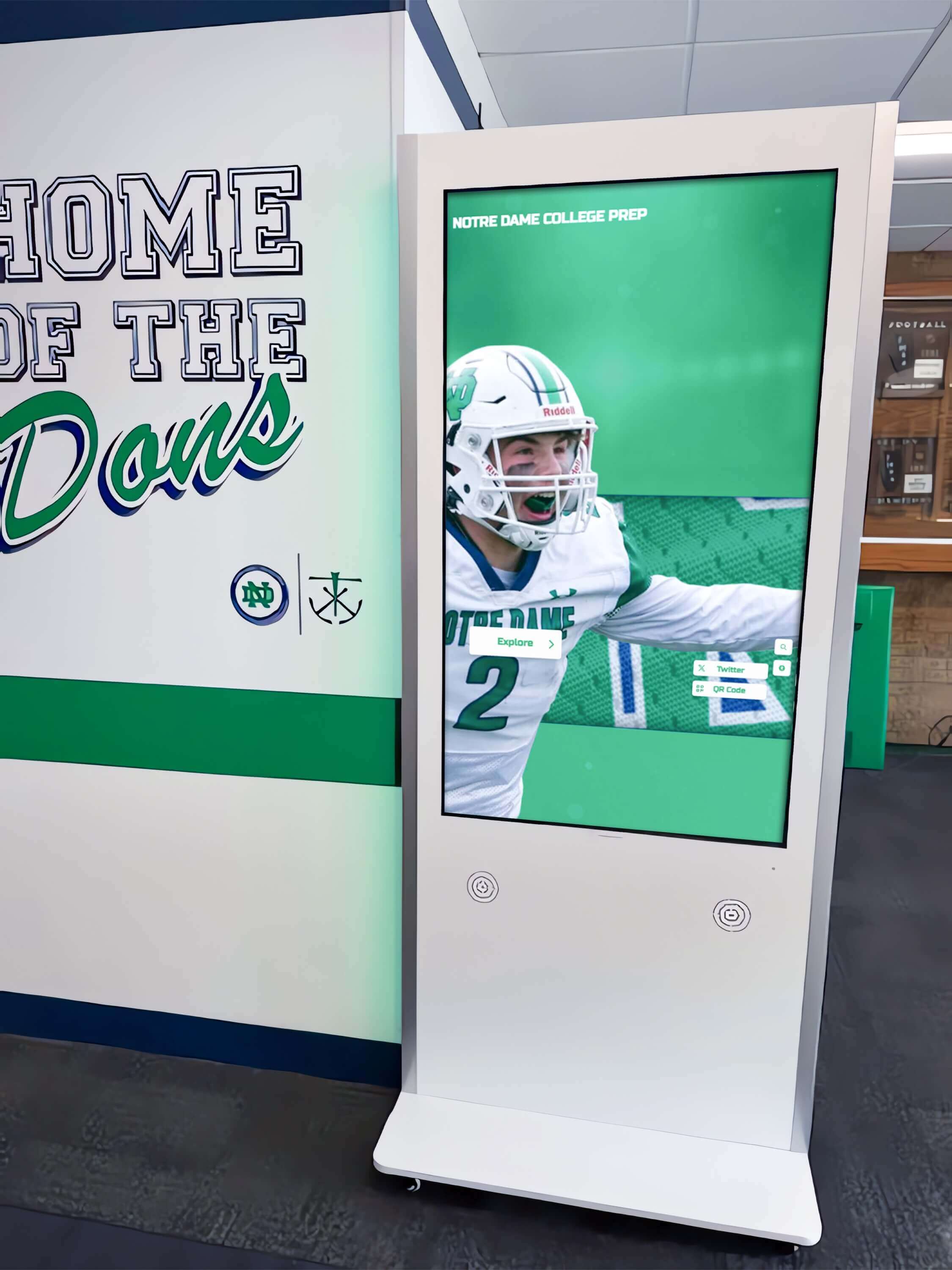
Professional kiosk installations provide complete solutions including display, computing systems, protective enclosures, and secure mounting
Beyond Fan Engagement: Additional Value for URI Athletics
Interactive recognition systems deliver benefits across multiple university dimensions beyond enhanced visitor experiences and Ryan Center atmosphere.
Alumni Relations and Advancement Opportunities
Digital platforms create engagement possibilities that traditional static displays cannot support:
Strengthened Alumni Connections and Institutional Loyalty
Recognition systems provide tangible benefits for university advancement:
- Personal recognition strengthening emotional connections and institutional pride
- Discovery experiences enabling alumni to find themselves and contemporaries easily
- Social sharing extending university brand and athletic legacy through personal networks
- Event programming opportunities during homecoming, reunions, and special occasions
- Data collection building advancement databases with engagement tracking and contact updates
- Donor cultivation through systematic recognition of giving supporting athletic programs
- Legacy building encouraging multi-generational family connections to URI athletics
- Volunteer recruitment identifying engaged alumni for mentoring and networking programs
Unlike passive plaques that receive brief glances, interactive systems create meaningful experiences that strengthen relationships supporting fundraising, volunteer engagement, and sustained institutional connection throughout alumni lifetimes.
Fundraising and Development Support
Digital recognition enhances athletic fundraising efforts:
- Donor recognition opportunities integrated with athletic achievement celebration
- Naming rights and sponsorship possibilities for content sections and display installations
- Campaign visualization showing facility projects and program investments
- Impact demonstration illustrating how donor support enables student-athlete success
- Stewardship programming recognizing major donors appropriately and meaningfully
- Planned giving cultivation through legacy recognition and family celebration
- Annual giving promotion highlighting participation and collective impact
- Major gift proposal support demonstrating recognition and engagement opportunities
This advancement integration helps justify recognition technology investments through demonstrated fundraising value while creating more effective donor engagement than traditional approaches enable.
Learn about donor recognition wall strategies that integrate philanthropic support with athletic celebration effectively.
Recruiting and Student-Athlete Development Benefits
Systematic recognition supports athletic department operational objectives:
Recruiting Advantage Through Program Tradition Demonstration
Recognition installations provide competitive recruiting benefits:
- Tradition demonstration showing program history and athlete development
- Professional pathway illustration highlighting alumni who reached next competitive levels
- Academic achievement showcase demonstrating commitment to student-athlete success beyond athletics
- Facility excellence communication through professional recognition technology
- Legacy building enabling recruits to envision themselves within historical context
- Family connections highlighting multi-generational Rams athlete legacies
- National scope demonstration through geographic distribution of athletes and achievements
- Conference competitiveness evidence through championship and individual honor accumulation
According to athletic recruiting research, program tradition and facility quality rank among top factors influencing recruit decisions, making professional recognition installations valuable recruiting tools beyond their primary historical preservation purpose.
Current Student-Athlete Engagement and Development
Recognition systems benefit current Rams athletes throughout university experience:
- Role model identification enabling current athletes to learn from predecessors
- Goal setting inspiration through achievement visibility and statistical comparisons
- Program pride building institutional identity and competitive culture
- Academic motivation through scholar-athlete recognition and success demonstration
- Career exploration showing diverse post-graduation pathways and alumni achievements
- Mentoring connections facilitating relationships between current athletes and successful alumni
- Leadership development through responsibility for maintaining and contributing to legacy
- Media engagement teaching athletes to articulate program tradition and institutional pride
This developmental value means recognition investments serve current student-athletes and recruiting objectives while simultaneously celebrating historical achievements and engaging alumni constituencies.
Institutional Pride and Campus Community Building
Historical recognition strengthens university positioning and community engagement:
Authentic Heritage Storytelling for University Communications
Digital athletic recognition creates compelling content for institutional marketing:
- Historical moment anniversaries generating media coverage opportunities and press interest
- Social media content celebrating athletic achievements and alumnus success
- Documentary-style storytelling highlighting university tradition and competitive excellence
- Influencer partnerships with prominent alumni exploring recognition archives
- Admissions marketing emphasizing athletic participation and school spirit opportunities
- Campus tours integration showcasing Ryan Center and athletic tradition systematically
- Rhode Island tourism marketing highlighting URI as Kingston community anchor
- Local media partnerships creating feature content about historical achievements
This authentic content marketing proves more effective than paid advertising while strengthening the university’s brand as an institution with proud tradition worthy of student consideration and community support.
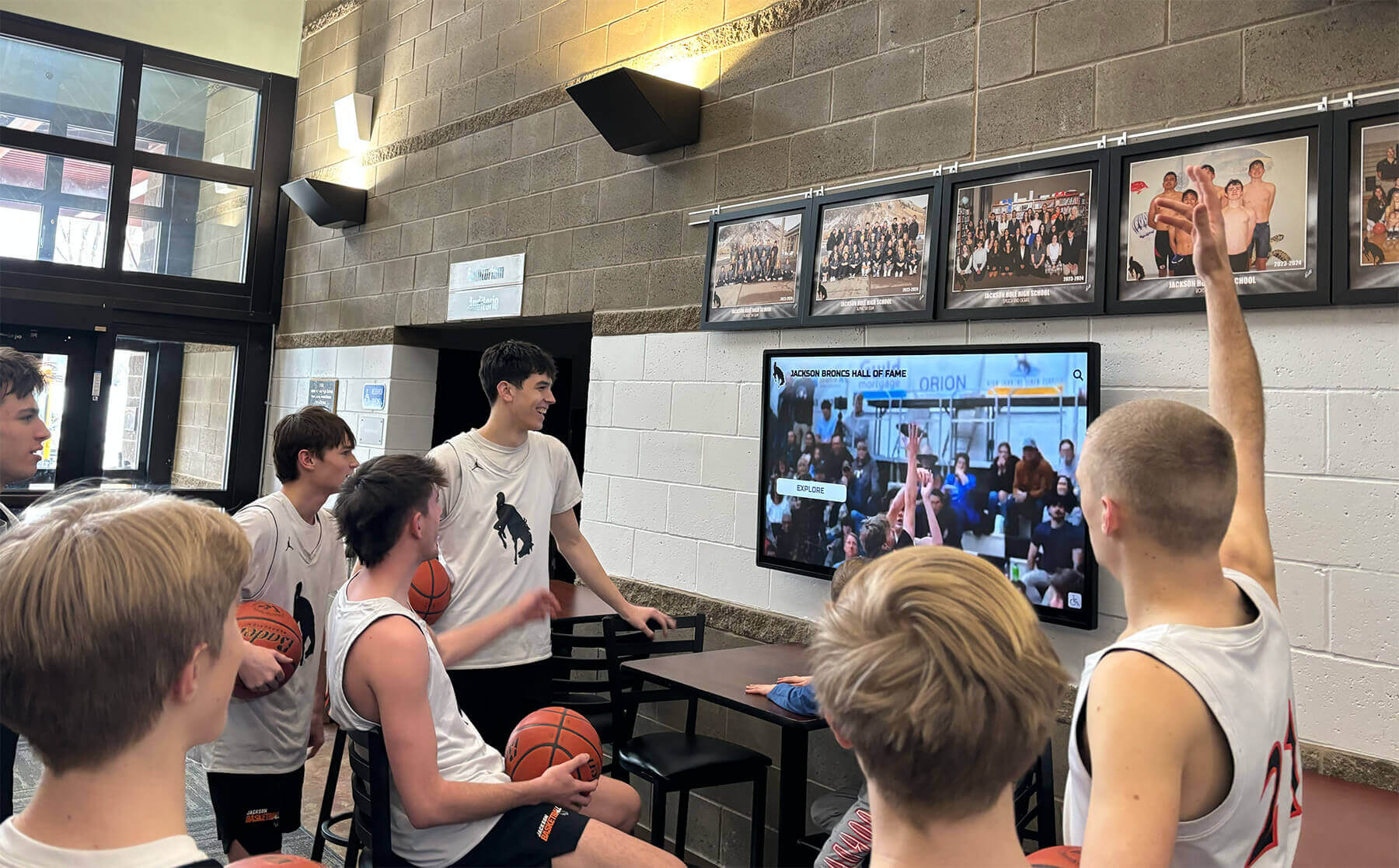
Digital displays create shared experiences and intergenerational connections through athletic heritage and collective memory
Campus Community and Rhode Island Connection
Systematic recognition strengthens relationships across constituencies:
- Student body engagement with athletic programs beyond game attendance
- Faculty and staff connections to athletics through recognized scholar-athletes from their departments
- Kingston community identity around shared URI athletic tradition and local pride
- Rhode Island statewide connections through geographic distribution of athletes
- Multi-generational family legacies strengthening enrollment and institutional loyalty
- Youth sports connections inspiring Rhode Island athletes to pursue URI opportunities
- Corporate partnerships with Rhode Island businesses supporting athletic programs
- State pride through recognition of URI’s role in Rhode Island higher education landscape
These emotional connections translate to enrollment, athletic event attendance, fundraising support, and sustained community engagement that drives long-term university success beyond individual team performance or seasonal win-loss records.
Implementation Roadmap for University Athletic Programs
Successful installation at a university athletic facility requires systematic planning respecting academic calendars and institutional processes:
Phase 1: Planning and Content Foundation Development
Foundation work ensures long-term recognition program success within university context:
Historical Archive Assessment and Gap Analysis
Begin with comprehensive inventory of available athletic content:
- Existing photography and video asset identification across athletics department archives
- Media guides, yearbooks, and program materials review spanning decades
- Statistical database compilation and historical verification ensuring accuracy
- Athletics communications records review for biographical information and career narratives
- Media rights clearance for video content from conference and broadcast partners
- University archives coordination accessing institutional historical materials
- Gap identification revealing eras or sports requiring new content development
- Priority determination for initial launch content maximizing immediate impact and visitor value
- Alumni engagement planning for content contribution and oral history collection
- Budget development for digitization, research, and content creation expenses
Stakeholder Engagement Across University Constituencies
Involve key constituencies in planning and recognition goal-setting:
- Athletics director and senior staff establishing vision and department priorities
- University advancement and alumni relations coordinating fundraising and engagement integration
- Athletics communications determining content strategy and management responsibilities
- Facilities and IT staff planning installation logistics, power, network, and maintenance requirements
- Academic affairs ensuring scholar-athlete academic achievement receives appropriate emphasis
- Student-athlete advisory committee gathering current athlete input and development objectives
- Alumni board representatives ensuring recognition meets constituent expectations and needs
- University communications coordinating brand standards and institutional messaging
- Rhode Island community representatives ensuring local connection and regional pride
Vendor Selection and Partnership Development
Choose appropriate technology partners with educational institution implementation experience:
- Recognition platform providers with university athletics installation portfolios
- Hardware suppliers offering institutional equipment meeting education sector standards
- Installation contractors familiar with university facilities requirements and processes
- Content development partners with collegiate sports storytelling expertise and historical research capabilities
- Ongoing support providers ensuring long-term system reliability throughout academic years
- Integration specialists coordinating with existing university technology infrastructure and systems
Universities benefit from selecting integrated providers like Rocket Alumni Solutions offering complete recognition solutions rather than assembling components from multiple vendors requiring extensive coordination, complex project management, and unclear long-term support responsibilities.
Explore digital hall of fame planning approaches for university athletic programs and implementation best practices.
Phase 2: Pilot Installation and Community Validation
Start with limited deployment validating approaches before full Ryan Center commitment:
Initial Installation Location Selection
Select strategic pilot location for testing and refinement:
- High-traffic area ensuring significant usage, visibility, and diverse audience interaction
- Representative environment testing actual operating conditions during varied events
- Accessible location enabling iterative adjustments based on real-time feedback throughout season
- Alumni Room consideration providing controlled environment for Hall of Fame emphasis
- Timeline allowing thorough evaluation before broader rollout budget requests and decisions
- Integration opportunity with existing recognition creating cohesive traditional-digital hybrid
- Staff observation proximity enabling engagement monitoring and issue resolution
- Event programming compatibility ensuring recognition enhances rather than competes with operations
Content Population Creating Immediate Value
Launch with comprehensive initial athletic content creating immediate visitor and alumni value:
- Multiple sports representation demonstrating breadth, variety, and equitable recognition
- Historical depth spanning multiple decades showing complete program heritage
- Mix of legendary athletes and lesser-known contributors ensuring comprehensive celebration
- Rich multimedia including photographs, video highlights, and complete career statistics
- Interconnected content enabling discovery pathways through teammates, opponents, and contemporaries
- Recent graduates ensuring current relevance alongside historical context and tradition
- Academic achievement integration recognizing complete student-athlete experience
- Special features highlighting Hall of Fame inductees, championship teams, and milestone achievements
Insufficient initial content disappoints early users and undermines platform value perception, making comprehensive launch content critical for pilot success, stakeholder confidence, and justification for broader system deployment investment within university budget processes.
Feedback Collection and Iterative Refinement
Gather systematic input informing refinements before broader deployment:
- Observational research documenting actual visitor interactions, behaviors, and engagement patterns
- User interviews gathering qualitative feedback from students, alumni, visitors, and staff
- Analytics data revealing usage patterns, popular content, search behaviors, and session characteristics
- Staff feedback from athletics personnel observing fan and alumni engagement during events
- Student-athlete input on recognition content, presentation, and developmental value
- Alumni focus groups testing discovery capabilities and gathering enhancement suggestions
- Technical performance monitoring identifying reliability issues or user experience constraints
- Accessibility evaluation confirming usability for individuals with diverse abilities and age groups
- Integration assessment evaluating coordination with broader athletics communications strategies
This feedback enables content refinement, interface optimization, and technical adjustment before broader deployment commits significant institutional resources to approaches that may require modification based on real-world usage patterns during actual Ryan Center operations.
Phase 3: Expanded Deployment and Sustained Excellence
Scale successful pilot to comprehensive venue-wide athletic recognition program:
Strategic Rollout Across Ryan Center
Expand systematically maximizing impact while managing institutional budget constraints:
- Sequential installation during summer months minimizing disruption to academic year operations
- Coordinated content across multiple displays creating cohesive Ryan Center experience
- Marketing campaign building awareness among students, alumni, and Rhode Island community
- Staff training ensuring support capabilities across athletics department and event operations
- Grand opening celebration during homecoming weekend generating media coverage and alumni engagement
- Media outreach through Rhode Island publications, alumni magazine, and athletics communications
- Integration with gorhody.com athletics website extending recognition beyond physical displays
- Campus tour integration ensuring prospective students experience recognition during admissions visits
Ongoing Content Development Maintaining Program Vitality
Maintain perpetually fresh recognition engaging return visitors across years:
- Season-ending additions of new achievements, statistical leaders, and individual honors
- Hall of Fame induction content coordinating with annual ceremony and class recognition
- Anniversary content highlighting historical milestone achievements on significant dates
- Senior recognition celebrating graduating student-athletes and their complete careers
- Alumni updates tracking post-graduation achievements in athletics, academics, and careers
- Fan-requested content responding to engagement patterns, search queries, and submissions
- Continuous historical research expanding archives with newly discovered materials and stories
- Oral history projects capturing first-person narratives from coaches and athletes
- Statistical research identifying emerging records and milestone achievement tracking
- Partnership content from conference, national organizations, and professional leagues
Performance Optimization Through Data-Driven Improvement
Continuously improve based on analytics, feedback, and evolving institutional needs:
- Quarterly analytics review identifying popular and underutilized content requiring adjustment
- User experience refinement based on interaction patterns, behaviors, and engagement metrics
- Technical optimization ensuring system reliability throughout demanding event operations
- Content presentation testing evaluating different approaches to storytelling and organization
- Promotional strategies increasing awareness and driving usage among target constituencies
- Hardware refresh planning preparing for technology upgrades as capabilities improve
- Software feature utilization maximizing platform capabilities as they’re released
- Best practice sharing with other Atlantic 10 and URI peer institutions
- Assessment integration within broader athletics department strategic planning
- Continuous stakeholder feedback ensuring recognition serves evolving institutional priorities
This iterative improvement ensures athletic recognition programs deliver sustained value rather than becoming stale installations that visitors ignore after initial novelty wears off or that fail to evolve with changing institutional priorities, technological capabilities, and community expectations.
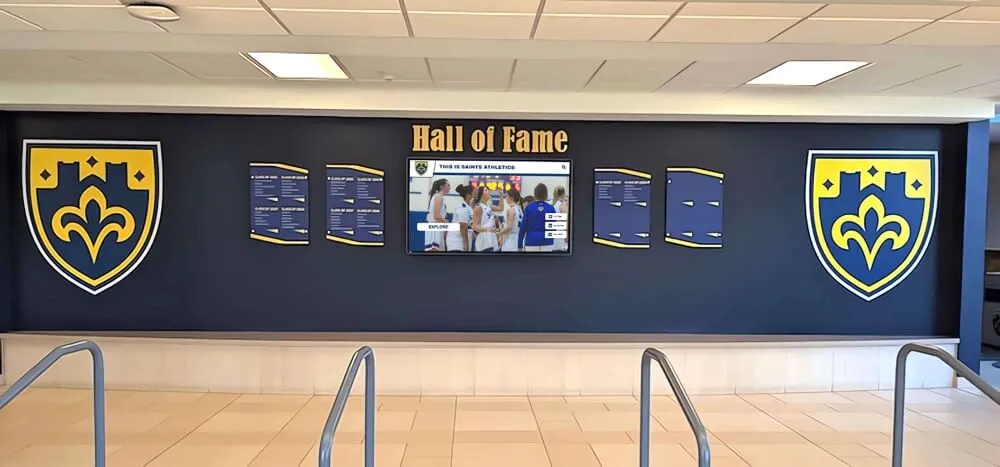
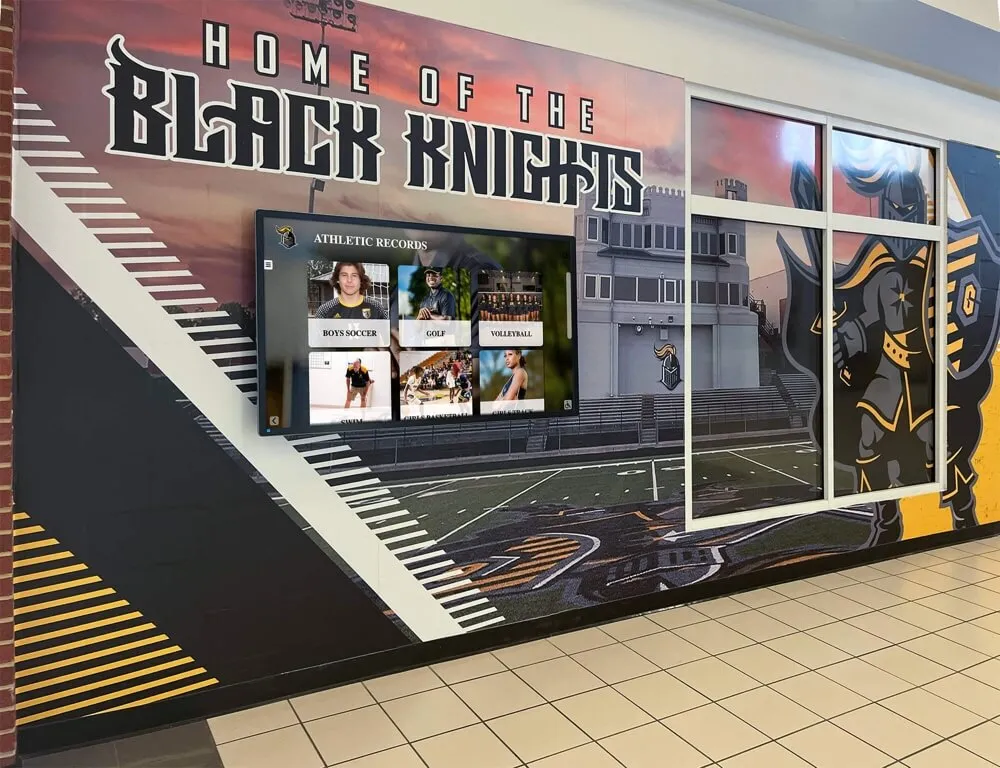
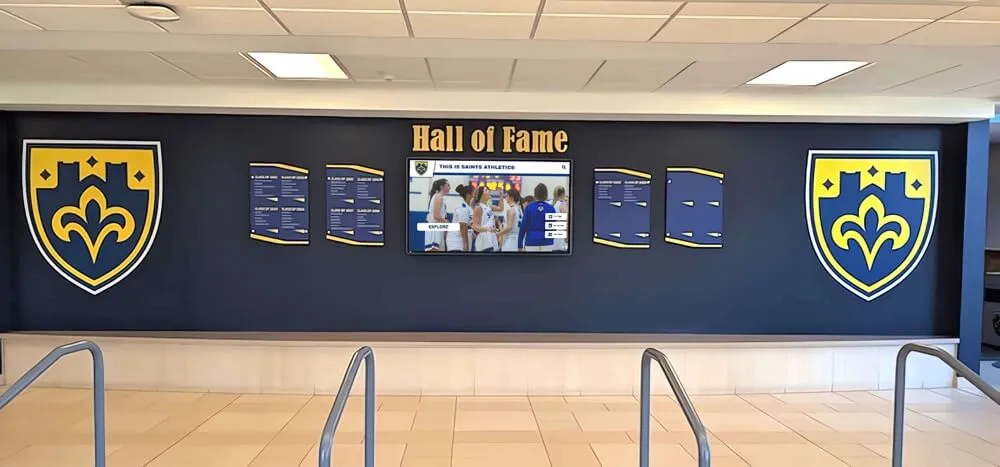
Professional installations can integrate traditional aesthetic elements with modern interactive technology creating cohesive experiences honoring heritage
Addressing Implementation Concerns for University Decision-Makers
Several questions typically arise when universities consider digital recognition investments and technology adoption:
Technology Reliability and Long-Term Institutional Commitment
Universities appropriately worry about equipment failures and long-term support requirements:
Commercial-Grade Reliability Meeting Institutional Standards
Appropriate hardware specifications minimize reliability concerns:
- Commercial displays engineered specifically for continuous operation in demanding public environments
- Industrial computing systems built for reliability with components designed for 24/7 operation
- Extended warranties (3-5 years) protecting substantial institutional capital equipment investments
- Remote monitoring enabling proactive maintenance before failures occur during academic year
- Established vendor support ensuring long-term parts availability and technical assistance
- Energy efficiency reducing operational costs and supporting university sustainability commitments
- Standardized components enabling straightforward repairs using institutional purchasing processes
- Preventive maintenance protocols integrating with university facilities management procedures
According to commercial display specifications and institutional installation standards, properly specified university equipment delivers 50,000-80,000 hours of reliable operation—over 10 years of typical facility use—when maintained appropriately through standard university facilities processes.
Future-Proof Software Architecture Protecting Institutional Investment
Platform selection prevents premature obsolescence and protects long-term investment:
- Cloud-based systems automatically receiving updates, security patches, and feature enhancements
- Content ownership preventing vendor lock-in and enabling platform migration if ever needed
- Standard data formats ensuring long-term accessibility regardless of future platform changes
- Scalable architecture accommodating future expansion to additional buildings and facilities
- Regular feature additions enhancing functionality over time without hardware replacement requirements
- API access enabling integration with emerging university technologies and systems
- Mobile compatibility ensuring content accessibility on evolving student device platforms
- Backward compatibility maintaining historical content access across system upgrades and changes
The most significant risk isn’t technology failure—it’s selecting inappropriate platforms that don’t support evolving institutional needs or create vendor dependency limiting future flexibility and requiring costly migration projects disrupting operations.
Investment Justification and Budget Considerations
Understanding comprehensive costs helps justify substantial investments within university budget processes:
Complete Cost Analysis for University Planning
University athletic installations typically require investment across multiple categories:
- Hardware investment: $8,000-$20,000 per display installation depending on size and specifications
- Software licensing: $2,500-$6,000 annually for comprehensive recognition platforms with unlimited content
- Initial content development: $15,000-$35,000 depending on historical archive scope, digitization needs, and research requirements
- Installation and integration: $4,000-$12,000 per display location including mounting, power, and network connectivity
- Ongoing maintenance and support: $1,500-$4,000 annually per display ensuring reliability and updates
Total investment for a comprehensive 3-5 display Ryan Center installation might range from $75,000-$150,000 initial cost with $12,000-$30,000 ongoing annual expenses depending on scale, content ambitions, and institutional support arrangements within athletics and facilities budgets.
Value Delivered Across Multiple Institutional Dimensions
Returns include both quantifiable benefits and strategic university advantages:
- Enhanced alumni engagement measurable through interaction analytics, dwell time, and advancement metrics
- Recruiting advantage through tradition demonstration and professional facility presentation
- Student-athlete development supporting goal-setting, mentoring, and leadership cultivation
- Advancement opportunities through donor recognition, stewardship, and fundraising integration
- Campus community building strengthening institutional pride and school spirit
- Marketing content value through social sharing, media coverage, and admissions communications
- Operational efficiency eliminating ongoing costs for physical plaque production, installation, and updates
- Historical preservation preventing irreplaceable loss as time passes and individuals age
- Research resources supporting scholarship about athletics history and higher education
- Community relations strengthening URI’s role within Rhode Island and regional identity
Many universities find that comprehensive digital athletic recognition programs achieve cost neutrality within 5-8 years through eliminated traditional recognition expenses, advancement revenue enhancement, and recruiting benefits, while delivering substantially superior engagement and historical preservation throughout decades of operation serving multiple generations of students, athletes, and alumni.
Discover budget guidance for athletic recognition programs and cost-effective approaches for university athletics.
The Future of University Athletic Recognition Technology
Emerging technologies will further enhance recognition capabilities at institutions like URI and other universities nationwide:
Artificial Intelligence and Machine Learning Applications
AI features will personalize and dramatically enhance athletic recognition experiences:
Intelligent Content Discovery and Personalization
AI-powered capabilities could revolutionize how visitors explore university athletic history:
- Natural language search understanding conversational queries like “fastest 100m runners”
- Personalized recommendations based on interaction patterns, major, hometown, and class year
- Facial recognition enabling photo search and automatic athlete identification in historical team images
- Automated content generation summarizing careers, playing styles, and achievement contexts
- Predictive analytics identifying trending content, popular athletes, and emerging visitor interests
- Voice interaction enabling hands-free navigation and accessibility for diverse abilities
- Translation services providing real-time multilingual support for international student-athletes and visitors
- Pattern recognition identifying similar career trajectories and achievement patterns across eras
- Connection suggestions linking visitors to relevant content based on profile and engagement history
Augmented and Virtual Reality Integration
Immersive technologies will expand athletic recognition possibilities beyond physical Ryan Center displays:
Mobile AR Applications for Enhanced Campus Experiences
Smartphone apps could enable entirely new exploration experiences around campus:
- Point devices at physical locations triggering historical achievement content overlays
- Virtual athlete appearances superimposed in actual Ryan Center locations and locker room areas
- Historical game overlays showing memorable contests in current venue context
- Scavenger hunt experiences encouraging campus exploration and athletic tradition discovery
- Personalized tours adapted to individual interests, sports, and achievement categories
- Social sharing integrating physical and digital recognition experiences seamlessly across platforms
- Campus wayfinding incorporating athletic history into navigation and admissions tour assistance
- Interactive statistics appearing when pointing at specific court locations, field positions, or facilities
Virtual Reality Experiences for Remote Engagement
VR could transport alumni and supporters to URI athletic moments from anywhere:
- Immersive game replays experiencing championships from courtside and field perspectives
- Virtual Ryan Center tours spanning different historical eras and facility configurations
- Behind-the-scenes access to restricted areas including locker rooms and training facilities
- Interactive documentaries with viewer control over exploration pathways and content discovery
- Training and preparation insights from legendary coaches and successful athletes
- Championship moment experiences placing viewers in decisive game situations and celebrations
- Historical venue recreation showing facilities evolution across decades of university growth
- Multi-sport viewing enabling simultaneous exploration of parallel program narratives and eras
These emerging capabilities will continue enhancing recognition effectiveness and alumni engagement, with forward-thinking universities selecting platforms like Rocket Alumni Solutions positioned to incorporate innovations as they mature, become commercially viable, and deliver measurable value enhancements justifying implementation investment within institutional budget processes.
Conclusion: Honoring URI Athletic Legacy Through Modern Technology
The University of Rhode Island stands as a proud institution with over a century of athletic excellence, competitive achievement, and student-athlete development across 18 NCAA Division I sports. The Rams have produced professional athletes, academic scholars, and community leaders who represent the best of intercollegiate athletics and higher education values. Yet preserving and sharing this extraordinary heritage through traditional recognition approaches alone falls short of what modern technology enables and contemporary alumni and visitors expect when experiencing the Ryan Center and URI athletic facilities.
Interactive touchscreen displays—particularly comprehensive platforms like those provided by Rocket Alumni Solutions—offer transformative opportunities to honor URI’s complete athletic history comprehensively while creating engaging experiences that strengthen alumni connections, support recruiting and advancement objectives, and preserve institutional legacy appropriately for future generations of Rams athletes, students, and supporters who deserve access to this remarkable heritage.
The vision explored throughout this guide demonstrates how strategic implementation of interactive recognition technology could revolutionize historical engagement at the Ryan Center and across URI’s athletic facilities. From unlimited recognition capacity eliminating impossible selection decisions about worthy athletes to personalized exploration enabling individualized discovery based on specific connections to rich multimedia storytelling bringing Rams athletic tradition to life through video highlights and comprehensive statistics, digital platforms address fundamental limitations while creating entirely new engagement possibilities that traditional plaques and static displays simply cannot match.
Ready to explore how interactive touchscreen technology can transform athletic recognition at your university or college program? Modern recognition solutions help institutions celebrate unlimited student-athlete achievements while creating engaging visitor experiences and preserving athletic heritage comprehensively. Solutions like Rocket Alumni Solutions provide comprehensive platforms specifically designed for educational institution recognition, combining intuitive software with professional hardware recommendations and implementation support to ensure successful long-term programs that deliver measurable value across multiple institutional constituencies.
Whether managing a Division I athletic program like URI, a smaller college with proud athletic tradition, or a high school building competitive excellence, fundamental challenges remain similar: limited physical space for recognition, growing legacy demanding comprehensive preservation, and changing engagement expectations from modern audiences expecting interactive digital experiences. Interactive touchscreen technology solves these challenges while honoring tradition and creating experiences that inspire current student-athletes, engage alumni meaningfully, and preserve institutional history appropriately for generations to come.
The most important consideration isn’t whether to embrace digital athletic recognition—it’s selecting appropriate technology aligned with your institution’s unique character, implementing systems that deliver sustained value matching your organizational needs, audience expectations, and budget realities, and ensuring long-term program sustainability through proper planning, stakeholder engagement, and ongoing content development that keeps recognition fresh, relevant, and valuable across decades of institutional service.
Your student-athletes, alumni, and university community deserve recognition technology that celebrates achievements appropriately while creating meaningful engagement and lasting impact that extends well beyond individual games, seasons, or coaching tenures. The University of Rhode Island’s athletic legacy derives not from facilities or equipment but from the extraordinary student-athletes, dedicated coaches, and passionate supporters who have built Rams tradition across generations of competitive excellence and personal development.
Interactive recognition technology ensures those stories remain accessible, engaging, and inspirational for everyone who experiences the Ryan Center and URI athletics—today and for generations to come. The right technology makes comprehensive, equitable athletic recognition achievable and sustainable, transforming static historical displays into living heritage that connects past excellence with present experiences and future institutional aspirations while supporting recruiting, advancement, and community engagement objectives that drive university success.
Ready to begin exploring interactive touchscreen options for your university athletic recognition program? Start by defining your recognition goals and what achievements deserve celebration, evaluating your facility opportunities and constraints including power and network infrastructure, gathering your historical archives and identifying content gaps requiring research and digitization, and connecting with providers like Rocket Alumni Solutions who understand educational institution recognition specifically rather than simply selling generic display hardware or digital signage platforms that cannot deliver the specialized functionality athletic recognition applications require. Your athletic legacy deserves technology that honors it appropriately while creating experiences that strengthen institutional pride, alumni loyalty, and community connections for decades to come.