



Athletic directors and facilities managers face a recurring budget challenge that grows more expensive every year: championship banner production and installation. Each season brings new titles, conference championships, and achievements worthy of recognition—and each recognition banner carries a price tag of $200-500 for production plus installation labor. Over a decade, a comprehensive athletic program can spend $15,000-30,000 on fabric banners that eventually overcrowd gymnasium ceilings and create difficult decisions about which achievements to remove when space runs out.
The traditional banner model assumes physical fabric displays represent the only option for celebrating athletic excellence. This assumption creates a predictable cost cycle: produce banners after championships, hire contractors for installation, watch ceiling space fill completely, face difficult removal decisions, repeat the process indefinitely. Schools pursuing comprehensive recognition across all sports and achievement levels discover that traditional banners become economically and spatially unsustainable.
This guide explores modern alternatives to expensive championship banners, focusing on digital recognition solutions that eliminate recurring production costs while providing unlimited capacity, richer content, and sustainable long-term approaches to celebrating athletic achievement. Athletic programs implementing these strategies report 70-85% cost reduction over five years while dramatically improving recognition quality and accessibility.
Successful athletic programs deserve recognition systems that honor achievements appropriately without creating unsustainable expense or forcing impossible space-constraint decisions. Digital alternatives provide practical solutions addressing both the economic and capacity challenges traditional banners create.

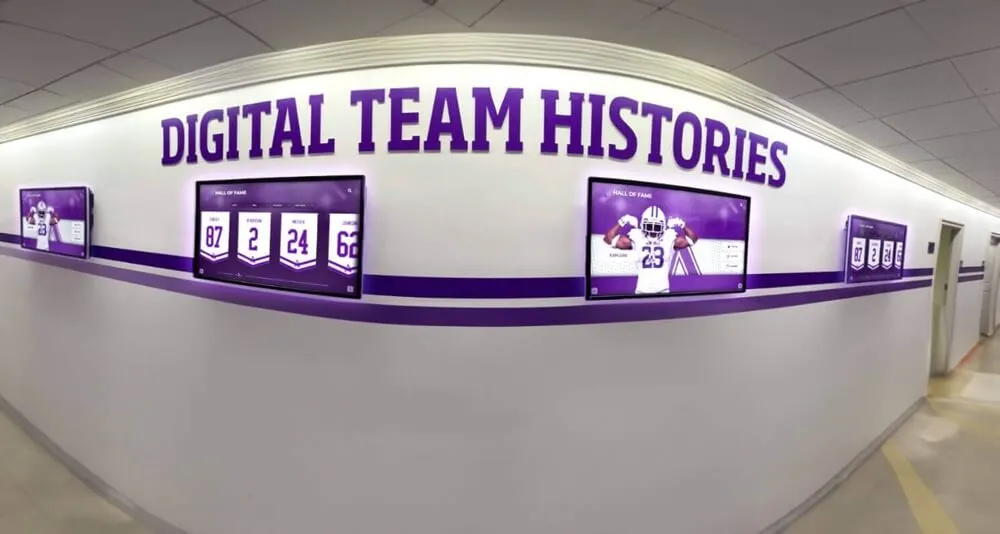
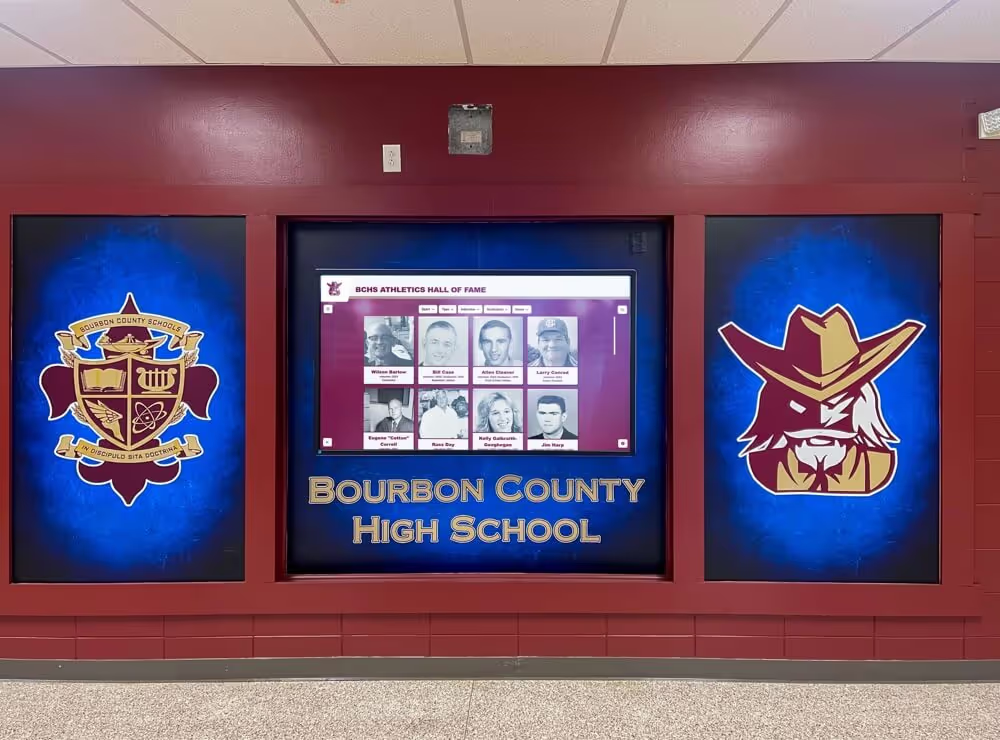
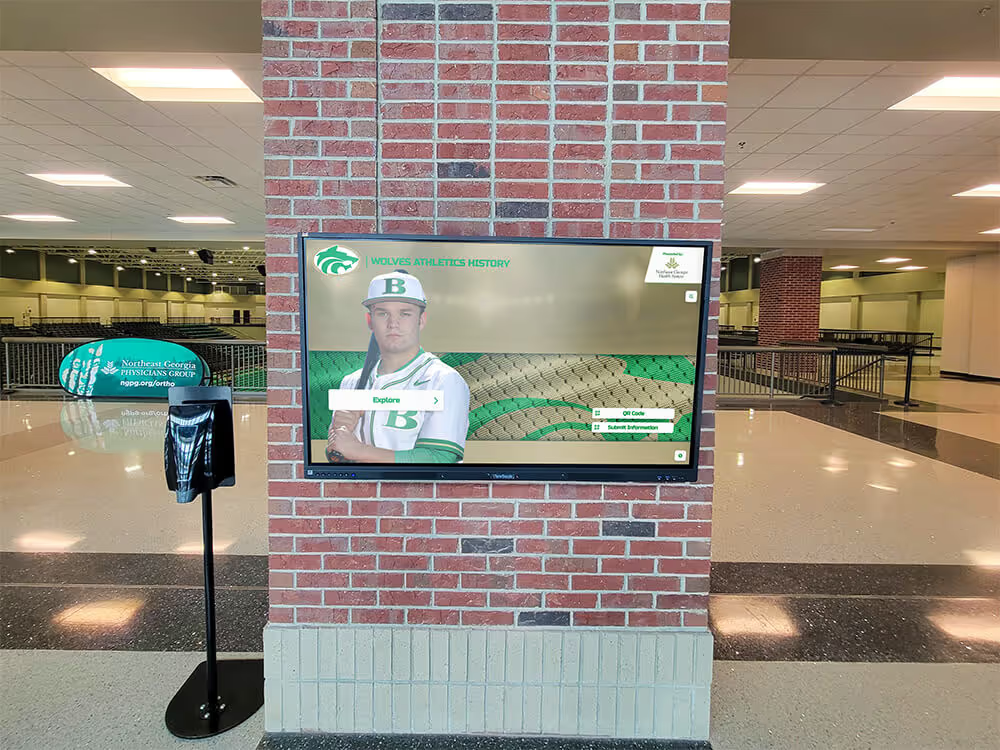
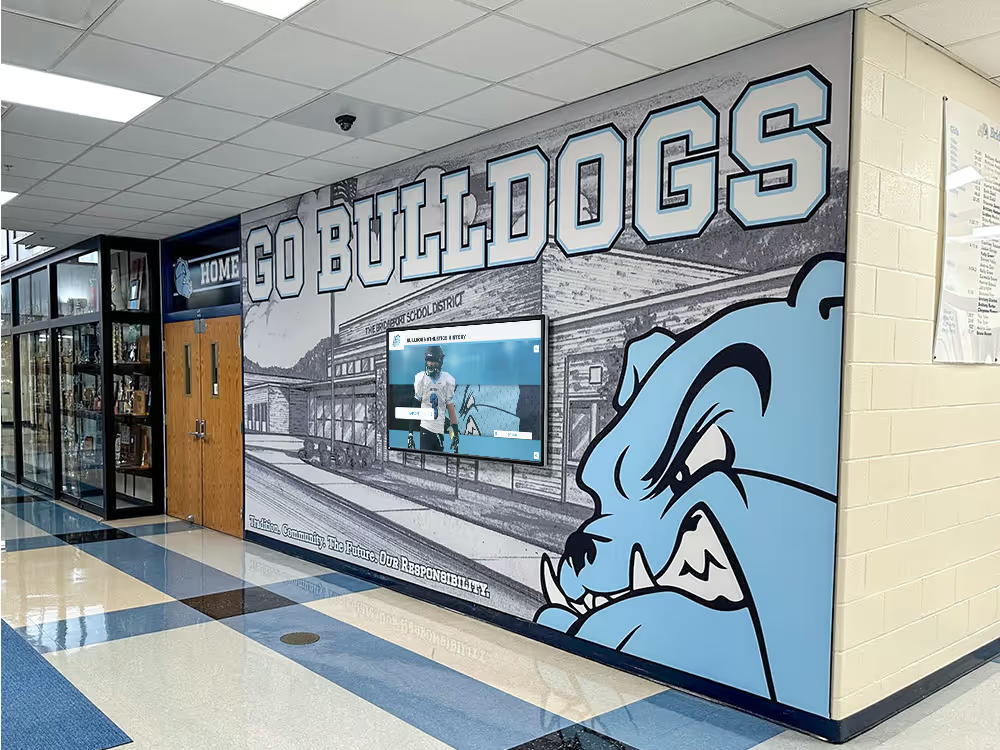
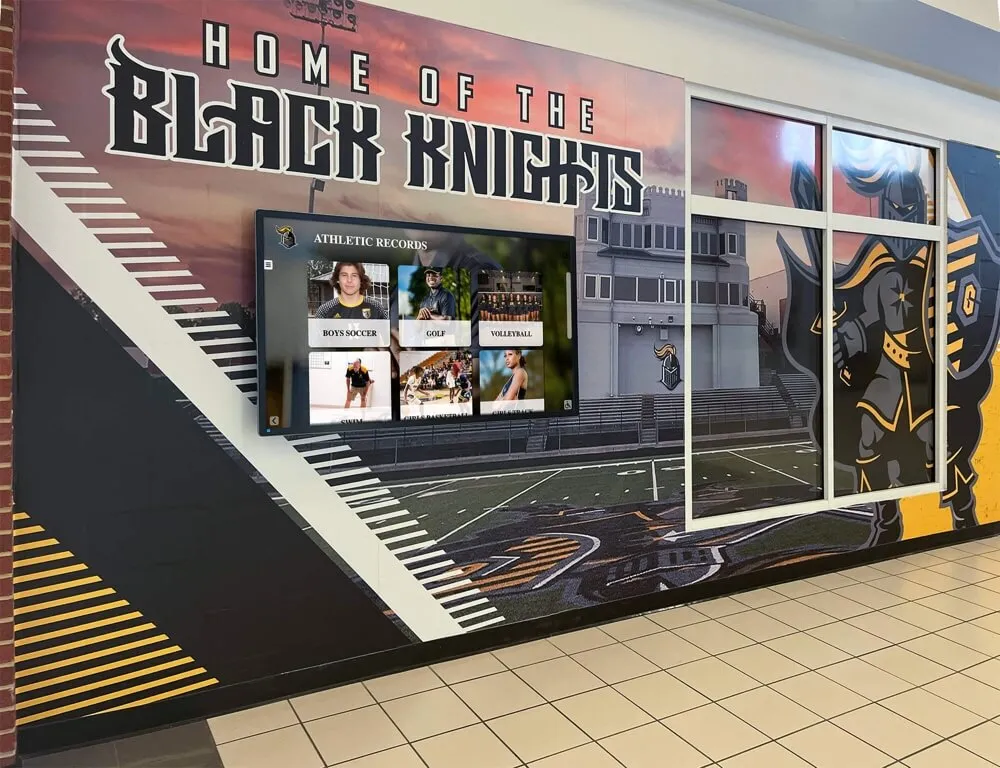
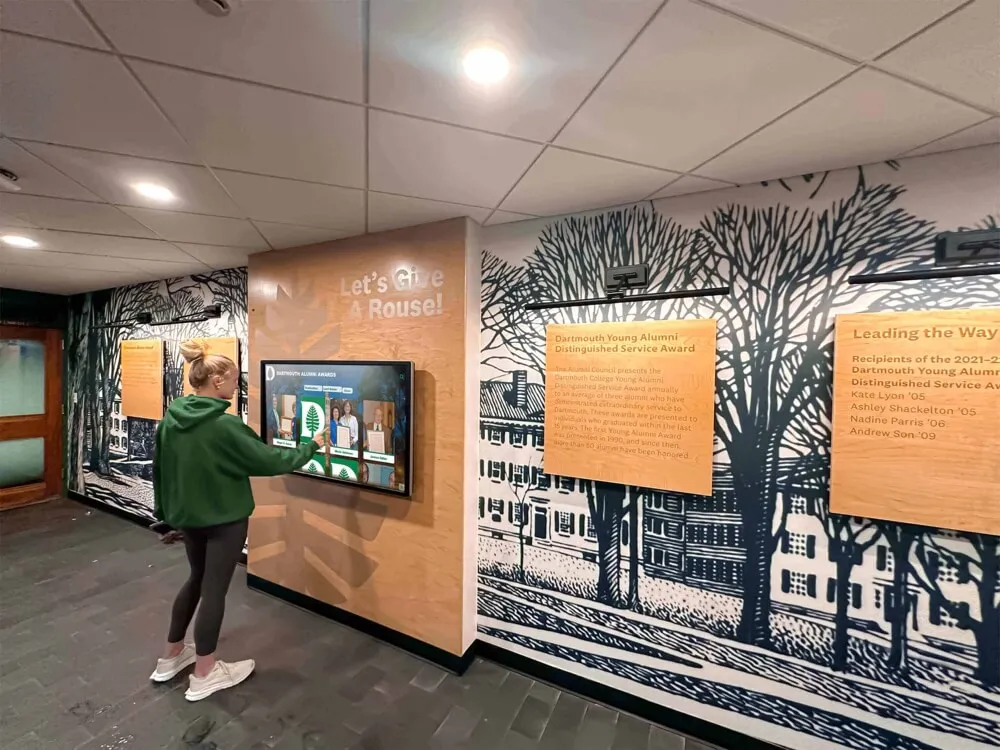
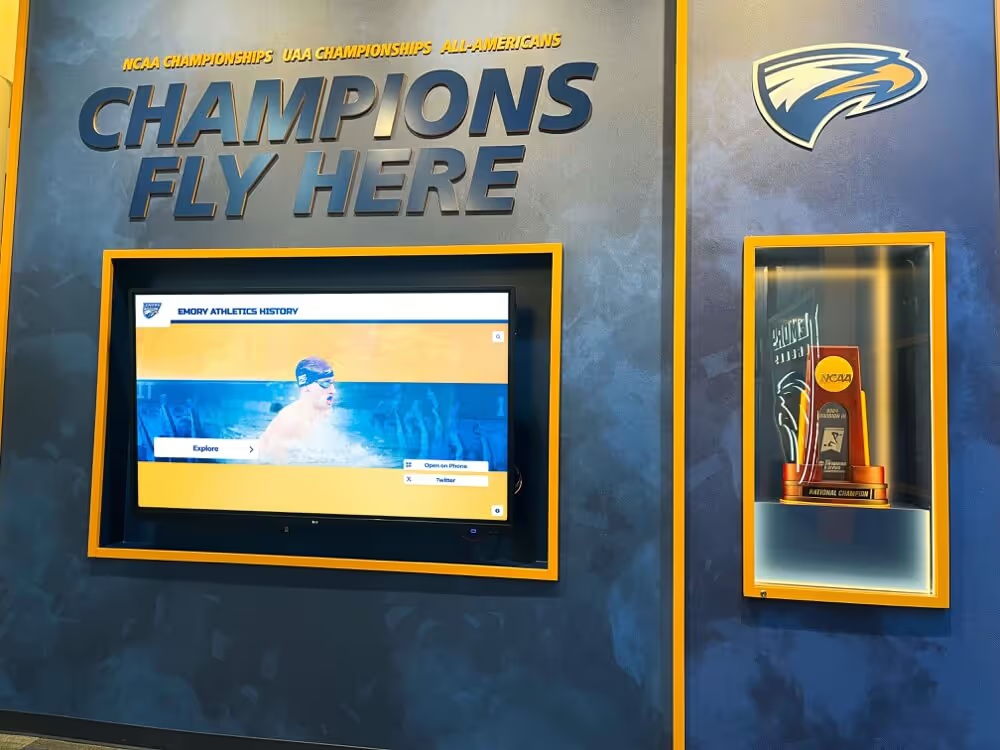
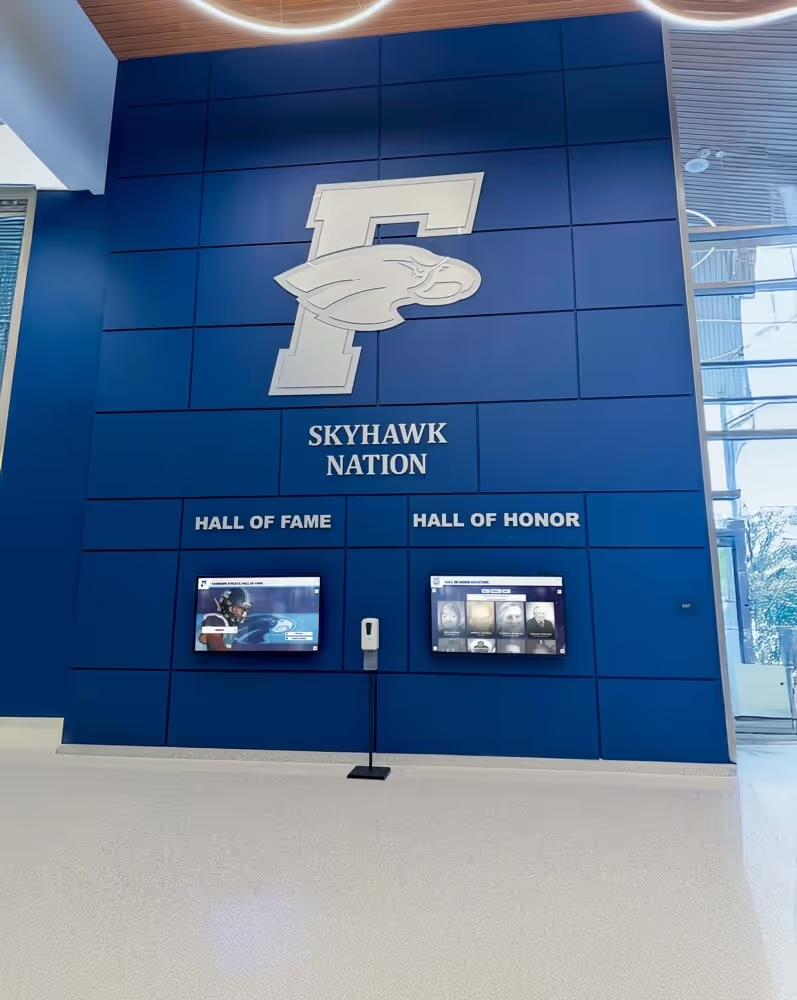
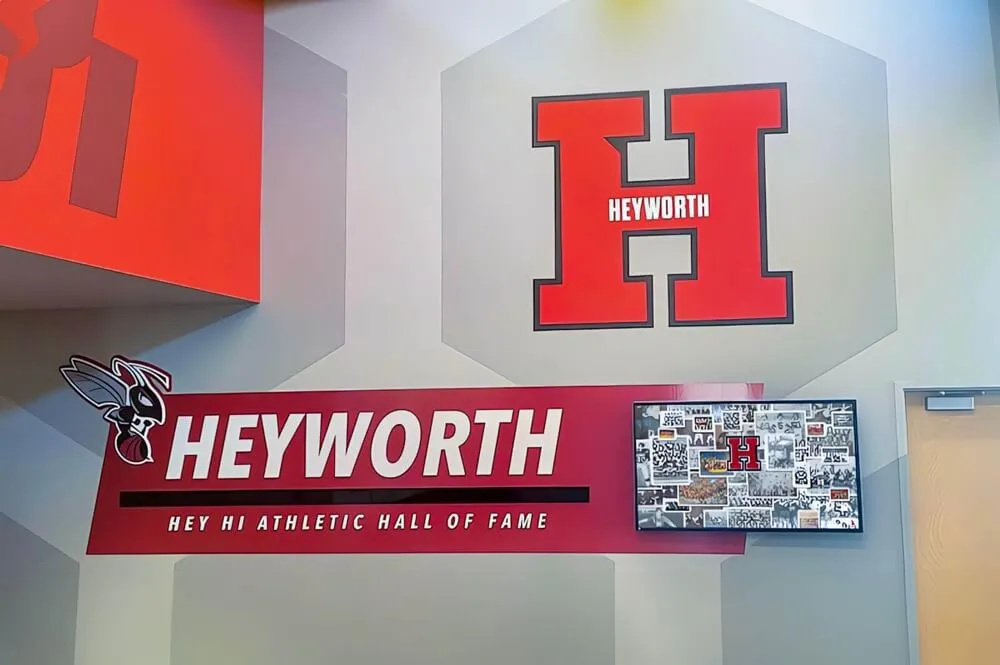
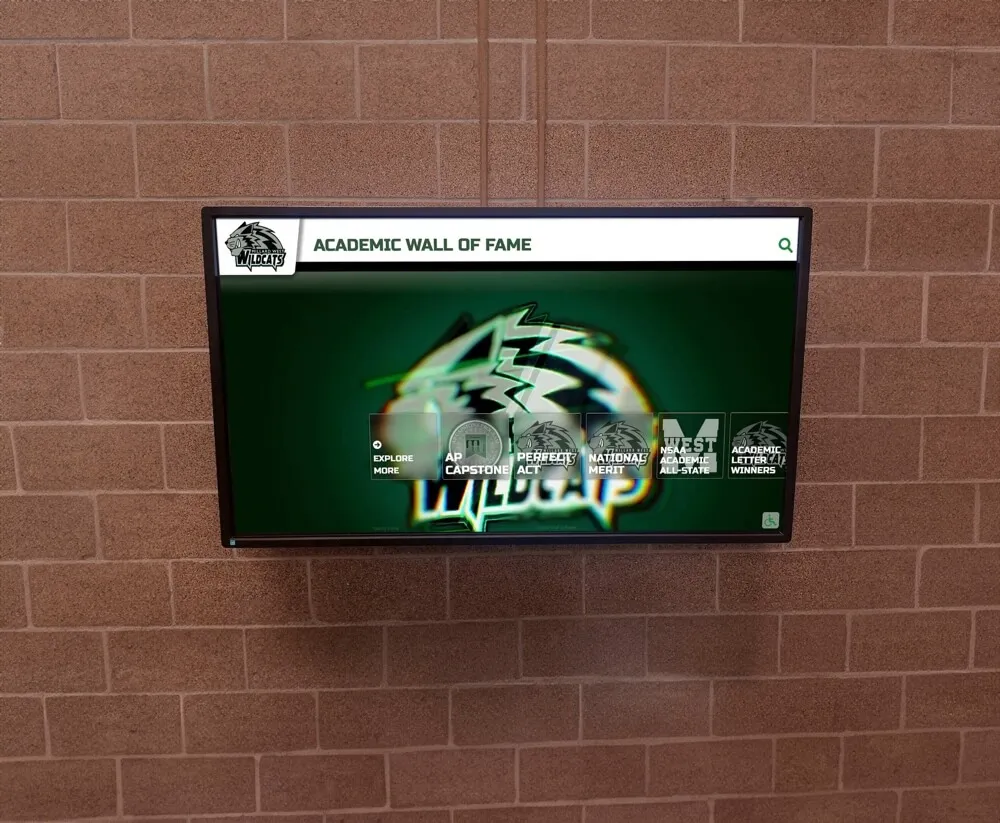
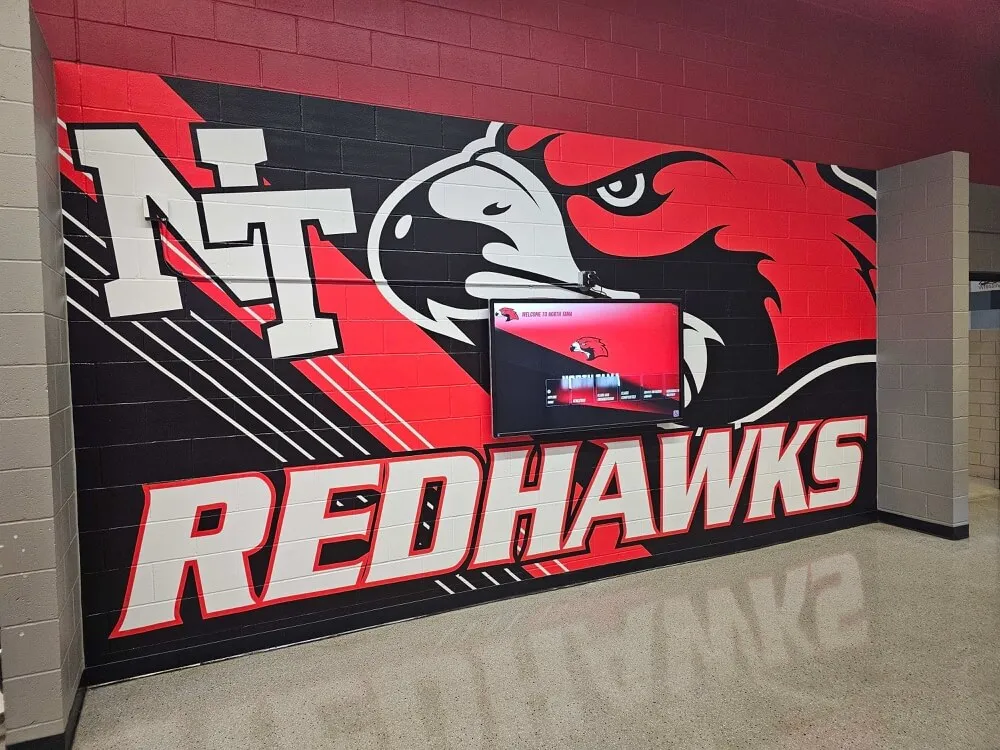
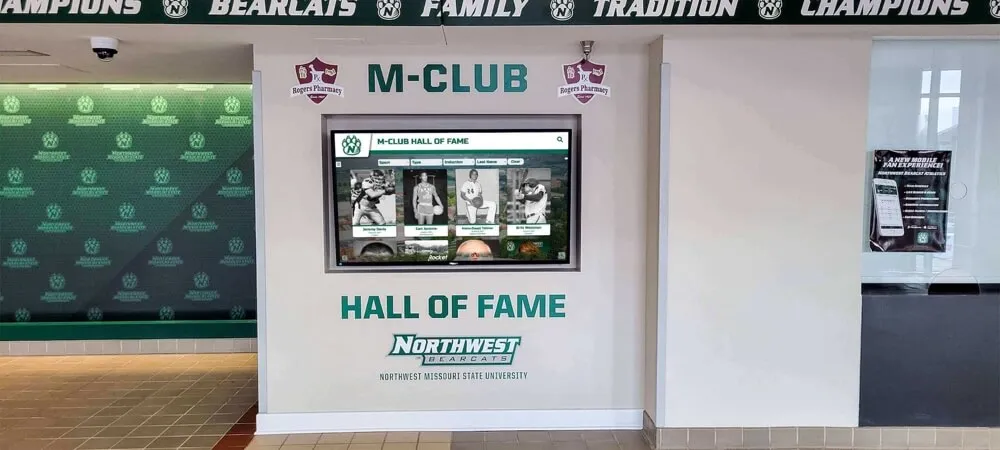
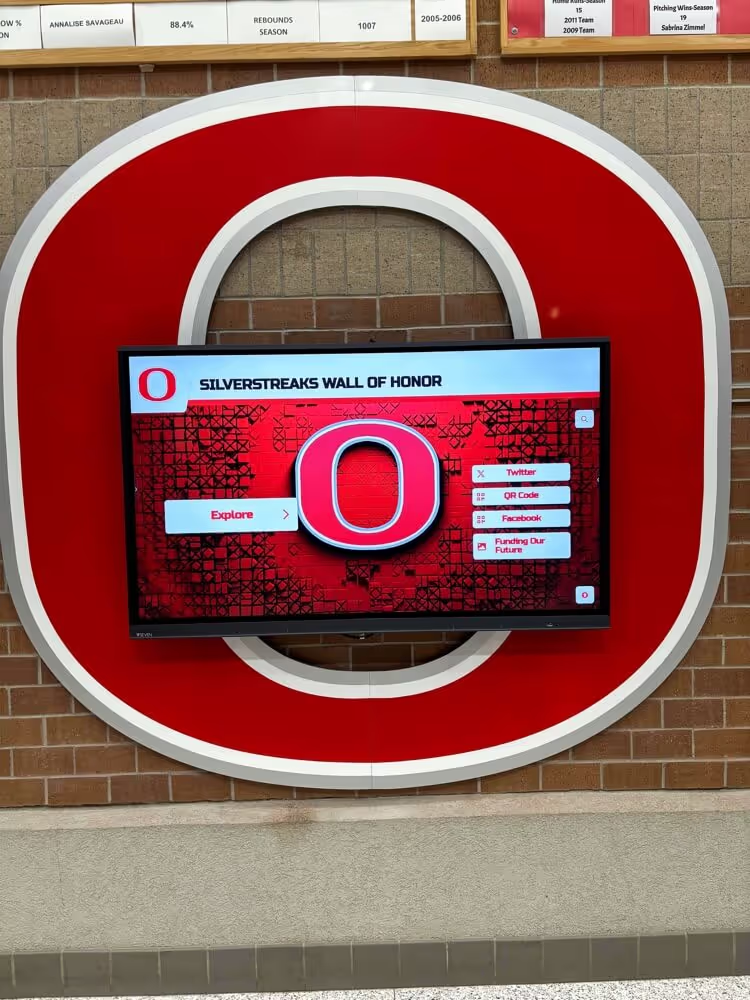
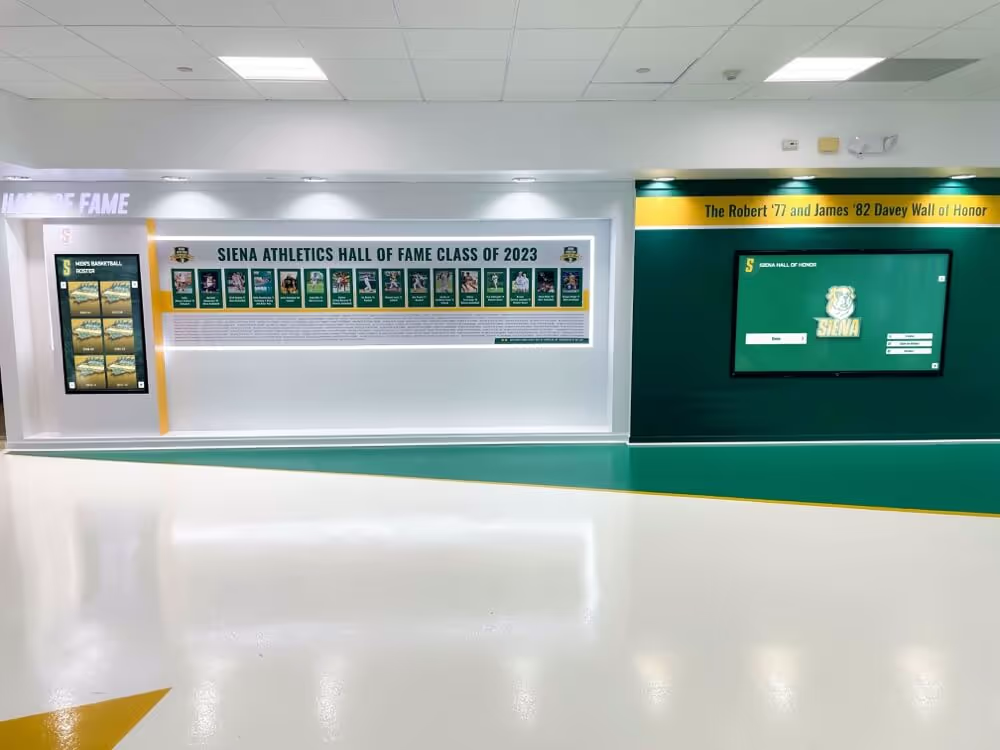
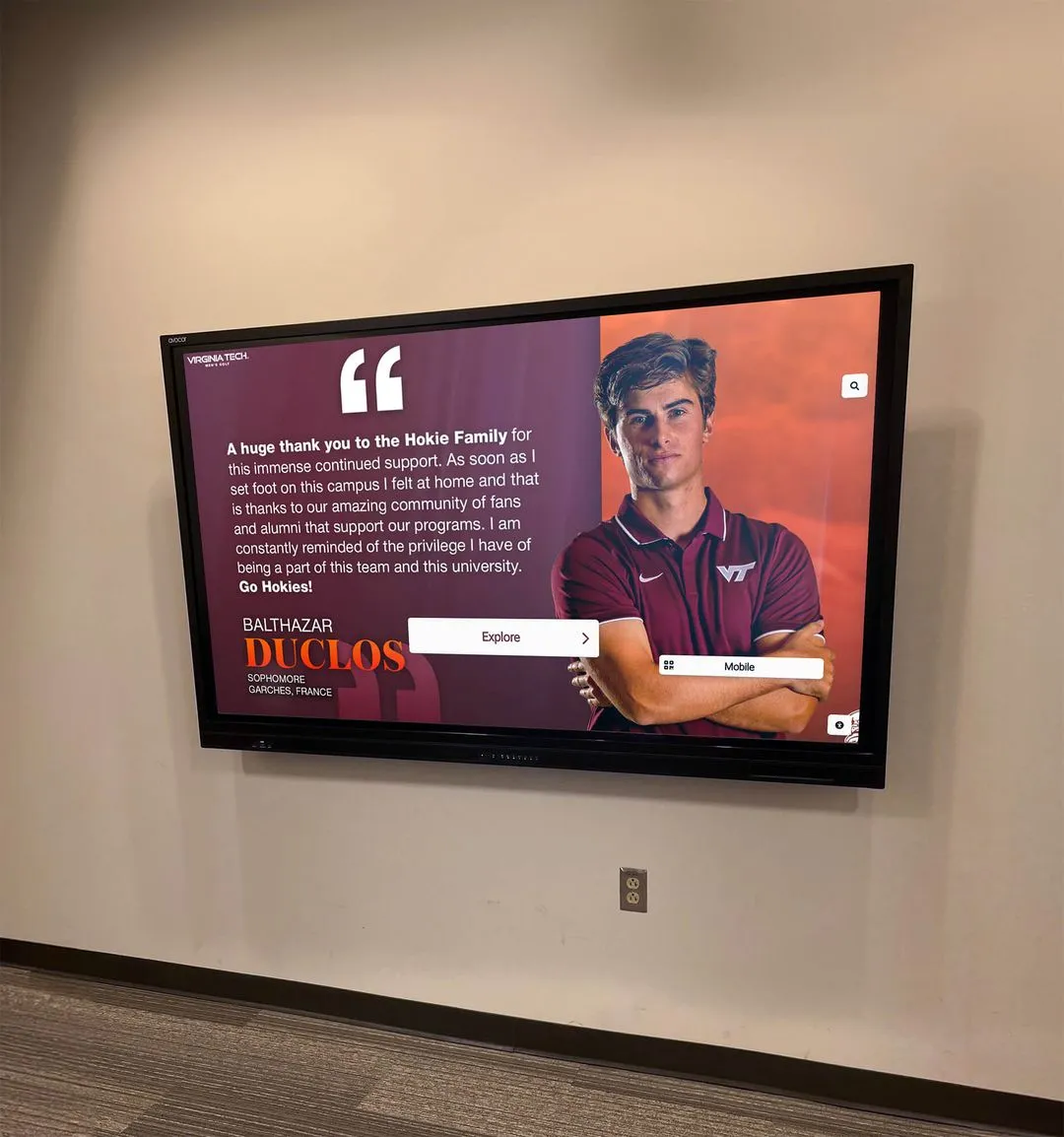
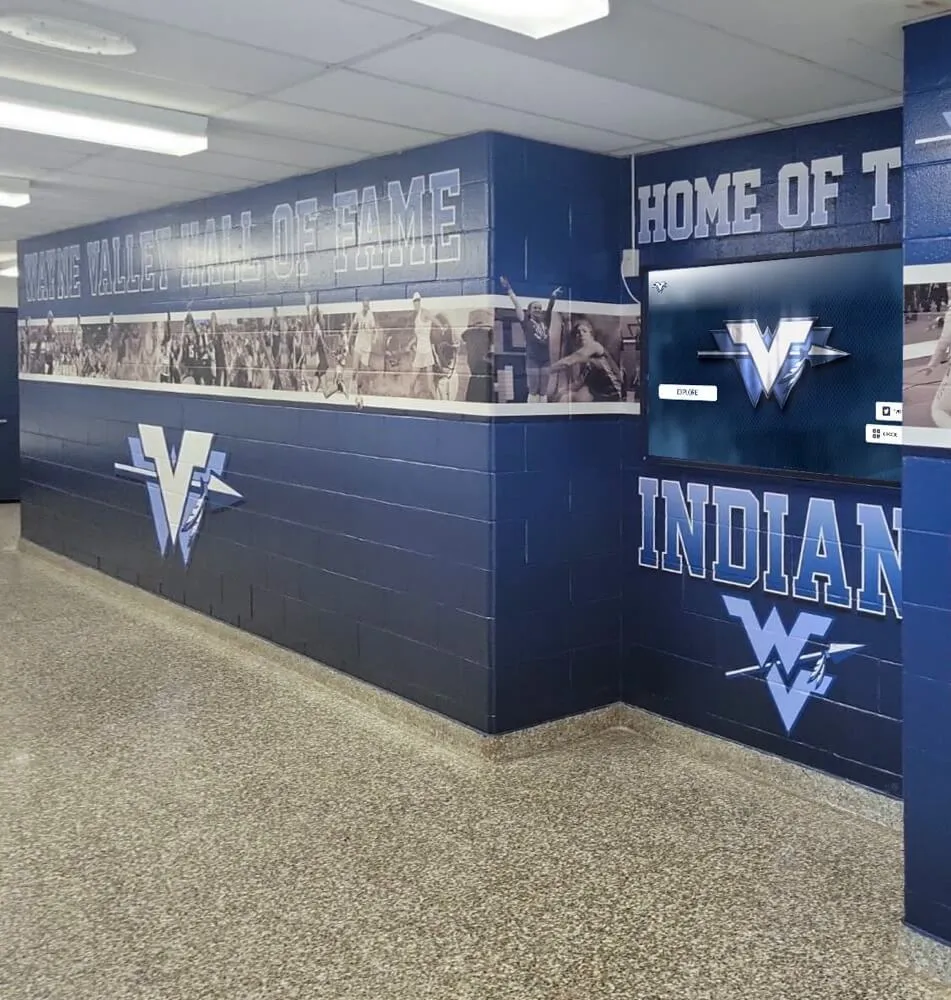
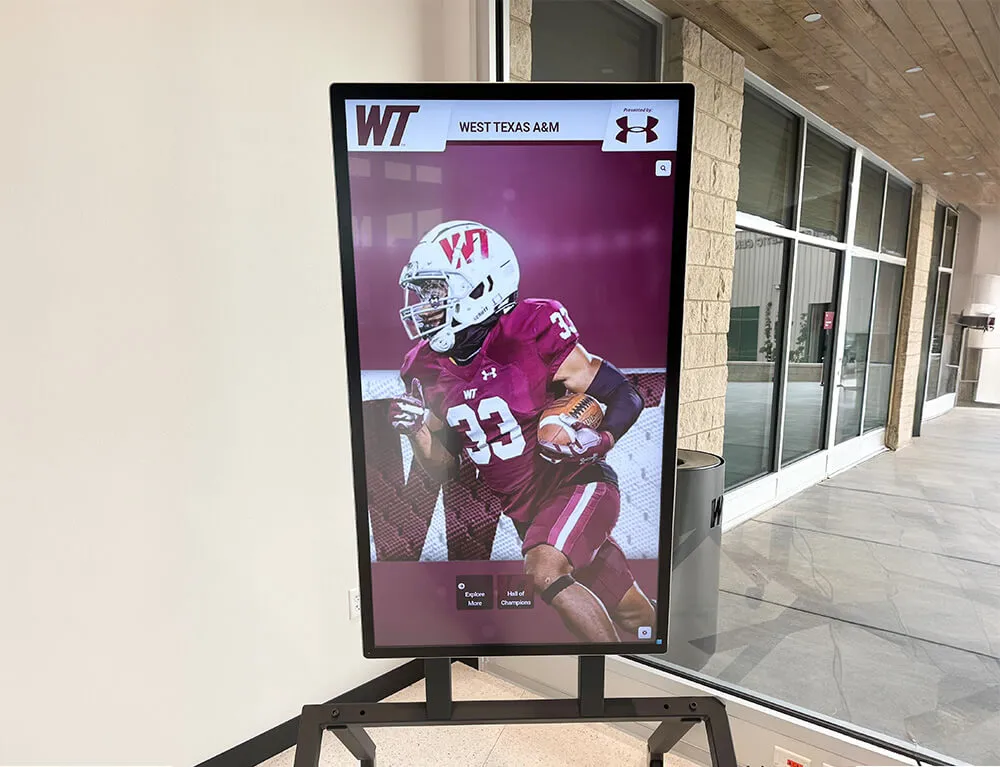
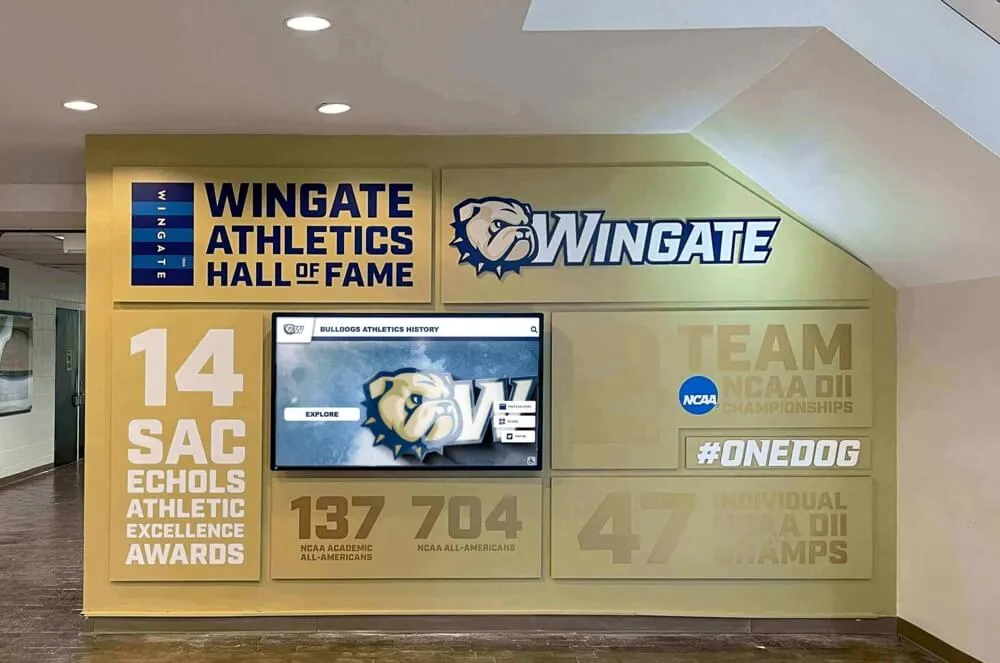
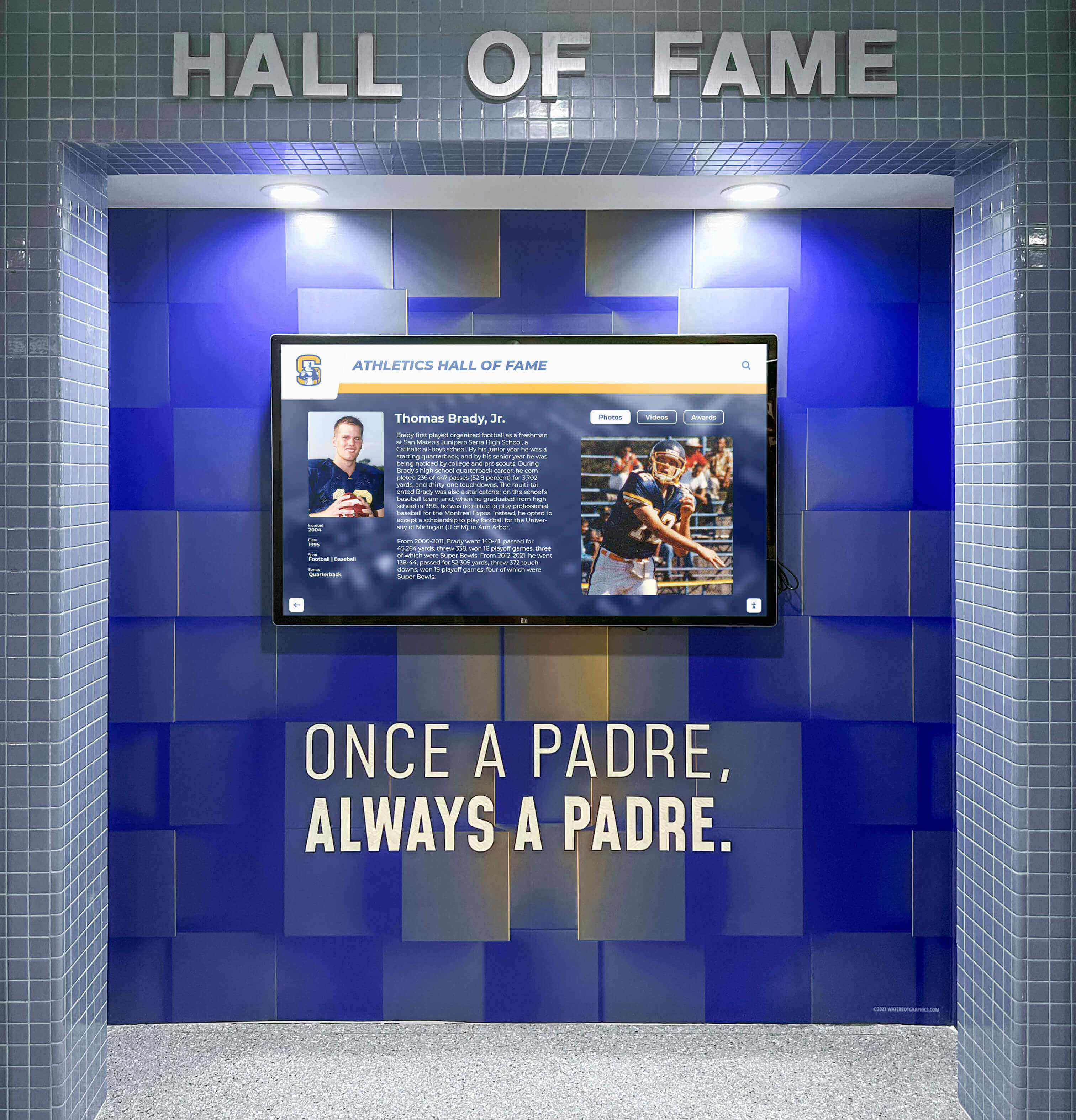
Digital displays positioned in athletic facilities eliminate recurring banner production costs while providing unlimited recognition capacity
The True Cost of Traditional Championship Banners
Understanding the complete financial impact of traditional banner programs reveals why athletic directors increasingly seek alternatives.
Initial Production and Installation Expenses
Championship banner costs extend beyond simple fabric production:
Per-Banner Production Costs
Standard championship banner expenses include:
- Custom design and layout services: $50-100 per banner
- Fabric printing and materials (3’x5’ to 4’x8’ typical): $150-300
- Reinforced edges and grommets: $25-50
- Protective coating and finishing: $30-60
- Shipping and handling: $20-40
- Total per-banner production: $275-550
Installation Labor and Equipment
Professional banner installation requires:
- Lift rental or contractor equipment: $150-300 per installation day
- Professional installer labor: $75-150 per hour
- Typical installation time: 2-4 hours for 3-5 banners
- Safety equipment and insurance: $50-100 per project
- Travel charges for contractors: $50-150 depending on location
- Total installation cost: $400-900 per installation session
Athletic programs earning 8-12 championships annually across multiple sports face production and installation costs of $5,000-10,000 per year for comprehensive banner recognition.
Explore space-efficient approaches to championship recognition displays that reduce ongoing expenses.
Hidden Ongoing Costs and Maintenance
Traditional banners accumulate expenses beyond initial installation:
Facility Modification Requirements
As banner collections grow, schools invest in:
- Structural assessments ensuring ceiling capacity: $500-1,500
- Additional mounting hardware installation: $300-800 per section
- Electrical work for accent lighting: $1,000-3,000
- Ceiling repairs from repeated installations: $400-1,200 annually
- Painting and aesthetic updates around banner areas: $800-2,000
Banner Maintenance and Replacement
Fabric banners require ongoing care:
- Professional cleaning services: $25-50 per banner every 2-3 years
- Replacement of faded or damaged banners: $300-450 each
- Storage solutions for rotated banners: $500-1,500 for adequate facilities
- Periodic rehanging and adjustment: $200-400 annually
- Insurance costs for valuable collections: $300-600 annually
Space Constraint Challenges Create Hidden Costs
Limited ceiling capacity forces expensive decisions:
Capacity Expansion Projects
When space fills, schools face:
- Trophy case additions: $2,000-8,000 per case
- Hallway display renovations: $5,000-15,000
- Dedicated hall of fame room construction: $25,000-75,000
- Alternative recognition area development: $10,000-40,000
Recognition Inequity Consequences
Space limitations create problems:
- Removal of older championships disappointing alumni
- Selective display favoring certain sports over others
- Controversy and complaints about recognition decisions
- Reduced alumni engagement and donation activity
- Difficult conversations with athletes and families
- Administrative time managing recognition politics
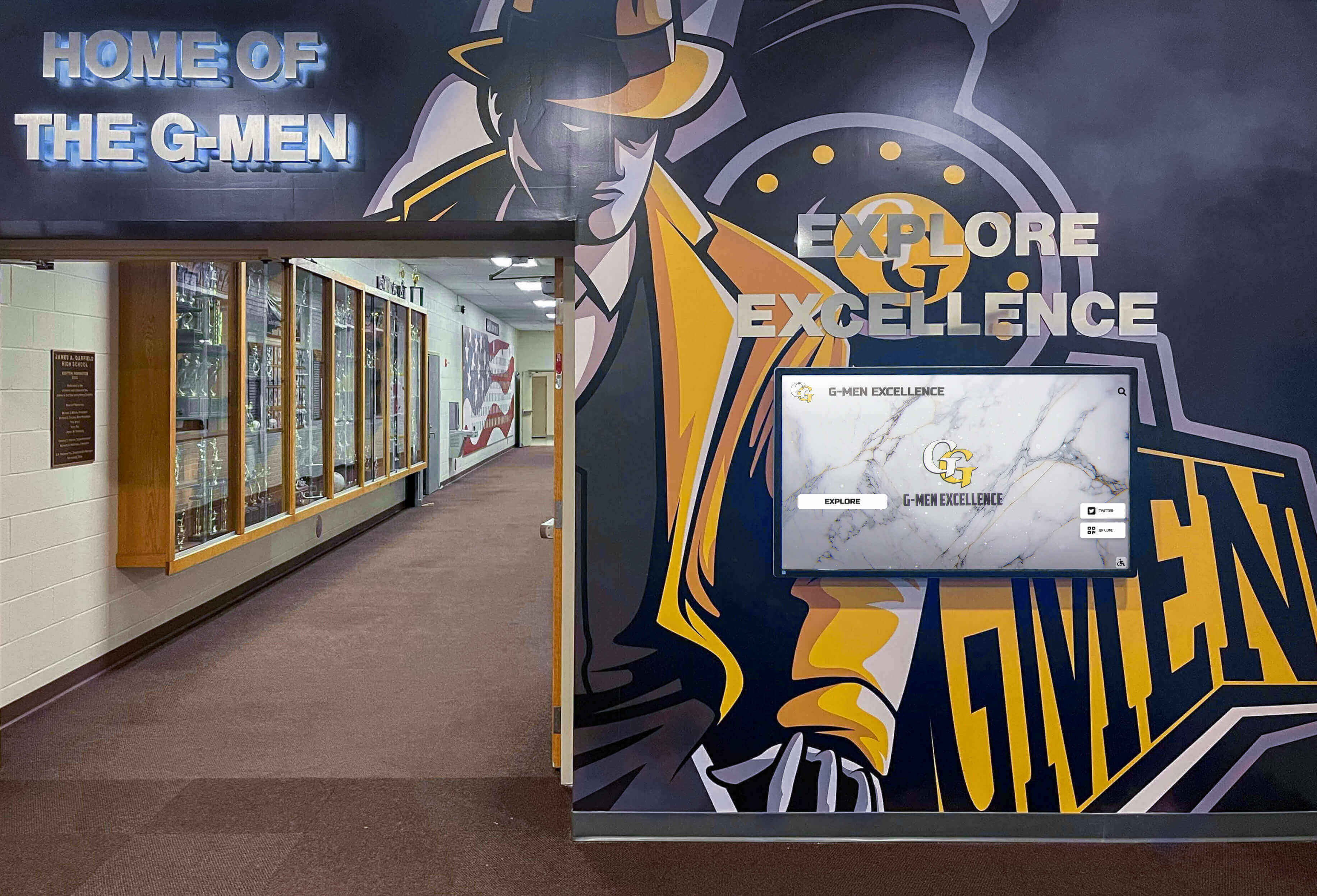
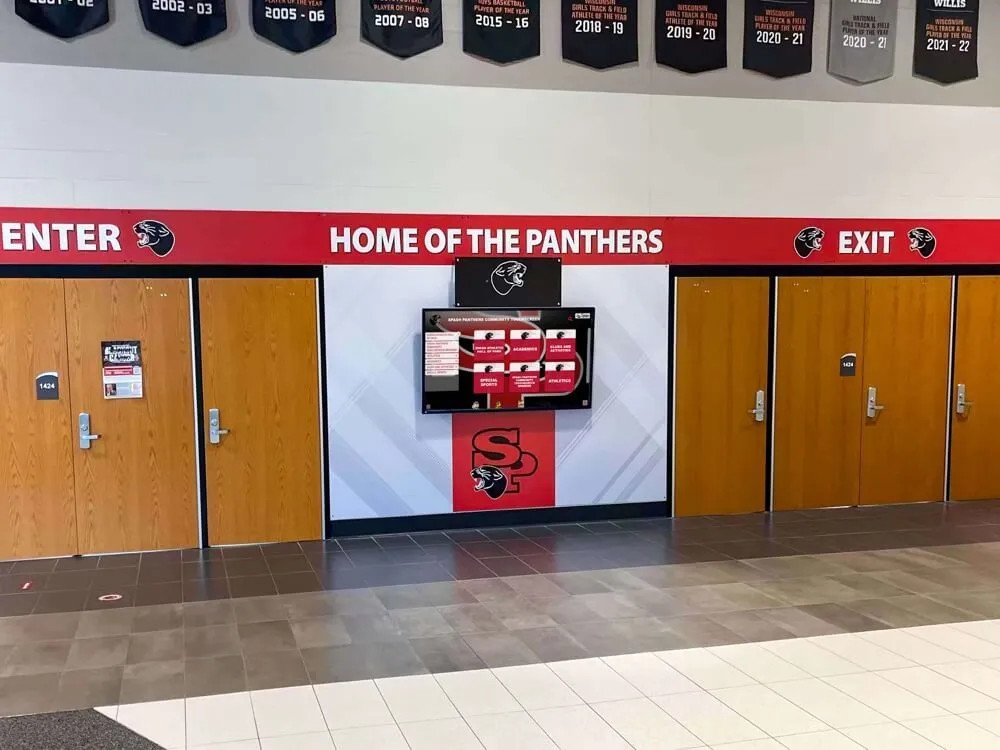
Hybrid approaches combining traditional displays with digital recognition optimize space utilization while controlling costs
Ten-Year Cost Comparison: Traditional vs. Digital
Examining long-term expenses reveals substantial differences:
Traditional Banner Program (10 Years)
A comprehensive program typically spends:
- Initial banner production (50 championships): $13,750-27,500
- Ongoing annual championships (8 per year): $22,000-44,000
- Installation labor (10 sessions): $4,000-9,000
- Maintenance and replacement: $8,000-15,000
- Facility modifications: $6,000-12,000
- Storage and administration: $3,000-6,000
- Ten-year total: $56,750-113,500
- Annual average: $5,675-11,350
Digital Recognition System (10 Years)
Initial investment and ongoing costs:
- Display hardware and installation: $8,000-18,000 (one-time)
- Recognition software platform: $15,000-50,000 (10 years)
- Initial content development: $2,000-5,000 (one-time)
- Ongoing content updates: $2,000-4,000 (10 years, managed internally)
- Minimal maintenance: $1,000-2,000 (10 years)
- Ten-year total: $28,000-79,000
- Annual average: $2,800-7,900
Digital systems typically deliver 40-50% cost savings over ten years while providing unlimited capacity, eliminating forced removal decisions, and enabling substantially richer recognition content.
Learn about comprehensive digital athletic recognition systems that maximize value.
Digital Recognition: Modern Alternatives to Physical Banners
Technology-based solutions eliminate the fundamental cost and space problems traditional banners create while delivering superior recognition experiences.
Interactive Touchscreen Displays for Athletic Recognition
Modern digital platforms transform championship celebration:
Unlimited Recognition Capacity
Digital systems provide:
- Single displays showcasing hundreds or thousands of championships
- Complete historical archives accessible simultaneously
- No per-championship costs enabling comprehensive recognition
- Equal opportunity for all sports and achievement levels
- Consistent footprint regardless of achievement accumulation
- No forced removal decisions as collections grow
Athletic directors consistently report that unlimited capacity represents the most transformative benefit—finally enabling truly equitable recognition where every championship receives appropriate celebration.
Rich Multimedia Content
Digital platforms support comprehensive documentation:
- High-resolution championship banner reproductions
- Complete team rosters with individual athlete profiles
- Season statistics and performance documentation
- Championship game highlights and celebration videos
- Historical context and program significance
- Coaching staff recognition and contributions
- Related achievements and program connections
This depth brings championships to life in ways physical banners cannot match, celebrating the athletes and stories behind achievements rather than simply displaying dates and titles.
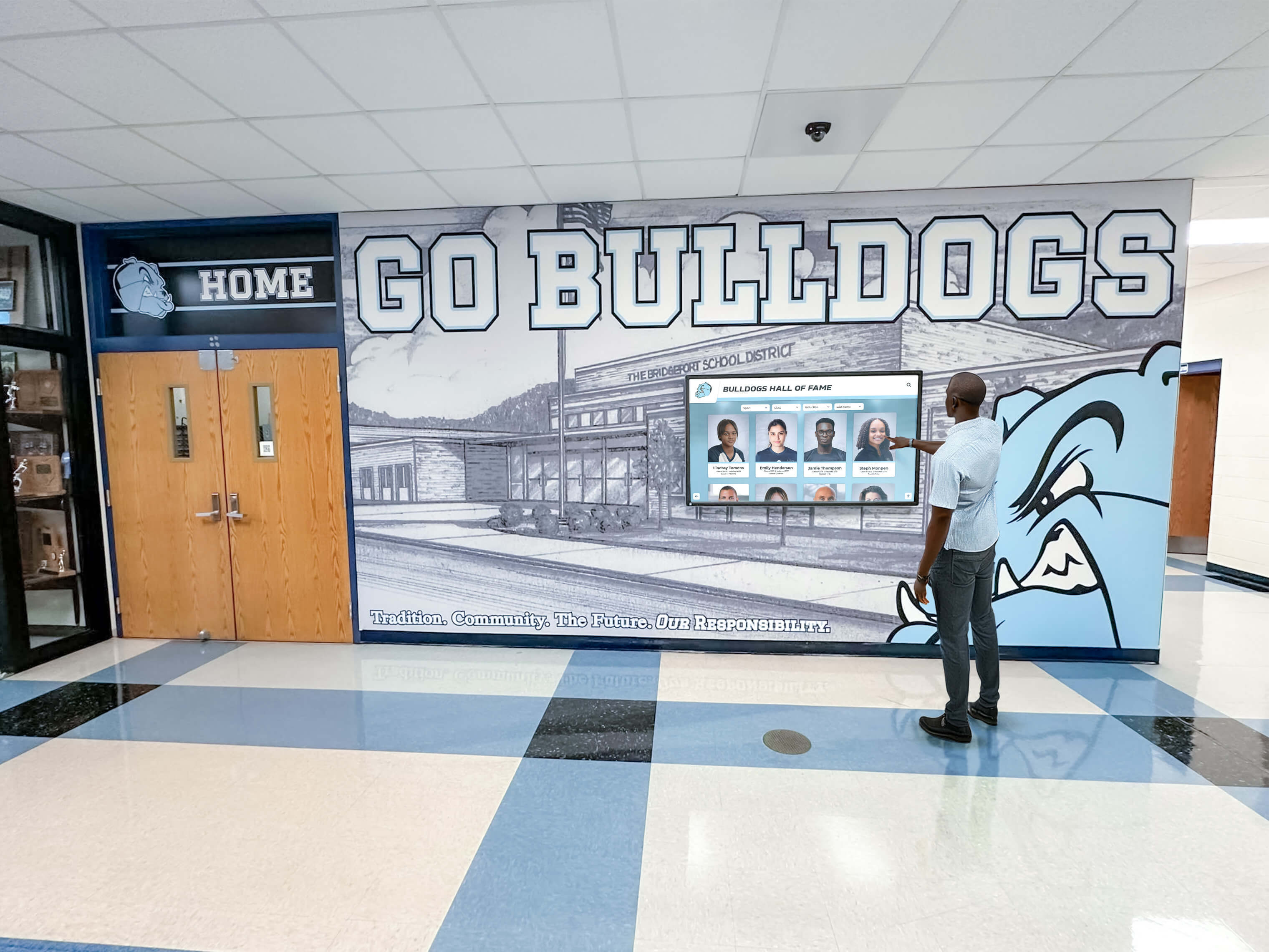
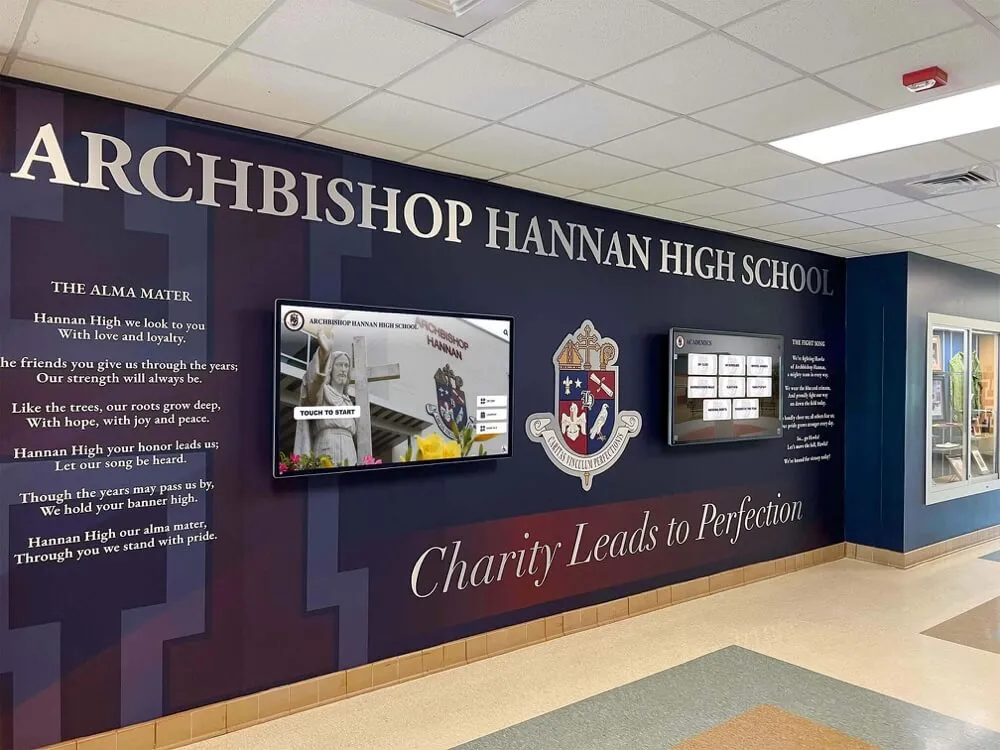
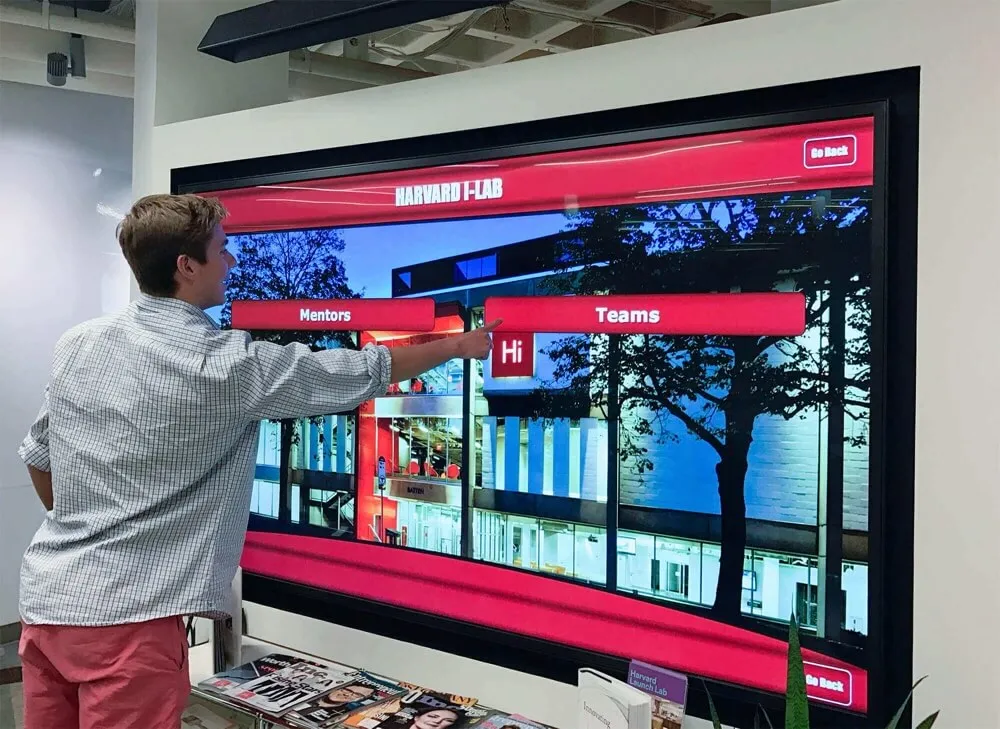
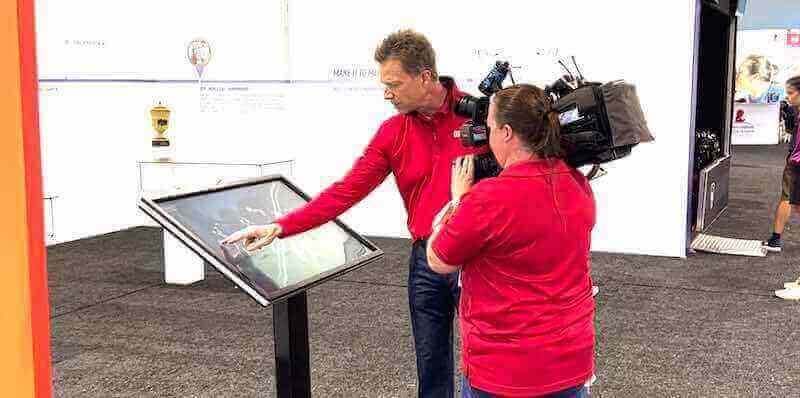
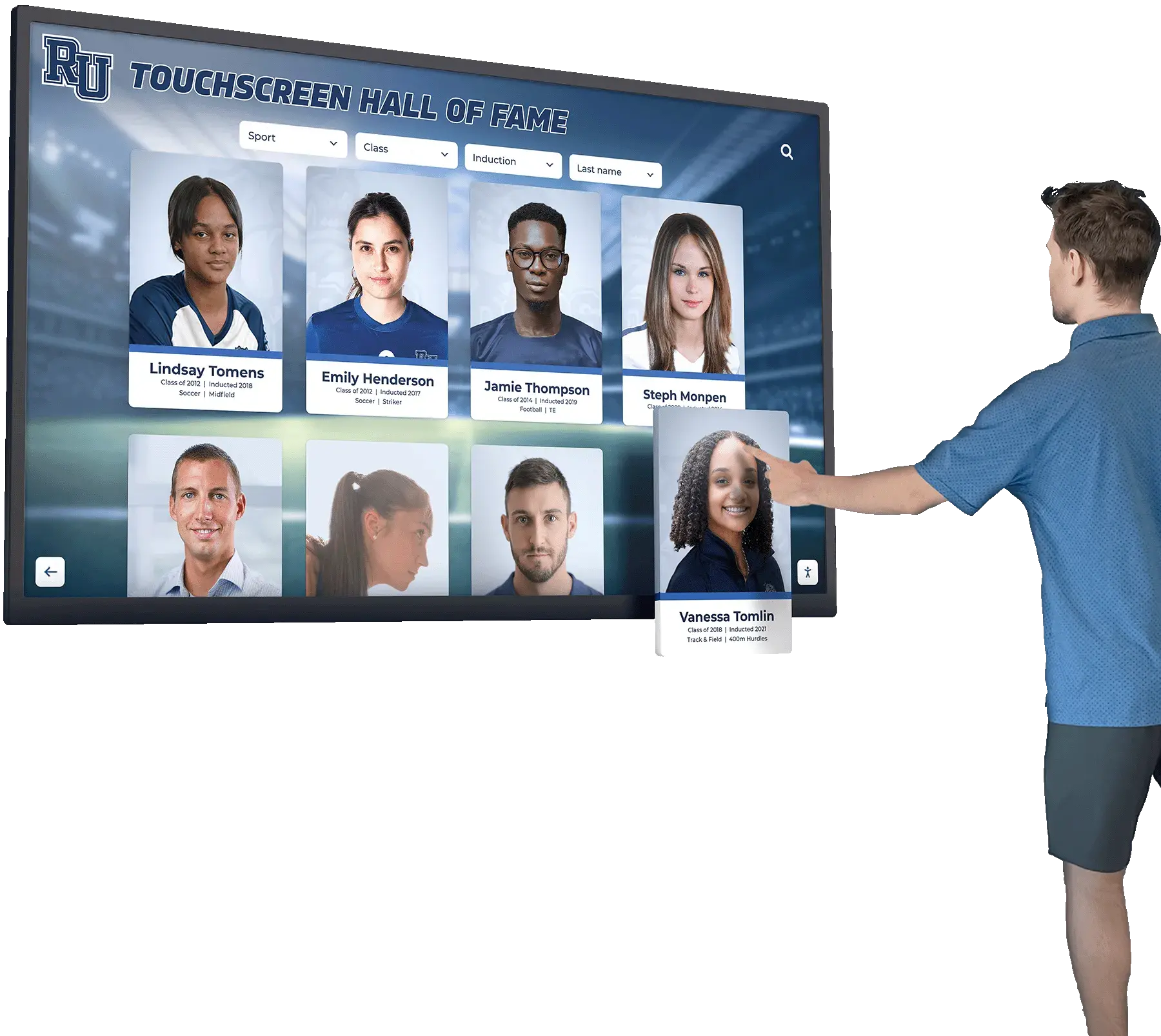
Touchscreen interfaces enable active exploration of championship content, creating engagement far beyond passive banner viewing
Engaging Interactive Experiences
Touchscreen technology enables:
- Intuitive search finding specific championships, teams, or athletes instantly
- Filtering by sport, year, achievement level, or championship type
- Video highlights playing championship moments and celebrations
- Social sharing extending recognition to digital platforms
- QR code access for smartphone exploration
- Analytics tracking engagement and popular content
Research demonstrates that interactive displays generate 4-8 minute average engagement sessions compared to seconds spent glancing at overhead banners, creating substantially stronger motivational impact.
Discover strategies for implementing digital trophy displays in athletic facilities.
Web-Accessible Recognition Platforms
Modern systems extend recognition beyond physical facility locations:
Remote Access and Extended Reach
Web platforms amplify recognition impact:
- Championship content simultaneously available on facility displays and online
- Alumni worldwide exploring program achievements from anywhere
- Prospective athletes and recruits evaluating program excellence
- College scouts and recruiters researching athlete accomplishments
- Families and supporters accessing recognition remotely
- Media and journalists reviewing program histories
- Community members engaging without facility access
This accessibility means recognition reaches audiences of thousands rather than hundreds of facility visitors, maximizing institutional impact.
Social Media Integration
Digital recognition enables broader celebration:
- Direct sharing of championships to Facebook, Instagram, and Twitter
- Athletes celebrating accomplishments with extended networks
- Schools promoting program excellence through authentic evidence
- Championship announcements generating organic engagement
- Viral sharing during major achievements
- Community support building through visible success
Schools implementing comprehensive digital recognition report measurable increases in social media engagement, program enrollment interest, and community support.
Cost-Effective Display Hardware Options
Digital recognition becomes accessible through various technology approaches:
Entry-Level Solutions
Budget-conscious programs can start with:
- Large-format smart TVs (55-65 inches): $600-1,200
- Media players or streaming devices: $100-300
- Basic mounting hardware: $75-150
- Initial setup investment: $775-1,650
- Annual software subscription: $1,200-2,400
- Total first-year cost: $1,975-4,050
While not interactive, TV-based displays provide unlimited capacity for rotating championship content at a fraction of traditional banner costs.
Professional Interactive Systems
Comprehensive recognition programs benefit from:
- Commercial touchscreen displays (55-75 inches): $5,000-12,000
- Professional mounting or kiosk enclosure: $1,500-3,500
- Recognition-specific software platform: $1,500-5,000 annually
- Initial content development: $2,000-5,000
- Professional installation: $1,000-2,500
- Total first-year investment: $11,000-28,000
- Ongoing annual costs: $1,500-5,000
Professional systems deliver superior durability, engagement, and long-term value while remaining substantially more economical than traditional banner programs over multi-year periods.
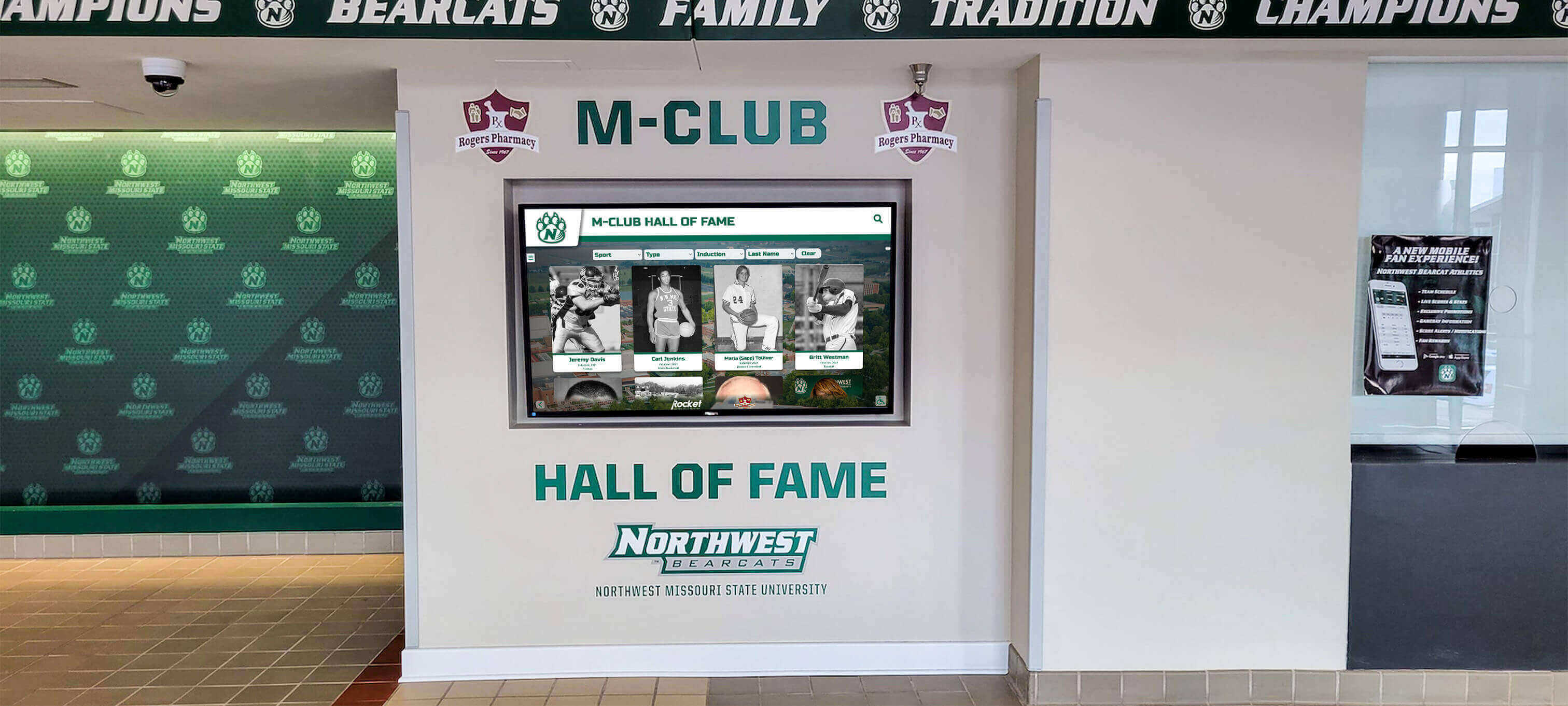
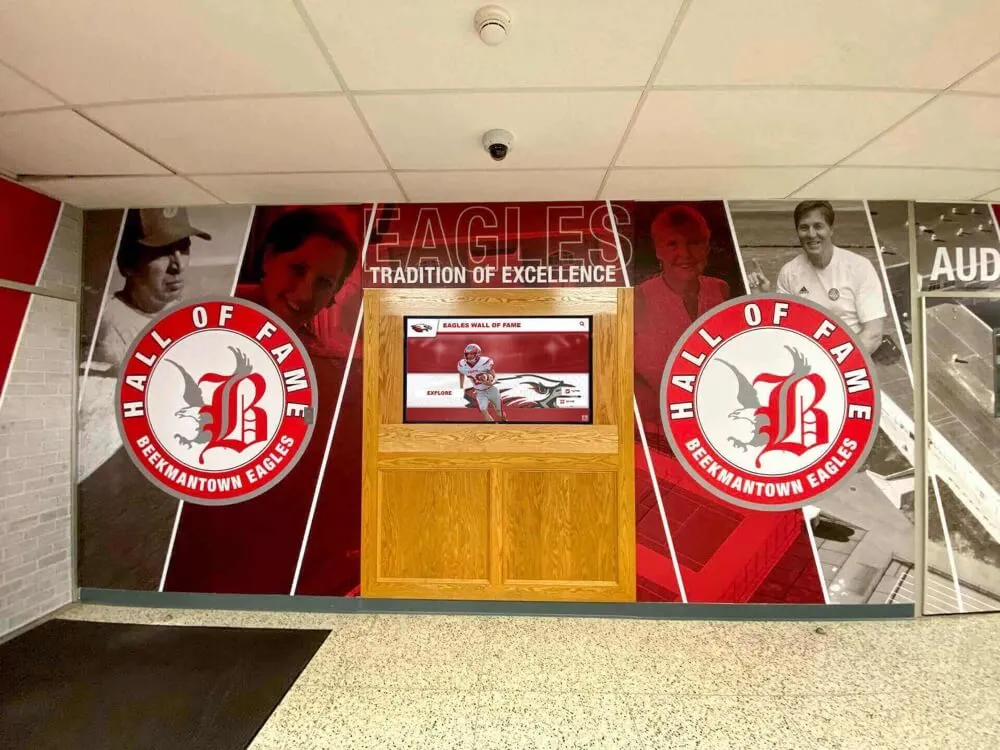
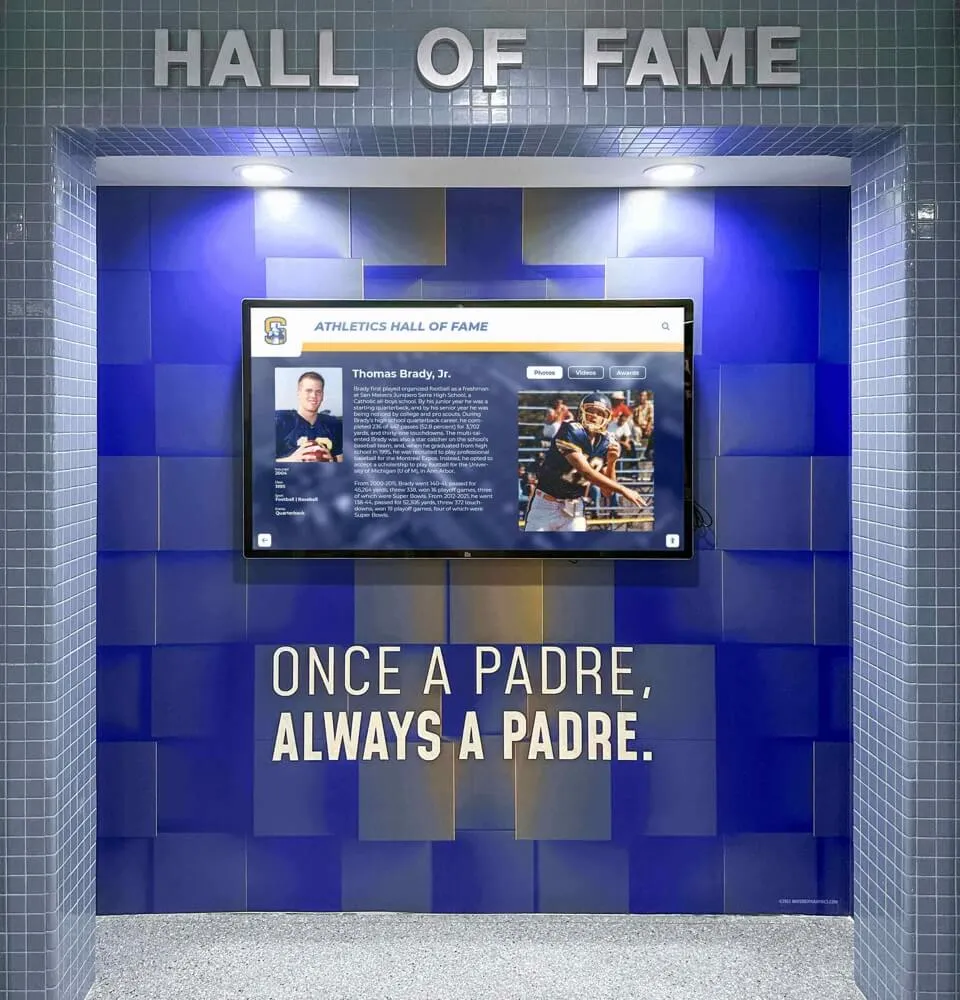
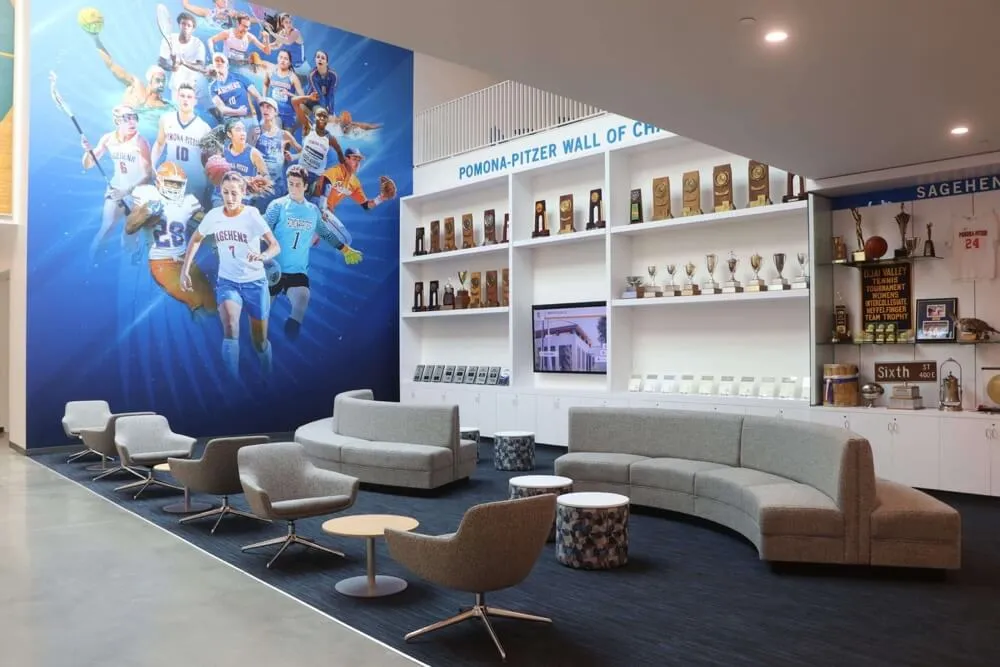
Professional installations create impressive recognition showcasing championships with appropriate prominence and unlimited capacity
Implementation Strategies for Digital Banner Alternatives
Successful transitions from traditional banners to digital recognition require systematic planning and phased approaches.
Assessing Your Program’s Recognition Needs
Begin with comprehensive evaluation:
Championship Volume Analysis
Document current and projected recognition requirements:
- Annual championship count across all sports and levels
- Historical achievements deserving recognition
- Individual athlete honors and records
- Academic all-state and special recognitions
- Program milestones and coaching achievements
- Projected five and ten-year championship accumulation
Current Banner Inventory Assessment
Evaluate existing recognition:
- Total current banner count and ceiling space utilization
- Remaining installation capacity before reaching limits
- Banner condition and replacement needs
- Removed or stored championships not currently displayed
- Recognition gaps and inequities across programs
- Years until forced removal decisions become necessary
Budget and Resource Evaluation
Understand available resources:
- Annual athletic recognition budget allocation
- Capital improvement funds available
- Technology infrastructure and IT support
- Staff capacity for content management
- Potential booster or donor funding opportunities
- Multi-year budget planning capabilities
This assessment establishes baseline understanding informing technology selection and implementation approach.
Selecting Appropriate Digital Recognition Technology
Match solutions to specific needs and constraints:
Display Placement Strategy
Identify optimal locations:
- Main gymnasium lobbies greeting all athletes and visitors
- Athletic hallways connecting facilities and locker rooms
- Weight room and training areas with sustained athlete exposure
- School main entrances demonstrating institutional pride
- Multiple displays in larger facilities serving different sports
Strategic placement ensures maximum visibility and engagement while integrating naturally into facility traffic patterns.
Explore athletic facility recognition placement strategies for optimal visibility.
Software Platform Selection
Evaluate recognition-specific platforms:
- Purpose-built athletic recognition software vs. generic digital signage
- Cloud-based content management enabling remote updates
- Mobile-responsive web accessibility extending recognition online
- Search and filtering capabilities for championship discovery
- Multimedia support for photos, videos, and rich content
- Analytics tracking engagement and popular content
- Long-term vendor viability and support quality
- Integration with existing athletic management systems
Purpose-built platforms like Rocket Alumni Solutions provide athletic-specific features generic signage software lacks, ensuring successful long-term programs.
Hardware Specifications
Select appropriate display technology:
- Screen size matching viewing distance and space constraints
- Commercial-grade displays rated for continuous operation
- Interactive touchscreen capability for engagement
- Adequate brightness for well-lit gymnasium environments
- Mounting options (wall-mount vs. freestanding kiosk)
- ADA compliance ensuring accessibility for all visitors
- Warranty coverage and expected lifespan
Content Development and Migration Planning
Comprehensive recognition requires systematic content creation:
Digital Archive Development
Build robust championship content:
- High-resolution photographs of existing banner designs
- Complete team rosters with athlete names and positions
- Season statistics and championship game results
- Coaching staff identification and contributions
- Historical context explaining championship significance
- Video content from championship games and celebrations
- Newspaper clippings and media coverage
- Alumni updates and post-graduation accomplishments
Phased Implementation Approach
Rather than attempting complete historical documentation simultaneously:
Phase 1: Recent Championships (Years 1-3)
- Document last 2-3 years with readily available information
- Establish ongoing processes for new championships
- Launch recognition system with substantial initial content
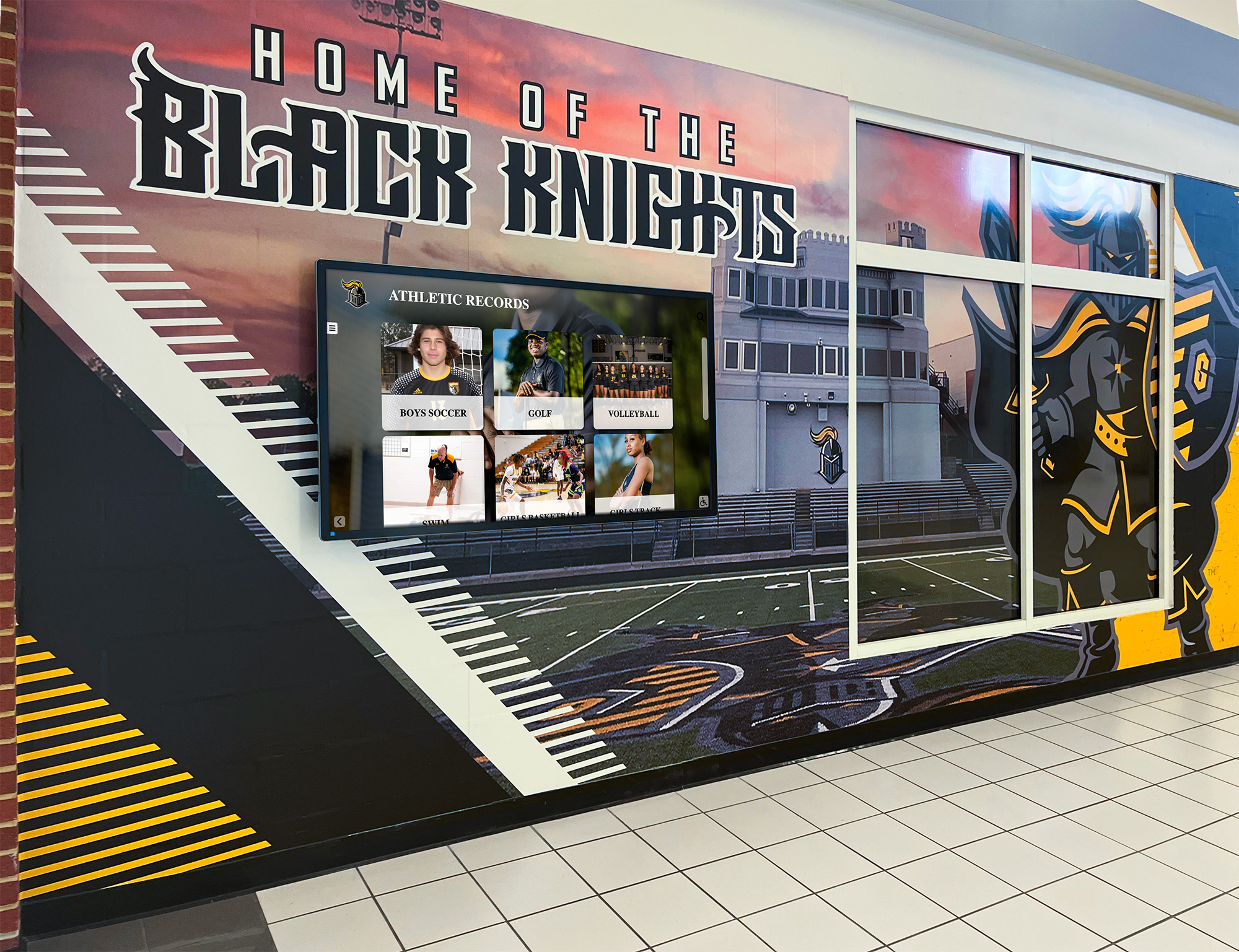
Systematic content development creates professional recognition celebrating championships with appropriate detail and context
Phase 2: Modern Era (Years 3-10)
- Expand to past decade with accessible documentation
- Fill gaps as additional information becomes available
- Build comprehensive recent-history archives
Phase 3: Historical Championships (Years 10+)
- Add significant historical championships requiring research
- Document championship eras and coaching tenures
- Complete comprehensive historical coverage
Phase 4: Continuous Updates
- Maintain system with new championships as they occur
- Enhance existing content as information surfaces
- Ensure recognition remains current and comprehensive
This phased approach delivers immediate value while building toward complete archives without overwhelming resources.
Integrating Digital Recognition with Traditional Banners
Many schools implement hybrid approaches honoring tradition while embracing technology:
Complementary Recognition Strategy
Maintain Select Physical Banners
- Most recent championships (past 2-3 years) in gymnasium
- Historically significant state championships throughout program history
- Milestone achievements deserving permanent physical prominence
- 15-25 most prestigious banners fitting available ceiling space
Comprehensive Digital Documentation
- All championships including those with physical banners
- Complete historical collection regardless of physical display status
- Detailed team profiles impossible on fabric banners
- Interactive exploration enabling deep engagement
Connected Experience
Integrate physical and digital recognition:
- QR codes on or near physical banners linking to comprehensive digital profiles
- Digital displays positioned prominently near banner installations
- Signage directing visitors to explore complete championship collection digitally
- Coordinated visual design creating unified recognition ecosystem
This hybrid approach satisfies traditionalists valuing physical banners while solving capacity problems through comprehensive digital documentation eliminating forced removal of historical achievements.
Learn about implementing hybrid athletic recognition programs combining traditional and digital elements.
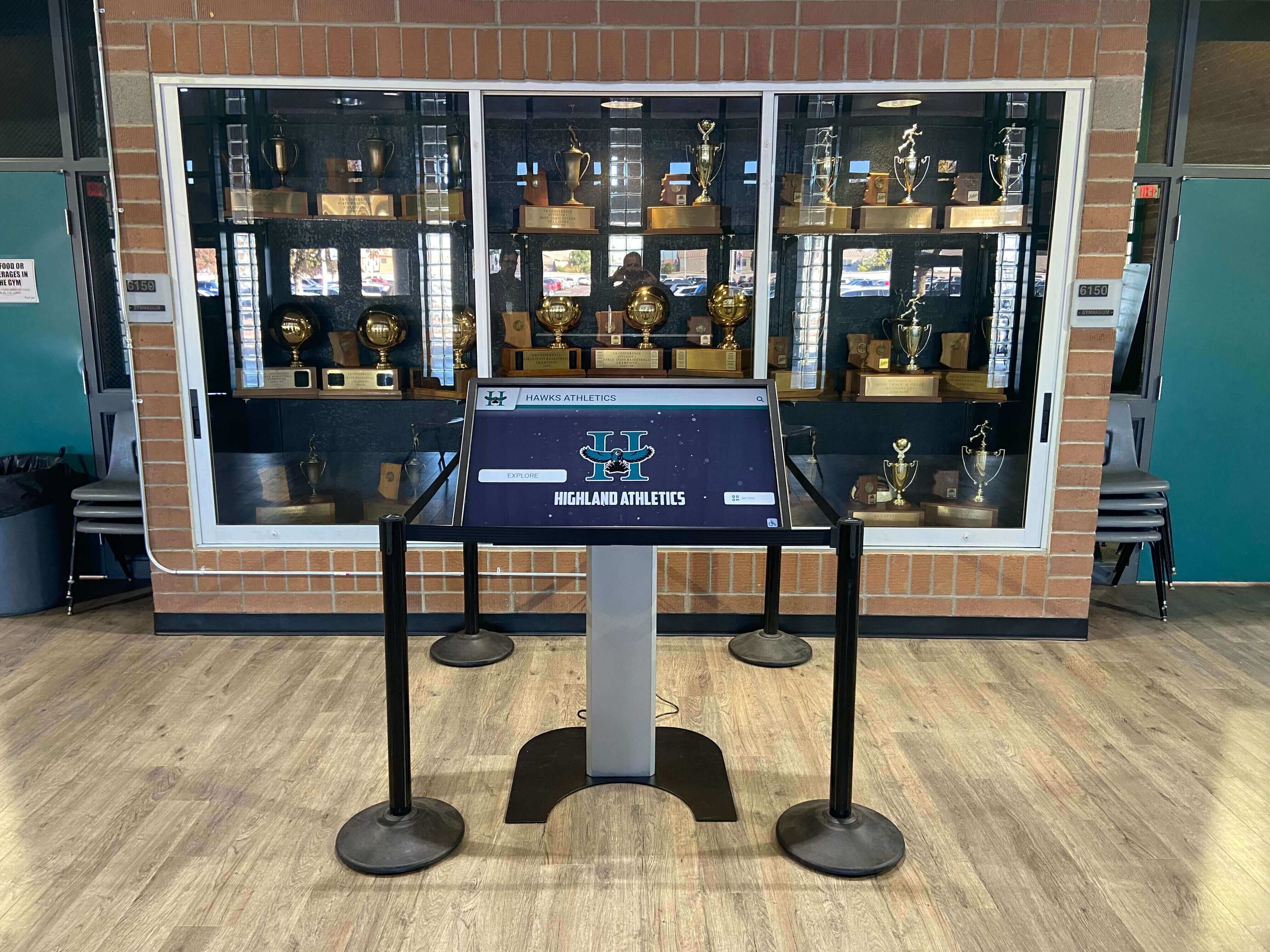
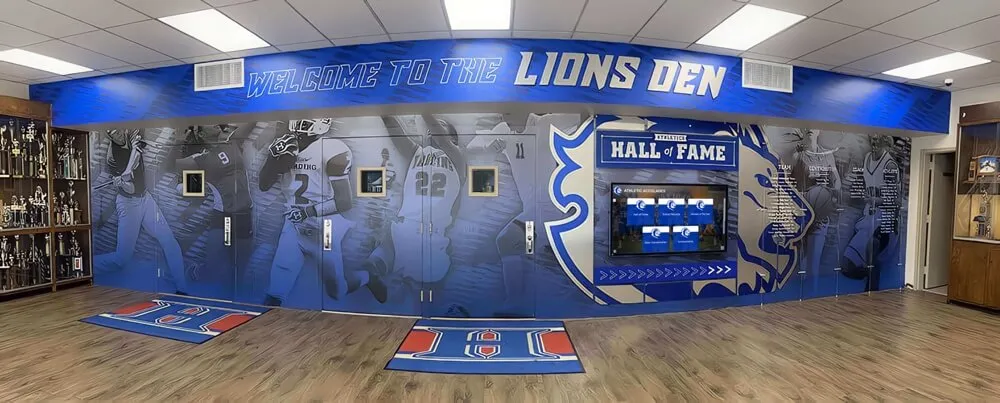
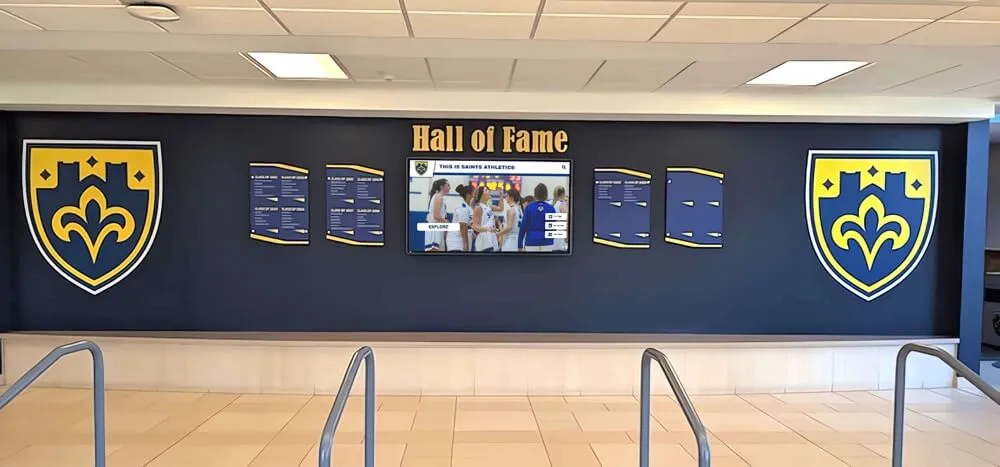
Hybrid installations combining traditional physical displays with digital recognition create comprehensive solutions honoring tradition while addressing space and cost constraints
Maximizing Value from Digital Recognition Investments
Strategic implementation and management ensure digital systems deliver maximum return on investment.
Creating Compelling Championship Content
Recognition effectiveness depends fundamentally on content quality:
Photography and Visual Standards
Professional presentation requires:
- High-resolution team photographs (minimum 2000x1500 pixels)
- Action photography from championship games and competitions
- Trophy and medal photographs documenting awards
- Celebration images capturing championship emotions
- Coaching staff and support personnel recognition
- Consistent editing ensuring unified visual appearance
- Proper athlete identification and caption accuracy
Comprehensive Team Documentation
Complete championship profiles include:
- Full roster with every team member properly recognized
- Individual athlete positions and jersey numbers
- Season statistics and performance highlights
- Notable game results and tournament progression
- Championship game or competition details
- Post-season honors and all-conference selections
- Coach quotes and season reflections
- Alumni career updates and accomplishments
This comprehensive documentation ensures every team member receives recognition—starters and reserves, stars and role players—acknowledging that championships require complete team efforts.
Historical Context and Storytelling
Rich content brings championships to life:
- Program history providing championship context
- Previous championships and winning traditions
- Obstacles overcome during championship seasons
- Defining moments and turning points
- Community impact and celebration
- Connections between championship teams across eras
- Alumni reflections years after championships
- Program philosophy and culture characteristics
This storytelling transforms championships from abstract dates into meaningful narratives celebrating people and moments.
Promoting Digital Recognition Programs
Recognition investments deserve announcement and celebration:
Launch Events and Ceremonies
Generate awareness through:
- Dedication ceremonies gathering athletic communities
- Alumni engagement events showcasing historical content
- Championship celebration integration during games
- Media coverage generating community awareness
- Social media campaigns promoting exploration
- Prospective family tours highlighting comprehensive recognition
Ongoing Engagement Strategies
Maintain visibility through:
- Regular content updates featuring new championships
- Anniversary recognition celebrating milestone championships
- Alumni spotlight features with career updates
- Championship throwback campaigns on social media
- Recruitment integration during campus tours
- Donor recognition connecting giving to program excellence
This promotion establishes digital recognition as significant institutional investment worthy of attention rather than minor technology addition easily overlooked.
Discover comprehensive approaches to showcasing championship teams through digital platforms.
Measuring Recognition Program Success
Systematic assessment demonstrates value and informs improvements:
Engagement Metrics
Track recognition program performance:
- Total interactions and viewing sessions over time
- Average engagement duration per visitor
- Most-viewed championships and content
- Search queries revealing user interests
- Peak usage times and patterns
- Return visitor rates showing sustained interest
- Geographic distribution of web access
- Social sharing frequency and reach
Program Outcome Indicators
Correlate recognition with:
- Recruiting class quality and athlete commitment rates
- Current athlete survey responses about motivation
- Alumni engagement rates and reunion attendance
- Fundraising success and donor participation
- Community perception surveys and reputation
- Social media engagement and positive sentiment
- Campus tour visitor feedback and commentary
Digital platforms provide detailed analytics impossible with physical banners, enabling data-driven program management and continuous improvement.
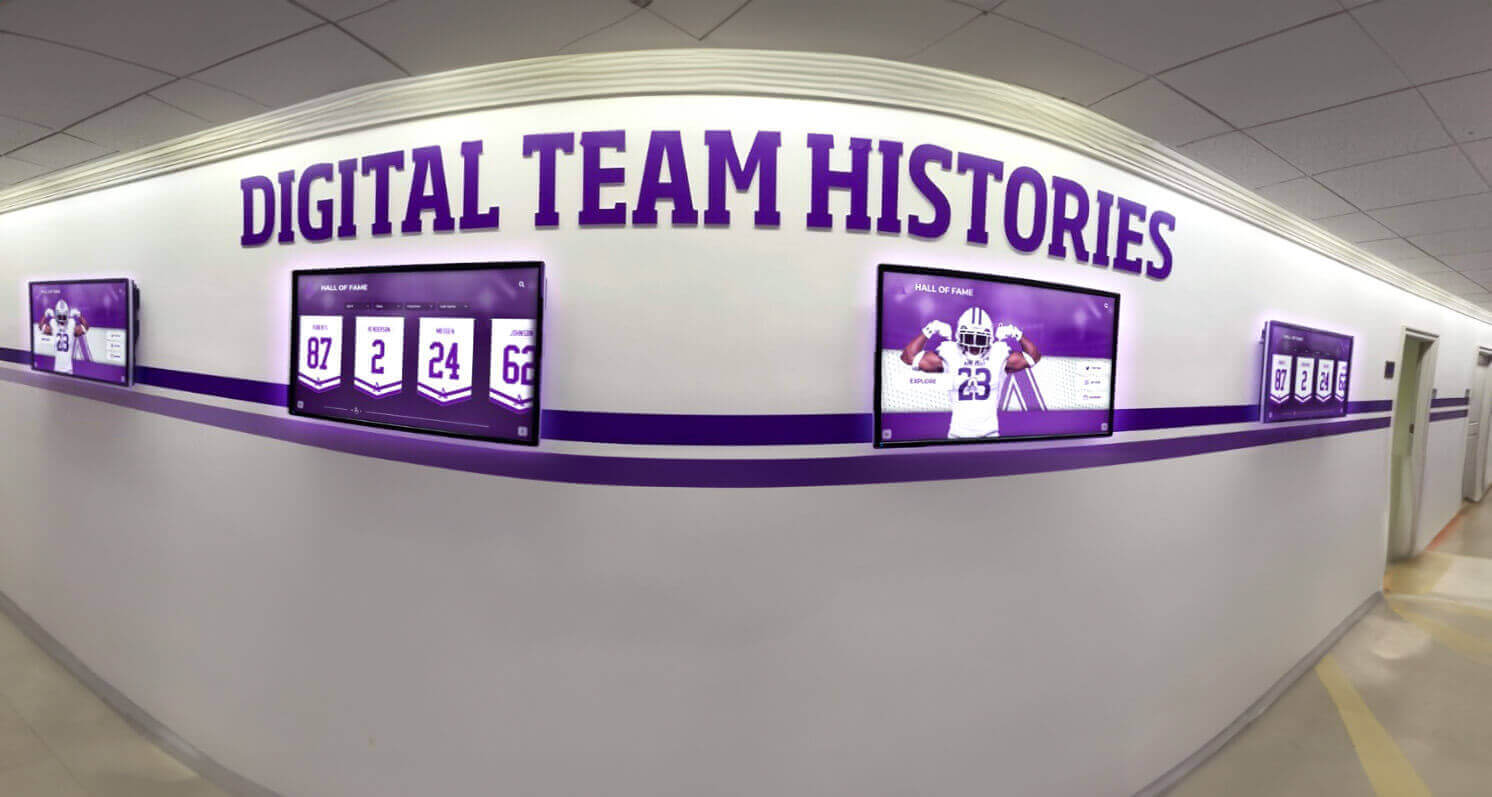
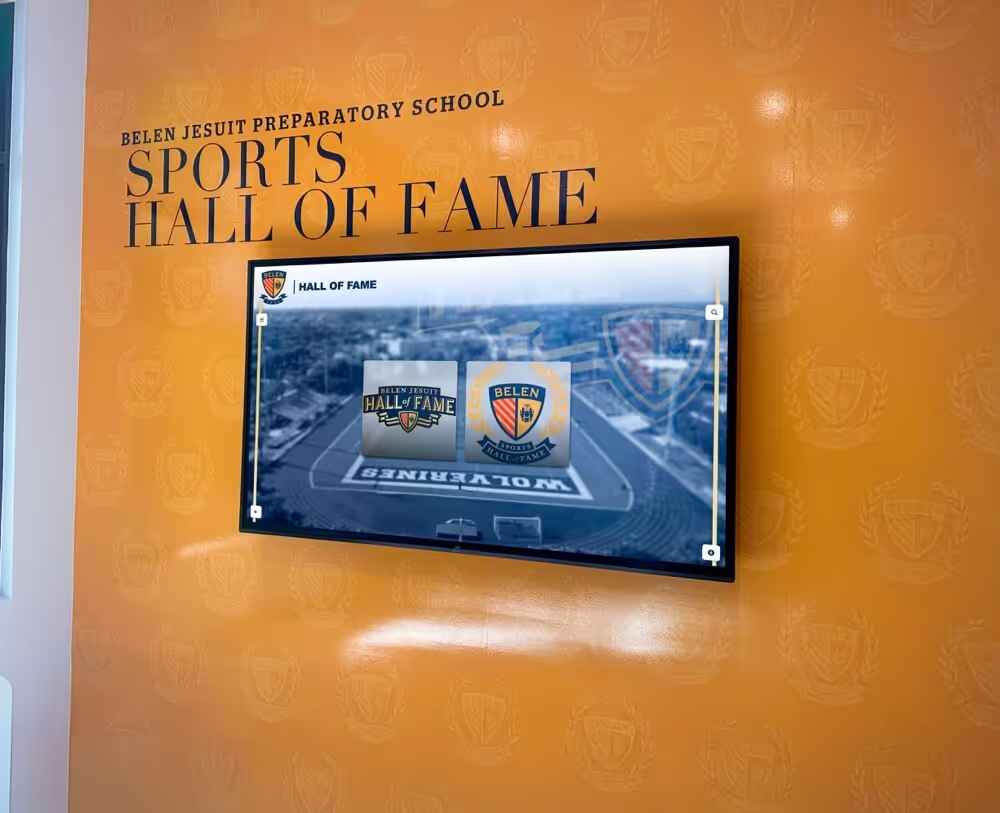
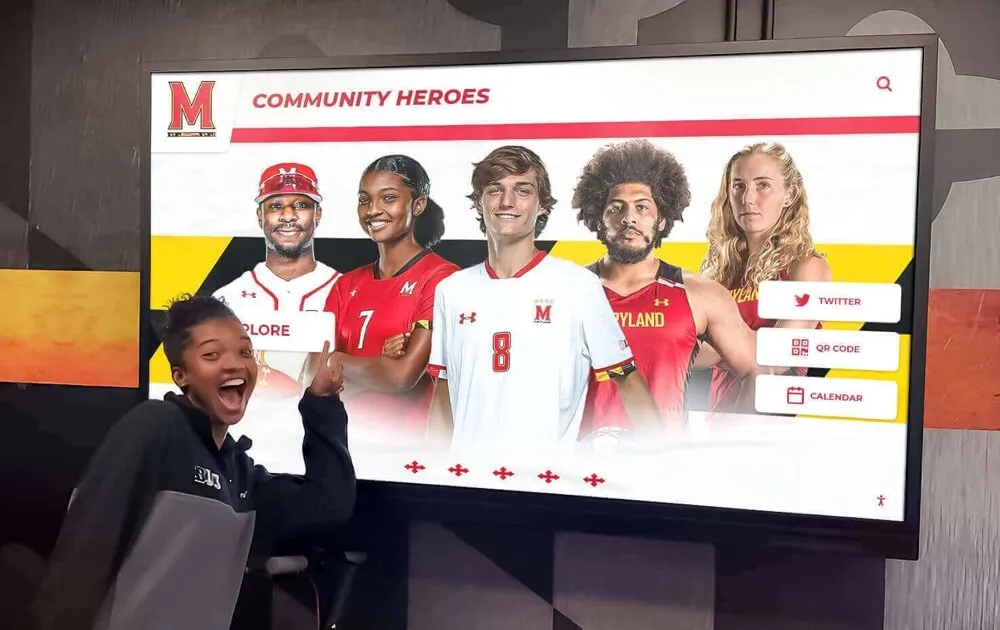
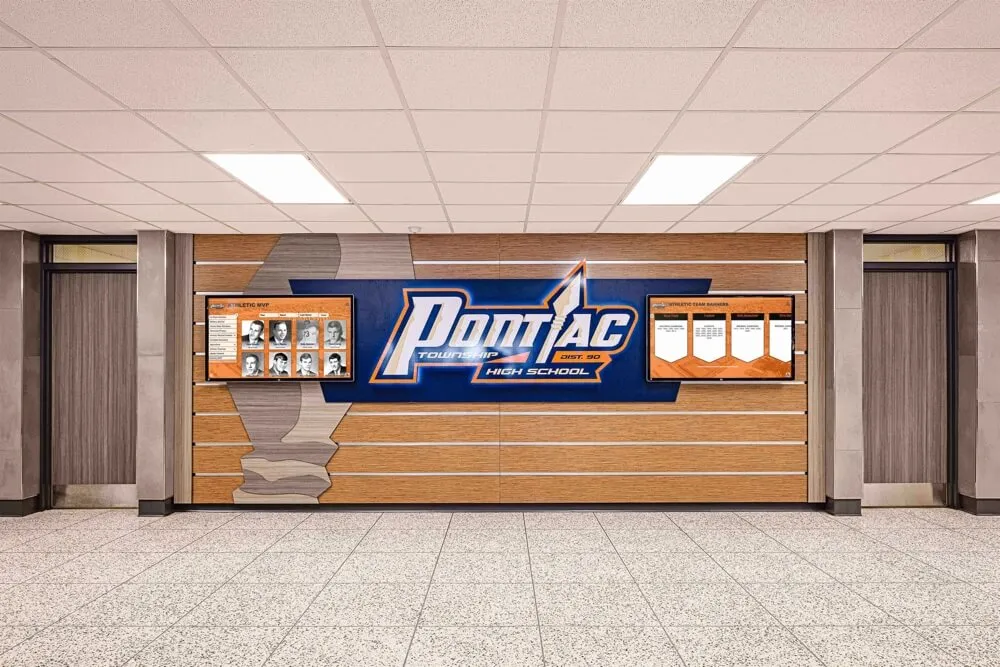
Professional installations can include multiple coordinated displays showcasing various championship categories and program achievements
Special Considerations for Budget-Conscious Programs
Schools with limited resources can still implement effective digital recognition:
Free and Low-Cost Software Options
Several approaches minimize software expenses:
DIY Solutions Using Standard Tools
Budget-conscious programs can utilize:
- Google Slides or PowerPoint presentations auto-rotating championship slides
- Free digital signage software with basic scheduling
- Cloud photo services displaying championship collections
- Simple web pages accessible via QR codes
- Social media platforms showcasing championships
- YouTube channels hosting championship videos
While lacking sophisticated features of purpose-built platforms, these approaches provide unlimited capacity and eliminate recurring banner costs.
Educational Technology Discounts
Many recognition platforms offer:
- Special pricing for K-12 and higher education institutions
- Free or reduced-cost pilot programs
- Grant assistance and funding resources
- Multi-year commitments reducing annual costs
- Bundled pricing for multiple displays
- Alumni association partnership opportunities
Contact vendors directly about educational pricing and available assistance programs.
Leveraging Existing Display Hardware
Schools often possess underutilized technology:
Repurposing Available Equipment
Maximize existing investments:
- Lobby displays currently showing generic announcements
- Older smart TVs adequate for rotating content
- Computer monitors with adequate screen size
- Projectors in gathering spaces
- Retired interactive whiteboards
- Donated corporate display equipment
Even consumer-grade displays provide unlimited championship capacity at zero hardware cost, delivering substantial value despite lacking commercial durability.
Student and Staff Technology Skills
Reduce costs through internal expertise:
- Technology students managing content updates as projects
- Athletic communications staff integrating with existing duties
- Booster club volunteers contributing content and photography
- Alumni association members researching historical championships
- Student managers documenting current championships
- Computer science classes building custom platforms as curriculum
Community involvement creates ownership while distributing workload and eliminating outsourcing expenses.
Funding Strategies for Digital Recognition Investments
Multiple approaches help schools afford comprehensive recognition systems:
Internal Budget Reallocation
Consider shifting resources from:
- Banner production budget redirected to digital investment
- Trophy case purchase funds applied to recognition technology
- Facility signage expenses consolidated into digital systems
- Athletic marketing budgets integrated with recognition
- Technology infrastructure allocations
- Deferred maintenance savings from eliminating banner upkeep
External Support and Fundraising
Engage supporters through:
- Athletic booster club dedicated campaigns
- Alumni association recognition initiatives
- Corporate or community business sponsorships
- Individual major donor opportunities
- Grant applications for educational technology
- Championship-specific fundraising tied to team anniversaries
- Named display opportunities for significant donors
Many schools discover that recognition technology investments attract donor enthusiasm more effectively than ongoing banner production expenses.
Explore donor recognition strategies that integrate with athletic celebration.
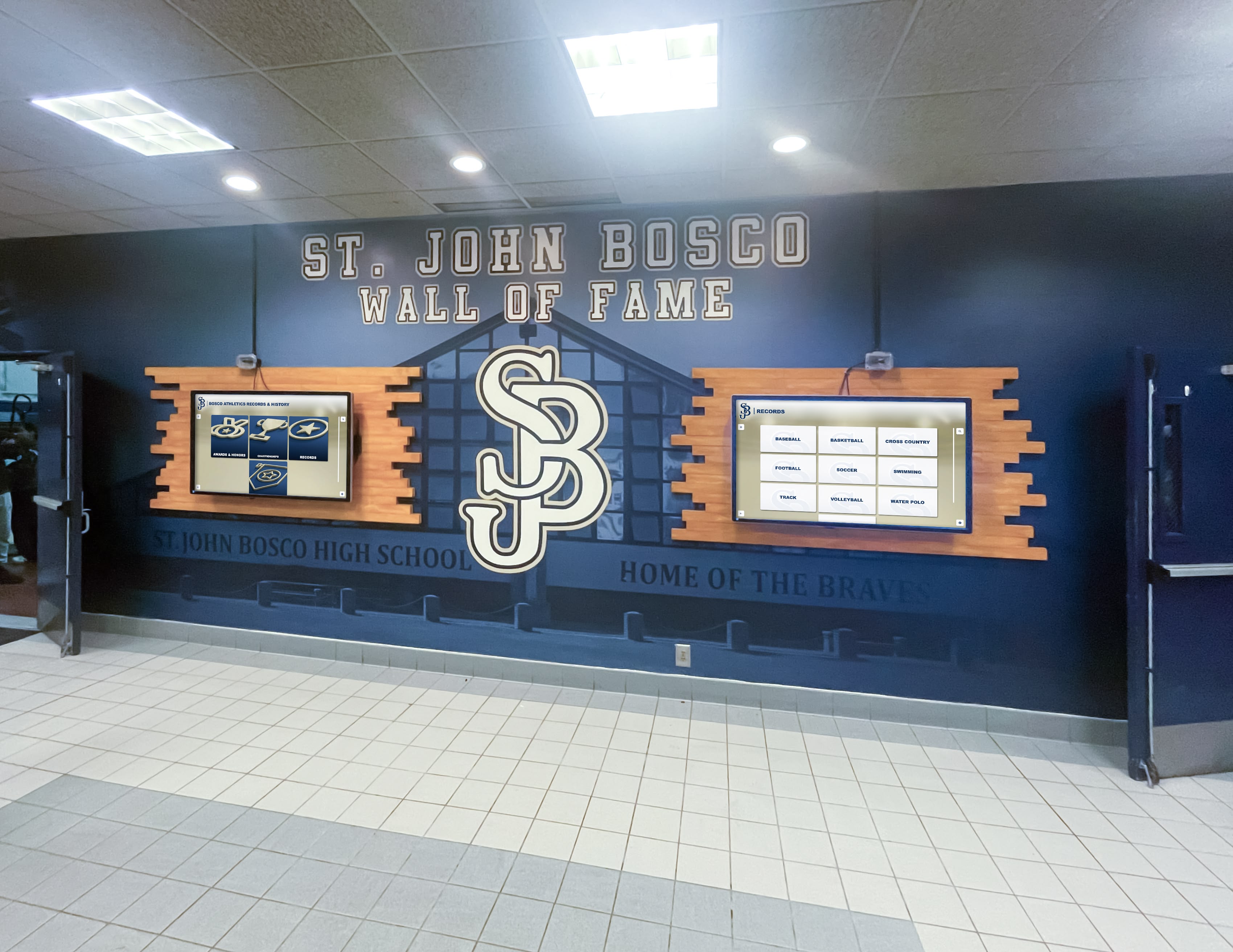
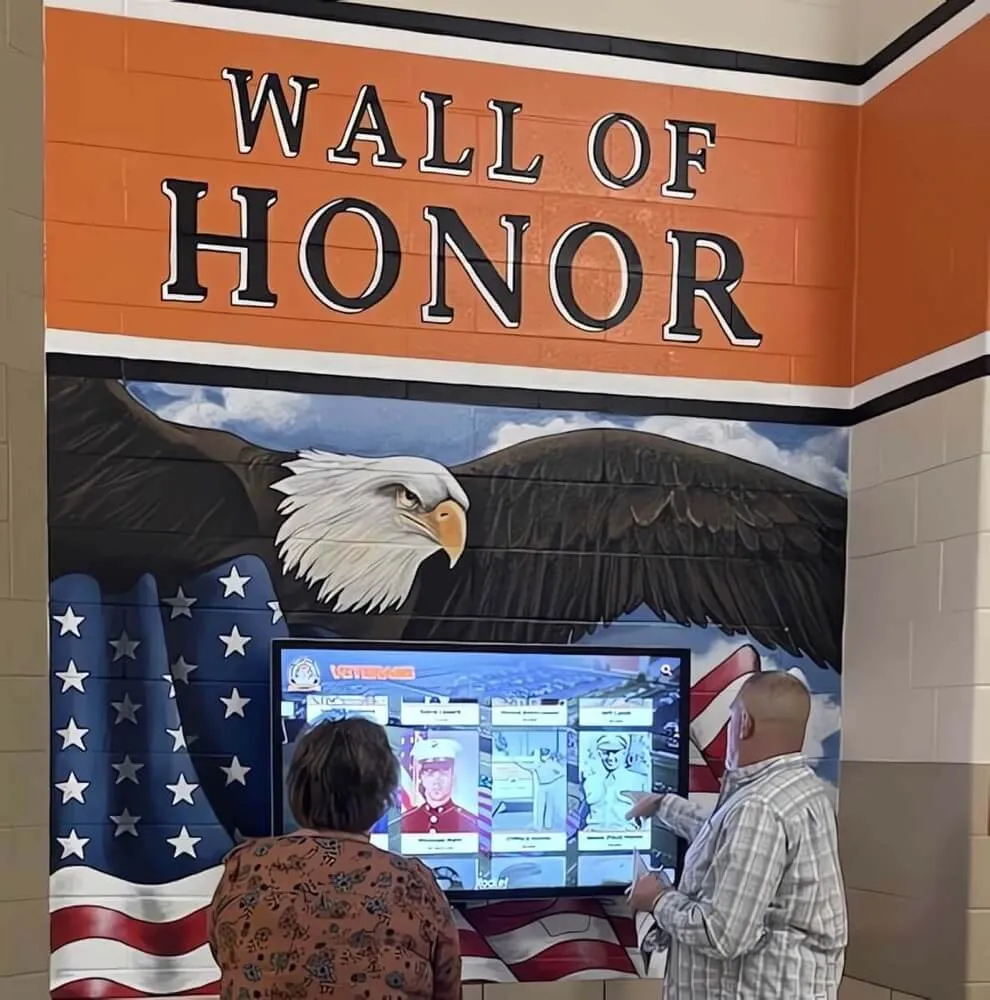
Professional installations create impressive focal points celebrating athletic excellence with appropriate investment and prominence
Common Challenges and Solutions
Schools transitioning from traditional banners to digital recognition encounter predictable obstacles.
Overcoming Traditionalist Resistance
Some stakeholders prefer physical banners:
Understanding Traditional Banner Appeal
Physical banners provide:
- Immediate visibility to everyone entering gymnasiums
- Tangible representation of championship success
- Decades-long tradition creating nostalgia and attachment
- Simple recognition requiring no technology interaction
- Permanence and stability compared to digital content
These values deserve acknowledgment and respect rather than dismissal.
Addressing Concerns Through Hybrid Approaches
Satisfy traditionalists while implementing digital solutions:
- Maintain select physical banners for most prestigious championships
- Position digital displays prominently near remaining physical banners
- Create digital reproductions exactly matching physical banner designs
- Implement gradually rather than removing all banners simultaneously
- Involve stakeholders in selection of banners to maintain physically
- Demonstrate how digital recognition enhances rather than replaces tradition
Most resistance diminishes once stakeholders experience digital recognition’s superior capacity and engagement compared to traditional banners.
Managing Technical and Administrative Challenges
Digital systems introduce new management requirements:
Content Management Sustainability
Ensure long-term viability through:
- Clear responsibility assignment for content updates
- Documented procedures for adding new championships
- Standardized templates ensuring consistent presentation
- Calendar reminders for championship documentation
- Multiple trained staff ensuring continuity through personnel changes
- Simple workflows requiring minimal time investment
- Quality review processes maintaining standards
Successful programs report that digital content management requires less time than traditional banner coordination once initial processes establish.
Technical Support and Troubleshooting
Address technology concerns through:
- Vendor technical support and training
- IT department integration and backup assistance
- Simple hardware with minimal maintenance requirements
- Remote monitoring and management capabilities
- Contingency plans for technical failures
- Regular maintenance schedules preventing problems
- User documentation and training materials
Commercial-grade displays designed for continuous operation typically provide years of reliable service with minimal intervention.
Ensuring Equitable Recognition Across Programs
Digital capacity enables comprehensive recognition:
Sport-by-Sport Assessment
Review recognition patterns ensuring:
- High-profile versus smaller sports receiving equal treatment
- Boys and girls programs achieving balanced recognition
- Fall, winter, and spring sports represented proportionally
- Team and individual championships recognized comparably
- Current and historical achievements displayed equitably
Achievement Level Representation
Ensure comprehensive recognition includes:
- State championships receiving prominent celebration
- Regional, district, and conference achievements honored appropriately
- Tournament victories and special accomplishments included
- All achievement levels contributing to complete program story
Unlimited digital capacity finally enables truly equitable recognition where every championship receives appropriate celebration regardless of sport, gender, or achievement level.
Learn about implementing equitable athletic recognition programs across all sports.
Conclusion: Building Sustainable Recognition Programs
Championship banners hanging from gymnasium ceilings will always hold special meaning as visible symbols of athletic excellence. Yet traditional fabric banners alone cannot provide sustainable, comprehensive recognition when annual production costs of $5,000-10,000 accumulate indefinitely, ceiling space fills completely forcing difficult removal decisions, and limited information capacity prevents celebrating the athletes and stories behind championships.
Digital recognition alternatives eliminate these fundamental challenges while delivering superior long-term value. When athletic programs implement modern touchscreen displays showcasing unlimited championships, creating rich multimedia content honoring individual team members, and providing engaging interactive experiences connecting communities to athletic excellence, they create recognition systems appropriately celebrating every achievement without recurring production costs or space constraints.
Ready to explore modern alternatives to expensive championship banners? Digital recognition solutions like Rocket Alumni Solutions provide specialized platforms designed specifically for athletic recognition needs, combining unlimited capacity, rich multimedia content, intuitive touchscreen experiences, and web accessibility that extends championship celebration beyond facility boundaries—all while eliminating recurring banner production and installation expenses.
Whether implementing standalone digital recognition, maintaining select physical banners supplemented with comprehensive digital documentation, or creating phased transitions honoring tradition while embracing technology, start with systematic planning establishing clear objectives, select appropriate technology matching your needs and resources, develop compelling content celebrating championships meaningfully, and implement sustainable processes ensuring recognition remains current and effective.
Request your free custom demo at https://www.rocketalumnisolutions.com/?demo=demo or schedule a consultation at https://www.rocketalumnisolutions.com/schedule-call?utm_source=halloffameonlinecom_homepage to see how digital recognition can transform championship celebration at your school.
Your championship achievements deserve recognition that appropriately honors the dedication, perseverance, and excellence producing them—not recognition artificially limited by budget constraints or ceiling space. Every championship represents months of preparation, countless practice hours, strategic coaching, and complete team commitment. Those achievements deserve celebration through sustainable systems that honor unlimited accomplishments while creating meaningful engagement connecting entire communities to athletic excellence.
Traditional banners will remain valuable for select championships creating immediate visual impact—that tradition continues serving important purposes. But comprehensive championship recognition requires solutions eliminating recurring production expenses, providing unlimited capacity honoring every achievement appropriately, and creating engaging experiences impossible with fabric hanging overhead. Digital recognition delivers those solutions, enabling athletic programs to celebrate excellence comprehensively while building sustainable recognition systems serving departments effectively for decades.
The most important step is beginning the planning process today. Evaluate your current recognition costs and capacity constraints, explore available digital alternatives matching your needs and resources, and implement systems celebrating athletic achievement sustainably. Your championships deserve recognition that honors accomplishments appropriately while eliminating forced choices about which achievements warrant visibility. Digital recognition makes that comprehensive, equitable celebration achievable and economically sustainable.