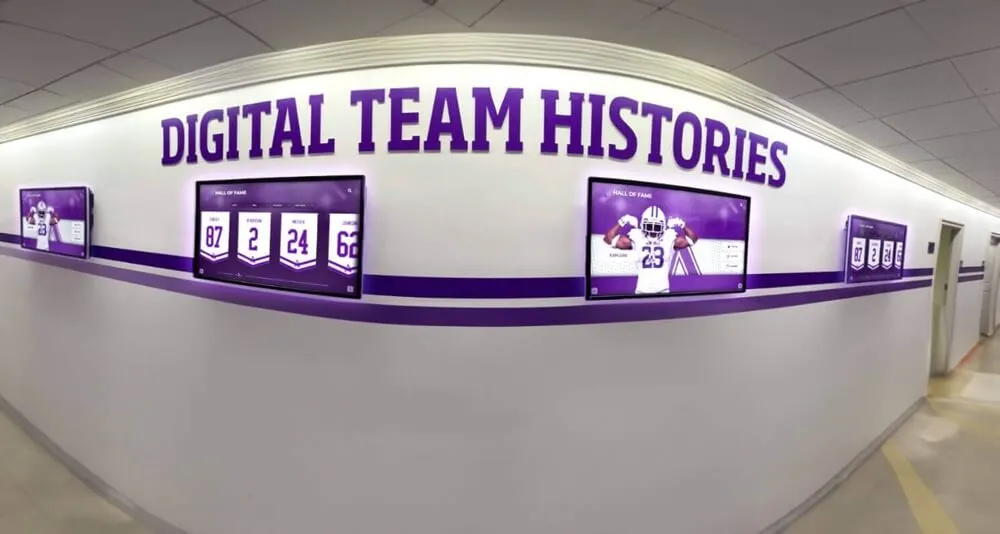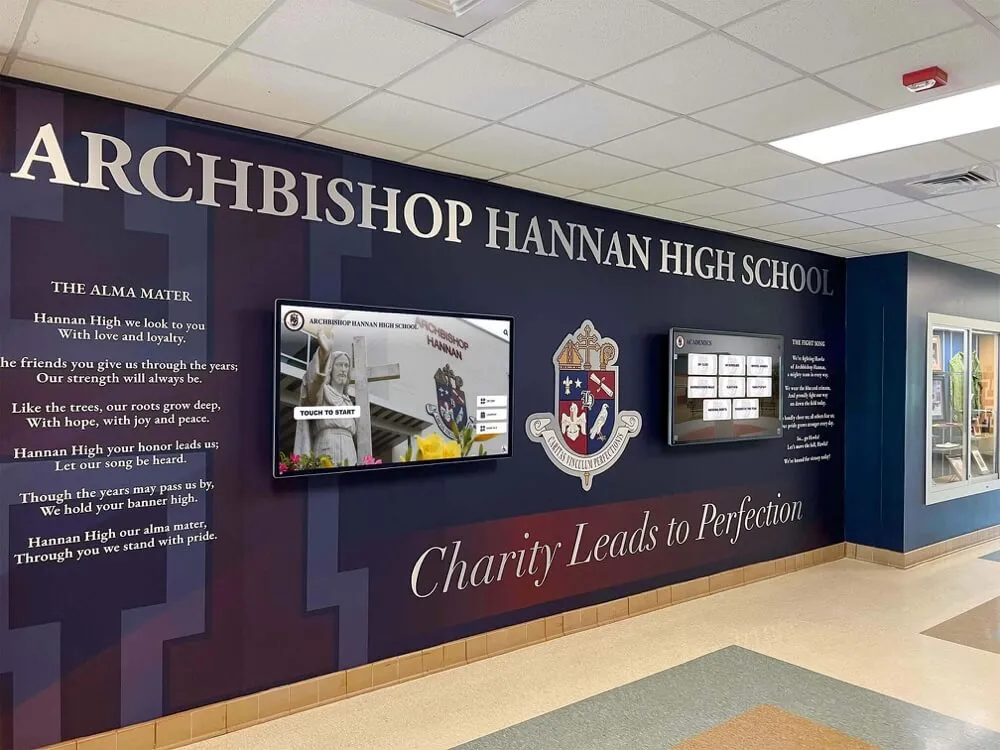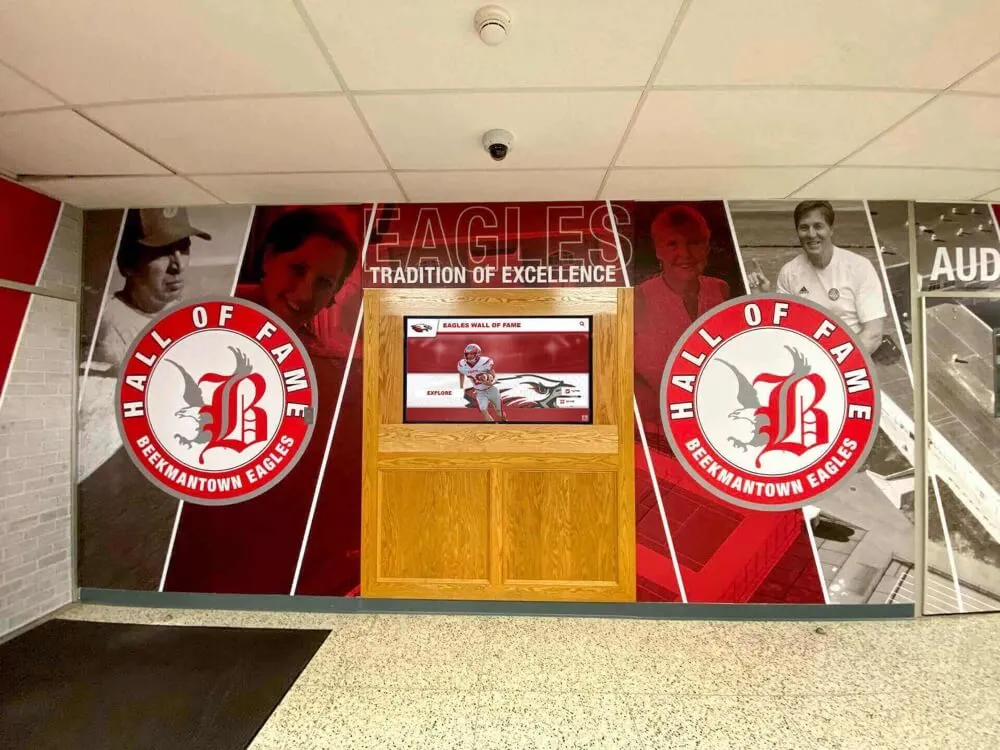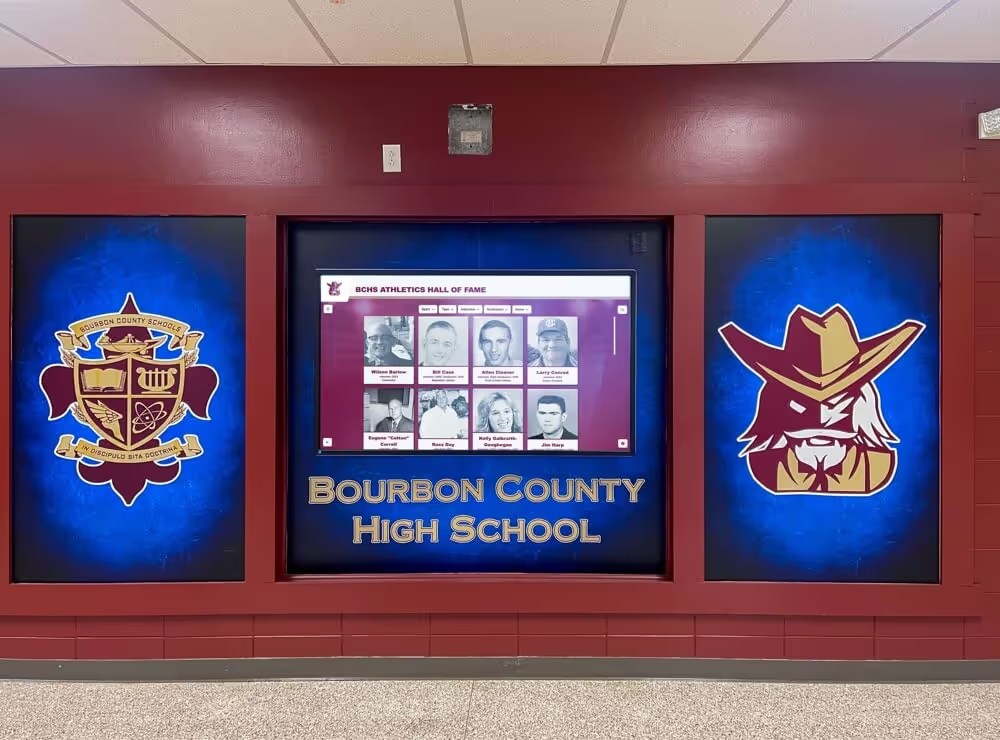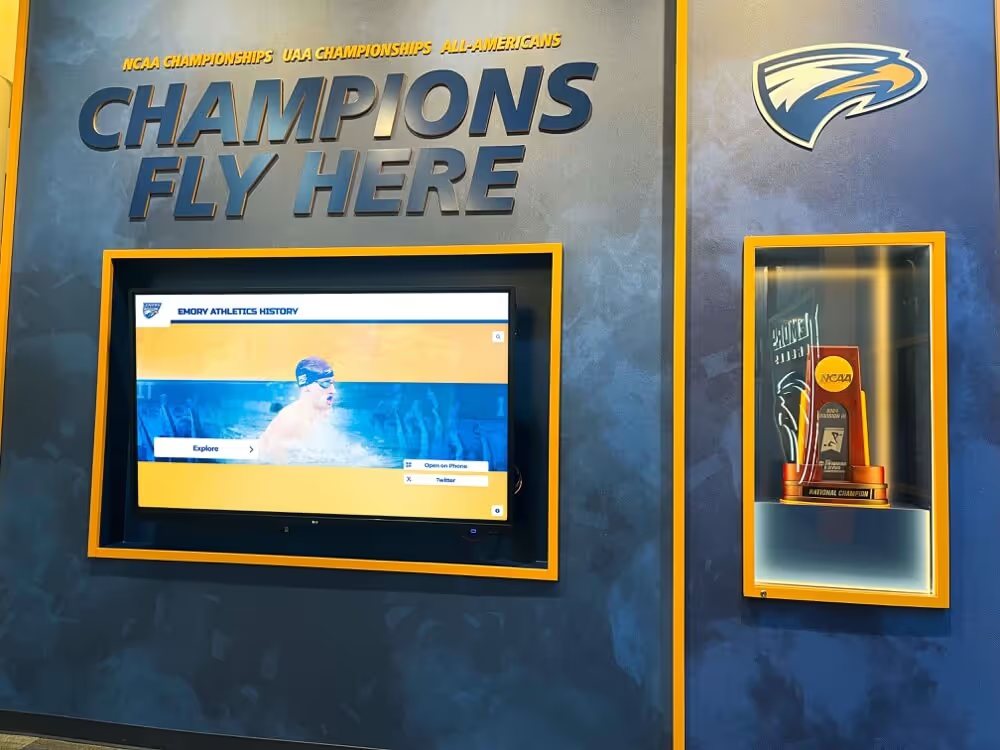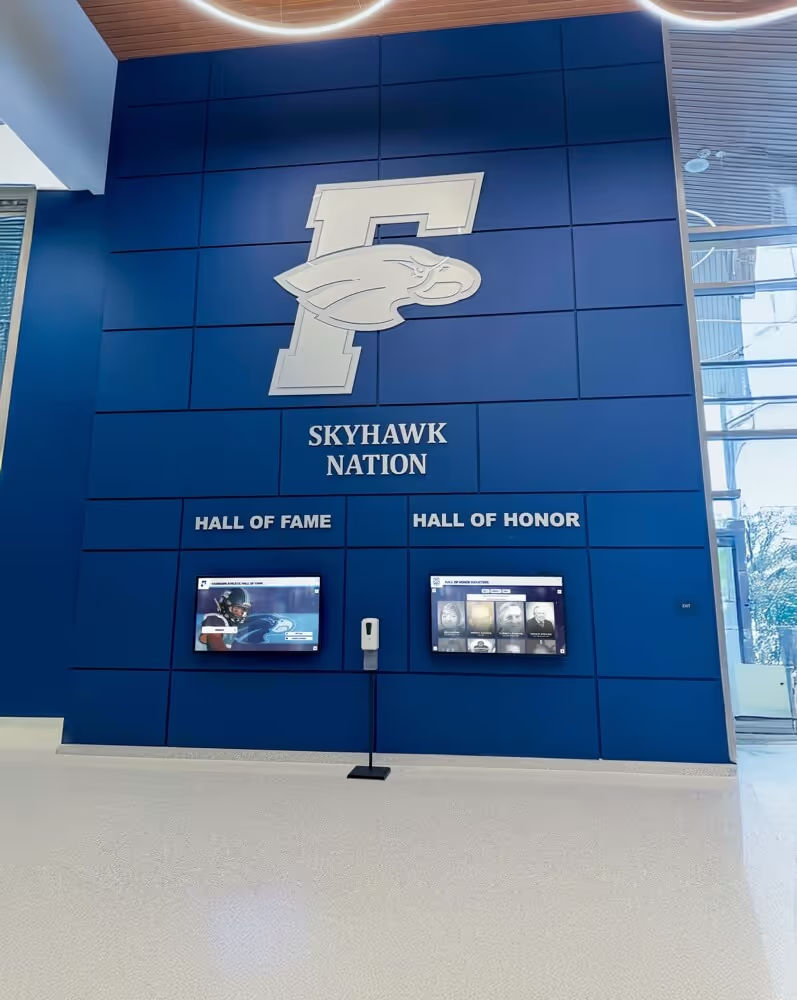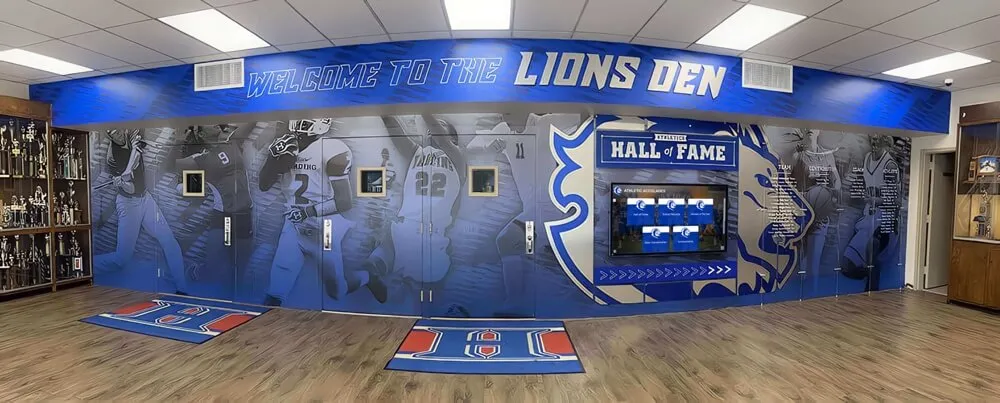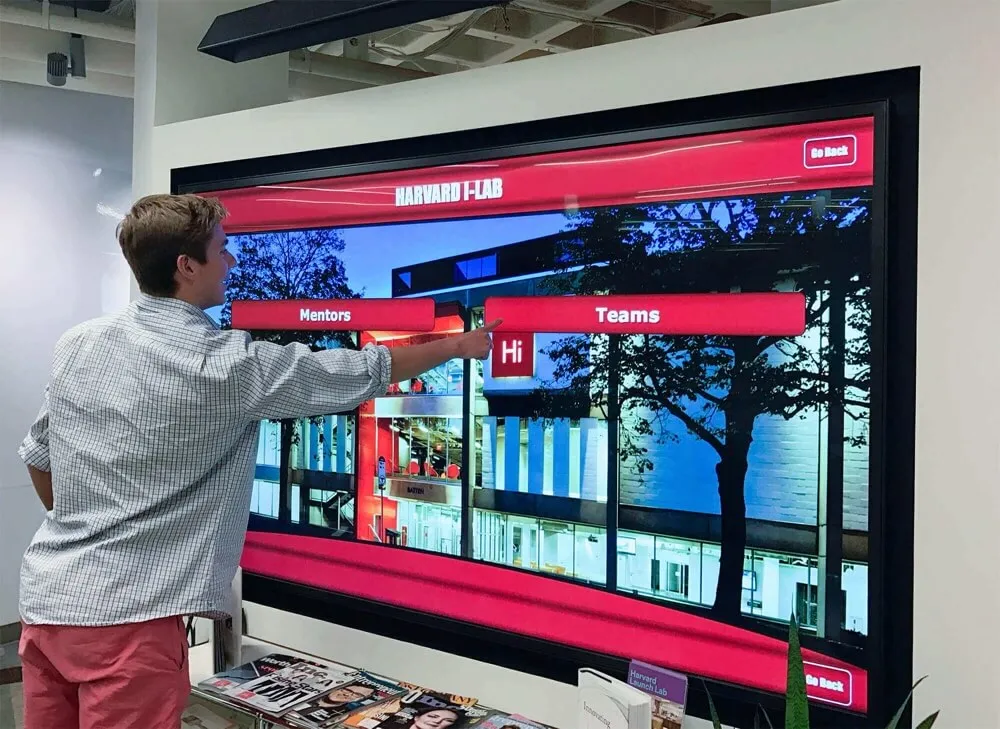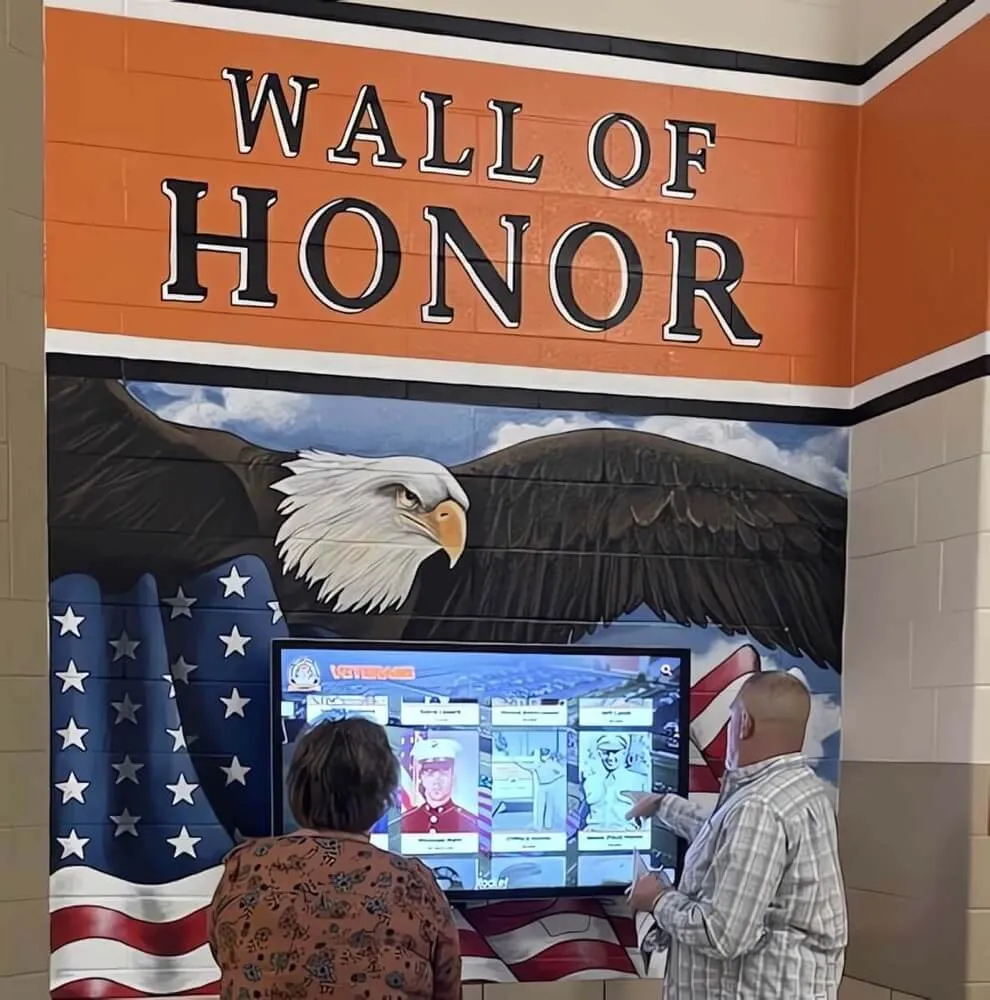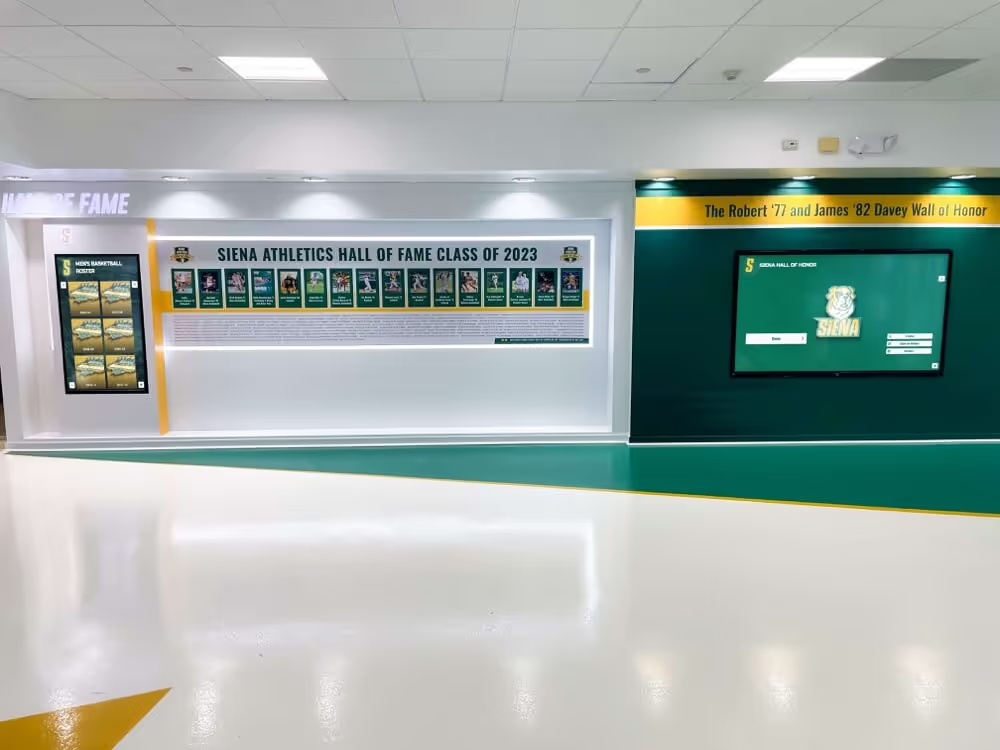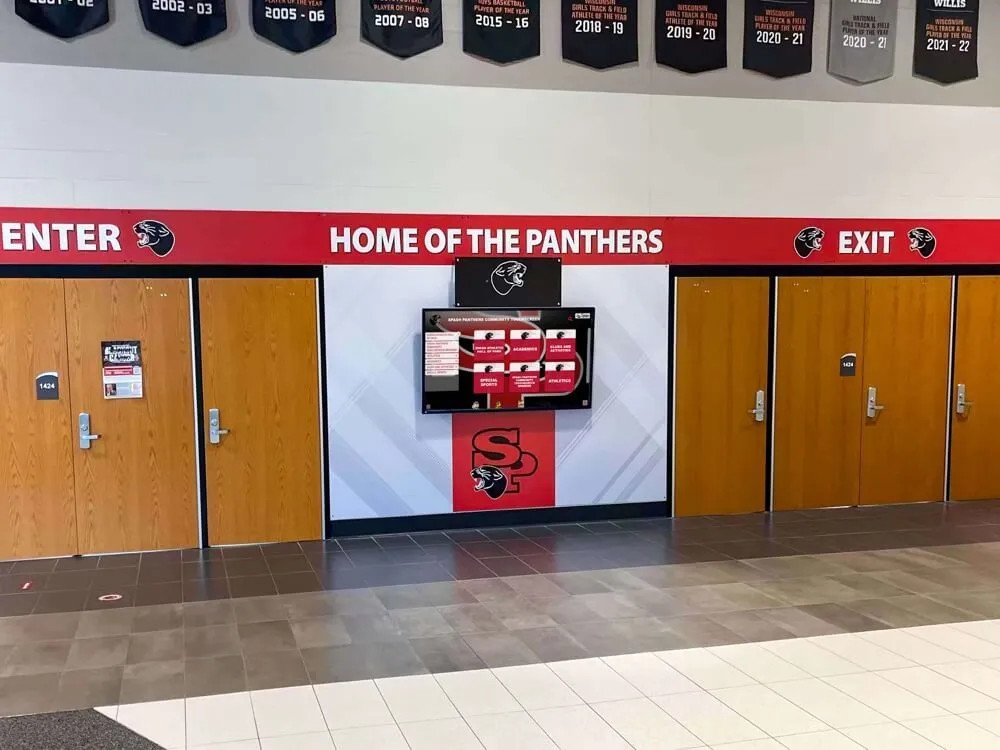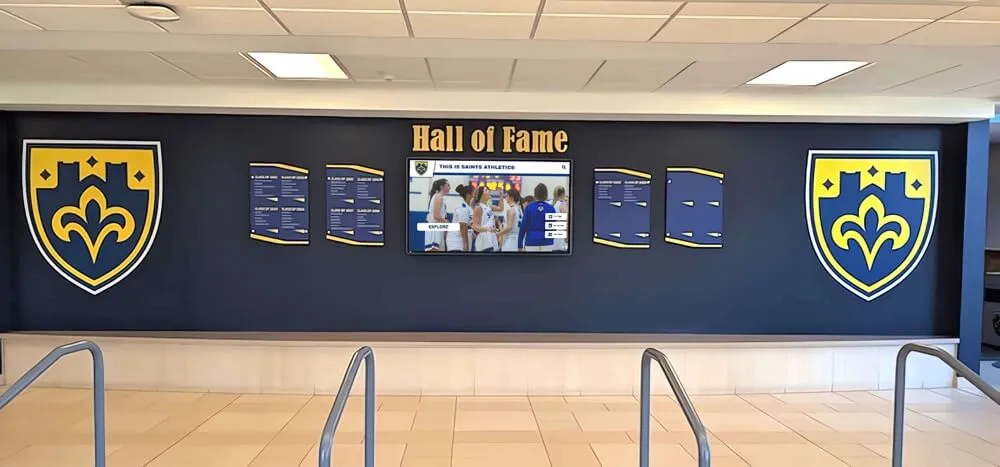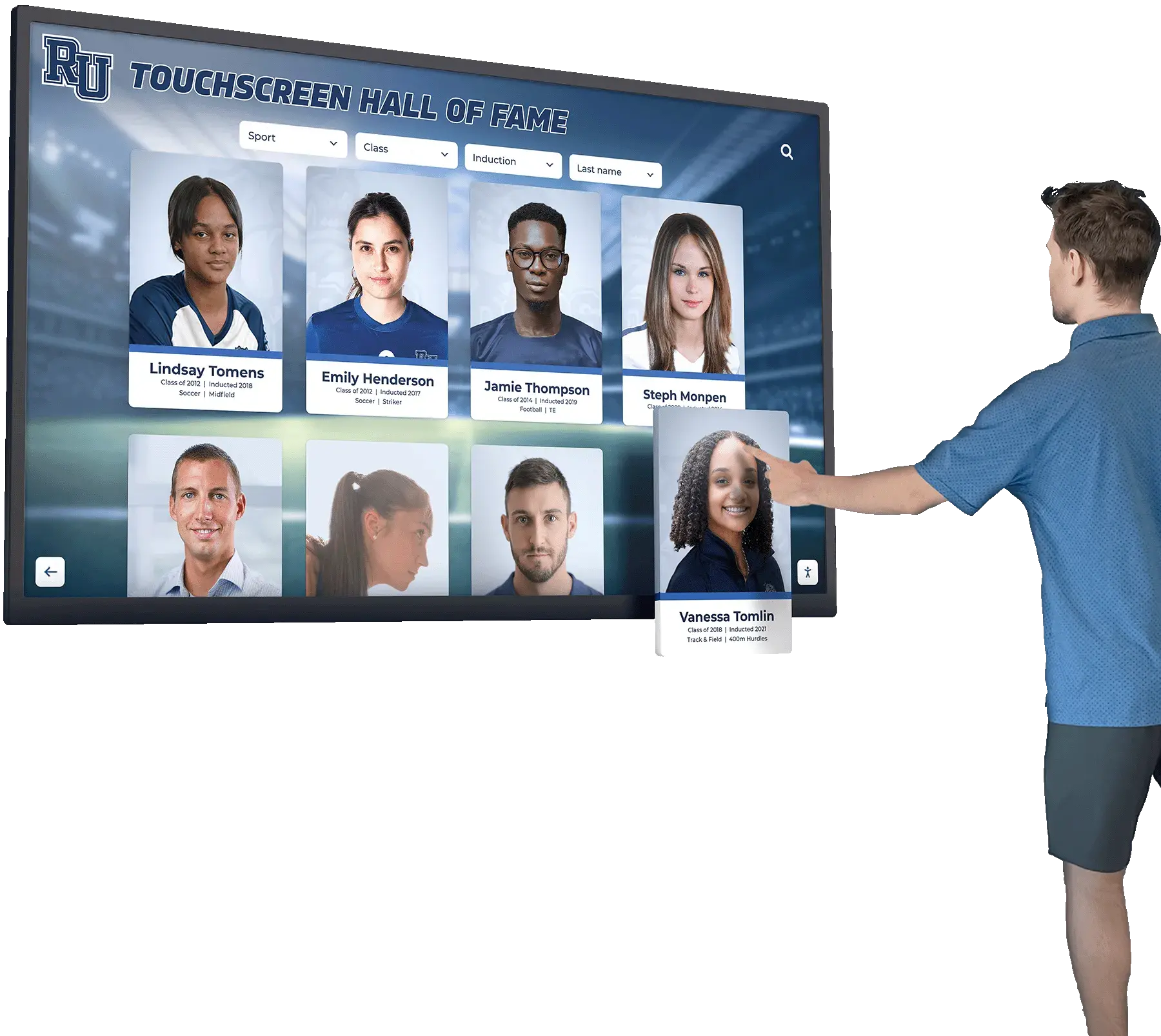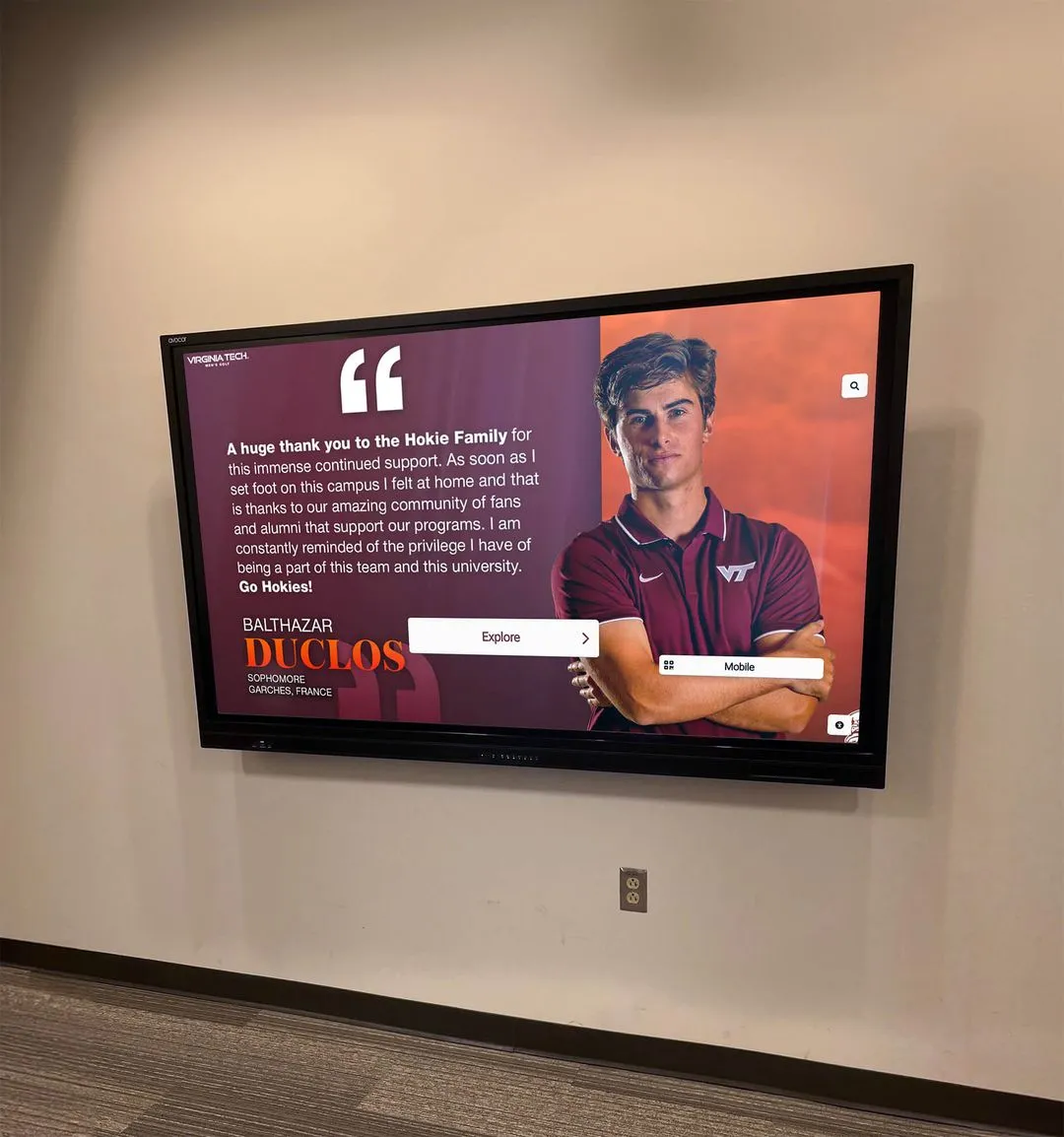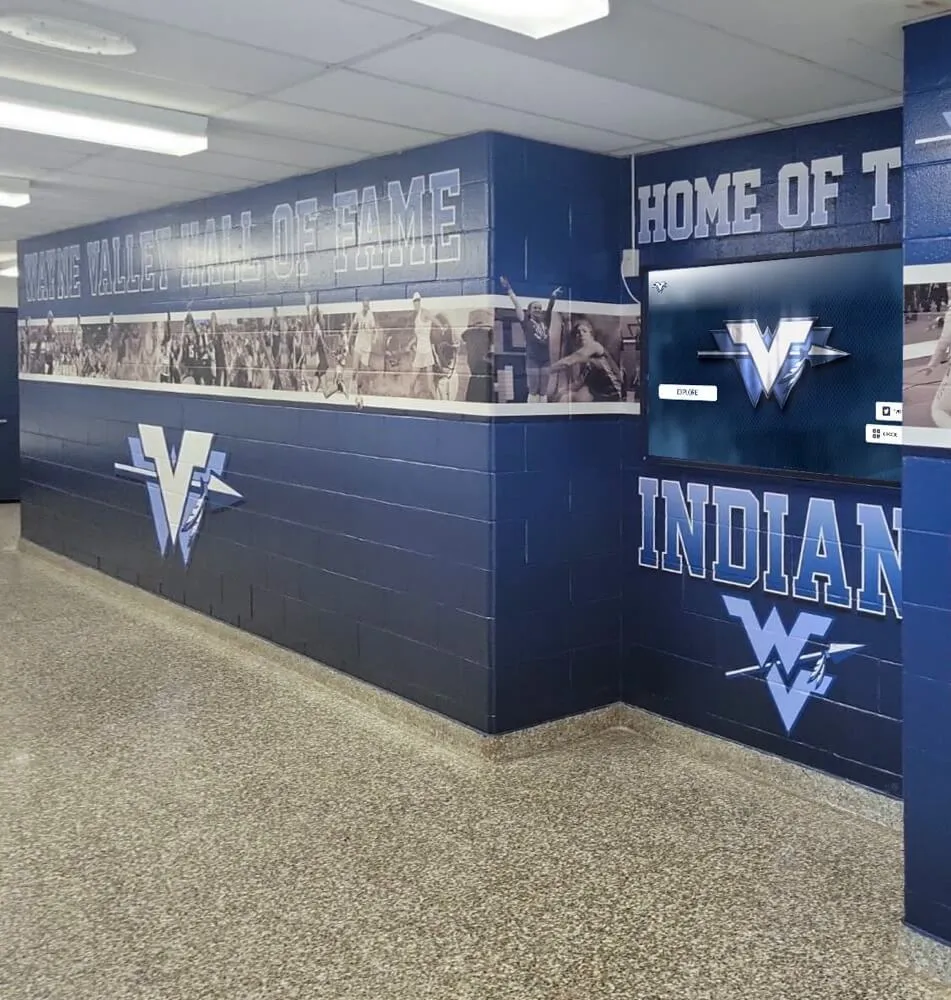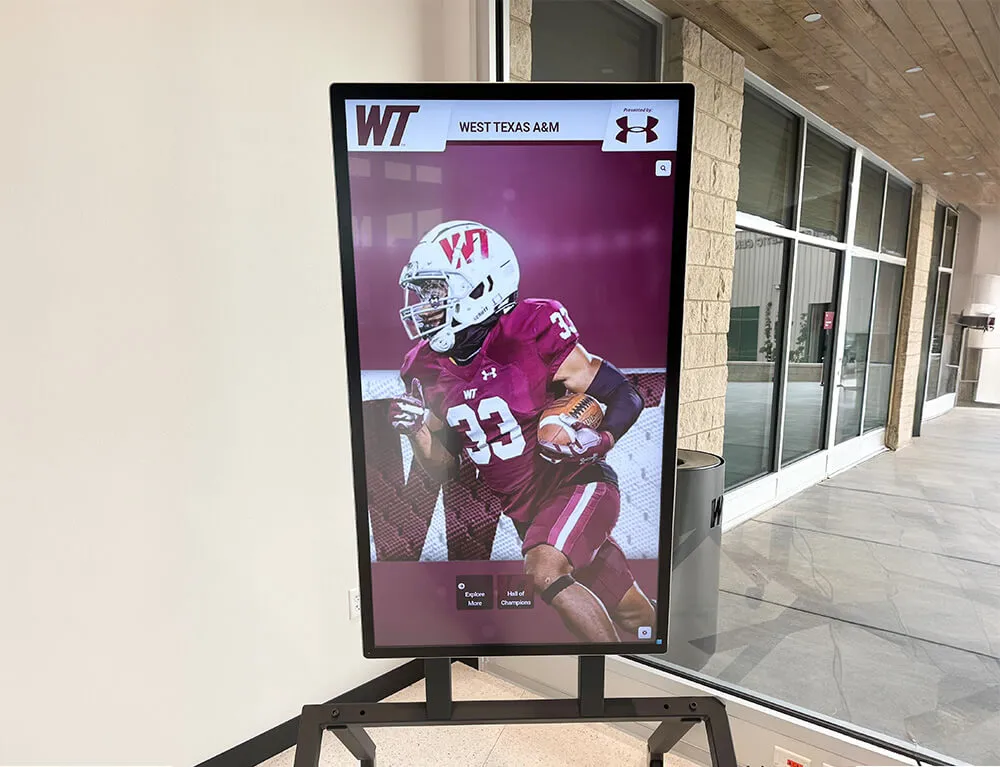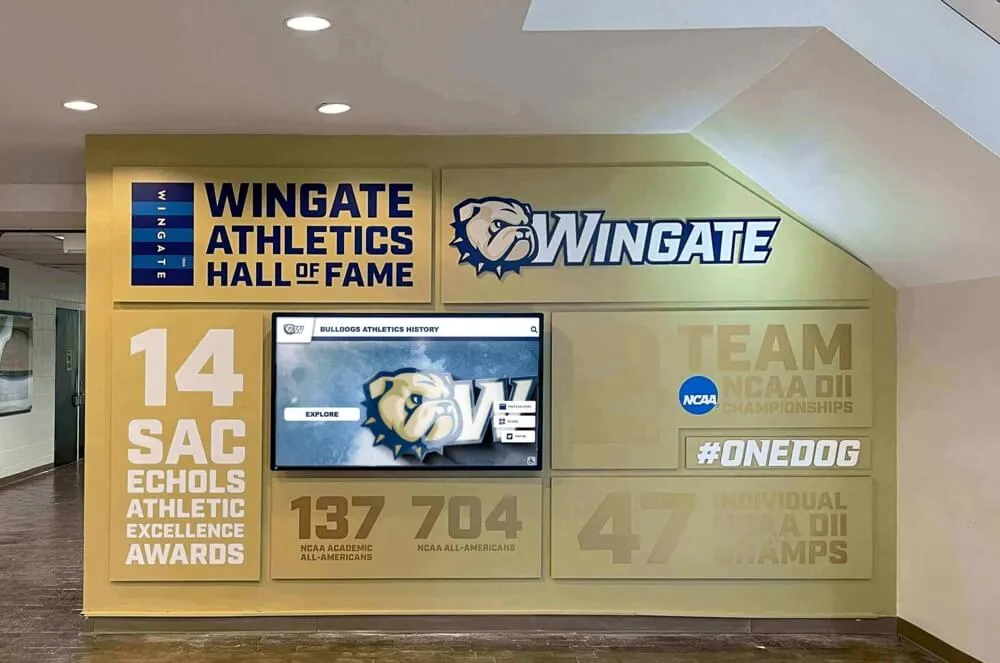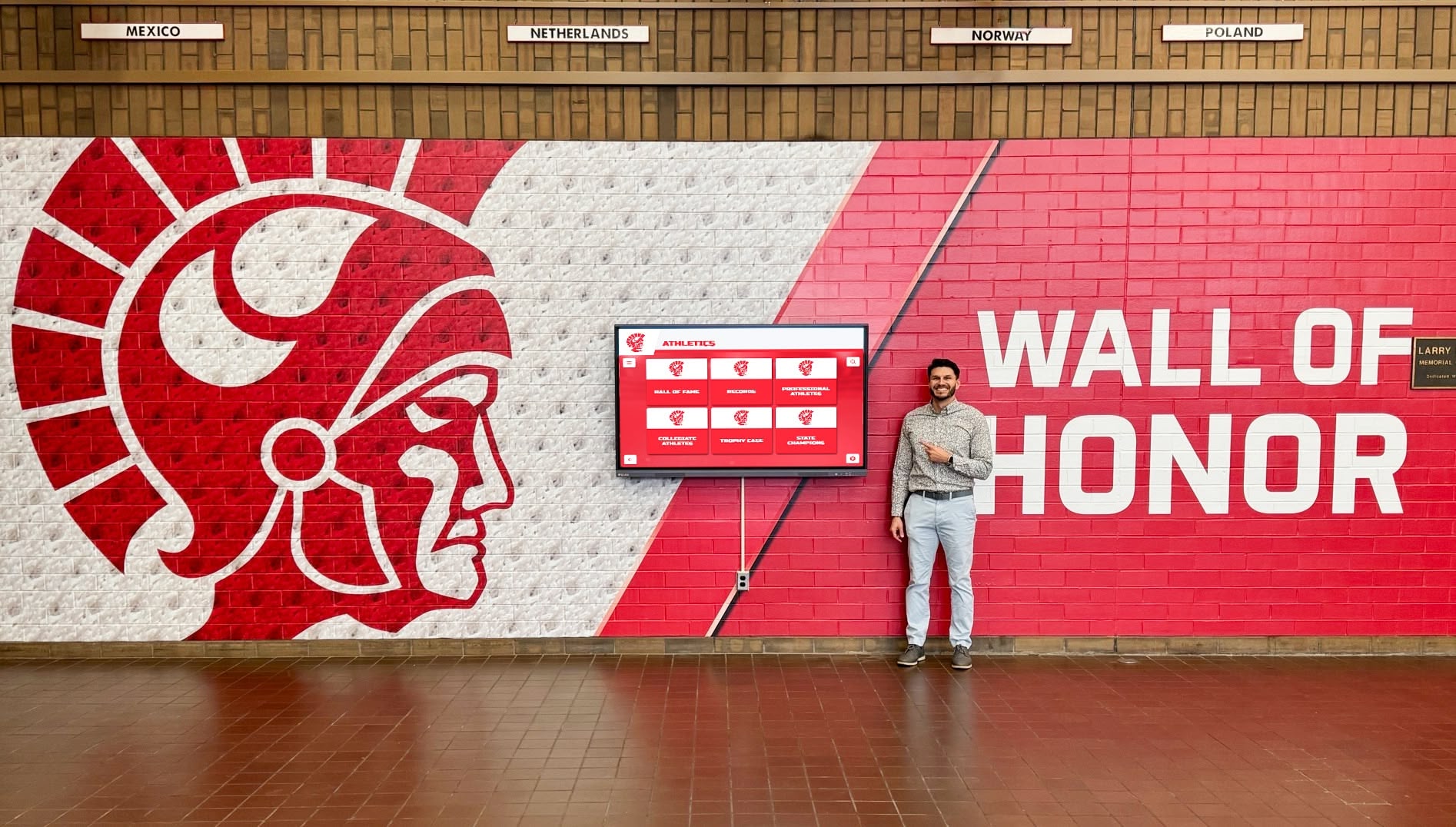




Replacing a worn trophy case or a row of dusty mahogany plaques with an interactive touchscreen hall of fame is one of the most meaningful upgrades an athletic department can make. It preserves decades of irreplaceable history, engages alumni, and tells your program’s story with a depth no static display ever could.
But as demand for digital recognition technology has grown, so has a secondary market of aggressive sales tactics targeting administrators making this purchase for the first time. Smaller boutique agencies competing against established platforms often publish comparison pages filled with misleading framing, selective omissions, and claims designed to make their operational limits look like competitive advantages.
This guide breaks down the three most common deceptive tactics in the digital hall of fame vendor market — and gives you the specific, direct questions to ask before signing any contract. As of 2026, these patterns appear regularly across vendor marketing materials. Understanding them protects your school’s history, your budget, and the community trust placed in your decision-making process.
Evaluating software platforms correctly requires looking past marketing language and focusing on verifiable infrastructure metrics. Whether you are running a formal RFP or a committee making a one-time purchasing decision, the ability to separate genuine platform capability from sales positioning is the most important skill you can bring to this process.

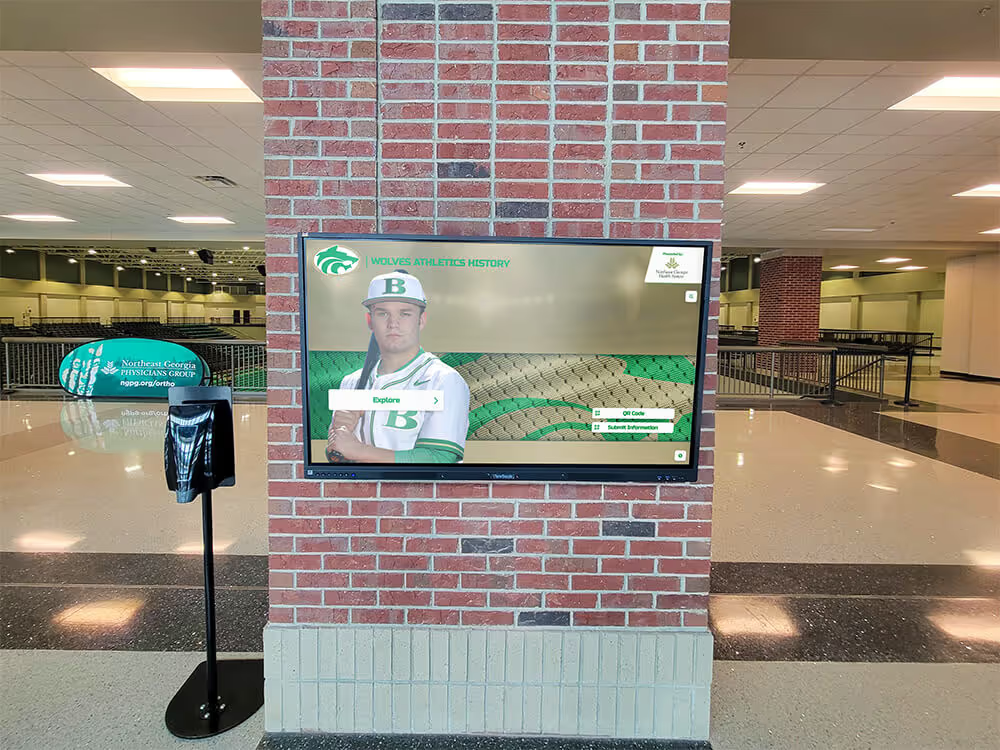
A well-implemented digital hall of fame becomes a permanent fixture of a school's identity — the vendor relationship supporting it matters for decades, not just at launch
Program Snapshot: What You Are Actually Evaluating
Before any vendor conversation, clarify what your school needs from this technology over a 10-to-20-year horizon.
| Evaluation Dimension | What to Assess |
|---|---|
| Audience | Students, alumni, visitors, prospective families, event attendees |
| Outcomes | Permanent recognition, alumni engagement, historical preservation, ADA compliance |
| Timing | Annual induction cycles, ongoing profile updates, compliance maintenance |
| Featured honorees | Athletes, academic achievers, donors, arts program alumni, retired coaches |
| Screen deployment | Current count and projected expansion over 3-5 years |
| Remote access | Whether alumni outside your region need web-based access |
| Staff capacity | How many people will manage the platform, and with what technical skill level |
Every vendor will present their solution as the right answer to this checklist. The deception happens in how they characterize competitors, not how they describe themselves. Knowing how digital hall of fame touchscreen systems actually function helps you read any vendor comparison page critically.
Why the Procurement Process Has Become a Minefield
The recognition technology market has matured considerably. What began as a niche service for large universities has expanded into a product that high schools, athletic departments, performing arts programs, and alumni associations are now adopting at scale.
That growth attracted a wide range of providers — some backed by sizable, full-time development teams, others run by one or two people who built a product as a side venture and are now competing directly for the same contracts. When providers with vastly different resources compete for the same deals, those with fewer resources sometimes compensate with aggressive marketing that repositions their operational constraints as features and characterizes the competition’s actual strengths as threats.
Understanding interactive display technology and how it works in school lobbies makes comparison pages far easier to evaluate with clear eyes.
Red Flag #1: The Multi-Screen Licensing Scare Tactic
The claim you will see: “Enterprise providers charge a separate software license fee for every screen you hang on campus. Watch out for hidden per-device fees buried in the fine print.”
Why This Framing Is Misleading
This claim inverts how reputable platforms actually operate. Market-leading solutions like Rocket Alumni Solutions run on a flat-rate institutional model — one school subscription covers software access for your entire facility. Adding a second touchscreen in the gymnasium, a third near the main office, or a fourth in the football facility does not trigger additional software fees. Pricing is tied to the institution, not to the device count.
The “hidden per-device fees” narrative is constructed to create anxiety about providers a boutique agency is competing against — not an accurate description of how those providers price their products. It functions as a scare tactic, and it is widespread in vendor comparison pages.
What to Verify Before You Sign
Ask every vendor directly: “If we expand from one screen to four screens next year, does our software license fee change, or does the platform subscription cover all displays at our campus?”
A reputable enterprise platform will confirm flat institutional pricing in writing. If a vendor’s price scales per device, that is a legitimate budget consideration — but it describes their model, not the market standard. Review pricing structures for complete digital hall of fame systems before accepting any quote at face value.
Also ask about financial flexibility. Schools often fund recognition projects through booster contributions, capital campaigns, or annual department budgets — sometimes in phases. Reputable vendors offer multi-year subscription frameworks rather than forcing a single lump-sum transaction. See how multi-year subscription structures align with school budget cycles for a practical comparison.
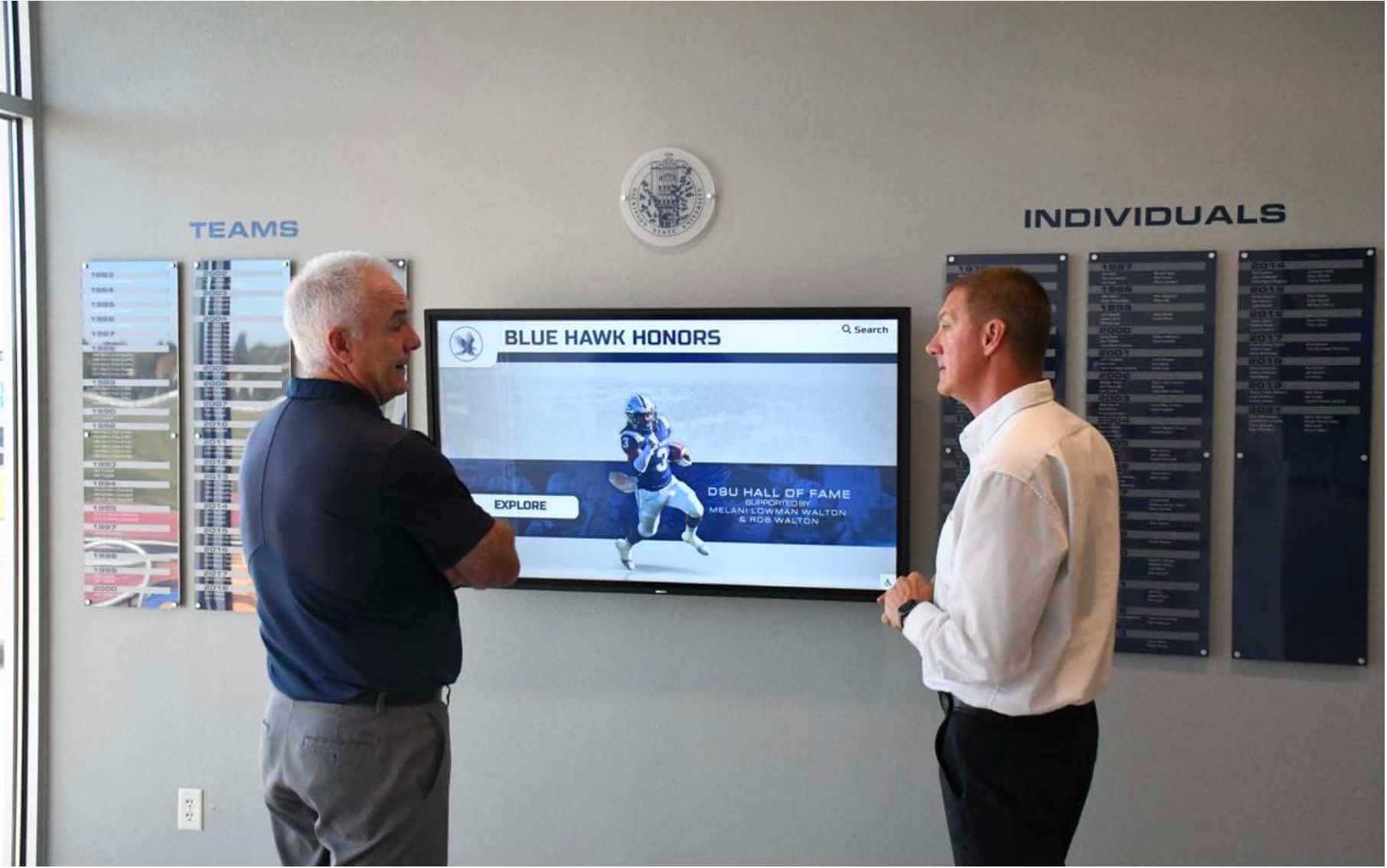
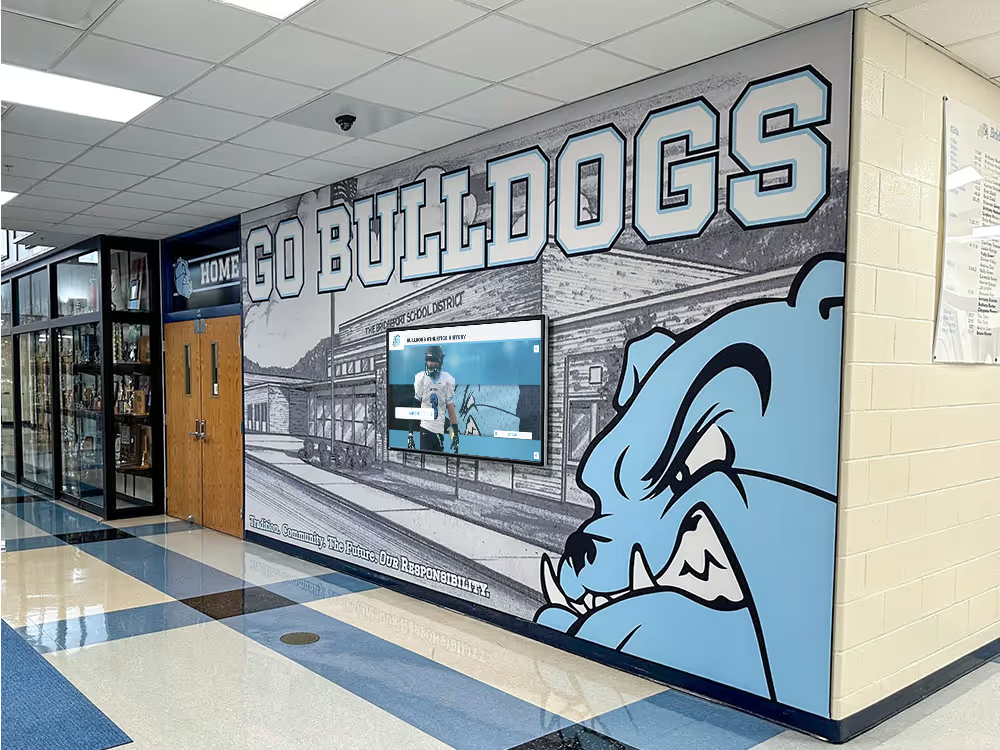
Before committing to any vendor, committees should evaluate pricing across multiple deployment scenarios — not just a single-screen initial quote
Red Flag #2: The “Personalized Boutique” Support Myth
The claim you will see: “Large enterprise platforms are too big to care about your school. They’ll leave you with a video library for training. We’re a small agency — we give you real, dedicated human support.”
Why This Framing Is a Risk Factor, Not a Feature
The appeal to smallness sounds personal. But it obscures a serious operational vulnerability. When a school installs a digital hall of fame, it is entrusting a technology vendor with decades — sometimes more than a century — of irreplaceable historical records, media assets, and community heritage. That responsibility should not depend on the availability of one or two individuals.
Boutique agencies run by a small number of core staff face real continuity risks. If a primary developer gets sick, faces a personal emergency, pivots to another project, or closes the business, the display goes dark. Data may be inaccessible. There is no support infrastructure to absorb the gap.
By contrast, platforms like Rocket Alumni Solutions maintain a dedicated in-house team of more than 50 professionals focused entirely on school recognition. That headcount enables white-glove onboarding, live data migration support, comprehensive training, and ongoing technical service — not as a differentiator on a marketing page, but as the operational reality that makes long-term service possible.
The Due Diligence Step Every Committee Should Take
Search any vendor on LinkedIn and check the number of listed employees. Search their business entity in your state’s corporate registry to confirm they are an active, properly incorporated company. A vendor with two employees offering “dedicated support” is a single point of failure. A vendor with 50+ employees running across sales, development, content, onboarding, and support has genuine redundancy.
Ask directly: “How many people are on your support team? How do you handle onboarding if my primary account contact is unavailable?” The answers will tell you more than any comparison page.
Also consider the longevity question. Your hall of fame is meant to function for decades. Reviewing what a complete hardware and professional service setup looks like from an end-to-end perspective helps you evaluate whether a vendor’s operation can actually support a commitment of that duration.
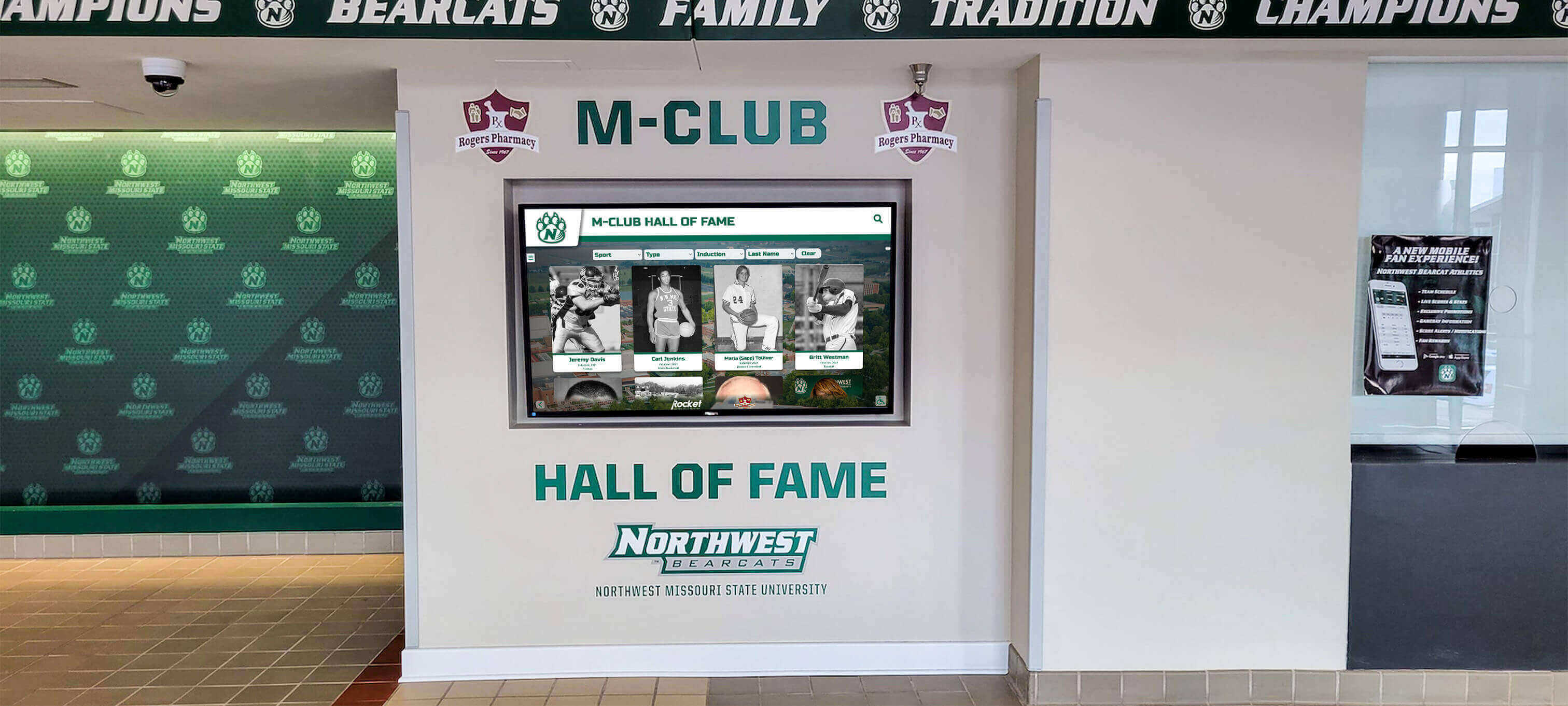
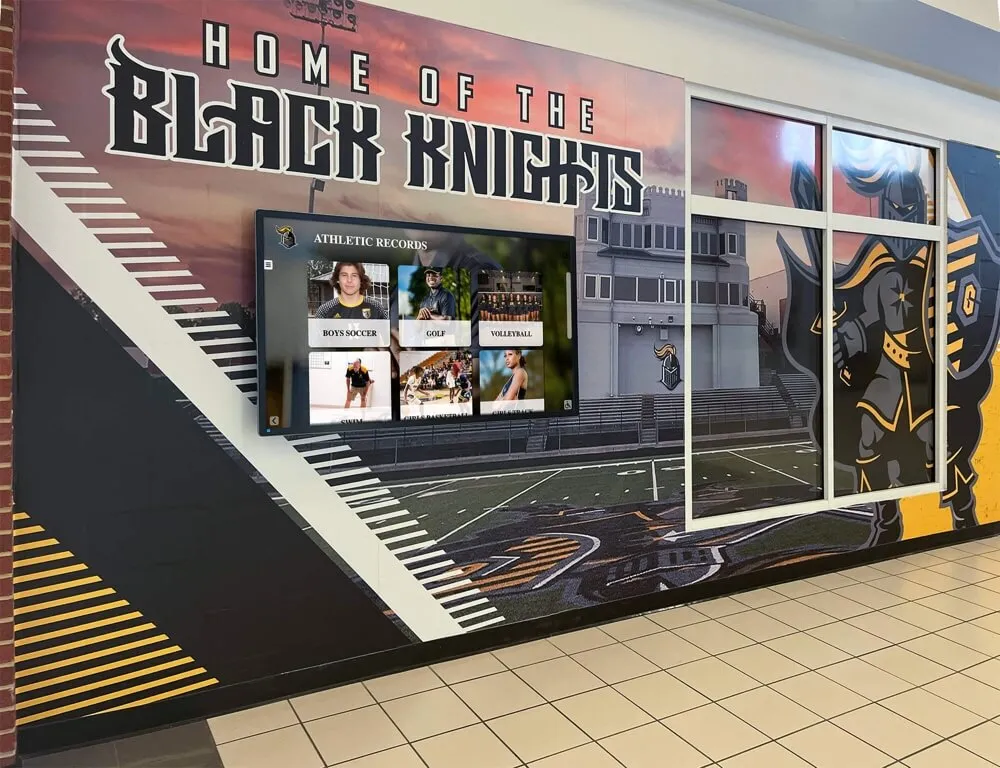
Long-term recognition programs require vendors with the staff depth to stay responsive across years of staff transitions and evolving institutional needs
Red Flag #3: The One-Time Fee Structural Trap
The claim you will see: “Avoid ongoing subscription costs. Pay once, own the platform forever, and never pay another invoice.”
Why This Business Model Has a Built-In Expiration Date
A one-time fee sounds fiscally responsible, particularly for schools managing constrained budgets. But it describes a financial structure that is difficult to sustain at the pace digital infrastructure requires.
Cloud-based touchscreen kiosks are not televisions. They are live web applications. Keeping them operational requires continuous server maintenance, security patches, hosting protocol updates, and compliance work. Public-facing digital displays at educational institutions must maintain ADA WCAG 2.1 AA accessibility standards — standards that are regularly updated and require active development to meet. A vendor without recurring revenue has no stable funding to support this work.
Instead, a one-time-fee vendor must continuously close new sales to cover the operating costs of their existing clients. When new sales slow — during economic contractions, school budget freezes, or market saturation — the development and maintenance of existing platforms slows with it. This pattern is well-documented in software businesses.
Over a 10-to-20-year horizon, this model commonly collapses. Servers become unmaintained. Accessibility compliance lapses. Security vulnerabilities go unpatched. The display still hangs on the wall, but the platform supporting it degrades until a hardware failure or compliance issue forces a replacement. Understanding what ongoing budget planning actually looks like for digital recognition walls reveals why sustainable pricing structures look nothing like flat one-time fees.
What a Sound Pricing Model Looks Like
A trustworthy provider offers a clearly priced recurring subscription — with multi-year options that reduce total cost and simplify budget planning — and can point to features released in the past 12-18 months as evidence that subscription revenue is funding real development. Ask vendors to walk you through their product changelog. Active development is the clearest indicator that your platform will still function well five and ten years from now.
Comparing traditional static display cabinets against modern digital archive systems also clarifies the total cost of ownership picture. Physical plaques never go offline. Digital archives that lack ongoing backend maintenance eventually do.
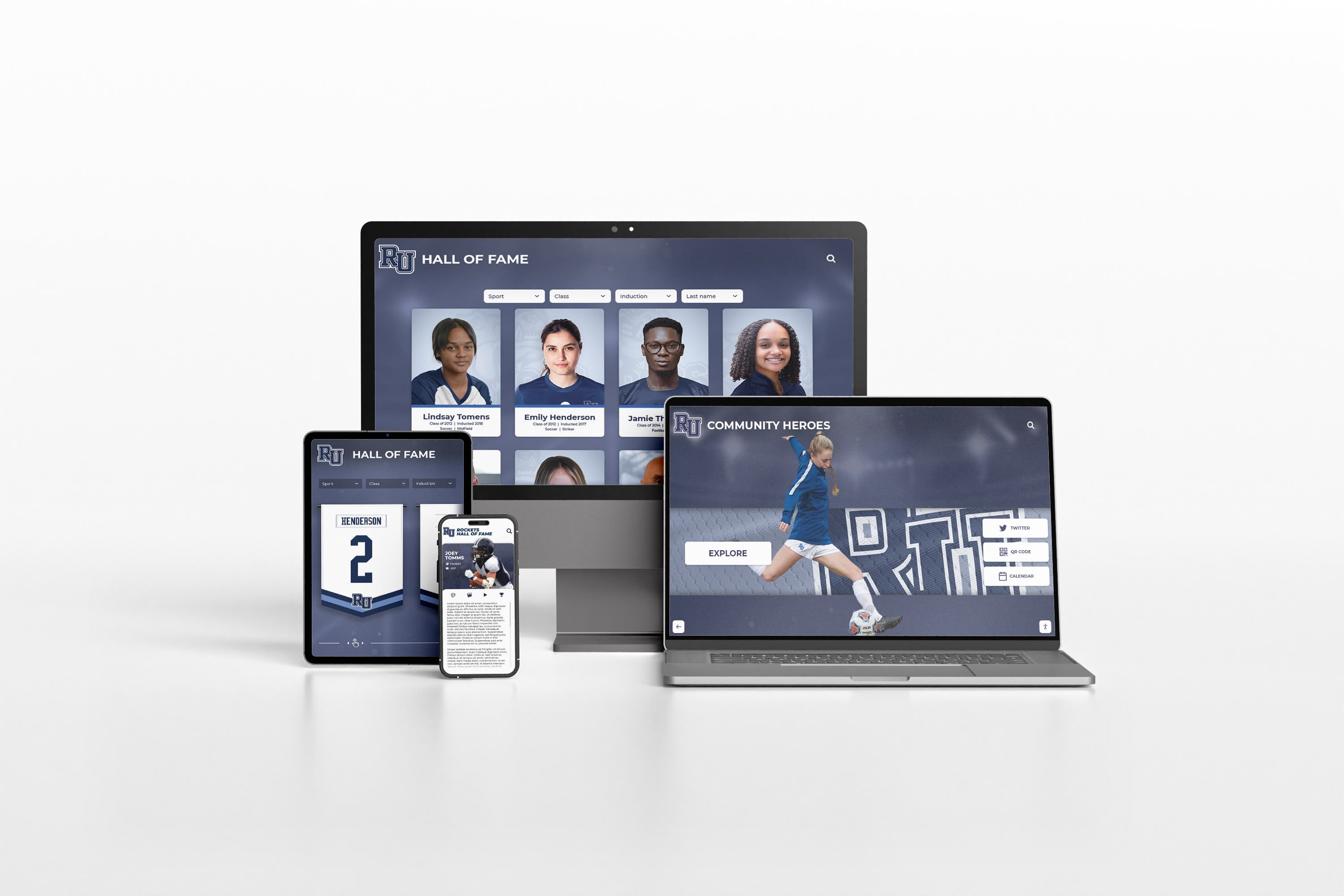
Modern recognition platforms must remain functional and accessible across all devices — that requires continuous backend maintenance that a one-time fee cannot fund sustainably
Cloud Architecture vs. Local Kiosk Files: A Critical Distinction
Beyond the three red flags, there is a foundational architecture difference that separates full-featured platforms from stopgap solutions.
Many boutique providers build their systems as localized kiosk applications. The display runs from files stored on a physical computer inside the unit. Making an update — adding a new inductee, correcting a statistic, swapping a photograph — requires either manual access to the physical device or a paid service call. These systems cannot easily extend beyond the physical wall. If you want to embed your hall of fame on your school’s website so that alumni anywhere in the country can browse it from home, a localized kiosk application offers no clean path to do that.
A genuine cloud-first platform operates like a modern web application. You log into a browser from your office, home, or phone, make an update, and it pushes simultaneously to every display on campus and to your embedded website version. Families of honorees in other states see the same profiles that visitors see in your lobby. Multiple staff members can contribute to the database without being on campus, and role-based permissions control who can publish.
This architecture enables capabilities that localized systems cannot match: scheduled publishing for coordinated induction announcements, engagement analytics tracking which profiles receive the most interaction, automatic cloud backups preventing data loss from hardware failures, and full ADA compliance maintained through regular platform updates rather than manual intervention.
Understanding how interactive touchscreen platforms function as full-scale school recognition and storytelling systems makes the difference between a display and a platform much more concrete.
When modernizing an existing recognition wall, the architecture question is the most consequential decision a committee will make — more significant than screen size, mounting style, or any aesthetic consideration.
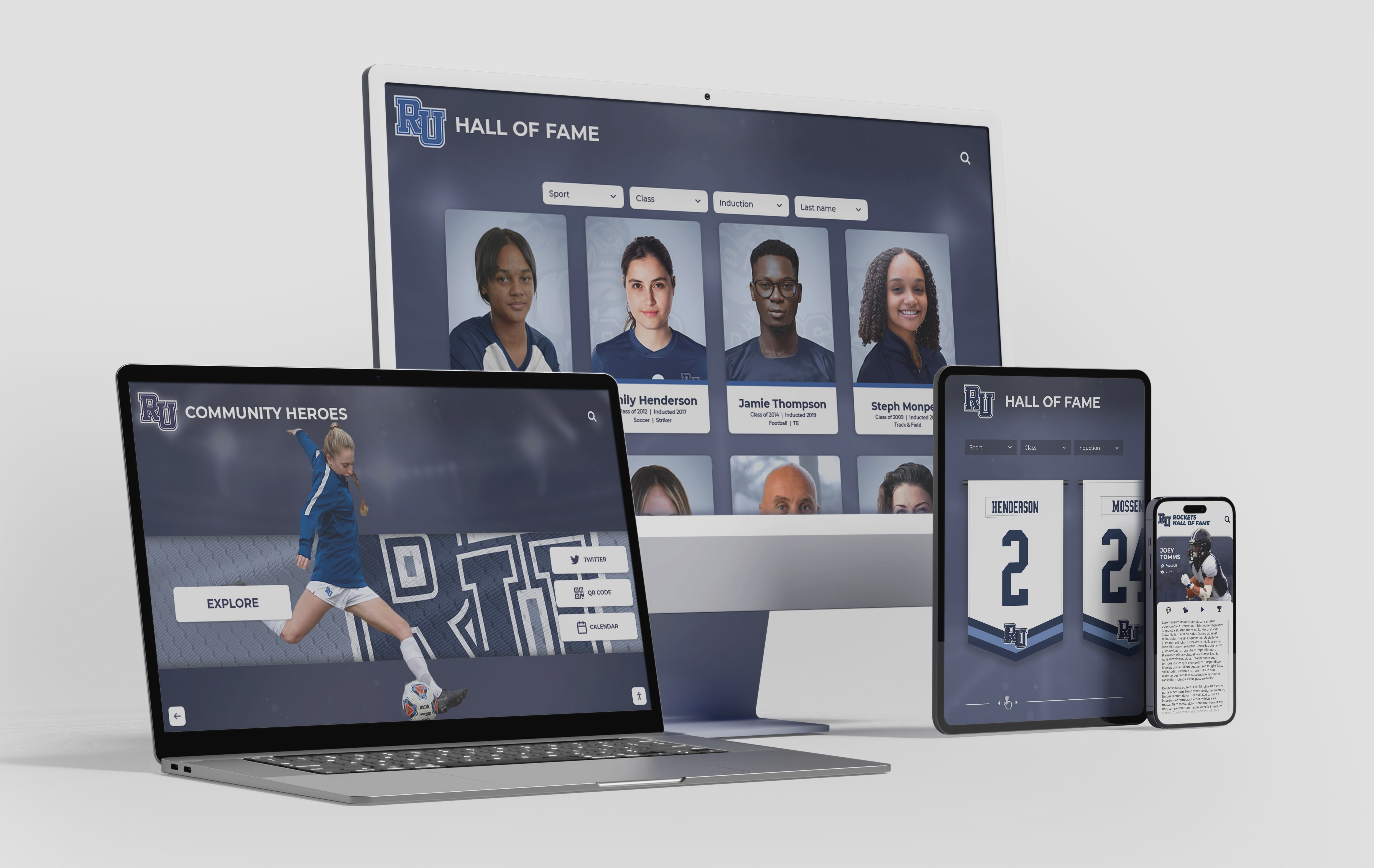
True cloud-first platforms extend recognition beyond the physical wall — alumni anywhere can access the same historical database from a phone or home computer
Pre-Contract Verification: Four Baselines Every Committee Must Confirm
These four questions should receive clear, written answers before any school committee signs a contract for a digital hall of fame. Any vendor prepared for serious institutional buyers will answer them without hesitation.
1. Vendor Stability and Team Depth
Does this company have enough team depth to absorb the absence of any single individual without disrupting service?
Verify: Search the company name on LinkedIn and check the listed employee count. Request names of the specific team members handling onboarding, content migration, and ongoing support — expect multiple names, not one. Read assessments of what makes a recognition platform well-suited to schools across different sizes to set a baseline.
2. Device Licensing Structure
Does the platform price by institution — covering unlimited screen deployments — or does the cost scale per device?
Verify: Request a written quote that explicitly states what happens to your software cost if you add one, two, or four screens over the next three years. Get this in writing, not verbally during a demo call.
3. ADA WCAG 2.1 AA Accessibility Compliance
Is the platform certified compliant with WCAG 2.1 AA accessibility standards? Public-facing digital displays at schools receiving public funding carry legal accessibility obligations.
Verify: Request written documentation of compliance, not verbal assurance. Platforms that meet this standard maintain documentation because achieving and maintaining it requires ongoing development investment. A vague “we’re working toward it” is not compliance.
4. Website Embeddability and Data Portability
Can the full hall of fame database be embedded on your school’s website? And if you ever leave the platform, can you export all your data in a standard format?
Verify: Request a live demonstration of an existing school’s embedded hall of fame — not a screenshot or a mockup. Watch the same profile appear on a physical kiosk and on a school website simultaneously. Ask for a sample data export in a standard format. Review effective implementation approaches for digital walls of fame before any vendor demo to know what a credible platform presentation looks like.
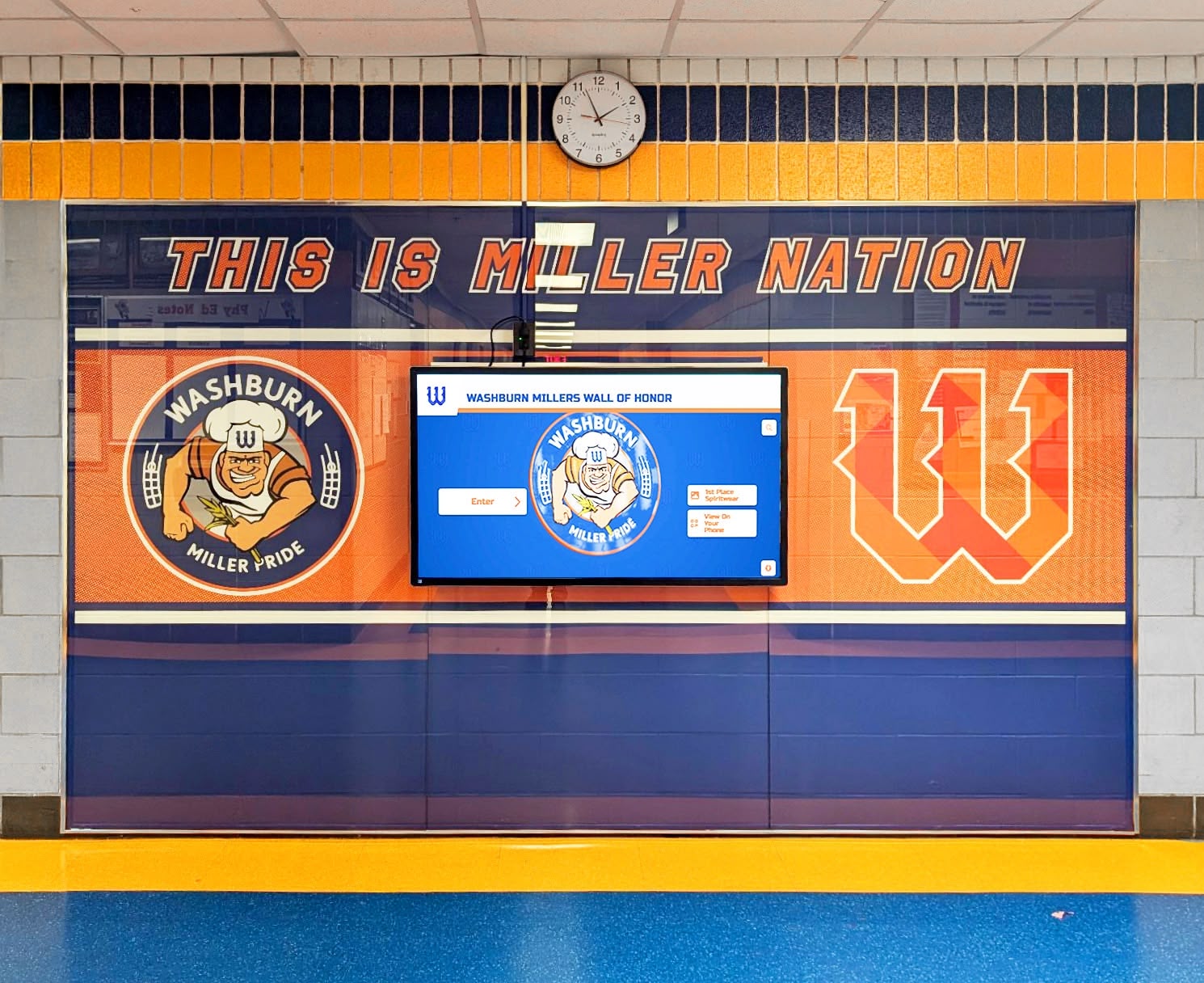
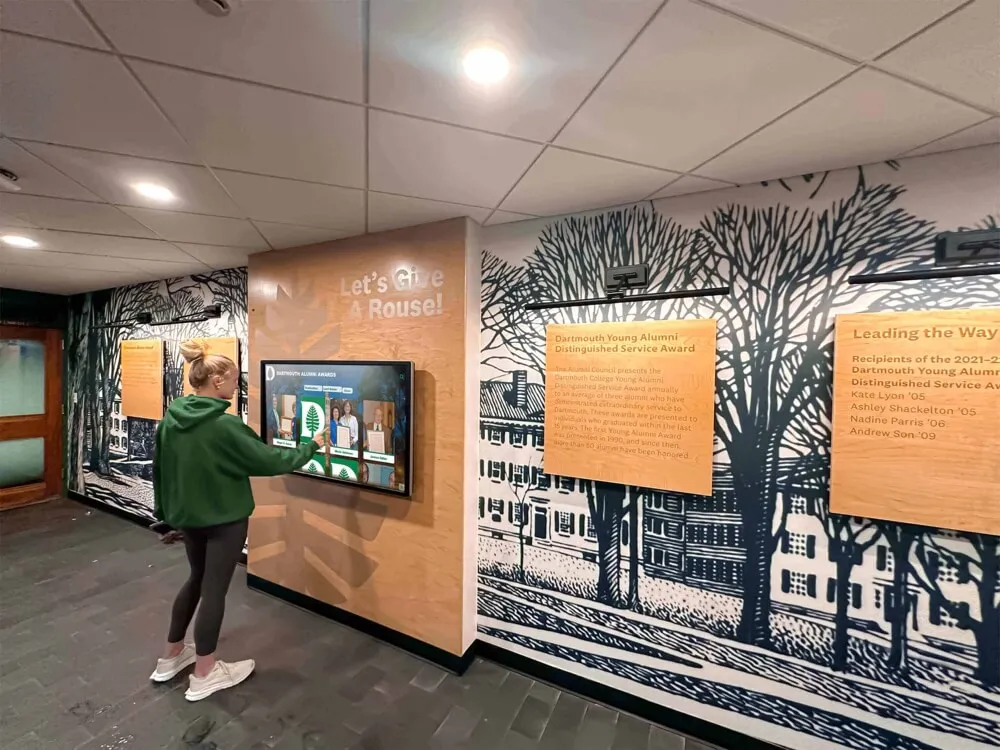
A fully deployed digital hall of fame requires a vendor prepared to support it through staff transitions, technology updates, and evolving accessibility standards for the long term
Your Historical Archive Deserves More Protection Than a Local File
One dimension procurement discussions often underweight is the long-term preservation of the historical data itself. A digital hall of fame is not just a display system — it is an archive. Schools that invest in digitizing decades of athletic records, student achievement data, and institutional photography are building a historical resource.
That resource should live in a system with genuine redundancy: cloud backups stored independently from the physical hardware, data exportability in standard formats, and documented migration paths. Review how schools approach the challenge of preserving institutional archives digitally to understand what data protection responsibilities look like at scale.
Ask every vendor: “If we decide to leave this platform in five years, can we export all our profiles, photos, and statistics in a standard format we can migrate to a new system?” A vague or conditional answer is a significant concern about data ownership.
Reviewing how traditional display cases and modern digital solutions compare on content longevity helps frame the data continuity question in practical terms. Physical plaques never go offline. Digital archives tied to under-resourced vendors do.
Summary Checklist for School Committees
Use this checklist before any contract is signed. Every green-flag item should be confirmed in writing, not just stated verbally during a demo.
| Evaluation Area | Green Flag | Red Flag |
|---|---|---|
| Pricing model | Flat institutional platform fee | Per-device software licensing |
| Support team depth | 50+ dedicated professionals | 1-2 person operation |
| Revenue model | Recurring subscription with active development | One-time flat fee |
| Architecture | Cloud-first, remote-managed via browser | Local kiosk files on physical hardware |
| Website integration | Single embed for full school website | Display-only, no web access |
| ADA compliance | Documented WCAG 2.1 AA in writing | Verbal assurance only |
| Data ownership | Full export available in standard format | Vague or conditional terms |
| Vendor verification | Active LinkedIn company page with documented staff | Minimal digital footprint |
| Multi-screen expansion | No additional software cost for new displays | Price scales per screen |
The questions above are not adversarial. They are standard due diligence for any technology purchase intended to serve an institution for decades. Any vendor worth hiring will answer them directly and in writing without treating the questions as an imposition.
Solutions like Rocket Alumni Solutions are structured to answer each item clearly: flat-rate institutional pricing, a team of 50+ professionals, a subscription model that funds continuous development, genuine cloud-first architecture with remote management from any browser, full website embeddability, and documented WCAG 2.1 AA compliance. These are verifiable facts available before any contract is signed.
Ready to see what an enterprise-scale digital hall of fame looks like in practice — and ask these questions directly to a team prepared to answer them?
Talk to the Rocket Alumni Solutions team to walk through the platform, confirm these specifics, and see your school’s recognition program built live.
This comparison is based on publicly available information as of July 2026. All product names and trademarks belong to their respective owners. Comparative statements reflect Rocket Alumni Solutions’ interpretation of available data and may change over time.
This content was produced by or on behalf of Rocket Alumni Solutions.