



National Honor Society recognition programs represent one of the most prestigious forms of academic acknowledgment available in secondary education, celebrating students who demonstrate outstanding scholarship, leadership, service, and character. Each year, thousands of high school students earn NHS membership through sustained academic excellence and meaningful contributions to their school communities, yet many schools struggle to showcase these achievements in ways that appropriately honor this exceptional designation and inspire continued excellence throughout their student populations.
When National Honor Society recognition remains limited to brief induction ceremonies, occasional announcements, or fleeting acknowledgments, these significant accomplishments lose their power to motivate peers and validate the tremendous effort students invested in building their academic and leadership credentials. Students who maintained rigorous GPA requirements while demonstrating consistent service and ethical character receive acknowledgment that feels temporary rather than enduring. Meanwhile, schools miss opportunities to build cultures where the four pillars of NHS—scholarship, leadership, service, and character—receive prominent visibility comparable to athletic achievements.
This comprehensive guide explores modern strategies for recognizing National Honor Society students through dedicated recognition displays, interactive digital systems, meaningful ceremonies, and systematic programs that appropriately honor NHS membership while inspiring continued excellence and broader participation in academic achievement, community service, and leadership development throughout entire school communities.
Effective National Honor Society recognition extends beyond annual induction ceremonies—it creates visible, engaging, and sustainable systems that celebrate the four pillars prominently while building cultures where intellectual accomplishment, ethical leadership, and community service become aspirational and valued throughout educational communities.

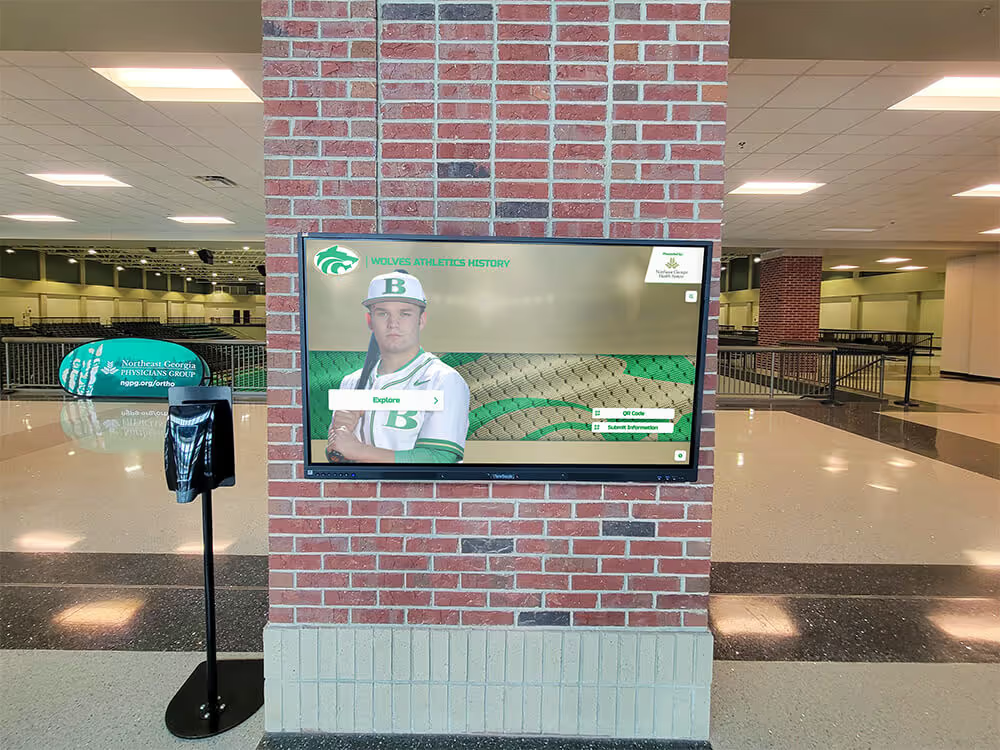
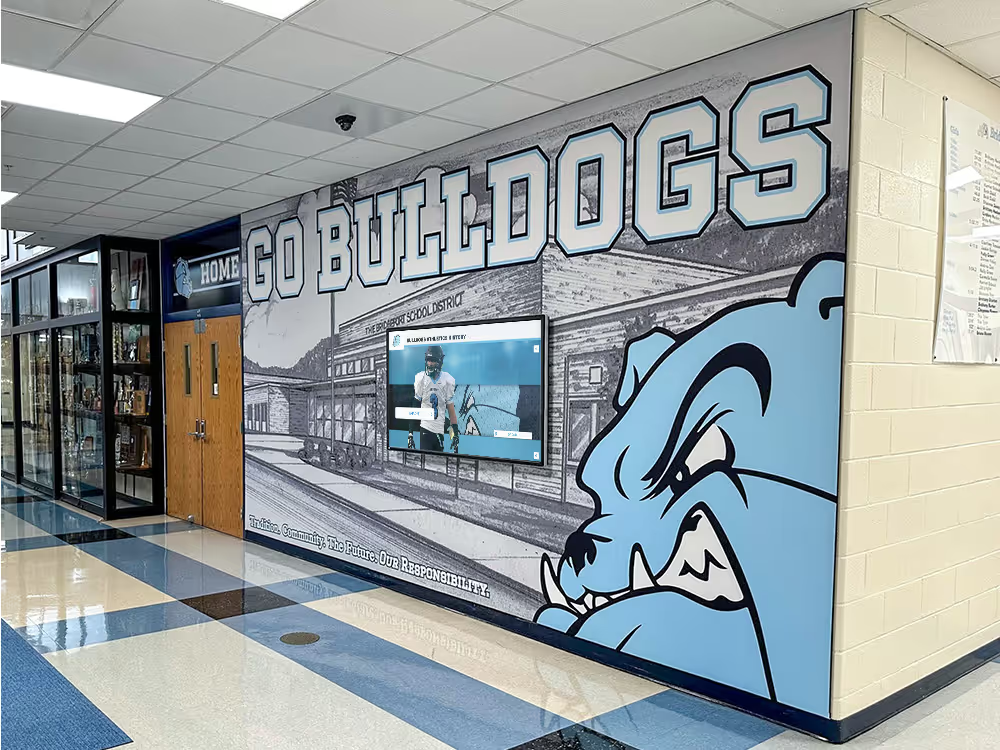
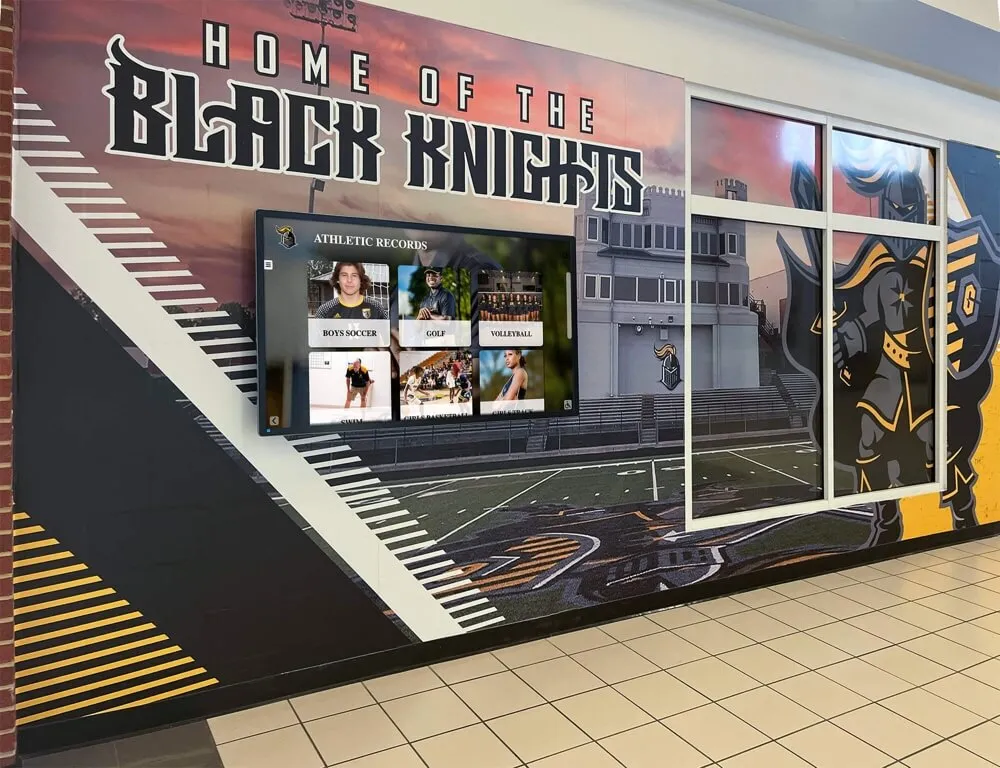
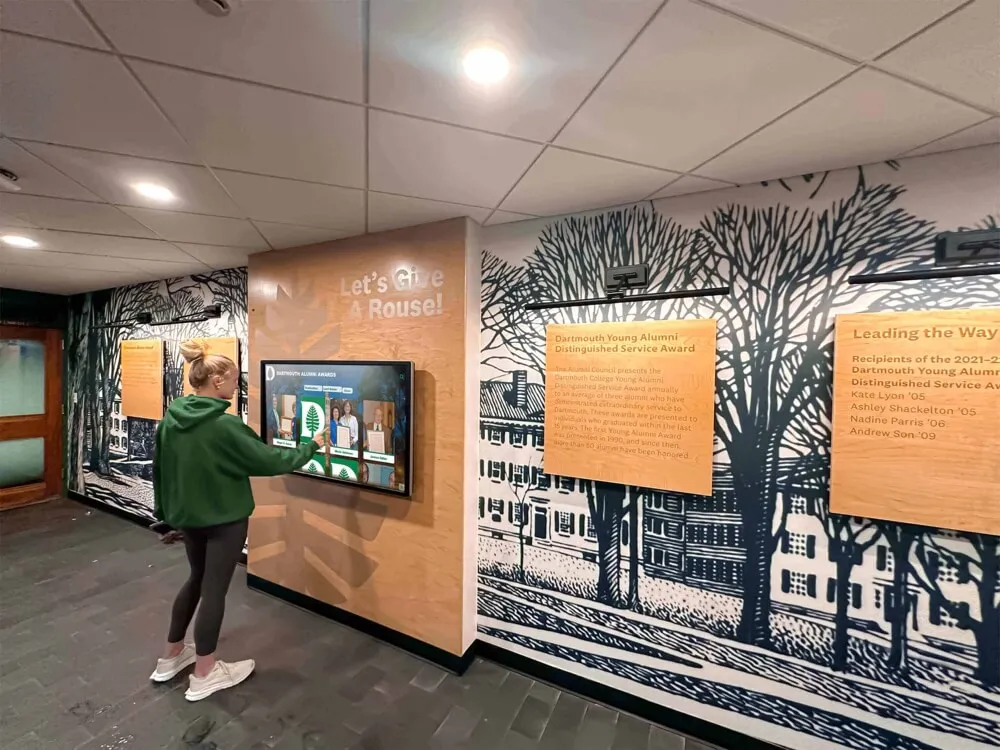
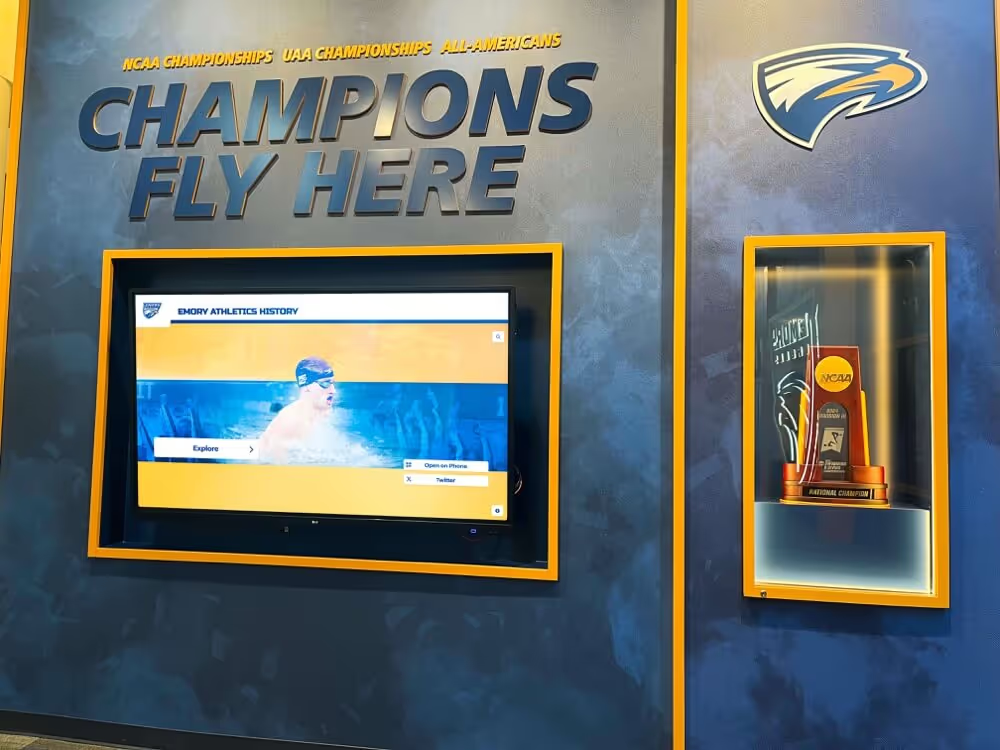
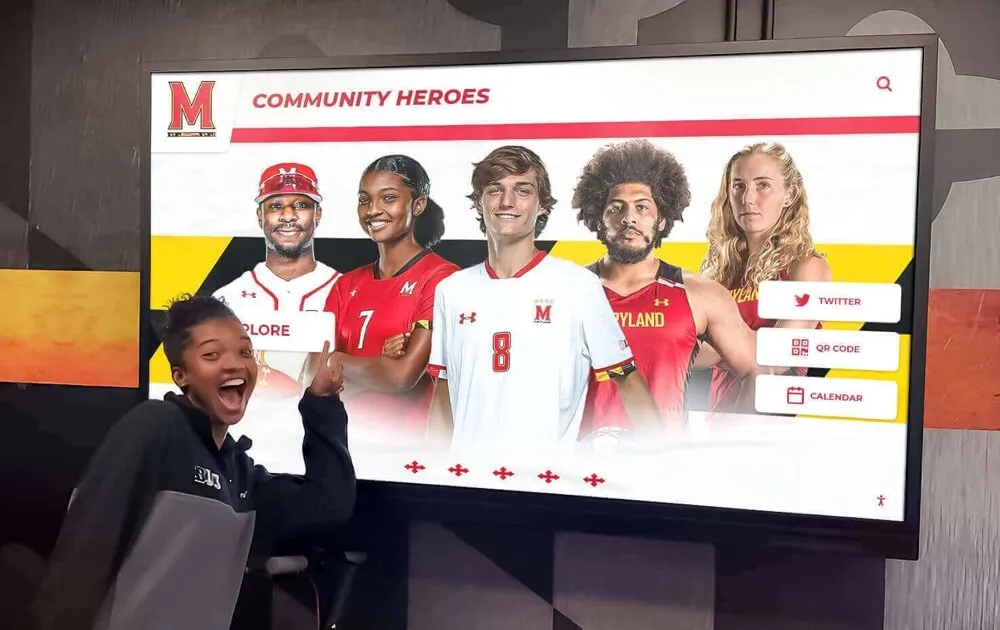
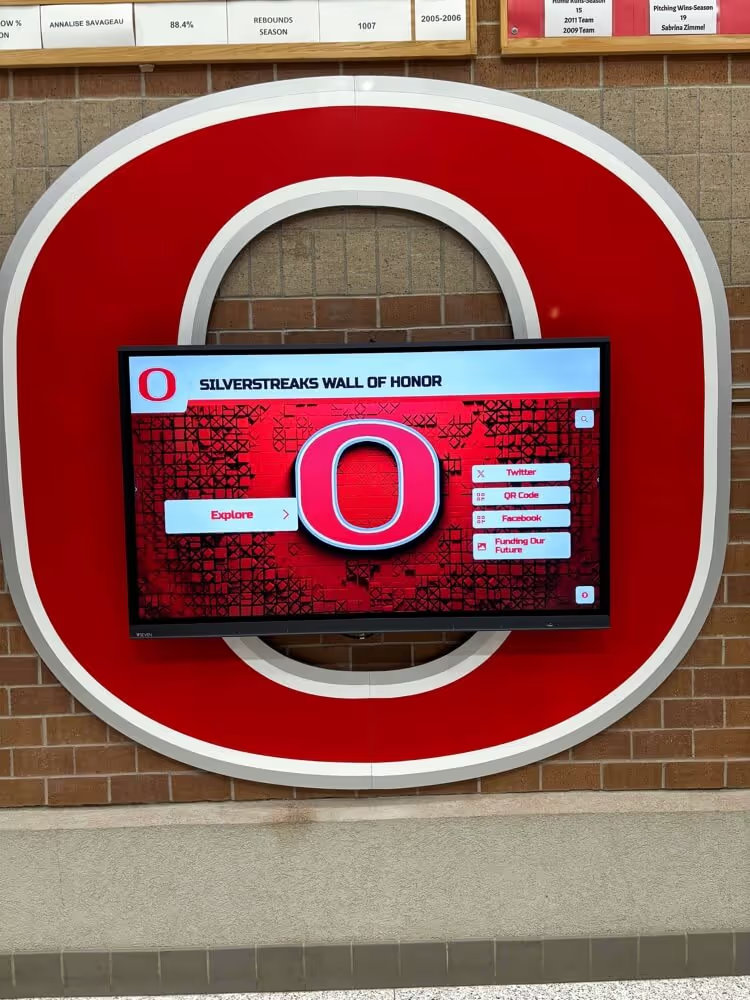
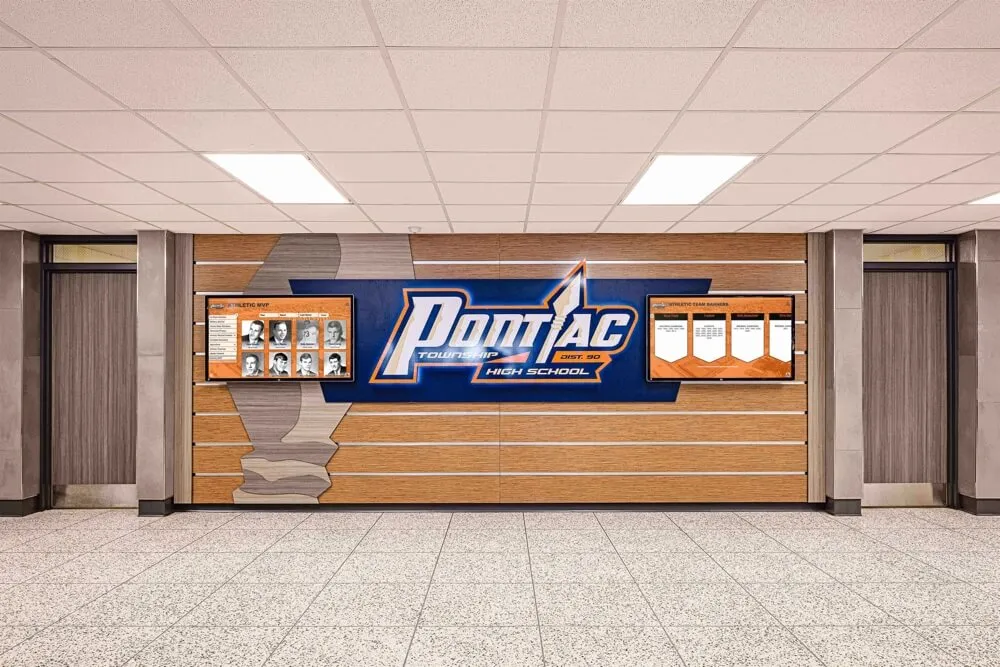
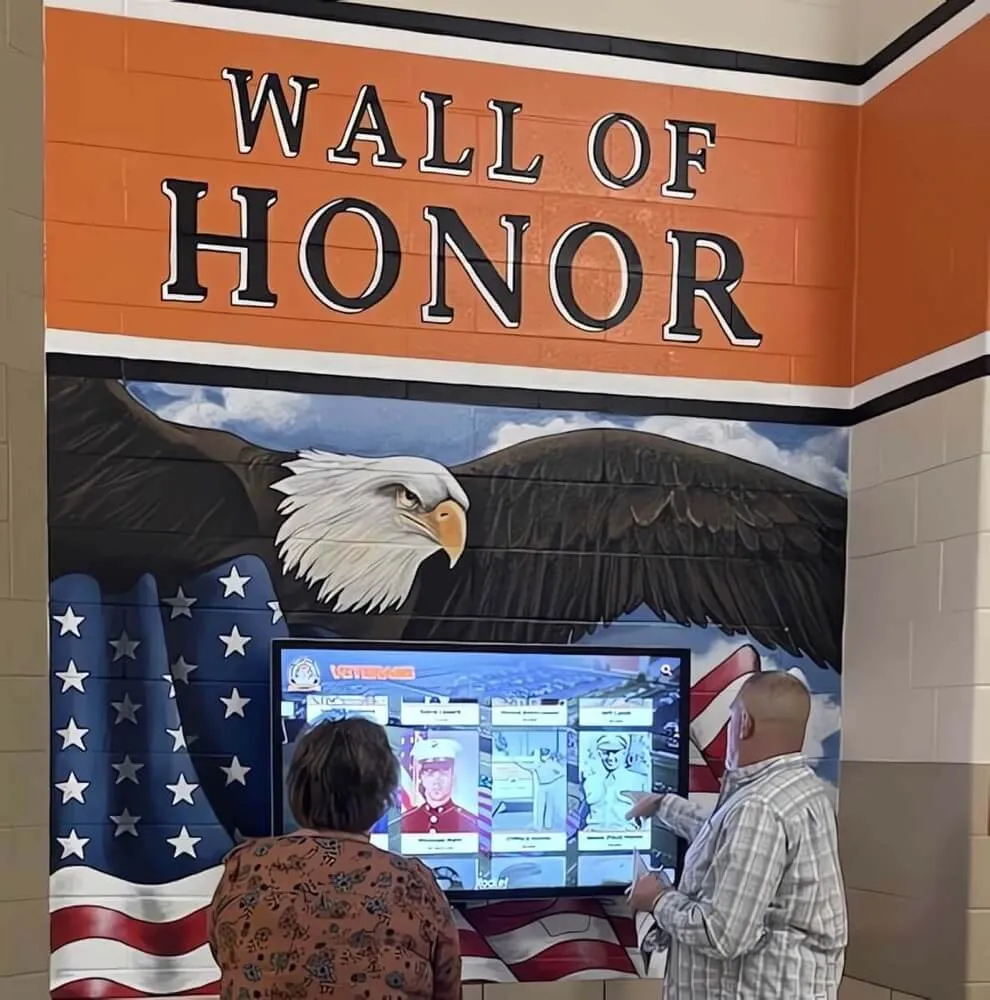
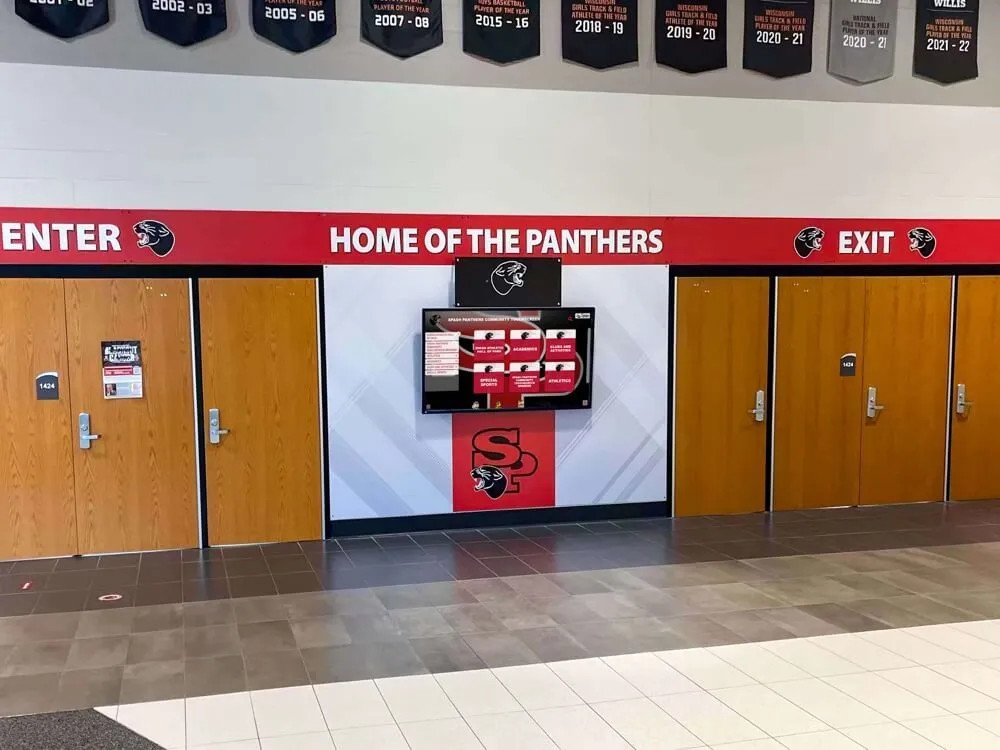
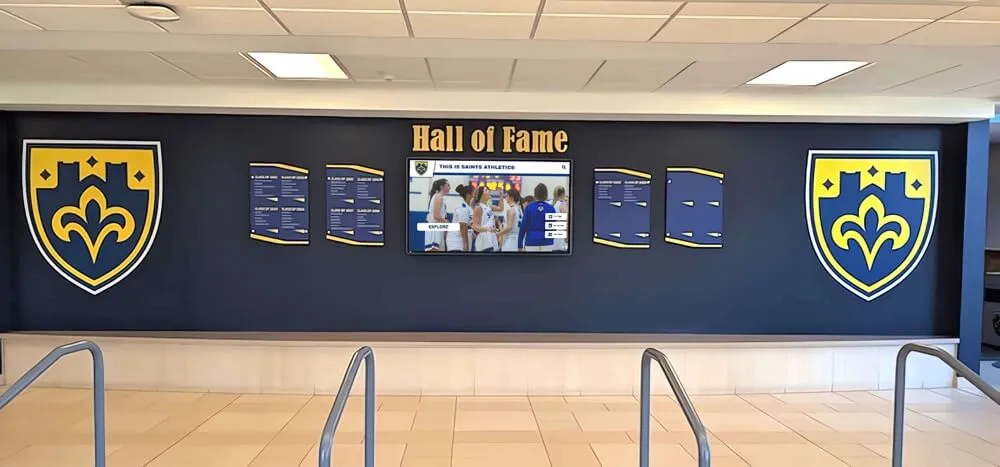
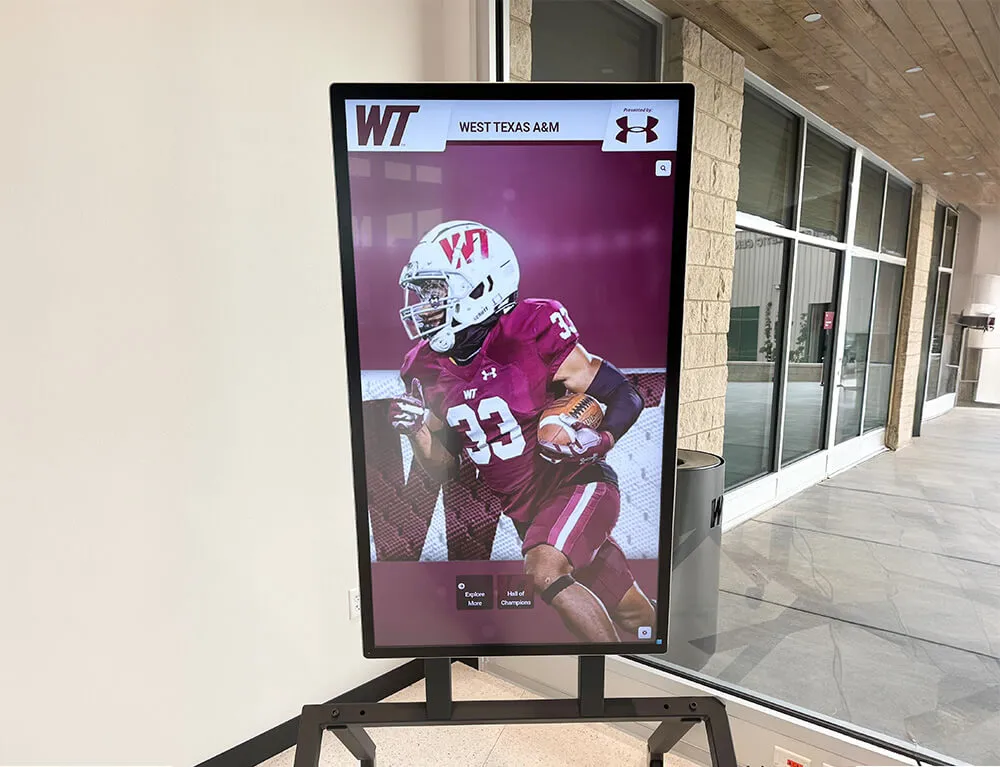
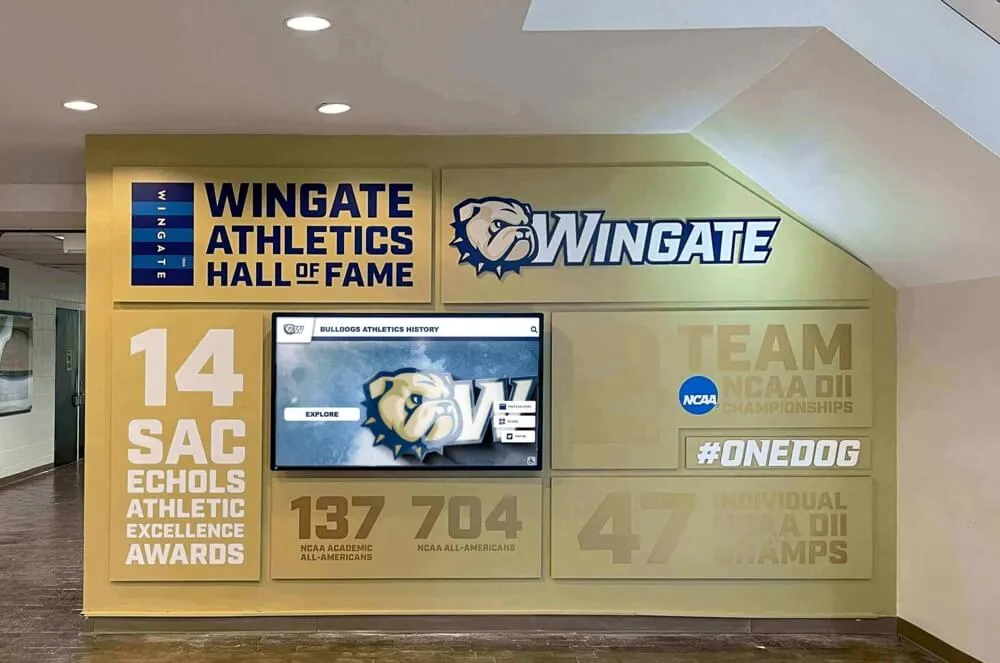
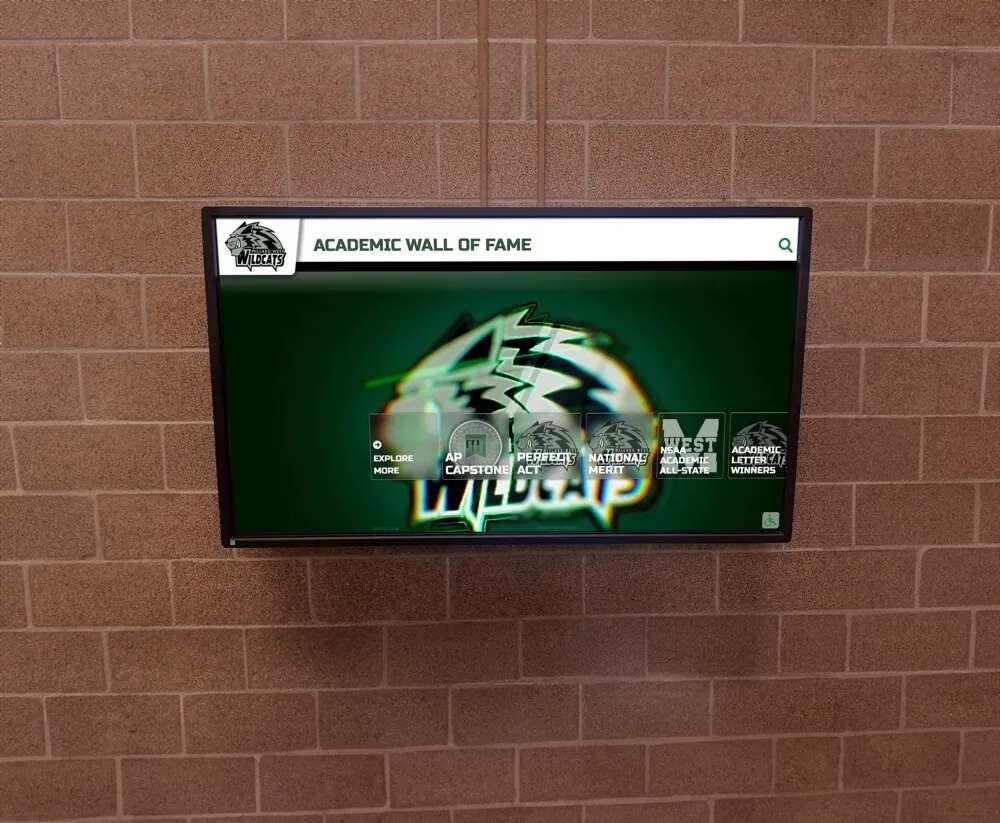
Professional recognition displays elevate National Honor Society achievements to the prominence they deserve in high-visibility school locations
Understanding National Honor Society Membership and Recognition
Before implementing recognition programs, understanding NHS structure, requirements, and significance helps schools design appropriate celebration approaches that honor this prestigious designation accurately and meaningfully.
The Four Pillars of National Honor Society
The National Honor Society, founded in 1921, recognizes students who excel across four fundamental character dimensions that predict success in college, career, and life. Understanding these pillars helps schools create recognition that celebrates the complete student rather than academic performance alone:
Scholarship
The foundational pillar requires consistent high academic achievement, typically defined by minimum GPA thresholds set by individual chapters. Most schools require cumulative GPAs of 3.5 or higher on 4.0 scales, though specific requirements may vary based on local chapter standards. Scholarship represents sustained intellectual excellence rather than isolated high grades, demonstrating students’ commitment to learning across all subject areas and grade levels.
Leadership
NHS membership demands demonstrated leadership across school and community contexts. Leadership involves initiating positive action, influencing peers toward constructive goals, holding elected or appointed positions, and demonstrating responsibility in group settings. Qualifying leadership extends beyond formal positions to include informal influence where students mobilize others toward meaningful objectives, mentor peers, or take initiative solving problems affecting their communities.
Service
Members demonstrate sustained commitment to voluntary service benefiting school and broader community populations. Qualifying service involves genuine volunteerism rather than required activities, sustained engagement rather than isolated events, and meaningful contribution addressing authentic needs. Service hours typically accumulate across multiple organizations and causes, demonstrating students’ consistent commitment to improving conditions beyond their immediate self-interest.
Character
The most subjective yet equally important pillar encompasses integrity, ethical behavior, respect for others, responsibility, and positive contributions to school culture. Character assessment involves evaluation by teachers and administrators who observe students across multiple contexts over extended periods. This pillar ensures NHS membership acknowledges not just what students accomplish but how they conduct themselves in pursuit of their goals.
Learn more about comprehensive academic honor roll recognition approaches that complement NHS celebration.

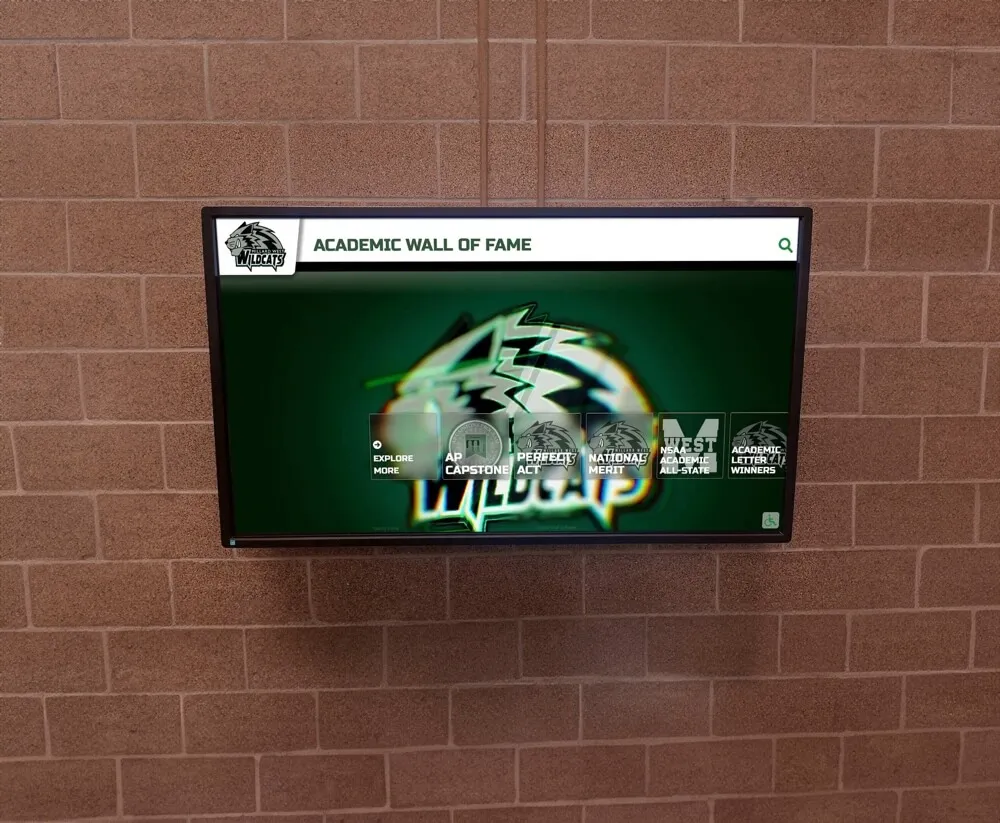
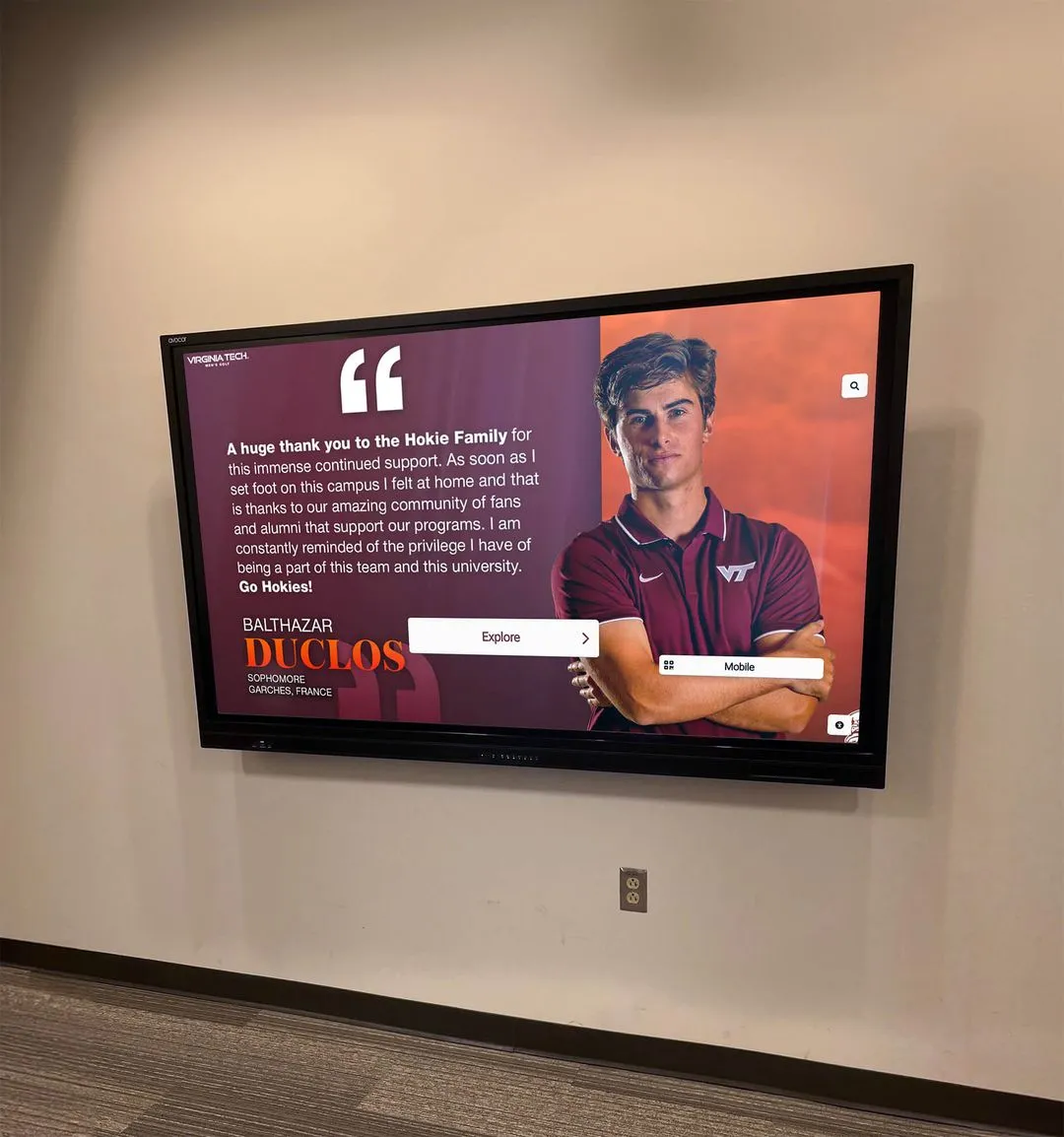
Individual recognition profiles celebrate specific NHS achievements including scholarship, leadership, service contributions, and character excellence
NHS Selection Process and Membership Criteria
Eligibility Requirements
National Honor Society chapters operate with national standards supplemented by local chapter specifications:
- Academic Threshold: Minimum cumulative GPA requirements established by school chapters, typically 3.5 or higher
- Enrollment Duration: Most chapters require students complete specific semesters at their school before eligibility
- Grade Level: Traditional NHS restricts membership to juniors and seniors, though many schools now include sophomores
- Faculty Council Review: Selection involves comprehensive evaluation by faculty councils reviewing all four pillars systematically
- Student Input: Candidate forms documenting leadership roles, service activities, and involvement provide selection foundations
- Discipline Records: Behavior and citizenship considerations ensure members demonstrate consistent ethical character
Selection Timeline and Process
Understanding typical selection cycles helps schools plan recognition timing:
- Fall Eligibility Notification: Schools typically identify academically eligible candidates each fall semester
- Application Period: Students submit applications documenting leadership, service, and character between September and November
- Faculty Council Review: Faculty committees evaluate complete applications against established criteria during November-December
- Selection Announcements: New member notifications typically occur in December or January before spring induction ceremonies
- Induction Ceremonies: Formal ceremonies welcoming new members commonly occur between February and April
- Ongoing Membership: Students maintain membership through graduation by upholding GPA requirements and completing service obligations
This cycle creates natural recognition opportunities throughout the academic year rather than limiting celebration to single induction events.
Distinguishing NHS from Other Academic Recognition
Understanding the Distinction
National Honor Society membership represents more comprehensive achievement than academic honor roll or subject-specific awards:
Honor Roll vs. NHS
- Honor roll recognizes semester academic performance through GPA thresholds
- NHS requires sustained multi-year academic excellence plus demonstrated leadership, service, and character
- Honor roll includes broader student populations with lower GPA requirements
- NHS represents more selective designation acknowledging well-rounded achievement
AP Scholar Awards vs. NHS
- AP Scholar designations recognize Advanced Placement exam performance exclusively
- NHS evaluates academic achievement alongside non-academic character dimensions
- Students may earn both designations through complementary achievement pathways
- Recognition programs can celebrate both accomplishments without diminishing either
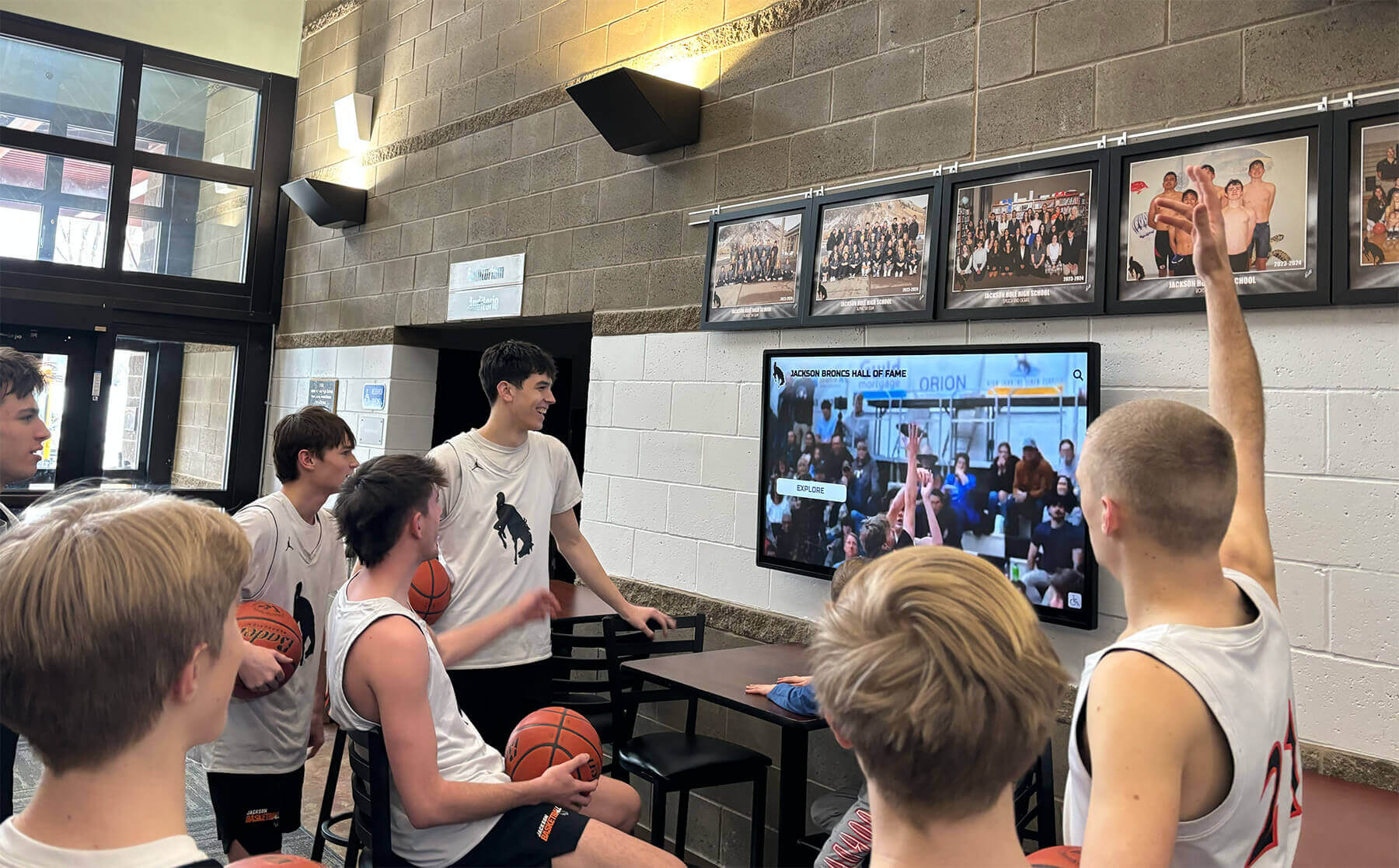
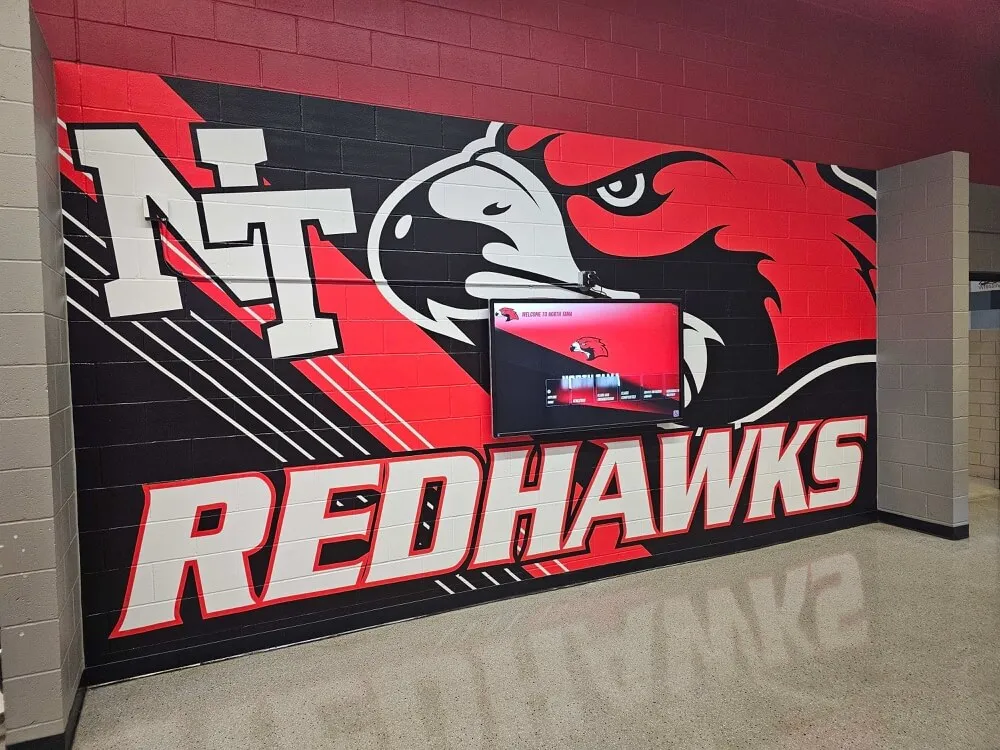
Interactive displays create opportunities for students to explore NHS member achievements and understand membership requirements
Recognition Implications
Understanding NHS as comprehensive designation helps schools position recognition appropriately:
- Dedicate prominent space acknowledging NHS distinctiveness from routine academic recognition
- Create recognition content highlighting all four pillars rather than academic achievement alone
- Position NHS displays strategically where leadership and character receive appropriate visibility
- Design ceremonies celebrating complete student development rather than grades exclusively
- Integrate NHS recognition with broader character education and leadership development initiatives
Discover complementary approaches through AP Scholar recognition programs that celebrate academic excellence alongside NHS membership.
The Impact of Visible National Honor Society Recognition
Understanding comprehensive benefits of systematic NHS recognition helps schools commit resources necessary for meaningful, sustained programs that influence school culture beyond individual member acknowledgment.
Building Academic and Character Excellence Culture
Creating Aspirational Models
When underclassmen regularly encounter NHS recognition displayed prominently throughout school buildings, membership transforms from abstract goal into tangible achievement target. Students walking past recognition displays daily observe specific peers who successfully developed scholarship, leadership, service, and character, making the pathway to excellence feel achievable rather than intimidating or mysterious.
Visible NHS recognition demonstrates that exceptional achievement extends beyond natural talent—it results from consistent effort developing academic skills, taking initiative in leadership roles, contributing meaningful service, and conducting oneself ethically. This visibility creates powerful peer influence where comprehensive excellence becomes socially desirable rather than something students hide to avoid negative attention from less academically-oriented peers.
Schools with prominent student achievement recognition systems report measurably higher NHS application rates and improved engagement across all character pillars as recognition visibility increases.

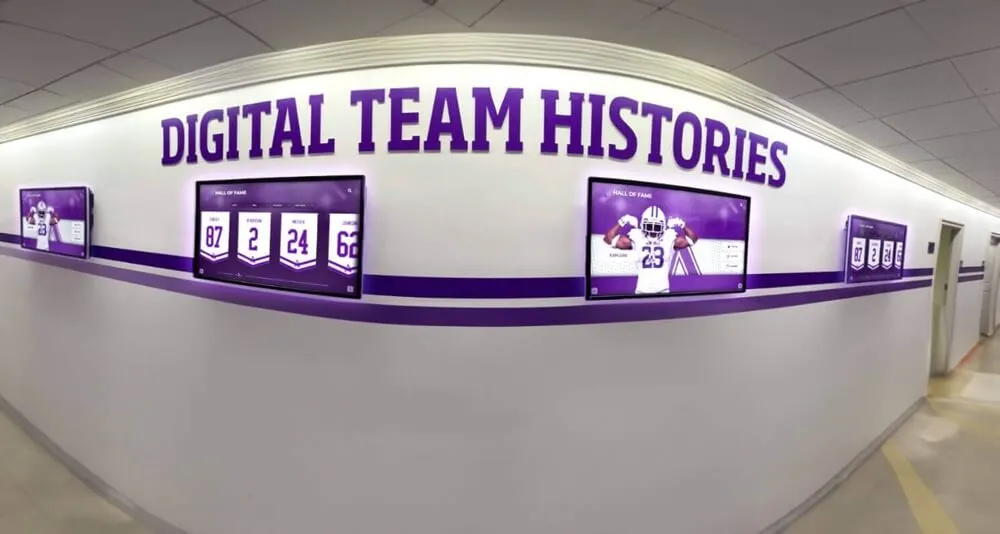
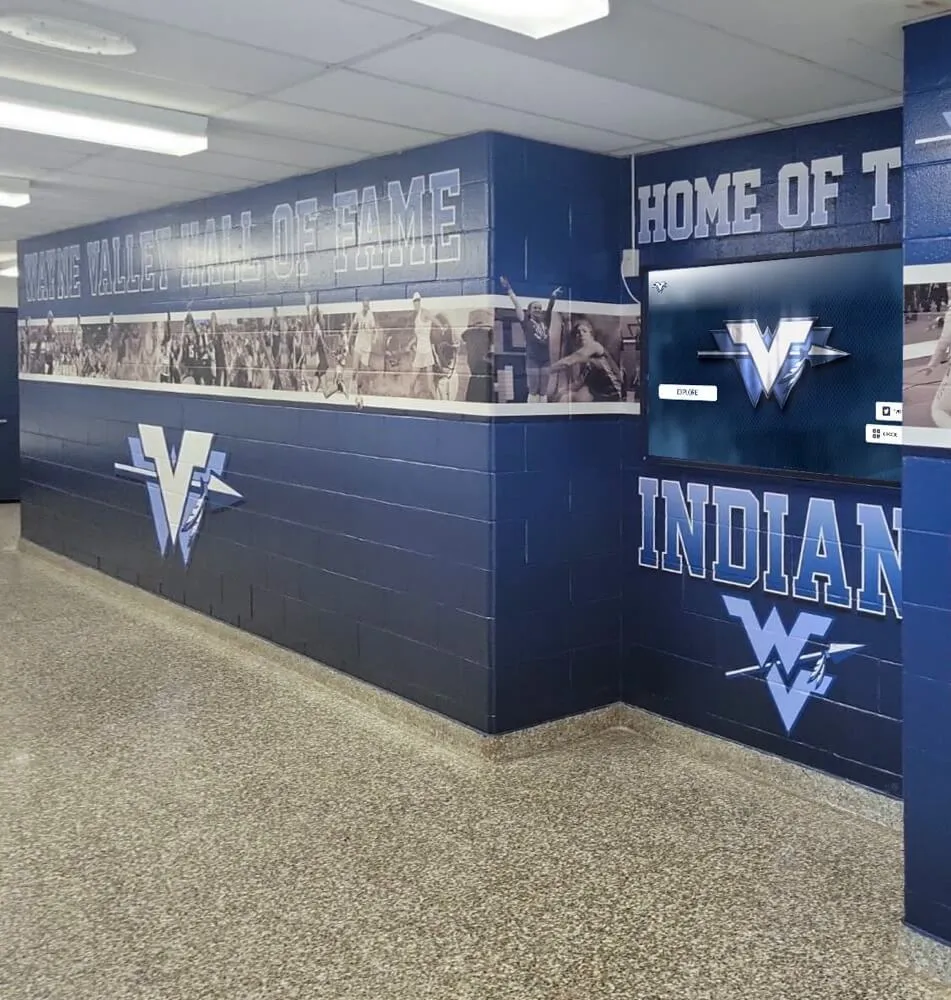
Strategic placement in high-traffic hallways ensures NHS recognition reaches students during critical development periods
Validating Multi-Dimensional Achievement
NHS membership demands significantly more than maintaining high grades. Students balancing rigorous academic coursework while leading organizations, volunteering consistently, and demonstrating ethical character invest hundreds of hours pursuing comprehensive excellence. Many NHS students sacrifice leisure time, social activities, and sleep managing demanding schedules across academic, leadership, and service domains simultaneously.
When schools celebrate NHS membership prominently through professional recognition programs, they validate this sacrifice and reinforce that character development matters as much as academic achievement. This sends powerful messages about institutional priorities, demonstrating schools genuinely value the whole student rather than simply rewarding test scores and grades.
Addressing Recognition Imbalance
Most schools maintain extensive spaces celebrating athletic achievements through trophy cases, championship banners, hall of fame installations, and digital screens showing game highlights. Meanwhile, academic and character accomplishments often receive minimal permanent recognition, creating implicit messaging about what truly matters institutionally despite mission statements emphasizing comprehensive development.
NHS recognition programs help address this persistent imbalance by giving intellectual achievement and character excellence visibility comparable to sports success. When students encounter equally prominent displays celebrating NHS members alongside athletic champions, they receive consistent messages that schools authentically value multiple achievement pathways rather than privileging physical accomplishments over intellectual and ethical excellence.
Supporting Student Success Beyond Recognition
Strengthening College Applications and Scholarship Opportunities
NHS membership represents one of the most recognized academic credentials in college admissions, appearing prominently on applications for selective institutions nationwide. Admissions officers understand NHS membership signals sustained excellence across academic and non-academic domains, making it valuable differentiation in increasingly competitive application environments.
Research consistently demonstrates NHS membership correlates with higher college acceptance rates at competitive institutions and increased scholarship awards from organizations recognizing academic and leadership achievement. Many scholarship programs specifically require NHS membership as eligibility criteria, making recognition particularly valuable for students from families requiring financial assistance for post-secondary education.
When schools implement comprehensive NHS recognition programs, they reinforce membership value to students considering application effort and time investment required for selection. Prominent recognition demonstrates schools take NHS seriously as credential worth pursuing rather than treating it as minor acknowledgment requiring minimal institutional attention or celebration.
Inspiring Broader Participation in Service and Leadership
Strategic placement of NHS recognition displays near guidance offices, in main lobbies, and along high-traffic hallways ensures maximum visibility during critical student development periods. When students make decisions about joining service organizations, pursuing leadership roles, or investing time in character-building activities, visible recognition of previous NHS members influences those choices by demonstrating the achievability and value of comprehensive excellence.
Schools implementing systematic NHS recognition consistently report increased participation in qualifying leadership activities, expanded community service engagement beyond required hours, and strengthened school culture around ethical behavior as recognition visibility increases over time. Recognition creates cycles where celebration inspires participation that generates new recognition opportunities, building momentum toward increasingly positive school cultures.
Explore strategies for academic all-americans recognition that complement NHS programs through similar comprehensive excellence celebration.
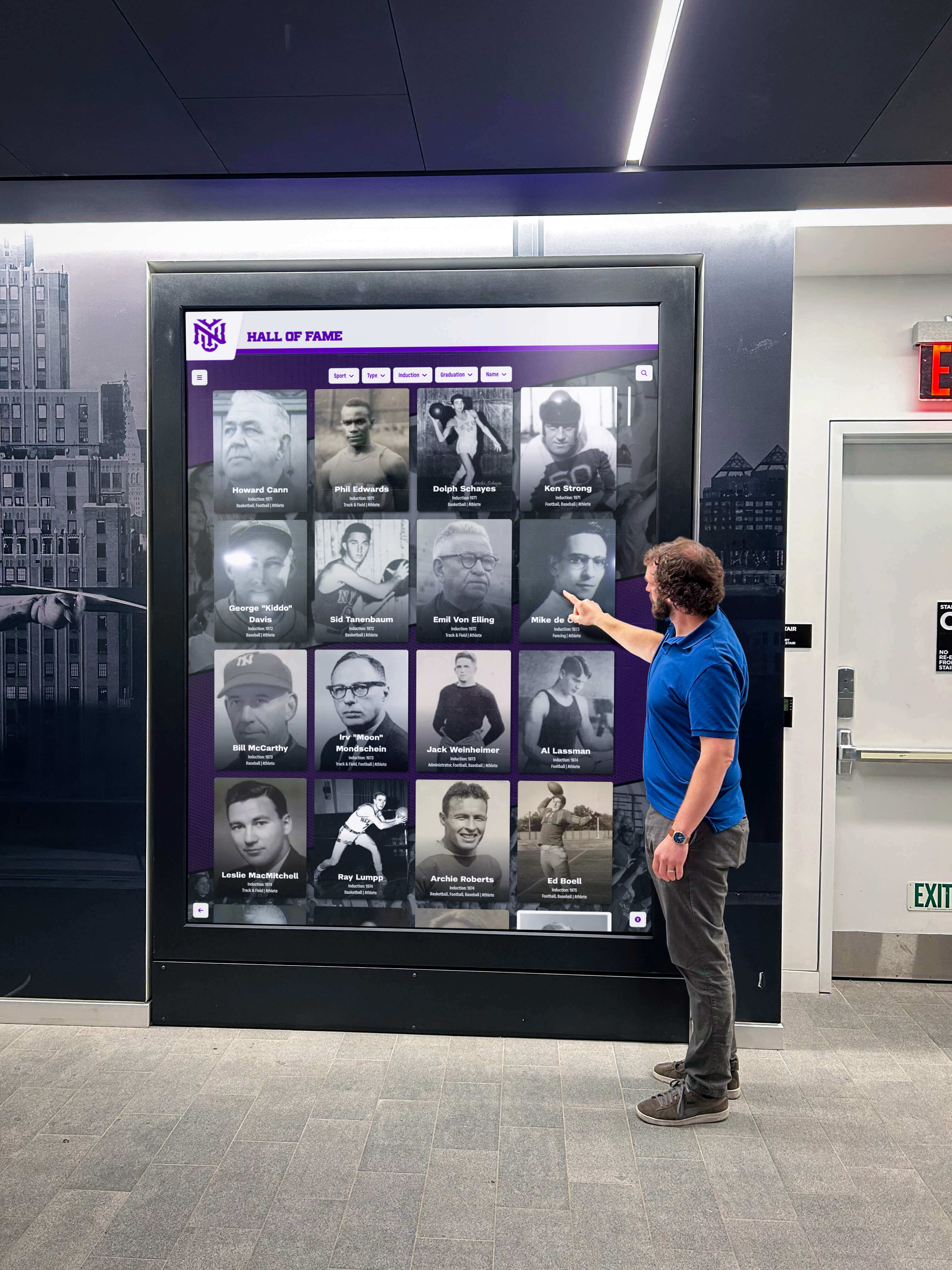
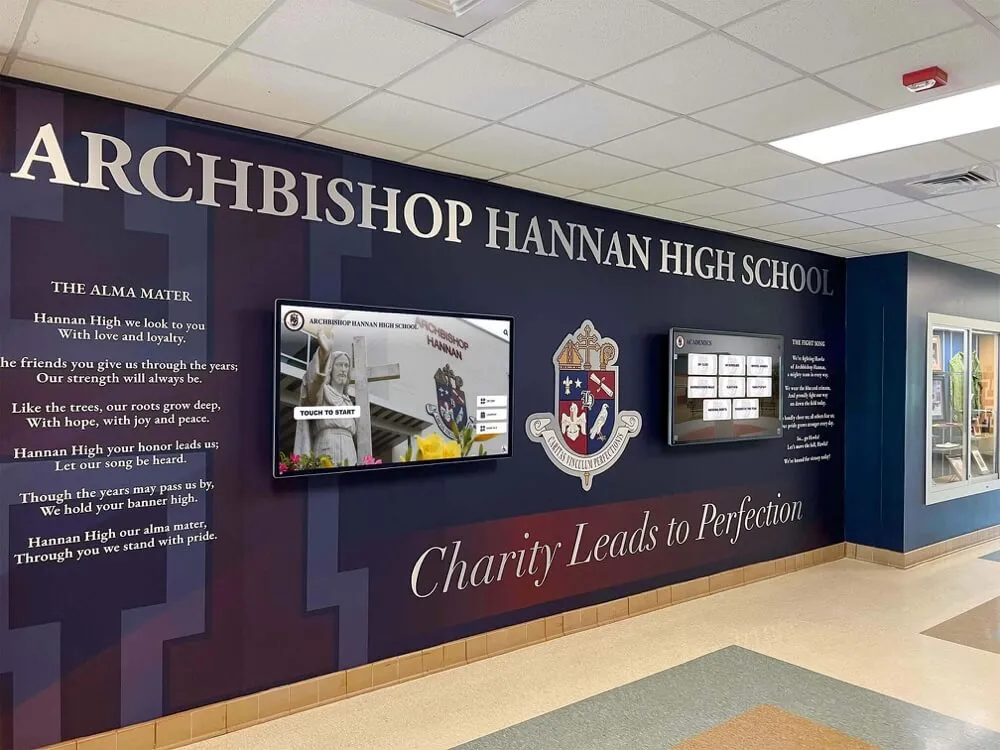
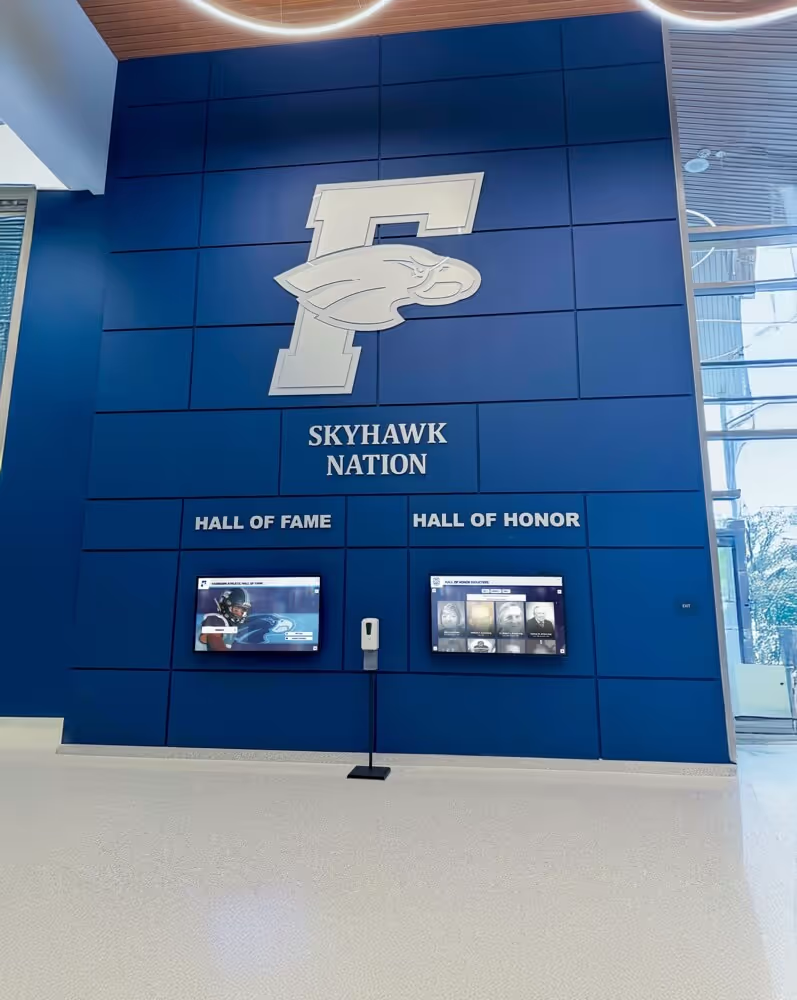
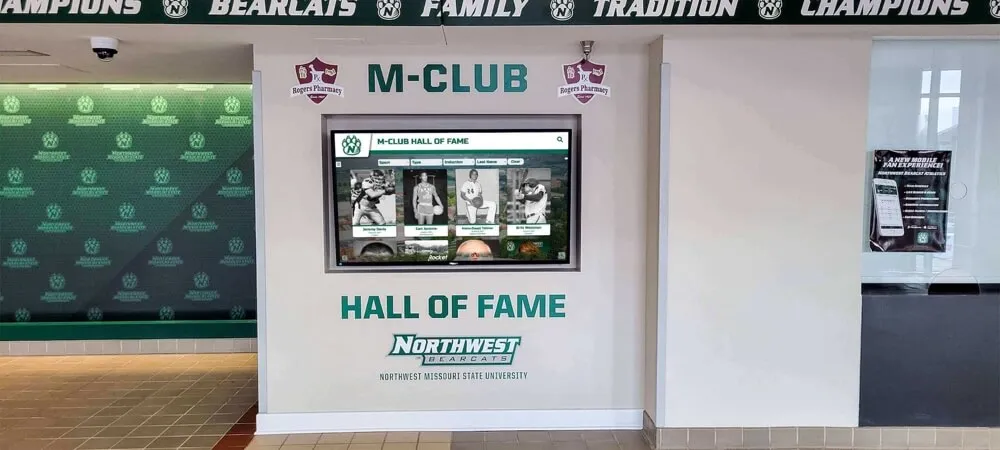
Prominent lobby recognition ensures National Honor Society achievements receive visibility from entire school community including families and visitors
Traditional National Honor Society Recognition Approaches
Traditional recognition methods offer accessible entry points for schools with limited budgets while still providing meaningful acknowledgment of NHS membership that creates institutional memory and visible celebration.
Dedicated NHS Display Boards and Bulletin Systems
Physical Display Considerations
Bulletin board displays represent the most budget-friendly NHS recognition option for many schools. Effective bulletin board recognition requires thoughtful design creating visual impact despite inherent space constraints:
- Clear Chapter Information: Include NHS seal, four pillars explanation, and membership criteria helping viewers understand achievement significance
- Member Organization: Arrange current members by graduation year or alphabetically with clear visual separation between classes
- Student Photos: Incorporate professional headshots significantly increasing engagement and helping younger students identify with relatable role models
- Service Highlight Sections: Feature specific member service projects demonstrating community impact beyond academic achievement alone
- Leadership Showcase: Document member leadership roles across school organizations, athletic teams, and community groups
- Historical Recognition: When space permits, include recent graduates creating institutional legacy demonstrating sustained chapter excellence
Implementation Challenges
Bulletin boards face several inherent limitations reducing long-term effectiveness:
- Space Constraints: Limited physical space means historical members often must be removed accommodating current students, losing institutional memory
- Maintenance Requirements: Regular updates require staff time printing materials, mounting photos, arranging displays, and refreshing content
- Visibility Limitations: Recognition remains visible only to people passing specific hallway locations during building hours
- Material Degradation: Photos fade, papers tear, pushpins loosen, and displays become disorganized requiring ongoing maintenance
- Limited Information Capacity: Physical space constraints restrict detail about individual member achievements, service contributions, and leadership roles
Learn about modern alternatives through digital recognition display solutions designed specifically for educational environments.
Trophy Case and Plaque Recognition
Permanent Plaque Systems
Engraved plaques offer more permanent NHS recognition than bulletin boards while maintaining traditional aesthetic appeal appropriate for formal academic acknowledgment:
Annual Class Plaques: Create individual plaques for each induction class listing all new members accepted that academic year. These accumulate over decades showing program growth and creating visible legacy connecting current students with generations of previous members who maintained chapter traditions.
Pillar-Specific Recognition: Some schools create separate display sections highlighting members demonstrating exceptional achievement in particular pillars—outstanding community service, exceptional leadership, or exemplary character—providing inspiration beyond basic membership acknowledgment.
Officer Recognition: Dedicate space acknowledging NHS chapter officers including presidents, vice presidents, secretaries, and treasurers who provide organizational leadership ensuring chapter operation and service project execution throughout academic years.
Trophy Case Integration Strategies
Many schools incorporate NHS recognition into existing trophy cases alongside athletic and other achievement acknowledgment:
- Position academic awards at eye level with prominence equal to athletic trophies eliminating implicit hierarchies
- Create dedicated NHS sections within cases establishing clear association with academic and character excellence
- Use professional display stands, risers, and lighting adding visual interest and directing attention appropriately
- Include explanatory text about four pillars educating viewers unfamiliar with NHS requirements and significance
- Rotate featured member profiles throughout the year highlighting diverse achievements across scholarship, leadership, service, and character domains
- Document major service projects completed by chapters demonstrating community impact beyond individual recognition
Discover how National Honor Society digital displays enhance traditional recognition through interactive exploration capabilities.
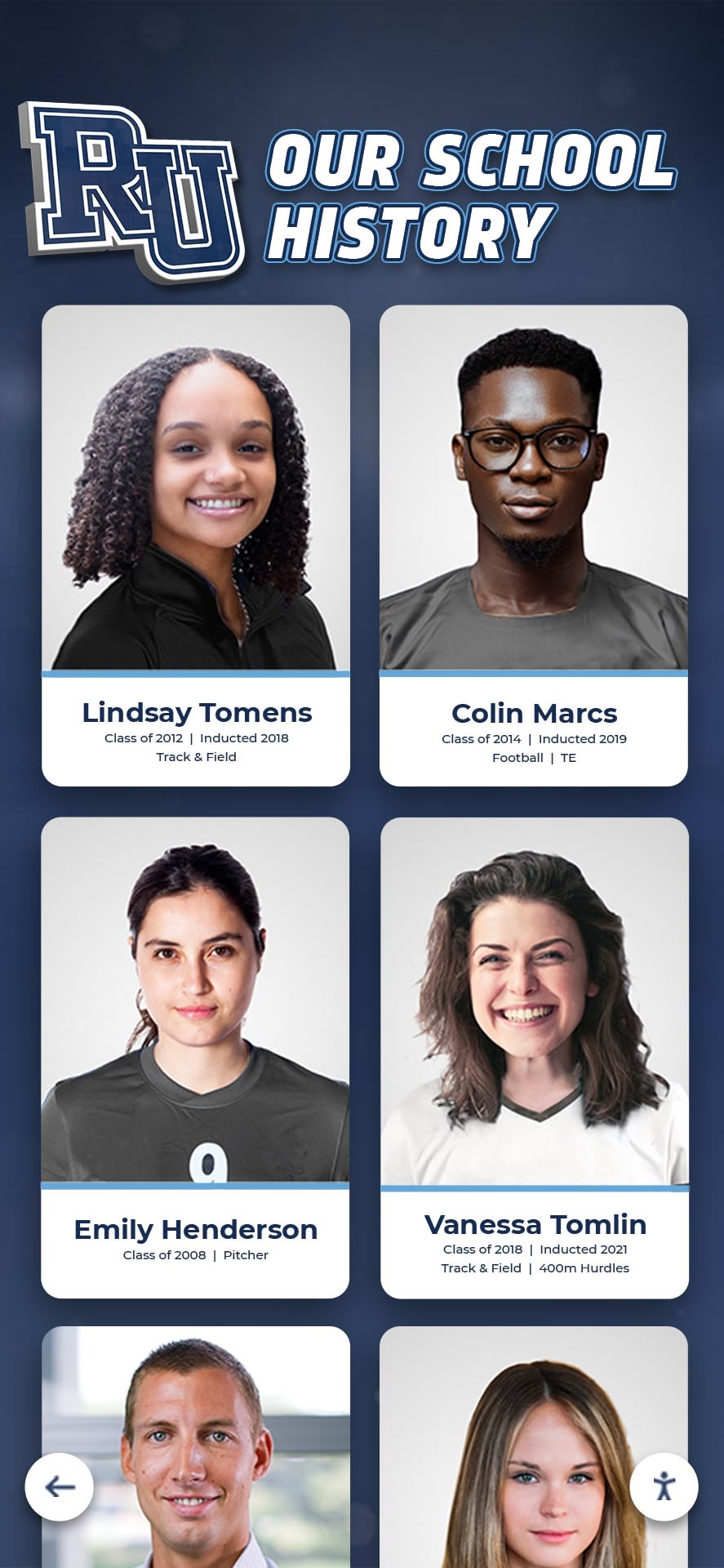
Comprehensive recognition systems preserve NHS history across decades connecting current members with institutional legacy
Wall-Mounted Recognition Installations
Custom Display Systems
Wall-mounted installations offer middle-ground solutions between temporary bulletin boards and comprehensive digital implementations:
Design Options
- Professionally printed graphics with clear protective overlay panels enabling name insertions and updates
- Custom millwork with routed channels holding individual nameplates arranged by induction year
- Magnetic backing systems allowing flexible member arrangement and straightforward annual updates
- Shadow box installations with dimensional elements creating visual interest and professional presentation
- School-branded headers incorporating official NHS seal, chapter information, and four pillars explanation
Space Planning Considerations
- Calculate minimum ten-year capacity avoiding running out of space requiring premature replacement
- Design with 30-40% unused space initially accommodating program growth without appearing empty
- Consider vertical arrangements maximizing limited wall space in crowded hallways and lobbies
- Ensure ADA-compliant mounting heights enabling accessibility for wheelchair users and shorter students
- Select high-visibility locations in main lobbies, libraries, guidance areas, or academic office spaces
- Plan for adequate lighting ensuring visibility during early morning, late afternoon, and evening events
Material and Installation Requirements
- Choose durable, fade-resistant materials designed specifically for long-term interior display applications
- Select finishes complementing existing school décor, architectural details, and institutional branding
- Invest in professional installation ensuring level mounting, secure attachment, and building code compliance
- Plan for supplemental lighting enhancing visibility and creating professional presentation quality
- Budget for periodic cleaning, maintenance, and minor repairs keeping displays looking fresh over years
Modern Digital Recognition Solutions for National Honor Society Students
Digital recognition systems overcome traditional limitations while creating engaging, dynamic experiences that transform how schools celebrate NHS membership and inspire broader participation in comprehensive excellence programs.
Interactive Touchscreen Display Features
Solutions like Rocket Alumni Solutions transform National Honor Society recognition through interactive displays eliminating traditional space, content, and engagement constraints that limit conventional recognition approaches:
Unlimited Recognition Capacity
Digital systems showcase unlimited members without physical space limitations:
- Single display accommodates every NHS member across entire school history with no capacity constraints
- Never need to remove historical members creating space for new inductees, preserving institutional legacy completely
- All graduation years receive equal display prominence with identical search and exploration access
- Instant updates when new members receive selection notification each fall semester
- Complete searchable archives allowing students, families, and alumni exploring decades of chapter achievement
- Separate sections highlighting officers, service project participants, and pillar-specific achievement leaders
Schools report that eliminating capacity constraints represents the most valuable digital benefit, enabling truly comprehensive recognition previously impossible with space-limited traditional displays constrained by physical dimensions and budget limitations.

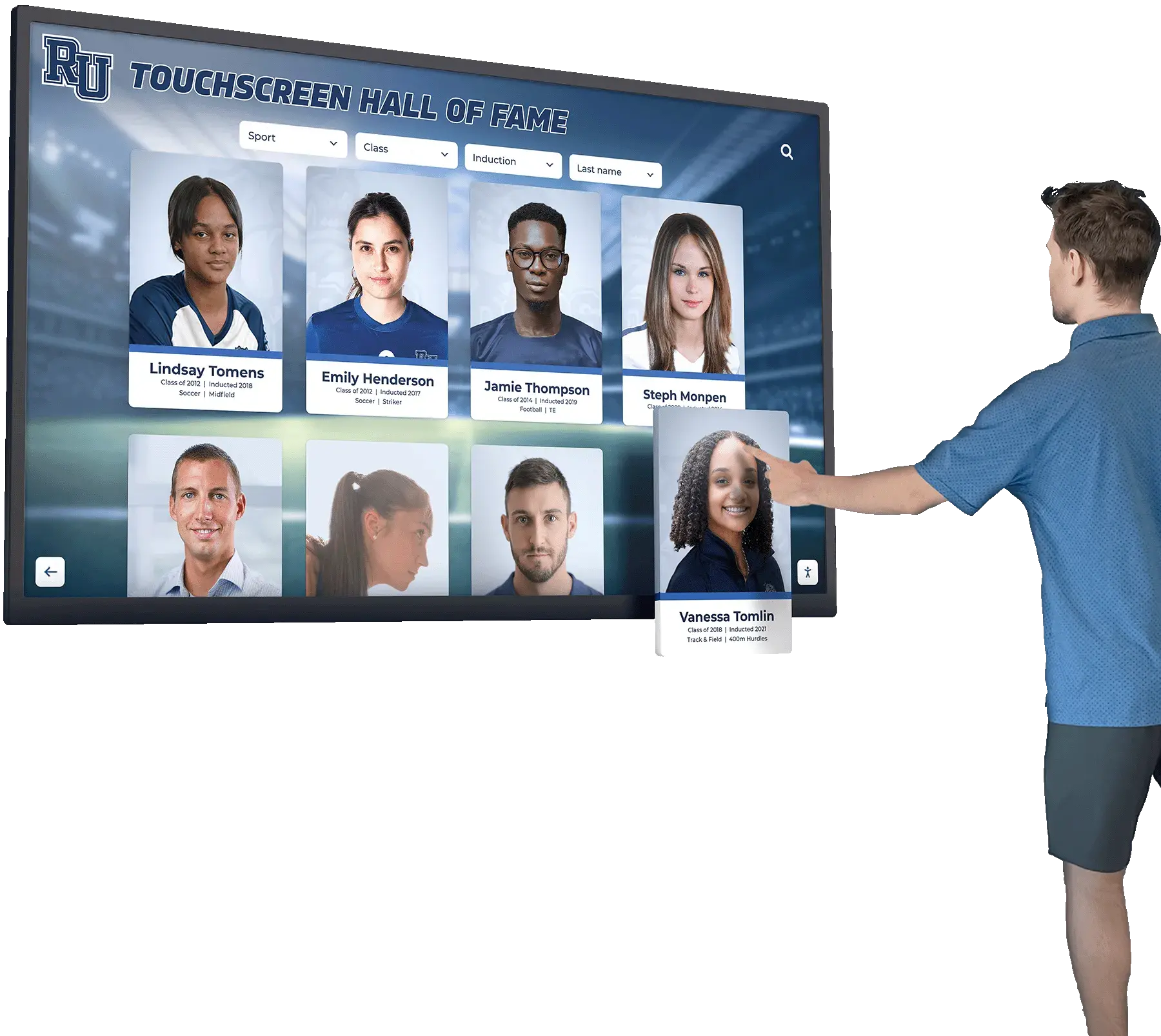
Touchscreen functionality enables intuitive exploration of detailed NHS member information including all four pillars
Rich Member Profiles Celebrating All Four Pillars
Digital platforms support comprehensive biographical content impossible with physical name plaques or basic bulletin boards:
- High-resolution student photos creating professional, personalized presentation reflecting membership prestige
- Individual achievement details including specific GPA, class rank when appropriate, and academic distinctions
- Leadership role documentation across school organizations, athletic teams, clubs, and community groups
- Service contribution narratives describing volunteer activities, causes supported, and community impact achieved
- Character recognition from teachers and administrators providing authentic testimonials about ethical conduct
- Future goals including college destinations, intended majors, and career aspirations when students choose sharing
- Advice from current and former members guiding younger students working toward NHS selection
- Video messages or interviews when available adding personal dimension beyond text and photos
This enriched content helps underclassmen understand realistic pathways to NHS membership while celebrating individual accomplishments comprehensively across all four pillars rather than academic achievement alone.
Explore comprehensive student achievement showcase approaches providing broader context for NHS recognition integration.
Interactive Exploration and Advanced Search
Touchscreen functionality creates engagement impossible with static traditional displays limited to passive viewing:
- Search by student name enabling quick individual lookup for families, friends, and younger students
- Filter by graduation year viewing specific class cohorts and comparing participation across years
- Sort by leadership roles exploring members who held particular positions or offices
- Filter by service focus finding members who supported specific causes or community organizations
- Subject area exploration identifying members excelling in STEM, humanities, arts, or other academic domains
- Multiple viewing modes including grid displays, individual profiles, statistical dashboards, and timeline views
- Random discovery features highlighting diverse members ensuring balanced visibility across all inductees
Research consistently shows visitors engage with interactive academic displays for 5-10 minutes on average compared to brief glances lasting seconds at static plaques and bulletin boards, dramatically increasing recognition impact and inspiration value throughout school communities.
Learn about honor roll recognition displays that complement NHS programs through shared technology infrastructure.
Web-Based Recognition and Remote Accessibility
Global Access Beyond Physical Displays
Modern recognition platforms extend far beyond school building walls through cloud-based web accessibility:
- Online systems viewable from anywhere globally on any internet-connected device
- Mobile-responsive designs ensuring excellent experiences on smartphones, tablets, and computers
- Social sharing capabilities enabling students celebrating achievements with extended family networks and communities
- Alumni and distant relatives worldwide can explore current NHS members regardless of geographic location
- Integration with school websites providing embedded recognition displays within existing digital presences
- Email notification systems alerting families automatically when students receive NHS selection notification
This extended accessibility multiplies engagement exponentially beyond in-person school visitors, potentially reaching thousands rather than just hundreds who physically walk past hallway displays during building hours or special events.
Digital Communications Integration
Digital recognition systems connect seamlessly with existing communication platforms amplifying recognition impact:
- Automated announcements when selection committees notify new members each December-January
- Social media post generation with member photos and achievements for Facebook, Instagram, Twitter, and LinkedIn
- Email notifications to families when students receive NHS selection with links to online profiles
- Newsletter content creation featuring individual member highlights and chapter accomplishment statistics
- Morning announcement slides with rotating member spotlights throughout academic year
- Parent portal integration showing NHS recognition alongside academic transcripts and report cards
This multi-channel integration ensures NHS achievement receives systematic promotion without creating additional administrative burden beyond initial setup and straightforward annual updates.
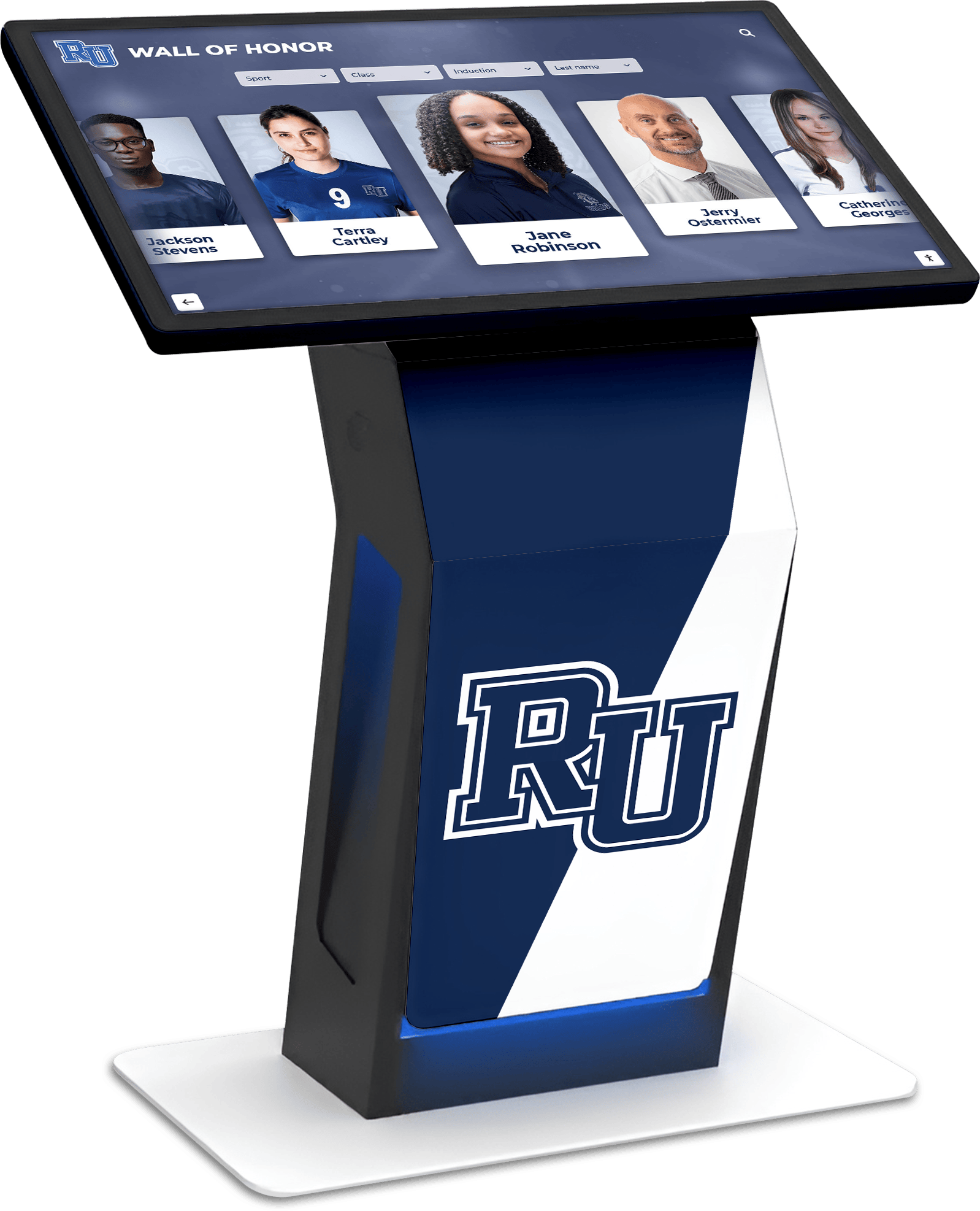
Purpose-built recognition kiosks provide professional platforms for exploring NHS member achievements across all four pillars
Simple Content Management and Administrative Efficiency
Cloud-Based Administration Systems
Modern recognition platforms eliminate technical barriers to maintenance and ongoing updates:
- Remote updates from any internet-connected device without requiring special software or technical expertise
- Intuitive interfaces requiring no specialized training enabling any authorized staff member managing content
- Bulk import tools for member data from spreadsheets, student information systems, or databases
- Scheduled publishing coordinating with selection notification and induction ceremony timing
- Role-based permissions enabling appropriate staff access without security concerns or excessive authorization
- Template-based profile creation ensuring consistent professional presentation across all members
- Automated backups preventing data loss and enabling easy recovery if mistakes occur during updates
Schools report 80-90% reduction in administrative time spent maintaining NHS recognition after implementing digital systems compared to traditional printed bulletin board management, physical plaque ordering, and manual display updates.
Integration with Student Information Systems
Advanced digital platforms can integrate directly with common school databases when available:
- Automatic import of academically eligible candidates when GPA thresholds are met
- Synchronization with existing student demographic and academic databases preventing duplicate data entry
- Pre-population of achievement details from grade records, attendance systems, and discipline databases
- Reduced manual data entry eliminating associated transcription errors that undermine recognition accuracy
- Streamlined recognition updates each selection cycle without duplicating effort across multiple systems
This automation ensures timely, accurate recognition with minimal ongoing staff involvement, addressing sustainability challenges that undermine many well-intentioned recognition programs over time as initial enthusiasm fades and administrative burden becomes overwhelming.
Designing Effective NHS Recognition Programs
Whether choosing traditional or digital approaches, applying effective design principles ensures recognition boards achieve maximum impact engaging school communities while appropriately honoring the comprehensive achievement NHS membership represents.
Strategic Placement and Visibility Optimization
High-Traffic Location Selection
Recognition placement dramatically influences visibility and inspirational impact effectiveness:
Optimal Location Options
- Main entrance lobbies where all students, staff, and visitors pass during entry establishing immediate institutional priorities
- Outside guidance counseling offices where academic planning and course selection decisions occur
- Near cafeteria entrances where students pass multiple times daily creating repeated exposure opportunities
- Library entrances serving as academic hubs for student study, research, and intellectual community building
- Main office areas regularly visited by families during enrollment, conferences, and communication
- Along primary hallway routes connecting heavily-trafficked areas like classrooms, gyms, and auditoriums
Placement Considerations
- Ensure adequate natural and artificial lighting for visibility during early morning, afternoon, and evening hours
- Avoid locations where displays might be blocked by temporary furniture, poster boards, or other competing visual elements
- Consider sight lines from multiple angles maximizing viewing opportunities as people approach from different directions
- Provide adequate space in front of displays for groups gathering, exploring, and discussing content
- Select wall space allowing for future expansion or technology upgrades without requiring complete relocation
- Ensure ADA-compliant heights and clear pathways for accessibility meeting legal requirements and inclusive values
Explore additional insights through elementary school recognition approaches covering similar placement strategy considerations.
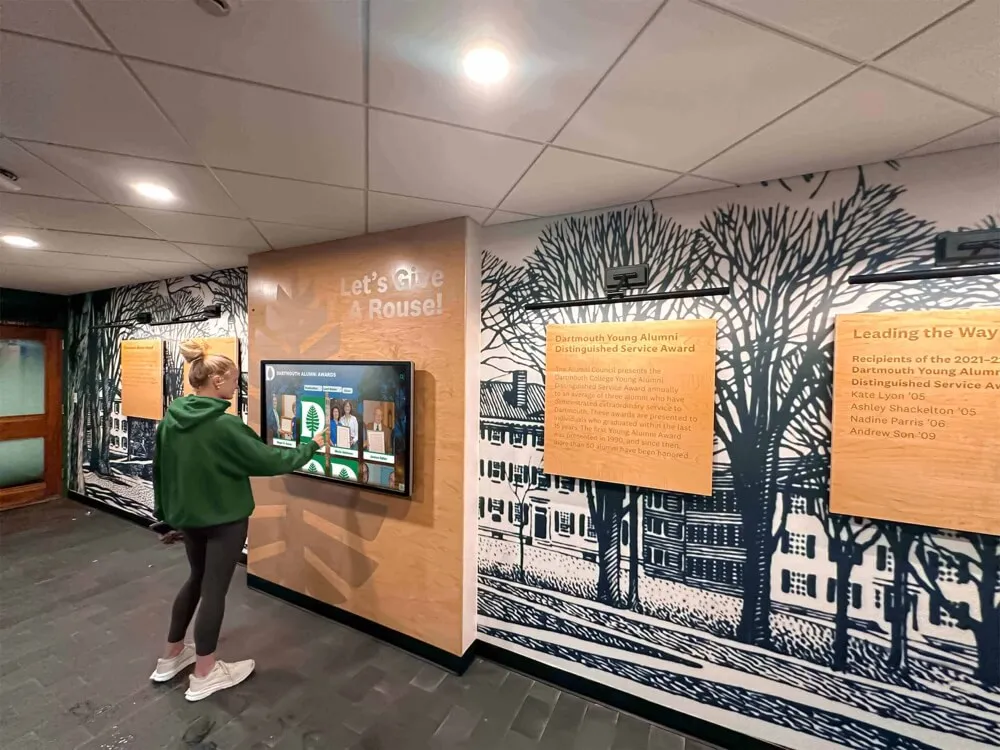
Well-designed recognition systems positioned strategically tell complete achievement stories inspiring younger students toward excellence
Content Architecture and Information Design
Essential Information Elements
Effective NHS recognition displays include specific information creating meaning and context beyond simple name lists:
Core Content Requirements
- Student full names with appropriate permissions and opt-out accommodations respecting privacy preferences
- Graduation year or current grade level providing context and enabling cohort comparisons
- Induction year identifying when students received selection acknowledging membership duration
- School and chapter identification establishing institutional context and national affiliation
- NHS seal and branding creating visual connection to broader national organization and standards
Enhanced Optional Elements
- Professional student photographs significantly increasing engagement and creating personal connections with role models
- Cumulative GPA or class rank when appropriate and permitted by privacy policies demonstrating scholarship pillar
- Leadership role documentation including specific positions held in clubs, athletics, student government, and community organizations
- Service contribution summaries describing volunteer activities, organizations supported, and community impact achieved
- Character testimonials from teachers or administrators providing authentic recognition of ethical conduct and integrity
- College destinations showing outcomes and validating NHS preparation value for post-secondary success
- Member advice quotes offering practical guidance for students considering NHS application or working toward selection
Organizational Structures Supporting Multiple User Needs
How information is organized influences usability and inspirational impact:
Chronological Organization: Group members by induction year allowing viewers seeing program evolution over time, comparing cohort sizes, and understanding sustained chapter excellence across decades.
Four Pillars Organization: Create separate sections highlighting members demonstrating exceptional achievement in particular pillars—outstanding scholarship, exemplary leadership, significant service, or exceptional character—providing inspiration and specific achievement targets.
Service Project Organization: When chapters complete major service initiatives, organize recognition around specific projects showing collective impact and demonstrating how individual membership contributes to broader community benefit.
Leadership Role Organization: Arrange members by leadership positions held creating inspiration for students interested in specific organizations, activities, or leadership opportunities available throughout school and community.
Visual Design and Professional Presentation
Design Elements Supporting Prestige and Credibility
Recognition displays represent schools to students, families, and communities, making professional design essential for conveying NHS membership significance:
Core Design Elements
- Consistent color schemes aligned with school branding, NHS national identity, and institutional visual standards
- Clear, highly readable typography sized appropriately for viewing distances in selected locations
- High-quality graphics, photos, and visual elements maintaining resolution and clarity at display scales
- Appropriate white space preventing cluttered appearance that undermines professional presentation and readability
- Hierarchical visual organization guiding viewers through content from overview to detailed individual information
- Durable materials or digital displays maintaining appearance over years without degradation or obsolescence
Balancing Tradition and Contemporary Expectations
Design should reflect institutional character while embracing contemporary aesthetic standards:
- Incorporate traditional school colors, logos, mascot imagery, and architectural details connecting recognition to institutional identity
- Use modern clean design principles avoiding dated layouts, cluttered compositions, or obsolete visual conventions
- Balance formality appropriate for prestigious academic recognition with approachability encouraging student engagement
- Consider diverse audience aesthetic preferences from conservative community members to contemporary students
- Ensure design ages well maintaining relevance and avoiding appearing outdated within just a few years
Accessibility and Inclusive Design Principles
Universal design ensures all community members can access and appreciate NHS recognition:
- Adequate contrast ratios between text and backgrounds ensuring visibility for people with visual impairments
- Font sizes large enough for comfortable viewing from reasonable distances by people with varied visual acuity
- Lower-portion content positioned at wheelchair-accessible heights meeting ADA requirements
- Alternative text descriptions or audio options for digital implementations supporting screen readers
- Clear pathways and viewing areas accommodating diverse physical needs without crowding or obstacles
- Multiple information presentation formats supporting different learning styles and processing preferences
Discover related approaches through academic recognition program design strategies addressing similar design challenges.

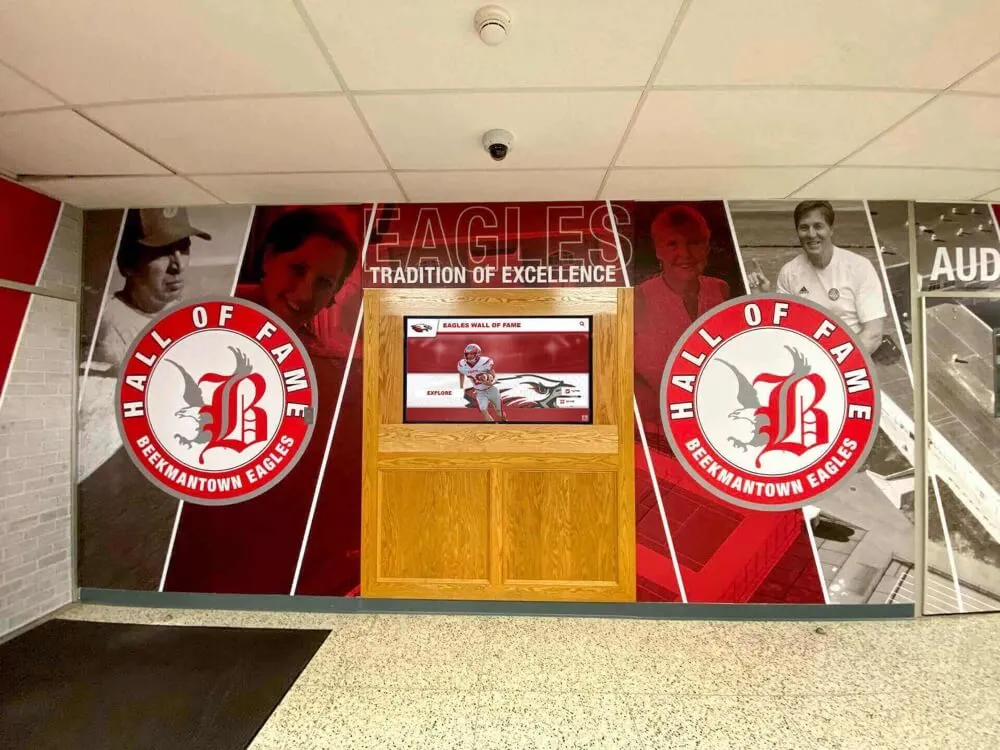
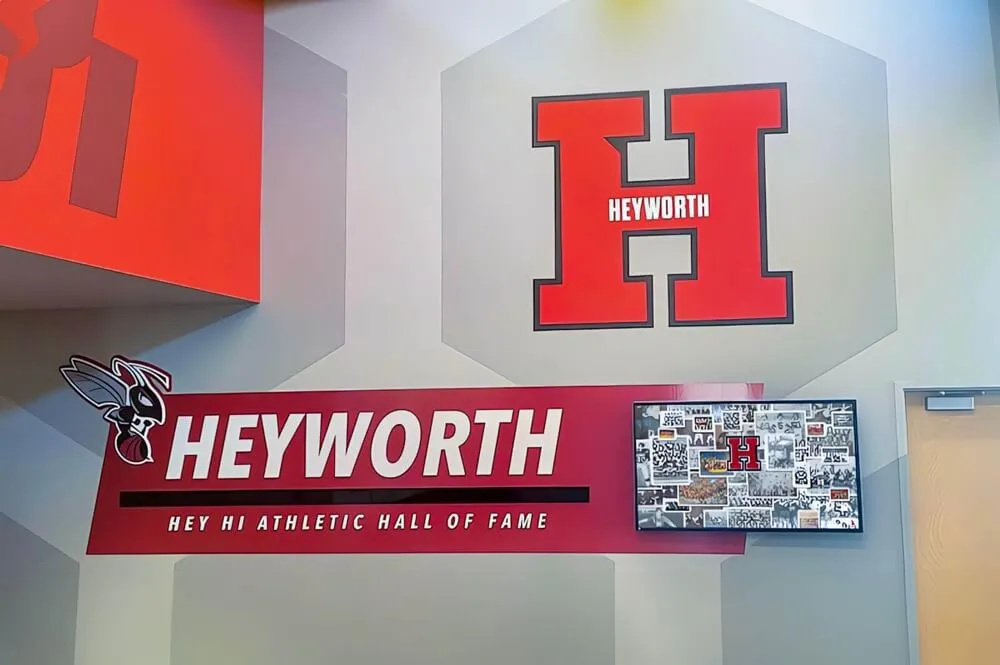
Professional recognition installations create lasting impressions on students, families, and community visitors demonstrating institutional commitment to excellence
Implementing National Honor Society Recognition Programs
Successful implementation requires systematic planning and execution maximizing impact and sustainability ensuring programs remain effective for years rather than fading as initial enthusiasm diminishes or leadership changes.
Planning and Needs Assessment
Program Goal Definition
Before implementing recognition systems, clarify specific objectives guiding all subsequent decisions:
- Celebrate individual NHS member achievement appropriately reflecting membership prestige and comprehensive requirements
- Inspire students not currently meeting requirements to develop scholarship, leadership, service, and character
- Create visible academic and character excellence culture balancing or exceeding athletic recognition prominence
- Provide families with accessible achievement documentation supporting college applications and scholarship pursuits
- Support institutional recruitment and reputation by demonstrating commitment to comprehensive student development
- Build community awareness about school values and educational outcomes beyond test scores alone
- Create permanent archives preserving institutional legacy across decades connecting generations of members
Clear objectives guide technology selection, content strategy decisions, budget allocation priorities, stakeholder engagement approaches, and success measurement methodologies ensuring coherent programs aligned with institutional missions.
Stakeholder Input and Organizational Buy-In
Successful programs involve key constituencies in planning processes building ownership and support:
- NHS Chapter Advisors ensuring recognition aligns with chapter operations, service projects, and membership requirements
- Academic Leadership confirming recognition supports educational mission and institutional values authentically
- Counseling Staff providing perspective on student motivation, college application needs, and recognition impact
- Faculty Council Members offering insights about selection processes, membership criteria, and four pillars assessment
- Technology Coordinators addressing infrastructure requirements, integration possibilities, and long-term maintenance
- Communications Staff planning promotion strategies and family engagement approaches maximizing visibility
- Student Representatives including current NHS members sharing perspectives on meaningful recognition formats
- Parent Organization Leadership identifying potential funding support opportunities and volunteer resources
This collaborative planning builds organizational support while ensuring programs meet diverse stakeholder needs rather than reflecting single administrator preferences disconnected from actual user requirements and community expectations.
Technology Selection and Installation
Display Hardware Considerations
Selecting appropriate hardware ensures long-term program success avoiding premature obsolescence or functionality limitations:
Physical Display Options
- Wall-mounted touchscreens in main lobbies, guidance areas, or academic commons creating dedicated recognition stations
- Freestanding kiosk systems establishing prominent NHS recognition spaces in high-traffic locations
- Multiple smaller displays distributed across campus buildings ensuring broad visibility throughout entire school
- Display size balanced between visibility requirements and budget constraints
- Commercial-grade components ensuring durability and longevity in demanding school environments with heavy daily use
Technical Requirements
- Reliable internet connectivity supporting cloud-based content management and remote updates
- Adequate electrical infrastructure and professional installation meeting building codes and safety standards
- ADA-compliant mounting ensuring accessibility for all users including wheelchair users
- Protective coverings or enclosures for high-traffic or unsupervised locations preventing vandalism and damage
- Maintenance agreements addressing technical issues promptly minimizing downtime and ensuring consistent operation
Learn about digital recognition technology selection factors supporting long-term program success.
Software Platform Selection
Choosing appropriate recognition software determines functionality and user experience quality:
Essential Features
- Intuitive content management requiring no technical expertise enabling any authorized staff managing updates
- Responsive design ensuring excellent experiences across mobile devices, tablets, and desktop computers
- Unlimited member capacity accommodating growing populations without artificial constraints or tiered pricing
- Comprehensive search and filtering capabilities supporting diverse user exploration preferences
- Integration options with existing student information systems and databases reducing duplicate data entry
- Professional templates creating polished presentations without requiring custom design expertise
- Multi-user administration with role-based permissions enabling appropriate access without security concerns
Advanced Capabilities
- Automated data import from student information systems eliminating manual transcription and associated errors
- Social media integration enabling easy sharing extending recognition reach beyond school building walls
- Analytics tracking engagement metrics and program effectiveness informing continuous improvement efforts
- Custom branding options matching school visual identity and institutional standards
- Video hosting for member testimonials, service project documentation, and leadership messages
- Calendar integration for induction ceremony announcements and NHS event promotion
- Parent notification systems automatically alerting families when students receive recognition
Solutions like Rocket Alumni Solutions offer comprehensive platforms specifically designed for educational recognition needs, combining all essential features with school-focused support services, implementation assistance, and ongoing technical maintenance ensuring long-term success.
Budget Planning and Funding Strategies
Understanding Investment Requirements
Realistic budget planning considers all cost components across implementation and ongoing operation:
Initial Implementation Costs
- Digital display hardware and installation: $3,000-$15,000 depending on size, quantity, and capabilities
- Software platform annual licensing: $500-$3,000 based on features, student capacity, and support level
- Initial content development: $500-$2,000 for gathering historical data, photos, and building initial member profiles
- Recognition ceremony enhancement: $300-$1,500 for materials, programs, certificates, and event production
- Promotional materials: $200-$800 for family communications, social media campaigns, and community awareness
Traditional Approach Costs for Comparison
- Bulletin board systems: $100-$500 initial setup, $50-$150 annually for updates, 4-8 hours staff time yearly
- Permanent plaque systems: $500-$3,000 initial installation, $100-$300 annually for additions, potential $1,000-$5,000 complete replacement when capacity reached
- Trophy case integration: $200-$1,000 for display materials, $50-$200 annually for updates and maintenance
Ongoing Annual Costs
- Platform subscription renewals: $500-$3,000 depending on feature level and support services
- Content updates each selection cycle: $200-$500 for new member additions, photo collection, and profile creation
- Ceremony expenses: $300-$1,500 annually for continued celebration and recognition events
- Promotional campaign production: $200-$500 for communications, social media content, and community awareness
- Display maintenance and technical support: $100-$500 for cleaning, minor repairs, and software updates
- Staff time for program management: 2-4 hours annually after initial setup (dramatic reduction from traditional approaches)
Understanding total cost of ownership over 5-10 year periods often reveals digital systems provide superior long-term value despite higher initial investments, particularly when accounting for staff time savings, enhanced engagement benefits, unlimited capacity, and elimination of space-constraint replacement costs.
Funding Source Options
Multiple funding sources can support NHS recognition investments:
School Operating Budgets: Regular academic department, student activities, or building budgets may accommodate recognition systems, particularly when positioned as recruitment tools enhancing school reputation and student engagement.
PTSA or Parent Organizations: Parent groups often enthusiastically support academic recognition projects, particularly one-time capital expenses like display hardware or permanent installations creating lasting institutional improvements.
NHS Chapter Fundraising: Active chapters may raise funds through service projects, community partnerships, or event hosting specifically supporting member recognition and chapter operations.
Alumni Contributions: Former NHS members who benefited from chapter participation may donate supporting current student recognition, creating meaningful connections between generations and sustained institutional traditions.
Local Business Sponsorships: Community businesses may sponsor recognition displays as part of education support initiatives, particularly when acknowledged appropriately in display materials without commercializing academic spaces.
Grant Opportunities: Educational foundations, technology grants, and character education initiatives sometimes fund recognition programs supporting academic culture development and comprehensive student development beyond test scores alone.
Phased Implementation: Consider starting with web-based recognition before adding physical displays, or implementing bulletin boards before upgrading to permanent solutions, spreading costs across multiple budget cycles and allowing program demonstration before major investments.
Learn about student achievement recognition programs offering additional funding strategy insights.
Implementation Timeline and Project Management
Planning and Design Phase (2-3 months)
- Form stakeholder committee including NHS advisor, administrators, counselors, technology staff, and communications personnel
- Define recognition goals, success metrics, scope, and institutional priorities
- Research and evaluate recognition approach options weighing traditional versus digital implementations
- Develop comprehensive budget and identify funding sources across multiple fiscal years if necessary
- Create detailed design specifications including content requirements, visual standards, and functionality needs
- Select vendors or implementation approaches based on evaluation criteria and stakeholder input
Installation or Development Phase (1-3 months)
- Order materials or systems based on chosen approach following procurement procedures
- Coordinate installation or setup with facilities, technology, and vendor partners
- Develop initial content including gathering historical data across multiple graduation years
- Create sustainable processes for ongoing updates and long-term maintenance
- Train staff on system management, content updates, and troubleshooting common issues
- Test all systems thoroughly and correct any issues before public launch or ceremony unveiling
Launch and Promotion Phase (1 month)
- Schedule formal unveiling event or integrate with induction ceremony creating memorable launch experience
- Coordinate announcements across all communication channels reaching students, families, staff, and community
- Engage current NHS members in promotion activities and celebration events building ownership and pride
- Document implementation process comprehensively for future reference and replication
- Gather initial feedback from students, staff, families, and community members through surveys and conversations
- Make adjustments based on early experience and input ensuring optimal effectiveness
Ongoing Operation (Annual cycle)
- Update with new members immediately following selection notification and before induction ceremonies
- Refresh content addressing graduations, officer changes, and service project documentation
- Promote recognition systematically throughout the year during key decision-making periods like course selection
- Assess effectiveness through engagement metrics, application rates, and stakeholder feedback
- Budget for and plan next year’s updates, enhancements, and potential expansions based on success and available resources
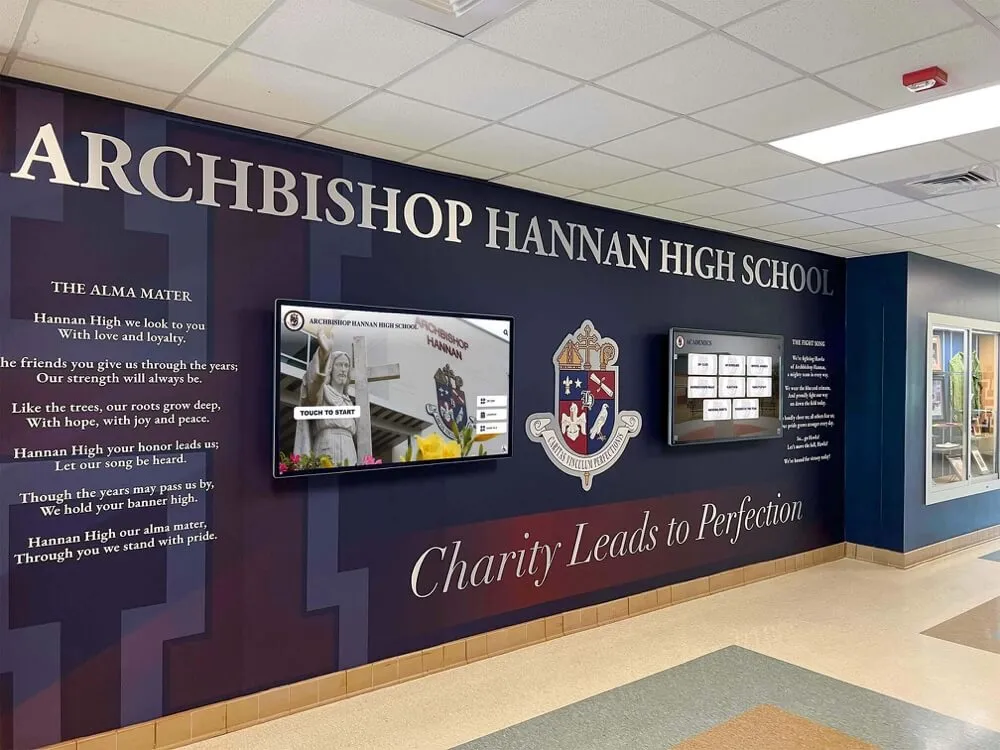
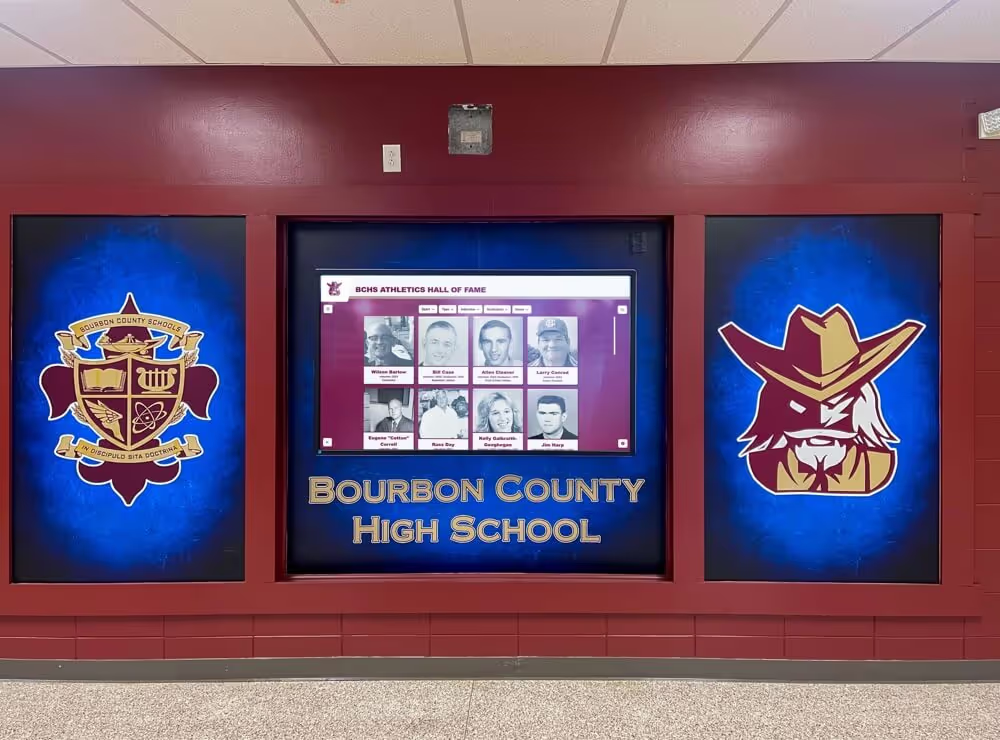
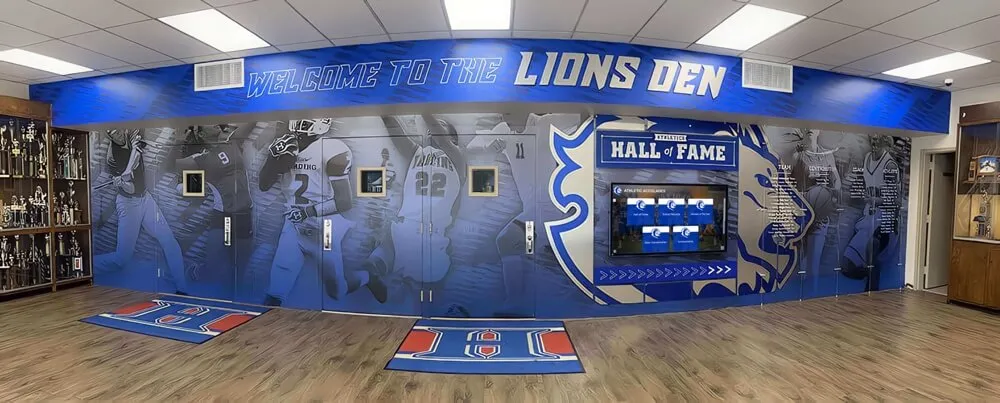
Professional recognition installations combining digital displays with school branding create impressive academic celebration spaces demonstrating institutional commitment
Maximizing NHS Recognition Program Impact
Beyond basic implementation, strategic approaches amplify recognition effectiveness and sustainability ensuring programs achieve maximum influence on school culture and student development.
Integration with NHS Ceremonies and Events
Induction Ceremony Enhancement
Formal induction ceremonies create memorable milestone experiences marking NHS membership achievement. Effective integration of recognition displays with ceremonies amplifies both experiences:
Pre-Ceremony Recognition Display
- Update recognition displays with new member information before ceremonies enabling family exploration during receptions
- Create temporary displays in ceremony venues showing all inductees with photos, achievements, and four pillar highlights
- Provide printed programs including information about accessing online recognition platforms and displays
- Coordinate display unveiling as ceremony component creating memorable moment and institutional commitment demonstration
Ceremony Program Components
- Individual new member recognition with brief biography highlighting specific scholarship, leadership, service, and character achievements
- Certificate presentation by chapter advisors, principals, or superintendents emphasizing membership significance
- Four pillars explanation educating families and community members about comprehensive requirements and selection processes
- Officer introduction and service project overview demonstrating active chapter operations beyond individual recognition
- Photo opportunities with families, school leadership, and recognition displays creating lasting memories
Post-Ceremony Activities
- Reception enabling families exploring recognition displays and connecting with other NHS families
- Social media promotion featuring ceremony highlights, new member photos, and recognition display information
- Newsletter features and local media coverage extending ceremony impact beyond attendees to broader community
- Recognition display location information in ceremony programs guiding families to ongoing visibility locations
Explore complementary approaches through semester recognition ceremony planning addressing similar event integration strategies.
Connecting Members with School Community
Peer Mentoring and Academic Support Programs
Leverage NHS members supporting peers and building community connections extending recognition impact beyond passive celebration:
Formal Mentorship Structures
- Match NHS members with underclassmen considering membership or developing required skills across four pillars
- Regular check-ins providing academic support, leadership guidance, service opportunity connections, and character modeling
- Study strategy sharing based on successful approaches members used achieving scholarship requirements
- Time management guidance for balancing rigorous coursework with leadership roles and service commitments
- Subject-specific tutoring in areas where members demonstrate particular expertise and passion
Leadership Development Connections
- NHS member panels during leadership conferences sharing experiences and practical guidance
- Officer shadowing programs connecting interested students with current chapter officers learning organizational leadership
- Service project volunteering where members work alongside younger students demonstrating commitment and building connections
- Recognition displays prominently featured in leadership development spaces connecting visible achievement with available support
Service Learning Integration
- Feature NHS member service contributions in recognition displays inspiring younger students toward community engagement
- Connect students interested in specific causes with NHS members supporting those organizations demonstrating pathways forward
- Document chapter service projects comprehensively showing collective impact and inspiring participation
- Use recognition strategically promoting school service initiatives and volunteer opportunities throughout academic year
These programs multiply recognition value by transforming passive acknowledgment into active support systems improving achievement across broader student populations while building community connections and peer relationships that strengthen school culture.
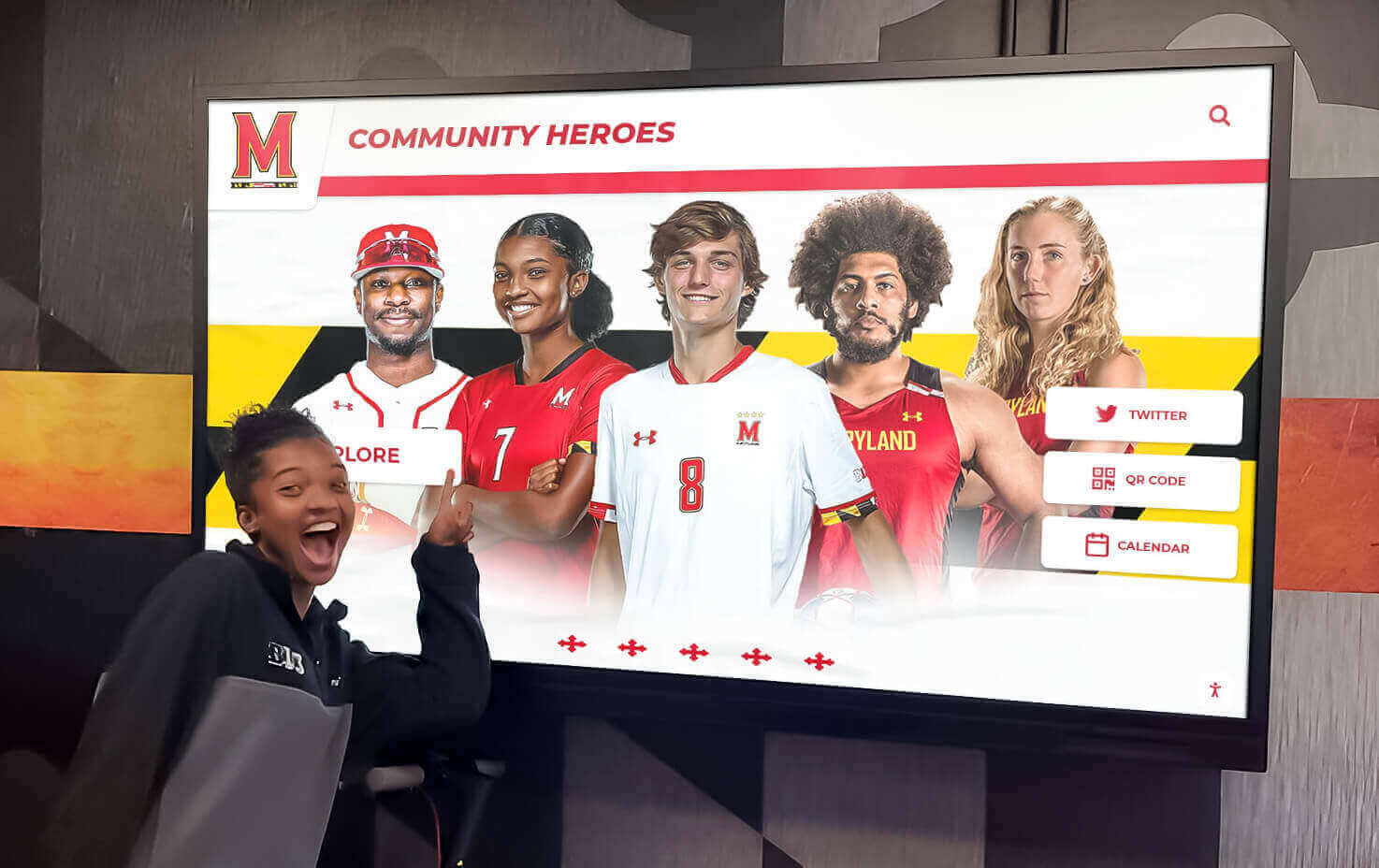
Engaging recognition systems inspire younger students by showcasing achievable excellence from relatable peer role models in their own school community
Multi-Channel Recognition Communication
Social Media Celebration Strategies
Systematic social promotion extends NHS recognition reach substantially beyond school building walls:
Individual Member Features
- Dedicated posts for each NHS member with professional photos and comprehensive four pillar achievement summaries
- Instagram story highlights creating persistent chapter archives viewable by prospective students and community members
- Facebook announcements tagged appropriately reaching extended family networks, community groups, and local organizations
- Twitter recognition with relevant education hashtags connecting to broader conversations about academic excellence
- LinkedIn posts connecting with professional networks, alumni, and college admissions representatives following school accounts
Chapter Accomplishment Content
- Selection announcement posts highlighting total new members, class representation, and program growth trends
- Infographics showing chapter participation rates by grade level and demographic groups demonstrating inclusive excellence
- Service project documentation with photos, volunteer hours, community impact metrics, and beneficiary testimonials
- Leadership showcase features profiling chapter officers, committee chairs, and organizational structure demonstrating student governance
- Four pillars explanation content educating broader audiences about comprehensive requirements beyond grades alone
Strategic Timing and Content Planning
- Immediate recognition when selection notifications occur each December-January maintaining relevance and timeliness
- Induction ceremony coverage with photos, video highlights, and member recognition extending ceremony impact digitally
- Back-to-school content spotlighting previous year members and promoting upcoming application opportunities
- Service project updates throughout the year documenting ongoing chapter activities and community engagement
- Graduation recognition highlighting senior members and cumulative high school NHS achievement
Traditional Media and Community Communications
Complement digital outreach with conventional channels reaching audiences less engaged with social platforms:
School Communications
- Newsletter features profiling individual members across all four pillars with emphasis on diverse achievements
- Email announcements to families with complete member rosters and links to online recognition platforms
- Morning announcement highlights rotating through members daily throughout weeks following selection and induction
- Website homepage features celebrating NHS achievement during key visibility periods
- Annual report inclusion demonstrating educational outcomes and comprehensive development success
Community Media Outreach
- Local newspaper submissions announcing selection results and induction ceremony information
- Community magazine feature stories profiling high-achieving members with compelling narratives
- Local radio education segment opportunities during community programming highlighting chapter service projects
- Community bulletin board postings at libraries, municipal buildings, and civic centers
- Chamber of commerce and business partner communications demonstrating school excellence and community connections
Learn about comprehensive student recognition communication approaches applicable to NHS programs.
Tracking Recognition Program Effectiveness
Quantitative Success Metrics
Measure program impact through objective data informing continuous improvement:
Participation and Achievement Metrics
- Total NHS applications submitted annually showing interest levels and selection competitiveness
- Number of students selected each year demonstrating program size and accessibility
- Application-to-selection ratios revealing competitiveness and standards rigor
- Demographic distribution among members ensuring equitable recognition opportunities across all student populations
- Multi-year membership retention rates tracking students maintaining GPA and service requirements through graduation
- Officer participation rates showing leadership development within chapter operations
Engagement Analytics
- Digital display interaction frequency, session duration, and peak usage times
- Web platform visits, page views, and unique visitors for online recognition systems
- Social media engagement rates, content reach, sharing frequency, and follower growth
- Recognition ceremony attendance trends over time showing family and community engagement
- Family response rates to NHS communications and event invitations
Academic and Behavioral Impact Indicators
- Overall school GPA trends across entire student population showing culture shifts toward academic excellence
- Honor roll participation rates comparing years before and after prominent NHS recognition implementation
- Advanced coursework enrollment trends in AP, IB, dual enrollment, and honors classes
- Community service participation rates school-wide beyond NHS members alone
- Student leadership program enrollment and officer position application rates
- Discipline incident rates and positive behavior intervention trends showing character culture development
Qualitative Assessment Methods
Complement quantitative data with stakeholder feedback revealing recognition impact on culture and motivation:
Student Perception Surveys
- NHS member satisfaction with recognition received and program meaningfulness
- Non-member student awareness of NHS requirements and pathway to membership
- Influence of recognition on academic motivation, service participation, and leadership interest
- Perceived fairness of selection processes and criteria
- Suggestions for recognition program enhancements and additional celebration opportunities
Family and Community Feedback
- Parent survey responses about recognition adequacy, visibility, and appropriateness
- Community perception of school academic priorities and comprehensive development commitment
- Family assessment of recognition impact on student motivation and college preparation value
- Suggestions for improved communication, accessibility, and celebration approaches
- Overall satisfaction with academic and character recognition compared to athletic celebration
Staff and Administrator Evaluation
- Teacher observations of student motivation changes and academic culture shifts after implementation
- Counselor assessment of college application strength and scholarship success rates for NHS members
- Chapter advisor evaluation of program sustainability, member engagement, and community impact
- Technology staff assessment of system functionality, reliability, and user experience quality
- Communications team evaluation of promotional effectiveness, reach, and community engagement
Regular assessment ensures programs remain effective, equitable, and aligned with educational goals while continuously improving based on evidence and stakeholder feedback rather than assumptions or personal preferences.
Special Considerations and Best Practices
Several additional factors enhance NHS recognition program effectiveness and sustainability ensuring long-term success and maximum positive impact on school communities.
Privacy and Consent Management
Required Permissions and Documentation
Appropriate recognition respects student and family privacy preferences while celebrating achievement broadly:
Permission Requirements
- Photo release forms authorizing public display of student images in physical displays and online platforms
- General recognition consent allowing name and achievement publication in school and community communications
- Social media sharing permissions for broader promotional use extending beyond internal school communications
- Annual permission renewals as students mature and privacy preferences potentially evolve
- Clear opt-out processes for families with privacy concerns or personal circumstances requiring discretion
Most schools include recognition permissions in annual enrollment paperwork, but NHS recognition should specifically request permission rather than assuming general directory information consent covers all recognition types given membership prestige and visibility.
Opt-Out Accommodations
Respect families who decline public recognition participation:
- Private recognition alternatives acknowledging achievement without public display such as personal certificates or letters
- Inclusion in aggregate statistics without individual identification enabling program demonstration while respecting privacy
- Clear policies ensuring opt-out creates no academic penalties, social consequences, or treatment differences
- Regular reminders that families can change preferences as circumstances evolve without penalty or judgment
- Sensitive handling of situations where family circumstances make public recognition inappropriate or potentially harmful
FERPA Compliance
The Family Educational Rights and Privacy Act governs student information disclosure requiring careful attention:
- NHS membership generally qualifies as directory information schools may disclose without specific consent
- Schools must provide annual directory information notices to families explaining rights and opt-out procedures
- Families retain absolute rights to opt out of directory information disclosure at any time
- Recognition programs must respect opt-out requests promptly and completely across all platforms and media
- Achievement specifics beyond basic membership status may require additional permissions depending on interpretation
Best Practice Policies
Establish clear policies ensuring consistent, compliant recognition practices over time:
- Document all permission requests and responses systematically in student records
- Maintain current records of students who opted out of public recognition readily accessible to staff managing displays
- Train all staff managing recognition about FERPA requirements, privacy policies, and appropriate disclosure practices
- Review all recognition content before publication ensuring compliance with permissions and privacy requirements
- Establish clear procedures for removing information when families request opt-out or change preferences
- Consult with district legal counsel when questions arise about appropriate disclosure or ambiguous situations
Discover related privacy approaches through elementary recognition programs addressing similar consent and compliance challenges.
Diversity, Equity, and Inclusive Excellence
Ensuring Equitable Representation
Monitor NHS membership patterns across student populations identifying and addressing systemic barriers:
Demographic Analysis
- Membership rates by racial and ethnic groups compared to overall school demographics
- Gender distribution among members across all class years and leadership positions
- Socioeconomic representation among achievers compared to free and reduced lunch populations
- English learner and special education student membership rates relative to program participation
- First-generation college student achievement ensuring equitable access to prestigious opportunities
Addressing Participation Gaps
When analysis reveals inequitable patterns, schools should examine contributing factors systematically:
- Access to information about NHS requirements and application processes in languages families understand
- Leadership opportunity availability across diverse extracurricular activities, clubs, and organizations
- Service opportunity accessibility considering transportation, family obligations, and financial constraints
- Grading practices and potential cultural bias in achievement assessment impacting eligibility determination
- Faculty council composition and potential unconscious bias in selection decisions
- Support resource availability helping diverse students developing required skills and meeting criteria
Recognition programs illuminate achievement gaps requiring programmatic attention beyond recognition itself, providing data driving equity initiatives and support program development.
Multiple Pathway Recognition
Complement traditional NHS recognition with alternative achievement acknowledgment ensuring diverse excellence receives celebration:
- Emerging leaders programs recognizing students developing leadership skills before reaching NHS eligibility
- Service learning certificates acknowledging significant volunteer contributions regardless of GPA
- Character education awards celebrating ethical conduct, integrity, and positive peer influence
- Academic improvement recognition honoring significant GPA growth showing sustained effort
- Bilingual achievement awards acknowledging students managing rigorous academics while developing English proficiency
This ensures students following different achievement trajectories receive meaningful recognition opportunities creating inclusive excellence culture rather than narrow meritocracy benefiting only already-advantaged populations.
Learn about inclusive academic recognition approaches supporting diverse learner success.
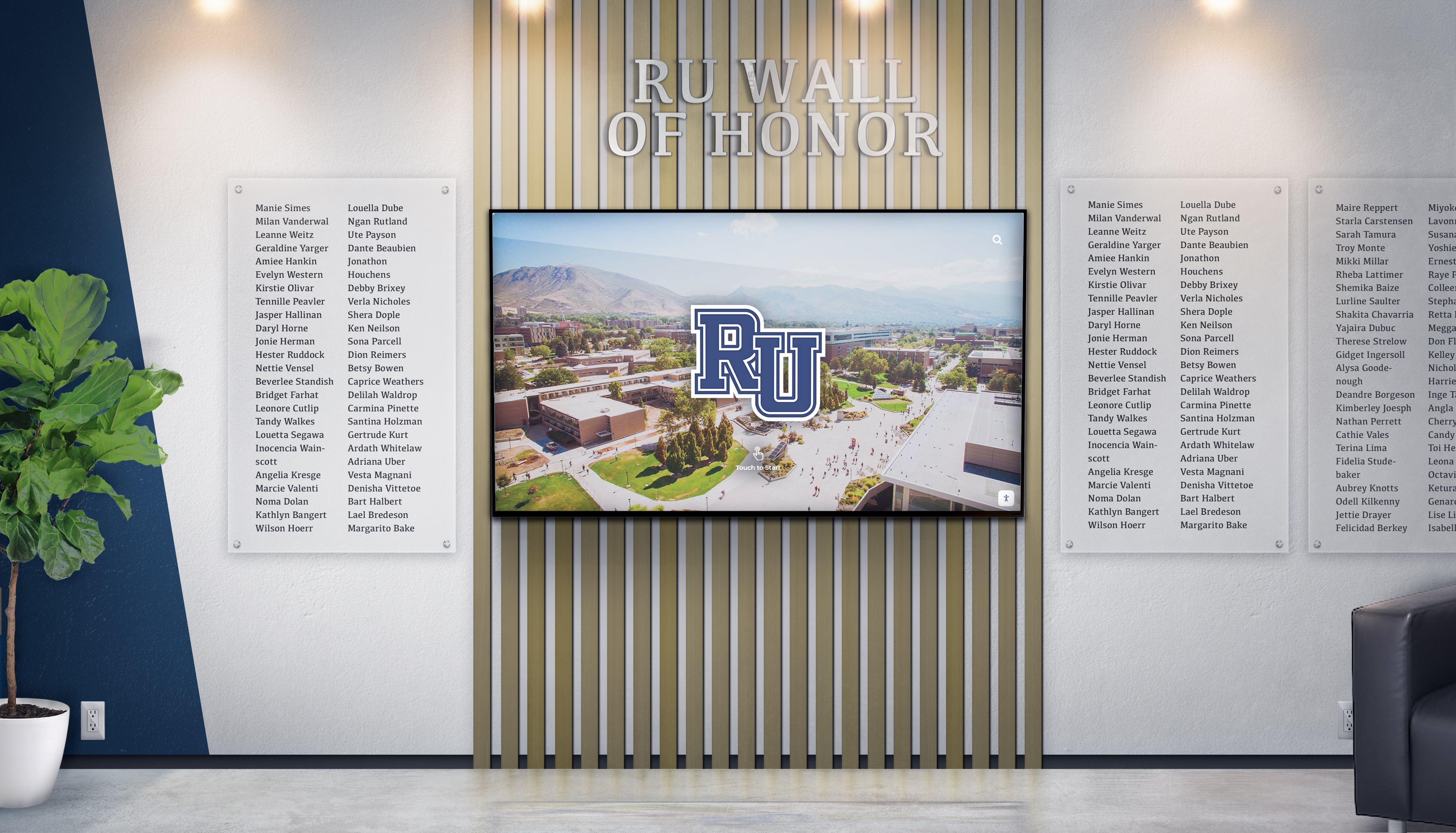
Well-designed recognition systems celebrate diverse student achievement across all demographics and programs demonstrating institutional commitment to inclusive excellence
Conclusion: Building Cultures of Comprehensive Excellence Through NHS Recognition
National Honor Society recognition programs represent strategic institutional investments in student motivation, comprehensive character development, and educational mission fulfillment beyond test scores and graduation rates. When schools systematically celebrate NHS membership through professional recognition displays, comprehensive member profiles, meaningful ceremonies, and strategic multi-channel promotion, they create environments where scholarship, leadership, service, and character become aspirational, celebrated, and central to student identity and school culture.
The strategies explored in this guide provide complete frameworks for building recognition systems that honor NHS achievement while remaining administratively sustainable, financially realistic, and aligned with educational goals promoting comprehensive student development. From digital platforms eliminating space constraints to interactive systems creating engaging exploration to web accessibility extending recognition impact globally, these approaches transform occasional induction ceremonies into systematic celebration woven throughout school culture and community consciousness.
Ready to transform how your school celebrates National Honor Society achievement? Modern recognition solutions help schools honor comprehensive excellence while inspiring continued student success across all four pillars. Solutions like Rocket Alumni Solutions provide comprehensive platforms specifically designed for educational recognition, offering unlimited capacity, rich multimedia profiles celebrating scholarship, leadership, service, and character, interactive exploration capabilities, and web accessibility extending recognition impact far beyond traditional printed certificates and bulletin boards.
Whether establishing your first comprehensive NHS recognition program or modernizing existing approaches that feel dated or inadequate, start with clear planning establishing strong foundations, involve diverse stakeholders building organizational support, select technology matching your needs and resources, develop engaging content celebrating individual achievements comprehensively, and implement systematic processes ensuring long-term sustainability through leadership transitions and budget fluctuations.
Your National Honor Society members deserve recognition that appropriately honors their comprehensive achievements across scholarship, leadership, service, and character while inspiring peers to pursue similar excellence through rigorous academics, meaningful community engagement, and ethical conduct. With thoughtful planning, appropriate investment, and consistent implementation, you can create recognition systems that celebrate the complete student as prominently as any achievement in your school community—building cultures where comprehensive excellence becomes aspirational rather than intimidating.
The most important elements aren’t budget size, facility quality, or technology sophistication—they’re genuine institutional commitment to comprehensive student development, systematic implementation ensuring consistent execution year after year, and sustained effort making recognition central to school culture rather than peripheral acknowledgment competing for attention and resources. Your NHS students invest thousands of hours developing academic skills, leading organizations, serving communities, and building character; investing appropriately in their recognition represents not just appropriate acknowledgment but strategic investment in school culture benefiting students for generations to come.
Start planning your National Honor Society recognition program today, and create the comprehensive excellence culture your students deserve. Explore additional approaches through digital hall of fame implementation guides or discover student achievement celebration strategies to begin your recognition transformation journey building cultures where scholarship, leadership, service, and character receive the celebration they truly deserve.