



Middle school fundraising presents unique challenges that differ from elementary and high school programs. Students at this age are developing independence but still need adult guidance, families are juggling multiple commitments across siblings’ activities, and schools compete for limited discretionary spending from increasingly stretched household budgets. Yet successful middle school fundraising campaigns can generate tens of thousands of dollars annually while building community connections, developing student leadership skills, and funding programs that transform educational experiences.
The difference between fundraisers that barely cover costs and those generating substantial net revenue lies in strategic planning rather than lucky timing. Schools implementing proven fundraising models combined with thoughtful donor recognition create sustainable revenue streams that grow year after year through increased participation, expanded sponsorship, and deepened community commitment.
This comprehensive guide explores middle school fundraising ideas specifically designed for students ages 11-14, their families, and school communities. From traditional product sales and modern giving campaigns to athletic events and creative community programs—these strategies include practical implementation frameworks, volunteer coordination approaches, sponsor engagement tactics, and recognition systems that honor supporters not just during fundraising drives but throughout the year, building lasting relationships that sustain programs across generations.
Effective middle school fundraising serves multiple strategic purposes beyond generating immediate revenue. Well-designed campaigns build school spirit, strengthen community connections, develop student leadership and responsibility, provide real-world learning experiences in marketing and finance, create volunteer opportunities for families, and establish philanthropic habits that students carry throughout their lives.

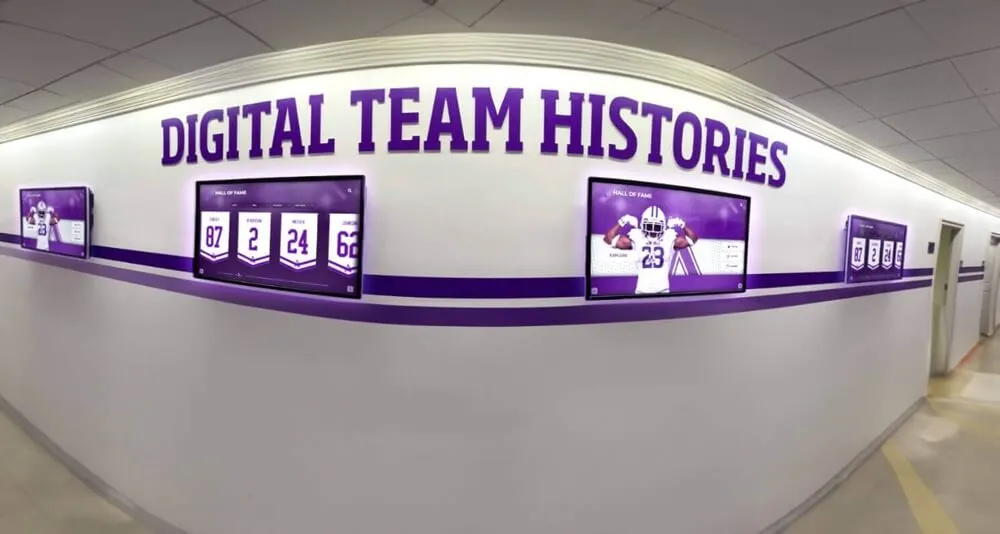
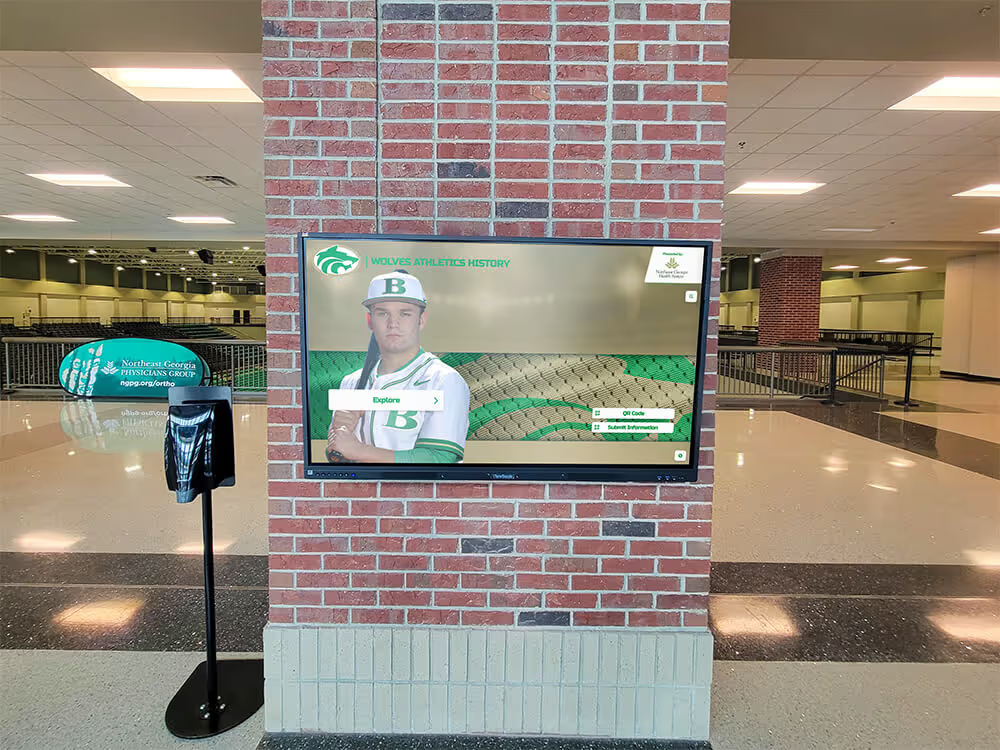
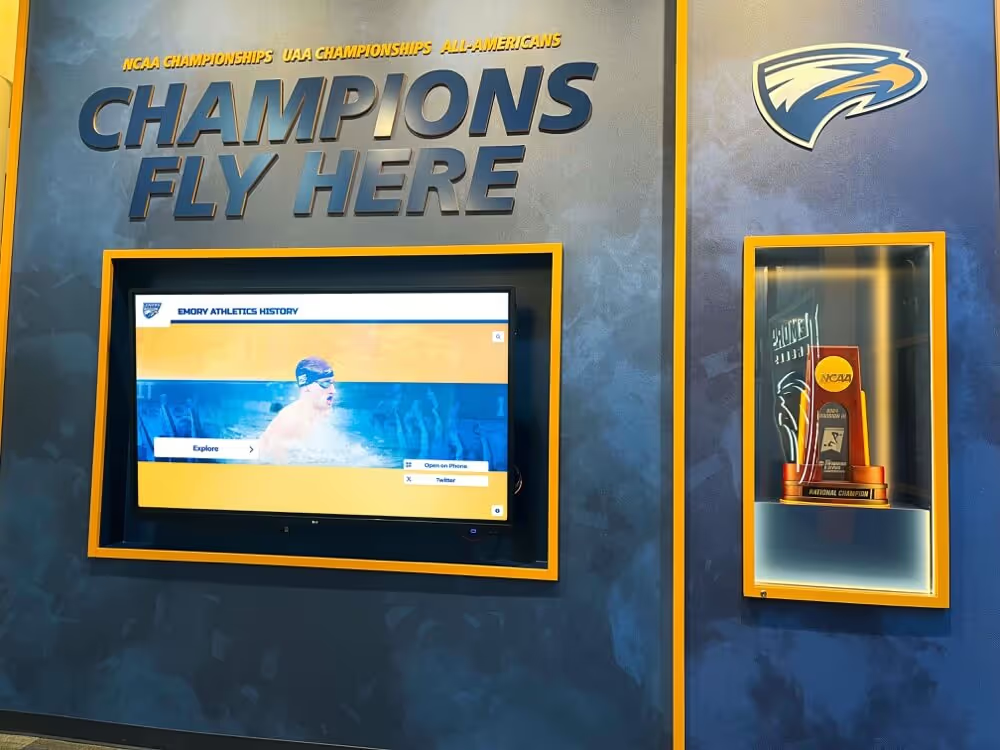
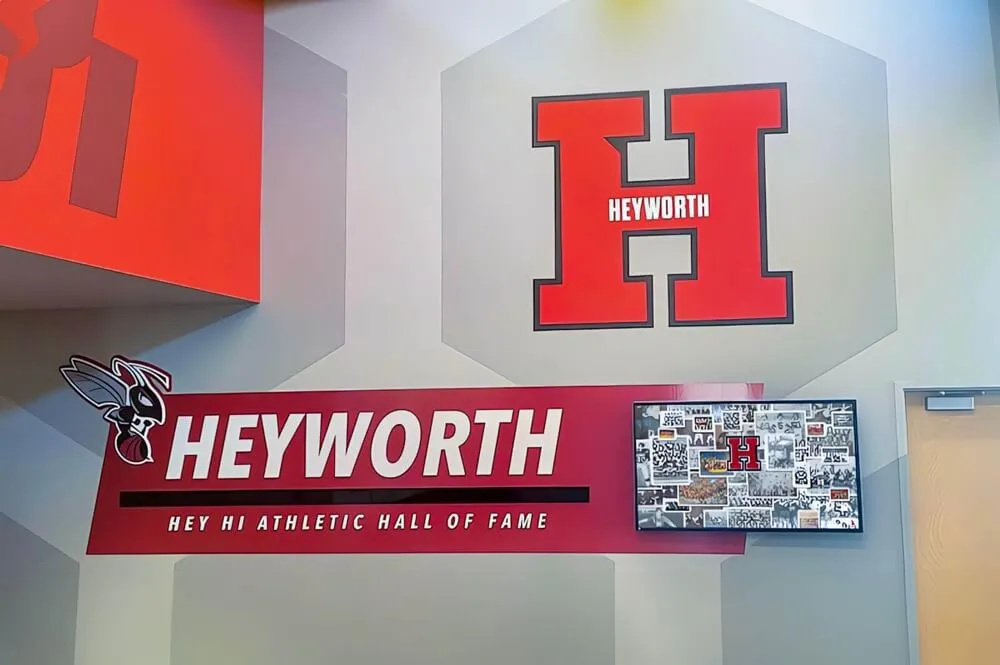
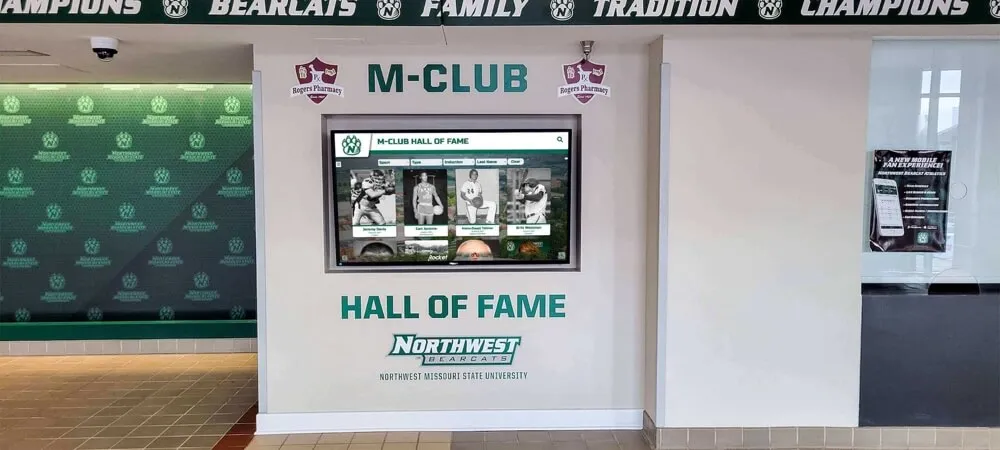
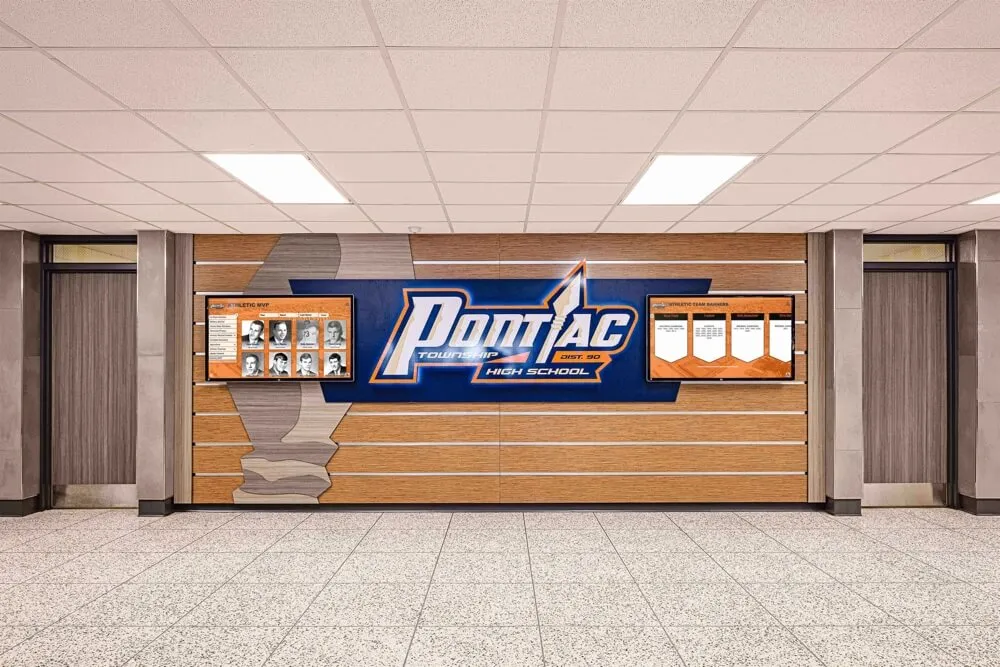
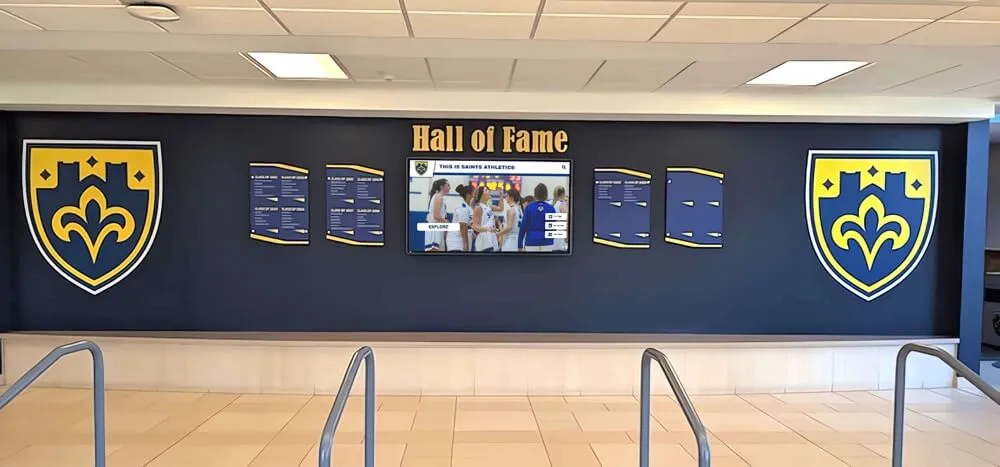
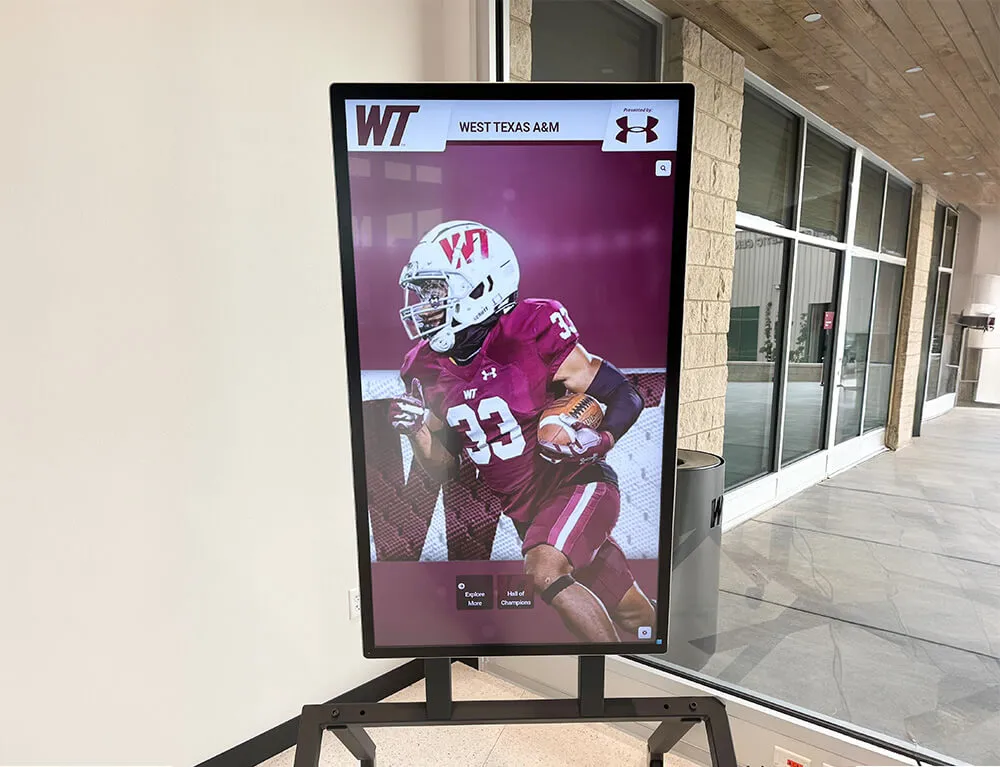
Recognition displays celebrate fundraising supporters year-round, building lasting community connections that strengthen future campaigns
Program Snapshot: Middle School Fundraising Framework
Understanding the complete fundraising ecosystem helps schools implement comprehensive approaches that maximize both immediate revenue and long-term relationship building.
| Program Element | Description | Recognition Opportunities |
|---|---|---|
| Product Sales | Traditional fundraisers selling cookie dough, wrapping paper, discount cards, or merchandise | Top sellers, participation milestones, family team achievements, grade-level competitions |
| Event Fundraisers | Fun runs, walk-a-thons, talent shows, carnivals, dances, athletic tournaments | Event participants, volunteer organizers, corporate sponsors, major donors, recurring supporters |
| Direct Giving | Annual fund campaigns, giving days, online crowdfunding, capital campaigns | Donor societies by giving level, recurring donor clubs, memorial gifts, legacy supporters |
| School Stores | Spirit wear sales, student-run shops, concession stands, school supplies | Student entrepreneurs, regular customers, product donors, operational volunteers |
| Service Fundraisers | Car washes, yard work services, babysitting nights, pet-sitting programs | Service participants, community clients, organizational volunteers, sponsor supporters |
| Sponsor Programs | Corporate partnerships, local business support, parent employer matching | Title sponsors, platinum partners, in-kind donors, multi-year commitments, matching gift companies |
Proven Middle School Fundraising Ideas by Category
Different fundraising approaches attract varied participants and serve distinct school needs—selecting strategies aligned with your community, student capabilities, and volunteer capacity ensures success.
Traditional Product Sales Fundraisers
Classic fundraising models that remain effective when implemented strategically:
Cookie Dough, Food, and Snack Sales
Product fundraisers offering consumable items families use regularly:
Popular Product Categories
- Cookie dough delivering high profit margins (40-50% typically)
- Frozen food products like pizza, pasta, and appetizers
- Gourmet popcorn, nuts, and snack assortments
- Coffee, tea, and specialty beverage products
- Candy and chocolate bars for immediate sales
- Fresh fruit and vegetable boxes with local suppliers
- Restaurant-quality meals supporting family dinner needs
According to school fundraising data, food product sales generate $15-40 per student participant on average, with top sellers often reaching $300-500 in individual sales through systematic family, friend, and workplace outreach.
Implementing Successful Product Sales
Strategic approaches maximizing participation and revenue:
- Kick-off assemblies building excitement and explaining programs
- Clear sales period timelines (typically 2-3 weeks optimal)
- Student goal-setting encouraging individual targets
- Classroom or grade-level competitions fostering team motivation
- Parent communication tools including sample scripts and emails
- Workplace sales strategies helping students reach beyond family
- Online ordering options accommodating busy schedules
- Prize programs motivating participation through incentive tiers
- Safe delivery systems ensuring product distribution security
Schools report that product fundraisers with robust student training, parent support materials, and recognition for participation achieve 60-75% student involvement compared to 35-45% for programs providing minimal organizational support.
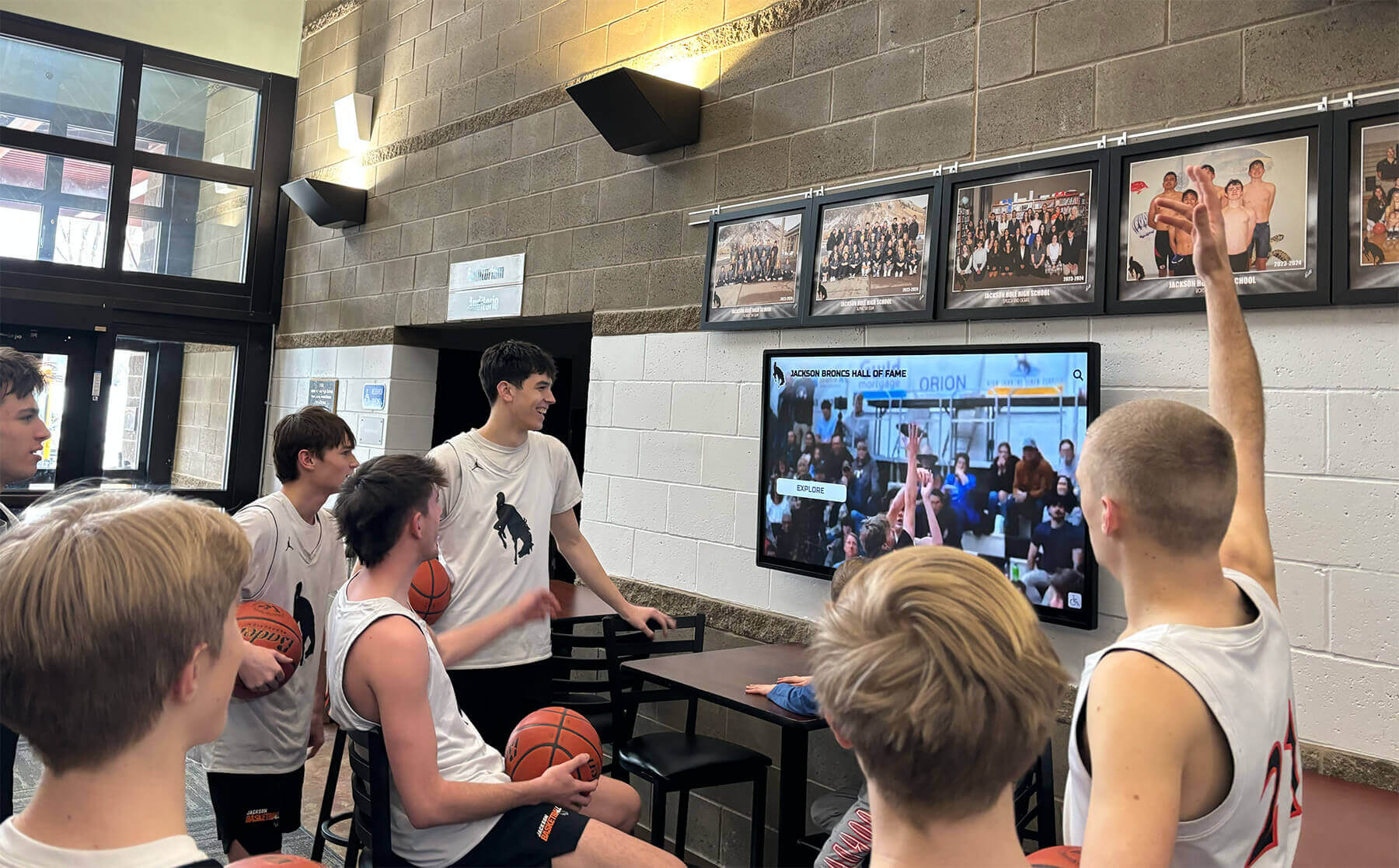
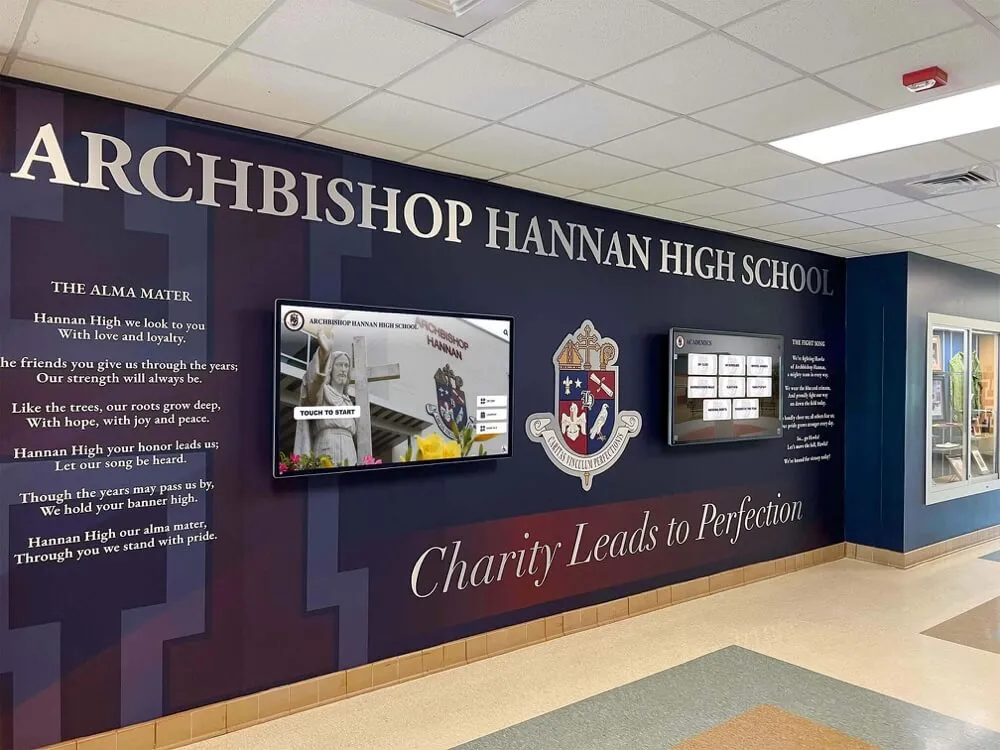
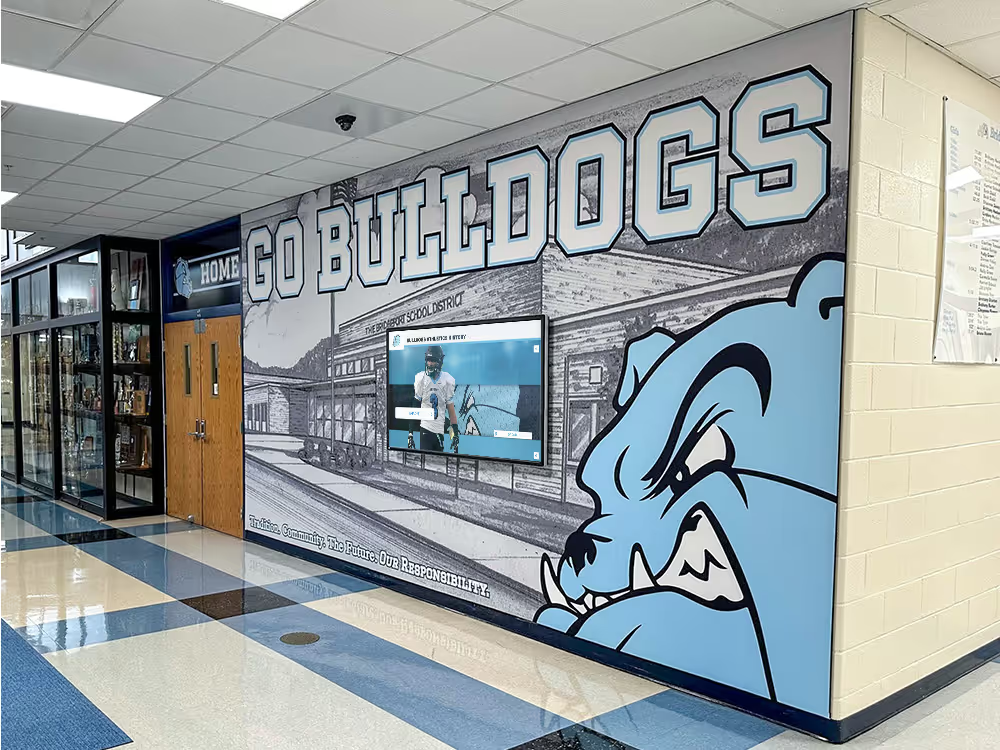
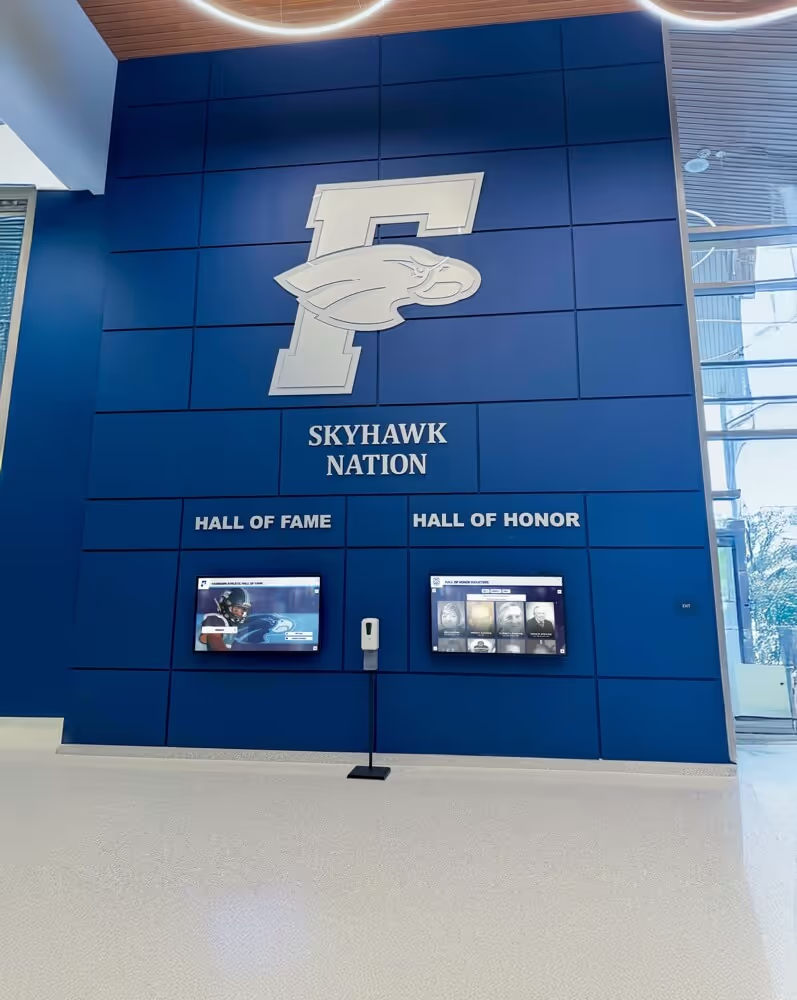
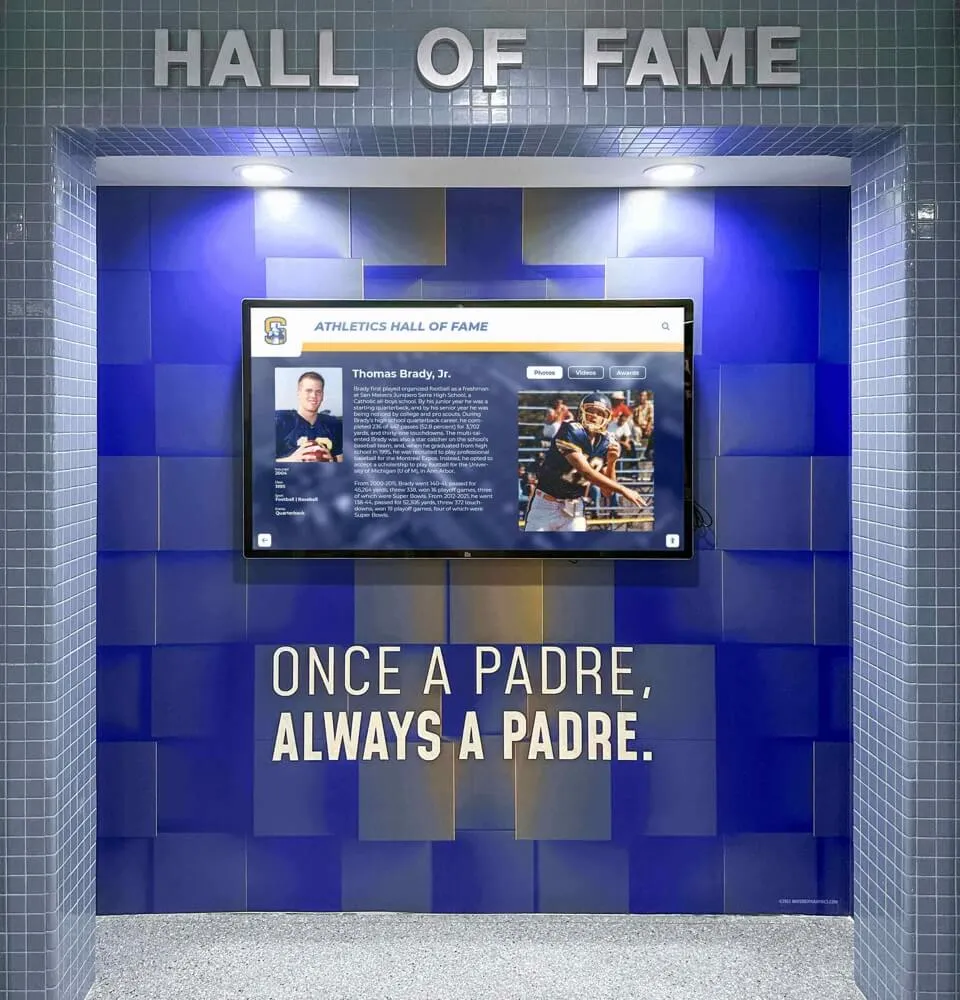
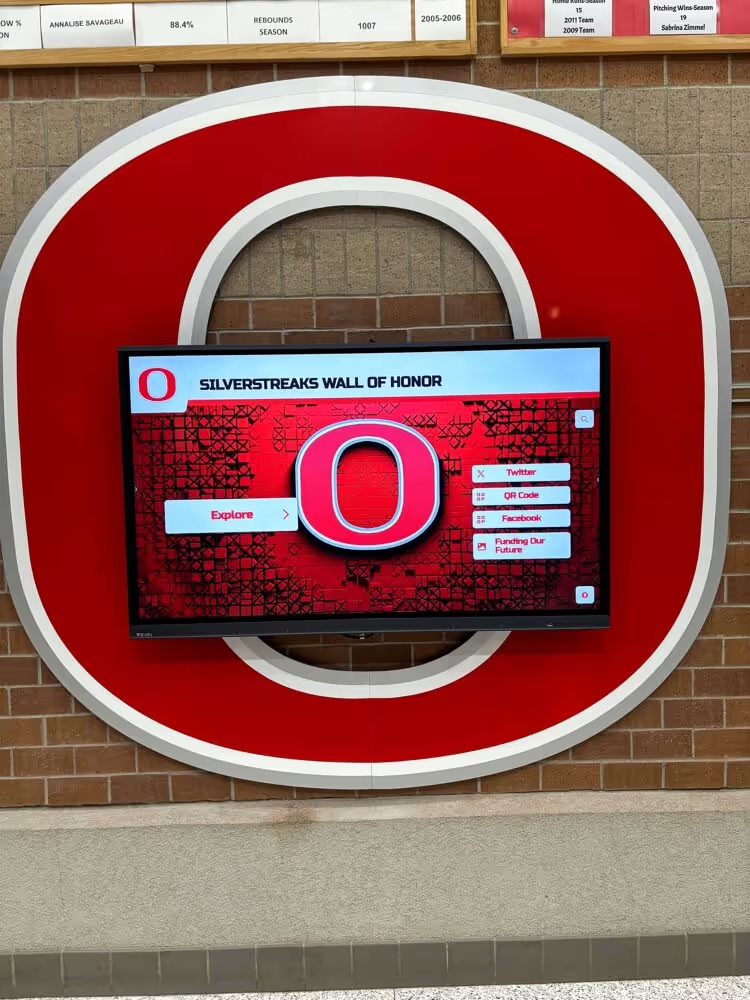
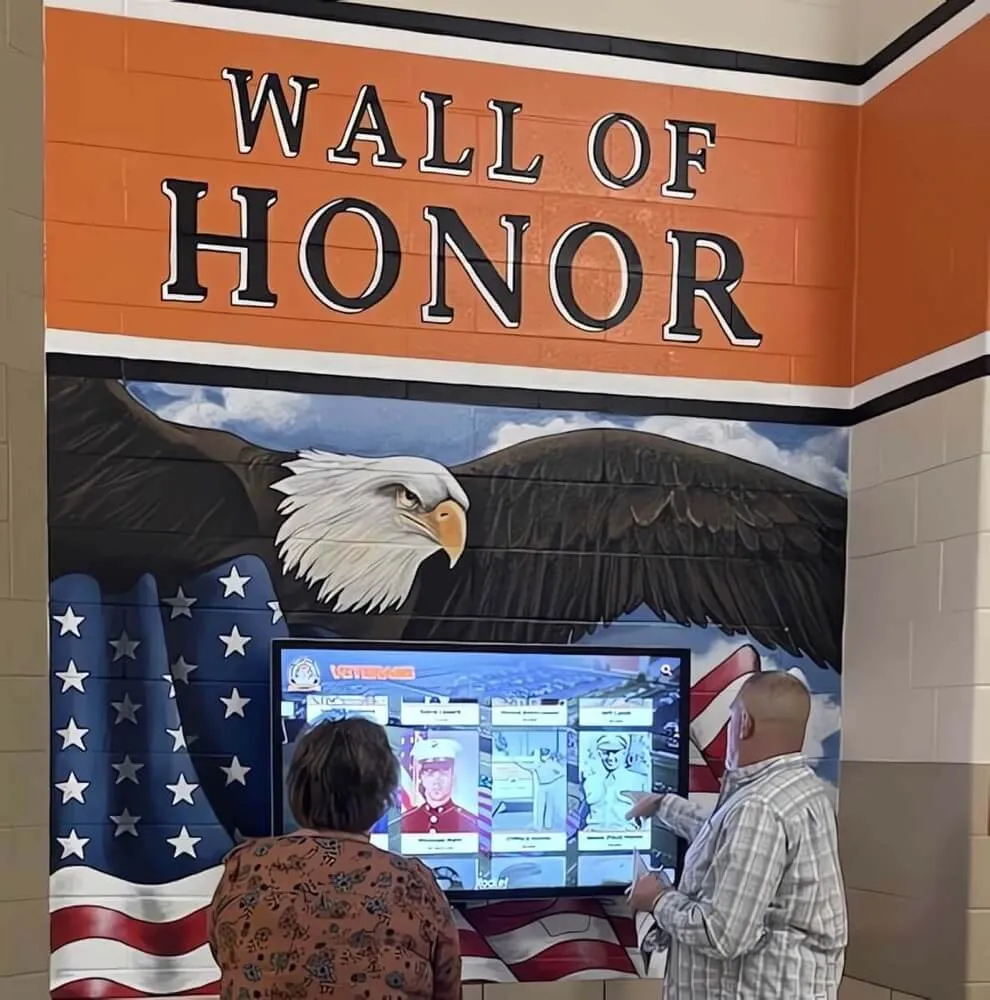
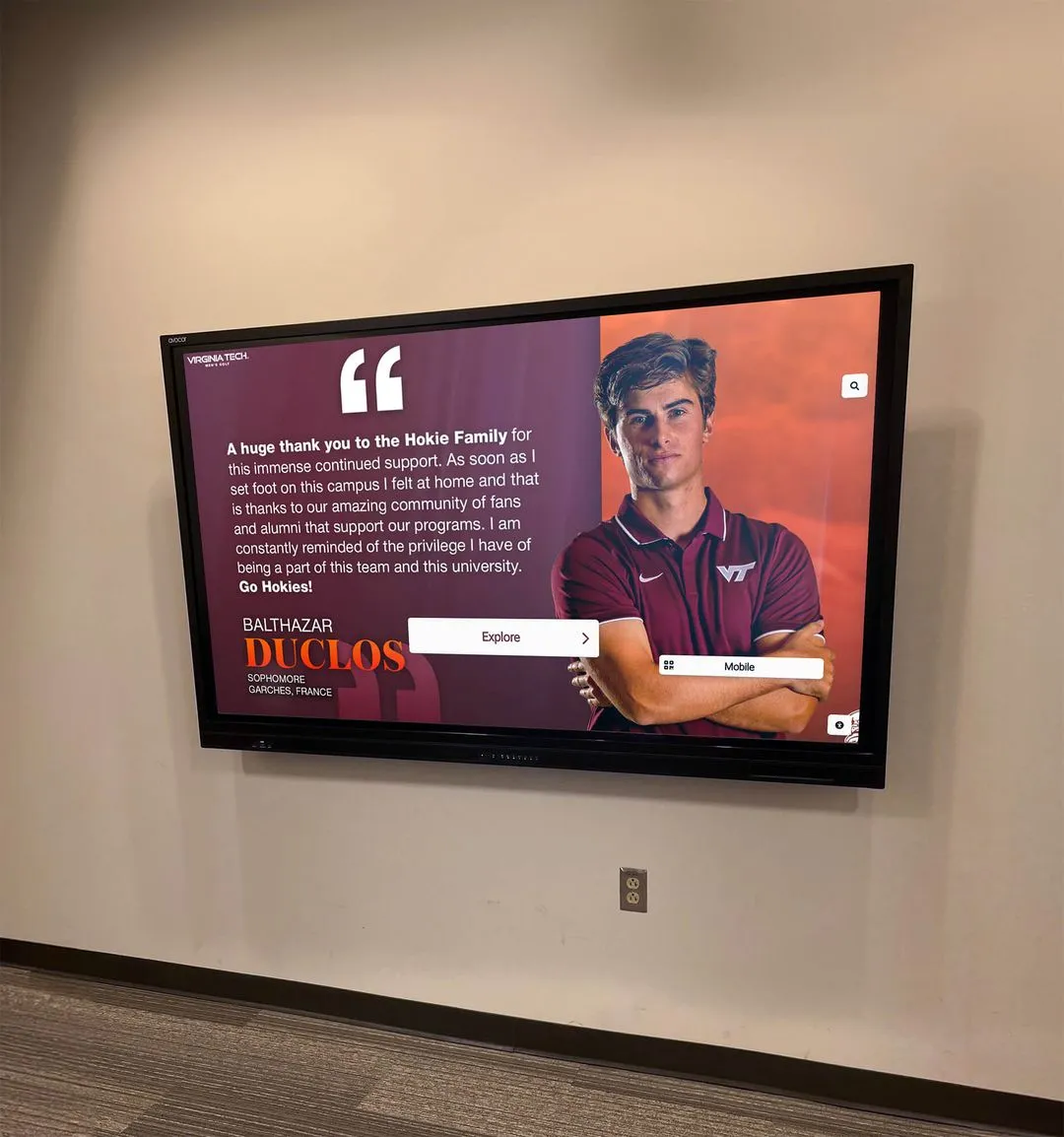
Digital displays celebrate fundraising achievements while motivating future participation through visible recognition
Discount Card and Coupon Book Sales
Community partnerships creating ongoing value for buyers:
Program Structure Elements
- Local business participation offering discounts or buy-one-get-one deals
- Restaurant discounts providing dining savings throughout the year
- Service provider offers from car washes, oil changes, pet grooming
- Entertainment discounts for movies, bowling, attractions
- Retail savings from local shops and boutiques
- Digital card options accessible via smartphone apps
- Multi-year value encouraging card retention and reuse
Discount card programs typically offer 50-60% profit margins with cards priced $10-20, generating $8-15 per participating student. Programs succeed when discount values clearly exceed card costs, creating obvious value propositions for buyers.
Learn about comprehensive booster club fundraising strategies applicable to middle school programs.
Spirit Wear and Merchandise Sales
School-branded products building pride while generating revenue:
- T-shirts, hoodies, and athletic wear with school logos
- Water bottles, lunchboxes, and backpacks
- Tech accessories like phone cases and laptop stickers
- Seasonal items like scarves, beanies, and blankets
- Student-designed products showcasing creativity
- Limited edition items creating urgency and exclusivity
- Online stores operating year-round beyond single campaigns
Spirit wear fundraisers excel when products reflect genuine student preferences rather than adult assumptions about what kids want. Involving students in design selection and product choices dramatically improves sales results.
Active Participation Fundraising Events
Event-based fundraisers creating memorable experiences while raising funds:
Fun Runs and Walk-a-Thons
Popular active fundraisers suitable for all fitness levels:
Event Planning Framework
Successful participation events include:
Pre-Event Phase (6-8 weeks)
- Establish fundraising goals and per-student targets
- Recruit volunteer event committee and day-of support
- Secure sponsors providing financial support and in-kind donations
- Create online fundraising pages for participant sharing
- Develop promotional materials and school-wide communications
- Organize course logistics including safety and permits
- Plan entertainment, music, and celebratory atmosphere
Fundraising Period (3-4 weeks)
- Launch with assembly explaining program and demonstrating online tools
- Provide students with fundraising goal-setting worksheets
- Share family communication templates and sample emails
- Enable workplace outreach through parent networks
- Create competition elements between grades or advisory groups
- Celebrate daily progress through announcements and updates
- Recognize milestone achievers building momentum
Event Day Execution
- Registration check-in with participant materials
- Warm-up activities and opening ceremonies
- Race or walk with music, encouragement, and course monitors
- Post-event celebration with refreshments and activities
- Award recognition for top fundraisers and participants
- Photo opportunities and social media sharing
- Immediate thank-you communications
Middle schools commonly generate $15,000-$50,000 from well-organized fun run events with 200-400 participants, depending on community size and fundraising support systems.
Explore detailed strategies for annual 5K fundraiser recognition programs that celebrate participants year after year.
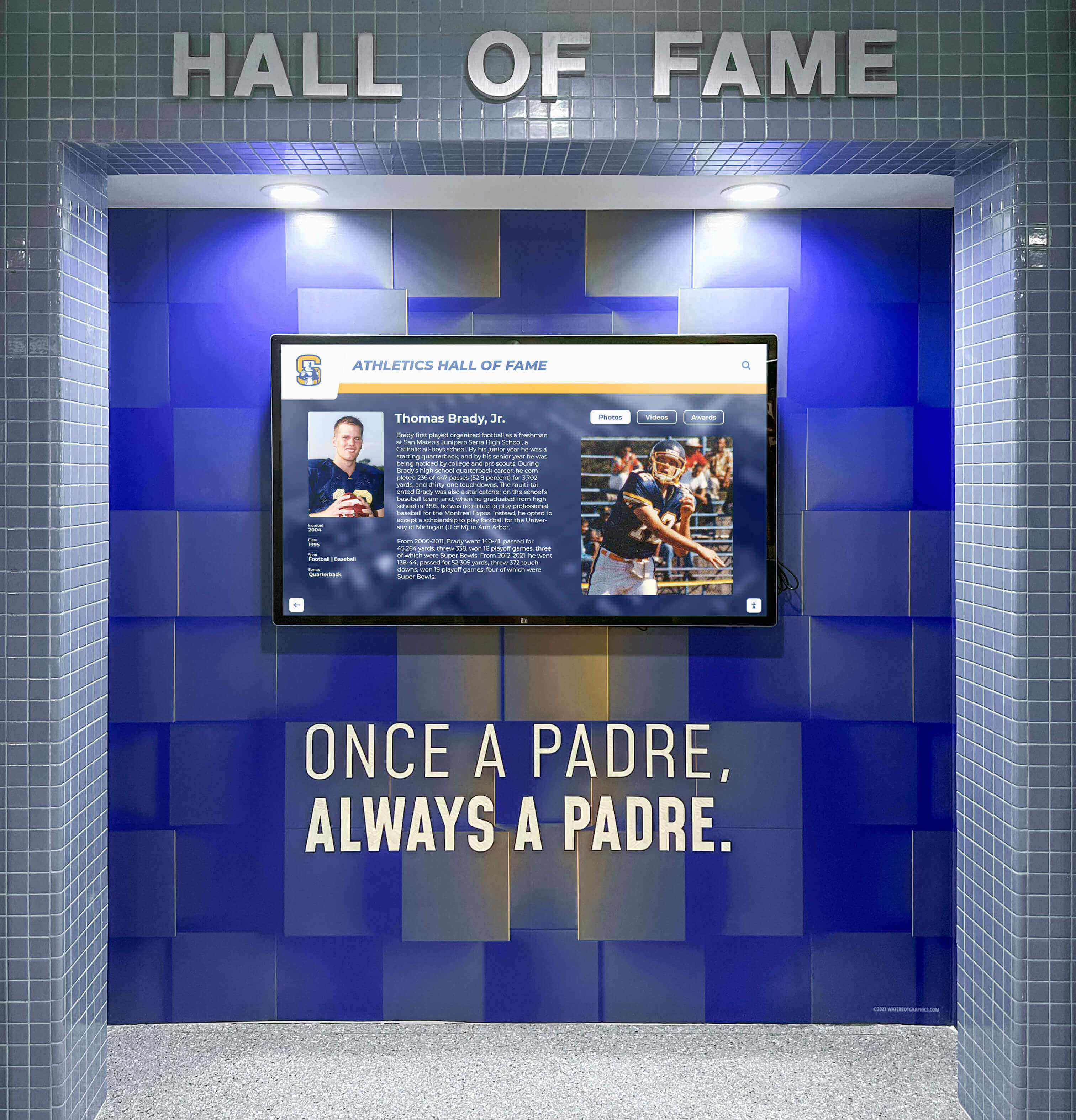
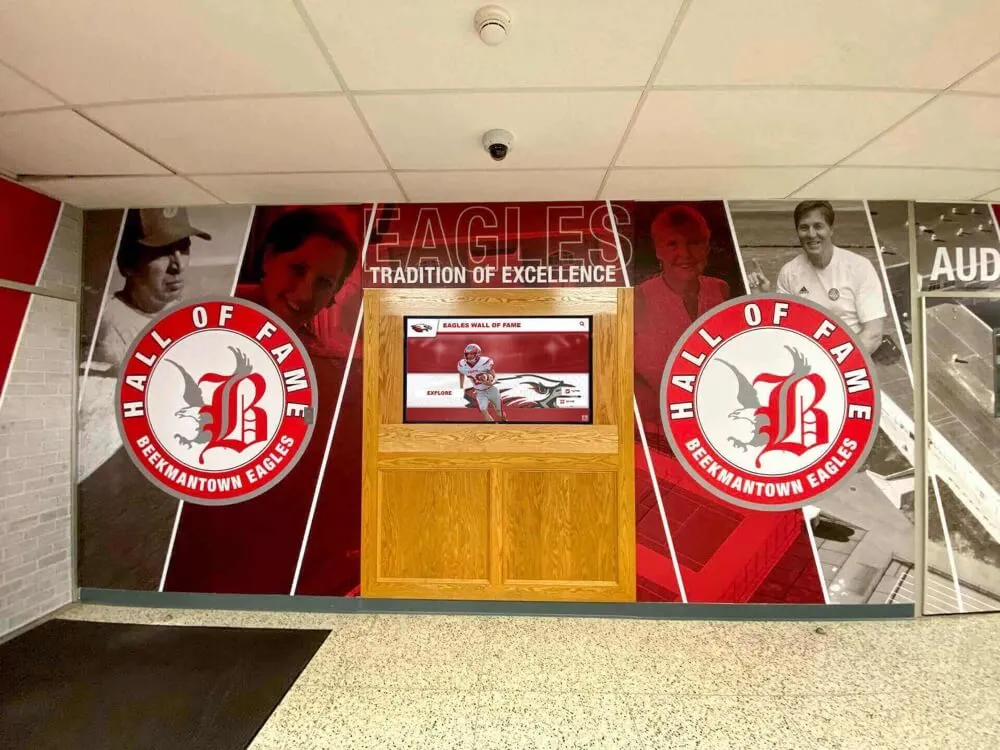
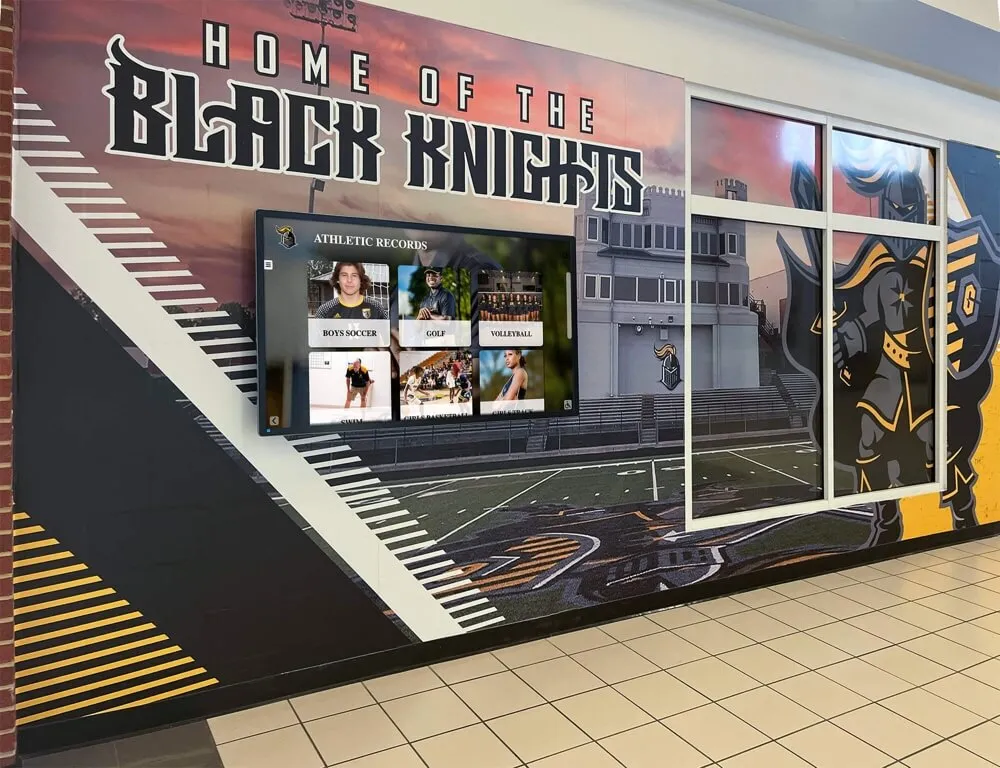
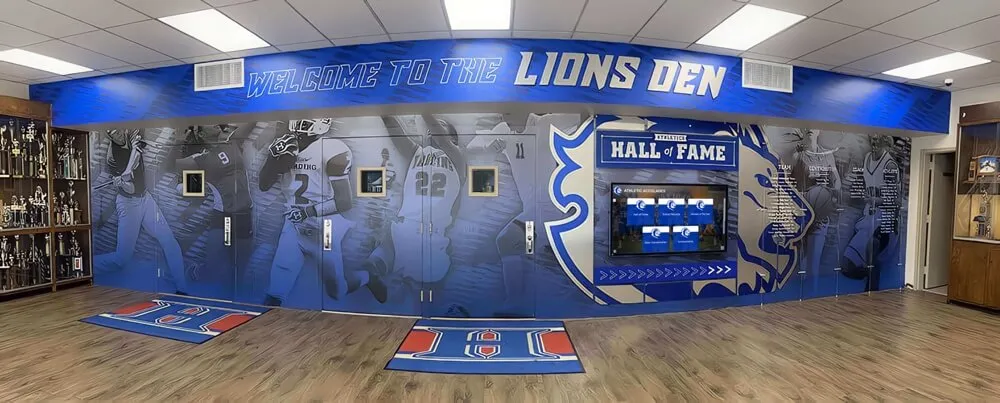
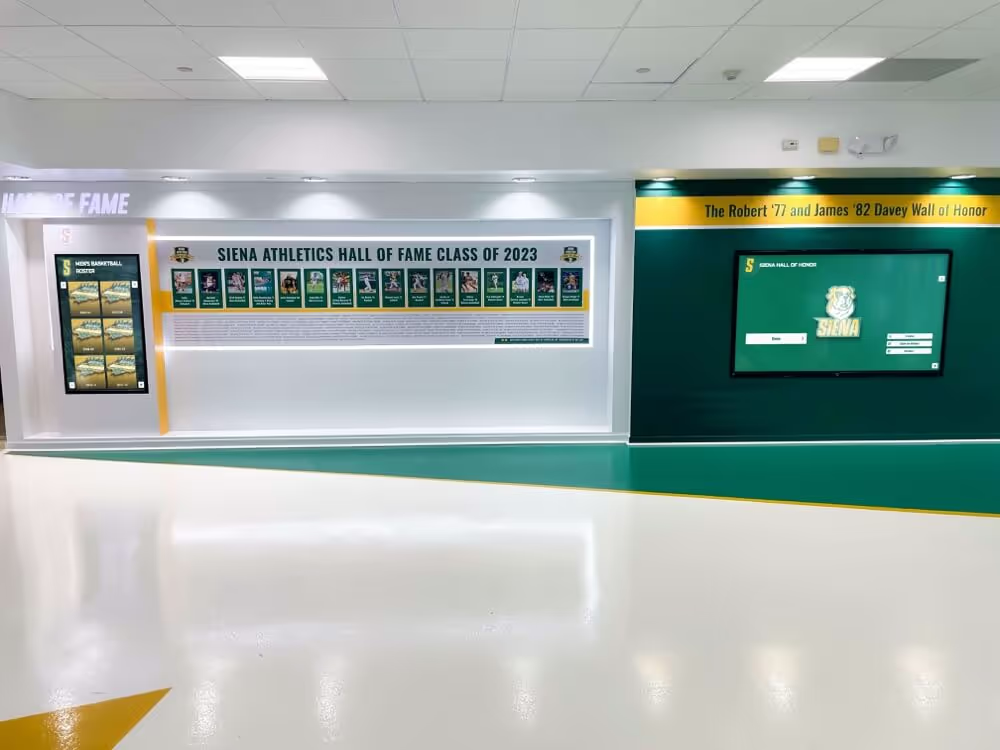
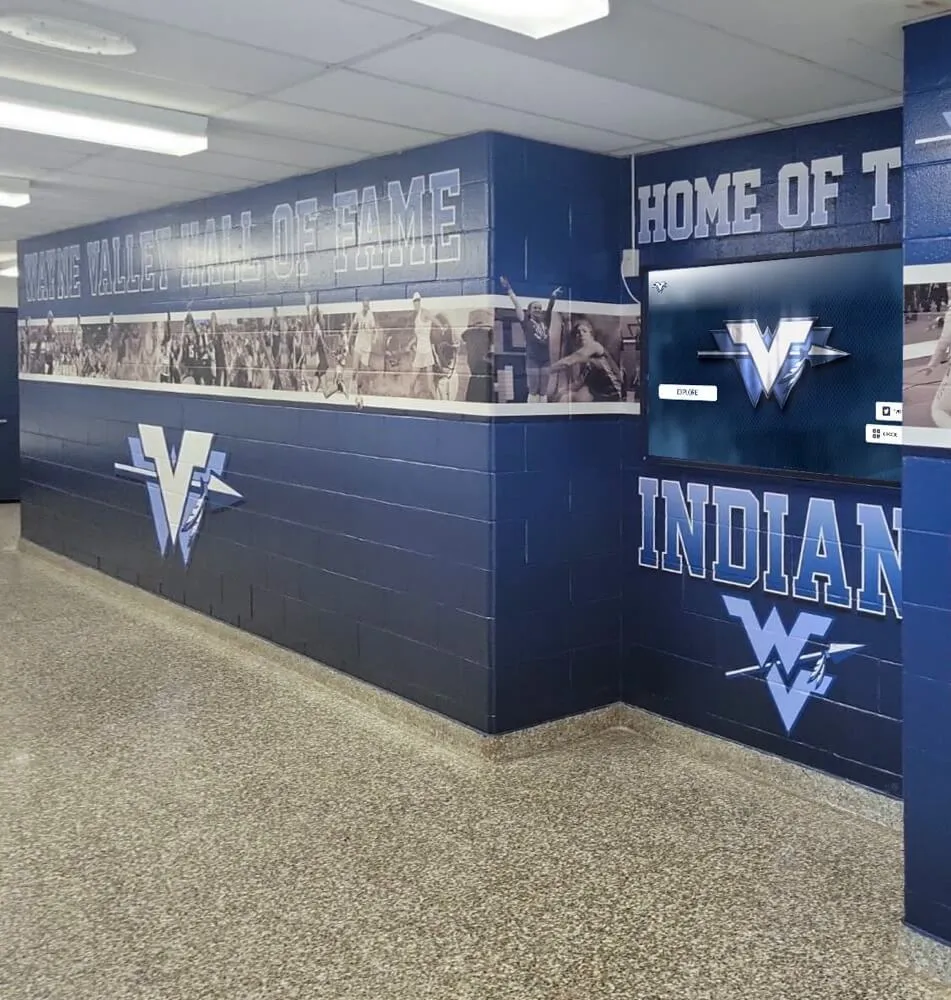
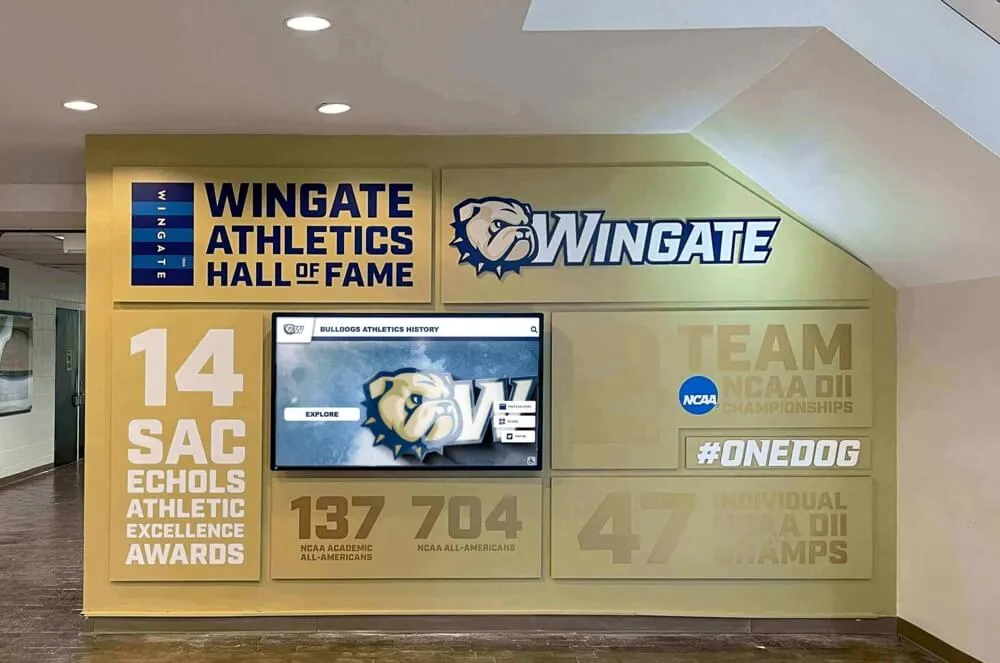
Permanent recognition displays honor event supporters and fundraising achievements throughout the year
Read-a-Thons and Academic Fundraisers
Literacy-focused events aligning fundraising with educational goals:
Program Implementation
Academic fundraisers typically include:
- Student reading goal commitments (books or minutes read)
- Sponsor pledges per book completed or flat donations
- Reading log tracking with parent verification
- Classroom reading competitions fostering engagement
- Author visit incentives or library program funding goals
- Book fair integration combining fundraising with literacy promotion
- Recognition for reading achievement independent of fundraising
Read-a-thons uniquely position fundraising as supporting rather than distracting from academic mission, generating positive community response while encouraging valuable literacy habits.
Sports Tournaments and Athletic Events
Competition-based fundraisers engaging active students and families:
- Basketball free-throw competitions with pledge support
- Dodgeball tournaments with team entry fees
- Kickball or softball games with student/staff challenges
- Volleyball or pickle-ball round-robin events
- Gaming tournaments for video game enthusiasts
- Field day style events with multiple activities
- Faculty versus student competition matches
Athletic fundraisers work particularly well at middle schools where organized sports remain accessible to diverse skill levels and students enjoy friendly competition without high-stakes pressure.
Direct Giving and Online Fundraising Campaigns
Modern digital approaches expanding donor reach:
Annual Fund Campaigns
Systematic giving programs requesting direct financial support:
Campaign Structure Elements
Effective annual funds include:
Communication Strategy
- Multi-channel outreach through email, social media, printed materials
- Clear case statement explaining funding priorities and impact
- Specific giving level suggestions with tangible project connections
- Parent leadership involvement encouraging peer-to-peer solicitation
- Matching gift promotions from corporate sponsors
- Deadline urgency creating action motivation
- Progress thermometer showing campaign advancement toward goals
Recognition Framework
- Donor society naming with recognition tiers ($50, $100, $250, $500, $1,000+)
- Public acknowledgment in school communications and facilities
- Digital displays featuring donor recognition year-round
- Exclusive communications providing behind-scenes updates
- Student-created thank-you cards personalizing appreciation
- Impact reporting showing how funds support programs
- Multi-year recognition celebrating sustained giving
Research demonstrates that schools implementing systematic donor recognition achieve 35-50% higher year-over-year donor retention compared to those providing minimal acknowledgment, directly increasing fundraising revenue through repeat contributions.
Discover comprehensive donor recognition strategies for schools that strengthen giving programs.
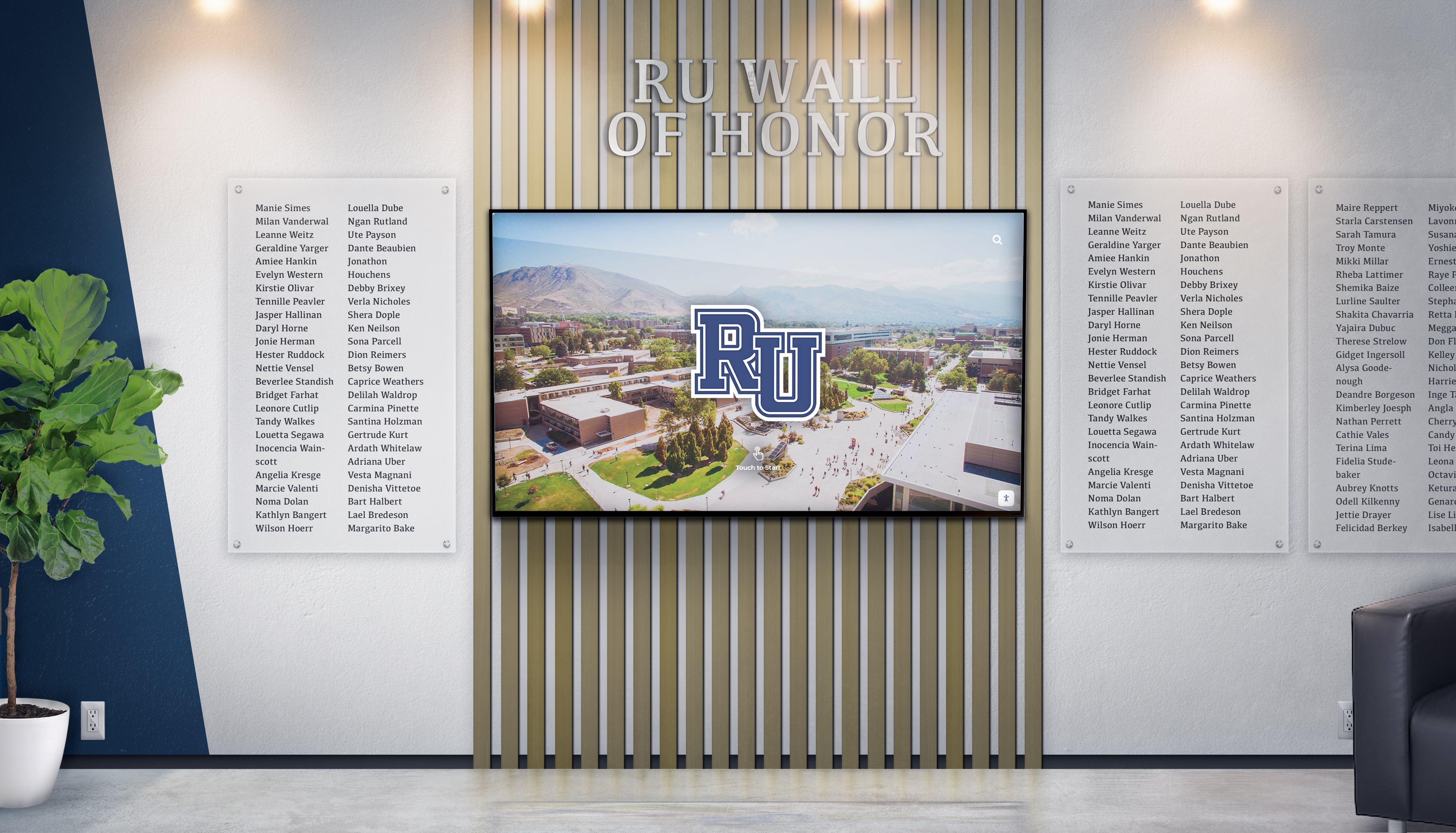
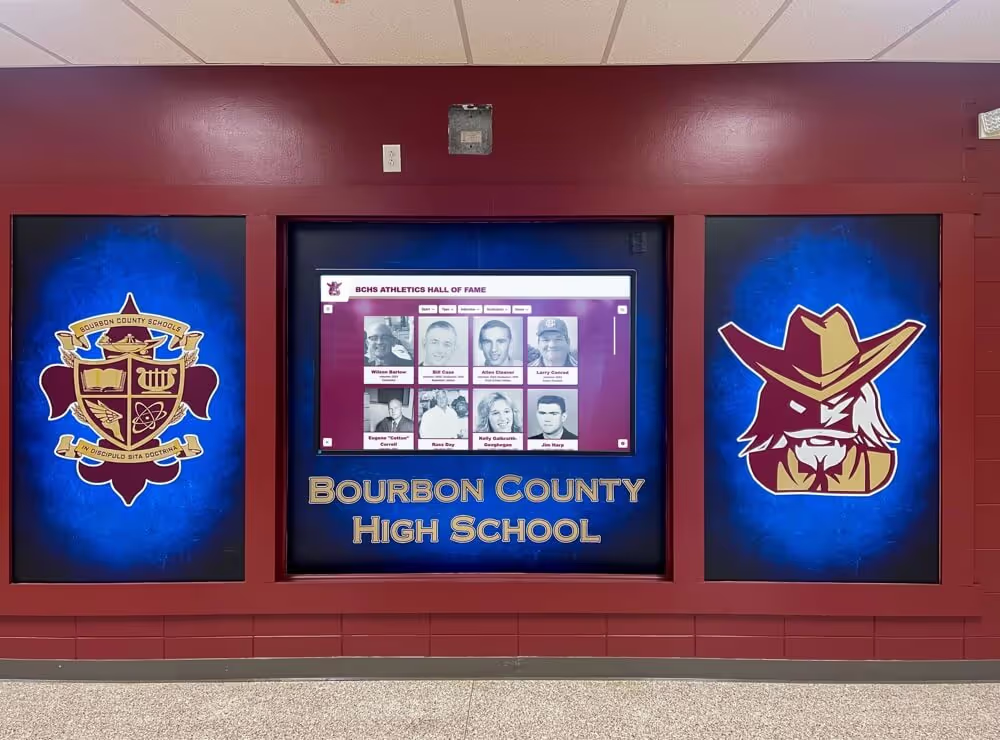
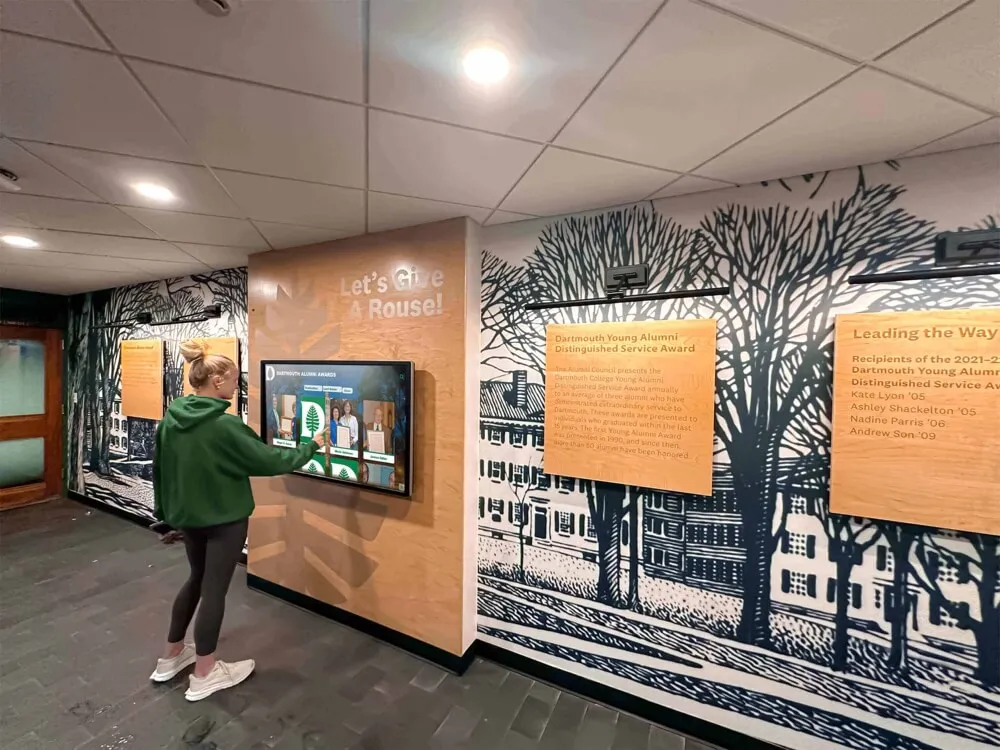
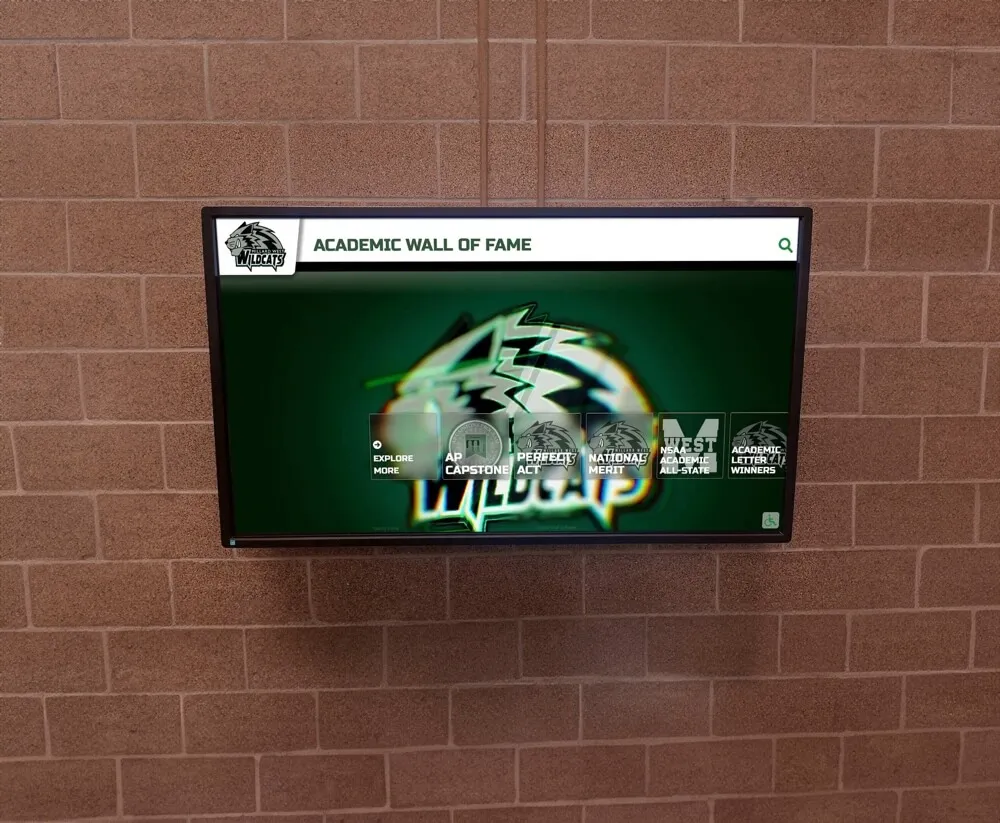
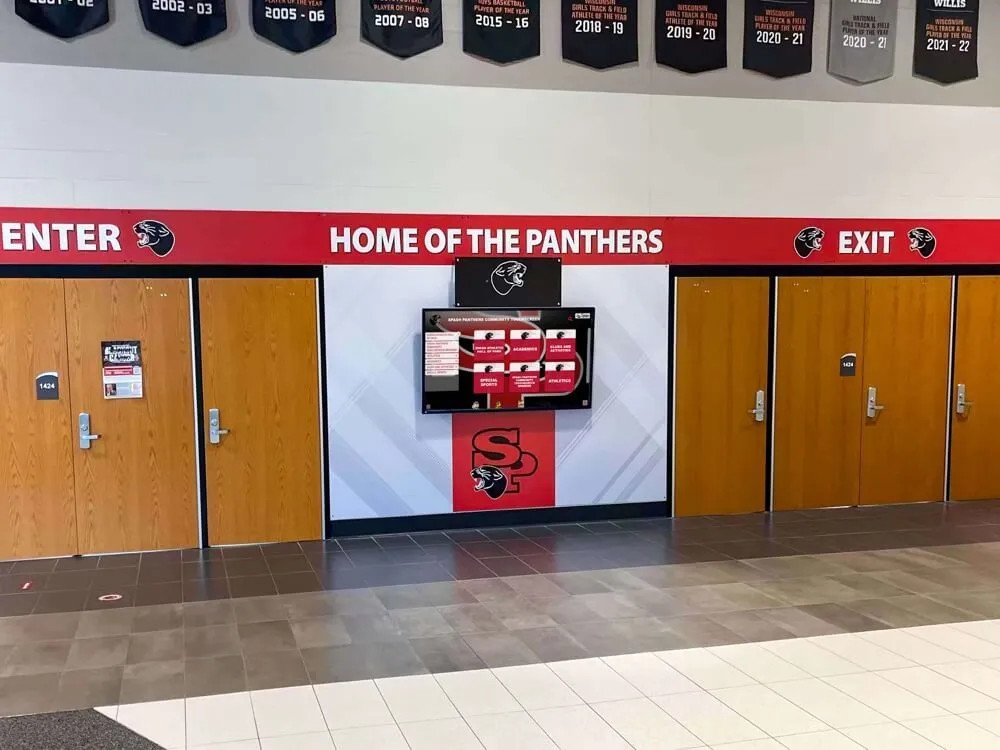
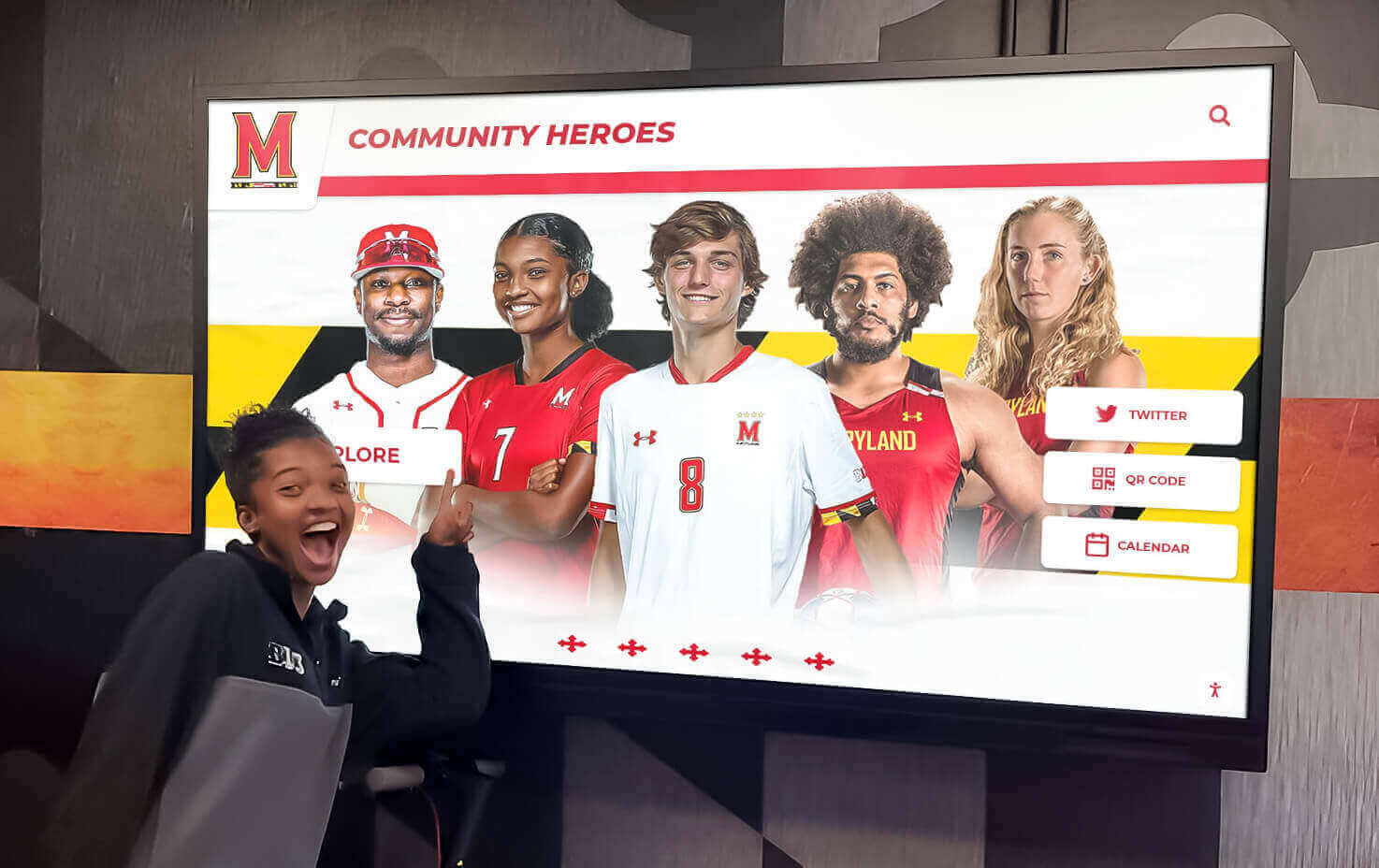
Digital donor walls celebrate all contribution levels while creating aspirational environments encouraging increased giving
Giving Days and Flash Campaigns
Concentrated 24-48 hour fundraising drives creating urgency:
Campaign Success Factors
Effective giving days require:
- Advance promotion building anticipation and awareness
- Online giving platforms enabling easy mobile donations
- Real-time progress updates creating momentum and excitement
- Social media amplification encouraging viral sharing
- Matching gift incentives multiplying donor impact
- Ambassador programs engaging students, parents, and community
- Hourly challenges or mini-goals sustaining engagement
- Celebration messages thanking immediate participation
Schools commonly raise $5,000-$25,000 during focused giving day campaigns by creating urgency and simplifying participation through digital platforms accessible from any device.
Crowdfunding for Specific Projects
Campaign-based fundraising for targeted needs:
- Classroom technology upgrades or equipment purchases
- Field trip funding enabling educational experiences
- Athletic equipment or facility improvements
- Arts program instruments or supplies
- Library book collections or media resources
- STEM lab materials and project supplies
- Outdoor learning space development
Project-specific campaigns typically achieve higher participation than general operating support because donors clearly understand exactly what their contributions fund and can visualize tangible impact.
Creative and Community-Based Fundraisers
Innovative approaches generating revenue while building connections:
School Carnivals and Family Fun Nights
Festive events combining entertainment with fundraising:
Carnival Component Planning
Successful school festivals include:
Activity Stations and Games
- Game booths with tickets or pay-per-play pricing
- Inflatable attractions and obstacle courses
- Face painting and temporary tattoos
- Photo booth with props and instant prints
- Talent show or student performance stage
- Silent auction with donated items and gift baskets
- Raffle prizes including major ticket items
Food and Beverage Sales
- Concession stands selling snacks and meals
- Bake sale featuring homemade treats
- Food truck vendors sharing proceeds
- Beverage stations with specialty drinks
- Dessert competitions with tasting fees
Revenue Streams
- Admission fees or wristbands for activities
- Individual game or activity pricing
- Food and merchandise sales
- Sponsorship from local businesses
- Silent auction and raffle ticket sales
- Volunteer service hour donations
Middle schools commonly generate $3,000-$15,000 from well-organized carnivals with strong volunteer support, with revenue increasing substantially when corporate sponsorships offset major expenses.
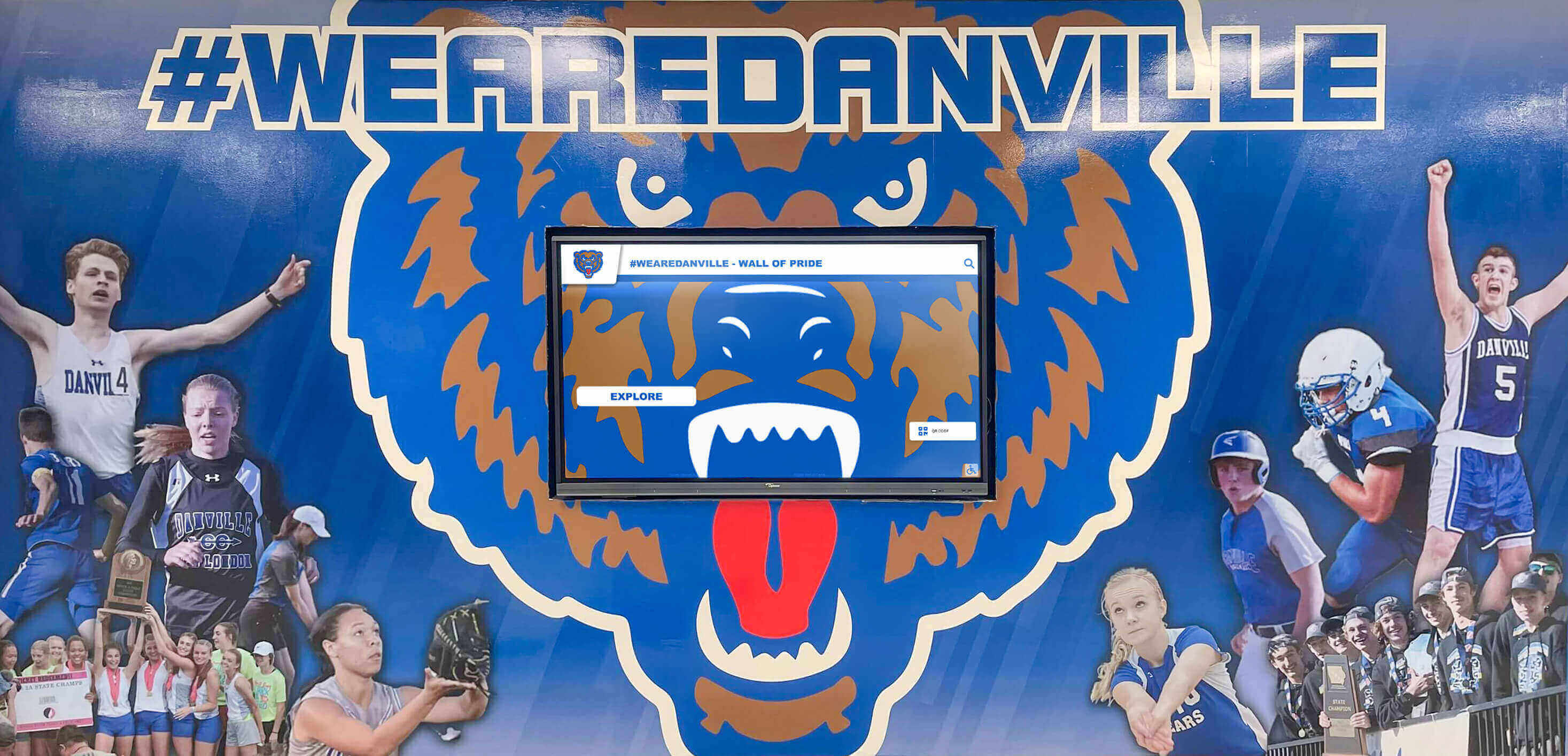
Facility displays provide year-round sponsor visibility honoring business partnerships beyond single event nights
Talent Shows and Performances
Entertainment events showcasing student abilities:
- Student auditions creating curated programs
- Admission ticket sales for audience members
- Concession sales during intermission
- Program advertisements from local businesses
- Video recording sales for family keepsakes
- Vote-for-favorite contests with donation-based voting
- After-party celebrations with additional activities
Talent shows excel at middle schools where students eagerly showcase developing skills in supportive environments while families enthusiastically attend performances featuring their children.
Service-Based Fundraisers
Student work programs generating revenue through community service:
Popular Service Models
Effective service fundraisers include:
- Community car wash days at school or sponsor locations
- Yard work services like raking, weeding, or mulching
- Parent’s night out babysitting providing date-night childcare
- Pet care services like dog walking or pet sitting
- Holiday decorating or light hanging services
- Technology help for seniors or less tech-savvy community members
- House sitting or plant watering during travel periods
Service fundraisers uniquely develop student work ethic and community responsibility while generating revenue, though they require careful adult supervision and appropriate insurance coverage.
Restaurant Partnership Nights
Easy participation events sharing restaurant proceeds:
- Restaurant donates percentage of night’s sales (typically 10-20%)
- Families dine at participating restaurant on specified date
- School promotion drives customer traffic to restaurant
- Restaurant handles all food service and logistics
- School receives check with zero upfront costs or volunteer requirements
- Multiple restaurants throughout year maintaining ongoing revenue
Restaurant nights remain consistently popular because they require minimal school organization while providing enjoyable family experiences combining dinner with fundraising support.
Explore planning successful gala fundraisers for more formal event ideas.
Online and Digital Fundraising Innovations
Technology-enabled approaches expanding participation:
Social Media Fundraising Campaigns
Digital platforms amplifying reach:
Platform Utilization Strategies
- Facebook fundraisers enabling one-click donations
- Instagram story highlights featuring campaign information
- TikTok challenges going viral with student creativity
- YouTube video appeals explaining funding needs
- Twitter/X campaigns with hashtag promotion
- LinkedIn outreach for parent professional networks
- Email marketing to school community databases
Digital campaigns succeed when content feels authentic rather than corporate, leveraging student voices and creativity to tell compelling stories about why funding matters.
Peer-to-Peer Fundraising Platforms
Technology enabling individual student campaigns:
- Personal fundraising pages for each student participant
- Social sharing tools for posting to family networks
- Progress tracking showing individual goal advancement
- Leaderboards creating friendly competition
- Mobile-optimized donation experiences
- Automated thank-you messages acknowledging gifts
- Team fundraising enabling grade or advisory group campaigns
Peer-to-peer platforms typically increase average fundraising per student by 40-60% compared to traditional offline methods by simplifying sharing and making donating incredibly convenient for busy supporters.
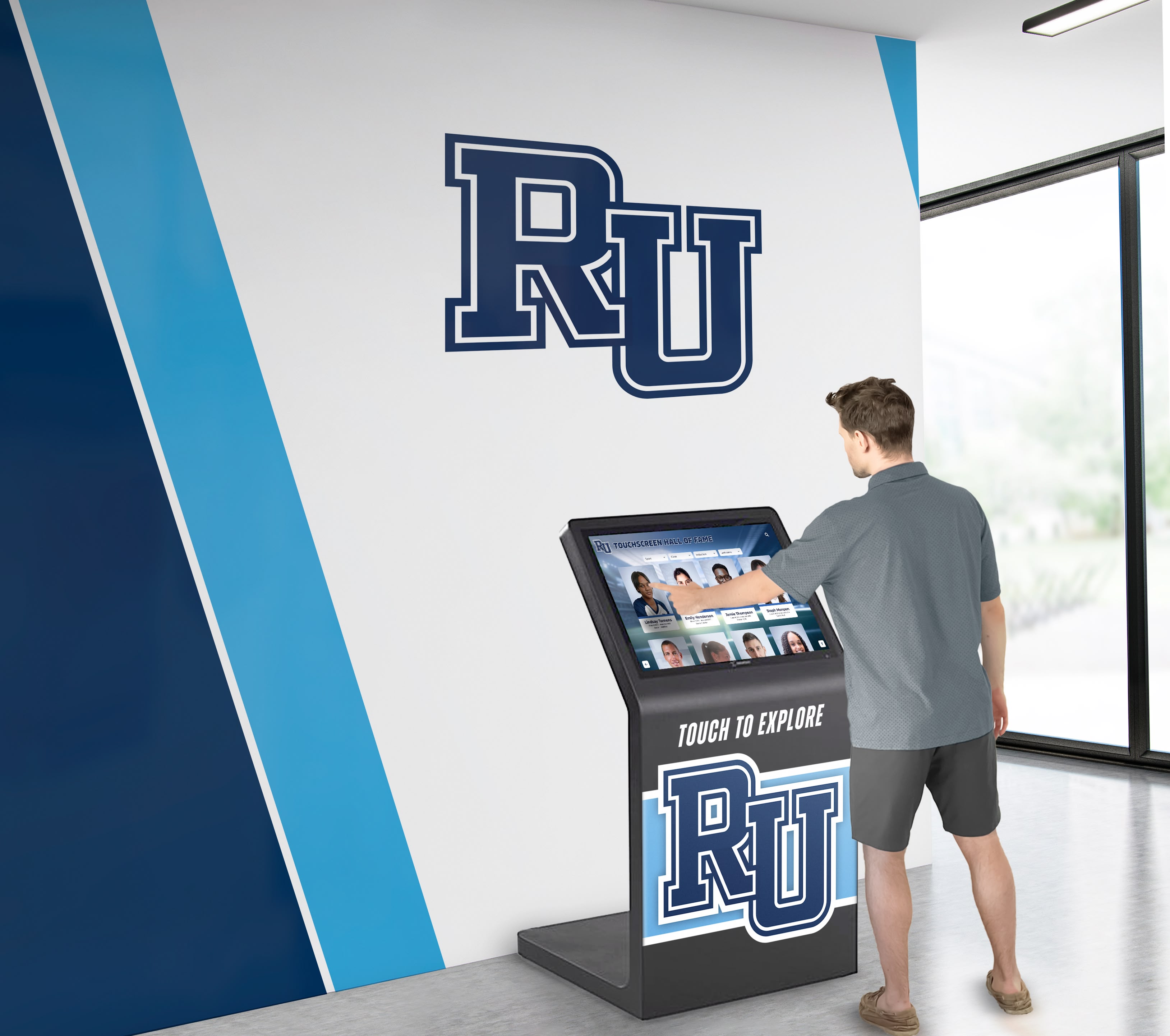
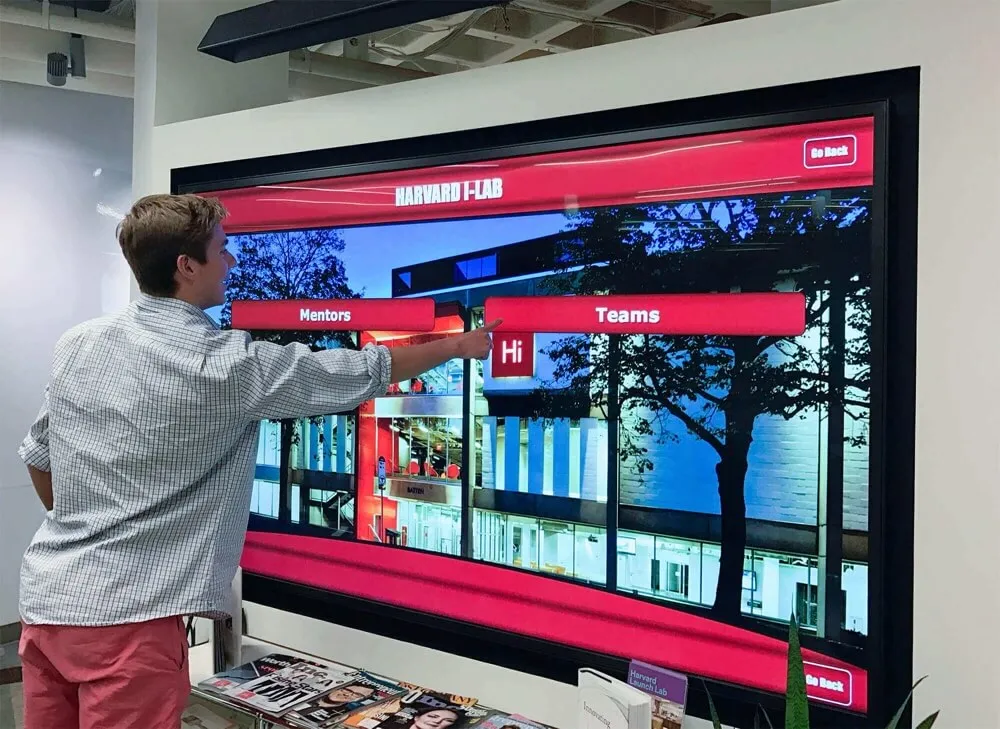
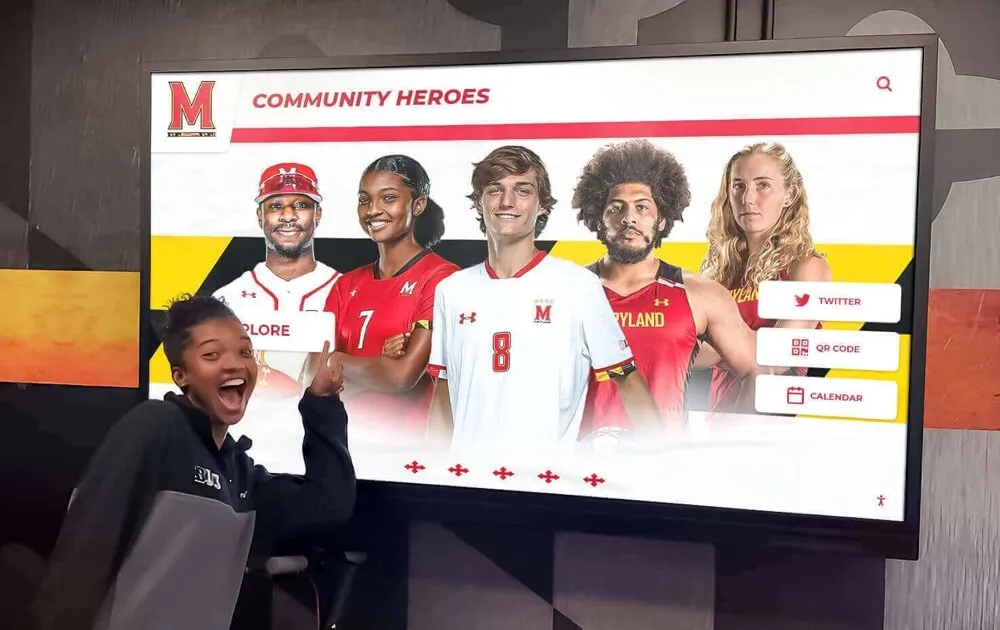
Interactive displays enable easy exploration of fundraising campaigns, donor recognition, and program impact
E-Commerce School Stores
Online shops operating year-round:
- Spirit wear available for purchase anytime
- Seasonal merchandise aligned with holidays or events
- Custom order options for personalization
- Alumni access expanding customer base beyond current families
- Print-on-demand models eliminating inventory risk
- Automatic fulfillment reducing volunteer requirements
- Profit margins of 20-40% on merchandise sales
Online stores provide passive revenue streams requiring minimal ongoing management once established, generating steady contributions throughout the year rather than concentrated campaign periods.
Strategic Planning for Maximum Fundraising Success
Systematic approaches dramatically improving campaign results:
Fundraising Goal Setting and Budgeting
Establishing realistic targets and financial planning:
Revenue Goal Development
Strategic goal-setting includes:
- Historical performance analysis from previous campaigns
- Specific program funding needs driving revenue targets
- Per-student participation rate assumptions
- Average contribution expectations by fundraiser type
- Sponsor and major gift projections
- Expense budgets reducing gross to net revenue
- Stretch goals inspiring exceptional performance
Schools achieving consistent fundraising success establish goals grounded in data rather than wishful thinking, creating credible targets that motivate while remaining achievable.
Expense Management
Controlling costs to maximize net revenue:
- Vendor selection comparing profit margins and support quality
- Volunteer utilization minimizing paid staff requirements
- In-kind donation solicitation offsetting cash expenses
- Sponsor support covering major event costs
- Multi-year vendor relationships negotiating better terms
- Realistic timeline planning preventing rush fees
- Technology leverage reducing manual labor expenses
Well-managed middle school fundraisers typically achieve net revenue of 50-70% of gross income, with product sales averaging 40-50% net and direct giving campaigns often exceeding 80-90% net margins.
Volunteer Recruitment and Coordination
Building fundraising support teams:
Committee Structure Design
Organized volunteer teams typically include:
- Overall fundraising chair providing campaign leadership
- Grade-level coordinators managing student participation
- Sponsor outreach team soliciting business partnerships
- Communications coordinator handling promotion and updates
- Event logistics team organizing activities and operations
- Recognition coordinator ensuring supporter acknowledgment
- Finance chair managing funds and budget tracking
Clear committee structures prevent confusion while distributing workload manageably across volunteers balancing multiple commitments.
Volunteer Appreciation Strategies
Recognition encouraging sustained service:
Effective volunteer acknowledgment includes:
- Public thank-you during school events and communications
- Volunteer appreciation breakfast or social gathering
- Recognition on digital displays and school websites
- Personal notes from administration expressing gratitude
- Service hour documentation for employment or applications
- Exclusive opportunities like VIP event access or meetings
- Multi-year volunteer recognition celebrating sustained commitment
Learn about comprehensive volunteer recognition programs that honor service contributions.
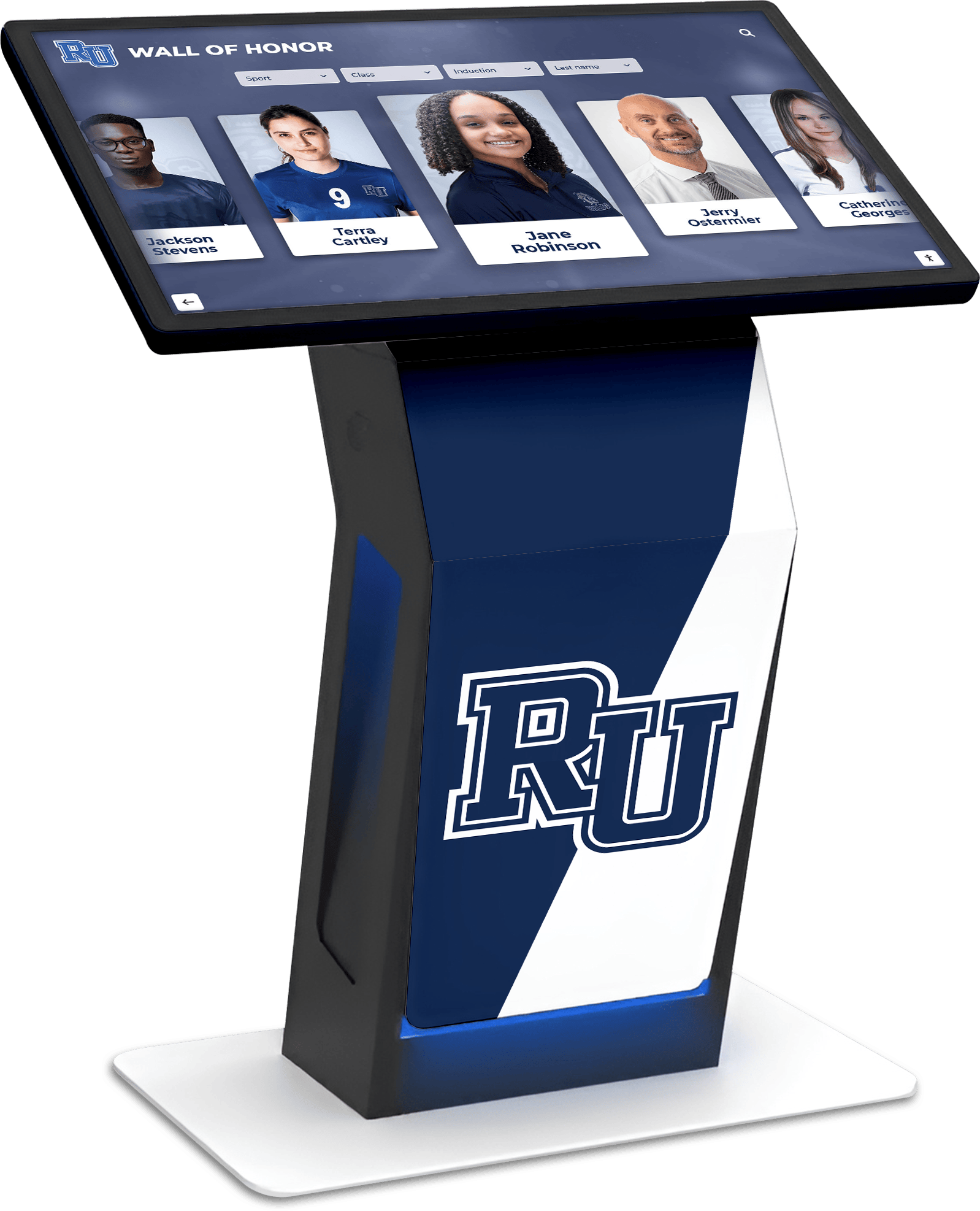
Recognition kiosks celebrate volunteer service alongside donor support, honoring all forms of community contribution
Student Leadership Development
Engaging middle schoolers in fundraising leadership:
Age-Appropriate Roles
Meaningful student participation includes:
- Student fundraising ambassadors promoting campaigns to peers
- Design team members creating promotional materials
- Social media content creators developing digital campaigns
- Event planning committee representatives providing student perspective
- Recognition committee helping celebrate supporter contributions
- Data tracking assistants monitoring progress toward goals
- Peer mentor roles helping younger students understand programs
Middle school students develop genuine leadership skills through structured fundraising involvement while taking ownership that increases personal investment in campaign success.
Leadership Skill Building
Educational outcomes beyond fundraising:
- Public speaking through campaign presentations
- Marketing and persuasion through supporter outreach
- Financial literacy through budget and revenue tracking
- Goal-setting and achievement monitoring
- Teamwork and collaboration across diverse groups
- Community engagement and relationship building
- Responsibility and follow-through on commitments
Schools viewing fundraising as leadership development opportunity rather than purely revenue generation create valuable learning experiences while building stronger campaigns through authentic student engagement.
Corporate Sponsorship and Business Partnerships
Business support providing substantial revenue and community connections:
Developing Sponsorship Packages
Strategic partnership structures attracting business investment:
Sponsorship Level Design
Typical middle school packages include:
Title/Presenting Sponsor ($5,000-$15,000)
- Event or campaign naming rights
- Maximum logo visibility across all materials
- Recognition at school events and facilities year-round
- Social media spotlight series featuring business
- Website prominent placement with clickable links
- First right of refusal for future sponsorship renewals
Platinum Sponsors ($2,500-$5,000)
- Premium logo placement on marketing materials
- Recognition at events with verbal acknowledgment
- Digital display feature in school facilities
- Social media appreciation posts
- Website sponsor page inclusion
- Complimentary event tickets or VIP experiences
Gold/Silver/Bronze Sponsors ($500-$2,500)
- Scaled logo recognition appropriate to investment level
- Website acknowledgment with business links
- Program or newsletter recognition
- Social media thank-you posts
- Event signage inclusion
- Digital display rotation
In-Kind Sponsors (Valued Equivalents)
- Product or service donations valued as cash equivalents
- Recognition comparable to appropriate sponsorship tier
- Flexibility accommodating businesses preferring goods over cash
Package structures should offer clear value propositions while maintaining exclusivity making premium investments attractive over lower tiers.
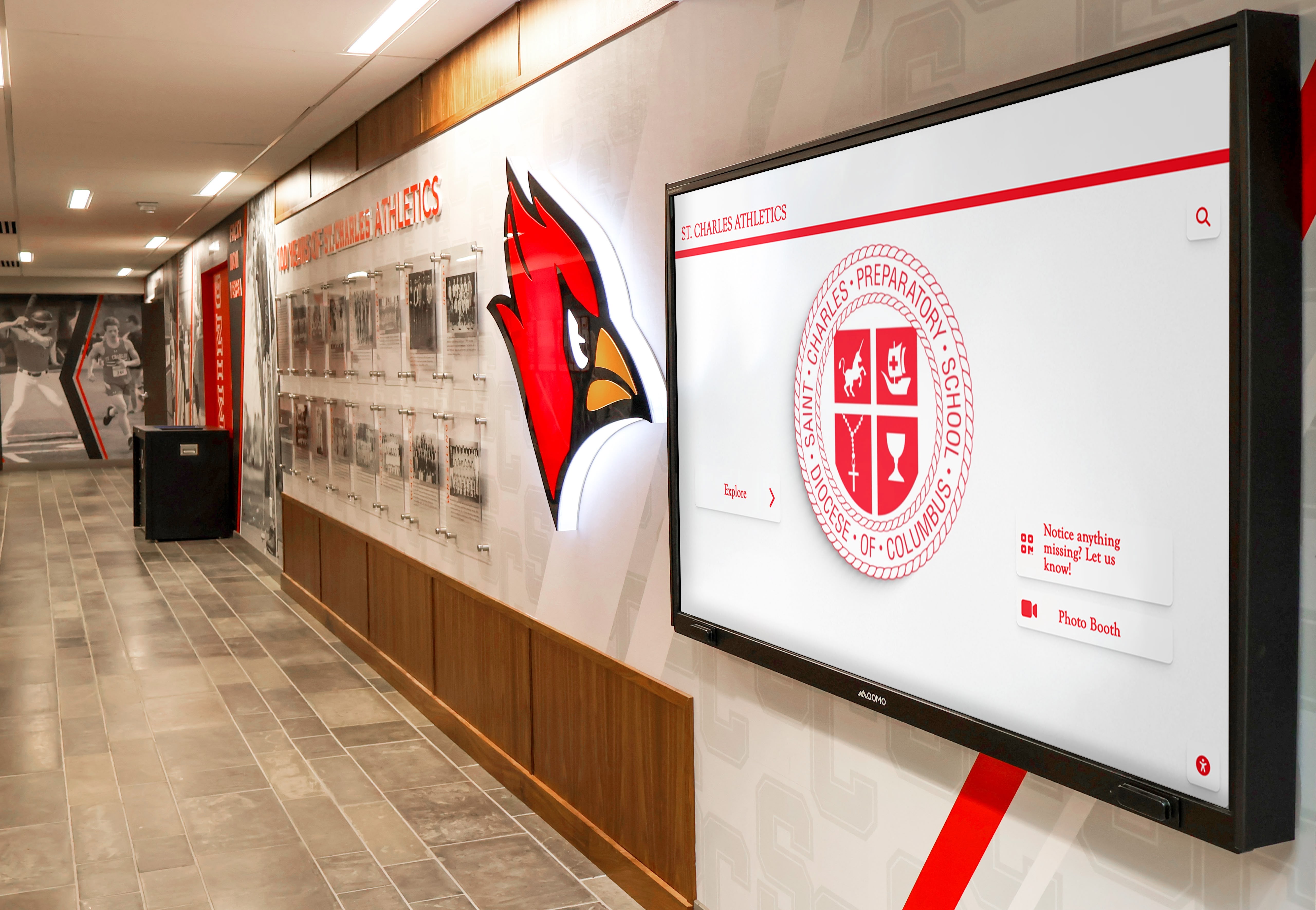
Integrated sponsor displays deliver year-round visibility honoring business partnerships beyond single campaigns
Sponsor Benefits Beyond Fundraising Campaigns
Year-round visibility enhancing partnership value:
- Digital recognition displays in school facilities
- Website sponsor pages with SEO-optimized business profiles
- Social media mentions throughout school year
- Newsletter and email communication acknowledgment
- Logo placement at athletic events and competitions
- Exclusive networking opportunities with school leadership
- Impact reporting showing community investment outcomes
Research demonstrates businesses sponsoring schools where visibility extends beyond campaign periods report higher satisfaction and increased likelihood of multi-year commitments compared to one-time event-only acknowledgment.
Explore sponsor recognition best practices applicable to school programs.
Sponsorship Cultivation and Stewardship
Building lasting business relationships:
Prospect Research and Solicitation
Strategic sponsor outreach includes:
- Parent employer identification leveraging existing connections
- Previous sponsor renewal prioritizing relationship retention
- Community business research identifying prospects aligned with education
- Board or PTA member network leverage for warm introductions
- Peer organization collaboration sharing successful approaches
- Personalized proposals demonstrating specific business benefits
- Multi-year commitment options providing planning certainty
Customized outreach demonstrating mutual benefit rather than simply asking for donations significantly improves sponsorship success rates.
Fulfillment and Recognition
Delivering promised sponsor value:
- Verification checklists ensuring all commitments fulfilled
- Photo documentation showing sponsor visibility at events
- Analytics reports quantifying digital engagement with sponsor content
- Impact stories connecting sponsorship to student outcomes
- Regular communication maintaining relationship between campaigns
- Appreciation events honoring business partnerships
- Early renewal solicitation providing adequate decision timing
Schools implementing systematic fulfillment tracking report 70-85% annual sponsor renewal rates compared to 40-55% for those providing minimal stewardship, demonstrating how professional partnership management drives sustained revenue.
Donor Recognition and Stewardship Systems
Thoughtful acknowledgment transforming one-time supporters into sustained contributors:
Immediate Recognition Strategies
Campaign-period appreciation:
Real-Time Acknowledgment
Timely recognition includes:
- Automated thank-you emails immediately upon donation receipt
- Personal phone calls or handwritten notes for major gifts
- Social media shout-outs celebrating donor support (with permission)
- School announcement acknowledgment during daily communications
- Classroom recognition celebrating student achievement
- Visual progress displays showing campaign advancement
- Student-created thank-you videos personalizing appreciation
Prompt acknowledgment demonstrates professionalism while maintaining good feelings and campaign momentum.
Public Recognition Events
Celebration opportunities including:
- Campaign culmination assemblies recognizing top participants
- Award ceremonies honoring student fundraising leaders
- Donor appreciation receptions thanking major supporters
- Student performance events dedicated to benefactors
- Building dedication ceremonies for capital campaign contributors
- Annual recognition nights celebrating all supporter types
Public events create social environments where philanthropy feels celebrated and appreciated, encouraging continued engagement while inspiring others to consider increased giving.
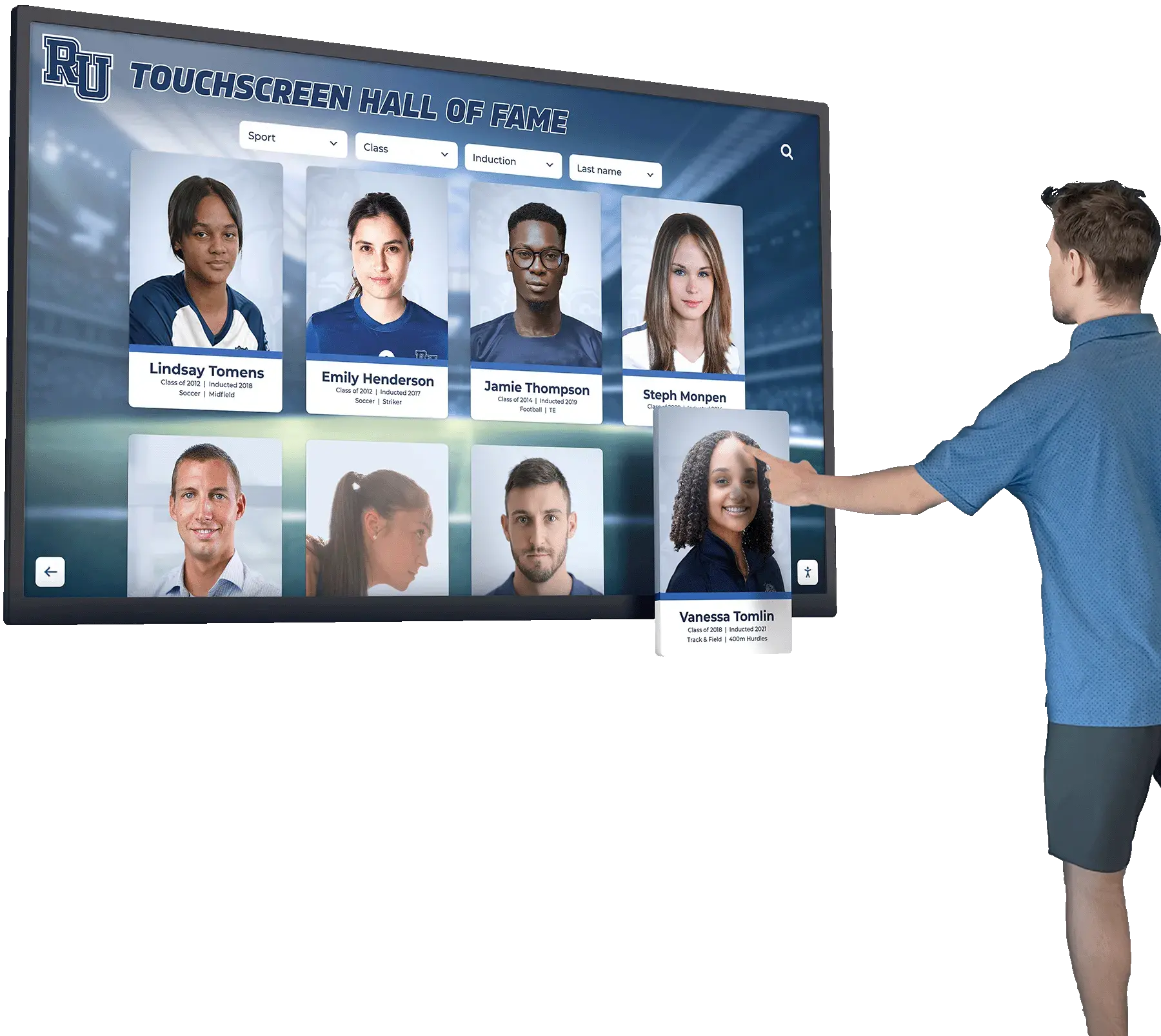
Interactive displays enable visitors to explore comprehensive recognition across multiple supporter categories
Long-Term Donor Recognition
Sustained acknowledgment beyond campaign periods:
Permanent Recognition Displays
Year-round acknowledgment includes:
- Digital donor walls in school facilities showcasing all supporters
- Giving society recognition organizing donors by contribution levels
- Named recognition opportunities for transformational gifts
- Legacy walls celebrating multi-year sustained support
- Memorial recognition honoring contributions made in memory
- Volunteer service acknowledgment alongside financial donors
- Interactive displays enabling visitor exploration of supporter stories
Solutions like Rocket Alumni Solutions provide comprehensive donor recognition platforms specifically designed for school applications, with features supporting diverse content types from individual donors and corporate sponsors to volunteer service and program impact—all manageable through user-friendly interfaces appropriate for PTA volunteers or school staff without technical expertise.
Recognition Society Benefits
Giving level perks encouraging upgraded contributions:
Bronze Society ($50-$99 annually)
- Recognition on digital displays and website
- Listing in annual report and donor publications
- Social media acknowledgment
- Campaign updates throughout year
Silver Society ($100-$249 annually)
- All Bronze benefits plus:
- Exclusive email communications with behind-scenes updates
- Recognition at school events
- Student thank-you card or artwork
- Priority notification for special opportunities
Gold Society ($250-$499 annually)
- All Silver benefits plus:
- Invitations to exclusive donor appreciation events
- Featured spotlight in school communications
- Personalized impact reporting
- Advisory opportunities providing program input
Platinum Society ($500-$999 annually)
- All Gold benefits plus:
- Private principal or leadership meetings
- Named recognition opportunities when available
- Lifetime recognition for sustained multi-year giving
- Legacy opportunities for memorial recognition
Leadership Circle ($1,000+ annually)
- All Platinum benefits plus:
- Permanent prominent recognition in facilities
- Naming opportunities for classrooms, spaces, or programs
- Board meeting attendance invitations
- Maximum visibility across all school channels
Tiered recognition creates aspirational motivation while ensuring all contribution levels receive meaningful appreciation appropriate to their investment.
Learn about donor walls for nonprofits applicable to school environments.
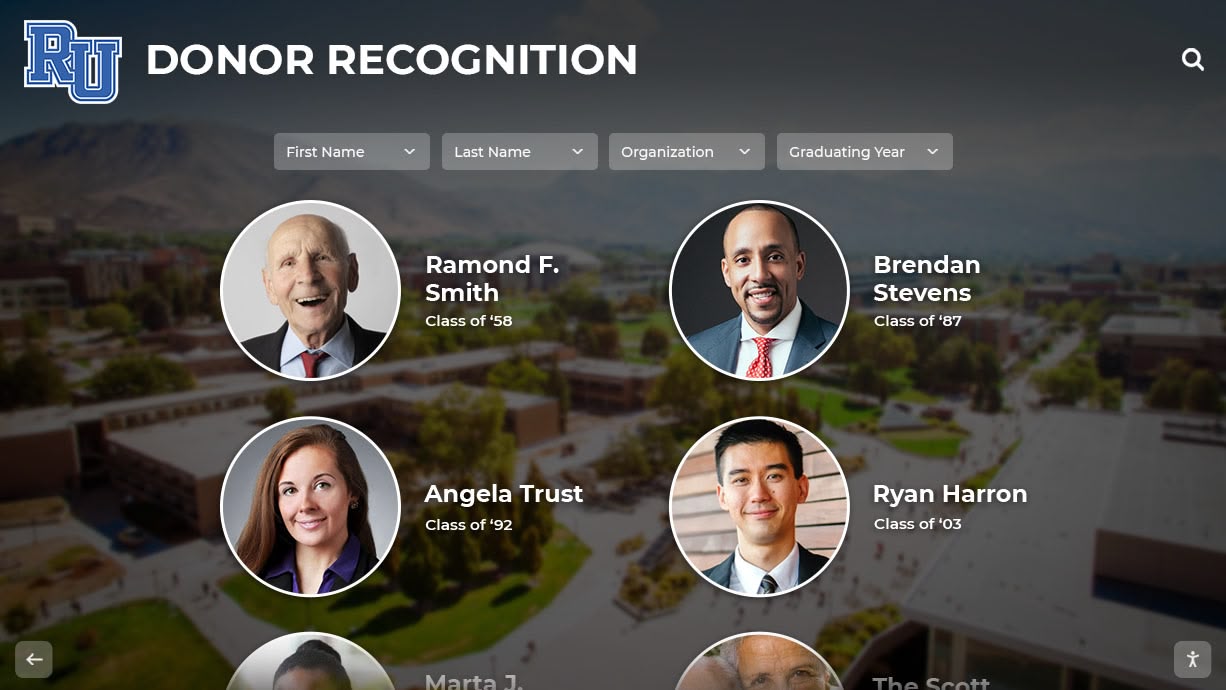
Professional donor recognition celebrates all contribution levels while preserving institutional memory across generations
Impact Reporting and Stewardship Communication
Demonstrating how contributions make differences:
Outcome Documentation
Connecting donations to tangible results:
- Program funding showing specific initiatives supported by campaigns
- Equipment purchases displaying items acquired through fundraising
- Field trip participation documenting experiences enabled by funds
- Scholarship recipients acknowledging support for families in need
- Facility improvements featuring before-and-after comparisons
- Student testimonials explaining personal impact of funded programs
- Teacher perspectives describing how resources improve education
Impact reporting transforms abstract financial contributions into concrete student outcomes donors can visualize and celebrate.
Ongoing Communication Strategies
Year-round touchpoints maintaining relationships:
- Quarterly newsletters featuring program updates and donor spotlights
- Annual reports documenting comprehensive fundraising and impact
- Mid-year campaign updates building toward next giving opportunities
- Holiday communications expressing gratitude and sharing successes
- Budget transparency showing how all revenue supports students
- Student achievement celebrations connecting success to supporter investment
- Exclusive briefings for major donors providing detailed insights
Schools implementing systematic stewardship programs report that year-over-year donor retention rates improve 30-45% when supporters receive meaningful communication between campaigns versus minimal contact.
Digital Recognition Solutions for Middle School Fundraising
Modern platforms addressing traditional recognition limitations:
Benefits of Digital Donor Recognition
Technology-based approaches providing advantages over physical plaques:
Unlimited Recognition Capacity
Digital platforms eliminate space constraints:
- Single display accommodating hundreds or thousands of donors
- All giving levels receiving equal capacity rather than cramped text
- No need to remove previous donors when adding new recognition
- Comprehensive historical archives showing multi-year support
- Easy annual updates accommodating new campaign supporters
Traditional physical plaques quickly consume wall space, forcing difficult decisions about whose recognition warrants limited capacity, while digital solutions honor all supporters comprehensively.
Rich Storytelling Capabilities
Enhanced content beyond names and dollar amounts:
- Photos showing donors at events and in school community
- Video testimonials explaining why supporters contribute
- Impact stories connecting contributions to specific student outcomes
- Campaign galleries preserving memorable fundraising moments
- Sponsor spotlights featuring business profiles and partnerships
- Student thank-you messages personalizing appreciation
- Multi-year giving timelines showing sustained commitment
Rich multimedia content creates emotional connections while preserving institutional memory becoming increasingly valuable over time.
Cost-Effective Long-Term Investment
Financial sustainability advantages:
- One-time display hardware investment versus ongoing plaque costs
- No per-name costs for recognition additions
- Instant updates eliminating engraving delays and fees
- Multi-purpose functionality beyond donor recognition
- Professional presentation without graphic design expenses
- Predictable software licensing enabling budget planning
- Analytics tracking engagement and popular content
Schools commonly find digital recognition achieves return on investment within 2-3 years compared to traditional recognition ongoing costs while delivering superior capacity and engagement.
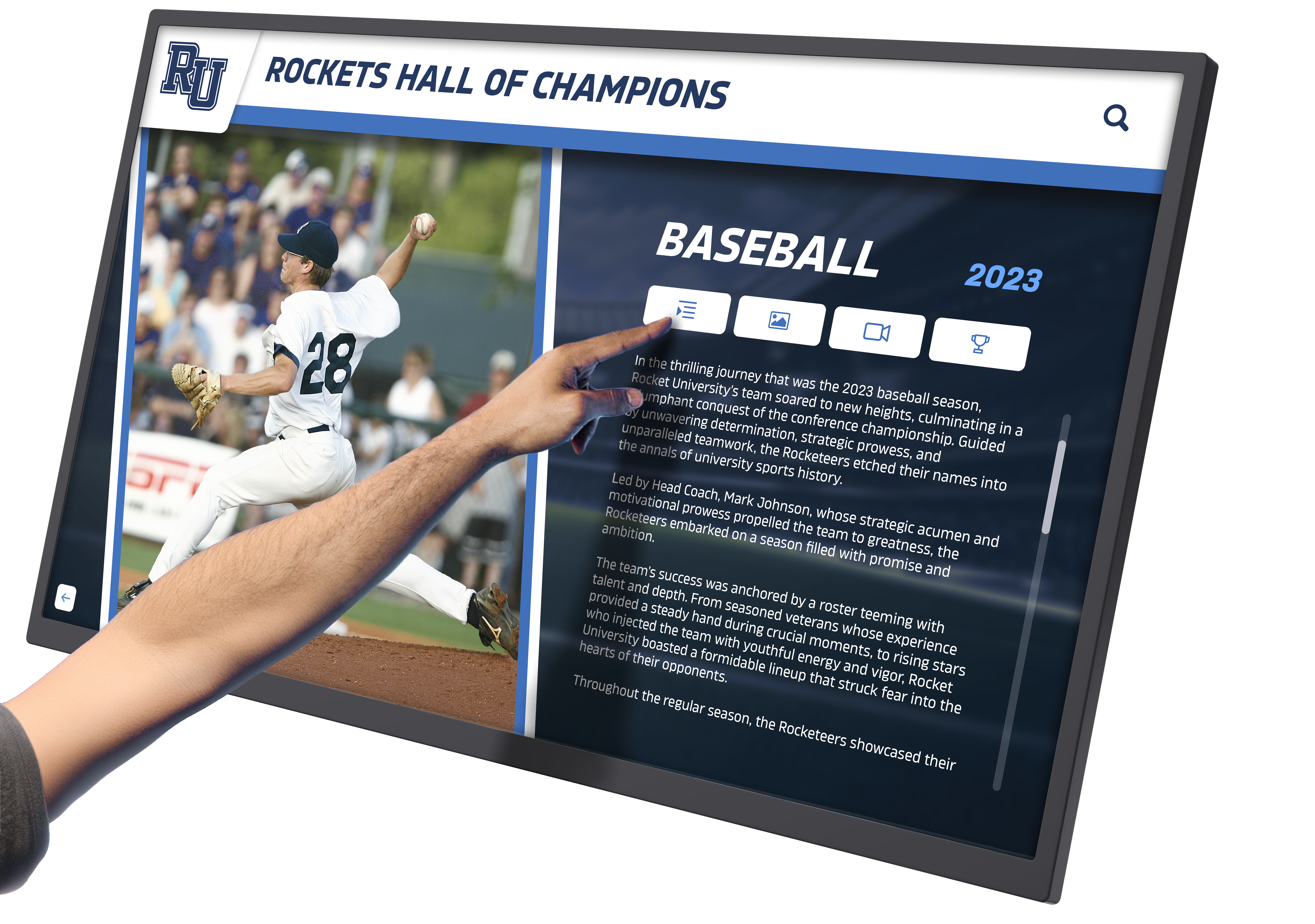
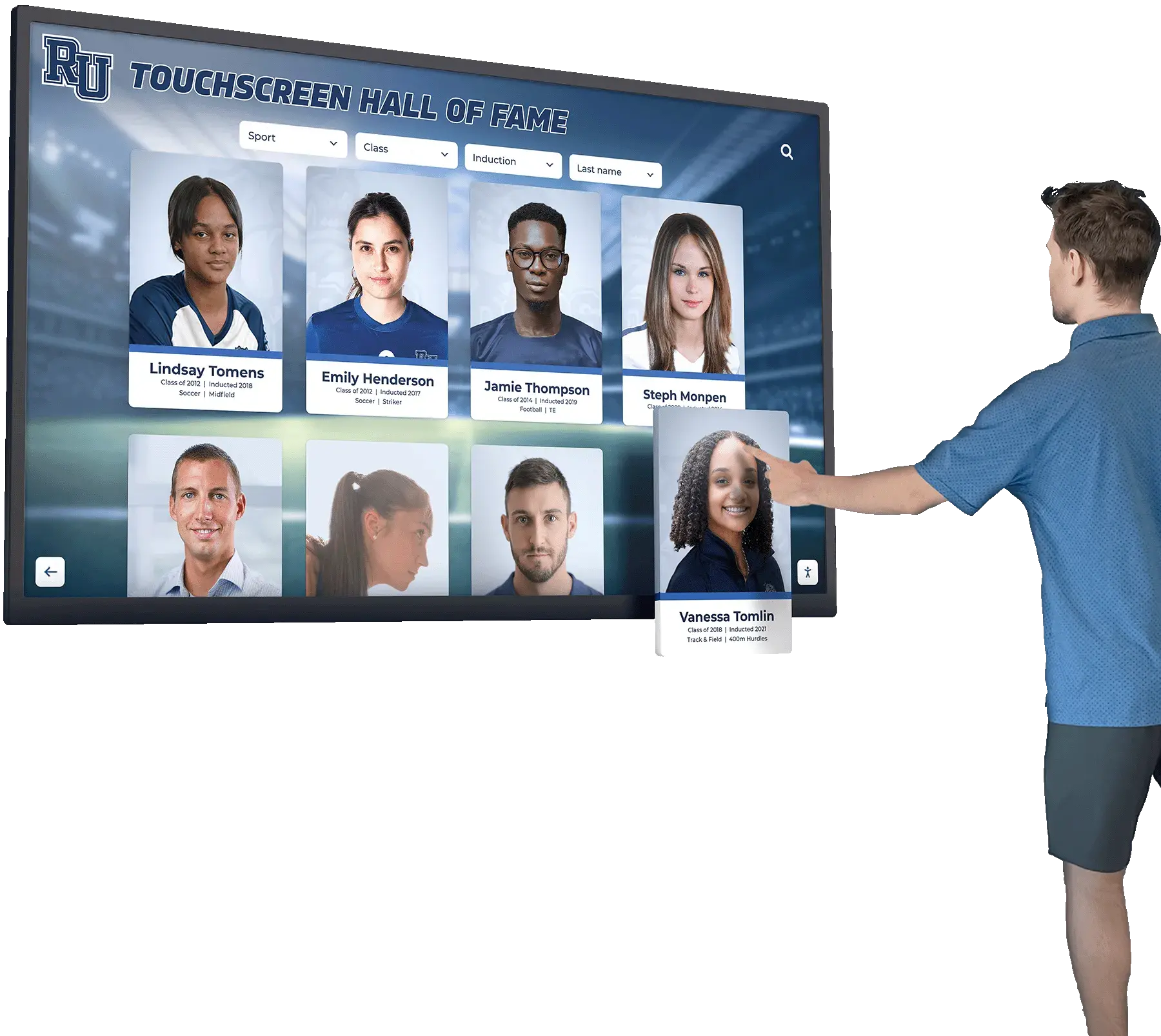
Intuitive touchscreen interfaces enable independent exploration across all ages without instruction
Implementing Recognition Display Systems
Strategic deployment considerations:
Display Placement Strategy
Effective locations maximizing visibility:
- Main entrance lobbies greeting all visitors immediately
- Commons areas and cafeterias providing sustained viewing time
- Athletic facilities connecting to sports program fundraising
- Auditoriums and performance spaces where families gather
- Library or media centers celebrating academic support
- Hallways with high foot traffic ensuring exposure
- Development or administrative offices engaging prospective donors
Strategic placement ensures recognition receives visibility proportional to supporter investment while creating aspirational environments where giving feels celebrated.
Content Architecture for Fundraising Recognition
Organized systems including:
- Campaign-specific recognition for annual fund or event supporters
- Cumulative giving recognition celebrating lifetime contributions
- Volunteer acknowledgment honoring service alongside financial gifts
- Corporate sponsor displays featuring business partnerships
- Named recognition for major gifts and capital campaign contributors
- Student leader spotlights celebrating fundraising ambassadors
- Impact showcases demonstrating how funds support programs
Comprehensive content celebrates all contribution types while telling complete stories about community support and school impact.
Explore interactive display technology transforming school environments.
Common Fundraising Challenges and Solutions
Learning from frequent obstacles helps schools avoid mistakes:
Challenge 1: Fundraising Fatigue
The Problem: Families feel overwhelmed by constant fundraising requests from schools, sports teams, scouts, and other organizations, leading to decreased participation and donor frustration.
The Solution: Implement coordinated fundraising calendars preventing overlap and excessive frequency:
- Limit major campaigns to 2-3 per year maximum
- Coordinate with booster clubs and PTAs avoiding conflicts
- Offer participation alternatives (direct donation versus product sales)
- Communicate comprehensive fundraising plan at year beginning
- Emphasize impact and transparency about fund usage
- Provide opt-out options without stigma or pressure
- Focus on donor retention over constantly seeking new supporters
Schools respecting family capacity while demonstrating responsible stewardship maintain stronger participation rates than those conducting endless fundraising drives.
Challenge 2: Participation Inequality
The Problem: Small percentage of families provide majority of support while many contribute minimally or not at all, creating resentment and sustainability concerns.
The Solution: Broaden participation through diverse giving opportunities:
- Multiple fundraising models accommodating different family situations
- Clear communication that all contribution levels matter equally
- Service hour options for families unable to give financially
- Anonymous giving protecting family privacy about finances
- Scholarship or assistance programs ensuring student inclusion
- Recognition emphasizing participation over dollar amounts
- No-pressure environments respecting personal circumstances
Inclusive approaches acknowledging diverse family realities build broader support than programs implicitly expecting uniform contribution capacity.
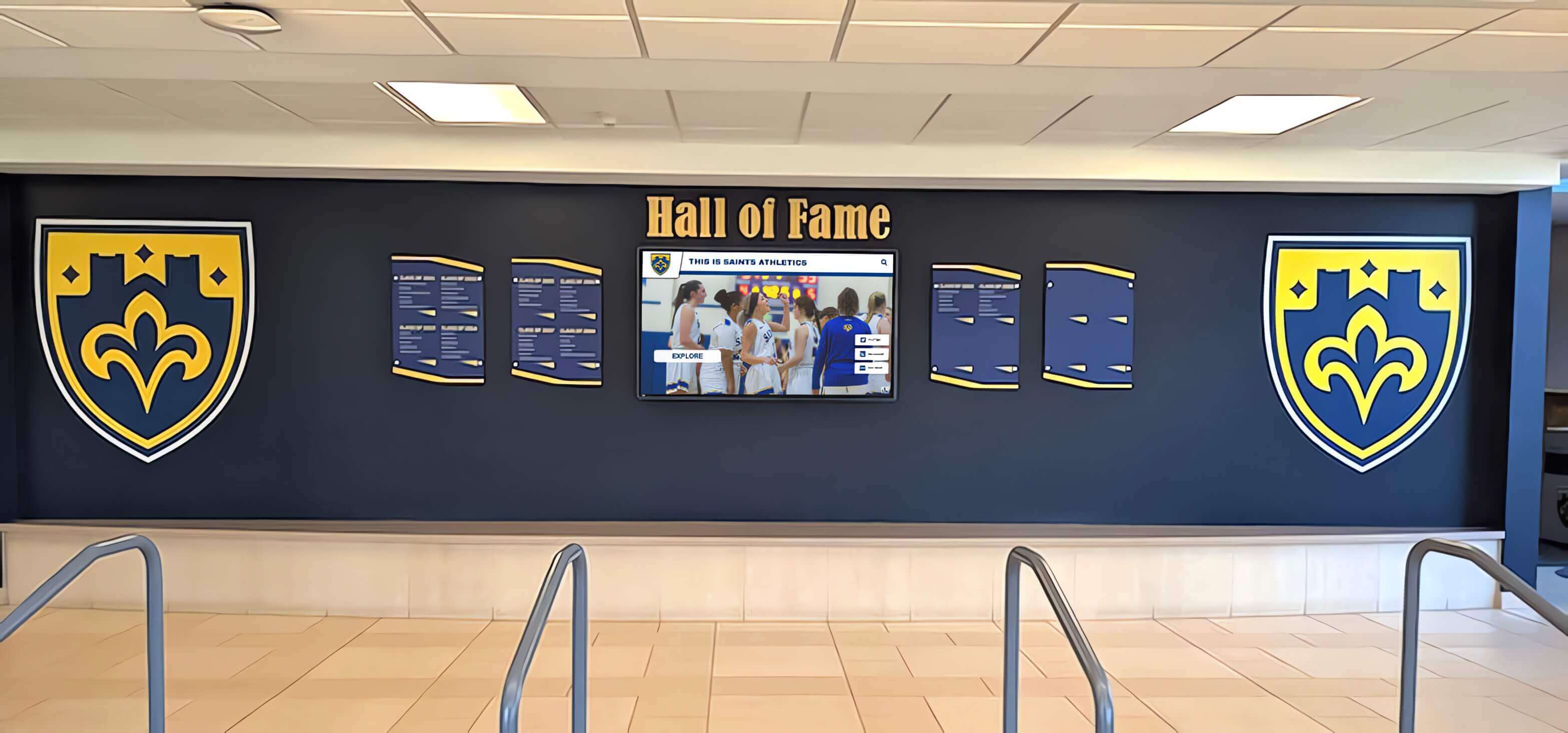
Comprehensive recognition celebrates all forms of support, building inclusive environments honoring diverse contributions
Challenge 3: Volunteer Burnout
The Problem: Small group of dedicated volunteers manages all fundraising activities, leading to exhaustion and inability to sustain programs when key people step back.
The Solution: Distribute volunteer responsibilities strategically:
- Clearly defined roles with limited time commitments
- Rotation systems preventing multi-year overload
- New family recruitment expanding volunteer pool
- Student leadership reducing adult-only burden
- Technology tools automating tasks and reducing manual work
- Professional vendors handling specialized needs
- Volunteer appreciation preventing unrecognized service
Sustainable volunteer models match fundraising ambition to realistic capacity rather than expecting heroic effort from overtaxed individuals.
Challenge 4: Insufficient Recognition and Stewardship
The Problem: Schools acknowledge donors minimally during campaigns but provide little ongoing recognition, leading to decreased retention and lower giving levels over time.
The Solution: Implement systematic recognition and stewardship:
- Immediate thank-you communications upon receipt
- Multiple touchpoints throughout year between campaigns
- Public recognition through various school channels
- Impact reporting connecting gifts to outcomes
- Exclusive communications for major donors
- Digital displays celebrating supporters year-round
- Personal outreach from leadership thanking contributions
Professional stewardship dramatically improves donor retention, with schools reporting 35-50% retention increases through systematic acknowledgment versus minimal recognition.
Learn about academic recognition programs that celebrate diverse achievements.
Technology Tools Supporting Middle School Fundraising
Modern platforms simplifying campaign management and recognition:
Fundraising Management Platforms
Online systems streamlining operations:
Essential Platform Features
Effective fundraising technology includes:
- Online donation processing accepting credit cards and digital payments
- Peer-to-peer fundraising enabling personal student campaigns
- Event registration managing participants and collecting fees
- Automated acknowledgment sending instant thank-you messages
- Progress tracking visualizing campaign advancement toward goals
- Social sharing tools amplifying reach through networks
- Mobile optimization supporting smartphone donations
- Reporting and analytics providing campaign insights
Purpose-built school fundraising platforms typically increase online giving by 50-75% compared to generic donation systems by providing features specifically designed for educational environments.
Recognition Display Solutions
Digital systems celebrating supporters year-round:
Comprehensive Recognition Capabilities
Modern recognition platforms offer:
- Unlimited donor profiles accommodating growing supporter bases
- Tiered recognition organizing contributors by giving levels
- Photo galleries preserving campaign memories
- Volunteer acknowledgment alongside financial donors
- Sponsor recognition featuring business partnerships
- Impact documentation connecting funds to outcomes
- Multi-user access enabling collaborative content management
- Cloud-based architecture requiring no local software installation
Solutions like Rocket Alumni Solutions provide platforms specifically designed for school recognition applications, with intuitive interfaces enabling volunteer management while supporting sophisticated features creating professional engaging experiences.
Visitor Engagement Features
Interactive capabilities encouraging exploration:
- Full-text search across all donor and volunteer profiles
- Filtering options by year, giving level, or recognition type
- Related content suggestions connecting associated information
- Social sharing enabling donors to celebrate their recognition
- QR code generation linking printed materials to digital profiles
- Analytics revealing popular content and visitor patterns
- Responsive design supporting all device types
- Accessibility compliance ensuring universal access
Discover touchscreen software options for school recognition.
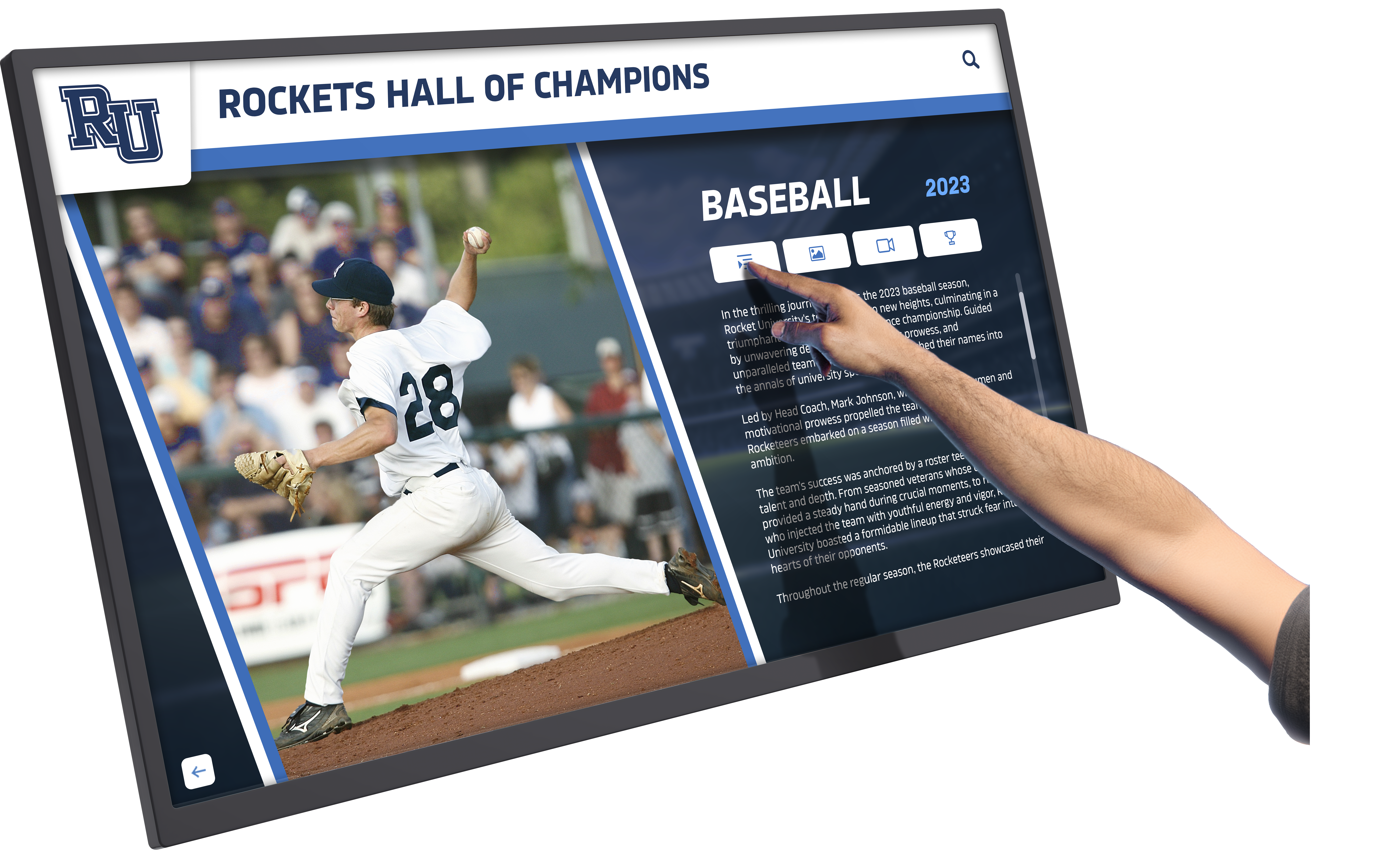
User-friendly touchscreen displays enable intuitive exploration without training or assistance requirements
Measuring Fundraising Success and Continuous Improvement
Assessment ensuring programs achieve objectives:
Key Performance Indicators
Quantifiable metrics evaluating effectiveness:
Financial Metrics
Revenue assessment includes:
- Gross revenue from all fundraising sources
- Net revenue after expenses and direct costs
- Cost-per-dollar-raised efficiency ratios
- Revenue growth year-over-year showing trends
- Donor retention rates measuring satisfaction
- Average gift size tracking generosity
- Participation rates across family population
Financial performance provides objective measures while relationship building and community engagement offer value beyond immediate dollars raised.
Engagement Metrics
Participation measurement includes:
- Student participation percentages by grade level
- Family involvement rates across school population
- Volunteer recruitment and retention statistics
- Sponsor renewal rates and partnership satisfaction
- Event attendance numbers and year-over-year trends
- Social media reach and engagement during campaigns
- Donor survey responses assessing satisfaction
Strong engagement metrics demonstrate programs creating compelling experiences that participants want to continue supporting.
Stewardship Effectiveness
Relationship indicators including:
- Year-over-year donor retention percentages
- Multi-year giving patterns showing sustained commitment
- Giving level upgrades demonstrating increased support
- Response rates to stewardship communications
- Volunteer return rates for subsequent campaigns
- Sponsor partnership longevity and expansion
- Referrals and new participant sources
Positive stewardship metrics prove fundraising builds lasting relationships rather than just annual transactions.
Post-Campaign Evaluation
Systematic assessment driving improvement:
Structured Review Process
Comprehensive evaluation includes:
- Volunteer debrief meetings assessing successes and challenges
- Student leader feedback gathering youth perspectives
- Parent satisfaction surveys understanding family experiences
- Sponsor evaluation soliciting partnership value perceptions
- Financial reconciliation comparing results to projections
- Timeline review identifying planning improvements
- Success celebration acknowledging achievements and contributions
Honest assessment identifying both strengths and improvement opportunities enables evidence-based refinement of future campaigns.
Documentation and Institutional Memory
Knowledge preservation including:
- Campaign playbooks documenting processes and timelines
- Vendor evaluation notes identifying successful partnerships
- Detailed financial analysis with revenue and expense breakdown
- Marketing campaign performance showing effective channels
- Participation data with demographic information
- Photo and video archives preserving campaign memories
- Recognition fulfillment records ensuring promises kept
Thorough documentation enables smooth leadership transitions and prevents institutional knowledge loss when volunteers rotate or families transition out of middle school.
Conclusion: Building Sustainable Fundraising Through Strategic Planning and Recognition
Middle school fundraising represents more than necessary financial support—it creates community gathering moments, develops student leadership, strengthens school connections, and builds traditions that connect families to educational missions. When schools implement strategic fundraising programs combined with thoughtful recognition systems celebrating supporters year-round, they transform occasional campaigns into sustainable revenue streams growing through increased participation, expanded sponsorship, and deepened donor commitment.
The strategies explored throughout this guide provide practical frameworks specifically designed for middle schools facing unique challenges including student developmental stages, volunteer capacity limitations, budget constraints, and diverse family circumstances. From proven fundraising models and volunteer coordination to sponsor engagement, digital giving platforms, and comprehensive recognition systems—these approaches transform fundraising from overwhelming obligation into manageable process building organizational capacity while honoring supporters appropriately.
Ready to transform how your middle school recognizes fundraising supporters? Modern digital recognition solutions help schools celebrate unlimited donors, sponsors, and volunteers while creating engaging experiences that strengthen community connections and inspire continued generosity. Solutions like Rocket Alumni Solutions provide comprehensive platforms specifically designed for school recognition needs, combining intuitive content management with professional engagement features and affordable pricing ensuring sustainable long-term programs.
Whether you’re launching first-ever formal recognition or enhancing existing approaches, focus on creating authentic programs aligned with school values, sustainable within volunteer capabilities, and designed to serve your specific community needs effectively. Request your free custom demo to explore how digital recognition can celebrate your fundraising supporters comprehensively.
Your fundraising supporters—students, families, volunteers, donors, and sponsors—make educational programs and opportunities possible. Recognition systems celebrating their contributions meaningfully demonstrate organizational commitment to honoring partnerships while building foundations for sustained engagement that compound value across years of community service.
The most important consideration isn’t implementing the most expensive campaigns or sophisticated technology—it’s creating genuine appreciation programs resonating with your community, communicating impact authentically, and demonstrating commitment to comprehensive acknowledgment. With thoughtful planning, appropriate technology selection, and dedication to celebrating all supporters, you can implement fundraising and recognition systems that increase participation, enhance revenue, strengthen volunteer satisfaction, and build lasting community support sustaining programs for generations to come.