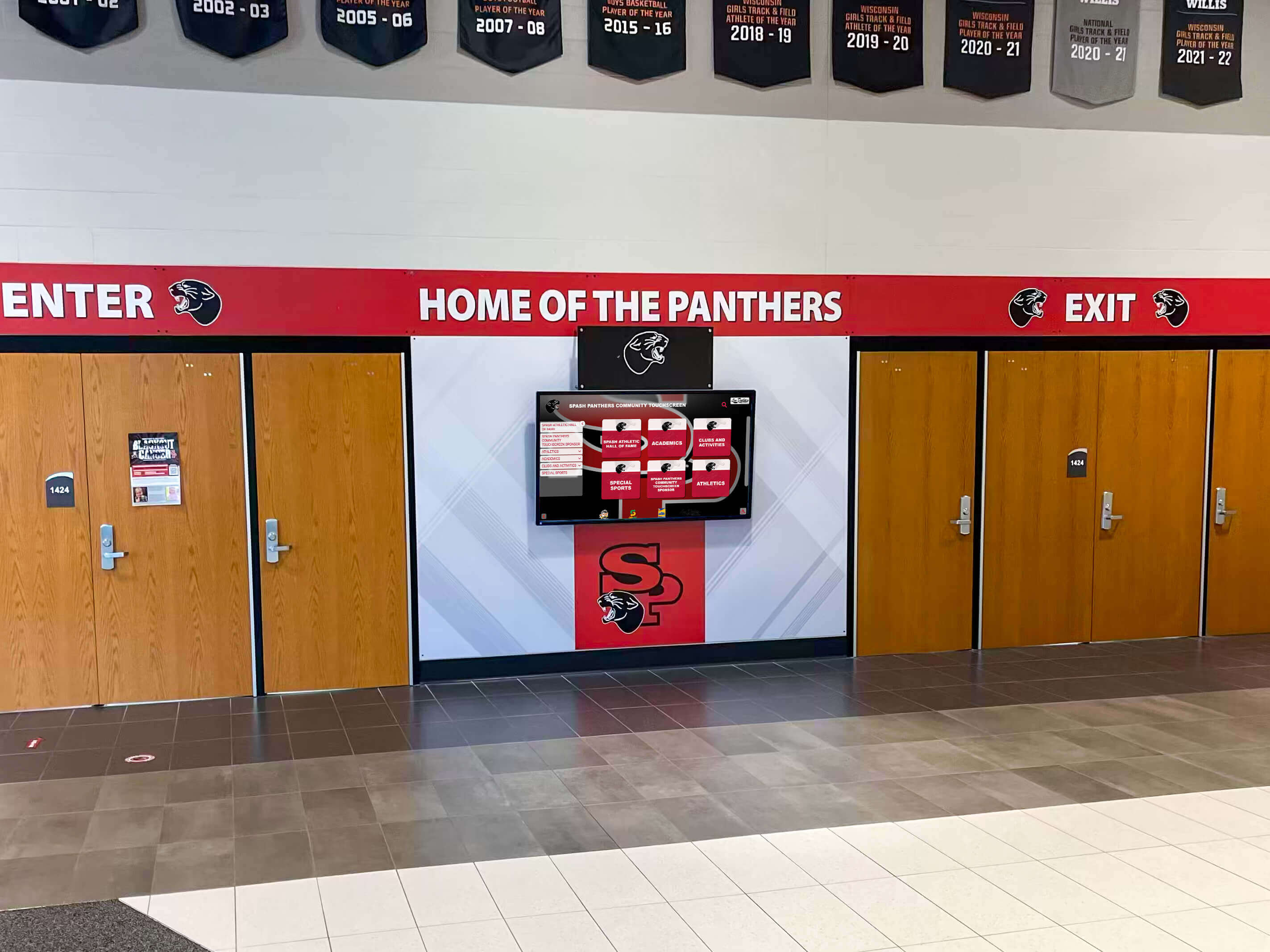




Every visitor who walks through your entrance doors forms an immediate impression about your institution’s values, priorities, and culture. Lobby design ideas that create welcoming, inspiring spaces do more than beautify buildings—they communicate pride, celebrate achievement, strengthen community identity, and transform ordinary entrances into meaningful gathering places that honor institutional heritage while showcasing contemporary excellence.
Yet many schools and organizations struggle with lobby spaces that fail to engage visitors effectively. Outdated designs create unwelcoming first impressions, cluttered entrances confuse rather than guide, static displays go unnoticed year after year, limited recognition space forces difficult choices about who to honor, and missed opportunities to celebrate community achievements leave visitors disconnected from institutional stories that deserve visibility and pride.
This comprehensive guide explores lobby design ideas addressing layout fundamentals that guide traffic flow naturally, recognition display strategies celebrating achievements without overwhelming spaces, technology integration approaches that modernize entrances while respecting architectural character, and budget-conscious implementation tactics helping schools and organizations create impressive lobbies regardless of resource constraints.
Effective lobby design creates immediate emotional connections between visitors and institutions through thoughtful integration of welcoming elements, clear wayfinding, meaningful recognition, and spaces that feel both professional and personally inviting. Schools and organizations that excel at lobby design understand that entrance spaces serve multiple simultaneous purposes: guiding first-time visitors, celebrating community accomplishments, strengthening institutional identity, creating informal gathering opportunities, and demonstrating pride that inspires confidence among parents, donors, prospective members, and community partners.

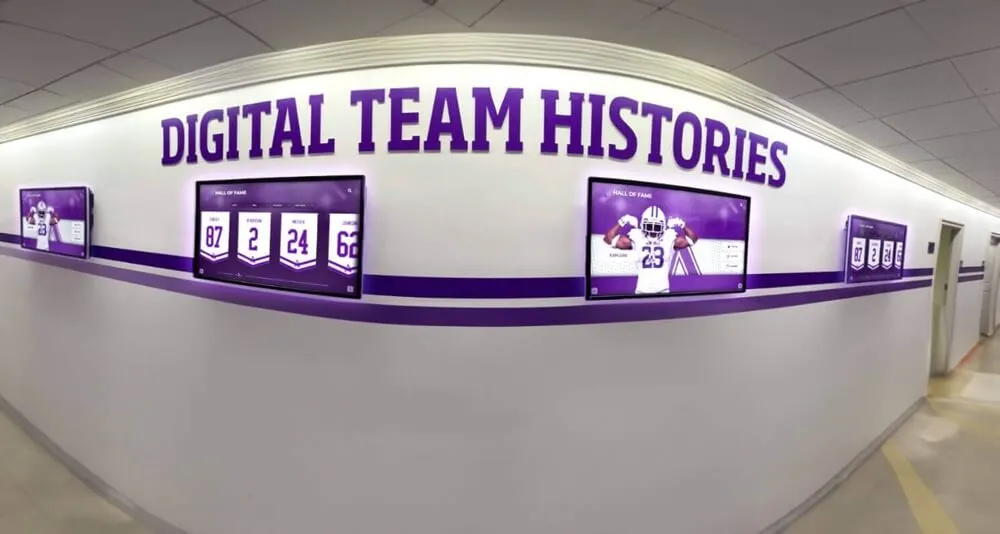
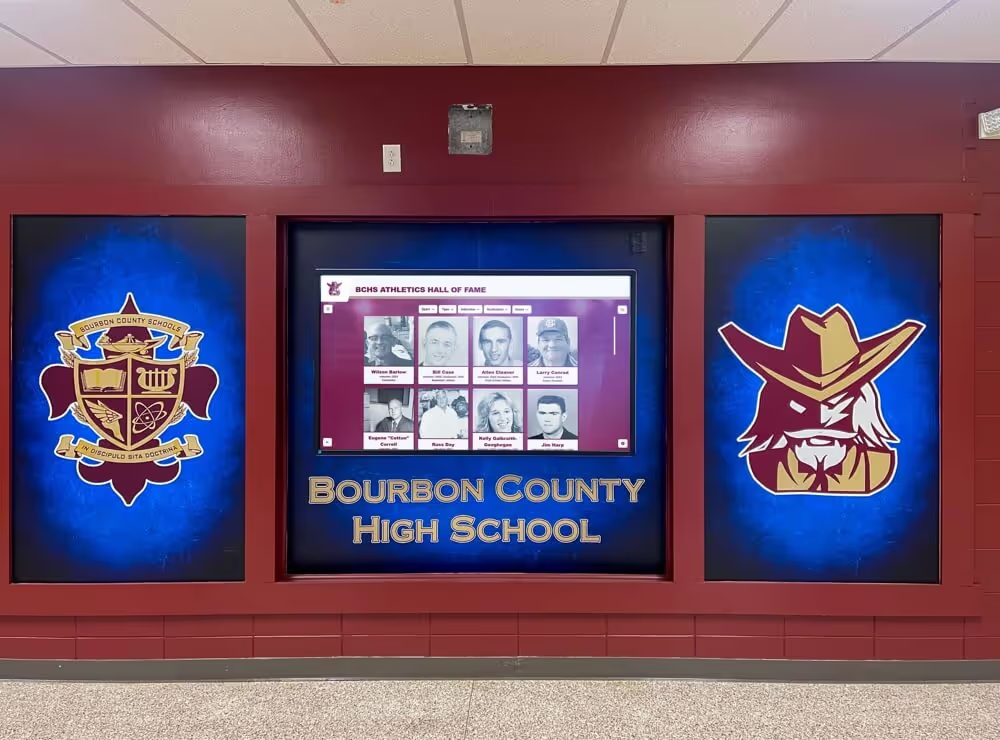
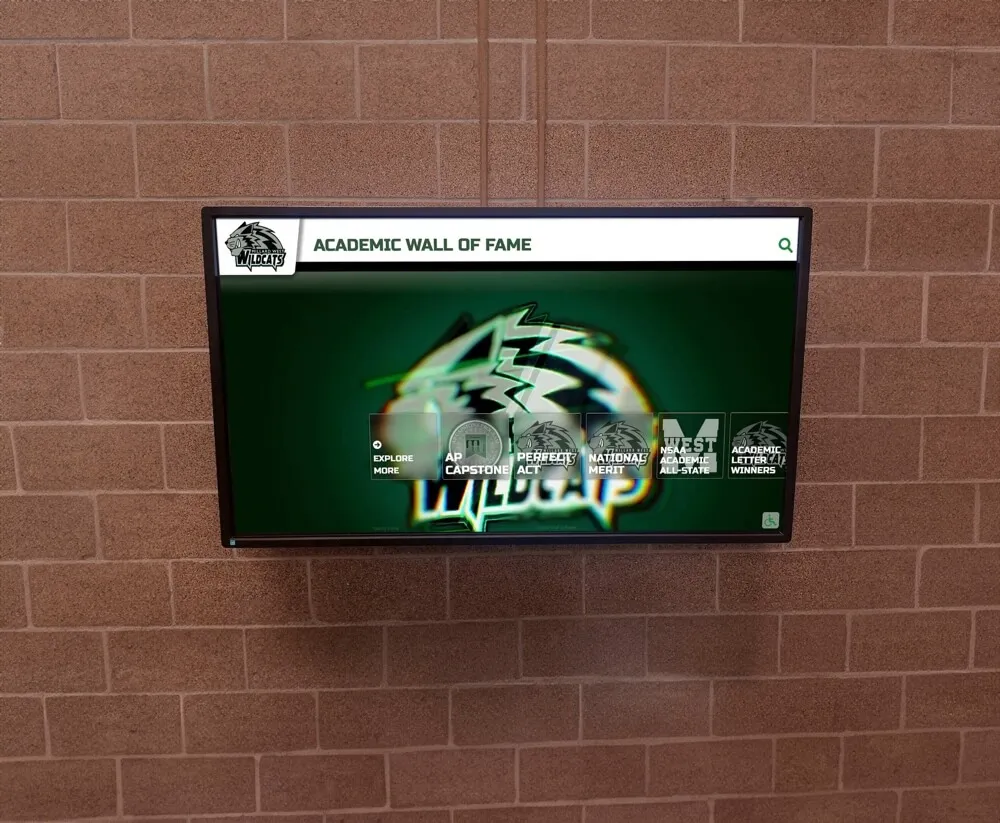
Contemporary lobby design balances institutional branding, digital recognition technology, and welcoming aesthetics that create powerful first impressions for all visitors
Understanding the Strategic Importance of Lobby Design
Before exploring specific design elements, recognizing why lobby spaces deserve strategic attention and appropriate investment helps institutions make informed decisions aligning entrance design with organizational goals.
The First Impression Impact
Research consistently demonstrates that first impressions form within seconds and significantly influence visitor perceptions about organizational quality, professionalism, and values:
Immediate Perception Formation
Visitors begin evaluating institutions the moment they enter:
- Physical environment quality signals institutional priorities and resource stewardship
- Visual organization creates perceptions about operational effectiveness
- Cleanliness and maintenance standards suggest overall attention to detail
- Recognition displays communicate what organizations value and celebrate
- Technology integration indicates progressive thinking and contemporary relevance
- Accessibility features demonstrate inclusive values and practical commitment
According to facility design research, prospective students and families cite lobby appearance and “feel” among top factors influencing enrollment decisions, while donors consistently report that institutional environments impact giving confidence and willingness to invest financially.
Multiple Audience Considerations
Effective lobby design must serve diverse constituencies simultaneously:
- Prospective families: Assessing whether environments align with educational expectations
- Current community members: Experiencing daily affirmation of institutional pride and belonging
- Alumni and donors: Reconnecting with institutions and evaluating stewardship of contributions
- Community partners: Forming professional impressions about organizational capacity
- Event attendees: Navigating buildings during performances, competitions, and ceremonies
- Delivery and service providers: Locating destinations efficiently without confusion
Discover comprehensive approaches to school lobby design strategies that balance multiple audience needs.
Creating Welcoming Atmospheres
Beyond functional wayfinding, exceptional lobbies create emotional experiences:
Psychological Comfort Elements
Design features that help visitors feel at ease:
- Adequate natural light reducing institutional coldness
- Comfortable seating inviting visitors to pause rather than rush through
- Clear sightlines preventing disorientation and anxiety
- Appropriate acoustic design enabling conversation without excessive noise
- Temperature consistency maintaining comfort regardless of weather
- Visual interest preventing sterile, unwelcoming emptiness
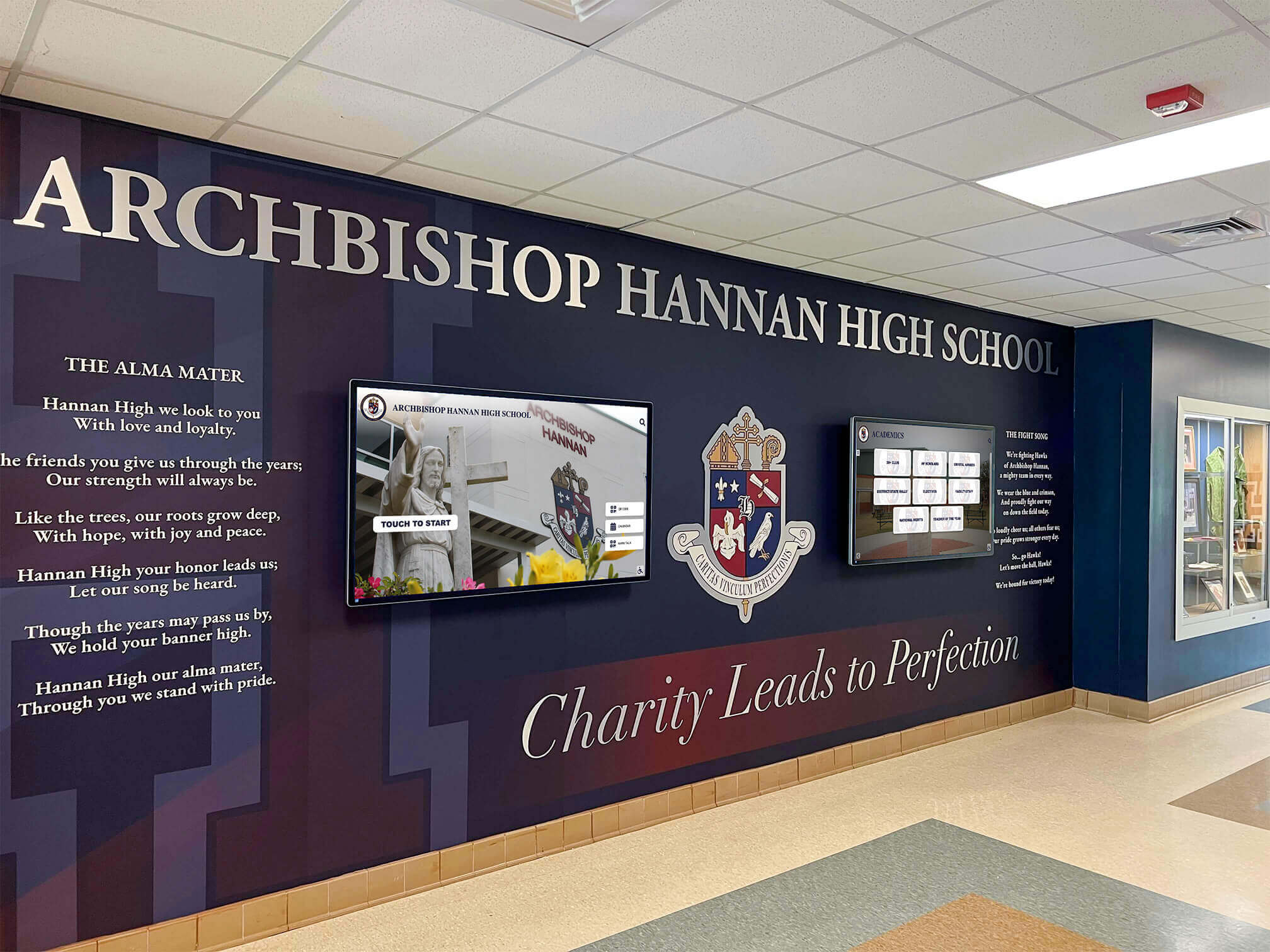
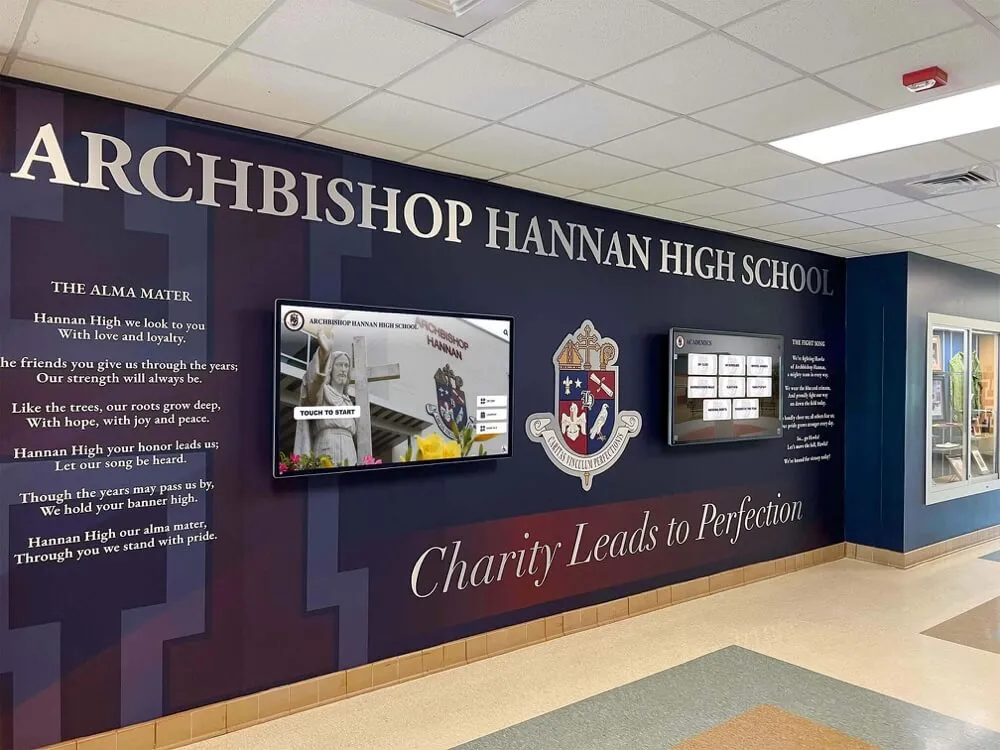
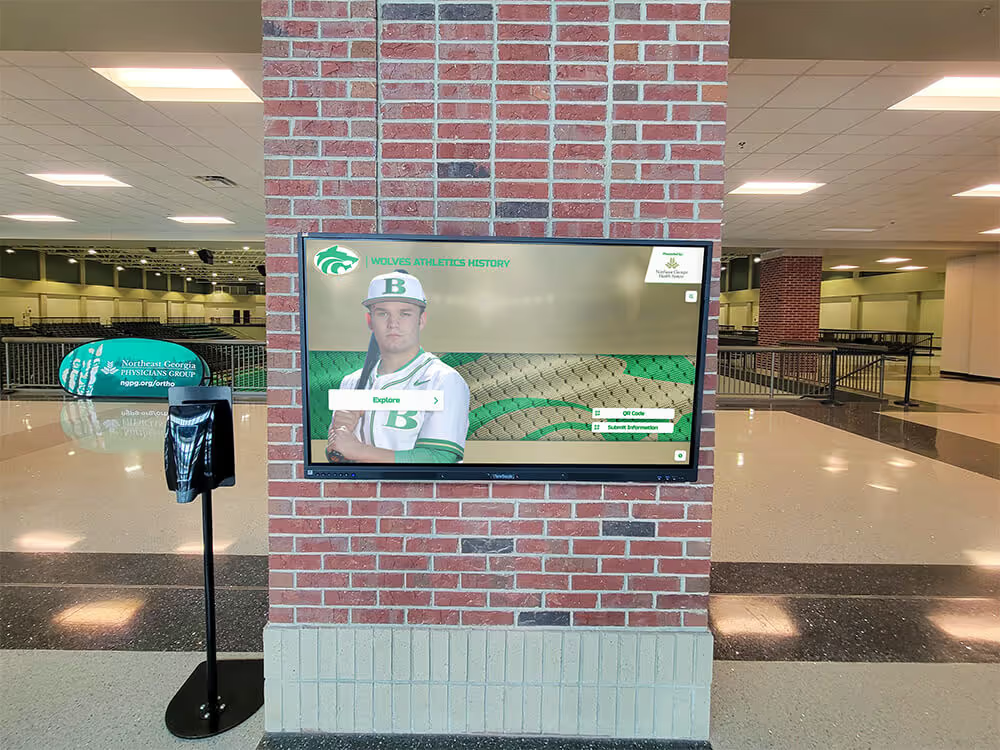
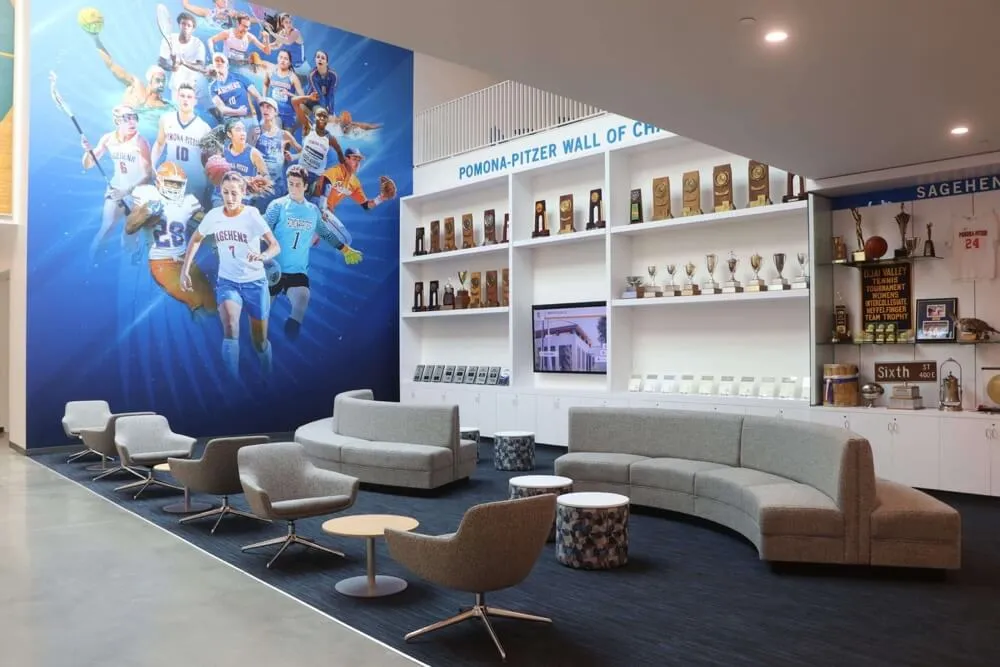
Successful lobby design combines functional elements like seating and wayfinding with inspirational components including school identity and achievement recognition
Institutional Identity Expression
Lobbies communicate organizational character through design:
- Branding elements reinforcing institutional identity and values
- Color schemes reflecting school or organizational colors
- Mascot imagery creating immediate community connection
- Mission and values statements articulating institutional purpose
- Historical elements connecting present to proud heritage
- Contemporary design preventing dated, stale impressions
Learn about effective gymnasium design approaches that complement comprehensive facility planning including entrance spaces.
Essential Lobby Design Elements
Creating truly welcoming, functional lobbies requires thoughtful integration of multiple design components addressing both practical needs and emotional engagement.
Layout and Traffic Flow Fundamentals
Strategic Space Planning
Effective layouts guide visitors naturally without confusion:
- Clear entry zones: Designated areas where visitors orient themselves upon arrival
- Obvious wayfinding: Directional signage visible from entry points guiding visitors to destinations
- Reception proximity: Administrative desk placement enabling greeting and assistance
- Traffic separation: Distinct paths for daily community members versus first-time visitors
- Gathering flexibility: Open areas accommodating both individual visitors and group assemblies
- ADA compliance: Accessible pathways, counters, and facilities ensuring all visitors navigate comfortably
Functional Zone Creation
Distinct areas serving different purposes within single spaces:
- Welcome zone: Immediate greeting area with reception, directories, and initial information
- Recognition zone: Display areas celebrating achievements without obstructing traffic flow
- Waiting area: Comfortable seating for visitors with appointments or attending meetings
- Information zone: Digital displays, bulletin boards, and directional resources
- Transition zone: Pathways leading clearly toward building interior destinations
- Administrative interface: Secure staff areas adjacent to public spaces
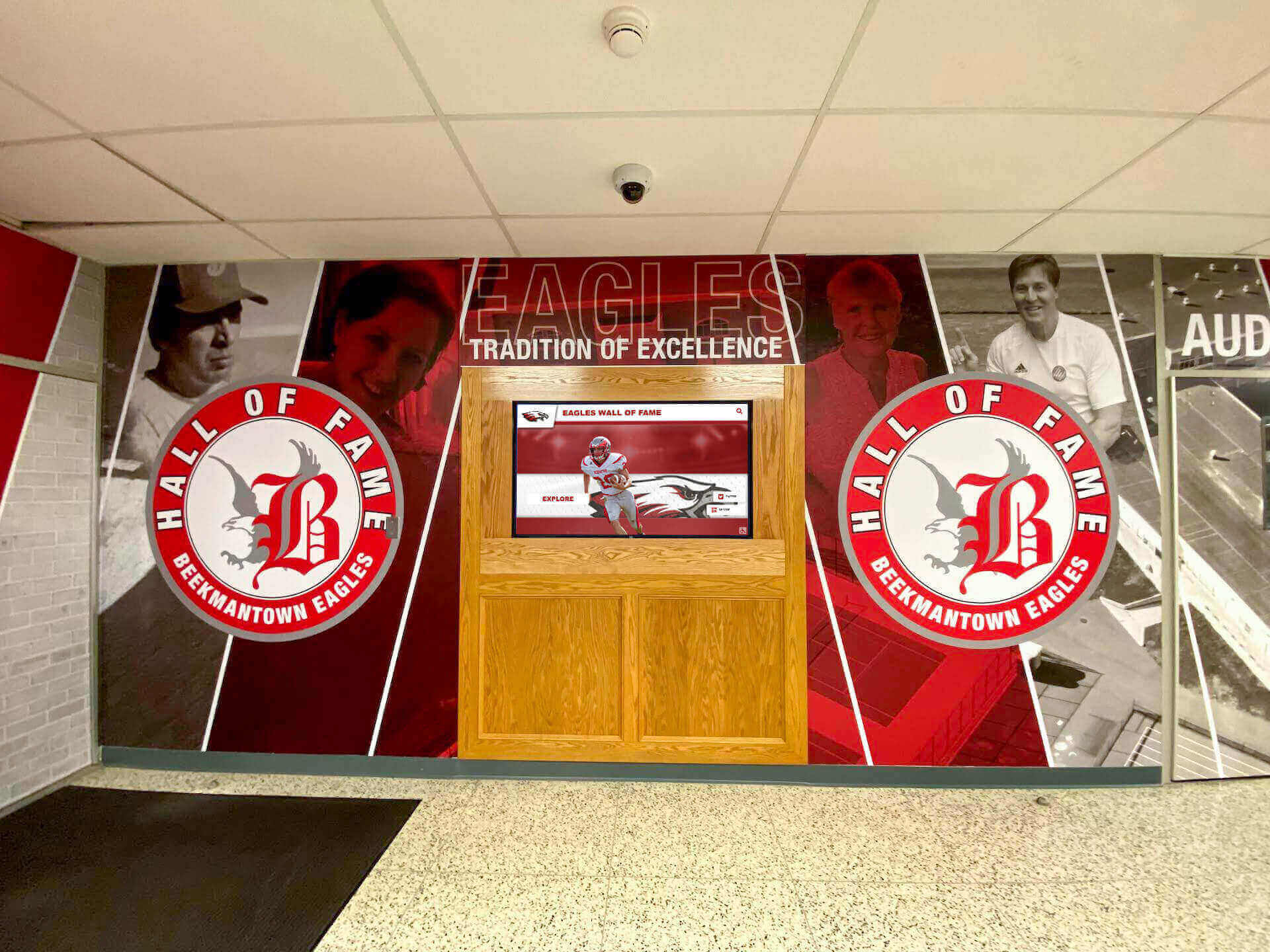
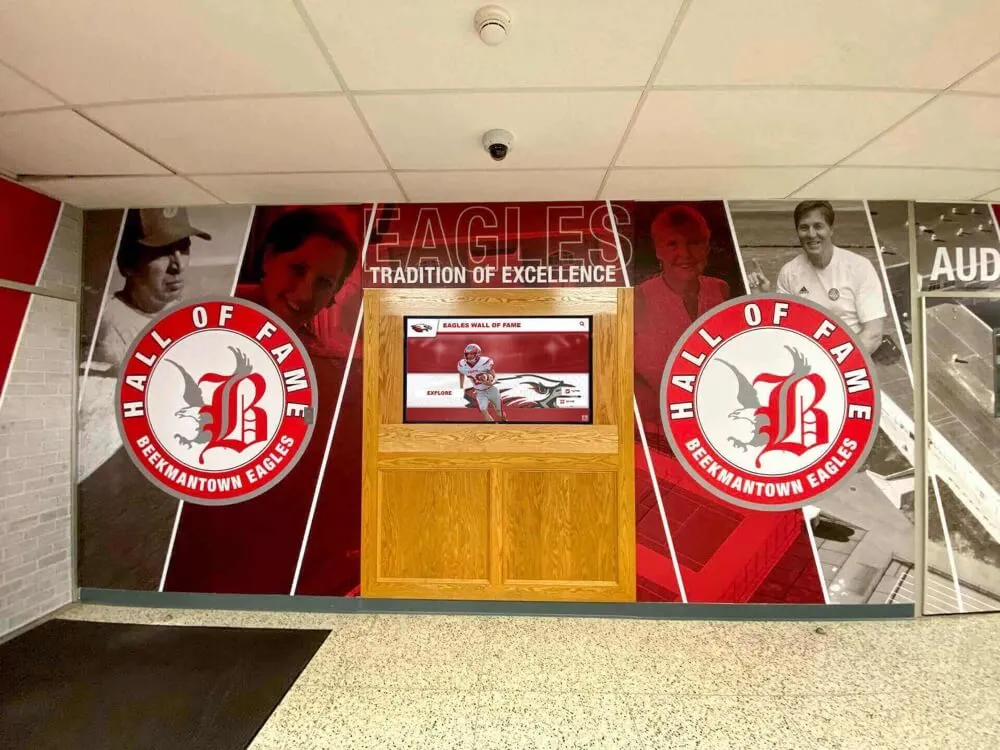
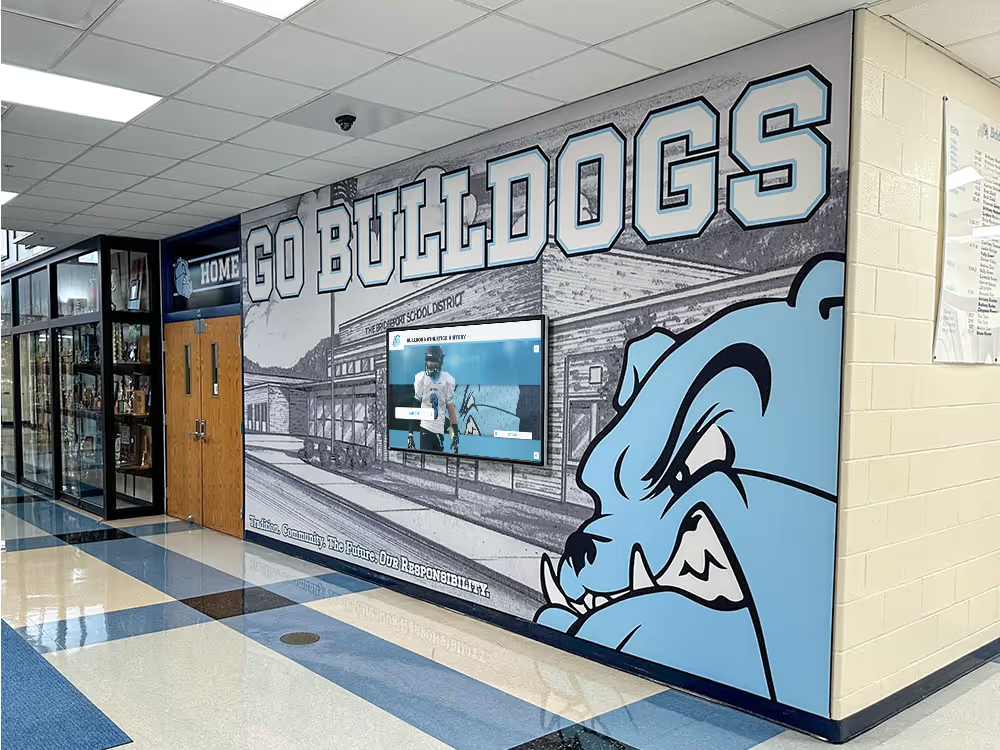
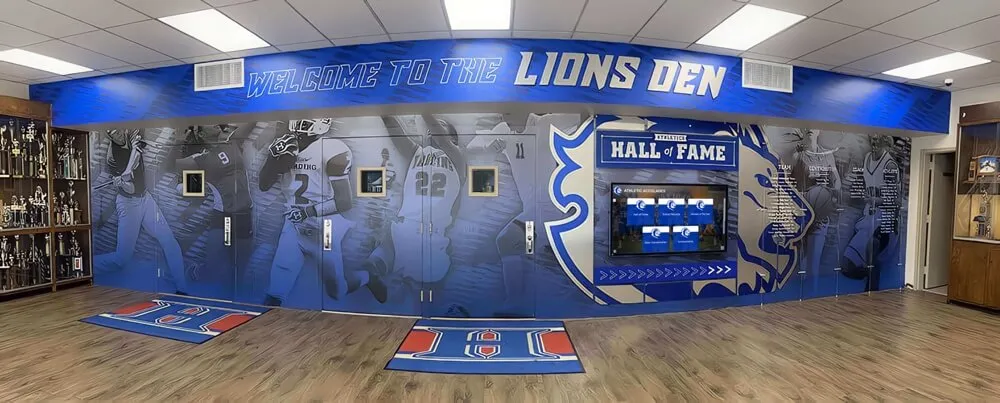
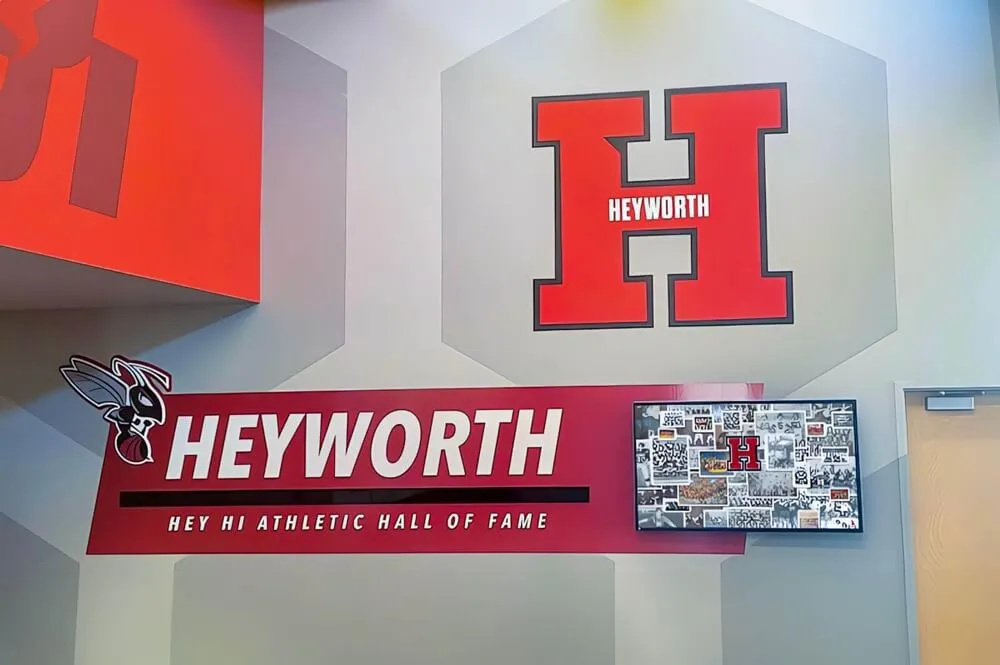
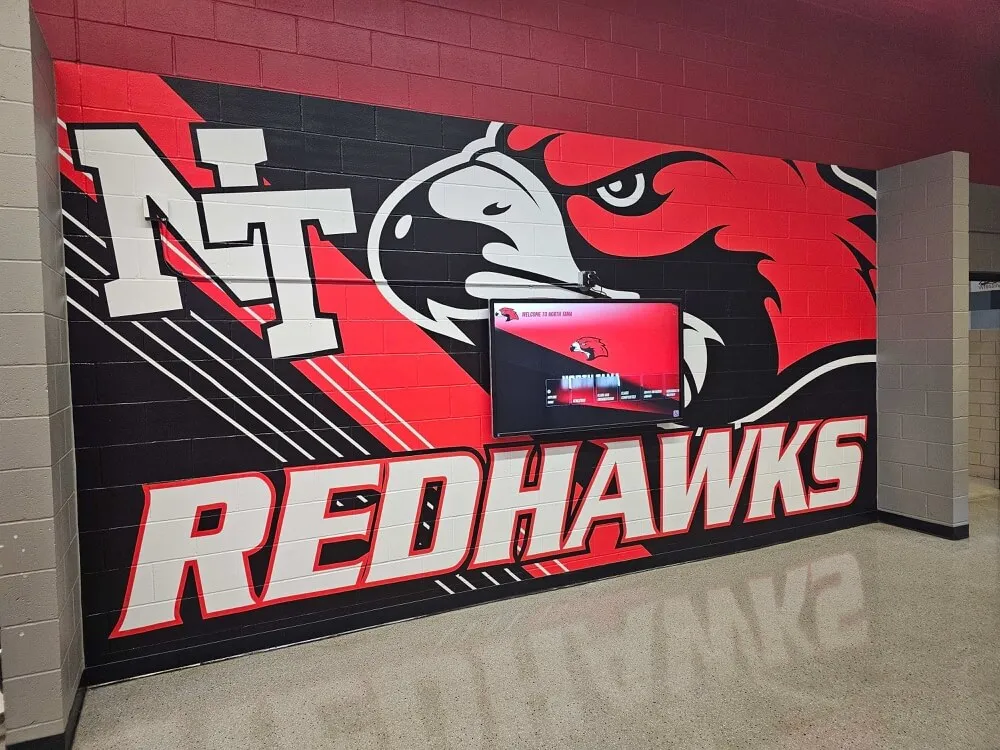
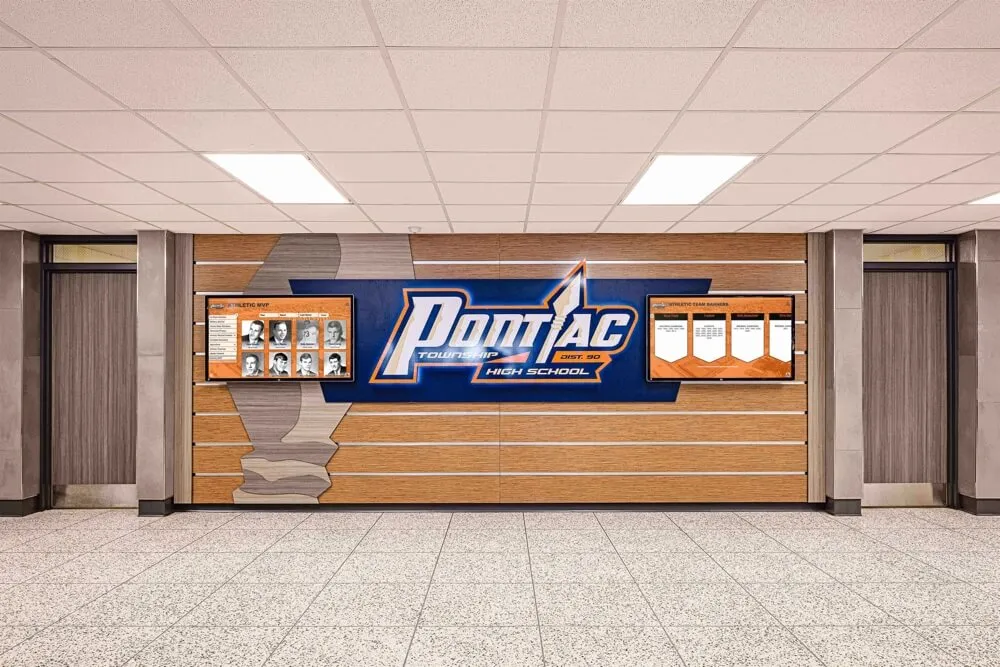
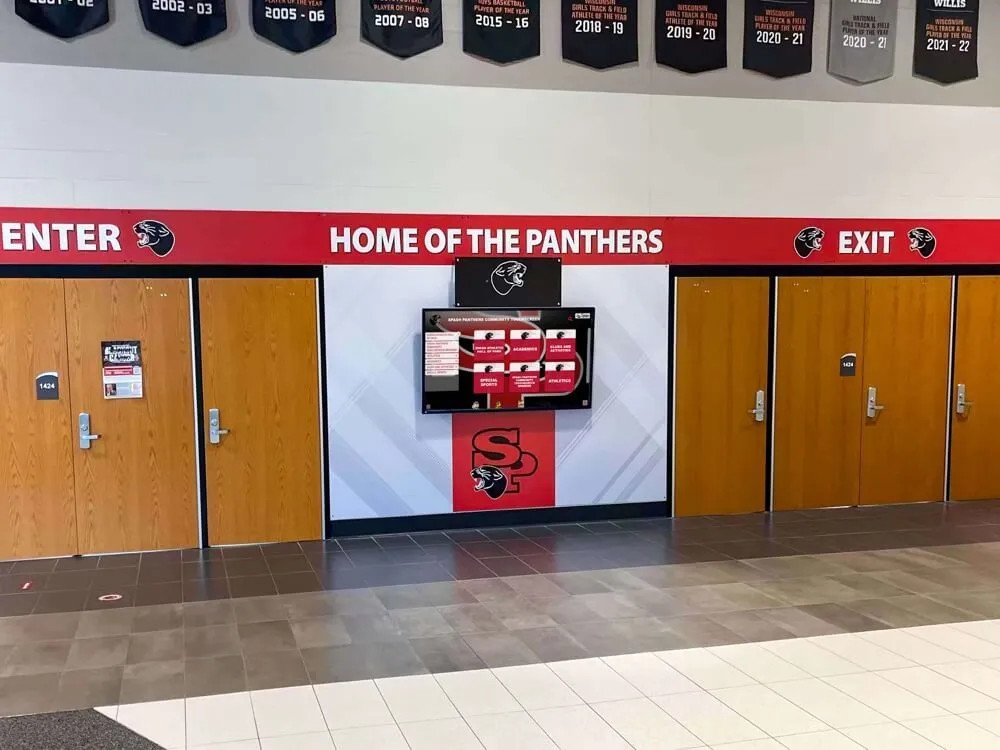
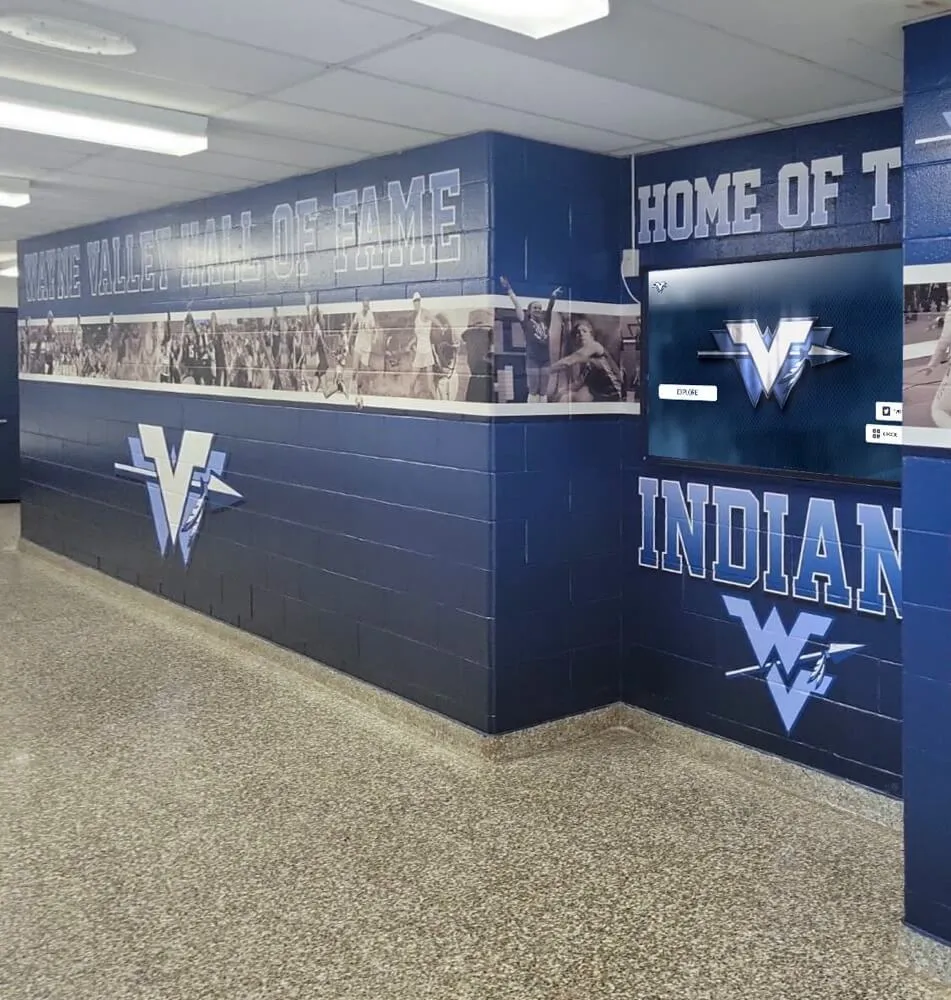
Large-scale branding installations combined with strategic digital display placement create visually impressive lobbies that celebrate institutional identity and community achievements
Visual Design and Aesthetic Elements
Color and Branding Integration
Visual identity creates immediate emotional connection:
- Institutional colors: Strategic use of school or organizational colors throughout lobby design
- Accent wall treatments: Feature walls creating visual focal points and brand reinforcement
- Flooring design: Entry mats, tile patterns, or logo integration in floor treatments
- Coordinated finishes: Paint, trim, and material selections supporting cohesive aesthetic
- Professional quality: Finishes reflecting positively on institutional standards and pride
- Maintenance durability: Material selections withstanding high-traffic daily use
Lighting Design Strategies
Appropriate illumination transforms lobby atmosphere:
- Natural light maximization: Windows, skylights, or glass doors bringing daylight into entrances
- Layered lighting approach: Combination of ambient, task, and accent lighting
- Display illumination: Focused lighting highlighting recognition displays and achievements
- Energy efficiency: LED systems reducing operational costs while improving quality
- Dimming capability: Adjustable lighting accommodating different times and uses
- Safety and security: Adequate illumination maintaining safe navigation and visual monitoring
Explore comprehensive approaches to athletic facility design including entrance and lobby considerations.
Furniture and Functional Elements
Seating Solutions
Comfortable, durable furniture serving various visitor needs:
- Individual seating: Chairs for solo visitors waiting for appointments
- Bench seating: Longer options accommodating families or small groups
- Waiting area clusters: Furniture arrangements creating conversation-friendly groupings
- Standing-height surfaces: Counters or tables enabling brief work or form completion
- Accessible options: Seating heights and configurations accommodating all abilities
- Easy maintenance: Commercial-grade furniture withstanding intensive use and cleaning
Practical Amenities
Functional elements enhancing visitor experience:
- Reception desk: Professional greeting station with transaction surfaces and secure storage
- Directory systems: Building maps, staff listings, and departmental information
- Coat hooks or storage: Seasonal visitor belongings accommodation
- Charging stations: USB ports and outlets enabling device charging during visits
- Water fountains: Hydration access for visitors and community members
- Hand sanitizer stations: Health and hygiene resources demonstrating care
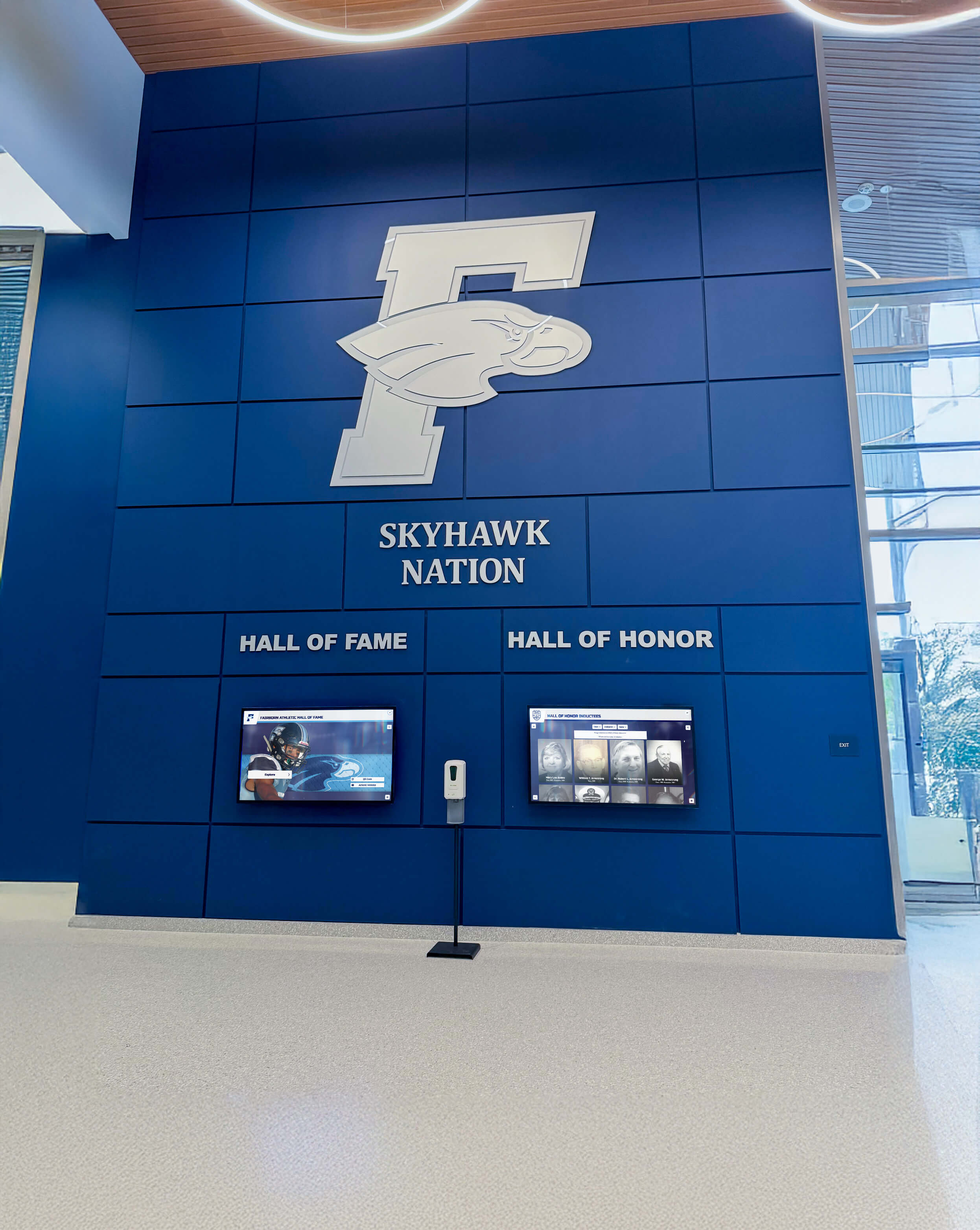
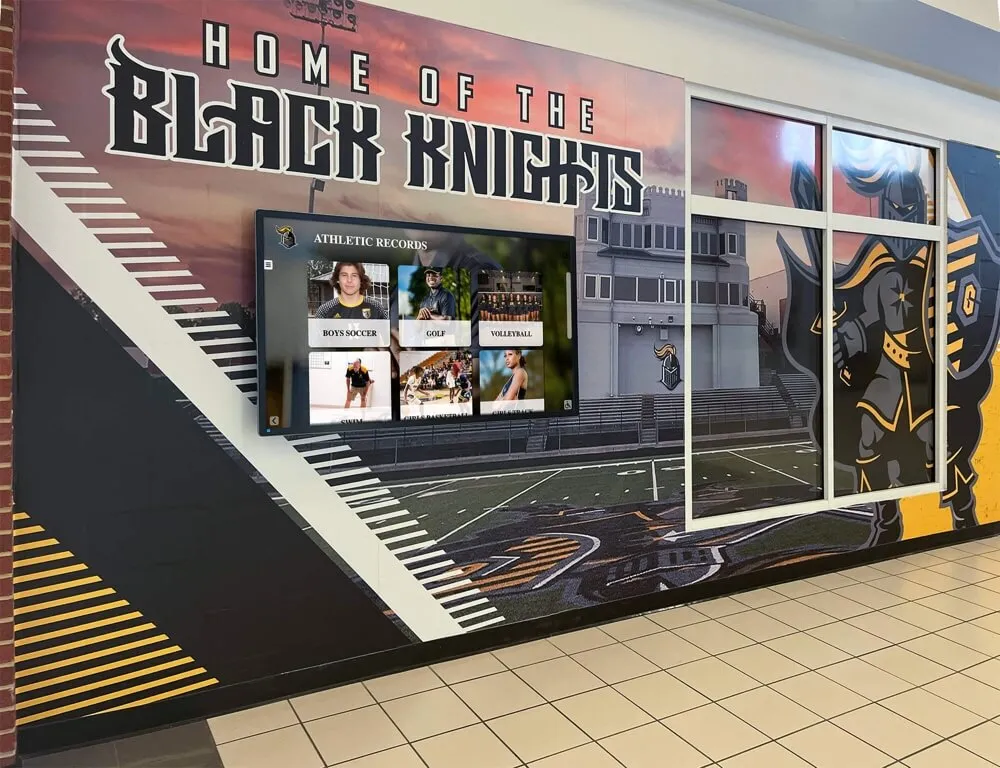
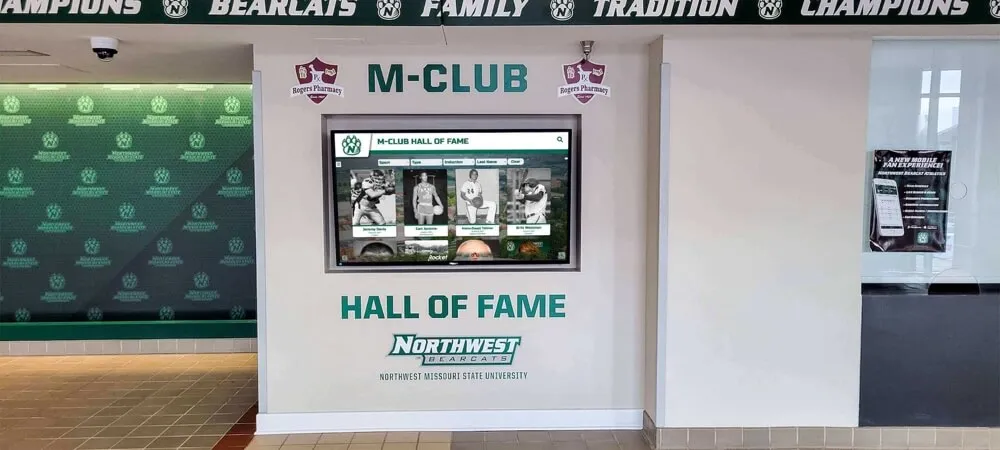
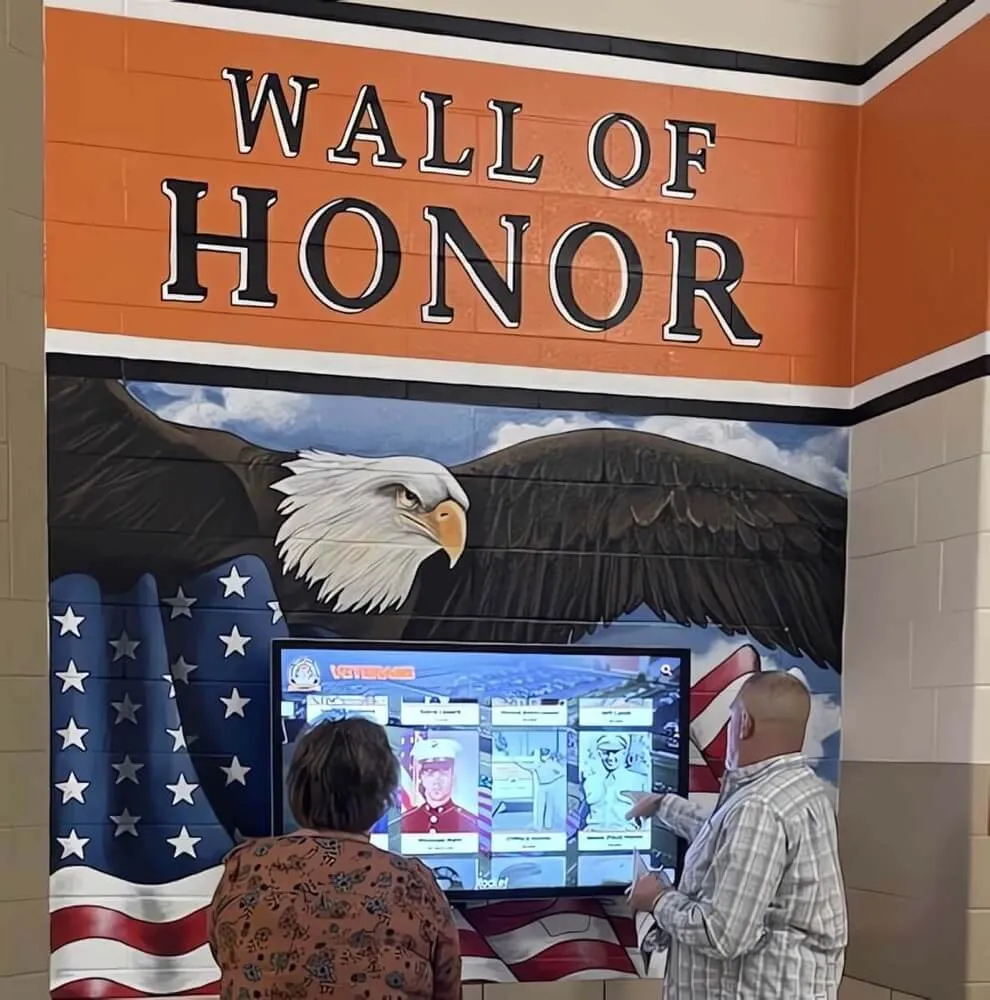
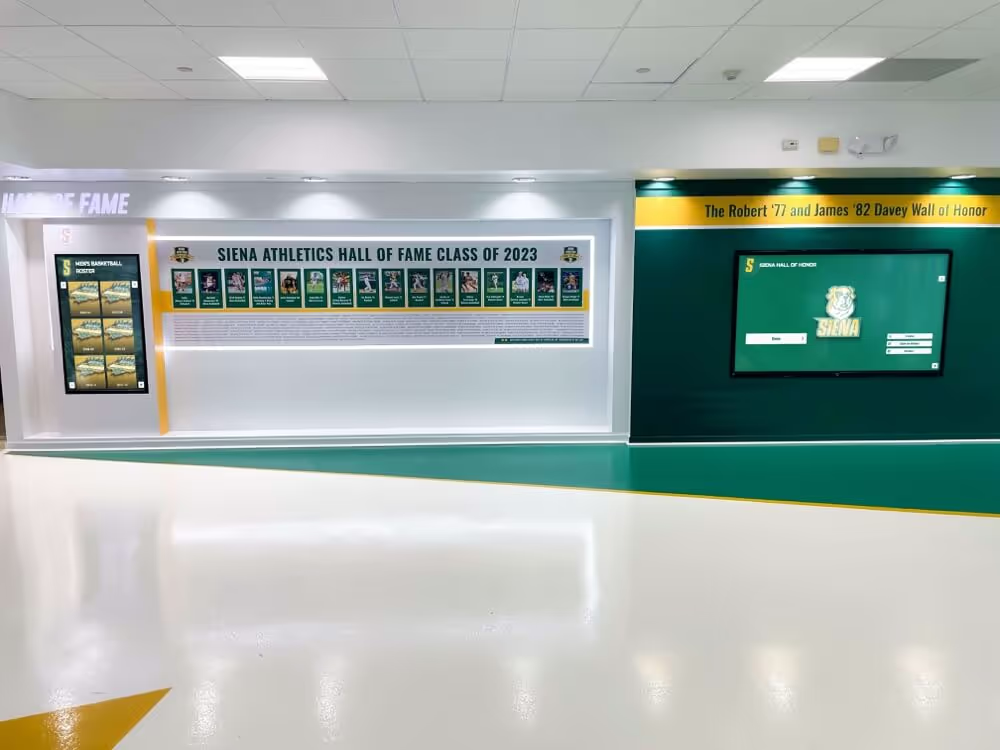
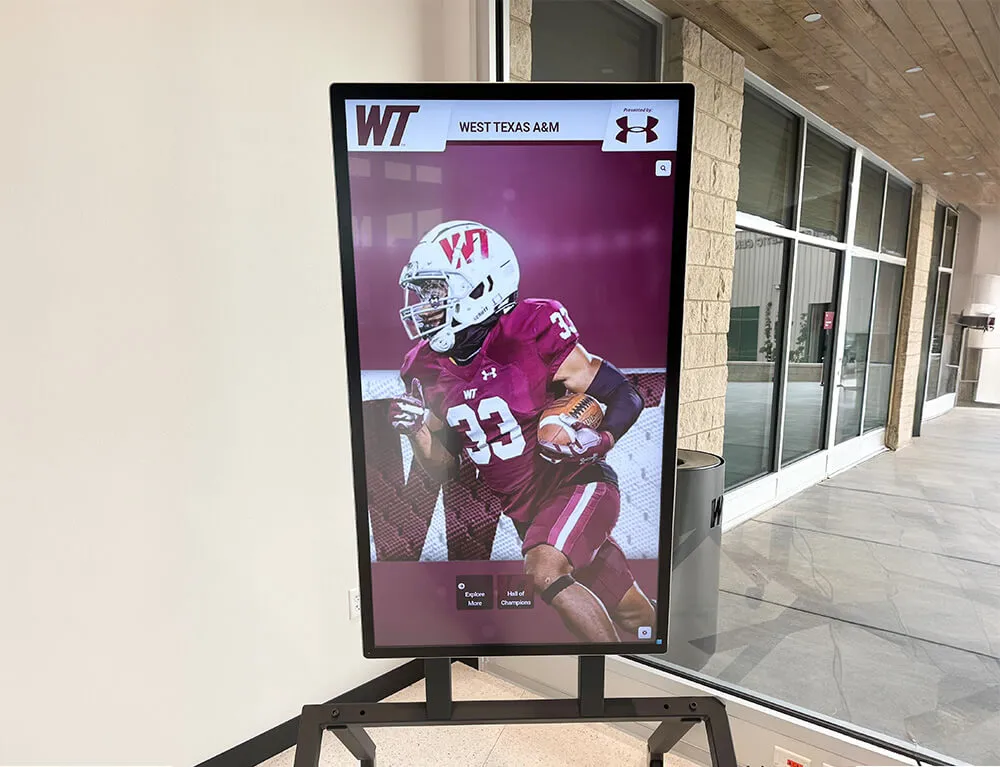
Dedicated recognition walls transform lobbies into celebration spaces honoring achievement while creating visual interest and institutional pride
Recognition Display Integration
Beyond functional design, recognition elements transform lobbies into celebration spaces that inspire pride and communicate institutional values through visible achievement acknowledgment.
Traditional Display Approaches
Physical Trophy Cases and Plaques
Conventional recognition maintains important roles:
Trophy Case Design
- Climate-controlled cases protecting awards from dust and deterioration
- Proper lighting showcasing trophies and championship artifacts effectively
- Organized arrangement preventing cluttered, overwhelming displays
- Rotating exhibits keeping displays fresh and highlighting different achievements
- Historical preservation maintaining heritage while remaining current
- Secure construction protecting valuable awards and memorabilia
Recognition Wall Systems
- Plaque walls honoring distinguished alumni, donors, or community members
- Nameplate systems celebrating ongoing recognition categories
- Engraved panel displays providing permanent acknowledgment
- Photographic recognition combining images with achievement descriptions
- Timeline presentations documenting institutional history chronologically
- Donor recognition walls acknowledging philanthropic support
Physical Display Limitations
Traditional approaches face inherent constraints:
- Fixed capacity forcing difficult decisions about who receives recognition
- Static information preventing updates as achievements continue
- Space competition between athletic, academic, arts, and service recognition
- Maintenance challenges keeping displays clean, organized, and current
- Visibility problems when too many items create overwhelming clutter
- Cost barriers when expansion requires construction and additional cases
Explore creative donor wall ideas that can be adapted for comprehensive lobby recognition.
Modern Digital Recognition Systems
Contemporary technology overcomes traditional display limitations:
Unlimited Recognition Capacity
Digital platforms eliminate space constraints:
- Showcase every distinguished achievement without selection limitations
- Accommodate growing recognition needs without renovation
- Feature extensive profiles with photos, videos, and biographical information
- Update content instantly as new achievements occur
- Include multiple achievement categories simultaneously
- Maintain comprehensive historical archives accessible on demand
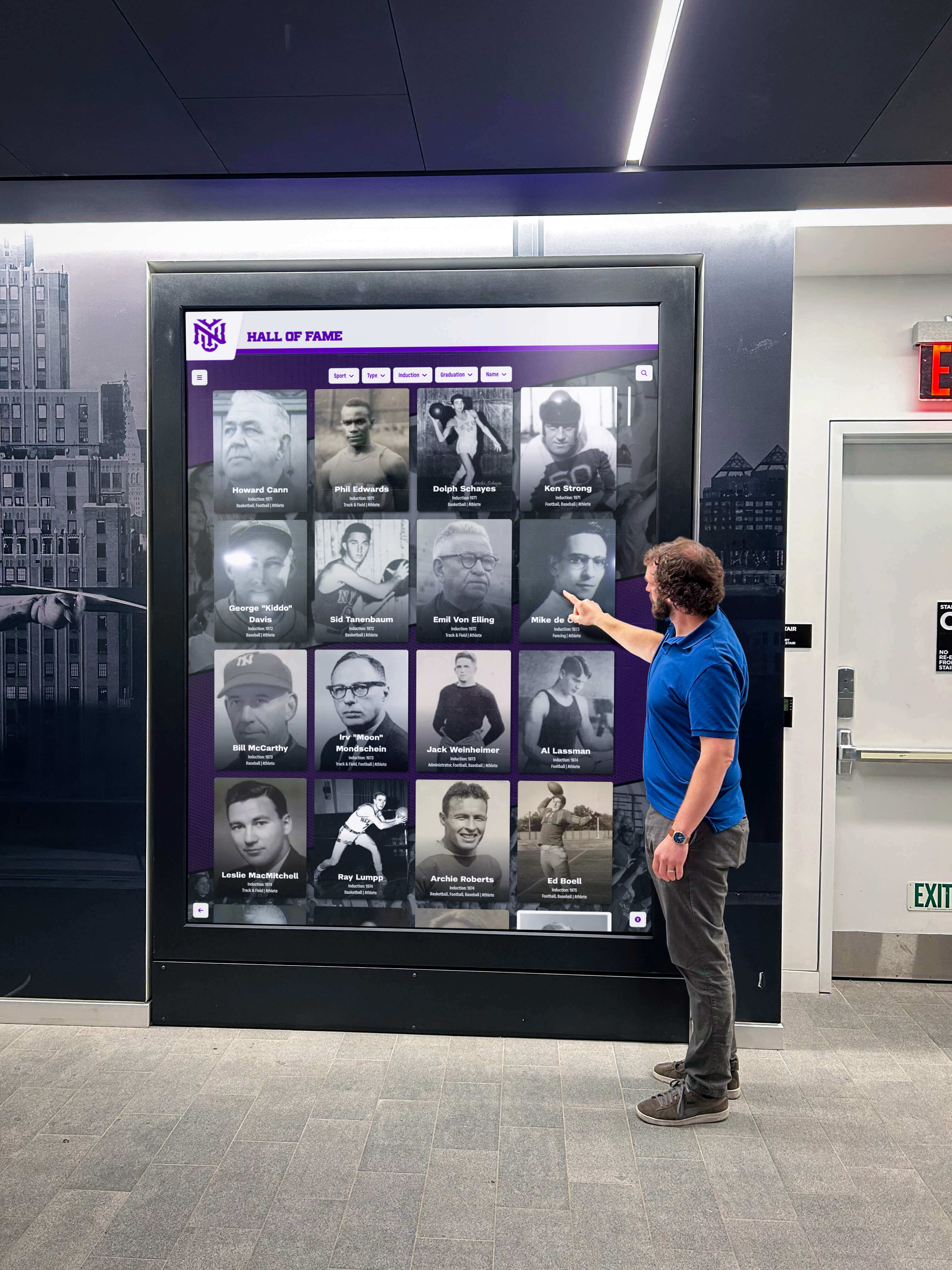
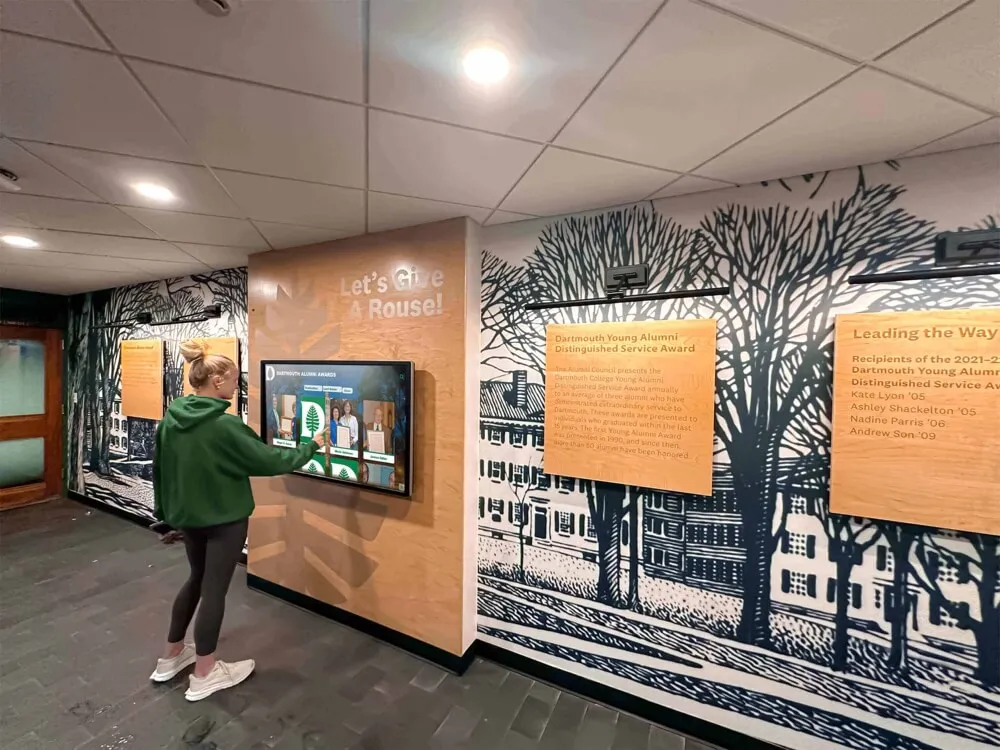
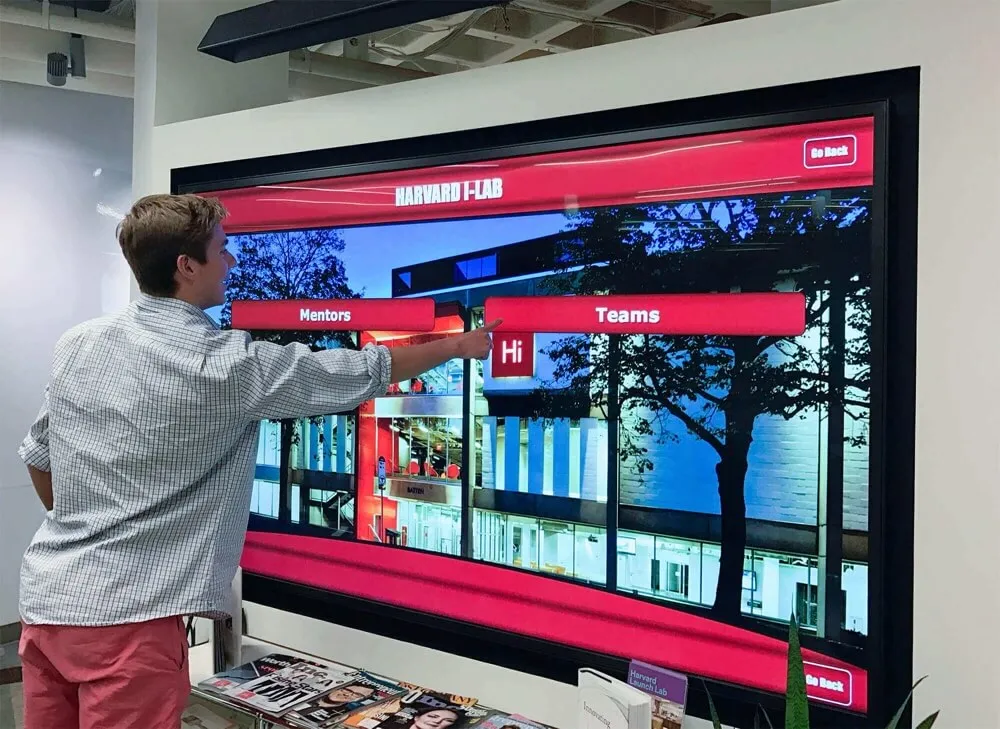
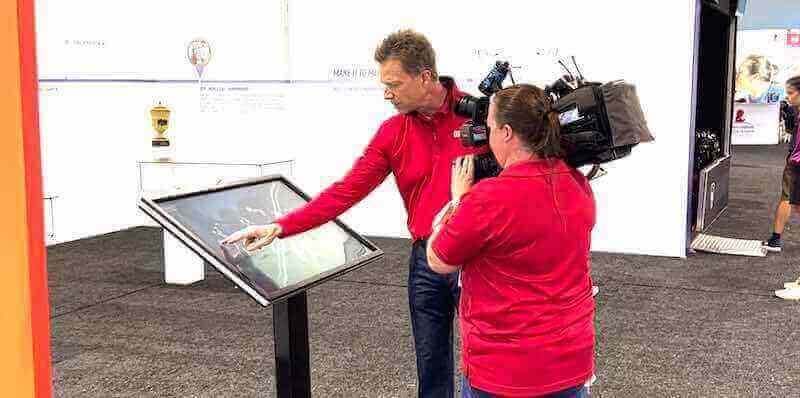
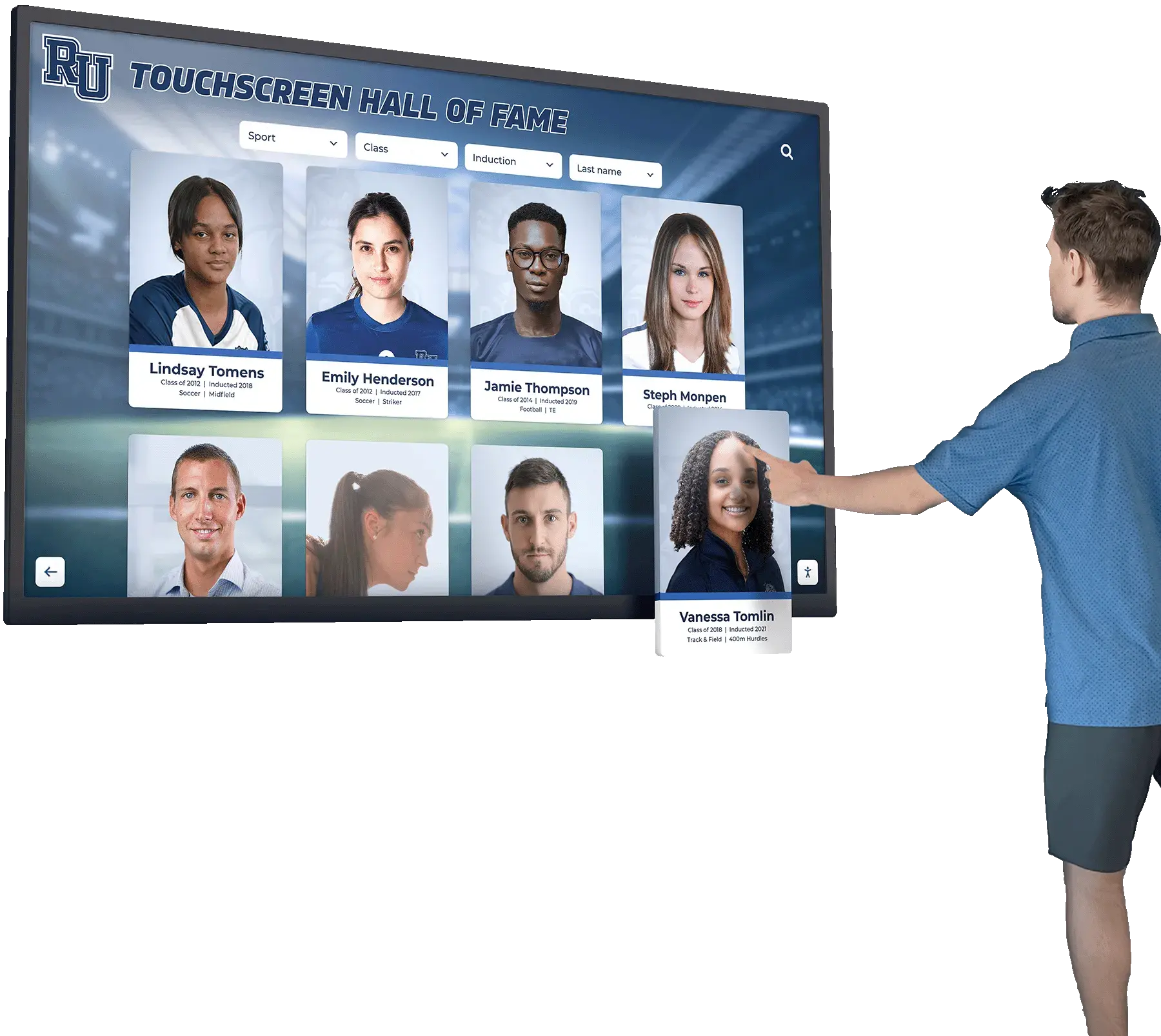
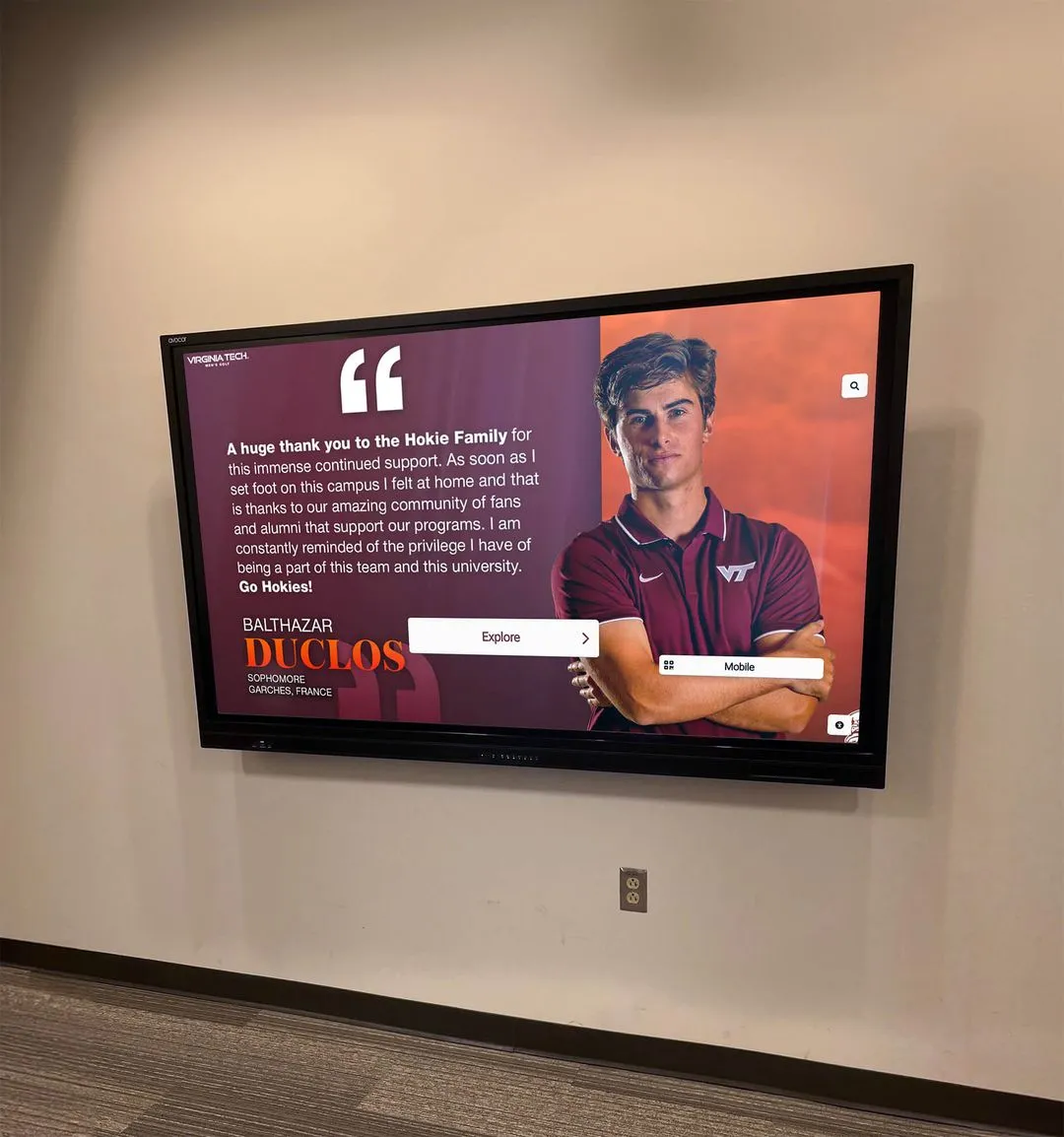
Interactive touchscreen systems enable visitors to explore institutional history, find personal connections, and engage with achievement recognition at their own pace
Enhanced Engagement and Interactivity
Digital systems create memorable visitor experiences:
- Visitors search for family members, friends, and personal connections
- Alumni discover classmates and teammates during campus returns
- Prospective families see evidence of student success and program excellence
- Touchscreen interaction creates engagement impossible with static displays
- Social sharing capabilities extend recognition beyond physical visits
- Analytics provide insights about which content generates most interest
Professional Digital Recognition Solutions
Platforms like Rocket Alumni Solutions provide comprehensive systems specifically designed for institutional recognition in lobby environments:
- Unlimited inductee capacity: Digital displays accommodate every distinguished achievement without space limitations
- Searchable databases: Intuitive navigation enabling visitors to find specific honorees quickly
- Multimedia profiles: Rich content combining photos, videos, accomplishments, and personal stories
- Remote content management: Cloud-based systems allowing updates from anywhere without technical expertise
- Professional display hardware: Commercial-grade touchscreens designed for public space durability
- Web integration: Recognition extends beyond physical lobbies to reach online audiences
- ADA compliance: Accessible interfaces ensuring all visitors can explore content comfortably
- Scheduled content: Automated displays highlighting different achievements, upcoming events, or announcements
Discover comprehensive digital recognition display options suitable for various lobby configurations and institutional needs.
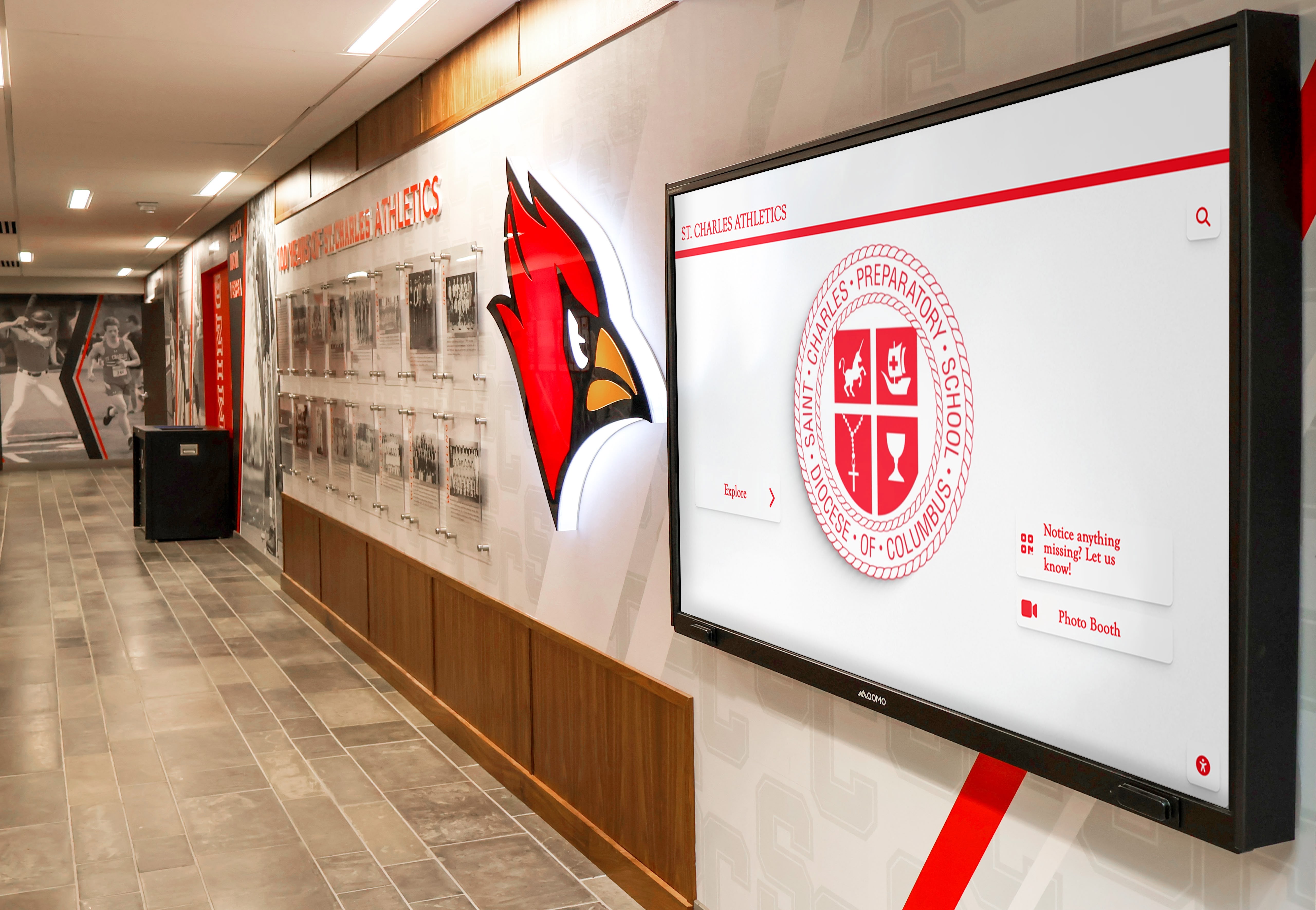
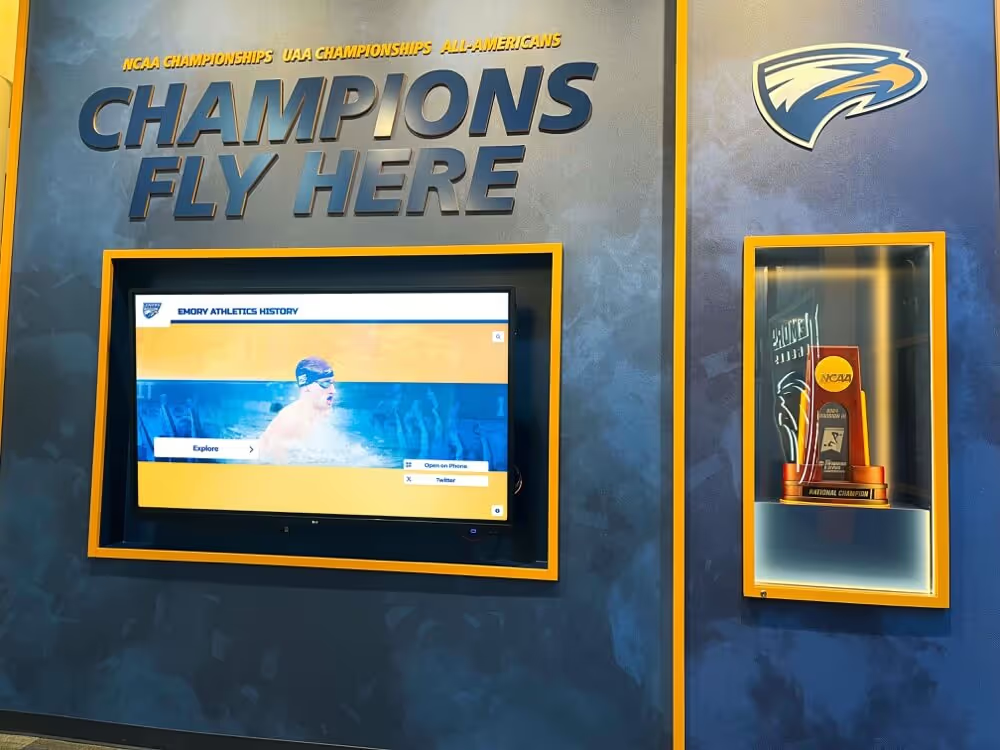
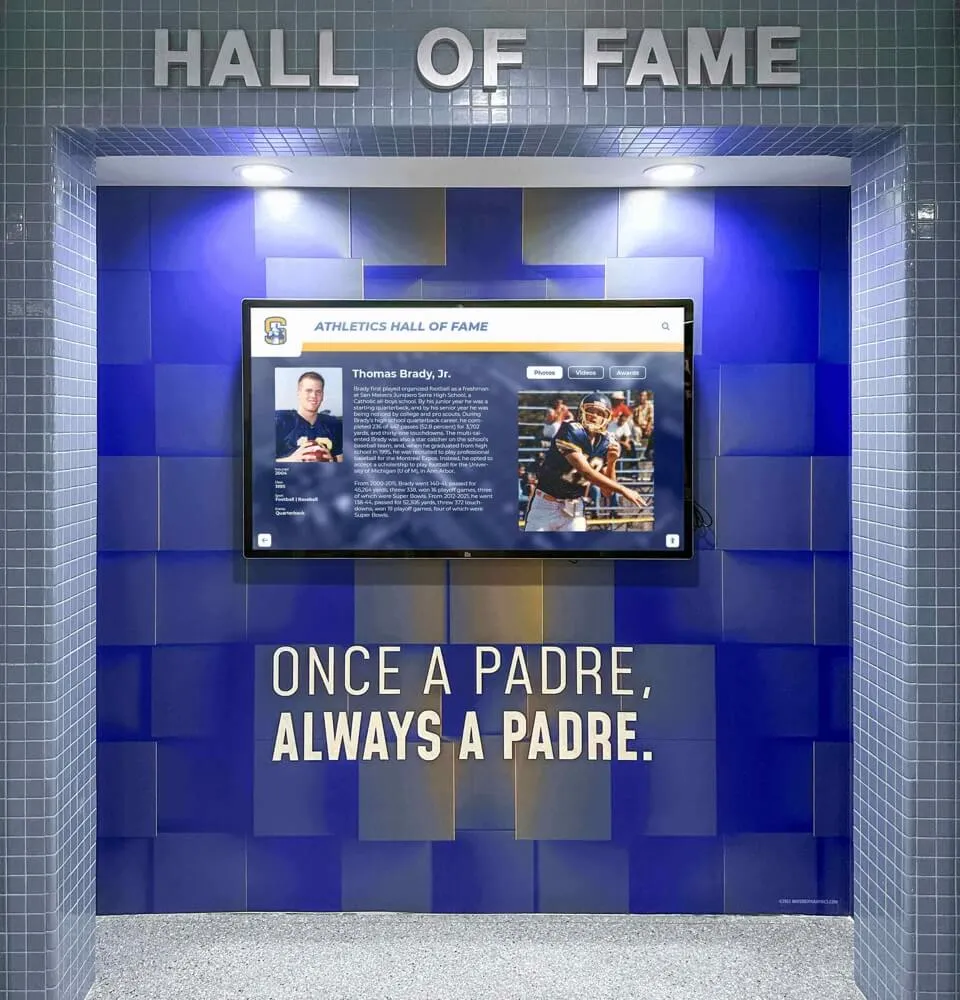
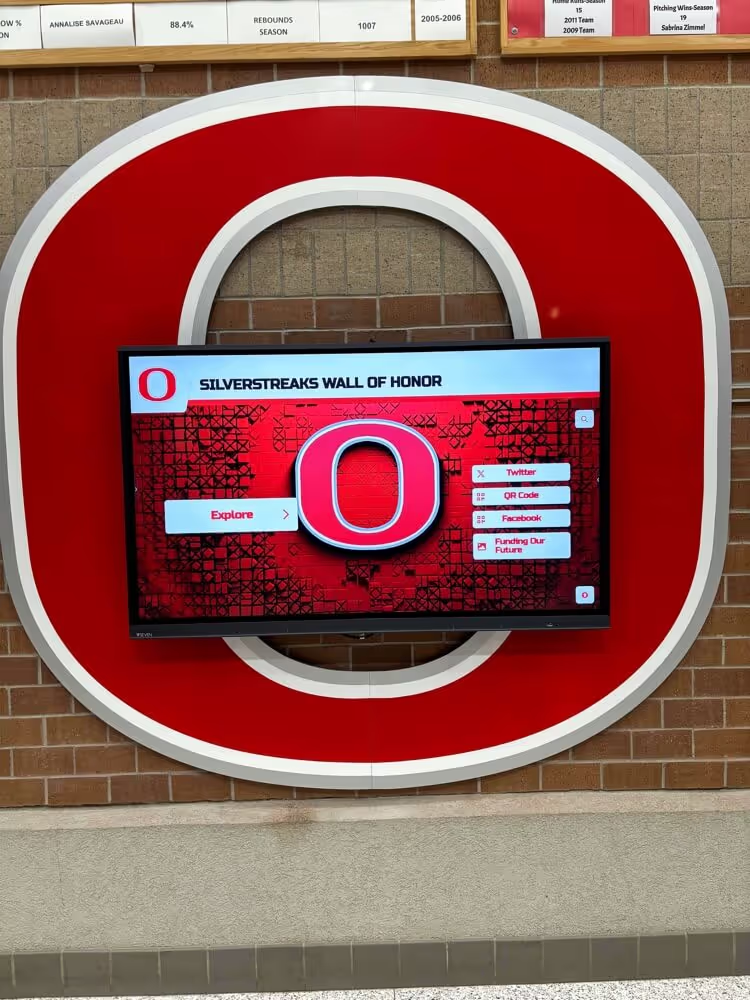
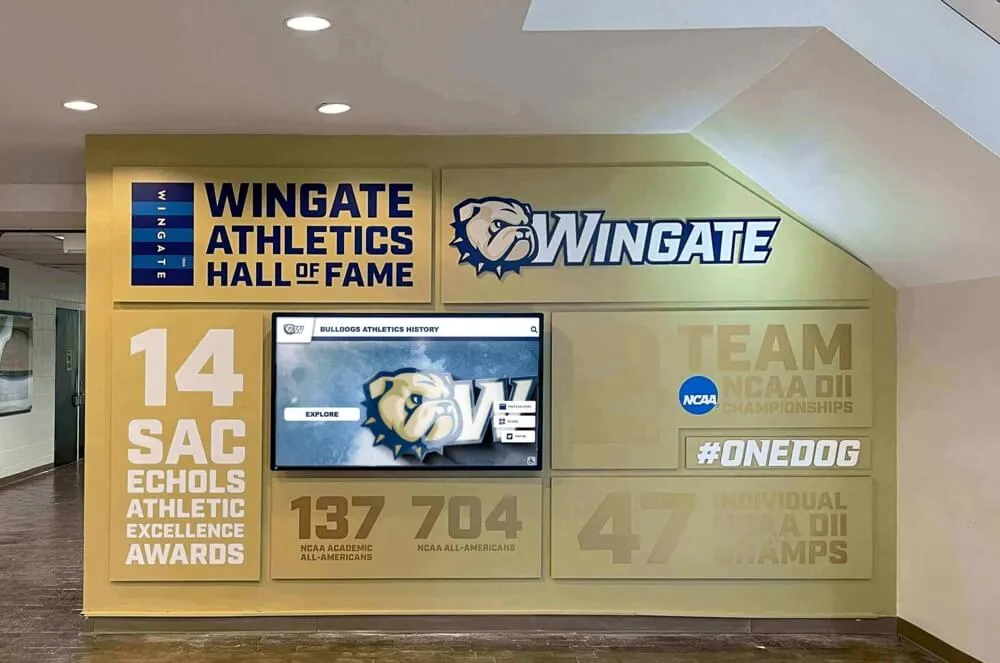
Wall-mounted digital displays integrate seamlessly with branded environmental design, providing dynamic recognition without sacrificing architectural aesthetics
Hybrid Recognition Approaches
Combining Traditional and Digital Elements
Many institutions benefit from integrated strategies:
Complementary Display Design
- Prestigious physical trophies for championship celebrations
- Digital displays providing comprehensive achiever databases
- Rotating physical exhibits coordinated with digital content themes
- QR codes on plaques linking to extended digital profiles
- Historical artifacts preserved physically while documented digitally
- Traditional donor walls supplemented by digital impact storytelling
Strategic Placement Decisions
- High-profile trophies in prominent lobby focal points
- Digital displays near seating areas encouraging extended exploration
- Directional signage guiding visitors between recognition areas
- Mobile-responsive web access enabling preview before campus visits
- Print materials referencing digital recognition for deeper exploration
- Event activation coordinating physical and digital recognition experiences
Learn about capital campaign recognition strategies often requiring prominent lobby display integration.
Technology Integration in Modern Lobbies
Beyond recognition displays, various technology applications enhance lobby functionality and visitor experience.
Information and Communication Systems
Digital Signage and Announcements
Dynamic displays keeping communities informed:
- Event calendars: Upcoming competitions, performances, meetings, and activities
- Daily announcements: Schedule changes, weather alerts, and timely information
- Emergency notifications: Safety alerts and important communications during crises
- Welcome messages: Personalized greetings for visiting groups and special guests
- Directional information: Building maps and location guidance
- Social media integration: Live feeds showcasing student work and community news
Interactive Directories
Wayfinding systems helping visitors navigate independently:
- Searchable staff directories with office locations and contact information
- Department and classroom location guides
- Facility maps with highlighted routes to destinations
- Accessible navigation for visitors with mobility considerations
- Multi-language support for diverse communities
- Mobile integration enabling route planning before arrival
Explore campus directory touchscreen systems designed specifically for educational institutions.
Connectivity and Practical Technology
Infrastructure Essentials
Modern expectations require technological foundations:
- Guest WiFi networks: Reliable internet access for visitors with minimal authentication barriers
- Charging stations: USB ports and standard outlets at seating areas and waiting zones
- Display mounting infrastructure: Proper electrical, data, and structural support for screens
- Sound system integration: Audio capabilities for announcements, ceremonies, or ambient music
- Security camera systems: Visual monitoring supporting safety and security protocols
- Access control integration: Entry systems coordinating with building security management
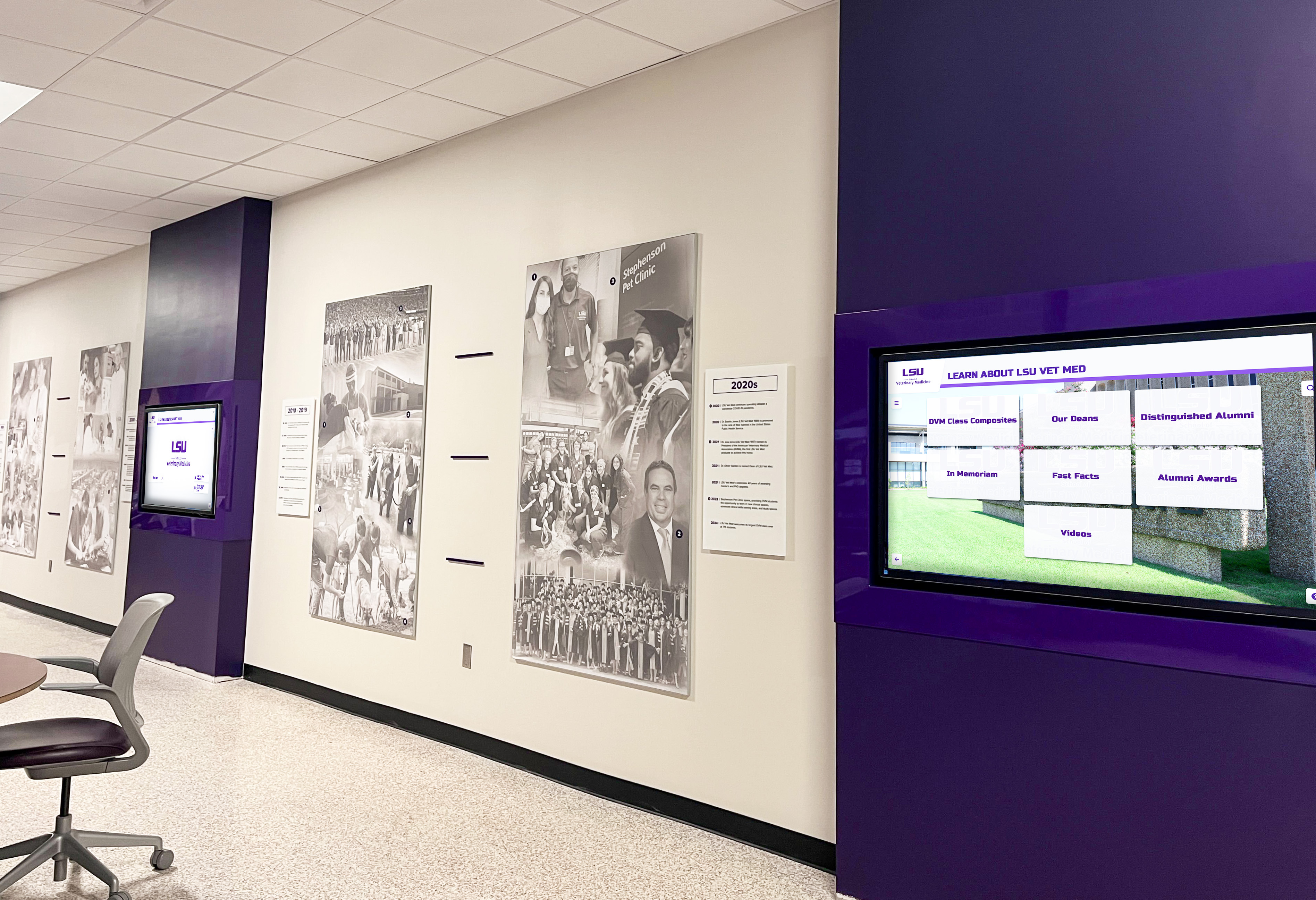
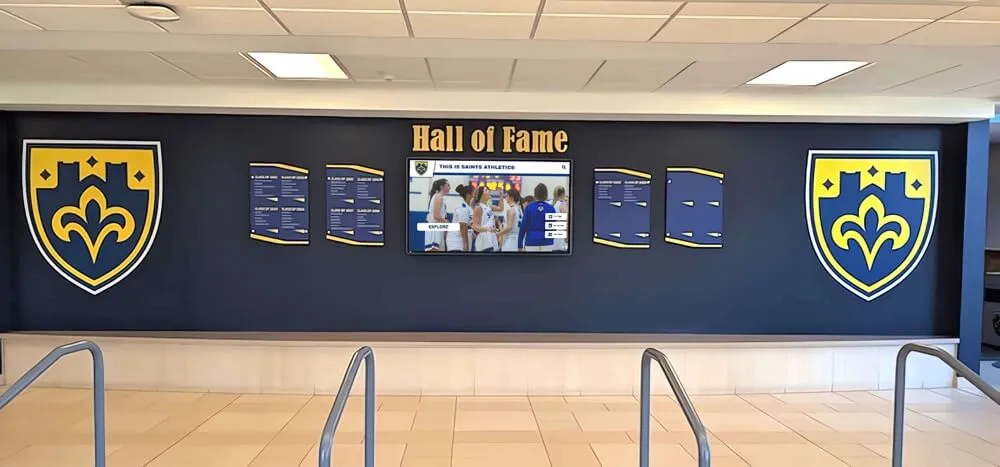
Multiple coordinated displays create comprehensive information and recognition environments suitable for complex institutions with diverse communication needs
Lobby Design for Different Institutional Types
Various organizations require tailored approaches reflecting unique community characteristics, visitor patterns, and institutional purposes.
School and University Lobby Design
Secondary School Entrance Spaces
High schools balance tradition with contemporary expectations:
Design Priorities
- School color and mascot prominence creating immediate identity connection
- Trophy case visibility celebrating athletic tradition and competitive success
- Academic honor roll displays recognizing scholarly achievement
- Performing arts acknowledgment through posters, plaques, or digital highlights
- Alumni recognition connecting current students to institutional heritage
- Safety and security infrastructure monitoring access and maintaining protocols
University and College Lobbies
Higher education institutions serve more complex constituencies:
Design Considerations
- Professional aesthetics reflecting academic seriousness and institutional prestige
- Donor recognition prominence acknowledging philanthropic partnership importance
- Student work showcases celebrating academic and creative excellence
- Research highlights demonstrating institutional contributions to knowledge
- Prospective student impression management supporting enrollment objectives
- Alumni welcome elements facilitating returning graduate connections
Understanding building positive school culture helps inform lobby design supporting community values and institutional climate.
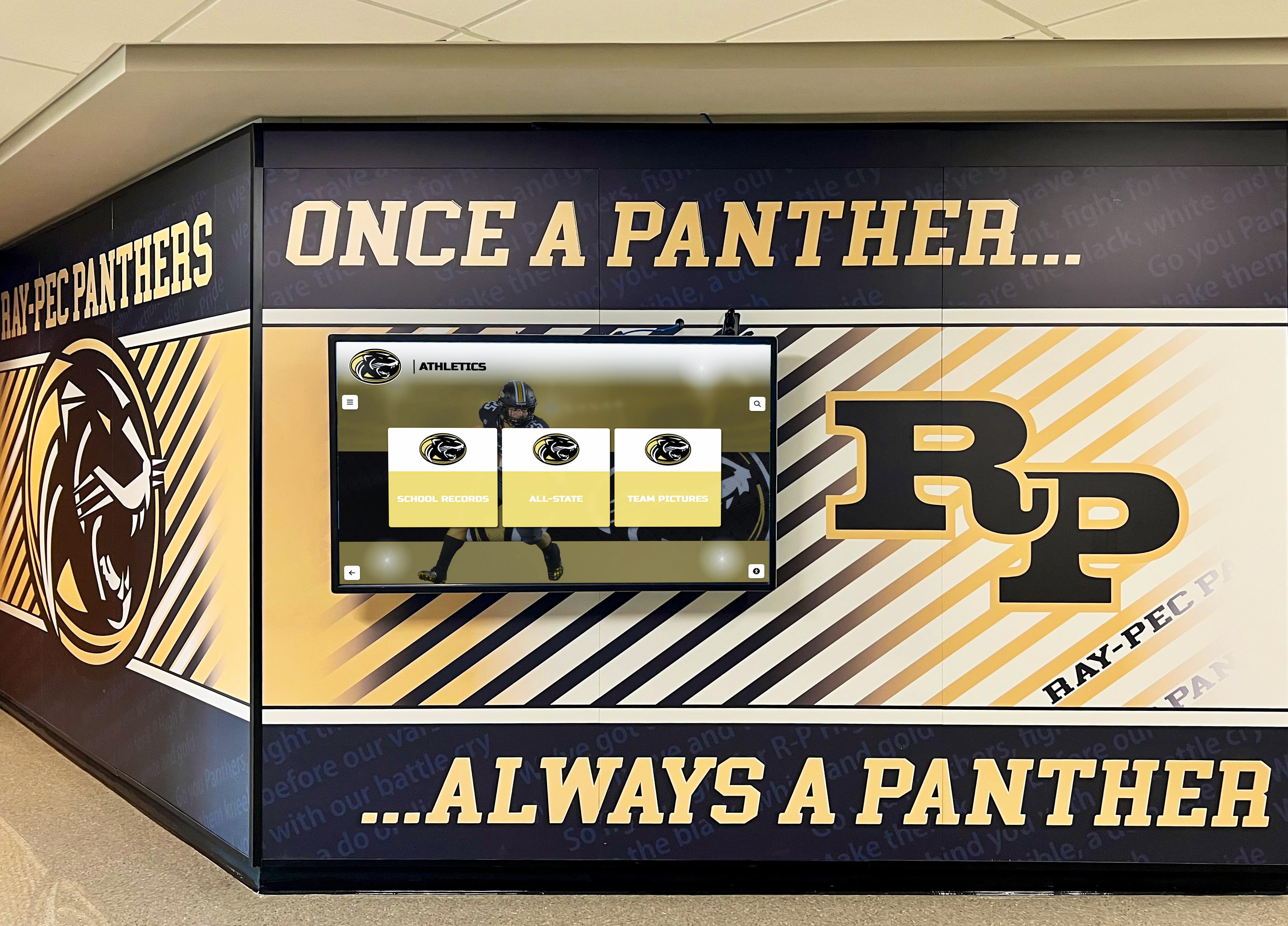
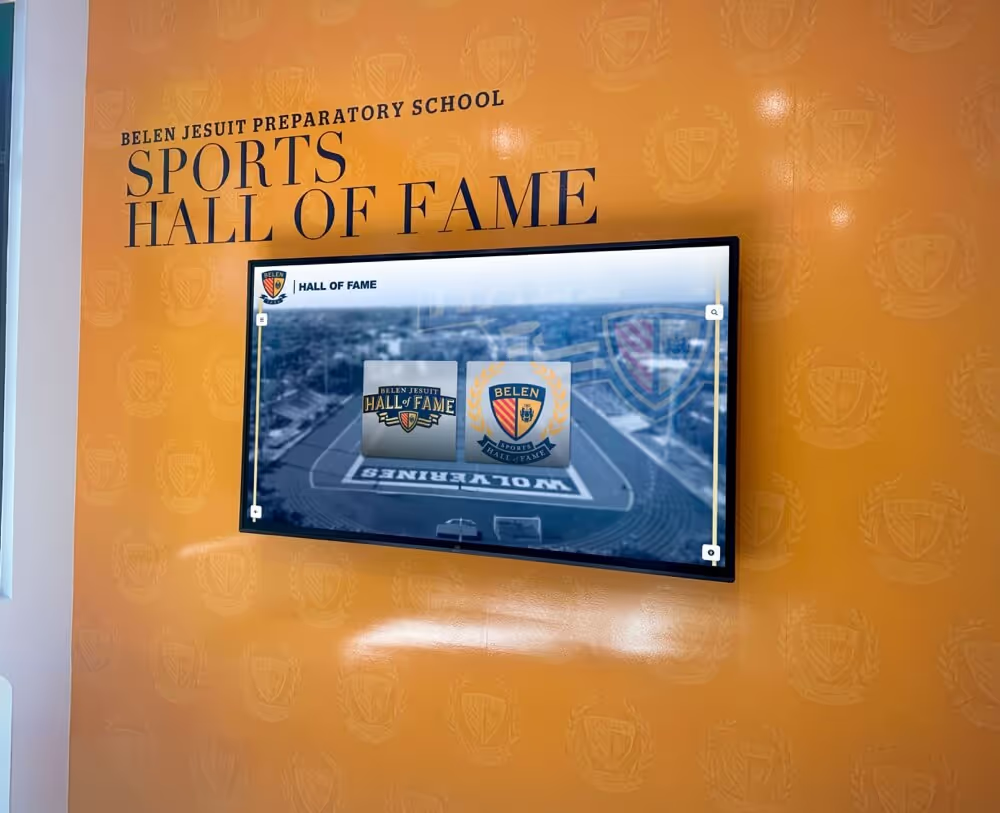
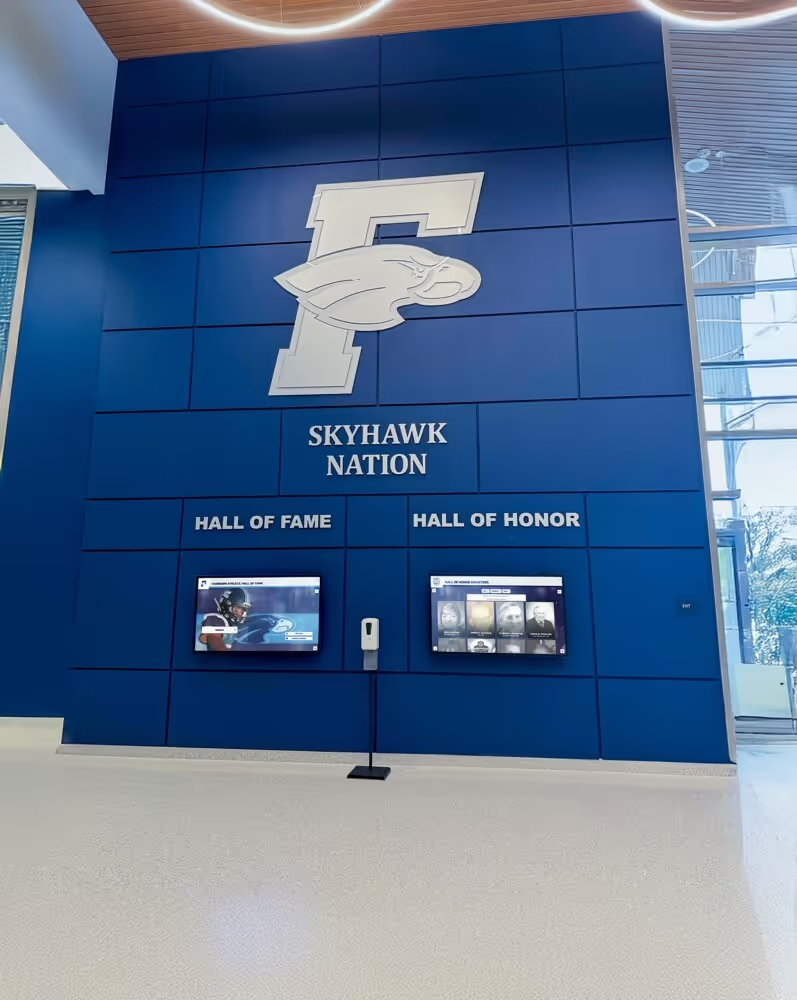
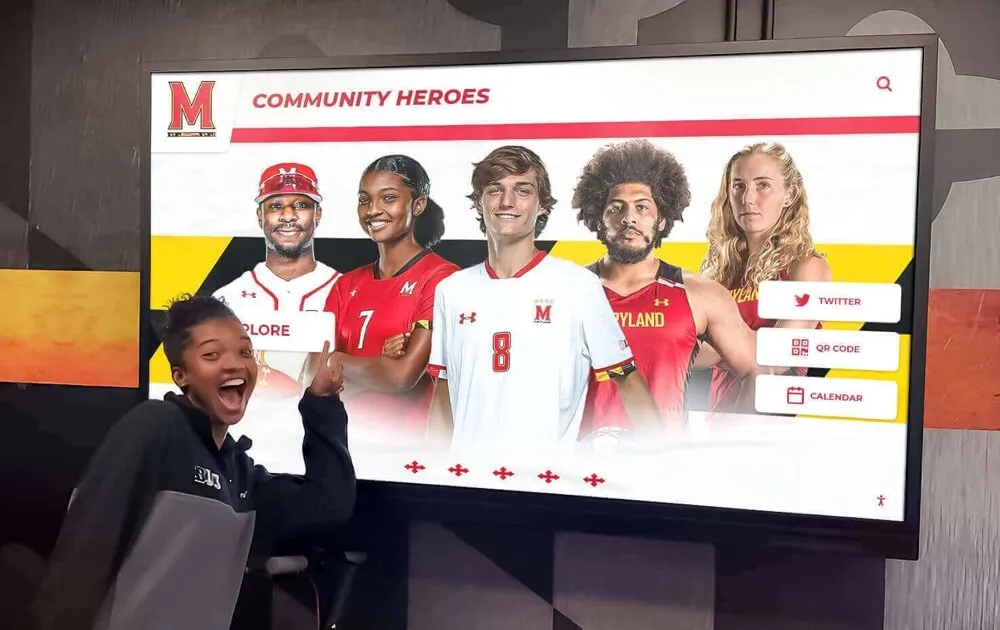
Bold institutional branding creates immediate emotional connection while digital displays provide flexible recognition and communication capabilities
Organizational and Community Facility Lobbies
Athletic Facilities and Gyms
Sports-focused facilities emphasize competitive excellence:
Design Elements
- Championship banner visibility celebrating team achievements
- Hall of fame recognition honoring distinguished athletes and coaches
- Record boards showcasing performance milestones
- Team photo displays documenting program history
- Action photography creating energetic, competitive atmosphere
- Sponsor recognition acknowledging booster and community support
Cultural and Community Centers
Multi-purpose facilities serve diverse community needs:
Design Approaches
- Flexible display areas accommodating rotating exhibits and community showcases
- Performance promotion for theater, music, and arts programming
- Community partner recognition acknowledging organizational collaborations
- Historical documentation preserving community heritage and evolution
- Rental event support providing professional first impressions for private functions
- Accessibility emphasis ensuring inclusive community access and participation
Explore community showcase project ideas applicable to organizational lobby recognition.
Budget-Conscious Lobby Design Strategies
Creating impressive, functional lobbies doesn’t require unlimited resources—strategic approaches maximize impact within financial constraints.
Phased Implementation Planning
Phase One: Foundation Establishment
Initial investments creating functional baseline environments:
- Fresh paint in institutional colors refreshing outdated spaces
- Professional cleaning, repairs, and maintenance addressing deferred upkeep
- Basic furniture providing comfortable, durable seating
- Improved lighting enhancing visibility and atmosphere
- Clear signage establishing wayfinding and identification
- Organizational decluttering removing outdated materials and creating visual clarity
Phase Two: Enhanced Recognition and Technology
Secondary investments elevating visitor experience:
- Digital recognition system celebrating institutional achievements
- Digital signage capability for announcements and information
- Enhanced furniture and aesthetic improvements
- Professional photography and visual design elements
- Interactive directory or information kiosk
- Branded environmental graphics reinforcing identity
Phase Three: Premium Features
Final enhancements creating exceptional environments:
- Custom millwork and architectural features
- Advanced audio-visual integration
- Specialty lighting creating ambiance and highlighting displays
- Commissioned artwork or community-created installations
- Landscape and exterior entrance improvements
- Comprehensive wayfinding and branding system expansion
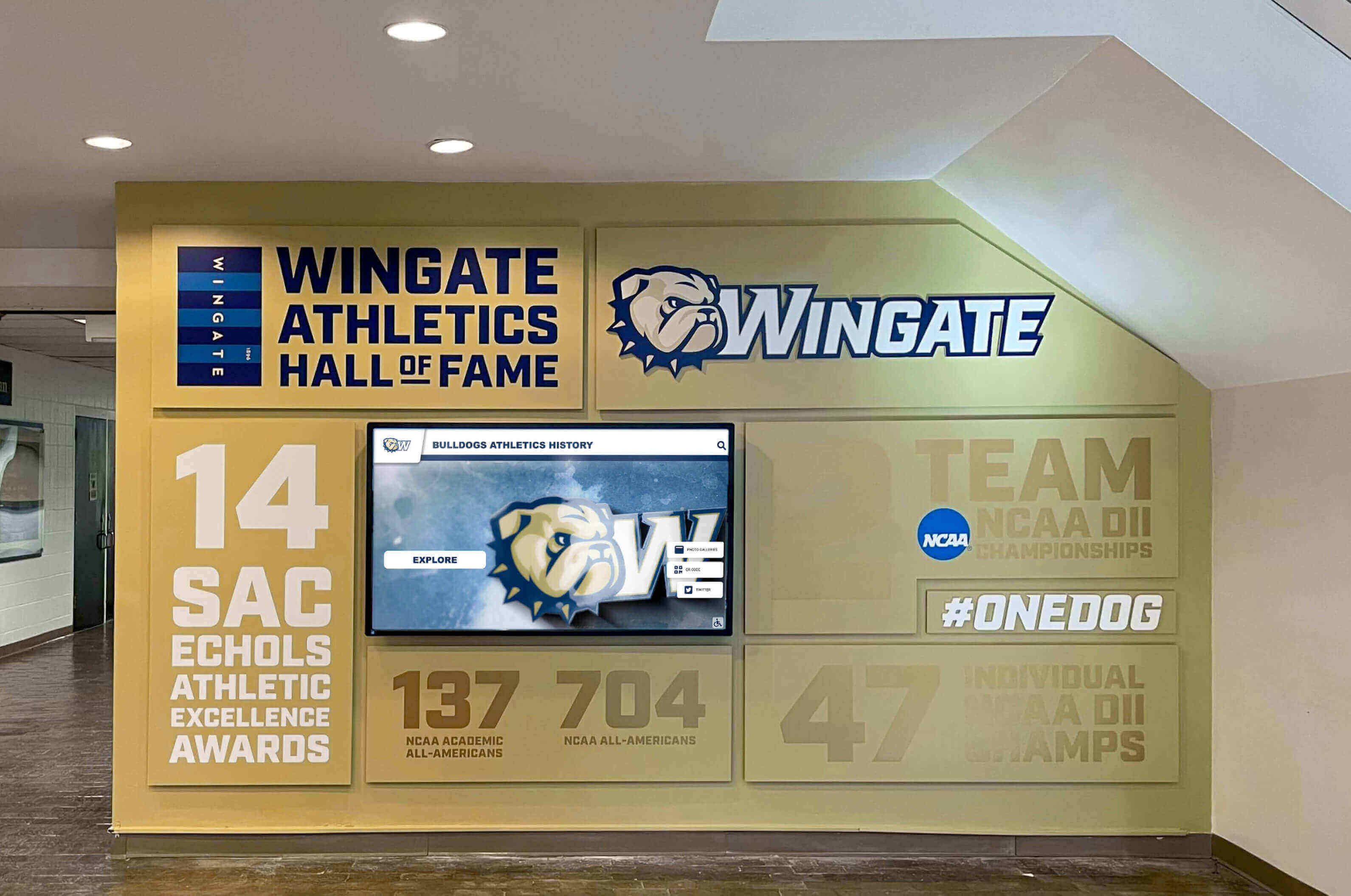
Budget-conscious designs prioritize strong branding and focused recognition displays that create impressive results without requiring extensive renovation
Cost-Effective Implementation Tactics
Leveraging Internal Resources
Utilizing institutional capabilities reduces external costs:
- Facilities teams completing painting, repairs, and installation work
- Marketing or communications departments designing signage and branded elements
- Technology staff installing displays, networks, and connectivity infrastructure
- Student projects through art, design, or technical programs
- Parent or community volunteer committees contributing expertise and labor
- Alumni professional donations providing services at reduced or no cost
Strategic Vendor Partnerships
Thoughtful procurement maximizes budget impact:
- Educational institution pricing from furniture and technology providers
- Showroom floor models and discontinued items at substantial discounts
- Alumni-owned business in-kind donations and community partnership rates
- Regional contractor relationships spreading projects across budget cycles
- Financing options distributing costs over multiple years
- Grant opportunities from community foundations or corporate partners
High-Impact, Low-Cost Elements
Design decisions delivering maximum visual improvement economically:
- Bold accent wall paint creating focal points inexpensively
- Vinyl graphics and decals providing branded design without custom fabrication
- Strategic lighting upgrades dramatically improving atmosphere affordably
- Furniture arrangement optimization maximizing existing assets before purchasing
- Digital displays replacing expensive ongoing print production costs
- Organizational systems and decluttering revealing existing space potential
Measuring Lobby Design Success
Assessment ensures lobby investments achieve intended objectives and identify opportunities for continuous enhancement.
Key Performance Indicators
Visitor Experience Metrics
Understanding how lobbies serve communities:
- Prospective family tour feedback and enrollment decision correlation
- First-time visitor navigation ease and information access success
- Community member satisfaction with lobby functionality and comfort
- Recognition display engagement through digital analytics or observation
- Event attendee arrival experience during peak traffic periods
- Administrative efficiency in greeting, directing, and assisting visitors
Recognition and Engagement Impact
Assessing achievement celebration effectiveness:
- Digital recognition system interaction rates and usage patterns
- Content search behaviors indicating what visitors seek most frequently
- Social media sharing extending recognition beyond physical visits
- Alumni engagement correlation with lobby recognition presence
- Donor satisfaction with philanthropic acknowledgment visibility
- Community pride indicators linked to achievement celebration
Operational and Maintenance Considerations
Practical sustainability assessment:
- Cleaning and maintenance labor requirements and efficiency
- Material durability and replacement needs over time
- Technology reliability and technical support demands
- Energy consumption and operational cost monitoring
- Space flexibility supporting various events and uses
- Update processes and content refresh cadence sustainability
Continuous Improvement Process
Regular Assessment Cycles
Systematic evaluation supporting enhancement:
- Annual lobby walk-throughs with diverse stakeholder groups
- Visitor surveys capturing feedback from various constituencies
- Staff and administrator input about operational functionality
- Technology performance monitoring and upgrade planning
- Content audit ensuring recognition information remains current
- Maintenance schedule review optimizing cleaning and upkeep
Data-Driven Enhancements
Translating assessment into action:
- Recognition content updates celebrating new achievements
- Furniture adjustments optimizing traffic flow and visitor comfort
- Lighting modifications improving visibility and atmosphere
- Technology upgrades maintaining contemporary functionality
- Aesthetic refreshes preventing dated, stale appearance
- Accessibility improvements addressing identified barriers
Conclusion: Creating Lobbies That Welcome, Inspire, and Connect
Effective lobby design creates powerful first impressions that welcome visitors authentically, celebrate community achievements meaningfully, and strengthen institutional identity consistently. When schools and organizations invest thoughtfully in entrance spaces—balancing functional wayfinding with inspirational recognition, integrating contemporary technology with timeless design principles, and creating environments that feel both professional and personally inviting—they transform ordinary lobbies into strategic assets supporting enrollment, development, community engagement, and institutional pride.
The lobby design ideas explored in this guide provide comprehensive frameworks for creating entrance spaces serving diverse visitors while remaining achievable within institutional resources. From unlimited digital recognition eliminating space constraints to carefully planned layouts guiding traffic flow naturally, from strategic lighting creating welcoming atmospheres to budget-conscious implementation spreading improvements across multiple phases, these approaches help schools and organizations create lobbies delivering lasting value to communities they serve.
Ready to transform your lobby into a welcoming, inspiring entrance space? Modern recognition solutions help schools and organizations celebrate achievements comprehensively while creating engaging environments that strengthen community connections and institutional pride. Rocket Alumni Solutions provides comprehensive digital platforms specifically designed for lobby recognition displays, combining unlimited achievement capacity with intuitive content management, professional touchscreen hardware, and accessible interfaces ensuring all visitors can explore institutional excellence.
Whether renovating existing lobbies or designing new entrance spaces from scratch, success requires understanding how visitors experience your spaces, identifying what your community values most, aligning design decisions with institutional culture and mission, investing in recognition systems that grow with your organization, and maintaining commitment to keeping lobbies current, clean, and welcoming throughout years of service.
Your visitors deserve entrance spaces reflecting the excellence your institution represents. With thoughtful planning, appropriate investment in both traditional and digital recognition elements, and authentic commitment to creating welcoming environments, you can transform lobbies from overlooked transitional spaces into strategic assets that inspire pride, facilitate connections, and communicate institutional values the moment visitors walk through your doors.
Start with improvements you can implement immediately—perhaps fresh paint, enhanced lighting, or a digital recognition display transforming how you celebrate achievements. Then systematically expand toward comprehensive entrance environments your community deserves. The most important element isn’t budget size, square footage, or design sophistication—it’s genuine commitment to creating first impressions demonstrating that your institution values excellence, honors achievement, and welcomes every visitor with spaces reflecting the quality and character that define your community at its best.