



High school and college students pursuing academic excellence frequently encounter Latin honors designations—cum laude, magna cum laude, and summa cum laude—representing prestigious recognition awarded to graduates demonstrating exceptional academic achievement. These centuries-old distinctions appear on diplomas, transcripts, and graduation programs, signaling to employers, graduate schools, and professional networks that recipients maintained outstanding grade point averages throughout their educational careers.
Yet despite their widespread use across American high schools and universities, Latin honors requirements remain surprisingly inconsistent and often confusing. Schools establish different GPA thresholds for the same honors, some institutions calculate honors based on percentile rankings rather than absolute GPAs, and methodologies for weighted versus unweighted calculations vary dramatically. Students and families navigating these systems struggle to understand exactly what GPA they need to earn specific distinctions and how their institutions determine recognition.
This comprehensive guide explains Latin honors GPA requirements across educational levels, explores the historical context and meaning behind these prestigious designations, clarifies calculation methodologies schools use, and provides strategic guidance for students pursuing these significant academic accomplishments.
Latin honors represent formal academic recognition systems that colleges and high schools use to distinguish graduates who achieved exceptional academic performance. Understanding these distinctions helps students set appropriate goals, enables families to interpret graduation recognition meaningfully, and provides context for employers and graduate schools evaluating academic credentials.

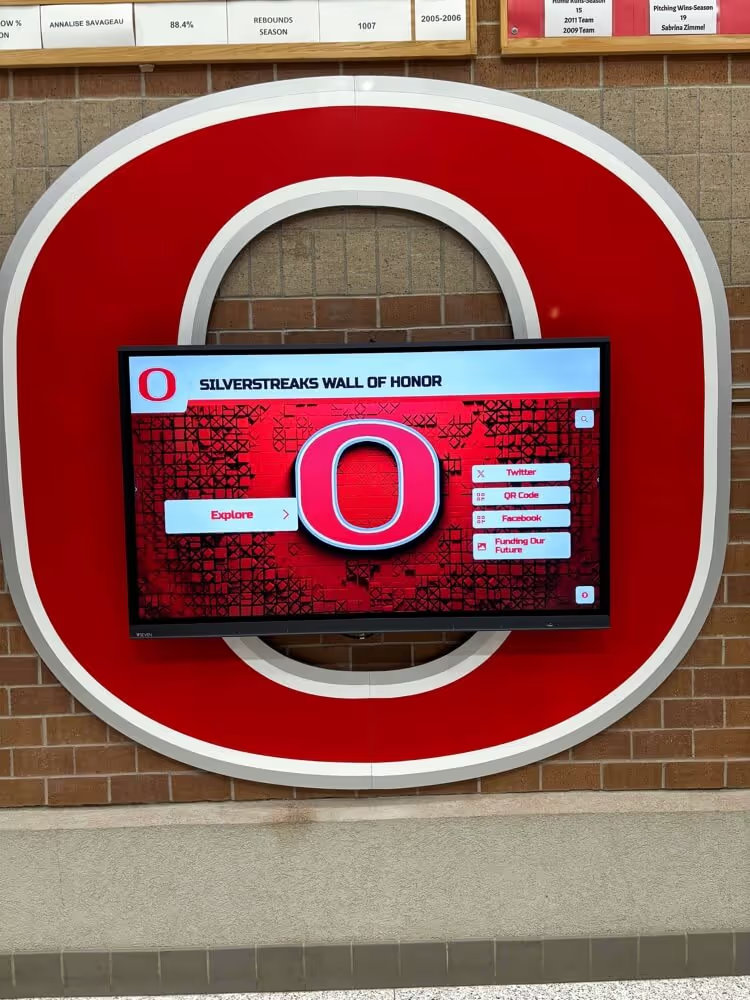
Modern academic recognition displays celebrate Latin honors achievements alongside other prestigious academic distinctions
Understanding Latin Honors: Origins and Meaning
Before exploring specific GPA requirements, understanding the historical context and fundamental meaning of Latin honors provides essential background.
Historical Background of Latin Honors
Latin honors originated in medieval European universities where Latin served as the language of scholarship and education. These academic distinctions have been used in American higher education since colonial times, with Harvard College among the first institutions to adopt the system in the late 18th century.
The Three Traditional Levels
Latin honors traditionally comprise three ascending levels of distinction:
Cum Laude (“with honor” or “with praise”)
- Represents good academic achievement above standard graduation requirements
- Typically awarded to the top 20-35% of graduates depending on institution
- Demonstrates consistent strong performance throughout college career
- Signals solid academic credentials to employers and graduate programs
Magna Cum Laude (“with great honor” or “with great praise”)
- Represents exceptional academic achievement
- Typically awarded to the top 10-15% of graduates
- Demonstrates sustained excellence across coursework
- Carries significant prestige in graduate school and professional applications
Summa Cum Laude (“with highest honor” or “with highest praise”)
- Represents the pinnacle of undergraduate academic achievement
- Typically awarded to the top 2-5% of graduates
- Extremely selective distinction recognizing extraordinary excellence
- Highest academic honor most institutions bestow on undergraduates
Schools implementing comprehensive academic recognition programs celebrate Latin honors alongside other prestigious academic distinctions.
Purpose and Value of Latin Honors
Latin honors serve multiple important functions in academic and professional contexts:
Academic Achievement Documentation
- Provides standardized recognition across diverse institutions
- Appears permanently on official transcripts and diplomas
- Creates easily-interpreted academic credentials for third parties
- Distinguishes exceptional students in competitive graduation classes
Graduate School and Professional Advantages
- Enhances graduate school applications by signaling proven academic excellence
- Strengthens professional résumés particularly for recent graduates
- Opens doors to competitive internships and entry-level positions
- Demonstrates sustained commitment to academic excellence over multiple years
Personal Achievement Recognition
- Validates years of academic effort and intellectual dedication
- Provides tangible goal for students to pursue throughout college
- Creates moments of family pride and celebration at graduation
- Recognizes commitment to learning beyond minimum requirements
Understanding how schools recognize academic excellence through graduation celebration ideas helps contextualize Latin honors within broader achievement frameworks.
Latin Honors GPA Requirements at Colleges and Universities
College-level Latin honors requirements vary significantly across institutions, making it essential to understand both general patterns and institution-specific policies.
Common GPA Thresholds for College Latin Honors
While exact requirements differ by institution, typical GPA ranges for Latin honors include:
Cum Laude GPA Requirements
- Standard Range: 3.5-3.69 on 4.0 scale
- Conservative Institutions: 3.7-3.79 (setting higher bar)
- Percentile-Based: Top 20-35% of graduating class
- Credit Hour Minimums: Often requires completion of 60+ credits at institution
At most four-year colleges and universities, cum laude recognition typically begins around 3.5 GPA, though variations exist based on institutional academic culture and grade distribution patterns.
Magna Cum Laude GPA Requirements
- Standard Range: 3.7-3.89 on 4.0 scale
- Highly Selective Institutions: 3.85-3.94 (reflecting competitive environments)
- Percentile-Based: Top 10-15% of graduating class
- Sustained Excellence: Some schools require minimum GPA in major coursework
Magna cum laude represents significant achievement, typically requiring consistent A and A- grades across most coursework with few if any grades below B+.
Summa Cum Laude GPA Requirements
- Standard Range: 3.9-4.0 on 4.0 scale
- Highly Selective Institutions: 3.95-4.0 (extremely competitive)
- Percentile-Based: Top 2-5% of graduating class
- Additional Requirements: Some institutions require thesis, comprehensive exams, or special projects
Summa cum laude recognition demands near-perfect academic performance throughout the undergraduate career, with most recipients maintaining GPAs of 3.95 or higher.

University recognition systems celebrate Latin honors graduates as part of comprehensive academic excellence programs
How Colleges Calculate Latin Honors
Understanding calculation methodologies helps students accurately assess their progress toward Latin honors eligibility.
Cumulative GPA vs. Major GPA
Most institutions calculate Latin honors based on cumulative GPA including all courses counted toward the degree. However, some schools impose additional requirements:
- Dual Requirements: Minimum thresholds for both cumulative and major GPAs
- Major GPA Weighting: Higher minimum GPA required in major courses than overall
- Core Course Requirements: Specific GPA thresholds in general education or core curriculum
- Advanced Coursework Consideration: Additional recognition for honors programs or thesis completion
Credit Hour Residency Requirements
Institutions typically require students to complete minimum credit hours at their institution to qualify for Latin honors:
- Standard Requirement: 60+ semester hours (approximately half of degree)
- Transfer Student Adjustments: Higher thresholds for students transferring substantial credit
- Study Abroad Considerations: Policies on whether international coursework counts
- AP/IB Credit Exclusions: Advanced placement credit typically doesn’t count toward residency
These residency requirements ensure Latin honors recognize sustained achievement at the degree-granting institution rather than transferred excellence from elsewhere.
Percentile-Based vs. Absolute GPA Systems
Colleges use two primary approaches for determining Latin honors:
Absolute GPA Thresholds
- Fixed GPA requirements published in advance (e.g., 3.5 for cum laude)
- Predictable system allowing students to know exactly what they need
- Number of honors recipients can vary significantly year to year
- More common at large public universities
Percentile-Rank Systems
- Top X% of graduating class receives each honor level
- Ensures consistent number of honors recipients across years
- Creates more competitive environment where GPA requirements fluctuate
- More common at selective private colleges
Some institutions use hybrid approaches combining minimum GPA thresholds with percentile caps to balance predictability with selectivity.
Schools implementing valedictorian selection processes often use similar methodologies for Latin honors determination.
Institutional Variations in Latin Honors
Specific college policies create significant variation in Latin honors systems:
Ivy League and Highly Selective Institutions
Elite universities often employ unique Latin honors approaches:
Harvard University
- Uses percentile-based system (top percentages of class)
- Summa cum laude reserved for absolute top performers (often 3.95+ GPA)
- Additional consideration for thesis quality and academic distinction
- Highly competitive given exceptional student body
Yale University
- Requires minimum GPA thresholds combined with percentile rankings
- Summa cum laude includes senior essay or departmental honors requirement
- Approximately top 5% earn summa, top 10% magna, top 30% cum laude
- Committee review for borderline cases
Princeton University
- Discontinued Latin honors in favor of departmental honors
- Focuses recognition on specialized achievement within majors
- Reflects institutional philosophy emphasizing depth over breadth
Large Public Universities
State flagship universities typically use more standardized approaches:
University of Michigan
- Fixed GPA thresholds: Summa (3.9+), Magna (3.7-3.89), Cum Laude (3.5-3.69)
- Requires 55+ Michigan credit hours
- Straightforward system benefiting student planning
- Honors appear on diploma and transcript
University of California System
- Campuses set individual policies within system guidelines
- Typically top 3% summa, next 7% magna, next 10% cum laude
- Based on UC GPA only (excluding transfer and AP credit)
- Percentile approach ensures consistent recognition rates
University of Texas at Austin
- GPA-based with cutoffs: Summa (3.9+), Magna (3.75-3.89), Cum Laude (3.5-3.74)
- 60+ UT credit hour requirement
- College-specific variations for certain schools within university
- Clear published standards facilitate student planning
Understanding these variations proves essential since transferring students or those comparing opportunities across institutions encounter substantially different Latin honors landscapes.
Schools celebrating top academic achievers through academic recognition displays create environments where Latin honors pursuit becomes part of campus culture.
High School Latin Honors Requirements
While traditionally associated with college graduation, many high schools have adopted Latin honors systems to recognize exceptional student achievement.
High School Latin Honors Overview
High school Latin honors serve similar purposes to college distinctions while adapting to secondary education contexts:
Typical High School GPA Thresholds
High schools generally set Latin honors requirements lower than colleges given different grading environments:
Cum Laude (High School)
- Common Range: 3.3-3.49 weighted GPA
- Unweighted Equivalent: Typically 3.2-3.4
- Percentile: Often top 25-40% of graduating class
- Purpose: Recognizes solid academic achievement and college readiness
Magna Cum Laude (High School)
- Common Range: 3.5-3.74 weighted GPA
- Unweighted Equivalent: Typically 3.4-3.6
- Percentile: Often top 15-25% of graduating class
- Purpose: Honors exceptional achievement and rigorous coursework
Summa Cum Laude (High School)
- Common Range: 3.75-4.0+ weighted GPA
- Unweighted Equivalent: Typically 3.6+ unweighted
- Percentile: Often top 5-15% of graduating class
- Purpose: Celebrates highest academic achievement in graduating class

High schools use Latin honors alongside other recognition systems to celebrate academic achievement comprehensively
Weighted vs. Unweighted GPA Calculations
High school Latin honors determination must account for weighted versus unweighted GPA systems:
Weighted GPA Considerations
Most high schools offering honors and Advanced Placement courses use weighted GPAs for Latin honors:
Standard Weighting Scales
- Honors courses: +0.5 weight (B in honors = 3.5 instead of 3.0)
- AP/IB courses: +1.0 weight (B in AP = 4.0 instead of 3.0)
- Regular courses: Standard 4.0 scale
- Result: Weighted GPAs can exceed 4.0
Advantages of Weighted Systems
- Rewards students taking rigorous coursework
- Encourages enrollment in challenging classes
- Recognizes that AP/honors courses require more effort
- Aligns with college admissions expectations
Challenges with Weighted Systems
- Creates confusion about “real” academic standing
- Makes cross-school comparisons difficult
- Can disadvantage students at schools with limited advanced offerings
- Requires clear communication about calculation methods
Unweighted GPA Approaches
Some high schools calculate Latin honors using unweighted GPAs:
Rationale for Unweighted Systems
- Provides standardized 4.0 maximum for all students
- Eliminates advantages based on course availability
- Simplifies GPA interpretation
- Focuses on absolute achievement rather than course difficulty
Adjustments for Fairness
- Class rank calculations may still use weighted GPAs
- Additional honors for students completing rigorous programs
- Recognition of AP/IB achievement separate from Latin honors
- Context provided on transcripts about course rigor
High schools implementing comprehensive recognition programs often integrate Latin honors with other academic distinctions creating multi-dimensional achievement celebration.
High School-Specific Variations
Individual high schools establish Latin honors policies reflecting their academic cultures:
Competitive Suburban High Schools
Schools with many high-achieving students often set higher thresholds:
- Summa cum laude: 4.3+ weighted (requires mostly As in AP/honors courses)
- Magna cum laude: 4.0-4.29 weighted
- Cum laude: 3.7-3.99 weighted
- Rationale: Differentiates achievement in competitive environments
Rural and Under-Resourced Schools
Schools with fewer advanced course offerings may adjust requirements:
- Greater reliance on unweighted GPAs
- Lower absolute GPA thresholds accounting for limited honors/AP access
- Percentile-based systems ensuring recognition despite circumstances
- Additional recognition for students maximizing available opportunities
Private and Independent Schools
Private schools frequently implement distinctive Latin honors approaches:
- Often use unweighted GPAs with high absolute standards
- May include additional requirements like senior thesis or comprehensive exams
- Frequently incorporate conduct and citizenship expectations
- Sometimes limit honors to students enrolled since freshman year
Understanding your specific high school’s Latin honors policy requires consulting student handbooks, guidance counselors, or academic administration since substantial variation exists even within the same school district.
Strategic Approaches to Earning Latin Honors
Students serious about achieving Latin honors benefit from systematic planning and consistent execution throughout their academic careers.
Setting Latin Honors Goals Early
Freshman Year Planning
Latin honors pursuit should begin in the first semester:
Understand Your School’s Requirements
- Obtain exact GPA thresholds or percentile requirements for each honor level
- Clarify whether calculation uses weighted or unweighted GPAs
- Identify any additional requirements beyond GPA (thesis, credit hours, etc.)
- Determine which courses count toward Latin honors GPA
- Ask about policies for transfer credit, summer courses, and study abroad
Establish Baseline Performance
- Calculate GPA needed in remaining semesters to reach each honor level
- Create realistic assessment of required performance trajectory
- Set specific semester-by-semester GPA targets
- Build cushion for occasional challenging courses or semesters
- Monitor progress after each grading period
Course Selection Strategy
Strategic course selection significantly impacts Latin honors pursuit:
For Weighted GPA Systems
- Maximize enrollment in honors and AP courses when academically appropriate
- Balance rigor with realistic assessment of workload capacity
- Consider that B+ in AP course may boost weighted GPA more than A in regular course
- Front-load rigorous courses early to establish strong GPA foundation
- Understand that schools calculate Latin honors differently regarding course weighting
For Unweighted GPA Systems
- Prioritize absolute achievement (grades) over course difficulty for Latin honors
- Still pursue rigorous courses for college admissions and intellectual growth
- Recognize that unweighted systems may incentivize strategic course selection
- Balance Latin honors goals with broader educational objectives
- Consider that separate recognition may exist for rigorous program completion
Schools implementing digital recognition systems showcase Latin honors graduates alongside other academic achievers creating comprehensive achievement profiles.

Modern recognition technology enables schools to celebrate Latin honors graduates with detailed achievement profiles
Maintaining Consistent Performance
Latin honors require sustained excellence rather than sporadic achievement:
Semester-by-Semester Management
Start Strong Each Term
- First month performance sets trajectory for entire semester
- Establish study routines immediately rather than playing catch-up
- Attend all classes and complete assignments from day one
- Build relationships with professors/teachers early facilitating help-seeking
- Front-load effort when courses cover foundational material
Monitor Progress Continuously
- Check grades weekly through student portals or gradebooks
- Calculate current course grades and projected semester GPA regularly
- Identify struggling courses early when recovery remains possible
- Seek help immediately when performance slips below targets
- Adjust study strategies promptly based on assessment results
Finish Strong
- Maintain effort through finals week despite semester fatigue
- Remember that final exams often carry substantial grade weight
- Use comprehensive finals as opportunities to improve course grades
- Avoid senioritis that can jeopardize Latin honors in final semester
- Stay motivated by visualizing graduation recognition
Academic Support Utilization
Successful Latin honors candidates actively seek support:
Institutional Resources
- Office hours with professors/teachers for clarification and assistance
- Tutoring centers and peer tutoring programs
- Writing centers for paper and assignment support
- Academic success coaching and study skills workshops
- Disability services accommodations when appropriate
Self-Directed Strategies
- Study groups with motivated peers pursuing similar goals
- Time management systems preventing last-minute cramming
- Regular review and spaced repetition for retention
- Practice problems and self-testing before assessments
- Balanced lifestyle including adequate sleep, nutrition, and exercise
Understanding comprehensive student achievement celebration helps contextualize Latin honors within broader academic excellence recognition.
Recovery Strategies for GPA Challenges
Even students committed to Latin honors occasionally face GPA setbacks:
After a Difficult Semester
Assess the Damage Honestly
- Calculate new cumulative GPA and distance from Latin honors thresholds
- Determine GPA required in remaining semesters to reach goals
- Evaluate whether goals remain realistic or require adjustment
- Identify specific factors that caused underperformance
- Create action plan addressing root causes
Strategic Recovery Planning
- Increase course load slightly if GPA recovery requires more A grades
- Consider retaking failed courses or low grades if policies allow
- Adjust course difficulty appropriately balancing rigor with performance
- Seek additional academic support preventing repeat struggles
- Set semester-specific GPA targets creating clear recovery path
When Latin Honors Become Unreachable
- Recognize that academic excellence matters beyond specific honors
- Pursue alternative recognition like departmental honors or dean’s list
- Focus on learning and growth rather than only external recognition
- Understand that employers and graduate schools value upward GPA trends
- Consider that many successful people didn’t achieve highest honors
The fundamental goal remains genuine learning and intellectual development—Latin honors represent recognition of that achievement rather than the achievement itself.
Latin Honors Recognition and Display
Schools and universities celebrating Latin honors create meaningful recognition experiences extending beyond graduation day.
Graduation Ceremony Recognition
Latin honors recipients typically receive special acknowledgment during commencement:
Visual Distinctions
- Honor cords in distinctive colors (gold, silver, or school colors)
- Special tassels, stoles, or medallions marking achievement
- Separate recognition during degree conferral
- Listing in graduation program with honor designation
- Special seating or procession order
Verbal Recognition
- Names read with Latin honors designation
- Special applause or standing recognition
- Dean or president acknowledgment of academic excellence
- Explanation of honors significance for audience
- Celebration of collective achievement by honors recipients
Schools implementing graduation recognition programs ensure Latin honors receive appropriate celebration alongside other distinctions.

Comprehensive recognition displays integrate Latin honors graduates with other institutional achievements
Permanent Academic Record Documentation
Latin honors appear on official documents creating lasting recognition:
Diploma Notation
- Latin honor designation printed directly on diploma
- Often in decorative script or special formatting
- Permanent official credential of academic achievement
- Display-worthy recognition for professional settings
- Family heirloom documenting educational accomplishment
Transcript Indication
- Notation on official transcripts sent to employers and graduate schools
- Permanent part of academic record
- Verifiable credential for background checks
- Clear signal of academic excellence to third parties
- Can never be removed or altered unlike resume claims
Digital Credential Systems
Modern institutions increasingly create digital recognition:
- Electronic diploma with embedded Latin honors notation
- Digital badge systems showcasing academic achievements
- LinkedIn credential verification and display
- Blockchain-based verification preventing fraud
- Shareable certificates for professional profiles
Physical Recognition Displays
Forward-thinking institutions create permanent displays celebrating Latin honors graduates:
Traditional Recognition Approaches
Physical Plaques and Honor Walls
- Engraved plaques listing Latin honors graduates by year
- Dedicated display spaces in academic buildings
- Trophy cases showcasing academic excellence
- Departmental recognition for major-specific honors
- Limitations: space constraints, update difficulties, limited information
Graduation Program Archives
- Bound volumes of commencement programs
- Historical records in libraries or archives
- Searchable databases of graduates and honors
- Limitations: accessibility, engagement, preservation challenges
Schools exploring modern alternatives implement digital recognition solutions overcoming traditional display limitations.
Modern Digital Recognition Systems
Digital displays transform how institutions celebrate Latin honors:
Interactive Touchscreen Displays
Solutions like Rocket Alumni Solutions provide:
- Unlimited capacity showcasing every Latin honors graduate
- Searchable databases enabling quick individual lookup
- Detailed profiles with photos, achievements, and biographies
- Filter capabilities by honor level, graduation year, or major
- QR code sharing for social media and family distribution
- Web accessibility extending recognition beyond physical campus
Content Management Benefits
- Simple updates when new graduates earn honors
- Historical archive preservation across decades
- Bulk import from registrar databases
- Scheduled content publication coordinating with graduation
- Multiple administrator access with role-based permissions
Engagement Advantages
- Interactive exploration increasing visitor engagement
- Photo galleries and achievement documentation
- Connection between academic achievement and career outcomes
- Alumni return to see their historical recognition preserved
- Prospective student demonstration of academic excellence culture
Schools implementing comprehensive digital recognition platforms create engaging systems celebrating academic achievement appropriately.

Detailed digital profiles tell complete achievement stories including Latin honors alongside other accomplishments
Latin Honors and Career Outcomes
Understanding how Latin honors impact professional trajectories helps students evaluate pursuit priorities.
Impact on Graduate School Admissions
Latin honors influence graduate program applications significantly:
Professional and Graduate School Benefits
Medical School Admissions
- Latin honors signal sustained academic excellence
- Strong undergraduate performance predictor of medical school success
- Particularly valuable when combined with strong MCAT scores
- Can offset slightly lower standardized test performance
- Demonstrates capacity for rigorous sustained study
Law School Applications
- Latin honors provide clear academic distinction metric
- Combines with LSAT scores for admissions index calculations
- Signals undergraduate institution’s confidence in candidate
- Particularly important for applicants from less well-known colleges
- Shows consistent performance rather than isolated achievement
MBA Programs
- Business schools value academic honors demonstrating intellectual capability
- Latin honors supplement professional experience in applications
- Particularly beneficial for applicants early in careers
- Shows discipline and goal achievement transferring to business contexts
- Strengthens applications for competitive programs
PhD and Research Programs
- Summa cum laude particularly valued in competitive doctoral programs
- Signals capacity for independent research and intellectual rigor
- Often correlates with strong faculty recommendations
- Research universities specifically recruit top academic performers
- Can qualify for competitive fellowships and funding
Employment and Professional Impact
Latin honors carry varying weight in different career contexts:
Fields Highly Valuing Academic Credentials
Consulting
- Management consulting firms extensively recruit Latin honors graduates
- Academic excellence proxy for analytical thinking and problem-solving
- Particularly important for undergraduates with limited work experience
- Can offset lack of brand-name undergraduate institution
- Frequently appears as screening criterion in initial resume reviews
Investment Banking and Finance
- Bulge bracket banks target summa and magna cum laude graduates
- Signals work ethic, intelligence, and achievement orientation
- Particularly important for target school recruitment
- Often explicit or implicit GPA cutoffs aligned with Latin honors thresholds
- Demonstrates quantitative capability and attention to detail
Technology and Engineering
- Top tech companies value academic distinction particularly from strong programs
- Latin honors can trigger resume review in competitive applicant pools
- Especially relevant for recent graduates building work history
- Complements technical skills demonstration
- May qualify for rotational programs recruiting high achievers
Fields Less Emphasizing Latin Honors
Creative Industries
- Portfolio quality and creative demonstration matter more than grades
- Latin honors provide minimal differentiation
- Focus on work samples, internships, and relevant experience
- Academic achievement secondary to creative capability
- May even be viewed as potentially limiting creative thinking
Sales and Business Development
- Interpersonal skills and track record of results matter more
- Latin honors less predictive of sales success
- Relevant mainly in early career before establishing performance history
- Soft skills and personality fit outweigh academic credentials
- Commission-based roles care more about outcomes than academic pedigree
Entrepreneurship
- Successful entrepreneurship depends on execution not grades
- Latin honors provide minimal advantage in venture funding or startup success
- Academic achievement uncorrelated with entrepreneurial outcomes
- Focus on problem-solving, resilience, and market understanding
- May even correlate with risk aversion counterproductive for founders
Understanding these varying impacts helps students balance Latin honors pursuit with other developmentally important activities and skill-building.
Schools celebrating comprehensive achievement through recognition programs help students understand that Latin honors represent one dimension of success among many.
Long-Term Career Significance
Latin honors impact diminishes over professional careers:
Early Career (Years 0-5)
- Latin honors appear prominently on résumé education section
- Frequently discussed in interviews for competitive positions
- Serve as proxy for capability in absence of extensive work history
- Can open doors to interviews and opportunities
- Particularly relevant for prestigious graduate programs and employers
Mid-Career (Years 5-15)
- Work accomplishments increasingly overshadow academic credentials
- Latin honors remain on résumé but receive less discussion
- Relevant mainly when returning to graduate school
- Professional achievements demonstrate capabilities more directly
- Academic honors matter most in academic or research careers
Late Career (Years 15+)
- Latin honors rarely if ever discussed or relevant
- Professional accomplishments and leadership completely dominate
- May appear on extended CV for academic or senior positions
- Sentimental value exceeds professional utility
- Personal pride in achievement persists regardless of career impact
This natural progression emphasizes that Latin honors represent starting line credentials that open doors early but must be supplemented with professional excellence for sustained success.
Alternatives and Complementary Honors
Latin honors represent one recognition system among many celebrating academic achievement.
Departmental and College-Specific Honors
Many institutions offer honors within specific academic units:
Departmental Honors Programs
These specialized programs recognize excellence in major fields:
Typical Requirements
- Minimum GPA in major courses (often 3.5-3.7)
- Completion of honors thesis or capstone research project
- Oral defense or presentation of research
- Faculty committee approval
- Distinction appears on transcript and diploma
Advantages Over General Latin Honors
- Recognizes deep expertise in chosen field
- Demonstrates research capability and intellectual engagement
- Creates relationships with faculty mentors
- Produces tangible work product demonstrating skills
- Particularly valuable for graduate school in same field
College-Specific Recognition
Universities with multiple colleges often maintain separate honors:
- College of Engineering honors programs
- Business school academic recognition
- College of Liberal Arts honors designations
- Nursing or health science college honors
- Separate GPA thresholds and requirements by college
Understanding specialized recognition programs helps students pursue multiple forms of academic distinction.
Phi Beta Kappa and Honor Societies
Academic honor societies provide additional recognition opportunities:
Phi Beta Kappa
America’s oldest and most prestigious academic honor society:
Membership Requirements
- Invitation-only based on exceptional academic achievement
- Typically requires 3.75+ GPA or top 10% of class
- Strong performance in liberal arts courses
- Faculty committee selection considering breadth and depth
- Available only at chapters in approximately 290 institutions
Lifetime Benefits
- Prestigious credential recognized by employers and academics
- Networking opportunities with accomplished alumni
- Exclusive scholarships and fellowship opportunities
- Career resources and professional development
- Visible key or certificate marking achievement
Discipline-Specific Honor Societies
Specialized societies recognize achievement in particular fields:
- Golden Key International Honour Society (multidisciplinary)
- Tau Beta Pi (engineering)
- Beta Gamma Sigma (business)
- Sigma Xi (scientific research)
- Psi Chi (psychology)
- Phi Alpha Theta (history)
These societies provide networking, scholarships, and field-specific recognition complementing Latin honors.

Integrated recognition systems celebrate Latin honors alongside honor society memberships and other distinctions
Additional Academic Distinctions
Dean’s List Recognition
Semester-based academic achievement acknowledgment:
- Typically requires 3.5+ GPA for specific semester
- More frequent recognition than graduation Latin honors
- Appears on transcripts demonstrating consistent performance
- Creates interim motivation and achievement validation
- Available even to students who don’t ultimately achieve Latin honors
University Honors Programs
Comprehensive programs offering enhanced educational experiences:
- Competitive admission often based on high school achievement
- Enriched curriculum with special seminars and research opportunities
- Priority registration and special advising
- Dedicated honors housing and communities
- Separate graduation recognition for program completion
Presidential Scholars Programs
Elite recognition for exceptional achievement:
- Highly selective invitation-only programs
- Substantial scholarship support
- Mentorship and special programming
- Leadership development opportunities
- Distinguished recognition at graduation
These complementary recognitions create comprehensive achievement portfolios demonstrating excellence across multiple dimensions.
Conclusion: Pursuing Latin Honors Strategically
Latin honors—cum laude, magna cum laude, and summa cum laude—represent prestigious academic distinctions that recognize exceptional undergraduate achievement through sustained high GPA performance. While specific requirements vary significantly across institutions, typical thresholds range from 3.5-3.7 for cum laude, 3.7-3.9 for magna cum laude, and 3.9-4.0 for summa cum laude at the college level, with high schools generally setting slightly lower standards adjusted for secondary education contexts.
Successfully earning Latin honors requires understanding your specific institution’s requirements, establishing clear goals early in your academic career, maintaining consistent performance across all coursework, and strategically selecting courses that balance intellectual growth with GPA management. These distinctions carry genuine value—particularly in early career contexts, graduate school applications, and competitive employment—while their significance naturally diminishes as professional accomplishments accumulate over time.
Celebrate Academic Excellence with Modern Recognition
Discover how digital recognition solutions enable schools and universities to showcase Latin honors graduates alongside other academic achievers through engaging displays that inspire excellence and preserve institutional legacy.
Explore Recognition SolutionsMost importantly, students should pursue Latin honors as recognition of genuine intellectual engagement and learning rather than as ends in themselves. The knowledge gained, critical thinking developed, and work ethic cultivated while achieving these academic distinctions matter far more than the honors notation on diplomas and transcripts. Latin honors validate that you invested in your education, challenged yourself intellectually, and achieved excellence—qualities that serve you throughout life regardless of whether specific professional contexts value the formal credential.
For students currently pursuing Latin honors, remember that occasional setbacks don’t preclude ultimate success, that learning matters more than grades alone, and that comprehensive educational experiences including leadership, service, relationships, and personal growth create more meaningful college careers than single-minded GPA focus. Balance Latin honors pursuit with holistic development that prepares you for professional success and personal fulfillment.
For institutions recognizing Latin honors graduates, consider how modern recognition technology can celebrate these achievements alongside other distinctions, creating comprehensive systems that honor diverse excellence while inspiring future generations of students to pursue their highest academic potential.
Your academic achievements deserve recognition that appropriately honors the effort, dedication, and intellectual growth they represent—whether that culminates in Latin honors or other forms of distinction reflecting your unique journey and accomplishments.