High School Stadium Guide: Design, History, and How Schools Build Championship Venues
- Home /
- Digital Hall of Fame Insights & Resources /
- High School Stadium Guide: Design, History, and How Schools Build Championship Venues
The Easiest Touchscreen Solution




Live Example: Rocket Alumni Solutions Touchscreen Display
Interact with a live example (16:9 scaled 1920x1080 display). All content is automatically responsive to all screen sizes and orientations.
High school stadiums represent far more than game-day competition venues—they serve as community gathering spaces, preserve athletic heritage across generations, and create environments where students experience championship-caliber athletics that shape identity and school pride. These facilities host Friday night lights traditions, graduation ceremonies, community events, and competitive moments that families remember for decades.
Yet many administrators, athletic directors, and school boards face substantial challenges when planning stadium projects: How should design accommodate multiple sports while managing limited budgets? What seating, lighting, and surface configurations balance competitive needs with spectator experience? How can schools finance major construction projects without overwhelming taxpayer resources? What recognition systems preserve athletic history effectively as programs evolve?
This comprehensive guide explores high school stadium design principles, traces the historical evolution of secondary school athletic facilities, and provides practical frameworks for planning, financing, and building venues that serve athletic programs, engage communities, and celebrate competitive excellence through thoughtful facility design and integrated recognition systems.
High school stadiums function as visible investments in student experience and community pride—facilities where program quality becomes tangible through championship-level competition environments. Administrators who approach stadium planning systematically create spaces that accommodate current athletic needs while providing flexibility for program evolution, technological advancement, and the recognition systems that preserve competitive legacy across generations.

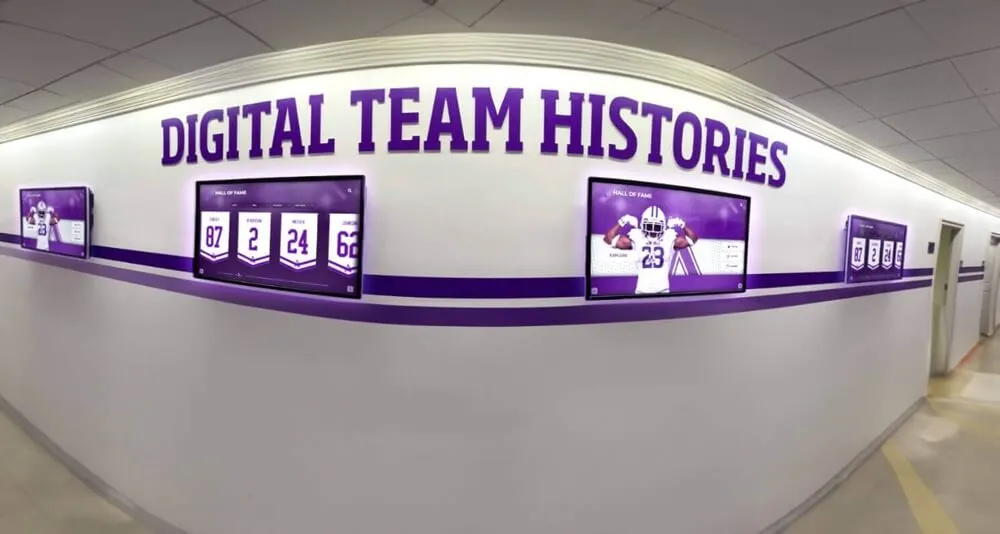
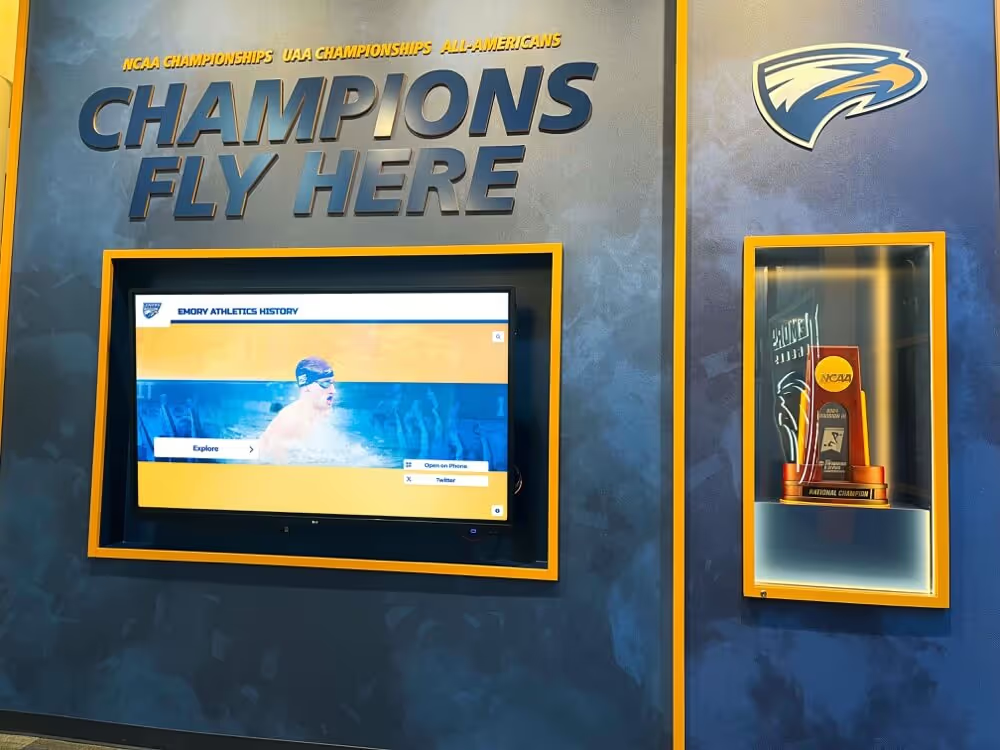
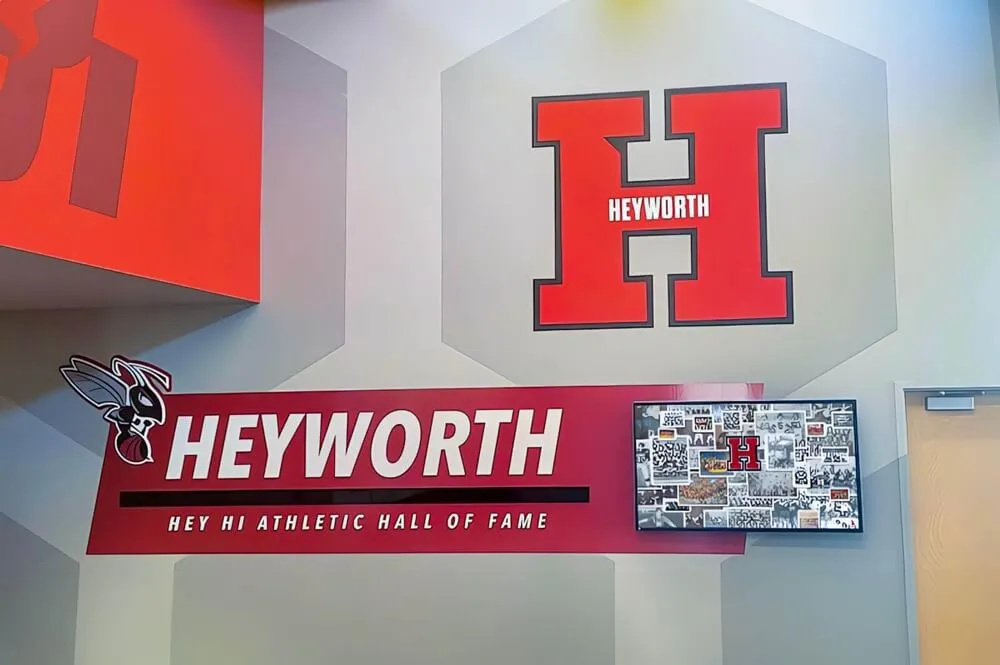
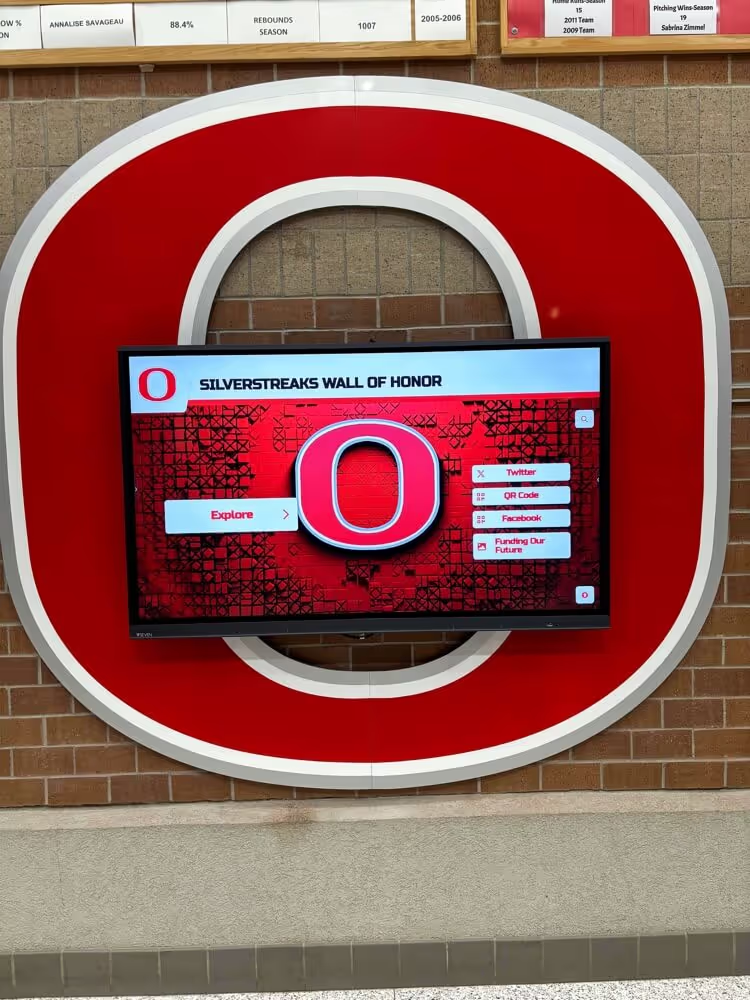
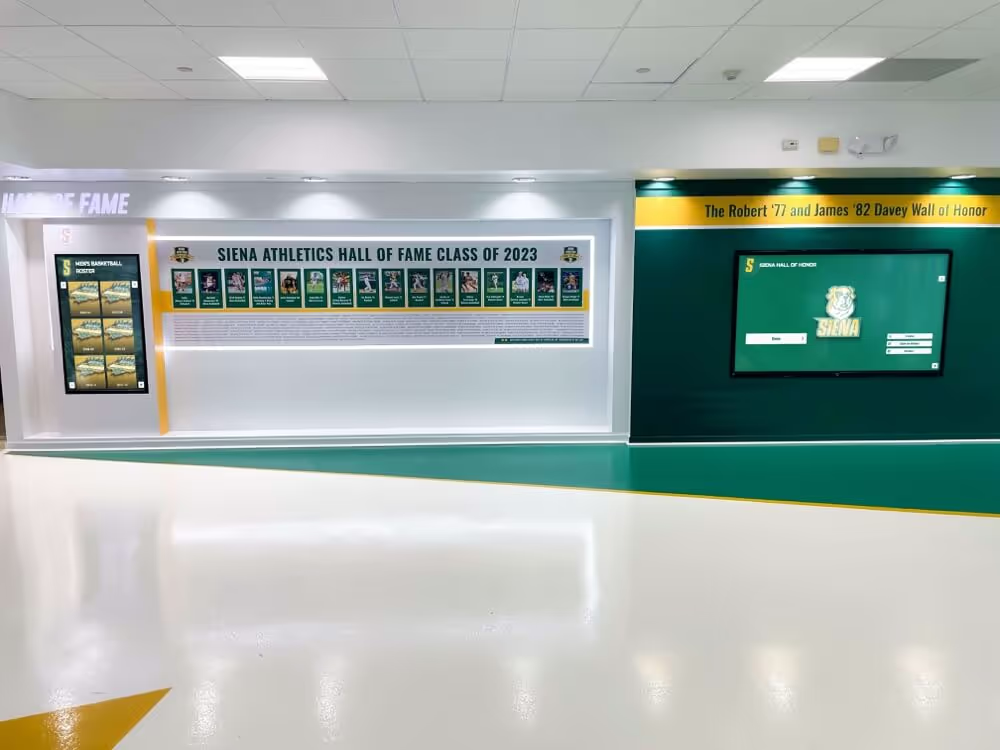
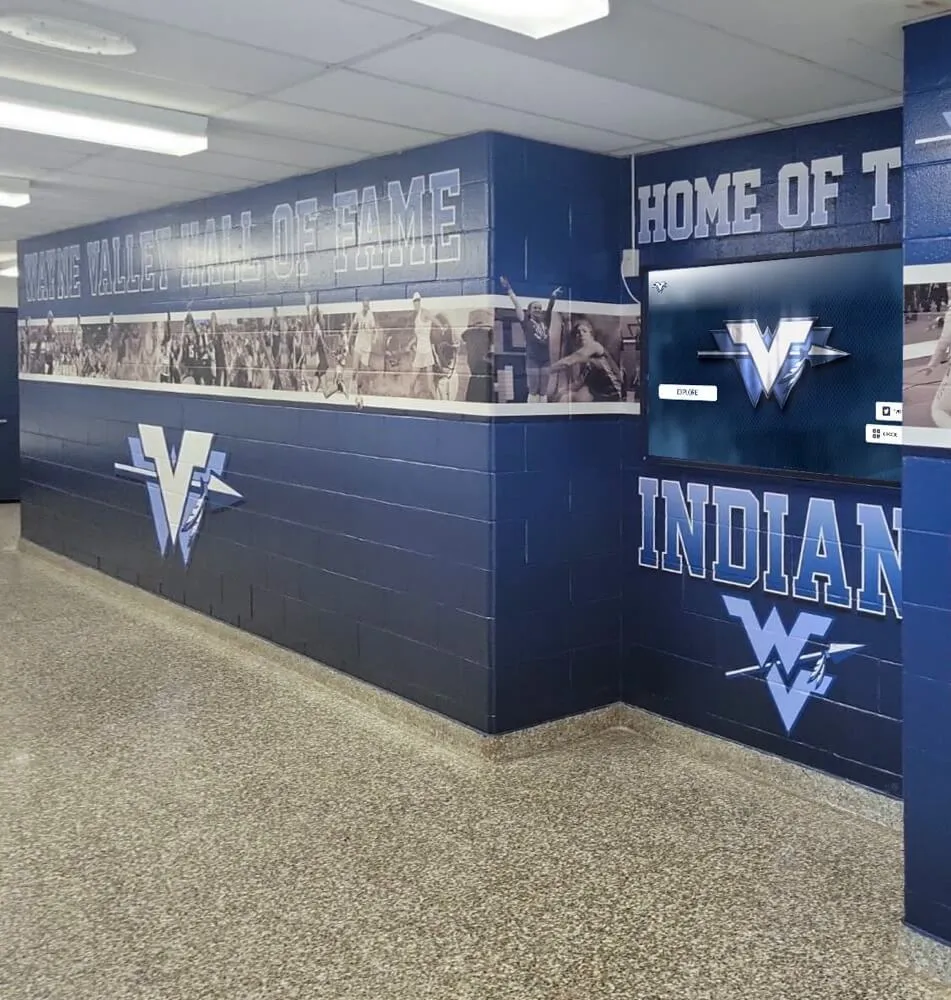
Contemporary athletic facilities integrate recognition displays that preserve competitive history while creating inspiring environments for current athletes
Understanding High School Stadium Planning Components
Effective stadium projects require comprehensive planning addressing multiple facility dimensions beyond basic field and seating construction.
Essential Stadium Design Elements
Successful high school stadiums incorporate several core infrastructure components:
Competition Surfaces and Athletic Spaces
The foundation of any stadium centers on performance surfaces:
- Football field dimensions meeting NFHS specifications (160 feet by 360 feet with end zones)
- Track and field facilities accommodating running events and field competitions
- Surface materials balancing performance, maintenance, and budget (natural grass vs. synthetic turf)
- Field orientation considering sun position, prevailing winds, and surrounding structures
- Multi-sport adaptability for soccer, lacrosse, band competitions, and special events
- Drainage systems preventing water accumulation and ensuring year-round usability
- Safety zones providing adequate clearance beyond playing boundaries
- Accessibility routes ensuring ADA compliance for participants and officials
Surface decisions significantly impact long-term costs—synthetic turf requires substantial initial investment but reduces maintenance expenses while enabling intensive year-round use without field degradation.
Spectator Accommodations
Fan experience depends on thoughtful seating and viewing infrastructure:
- Seating capacity aligned with typical attendance rather than maximum theoretical crowds
- Home and visitor sections with appropriate separation and amenities
- Sightline optimization ensuring unobstructed views from all seating positions
- Aisle configuration meeting safety codes and enabling efficient crowd movement
- Restroom facilities sized appropriately for seating capacity and event duration
- Concession areas supporting booster club operations and fan convenience
- Press box accommodations for media, announcers, coaches, and filming
- Accessibility seating meeting ADA requirements with companion positioning
- Weather protection through covered seating, wind barriers, or canopy structures
Seating design should accommodate realistic attendance patterns—oversized stadiums create empty sections diminishing atmosphere, while undersized facilities create crowding and limit revenue opportunities.
Infrastructure and Support Systems
Essential operational systems enable effective facility function:
- Lighting Systems - Field illumination meeting competition standards and enabling evening events
- Sound and Communication - Public address systems, music playback, and emergency notifications
- Scoreboard and Video - Display systems showing game information and replay capabilities
- Electrical Service - Power distribution supporting lighting, media, concessions, and special events
- Utilities and Plumbing - Water service for restrooms, concessions, irrigation, and field maintenance
- Storage Facilities - Secure spaces for equipment, maintenance tools, and event materials
- Ticketing and Entry - Controlled access points with appropriate staffing accommodations
- Emergency Systems - Lightning detection, evacuation routes, and first aid stations
Modern stadiums increasingly incorporate technology infrastructure supporting video streaming, statistics display, and the digital recognition systems that preserve athletic achievement.
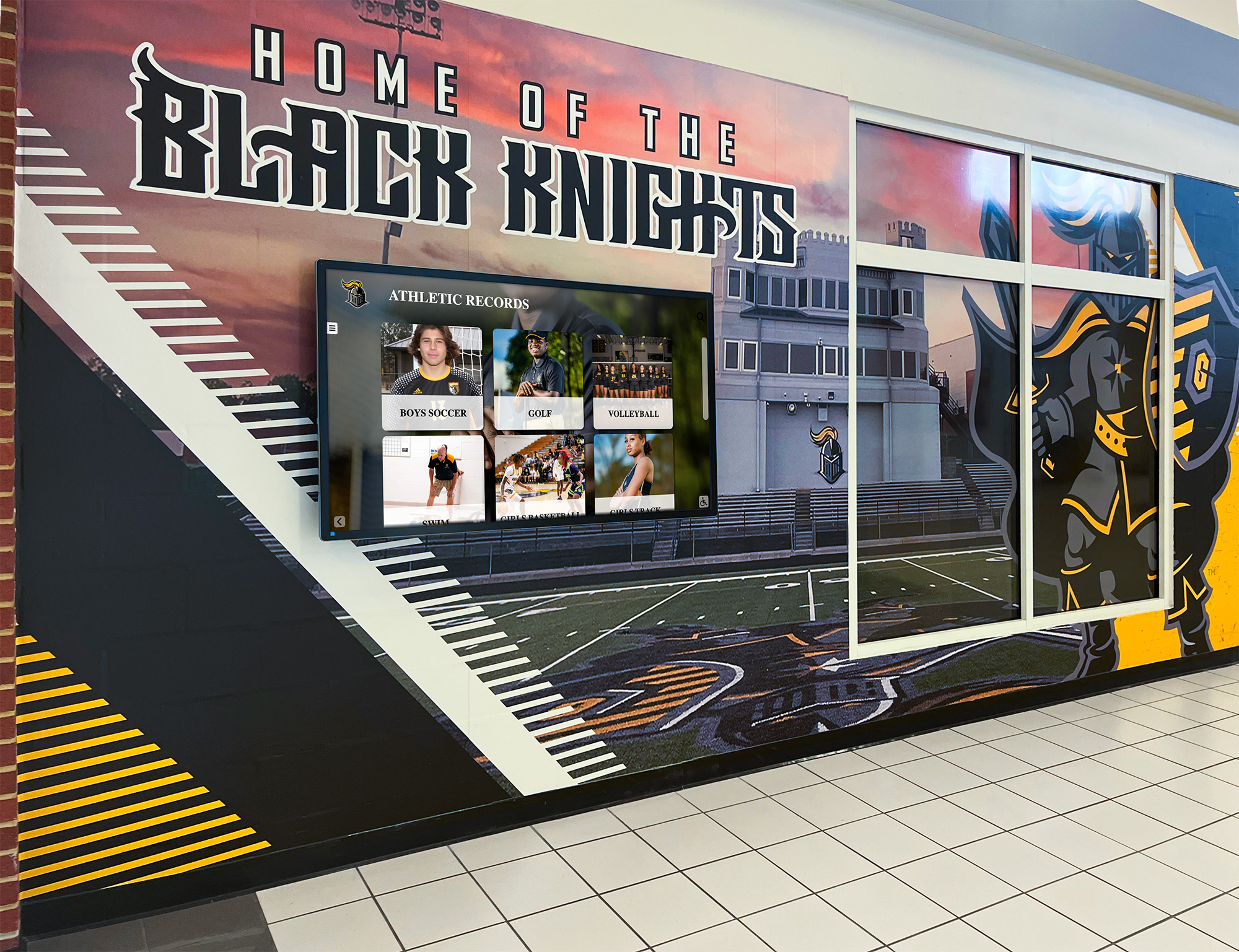
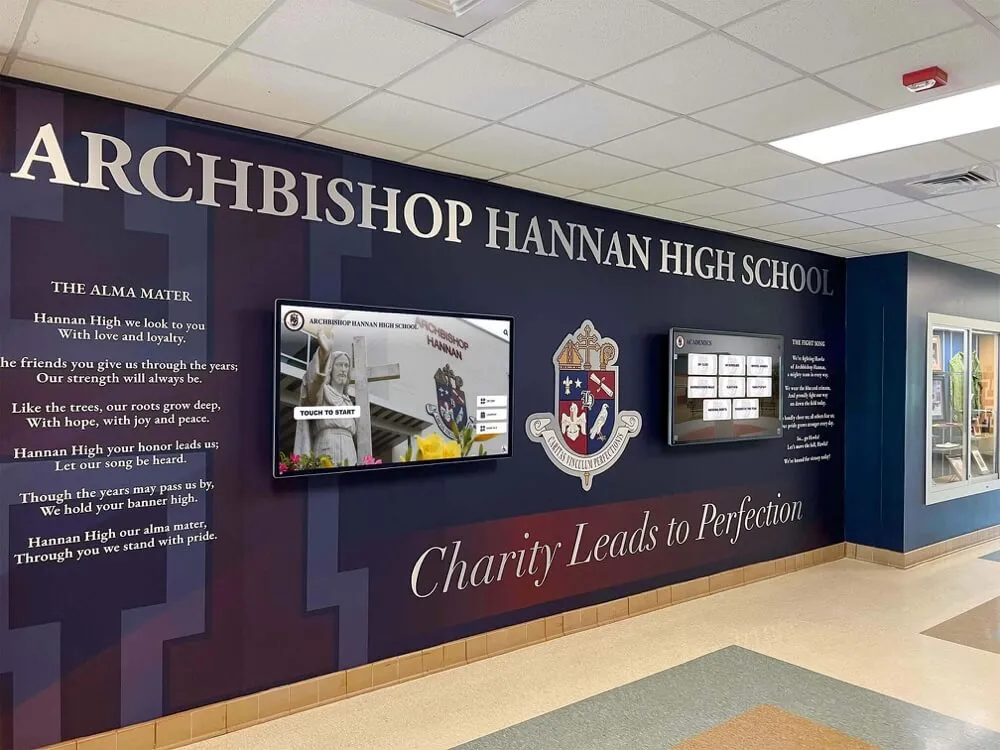
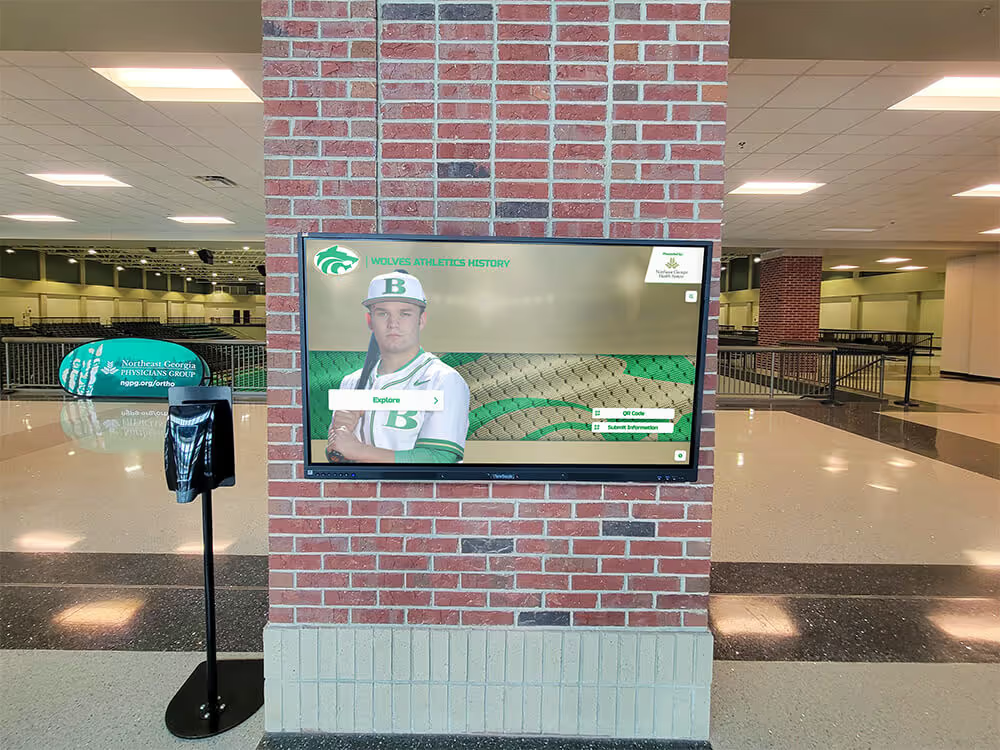
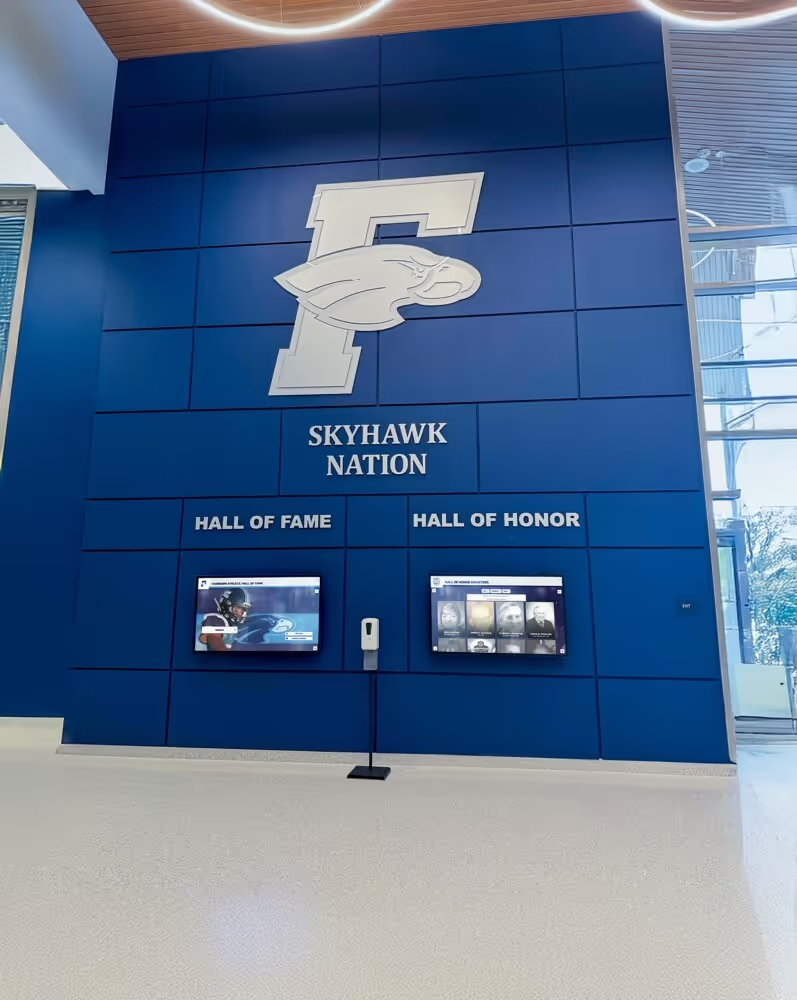
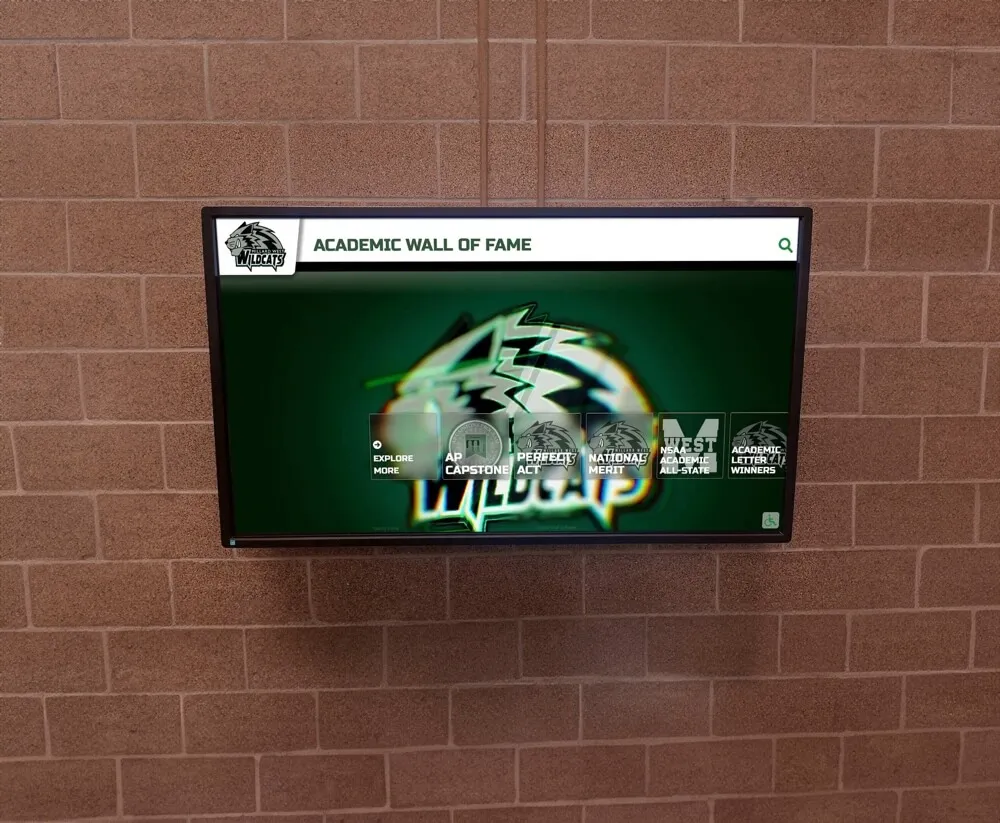
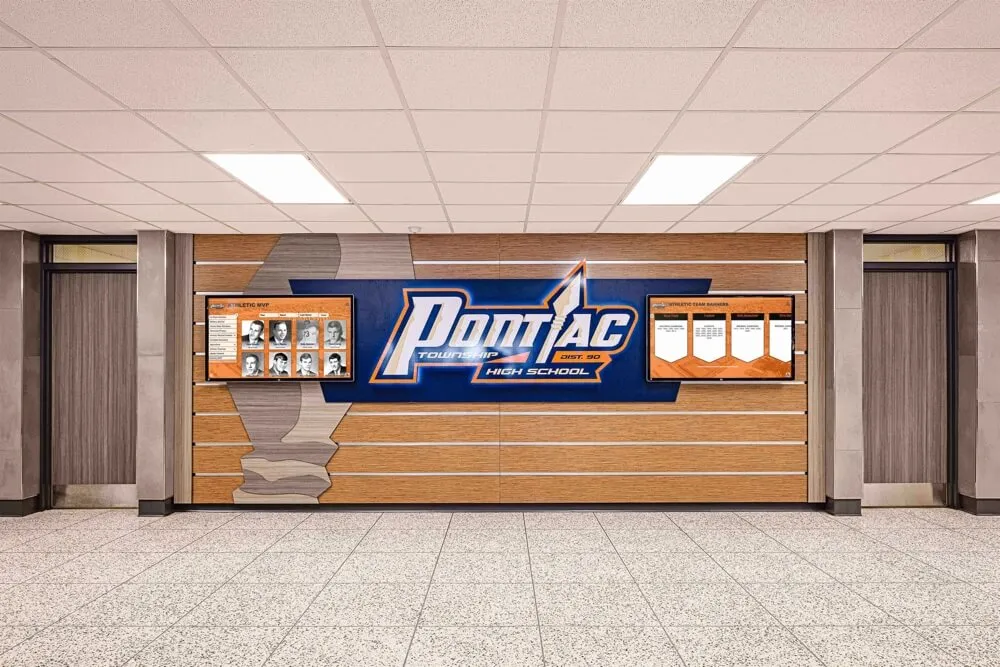
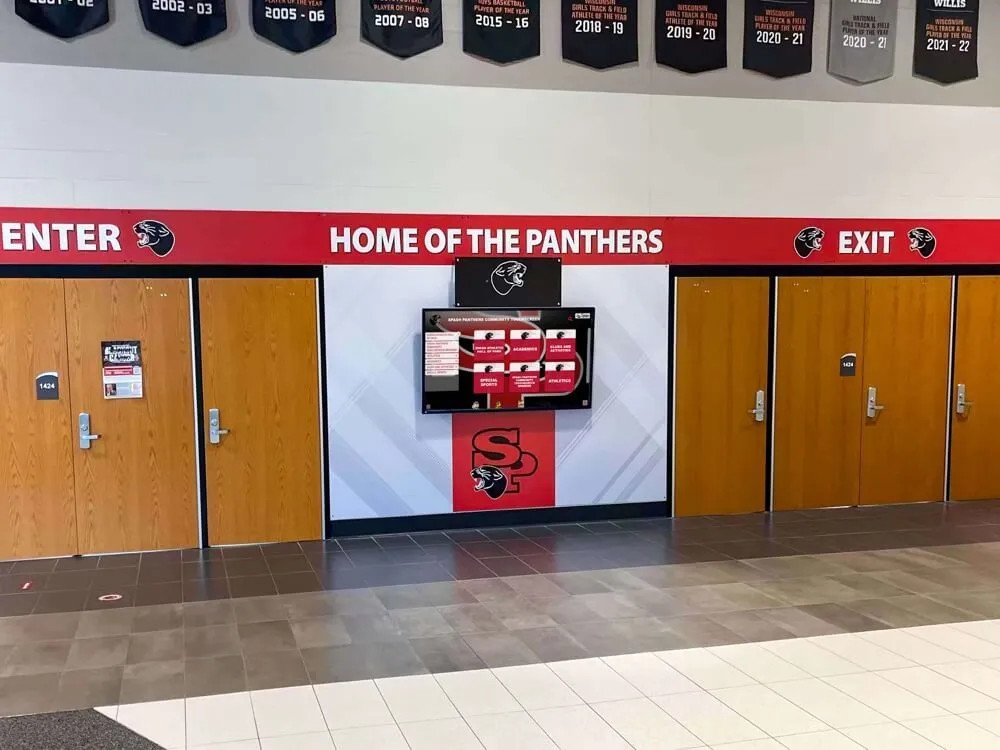
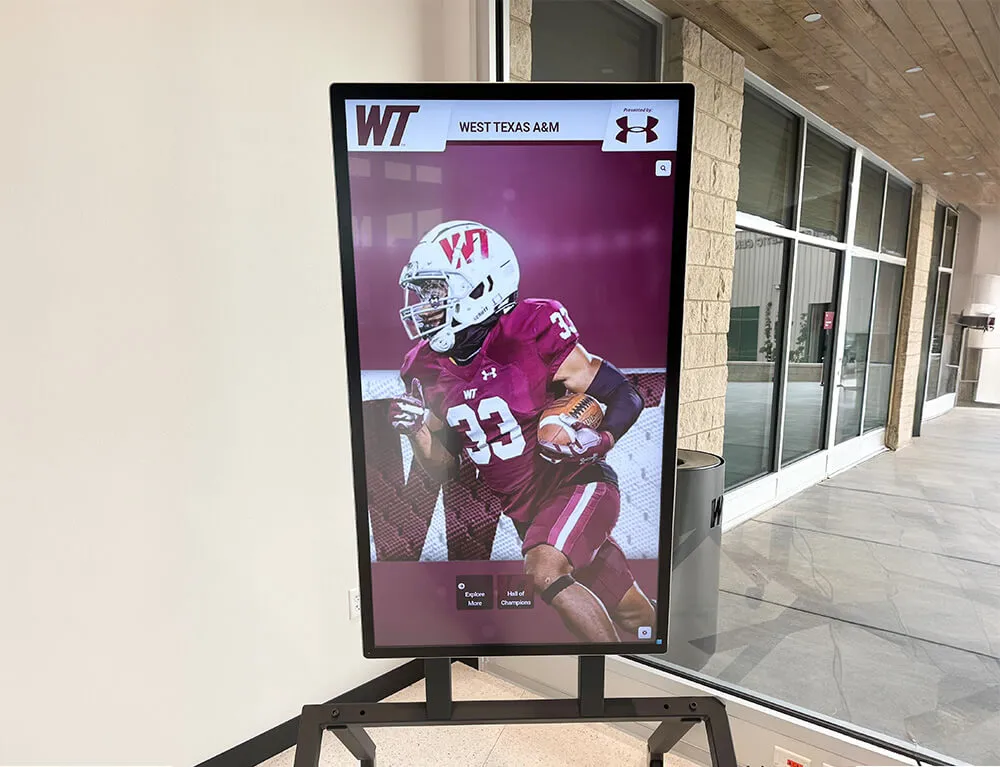
Stadium lobbies and concourses provide ideal locations for digital record boards celebrating program history and current season achievements
Program Snapshot: High School Stadium Development Framework
Understanding typical stadium planning timelines and requirements helps schools develop realistic project approaches.
| Planning Element | Typical Specifications | Key Considerations |
|---|---|---|
| Planning Timeline | 18-36 months from concept to completion | Include community input, design reviews, permitting |
| Seating Capacity | 1,500-5,000 seats for most high schools | Size to typical attendance, not maximum events |
| Field Surface | Natural grass ($400K-600K) or synthetic turf ($800K-1.2M) | Consider maintenance costs, usage intensity, climate |
| Track Facilities | 6-8 lane polyurethane or latex surfaces | Required for comprehensive track programs |
| Lighting Standards | 30-100 foot-candles for competition play | Higher levels for broadcast, playoffs |
| Press Box Size | 20-40 feet accommodating media, coaches, officials | Include elevator for accessibility compliance |
| Total Project Costs | $3M-$15M+ depending on scope and site conditions | Site preparation can significantly impact budgets |
| Financing Methods | Bond issues, capital campaigns, district budgets | Often combination of public funding and private support |
These benchmarks provide general guidance—actual specifications depend on program needs, competitive level, community expectations, and available resources.
The Evolution of High School Stadium Design
High school athletic facilities have transformed dramatically over the past century as sports medicine advanced, participation expanded, and community expectations evolved.
Historical Stadium Development Patterns
Understanding how high school stadiums developed provides context for contemporary design decisions:
Early Era Stadium Construction (1920s-1950s)
The first generation of purpose-built high school stadiums emerged during America’s industrial expansion:
- Concrete or wooden bleacher construction accommodating growing student bodies
- Simple field configurations supporting football and track competitions
- Natural grass surfaces requiring significant maintenance and seasonal recovery
- Basic lighting systems enabling evening events in larger communities
- Minimal accessibility considerations or spectator amenities
- Combined facilities serving entire districts rather than individual schools
- Memorial stadium naming honoring war veterans and community leaders
These early facilities established Friday night football traditions while creating gathering spaces strengthening community identity around school athletics.
Mid-Century Modernization (1960s-1980s)
Post-war population growth and suburban expansion drove stadium development:
- Increased seating capacity following enrollment growth and attendance expansion
- Dedicated press boxes accommodating media coverage and coaching needs
- Improved lighting technology supporting televised games and expanded schedules
- Synthetic turf introduction reducing maintenance while enabling intensive use
- Gender equity expansion requiring multi-sport facility capabilities
- Concession and restroom infrastructure supporting extended events
- Parking accommodations addressing automobile-dependent spectators
This period saw stadium construction spread from large urban districts to suburban communities as athletics became central to school identity and community engagement.
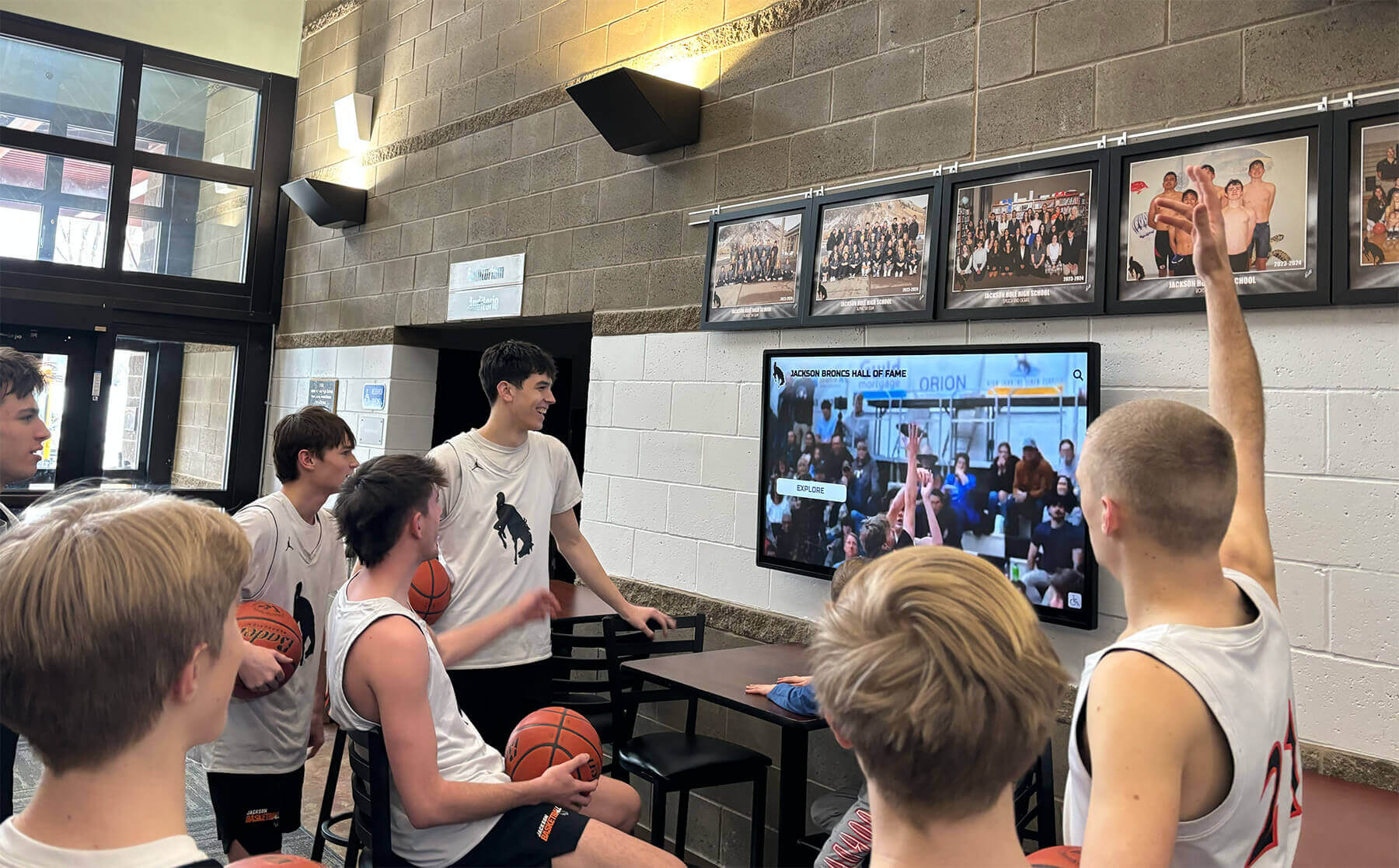
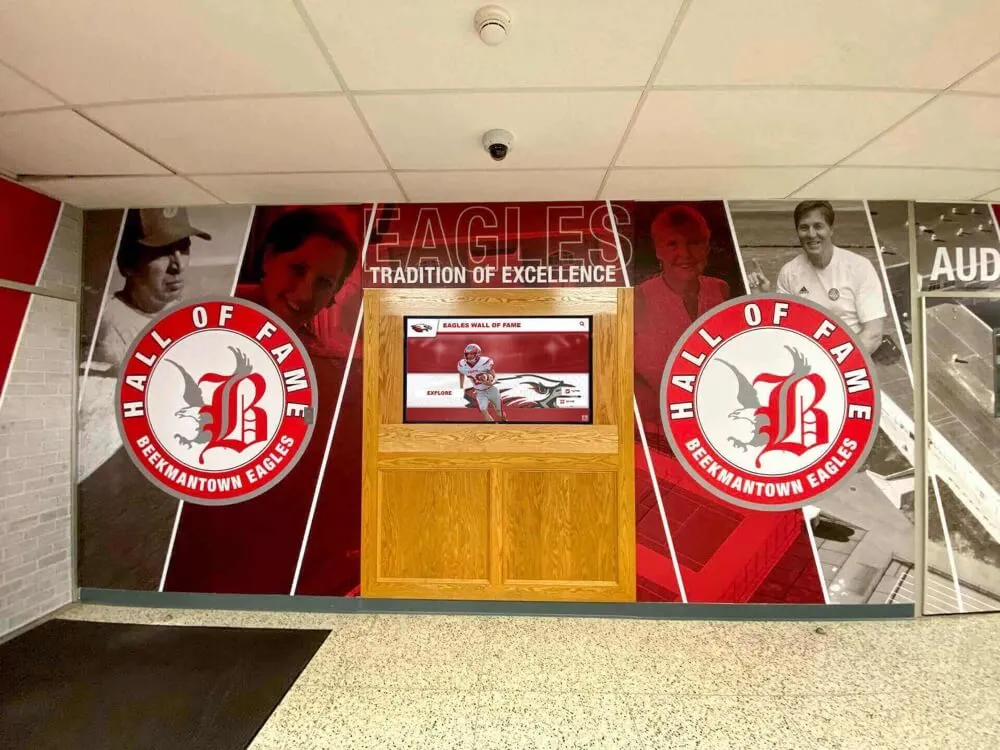
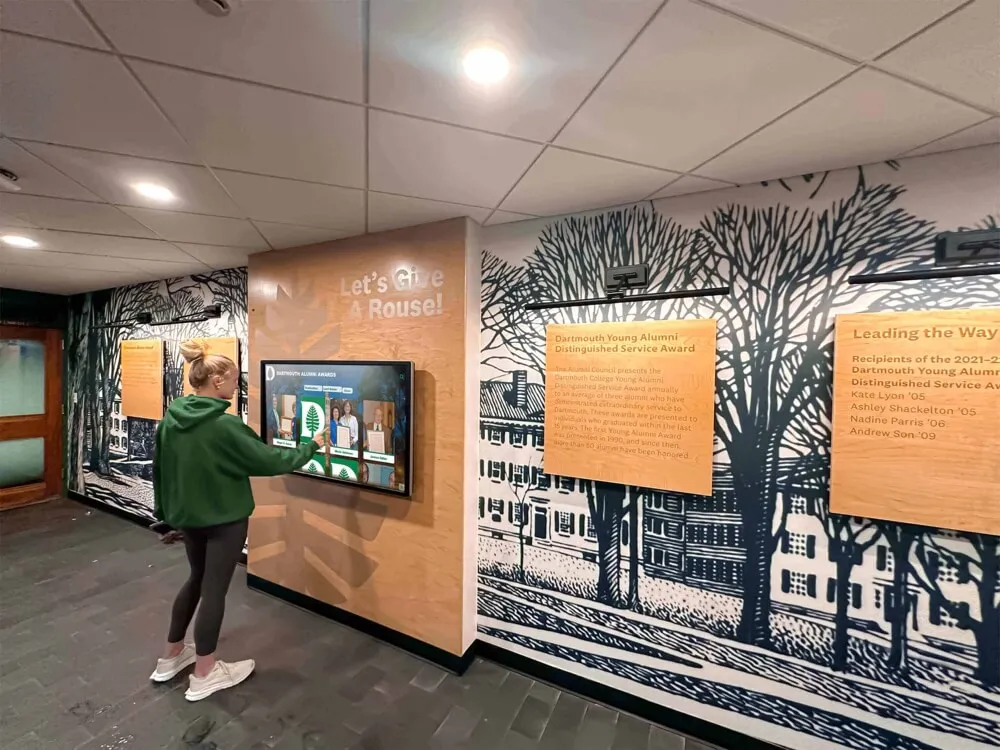
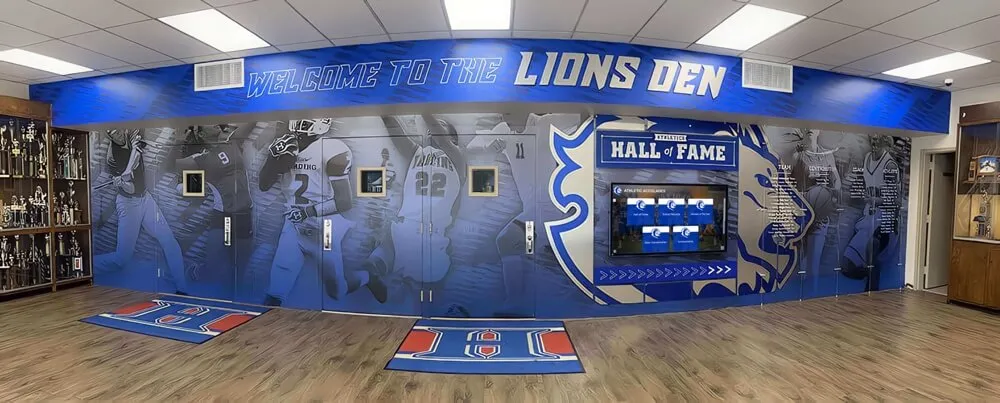
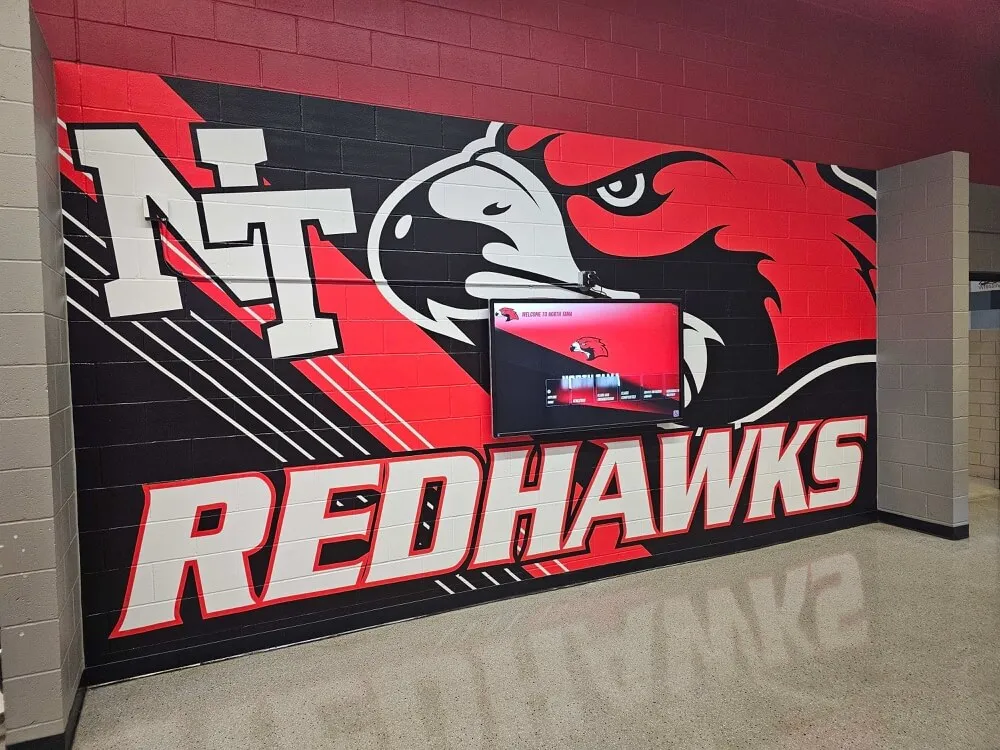
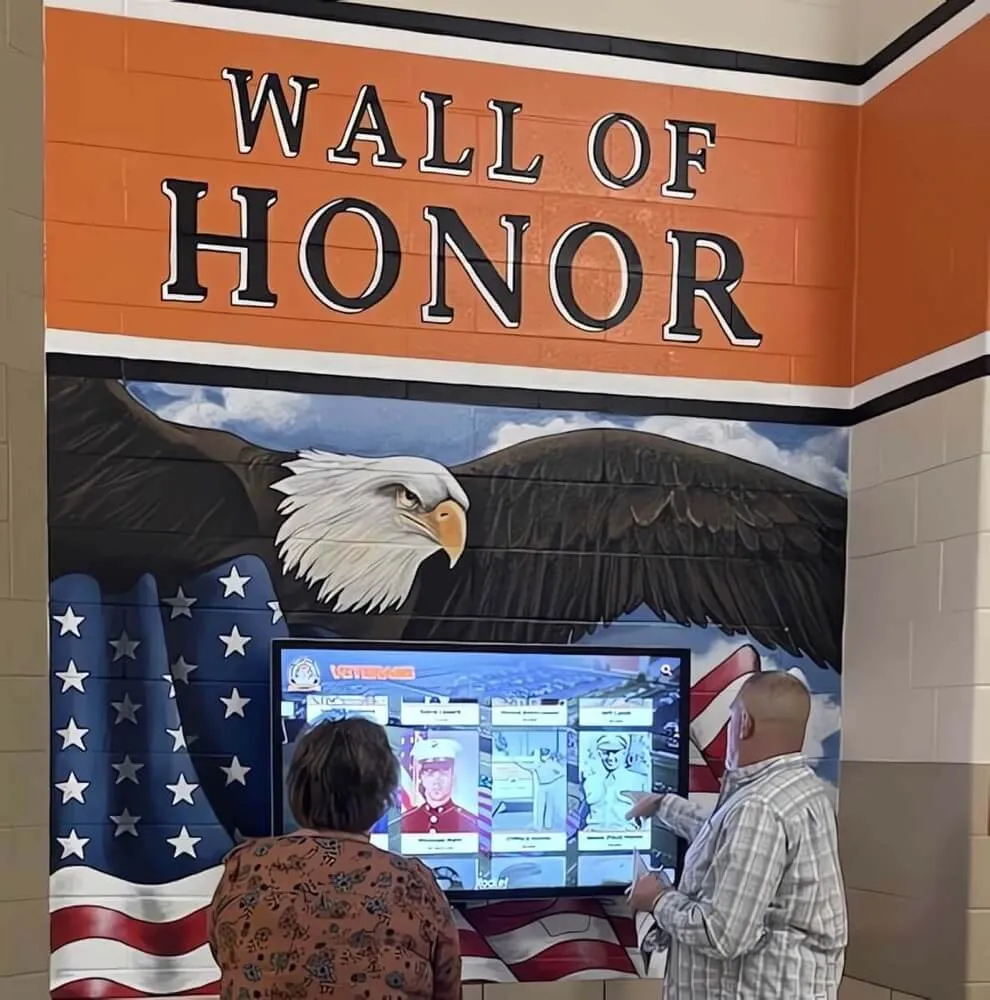
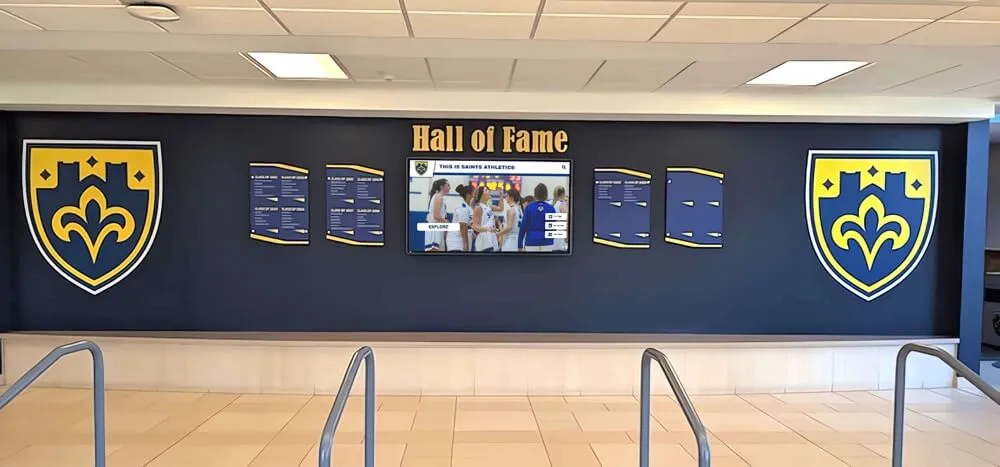
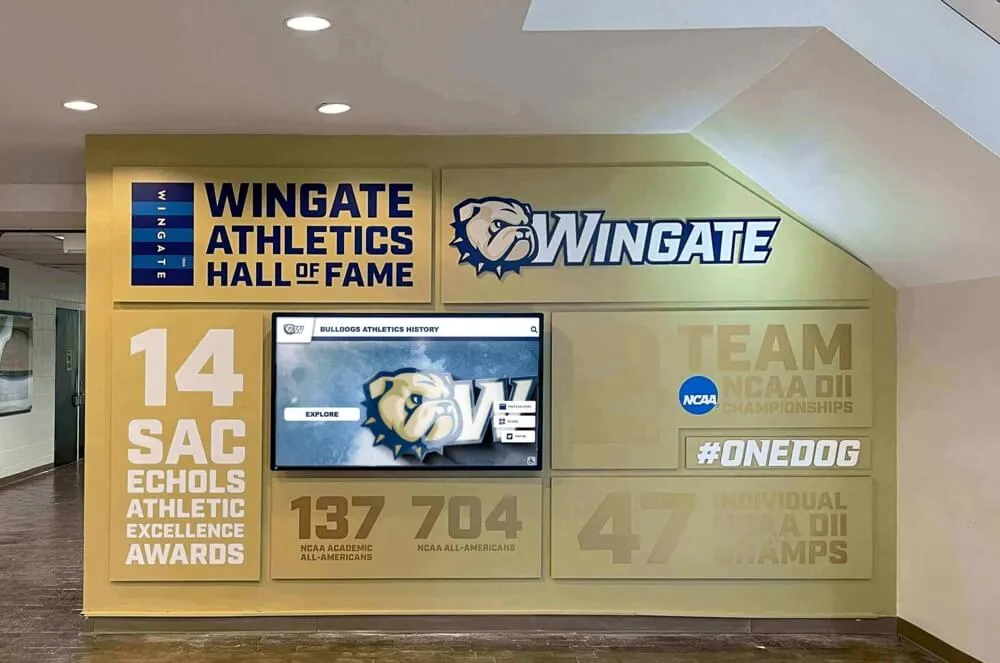
Modern stadiums incorporate technology enabling athletes and fans to explore historical achievements, game highlights, and program records interactively
Contemporary Stadium Design (1990s-Present)
Current facilities reflect changed expectations around athletics, technology, and community use:
- Championship-level specifications creating collegiate experiences for high school athletes
- ADA compliance ensuring accessibility throughout facilities
- Video boards providing instant replay, statistics, and sponsor recognition
- Premium seating generating revenue through reserved sections or suites
- Multi-purpose design supporting soccer, lacrosse, community events beyond football
- Technology infrastructure for streaming, statistics, and recognition displays
- Environmental considerations including LED lighting, water conservation, sustainable materials
- Security systems addressing contemporary safety concerns
- Connected locker rooms, training facilities, and weight rooms creating comprehensive athletic complexes
Modern stadiums increasingly serve as year-round athletic campuses rather than seasonal football venues, requiring design flexibility supporting diverse programs and activities.
Planning and Designing Championship-Level High School Stadiums
Systematic planning processes help schools develop facilities matching program needs, budget realities, and community expectations.
Needs Assessment and Program Definition
Successful projects begin with comprehensive evaluation of athletic and community requirements:
Current Program Analysis
Understanding existing conditions establishes planning foundations:
- Athletic program participation levels across all sports using facilities
- Current facility limitations affecting program quality or safety
- Maintenance costs and infrastructure condition assessment
- Capacity constraints during peak attendance events
- Accessibility deficiencies requiring remediation
- Technology gaps compared to competitor facilities
- Community use patterns beyond school athletics
This assessment identifies specific problems new facilities should address rather than pursuing construction without clear performance objectives.
Future Program Projections
Long-term planning requires enrollment and program forecasting:
- Student enrollment trends affecting participation and attendance
- Program expansion plans requiring additional facility capabilities
- Demographic changes impacting community use patterns
- Competitive landscape and conference affiliation considerations
- Title IX compliance requiring equivalent facilities across gender programs
- Youth sports development feeding into high school programs
Facilities designed for current needs alone become inadequate within years—effective planning accommodates reasonable growth while avoiding overbuilding.
Stakeholder Input and Community Engagement
Broad input strengthens project support and identifies overlooked requirements:
- Athletic department leadership defining program priorities
- Coaching staff providing sport-specific technical requirements
- Booster organizations contributing fundraising and operational perspectives
- Student-athletes sharing user experience insights
- Parent groups offering community viewpoints
- School board members establishing budget parameters
- Taxpayer representatives ensuring fiscal responsibility
- Neighbors addressing traffic, noise, and lighting concerns
Comprehensive engagement builds project support while surfacing concerns early when design modifications remain feasible and cost-effective.
Site Selection and Development Considerations
Physical location significantly impacts stadium functionality, costs, and community integration:
Site Evaluation Criteria
Multiple factors influence site suitability:
- Available land area accommodating desired facility scope
- Topography affecting grading costs and seating configurations
- Soil conditions impacting foundation requirements and drainage
- Existing utilities and infrastructure connection costs
- Access roads, parking, and traffic flow patterns
- Environmental constraints including wetlands, endangered species, historical sites
- Zoning regulations and permitted uses
- Neighborhood proximity affecting lighting, noise, scheduling restrictions
On-campus sites strengthen student access and program integration but may face space constraints, while off-campus locations offer expansion flexibility but reduce daily facility use.
Stadium Orientation and Layout
Field positioning affects both athletic performance and spectator experience:
- North-south field alignment minimizing afternoon sun glare during play
- Visitor and home sideline placement considering sun exposure
- Press box positioning optimizing sightlines and avoiding sun interference
- Track configuration maintaining regulation dimensions around football field
- Entry plaza and concourse circulation managing crowd flow
- Parking distribution balancing access with walking distances
- Facility relationship to connected buildings (locker rooms, training facilities)
Orientation decisions made during initial planning prove nearly impossible to modify later—comprehensive analysis during design prevents permanent compromises.
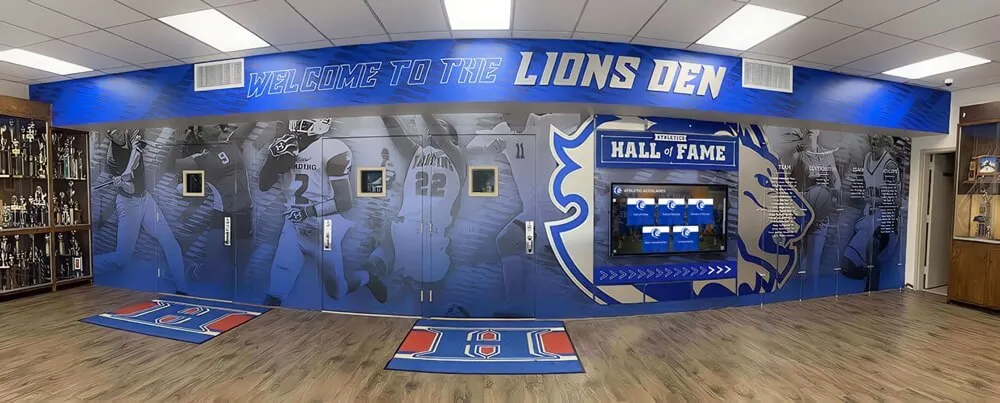
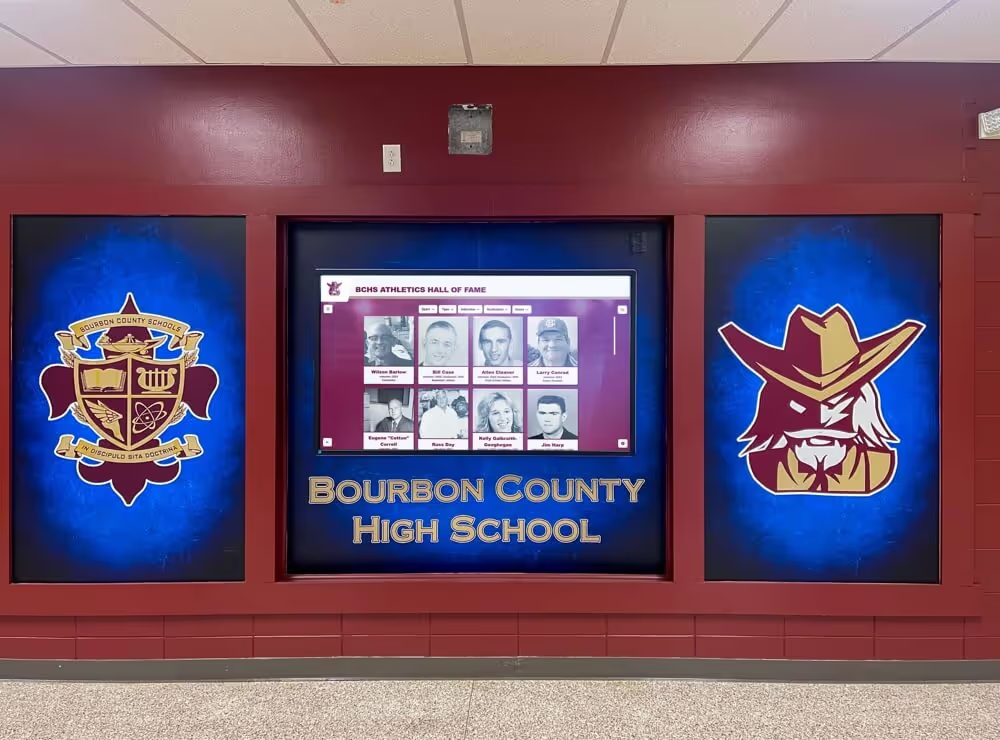
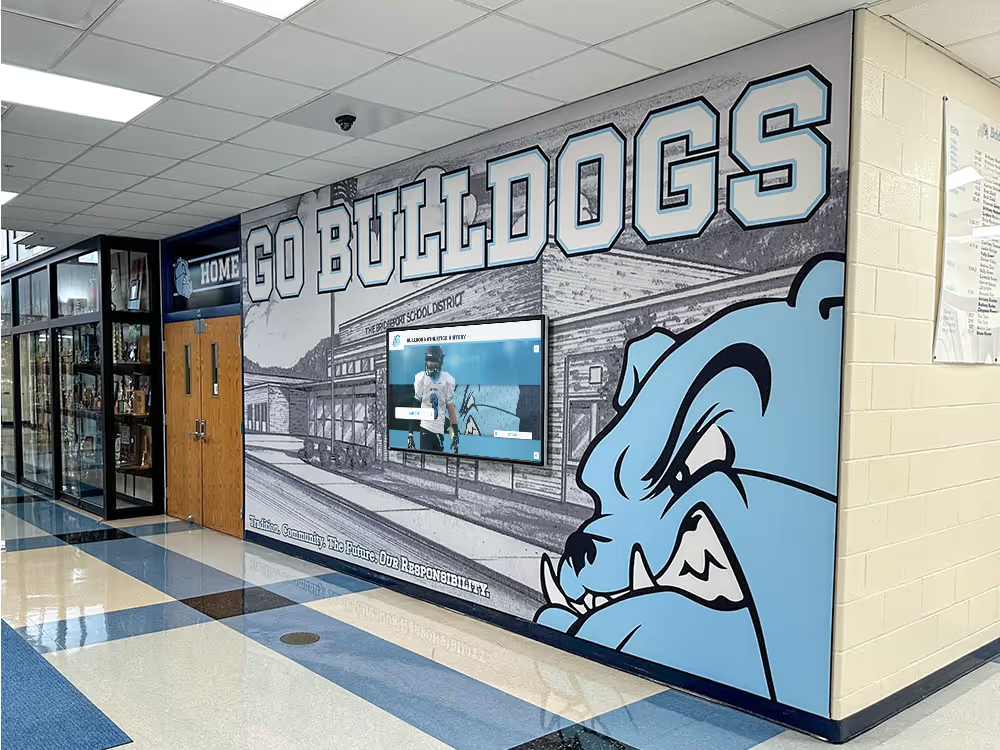
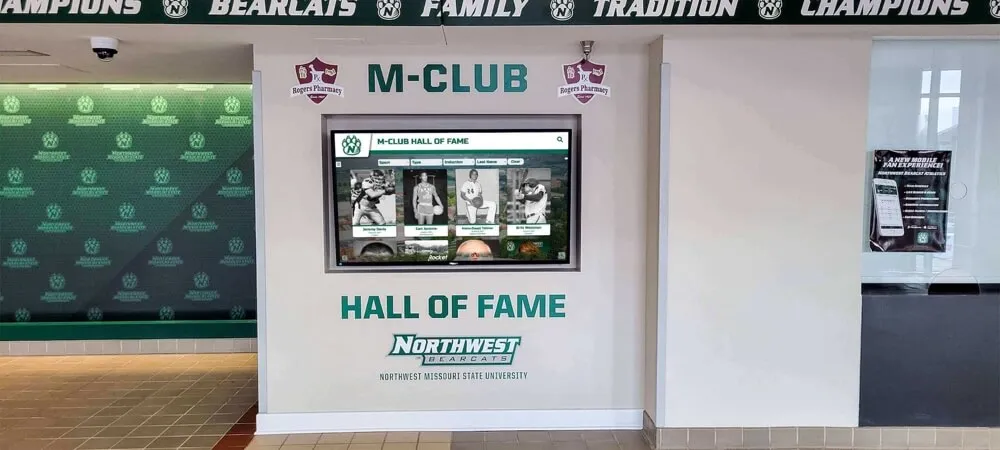
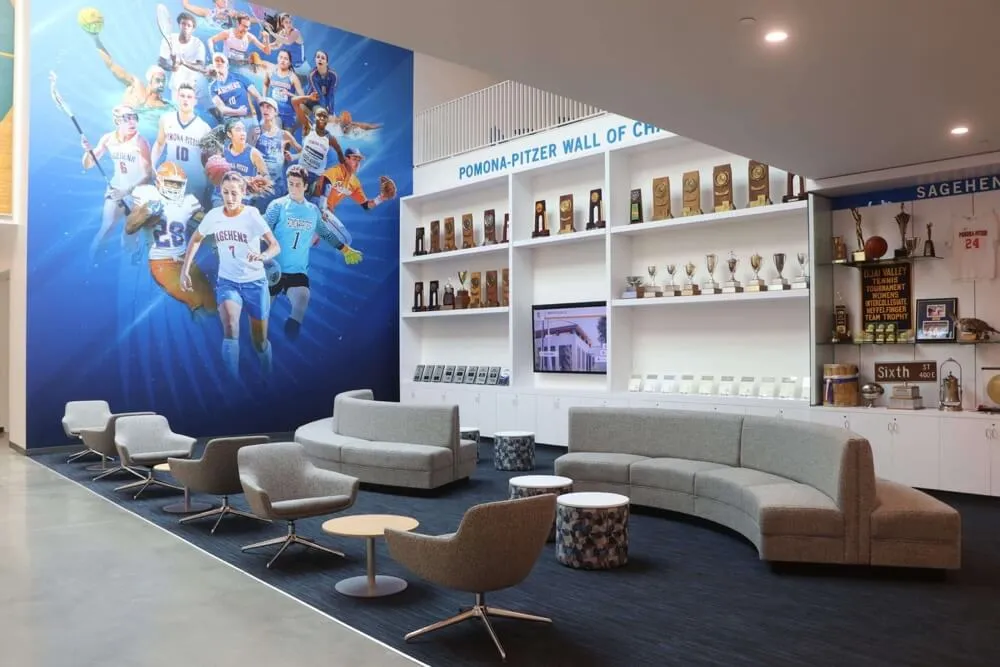
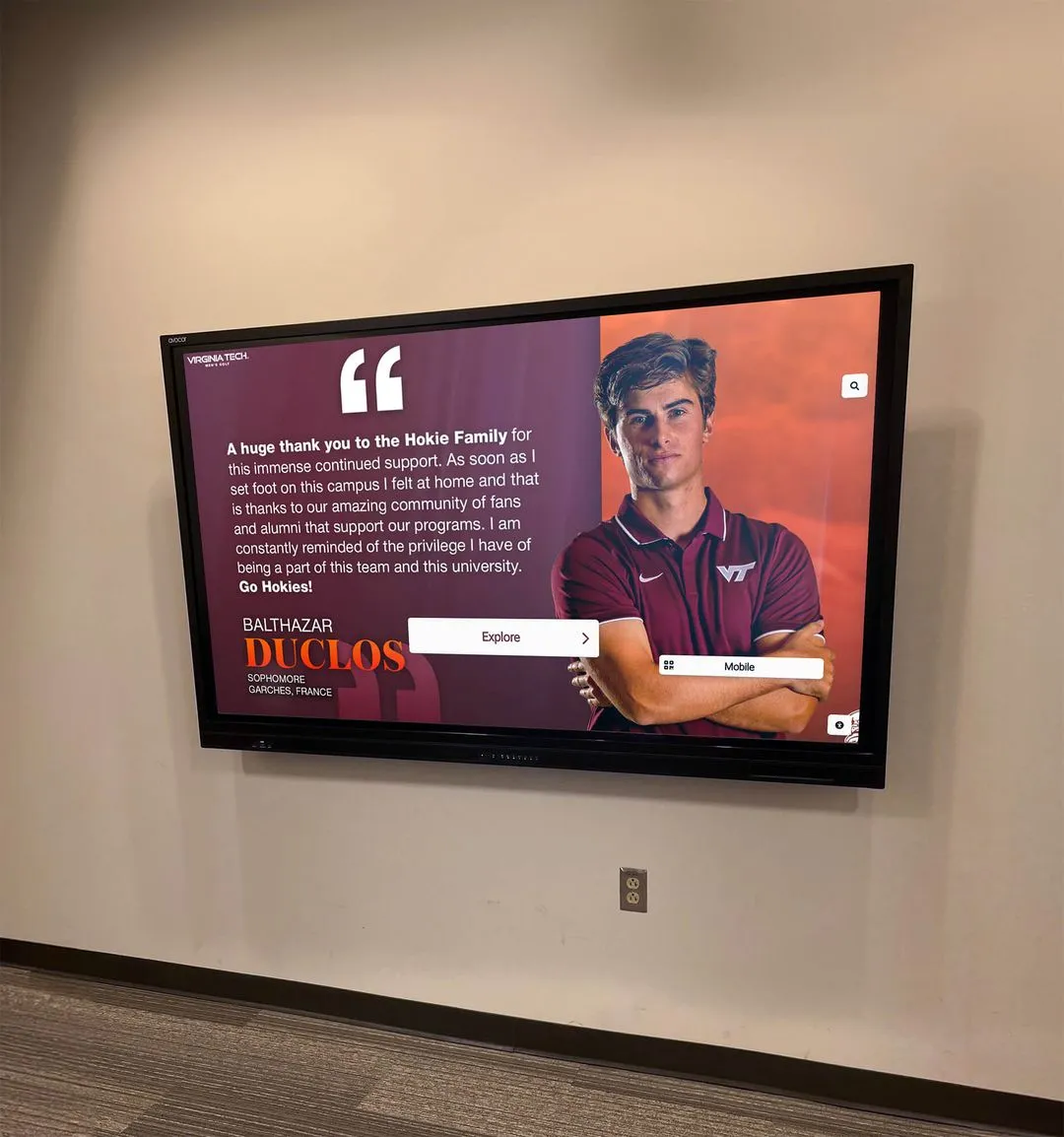
Stadium lobbies and concourses create prime opportunities for recognition displays celebrating program history and championship achievements
Design Elements Creating Championship-Level Venues
Specific features distinguish basic facilities from championship-caliber stadiums inspiring program pride:
Field and Competition Surface Design
Playing surface decisions affect performance, maintenance, and long-term costs:
Modern synthetic turf provides durability for intensive multi-sport use, eliminates seasonal field closure, reduces long-term maintenance labor, enables practice and game use without recovery periods, and maintains consistent performance in adverse weather. However, it requires significant capital investment, periodic replacement every 8-12 years, specialized maintenance equipment, and careful material selection addressing heat retention and injury concerns.
Natural grass offers traditional aesthetics, lower initial costs, superior heat management, and reduced injury risk in some impact scenarios. Yet it demands intensive maintenance, requires seasonal recovery limiting use, faces weather-related cancellations, and necessitates off-field practice alternatives protecting field quality.
Schools should evaluate decision based on usage intensity, available maintenance resources, budget constraints, climate considerations, and sport-specific performance requirements.
Seating and Spectator Experience
Effective seating design balances capacity, comfort, safety, and budget:
- Aluminum bleachers offering durability and low maintenance for basic seating
- Individual stadium seats providing enhanced comfort in premium sections
- Accessibility seating integrated throughout facility rather than segregated
- Student sections positioned for maximum energy and appropriate supervision
- Visitor accommodations appropriately sized without excessive allocation
- Covered seating protecting fans during weather events
- Sightline standards ensuring unobstructed views from all positions
- Adequate aisles, handrails, and safety features meeting code requirements
Seating capacity should reflect realistic attendance—a 3,000-seat stadium filled for important games creates better atmosphere than a 5,000-seat facility with empty sections.
Press Box and Media Infrastructure
Modern press boxes serve multiple functions beyond traditional media accommodation:
- Announcer positions with quality audio equipment and protected windows
- Coach observation areas with game communication systems
- Media seating with power, internet connectivity, and camera positions
- Video control rooms managing scoreboard and streaming operations
- Statistics crew space tracking game data and operating display systems
- Official and administration areas managing game operations
- Elevator access ensuring ADA compliance for multi-level structures
Press boxes increasingly function as technology hubs controlling the digital systems that enhance game-day experience and preserve competitive history through digital record boards and achievement displays.
Lighting Systems for Competition and Events
Quality lighting extends facility usability while creating atmosphere:
- Field illumination meeting NFHS standards (30+ foot-candles minimum for competition)
- Light distribution minimizing glare for players while ensuring visibility
- Spectator area lighting addressing safety during entry, exit, crowd movement
- Emergency and egress lighting meeting safety code requirements
- Control systems enabling different lighting levels for various event types
- LED technology reducing energy consumption and maintenance costs
- Light pollution mitigation addressing neighborhood concerns
- Backup power for critical safety and security lighting
Proper lighting transforms facilities from daytime-only venues into community gathering spaces supporting evening competitions, ceremonies, and special events.
Video Boards and Recognition Display Systems
Contemporary stadiums integrate technology enhancing both game-day experience and program recognition:
- Main scoreboard displays showing time, score, down-and-distance, statistics
- Video replay boards capturing game highlights and special moments
- Ribbon boards displaying sponsor recognition and scrolling information
- Stadium entrance displays welcoming visitors and highlighting achievements
- Concourse recognition systems preserving program history and honoring excellence
- Integration with touchscreen hall of fame displays in connected lobbies and athletic facilities
These systems serve dual purposes—enhancing live event experience while creating year-round recognition preserving athletic heritage when the stadium sits empty between competitions.
Financing High School Stadium Construction Projects
Major facility projects require comprehensive financial planning combining public funding with private support and creative financing approaches.
Common Stadium Financing Methods
Schools employ multiple strategies funding major construction projects:
School District Bond Issues
Voter-approved bonds provide primary funding for most stadium projects:
- Bonding capacity based on district assessed valuation
- Voter approval thresholds varying by state (simple majority to supermajority)
- Repayment through property tax increases over 15-30 year periods
- Project packaging combining multiple facility needs in comprehensive plans
- Professional campaign efforts educating voters about project benefits
- Opposition management addressing taxpayer concerns
Bond campaigns require substantial advance planning, community engagement, and transparent communication about costs, benefits, and alternatives to deficient current facilities.
Capital Campaigns and Private Fundraising
Private support supplements public funding or finances specific amenity enhancements:
- Naming rights for stadium, field, press box, or specific facility components
- Seat sponsorships providing recognition on individual seats or sections
- Memorial brick or plaque programs honoring individuals or teams
- Corporate sponsorships from businesses supporting community athletics
- Alumni campaigns targeting graduates with connection to athletic programs
- Foundation support from private entities established for district benefit
- In-kind donations of materials, labor, or professional services
Successful fundraising efforts often use tiered recognition levels enabling participation across income ranges while providing appropriate acknowledgment for major contributors.
Alternative Financing Structures
Creative approaches address funding gaps or enable projects without voter approval:
- Lease-purchase agreements spreading costs across years without bond authorization
- Public-private partnerships engaging developers in exchange for facility rights
- State matching grants supplementing local funding for qualifying projects
- Certificate of participation programs financing through installment purchases
- Sales tax allocations dedicating revenue streams to facility construction
- Impact fees on new development funding infrastructure including schools
- Joint-use agreements sharing costs with municipalities or other entities
These alternatives involve varying legal requirements, cost implications, and operational considerations requiring professional financial and legal counsel.
Budget Management and Cost Control
Major construction projects face numerous cost pressures requiring disciplined financial management:
Realistic Budget Development
Comprehensive budgets account for all project components:
- Site preparation including grading, utilities, drainage infrastructure
- Competition surfaces and track installation
- Seating structures and accessibility accommodations
- Press box and support buildings
- Lighting, sound, video, and technology systems
- Landscaping, fencing, and site improvements
- Furniture, fixtures, and equipment
- Professional fees for architecture, engineering, project management
- Permitting, inspection, and regulatory compliance costs
- Construction contingency (typically 10-15% for unforeseen conditions)
- Escalation allowances for projects with extended timelines
Underfunded budgets lead to value engineering eliminating desired features or project delays while additional funding is secured—realistic initial estimates prevent disappointment and scope reductions.
Phased Construction Approaches
Multi-phase projects spread costs while delivering functional improvements:
- Phase 1: Essential competition infrastructure (field, basic seating, lighting)
- Phase 2: Enhanced amenities (expanded seating, press box, improved spectator facilities)
- Phase 3: Premium features (video boards, additional buildings, landscaping)
Phasing enables projects to proceed with available funding while preserving opportunities for enhancement as additional resources become available through subsequent bonds or fundraising.
Value Engineering Without Compromising Quality
Strategic cost management maintains project quality while respecting budgets:
- Prioritizing investment in permanent infrastructure over easily upgraded elements
- Selecting durable materials reducing long-term maintenance and replacement costs
- Competitive bidding processes ensuring market pricing
- Design standardization using proven approaches rather than custom solutions
- Material substitutions providing equivalent performance at lower costs
- Scheduling optimization avoiding premium costs for accelerated timelines
- Local contractor selection reducing mobilization and travel expenses
Effective value engineering cuts costs without cutting corners—maintaining safety, durability, and functionality while eliminating unnecessary expense.

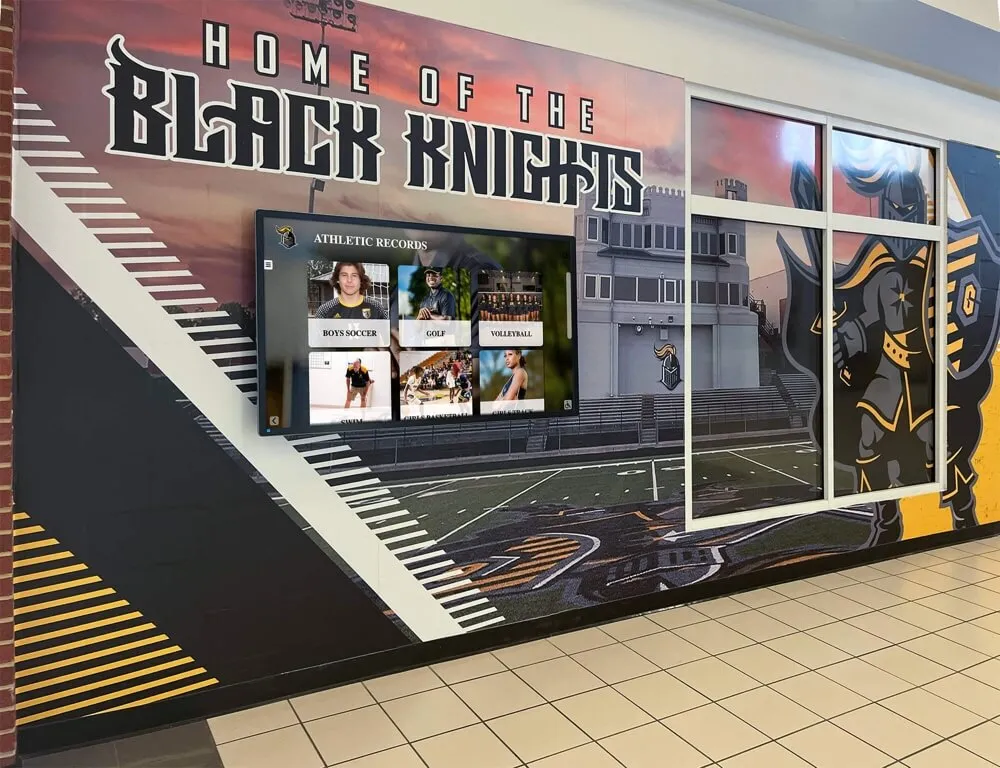
Stadium complexes benefit from integrated recognition displays celebrating program history, current achievements, and the championship culture that makes venues meaningful beyond physical infrastructure
Building and Preserving Stadium Legacy
Physical facilities provide the stage for athletic achievement, but recognition systems preserve competitive history creating lasting program culture.
Integrated Recognition and Display Systems
Championship stadiums incorporate thoughtful recognition celebrating program excellence:
Historical Achievement Preservation
Effective stadiums document program heritage through systematic display:
- Championship acknowledgment celebrating conference, district, regional, state titles
- Record boards highlighting all-time performance achievements
- All-conference and all-state athlete recognition
- College signing recognition honoring athletes continuing careers
- Retired numbers celebrating transformational program figures
- Coaching milestone acknowledgment for long-term program leaders
- Historic team photos preserving championship seasons
Traditional plaques and banners provide static recognition but face space limitations—modern digital hall of fame systems enable comprehensive historical documentation without physical constraints.
Connected Athletic Facility Design
Stadium complexes function as comprehensive athletic campuses:
- Locker room design creating inspiring pre-game environments
- Training facilities supporting athlete development and injury prevention
- Weight rooms accommodating strength and conditioning programs
- Meeting spaces for film study, team meetings, recruit visits
- Trophy displays showcasing championship hardware
- Entrance lobbies establishing program identity and competitive culture
- Recognition systems honoring individual and team excellence
These connected spaces create comprehensive athletic environments where physical infrastructure and recognition systems combine establishing championship expectations while preserving competitive heritage.
Recruiting and College Placement Recognition
Modern stadiums celebrate athletes’ paths beyond high school:
- College commitment displays recognizing signing day announcements
- Signing day recognition celebrating athletes continuing competitive careers
- Alumni achievement updates showing post-graduation success
- Professional athlete acknowledgment for rare individuals reaching highest levels
- Academic scholarship recognition celebrating educational achievement
- Military service honor for graduates serving country
These displays demonstrate program quality while inspiring current athletes regarding possibilities their dedication might create.
Stadium Naming and Memorial Recognition
Facility naming provides powerful recognition opportunities while honoring individuals who shaped programs:
Naming Approaches and Considerations
Different naming philosophies serve various institutional values:
- Memorial naming honoring deceased individuals who contributed significantly
- Donor recognition for transformational financial contributions
- Geographic naming connecting facilities to communities or districts
- Mascot-based naming reinforcing school identity
- Historical figure recognition celebrating influential educators or community leaders
- Delayed naming enabling evaluation of potential honorees’ lasting impact
Naming decisions prove nearly impossible to reverse—comprehensive vetting and appropriate approval processes prevent future embarrassment or controversy.
Component Naming Opportunities
Beyond overall facilities, individual elements offer recognition possibilities:
- Playing surfaces honoring coaches or influential figures
- Press boxes celebrating media figures or administrators
- Seating sections recognizing major donors or organizations
- Entry plazas memorializing specific individuals or classes
- Meeting rooms acknowledging contributors
These component opportunities enable broad recognition participation while reserving overall facility naming for truly transformational contributions or figures.
Operational Considerations for Long-Term Stadium Success
Successful facilities require ongoing management addressing maintenance, scheduling, community relations, and program evolution.
Facility Maintenance and Operations
Quality construction means little without systematic maintenance preserving investment:
Preventive Maintenance Programs
Regular attention prevents minor issues from becoming major problems:
- Field surface maintenance addressing drainage, compaction, wear patterns
- Seating inspection identifying structural issues, deterioration, safety concerns
- Lighting system maintenance replacing bulbs, cleaning fixtures, testing operation
- Sound and video equipment updates maintaining technology currency
- Restroom and concession facility cleaning and repair
- Drainage system clearing preventing water damage
- Paint and cosmetic maintenance preserving facility appearance
- Security and emergency system testing ensuring reliable operation
Deferred maintenance accumulates exponentially—regular modest investment prevents costly emergency repairs or premature replacement.
Staffing and Resource Allocation
Facility management requires dedicated personnel and appropriate budgets:
- Grounds maintenance staff with equipment and expertise managing surfaces
- Custodial teams maintaining cleanliness and sanitation
- Security personnel managing events and protecting facilities
- Technical staff operating video, sound, lighting systems
- Administrative coordination managing scheduling and community use
- Seasonal staffing augmentation supporting peak activity periods
Facilities without adequate operational support deteriorate rapidly regardless of construction quality.
Community Integration and Relationship Management
Stadiums affect neighborhoods requiring proactive relationship management:
Managing Community Impact
Thoughtful operations minimize friction with surrounding areas:
- Lighting controls reducing neighborhood light pollution
- Sound level management respecting residential areas
- Traffic and parking plans minimizing congestion
- Event scheduling considering neighborhood disruption
- Noise curfews establishing reasonable event end times
- Communication with neighbors about schedule changes
- Litter control and cleanup after events
Positive neighbor relationships prevent complaints, opposition to facility improvements, and restrictions on facility use.
Maximizing Community Value
Stadiums serving multiple purposes justify investment through broad utilization:
- Graduation ceremonies providing meaningful venues for milestone events
- Youth sports programs accessing quality facilities for development
- Community events including festivals, concerts, special gatherings
- Summer camps utilizing facilities during academic breaks
- Recreational use providing public access during appropriate times
- Emergency shelter designation during disasters or evacuations
Diverse utilization demonstrates facility value to taxpayers beyond school athletics while generating revenue offsetting operational costs.
Creating Meaningful Stadium Experiences Through Technology and Recognition
Modern technology transforms stadiums from simple competition venues into year-round recognition platforms preserving heritage while engaging communities.
Digital Display Systems Enhancing Stadium Experience
Contemporary facilities integrate technology creating enhanced experiences:
Game Day Enhancement Technology
Modern systems elevate event atmosphere and fan engagement:
- Video replay systems capturing and displaying game highlights
- Statistical displays showing live performance data
- Social media integration enabling fan interaction
- Sponsor recognition providing revenue supporting operations
- Musical entertainment enhancing pre-game and halftime experiences
- Emergency communication systems ensuring crowd safety
These technologies transform static facilities into dynamic environments creating memorable experiences distinguishing championship-level programs.
Year-Round Recognition Platforms
Stadiums remain largely empty between competitions—digital systems create continuous engagement:
- Historical achievement displays celebrating program heritage
- Current season statistics showing ongoing performance
- Championship documentation preserving memorable seasons
- Individual athlete recognition honoring excellence
- Team photo galleries maintaining visual history
- Coaching philosophy and program values establishing culture
Digital recognition systems transform physical infrastructure into storytelling platforms preserving competitive heritage while inspiring current and future athletes.
Building Championship Culture Through Facility and Recognition Integration
Physical stadiums combined with systematic recognition create comprehensive environments establishing excellence expectations:
Effective programs integrate facility excellence with recognition systems celebrating achievement, maintain historical documentation through digital platforms enabling unlimited content, create visual reminders of program standards throughout athletic spaces, establish recruiting advantages through facilities demonstrating program commitment, engage alumni through preserved history connecting generations, and inspire current athletes through tangible examples of excellence earned by predecessors.
When championship-level facilities combine with comprehensive recognition systems, schools create athletic environments where physical infrastructure and preserved heritage reinforce program values establishing culture that transcends individual seasons or athlete generations.
Conclusion: Building Stadiums That Preserve Legacy While Inspiring Excellence
High school stadiums represent significant institutional investments serving multiple purposes—competitive venues enabling championship athletics, community gathering spaces strengthening school identity, and recognition platforms preserving athletic heritage inspiring future generations. Administrators who approach stadium planning comprehensively create facilities accommodating current needs while providing flexibility for program evolution and technological advancement.
Successful projects balance competitive requirements with budget realities, incorporate community input throughout planning processes, design for long-term operational efficiency, integrate recognition systems celebrating program heritage, and create environments where physical excellence combines with preserved history establishing championship culture. Whether building new facilities or renovating existing stadiums, systematic approaches addressing design, financing, construction, operation, and recognition ensure investments deliver lasting value serving programs and communities for generations.
The most meaningful stadiums transcend physical infrastructure—they become places where communities gather, students create lasting memories, and athletic excellence receives appropriate recognition preserving competitive legacy long after final whistles blow and Friday night lights dim.
Ready to create recognition systems preserving your stadium’s athletic heritage? Explore how Rocket Alumni Solutions’ digital hall of fame platforms integrate with championship-level facilities creating year-round engagement celebrating program excellence while inspiring current and future athletes through preserved competitive history.
Live Example: Rocket Alumni Solutions Touchscreen Display
Interact with a live example (16:9 scaled 1920x1080 display). All content is automatically responsive to all screen sizes and orientations.