Hall of Fame Records Retention Policy: What School Committees Should Keep and for How Long
- Home /
- Digital Hall of Fame Insights & Resources /
- Hall of Fame Records Retention Policy: What School Committees Should Keep and For How Long
The Easiest Touchscreen Solution




Live Example: Rocket Alumni Solutions Touchscreen Display
Interact with a live example (16:9 scaled 1920x1080 display). All content is automatically responsive to all screen sizes and orientations.
A hall of fame records retention policy defines which documents a selection committee must keep, how long each category must be retained, and where those records should live when the program needs to defend a selection decision, satisfy an auditor, or transition to new leadership. Without a written retention schedule, committees routinely discard files that protect the program—and hold on indefinitely to storage-consuming documents that no longer serve a governance purpose.
The six categories of hall of fame records that every school committee must retain are: nomination files, eligibility verification evidence, voting and scoring records, meeting minutes and disclosure forms, inductee permissions and rights clearances, and published profile and digital archive assets. This guide covers each category, provides a retention table you can copy and adapt, and explains how a digital recognition platform can enforce those standards without adding administrative burden.
This guide is for general informational purposes only and does not constitute legal advice. Consult your institution’s legal counsel and records management office when drafting or adopting a formal records retention policy.
A selection committee that cannot produce a nomination file, a signed disclosure form, or a verified vote tally when challenged cannot defend its decisions. Records retention is not an administrative formality—it is the documentation infrastructure that gives a hall of fame’s selections their institutional authority.

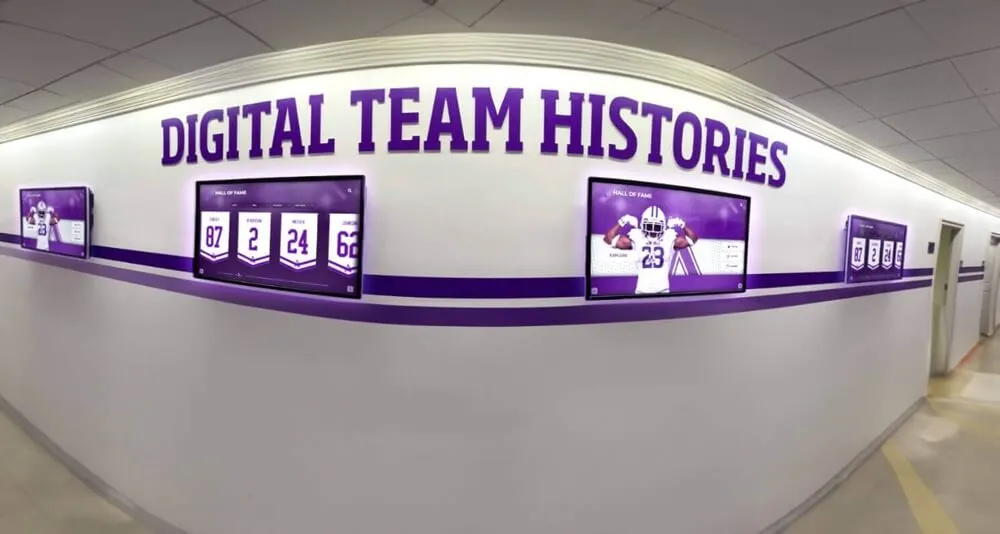
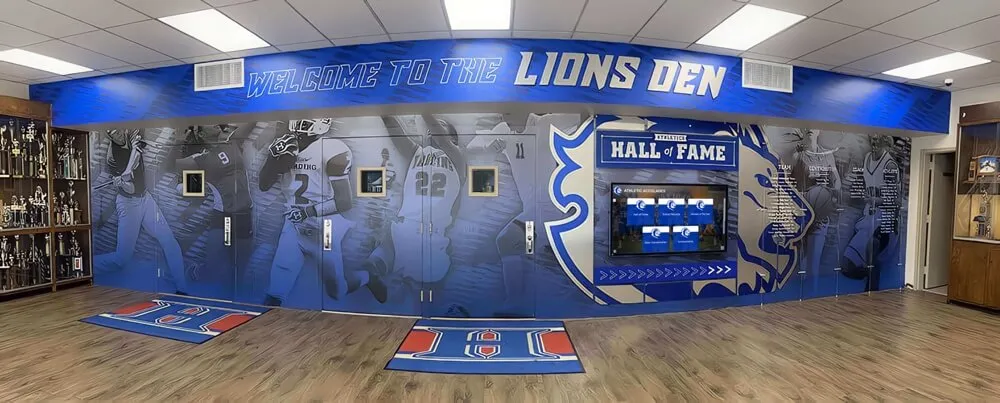
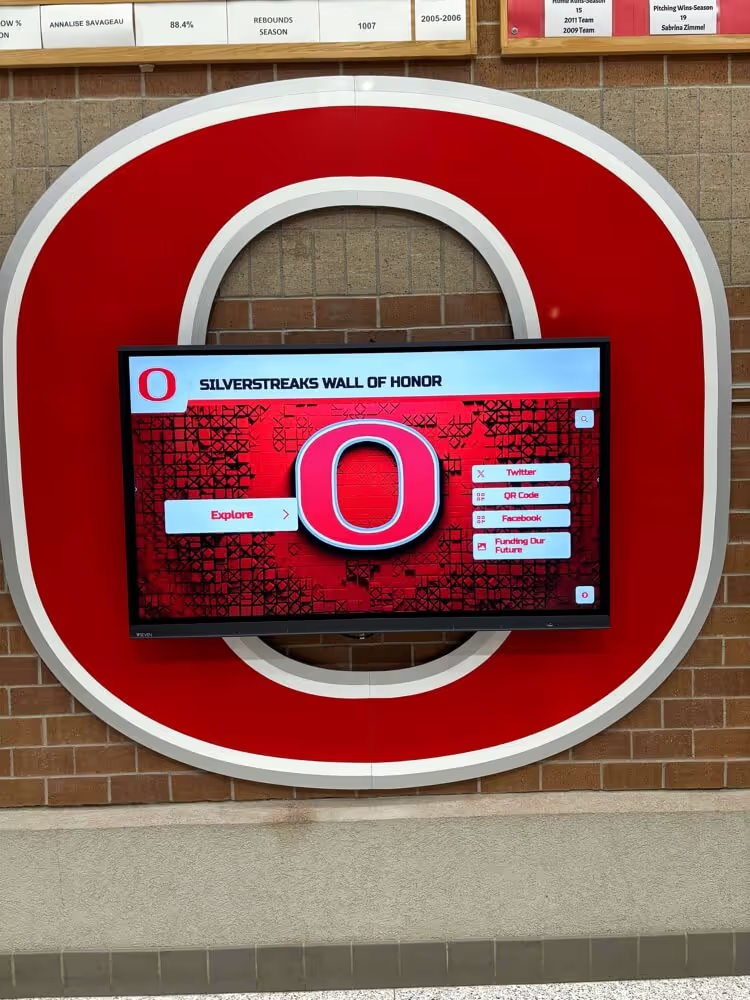
Every name on a hall of fame wall traces back to a documented selection decision—records retention is how that documentation survives leadership transitions and appeals
Program Snapshot
Before drafting your retention schedule, map the six record categories against the governance stages where they are created and the risks they protect against.
| Record Category | When Created | Risk Managed by Retention | Recommended Minimum Retention |
|---|---|---|---|
| Nomination files | When nominations are submitted | Inability to verify a nominee’s documented case for induction | 7 years from submission or last carry-forward |
| Eligibility verification evidence | During pre-screening | Challenge to a nominee’s or inductee’s eligibility | Permanent for inductees; 7 years for non-inductees |
| Voting and scoring records | During deliberation and vote | Allegations of improper selection or bias | Permanent |
| Meeting minutes and disclosure forms | Throughout each selection cycle | Recusal disputes; conflicts of interest contested after the fact | Permanent |
| Inductee permissions and rights clearances | After acceptance and before profile publication | Copyright or likeness disputes over published photos, videos, or biographical content | Life of use plus 5 years minimum |
| Published profiles and digital archive assets | After induction; updated annually | Loss of institutional history; broken display content | Permanent |
Why Hall of Fame Records Retention Matters
Records retention decisions made now protect committees from disputes that often surface years later. A nominee’s family may contest a non-selection long after the cycle closes. An inductee may dispute how their biographical profile was written. A new committee chair may question whether a predecessor’s process followed the bylaws. In each scenario, the committee’s defense depends entirely on what documentation still exists.
Beyond disputes, records retention serves succession. Committee leadership turns over, athletic directors change, and institutional memory shifts constantly. A retention policy ensures that the documentation supporting every selection decision survives the individuals who made it.
The Retention Window Problem
Most governance disputes involving hall of fame programs arise within five to seven years of the selection decision at issue. That range covers the most common challenges: eligibility disputes, procedural objections, and appeals arising from a carry-forward candidate’s eventual non-induction. A seven-year minimum covers the realistic dispute window for most record categories.
Voting records and meeting minutes are different. These documents may be relevant indefinitely—whenever a historical induction is questioned, whenever an inductee’s removal is being evaluated, or whenever an institution seeks to document its governance history. Permanent retention for these categories costs little and pays significant protection in rare but high-stakes situations.
The Six Categories of Hall of Fame Records
1. Nomination Files and Supporting Documentation
A complete nomination file contains everything submitted with a candidate’s nomination: the nomination form, the achievement narrative, supporting statistics, letters or testimonials from coaches and administrators, archival photographs submitted by the nominator, and any supplementary documentation the committee requested. For nominations that carry forward from prior cycles, each cycle’s version of the file must be retained separately.
Committees familiar with what selection panels look for in athletic hall of fame nominations know that documentation quality is often the differentiating factor in close decisions. Retaining the full file preserves the evidence base that supported the committee’s judgment, whether or not the nominee was ultimately inducted.
Retention standard: Retain all nomination files for a minimum of seven years from the date of the most recent committee consideration—including files for nominations that did not result in induction. If a nomination carries forward across multiple cycles, the seven-year clock restarts at the last cycle in which it was actively considered.
Storage: Nomination files contain personally identifiable information about nominators and nominees. Store them in a password-protected system accessible only to the Committee Chair and Secretary. Do not share nomination materials without the explicit written consent of the nominee.
2. Eligibility Verification Evidence
Before a nomination enters deliberation, the committee or a designated Eligibility Officer must confirm that the nominee meets the program’s eligibility requirements: the affiliation requirement, the waiting period, any active-status exclusion, and the absence of disqualifying conditions. The documentation supporting that verification—alumni association confirmation, coaching staff rosters, conduct records obtained through authorized channels—must be retained separately from the nomination file.
For nominations that do not advance past eligibility screening, retain the verification documentation alongside a written record of the ineligibility determination. This protects the committee if a nominator challenges the screening decision.
For inductees, eligibility verification evidence serves a different function: it documents that the inductee met criteria at the time of induction, which is the relevant question if an eligibility dispute arises years later.
Retention standard: Permanent for all inductees. Seven years from the screening determination for nominees who did not advance past eligibility review.
3. Voting and Scoring Records
Individual scoring rubric scores, the final vote tally, the list of members present and recused for each vote, and any written deliberation notes held by the Secretary must all be retained. These records are the core governance documentation for every selection decision.
Scoring records should be stored in sealed form—accessible only to the Chair and Secretary—until any appeal period has passed. Individual committee member scores should not be attributable to specific members in any publicly accessible record, but the tally (votes for, votes against, abstentions) and the names of participating and recused members must be preserved permanently.
Retention standard: Permanent. Voting records are the documentary basis for every induction decision and are the primary evidence in any challenge to a selection outcome.
Storage: Secure archive accessible only to the Chair, Secretary, and institutional legal counsel. At private institutions, these records are generally not subject to public records requests; consult legal counsel if your program operates within a public institution where applicable records laws may govern access.
4. Meeting Minutes, Disclosure Forms, and Recusal Logs
Meeting minutes document the procedural conduct of every selection committee meeting: who was present, what was discussed in non-confidential summary form, which motions were made and carried, which members were recused from which decisions, and what decisions were formally recorded. Signed conflict-of-interest disclosure forms and the Chair’s written recusal determinations are part of this record category.
These documents collectively prove that the committee followed its own procedures. A decision that followed proper procedure is far easier to defend than one that cannot be documented at all—even if the substantive outcome was identical. Meeting minutes also support the production of the hall of fame ceremony program, which typically requires verified inductee information traceable to committee records.
Retention standard: Permanent. Minutes and disclosure forms may be needed to defend selection decisions across any future time horizon.
Storage: Official committee records maintained by the Secretary, with copies submitted to institutional archives at the end of each selection cycle.
5. Inductee Permissions and Rights Clearances
Every photograph, video clip, audio recording, and biographical quote published in an inductee’s profile requires a documented rights clearance. For photographs taken by institutional staff, that clearance is typically a release signed by the subject. For archival photographs sourced from media or third parties, it requires documentation of the license or permission obtained. For video content, clearance documentation must cover both the footage rights and the subject’s likeness rights.
Rights clearances must be retained for the full period during which the content is displayed—in digital archives, on touchscreen kiosk displays, on web-based platforms, and in any print materials distributed at ceremonies. A gap in rights documentation for a photograph that has been displayed for a decade does not make the underlying rights issue disappear; it means the program lacks the documentation to demonstrate compliance.
Retention standard: Life of use plus a minimum of five years after the content is retired from display. For content displayed permanently—inductee profile photographs, for example—retain the clearance permanently.
Storage: Maintained by the Archivist in the same content management system used to manage inductee profiles, with the clearance document linked directly to each published asset.
6. Published Profiles and Digital Archive Assets
The published inductee profile—the biography, photograph, statistics, career highlights, and any video or audio content associated with an inductee—is both a governance record and a community heritage asset. As a governance record, it documents what the institution has officially represented about an inductee. As a heritage asset, it is the long-term product of the entire selection process.
Digital profiles must be retained indefinitely, even for inductees who are later removed from public display. When a profile is removed following a formal committee process, the archived version—stored internally but not publicly displayed—preserves the institutional record of both the original induction and the removal decision.
For schools building digital hall of fame platforms to host inductee profiles online, the platform’s data export and backup capabilities are part of the retention infrastructure. A profile that exists only in a third-party platform’s database is at risk if the institution changes vendors without exporting and archiving its own copy of the content.
Retention standard: Permanent. Digital archive assets should be exported to institutional storage at least annually, independent of the display platform.

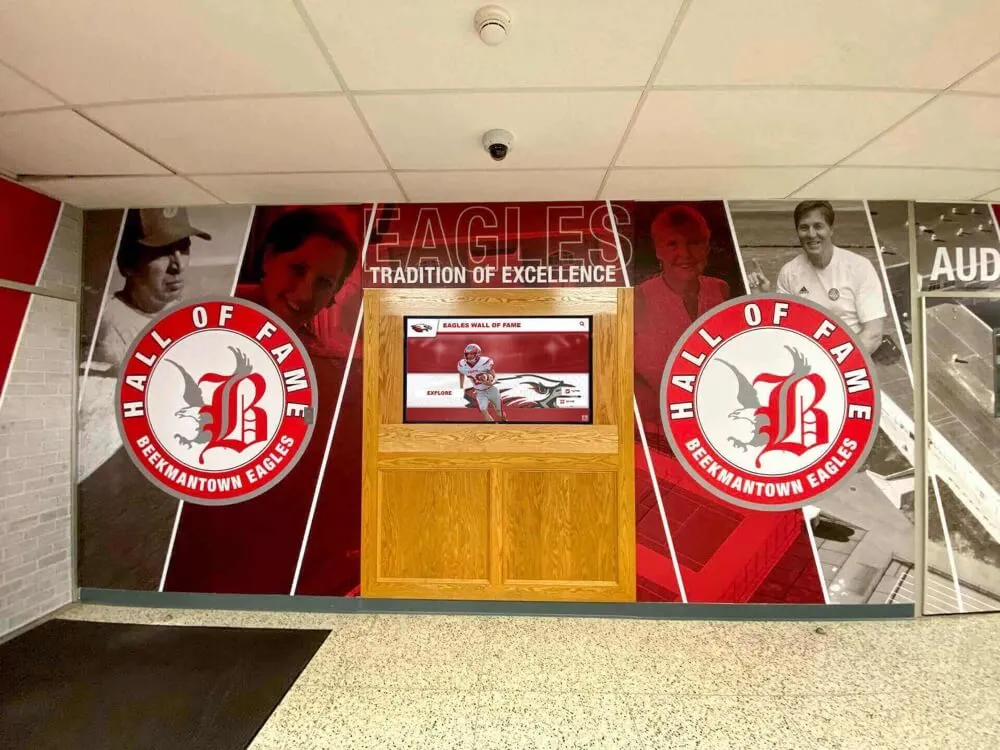
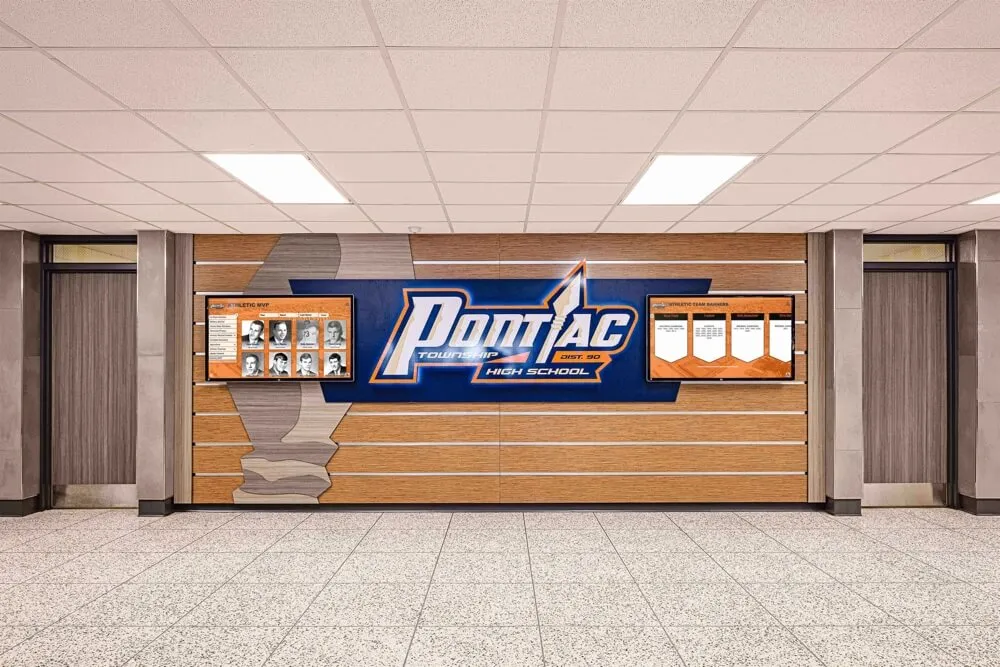
A hallway recognition display is only as reliable as the retention policy governing the records behind it—documentation must outlast any single platform, committee chair, or athletic director
Retention Table: Hall of Fame Records at a Glance
Use this table as the starting point for your institution’s formal records retention schedule. Review it with your institution’s legal counsel and records management office before adoption, as applicable state laws and institutional policies vary.
| Record Type | Minimum Retention | Storage Location | Access |
|---|---|---|---|
| Nomination forms (inducted) | Permanent | Secure committee archive | Chair, Secretary |
| Nomination forms (not inducted) | 7 years from last consideration | Secure committee archive | Chair, Secretary |
| Achievement narratives and supporting docs | Same as nomination form | With nomination file | Chair, Secretary |
| Eligibility verification (inductees) | Permanent | Secure committee archive | Chair, Secretary, Legal |
| Eligibility verification (non-inductees) | 7 years from determination | Secure committee archive | Chair, Secretary |
| Scoring rubric scores | Permanent (sealed) | Secure archive | Chair, Secretary, Legal |
| Final vote tallies | Permanent | Secure archive | Chair, Secretary, Legal |
| Conflict-of-interest disclosure forms | Permanent | Secure committee archive | Chair, Secretary |
| Recusal logs (within meeting minutes) | Permanent | Committee minutes file | Chair, Secretary |
| Meeting minutes (all sessions) | Permanent | Committee minutes file + institutional archives | Chair, Secretary, Institutional archives |
| Inductee acceptance letters | Permanent | Secure committee archive | Chair, Secretary |
| Photo rights clearances | Life of use + 5 years | Archivist / CMS | Archivist, Admin |
| Video rights clearances | Life of use + 5 years | Archivist / CMS | Archivist, Admin |
| Biographical content permissions | Life of use + 5 years | Archivist / CMS | Archivist, Admin |
| Published inductee profiles | Permanent | Platform + institutional backup | Archivist, Admin |
| Removed inductee profiles (archived) | Permanent | Internal archive only | Chair, Legal, Admin |
| Induction ceremony programs | Permanent | Institutional archives | Institutional archives |
Content Architecture: Mapping Retention to Digital Platforms
Recognition committees increasingly manage hall of fame records through digital content management systems. A well-configured platform can enforce retention standards automatically—ensuring archived assets are not deleted without authorization, that rights clearances are linked to published content, and that inductee profile history is preserved across updates.
What a digital hall of fame typically includes covers the visible content layer—inductee profiles, searchable databases, touchscreen interfaces—but the governance layer underneath requires deliberate configuration:
| Governance Stage | Record Created | Platform Action | Retention Mechanism |
|---|---|---|---|
| Nomination received | Nomination file | Stored in secure folder outside public CMS | Access-controlled; deletion requires admin override |
| Eligibility verified | Verification documentation | Filed in committee records | Linked to nomination file; not deletable without approval |
| Vote completed | Tally and minutes | Stored in governance archive | Separate from CMS; permanent designation |
| Acceptance received | Signed acceptance | Filed with Secretary | Matched to inductee record |
| Profile built | Draft inductee profile | Staged in CMS; not yet published | Versioned—no overwrite without history |
| Profile published | Live inductee profile | Published in CMS with linked clearances | Backup to institutional storage triggered |
| Profile removed | Archived internal record | Removed from public display; retained internally | Admin-only; deletion permanently blocked |
Role-based access is central to this architecture. The Archivist can build and publish profiles. The Secretary maintains governance records. The Chair holds approval authority. No single role should have the ability to both create and delete records without a second-authorization step.
For programs evaluating display and archive options, understanding what a digital hall of fame system offers helps committees assess whether a platform’s data governance features align with their retention policy requirements before committing to a vendor.
Execution Timeline: Retention Policy Lifecycle Phases
Phase 1 — Plan (Before the Policy Is Adopted)
- Records management officer and legal counsel review applicable state laws, institutional policies, and governing body requirements for records retention
- Committee identifies all record categories generated by the selection process and maps each to the six-category framework above
- Draft retention schedule prepared and reviewed against the committee’s bylaws
- Governing body adopts the retention schedule by formal vote alongside or as an appendix to the bylaws
- Retention policy distributed to all committee members with written acknowledgment of receipt
Phase 2 — Build (First Cycle Under the Policy)
- Secretary creates a file structure—physical or digital—organized by record category and cycle year
- Archivist configures CMS permissions and links each published asset to its corresponding rights clearance document
- Committee Chair designates a primary custodian for each record category
- Institution establishes an off-platform backup schedule for digital archive assets, at minimum annually
- Annual destruction review calendar established for records that reach the end of their retention window
Phase 3 — Launch (Active Selection Cycle)
- Records created and filed per the retention schedule as each governance stage completes
- Nomination files closed at nomination deadline; eligibility determinations filed within five business days of completion
- Voting records sealed and filed immediately after the vote; meeting minutes drafted within five business days
- Rights clearances collected from all inductees before content is uploaded to the CMS
- Inductee profiles backed up to institutional storage simultaneously with public publication
Phase 4 — Refresh (Annual Records Review)
- Secretary audits all active record categories against the retention schedule at the close of each selection cycle
- Records approaching end of their retention window flagged for destruction review; destruction requires written authorization from the Chair
- Platform backup verified: confirm that all published profiles and linked assets exist in institutional storage independent of the display platform
- Retention schedule reviewed at least every three years for applicable law changes or institutional policy updates
Display Integration: From Governance Archive to Touchscreen
A hall of fame’s most visible output—the touchscreen recognition display or web-based profile database—rests on the governance and retention infrastructure described above. Every profile element that appears on a display was authorized by a committee decision that should be traceable through retained records.
Step 1: Published profiles link to rights clearances Every photograph, video, and biographical quote displayed on a touchscreen or web platform must be linked to a retained rights clearance document in the CMS. This link is the institutional record that published use of the content is authorized.
Step 2: Profile version history is preserved When a profile is updated—new photograph added, career summary revised, post-affiliation note refreshed—the prior version must be preserved in version history. Version history documents what the institution published about an inductee at each point in time, which is relevant if a biographical detail is later disputed.
Step 3: A platform-independent backup exists Platforms designed for digital recognition display installations hold data in proprietary databases. If an institution changes platforms, migrates to new hardware, or loses access to a vendor’s system, it must have its own copy of every inductee profile, every linked asset, and every rights clearance. Annual backup to institutional storage is not optional—it is the safety net that makes the platform choice reversible.
Step 4: Removed profiles remain in internal archive When an inductee is removed from public display following a formal committee process, their profile is not deleted—it is moved to an internal archive accessible only to administrators. The internal archive preserves the institution’s record of the original induction, the removal decision, and the documentation supporting it. Deletion of a removed profile permanently erases that institutional record.
Platforms like Rocket Alumni Solutions support role-based publishing, scheduled content publication, cloud-backed archives, and version history—capabilities that directly enforce the retention standards in this guide without requiring manual workflows from the committee.
For schools that recognize donors and alumni alongside athletic honorees, what a digital hall of fame platform provides for donor recognition programs applies the same retention logic: rights clearances, version history, and institutional backup requirements are identical regardless of the honoree category.

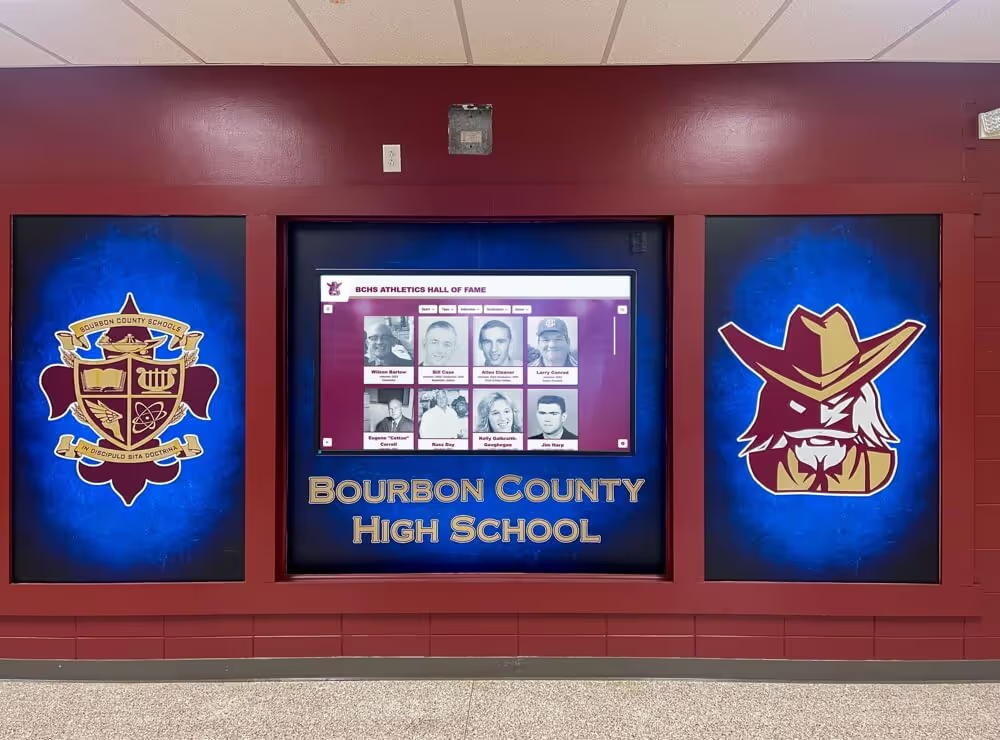
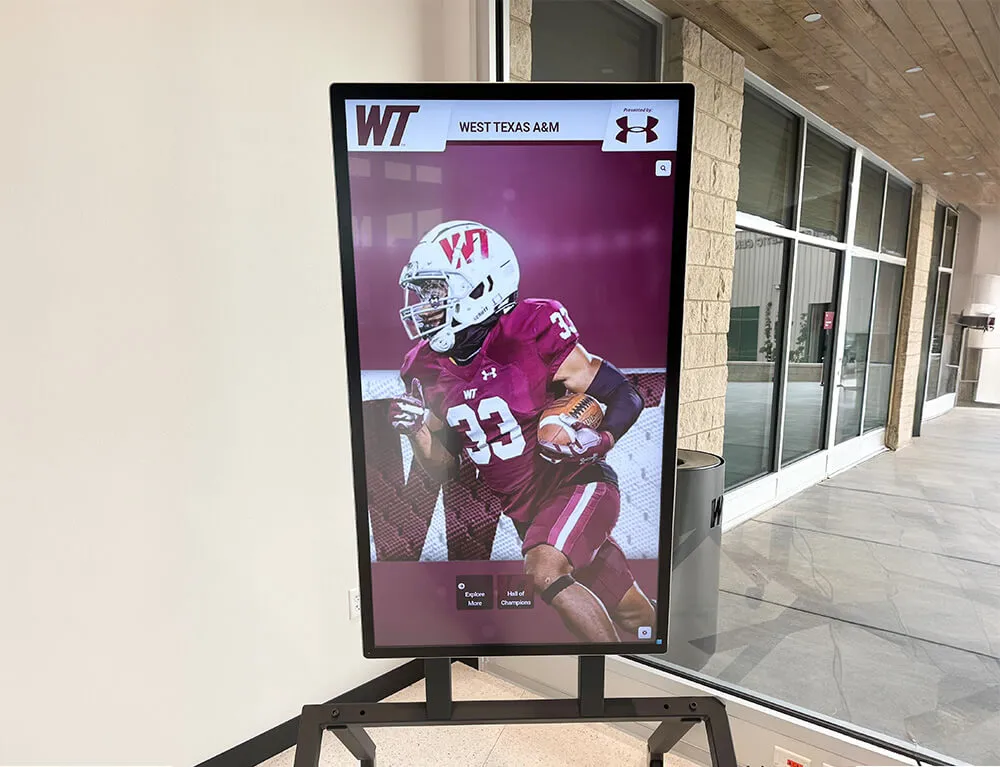
A digital platform accessible across devices must be backed by institutional storage independent of any single vendor—retention policy governs the data layer beneath the display
Copy-Paste Records Retention Checklist
Use this checklist as the basis for your committee’s annual records review. Adapt each item to match your adopted retention schedule and local requirements.
Before Each Nomination Cycle Opens
- Retention policy reviewed and redistributed to all committee members for the current cycle
- File structure for the current cycle created (physical folders or digital directory organized by record category)
- Prior-cycle records audit completed: all records filed per schedule; records past retention window flagged for destruction review
- Platform backup from prior cycle verified in institutional storage
When Nominations Are Received
- Each nomination file logged and assigned a unique identifier linked to the nominee’s name and cycle year
- Files organized by category: nomination form, achievement narrative, supporting documentation
- Carry-forward nominations from prior cycles filed as a separate document with the current-cycle review date
At Eligibility Screening
- Eligibility verification documentation filed for each nominee reviewed
- Written ineligibility determination filed for nominees who do not advance, with basis for determination noted
- Screening log—nominee name, date reviewed, outcome, reviewer—retained with eligibility documentation
During Deliberation and Vote
- Secretary confirms all scoring rubric scores collected and filed in sealed format immediately after the voting session
- Final vote tally recorded and filed: votes for, votes against, abstentions, and names of participating and recused members
- Meeting minutes drafted within five business days of each committee meeting and filed with institutional archives
After the Vote
- Signed acceptance letters from all inductees filed before content collection begins
- Rights clearance forms collected from each inductee before any content is uploaded to the CMS
- All governance records for the completed cycle reviewed by Secretary for completeness before cycle is formally closed
Before and After Profile Publication
- Rights clearances linked to each asset in the CMS before profile is published
- Published profiles and linked assets backed up to institutional storage at time of publication
- Version history confirmed active in CMS before the first profile update
- Destruction review conducted for any records reaching the end of their retention window in this cycle
Frequently Asked Questions
How long should a hall of fame keep nomination files for nominees who were never inducted?
A minimum of seven years from the most recent committee consideration is a widely applicable baseline for rejected and expired nominations. If a nomination carried forward through multiple cycles, the seven-year clock should restart at the last cycle in which it was actively considered. This window covers the realistic timeframe for most disputes about why a nominee was not selected. Some institutions retain all nomination files permanently; this approach is defensible and simplifies administration by eliminating the need for a destruction review workflow for this category. Confirm applicable requirements with your institution’s legal counsel and records management office.
Are hall of fame voting records subject to public records laws at public schools?
It depends on the jurisdiction and the program’s organizational structure. At public institutions in some states, selection committee records may be subject to open records or freedom of information laws, particularly if the committee is formally constituted as an institutional body. In other jurisdictions, deliberative records—including voting scores—may be exempt from disclosure. Private institutions are generally not subject to public records laws. This question has significant implications for how voting records are stored and who may access them. Consult your institution’s legal counsel before establishing retention and access protocols for this category.
What happens to a removed inductee’s records after removal?
When an inductee is removed following a formal committee process, their records should be moved to a restricted internal archive rather than deleted. This includes the original nomination file, eligibility documentation, voting records, acceptance letter, rights clearances, and the published profile. The archived records document both the original induction decision and the removal decision—both of which may be relevant if the removal is later appealed or if the institutional history of the program is reviewed. Permanent retention of removed inductee records is the conservative and generally advisable standard.
Who is responsible for records when committee leadership changes?
The outgoing Chair and Secretary are responsible for formally transferring all records to their successors before their terms end. This transfer should include a complete index of all active record categories, the current retention schedule, the location of all stored records (physical and digital), and access credentials for any digital storage systems. Institutional archives should hold copies of permanent records independently of the committee’s own filing system so that leadership transitions do not create gaps in the institutional record. Building a defined handoff process and timeline into your bylaws is the most reliable approach to continuity.
Does the platform we use for our digital hall of fame count as official institutional storage for retention purposes?
Generally, no. A third-party platform’s database is the vendor’s storage infrastructure, not the institution’s. If the institution terminates its contract, changes platforms, or if the vendor experiences a service disruption, records stored only on the vendor platform may become inaccessible. Official institutional storage for retention purposes typically means a system controlled directly by the institution—a file server, institutional document management system, or other storage governed by the institution’s IT and records policies. Export all inductee profiles, linked assets, and rights clearances to institutional storage at least annually, and confirm these exports are included in institutional backup procedures.
How often should a hall of fame records retention schedule be reviewed and updated?
Review your retention schedule at minimum every three years, or whenever a significant change occurs: a state law change affecting records retention, an institutional policy update, a change in the program’s digital platform, or a governance dispute that reveals a documentation gap. Most retention gaps are discovered during disputes or leadership transitions—reviewing the schedule before those events occur is far preferable. Your records management officer or institutional legal counsel can flag applicable law changes that should trigger a schedule update.
Protect Your Program with the Records That Back Every Decision
A hall of fame records retention policy is a commitment that every selection decision the program ever makes will remain documentable—across leadership transitions, platform migrations, and whatever challenges arise years from now. The six record categories, the retention table, and the checklist above give your committee the framework to build that commitment into daily operations.
Touchscreen recognition systems built for school programs are most effective when paired with clear governance infrastructure—including a retention policy that governs the data behind every displayed profile. The display is only as credible as the documentation layer beneath it.
Request your free custom demo to see how Rocket Alumni Solutions connects your committee’s governance workflow to a cloud-backed recognition platform with role-based access, version history, scheduled publishing, and digital archives built to serve the program’s long-term institutional record.
Live Example: Rocket Alumni Solutions Touchscreen Display
Interact with a live example (16:9 scaled 1920x1080 display). All content is automatically responsive to all screen sizes and orientations.