Hall of Fame Nomination Confidentiality Policy: Protect Candidates and Committee Deliberations
- Home /
- Digital Hall of Fame Insights & Resources /
- Hall of Fame Nomination Confidentiality Policy: Protect Candidates and Committee Deliberations
The Easiest Touchscreen Solution




Live Example: Rocket Alumni Solutions Touchscreen Display
Interact with a live example (16:9 scaled 1920x1080 display). All content is automatically responsive to all screen sizes and orientations.
A hall of fame nomination confidentiality policy defines which nomination materials, candidate identities, and committee deliberations remain private before an inductee class is formally announced—and which documents may be disclosed, to whom, and on what timeline. Without a written policy, committees face pressure from nominators seeking status updates, candidates who discover they are under consideration before a decision is made, and community members who expect transparency the program was never designed to provide. This guide gives school administrators, athletic directors, alumni staff, and recognition-committee leaders a practical framework for classifying sensitive nomination materials, building an access matrix, and establishing a disclosure timeline that protects both candidates and the committee’s integrity throughout the selection cycle.
A recognition program earns community trust not only through the quality of its inductees but through the fairness of its process. Confidentiality is a prerequisite for fairness: nominees who learn they are under active consideration may feel pressure to campaign for themselves; nominators who suspect their submissions are visible to other committee members may hold back candid assessments; committee members who discuss candidates openly before a formal vote create the conditions for lobbying and political interference. A written confidentiality policy closes all three vulnerabilities before they surface.
This guide is educational and does not constitute legal advice. Consult your institution’s legal counsel when drafting, adopting, or amending any formal governance policy, particularly for provisions that may intersect with state open-records laws, employment records, or student privacy requirements.

A confidentiality policy governs what committee members see, when they see it, and what they may share outside the selection process
Program Snapshot
| Element | Details |
|---|---|
| Audience | School administrators, athletic directors, recognition-committee chairs, alumni office staff, booster leaders |
| Outcome | A written policy that classifies nomination materials, assigns access rights, and establishes a pre-announcement disclosure timeline |
| Policy scope | Nominee identities, nomination forms and supporting evidence, deliberation notes, scoring records, correspondence with nominators, and pre-announcement inductee lists |
| Key deliverable | An access matrix and disclosure timeline distributed to all committee members before nominations open |
| Display payoff | Inductee profiles reach digital recognition displays only after the formal announcement window—never prematurely—protecting candidates and the institution |
The Direct Answer: What Must a Nomination Confidentiality Policy Cover?
At its core, a hall of fame nomination confidentiality policy must answer four questions in writing before each selection cycle begins:
- Who is a nominee? Define the moment at which a person becomes a candidate—typically when a completed nomination form is received by the committee secretary—and explain that candidate status is confidential from that point until formal announcement.
- What materials are confidential? Name every document type that carries confidentiality protection: nomination forms, supporting letters, evaluation scorecards, deliberation minutes, correspondence with nominators, and any preliminary or provisional inductee lists.
- Who may access confidential materials? Specify, by role, exactly which individuals may review each category of protected document and under what conditions.
- When does confidentiality end? Establish the precise trigger—typically formal acceptance by the inductee and completion of an approved announcement checklist—at which each category of material may be disclosed or published.
Committees that answer all four questions in a single policy document eliminate most of the ambiguity that causes procedural complaints after a selection cycle closes.
Core Confidentiality Provisions
1. Candidate Identity Protection
A nominee’s status as a candidate must remain undisclosed outside the selection committee from the moment the nomination is received until the formal public announcement. This protection extends to:
- Acknowledgment of receipt (confirmation to the nominator that the candidate is under consideration)
- Any communication to the candidate informing them of their nomination
- Discussion of the candidate’s name in any setting where non-committee members may be present
Many programs choose to notify candidates of their nomination before deliberations begin; if your policy permits this, the notification must specify that the nomination is confidential and that the candidate is not to share their status publicly. Provide this instruction in writing and keep a copy on file.
Programs that inform candidates of their nomination should also specify whether candidates may submit supplemental biographical information and what happens to that material during the review process.
2. Nomination Materials
Every document submitted in support of a nomination carries confidentiality protection, including:
- The completed nomination form and all attachments
- Reference letters and letters of support
- Statistical summaries, award documentation, or official records submitted by the nominator
- Media coverage, photographs, or third-party endorsements included in the nomination packet
These materials may not be shared with non-committee members, discussed in public settings, or disclosed to the candidate or their family without a specific provision in the policy authorizing that disclosure. Storing nomination packets in a shared folder accessible to everyone who uses the committee’s drive is a common and easily preventable confidentiality failure—access must be restricted to named individuals.
3. Committee Deliberations
Deliberation notes, scoring worksheets, and the substance of committee discussions are the most sensitive category of protected material. They must not be shared outside the committee during or after the selection cycle without formal authorization. This includes:
- Discussion of a candidate’s qualifications or shortcomings
- Individual committee member opinions expressed during scoring or debate
- Preliminary vote tallies or rankings before a final vote is recorded
- Any comparison of candidates that names specific individuals under consideration
Protecting deliberation content prevents the selection process from becoming a subject of public debate before it is complete and insulates individual committee members from being lobbied based on perceived positions they expressed during private review.
4. Pre-Announcement Inductee Lists
Once a final inductee class is selected, the names on that list are still confidential until each individual has formally accepted and the institution’s communication plan has been executed. A list that leaks before acceptance is confirmed creates public commitments the program cannot easily retract.
Limit access to the approved inductee list to the committee chair, the committee secretary, the communications officer responsible for the announcement, and the platform archivist who will build inductee profiles. No one outside this group should receive the final list before the announcement is live.
Access Matrix: Who May See What
This matrix defines access rights by role for each category of protected material. Adapt the role names to match your institution’s structure.
| Material Category | Committee Chair | Committee Secretary | Voting Members | Nominator | Inductee / Candidate | Athletic Director | Public |
|---|---|---|---|---|---|---|---|
| Nominee name (candidate status) | Yes | Yes | Yes | Own nominee only | If policy permits, before deliberations | Yes | No |
| Nomination form and attachments | Yes | Yes | Yes | Own submission only | If policy permits, scoped review | No | No |
| Reference letters | Yes | Yes | Yes | No | No | No | No |
| Deliberation notes and scoring | Yes | Yes | Deliberation only | No | No | No | No |
| Preliminary vote tallies | Yes | Yes | No | No | No | No | No |
| Final vote tally (aggregate) | Yes | Yes | After announcement | No | No | Yes (post-announcement) | No |
| Approved inductee list | Yes | Yes | No | No | After acceptance | Yes (post-announcement) | After announcement |
| Inductee acceptance letters | Yes | Yes | No | No | Own letter only | Yes | No |
Review this matrix annually and update it when committee roles change, when the platform’s access controls are reconfigured, or when a procedural gap surfaces during the cycle.
Disclosure Timeline
Confidentiality does not mean permanent secrecy—it means controlled release on a defined schedule. Map every category of protected material to a disclosure trigger and a release window.
| Material Category | Confidentiality Window | Disclosure Trigger | Who May Disclose | Release Format |
|---|---|---|---|---|
| Nominee identity (to candidate) | Nominations received → committee notification | Committee chair sends formal nomination notice | Chair or Secretary | Written notification to candidate only |
| Nomination materials | Receipt → end of retention period | No general disclosure; available to candidate on request per records policy | Chair with institution sign-off | Scoped review only |
| Deliberation notes | Deliberation begins → permanent retention | No public disclosure; internal audit use only | Chair with legal counsel guidance | Not released publicly |
| Preliminary vote tallies | During deliberations | Not disclosed; destroyed or secured permanently after final vote | — | Not released |
| Final aggregate vote tally | Vote complete → retention period | No public disclosure; available in audit review | Chair with institution sign-off | Restricted internal use |
| Approved inductee list | Vote complete → formal announcement | All acceptances confirmed + announcement checklist approved | Chair, Communications Officer | Press release, digital display, event program |
| Inductee profile content | Profile built → publication | Publication authorized by Chair and Archivist | Archivist | Digital display, website, printed program |
Committees operating in jurisdictions subject to open-records or sunshine laws should have legal counsel review this timeline before adoption. Public institutions in particular may face statutory requirements that modify which committee records are permanently exempt from disclosure requests.
Content Architecture: Mapping Confidentiality Stages to Display Modules
A nomination confidentiality policy becomes fully operational when it connects to the digital platform where inductee profiles are built and published. Each stage in the confidentiality timeline corresponds to a specific action—or restriction—in the recognition platform.
| Policy Stage | Platform Status | Access Level | Action Permitted |
|---|---|---|---|
| Nomination received; candidate under review | No record in CMS | None | No platform action |
| Committee vote complete; acceptance pending | Draft record created by Archivist only | Archivist and Chair | Draft creation, no publishing |
| Acceptance confirmed for all inductees | Profiles in review queue | Archivist, Chair, Communications Officer | Proof review, media upload |
| Announcement checklist approved | Profiles scheduled for publication | Archivist | Scheduled publishing set |
| Announcement live | Profiles published on touchscreen and website | Public | Visible on all displays |
This mapping makes it clear to every platform user that the CMS is not a drafting space during deliberations—it is a publication environment that activates only after the committee’s governance process is complete. Schools developing athletic hallway display planning as part of a broader recognition corridor recognize that the display’s credibility rests on this kind of controlled sequencing between governance and publication.
Role-based access in the recognition platform enforces this architecture without relying on individual discipline. Voting committee members do not hold CMS accounts. Only the archivist and designated administrators can create or publish profiles, and scheduled publishing ensures no profile appears on a touchscreen before the announcement window opens.
Execution Timeline: Policy Lifecycle Phases
Phase 1 — Plan (Before Nominations Open)
- Draft the confidentiality policy and access matrix.
- Identify all individuals who will handle nomination materials and assign each to a role in the matrix.
- Confirm that the platform’s role-based access settings align with the access matrix.
- Have legal counsel review the policy for compatibility with applicable open-records or privacy statutes.
- Present the policy to the governing board or principal for formal adoption by recorded vote.
Phase 2 — Build (Before the First Nomination Deadline)
- Distribute the adopted policy to all committee members with a signed acknowledgment form.
- Configure the committee’s shared drive or document management system to restrict nomination folders to named individuals only.
- Prepare the candidate notification template (if the policy permits pre-deliberation candidate notification) and the nominator receipt acknowledgment.
- Brief the platform archivist on the publication hold: no CMS profiles are created until the acceptance confirmation step is complete.
Phase 3 — Launch (Active Selection Cycle)
- Accept nominations through the designated intake channel only; do not discuss candidates outside committee communications.
- Distribute nomination packets to voting members at the scheduled screening session with a signed confidentiality reminder at each meeting.
- Complete deliberations, record the vote tally, and secure all deliberation materials with the secretary.
- Issue acceptance communications to selected inductees; hold the inductee list until all responses are confirmed.
- Execute the announcement checklist, authorize the archivist to publish, and release the inductee class simultaneously on all official channels.
Phase 4 — Refresh (Post-Cycle Review)
- Archive all governance records (disclosure forms, meeting minutes, vote tally, acceptance letters) in a permanent and restricted file.
- Debrief the committee on any confidentiality gaps or procedural improvements identified during the cycle.
- Review platform access settings; remove or update accounts for any committee members who have rotated off.
- Reissue the updated policy to the incoming committee before the next nomination window opens.
Display Integration: From Confidential Candidate to Public Inductee
The transition from confidential candidate to publicly recognized inductee happens in one controlled step. Planning that transition in advance—before nominations open—is what prevents a name from appearing on a lobby touchscreen before the committee has finished its work.
Touchscreen and Digital Archive
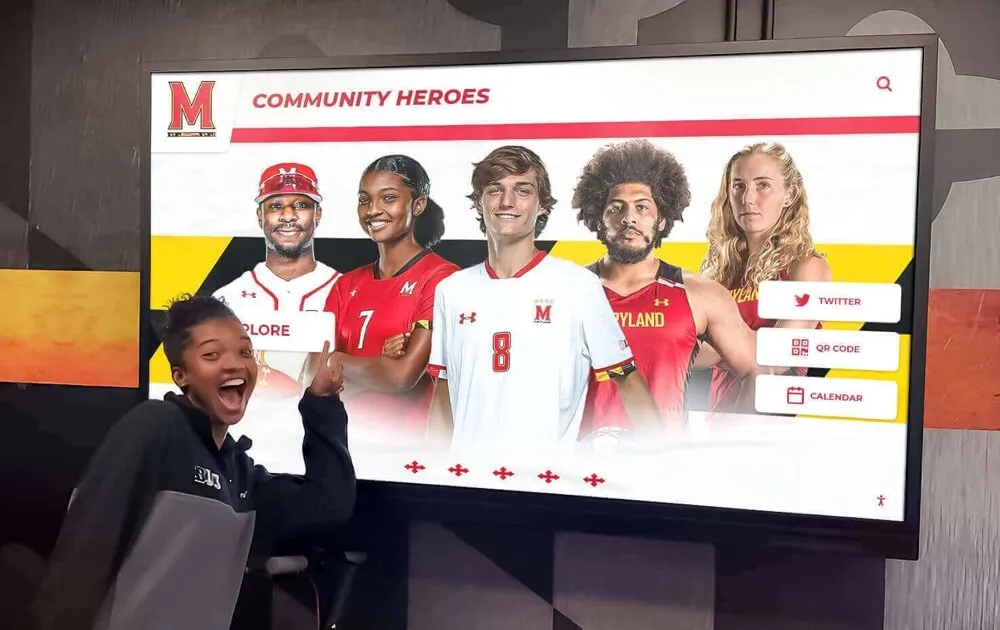
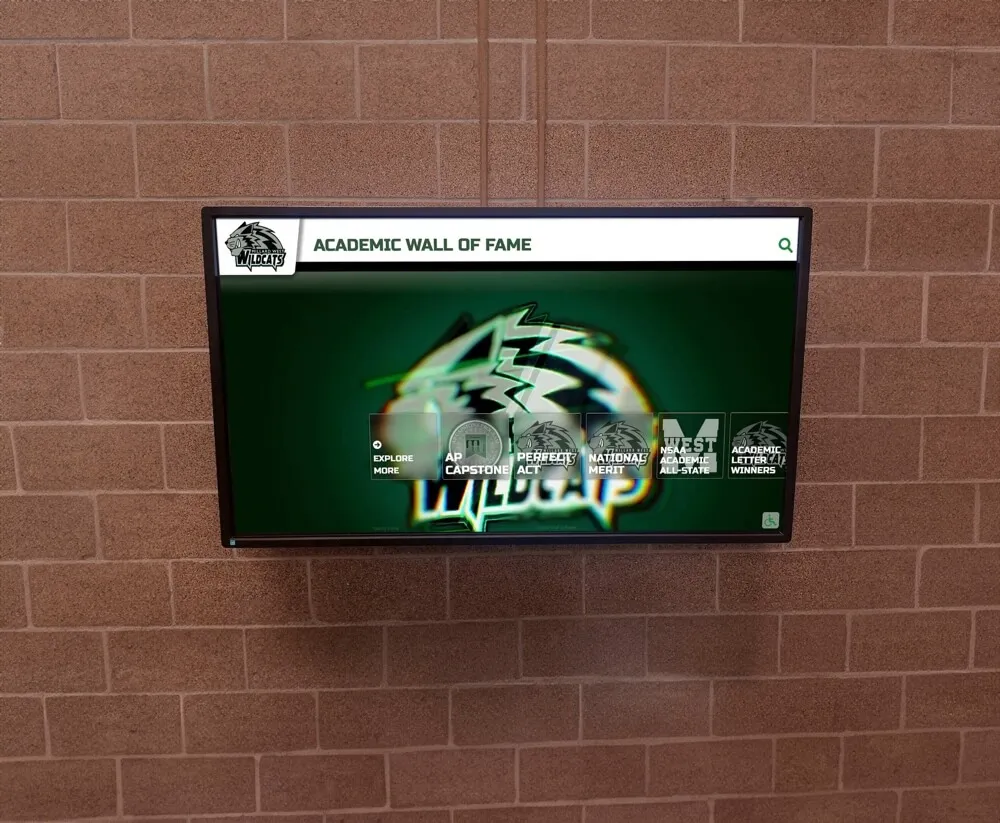
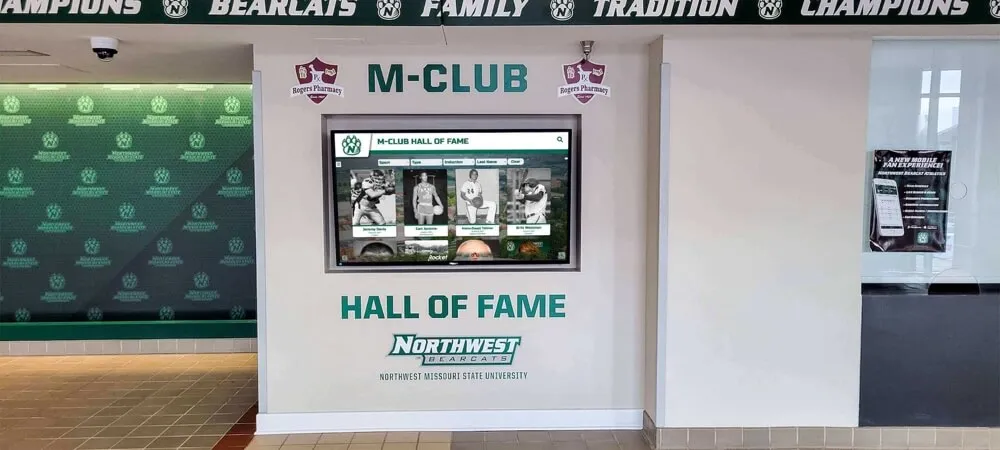
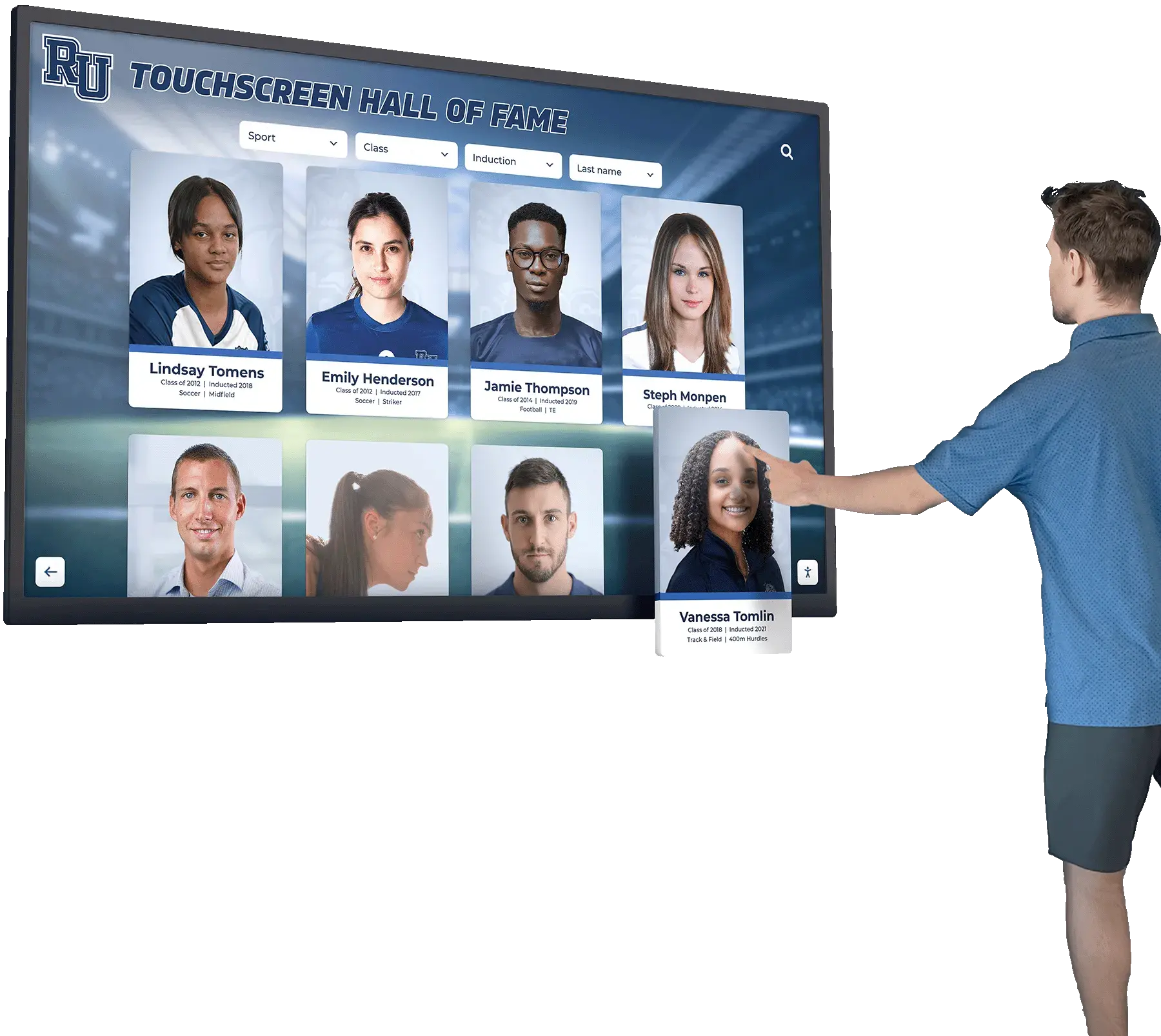
Inductee profiles on a touchscreen recognition display are the public-facing endpoint of a governance process that began with a confidential nomination. Every piece of content that appears in that profile—name, biography, statistics, photograph—was reviewed, verified, and approved through the policy’s access controls before it reached the screen. When that chain of custody is intact, the display reflects the committee’s authorized decision precisely and nothing else.
A recognition program that maintains strong alumni engagement over many induction cycles benefits from the same discipline. The alumni legacy digital wall approach—building a searchable, permanent archive of inductee profiles—only works if every profile entered the archive through a verified, authorized process. Confidentiality policy is the upstream mechanism that makes the downstream archive credible.
ADA and Accessibility
When inductee profiles go live, WCAG 2.1 AA compliance applies to every public-facing element: image contrast ratios, screen reader compatibility, and physical reach ranges for touchscreen kiosks installed in hallways and lobbies. These requirements are the responsibility of the archivist and platform administrator at publication time. Build an accessibility check into the announcement checklist so it happens before publication, not after a complaint surfaces.
Physical Displays
For programs that combine digital profiles with physical plaques or trophy-case cards, the confidentiality policy should specify that physical elements cannot be fabricated, ordered, or installed before the formal announcement. A plaque arriving from a vendor before the inductee has accepted creates a disclosure risk; a trophy-case card installed before the official announcement constitutes an unauthorized release. Add a fabrication hold to the announcement checklist alongside the digital publication hold.
Programs exploring how community showcase projects integrate physical and digital recognition elements into a cohesive experience will find that governance sequencing—nominations confidential, announcement simultaneous across all surfaces—makes both elements more impactful when they finally appear.
Induction Ceremony Programs
Printed programs distributed at the induction ceremony are a publication surface subject to the same disclosure timeline as digital displays. Confirm that all inductee names listed in the printed program have formally accepted before the program goes to the printer. A ceremony program is not a draft—once printed, any name on it is a public record.
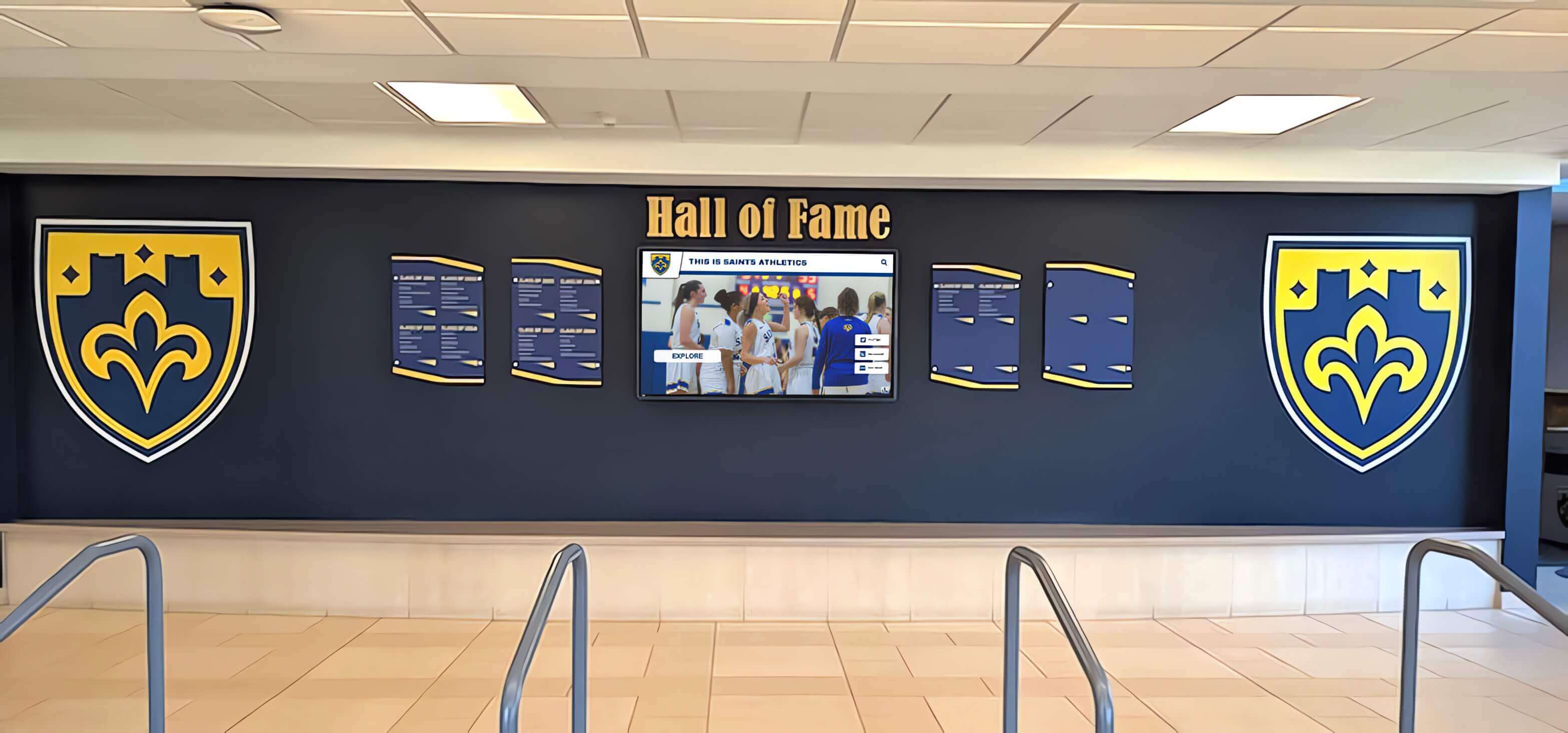
Every name on a recognition wall—physical or digital—should reach the public through a governed, confidentiality-protected selection process
Copy-Paste Policy Template
Adapt the following template for your program. Replace bracketed placeholders with your institution’s specific roles, timelines, and contact information. Have legal counsel review before formal adoption.
Hall of Fame Nomination Confidentiality Policy — [Institution Name] Adopted: [Date] | Version: [Number] | Review Date: [Annual review month, year]
1. Purpose This policy governs the handling of all nomination materials, candidate identities, and committee deliberations in the [Institution Name] Hall of Fame selection process to protect candidate privacy, ensure procedural fairness, and maintain public confidence in the program’s integrity.
2. Scope This policy applies to all voting members, advisory members, and staff with access to nomination materials, including the Committee Chair, Secretary, Eligibility Officer, At-Large Members, Archivist, and any invited reviewers who receive nominee information.
3. Confidential Materials The following materials are confidential from the date of receipt until the disclosure trigger identified in Section 5:
- Completed nomination forms and all attachments
- Reference and support letters
- Deliberation notes, scoring worksheets, and meeting minutes
- Preliminary and final vote tallies
- The approved inductee list prior to formal announcement
- Correspondence between the committee and nominators or candidates
4. Access Rights Access to confidential materials is restricted to individuals identified in the Access Matrix maintained by the Committee Secretary. The Access Matrix is reviewed and updated before each nomination cycle. No individual may share confidential materials with any person not listed in the Access Matrix.
5. Disclosure Timeline
- Candidate identity to candidate: Committee Chair issues written notification to candidate after nominations close and before deliberations begin, if the program’s notification policy permits. Candidate is instructed in writing that their nomination status is confidential.
- Approved inductee list: Released only after all selected inductees have formally accepted and the Communications Officer has completed the announcement checklist.
- Inductee profiles on digital display and website: Published simultaneously with the official public announcement, as authorized by the Committee Chair and Archivist.
- Governance records (deliberation notes, vote tallies): Retained permanently in restricted committee files; not disclosed publicly. Available for internal audit review authorized by the Committee Chair and [Principal / Superintendent / Governing Board] only.
6. Confidentiality Obligations All individuals with access to confidential materials must:
- Sign a confidentiality acknowledgment before receiving nomination packets each cycle.
- Refrain from discussing candidate identities or deliberation content outside authorized committee settings.
- Report any suspected breach of this policy to the Committee Chair immediately.
- Return or destroy personal copies of nomination materials at the conclusion of the selection cycle, retaining only records held in the official committee file.
7. Breach Response Any suspected breach of this policy is reported to the Committee Chair. The Chair escalates to [Principal / Superintendent / Governing Board] within [X] business days. If the breach affects a candidate’s privacy or the integrity of a pending selection decision, the Chair may suspend deliberations pending review.
8. Policy Review This policy is reviewed annually before each nomination cycle. Amendments are adopted by the governing board or principal by recorded vote. Prior versions are retained in the committee’s permanent file.
Frequently Asked Questions
Can a nominator ask for an update on the status of their nominee?
Nominators may receive confirmation that their submission was received. They may not receive information about whether the nominee is advancing through the screening process, the committee’s assessment of the candidate, or the likely outcome of the vote. A standing acknowledgment of receipt—sent automatically when nominations close—satisfies the nominator’s need for confirmation without creating an obligation to provide status updates. Your policy should specify exactly what nominators are entitled to be told, and when.
What if a candidate contacts the committee asking whether they have been nominated?
If your policy does not include a pre-deliberation candidate notification procedure, the committee’s standard response to an unsolicited inquiry is that nomination and selection proceedings are confidential and that official communications will be issued to inductees following the completion of the selection process. Do not confirm or deny nomination status in response to an unsolicited inquiry.
Does a confidentiality policy conflict with open-records laws for public schools?
Potentially, depending on your state. Public institutions subject to open-records statutes may be required to disclose certain committee records on request, even if those records are designated as confidential under the program’s internal policy. Legal counsel should review which categories of nomination records are exempt from disclosure under your state’s statute before the policy is adopted. Private schools have more flexibility but should still ensure their policy aligns with any applicable regulatory or accreditation requirements.
How should nomination materials be stored to enforce the access restrictions?
Use a shared document folder or committee management platform with role-based permissions. Do not store nomination packets in a general administrative drive accessible to all staff. Name each authorized individual explicitly in the folder’s access settings and audit those settings before each cycle. Physical nomination materials should be stored in a locked file cabinet accessible only to the Chair and Secretary.
When should the platform archivist begin building inductee profiles?
Not until the Chair has confirmed all acceptances and the announcement checklist is complete. Even a draft profile created before acceptance is confirmed represents a premature commitment of institutional resources to a record that may not be published. For programs planning best touchscreen hall of fame displays that balance visual richness with governance precision, the archivist’s preparation window—between acceptance confirmation and announcement—is typically 48 to 72 hours, which is sufficient for well-structured content packages.
How does a confidentiality policy interact with a conflict of interest policy?
The two policies operate in parallel. A conflict of interest policy governs what committee members must disclose about their relationships with nominees and when they must recuse. A confidentiality policy governs what committee members may share outside the committee about the nomination process. A complete governance framework for a school recognition program includes both, and both should be reviewed and reissued to committee members at the start of every selection cycle.
Should the confidentiality policy address social media?
Yes. Add an explicit provision stating that committee members may not post about specific nominees, preliminary decisions, or the composition of the inductee class on any social media platform before the official announcement. A single post confirming a candidate’s nomination—even an enthusiastic one from a committee member who supports that candidate—constitutes a policy breach with the same consequences as other unauthorized disclosures.
Building the Archive That Follows the Policy
A nomination confidentiality policy is the governance layer that determines what reaches the public record and when. Once an inductee class is formally announced and profiles are published, those profiles become the long-term representation of the institution’s recognition program—visible to students, families, prospective recruits, and alumni for years after the selection cycle closes.
Programs that invest in community showcase projects and alumni recognition recognize that the depth and accuracy of the public archive depends entirely on the quality of what entered the governance process upstream. A nomination form that was carefully verified, a deliberation that was conducted without external interference, and a publication decision that was properly authorized all contribute to a profile that the institution can stand behind indefinitely.
The digital platform connecting your governance workflow to your recognition display should support the same principles: role-based publishing permissions that prevent premature publication, scheduled release timing aligned with official announcements, cloud-backed archives that preserve the institutional record across staff transitions, and ADA-compliant display layouts that make the recognition accessible to every visitor who encounters it.
For programs that honor student-led organizations and academic competitors alongside traditional athletic inductees—extending recognition beyond sport to academic and competitive events honorees—the same confidentiality framework applies. The principle is identical regardless of the inductee category: nominations are private, deliberations are protected, and publication is controlled until the governance process is complete.
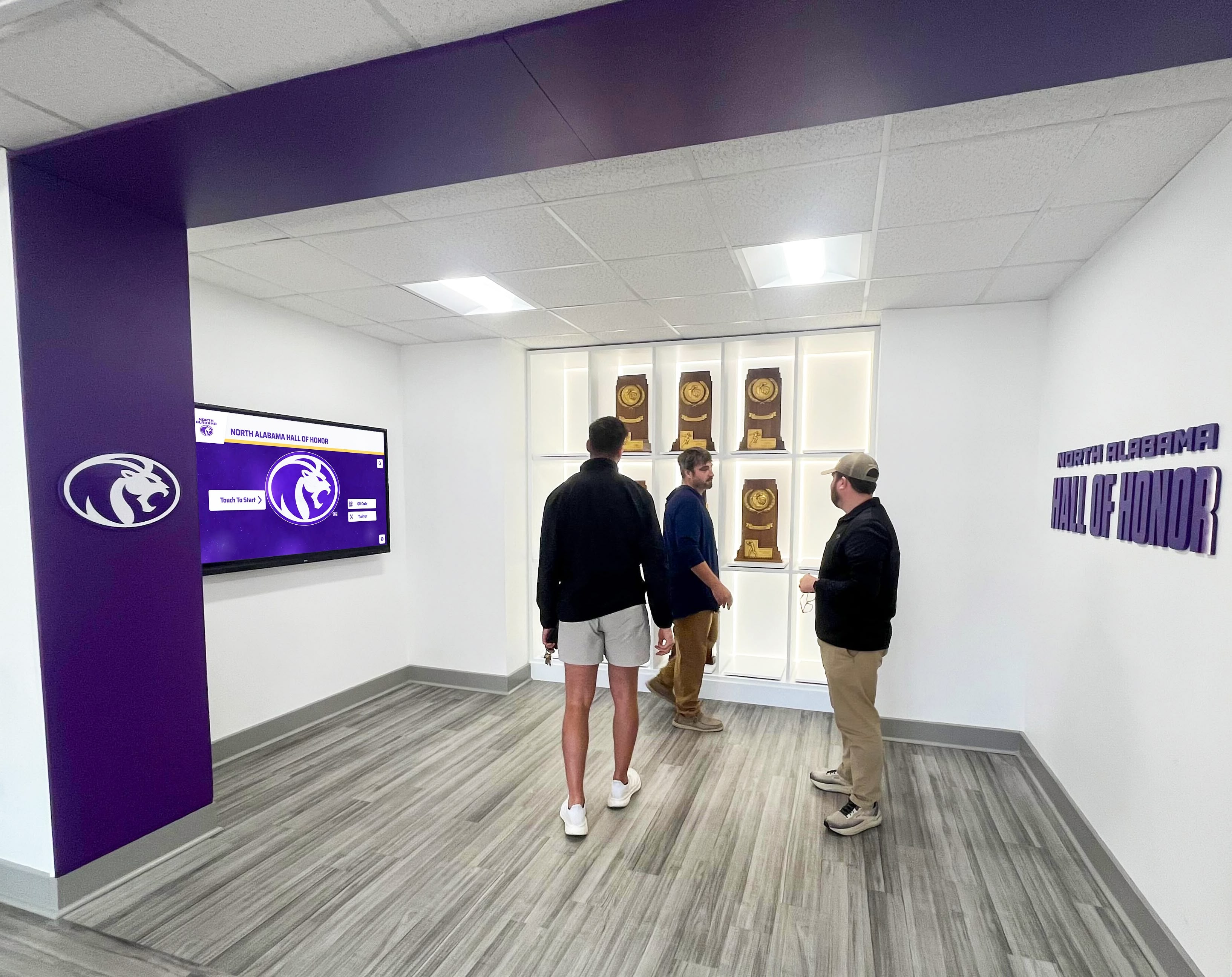
The recognition displayed in a lobby or hallway represents the outcome of a confidentiality-protected governance process—one that protects candidates from premature exposure and protects the institution from procedural challenge
A nomination confidentiality policy does not make the selection process more bureaucratic—it makes the outcome more defensible. When a decision is challenged, when a nominator asks why their candidate was not selected, or when a local media outlet submits a records request, the institution that can point to a written policy, a signed access matrix, and a documented disclosure timeline is in a fundamentally stronger position than one that relied on informal norms and undocumented custom.
A written hall of fame nomination confidentiality policy protects candidates from premature exposure, insulates committee deliberations from external pressure, and gives the institution a documented governance framework it can apply consistently across every selection cycle. When that framework connects to a digital recognition platform that enforces role-based access and controlled publication timing, the policy moves from a document in a shared drive to an active control on every inductee profile that reaches your displays.
Rocket Alumni Solutions’ cloud-based platform is built for exactly this governance model: role-based CMS permissions, scheduled publishing aligned with announcement timelines, ADA-compliant touchscreen displays, and automatic cloud backups protect the inductee records your confidentiality policy worked to place there. If you are building or modernizing your hall of fame program and want to see how the platform maps to your governance workflow, request your free custom demo to see it in action.
Live Example: Rocket Alumni Solutions Touchscreen Display
Interact with a live example (16:9 scaled 1920x1080 display). All content is automatically responsive to all screen sizes and orientations.