Hall of Fame External Link Policy: Vetting Sources, Alumni Pages, and Archived Media
- Home /
- Digital Hall of Fame Insights & Resources /
- Hall of Fame External Link Policy: Vetting Sources, Alumni Pages, and Archived Media
The Easiest Touchscreen Solution




Live Example: Rocket Alumni Solutions Touchscreen Display
Interact with a live example (16:9 scaled 1920x1080 display). All content is automatically responsive to all screen sizes and orientations.
Intent: define. A hall of fame external link policy establishes which categories of outside sources may be linked from inductee profiles, how each link must be vetted before publication, how links are labeled so visitors understand what they are accessing, and how the program monitors and retires those links over time. Without a written policy, programs add links reactively—a newspaper archive here, an alumni directory page there—with no consistent standard for quality, accuracy, or longevity. When a linked page disappears, changes ownership, or is edited to contradict the inductee’s profile, the program’s credibility is affected by a resource it no longer controls. This guide gives school administrators, athletic directors, archivists, booster leaders, and recognition-program owners a practical framework for governing every external link in a hall of fame’s digital presence.
An external link policy is distinct from the broader content governance that covers inductee biography, photo rights, and voting records. By the time an external link is relevant, a profile has been researched, approved, and published. The link policy answers one question: which outside resources may the program attach its name to—and on what terms? That question has higher stakes than it appears, because a broken or misleading link inside an inductee’s official profile reflects on the institution, not only on the third-party source.
This guide is operational and educational; it does not constitute legal advice. Programs subject to public records laws, privacy regulations, or institutional web-governance policies should consult legal counsel before formalizing any linking standard.

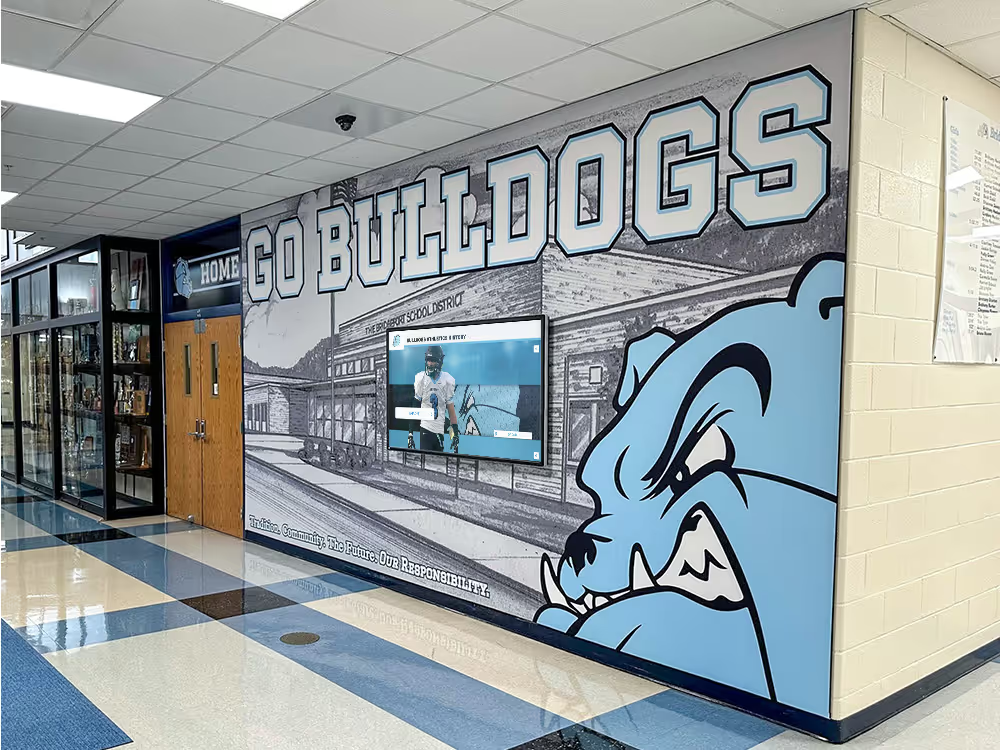
Every link inside an inductee profile carries the institution's implicit endorsement—a written vetting policy ensures that endorsement is defensible
Program Snapshot
| Element | Details |
|---|---|
| Audience | School administrators, athletic directors, recognition-committee chairs, archivists, booster club leaders, alumni office staff |
| Policy scope | All external URLs appearing in inductee profiles, ceremony programs, alumni pages, and digital recognition displays managed by the program |
| Core goal | Every external link has been vetted, labeled, and assigned a monitoring owner before it appears in a published profile—and every link has a documented retirement process when it becomes unavailable or unreliable |
| Key deliverable | A written external link policy with approved link categories, a pre-publication vetting checklist, a labeling standard, a monitoring schedule, and a retirement procedure distributed to all staff involved in profile creation |
| Display payoff | Inductee profiles on digital recognition displays and program websites contain only links that have been approved, labeled, and verified—protecting the program from broken links, changed content, and third-party credibility risks |
The Direct Answer: What a Hall of Fame External Link Policy Must Cover
A complete hall of fame external link policy answers six questions in writing before any external URL is added to a published inductee profile:
- Which link categories are permitted? Not every link that exists about an inductee belongs in an official profile. The policy must define approved categories—such as school alumni directories, institutional sports records, accredited newspaper archives, and official athletic conference databases—and exclude categories that present reliability or credibility risks.
- What vetting steps must a link pass before publication? Each URL must be evaluated for source reliability, content accuracy relative to the inductee’s profile, privacy considerations, and link stability before it is added.
- How must links be labeled? Visitors must be able to identify what they are accessing before they click. Labels distinguish between institutional sources, third-party archives, media publications, and alumni-maintained pages.
- Who owns monitoring for each link? Every published link must be assigned to a staff role responsible for periodic verification that the link remains active and its content remains accurate.
- What is the review cadence? The policy must specify how often each category of link is re-verified—quarterly for high-priority institutional links, annually for archival media, at each induction cycle for all active profiles.
- How are links retired? When a link breaks, changes ownership, or no longer accurately represents the inductee, the policy must specify who authorizes removal, whether a replacement is sought, and how the retirement is documented.
Programs that answer all six questions before publishing their first inductee profile eliminate the reactive link management that leads to broken pages, contradictory content, and reputational exposure years after a profile goes live.
Why External Links Need Their Own Governance Policy
Inductee profiles exist permanently. A newspaper archive linked in a 2015 profile may have moved behind a paywall, been acquired by a different publisher, or updated the original article in ways that conflict with the inductee’s official biography. An alumni directory page linked as a biographical source may now list a different person, display outdated information, or redirect to an unrelated site. A school athletics database linked to confirm a statistical record may have been reorganized without notice.
None of these outcomes are under the program’s control—but all of them affect how visitors experience the inductee’s profile. The academic history archiving frameworks that schools increasingly apply to institutional records make clear that digital links are not stable references; they are living resources that require ongoing stewardship.
Three categories of external links carry the highest governance risk:
Alumni and personal directory pages. These pages are typically maintained by the alumni association, a conference, or the former school’s athletics department—not by the inductee. They change without notice when data is updated, when a new system is deployed, or when the maintaining institution reorganizes its directory structure. A broken alumni page link gives the impression that the program’s archives are poorly maintained.
Third-party media archives. Newspaper clippings, broadcast clips, and magazine features linked from an inductee’s profile exist on platforms the program does not control. Paywalls, ownership changes, and platform migrations can render these links inaccessible without any communication to the linking institution. Programs relying on media links as supporting evidence for a statistical claim or biographical detail face a credibility gap when those links no longer load.
Crowd-sourced and social reference pages. Wikipedia pages, genealogy records, fan sites, and social media profiles are edited by individuals outside the institution’s control. Content that was accurate at the time of linking may have been revised—accurately or inaccurately—by the time a visitor follows the link.
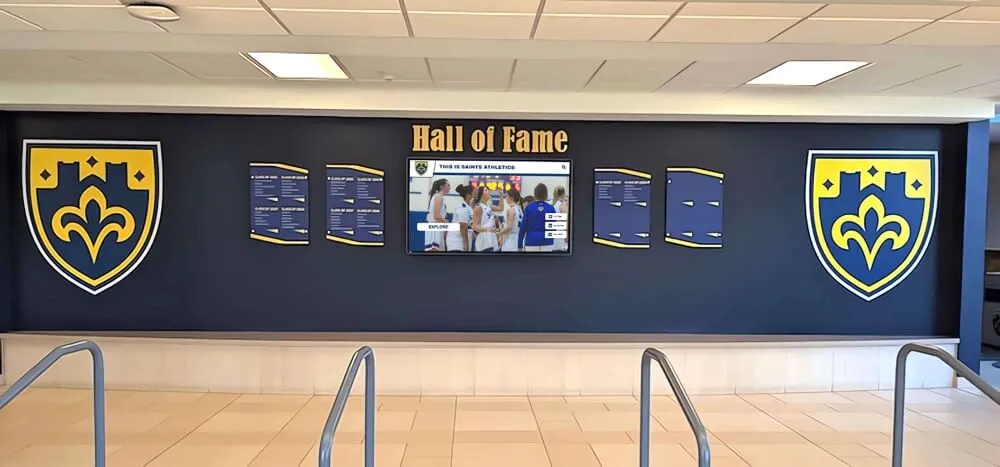
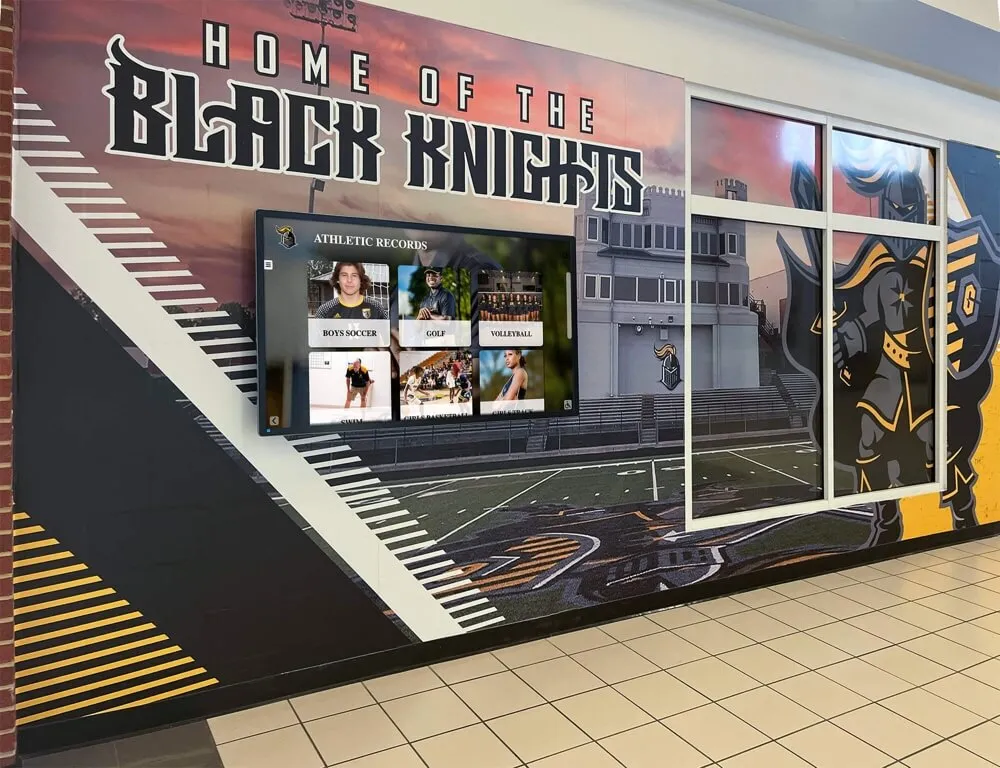
Digital displays and web profiles share external links that carry the institution's credibility—a vetting policy protects both
Approved Link Categories
Define which link categories the program will permit before staff begin building profiles. The table below provides a standard framework; adapt it to your institution’s resources and governance structure.
| Link Category | Examples | Permitted? | Conditions |
|---|---|---|---|
| Institutional alumni directories | School alumni office pages, athletics department rosters | Permitted | Must be verified current before publication; re-verified annually |
| Official athletic conference databases | Conference record databases, championship archives | Permitted | URL must point to the specific record, not a search page |
| Accredited newspaper archives | Established regional or national newspaper archives | Permitted with label | Must be accessible without a paywall at time of publication; labeled as “Third-Party Media” |
| School or institutional athletic records | Official school record books, archived athletics programs | Permitted | Must be hosted by the institution; verified against the inductee’s profile |
| Government or accreditation records | State athletic association results, academic accreditation filings | Permitted | Government or association domain only; no third-party aggregators |
| Broadcast or video archives | Officially archived game footage from institutional or licensed sources | Permitted with conditions | Rights documentation required; labeled as “Archived Media” |
| Wikipedia and crowd-sourced references | Wikipedia inductee pages, fan wikis | Not permitted as citations | May be listed in “Further Reading” with explicit label; never cited as a source for profile claims |
| Social media profiles | Personal or fan-maintained social accounts | Not permitted | Too volatile; not suitable for permanent archival linking |
| Commercial aggregators | Sports-reference sites, third-party statistics aggregators | Conditional | Permitted only where the source data is verifiable against institutional records; labeled as “Third-Party Data” |
| Alumni-maintained personal websites | Inductee’s personal website or family-maintained tribute page | Conditional | Requires inductee’s written consent; labeled “Inductee-Maintained Page”; reviewed at each annual cycle |
The Vetting Workflow: Five Steps Before a Link Is Published
Every external link must pass through a documented vetting process before it appears in a published inductee profile. Assign this workflow to the program’s Archivist or a designated Link Review Officer.
Step 1: Confirm the URL Is Active and Resolves to the Intended Resource
Before any other evaluation, verify that the URL loads correctly and displays the expected resource. A URL that redirects to a homepage, returns a 404 error, or resolves to a different page than intended fails at step one and must not be published. Document the test date.
Step 2: Evaluate the Source’s Reliability and Institutional Standing
Not all active links are appropriate for an official inductee profile. Apply the following criteria:
- Institution type: Is the source a recognized school, athletic conference, government body, or accredited media organization? Or is it a third-party aggregator, crowd-sourced platform, or commercial site?
- Editorial oversight: Does the source have an identifiable editorial or records-management process, or can any user edit the content?
- Longevity: Has the source been operating continuously for at least five years? Is there evidence of active maintenance?
- Relevance: Does the linked page directly support or supplement the inductee’s profile—not simply mention the inductee in passing?
Step 3: Verify That the Linked Content Matches the Profile
Compare the content at the destination URL against the inductee’s approved profile. Any factual discrepancy—different graduation year, different statistical record, different career timeline—must be resolved before the link is published. The profile’s official content controls; a linked page that contradicts the profile creates confusion and undermines both sources.
Step 4: Assess Privacy and Consent Implications
Some external pages contain contact information, home addresses, family details, or other personal data that the inductee may not wish associated with their official profile. Before linking to any page that contains personal information beyond the inductee’s public athletic or professional record, confirm that the inductee has reviewed and consented to the link. For posthumous inductees, confirm with the designated family representative.
Step 5: Assign a Monitoring Owner and Document the Link
Before the link is published, record the following in the program’s link registry:
- Full URL and destination description
- Source category (from the approved categories table)
- Date of vetting and name of the Link Review Officer who completed it
- Staff role assigned as monitoring owner
- Next scheduled review date
- Any conditions or exceptions noted during vetting
The link registry is a permanent record. It is not deleted when a link is retired; the entry is updated to reflect the retirement date, reason, and disposition.
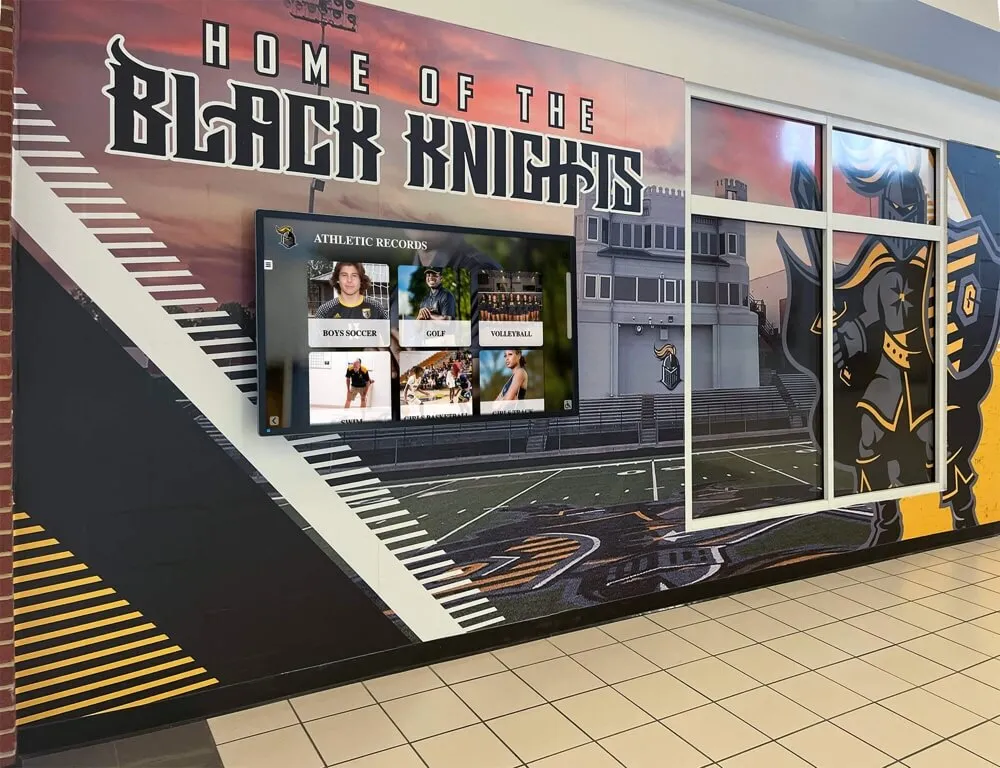
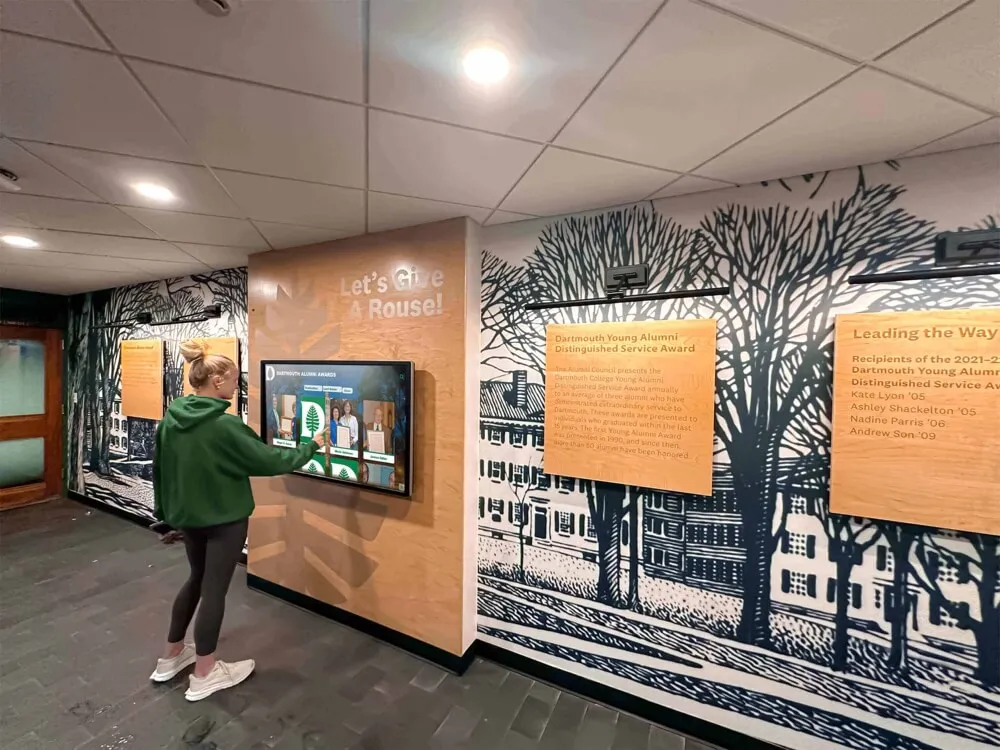
Physical records and digital links require the same governance discipline—a link that disappears from an inductee's profile is as significant as a missing plaque
Link Labeling Standards
Visitors to an inductee’s profile cannot distinguish between an institutional record and a third-party newspaper archive unless the program labels each link clearly. Define a labeling standard that applies consistently across all profiles.
| Label | When to Use | Sample Display Text |
|---|---|---|
| Official Record | Links to institutional athletics databases, conference records, school record books hosted by the school or conference | “Official Record — [Institution or Conference Name]” |
| Third-Party Media | Links to newspaper archives, broadcast archives, or magazine features hosted by independent media organizations | “Third-Party Media — [Publication Name] (link opens external site)” |
| Archived Media | Links to officially archived video, audio, or photographic content hosted by the institution or a licensed partner | “Archived Media — [Source Name]” |
| Third-Party Data | Links to commercial statistics aggregators where data has been independently verified | “Third-Party Data — Content may differ from official records” |
| Further Reading | Links to Wikipedia or similar crowd-sourced sources, listed separately from cited evidence | “Further Reading — Crowd-sourced; not verified by [Program Name]” |
| Inductee-Maintained Page | Links to the inductee’s personal website or a family-maintained tribute page | “Inductee-Maintained Page — Content managed independently of [Program Name]” |
The label should appear adjacent to the link in every context—in the inductee’s profile on the program’s website, in any digital display profile interface, and in printed ceremony programs that include QR codes or shortened URLs. A label that appears only on one platform is not a complete labeling standard.
Monitoring Schedule and Annual Review
External links require periodic re-verification to confirm that the destination URL remains active and that the linked content continues to accurately represent the inductee. Assign a review cadence to each link category.
| Link Category | Review Cadence | Review Action |
|---|---|---|
| Institutional alumni directories | Annual, at start of each induction cycle | Verify URL resolves; confirm content matches profile |
| Official athletic conference databases | Annual | Verify URL resolves; confirm statistical records unchanged |
| Accredited newspaper archives | Annual | Verify URL resolves; confirm article accessible and unchanged |
| Government or accreditation records | Biennial | Verify URL resolves; confirm records reflect current institutional data |
| Archived media (video, audio) | Annual | Verify URL resolves; confirm access rights documentation current |
| Inductee-maintained pages | Annual, plus within 30 days of inductee notification of changes | Verify URL resolves; re-obtain consent if content has materially changed |
| Further Reading (crowd-sourced) | Annual | Verify URL resolves; review for substantive inaccuracies relative to the profile |
Assign a single Link Review Officer to conduct the annual review across all active profiles. The review should be scheduled no later than 60 days before each induction cycle’s nomination deadline, ensuring that all link governance is current before new profiles enter production.
For programs managing digital academic recognition displays and archival databases, the external link review can be scheduled alongside the content refresh cycle that updates inductee profile statistics and photographs—bundling the tasks reduces administrative burden and ensures that link governance is not deferred indefinitely.
Retiring and Removing External Links
When a link fails a review—because the URL is broken, the content has changed materially, or the source no longer meets the program’s reliability standards—the retirement process must be documented before the link is removed from any published profile.
Retirement Workflow
- Flag the link. The monitoring owner or any staff member who identifies a problem with a published link flags it in the link registry with the date and nature of the issue.
- Attempt to locate a replacement. Before retiring a link without replacement, search for an equivalent resource that meets the program’s vetting standards. For a broken newspaper archive link, check whether the article is accessible through a different archive platform or through the publication’s official digital archive. For a broken institutional alumni directory link, contact the alumni office to obtain the current URL.
- If no replacement is available, authorize removal. The Link Review Officer or Committee Chair must authorize the removal of a link that cannot be replaced. The authorization is documented in the link registry with the authorizing party’s name and the date.
- Update the profile. Remove the link from the published profile on all platforms simultaneously—website, digital display profile, and any printed materials scheduled for reprint. A link removed from the website but still active on a lobby touchscreen creates a consistency gap.
- Document the retirement. Update the link registry entry to reflect the retirement date, reason (broken, content changed, source no longer reliable), replacement URL if one was found, and the name of the staff member who completed the removal.
- Notify the inductee or family if applicable. If the retired link was an inductee-maintained page or a prominent media reference that the family specifically requested, notify the inductee or their designated family contact of the change.
When Content Changes Without a URL Change
A link can fail without breaking. A newspaper archive may silently update an article, a school athletics database may revise a statistical record, or an alumni directory may change ownership and editorial standards without altering the URL. These changes are harder to detect than broken links and require the annual content-review step described in the monitoring schedule. When a content change is discovered, treat the link as flagged and apply the retirement workflow—even if the URL still resolves correctly.
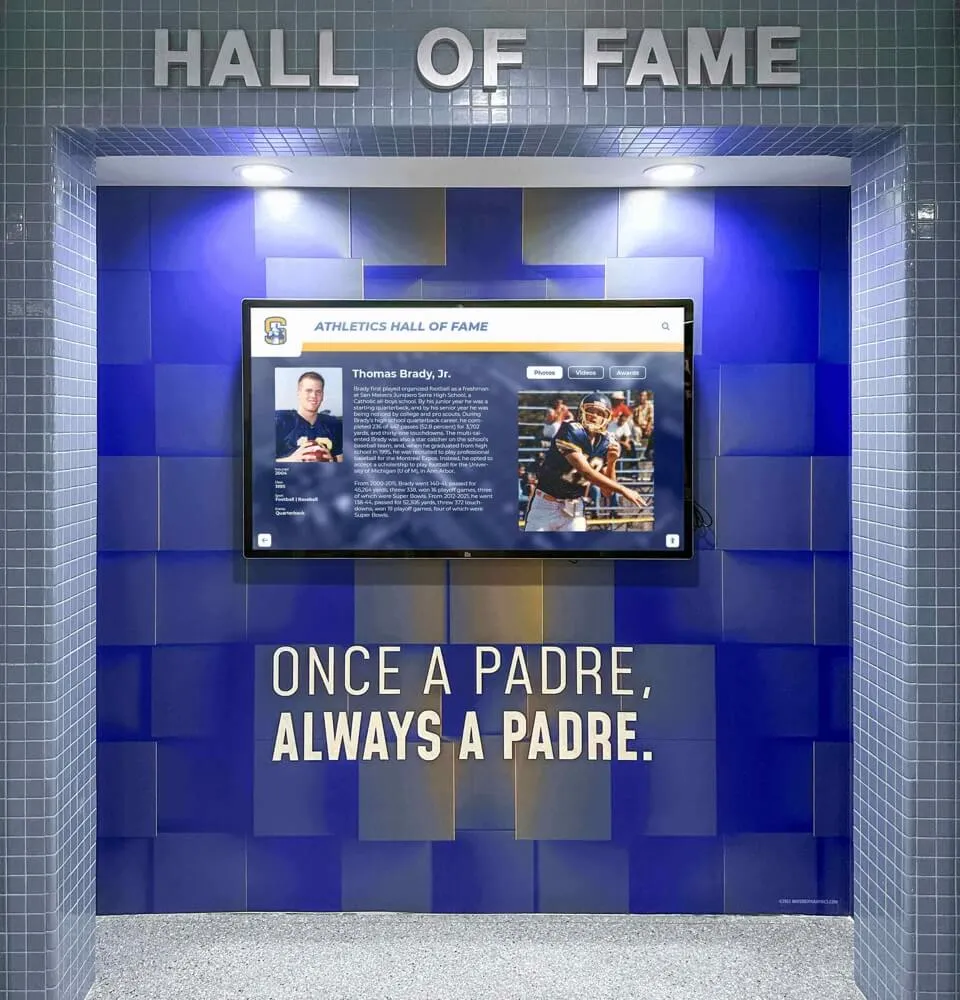
Programs exploring digital signage and kiosk display options for school hallways and lobbies recognize that every element on a screen carries the institution’s endorsement. External links embedded in a touchscreen profile are no different from the biographical content displayed alongside them—both require governance that outlasts any single staff member’s tenure.
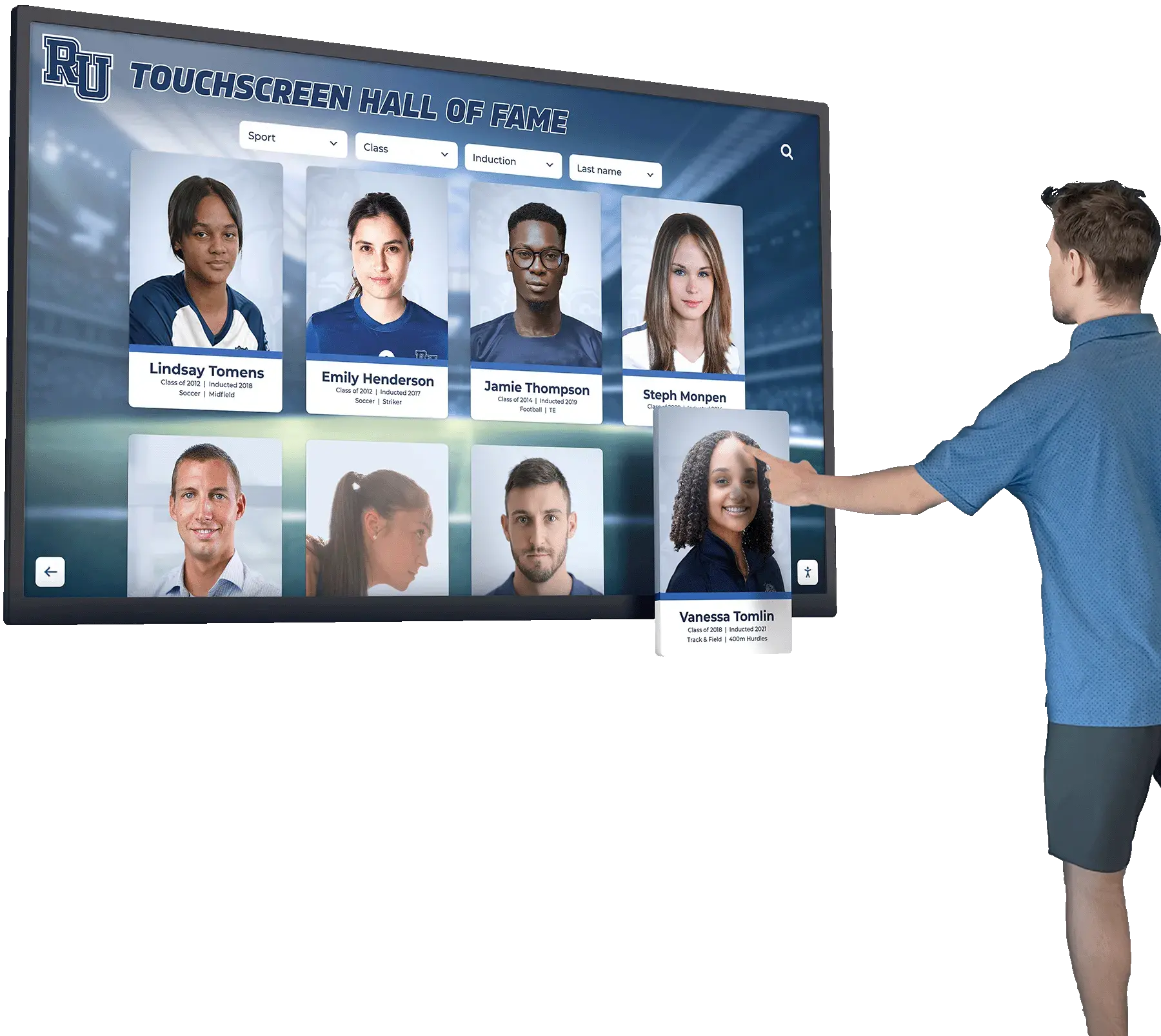
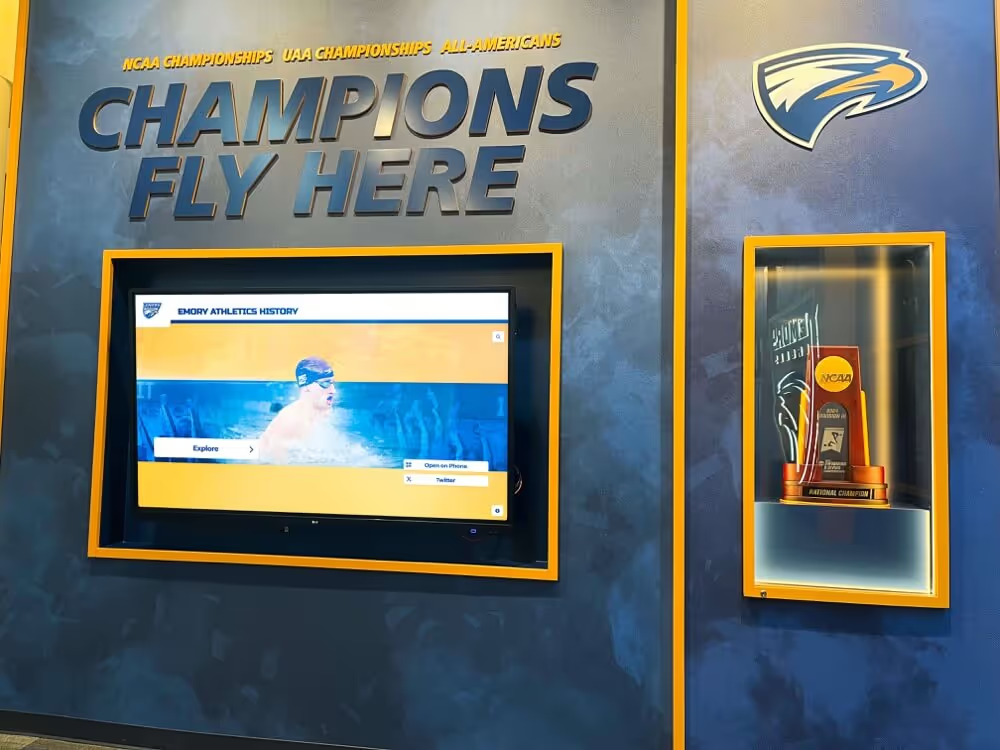
Every link accessible from a touchscreen profile reflects the institution's curation standards—retired links must be removed from all platforms simultaneously
Special Considerations for Alumni Pages and Archived Media
Alumni Pages
Alumni pages represent a unique governance challenge because they are institutionally associated—they appear to carry the alumni association’s or school’s authority—but they are often maintained by staff outside the hall of fame committee’s influence. Before linking to any alumni page, confirm with the maintaining institution that:
- The page is actively maintained and not scheduled for reorganization
- The content reflects current, verified information about the inductee
- The page’s privacy settings are consistent with public display (no content restricted to authenticated alumni only)
- The institution’s web team can notify the hall of fame program if the URL changes
For programs that partner with alumni associations on broader recognition programs and award structures, the external link policy is an opportunity to formalize the communication channel between the hall of fame committee and the alumni office—ensuring that URL changes and content updates are shared proactively rather than discovered during an annual review.
Archived Media Links
Newspaper archives, broadcast archives, and institutional media libraries each present distinct challenges:
Newspaper archives: Confirm that the linked article is accessible without a subscription paywall at the time of publication. A link that displays a full article in an incognito browser today may display only a headline after the publication’s paywall threshold is reached by a returning visitor. Label the link “Third-Party Media” and note in the link registry whether it is paywall-dependent.
Broadcast archives: Video and audio clips from school broadcasts, local television coverage, and institutional media libraries may be hosted on platforms with content expiration policies. Confirm the hosting platform’s retention commitment before linking to broadcast content. For historically significant footage, explore whether the institution should obtain and host its own copy rather than linking to a third-party platform.
Institutional photograph archives: Photographs linked from external institutional archives—a university athletics department’s media gallery, for example—may be reorganized when the institution changes its media management system. Wherever possible, obtain the rights to display photographs directly within the profile rather than linking to an external gallery.
Programs that maintain youth sports and community awards records alongside athletic hall of fame profiles understand that archived media supporting those records requires the same governance discipline as the primary inductee biography—a photograph that supported an award citation five years ago may now be hosted on an inaccessible server.
Data Integrity and the Risk of Third-Party Manipulation
A link vetting policy is also a data integrity measure. As AI-generated content and algorithmic manipulation increasingly affect the digital hall of fame market, programs that link to third-party sources without vetting protocols risk inadvertently endorsing content that has been algorithmically altered or factually distorted. Inductee profiles linked to crowd-sourced or AI-generated pages may reflect fabricated statistics, invented biographical details, or contradictory records.
The same integrity risks apply to commercial sports databases. Concerns about algorithmic manipulation and misrepresentation in digital recognition contexts underscore the importance of verifying that any third-party data source linked from an inductee’s profile traces its statistics to an authoritative institutional record—not to a computed or inferred figure.
A written external link policy that requires source verification at the approved-categories stage provides a structural defense against these integrity risks, independent of the specific threat landscape at any given time.
Copy-Paste External Link Policy Checklist
Use this checklist for every external link before publication. Replace bracketed placeholders with program-specific details.
Pre-Publication Vetting
- URL tested and resolves to the intended resource (not a redirect or error page)
- Source category confirmed against the approved categories table
- Source institutional standing evaluated (recognized institution, editorial oversight, five-year operational history)
- Linked content compared against inductee profile for factual consistency
- Privacy and consent review completed; inductee or family consent obtained if required
- Link registered in the link registry with source category, review date, monitoring owner, and next review date
Labeling
- Link label selected from the approved labeling standard
- Label applied consistently across all platforms (website, digital display, printed materials)
Monitoring Assignment
- Monitoring owner assigned and documented in link registry
- Next review date set per the approved cadence for this link category
Retirement Readiness
- Retirement workflow documented in program procedures
- Monitoring owner understands the flag-and-retire process
Content Architecture: Mapping Link Governance to Digital Platforms
A recognition platform that integrates link management into the profile creation workflow enforces the external link policy without relying solely on staff memory. The architecture below describes how governance maps to platform capabilities.
| Governance Stage | Action | Platform Feature | Record Created |
|---|---|---|---|
| Link proposed | Staff adds URL to draft profile | Link field in CMS with required metadata | Draft entry in link registry |
| Vetting completed | Link Review Officer approves or rejects | Approval workflow with required checklist completion | Vetted status logged in link registry |
| Label applied | Label selected from dropdown | Label field pre-populates in published profile | Label documented in link registry |
| Monitoring assigned | Monitoring owner designated | Role assigned in CMS link management module | Owner and review date in link registry |
| Annual review completed | Monitoring owner re-verifies link | Review logged in CMS | Review date updated in link registry |
| Link flagged | Staff or monitoring owner flags a problem | Flag status in CMS triggers notification | Flag entry in link registry |
| Link retired | Chair or Link Review Officer authorizes removal | Link removed from all published instances | Retirement date, reason, and disposition in link registry |
Role-based access is essential to this architecture. The Archivist can add and flag links. The Link Review Officer approves links for publication. The Chair authorizes retirements. No single role should be able to add, publish, and retire links without a second-authorization step.
Execution Timeline: Link Policy Lifecycle Phases
Phase 1 — Plan
- Committee Chair and Archivist draft the approved categories table and labeling standard for governing body approval
- Legal counsel reviews the policy for consistency with institutional web-governance and privacy policies
- Link registry template built (spreadsheet or CMS module) with required fields
- Policy distributed to all staff involved in profile creation with written acknowledgment of receipt
Phase 2 — Build
- Archivist audits all existing inductee profiles for external links and runs each through the vetting checklist retroactively
- Links that fail vetting are flagged for repair or retirement before the next induction cycle
- Link registry populated with all existing links and their monitoring owners
- Annual review schedule established and added to the program calendar
Phase 3 — Launch
- All new inductee profiles include only vetted, labeled links entered through the approved workflow
- Link registry updated in real time as profiles are published
- First annual review scheduled within 12 months of policy adoption
Phase 4 — Refresh
- Annual review conducted per the approved cadence
- Retired links documented and profiles updated simultaneously across all platforms
- Policy reviewed every two years for changes in source landscape, applicable regulations, and institutional web-governance standards
Display Integration
External links in inductee profiles appear in three display contexts: the program’s website, digital touchscreen kiosks or lobby displays, and printed materials that include QR codes or shortened URLs. Each context requires the same label and the same monitoring discipline—a link that has been retired from the website must be retired from the touchscreen display and removed from the next print run simultaneously.
For programs managing historical athletic inductions and archival display content, the external link policy is particularly relevant for vintage profiles: inductees from earlier decades may have their profiles supported by links to newspaper microfilm archives, digitized yearbooks, or historical athletics databases that are more volatile than contemporary sources.
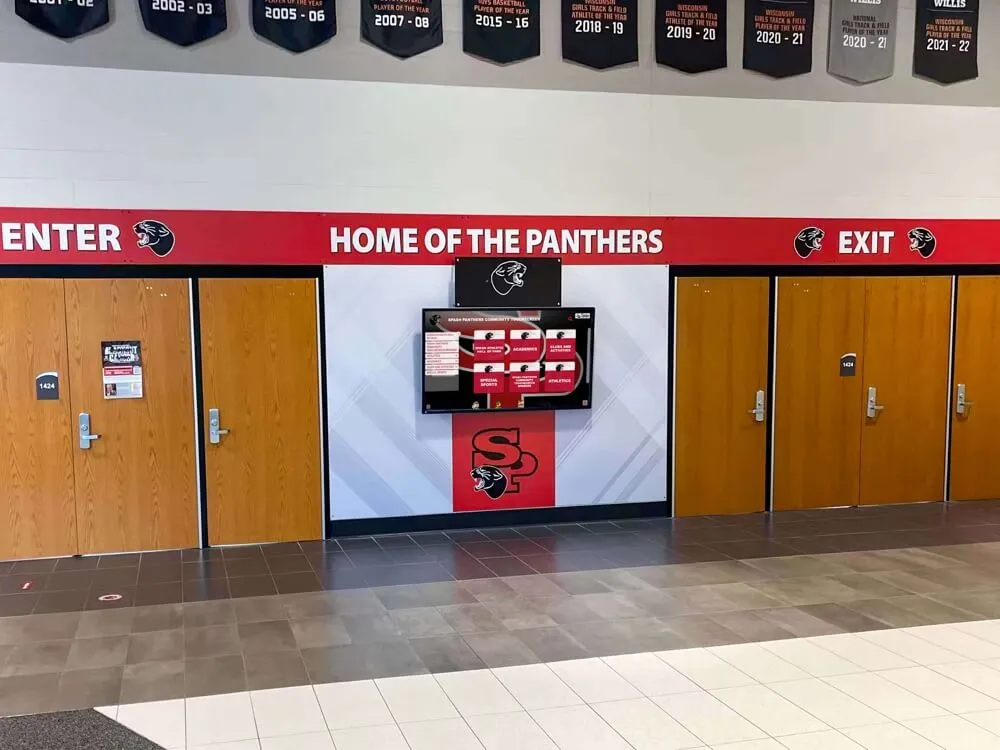
A link retirement is only complete when it has been applied to every platform where the link appeared—website, touchscreen, and print
A platform that supports centralized link management—where a single registry update propagates to all display instances—reduces the risk of a retired link remaining active on one platform after being removed from another. When evaluating recognition platforms, ask whether the system’s CMS supports link metadata fields, approval workflows, and multi-platform publishing so that link governance is embedded in the production process rather than managed manually after the fact.
Rocket’s digital recognition platform gives programs a cloud-based content management environment where inductee profiles are built, approved, published, and updated through a single administrative interface—meaning that a link change made in the CMS propagates to every display instance the program manages. For programs ready to bring their external link governance into a platform designed for permanent, scalable recognition, request a free custom demo to see how the workflow maps to your school’s existing processes.
Frequently Asked Questions
Should every inductee profile include external links?
No. A profile that accurately represents the inductee’s recognition through well-written biographical content and verified statistics does not require external links to be complete. External links are supplementary resources, not required elements. Programs should add links only where they genuinely enhance the inductee’s profile with verifiable, stable content—not to create the appearance of comprehensive sourcing.
What should we do with links that are behind a paywall?
A link that requires a paid subscription to access fails the accessibility standard for a public-facing program. If the linked content is important enough to include, explore whether the publication offers public access to archived content, whether the institution holds a site license that would cover visitor access, or whether the relevant information can be incorporated directly into the inductee’s profile biography (with the source cited in a notes field rather than a live link).
Can we link to the inductee’s social media profile at their request?
Social media profiles are excluded from approved link categories because their content is controlled by the inductee, changes frequently, and may be deleted or made private at any time. If an inductee asks to share their social profile with visitors, the program may note the request in the post-announcement follow-up materials without embedding the link in the official inductee profile. Inductee-maintained pages require explicit consent and additional governance steps as outlined in the approved categories table.
How do we handle links in ceremony programs that are already printed?
Printed materials cannot be retroactively updated when a link breaks. For each print run, include only links that have passed the vetting checklist within 30 days of the print deadline. Use a URL shortener or QR code management system that allows destination redirects—this allows the program to update the destination URL if the original source moves, without reprinting materials.
What happens if an inductee asks us to remove a link?
A request from an inductee to remove a specific external link from their profile should be honored without challenge. The profile belongs to the institution, but the inductee’s right to reasonable control over how their public recognition is presented extends to the supplementary resources attached to that recognition. Document the request and the removal in the link registry, and note that the removal was at the inductee’s request.
Ready to manage inductee profiles, external links, and archival content through a single governed platform? Request your free custom demo and see how Rocket’s cloud-based recognition system supports the governance workflows your program needs.
Live Example: Rocket Alumni Solutions Touchscreen Display
Interact with a live example (16:9 scaled 1920x1080 display). All content is automatically responsive to all screen sizes and orientations.