



Every school that publishes an inductee list online faces the same moment of truth: someone asks why a particular person is included—or excluded—and the committee has no written answer. Hall of fame criteria solve that problem before it happens. Defined eligibility rules protect the program’s credibility, protect the committee from political pressure, and give nominees a transparent standard to meet.
The short answer: before publishing any inductee, schools need six eligibility rules in writing—affiliation requirement, waiting period, active-status exclusion, achievement threshold, character standard, and category definition. Lock all six, then build the display.
Well-run hall of fame programs are built on governance, not good intentions. The eligibility layer is the foundation everything else rests on—criteria set what the recognition means, and the publish step makes that meaning permanent.

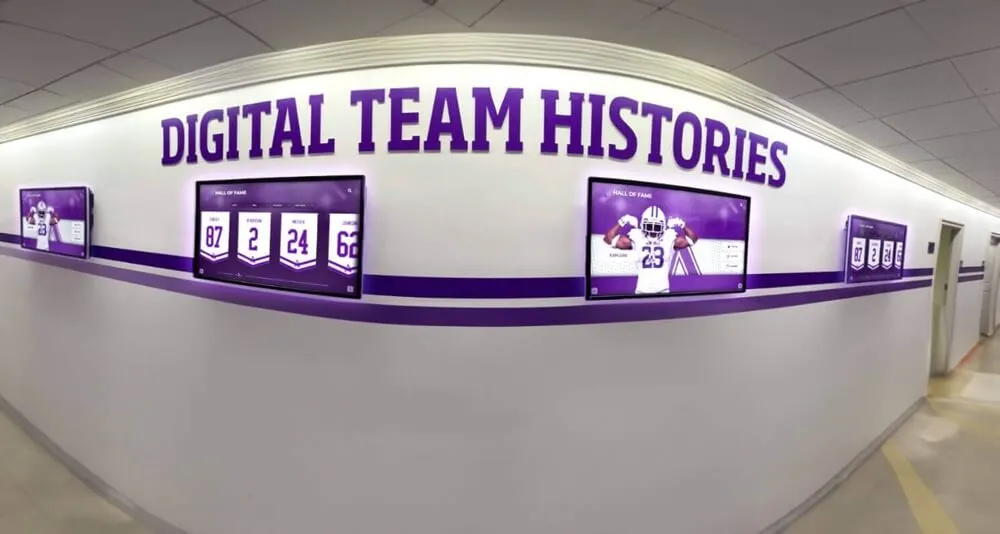
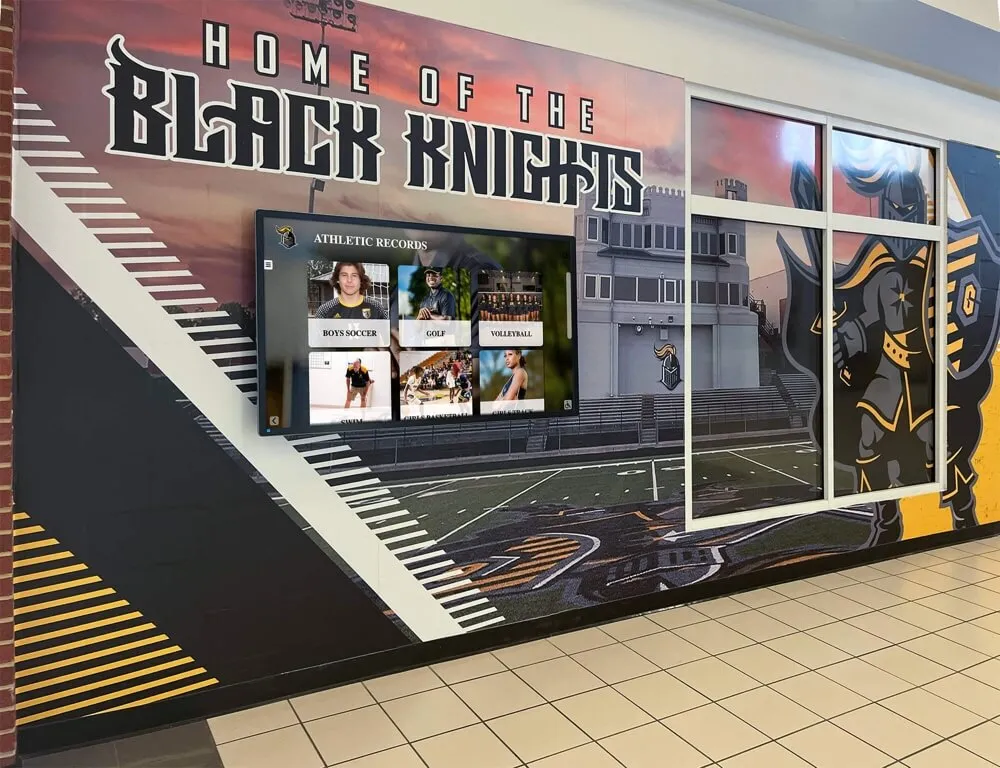
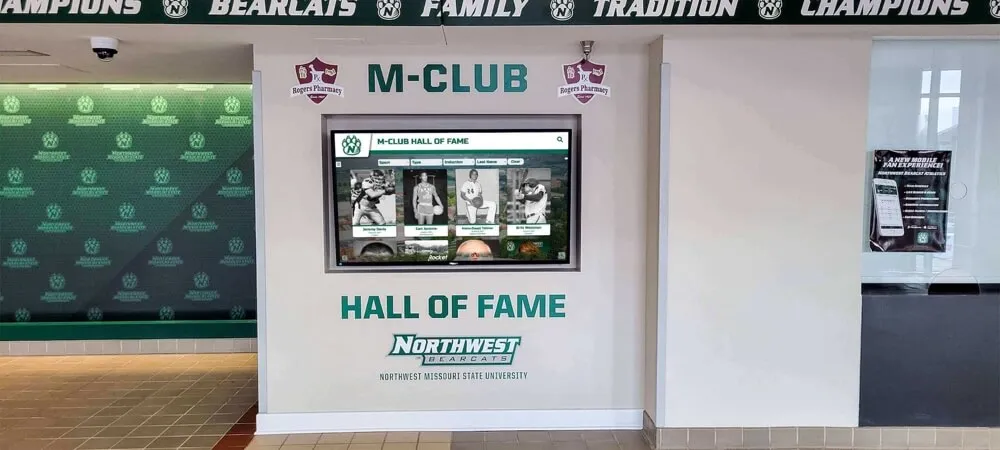
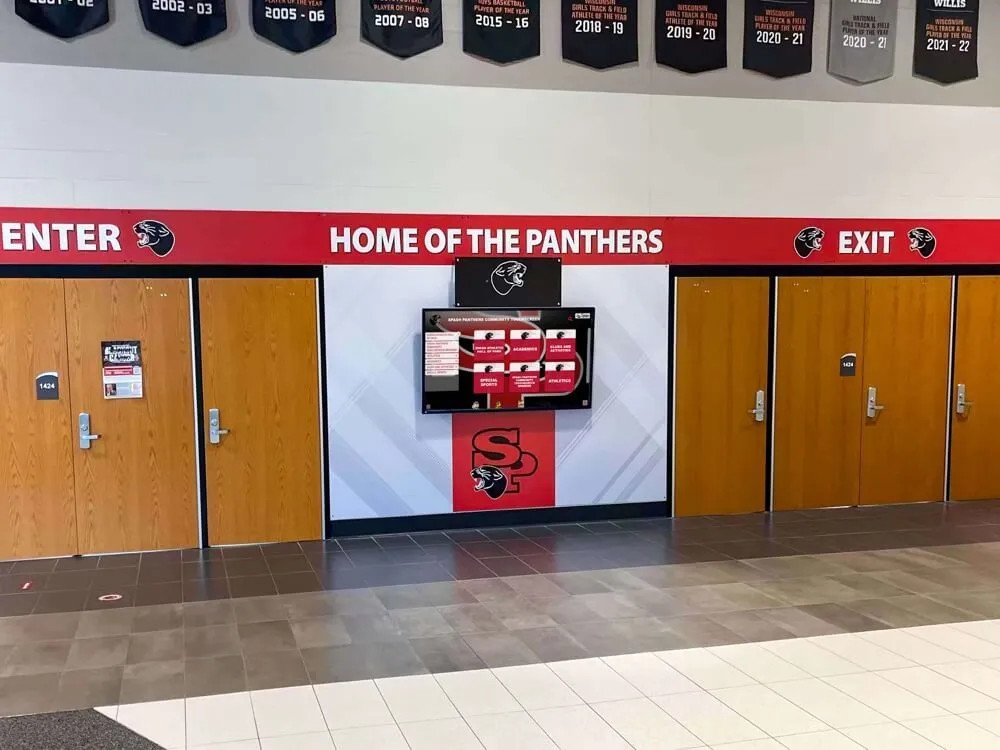
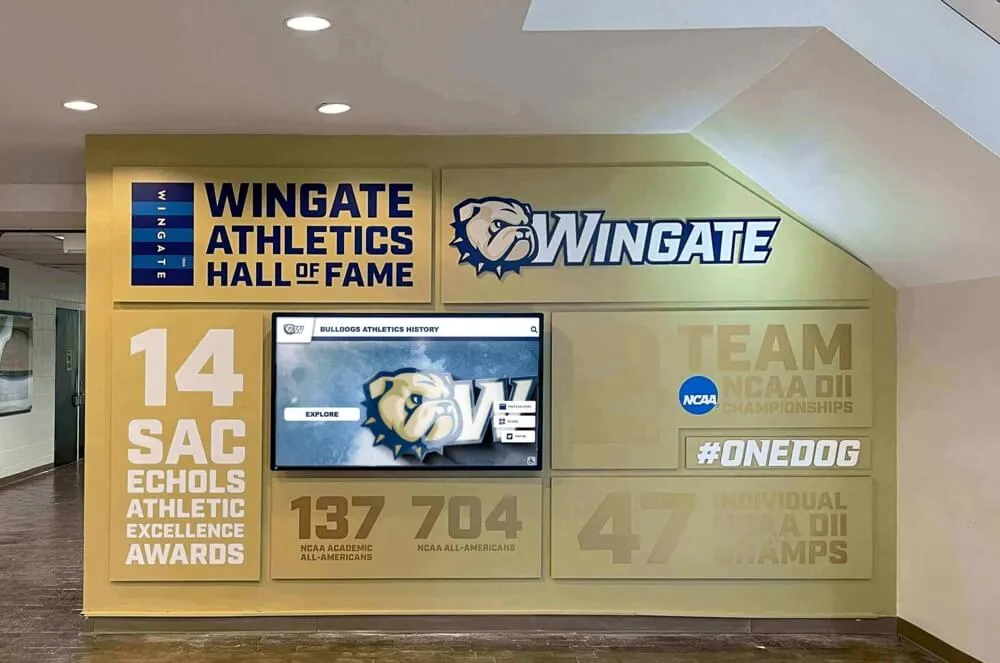
Every shield on a wall like this one represents a decision that should be traceable back to written eligibility criteria—established before the first inductee was named
Program Snapshot
Use this table to audit your program before nominations open. Any blank cell is a gap that will generate conflict.
| Criteria Element | Minimum Standard | Why It Must Be Written Down |
|---|---|---|
| Affiliation requirement | Must have represented the institution in a defined role | Prevents nominations from outside the program’s scope |
| Waiting period | 3–10 years after end of active affiliation | Allows perspective; reduces recency bias |
| Active-status exclusion | No current students or employees eligible | Keeps HOF as retrospective recognition, not a live incentive |
| Achievement threshold | Defined benchmarks per category (athlete, coach, team, contributor) | Creates objective minimum that all nominees can be measured against |
| Character standard | Documented conduct review tied to specific, listed criteria | Provides defensible grounds for declining nominations |
| Category definitions | At least three: Individual, Team, Coach/Contributor | Prevents scope arguments during deliberation |
| Publish gate | All six rules documented and approved before any profile goes live | Protects the institution when inductee decisions are challenged |
The 6 Core Eligibility Rules
Rule 1: Affiliation Requirement
Every eligible nominee must have a verified, meaningful connection to your institution. Define this precisely. “Attended the school” is not enough—specify the minimum duration and the role.
Common affiliation standards:
- Student-athletes: Competed on a varsity roster for at least one full season while enrolled
- Coaches: Served as a head or assistant coach for a minimum of one complete academic year
- Contributors: Held a defined role (administrator, booster officer, volunteer coordinator) for at least two consecutive years
- Teams: Competed as a recognized institutional team under the school’s official name
Write the minimum affiliation period into your criteria document. Without it, nominators will submit candidates whose connection to your school is too thin to defend—and the committee will have no written basis to decline them.
Rule 2: Minimum Waiting Period
A waiting period between the end of active affiliation and eligibility for nomination is one of the most important rules your criteria document can include.
Why waiting periods matter:
- They give the committee perspective on long-term impact rather than recent performance
- They reduce recency bias that can crowd out historically significant inductees
- They allow time for a complete record to emerge—post-graduation accomplishments, community impact, career arc
Standard waiting periods by category:
| Category | Typical Waiting Period | Rationale |
|---|---|---|
| Student-athletes | 5–10 years after graduation | Sufficient perspective on career and character |
| Coaches | 3–5 years after last season | Allows assessment of program legacy |
| Teams | 10+ years after championship season | Historical significance becomes clear |
| Contributors | 2–5 years after service end | Reasonable for non-competitive roles |
Some programs set a flat five-year waiting period for all categories. That simplicity is defensible and easier to communicate than a tiered structure—particularly for smaller athletic departments managing multiple programs with limited administrative bandwidth.
Understanding how peer institutions approach academic recognition programs can help you calibrate waiting periods for non-athletic categories where the conventions are less standardized.
Rule 3: Active-Status Exclusion
Current students and current employees are ineligible. This rule is simple but frequently overlooked in first-year programs.
Without it, a coach still on staff could theoretically be nominated and inducted, turning the hall of fame into a performance incentive rather than a retrospective honor. A current student-athlete nominated in senior year—before their eligibility period ends—creates an awkward parallel recognition structure alongside existing awards programs.
Write the active-status rule as an absolute exclusion: no individual may be nominated while actively enrolled in or employed by the institution. The waiting period clock starts the day active affiliation ends.
Rule 4: Achievement Threshold
The achievement threshold is the most substantive part of your eligibility criteria. It sets the minimum bar candidates must clear to enter the nomination pool—distinct from the selection score that determines who among eligible nominees is actually inducted.
Athletic achievement thresholds (examples):
- All-conference, all-state, or all-American selection during tenure
- Participated on a team that won a league, regional, or state championship
- Holds or previously held a school record in a statistical category
- Earned a varsity letter in a sport for a minimum of two seasons
Coaching achievement thresholds (examples):
- Minimum 10 years of service at the institution
- Led a program to at least one league or regional championship
- Career winning percentage at or above a defined threshold (commonly .550–.600)
Contributor thresholds (examples):
- Documented organizational leadership for five or more years
- Managed or funded a capital project, scholarship program, or facilities improvement
- Received formal institutional recognition for service (named award, resolution, etc.)
Reviewing how schools define award criteria for high-achievement recognition provides a useful framework for setting achievement thresholds that are rigorous without becoming exclusionary.
Thresholds are not selection scores—they are gates. A candidate who clears the achievement threshold is eligible for evaluation; the committee still decides whether they merit induction.
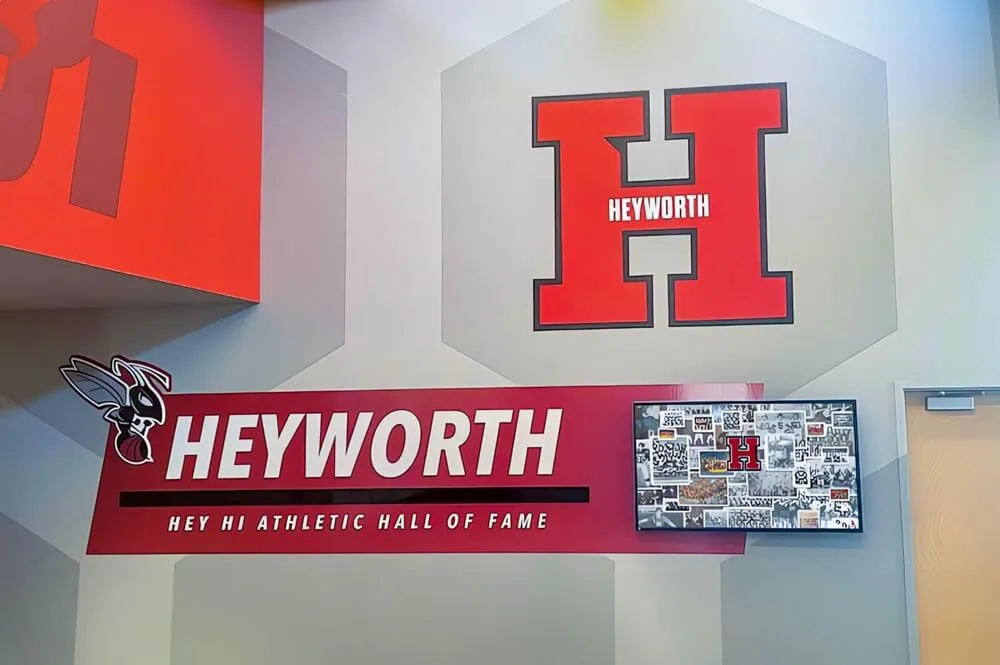
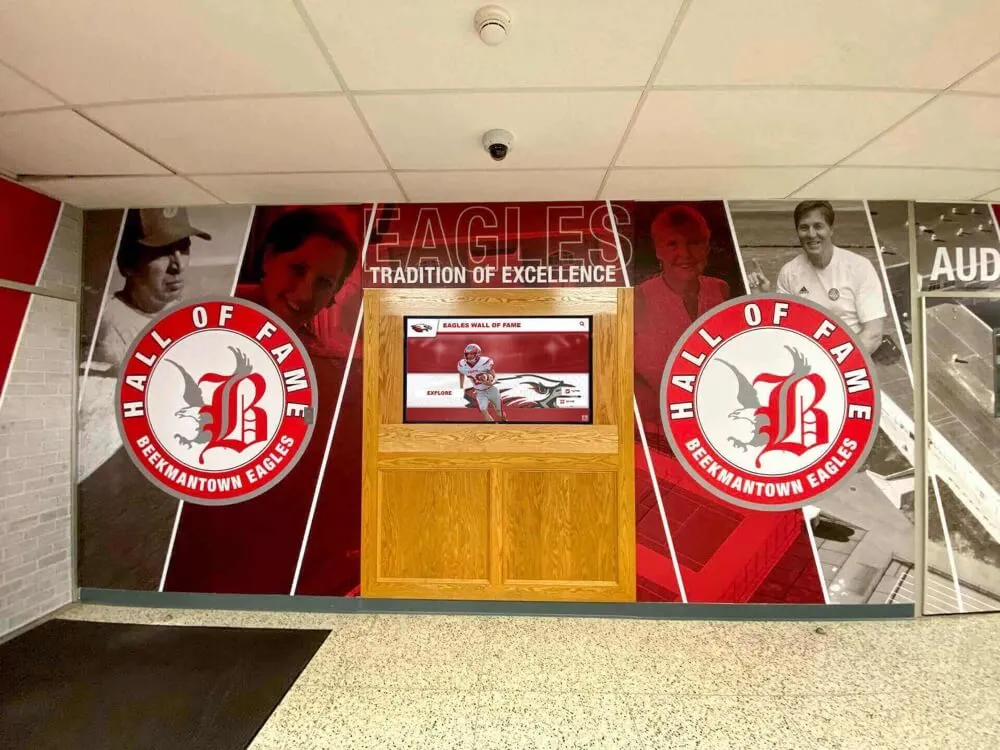
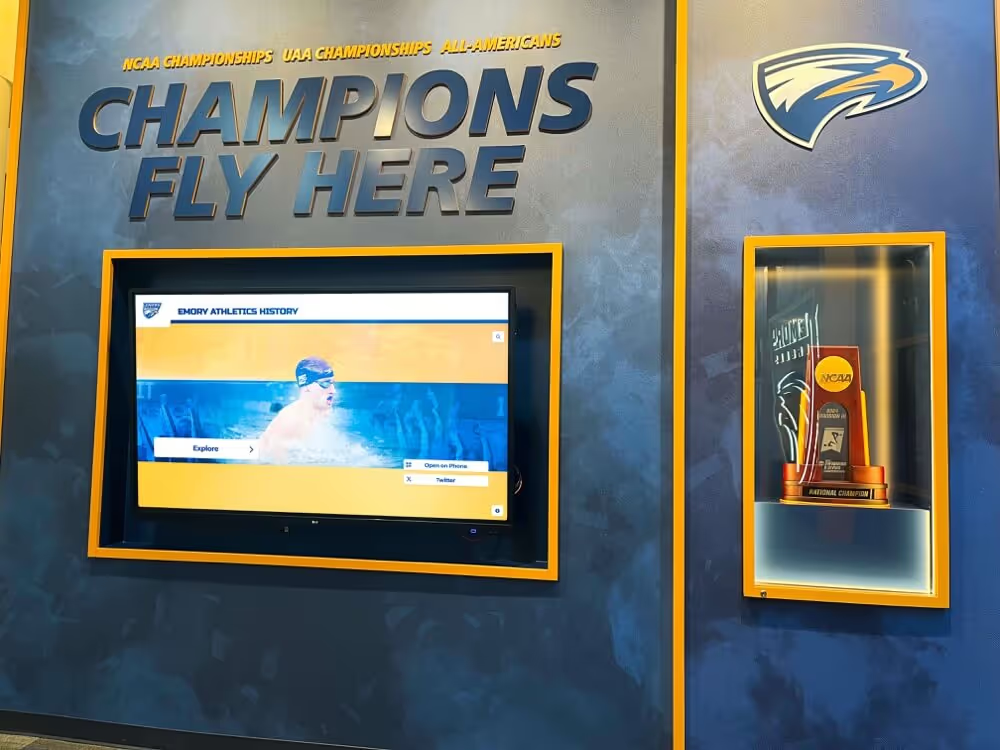
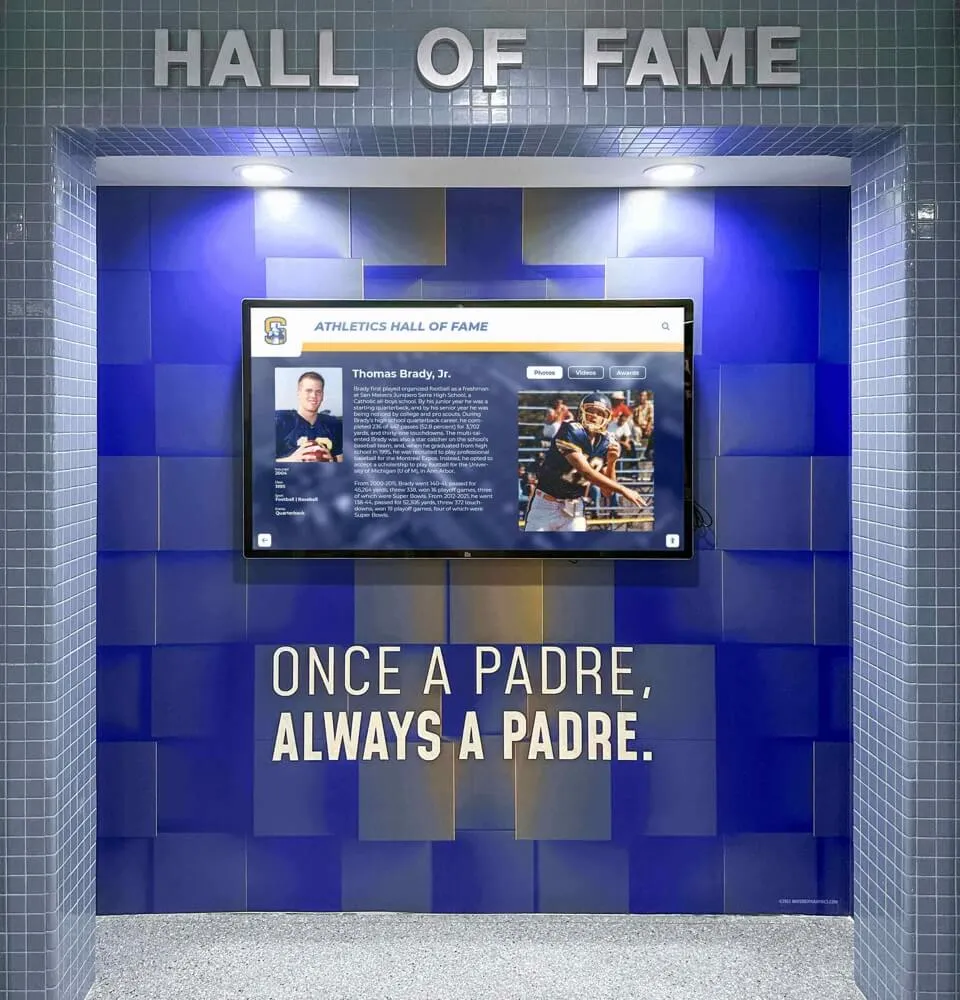
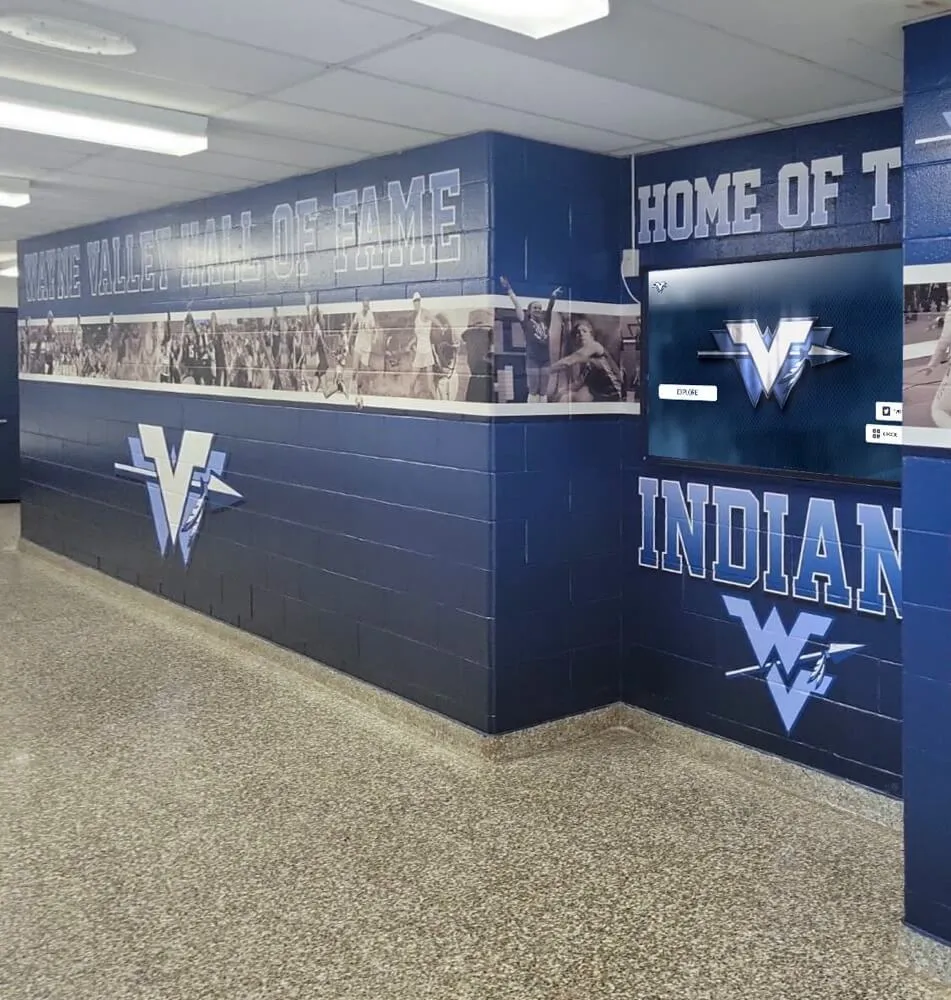
A named, permanent display signals that criteria are taken seriously—every inductee earned a place through a documented process, not informal consensus
Rule 5: Character Standard
Character requirements allow the committee to decline nominees whose conduct conflicts with what the recognition is designed to celebrate. These rules require the most careful drafting—vague language creates more conflict than it resolves.
Effective character criteria name specific conditions, not general impressions:
- The nominee was not subject to a formal disciplinary action resulting in suspension or expulsion during the period of affiliation
- No verified violation of athletic codes (including performance-enhancing substance use verified by a governing body) during the affiliation period
- No felony conviction subsequent to nomination that the committee, in documented deliberation, determines materially conflicts with the program’s stated values
What to avoid in character language:
Phrases like “conduct unbecoming” or “uphold the values of the institution” without further definition create ambiguity that invites selective application. If your character standard is to be defensible, every condition must be specific enough that two committee members reading it independently would reach the same conclusion about whether it applies.
Character criteria apply at two distinct moments: at the point of nomination (disqualifying conditions prevent entry into the pool) and after induction (the removal clause, governed separately, addresses post-induction conduct). Keep these two stages separate in your written documents.
Rule 6: Category Definition
Schools that publish inductees without defined categories eventually face insoluble disputes about whether a nominee qualifies—because there is no agreed-upon bucket to evaluate them against.
Minimum categories for a school hall of fame:
Individual Athlete Nominated based on verified competitive performance during enrollment. Evaluated against athletic achievement thresholds and character standard.
Coach or Program Builder Nominated based on tenure, competitive record, and program development. Evaluated against coaching thresholds and service duration.
Championship Team Nominated as a collective unit based on documented team achievement. Individual team members do not need to meet individual athlete thresholds.
Special Contributor Nominated based on documented non-competitive service to the program. Evaluated against contributor thresholds and service duration.
Category definitions prevent the committee from arguing whether a longtime booster should be evaluated by athletic criteria or whether a two-sport athlete needs to clear the threshold in both sports. Write the categories into your criteria document and assign each nominee a category at the time of nomination.
Category-Specific Criteria at a Glance
This reference table provides a starting framework. Adapt to your institution’s specific competitive landscape.
| Category | Affiliation | Waiting Period | Achievement Threshold | Character Standard |
|---|---|---|---|---|
| Individual Athlete | 1+ full varsity seasons | 5 years post-graduation | All-conference selection, school record, or championship participation | No formal disciplinary suspension during affiliation |
| Coach | 10+ years at institution | 3 years after last season | 1+ championship or career winning % ≥ .550 | No termination for cause; no verified code violations |
| Championship Team | Competed as institutional team | 10 years after season | League, regional, or state championship | Majority of roster members individually clear character standard |
| Special Contributor | 2+ years of service | 2 years after service end | Named institutional recognition or documented capital/program impact | No verified misconduct during service period |
The Publish-Readiness Checklist
Before any inductee profile appears on a website, touchscreen, or printed program, verify these six items are in place.
Criteria and Governance
- All six eligibility rules are documented in writing and approved by the governing body
- Category definitions are published in the nomination form and criteria document
- Character standard lists specific disqualifying conditions (not general language)
- Removal clause is written and adopted before the first induction
Inductee Verification
- Each inductee’s affiliation has been verified against institutional records
- Waiting period has been confirmed as met for every inductee
- Active-status exclusion verified (no current students or employees in the class)
- Achievement threshold documentation is on file for each inductee
- Character review completed and documented for each inductee
Display Readiness
- Each inductee profile includes: full name, graduation/tenure year, category, year inducted
- At least one photograph per inductee obtained with confirmed rights
- Achievement summary written and reviewed for accuracy
- CMS publishing access assigned to named staff only, not open to general editing
- A designated approver has reviewed every profile before it goes live
Programs that work through this checklist before the ceremony date eliminate the most common post-publish corrections: wrong graduation years, unverified achievement claims, placeholder photos, and profiles that went live before the formal induction took place.
Content Architecture: Mapping Criteria to Display Modules
The eligibility rules you write govern what content belongs in each inductee profile. A well-designed digital display mirrors the criteria structure directly.
Each display profile should surface:
- Category badge: Athlete, Coach, Team, or Contributor—pulled from the nomination category and visible on every profile card
- Tenure span: The affiliation years verified during eligibility review—ensures the display reflects the actual period of service, not a nominee’s self-reported estimate
- Achievement anchor: The specific credential that cleared the achievement threshold (all-state selection, championship year, school record)—this becomes the headline achievement in the inductee bio
- Induction class year: Published simultaneously for all members of each class, not individually as profiles are completed
For digital touchscreen programs, these four fields are the non-negotiable core. Everything else—expanded bios, photo galleries, video highlights, career statistics—builds on top of this foundation.
Platforms like Rocket Alumni Solutions map directly to this content structure: category filtering, tenure display, and achievement documentation are standard profile fields, not custom builds. The criteria document you write becomes the content architecture your digital platform executes.
Exploring the tools available for digital hall of fame programs across athletics, donor recognition, fine arts, and institutional history programs shows how the same criteria-to-display logic applies across every recognition context.
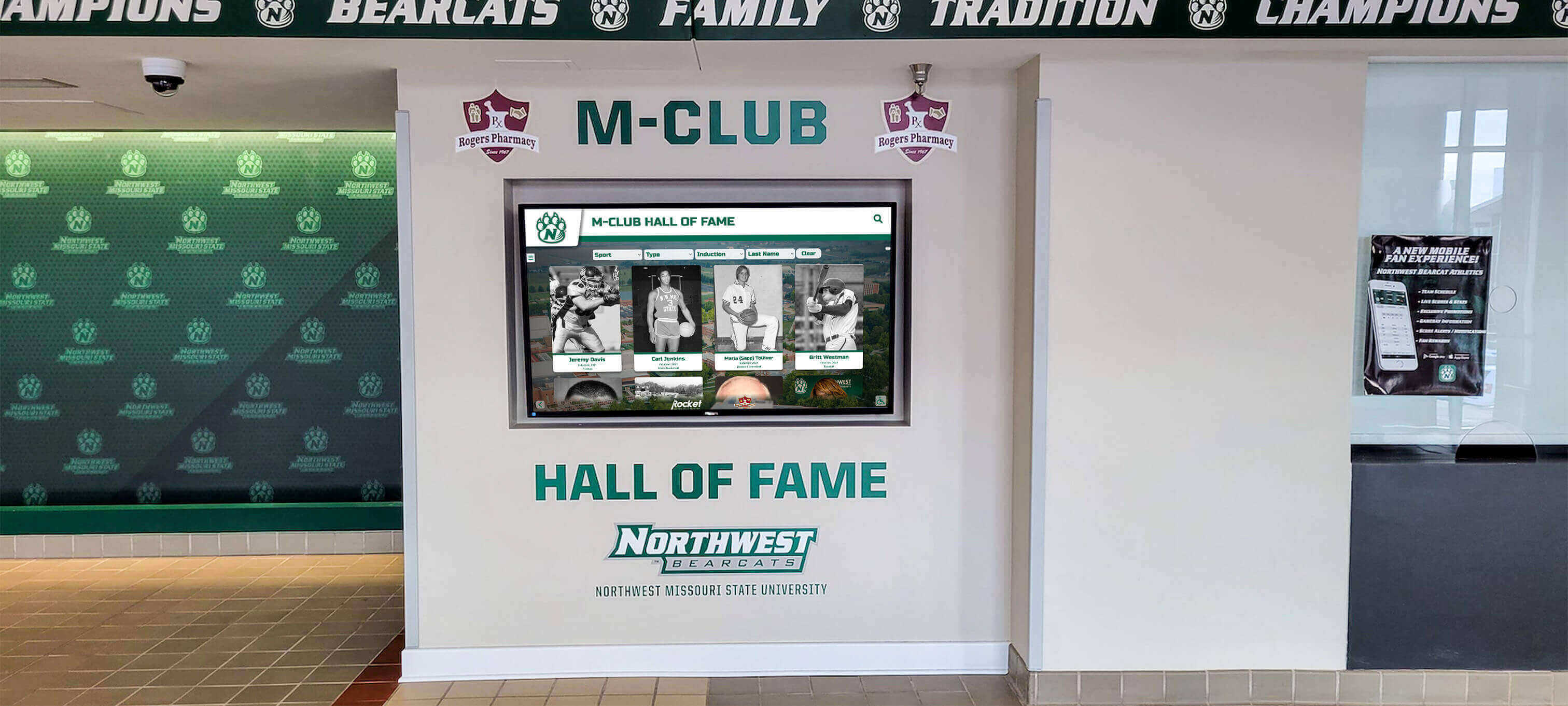
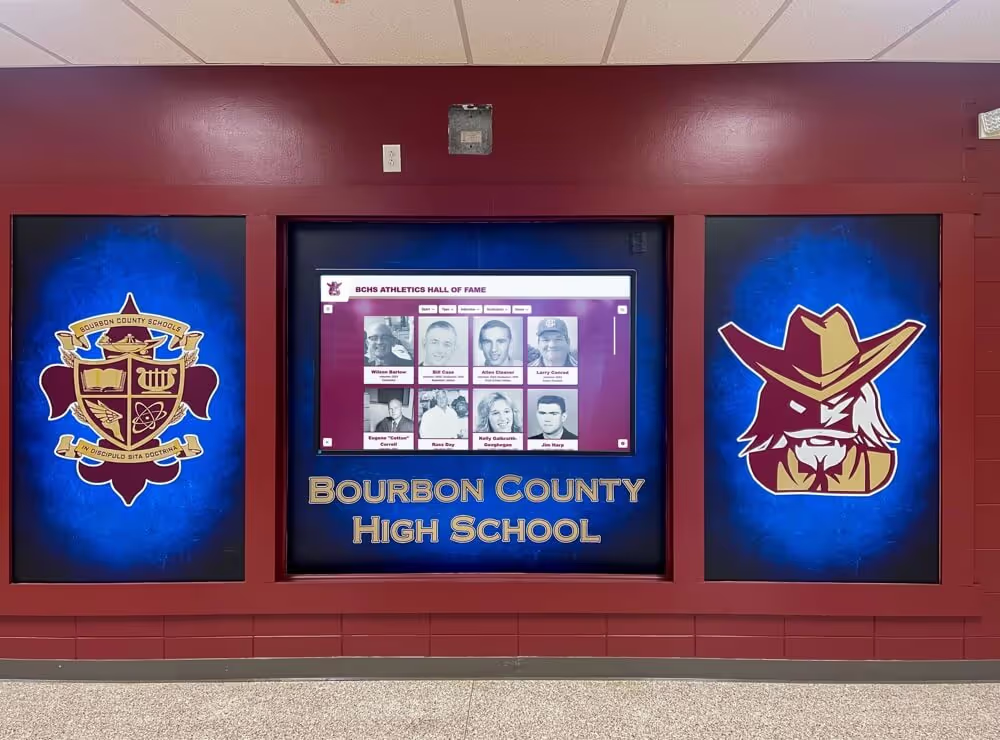
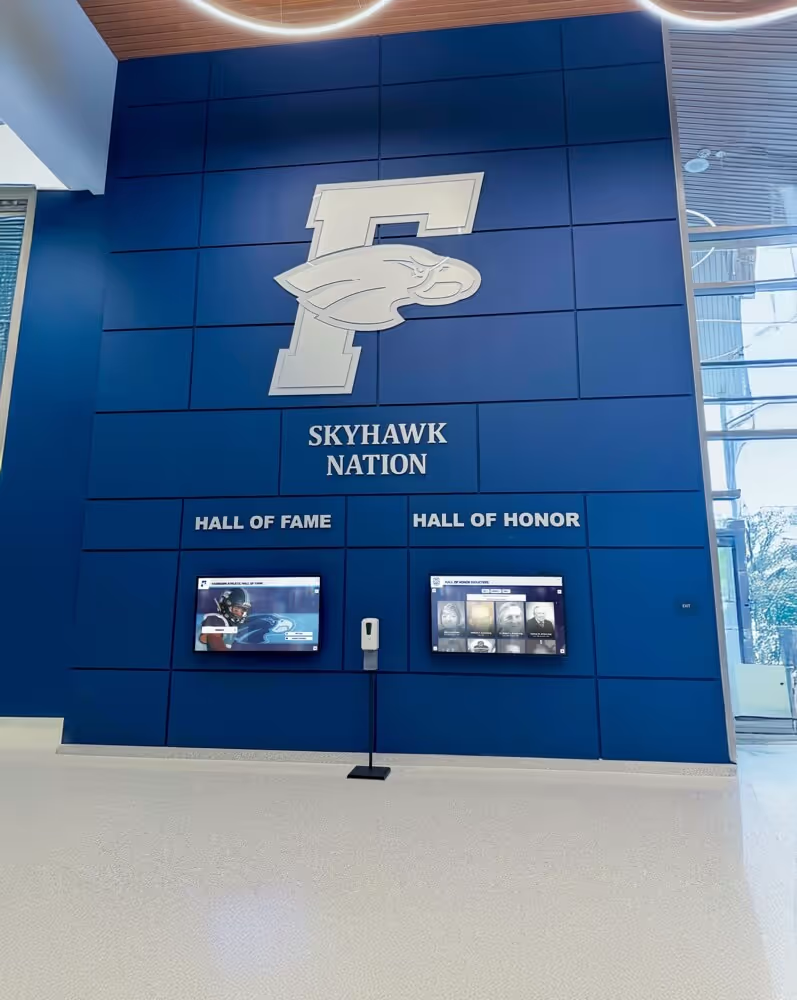
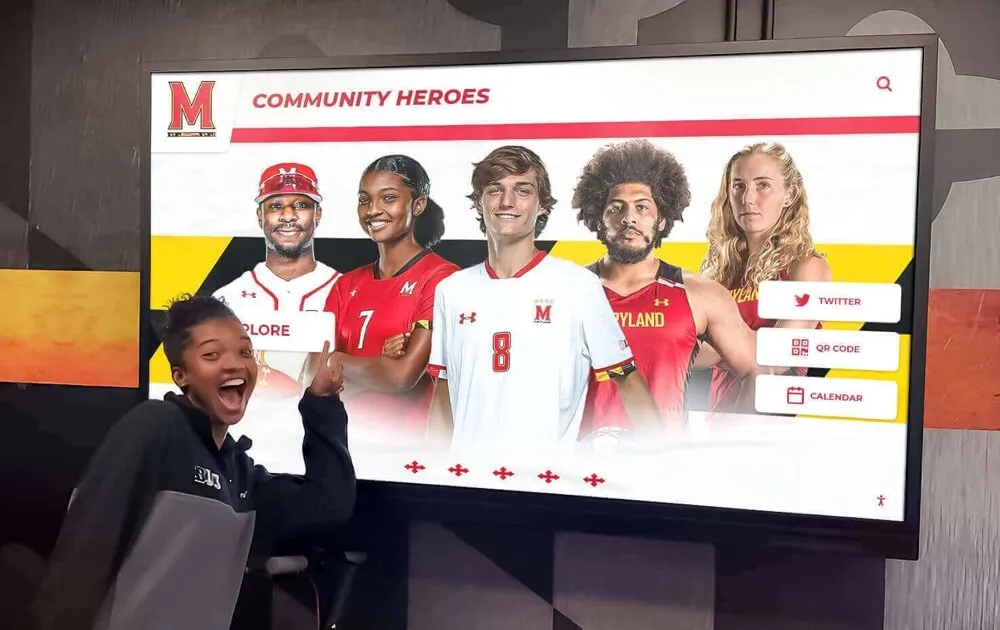
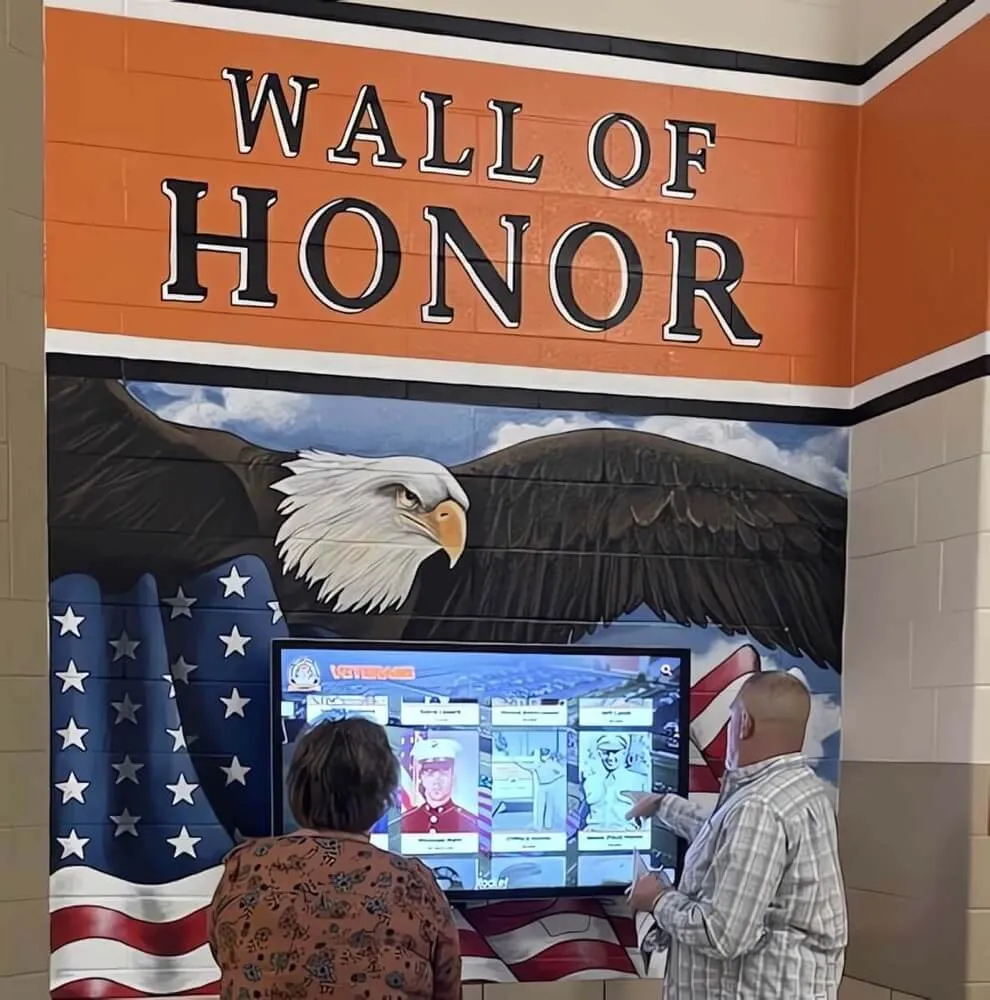
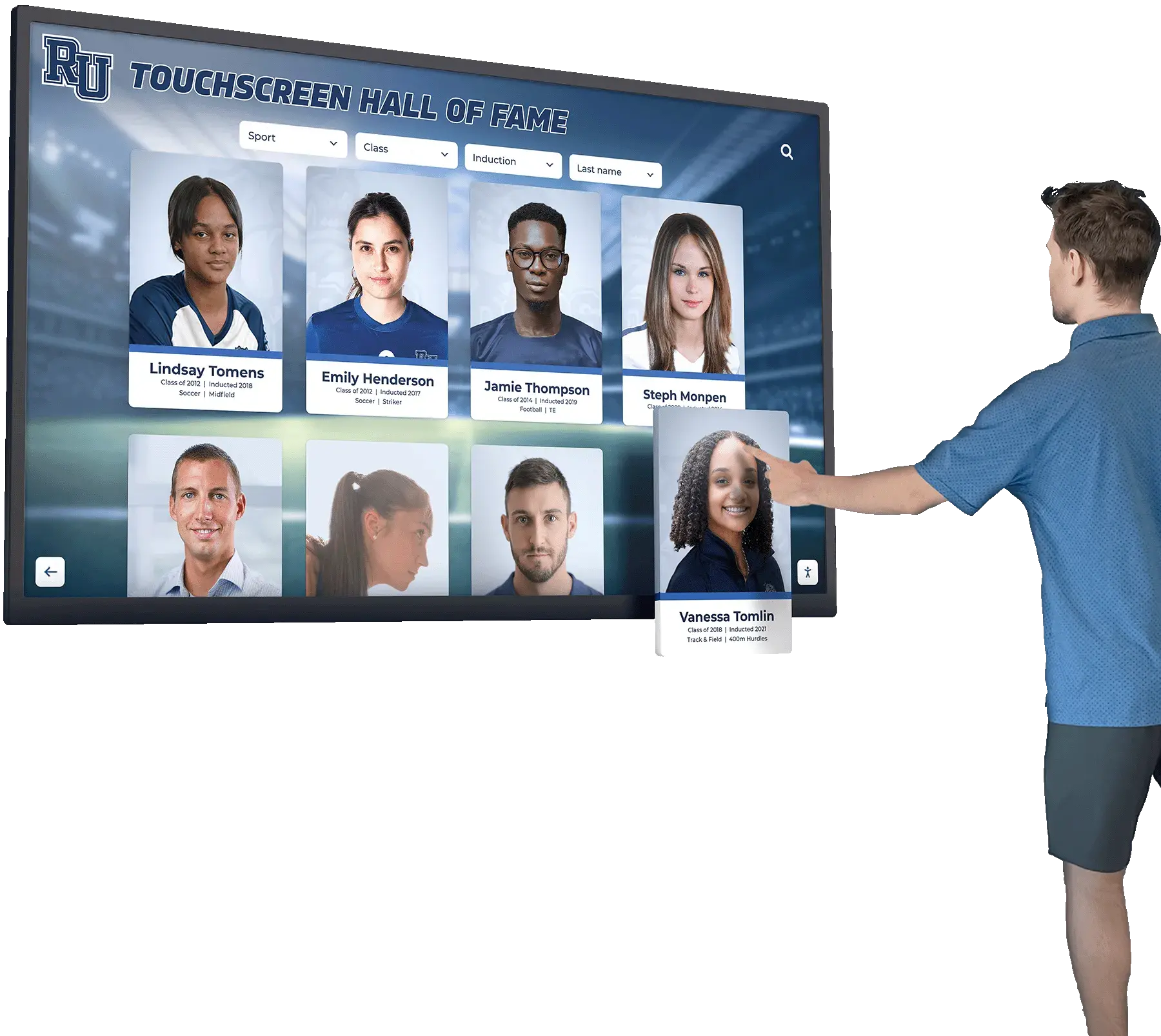
A digital display built on documented criteria can surface category, tenure, and achievement data for every inductee—giving visitors context that a name-and-year plaque never could
Common Eligibility Mistakes Schools Make
These are the four errors that cause the most committee conflict and the most awkward post-publish corrections.
Mistake 1: Publishing Before Criteria Are Adopted
The most common mistake. A founding committee moves quickly to honor the “obvious” first class—legendary coaches, championship teams, all-time record holders—and publishes profiles before a formal criteria document is approved. The program looks successful immediately, but the first contested nomination in year two exposes the gap. There is no written standard to point to.
Fix: Adopt the criteria document, have it approved by your governing body, and file it with institutional records before any nomination period opens.
Mistake 2: Achievement Thresholds That Are Too Vague
Thresholds written as “demonstrated excellence” or “outstanding contribution” give the committee no objective basis for comparison. Two committee members reading the same nomination will reach opposite conclusions because “excellence” is undefined.
Fix: Name specific, verifiable credentials. “All-conference selection” is verifiable. “Excellent player” is not.
Mistake 3: No Active-Status Exclusion
Without this rule, a long-tenured coach currently in their final season can be nominated and inducted while still on staff. The nomination is not improper—it just creates confusion about whether the hall of fame is a recognition program or an incentive program.
Fix: Add a single sentence: “No individual currently enrolled in or employed by [Institution Name] is eligible for nomination during the period of active affiliation.”
Mistake 4: Conflating Eligibility With Selection
Eligibility rules determine who can be nominated. Selection criteria determine which eligible nominees are inducted. These are two separate processes. Programs that collapse them into a single document create situations where a candidate who clearly meets the achievement threshold is told they “don’t qualify”—when the real issue is that the committee chose not to select them this cycle.
Fix: Write two separate documents: an eligibility policy that governs the nomination pool, and a selection rubric that governs committee evaluation of eligible nominees.
Execution Timeline: Criteria First, Nominations Second
| Phase | Tasks | Timing |
|---|---|---|
| Draft | Write criteria document; define all six eligibility rules; draft category thresholds | 8–10 weeks before nomination period opens |
| Review | Circulate to athletic director, principal, legal counsel; collect written feedback; revise | Weeks 6–7 before nomination period |
| Adopt | Governing body formally approves criteria; file signed copy in institutional records | 4 weeks before nomination period opens |
| Publish Criteria | Post eligibility rules on school website, in nomination form, and in committee handbook | Nomination period opens |
| Screen Nominations | Verify each nomination against affiliation, waiting period, and active-status rules before it enters committee review | Nomination deadline + 2 weeks |
| Eligibility Confirmation | Committee confirms achievement threshold documentation is on file for each eligible nominee | Before deliberation session |
| Publish Gate | Run through the publish-readiness checklist; confirm all profiles meet minimum content standard | Before ceremony date |
This sequence prevents the two most common delays: receiving nominations that fail basic eligibility checks (avoidable with clear published criteria) and discovering missing profile content the week before the ceremony (avoidable with the publish gate).
For committees managing the transition from paper records to a digital platform, reviewing what a day-in-the-life looks like for school digital displays clarifies the operational workflow from criteria approval to published profile.
Display Integration
Eligibility criteria connect directly to how inductee profiles are built and displayed.
From criteria to content fields:
- The affiliation requirement drives the tenure dates field—verified, not self-reported
- The achievement threshold drives the headline credential field—the specific record or honor that cleared the bar
- The category definition drives the category tag that makes profiles filterable by sport, role, or era
- The waiting period verification date drives the induction year field—confirming the nominee was eligible before the ceremony
Schools using interactive touchscreen programs benefit from building these fields into the CMS before the first induction class is entered. If category tags, tenure dates, and achievement credentials are defined fields (not free-text footnotes), the display can filter and sort them automatically.
Reviewing how digital displays transform school recognition programs across academic and athletic contexts shows how the criteria-to-display pipeline works at institutions that have already made this transition.
Rocket Alumni Solutions supports role-based CMS access, unlimited inductee profiles, and category-based filtering out of the box. The eligibility framework you write becomes the schema your digital platform enforces—ensuring that every profile published reflects the same documented standard.
For schools comparing display options across athletics, fine arts, and donor recognition use cases, a comprehensive review of hall of fame display tools provides a useful cross-category reference.

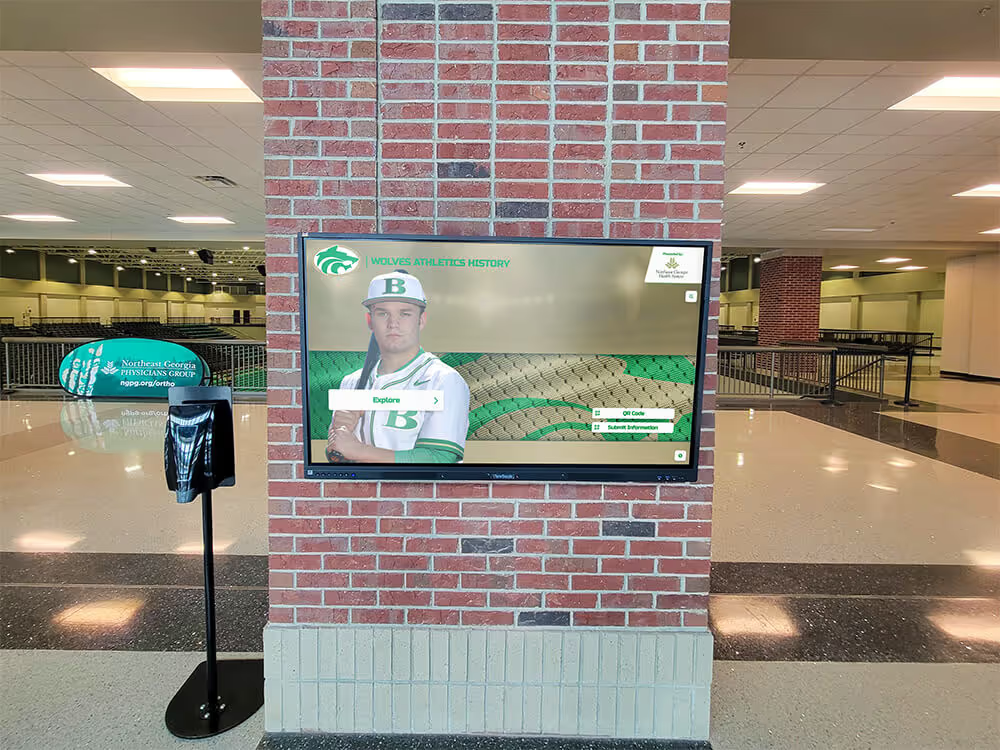
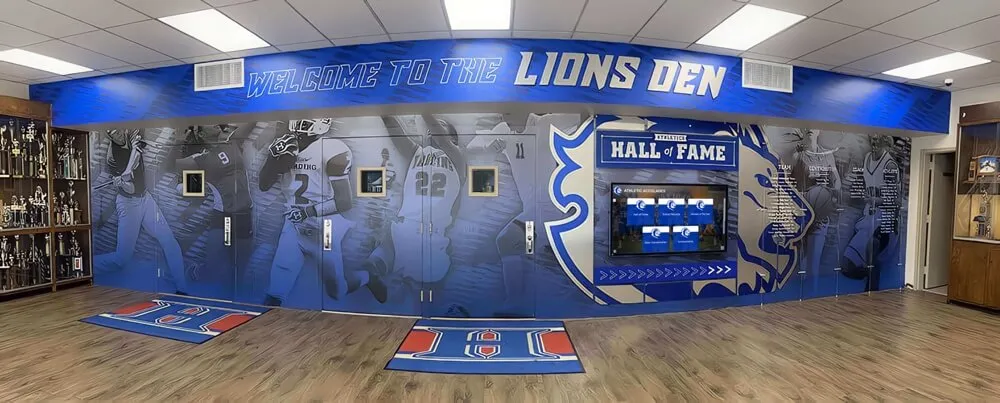
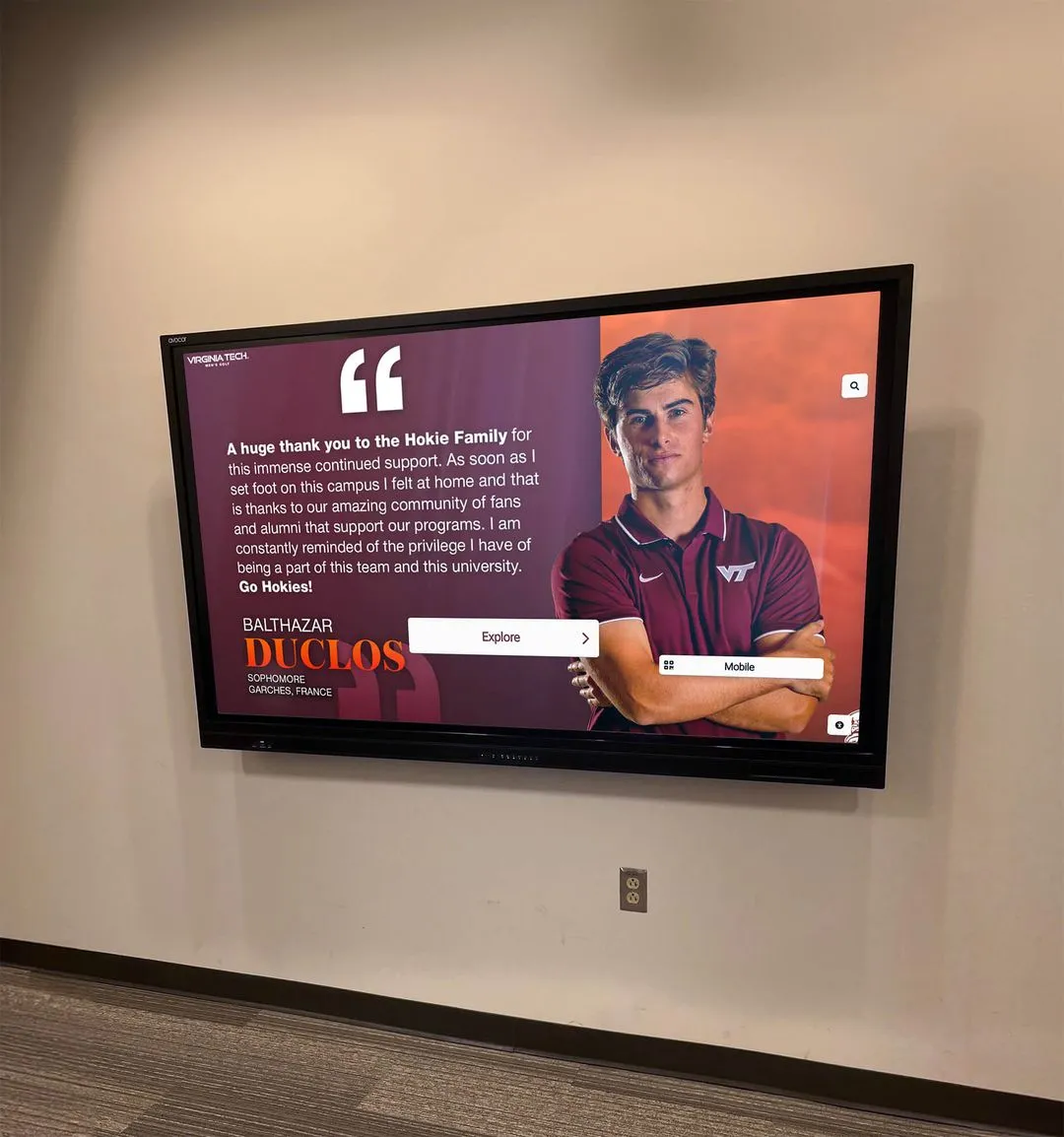
A well-structured digital platform surfaces eligibility-derived fields—category, tenure, and achievement credential—across every device, making the criteria behind each induction visible to the community
FAQ
How many eligibility rules does a school hall of fame need?
Six rules cover the essentials: affiliation requirement, waiting period, active-status exclusion, achievement threshold, character standard, and category definition. Programs with multiple recognition tracks (athletic, academic, fine arts) may add category-specific thresholds, but the core six apply across all of them.
What waiting period is standard for a high school athletic hall of fame?
Five years after graduation is the most common waiting period for student-athletes at the high school level. Some programs use ten years to allow more historical perspective. Three years is the typical minimum—shorter than that and the committee is often evaluating candidates before a complete picture of their post-school contributions is available.
Can a coach currently on staff be inducted into the hall of fame?
Most programs include an active-status exclusion that prevents current employees from being eligible. This rule keeps the hall of fame as a retrospective recognition rather than a performance incentive. A few programs make an exception for coaches approaching retirement, but that exception should be explicitly written into the eligibility document—not decided informally on a case-by-case basis.
What happens if an inductee’s nomination documentation was incomplete?
If documentation supporting the achievement threshold is missing after induction, the inductee’s recognition is not automatically revoked—but the gap should be remediated. Most governance frameworks treat incomplete historical documentation as an administrative correction, not a character issue, as long as the underlying achievement is verifiable through other institutional records.
When should eligibility criteria be reviewed and updated?
Annual review is the recommended cadence. Criteria should also be reviewed any time a new category is added, when sports programs change structure (conference realignment, program addition or elimination), or when a contested nomination reveals a gap in the existing language. Every revision should be approved by the governing body and filed with the same formality as the original adoption.
Do teams get evaluated against the same character standards as individual athletes?
Most programs apply the character standard to individual nominees and adapt it for team categories by requiring that a majority of the roster members meet the individual standard. A team category with a single defined member who would individually be disqualified does not automatically disqualify the team—but the committee should have written guidance for how to handle this scenario before it arises.
Build Your Eligibility Framework—Then Build the Display
Rocket Alumni Solutions helps schools establish interactive hall of fame displays that reflect documented eligibility standards: category filtering, verified tenure dates, achievement credentials, and unlimited inductee profiles—all managed through a cloud CMS with role-based access. Request a free custom demo and see how your criteria translate into a live recognition program.
Request Your Free Custom Demo