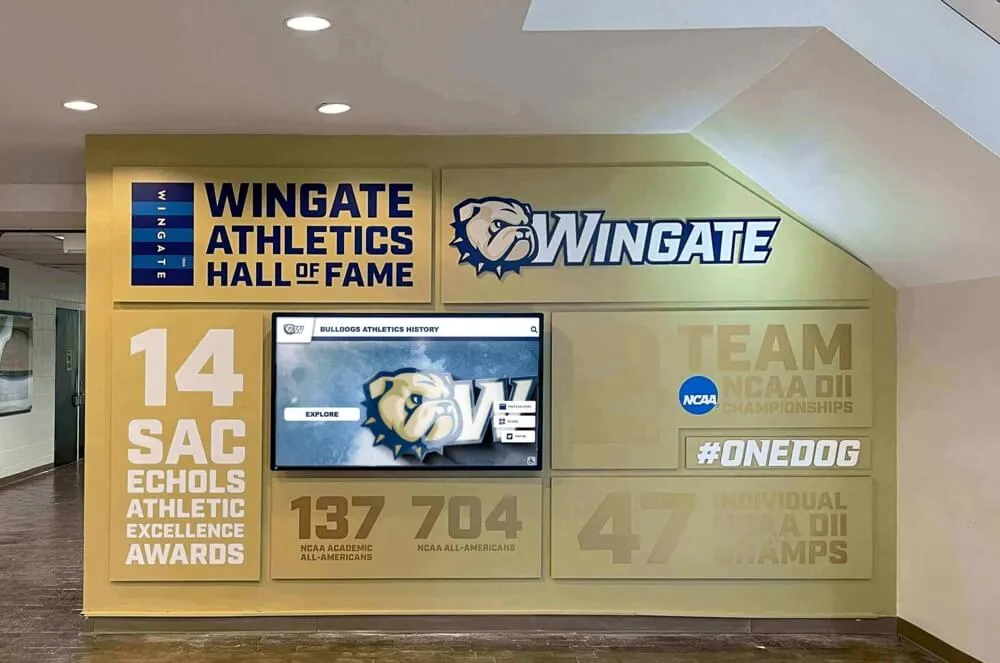
Hall of Fame Content Embargo Policy: Control Early Access Before Induction Announcements
- Home /
- Digital Hall of Fame Insights & Resources /
- Hall of Fame Content Embargo Policy: Control Early Access Before Induction Announcements
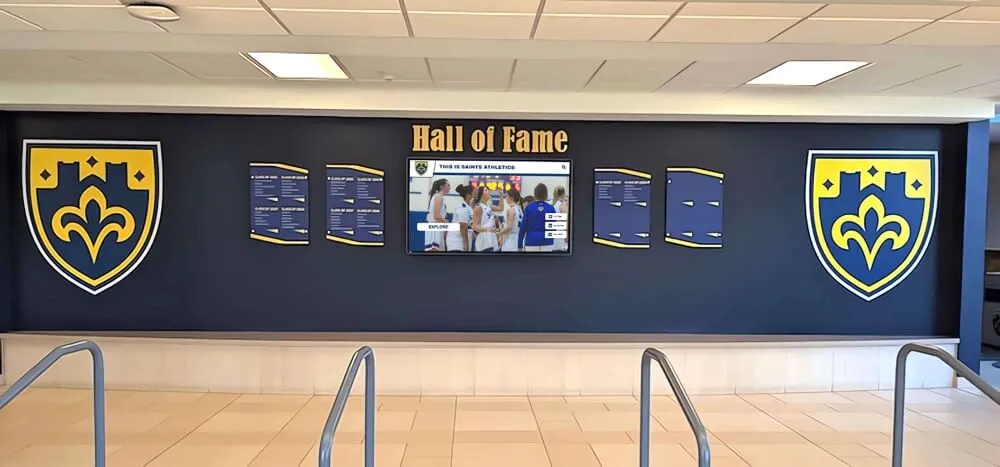
The Easiest Touchscreen Solution




Live Example: Rocket Alumni Solutions Touchscreen Display
Interact with a live example (16:9 scaled 1920x1080 display). All content is automatically responsive to all screen sizes and orientations.
A hall of fame content embargo policy defines which inductee profiles, biographical copy, photographs, and media assets are restricted from publication or distribution before the official induction announcement—and specifies exactly who may access that content, for what purpose, and until what date and time the embargo lifts. Without a written embargo policy, committees that invest weeks preparing inductee profiles risk a premature leak: a draft profile visible to the wrong platform user, a proofing email forwarded outside the authorized group, or a digital display screen that refreshes from a scheduled queue before the announcement is live. This guide gives school administrators, athletic directors, archives staff, and recognition-program leaders a practical framework for classifying embargoed content, assigning early-access rights, enforcing a publication hold, and executing a simultaneous, coordinated release across every channel when the announcement moment arrives.
A content embargo is distinct from the nomination confidentiality policy that governs the selection process. By the time an embargo is relevant, the committee has already voted, the inductees have already accepted, and the program has already begun producing the content that will represent those inductees publicly. The embargo is the bridge between the private selection decision and the public announcement—a controlled staging period during which authorized staff can prepare high-quality profiles without those profiles reaching the public ahead of schedule.
This guide is operational and educational; it does not constitute legal advice. Programs subject to open-records laws, student privacy regulations, or institutional publication policies should have legal counsel review any formal embargo policy before adoption.

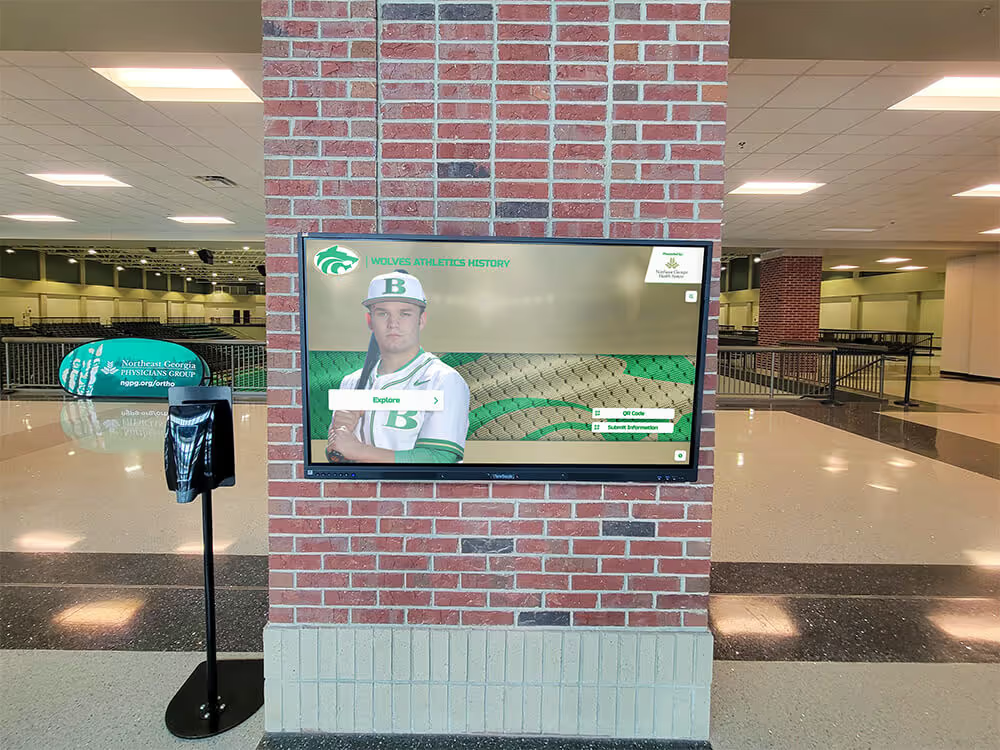
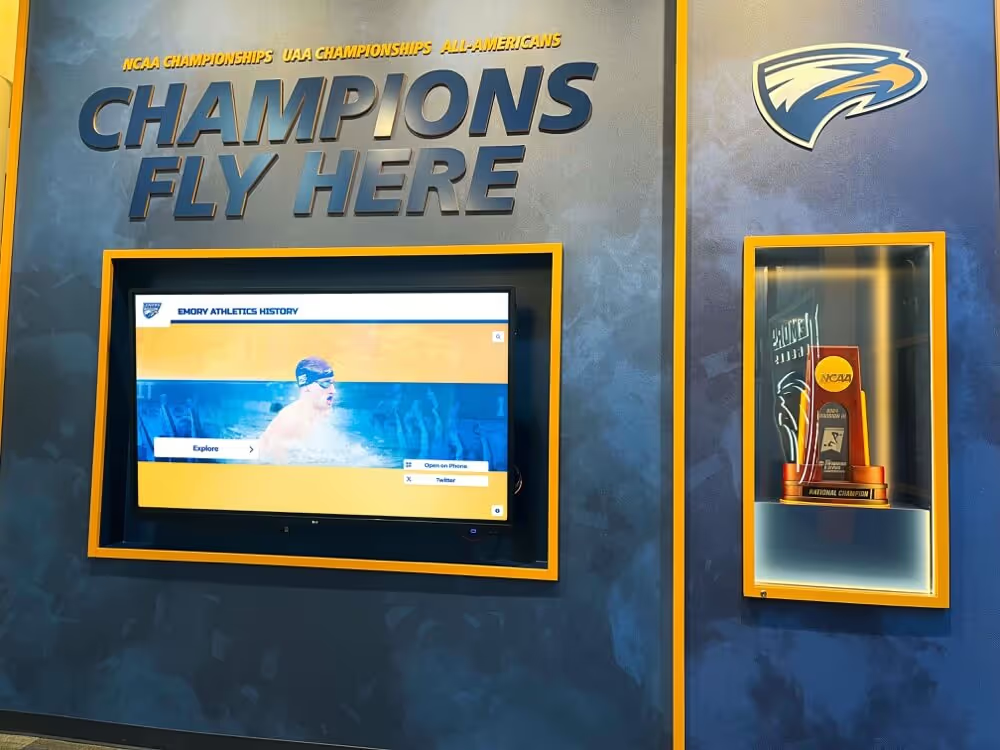
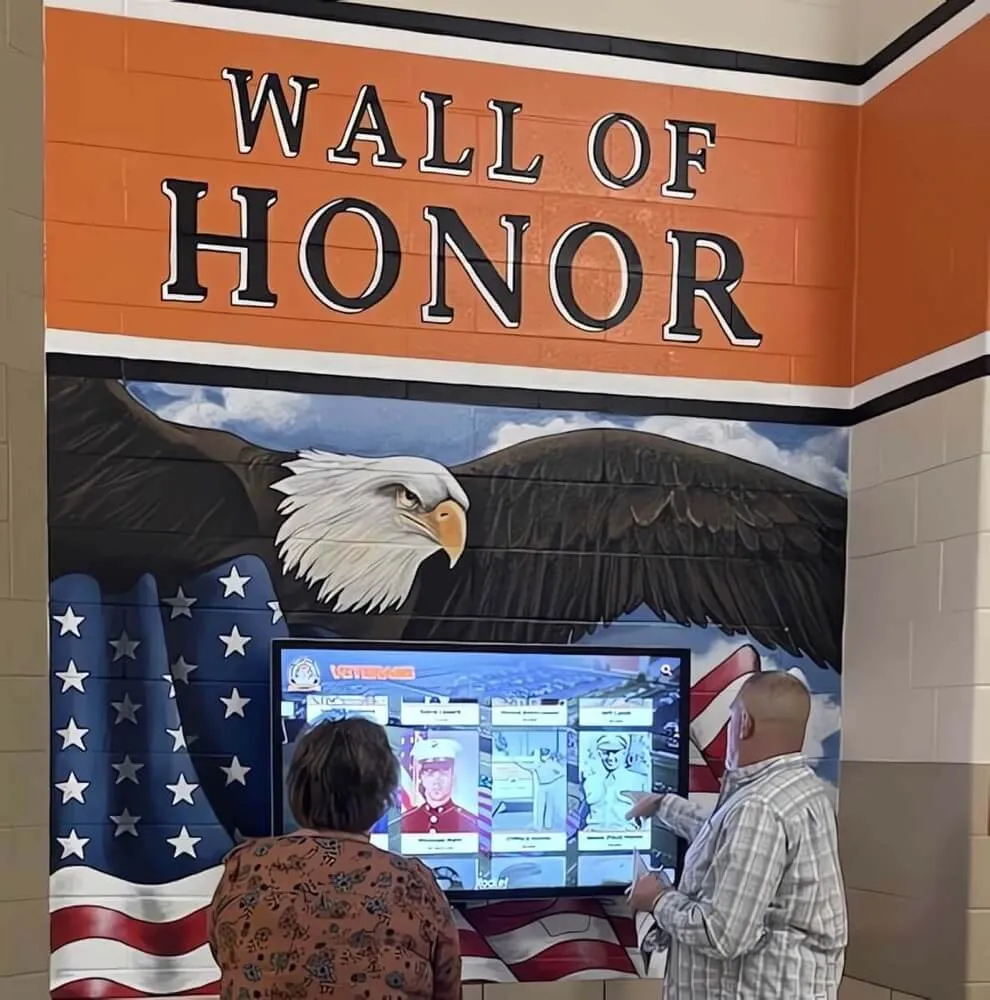
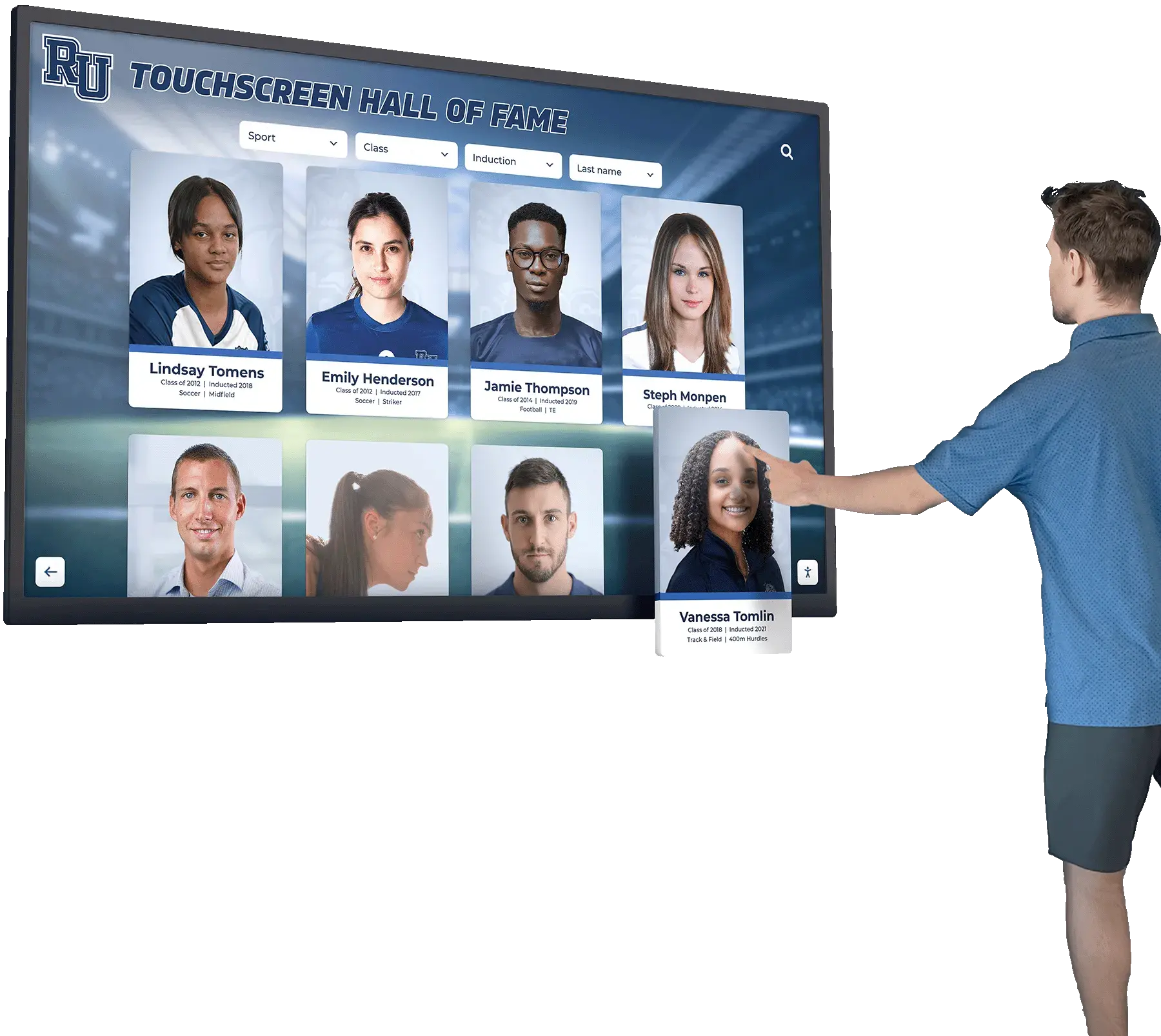
An embargo policy controls when content prepared during the staging period reaches public displays—physical or digital
Program Snapshot
| Element | Details |
|---|---|
| Audience | School administrators, athletic directors, hall of fame committee chairs, archives staff, communications officers |
| Policy scope | Inductee profiles, biographical copy, photographs, statistical summaries, video tributes, and any media produced between acceptance confirmation and official announcement |
| Core goal | Simultaneous, coordinated release of all inductee content across every channel at a single authorized moment |
| Key deliverable | A written embargo policy with an access matrix, a publication-hold checklist, and a staged-release timeline distributed to every staff member with platform access |
| Display payoff | Inductee profiles appear on digital recognition displays, the program website, and printed programs simultaneously—controlled by scheduled publishing, not by individual discipline |
The Direct Answer: What Must a Hall of Fame Content Embargo Policy Cover?
A complete embargo policy answers five questions in writing before each induction class enters the content-preparation phase:
- What content is embargoed? Name every asset type produced during the staging period: profile copy, headshots, statistical summaries, video segments, program text, press release drafts, and any social media graphics created in advance.
- When does the embargo period begin? Typically at the moment the committee chair confirms all acceptances and authorizes content production. This is the “production start” date—before it, no embargoed content exists; after it, all content is subject to embargo controls.
- Who holds early-access rights? Specify, by role, which individuals may access, review, edit, or approve embargoed content during the staging period. Early access is a privilege tied to a functional need—proofreading, technical setup, print production—not a general right.
- How is the embargo enforced? Describe the technical and procedural controls: platform access restrictions, file storage permissions, communication protocols for sharing drafts, and the scheduled-publishing settings that prevent any content from going live before the authorized moment.
- When and how does the embargo lift? Define the trigger precisely—a specific date and time, or a committee chair’s written authorization—and name the person responsible for executing the release across each channel.
Committees that answer all five questions in a single written document eliminate the ambiguity that causes premature publication, incomplete releases, and post-announcement corrections.
Why Embargoes Fail: The Four Most Common Gaps
Before specifying controls, it helps to understand where embargo policies most commonly break down in school recognition programs.
1. Draft Profiles Stored in Shared Folders
A communications coordinator creates an inductee profile in a general staff Google Drive or OneDrive folder that is accessible to everyone in the athletic department. Another staff member stumbles on the file, forwards it to a colleague, and the inductee’s name reaches the community before the ceremony invitation has been sent. The failure was not malicious—it was structural. Embargoed content should never be stored in a general-access folder.
2. Platform Publishing Queues Without Holds
A digital recognition platform configured without a publication hold will push scheduled content at the time set during content entry. If a staff member building profiles sets a publication date in the platform without engaging the embargo hold feature, profiles may publish automatically at an inconvenient time—possibly before the ceremony, possibly before the inductee has been notified of the announcement. Every platform used in the staging period must be configured with a hard publication hold that requires an explicit, authorized release action.
3. Media Proofing Emails Sent Without Embargo Language
Sending a draft profile to an inductee for biographical verification is standard practice and good policy. Sending that email without an explicit embargo instruction—“This draft is shared for your review only; please do not forward, post, or share”—creates an assumption gap. Inductees who receive proofing drafts may reasonably believe they are free to share the news with family and friends. The policy must specify what inductees may and may not do with proofing materials and require that every proofing communication includes written embargo language.
4. Verbal Coordination Instead of Written Authorization
“The communications officer said it was okay to post” is not an embargo release. Embargo lifts must be executed through a written authorization chain—a checklist signed by the committee chair, a timestamped release email, or an explicit platform action that logs who authorized publication and when. Verbal authorizations cannot be audited and create disputes when something goes wrong.
Content Classification: What Falls Under Embargo
Not all content produced during the staging period carries the same sensitivity. Classify content by risk level to assign proportionate controls.
| Content Type | Risk Level | Embargo Rationale | Who Needs Early Access |
|---|---|---|---|
| Inductee names (as a class) | High | Premature release disrupts announcement impact and may reach inductees before official notification | Chair, Secretary, Communications Officer only |
| Individual inductee profile copy | High | Contains biographical detail that may reveal nomination criteria or selection rationale | Archivist, inductee (for proofing only), Communications Officer |
| Inductee photographs and headshots | Medium-High | A photograph published on social media before the announcement constitutes a de facto leak | Archivist, graphic designer (layout only), Communications Officer |
| Statistical summaries and achievement records | Medium | Less identifying in isolation but confirming when combined with a name | Archivist, Communications Officer |
| Video tribute segments | High | Video is easily shared and highly identifying | Archivist, video production contact, Communications Officer |
| Press release drafts | High | A draft sent to media contacts before authorization constitutes a release | Communications Officer, Chair |
| Social media graphics | High | Designed for sharing; any preview constitutes partial publication | Communications Officer, graphic designer |
| Ceremony program PDFs | Medium-High | A printed program file shared before print authorization reveals the full inductee class | Communications Officer, print vendor (under vendor NDA) |
Review this classification matrix before each induction cycle and update it to reflect any new content types introduced in the current year’s program.
Access Matrix: Early-Access Rights by Role
This matrix specifies which roles may access embargoed content during the staging period and under what conditions. Adapt role titles to match your institution.
| Content Type | Committee Chair | Committee Secretary | Archivist / Content Lead | Communications Officer | Graphic Designer | Print Vendor | Inductee (Proofing) | Athletic Director |
|---|---|---|---|---|---|---|---|---|
| Full inductee class list | Yes | Yes | Yes | Yes | No | No | Own name only | Yes |
| Individual profile copy | Yes | Yes | Yes (full) | Yes (full) | No | No | Own profile only | No |
| Inductee photographs | Yes | Yes | Yes | Yes | Layout preview only | File for layout only | Own photo only | No |
| Statistical summaries | Yes | Yes | Yes | Yes | No | No | Own records only | No |
| Video tribute segments | Yes | No | Yes | Yes | No | No | Own segment only | No |
| Press release drafts | Yes | No | No | Yes | No | No | No | Approved final only |
| Social media graphics | Yes | No | No | Yes | Preview for approval | No | No | No |
| Ceremony program PDF | Yes | No | No | Yes | Yes (layout) | Final only | No | No |
All individuals with early-access rights must sign an embargo acknowledgment form before receiving any embargoed content. The acknowledgment specifies the content types they may access, the purposes for which they may use that content, and the embargo lift date and time.
The Embargo Timeline: From Acceptance to Announcement
A well-structured embargo has discrete phases, each with defined inputs, permitted actions, and access controls.
| Phase | Trigger | Duration | Permitted Actions | Restricted Actions |
|---|---|---|---|---|
| Production Start | Chair confirms all acceptances | 0–2 days | Create embargoed content in restricted storage; notify archivist | No content shared outside authorized group; no platform entry |
| Content Build | Production start confirmed | 2–4 weeks (varies) | Write profiles, collect photos, build platform drafts in restricted mode | No proofing emails sent; no platform profiles published or visible to non-authorized users |
| Proofing | All profiles complete | 5–10 days | Send proofing drafts to inductees with written embargo language; collect corrections | Inductees may not share, forward, or post any proofing materials |
| Final Review | Proofing corrections incorporated | 2–5 days | Chair and Communications Officer review all content; sign-off on embargo release checklist | No platform publishing; no media distribution |
| Pre-Release Staging | All sign-offs complete | 24–72 hours | Schedule platform publishing for announcement time; prepare press release for distribution; brief ceremony staff | No social posting; no early media distribution |
| Embargo Lift | Authorized release by Chair | Single moment | Simultaneous release: platform publishes, press release distributes, social posts publish | None—all channels release simultaneously |
| Post-Announcement | Embargo lift complete | Ongoing | Inductee profiles public; archive accessible | N/A |
Building this timeline before the production phase begins—and distributing it to every staff member with an access role—makes the lift moment feel like a coordinated event rather than a scramble. Programs managing alumni engagement across multiple induction cycles find that a visible, shared timeline reduces the informal pressure on individual staff members to “just post it early” in the days before the announcement.
Technical Controls: Enforcing the Embargo in Your Platform
A written policy controls behavior at the human level; technical controls enforce it at the system level. Use both.
Role-Based Access in the CMS
Every recognition platform used during content production must restrict draft profile visibility to named, authorized accounts. A profile visible to any logged-in staff member—rather than only to the archivist and communications officer—is a platform configuration error, not a policy exception. Review your platform’s role settings before every production phase and confirm that committee members, athletic staff, and school administrators who are not on the early-access list cannot see unpublished profiles.
Scheduled Publishing with a Mandatory Hold
Configure all profiles in the recognition platform with a scheduled publish time equal to the embargo lift moment. Where the platform supports a “hold” or “require manual authorization” feature, enable it as a backstop. Scheduled publishing eliminates the risk of forgetting to publish at the right time; a manual hold eliminates the risk of the schedule being wrong.
Restricted File Storage
Embargoed content should reside in a dedicated folder with named-user permissions—not a departmental drive. Use a separate folder for each content type (profiles, photos, video) and assign access at the folder level. Revoke access for any team member whose role is complete (for example, the graphic designer’s access to the photos folder is revoked after layout is finalized).
Embargo Language in Every Draft Communication
Create a standard embargo block for all proofing and review emails. It should appear at the top of every message that includes embargoed content:
EMBARGO NOTICE: This content is confidential and embargoed until [DATE] at [TIME]. Do not share, forward, post, or publish any portion of this material before that date and time. If you received this message in error, notify [CONTACT] immediately and delete the content.
The embargo block is not a formality—it creates a documented instruction that the recipient received and acknowledged by replying or returning corrections.
Vendor NDAs for Print Production
If your program uses an outside vendor for ceremony program printing, plaques, or trophy-case inserts, those vendors receive embargoed content during their production window. Require a non-disclosure agreement (NDA) or a vendor embargo acknowledgment before transmitting any files. Specify in the vendor agreement the embargo lift date and the prohibition on discussing, displaying, or sharing any content before that date.
The Proofing Process: Early Access for Inductees
Sharing a draft inductee profile with the inductee before publication is a mark of respect—it gives the person an opportunity to correct biographical errors, update statistical records, and ensure their recognition reflects their actual achievements. It is also the highest-risk step in the embargo process, because it extends embargoed content outside the institution.
What to Share
Send only the individual’s own profile copy and photograph. Do not share the full class list, other inductees’ profiles, or any program-level content (ceremony schedule, press release language) during the proofing step. The inductee’s proofing access is scoped to their own record.
How to Share
Use a direct, institutional email to the individual’s verified address. Do not use a shared link that could be forwarded without the embargo language attached. If using a platform-based proofing tool, configure the view link so that it expires after the proofing window closes and requires authentication.
What to Request
Ask the inductee to review factual accuracy—dates, statistics, institutional affiliations, biographical details—and to return any corrections within the proofing window. Clarify that stylistic decisions are at the editorial discretion of the program. Clarify that the inductee is not authorized to approve or reject the content’s publication.
What to Prohibit
State explicitly that the inductee may not share the draft profile, discuss its contents publicly, post any portion of it on social media, or inform anyone outside their immediate household of the embargo’s existence before the official announcement. Recognition programs that extend beyond traditional athletics to honor student leaders and academic competitors face the same proofing discipline—the inductee category doesn’t change the embargo obligation.
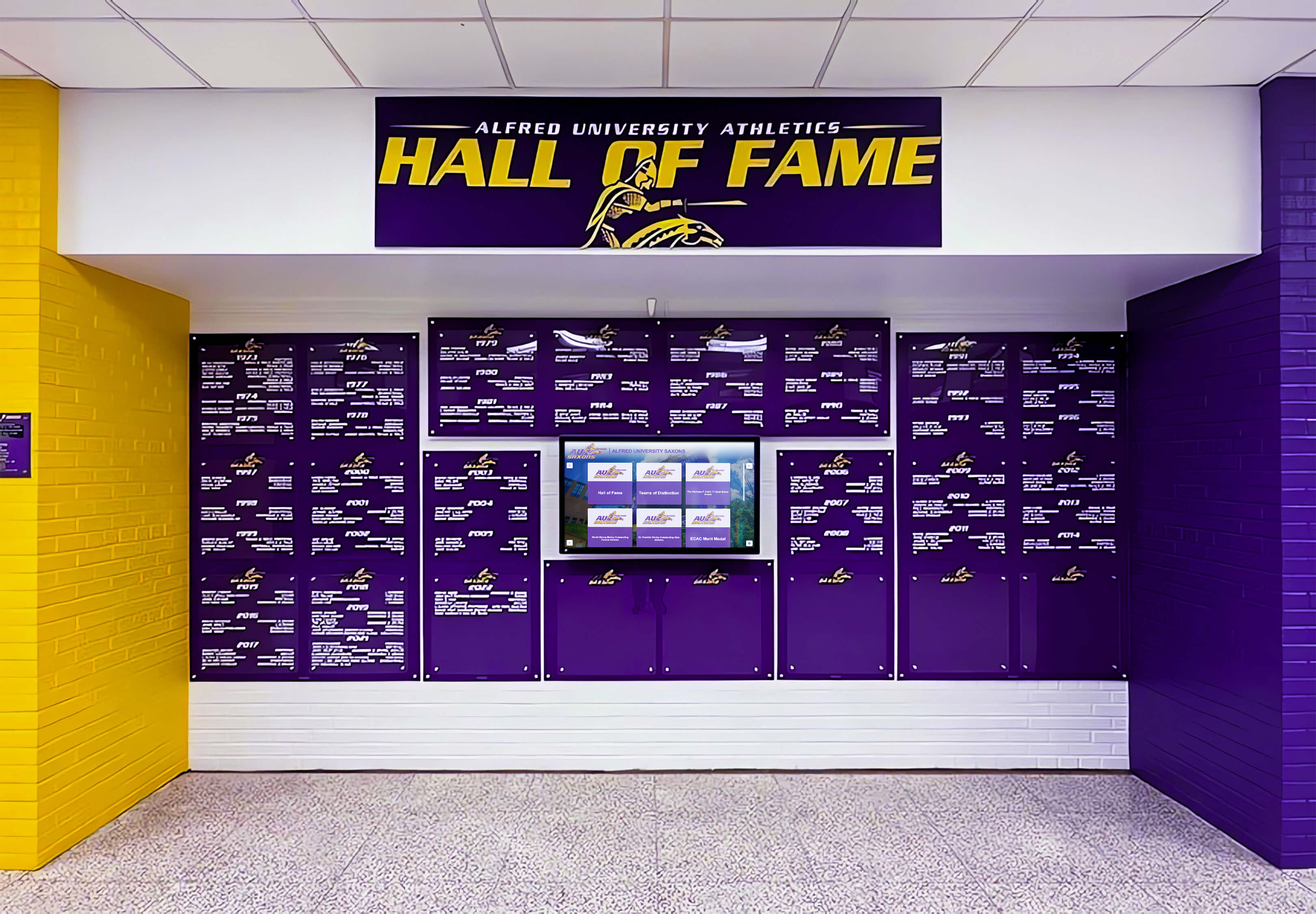
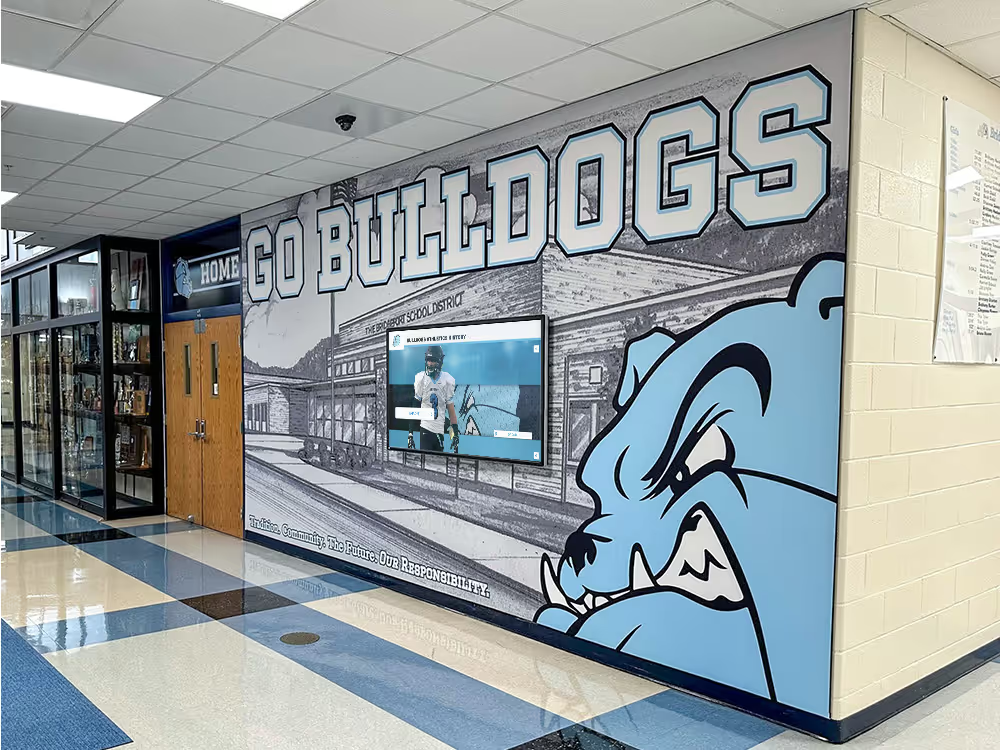
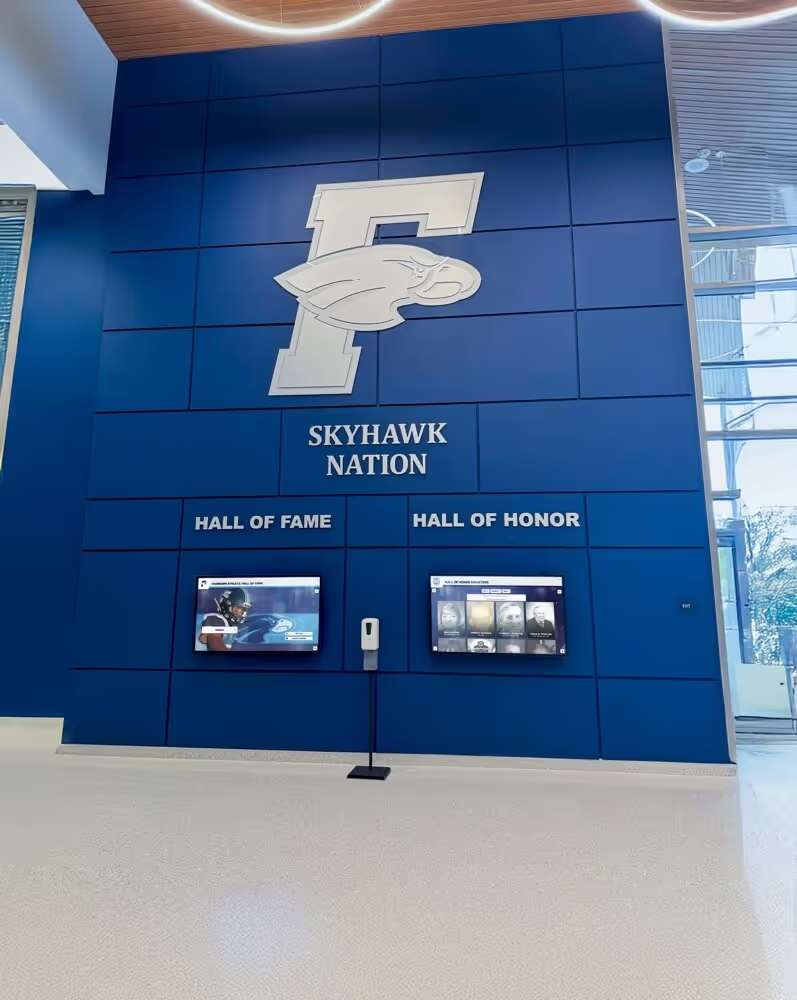
Every profile on a recognition display entered that system through an authorized production and publication process—the embargo policy is what makes that chain of custody auditable
The Embargo Release Checklist
The moment the embargo lifts is not ad hoc—it is the execution of a checklist that every authorized staff member has reviewed in advance. Build this checklist into your written policy as an appendix.
Pre-Release Verification (24–48 hours before lift)
- All inductee profiles reviewed and signed off by Chair and Communications Officer
- Biographical corrections from proofing incorporated and verified
- Platform scheduled publishing set to exact embargo lift date and time
- Press release finalized, reviewed by Chair, and loaded into distribution system with scheduled send time
- Social media graphics approved and scheduled in publishing tool for embargo lift time
- Ceremony program file transmitted to print vendor with authorization for production
- All inductees notified of the official announcement date and time
- Media contacts briefed on embargo lift time (if pre-briefed under individual media embargo)
- School administration and athletic director briefed on announcement timing
At Embargo Lift
- Committee Chair issues written authorization (email or platform action) confirming all items above are complete
- Platform publishing releases inductee profiles to public display
- Press release distributes via authorized channel
- Social media posts publish simultaneously
- Communications Officer confirms all channels active and accurate
- Chair acknowledges completion; any discrepancies reported immediately
Post-Release (Within 24 Hours)
- All embargoed draft files moved to restricted archive or deleted per retention policy
- Archivist confirms public-facing profiles match approved final versions
- Any proofing draft access links expired or revoked
- Vendor embargo obligations confirmed as discharged (print production complete or file returned)
Completing this checklist in sequence—not simultaneously—ensures that no channel launches before the others are ready. A simultaneous, coordinated release is the expected outcome for every person who has been waiting for the announcement, and a partial release that requires correction within hours of the announcement undermines the program’s credibility.
Connecting the Embargo to Long-Term Recognition Infrastructure
An embargo policy governs a short window—typically a few weeks between acceptance and announcement. But the content it protects becomes permanent. Inductee profiles that reach digital displays, school websites, and printed programs during the announcement represent the institution’s public commitment to accuracy and respect for every honoree.
Programs that treat the staging period as a quality gate—not just a publishing delay—produce profiles that hold up over years of public visibility. A profile that was proofed by the inductee, verified against official records, and reviewed by the communications officer before publication requires far fewer corrections post-announcement than one that was rushed to meet a ceremony deadline. Athletic director recognition programs with long institutional memories understand that the permanence of a hall of fame record is what makes the recognition meaningful—and what makes accuracy during the embargo period non-negotiable.
For programs planning recognition displays that extend beyond a single lobby—into hallways, trophy rooms, and alumni-facing digital archives—the embargo policy is the upstream mechanism that determines what enters those displays with institutional authority. Digital display planning that treats content quality and governance as prerequisites produces recognition environments that alumni and donors trust. A display populated with unverified, prematurely published content erodes that trust quickly.
The embargo timeline also intersects with the ceremony itself. Induction ceremonies are a public performance of the program’s values—every element should debut at the same moment. When an inductee is surprised at the ceremony because their profile has been visible online for three days already, the ceremony loses its impact. The embargo policy is what preserves that moment.
Programs that honor academic, service, and leadership achievement alongside athletic recognition—including FBLA, FFA, and similar competitive-program honorees—apply the same staged release logic. The category of honoree does not change the production and embargo workflow; the controls travel with the content regardless of the program type.
Policy Template: Hall of Fame Content Embargo Policy
Adapt this template for your program. Replace bracketed placeholders with your institution’s specific roles, dates, and contacts. Have legal counsel review before formal adoption.
Hall of Fame Content Embargo Policy — [Institution Name] Adopted: [Date] | Version: [Number] | Review Date: [Annual review month, year]
1. Purpose This policy governs the production, access, and publication of all content created in preparation for the [Institution Name] Hall of Fame induction announcement. It ensures that inductee profiles, photographs, biographical copy, and related media reach the public simultaneously through authorized channels at the designated announcement moment.
2. Scope This policy applies to all staff, volunteers, and vendors who create, review, store, or distribute embargoed content during the staging period between acceptance confirmation and official announcement. Embargoed content types include: inductee profiles, biographical copy, photographs, statistical summaries, video tributes, ceremony program PDFs, press release drafts, and social media graphics.
3. Embargo Period The embargo period begins when the Committee Chair issues written authorization for content production following confirmation of all acceptances. The embargo period ends at the exact date and time specified in the Chair’s written release authorization. No embargoed content may be published, distributed, forwarded, or publicly discussed before the embargo lift.
4. Early-Access Rights Early access to embargoed content is granted only to individuals listed in the Access Matrix maintained by the Committee Secretary. Access is role-based and scoped to the content types necessary for each role’s function. The Access Matrix is updated before each production phase begins. All individuals on the Access Matrix must sign an embargo acknowledgment form before receiving any embargoed content.
5. Storage Requirements Embargoed content must be stored in dedicated, access-controlled folders with named-user permissions. General departmental drives, shared institutional drives, or email attachments sent to distribution lists are not authorized storage for embargoed content. The Archivist is responsible for configuring and maintaining storage permissions throughout the staging period.
6. Inductee Proofing Inductees may receive their own profile copy and photograph for factual review during the designated proofing window. Every proofing communication must include the standard embargo notice at the top of the message. Inductees may not share, forward, post, or publicly discuss any proofing materials before the embargo lift date and time.
7. Platform Publishing Controls The recognition platform must be configured with a scheduled publish time equal to the embargo lift moment before any profile is entered into the system. The Archivist is responsible for confirming scheduled-publishing settings for every profile before the pre-release verification checklist is completed.
8. Vendor Requirements External vendors receiving embargoed content (print vendors, video production contacts, graphic design contractors) must execute a vendor embargo acknowledgment or NDA before receiving any files. The vendor acknowledgment specifies the embargo lift date, the prohibition on sharing or displaying content before that date, and the return or destruction requirements for any files not retained for production purposes.
9. Embargo Lift The embargo lifts when the Committee Chair issues written authorization confirming all items on the pre-release verification checklist are complete. The Communications Officer executes simultaneous release across all channels: platform publishing, press release distribution, and social media posting. Channels may not release sequentially; all release at the same authorized moment.
10. Breach Response Any suspected embargo breach is reported to the Committee Chair within one business day of discovery. The Chair assesses the breach, notifies the Communications Officer, and determines whether to accelerate the announcement timeline or take corrective action. Repeated or willful breaches by staff or volunteers may result in removal from program roles.
11. Policy Review This policy is reviewed annually before each induction cycle. Amendments are adopted by the governing board or principal by recorded vote. Prior versions are retained in the committee’s permanent file.
Frequently Asked Questions
How is a content embargo policy different from a nomination confidentiality policy?
A nomination confidentiality policy governs the selection phase—who may know that someone is under consideration and who may access deliberation records. A content embargo policy governs the production phase—who may access the content being built for inductees who have already been selected and have accepted. Both policies are necessary for a complete governance framework; they cover adjacent, non-overlapping periods. Programs that already have a confidentiality policy in place should treat the embargo policy as its natural continuation.
When should the production phase begin?
The production phase should begin only after the Committee Chair has confirmed all acceptances in writing. Beginning content production before acceptance confirmation risks building profiles for inductees who ultimately decline—a waste of resources and a potential confidentiality breach if draft materials are created for someone who was never publicly announced. Once all acceptances are confirmed, the production phase can begin immediately; typical staging periods for school programs run three to six weeks before the ceremony date, depending on the complexity of the content.
Can media contacts receive embargoed content before the announcement?
Yes, under a media embargo—a separate, explicit agreement with specific journalists or outlets that they may receive content in advance of the public release in exchange for agreeing not to publish before the designated lift time. If your program uses media embargoes, each outlet must sign a media embargo agreement specifying the lift date and time. Media embargoes are a tool for maximizing announcement coverage; mismanaged, they create the same leak risks as internal access gaps. Consult your institution’s communications office before implementing a media embargo.
What happens if the ceremony is postponed after the embargo period has begun?
A postponement after production has begun does not automatically extend all embargo controls—it requires an updated release timeline communicated in writing to every person on the access matrix. Update the scheduled publishing settings in the platform to match the new announcement date, update the press release distribution schedule, and re-issue the embargo acknowledgment noting the new lift date. Any content that was already distributed to inductees for proofing carries an updated embargo date in a follow-up communication.
How do ceremony programs fit into the embargo policy?
A ceremony program is a publication surface subject to the same embargo as digital profiles. The program file cannot go to the printer before all inductee names are confirmed and before the Communications Officer has authorized the file for production. A program that is printed and distributed before the ceremony is, by definition, an early publication of the inductee class—it should appear at the ceremony itself, not in advance of it. Treat print authorization as a step in the pre-release verification checklist, not a separate workflow managed outside the embargo framework.
Should inductees be told about the embargo policy at the same time they receive their acceptance notification?
Yes. The acceptance notification and the embargo instruction should arrive together, either in the same letter or in an immediate follow-up. An inductee who knows they have been selected but has not been briefed on the embargo may share the news before the announcement without understanding they have done anything wrong. Providing the embargo instruction at the moment of acceptance—before any proofing materials are shared—ensures the inductee enters the staging period with clear expectations. Programs managing recognition ceremonies that build community connections understand that the announcement moment is meaningful precisely because it is shared simultaneously across the community; protecting that moment requires inductee cooperation from the start.
Do committee members who voted need to know the embargo schedule?
Committee members who completed their role at the vote stage do not need access to the production timeline or embargoed content. The transition from selection to production is also the transition from committee governance to communications governance. Voting members should be reminded that deliberation records remain confidential and that they are not authorized to share the inductee class—even after vote—until the official announcement.
From Embargo to Permanent Archive
The embargo period ends, but the record it protects is permanent. Inductee profiles published through a governed, embargo-controlled process become the institution’s authoritative public record of every class it has honored. When that record is accurate, proofed, and authorized, it serves the program’s long-term purposes: alumni engagement, donor trust, and the institutional continuity that gives a recognition program meaning beyond a single ceremony.
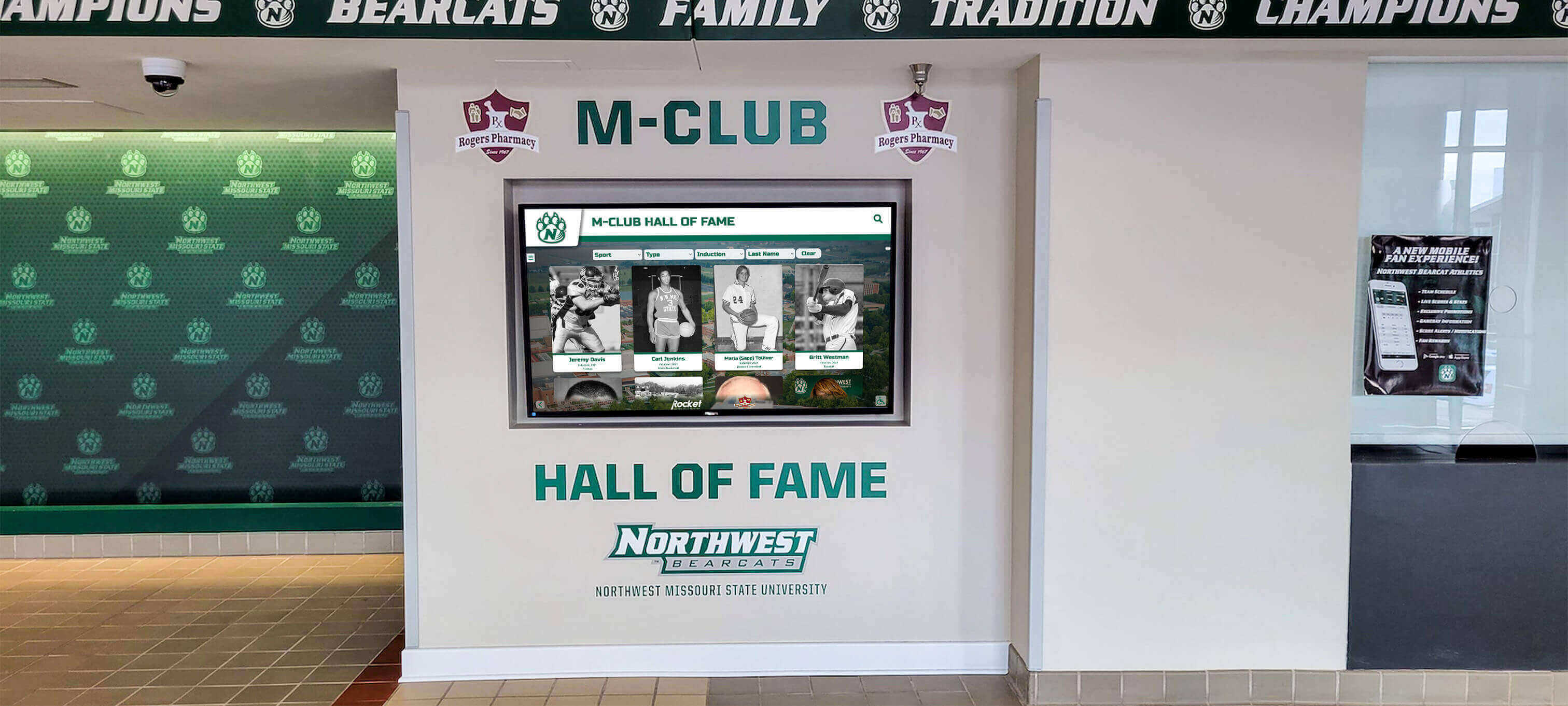
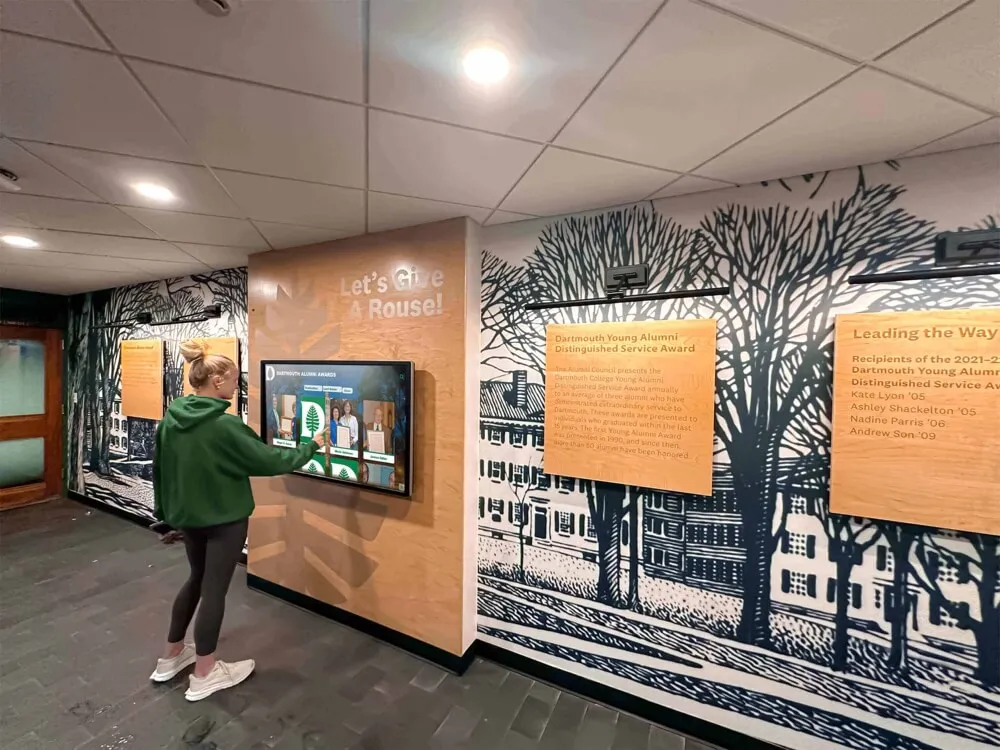
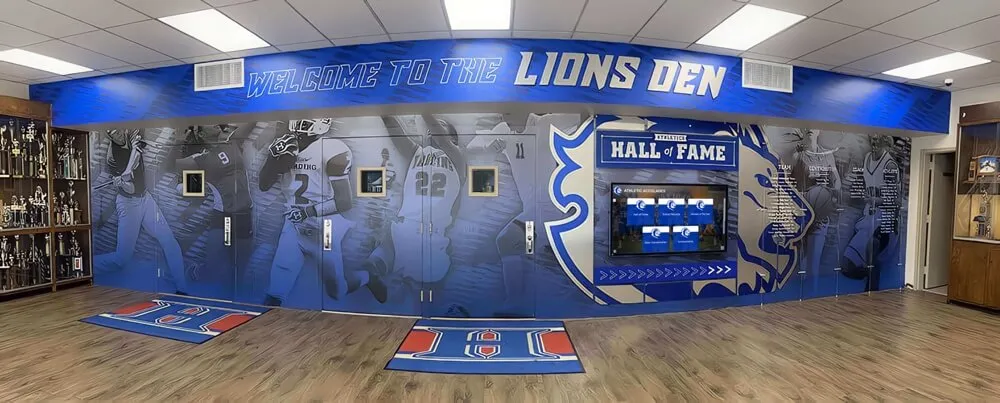
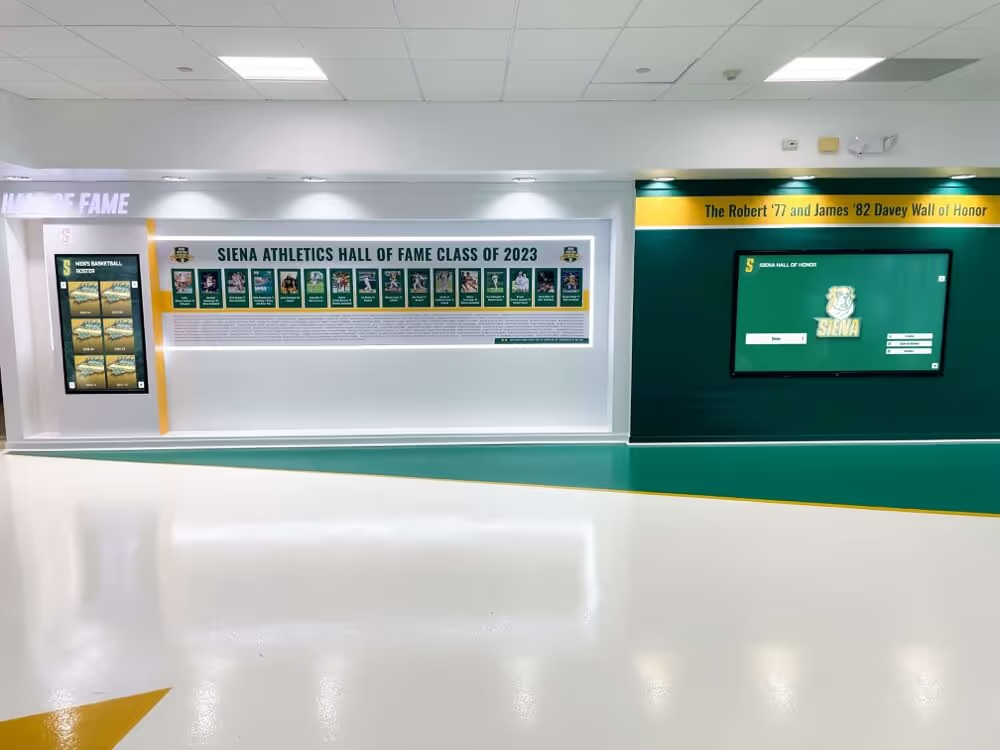
A hall of fame digital display is a permanent institutional record; the embargo policy is what ensures every profile entering that record has been authorized, verified, and released through a governed process
Programs that use digital recognition platforms with searchable archives benefit from this permanence most directly. A profile that went through a proper staging period—proofed, verified, scheduled, and released on time—will not require correction three months after publication. It will not surface an error when a prospective recruit views it, when an alumnus shares it with their family, or when a donor reviews program materials before making a gift. The alumni mentor program model connects current students with past honorees through the archive; that connection depends on the archive being accurate and trustworthy from the moment of publication.
A hall of fame content embargo policy is not bureaucratic overhead—it is the operational mechanism that connects the committee’s governance decision to the public’s experience of the program. It protects the announcement moment, protects the inductees, and protects the institution’s ability to stand behind every profile it publishes for years to come.
A written hall of fame content embargo policy closes the gap between selecting inductees and announcing them publicly—ensuring that profiles are built, verified, and released through a controlled process rather than published prematurely or released inconsistently across channels. When your embargo policy connects to a digital recognition platform with role-based access controls, scheduled publishing, and cloud-backed archives, the policy becomes operational at every step: no profile appears on a lobby touchscreen before the Chair has authorized the release.
Rocket Alumni Solutions’ platform is built for exactly this governance model—role-based CMS permissions, scheduled publishing aligned with announcement timing, ADA-compliant touchscreen displays, and automatic cloud backups that protect every inductee profile your embargo policy worked to place there accurately and on time. If you are building or modernizing your hall of fame program and want to see how the platform supports a staged, embargo-controlled release workflow, request your free custom demo to see it in action.
Live Example: Rocket Alumni Solutions Touchscreen Display
Interact with a live example (16:9 scaled 1920x1080 display). All content is automatically responsive to all screen sizes and orientations.