Hall of Fame Bylaws Template: How to Write Governance Rules for Your Online Hall of Fame
- Home /
- Digital Hall of Fame Insights & Resources /
- Hall of Fame Bylaws Template: How to Write Governance Rules for Your Online Hall of Fame
The Easiest Touchscreen Solution




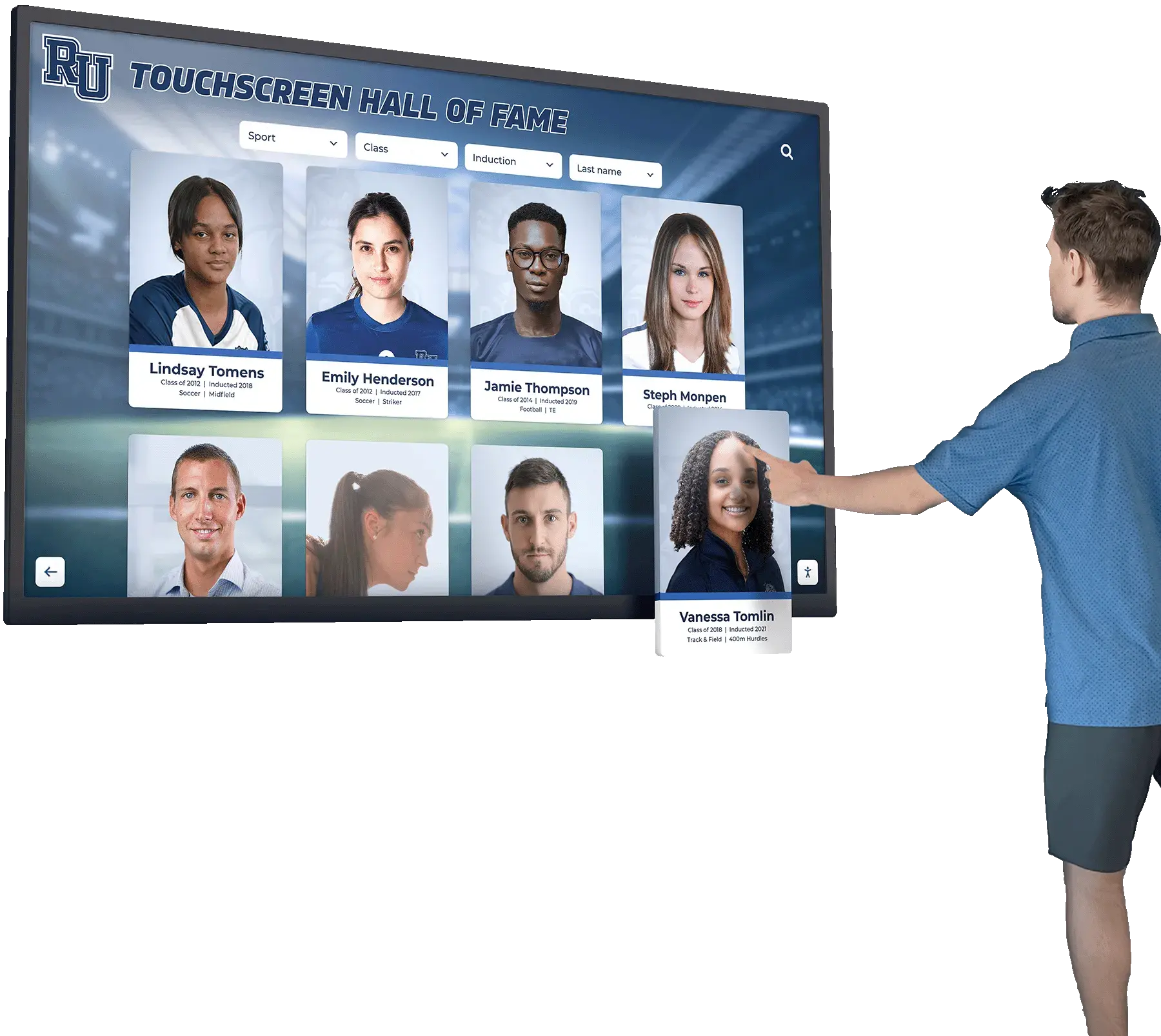
Live Example: Rocket Alumni Solutions Touchscreen Display
Interact with a live example (16:9 scaled 1920x1080 display). All content is automatically responsive to all screen sizes and orientations.
A hall of fame without governing documents is a tradition waiting to fall apart. The first induction class runs smoothly because everyone agrees informally. Then a founding committee member leaves, a contested nominee sparks debate about eligibility criteria, or an inductee’s conduct later embarrasses the institution—and there are no written rules to resolve any of it. Schools, booster clubs, athletic associations, and community organizations that formalize their recognition program before problems arise save years of conflict and confusion.
Hall of fame bylaws serve two practical purposes: they define who qualifies and how inductees are chosen, and they protect the program’s integrity across leadership transitions. When those bylaws are aligned with an online hall of fame platform, they also answer operational questions like how digital profiles are updated, who controls content, and how inductees appear on a public-facing website or touchscreen display.
This guide walks through every section of a bylaws document you should draft before launching or reorganizing a hall of fame, provides a copy-paste template framework you can adapt immediately, and shows how each governance rule maps to real-world decisions in a web-based recognition system.
Strong governance documents separate a hall of fame that thrives for decades from one that quietly disappears after the founding athletic director retires. Whether you are establishing a new athletic hall of fame, a fine arts honor wall, an alumni recognition program, or a donor heritage display, the bylaws framework below applies—and the structure maps cleanly onto the digital platforms increasingly used to bring these programs online.

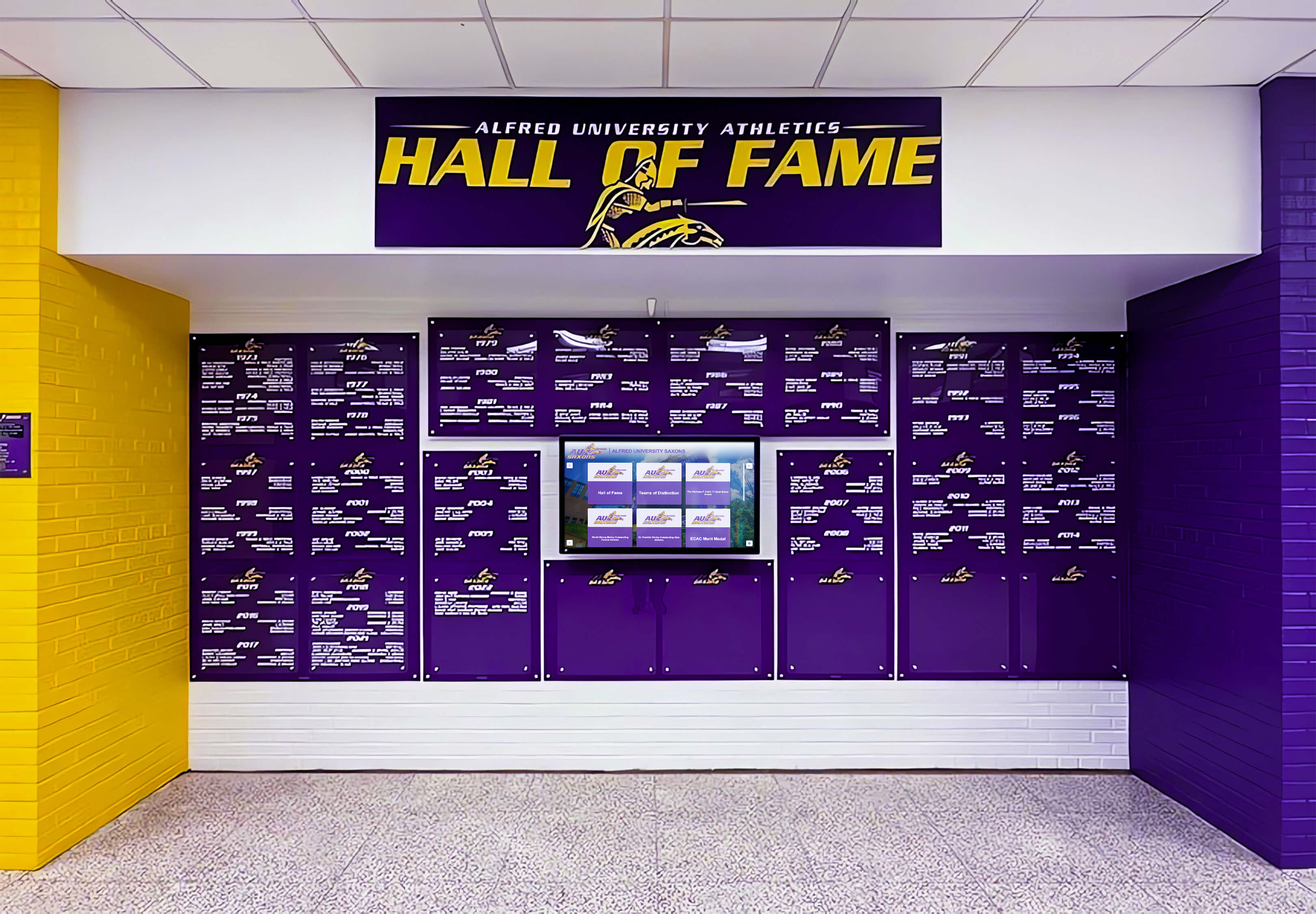
A well-governed hall of fame like this display at Alfred University maintains consistent standards across every induction class, protecting both the program's credibility and each inductee's honor
Program Snapshot: What Your Bylaws Must Cover
Before drafting language, map out the decisions your bylaws need to govern. This table summarizes the seven core components every hall of fame governance document should address.
| Bylaws Component | Core Questions It Answers | Online HOF Implication |
|---|---|---|
| Name and Purpose | What is the mission? What achievement does it celebrate? | Sets tone for homepage, meta descriptions, and inductee profile framing |
| Committee Structure | Who governs? How are members selected, removed, and replaced? | Determines who holds CMS access and final approval authority |
| Eligibility Criteria | Who may be nominated? What waiting period applies? | Filters the nominee database and shapes the online submission form |
| Nomination Process | Who nominates? By what deadline and in what format? | Drives the online nomination form workflow and review timeline |
| Selection Process | How does the committee vote? What threshold selects an inductee? | Sets the approval workflow inside your content management system |
| Induction Class | How many inductees per cycle? How often? What categories? | Determines how many profiles are added per year and in what display sections |
| Removal Clause | Under what circumstances can an inductee be removed? | Governs profile archiving, public display status, and website removal protocols |
This snapshot gives your drafting committee a checklist. Every blank cell represents a future argument waiting to happen. Fill them all before the first induction.
Component 1: Name, Purpose, and Scope
The opening article of your bylaws establishes what the hall of fame is and what it is not. Specificity prevents scope creep later.
Drafting the Purpose Statement
Effective purpose statements name the institution, describe the population being honored, and articulate why the recognition exists. Avoid vague language like “to celebrate excellence.” Instead, write something like:
The [Institution Name] Hall of Fame exists to recognize individuals and teams who achieved exceptional distinction in [athletics / fine arts / academics / alumni service] while affiliated with [Institution Name], and to preserve their legacies as an inspiration to future generations.
Three questions to answer in your purpose clause:
Who is honored? Athletes only, or also coaches and contributors? Current students, alumni, or both? Non-competitive employees who served the institution in significant ways?
What achievement qualifies? Performance records, leadership, service to the institution, community impact after graduation, or some combination of these?
What is the intended effect? Motivating current students, preserving institutional history, strengthening alumni engagement, supporting fundraising—naming the goal shapes every subsequent governance decision.
Understanding how your hall of fame fits within the broader story of your school’s history and heritage helps the purpose statement resonate with the community it is meant to serve.
Scope Limitations
Your bylaws should explicitly state what the hall of fame does not cover. If you operate a separate donor recognition wall, your hall of fame bylaws should note that philanthropic giving alone does not qualify a nominee. If you have both an athletic and an academic hall of fame, define the boundary between them in writing. Ambiguity in scope is one of the most common sources of committee conflict in year three and beyond.
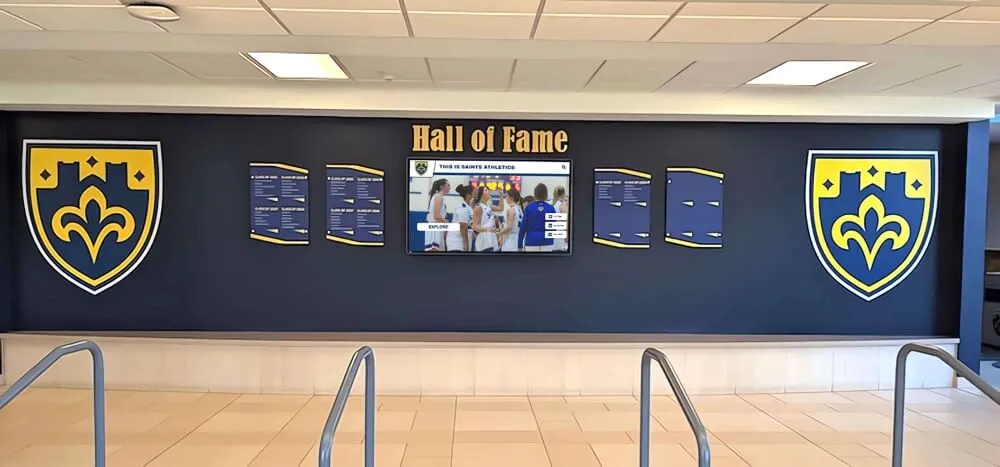
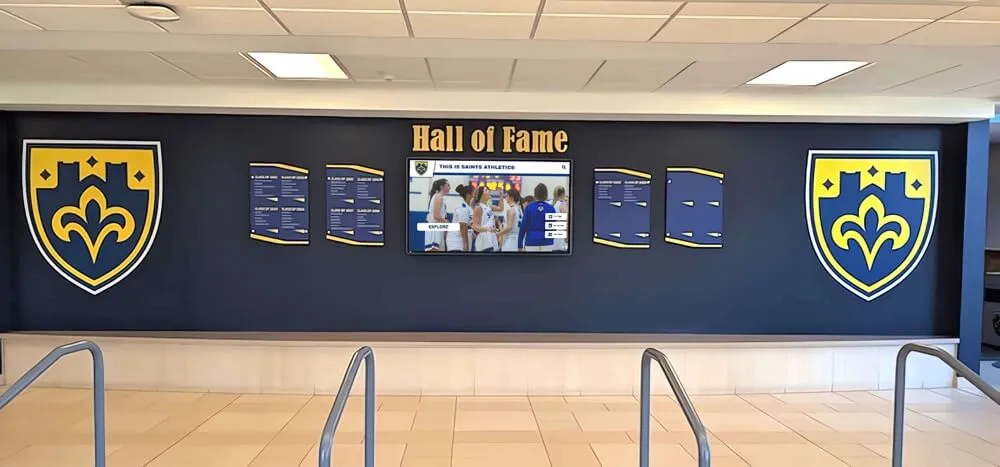
Clearly written bylaws ensure every shield, plaque, or digital profile on your recognition wall represents the same standard of achievement across all induction classes
Component 2: Committee Structure and Governance
The selection committee is the heart of your hall of fame’s credibility. Its composition, authority, and accountability must be spelled out completely.
Committee Composition
Most effective hall of fame committees include three categories of members:
Ex officio members (serving by virtue of their institutional position): Athletic director, school principal or dean, alumni association president. These members ensure institutional alignment without requiring annual elections and provide continuity across volunteer transitions.
Appointed or elected members: Past inductees, faculty representatives, booster club officers, former coaches or administrators. Specify who appoints them, for what term, and how many consecutive terms they may serve before stepping down.
Community or at-large members: Local alumni, civic leaders, or retired professionals with relevant domain expertise. These members provide perspective outside the day-to-day institution and often bring research skills useful during deliberations.
A minimum of five members and a maximum of eleven is a workable range for most school or club programs. Odd numbers prevent tie votes. Your bylaws should define both the minimum quorum required to conduct business and the minimum quorum required to hold a valid vote.
Officer Roles
Define at minimum three officer positions:
- Chair: Leads meetings, manages the annual nomination timeline, serves as the program’s public spokesperson
- Secretary: Maintains records, manages correspondence with nominators, archives all nomination files
- Treasurer (if the committee manages funds for ceremony or administrative expenses): Tracks budget and reports to the governing institution
Terms, Removal, and Succession
Specify term lengths (two or three years is standard), stagger initial appointments so the committee never turns over entirely in a single year, and define the process for filling mid-term vacancies. Include a clause for removing a committee member for cause—conflict of interest, breach of confidentiality, or consistent failure to participate in the selection process.
Institutional memory lives in governance documents. When your athletic director changes, well-written bylaws ensure the next person inherits a functioning, legitimate program—not a set of informal understandings nobody wrote down.
Component 3: Eligibility Criteria
Eligibility rules determine who can enter the nomination pool. They should be objective enough to apply consistently and specific enough to exclude clear non-fits without requiring subjective judgment at the gate.
Standard Eligibility Elements
Affiliation requirement: The nominee must have represented the institution as a student-athlete, student, coach, employee, or volunteer. Define the minimum duration of that affiliation—one competitive season, one full academic year, or any verifiable affiliation that contributed meaningfully to the institution.
Waiting period: Most programs require a minimum period between the end of active affiliation and eligibility for nomination. Common ranges are five years for athletic programs and three years for fine arts or academic recognition. The waiting period allows perspective and ensures the nominee’s record is reasonably complete before evaluation.
Active status exclusion: Individuals currently enrolled in or employed by the institution are typically ineligible, preventing the hall of fame from functioning as a performance incentive for active participants rather than a recognition of completed achievement.
Graduated class minimums: Some programs restrict nominations to individuals who completed their affiliation a specific number of years in the past, beyond the base waiting period.
Category-Specific Criteria
If your hall of fame includes multiple categories—Athletes, Coaches, Contributors, Teams—each may carry distinct criteria. An athlete category might require verified competitive achievement at a defined level. A contributor category might require documented institutional service exceeding a threshold. Team categories might require a championship finish or ranked result at a defined competitive standard.
For athletic halls of fame, documented performance records provide objective anchors for eligibility discussions. Sport-specific benchmarks—including competitive performance documentation such as recorded athletic times and technique standards in precision sports—can be incorporated into eligibility language where measurable achievement is a primary criterion.
Reviewing how schools formally recognize student athletes helps you align your eligibility language with established institutional recognition frameworks.
Disqualifying Conditions
Your bylaws should address—without being punitive or vague—circumstances that disqualify an otherwise eligible nominee. Common disqualifying conditions include:
- Verified violation of institutional conduct codes during the period of affiliation
- Criminal conviction for a specified category of offense (typically felony-level)
- Confirmed use of prohibited performance-enhancing substances verified by a governing athletic body
- Revocation of professional credentials by a licensing authority (relevant for alumni-focused programs)
State these as conditions that disqualify a nominee at the time of nomination and separately address the removal of existing inductees in Component 7.
Component 4: Nomination Process
A transparent nomination process builds community trust and generates a strong candidate pool year after year.
Who May Nominate
Open nominations—any member of the public may submit—generate higher volume but often lower documentation quality. Restricted nominations—committee members, alumni association members, or former inductees only—produce better-documented candidates but may miss deserving nominees outside existing networks.
A hybrid approach works well for most programs: open nominations from any community member, with a requirement that each nomination be endorsed by a current committee member or institutional staff member before it enters the formal review pool. This structure broadens the net while maintaining a quality checkpoint.
Nomination Form and Documentation Requirements
Your bylaws should specify the required elements of a complete nomination. Build these into your online submission form exactly:
- Nominee’s full legal name and years of affiliation with the institution
- Category of nomination (Athlete, Coach, Contributor, Team)
- Narrative summary of achievement—typically 500 to 1,000 words
- Supporting documentation: statistics or records, newspaper clippings, letters from coaches or administrators, photographs or archival images
- Nominator’s full name, institutional affiliation, and contact information
- Signed or electronically acknowledged statement that all information is accurate to the best of the nominator’s knowledge
Incomplete nominations that do not meet minimum documentation requirements should be returned to the nominator with a checklist—not rejected outright. This approach improves submission quality over successive cycles.
Nomination Deadlines and Carry-Forward Policy
Define a clear annual submission deadline (for example, January 15 for a spring induction ceremony). Specify whether nominations carry forward automatically to subsequent years—recommended, with a two- or three-year carry-forward maximum—or must be resubmitted each cycle.
A carry-forward policy prevents worthy nominees from being overlooked simply because the committee faced a particularly strong cohort in a given year.
Consistent nomination documentation requirements across all years ensure every inductee on a recognition wall like this one was evaluated against the same standard
Component 5: Selection Process
The selection process translates nominations into decisions. It must be rigorous enough to be defensible and efficient enough to actually happen on schedule.
Evaluation Criteria and Scoring
Define the criteria the committee uses to evaluate nominations in each category. A weighted scoring rubric prevents decisions from being made on personality, personal relationships, or recency bias. A typical athletic nomination rubric might weight:
- Competitive achievement (state, national, or conference records, championships, all-league or all-conference honors): 40%
- Character and citizenship demonstrated during the period of affiliation: 25%
- Institutional representation (team leadership, community service, sportsmanship): 20%
- Post-affiliation distinction (career accomplishment, community impact, continued service to the institution): 15%
Your bylaws need not publish the exact rubric publicly, but they should mandate that one exists, that it is reviewed by all committee members before deliberation begins, and that it is held on file by the committee chair.
Voting Threshold
Define how a nominee advances to induction. Common thresholds include:
- Simple majority (more than half of votes cast): Easiest to achieve; risks inducting borderline candidates in competitive vote years
- Two-thirds supermajority: More defensible for contested nominations; preserves the program’s selective reputation
- Consensus with one dissent allowed: A high bar appropriate for highly prestigious programs with deep nominee pools
Define whether abstentions count toward quorum and how they affect threshold calculations. Both questions will arise in practice.
Confidentiality Requirements
The deliberation process must be confidential. Your bylaws should explicitly prohibit committee members from disclosing how any individual voted, the substance of deliberations, or the identities of nominees who were not selected. Violation of confidentiality is grounds for removal from the committee.
This confidentiality clause protects both the committee and nominees who were not selected. A rejected nominee who learns the specific reasons for rejection may feel unfairly treated; the same decision made through a documented but confidential process is simply “not this cycle.”
Annual Class Size Limits
Setting a maximum induction class size preserves the program’s prestige. When every worthy candidate is inducted every year, the distinction becomes ordinary. Common approaches:
- Fixed annual maximum: No more than five inductees per year, regardless of nomination volume
- Category caps: No more than three athletes, one coach, one contributor per cycle
- No minimum: Some years may produce zero inductees if no nominee meets the threshold
The no-minimum rule is important. Your bylaws should explicitly state that the committee is not obligated to fill any quota. Inducting nominees primarily to hold a ceremony erodes the program’s credibility faster than almost any other mistake.
Component 6: Induction Ceremony and Recognition
Bylaws typically address the induction ceremony briefly—ceremony format is an operational matter, not a governance one—but a few elements belong in writing.
Ceremony Cadence
Specify how frequently induction classes are announced: annually, every two years, or on a milestone schedule tied to institutional anniversaries. Annual cycles work well for most programs with active alumni communities. A biennial or triennial cycle may suit smaller institutions with limited nominee pools or volunteer capacity.
Inductee Rights and Recognition
Your bylaws should specify what inductees receive upon induction:
- Official recognition in the hall of fame display, both physical and digital
- A certificate, plaque, or award presented at the induction ceremony
- Permanent listing in institutional records and archives
- Any specific governance rights granted to inductees—for example, the right to vote in future nomination processes if former inductees serve on the selection committee
Accommodating Inductees Who Cannot Attend
Include a brief provision stating that the institution will work in good faith to accommodate inductees who cannot attend the ceremony in person—through recorded remarks, virtual participation, or representative acceptance—so that logistical barriers do not prevent meaningful recognition.
Component 7: Removal and Revocation
A removal clause is the most difficult section to draft and the most important one to have in writing before you need it.
Grounds for Removal
List specific grounds that may trigger a removal review—do not leave this section open-ended. Vague language like “conduct unbecoming” is broad enough to cover everything and specific enough to cover nothing. Common defined grounds include:
- Discovery that eligibility criteria were not met at the time of induction because of fraudulent or materially inaccurate nomination documentation
- Felony conviction after induction
- Verified conduct that, in the committee’s documented judgment, materially contradicts the values the hall of fame represents
- The inductee’s own written request for removal
Removal Process
Mirror the rigor of the selection process. A written complaint to the committee chair triggers a formal review. The inductee is notified and given a defined window—typically 30 to 60 days—to respond in writing. The committee deliberates in closed session and reaches a decision by the same supermajority threshold required for induction. The decision is final unless overturned by the institution’s governing leadership.
Online Hall of Fame Implications
When an inductee is removed, your bylaws should specify what happens to their digital presence. Options include:
- Archival: Profile removed from public display but retained in internal institutional records with a notation
- Complete deletion: Profile and all associated content permanently removed
- Administrative notation: Profile remains in a restricted archive with a documented reason for removal visible only to administrators
In most cases, archival with an internal notation is preferable to complete deletion—complete deletion erases the institution’s own record of the decision and any historical context around it.
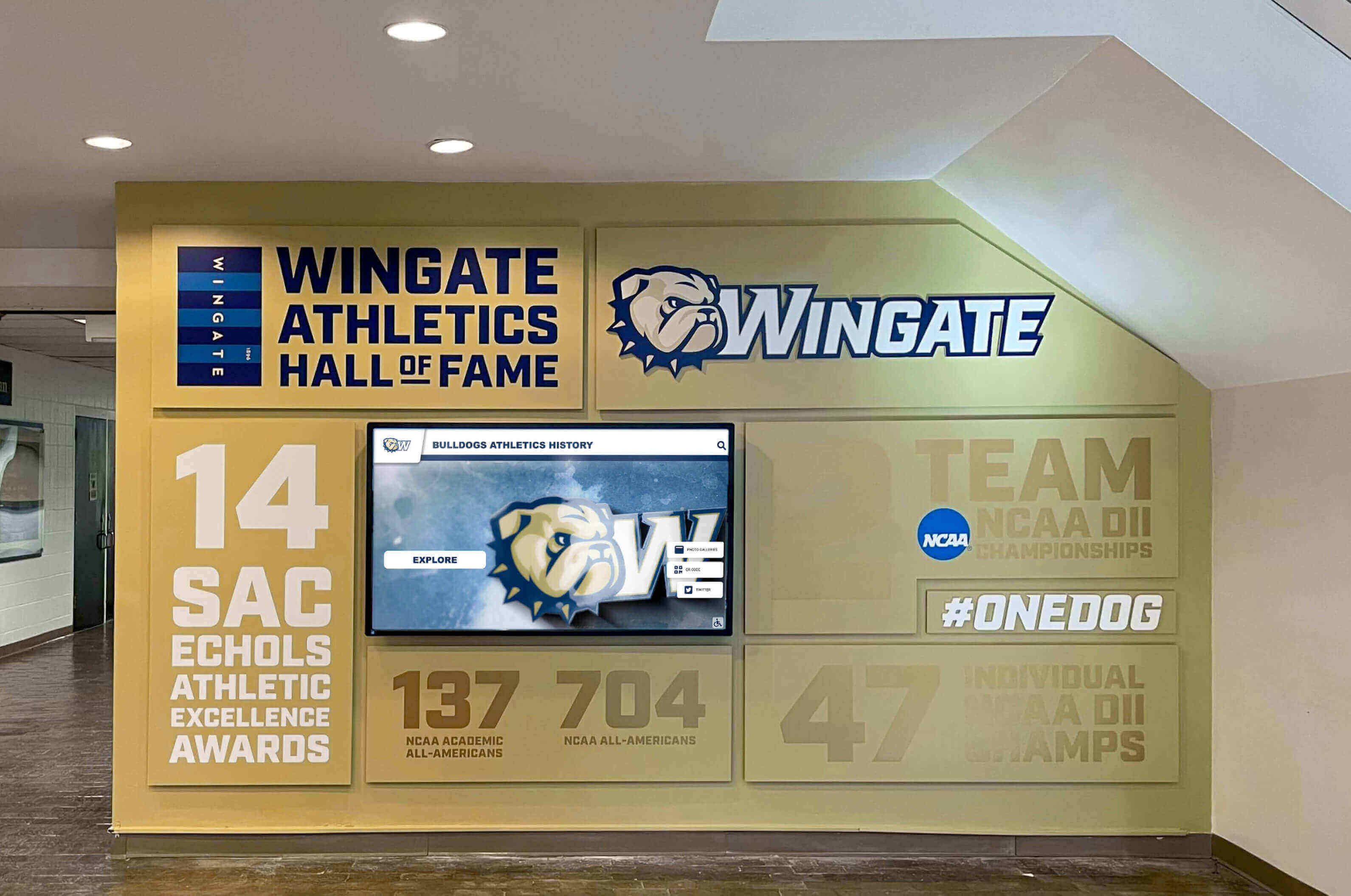
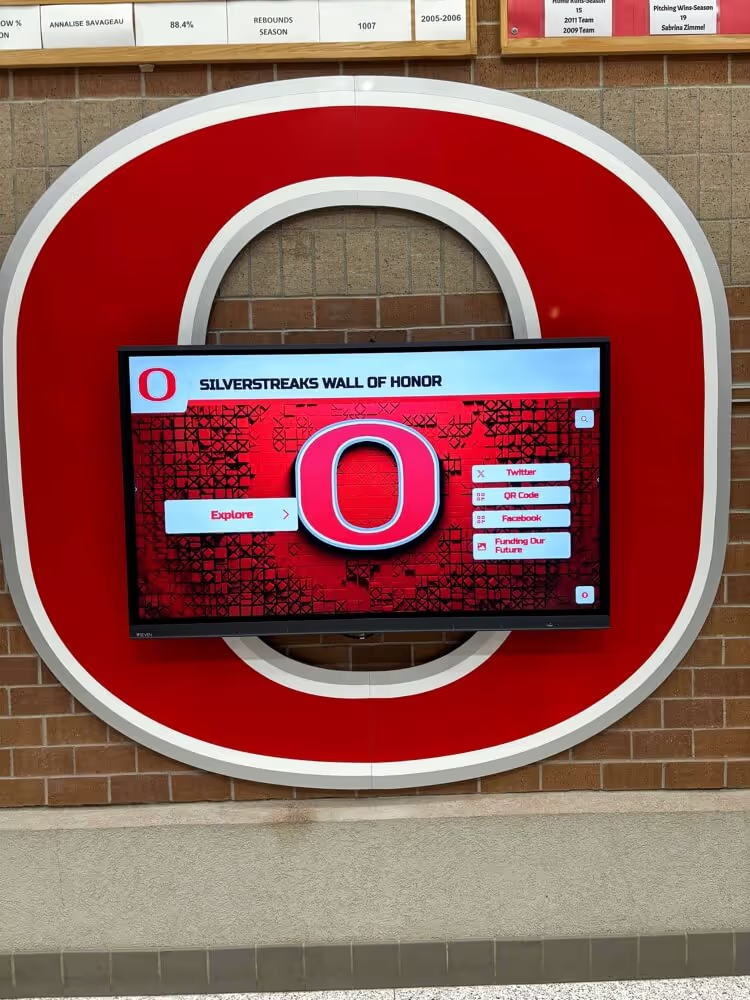
The removal clause in your bylaws governs what happens to a display profile if an inductee's recognition must be withdrawn—establish this protocol in writing before the situation arises
The Bylaws Template: A Copy-Paste Framework
Use the following structure as your starting draft. Replace all bracketed text with your institution’s specifics. Have the final document reviewed by your institution’s legal counsel or governance officer before formal adoption.
[INSTITUTION NAME] HALL OF FAME — BYLAWS
Adopted: [Date] | Last Amended: [Date]
Article I — Name and Purpose
Section 1.1. The organization shall be known as the [Institution Name] Hall of Fame (hereinafter “the Hall of Fame”).
Section 1.2. The Hall of Fame exists to recognize individuals and teams who achieved exceptional distinction in [athletics / fine arts / academics / alumni service] while affiliated with [Institution Name], and to preserve their legacies as an inspiration to future generations.
Section 1.3. The Hall of Fame operates under the authority of [governing body, e.g., the Office of the Athletic Director / the Alumni Association Board] and shall conduct its affairs consistent with the policies of [Institution Name].
Article II — Governing Committee
Section 2.1. The Hall of Fame shall be administered by a Selection Committee (hereinafter “the Committee”) consisting of not fewer than five (5) and not more than eleven (11) voting members.
Section 2.2. Committee membership shall include: [list ex officio positions], [list appointed or elected positions], and [list community or at-large positions].
Section 2.3. Appointed members shall serve [two / three]-year terms and may serve a maximum of [two / three] consecutive terms before a minimum one-year break in service.
Section 2.4. The Committee shall elect a Chair, Vice Chair, and Secretary at the first meeting of each program year. Officers serve one-year terms and may be re-elected.
Section 2.5. A quorum shall consist of a majority of currently seated Committee members. No official business or binding votes shall occur without a quorum.
Section 2.6. A Committee member may be removed by a two-thirds vote of the full Committee for conflict of interest, breach of confidentiality, or failure to participate in two consecutive selection cycles without documented cause.
Article III — Eligibility
Section 3.1. To be eligible for nomination, an individual must have been affiliated with [Institution Name] as a [student / student-athlete / coach / employee / volunteer] for a minimum of [one competitive season / one academic year / other period].
Section 3.2. A minimum waiting period of [three / five] years shall apply between the end of active affiliation and eligibility for nomination.
Section 3.3. Individuals currently enrolled in or employed by [Institution Name] are ineligible during the period of active affiliation.
Section 3.4. [Optional: list categories—Athlete, Coach, Contributor, Team—and their specific achievement criteria.]
Section 3.5. A nominee is disqualified at the time of nomination if they have: [list specific disqualifying conditions].
Article IV — Nomination
Section 4.1. Nominations may be submitted by [any member of the public / alumni association members / Committee members and institutional staff] no later than [specific date] each year.
Section 4.2. A complete nomination must include: [1] nominee’s full name and years of affiliation; [2] category of nomination; [3] achievement narrative of 500–1,000 words; [4] supporting documentation; [5] nominator’s name and contact information; [6] signed or acknowledged accuracy statement.
Section 4.3. Incomplete nominations shall be returned to the nominator with written notice of deficiencies. Returned nominations may be resubmitted by the applicable deadline.
Section 4.4. Nominations not resulting in induction shall carry forward for a maximum of [two / three] subsequent nomination cycles without resubmission.
Article V — Selection
Section 5.1. The Committee shall evaluate all complete nominations using a written scoring rubric reviewed by all members prior to deliberation.
Section 5.2. All deliberations are confidential. No Committee member shall disclose the substance of deliberations, individual votes, or the identities of nominees not selected for induction.
Section 5.3. A nominee shall be inducted upon receiving an affirmative vote of [a simple majority / two-thirds] of Committee members present and voting.
Section 5.4. The Committee is not obligated to induct any nominee in any given cycle. No minimum induction class size applies.
Section 5.5. The maximum induction class per cycle shall be [number] individuals and [number] teams.
Article VI — Induction
Section 6.1. Inductees shall be recognized in the Hall of Fame’s physical and digital displays and shall receive [describe certificate, award, or recognition materials] at the induction ceremony.
Section 6.2. The Hall of Fame shall hold an induction ceremony [annually / biennially], the format and date of which shall be determined by the Committee in coordination with [Institution Name].
Section 6.3. The institution shall make reasonable accommodations for inductees unable to attend in person.
Article VII — Removal
Section 7.1. An inductee’s recognition may be reviewed for removal upon written complaint to the Committee Chair on the following specific grounds: [list].
Section 7.2. Upon receipt of a qualifying complaint, the Committee shall notify the inductee in writing and invite a written response within [30 / 60] days.
Section 7.3. Following review, the Committee shall vote in closed session. Removal requires the same supermajority threshold as induction.
Section 7.4. Upon removal, the inductee’s profile shall be [archived from public display / deleted / noted in internal records with documentation of the removal decision].
Section 7.5. Removal decisions may be appealed to [governing body] within [30] days of written notification.
Article VIII — Online Platform and Digital Profiles
Section 8.1. The Hall of Fame shall maintain an online platform displaying inductee profiles accessible to the public.
Section 8.2. Content management access shall be restricted to [designated staff role(s)], with final approval for publishing new profiles required from [Committee Chair / institutional administrator].
Section 8.3. New inductee profiles shall be published no earlier than the date of the formal induction ceremony.
Section 8.4. The Committee shall conduct an annual review of existing profiles and update content as appropriate.
Article IX — Amendments
Section 9.1. These bylaws may be amended by an affirmative vote of two-thirds of the full Committee membership and approval by [governing body].
Section 9.2. Proposed amendments must be distributed to all Committee members in writing no fewer than thirty (30) days before the vote.
Mapping Bylaws to an Online Hall of Fame
Bylaws written for a physical trophy case translate directly to digital platforms, but several governance questions are unique to online recognition systems.
CMS Access and Approval Workflow
Your bylaws define who approves inductees. Your content management system should enforce the same hierarchy. In practice:
- Content editors (staff members) can create draft profiles, upload photographs, and enter biographical information
- Committee chair or designated approver must review and approve before a profile is published publicly
- The governing institution retains administrative override authority to archive or remove profiles at any time
If your platform does not support role-based publishing workflows, add a documented manual approval step to your operational procedures—and reference that step in the bylaws so future administrators know it exists.
Online Nomination Forms
The nomination documentation requirements you establish in Article IV map directly to the fields in your online submission form. Build the form around your bylaws, not the other way around. If your bylaws require a 500-word achievement narrative and three supporting documents, your form should enforce both requirements before allowing submission.
Two-stage submission works well: an initial expression of interest that captures basic contact information and nominee identity, followed by a 30-day window to submit complete documentation. This approach reduces abandoned submissions while keeping the nomination process rigorous.
Inductee Profile Content Architecture
Each inductee profile in your online system should reflect the categories your bylaws define. A well-structured inductee profile includes:
- Header: Full name, years of affiliation, induction category, induction year
- Achievement summary: The narrative submitted with the nomination, edited for public presentation
- Statistics or records: Objective performance data relevant to the nomination category
- Media: Photograph, video highlight, audio tribute, or archival document scan
- Post-affiliation update: A brief note on the inductee’s life and career since affiliation, refreshed periodically
Interactive touchscreen kiosk solutions designed for schools and organizations provide the physical hardware layer that brings these profiles to life in lobbies, athletic facilities, and hallways.
Scheduled Publishing and Update Cycles
Your bylaws define an annual induction cycle. Your digital platform should support scheduled publishing that matches it. Rather than adding profiles one at a time as approvals come in, schedule the entire new induction class to go live simultaneously on the day of the ceremony. This creates a better experience for inductees, generates a stronger communications moment for the institution, and aligns perfectly with any press release or social media announcement.
The same principle applies to profile updates. Designate an annual review window—tied to the nomination deadline makes administrative sense—when existing profiles are refreshed, photographs updated, and post-affiliation notes added.
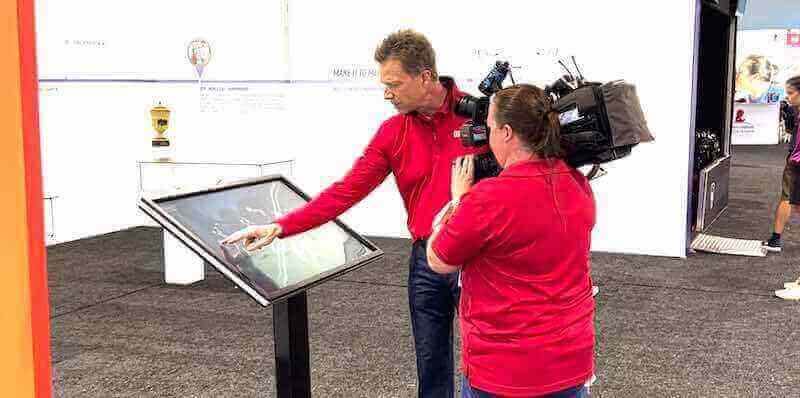
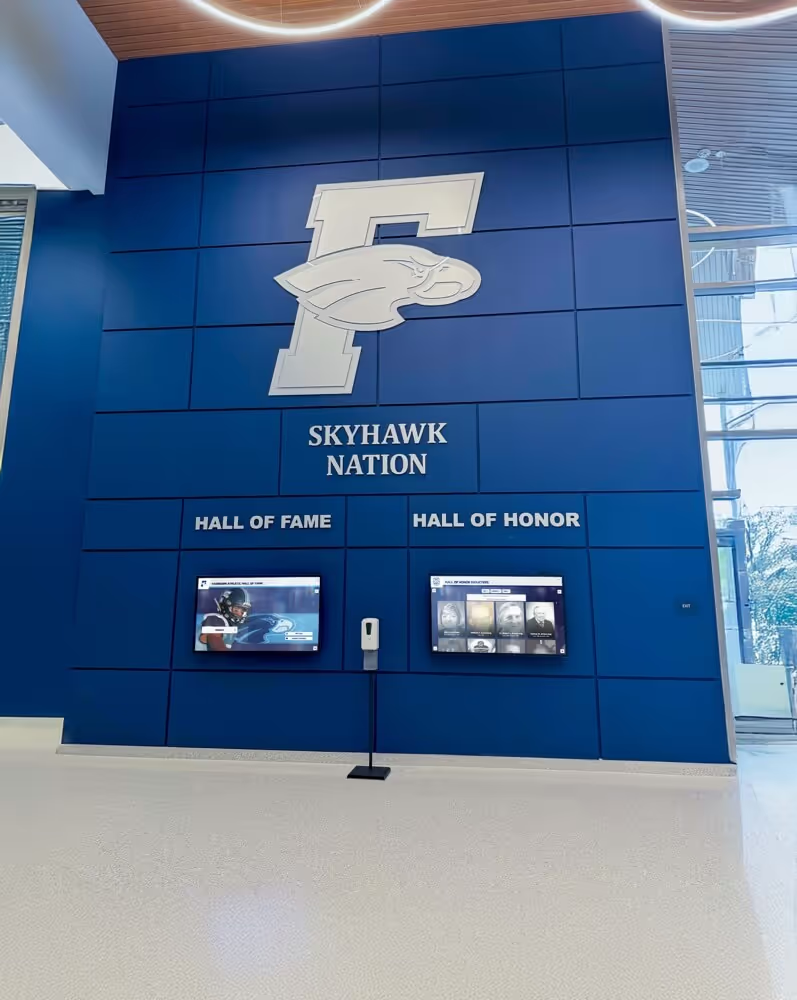
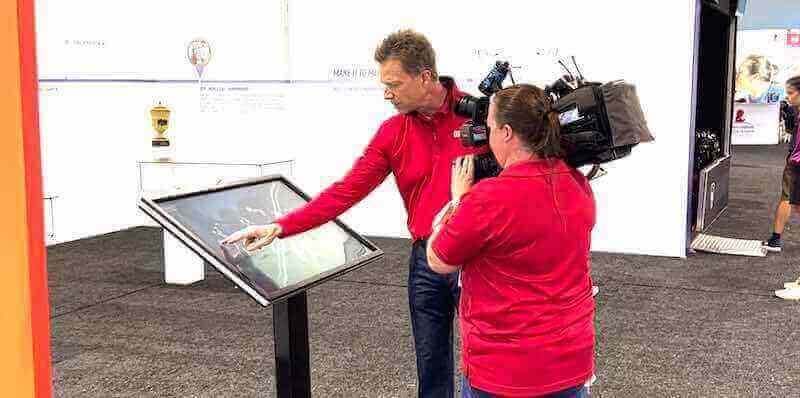
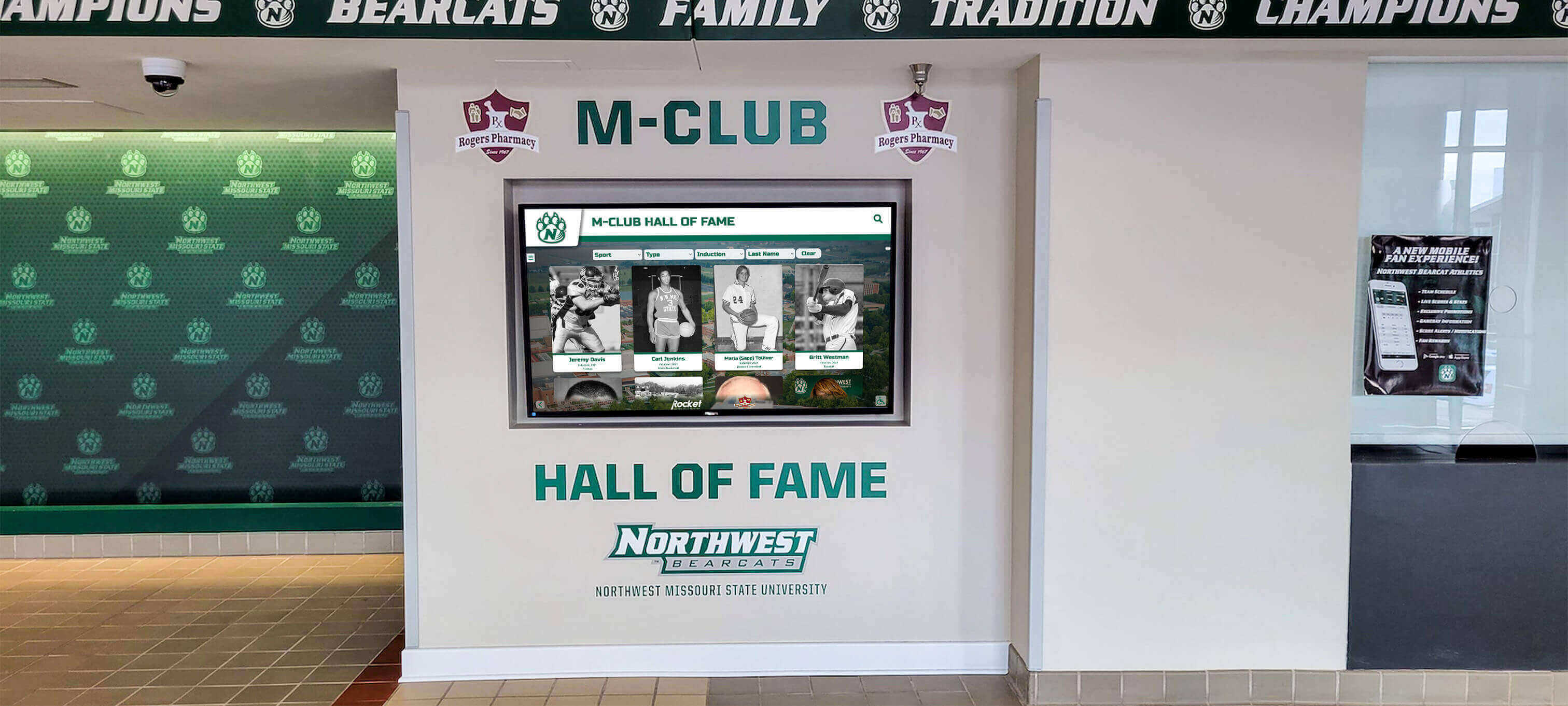
Online hall of fame platforms pair with physical touchscreen installations to extend recognition from a single annual ceremony into year-round community engagement
Display Integration: Physical and Digital Working Together
Well-written bylaws establish what recognition an inductee receives. Well-designed display systems deliver that recognition at maximum visibility.
Physical Display Considerations
Traditional halls of fame anchor recognition in physical space: a dedicated wall in the gymnasium lobby, a hallway display case, a custom mural installation with individual shields. Physical displays create permanence and presence that digital platforms complement but do not replace. Curating school memorabilia and archival display materials alongside inductee profiles deepens the institutional story your hall of fame tells.
Physical displays face one unavoidable constraint: every new induction class requires physical space, and physical space does not grow. This is why most institutions are now combining traditional plaques with integrated digital touchscreen systems that accommodate unlimited inductees without renovation costs.
Touchscreen Integration
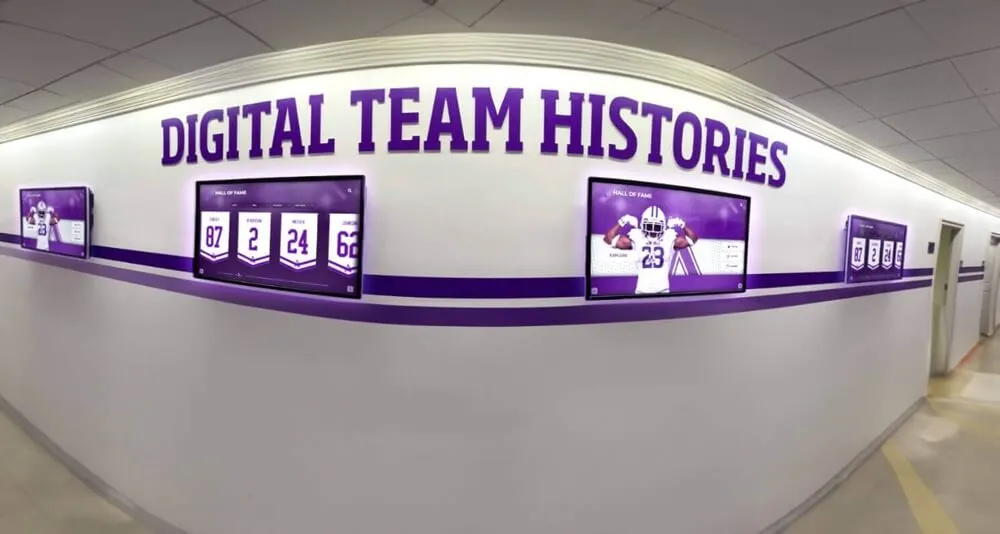
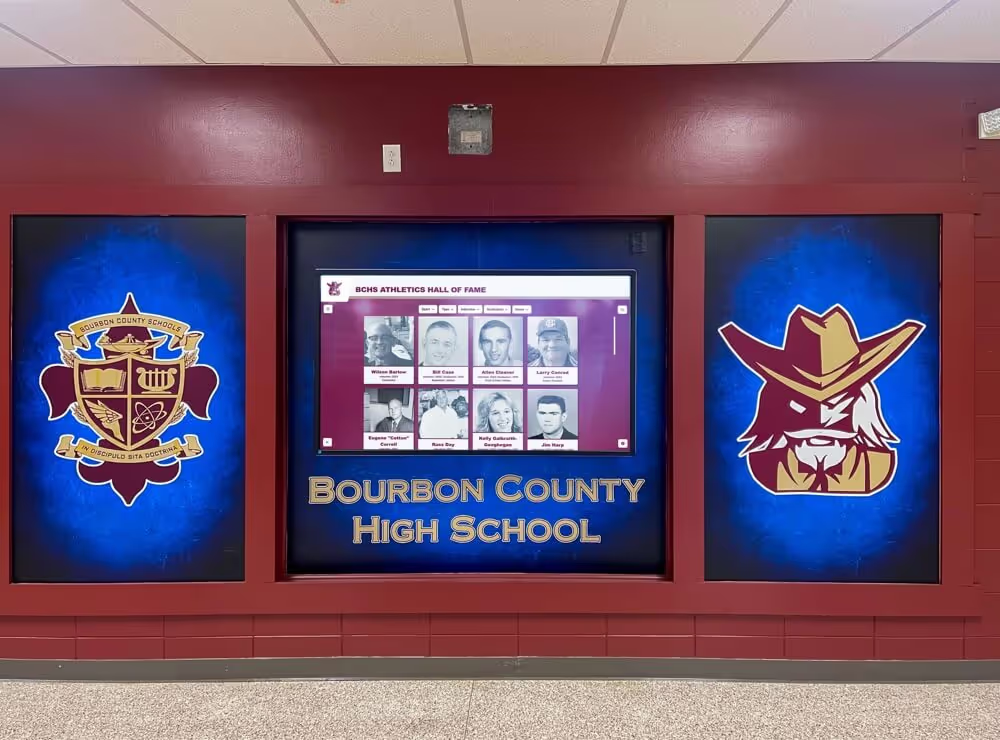
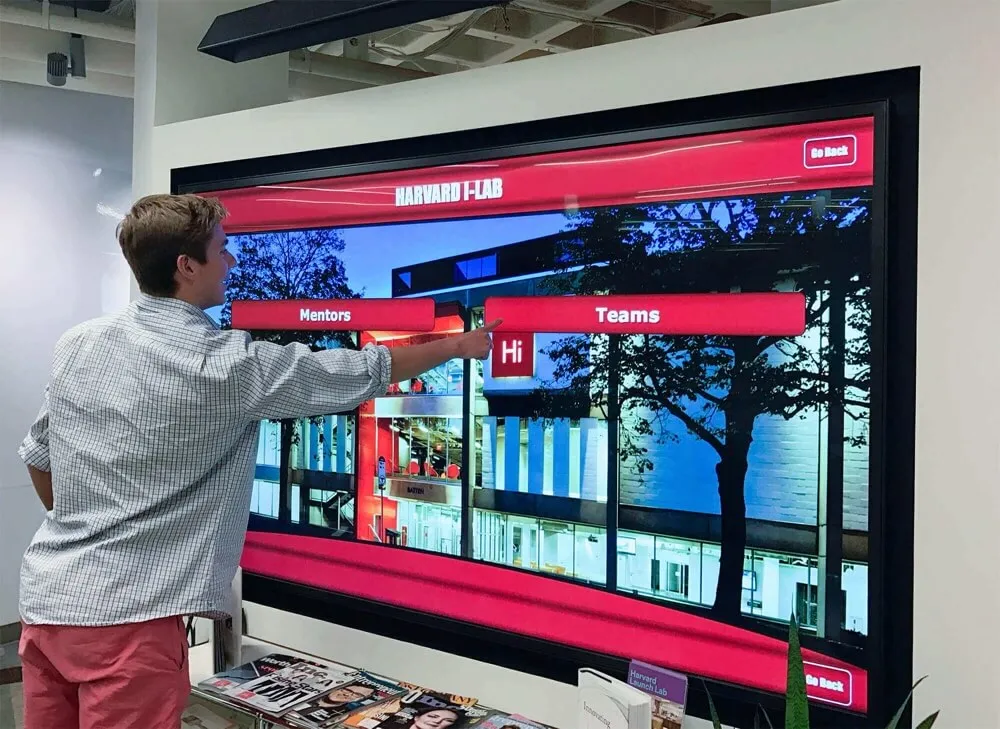
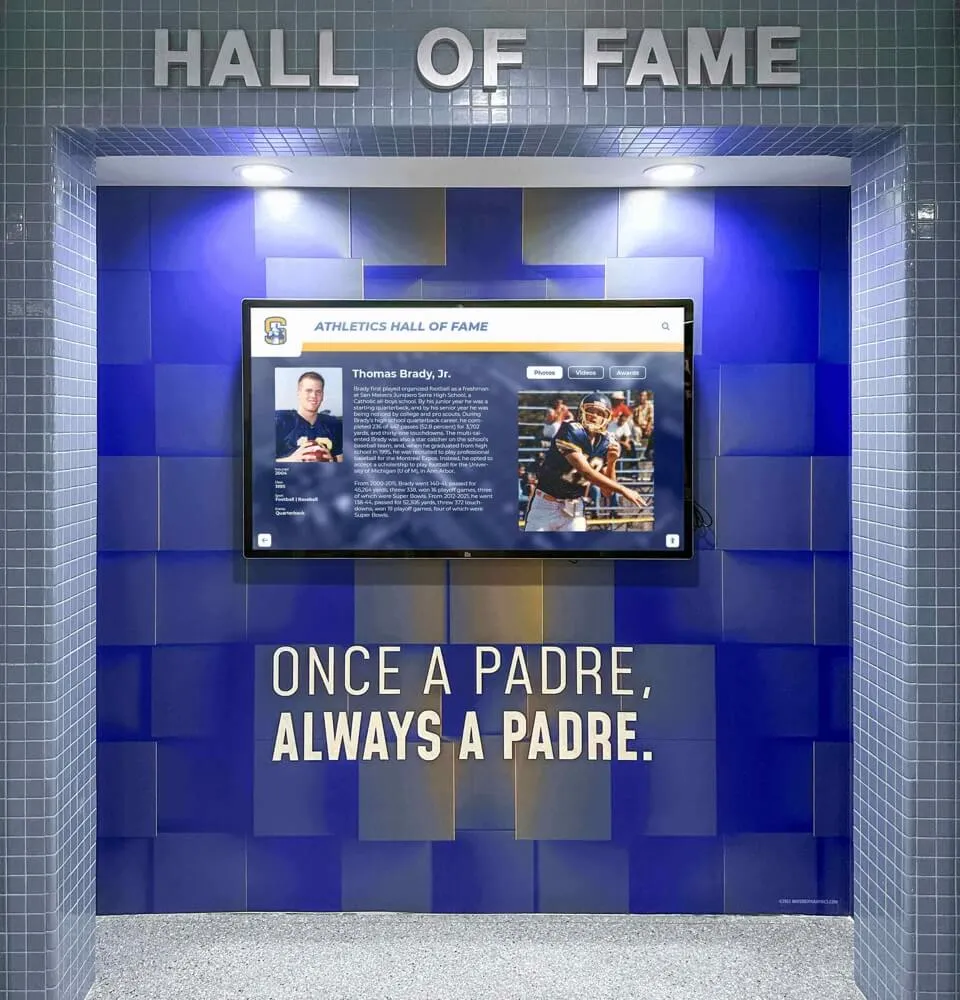
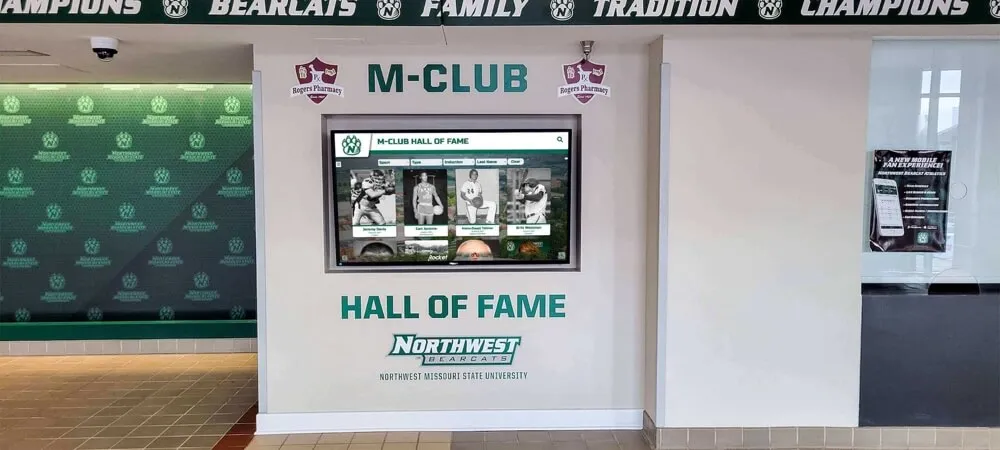
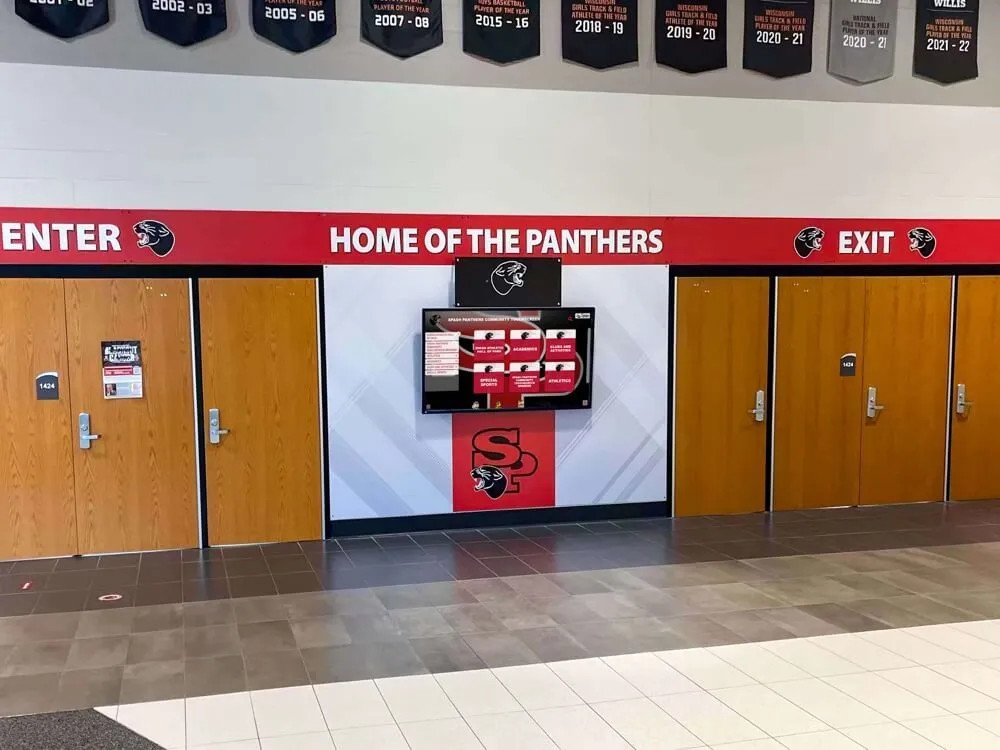
Interactive touchscreen walls serve as the digital layer of a hall of fame installation. A visitor approaching the physical display can touch a screen to explore every inductee in the program’s history, filter by sport or induction year, view statistical records, and watch video highlights—none of which a plaque or engraved shield can provide.
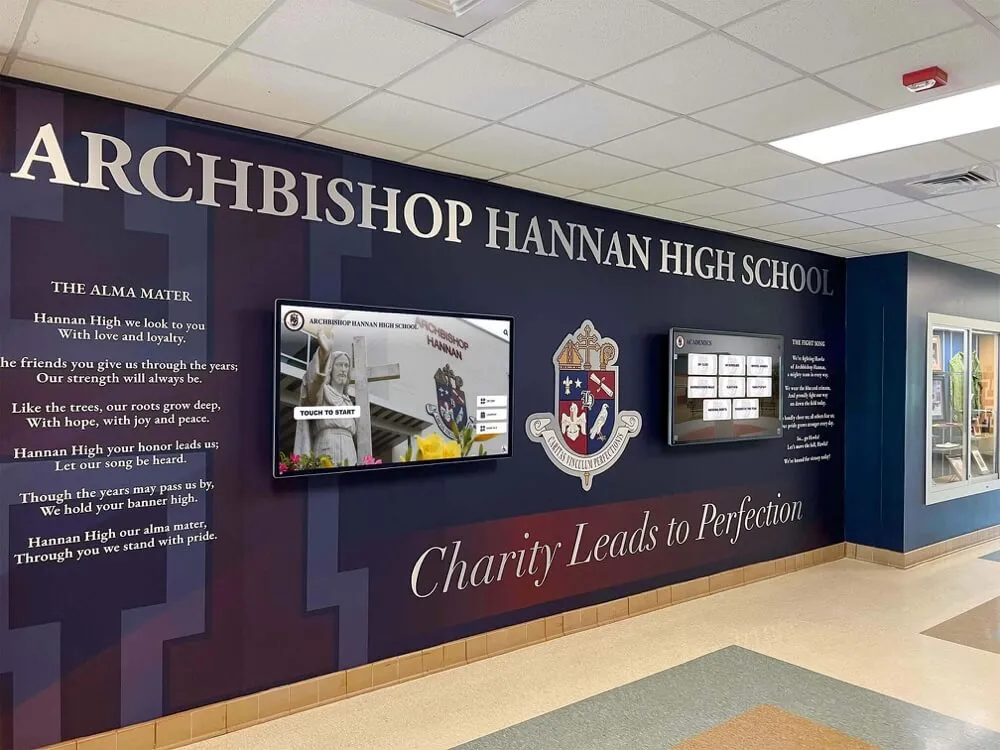
School lobby touchscreens that greet visitors and showcase school pride are increasingly standard in new construction and renovation projects at secondary schools and universities. A hall of fame touchscreen in the main lobby serves the recognition program and the institution’s broader communications and visitor experience function simultaneously.
Rocket Alumni Solutions designs interactive touchscreen recognition systems specifically built for schools, universities, booster clubs, and alumni associations. Their platform supports unlimited inductee profiles, cloud-based content management with role-based access, ADA WCAG 2.1 AA compliance, video integration, sponsorship suite capabilities, and scheduled publishing—every operational capability a formally governed hall of fame program needs to execute against its bylaws. Their hardware setup and platform integration process is documented for institutions evaluating the platform in detail.
Web-Based Public Access
A public-facing website or web-accessible profile database extends hall of fame recognition to alumni, families, and the broader community who may never visit the physical installation. Web platforms serving halls of fame should support:
- Searchable inductee directories accessible without an account or login
- Individual profile pages shareable directly via social media and email
- Mobile-responsive display that works cleanly on phones and tablets
- Embed capability for integration with the institution’s primary website
Digital recognition displays for college programs and athletic organizations demonstrate how web-based systems and physical installations can serve the same recognition mission for programs across all competitive levels and institution types.
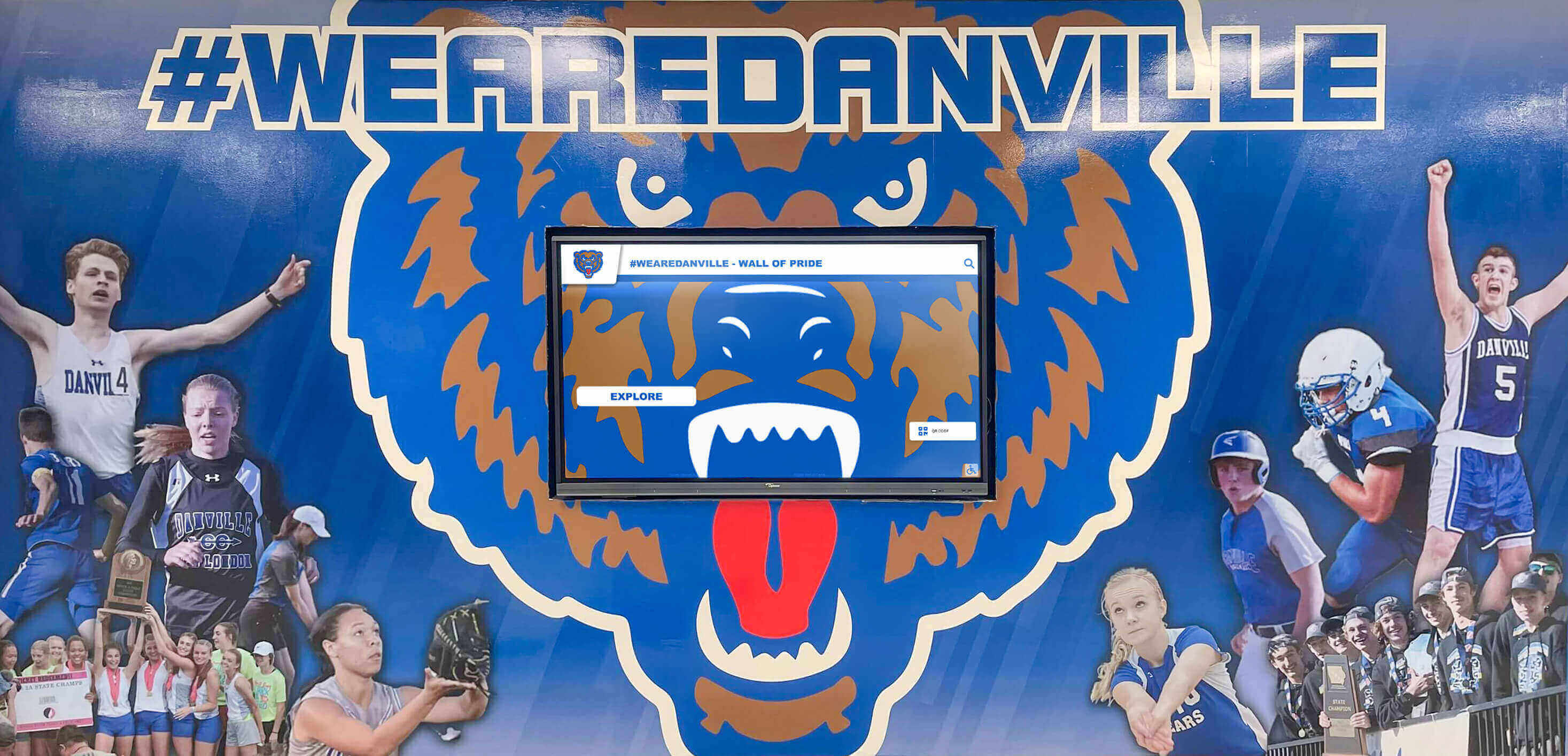
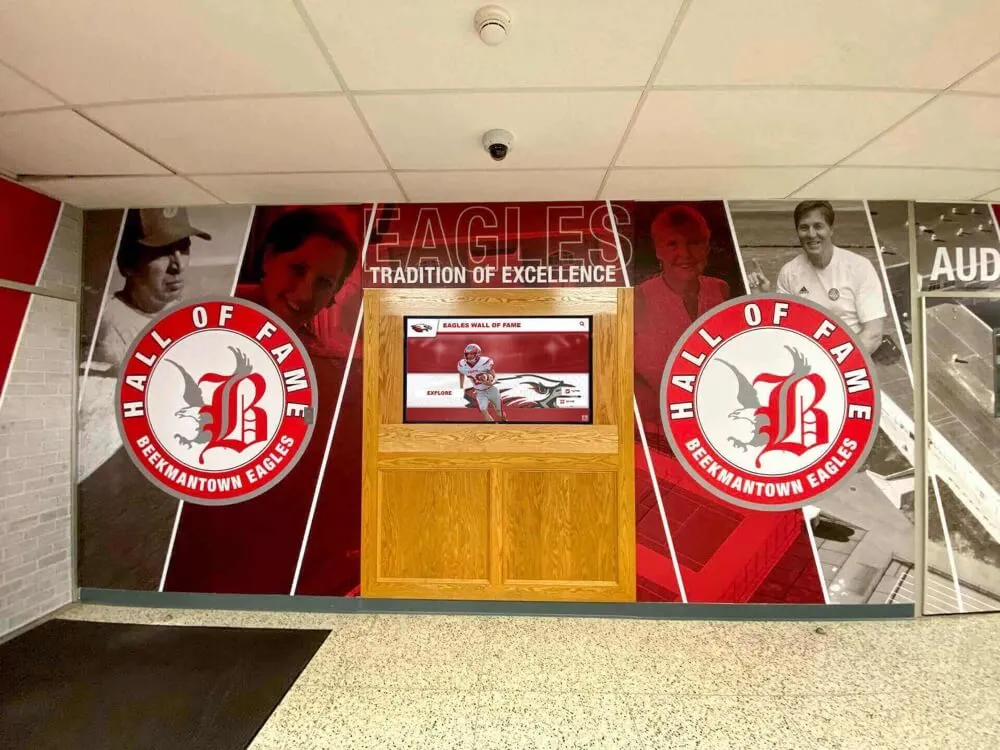
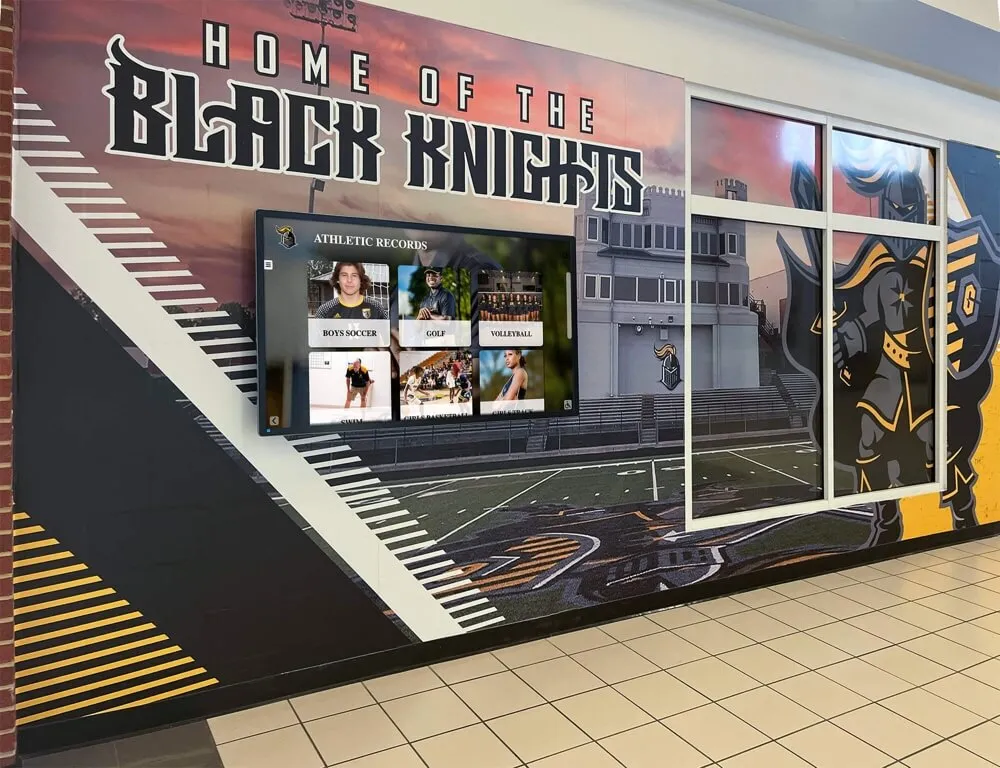
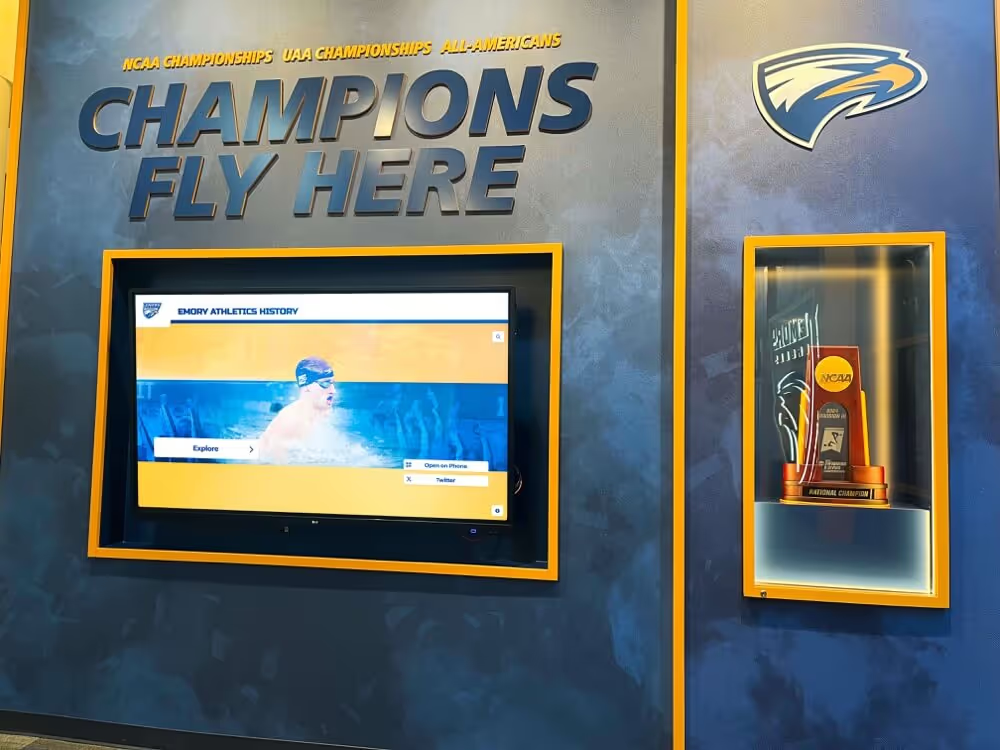
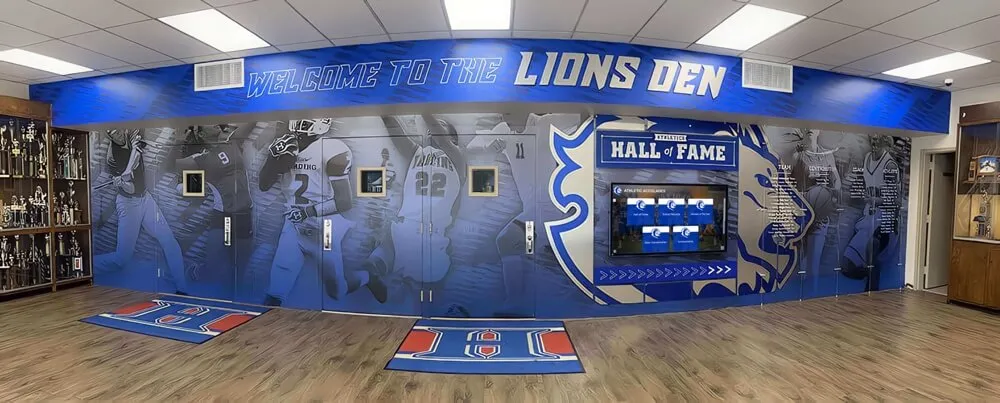
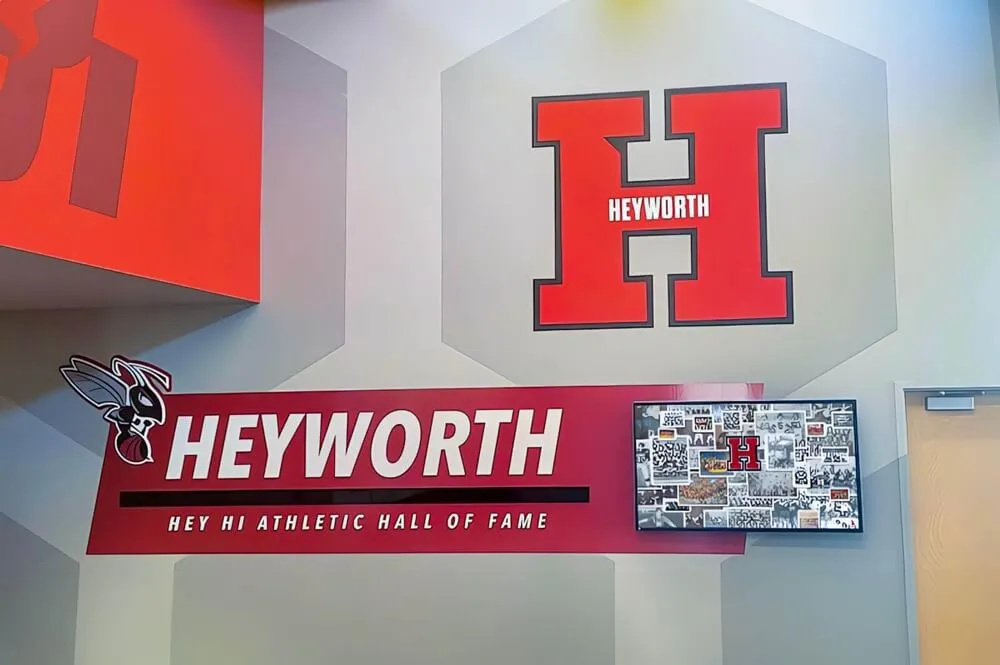
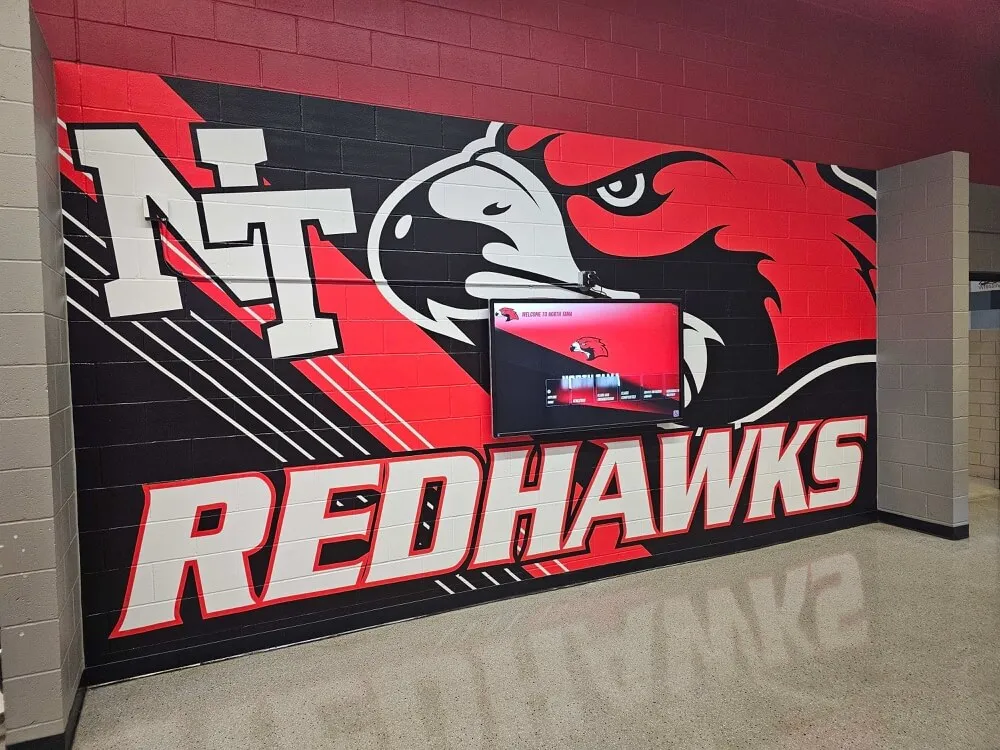
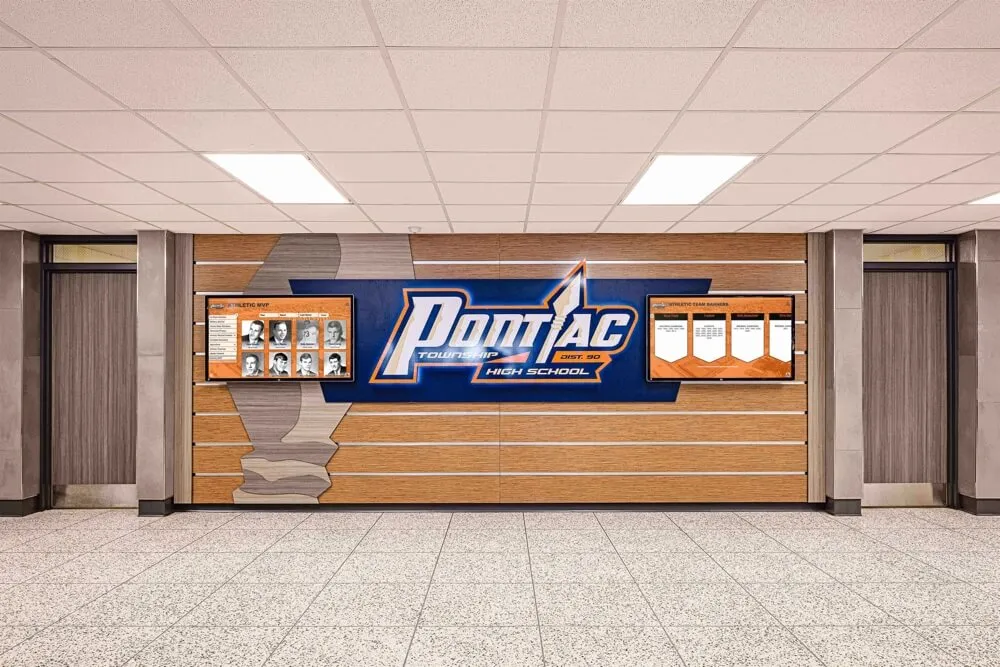
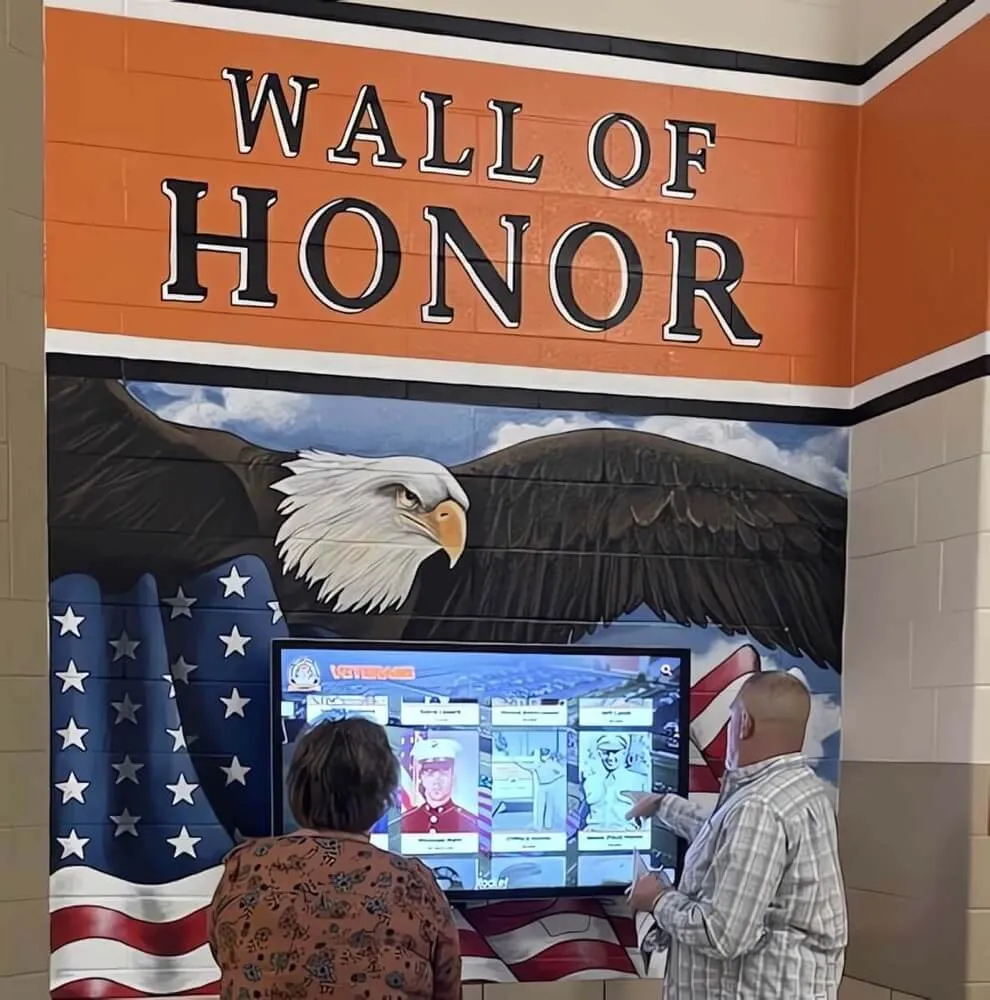
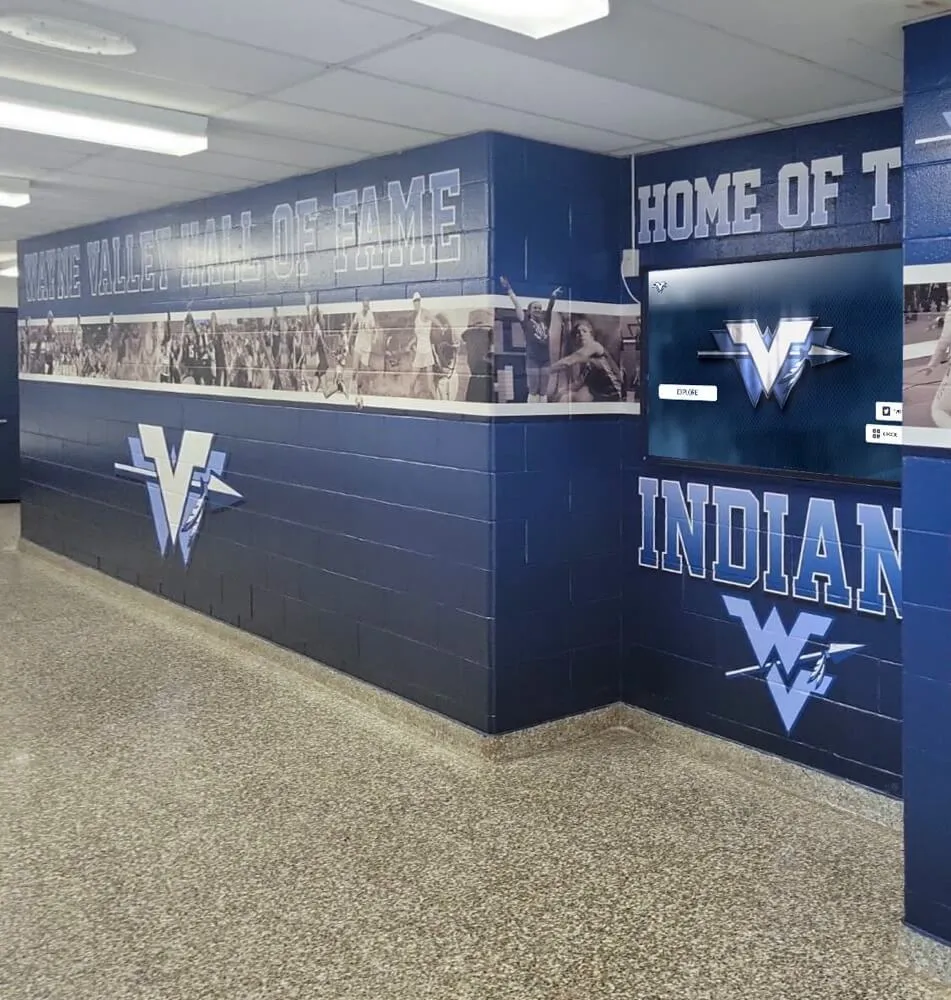
Combining a branded mural installation with a live digital display creates an always-on recognition space that remains visible to students, parents, and visitors throughout the school year
Execution Timeline: Draft Through Launch
Use this phased timeline to take your hall of fame from governance documents to a running, publicly visible program.
Phase 1 — Draft and Adopt (Weeks 1–8)
Week 1–2: Drafting Committee Convene a small working group of three to five people to adapt the bylaws template above to your institution’s specifics. Review comparable programs at peer institutions for benchmarking. Identify the governing body whose approval is required for formal adoption.
Week 3–4: Internal Review Circulate the draft to key stakeholders—athletic director, principal, alumni association, booster club leadership. Collect written comments and revise accordingly. Refer to legal counsel or your institution’s governance officer for review.
Week 5–6: Community Input Present the draft to a broader audience—faculty, current athletes, alumni, former coaches—for informal comment. Incorporate substantive feedback while maintaining the core governance structure.
Week 7–8: Formal Adoption Present the final draft to your governing body for approval. Record the adoption date as the bylaws’ effective date. File signed copies with institutional records and distribute to all initial committee members.
Phase 2 — Build and Configure (Weeks 9–16)
Committee Formation Seat the full selection committee per the adopted bylaws. Elect officers, schedule a regular meeting cadence, and conduct a committee orientation covering the bylaws text, evaluation rubric, and confidentiality obligations.
Platform Configuration Evaluate digital hall of fame platforms against your bylaws requirements. Configure CMS roles to match the approval workflow in Article VIII. Build the online nomination form around the documentation requirements in Article IV. Design the inductee profile template to match your content architecture.
Inaugural Nomination Round Announce the hall of fame publicly and open the first nomination cycle. Communicate eligibility criteria, documentation requirements, and the deadline clearly through all available institutional channels.
Phase 3 — Launch (Weeks 17–24)
Selection The committee reviews all complete nominations using the established rubric. Deliberations are conducted in confidential session. The induction class is announced following the formal vote.
Ceremony Plan the induction event: venue, format, guest accommodations, inductee notifications. Coordinate with communications for institutional press release and social media announcements. Produce inductee profiles for both the physical display and the digital platform.
Digital Platform Goes Live Schedule new inductee profiles to publish simultaneously with the ceremony. Update the physical display with recognition materials. Share inductee recognition through institutional social media, the school website, and community communications.
Phase 4 — Refresh (Ongoing, Annual)
Open the next nomination cycle per the annual deadline established in Article IV. Conduct the annual profile review and update existing content. Process committee elections or appointments as terms expire. Formally review and consider amendments to the bylaws at least every three years.
Building a well-governed hall of fame also supports the broader recognition culture your institution creates—from formal induction ceremonies to the everyday school spirit traditions and recognition activities that keep community pride visible all year.
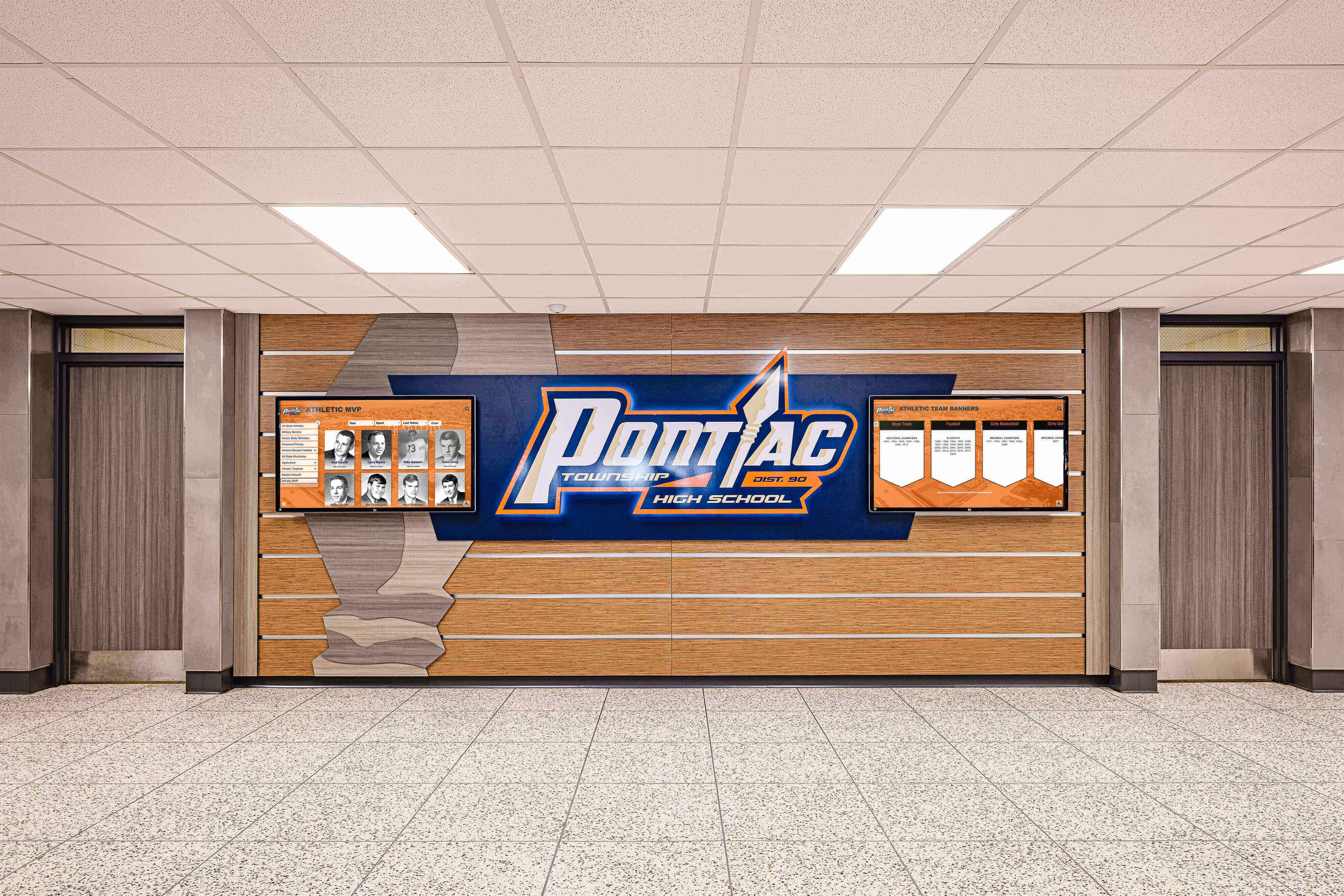
A hall of fame governed by formal bylaws maintains consistent recognition standards from the first induction class through the twentieth—every display addition earns its place by the same documented criteria
Measuring Program Health
Bylaws-driven programs benefit from simple metrics confirming the governance structure is functioning as intended.
Nomination volume: Receiving meaningful nominations each cycle confirms the program is visible and the criteria are understood. Low volume indicates a promotion gap; very high volume may suggest the eligibility criteria are too broad.
Selection rate: The percentage of nominees inducted each cycle reveals whether your threshold is calibrated correctly. Consistently above 80% suggests criteria may be too permissive. Consistently below 20% often indicates a documentation or outreach problem rather than a genuine shortage of worthy candidates.
Committee participation: All seated members should participate in deliberations. Chronic quorum challenges signal an appointment process or meeting cadence that needs adjustment.
Profile completeness: Are inductee profiles in the digital platform complete and current? Gaps indicate an operational disconnect between the governance framework and the day-to-day execution workflow.
Community engagement: Are inductees, their families, and the broader institutional community engaging with the recognition—attending ceremonies, sharing profiles online, responding to social announcements? Genuine engagement validates that your purpose statement reflects real community values rather than aspirational ones.
Conclusion: Governance First, Then Celebration
A hall of fame is a long-term promise to every person it honors: your achievement is real, it is documented, and it will remain visible for as long as this institution stands. Bylaws are the legal and operational framework that makes that promise credible across time—through leadership changes, contested nominations, and whatever circumstances no one anticipated when the program launched.
The seven-component framework covers every governance decision your program will face: name and purpose, committee structure, eligibility, nomination, selection, induction class parameters, and removal. The template above gives you a working draft to adapt with your institution’s specifics. The digital platform guidance shows how each governance rule translates into an operational decision in your recognition system.
Draft the bylaws before the first induction class. Adopt them through your institution’s formal approval process. Build your digital and physical displays to match them. Then hold the ceremony.
The recognition your inductees receive will mean more—to them, to their families, and to everyone in your institution—because it was earned through a fair, documented, consistently applied process that will outlast every person who designed it.
Build Your Hall of Fame on Solid Ground
Governance documents define who belongs in your hall of fame. Rocket Alumni Solutions builds the interactive touchscreen displays and digital platforms that bring those inductees to life—year-round, for every student, family member, and visitor who walks through your doors. Request a free custom demo and see what your program could look like.
Request Your Free Custom DemoLive Example: Rocket Alumni Solutions Touchscreen Display
Interact with a live example (16:9 scaled 1920x1080 display). All content is automatically responsive to all screen sizes and orientations.