Football Record Board Ideas: How to Display Your Team's Greatest Achievements
- Home /
- Digital Hall of Fame Insights & Resources /
- Football Record Board Ideas: How to Display Your Team's Greatest Achievements
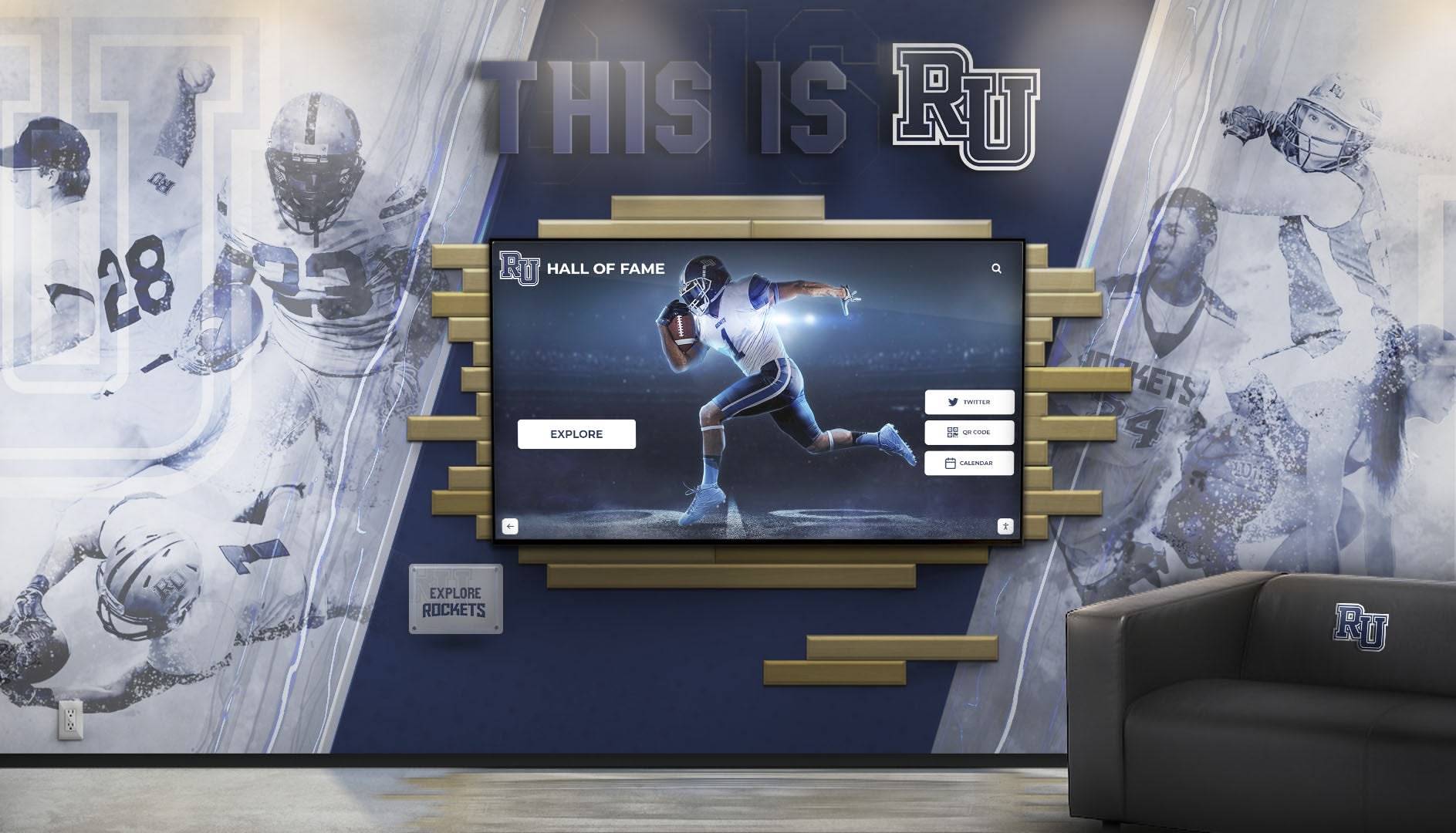
The Easiest Touchscreen Solution




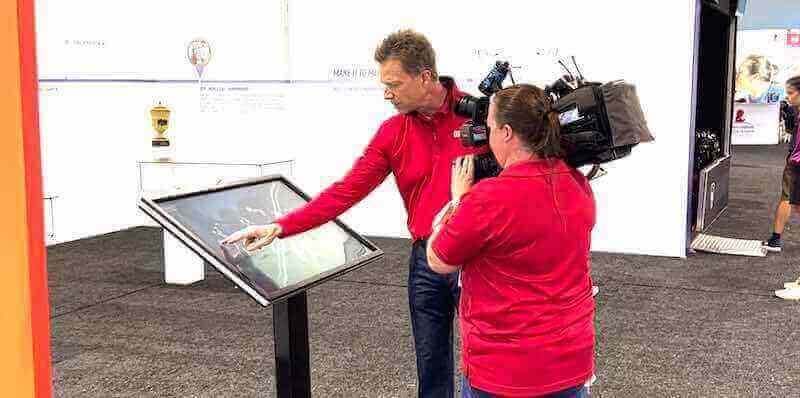
Live Example: Rocket Alumni Solutions Touchscreen Display
Interact with a live example (16:9 scaled 1920x1080 display). All content is automatically responsive to all screen sizes and orientations.
Every championship season, record-breaking performance, and legendary athlete contributes to your football program’s unique heritage. Yet many athletic directors and coaches struggle with a common challenge: how do you showcase decades of achievements when wall space is limited, records constantly change, and you want displays that inspire current players while honoring past greatness?
Traditional approaches—static plaques that become outdated when records fall, trophy cases that overflow with limited space, painted record boards requiring expensive updates each season, and recognition scattered across multiple hallway locations—create fragmented experiences that fail to tell your program’s complete story. Football programs with rich histories deserve recognition systems that celebrate comprehensive achievement while remaining practical to maintain as new records emerge.
This guide explores football record board ideas spanning traditional physical displays to modern digital solutions, helping athletic administrators create recognition systems that showcase team championships, individual statistical leaders, milestone achievements, and program traditions in ways that strengthen culture and inspire the next generation of athletes who will add their names to your program’s legacy.
Football record boards serve purposes extending beyond simple data display—they create visual celebrations of excellence that define program standards, establish aspirational goals motivating current athletes to pursue greatness, preserve institutional memory connecting generations of players, and demonstrate commitment to honoring achievement that strengthens alumni engagement and community pride.

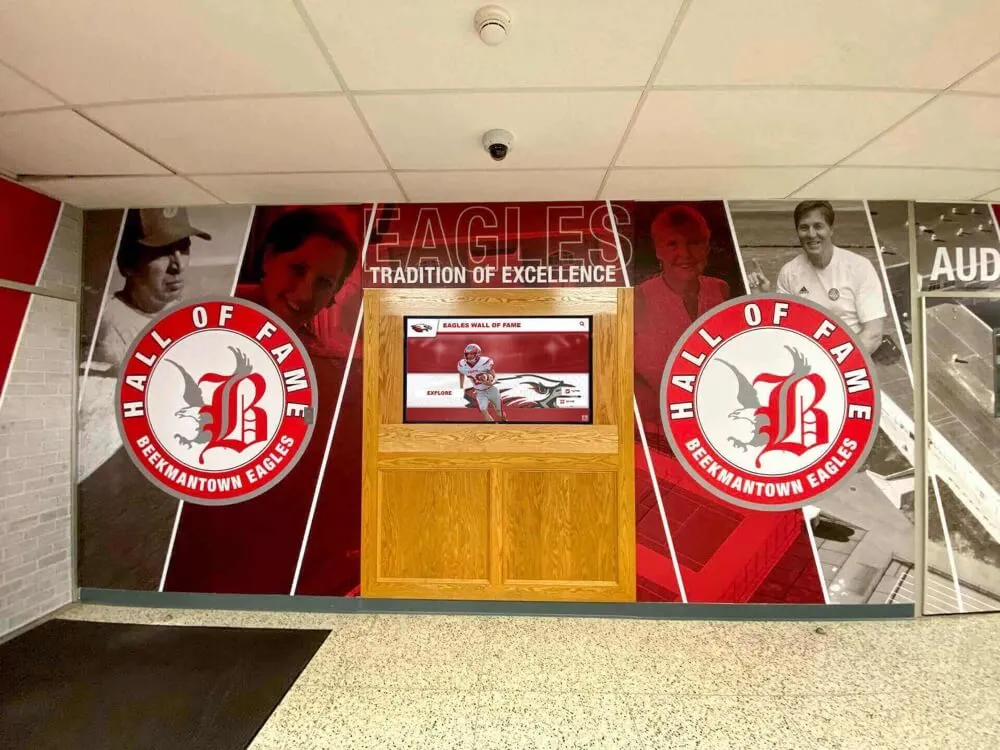
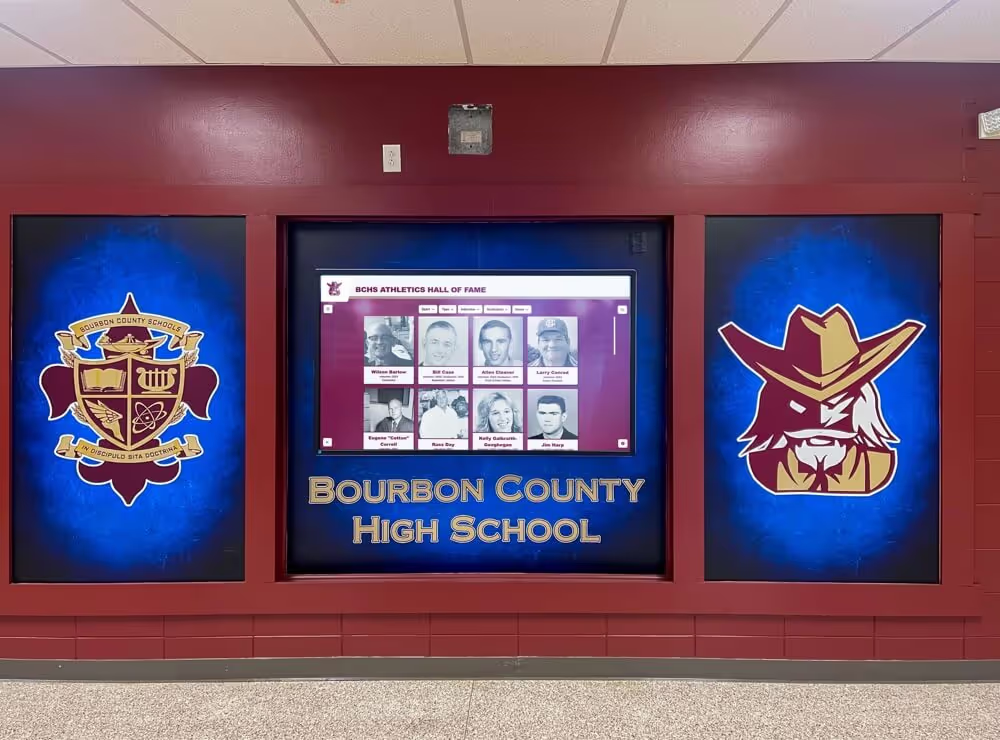
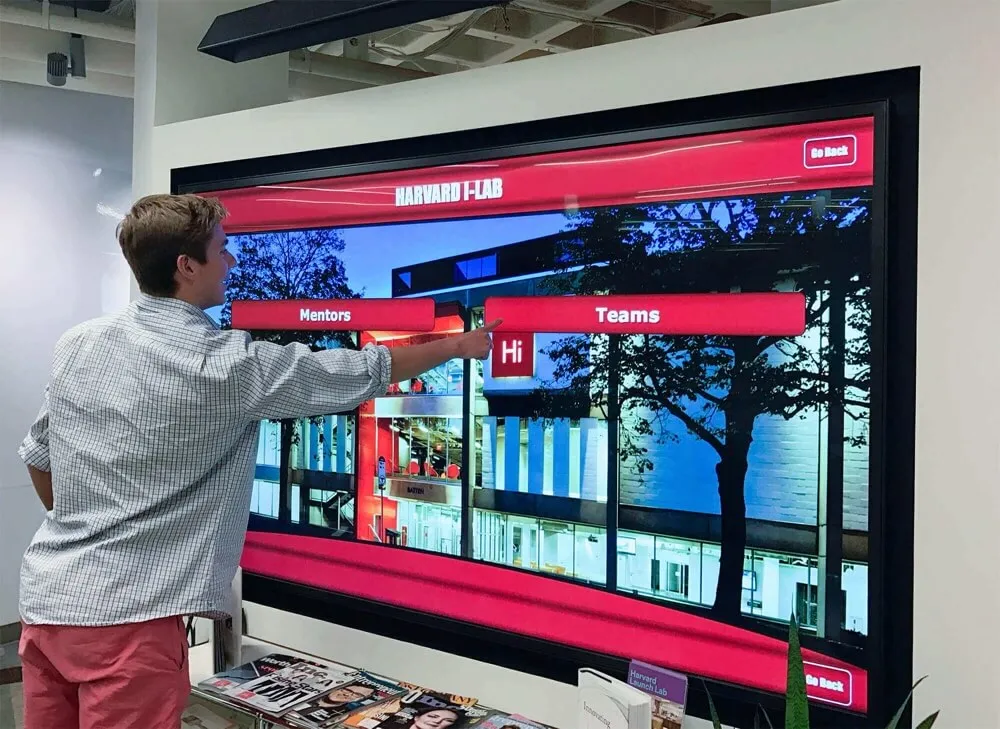
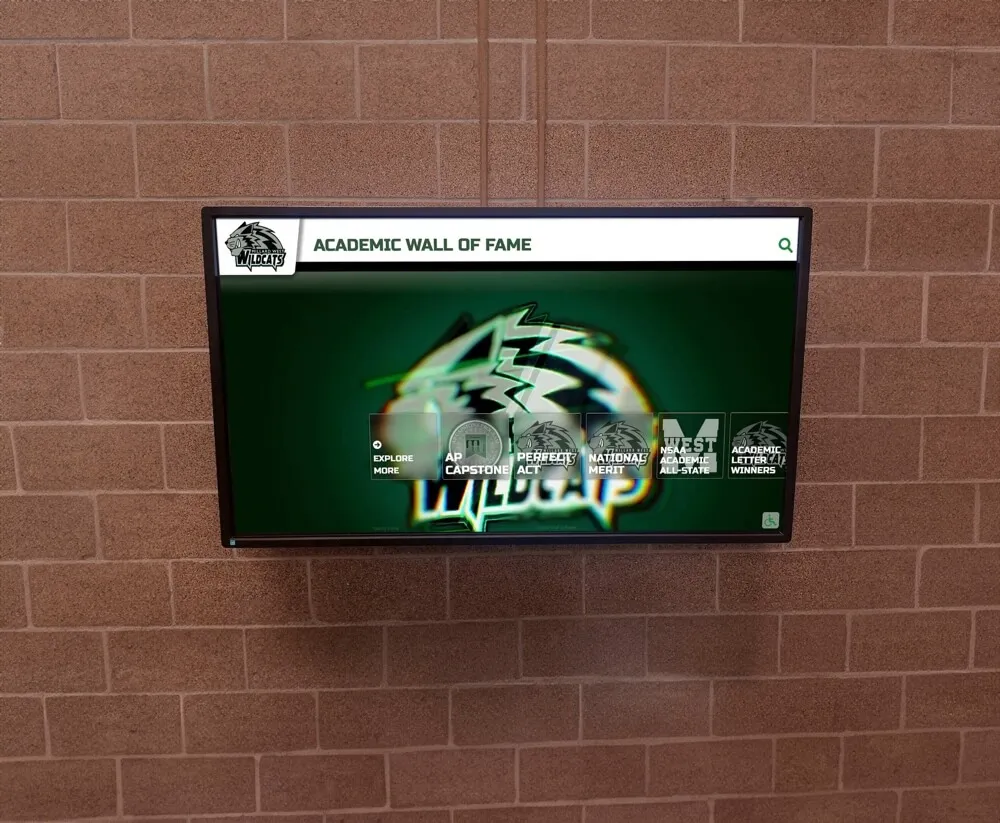
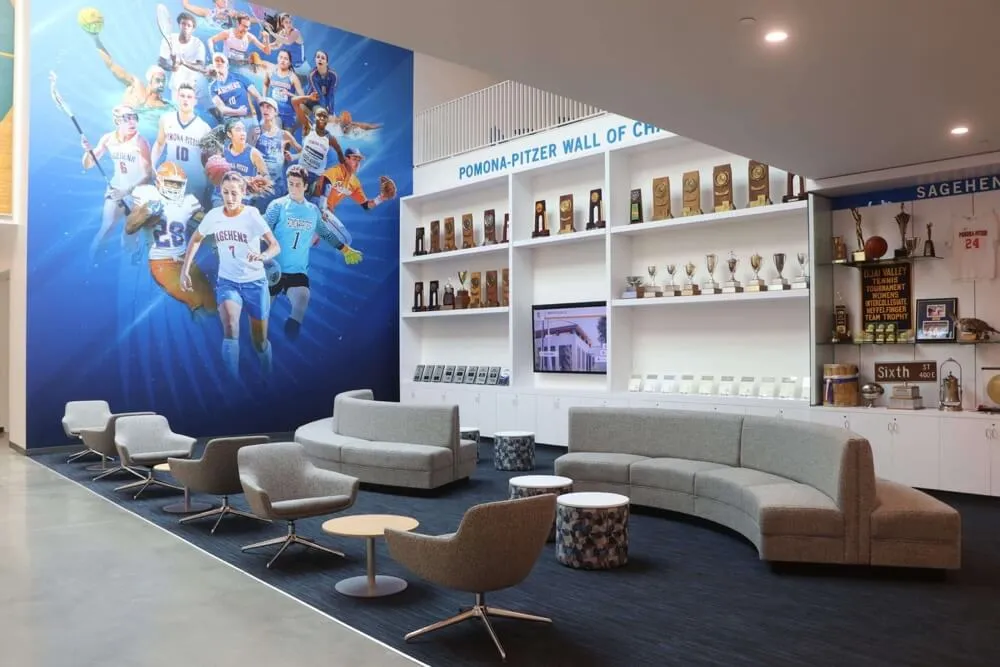
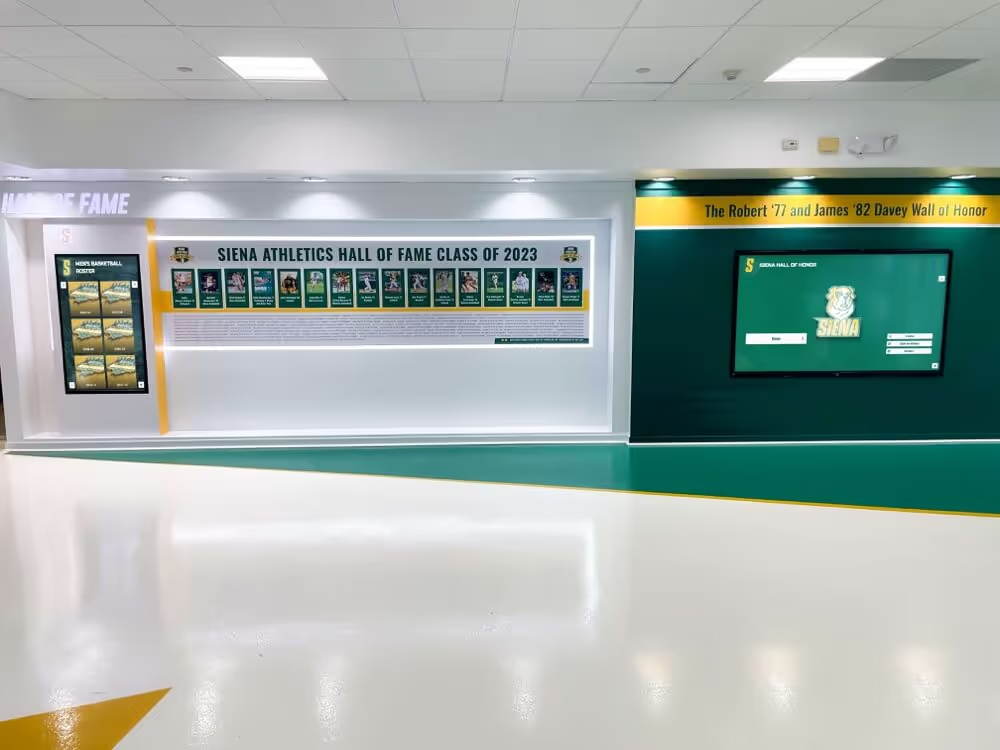
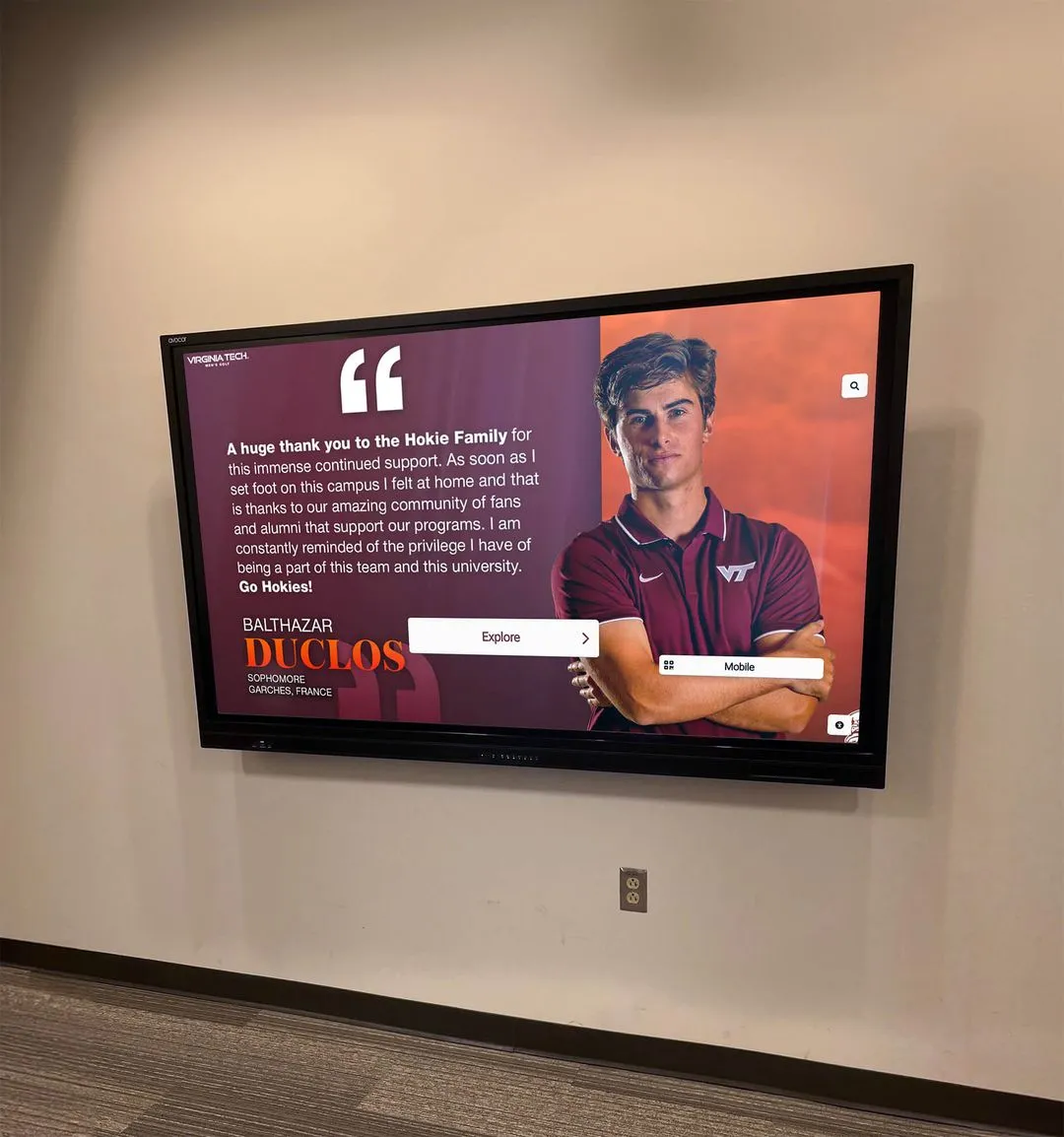
Modern football record boards combine visual impact with comprehensive information, creating focal points that celebrate program history in high-traffic areas
Understanding Football Record Board Fundamentals
Before selecting specific display approaches, understanding the essential components of effective football recognition helps programs design systems that celebrate achievement comprehensively while remaining manageable to update and maintain across seasons.
What Achievements Should Football Record Boards Include?
Comprehensive football record boards typically showcase multiple achievement categories addressing different excellence dimensions:
Individual Statistical Records
Single-season and career leaders in major statistical categories:
- Career rushing yards and single-season rushing records
- Passing yards for career and individual seasons
- Receiving statistics including career receptions and yards
- Scoring records covering career points and touchdowns
- Defensive achievements like tackles, sacks, and interceptions
- Special teams records for kicking, punting, and return yards
- All-purpose yards combining multiple statistical categories
- Consecutive game streaks for various statistical achievements
Team Achievement Recognition
Program-level accomplishments celebrating collective excellence:
- Championship seasons including conference and state titles
- Playoff appearances and advancement depth
- Undefeated seasons and longest winning streaks
- Team statistical records for points scored or fewest allowed
- Historical win-loss records by decade or era
- Rivalry game results and trophy possession
- National rankings and state poll achievements
- Team award winners like state team of the year recognition
Individual Honors and Awards
External recognition celebrating exceptional individual achievement:
- All-Conference and All-State selections by position
- State and national player of the year awards
- All-American recognition for elite performers
- Individual position-specific state awards
- Academic all-state and scholar-athlete honors
- College commitment and scholarship recognition
- Professional career advancement for program alumni
- Special recognition awards like courage or comeback honors
Understanding championship trophy case display strategies helps programs integrate record boards within broader athletic recognition systems.
Milestone Achievement Celebration
Special accomplishments marking extraordinary individual performance:
- 1,000-yard rushing or receiving seasons
- Perfect field goal seasons or consecutive kicks made
- Multiple touchdown game performances
- Career milestones like 100+ tackles or 50+ career touchdowns
- Longest plays from scrimmage, kick returns, or field goals
- Iron man performances for consecutive games played
- Single-game record performances in various categories
- Multi-sport athlete recognition for exceptional versatility
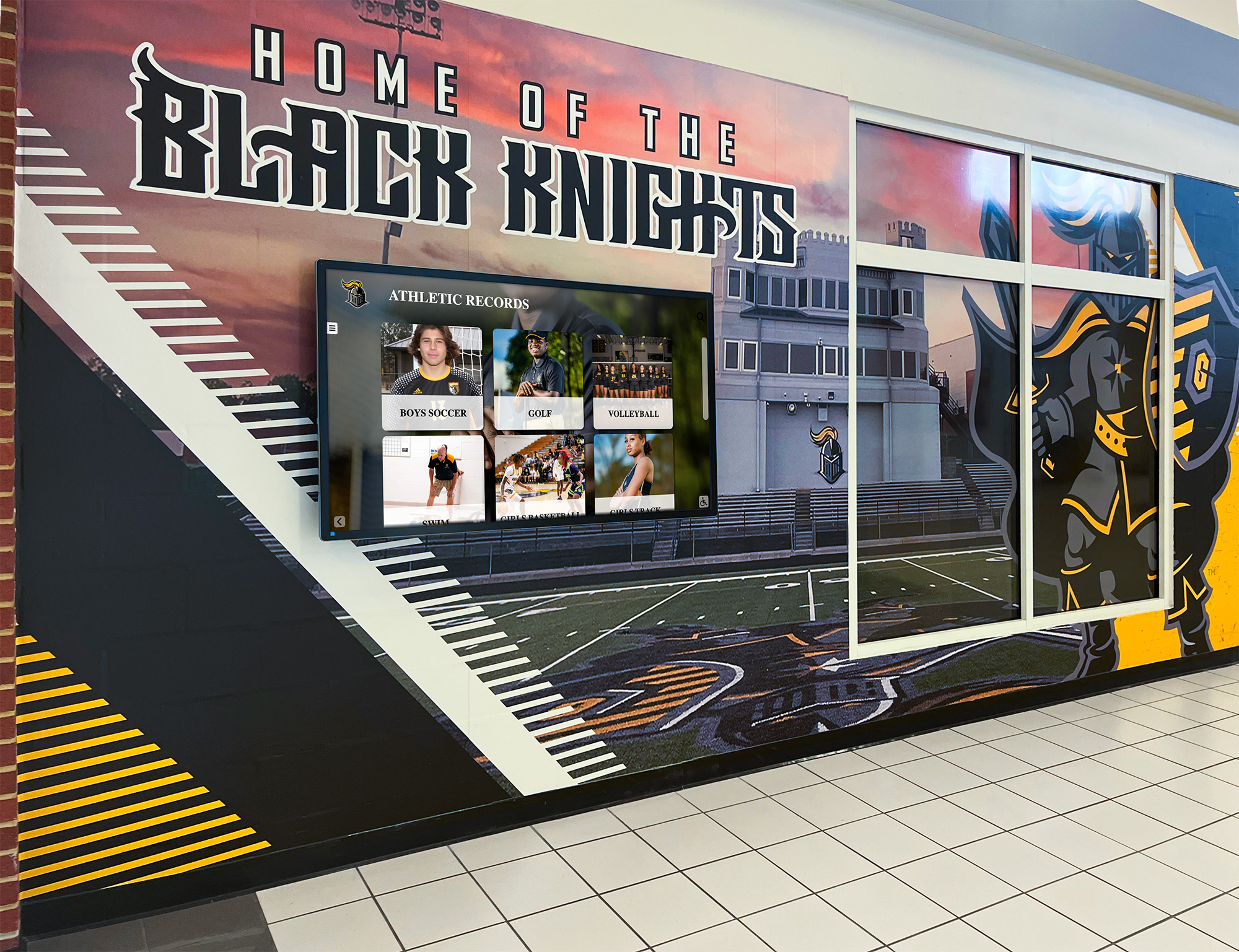
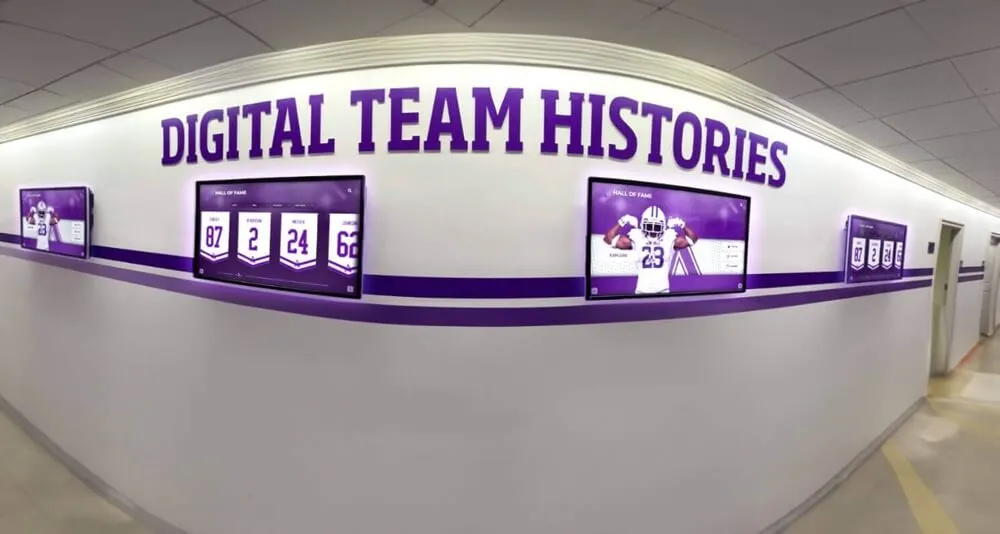
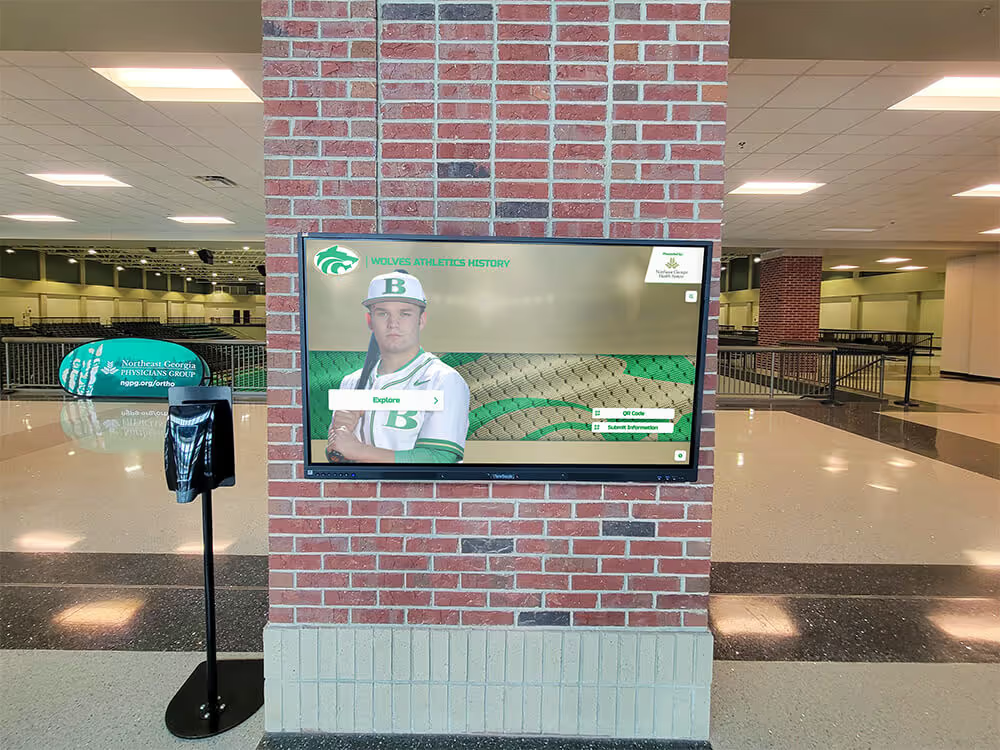
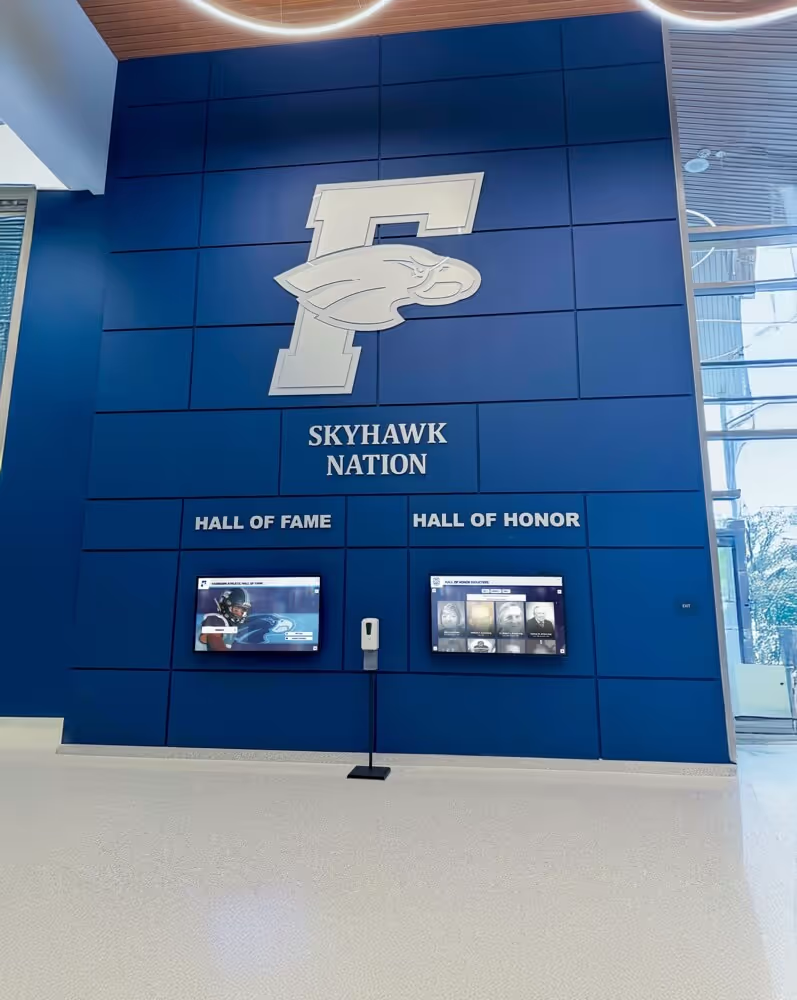
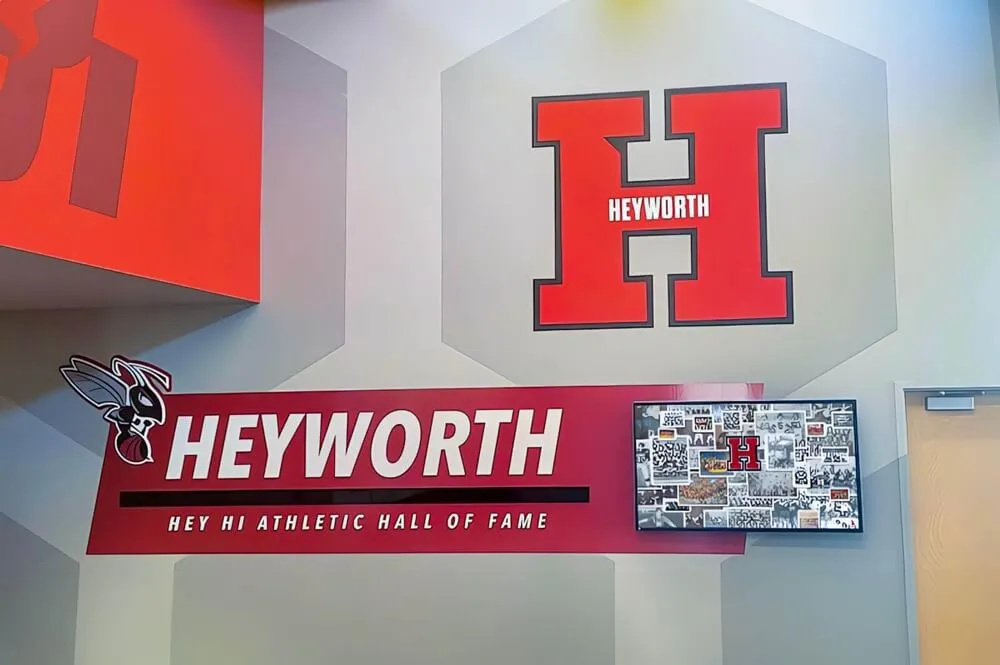
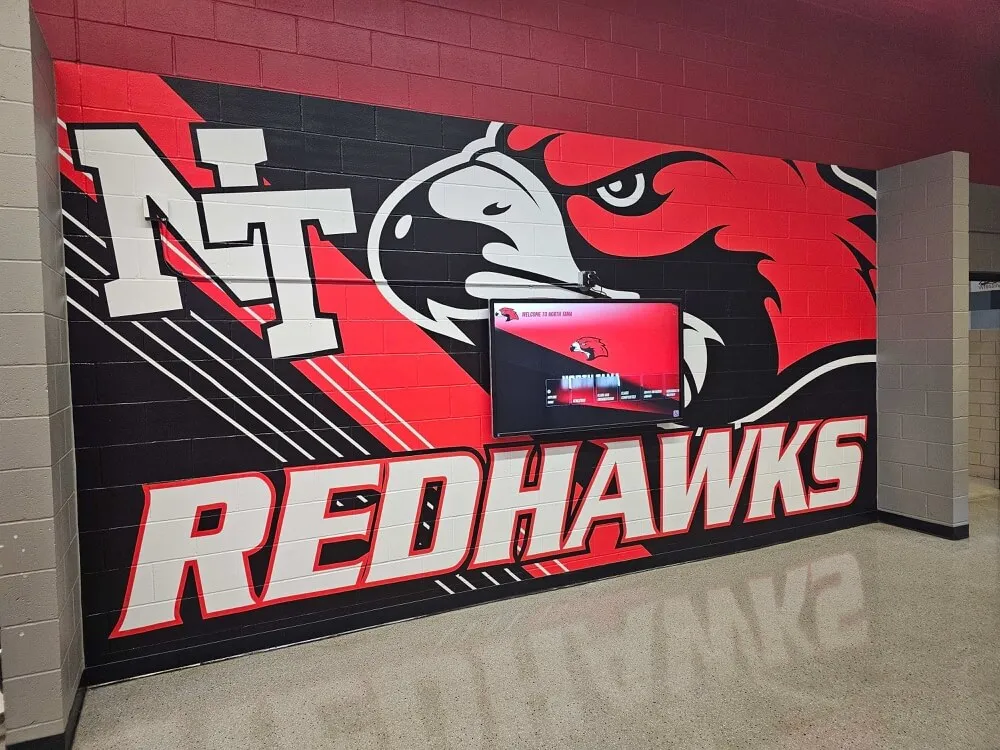
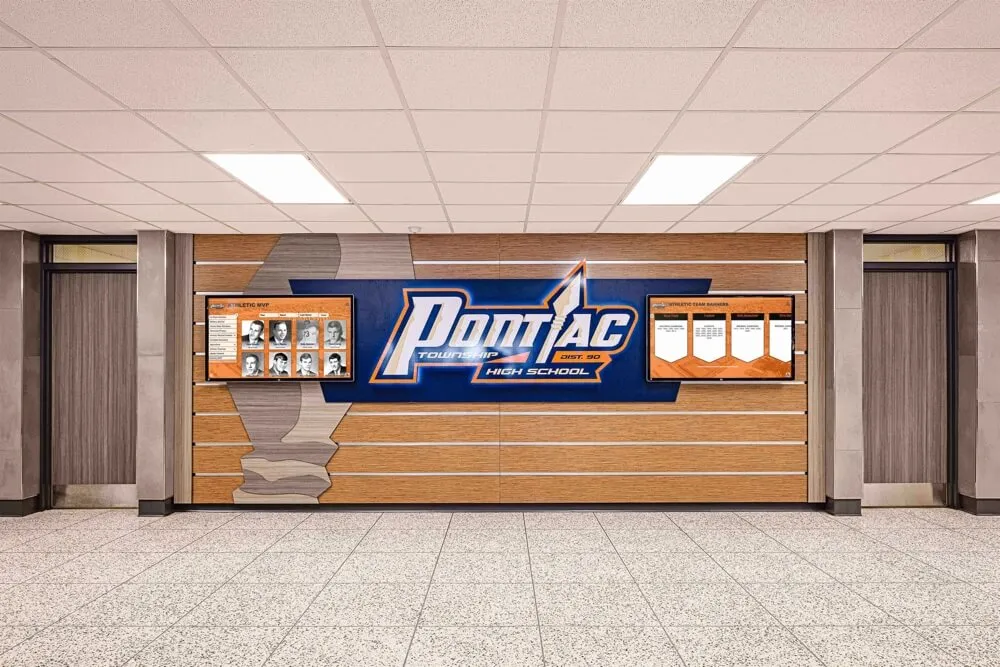
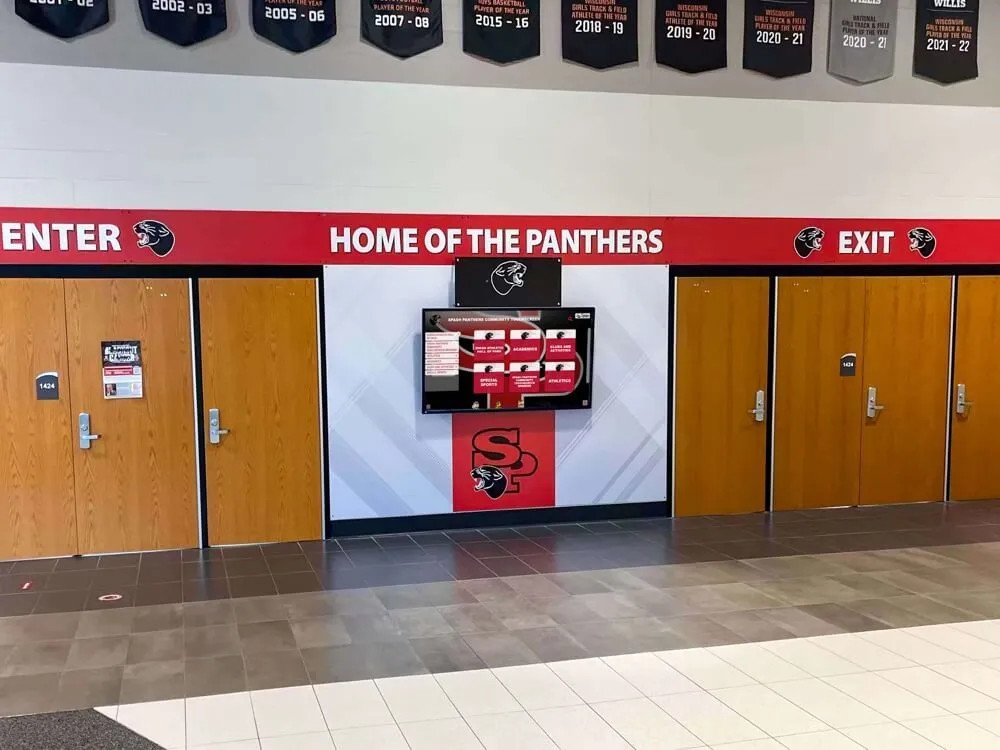
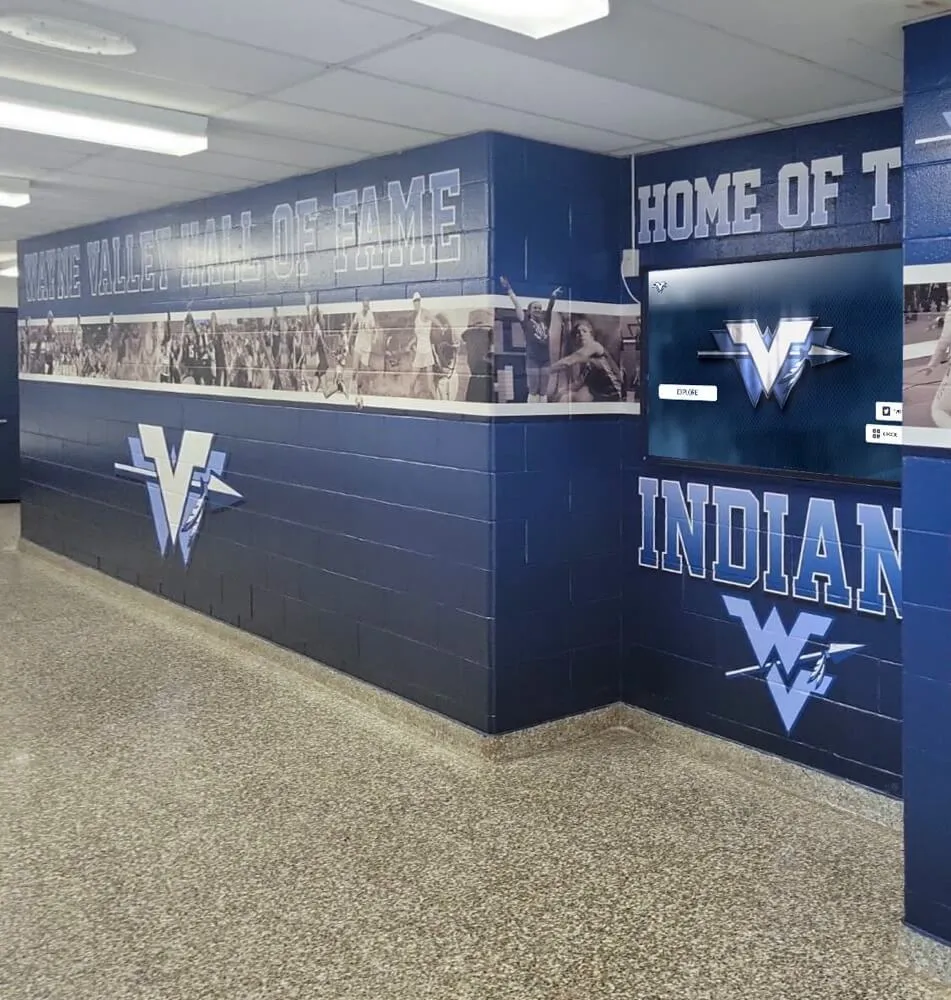
Strategic hallway placement ensures record boards reach maximum audience while creating destination recognition areas within athletic facilities
Design Considerations for Football Record Boards
Effective football record boards address several practical and aesthetic considerations that influence visibility, impact, and long-term functionality:
Location and Visibility Planning
Record board placement significantly impacts recognition effectiveness:
- High-traffic areas ensuring regular exposure to students, athletes, and visitors
- Athletic facility locations like locker room entrances or field house lobbies
- Main hallway positions near gymnasiums or administrative areas
- Stadium or press box exterior displays visible during game days
- Weight room or training facility placements inspiring athlete workouts
- Multiple location strategies distributing recognition across campus
- Sight line considerations ensuring boards remain visible and unobstructed
Information Organization Approaches
Thoughtful content structure helps viewers navigate achievement information effectively:
- Chronological organization showing records by season or era
- Category-based grouping organizing statistical, team, and honor achievements separately
- Position-specific sections highlighting records by quarterback, running back, receiver positions
- Career versus single-season record separation clarifying achievement context
- Current versus all-time record distinction when tracking evolving achievements
- Visual hierarchies emphasizing major achievements while including comprehensive recognition
- Supporting context like dates, opponents, and game situations adding meaning to statistics
Aesthetic Integration with Program Branding
Record boards should reinforce visual identity while maintaining readability:
- Team color schemes creating immediate program association
- Logo integration establishing institutional connection
- Typography selections balancing tradition with modern readability
- Background treatments supporting rather than competing with content
- Material choices reflecting program character and facility aesthetics
- Lighting considerations ensuring visibility under various conditions
- Scale appropriate to viewing distances and surrounding architectural context
Many programs explore exciting hallway display approaches that create comprehensive recognition environments beyond individual boards.
Traditional Football Record Board Options
Physical record boards offer permanence and visual impact while requiring thoughtful planning regarding updates and space constraints as programs add achievements over time.
Painted Wall Record Boards
Custom painted displays create bold visual statements celebrating football achievement:
Design and Implementation
Professional muralists or athletic departments create painted record boards featuring:
- Large-scale typography making records visible from distance
- Team color backgrounds establishing immediate visual connection
- Integrated graphics incorporating mascots, logos, or football imagery
- Statistical categories organized by position or achievement type
- Permanent record holders with achievement years
- Dedicated update areas designed for regular modification
- Protective coatings preserving finish quality over time
Advantages of Painted Boards
Painted displays offer several distinctive benefits:
- High visual impact creating destination recognition features
- Customization potential matching specific architectural environments
- No ongoing technology costs or maintenance requirements
- Permanence signaling institutional commitment to tradition
- Flexibility in size and shape adapting to available wall space
- Integration with surrounding murals creating comprehensive athletic environments
Maintenance and Update Considerations
Painted boards require planning for inevitable changes:
- Update frequency planning as records fall and achievements accumulate
- Paint matching systems ensuring visual consistency with modifications
- Professional update services or in-house capability development
- Budget allocation for periodic refresh and record additions
- Design approaches accommodating limited changes without full repainting
- Alternative recognition for records broken between update cycles
- Long-term planning for space limitations as achievement lists grow
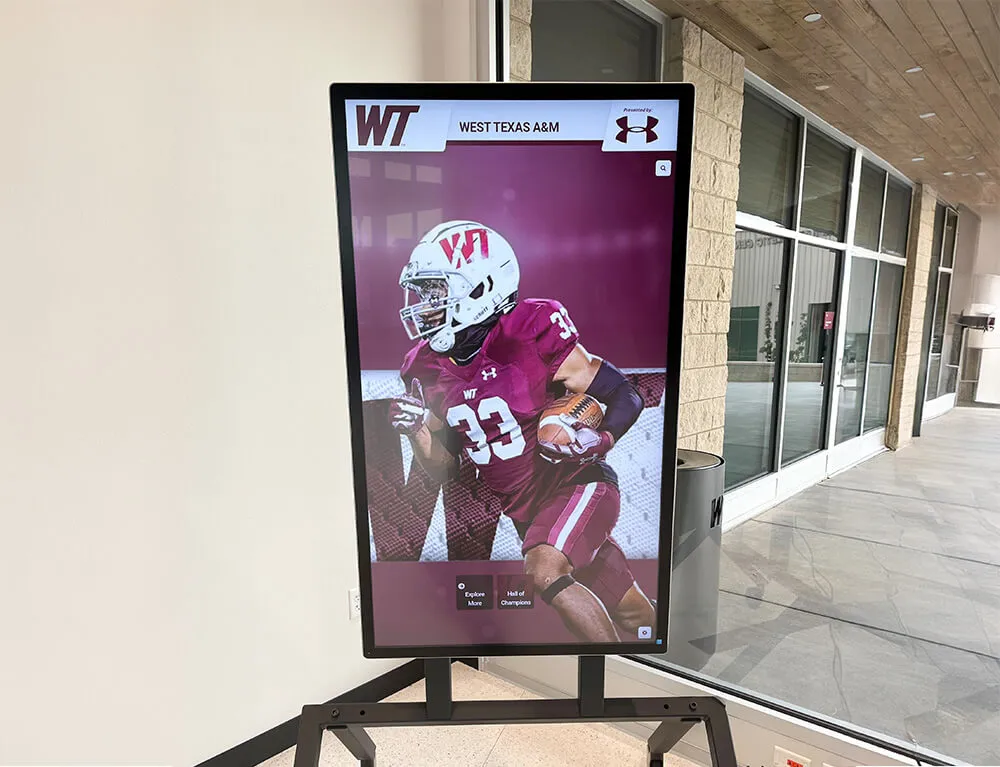
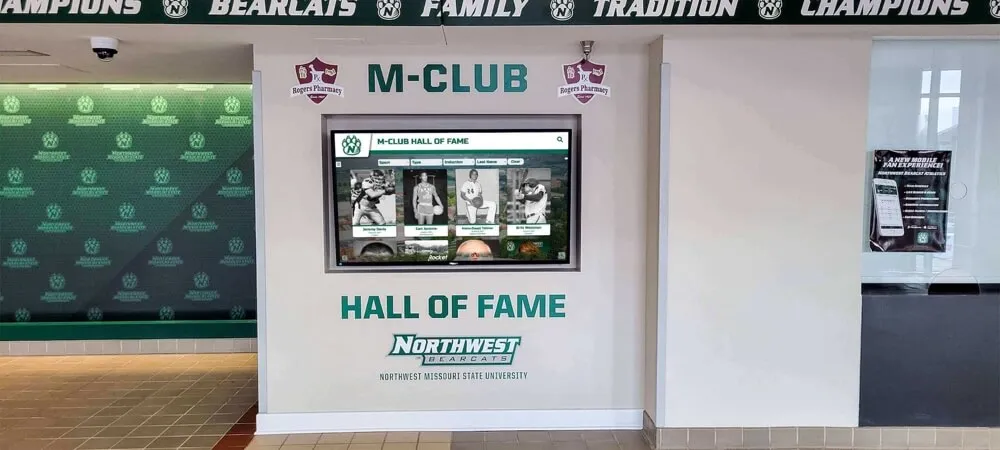
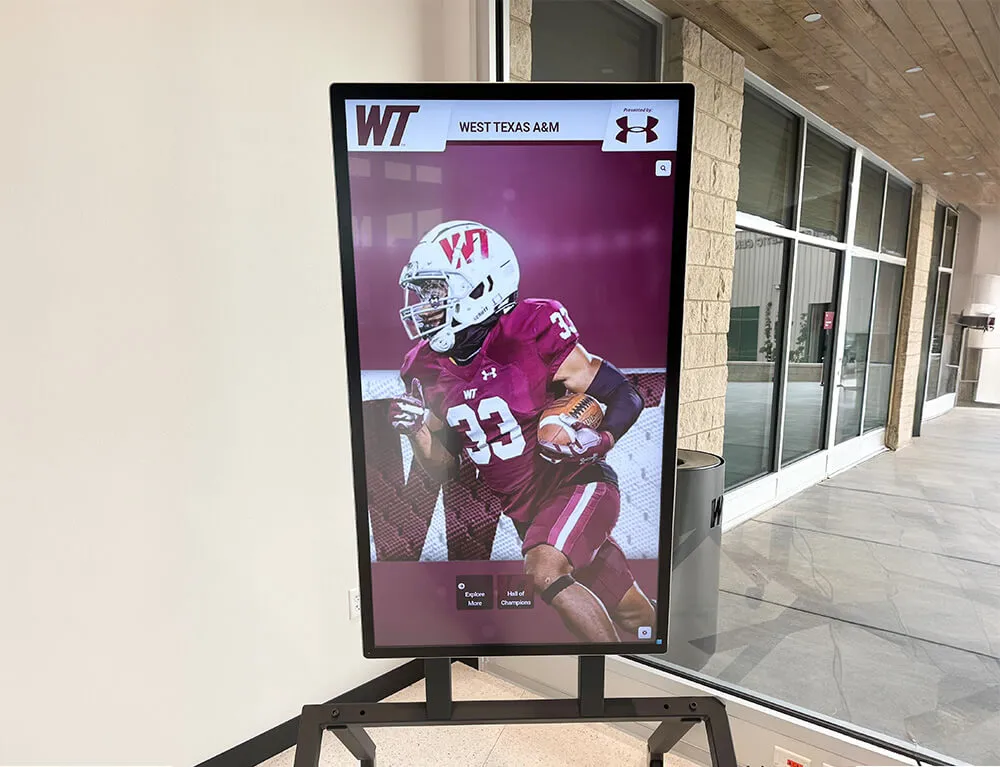
Individual player recognition within record board systems celebrates specific achievements while providing context about legendary performances
Plaque and Engraved Board Systems
Permanent plaque installations provide formal recognition with traditional aesthetic:
Construction and Materials
Physical plaque systems incorporate various materials:
- Bronze or aluminum plaques with engraved records
- Wood backing boards stained in team colors
- Acrylic or metal mounting systems for individual recognition plaques
- Etched glass or crystal displays for premium installations
- Laser-engraved materials ensuring precise lettering quality
- Weather-resistant materials for outdoor stadium installations
- Modular systems allowing individual plaque additions over time
Organization Strategies
Plaque board systems benefit from thoughtful structural planning:
- Master header plaques identifying record categories
- Individual record plaques for specific achievements
- Chronological arrangement showing program evolution
- Reserved spaces anticipating future record additions
- Consistent sizing creating visual harmony across plaques
- Systematic naming conventions ensuring clarity
- Hierarchical emphasis distinguishing major versus secondary records
Long-Term Sustainability
Plaque systems require infrastructure planning:
- Initial capacity planning accommodating decades of achievement
- Expansion locations when primary boards reach capacity
- Archive systems for replaced record plaques
- Standardized plaque specifications ensuring consistency
- Vendor relationships maintaining access to matching materials
- Budget processes funding regular additions
- Installation expertise maintaining structural integrity
Magnetic and Changeable Letter Boards
Flexible traditional boards enable regular updates without permanent modification:
System Components
Changeable boards incorporate several functional elements:
- Magnetic backing surfaces accepting metal letters and numbers
- Pre-printed headers identifying statistical categories
- Letter and number sets in consistent fonts and sizes
- Storage systems organizing unused characters
- Weather-resistant materials for outdoor applications
- Lighting integration ensuring visibility
- Locking mechanisms preventing unauthorized changes
Update Advantages
These systems offer practical maintenance benefits:
- In-house update capability without professional services
- Immediate modifications when records fall
- Cost-effective operation over extended periods
- Flexibility accommodating program changes or reorganization
- Minimal special skills required for maintenance
- Regular accuracy ensuring current information display
- Seasonal refreshes keeping content relevant
Design Limitations
Changeable boards involve certain trade-offs:
- Limited aesthetic sophistication compared to custom installations
- Character availability constraining content complexity
- Potential for missing or damaged letters affecting appearance
- Manual update requirements creating ongoing responsibility
- Visual style that may appear dated in modern facilities
- Limited capacity for comprehensive statistical context
- Vandalism vulnerability in unsecured locations
Exploring touchscreen technology history reveals how recognition display options have evolved beyond traditional static approaches.
Modern Digital Football Record Board Solutions
Digital display systems address traditional board limitations while offering capabilities transforming how programs showcase achievement and engage audiences.
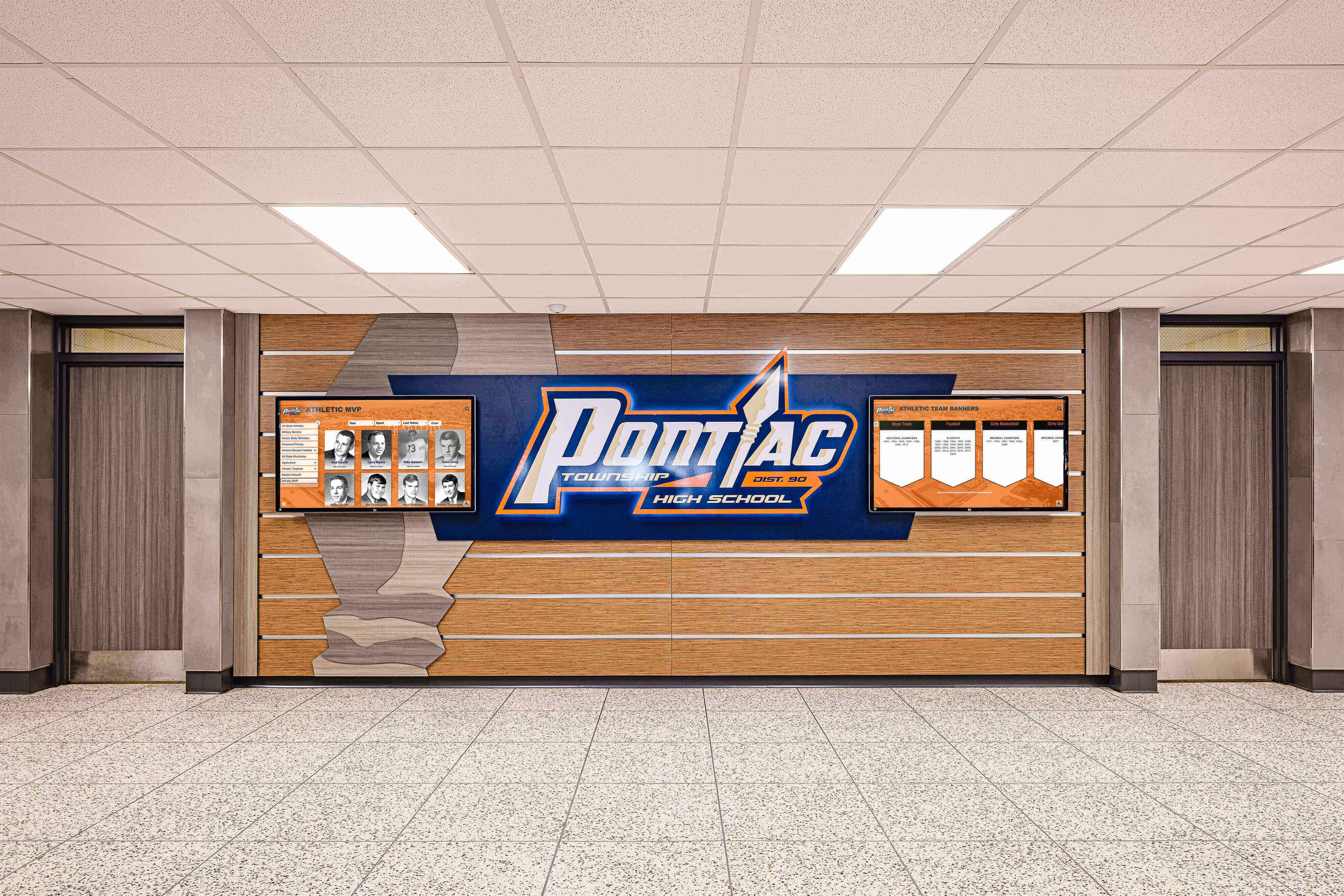
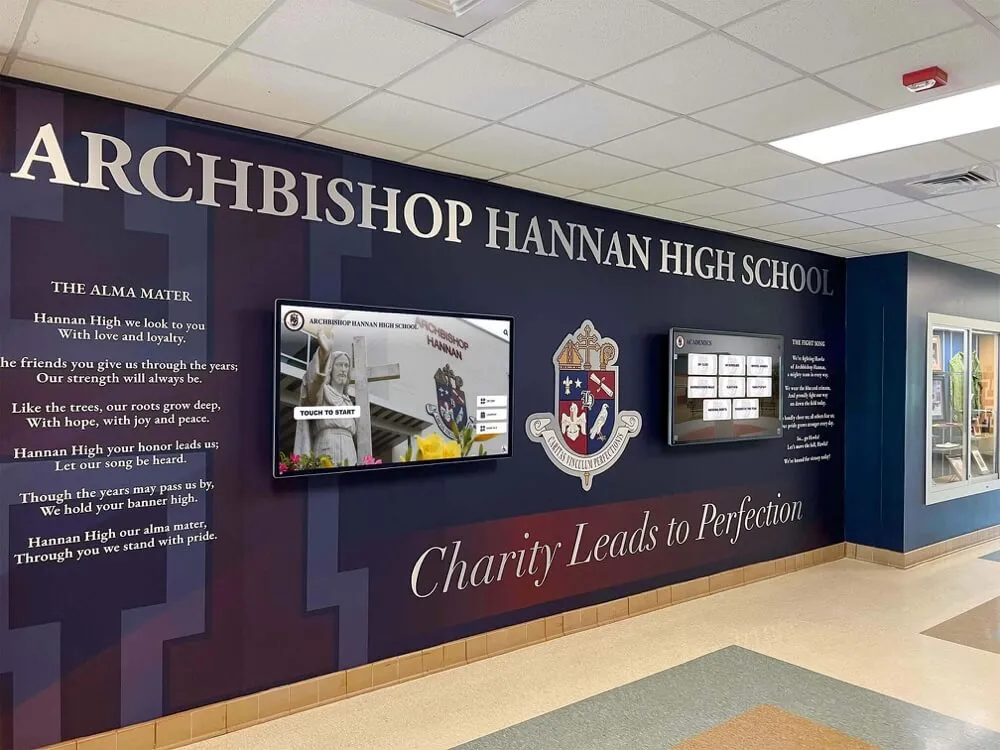
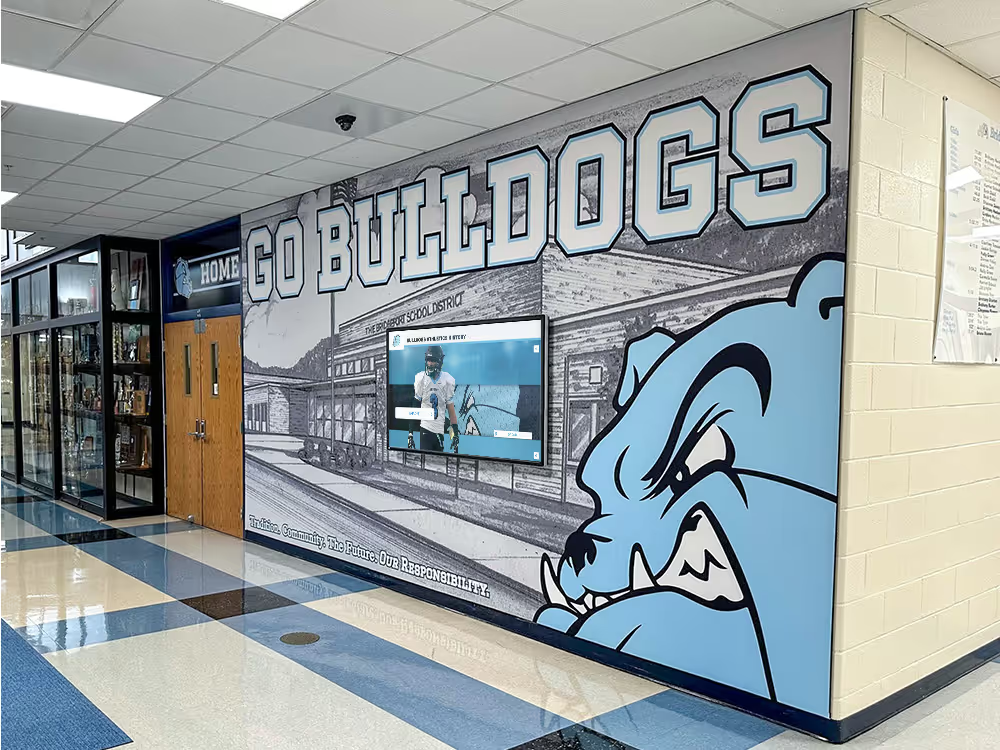
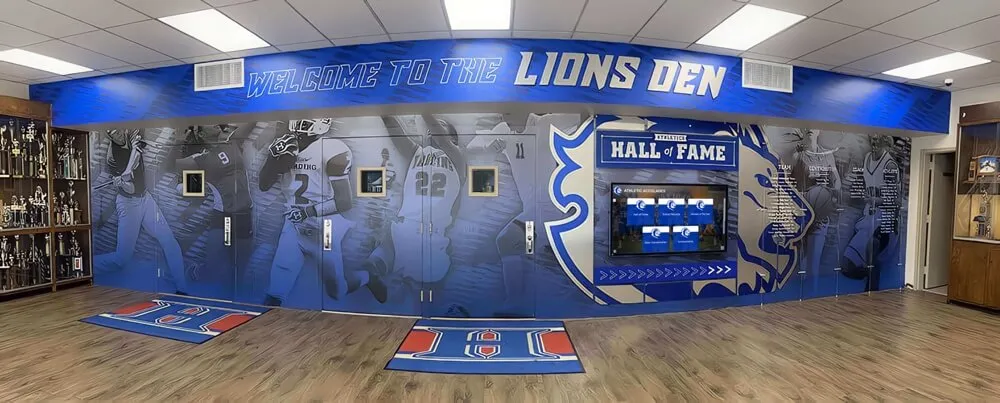
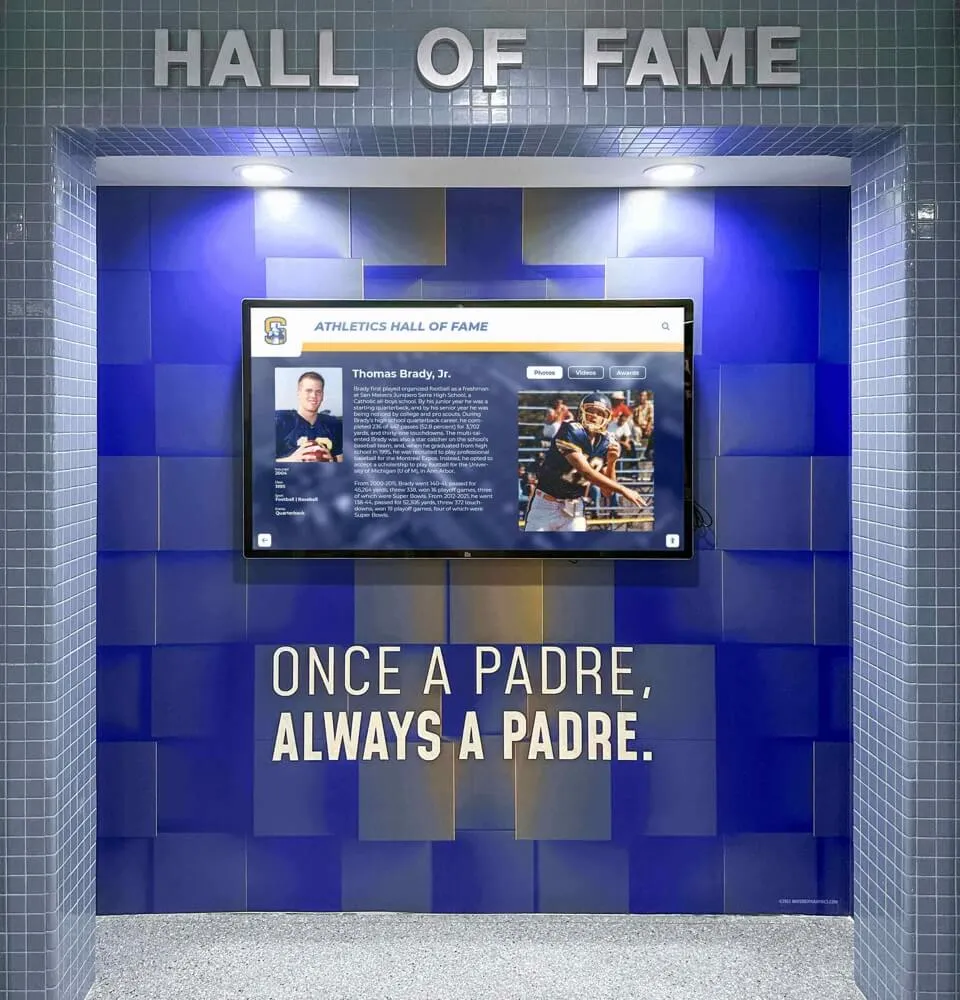
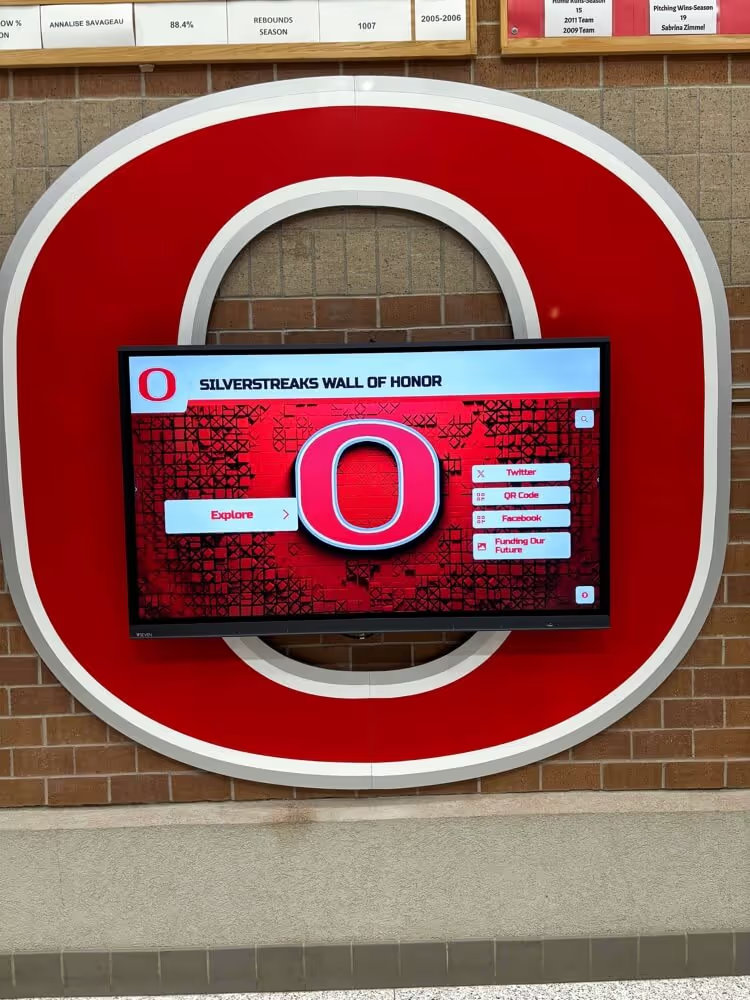
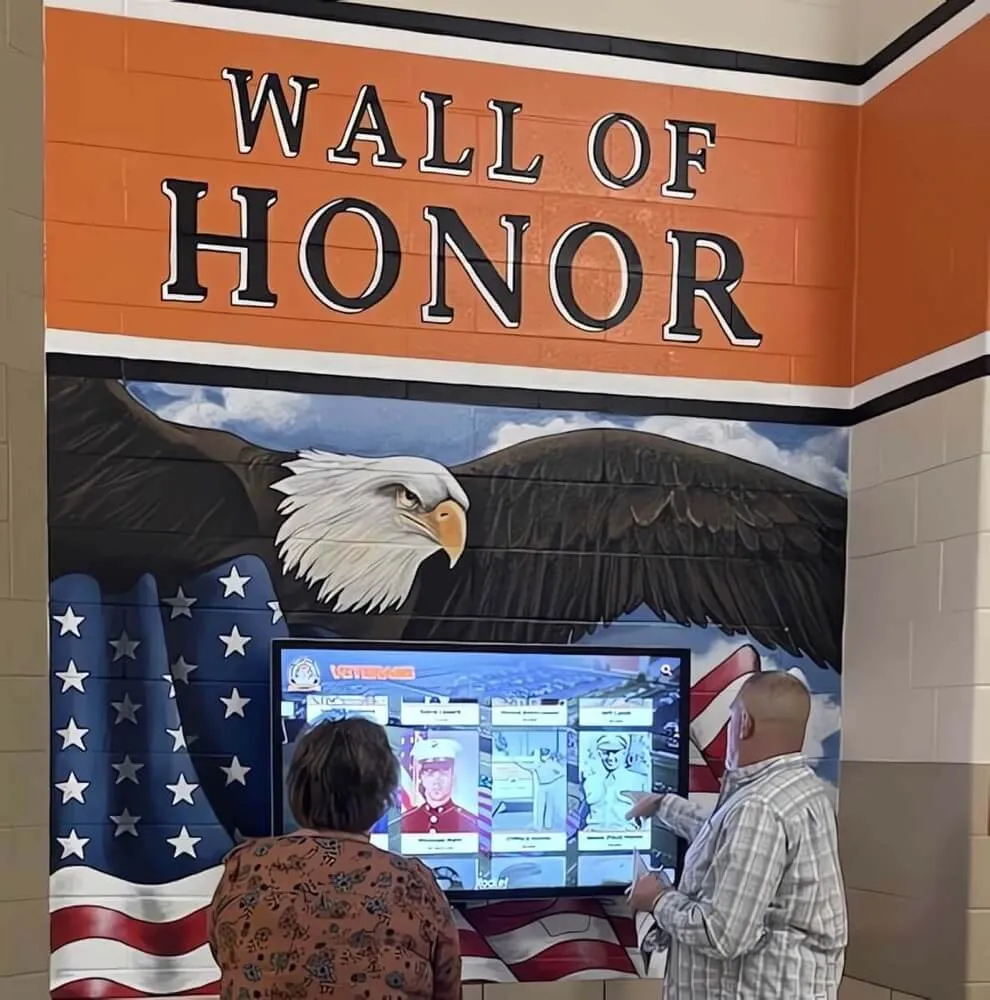
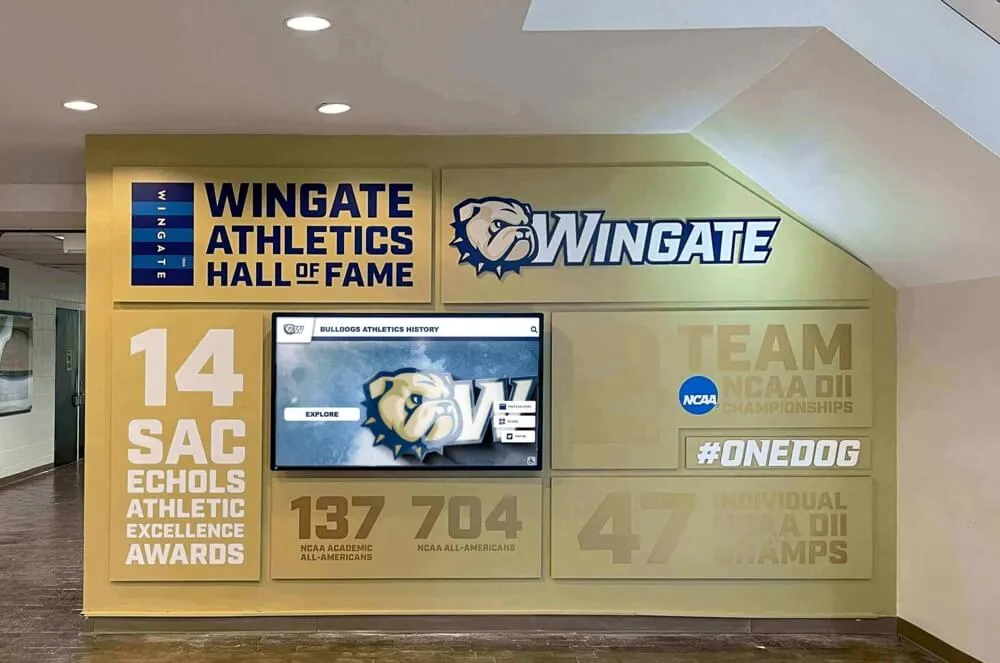
Blending traditional honor board aesthetics with modern functionality creates recognition environments respecting heritage while embracing innovation
Digital Display Advantages for Football Recognition
Modern digital solutions provide distinctive capabilities enhancing recognition effectiveness:
Dynamic Content Presentation
Digital boards enable sophisticated information display:
- Multiple screen rotations showing different record categories
- Video highlight integration celebrating record performances
- Photo galleries featuring achievement moments
- Statistical context comparing current to historical achievements
- Sortable leaderboards allowing various organization perspectives
- Detailed player profiles expanding beyond basic statistics
- Historical context showing how records evolved over program history
- Seasonal updates highlighting recent achievements
Comprehensive Recognition Capacity
Digital platforms eliminate physical space constraints:
- Unlimited record categories without wall space limitations
- Complete statistical archives rather than top-10 restrictions
- Season-by-season team achievement documentation
- Every all-conference and all-state selection throughout history
- Individual player profiles for all letter winners
- Championship season rosters with complete team photos
- Detailed game statistics from memorable contests
- Alumni update sections tracking post-graduation achievements
Practical Maintenance Benefits
Digital systems simplify ongoing record management:
- Remote content updates from any internet-connected device
- Immediate record modifications without physical labor
- Centralized management across multiple display locations
- Template-based consistency ensuring professional presentation
- No material costs for updates or additions
- Reduced long-term maintenance expenses
- Professional appearance regardless of update frequency
- Archive capabilities preserving superseded records
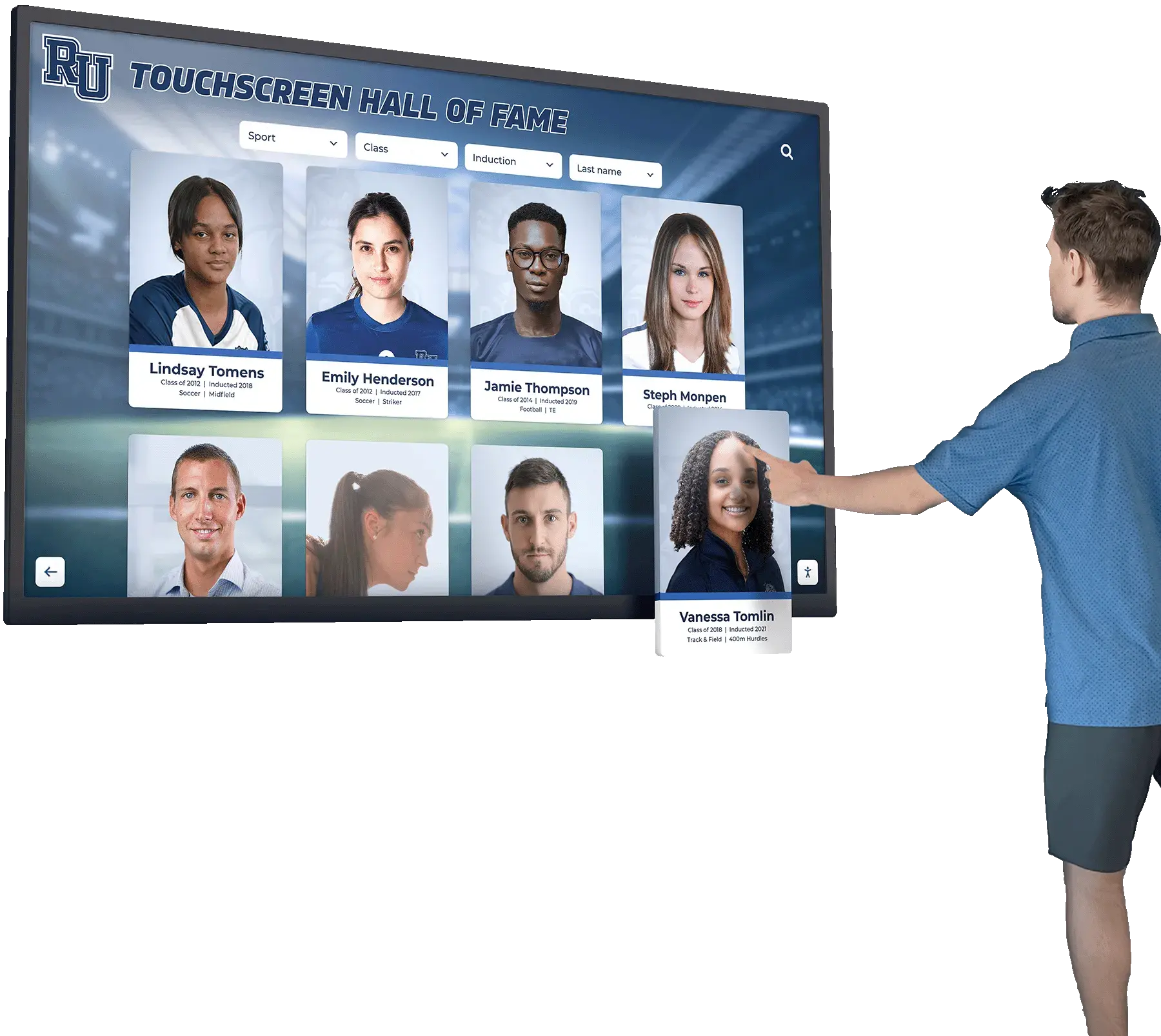
Interactive Touchscreen Football Record Boards
Touchscreen displays create engagement experiences beyond passive viewing:
Interactive Features
Advanced displays enable visitor exploration:
- Touch navigation allowing users to browse categories independently
- Search functionality finding specific athletes or achievements
- Season selection showing year-by-year team records
- Position filters isolating quarterback, running back, or defensive records
- Comparison tools examining multiple record holders simultaneously
- Video playback of record-setting performances when available
- Social sharing enabling visitors to distribute achievements
- Photo galleries showing uniform evolution and facility changes
Engagement Benefits
Interactive boards create memorable experiences:
- Extended visitor dwell time compared to static boards
- Enhanced recruit impressions during campus visits
- Alumni engagement opportunities reconnecting with program history
- Community event focal points during open houses or hall of fame ceremonies
- Fundraising integration for donor recognition alongside athletic achievement
- Educational value teaching program history to new students
- Multi-generational appeal serving diverse audience age ranges
- Year-round relevance maintaining engagement beyond football season
Programs implementing digital showcase displays discover applications extending beyond athletics to comprehensive school recognition.
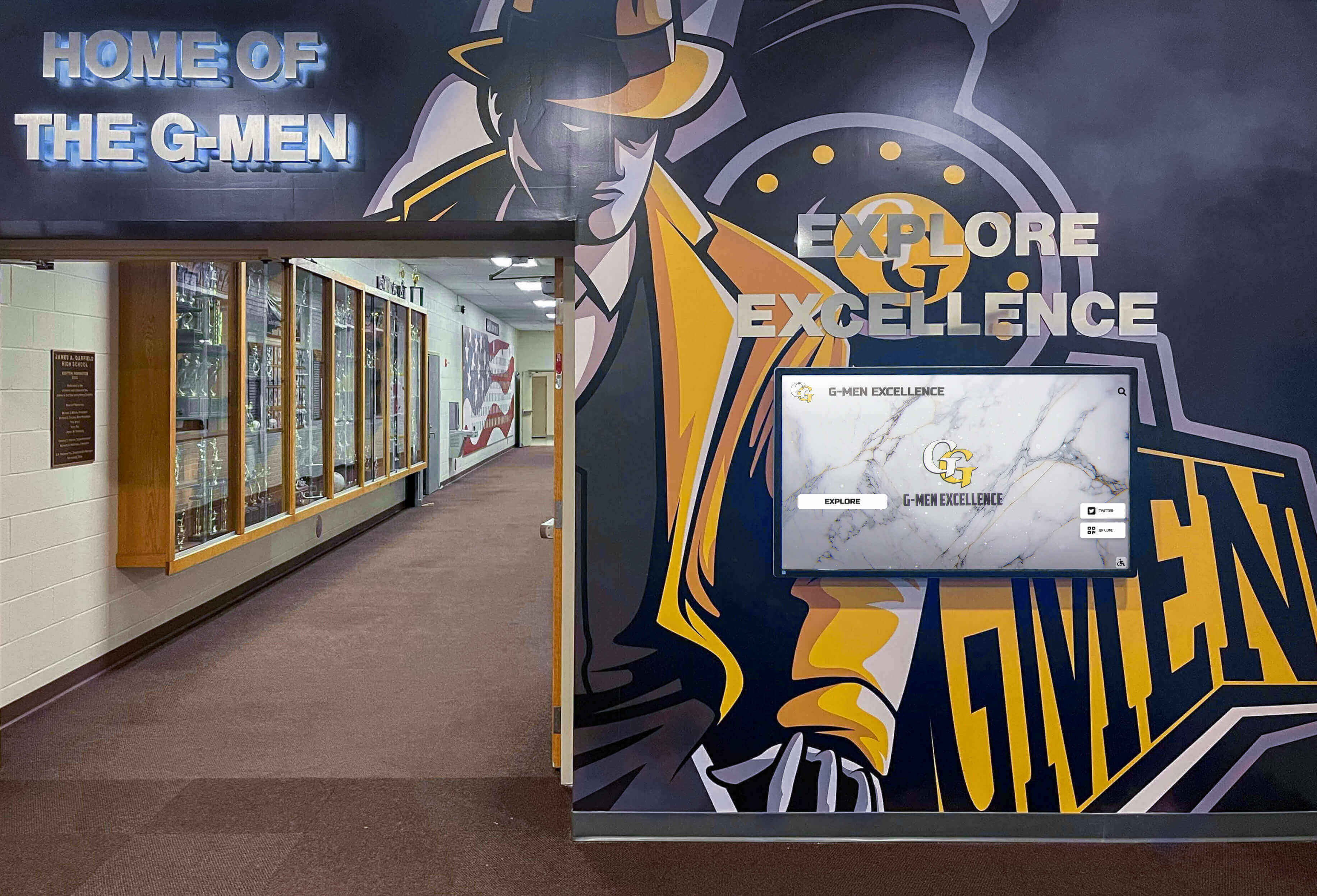
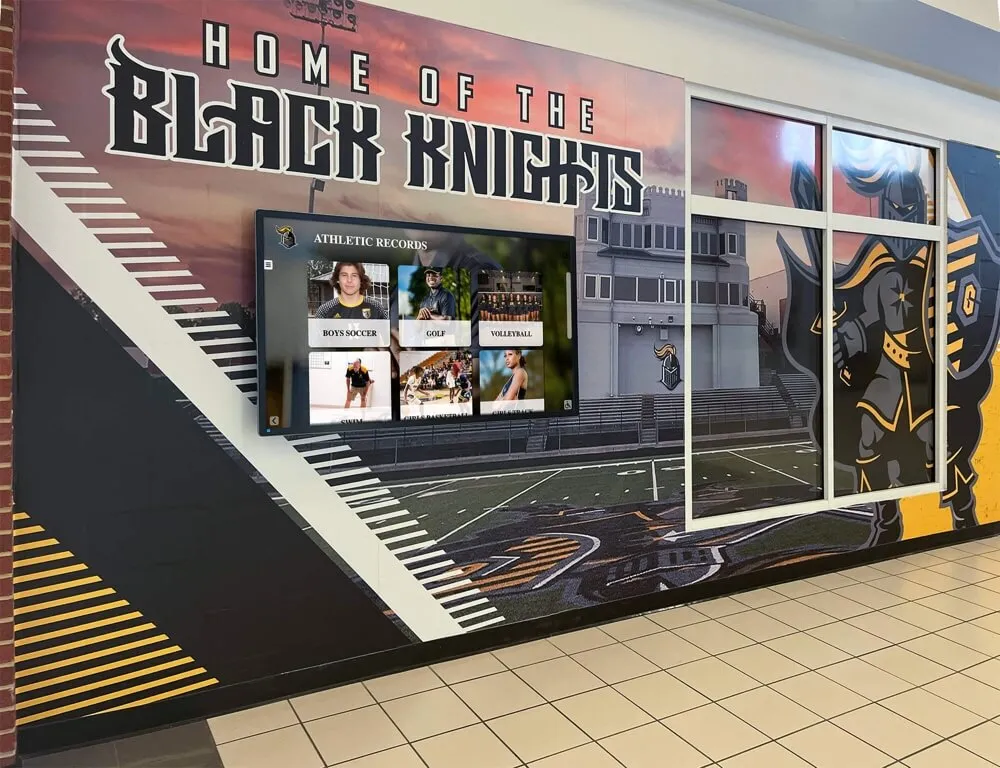
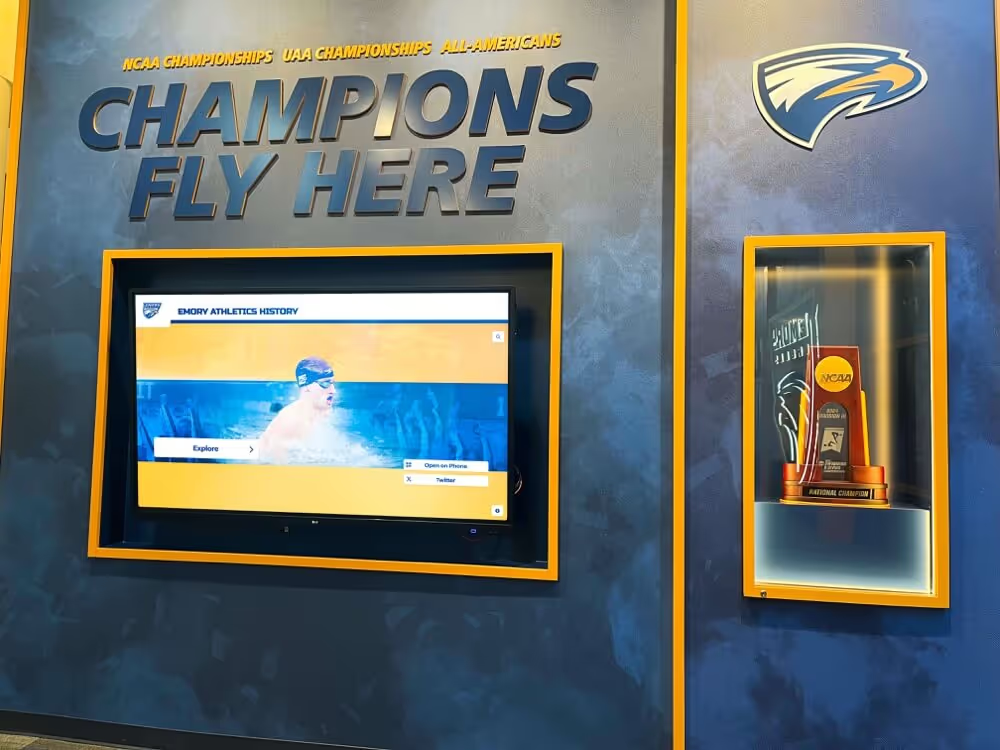
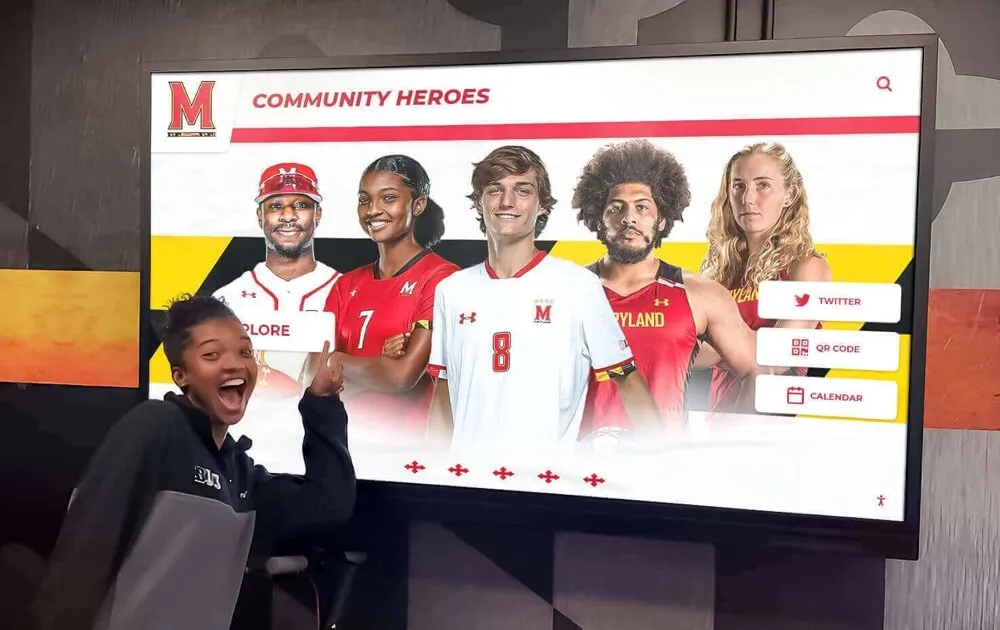
Combining digital record boards with physical trophy displays creates comprehensive recognition environments honoring multiple achievement dimensions
Wall-Mounted Digital Display Systems
Non-interactive digital screens provide dynamic content in simpler installations:
Installation Configurations
Various mounting approaches suit different environments:
- Single large-format displays creating commanding focal points
- Multiple screen arrays showing different content simultaneously
- Portrait-oriented displays maximizing vertical space efficiency
- Landscape screens accommodating wide-format content
- Outdoor-rated displays for stadium or exterior installations
- Integrated architectural features embedding screens within custom surrounds
- Mobile cart systems enabling temporary displays at events
Content Management Approaches
Digital boards utilize various content strategies:
- Scheduled rotations cycling through record categories
- Season-specific content highlighting current team achievements
- Game day displays showing opponent information and rivalry records
- Recruitment content during official visit weekends
- Hall of fame ceremony content during induction events
- Historical anniversary content celebrating program milestones
- Cross-promotion integrating with other school recognition systems
- Emergency communication capability during facility events
Technical Infrastructure Requirements
Digital systems need supporting technology:
- Reliable internet connectivity for remote updates
- Adequate electrical service and backup power protection
- Mounting hardware ensuring security and proper viewing angles
- Cable management maintaining professional appearance
- Content management platforms enabling efficient updates
- Technical support access for troubleshooting issues
- Warranty coverage protecting installation investment
- Refresh planning as display technology evolves
Understanding honor roll recognition display options provides insight into digital recognition approaches applicable across multiple program areas.
Hybrid Approaches Combining Traditional and Digital Elements
Many successful programs integrate physical and digital components creating comprehensive recognition environments honoring tradition while embracing technological capabilities.
Physical-Digital Integration Strategies
Combining display types offers advantages of both approaches:
Architectural Integration
Thoughtful design creates cohesive recognition environments:
- Digital displays embedded within traditional trophy case installations
- Painted murals establishing visual context for mounted screens
- Physical plaques highlighting major achievements with digital boards showing comprehensive statistics
- Traditional record boards for all-time achievements with digital displays showing current season leaders
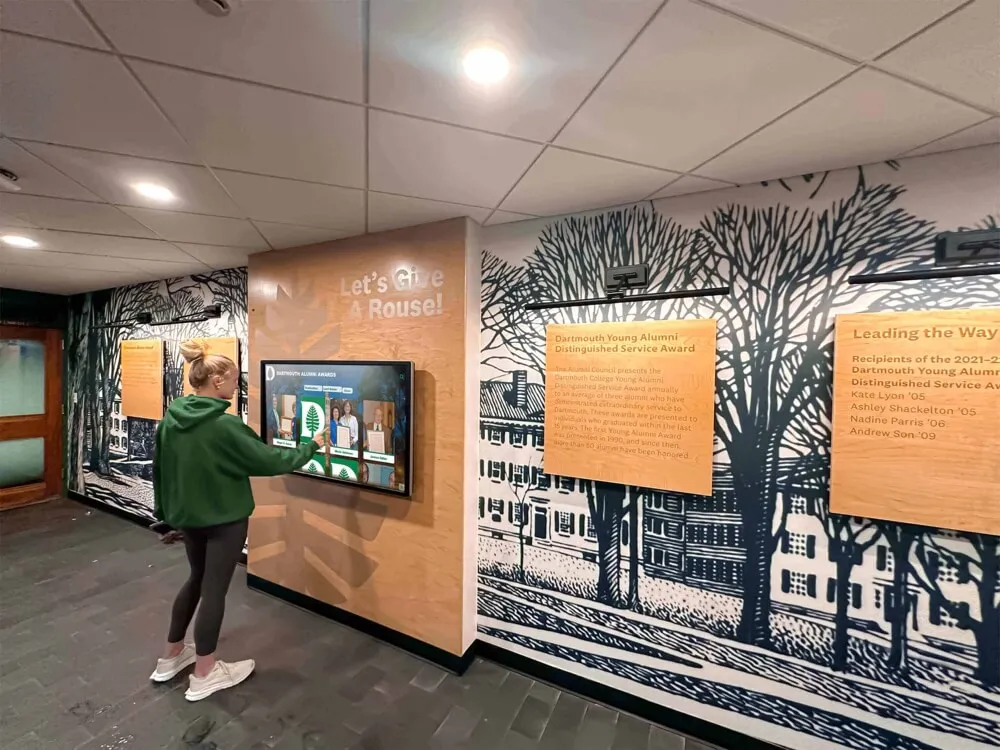
- Legacy walls featuring historical photos surrounding interactive touchscreens
- Championship banners complemented by digital season recaps
- Permanent installations honoring greatest achievements with rotating digital content
Content Distribution Strategies
Dividing recognition between physical and digital platforms:
- Physical displays for permanent records unlikely to change
- Digital boards for evolving statistics and recent achievements
- Traditional plaques for hall of fame inductees with digital biography access
- Static championship recognition with digital season highlight access
- Permanent milestone markers with digital detailed statistics
- Physical all-state recognition with digital career retrospectives
- Traditional program history with digital “where are they now” updates
Visitor Experience Design
Integrated environments guide audiences through comprehensive recognition:
- Physical displays creating initial visual impact and program context
- Digital boards enabling detailed exploration for interested visitors
- Complementary content avoiding redundancy between display types
- Wayfinding integration connecting recognition across multiple locations
- Chronological progression from program origins through current seasons
- Thematic organization grouping related achievements
- Multi-generational appeal serving diverse audience preferences
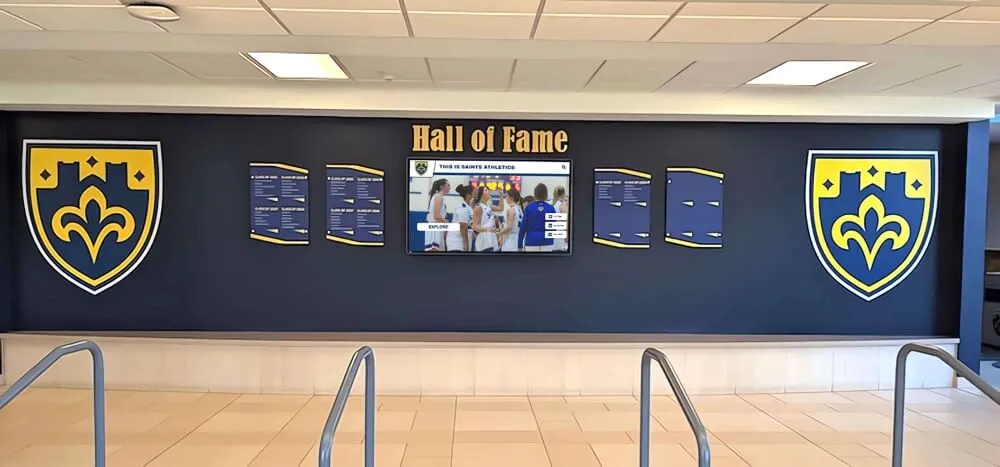
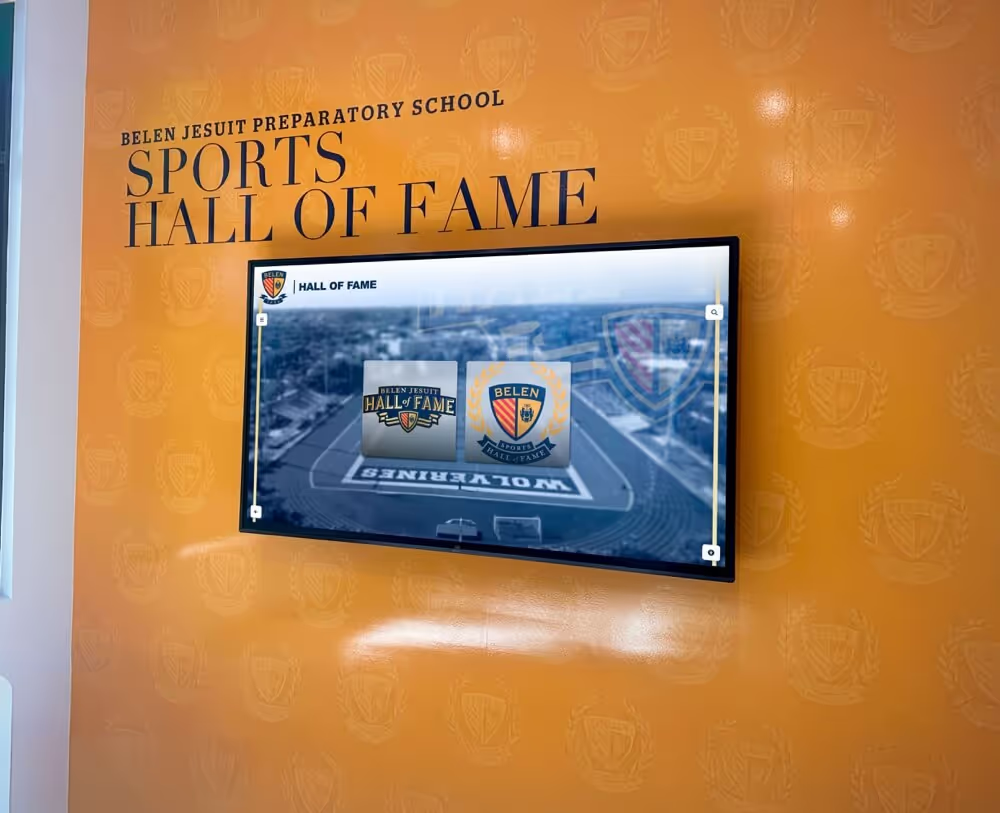
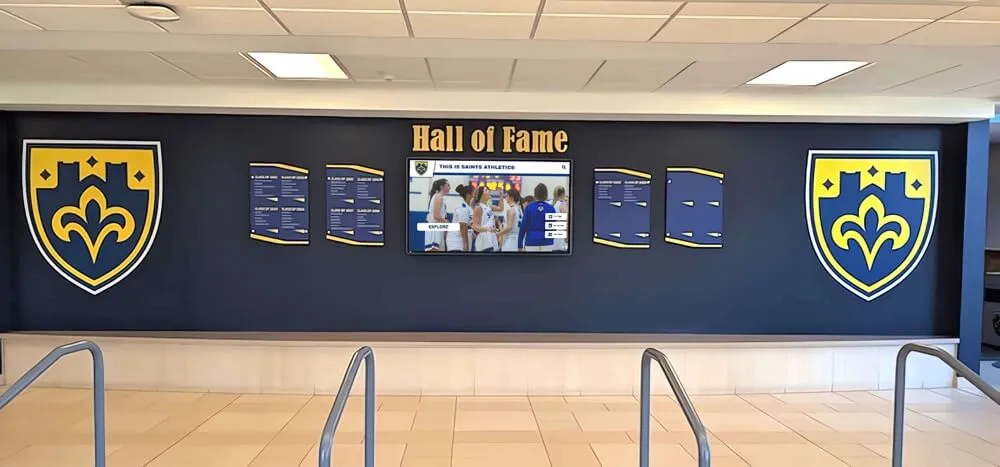
Shield-based recognition systems create visual unity while accommodating both permanent plaque installations and dynamic digital content
Practical Implementation: Planning Your Football Record Board
Successful record board projects require systematic planning addressing technical, budgetary, and content considerations that determine long-term effectiveness.
Assessment and Goal Definition
Initial planning establishes project foundations:
Current State Evaluation
Understanding existing recognition systems:
- Inventory of current record displays including locations and condition
- Assessment of information accuracy and currency
- Available space identification for new or replacement installations
- Electrical and networking infrastructure in potential locations
- Budget availability including initial investment and ongoing maintenance
- Stakeholder priorities from coaches, administrators, and boosters
- Community expectations based on facility standards and tradition
Objective Clarification
Defining what successful record boards will accomplish:
- Primary recognition goals balancing individual versus team achievement
- Audience priorities serving current athletes, recruits, alumni, or general visitors
- Content scope decisions determining comprehensiveness versus selectivity
- Update frequency expectations for maintaining current information
- Integration requirements connecting with other recognition systems
- Timeline constraints for completion relative to events or seasons
- Success measurement criteria evaluating project effectiveness
Budget Development and Resource Planning
Financial planning ensures sustainable implementation:
Cost Categories
Comprehensive budgeting addresses multiple expense areas:
- Display acquisition costs for screens, boards, or physical materials
- Installation expenses including mounting, electrical, and networking work
- Content development for initial population and design
- Ongoing maintenance allocations for updates and technical support
- Software licensing if utilizing content management platforms
- Professional services for design, installation, or content creation
- Contingency funds addressing unexpected requirements
- Future expansion provisions accommodating program growth
Funding Sources
Various resources can support record board projects:
- Athletic department operating budgets for routine improvements
- Booster club fundraising for major recognition enhancements
- Facility renovation projects incorporating recognition as design elements
- Donor opportunities for named displays or sponsorships
- Grant applications through athletic or educational foundations
- Corporate partnerships with local businesses
- Alumni campaigns targeting specific class years
- Memorial opportunities honoring specific individuals
Understanding approaches for preserving school history helps programs develop comprehensive recognition systems beyond record boards alone.
Content Development and Organization
Effective record boards require systematic information management:
Historical Research
Compiling accurate achievement data:
- Review of existing records and media guides for historical statistics
- Consultation with long-tenured coaches regarding program history
- Alumni outreach verifying achievements and gathering additional information
- Examination of historical newspapers and archived game programs
- Cross-reference verification ensuring statistical accuracy
- Context research understanding rule changes affecting record comparability
- Photo archive review identifying visual content opportunities
- Documentation systems capturing research for future reference
Record Categorization
Organizing achievements into logical presentation structures:
- Statistical record categories aligned with position groups
- Team achievement organization by time period or championship type
- Individual honor grouping by recognition level or selection process
- Milestone achievement presentation highlighting extraordinary performances
- Career versus single-season record separation
- Historical era designation accounting for program evolution
- Update schedule determination for different record types
- Priority ranking determining display prominence for various achievements
Maintenance Planning
Establishing ongoing content management processes:
- Responsibility assignment for record tracking and updates
- Verification procedures ensuring accuracy before publication
- Update scheduling at season conclusion or other intervals
- Archive strategies for superseded records
- Photo and video acquisition processes capturing content throughout seasons
- Quality control reviews maintaining professional standards
- Communication protocols informing stakeholders of recognition additions
- Long-term planning anticipating future content needs
Learning from Georgia high school football championship history illustrates how programs document and celebrate achievement across decades.
Best Practices for Football Record Board Success
Implementing effective recognition requires attention to details that distinguish functional boards from exceptional displays creating lasting impact.
Accuracy and Credibility Standards
Record integrity determines recognition value:
Verification Processes
Establishing reliable information validation:
- Multiple source confirmation for statistical records
- Official game statistics as primary documentation
- Cross-reference verification for disputed or unclear achievements
- Documented decision processes for record qualification
- Transparent criteria for what constitutes recognized records
- Historical context notation explaining record comparisons across eras
- Correction procedures when errors are discovered
- Regular audits maintaining accuracy over time
Qualification Criteria
Clear standards defining recognized achievements:
- Minimum game or season requirements preventing statistical anomalies
- Transfer student eligibility decisions
- Performance context requirements like opponent quality or championship games
- Statistical calculation methods ensuring consistency
- Tie-breaking procedures when multiple athletes share records
- Era-specific recognition for incomparable achievements
- Documentation standards for record verification
- Appeals processes addressing recognition questions
Recognition Balance and Inclusivity
Comprehensive boards honor diverse achievement types:
Beyond Statistical Excellence
Including varied recognition forms:
- Leadership and character awards alongside statistical records
- Academic achievement recognition celebrating scholar-athletes
- Community service acknowledgment for exceptional citizenship
- Improvement awards honoring development rather than only peak performance
- Team contribution recognition beyond statistical leaders
- Special circumstance achievements like comeback performances
- Position-specific excellence for roles with limited statistical opportunities
- Multi-year consistency recognition honoring sustained performance
Multiple Level Acknowledgment
Honoring achievement across program structure:
- Varsity record emphasis while including sub-varsity achievements
- JV and freshman accomplishments when applicable to program scope
- Youth program integration connecting feeder systems
- Summer training achievements like camp performances or combine results
- Offseason program milestones in weight room or conditioning
- Practice squad and developmental roster recognition
- Manager and support staff acknowledgment
- Coaching milestone recognition celebrating leadership longevity
Exploring comprehensive hall of fame tool options reveals diverse approaches programs use for multifaceted recognition.
Storytelling Through Statistics
Effective boards provide context transforming numbers into narratives:
Contextual Information
Enriching basic statistics with meaningful details:
- Opponent information showing competition quality
- Game situation context like championship performances
- Weather or field conditions affecting achievement significance
- Historical era notation explaining how game differed across decades
- Team performance context showing individual success within team achievement
- Subsequent career information tracking post-high school success
- Legacy impact showing how achievements influenced program trajectory
- Comparative analysis relating local records to state or national standards
Visual Storytelling Elements
Using design to enhance comprehension and engagement:
- Photos connecting faces to names and statistics
- Action imagery showing athletes demonstrating skills
- Uniform and equipment evolution revealing program history
- Facility changes documenting institutional investment
- Team photos celebrating championship seasons
- Coach recognition showing leadership continuity
- Timeline graphics showing program development
- Infographic presentations making complex information accessible
Creating Comprehensive Football Program Recognition Systems
Record boards function most effectively as components within broader recognition ecosystems celebrating program excellence comprehensively.
Integration with Other Recognition Elements
Coordinating record boards with complementary recognition:
Facility-Wide Recognition Planning
Distributing acknowledgment throughout athletic environments:
- Locker room inspiration highlighting program standards
- Weight room achievement boards motivating training excellence
- Practice facility displays celebrating developmental milestones
- Stadium displays showcasing program heritage for game day visibility
- Main hallway recognition reaching general student populations
- Administrative area displays demonstrating program pride to visitors
- Outdoor signage celebrating championships and playoff achievements
- Mobile displays for recruiting events and community presentations
Cross-Program Coordination
Ensuring consistency across athletic department recognition:
- Consistent design language creating cohesive athletic identity
- Parallel record categories enabling multi-sport comparison
- Shared display technologies reducing technical complexity
- Coordinated update schedules streamlining maintenance
- Unified archive systems preserving institutional history
- Budget sharing opportunities maximizing recognition investment
- Collaborative content development sharing resources efficiently
- Department-wide recognition events celebrating all programs
Understanding approaches to school storytelling through digital displays provides context for recognition within comprehensive institutional narratives.
Alumni Engagement Through Recognition
Record boards create touchpoints strengthening alumni connections:
Alumni Outreach Opportunities
Using recognition to maintain graduate relationships:
- Update requests gathering current information from record holders
- Homecoming displays featuring historical achievements
- Reunion integration highlighting class-specific accomplishments
- Social media content distributing recognition digitally
- Newsletter features celebrating record anniversaries
- Oral history collection documenting achievement memories
- Archive contribution appeals gathering historical materials
- Legacy campaigns encouraging alumni support
Mentorship and Inspiration
Connecting current athletes with program legends:
- Formal mentorship programs pairing current players with alumni
- Guest speaker opportunities bringing record holders to practices
- Social media content featuring “where are they now” updates
- Video message series offering advice from former standouts
- Alumni game participation maintaining program connections
- Scholarship support from grateful alumni giving back
- Career networking connecting athletes with professional opportunities
- Tradition preservation passing program culture across generations
Long-Term Record Board Maintenance and Evolution
Sustainable recognition requires ongoing attention ensuring boards remain current, accurate, and effective over time.
Update Procedures and Responsibilities
Systematic maintenance prevents recognition stagnation:
Regular Update Schedules
Establishing predictable refresh patterns:
- Post-season statistical updates adding new records
- Annual comprehensive reviews ensuring accuracy
- Event-driven updates for major achievements during seasons
- Technology refresh planning as display systems age
- Content expansion adding historical depth over time
- Design updates maintaining contemporary appearance
- Archive migration ensuring long-term data preservation
- Stakeholder communication informing audiences about changes
Responsible Party Assignment
Clarifying maintenance accountability:
- Athletic director oversight ensuring program alignment
- Head coach involvement maintaining football-specific accuracy
- Athletic department staff executing routine updates
- Technology coordinator managing digital systems
- Communications personnel handling design and presentation
- Booster representatives facilitating funding if needed
- Student assistant opportunities engaging future leaders
- External vendor relationships for specialized services
Continuous Improvement and Expansion
Successful programs evolve recognition over time:
Feedback Collection
Gathering stakeholder input for enhancement:
- Athlete surveys understanding player perspectives
- Alumni comments during visits or events
- Coach observations regarding motivation impact
- Community feedback from parents and supporters
- Recruit reactions during campus visits
- Administrator assessment of institutional alignment
- Technical performance monitoring for digital systems
- Comparative research examining other program approaches
Incremental Enhancement
Building recognition capabilities systematically:
- Phased implementation spreading costs over time
- Pilot programs testing concepts before full deployment
- Scope expansion as budgets and capabilities develop
- Technology adoption aligned with proven value
- Content depth increase through ongoing research
- Geographic expansion adding multiple display locations
- Feature additions responding to user feedback
- Platform evolution incorporating new capabilities
Programs examining team GPA leaderboard implementations discover how athletic recognition can celebrate academic achievement alongside competitive success.
Overcoming Common Football Record Board Challenges
Programs frequently encounter obstacles during planning and implementation that require thoughtful solutions.
Space and Location Constraints
Limited physical environments challenge recognition ambitions:
Space-Efficient Solutions
Maximizing impact within constraints:
- Vertical displays utilizing wall height rather than width
- Multi-screen arrays distributing content across smaller formats
- Digital rotation showing extensive content on limited display area
- Mobile displays enabling multi-location deployment
- Outdoor locations utilizing previously unconsidered spaces
- Ceiling-mounted displays in certain architectural contexts
- Dual-purpose displays integrating announcements with recognition
- Remote access platforms providing recognition beyond physical displays
Alternative Location Strategies
Thinking creatively about placement:
- Underutilized spaces like stairwell walls or corridor ends
- Temporary displays during events when permanent space limits exist
- Virtual platforms extending recognition through websites and social media
- Printed programs distributed at games supplementing fixed displays
- Community locations like local businesses willing to showcase achievements
- Visiting team locker rooms demonstrating program tradition to opponents
- Public areas like municipal buildings celebrating community programs
- Transportation like team buses creating mobile recognition environments
Budget Limitations
Financial constraints require creative approaches and prioritization:
Phased Implementation Approaches
Building recognition systems incrementally:
- Core category focus initially expanding over time
- Single high-priority location with future expansion
- Basic display technology with planned upgrades
- In-house development reducing professional service costs
- Used equipment opportunities for digital displays
- Simple materials delivering impact despite modest investment
- Volunteer labor from skilled booster club members
- Graduated quality where premium installations complement budget options
Value-Focused Decision Making
Maximizing recognition impact per dollar invested:
- Longevity prioritization ensuring lasting value
- Flexibility emphasis enabling adaptation without replacement
- DIY potential reducing recurring professional service dependency
- Multi-purpose solutions serving several recognition needs
- Technology choices balancing capability with sustainability
- Material selection weighing appearance against durability
- Vendor selection emphasizing service quality over lowest cost
- Long-term cost modeling comparing options beyond initial pricing
Maintaining Historical Accuracy
Incomplete records and changing information challenge verification:
Research Strategies
Addressing information gaps systematically:
- Partial information presentation when complete data unavailable
- Footnote systems acknowledging uncertainty
- Ongoing research campaigns gradually improving completeness
- Alumni crowdsourcing leveraging collective memory
- Archived media review discovering overlooked achievements
- Comparative analysis estimating missing statistics
- Historical context explaining why certain information doesn’t exist
- Transparent acknowledgment of limitations maintaining credibility
Data Management Systems
Organizing information for long-term accessibility:
- Centralized databases preventing information loss
- Documentation standards ensuring future usability
- Regular backup procedures protecting against data loss
- Migration planning addressing technology obsolescence
- Access control balancing security with appropriate availability
- Version tracking showing how records evolved
- Source documentation enabling verification
- Archive integration connecting recognition with institutional history preservation
Understanding fraternity and sorority history preservation offers insights into documenting organizational legacy that applies to athletic programs.
Building Your Football Record Board Legacy
Football record boards represent more than achievement documentation—they embody program values, inspire excellence, and create lasting connections between generations of athletes who share commitment to upholding traditions while pursuing new heights.
Whether implementing traditional physical displays honoring time-tested recognition approaches or embracing modern digital solutions enabling comprehensive storytelling, successful record boards share common characteristics: they celebrate achievement authentically, maintain accuracy consistently, provide accessibility broadly, and evolve thoughtfully as programs grow and technology advances. Athletic directors and coaches who invest attention in recognition infrastructure create environments where excellence receives the acknowledgment it deserves while establishing standards inspiring future athletes to add their names to program legacy.
The most effective football record boards serve dual purposes—they honor past achievement while motivating future excellence. When current athletes see the names, statistics, and accomplishments of those who came before, they gain concrete understanding of what program excellence means. When they recognize opportunities to add their own achievements to permanent displays, they discover tangible motivation for the dedication, sacrifice, and performance required to reach extraordinary standards.
Programs ready to enhance football recognition discover diverse options suited to every budget, facility, and tradition—from painted boards creating commanding visual presence to interactive touchscreens enabling unlimited achievement showcase, from traditional plaque systems honoring permanent records to hybrid approaches combining multiple display types. The right solution honors your unique program story while creating recognition infrastructure serving athletes, alumni, and communities for decades to come.
Ready to create a football record board that inspires excellence and honors your program’s greatest achievements? Discover how modern digital recognition solutions transform how schools showcase athletic achievement with unlimited capacity, effortless updates, and engaging presentations that bring statistics to life while preserving your program’s legacy for future generations.
Live Example: Rocket Alumni Solutions Touchscreen Display
Interact with a live example (16:9 scaled 1920x1080 display). All content is automatically responsive to all screen sizes and orientations.