Field Hockey Rules Explained: A Guide for New Players, Parents, and School Program Coordinators
- Home /
- Digital Hall of Fame Insights & Resources /
- Field Hockey Rules Explained: A Guide for New Players, Parents, and School Program Coordinators
The Easiest Touchscreen Solution




Live Example: Rocket Alumni Solutions Touchscreen Display
Interact with a live example (16:9 scaled 1920x1080 display). All content is automatically responsive to all screen sizes and orientations.
Field hockey combines speed, skill, and strategy in a fast-paced team sport that demands precise stick work, tactical awareness, and coordinated team execution. Understanding the rules forms the foundation for players developing their skills, parents supporting their student-athletes, and school coordinators building competitive programs that celebrate athletic excellence.
Yet field hockey’s unique characteristics often create confusion for newcomers: Can you use both sides of the stick? How does the offside rule work? What constitutes a dangerous play? Why can only certain players score from certain areas? What equipment do players actually need? These questions represent just a few of the rule complexities that distinguish field hockey from other stick-and-ball sports.
This complete guide explains fundamental field hockey rules covering equipment requirements, field dimensions, gameplay mechanics, penalty systems, position responsibilities, and recognition strategies helping school programs honor field hockey achievements while building sustainable competitive teams.
Field hockey represents one of the world’s oldest team sports, with organized competition dating back to the late 1800s. Today, field hockey thrives at youth, high school, collegiate, and international levels, offering student-athletes opportunities to compete in a sport that rewards technical skill, tactical intelligence, and team chemistry. Schools with strong field hockey traditions create lasting legacies through programs that develop athletes while celebrating achievements that strengthen community pride.

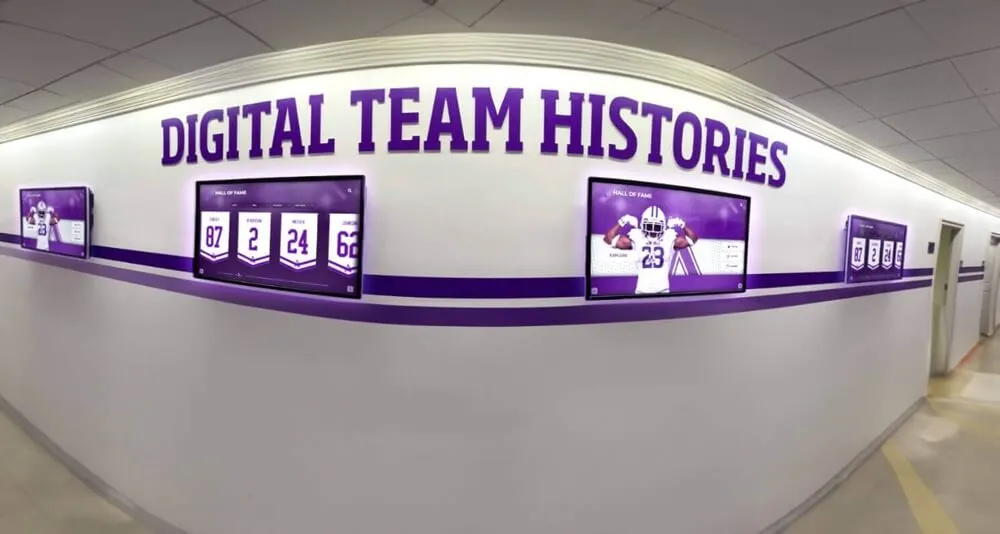
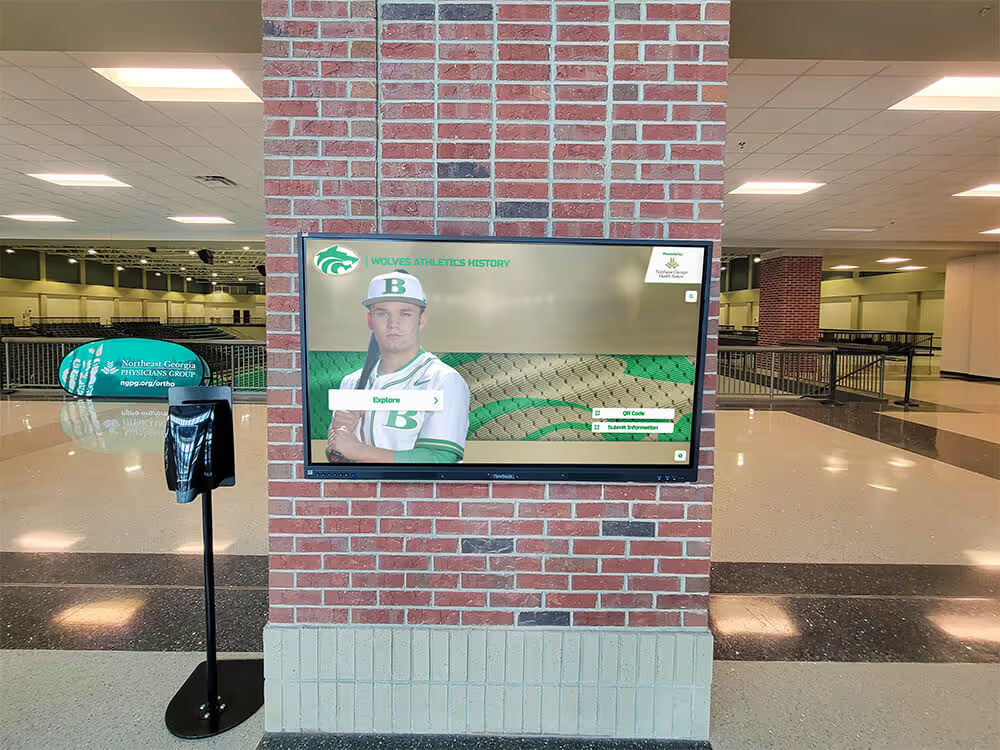
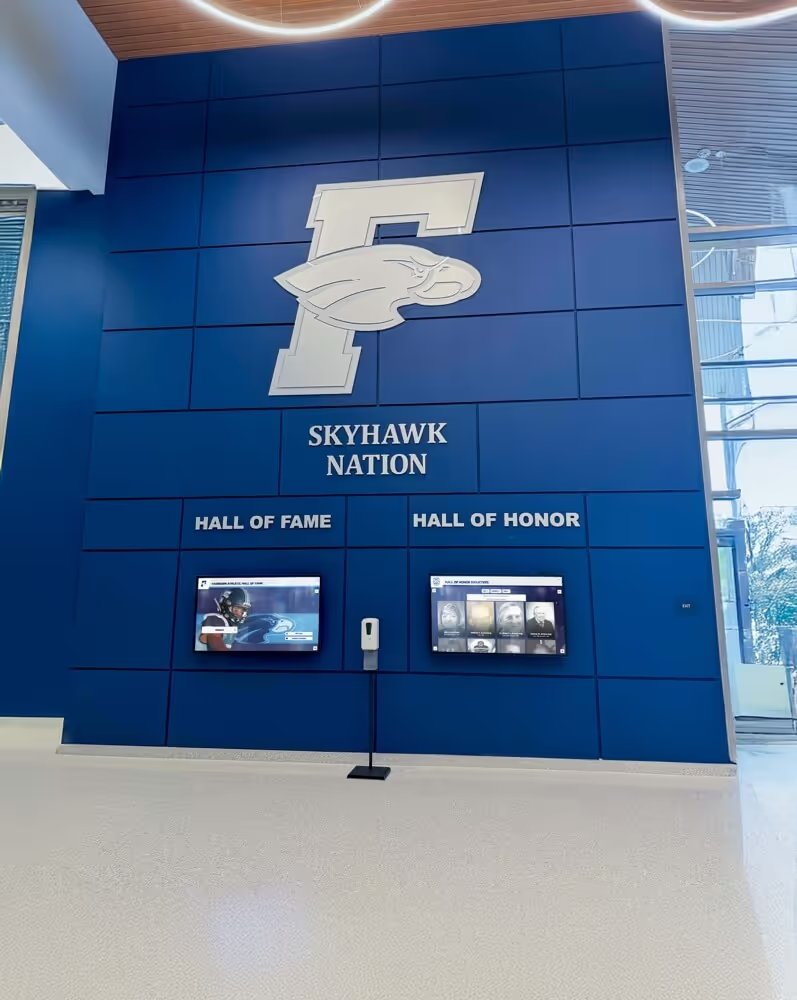
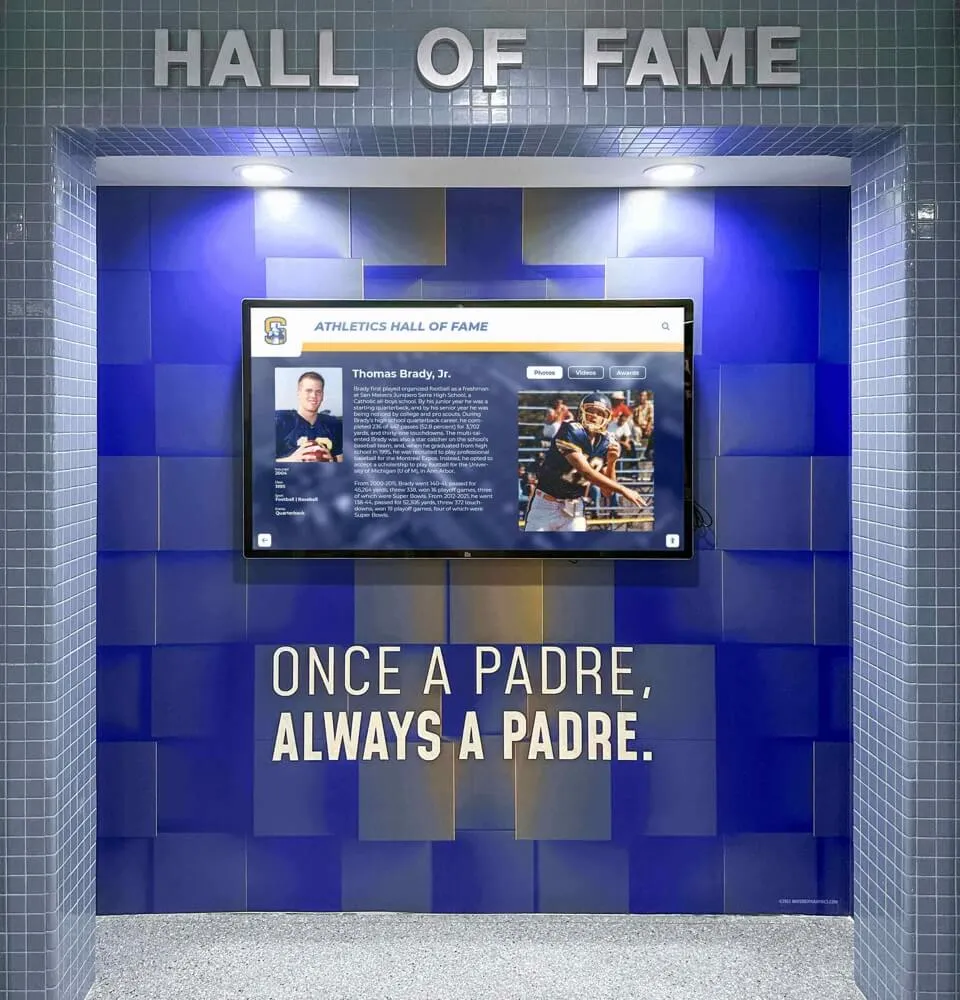
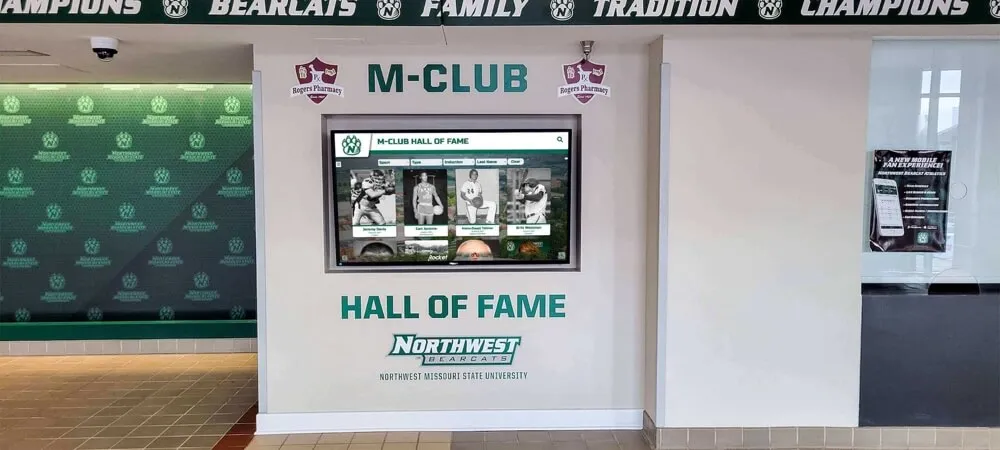
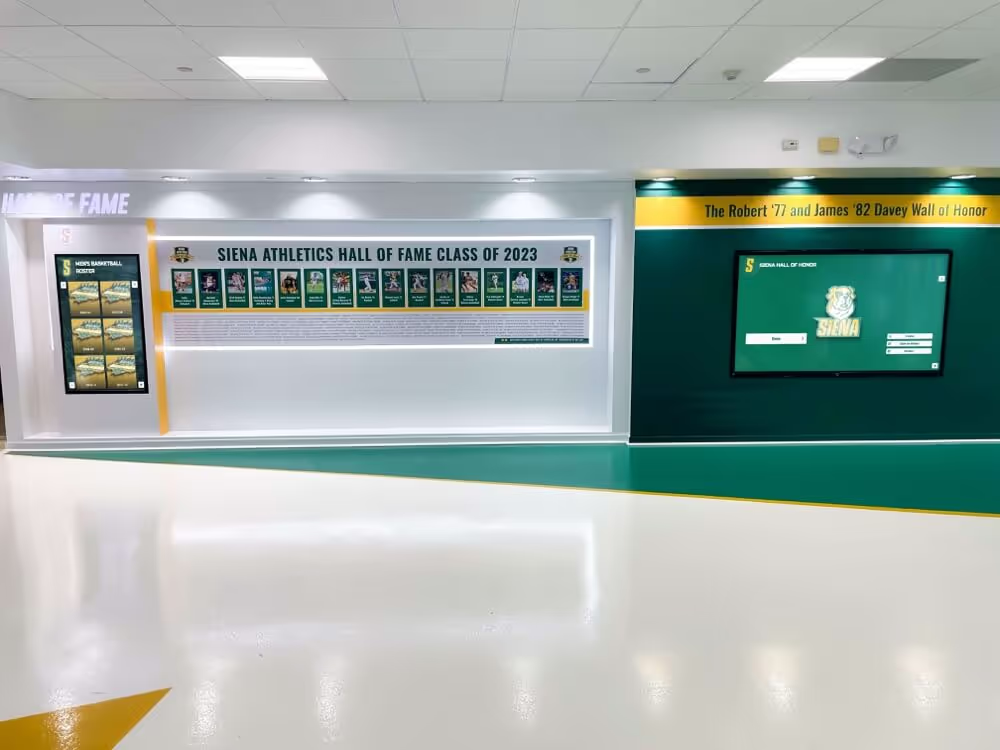
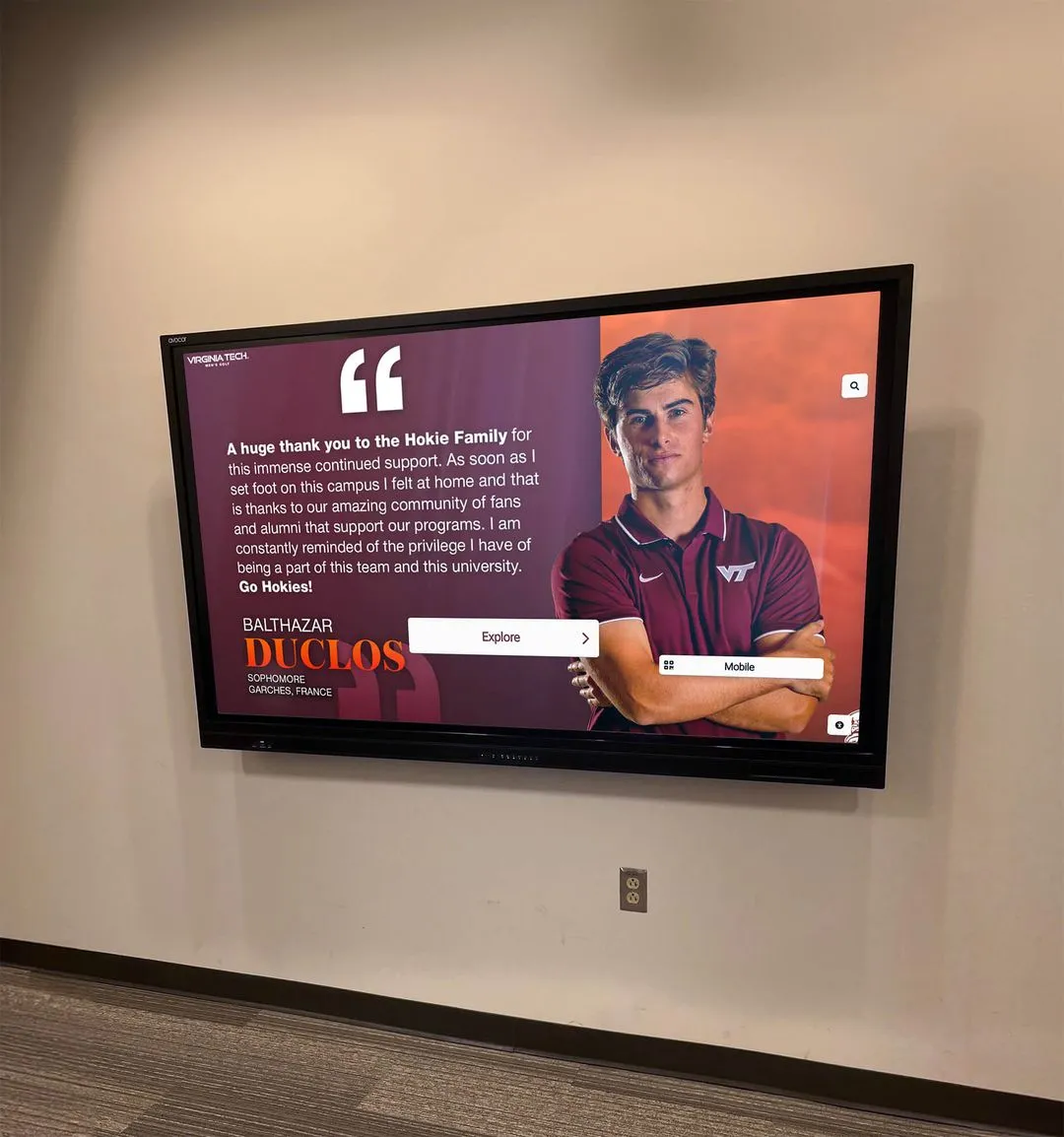
Modern recognition systems enable field hockey programs to showcase player achievements, team records, and championship seasons through interactive displays
Field Hockey Field Dimensions and Equipment Requirements
Before understanding gameplay, knowing the playing surface and required equipment establishes essential context for rule application.
Standard Field Dimensions
Field hockey plays on rectangular grass or turf surfaces with specific dimensional requirements:
| Field Element | Measurement | Purpose |
|---|---|---|
| Field Length | 100 yards (91.4 meters) | End line to end line playing distance |
| Field Width | 60 yards (55 meters) | Sideline to sideline playing width |
| Shooting Circle (D) | 16 yards (14.63 meters) radius | Scoring zone from which goals must originate |
| Penalty Stroke Spot | 7 yards (6.4 meters) from goal | Location for penalty stroke attempts |
| Goal Dimensions | 12 feet wide × 7 feet high | Target for scoring |
| Penalty Spot | 25-yard line from each goal | Location for penalty corner insertions |
Playing Surface Types
Modern field hockey predominantly occurs on artificial turf surfaces that provide consistent ball speed and bounce, though grass fields remain common at youth and recreational levels. Turf surfaces enable faster gameplay with predictable ball behavior, require specialized turf shoes with rubber nubs rather than cleats, reduce weather-related cancellations, and demand different stick skills compared to grass play.
The Shooting Circle (Striking Circle)
Field hockey’s most distinctive rule requires that all goals must be scored from within the shooting circle—a semicircular area extending 16 yards from each goal. Attacking players can shoot only when the ball and shooter are inside this circle, defenders cannot commit certain fouls outside this area, and penalty corners restart play from this zone’s edge.
This rule creates tactical emphasis on circle penetration, rewards skilled passing into dangerous areas, and prevents long-distance scoring attempts that might reduce game strategy.
Essential Player Equipment
Field hockey requires specific equipment balancing protection with mobility:
Required Equipment for All Players
- Field Hockey Stick - J-shaped stick with flat striking side (left side only); typically 36-38 inches for adults
- Mouthguard - Mandatory protective equipment preventing dental injuries
- Shin Guards - Required protection for lower legs against ball and stick impacts
- Athletic Footwear - Turf shoes for artificial surfaces; cleats for grass fields
- Uniform - Jersey, shorts/skirt, and socks matching team colors
Goalkeeper-Specific Equipment
Goalkeepers wear extensive protective gear including:
- Helmet with full face cage protection
- Chest protector and padded goalkeeper shirt
- Padded shorts and protective pelvic guard
- Leg guards covering knees, shins, and thighs
- Kickers (padded shoe covers) for foot protection
- Goalkeeper gloves for hand protection
- Goalkeeper stick (different shape/size from field player sticks)
The goalkeeper equipment requirements reflect the position’s unique demands when facing high-speed shots from close range.
Schools implementing creative athletic display solutions discover multiple ways to showcase field hockey achievements alongside other sport programs.
Fundamental Gameplay Rules and Mechanics
Understanding how play flows, how teams advance the ball, and what actions are permitted forms the foundation for following and participating in field hockey.
Basic Gameplay Structure
Team Composition and Positions
Field hockey teams field 11 players including:
- Goalkeeper - Defends goal with specialized equipment and rule allowances
- Defenders (3-4 players) - Protect defensive zone and prevent circle penetration
- Midfielders (3-4 players) - Transition play between defense and attack
- Forwards (3-4 players) - Create scoring opportunities and finish attacks
Position numbers and tactical formations vary by team strategy, with common formations including 4-3-3, 4-4-2, and 3-4-3 alignments.
Game Duration and Timing
Standard field hockey games consist of:
- Four Quarters - 15 minutes each at high school and college levels (some youth variations use two halves)
- Quarter Breaks - 2-minute breaks between first/second and third/fourth quarters
- Halftime - 5-10 minute break between second and third quarters
- Stopped Time - Clock stops for penalties, injuries, and other delays in some competitive levels
- Overtime Periods - Vary by governing body and competition level for tied games
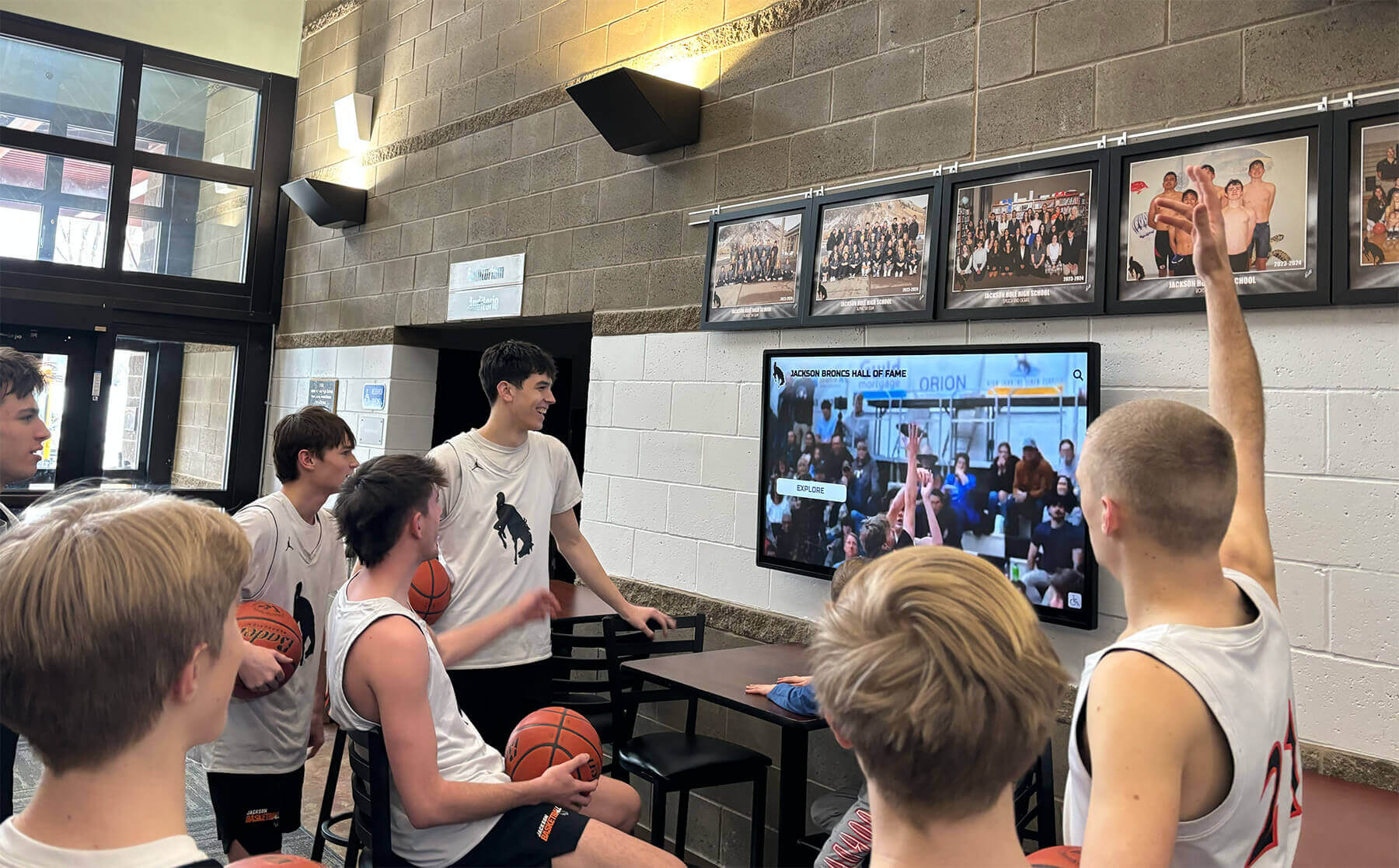
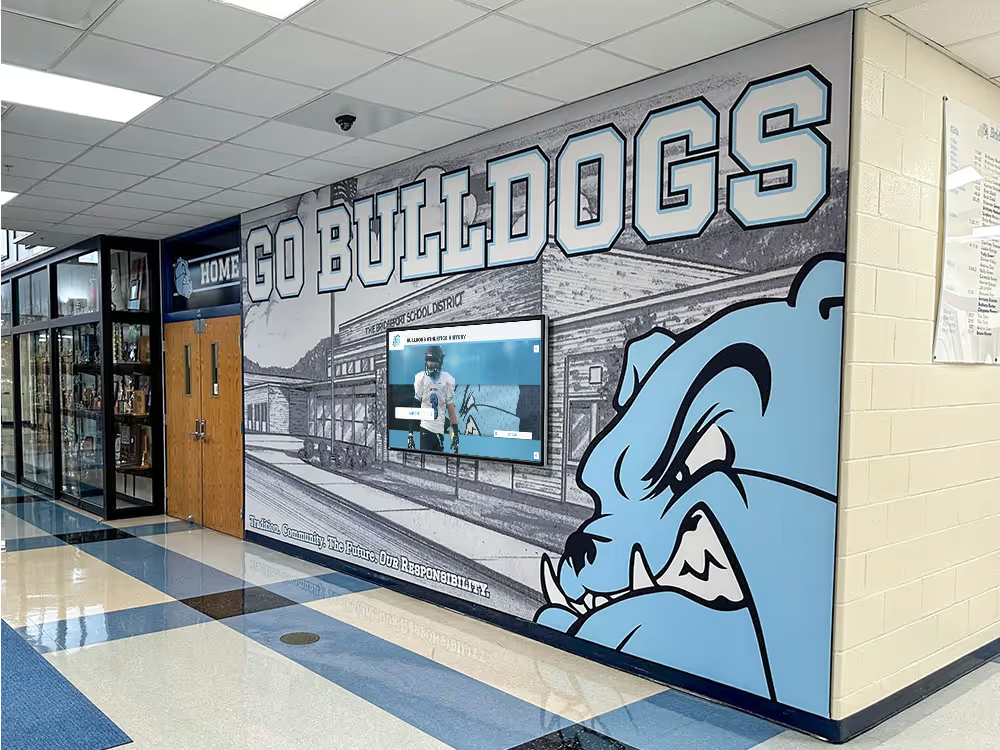
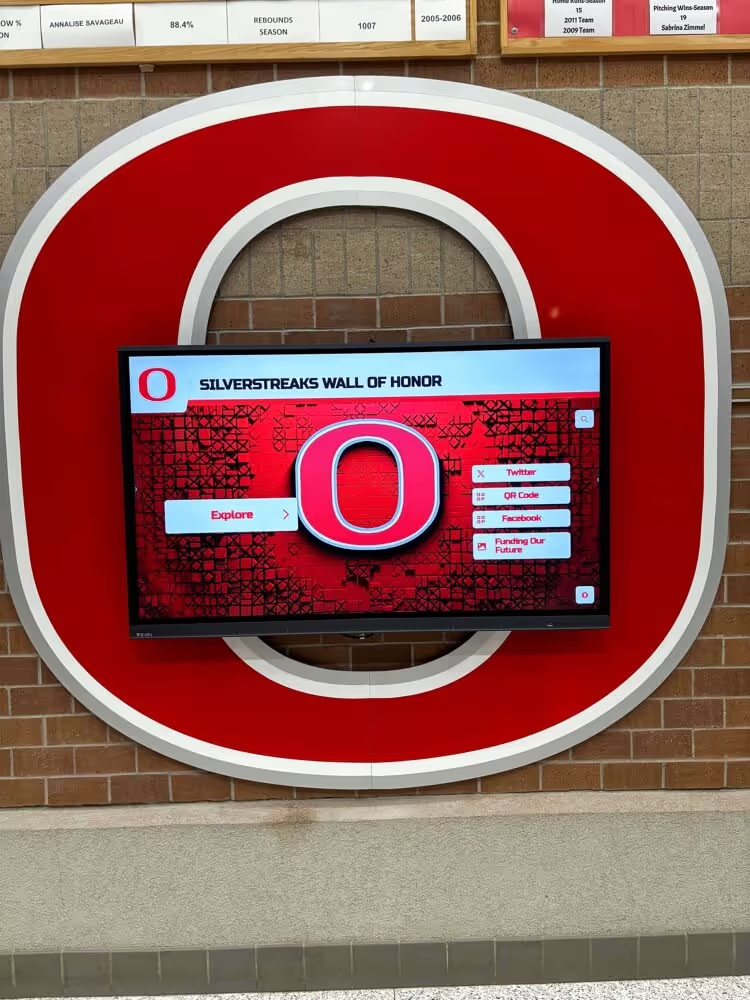
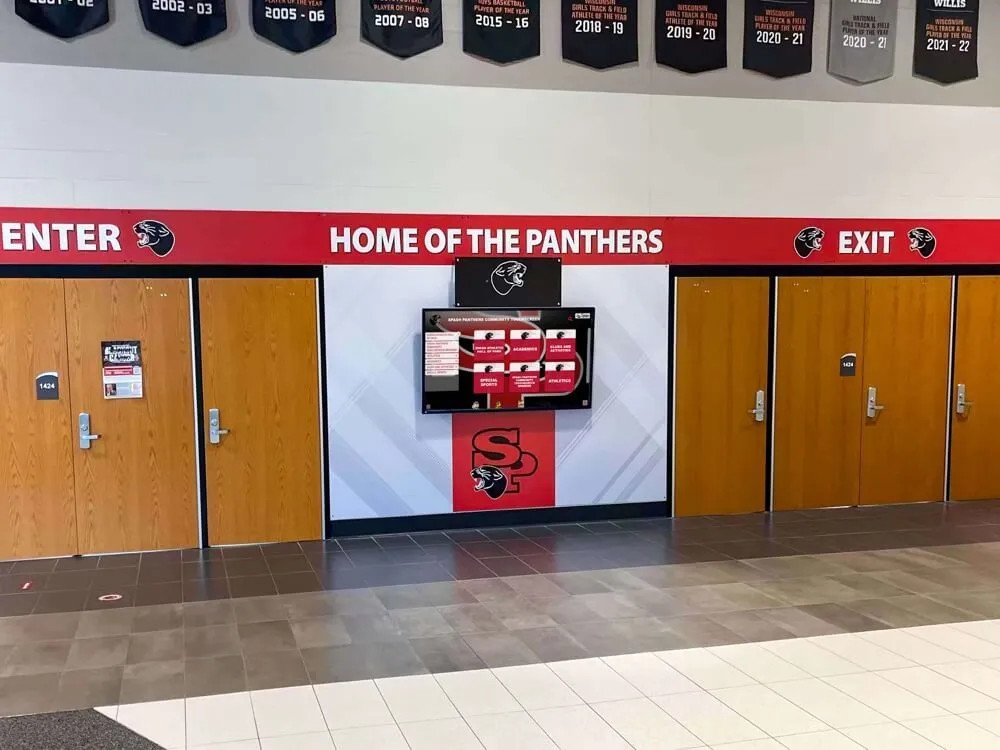
Digital displays enable programs to share game highlights and celebrate field hockey achievements with school communities
Stick Rules and Ball Control
The One-Sided Stick Rule
Field hockey’s most distinctive rule restricts players to using only the flat (left) side of the stick for ball contact. Players cannot use the rounded (back) side to hit, push, or control the ball, must rotate their stick when changing direction, and develop ambidextrous skills controlling the ball on both left and right sides of their body despite using only one stick surface.
This rule creates unique technical demands distinguishing field hockey from other stick sports like ice hockey or lacrosse where both sides of the stick are playable.
Permitted Stick Actions
Players can control and advance the ball through several legal stick techniques:
- Dribbling - Controlled advancement with short stick touches
- Pushing - Firm contact moving ball along ground without backswing
- Hitting - Striking the ball with backswing and follow-through
- Flicking - Lifting the ball aerially with scooping motion
- Scooping - Raising the ball off ground (must be safe and controlled)
Prohibited Stick Actions
Several stick uses constitute fouls:
- Obstruction - Using stick or body to prevent opponent accessing ball
- Stick Interference - Contacting opponent’s stick rather than ball
- Dangerous Play - Raising stick above shoulder height near other players
- Playing with Wrong Side - Using rounded stick back for ball contact
Scoring Rules and Goal Requirements
Legal Goal Requirements
For goals to count, strict conditions must be met:
- Circle Requirement - Ball must be touched by attacking player inside shooting circle before entering goal
- Legal Shot - Goal must result from legal stick contact (no foot kicks, no high stick contact)
- Below Crossbar - Ball must completely cross goal line below crossbar and between posts
- Unobstructed View - Goalkeepers must have clear view of shot (screening violations negate goals)
Goal Value and Scoring
All legal goals count as one point regardless of distance or shot difficulty. Field hockey does not employ multi-point scoring systems, creating games where single goals often decide outcomes and defensive precision proves as valuable as offensive creativity.
Programs celebrating scoring achievements alongside defensive excellence create comprehensive recognition acknowledging diverse contributions. Learn more about designing gymnasium spaces that showcase multiple athletic achievements including field hockey accomplishments.
Penalty Rules, Free Hits, and Set Plays
Field hockey employs specific penalty systems addressing rule violations with restart plays that vary based on foul location and severity.
Free Hits and Sideline Restarts
Free Hit Basics
When teams commit fouls outside the shooting circle, opponents receive free hits:
- Ball Placement - Restart occurs at foul location (exception: defensive fouls in circle)
- Five-Yard Rule - All opponents must be at least 5 yards from ball at restart
- Self-Pass Option - Player may pass to themselves rather than to teammate
- No Direct Goal - Free hits outside circle cannot score directly without another touch
Sideline Hits (Side-In)
When ball crosses sideline, the team that didn’t touch it last receives possession:
- Ball placed on sideline where it exited
- No five-yard opponent distance requirement for sideline restarts
- Players typically execute quick sideline restarts to maintain possession
- Opponents may position immediately adjacent to restart location
16-Yard Hits (Defensive Restart)
When attackers send ball over defensive end line (but not in goal), defense receives 16-yard hit:
- Ball placed 16 yards from end line aligned with exit point
- Five-yard opponent distance applies
- Restart executed by any defensive field player
- Common defensive clearance opportunity
Penalty Corners (Short Corners)
Penalty corners represent the most important set-play opportunity in field hockey, awarded when:
- Defenders commit fouls inside shooting circle
- Defenders intentionally play ball over their own end line
- Defenders commit repeated infringements in defensive zone
Penalty Corner Execution
The attacking team executes penalty corners following specific procedures:
- Player Positioning - One attacker starts on end line at least 10 yards from goal post; up to four attackers position at top of circle; five defenders (including goalkeeper) start behind end line
- Ball Insertion - Attacker on end line pushes or hits ball to teammates at circle edge
- Trap and Shot - Receiving player typically stops ball for shooter who strikes toward goal
- First Shot Rule - Initial shot must not cross goal line above backboard height (roughly 18 inches) unless touched by defender or deflected by attacker’s stick
- Rebound Opportunities - If initial shot is saved or deflected, attackers may shoot rebounds from any height
Penalty corners create high-percentage scoring opportunities through practiced set plays, often determining game outcomes, and require defensive precision and communication.
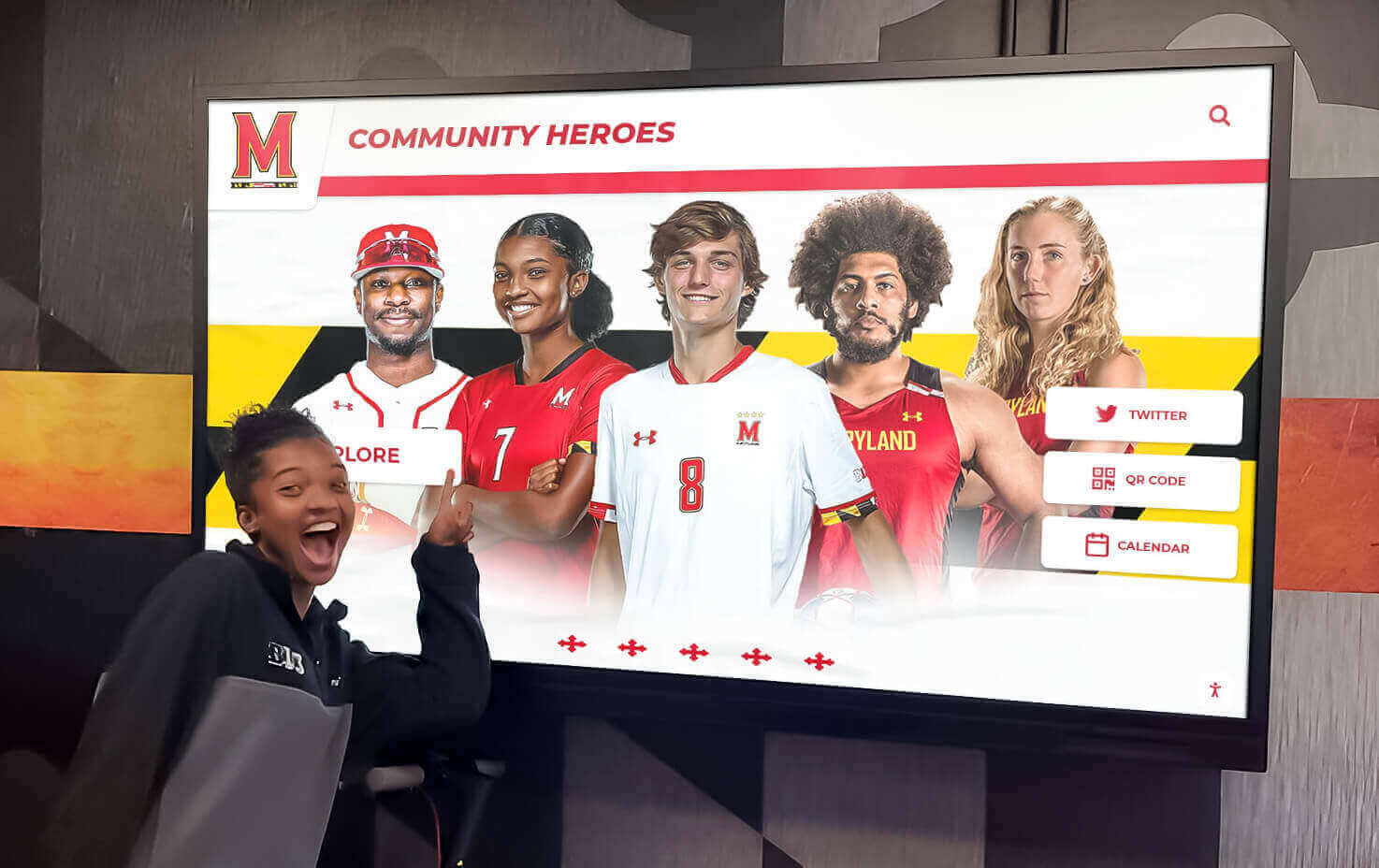
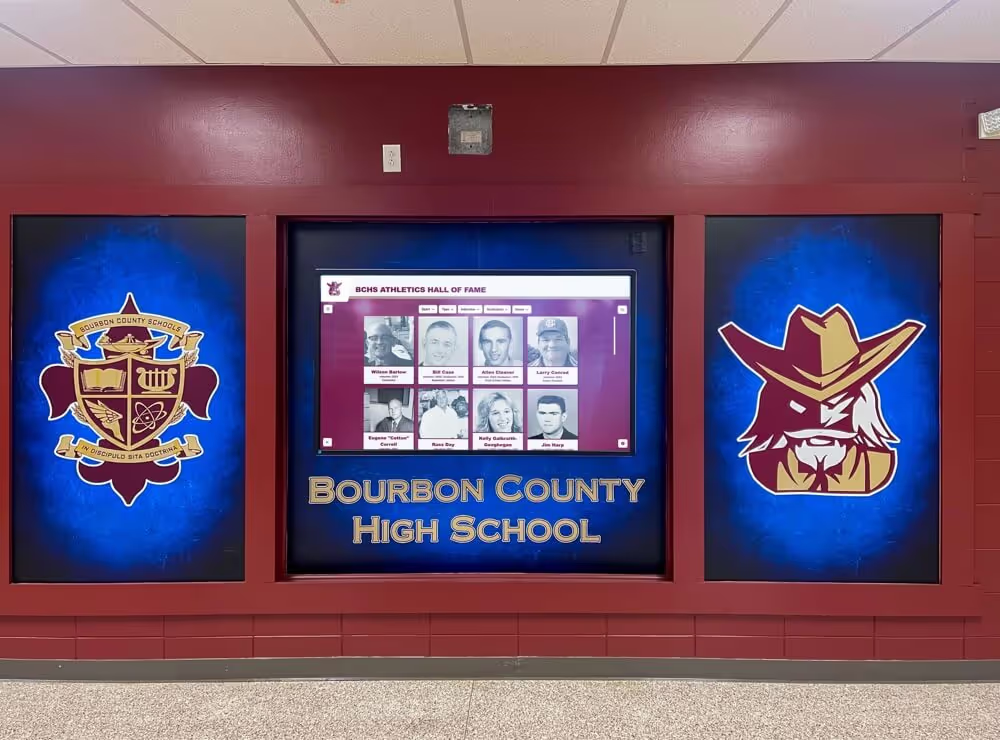
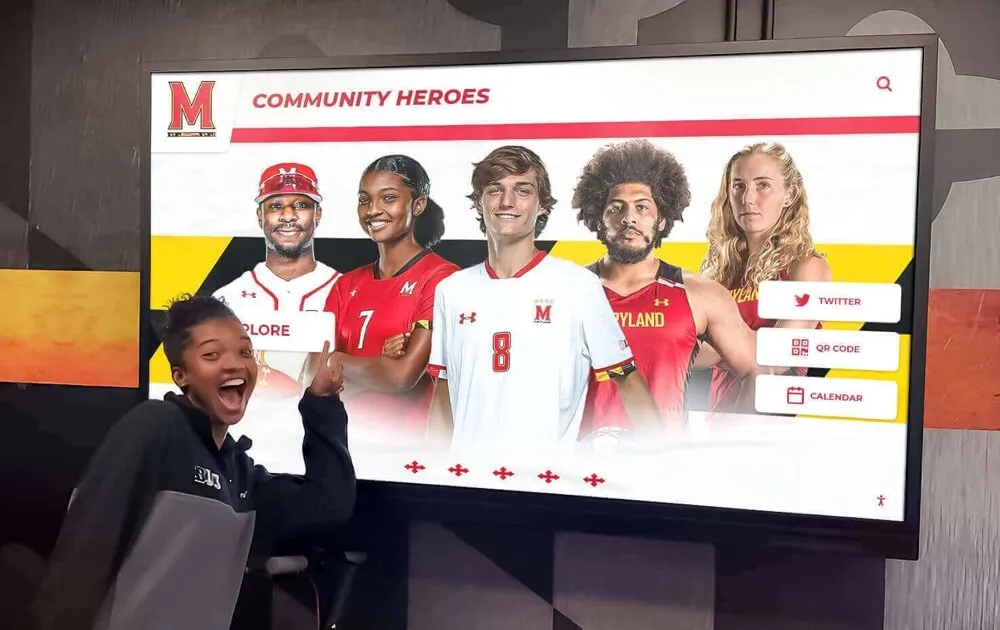
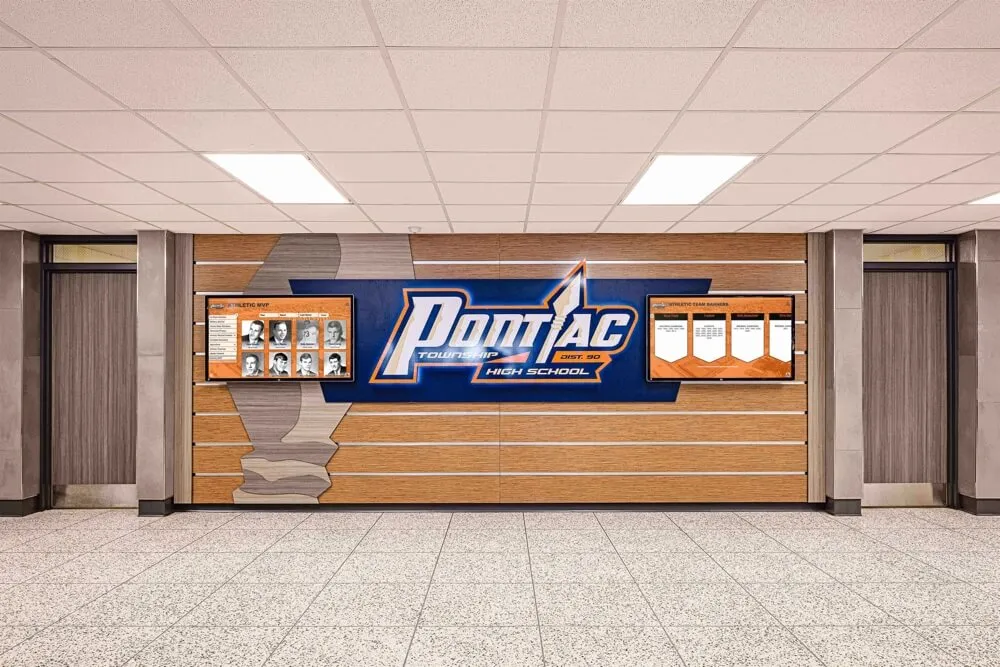
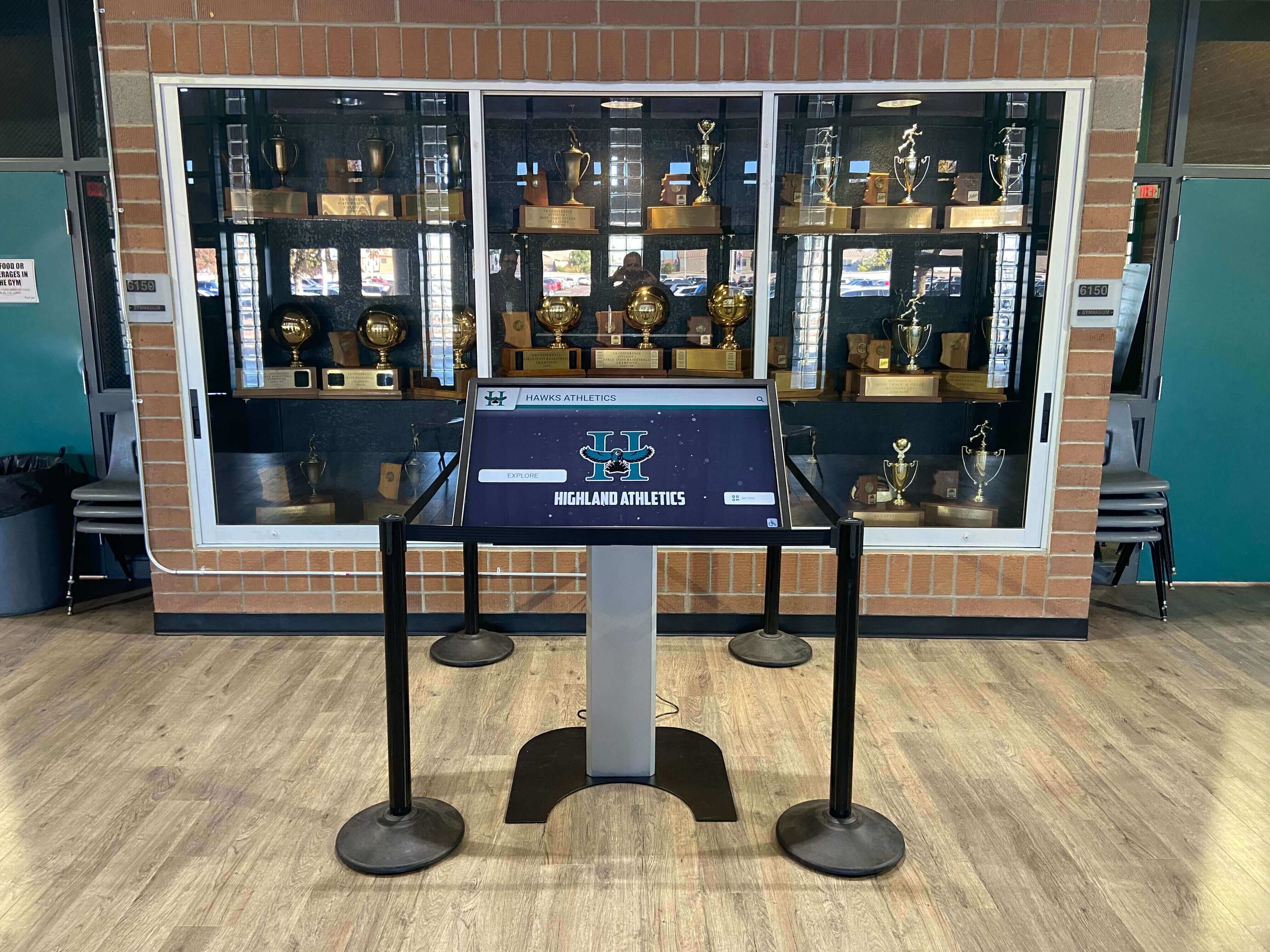
Interactive recognition displays enable community members to explore individual athlete achievements and team accomplishments across multiple sports including field hockey
Penalty Strokes (Penalty Flicks)
Penalty strokes represent field hockey’s equivalent to penalty kicks, awarded for:
- Defenders committing fouls in circle that prevent probable goals
- Defenders intentionally fouling to prevent goals
- Goalkeeper or defenders crossing end line early during penalty corners
Penalty Stroke Execution
The one-on-one confrontation follows strict rules:
- Placement - Ball positioned on penalty spot 7 yards from goal
- Players - One designated attacker versus goalkeeper only
- Execution - Attacker pushes, flicks, or scoops ball toward goal in single continuous motion
- Goalkeeper Restrictions - Keeper may not leave goal line until ball is played
- One Attempt - No rebounds or second chances after initial stroke
Penalty strokes create high-pressure moments demanding composure from both shooters and goalkeepers.
Card System and Player Misconduct
Field hockey employs a progressive card system for rule violations and unsporting behavior:
| Card Color | Penalty | Common Reasons |
|---|---|---|
| Green Card | 2-minute suspension (player sits out) | Minor misconduct, persistent fouling, dissent |
| Yellow Card | 5-10 minute suspension (duration varies by level) | Serious misconduct, dangerous play, repeated green card offenses |
| Red Card | Ejection from game and possible additional suspension | Violent conduct, serious dangerous play, egregious misconduct |
Teams play short-handed during suspensions, creating power-play advantages for opponents and increasing tactical importance of discipline.
Advanced Rules: Offside, Obstruction, and Dangerous Play
Several complex rules require deeper explanation for proper understanding and application.
Understanding Field Hockey Offside (Rarely Applied)
Unlike soccer, field hockey has no offside rule in most modern competitive play. Players may position anywhere on field regardless of ball or opponent location, creating tactical flexibility in attacking positioning and eliminating offside calls that complicate other sports.
Some youth and recreational leagues retain modified offside rules, but high school, college, and international play universally eliminated offside restrictions to promote attacking play and tactical creativity.
Obstruction and Body Positioning
Obstruction represents one of field hockey’s most frequently called fouls:
Obstruction Occurs When:
- Players use their body to shield ball from opponents (unlike basketball where this is legal)
- Players position stick or body between opponent and ball preventing tackle attempts
- Players back into opponents while controlling ball
- Players use physical contact to prevent opponent movement
Legal Ball Shielding:
Players may keep ball on their stick side away from opponents through skillful positioning and footwork, but cannot use their body as a barrier. The distinction requires understanding that players must allow opponents opportunity to tackle the ball legally.
This rule encourages stick skills and spatial awareness while preventing physical play that might create dangerous collisions.
Dangerous Play and Raised Ball Rules
Field hockey restricts raised balls and high sticks to prevent injuries:
Raised Ball Restrictions
- Players may not raise ball dangerously near other players
- Balls lifted above knee height within playing distance of opponents typically constitute dangerous play
- Aerial passes are legal if they don’t endanger players and land safely
- Shots may rise toward goal but defenders can’t intentionally deflect aerially
High Stick Violations
- Players may not raise stick above shoulder height when near other players
- Follow-through after shots may carry stick higher if done safely away from opponents
- Goalkeepers have more latitude for high stick use within their protective circle
Umpires determine dangerous play based on context, proximity to other players, and potential for injury rather than absolute ball or stick heights.
Understanding comprehensive rule frameworks helps coordinators develop complete programs. Explore spring sports program development strategies that support field hockey alongside other seasonal athletics.
Position-Specific Rules and Goalkeeper Privileges
While most field hockey rules apply uniformly, goalkeepers possess unique privileges reflecting their specialized defensive role.
Goalkeeper Special Rules and Privileges
Equipment-Based Advantages
Goalkeepers’ extensive protective equipment enables actions prohibited for field players:
- Kicking the Ball - Goalkeepers may kick ball using their kickers (foot protection)
- Body Contact with Ball - Keepers may use any body part to stop shots within circle
- Lying Down - Goalkeepers may go to ground to make saves
- Ball Catching - Keepers may catch and hold ball briefly before clearing
Restricted Areas and Limitations
Goalkeeper privileges apply only within the shooting circle:
- Outside circle, goalkeepers become regular field players with standard restrictions
- Goalkeepers may not lie on ball, delay play unnecessarily, or throw ball (must place/kick it)
- Keepers cannot leave circle during penalty corners until ball is inserted
Goalkeeper Substitution and Positioning
Teams may substitute goalkeepers during stoppages following standard substitution rules, and some tactical systems employ field players in goalkeeper role during final-minute attacking situations when behind.
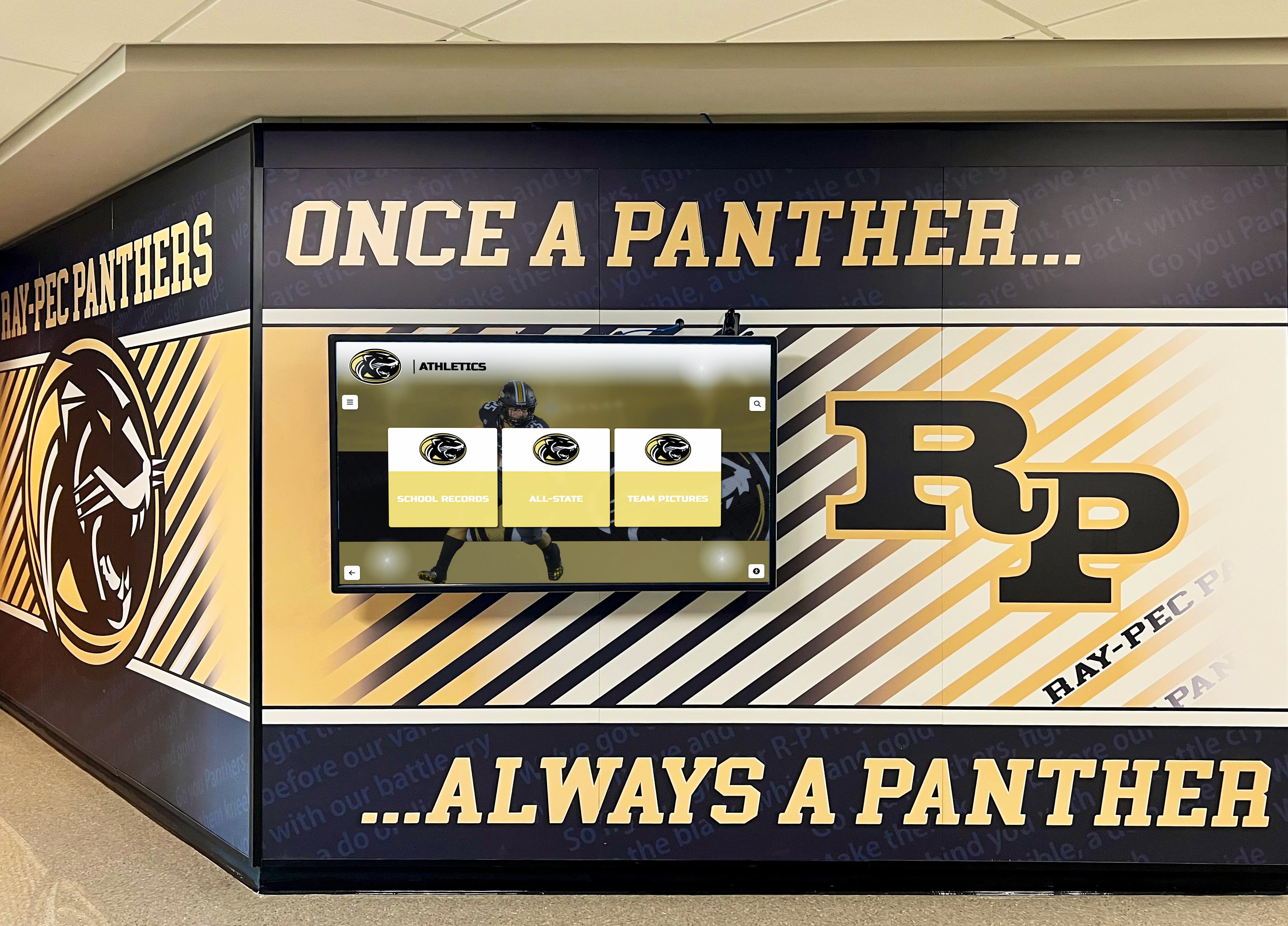
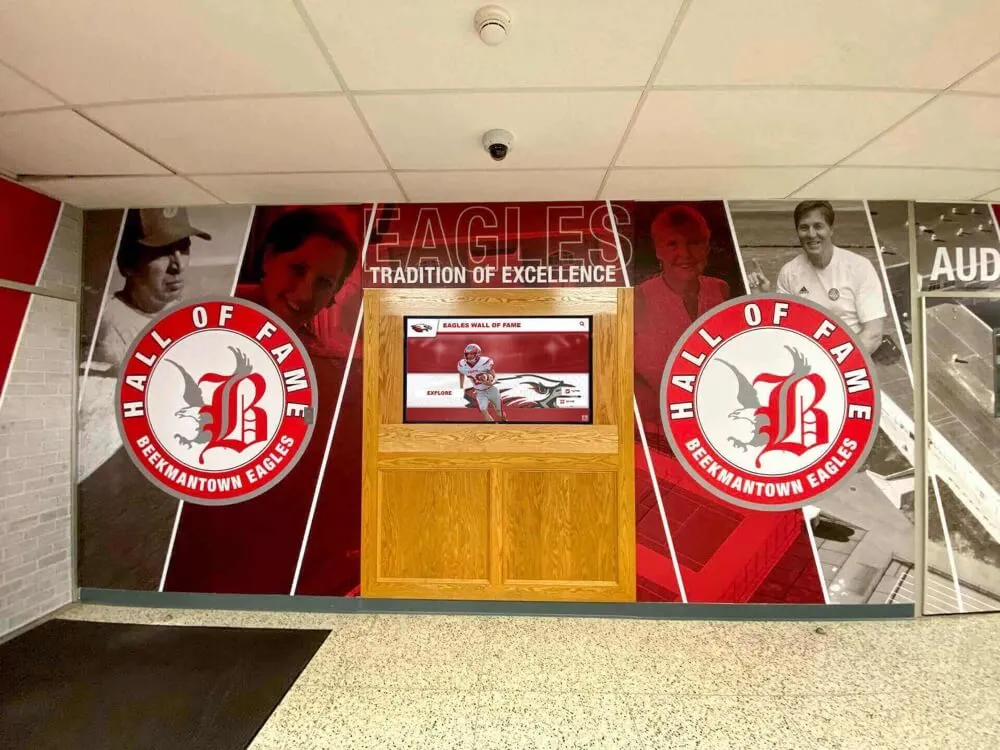
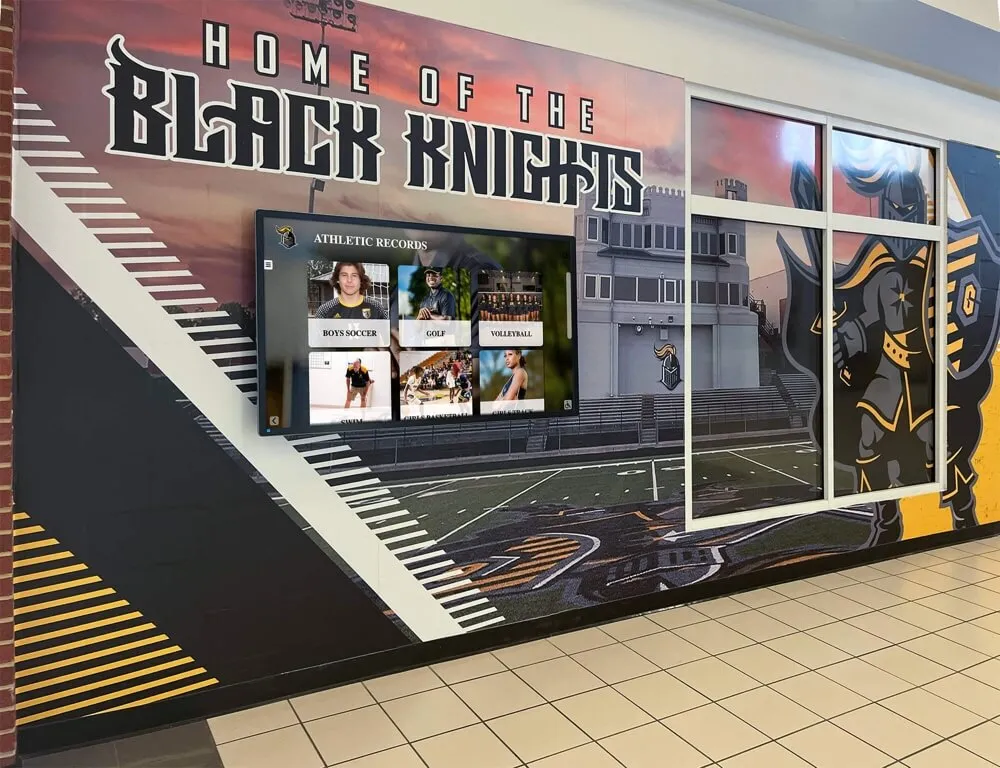
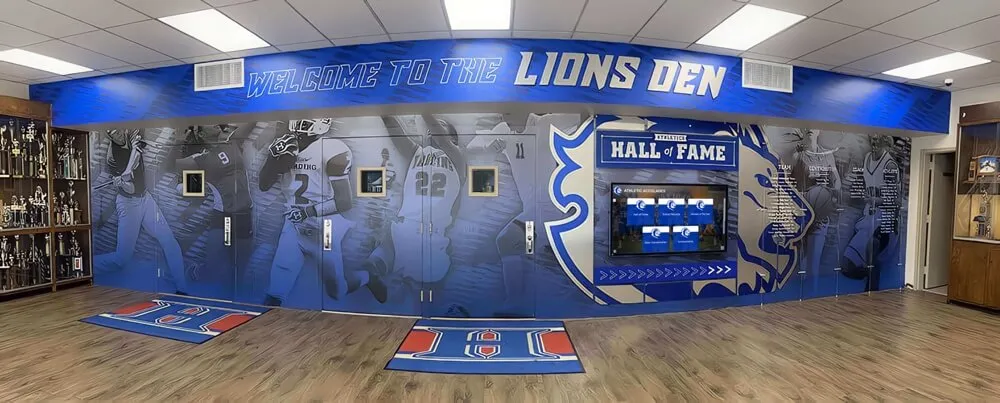
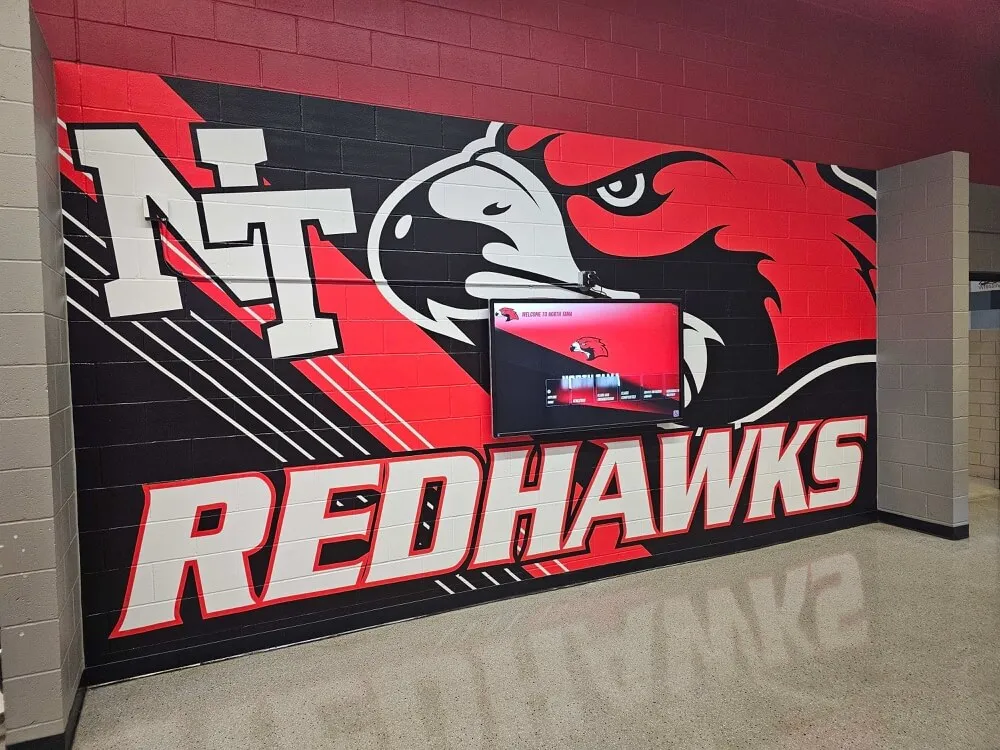
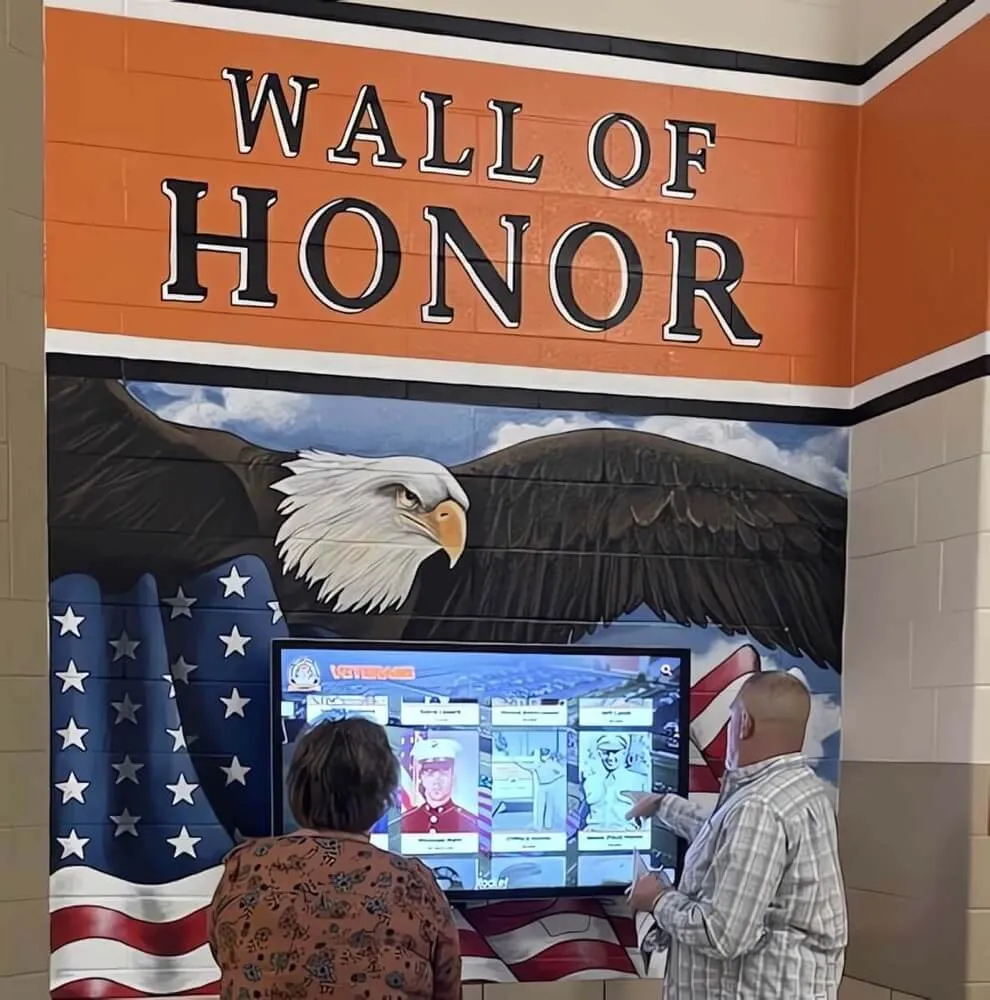
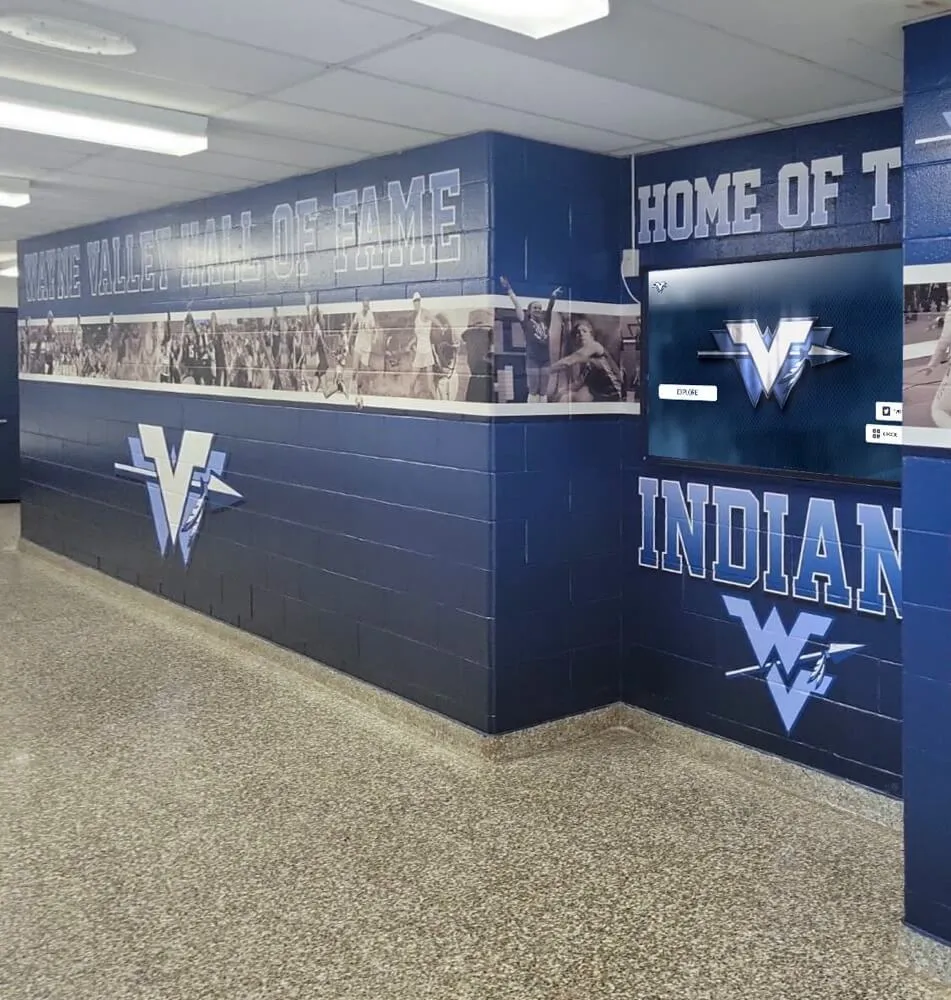
Athletic program murals combined with digital recognition technology create inspiring spaces celebrating field hockey and multi-sport achievements
Field Player Position Responsibilities
While rules apply equally to all field players, position expectations create informal role definitions:
Defensive Players
Defenders focus on:
- Preventing circle penetration and scoring opportunities
- Winning tackles in defensive third
- Initiating clearances and defensive restarts
- Marking attacking opponents tightly
- Providing cover for teammates in defensive situations
Midfield Players
Midfielders contribute by:
- Transitioning possession from defense to attack
- Supporting both defensive and offensive phases
- Covering significant field distance throughout games
- Winning contested possession in middle third
- Creating numerical advantages through positioning
Forward Players
Attackers emphasize:
- Penetrating circles and creating shooting chances
- Finishing scoring opportunities
- Applying defensive pressure in attacking third (pressing)
- Making runs creating space for teammates
- Converting penalty corners and set plays
Position flexibility allows players to interchange and adapt formations, though specialized skills suit players to specific roles.
Building Recognition for Field Hockey Achievement
Field hockey programs benefit from comprehensive recognition systems celebrating individual excellence and team success.
Statistical Categories and Achievement Tracking
Field hockey lends itself to various performance metrics deserving recognition:
Offensive Statistics
- Goals scored (season and career totals)
- Assists (passes leading directly to goals)
- Points (combined goals and assists)
- Penalty corner conversions
- Shots on goal and shooting percentage
Defensive Statistics
- Defensive saves (goalkeeper specific)
- Tackles won and possession gained
- Shutouts (games without goals allowed)
- Circle penetrations prevented
- Penalty corner stops
All-Around Contributions
- Games played and minutes logged
- Captaincy and leadership roles
- All-conference and all-state selections
- Championship team participation
- Academic all-league recognition
Programs celebrating diverse statistical achievements rather than only goal scoring create inclusive recognition valuing all positions equally.
Seasonal and Career Recognition Opportunities
Comprehensive programs honor achievements at multiple timeframes:
Single-Season Recognition
- Leading scorer awards
- Defensive player of year
- Most valuable player selections
- Newcomer/rookie of the year
- Most improved player awards
- Coaches’ awards for intangible contributions
Career Achievement Recognition
- Career statistical leaders (goals, assists, points, saves)
- 1,000-minute club (career playing time milestones)
- Four-year varsity participation recognition
- Captain recognition across multiple seasons
- College recruitment and commitment celebrations
Team Achievement Recognition
- Conference championships and tournament titles
- State playoff qualification and advancement
- Undefeated seasons or win streak records
- Historical team statistical achievements
- Championship anniversary commemorations
Schools implementing athletic director-focused digital displays create centralized recognition platforms showcasing achievements across all sport programs including field hockey.

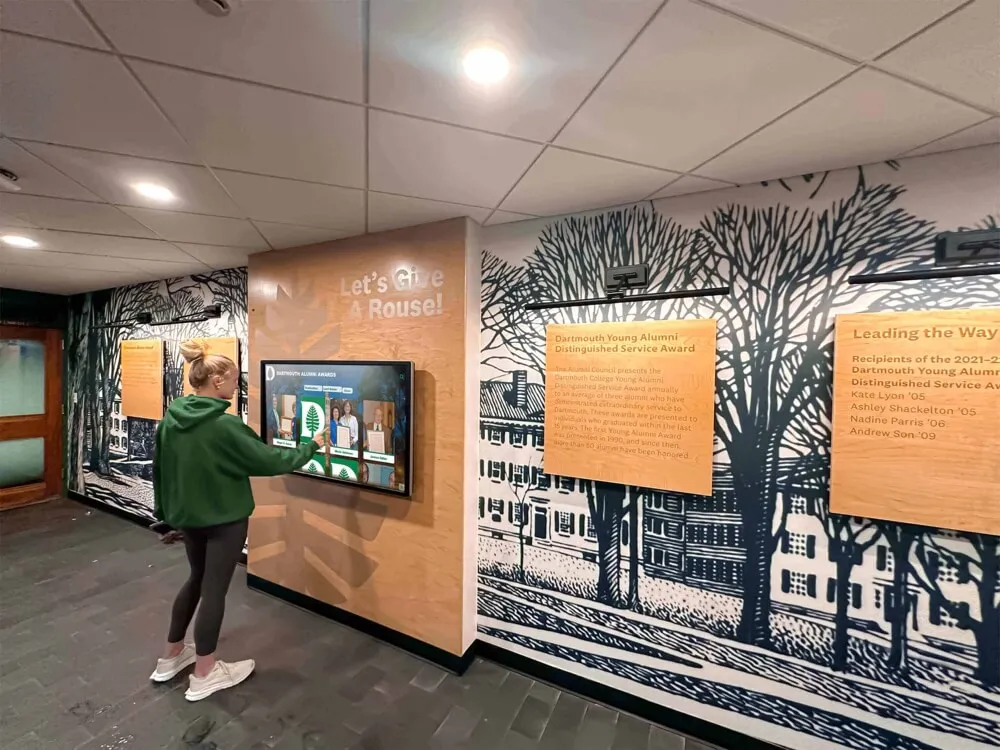
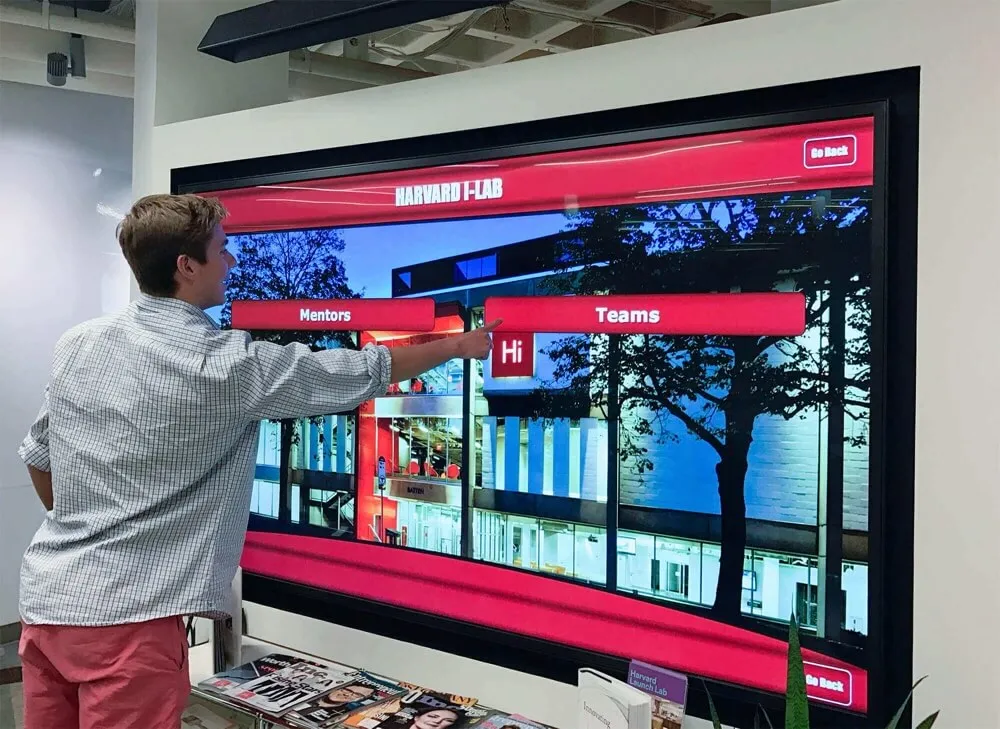
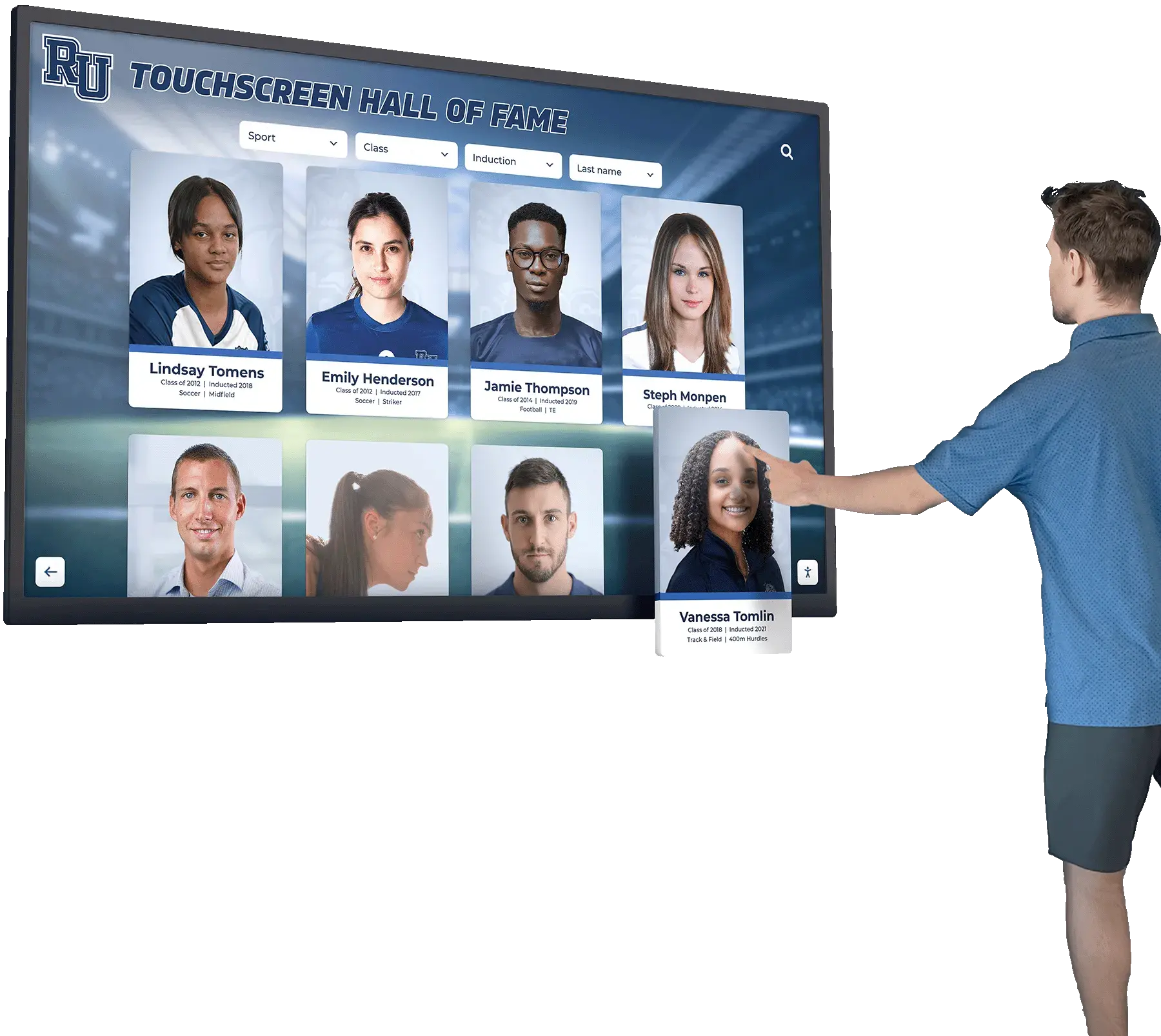
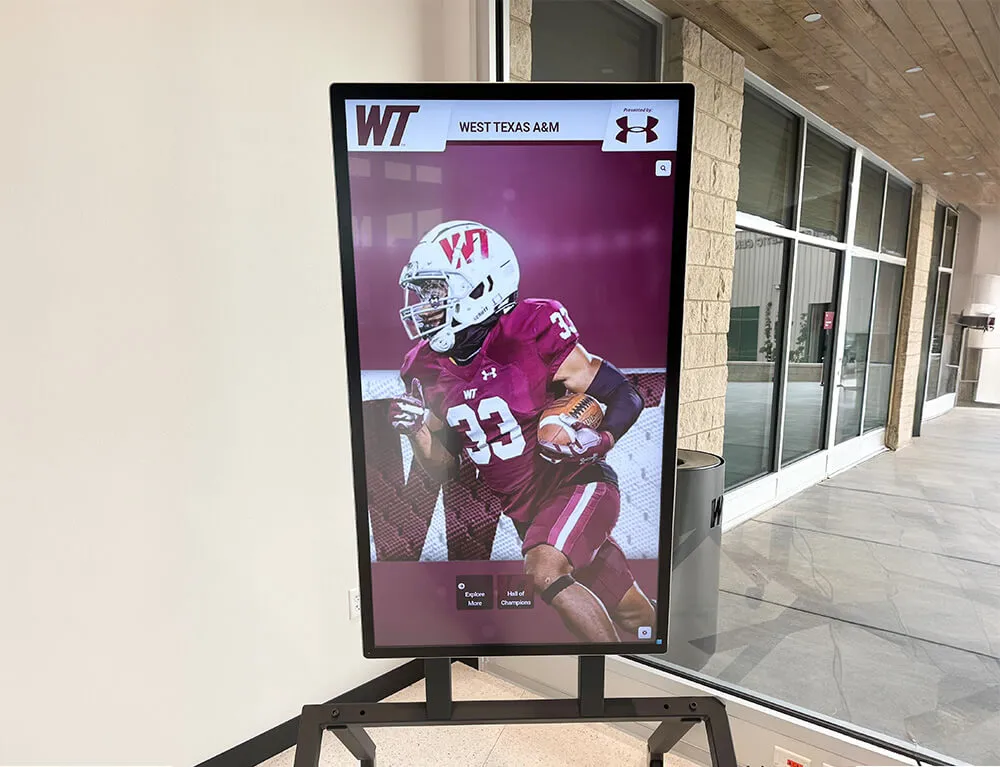
Touchscreen technology enables detailed exploration of individual athlete profiles, season statistics, and career achievements in field hockey programs
Program Development for School Coordinators
Athletic directors and program coordinators building field hockey programs should consider several foundational elements.
Essential Program Components
Coaching and Instruction
- Qualified coaches with field hockey playing experience
- Goalkeeper-specific coaching expertise
- Skill development progression frameworks
- Video analysis capabilities for technique improvement
- Off-season training and conditioning programs
Equipment and Facilities
- Adequate stick inventory for various player sizes
- Proper goalkeeper equipment sets
- Quality playing surface (turf or well-maintained grass)
- Goals meeting regulation specifications
- Training equipment (cones, balls, rebounders)
Safety Protocols
- Mandatory mouthguard enforcement
- Equipment safety inspections
- Concussion protocols and return-to-play procedures
- Emergency action plans for field locations
- Weather monitoring and lightning safety procedures
Competitive Structure
- Appropriate scheduling balancing development and competition
- Conference/league affiliations providing regular competition
- Tournament participation for additional experience
- Varsity, junior varsity, and youth program levels
- Non-traditional season opportunities (fall ball, spring leagues)
Programs should align development objectives with available resources, ensuring sustainable growth rather than overextension that compromises athlete experience.
Creating Field Hockey Culture and Tradition
Successful programs build culture through:
Visible Recognition Systems
Creating physical and digital spaces celebrating field hockey achievements:
- Hallway displays showcasing current rosters and achievements
- Digital screens rotating game highlights and player spotlights
- Record boards tracking program statistical leaders
- Championship banners and trophy displays
- Alumni achievement integration connecting program generations
Modern recognition platforms like those from Rocket Alumni Solutions enable comprehensive field hockey program recognition through customizable touchscreen displays showcasing players, statistics, and program history in engaging formats that strengthen team identity.
Traditional Celebrations
Programs develop traditions through:
- Annual award banquets recognizing seasonal achievements
- Senior night ceremonies honoring graduating players
- Alumni game events connecting current and former players
- Preseason team camps building chemistry and skills
- Postseason community celebration events
These traditions create program continuity across roster changes while strengthening connections between athletes, families, and communities.
Multi-Sport Integration
Field hockey often shares athletes with other sports, requiring coordination:
- Recognizing multi-sport athletes appropriately
- Scheduling coordination with complementary sports (soccer, basketball, lacrosse)
- Shared conditioning and strength programs
- Integrated recognition displays celebrating athletes across sports
- Cross-sport team building activities
Schools can explore team photo documentation strategies that capture field hockey teams alongside other athletic programs for comprehensive recognition displays.
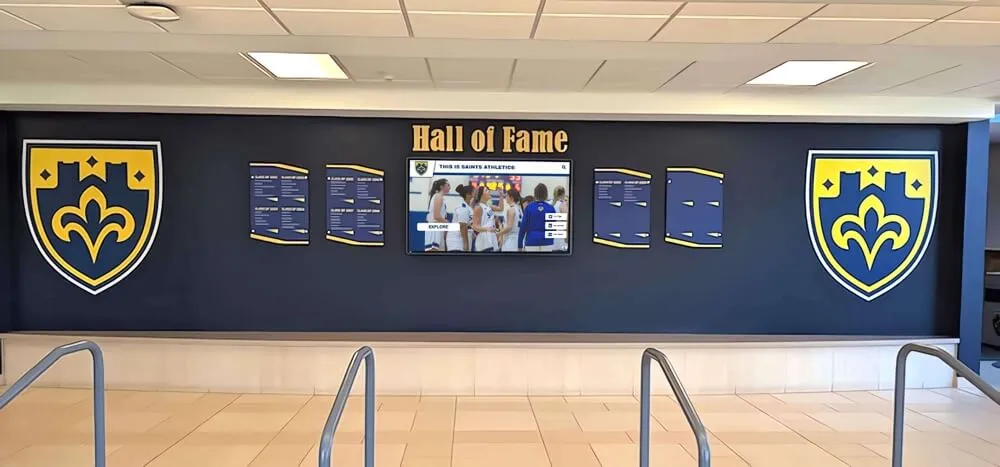
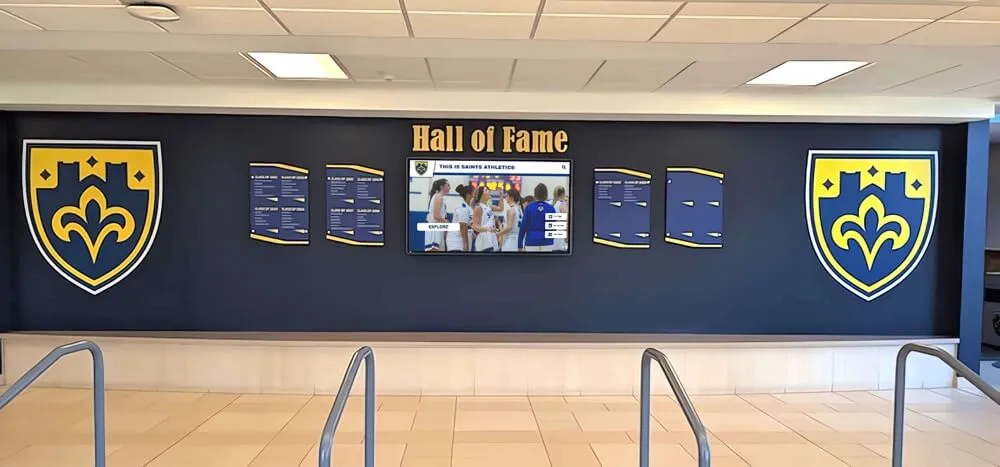
Traditional shield-style recognition combined with modern display technology creates lasting tributes to field hockey excellence
Teaching Field Hockey Rules Effectively
For coaches, parents, and coordinators helping new players learn the game, structured rule education improves understanding and enjoyment.
Progressive Rule Introduction
Rather than overwhelming beginners with complete rule books, introduce concepts progressively:
Phase 1: Fundamental Basics (First Practices)
- Stick-side rule (flat side only)
- Basic dribbling and passing
- Simplified scoring (get ball in goal)
- Circle concept introduction
- Safety rules (no high sticks near players)
Phase 2: Gameplay Essentials (First Games)
- Free hit restarts after fouls
- Five-yard rule for opponents at restarts
- Sideline and end line restart procedures
- Basic penalty corner concepts
- Goalkeeper special privileges
Phase 3: Advanced Concepts (Competitive Play)
- Obstruction and legal shielding distinctions
- Dangerous play scenarios and judgments
- Penalty stroke situations
- Card system and discipline consequences
- Advanced tactical rules
This progression allows skill development to accompany rule understanding rather than frontloading complex regulations before players can execute basic techniques.
Common Misconceptions and Clarifications
New participants frequently misunderstand several field hockey rules:
Misconception: “Field hockey has offside like soccer” Reality: Modern field hockey has eliminated offside rules, allowing players to position anywhere on field.
Misconception: “You can only score from penalty corners” Reality: Any shot from within the circle may score; penalty corners simply create organized scoring opportunities.
Misconception: “Goalkeepers can use hands anywhere” Reality: Goalkeeper privileges apply only within the shooting circle; outside this area they’re regular field players.
Misconception: “All raised balls are illegal” Reality: Raised balls are legal if executed safely without endangering nearby players.
Misconception: “Physical contact is never allowed” Reality: Incidental contact is permitted; obstruction occurs when players use bodies to prevent ball access.
Addressing these misconceptions explicitly during instruction prevents confusion and helps players understand rule purposes.
Resources for Continued Learning
Several authoritative sources provide detailed field hockey rule information:
- USA Field Hockey - National governing body providing official rules, coaching resources, and program development materials
- NFHS (National Federation of State High School Associations) - Publishes high school field hockey rules differing slightly from international standards
- NCAA - Maintains collegiate field hockey rules with variations from high school and international play
- FIH (International Hockey Federation) - International governing body establishing worldwide competition standards
Rules vary slightly between governing bodies, particularly regarding game timing, substitution procedures, and penalty severity, so understanding which rule set applies to specific competition levels prevents confusion.
Coordinators developing comprehensive athletic programs can explore best practices for capturing school history including field hockey achievements within broader institutional narratives.
Celebrating Field Hockey Success Stories
Field hockey creates opportunities for individual excellence and team achievement deserving lasting recognition.
Building Hall of Fame Recognition
Schools with established field hockey traditions should integrate the sport into athletic hall of fame programs:
Individual Athlete Criteria
- Career statistical achievements (goals, assists, saves)
- All-conference and all-state selections
- College recruitment and athletic scholarships
- Championship team contributions
- Leadership roles and team captaincy
- Post-graduation athletic success
Team Achievement Recognition
- Conference championship teams
- State tournament qualifiers and medalists
- Undefeated or historically successful seasons
- Record-setting offensive or defensive performances
- Multi-year dynasty programs
Coach and Contributor Recognition
- Career win milestones and championship success
- Program development and growth achievements
- Referee/official service to field hockey community
- Booster and fundraising contributors enabling program growth
Integrating field hockey into comprehensive athletic recognition ensures the sport receives appropriate visibility alongside traditionally higher-profile athletics.
Season-Ending Banquet Recognition
Annual banquets create formal recognition opportunities:
Individual Awards
- Most Valuable Player (offense and defense)
- Rookie/Newcomer of the Year
- Most Improved Player
- Coaches’ Award for intangible contributions
- Academic All-League recognition
- Captains’ Leadership Award
Statistical Achievement Recognition
- Leading scorer award
- Assist leader recognition
- Defensive player acknowledgment (tackles, goalkeeper saves)
- Ironwoman award (most minutes played)
- Best plus/minus rating (goals for/against when playing)
Team Awards
- Championship trophies and medals
- Conference standing recognition
- Sportsmanship awards from league
- Team GPA academic achievements
- Community service recognition
These celebrations provide closure to seasons while honoring diverse contributions beyond only scoring achievements.
Programs seeking inspiration for recognition events can explore soccer banquet planning ideas easily adaptable to field hockey contexts with similar team structures and recognition needs.
Conclusion: Rules Knowledge Empowers Field Hockey Participation
Understanding field hockey rules transforms the sport from confusing chaos into strategic competition where skill, teamwork, and tactical intelligence determine success. For new players, rule knowledge provides framework for skill development and competitive participation. For parents, understanding gameplay enables informed support and appreciation for their student-athletes’ achievements. For school coordinators, comprehensive rule knowledge supports program development, competitive scheduling, and athlete safety protocols ensuring positive experiences.
Field hockey’s unique characteristics—one-sided stick use, shooting circle requirements, penalty corner set plays, and goalkeeper privileges—create distinctive strategic elements rewarding technical precision and coordinated team execution. Programs that celebrate achievements through thoughtful recognition systems honor individual excellence while building culture and tradition strengthening team identity across generations.
Schools establishing field hockey programs or supporting existing teams should prioritize rule education, invest in proper equipment and coaching, create visible recognition platforms celebrating achievements, and integrate field hockey into comprehensive athletic halls of fame. These investments develop sustainable programs producing skilled athletes, competitive teams, and lasting community pride.
Frequently Asked Questions About Field Hockey Rules
Can you use both sides of the hockey stick in field hockey?
No. Players may use only the flat (left) side of the stick to contact the ball. Using the rounded back side constitutes a foul. This rule creates unique technical demands requiring players to rotate their sticks when changing directions.
What is the D in field hockey?
The “D” refers to the shooting circle (striking circle)—a semicircular area extending 16 yards from each goal. All goals must be scored from within this circle, making circle penetration essential to attacking strategy.
Is there offside in field hockey?
No. Modern field hockey rules have eliminated offside restrictions. Players may position anywhere on the field regardless of ball or opponent locations, creating tactical flexibility in attacking play.
How long is a field hockey game?
Standard games consist of four 15-minute quarters (60 minutes total playing time) at high school and college levels. Some youth programs use two 30-minute halves instead. Actual game duration extends longer due to stoppages for penalties, injuries, and timeouts.
What happens if you hit the ball above your shoulders in field hockey?
Raising your stick above shoulder height near other players typically constitutes dangerous play resulting in a free hit for opponents. However, follow-through after shots may carry sticks higher if executed safely away from other players.
Can field hockey goalies use their hands?
Yes, but only within the shooting circle. Goalkeepers may use any body part including hands to stop shots within their defensive circle. Outside the circle, goalkeepers become regular field players with standard restrictions.
What is a penalty corner in field hockey?
A penalty corner (short corner) is a set-play restart awarded to attacking teams when defenders commit fouls in the shooting circle or intentionally play the ball over their own end line. It creates organized scoring opportunities through practiced plays.
How many players are on a field hockey team?
Each team fields 11 players including one goalkeeper. Rosters typically include additional substitutes who can enter during stoppages following standard substitution rules.
Ready to Celebrate Your Field Hockey Program’s Achievements?
Modern recognition technology enables schools to showcase field hockey excellence through engaging, interactive displays that honor individual achievements, team successes, and program history. Rocket Alumni Solutions provides customizable touchscreen systems designed specifically for athletic programs, creating lasting tributes that strengthen team culture while celebrating the athletes who built your field hockey tradition. Explore how digital recognition platforms can transform your school’s athletic displays from static trophy cases into dynamic, searchable archives honoring every player, every season, and every achievement that makes your field hockey program special.
Live Example: Rocket Alumni Solutions Touchscreen Display
Interact with a live example (16:9 scaled 1920x1080 display). All content is automatically responsive to all screen sizes and orientations.