



Donor appreciation is far more than good manners—it’s the foundation of sustainable fundraising that transforms one-time contributors into lifelong supporters deeply invested in your mission. Organizations that master donor gratitude don’t just retain supporters at higher rates; they cultivate passionate advocates who increase giving over time, recruit new donors from their networks, and create momentum that elevates programs beyond what any single campaign could achieve.
Yet many schools, nonprofits, and community organizations struggle with donor appreciation execution. Generic thank-you letters arrive weeks late. Recognition feels transactional rather than personal. Appreciation efforts concentrate on major gifts while overlooking smaller contributors who might become tomorrow’s principal donors. Most critically, appreciation remains reactive—acknowledging gifts after they arrive rather than building ongoing recognition systems that keep supporters engaged year-round.
This comprehensive guide explores creative, strategic donor appreciation ideas that build genuine relationships, inspire continued support, and demonstrate gratitude in ways your supporters will genuinely value and remember.
Effective donor appreciation requires understanding what supporters truly want from organizations they fund. Research consistently shows donors don’t primarily seek public recognition or special privileges—they want confidence their contributions make tangible differences and genuine acknowledgment that honors their values and motivations for giving. Appreciation that addresses these deeper needs creates lasting loyalty traditional approaches miss entirely.

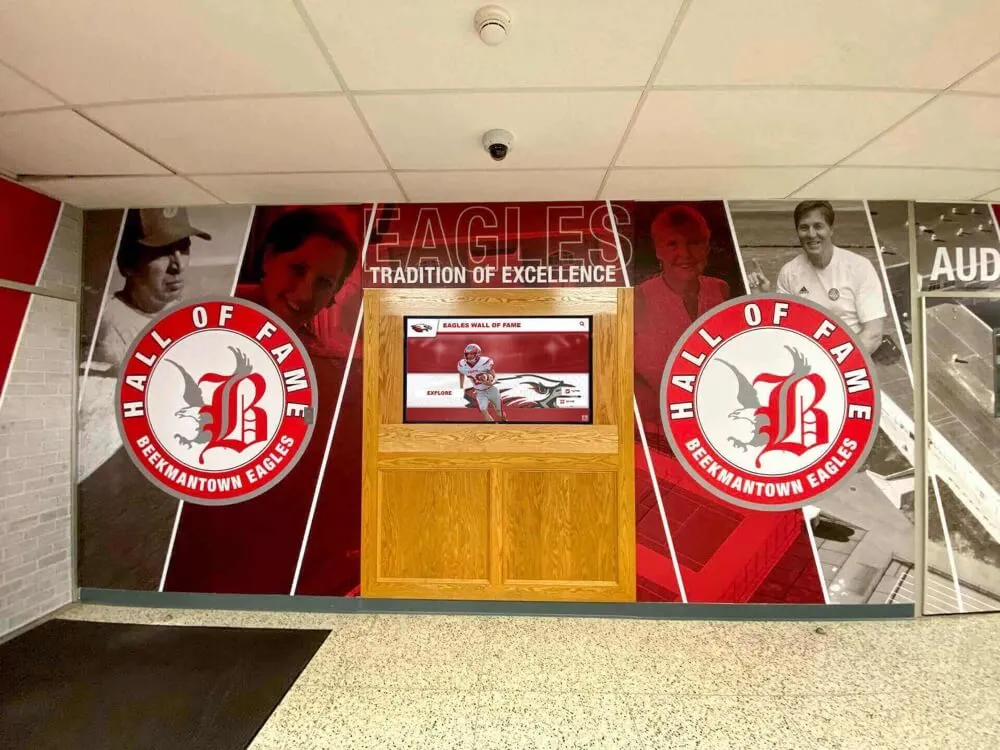
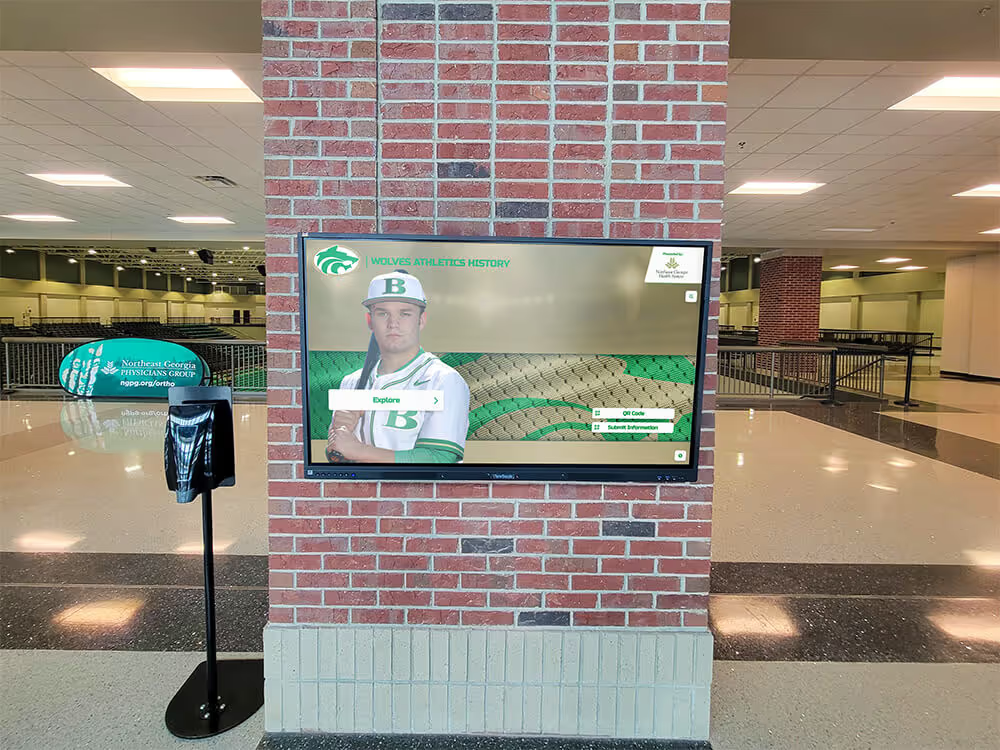
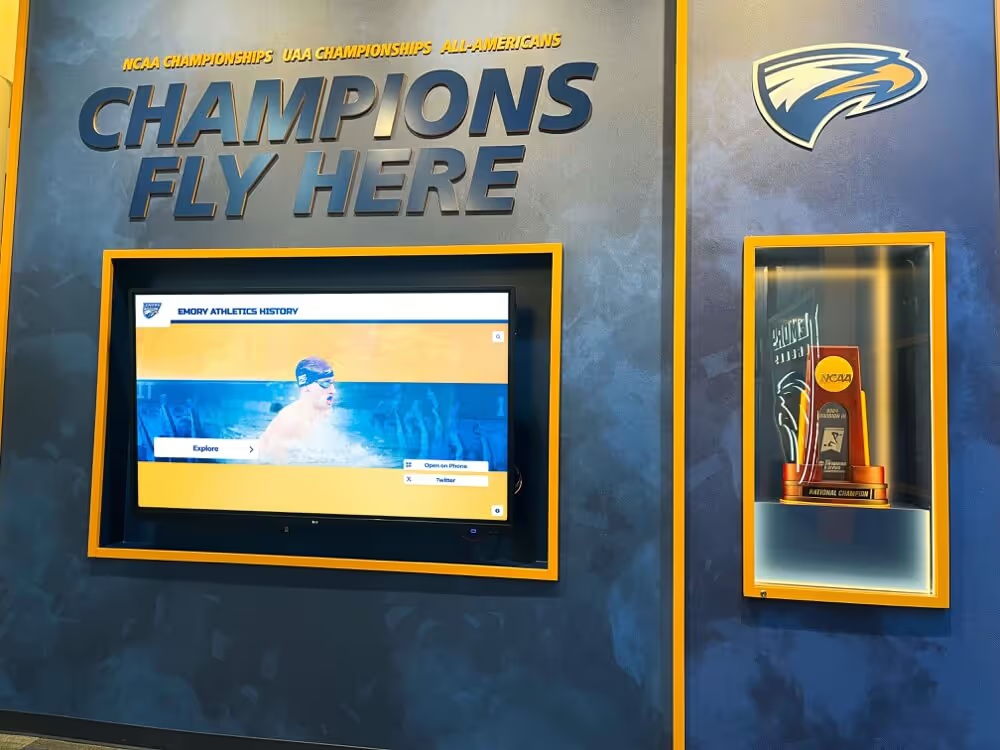
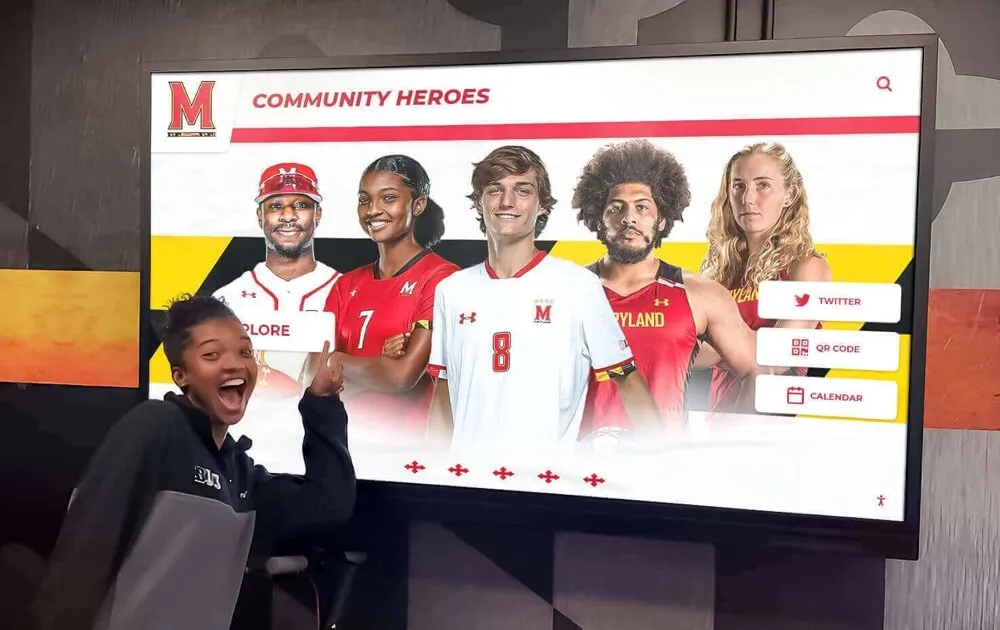
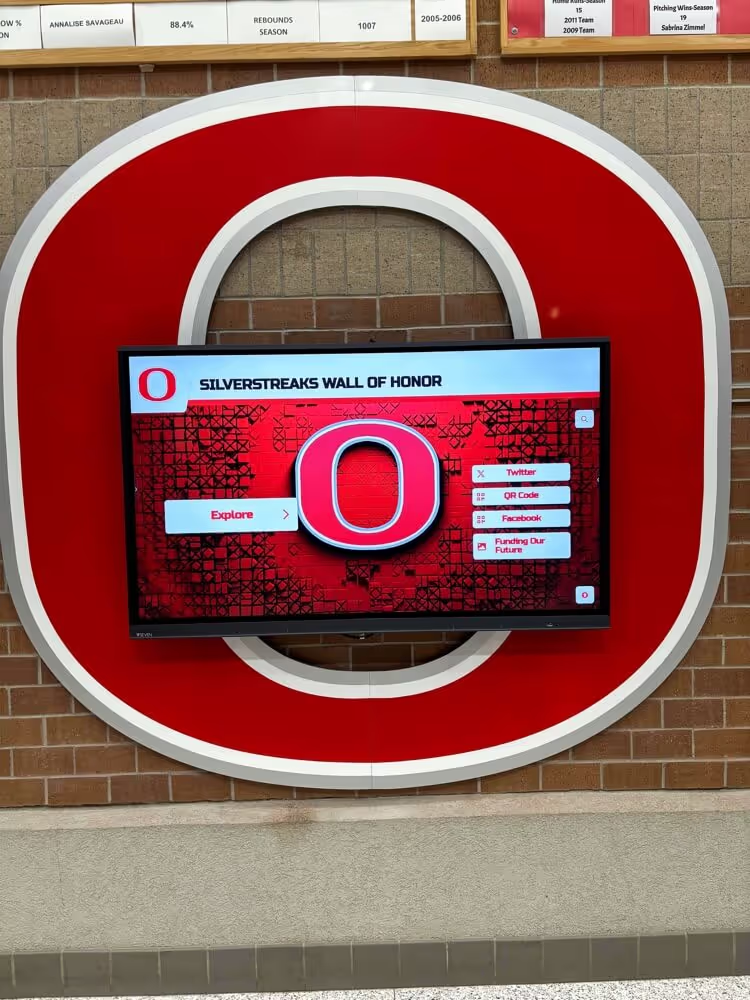
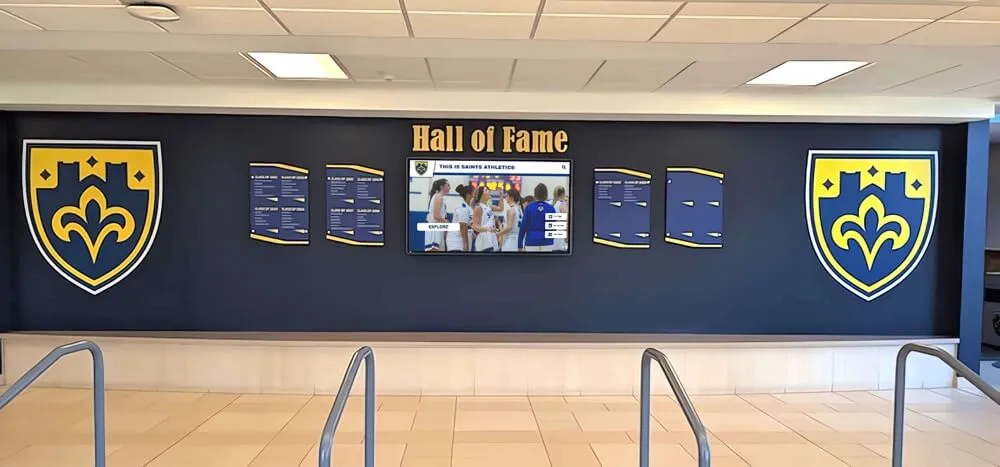
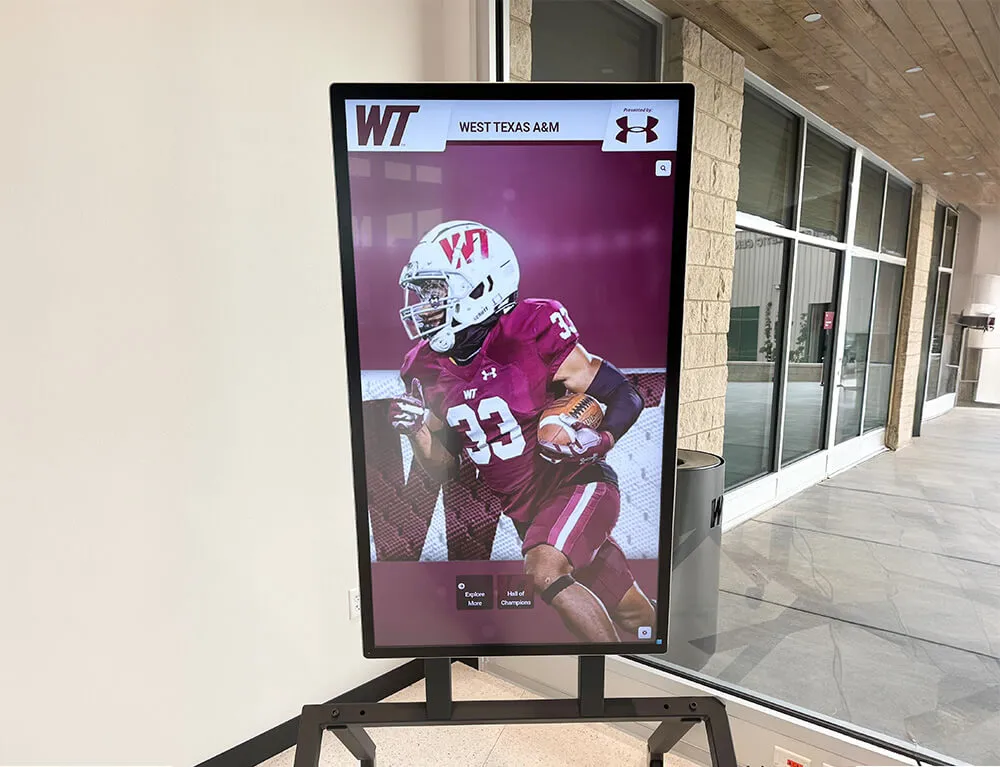
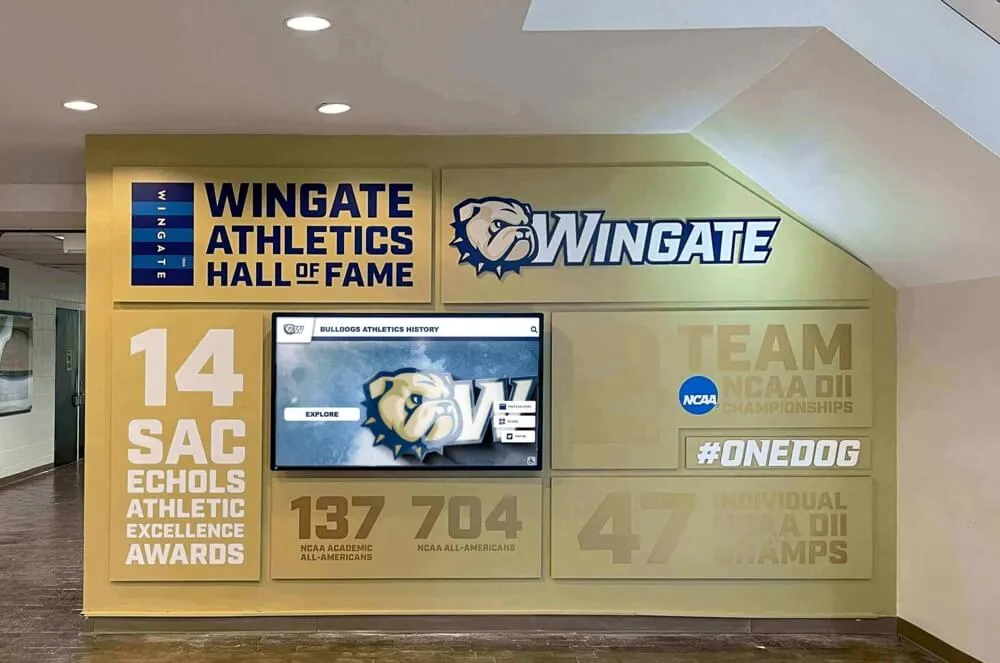
Permanent donor recognition displays demonstrate lasting appreciation while inspiring future giving
Understanding Donor Appreciation Psychology
Before implementing appreciation strategies, understanding what makes gratitude meaningful helps organizations move beyond perfunctory thank-you notes toward recognition that genuinely resonates with supporters.
The Gratitude-Generosity Cycle
Donor psychology research reveals a powerful reciprocal relationship: authentic appreciation doesn’t just acknowledge past giving—it significantly influences future support. Donors who feel genuinely appreciated give more frequently, increase contribution amounts over time, and remain loyal through organizational challenges that might otherwise prompt defection to other causes.
This gratitude-generosity cycle operates through several psychological mechanisms. When donors receive thoughtful recognition, they experience validation that their values and priorities matter. Appreciation provides feedback confirming their contributions achieved intended impact. Most importantly, gratitude creates emotional connection transforming transactional relationships into genuine community membership.
Organizations recognizing these psychological dynamics approach appreciation strategically rather than treating it as post-gift obligation. Each appreciation touchpoint becomes opportunity to deepen relationships and inspire continued engagement.
What Donors Actually Value
Extensive surveys of charitable giving patterns reveal consistent themes about what appreciation elements matter most to supporters:
Impact Information
Donors overwhelmingly prioritize understanding how contributions made differences. Specific examples—the scholarship recipient who graduated, the program expansion your funding enabled, the community members served because of supporter generosity—provide tangible evidence that gifts accomplished real purposes.
Generic updates about organizational activities don’t satisfy this need. Donors want direct connection between their specific contributions and measurable outcomes.
Timely Acknowledgment
Appreciation impact diminishes rapidly as delays lengthen between contributions and recognition. Donors who receive acknowledgment within 48 hours feel significantly more satisfied than those waiting weeks for identical messages. Prompt response demonstrates that organizations value supporter relationships enough to prioritize appreciation even during busy periods.
Automated systems enabling immediate preliminary acknowledgment followed by personalized recognition provide ideal balances between speed and authenticity.
Personalized Recognition
Mass-produced form letters feel perfunctory regardless of how carefully organizations craft them. Donors notice when recognition includes specific details about their giving history, acknowledges personal connections to missions, or references past conversations and relationships.
Personalization doesn’t require elaborate individualization for every donor—simple elements like handwritten signature additions, specific gift amount references, or notes acknowledging donor interests transform generic templates into personal communications.
Stewardship Transparency
Supporters appreciate organizations that demonstrate financial responsibility and mission focus. Recognition communications that include stewardship information—percentage of budgets dedicated to programs versus overhead, financial audit summaries, strategic planning updates—build confidence that contributions support organizations operating with integrity and efficiency.
Transparency doesn’t mean overwhelming donors with financial minutiae. It means proactively sharing information demonstrating that organizations honor supporter trust through responsible resource management.
For nonprofits developing comprehensive recognition approaches, exploring donor recognition complete guides provides frameworks ensuring appreciation addresses what donors actually value rather than organizational assumptions about effective gratitude.
Personalized Donor Appreciation Ideas
Moving beyond generic acknowledgment toward personalized recognition creates memorable appreciation experiences that differentiate organizations from countless others competing for supporter attention and generosity.
Individualized Communication Strategies
Segmented Thank-You Approaches
Different donor categories appreciate different recognition styles. Major donors might value personal phone calls from executive leadership or handwritten notes from program beneficiaries. Mid-level contributors often appreciate detailed impact reports connecting their gifts to specific outcomes. First-time donors need welcoming communications establishing relationship foundations and clarifying how ongoing involvement works.
Segment your donor database by giving level, contribution frequency, donor age and generation, relationship length, and specific program interests. Develop appropriate appreciation approaches for each segment rather than applying one-size-fits-all strategies that miss what different supporter groups genuinely value.
Personal Connection Elements
Incorporate specific details demonstrating that appreciation comes from humans who know individual donors rather than automated systems generating mass communications:
- Reference past conversations or previous gifts
- Acknowledge personal connections to programs or beneficiaries
- Note milestone anniversaries of supporter relationships
- Include photos or updates about specific projects donors funded
- Mention shared interests or community connections
These personal touches transform routine acknowledgment into genuine relationship communication.
Multi-Channel Recognition
Different donors prefer different communication methods. Some appreciate formal written correspondence. Others engage more enthusiastically with social media recognition. Many younger donors respond well to text messages or video updates that feel immediate and authentic.
Develop multi-channel approaches recognizing supporters through their preferred communication methods. Track donor preferences in your database and respect these choices when delivering appreciation.
Handwritten Notes and Personal Touches
The Power of Handwritten Recognition
In our digital age, handwritten thank-you notes carry exceptional impact. The time and attention required for personal handwriting signals that organizations value relationships enough to invest individual effort acknowledging supporters personally.
Research shows handwritten notes significantly outperform printed letters or emails in generating positive donor sentiment and influencing future giving decisions. Even donors receiving major gift acknowledgment from executive leadership often treasure simple handwritten notes from program participants or beneficiaries more than formal institutional communications.
Implementing Handwritten Programs Sustainably
For organizations with extensive donor bases, writing personal notes for every contribution becomes impractical. Strategic approaches include:
- Handwritten notes for all first-time donors establishing relationship foundations
- Personal messages for donors reaching milestone gift cumulative totals
- Notes from beneficiaries to donors funding specific programs
- Board member signature rotations personalizing standard letters
- Seasonal handwritten card campaigns during slower organizational periods
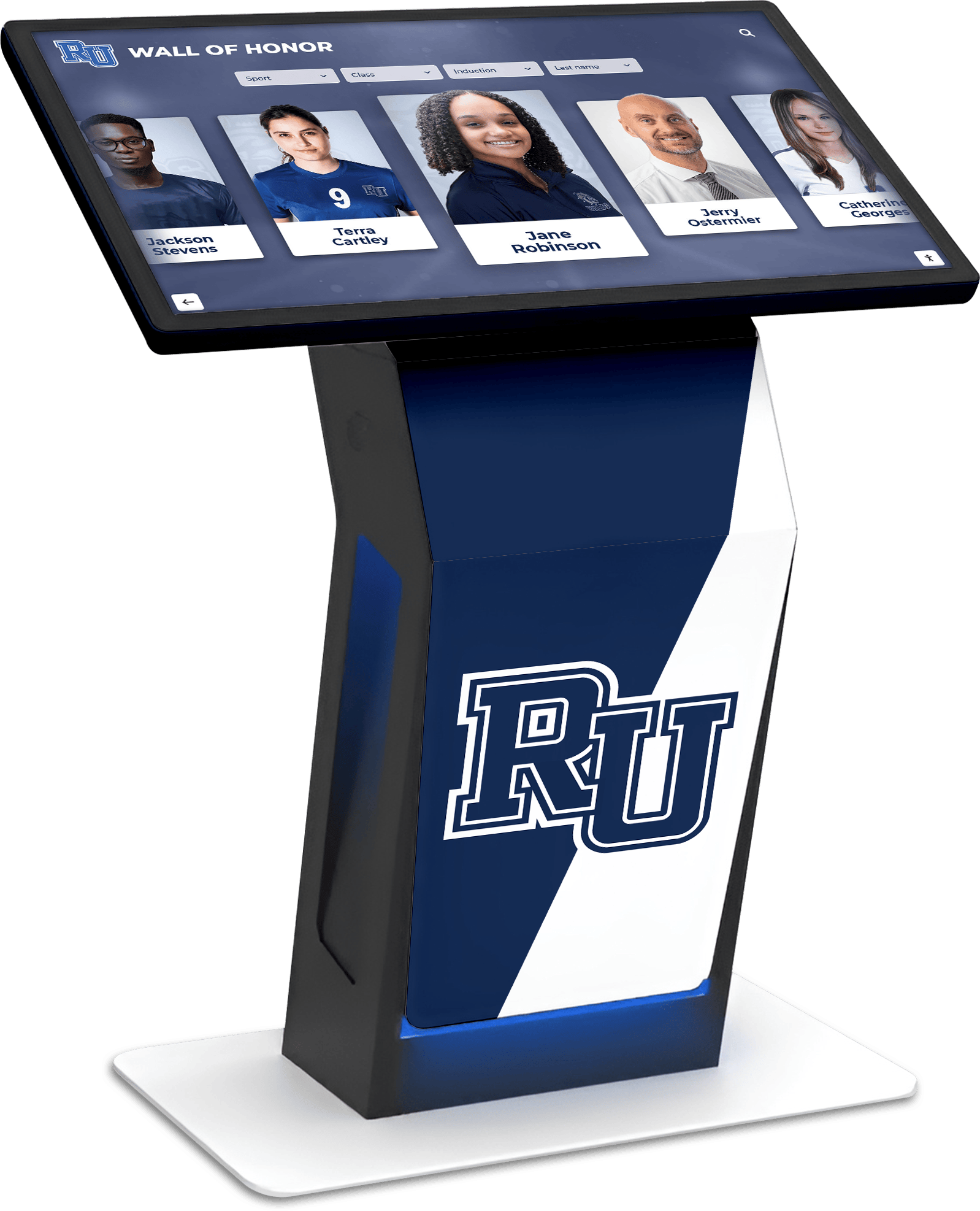
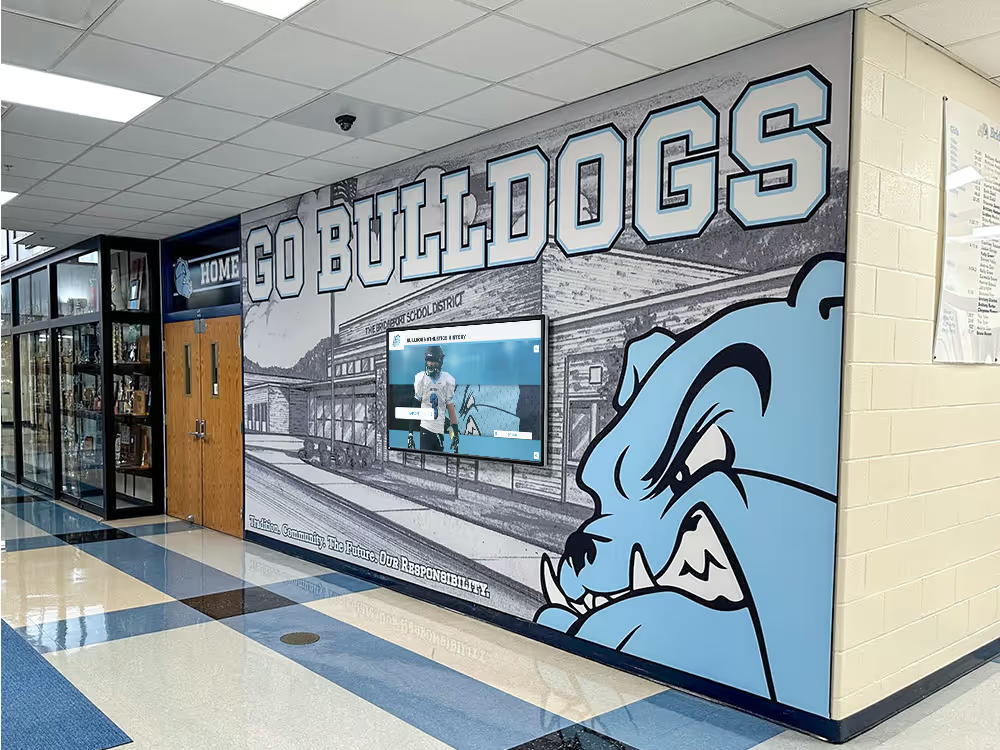
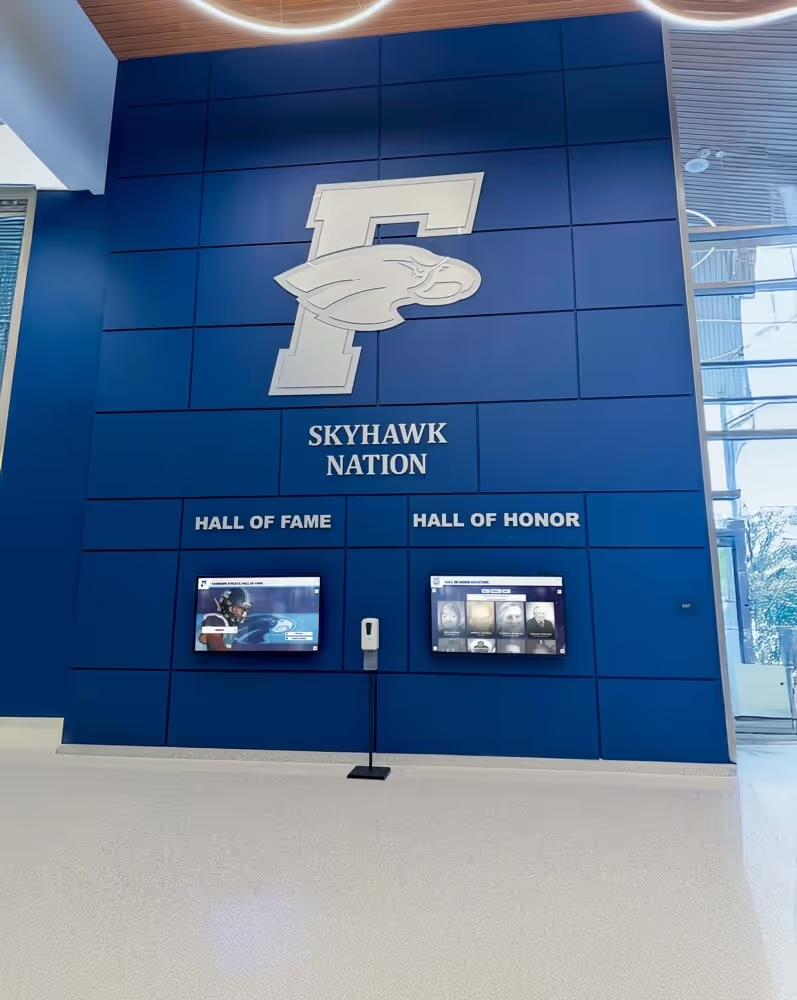
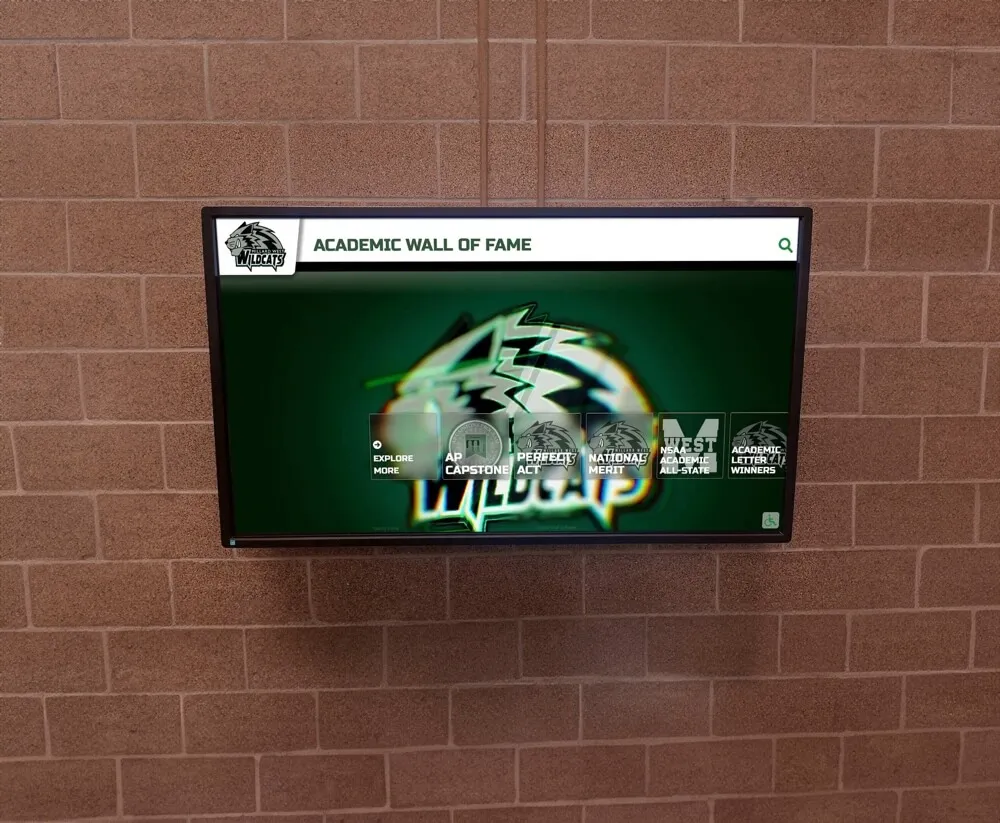
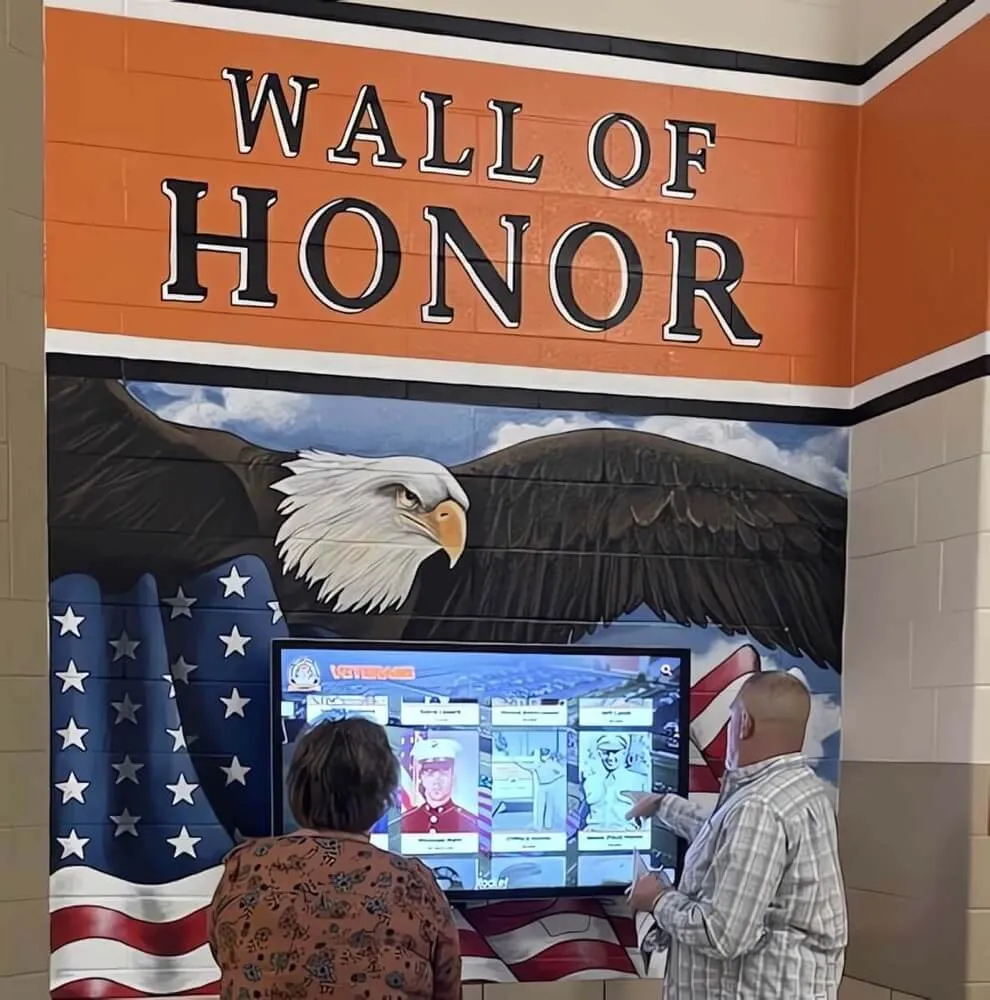
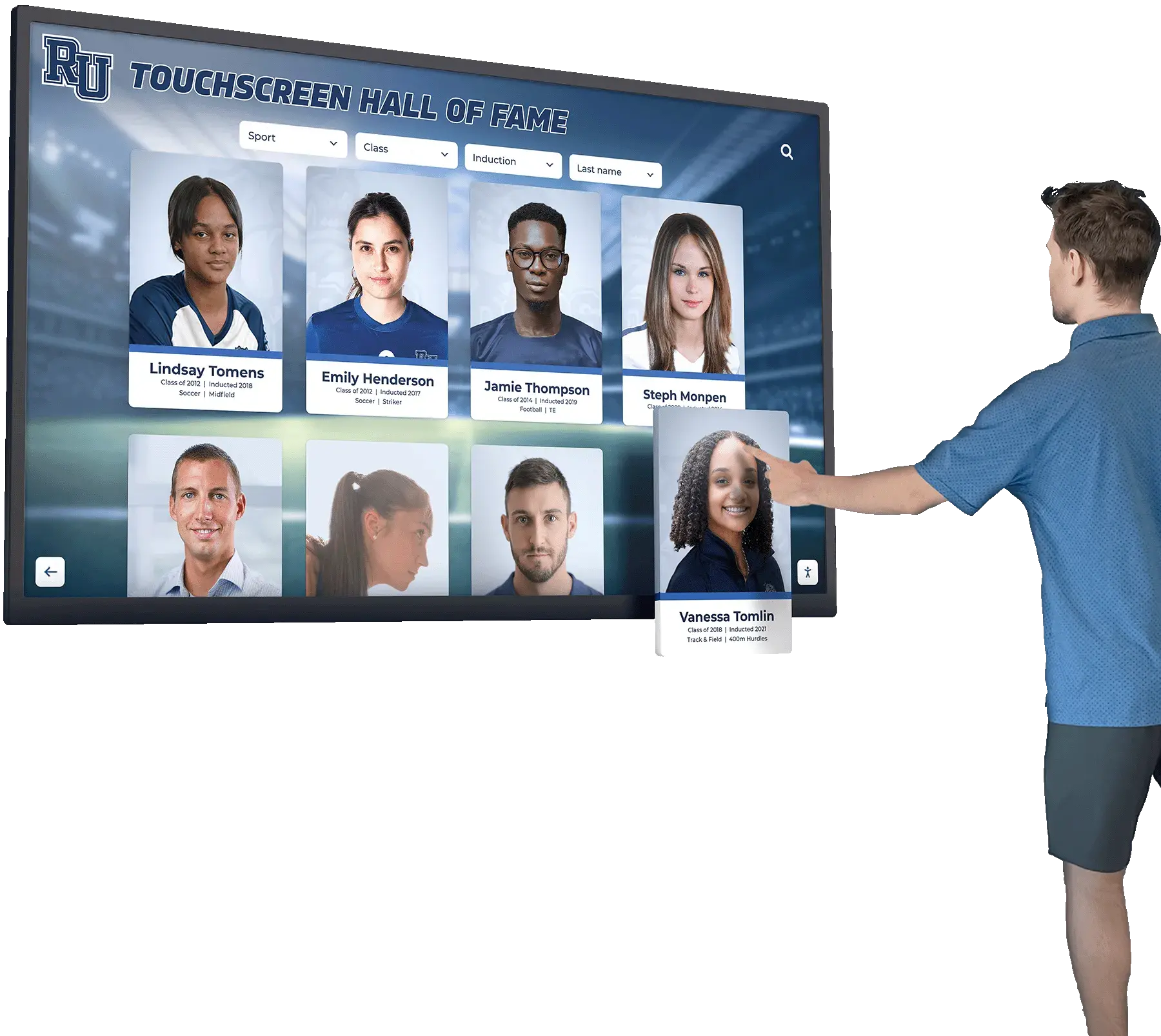
Modern recognition systems enable personal storytelling at scale while honoring individual supporters
Involving Program Participants in Appreciation
Some of the most powerful donor recognition comes from people directly benefiting from supporter generosity. Students receiving scholarships, program participants, community members served—their authentic gratitude carries emotional weight organizational leadership communications cannot replicate.
Create systems enabling beneficiaries to thank donors directly through handwritten notes, video messages, or in-person appreciation events. These connections remind supporters why they give while providing meaningful engagement beneficiaries often treasure as much as donors.
Creative Appreciation Gifts and Tokens
While thoughtful communication forms appreciation’s foundation, tangible recognition items create lasting physical reminders of donor relationships and organizational gratitude.
Mission-Aligned Appreciation Items
The most meaningful donor gifts connect directly to organizational missions rather than generic promotional merchandise:
- Children’s literacy nonprofits might give donors books with dedication plates
- Environmental organizations could provide native plant seedlings or reusable items
- Arts programs might offer small prints from program participants’ work
- Animal welfare groups could send photos of animals supported by donations
- Educational institutions might provide publications or research summaries
Mission-aligned items remind donors about impacts they’re supporting while avoiding wastefulness that might concern supporters who prioritize program spending over overhead.
Recognition with Purpose
Consider appreciation approaches where recognition itself advances missions. For example, “honor gifts” where thank-you gestures become additional charitable contributions:
- Planting trees in donors’ names
- Providing program services to additional beneficiaries
- Supporting micro-enterprise initiatives creating income for communities served
- Funding specific projects directly connected to donor interests
These approaches demonstrate that organizations prioritize mission impact even in appreciation moments while honoring supporter values regarding resource allocation.
Event-Based Donor Appreciation
Strategic appreciation events create community among supporters while providing platforms for meaningful recognition and relationship deepening that isolated communications cannot achieve.
Annual Donor Appreciation Events
Exclusive Donor Gatherings
Dedicated appreciation events signal that organizations value supporters enough to invest time and resources creating special experiences exclusively for donors. These gatherings shouldn’t include fundraising asks—their sole purpose involves expressing gratitude and strengthening community.
Effective donor event elements include:
Impact Presentations
Share compelling stories demonstrating how contributions made differences. Feature beneficiaries speaking about program impacts. Present data visualizations showing growth and outcomes donor support enabled. Provide tangible evidence that generosity accomplished real purposes.
Avoid lengthy organizational history recitations or detailed financial reports. Keep presentations engaging, emotional, and focused on donor-enabled impacts.
Personal Recognition Moments
Acknowledge milestone donors—those reaching cumulative giving totals, celebrating anniversary years of support, or making exceptional contributions. Recognition doesn’t require elaborate presentations; simple acknowledgment honoring commitment creates meaningful moments supporters treasure.
For approaches to systematic recognition that honor diverse contributor levels, review how to create employee recognition programs that translate effectively to donor appreciation contexts with similar recognition principles.
Exclusive Access Experiences
Provide donors special access to programs, facilities, or leadership. Behind-the-scenes tours, meet-and-greets with program participants, or small-group discussions with executive leadership create memorable experiences while demonstrating transparency and trust.
These exclusive elements make events feel genuinely special rather than standard receptions any community member might attend.

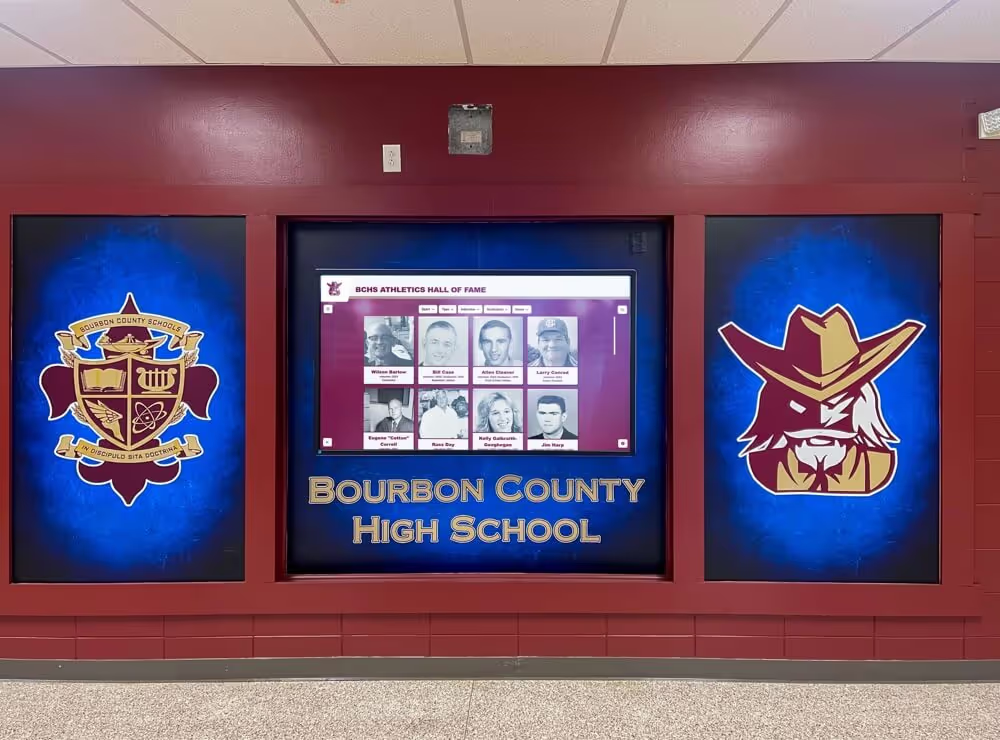
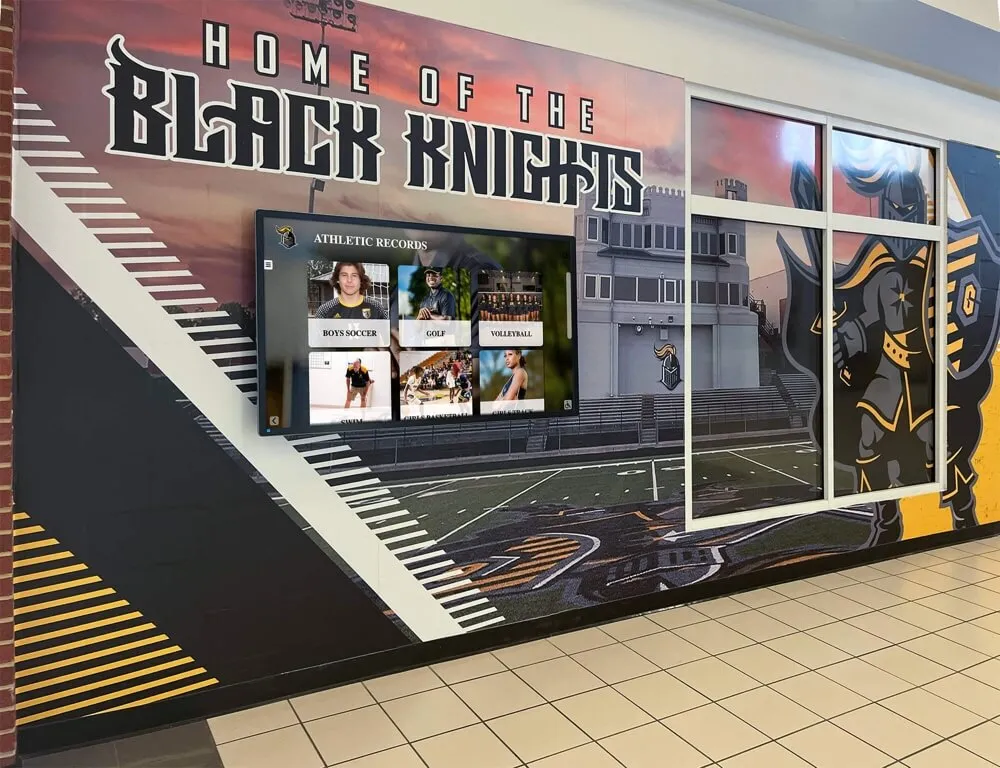
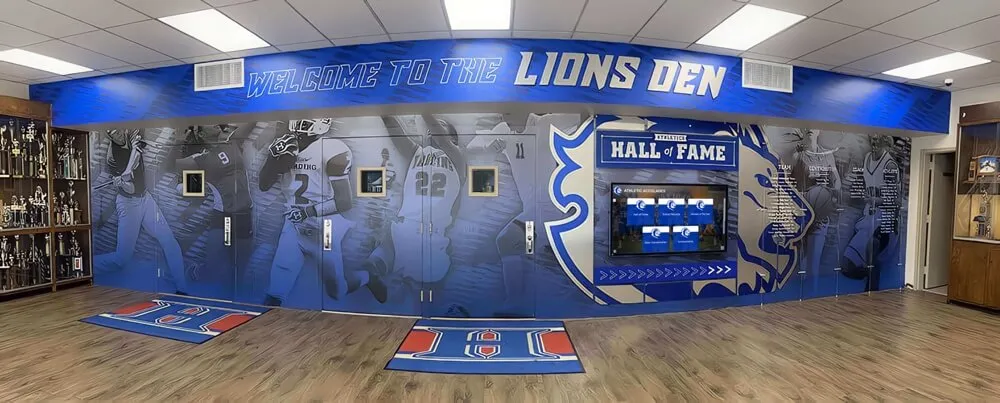
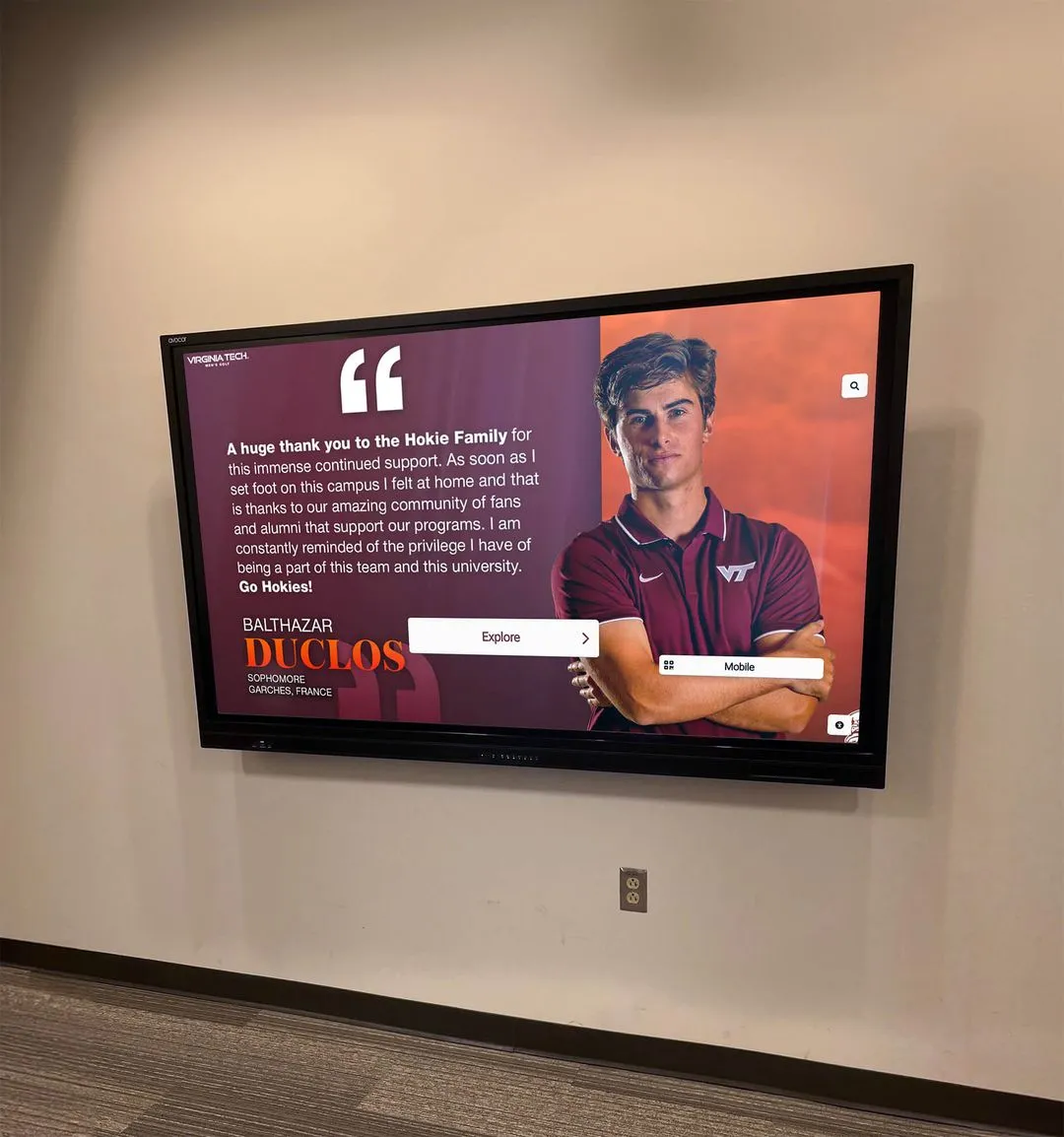
Interactive displays enable donors to explore their impact and organizational stories during appreciation events
Intimate Donor Gatherings
While large annual events serve important functions, smaller intimate gatherings often create deeper relationship opportunities:
Small Group Donor Dinners
Host intimate dinners (10-15 donors) with executive leadership or program directors. These relaxed settings enable genuine conversations about organizational vision, challenges, and opportunities while demonstrating that leadership values donor perspectives and relationships.
Rotate dinner invitations ensuring different supporter groups receive intimate access across the year rather than repeatedly recognizing the same major donors.
Program Site Visits
Invite donors to visit program locations where they can directly observe impact. See classrooms their scholarships support. Meet clients served by programs they fund. Visit facilities their contributions built or maintained.
Direct observation creates powerful appreciation experiences no communication can replicate. Donors witnessing their impact firsthand become passionate advocates recruiting additional supporters from their networks.
Volunteer Appreciation Events
For organizations relying on volunteer support, dedicated volunteer recognition events honor time contributions as generously as financial donations. Many volunteers also contribute financially—appreciating their service investments strengthens overall supporter relationships.
Virtual Appreciation Events
Geographic constraints, donor schedules, and accessibility considerations make virtual events valuable appreciation options:
Online Impact Showcases
Host virtual events featuring beneficiary testimonials, program outcome presentations, and interactive Q&A with leadership and program staff. Professional production quality demonstrates respect for donor time while enabling participation regardless of location.
Record sessions for donors unable to attend live, extending reach while creating evergreen content useful for prospective donor cultivation.
Virtual Recognition Ceremonies
Digital platforms enable creative recognition formats impossible in physical settings. Screen-sharing presentations, multimedia tribute compilations, and interactive polling create engaging experiences while honoring supporters personally.
Virtual events particularly suit younger donors comfortable with digital environments and multi-generational families gathering remotely to celebrate honored relatives’ philanthropic legacies.
Permanent Donor Recognition Solutions
While appreciation events and communications provide important relationship touchpoints, permanent recognition installations demonstrate lasting organizational gratitude while inspiring future giving through visible celebration of supporter generosity.
The Case for Permanent Donor Recognition
Traditional appreciation approaches share a common limitation—they’re ephemeral. Thank-you letters get filed or recycled. Events create memories but leave no lasting physical presence. Social media posts disappear in endless content streams.
Permanent recognition installations solve this challenge by creating enduring tributes visible to entire communities year after year. These displays accomplish multiple strategic objectives simultaneously.
Ongoing Donor Stewardship
Permanent installations continuously reinforce gratitude long after gifts arrive. Donors visiting campuses, facilities, or community spaces see their names honored prominently, providing repeated validation that contributions mattered and continue being appreciated.
This ongoing visibility maintains donor engagement between active solicitations while strengthening emotional connections that inspire future giving.
Inspiring Future Philanthropy
Recognition displays serve powerful fundraising functions by demonstrating giving cultures and inspiring prospective donors. Visitors seeing walls filled with supporter names understand that philanthropy forms community values, not exceptional behavior limited to wealthy benefactors.
Visible recognition normalizes giving while providing social proof that charitable support represents meaningful participation in organizational success.
Organizational Legacy Documentation
Donor recognition installations preserve institutional history, documenting generations of supporters who built programs, facilities, and capabilities organizations enjoy today. This historical continuity honors heritage while connecting current operations to founding values and mission origins.
Legacy documentation matters especially for educational institutions, religious organizations, and community groups where multi-generational involvement creates deep cultural significance.
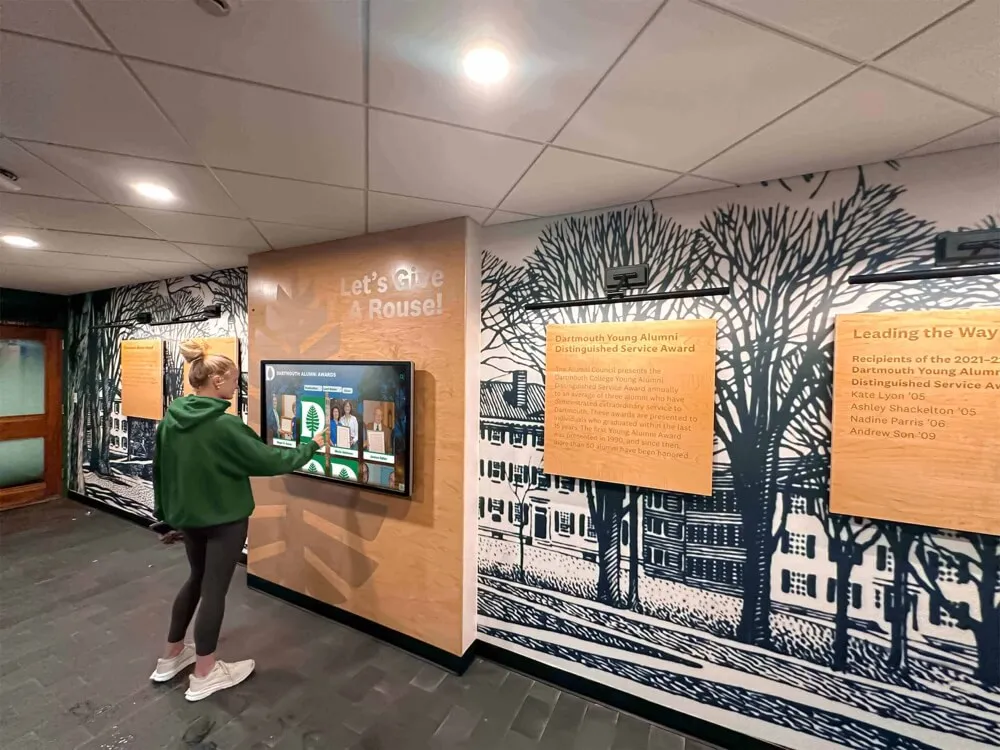
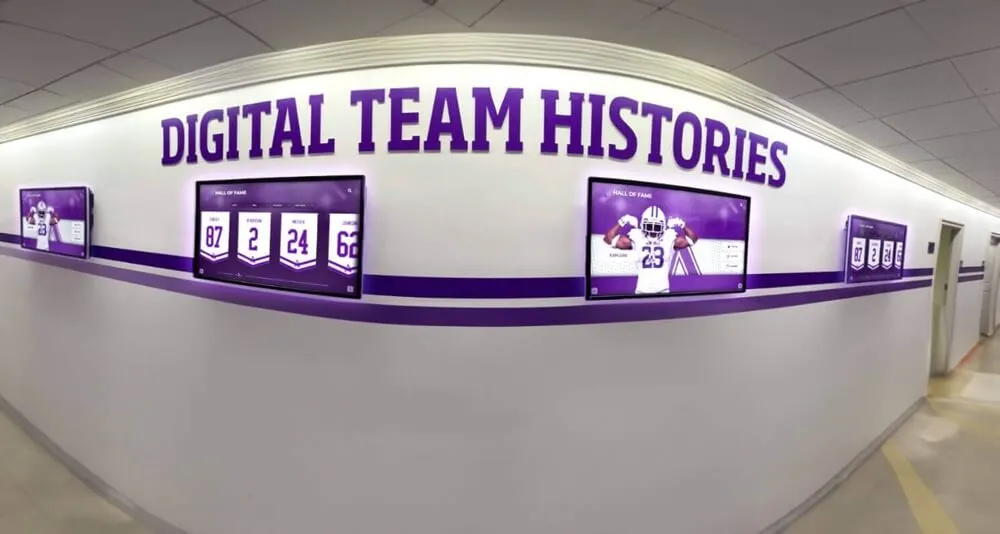
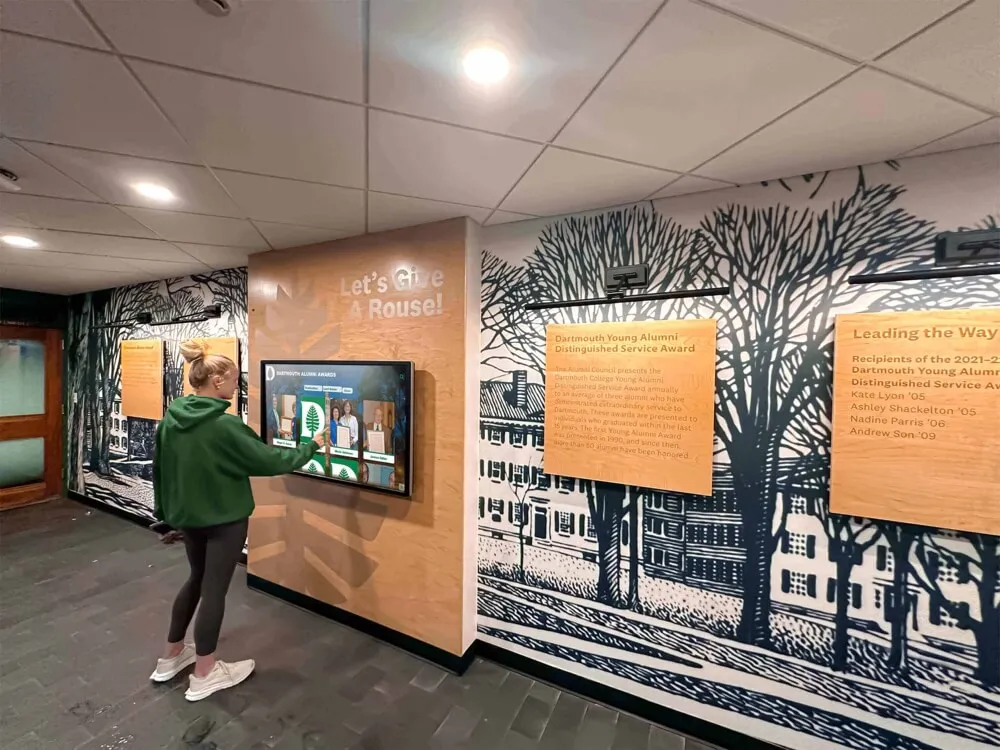
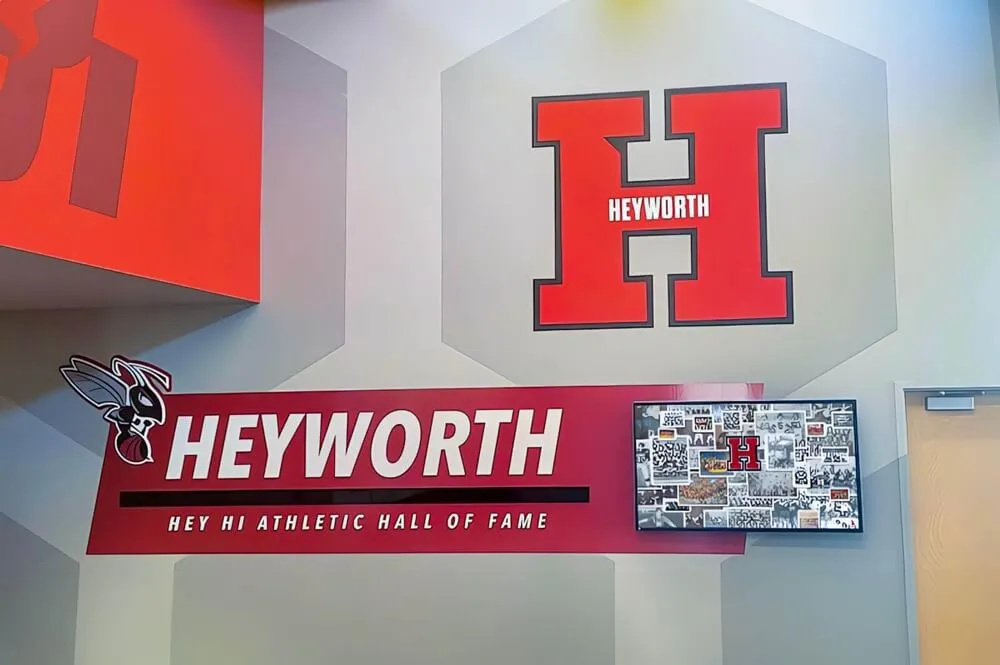
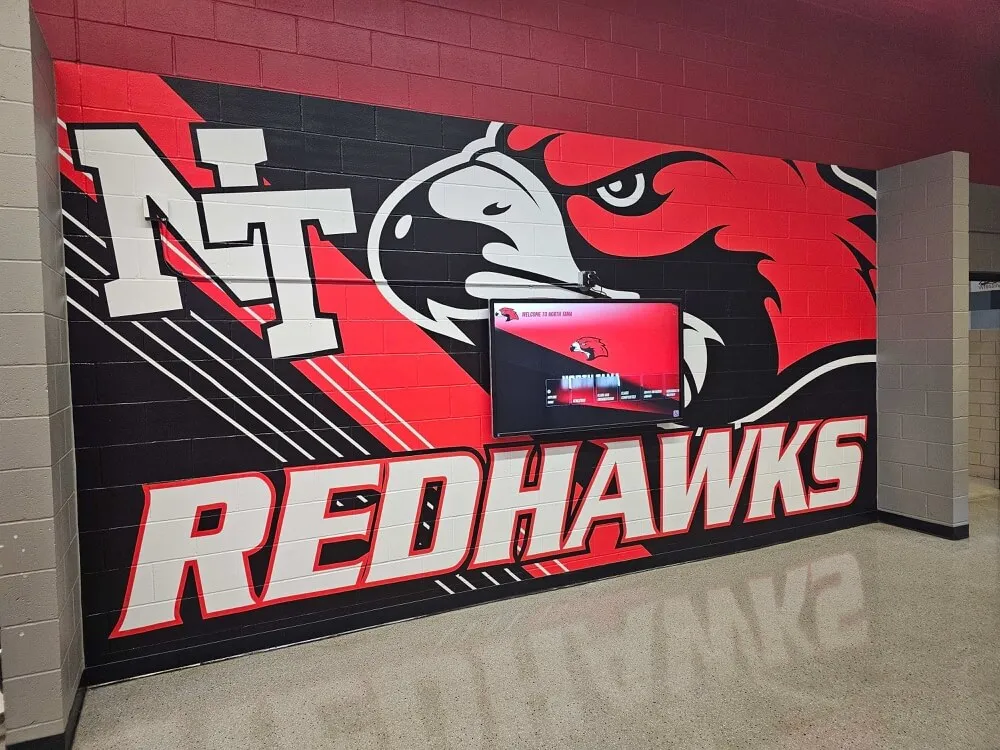
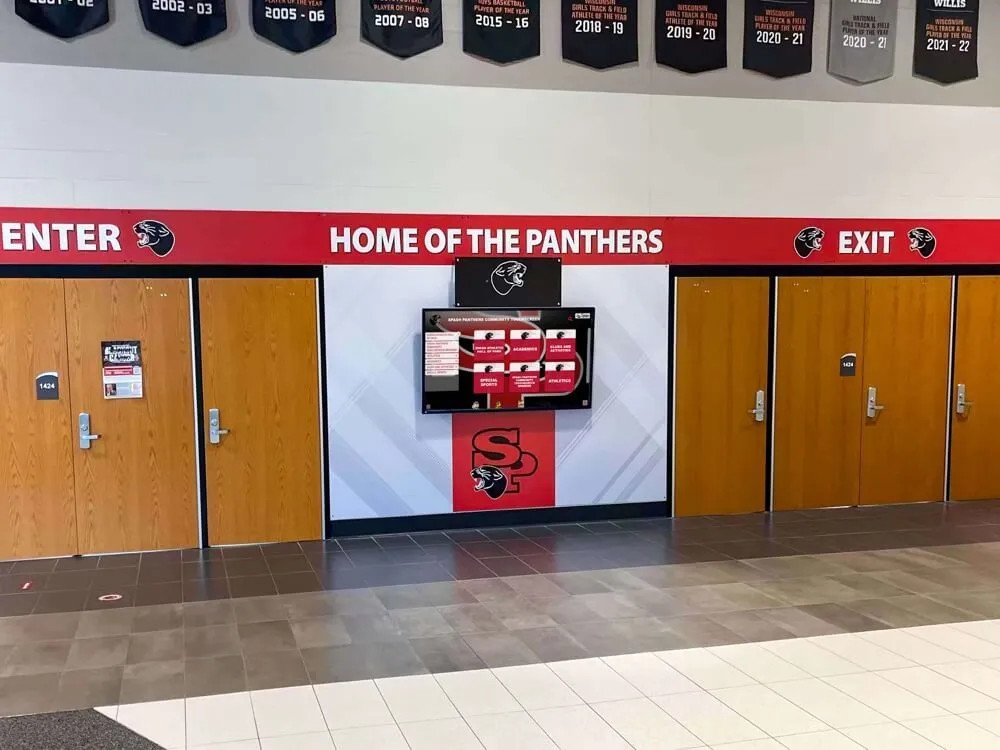
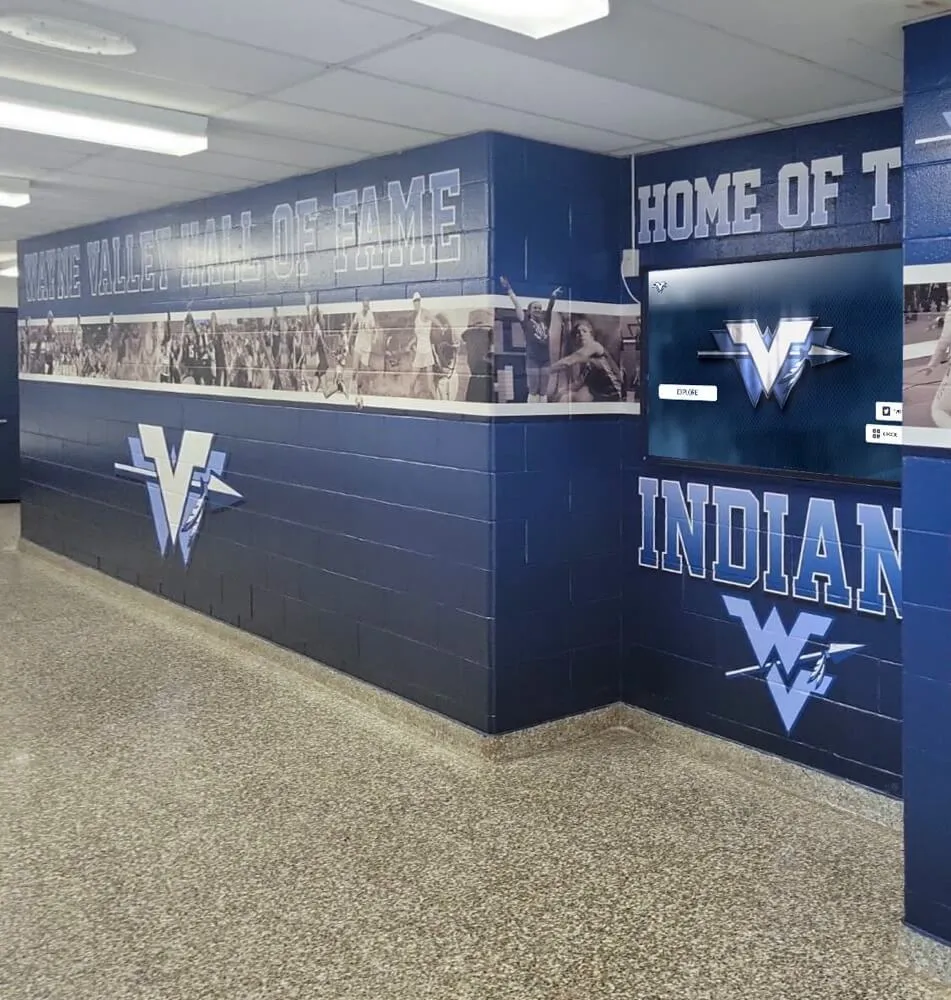
Hallway recognition displays ensure supporter contributions receive prominent visibility
Traditional vs. Digital Donor Recognition
Organizations implementing permanent recognition face fundamental decisions about display formats:
Traditional Donor Walls
Conventional recognition approaches include engraved plaques, etched glass installations, or brick pavers arranged in donor walls or walkways. These physical installations provide tangible permanence and aesthetic appeal that suits traditional institutional environments.
However, traditional recognition faces significant limitations:
- Space constraints limiting recognition capacity as donor bases grow
- Update inflexibility requiring physical modifications to add new supporters
- Limited information displaying only names and perhaps giving levels
- Maintenance challenges when installations age or damage occurs
- Inflexible organization once designs are physically installed
For comprehensive comparisons of recognition format options, explore donor wall ideas creating impactful displays that weigh traditional and modern approaches.
Digital Donor Recognition Displays
Modern digital recognition platforms address traditional limitations while providing capabilities impossible with static installations:
Unlimited Recognition Capacity
Digital systems accommodate unlimited donors without physical space constraints. As supporter bases grow across decades, recognition capacity expands through database additions rather than physical construction.
This scalability particularly benefits growing organizations anticipating expanded donor engagement.
Instant Updates and Flexibility
Add new donors immediately through web-based content management requiring no physical installation. Update information, correct errors, or reorganize presentations without engraving costs or construction delays.
This flexibility enables real-time recognition keeping displays current while reducing administrative friction that makes traditional installations burdensome to maintain.
Rich Multimedia Storytelling
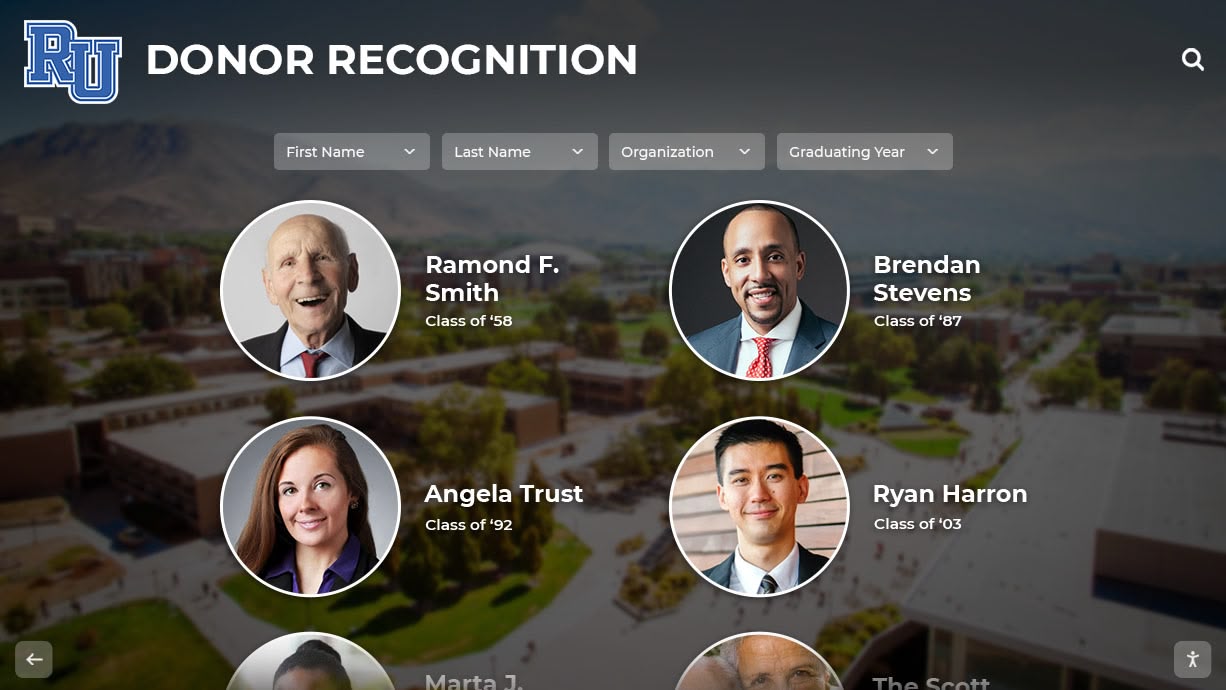
Digital platforms showcase comprehensive donor profiles including biographical information, photos and videos, giving histories and milestones, personal statements about why they support missions, and connections to programs or beneficiaries.
This storytelling depth creates meaningful recognition personalizing supporter relationships rather than reducing donors to names on plaques. Rich narratives inspire future giving by demonstrating diverse motivations for philanthropy and celebrating individual supporter journeys.
Interactive Engagement Features
Touchscreen interfaces enable visitors to explore donor information, search for specific supporters or giving categories, discover their own family giving histories, and understand how contributions collectively built organizational capabilities.
Interactive exploration creates engagement passive plaques cannot generate while making recognition accessible and discoverable for communities wanting to understand supporter cultures.
Flexible Display Options
Digital recognition integrates into various physical contexts—lobby displays, hallway installations, event presentation screens, or web-based virtual recognition accessible remotely. Multi-platform presentation extends recognition reach beyond single physical locations.
For schools and organizations managing recognition across multiple program areas, digital hall of fame solutions provide comprehensive platforms supporting donor recognition alongside athletic, academic, and community achievement celebration.
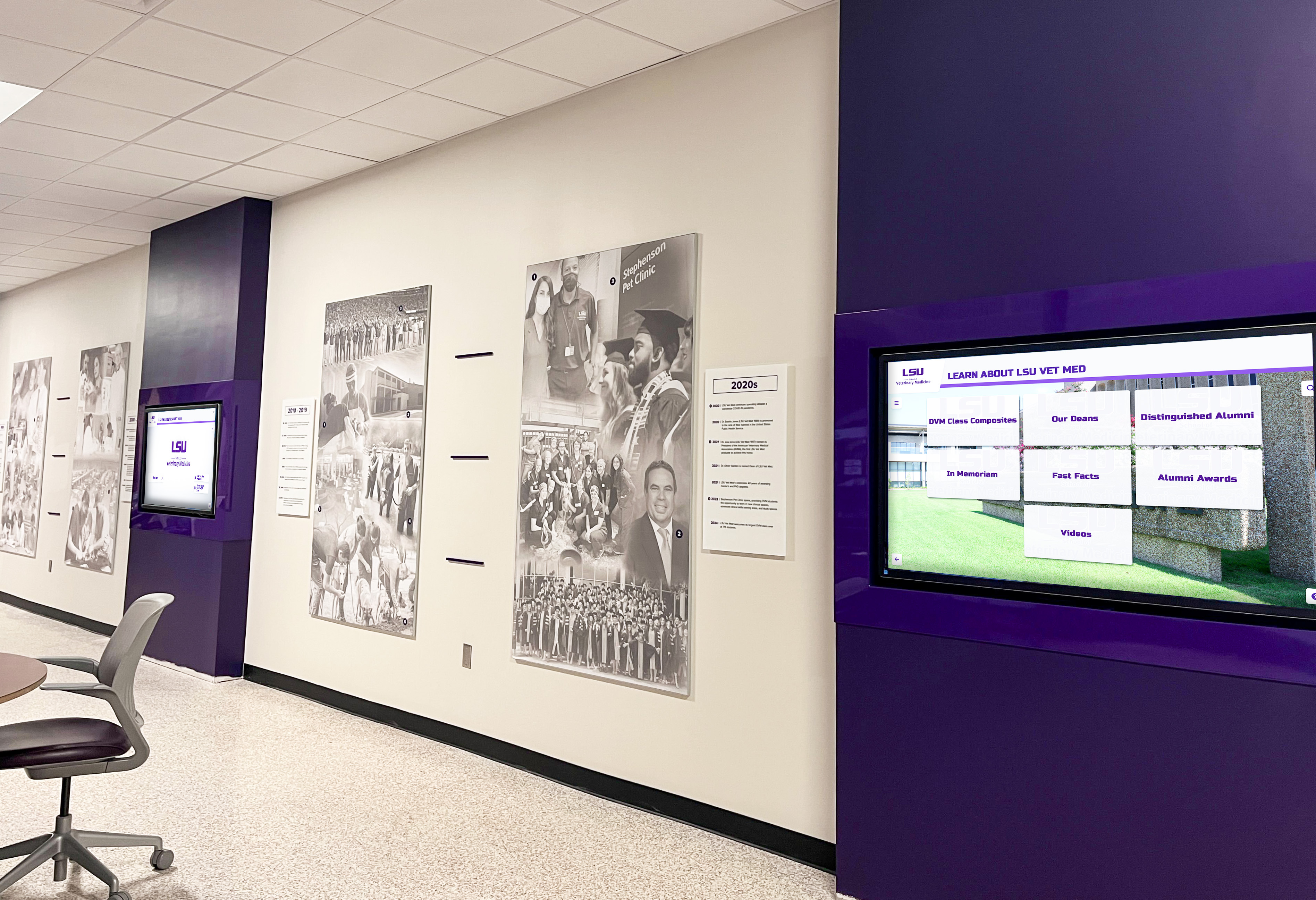
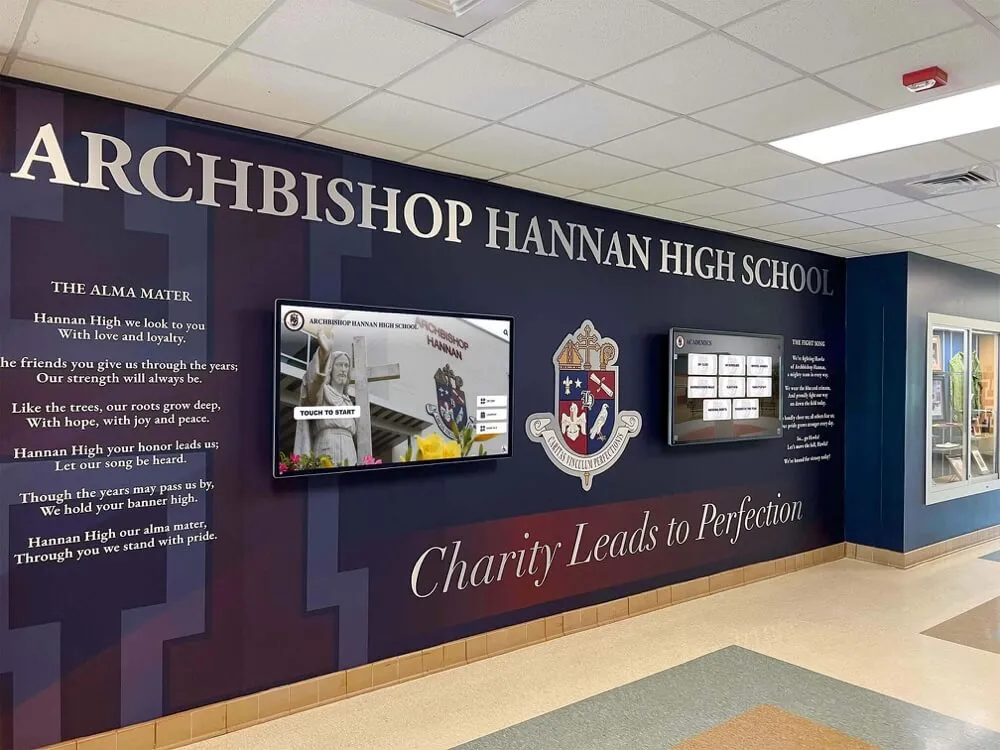
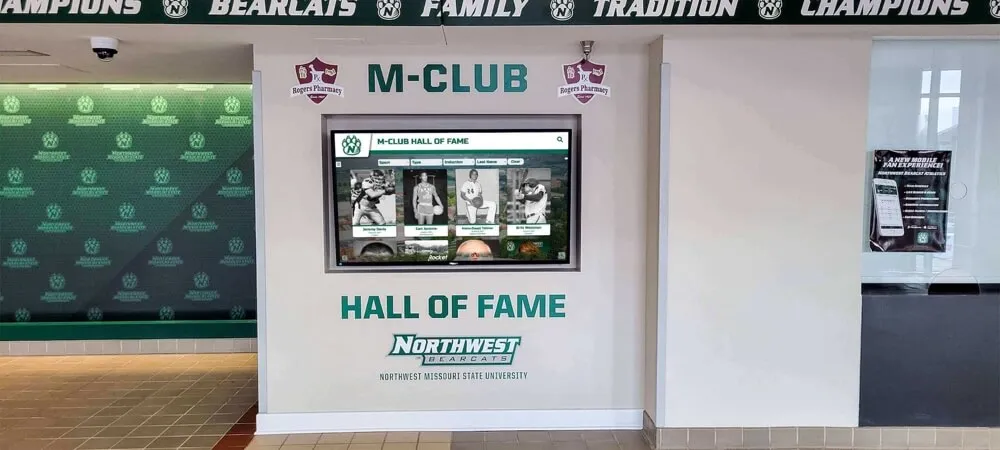
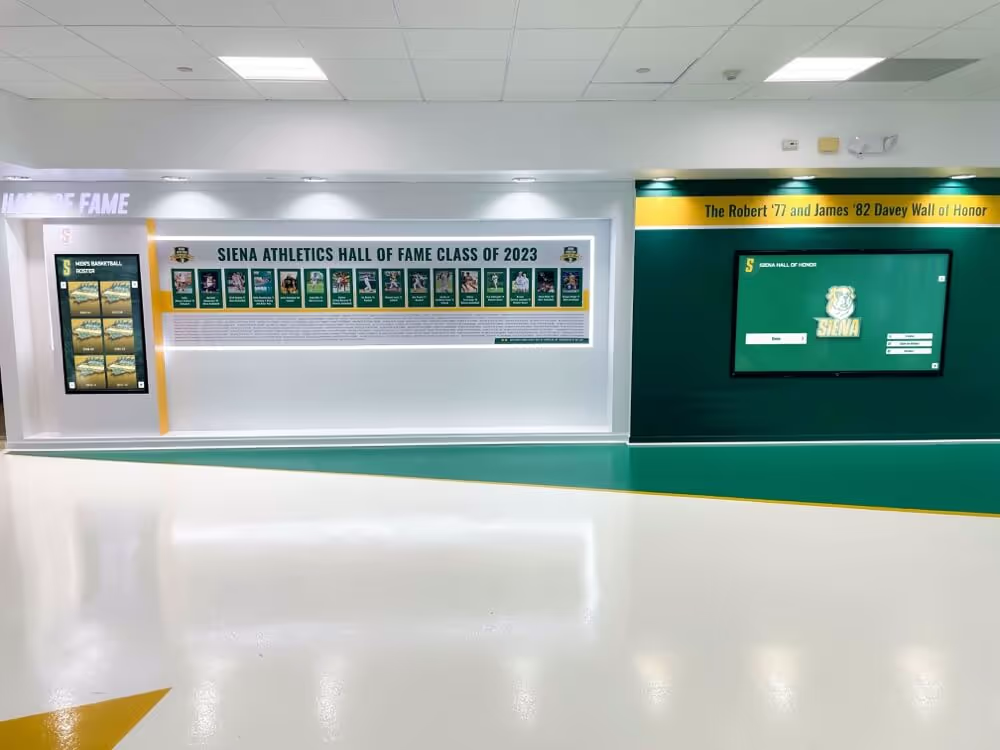
Institutional settings benefit from sophisticated digital displays that honor supporters with contemporary aesthetics
Implementing Digital Donor Walls
Organizations considering digital recognition benefit from understanding implementation considerations:
Recognition Tiers and Categories
Design recognition hierarchies acknowledging different giving levels while ensuring all contributors receive appropriate appreciation:
- Founding donors establishing initial programs or facilities
- Major gift societies organized by cumulative giving milestones
- Legacy circle members including planned giving commitments
- Annual supporters recognizing consistent ongoing contributions
- Program-specific recognition honoring gifts to particular initiatives
Thoughtful tier structures honor transformational gifts while demonstrating that organizations value all support levels.
Content Development and Donor Engagement
Digital recognition succeeds when profiles contain compelling personal content beyond names and gift amounts. Engage donors in profile development by:
- Inviting personal statements about their philanthropic motivations
- Collecting photos from different life stages or family generations
- Recording video messages sharing memories or organizational connections
- Documenting family giving legacies spanning multiple generations
- Highlighting additional involvement beyond financial contributions
Participatory profile development transforms recognition into relationship-building activities while generating authentic content that resonates emotionally with viewers.
Physical Installation Design
Digital display integration requires thoughtful attention to physical contexts:
Location Selection
Place recognition displays where they’ll receive maximum visibility—building lobbies, main hallways, event spaces, or other high-traffic areas where broad audiences naturally encounter them.
Prominent positioning signals organizational commitment to donor appreciation while maximizing recognition impact and fundraising influence on prospective supporters.
Aesthetic Integration
Digital installations should complement surrounding architecture and institutional aesthetics rather than feeling like technology additions awkwardly inserted into traditional spaces. Consider custom enclosures, complementary surrounding materials, and thoughtful lighting creating cohesive visual environments.
For comprehensive guidance on creating welcoming recognition spaces, review school lobby design strategies that apply equally to nonprofit facilities, religious institutions, and community organizations.
Accessibility Considerations
Ensure touchscreen interfaces meet accessibility standards with:
- Appropriate mounting heights accommodating wheelchair users
- High-contrast visual designs supporting vision-impaired visitors
- Intuitive navigation requiring minimal technical literacy
- Alternative text descriptions for screen reader compatibility
Accessible design demonstrates inclusive values while ensuring all community members can engage with recognition content.
Solutions like Rocket Alumni Solutions provide comprehensive digital recognition platforms specifically designed for donor appreciation, combining sophisticated content management with beautiful display interfaces that honor supporters while inspiring continued generosity.
Creative Recognition Naming Opportunities
Strategic naming opportunities create premium appreciation options for major donors while generating significant contributed revenue supporting organizational missions.
Facility and Space Naming
Building and Wing Naming
Major capital campaigns often feature building or building section naming opportunities recognizing transformational gifts. These prestigious recognition options appeal to donors seeking visible legacy establishment while generating revenue necessary for major construction or renovation projects.
Establish clear naming opportunity policies including:
- Minimum gift thresholds for various naming categories
- Duration of naming recognition (perpetual vs. time-limited)
- Naming revision processes if donor circumstances change
- Physical signage standards maintaining aesthetic consistency
- Governance approval procedures for naming decisions
Program and Initiative Naming
Beyond physical spaces, organizations can offer program naming recognizing major operating support:
- Endowed scholarship programs
- Research initiatives or centers
- Community service programs
- Annual lecture or event series
- Leadership positions or professorships
Program naming provides recognition alternatives when physical naming inventory becomes limited while encouraging ongoing operational support beyond capital gifts.
Creative Recognition Categories
Think beyond conventional naming to create unique appreciation opportunities:
Historical Legacy Recognition
Honor donors by connecting them to institutional heritage—naming historical archives, document collections, or museum exhibits after supporters who value organizational history preservation.
Values-Based Recognition
Create recognition categories reflecting organizational values donors embody—innovation awards, service leadership recognition, or community impact honors demonstrating that appreciation celebrates more than financial capacity.
Participatory Naming
Involve donor families in naming decisions, letting them honor relatives, commemorate shared memories, or celebrate values important to their giving motivations. Collaborative naming creates deeper emotional connections than organizational impositions.
Integrating Donor Appreciation with Broader Recognition
Comprehensive appreciation approaches integrate donor recognition with other organizational celebration systems creating unified community acknowledgment rather than isolated programs.
Multi-Stakeholder Recognition Systems
Many supporters contribute through multiple channels—financial donations, volunteer service, board leadership, professional expertise, and community advocacy. Recognition systems acknowledging diverse contribution types honor whole relationships rather than artificial separations.
For organizations managing volunteer recognition alongside donor appreciation, explore frameworks for booster club volunteer coordination that apply to various supporter engagement contexts.
Community-Wide Celebration Cultures
The most successful donor appreciation exists within broader organizational cultures celebrating contribution, service, and community participation across all stakeholder groups:
Unified Recognition Platforms
Digital systems can showcase donors alongside other honorees—program alumni, community volunteers, staff excellence, student achievement, and organizational heritage. Integrated platforms demonstrate that philanthropy represents one form of valued community participation rather than separate elite activity.
This integration particularly matters for educational institutions and community organizations where recognition should reinforce inclusive values rather than creating perception that wealth alone merits celebration.
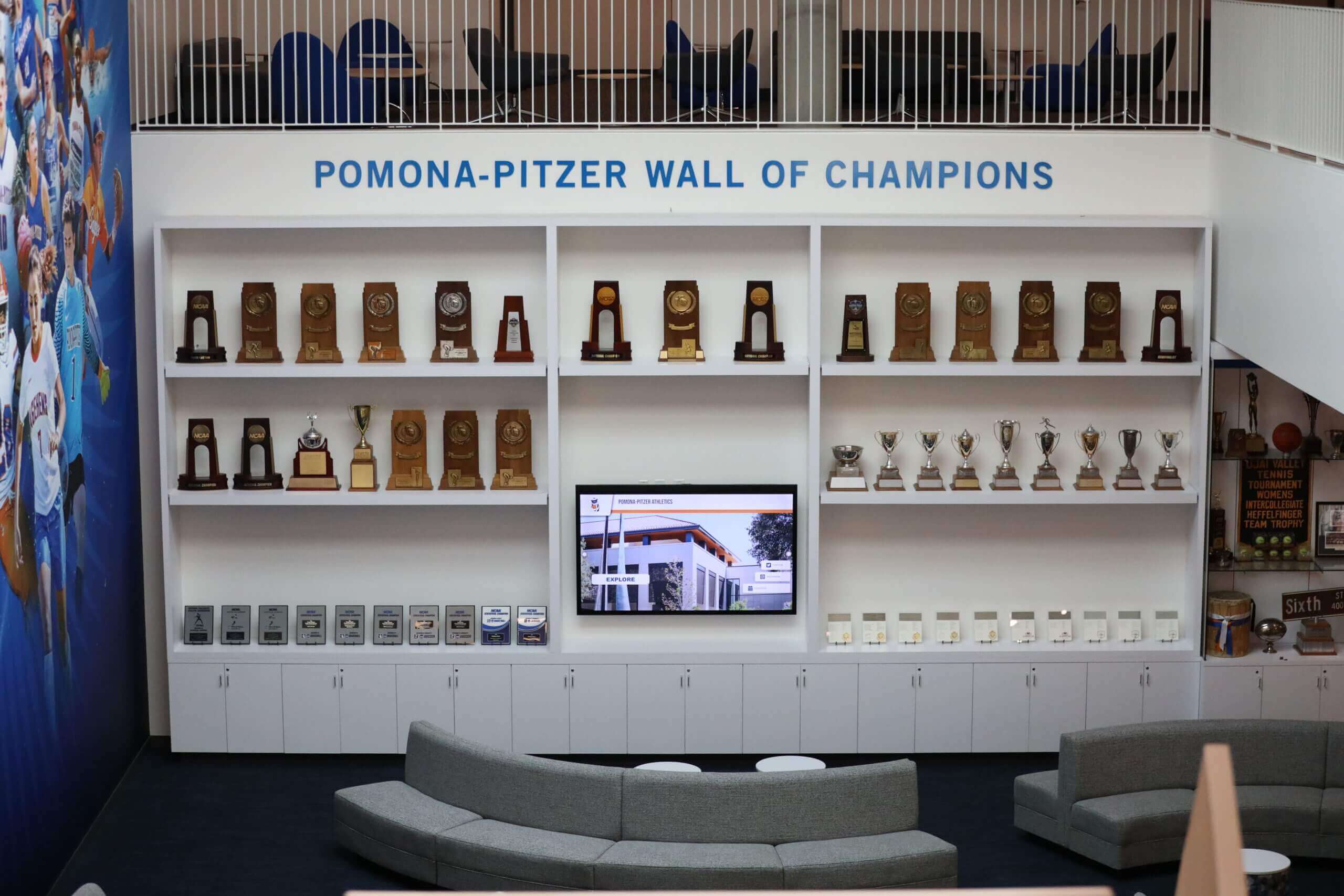
Recognition lounges create inviting spaces where communities gather and celebrate collective achievements
Storytelling Emphasis
Frame donor recognition around mission impact stories rather than wealth celebration. Profiles highlighting why supporters give, what motivated their philanthropy, and what organizational aspects resonate with their values create appreciation that inspires rather than intimidates prospective donors.
Story-centered recognition demonstrates that giving stems from passion and values rather than financial capacity, making philanthropy feel accessible to broader audiences.
Annual Giving Program Appreciation
While major gift recognition receives significant attention, annual giving programs require systematic appreciation ensuring recurring donors feel genuinely valued:
Milestone Recognition
Celebrate cumulative giving milestones as annual donors reach significant totals across years of sustained support. Donors who’ve contributed $10,000 total across twenty years of $500 annual gifts deserve recognition honoring their consistency and loyalty.
Consecutive Year Acknowledgment
Recognize donors maintaining uninterrupted giving streaks. Three-year, five-year, ten-year consecutive giving milestones demonstrate extraordinary loyalty meriting special acknowledgment.
Monthly Donor Appreciation
Sustained giving donors providing monthly contributions represent exceptional commitment and reliable revenue. Create special recognition categories for these valuable supporters whose consistency enables confident program planning.
Social Media and Digital Donor Appreciation
Strategic social media recognition extends appreciation reach while creating shareable content that amplifies organizational visibility and donor pride.
Effective Social Media Recognition Strategies
Donor Spotlight Series
Regular social media features highlighting individual donors create ongoing appreciation content while building narratives around diverse giving motivations. Rotate spotlights ensuring various supporter segments receive visibility—major donors, long-time annual contributors, first-time young alumni, legacy families, and volunteer-donors.
Secure donor permission before public recognition. Some supporters prefer private acknowledgment respecting anonymity preferences.
Impact Story Sharing
Connect donors to program outcomes through social media posts showing how contributions made differences. Tag donors in impact stories when appropriate, enabling them to share philanthropic accomplishments with their networks.
Shareable impact content serves dual purposes—appreciating donors while demonstrating organizational effectiveness to broader audiences potentially including prospective supporters.
Giving Day Recognition
During annual giving days or fundraising campaigns, provide real-time donor recognition through social media updates celebrating participation. Public acknowledgment creates momentum encouraging additional giving while demonstrating appreciation immediately rather than waiting for formal communications.
Video Recognition Messages
Short video thank-you messages deliver powerful appreciation in engaging formats:
Beneficiary Thank-Yous
Record brief videos of program participants thanking donors. Student scholarship recipients, community members served, or program staff expressing authentic gratitude creates emotional connection printed communications cannot achieve.
Leadership Acknowledgment
Executive directors or board chairs recording personal video messages for major donors demonstrates time investment and relationship priorities. Video feels more personal than written notes while conveying tone and emotion text omits.
Community Montages
Compile montage videos showing diverse community members thanking donors collectively. These compilations powerfully illustrate how supporter generosity impacts entire organizations rather than isolated programs.
For organizations leveraging interactive digital signage, video recognition content created for donors can be repurposed across display systems, extending impact while maximizing content production investment.
Measuring Donor Appreciation Effectiveness
Strategic organizations assess appreciation program success through systematic measurement informing continuous improvement:
Key Performance Indicators
Donor Retention Rates
Track year-over-year retention comparing supporters who receive different appreciation approaches. Improved retention following appreciation enhancements demonstrates program effectiveness while quantifying relationship management value.
Industry retention benchmarks suggest first-year donor retention around 20-30% and multi-year donor retention around 60% for most nonprofits. Organizations significantly exceeding these benchmarks likely have strong appreciation systems contributing to loyalty.
Gift Frequency and Growth
Monitor whether appreciated donors increase giving frequency or contribution amounts compared to previous patterns. Supporters demonstrating giving growth following appreciation initiatives validate stewardship investment.
Donor Lifetime Value
Calculate cumulative giving across entire donor relationships rather than single gift analysis. Appreciation programs increasing lifetime value—even if individual gifts remain similar—generate extraordinary long-term revenue return justifying stewardship investment.
Engagement Beyond Giving
Track whether appreciated donors demonstrate increased engagement through event attendance, volunteer participation, peer referrals, or social media advocacy. Multi-dimensional engagement indicates strong relationship health beyond transactional giving.
Donor Feedback and Satisfaction
Post-Gift Surveys
Brief surveys following major gifts or appreciation events gather direct feedback about recognition experiences. Ask donors what appreciation elements they valued most, whether communications felt timely and personal, and what additional stewardship would be meaningful.
Anonymous survey options encourage honest feedback that face-to-face conversations might not surface.
Focus Groups and Advisory Committees
Periodic donor focus groups discussing appreciation preferences provide qualitative insights surveys miss. Small group conversations reveal nuanced perspectives about what makes recognition meaningful while building relationships with participants who appreciate solicitation of their input.
Complaint and Concern Tracking
Monitor donor complaints about recognition—delayed acknowledgment, factual errors in communications, inappropriate recognition levels, or other stewardship failures. Systematic tracking ensures problems get addressed promptly while revealing patterns requiring systemic improvements.
Budget-Conscious Donor Appreciation
Comprehensive appreciation doesn’t require unlimited resources. Strategic approaches provide meaningful recognition while respecting financial constraints common in resource-limited organizations.
Low-Cost High-Impact Approaches
Prompt Personalized Communication
Timely, personalized thank-you notes cost almost nothing beyond staff time yet consistently rank among appreciation elements donors value most. Prioritize prompt authentic communication over expensive but delayed recognition.
Peer-to-Peer Appreciation
Engage board members, program participants, and other donors in appreciation outreach. Distributed recognition responsibility reduces staff burden while providing authentic personal touches expensive consultant services cannot replicate.
Digital-First Appreciation
Email, social media, and video messages deliver effective recognition at minimal cost. While physical mailings maintain importance for certain donor segments, digital approaches provide budget-friendly options for broad-based appreciation.
Event Partnership and Sponsorship
When hosting donor appreciation events, seek venue donations, catering sponsors, or entertainment contributions from community partners. Many local businesses support nonprofit events through in-kind donations reducing cash expenditures.
Maximizing Appreciation Investment
Appreciation Process Automation
Technology platforms automating acknowledgment workflows, tracking stewardship touchpoints, and triggering recognition prompts help organizations maintain consistent appreciation even with limited development staff capacity.
While personal touches remain essential, automated systems ensure no donors fall through cracks during busy periods or staff transitions.
Volunteer Appreciation Teams
Recruit volunteer committees dedicated to donor appreciation activities—writing thank-you notes, making recognition calls, or organizing appreciation events. Engaged volunteers extend appreciation capacity dramatically while often bringing personal touches professional staff struggle to provide at scale.
Integrated Recognition Investments
Digital recognition platforms serving multiple purposes—donor appreciation, alumni engagement, athletic recognition, academic honor rolls—provide better return on investment than single-purpose installations. Comprehensive systems justify larger investments through multi-function value.
Conclusion: Building Donor Appreciation That Inspires Lasting Generosity
Effective donor appreciation transcends obligatory thank-you notes to become strategic relationship management inspiring continued support, deepening community connections, and creating cultures where generosity flourishes naturally. Organizations mastering appreciation transform one-time contributors into lifelong advocates whose giving grows over time because they feel genuinely valued for their support.
The creative appreciation ideas explored in this guide provide comprehensive frameworks for organizations at any scale or resource level. From personalized communications through permanent recognition installations, from intimate gatherings through public social media celebration, from traditional approaches through innovative digital platforms, meaningful appreciation honors what supporters truly value while building sustainable fundraising success.
Most importantly, exceptional donor appreciation reflects organizational authenticity and genuine gratitude. No communication template or recognition display can substitute for sincere acknowledgment that donors make real differences enabling missions to flourish. The most sophisticated appreciation strategies work because they convey authentic thankfulness in ways that resonate personally with individual supporters who choose—again and again—to invest in causes they believe advance purposes larger than themselves.
Ready to create donor recognition that celebrates supporter generosity with the permanence and visibility it deserves? Modern digital recognition platforms enable organizations to showcase unlimited donors with rich personal profiles, update content instantly as giving communities grow, and integrate donor appreciation with broader institutional recognition—ensuring supporters receive lasting acknowledgment that inspires continued engagement and demonstrates gratitude year after year.
Whether implementing first-time systematic recognition or enhancing existing programs, solutions like Rocket Alumni Solutions provide the platforms, flexibility, and support needed to honor donor excellence effectively. From immediate gifts to legacy giving commitments, from individual supporters to family philanthropic traditions, comprehensive recognition ensures no contributor’s generosity goes unacknowledged or forgotten.
Your donors demonstrate remarkable generosity investing in missions they believe advance important values and create meaningful community impact. Comprehensive appreciation programs ensure this commitment receives acknowledgment that honors their motivations, celebrates their contributions, and inspires continued support building sustainable organizations capable of fulfilling missions for generations to come.
The most powerful appreciation doesn’t require unlimited budgets or elaborate ceremonies. It requires genuine gratitude expressed authentically and consistently, recognition systems honoring diverse contribution types, and commitment to ensuring supporters know their generosity matters deeply to missions they help advance. Your donors invest their resources believing in your organization’s potential—comprehensive appreciation demonstrates you value their trust as much as their contributions.