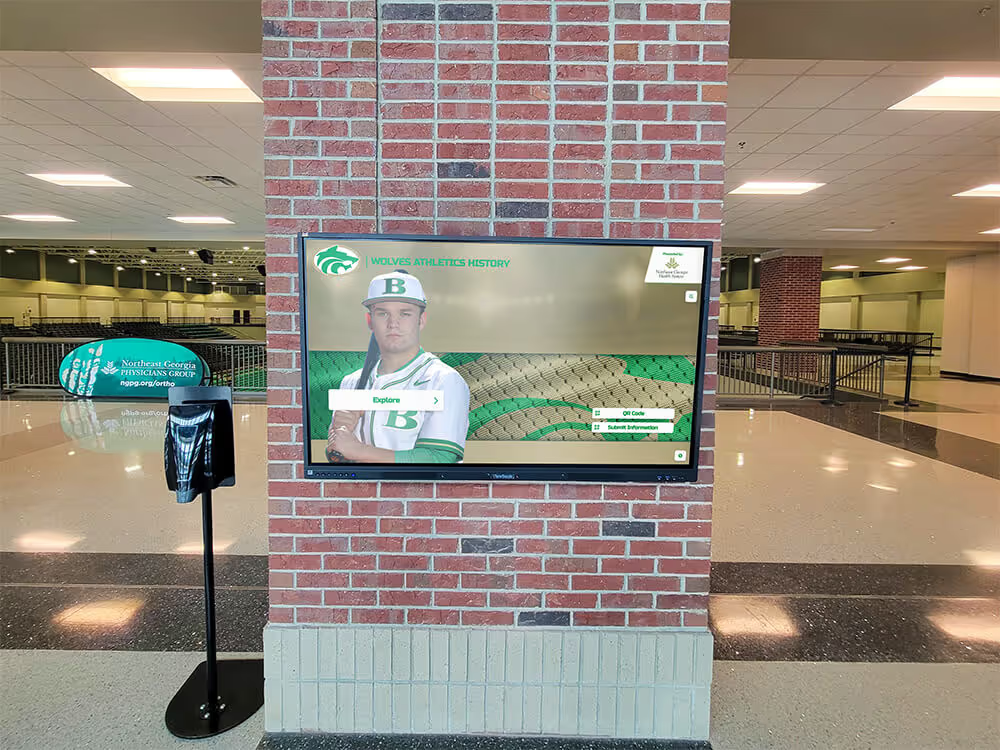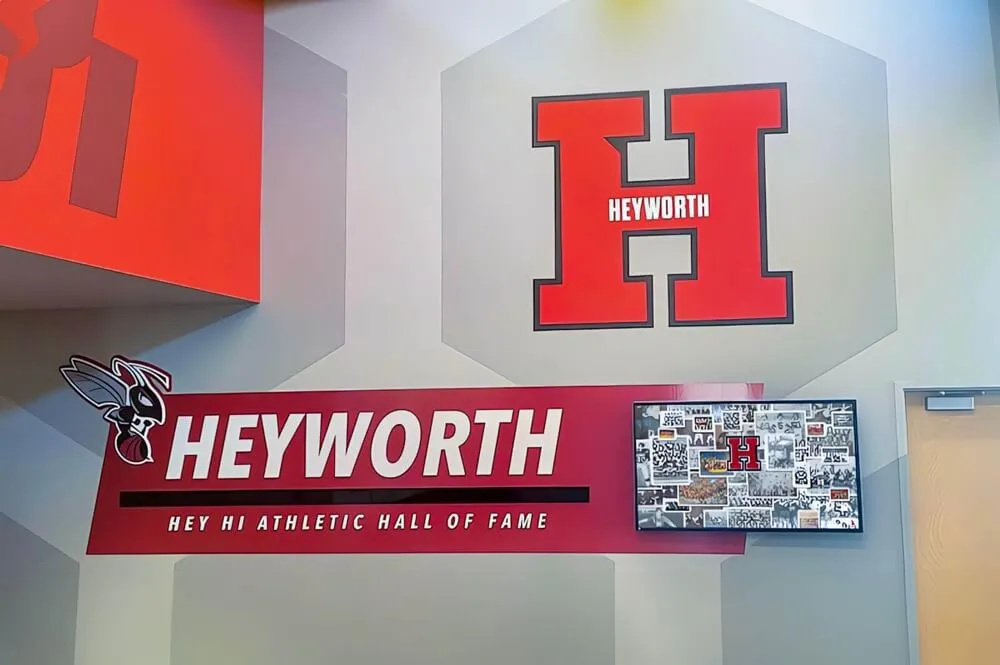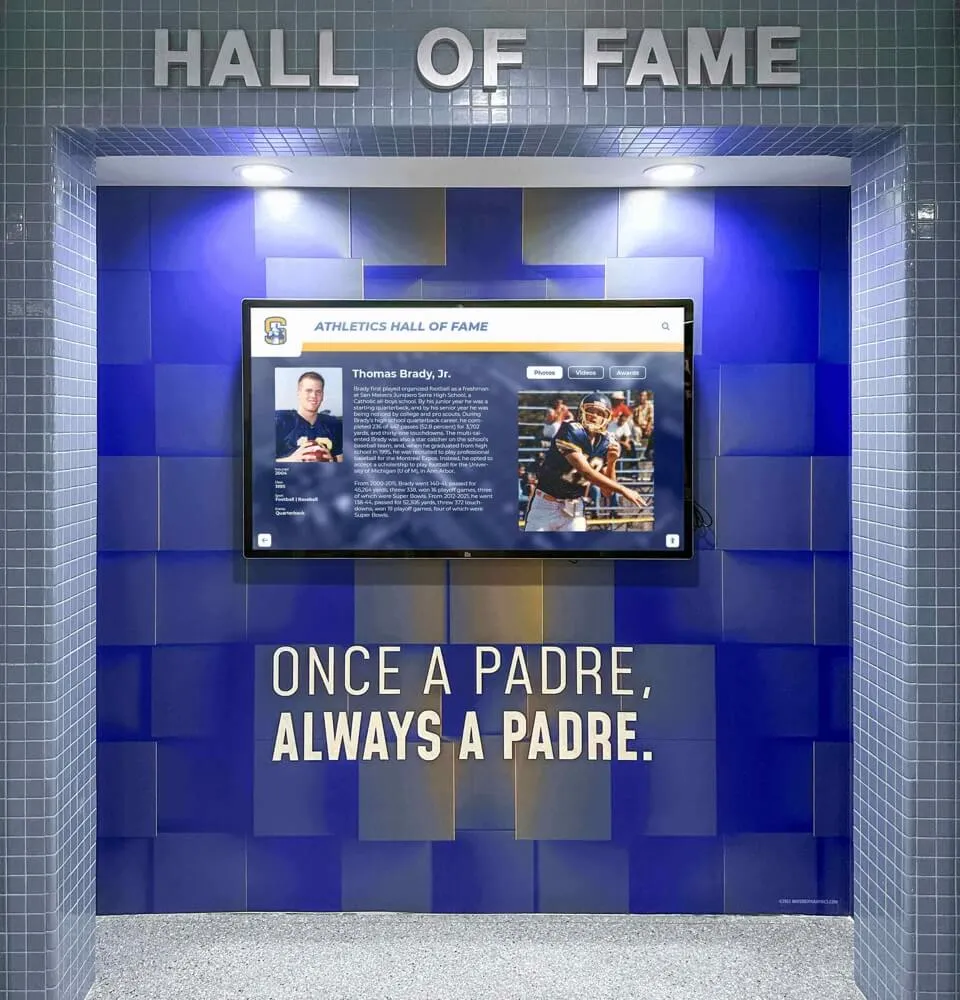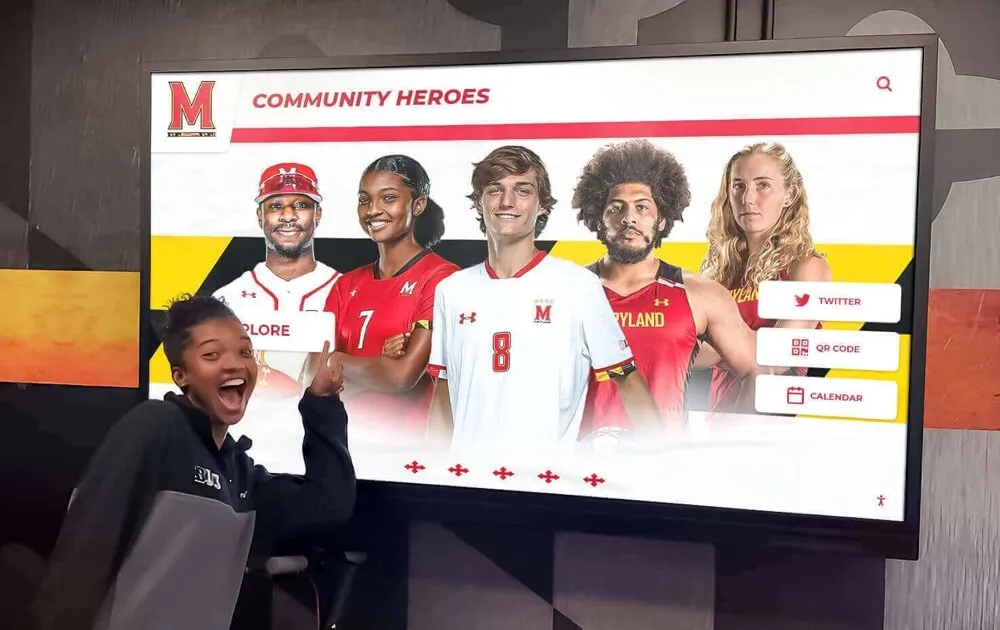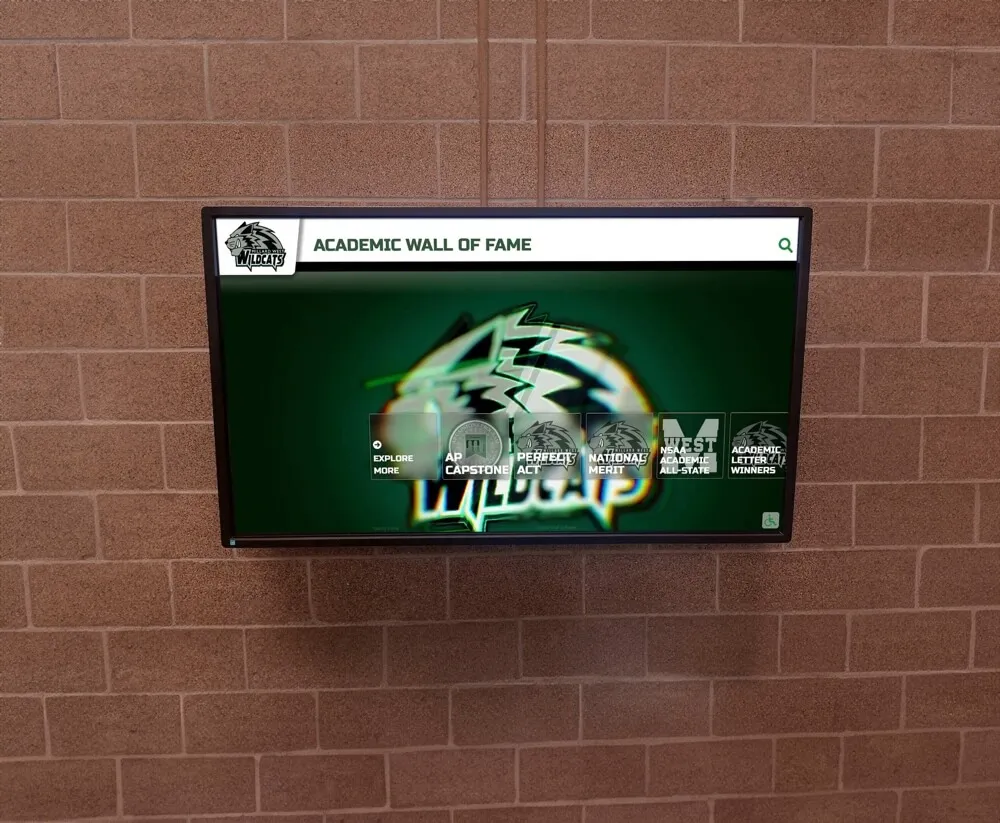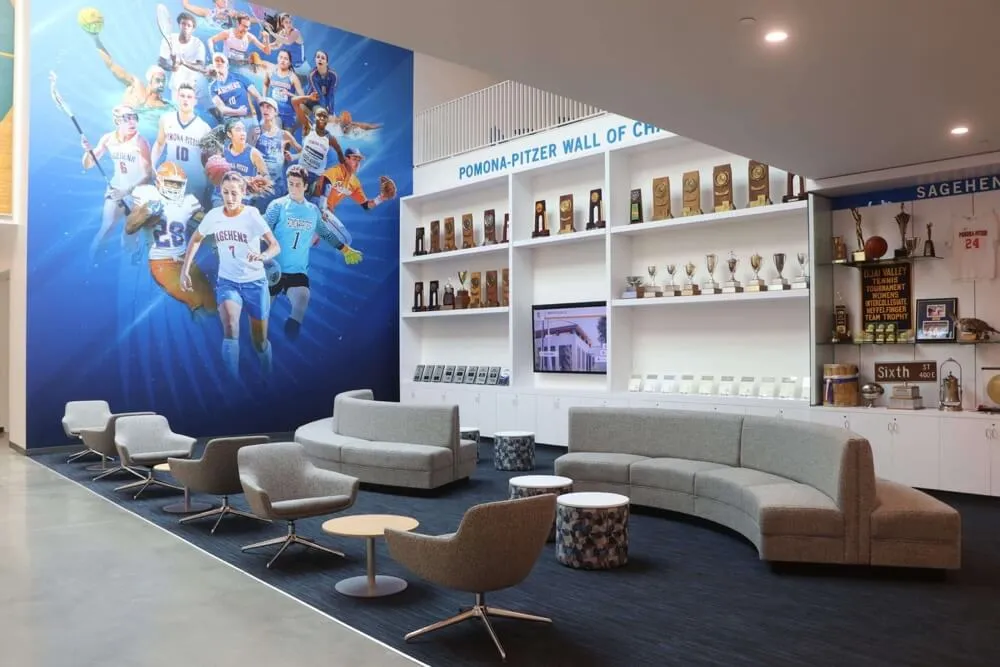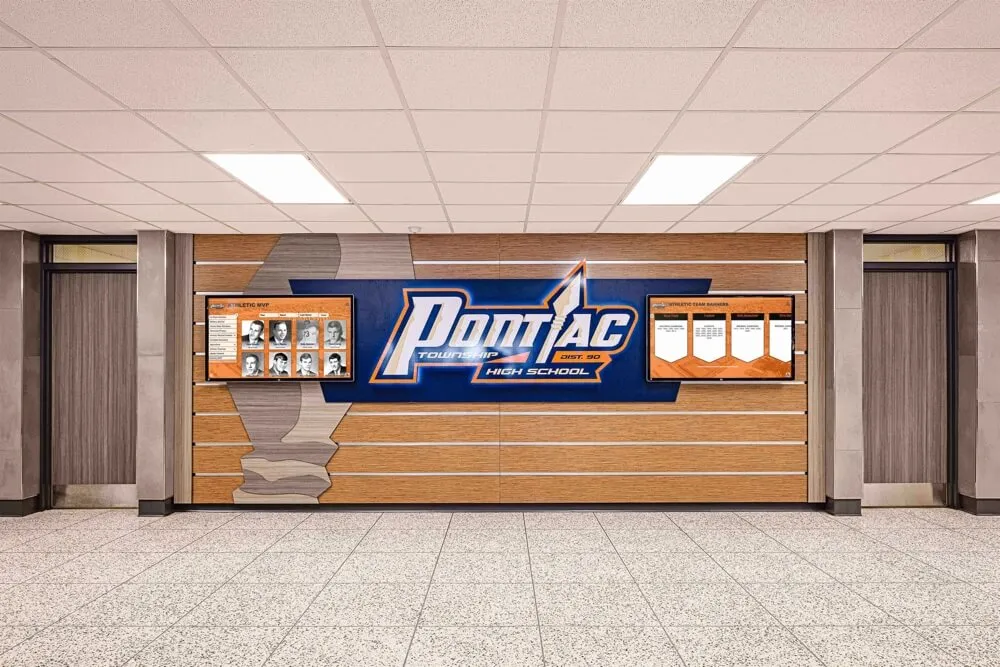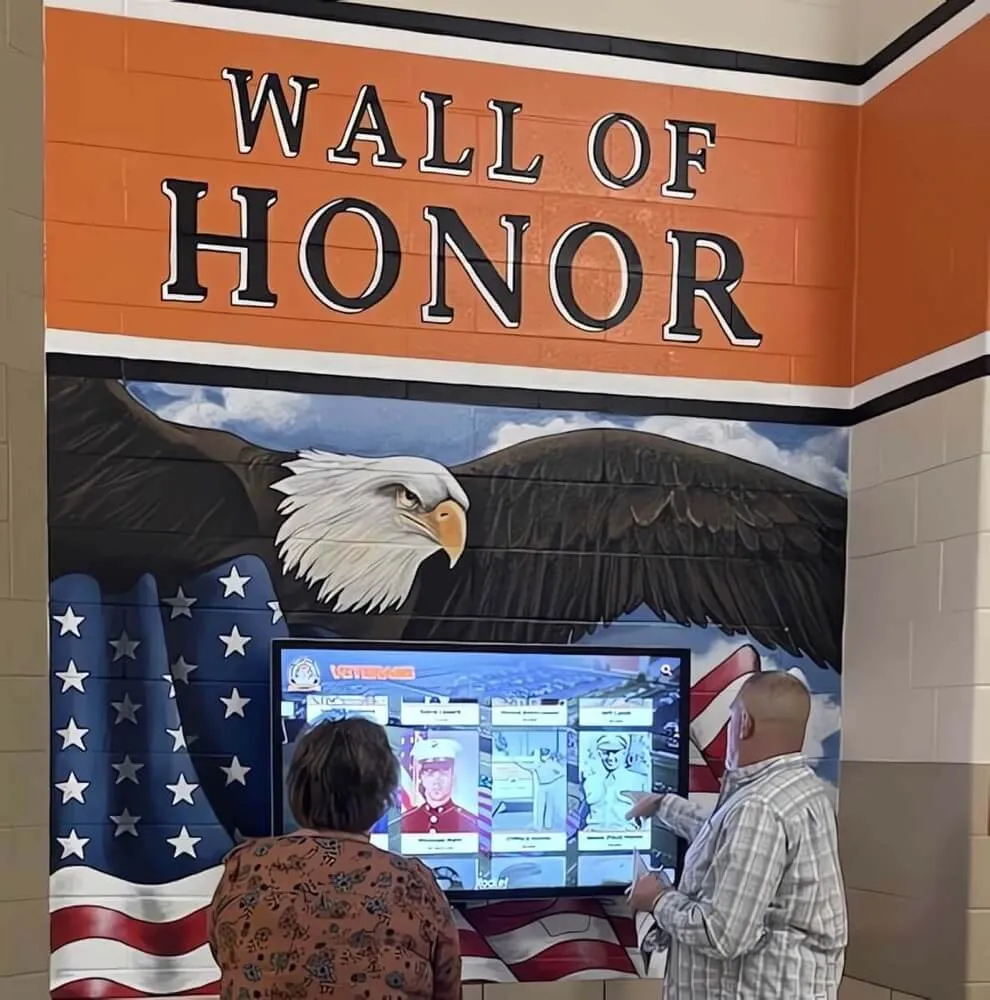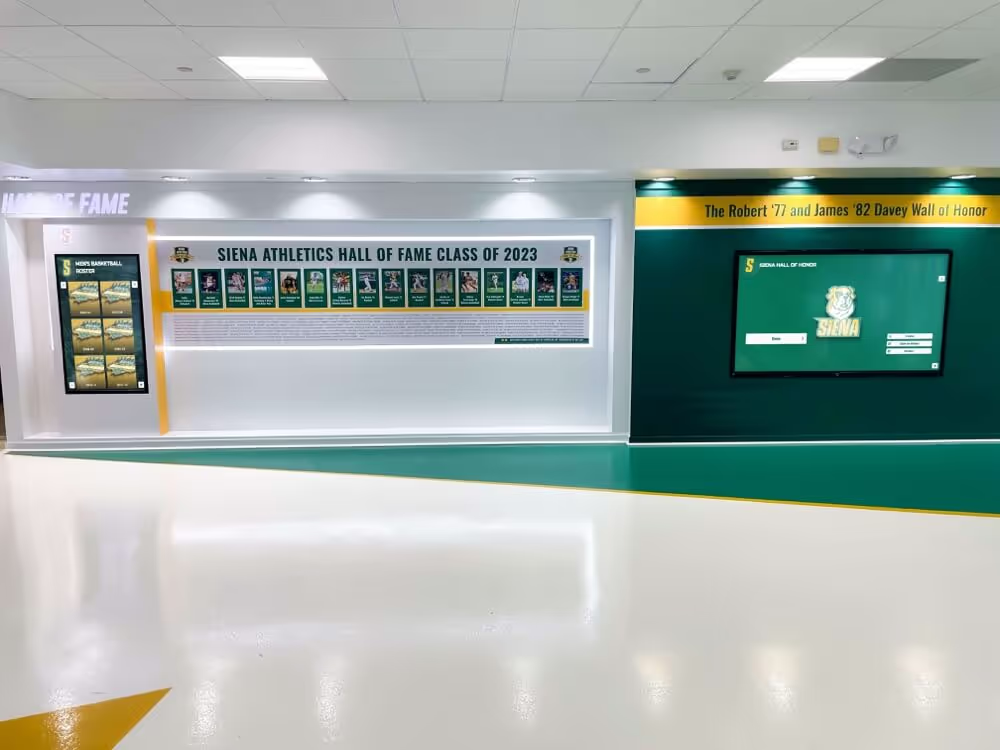




Digital record boards represent a fundamental shift in how educational institutions engage campus communities through achievement recognition. These interactive touchscreen systems display athletic records, academic milestones, and institutional accomplishments while creating active gathering points that connect students, alumni, parents, and visitors with institutional heritage in ways static plaques and trophy cases cannot match.
Traditional record boards force difficult compromises—engraved plaques accommodate limited names before filling permanently, gymnasium banners fade and tear over decades, trophy cases overflow requiring difficult removal decisions. When physical constraints prevent comprehensive recognition, institutions inadvertently communicate that only the most exceptional achievements deserve acknowledgment, leaving countless worthy accomplishments forgotten and communities disconnected from the full scope of institutional excellence.
This blueprint presents 20 proven ideas for deploying digital record boards to maximize campus engagement, strengthen community connections, inspire current students, honor past excellence, and create recognition experiences that grow with your institution rather than filling and becoming obsolete.
Modern campuses demand recognition systems that celebrate comprehensive achievement while creating compelling visitor experiences. Digital record boards deliver both, transforming passive displays into interactive exploration hubs that tell institutional stories through data, multimedia, and discovery.

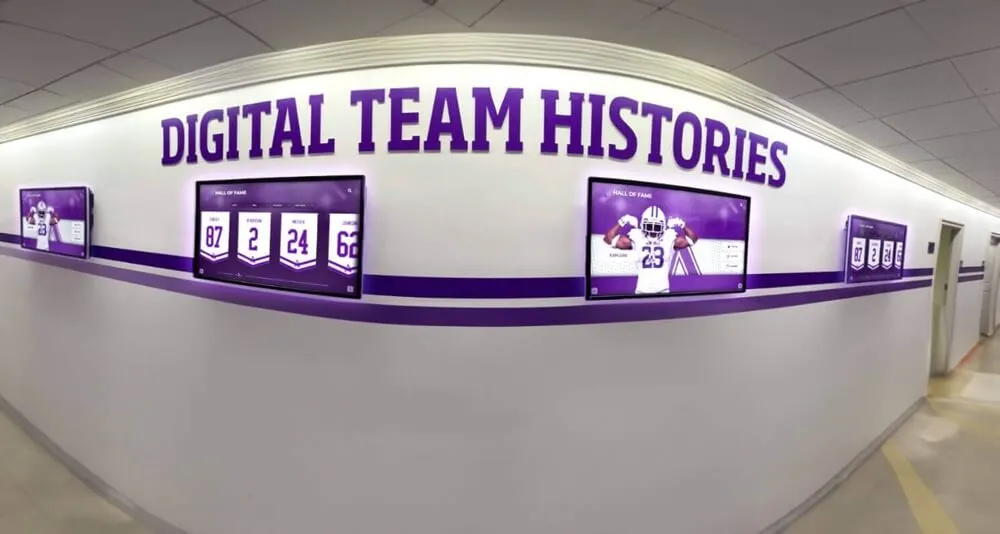
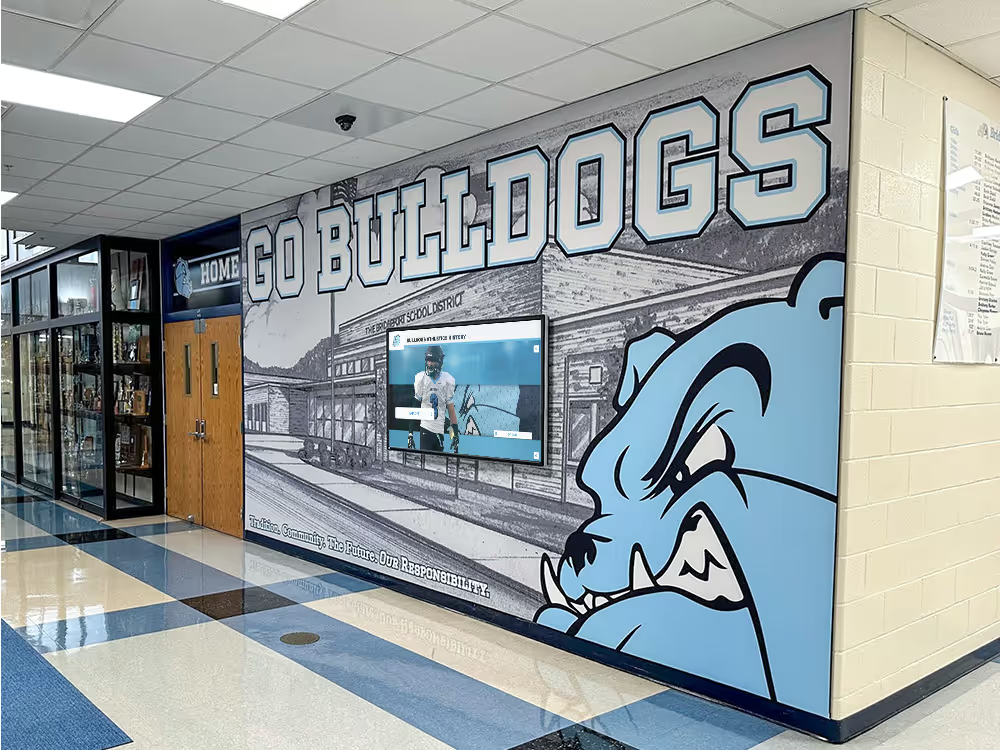
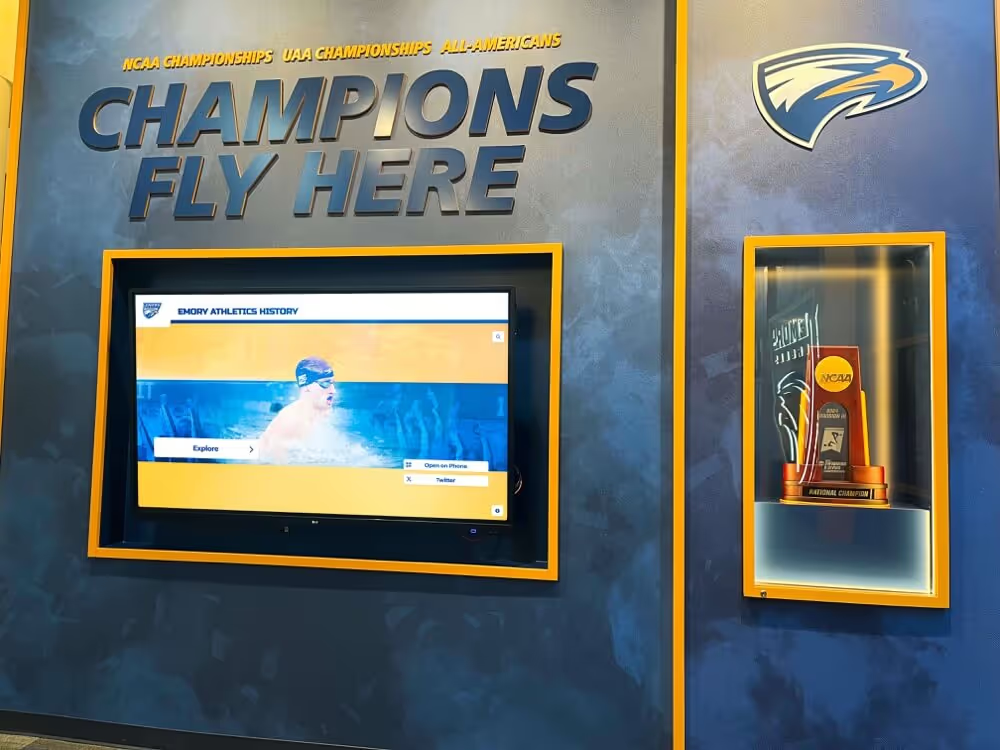
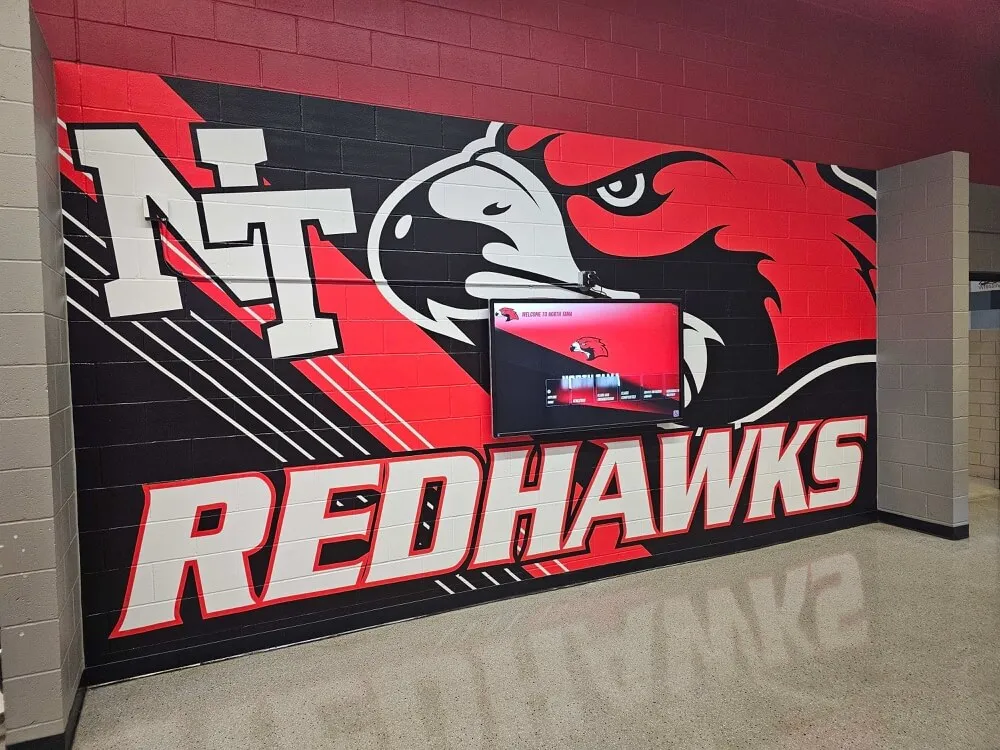
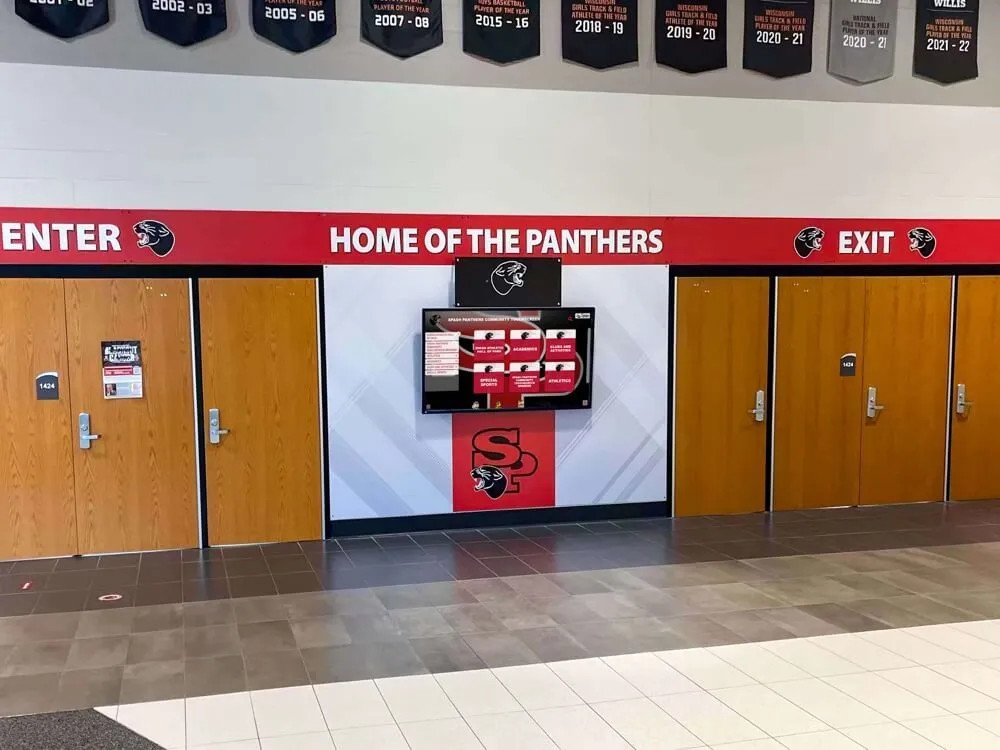
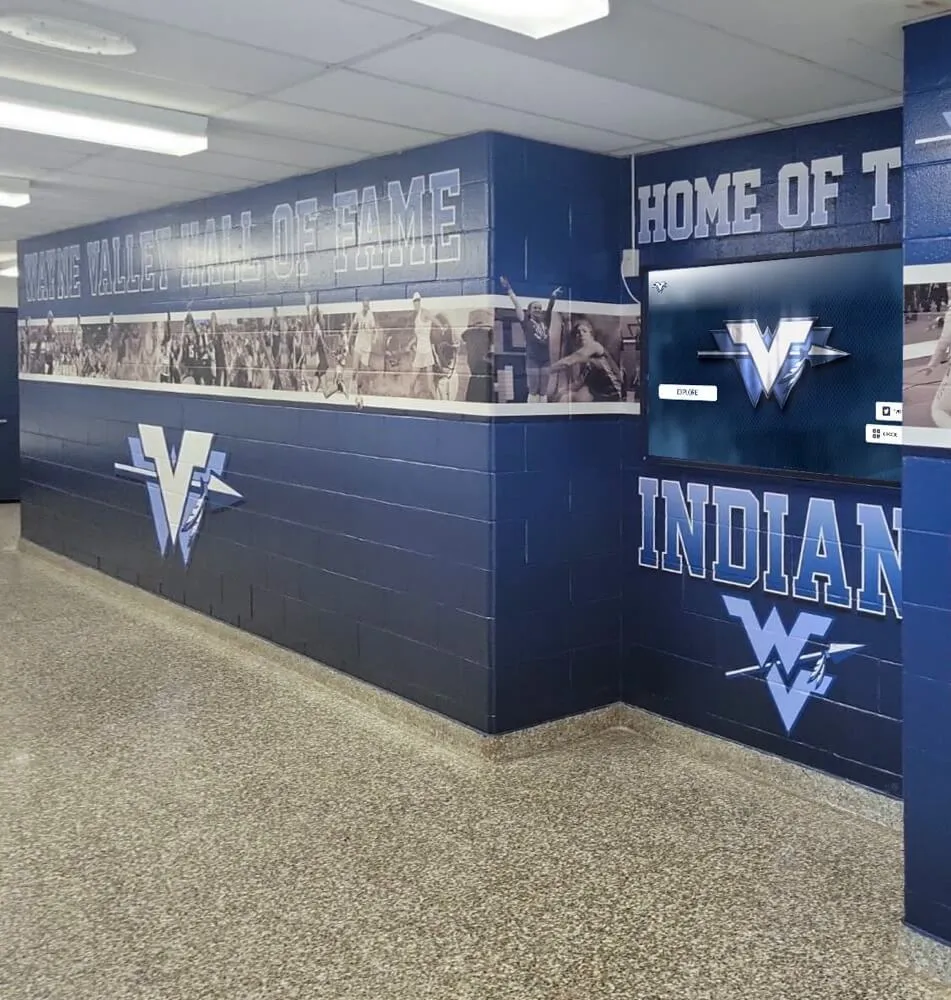
Digital record boards integrate seamlessly with existing hallway designs while displaying unlimited achievements through searchable interactive databases
Program Snapshot: Digital Record Board Implementation
| Program Element | Details |
|---|---|
| Primary Audience | Current student-athletes, alumni, parents, prospective families, campus visitors |
| Core Outcomes | Increased engagement, strengthened tradition, recruitment advantage, community connection |
| Recognition Categories | Athletic records, academic achievements, school history, team championships, individual milestones |
| Update Frequency | Real-time during competitions, daily for statistics, seasonal for records, annual for archives |
| Display Locations | Athletic facilities, main lobbies, hallways, alumni centers, admissions offices |
| Engagement Features | Touchscreen interaction, video highlights, photo galleries, social sharing, web access |
20 Ideas for Campus Engagement Through Digital Record Boards
Athletic Achievement Recognition
1. Sport-Specific Record Tracking
Create dedicated sections for each athletic program displaying all-time records, season bests, and current record holders. Include categories like fastest times, highest scores, longest distances, most wins, consecutive achievements, and career statistics. Update automatically as student-athletes break records, instantly recognizing excellence while preserving historical context showing progression over decades.
This approach ensures every sport receives equal recognition regardless of traditional prominence, validating efforts across all programs from football and basketball to swimming, cross country, golf, and tennis.
2. Multi-Sport Athlete Recognition
Feature student-athletes competing in multiple sports throughout the school year. Display their statistics, achievements, and contributions across different programs, demonstrating versatility, dedication, and time management excellence. Create comparison views showing how athletes balanced competing demands while excelling in distinct athletic disciplines.
Multi-sport recognition reinforces participation values and encourages well-rounded athletic development rather than early specialization limiting student experiences.
3. Championship Team Archives
Document every conference championship, district title, regional victory, and state championship in school history. Include team rosters with individual athlete profiles, season records, playoff brackets, championship game summaries, newspaper coverage, and celebration photos. Enable filtering by sport, year, or championship level for quick discovery.
Comprehensive championship archives preserve institutional athletic heritage that physical trophy cases cannot accommodate once space fills.
Explore state championship recognition strategies that celebrate team excellence through digital displays.

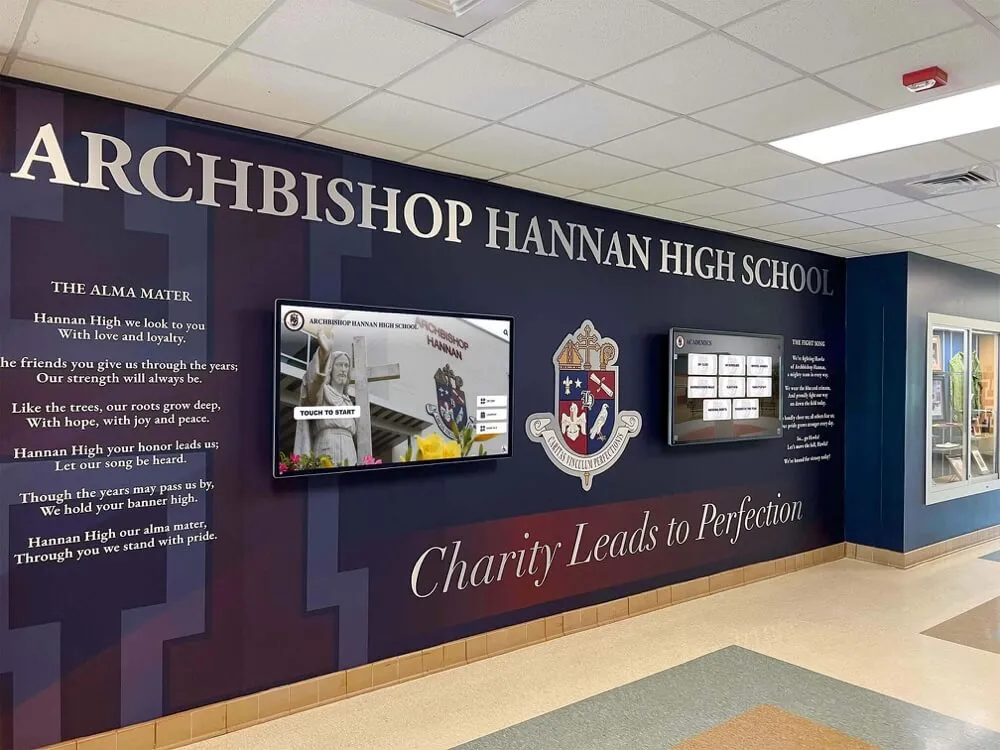
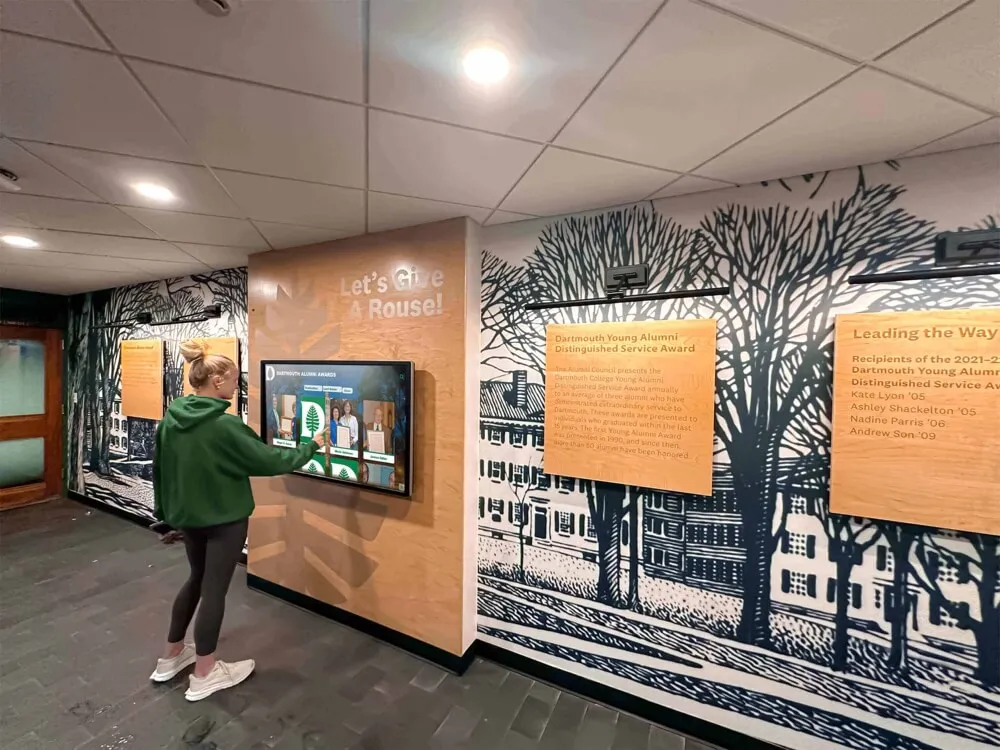
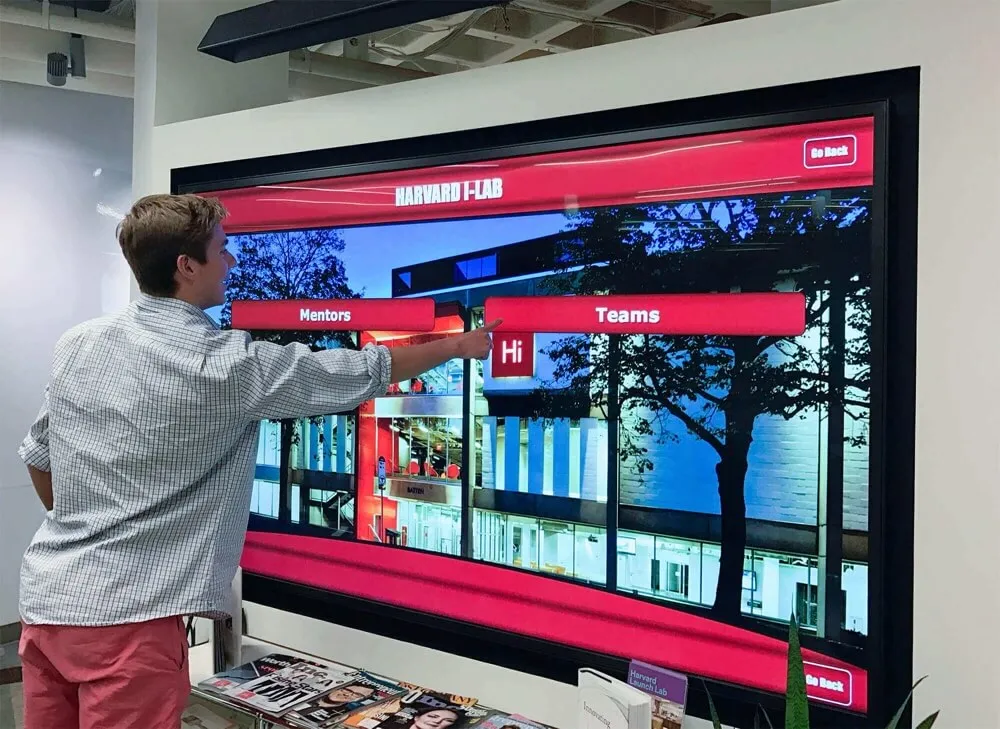
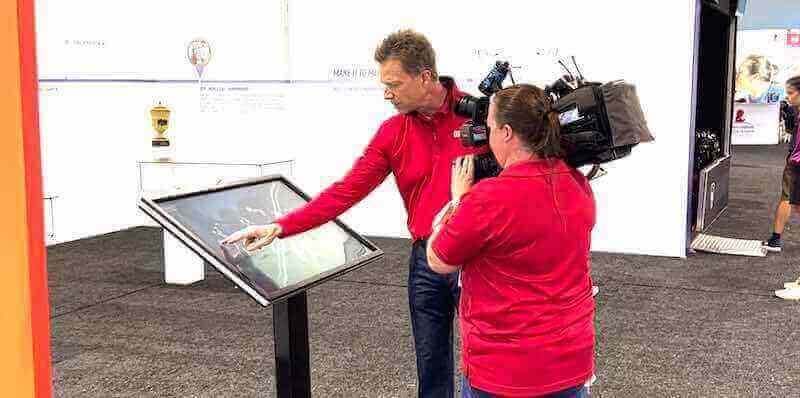
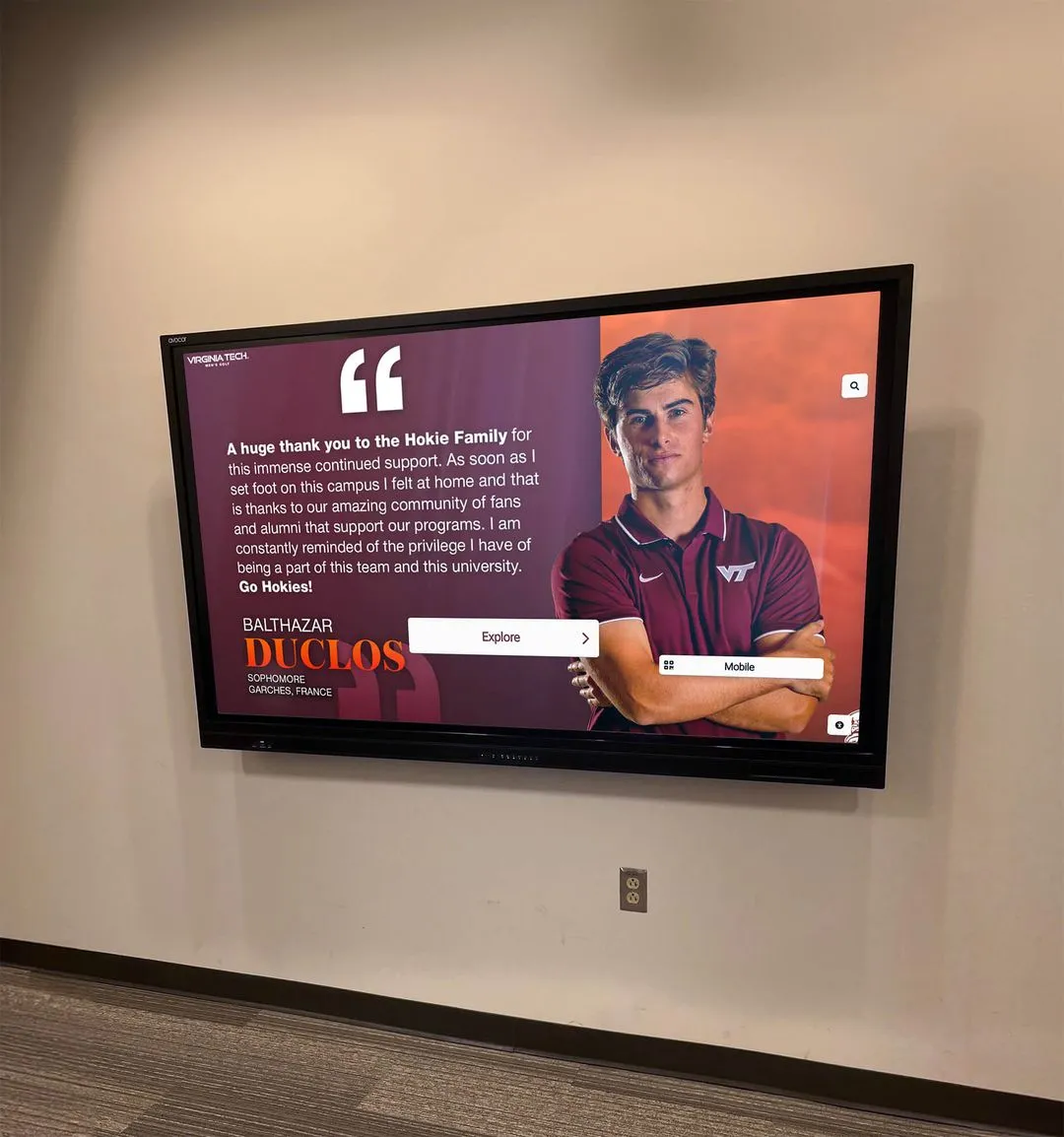
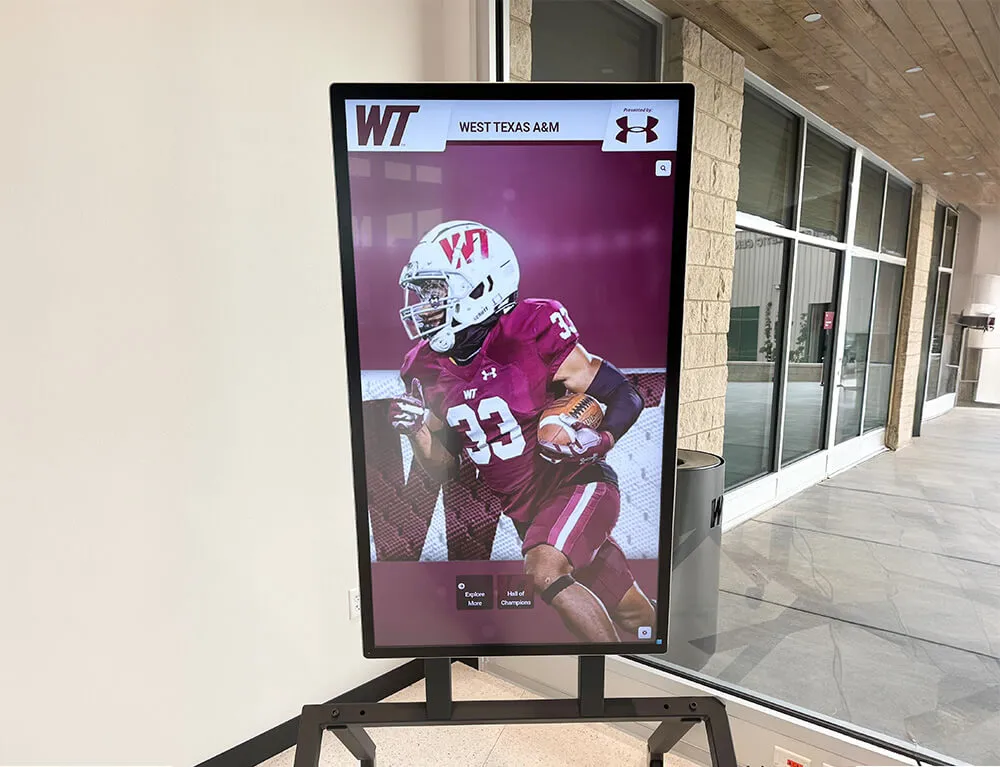
Touchscreen interaction enables instant access to complete athlete biographies, statistics, and achievement details impossible with static displays
4. Season Video Archives
Upload video clips from memorable games, outstanding individual performances, championship moments, and season-defining plays. Tag videos with athlete names, opponents, dates, and outcomes, making content searchable and creating multimedia storytelling that brings statistics to life through visual documentation of excellence.
Video integration transforms recognition from names and numbers into emotional connections with actual moments that defined athletic careers.
5. Career Statistics Leaders
Display all-time leaders across every statistical category relevant to each sport. Show top 10 or top 25 lists for points scored, assists, rebounds, goals, saves, strikeouts, rushing yards, tackles, aces, medals, personal records, and sport-specific achievements. Update automatically as current athletes climb historical rankings.
Statistical leaderboards create friendly competition while providing perspective on current performance relative to institutional excellence standards.
6. Record Progression Timelines
Visualize how specific records evolved over school history. Show year-by-year progression of records like fastest mile time, highest pole vault, longest touchdown pass, or most career goals. Include athlete names, graduation years, and achievement contexts demonstrating how each generation built upon previous excellence.
Historical progression displays honor all record holders rather than only current leaders, acknowledging contributions to institutional athletic improvement.
Academic and Co-Curricular Recognition
7. Academic All-State and All-Conference Athletes
Celebrate student-athletes earning academic all-conference, all-state, or national recognition. Display their sports, GPAs, academic honors, colleges attended, and career paths. Demonstrate that athletic excellence and academic achievement coexist and reinforce each other through discipline, time management, and commitment.
Academic recognition alongside athletic achievements communicates institutional values prioritizing balanced student-athlete development.
Learn about academic recognition program structures that honor student excellence comprehensively.
8. Scholar-Athlete Award Winners
Feature recipients of institutional scholar-athlete awards honoring students demonstrating exceptional performance in both academics and athletics. Include award criteria, selection processes, and complete winner histories. Add winner reflections on balancing academic and athletic demands, providing inspiration and practical strategies for current students.
Scholar-athlete recognition reinforces that academic success matters as much as competitive achievement within institutional culture.
9. College Athletic Commitment Tracking
Feature student-athletes signing National Letters of Intent or committing to compete at collegiate levels. Display commitment announcements, college choices, athletic programs, intended majors, and ceremony photos. Update regularly throughout signing periods, creating excitement and demonstrating how institutional programs prepare athletes for continued competition.
College commitment recognition validates years of athletic development while inspiring younger students to pursue similar pathways.
Discover college commitment celebration approaches that honor student-athlete decisions.
10. Sportsmanship and Character Award Recipients
Recognize athletes receiving sportsmanship awards, leadership honors, most inspirational designations, coaches’ awards, and character-based recognition. Include nomination statements, coach comments, and descriptions of behaviors demonstrating exceptional character. Balance performance achievements with recognition of values and conduct.
Character recognition communicates that how athletes compete matters as much as competitive outcomes, shaping program culture around positive values.
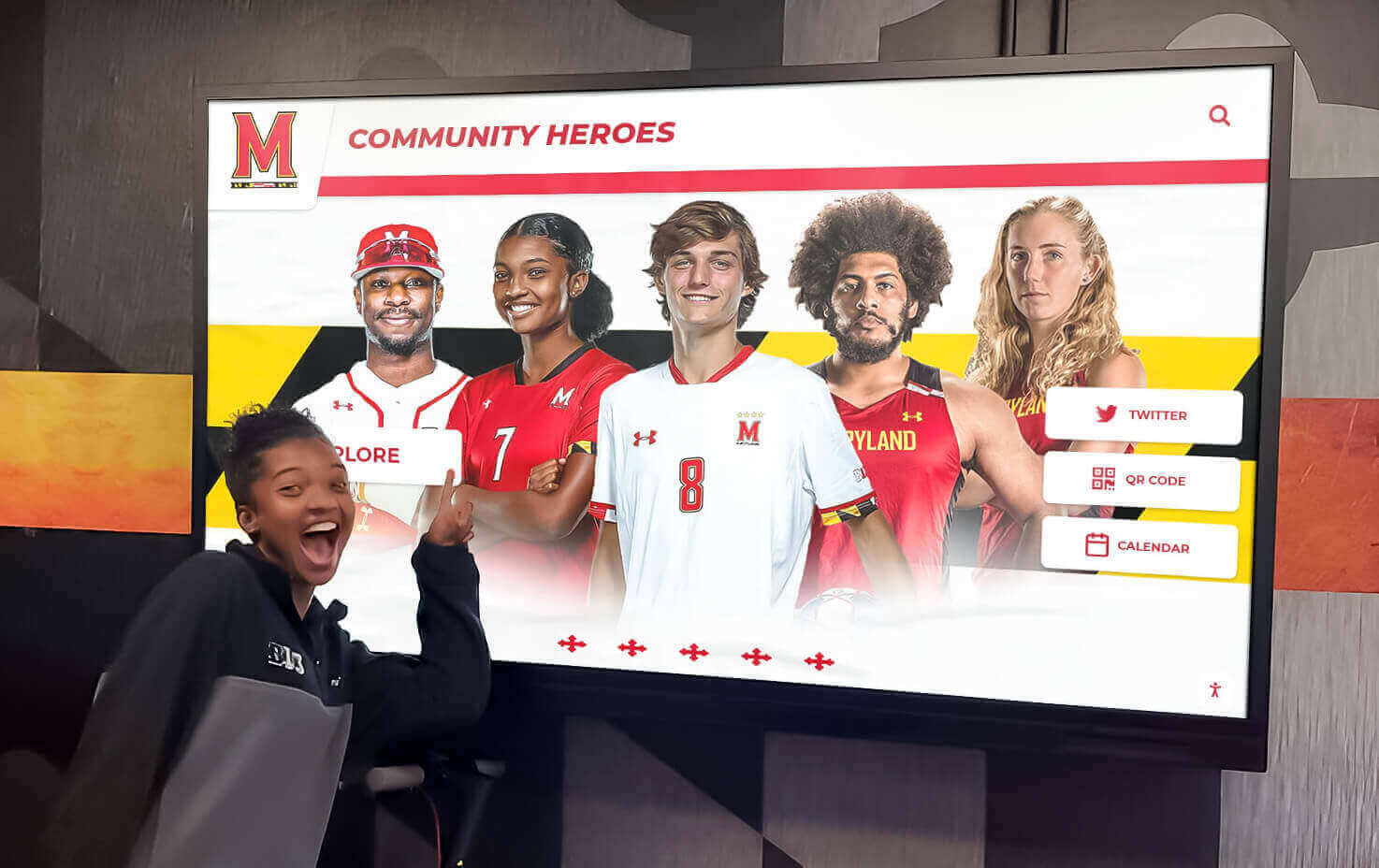
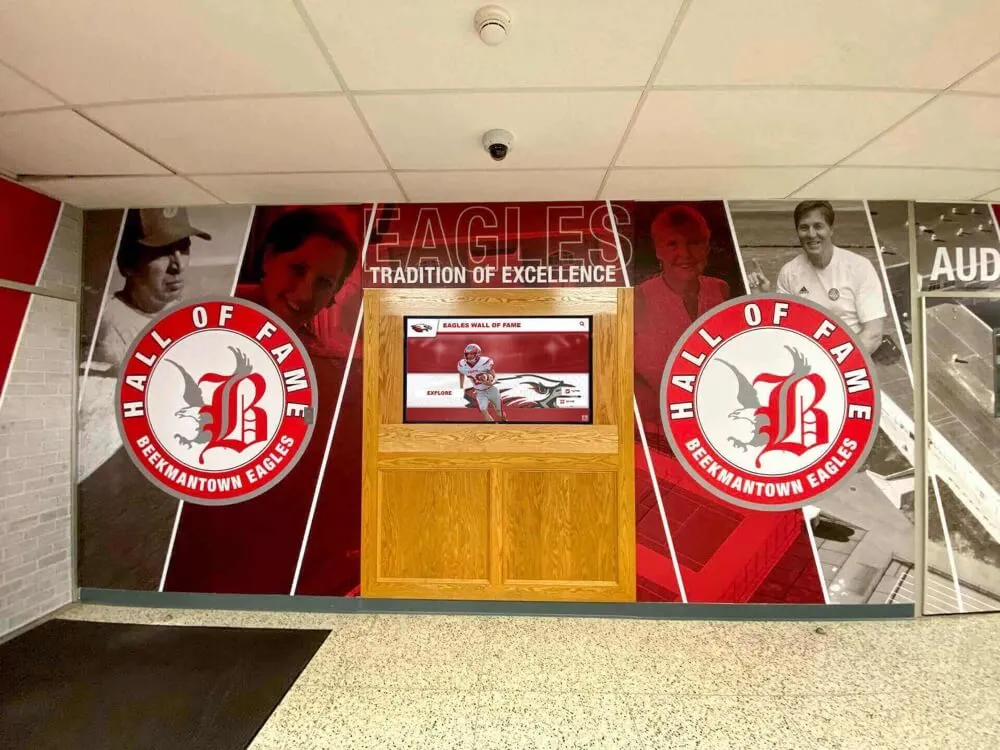
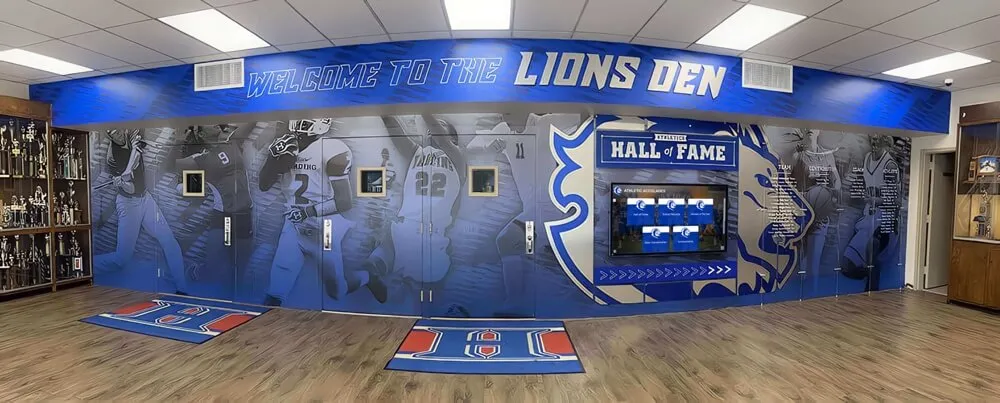
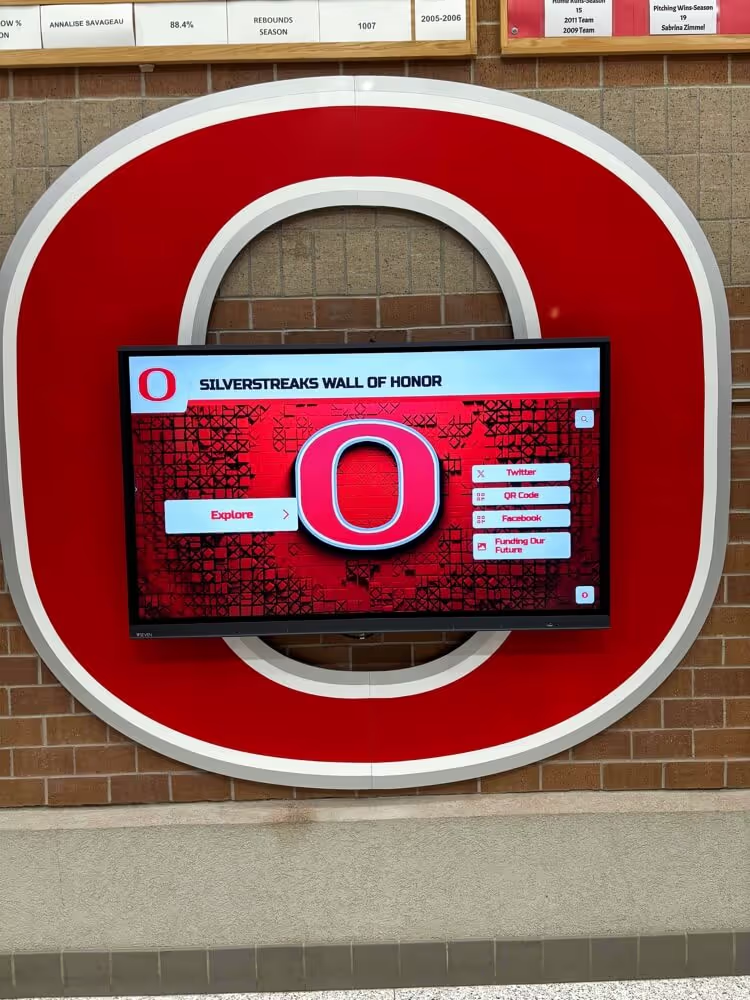
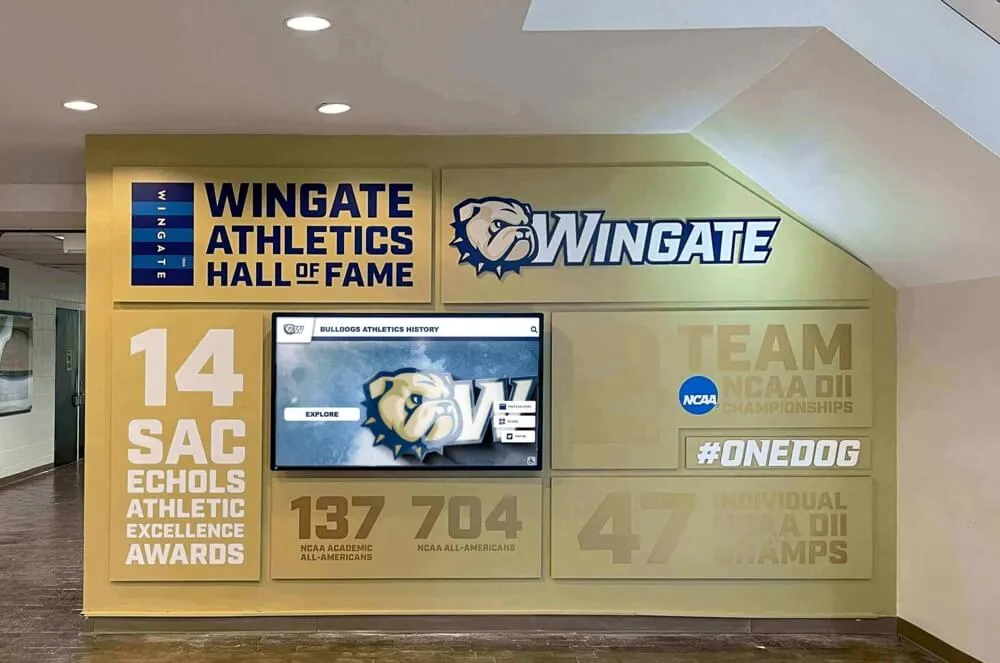
Interactive displays create engaging experiences connecting current students with athletic tradition and inspiring excellence
Historical and Heritage Content
11. Coaching Legacy Archives
Document coaching histories across all sports programs. Include career records, championships won, years of service, coaching philosophies, notable alumni, career milestones, and retirement tributes. Create coach profile pages with photographs spanning their tenures, memorable team photos, and contributions beyond win-loss records.
Coaching recognition honors individuals shaping generations of student-athletes while preserving institutional knowledge about program evolution and leadership.
12. Facility Evolution Timelines
Show how athletic facilities transformed over decades through photographs, construction timelines, renovation projects, naming dedications, and facility milestones. Document field improvements, equipment upgrades, building additions, and infrastructure investments demonstrating institutional commitment to athletic excellence.
Facility timelines help communities appreciate investments supporting current programs while contextualizing differences between eras.
13. Rivalry Game Histories
Feature complete records against traditional rivals including all-time series records, memorable games, championship matchups, and significant moments. Include game-by-game results, scoring details, playoff implications, and newspaper coverage. Create anticipation for upcoming rivalry games by presenting historical significance.
Rivalry documentation strengthens traditions while educating new community members about competitive relationships defining institutional athletic identity.
14. Decade-by-Decade Achievement Summaries
Organize recognition by decade, summarizing major achievements, championship teams, record-setting athletes, program milestones, facility improvements, and cultural moments defining each era. Enable easy browsing through institutional athletic history organized chronologically.
Decade organization helps visitors understand institutional athletic evolution while ensuring older achievements remain discoverable rather than forgotten.
Engagement and Community Building
15. Alumni Athlete “Where Are They Now” Features
Feature alumni athletic career paths, professional accomplishments, community contributions, and life journeys after graduation. Include college athletics participation, professional sports careers, coaching roles, career achievements, family updates, and connections to current programs through mentorship or support.
Alumni features maintain connections between past and present while demonstrating long-term value of athletic participation beyond high school competition.
Explore alumni recognition strategies that keep graduates engaged with institutions.
16. Interactive Trivia and Challenges
Create rotating trivia questions testing knowledge of institutional athletic history, records, traditions, and achievements. Include difficulty levels, answer reveals, and historical context for correct answers. Update regularly to encourage repeat engagement and learning.
Trivia features transform passive viewing into interactive learning experiences that educate while entertaining campus visitors.
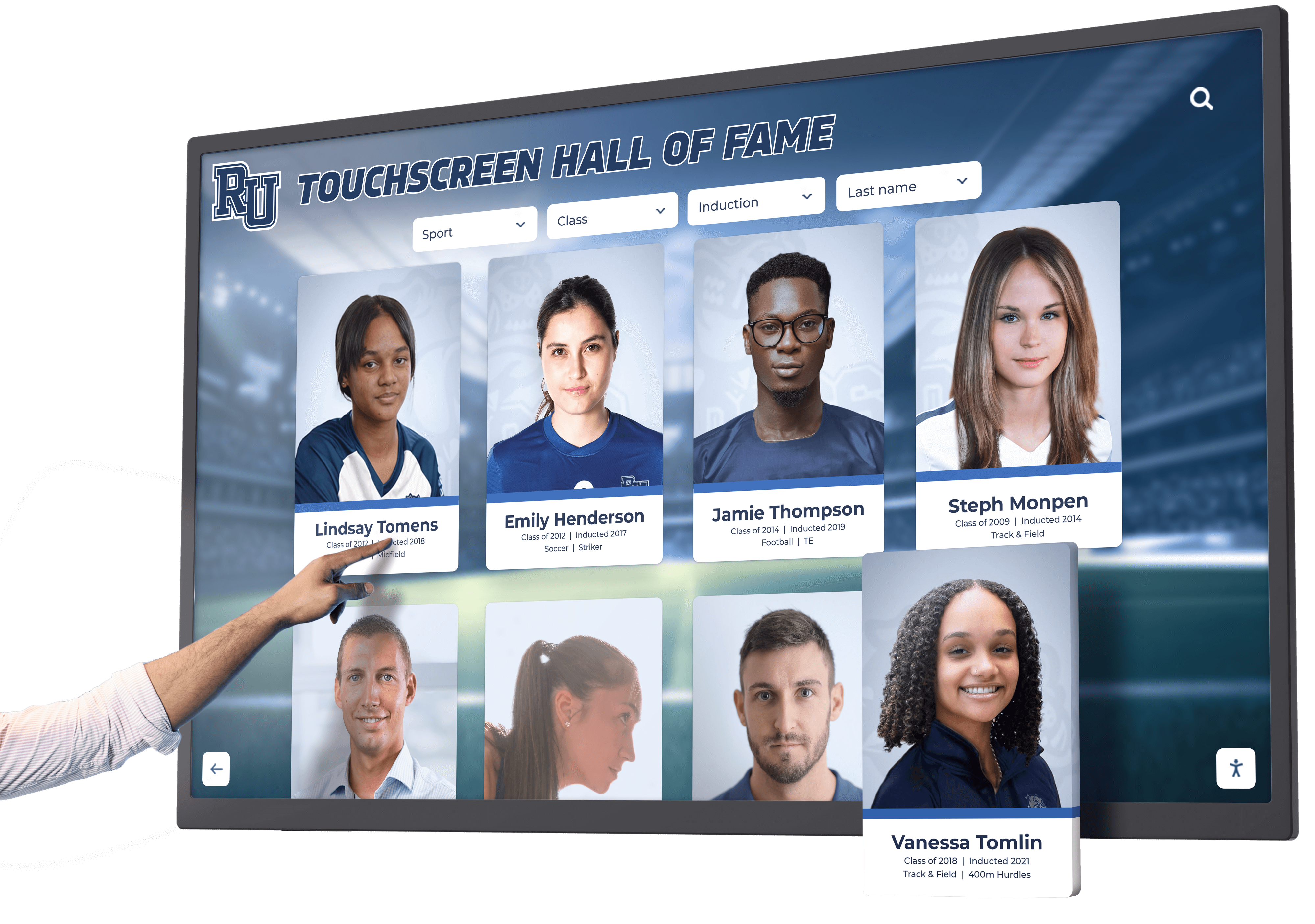
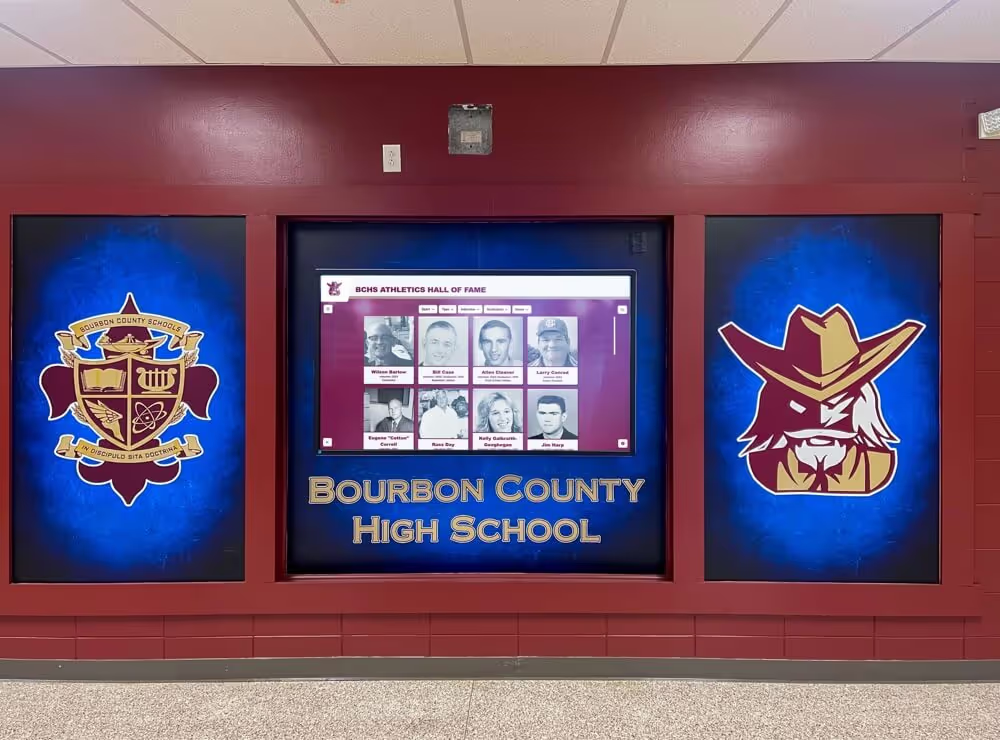
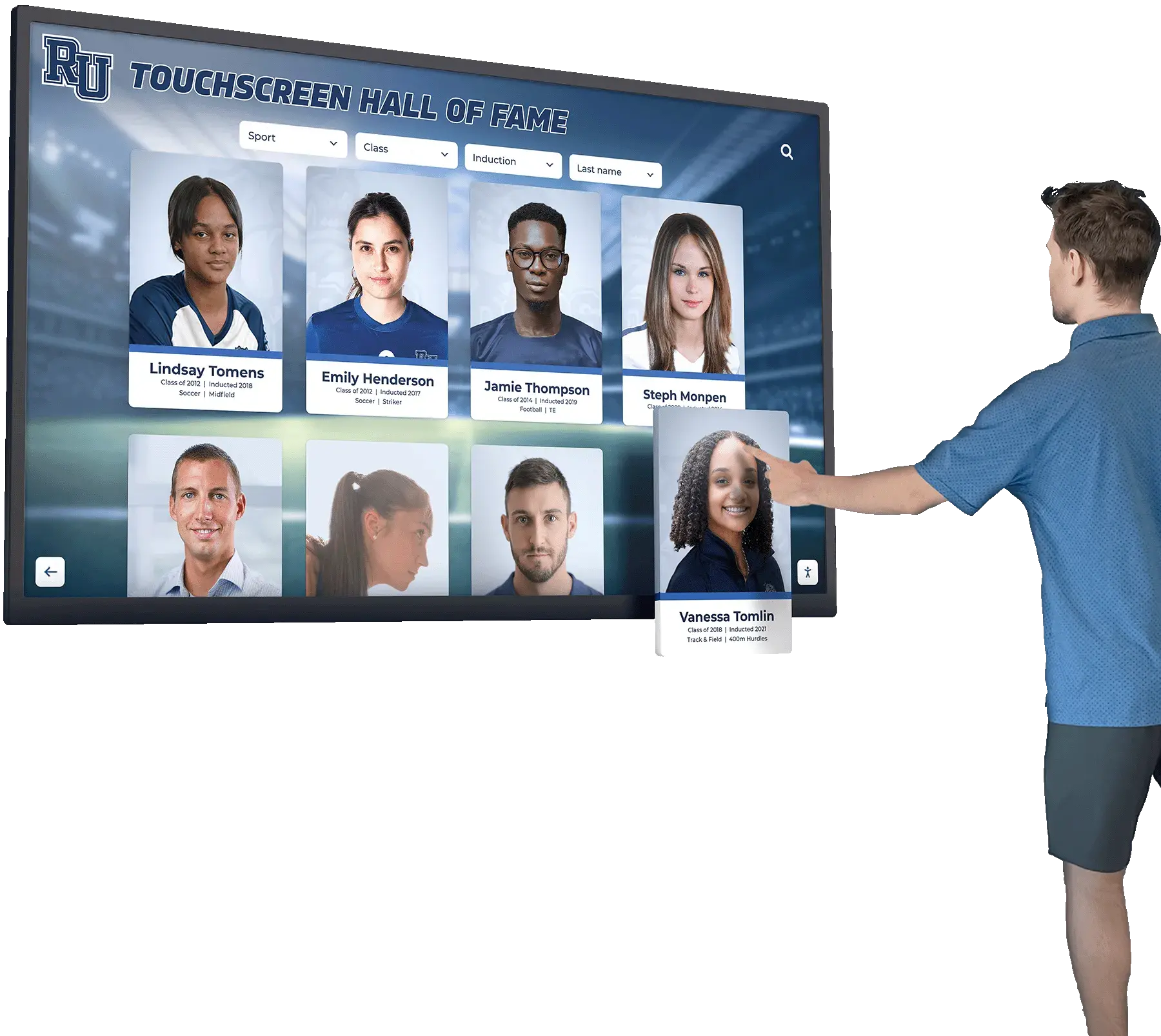
Athlete portrait galleries organized by sport, year, or achievement category enable simple browsing through comprehensive recognition databases
17. Social Media Integration and Sharing
Enable visitors to share favorite athlete profiles, records, achievements, or championship teams directly to Facebook, Instagram, LinkedIn, or Twitter. Include QR codes linking to athlete profiles, allowing smartphone access to complete information for extended viewing and sharing beyond display locations.
Social sharing extends recognition reach beyond physical displays while creating organic promotion as families and athletes share their inclusion with extended networks.
18. Live Game Statistics and Updates
Display current season statistics, updated game scores, live playoff brackets, and real-time achievement tracking during active sports seasons. Show how current athletes rank on all-time lists, which records stand within reach, and how teams progress toward championship qualification.
Real-time updates create urgency and relevance, drawing repeated visits throughout seasons as communities track current performance against historical standards.
19. Monthly or Weekly Featured Athlete Spotlights
Rotate featured athlete profiles presenting individuals from different sports, eras, and achievement categories. Include extended biographies, video interviews, career statistics, personal reflections, and unique stories beyond numbers. Update regularly ensuring every recognized athlete receives featured prominence over time.
Featured rotations ensure all achievements receive visibility rather than only most prominent athletes receiving attention in high-traffic display locations.
20. Record Holder Challenge Announcements
When records stand within reach for current athletes, create live announcements tracking pursuit progress. Show current performance relative to records, number of events remaining, required performance levels, and historical context. Celebrate record-breaking moments immediately upon achievement with automatic display updates.
Challenge tracking creates narrative tension and community investment in current athlete pursuits while honoring both current and historical excellence.
Learn about comprehensive athletic recognition program development across multiple categories.
Content Architecture: Mapping Recognition to Touchscreen Modules
Digital record board effectiveness depends on thoughtful content organization and display design creating straightforward navigation and discovery.
Database Structure and Organization
Sport-Based Categorization: Organize primary navigation by athletic program, allowing visitors to quickly access specific sport content including records, rosters, championships, and individual athlete achievements within that program.
Achievement Type Filtering: Enable filtering across all sports by achievement categories including all-time records, season records, individual awards, team championships, academic honors, and special recognition.
Chronological Browsing: Provide timeline navigation organizing content by academic year, graduating class, decade, or coaching tenure, enabling historical exploration and era-based discovery.
Search Functionality: Implement powerful search with auto-complete, spelling tolerance, and fuzzy matching ensuring visitors find specific athletes, records, or achievements despite incomplete information or misspellings.
Display Layout Zones
Welcome Screen: Design attractive home screens displaying featured athletes, recent achievements, upcoming events, record pursuit updates, and navigation pathways guiding exploration.
Record Leaderboards: Create visually compelling statistical displays showing top 10 or top 25 performers across all measurable categories with sortable columns, comparison views, and drill-down to full athlete profiles.
Championship Archives: Develop team-based displays organizing championship rosters, season summaries, playoff results, and celebration media in accessible formats supporting both casual browsing and detailed research.
Athlete Profile Pages: Design comprehensive individual pages integrating photographs, statistics, biographies, awards, video highlights, related teammates, and career timelines in professionally formatted templates ensuring consistent presentation.
Multimedia Galleries: Organize photo collections and video libraries with tagging, searching, and filtering enabling content discovery through multiple pathways beyond direct athlete search.
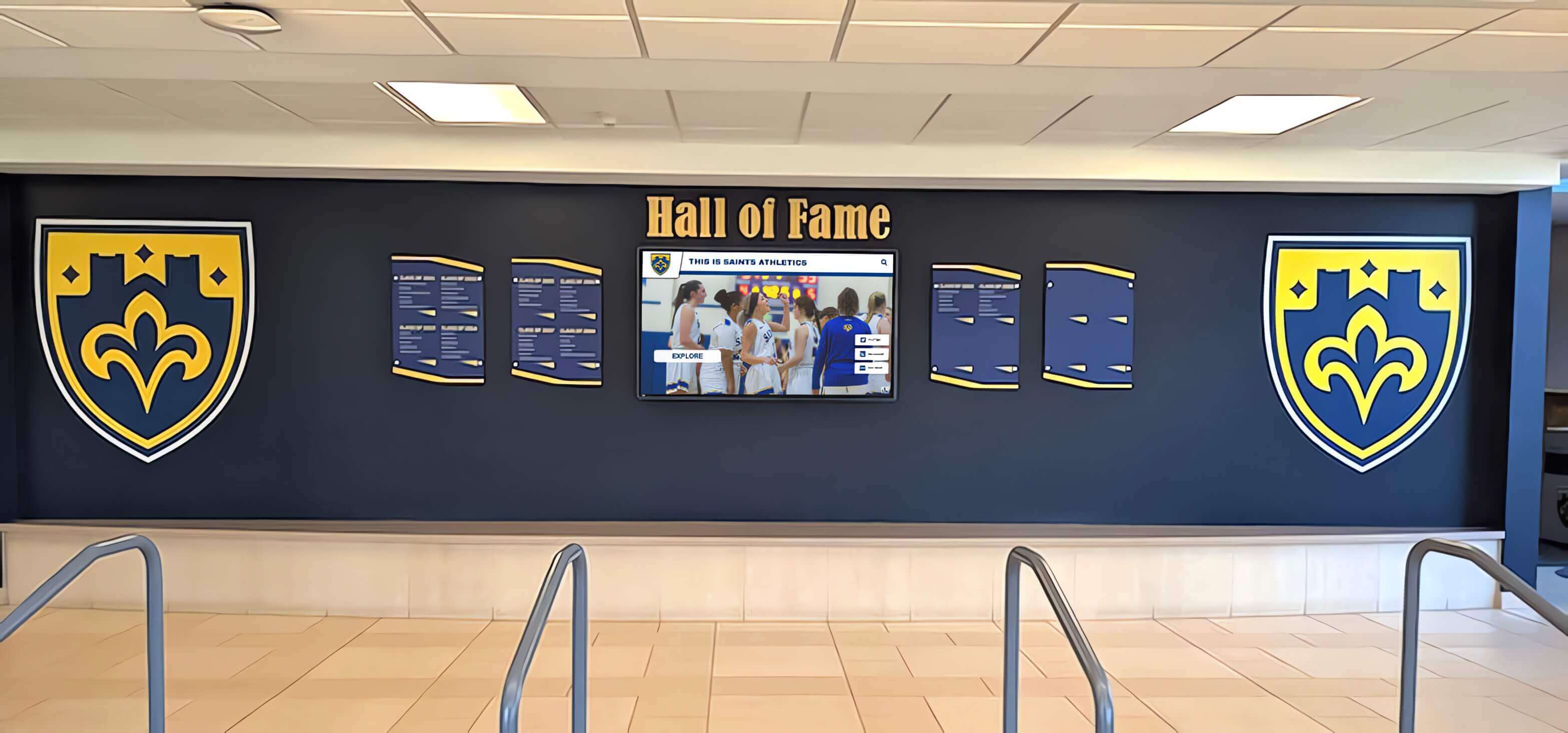
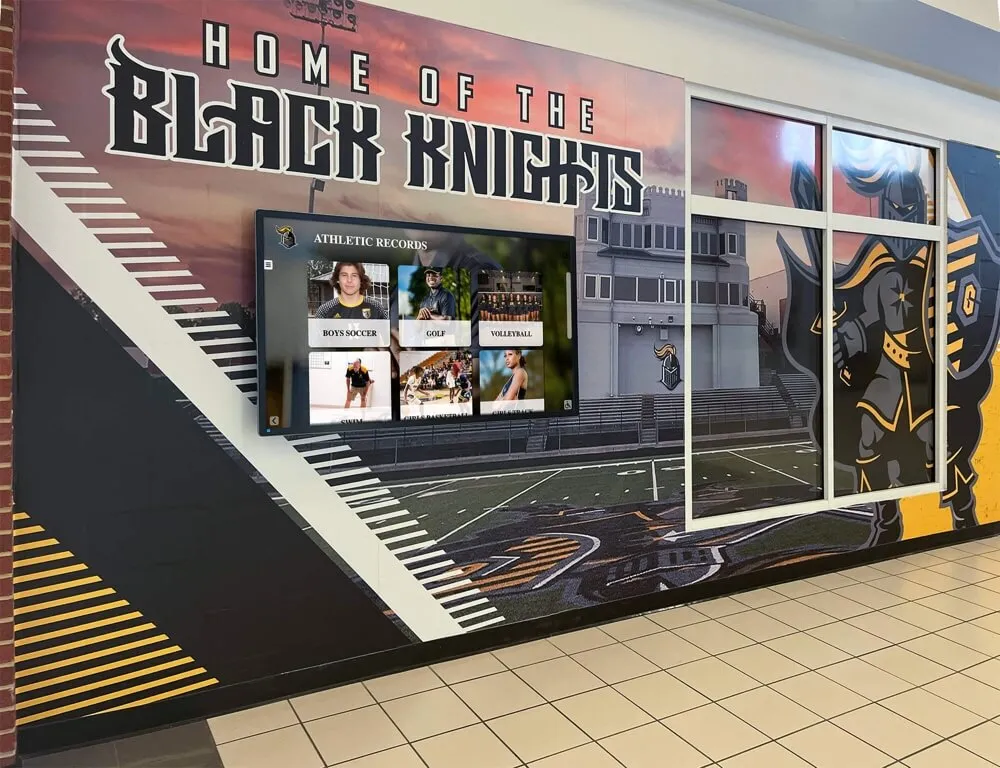
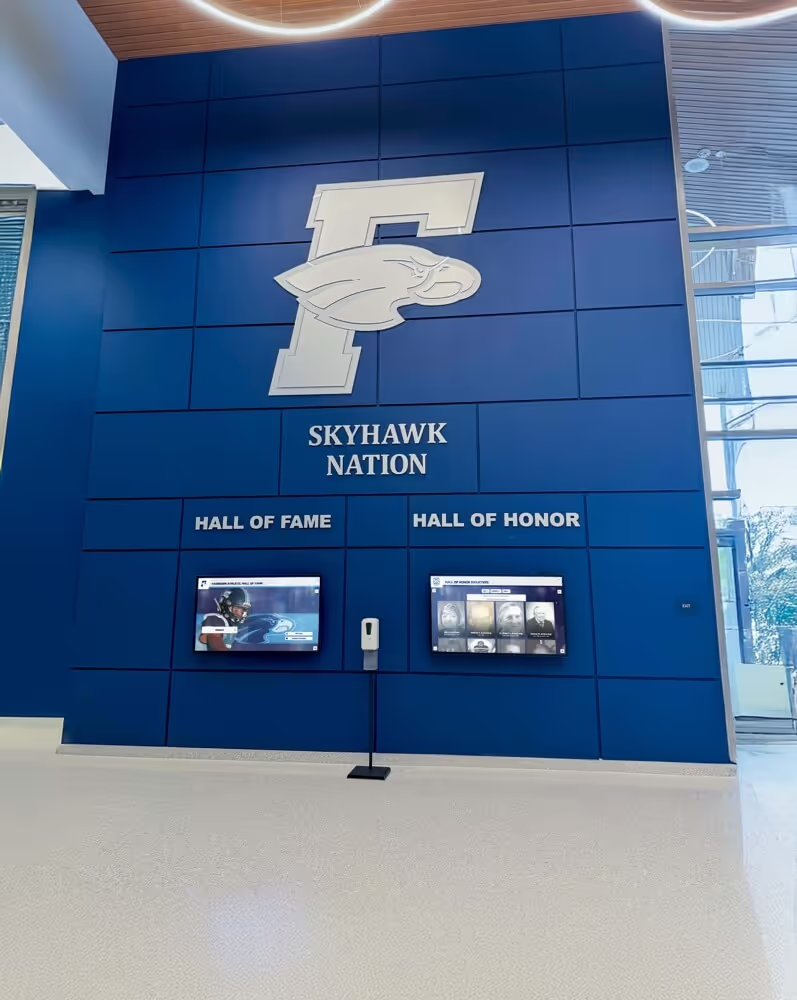
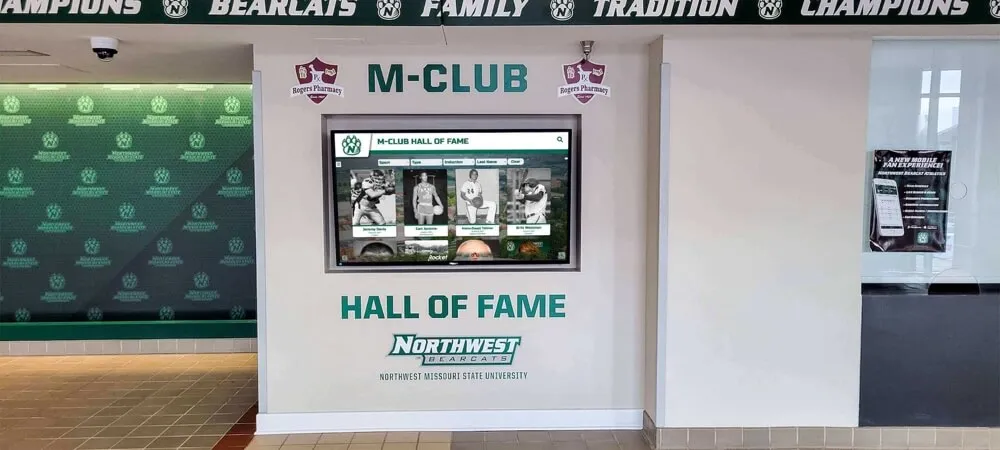
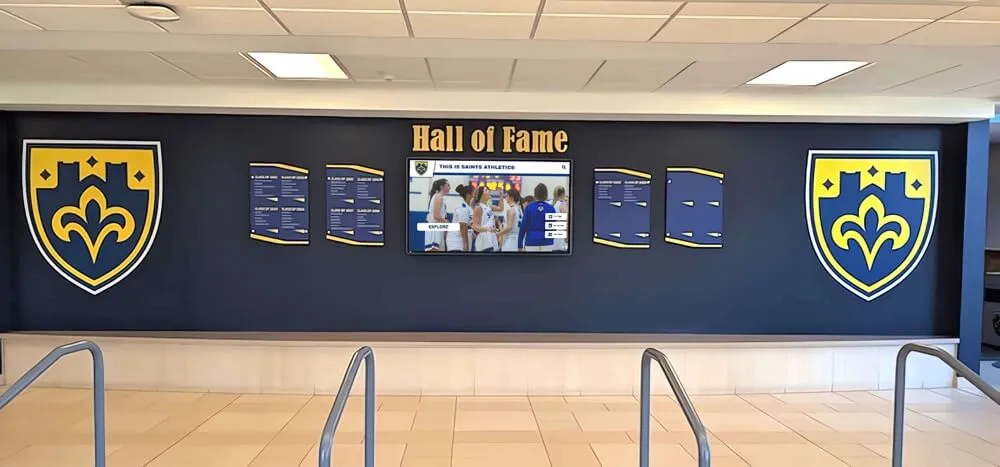
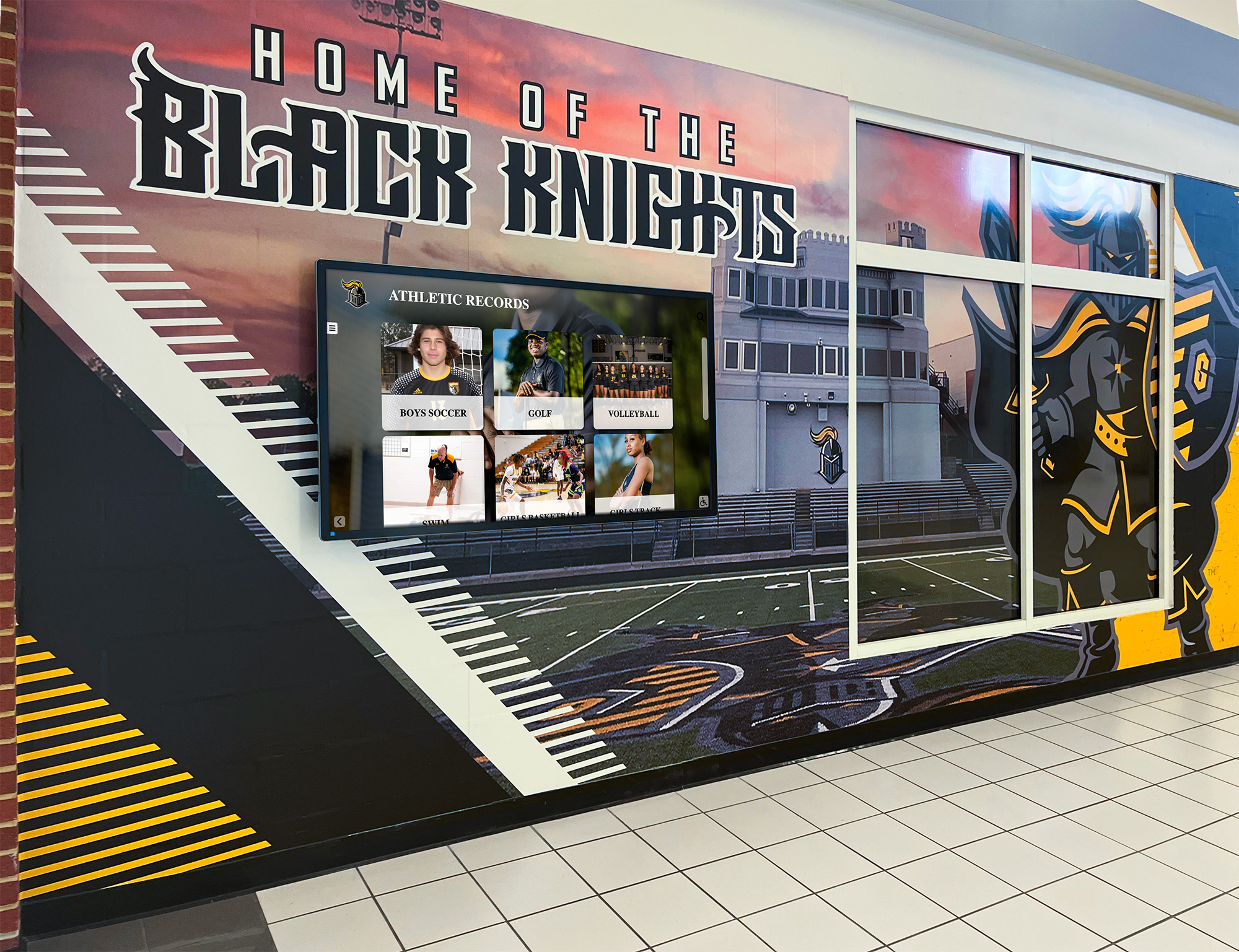
Digital record boards integrate with existing lobby design elements while providing recognition capacity far exceeding traditional trophy cases
Solutions like Rocket Alumni Solutions provide purpose-built recognition platforms designed specifically for comprehensive athletic achievement display with unlimited capacity, responsive interfaces, and cloud-based management accessible from any device.
Execution Timeline: From Planning to Launch
Successful digital record board implementation follows structured phases ensuring content quality, technical reliability, and community engagement.
Phase 1: Planning and Requirements (Weeks 1-4)
Define Recognition Scope: Determine which sports, achievement categories, time periods, and content types the digital record board will include. Establish whether implementation begins with comprehensive historical content or launches with recent achievements expanding backward over time.
Identify Content Sources: Locate existing record books, athletic archives, yearbooks, media guides, newspaper clippings, photographs, videos, and documentation containing achievement data requiring digitization and organization.
Establish Content Standards: Define required information for athlete profiles, achievement entries, team championships, and other content categories. Create templates ensuring consistency across all entries while maintaining professional presentation.
Assign Responsibilities: Designate administrators responsible for content development, quality review, ongoing updates, and technical management. Determine involvement from athletic directors, coaches, booster clubs, alumni coordinators, and student assistants.
Budget Allocation: Determine initial investment for hardware, software, installation, and content development plus ongoing subscription costs for cloud platforms, technical support, and content hosting.
Phase 2: Content Development (Weeks 5-12)
Historical Data Collection: Gather record books, championship rosters, statistical archives, and achievement documentation spanning institutional history. Prioritize recent content for immediate display while planning phased historical additions.
Data Entry and Organization: Input athlete profiles, statistics, records, and achievement details into content management systems using bulk upload tools, templates, and standardized formats ensuring database integrity.
Multimedia Preparation: Scan photographs, digitize videos, crop images to consistent dimensions, compress file sizes for display performance, and organize media libraries with descriptive tagging enabling searchability.
Content Quality Review: Implement verification processes checking spelling, statistical accuracy, categorization correctness, and presentation consistency before publishing content to public displays.
Template Customization: Configure display layouts, color schemes, fonts, branding elements, and navigation structures aligning with institutional identity and creating cohesive visitor experiences.
Phase 3: Technical Implementation (Weeks 10-14)
Hardware Installation: Mount touchscreen displays in designated locations with professional electrical work, network connectivity, protective enclosures, and physical security appropriate for public spaces.
Software Configuration: Set up cloud platforms, configure user permissions, establish update schedules, integrate web access, enable social sharing, and test all interactive features ensuring proper functionality.
Network Integration: Connect displays to institutional WiFi or wired networks with appropriate bandwidth, security protocols, content filtering, and remote management capabilities enabling centralized administration.
Testing and Refinement: Conduct thorough testing of touchscreen responsiveness, search accuracy, content loading speeds, navigation flows, multimedia playback, and all interactive features. Gather feedback from test users and make adjustments.
Training: Prepare administrators to manage content updates, troubleshoot common issues, utilize analytics, and maintain recognition programs using cloud-based platforms from any location.
Phase 4: Launch and Promotion (Weeks 15-16)
Soft Launch: Enable displays with core content, monitor performance, gather initial feedback, and address any technical issues before formal public announcement.
Community Introduction: Announce digital record board availability through school communications, social media, website updates, parent notifications, and athletic program channels. Explain features, content scope, and how community members can explore recognition.
Dedication Event: Consider formal dedication ceremonies connecting launches to homecoming, hall of fame inductions, alumni weekends, or major athletic events maximizing initial engagement and establishing traditions.
Athlete Notification: Directly inform recognized athletes and families about their inclusion, providing instructions for finding profiles and sharing content through social media, encouraging organic promotion.
Media Coverage: Invite local media to feature digital record board installations, focusing on technology investments, comprehensive recognition, and community engagement benefits.
Phase 5: Ongoing Management (Continuous)
Regular Content Updates: Establish processes for adding current season achievements, updating statistics after competitions, recognizing new award recipients, and expanding historical archives progressively.
Seasonal Refresh: Update featured content, record pursuit trackers, championship bracket displays, and promotional content aligning with active sports seasons and institutional events.
Analytics Review: Monitor engagement metrics including visitor sessions, popular content, search queries, and usage patterns. Identify high-interest areas and underutilized content requiring promotion or reorganization.
Community Feedback: Gather input from athletes, parents, alumni, and visitors regarding content additions, correction needs, feature requests, and user experience improvements.
Technical Maintenance: Ensure displays remain operational, software stays current, content backups occur regularly, and security updates apply automatically through cloud-based management platforms.
Discover digital display implementation strategies that maximize community adoption and engagement.
Display Integration: Maximizing Visibility and Engagement
Strategic placement and design integration determine digital record board impact on campus culture and community engagement.
Location Selection Criteria
High Traffic Areas: Position displays where students, parents, and visitors naturally congregate including main lobbies, gymnasium entrances, cafeteria areas, athletic hallway intersections, and admissions office waiting spaces.
Athletic Facility Integration: Install displays in locker room hallways, weight room entrances, team meeting spaces, and competition venues where athletes encounter recognition daily, reinforcing tradition and inspiring excellence.
Alumni and Visitor Centers: Place displays prominently in alumni gathering spaces, development offices, and campus tour routes where prospective families and returning graduates engage with institutional heritage.
Multiple Display Coordination: Deploy several displays showing identical content in different locations, extending recognition reach while providing discovery redundancy ensuring all campus populations encounter achievement celebration.
Design and Branding Alignment
School Identity Integration: Customize display interfaces with institutional colors, mascot imagery, athletic logos, and branding elements creating cohesive visual experiences reinforcing school identity and pride.
Physical Environment Harmony: Select display sizes, mounting approaches, and enclosure styles complementing existing architectural features, hallway dimensions, lighting conditions, and aesthetic character of installation locations.
Accessibility Compliance: Ensure displays meet ADA requirements including appropriate mounting heights, wheelchair clearance zones, text size visibility, and WCAG 2.2 AA digital accessibility standards for inclusive engagement across all community members.
Protective Considerations: Implement tempered glass screens, tamper-resistant mounts, cable management, and physical security appropriate for public institutional environments experiencing daily student traffic.
Remote Management Capabilities
Cloud-Based Administration: Utilize platforms enabling content updates, display monitoring, and system management from office computers, home devices, or smartphones without requiring direct display access or on-site server infrastructure.
Scheduled Publishing: Pre-schedule content releases timed to ceremonies, season starts, graduation dates, or announcement events, coordinating recognition across displays and web platforms automatically.
Multi-Display Synchronization: Manage content across multiple physical displays from centralized platforms, ensuring consistency while enabling location-specific customization when desired.
Analytics and Insights: Access engagement data showing visitor sessions, popular content, search behavior, and usage patterns informing content decisions and measuring recognition program impact.
Technical Support: Partner with vendors providing responsive technical assistance, software updates, security patches, and performance improvements maintaining consistent operation without requiring specialized in-house IT expertise.
Measurement: Quantifying Engagement and Impact
Effective digital record board programs track meaningful metrics demonstrating value and informing continuous improvement.
Engagement Metrics
Daily Sessions: Monitor how many visitors interact with displays daily, weekly, and monthly. Identify usage patterns related to sports seasons, events, school calendars, and promotional efforts.
Session Duration: Track average interaction length indicating content engagement depth versus quick glances. Longer sessions suggest compelling content supporting extended exploration.
Search Queries: Analyze what visitors search for most frequently, revealing high-interest content, popular athletes, and discovery patterns guiding content prioritization and organization.
Popular Content: Identify most-viewed profiles, frequently accessed achievements, and heavily consumed media content. Feature popular content prominently while investigating why other content receives less attention.
Social Sharing: Count shares to Facebook, Instagram, LinkedIn, and Twitter platforms. Track which achievements generate most sharing activity, indicating emotional resonance and family pride.
Web Access Patterns: Monitor web platform visits comparing on-campus versus remote access. Evaluate whether recognition extends globally or remains primarily local engagement.
Impact Indicators
Recruitment Feedback: Survey prospective families whether digital recognition influenced enrollment decisions or contributed to positive institutional impressions during campus visits.
Alumni Engagement Changes: Track whether digital recognition correlates with increased alumni event attendance, volunteer participation, communication responsiveness, or philanthropic support.
Community Conversation: Monitor social media mentions, local media coverage, and community discussion referencing digital record boards as indicators of awareness and cultural integration.
Athletic Program Pride: Assess whether coaches, athletes, and parents report increased program pride, tradition awareness, and competitive motivation attributed to comprehensive recognition visibility.
Facility Investment Returns: Evaluate whether recognition technology contributes to broader facility utilization, event attendance, or community perception of institutional commitment to athletic excellence.
Reusable Implementation Checklist
Use this checklist when planning digital record board implementation:
Planning Phase
- Define recognition scope and content categories
- Identify all data sources and historical archives
- Establish content standards and templates
- Assign administrative responsibilities
- Determine budget and approval pathway
- Select vendor and review platform capabilities
- Choose display locations and sizes
Content Development Phase
- Collect historical records and documentation
- Enter athlete profiles and achievement data
- Scan photographs and digitize videos
- Organize content by sport, year, and category
- Review all content for accuracy and consistency
- Configure templates and branding elements
- Load initial content into cloud platform
Technical Implementation Phase
- Install displays with professional mounting
- Establish network connectivity and security
- Configure software and user permissions
- Test all interactive features thoroughly
- Train administrators on content management
- Develop update procedures and schedules
- Create technical support contact plan
Launch Phase
- Conduct soft launch and gather feedback
- Announce availability through multiple channels
- Plan dedication ceremony or launch event
- Notify recognized athletes and families
- Invite media coverage and publicity
- Monitor initial engagement and performance
- Address any technical or content issues
Ongoing Management Phase
- Establish regular content update schedule
- Monitor engagement analytics monthly
- Gather community feedback continuously
- Expand historical content progressively
- Feature different athletes regularly
- Update seasonal and current content
- Review and improve based on usage data
Digital record boards represent recognition systems that grow with institutions rather than filling and becoming obsolete. By implementing these 20 ideas systematically, schools create engaging recognition experiences that honor comprehensive achievement, strengthen community connections, preserve institutional heritage, and inspire current students through interactive experiences with athletic excellence.
When you’re ready to transform campus engagement through comprehensive digital recognition, schedule a custom demo to see how purpose-built platforms make implementation straightforward while delivering recognition experiences that engage your entire community.