



School administrators and athletic directors face a fundamental question when planning recognition displays for their hallways: should they invest in a traditional trophy case or upgrade to a digital hall of fame display? Both options celebrate student achievement, but they differ significantly in capacity, maintenance requirements, long-term costs, and their ability to engage modern students and alumni.
Traditional trophy cases have served schools for generations, offering tangible displays of physical awards behind glass. Digital hall of fame displays represent a newer approach, using touchscreen technology and dynamic content to showcase unlimited achievements through photos, videos, statistics, and searchable databases.
The choice between these two recognition methods affects not only your initial budget but also how effectively your school can honor achievement for decades to come. Schools that make informed decisions based on their specific needs, space constraints, and recognition goals create hallway displays that inspire current students while connecting alumni to their legacy.
Understanding the Fundamental Differences
The distinction between digital hall of fame displays and traditional trophy cases extends beyond technology versus physical objects. Each approach represents a different philosophy about recognition, space utilization, and how schools connect achievements to their community.
Traditional Trophy Cases: Physical Recognition
Traditional trophy cases display physical awards, plaques, photos, and memorabilia behind glass or acrylic panels. These installations typically feature:
- Fixed shelving that holds three-dimensional trophies and awards
- Static layouts requiring manual rearrangement for new additions
- Limited vertical and horizontal space determined by case dimensions
- Physical barriers (glass or acrylic) separating viewers from contents
- Lighting systems that highlight displayed items
- Engraved plates or printed labels identifying achievements
Trophy cases create permanent displays of tangible awards that students, families, and visitors can see during hallway traffic. The physical nature of these displays provides authenticity—viewers see the actual trophy that athletes held during championship celebrations.
Digital Hall of Fame Displays: Interactive Recognition
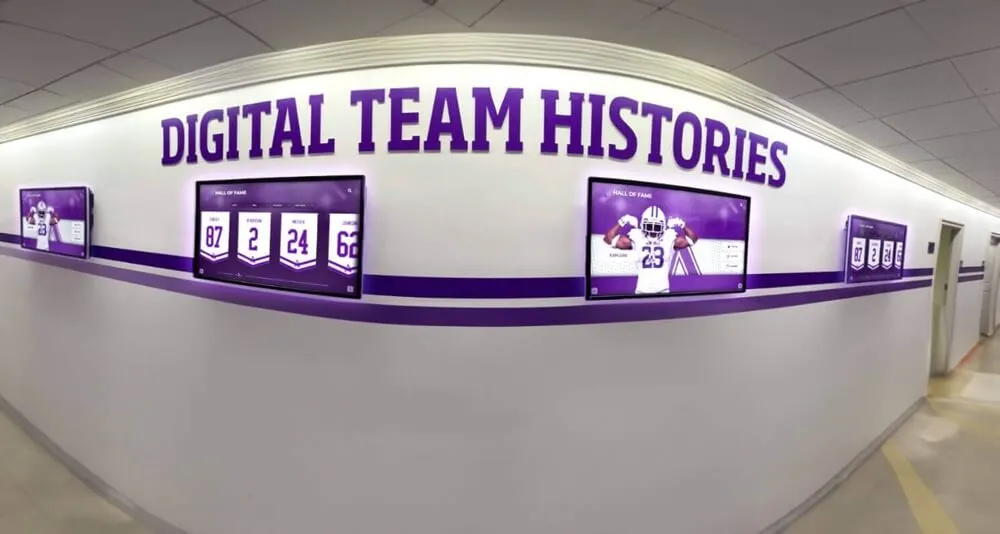
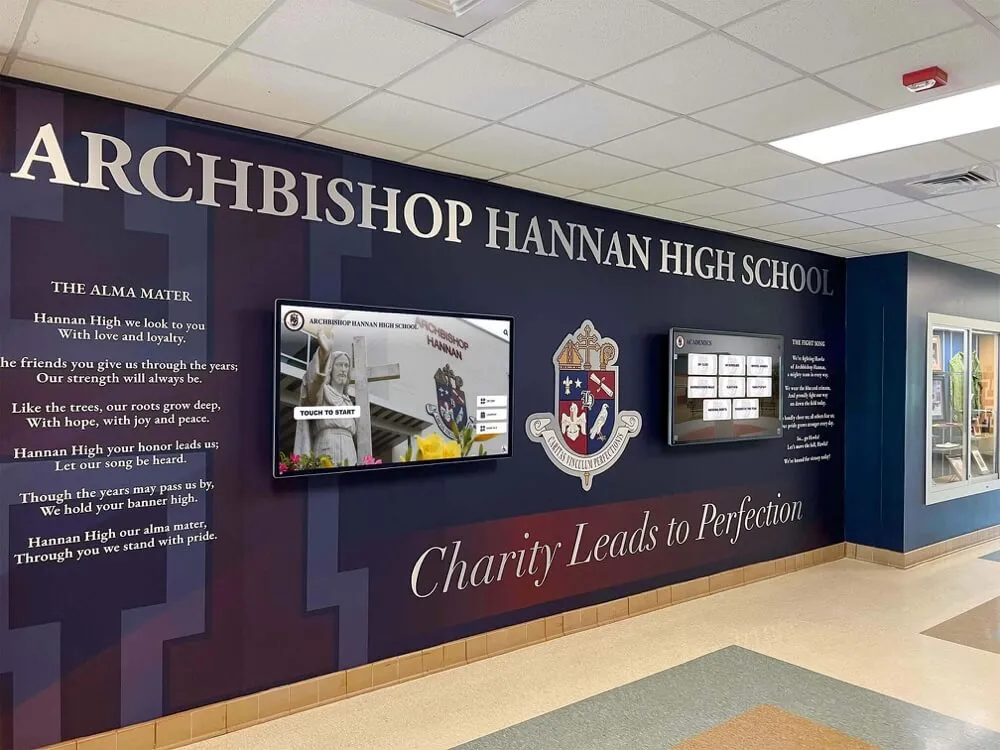
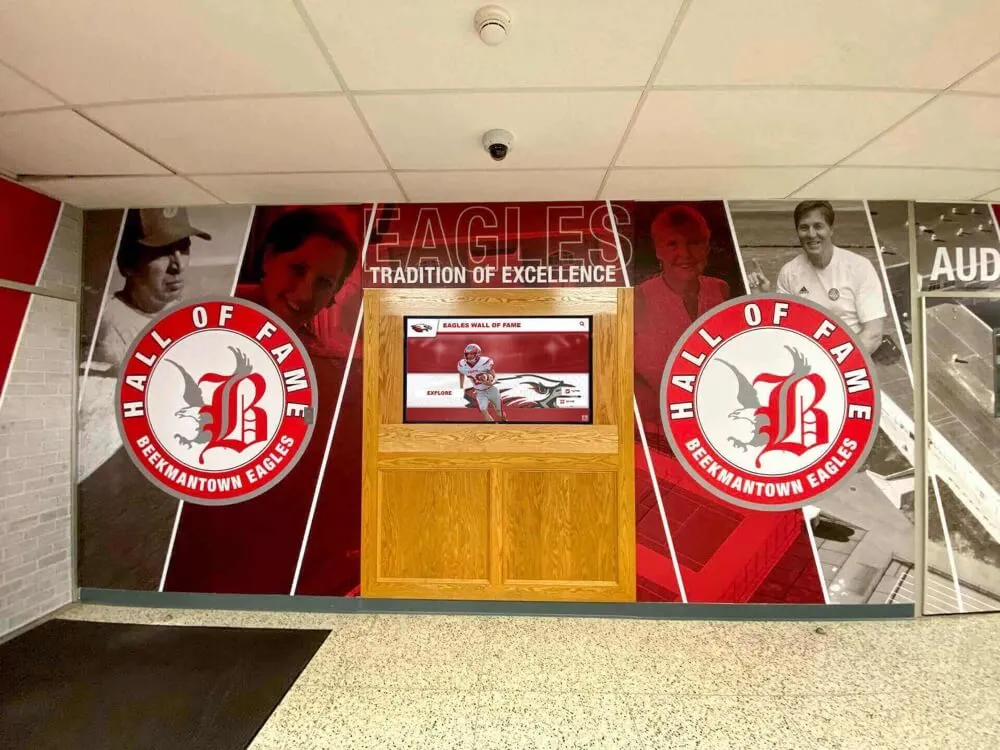
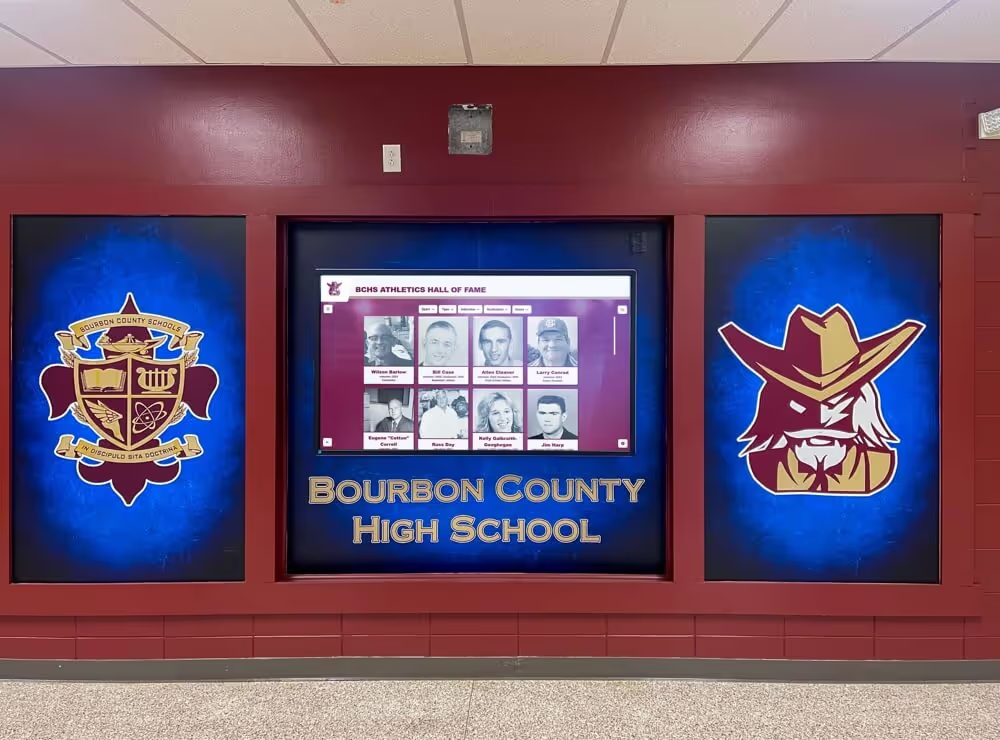
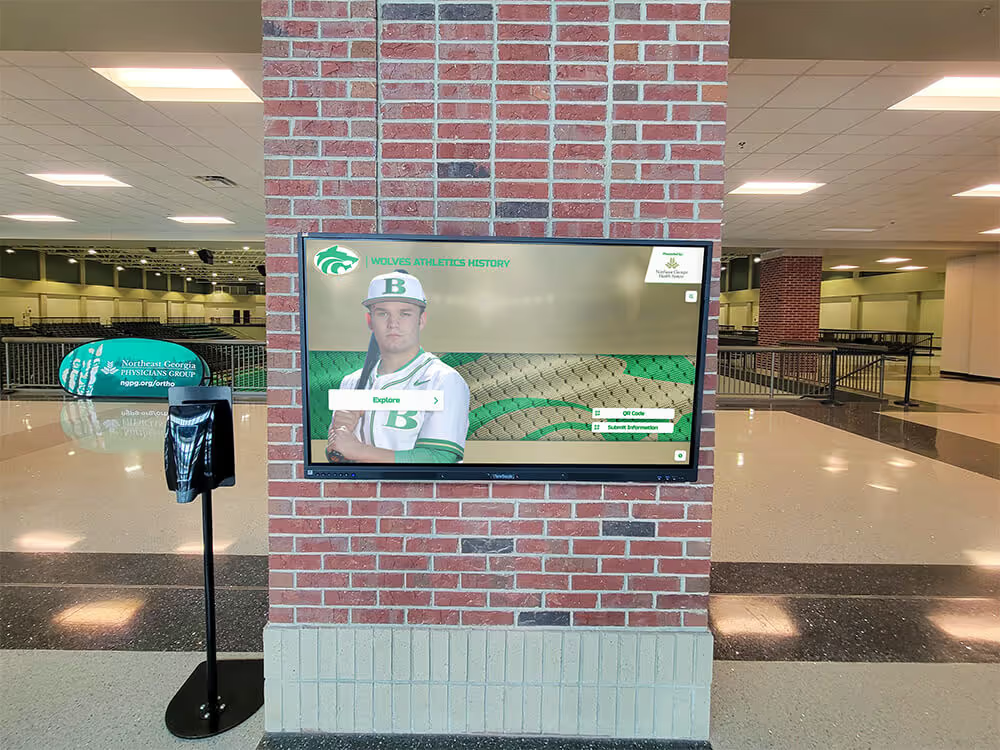
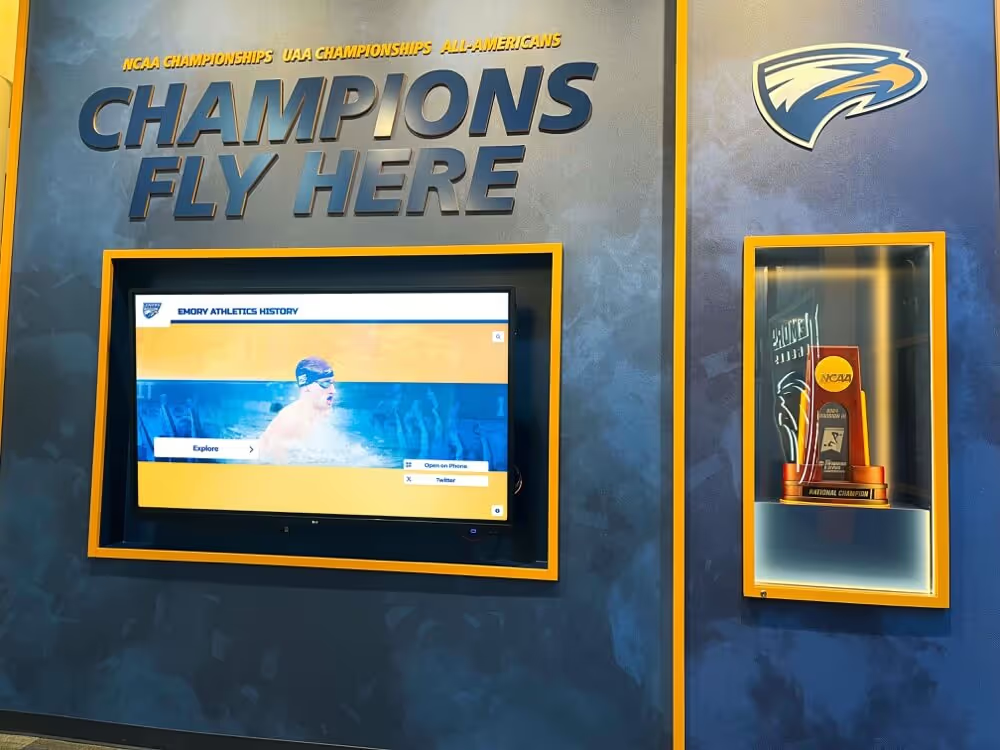
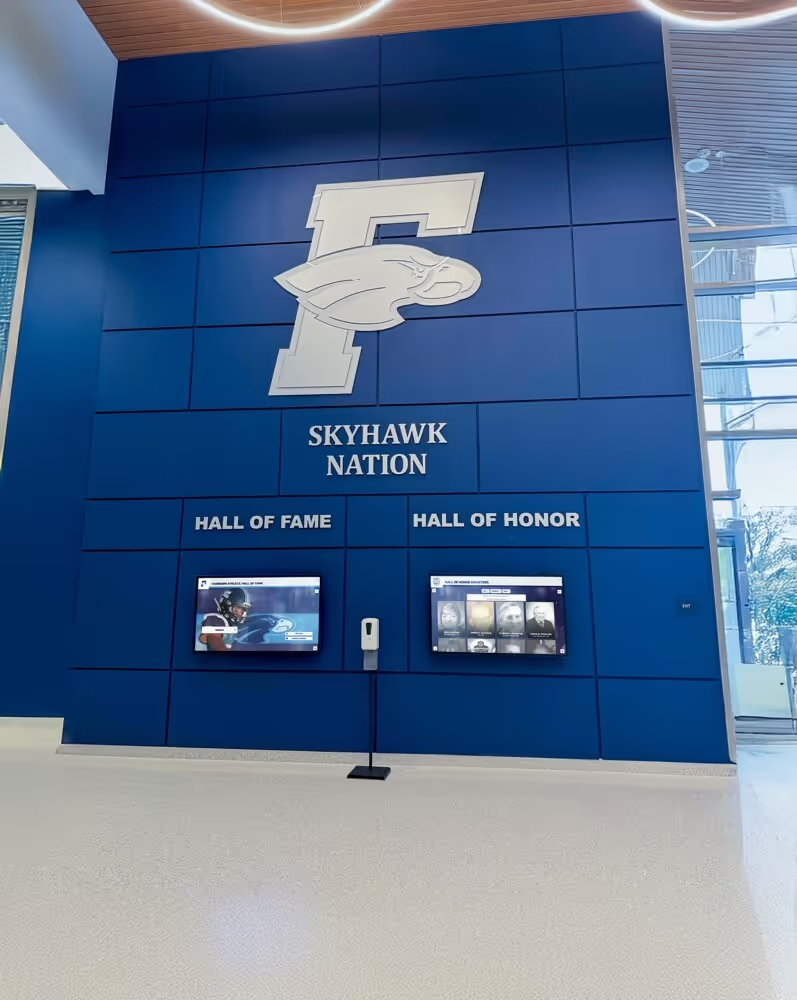
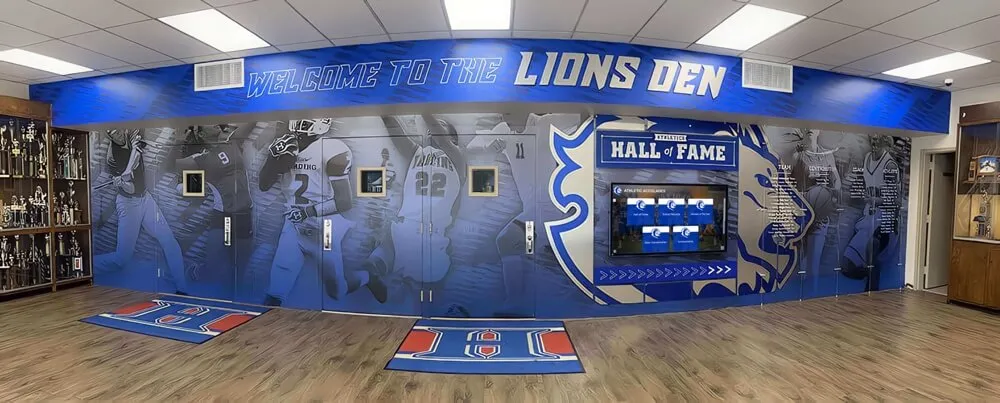
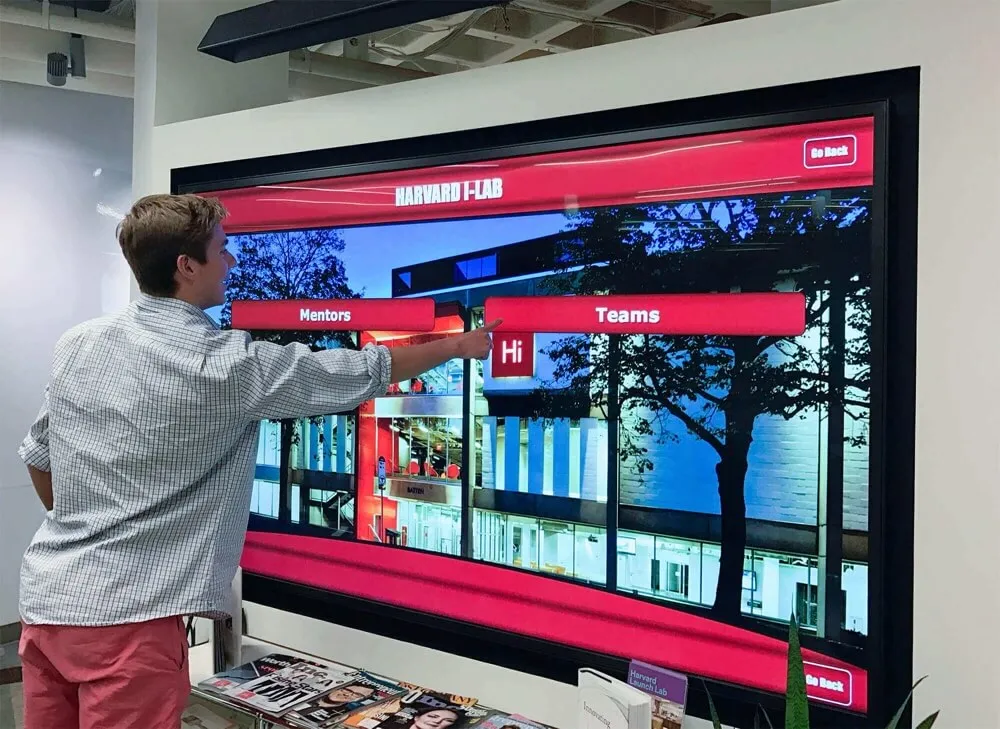
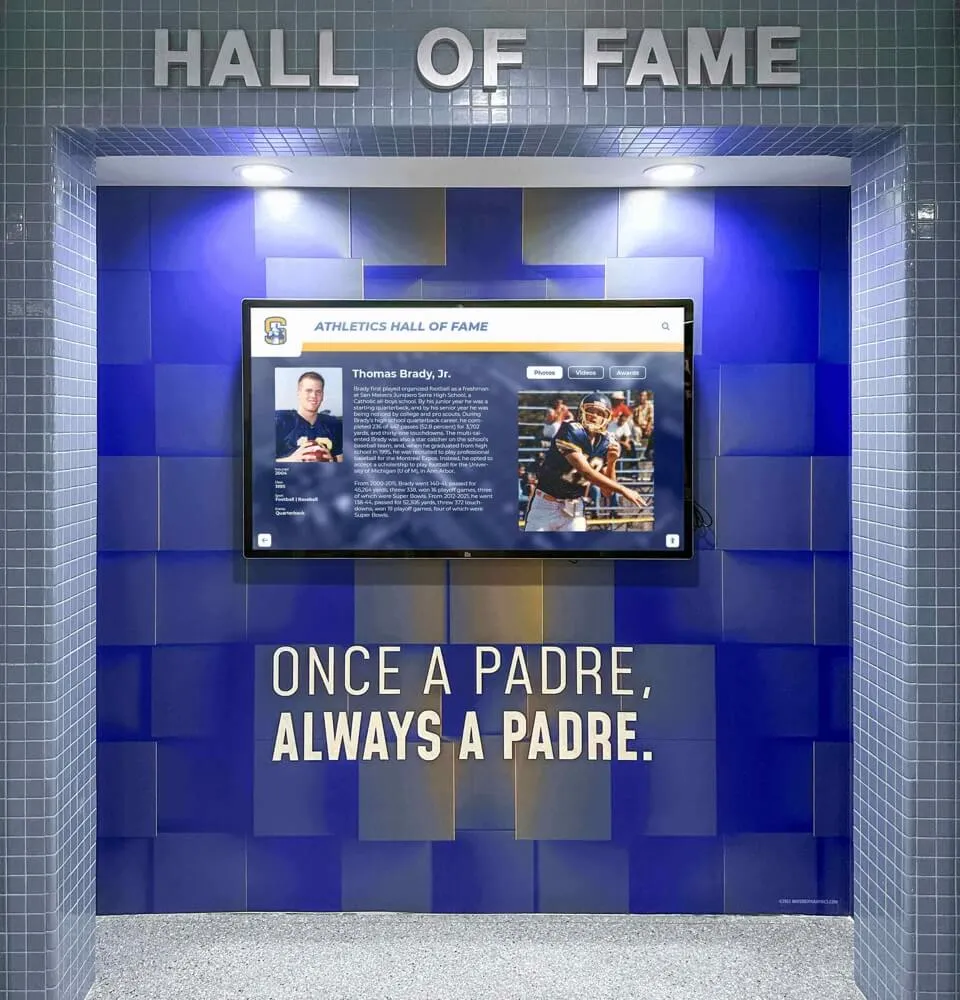
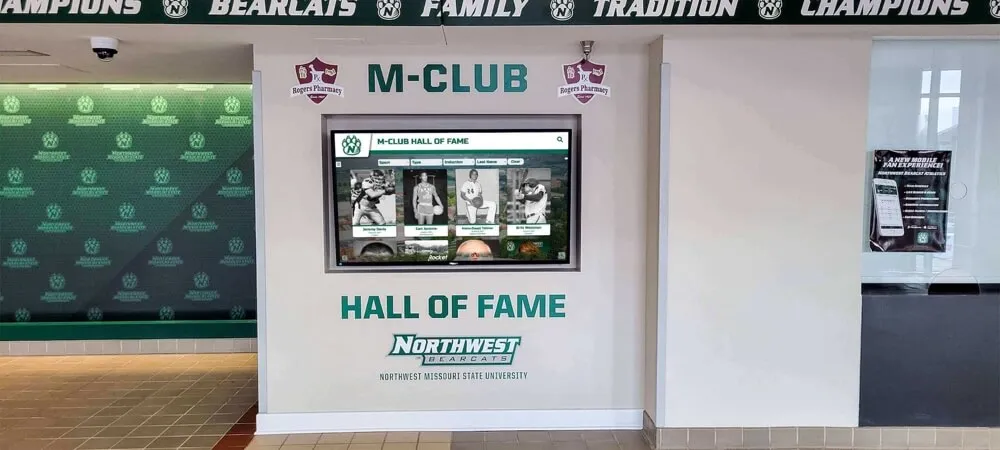
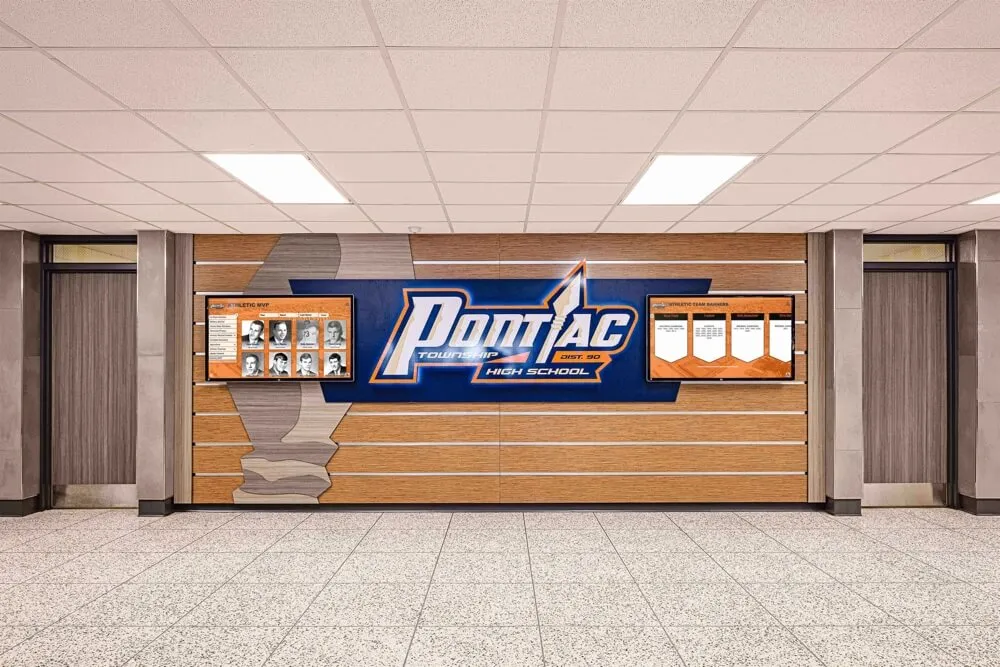
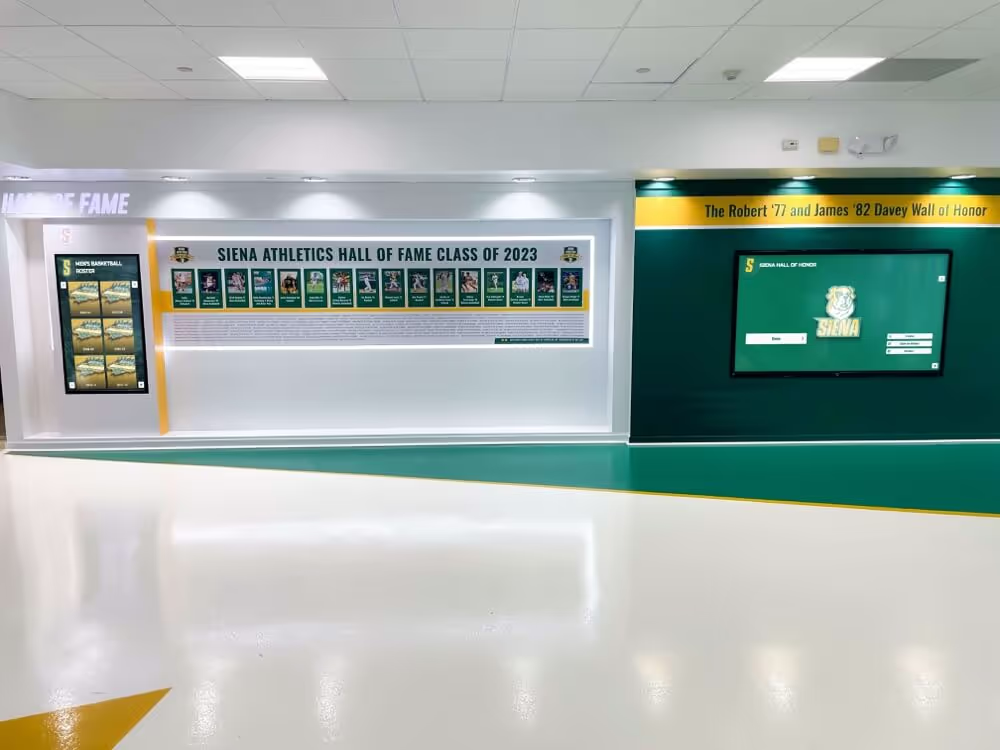
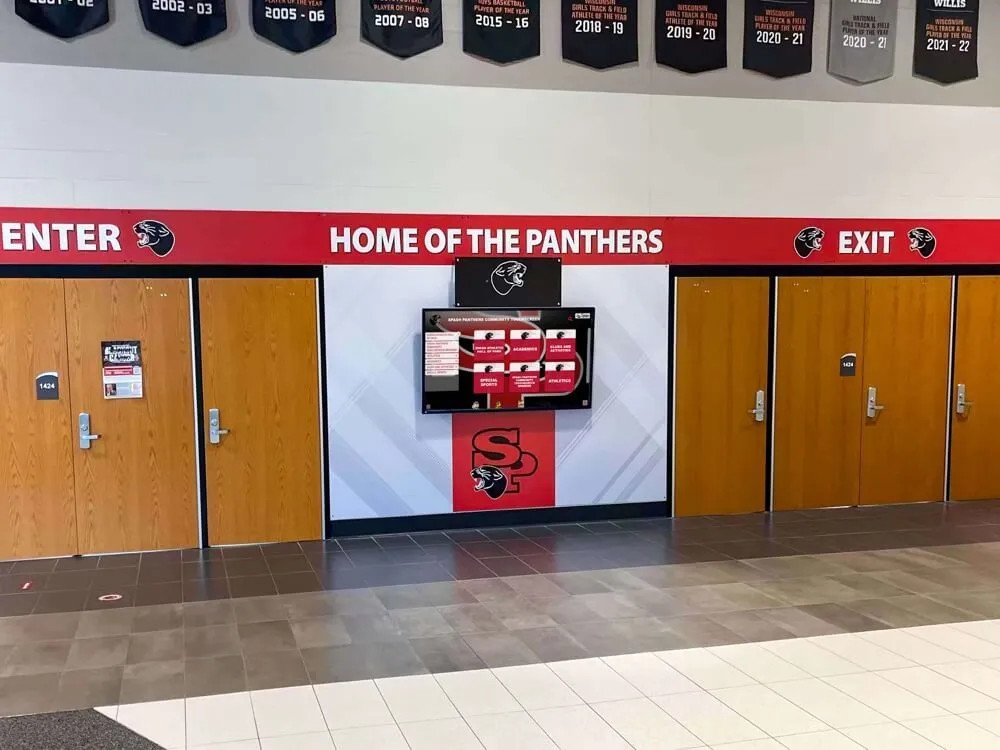
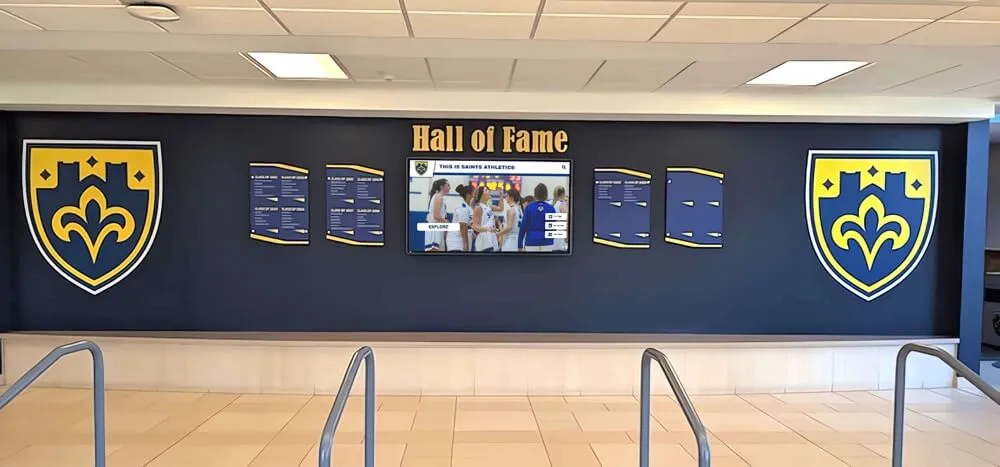
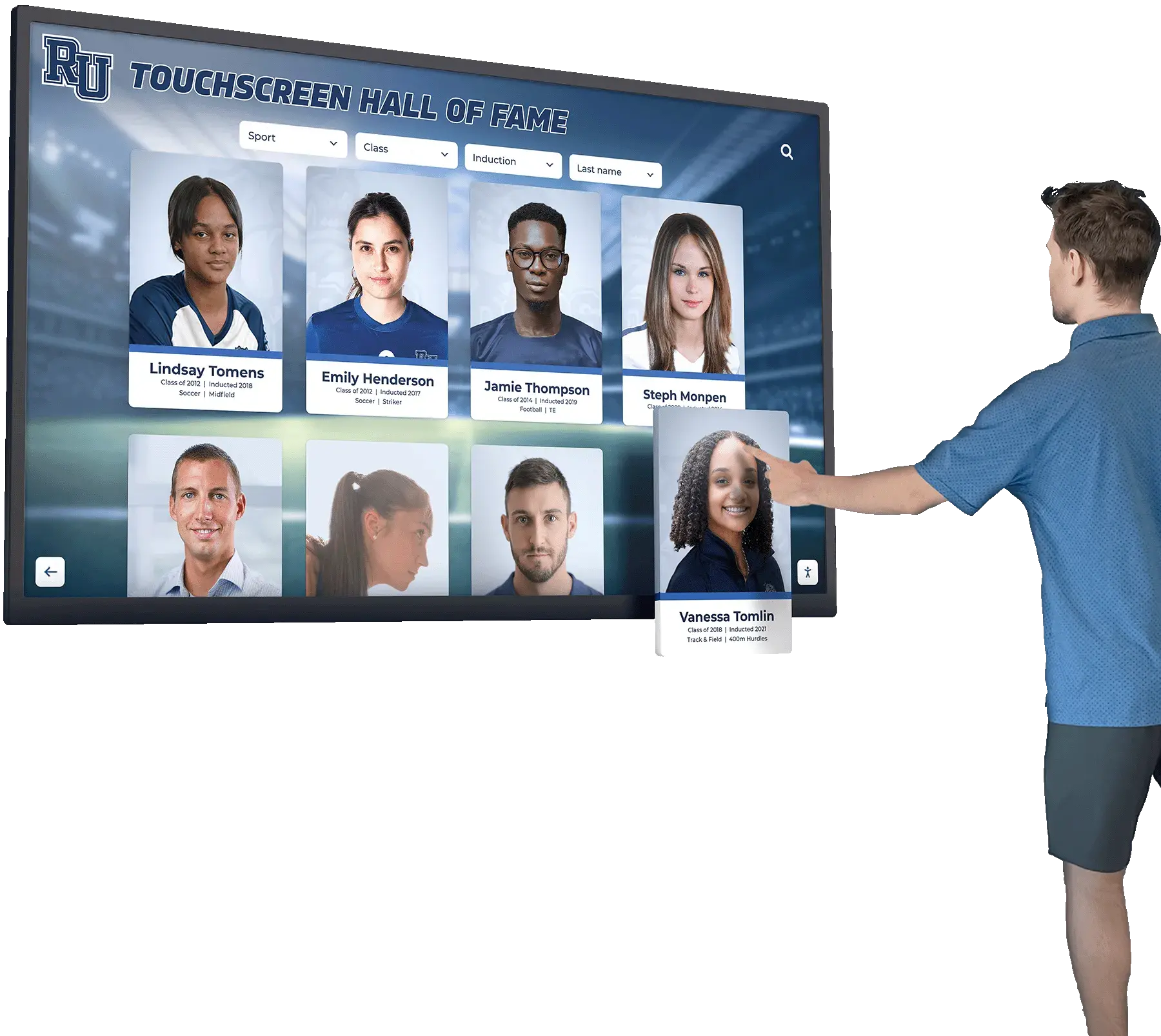
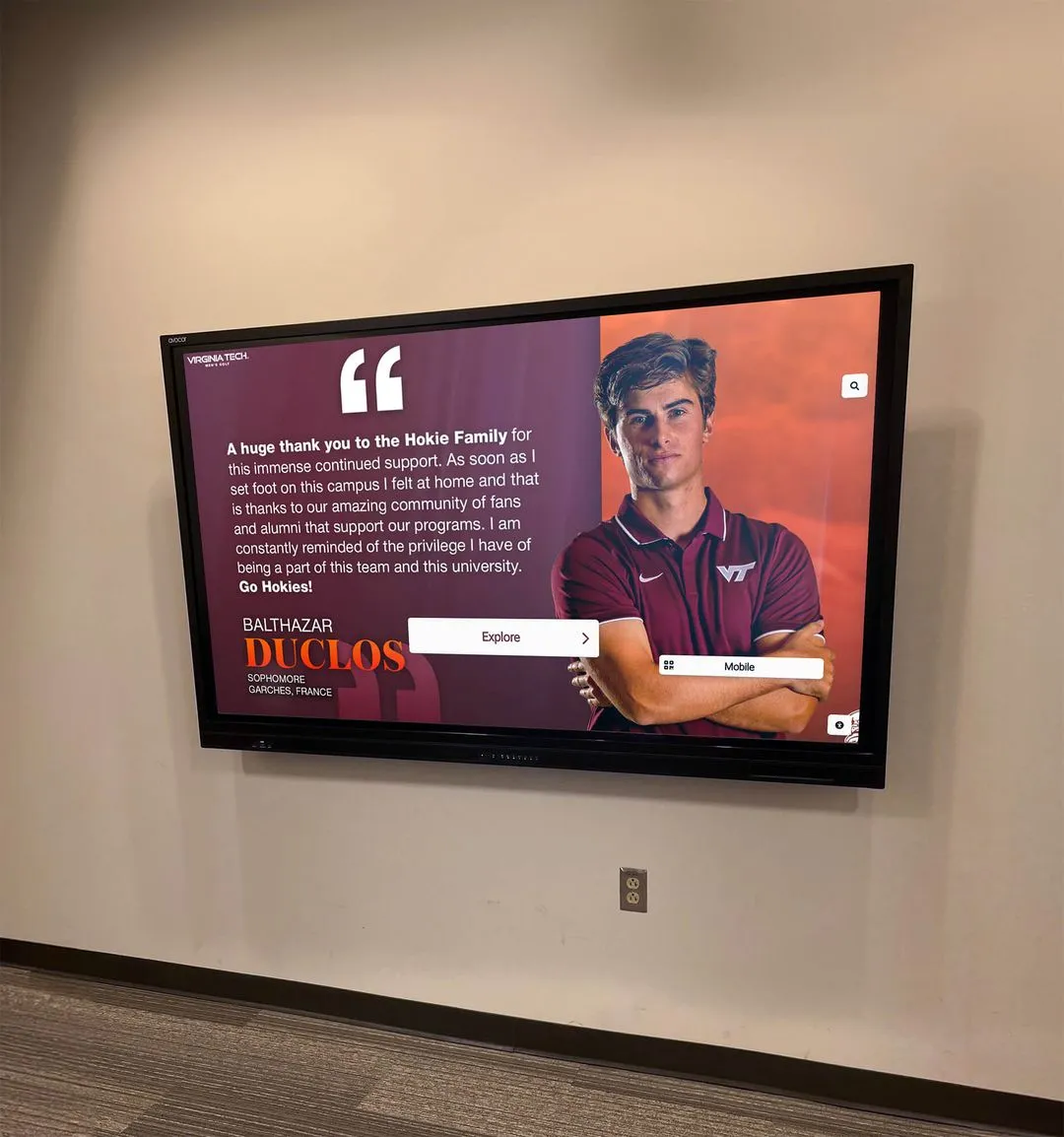
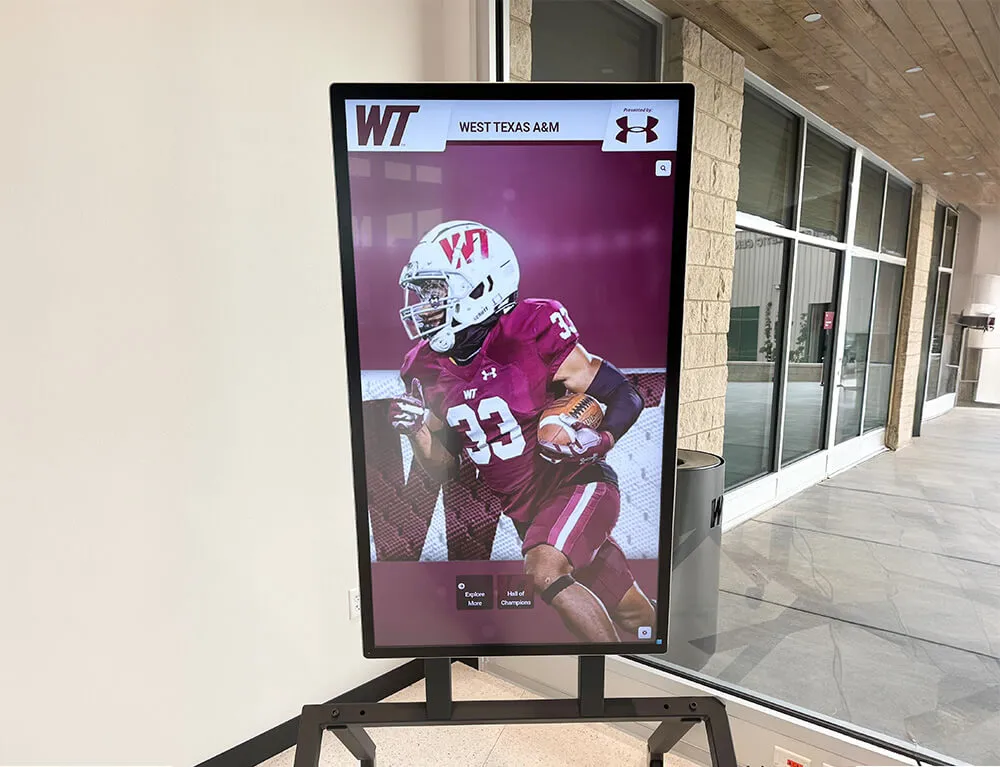
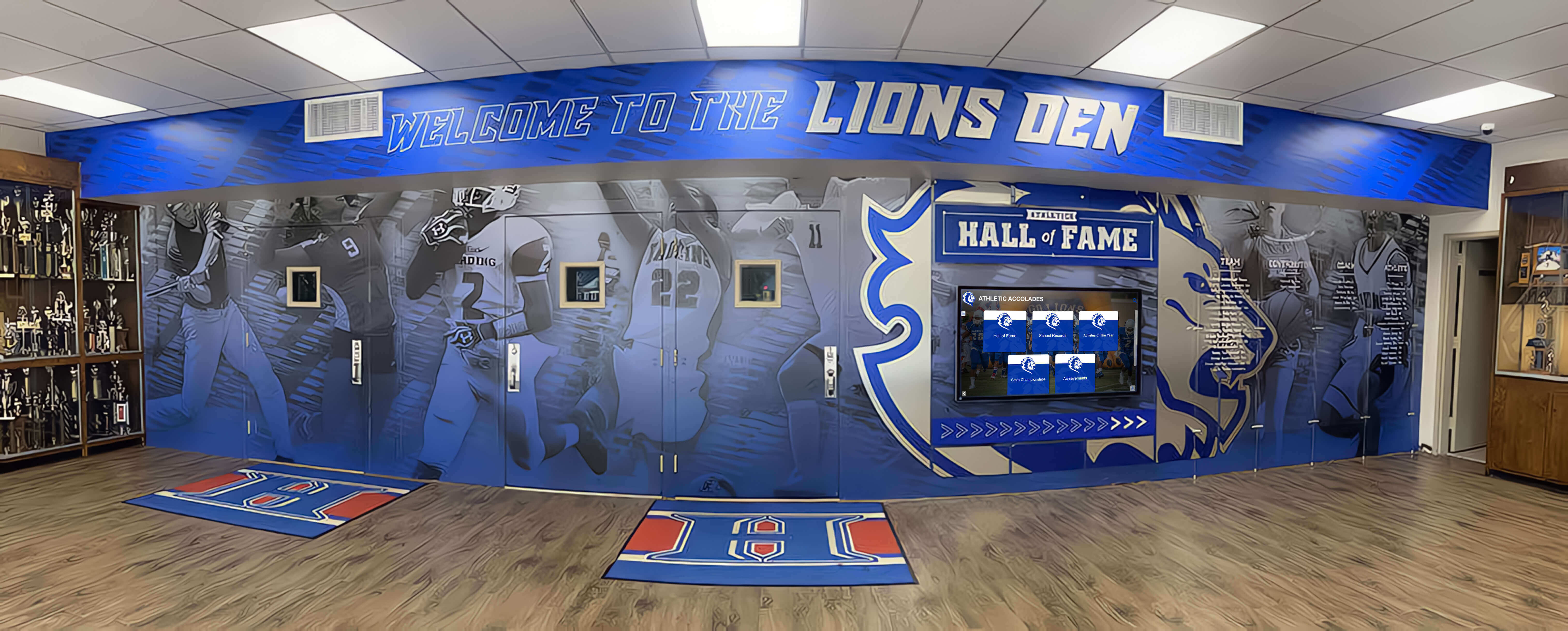
Digital hall of fame displays use touchscreen technology to present achievement information through multimedia content. These systems typically include:
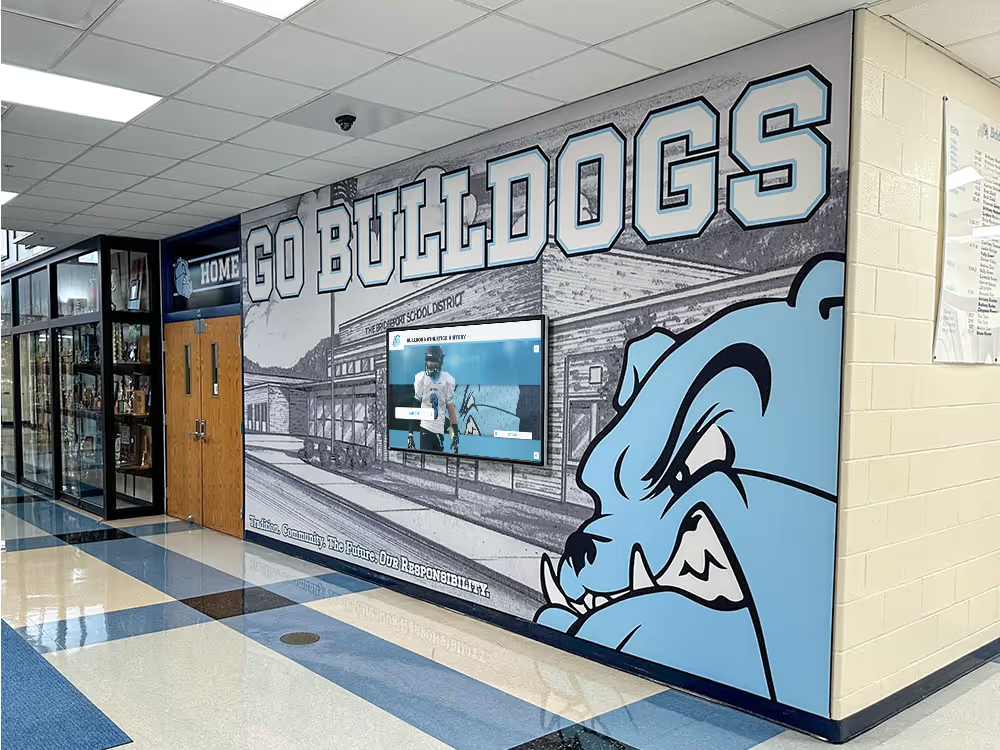
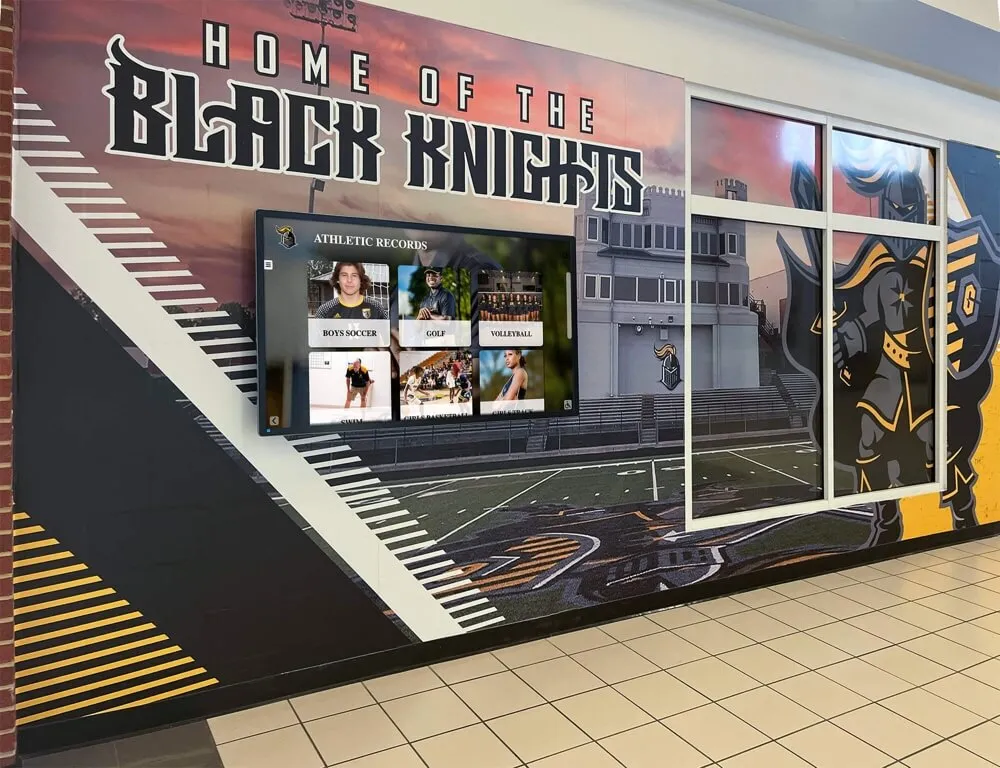
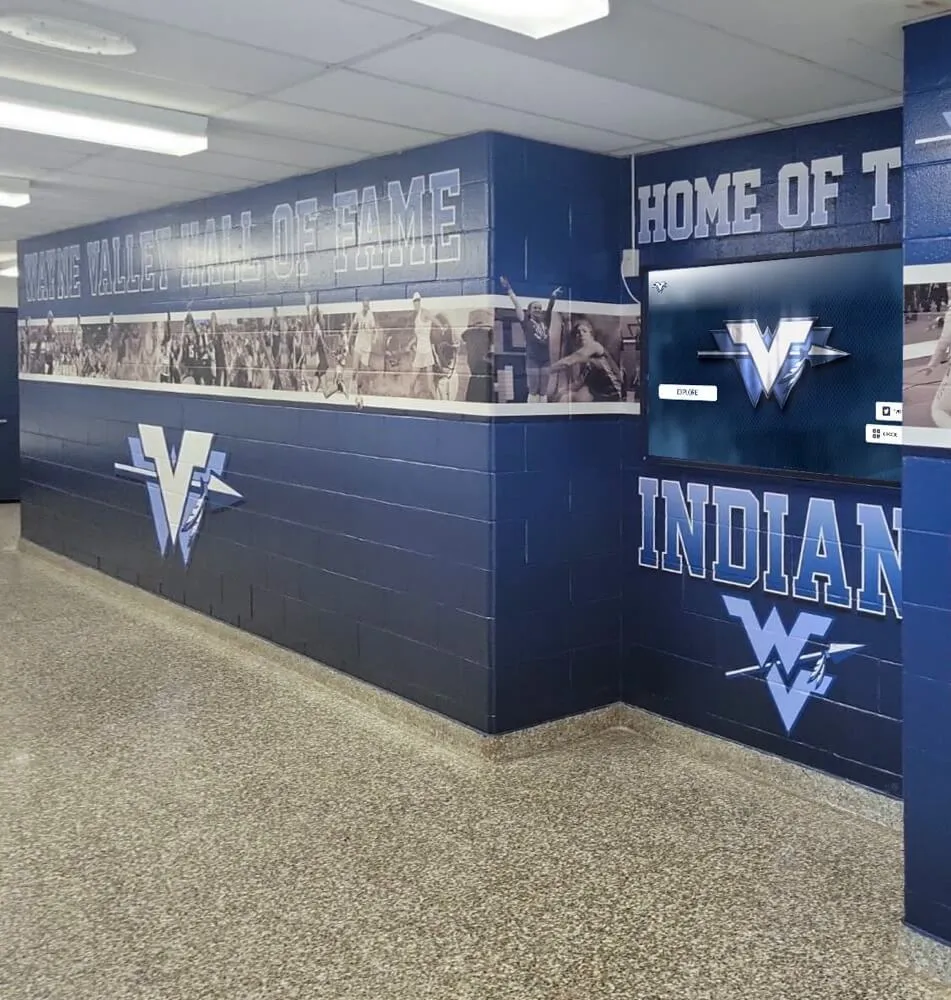
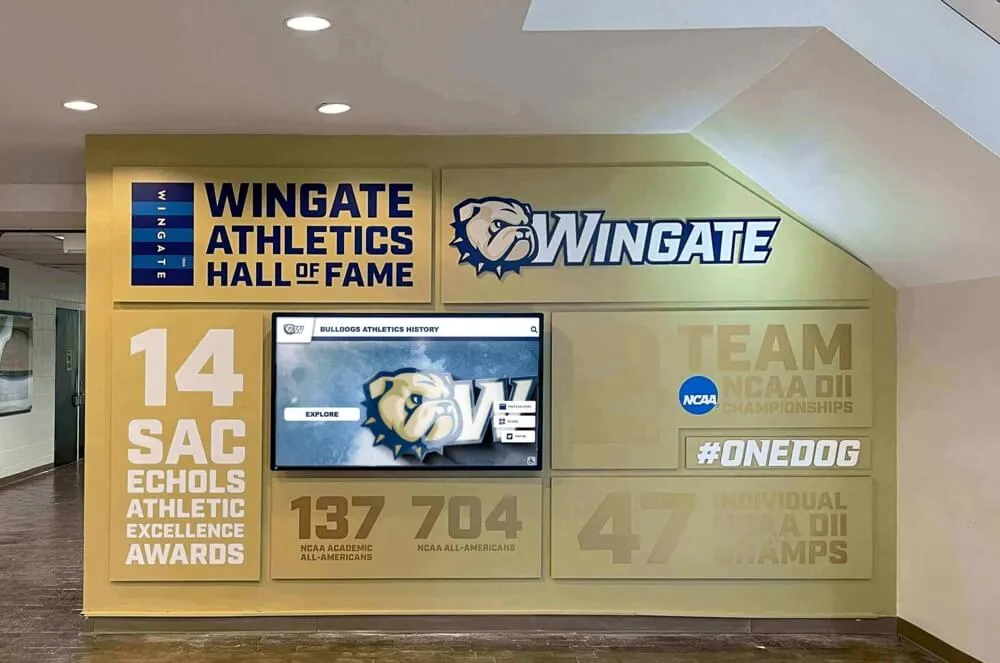
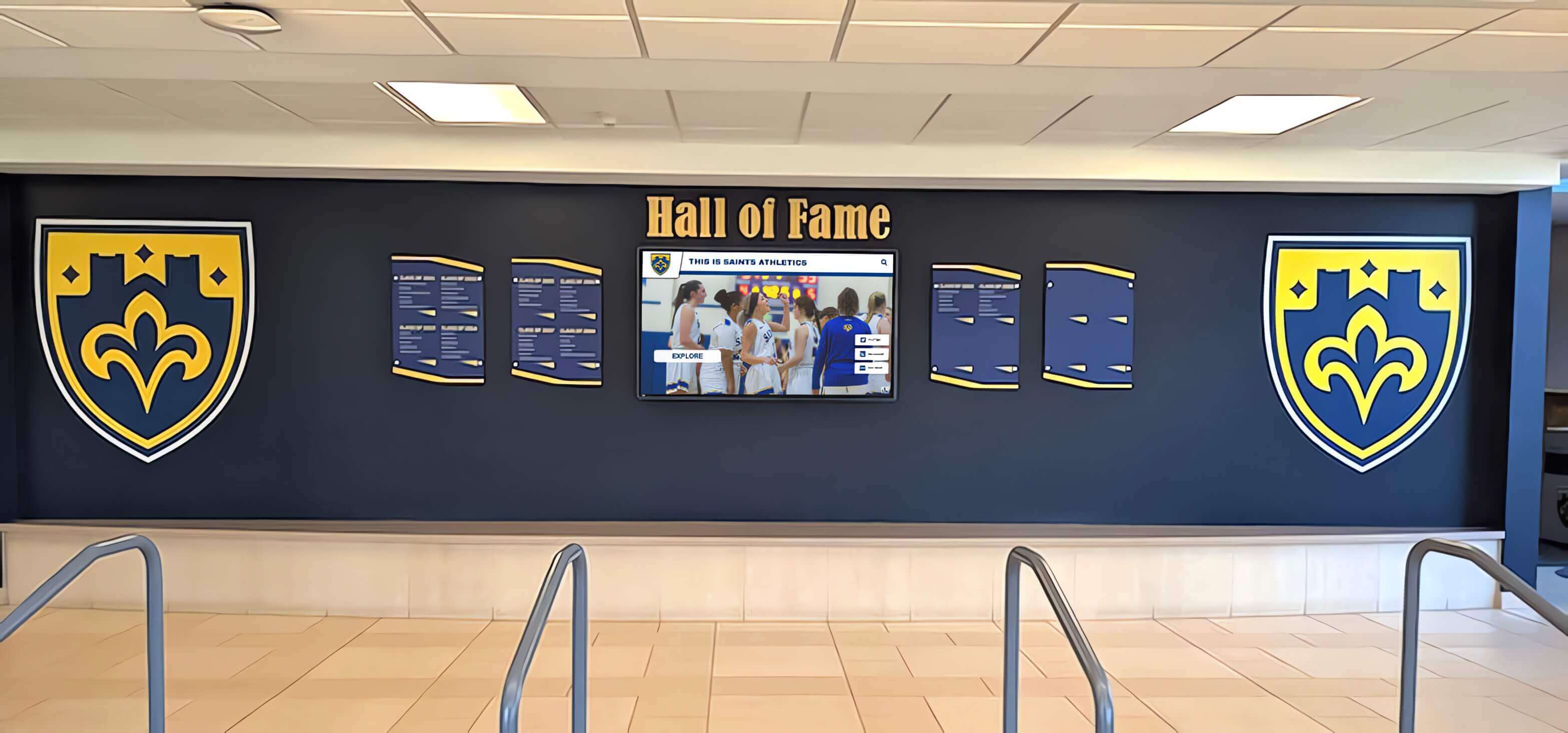
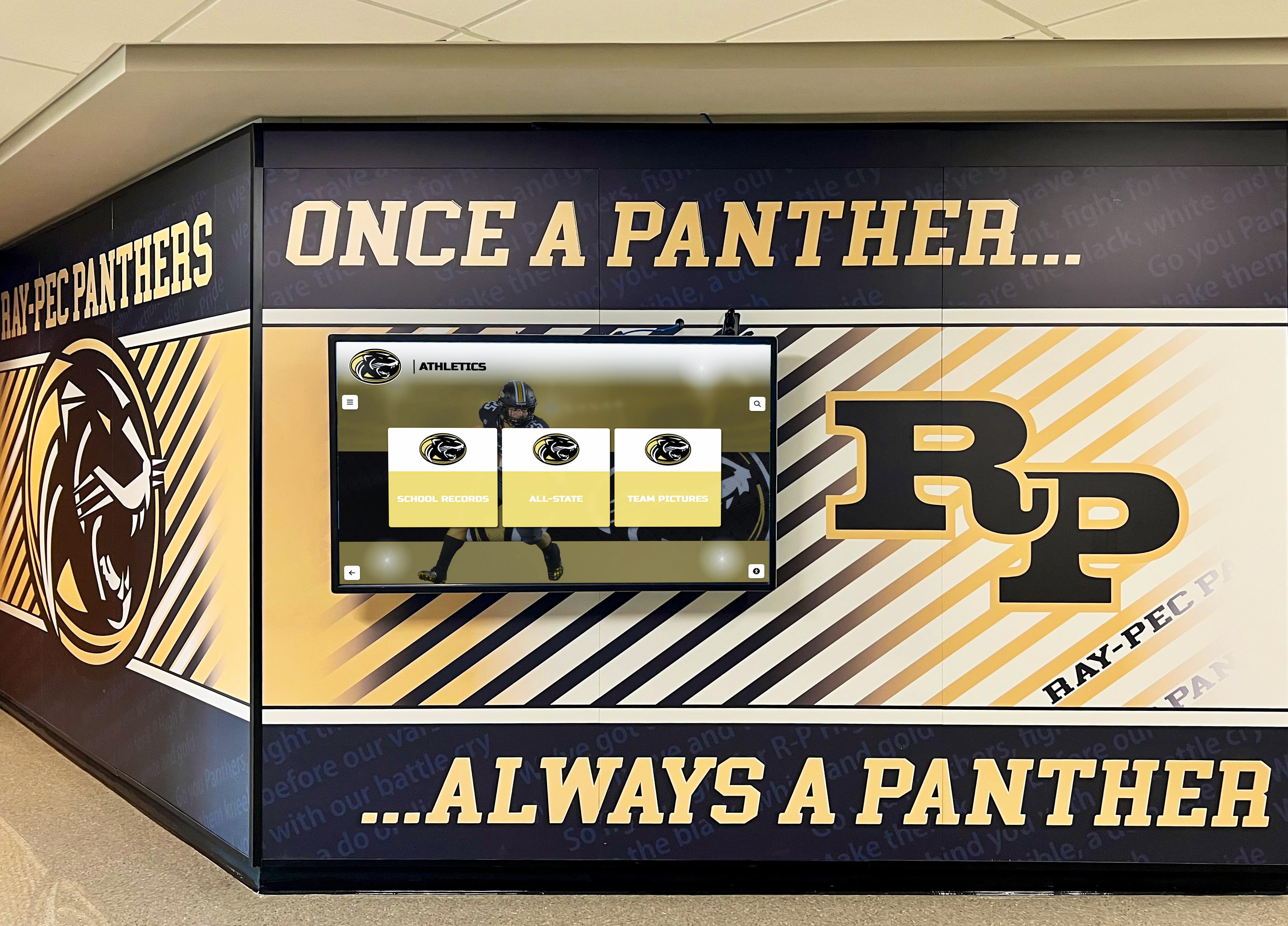
- Large-format touchscreens (typically 55-75 inches) mounted on walls or integrated into custom millwork
- Cloud-based content management systems for remote updates
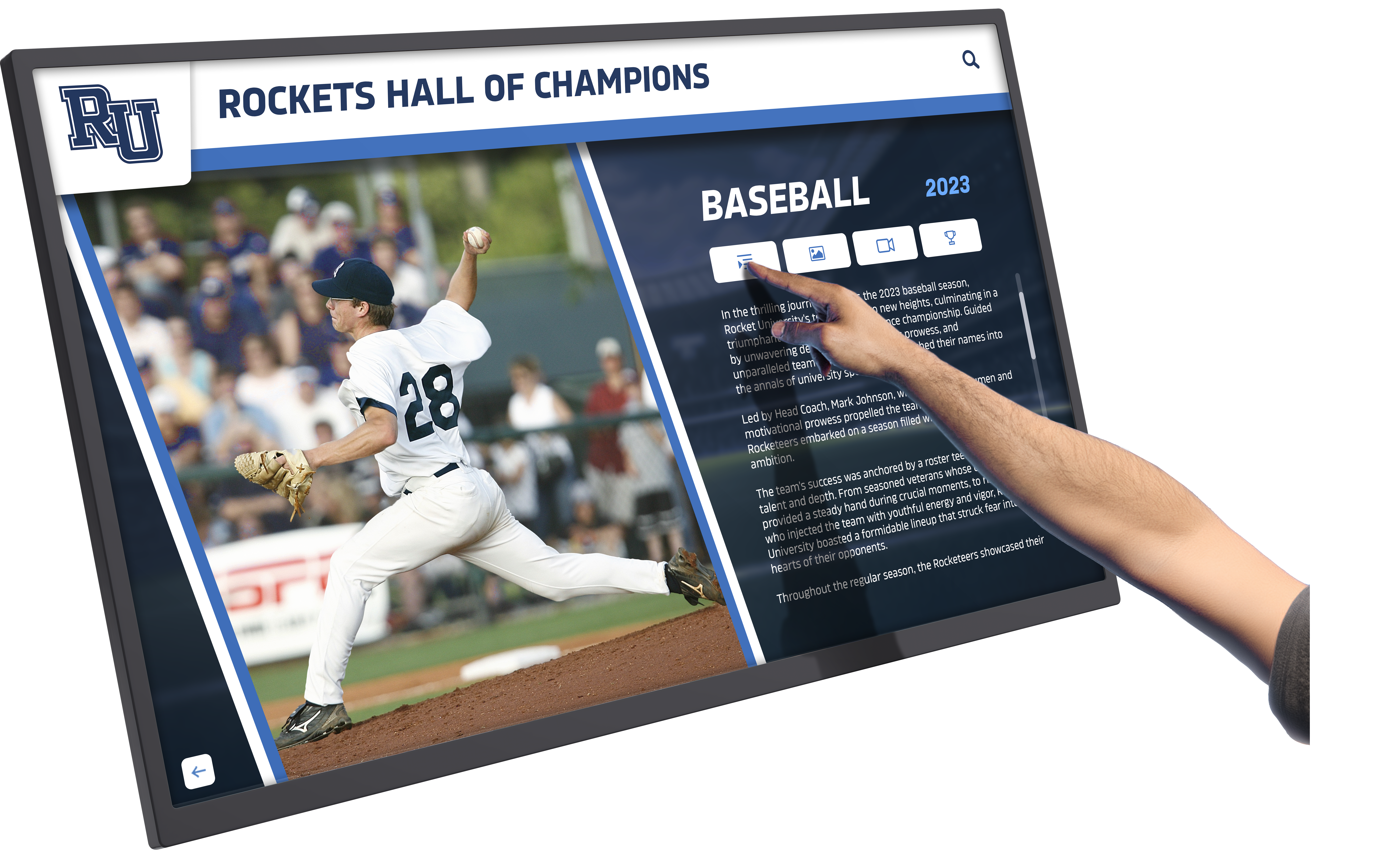
- Searchable databases containing photos, statistics, videos, and biographical information
- Interactive interfaces allowing users to browse by sport, year, achievement type, or individual name
- Multiple content zones displaying featured inductees, recent achievements, and historical records
- Integration capabilities with existing school data systems
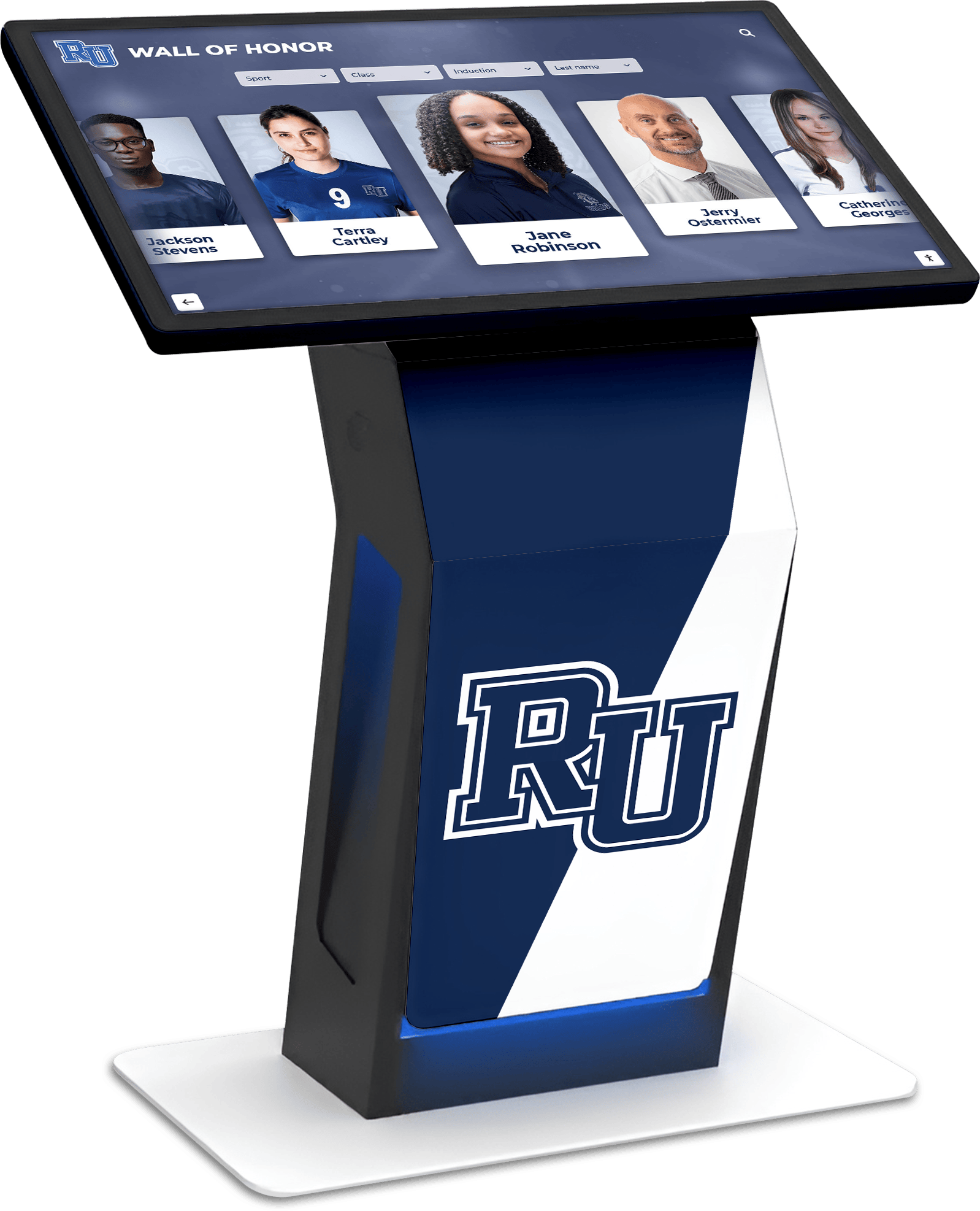
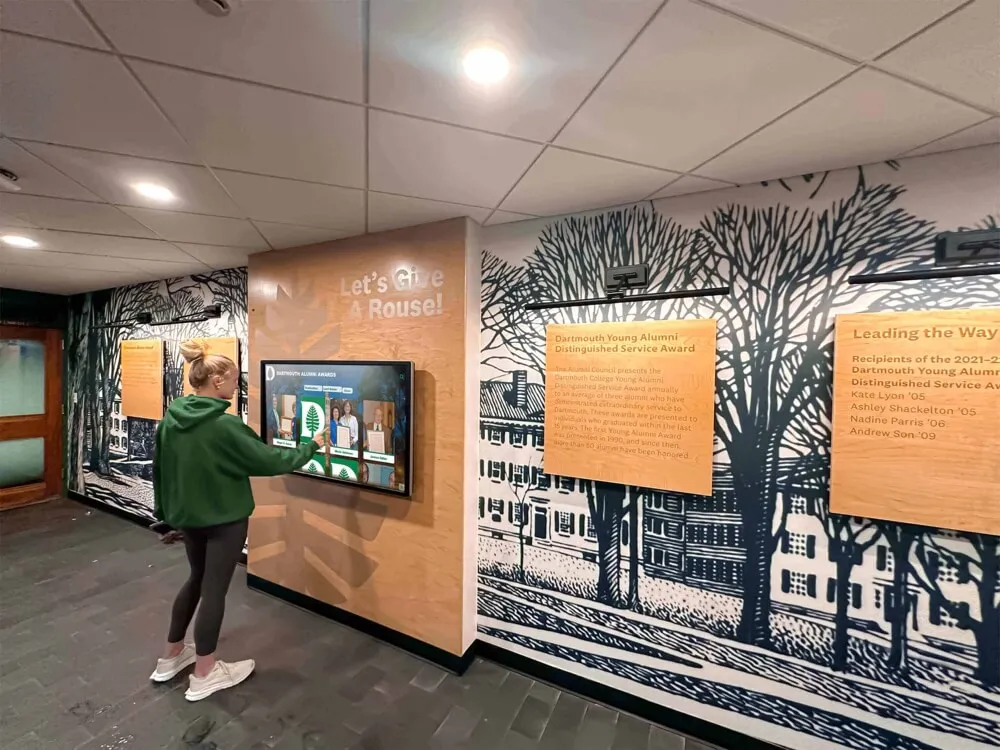
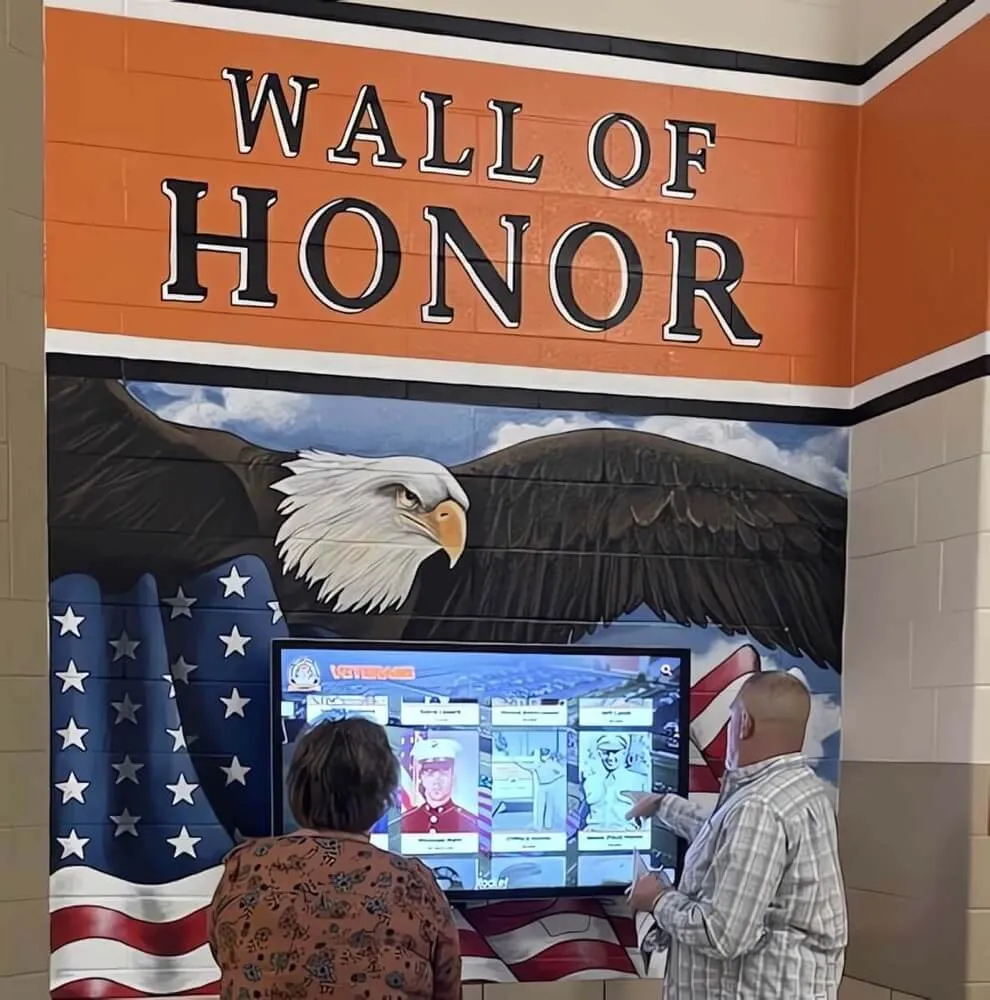
Digital displays transform recognition from passive observation to active exploration. Users engage directly with content, searching for specific athletes, comparing statistics across eras, and discovering connections between historical achievements and current programs.
Space Capacity and Scalability
The most immediate difference between traditional trophy cases and digital displays becomes apparent when schools consider recognition capacity over time.
Traditional Trophy Case Limitations
Physical trophy cases impose strict spatial limits determined by their dimensions. A standard 8-foot trophy case with five shelves might accommodate:
- 40-60 trophies depending on size
- 20-30 plaques or framed photos
- Limited space for championship banners or jerseys
Once a traditional case reaches capacity, schools face difficult choices:
Remove existing awards to make room for recent achievements, potentially disappointing alumni whose recognition disappears
Purchase additional cases, requiring available wall space and significant capital investment ($3,000-$15,000 per case plus installation)
Create storage rotation systems, regularly swapping displayed items but limiting which achievements receive visibility at any given time
Crowd displays, packing items so densely that individual achievements become difficult to identify
Schools with successful athletic, academic, or performing arts programs accumulate dozens of trophies annually. A high school that wins five championships per year adds 50 trophies per decade—rapidly filling available case space.
Digital Display Unlimited Capacity
Digital hall of fame displays eliminate physical space constraints by storing content in databases rather than on shelves. A single touchscreen can showcase:
- Unlimited individual inductee profiles with photos and biographies
- Complete statistical records for every athlete across all sports
- Thousands of achievement photos organized by sport, year, or category
- Full video highlights from championship seasons
- Historical timelines spanning decades of school history
Schools add new content by uploading files to cloud-based management systems rather than purchasing additional physical space. A program honoring 100 athletes annually can sustain recognition growth for decades without spatial constraints.
The database structure also enables recognition flexibility. Schools can feature:
- Seasonal rotations highlighting current sport participants alongside historical champions
- Anniversary celebrations surfacing specific graduating classes or milestone seasons
- Themed displays connecting similar achievements across different eras
- Search functionality allowing visitors to locate specific individuals instantly
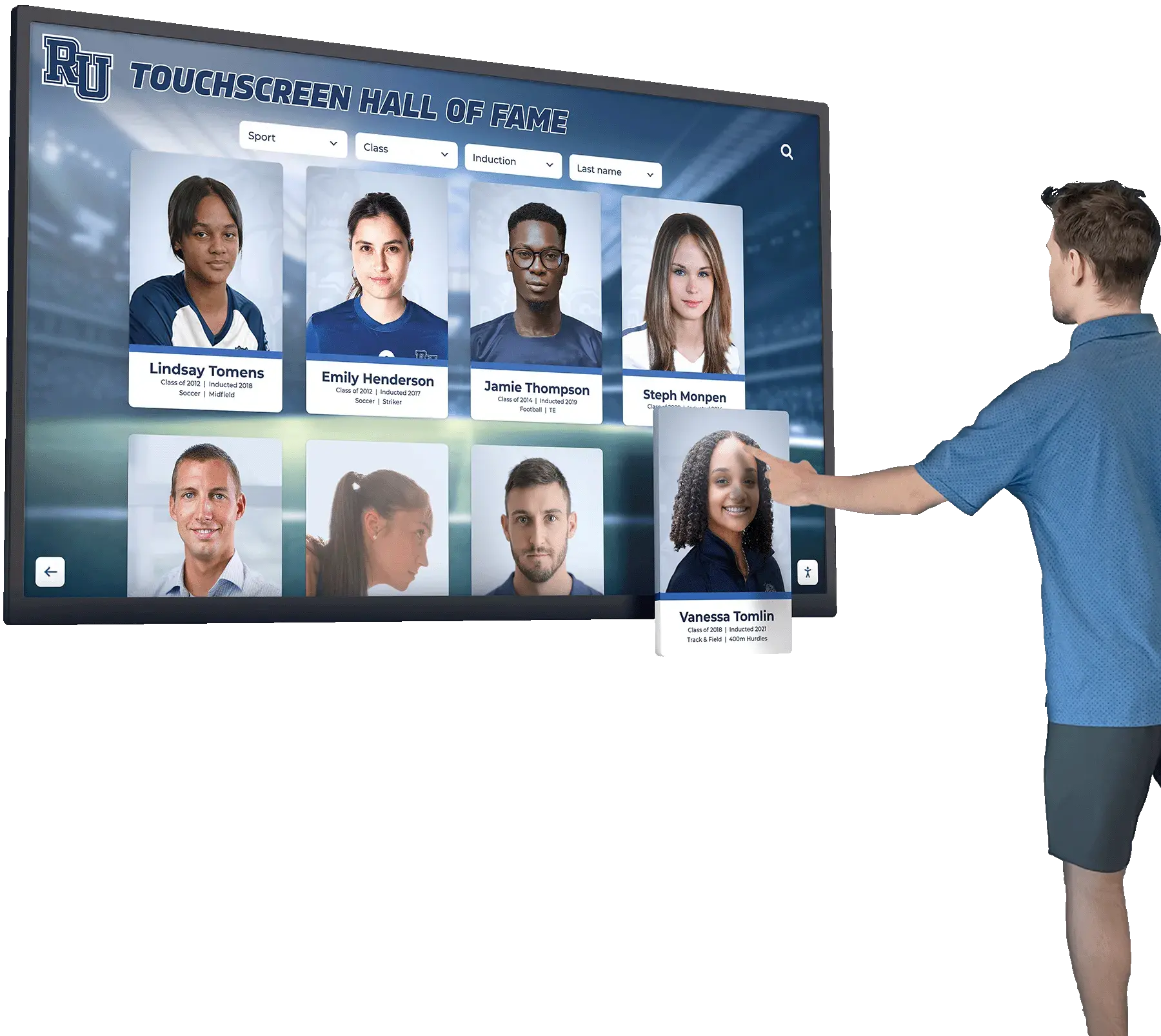
This unlimited capacity proves particularly valuable for schools with rich athletic or academic traditions that have accumulated decades of achievement worthy of recognition.
Installation Requirements and Physical Footprint
The physical installation process and hallway space requirements differ substantially between trophy cases and digital displays.
Traditional Trophy Case Installation
Traditional trophy cases require:
Wall structural assessment to ensure adequate support for case weight (200-400 pounds when loaded with trophies)
Professional installation by contractors skilled in case mounting and leveling
Electrical installation for internal lighting systems
Floor clearance extending 12-18 inches from the wall for case depth
Access planning for doors or removable panels that allow item placement
Maintenance access ensuring staff can clean glass and rearrange contents
Standard trophy cases extend significantly into hallways, creating potential navigation obstacles in high-traffic corridors. Schools must balance visibility with hallway flow, sometimes sacrificing optimal placement for practical traffic management.
Digital Display Installation
Digital hall of fame displays typically require:
Mounting surface capable of supporting touchscreen weight (75-150 pounds depending on size)
Electrical outlet providing standard 110V power (some installations incorporate conduit for concealed wiring)
Network connectivity through WiFi or hardwired Ethernet for content management access
Mounting hardware securing the display to wall studs or concrete
Optional millwork creating custom frames or branded surrounds that integrate displays into hallway aesthetics
Digital displays maintain slim profiles, typically projecting only 3-4 inches from walls. This minimal footprint preserves hallway traffic flow while maximizing screen visibility. Wall-mounted installations eliminate floor space concerns entirely.
Schools can also position digital displays in locations unsuitable for traditional cases. Narrow hallways, areas with limited depth, or spaces where traffic flow restricts physical case placement can accommodate digital screens effectively.
Content Management and Update Processes
The ongoing effort required to maintain current recognition content reveals another critical distinction between these display approaches.
Traditional Trophy Case Updates
Adding content to traditional trophy cases involves:
- Physical access - Unlocking case doors or removing panels
- Item placement - Arranging trophies or plaques on shelves
- Label creation - Engraving or printing identification plates
- Rearrangement - Reorganizing existing items to accommodate additions
- Cleaning - Removing dust from disturbed items and surfaces
- Security - Relocking cases after updates
This process typically requires:
- 30-60 minutes per update session for small additions
- 2-4 hours for major reorganizations accommodating new championship seasons
- Physical presence at the display location
- Custodial or facilities staff coordination for access
- Multiple trips if items need off-site engraving or preparation
Schools often delay trophy case updates, allowing new awards to accumulate in athletic director offices or storage closets until someone allocates time for the installation process. This delay diminishes recognition impact—athletes may graduate before seeing their achievements properly displayed.
Digital Display Content Management
Updating digital displays requires:
- Content preparation - Gathering photos, statistics, or biographical information
- Upload - Adding files through web-based content management systems
- Organization - Tagging content with metadata (sport, year, achievement type)
- Publishing - Making content live through system controls
This process typically requires:
- 10-20 minutes for individual profile additions
- 1-2 hours for comprehensive season updates including multiple athletes
- Remote access from any computer or device with internet connectivity
- No physical presence at the display location
- Immediate visibility once content is published
The cloud-based management approach enables:
Staff flexibility - Multiple authorized users can manage content from different locations
Scheduled publishing - Content can be prepared in advance and automatically published on specific dates
Bulk uploads - Dozens of profiles can be added simultaneously at season conclusion
Quick corrections - Typos or outdated information can be corrected immediately without physical access
Schools implementing academic recognition programs or digital signage solutions particularly value this remote management capability, which allows administrative staff to maintain recognition displays without interrupting their other responsibilities.
Cost Considerations: Initial Investment and Long-Term Expenses
Budget realities significantly influence recognition display decisions. Understanding both upfront costs and ongoing expenses helps schools make financially responsible choices.
Traditional Trophy Case Costs
Initial Investment:
- Basic freestanding cases: $2,000-$6,000
- Wall-mounted display cases: $3,000-$8,000
- Custom millwork cases: $8,000-$25,000
- Installation labor: $500-$2,000
- Electrical for lighting: $200-$800
Ongoing Costs:
- Engraved plates: $15-$50 per plate
- Replacement lighting: $50-$200 annually
- Glass cleaning supplies: $50-$100 annually
- Lock maintenance: $25-$75 as needed
- Additional cases as capacity fills: $3,000-$8,000 every 5-10 years
A school installing three trophy cases initially spends approximately $15,000-$30,000. Over twenty years, adding two additional cases and regular maintenance increases total investment to $25,000-$45,000.
Digital Display Costs
Initial Investment:
- Commercial touchscreen display: $3,000-$8,000
- Content management platform: $2,000-$5,000 (one-time setup)
- Custom millwork/mounting: $2,000-$8,000
- Installation: $500-$1,500
- Initial content development: $1,000-$3,000
Ongoing Costs:
- Software subscription: $1,200-$2,400 annually
- Content updates: $0 (in-house) or $500-$1,500 annually (outsourced)
- Display cleaning: $50-$100 annually
- Potential display replacement: $3,000-$8,000 every 7-10 years
A school installing one digital display initially spends approximately $10,000-$20,000. Over twenty years, including software subscriptions and one display replacement, total investment reaches $35,000-$60,000.
Cost-Per-Recognition-Slot Comparison:
Traditional trophy cases offer lower initial costs but higher per-achievement expenses when accounting for physical capacity limits. A $5,000 case holding 50 trophies costs $100 per recognition slot initially, but removing awards to make room effectively wastes that original investment.
Digital displays carry higher upfront and subscription costs but provide unlimited recognition capacity. The per-achievement cost decreases continuously as schools add more content. After showcasing 100 athletes, the effective cost drops to $200-$400 per inductee. After 500 profiles, it falls to $40-$80 per honoree.
Schools planning athletic hall of fame programs with ongoing annual inductions find digital displays increasingly cost-effective over time.
Maintenance and Durability
Long-term reliability and upkeep requirements affect total cost of ownership beyond initial purchase prices.
Traditional Trophy Case Maintenance
Trophy cases require regular attention:
Cleaning: Glass surfaces accumulate dust, fingerprints, and smudges that obscure visibility. High-traffic hallways necessitate weekly or biweekly cleaning. Interior surfaces and trophies collect dust requiring monthly or quarterly deep cleaning that involves opening cases and handling items individually.
Lighting: Fluorescent or LED fixtures eventually fail, requiring bulb or driver replacement. Older cases using fluorescent lighting face increasing difficulty sourcing compatible replacement tubes as manufacturers discontinue legacy products.
Hardware: Locks wear out from repeated use. Hinges sag over time from door weight. Glass panels develop scratches from cleaning or accidental impacts.
Physical Damage: Students congregating near cases accidentally bump glass, causing cracks. Trophy arrangements occasionally collapse when shelf supports fail or items shift.
Digital Display Maintenance
Digital displays require different maintenance:
Cleaning: Screen surfaces need regular cleaning to remove fingerprints and maintain touch responsiveness. Commercial-grade touchscreens include oleophobic coatings that resist fingerprints, reducing cleaning frequency to weekly or biweekly sessions.
Software Updates: Content management platforms receive periodic updates improving functionality and security. These updates typically install automatically without requiring on-site technical intervention.
Hardware Longevity: Commercial touchscreen displays carry 50,000-hour operational ratings (approximately 8-10 years of typical school-day use). Components have no moving parts that wear from use.
Technical Support: Digital display providers typically include technical support ensuring problems receive prompt resolution. Schools implementing digital recognition displays benefit from vendor expertise rather than relying solely on internal maintenance staff.
The maintenance burden for digital displays proves lighter than traditional cases once schools establish initial content management workflows. Remote content updates eliminate the physical access requirements that make trophy case maintenance time-consuming.
Accessibility and Inclusion
Modern recognition displays must serve all community members regardless of physical abilities or disabilities. Accessibility standards significantly favor digital displays.
Traditional Trophy Case Accessibility Challenges
Trophy cases present several accessibility barriers:
Height limitations: Cases mounted at standard viewing height (60-70 inches) place upper shelves beyond wheelchair users’ sight lines. Lower shelves may be easier to view but receive less prominent positioning.
Reading difficulties: Small engraved text on trophies or plaques challenges individuals with visual impairments. Standard trophy engraving typically uses 0.25-0.5 inch lettering that becomes illegible beyond 3-4 feet.
Static presentation: Trophy cases provide no alternative formats for individuals who cannot see physical displays. No audio descriptions, text alternatives, or accessible data formats exist.
Physical barriers: Glass creates reflections that reduce visibility from certain angles or under specific lighting conditions. Wheelchair users approaching cases at angles may encounter severe glare.
Schools must carefully consider these limitations when planning trophy case installations, yet physical constraints impose limits on possible accommodations.
Digital Display Accessibility Advantages
Digital platforms can incorporate comprehensive accessibility features:
WCAG 2.2 AA compliance: Modern digital recognition platforms implement Web Content Accessibility Guidelines ensuring content works with assistive technologies. This includes proper heading structure, alternative text for images, sufficient color contrast, and keyboard navigation support.
Adjustable text sizes: Users can increase font sizes for easier reading without affecting other viewers’ experiences.
Screen reader compatibility: Blind individuals using screen reader software can access complete achievement information including names, sports, statistics, and biographical details.
Color contrast controls: High-contrast display modes assist individuals with low vision or color blindness.
Touch target sizing: Interactive elements follow minimum size requirements ensuring individuals with limited dexterity can successfully navigate content.
Multiple interaction modes: Touchscreen displays can also support keyboard or switch inputs for individuals who cannot use touchscreens.
Digital recognition solutions like Rocket Alumni Solutions prioritize accessibility, ensuring all community members can explore achievement information independently. Schools implementing digital donor walls or comprehensive recognition displays meet legal accessibility requirements while demonstrating commitment to inclusive environments.
Recognition Flexibility and Storytelling Capacity
The ability to tell complete achievement stories, provide context, and create meaningful connections separates trophy cases from digital displays.
Traditional Trophy Case Storytelling Limitations
Physical displays communicate through:
- Trophy appearance and size indicating achievement level
- Engraved plates providing basic information (name, sport, year, achievement)
- Occasional photographs showing individual athletes or teams
- Positioning suggesting relative importance (center placement, top shelves)
This limited information format rarely conveys the full story behind achievements. Viewers see that a basketball team won a state championship in 2019, but they don’t learn about the overtime victory, standout performances, or season journey. Individual athletes receive recognition through nameplate listings, but their statistics, personal stories, and post-graduation accomplishments remain unknown.
Trophy cases excel at displaying physical awards but struggle with contextual storytelling that creates emotional connections and inspires current students.
Digital Display Enhanced Storytelling
Digital platforms support rich multimedia storytelling through:
Individual profiles combining photos, biographical information, career statistics, college destinations, and personal achievements
Video integration showcasing championship highlights, individual performances, and ceremony moments
Statistical comparisons enabling viewers to explore career leaders, single-season records, and historical rankings
Timeline presentations showing program evolution across decades with photos and achievements from each era
Related content connections linking teammates, coaching staff, and related achievements
Search and filter tools helping visitors discover specific individuals or explore particular achievement categories
This storytelling capacity transforms recognition from simple name listings into engaging narratives that honor achievement depth. Current students browsing digital displays discover role models, understand program traditions, and visualize their potential paths to recognition.

Alumni visiting campus can search for their own profiles, revisit their achievements, and share digital content with family members. Parents touring facilities during recruitment see evidence of how the school celebrates individual accomplishment beyond simply accumulating trophies.
Schools implementing trophy display ideas increasingly incorporate digital storytelling elements alongside traditional physical displays, recognizing that modern audiences expect richer content experiences.
Engagement and User Interaction
How community members interact with recognition displays affects the value those displays provide. Passive observation differs fundamentally from active engagement.
Traditional Trophy Case Passive Viewing
Trophy cases serve as static displays that students and visitors pass during hallway navigation. Interaction typically involves:
- Brief glances at cases while walking to classes or events
- Occasional stops to locate specific trophies or read nearby nameplate listings
- Photograph capture during campus tours or special visits
- Showing visiting family members specific awards
This passive interaction model limits engagement depth. Students might notice that trophy cases exist and recognize that their school has successful programs, but they rarely spend extended time examining individual achievements or learning detailed information about inductees.
Trophy cases become familiar hallway features that blend into daily routines rather than interactive experiences that community members actively choose to explore.
Digital Display Active Exploration
Touchscreen displays invite deliberate interaction that transforms passing viewers into engaged users:
- Students search for older siblings or family members
- Athletes browse historical record boards comparing their statistics to previous seasons
- Alumni search for their own profiles during campus visits
- Prospective students and families explore program depth during tours
- Teams review historical achievements before championship competitions for motivation
This active engagement creates memorable experiences that strengthen school connections. Students who discover their older sibling’s profile while browsing feel personal investment in school traditions. Alumni who find their decades-old achievements still celebrated experience renewed connection to their alma mater.
The interactive format also enables discovery. Users browsing football championship teams might notice a player who later became a professional athlete, prompting them to explore that individual’s complete profile and learn more about the school’s history of developing talent.
Schools planning school record board ideas recognize that interactive digital formats generate significantly more engagement than static physical displays.
Future-Proofing and Technology Evolution
Recognition displays represent multi-decade investments that should remain relevant and functional as technology and community expectations evolve.
Traditional Trophy Case Technology Stagnation
Trophy cases employ a display methodology fundamentally unchanged since their introduction. Glass cases with shelving have served schools for over a century using the same basic approach.
This stability provides consistency but creates limitations:
Fixed functionality: Cases cannot adapt to display new content types or accommodate future recognition approaches without physical replacement
Capacity constraints: Spatial limits remain permanently fixed by case dimensions regardless of future recognition needs
Maintenance challenges: Sourcing replacement parts for discontinued case models becomes increasingly difficult over decades
Expectation gaps: As digital experiences become standard in all aspects of life, physical-only displays may feel increasingly outdated to younger generations
Schools installing trophy cases in 2026 can expect those displays to function similarly in 2046, but they cannot predict whether that display format will remain meaningful or effective for future students.
Digital Display Evolution Potential
Digital platforms benefit from continuous software improvements that extend functionality without requiring hardware replacement:
Feature additions: Content management platforms add new display layouts, interaction modes, and content types through software updates
Integration capabilities: New connections to school data systems, social media platforms, or emerging technologies become possible through platform evolution
Content format support: As video standards, image formats, or storytelling techniques evolve, digital platforms adapt through software modifications
Accessibility improvements: New accessibility standards or assistive technology compatibility requirements can be addressed through updates rather than replacement
A digital display installed in 2026 can incorporate 2046 content formats and interaction expectations through the same hardware, updated with modern software capabilities. This evolution potential makes digital displays increasingly valuable over time rather than progressively outdated.
Modern schools implementing digital trophy case systems position themselves to adapt to changing recognition practices and community expectations without starting over.
Space Efficiency and Hallway Design Integration
Modern school design emphasizes flexible spaces that serve multiple functions while maintaining clean aesthetics. Recognition displays must complement rather than complicate these design goals.
Traditional Trophy Case Design Constraints
Trophy cases impose specific design requirements:
Depth requirements of 12-18 inches create hallway protrusions that affect traffic flow
Lighting needs require electrical planning and create visibility challenges if not properly designed
Visual weight of large glass cases dominates hallway aesthetics, making it difficult to incorporate other design elements
Inflexibility means case placement becomes permanent—relocating cases requires significant expense and potential wall repair
Schools planning new construction or renovations must allocate substantial hallway space to trophy cases, often sacrificing seating areas, wayfinding displays, or other functional elements.
Digital Display Design Flexibility
Digital displays offer design advantages:
Minimal depth (3-4 inches) preserves hallway traffic flow while providing large display surfaces
Custom integration possibilities include branded surrounds, school color accents, and themed millwork that connects displays to broader hallway design
Modular placement allows multiple displays at different locations rather than concentrating all recognition in single areas
Relocation capability enables schools to move displays to new locations as building use evolves without major renovation
Digital platforms also enable schools to combine multiple recognition types in single displays rather than requiring separate physical cases for athletics, academics, fine arts, and community service achievements. This consolidation reduces hallway congestion while ensuring comprehensive recognition coverage.
Schools designing modern recognition spaces increasingly implement digital signage for schools that support both daily communication and long-term achievement recognition through flexible display systems.
Alumni Engagement and Community Connection
Recognition displays serve dual purposes—motivating current students and maintaining alumni connections. The effectiveness of each display format for alumni engagement differs substantially.
Traditional Trophy Case Alumni Limitations
Alumni visiting campus can locate trophies from their graduation era, but they face several challenges:
Search difficulty: Finding specific names on trophy listings requires reading engraved text on dozens of items across multiple cases
Limited information: Even after locating relevant trophies, alumni see only basic information (name, sport, year)
No takeaway: Alumni cannot capture or share complete achievement information beyond smartphone photos of physical trophies
Time constraints: Thoroughly examining multiple trophy cases requires extended time that visiting alumni may not have during brief campus stops
These limitations reduce the emotional impact of recognition displays for returning alumni, who may feel disappointed by how little information they can discover about their achievements decades later.
Digital Display Alumni Advantages
Digital platforms significantly enhance alumni engagement:
Instant search: Alumni search by name, class year, or sport to immediately locate their profiles without examining dozens of trophies
Complete information: Profiles include photos, statistics, biographical details, and context that alumni may have forgotten
Social sharing: Many digital platforms incorporate QR codes or sharing features allowing alumni to capture profile screenshots or links for sharing with family
Continual updates: Schools can enhance historical profiles with updated information (college attendance, career achievements, community contributions) keeping alumni recognition current
Multi-generational discovery: Alumni visiting with children or grandchildren can easily show their achievements while also exploring other eras, creating family connections to school traditions
Alumni who experience rich, personalized recognition during campus visits maintain stronger emotional connections to their alma mater and demonstrate higher engagement with fundraising campaigns, mentorship programs, and school advocacy.
Schools implementing alumni event ideas increasingly incorporate digital recognition displays as centerpiece elements that facilitate reunion experiences and strengthen institutional bonds.
Making the Decision: Which Option Fits Your School?
Choosing between digital hall of fame displays and traditional trophy cases requires evaluating your specific circumstances, priorities, and resources.
Traditional Trophy Cases Work Best When:
- Your school has limited recognition content (fewer than 50 items total)
- Available wall space can accommodate multiple cases as capacity grows
- Staff can dedicate regular time to physical content management
- Budget constraints require minimizing initial investment
- Your community places high value on displaying physical trophies themselves
- Recognition updates occur infrequently (annually or less often)
- Accessibility requirements are not primary concerns
- Physical awards represent the primary recognition format your school uses
Digital Displays Work Best When:
- Your school has extensive recognition content (hundreds of athletes, performers, scholars)
- Available hallway space is limited or already crowded
- Staff need remote content management capabilities
- Long-term cost-effectiveness matters more than initial investment minimization
- Your community values rich storytelling and detailed achievement information
- Recognition updates occur frequently (multiple times per year)
- Accessibility and inclusion are institutional priorities
- Your school wants to showcase photos, videos, statistics, and biographical content beyond physical trophies
Hybrid Approaches
Many schools implement hybrid recognition strategies combining both display types:
Primary digital display showcasing comprehensive achievement databases with searchable profiles, statistics, and multimedia content
Accent trophy case displaying select championship trophies or historically significant physical awards as hallway focal points
This combination provides physical trophy presence that some community members value while offering digital depth that engages modern audiences and solves capacity challenges.
Schools with existing trophy cases don’t need to remove them when adding digital displays. The displays can coexist, with digital systems complementing rather than replacing traditional recognition.
Implementing Your Recognition Display Strategy
Regardless of which display format you choose, successful implementation requires careful planning and execution.
Planning Steps
Assess current recognition content to understand how much material you need to display initially and how quickly your collection grows
Survey your community to understand which achievement types matter most to students, families, and alumni
Evaluate available spaces considering traffic flow, visibility, accessibility, and electrical access
Define budget parameters including initial costs and acceptable ongoing expenses
Research vendors and providers to understand available options, technology capabilities, and support quality
Develop content strategy determining what information you’ll include, how you’ll organize it, and who will maintain it
Plan implementation timeline accounting for procurement, installation, content development, and launch coordination
Implementation Success Factors
Executive support: Recognition display projects succeed when administrators champion them and allocate appropriate resources
Content ownership: Assign clear responsibility for content management to avoid recognition gaps when staff transitions occur
Quality standards: Establish expectations for photo quality, information completeness, and update frequency before launching
Community involvement: Engage students, alumni, coaches, and families in content gathering to ensure comprehensive coverage
Promotion strategy: Announce new recognition displays through school communications, social media, and special events to maximize awareness
Maintenance planning: Create schedules for regular cleaning, content reviews, and system updates to maintain display quality
Schools that treat recognition displays as ongoing programs rather than one-time projects create lasting value that justifies their investment.
Conclusion: Choosing Recognition That Honors Achievement Effectively
The decision between digital hall of fame displays and traditional trophy cases fundamentally affects how your school celebrates achievement, engages community members, and maintains institutional pride for decades.
Traditional trophy cases offer tangible, physical recognition that many schools have relied on successfully for generations. They require lower initial investment and display actual championship trophies that students held during victory celebrations. However, they impose strict capacity limits, require physical maintenance access, offer limited storytelling capabilities, and present accessibility challenges.
Digital hall of fame displays represent modern recognition approaches that eliminate capacity constraints, enable rich multimedia storytelling, support remote content management, and provide comprehensive accessibility. They carry higher initial costs and ongoing subscription fees but become increasingly cost-effective as schools add more content over time.
The right choice depends on your school’s specific circumstances, recognition volume, budget structure, and community expectations. Many schools find that hybrid approaches combining select trophy displays with comprehensive digital recognition provide the best overall solution.
Regardless of which format you choose, prioritizing authentic recognition that honors individual achievement, tells complete stories, and creates lasting connections delivers value that justifies the investment. Students who see their achievements properly celebrated develop stronger school connections. Alumni who discover their historical recognition maintained and accessible decades later remain engaged with their alma mater.
Solutions like Rocket Alumni Solutions provide comprehensive digital recognition platforms designed specifically for schools, combining unlimited capacity with intuitive content management, accessibility compliance, and flexible display options. These platforms enable schools to honor every achievement at every level without spatial constraints or ongoing maintenance burdens that traditional approaches impose.
Ready to explore how digital recognition can transform your school’s hallway displays? Book a demo to see how modern recognition displays can celebrate your students’ achievements more effectively than traditional trophy cases alone.