Digital Hall of Fame Redundant Entry Accessibility Audit for Nomination Forms
- Home /
- Digital Hall of Fame Insights & Resources /
- Digital Hall of Fame Redundant Entry Accessibility Audit for Nomination Forms

The Easiest Touchscreen Solution




Live Example: Rocket Alumni Solutions Touchscreen Display
Interact with a live example (16:9 scaled 1920x1080 display). All content is automatically responsive to all screen sizes and orientations.
A digital hall of fame redundant entry accessibility audit is the process of identifying every field in a school recognition platform’s nomination form where a nominator is asked to supply information they already provided earlier in the same session—and then applying WCAG 2.2 Success Criterion 3.3.7 Redundant Entry (Level A) compliant fixes so that previously entered data is auto-populated or selectable rather than requiring manual re-entry. On a multi-step hall of fame nomination form, redundant entry typically appears when the nominator’s name and email appear on step one and again on step three’s confirmation screen, when the nominee’s full name must be typed separately into a subject line, a letter salutation, and a supporting-document description field, or when a coach’s contact details entered for one nominee reference are requested again for a second reference in the same submission. Each repeated entry is a barrier: for nominators who use voice input, switch access, or keyboard-only navigation, re-typing information increases effort, introduces inconsistency between instances of the same value, and raises the risk of abandoning the form before submission. This guide gives school administrators, athletic directors, recognition-program owners, and school IT staff a complete audit workflow, a prioritized remediation sequence, and a reusable checklist to eliminate redundant entry from every hall of fame nomination form template.
When a retired athletic director spends forty minutes filling out a nomination form for a former coach—entering that coach’s full name into a “Nominee Name” field, then a “Subject Line Preview” field, then an “Award Certificate Label” field, and finally a “Supporting Document Title” field—and reaches the last field having already typed the same thirty-character name four times, the experience is not just inconvenient. For someone using voice-input software after a repetitive-strain injury, or switch access following a stroke, each repeated entry represents compounding physical and cognitive effort. WCAG 2.2 Success Criterion 3.3.7 exists to prevent that compounding burden by requiring that information entered earlier in a session is either carried forward automatically or presented for selection, not requested again from scratch.
The digital hall of fame redundant entry accessibility audit is the systematic check that finds every field where this requirement is unmet.

A hall of fame nomination form served across device types must apply WCAG 3.3.7 Redundant Entry on every surface—ensuring nominators are never asked to re-type information they already provided in the same session regardless of the device they use
Program Snapshot: Redundant Entry Audit Scope for Hall of Fame Nomination Forms
Map the audit scope before opening any form step or developer tool. The table below defines key parameters for schools and alumni organizations at any stage of digital recognition.
| Planning Element | Details |
|---|---|
| Primary Audience | Athletic directors, alumni association leaders, school web managers, IT staff, recognition-program owners, booster organization coordinators |
| What Is Being Audited | Every field on every step of the hall of fame nomination form—and any supplementary forms linked from it (reference letters, media upload descriptions, confirmation screens)—for instances where the nominator is asked to supply information they already entered in the same session |
| WCAG Criterion | 3.3.7 Redundant Entry — Level A (introduced in WCAG 2.2); supports 3.3.1 Error Identification — Level A and 3.3.2 Labels or Instructions — Level A |
| Tools Required | A browser with developer tools (Chrome or Edge), a spreadsheet or field inventory template, and a copy of the nomination form’s field list sourced from the CMS or form builder backend |
| Time Investment | 30–60 minutes for a full audit across all form steps and supplementary forms; 15 minutes for a targeted spot-check after any form template or CMS update that adds, removes, or reorders fields |
| Failure Consequence | Nominators using voice input, switch access, or keyboard navigation must re-enter previously provided data, increasing submission time, error rate, and abandonment probability—and reducing the number of completed nominations a recognition program receives |
| Pass Condition | Every field that requests information entered earlier in the same session either auto-populates from the earlier entry, presents a selectable pre-filled value, or falls within a recognized exemption (security-critical re-entry, a purposeful confirmation field, or a genuinely different piece of information with the same label) |
| ADA Relevance | Nomination forms served on school and alumni recognition websites to the community—including alumni, parents, coaches, and retirees who may use assistive technology—are subject to digital accessibility requirements; WCAG 3.3.7 at Level A is among the baseline criteria introduced in WCAG 2.2 |
What Is Redundant Entry and Why Does It Fail Accessibility?
WCAG 2.2 Success Criterion 3.3.7 Redundant Entry states: Information previously entered by or provided to the user that is required to be entered again in the same session is either: auto-populated, or available for the user to select.
The criterion targets multi-step processes—exactly the format most hall of fame nomination forms use—where information collected on earlier steps is needed again on later steps. Three clarifications from the WCAG Understanding document are relevant to recognition platform implementations.
What Counts as “The Same Session”
A session begins when the nominator starts the form and ends when the final submission confirmation is received or the browser session is closed. Information entered on step one of a five-step form must not be requested again on step three, four, or five within the same session. If the platform preserves a partially completed draft across days (a “save and return” feature), the full draft period is part of the same logical process, and previously entered data must still be available when the nominator returns.
What Is Exempted
WCAG 3.3.7 explicitly exempts three situations from the auto-populate requirement:
Security-critical re-entry: Passwords, PIN confirmations, and security codes may be requested twice by design. A nomination form that asks for a nominator’s email on step one and again on step two as an email confirmation field is exempt under this category because the re-entry serves a verification purpose that prevents submission errors.
When the information is no longer valid: If a nominator corrects a field on a review screen and the corrected value differs from the originally entered value, the platform is not required to propagate the original (now incorrect) value elsewhere. The current value after correction is the valid reference.
When the previous entry is a different piece of information with the same label: A form that collects two different coaches’ contact information in sequence—“Primary Reference: Name” and “Secondary Reference: Name”—uses the same label twice but for genuinely distinct values. This pattern is not a redundant entry violation because each entry represents different information.
Why It Particularly Affects Hall of Fame Nomination Forms
Hall of fame nomination forms are structurally prone to redundant entry because they collect information about two parties—the nominator and the nominee—across multiple steps, and then surface that same information in summary sections, confirmation emails, generated documents, and administrative review screens that the nominator completes or reviews before final submission.
A nomination form for a high school athletic hall of fame might collect:
- The nominee’s full name on step one (in the “Nominee Details” section)
- The nominee’s name again on step two as the “Subject of this nomination” in the nomination essay guidance
- The nominator’s name and title on step one
- The nominator’s name and title again on step three when generating a printed nomination cover sheet
- A reference contact’s name and email on step three
- That same reference contact’s name again on step four’s “Reference Confirmation Summary”
Each of these is a potential redundant entry violation. An audit identifies which instances are genuine violations, which are exempted, and which can be resolved by carrying the value forward programmatically.
Content Architecture: Where Redundant Entry Appears on Recognition Nomination Forms
A digital hall of fame nomination form distributes data entry across several structural layers. The audit must map each layer independently because redundant entry can occur within a single step (a step that contains a summary of earlier entries alongside a request for fresh input) or across steps (a field on step four requesting information collected on step one).
Step-to-Step Field Repetition
The most common redundant entry pattern on nomination forms: a field on step N requests a value that was entered on an earlier step. The most frequent examples:
- Nominee name: Collected in the “Nominee Details” step and then requested again in a “Nomination Essay Subject” field, a “Certificate Name” field, a “Printed Program Listing” field, or a “Recognition Wall Label” field.
- Nominator contact details: Collected in the “Your Information” step and then requested again in an administrative confirmation section or a “Nominator of Record” field at the end of the form.
- Academic class year or graduation year: Collected once for the nominee and repeated in a sport-specific legacy field, a display-era field, or an eligibility verification field.
For programs that recognize alumni across multiple categories—athletics, academics, fine arts, performing arts—these repetitions compound across categories if the form includes a “nomination category” selection that triggers category-specific supplemental fields that each request the nominee’s name independently.
Summary and Review Screens
Review screens that display all previously entered information before final submission are generally not violations—they present information for verification rather than requesting it again. However, a review screen that presents a field for re-entry alongside a read-only summary creates a mixed-mode surface where some previously entered values are displayed correctly and others are repeated as editable inputs. This pattern is a violation for any editable field on the review screen that requests information already entered.
Supplementary Upload and Attachment Forms
Nomination platforms that include separate upload flows for supporting documents—video tributes, news articles, statistics reports, letter of recommendation uploads—frequently request the nominee’s name and the nominator’s name as metadata for each upload. If the nominator has already entered these values on the main form and the upload interface is part of the same session flow, requesting them again for each upload is a redundant entry violation for each upload beyond the first.
Physical Exhibit and Touchscreen Integration
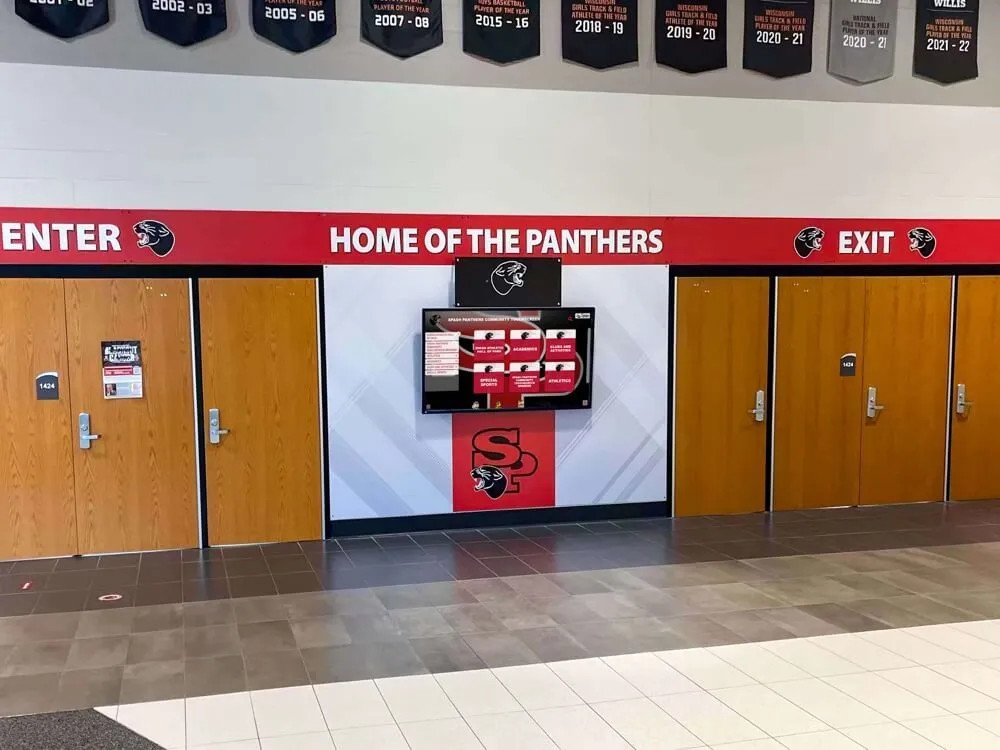
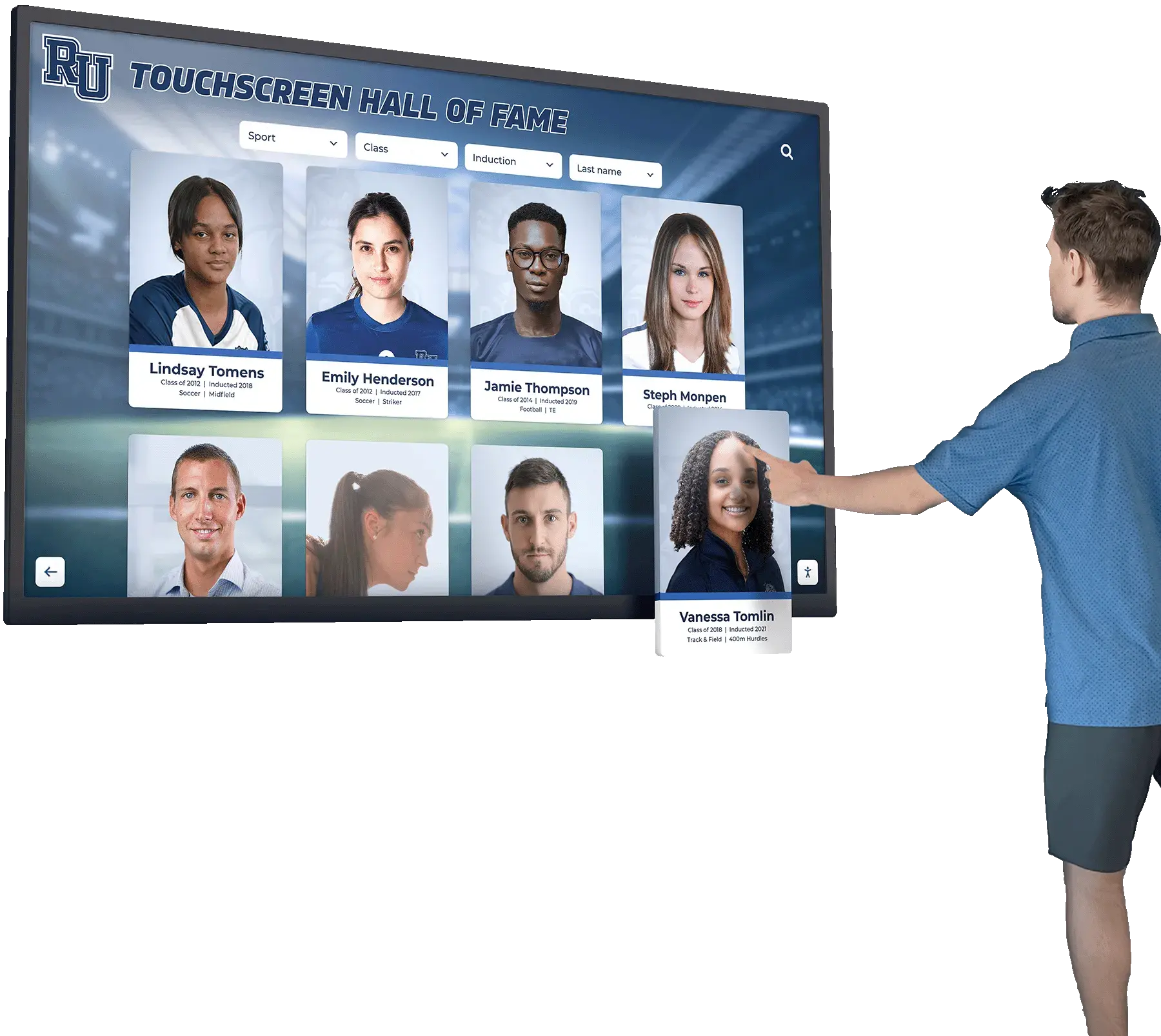
Recognition platforms that connect nomination submissions to physical or touchscreen display workflows may include fields where the nominator confirms or edits display-specific content—the induction year label, the display caption, the touchscreen bio summary—that re-requests the nominee’s name or induction category from fields already entered earlier. For programs integrating with recognition touchscreen displays in school lobbies and trophy cases, these display-configuration fields are typically the final step in a multi-step flow and represent the last opportunity for redundant entry to appear before a submission is complete.

Mobile nominators who use voice input, switch access, or on-screen keyboards experience the highest burden from redundant entry—each repeated field multiplies the input effort required to complete a nomination for a deserving inductee
Step-by-Step Digital Hall of Fame Redundant Entry Audit Workflow
Run the following steps in sequence. Begin with a complete field inventory before testing any live form so the audit has a reference map of every field and its data type.
Step 1: Build a Complete Field Inventory
Open the form builder or CMS backend for the nomination platform and export or manually document every field in the nomination form across all steps. For each field, record:
- Step number where the field appears
- Field label exactly as shown to the nominator
- Field ID or name attribute from the HTML
- Data type (nominator information, nominee information, reference contact, essay content, administrative metadata, display configuration)
- Whether the field is required for form submission
Do the same for any supplementary forms linked from the main nomination flow: reference letter submission forms, document upload flows, and administrator review forms that nominators complete. The complete inventory becomes the source of truth for identifying which fields appear more than once.
Step 2: Flag Fields That Appear More Than Once Across Steps
In the field inventory spreadsheet, sort or filter by field label and data type. Flag any field whose label and data type combination appears on more than one step of the form or in more than one form in the flow. For each flagged pair, note:
- The step number where the value is first entered
- The step number where the value is requested again
- Whether the repeated instance is an editable input, a read-only display, or a pre-populated editable input
Read-only displays are not violations. Editable inputs that are pre-populated with the earlier value are compliant implementations. Editable inputs that are blank (requiring re-entry from scratch) are violations.
Step 3: Walk Through the Live Form and Observe Auto-Population
Complete the live nomination form in a browser—entering test values in every required field—and step through all stages of the multi-step flow. At each step, check every field against the inventory flagged in Step 2.
For each flagged field on the current step, observe:
- Is the field pre-populated with the value entered earlier? (Compliant)
- Is the field blank but the earlier value is available in a dropdown or suggestion? (Compliant)
- Is the field blank with no reference to the earlier value? (Violation)
Use Chrome DevTools to inspect the HTML of any field that appears blank. If the field has a value attribute in the HTML source that is unpopulated but a JavaScript framework is responsible for propagating values, the violation may be a script execution timing issue rather than a missing implementation. Note the field and check whether a brief wait (allowing JavaScript to run) populates it.
Step 4: Test With an Assistive Technology Profile
To understand the real-world impact of each redundant entry violation, complete the nomination form using a keyboard-only navigation profile and, separately, with NVDA (Windows) or VoiceOver (macOS) active. Record the additional interactions required for each redundant field:
- Number of keystrokes or switch activations required to navigate to and re-enter the repeated value
- Whether the screen reader announces the repeated field in a way that indicates it is a duplicate of an earlier entry (it typically will not, because the relationship between fields is not coded into the accessibility tree)
- Whether a nominator who entered a different value in the repeated field than in the original field would receive a validation error, and whether that error message identifies which of the two instances is incorrect
This test provides the impact data needed to prioritize fixes: redundant fields that require the most additional interaction for assistive technology users are the highest-priority violations.
Step 5: Audit the Confirmation and Summary Screens
Navigate to the final review or confirmation screen. Identify every field that presents previously entered information. For each:
- If it is read-only: not a violation; confirm the value displayed matches what was entered on the relevant step
- If it is an editable input pre-populated with the earlier value: compliant; confirm the value is correct
- If it is an editable input that is blank: violation; note the field and the step where the original value was entered
Also confirm that the confirmation email sent after submission does not include a link to a “complete your submission” page that requests previously entered information again. Post-submission follow-up flows that request re-entry of information provided during submission are covered by the same criterion if they are presented as part of the same multi-step nomination process rather than a separate future interaction.
Step 6: Verify Exemptions Are Applied Correctly
Return to the flagged violations list and check each against the three WCAG 3.3.7 exemptions:
- Security confirmation fields: Flag any email, phone number, or postal address “confirm” field as exempt. These are permitted re-entries because they serve error-prevention verification purposes.
- Corrected values: If the form permits inline editing on the review screen and a corrected value was entered, the corrected value is not required to be propagated back to the earlier step’s field. Confirm the form does not create an inconsistency between the step-N corrected value and a step-M auto-populated value that still shows the original (now incorrect) entry.
- Genuinely distinct information with the same label: If the form collects contact details for two separate references under the same set of field labels, these are not violations. Mark them exempt in the inventory and document the reason.
Document the exemption rationale for each exempted pair so that future auditors do not re-flag them as violations.
Step 7: Document Violations and Assign Remediation Priority
For each confirmed violation, document:
- Field label and step number (first entry) and field label and step number (repeated entry)
- The data type (nominator, nominee, reference, administrative, display)
- The impact level: high (nominee name, nominator name), medium (contact details, class year), low (supplementary metadata)
- The estimated implementation effort for the fix (auto-population via form state variable, sessionStorage propagation, or form builder built-in carry-forward feature)
Sort violations by impact level descending, then by implementation effort ascending. High-impact, low-effort fixes—typically nominee name and nominator name auto-population—should be deployed first.
Numbered Remediation Steps
When the audit identifies redundant entry violations, apply the following fixes in priority order.
1. Implement form state carry-forward for nominee and nominator name fields.
The nominee’s full name and the nominator’s name are the highest-frequency repeated values across hall of fame nomination form templates. Implement a form state variable (in a JavaScript framework’s component state, a React context, a Vuex store, or an equivalent) that stores the value entered in the first instance of each field and injects it into all subsequent fields that require the same value. For form builders that do not support direct state access, use sessionStorage to persist the value after the first step and read it on subsequent steps.
2. Auto-populate display-configuration fields from nominee details. Fields on the final form step that collect display-specific content—induction year label, recognition wall caption, touchscreen bio summary opening line—frequently use the nominee’s name as a prefix or subject. Pre-populate these fields by concatenating the nominee name value from the earlier step with any static text required by the display template. Present the pre-populated value as an editable field so the nominator can adjust it, not as a read-only value the platform controls unilaterally.
3. Propagate reference contact details across all upload metadata forms. If the nomination flow includes separate upload forms for supporting documents, carry the reference contact name and email from the main form’s reference section into the upload form’s metadata fields using the same sessionStorage or URL parameter approach. The nominator should not need to re-type the reference’s name for each additional document uploaded in the same session.
4. Replace repeated nominee-name text inputs with a pre-filled read-only reference on review screens.
On summary and review screens, replace any editable text input that displays the nominee’s name with a read-only element (a <p> or <span>) that shows the value entered earlier. If the nominator needs to correct the nominee name, provide a single “Edit” link that returns them to the step where the nominee name was first entered, rather than allowing in-place editing on the review screen that could create a divergence between the review screen value and the stored form state value.
5. Use the autocomplete attribute on repeating personal information fields.
For fields that collect information about the nominator themselves—name, email, phone, mailing address—add the appropriate HTML autocomplete attribute values (name, email, tel, street-address, etc.). Browser-level autofill, supported by autocomplete, covers some redundant-entry scenarios where the same nominator submits nominations for multiple inductees in separate sessions or tabs. While autocomplete does not satisfy 3.3.7 for same-session same-form repetition on its own, it reduces the practical burden for nominators and supports WCAG 1.3.5 Identify Input Purpose (Level AA) simultaneously.
<!-- Nominator fields with autocomplete -->
<label for="nominator-name">Your full name</label>
<input type="text" id="nominator-name" name="nominator_name"
       autocomplete="name" required>

<label for="nominator-email">Your email address</label>
<input type="email" id="nominator-email" name="nominator_email"
       autocomplete="email" required>
6. Add visible “Use name from earlier step” controls where auto-population is not technically feasible. When the platform’s form builder does not support automatic value carry-forward and a custom JavaScript implementation is out of scope for the current development cycle, add a labeled checkbox or button adjacent to each repeated field that pre-populates the field with the value entered on the relevant earlier step when activated. This control must be keyboard-operable and must carry an accessible name that identifies what it will insert. This approach is less optimal than full auto-population but satisfies the “available for the user to select” branch of WCAG 3.3.7.
<label for="essay-nominee-name">Nominee name (as it will appear in the essay)</label>
<button type="button" id="fill-nominee-name"
        aria-label="Fill from nominee details entered on step 1">
  Use nominee name from step 1
</button>
<input type="text" id="essay-nominee-name" name="essay_nominee_name">
7. Implement session-persistent draft storage that survives page refreshes.
If the platform does not already offer a “save and return” draft feature, implement sessionStorage persistence for all entered form values that survives a browser refresh within the same session. A nominator who inadvertently refreshes the page mid-form should not lose previously entered data and be forced to re-enter it—this is a redundant entry failure triggered by a platform architecture gap rather than a form design decision.
8. Test every fix against both a screen-reader profile and a keyboard-only profile before deployment. After each auto-population fix is deployed to staging, navigate the full nomination form with NVDA (Windows) or VoiceOver (macOS) active and confirm that pre-populated fields are announced with their value when focus arrives, that read-only reference elements on review screens announce their value, and that any “fill from earlier step” buttons announce their accessible name clearly. Confirm that auto-populated editable fields allow the nominator to modify the pre-populated value if needed.

Any member of the school community—students, alumni, coaches, parents—may serve as a nominator; a redundant entry audit ensures the nomination form is equally accessible regardless of the input method or assistive technology a nominator uses
Execution Timeline: Plan, Audit, Fix, Verify
| Phase | Activities | Responsible Party | Cadence |
|---|---|---|---|
| Plan | Build the complete field inventory across all form steps and supplementary forms; identify all data types and flag candidate redundant-entry pairs before any live testing | IT lead or web administrator | Once at form launch; once after any form redesign or field addition |
| Audit | Walk through the live form with test entries; flag blank repeated fields as violations; verify exemptions; test with keyboard-only and screen-reader profiles; document impact and effort for each violation | IT staff or web administrator | At launch; before each induction season opens nominations; within 24 hours of any form builder or CMS template update that touches field order, step structure, or required field configuration |
| Fix | Implement form state carry-forward for nominee name and nominator name; deploy sessionStorage persistence; add “use earlier value” controls where auto-population is not technically feasible; add autocomplete attributes to personal information fields | Developer or platform vendor | Within 14 days of audit for high-impact violations; within 30 days for medium- and low-impact violations; immediately before nomination season opens if violations affect the nominee name or nominator name fields |
| Verify | Complete the full form again with test entries and confirm all previously flagged violations are resolved; test with NVDA and keyboard-only profiles; confirm no regressions in form validation, step navigation, or submission confirmation | IT staff | Immediately after each fix batch is deployed to the live form |
| Document | Record audit date, form version, field inventory version, violations by step and data type, exemptions with rationale, fixes applied with field IDs and implementation approach, and verification results; retain for accessibility compliance records | Administrative lead | Each audit cycle; retained for three years or the duration of the recognition program’s operation, whichever is longer |
Recognition programs that include athletic achievements alongside academic and fine arts recognition—programs where traditional trophy cases are being replaced with digital hall of fame displays for all award categories—should extend the redundant entry audit to every category-specific nomination form, not only the athletic director’s form. Academic honor nominations and fine arts recognition nominations follow the same multi-step form pattern and carry the same redundant entry risk.
Ready to see a recognition platform with accessible, nominator-friendly forms built in from the start?
Rocket Alumni Solutions builds hall of fame platforms with multi-step nomination workflows designed to carry previously entered values forward automatically, reducing burden for every nominator who submits a recognition for a deserving inductee.
Display Integration: How Nomination Form Data Flows to the Recognition Display
Redundant entry in a nomination form does not only affect the submission experience—it also affects the quality and consistency of data that flows into the recognition platform’s display layer. When a nominator re-types the nominee’s name in multiple fields and enters it slightly differently in each (first name only in one field, full name in another, “Coach” prefix in a third), the display system may present inconsistent data across the inductee’s profile, the recognition wall label, and the touchscreen bio summary.
Data consistency between form entries and display fields: Recognition platforms that auto-populate display-configuration fields from the primary nominee name field ensure that the name displayed on every surface—the touchscreen profile card, the printed program listing, the physical wall label, the nomination certificate—uses exactly the value entered once by the nominator. Platforms that request the nominee name separately for each display surface introduce the risk of inconsistent presentation, which requires administrative cleanup after submission and before display publication.
Touchscreen and kiosk bio summaries: Nomination forms for programs that include touchscreen recognition displays frequently ask nominators to draft a brief bio summary alongside the main nomination essay. If the bio summary field requests the nominee’s name as part of the opening sentence, and the nominee’s name was already entered earlier in the form, this field should be pre-seeded with a template that includes the auto-populated name. The nominator edits the surrounding text without re-typing the name. Schools that use interactive touchscreen kiosk displays for their hall of fame should audit the connection between the nomination form’s display-summary field and the kiosk’s content management system to confirm the value is inherited correctly.
Physical award and plaque label preparation: Programs that connect digital nominations to physical award production—plaques, shields, framed certificates—generate label artwork from nomination form data. When the nominee’s name is entered redundantly across multiple fields and inconsistently between them, the label generation process may pull from the wrong field or require manual correction before production. Eliminating redundant entry from the nomination form ensures a single authoritative name value is available for every downstream use.
Alumni organizations that maintain both digital recognition platforms and physical award archives—including the kinds of multi-era collections documented in school history and athletic trophy showcases—benefit from redundant-entry-free nomination forms because clean, consistent data from the form flows directly to both the digital display and any physical production workflows without requiring manual data reconciliation.
Programs using digital signage software for school communications alongside their recognition platform should confirm that any field values carried from the nomination form to the digital signage content layer are sourced from the single authoritative nomination record rather than from a separately entered display-specific field on the form.
Measurement: Evaluating Redundant Entry Audit Results
After completing the audit and applying remediation, measure outcomes against the following benchmarks.
| Metric | Target | Action if Below Target |
|---|---|---|
| Redundant entry violations resolved (WCAG 3.3.7) | 100% of identified violations resolved; zero confirmed violations on re-audit | Prioritize nominee name and nominator name auto-population first; these two fields account for the majority of violations on most nomination forms |
| Form completion rate | Track before and after fix deployment; expect improvement after high-impact fixes | Measure using form analytics (submissions started vs. completed); a significant increase in completion rate after fixing nominee name redundancy confirms real-world impact |
| Nomination submission time | Track average form completion time before and after fixes | Auto-population of repeated fields should reduce average completion time; a reduction of more than 20% is expected when nominee name auto-population eliminates three or more repeated entries |
| Data consistency (nominee name across display fields) | 100% of submitted nominations with auto-populated display fields show consistent nominee name across all display surfaces | Review a sample of submitted nominations after fix deployment and compare nominee name across the inductee profile, the wall label field, the certificate label field, and the bio summary opener |
| Exemptions correctly identified and documented | 100% of email confirmation fields, password confirmation fields, and multi-reference contact fields documented as exempt with rationale | Audit the exemption documentation after each form update; add new exemptions when new fields are added that appear redundant but qualify under a WCAG 3.3.7 exception |
| Re-audit after form update | All violations remain at zero within 24 hours of any form template deployment | Schedule a targeted field inventory review as part of the deployment checklist for any update that adds steps, reorders steps, or introduces new required fields |
Schools planning recognition programs for performing arts and fine arts honorees—programs where the nomination form may include distinct fields for ensemble name, conductor name, and individual performer name across multiple steps—will find the same redundant entry patterns as athletic nomination forms and should apply the same audit methodology regardless of the recognition category.
Frequently Asked Questions
What is WCAG 3.3.7 Redundant Entry and when did it become a requirement?
WCAG Success Criterion 3.3.7 Redundant Entry was introduced in WCAG 2.2, which was published as a W3C Recommendation in October 2023. It is a Level A criterion, meaning it is among the baseline accessibility requirements that apply to all publicly accessible web content. The criterion requires that information entered by a user earlier in the same session—in a multi-step form, a multi-page checkout, or any comparable sequential process—is either auto-populated into subsequent fields that request the same information, or presented for the user to select rather than requiring fresh manual re-entry. Prior versions of WCAG (2.0 and 2.1) did not include this criterion; organizations that last audited their nomination forms against WCAG 2.0 or 2.1 will need to add a 3.3.7 check to their accessibility compliance process.
Does WCAG 3.3.7 apply to email confirmation fields on our nomination form?
No. Email confirmation fields—where a nominator is asked to enter their email a second time immediately after the first entry to confirm spelling—are explicitly exempted by WCAG 3.3.7 as “essential” re-entry for verification purposes. The criterion recognizes that certain repeated entries serve a functional purpose (detecting transcription errors) that outweighs the burden of re-entry for the cases in which the confirmation prevents a submission error. Password confirmation fields receive the same exemption. The exemption does not extend to general-purpose field repetition—only to fields whose second entry serves a documented verification function.
Our nomination form uses a form builder that does not support field carry-forward. What are our options?
Three options are available within the constraints of a form builder that does not natively support field carry-forward. First, use the browser’s sessionStorage API via a small JavaScript snippet that reads field values on each step and writes them to storage; on each subsequent step, a companion snippet reads the stored values and populates any matching fields. Second, use URL parameters to pass values collected on step one into the URL for step two, and read those parameters on load to pre-populate the matching fields. Third, add a “use earlier entry” button adjacent to each affected field that triggers a JavaScript fill from the stored value. Of these, sessionStorage propagation is the most robust and the least disruptive to the form builder’s own submission handling. Confirm with the form builder vendor whether a plugin or built-in option exists before implementing a custom solution.
How do we handle a form where the nominator can submit nominations for multiple inductees in the same session?
When a nominator completes a second nomination in the same browser session, the “nominee” information from the first nomination should not be auto-populated into the nominee fields of the second nomination—those fields represent genuinely different information. The nominator information (the person submitting both nominations) is the same and should be carried forward. Implement carry-forward logic that distinguishes between nominator fields (persist across nominations in the same session) and nominee fields (clear between nominations, because each nomination has a distinct nominee). If the platform uses sessionStorage, store nominator fields in a persistent key and nominee fields in a nomination-specific key that is cleared when a new nomination is started.
Does the redundant entry requirement apply to forms accessed via a QR code link from a physical display?
Yes. If a physical trophy case, hallway recognition display, or award plaque includes a QR code that links to the hall of fame nomination form, and the form is a multi-step process, the WCAG 3.3.7 requirement applies to the full form flow regardless of how the nominator reached the form. The entry point (QR code, direct URL, navigation link, touchscreen prompt) does not affect the criterion’s applicability to the form itself. Schools whose physical award displays include QR codes linking to digital nomination processes should include the QR-entry form flow in the redundant entry audit because QR code users are often on mobile devices where repeated manual entry carries the highest friction.
Can redundant entry violations be detected with an automated accessibility scanner?
No. Automated accessibility scanners such as axe DevTools, Lighthouse, or WAVE cannot detect WCAG 3.3.7 violations because those violations require understanding the relationship between fields across form steps—a semantic relationship that is not encoded in HTML attributes and cannot be inferred from the rendered DOM of a single page. The only way to detect redundant entry violations is the manual audit workflow described in this guide: build a field inventory, step through the live form with test entries, and observe which repeated fields are blank versus pre-populated. Automated tools can support adjacent checks (confirming autocomplete attributes are present on personal information fields, or confirming aria-required is correctly set on required fields), but the core redundant entry audit is inherently manual.
How does redundant entry relate to the existing WCAG 3.3 error prevention criteria our platform already complies with?
WCAG 3.3.7 Redundant Entry complements the existing error prevention criteria in the 3.3 guideline without overlapping them. WCAG 3.3.1 (Error Identification) requires that errors be identified and described when detected—this applies when a nominator re-enters a name and types it differently, triggering a validation mismatch. WCAG 3.3.4 (Error Prevention for Legal, Financial, and Data) requires that submissions be reversible, checkable, or confirmable. WCAG 3.3.7 prevents the situation that leads to these errors by reducing the number of times information must be entered at all. A nomination form that complies with 3.3.7 (no redundant fields) also reduces the failure modes that 3.3.1 and 3.3.4 are designed to catch. Platforms already complying with 3.3.1 and 3.3.4 should treat 3.3.7 as an additional layer that reduces the input burden before errors can occur.
Reusable Artifact: Redundant Entry Audit Checklist
Copy this checklist before each nomination season, after each form builder or CMS update that touches the nomination form, or as part of an annual WCAG 2.2 compliance review. Record results per form step, not per individual field.
Pre-Audit Preparation
- Complete field inventory exported or manually documented for all steps of the nomination form and all supplementary forms in the flow
- Each field in the inventory tagged with a data type: Nominator, Nominee, Reference Contact, Essay/Narrative, Administrative Metadata, Display Configuration, or Confirmation
- Candidate redundant-entry pairs flagged by matching data type and field label across steps
- Exemption categories reviewed: security confirmation fields, corrected-value fields, and multi-reference fields with same label but distinct data identified and documented before live testing begins
Step-to-Step Field Repetition
- Nominee full name: entered once on the Nominee Details step; all subsequent fields that request the nominee name are pre-populated or exempt
- Nominator name: entered once on the Your Information step; all subsequent fields that display or request the nominator name are pre-populated or exempt
- Nominator email and phone: entered once; not requested again on any subsequent step (email confirmation field on the same step is exempt; a separate re-request on a later step is not)
- Class year or graduation year: entered once for the nominee; not requested again in sport-specific, era-specific, or eligibility-verification fields on subsequent steps
- Reference contact name: entered once per reference; not requested again in upload metadata or confirmation summary fields for that reference within the same session
Supplementary Form Fields
- Document upload metadata form: nominee name and nominator name fields pre-populated from main form; not blank on first upload
- Each additional document upload: nominee name and nominator name fields pre-populated without re-entry for the second and subsequent uploads in the same session
- Reference submission confirmation form: reference contact name pre-populated from the reference section of the main form
Review and Confirmation Screens
- All previously entered values on the review screen are read-only displays, not blank editable inputs
- Any editable field on the review screen is pre-populated with the value from the relevant earlier step
- No blank editable field on the review screen requests information entered on an earlier step
- Inline correction on the review screen updates the form state value and does not create a divergence between the review screen value and any auto-populated field on a later screen
Implementation Verification
-
sessionStorageor form state carry-forward tested after a browser page refresh: previously entered values survive the refresh - Auto-populated fields are announced by screen reader (NVDA or VoiceOver) with the pre-populated value when focus arrives
- Any “use earlier entry” button carries an accessible name identifying what it will insert and is keyboard-operable
-
autocompleteattributes present on all nominator personal information fields:name,email,telas appropriate - Exempted fields documented in the field inventory with exemption type and rationale
Post-Fix Verification
- Full form completed with test entries after each fix deployment; all previously flagged violations confirmed resolved
- Keyboard-only profile test completed: no additional interactions required beyond those needed for non-repeated fields
- Screen-reader profile test (NVDA + Chrome or VoiceOver + Safari): pre-populated fields announced correctly; no “fill from earlier” buttons announce only “button”
- Form submission confirmation email does not link to a follow-up form that requests previously entered information again
- No regressions in form validation, step navigation, or submission confirmation flow following fix deployment
Connecting the Redundant Entry Audit to the Full Nomination Form Accessibility Workflow
A redundant entry audit is one layer of a complete digital hall of fame nomination form accessibility verification workflow. Schools that have completed this audit should pair it with adjacent accessibility checks that address related WCAG criteria at the form and platform levels.
A keyboard trap audit confirms that every form field, date picker, and step-navigation button allows keyboard focus to enter and exit using standard key commands—a particular risk on multi-step nomination forms with custom JavaScript step transitions. A duplicate ID accessibility audit confirms that form fields across steps do not share the same id attribute value, which would break label associations and auto-population scripts that look up fields by ID. An accessible name audit for icon buttons and filters confirms that any icon-only controls on the nomination form—file upload buttons, calendar picker triggers, step navigation arrows—carry descriptive labels for screen-reader users.
For programs that use digital signage and recognition history archives to contextualize induction programs—using digital tools to bring school history to life for students, alumni, and families—the nomination form is the entry point for adding new chapters to that history. A form that reduces the burden of nomination, removes unnecessary repeated entry, and works correctly with assistive technology ensures that the broadest possible pool of nominators—including retirees, mobility-limited alumni, and community members who may use non-standard input devices—can contribute to the recognition program without barrier.
Schools building out college tour and campus directory touchscreen displays alongside hall of fame recognition programs, and programs planning marching band and performing arts uniform and identity recognition displays, should apply the same redundant entry audit methodology to every nomination or submission form in those programs. The field inventory and checklist in this guide are category-neutral—they work for athletic nominations, academic honor nominations, performing arts recognition submissions, and community service award nominations without modification.

The nomination form is the first step in every inductee's journey to the recognition wall—a redundant entry audit ensures that step is equally accessible to every nominator, regardless of how they interact with technology
Recognition programs that serve large alumni communities—multi-decade athletic archives, all-sport hall of fame programs with hundreds of inductees, academic honor rolls spanning generations of graduates—generate high nomination volumes each induction cycle. A nomination form that minimizes redundant entry not only meets the WCAG 3.3.7 standard but also reduces administrative overhead: nominations with consistent, auto-populated data require less cleanup before display publication, reducing the staff time between form submission and inductee recognition.
See Rocket Alumni Solutions’ Accessible Nomination Workflow in Action
Request a live demonstration to see how Rocket’s recognition platform handles multi-step nomination forms—carrying previously entered values forward, reducing repeated data entry, and meeting WCAG 2.2 accessibility standards so every nominator can submit recognition for a deserving inductee without barrier.
Live Example: Rocket Alumni Solutions Touchscreen Display
Interact with a live example (16:9 scaled 1920x1080 display). All content is automatically responsive to all screen sizes and orientations.