



A digital hall of fame HTML description list accessibility audit is the process of inspecting every <dl> element on inductee profile pages—confirming that name-value metadata pairs like Sport, Graduation Year, and Highest Honor are structured with <dt> (term) and <dd> (description) elements, that the pairing is announced correctly by screen readers, that no redundant ARIA attributes override the native HTML semantics, and that grouped per-inductee metadata is never confused with a multi-athlete comparison table that belongs in a <table> instead. The <dl> element, documented by MDN Web Docs, is designed for glossary-style and key-value content—exactly the metadata sidebar that appears on every inductee profile in a school’s digital hall of fame. When a recognition platform renders an inductee’s details without this structure, or applies the structure incorrectly, screen readers encounter isolated text fragments rather than connected label-value pairs. This guide gives athletic directors, recognition-content managers, IT administrators, and archives partners the decision table, numbered workflow, and reusable checklist to complete this audit in under an hour—before a single inductee’s metadata mislabels itself to the visitors who depend on assistive technology to read it.
When a school builds or audits a digital hall of fame directory, the inductee profile is the anchor document. It introduces an honoree by name, then presents the details that place the recognition in context: which sport, which class year, which specific achievement earned the honor. That supporting metadata is structured data—each field has a defined label and a corresponding value for each inductee. The <dl> element is the HTML structure designed for exactly this use case, and choosing it deliberately over a table or a stack of <p> elements determines how clearly every visitor—including those using a screen reader—understands the profile they are reading.

A school hall of fame directory reaches alumni, families, and community members across devices and assistive technologies—description list elements on inductee profiles must pair metadata labels and values correctly for every visitor
Program Snapshot: HTML Description List Audit Scope for School Hall of Fame Sites
| Planning Element | Details |
|---|---|
| Primary Audience | Athletic directors, recognition-content managers, IT administrators, school web managers, archives coordinators, facilities partners overseeing digital recognition installations |
| What Is Being Audited | Every <dl>, <dt>, and <dd> element on inductee profile pages, sport-category landing pages, and search results where metadata is presented as labeled pairs |
| WCAG Criteria | 1.3.1 Info and Relationships — Level A (semantic structure must match visual structure); 4.1.2 Name, Role, Value — Level A (correct roles and no redundant ARIA overrides) |
| Authoritative Reference | MDN Web Docs: The Description List element (<dl>) |
| Tools Required | Chrome DevTools Elements panel (free, built-in); NVDA screen reader (Windows, free); VoiceOver (macOS and iOS, built-in); optionally, the WAVE browser extension (free tier) |
| Time Investment | 30–45 minutes to audit all description list elements across one complete inductee profile template; 15 minutes for a targeted re-check after any metadata layout update |
| Failure Consequence | Screen-reader users hear isolated lines of text rather than connected label-value pairs; alumni and families navigating the hall of fame with assistive technology cannot identify which detail belongs to which field |
| Pass Condition | Every <dl> on an inductee profile contains correctly ordered <dt> and <dd> elements, exposes meaningful term-description pairs to screen readers, carries no redundant ARIA that overrides native semantics, and is used only for name-value metadata rather than multi-inductee comparisons |
| ADA Relevance | School digital hall of fame directories accessible to the public are subject to digital accessibility requirements; WCAG 1.3.1 at Level A requires that information conveyed by the visual label-value layout be programmatically determinable for assistive technology users |
When <dl> Is the Right Element: Decision Table for Inductee Metadata
Not every data pattern on an inductee profile calls for a description list. The table below maps common school recognition content types to their appropriate HTML element, with the rationale for each decision.
| Content Type | Example | Correct HTML Element | Reason |
|---|---|---|---|
| Single-inductee metadata fields | Sport, Graduation Year, Highest Honor, Position, Coach | <dl> with <dt> and <dd> pairs | Name-value relationship matches the description list model; each field label connects to one specific value for this inductee |
| Multiple values for one field | Three sports lettered (Basketball, Baseball, Track) | <dl> with one <dt> and three <dd> elements | HTML permits one term followed by multiple descriptions; the repeated <dd> elements each represent a valid value for the same field |
| Narrative biography text | Paragraph describing career highlights | <p> elements | Prose does not have label-value structure; a description list adds semantic overhead without benefit |
| Standalone achievements list | “All-State selection, Team captain, State champion” with no paired label | <ul> or <ol> | A list of achievements without field labels is a plain list, not a description list |
| Career statistics comparison across multiple inductees | Season stats for ten athletes in a grid | <table> with <th> and <td> | A <table> communicates column header relationships to each cell; a <dl> does not convey that a value belongs to a specific inductee in a comparison grid |
| Bounded statistic within a profile | Free throw percentage displayed alongside other metadata | <dd> holding a labeled <meter> | A <dd> can contain a <meter> element; the <dt> supplies the visual label, but the <meter> still requires its own accessible name via <label> or aria-labelledby |
| Structured criteria checklist | Rubric items for sport, years of service, community impact | <ul> with clear item text | A checklist of criteria is a list, not a glossary; description list structure does not add clarity unless each criterion has a distinct label paired with a scored value |
A school recognition platform that presents inductee metadata as a sidebar—Sport: Basketball, Graduation Year: 1994, Highest Honor: All-State First Team—benefits from <dl> structure. A platform that places ten inductees’ statistics in a grid so a visitor can compare them by season benefits from a <table>. Choosing the right element is not a developer preference; it is the mechanism that connects the visual structure to a matching semantic structure for assistive technology.
Schools building out inductee profile content for the first time may find it useful to plan which metadata fields belong on every profile before selecting their HTML structure. An athletic website content checklist covering teams, records, awards, sponsors, and alumni provides a framework for inventorying recognition content that directly informs which fields will appear as <dt> terms on a profile page.
Understanding <dl>, <dt>, and <dd> on an Inductee Profile
The <dl> element wraps a group of term-description pairs. Each pair consists of one or more <dt> elements (the term, or field label) followed by one or more <dd> elements (the description, or field value). The MDN Web Docs entry for the <dl> element defines this structure: a <dl> may contain zero or more groups of one or more <dt> elements followed by one or more <dd> elements.
For an inductee profile on a school hall of fame site, the field labels become <dt> elements and the corresponding data becomes <dd> elements:
<!-- Generic example for a school-owned custom recognition system -->
<dl>
  <dt>Sport</dt>
  <dd>Basketball</dd>
  <dt>Graduation Year</dt>
  <dd>1994</dd>
  <dt>Highest Honor</dt>
  <dd>All-State First Team</dd>
</dl>
When an inductee lettered in more than one sport, the <dl> handles multiple values for a single term with one <dt> followed by multiple <dd> elements:
<!-- Generic example for a school-owned custom recognition system -->
<dl>
  <dt>Sports</dt>
  <dd>Basketball</dd>
  <dd>Baseball</dd>
  <dd>Track and Field</dd>
  <dt>Graduation Year</dt>
  <dd>1997</dd>
</dl>
Wrapping pairs in <div> elements for styling. A <dl> may also contain <div> elements as direct children, which wrap each term-description pair without changing the semantic meaning. This is valid HTML and useful when each pair needs a distinct background, border, or layout style:
<!-- Generic example for a school-owned custom recognition system -->
<dl>
  <div>
    <dt>Sport</dt>
    <dd>Basketball</dd>
  </div>
  <div>
    <dt>Graduation Year</dt>
    <dd>1994</dd>
  </div>
  <div>
    <dt>Highest Honor</dt>
    <dd>All-State First Team</dd>
  </div>
</dl>
The <div> wrappers allow CSS to apply a card or row style to each pair without altering how the browser and screen reader interpret the <dt> and <dd> elements inside.
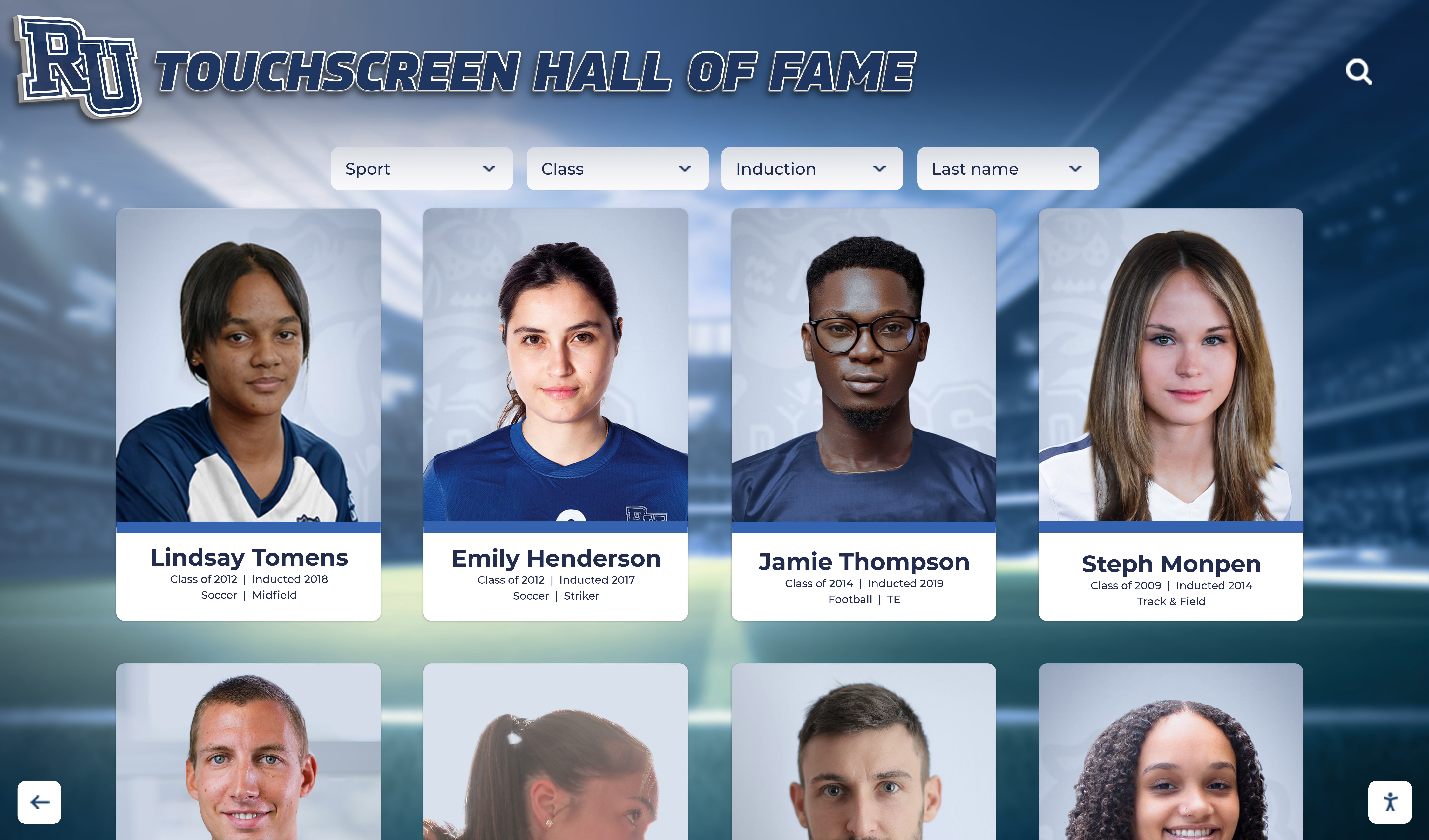
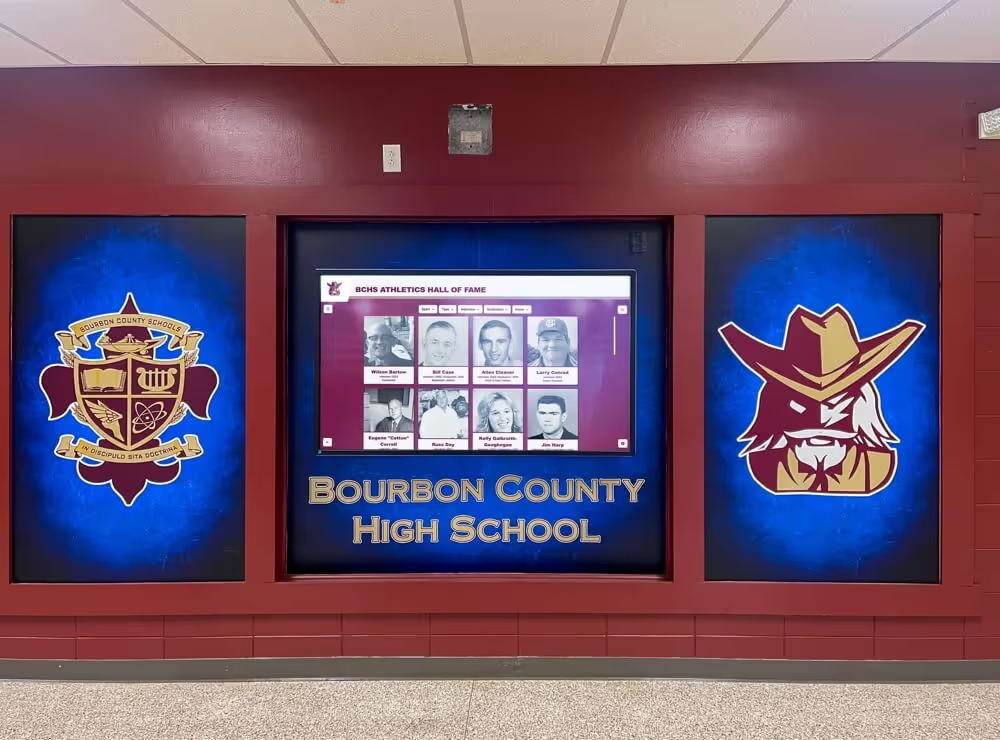
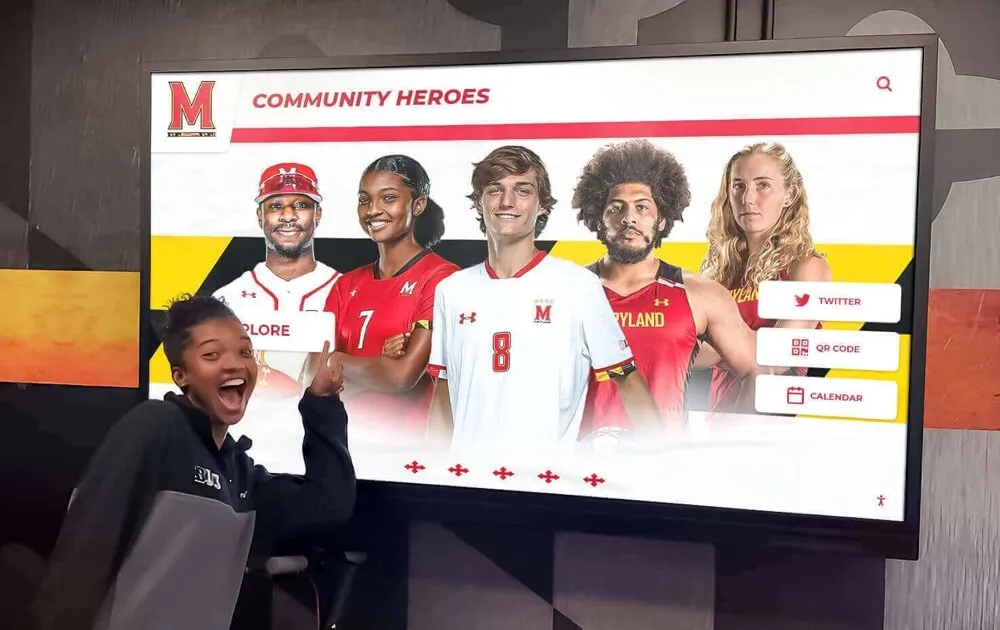
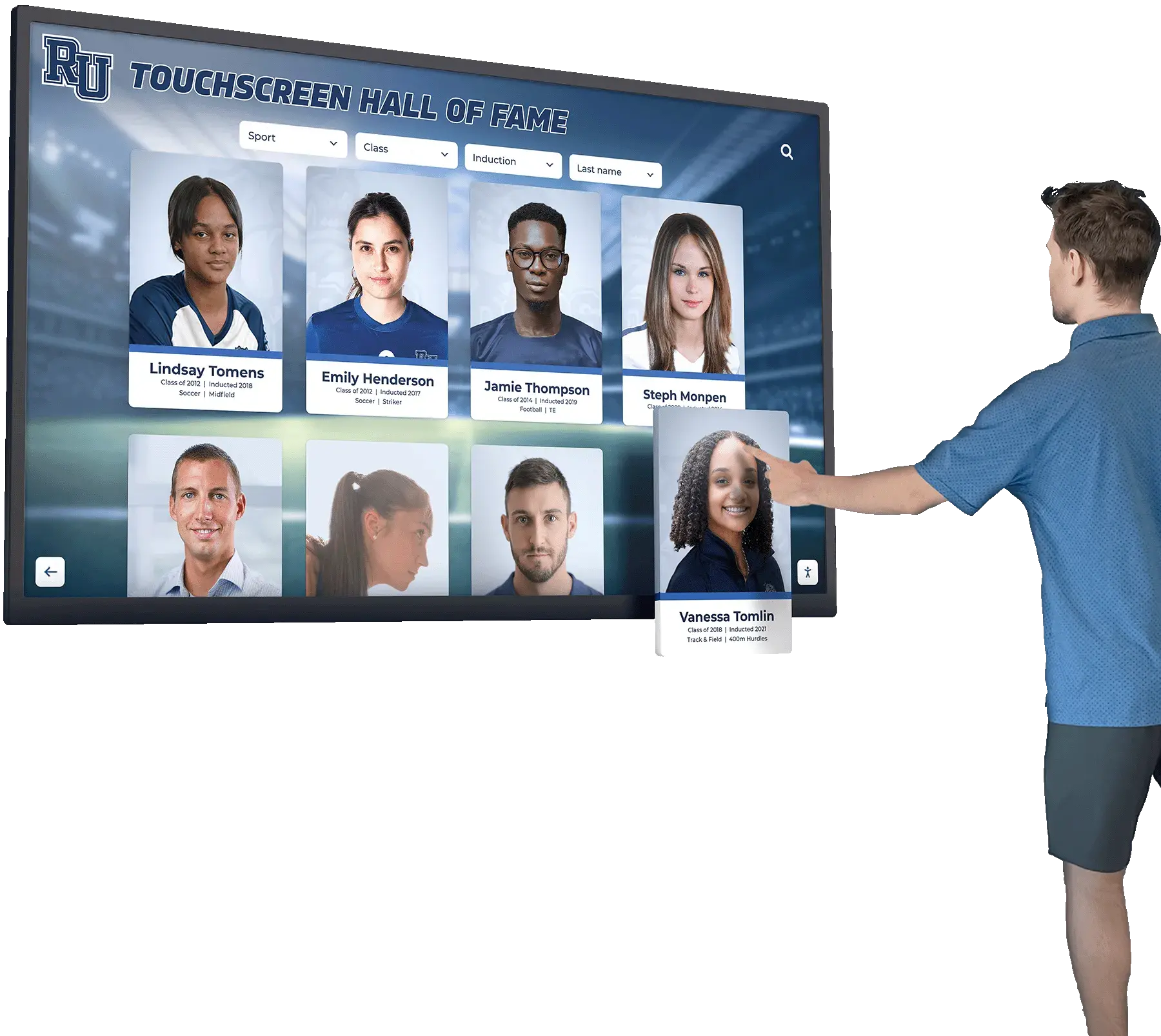
Inductee portrait cards in a digital hall of fame lead to individual profile pages where metadata—sport, graduation year, honor—must be structured with semantically connected label-value pairs so every visitor hears each field and its corresponding value as a connected announcement
Step-by-Step: Digital Hall of Fame HTML Description List Audit
Run these steps on at least one complete inductee profile page and on any sport-category page that displays a condensed version of inductee metadata in a grid or list view.
Step 1: Inventory All <dl> Elements on Profile Pages
Open the inductee profile page in Chrome. Open DevTools (F12 or right-click → Inspect). In the Elements panel, use Ctrl+F (Cmd+F on Mac) to search for <dl. Count every description list element on the page. For each one, note the visual context: what information does it display? Is it inductee metadata (sport, year, honor), a glossary of awards terminology, or something else? Record each <dl> with a brief description and its location on the page.
Step 2: Verify Each <dl> Is Used for Name-Value Pairs, Not Tabular Comparison
For each <dl> found in Step 1, ask: does this content represent label-value pairs for a single inductee, or does it place the same attributes side-by-side for multiple inductees? If the content is a comparison of multiple inductees—a grid showing five athletes’ graduation years, sports, and honors in aligned columns—it belongs in a <table> with column headers, not a <dl>. A <dl> cannot convey column relationships. If the content is a single inductee’s metadata, the <dl> is the correct structural choice.
Mark any <dl> used for multi-inductee comparison data as a remediation item. The fix is to replace it with a <table> that uses <th> elements for field names and <td> elements for each inductee’s values.
Step 3: Confirm <dt> Elements Precede Their Corresponding <dd> Elements
For each <dl>, inspect the DOM order of <dt> and <dd> children. One or more <dt> elements must appear before the <dd> elements that describe them within each group. Common failures include:
- A
<dd>element appearing before its<dt>(reversed order in source markup) - A
<dd>with no corresponding<dt>at all (orphaned value with no label) - A
<dt>with no following<dd>(orphaned label with no value)
In each case, assistive technology cannot form the term-description pairing, and the information becomes an unlabeled or disconnected fragment.
Step 4: Check for Redundant or Incorrect ARIA Roles
Inspect each <dl>, <dt>, and <dd> element for any role attributes. The MDN Web Docs documentation for the <dl> element notes that its implicit ARIA role is none—no corresponding role is mapped by default. Permitted roles include group, list, none, and presentation. If a <dl> carries role="list", confirm that this was added intentionally and that the list navigation behavior it produces is appropriate for the content.
More importantly, check whether <dt> elements carry role="term" or <dd> elements carry role="definition". MDN warns that applying these roles may cause VoiceOver on macOS and iOS to adjust its announcements in unexpected ways. Unless there is a specific, tested reason to override the native element semantics, remove role="term" from <dt> elements and role="definition" from <dd> elements. The native <dt> and <dd> elements carry sufficient semantic meaning without explicit ARIA role additions.
Step 5: Verify That <dt> Text Clearly Identifies the Metadata Field
Read each <dt> element’s text content. It should name the specific type of information that follows. Labels like “Sport,” “Graduation Year,” and “Highest Honor” are specific and meaningful. Labels like “Info,” “Data,” or “Detail” do not identify the field and provide no useful context to a screen-reader user navigating the profile. If a <dt> has ambiguous text, rewrite it with the specific field name.
Step 6: Confirm That <dd> Values Match the Inductee’s Actual Record
For each <dd> element, verify that the value displayed matches the inductee’s documented record. This step bridges content accuracy with HTML structure: a correctly assembled description list can still mislead visitors if the <dd> for Graduation Year contains a wrong year, or if the <dd> for Sport names a sport the inductee did not participate in. Any discrepancy between a <dd> value and the school’s recognition records is a data accuracy issue—but the description list audit is a natural moment to surface it.
Schools conducting a broader data quality review for their recognition platform can coordinate this step with a structured reconciliation process. An athletic award data quality audit covering names, titles, dates, and display records describes a systematic approach to verifying that the values stored in a recognition system match the source documents—a process that directly feeds the accuracy of every <dd> element on an inductee profile.
Step 7: Test With a Screen Reader on the Live Profile Page
Navigate to the inductee profile page with NVDA on Windows or VoiceOver on macOS active. In reading mode (NVDA arrow keys; VoiceOver VO+arrow), move through the <dl> section. Listen for the screen reader to announce each term and its corresponding description as connected content.
NVDA with Chrome typically announces the <dt> text, then the <dd> text immediately after in reading order. The pairing is conveyed by the reading sequence and the semantic relationship between the elements.
VoiceOver on macOS with Safari announces description list content in a similar term-then-description pattern when the user navigates with the virtual cursor.
VoiceOver on iOS behaves differently. MDN’s documentation for the <dl> element notes that VoiceOver on iOS 14 and later announces <dl> content as a list when the user navigates with the virtual cursor—but does not announce it as a list when using the VoiceOver read-all command. Additionally, VoiceOver on iOS does not support the swipe-to-next-item list navigation gesture within a <dl>. For inductee profiles served to mobile visitors, test explicitly with VoiceOver on an iOS device and confirm that term-description pairs are announced in a way that preserves the meaning of each field.
Distinguishing Grouped Inductee Metadata From a Multi-Athlete Comparison Table
The most consequential structural decision in a hall of fame HTML audit is whether content belongs in a <dl> or a <table>. The distinction matters because screen readers navigate these two elements differently, and putting multi-inductee comparison data in a <dl> causes column relationships to disappear entirely for assistive-technology users.
A <dl> describes one inductee’s details. When a profile page shows a single athlete’s information—Sport: Wrestling, Graduation Year: 2001, Conference Champion: 3 years—that content is a set of named fields for one subject. A screen-reader user navigating the profile hears the field name, then the value, and understands they belong together because they appear as a connected <dt>–<dd> pair.
A <table> is for comparing the same fields across multiple inductees. When a sport-category page shows ten inductees in a grid—each row a different athlete, each column a different field (Name, Sport, Year, Honor)—the content has row and column relationships that a <dl> cannot convey. A screen-reader user navigating a <table> hears the column header along with the cell value, making it clear that “1994” is the Graduation Year for the athlete in that row. A <dl> used in place of a <table> strips those column relationships from the announcement entirely.
The test question is: does this content describe one subject, or does it allow the reader to compare the same attribute across multiple subjects? One subject: use <dl>. Multiple subjects compared by shared attributes: use <table>.
A data dictionary for the recognition system that defines every inductee profile field—its label, type, and usage—makes this decision cleaner by establishing which fields are single-inductee metadata and which are designed for cross-inductee comparison. A hall of fame profile data dictionary template for standardizing names, teams, awards, and media provides a structured approach to defining these fields before they appear in <dt> or <th> elements—an investment that reduces structural confusion at the HTML level.

A visitor selecting an inductee card on a hall of fame touchscreen reaches a profile where sport, graduation year, and honor details must be announced as connected label-value pairs—not as isolated text fragments
Avoiding Redundant ARIA on Description List Elements
Native HTML elements carry built-in accessibility semantics. The description list family—<dl>, <dt>, <dd>—communicates its structure to browsers and assistive technology without ARIA attributes. Adding redundant ARIA on top of native semantics is at best unnecessary and at worst harmful.
Do not add role="term" to <dt> elements. The <dt> element inherently communicates the term role. Explicitly adding role="term" is redundant and, as MDN’s <dl> documentation notes, may cause VoiceOver on macOS and iOS to adjust its announcements unexpectedly. Remove any role="term" from <dt> elements and verify screen-reader behavior after removal.
Do not add role="definition" to <dd> elements. The same principle applies. The <dd> element carries description semantics natively. Explicit role="definition" overrides the native element role with an ARIA definition role and may interact with VoiceOver in ways that differ from baseline native behavior.
Do not add role="list" to <dl> without a tested reason. The <dl> element’s permitted ARIA roles include list, but the implicit ARIA role for <dl> is none—no role is mapped by default. If your platform adds role="list" to a <dl> on an inductee profile, confirm the reason for this override, test that the list announcement it produces is appropriate for the content, and remove it if no specific behavior was intentionally targeted.
aria-label on <dl> elements. When a profile page contains multiple <dl> sections—for example, a profile metadata section and a career highlights section each assembled as separate description lists—an aria-label on each <dl> helps screen-reader users understand the purpose of each group: <dl aria-label="Inductee profile details"> versus <dl aria-label="Career highlights">. This is a useful, non-redundant use of ARIA that supplements rather than replaces native element semantics.
Display Integration: Description Lists on Web Directories and Touchscreen Kiosks
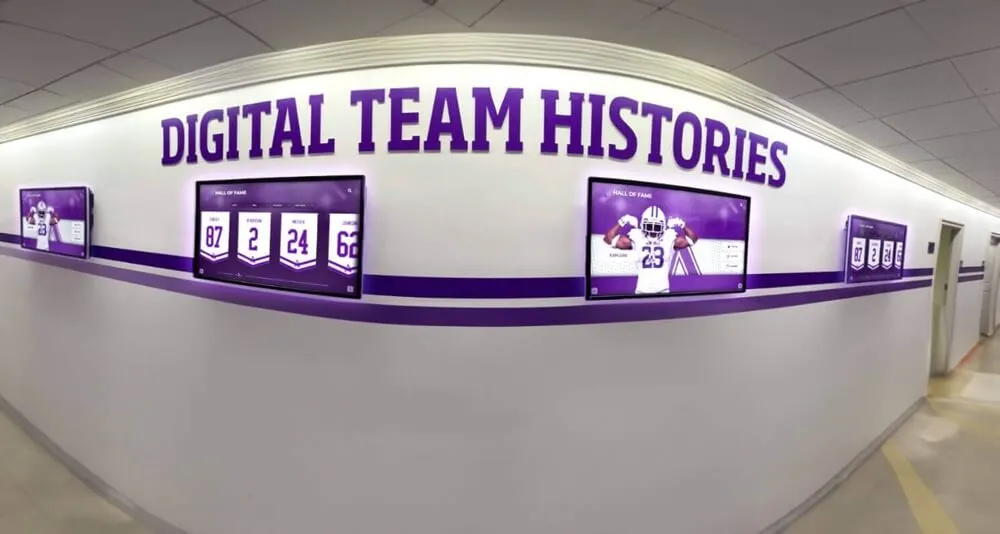
Inductee profile content on a school digital hall of fame typically appears in two environments: the public web directory accessible from any device and the browser-based touchscreen kiosk mounted in the school’s athletic hallway or lobby.
Web directory. Alumni, families, and community members access the web directory from home devices, school networks, and mobile phones. Any visitor using a screen reader, keyboard navigation, or voice control encounters the <dl> structure on the inductee profile. This environment carries the broadest range of assistive technology combinations—NVDA, JAWS, VoiceOver, TalkBack—and the description list audit should prioritize testing here.
Touchscreen kiosk. Most school recognition platform architectures serve the kiosk interface from the same HTML templates as the web directory. A fix to <dl> structure on the profile template resolves the kiosk display simultaneously. A visitor navigating the kiosk with a connected keyboard, or a staff member reviewing a profile with an assistive device, encounters the same markup. The kiosk is not exempt from accessibility requirements because it is an in-school installation.
QR codes linking to inductee profiles. Physical trophy cases and wall installations increasingly include QR codes that link directly to inductee profiles in the web directory. A visitor who scans the code from a school hallway, often on a mobile device with VoiceOver or TalkBack active, lands on the profile page immediately. The VoiceOver-on-iOS behavior documented in the MDN <dl> reference—announced as a list in virtual cursor navigation, but not with the read-all command—is especially relevant for mobile visitors arriving via QR link.
Schools planning or reviewing the broader accessibility posture of their recognition installation may find value in a checklist that covers visitor usability across both physical and digital touchpoints. The hall of fame accessibility checklist for making school recognition usable for every visitor extends accessibility planning beyond HTML structure to include the physical display environment, wayfinding, and visitor flow—context that matters when the description list audit is one step in a larger program review.
Physical touchscreen displays also have hardware-level maintenance requirements that run in parallel with HTML audits. For schools managing kiosk installations in athletic hallways, the touchscreen recognition display dead-pixel inspection checklist provides a structured approach to identifying and documenting display hardware issues—a parallel maintenance task that ensures the screens rendering inductee profiles remain in working condition.
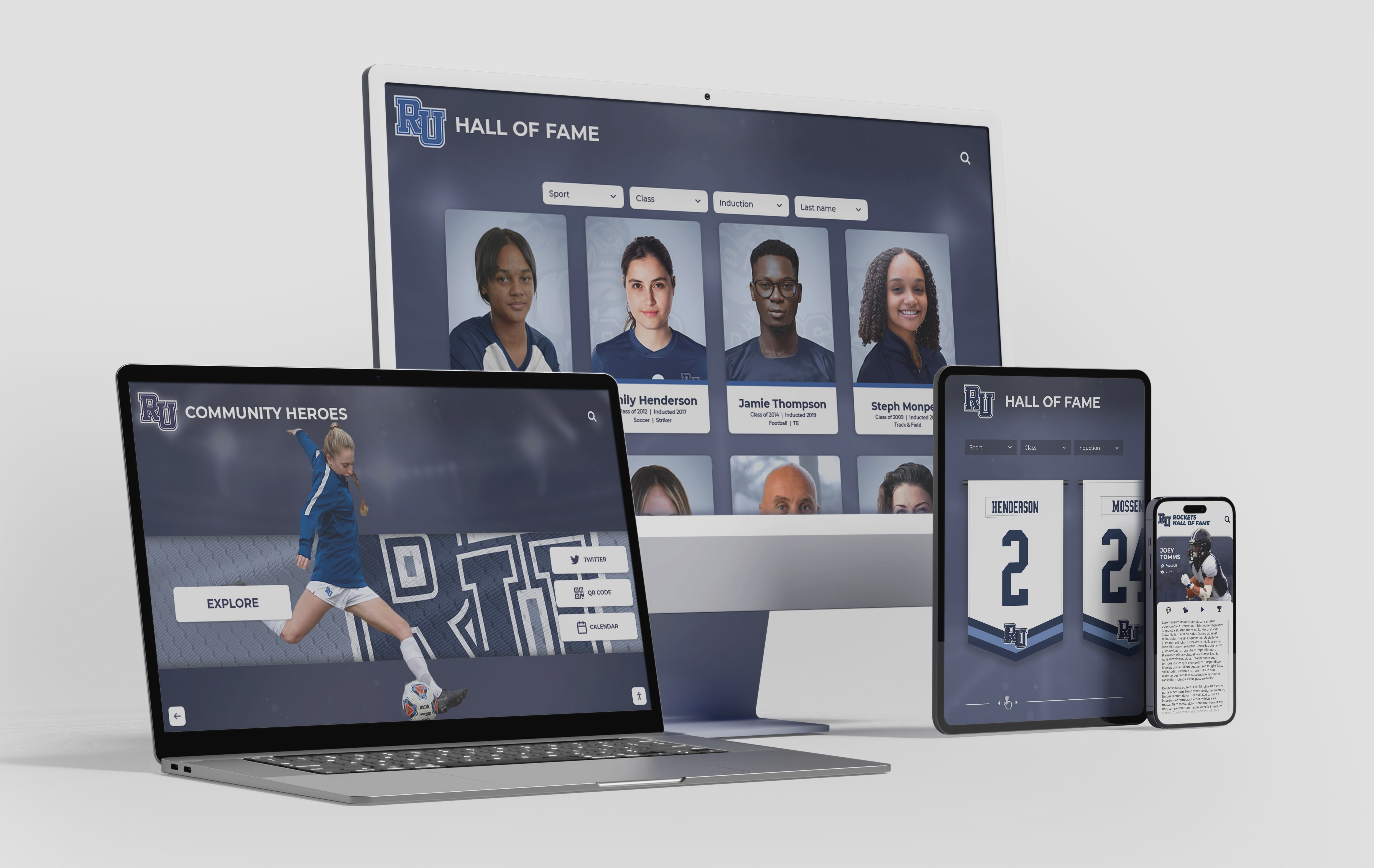
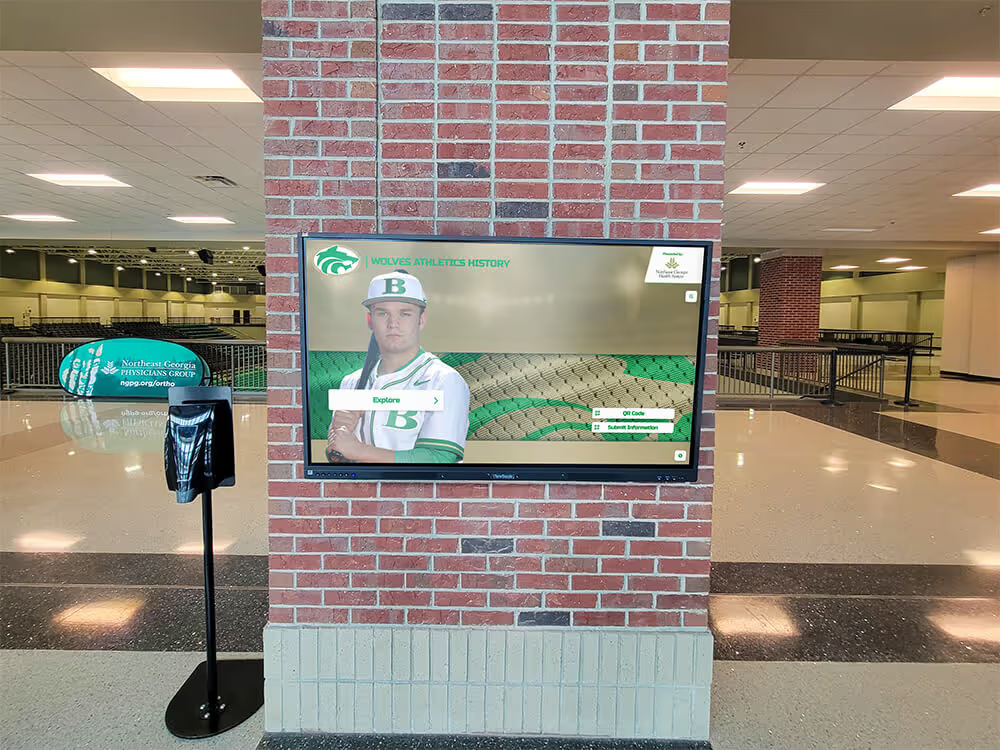
Inductee profiles appear across desktop, tablet, and mobile devices in a school's digital hall of fame directory—description list accessibility applies equally to every visitor regardless of device or assistive technology combination
Execution Timeline: Plan, Audit, Fix, Verify
| Phase | Activities | Responsible Party | Cadence |
|---|---|---|---|
| Plan | Identify all page templates that display inductee profile metadata; list every context where <dl> is used—profile sidebars, sport-category summaries, search results, kiosk layouts; confirm which fields appear as <dt> terms and verify they match the school’s official recognition field names | IT lead or recognition platform administrator | Once at platform launch; once after each template update |
| Audit | Run all seven audit steps on one complete inductee profile page; verify <dt>–<dd> order, absence of redundant ARIA, appropriate element choice vs. <table>, field label clarity, data accuracy spot-checks, and screen-reader announcement; document each <dl> by location, element count, pass/fail status, and issue description | IT staff or recognition-content manager | At platform launch; after any metadata layout or template update; at least annually |
| Fix | Correct reversed or orphaned <dt>/<dd> elements; replace any <dl> used for multi-inductee comparison with a properly headed <table>; remove role="term" and role="definition" from native elements; rewrite ambiguous <dt> labels with specific field names; add aria-label to distinguish multiple <dl> sections on the same page | Developer or recognition platform vendor | Within 14 days of identified failures; immediately if profile metadata is unreadable by screen-reader users |
| Verify | Re-run screen-reader navigation on the repaired profile; confirm term-description pairs are announced correctly; confirm no redundant ARIA remains; run WAVE or axe DevTools to check for remaining WCAG 1.3.1 or 4.1.2 violations | IT staff | Immediately after each fix is deployed to the live site |
| Document | Record audit date, templates reviewed, <dl> elements examined, pass/fail results per element, fixes applied, and screen-reader test outcomes; retain for accessibility compliance records | Administrative lead | Each audit cycle |
Acceptance Criteria: What a Passing Description List Audit Looks Like
| Check | Pass Condition | Common Failure | Who Verifies |
|---|---|---|---|
<dl> used for single-inductee metadata only | All <dl> elements on profile pages present name-value pairs for one inductee; no <dl> is used to compare the same fields across multiple inductees | Ten-inductee grid using <dl> instead of <table>, causing column relationships to be lost | IT / recognition-content manager |
<dt> precedes its <dd> in DOM order | Every <dt> appears before the <dd> element(s) it labels within the same <dl> group | <dd> appears before <dt> in source; template rendered fields in reversed order | Developer |
No orphaned <dt> or <dd> elements | Every <dt> has at least one following <dd>; every <dd> has a preceding <dt> within the same group | A field label <dt> with no value <dd>; a value <dd> with no label <dt> | Developer |
No redundant role="term" on <dt> | No <dt> element carries an explicit role="term" attribute | Template adds role="term" to <dt> elements, triggering unexpected VoiceOver announcements | IT / developer |
No redundant role="definition" on <dd> | No <dd> element carries an explicit role="definition" attribute | Template adds role="definition" to <dd> elements | IT / developer |
<dt> labels are specific and meaningful | Each <dt> text names the specific field: “Sport,” “Graduation Year,” “Highest Honor”—not generic labels | Template placeholder labels not updated with field-specific text | Recognition-content manager |
Multiple <dl> sections on one page are labeled | When a profile page contains more than one <dl>, each carries a distinct aria-label | Two unlabeled <dl> sections on the same page announce identically, giving no context to screen-reader users | Developer |
| Screen reader announces term-value pairs | NVDA and VoiceOver each announce the <dt> text followed by the <dd> text when navigating through the profile metadata section | Screen reader announces isolated text fragments with no indication that they are paired | IT / accessibility lead |
Reusable Checklist: HTML Description List Audit for School Hall of Fame Profiles
Copy this checklist before each platform launch, template update, or annual accessibility review. Complete one copy per profile template type.
Pre-Audit Setup
- Chrome DevTools open on a live inductee profile page
- NVDA (Windows) or VoiceOver (macOS) active for screen-reader testing
- List of all
<dl>elements identified via DevTools search - List of all profile metadata fields expected on this template (Sport, Graduation Year, Highest Honor, etc.)
Element Structure
- Every
<dl>on the profile page uses<dt>and<dd>elements (not<span>or<p>substitutes) - Every
<dt>precedes its corresponding<dd>in DOM order - No
<dd>appears before its<dt>within the same group - No
<dt>exists without a following<dd>; no<dd>exists without a preceding<dt> -
<div>wrappers around<dt>–<dd>pairs confirmed as styling-only with no structural impact
Element Choice
- Content in each
<dl>is name-value metadata for a single inductee, not a comparison across multiple inductees - Any content comparing the same attributes across multiple inductees uses a
<table>with<th>column headers and<td>data cells - Lists of achievements with no paired labels use
<ul>or<ol>, not<dl> - Narrative biography text uses
<p>elements, not<dl>
ARIA and Redundancy
- No
<dt>carriesrole="term" - No
<dd>carriesrole="definition" - Any
role="list"on a<dl>has a documented, tested reason for the override - When a profile page contains multiple
<dl>sections, each carries a distinctaria-label - No two
<dl>elements on the same page share the samearia-labelvalue
<dt> Label Quality
- Every
<dt>text names the specific metadata field (“Sport,” “Graduation Year,” “Highest Honor”) - No
<dt>uses generic placeholder text (“Info,” “Value,” “Data”) -
<dt>labels match the school’s official field names for the recognition program
Data Accuracy
- Spot-check
<dd>values against the school’s recognition records for at least three inductees - No
<dd>contains a default or template placeholder value
Screen-Reader Verification
- NVDA announces
<dt>text followed by<dd>text when navigating through the profile metadata section - VoiceOver (macOS, Safari) announces term-description pairs correctly with the virtual cursor
- VoiceOver (iOS, Safari) tested separately; virtual cursor behavior confirmed and documented; read-all behavior noted
- No isolated text fragments announced without field labels in any tested screen reader
Post-Fix Verification
- All checklist items re-confirmed on the live site after any template changes
- WAVE or axe DevTools shows no WCAG 1.3.1 or 4.1.2 violations on profile description list elements
Frequently Asked Questions
Should we use <dl> or a <table> for inductee profile metadata?
Use <dl> when presenting a single inductee’s details as named fields—Sport, Graduation Year, Highest Honor—where each field belongs to that one person. Use <table> when placing the same fields side-by-side for multiple inductees so a visitor can compare them. A <table> conveys column header relationships; a <dl> does not. Putting a ten-person comparison grid in <dl> structure causes screen-reader users to lose track of which inductee each value belongs to.
What does a screen reader actually announce when it encounters a <dl> element?
Behavior varies by screen reader and browser. NVDA with Chrome typically reads through the <dl> in DOM order, announcing each <dt> text followed by the corresponding <dd> text. VoiceOver on macOS and Safari announces in a similar pattern with the virtual cursor. VoiceOver on iOS 14 and later announces <dl> content as a list when using the virtual cursor but does not treat it as a list during read-all navigation, and does not support the swipe-to-next-item gesture within a <dl>. Always test on the actual screen reader and browser combination most likely to be used by your visitors.
Can we wrap <dt> and <dd> pairs in a <div> for CSS styling?
Yes. Wrapping each term-description pair in a <div> inside a <dl> is valid HTML and does not change how the browser or screen reader interprets the list. A common use case is styling each pair as a separate card or row in the inductee profile sidebar. The <div> is transparent to the description list semantics.
Should we add role="term" to <dt> elements to be more explicit?
No. The <dt> element carries term semantics natively. Adding role="term" explicitly is redundant, and MDN’s documentation specifically warns that this role may cause VoiceOver on macOS and iOS to adjust announcements in unexpected ways. Remove role="term" and role="definition" from native description list elements and test that screen-reader behavior is correct without the overrides.
What should we do when an inductee lettered in multiple sports and we need to show more than one value for the Sport field?
Use one <dt> element for the “Sports” label followed by multiple <dd> elements—one per sport. The HTML content model for <dl> explicitly permits one term to have multiple description values. A screen reader navigating the list will announce the term once and then each <dd> value in sequence. Label the <dt> as “Sports” (plural) when multiple values are expected to signal to the visitor that more than one entry follows.

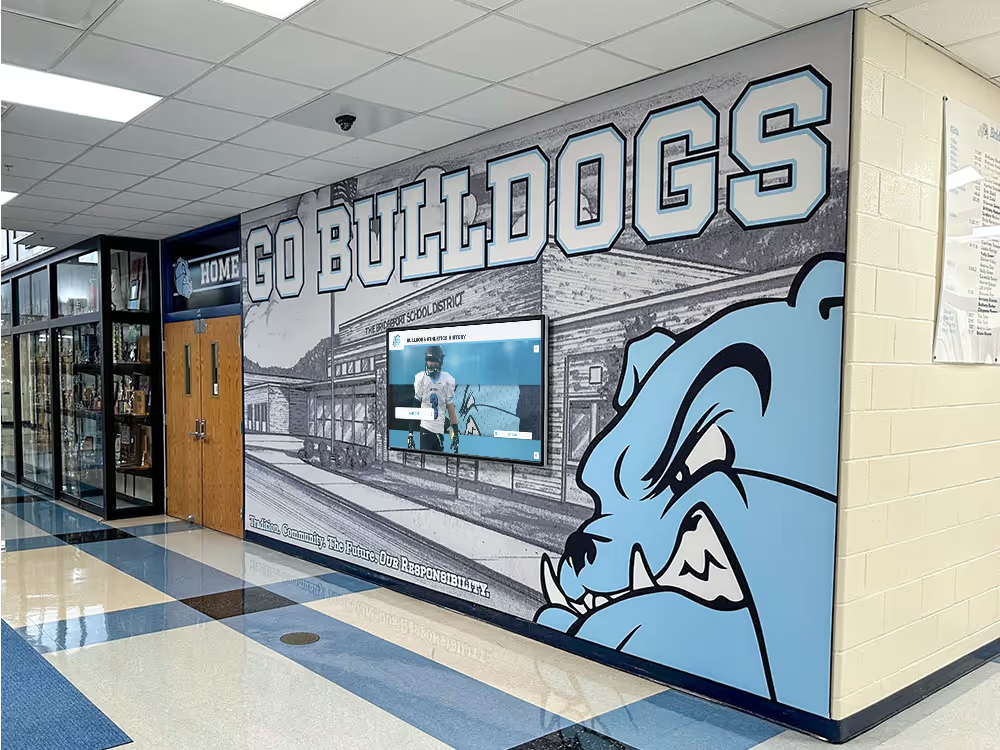
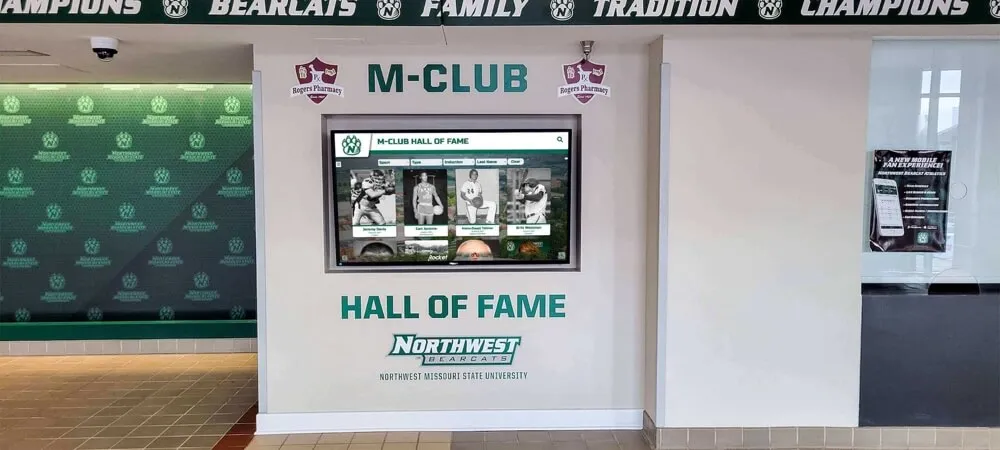
A school hall of fame lobby combines physical recognition panels with a digital display that serves inductee profiles—visitors who browse the directory in this environment, and those who access it remotely, rely on correctly structured metadata to understand each honoree's details
Connecting the Description List Audit to the Broader Accessibility Program
The description list audit addresses the metadata layer of a digital hall of fame profile: the structured fields that identify who an inductee is and why they were honored. Schools that complete this check are ready to pair it with adjacent audits that cover complementary layers of the same profile page.
A duplicate-ID audit confirms that any id attributes used on <dl> elements for aria-label associations do not conflict with IDs elsewhere on the profile template—a collision that would cause incorrect elements to be announced. An ARIA landmark audit confirms that the inductee profile’s metadata section is wrapped in meaningful landmarks so screen-reader users can jump to the section they want without reading the entire page. A reflow accessibility test confirms that description list layout remains readable and produces no horizontal scroll when a visitor zooms to 400%.
A recognition program that pairs the right HTML structure with accurate data produces inductee profiles that serve every visitor—the alumnus navigating with a screen reader, the family member browsing on a mobile phone, the archivist reviewing records decades after induction. The description list audit takes less than an hour for a complete profile template. That hour ensures the field name and its value are announced together, that the structure of the profile reflects the honor it conveys, and that no inductee’s record is mislabeled by the technology built to preserve it.
See Accessible Inductee Profiles Built for School Recognition Programs
Request a live demonstration to see how Rocket Alumni Solutions structures inductee profile pages—including metadata display, accessible content management, and WCAG 2.1 AA compliance—before any commitment.