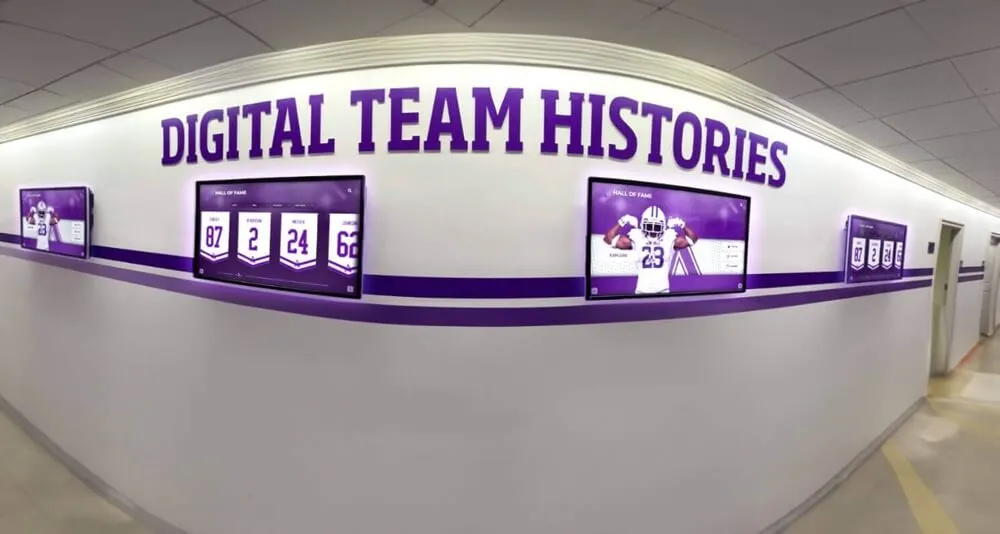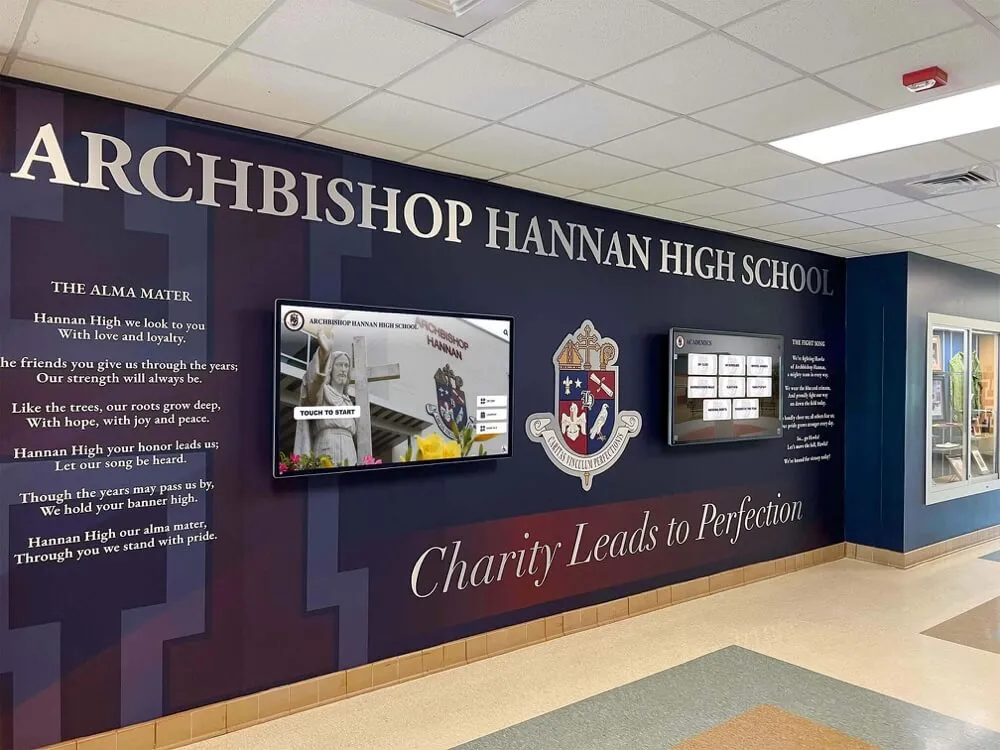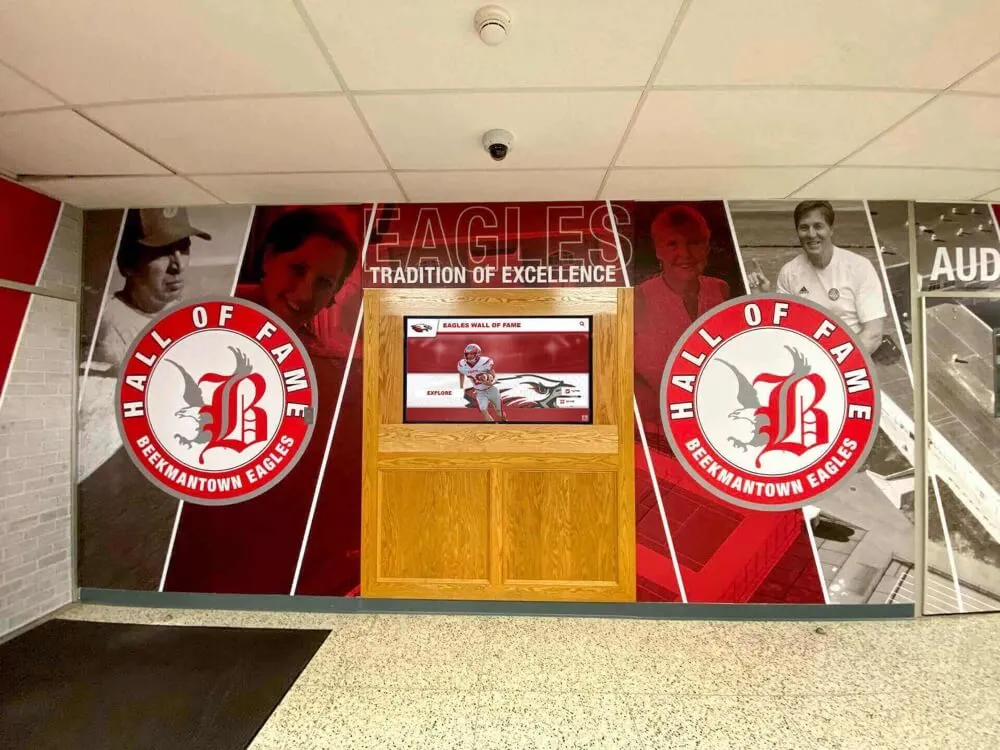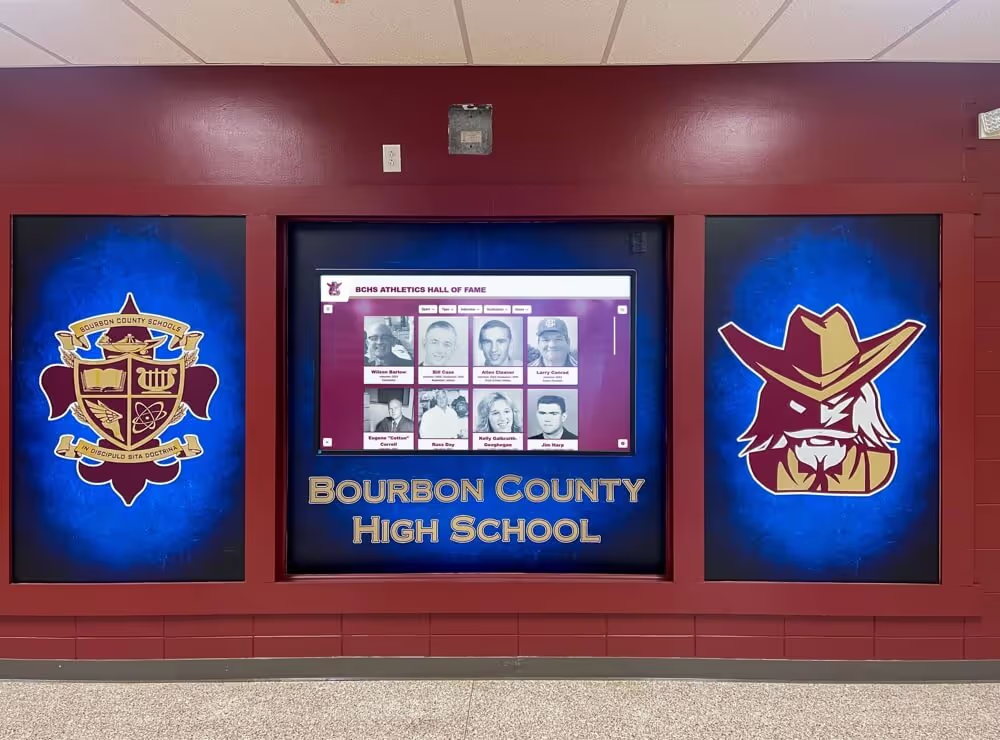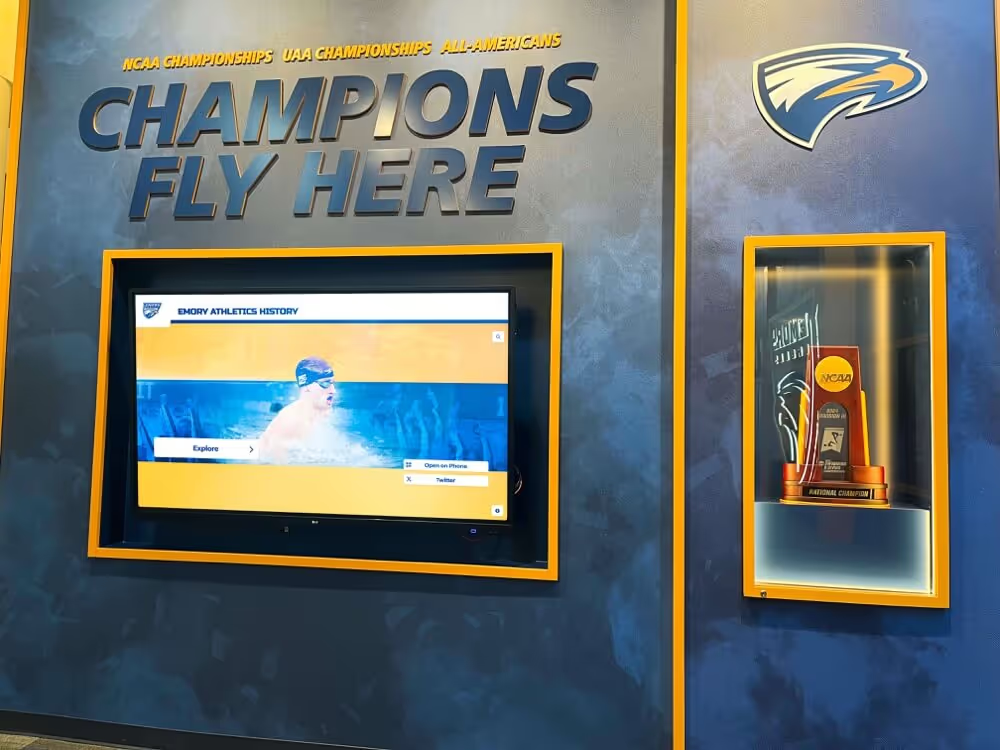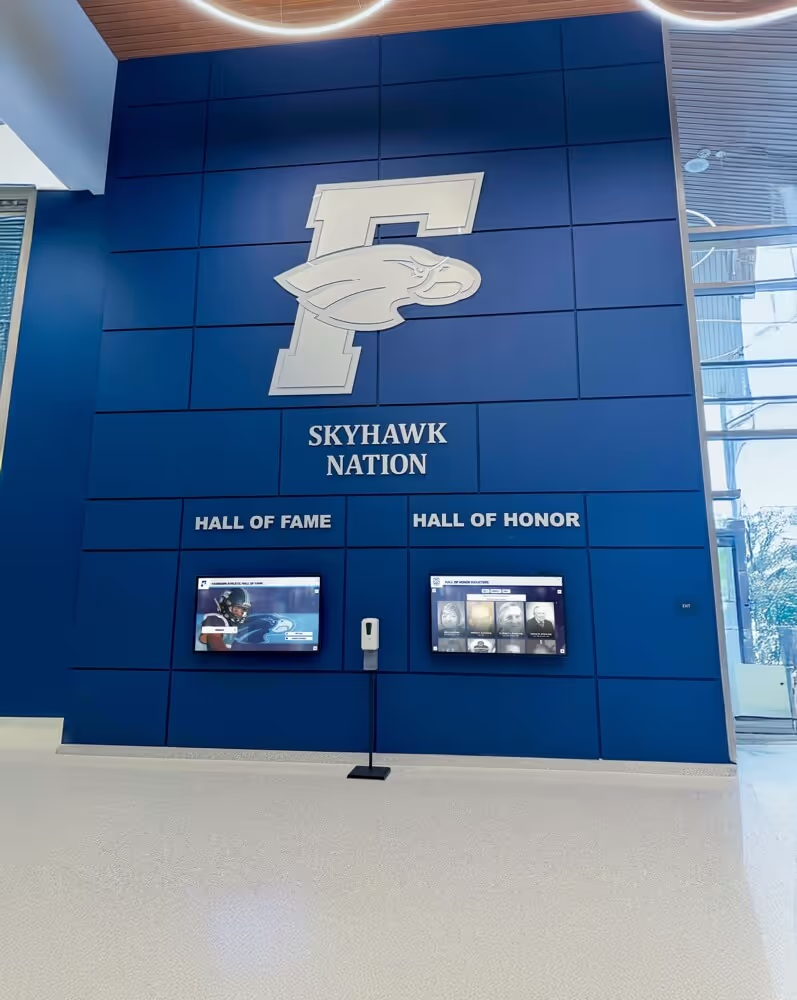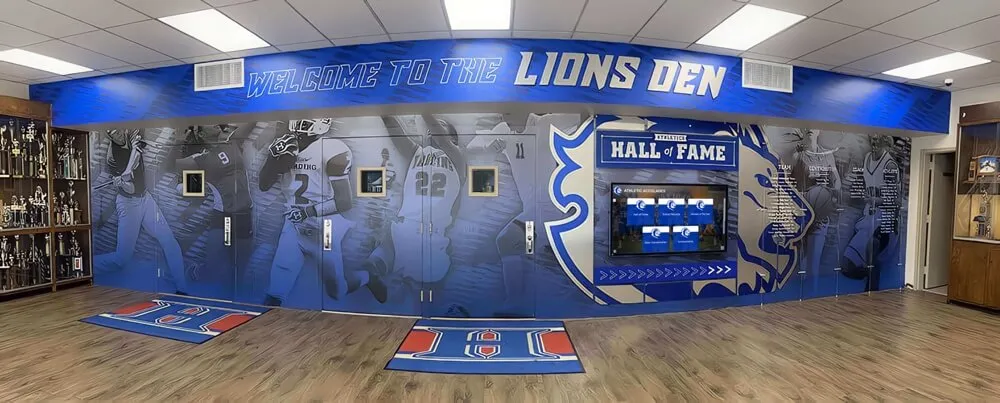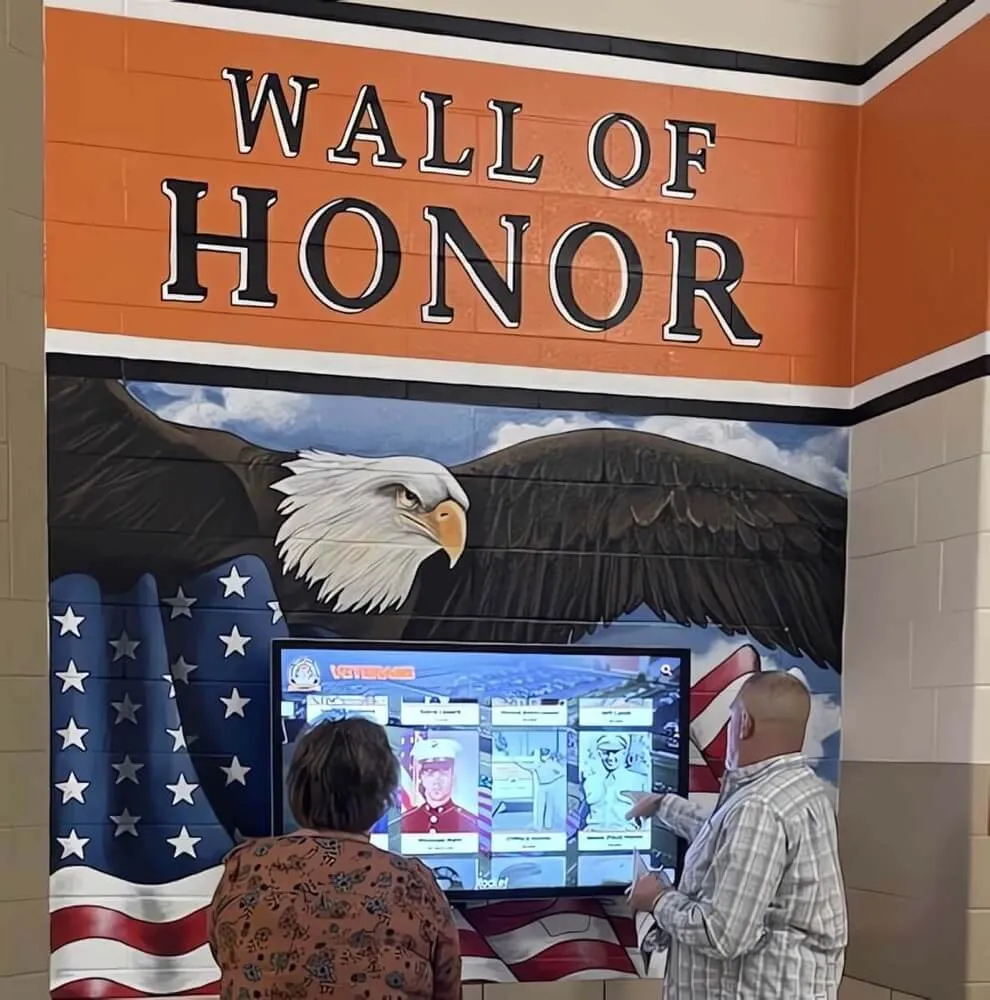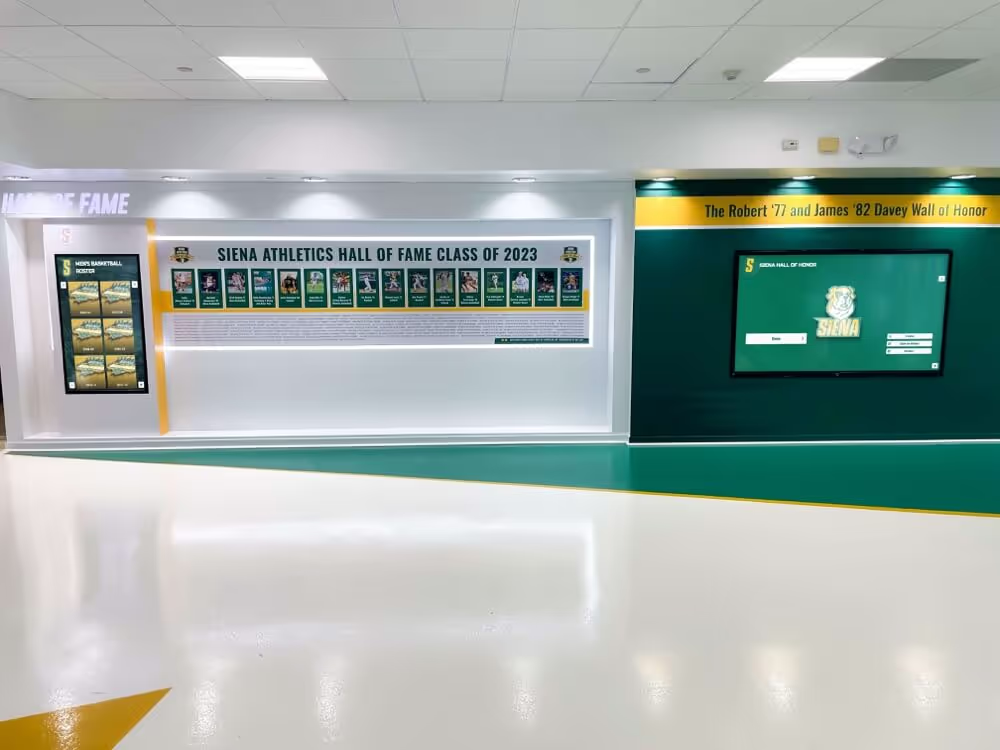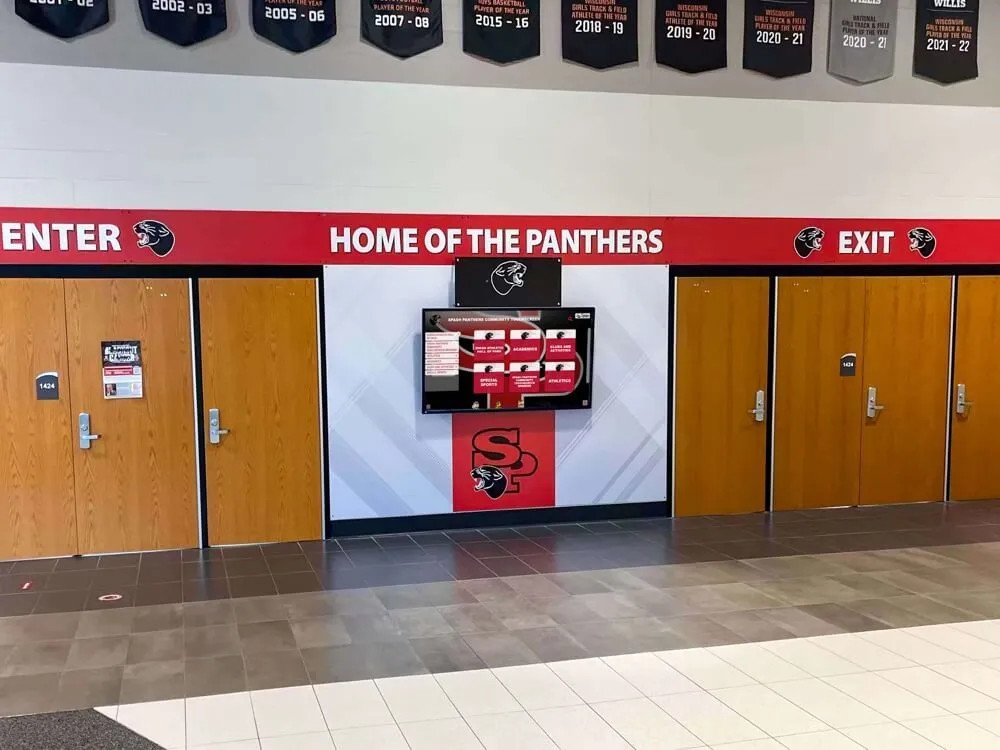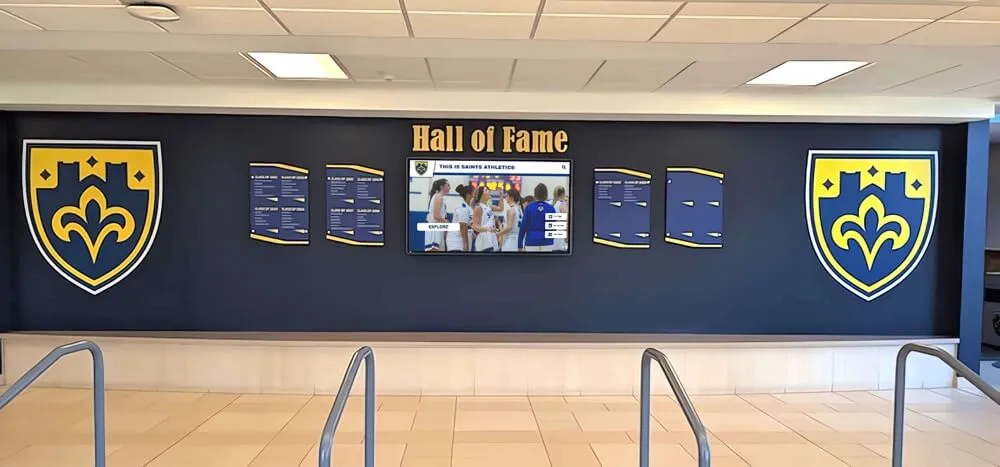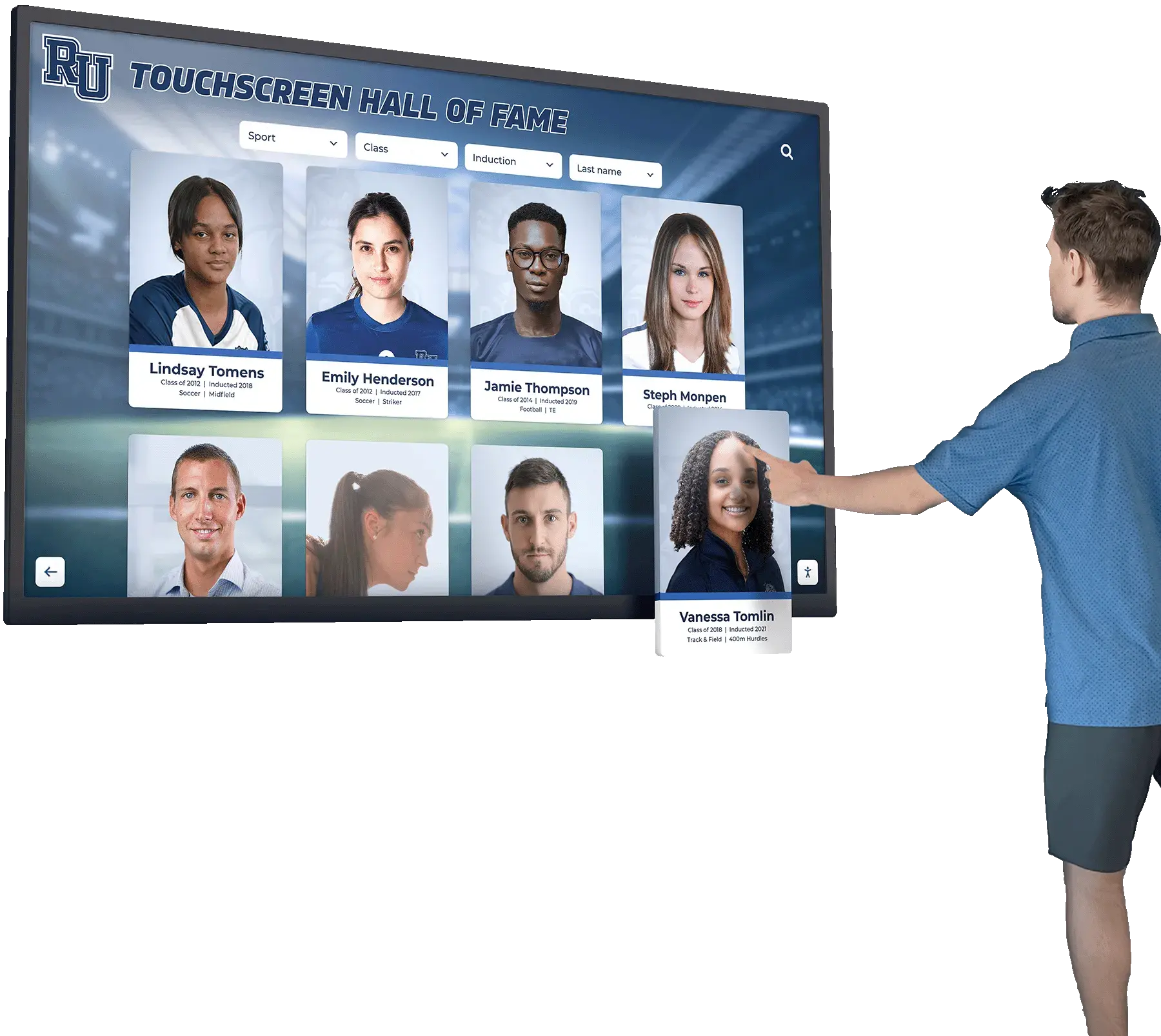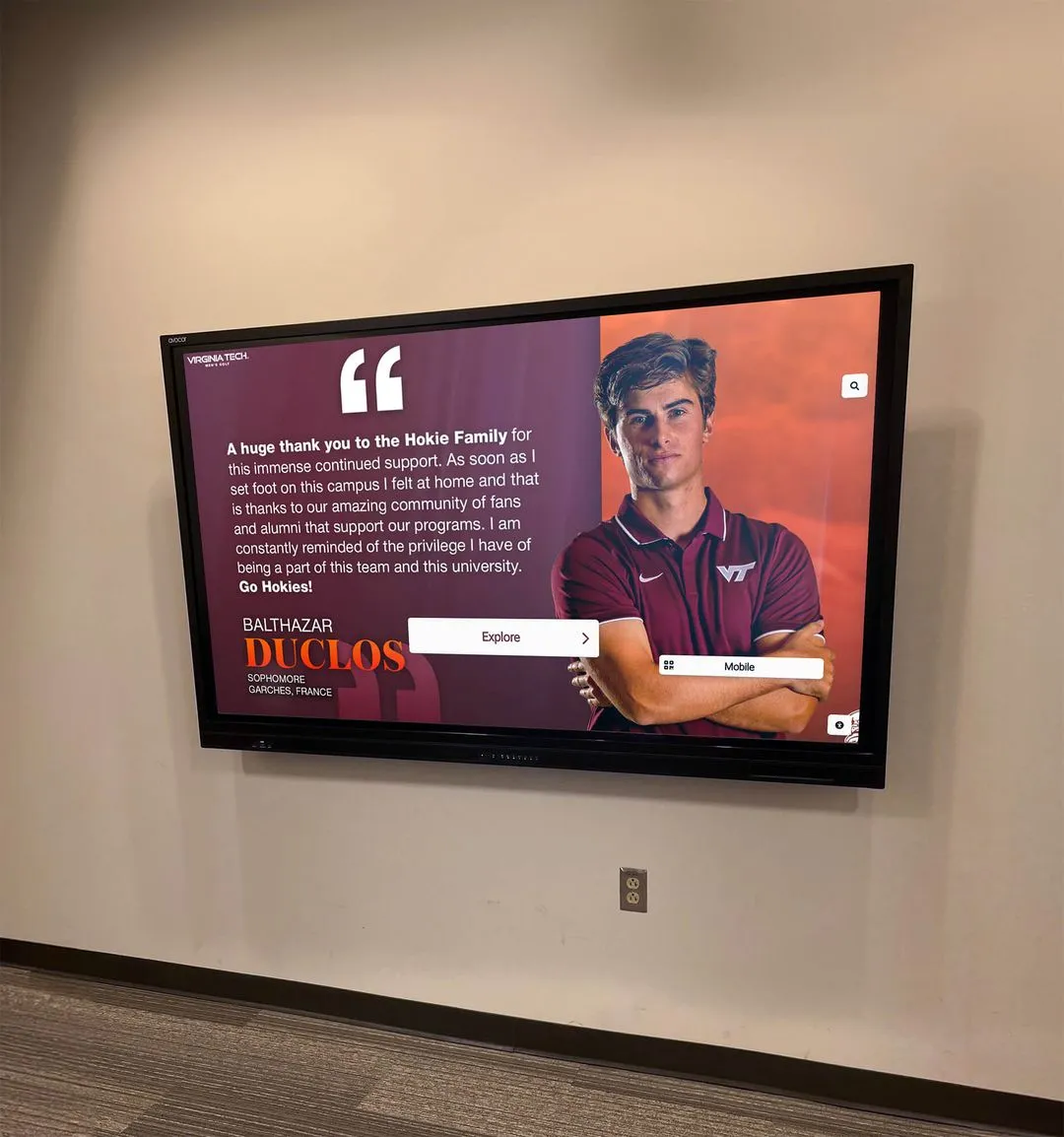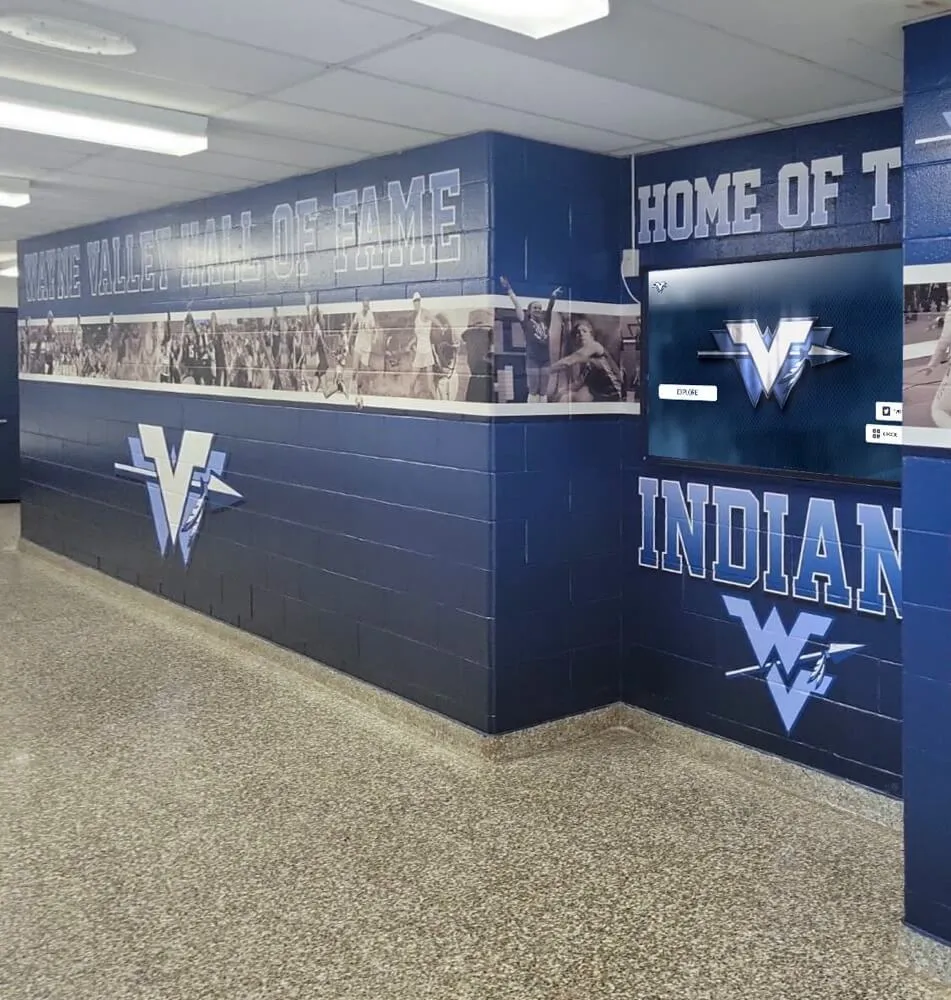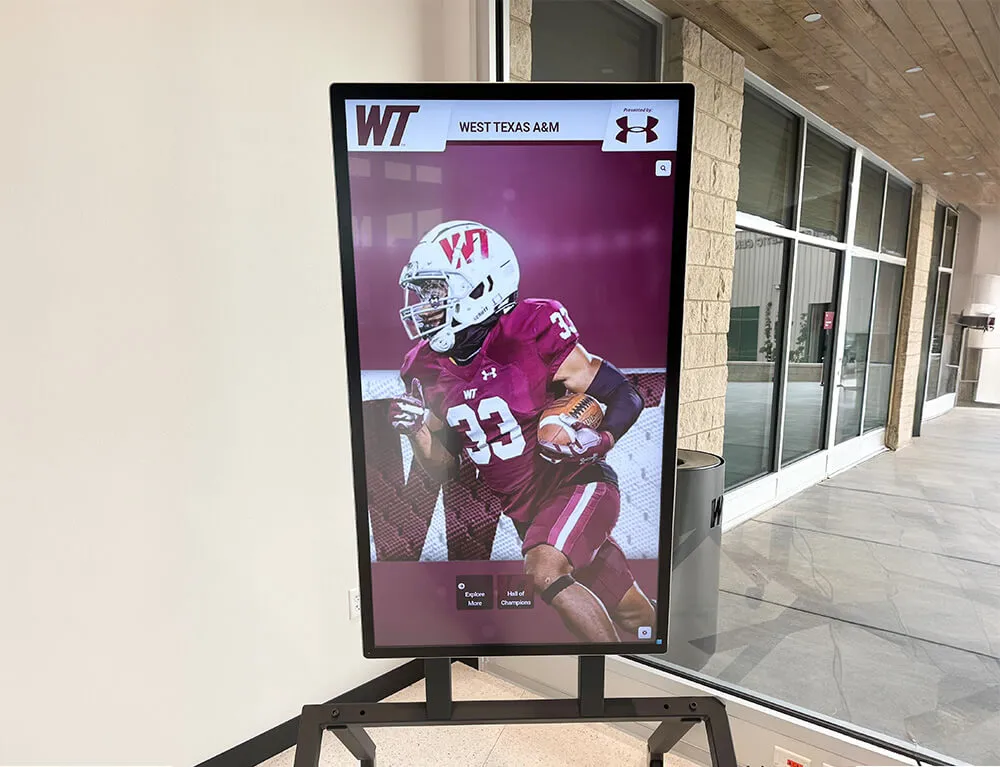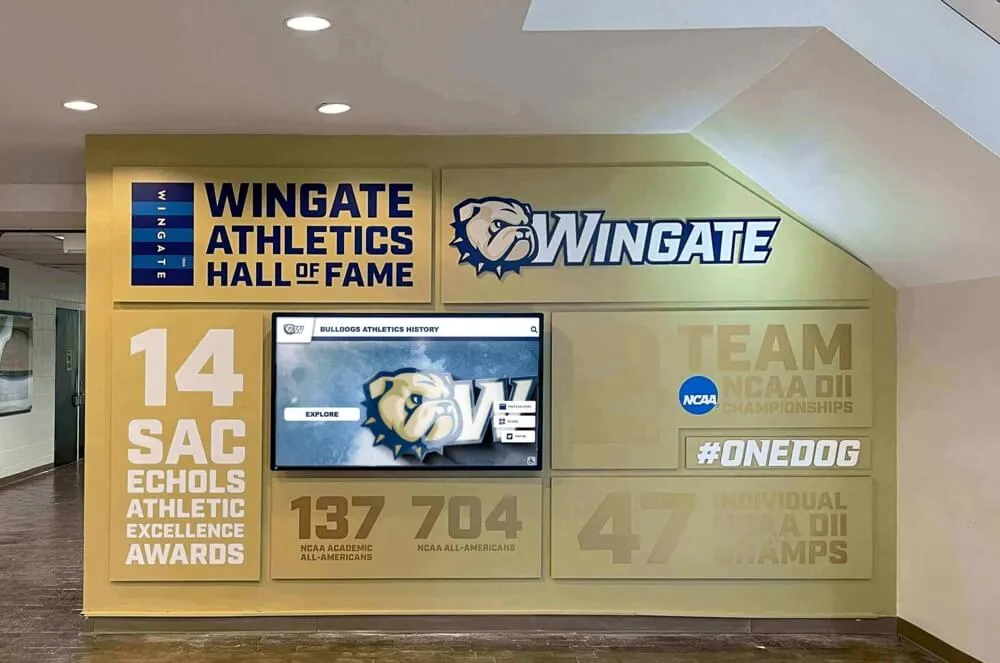




Organizations seeking to maximize the value of their recognition infrastructure increasingly ask: Can a single digital display system honor both athletic or academic achievement and philanthropic support? The answer reshapes how institutions approach recognition investments.
Dual-purpose digital displays combine hall of fame recognition with donor wall functionality, creating comprehensive recognition systems that honor multiple stakeholder groups through a single platform. These unified systems eliminate the need for separate physical installations, reduce space requirements by 50-70%, and provide flexible content architecture that adapts as recognition priorities evolve.
Schools, universities, and nonprofit organizations implementing dual-purpose recognition displays establish sustainable systems that accommodate unlimited inductees and donors while maintaining distinct presentation approaches for each recognition category. This guide details how these integrated displays handle diverse content requirements, manage sponsor hierarchies, and deliver meaningful recognition experiences across all contributor levels.
Why Organizations Choose Dual-Purpose Recognition Displays
Traditional recognition approaches force organizations to allocate separate wall space, budgets, and maintenance resources for each recognition category. A high school might install brass plaques for hall of fame inductees in the athletic wing while maintaining a separate donor wall in the main lobby. Universities often manage distinct physical displays for academic achievement, athletic excellence, donor recognition, and corporate sponsorship across campus.
These fragmented systems create compound problems. Each separate installation requires individual contractor visits for updates, multiplying maintenance costs. Limited physical space constrains recognition capacity, forcing difficult decisions about which contributors receive visibility. Static displays cannot adjust recognition hierarchies as donor giving levels change or as new corporate sponsors join programs.
Integrated digital recognition systems solve these structural limitations by consolidating multiple recognition programs into unified displays that maintain appropriate distinctions between recognition categories while sharing infrastructure.
Recognition Flexibility Benefits
Organizations report several operational advantages from dual-purpose displays:
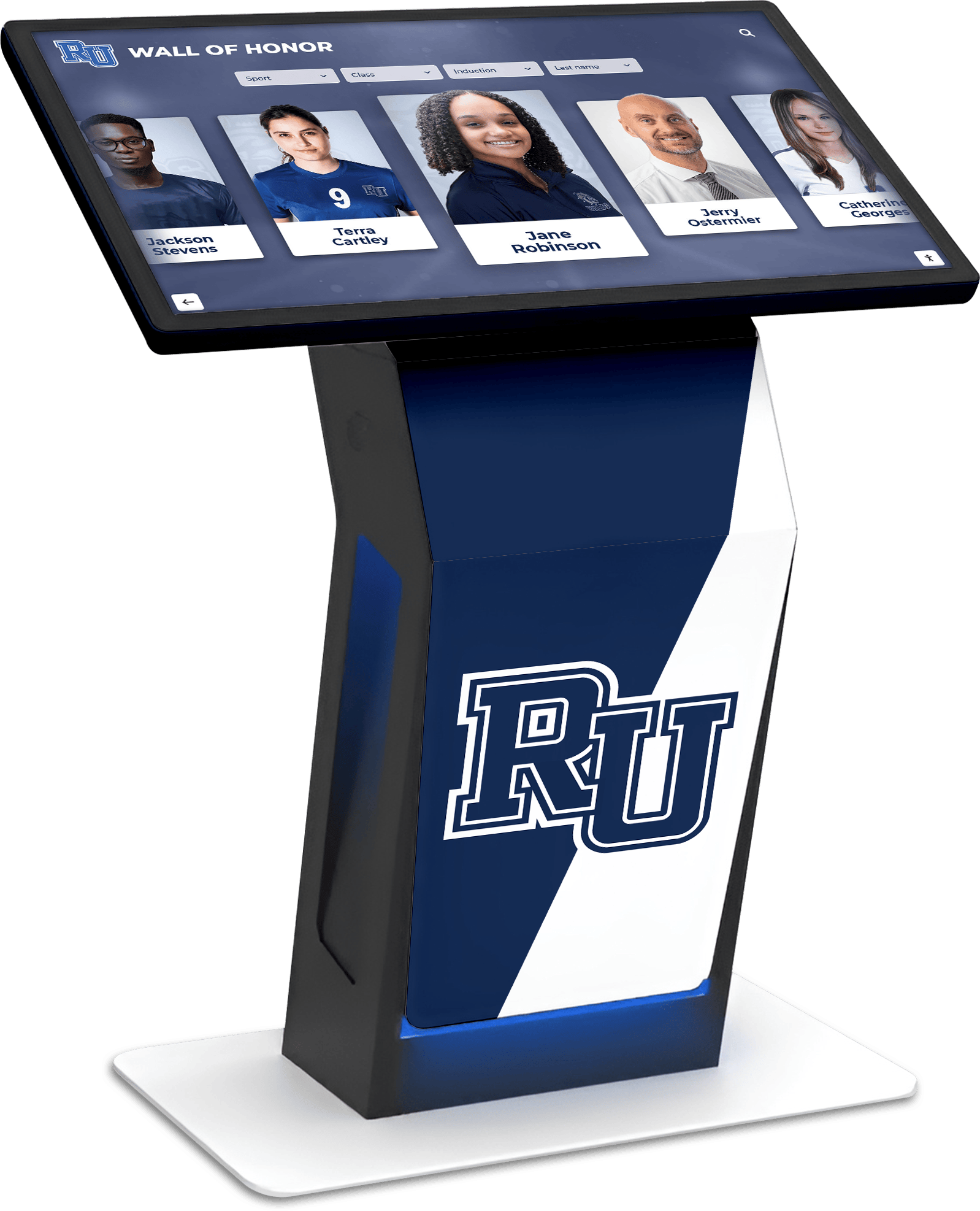
Space Efficiency: A single 55-inch touchscreen display accommodates hundreds of hall of fame inductees plus unlimited donor recognition entries. Traditional physical displays requiring 20-30 feet of wall space for similar capacity shrink to a 4-foot footprint.
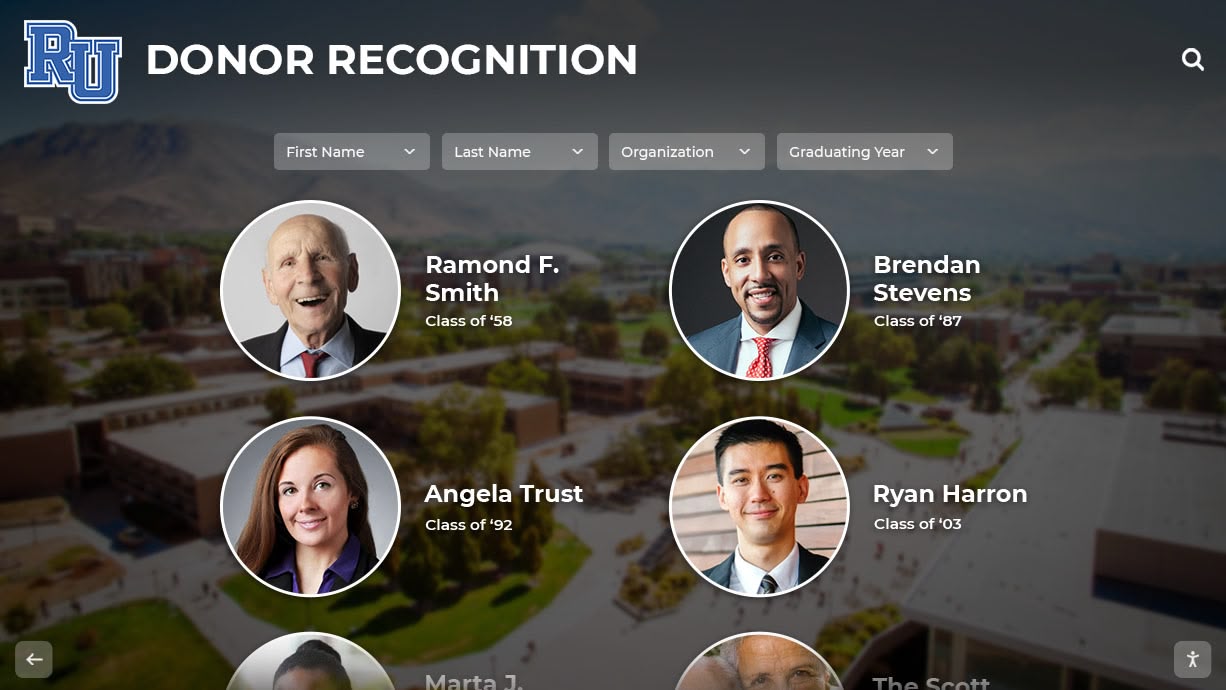
Content Separation: Digital architecture maintains clear distinctions between recognition categories. Hall of fame sections present athletic or academic achievement with stats, photos, and career highlights. Donor sections emphasize giving impact with campaign progress visualizations, recognition tier structures, and contribution stories. Users navigate between sections through intuitive menu structures.
Update Efficiency: Cloud-based content management enables recognition coordinators to update any section remotely. Adding new hall of fame inductees, adjusting donor recognition tiers, or rotating sponsor messaging requires no physical installation work. Organizations eliminate contractor dependencies and associated recurring costs.
Recognition Scalability: Digital systems accommodate growth without physical expansion. Programs experiencing 10-20% annual growth in recognition needs simply add content through existing displays rather than commissioning new wall installations.
Program Snapshot: Dual-Purpose Recognition Architecture
Understanding how organizations structure dual-purpose recognition helps clarify implementation approaches:
| Recognition Category | Content Focus | Update Frequency | Typical Volume |
|---|---|---|---|
| Hall of Fame Inductees | Individual achievement, career highlights, biographical information | Annual or bi-annual induction cycles | 5-15 inductees per year |
| Major Donors ($10K+) | Giving impact stories, campaign progress, perpetual recognition | Real-time as gifts are received | 10-50 donors annually |
| General Donors (All Levels) | Names organized by giving tier, recognition of sustained support | Monthly or quarterly updates | 100-1,000+ donors |
| Corporate Sponsors | Brand visibility, partnership messaging, event recognition | Quarterly or as sponsorship terms dictate | 5-30 sponsors |
| Memorial/Tribute Gifts | Honoree information, donor names, meaningful dedications | As contributions occur | 10-100+ tributes |
Organizations configure content architecture based on their specific recognition priorities and stakeholder mix. A high school booster club might emphasize hall of fame inductees and local business sponsors, while a university foundation balances major donor recognition with corporate partnership visibility.
Content Architecture: Managing Multiple Recognition Streams
Effective dual-purpose displays require thoughtful content organization that honors each contributor appropriately while maintaining system coherence. The architecture must accommodate different recognition formats, update cadences, and visibility requirements.
Hall of Fame Content Structure
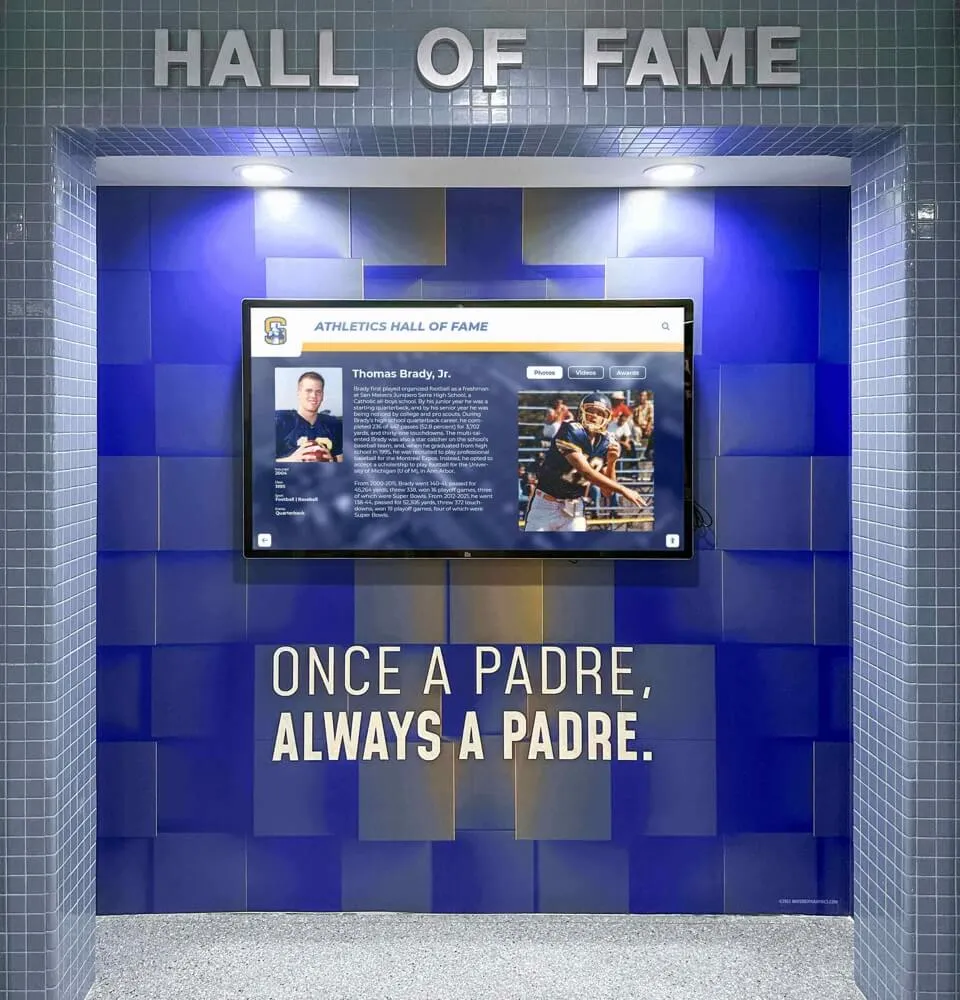
Hall of fame sections typically organize around individual profiles containing:
- Biographical information: Name, induction year, graduating class, achievements
- Career highlights: Statistics, championships, records, significant accomplishments
- Photographic documentation: Action shots, team photos, ceremony images
- Video content: Game footage, interviews, career retrospectives (when available)
- Historical context: Era-specific information, program milestones, peer comparisons
Athletic hall of fame programs establish formal criteria and selection processes that inform content requirements. Digital displays accommodate these detailed profiles while providing search and filter capabilities that help visitors discover specific inductees.
Donor Recognition Content Structure
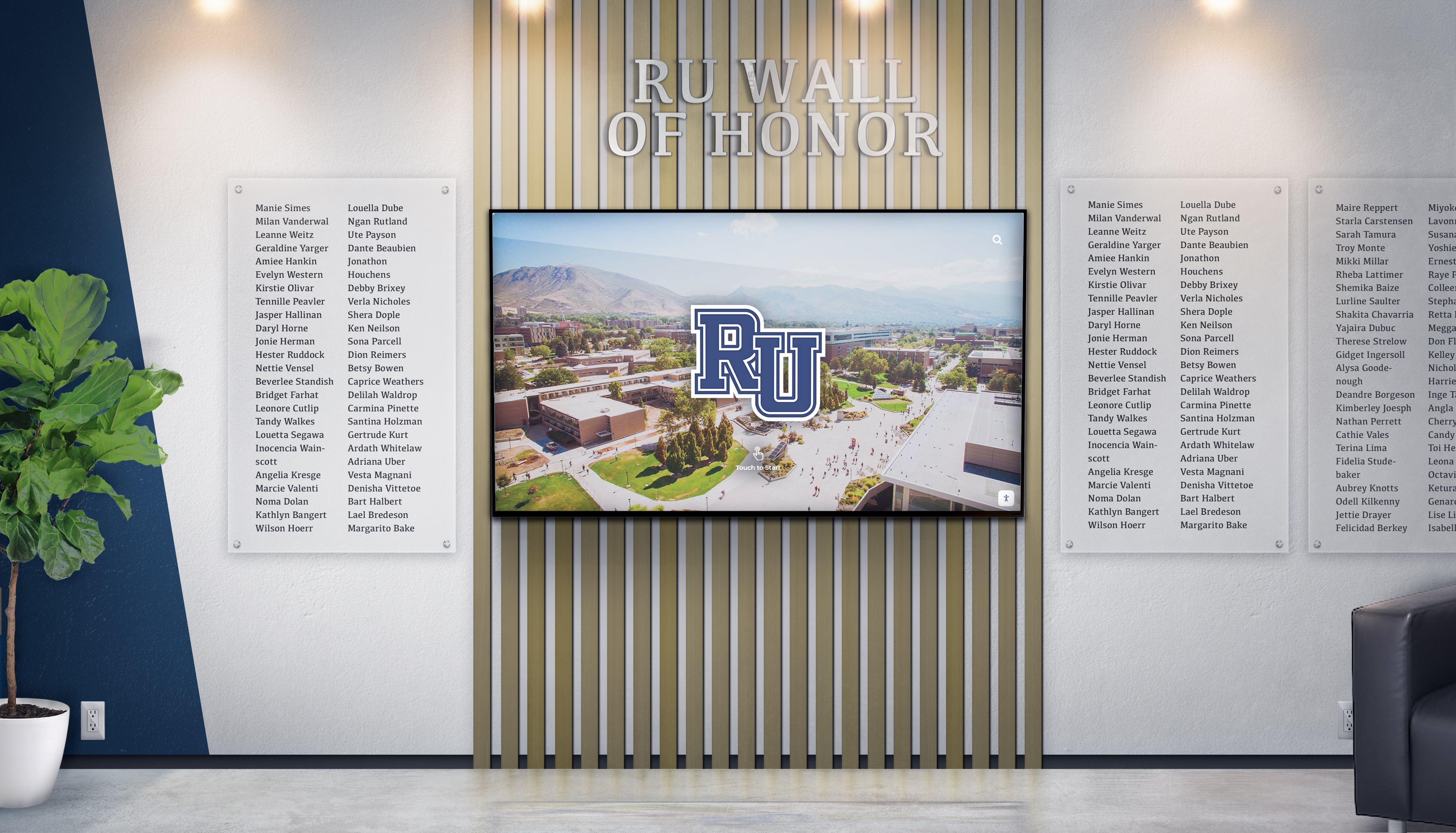
Donor sections organize contributors by recognition tiers that reflect giving levels:
Premier tier ($25,000+): Full profile pages with donor stories, giving impact descriptions, photographs, and optional video testimonials about why supporters chose to contribute.
Platinum tier ($10,000-$24,999): Prominent name recognition with giving level indication, optional photos, brief impact statements.
Gold tier ($5,000-$9,999): Clear name recognition organized alphabetically or by campaign, giving level identification.
Silver tier ($1,000-$4,999): Name recognition in organized lists by campaign or purpose.
Bronze tier (under $1,000): Recognition in comprehensive supporter lists updated quarterly or annually.
Organizations implementing comprehensive donor wall strategies build recognition hierarchies that acknowledge every contributor while providing enhanced visibility for leadership giving.
Corporate Sponsor Content Structure
Corporate sponsor sections balance brand visibility requirements with recognition program aesthetics:
- Title sponsors: Prominent brand placement on home screens, dedicated recognition pages, logo integration
- Presenting sponsors: Secondary visibility on main navigation, recognition pages with brand messaging
- Supporting sponsors: Logo recognition in organized sponsor galleries, rotating visibility features
- Event sponsors: Time-bound recognition tied to specific programs or competitions
Sponsor content typically includes brand logos, company descriptions, partnership messaging, and links to sponsor websites or social media. Organizations negotiate visibility terms that align sponsor benefits with contribution levels.
Memorial and Tribute Recognition
Memorial sections honor individuals through gifts made in their memory:
- Honoree name and dates
- Relationship context (beloved teacher, devoted alumnus, community leader)
- Donor names (given in memory by…)
- Optional photographs and biographical information
- Impact statements describing how gifts honor legacies
These perpetual recognition features provide meaningful ways for organizations to acknowledge contributions made in honor or memory of significant individuals.
Display Integration: Technical Approaches to Dual-Purpose Recognition
Implementing dual-purpose recognition requires displays that accommodate diverse content types while maintaining intuitive navigation between recognition categories.
Navigation Architecture
Effective dual-purpose displays provide clear pathways between recognition sections:
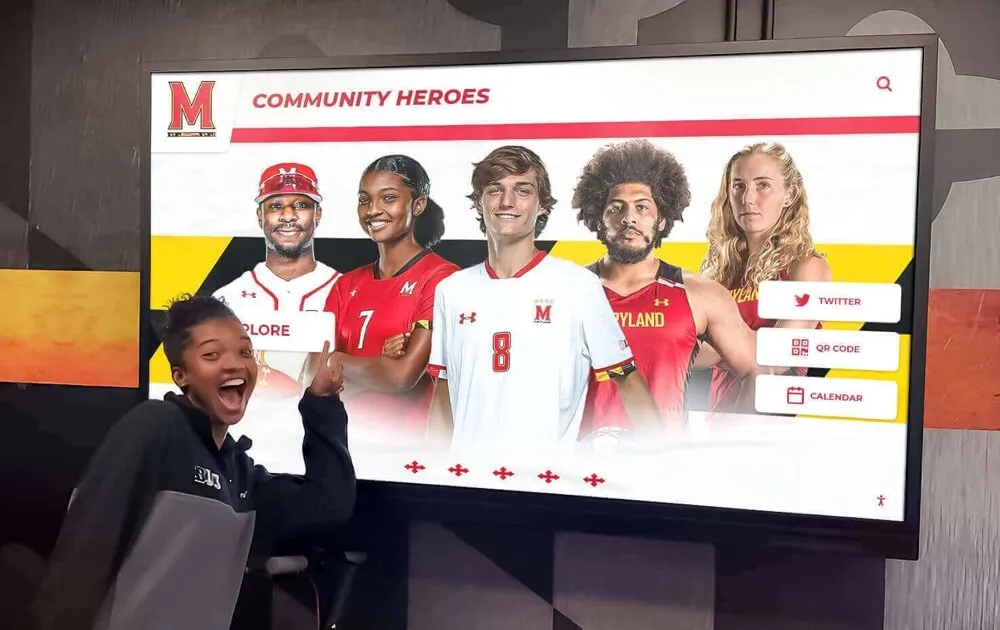
Home screen organization: Main menus present recognition categories as distinct options: “Athletic Hall of Fame,” “Academic Excellence,” “Donors & Supporters,” “Corporate Partners.” Users select their area of interest before diving into specific content.
Cross-linking capabilities: When appropriate, systems link related content. A hall of fame inductee profile might acknowledge scholarship support that bears their name. A donor profile might reference the athletic program or academic department their gifts support.
Search functionality: Comprehensive search enables visitors to locate specific individuals regardless of recognition category. Search results clearly indicate whether matches appear in hall of fame, donor, or sponsor sections.
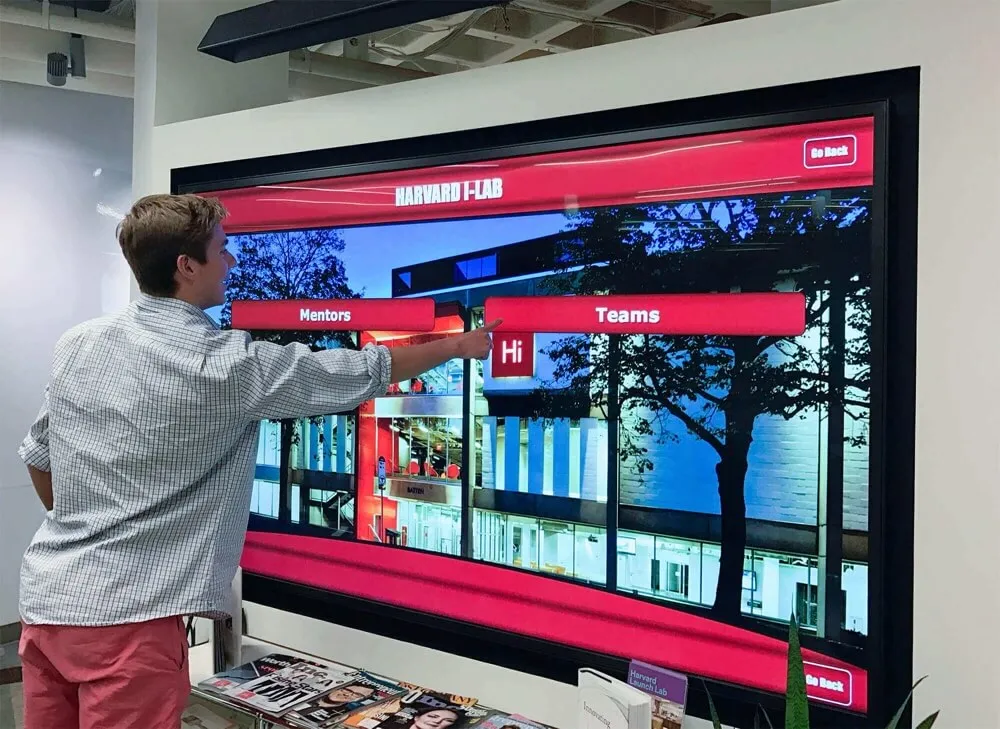
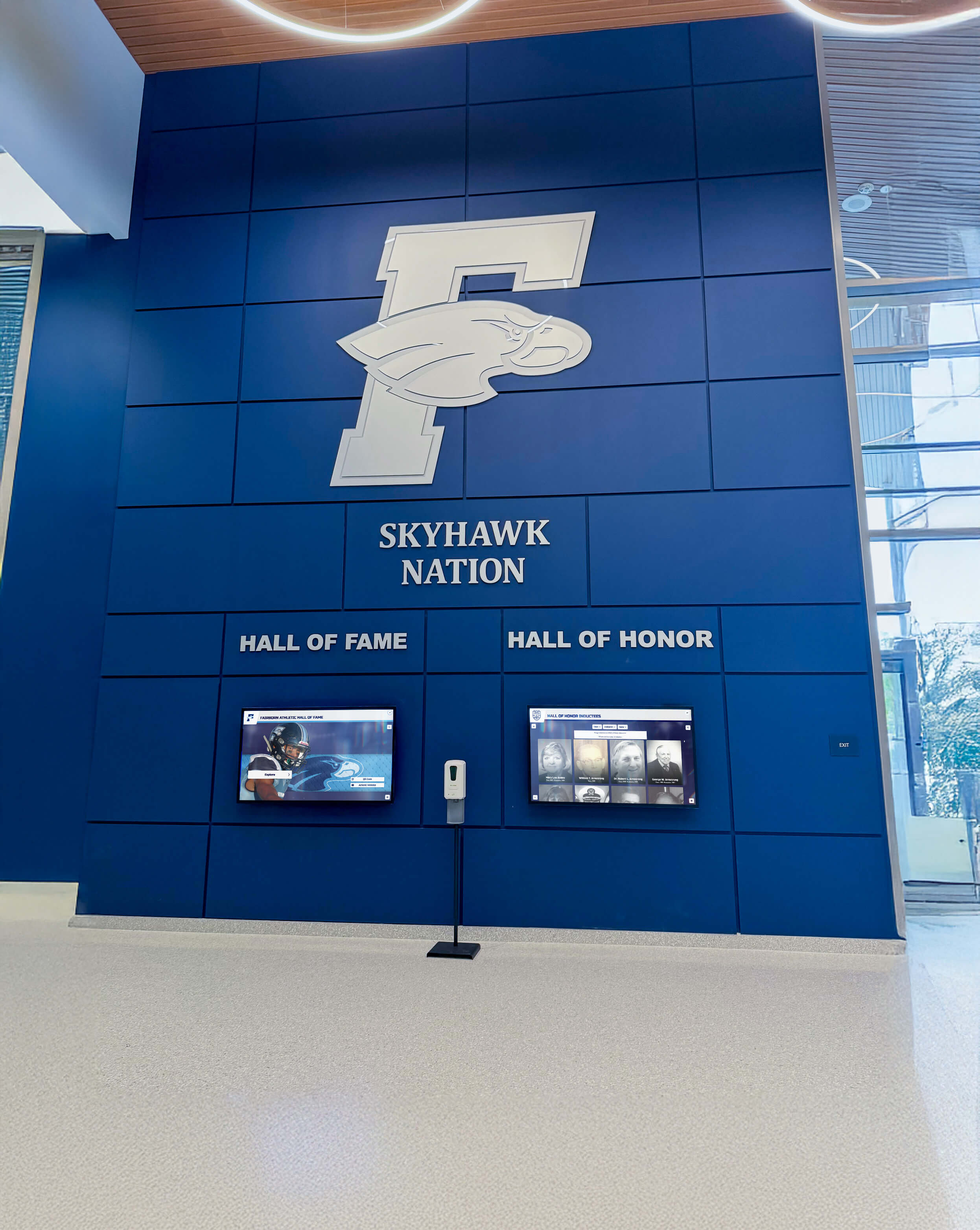
Organizations implementing interactive touchscreen kiosks design navigation flows that accommodate both directed searches (visitors looking for specific individuals) and exploratory browsing (visitors discovering recognition content).
Content Management Workflows
Organizations establish processes for updating different recognition categories:
Hall of Fame updates: Typically occur annually following formal selection processes. Recognition coordinators prepare inductee content packages (biographies, photos, statistics) and schedule publication to coincide with induction ceremonies.
Donor updates: Range from real-time (major gifts added immediately) to quarterly (general donor list refreshes). Advancement teams maintain giving tier accuracy and coordinate recognition timing with donor communications.
Sponsor updates: Follow contract cycles, with visibility features activated at sponsorship start dates and maintained through agreement terms. Marketing teams manage brand assets and messaging updates.
Memorial additions: Process as gifts are received, with families often consulted about biographical information and photographic preferences.
Cloud-based content management systems enable different staff members to manage their respective recognition areas. Athletic directors handle hall of fame content, development officers manage donor recognition, and marketing teams coordinate sponsor visibility—all through role-based access to unified platforms.
Visual Design Consistency
While content differs significantly between recognition categories, effective dual-purpose displays maintain visual coherence through consistent design elements:
- Color schemes: Institutional branding colors applied across all sections
- Typography: Consistent font choices for names, descriptions, and supporting text
- Layout templates: Standardized profile structures adapted for different content types
- Navigation patterns: Uniform menu structures and interaction approaches
- Photographic treatments: Consistent image sizing, cropping, and presentation styles
This design consistency helps visitors understand they’re engaging with a unified recognition program while experiencing distinct content appropriate to each recognition category.
Sponsor Recognition: Balancing Visibility with Program Integrity
Organizations implementing dual-purpose displays must carefully manage sponsor recognition to maintain program credibility while honoring partnership agreements.
Sponsor Visibility Models
Sponsors receive recognition through several visibility approaches:
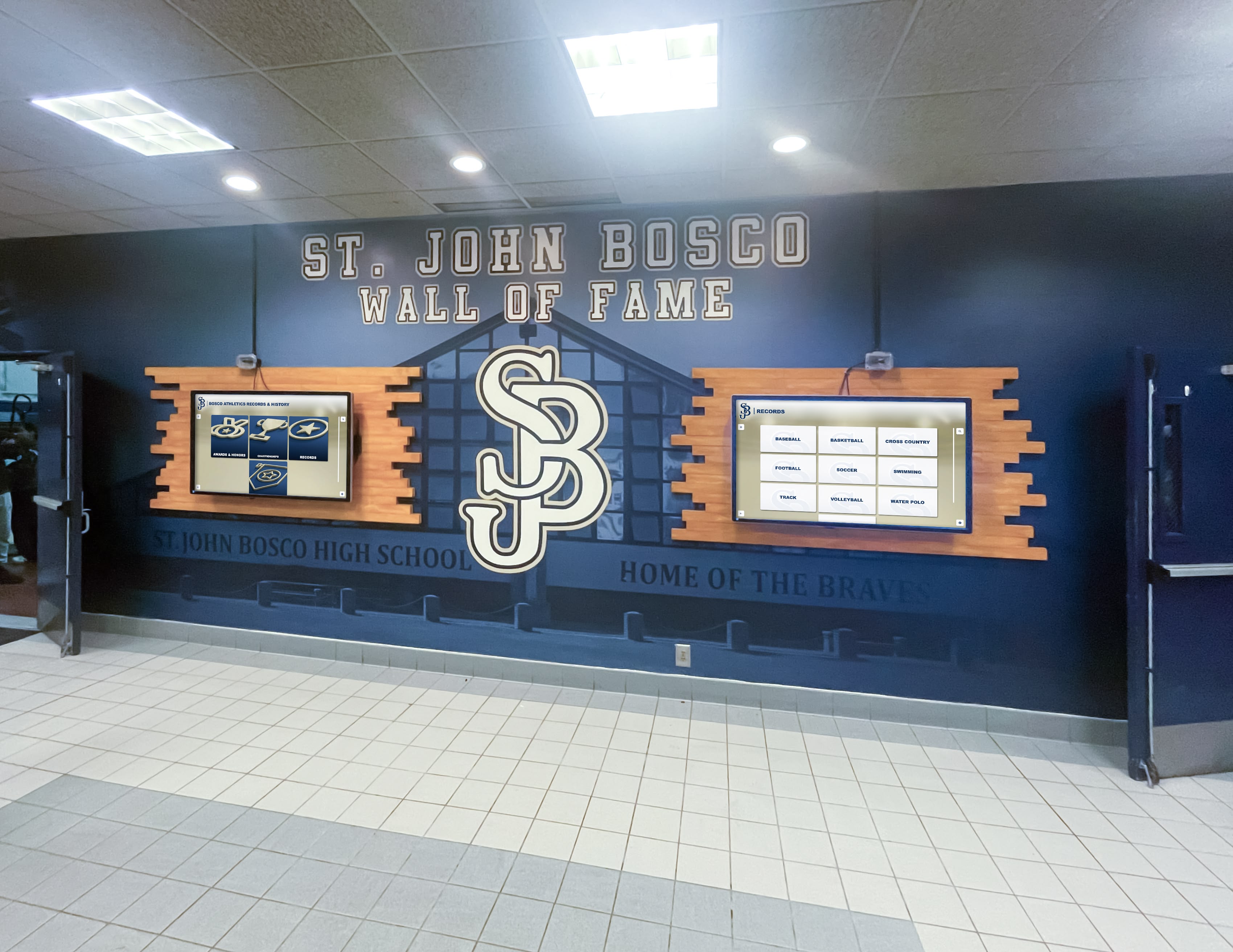
Dedicated sponsor screens: Some organizations create sponsor gallery sections accessible from main menus. Visitors selecting “Our Partners” or “Community Supporters” access sponsor information similar to browsing inductee profiles.
Rotating sponsor features: Home screen slideshows or rotating banners provide sponsor visibility to casual viewers who may not actively navigate to sponsor sections. These rotation features typically cycle through sponsors at negotiated intervals (30-60 seconds per sponsor).
Search visibility: Sponsors appear in comprehensive search results when visitors search company names, ensuring discoverability without requiring prominent menu placement.
Co-branded sections: Title or presenting sponsors sometimes receive naming rights to specific recognition sections: “Smith Family Foundation Hall of Fame” or “Local Credit Union Community Recognition Wall.”
Organizations developing corporate sponsorship recognition programs establish sponsorship packages that clearly define visibility benefits while maintaining focus on primary recognition purposes.
Sponsor Content Guidelines
Effective sponsor recognition establishes content parameters that balance business objectives with recognition program standards:
Messaging tone: Sponsor descriptions emphasize community partnership and program support rather than pure advertising. “ABC Corporation proudly supports Eagles Athletics by sponsoring our annual tournament series and providing equipment grants” rather than sales-focused messaging.
Visual standards: Organizations provide brand guidelines specifying logo formats, color requirements, and image specifications. Consistent visual standards maintain professional appearance across all sponsor entries.
Content approval workflows: Marketing or advancement teams review sponsor content before publication to ensure alignment with institutional standards and partnership agreements.
Update provisions: Sponsorship agreements specify update rights, allowing sponsors to refresh messaging or update brand assets during contract terms through appropriate approval channels.
These content standards protect program integrity while providing sponsors with meaningful recognition that reinforces their community support.
Sponsor Rotation and Scheduling
Organizations managing multiple sponsors implement rotation schedules that provide equitable visibility:
Equal rotation cycles: Within sponsor tiers, equal time allocation ensures fair visibility distribution. Five platinum sponsors each receive equal rotation time in prominent positions.
Time-based scheduling: Some organizations activate sponsor visibility during relevant timeframes. Tournament sponsors receive enhanced visibility during competition seasons. Event sponsors appear prominently during weeks surrounding their sponsored events.
Perpetual recognition: Organizations sometimes offer perpetual naming recognition for transformational gifts: “The Johnson Family Athletic Hall of Fame, Presented by Community Bank.” These permanent recognitions appear consistently rather than rotating.
Clear sponsorship agreements specify rotation parameters, preventing confusion and ensuring sponsors receive contracted visibility benefits.
Implementation Timeline: Launching Dual-Purpose Recognition Systems
Organizations typically follow structured implementation processes when establishing integrated recognition displays.
Phase 1: Planning and Content Development (Weeks 1-4)
Stakeholder alignment: Gather input from athletics, advancement, marketing, and administrative leadership about recognition priorities. Determine relative emphasis between hall of fame, donor, and sponsor content. Establish governance structures for ongoing content decisions.
Content inventory: Compile existing recognition information:
- Hall of fame inductee lists with available biographical information, photos, achievements
- Donor databases with current giving tiers and recognition preferences
- Sponsor agreements specifying visibility requirements and contract terms
- Memorial and tribute gift records requiring recognition
Content gap identification: Determine missing elements needed for complete profiles. Organizations often lack digital photographs of historical inductees or detailed biographical information requiring research.
Recognition tier structure: Finalize donor recognition levels, sponsor visibility packages, and hall of fame selection criteria. Ensure alignment across stakeholder groups.
Planning completeness directly impacts implementation success. Organizations investing adequate time in content preparation launch with comprehensive recognition programs rather than sparse initial displays requiring extensive later additions.
Phase 2: Content Creation and System Configuration (Weeks 5-8)
Profile development: Create standardized profiles for all recognition categories:
- Hall of fame inductee biographies with stats, achievements, photos
- Donor recognition entries at appropriate detail levels for each tier
- Sponsor profiles with approved brand assets and partnership descriptions
- Memorial and tribute dedications with honoree information
System setup: Configure displays with:
- Navigation structures reflecting recognition categories
- Search functionality spanning all content types
- Visual design templates maintaining brand consistency
- User interface elements accommodating touchscreen interaction
Content migration: Load prepared recognition information into content management systems. Implement quality control reviews ensuring accuracy, completeness, and visual consistency.
Organizations implementing digital history archives often expand dual-purpose recognition systems to include historical timelines, institutional milestones, and archival photograph collections, creating comprehensive digital storytelling platforms.
Phase 3: Launch and Activation (Weeks 9-10)
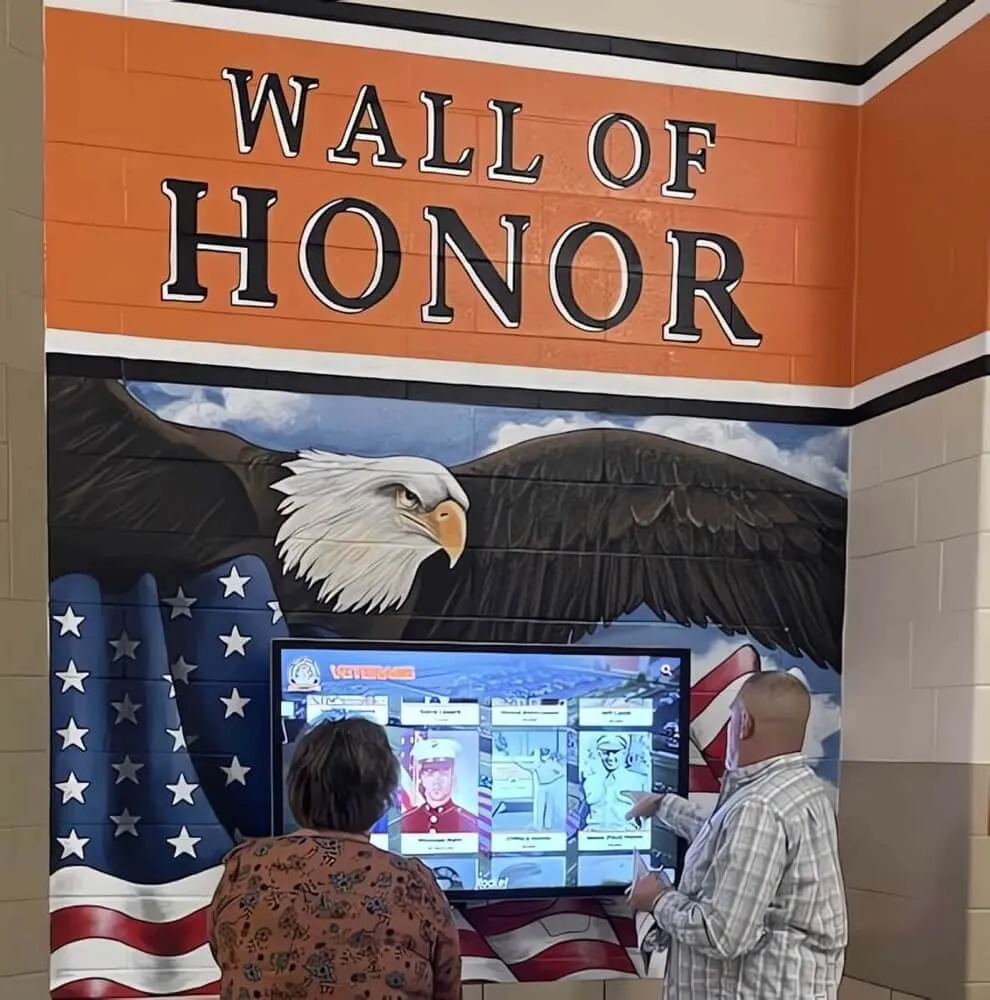
Physical installation: Mount displays in high-visibility locations where inductees, donors, sponsors, and general visitors regularly pass. Common locations include main entrances, lobbies, athletic facilities, advancement offices, and event spaces.
Staff training: Prepare personnel who will manage ongoing content updates. Train advancement staff on donor recognition procedures, athletic administrators on hall of fame updates, and marketing teams on sponsor management.
Launch promotion: Announce dual-purpose recognition displays through institutional communications. Invite inductees, donors, and sponsors to view their recognition. Generate engagement through social media posts, newsletter features, and event unveilings.
Monitoring and adjustment: Track user interaction patterns during initial weeks. Observe which sections receive most engagement, how visitors navigate between categories, and where confusion points occur. Make navigation or interface adjustments based on observed behavior.
Phase 4: Ongoing Management (Continuous)
Content updates: Establish regular update cadences for each recognition category aligned with organizational rhythms (annual inductions, quarterly donor updates, seasonal sponsor rotations).
Recognition expansion: Add recognition categories as needs emerge. Organizations commonly expand initial hall of fame and donor sections to include student achievement recognition, staff appreciation, volunteer acknowledgment, and community partner visibility.
Performance measurement: Track recognition program outcomes:
- Hall of fame engagement (profile views, time spent, ceremony attendance)
- Donor retention and giving growth among recognized supporters
- Sponsor satisfaction and contract renewals
- Overall system usage and visitor interaction patterns
Effective donor recognition programs evolve continuously based on stakeholder feedback and organizational priorities, with dual-purpose displays providing flexibility to adapt recognition approaches without physical reconstruction.
Integration with Broader Fundraising Strategies
Dual-purpose recognition displays function as components within comprehensive advancement programs rather than standalone installations.
Campaign Visualization
Organizations conducting capital campaigns or annual funds use donor sections to visualize progress:
- Goal thermometers: Graphical representations of campaign progress toward funding targets
- Impact counters: Running totals of dollars raised, students served, programs funded
- Milestone celebrations: Recognition when campaigns reach significant benchmarks
- Participation metrics: Donor counts by constituency (alumni, parents, staff, community)
These real-time campaign visualizations create urgency and encourage participation. Prospective donors viewing displays see active giving communities and understand where additional support fits within broader campaigns.
Donor Story Amplification
Premium recognition tiers often include donor impact stories that explain giving motivations and contribution purposes:
- Why donors chose to support specific programs
- Personal connections to institutions (alumni experiences, family traditions)
- Desired impact for future generations
- Specific projects or scholarships funded by gifts
These narrative elements transform donor walls from simple name lists into compelling storytelling platforms that inspire additional giving. Prospects considering major gifts see peer examples and envision their own potential legacy contributions.
Planned Giving Promotion
Organizations use donor recognition sections to promote planned giving opportunities:
- Heritage society recognition for supporters including institutions in estate plans
- Information about planned giving vehicles (bequests, charitable gift annuities, trusts)
- Examples of how planned gifts create lasting impact
- Contact information for advancement staff who assist with gift planning
This visibility helps normalize planned giving conversations and introduces options prospective donors may not have previously considered.
Technical Specifications for Dual-Purpose Recognition
Organizations evaluating display systems should understand technical requirements supporting comprehensive recognition programs.
Hardware Considerations
Display size: Most organizations implement 43-55 inch touchscreens providing sufficient screen real estate for detailed profiles while fitting standard wall spaces. Larger installations sometimes use 65-75 inch displays or multiple linked screens.
Touch technology: Commercial-grade capacitive touchscreens provide responsive interaction supporting precise user input. These displays withstand high-traffic environments and continuous daily use.
Mounting options: Wall-mounted, kiosk-mounted, and integrated cabinetry installations each offer advantages. Wall mounts minimize floor space usage. Kiosks provide flexible positioning. Custom cabinetry integrates displays with surrounding architectural elements.
Network connectivity: Ethernet or WiFi connectivity enables cloud-based content management and remote updates. Cellular backup options provide redundancy in locations lacking reliable hardwired connections.
Software Requirements
Content management system: Cloud-based platforms enable authorized users to update recognition content from any location. Role-based permissions allow different staff members to manage their respective sections.
Template flexibility: Systems should accommodate diverse content types (biographical profiles, donor lists, sponsor galleries, memorial tributes) through configurable templates rather than rigid formats.
Search and filtering: Comprehensive search capabilities spanning all recognition categories help visitors locate specific individuals. Filtering options enable browsing by induction year, giving level, sponsor type, or other relevant criteria.
Accessibility compliance: WCAG 2.2 AA accessible touchscreen displays ensure all visitors can access recognition content regardless of physical ability, vision status, or assistive technology requirements.
Analytics integration: Usage tracking provides insights about which recognition categories receive most engagement, popular search terms, and average interaction duration. These metrics inform content strategy and demonstrate program value.
Security and Backup
Data redundancy: Cloud-based systems automatically maintain backup copies of all recognition content, protecting against data loss from hardware failures or local disasters.
Access control: Authentication systems ensure only authorized personnel can modify recognition content, preventing unauthorized changes or deletions.
Version history: Content management platforms typically maintain edit histories enabling recovery of previous content versions if needed.
Cost Considerations and ROI Analysis
Organizations evaluating dual-purpose recognition systems often compare costs against traditional approaches.
Initial Investment
Dual-purpose digital recognition systems typically require $8,000-$15,000 initial investment including:
- Commercial touchscreen display hardware ($3,000-$6,000)
- Software platform licensing (often $2,000-$4,000 initial setup)
- Content development and migration services ($2,000-$4,000)
- Installation and mounting ($1,000-$2,000)
This initial investment often appears higher than traditional donor walls or hall of fame plaques. However, total cost of ownership analysis reveals different conclusions.
Ongoing Costs
Traditional physical recognition systems incur recurring contractor costs for updates:
- $500-$1,500 per update for donor wall name additions
- $200-$800 per new hall of fame plaque
- $2,000-$5,000 for recognition wall expansions when capacity fills
Organizations adding 10-20 new donors annually plus 5-10 hall of fame inductees spend $3,000-$8,000 yearly on recognition updates. Over 10 years, these recurring costs total $30,000-$80,000.
Digital systems replace per-update contractor charges with modest annual software licensing ($1,000-$2,500) enabling unlimited updates. Organizations recover initial investments within 2-4 years through eliminated contractor costs.
Capacity Value
Traditional donor walls accommodate 100-300 names before requiring expensive physical expansion. Schools exhausting donor wall capacity face $10,000-$25,000 expansion costs.
Digital systems accommodate unlimited recognition entries without additional hardware investment. This capacity difference becomes increasingly valuable as recognition programs mature and donor bases grow.
Opportunity Benefits
Beyond direct cost savings, dual-purpose recognition systems generate advancement benefits difficult to quantify precisely:
- Enhanced donor retention through improved recognition experiences
- Increased major gift closure rates when prospects see compelling donor stories
- Higher sponsor renewal rates when partners receive professional digital visibility
- Improved institutional reputation through modern, accessible recognition approaches
Organizations report that professional recognition infrastructure signals institutional competence to prospective supporters, particularly when competing for major gifts against peer institutions.
Common Implementation Challenges and Solutions
Organizations implementing dual-purpose recognition systems commonly encounter specific challenges with established solutions.
Challenge: Content Completeness Varies Across Categories
Organizations often possess complete donor databases but limited biographical information for historical hall of fame inductees. This content gap creates recognition sections with inconsistent detail levels.
Solution: Implement phased content development. Launch displays with available content, then systematically enhance profiles over time. Engage alumni volunteers to research historical inductees. Add content as information becomes available rather than delaying launches until perfection.
Challenge: Stakeholder Agreement on Recognition Priorities
Athletics departments may want hall of fame content receiving prime visibility. Advancement offices push donor recognition prominence. Marketing teams advocate sponsor placement. These competing priorities create tension.
Solution: Establish governance committees representing all stakeholder groups. Define clear decision frameworks based on strategic institutional priorities. Some organizations rotate home screen emphasis seasonally: Hall of fame prominence during homecoming and induction seasons, donor emphasis during annual giving campaigns, sponsor visibility during their contracted events.
Challenge: Sponsor Content Quality Inconsistencies
Corporate sponsors submit brand assets in varying formats and quality levels. Some provide professional logos and approved messaging. Others supply low-resolution images or poorly written descriptions requiring extensive revision.
Solution: Create sponsor brand guidelines specifying required asset formats, resolution standards, and messaging parameters. Provide template documents sponsors complete ensuring consistent information collection. Review and revise sponsor content before publication, offering professional editing services as part of sponsorship benefits.
Challenge: Privacy Concerns from Donors
Some major donors prefer anonymity or have legitimate concerns about public recognition. Organizations must balance recognition program value against donor preferences.
Solution: Implement flexible recognition options allowing donors to:
- Opt out entirely from public recognition
- Request anonymous recognition acknowledging gift size without identifying donors
- Include only first names or initials
- Delay recognition publication for specified periods
Advancement teams discuss recognition preferences during gift conversations, documenting donor wishes in database records that control public recognition visibility.
Measuring Dual-Purpose Recognition Program Success
Organizations establish metrics tracking whether recognition programs achieve intended outcomes.
Engagement Metrics
Usage analytics: Track monthly display interactions, profile views, search queries, and average session duration. Growing engagement indicates visitor value.
Popular content: Monitor which recognition categories, specific profiles, and search terms generate most interest. Use insights to inform content development priorities.
Traffic patterns: Understand peak usage times, busiest locations, and visitor flow patterns. Adjust content refresh schedules to align with high-traffic periods.
Advancement Outcomes
Donor retention: Compare retention rates for recognized donors against overall donor populations. Organizations commonly see 10-20 percentage point higher retention among donors receiving meaningful recognition.
Gift growth: Track giving increases among donors moving up recognition tiers. Recognition often motivates supporters to reach next tier thresholds.
Sponsor renewals: Monitor sponsorship contract renewal rates and sponsor satisfaction scores. Professional recognition contributes to partnership satisfaction.
Planned giving inquiries: Count planned giving conversations and heritage society additions following donor wall implementation. Visible legacy recognition prompts estate gift discussions.
Hall of Fame Program Outcomes
Nomination quality: Track nomination submission quantities and quality following display implementation. Enhanced recognition often increases community engagement in hall of fame programs.
Ceremony attendance: Monitor induction ceremony attendance trends. Professional recognition infrastructure often drives higher event participation.
Inductee engagement: Survey inductees about recognition satisfaction. Digital profiles providing lasting visibility typically generate higher satisfaction than physical plaques stored in limited-visibility locations.
Future Trends in Dual-Purpose Recognition
Digital recognition technology continues advancing with several emerging capabilities worth monitoring.
Mobile Integration
Organizations increasingly connect recognition displays to mobile experiences. Visitors scanning QR codes from displays access extended content on personal devices: video interviews, complete statistics, additional photos, social media links. This mobile extension amplifies recognition beyond physical display locations.
Social Media Connectivity
Modern recognition platforms integrate with institutional social media, automatically generating shareable posts when new inductees or donors appear on displays. This social amplification increases recognition value while promoting institutional advancement priorities.
Data Visualization Evolution
Advanced recognition platforms incorporate sophisticated data visualization showing giving trends, participation rates, campaign progress, and donor demographics through engaging interactive graphics. These analytical features help visitors understand collective community support beyond individual recognition.
Augmented Reality Exploration
Emerging recognition experiences incorporate augmented reality enabling smartphone users to reveal additional content layers when viewing displays. Point devices at inductee photos to watch career highlight videos. View donor sections to access facility impact visualizations showing how contributions transformed spaces.
While these advanced capabilities remain optional enhancements, organizations implementing dual-purpose recognition platforms today position themselves to adopt emerging features as they mature.
Conclusion: Building Unified Recognition Infrastructure
Dual-purpose digital displays combining hall of fame and donor wall functionality represent intelligent infrastructure investments for recognition-focused organizations. These unified systems provide operational efficiency, cost savings, recognition flexibility, and visitor experiences traditional fragmented approaches cannot match.
Organizations implementing integrated recognition platforms establish sustainable systems accommodating unlimited growth across multiple recognition categories while maintaining appropriate content distinctions and visibility hierarchies. Cloud-based management enables authorized stakeholders to maintain their respective recognition areas independently while presenting visitors with cohesive, professionally designed recognition experiences.
The strategic value extends beyond recognition mechanics to advancement outcomes. Professional, accessible, story-rich recognition infrastructure demonstrates institutional competence to prospective supporters, creates compelling donor experiences that drive retention and gift growth, provides sponsors with valuable partnership visibility, and honors achievers through lasting digital tributes that physical plaques cannot replicate.
As recognition needs evolve, dual-purpose digital platforms adapt through content updates rather than physical reconstruction. This flexibility ensures recognition infrastructure remains relevant and valuable across decades rather than requiring replacement as programs grow or priorities shift.
Schools, universities, nonprofit organizations, and mission-driven institutions seeking to maximize recognition investment value while creating meaningful experiences for inductees, donors, sponsors, and visitors should evaluate dual-purpose digital recognition systems as strategic components of comprehensive advancement programs.
Ready to explore how dual-purpose recognition displays can serve your organization’s hall of fame and donor recognition needs? Talk to our team to see customized examples showing how integrated recognition platforms honor your achievers and supporters while supporting fundraising objectives.