



Career and Technical Education (CTE) programs prepare students for successful careers through hands-on learning, industry certifications, and real-world skills development. Yet many CTE programs struggle to effectively showcase the impressive achievements of their students—from industry-recognized certifications and competition victories to work-based learning accomplishments and career placement successes. Traditional bulletin boards and static displays simply cannot capture the depth and diversity of CTE student excellence or provide the dynamic recognition these career-focused achievements deserve.
Digital touchscreen displays designed specifically for CTE program recognition solve these challenges by creating engaging, comprehensive platforms that celebrate technical skills, industry credentials, career pathway progress, and workforce readiness achievements. These interactive systems transform how schools recognize CTE excellence, making accomplishments visible to students, families, industry partners, and the broader community while demonstrating program value and student preparedness for high-demand careers.
This comprehensive guide explores how CTE programs can implement digital touchscreen recognition systems that honor student achievements appropriately, showcase program quality to stakeholders, and motivate current students by highlighting the career success of their peers and predecessors.
Career and Technical Education represents one of the most dynamic and impactful areas of modern secondary and postsecondary education. CTE students earn valuable industry certifications, compete in SkillsUSA and other technical competitions, complete apprenticeships and internships, and launch successful careers—accomplishments that deserve recognition as prominent and compelling as traditional academic and athletic honors. Digital touchscreen displays provide the perfect medium for celebrating this diverse range of achievements while educating audiences about CTE program quality and career opportunities.

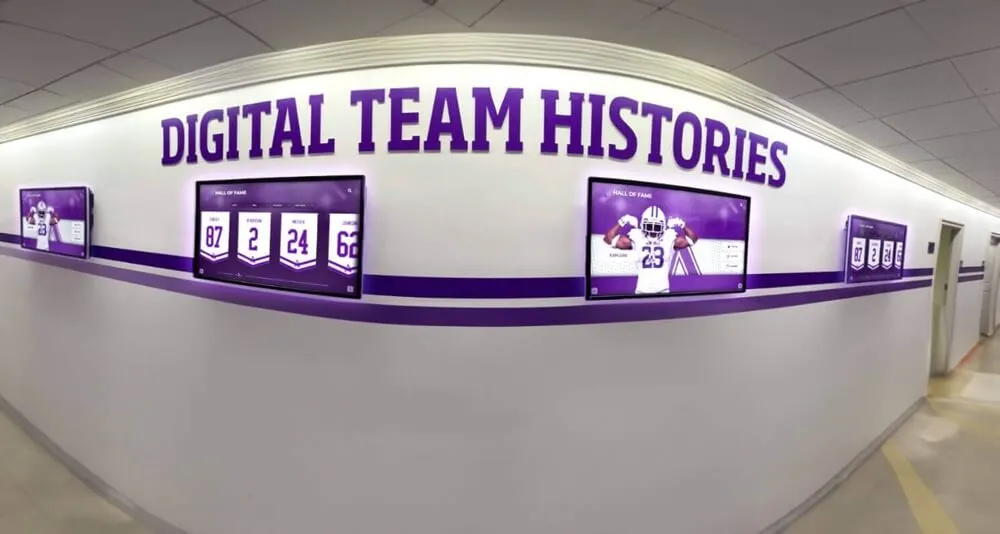
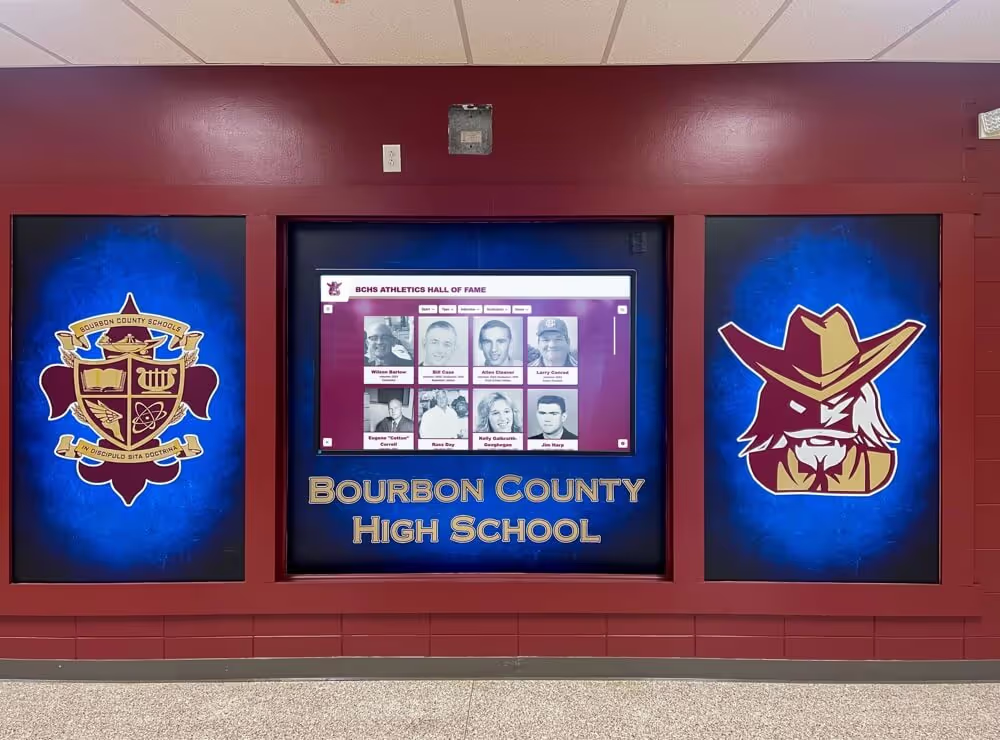
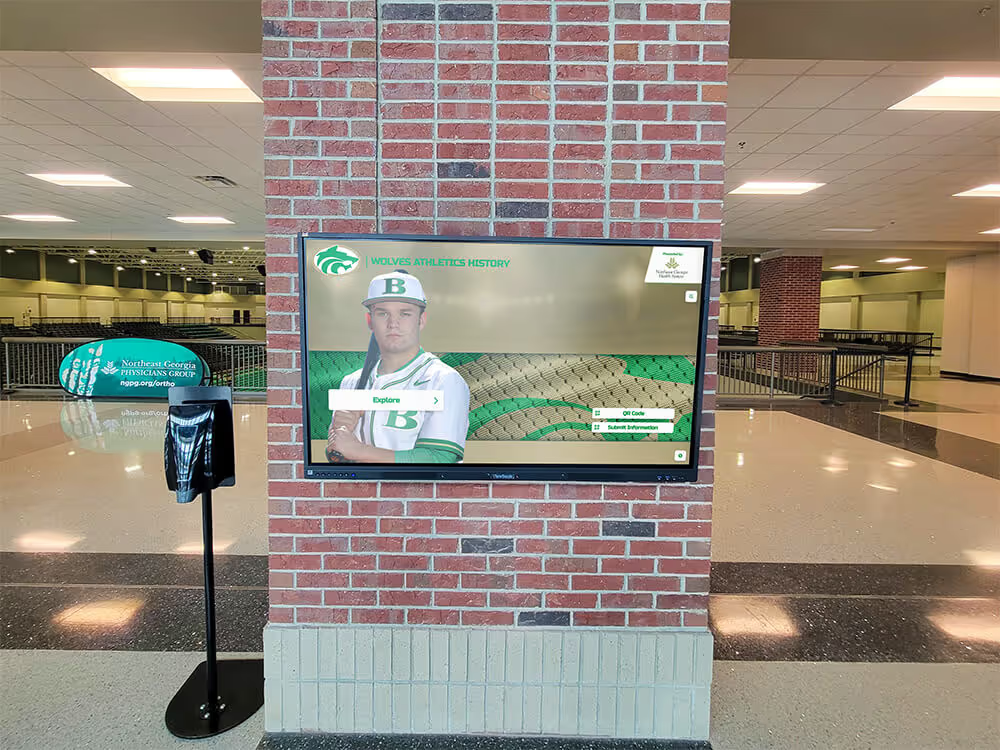
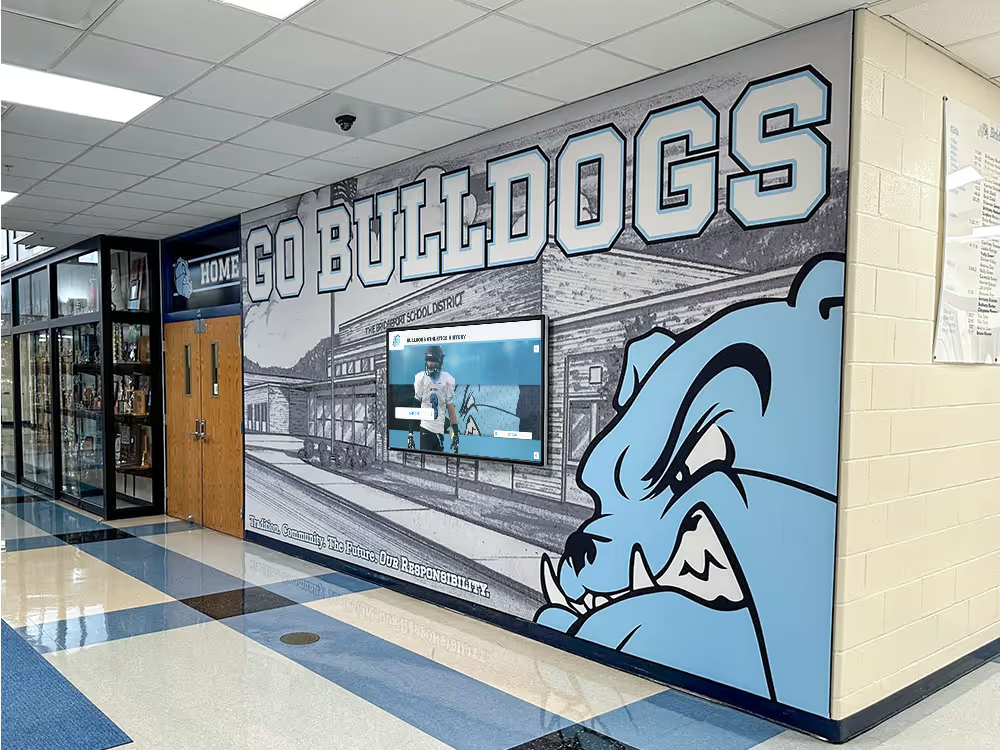
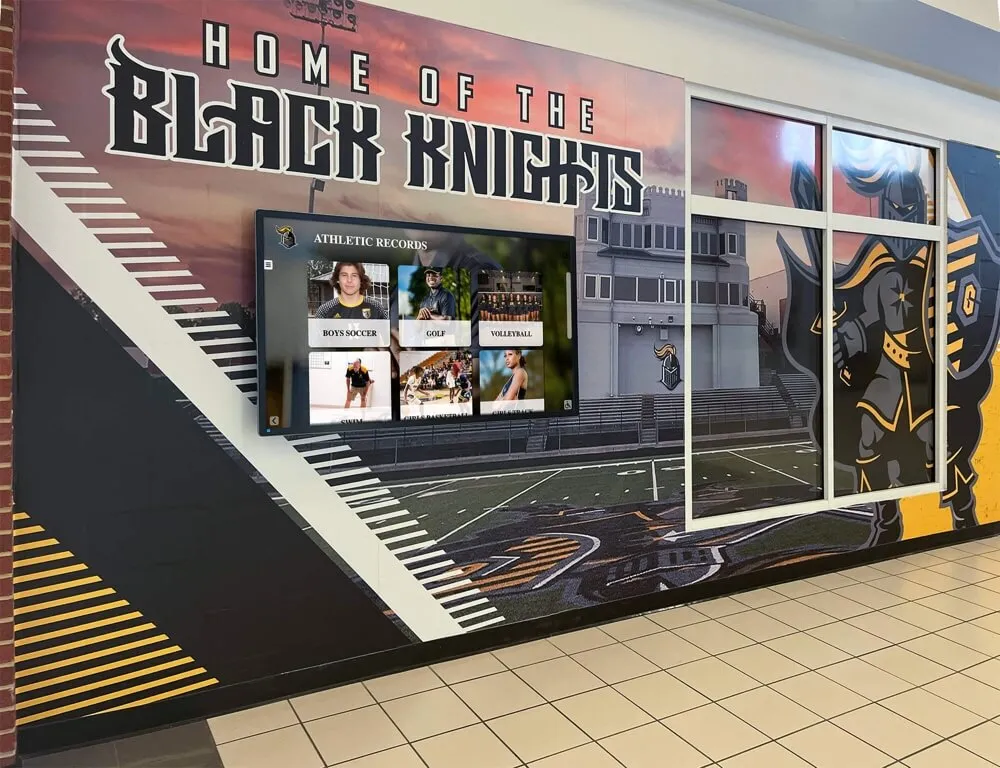
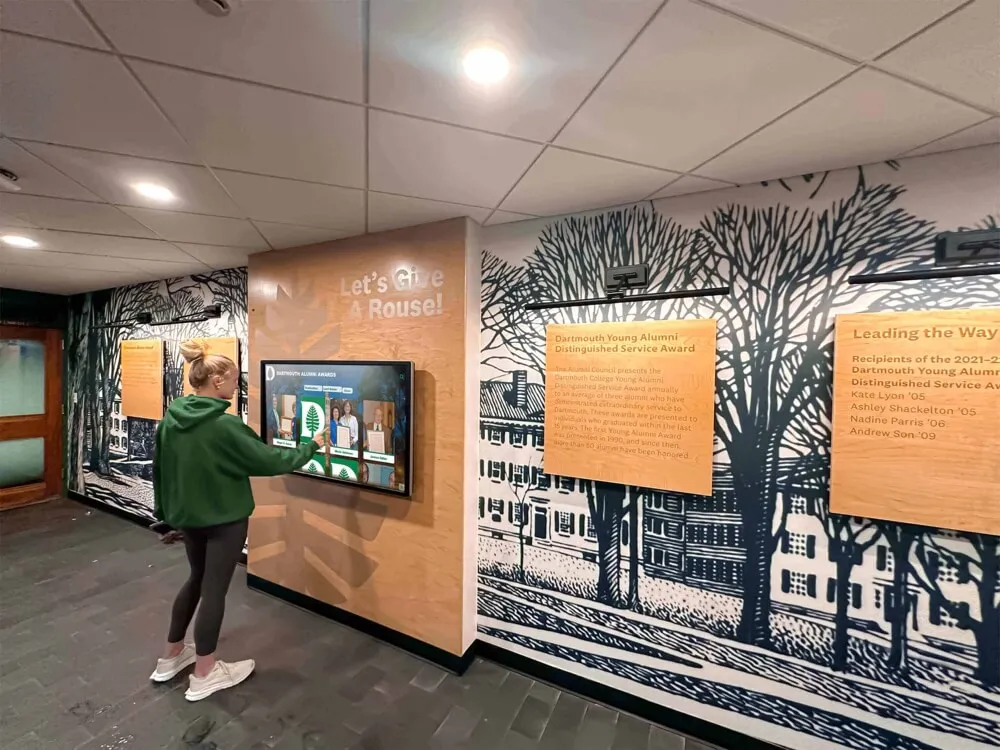
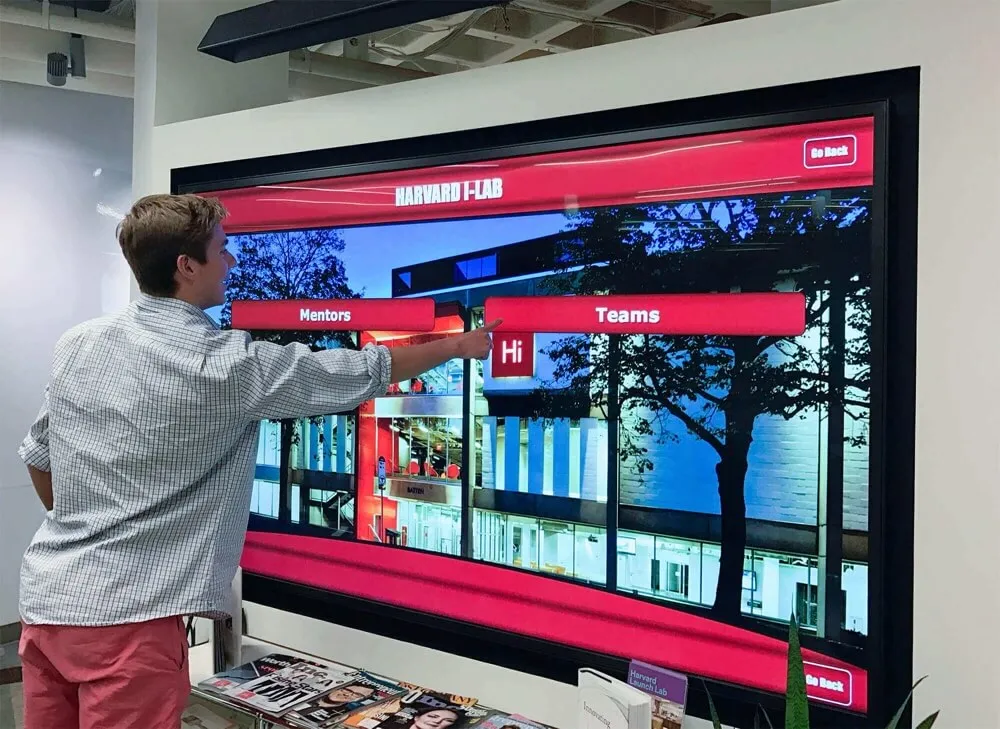
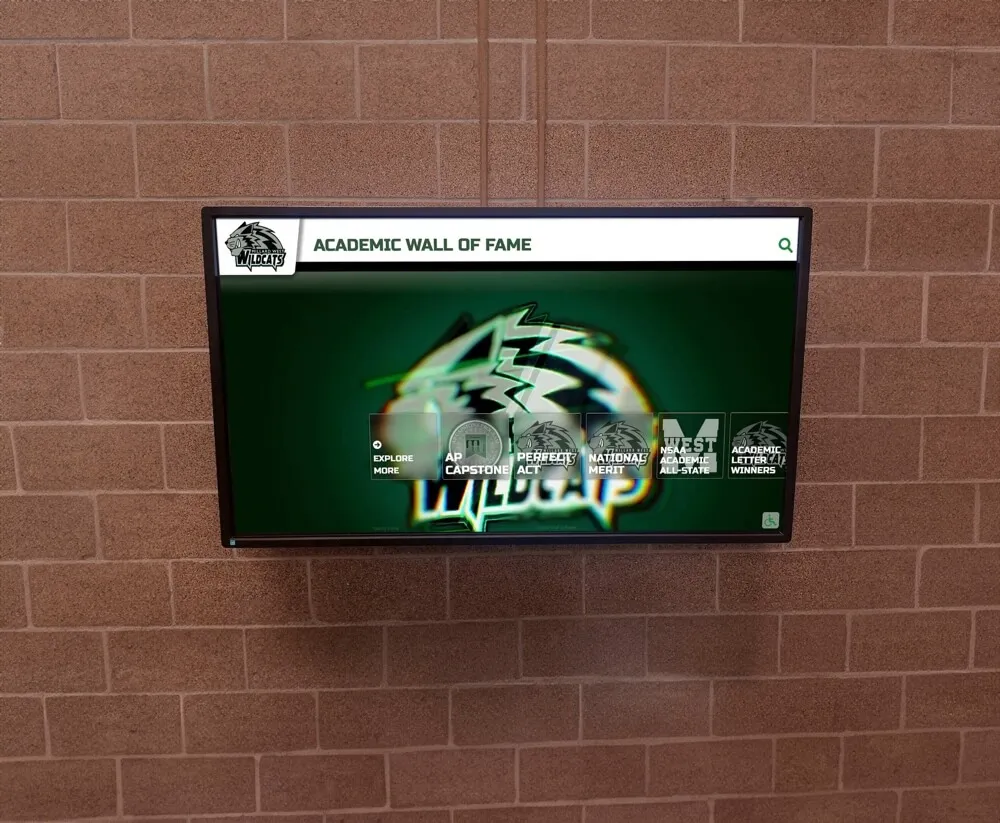
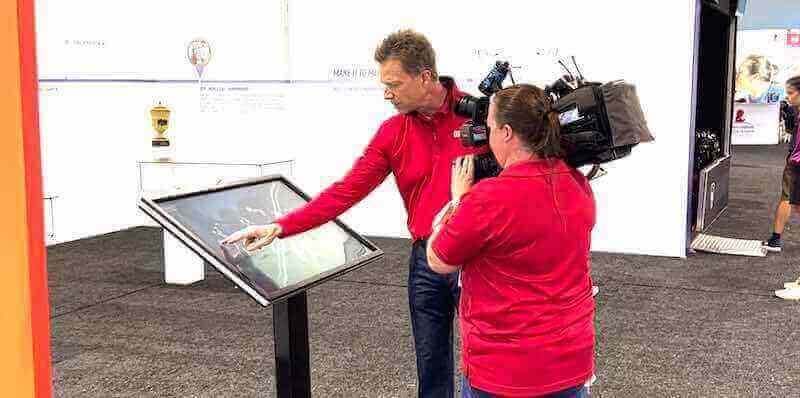
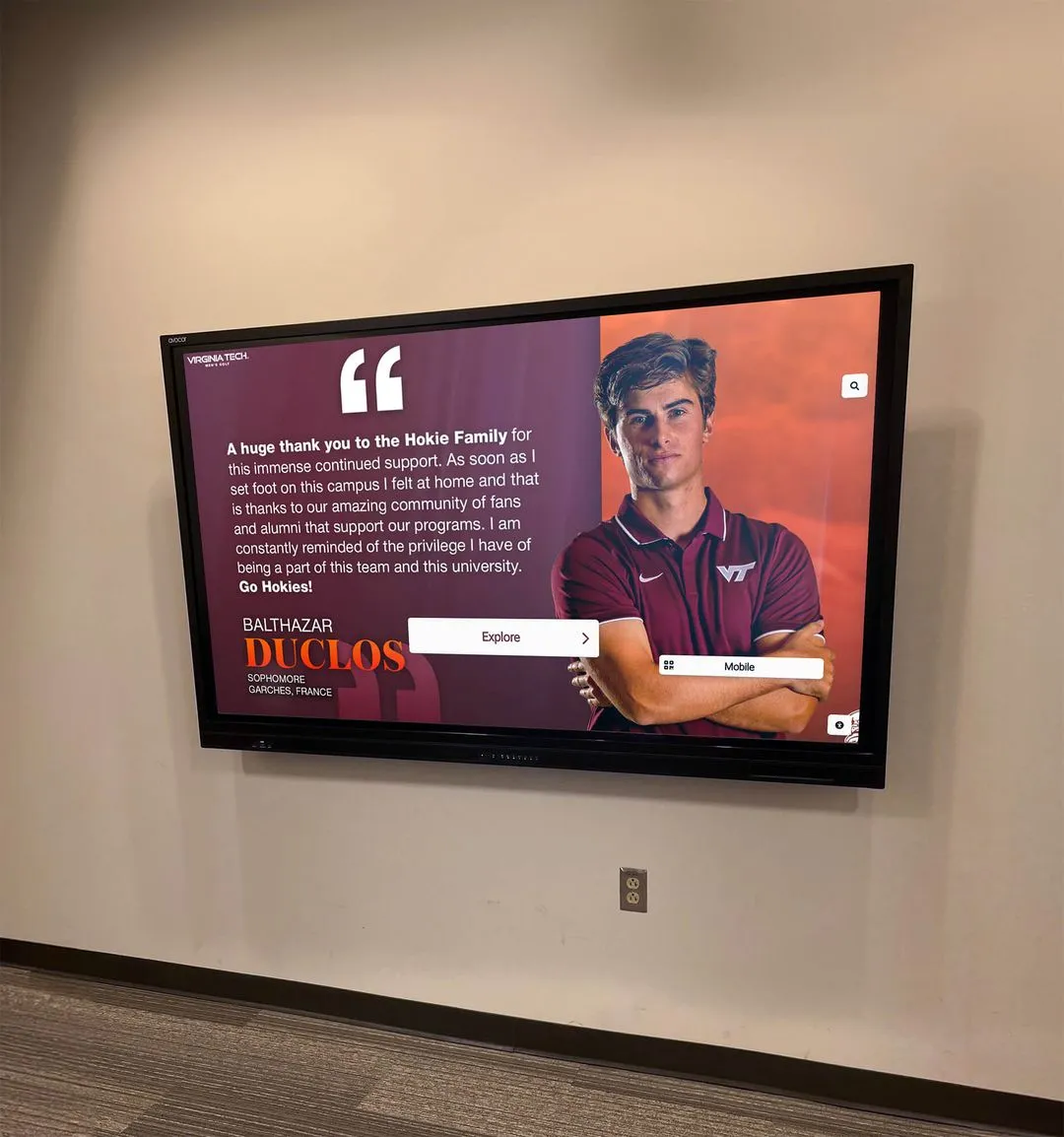
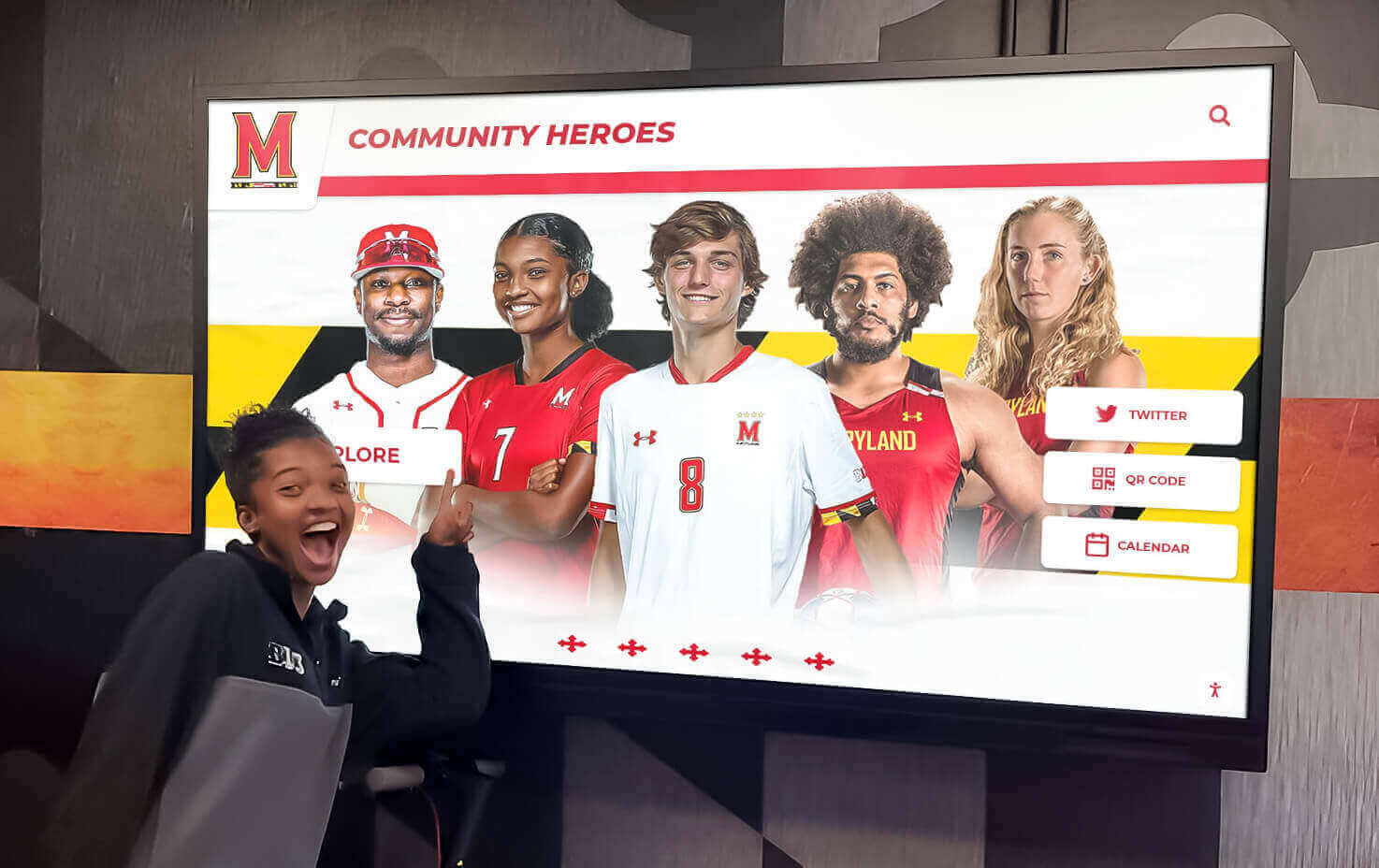
Digital touchscreen displays enable CTE programs to showcase diverse student achievements including certifications, competitions, and career placements
Understanding CTE Program Recognition Needs
Before exploring digital display solutions, understanding the unique recognition requirements of career and technical education programs helps clarify why purpose-built systems deliver superior value compared to generic approaches.
The Diversity of CTE Achievements
Career and Technical Education encompasses far more diverse accomplishments than traditional academic programs:
Industry Certifications and Credentials
CTE students earn valuable professional certifications:
- Industry-recognized credentials from organizations like NCCER, ASE, CompTIA, and others
- State licensures in fields such as cosmetology, nursing assistance, and skilled trades
- Manufacturer certifications from companies like Microsoft, Cisco, Adobe, and AWS
- Apprenticeship completions documenting structured training programs
- OSHA safety certifications and specialized technical qualifications
- Multiple certifications demonstrating comprehensive skill development
According to data from state departments of education, many successful CTE students graduate with 3-5 industry certifications valued at $500-3,000 each in training costs, representing substantial career preparation investment that deserves appropriate recognition.
Technical Competition Excellence
CTE students compete at local, state, and national levels:
- SkillsUSA competitions across dozens of technical specialties
- DECA business and marketing competitions
- FBLA-PBL business leadership events
- FCCLA family and consumer sciences competitions
- FFA agricultural competitions and Career Development Events
- TSA technology and engineering challenges
- Regional and national championship victories
These competitions provide rigorous demonstrations of technical competency and professional skills, often judged by industry professionals using workplace standards.
Work-Based Learning Accomplishments
Real-world experience forms CTE program foundations:
- Internship and externship completions
- Apprenticeship progress and journeyman status advancement
- Cooperative education placements
- Clinical rotations in healthcare pathways
- Student-run enterprise management and operations
- Community service projects demonstrating technical skills
- Industry mentorship participation
Learn more about comprehensive approaches to student achievement recognition programs that celebrate diverse accomplishments across all program areas.
Career Placement and Success
The ultimate CTE measure is successful career launch:
- Job placement in trained career fields
- Postsecondary program admission in technical disciplines
- Apprenticeship and training program acceptance
- Military career pathway entry with advanced rank
- Entrepreneurship and small business launches
- Salary and wage information demonstrating career value
- Employer recognition and advancement achievements
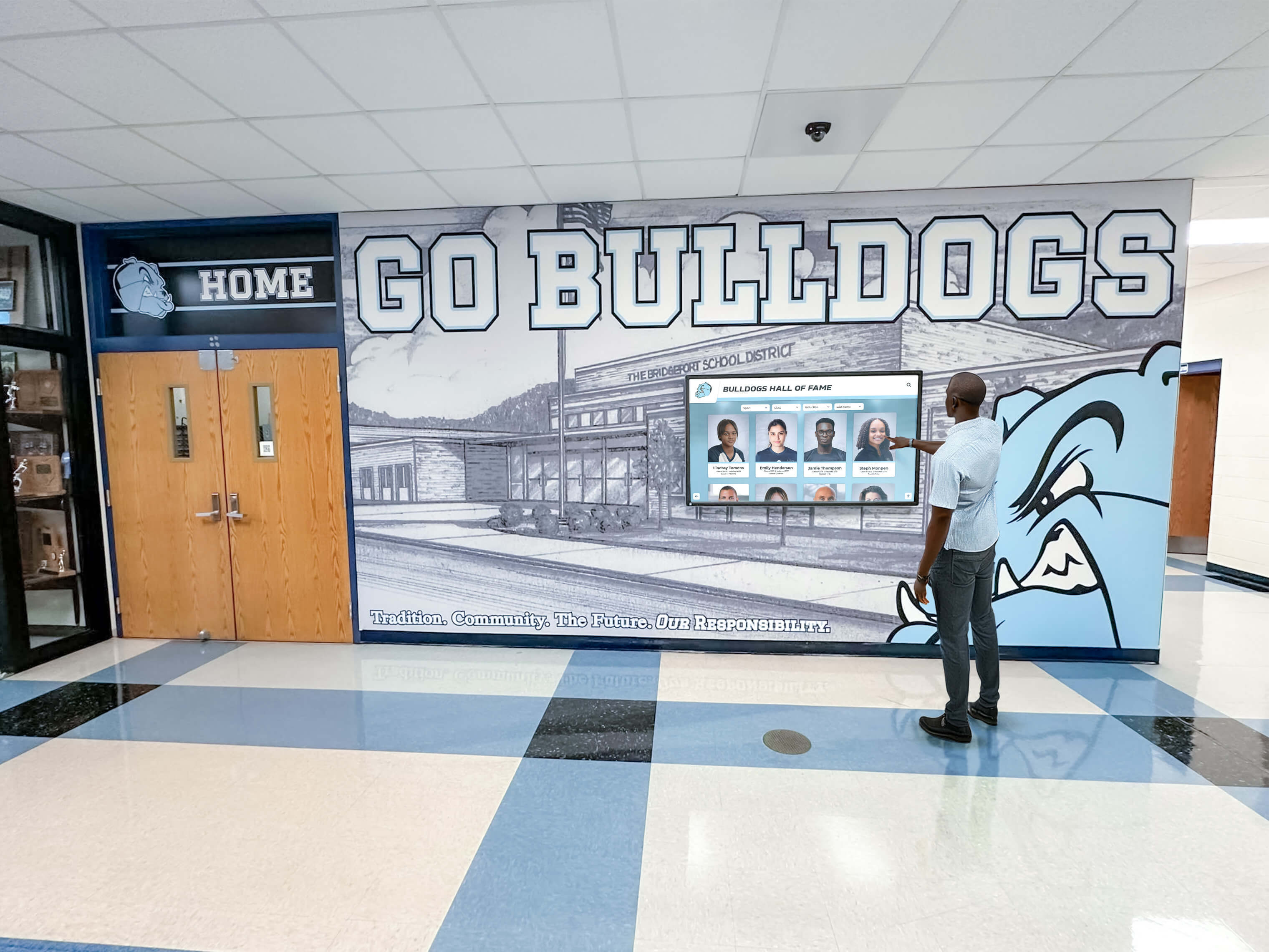
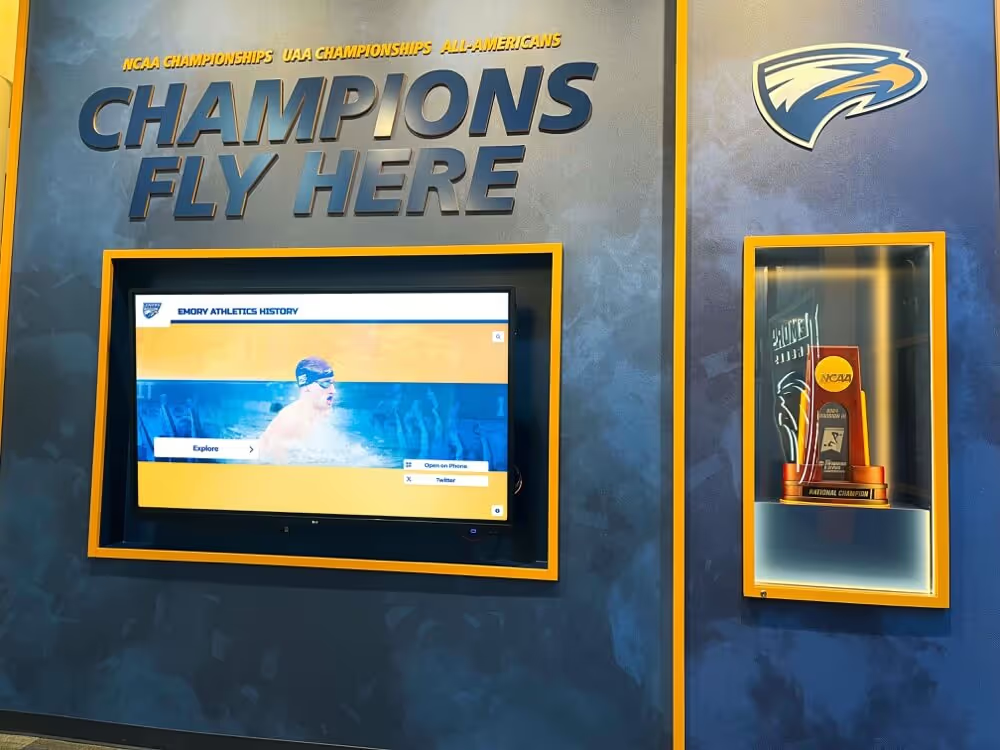
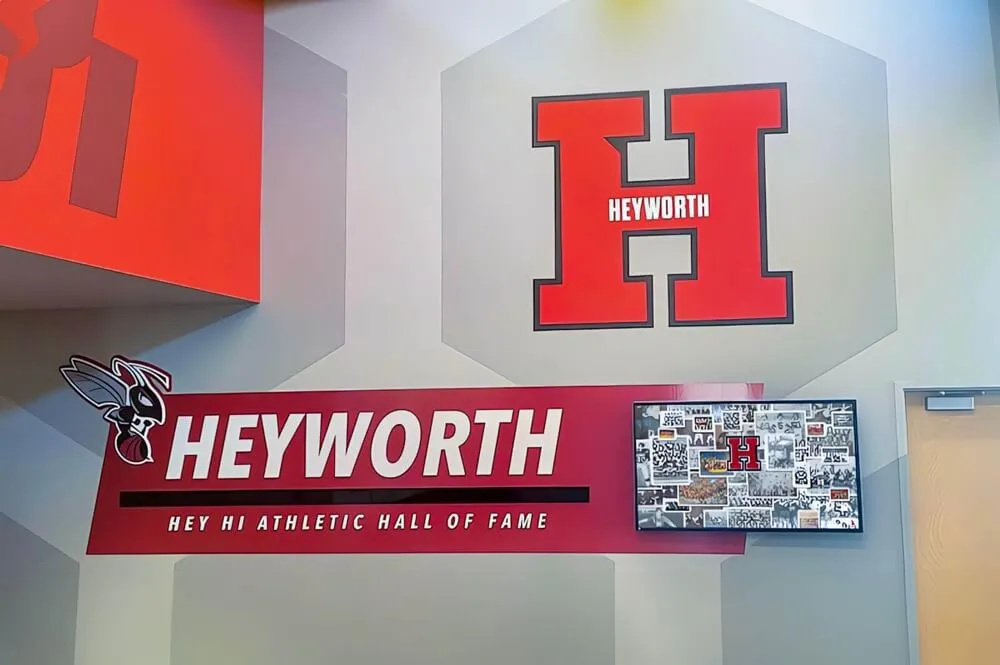
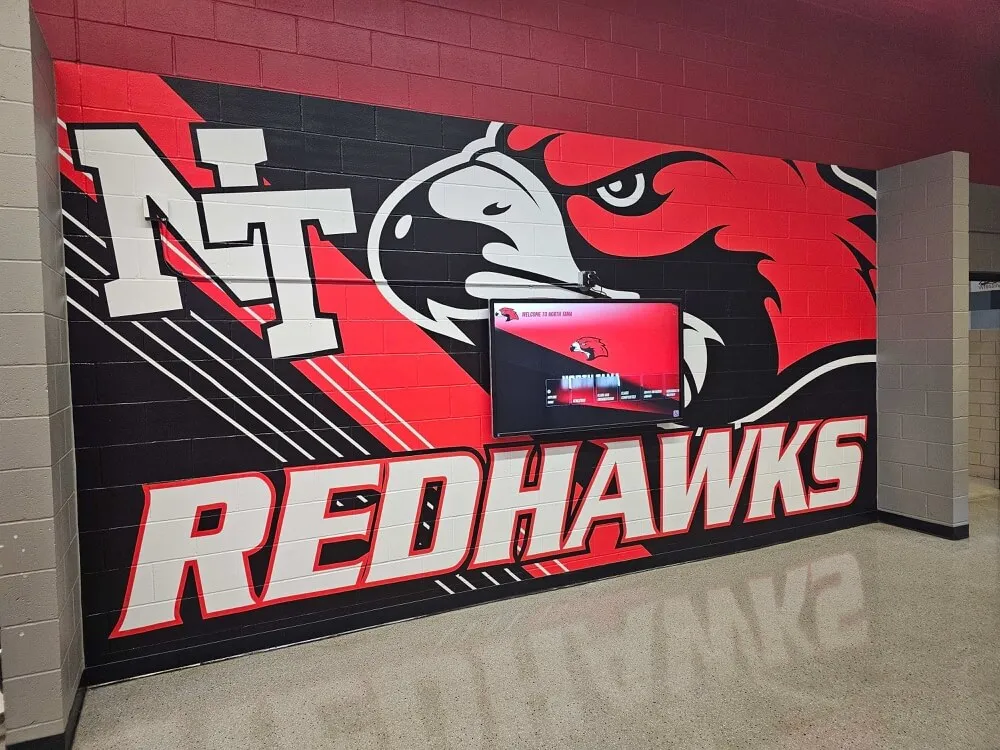
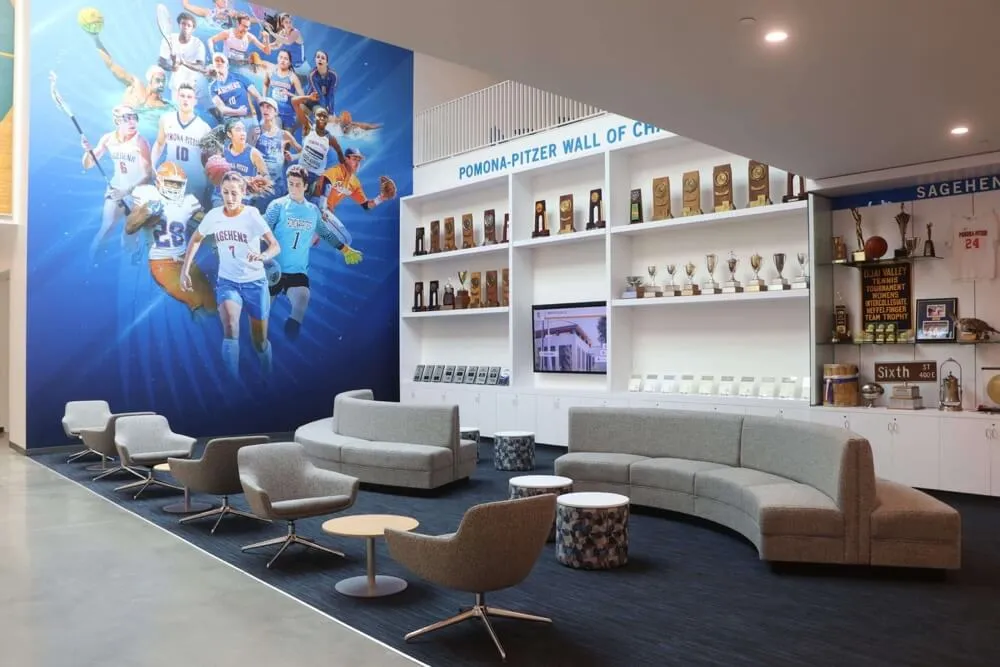
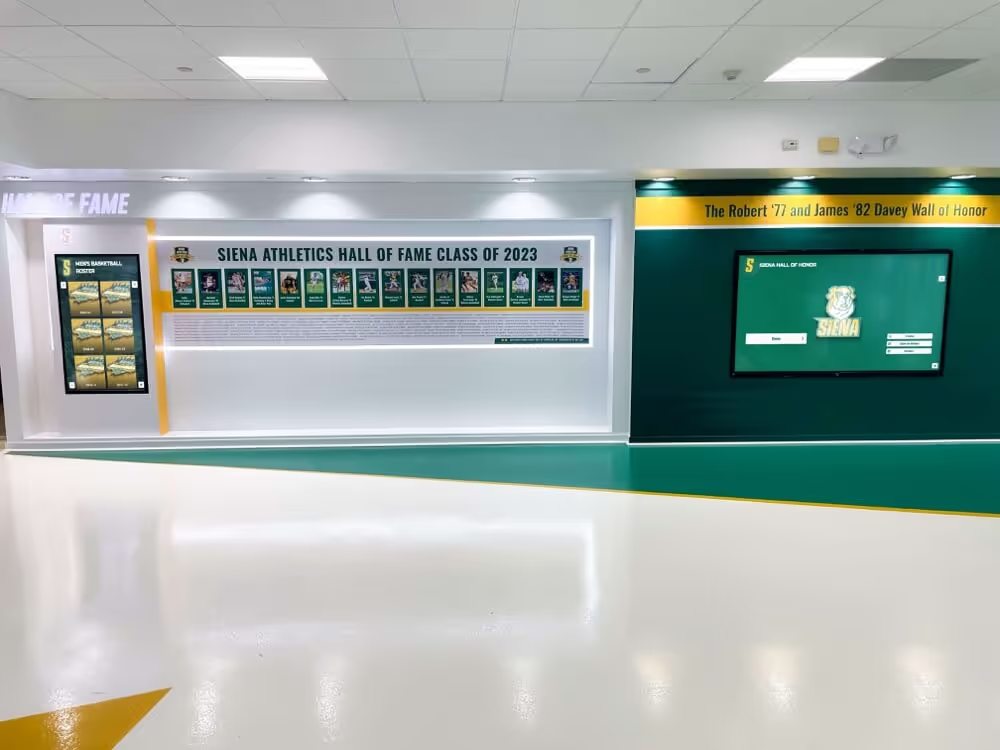
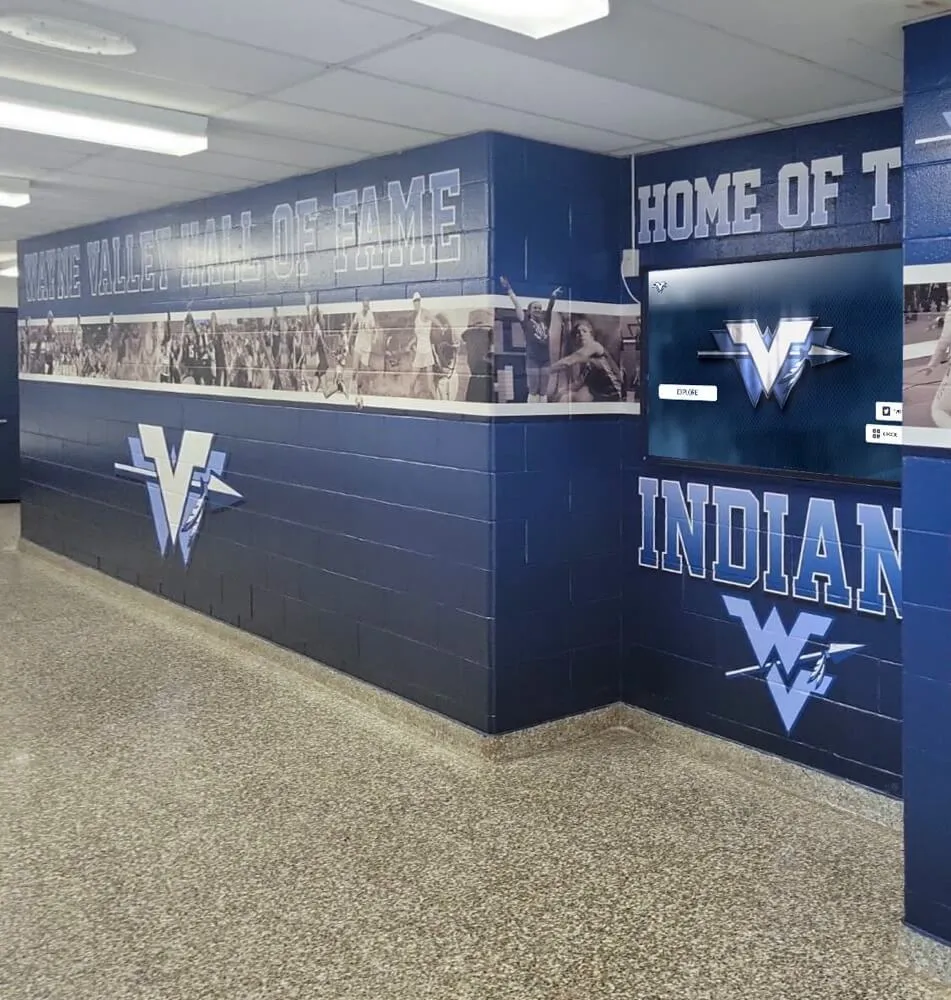
Strategic hallway placement ensures CTE recognition reaches students, visitors, and industry partners daily
Why Traditional Recognition Falls Short for CTE
Standard recognition approaches cannot effectively showcase career-technical achievements:
Complexity and Context Requirements
CTE accomplishments require explanation:
- Industry certifications mean little to audiences unfamiliar with technical fields
- Competition results need context about difficulty and significance
- Work-based learning accomplishments require documentation beyond simple listings
- Career pathways demand explanation of progression and requirements
- Industry credential value remains invisible without comparative context
Static displays cannot provide the detailed information necessary for audiences to appreciate CTE achievement significance and student career preparation depth.
Rapid Program Evolution
CTE programs constantly adapt:
- New certifications emerge as industries evolve and technology advances
- Career pathways shift responding to labor market demands
- Industry partnerships create new opportunities requiring recognition
- Competition structures and categories change annually
- Emerging technologies and techniques create new specialization areas
Traditional printed displays become outdated quickly, while digital systems update instantly to reflect current program offerings and student accomplishments.
Diverse Stakeholder Audiences
CTE recognition serves multiple important groups:
- Students seeking motivation and pathway guidance
- Families evaluating program quality and career potential
- School boards and administrators assessing program effectiveness
- Industry partners and employers evaluating talent pipelines
- Community members understanding education investment value
- Prospective students making program selection decisions
- Accreditation bodies reviewing program quality
Each audience needs different information and context, impossible to provide through single static displays but achievable through interactive digital systems offering layered content and personalized exploration.
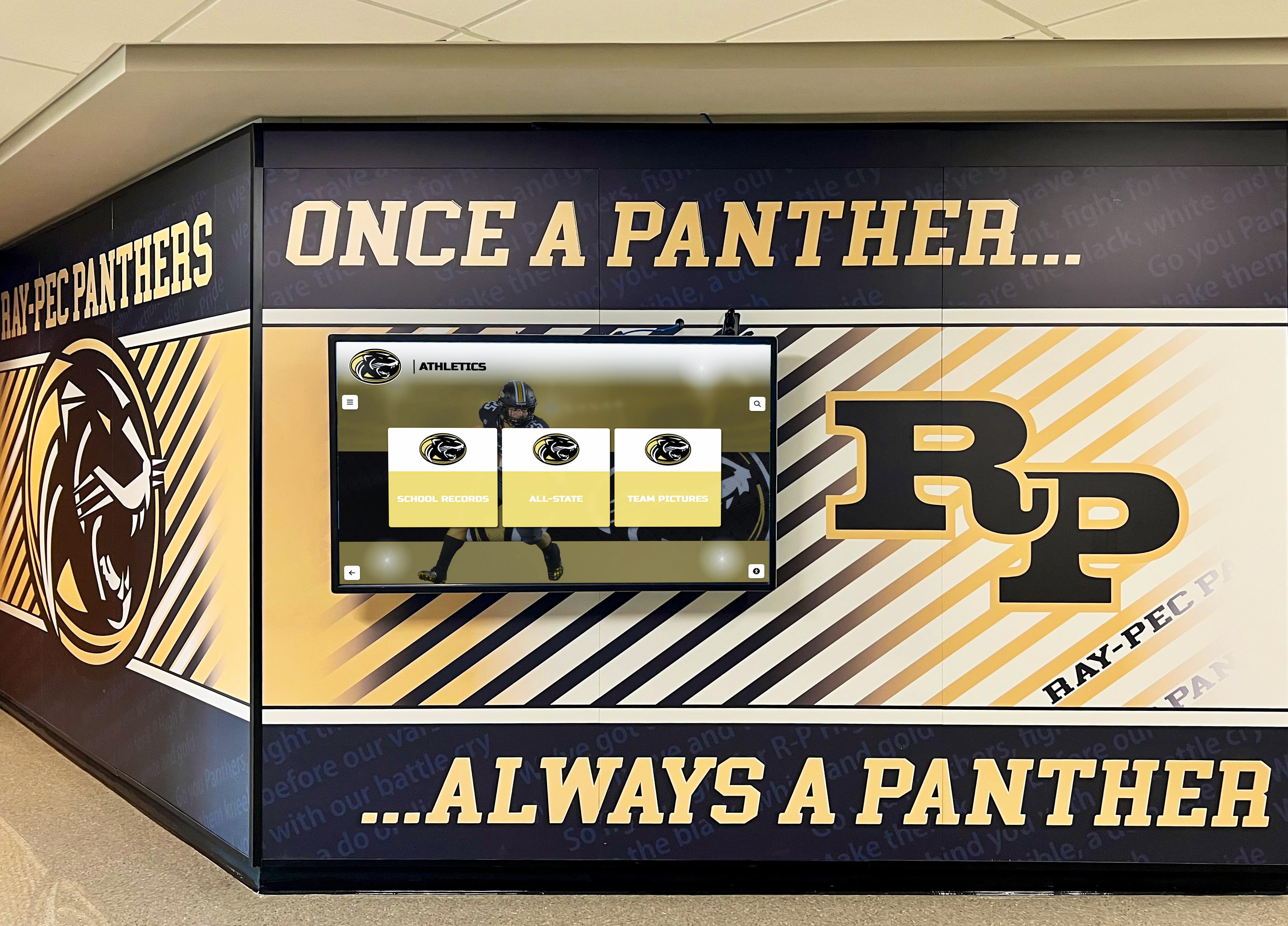
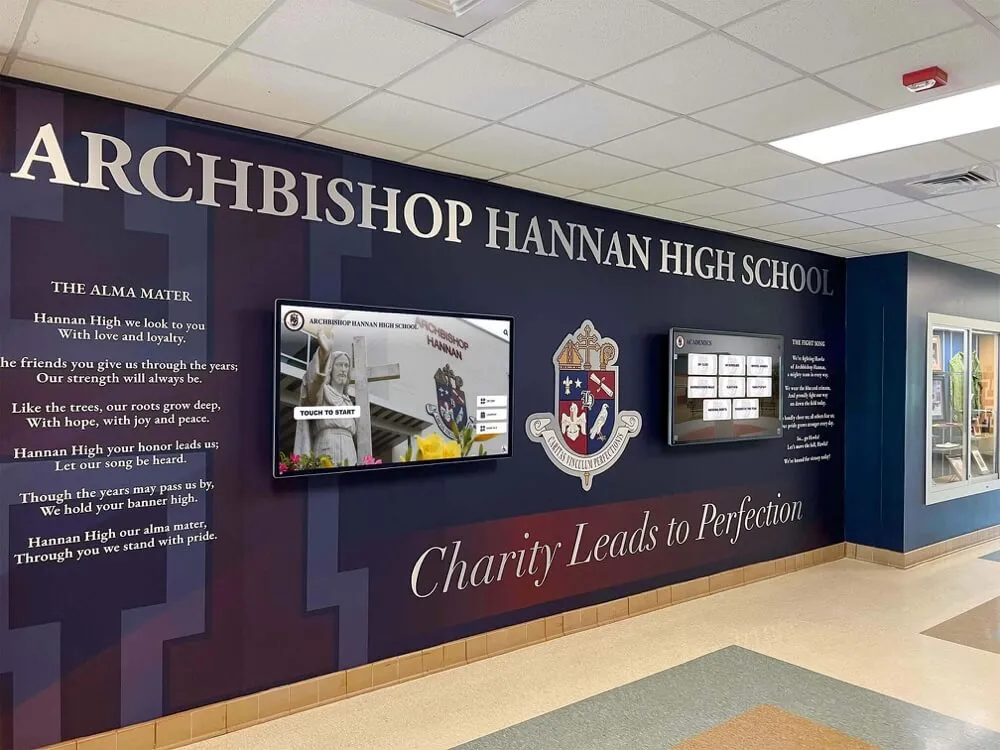
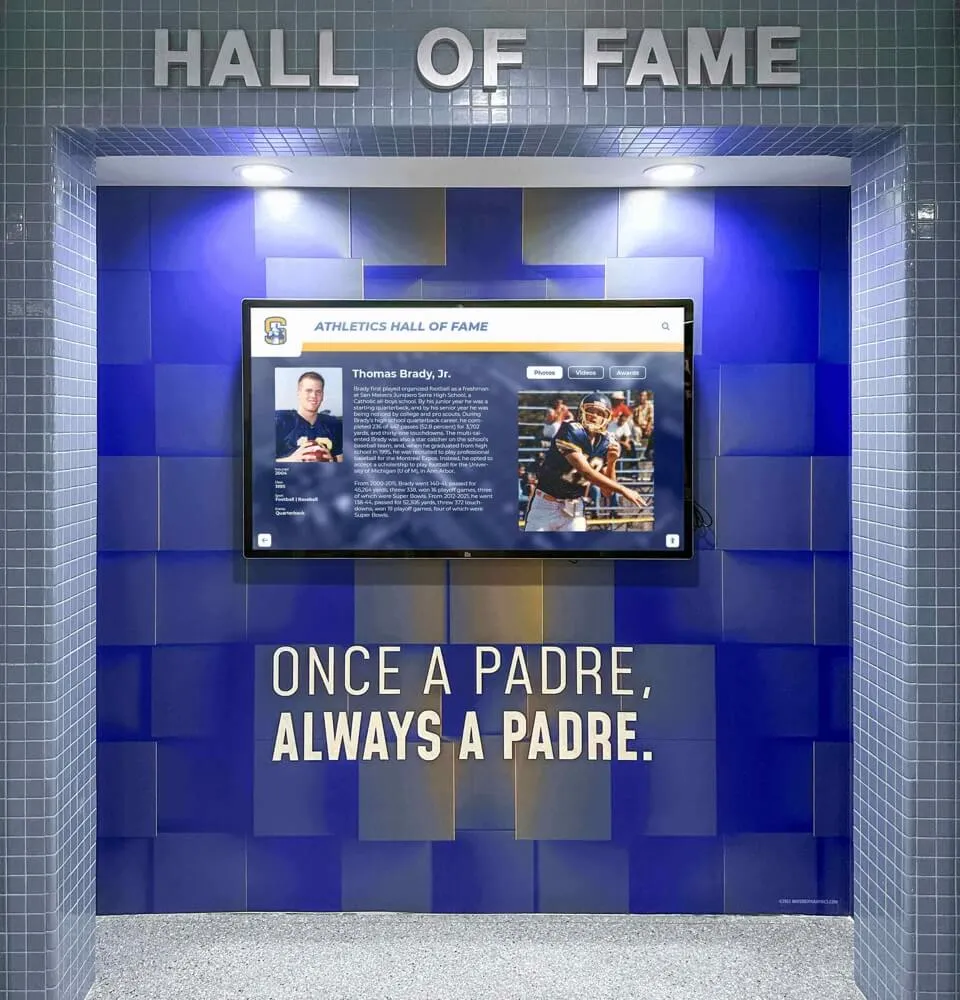
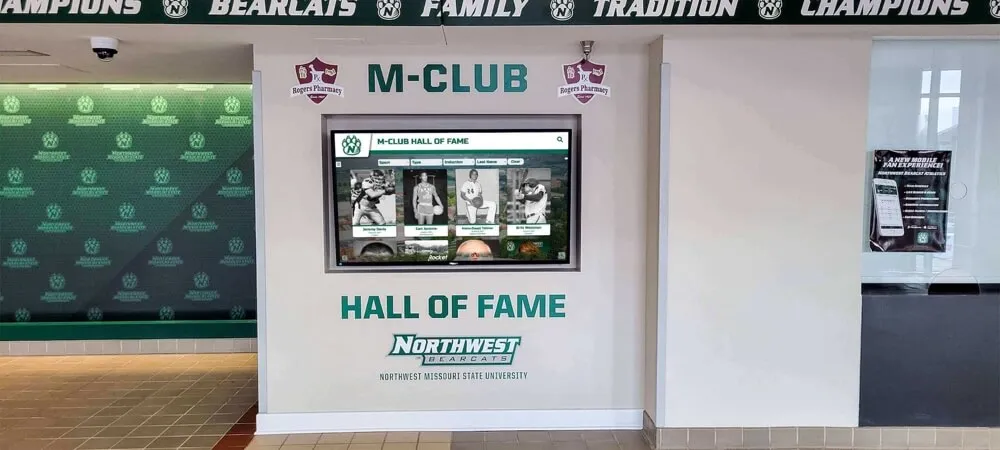
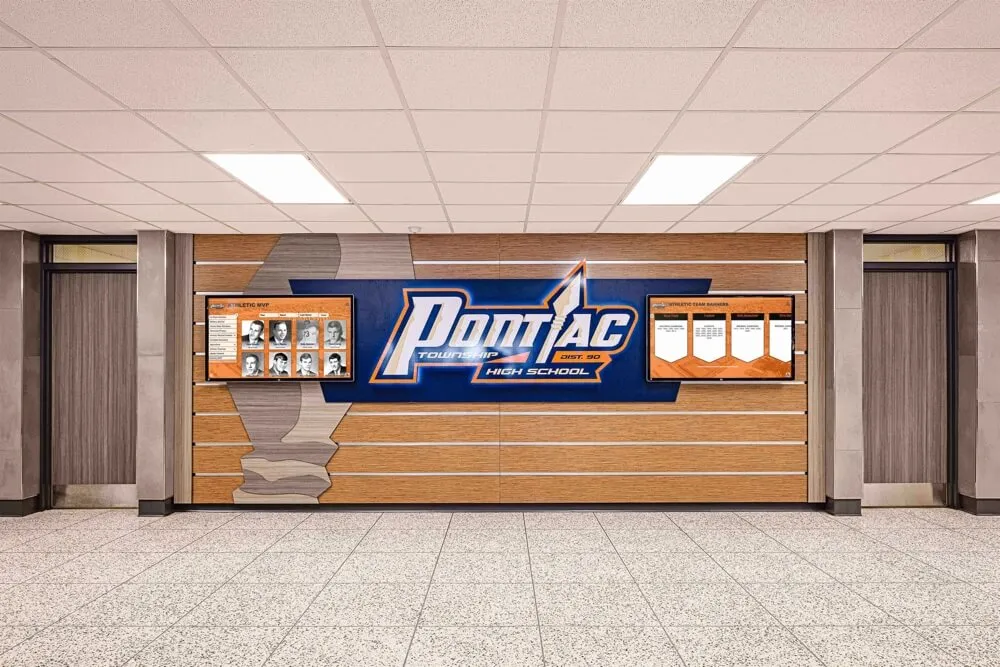
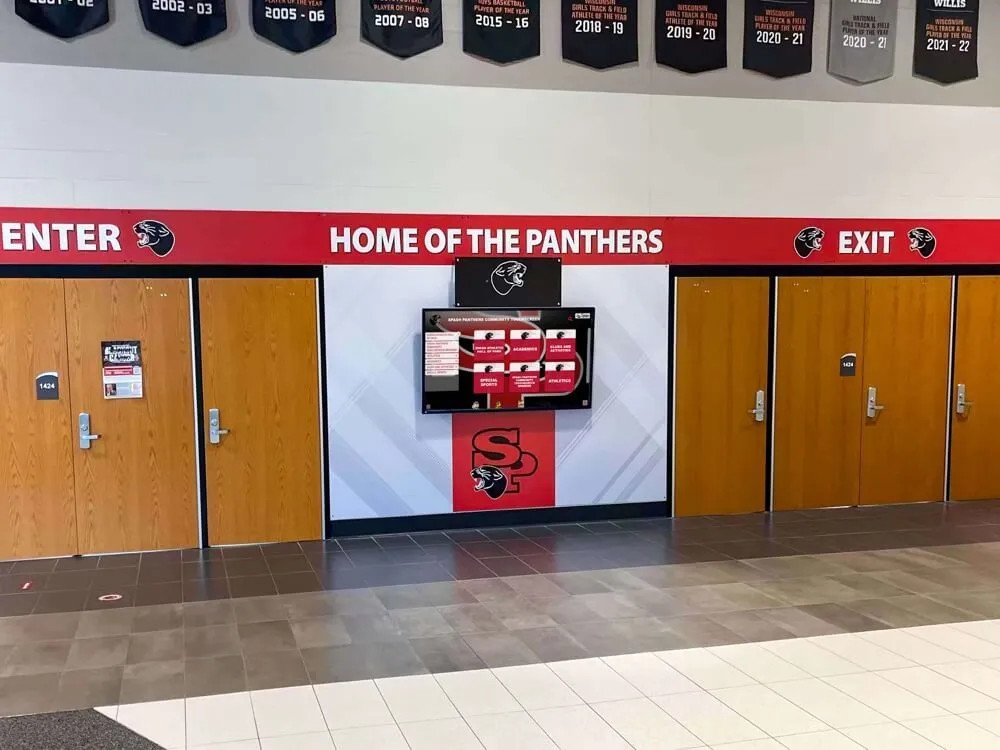
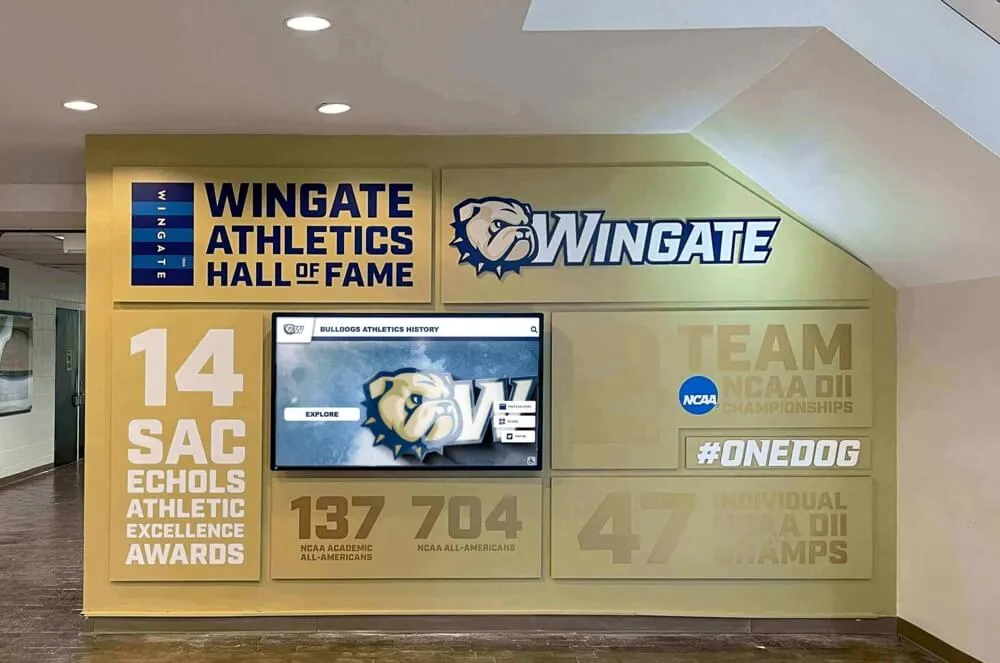
Modern digital displays integrate seamlessly into existing school environments while providing comprehensive recognition capacity
Benefits of Digital Touchscreen Displays for CTE Programs
Interactive recognition systems deliver substantial advantages specifically valuable for career and technical education programs.
Comprehensive Achievement Documentation
Digital platforms eliminate space constraints limiting traditional recognition:
Unlimited Recognition Capacity
Physical bulletin boards and trophy cases force difficult choices:
- Limited space accommodates only small fractions of deserving recognition
- Recent achievements often displace historical accomplishments
- Some certifications and competitions receive visibility while others don’t
- Individual student achievement profiles remain impossible due to space limitations
- Multiple pathway programs cannot all receive appropriate recognition
Digital touchscreen displays overcome these constraints:
- Single displays showcase unlimited student profiles and achievements
- Complete historical archives preserving years of CTE accomplishments
- Equal opportunity for all certification types and competition categories
- Individual student profiles documenting comprehensive credential collections
- All career pathway programs receiving equivalent recognition space
CTE directors implementing digital recognition consistently report showcasing 10-20 times more student achievements compared to previous traditional approaches, creating comprehensive visibility previously impossible.
Rich Multimedia Content
Interactive platforms present information impossible with static displays:
- High-resolution photos of certification presentations and competition performances
- Video demonstrations of technical skills and project completions
- Scanned certificates and credential documentation
- Student reflections describing learning experiences and career goals
- Industry partner testimonials about student performance
- Career pathway explanations with labor market and salary information
- Project portfolios showcasing technical work quality
This multimedia capability transforms simple name listings into compelling stories that honor student dedication while demonstrating program quality and career preparation effectiveness to all stakeholders.
Explore comprehensive strategies for academic recognition programs that complement CTE achievement celebration.
Enhanced Student Motivation and Pathway Awareness
Interactive recognition creates powerful motivational effects:
Visible Success Models
Digital displays make achievement tangible and accessible:
- Current students see peers earning valuable certifications
- Younger students discover career pathways through older student examples
- Diverse representation demonstrates opportunities for all student populations
- Alumni success stories connect CTE programs to actual career outcomes
- Progression pathways become clear through multi-year achievement tracking
- Industry credential value becomes apparent through displayed opportunities
Research on academic motivation demonstrates that visible peer success significantly increases student engagement and achievement pursuit, with students reporting they “didn’t know that was possible” until seeing peers’ accomplishments displayed prominently.
Career Pathway Exploration
Interactive features enable discovery:
- Students browse different career pathways exploring options
- Certification requirements and sequences become clear through organized displays
- Industry partner connections and opportunities appear for each pathway
- Salary and employment outlook information informs decision-making
- Related pathways and transferable skills create flexible planning
- Alumni profiles show various career trajectories from common starting points
This exploration capability helps students make informed career pathway selections rather than choosing randomly or following limited familiar options.
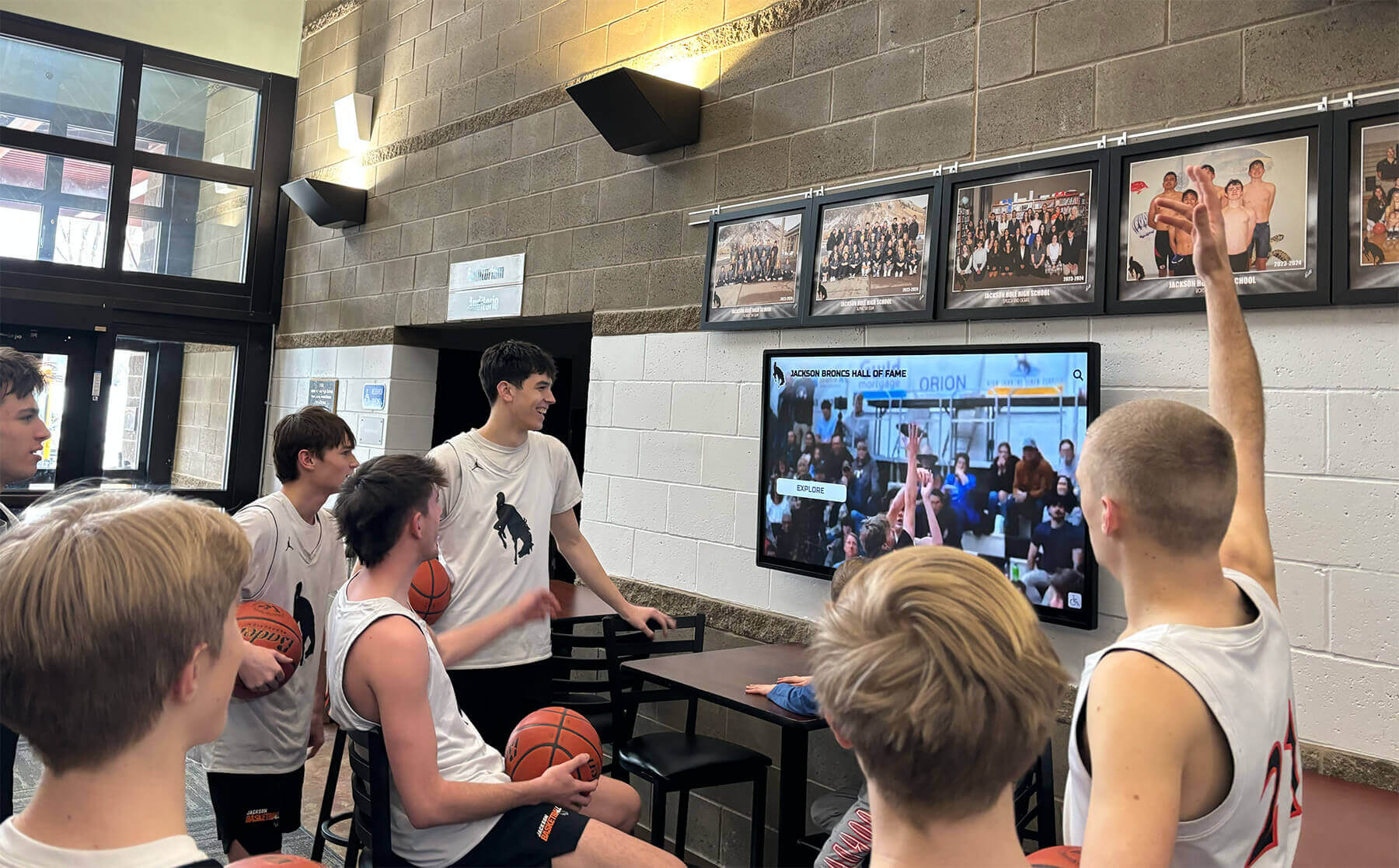
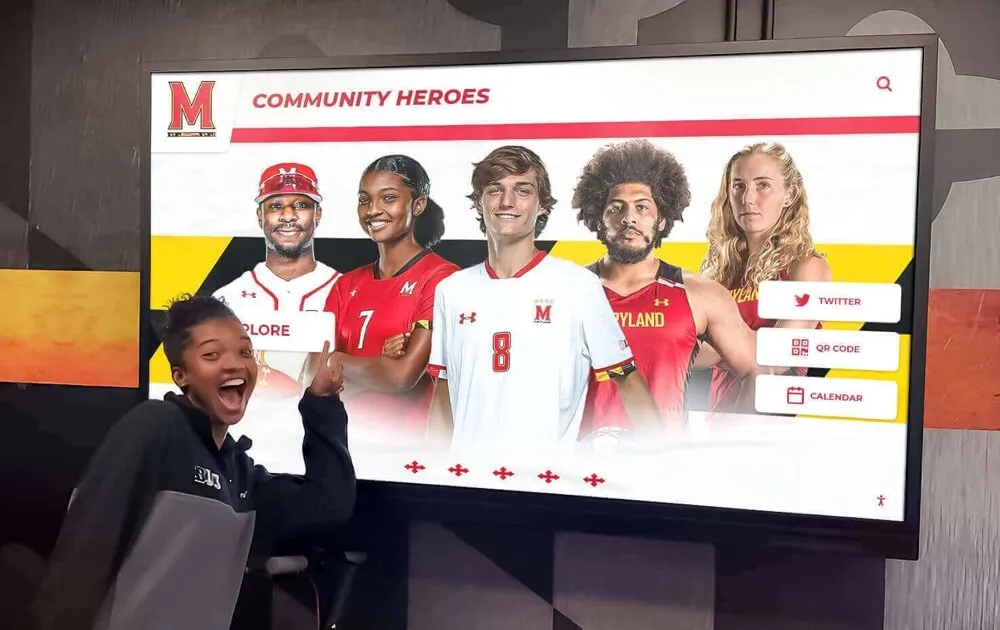
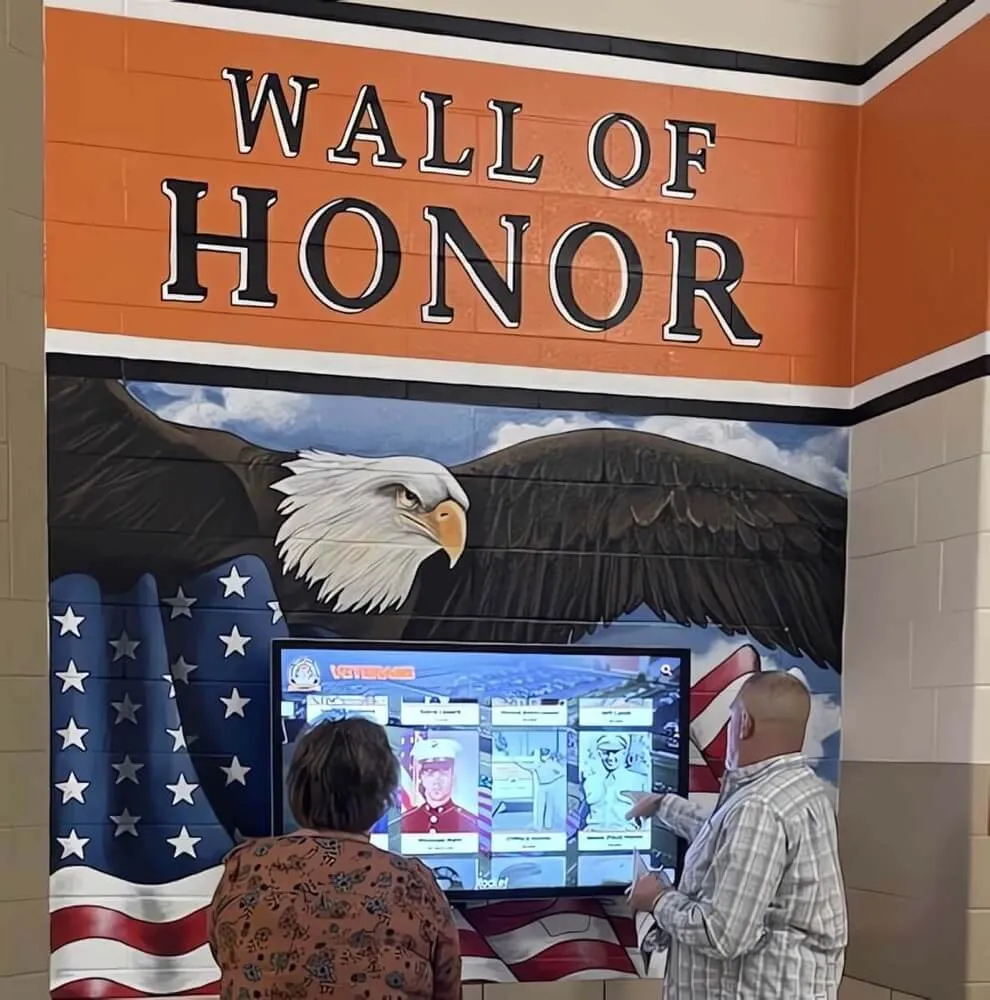
Digital displays create gathering points where students explore achievements and discover career opportunities together
Program Quality Demonstration for Stakeholders
CTE programs must continually demonstrate value and effectiveness:
Evidence-Based Program Advocacy
Digital recognition provides compelling documentation:
- Certification achievement rates demonstrating program quality
- Competition success showing student skill development
- Industry partnership evidence through work-based learning placements
- Career placement documentation proving workforce preparation effectiveness
- Historical program growth illustrating increasing student participation
- Diverse student success countering stereotypes about who succeeds in technical fields
- Return on investment calculations showing credential and career value
School administrators and board members report that comprehensive digital recognition helps justify CTE program investments by making student success and program impact visible and measurable.
Industry Partner Engagement
Employer and industry relationships strengthen through recognition:
- Industry partners see their certification programs valued and celebrated
- Employers appreciate student credential documentation simplifying hiring
- Company representatives visiting schools encounter evidence of partnership success
- Potential industry partners discover engagement opportunities through displayed connections
- Advisory committee members see recommendations implemented and recognized
- Industry credential providers observe program effectiveness and student achievement
Many CTE programs report increased industry engagement after implementing visible recognition systems that demonstrate partnership value and student workforce readiness.
Community and Family Understanding
Digital displays educate broader audiences:
- Families understand specific certifications their students pursue
- Community members learn about modern CTE program scope beyond outdated stereotypes
- School visitors discover comprehensive career preparation programs
- Prospective families evaluate program quality through authentic achievement evidence
- Taxpayers see return on education investment through career outcomes
- Media representatives find compelling student success stories for coverage
This broader understanding builds essential community support for CTE programs and helps recruit diverse student populations into technical career pathways. Review effective approaches in student recognition display guides for maximizing community engagement.
Administrative Efficiency and Program Management
Digital systems reduce management burden while improving program documentation:
Simplified Recognition Updates
Traditional CTE recognition requires substantial effort:
- Printing and mounting new achievement announcements
- Updating bulletin boards and display cases regularly
- Maintaining current program information and pathway details
- Replacing outdated certification and competition information
- Time-consuming manual processes competing with instructional priorities
Digital touchscreen platforms streamline management:
- Web-based content management from any internet-connected device
- Instant updates appearing immediately across all displays
- Bulk upload tools for efficiently adding semester or annual achievements
- Template systems ensuring consistent professional presentation
- Scheduled publishing for planned recognition announcements
- Simple editing and correction capabilities
CTE coordinators report 80-90% reduction in time spent on recognition administration after implementing digital systems, with time savings enabling more comprehensive student celebration rather than selective limited recognition.
Longitudinal Student Tracking
Digital platforms enable valuable program assessment:
- Multi-year student achievement tracking showing credential accumulation
- Cohort analysis comparing different student groups and program years
- Pathway progression documentation revealing bottlenecks and challenges
- Career placement tracking connecting training to employment outcomes
- Certification completion rate monitoring for program improvement
- Export capabilities supporting accreditation and grant reporting requirements
This data collection happens naturally through recognition activities rather than requiring separate assessment systems, making program evaluation more sustainable and less burdensome.
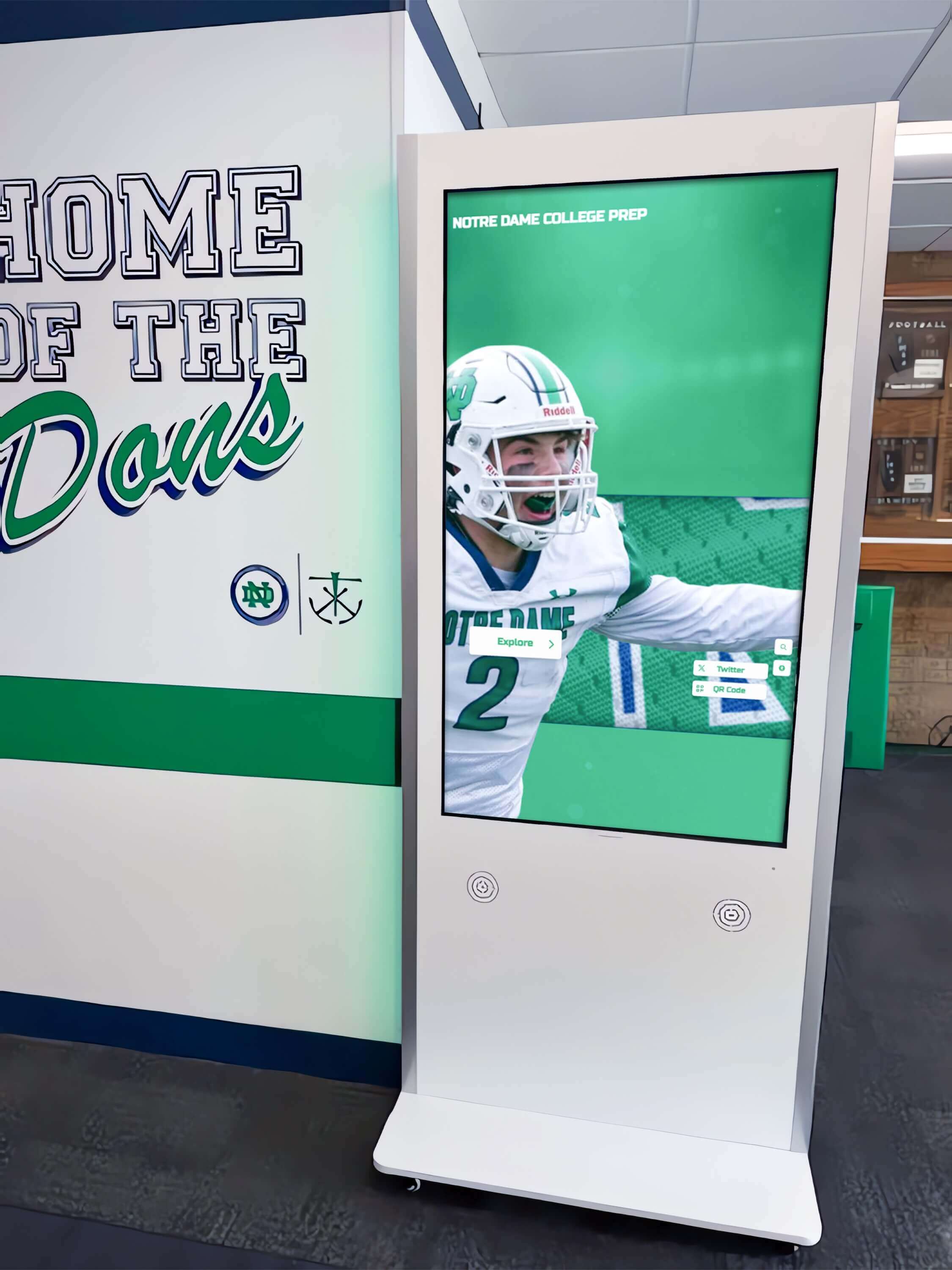
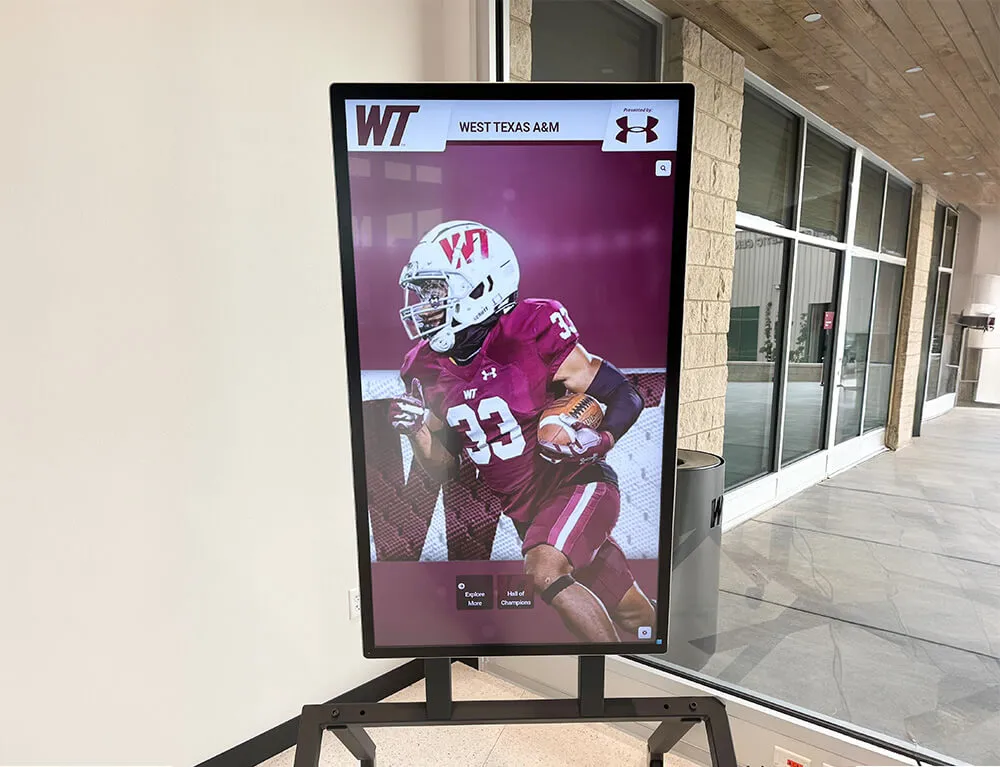
Professional kiosk installations provide complete recognition solutions without wall mounting requirements
Essential Features for CTE Recognition Displays
Not all digital display systems effectively serve career and technical education needs. CTE-specific features distinguish truly effective solutions.
Career Pathway Organization and Browsing
CTE programs organize around career pathways and industry clusters:
Pathway-Based Content Structure
Effective CTE displays organize by career focus:
- Individual sections for each career pathway or program cluster
- Color-coding and visual design distinguishing different career areas
- Pathway overview information explaining careers, certifications, and requirements
- Program of study sequences showing multi-year credential progressions
- Industry partner connections associated with each pathway
- Related pathway suggestions highlighting transferable skills
- Labor market information including demand, salary, and growth projections
This organization helps students discover pathways matching their interests while providing stakeholders clear program structure understanding.
Advanced Filtering and Search
Discovery features enable personalized exploration:
- Search by student name, graduation year, or certification type
- Filtering by career pathway, industry sector, or credential category
- Competition result browsing by event type or achievement level
- Graduation year navigation showing historical program evolution
- Certification provider filtering highlighting specific industry credentials
- Multiple simultaneous filter combinations for precise discovery
Student Profile Integration
Individual profiles document comprehensive achievement:
- Complete certification collections showing credential accumulation
- Competition participation and results across multiple events
- Work-based learning experiences and employer connections
- Career pathway progression and milestone completion
- Personal statements describing goals and experiences
- Photo galleries documenting projects and performances
- Post-graduation updates showing career success and advancement
Learn about effective interactive displays for schools that engage students and visitors.
Certification and Credential Documentation
Industry certifications require special recognition treatment:
Comprehensive Credential Information
Effective displays provide context:
- Certification names with industry standard abbreviations
- Issuing organization information and logos where appropriate
- Credential descriptions explaining competencies and industry value
- Prerequisite requirements and typical preparation time
- Career applications demonstrating certification workplace relevance
- Renewal requirements and continuing education expectations
- Comparative difficulty or prestige indicators where applicable
Visual Credential Presentation
Professional display of certifications includes:
- Certification badge graphics and visual branding
- Scanned certificate images documenting official credentials
- Achievement date tracking showing when credentials were earned
- Expiration information for time-limited certifications
- Stacked credential visualization showing related certification families
- Industry standard credential formatting ensuring professional presentation
Achievement Statistics and Context
Helping audiences appreciate accomplishments:
- School certification achievement rates compared to state or national averages
- Historical achievement data showing program growth
- Multiple certification achievers highlighted for exceptional dedication
- Competition achievement context explaining event significance
- Work-based learning participation rates demonstrating industry engagement
- Career placement statistics showing program effectiveness
Competition and Event Recognition
Technical competitions deserve specialized presentation:
Competition Information Architecture
Comprehensive competition documentation includes:
- Competition name, organization, and event type
- Achievement level: school, regional, state, national, international
- Specific event or category within larger competitions
- Award type: medal placement, finalist status, scholarship awards
- Team or individual participation with complete member rosters
- Advisor and coach recognition for supporting roles
- Event photos and performance documentation
SkillsUSA and Career Development Event Specialization
Major CTE competitions require specific features:
- Event category organization by career cluster
- Multi-level competition progression tracking from regional through national
- Team composition documentation for collaborative events
- Technical skill demonstration descriptions explaining competition requirements
- Judge and industry partner recognition when appropriate
- Historical program performance showing multi-year competition excellence
Explore strategies for student competition recognition across various technical and academic areas.
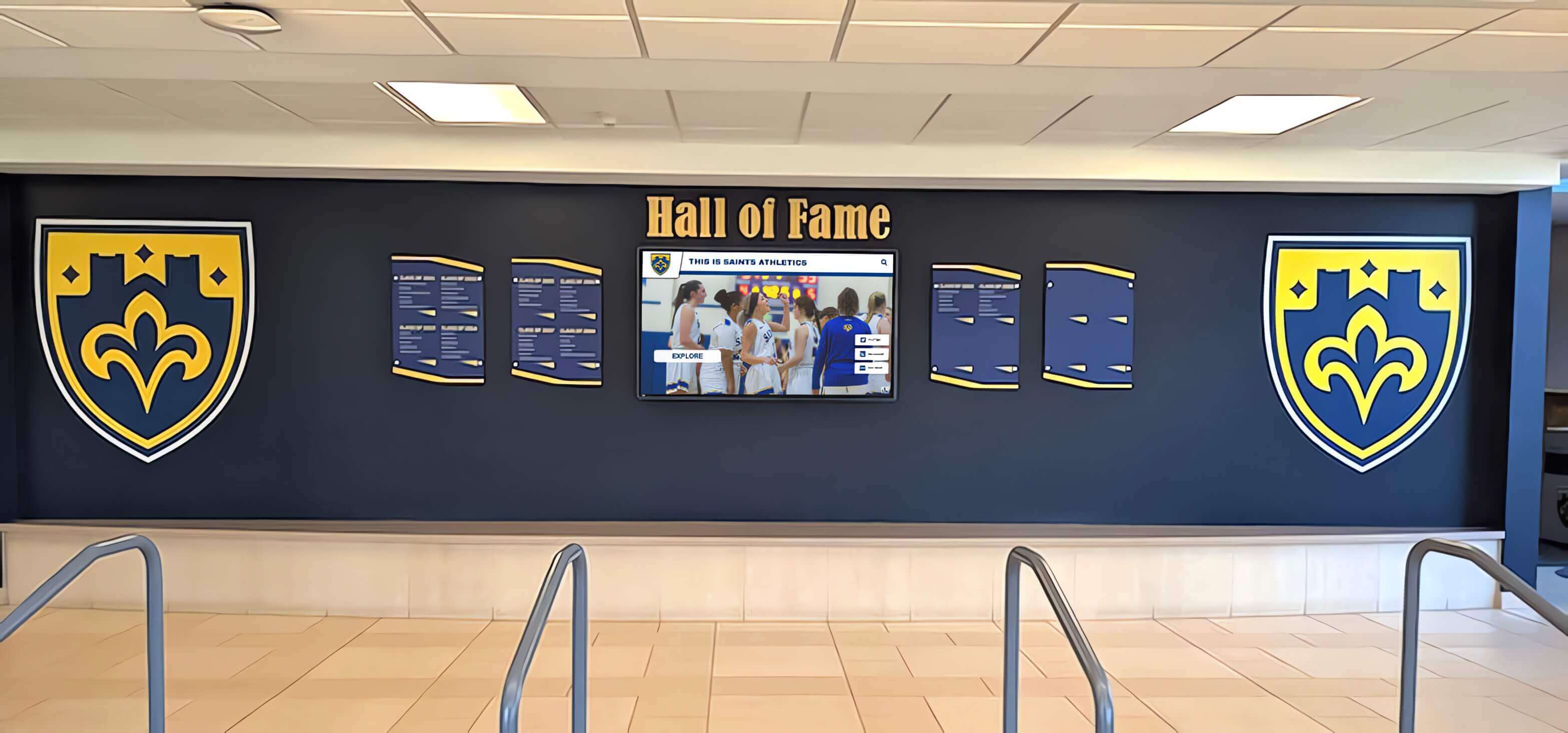
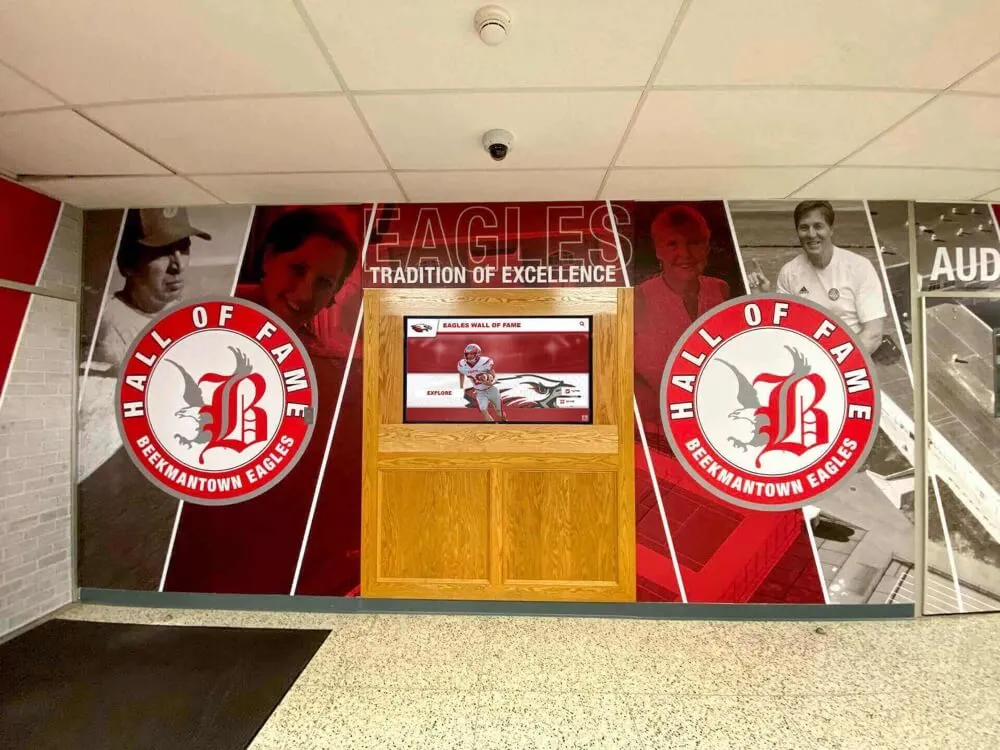
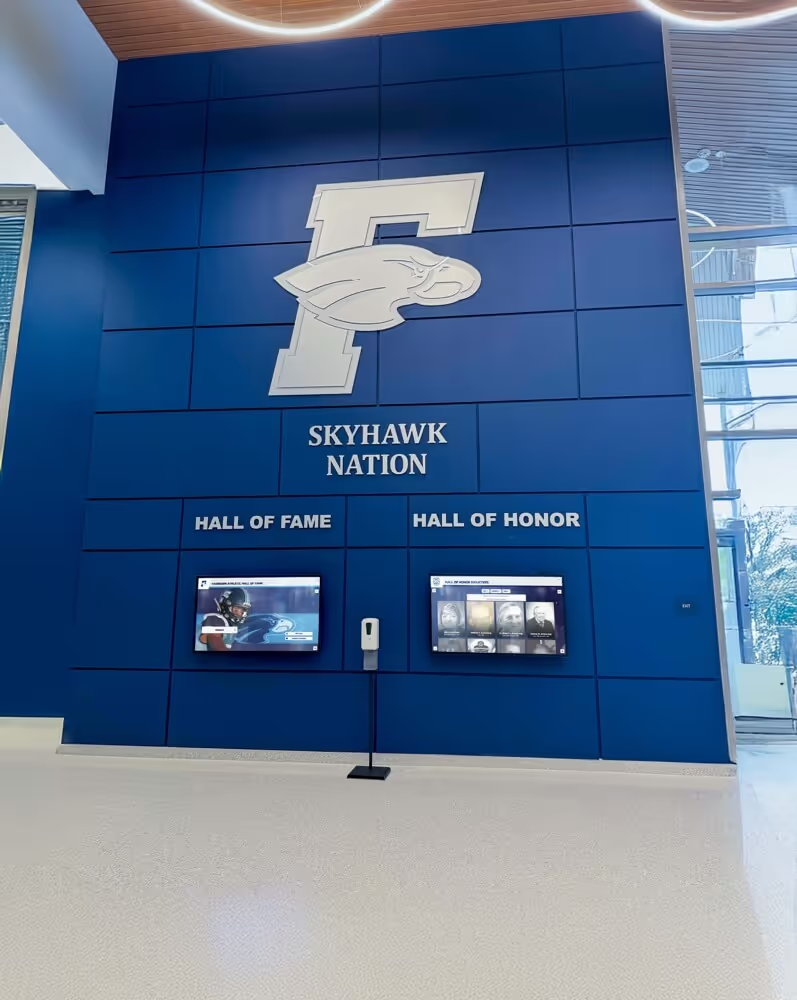
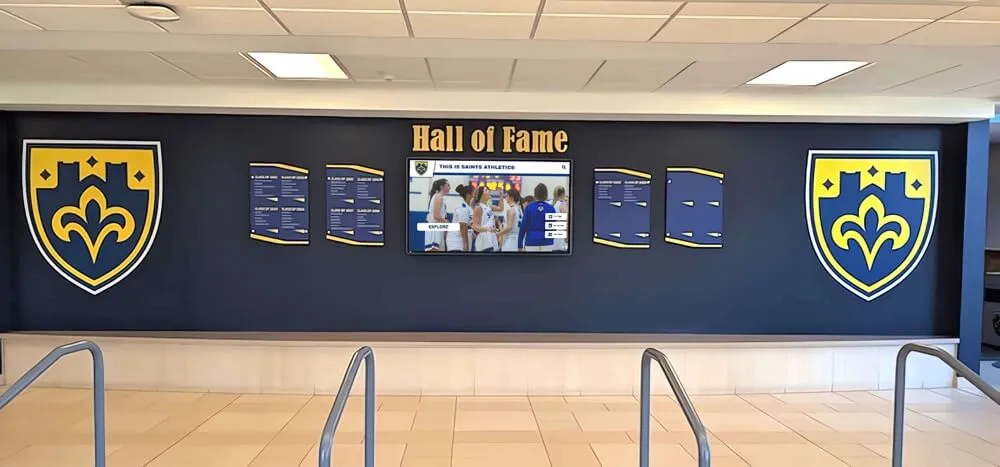
Entrance lobby installations greet visitors with impressive evidence of CTE program quality and student achievement
Implementation Strategies for CTE Programs
Successful digital touchscreen recognition requires thoughtful planning aligned with CTE program goals.
Content Development and Launch Planning
Comprehensive initial content creates immediate impact:
Historical Achievement Archive Development
Launch with substantial recognition:
- Multi-year certification achievement documentation showing program history
- Competition results from past several years demonstrating sustained excellence
- Alumni career placement information connecting training to outcomes
- Work-based learning partner documentation showing industry relationships
- Student testimonials and reflections describing program experiences
- Photo archives from competitions, certifications, and industry events
Starting with rich historical content demonstrates program legacy and provides immediate value rather than beginning with empty displays awaiting gradual population.
Current Student Recognition Systems
Sustainable processes for ongoing additions:
- Defined procedures for adding certifications immediately upon student achievement
- Competition result documentation workflows integrated with event participation
- Work-based learning recognition coordinated with employer partners
- Student profile creation processes ensuring comprehensive documentation
- Photo and media collection systems gathering content throughout programs
- Quality review procedures maintaining professional presentation standards
Program Information and Career Pathway Content
Beyond student recognition, displays should include:
- Career pathway descriptions with course sequences and requirements
- Industry certification information helping students plan credential pursuit
- Labor market data showing career opportunities and earning potential
- Industry partner profiles highlighting employer relationships
- Program facility and equipment documentation showing learning environments
- Instructor credentials and industry experience demonstrating faculty quality
This comprehensive content transforms displays from simple recognition lists into powerful program advocacy and student recruitment tools.
Strategic Placement and Installation
Display location significantly affects recognition impact:
High-Priority CTE Program Locations
Optimal placements include:
- CTE program entrances and dedicated career center facilities
- Main building lobbies greeting all students and visitors
- Guidance and counseling office areas where pathway decisions occur
- Career fair and industry partner event locations
- Parent conference and school board meeting spaces
- Commons areas and gathering spaces with sustained viewing time
- Job shadow and work-based learning coordinator offices
Locations serving both current students and external stakeholders maximize recognition value and program advocacy effectiveness.
Industry Partner and Employer Access
Consider stakeholder audiences:
- Displays visible during advisory committee meetings and industry partner visits
- Recognition viewable during student interview and hiring events
- Locations accessible to employer guests evaluating potential hires
- Positions prominent during accreditation and program review visits
- Visibility during prospective student and family program tours
- Access during school board and community engagement events
CTE programs depend heavily on external relationships, making stakeholder-visible recognition strategically valuable beyond student motivation benefits.
Discover comprehensive approaches in digital touchscreen display guides for planning effective installations.
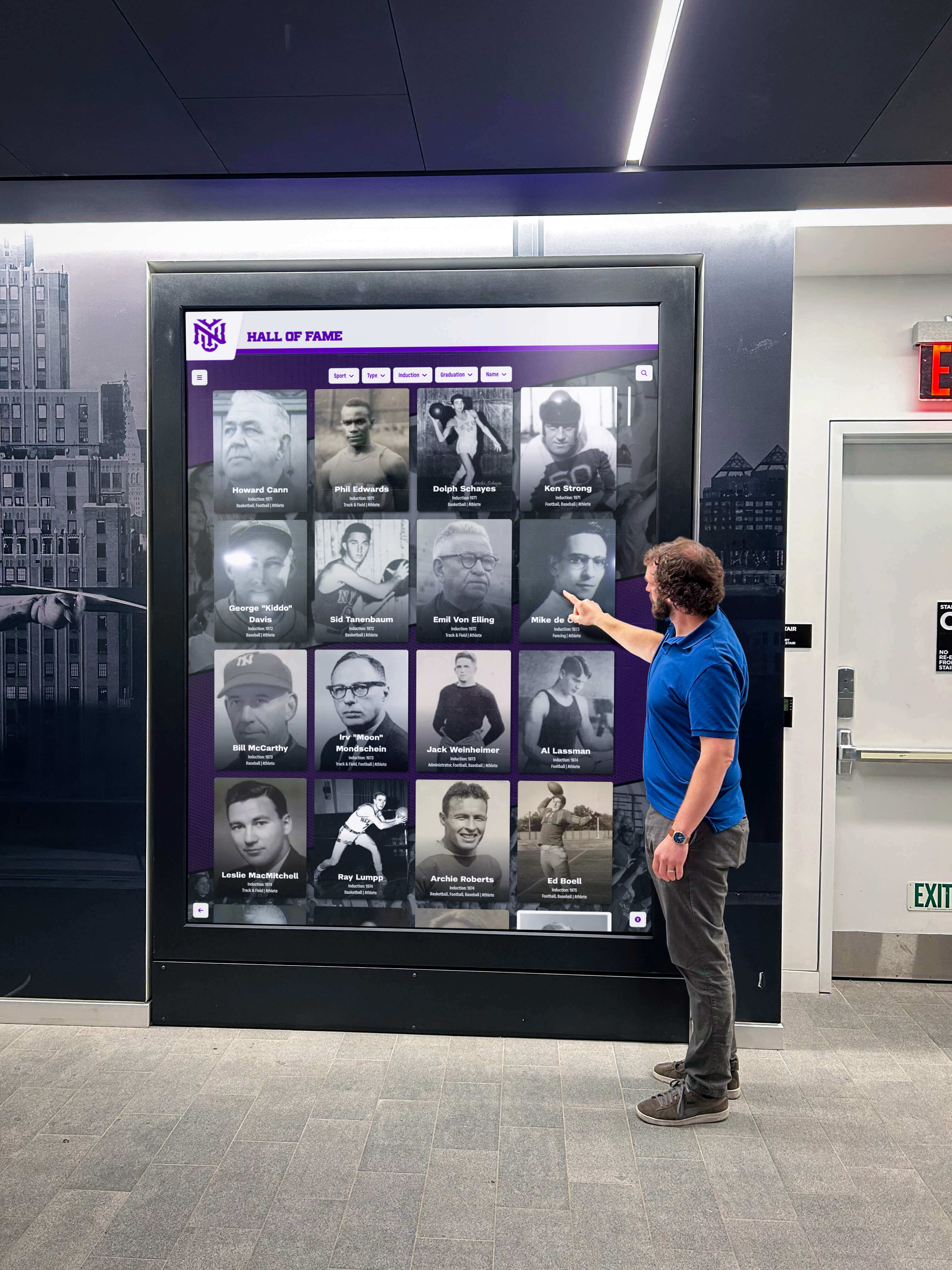
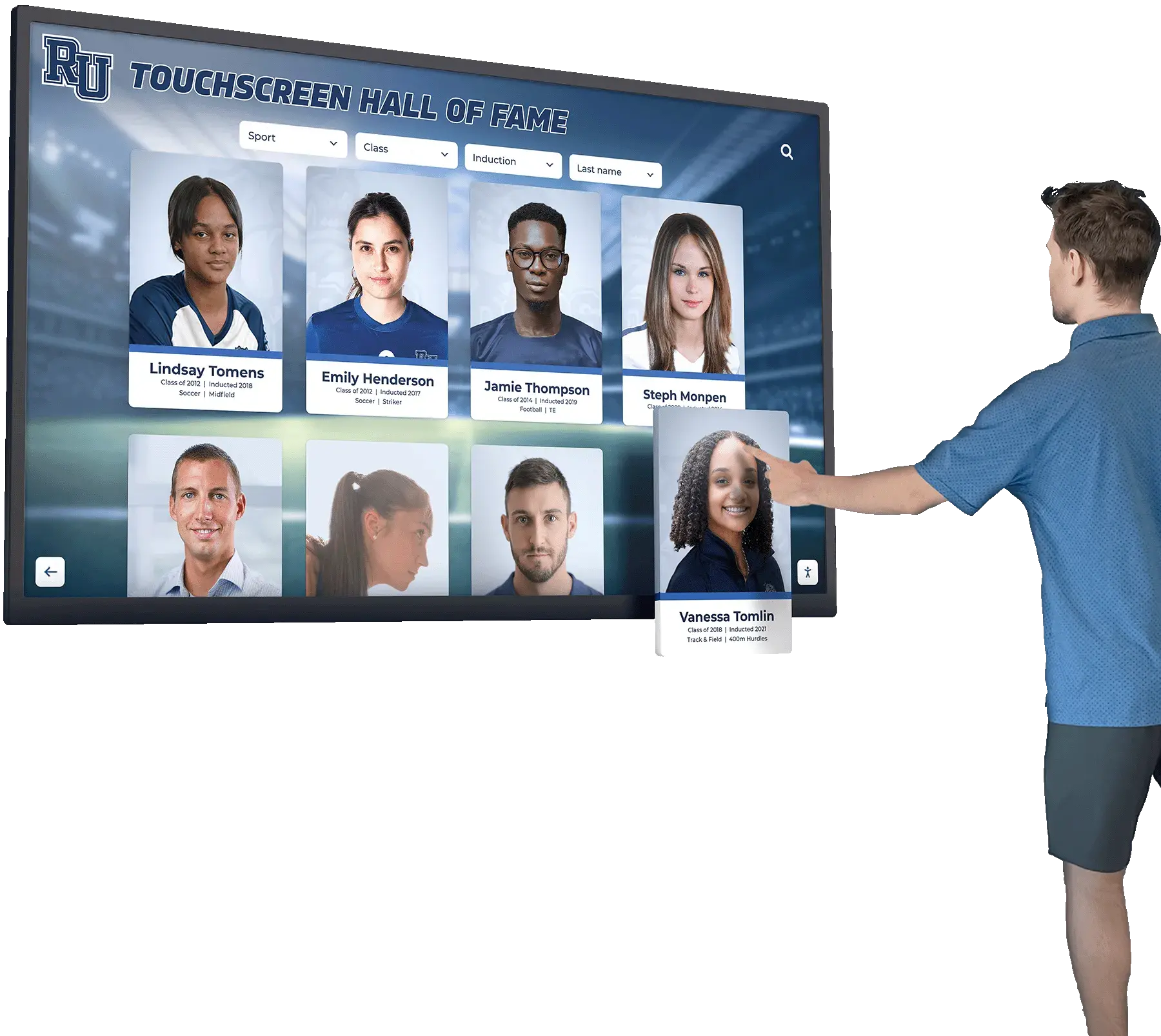
Interactive features enable visitors, industry partners, and families to explore CTE programs independently
Integration with Program Operations
Digital recognition provides maximum value when integrated with broader CTE operations:
Student Information System Connections
Where possible, integration streamlines management:
- Automatic student roster updates as enrollments occur
- Graduation year and demographic information synchronization
- Program enrollment tracking showing pathway participation
- Course completion data supporting recognition requirements
- Attendance and engagement metrics where relevant
- Export capabilities for reporting and assessment purposes
Industry Partner Coordination
Recognition systems can support partnership management:
- Work-based learning placement documentation
- Employer evaluation and student performance tracking
- Industry advisory committee participation recognition
- Guest speaker and industry expert acknowledgment
- Equipment donation and program support documentation
- Apprenticeship and employment outcome tracking
Competition Management Integration
Connecting recognition with event participation:
- Competition registration and participation tracking
- Results entry and achievement documentation
- Team and advisor assignment management
- Travel and logistics information organization
- Historical performance analysis and program improvement
- Budget and resource allocation supporting competitive excellence
These integrations transform recognition displays from standalone systems into central components of comprehensive CTE program management.
Training and Ongoing Management
Sustainable recognition requires capable administration:
Staff Training and Documentation
Effective management includes:
- CTE coordinator and instructor training on content management
- Documentation of recognition procedures and workflows
- Multiple trained staff ensuring continuity through personnel changes
- Regular update schedules for certifications and achievements
- Quality standards maintaining professional presentation
- Ongoing technical support access for troubleshooting
Student Involvement Opportunities
Some programs successfully engage students:
- Student assistants helping document certifications and achievements
- Photography and media creation by enrolled students
- Profile content development through structured reflection assignments
- Competition documentation by participating team members
- Alumni updates contributed through established communication channels
- Program ambassador roles highlighting recognition during tours and events
Student involvement creates ownership while providing authentic voice and reducing faculty workload. Review interactive touchscreen software options for selecting manageable platforms.
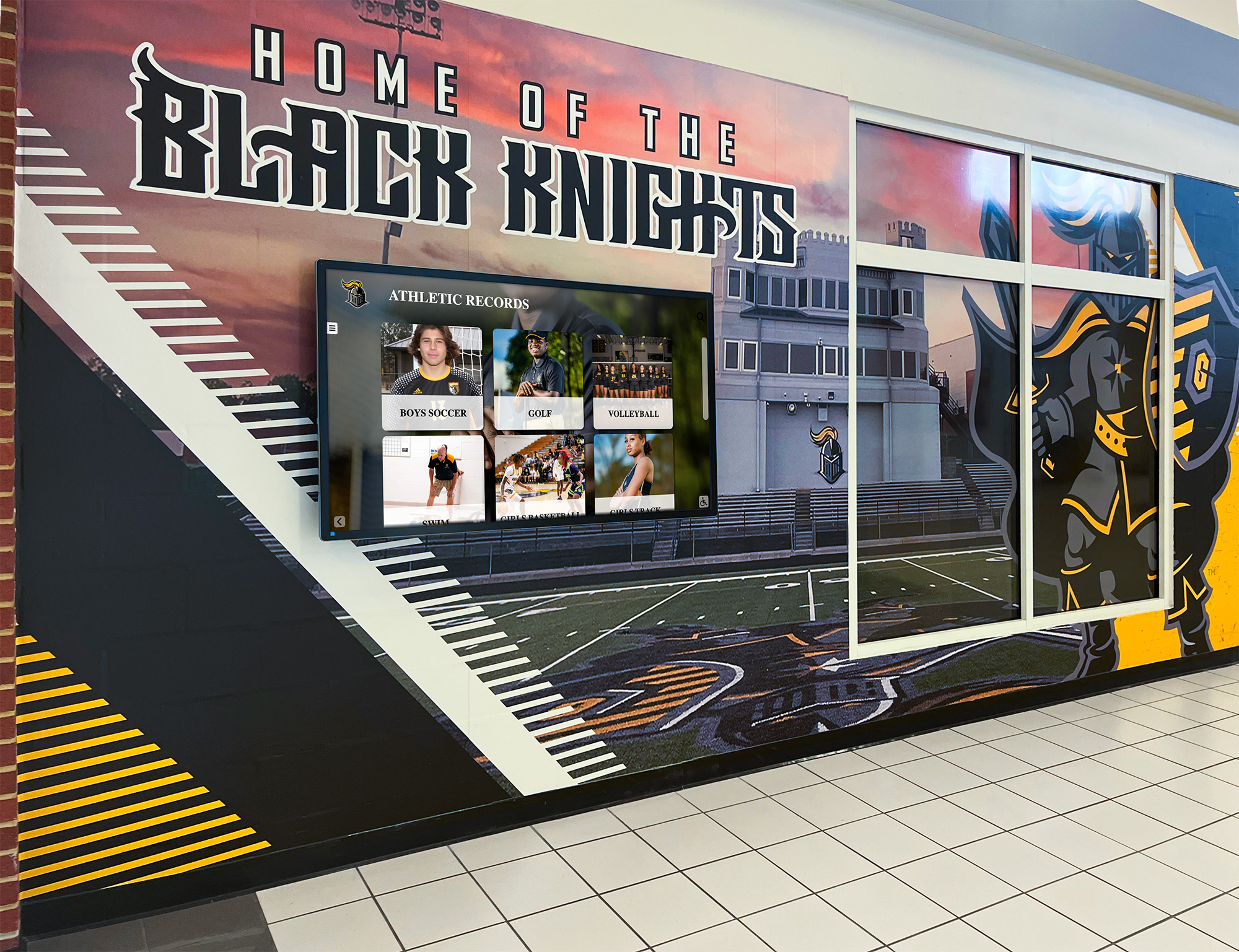
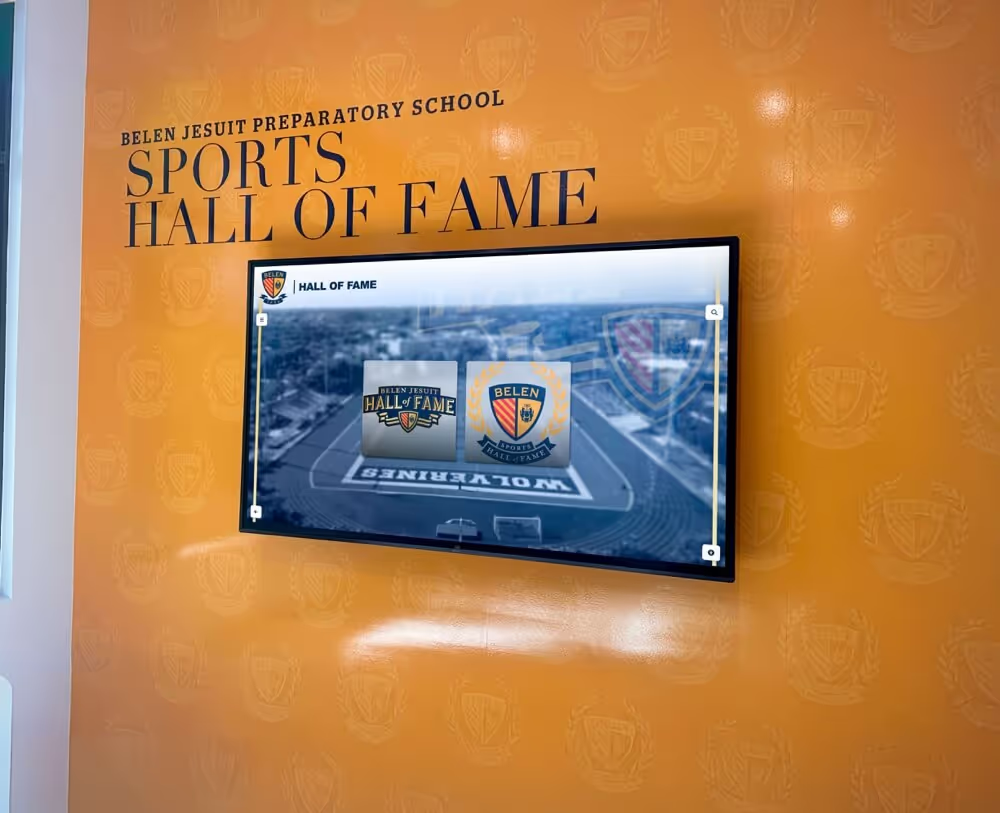
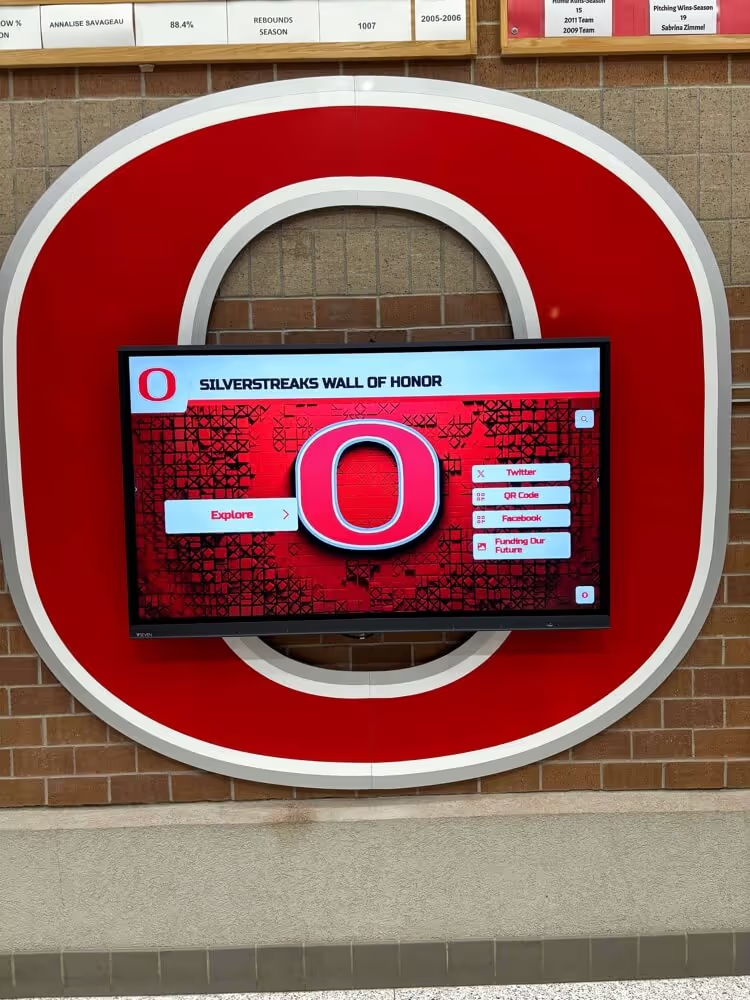
Digital displays integrate with existing school aesthetics while providing modern recognition capabilities
Cost Considerations and Budget Planning
Understanding investment requirements helps CTE programs plan recognition implementations effectively.
Initial Investment Components
Digital touchscreen display costs include:
Hardware Costs
Display equipment pricing:
- 43-55 inch commercial touchscreen displays: $3,500-6,000
- 55-65 inch commercial touchscreen displays: $5,000-8,500
- 65-75 inch commercial touchscreen displays: $7,500-12,000
- Freestanding kiosk enclosures: $2,000-4,000 additional
- Wall-mount installation: $800-2,000
- Network infrastructure: $500-1,500 if needed
Software and Platform Costs
Recognition software varies:
- Purpose-built CTE recognition platforms: $1,500-4,000 annual subscription
- Initial setup and configuration: Often included or $500-1,500
- Training and implementation support: Often included or $800-2,500
- Custom design and pathway branding: $500-2,000
- Ongoing hosting, support, and updates: Typically included in subscription
Solutions like Rocket Alumni Solutions provide comprehensive platforms specifically designed for educational recognition including CTE program needs, with features addressing career pathway organization, certification documentation, and multi-stakeholder audiences.
Initial Content Development
Launch preparation includes:
- Historical achievement documentation: $1,000-4,000 depending on scope
- Certification and competition data compilation: Can be managed internally
- Photo archive collection and organization: $500-1,500
- Career pathway information development: $800-2,500
- Launch event and promotion: $500-1,500
Total Initial Investment Range: $10,000-30,000 depending on display size, historical archive scope, and implementation approach, with most single-display implementations falling in the $12,000-18,000 range.
Ongoing Operational Costs
Annual expenses after implementation:
Software and Services
- Platform subscription: $1,500-4,000 annually
- Cloud hosting and content storage: Typically included
- Technical support and software updates: Typically included
- Training for new CTE staff: Usually included or minimal cost
Hardware Maintenance
- Cleaning and basic maintenance: Minimal staff time
- Extended warranty coverage: $300-800 annually optional
- Energy costs: Approximately $60-120 annually per display
Content Management
- Staff time for achievement updates: 3-6 hours monthly typically
- Certification and competition documentation: Absorbed within CTE operations
- Photography and media creation: Minimal incremental cost
Total Annual Operating Costs: $1,500-5,000 with most expenses being predictable subscription fees.
Funding Sources and Budget Strategies
CTE programs can leverage specialized funding:
Perkins V Funding
Federal CTE funding supports recognition:
- Perkins V funds can support equipment and technology purchases
- Recognition displays document program quality for accountability requirements
- Industry partnership documentation supports Perkins reporting obligations
- Career pathway organization aligns with Perkins program structure requirements
Industry Partnership Support
Employer engagement can provide resources:
- Industry advisory committees may support recognition investments
- Employer donations or sponsorships funding displays in exchange for visibility
- Industry association grants supporting workforce development initiatives
- Equipment vendors providing discounts for programs using their certifications
Grant and Foundation Opportunities
External funding sources include:
- Workforce development grants from state and federal programs
- Education technology grants supporting innovative approaches
- Career readiness initiative funding from foundations
- Economic development support for talent pipeline projects
Many CTE programs successfully fund recognition displays through combinations of these sources rather than relying solely on general operating budgets.
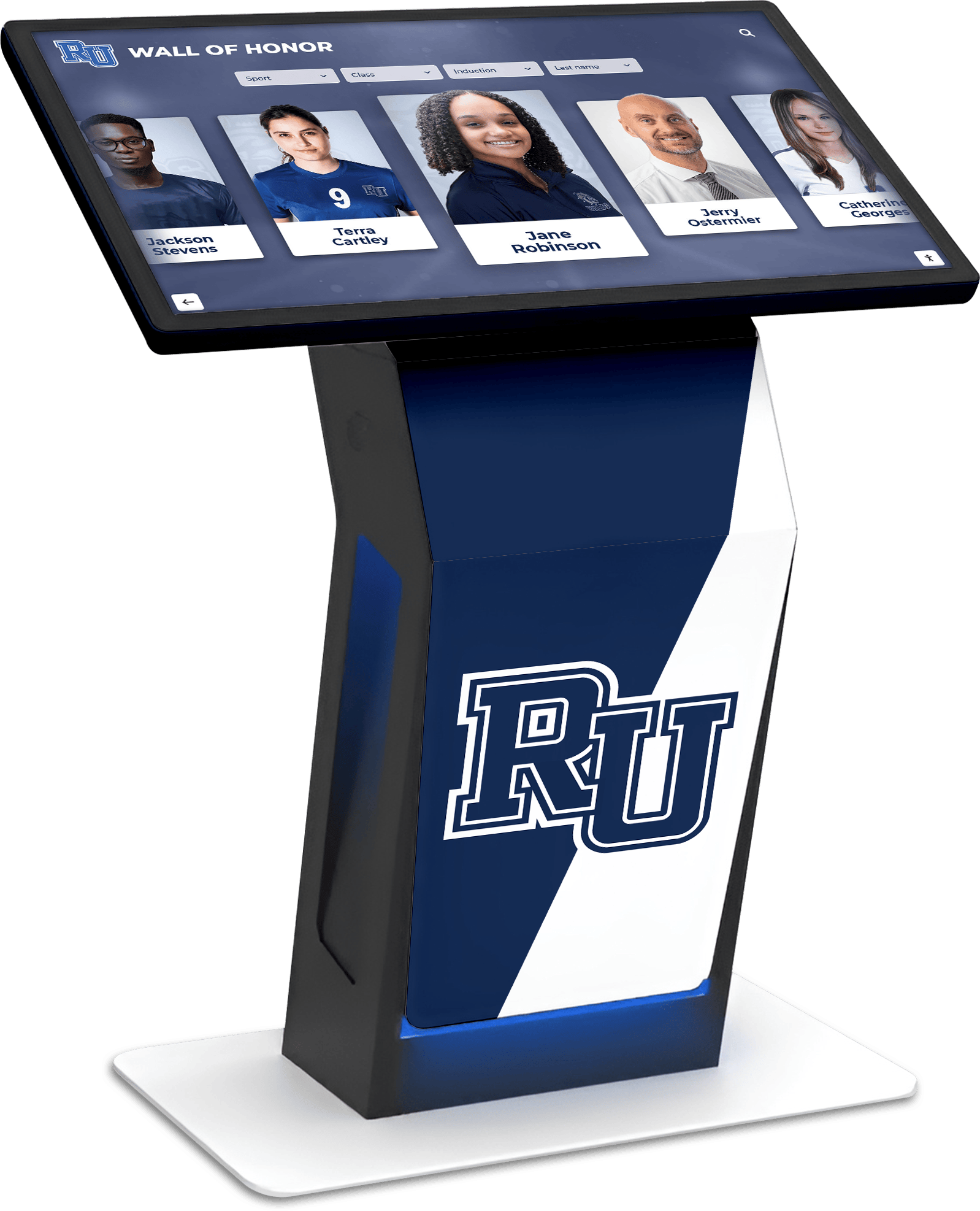
Professional touchscreen kiosks provide comprehensive recognition platforms designed specifically for educational settings
Special Considerations for CTE Recognition
Several additional factors affect career-technical recognition effectiveness:
Privacy and Student Information Protection
CTE programs must carefully manage student data:
FERPA Compliance
Educational record protection requires:
- Clear policies about what achievement information appears publicly
- Student and family consent for recognition where required
- Age-appropriate permissions for minor students
- Graduation year considerations affecting privacy requirements
- Opt-out procedures for students preferring non-recognition
- Secure administrative access preventing unauthorized modifications
Industry Certification Privacy
Credential information needs special handling:
- Personal certification numbers and detailed dates may need protection
- Certification status information accuracy maintaining credential integrity
- Expired credential handling respecting time-limited certifications
- Verification procedures ensuring displayed certifications are legitimate
Work-Based Learning Confidentiality
Employer relationships involve sensitivities:
- Employer confidentiality regarding specific workplace arrangements
- Student performance information shared only with appropriate permissions
- Company proprietary information protection
- Minor student workplace activity documentation following labor regulations
CTE coordinators should consult with school administrators and legal counsel to establish appropriate privacy policies for recognition displays.
Equity and Inclusive Recognition
CTE recognition should serve all students:
Diverse Achievement Celebration
Comprehensive recognition includes:
- Entry-level certification recognition alongside advanced credentials
- Participation acknowledgment for students building toward certifications
- Non-traditional student success in various career pathways
- Work-based learning appreciation regardless of placement type or employer
- Progress recognition for students overcoming challenges
- Multiple pathway success demonstrating various routes to career readiness
Representation and Role Models
Visual diversity matters:
- Gender diversity in traditionally male or female-dominated pathways
- Racial and ethnic representation across all career clusters
- Socioeconomic diversity demonstrating CTE accessibility
- Student populations with disabilities succeeding in technical careers
- English language learner achievement in CTE programs
- First-generation student career success
This inclusive recognition helps recruit diverse student populations into CTE programs and counters persistent stereotypes about who succeeds in technical careers.
Learn about comprehensive student engagement strategies that support diverse populations.
Career Pathway Evolution and Content Currency
CTE programs change rapidly requiring flexible recognition:
Emerging Technology Integration
New career areas demand accommodation:
- Emerging technology pathways like cybersecurity, drone technology, and renewable energy
- New certification programs from evolving industries
- Updated competition categories reflecting current technical skills
- Modified pathway structures responding to labor market changes
- Innovative program models like early college and apprenticeship integration
Industry Partnership Changes
Employer relationships evolve:
- New industry partners replacing or supplementing previous relationships
- Changed certification requirements from industry associations
- Updated equipment and technology gifts requiring recognition
- Modified work-based learning arrangements and opportunities
- Advisory committee membership changes and contributions
Digital recognition systems accommodate these changes through simple updates, while traditional static displays become outdated quickly and create misleading impressions of current program offerings.
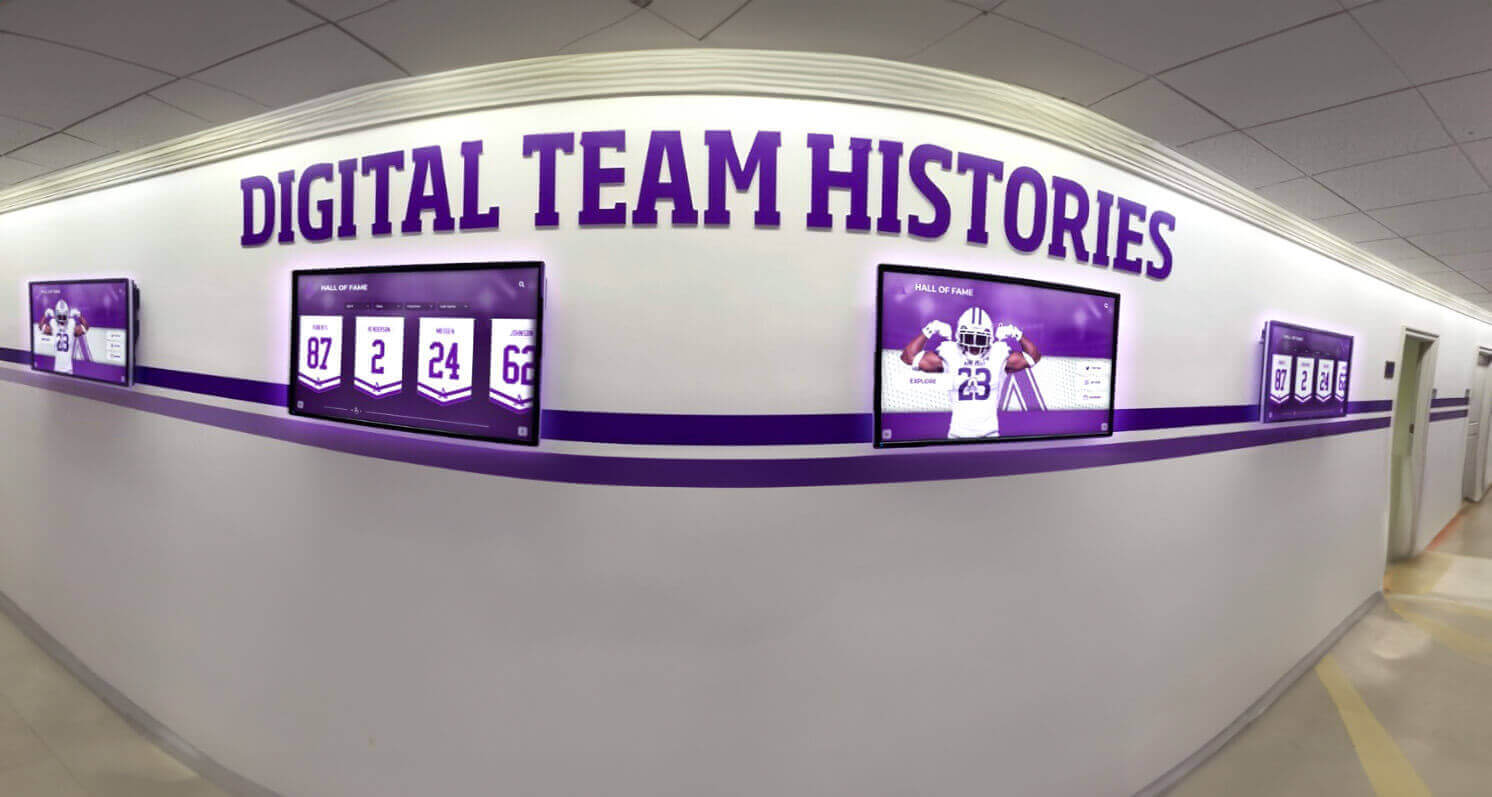
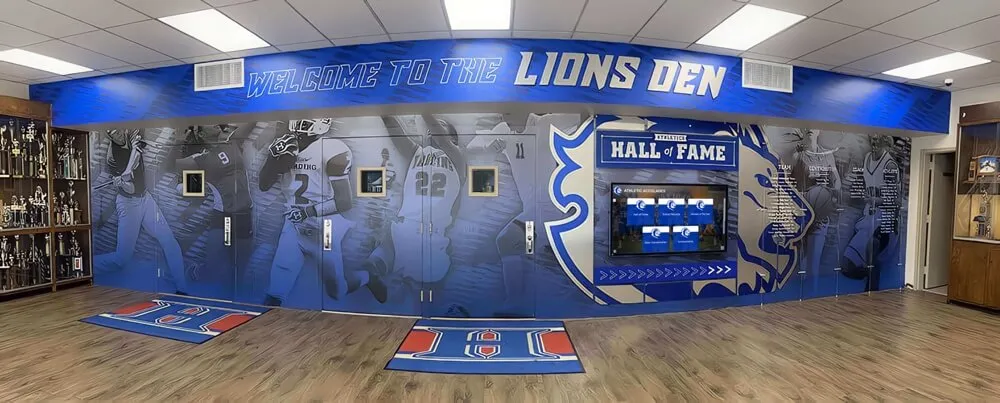
Multiple coordinated displays can showcase different career pathways or achievement categories comprehensively
Conclusion: Celebrating CTE Excellence Through Digital Recognition
Career and Technical Education programs prepare students for rewarding careers and provide essential talent pipelines for regional economies. The impressive achievements of CTE students—from industry certifications and competition victories to successful career placements and entrepreneurship—deserve recognition as prominent and compelling as traditional academic honors. Digital touchscreen displays specifically designed for CTE recognition enable programs to celebrate student excellence comprehensively while demonstrating program quality to stakeholders and motivating current students through visible peer success.
The considerations explored throughout this guide provide frameworks for CTE programs to evaluate recognition options, plan implementations, and create sustainable systems that honor student dedication while supporting broader program goals including student recruitment, industry engagement, and community support. From certification documentation and career pathway organization to competition recognition and work-based learning celebration, purpose-built recognition platforms address the unique needs of career-technical education.
Ready to explore how digital touchscreen displays can transform CTE program recognition at your school? Modern recognition solutions help career and technical education programs celebrate unlimited student achievements while creating engaging experiences that motivate students, educate families, and demonstrate program quality to industry partners and community stakeholders. Solutions like Rocket Alumni Solutions provide comprehensive platforms specifically designed for educational recognition including career-technical education needs, combining intuitive software with professional hardware recommendations and implementation support ensuring successful long-term programs.
Whether you’re establishing first-ever CTE recognition or enhancing existing approaches, the key is selecting technology aligned with your program philosophy, ensuring platforms provide career pathway features your specific needs require, and implementing solutions sustainable within your operational capabilities and resources.
Your CTE students deserve recognition technology that honors their certifications, competition achievements, and career preparation appropriately while creating meaningful engagement with current students, families, industry partners, and communities. With thoughtful evaluation, appropriate technology selection, and authentic commitment to comprehensive achievement celebration, you can implement digital recognition systems that demonstrate program excellence, motivate student participation, and preserve career-technical education legacy for generations to come.
The most important consideration isn’t selecting the most expensive hardware or most sophisticated software—it’s choosing solutions aligned with your CTE program goals, sustainable within your resources, and designed to serve your specific student population and industry partner relationships effectively. Your students’ career preparation achievements deserve recognition that celebrates accomplishments meaningfully while demonstrating the life-changing impact of quality career and technical education. Digital touchscreen displays make that comprehensive, engaging recognition achievable and sustainable.
Ready to begin exploring digital touchscreen options for your CTE recognition program? Start by inventorying current student achievements and program recognition needs, evaluating facility opportunities and stakeholder audiences, and connecting with providers who understand career-technical education specifically rather than simply selling generic display hardware. Consider reviewing best school history software guides for understanding platform capabilities supporting comprehensive recognition programs.