



Cross country runners demonstrate a unique combination of physical endurance, mental toughness, and unwavering dedication that often goes underrecognized compared to more visible team sports. While football teams celebrate touchdowns under Friday night lights and basketball players perform before packed gymnasiums, cross country athletes endure grueling 5K races, train through harsh weather, and push through physical exhaustion with minimal fanfare. Yet these athletes deserve recognition systems as thoughtful and comprehensive as the commitment they bring to their sport.
Many schools struggle to create cross country awards programs that adequately honor the sport’s distinct characteristics: individual performance within team scoring, sustained improvement over seasons, the mental resilience required to compete against oneself and the clock, and the diverse ways runners contribute to program success beyond race results alone. Traditional sports recognition approaches often fall short for a sport where every athlete runs the same distance but faces vastly different individual challenges and achievements.
This comprehensive guide explores creative, meaningful cross country awards and recognition ideas that celebrate runners at every competitive level while building program culture that values the unique qualities endurance athletes demonstrate.
Cross country recognition requires understanding what makes the sport distinctive. Unlike sports with clear scoring plays or game-defining moments, cross country excellence manifests through consistent training, incremental improvement, strategic racing, and the mental fortitude to maintain pace when every instinct screams to slow down. Effective awards programs acknowledge this unique athletic identity.

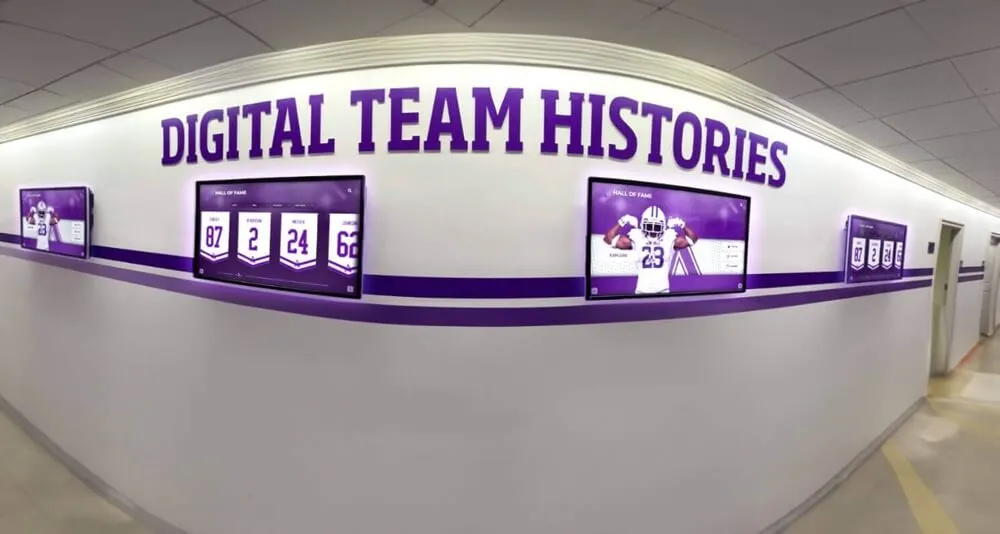
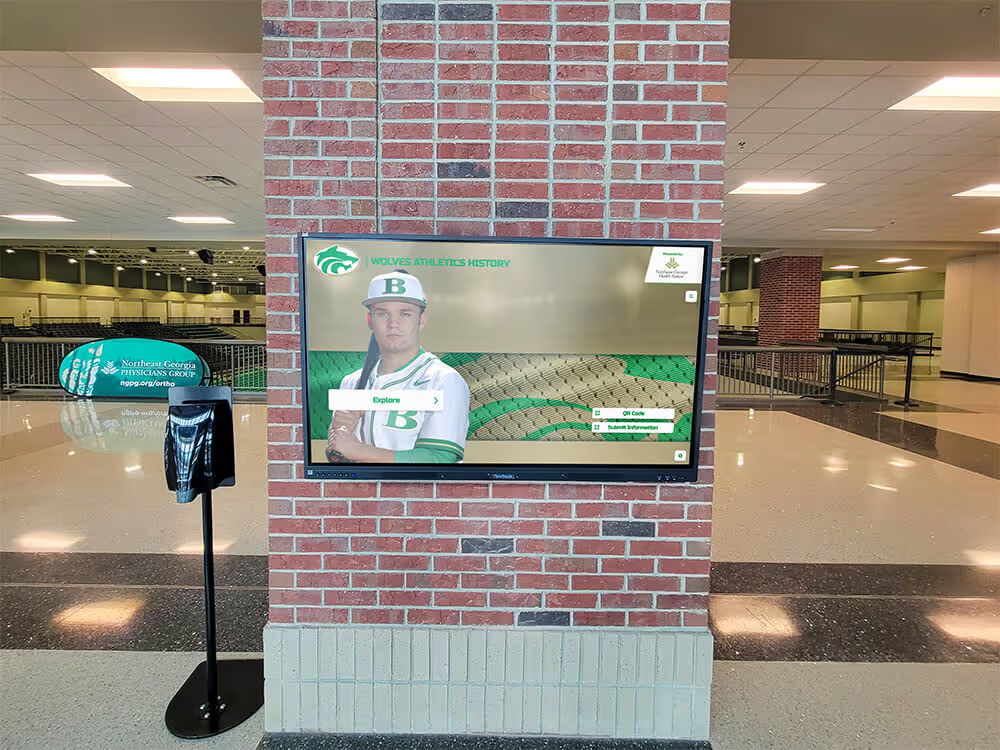
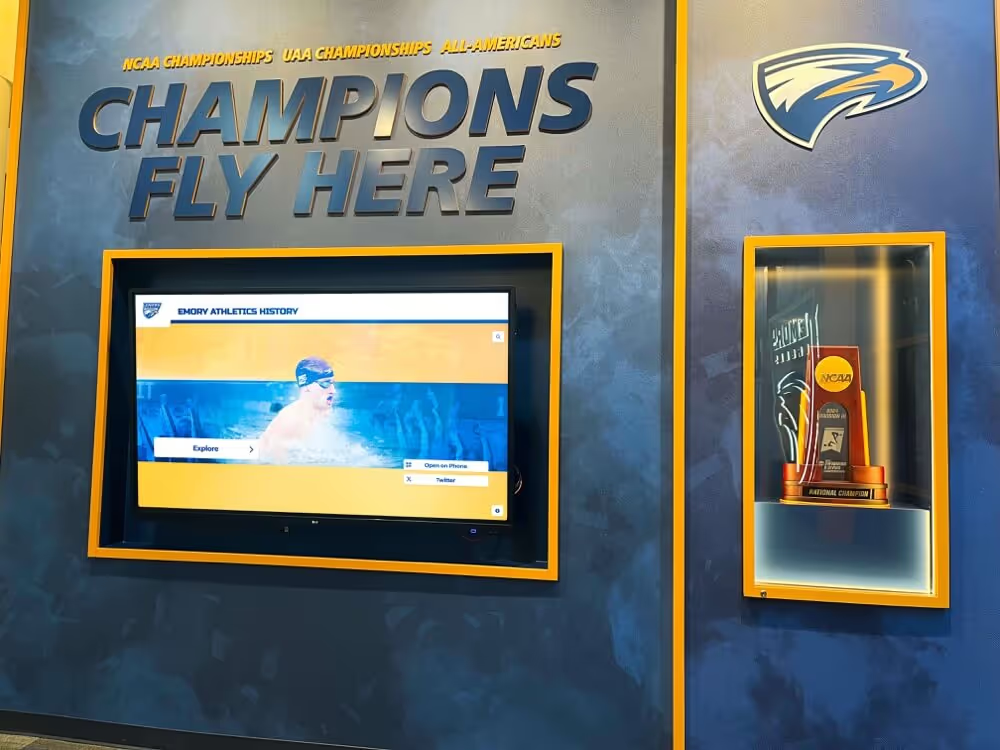
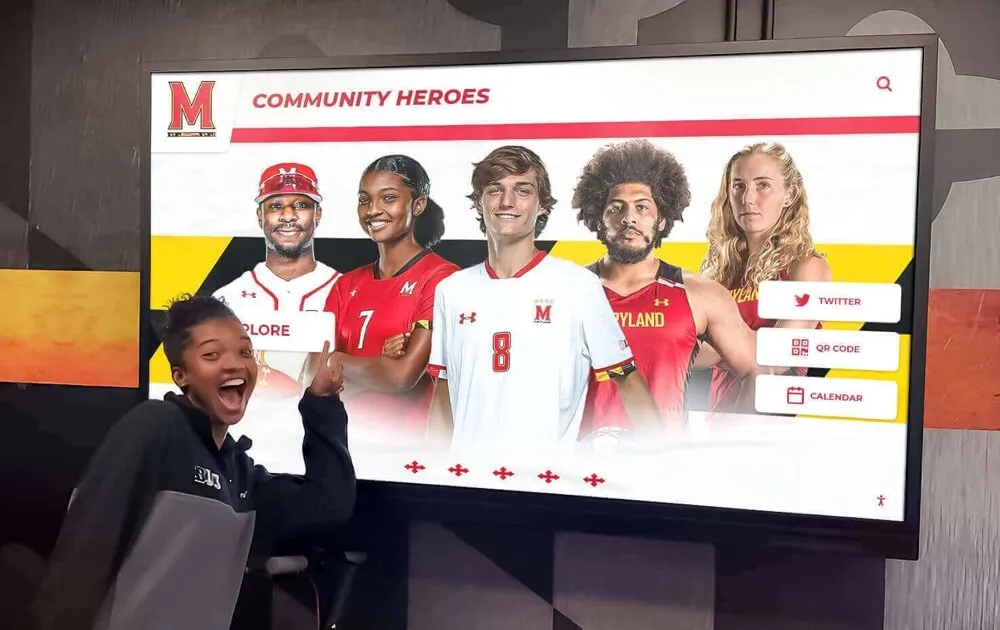
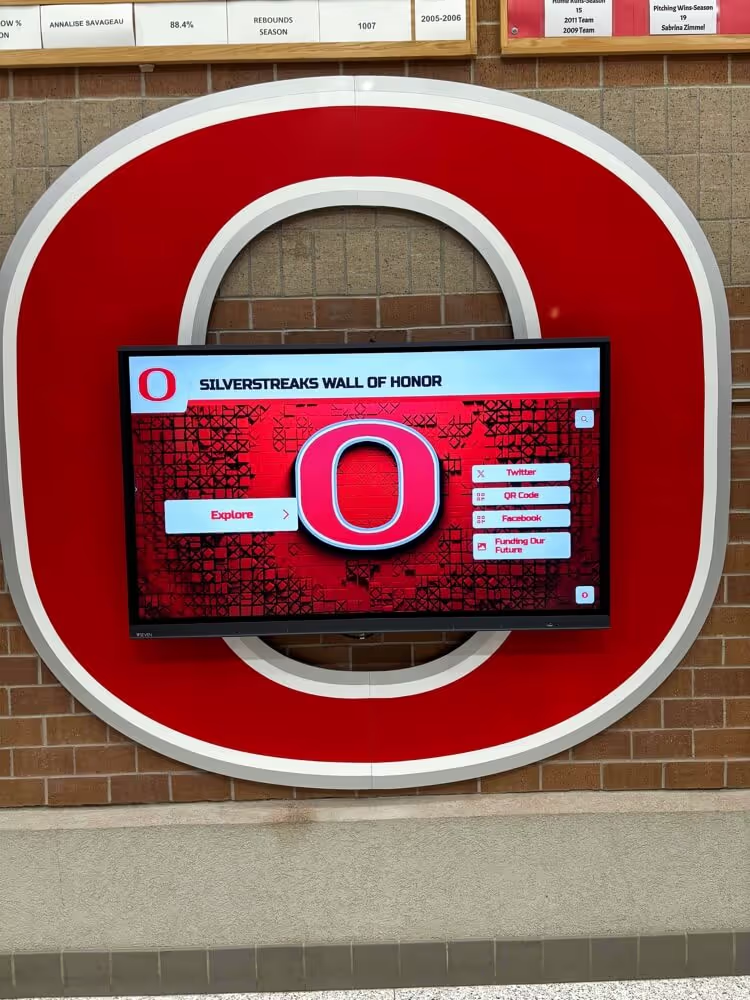
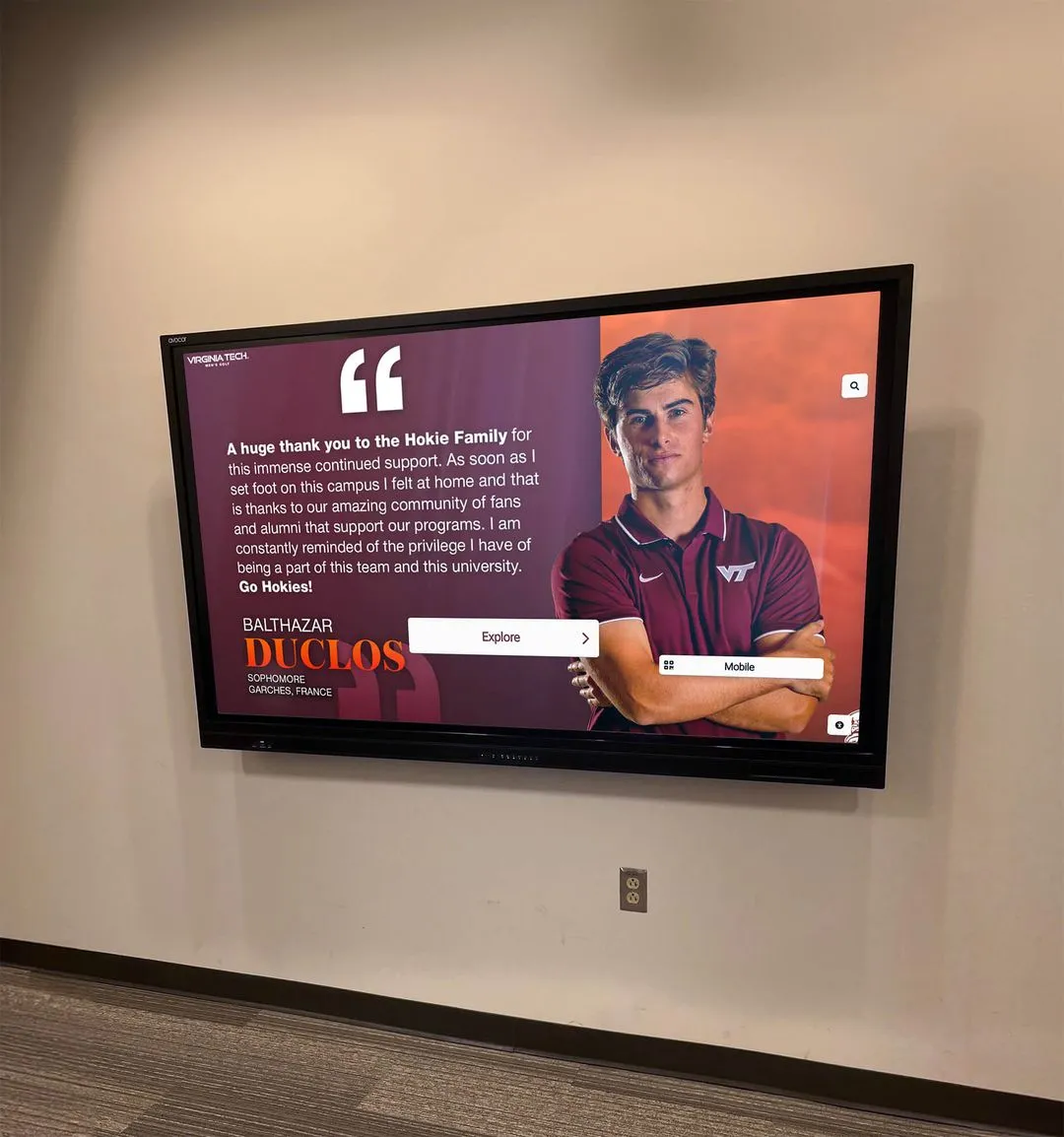
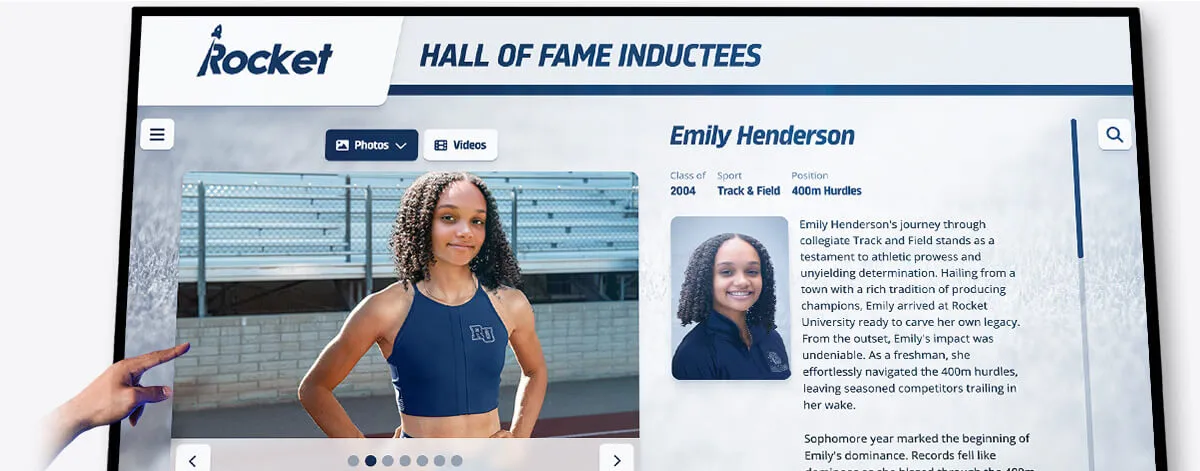
Digital recognition displays effectively showcase cross country and track achievements with detailed performance information
Understanding Cross Country Recognition Needs
Before implementing awards programs, understanding cross country’s unique recognition challenges helps schools create systems that resonate with runners and coaches.
The Individual-Team Paradox
Cross country occupies unusual territory among high school sports. Runners compete individually—each athlete races their own race, managing their own pace, fighting their own physical battles. Yet scoring operates as team competition where the lowest combined placement of a school’s top finishers determines results.
This duality creates recognition complexity. Should programs emphasize individual accomplishments like personal records and place finishes, or focus on team contributions like scoring positions and displacement of opposing runners? The answer, of course, involves both—but balancing individual and team recognition requires thoughtful program design.
Individual Achievement Recognition
Personal bests and time improvements throughout seasons demonstrate individual development. A runner who drops 90 seconds off their 5K time through dedicated training deserves recognition even if they never crack the varsity top seven. Breaking specific time barriers (sub-20:00 for boys, sub-22:00 for girls at the 5K distance) represents significant accomplishment worthy of acknowledgment.
Team Contribution Recognition
The fifth, sixth, and seventh runners on cross country teams contribute critically to team scoring dynamics even when individual times might not turn heads. A runner who consistently finishes as the team’s fifth scorer provides invaluable team stability. Athletes who displace opposing teams’ scorers help their teams win even without posting the fastest times.
Effective recognition programs acknowledge both dimensions—celebrating individual performance milestones while honoring the team-focused contributions that define cross country scoring.
The Visibility Challenge
Cross country competes for recognition attention against higher-profile sports with larger budgets, more spectators, and greater community visibility. Football games draw thousands; cross country meets might attract a few dozen dedicated parents. Basketball achievements earn prominent yearbook coverage; cross country results get brief mentions.
This visibility gap doesn’t reflect different levels of athletic commitment or achievement—it reflects structural realities of school sports recognition. Addressing this disparity requires intentional efforts ensuring cross country accomplishments receive appropriate visibility and celebration.
Athletic director responsibilities include ensuring equitable recognition across all sports programs regardless of spectator attendance or revenue generation.
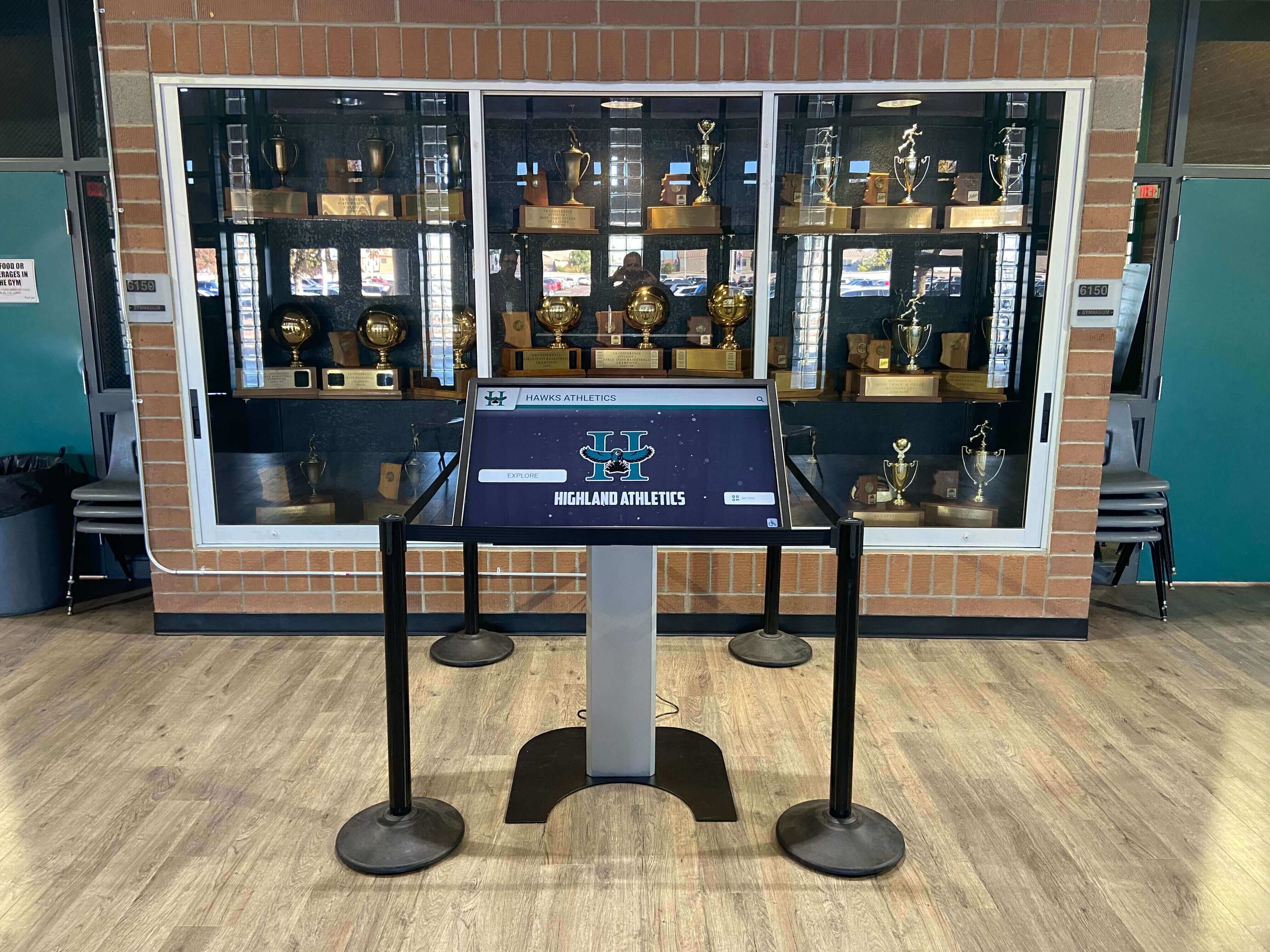
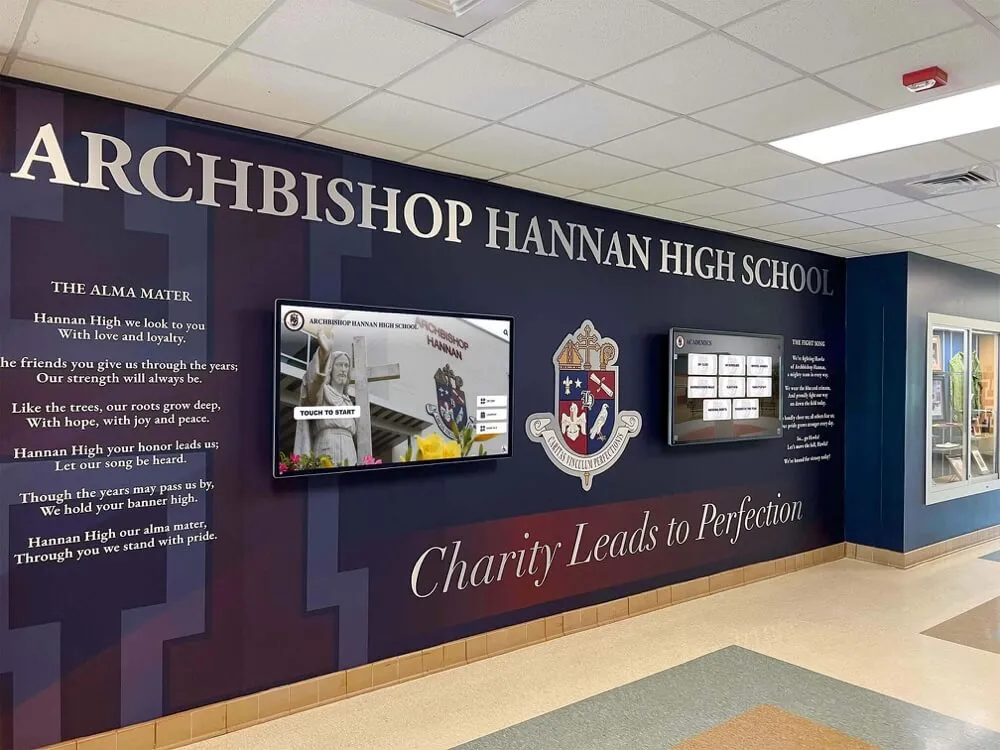
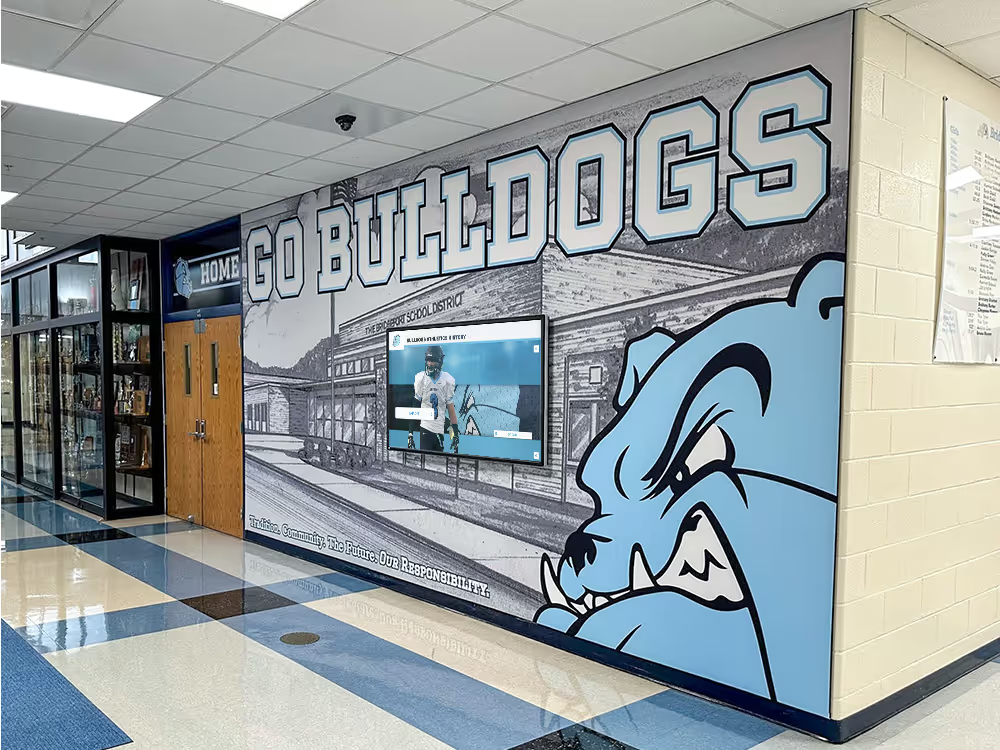
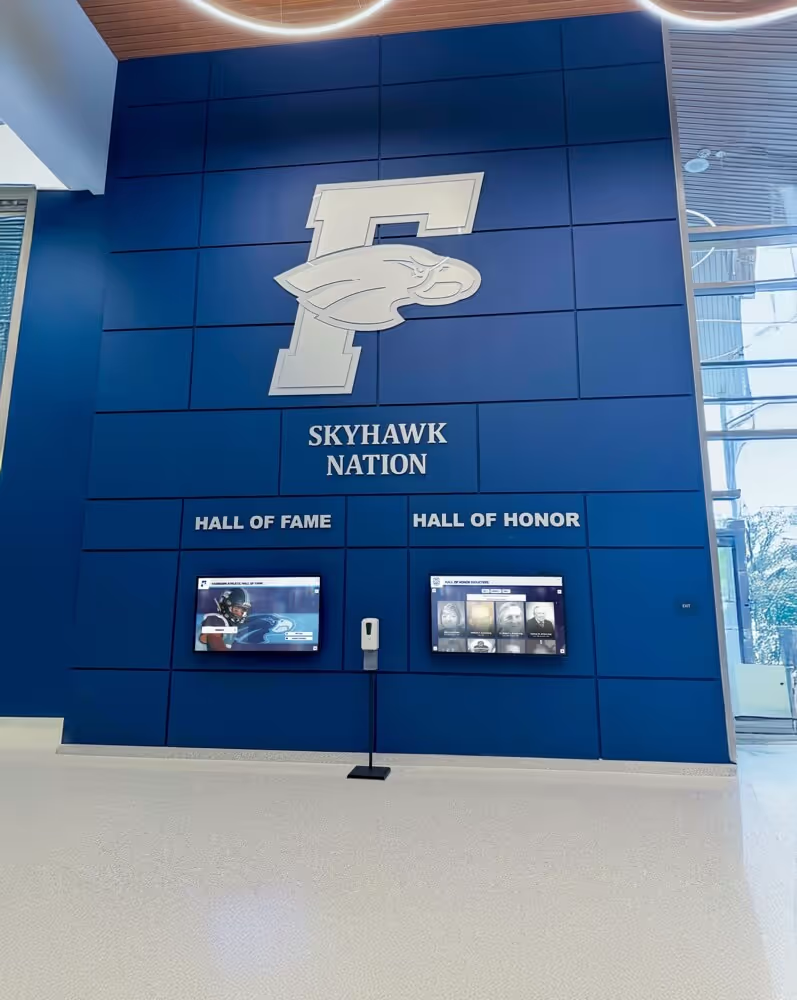
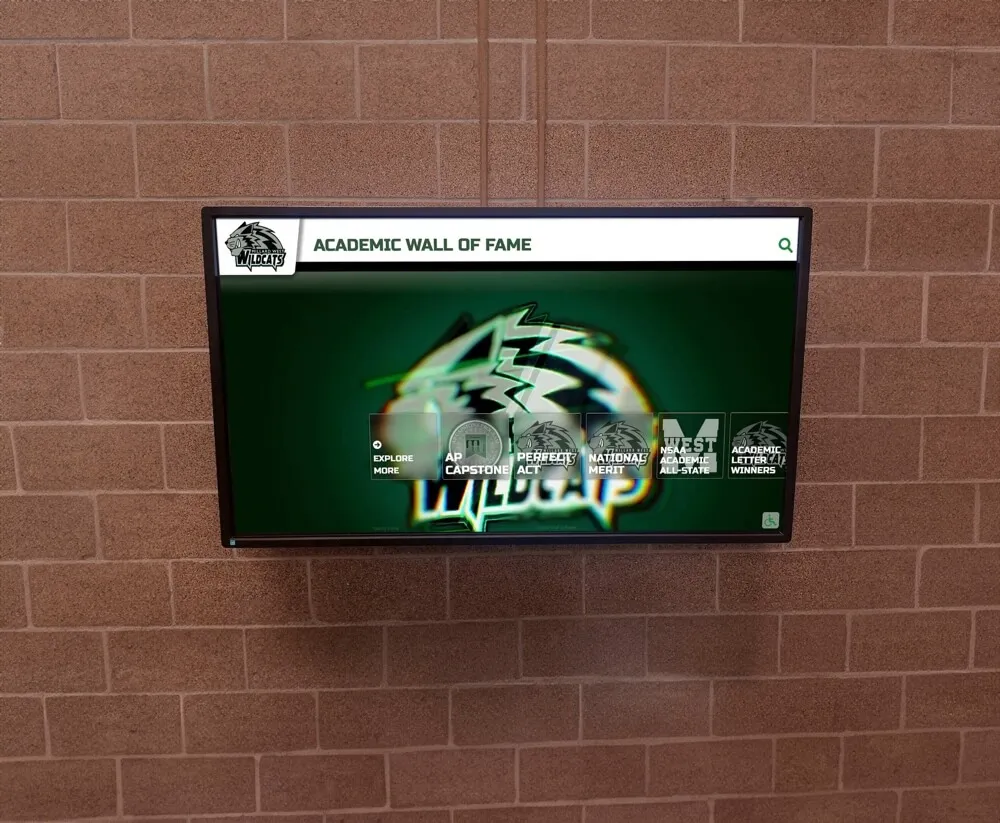
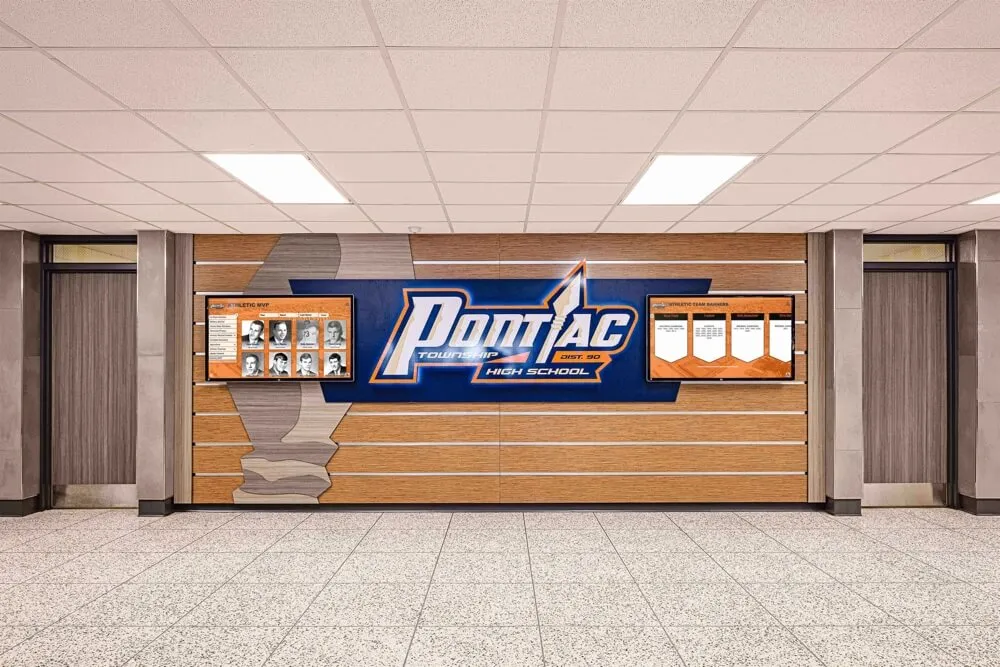
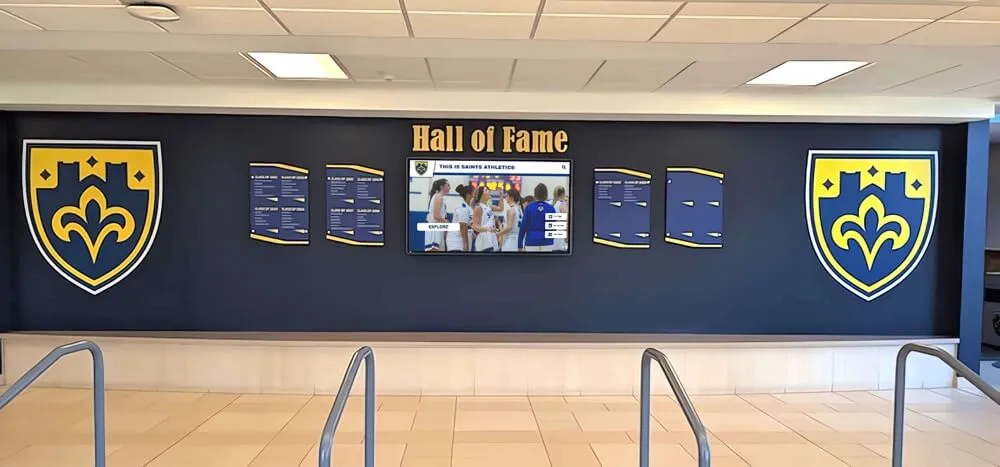
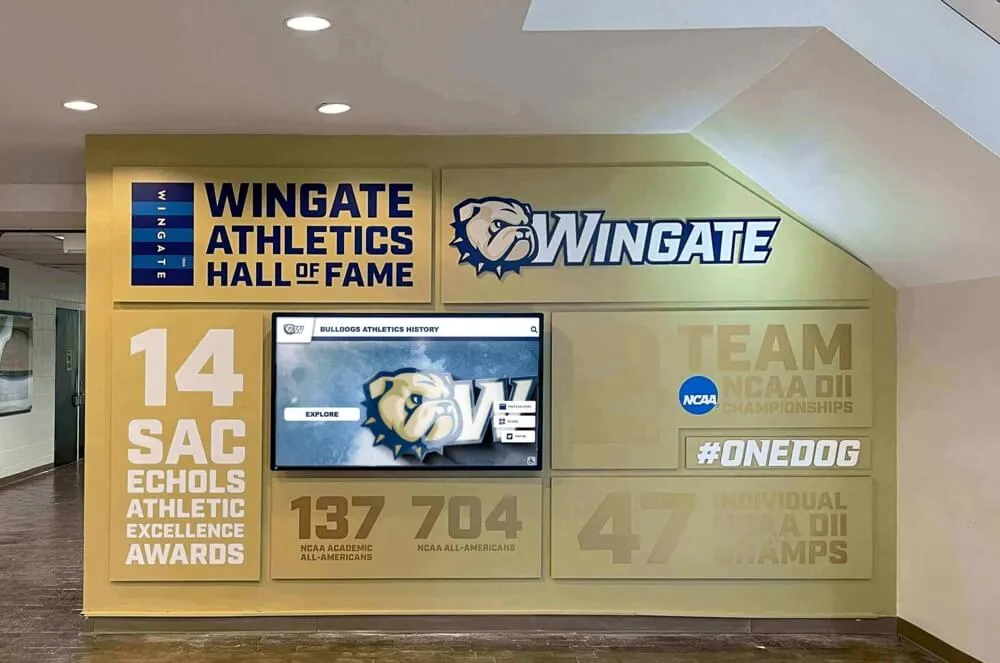
Integrating digital recognition with traditional displays ensures cross country achievements receive prominent visibility
Measuring Diverse Forms of Excellence
Cross country performance defies simple measurement. Unlike sports with clear statistics like points scored or batting averages, running excellence manifests across multiple dimensions:
Performance Excellence
- Race finishing times and personal records
- Place finishes at invitationals, conference meets, and state championships
- Consistency across varied course conditions
- Strategic racing that maximizes team scoring potential
Development Excellence
- Season-over-season improvement trajectories
- Breakthrough performances that represent significant personal achievement
- Overcoming injuries or setbacks to return stronger
- Technical improvements in pacing strategy and race tactics
Character Excellence
- Training dedication through difficult conditions
- Leadership and mentorship of younger runners
- Sportsmanship and competitive integrity
- Academic achievement while managing demanding training schedules
Program Contribution
- Positive team culture impact
- Recruitment and retention support for building program depth
- Community service and program promotion
- Ambassador roles representing the program to prospective runners
Comprehensive awards programs recognize achievement across all these dimensions rather than focusing exclusively on fastest times or highest place finishes.
Traditional Cross Country Awards Ideas
While this guide emphasizes modern recognition approaches, understanding traditional awards provides foundation for comprehensive programs blending classic and innovative elements.
End-of-Season Team Awards
Most cross country programs present team awards at season-ending banquets or recognition ceremonies. Thoughtful award categories honor diverse contributions:
Most Valuable Runner (MVR)
Traditionally given to the athlete who contributed most significantly to team success. Evaluation considers consistent top-seven scoring performance, critical race results at championship meets, leadership and positive team impact, and competitive excellence demonstrated throughout the season.
Unlike MVP awards in other sports, cross country MVR often acknowledges the runner who consistently scored for the team while demonstrating qualities that elevated overall program performance.
Most Improved Runner
Recognizes the athlete showing greatest season-over-season or within-season improvement. This award matters enormously for program culture—it demonstrates that programs value development and dedication equally with natural talent. Runners who drop significant time off personal records through hard work deserve celebration regardless of where they finish in team rankings.
Quantifiable improvement (time drops measured in seconds or minutes) provides objective criteria making selections defensible while ensuring award credibility.
Coaches’ Award
Presented to the runner who embodies program values—dedication, sportsmanship, team-first attitude, and competitive character. This subjective award allows coaches to recognize athletes who might not receive performance-based recognition but demonstrate exemplary commitment deserving acknowledgment.
The Coaches’ Award often goes to seniors who showed consistent dedication across four years or runners who overcame significant challenges while maintaining positive attitudes.
Captain or Leadership Award
Recognizes formal team captains or athletes who demonstrated exceptional leadership regardless of official titles. Effective cross country leadership involves mentoring younger runners, maintaining positive team culture during difficult training periods, serving as competitive examples during races, and representing the program with integrity.
Leadership awards validate the non-competitive work required to build strong program culture.
Individual Achievement Recognition
Varsity Letter Awards
Establish clear, transparent criteria for earning varsity letters. Common standards include completing the full season without quitting, achieving specific time standards, finishing in the top seven at a minimum number of varsity races, or demonstrating improvement benchmarks.
Clear criteria prevent subjective letter award decisions while providing motivation for athletes working toward letter qualification.
Time Barrier Club Recognition
Create recognition for runners who achieve specific time benchmarks:
- Sub-20:00 for boys, sub-22:00 for girls (5K)
- Sub-18:00 for boys, sub-20:00 for girls (elite benchmarks)
- School-specific standards based on course difficulty and competitive context

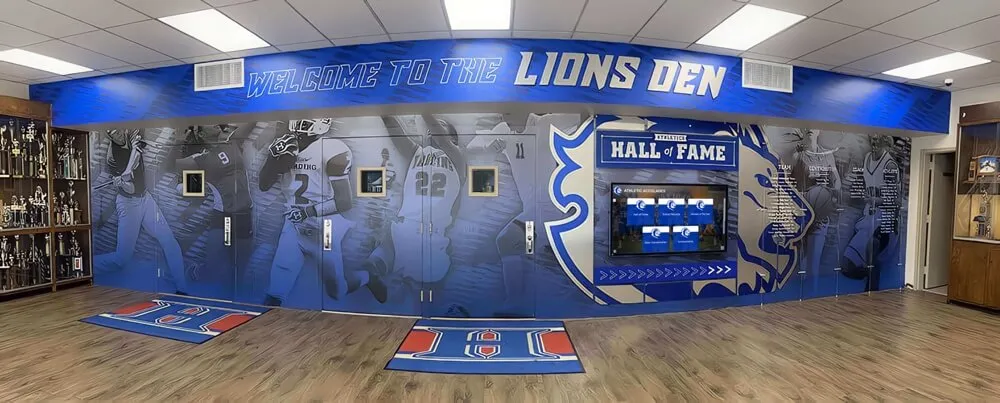
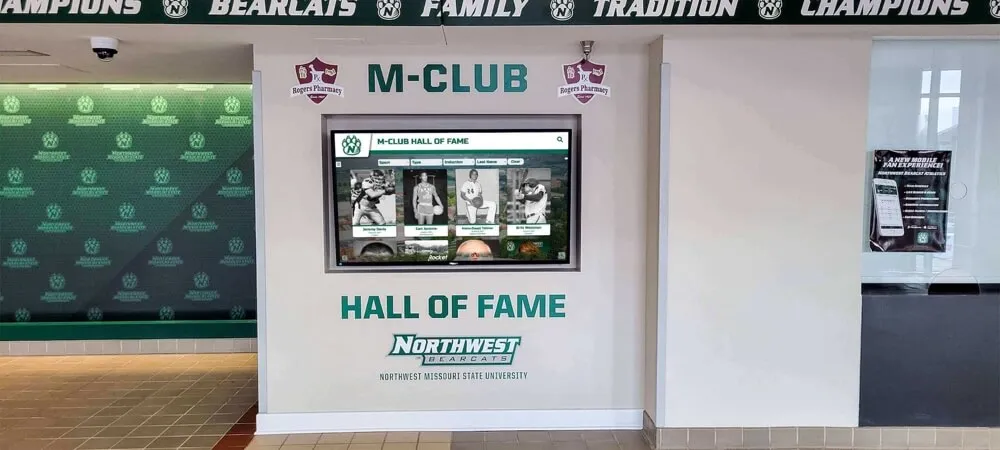
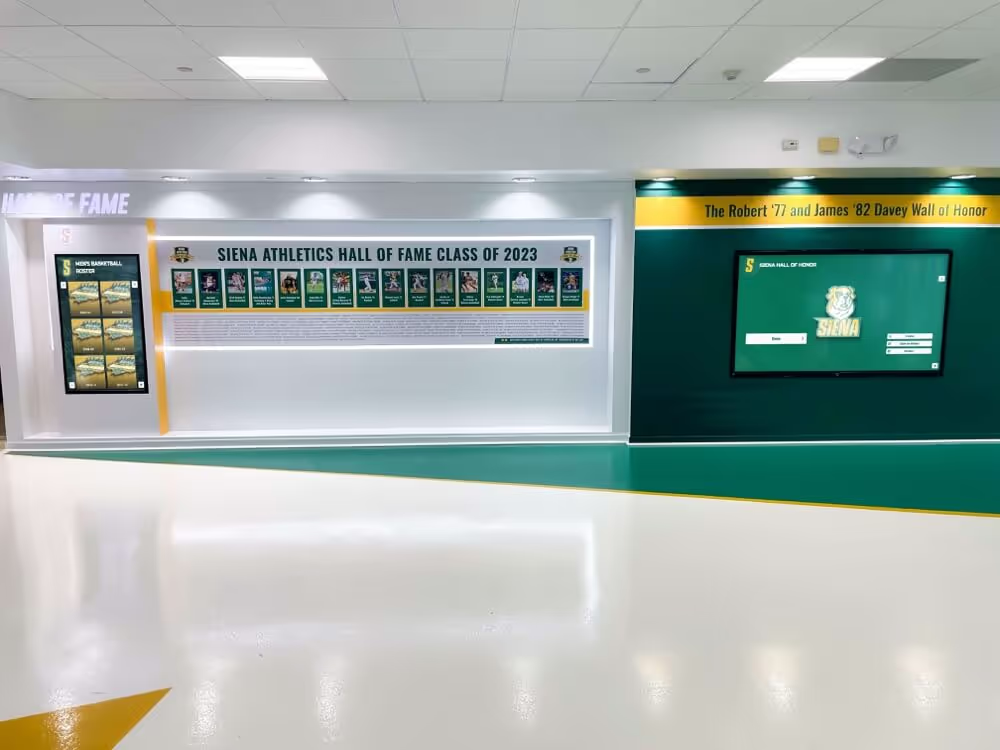
Interactive displays enable runners to explore their achievements and program history
All-Conference and All-State Recognition
Prominent acknowledgment of runners earning conference and state honors demonstrates program success while providing recognition that matters for college recruiting. These external validations deserve permanent visibility through displays, social media celebration, and program archives.
Academic All-Conference Recognition
Cross country athletes frequently excel academically—the discipline and time management required for competitive running translates well to academic success. Academic all-conference recognition honors this dual excellence.
For comprehensive approaches to academic recognition that complement athletic awards, explore National Honor Society recognition programs that showcase scholar-athlete achievement.
Physical Award Types
Medals and Ribbons
Race medals provide immediate tangible recognition for meet performances. Consider:
- Invitational medals for top finishers or time standards
- Personal record medals when runners achieve PR performances
- Team-branded medals for program-specific recognition
- Championship meet medals commemorating postseason achievements
Trophies
Traditional trophies work well for major awards (MVR, Most Improved, Coaches’ Award) presented during end-of-season ceremonies. Select meaningful designs that runners will display proudly rather than generic athletic figures.
Plaques and Certificates
Certificate recognition for achievements like varsity letters, time barrier clubs, or seasonal accomplishments provides affordable recognition options. Quality presentation during ceremonies makes certificates feel significant despite modest cost.
Letter Jackets and Patches
Letter jacket traditions remain powerful recognition symbols. Cross country-specific patches distinguishing the sport create pride while integrating with broader school letter jacket programs.
Creative Modern Cross Country Recognition Ideas
While traditional awards serve important functions, creative recognition approaches build distinctive program culture and provide recognition opportunities beyond season-ending banquets.
Weekly and Monthly Recognition Programs
Runner of the Week
Rotate weekly recognition spotlighting different team members based on practice dedication, race performance, improvement, leadership, or other contribution categories. This distributed approach ensures diverse runners receive acknowledgment throughout seasons rather than concentrating recognition on the fastest athletes.
Feature Runner of the Week profiles on team social media, school announcements, and digital recognition displays, creating regular visibility for program achievements.
For systematic weekly recognition approaches, review student-athlete of the week programs that maintain engagement throughout competitive seasons.
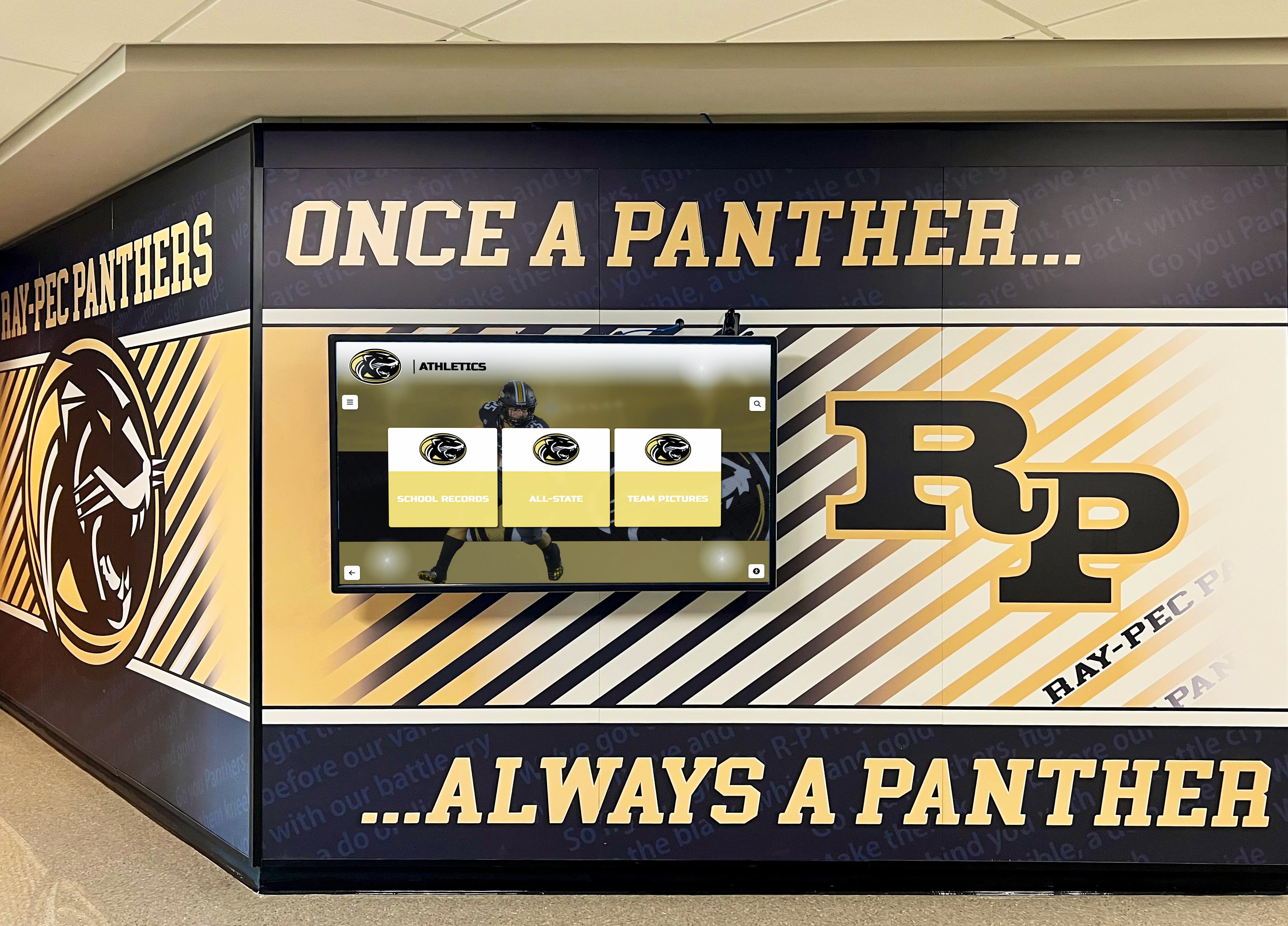
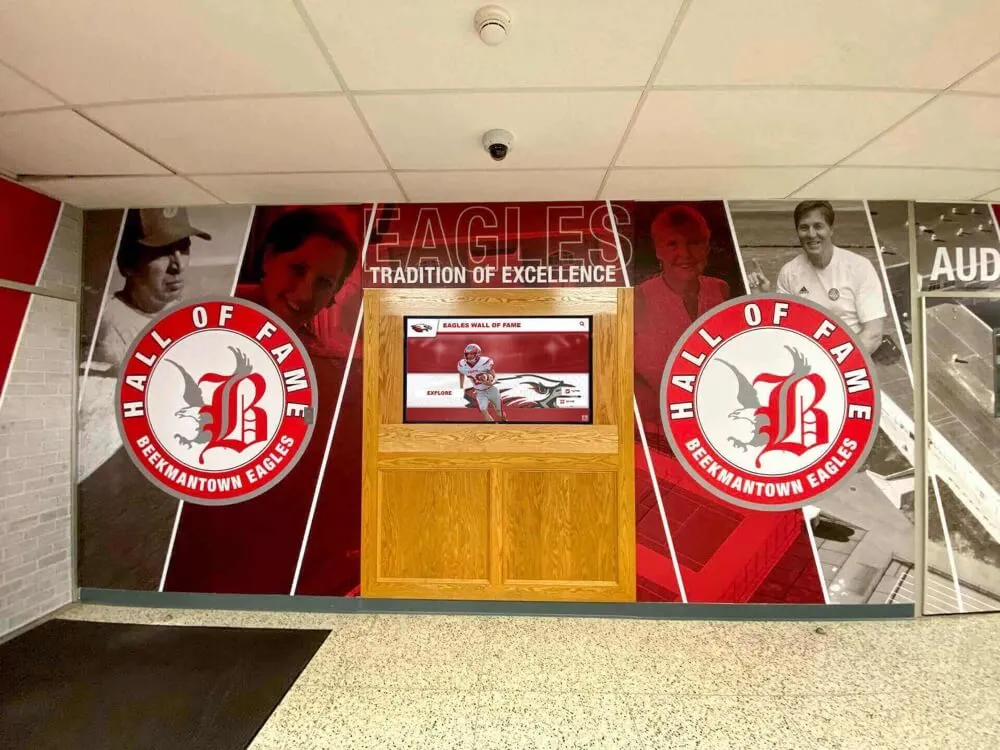
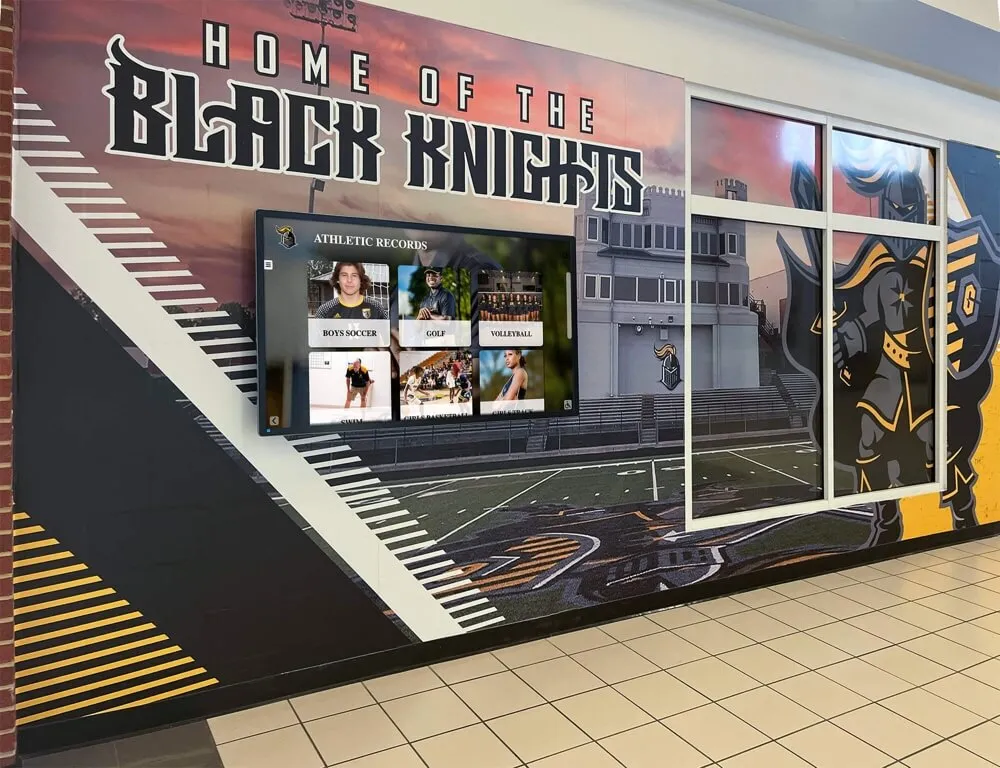
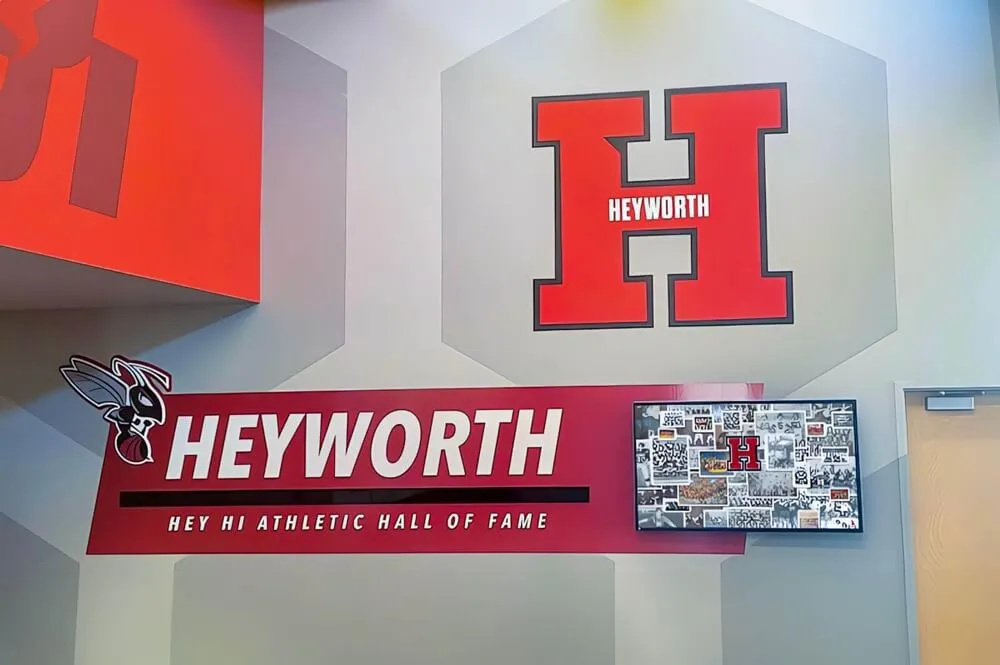
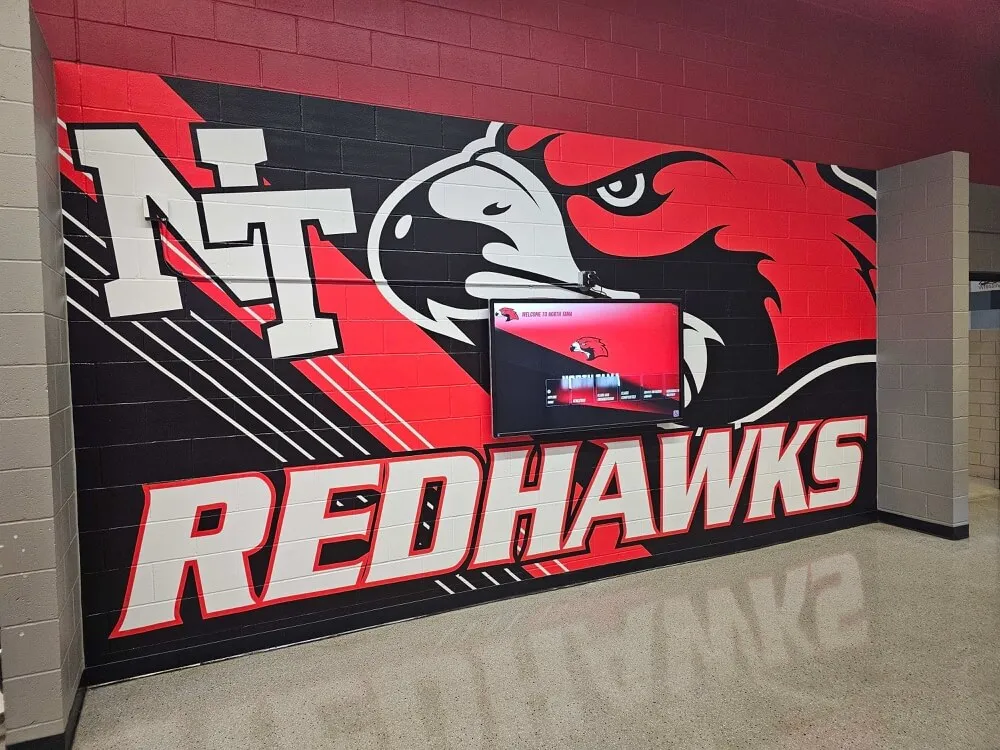
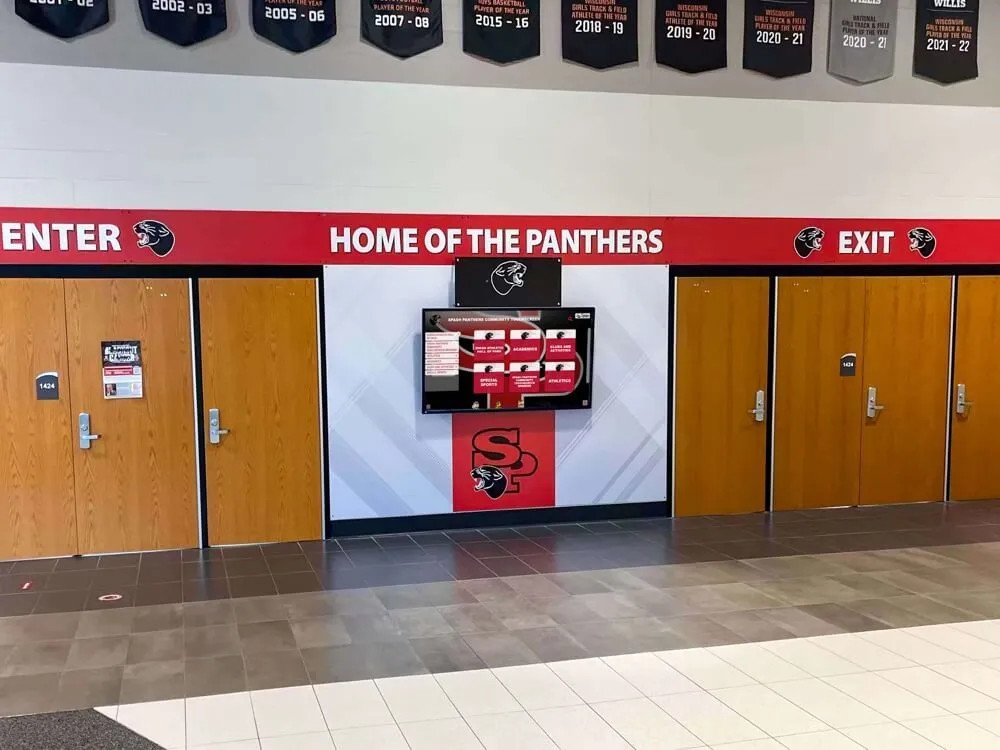
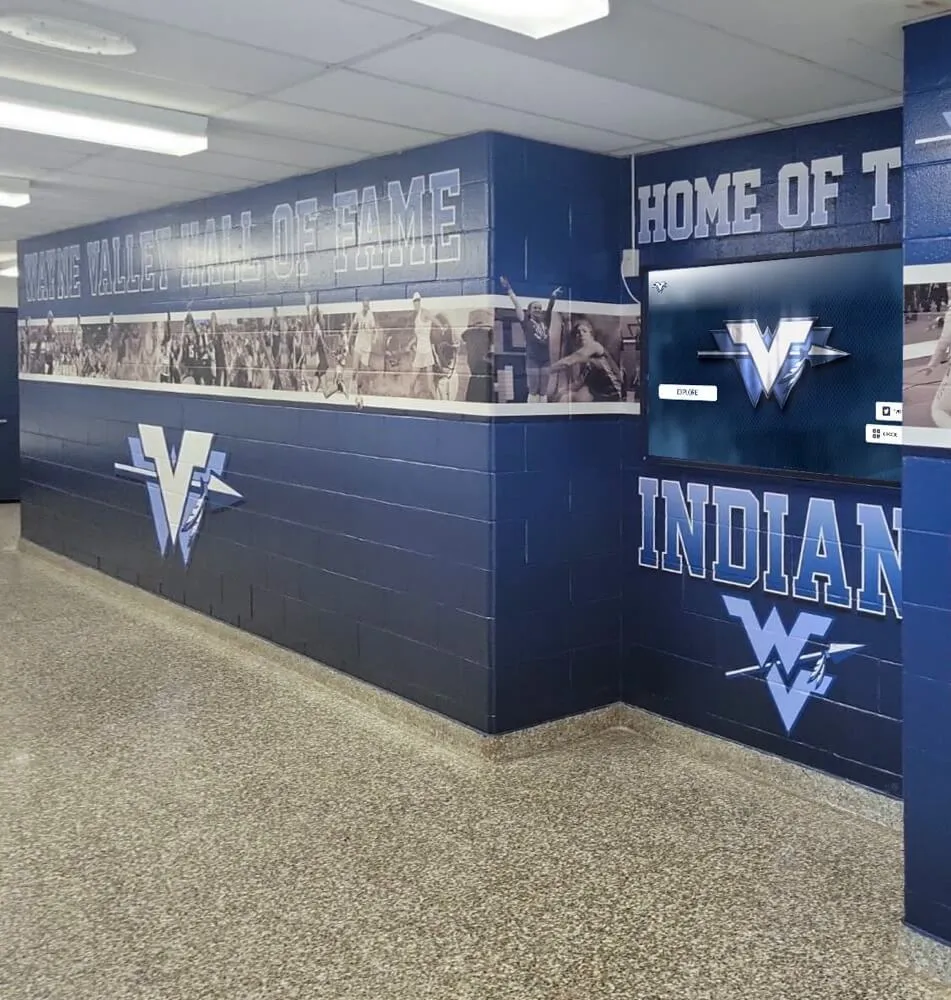
Prominent hallway displays ensure cross country achievements receive visibility equal to other sports
Performance Milestone Recognition
Personal Record Board
Maintain a visible PR tracking board (physical or digital) showing each runner’s current personal best 5K time alongside their season starting time. Visual improvement tracking motivates continued effort while celebrating incremental progress that might not earn traditional awards.
Update the board publicly after each meet, creating anticipation and celebration when runners achieve PRs.
The Iron Runner Award
Recognize the athlete(s) who complete every single practice and workout throughout the season without missing for injury, illness, or other reasons. This award honors consistency and dedication—qualities fundamental to distance running success.
The Breakthrough Award
Present this special recognition to a runner who achieves an unexpected breakthrough performance during the season—the athlete who drops two minutes off their 5K, earns their first varsity race opportunity, or achieves a performance nobody (including themselves) expected. Breakthrough moments deserve celebration as they exemplify what dedicated training can accomplish.
Team Culture Recognition
The Motivator Award
Goes to the runner who consistently encourages teammates, maintains positive energy during difficult workouts, and elevates overall team morale. Cross country training involves significant mental challenges; teammates who help others push through tough moments contribute enormously to program success even if their individual race times don’t reflect their impact.
Best Team Spirit
Recognizes the athlete demonstrating the most enthusiasm, positive attitude, and support for teammates throughout the season. This might overlap with the Motivator Award but focuses specifically on visible enthusiasm and team-first mentality.
The Mentor Award
Presented to upperclassmen who actively mentor younger runners, teaching them about training, racing strategy, and program culture. Strong mentorship creates sustainable program success as experienced runners pass knowledge to developing athletes.
Creative Themed Awards
The Warrior Award
Recognizes the runner who demonstrates exceptional mental toughness and competitive fight—the athlete who never gives up regardless of how they feel during races, consistently pushes through pain barriers, and exemplifies warrior mentality.
Hill Conqueror
For the runner who dominates hill workouts, attacks inclines during races, and turns challenging terrain into competitive advantage. This playful award acknowledges specific tactical strengths.
Negative Split Master
Goes to the runner who most consistently runs negative splits (faster second half than first half), demonstrating strategic pacing and finishing strength.
The Comeback Runner
Recognizes an athlete who overcame significant injury, illness, or personal challenge to return to competitive form. This award acknowledges that athletic success sometimes means fighting back from setbacks rather than maintaining steady progression.
Fun and Lighthearted Recognition
Balance serious competitive recognition with lighthearted awards that build team bonding:
Best Pre-Race Ritual
Recognizes the runner with the most interesting or elaborate pre-race routine—acknowledging the superstitions and rituals that help athletes mentally prepare.
Most Likely to Run a Marathon Tomorrow
Goes to the runner who seems like they could run forever regardless of the workout distance.
Best Running Form
Celebrates the athlete with the most efficient or aesthetically pleasing running mechanics.
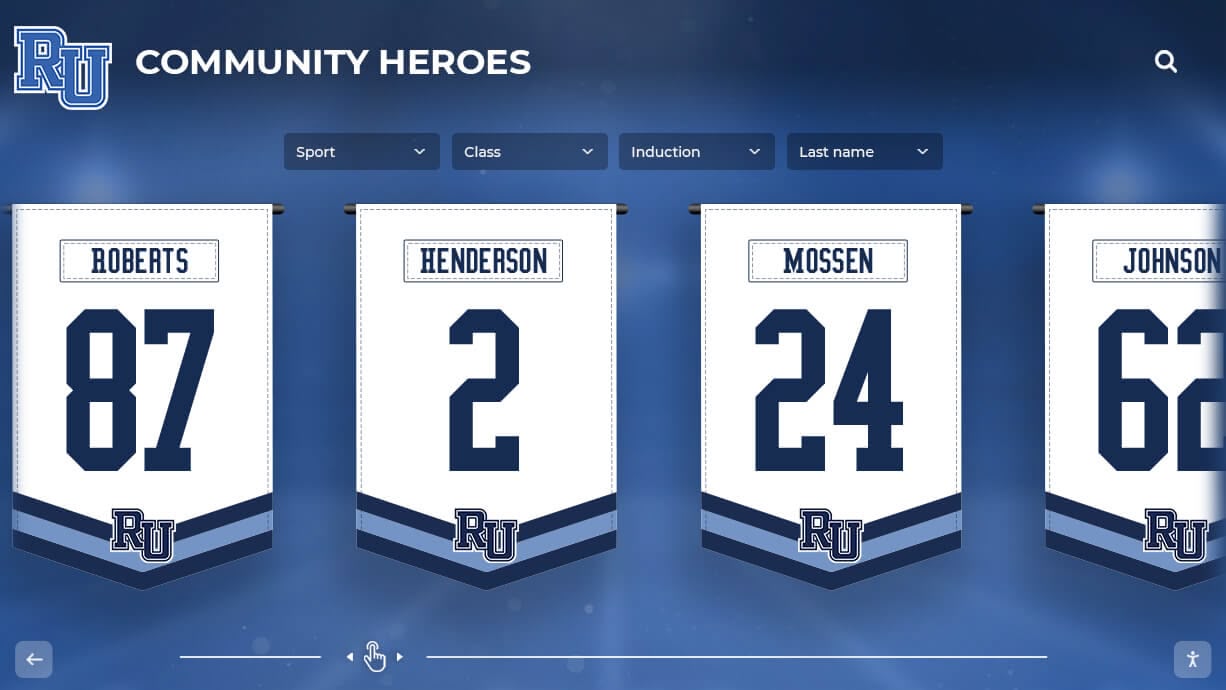
Banner displays create prominent visibility for cross country achievements and team success
The Early Bird Award
For the runner who consistently arrives earliest to practice, demonstrating commitment that extends beyond required participation.
Pasta Party MVP
Recognizes the athlete who most enthusiastically participates in team pasta dinners and social events, contributing to team chemistry off the course.
These lighthearted awards create memorable moments during recognition ceremonies while building program culture that extends beyond competitive results.
Digital Recognition for Cross Country Programs
Modern digital recognition platforms transform how schools celebrate cross country achievements by providing unlimited recognition capacity, rich multimedia content, and permanent visibility that traditional plaques cannot match.
Overcoming Cross Country Recognition Challenges
Digital displays specifically address common cross country recognition problems:
Space Constraints
Traditional trophy cases fill quickly when schools attempt to recognize all letter winners, conference qualifiers, and achievement milestones across years of program history. Digital platforms eliminate space limitations—schools can recognize unlimited runners without removing older recognition to accommodate new achievements.
Limited Information Display
A plaque might show a runner’s name, year, and perhaps their best time. Digital profiles provide comprehensive achievement summaries including full season statistics, race-by-race results, PR progressions, academic honors, college destinations, and personal narratives explaining what their cross country experience meant to them.
This rich storytelling transforms recognition from simple name-listing into meaningful documentation of athletic journeys.
Update Difficulty
Adding names to traditional plaques requires engraving, installation, and often waiting until enough names accumulate to justify the expense. Digital recognition updates instantly through web-based content management—add new qualifiers immediately after meets without physical modification or installation labor.
For schools managing recognition across multiple sports, digital trophy case solutions provide comprehensive platforms supporting all athletic programs including cross country.
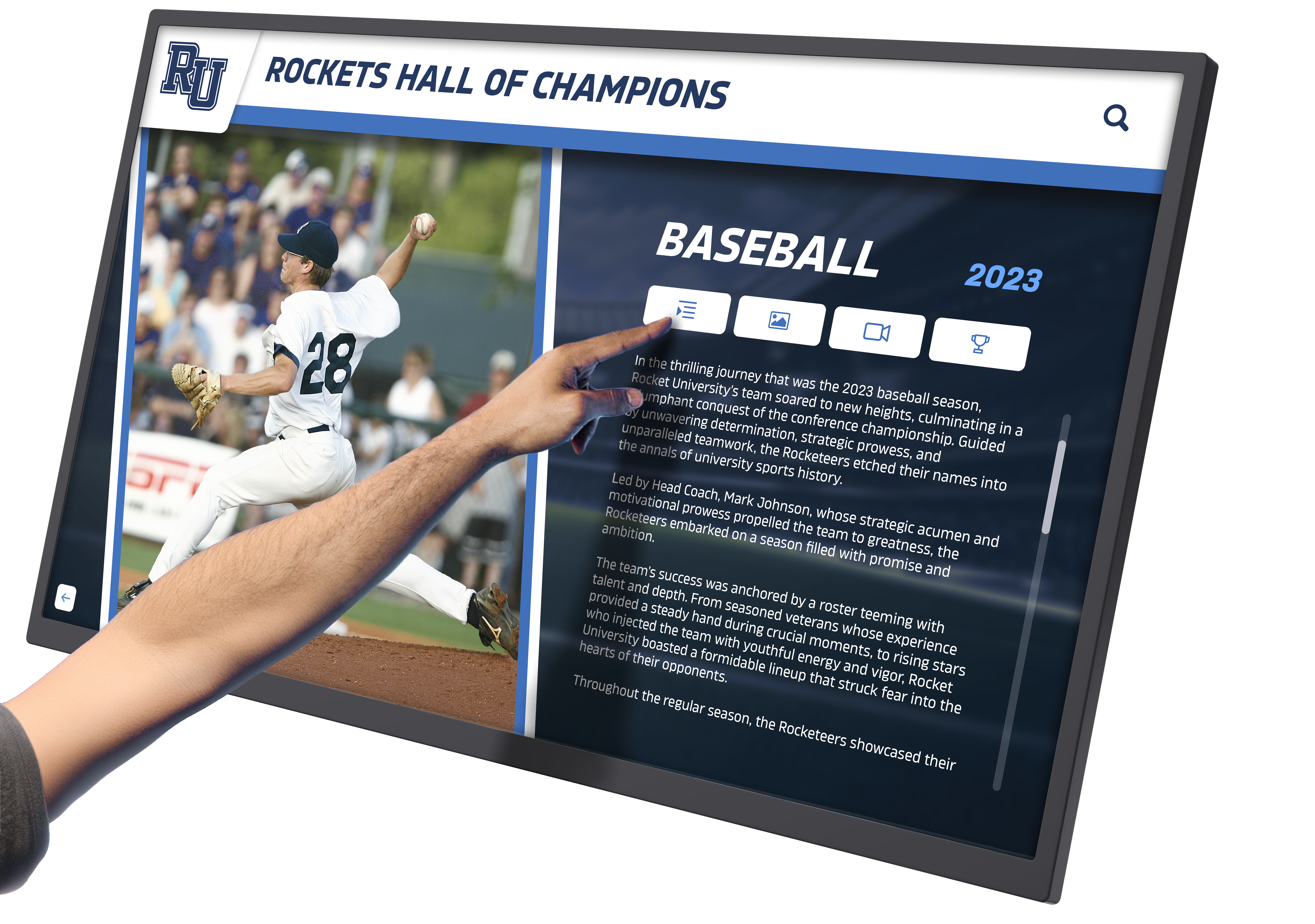
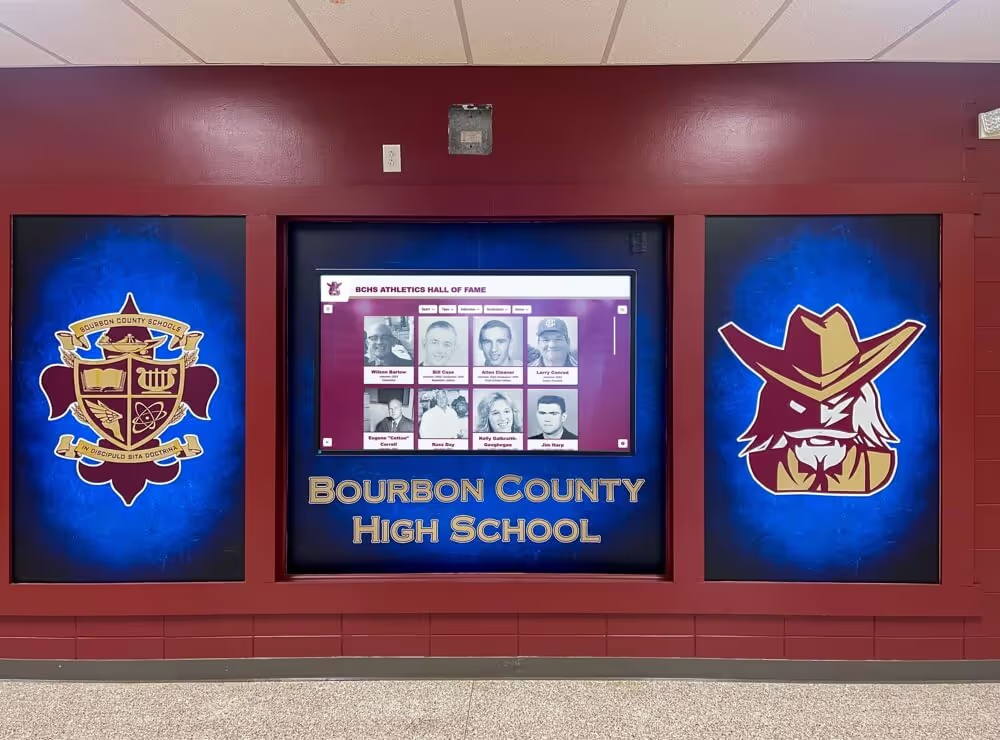
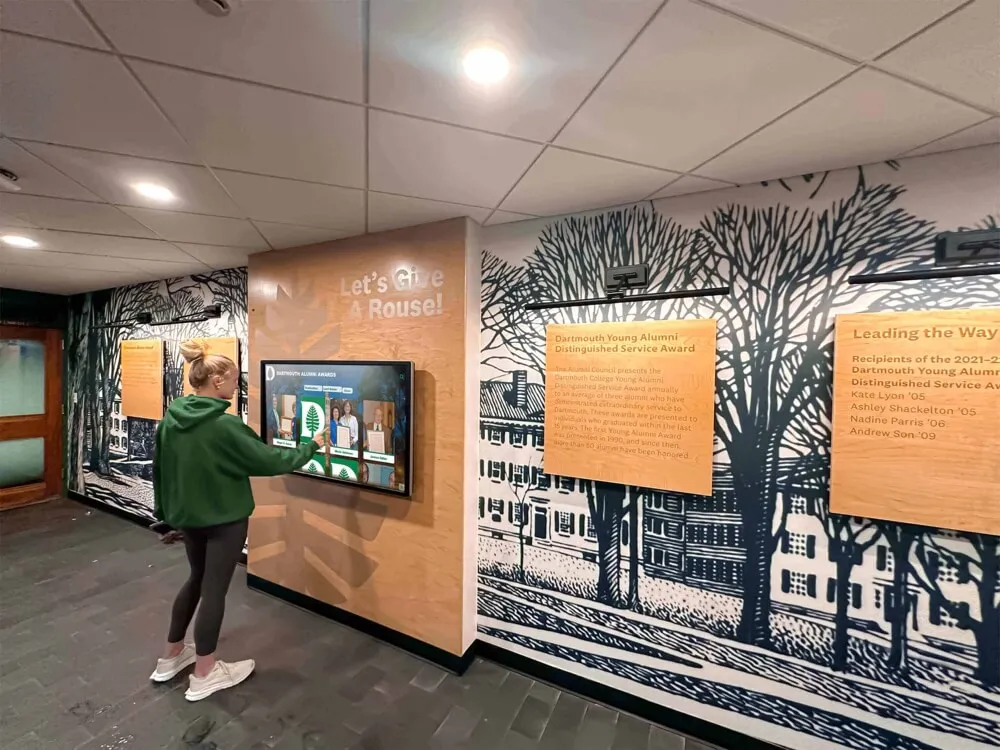
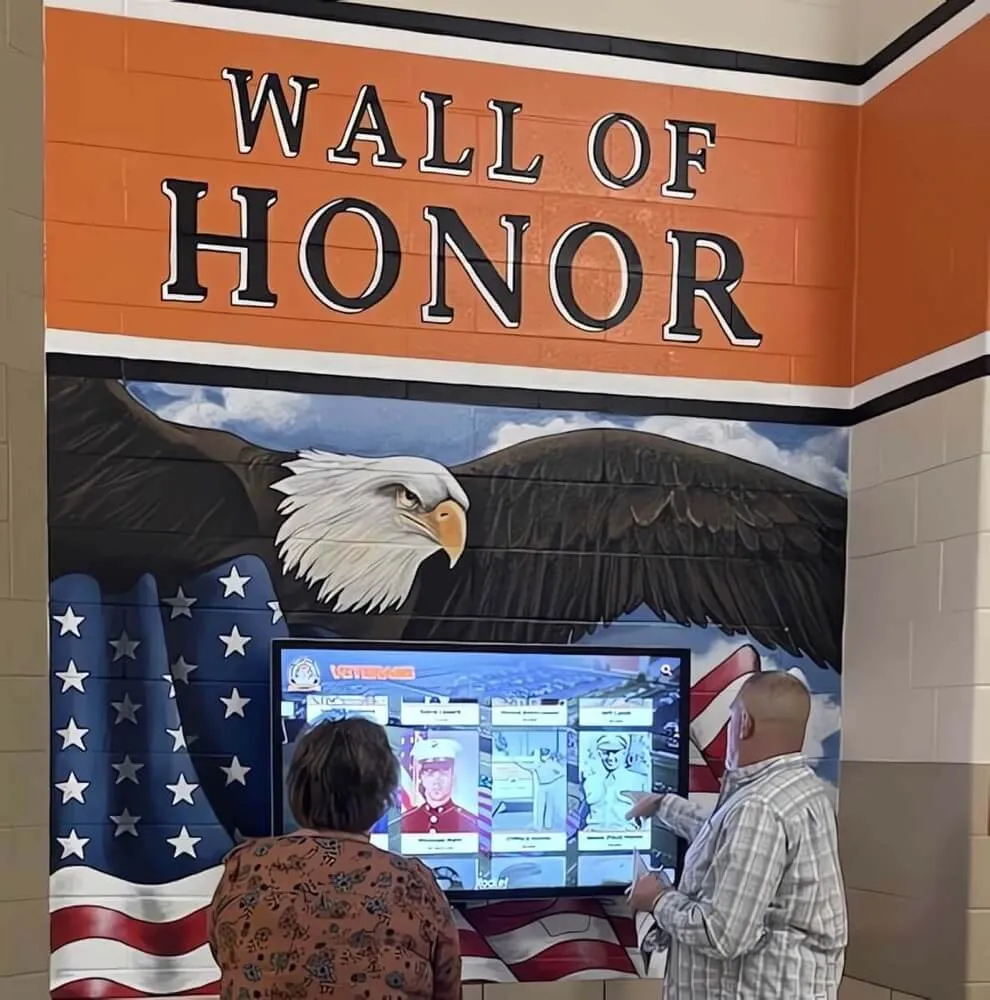
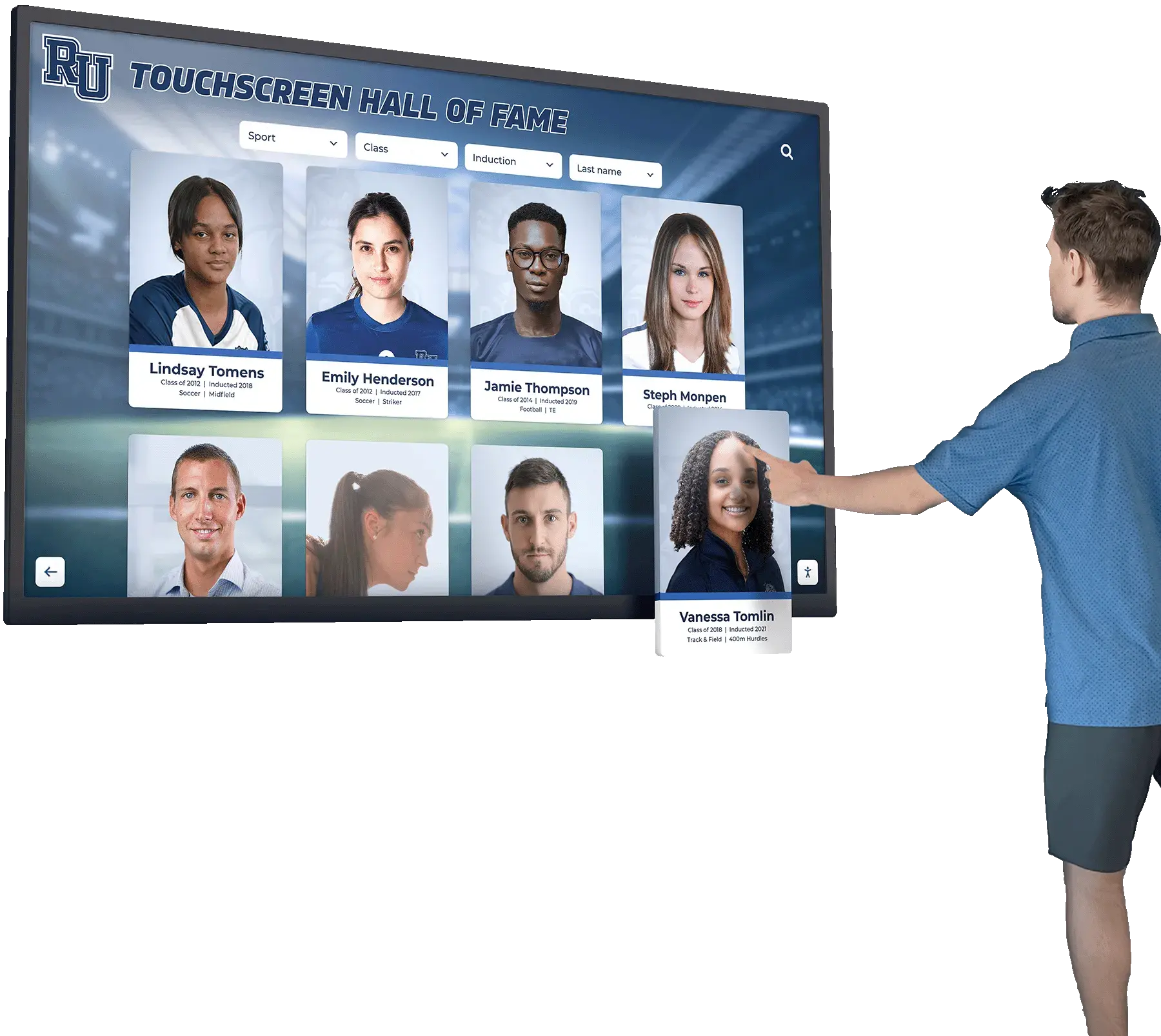
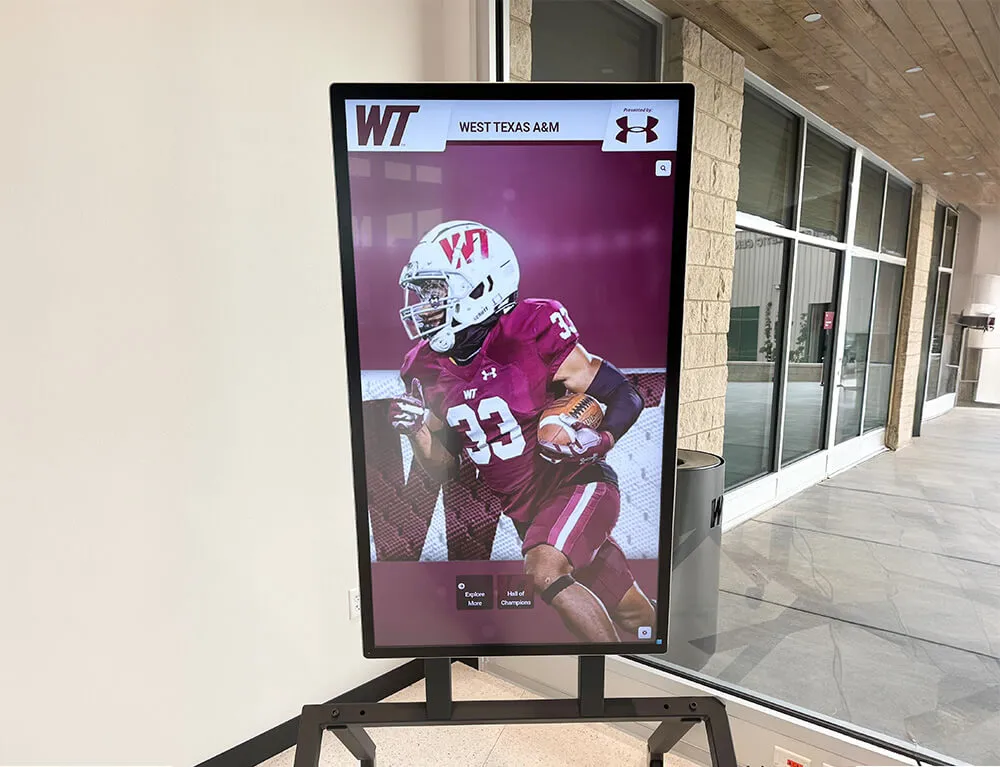
Touchscreen interfaces enable visitors to explore detailed runner profiles and program history
Cross Country-Specific Digital Features
Course Records and Performance Archives
Digital platforms can maintain comprehensive course records showing fastest times on every course the team regularly competes on, historical performance trends showing how team standards have evolved across decades, and comparison tools enabling current runners to see how their times compare to program legends.
This historical context motivates current athletes while preserving program legacy.
Season-Long Progress Tracking
Rather than just final season statistics, digital displays can showcase each runner’s progression throughout seasons through meet-by-meet time progressions, visual charts showing improvement trajectories, race recaps with strategic analysis, and photo galleries from different meets throughout campaigns.
Team Photo Galleries
Cross country teams create significant memories during training camps, long runs, team dinners, and competition travel. Digital platforms preserve these experiences through photo galleries organized by season, event type, and team celebrations that document program culture beyond race results.
Alumni Features and “Where Are They Now?”
Maintain engagement with cross country alumni by featuring college running updates, post-collegiate achievements, career accomplishments, and testimonials about how high school cross country influenced their lives.
Alumni engagement features strengthen program fundraising, mentorship opportunities, and community support while demonstrating long-term value of program participation.
Solutions like Rocket Alumni Solutions enable schools to create comprehensive digital recognition platforms that showcase cross country achievements alongside other athletic programs, ensuring runners receive visibility equal to higher-profile sports.
Integration with Broader Athletic Recognition
Cross country recognition works most effectively when integrated into comprehensive athletic recognition systems rather than existing as isolated displays:
Multi-Sport Recognition Platforms
Digital systems can organize content by sport while maintaining unified platforms that showcase all athletic achievements. Visitors can explore cross country specifically or browse across all school sports, seeing how cross country fits within broader athletic tradition.
This integration ensures cross country receives equal visibility rather than being overlooked in favor of higher-profile programs.
Academic-Athletic Recognition
Many cross country runners excel academically. Recognition platforms that showcase both athletic and academic achievements honor the whole student-athlete rather than artificially separating these accomplishments.
Historical Program Context
Comprehensive platforms preserve complete program history, showing how current athletes contribute to traditions established by past runners. This historical continuity builds program pride while motivating current athletes to add their own chapters to ongoing legacies.
For schools implementing comprehensive athletic recognition systems, athletic hall of fame guides provide frameworks ensuring all sports including cross country receive appropriate recognition and visibility.
Implementing Comprehensive Cross Country Recognition Programs
Creating meaningful recognition requires more than selecting award categories—it demands systematic approaches ensuring consistent, equitable recognition that serves program goals.
Establishing Clear Recognition Criteria
Transparent criteria prevent subjective decisions while ensuring runners understand exactly what achievements earn recognition:
Varsity Letter Standards
Define specific, measurable criteria for earning varsity letters:
- Complete the full season including championship meets
- Achieve designated time standards appropriate for your competitive level
- Finish in the top seven at a minimum number of varsity races
- Demonstrate consistent training attendance and program commitment
Publish these criteria before seasons begin and apply them consistently to all athletes regardless of seniority or favoritism.
Award Selection Processes
For subjective awards like MVR, Most Improved, or Coaches’ Awards, establish selection committees and transparent evaluation processes. Consider including:
- Multiple coach input to reduce individual bias
- Objective performance data supporting subjective assessments
- Clear timelines for nominations and selections
- Opportunity for respectful questions if selections seem inconsistent with stated criteria
Transparent processes build trust in recognition legitimacy while ensuring selections can withstand scrutiny.
Creating Recognition Timelines
Strategic timing ensures recognition maintains impact while occurring when it matters most:
During-Season Recognition
- Weekly runner spotlights maintaining engagement throughout campaigns
- Immediate PR acknowledgment when runners achieve personal bests
- Meet-day recognition for exceptional individual or team performances
- Social media celebration providing timely public acknowledgment
End-of-Season Recognition
- Team banquet for major awards and formal recognition ceremonies
- Senior recognition celebrating graduating runners’ complete contributions
- Season recap communications highlighting top achievements
Annual Recognition
- Hall of fame inductions for career excellence
- Record-breaking achievement permanent documentation
- Multi-year letter recognition for sustained program participation
Different recognition moments serve different purposes—immediate acknowledgment motivates ongoing effort while formal ceremonies create lasting memories and appreciation.
Balancing Individual and Team Recognition
The cross country individual-team paradox extends to recognition programs. Effective approaches honor both dimensions:
Individual Achievement Visibility
Every runner deserves acknowledgment for personal accomplishments—PRs matter regardless of team scoring implications. Recognition programs should celebrate individual milestones even when they don’t directly contribute to team victories.
Team Success Celebration
Simultaneously emphasize how individual performances combine to create team success. Recognize scoring contributions, team place finishes, and collective achievements that require every runner’s effort.
The most effective programs make both messages clear: individual excellence matters intrinsically, AND individual contributions enable team success. These aren’t competing values—they’re complementary truths that define cross country’s unique character.
Building Recognition Into Program Culture
Recognition works best when integrated into daily program operations rather than existing as separate end-of-season activities:
Regular Communication
Consistently communicate achievements through:
- Team group chats or messaging apps
- Social media posts tagged with runners’ handles
- School announcements and newsletters
- Athletic department communications
- Parent and booster club updates
Regular communication ensures achievements receive visibility beyond small audiences of meet spectators.
Physical Presence
Ensure cross country achievements maintain visible presence through:
- Hallway displays and trophy cases showing current accomplishments
- Digital displays with rotating content highlighting different runners
- Team photo walls creating visual program identity
- Record boards tracking historical bests and current leaders
Visible presence communicates that the school values cross country achievement equally with other sports.
Comprehensive recognition approaches connect individual moments of achievement into sustained narratives demonstrating that cross country excellence receives the consistent celebration it deserves.
For broader perspectives on building athletic recognition cultures, explore football awards programs that demonstrate how systematic recognition transforms program culture.
Special Recognition for Senior Runners
Senior recognition deserves particular attention as graduating athletes complete their high school cross country careers. Thoughtful senior celebration honors cumulative contributions while creating meaningful transition moments.
Senior Night Celebrations
Schedule dedicated senior recognition nights during late-season home meets:
Individual Senior Spotlights
Recognize each senior individually with:
- Brief biographical summaries read aloud or displayed
- Career highlights and memorable moments
- Future plans including college destinations
- Personal messages from coaches
- Photo presentations showing their cross country journey
Family Acknowledgment
Invite senior families onto the course or to a recognition area, acknowledging the support required for cross country success. Provide flowers, small gifts, or commemorative items families can treasure.
Senior Speeches
Offer seniors opportunities to address teammates, sharing what cross country meant to them and advice for continuing program traditions. Authentic senior voices often resonate more powerfully than adult-delivered recognition.
For comprehensive senior recognition approaches applicable across sports, review senior class awards programs that create meaningful celebration experiences for graduating athletes.
Career Recognition Elements
Four-Year Letter Winners
Special recognition for runners who earned varsity letters all four years demonstrates sustained commitment worthy of distinction beyond single-season achievements.
Career Statistics and Highlights
Comprehensive summaries of seniors’ complete high school careers including:
- Total races competed
- Fastest times at various distances and courses
- Conference and state meet achievements
- Team captain or leadership roles
- Academic honors
- Memorable performances and breakthrough moments
Legacy Statements
Invite seniors to provide written or recorded statements about their cross country experiences, favorite memories, and messages for future runners. These legacy statements preserve senior voices while providing inspiration for younger athletes.
Alumni Network Integration
Connect graduating seniors with cross country alumni networks, mentorship opportunities, and ongoing engagement channels. Recognition shouldn’t end at graduation—it should transition into lifelong program connections.
Budget-Conscious Recognition Strategies
Comprehensive recognition doesn’t require unlimited budgets. Strategic approaches provide meaningful acknowledgment while respecting financial constraints common in many programs.
Low-Cost High-Impact Recognition
Digital Recognition Certificates
Professional-quality certificates designed in Canva or similar tools cost only printing expenses while providing tangible recognition runners can frame and display.
Social Media Features
Consistent, high-quality social media recognition costs nothing but time and attention. Regular posts celebrating individual runners, sharing race results, and highlighting achievements provide public acknowledgment that matters to athletes and families.
Coach Recognition Messages
Personalized notes from coaches expressing appreciation for specific contributions create meaningful recognition that costs nothing but thoughtful attention. Handwritten notes feel particularly special in our digital age.
Team-Made Awards
Enlist artistic team members to create custom award designs, certificates, or recognition items. Team-created recognition often means more to recipients than expensive purchased awards.
Maximizing Recognition Investment
When budgets allow spending on recognition, maximize impact by:
Investing in Digital Infrastructure
While initial investment in digital recognition displays requires upfront costs, the per-athlete recognition cost approaches zero as programs add unlimited runners over time. A single digital display serving cross country programs for 20+ years provides extraordinary value compared to individual plaque purchases.
Research subscription pricing options that spread costs across budget years rather than requiring large single-year expenditures.
Focusing on Permanent Recognition
Prioritize recognition with lasting visibility over temporary celebration. Money spent on digital displays, engraved awards, or lasting documentation provides more enduring value than expensive but ephemeral banquet meals or temporary decorations.
Seeking Booster and Alumni Support
Cross country families and alumni often willingly support recognition programs when asked. Specific fundraising for recognition initiatives (sponsoring the annual MVR award, funding the senior recognition program, purchasing the digital display) helps donors see exactly how their contributions impact athletes.
Partnering with Local Businesses
Local running stores, sports medicine providers, or other community businesses may sponsor awards or provide in-kind support in exchange for acknowledgment. These partnerships reduce program costs while strengthening community connections.
Measuring Recognition Program Success
Systematic assessment ensures recognition programs achieve intended goals while justifying continued resource investment:
Athlete Feedback and Satisfaction
Regular anonymous surveys asking cross country athletes about recognition programs provide valuable insights:
- Do runners feel their achievements receive appropriate acknowledgment?
- Which recognition elements matter most to athletes?
- What additional recognition would be meaningful?
- Do runners feel recognition fairly represents diverse contributions?
- How does recognition impact motivation and program satisfaction?
Athlete voice should drive recognition program evolution—after all, runners are the intended beneficiaries.
Parent and Family Perspectives
Parent feedback reveals whether recognition programs adequately acknowledge athlete accomplishments and create meaningful family experiences. Parents who feel satisfied with recognition become stronger program supporters and advocates.
Participation and Retention Impact
Strong recognition cultures contribute to program participation and retention. Track metrics including:
- Year-over-year participation trends
- Retention rates from freshman through senior years
- Athlete recruitment through word-of-mouth
- Alumni engagement and continued program connection
While recognition isn’t the only factor affecting these metrics, sustained improvements often correlate with comprehensive recognition implementation.
Broader Program Culture Indicators
Observe whether recognition programs contribute to positive program culture through:
- Increased team cohesion and mutual support
- Reduced negative competitiveness or jealousy
- Greater appreciation for diverse contributions beyond pure speed
- Improved respect for program traditions and values
Qualitative cultural shifts often represent recognition program’s most valuable impacts even if they’re difficult to measure precisely.
Conclusion: Building Recognition That Honors Cross Country’s Unique Identity
Cross country awards and recognition programs should reflect the sport’s distinctive character—celebrating individual achievement within team context, honoring diverse forms of excellence beyond pure speed, acknowledging the mental toughness distance running requires, and ensuring runners receive visibility equal to higher-profile sports.
The creative recognition ideas explored in this guide provide comprehensive frameworks for programs at any competitive level or budget scale. From traditional end-of-season awards through modern digital recognition platforms, from weekly spotlights through career-spanning senior celebrations, effective recognition honors what makes cross country special while building program cultures where every runner feels genuinely valued.
Most importantly, comprehensive recognition communicates fundamental respect for cross country athletes’ dedication. These runners train through summer heat and winter cold, push through physical discomfort in every race, sacrifice social time for early-morning runs, and demonstrate commitment requiring exceptional discipline. They deserve recognition systems acknowledging these contributions with the same enthusiasm schools provide higher-visibility sports.
Ready to create comprehensive cross country recognition that celebrates your runners’ achievements with the visibility and permanence they deserve? Modern digital recognition platforms enable schools to showcase unlimited athletes across all achievement categories, update content instantly throughout seasons, and integrate cross country recognition with broader athletic programs—ensuring your runners receive equal visibility regardless of sport profile or spectator attendance.
Whether implementing first-time systematic recognition or enhancing existing programs, solutions like Rocket Alumni Solutions provide the platform, flexibility, and support needed to honor cross country excellence effectively. From immediate achievements to historical program archives, from individual milestones to team accomplishments, comprehensive recognition ensures no runner’s dedication goes unacknowledged.
Your cross country athletes demonstrate remarkable mental toughness, physical endurance, and competitive character season after season. Comprehensive recognition programs ensure these qualities receive the lasting celebration they’ve genuinely earned—creating program cultures where runners know their commitment matters, their achievements will be remembered, and their contributions help build traditions for future athletes to honor and extend.
The most powerful recognition doesn’t require unlimited budgets or elaborate ceremonies. It requires genuine attention to what makes your runners special, consistent acknowledgment of diverse contributions, and commitment to ensuring cross country excellence receives visibility matching the dedication your athletes bring to every training run and race. Your runners give everything they have—comprehensive recognition gives them the acknowledgment they deserve.