



The College Football Hall of Fame in Atlanta stands as one of the sport’s most impressive recognition venues, combining 95,000 square feet of interactive exhibits, multimedia storytelling, and immersive experiences that celebrate college football’s greatest players, coaches, and moments. Located in the heart of downtown Atlanta, this state-of-the-art facility attracts hundreds of thousands of visitors annually who explore college football history through cutting-edge technology and engaging displays that transform traditional hall of fame concepts into dynamic, participatory experiences.
Yet the venue’s significance extends far beyond tourism or sports fandom. Athletic directors, school administrators, and recognition program coordinators visiting the College Football Hall of Fame Atlanta discover proven design principles, engagement strategies, and interactive technologies that translate directly to school-based recognition programs—regardless of budget scale or physical space constraints. The same approaches that make the Atlanta facility compelling for national audiences create equally powerful impacts when adapted for high school athletic halls of fame, college sports recognition, or comprehensive student achievement displays.
This comprehensive guide explores what visitors experience at the College Football Hall of Fame Atlanta, examines the design and technology principles underlying its success, and demonstrates how schools can implement similar recognition concepts to honor athletic excellence, preserve program history, and create engaging experiences that inspire current and future student-athletes.
The College Football Hall of Fame relocated to Atlanta in 2014, replacing its previous South Bend, Indiana location with a dramatically reimagined facility that prioritized interactive engagement over traditional artifact-focused museum approaches. Understanding what makes this venue exceptional provides schools with valuable frameworks for developing their own recognition programs.

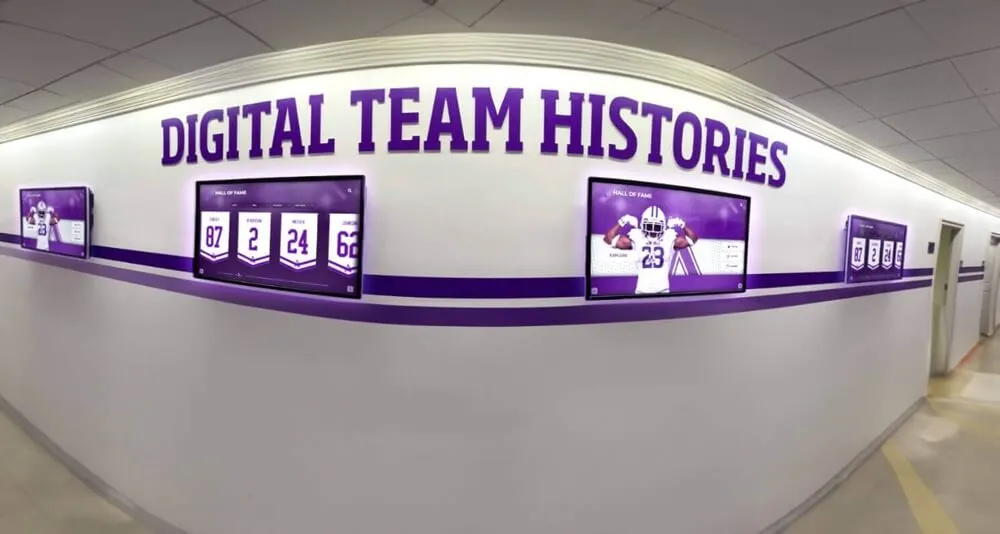
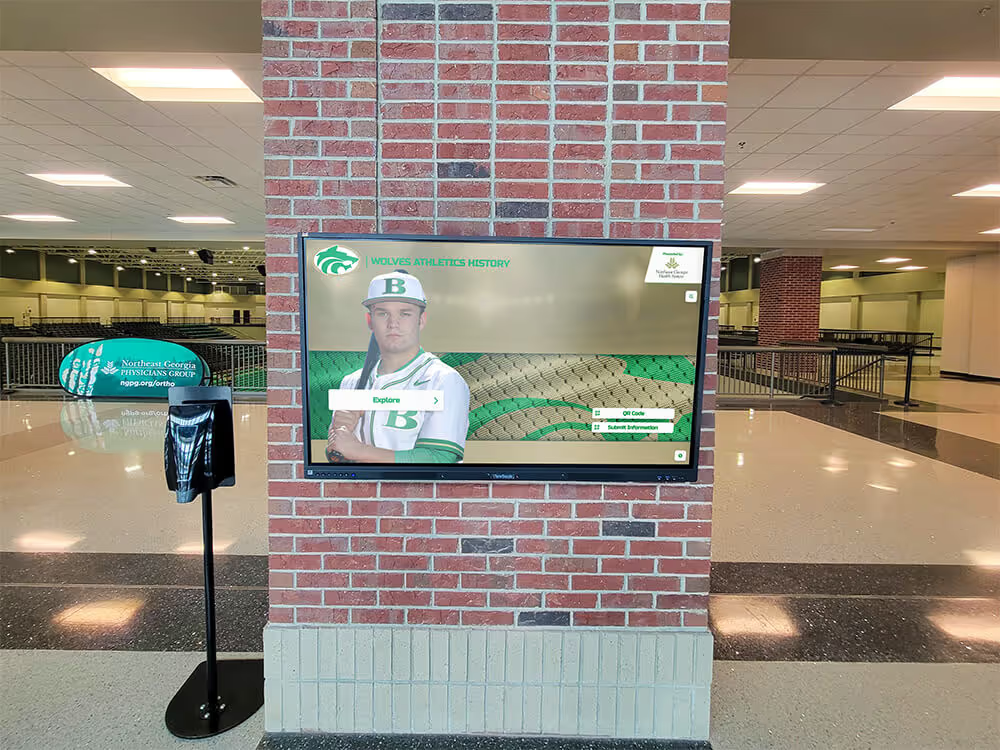
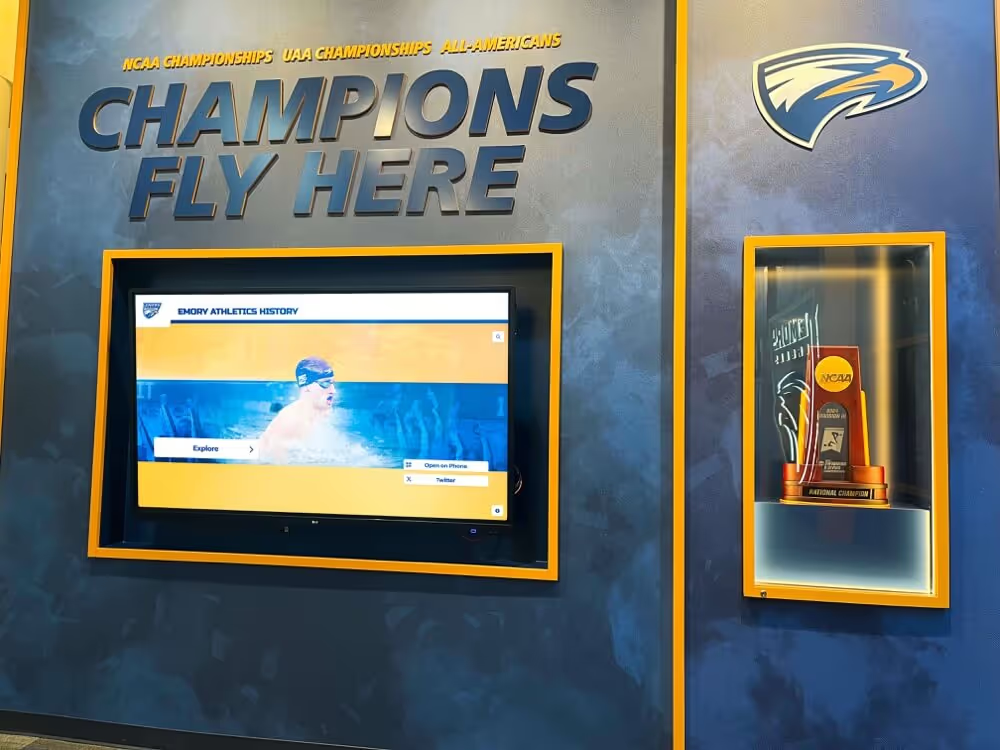
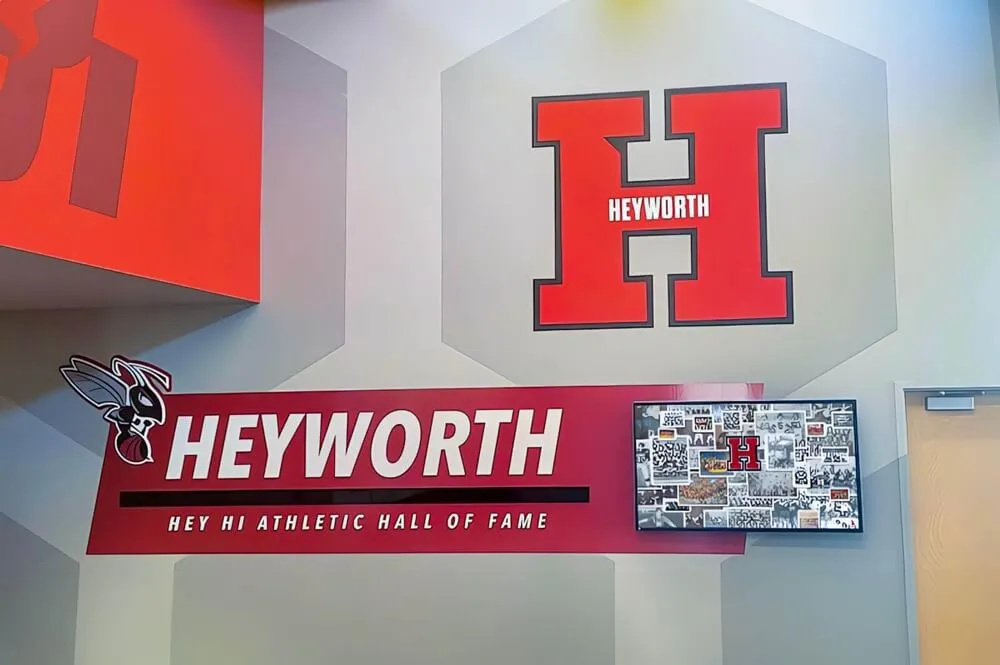
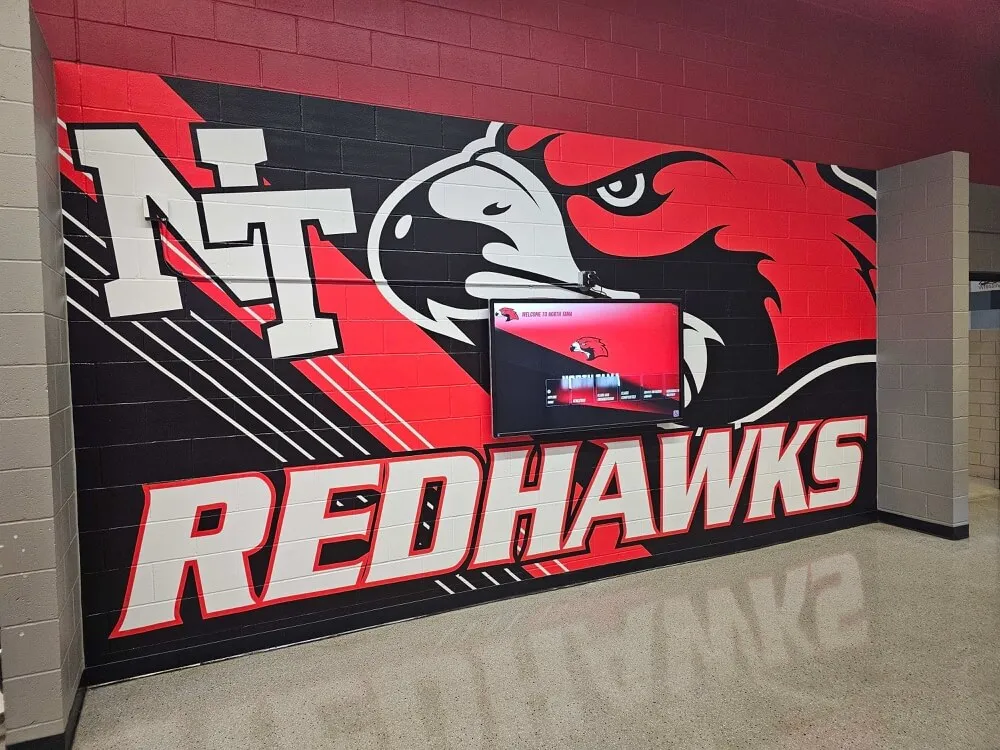
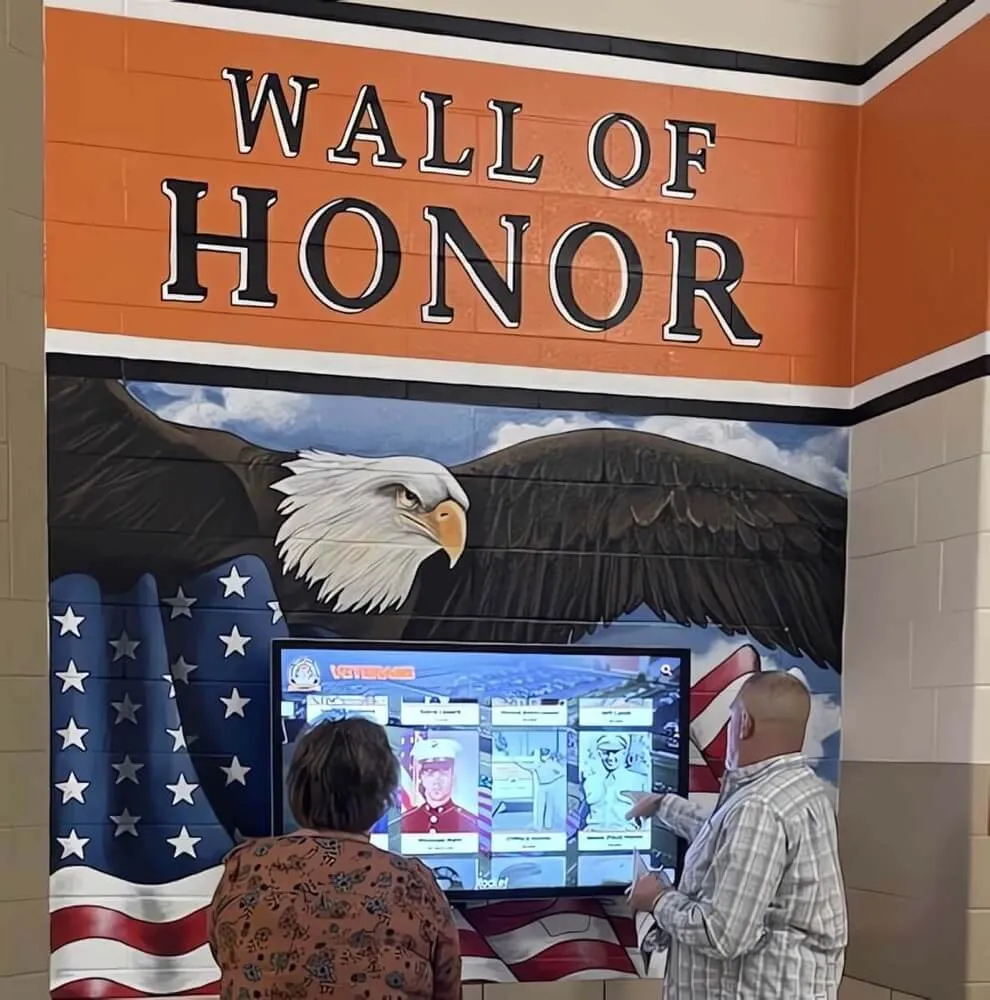
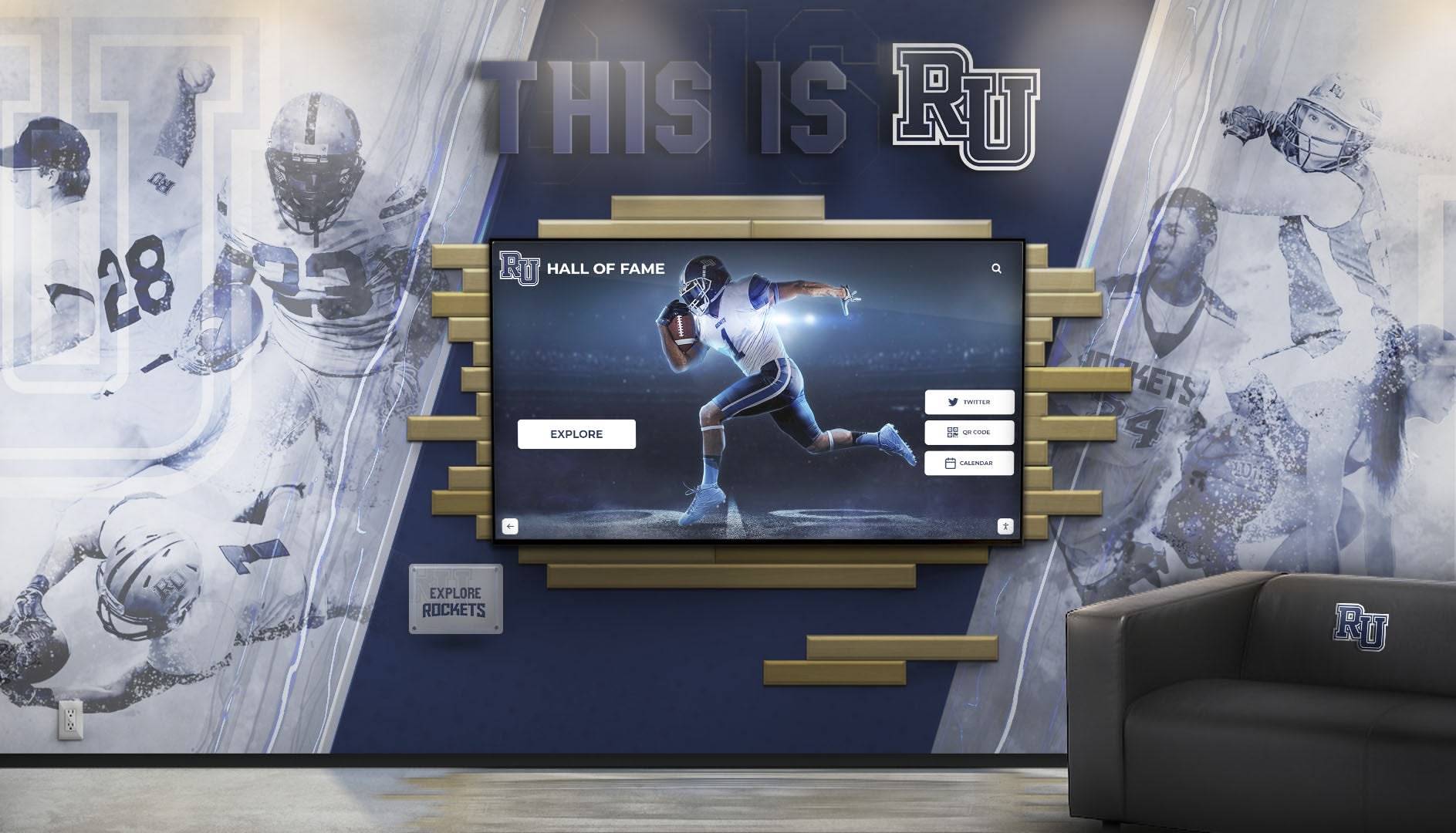
Modern hall of fame facilities combine interactive technology with visual storytelling to create engaging visitor experiences
What to Expect: College Football Hall of Fame Atlanta Experience
The College Football Hall of Fame Atlanta offers visitors multiple interactive zones, each designed to engage different aspects of college football appreciation while demonstrating effective recognition program design principles.
The Immersive Entry Experience
Visitors begin their experience with personalized engagement—selecting their favorite college team upon arrival, which customizes content throughout the facility to highlight relevant players, games, and history connected to that program. This personalization strategy creates immediate emotional connection while demonstrating technology’s power to make recognition relevant to diverse audiences.
Design Principle for Schools: Personalization transforms passive viewing into active engagement. School recognition programs can implement similar concepts through interactive displays that filter content by graduation year, sport, award category, or other visitor-selected criteria, ensuring every viewer finds personally meaningful connections to displayed achievements.
The entrance hall features a 46-foot-tall wall showcasing over 750 college football programs represented in the Hall of Fame—a dramatic visual statement communicating the breadth and inclusivity of college football achievement. This immediate “wow factor” sets expectations for the experience ahead while honoring the comprehensive scope of recognized excellence.
Design Principle for Schools: First impressions establish the perceived value of recognition programs. Schools can create similar impact through prominent entrance displays, comprehensive honor rolls, or visual elements that communicate the significance of athletic achievement within institutional culture.
Interactive Game Day Stadium
One of the facility’s signature attractions recreates a college football game day environment with a 45-yard indoor playing field where visitors can test skills through interactive challenges—throwing accuracy, field goal kicking, punt returns, and other football-specific activities measured and displayed through integrated technology.
This hands-on participation transforms visitors from spectators into participants, creating memorable experiences that extend engagement far beyond passive information consumption. The competitive element encourages repeated attempts while building emotional investment in the visit experience.
Design Principle for Schools: Recognition programs achieve greatest impact when they involve visitors actively rather than merely displaying information. Interactive touchscreen kiosks enable schools to create participatory recognition experiences where visitors explore athlete profiles, watch highlight videos, compare statistics across eras, or interact with program history in personalized ways.
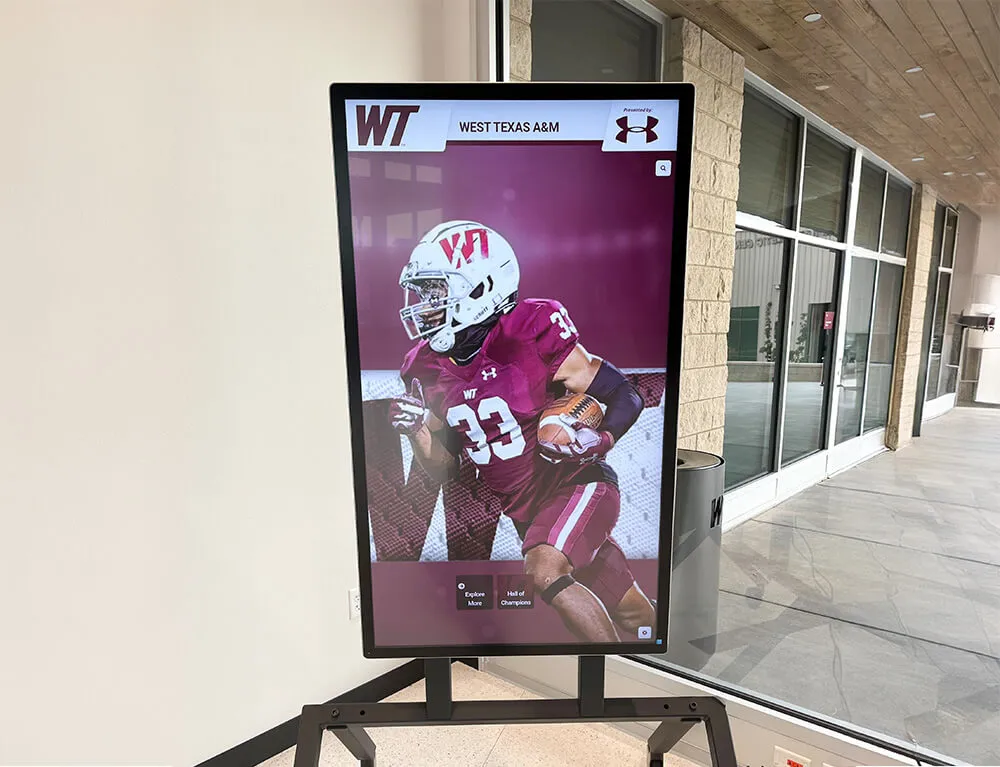
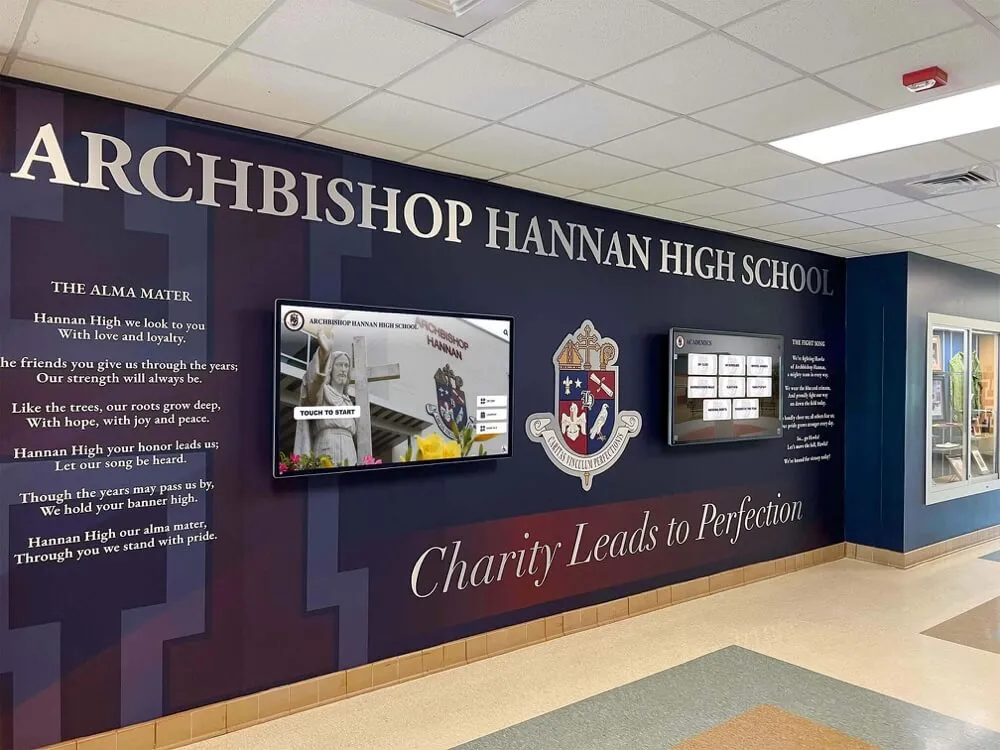
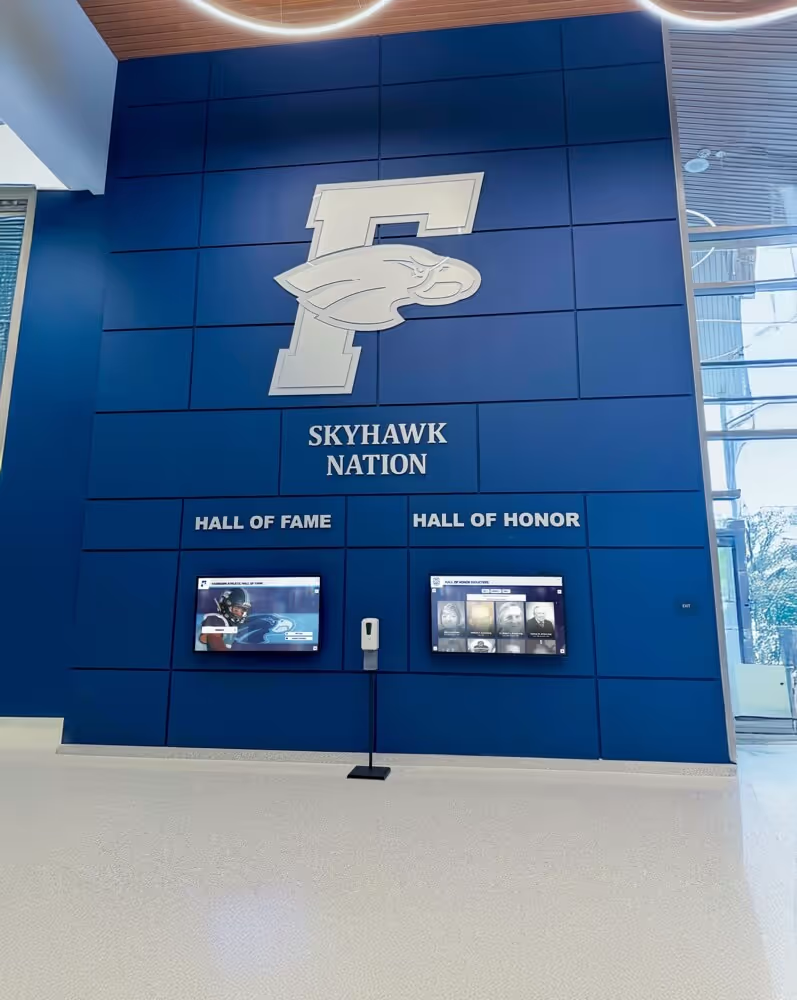
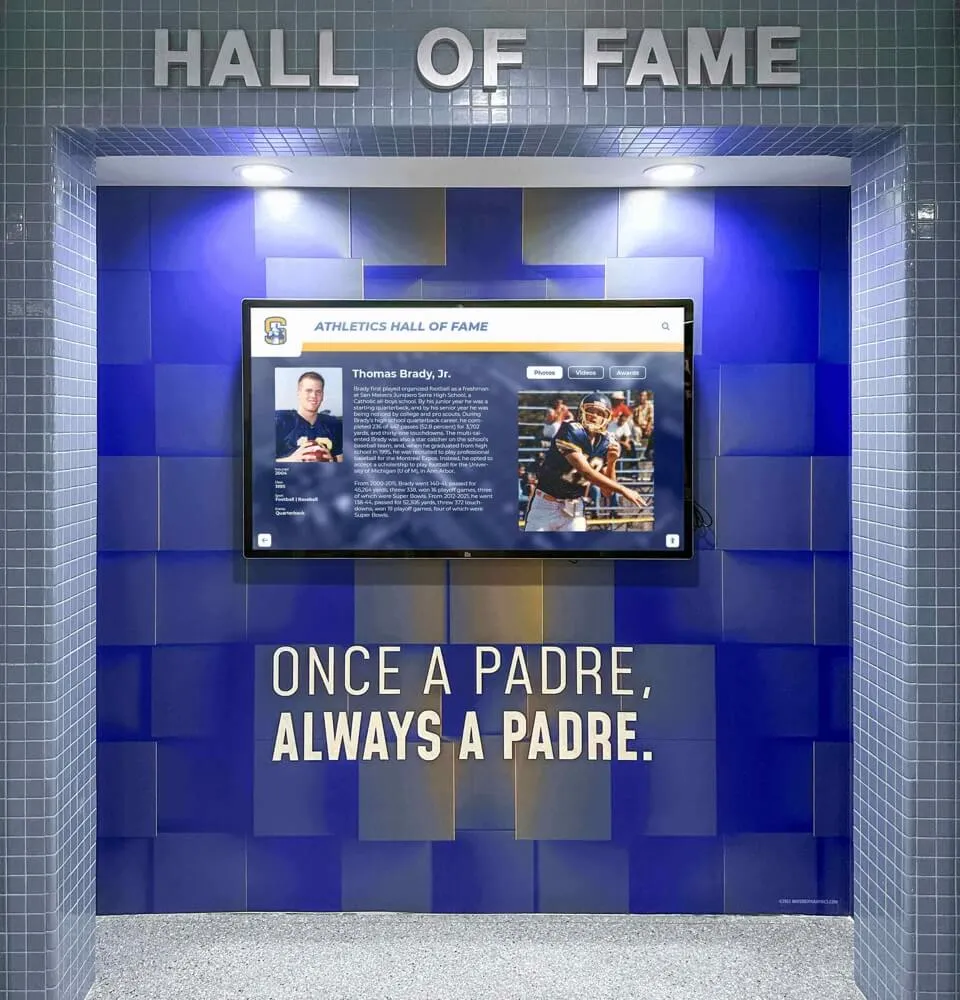
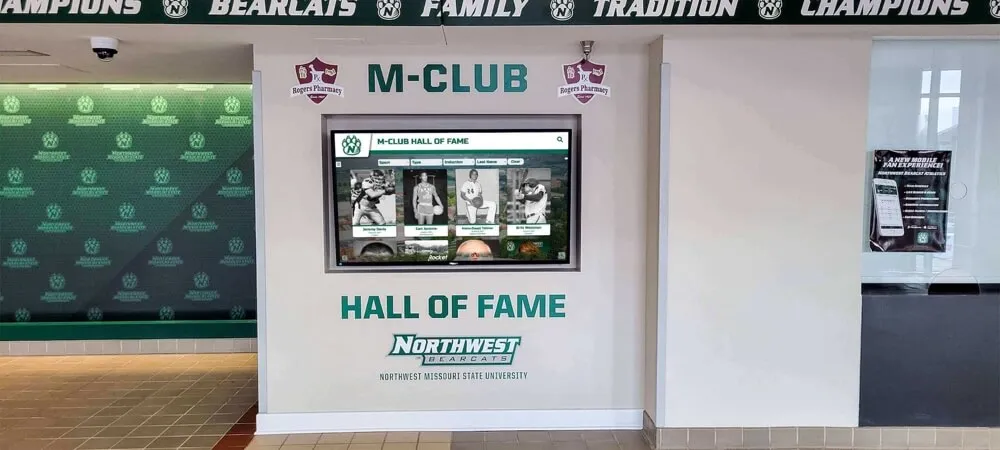
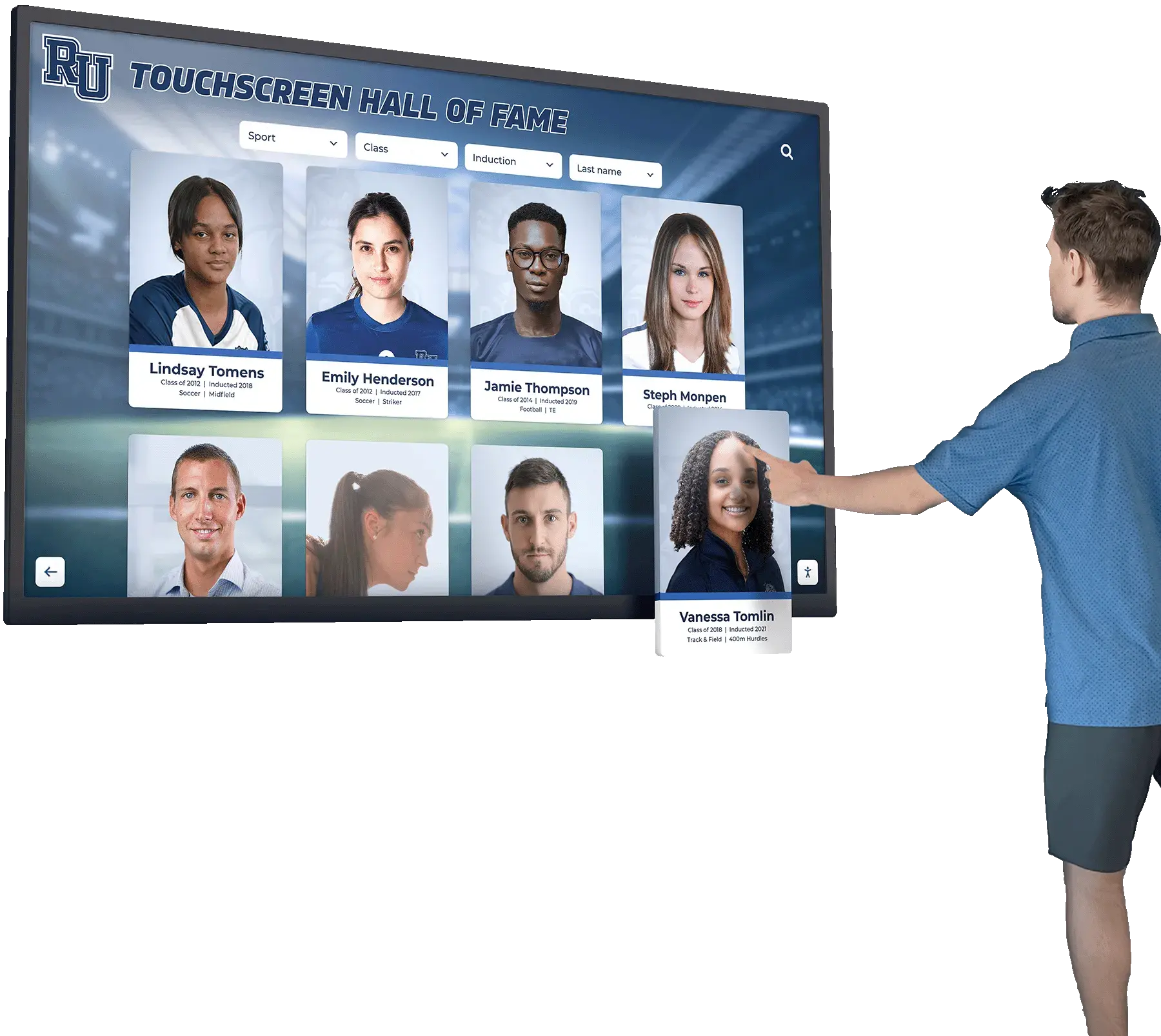
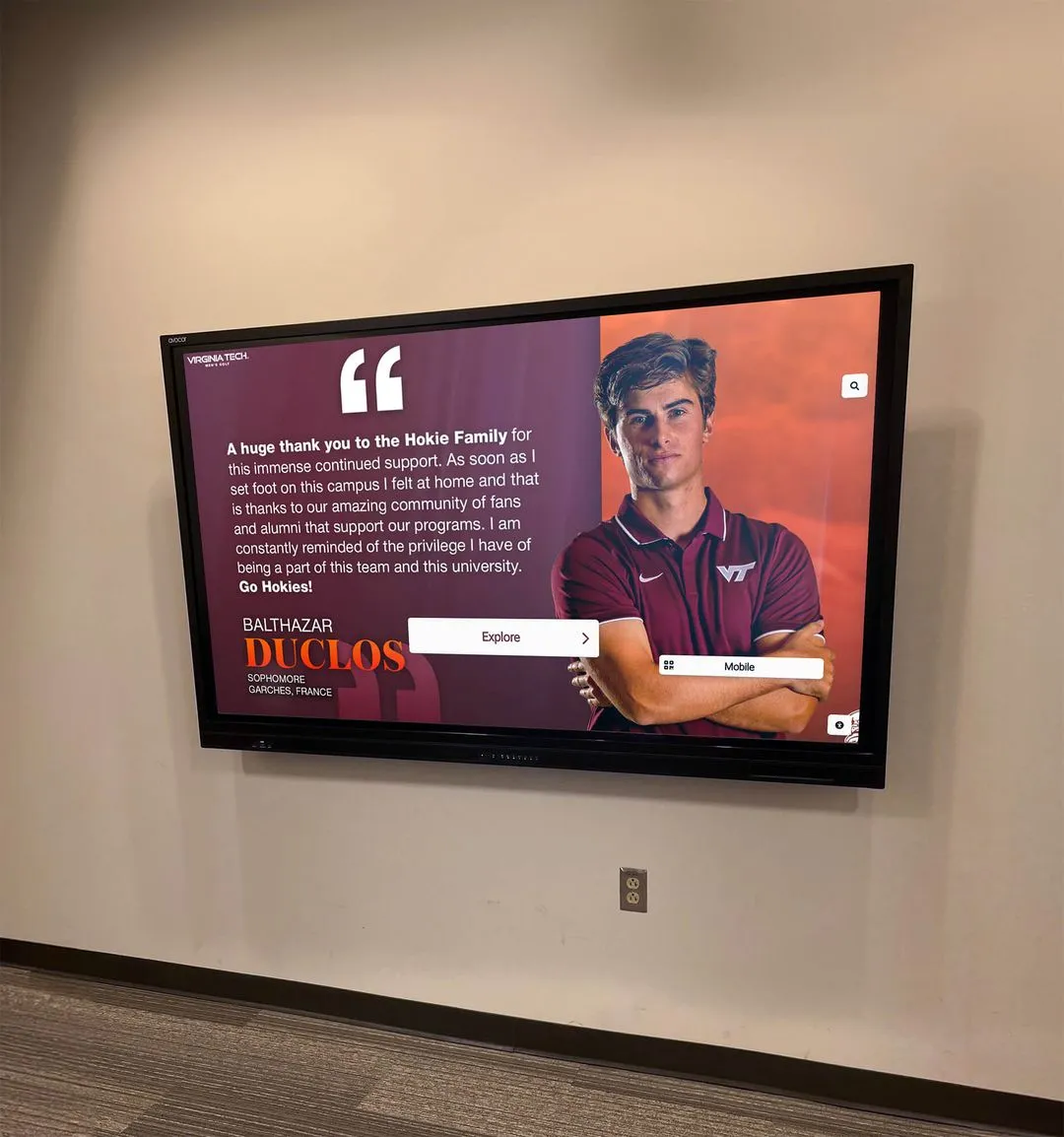
Individual athlete recognition displays showcase detailed achievements and career highlights
Hall of Fame Gallery
The centerpiece Hall of Fame Gallery honors over 1,000 inductees through a remarkable 50-foot-high sculptural helmet installation combined with searchable digital kiosks providing comprehensive information about each honored individual. Visitors search by name, school, position, or other criteria to access detailed profiles including statistics, career highlights, photographs, and video content.
This combination of dramatic physical design with accessible digital information demonstrates how traditional recognition concepts evolve through technology integration. The sculptural elements create visual impact and ceremonial atmosphere, while digital components provide the depth and searchability impossible with static plaques alone.
Design Principle for Schools: Effective recognition balances emotional impact with informational depth. Physical design elements create gravitas and ceremonial presence, while digital platforms provide unlimited content capacity, instant searchability, and rich multimedia storytelling that brings achievements to life.
Schools implementing digital hall of fame displays can achieve similar dual-layer approaches—combining physical recognition elements that command attention with digital interfaces that provide comprehensive achievement documentation.
The Quest for the Ring
This interactive exhibit allows visitors to participate in simulated championship scenarios, making strategic decisions coaches face during critical game moments. Touchscreen interfaces present game situations requiring tactical choices, with immediate feedback showing how decisions impact outcomes.
The exhibit demonstrates how interactive storytelling transforms abstract concepts (coaching strategy, decision-making under pressure) into engaging, participatory experiences. Visitors don’t just read about great coaching moments—they experience similar challenges themselves, creating understanding and appreciation impossible through passive displays.
Design Principle for Schools: Recognition programs can incorporate interactive elements that help viewers understand and appreciate what recognized achievements required. Rather than simply listing that an athlete “earned All-State honors,” interactive elements might explain selection criteria, show competitive context, or demonstrate skill levels required for such distinction.
Design Principles That Make the College Football Hall of Fame Atlanta Work
Analyzing the Atlanta facility’s success reveals intentional design principles applicable to recognition programs at any scale.
Storytelling Over Information Dumps
The College Football Hall of Fame Atlanta prioritizes narrative storytelling rather than exhaustive information presentation. Exhibits don’t attempt to document every play of every game—instead, they identify compelling stories, pivotal moments, and human elements that resonate emotionally while illuminating what makes college football culturally significant.
Application for Schools: Athletic recognition works best when it tells stories rather than merely listing statistics. Digital platforms enable schools to include context around achievements—the back injury an athlete overcame to compete, the family tradition an honoree continued, the community impact a championship team created. These narratives transform numbers into meaning.
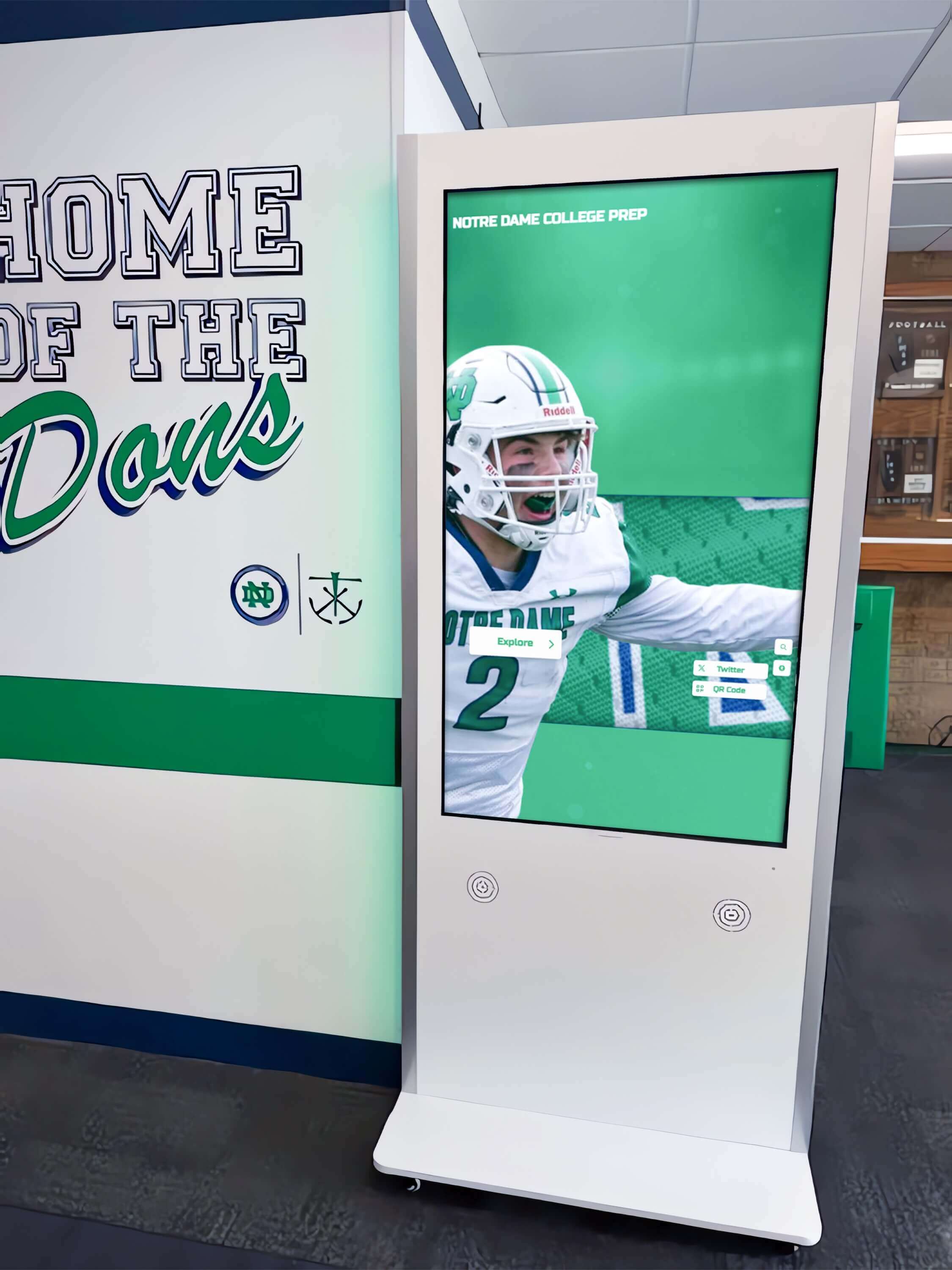
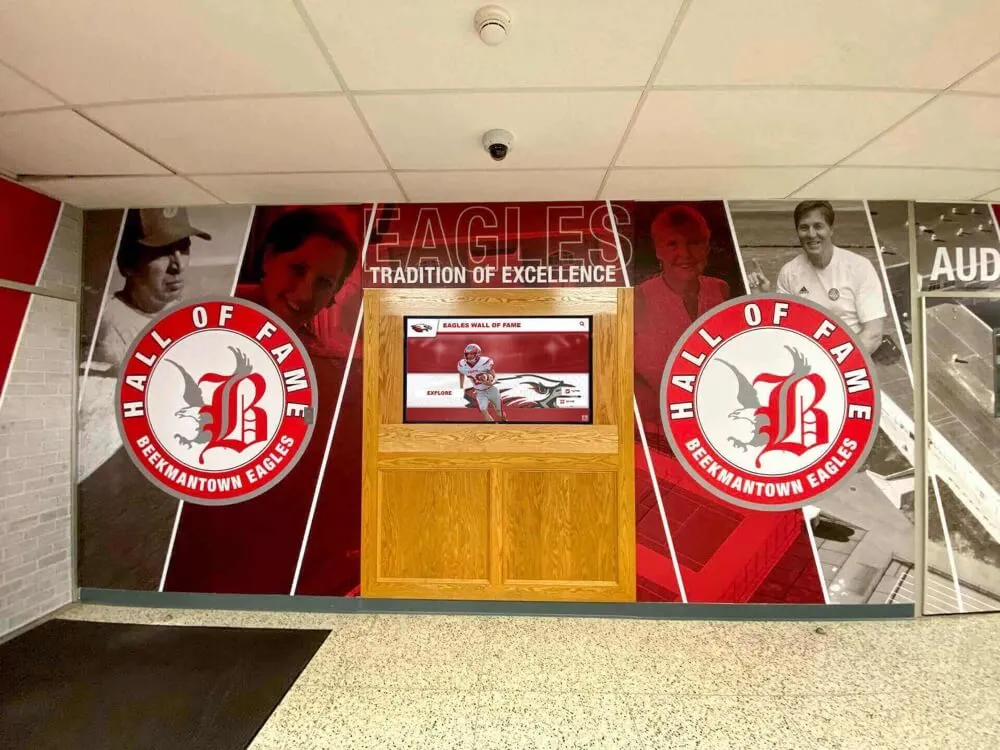
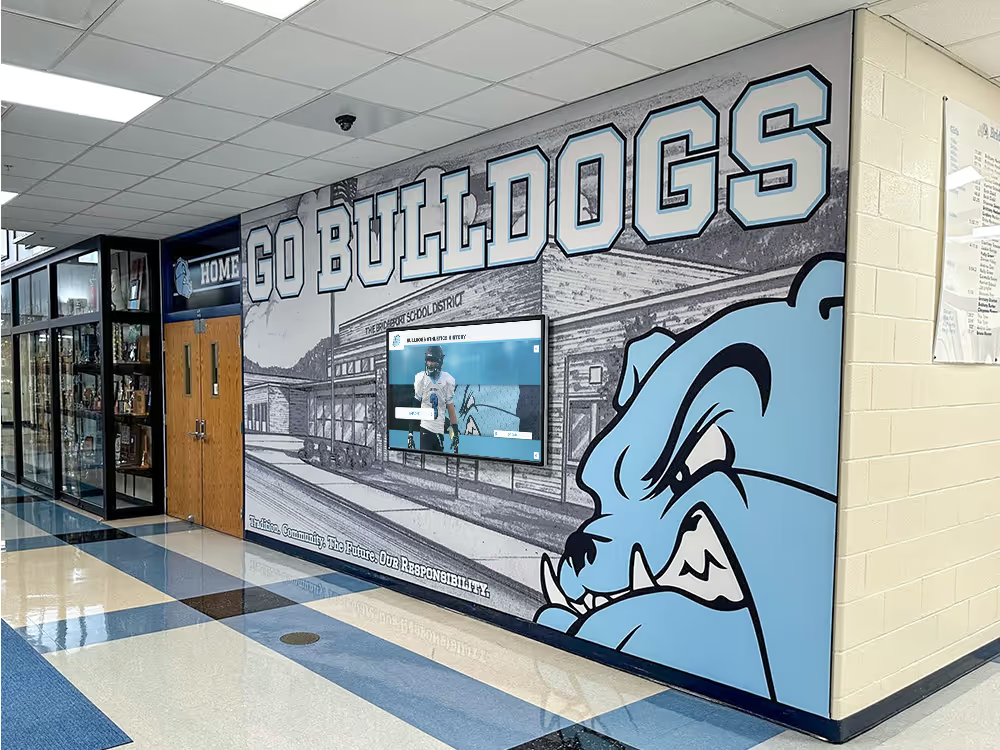
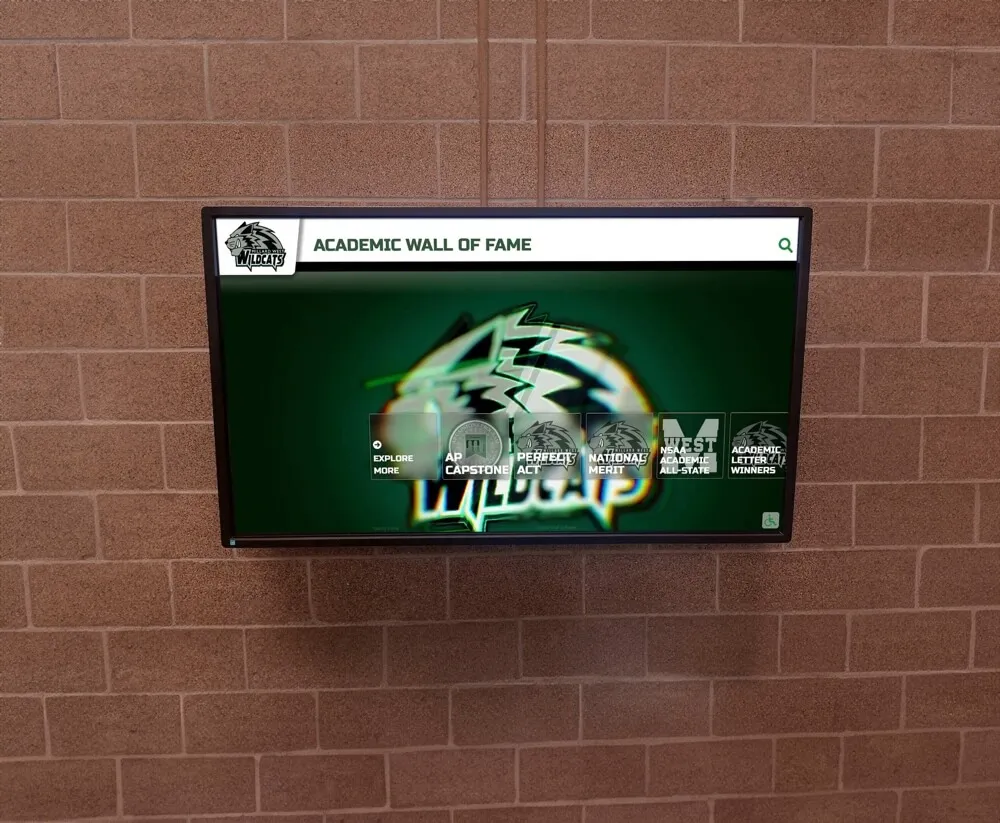
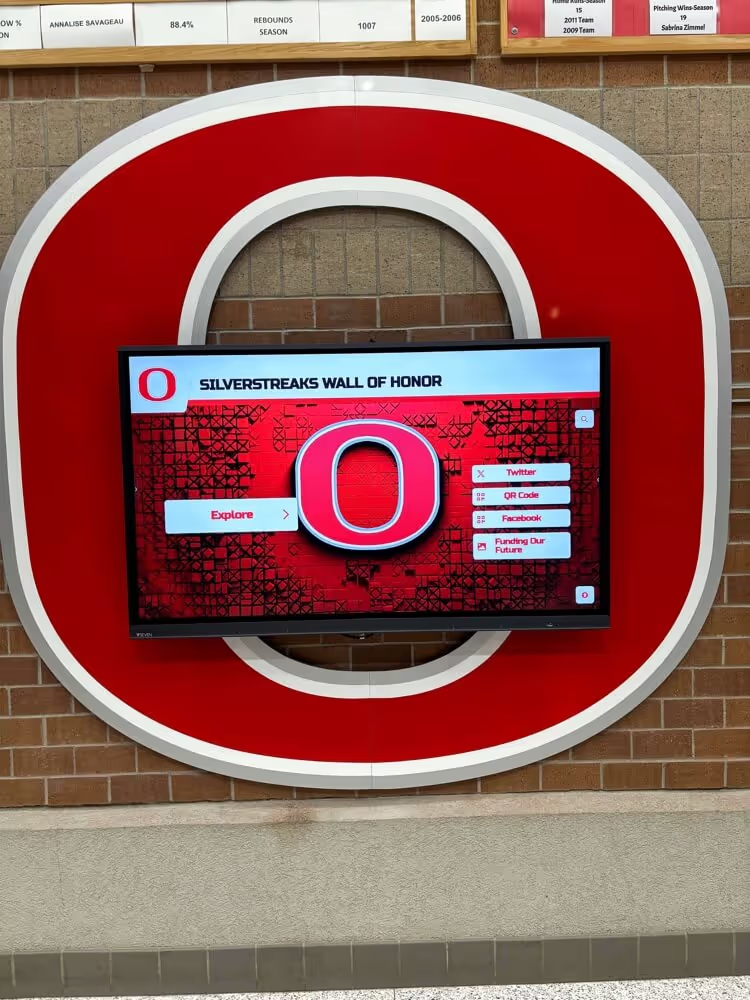
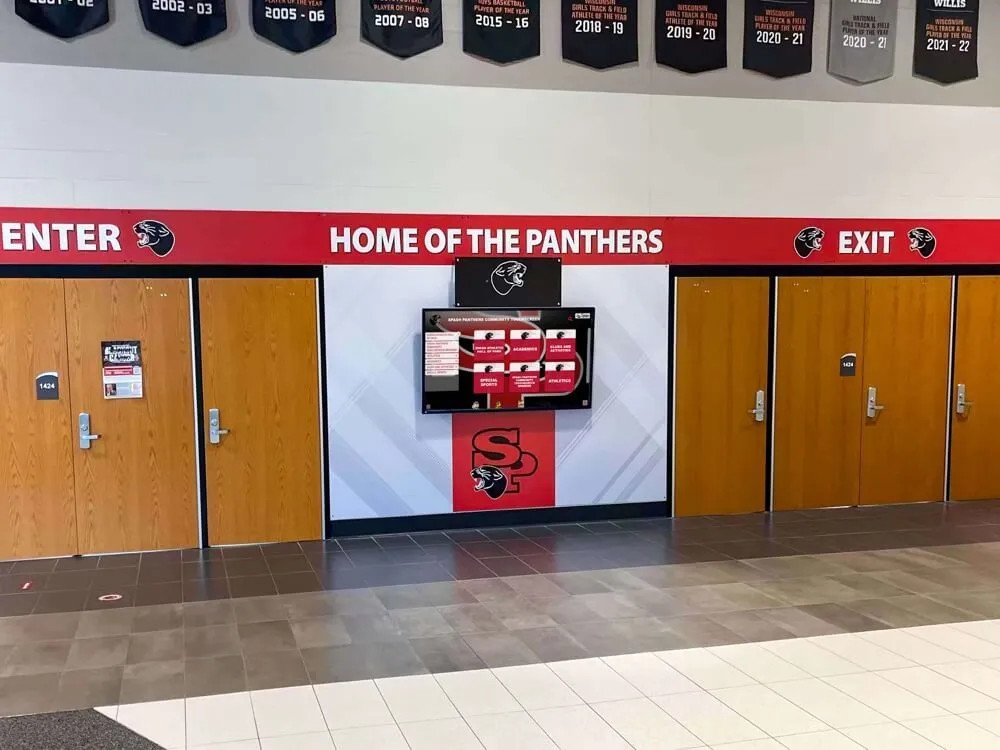
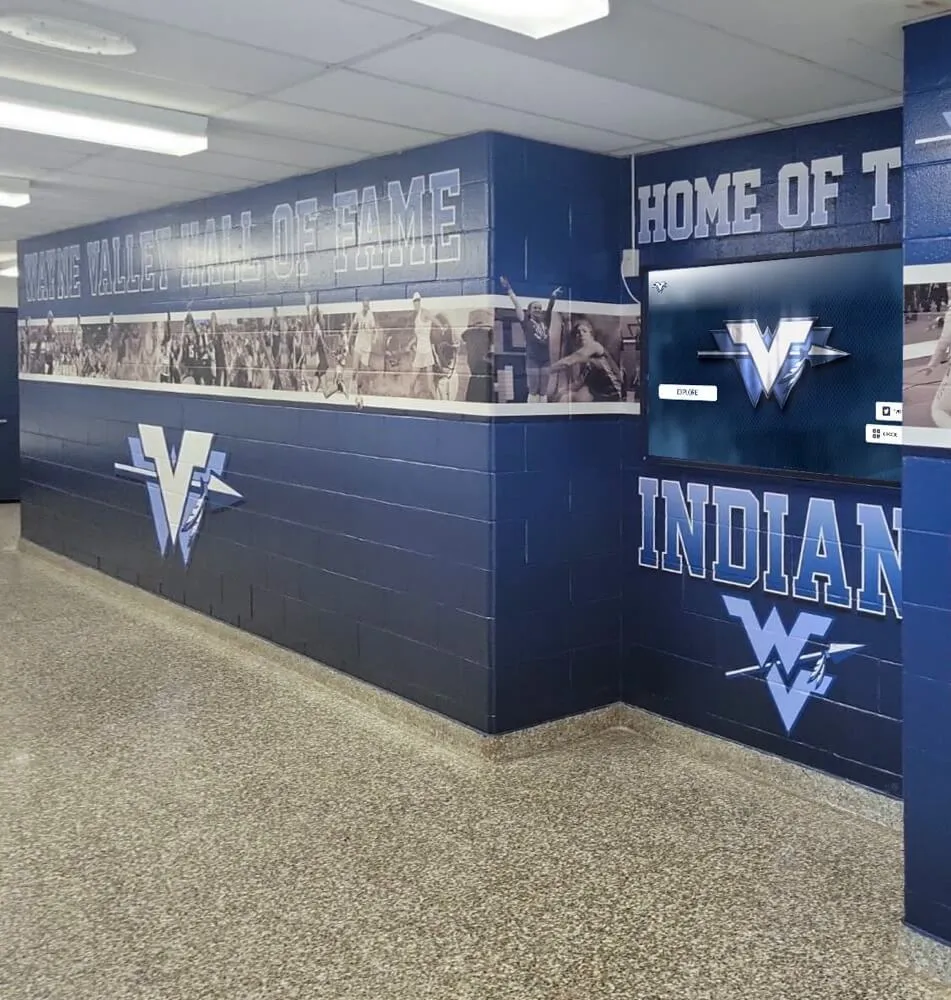
Hallway-positioned interactive displays maximize visibility and encourage spontaneous engagement
Multiple Entry Points for Different Audiences
The facility recognizes visitors arrive with different backgrounds, interests, and engagement preferences. Some come as die-hard fans of specific programs seeking connection to their team history; others arrive as casual observers curious about college football culture; families visit with children needing age-appropriate engagement; researchers seek specific historical information.
Effective exhibit design accommodates all these audiences simultaneously through layered content—surface-level engagement for casual viewers, deeper information for dedicated fans, interactive games for children, searchable archives for researchers.
Application for Schools: School recognition programs serve diverse audiences—prospective students and families, current students seeking connection to tradition, alumni maintaining institutional bonds, community members supporting programs. Effective recognition provides multiple engagement pathways serving different viewer needs simultaneously.
Interactive touchscreens for museums and galleries demonstrate how schools can create layered content experiences where casual viewers access highlights while interested visitors explore comprehensive details.
Technology Serving Content, Not Replacing It
Despite extensive technology integration, the College Football Hall of Fame Atlanta never allows technology to overshadow content. Interactive elements serve the purpose of making achievements, stories, and history more accessible and engaging—not demonstrating technical capability for its own sake.
This content-first philosophy ensures technology enhances rather than distracts from recognition’s core purpose: honoring achievement and preserving legacy. When technology serves storytelling goals, it becomes invisible—visitors remember the stories, not the screens displaying them.
Application for Schools: Schools implementing digital recognition should prioritize content quality over technical sophistication. The most advanced touchscreen becomes meaningless if it displays poorly organized information or neglects compelling storytelling. Focus first on what stories deserve telling, what achievements merit recognition, and what experiences would engage visitors—then select technology serving those goals.
Creating Moments Worth Photographing
Throughout the facility, designers intentionally created photo-worthy moments where visitors want to capture and share experiences—oversized helmets perfect for selfies, replica trophy poses, interactive game results worth sharing. This social media optimization extends the venue’s reach far beyond physical visitors as shared images create awareness and interest among their networks.
Application for Schools: School recognition displays that create shareable moments amplify impact exponentially. When graduates photograph themselves next to their hall of fame profiles and share on social media, when championship teams recreate trophy photos at digital displays, when families capture senior night moments against recognition backdrops, these shared images extend recognition visibility from hundreds of in-person viewers to thousands of social connections.
Accessibility and Inclusion
The Atlanta facility prioritizes accessibility through ADA-compliant interactive stations, varied content presentation methods accommodating different learning styles and physical abilities, and intentional inclusion of diverse stories representing college football’s full demographic breadth.
This commitment to accessibility ensures maximum audience engagement while communicating that recognition honors all contributors rather than privileged few.
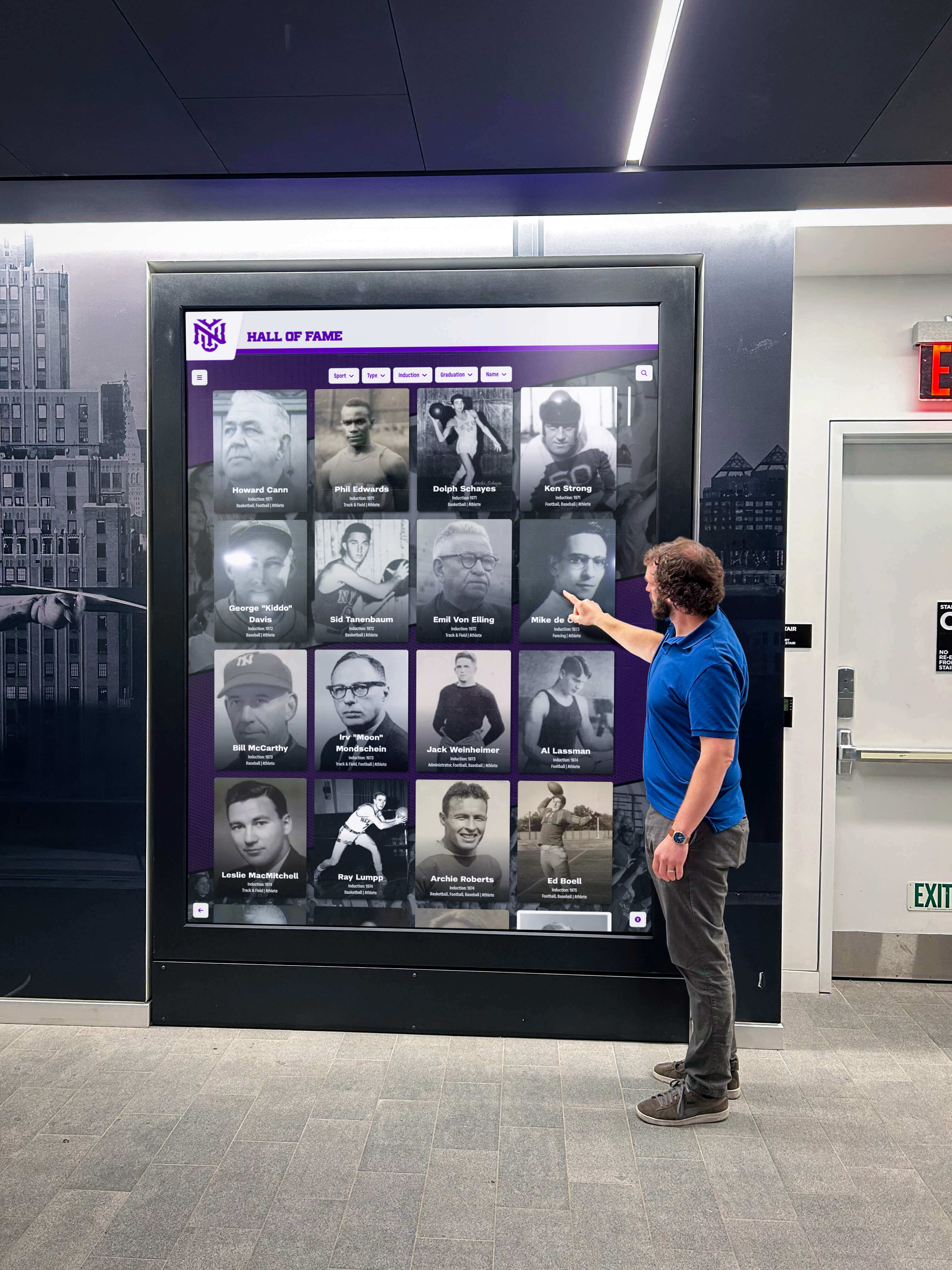
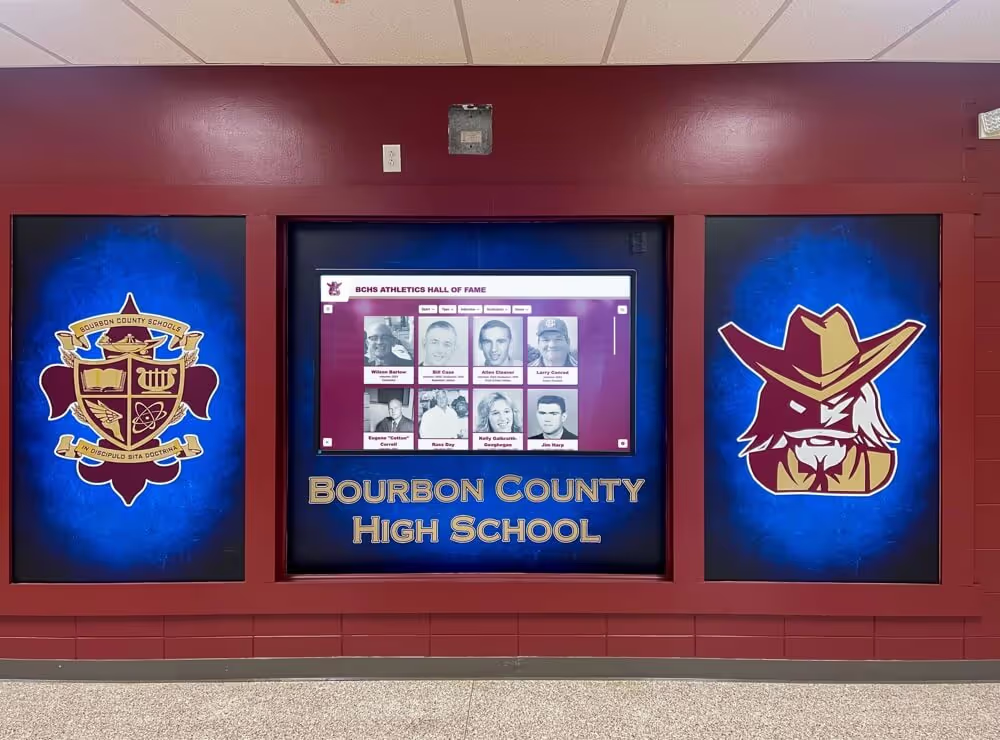
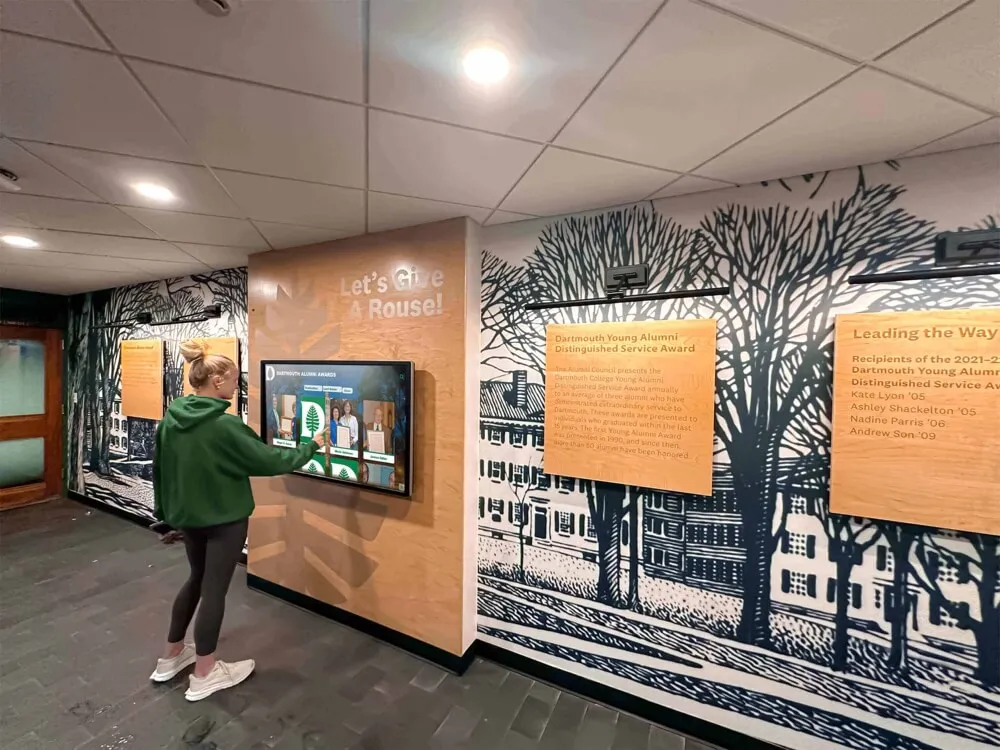
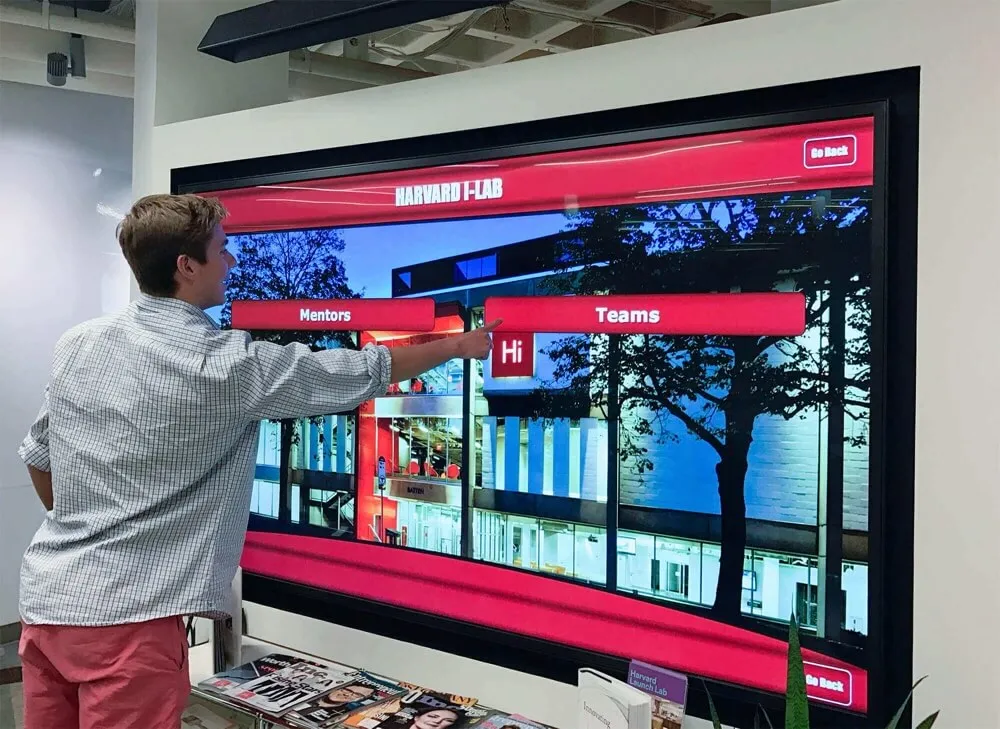
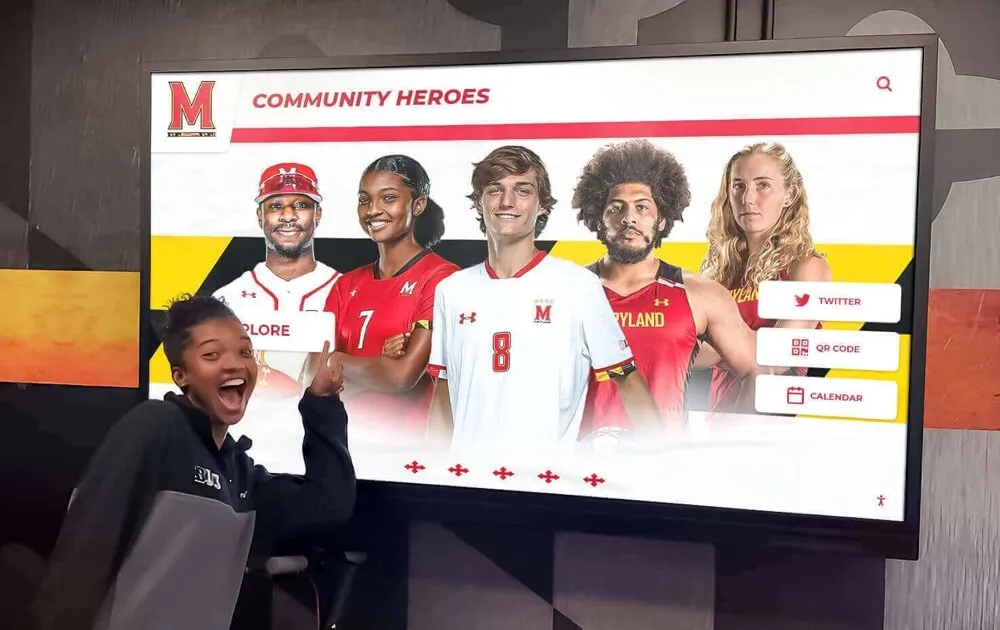
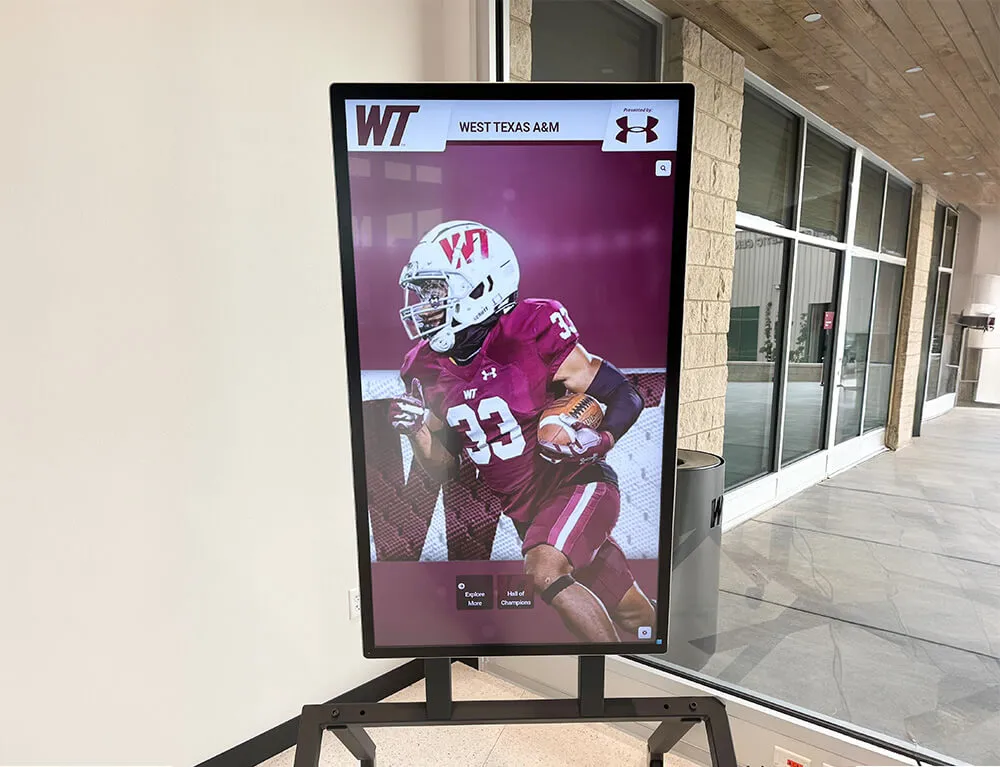
Accessible interactive displays enable all visitors to engage with recognition content
Application for Schools: School recognition programs should meet WCAG 2.1 AA accessibility standards, ensuring students and community members with disabilities can fully engage with athletic honors and program history. Accessible touchscreen solutions demonstrate commitment to inclusive recognition that values all community members.
Why the College Football Hall of Fame Atlanta Matters for School Recognition Programs
The Atlanta facility provides more than entertainment for college football fans—it serves as a living laboratory demonstrating how modern recognition programs should function in an era of interactive technology and experiential expectations.
Proof That Recognition Can Compete for Attention
In an entertainment landscape dominated by smartphones, streaming media, and constant digital stimulation, the College Football Hall of Fame Atlanta proves that recognition and history displays can capture and hold audience attention when designed as engaging experiences rather than static information presentations.
The facility’s visitor engagement metrics—average visit durations exceeding three hours, strong return visitor rates, and positive review scores—demonstrate that people will invest significant time in recognition content when it’s presented compellingly.
Implication for Schools: Athletic directors and administrators sometimes question whether students will engage with hall of fame displays when competing with constant digital entertainment. The Atlanta facility proves that recognition captures attention when it offers interactivity, personalization, and compelling storytelling. Schools shouldn’t lower expectations for engagement—they should raise expectations for recognition program quality.
Validation of Digital Recognition Investment
The College Football Hall of Fame Atlanta’s significant technology investment demonstrates institutional commitment to recognition done well. Rather than viewing recognition displays as necessary but minimal expenses, the facility treats them as primary institutional priorities worthy of substantial resource allocation.
This investment philosophy reflects understanding that recognition shapes institutional culture, strengthens community bonds, preserves organizational memory, and communicates values to all stakeholders. Recognition deserves investment proportional to its cultural significance.
Implication for Schools: Schools allocating meaningful budgets to digital recognition platforms make strategic investments in institutional culture rather than discretionary purchases. The question isn’t whether schools can afford comprehensive recognition systems—it’s whether they can afford the cultural cost of inadequate recognition that fails to honor achievement or preserve program legacy effectively.
For schools exploring recognition investment options, subscription pricing models enable budget-friendly implementation without compromising capability or quality.
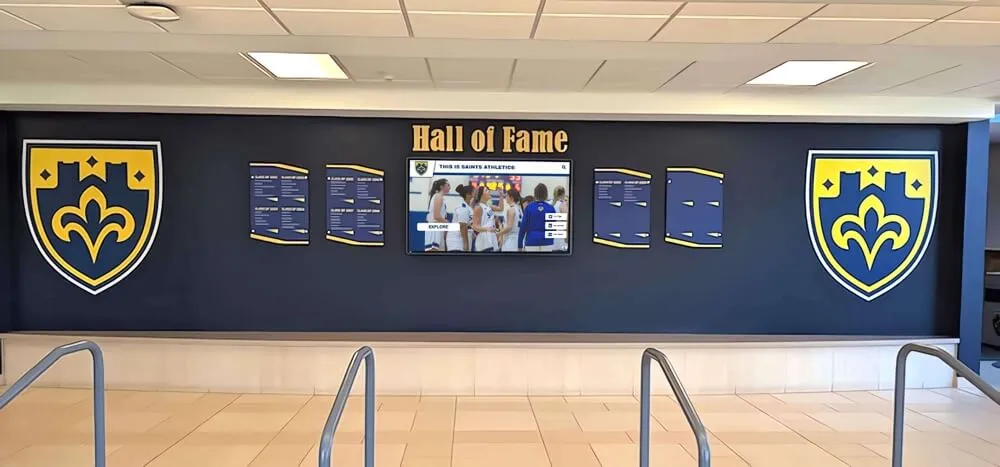
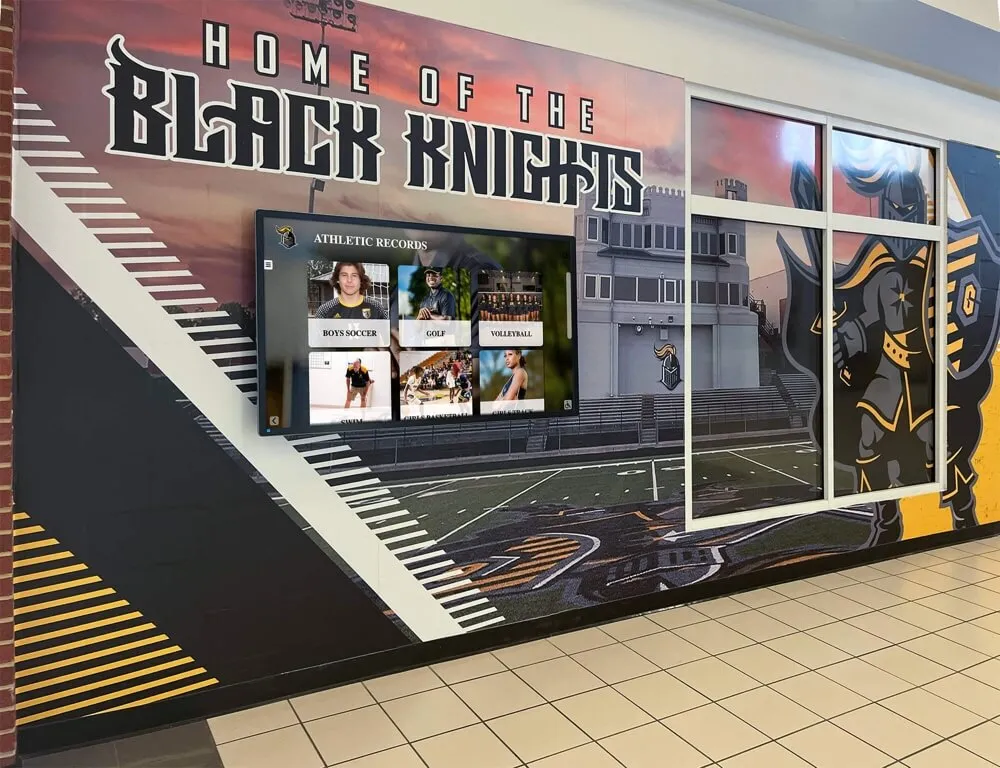
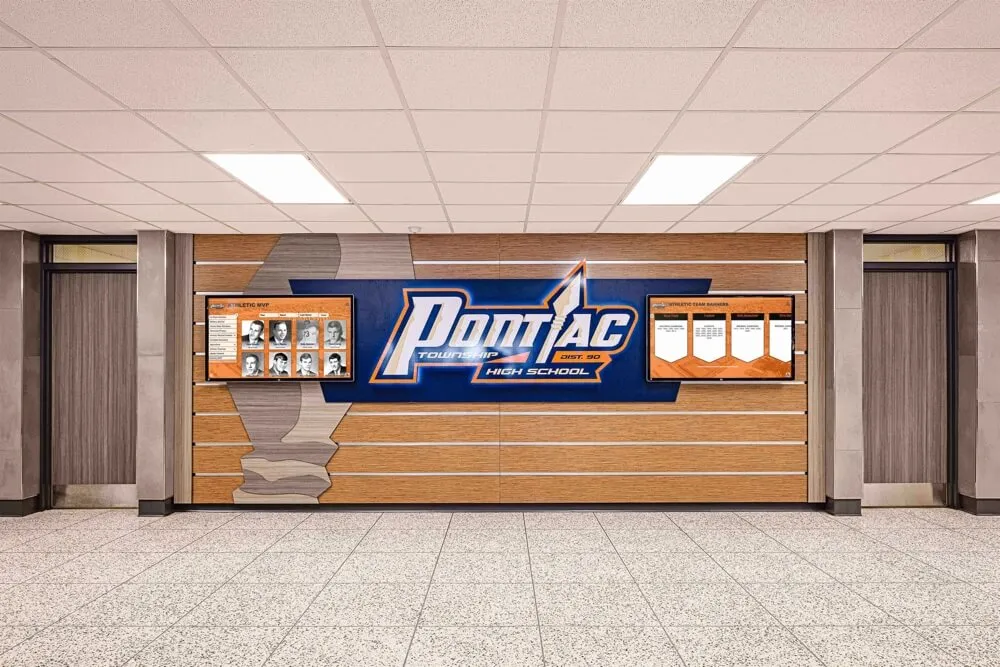
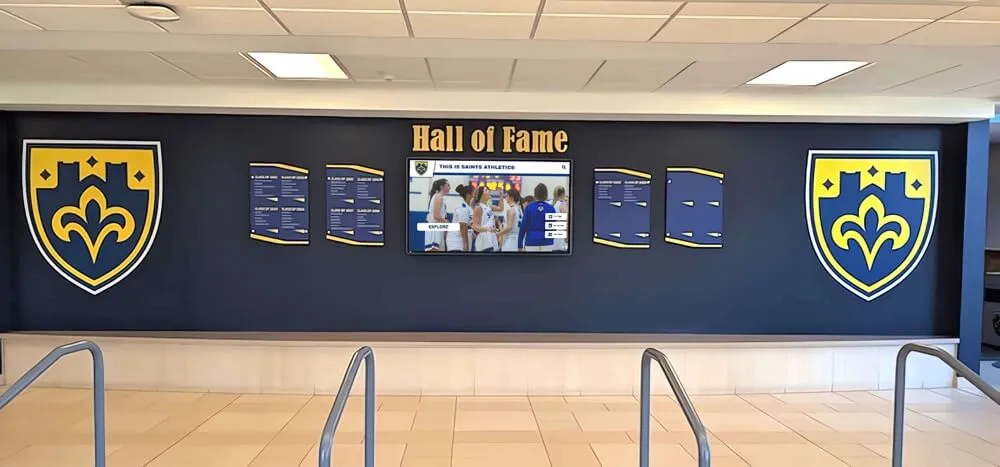
Physical recognition elements create ceremonial presence while digital components provide unlimited content capacity
Models for Visitor-Centered Design
The Atlanta facility’s success stems from genuinely visitor-centered design that prioritizes audience experience over organizational convenience. Every exhibit component reflects consideration of how visitors will interact with content, what will engage different audience segments, and how to remove barriers to meaningful engagement.
This visitor-first philosophy contrasts sharply with traditional recognition approaches that prioritize administrative ease—alphabetical name lists, uniform plaque designs, minimal content updates—over audience experience and engagement effectiveness.
Implication for Schools: Effective school recognition programs start with understanding audience needs rather than administrative preferences. Who views athletic recognition displays? What information would engage them? How can content serve prospective students, current athletes, proud alumni, and community supporters simultaneously? What update frequency keeps content relevant? Visitor-centered thinking transforms recognition from bureaucratic compliance into strategic engagement.
Applying College Football Hall of Fame Atlanta Principles at School Scale
Schools cannot and should not attempt to replicate the College Football Hall of Fame Atlanta’s $68 million facility. But they can absolutely implement the same design principles, engagement strategies, and recognition philosophies at appropriate scales for educational settings.
Personalization at School Scale
The Atlanta facility’s team selection personalization requires sophisticated content management and dynamic display capabilities. Schools can implement similar personalization through:
Graduate Year Filtering: Digital displays allowing visitors to select specific graduation years, then viewing only athletes from their class—creating immediate personal connection for alumni visitors.
Sport-Specific Views: Multi-sport recognition platforms where visitors choose their sport of interest, filtering comprehensive athletic achievement databases to show only relevant athletes and teams.
Achievement Category Browsing: Options to view all state champions, all-conference selections, academic all-state honorees, or other specific achievement categories based on viewer interest.
These personalization approaches require no custom programming—simply well-organized content databases and intuitive interface design enabling viewers to navigate to personally meaningful information.
Interactive Elements Without Game Simulators
Schools need not build 45-yard indoor playing fields to create interactive engagement. Effective interactive elements at school scale include:
Video Highlight Integration: Touchscreens displaying athlete profiles where visitors can watch game highlights, championship moments, or achievement footage—transforming static honor into dynamic storytelling.
Statistical Exploration Tools: Interactive comparison features allowing visitors to explore how athletes’ statistics compare across eras, positions, or competitive levels—adding context that makes numbers meaningful.
Photo Galleries and Social Integration: Image collections from championship seasons, team bonding moments, or program history that visitors can browse, share via QR codes, or contribute to through submission portals.
Timeline Navigation: Interactive historical timelines showing program evolution across decades, with touchscreen interfaces enabling deep exploration of specific eras or championship years.
These interactive elements require modest technical sophistication while creating engagement levels comparable to the Atlanta facility’s more elaborate installations.
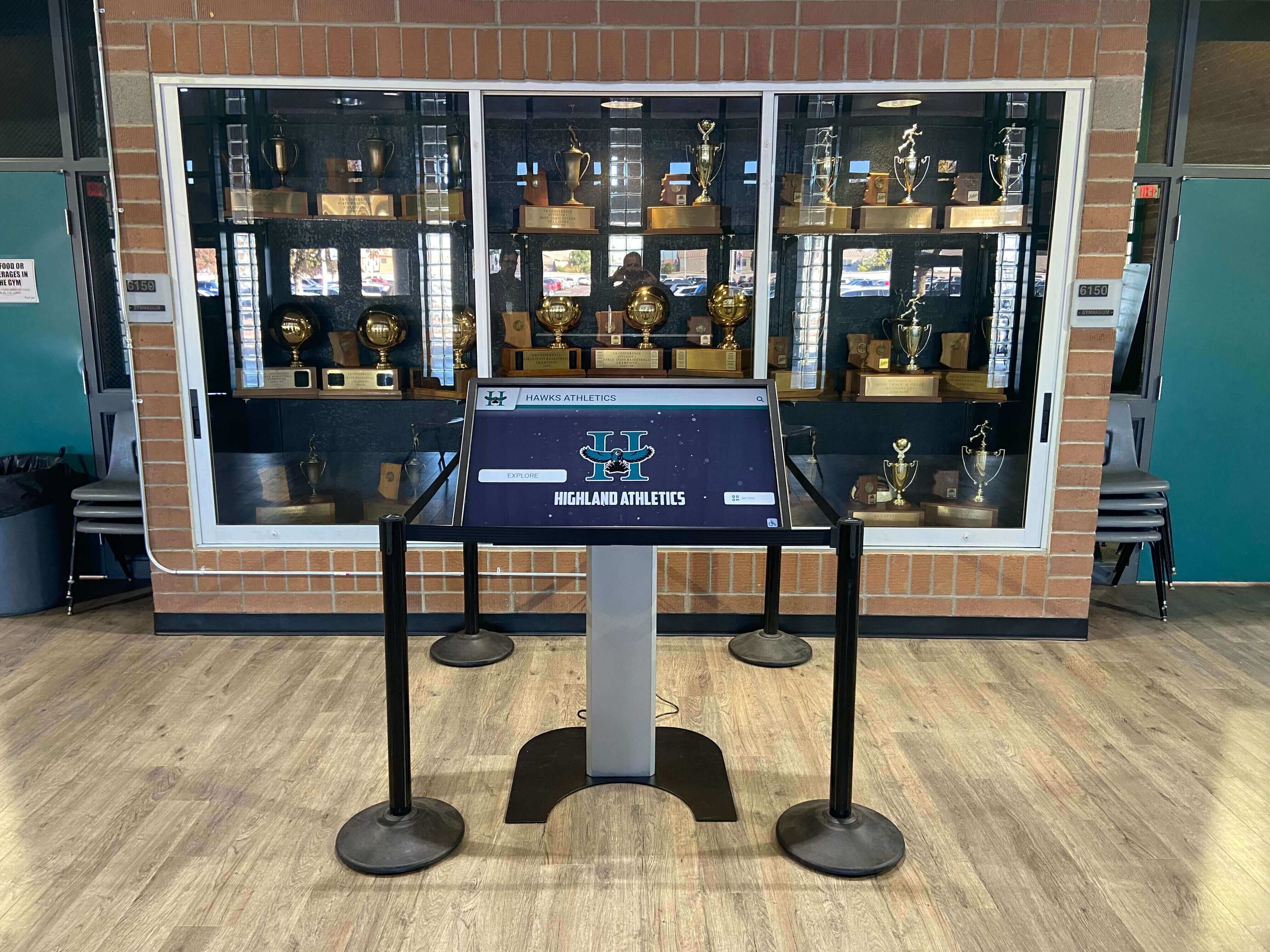
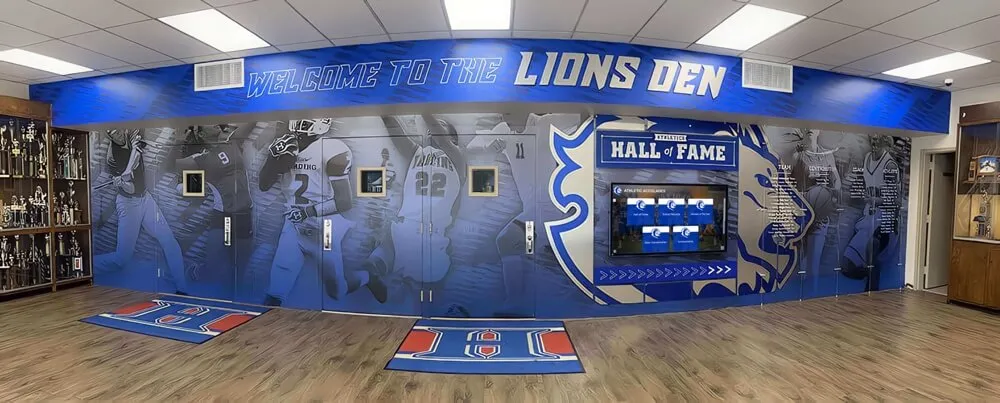
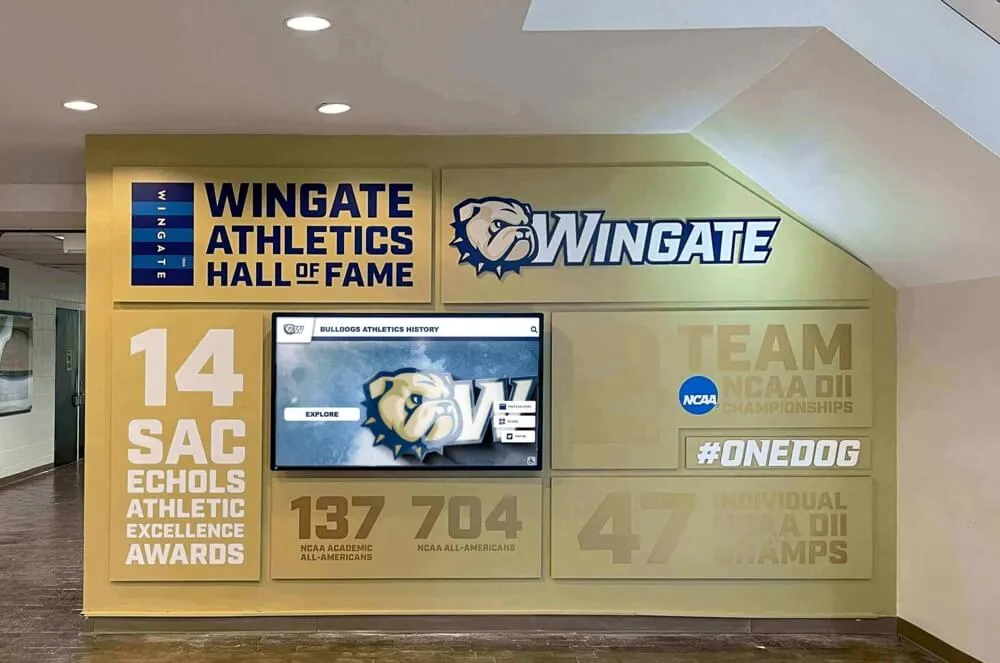
Integrating digital displays with traditional trophy cases creates hybrid recognition combining physical artifacts with interactive content
Storytelling With Limited Content Resources
The College Football Hall of Fame Atlanta employs professional content creators, videographers, and historians developing exhibit narratives. Schools achieve similar storytelling impact through:
Coach Narratives: Brief written or video statements from coaches explaining what made honored athletes exceptional—providing context and personality that raw statistics cannot convey.
Athlete Testimonials: Asking hall of fame inductees to share what their sport meant to them, memorable moments, or how participation influenced their lives—creating authentic storytelling from primary sources.
Parent and Community Perspectives: Including quotes from parents, teammates, or community members describing honorees’ impact—adding dimensions beyond athletic achievement alone.
Historical Context Snippets: Brief explanations of competitive context (strength of league that year, challenging weather conditions during championship runs, unprecedented program success) that help viewers appreciate achievement significance.
These storytelling elements require time investment rather than financial resources, making them accessible to schools at any budget level while dramatically increasing recognition engagement and meaning.
Creating Shareable Moments With Simple Design
Schools create photo-worthy recognition moments through thoughtful design rather than expensive installations:
Recognition Backdrops: Well-designed visual backgrounds behind digital displays where athletes, families, and alumni want to photograph themselves—incorporating school branding, athletic achievements, or program mottos.
QR Code Sharing: Codes next to individual athlete profiles enabling visitors to instantly access and share specific recognition content via smartphones—extending recognition reach through social networks.
Achievement Certificates: Printable or downloadable achievement certificates generated from recognition database content that athletes and families can capture and share—creating tangible recognition artifacts from digital platforms.
Social Media Integration: Display features encouraging visitors to tag the school, use specific hashtags, or participate in recognition-related social media campaigns—building online engagement around physical displays.
These shareable moment designs require creative thinking rather than substantial budgets, yet create network effects that exponentially expand recognition visibility and impact.
Implementing Atlanta-Inspired Recognition at Your School
Schools ready to apply College Football Hall of Fame Atlanta principles to their own athletic recognition programs should focus on these strategic priorities:
Content Organization and Database Development
Before investing in display technology, develop comprehensive, well-organized content about recognized athletes and achievements. Document:
- Hall of fame inductees with biographical information, statistics, and achievement narratives
- Championship teams with rosters, season records, and memorable moments
- All-conference and all-state honorees across all sports and all years
- Program records and milestone achievements
- Coach biographies and tenure information
- Historical context and program evolution narratives
Systematic content development ensures recognition displays have substantive information to present rather than impressive technology displaying minimal content.
Technology Selection Aligned With Goals
Choose digital display platforms based on content needs and engagement goals rather than technical specifications alone. Priority considerations include:
- Content management ease enabling regular updates without technical expertise
- Unlimited recognition capacity as programs add inductees annually
- Multimedia support for photos, videos, and documents
- Search and filter functionality enabling visitor personalization
- Accessibility compliance ensuring inclusive engagement
- Integration capabilities with existing school systems and websites
Solutions like Rocket Alumni Solutions provide comprehensive digital recognition platforms specifically designed for educational institutions, incorporating Atlanta-style engagement features at school-appropriate scales and budgets.
Beyond Athletics: Comprehensive School Recognition
While the College Football Hall of Fame Atlanta focuses exclusively on one sport, its design principles apply equally to comprehensive school recognition programs honoring achievement across all dimensions of student excellence.
Schools can extend Atlanta-inspired recognition approaches to:
Academic Excellence: Digital displays showcasing National Honor Society members, valedictorians, scholarship recipients, and academic achievement across departments.
Fine Arts Recognition: Interactive platforms featuring performing arts achievements, visual arts galleries, music program accomplishments, and creative excellence across artistic disciplines.
Service and Leadership: Recognition for student government leaders, community service contributors, volunteer achievements, and leadership demonstration.
Multi-Dimensional Student Profiles: Comprehensive recognition approaches that showcase how individual students excel across multiple domains—academic achievement combined with athletic success, leadership roles complemented by artistic talents—honoring whole students rather than isolated accomplishments.
The same interactive principles, storytelling approaches, and engagement strategies that make the College Football Hall of Fame Atlanta compelling create equally powerful impacts when applied to comprehensive school recognition.
Measuring Recognition Program Success
The College Football Hall of Fame Atlanta tracks visitor engagement metrics, reviews, return visits, and community impact to assess facility effectiveness. Schools should similarly measure recognition program success through:
Engagement Metrics: Track touchscreen interaction rates, average engagement durations, and content areas generating greatest interest—data enabling recognition program refinement.
Community Feedback: Regularly survey athletes, families, alumni, and community members about recognition program satisfaction, suggested improvements, and perceived value.
Alumni Connection Impact: Monitor whether enhanced recognition programs strengthen alumni engagement, donation rates, event attendance, or other indicators of ongoing institutional connection.
Recruitment Influence: Assess whether prospective students and families reference recognition programs during enrollment decisions, campus visits, or program selections.
Cultural Indicators: Observe whether improved recognition correlates with increased school pride, stronger athletic program participation, enhanced community support, or other positive cultural shifts.
Systematic measurement enables data-informed recognition program evolution rather than assumptions about what engages audiences or honors achievement effectively.
Conclusion: Scaling Excellence to Educational Recognition
The College Football Hall of Fame Atlanta demonstrates that recognition, when designed as engaging experience rather than bureaucratic obligation, captures attention, communicates values, preserves legacy, and strengthens institutional culture. Its success validates that people will invest time, emotion, and attention in achievement recognition when it’s presented compellingly through thoughtful storytelling, interactive technology, and visitor-centered design.
Schools need not replicate the Atlanta facility’s scale or budget to implement its proven principles. The same engagement strategies, design philosophies, and recognition approaches that make a 95,000-square-foot national facility compelling create equally powerful impacts in high school hallways, college athletic centers, or institutional entrance lobbies when adapted appropriately for educational contexts and community scales.
What matters isn’t physical size or technology sophistication—it’s genuine commitment to honoring achievement meaningfully, preserving program legacy systematically, and creating recognition experiences that engage rather than merely inform. Schools that embrace these principles transform recognition from afterthought compliance into strategic institutional priorities that strengthen culture, honor excellence, and inspire future achievement.
Ready to implement College Football Hall of Fame Atlanta-inspired recognition at your school? Modern digital recognition platforms enable educational institutions to create interactive, engaging athletic recognition that honors all achievement levels, preserves complete program history, and provides unlimited recognition capacity as programs grow—all while maintaining budget-appropriate implementation and simple content management requiring no technical expertise.
Whether you’re launching a first-time athletic hall of fame program or enhancing existing recognition systems, solutions like Rocket Alumni Solutions provide the platforms, support, and expertise needed to create recognition programs that truly honor athletic excellence while building institutional culture around achievement celebration. From interactive touchscreen displays through comprehensive web-based recognition portals, from simple installation through ongoing content support, complete solutions enable schools to focus on what matters most—celebrating the athletes who represent your programs with excellence and dedication.
The College Football Hall of Fame Atlanta proves that recognition done well creates experiences worth traveling to see, worth spending hours exploring, and worth remembering long after visits conclude. Your school’s athletes deserve recognition reflecting similar commitment to excellence, similar investment in meaningful presentation, and similar understanding that honoring achievement matters enormously—not as administrative requirement but as cultural imperative shaping how communities value dedication, celebrate success, and preserve the legacies that define institutional identity for generations.