



Every class reunion deserves a program that does more than list the dinner menu and dancing start time. The run-of-show shapes how alumni feel the moment they walk in, how deeply they reconnect during the evening, and what memory they carry home at the end of the night. Done well, a class reunion program moves through arrival energy, genuine recognition moments, structured activities, and a closing that leaves attendees already anticipating the next milestone. This guide covers the full toolkit: reusable agenda templates organized by reunion scale, a curated list of activities proven to generate conversation and connection, recognition moment frameworks for honoring classmates and celebrating shared history, and a step-by-step execution map for everything from planning kickoff to post-event follow-up.
Whether you are planning a 10-year high school reunion for 80 people in a local banquet hall or a 50-year university anniversary weekend drawing several hundred alumni back to campus, the structural principles of a strong reunion program stay consistent. The specifics scale up or down — timing expands, activities multiply, recognition becomes more elaborate — but the underlying architecture of arrival, community, recognition, celebration, and continuity applies to every size and milestone.

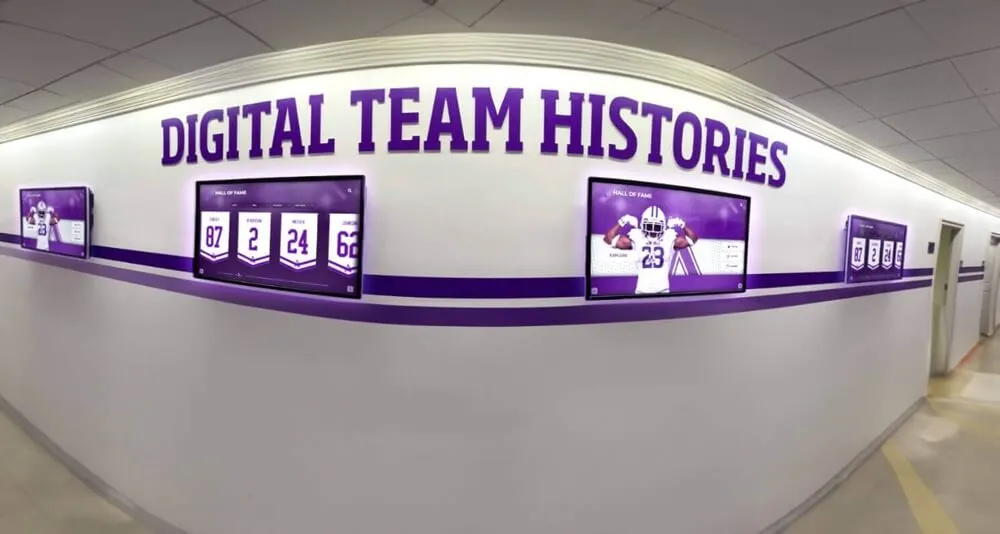
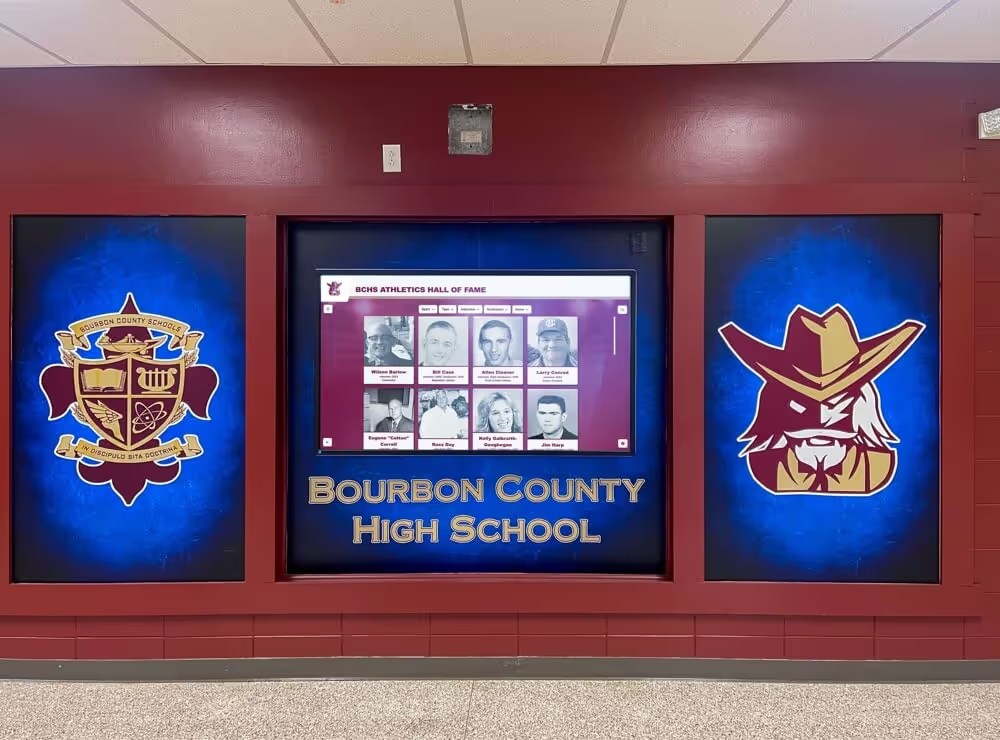
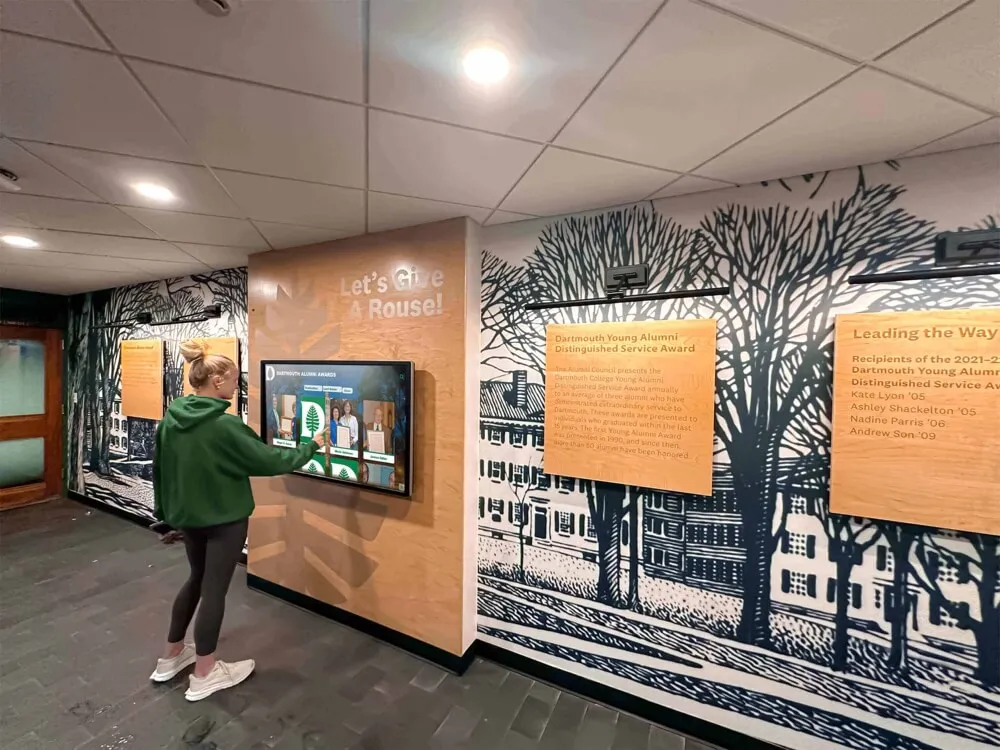
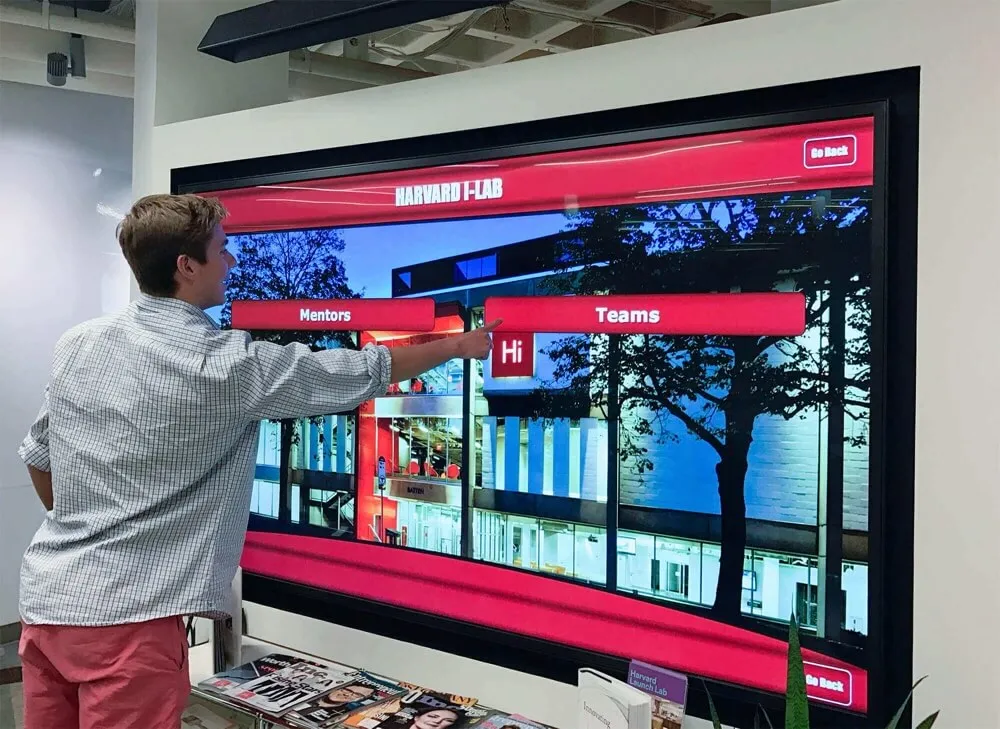
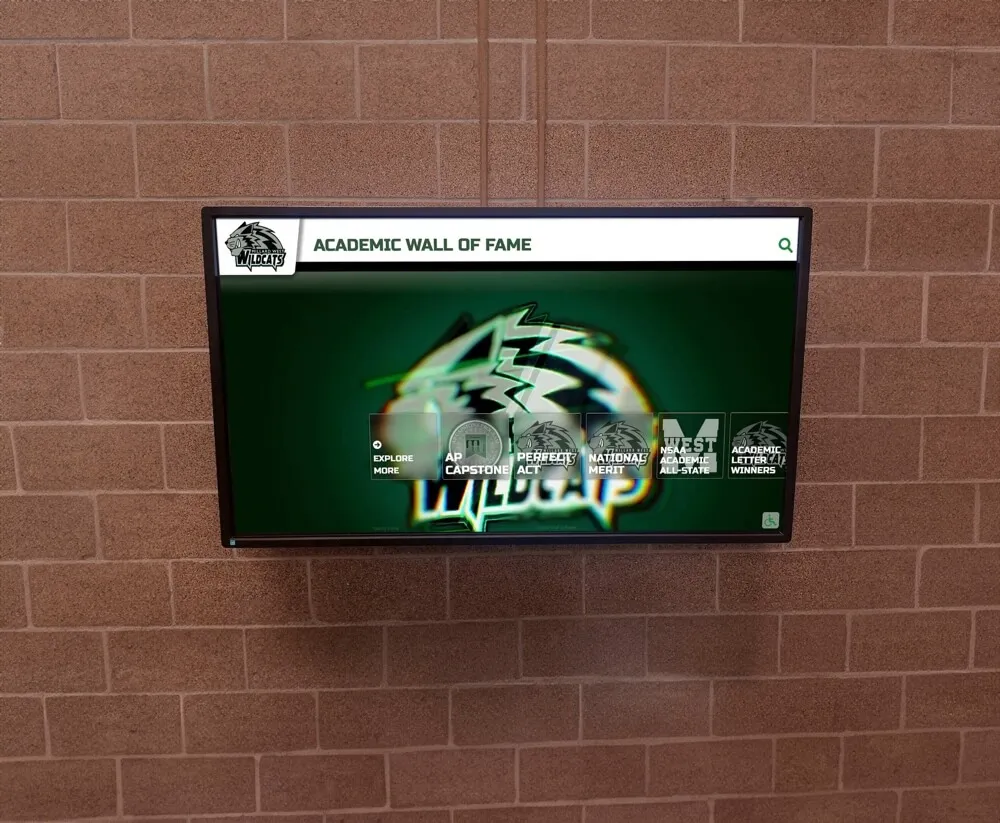
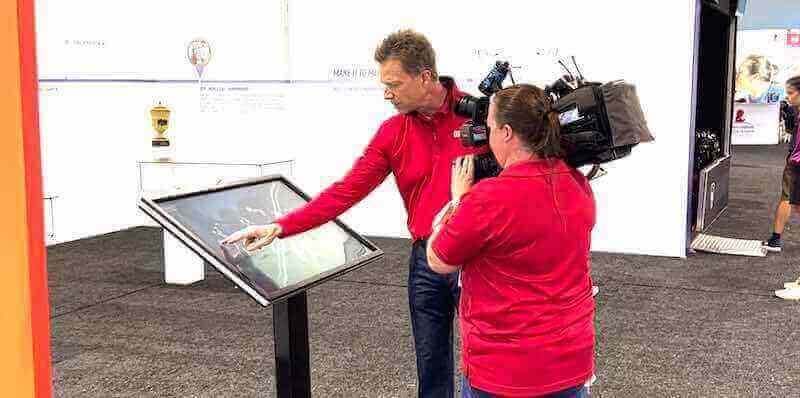
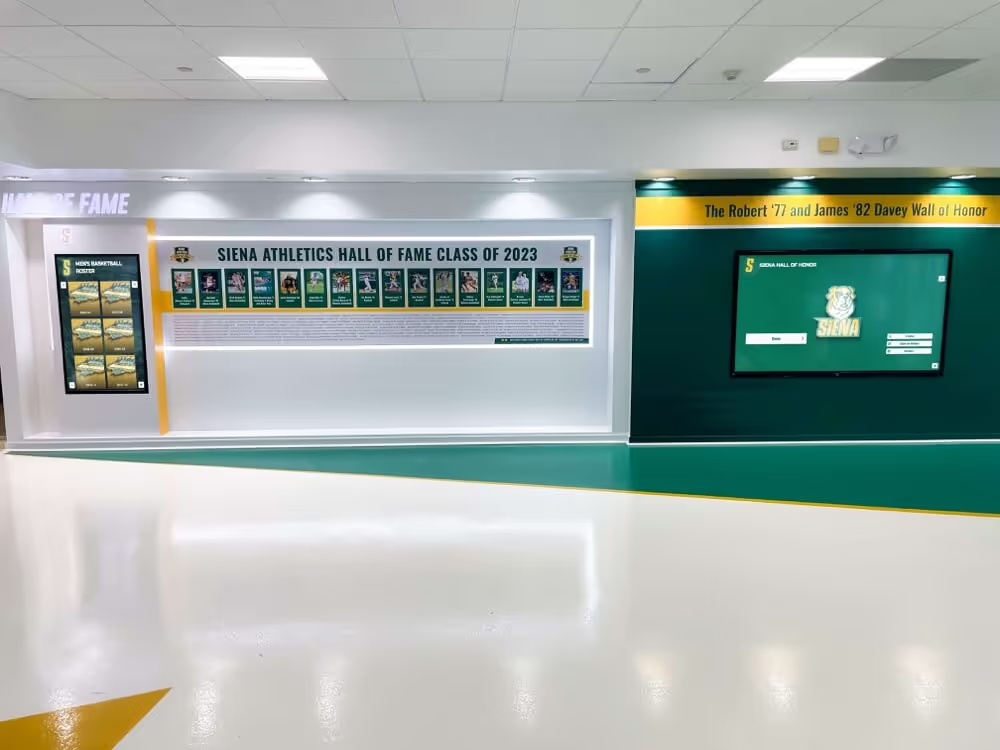
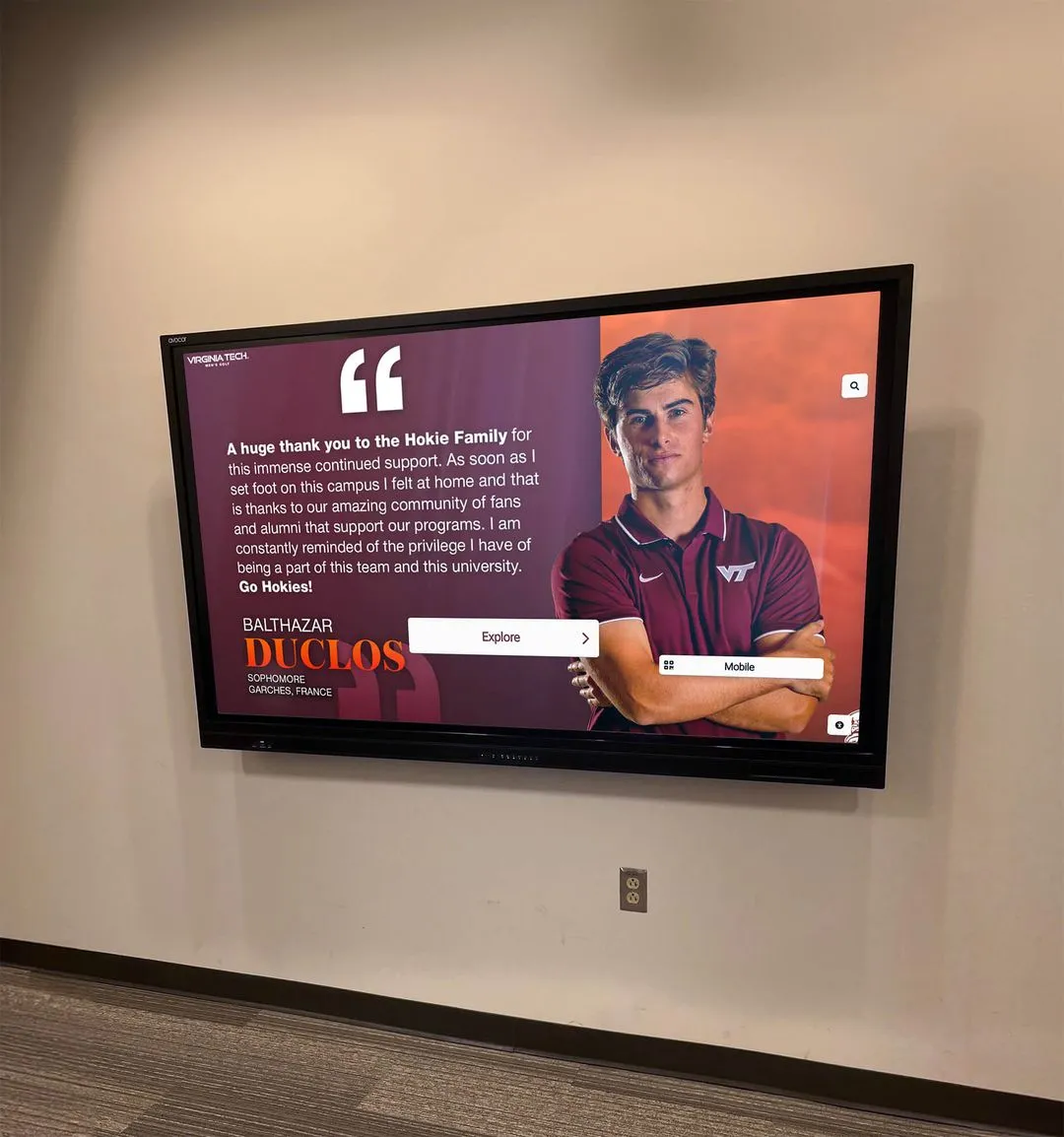
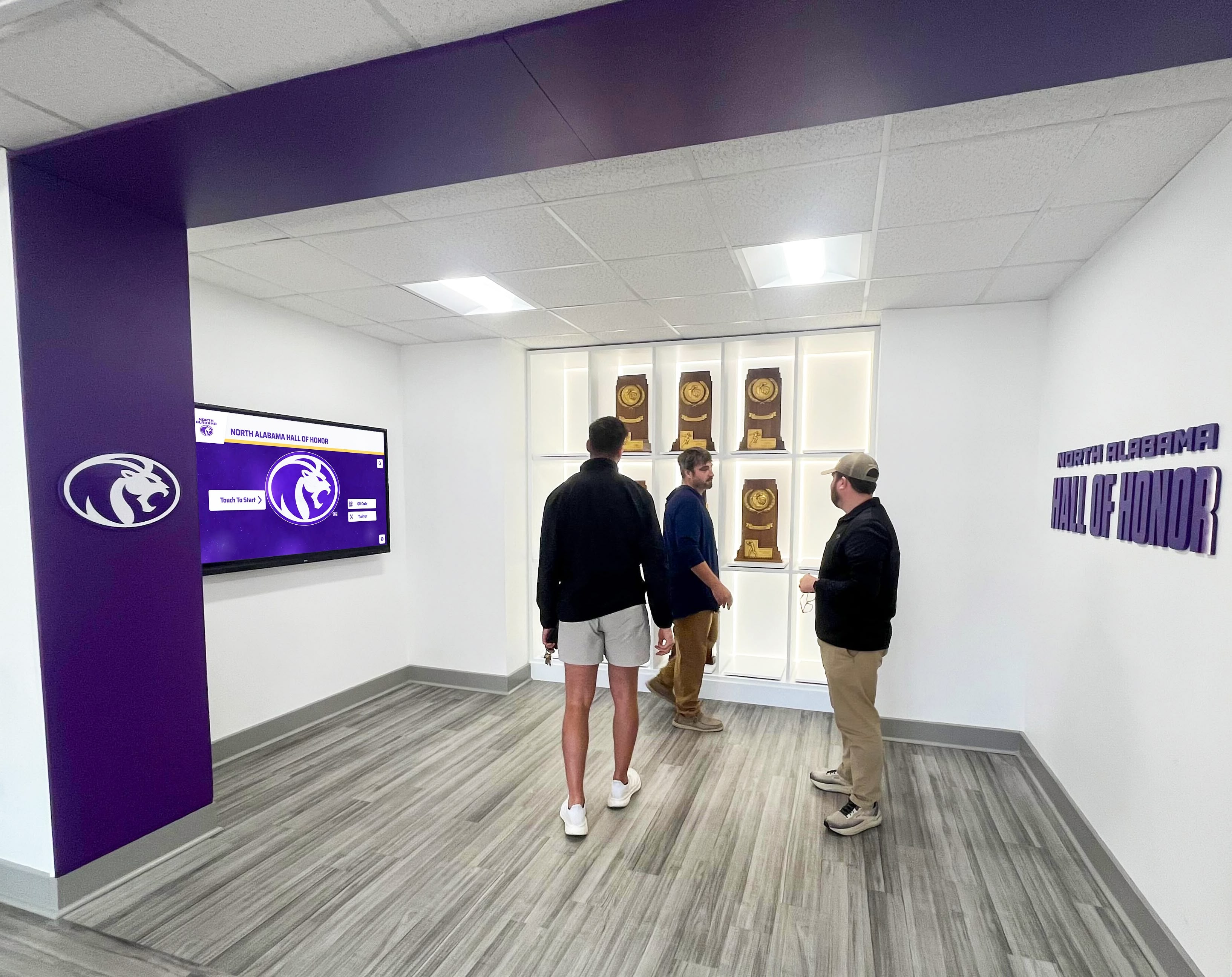
Class reunions with dedicated recognition programming — including displays of institutional history and individual achievement — create environments where alumni reconnect not just with each other but with the legacy they helped build
Program Snapshot: Class Reunion Planning at a Glance
| Element | Details |
|---|---|
| Primary Planners | Alumni committee volunteers, alumni relations staff, class officers |
| Reunion Scales | Single evening (80–150 attendees), full day (150–300), weekend program (300+) |
| Milestone Timing | 5, 10, 25, 50 years; all-class annual gatherings; special anniversary years |
| Core Program Pillars | Arrival/welcome, recognition moments, activities, dining, keynote or tribute, closing |
| Recognition Formats | Memorial tribute, distinguished classmate awards, digital display showcases, milestone announcements |
| Key Artifact | Printed or digital program booklet with agenda, attendee directory, and honoree bios |
| Pairing Opportunity | Touchscreen recognition displays showing alumni profiles, institutional history, and achievement archives |
| Long-Term Impact | Stronger alumni engagement, higher annual giving, foundation for the next reunion cycle |
The most successful reunion programs treat recognition not as one segment on the agenda but as a thread woven through the entire event — from a welcome display in the lobby to a closing tribute that names every classmate who traveled to attend.
Sample Agenda Templates by Reunion Scale
The following templates are built for copy-paste adaptation. Adjust times, session labels, and segment lengths to match your venue, expected attendance, and milestone year.
Template 1: Single-Evening Reunion (3–4 Hours)
Best for 5-year and 10-year reunions, smaller graduating classes, and cost-conscious formats.
CLASS REUNION EVENING PROGRAM — [YEAR] MILESTONE

5:30 PM   Doors Open & Arrival Reception
          – Name badge pickup at welcome table
          – Cocktail hour with background music from graduation year
          – Photo display: then-and-now class portraits
          – Digital recognition kiosk available for alumni exploration

6:15 PM   Welcome and Opening Remarks
          – Reunion committee chair (3–4 minutes)
          – Brief tribute to classmates no longer with us (1 minute)
          – Introduction of class milestone

6:30 PM   Dinner Service Begins
          – Open seating; encourage table mixing
          – Background playlist continues through meal

7:15 PM   Recognition Moments (15–20 minutes)
          – Class milestone honors (Most Miles Traveled, Most Classmates Brought, etc.)
          – Memorial candle lighting for deceased classmates
          – Distinguished classmate spotlight (2–3 honorees, 90 seconds each)
          – Class gift or scholarship announcement if applicable

7:35 PM   Program Activity: "Then and Now" Trivia
          – Table-based competition using class yearbook facts
          – Prizes for winning table

8:00 PM   Open Dancing and Socializing
          – DJ or playlist from graduation era
          – Photo booth opens

9:30 PM   Closing Remarks and Farewell
          – Next reunion announcement or save-the-date
          – Group photo at 9:45 PM
          – Thank-you to committee volunteers
Template 2: Full-Day Reunion Program (8–10 Hours)
Best for 25-year milestones, all-class gatherings, and campus-based events.
CLASS REUNION DAY PROGRAM — [YEAR] MILESTONE

10:00 AM  Registration and Welcome Coffee
          – Badge pickup with maiden name and current city
          – Class memory display: yearbook pages and group photos
          – Touchscreen alumni profile kiosk open for self-guided exploration

11:00 AM  Campus or Venue Tour (Optional)
          – Walking tour of key campus locations
          – Comparison notes: "This building didn't exist when we graduated"
          – Photo stops at athletic facilities, landmark buildings, and reunion hall

12:30 PM  Reunion Luncheon
          – Welcome address by alumni association representative
          – Introduction of planning committee
          – Class update: what has changed in [X] years

1:30 PM   Recognition Program (30–40 minutes)
          – Memorial tribute for deceased classmates (moment of silence, reading of names)
          – Distinguished Classmate Awards (3–5 honorees)
          – Athletic Hall of Fame spotlight — which classmates are now inducted?
          – Class milestone fun awards (Most Grandchildren, Traveled Farthest, etc.)
          – Scholarship or class gift presentation

2:15 PM   Afternoon Activity Block (choose one or rotate)
          Option A: Class trivia with graduation-year questions
          Option B: "Who Am I?" classmate guessing game
          Option C: Memory video screening with classmate-submitted clips
          Option D: Small group breakouts by sport, club, or academic program

3:30 PM   Free Social Time
          – Browse alumni archive displays
          – Informal photo sessions and reconnections

5:30 PM   Evening Reception — Cocktails and Mingling

6:30 PM   Reunion Dinner
          – Class president or reunion chair remarks
          – Video tribute to institutional history
          – Class update slideshow: career paths, families, milestones

7:30 PM   Keynote or Special Presentation (20 minutes)
          – Distinguished alumnus or class leader shares reflections
          – Optional: short video message from a classmate unable to attend

7:50 PM   Open Dancing and Celebration
          – DJ set spanning graduation year through present
          – Photo booth with school-branded props

9:30 PM   Closing Ceremony (10 minutes)
          – Reading of classmate names in alphabetical order ("roll call" tradition)
          – Group photo
          – Next reunion announcement
          – Farewell toast from reunion chair
Template 3: Multi-Day Weekend Reunion (Friday–Sunday)
Best for 50-year milestones, university reunions, and destination gatherings.
WEEKEND REUNION PROGRAM — [YEAR] MILESTONE

FRIDAY EVENING
6:00 PM   Early Arrivals Welcome Reception (informal)
          – Hotel bar or campus gathering space
          – No agenda — pure socializing and first reconnections
          – Name badges distributed early

SATURDAY
9:00 AM   Breakfast and Registration
10:00 AM  Campus Experience
          – Facility tours with institutional guide
          – Athletic hall of fame display visit
          – Optional: current athletic event or campus event attendance
12:30 PM  Reunion Luncheon — Class History Program
          – Class "then and now" documentary video
          – Remarks from institution's current leadership
2:00 PM   Recognition Ceremony (45–60 minutes)
          – Memorial tribute with moment of silence
          – Athletic legacy honors — class members inducted since last reunion
          – Lifetime Achievement Award (1–2 honorees)
          – Distinguished Service Award
          – Class Spirit Award
          – Class milestone fun awards
          – Class gift or scholarship announcement with cumulative impact
3:00 PM   Small Group Activity Sessions (choose by interest)
          – Sport or team-specific mini-reunions
          – Academic department or major group reconnections
          – Club and organization breakouts (band, theater, student government)
5:00 PM   Free Time / Hotel and Personal Time
6:30 PM   Gala Dinner
          – Formal recognition of distinguished honorees
          – Video tributes for major honorees
          – Dancing and music
9:30 PM   Informal After-Party for those continuing

SUNDAY
9:30 AM   Farewell Brunch
10:30 AM  Closing Circle — brief remarks, group photo
11:00 AM  Departures with next-reunion save-the-date in hand
Recognition Moment Ideas That Resonate
Recognition is the element that separates a social gathering from a true reunion. It signals that the institution and the committee paid attention to what the class accomplished — individually and collectively. These frameworks work across milestone years and reunion scales.
Memorial Tribute
Every reunion program should include a moment honoring classmates who have passed since graduation. Done with care, this segment deepens community rather than dampening it.
Implementation options:
- Reading of names in a program booklet and verbally during the ceremony
- Moment of silence with soft music and dimmed lights
- Memorial candle lighting with a brief reading
- Tribute table displaying photos if families have provided them
- Optional memorial scholarship contribution invitation during or after the tribute
Keep this segment to three to five minutes. The goal is acknowledgment and community, not extended grief. Return to celebration immediately after.
Distinguished Classmate Awards
Structured awards for individual classmates honor achievement without creating awkward hierarchies when designed thoughtfully. The most effective class reunion recognition avoids ranking achievement by career prestige and instead celebrates the range of ways classmates have contributed.
Award categories that resonate broadly:
| Award Name | What It Recognizes |
|---|---|
| Lifetime Achievement | Sustained contribution to field or community over career |
| Distinguished Service | Significant impact on a specific institution, cause, or community |
| Rising Star | Emerging impact in the 10–15 years following graduation |
| Class Spirit | Ongoing enthusiasm for the class, reunion, and school community |
| Unsung Hero | Behind-the-scenes contributions that don’t make headlines |
| Athletic Legacy | Classmates newly inducted into program or school hall of fame |
| Educator’s Award | Classmates who became teachers, coaches, or counselors |
For institutions building structured alumni award programs, the recognition program best practices guide provides a comprehensive framework for categories, selection criteria, and nomination processes that translate directly into reunion recognition design.
Athletic Legacy Recognition
Class reunions provide a natural moment to acknowledge classmates who have since been inducted into athletic halls of fame or whose records or contributions have been recognized institutionally. If any classmates were inducted in the years since the last reunion, name them during the program with a brief statement about their legacy.
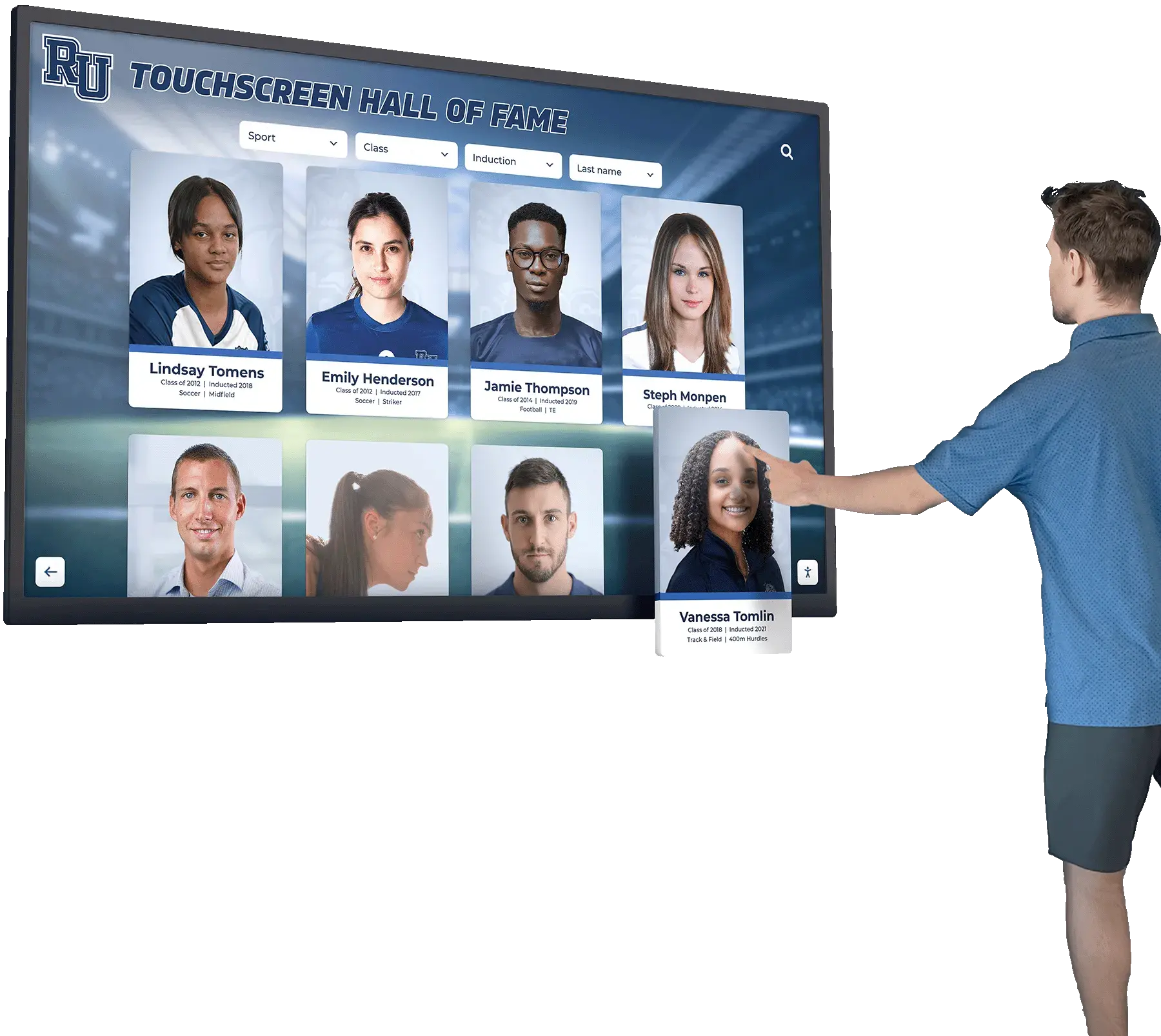
Schools and universities with digital hall of fame displays can incorporate a reunion-specific module that surfaces the class’s inductees in an interactive format — visitors can explore full profiles rather than reading a list from a podium. This approach generates more engagement and gives honorees a richer moment of recognition.
For schools building out this infrastructure, the best touchscreen display guide for schools outlines the platform features that matter most for alumni recognition events.
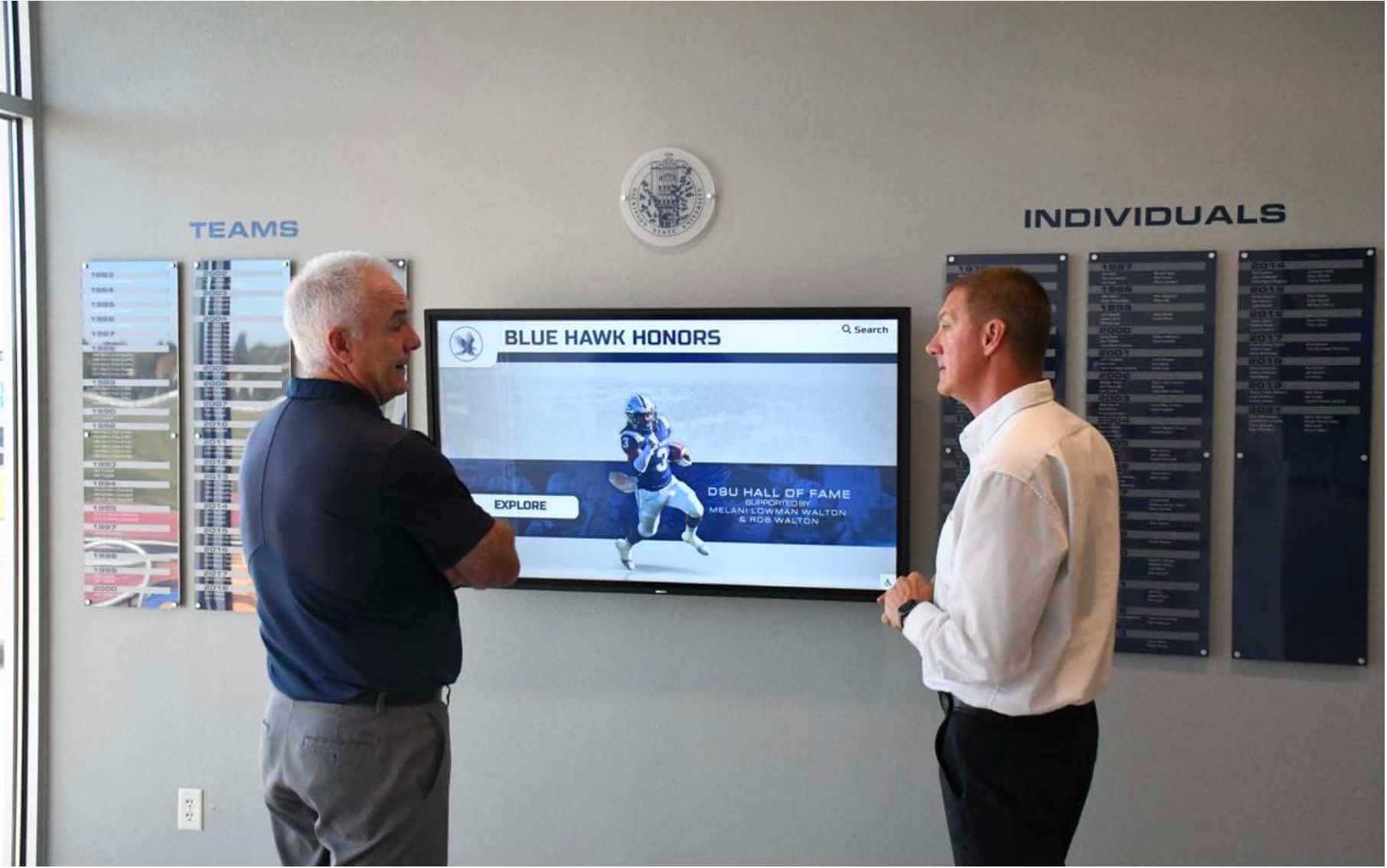
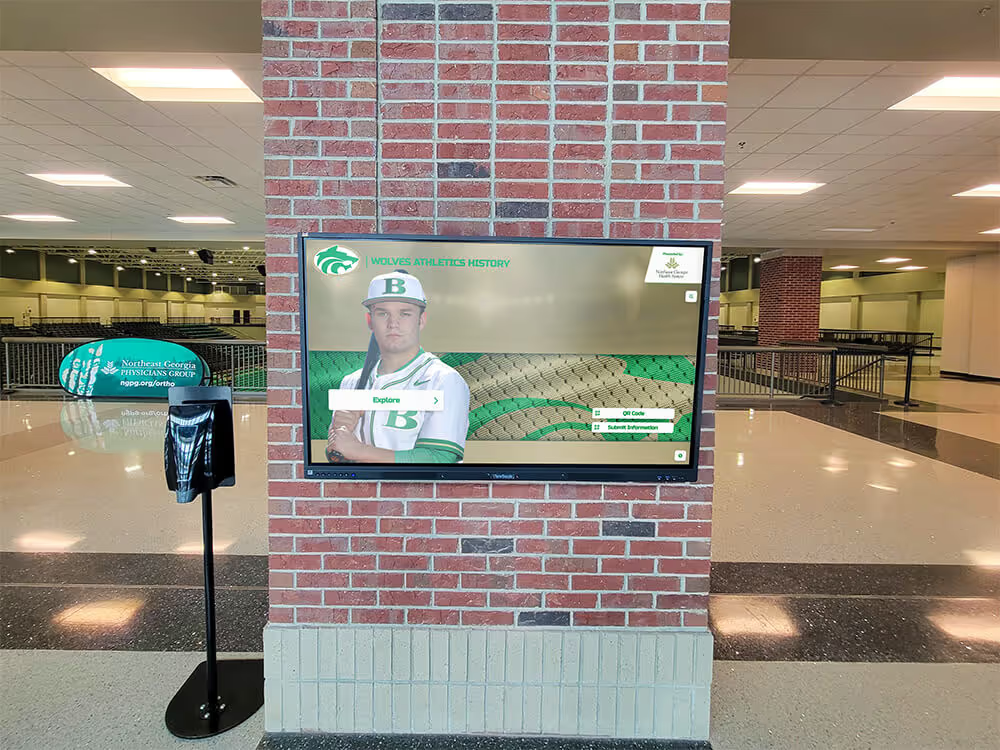
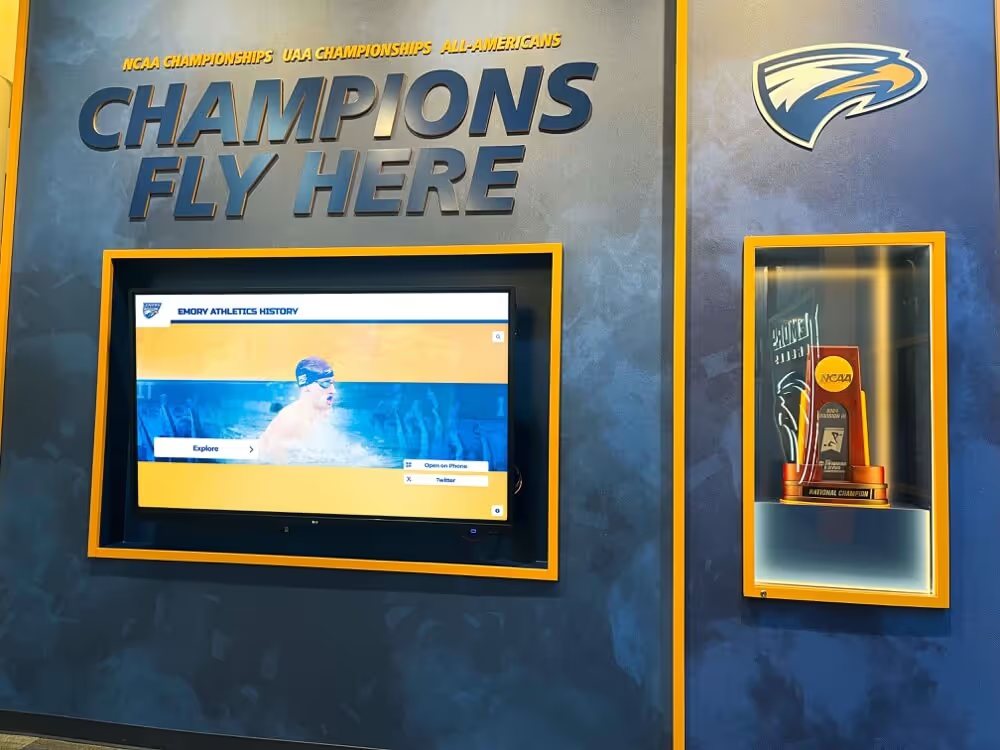
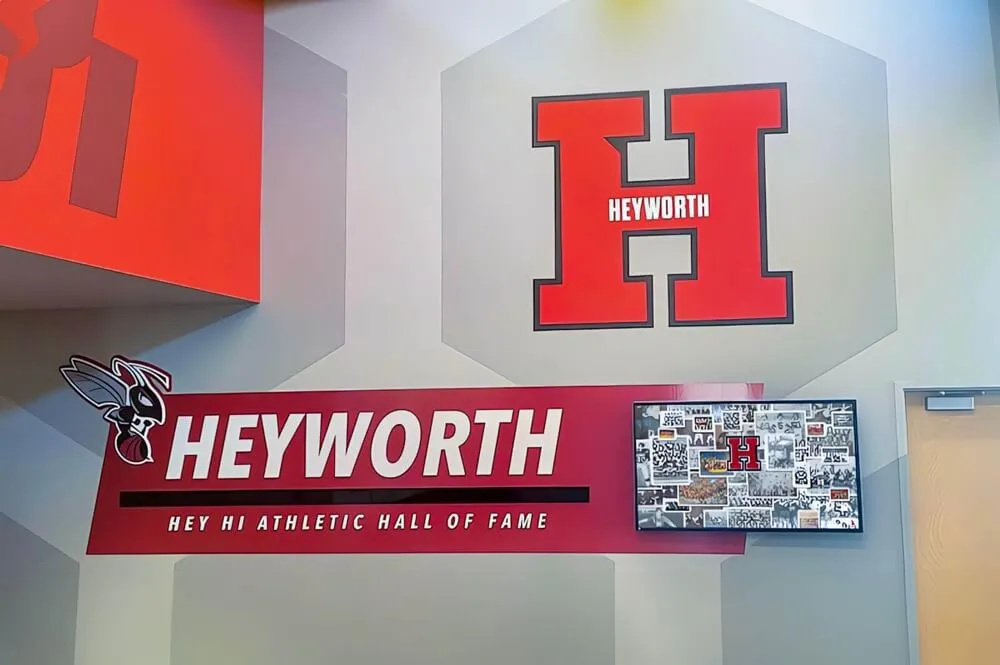
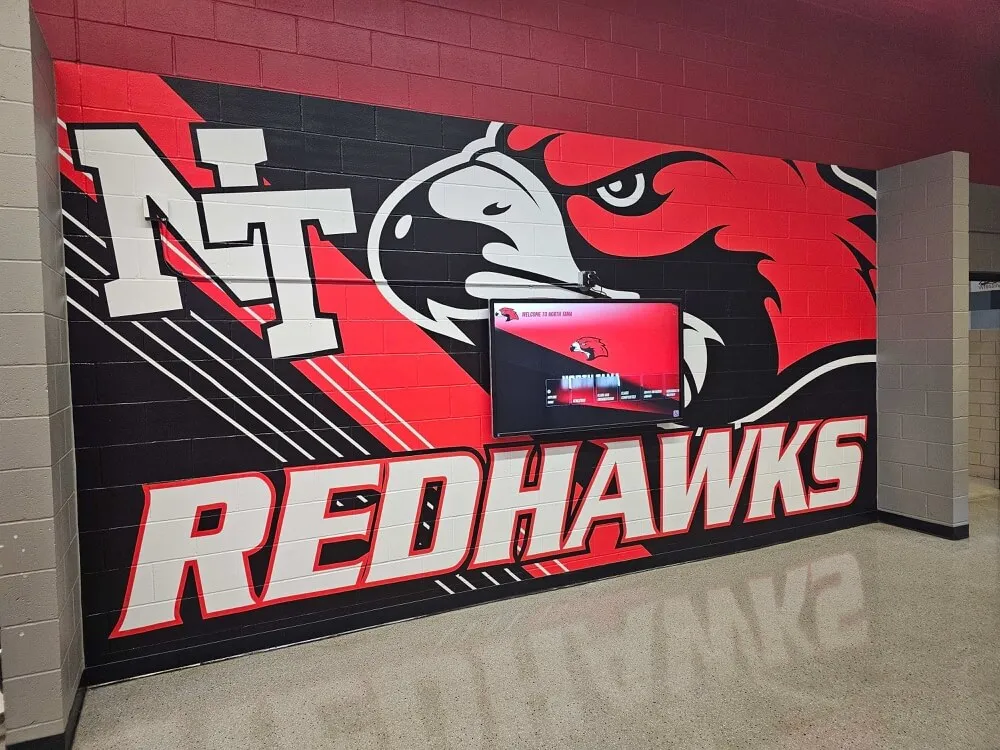
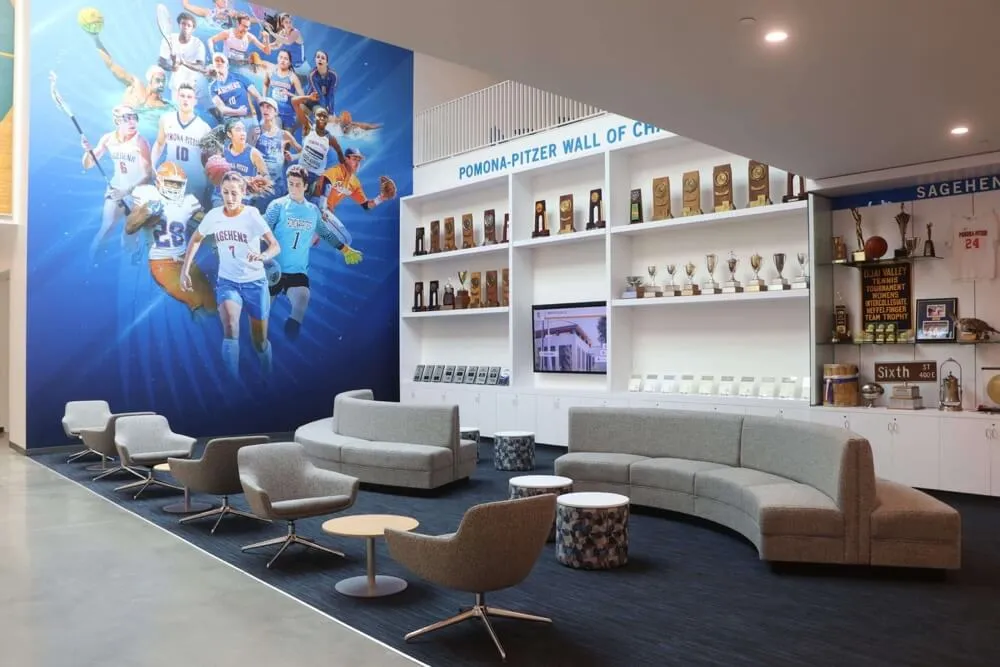
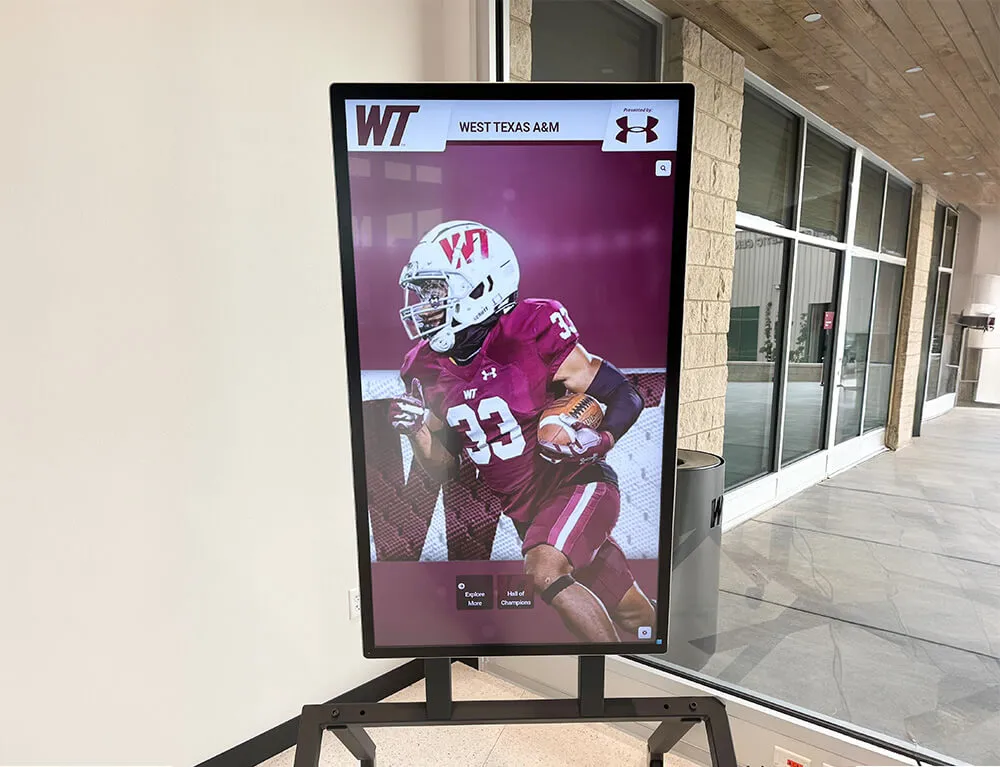
Interactive recognition displays at reunion venues give classmates a way to explore institutional history together — often prompting conversations that wouldn't happen over dinner alone
Class Milestone Fun Awards
Lighthearted recognition creates moments of laughter and belonging that relax the room and invite even shy attendees to engage. Build a class milestone award segment with categories voted on through pre-event surveys or determined by committee.
Popular categories:
- Most Miles Traveled to Attend
- Most Classmates Recruited to the Reunion
- Married a Classmate (couples recognized together)
- Retired Already
- Looks Exactly the Same
- Most Grandchildren
- Most Unusual Career Change
- Still Uses Their High School Locker Combination
- Most Sporting Events Attended Since Graduation
Keep each category brief — announcement, quick reveal, light applause, move on. Five to seven categories in six to eight minutes. The goal is laughter and belonging, not an extended ceremony.
Class Gift or Scholarship Announcement
Milestone reunions are natural giving moments. A class gift announcement during the recognition segment closes the loop between the reunion’s emotional energy and the institution’s ongoing mission. Even modest class gifts — a scholarship funded by the 25-year reunion class, for example — create lasting impact and give alumni a tangible way to say thank you.
If your institution has a donor recognition program, ensure reunion donors are acknowledged in that system. Digitizing donor recognition with preservation-quality displays provides a framework for connecting class gift contributions to permanent institutional recognition.
Activity Ideas That Generate Authentic Connection
The best reunion activities reduce the awkward “So, what do you do now?” small talk and replace it with shared discovery. They create entry points for conversation that feel natural rather than forced.
“Then and Now” Photo Display
Curate a photo display combining yearbook images with current photos submitted by classmates in advance. Arrange by face so attendees can walk the display and recognize classmates before conversations begin. This works especially well near the entrance — it gives arrivals something purposeful to do while waiting for friends, and it generates immediate conversation starter moments.
Class Yearbook Trivia
Build a team trivia game using questions drawn entirely from the graduation year: current events, pop culture, class statistics (“How many students were in the graduating class?”), faculty names, and school records from that year. Table-based competition with small prizes keeps energy high during dinner transitions.
For institutions with digital record board platforms, sports records and academic achievements from the graduation year can be surfaced in real time — useful for building trivia rounds and providing touchscreen browsing during open social time.
Memory Video Screening
Solicit 15–30 second video clips from classmates before the event: a favorite memory, a message to the class, or a current life snapshot. Compile them into a 10–15 minute video shown during dinner or the evening program. Even rough, phone-recorded clips work — authenticity matters more than production value.
“Where Are We Now?” Interactive Map
Create a large physical map or a digital display showing a dot for every attending classmate’s current home location. The visual of how far the class has spread — and how many stayed close — generates immediate discussion and a sense of shared scale.
Affinity Breakout Sessions
For full-day and weekend reunions, schedule 45–60 minute small-group sessions organized by shared experience: sport, academic program, club, or graduation city. These concentrated small-group conversations produce deeper reconnection than large ballroom mingling and often generate the relationships alumni maintain after the event ends.
Schools and universities with Greek organizations benefit from dedicated fraternity and sorority breakouts. The history those groups carry — the traditions, leadership moments, and chapter evolution — deserves its own conversation space. For programs archiving and presenting that history digitally, the preserving fraternity and sorority history guide provides a complete framework.
Sports Banquet-Style Highlight Reel
If the class graduated athletes whose highlights were captured on video, a brief highlight reel shown during the recognition segment or dinner creates enormous energy. Even grainy, decades-old footage generates cheers and laughter. For guidance on structuring and presenting this kind of athletic retrospective, sports banquet slideshow ideas covers format, pacing, and content choices that translate directly to reunion athletic tributes.
Interactive Touchscreen Exploration
Institutions that have invested in digital hall of fame or alumni recognition platforms can deploy those systems as reunion activity stations. Set up one or more touchscreens in a high-traffic area — the entrance hall, the cocktail hour space, or adjacent to the dining area — loaded with the class’s inductees, athletic records, institutional history, and team archive content.
Attendees naturally gravitate to these stations, and the discovery moments — “Wait, I didn’t know he got inducted last year” — generate authentic conversation. The touchscreen becomes both programming and recognition in the same footprint.
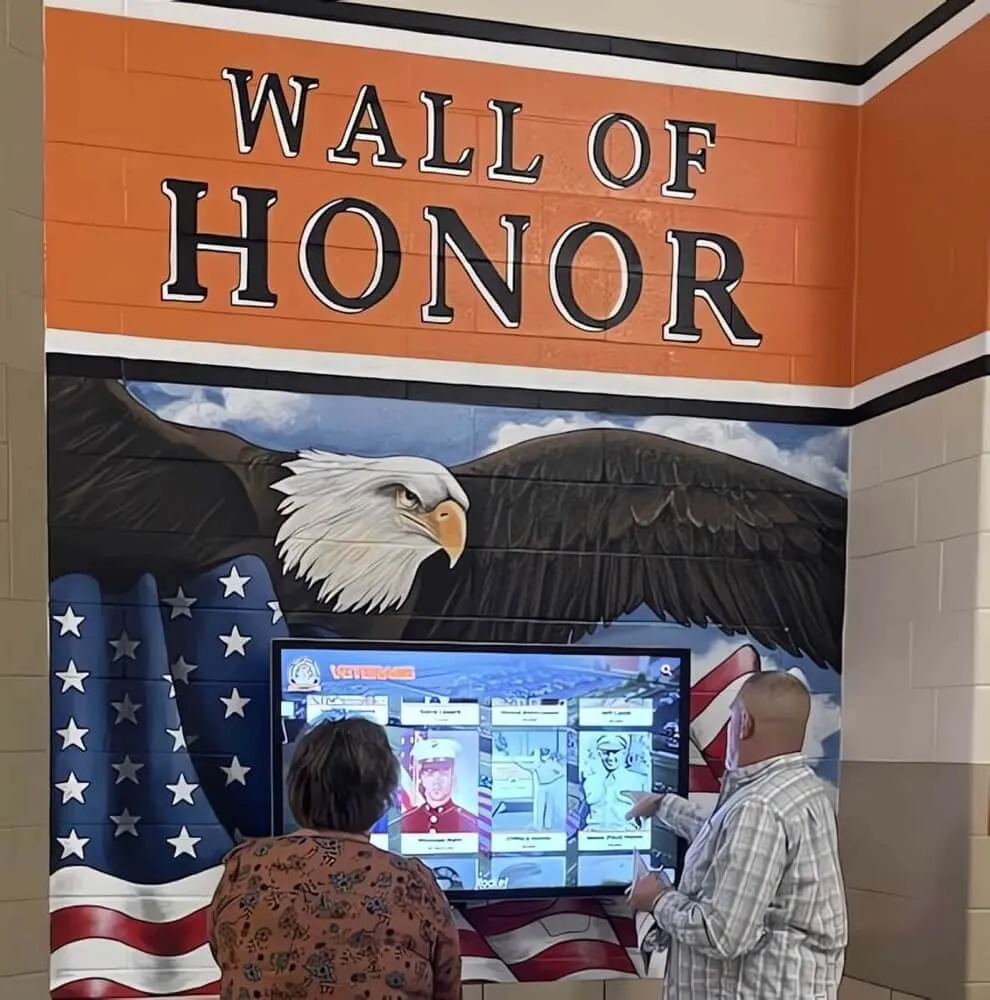
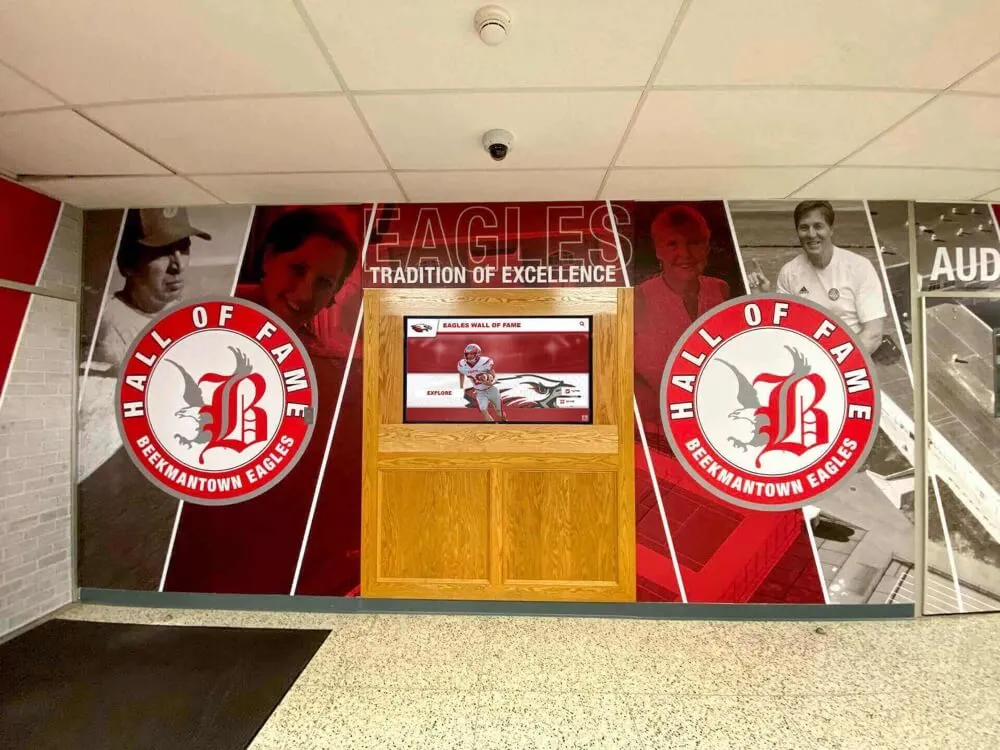
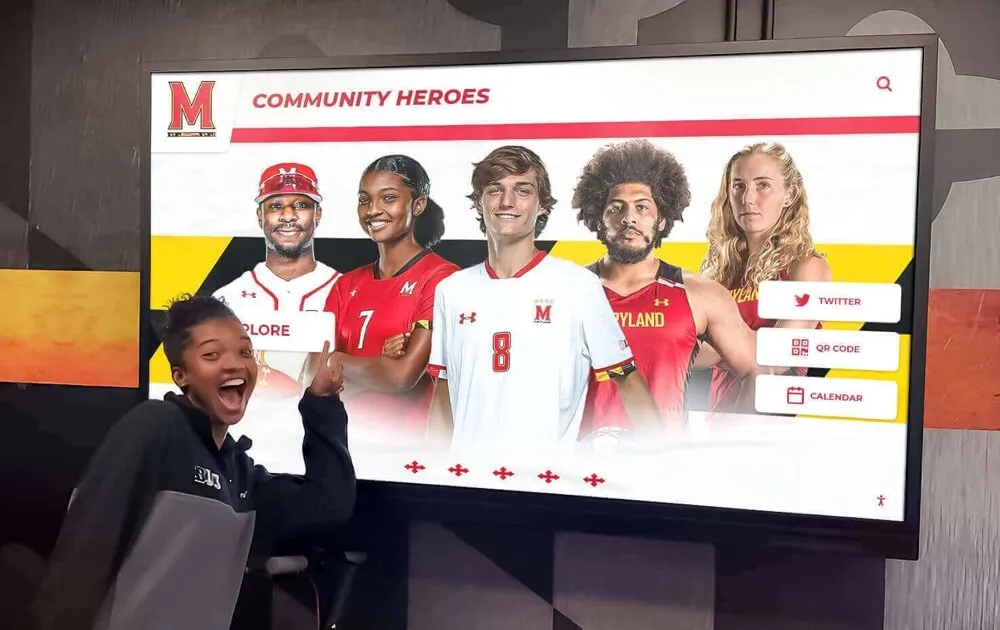
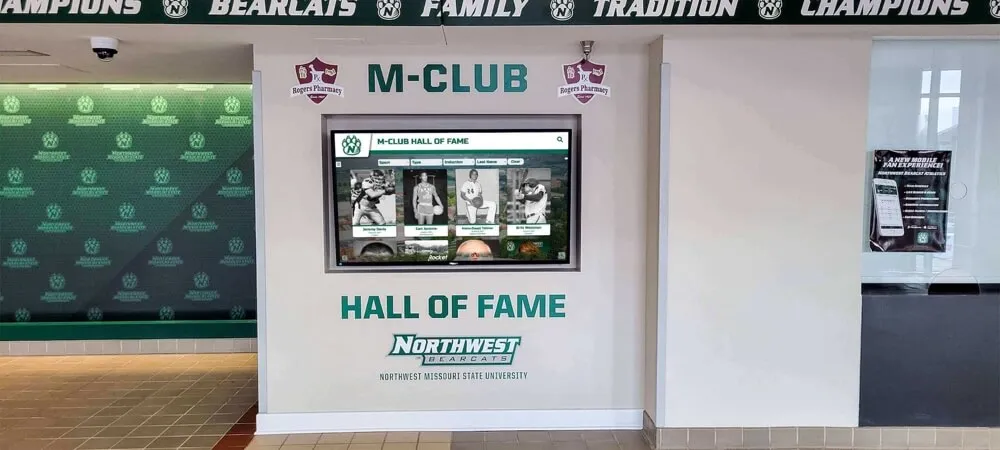
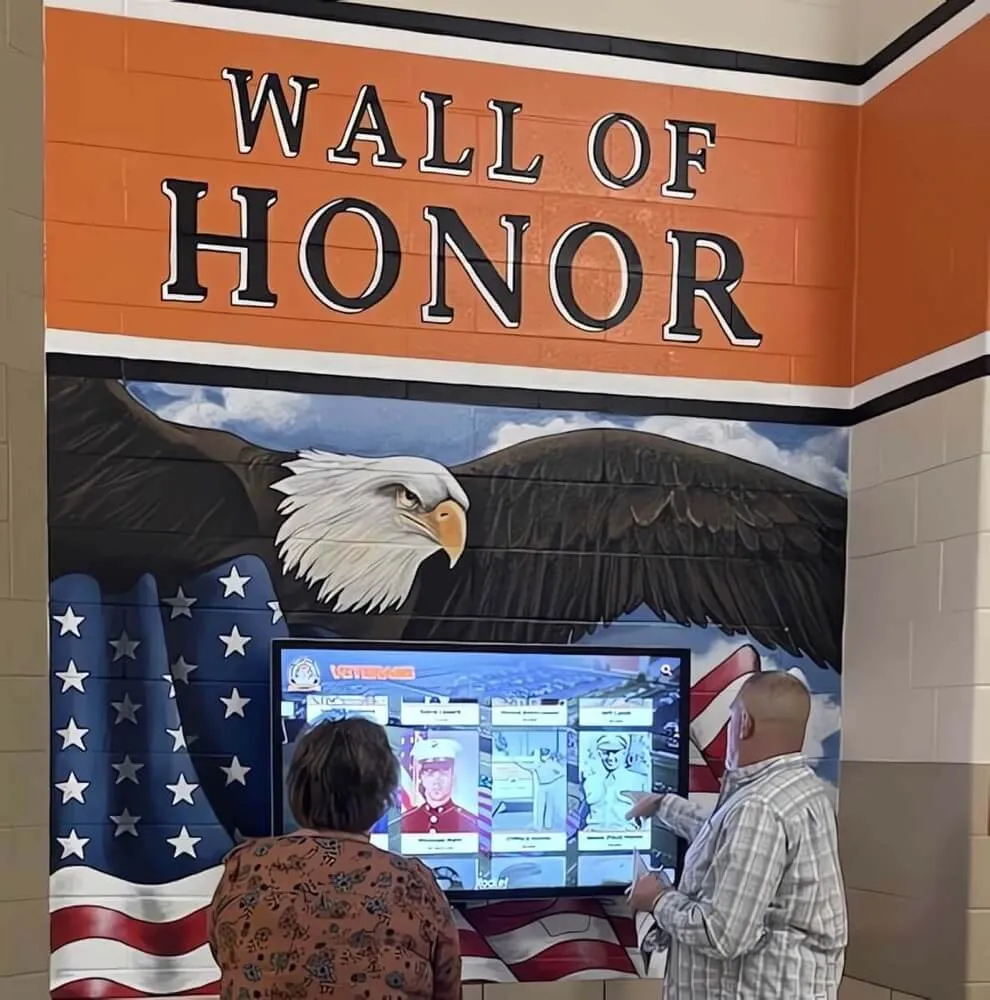
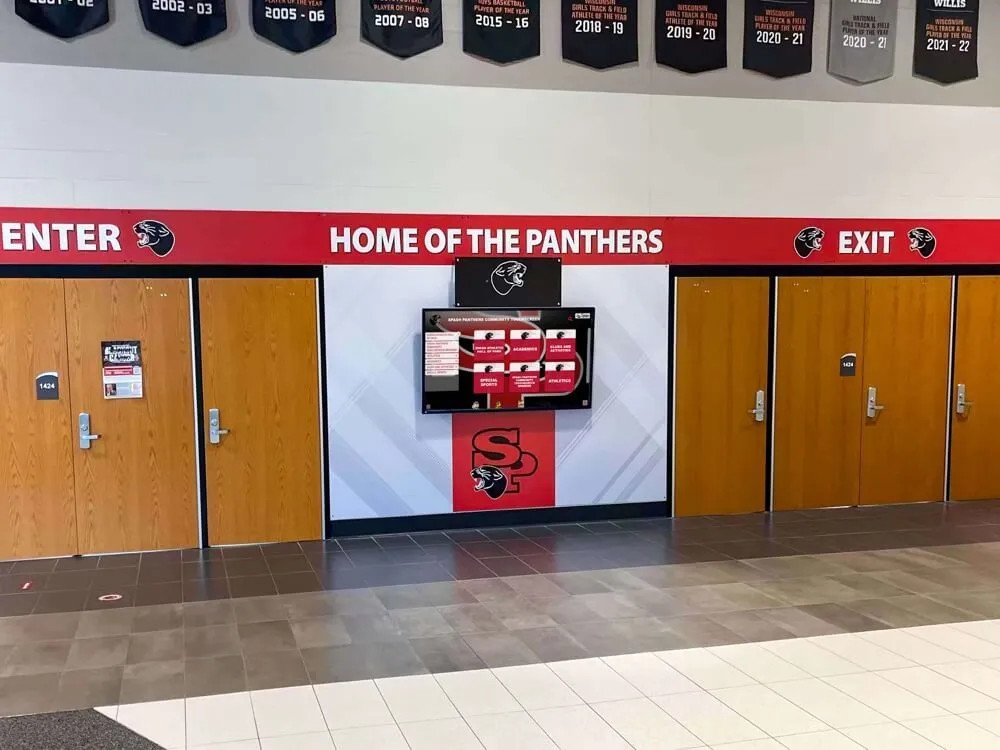
Interactive recognition stations at reunion venues provide purposeful activity during cocktail hour while prompting the kind of discovery-driven conversation that static name badge networking rarely achieves
Content Architecture: What Belongs in Your Reunion Program Booklet
A physical or digital program booklet serves as both a practical agenda guide and a keepsake artifact. Design it to function as both — useful during the event, worth keeping after.
| Booklet Section | Content | Display / Screen Equivalent |
|---|---|---|
| Welcome Letter | Message from reunion chair and class president | Lobby welcome slide or kiosk landing screen |
| Class Milestone Statistics | Graduating class size, year context, institutional facts | Class snapshot module on touchscreen |
| Event Agenda | Full program with times and locations | Digital signage displaying schedule |
| Memorial Page | Names of deceased classmates | Memorial module on recognition display |
| Honoree Bios | Distinguished award recipients with career highlights | Honoree profile cards on touchscreen |
| Class Directory | Attendee list with current city and occupation | Searchable alumni directory on kiosk |
| Athletic Legacy | Class members with hall of fame inductee status | Hall of fame module with full profiles |
| Sponsor Recognition | Businesses and classmates who funded the event | Sponsor loop on digital display |
| Next Reunion | Save-the-date for next milestone | Closing screen on kiosk |
The booklet and the digital display serve different audiences and timeframes. The booklet travels home; the display stays in the institution permanently. Treat them as complementary rather than redundant.
For institutions developing comprehensive institutional history timelines to display during reunions, the college history timelines guide covers content selection, chronological structuring, and display layout strategies that work across campus environments.
Execution Timeline: Plan → Build → Launch → Refresh
Phase 1: Plan (12–18 Months Before Reunion)
Establish the committee and scope
- Form a five- to eight-person planning committee with defined roles: chair, communications lead, programming coordinator, venue coordinator, and recognition lead
- Confirm the reunion date and reserve venues early — high-demand dates book 18 months out
- Define reunion scale: single evening, full day, or weekend
- Determine budget framework and registration fee structure
- Begin alumni outreach list using institutional alumni office database
Establish recognition criteria early
- Decide which award categories will be offered
- Build nomination process and timeline (nominations typically open 6–8 months before the event)
- Identify classmates for preliminary outreach about potential honoree status
- Coordinate with athletic department on any hall of fame inductees from the class
Phase 2: Build (4–12 Months Before Reunion)
Content development and program design
- Finalize agenda template and run-of-show with specific times
- Collect classmate-submitted content: video clips, “then and now” photos, trivia facts
- Solicit distinguished classmate nominations and select honorees
- Write honoree bios (aim for 100–150 words each; confirm accuracy with honorees before printing)
- Design program booklet with agenda, bios, memorial page, and directory
- Source entertainment: DJ, band, photo booth, or AV equipment for video screening
Digital display preparation
- Update hall of fame and alumni recognition platform with the class’s inductees and profiles
- Build a class-specific reunion module if the platform supports it
- Stage yearbook archive content, team photos, and athletic records for touchscreen browsing
- Configure any scheduled publishing features to launch content on the reunion date
Recognition displays benefit from advance content preparation — importing alumni profiles, stats, and photos is time-intensive. For platforms like Rocket Alumni Solutions, cloud-based CMS tools allow committee members to upload and stage content remotely without requiring on-site technical support. Comparing digital showcase platforms helps committees evaluate which features matter most for reunion-specific deployments.
Phase 3: Launch (Event Day)
Pre-event setup
- Arrive at venue 90–120 minutes before doors open
- Set up registration table, name badge system, and welcome display
- Test AV equipment, video reels, and slideshow presentations
- Deploy touchscreen recognition stations with signage explaining their function
- Brief all volunteers on roles, timing cues, and escalation contacts
During-event management
- Designate one person as timekeeper responsible for keeping segments on schedule
- Have a printed run-of-show for the emcee with exact timing, cues, and contingencies
- Assign a volunteer to circulate and facilitate connections — introduce shy attendees, ensure tables are mixing
- Photograph key recognition moments for post-event archives and social posts
Recognition moment execution
- Rehearse the memorial tribute with the emcee before doors open — tone and pacing matter enormously
- Have honoree bios on index cards for the emcee; read from them exactly rather than improvising
- Stage awards physically on a display table visible to the room during the recognition segment
- Allow brief honoree remarks (60–90 seconds maximum); brief is always better for keeping energy high
Phase 4: Refresh (After the Reunion)
Immediate follow-up (within two weeks)
- Send post-reunion thank-you messages to all attendees, volunteers, and sponsors
- Share photo gallery links via email and class social media channels
- Distribute feedback survey (five to eight questions maximum) to capture improvement data
- Publish reunion highlights to institutional alumni communications
Long-term archives
- Upload reunion photos and attendance roster to institutional alumni platform
- Ensure distinguished honoree profiles are permanently captured in the digital hall of fame system
- Archive the final program booklet digitally for future reunion committees to reference
- Update class contact database with new information gathered at the event
Display Integration: Connecting Reunion Programming to Permanent Recognition Infrastructure
The most effective class reunion program ideas treat the event as both a standalone experience and a touchpoint in an ongoing institutional recognition ecosystem. A strong reunion doesn’t just celebrate the past — it adds content to the permanent recognition archive that alumni, students, staff, and visitors will engage with for years after the event.
Recognition Displays as Reunion Venues
Schools and universities that have invested in digital hall of fame displays, lobby recognition walls, or touchscreen alumni systems gain a significant advantage in reunion programming. These installations provide:
- Built-in activity stations that give attendees purposeful engagement during cocktail hour and between program segments
- Institutional narrative — the visual story of where the school has been and where it’s heading since the class graduated
- Conversation-starting discovery moments — classmates discovering each other’s hall of fame inductee status, shared athletic records, or institutional contributions they weren’t aware of
For institutions still using traditional trophy case infrastructure, a reunion provides an ideal deadline for upgrading to interactive digital displays. The trophy case versus digital display comparison outlines the functional differences relevant to high-attendance events like reunions.
Teacher and Staff Recognition Within Reunion Programming
Many alumni carry vivid memories of specific teachers, coaches, and staff members who shaped their experience. Milestone reunions — especially 25-year and 50-year events — often include a tribute to educators who influenced the class. If those educators can be honored or invited, their recognition generates some of the reunion’s most emotional moments.
For institutions building year-round staff recognition programs that tie into alumni event programming, the teacher of the year award showcase guide provides a framework that translates directly to reunion tribute programming.
ADA and Accessibility in Display Design
Any recognition display deployed for a reunion audience needs to meet accessibility standards, especially for 50-year milestone events where attendees may include individuals with mobility limitations, vision challenges, or hearing considerations.
Touchscreen recognition platforms should comply with WCAG 2.1 AA standards: high-contrast text, adjustable font sizes, text-alternative content for video, and reach-range mounting between 15 and 48 inches from the floor. These requirements are non-negotiable for public-facing recognition infrastructure and should be confirmed with any vendor before deployment at a reunion venue.
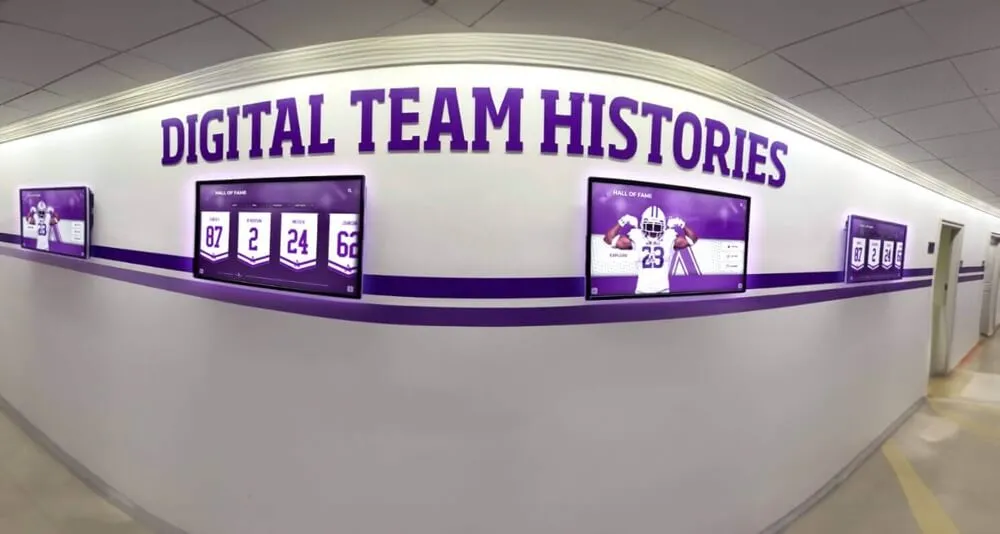
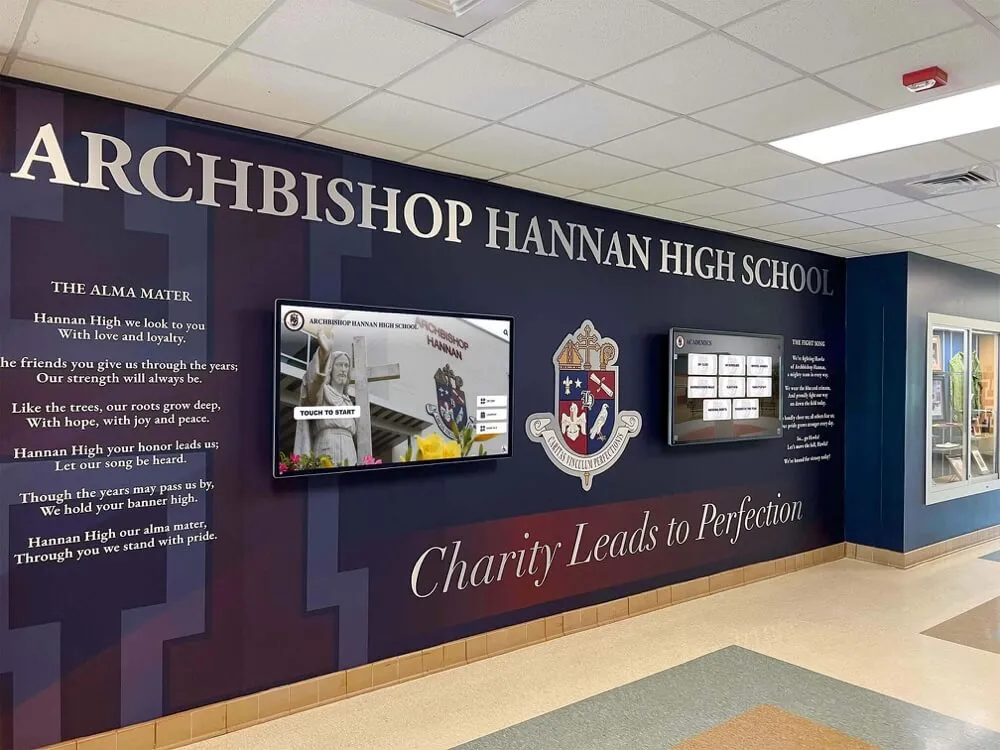
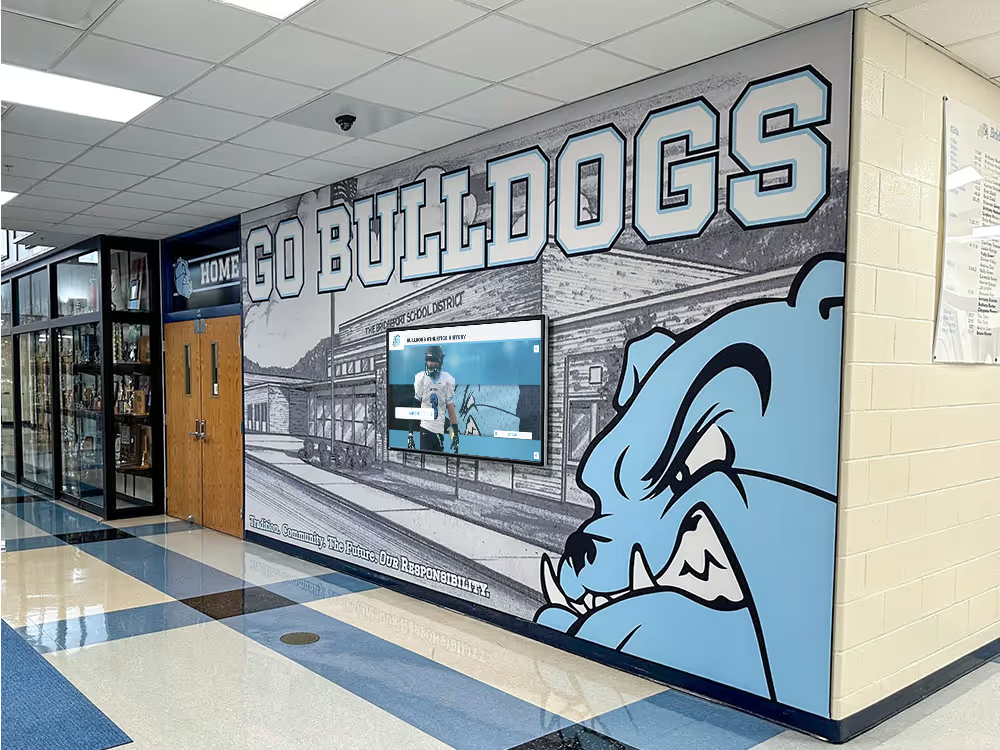
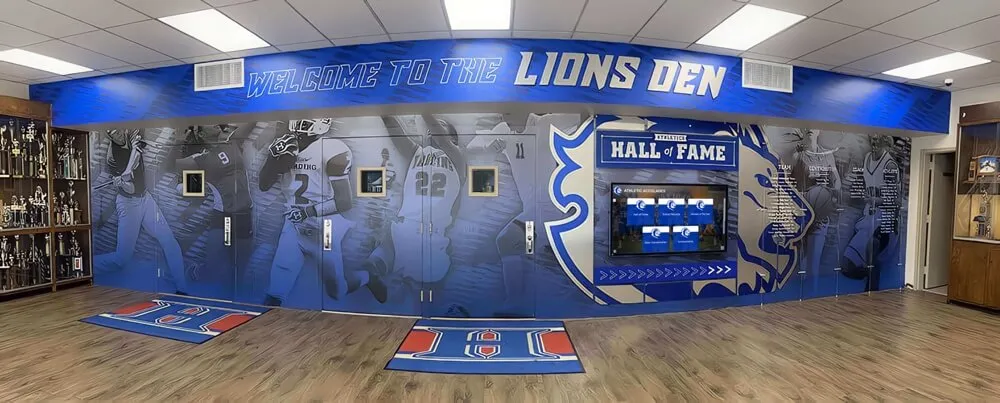
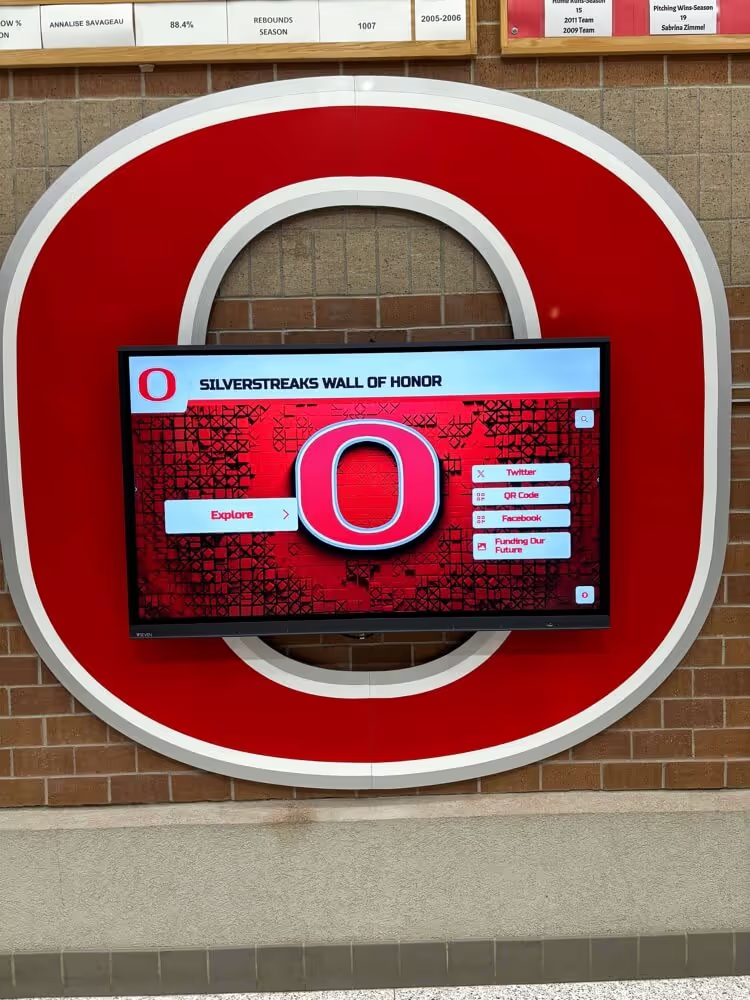
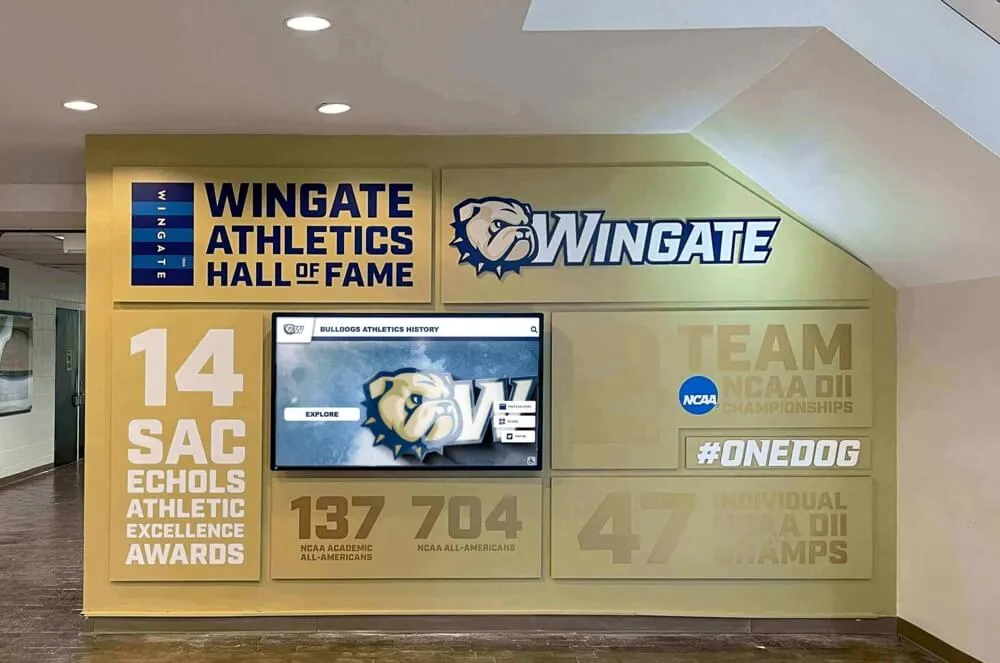
Institutions with permanent digital recognition infrastructure provide reunion attendees with an immersive connection to class history — no temporary installation required
Using Platforms Like Rocket Alumni Solutions for Reunion Recognition
Rocket Alumni Solutions provides touchscreen recognition systems purpose-built for schools, universities, and athletic programs — including cloud-based content management that allows reunion committees to update display content remotely without technical expertise.
For reunion use cases, Rocket platforms support:
- Unlimited inductee profiles with photos, video, career highlights, and stats
- Class-specific modules that surface reunion content (graduation year profiles, class history, athletic records) for the event date
- Scheduled publishing so new honoree profiles go live on the reunion date rather than requiring day-of technical coordination
- Social media gallery integration enabling real-time reunion photo sharing on the display itself
- QR share functionality letting alumni share individual profiles directly from the touchscreen to their phone
These capabilities allow the display to function as an active program element — not just background decoration — during the reunion event.
Measurement: Evaluating Reunion Program Success
Attendance and Participation Metrics
Track reunion performance against a consistent benchmark set to build year-over-year data:
- Attendance as a percentage of locatable classmates (industry benchmark: 20–30% for established reunions)
- Geographic distribution of attendees: what percentage traveled more than 100 miles?
- First-time versus repeat attendees: are new classmates engaging or are you seeing the same core group?
- Spouse and guest participation rate
- Participation in each structured activity (track by sign-in or observed engagement)
Recognition Program Metrics
Measure the recognition segment specifically:
- Number of nominations received for distinguished awards (higher numbers indicate program vitality)
- Attendance at the recognition segment versus departure before it begins
- Honoree satisfaction: brief post-event conversation or email asking if their recognition felt meaningful
- Memorial tribute completeness: were all deceased classmates included?
Digital Display Engagement
If deploying a touchscreen recognition platform:
- Total sessions and unique users during the reunion hours
- Average session length (dwell time over three minutes indicates genuine engagement)
- Most-viewed profiles and content categories
- QR share events generated from the display
- Post-reunion platform traffic from the class’s zip code geography
Post-Reunion Giving Impact
For reunions that include a class gift or scholarship component:
- Total class gift amount
- Participation rate (what percentage of attendees contributed?)
- Institutional gift increase in the 60 days following the reunion versus baseline
- Scholarship applicants or recipients connected to the reunion’s fund
Reunion Program Checklist
Use this checklist as a project management tool from planning through execution.
CLASS REUNION PROGRAM CHECKLIST

PLANNING PHASE (12–18 MONTHS OUT)
[ ] Committee formed with defined roles
[ ] Venue reserved for all event segments
[ ] Budget and registration fee structure confirmed
[ ] Alumni outreach list pulled from institutional database
[ ] Award categories and nomination process defined
[ ] Initial alumni communications sent (save the date)

CONTENT DEVELOPMENT (4–12 MONTHS OUT)
[ ] Honoree nominations collected and reviewed
[ ] Honorees selected and notified
[ ] Honoree bios written, reviewed, and approved
[ ] Memorial list compiled and verified
[ ] Program booklet designed and proofed
[ ] Video reel content (highlights, memory clips) collected and assembled
[ ] "Then and Now" photo display curated
[ ] Digital display content uploaded and staged
[ ] Trivia questions written and tested

PRE-EVENT (2–4 WEEKS OUT)
[ ] Final attendee list and name badges prepared
[ ] Run-of-show document finalized with exact times and cues
[ ] Emcee briefed with all scripts, bio cards, and contingencies
[ ] AV equipment tested at venue
[ ] Touchscreen station tested and staged
[ ] Volunteer assignments confirmed

EVENT DAY
[ ] Venue setup complete 90 minutes before doors open
[ ] Registration table staffed
[ ] Recognition segment materials staged (awards, cards, scripts)
[ ] AV and touchscreen tested after setup
[ ] Volunteer briefing complete

POST-REUNION (WITHIN 2 WEEKS)
[ ] Thank-you messages sent to all attendees, volunteers, sponsors
[ ] Photo gallery shared with attendees
[ ] Feedback survey distributed
[ ] Digital display updated with reunion photos and final honoree profiles
[ ] Class contact database updated
[ ] Reunion debrief document completed for next committee's reference
Frequently Asked Questions: Class Reunion Program Planning
How long should the formal recognition segment be?
Fifteen to twenty minutes for a single-evening reunion; thirty to forty-five minutes for full-day and weekend programs. Beyond that, even engaged audiences lose focus. The memorial tribute, distinguished awards, and class milestone announcements can all fit comfortably within twenty-five minutes if each element is timed in advance. Avoid open-microphone honoree remarks longer than ninety seconds per person.
How do we handle classmates who want to speak but aren’t scheduled to?
Designate a brief open-microphone moment after the structured program — five minutes maximum — and announce it in the agenda as an optional segment. Unscheduled remarks during structured recognition derail pacing and create awkward length variation. The open-microphone option gives those individuals a sanctioned channel without disrupting the formal program.
Should we print physical programs or go digital?
Both, when budget allows. Physical booklets function as keepsakes and are particularly appreciated at 25-year and 50-year reunions. A digital version (PDF distributed by email before the event, QR code in the physical booklet) accommodates those who prefer it and allows last-minute updates. If budget forces a choice, physical programs for milestone year reunions; digital-only for 5-year and 10-year events where attendees are more phone-native.
How do we make the memorial tribute feel right without making it the emotional center of the entire event?
Place the memorial tribute early in the formal program — at the opening remarks or immediately before dinner — rather than at the end. This allows the event to return to celebration immediately afterward. Keep the tribute structured: moment of silence, brief reading, names listed in the booklet. Avoid extended eulogies or open sharing of memories, which can be difficult to manage and can shift the entire emotional tone of the evening.
What technology is most worth investing in for reunion recognition displays?
For schools and universities without existing digital recognition infrastructure, the highest-value investment for reunion purposes is a cloud-managed touchscreen platform that allows content to be updated remotely, supports video integration, and remains useful year-round after the reunion ends. A display deployed exclusively for one event and then put in storage is a poor return. The best touchscreen hall of fame platforms for 2026 provides a current comparison of available options across feature sets, pricing models, and deployment contexts.
How do we maintain alumni engagement between milestone reunions?
The most effective strategy is a persistent digital presence — an alumni recognition platform that classmates can return to, share from, and find updated with new inductees, records, and institutional news between formal gatherings. Classmates who have a digital touchpoint between reunions arrive at the next event with more context, more connection, and more enthusiasm. Fundraising-focused events like galas and annual fund campaigns can anchor mid-cycle alumni engagement when structured around recognition as much as solicitation.
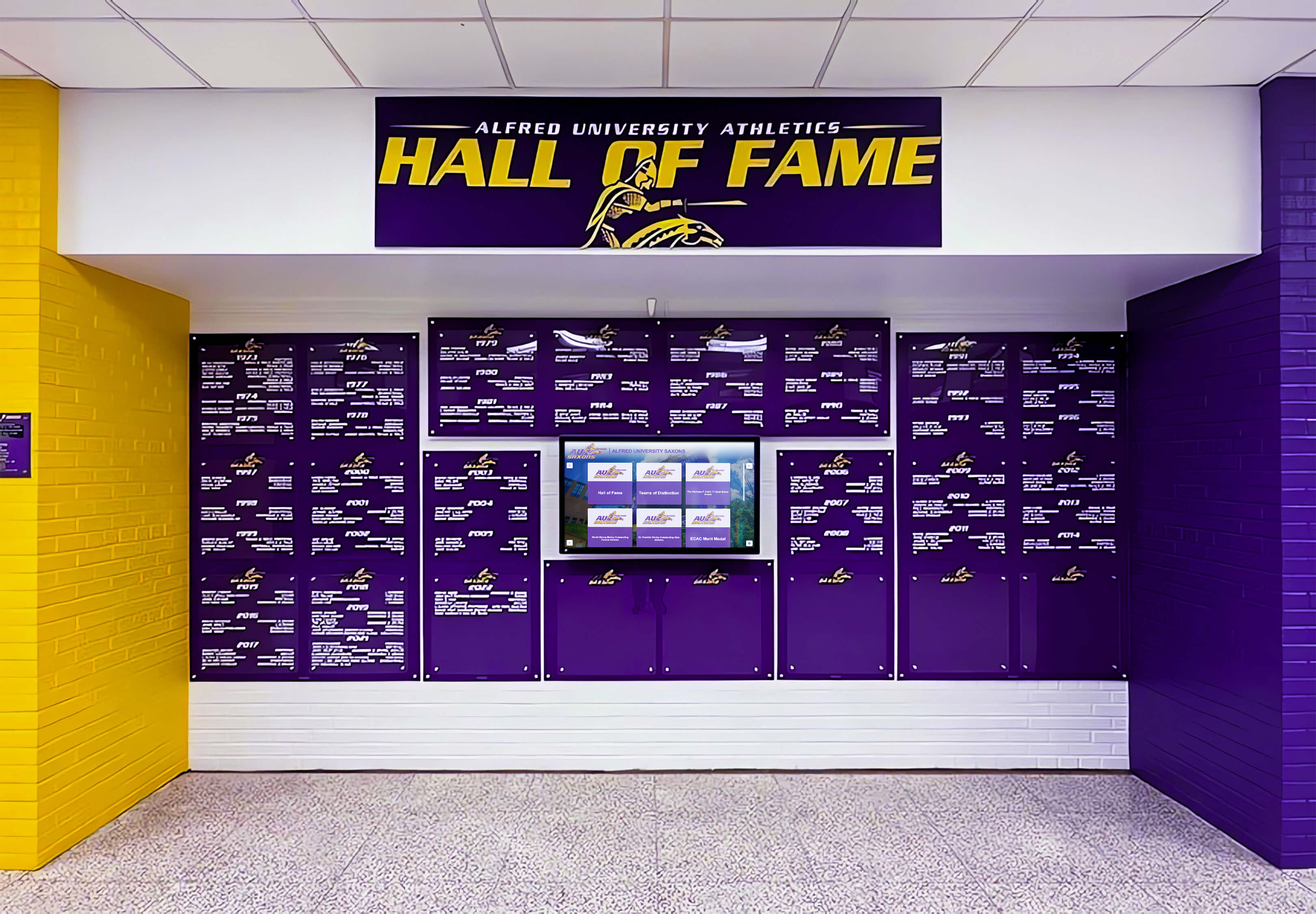
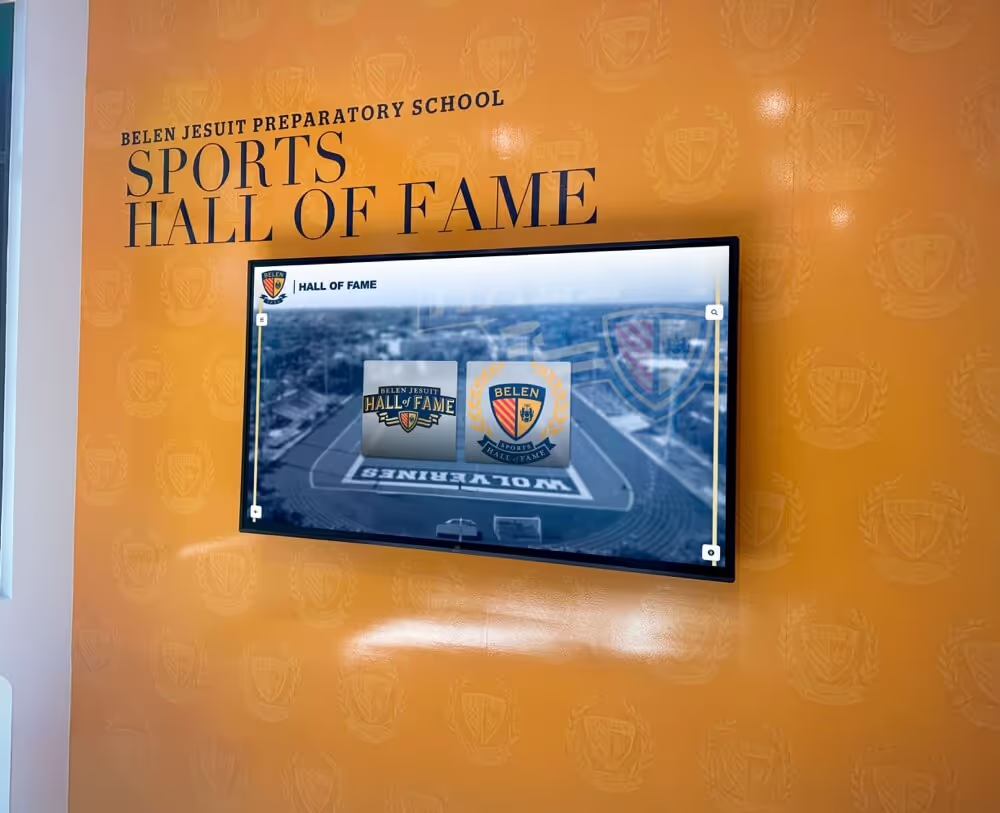
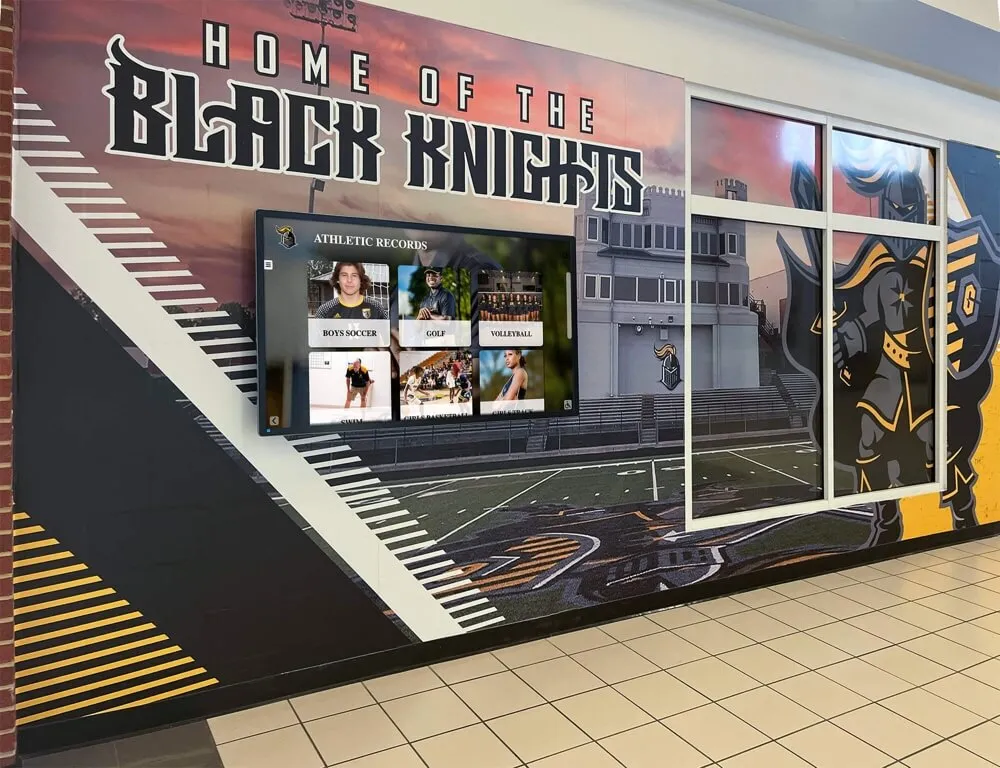
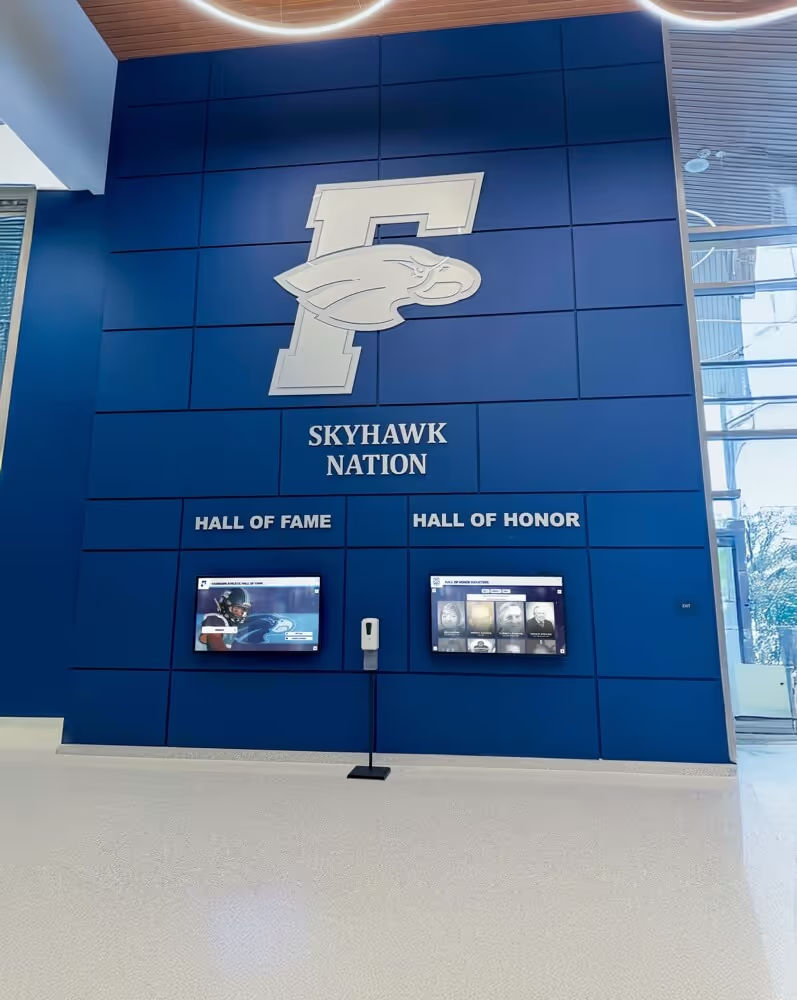
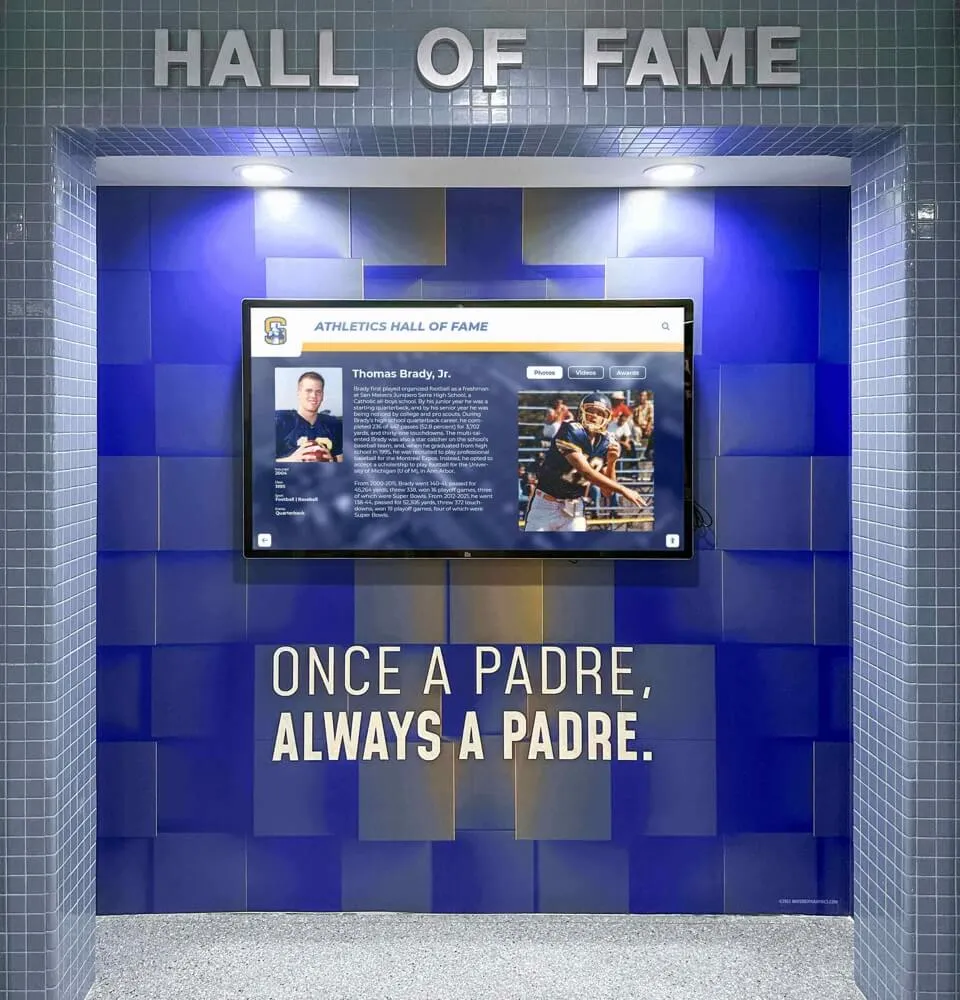
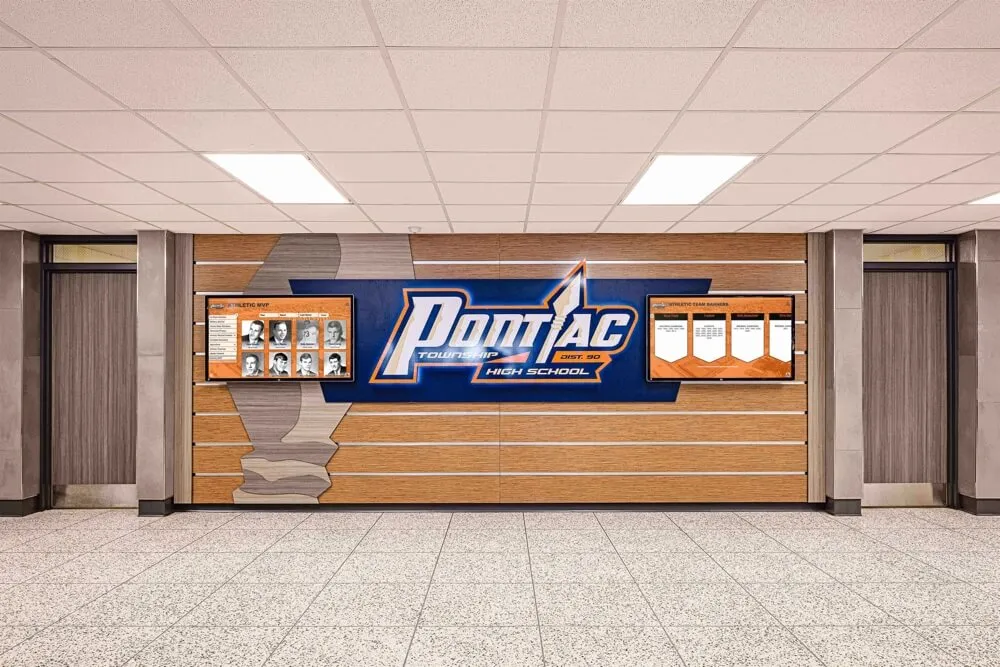
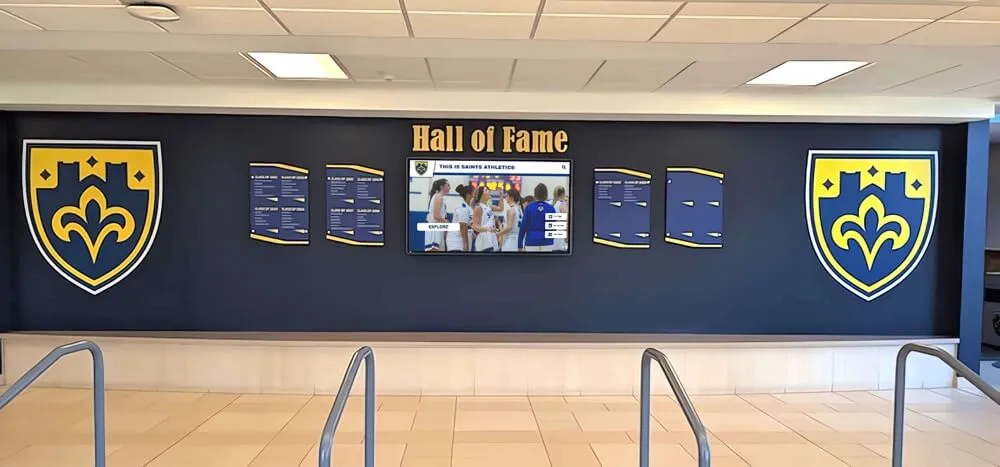
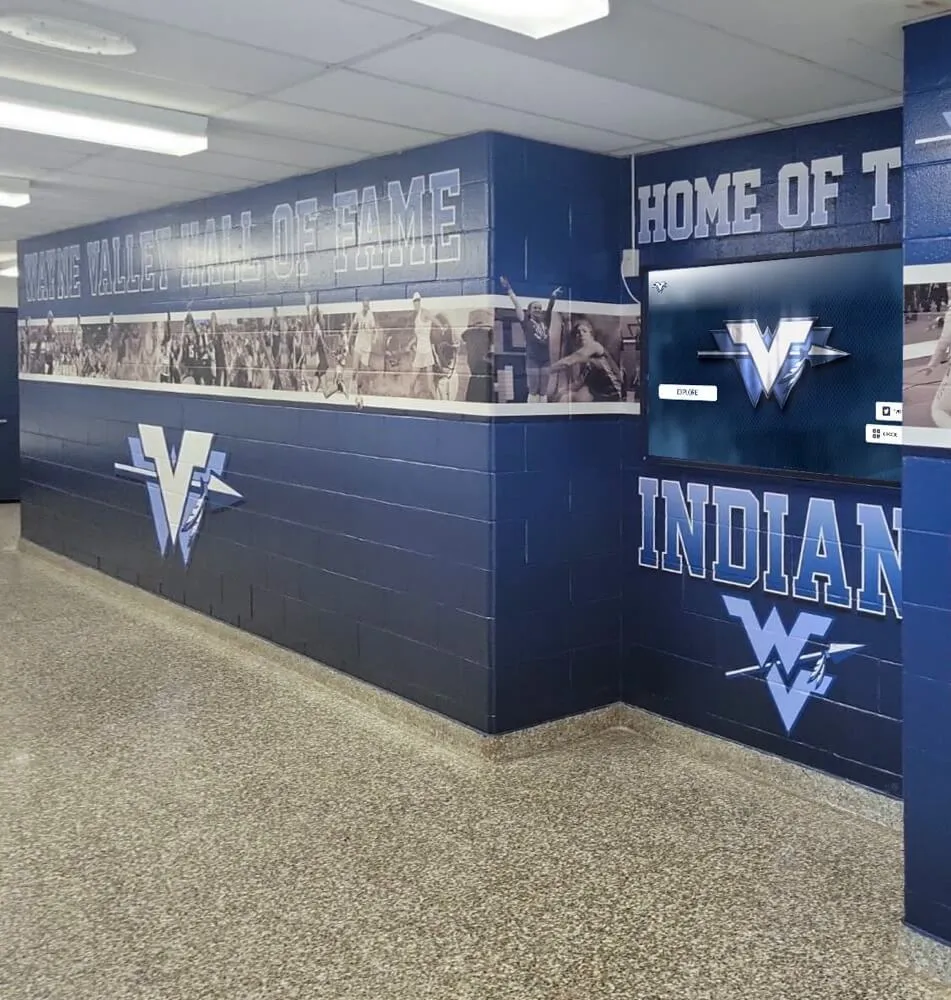
Permanent recognition infrastructure — like athletic hall of fame displays built in school colors — gives reunion attendees an immersive, visually compelling environment to explore during open social time
Building a Reunion Program That Lasts
The best class reunion program ideas share one quality: they honor where the class has been while creating something new that connects the class to the institution going forward. The agenda template, the recognition moments, and the activities are the mechanism. The outcome — deeper alumni loyalty, stronger institutional connections, and a foundation for the next reunion — is the product.
Committees that invest in permanent recognition infrastructure alongside their event programming see compounding returns. The touchscreen deployed for a 25-year reunion continues to serve current students, visiting families, and prospective recruits for years after the event. The digital profiles built for honored classmates remain in the archive permanently. The engagement habits formed around the platform carry forward to the 30-year and 50-year milestones.
Treat the reunion program not as a one-time event deliverable but as a contribution to the institutional recognition ecosystem your class is leaving behind.
For schools and universities ready to build the digital recognition infrastructure that makes every reunion more compelling — and serves alumni, students, and visitors year-round — Rocket Alumni Solutions provides turnkey touchscreen wall of fame and alumni recognition systems built specifically for educational institutions. Cloud-managed, ADA-compliant, and unlimited in inductee capacity, Rocket systems give reunion committees and alumni relations teams a permanent recognition platform that enhances every gathering and grows more valuable with every graduating class added. Request your free custom demo to see how your institution’s reunion recognition program can become a lasting part of your campus identity.