



Walking into any successful high school gymnasium, one of the first things you notice is the visual celebration of athletic achievement hanging from the rafters—championship banners that tell the story of a program’s excellence. These fabric monuments create an immediate impression, communicating decades of competitive success, inspiring current athletes, and honoring the generations of student-athletes who built program traditions.
Championship banner display traditions represent one of the most visible forms of athletic recognition, transforming functional gymnasiums into celebration spaces that showcase institutional pride. Yet as successful programs continue accumulating championships across multiple sports and decades, schools face persistent challenges: How do you continue honoring new achievements when ceiling space fills completely? What makes championship banner displays effective versus overwhelming? How can programs balance tradition with practical space constraints while ensuring equitable recognition across all sports?
This comprehensive guide explores championship banner display traditions from their origins through modern innovations—examining traditional design practices, installation strategies, and emerging digital solutions that complement or enhance conventional banners. Whether establishing new banner programs or modernizing existing displays, understanding these traditions helps schools create recognition systems that appropriately celebrate athletic excellence for generations to come.
Championship banners serve multiple essential functions beyond simple decoration—they preserve program history, motivate current athletes, attract prospective student-athletes, and create tangible connections between past excellence and present competition. Understanding championship banner traditions helps schools implement recognition that honors these purposes effectively.

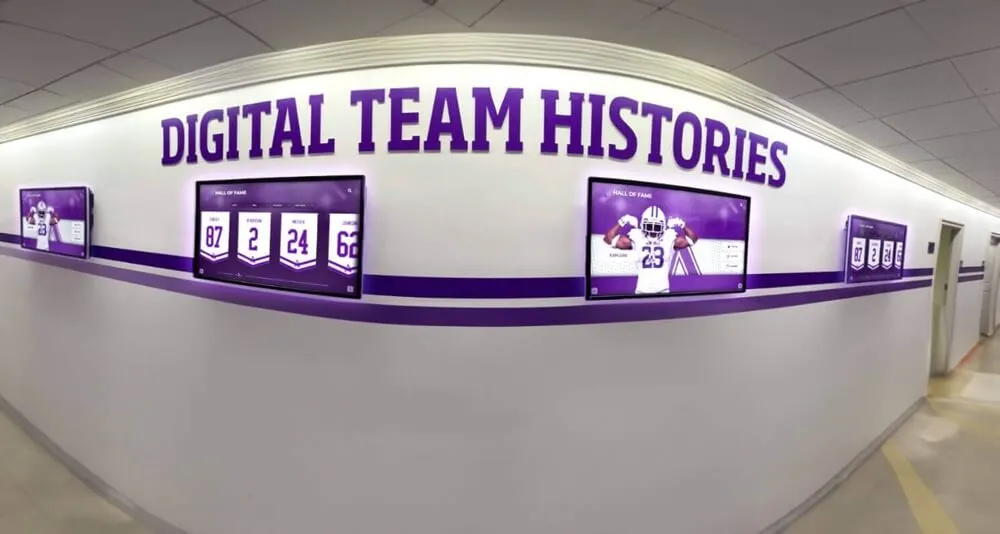
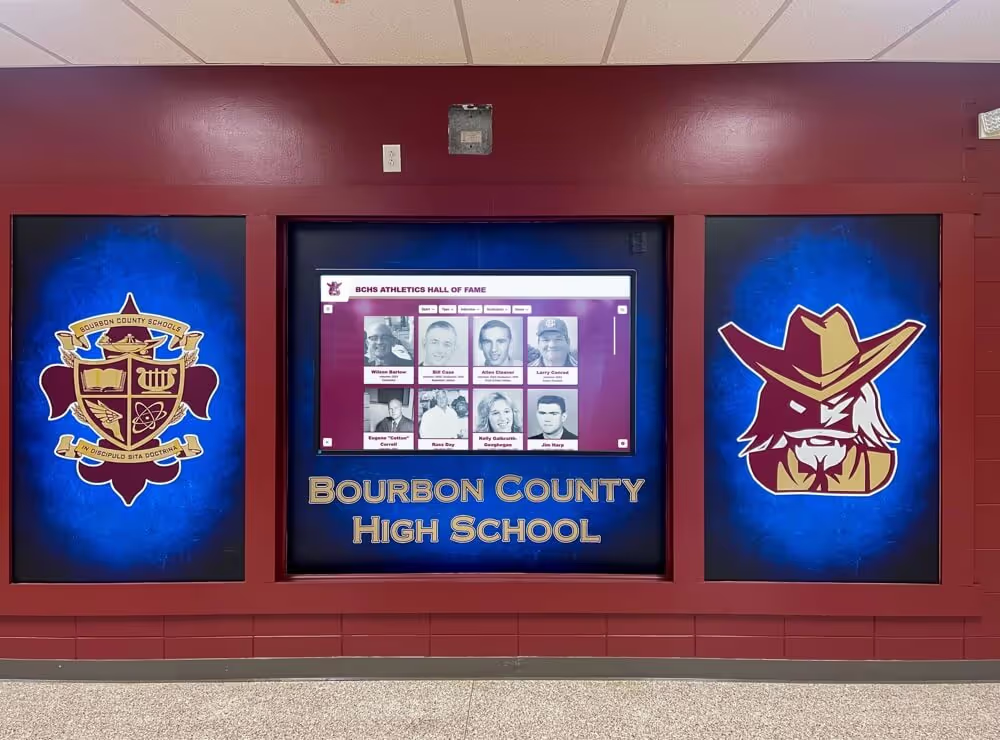
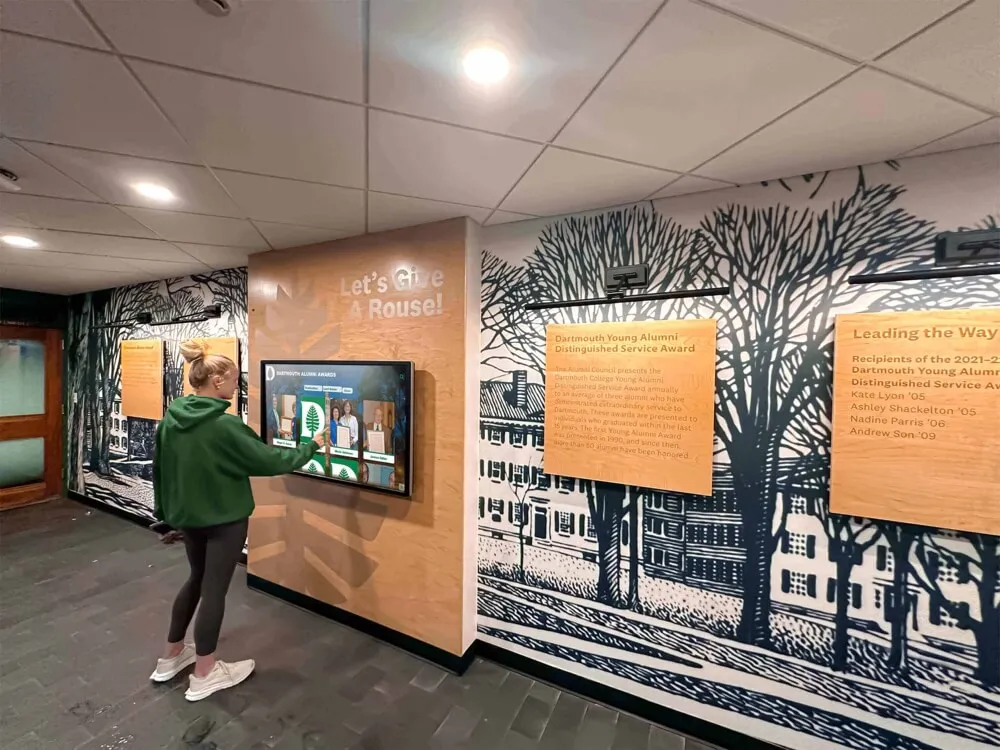
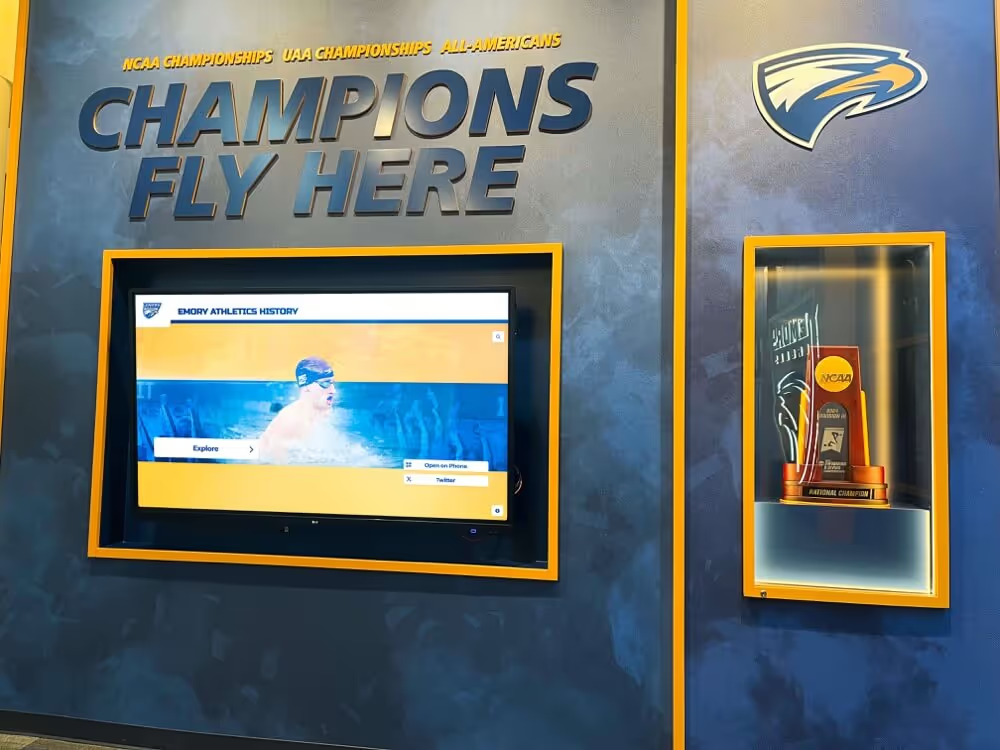
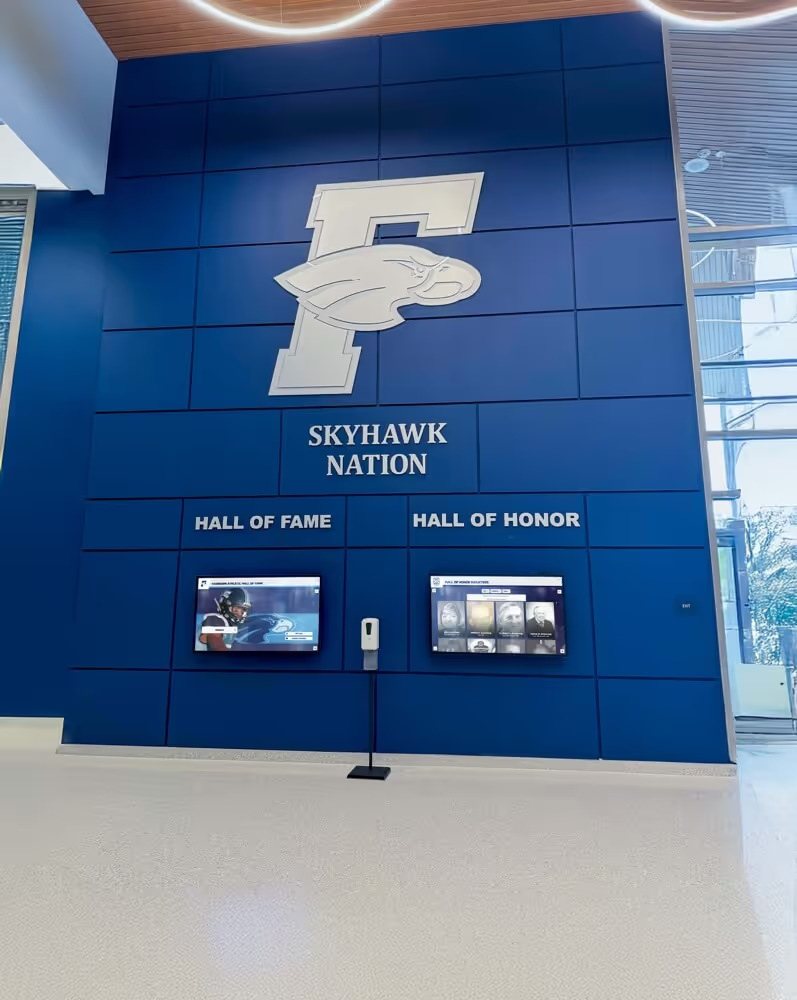
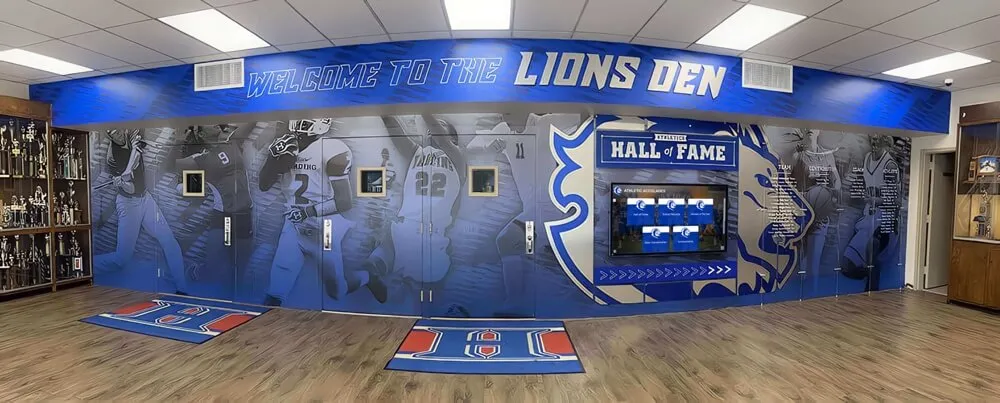
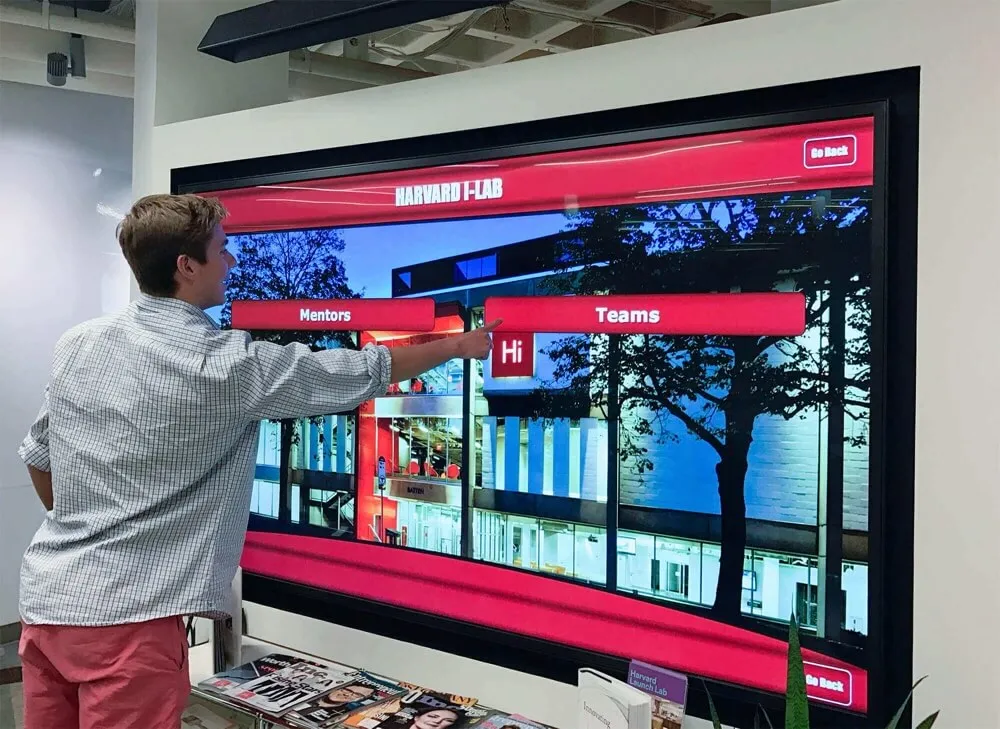
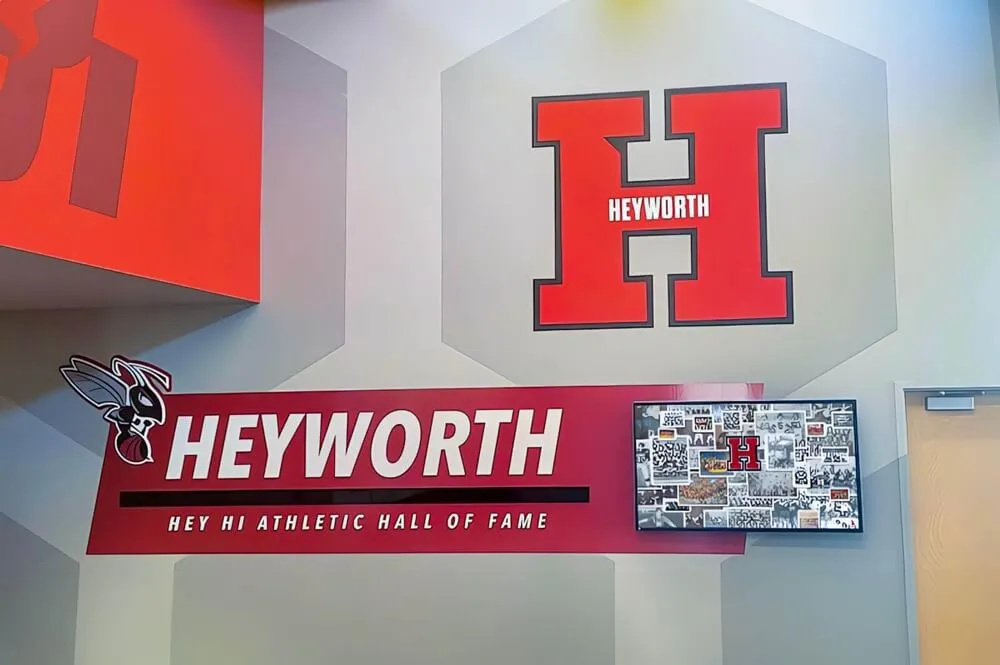
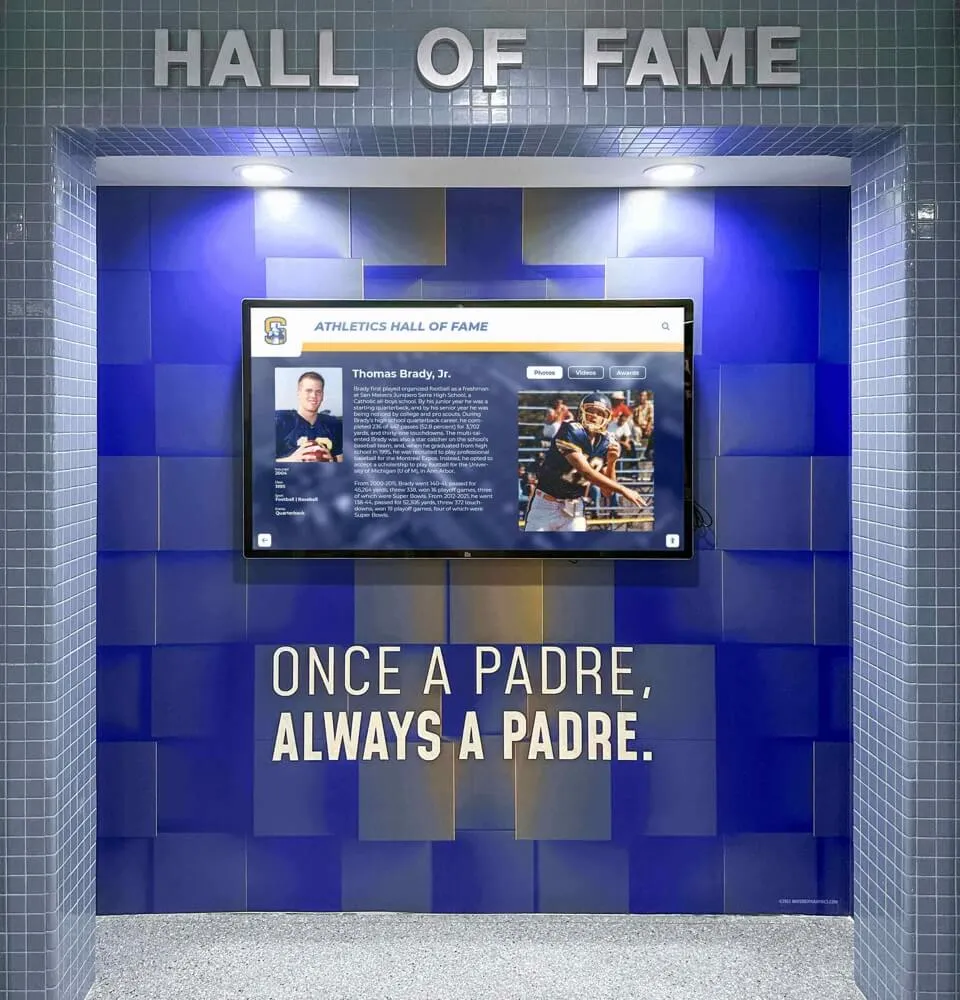
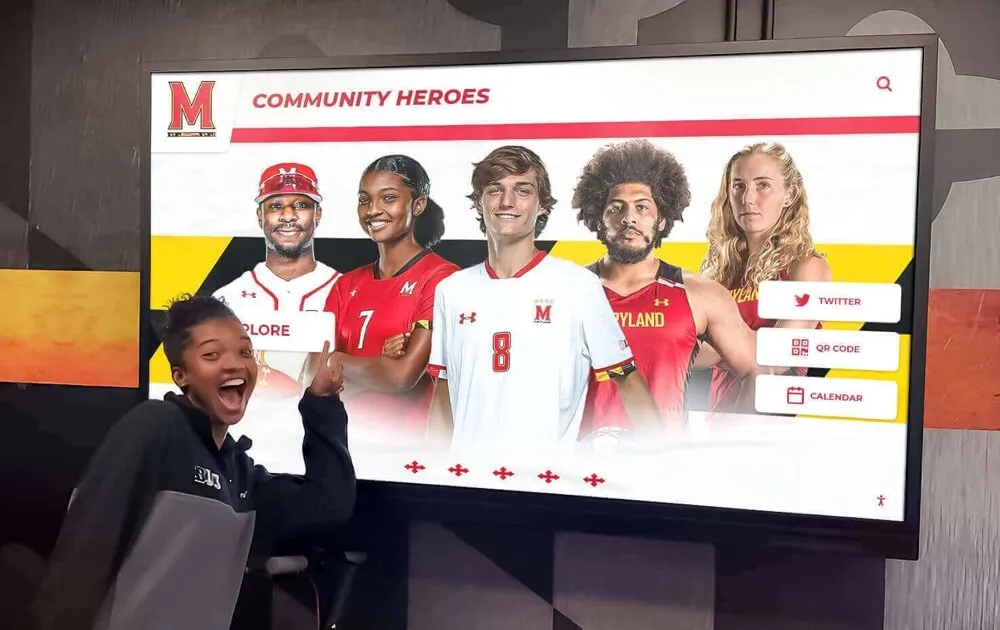
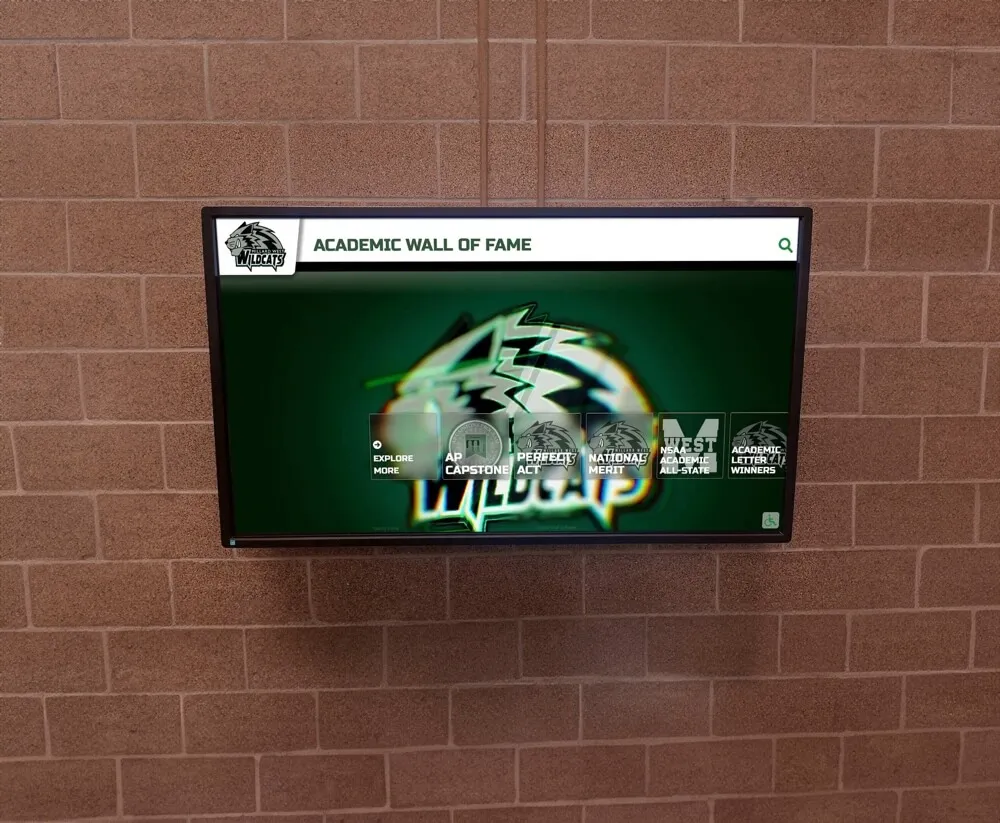
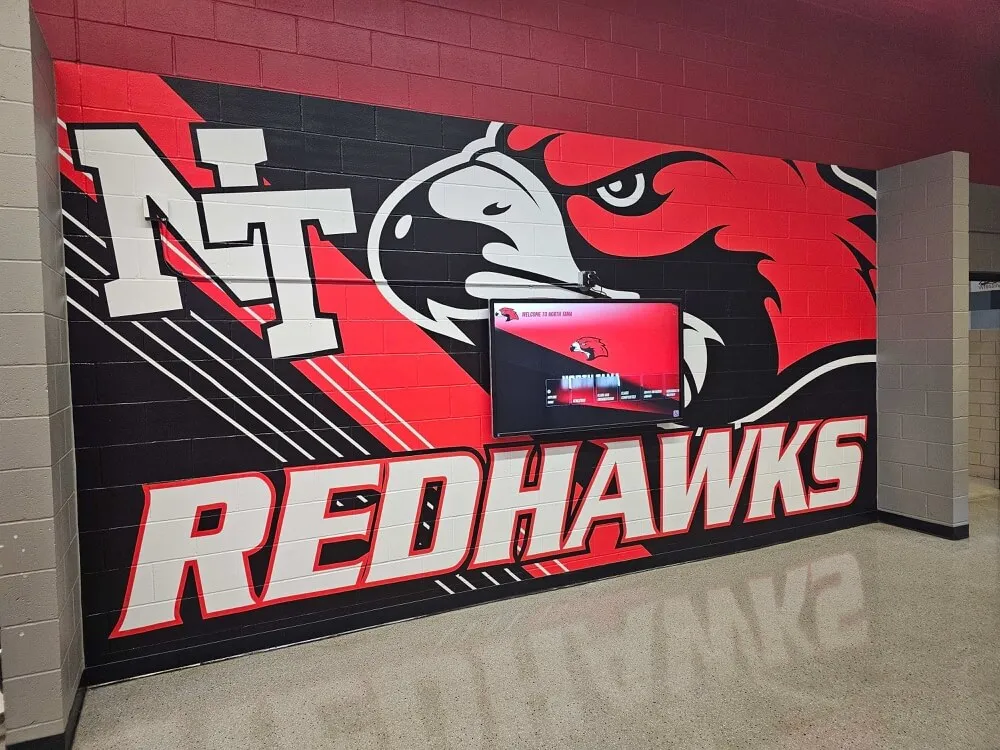
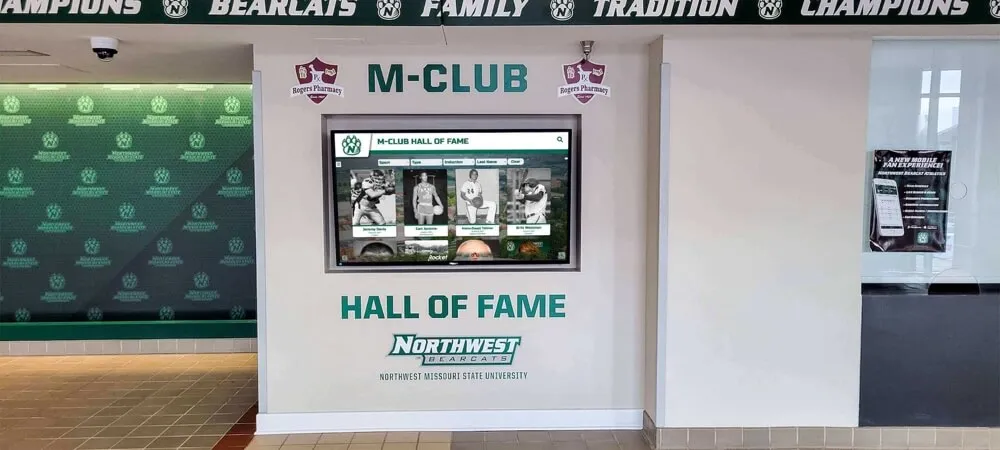
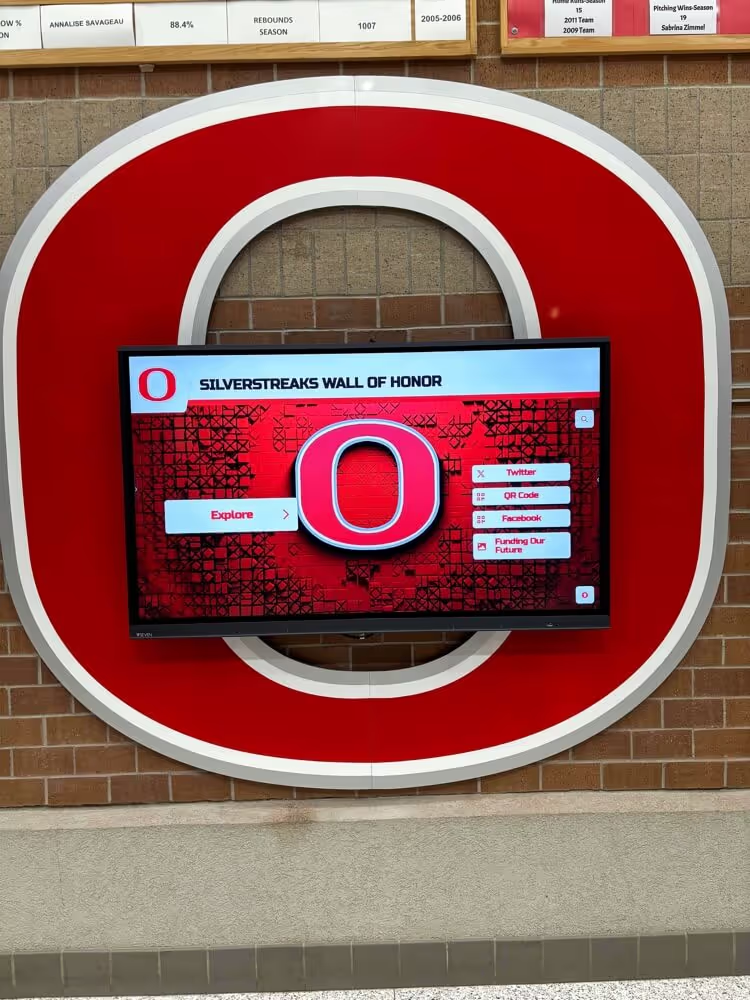
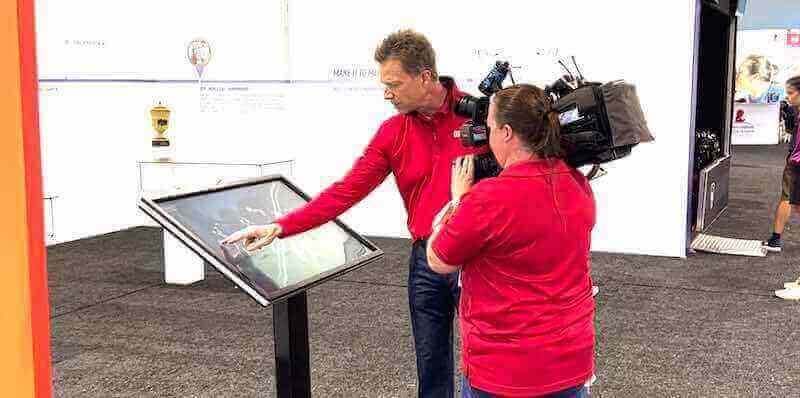
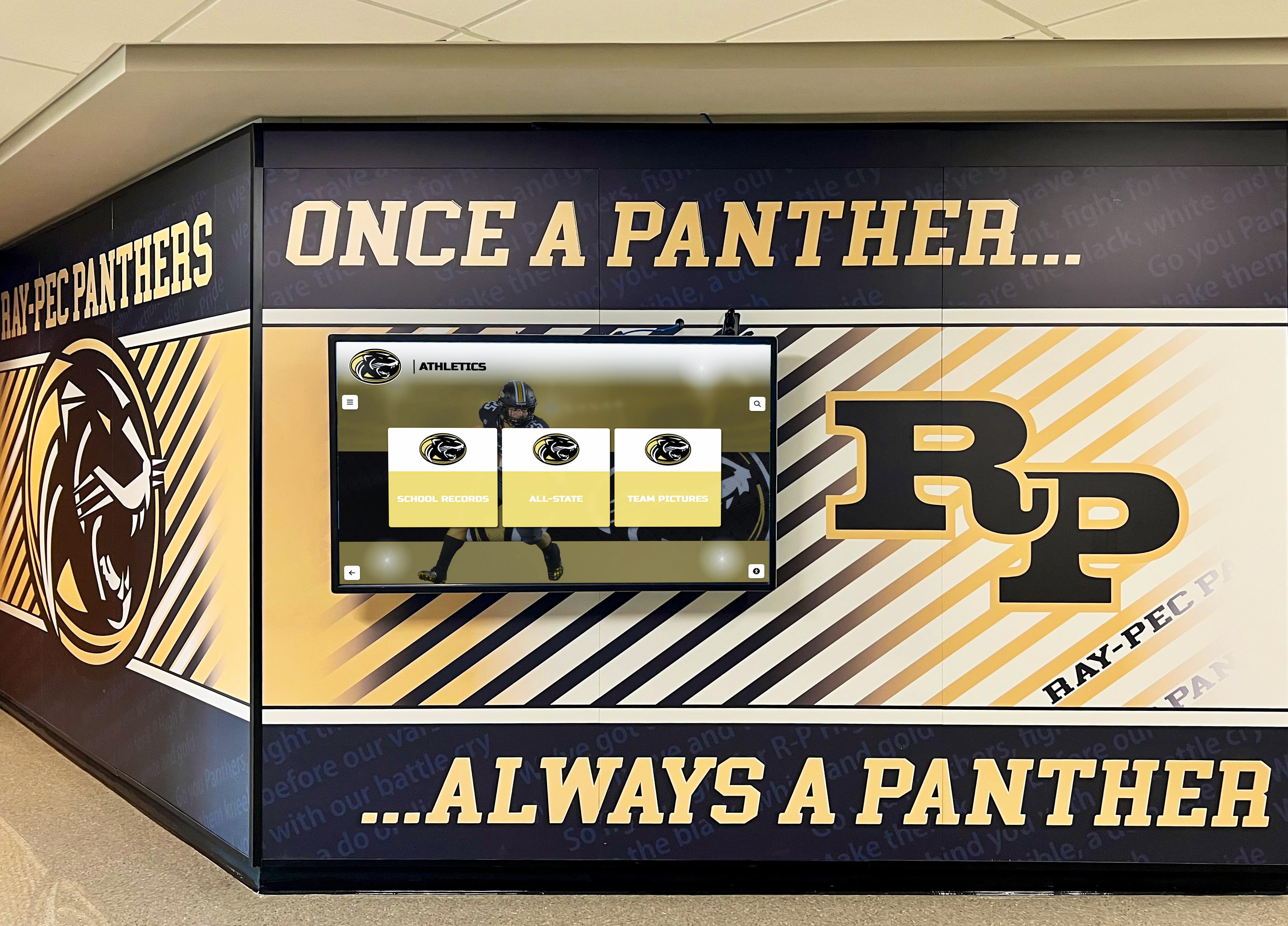
Modern athletic facilities integrate traditional championship displays with digital recognition creating comprehensive celebration spaces
The History and Tradition of Championship Banners
Championship banner displays evolved from practical documentation into rich traditions with specific conventions and cultural significance across American high school and college athletics.
Origins of Championship Banner Traditions
Understanding how championship banner displays developed provides context for current practices:
Early Athletic Recognition Approaches
Before championship banners became standard, schools recognized athletic success through:
- Trophy cases displaying physical championship trophies and team photographs
- Painted wall murals celebrating significant victories and championships
- Plaques mounted in hallways or athletic facilities commemorating team achievements
- Yearbook documentation preserving annual athletic accomplishments
- Championship pennants displayed in offices and classrooms
These approaches created permanent records but lacked the visibility and dramatic impact of overhead banner displays that would come to dominate gymnasium recognition.
Evolution of Banner Display Practices
Championship banners emerged as standard recognition for several reasons:
- Ceiling mounting positions banners at eye level for seated spectators during competitions
- Large format ensures visibility from anywhere within gymnasiums
- Vertical hanging maximizes limited wall space in athletic facilities
- Fabric construction enables cost-effective production compared to permanent installations
- Standardized designs create visual consistency as championship collections grow
- Immediate installation following championship seasons maintains recognition timeliness
By the 1960s and 1970s, championship banners had become the standard recognition method for most American high schools and colleges—establishing traditions that continue today.
Learn about comprehensive athletic recognition program design that builds on these historical traditions.
Cultural Significance in School Athletics
Championship banners carry meaning extending far beyond simple decoration:
Immediate Visual Communication
Banners hanging prominently create instant impressions:
- Visitors entering gymnasiums immediately perceive program success and tradition
- Prospective student-athletes evaluate competitive excellence during recruiting visits
- Community members recognize sustained achievement across multiple sports
- Current athletes see tangible evidence of program standards and expectations
- Alumni returning for events reconnect with championships they helped earn
This immediate communication makes championship banners among the most powerful recognition tools schools employ—no explanation required, the visual impact speaks directly.
Motivation and Cultural Building
Visible championship recognition influences program culture significantly:
- Daily reminders that championship success is achievable within the program
- Historical precedent establishing performance standards and cultural expectations
- Role models providing examples of excellence for current athletes to emulate
- Concrete goals motivating commitment during challenging preparation periods
- Shared identity connecting current teams to championship legacy
Coaches regularly reference championship banners during practices and team meetings—using historical achievements to illustrate what dedication and excellence produce while inspiring current athletes to add their own contributions to program tradition.
Community Pride and Identity
Championship displays extend beyond athletic departments:
- School-wide pride in athletic excellence contributing to institutional reputation
- Local community connections to successful teams and celebrated moments
- Alumni engagement strengthened through visible recognition of their achievements
- Prospective family interest during school selection and enrollment decisions
- Fundraising support motivated by demonstrated program excellence
The cultural weight championship banners carry explains why schools invest significantly in these displays and why questions about their management generate substantial community interest and occasional controversy.
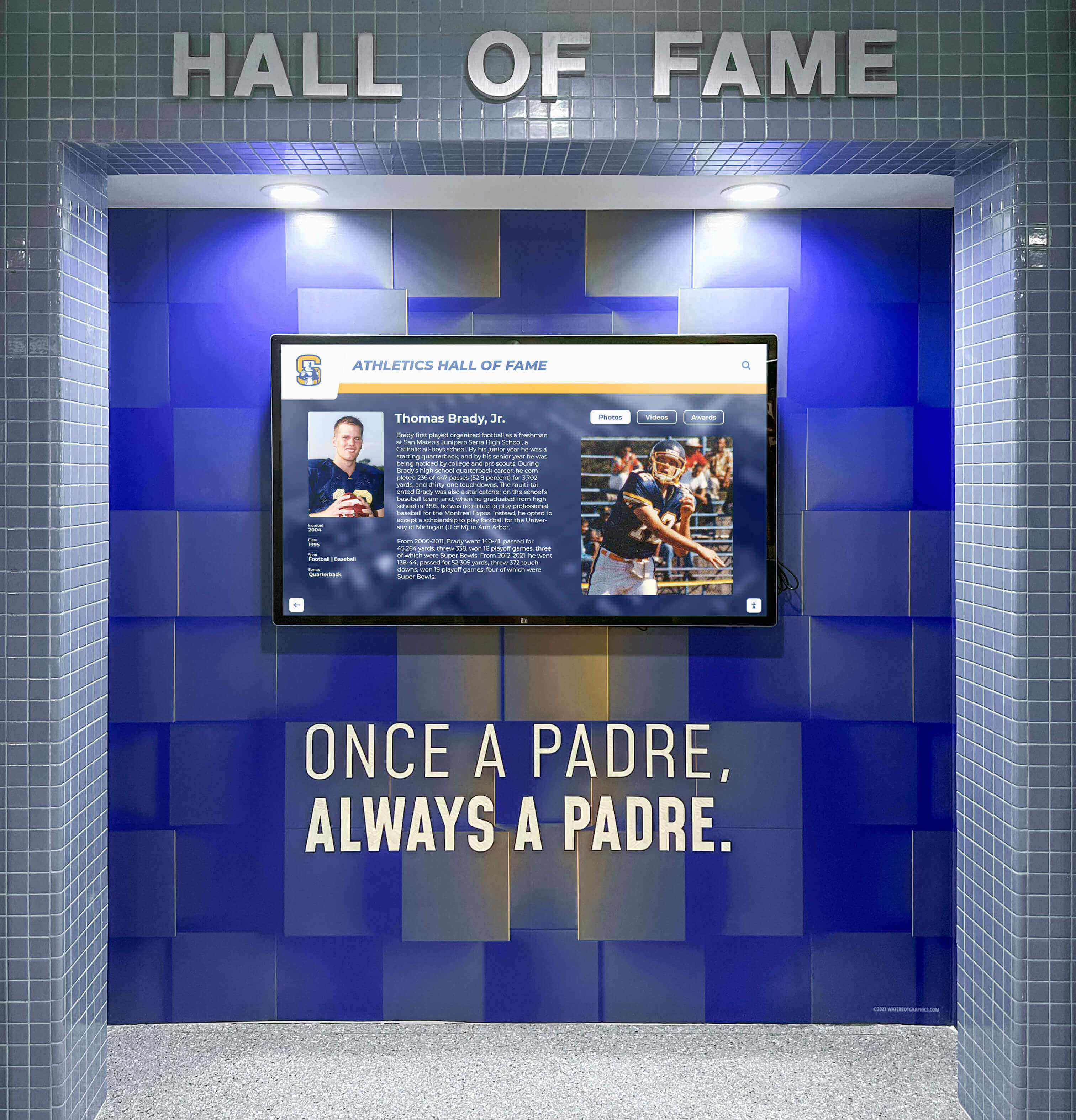
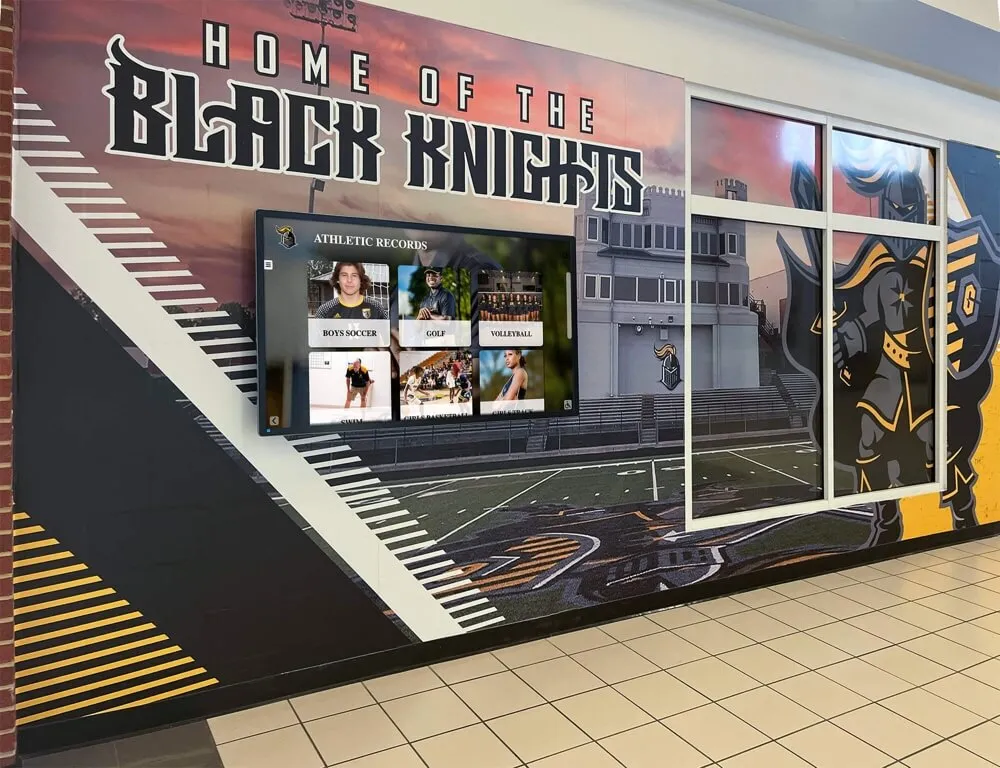
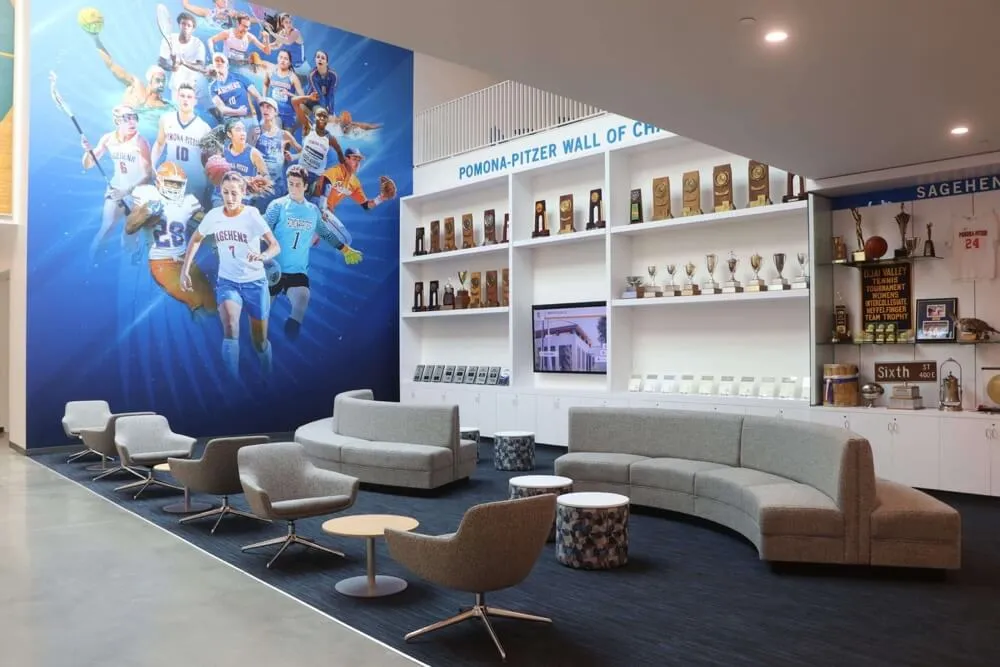
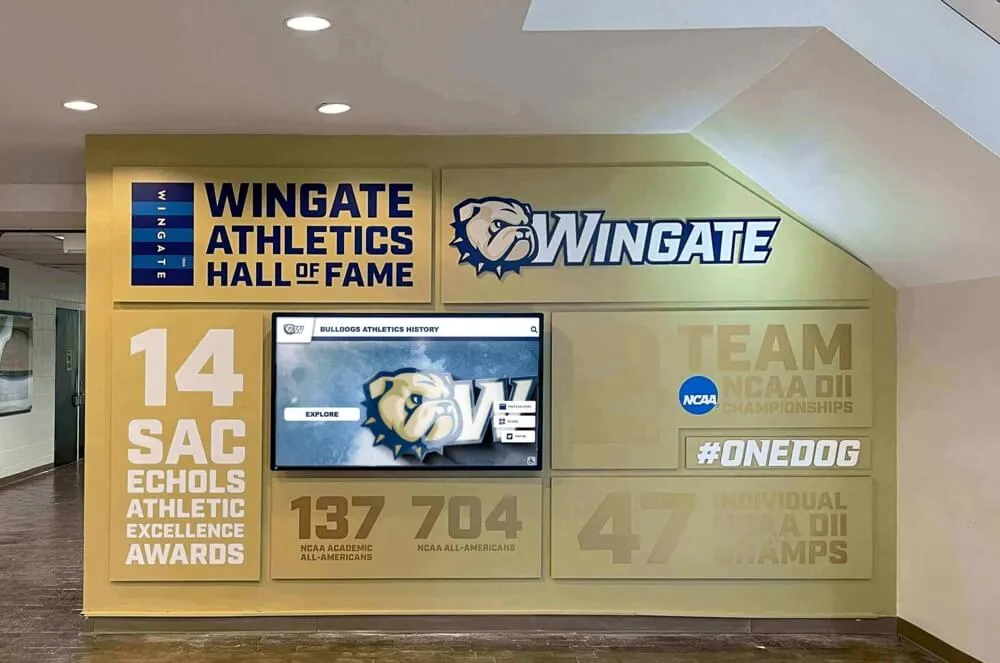
Strategic positioning of championship recognition creates focal points in athletic facilities celebrating program achievements
Championship Banner Design Standards and Best Practices
Effective championship banner displays follow conventions that maximize visual impact while ensuring long-term quality and consistency.
Standard Banner Dimensions and Materials
Championship banner design involves technical considerations affecting appearance and durability:
Common Banner Sizes
Championship banners typically follow standard dimensions:
- Small banners: 2 feet x 4 feet (suitable for limited ceiling space or secondary achievements)
- Medium banners: 3 feet x 5 feet (most common size balancing visibility and space requirements)
- Large banners: 4 feet x 8 feet (reserved for significant championships or facilities with high ceilings)
- Extra-large banners: 5 feet x 10 feet or larger (major championships in large gymnasiums)
Size selection depends on ceiling height, viewing distance, and desired emphasis—state championships often receive larger banners than conference or district titles.
Material Selection
Fabric and construction quality affects appearance and longevity:
- Vinyl banners provide durability and weather resistance in non-climate-controlled gymnasiums
- Nylon banners offer rich colors and professional appearance suitable for most applications
- Felt or wool banners deliver traditional collegiate appearance with premium aesthetic
- Canvas banners provide textured appearance with excellent print quality
- Mesh banners allow air circulation in facilities with significant air movement
Most schools select lightweight, durable materials that maintain appearance throughout decades of display—with proper material selection, championship banners typically last 10-20 years before requiring replacement due to fading or deterioration.
Construction and Finishing
Professional banner production includes specific features:
- Reinforced stitching along edges preventing fraying and extending lifespan
- Grommets or pole pockets enabling secure mounting and hanging
- UV-resistant printing maintaining color vibrancy under gymnasium lighting
- Hemmed edges creating clean, professional appearance
- Sufficient material weight preventing excessive curling or movement
Quality construction justifies slightly higher initial investment—poorly made banners deteriorate quickly, requiring premature replacement and creating unprofessional appearance that undermines recognition significance.
Visual Design Elements and School Branding
Effective championship banner design balances information, aesthetics, and brand consistency:
Essential Information Components
Championship banners typically include specific elements:
- Sport name or team designation (Girls Basketball, Football, Track & Field, etc.)
- Championship level (Conference, District, Regional, State, National)
- Season or year of championship (2023, 2023-24, etc.)
- Team record when significant (28-1, Perfect Season, Undefeated, etc.)
- Opponent or competition context when relevant (defeated [opponent], tournament champion)
Visual Design Principles
Professional banner design follows established best practices:
- School colors creating immediate visual connection to institutional branding
- Mascot imagery or athletic logos reinforcing program identity
- Hierarchical typography emphasizing most important information (championship level, year)
- Sufficient white space preventing overcrowded appearance and ensuring readability
- Consistent design template across all banners creating unified visual presentation
Brand Consistency Standards
Coordinated design creates professional appearance:
- Uniform banner dimensions within each championship category
- Standardized color schemes matching official school athletics branding
- Consistent typography and font selections across all recognition years
- Logo placement following athletic department brand guidelines
- Template modifications minimized except when necessary for specific sports
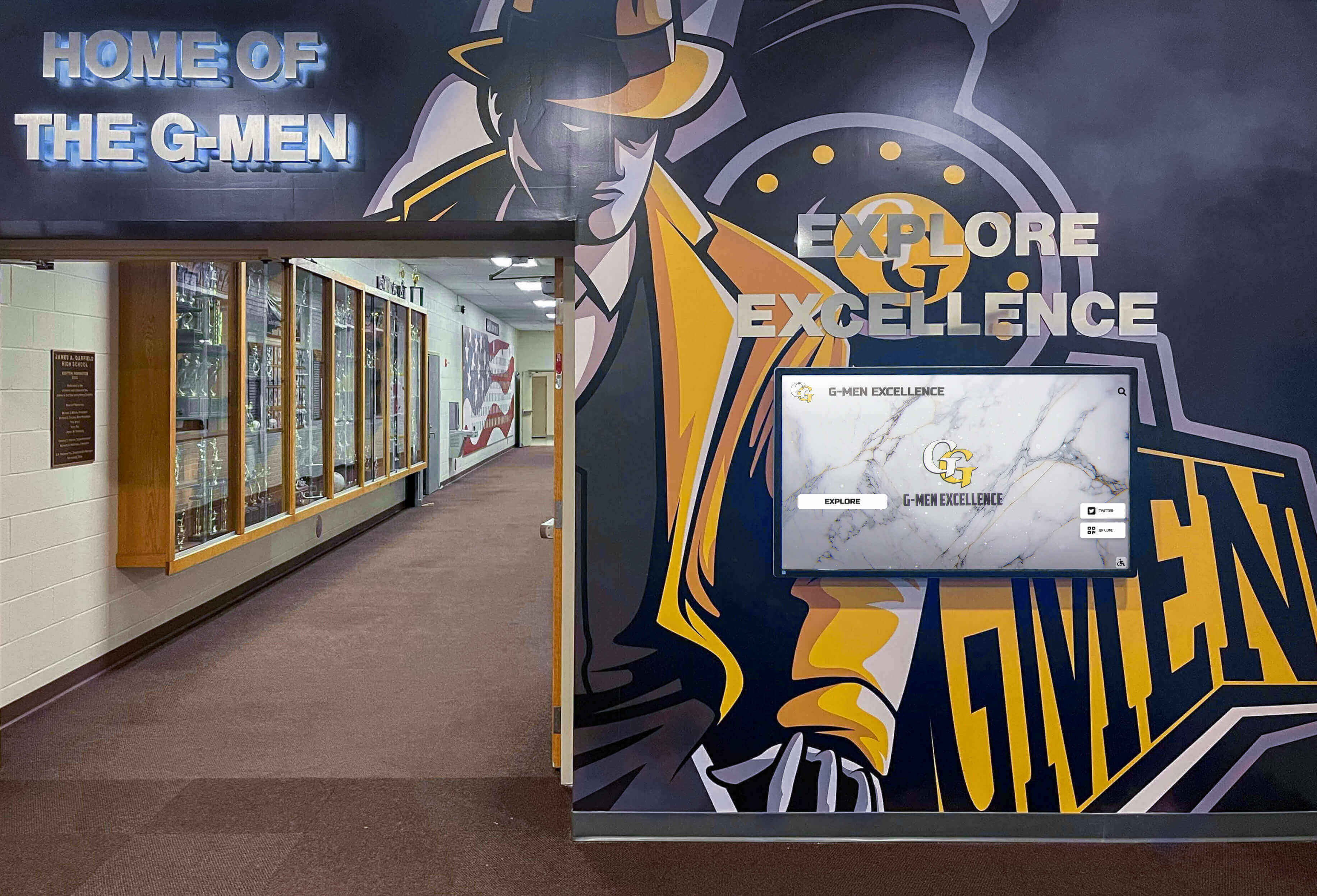
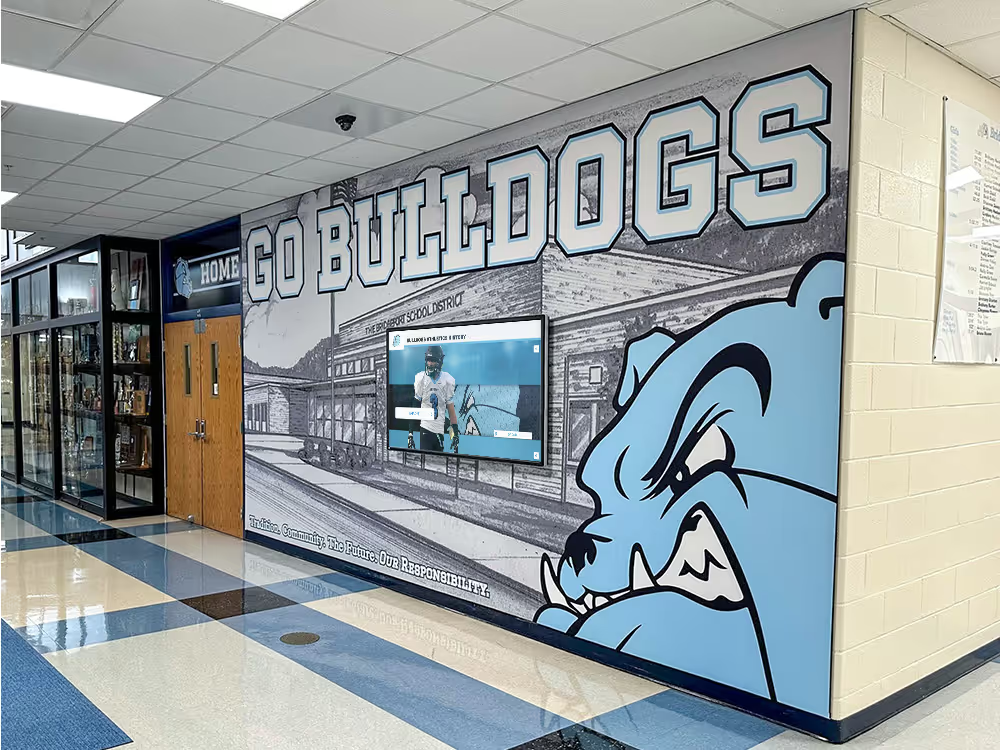
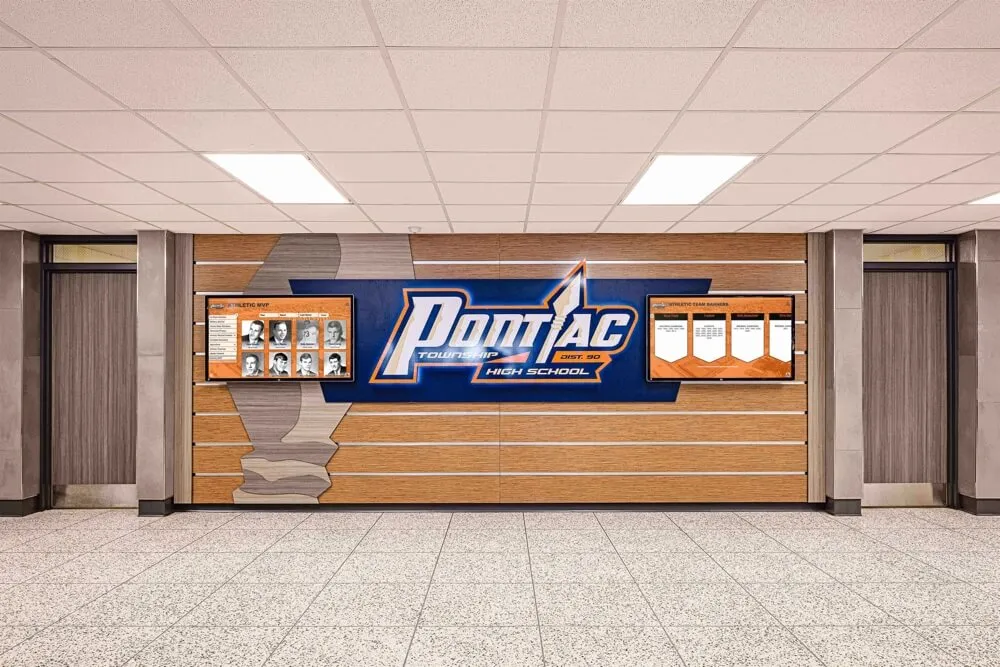
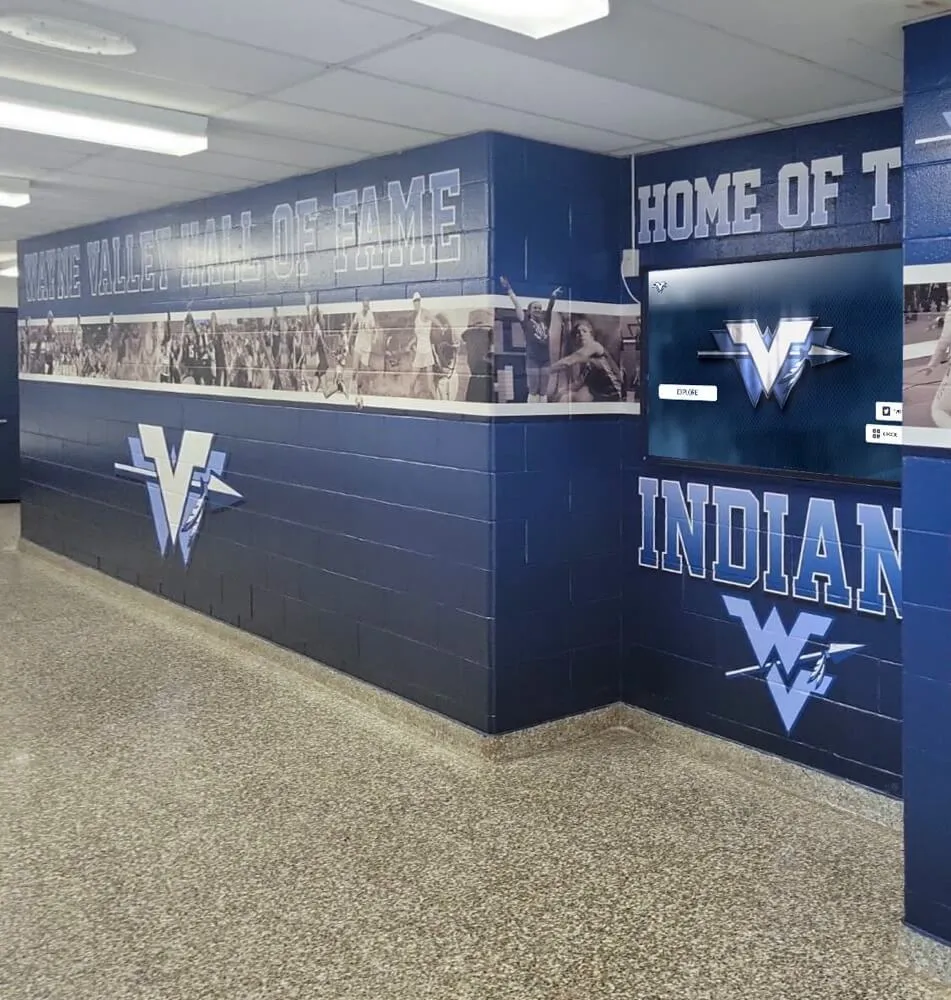
Coordinated visual design across championship displays and facility branding creates cohesive recognition environments
This consistency ensures that championship collections appear intentional and professionally managed rather than haphazard accumulations of disparate designs across different eras.
Explore strategies for creating visual consistency in athletic displays throughout facilities.
Hierarchy Systems for Different Achievement Levels
Most athletic programs earn multiple championship types warranting different recognition emphasis:
Championship Category Systems
Schools typically employ hierarchical approaches:
Tier 1: State Championships
- Largest banner size and most prominent placement
- Reserved for highest competitive achievement level
- Often distinguished by gold colors or special design elements
- Permanent display regardless of subsequent championships
Tier 2: Regional and District Championships
- Standard medium banner size
- Recognizes significant achievement short of state level
- May include tournament champions and playoff achievements
- Displayed prominently but secondary to state championships
Tier 3: Conference Championships
- Smaller banners or alternative recognition methods
- Celebrates regular season excellence and league competition success
- May be rotated or displayed in secondary locations as collections grow
- Recent conference championships receive priority over historical titles
Special Achievement Recognition
- Undefeated seasons or historic win streaks
- National rankings or recognition
- Tournament invitational championships
- Individual athlete state championships in specific sports
This hierarchical approach enables schools to recognize multiple achievement types appropriately while reserving premium space and emphasis for the most significant accomplishments.
Determining Appropriate Recognition Levels
Schools establish criteria defining championship banner eligibility:
- Clear written standards preventing inconsistent recognition across sports and years
- Athletic director approval processes ensuring uniform application
- Community input gathering stakeholder perspectives on recognition priorities
- Periodic review updating criteria as program achievements and expectations evolve
Documented standards prevent difficult case-by-case decisions while ensuring equitable recognition across all sports and achievement levels.
Learn about implementing sports awards programs with consistent recognition standards.
Installation and Display Strategies
Effective championship banner displays require careful planning addressing structural, visual, and practical considerations.
Structural and Safety Requirements
Proper installation ensures safety and longevity:
Ceiling Assessment and Mounting Points
Professional installation begins with facility evaluation:
- Structural engineering review confirming ceiling capacity for banner loads
- Identification of suitable mounting points (beams, rafters, structural elements)
- Evaluation of lighting fixtures, HVAC systems, and other obstacles
- Measurement of ceiling heights and clearance requirements
- Assessment of basketball backboard clearance and competition standards compliance
Most gymnasiums easily accommodate championship banner displays, but systematic assessment prevents problems and ensures installations meet safety codes.
Installation Hardware and Methods
Secure mounting requires appropriate equipment:
- Eyebolts or cable mounting systems attached to structural elements
- Aircraft cable or heavy-duty cord supporting banners securely
- Adjustable hardware enabling banner repositioning as needed
- Anti-rotation devices preventing excessive spinning and tangling
- Ladder lifts or specialized equipment for high ceiling installations
Professional installation typically costs $75-150 per banner depending on ceiling height and facility complexity—worthwhile investment ensuring safety and professional appearance.
Safety Considerations
Championship banner displays must account for various factors:
- Sufficient clearance from basketball play preventing interference with competition
- Secure mounting preventing banners falling during events or activities
- Regular inspection schedules identifying deterioration or hardware problems
- Compliance with fire codes and safety regulations in public facilities
- Emergency access considerations ensuring banners don’t obstruct building systems
Schools typically establish annual inspection protocols verifying banner security and addressing any maintenance needs before problems develop.
Discover approaches to new gymnasium display installations and timing considerations.
Optimal Placement and Visual Arrangement
Strategic positioning maximizes championship banner impact:
Primary Display Locations
Most gymnasiums follow standard placement conventions:
- End wall locations above backboards ensuring visibility during games
- Side wall positions visible from bleacher seating
- Center court areas for most prestigious championships
- Entry areas creating immediate impression for gymnasium visitors
- Designated sections grouping championships by sport or era
Placement communicates relative importance—center locations and prominent positions typically reserved for state championships and major achievements.
Visual Arrangement Strategies
Organization systems create professional appearance:
Chronological Arrangement
- Oldest championships at one end progressing to recent at opposite end
- Creates program timeline visible across gymnasium
- Enables easy identification of championship eras and program evolution
- Accommodates new championships systematically without disruption
Sport-Based Grouping
- All football championships together, basketball grouped separately, etc.
- Simplifies location of specific sport achievements
- Creates sport-specific celebration zones
- Enables sport programs to claim specific areas
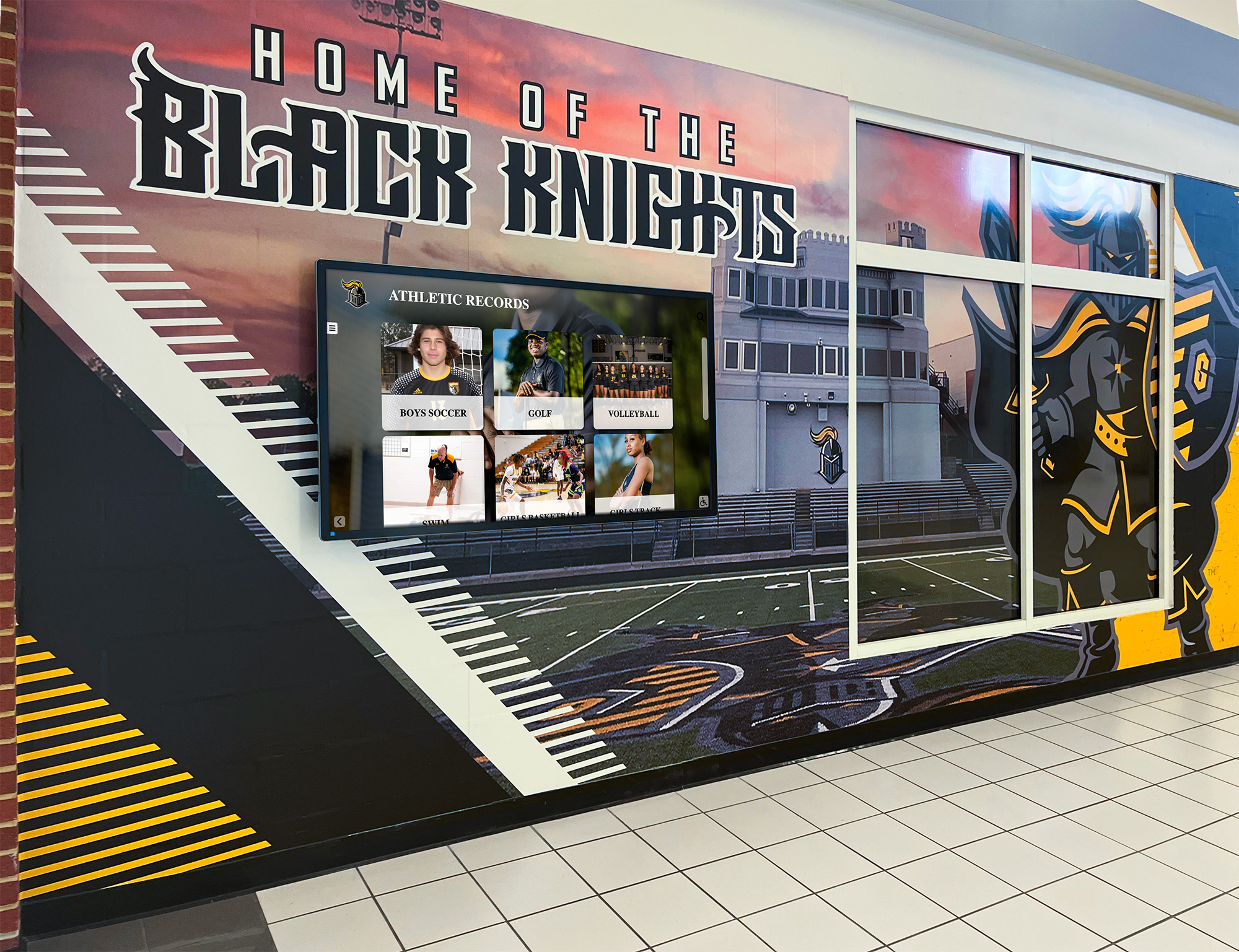
Strategic arrangement creates organized, professional championship displays that celebrate achievements comprehensively
Achievement Level Separation
- State championships in premium center locations
- Regional and district championships in secondary positions
- Conference championships in tertiary locations
- Maintains visual hierarchy reflecting achievement significance
Most schools combine approaches—grouping by sport while maintaining chronological order within each sport section, enabling intuitive navigation while respecting relative achievement importance.
Managing Visual Density
Prevent overwhelming displays through careful planning:
- Sufficient spacing between banners enabling individual visibility
- Row and column alignment creating organized grid patterns
- Color blocking separating different sports or eras visually
- Strategic negative space preventing cluttered appearance
- Periodic reassessment as collections grow identifying capacity limits
Visual appeal typically deteriorates when banner density exceeds 40-50 in standard gymnasiums regardless of available mounting points—recognizing this limit informs decisions about alternative or supplementary recognition approaches.
Maintenance and Long-Term Management
Sustained programs require ongoing attention:
Regular Maintenance Requirements
Championship banner displays need periodic care:
- Annual inspection of mounting hardware and cable integrity
- Cleaning to remove accumulated dust and preserve appearance
- Replacement of damaged or severely faded banners maintaining collection quality
- Hardware tightening preventing excessive movement or sagging
- Documentation of collection inventory and installation specifications
Systematic maintenance prevents minor issues escalating into significant problems requiring expensive emergency repairs or replacements.
Addressing Capacity Constraints
Eventually successful programs fill available space:
- Removing oldest conference championships retaining only state titles
- Rotating displays featuring recent achievements while storing historical banners
- Establishing cutoff dates (championships within past 20 years displayed, earlier stored)
- Digital documentation enabling comprehensive recognition beyond physical capacity
- Secondary location displays in athletic hallways, weight rooms, or auxiliary gymnasiums
These difficult decisions require thoughtful policy balancing tradition, equity, and practical limitations—understanding that no perfect solutions exist when physical space constrains growing championship collections.
Explore how athletic banquet planning can celebrate championships beyond physical displays.
Modern Solutions: Digital Recognition Complementing Traditional Banners
While championship banners remain valuable traditions, digital technology provides complementary solutions addressing space limitations while enriching recognition experiences.
The Space Capacity Challenge
Successful athletic programs inevitably encounter fundamental constraints:
The Mathematics of Championship Accumulation
Championship generation outpaces display capacity over time:
- Comprehensive athletic programs earn 5-15+ banner-worthy championships annually
- 10 years of success generates 50-150 championships
- 20 years accumulates 100-300 championships
- Typical gymnasium ceiling space accommodates only 30-60 banners comfortably
This inevitable gap between championship generation and physical capacity forces difficult decisions about which achievements receive visible recognition—creating recognition inequity that undervalues historical accomplishments and specific sports.
Limitations of Traditional Banner Displays
Physical banners face several constraints:
- Fixed ceiling space creating hard capacity limits
- Minimal information (sport, year, achievement level only)
- No individual athlete recognition on fabric banners
- Inability to include photos, videos, statistics, or detailed narratives
- Difficult navigation when collections become large
- Removal necessity to accommodate new championships
- Deterioration requiring eventual replacement
These limitations don’t diminish championship banner value but highlight opportunities for complementary recognition approaches that overcome physical constraints.
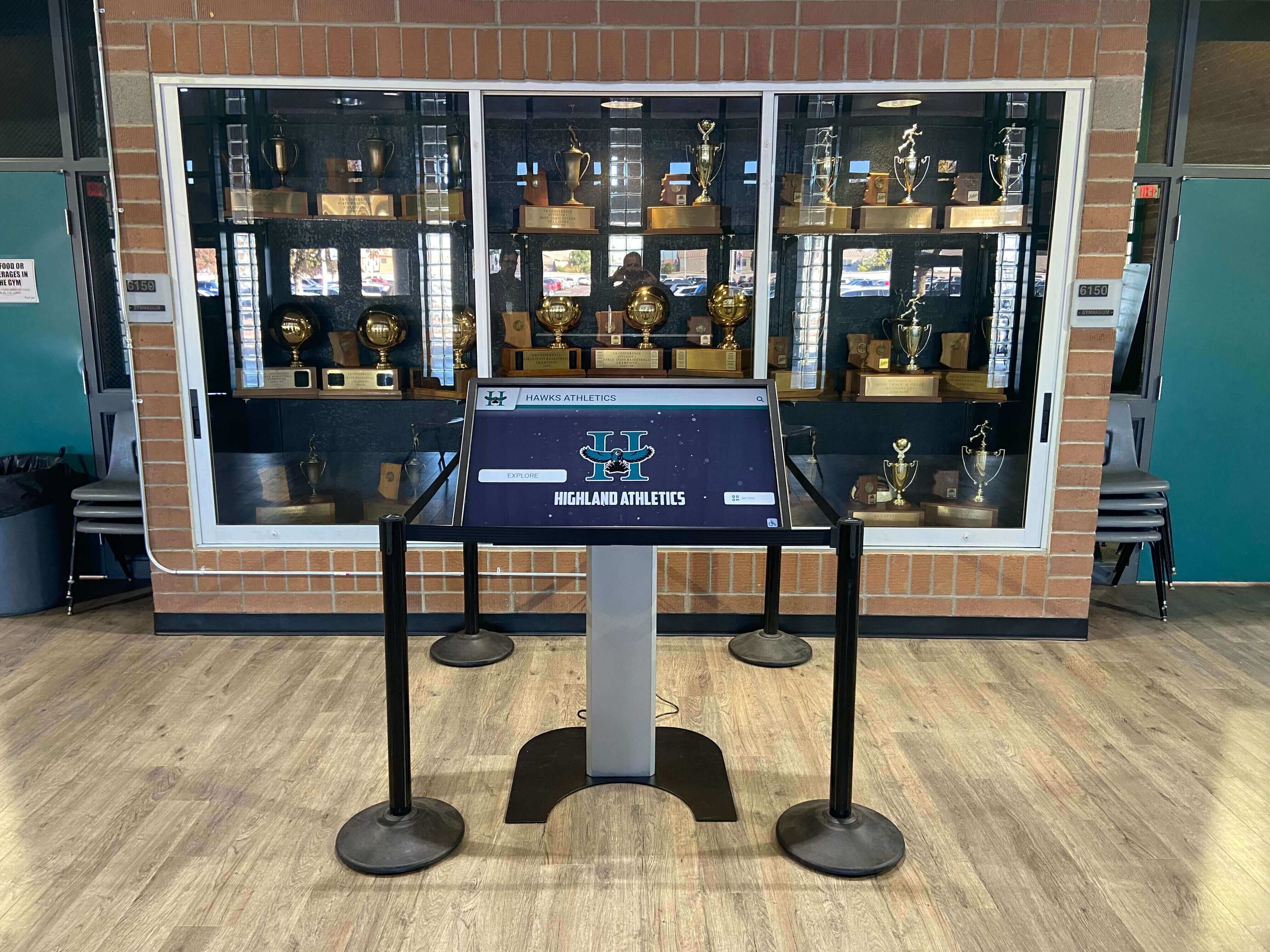
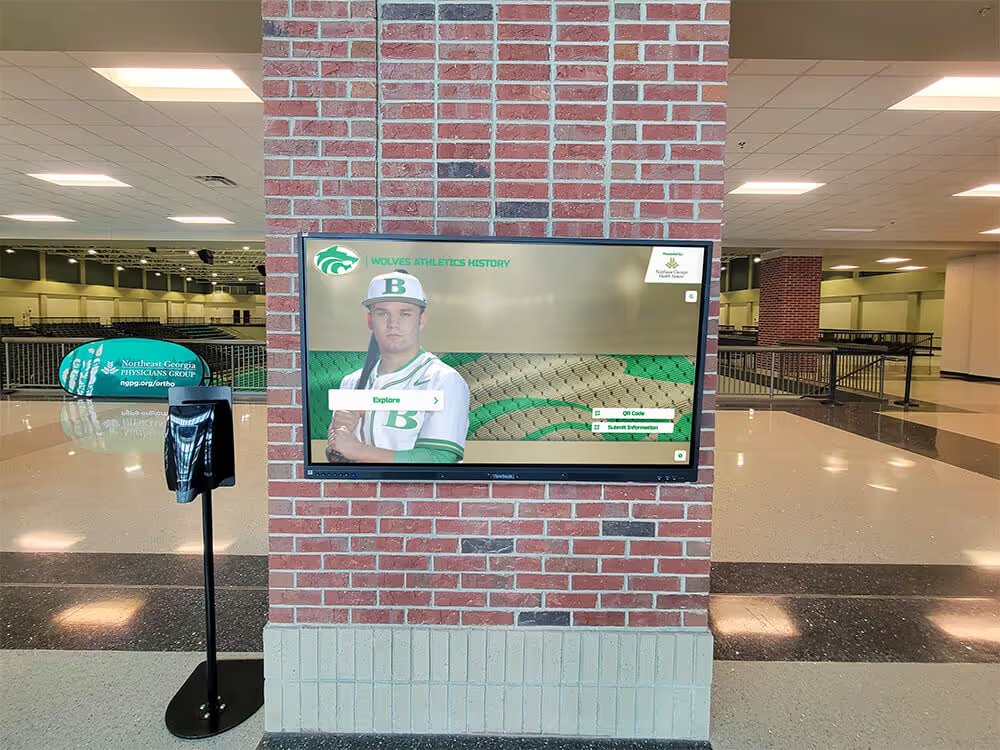
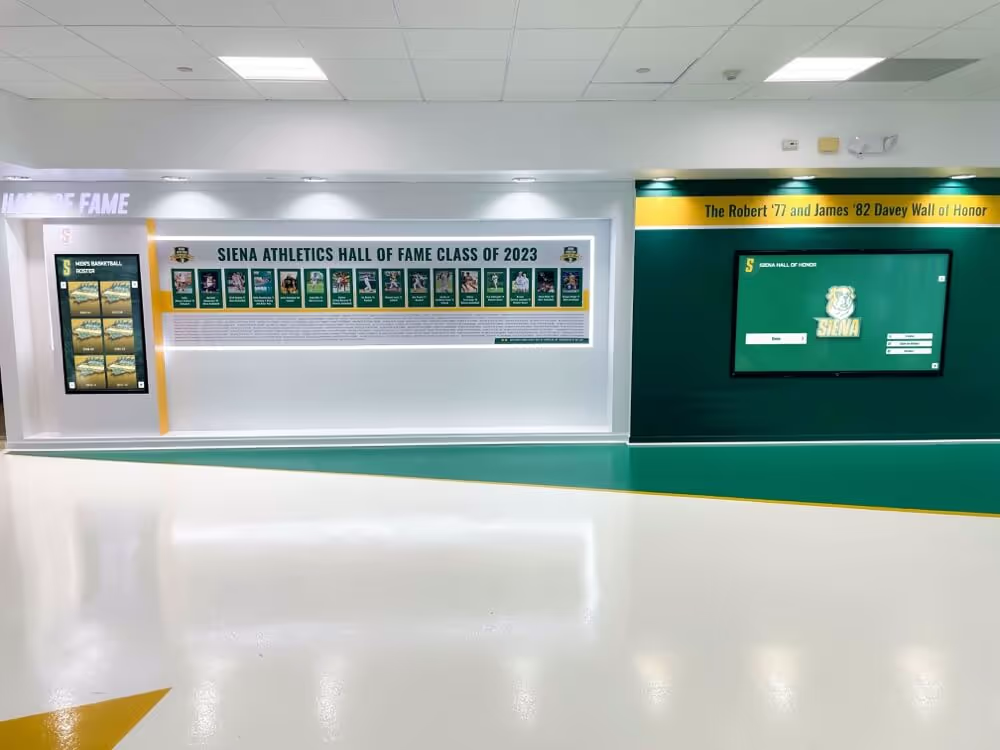
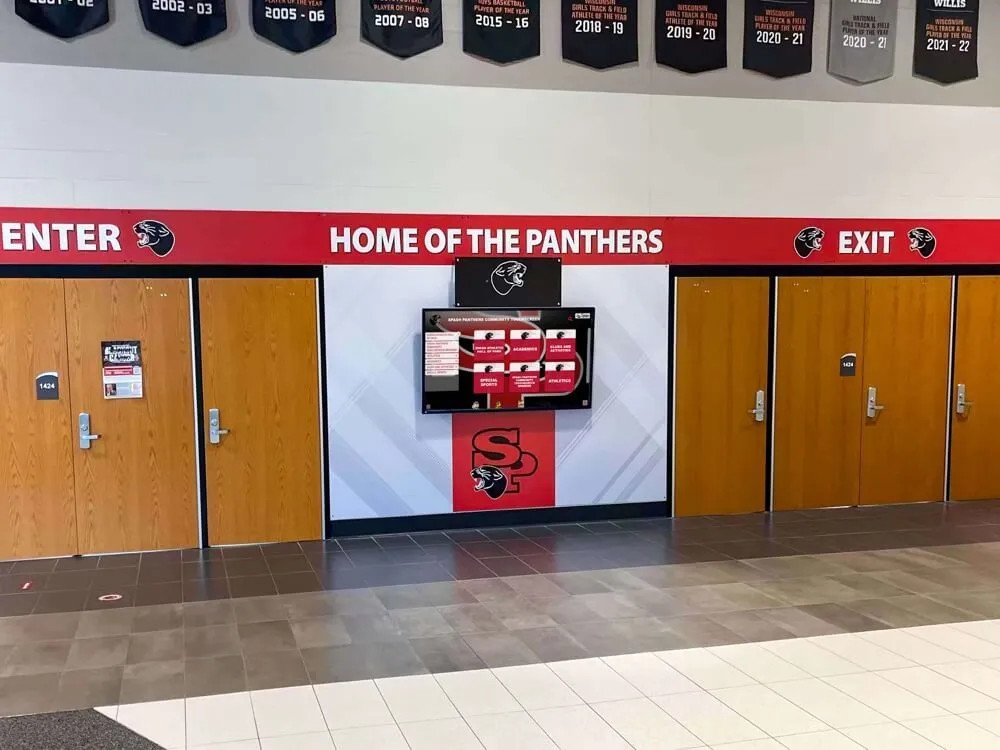
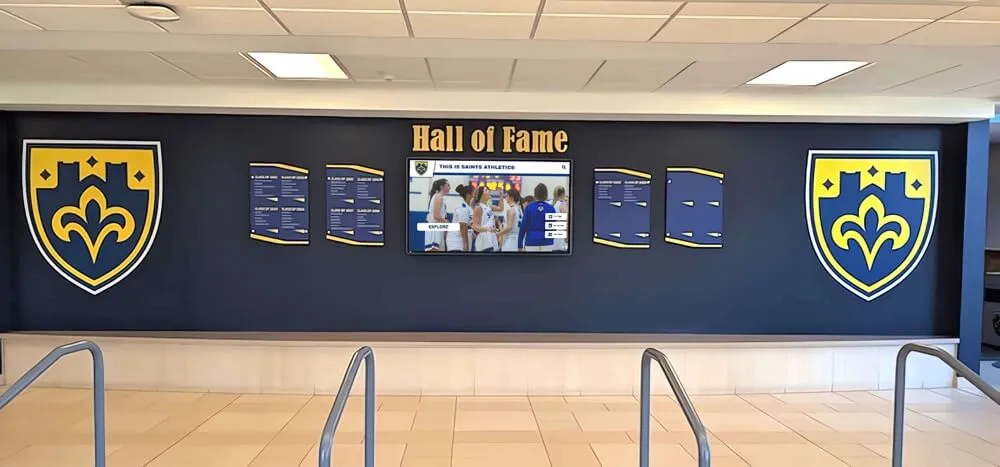
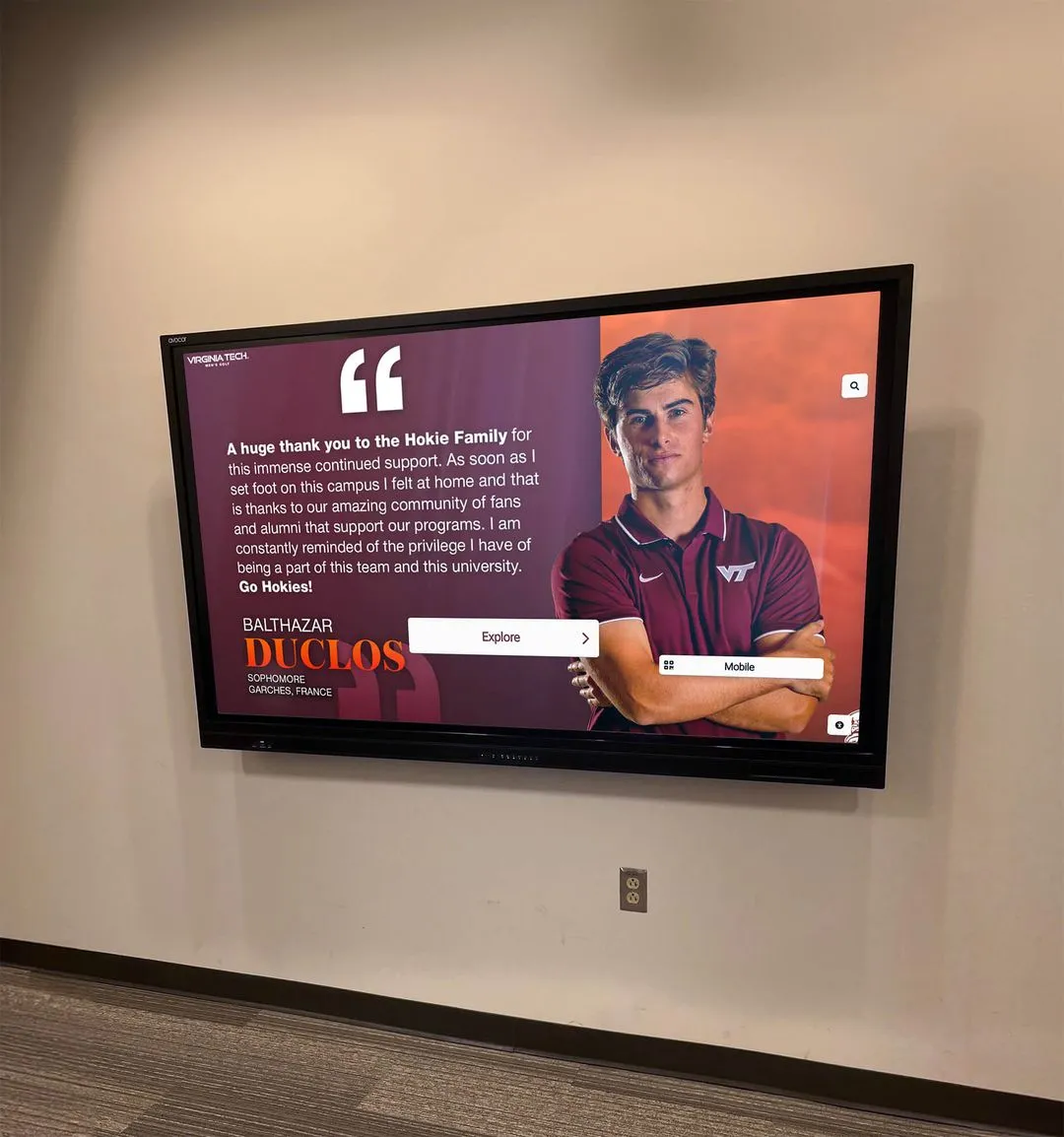
Digital displays integrate seamlessly with traditional championship recognition providing unlimited capacity and rich multimedia content
Digital Championship Recognition Platforms
Modern technology transforms championship celebration from space-constrained displays to comprehensive systems:
Unlimited Capacity Recognition
Digital platforms eliminate fundamental space constraints:
- Single touchscreen display showcases unlimited championships across entire program history
- Every championship receives appropriate recognition regardless of sport or achievement level
- No removal of historical championships necessary when adding new titles
- Complete archives preserving all achievements from program inception forward
- Equitable recognition across all sports without space-based prioritization
- Sustainable approach accommodating unlimited future championship growth
Schools implementing digital recognition consistently report that unlimited capacity represents the most transformative benefit—enabling genuinely comprehensive celebration rather than selective display constrained by ceiling space.
Rich Multimedia Championship Profiles
Digital systems support content impossible with fabric banners:
Complete Team Recognition
- Full rosters with every athlete properly acknowledged
- Individual player photographs and biographical information
- Statistical achievements for teams and individual athletes
- All-conference and all-state honors received by team members
- Post-high school athletic careers and accomplishments
Season Storytelling
- Complete season schedules and game results
- Playoff bracket progression and tournament paths
- Championship game details and defining moments
- Coaching strategies and program philosophies
- Contemporary media coverage and reactions
- Historical significance within program context
Video and Multimedia Integration
- Championship game highlights and key plays
- Trophy presentations and celebration footage
- Player and coach interview clips
- Season highlight compilations
- Historical photos from practices and team events
This comprehensive content brings championships to life in ways fabric banners cannot match—honoring not just that championships occurred but celebrating the actual people whose dedication produced success.
Learn about implementing digital trophy case solutions alongside traditional displays.
Interactive Exploration and Enhanced Engagement
Digital recognition creates active engagement beyond passive banner viewing:
Intuitive Search and Discovery
Modern touchscreen interfaces enable exploration:
- Instant search finding specific championships, athletes, or coaches
- Sport filtering showing complete program history for specific teams
- Year-based browsing revealing program evolution across decades
- Achievement level filtering (conference, district, regional, state)
- Athlete search locating all championships individual students participated in
- Coach-based exploration showing achievements across entire tenures
Extended Engagement Sessions
Research demonstrates interactive displays generate:
- Average viewing sessions of 4-8 minutes compared to seconds for static banners
- Multiple return visits as users discover new content across sessions
- Social interaction as groups explore championships together
- Conversation and storytelling triggered by championship rediscovery
- Educational value as students learn program history and traditions
This extended engagement creates substantially stronger motivational impact compared to brief glances at overhead banners.
Personalized Discovery Experiences
Different audiences find personally relevant content:
- Current athletes explore position-specific achievements and role models
- Alumni locate their championship teams and relive memories
- Families discover relatives who participated across multiple generations
- Prospective athletes evaluate program competitive excellence
- Community members celebrate local achievements and athletic legacy
- Researchers access complete historical records for documentation
Digital recognition serves multiple audiences simultaneously—each finding personalized value through self-directed exploration.
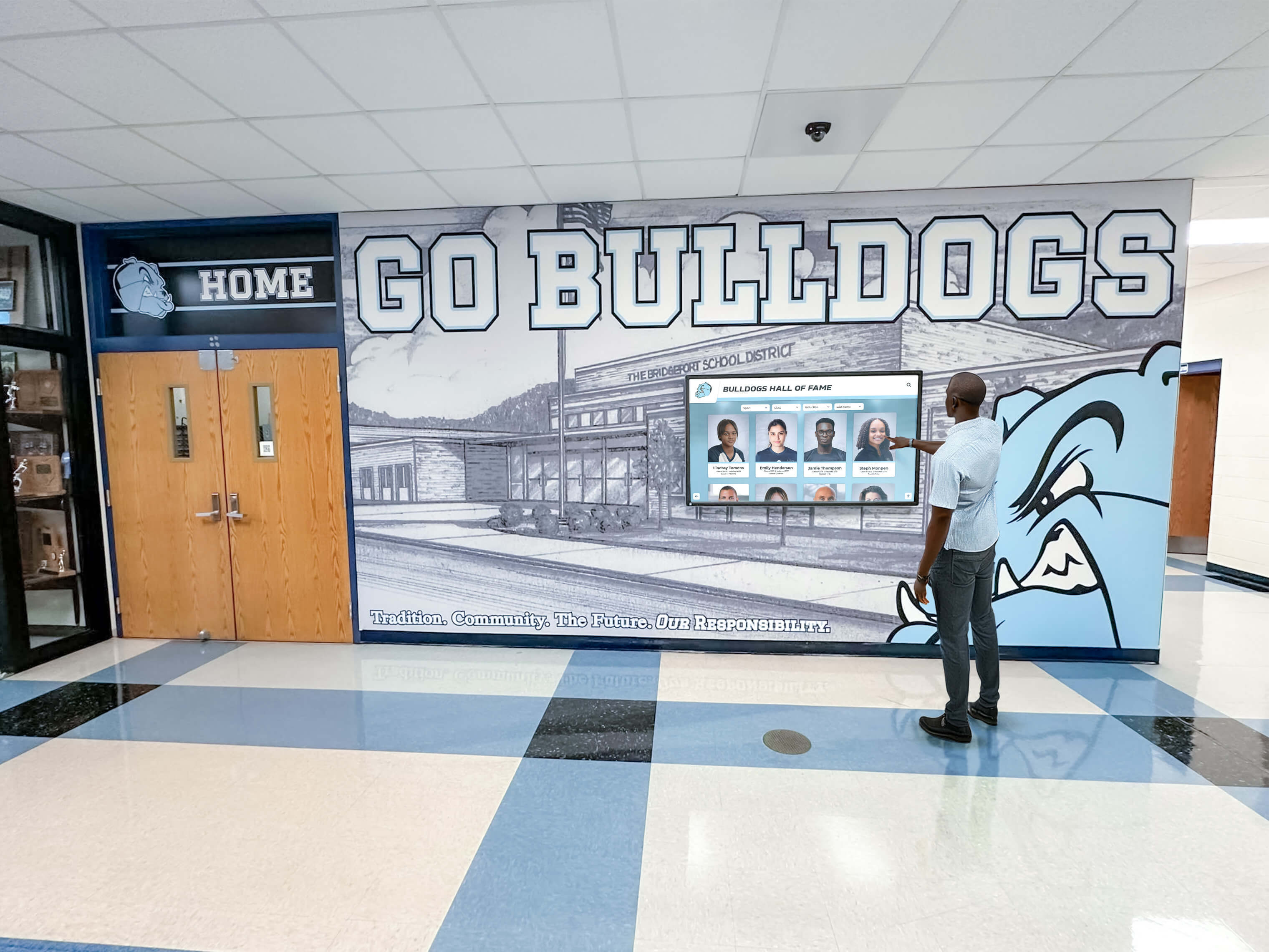
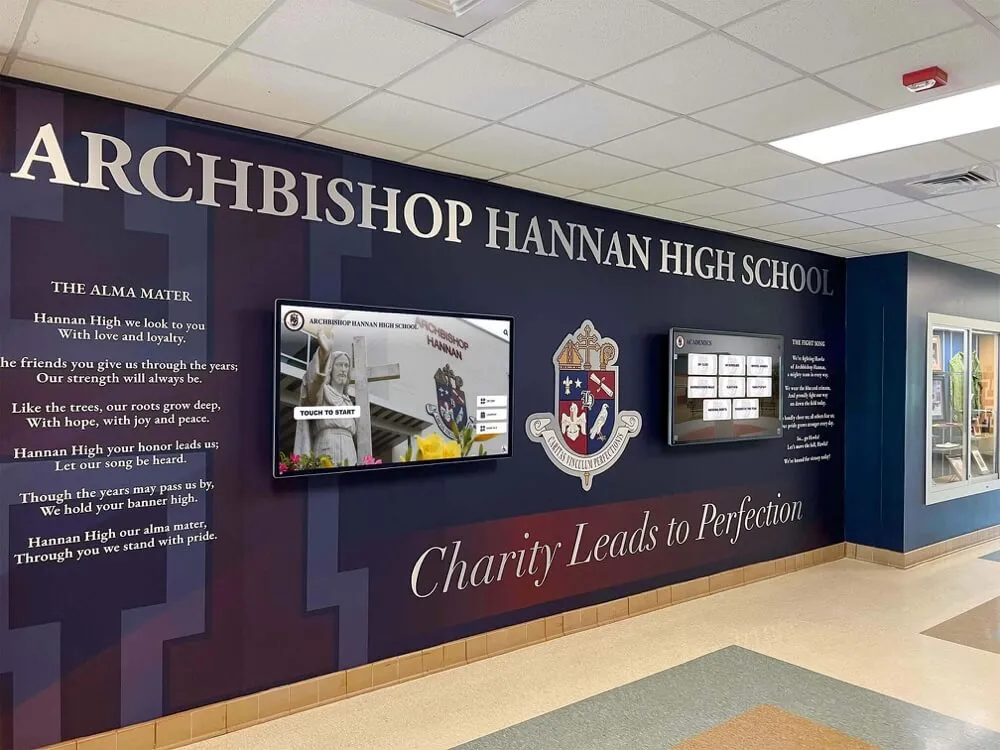
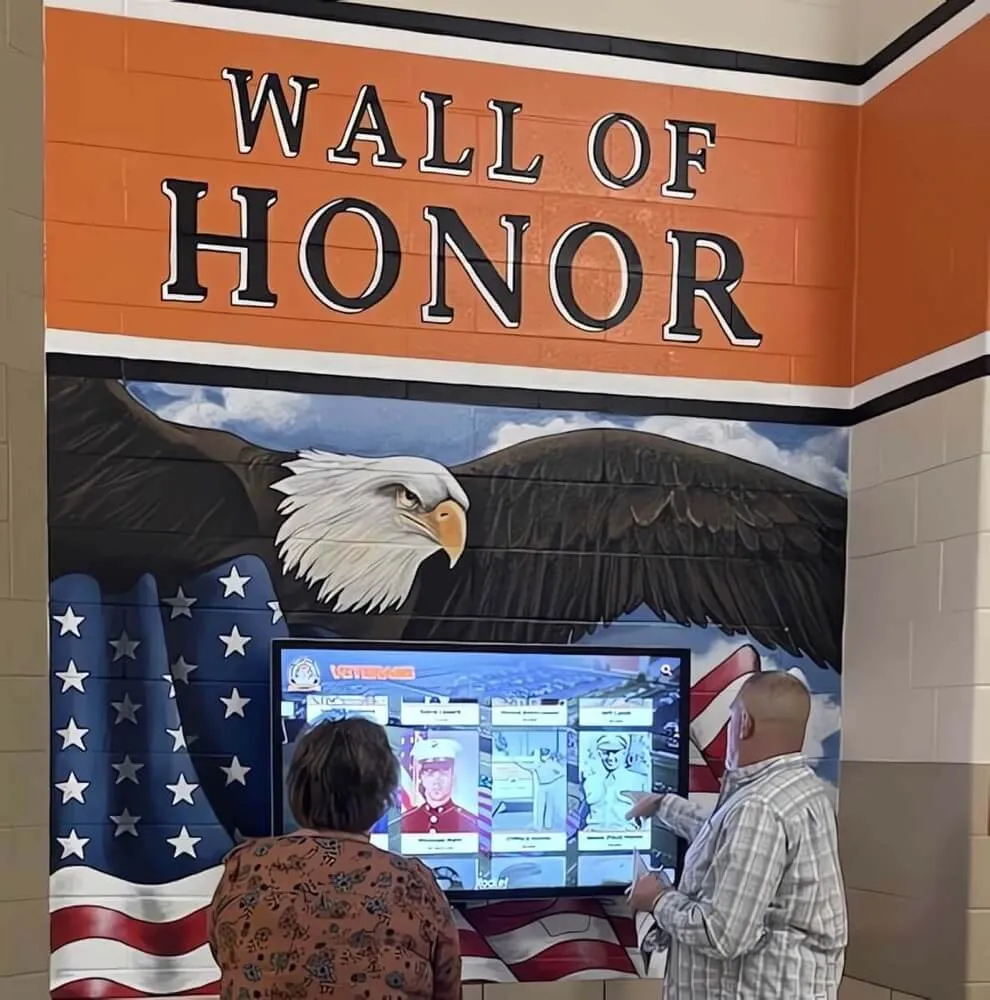
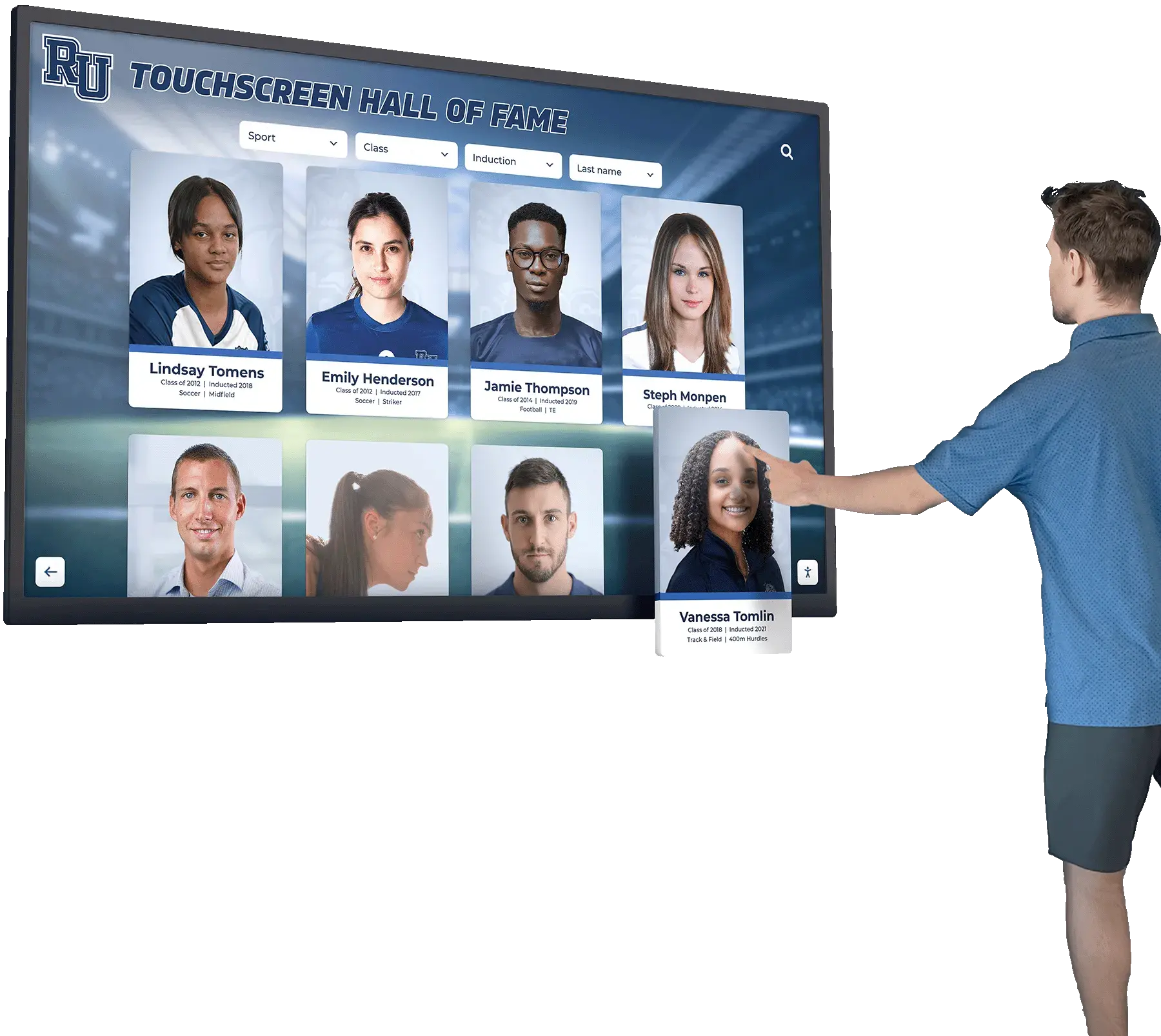
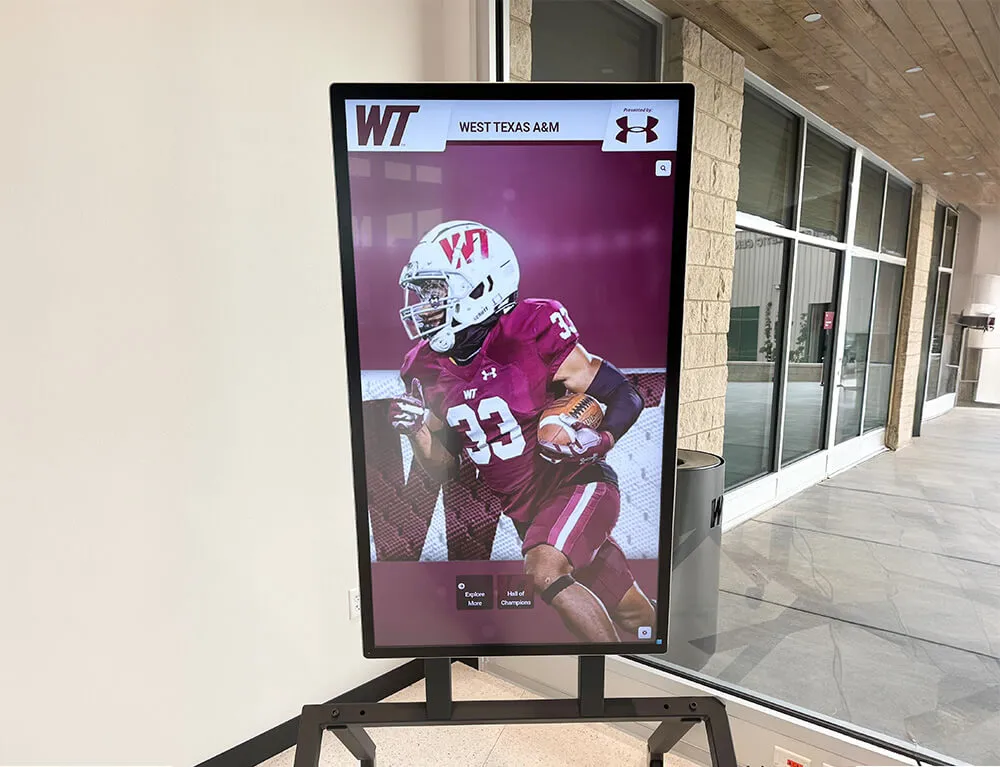
Touchscreen technology enables active championship exploration creating engagement impossible with passive banner displays
Hybrid Approaches: Combining Traditional and Digital Recognition
Most schools implement complementary strategies leveraging both traditional and modern approaches:
Selective Physical Banner Display
Maintain visible ceiling banners strategically:
- Most recent championships (past 2-3 years) displayed prominently
- Historically significant state championships throughout program history
- 20-30 most prestigious banners fitting available ceiling space comfortably
- Visual impact maintaining gymnasium tradition and immediate impression
Comprehensive Digital Documentation
Provide complete championship archives digitally:
- Every championship including those with physical banners
- Complete historical collection regardless of physical display status
- Detailed team profiles impossible on fabric banners
- Interactive exploration enabling deep engagement
- Web accessibility extending recognition beyond physical facility
Connected Recognition Ecosystem
Integrate physical and digital elements:
- Digital displays positioned prominently near banner installations
- QR codes on or near banners linking to comprehensive digital profiles
- Signage directing visitors to explore complete championship collection
- Coordinated visual design creating unified recognition environment
- Complementary rather than competing recognition approaches
This hybrid strategy satisfies traditionalists valuing physical banners while solving capacity problems through comprehensive digital documentation—enabling schools to honor unlimited championships appropriately.
Discover how digital recognition systems complement traditional displays effectively.
Building Comprehensive Championship Recognition Programs
Effective championship recognition requires systematic planning ensuring programs serve athletic department goals while remaining administratively sustainable.
Establishing Clear Recognition Criteria
Document standards preventing inconsistent recognition:
Defining Championship Categories
Determine what achievements warrant banner recognition:
- State championships (all sports automatically recognized)
- Regional and district championships (specific criteria or automatic recognition)
- Conference championships (eligibility standards or limitations)
- Undefeated seasons and historic achievements
- Tournament championships and special recognitions
- Individual athlete state championships in specific sports
Clear written criteria ensure consistent application across all sports and years—preventing case-by-case debates and perceived favoritism.
Achievement Documentation Requirements
Establish what information championship profiles must include:
- Official verification from athletic association or league confirming championship
- Complete team roster with all athletes, coaches, and support staff
- Season record and tournament results
- Team photograph meeting quality standards
- Championship trophy or medal documentation
- Statistical information and individual honors when available
Systematic documentation creates comprehensive archives while ensuring consistent recognition quality across all championships.
Banner Production Standards
Specify design and quality requirements:
- Approved vendors meeting quality and cost standards
- Design templates ensuring visual consistency
- Material specifications guaranteeing appropriate longevity
- Size standards for different championship categories
- Timeline expectations for production and installation
Documented standards prevent inconsistent quality degrading collection professionalism while ensuring reasonable cost control.
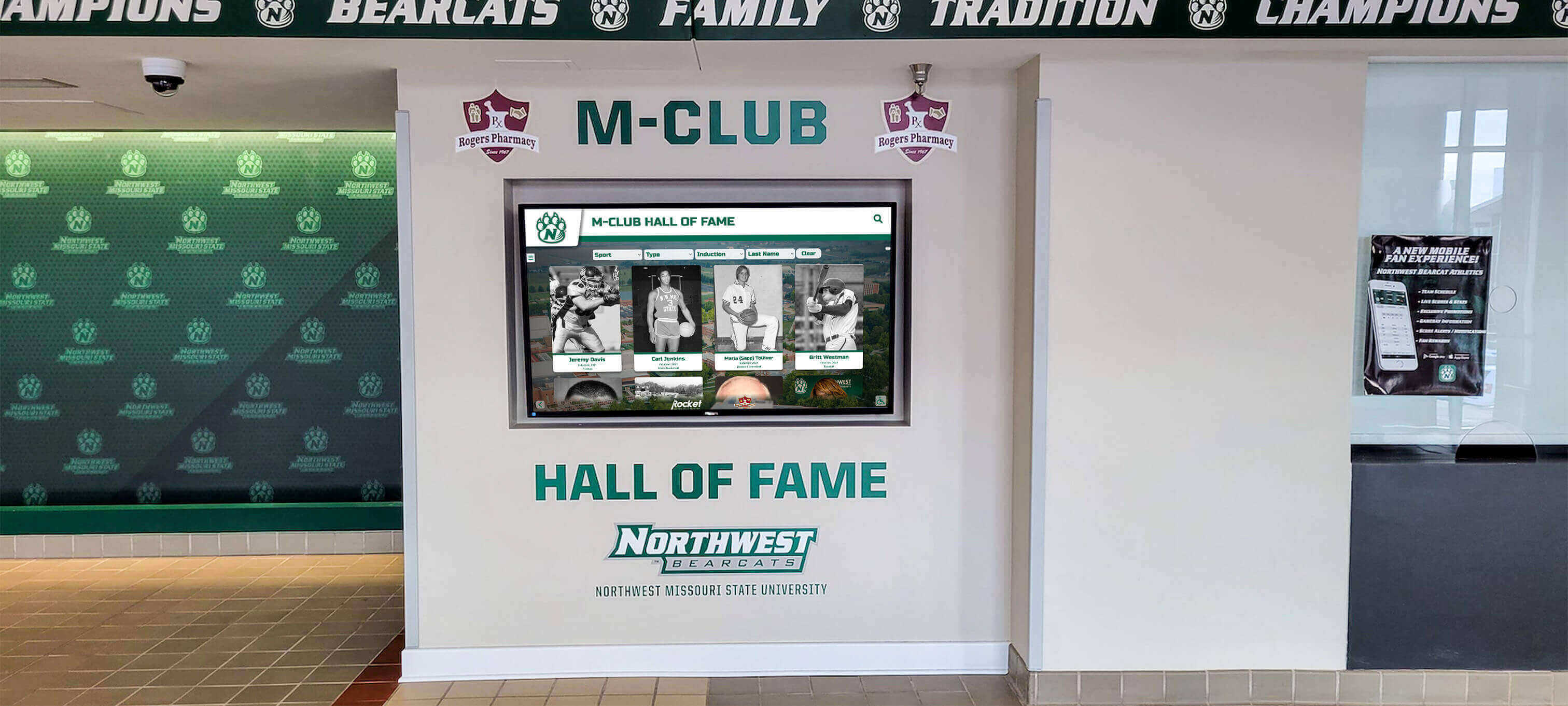
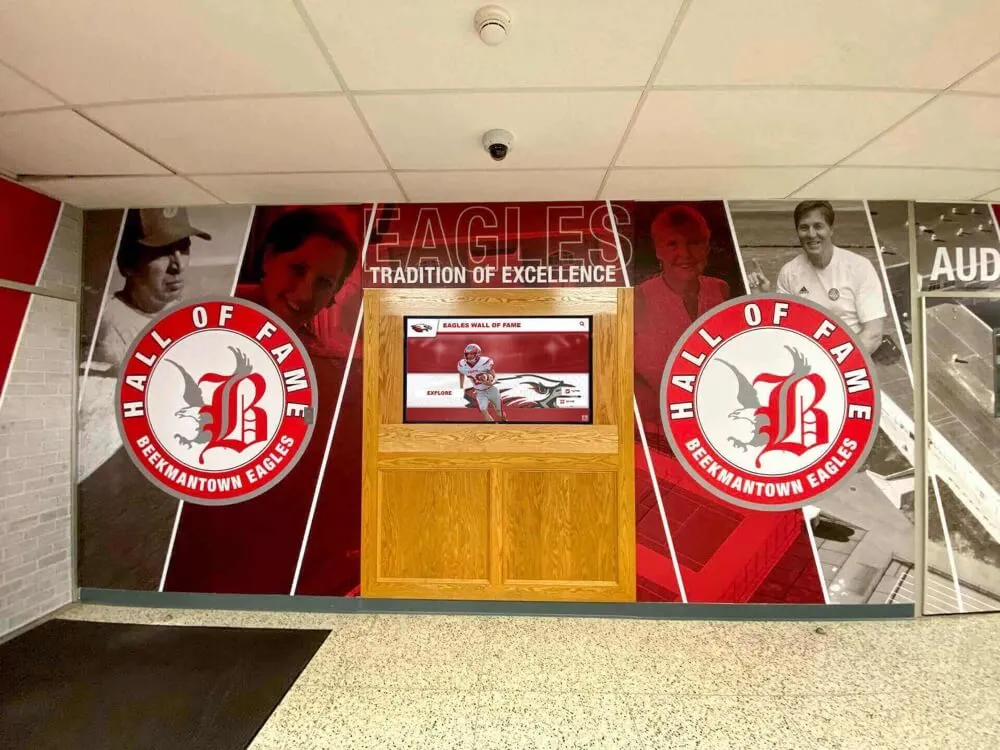
Professional recognition systems celebrate championships with appropriate detail and visual impact
Involving Multiple Stakeholders
Successful programs engage diverse constituencies:
Athletic Department Leadership
Athletic directors and coaches provide essential input:
- Recognition priorities reflecting program values and culture
- Historical championship information and documentation
- Current season championship updates and information
- Connections to championship athletes and coaches
- Approval of recognition approaches and implementations
Athletic department leadership ensures recognition aligns with broader program goals and receives necessary ongoing support.
School Administration
Administrators address institutional considerations:
- Budget allocation and financial sustainability
- Facility modifications and installation approvals
- Brand consistency with broader institutional standards
- Community relations and stakeholder communication
- Long-term planning integrating recognition with facility improvements
Administrative support ensures championship recognition receives necessary resources and integration with broader school initiatives.
Booster Clubs and Alumni Associations
Support organizations contribute significantly:
- Fundraising for recognition systems and ongoing enhancements
- Historical research gathering championship information and photographs
- Alumni outreach collecting memories and championship stories
- Event coordination for championship celebrations and ceremonies
- Sustained engagement maintaining long-term program support
External support organizations often drive championship recognition initiatives—providing resources and labor exceeding what athletic departments accomplish independently.
Current Athletes and Families
Student input ensures recognition resonates:
- Perspective on motivational impact and cultural significance
- Technology preferences and engagement expectations
- Ideas for celebration and recognition approaches
- Feedback on existing recognition effectiveness
- Connections to younger audiences and current culture
Including current athlete voices ensures recognition remains relevant and impactful rather than becoming disconnected from its primary intended audience.
Learn about creating recognition programs that build culture throughout organizations.
Implementation and Technology Selection
Choose recognition approaches matching specific needs:
Traditional Banner-Only Programs
Appropriate for certain situations:
- Small schools with limited championship accumulation fitting available space
- Programs preferring exclusive focus on traditional recognition approaches
- Budget constraints preventing digital technology investments
- Facilities with excellent ceiling space accommodating extensive banner collections
Traditional approaches remain entirely appropriate for many programs—not every school requires digital enhancement.
Digital-Only Recognition
Increasingly popular for some schools:
- New facilities incorporating digital recognition from inception
- Renovations eliminating ceiling space previously accommodating banners
- Programs preferring comprehensive recognition over selective physical display
- Schools prioritizing rich multimedia content over traditional aesthetics
Digital-only approaches work effectively when thoughtfully implemented—though many communities miss traditional banner visual impact in gymnasiums.
Hybrid Traditional-Digital Programs
Most common comprehensive approach:
- Selective physical banners maintaining tradition and visual impact
- Digital recognition providing unlimited capacity and rich content
- Complementary rather than competing recognition elements
- Best-of-both-worlds solution satisfying multiple stakeholder preferences
Hybrid programs typically deliver optimal results—honoring tradition while solving practical limitations through modern technology.
Solutions like Rocket Alumni Solutions provide specialized platforms designed specifically for school athletic recognition needs, combining unlimited championship capacity, rich multimedia content, intuitive touchscreen experiences, and web accessibility that extends championship celebration far beyond physical campus boundaries. Whether implementing standalone digital recognition, enhancing existing banner displays through complementary technology, or creating hybrid approaches combining traditional and modern elements, comprehensive platforms address complete championship recognition requirements effectively.
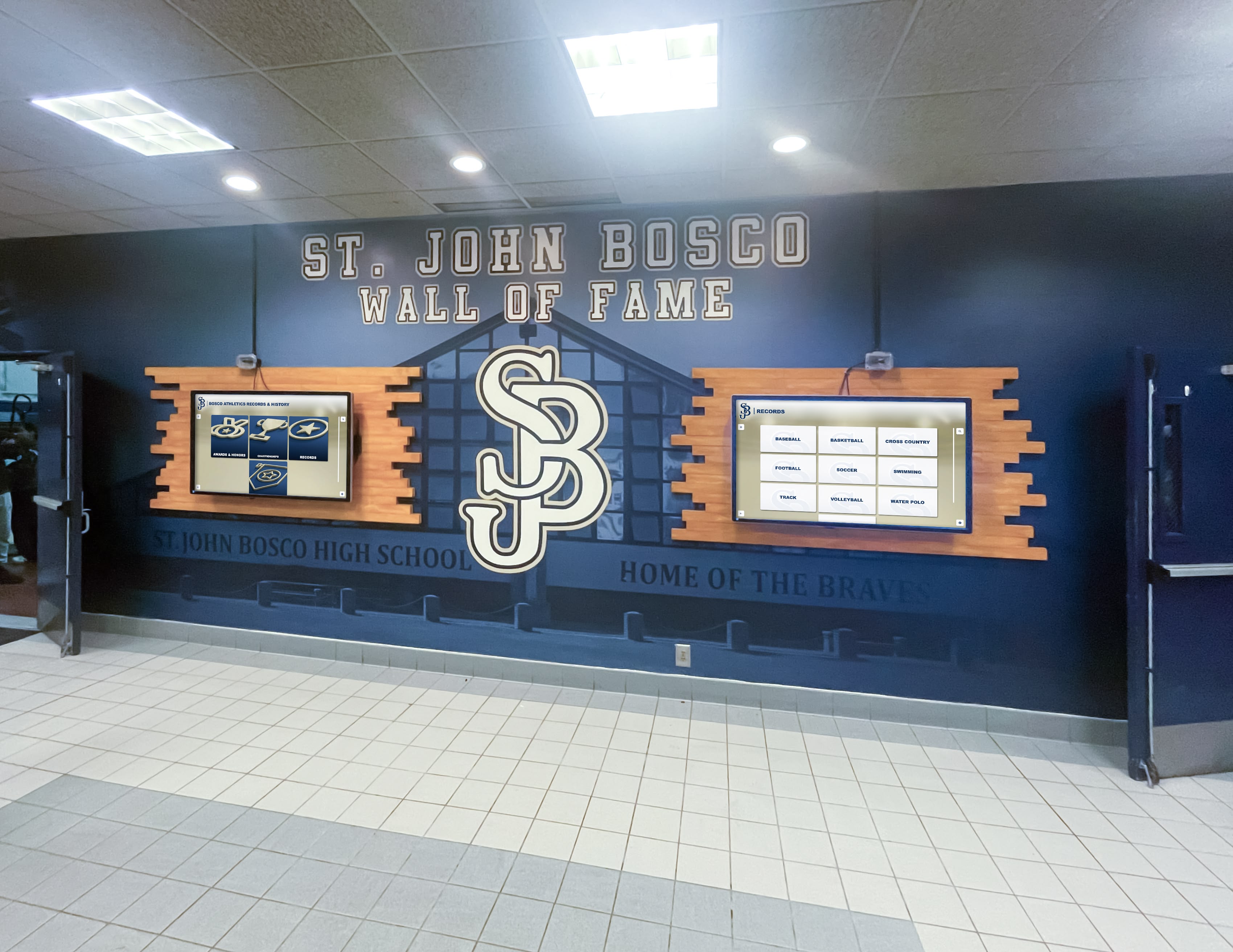
Professional installations create impressive championship recognition showcasing achievements with appropriate prominence and comprehensive detail
Special Considerations for Championship Recognition
Several additional factors influence championship banner program effectiveness and sustainability.
Ensuring Equitable Recognition Across All Sports
Monitor recognition patterns preventing perceived favoritism:
Sport-by-Sport Assessment
Review championship recognition comprehensively:
- High-profile sports (football, basketball) compared to smaller programs
- Boys and girls programs achieving balanced recognition
- Fall, winter, and spring sports represented proportionally
- Team and individual championships recognized comparably
- Achievement levels honored consistently across all sports
Regular assessment identifies imbalances requiring correction—ensuring recognition reflects all program contributions appropriately.
Resource Allocation Equity
Ensure championship celebration receives comparable support:
- Banner production quality consistent across all sports
- Ceremony and celebration resources distributed equitably
- Digital profile development receives equal attention for all sports
- Promotion and communication covers championships comprehensively
- Historical research effort spans complete athletic program
Resource equity demonstrates institutional commitment to all athletic programs—preventing perceptions that certain sports receive preferential recognition while others are undervalued.
Explore strategies for recognizing diverse athletic achievements across programs.
Managing Historical Research and Documentation
Comprehensive championship recognition requires systematic historical investigation:
Research Approaches
Reconstruct championship histories through multiple sources:
- Yearbook review identifying championship teams and basic information
- Newspaper archive searches finding game coverage and photographs
- Athletic record book examination for statistical documentation
- Coach and athlete interviews gathering firsthand memories
- Alumni outreach requesting photographs and information
- Historical document digitization preserving original artifacts
Thorough research ensures championship recognition reflects complete program heritage rather than only recent, easily-documented achievements.
Addressing Information Gaps
Historical records often contain frustrating gaps:
- Missing team photographs for certain championship years
- Incomplete roster information or statistical records
- Conflicting information across different sources requiring verification
- Lost or destroyed records from fires, facility changes, or poor preservation
Accept that perfect historical documentation may be impossible—honor what can be verified while acknowledging gaps candidly rather than inventing information.
Ongoing Enhancement
Championship archives improve continuously:
- Annual calls for historical information yielding new content
- Alumni reunions generating photograph and story submissions
- Family estates donating historical materials and memorabilia
- Periodic research projects expanding historical coverage
- Community volunteers contributing research time and expertise
Digital platforms enable continuous enhancement—unlike static banners that remain unchanged once installed.
Planning for Sustainable Long-Term Programs
Initial enthusiasm must translate to sustained commitment:
Administrative Sustainability
Ensure programs remain current without overwhelming staff:
- Clear annual timelines and processes for championship documentation
- Multiple trained staff members preventing single-person dependency
- Standard operating procedures documenting all program processes
- Technology solutions minimizing update burden through efficient management
- Budget allocations ensuring consistent funding for recognition
- Committee structures distributing responsibilities across individuals
Sustainable programs persist through staff changes and budget fluctuations—requiring systems rather than individual heroics.
Technology Maintenance
Digital recognition requires ongoing technical support:
- Software subscription renewals maintaining platform access
- Hardware maintenance addressing display problems promptly
- Content backup systems preventing permanent information loss
- Network connectivity ensuring reliable display operation
- Staff training on content management and system administration
- Technical support relationships with vendors providing assistance
Budget for technology lifecycle costs beyond initial installation—displays and software require periodic replacement and ongoing support expenses.
Program Evolution and Enhancement
Continuously improve championship recognition effectiveness:
- Annual program assessment evaluating recognition goals and outcomes
- Stakeholder feedback collection from athletes, families, alumni, and community
- Benchmark comparison with peer programs identifying opportunities
- Technology upgrades maintaining contemporary standards
- Content strategy refinement informed by engagement analytics
- Celebration event evolution keeping ceremonies fresh and meaningful
This commitment to continuous improvement ensures championship recognition remains vibrant, relevant, and effective throughout decades—becoming permanent institutional features celebrating athletic excellence across all generations.
Discover approaches to end-of-year banquet displays complementing year-round recognition.
Budget and Investment Considerations
Understanding costs enables appropriate planning and resource allocation for championship recognition programs.
Traditional Championship Banner Costs
Physical banner programs involve specific expense categories:
Per-Banner Production Costs
- Basic vinyl banners (3’x5’): $150-250 per banner
- Premium nylon banners (3’x5’): $250-400 per banner
- Large banners (4’x8’): $400-600 per banner
- Custom designs with complex graphics: add $50-150 per banner
- Expedited production timelines: add 25-50% premium
Installation and Hardware
- Initial installation per banner: $75-150
- Cable and mounting hardware per banner: $25-50
- Professional lift equipment rental: $200-500 per installation day
- Structural assessment and engineering: $500-1,500 for comprehensive facility review
Long-Term Considerations
- 50 championship banners over 10 years: $11,250-27,500 (production + installation)
- Replacement for faded banners: $150-400 per banner every 10-15 years
- Eventually requires removal of older banners as space fills completely
- Provides minimal information beyond sport, year, and achievement level
Digital Recognition Platform Investments
Modern technology involves different cost structures:
Initial Implementation
- Commercial touchscreen display (43-75"): $2,500-8,000
- Professional mounting or kiosk enclosure: $500-3,000
- Media player and computing hardware: $500-1,500
- Installation labor and configuration: $500-2,000
- Total hardware investment: $4,000-14,500
Software Platform and Services
- Annual platform subscription: $1,500-6,000
- Cloud hosting and content delivery included in most subscriptions
- Regular platform updates and feature additions
- Technical support and troubleshooting assistance
- Content management system access
Content Development
- Historical research and information gathering: $2,000-5,000
- Professional photography and digitization: $1,500-3,000
- Content entry and database population: $1,000-3,000
- Video editing and multimedia production: $1,000-4,000
- Total content development: $5,500-15,000
Total Investment Summary
- Complete digital recognition system: $8,000-20,000 first year
- Comprehensive installation with full content: $15,000-35,000 first year
- Ongoing annual costs: $1,500-6,000 for platform and support
- Unlimited championship capacity without per-championship costs
- Rich multimedia content impossible with physical banners
- Accommodates unlimited future growth without space constraints
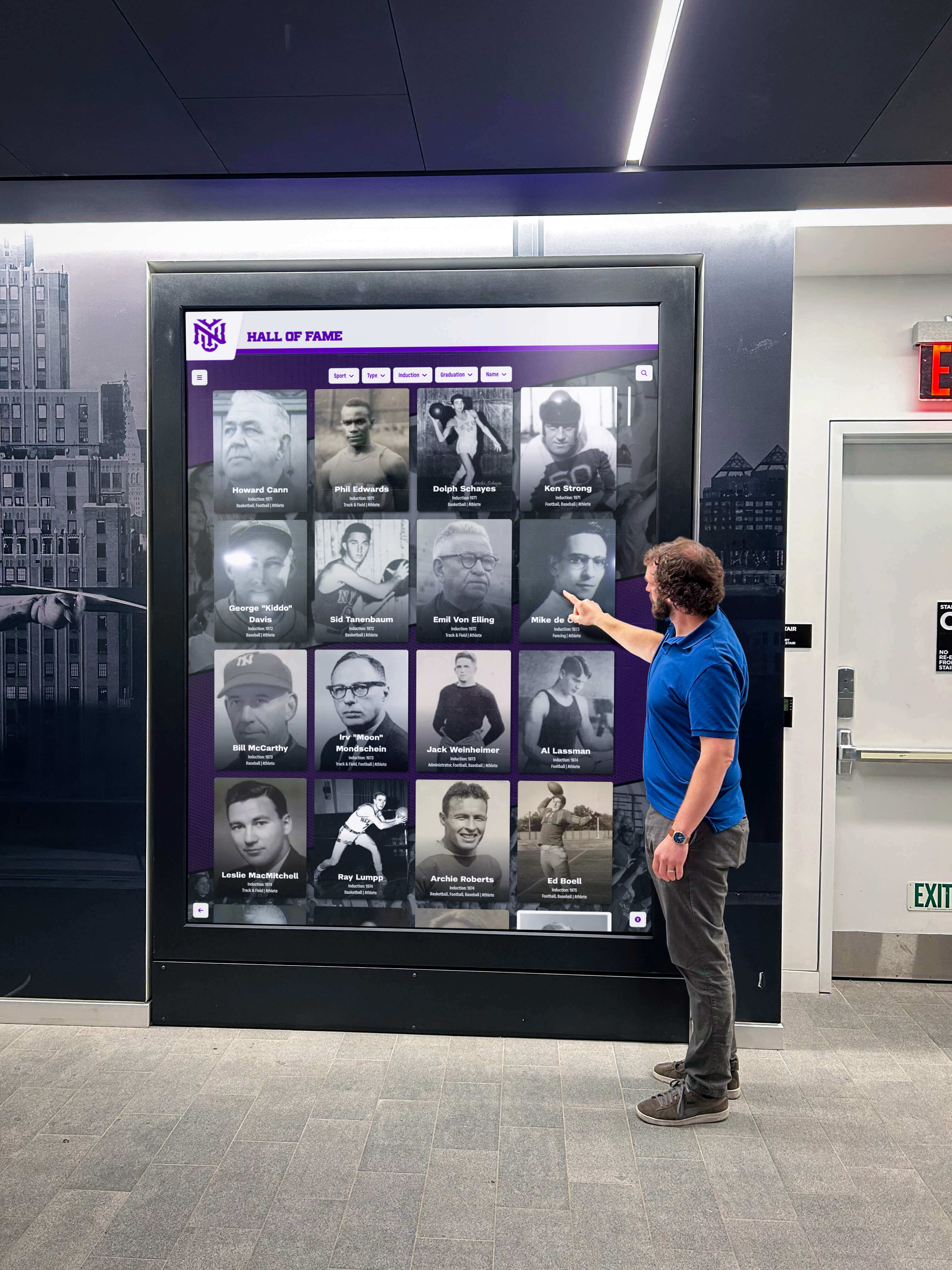
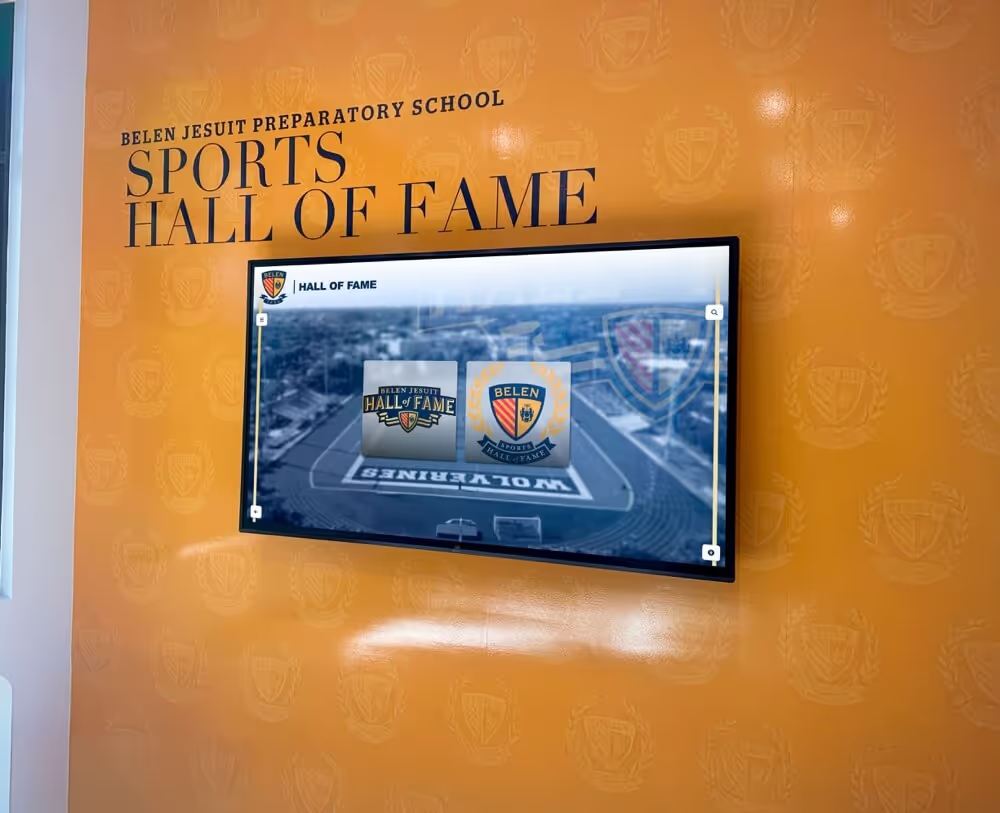
Professional digital installations create engaging championship exploration experiences that exceed traditional banner capabilities
Funding Strategies and Resource Development
Multiple approaches help schools afford comprehensive championship recognition:
Operating Budget Integration
Incorporate recognition in regular budgets:
- Athletic department annual operating allocations
- Technology infrastructure budgets across district
- Facility improvement and renovation projects
- Multi-year capital plans spreading costs across fiscal periods
External Support and Fundraising
Engage supporters through targeted campaigns:
- Athletic booster club dedicated recognition fundraising
- Alumni association support for heritage preservation
- Corporate or community business sponsorships
- Individual major donor opportunities and naming rights
- Grant applications for educational technology and athletics
- Championship anniversary fundraising tied to specific teams
Phased Implementation Approaches
Manage costs through staged implementation:
- Web-based recognition first, physical displays later
- Single display initially, additional locations in future years
- Recent championships first, historical content added progressively
- Basic content initially, multimedia enhancements over time
Many schools discover that comprehensive recognition investments deliver superior long-term value compared to ongoing traditional banner expenses—while eliminating capacity constraints and providing substantially richer recognition experiences that better serve multiple stakeholder groups.
Learn about subscription pricing and budget planning for recognition systems.
Conclusion: Celebrating Championships for Generations to Come
Championship banners hanging from gymnasium rafters represent powerful traditions communicating program excellence, inspiring current athletes, and honoring the dedication that produced competitive success. These fabric monuments will continue serving essential recognition functions in countless schools—creating immediate visual impact that speaks directly about athletic achievement and program culture.
Yet as successful programs accumulate championships across decades and multiple sports, traditional banner displays encounter inevitable capacity constraints that force difficult decisions about which achievements receive visible recognition. Modern digital recognition solutions don’t replace championship banner traditions but complement them—providing unlimited capacity, rich multimedia content, interactive exploration, and comprehensive historical preservation that honors every championship appropriately while solving practical space limitations.
Whether maintaining exclusively traditional banner programs, implementing hybrid approaches combining conventional and digital recognition, or embracing comprehensive modern platforms, the most important factor remains genuine commitment to honoring championship achievement appropriately. Your student-athletes earned those championships through extraordinary effort, dedication, and excellence—they deserve recognition that celebrates their accomplishments comprehensively and permanently.
Ready to create championship recognition that appropriately honors your athletic program’s achievements? Whether enhancing existing banner displays or implementing comprehensive new recognition systems, solutions like Rocket Alumni Solutions provide specialized platforms designed specifically for school athletic recognition needs—combining unlimited capacity, rich multimedia profiles, interactive touchscreen experiences, and web accessibility that extends championship celebration beyond physical facility boundaries. Start planning your championship recognition strategy today and create the lasting legacy your program’s achievements deserve.
The gymnasiums will always display championship banners creating immediate visual impact—that tradition remains valuable and meaningful. But comprehensive championship recognition requires solutions that honor unlimited achievements, celebrate individual athletes whose efforts produced victories, and create engaging experiences connecting entire school communities to athletic excellence. Whether you’re establishing new championship recognition programs or enhancing existing displays, understanding both traditional practices and modern innovations enables schools to build recognition systems that appropriately celebrate athletic achievement for generations to come.
Your championship achievements represent months of preparation, countless hours of practice, strategic coaching, and complete team commitment. Those achievements deserve celebration that tells complete stories, honors every participant, preserves legacies inspiring future generations, and maintains institutional connections across decades of athletic tradition. Begin planning your comprehensive championship recognition strategy today—ensuring that every championship receives the appropriate honor it deserves while building sustainable programs serving your athletic department effectively throughout the decades ahead.