Baseball Hitting Drills: Proven Techniques to Raise Your Team's Batting Average
- Home /
- Digital Hall of Fame Insights & Resources /
- Baseball Hitting Drills: Proven Techniques to Raise Your Team's Batting Average

The Easiest Touchscreen Solution




Live Example: Rocket Alumni Solutions Touchscreen Display
Interact with a live example (16:9 scaled 1920x1080 display). All content is automatically responsive to all screen sizes and orientations.
Every baseball coach knows the feeling: watching your lineup struggle at the plate game after game, searching for the right combination of drills and techniques that will finally unlock your team’s offensive potential. The difference between a .220 team batting average and a .300 average often isn’t raw talent—it’s systematic skill development through proven baseball hitting drills that address the fundamentals every successful hitter must master.
High school baseball presents unique coaching challenges. Limited practice time, varying skill levels across your roster, weather constraints forcing indoor work, and the pressure to develop players quickly for short spring seasons all demand efficient training approaches that maximize repetitions while building proper mechanics. Generic batting practice where players simply “take swings” wastes precious development time, while poorly designed drills can actually reinforce bad habits that become harder to break as seasons progress.
This comprehensive guide explores proven baseball hitting drills coaches use to raise team batting averages, from foundational tee work establishing proper mechanics to advanced live pitching progressions preparing hitters for game situations. Whether you’re coaching freshman players learning fundamentals or refining varsity hitters pursuing program records, these systematic approaches help you build consistent offensive production while developing the complete hitters who become the recognized legends in your baseball program’s history.
Effective baseball hitting instruction requires more than simply throwing batting practice and hoping players improve. The most successful programs implement structured drill progressions addressing specific mechanical components, create deliberate practice plans maximizing limited time, and track player development to ensure techniques are actually improving offensive performance on the field.

Proper hitting mechanics developed through systematic drill work form the foundation for offensive success and the statistical achievements programs celebrate for generations
Understanding the Complete Hitting Development System
Before implementing specific drills, understanding how individual techniques fit within complete player development helps coaches design comprehensive training programs rather than isolated exercises.
The Hitting Development Pyramid
Effective hitting instruction follows a progressive structure:
Foundation Level: Basic Mechanics
All advanced hitting builds from fundamental mechanics:
- Proper stance and setup creating athletic readiness
- Grip positioning enabling bat control and barrel direction
- Load and weight transfer generating power efficiently
- Hip rotation mechanics creating bat speed from the ground up
- Swing path controlling barrel through the hitting zone
- Extension and follow-through completing the swing properly
Without mastering these foundational elements, advanced techniques and situational hitting become inconsistent regardless of practice volume.
Development Level: Timing and Recognition
Once mechanics are established, hitters develop:
- Pitch recognition distinguishing balls from strikes early
- Timing adjustments for different pitch speeds and types
- Tracking ability following pitches from release to contact
- Zone discipline understanding when to swing versus take
- Two-strike approach adjustments maximizing contact probability
- Count leverage recognizing advantageous hitting situations
This intermediate stage separates hitters who possess good swings from those who consistently make solid contact in games.
Advanced Level: Situational Hitting and Game Application
Complete hitters execute:
- Opposite field approach when defenses shift or situations demand
- Gap power hitting driving balls to the alleys consistently
- Situational hitting moving runners with productive outs
- Pressure performance maintaining mechanics under game stress
- Adjustment ability making in-game corrections between at-bats
- Competitive mentality embracing challenging at-bat opportunities
Programs that develop hitters through this complete progression rather than focusing exclusively on mechanics or just letting players “see live pitching” produce the consistent offensive contributors who fill baseball program record boards with impressive statistical achievements year after year.
Creating Effective Practice Structure
Limited practice time demands efficient organization:
Sample 90-Minute Practice Hitting Block
| Time | Activity | Focus | Reps Per Player |
|---|---|---|---|
| 0-15 min | Dynamic warmup & arm care | Injury prevention, movement prep | Full team |
| 15-30 min | Tee work stations | Mechanical foundations, muscle memory | 30-50 swings |
| 30-50 min | Soft toss & flip drills | Timing, contact points, barrel control | 40-60 swings |
| 50-70 min | Front toss & short BP | Recognition, tracking, bat-to-ball | 25-35 swings |
| 70-85 min | Live BP rotations | Game simulation, competitive at-bats | 10-15 swings |
| 85-90 min | Situational hitting & cooldown | Game application, mental preparation | 5-10 swings |
This structure progresses from controlled repetition building mechanics to game-speed application, ensuring players develop complete hitting skills rather than just taking random batting practice swings.
Station-Based Training Maximizing Repetitions
Small group rotations enable more quality swings than traditional whole-team batting practice:
- Station 1: Tee Work - 2-3 players rotating through specific mechanical drills
- Station 2: Soft Toss - Partner work focusing on timing and contact zones
- Station 3: Front Toss - Coach-led recognition and tracking development
- Station 4: Cage Work - Machine BP or live throwing for game simulation
- Station 5: Video Review - Analyzing swings and making adjustments
Six players complete 150+ quality swings in 45 minutes through stations versus perhaps 20-30 swings in traditional team BP format where most time involves waiting in line.
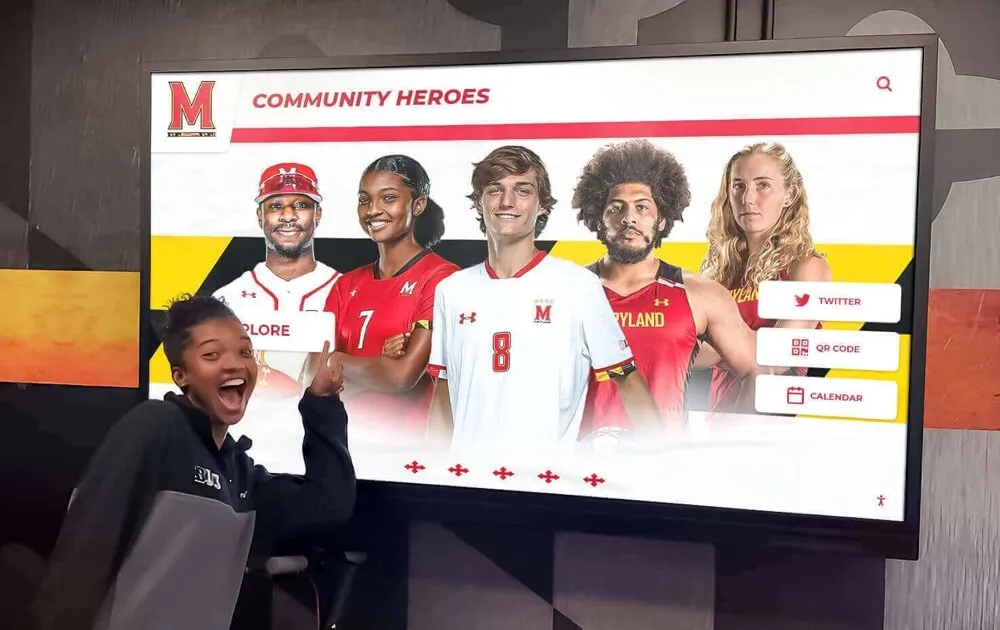
Learn how comprehensive sports team recognition programs can showcase the statistical improvement and offensive achievements systematic hitting development produces.
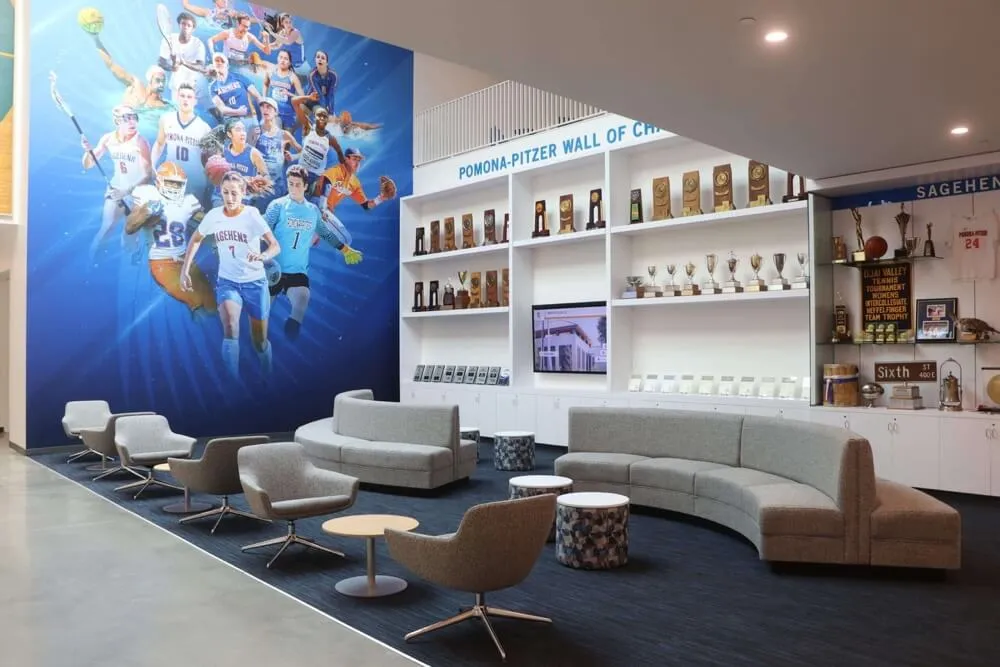
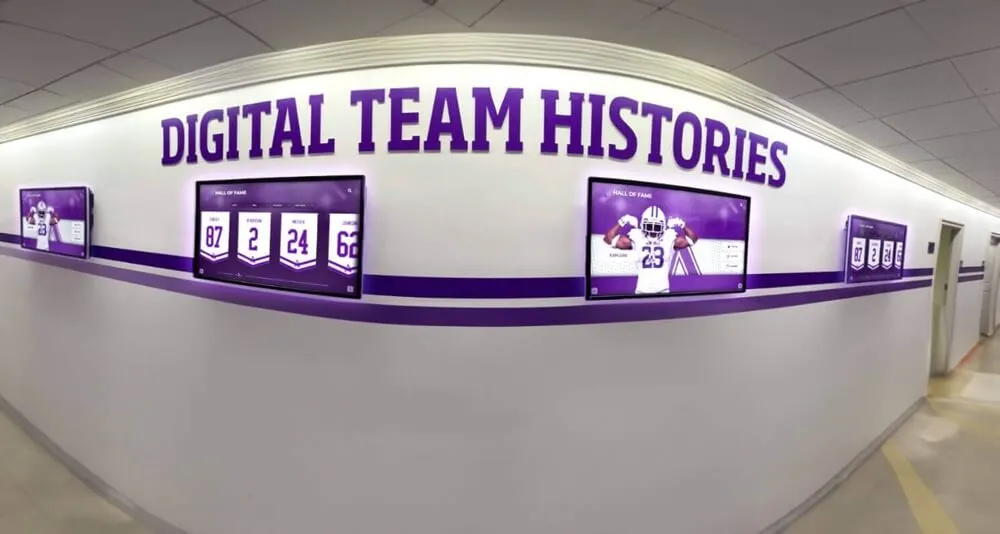
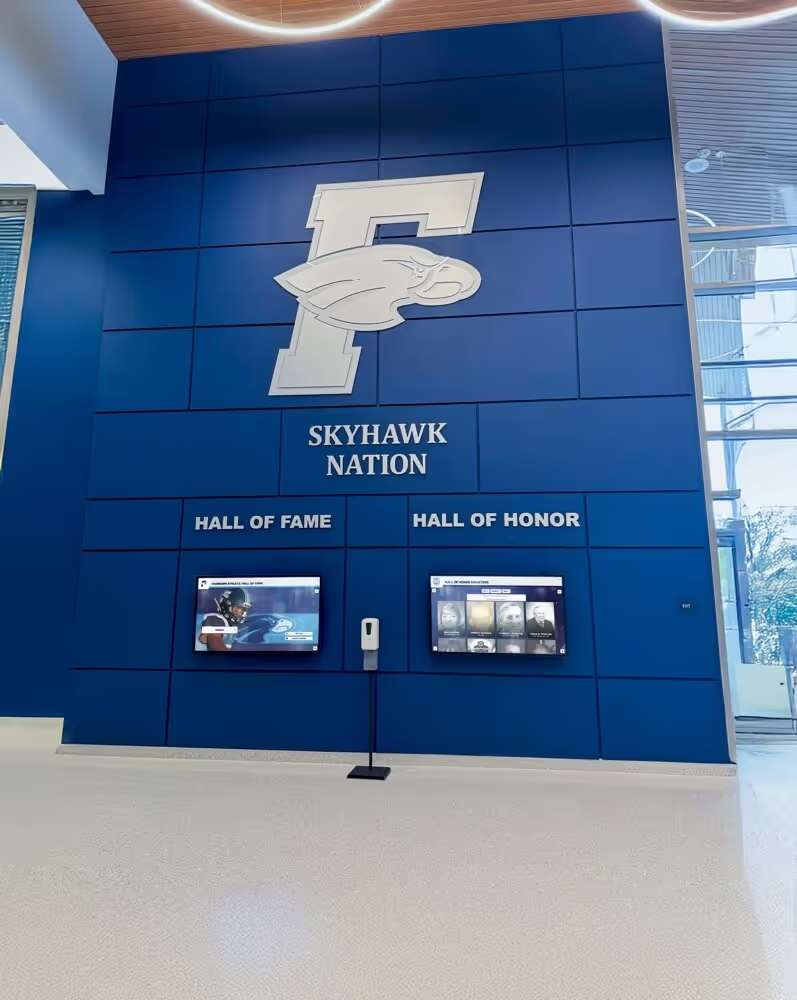
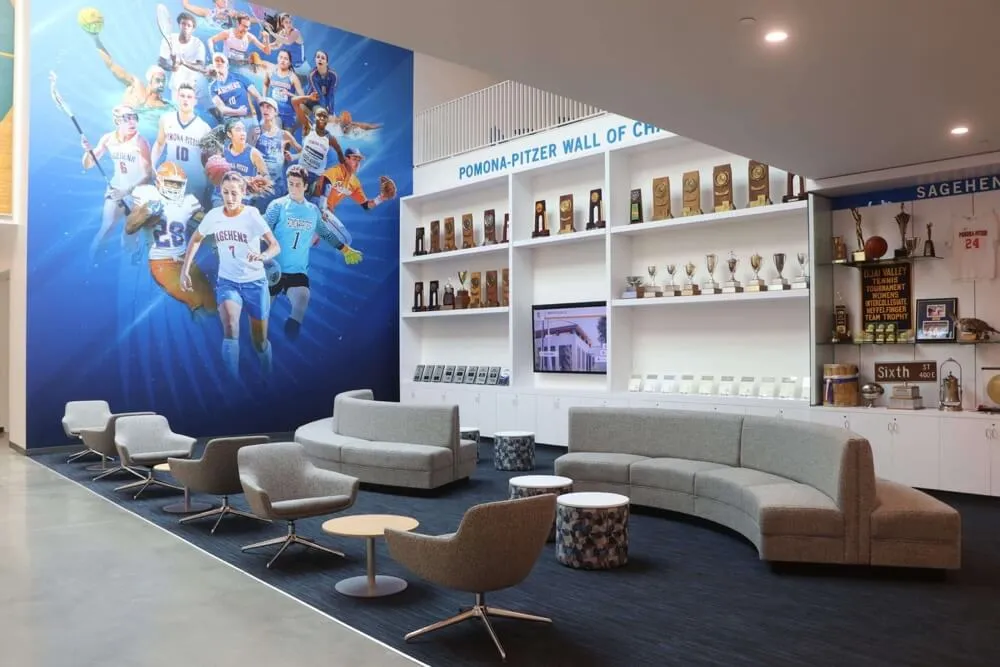
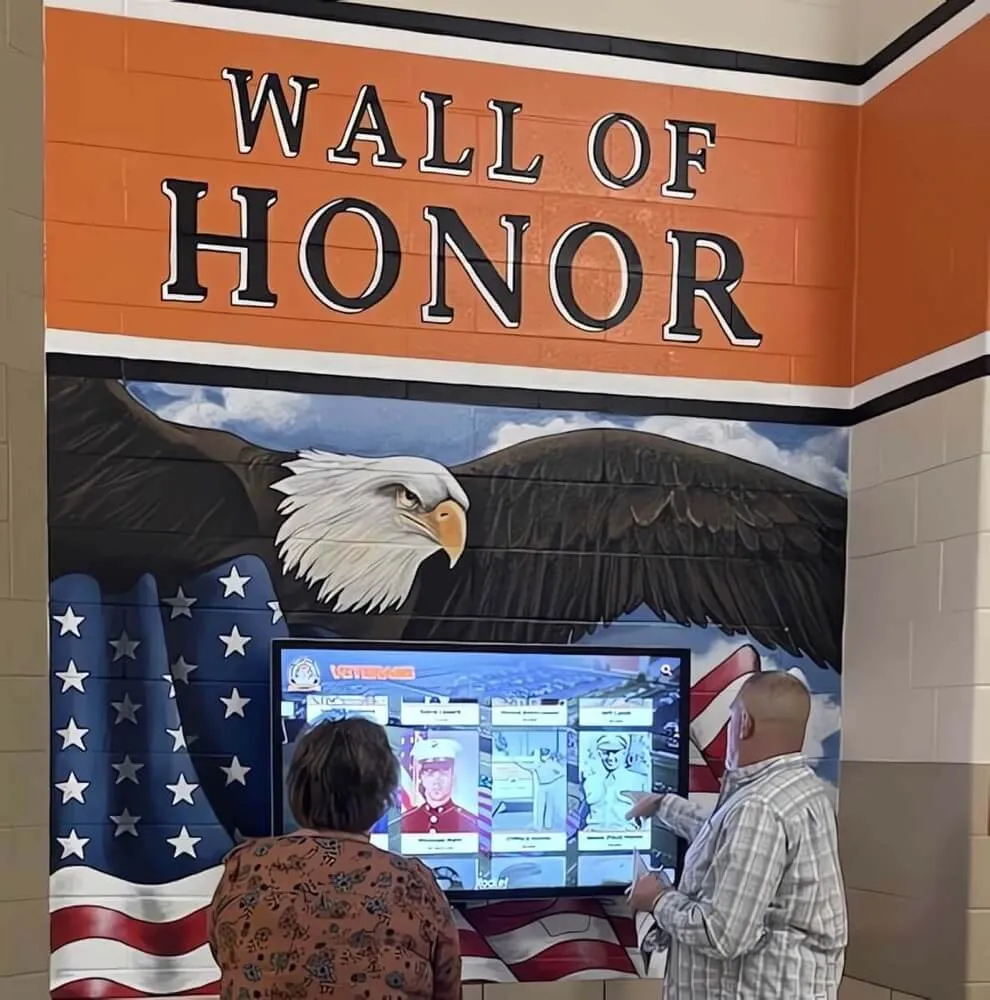
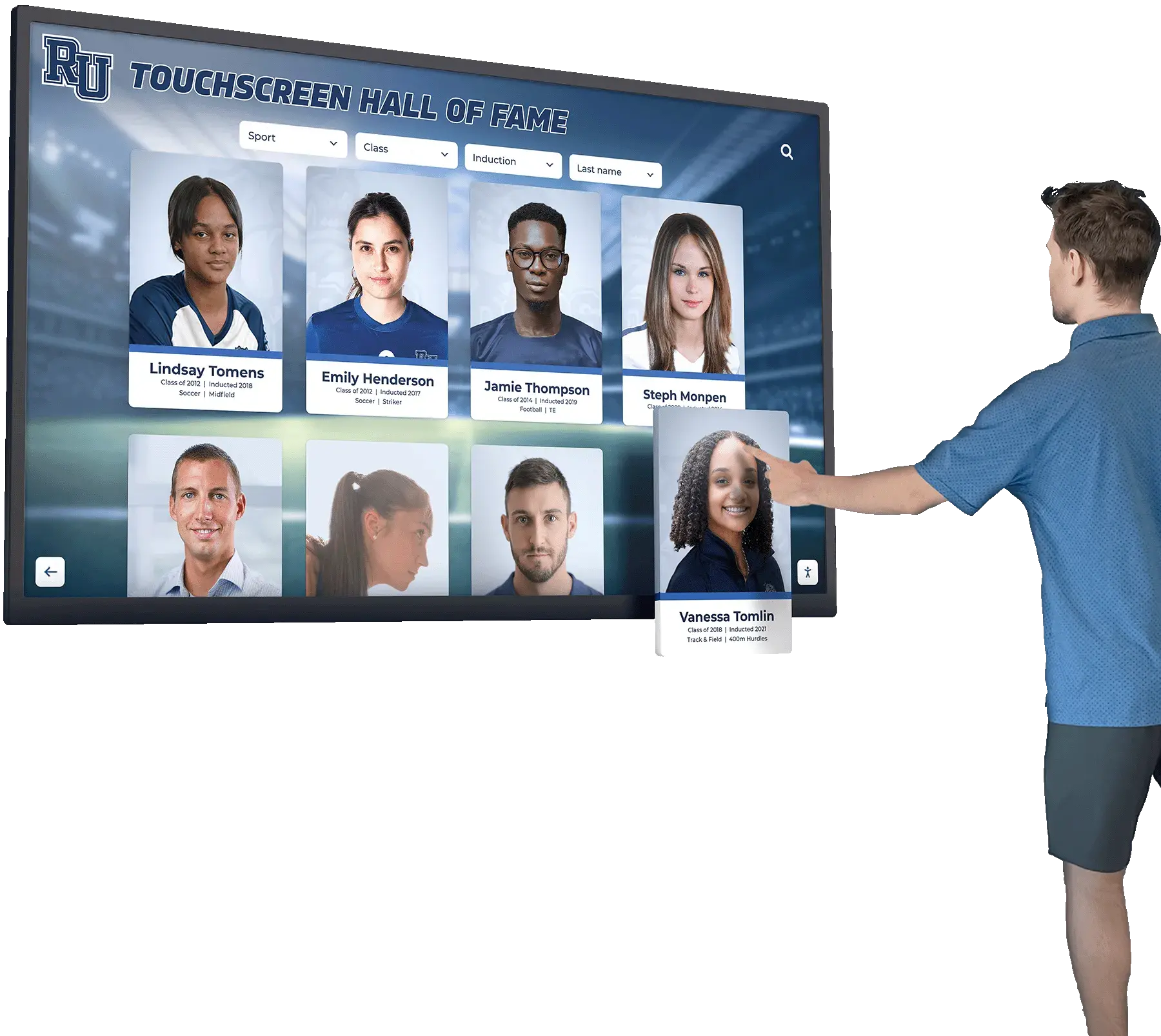
Recognition displays showcasing offensive records and batting achievements inspire current players while documenting the statistical excellence systematic training produces
Foundational Baseball Hitting Drills: Tee Work Excellence
The batting tee remains the most valuable hitting development tool despite some players viewing it as “just for beginners.” Elite hitters at every level, including professional players, use tee work daily to maintain proper mechanics and develop bat control.
Essential Tee Drill Progressions
Standard Tee Work: Building Proper Mechanics
Position the tee at different locations working the entire hitting zone:
Inside Pitch Tee Work
- Set tee on inside corner of home plate, even with front hip
- Focus on quick hands getting barrel to ball before it gets too deep
- Contact point should be well out in front of the plate
- Emphasis on pulling balls down the left field line (right-handed hitters)
- Common mistake: letting ball get too deep, resulting in weak contact or foul balls
- Coaching cue: “Quick hands, get to the ball early, drive it to your pull side”
Middle-In Tee Work
- Position tee over middle of plate, slightly in front of center
- Develop straight-up-middle approach and center field power
- Contact point directly over the plate with full extension
- Focus on level swing path through the hitting zone
- Common mistake: pulling everything instead of staying through the middle
- Coaching cue: “See it middle, hit it middle, drive the ball to center field”
Outside Pitch Tee Work
- Place tee on outside corner, deeper in hitting zone
- Emphasize letting ball travel, staying back, driving to opposite field
- Contact point behind front foot for proper outside pitch mechanics
- Extension through the ball toward opposite field
- Common mistake: rolling over, pulling outside pitches weakly
- Coaching cue: “Let it travel, stay back, drive the ball where it’s pitched”
High and Low Tee Adjustments
- Vary tee height from knees to letters working different pitch heights
- Develop swing plane adjustments for pitch location vertically
- Lower pitches require flatter approach; higher pitches need slight uppercut
- Build zone coverage preventing exploitable mechanical holes
Players should complete 10-15 quality swings at each location (50-75 total swings) during tee work sessions, focusing on feeling proper mechanics rather than just mindlessly hitting balls.
Advanced Tee Drill Variations
Two-Ball Tee Drill: Improving Barrel Accuracy
Place two balls on the tee side-by-side, separated by 2-3 inches:
- Objective: Hit only the inside ball (closest to hitter) without touching outside ball
- Develops precise barrel control and inside-out swing path
- Forces proper swing plane preventing long, looping swings
- Immediate feedback—outside ball moving indicates swing path error
- Progression: Gradually reduce spacing between balls increasing difficulty
This drill particularly benefits players who struggle with casting or long swing paths that create timing problems against good pitching.
Stacked Ball Tee Drill: Contact Point Precision
Stack two balls vertically on the tee:
- Goal: Hit only the top ball, leaving bottom ball on tee
- Emphasizes level swing path through the zone
- Prevents uppercut swings that create pop-ups and weak fly balls
- Develops compact, efficient swing mechanics
- Coaching point: If bottom ball moves, swing path is too steep
One-Handed Tee Work: Isolating Swing Components
Perform tee swings using only one hand:
Top Hand Only (right hand for right-handed hitters)
- Develops extension through contact
- Strengthens swing completion and follow-through
- Prevents pulling off the ball prematurely
- Use lighter bat or choke up significantly
- 15-20 swings focusing on full extension through contact
Bottom Hand Only (left hand for right-handed hitters)
- Emphasizes pulling the knob through the zone
- Develops barrel control and inside-out path
- Strengthens lead arm and prevents lazy top hand
- Lighter bat required for control and safety
- 15-20 swings with emphasis on pulling through with authority
Back-to-Back Combination
- Alternate 5 top-hand swings, 5 bottom-hand swings, 5 normal two-handed swings
- Feel how each hand contributes to the complete swing
- Develop balanced swing where neither hand dominates improperly
Understanding how baseball programs track and celebrate statistical achievement helps coaches demonstrate to players how systematic skill development through drills like these leads to the offensive numbers that earn program recognition.
Tee Work Common Mistakes and Corrections
Mistake: Rushing Through Repetitions Without Purpose
Players often hit balls off the tee as fast as possible without focusing on mechanics or feeling proper movement:
- Correction: Implement deliberate practice with specific swing thoughts each rep
- Quality over quantity—30 focused swings beats 100 mindless hacks
- Use video periodically to verify mechanics match intentions
- Require verbal articulation of focus before each round
- Example: “This round I’m focusing on staying back on outside pitches”
Mistake: Using Game Effort on Tee Work
Taking full-power swings on every tee rep creates fatigue without addressing specific mechanical needs:
- Correction: Use 60-75% effort focusing on feel and mechanics
- Save full effort for live pitching and game situations
- Slow-motion swings (especially video recorded) reveal mechanical issues
- Gradual progression from 50% effort establishing feel to 75% then full speed
- Mental approach: tee work is practice piano scales, not performing concerts
Mistake: Poor Setup and Tee Positioning
Incorrect tee height, distance from plate, or ball placement undermines drill effectiveness:
- Correction: Be precise with setup matching game situations
- Use home plate (portable if necessary) for accurate positioning
- Verify contact point relative to plate for each location
- Check stance and plate coverage ensuring game-realistic setup
- Coaches should verify rather than trust players set up properly
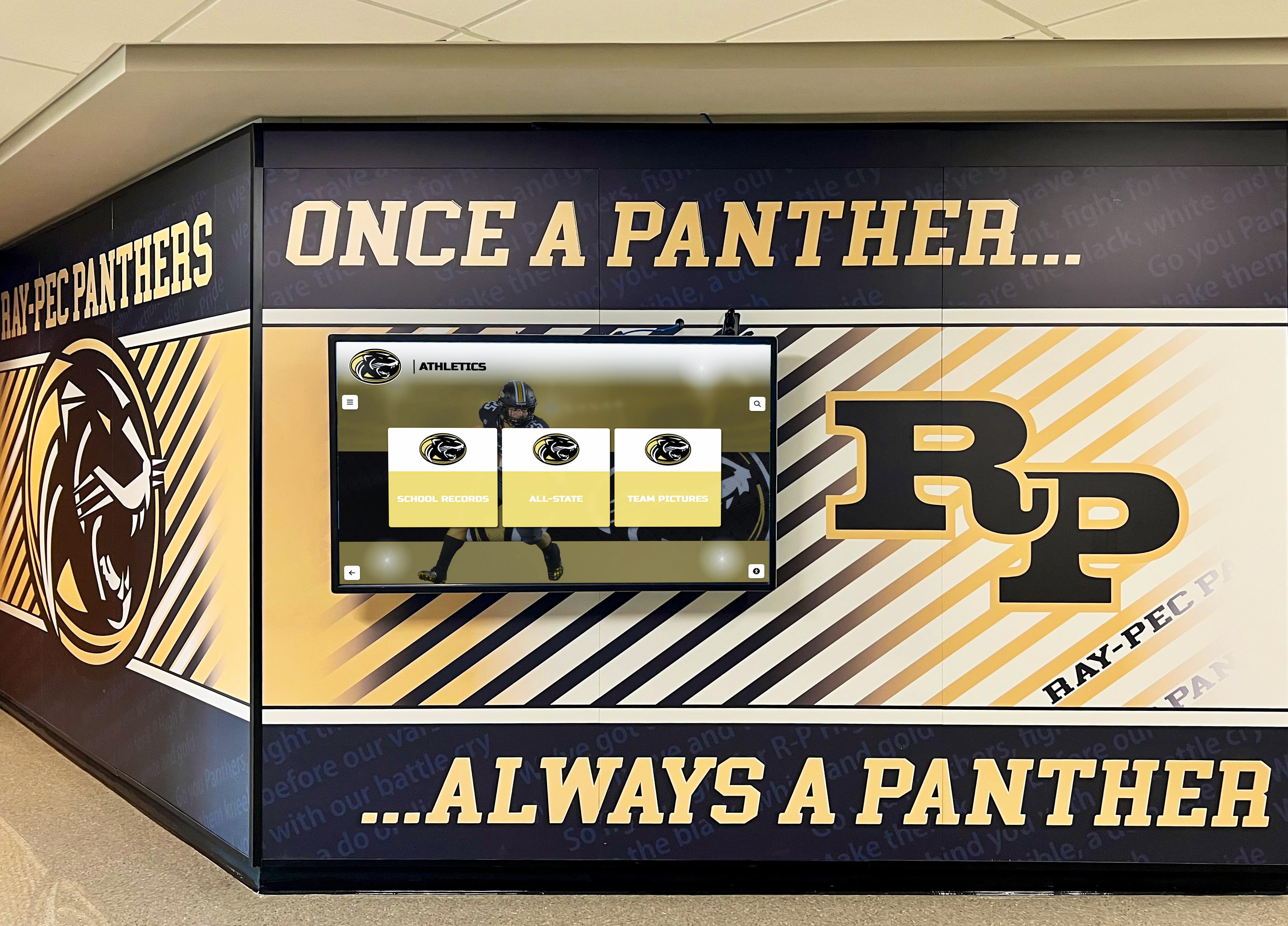
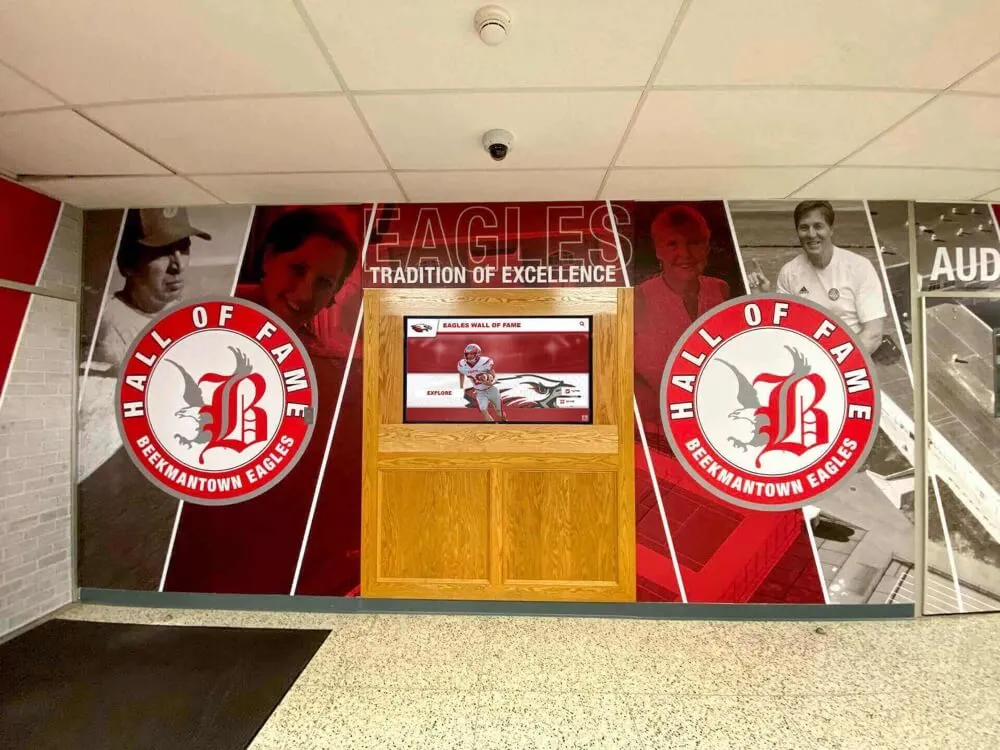
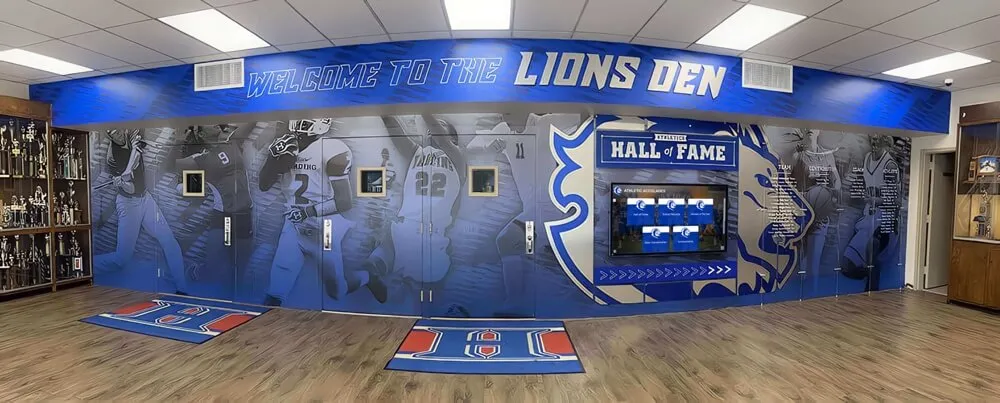
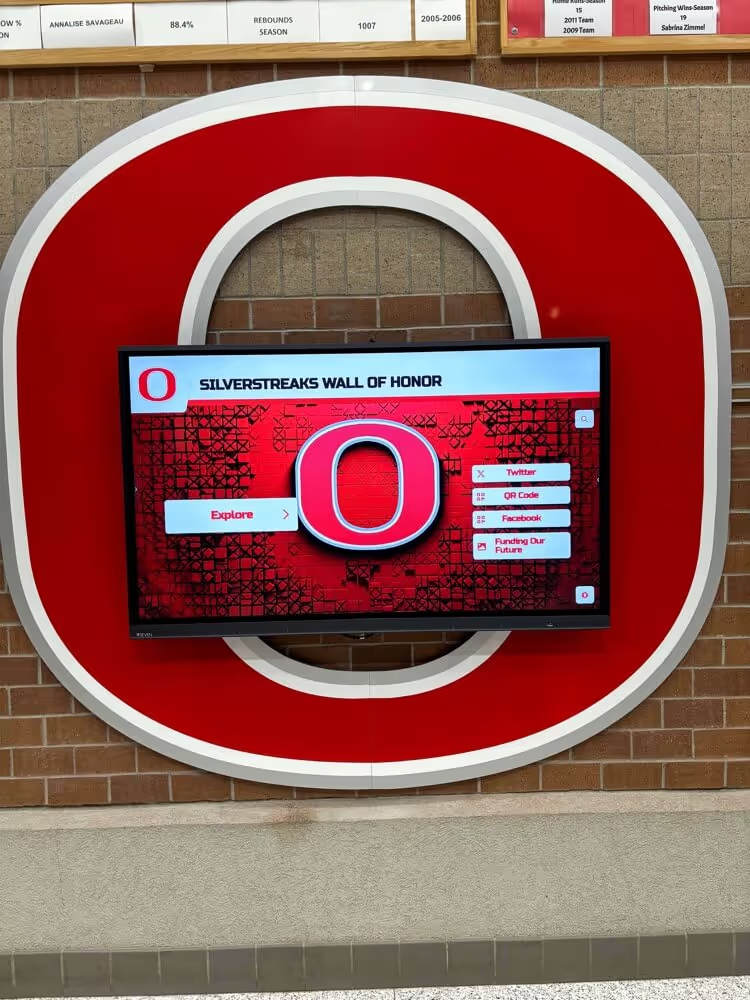
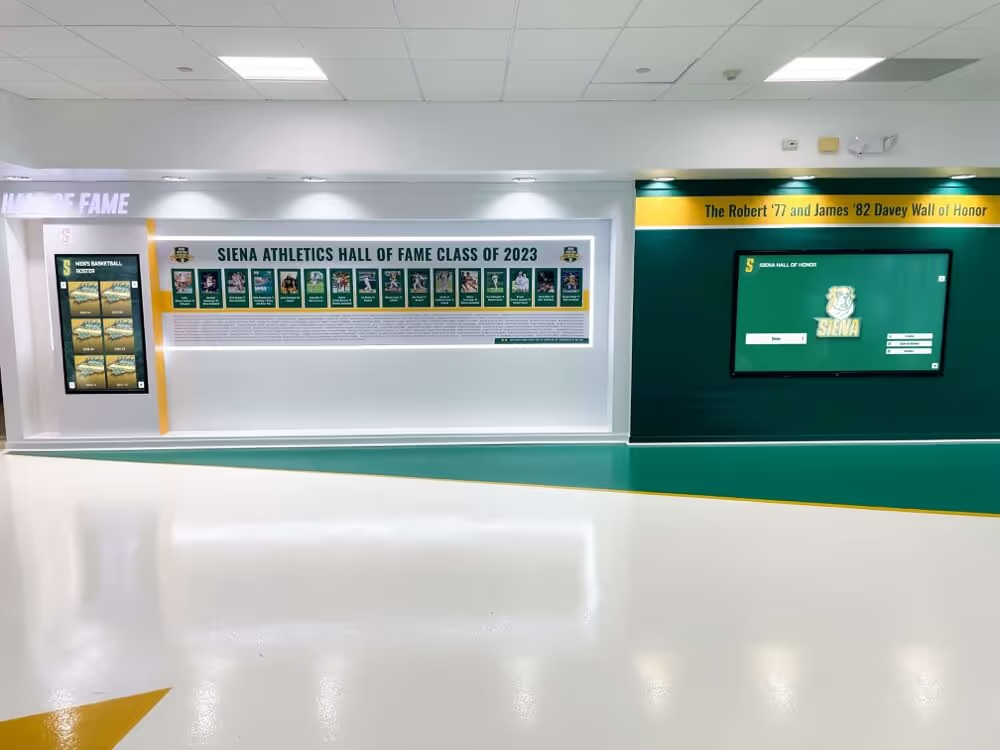
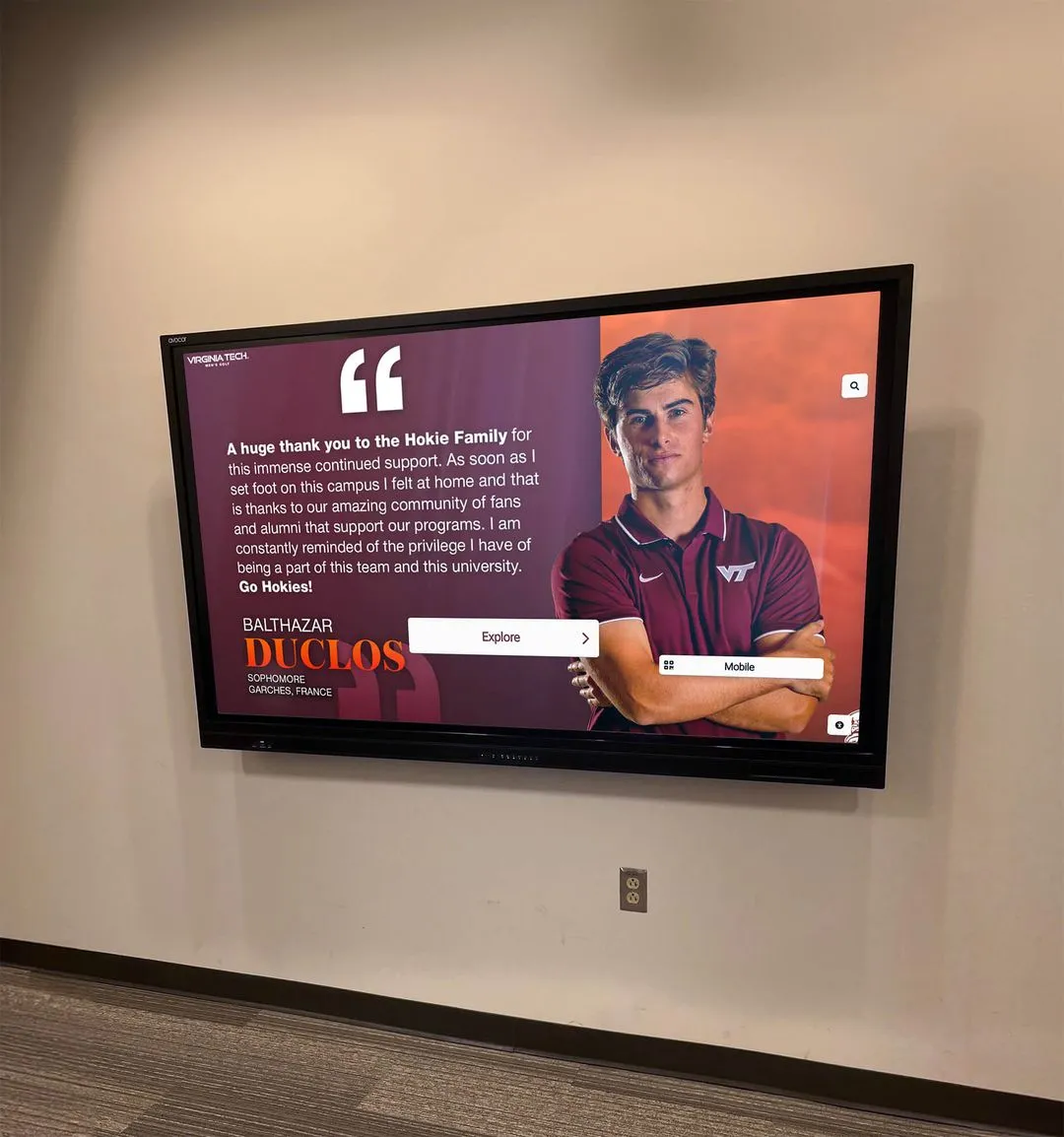
Prominent facility displays celebrating batting champions and offensive leaders create visible aspirations that motivate players during daily skill development work
Timing Development: Soft Toss and Flip Drills
After establishing proper mechanics through tee work, players need timing development recognizing moving balls and adjusting swing initiation. Soft toss and flip drills bridge the gap between static tee work and live pitching.
Standard Soft Toss Variations
Front Soft Toss: Building Hand-Eye Coordination
Coach or partner kneels 10-15 feet in front of hitter on 45-degree angle:
- Toss balls underhand into hitting zone from protective screen
- Hitter tracks ball from release through contact
- Emphasis on seeing ball all the way to bat
- Vary toss height, speed, and location systematically
- 25-40 tosses per round focusing on barrel contact and extension
Side Soft Toss: Contact Point Development
Tosser kneels 8-10 feet to the side of hitter (slightly in front):
- Underhand tosses cross hitting zone simulating pitch trajectory
- Hitter must time swing to contact point based on toss release
- Develops proper load and trigger timing
- Vary inside/outside locations and high/low placement
- Perfect for small indoor spaces during weather-limited practice
Short Box Soft Toss: Quick Reaction Development
Position tosser just 5-6 feet from hitter with protective screen:
- Rapid-fire tosses requiring quick recognition and reaction
- Minimal reaction time forces efficient swing mechanics
- Eliminates over-thinking, develops instinctive contact
- 40-50 tosses in quick succession
- Excellent for pre-game warmup routines
One-Knee Soft Toss: Isolating Upper Body Mechanics
Hitter sets up on back knee (right knee for right-handed hitter):
- Eliminates lower body, isolating upper body swing mechanics
- Focus exclusively on hand path, barrel control, and extension
- Prevents lunging or diving at pitches
- Emphasizes staying back and letting ball travel
- Particularly valuable for players who struggle with balance or diving
Advanced Flip Drill Progressions
High Toss Drill: Tracking and Timing
Coach stands behind protective screen 12-15 feet from hitter:
- Toss ball high in the air (8-12 feet) simulating ball dropping into zone
- Hitter must track ball from height through contact point
- Develops tracking ability critical for recognizing breaking balls
- Timing challenge as ball decelerates creates adjustment practice
- 20-30 tosses with emphasis on quality contact despite unusual trajectory
Two-Ball Flip Drill: Decision Making Under Pressure
Tosser holds two different colored balls (or marked differently):
- Call out color mid-toss—hitter must identify and hit called ball
- Develops quick recognition and decision making
- Simulates game situations requiring instant swing/take decisions
- Improves focus and concentration under pressure
- Alternative: Call “top” or “bottom” with balls tossed at different heights
Rapid Fire Flip Drill: Reaction Time and Bat Control
Continuous tosses with minimal delay between pitches:
- 30-40 balls tossed in rapid succession
- Hitter must reset quickly and maintain consistent mechanics
- Develops muscle memory through high repetition
- Physical conditioning component building swing endurance
- Mental toughness element maintaining focus through fatigue
Moving Target Flip Drill: Barrel Control Development
Tosser varies location significantly requiring constant adjustments:
- Inside, outside, high, low in random sequence
- Hitter must recognize location and adjust swing plane accordingly
- Prevents mechanical robots—develops game-realistic adaptability
- Emphasizes staying short to ball regardless of location
- 25-35 tosses covering entire strike zone coverage
Programs that systematically develop hitting skills create the offensive production recognized through digital record systems celebrating batting leaders and statistical achievements across program history.
Implementing Small-Ball Situational Soft Toss
Sacrifice Bunt Soft Toss
Use soft toss to develop bunting technique safely:
- Tosser provides consistent tosses simulating pitcher release point
- Hitter practices showing bunt, bat angle control, and dead-ball technique
- Much higher repetition than live pitching bunting work
- Immediate feedback on bunt placement and execution
- 30-40 bunt attempts building consistency and confidence
Hit-and-Run Soft Toss
Simulate hit-and-run situations:
- Hitter focuses on contact regardless of location
- Emphasis on staying short to ball, hitting ground balls
- Protect runner by making contact even on tough pitches
- 20-25 swings with hit-and-run mentality and approach
Two-Strike Approach Soft Toss
Specific focus on two-strike hitting mechanics:
- Choke up, shorten swing, prioritize contact over power
- Battle mentality fouling off tough pitches
- Opposite field approach fighting off inside pitches
- 25-30 competitive swings with two-strike mindset
Live Pitching Progressions: From Front Toss to Full BP
The final development stage involves live pitching progressions preparing hitters for game-speed recognition and execution.
Front Toss Machine or Coach Throwing
Short Front Toss (25-30 feet)
Coach or machine positioned behind L-screen throwing from reduced distance:
- Controlled velocity (40-50 mph) while providing live-arm recognition
- Hitter sees release point and ball flight more realistically than soft toss
- Allows focus on mechanics while introducing timing element
- Higher accuracy than full-distance BP enables specific location work
- 25-35 pitches per round with specific focus objectives
Progressive Distance Front Toss
Gradually increase throwing distance simulating game approach:
- Week 1-2: 25 feet at 45 mph establishing comfort
- Week 3-4: 35 feet at 55 mph building timing adjustment
- Week 5-6: 45 feet at 65 mph approaching game speed
- Final stage: 54 feet (mound distance) at game velocity
This progression particularly benefits younger players or those developing new mechanical changes, allowing gradual speed adaptation rather than immediate full-speed exposure creating bad habits under pressure.
Traditional Batting Practice Structure
Situational BP Rounds
Rather than “just hitting,” structure BP with specific objectives:
Round 1: Fastball Timing (10-12 pitches)
- Establish timing on straight fastballs
- Focus on seeing ball early and smooth swing initiation
- Quality contact emphasis over power
- Mental approach: “See it early, stay relaxed, hit hard line drives”
Round 2: Situational Hitting (8-10 pitches)
- Hit-and-run ground balls (2-3 pitches)
- Runner on third, less than two outs—fly balls/contact (3-4 pitches)
- Two strikes, protective mode contact swings (3-4 pitches)
- Game application making each swing purposeful
Round 3: Power Swings (6-8 pitches)
- Aggressive hacks looking to drive balls to gaps
- Work on extension and driving through the baseball
- Mental approach: “Do damage, lift and drive”
- Finish BP on confident, aggressive note
Round 4: Breaking Ball Recognition (Optional 5-6 pitches)
- If pitcher can throw quality breaking balls safely in BP
- Recognition work identifying spin and break
- Timing adjustment for reduced velocity
- Decision making—swing at quality breaking balls, take bad ones
Competitive BP Formats Building Mental Toughness
Point-System Competitive BP
Assign point values creating competition and focus:
- Home run over fence: 10 points
- Hard line drive to gaps: 5 points
- Hard ground ball through infield: 3 points
- Quality contact anywhere: 1 point
- Weak contact, pop-up, or miss: -1 point
- Keep leaderboard tracking daily/weekly “BP Champions”
This gamification increases focus and competitive intensity turning routine BP into purposeful skill testing.
Pressure Situations BP
Simulate high-pressure game moments:
- “You’re 0-4 with runners in scoring position, team needs you”
- “Bases loaded, two outs, down by 2—productive at-bat required”
- “First pitch of the game, set the tone for your team”
- Mental preparation and pressure performance development
- Consequence for failure (sprints, pushups) raises stakes authentically
Team BP Relay
Team format promoting mutual encouragement:
- Divide squad into teams of 3-4 players
- Each player hits 6-8 pitches, team accumulates quality contact count
- Teammates encourage and coach each other between swings
- Winning team earns privilege (first in line, extra swings, etc.)
- Builds team culture while maintaining individual skill focus
Understanding how athletic recognition programs celebrate excellence helps demonstrate to players how the statistical achievements these systematic drills produce lead to program honors and lasting recognition.

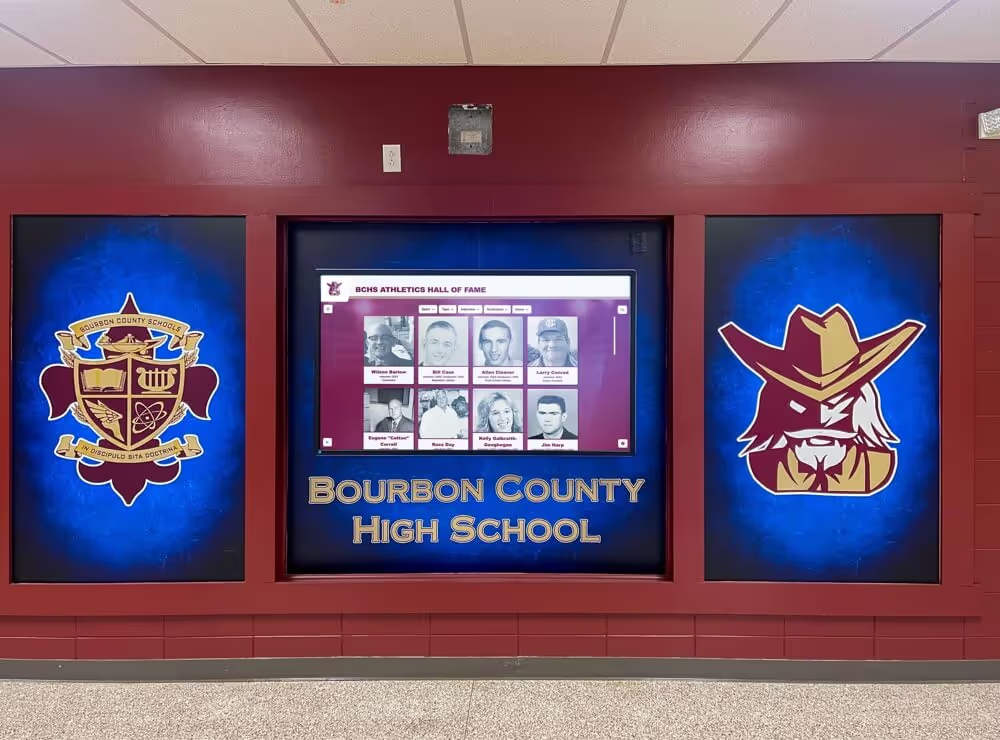
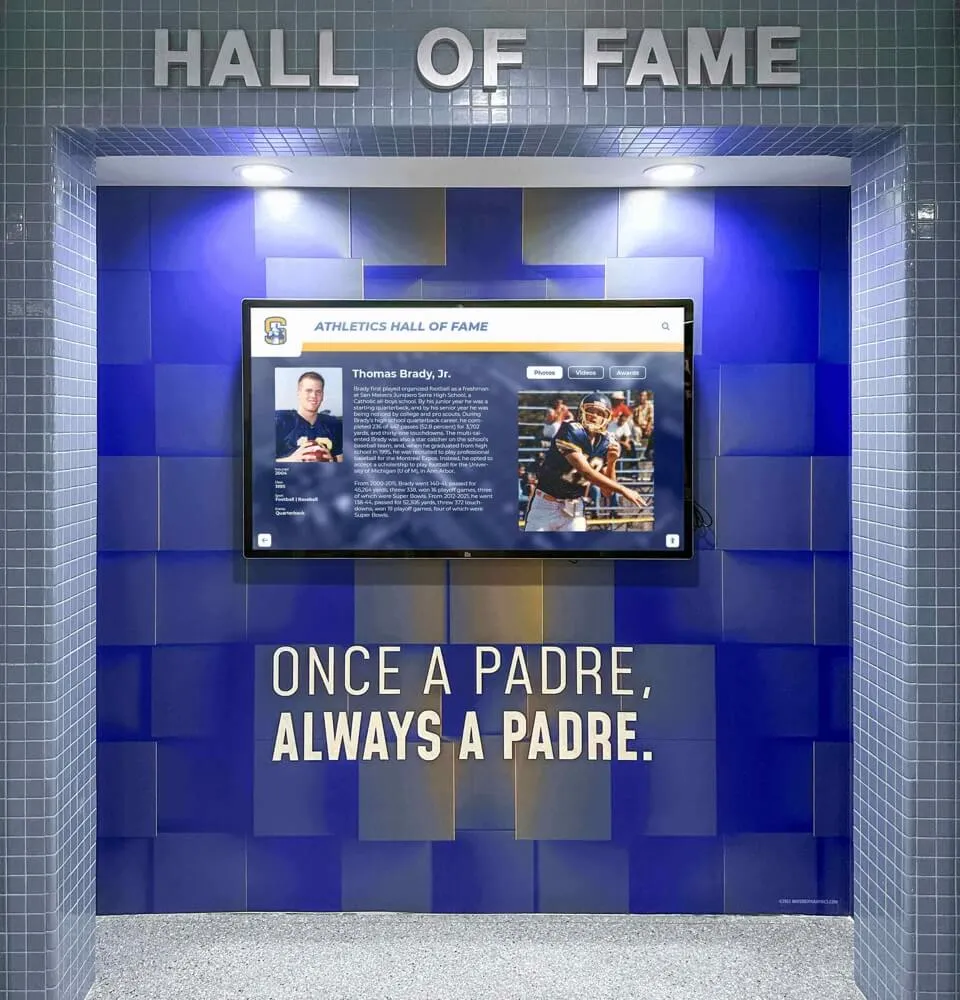
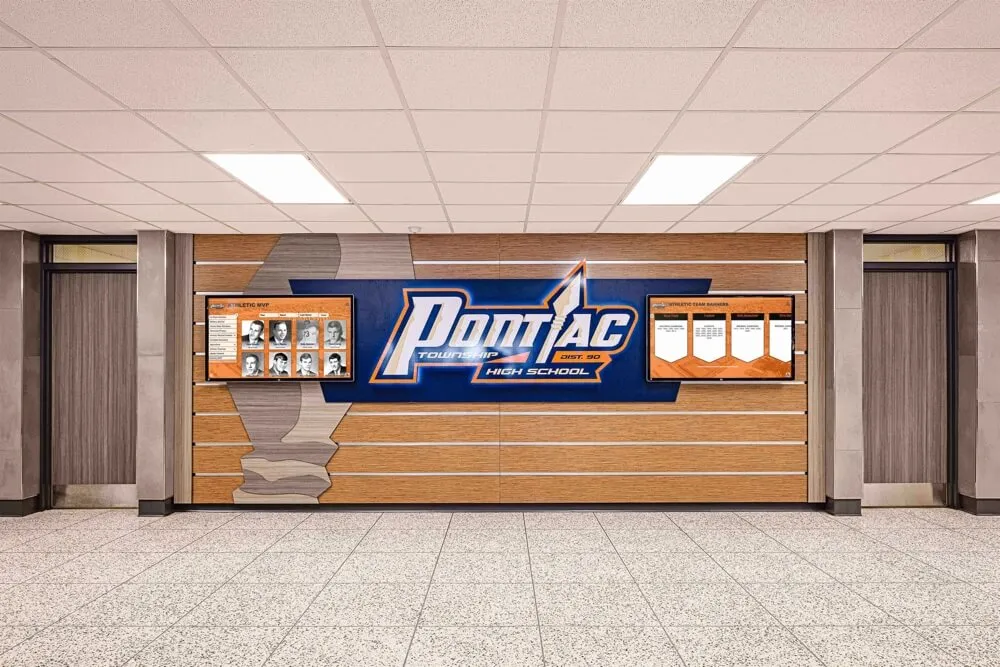
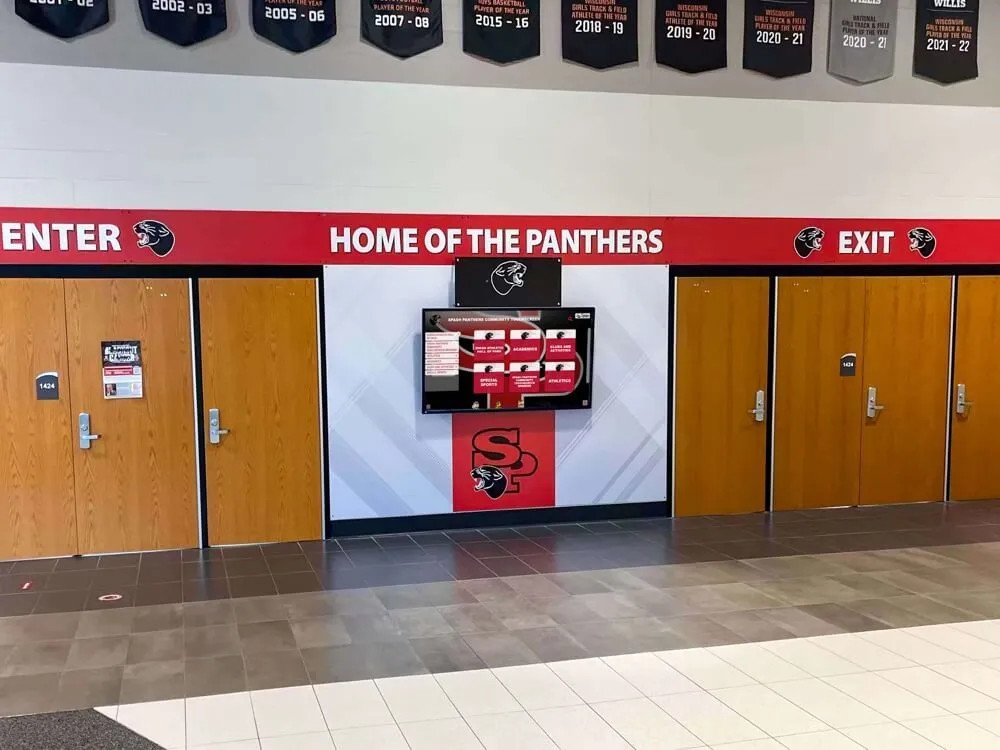
Modern recognition systems enable programs to track and celebrate hitting achievements across program history, documenting the statistical excellence systematic training produces
Advanced Recognition and Tracking Development
Live Pitching Machine Work
Pitching machines provide consistent repetition unavailable from human throwers:
Fastball Machine Work
- Consistent velocity enabling timing establishment
- Adjust speeds gradually building pitch recognition
- Location consistency allowing specific zone focus
- Volume capacity—500+ quality pitches without arm fatigue
- Progression: 60 mph → 70 mph → 80 mph+ as skill develops
Breaking Ball Machine Settings
- Modern machines simulate curveballs and sliders
- Recognition development identifying spin and trajectory
- Timing adjustment for velocity reduction
- Swing decision making—when to swing versus take
- Significantly safer than live breaking balls from young pitchers
Mixture Settings: Game Simulation
- Random fastball/breaking ball selection
- Velocity variation within pitches
- Location variance requiring constant adjustment
- Most game-realistic machine work available
- 25-35 pitches per round maintaining quality focus
Video Analysis Integration
Modern technology enhances traditional drill work:
Swing Recording and Analysis
Systematic video use accelerates development:
- Record swings during tee work, soft toss, and live BP
- Compare to proper mechanics models
- Identify specific issues (casting, diving, poor extension, etc.)
- Track mechanical changes over time showing improvement
- Side-by-side comparison with previous swings or elite models
Effective Video Review Process
Structure video sessions productively:
- Record 5-10 swings during specific drill work
- Immediate review with player (within same practice)
- Identify 1-2 specific mechanical focuses
- Re-record after corrections attempting to show improvement
- Save video creating development timeline across season
- Periodic comparison showing long-term development progress
Common Video Analysis Mistakes
Avoid these pitfalls undermining video effectiveness:
- Recording but never reviewing (video serves no purpose unused)
- Overwhelming players with 10+ mechanical corrections simultaneously
- Comparing high school hitters to professional swing models unfairly
- Using video without clear coaching points or action steps
- Recording poor lighting or angles providing little useful information
Statistical Tracking and Data-Driven Development
Numbers reveal what’s actually working:
Practice Performance Metrics
Track relevant data beyond game statistics:
Tee Work Tracking
- Quality contact percentage (hard contact vs. total swings)
- Zone coverage (balanced performance inside/middle/outside)
- Consistency measures across multiple sessions
- Improvement trends over weeks and months
Batting Practice Statistics
- Contact percentage (balls hit well vs. total pitches)
- Line drive percentage
- Pull/center/opposite field distribution
- Quality at-bat percentage in situational work
- Competitive drill performance (point system results, etc.)
Exit Velocity Measurements
- Periodic radar gun measurements during tee work
- Track improvements in bat speed and power generation
- Identify which drills produce measurable results
- Set individual exit velocity goals based on current levels
- Document progress toward power development objectives
Programs implementing comprehensive development tracking discover systematic improvement that produces the offensive statistics celebrated through digital recognition platforms preserving achievement records and inspiring future players.
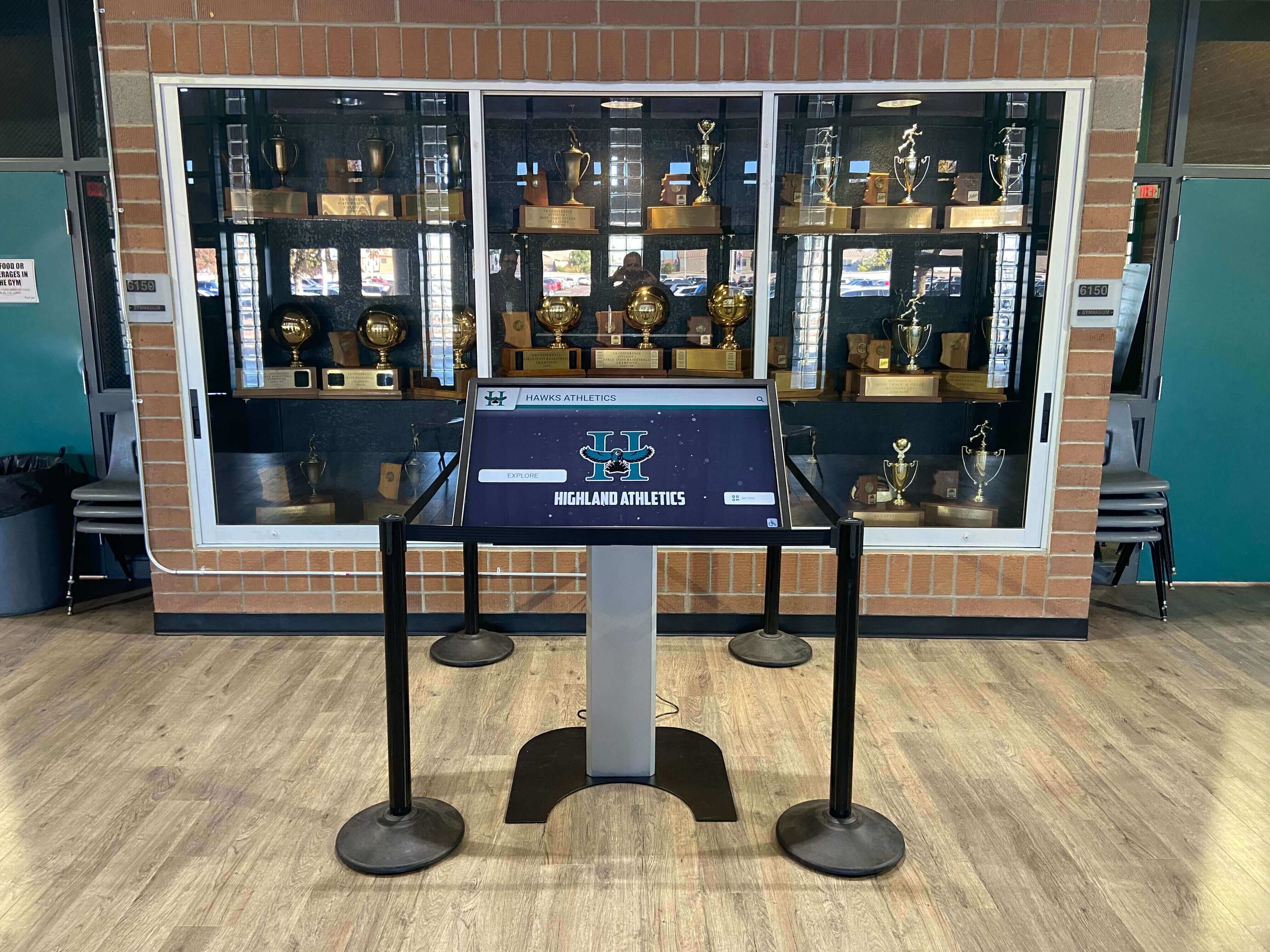
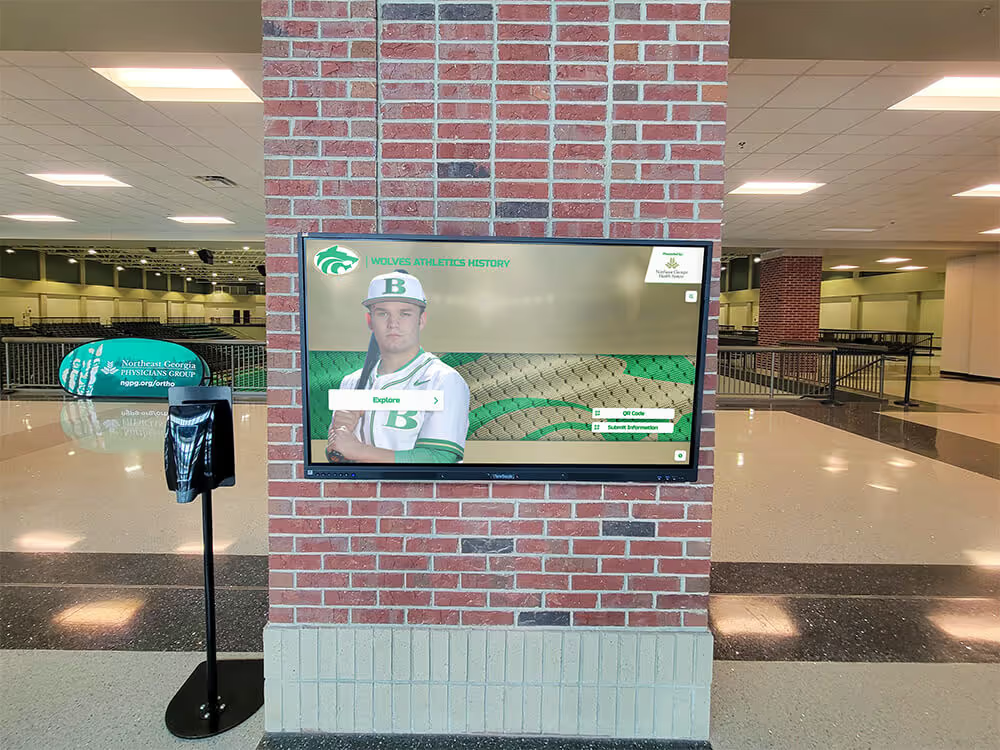
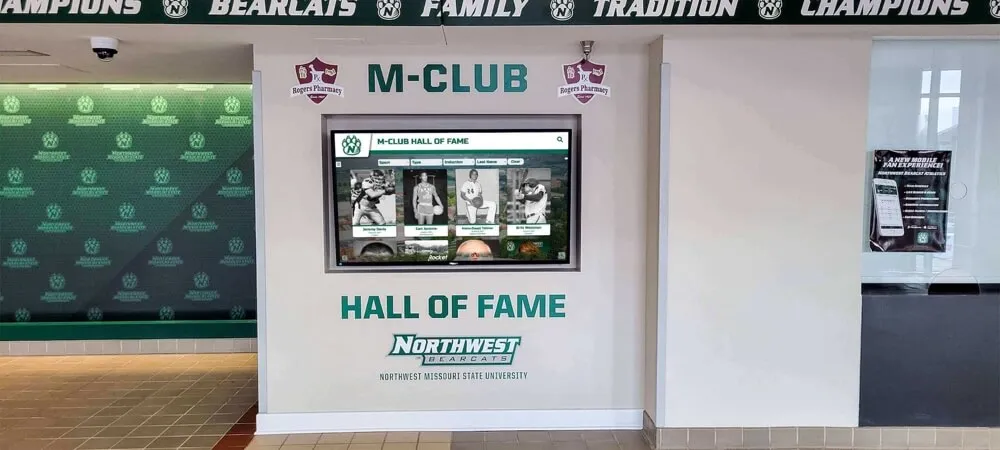
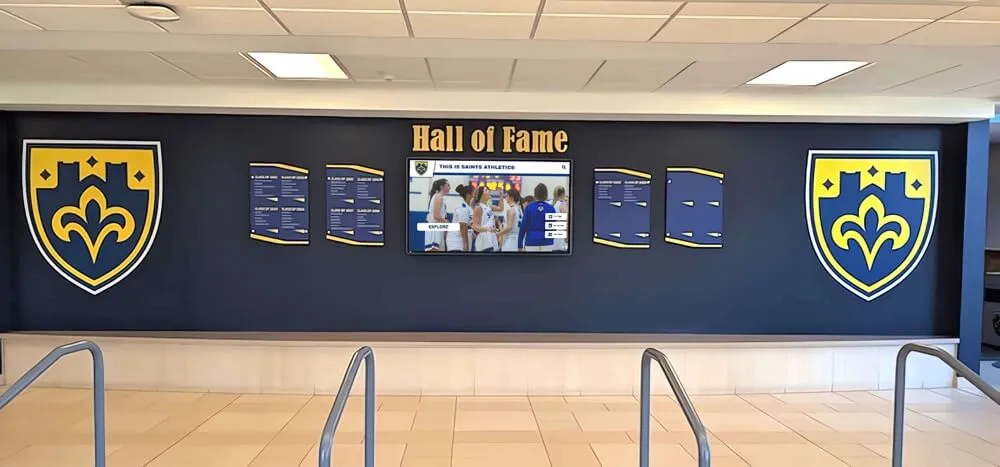
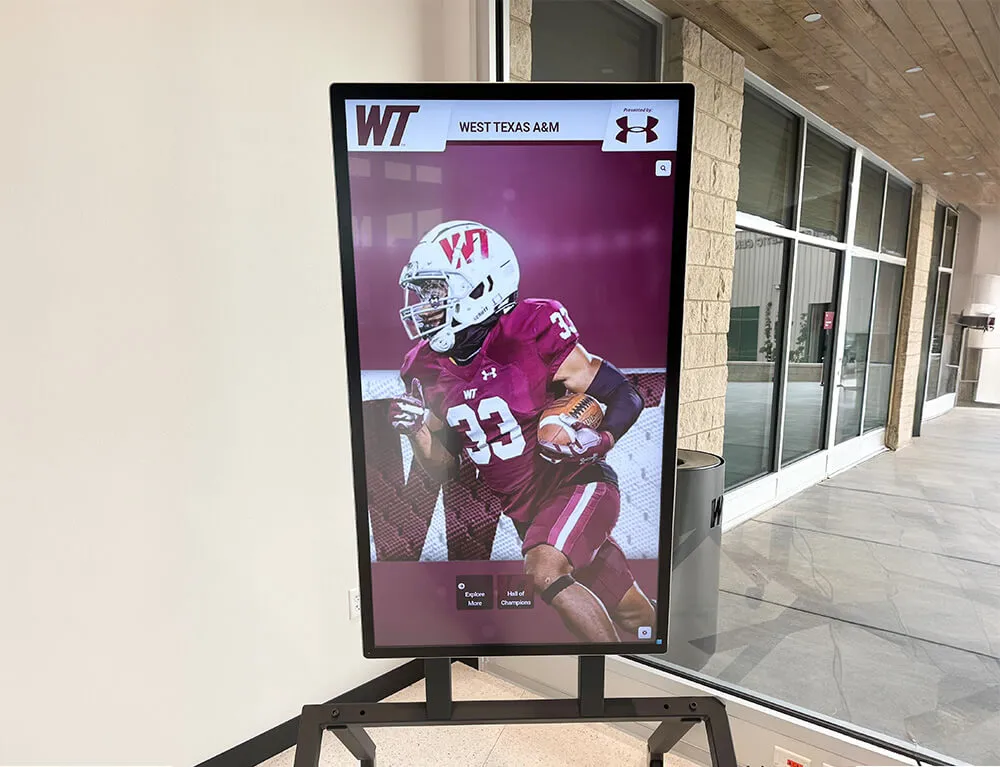
Strategic integration of recognition technology alongside traditional displays creates comprehensive celebration of the statistical achievements systematic hitting development produces
Common Hitting Development Challenges and Solutions
Even with excellent drill implementation, coaches encounter predictable obstacles requiring systematic solutions.
Challenge: Players Reverting to Bad Habits in Games
Problem: Hitters demonstrate proper mechanics in practice but revert to old swing flaws during competitive at-bats when pressure increases and conscious thought decreases.
Solutions:
Increase Pressure Simulation in Practice
- Add consequences (sprints, pushups) to batting practice failures
- Implement competitive formats elevating practice intensity
- Create artificial pressure through point systems and leaderboards
- Simulate specific game situations during drill work
- Use live pitching from teammates instead of just coaches
Simplify Mechanical Focuses
- Too many swing thoughts create paralysis under pressure
- Identify single most important feel or cue for each hitter
- Practice that one element repeatedly until automatic
- Example: “Stay back” rather than 6-part mechanical checklist
- Simple feels become accessible even under game stress
Create Pre-Pitch Routines
- Consistent physical and mental approach to every at-bat
- Trigger proper mechanics through rehearsed routine
- Mental cue after practice swing reminding proper feel
- Breathing and relaxation preventing tension
- Same routine practiced daily regardless of drill context
Develop Failure Response Protocols
- First bad at-bat doesn’t mean abandon mechanics
- On-deck mental reset reviewing primary mechanical cue
- Trust the process—proper mechanics win over time
- Next-pitch mentality rather than dwelling on failures
- Post-game video review showing what happened versus feeling
Challenge: Limited Indoor Practice Space
Problem: Weather constraints force indoor work but facility limitations prevent full batting practice, live pitching, or even adequate cage space for complete team training.
Solutions:
Maximize Station-Based Small Space Drills
- Tee work requires minimal space (8’ x 8’ hitting into net)
- Soft toss operates in 12’ x 15’ area effectively
- One-knee drills eliminate space requirements further
- Front short toss works in 20-foot length
- Rotate small groups through multiple stations efficiently
Wiffle Ball or Reduced-Flight Ball Work
- Enables hitting in smaller spaces safely
- Develop timing and recognition without distance requirements
- Competitive wiffle ball games building bat-to-ball skills
- Can simulate live pitching in 30-40 foot gym spaces
- Maintains skill work when outdoor practice impossible
Emphasize Dry Swing Work and Visualization
- Shadow swings focusing purely on mechanical feels
- Mirror work providing visual feedback
- Mental repetitions visualizing proper swing execution
- Slow-motion swings isolating specific movement patterns
- Isometric holds at key swing positions building strength
Partner With Nearby Facilities
- Local indoor facilities, colleges, or training academies
- Schedule periodic facility rentals for live pitching work
- Costs split among players or booster club supported
- 2-3 dedicated indoor sessions monthly supplements limited practice
- Maintain outdoor work when weather permits, supplement with rentals
Challenge: Vastly Different Skill Levels Within Team
Problem: Roster includes players needing fundamental instruction alongside advanced hitters ready for college-level work—how do you address both effectively without boring veterans or overwhelming beginners?
Solutions:
Tiered Station Work by Skill Level
- Separate stations running simultaneously at different levels
- Beginners: basic tee work, simple soft toss, fundamental mechanics
- Intermediate: situational tee work, advanced soft toss, front toss work
- Advanced: live BP, breaking ball recognition, competitive situations
- Players work at appropriate challenge level maximizing development
- Coaches or senior players lead different stations
Peer Mentoring and Player Coaches
- Veteran players assist coaching fundamental stations
- Leadership development for advanced players
- Efficient coaching resource multiplication
- Beginners benefit from near-peer instruction
- Creates team culture where everyone contributes to development
Individualized Development Plans
- Specific drill prescriptions for each player’s needs
- Freshman focused on stance, grip, basic tee work
- Sophomore working outside pitch recognition, opposite field
- Junior developing two-strike approach and breaking ball timing
- Senior refining situational hitting and leadership
- Self-directed work during station time based on individual plans
Differentiated Repetition Targets
- Advanced players need fewer mechanical reps, more game simulation
- Beginners require higher volume basic repetition
- Station time allocation reflects developmental needs
- Prevents advanced players getting bored with basic work
- Ensures beginners get sufficient foundational repetition
Understanding how comprehensive baseball program recognition celebrates both statistical achievement and development helps coaches demonstrate to players at all levels how systematic skill building leads to the achievements programs honor.
Challenge: Measuring Actual Improvement
Problem: Coaches struggle to determine whether drill work actually improves game performance or simply keeps players busy—how do you verify training effectiveness beyond gut feelings and anecdotal observation?
Solutions:
Establish Baseline and Progress Metrics
Before implementing new drill programs, measure:
- Current team batting average, OBP, slugging percentage
- Individual player statistics across key offensive categories
- Exit velocity measurements for each hitter
- Contact quality percentages during batting practice
- Quality at-bat rates in game situations
After 4-6 weeks of systematic drill work, re-measure:
- Statistical improvement in games shows real-world transfer
- Exit velocity increases demonstrate power development
- Contact quality improvement indicates mechanical refinement
- Compare against previous season baselines
- Data-driven evaluation rather than subjective assessment
Track Practice Performance Systematically
Create simple tracking sheets for:
- Tee work quality contact counts (daily improvement visible)
- Soft toss solid contact percentages
- Batting practice productive at-bat rates
- Drill progression advancement (light to heavy resistance, slow to fast, etc.)
- Individual player advancement through skill progressions
Implement Regular Assessment Protocols
Formal testing every 3-4 weeks:
- Timed hitting assessment (quality contacts in 20 swings)
- Exit velocity testing showing power development
- Situational hitting scenarios scored objectively
- Video analysis comparing mechanics across time
- Results inform drill adjustments and individual focuses
Survey Player Perception
Ask athletes directly:
- “Which drills help your swing most?”
- “What feels different in your at-bats compared to early season?”
- “Where do you still need improvement?”
- Player feedback reveals what’s actually transferring
- Identifies drills feeling helpful versus genuinely improving performance
Adjust Based on Data, Not Assumptions
If metrics don’t improve after 6-8 weeks:
- Drill selection may not address actual team needs
- Execution quality may be insufficient
- Volume may be too low for skill acquisition
- Different approaches may suit your specific roster better
- Willingness to abandon ineffective drills prevents wasted time
Sample 6-Week Hitting Development Program
Progressive structure building complete offensive skills:
Weeks 1-2: Foundation Phase (Establishing Proper Mechanics)
Monday: Tee Work Emphasis
- 15 min dynamic warmup
- 30 min comprehensive tee work (all locations, both hands, stacked ball)
- 20 min soft toss (front and side)
- 15 min video review and mechanical discussion
- 10 min core strength and flexibility
Tuesday: Timing Development
- 15 min dynamic warmup
- 20 min tee work maintenance
- 30 min soft toss progressions (high toss, two-ball, rapid fire)
- 15 min short front toss
- 10 min stretching and recovery
Wednesday: Light Day / Strength Focus
- 15 min dynamic movement
- 20 min tee work (60% effort, mechanical focus)
- 30 min strength training (hitting-specific exercises)
- 15 min flexibility and mobility
Thursday: Live Pitching Introduction
- 15 min dynamic warmup
- 20 min tee work warmup
- 20 min soft toss
- 25 min front toss from short distance (25-30 feet)
- 10 min cool down
Friday: Game Preparation
- 15 min dynamic warmup
- 15 min tee work
- 15 min soft toss
- 30 min traditional batting practice (if game weekend)
- 15 min situational hitting and mental preparation
Weeks 3-4: Development Phase (Building Timing and Recognition)
Monday: Power Development
- 15 min dynamic warmup
- 20 min tee work (emphasis on extension, driving through ball)
- 25 min soft toss (power swings, gap hitting)
- 20 min front toss with resistance bands
- 10 min exit velocity testing
- 10 min recovery
Tuesday: Contact and Plate Coverage
- 15 min dynamic warmup
- 20 min tee work (full zone coverage, quick hands)
- 25 min rapid-fire soft toss
- 25 min short front toss (inside/outside focus)
- 5 min two-strike approach work
Wednesday: Situational Hitting
- 15 min dynamic warmup
- 15 min maintenance tee work
- 20 min situational soft toss (bunting, hit-and-run, moving runners)
- 30 min situational front toss
- 10 min team competition drills
Thursday: Live Pitching Progression
- 15 min dynamic warmup
- 15 min tee work warmup
- 15 min soft toss
- 35 min traditional BP (full distance, game speed)
- 10 min cool down and recovery
Friday: Game Speed Work
- 15 min dynamic warmup
- 10 min quick tee work
- 15 min soft toss
- 30 min competitive BP or live pitching
- 20 min situational hitting and mental game
Weeks 5-6: Refinement Phase (Game Application and Competition)
Monday: Advanced Recognition
- 15 min dynamic warmup
- 15 min tee work (specific individual focuses)
- 20 min soft toss variations
- 30 min pitching machine work (fastball/breaking ball mixture)
- 10 min video analysis
- 10 min recovery
Tuesday: Competitive Situations
- 15 min dynamic warmup
- 15 min tee maintenance
- 20 min soft toss
- 35 min pressure BP (point system, consequences, competition)
- 5 min mental game discussion
Wednesday: Individualized Work
- 15 min dynamic warmup
- 60 min station work (players at stations addressing individual needs)
- 15 min team situational hitting competition
Thursday: Full Game Simulation
- 15 min dynamic warmup
- 10 min tee work
- 15 min soft toss
- 40 min traditional BP with game situations
- 10 min pre-game routine establishment
Friday: Game Preparation
- 15 min dynamic warmup
- 20 min player-directed warm-up routine
- 25 min light BP or soft toss
- 20 min mental preparation, visualization, game planning
- 10 min stretching and recovery
This progressive structure ensures systematic development while building toward game-ready performance. Programs implementing such systematic approaches produce the consistent offensive production that fills sports recognition displays with impressive batting statistics year after year.
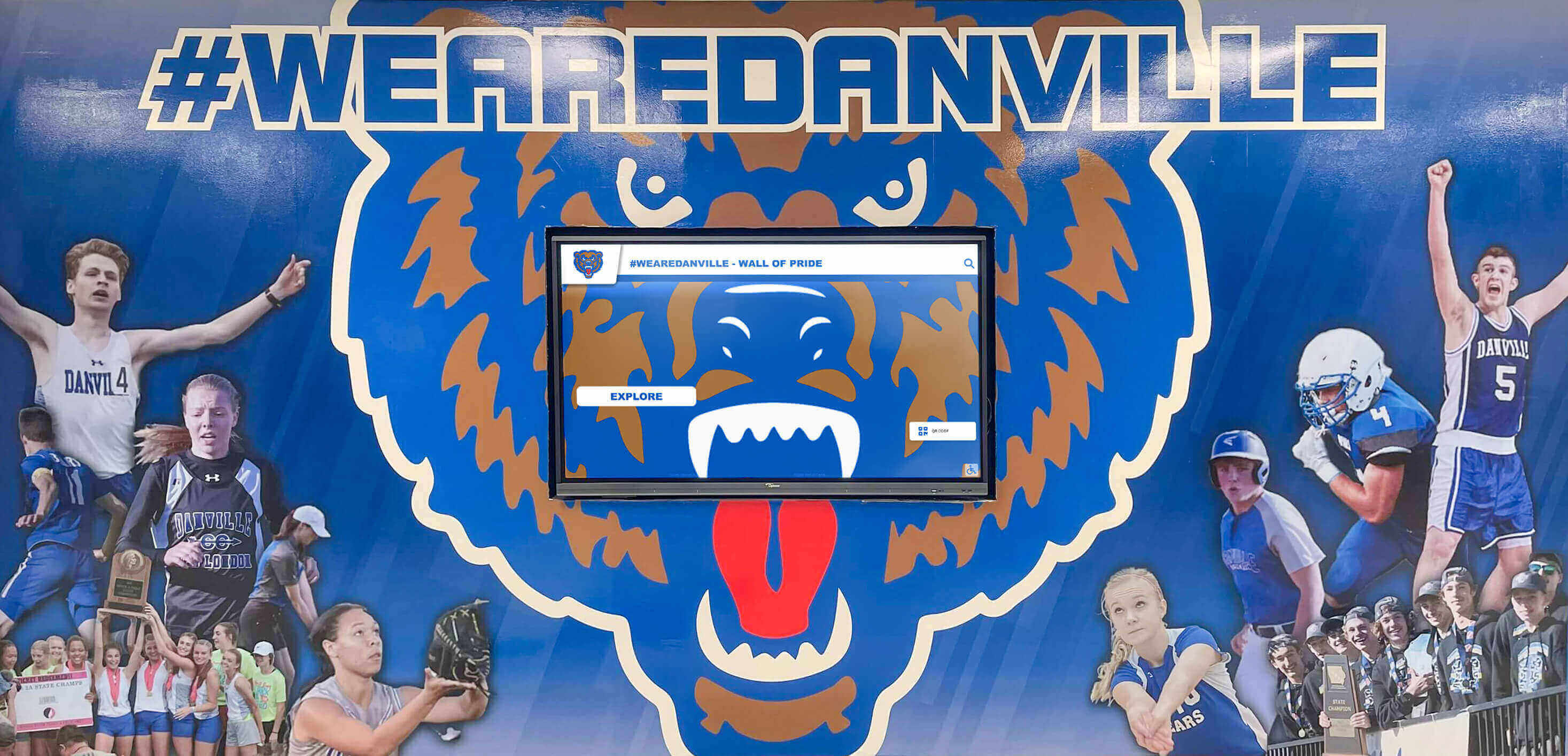
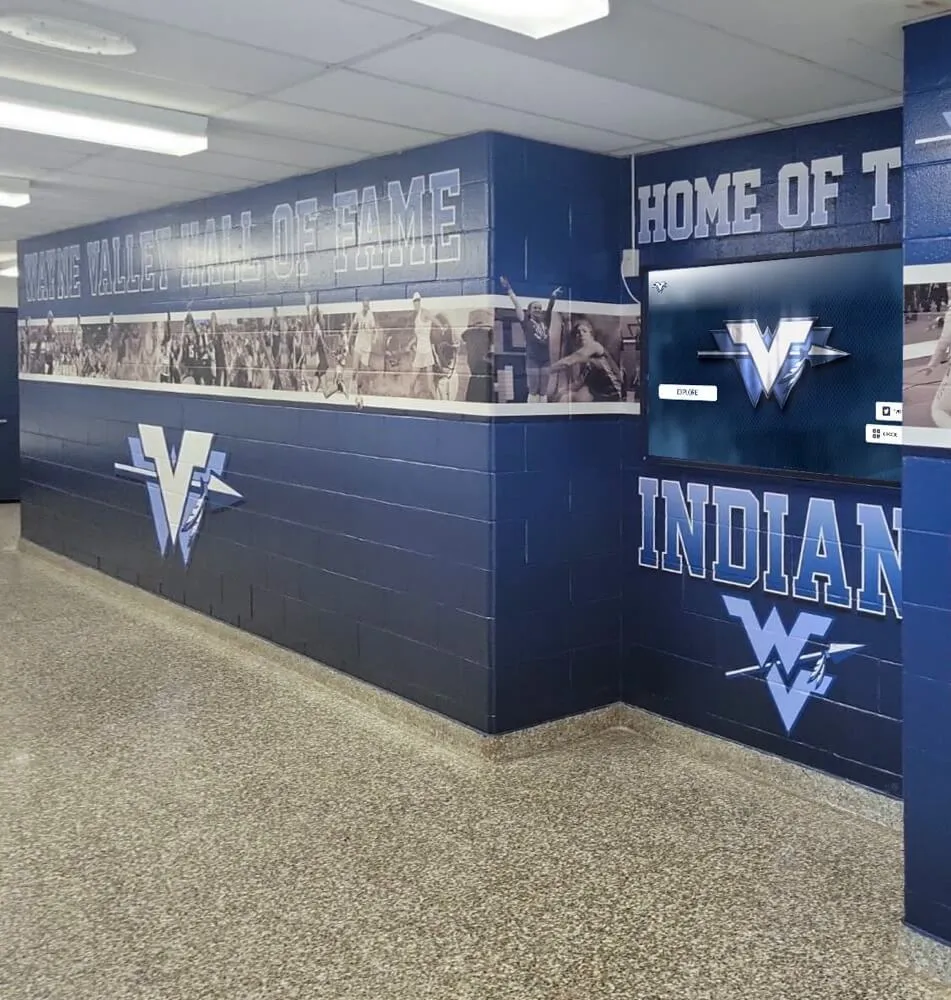
Visible recognition of offensive achievements throughout athletic facilities creates daily motivation reminding players that systematic skill development leads to lasting program honors
Integrating Mental Approach With Physical Drills
Technical skill development alone doesn’t create complete hitters—mental approach determines how physical abilities translate under competitive pressure.
Developing Competitive Mindset During Drills
Embracing Failure as Learning
Hitting involves failure 70% of the time even for elite players:
- Reframe poor swings as information, not indictments
- “What did that swing tell me about my mechanics or approach?”
- Celebrate adjustment process, not just perfect execution
- Next-swing mentality preventing negative spiral
- Post-failure improvement demonstrates true growth mindset
Practice Pressure Simulation
Make practice uncomfortable preparing for game stress:
- Teammates watching and evaluating creates social pressure
- Consequences (sprints, pushups) for poor execution raise stakes
- Time constraints preventing overthinking
- Competition formats generating genuine pressure
- Comfortable practice creates uncomfortable games—flip that script
Visualization Integration
Mental reps complement physical practice:
- Before tee work, visualize perfect swing execution
- Between soft toss rounds, see yourself driving balls to gaps
- Pre-BP visualization of specific game situations and success
- Post-practice reflection reviewing best swings mentally
- Mental practice accessible anywhere, anytime without equipment
Building Plate Discipline and Two-Strike Approach
Zone Recognition Drills
Develop strike zone judgment:
Color-Coded Ball Drill
- Use different colored balls representing balls versus strikes
- Tosser mixes locations—hitter swings only at “strike color”
- Immediate feedback on zone recognition ability
- Progressively reduce visual cue developing instinctive recognition
- 40-50 tosses with running percentage of correct decisions
Verbal Call Drill
- Soft toss or front toss where hitter calls “ball” or “strike”
- Must commit verbally before swing decision
- Develops early recognition and conscious zone awareness
- Coach feedback on accuracy building calibrated judgment
- Transfer zone discipline from drill to game situations
Two-Strike Drill Work
Specific practice for defensive counts:
Two-Strike Soft Toss
- Every round simulates two-strike count pressure
- Choke up, shorten swing, prioritize contact
- Celebrate foul balls as successful at-bats
- Develop fight mentality refusing to give in
- Track two-strike contact rate showing improvement
Protective BP Rounds
- Designated rounds where every pitch counts as two strikes
- Battle mentality fighting off tough pitches
- Opposite field focus and contact-over-power approach
- Mental toughness development extending at-bats
- Game application—two-strike approach becomes familiar, not foreign
Pre-Game Routine Development
Consistent routines trigger proper mechanics and mental state:
Developing Individual Pre-At-Bat Routines
Each hitter establishes personal sequence:
- On-deck visualization (see success, feel good swing)
- Physical practice swing rehearsing primary mechanical cue
- Deep breath releasing tension
- Approach to box with confident body language
- Setup routine (foot placement, hand position check, look to pitcher)
- Mental cue triggering proper swing feel (“stay back,” “see it up,” etc.)
Practice Routine During All Drill Work
Every tee swing, soft toss rep, BP pitch preceded by routine:
- Creates automatic trigger that works under pressure
- Hundreds of repetitions making routine unconscious
- Game at-bats feel identical to practice
- Routine becomes comfort zone amid competitive stress
- Consistency in preparation breeds consistency in performance
Programs understanding that comprehensive athletic recognition extends beyond statistics to celebrate complete player development—including mental toughness, leadership, and competitive approach—create cultures where systematic skill building produces the achievements honored through lasting program recognition.
Conclusion: Building Championship Offense Through Systematic Development
Raising team batting averages and developing consistent offensive production doesn’t happen through generic batting practice and hoping players improve. Championship-caliber hitting emerges from systematic drill progressions addressing specific mechanical components, efficient practice structures maximizing limited time and repetitions, progressive challenges building from foundational tee work through competitive game-speed situations, and mental approach development ensuring physical skills transfer under pressure.
The baseball hitting drills explored throughout this guide provide complete frameworks coaches can implement immediately—from tee work variations establishing proper mechanics to soft toss progressions developing timing and recognition to live pitching applications preparing hitters for competitive at-bats. Whether coaching players learning fundamental stance and grip or refining advanced hitters pursuing program records, these systematic approaches accelerate development while building the offensive consistency that separates championship programs from average teams.
Ready to celebrate the offensive achievements systematic hitting development produces? The statistical excellence created through dedicated skill work deserves recognition that inspires current players while documenting program history for future generations. Modern recognition solutions enable baseball programs to showcase batting leaders, track offensive records across seasons, and create visible aspirations motivating daily development work.
Whether implementing comprehensive hitting programs or enhancing existing training, success requires systematic progression from fundamentals through game application, efficient practice structures maximizing repetition quality, data-driven evaluation ensuring drills actually improve performance, and recognition systems celebrating the statistical achievements dedicated skill work produces.
Discover how Rocket Alumni Solutions can help your baseball program create professional recognition displays showcasing offensive excellence, preserving batting records and statistical achievements, and celebrating the hitting development that transforms individual players into program legends whose accomplishments inspire future generations.
Your baseball players invest countless hours perfecting their swings through dedicated drill work and systematic skill development. The batting championships, offensive records, and statistical achievements this commitment produces deserve recognition that honors their dedication while inspiring teammates to pursue similar excellence. Championship programs don’t just develop great hitters—they systematically build complete offensive systems through proven techniques, recognize achievement comprehensively, and create cultures where hitting excellence becomes tradition passed from one generation to the next.
Start implementing these proven baseball hitting drills today, and build the consistent offensive production that fills record boards, wins championships, and creates the statistical legacies your program celebrates for decades to come.
Live Example: Rocket Alumni Solutions Touchscreen Display
Interact with a live example (16:9 scaled 1920x1080 display). All content is automatically responsive to all screen sizes and orientations.