Athletic Memorabilia Provenance Form: Document Ownership, History, and Display Rights
- Home /
- Digital Hall of Fame Insights & Resources /
- Athletic Memorabilia Provenance Form: Document Ownership, History, and Display Rights
The Easiest Touchscreen Solution




Live Example: Rocket Alumni Solutions Touchscreen Display
Interact with a live example (16:9 scaled 1920x1080 display). All content is automatically responsive to all screen sizes and orientations.
An athletic memorabilia provenance form is the document a school uses to record where an artifact came from, who has owned it, why it matters to the program’s history, and under what conditions it may be displayed, digitized, or loaned. Without that record, a jersey in a trophy case is fabric—with it, the same jersey becomes a documented piece of institutional heritage with a clear ownership chain and defensible display authorization.
Provenance matters for schools and athletics programs because artifacts change hands across decades: trophies are stored, donated, returned, and occasionally disputed; photographs circulate without attribution; championship equipment ends up in alumni attics. This guide provides a definition-forward introduction to athletic memorabilia provenance, a field-by-field form template, and a practical workflow for connecting documented artifacts to the digital displays that make them visible to students, alumni, and the wider community.
This guide is for general informational purposes only and does not constitute legal, appraisal, insurance, or conservation advice. Consult qualified professionals before making ownership, valuation, or preservation decisions for significant artifacts.
School trophy cases and hallway displays hold decades of institutional history—but the stories behind the objects are often undocumented. When a committee begins digitizing that history for a recognition wall or searchable archive, it encounters gaps that a provenance form could have prevented: unknown donors, disputed ownership, unclear display authorization, and artifacts whose significance cannot be explained because the context was never recorded.

A trophy case without provenance documentation is an archive waiting to become a dispute—every artifact needs a chain of custody before it can be confidently displayed or digitized
Program Snapshot
Before drafting your provenance form, map each artifact category to the documentation challenge it presents and the stakeholders responsible for completing the record.
| Artifact Category | Common Provenance Gap | Who Completes the Form | Display/Digitization Risk Without Documentation |
|---|---|---|---|
| Championship trophies and hardware | Original donor unknown; ownership transferred without paperwork | Athletic director or registrar | Ownership dispute if school changes; inability to loan for events |
| Game-worn jerseys and uniforms | Provenance oral tradition only; condition history undocumented | Archivist or hall of fame committee | Authentication questioned; display rights unclear |
| Photographs and negatives | Rights holder and photographer unknown | Archivist with media rights review | Copyright exposure when digitized for public display |
| Plaques, awards, and signed items | Donor name missing; inscription not transcribed | Booster club or facilities staff | Historical context lost; significance cannot be communicated |
| Records boards and banners | Fabrication date and retiring-record detail absent | Athletic director or records committee | Incomplete digital records; incorrect data published |
| Equipment and game balls | Authentication undocumented; condition changes untracked | Facilities team or archivist | Degradation without intervention; display context missing |
What Is Athletic Memorabilia Provenance?
Provenance is the documented history of an object’s origin and ownership. In a museum context, an artifact’s provenance record establishes authenticity and guides conservation decisions. In a school athletic program, the same concept applies to championship trophies, game-worn equipment, plaques, banners, historic photographs, and signed memorabilia—each object has an origin story, a chain of custody, and conditions under which it can legitimately be used.
An athletic memorabilia provenance form captures four categories of information:
- Origin and acquisition — where the artifact came from, who created or obtained it, and how it entered the school’s possession
- Ownership and custody — who currently holds legal title, who is responsible for its physical care, and how custody has transferred over time
- Condition and conservation history — the artifact’s physical state when documented and any treatment, storage, or display changes since acquisition
- Display and reproduction rights — whether the school has authorization to display the artifact publicly, digitize it, reproduce images of it, or loan it to other institutions
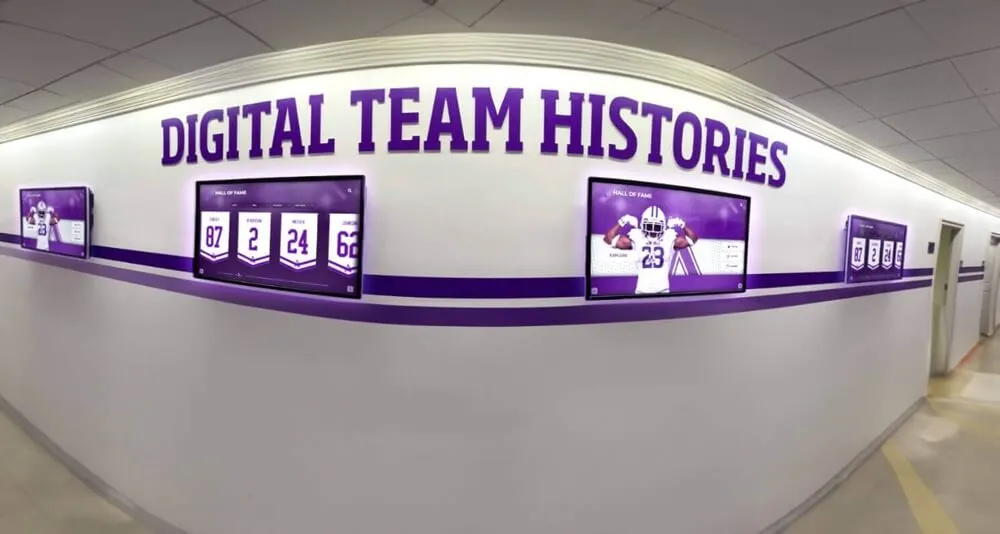
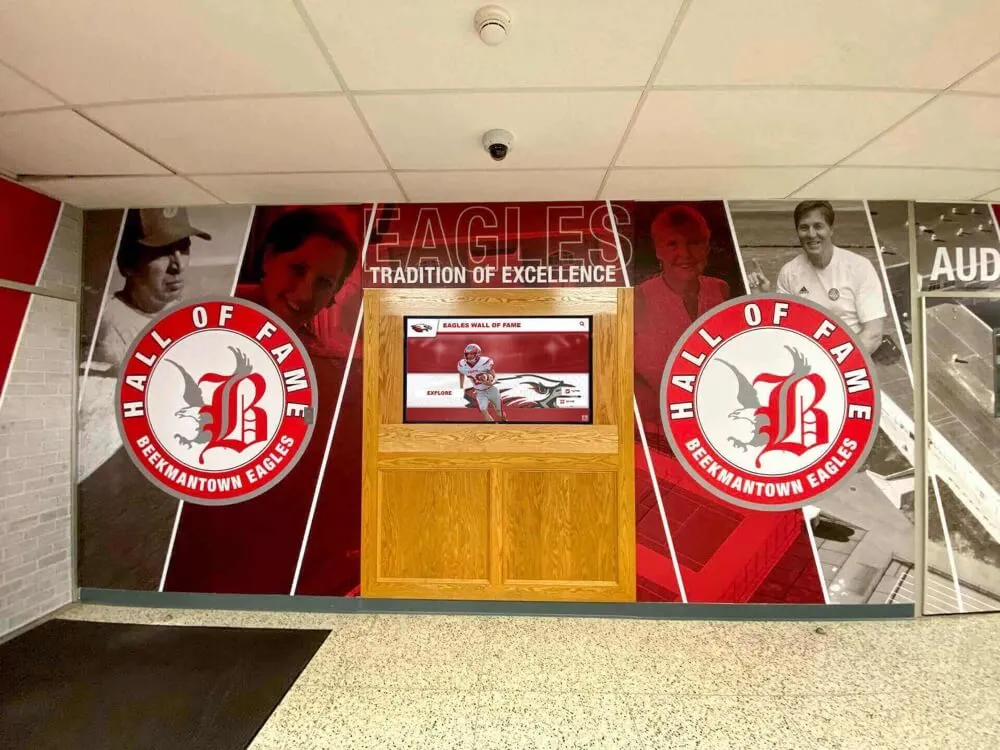
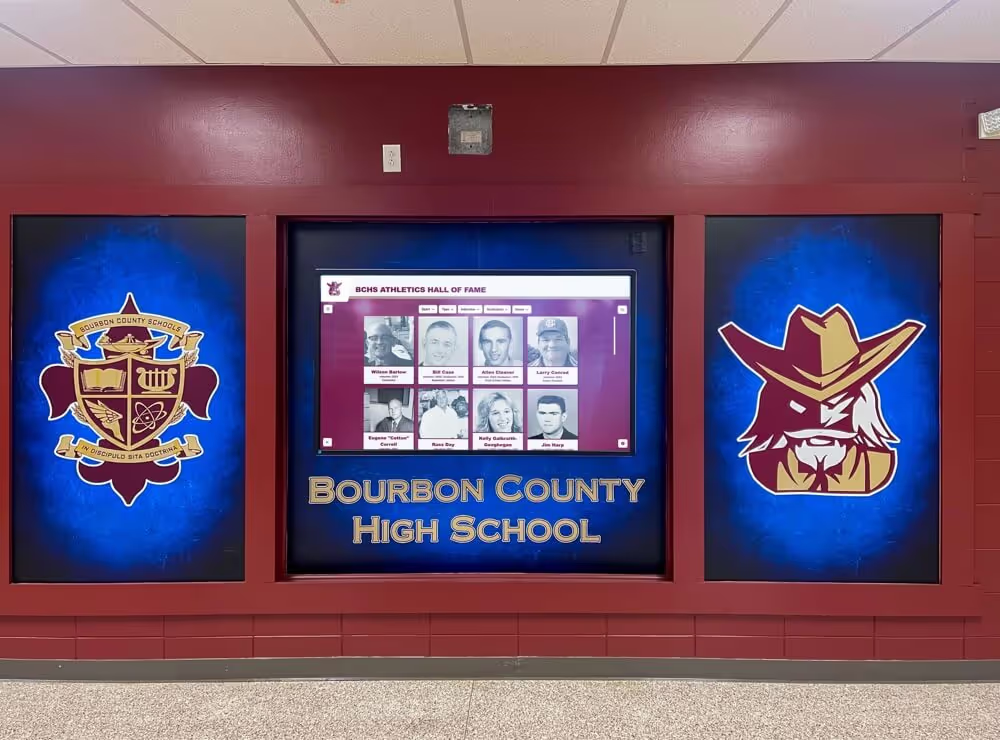
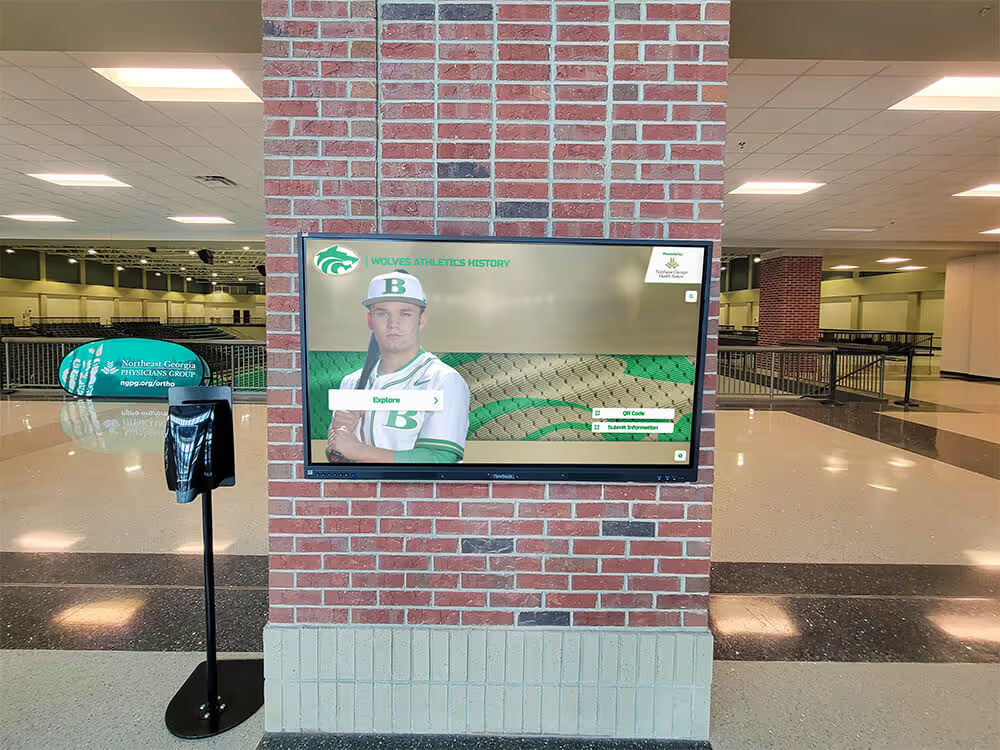
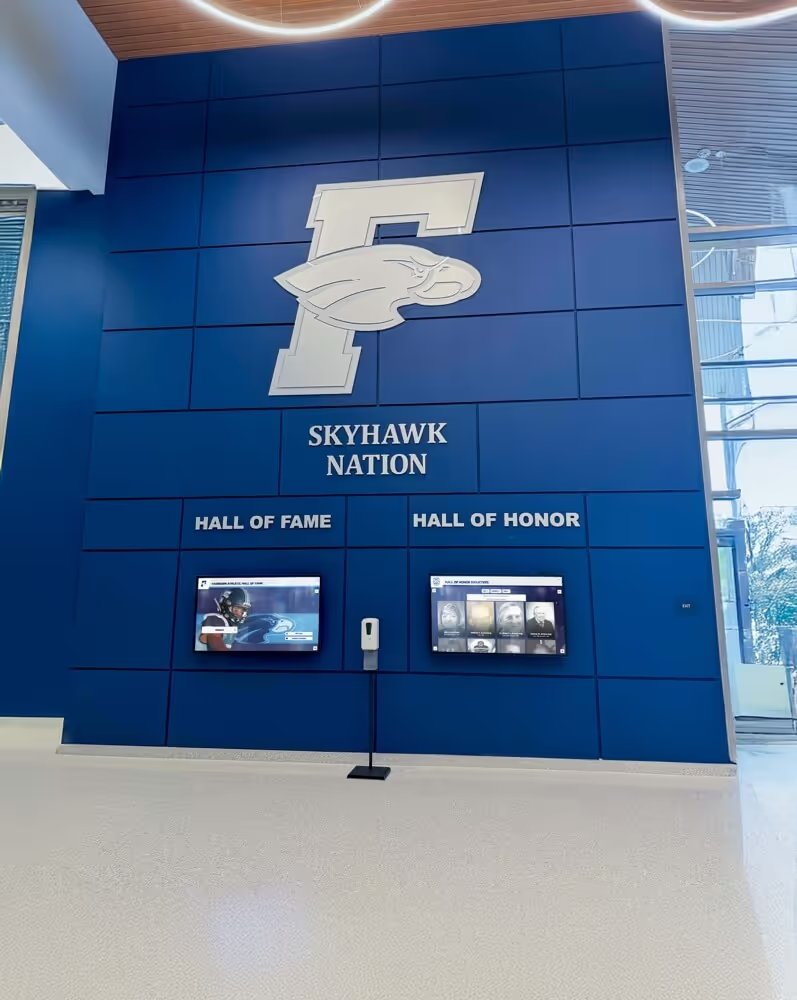
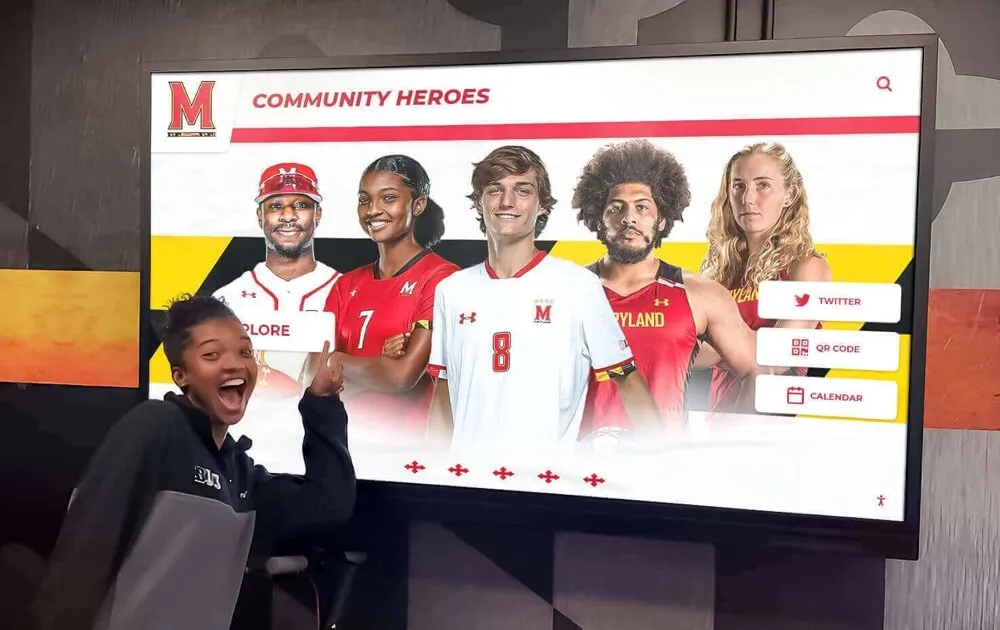
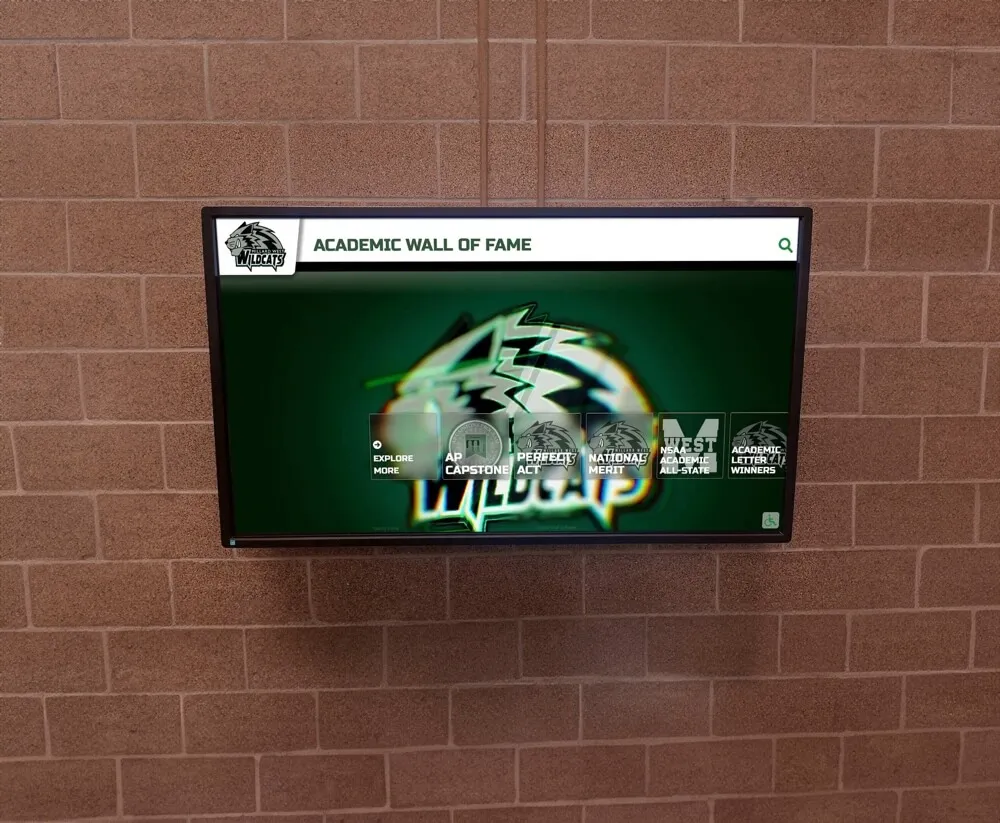
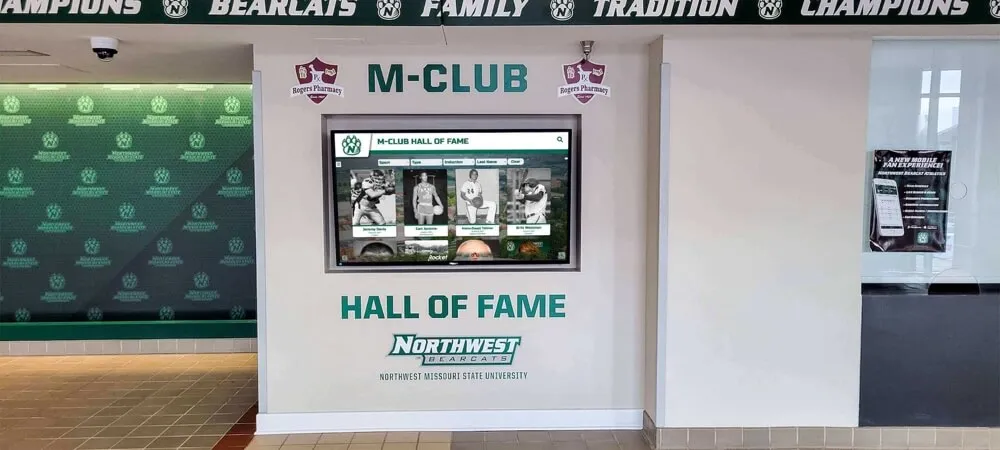
Schools that connect this documentation directly to a digital recognition platform—like a searchable touchscreen hall of fame or online archive—create a system where every artifact on display has a traceable record behind it. Programs working through how digital recognition displays showcase athletic achievement consistently find that the quality of the underlying documentation determines how much of the display can be made searchable, shareable, and trustworthy over time.
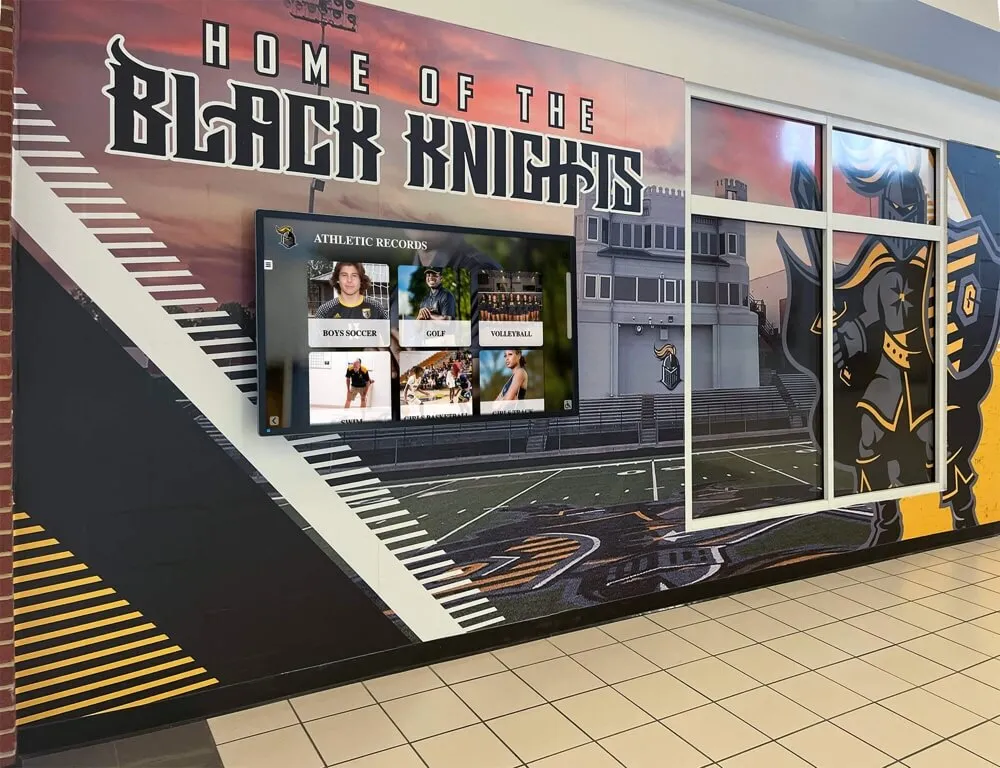
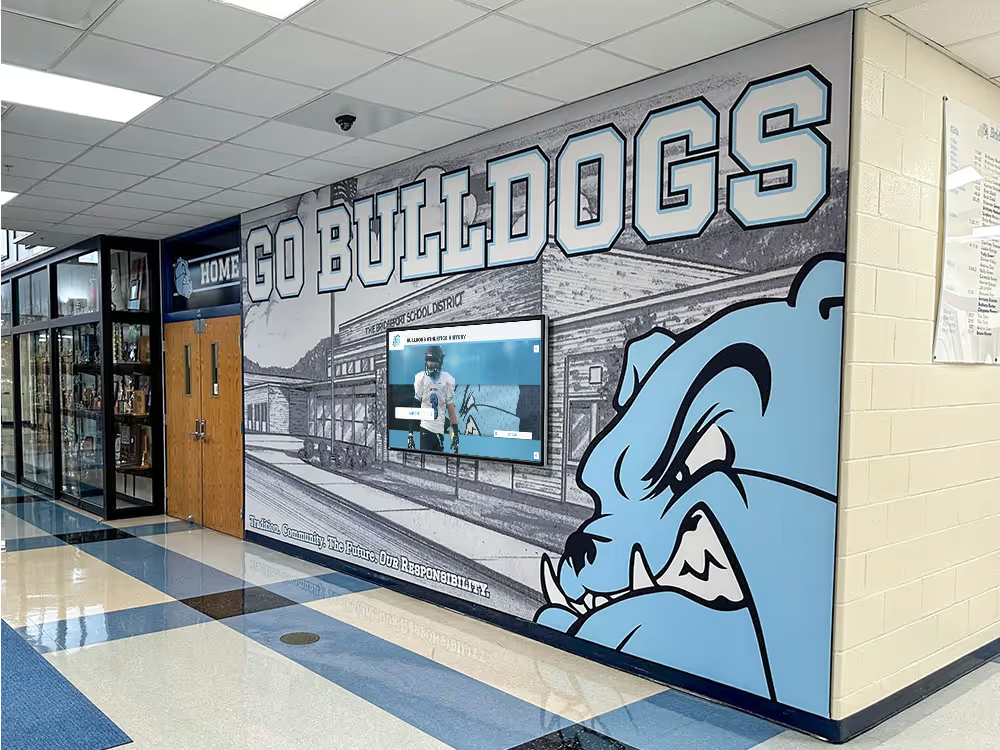
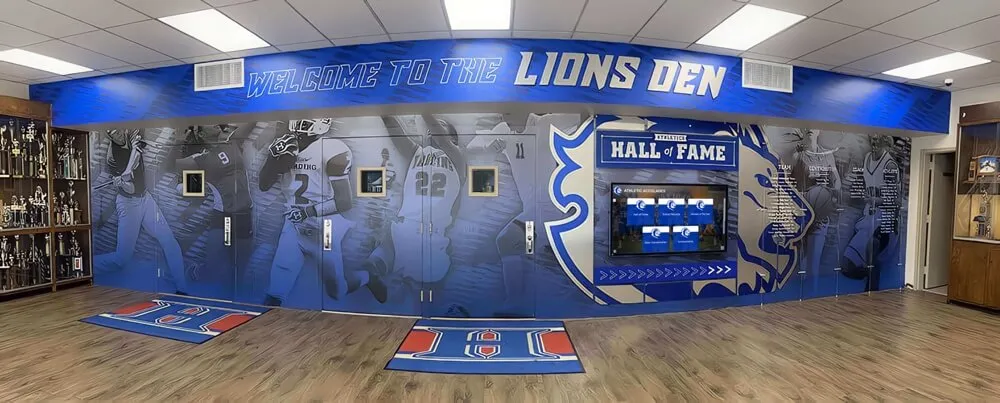
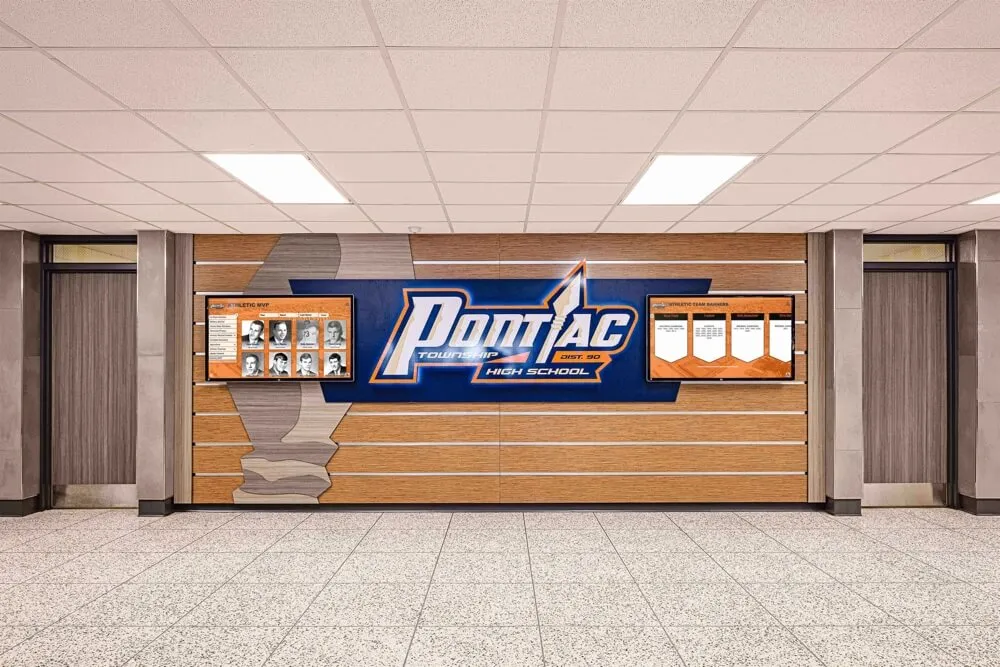
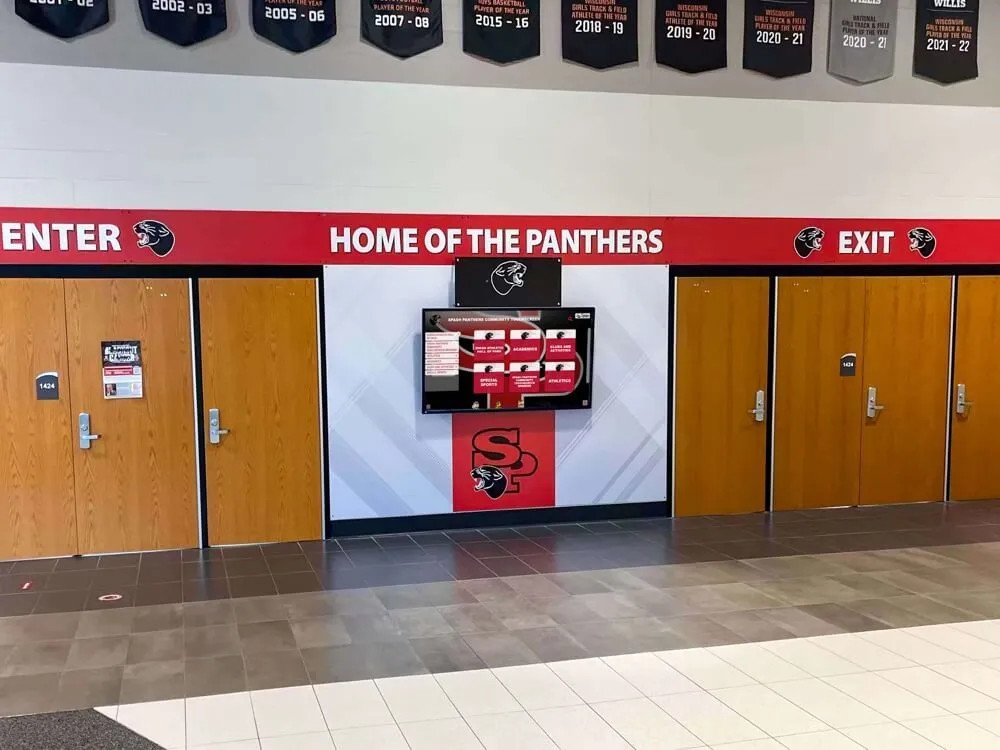
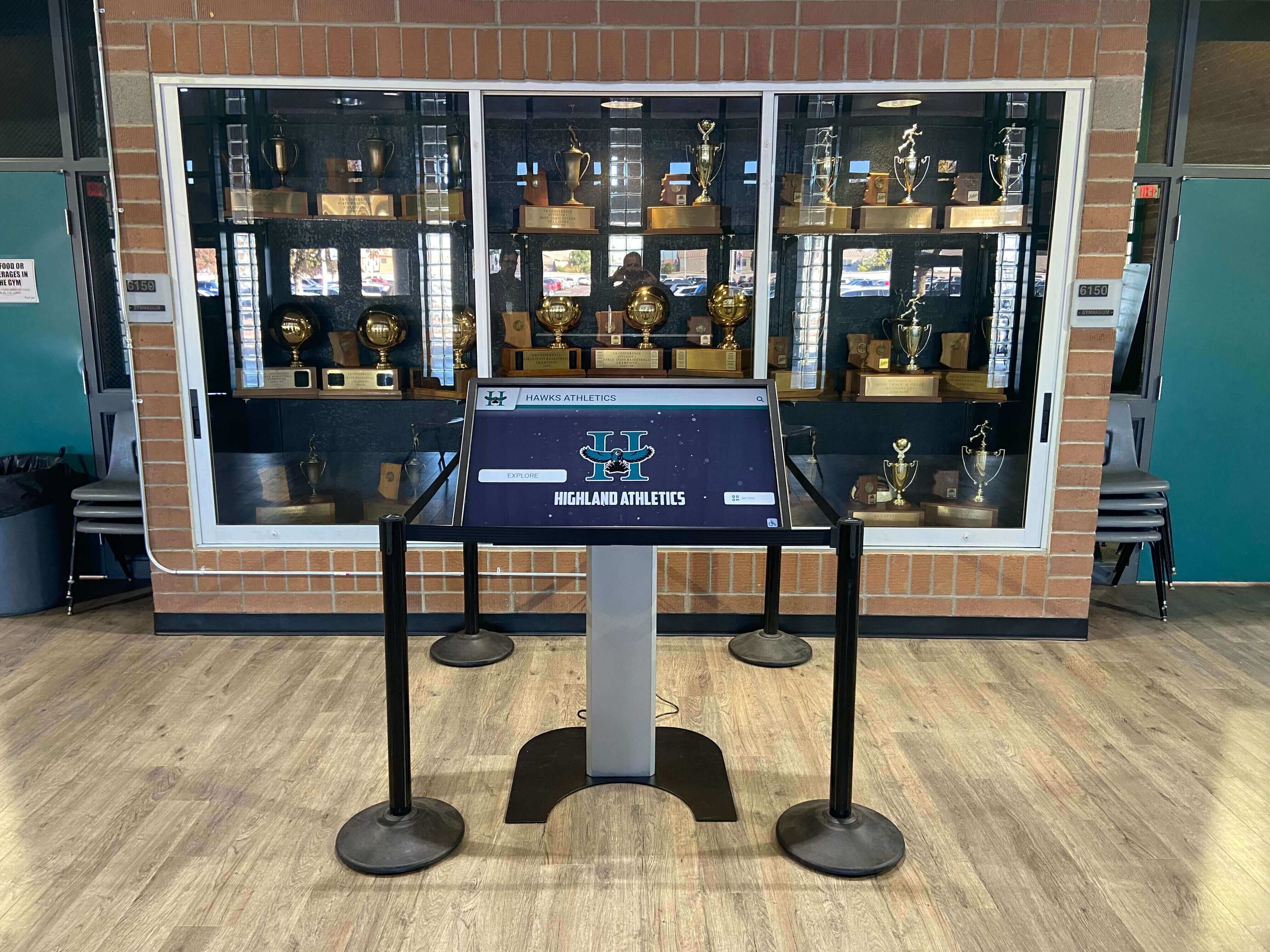
Athletic records and historical artifacts displayed in hallways or trophy cases gain institutional authority when each item is backed by a provenance form documenting its origin and ownership
Field-by-Field Form Table
The following table presents each field in a complete athletic memorabilia provenance form, with the purpose of the field and notes on how to complete it accurately.
Section 1: Artifact Identification
| Field | Purpose | Completion Notes |
|---|---|---|
| Artifact ID (internal) | Unique reference number for tracking and CMS entry | Assign sequentially by year and category (e.g., ATH-2026-001) |
| Artifact name or description | Plain-language identification of the object | Include sport, year, and distinguishing feature (e.g., “1987 State Championship Football Trophy”) |
| Category | Classification for sorting and reporting | Use: Trophy/Hardware, Uniform/Equipment, Photograph/Negative, Plaque/Award, Banner/Record Board, Signed Item, Other |
| Sport or program | Links artifact to a specific team or program | Use the school’s official sport or program name |
| Season or year | The athletic season or year the artifact represents | Use the academic year format (e.g., 1986–87) when season spans two calendar years |
| Physical dimensions | Size and weight for storage, display planning, and insurance review | Record in inches (H × W × D) and pounds |
| Materials | Composition of the artifact | Relevant for conservation planning (e.g., silver plate, wool, gelatin silver print) |
| Inscriptions or markings | Any text, engraving, or identifying marks on the artifact | Transcribe exactly; note location on the artifact |
| Condition at documentation | Physical state when the form was completed | Use a standard scale: Excellent, Good, Fair, Poor; add descriptive notes |
Section 2: Origin and Acquisition
| Field | Purpose | Completion Notes |
|---|---|---|
| Origin (creator or manufacturer) | Who made or produced the artifact | Engraver, trophy company, photographer, uniform manufacturer |
| Origin date or period | When the artifact was created | Use the specific date if known; use decade or season range if not |
| Acquisition method | How the school came to possess the artifact | Options: Purchase, Donation, Award/Presentation, Transfer from Predecessor Program, Unknown |
| Acquisition date | When the artifact entered the school’s possession | Use the best available date; note if approximate |
| Original donor or source | Person, organization, or institution that transferred the artifact | Include full name, relationship to the school, and contact information if available |
| Donor acknowledgment | Whether the donor received formal recognition | Note any plaque, letter, or public acknowledgment provided |
| Associated event or achievement | The specific game, season, or accomplishment the artifact commemorates | Be specific: include opponent, score, venue if a championship trophy |
Section 3: Ownership and Custody
| Field | Purpose | Completion Notes |
|---|---|---|
| Current legal owner | Who holds title to the artifact | Options: School/District, Athletic Department, Booster Organization, Foundation, Individual (specify), Unknown |
| Ownership documentation | Whether title is documented in writing | Note deed of gift, resolution, contract, or other instrument; attach copies |
| Custodial responsibility | Who is responsible for day-to-day care | Athletic director, archivist, facilities manager, or specific staff role |
| Storage location | Current physical location of the artifact | Room number or location code; include building name |
| Previous custody history | Known chain of custody before current possessor | List prior holders with dates if known; note gaps in the chain |
| Loaned or off-site status | Whether the artifact has been removed from school premises | Record any loan agreements, receiving institution, loan period, and return date |
Section 4: Display Authorization
| Field | Purpose | Completion Notes |
|---|---|---|
| Public display authorized | Whether the artifact may be displayed in school public spaces | Yes / No / Conditional (specify restrictions) |
| Digital display authorized | Whether the artifact may appear on a touchscreen system, website, or digital signage | Yes / No / Conditional |
| Photography and reproduction authorized | Whether images of the artifact may be taken and used in publications or digital profiles | Yes / No / Conditional; note any licensing or attribution requirements |
| Digitization authorized | Whether the artifact or documentation may be scanned or photographed for an online archive | Yes / No / Conditional |
| Loan to other institutions authorized | Whether the artifact may be temporarily transferred for external display or events | Yes / No / Board approval required |
| Authorization source | Who granted the display authorizations above | Board resolution, donor agreement, legal counsel opinion, or standing policy |
| Authorization date | When authorization was granted | Record the date; set a review date if authorization is term-limited |
| Restrictions or conditions | Any limitations on display, reproduction, or loan | Examples: “Donor name must appear on any printed label,” “Photograph requires attribution to Smith Photography” |
Section 5: Significance and Historical Context
| Field | Purpose | Completion Notes |
|---|---|---|
| Historical significance statement | A written summary of why the artifact matters to the program’s history | 50–200 words; written by archivist or historian; avoid superlatives |
| Associated individuals | Names of athletes, coaches, or administrators directly connected to the artifact | Include graduation year, position, and role in the associated achievement |
| Associated records or milestones | Any records set, titles won, or milestones reached that the artifact documents | Link to official record books or governing-body databases where available |
| Supporting documentation | List of related documents that provide additional context | Game programs, newspaper clippings, video recordings, yearbook pages (each with its own rights documentation) |
| Oral history or interview notes | Whether a recorded or written interview with an associated individual exists | Note the interviewee, date, format, and storage location |
Section 6: Condition and Conservation
| Field | Purpose | Completion Notes |
|---|---|---|
| Condition notes at documentation | Detailed physical description at the time of assessment | Note cracks, fading, missing elements, structural issues |
| Previous conservation or repair | Any known prior treatment or restoration | Include dates, methods, and names of conservators if known |
| Environmental storage conditions | Temperature, humidity, and light conditions at storage location | Note whether climate control is in place |
| Conservation recommendation | Whether a qualified conservator should assess the artifact | Flag for professional review if condition is Fair or Poor; do not attempt self-treatment on significant items |
| Next condition review date | Scheduled date for a follow-up assessment | Annually for displayed items; every three years for stored items in stable condition |
Section 7: Form Administration
| Field | Purpose | Completion Notes |
|---|---|---|
| Form completed by | Name and title of the staff member who completed the form | Ensures accountability and a point of contact for follow-up |
| Date completed | When the form was filled out | |
| Reviewed by | Name and title of the reviewer (athletic director, committee chair, or archivist) | Second-party review catches errors before the record enters the archive |
| Date reviewed | When the form was reviewed | |
| Next review date | When the provenance record should be revisited for updates | Trigger: change in custody, conservation treatment, display status change, or ownership question |
| CMS entry date | When the artifact record was entered into the school’s digital platform | Links the paper form to the digital record |
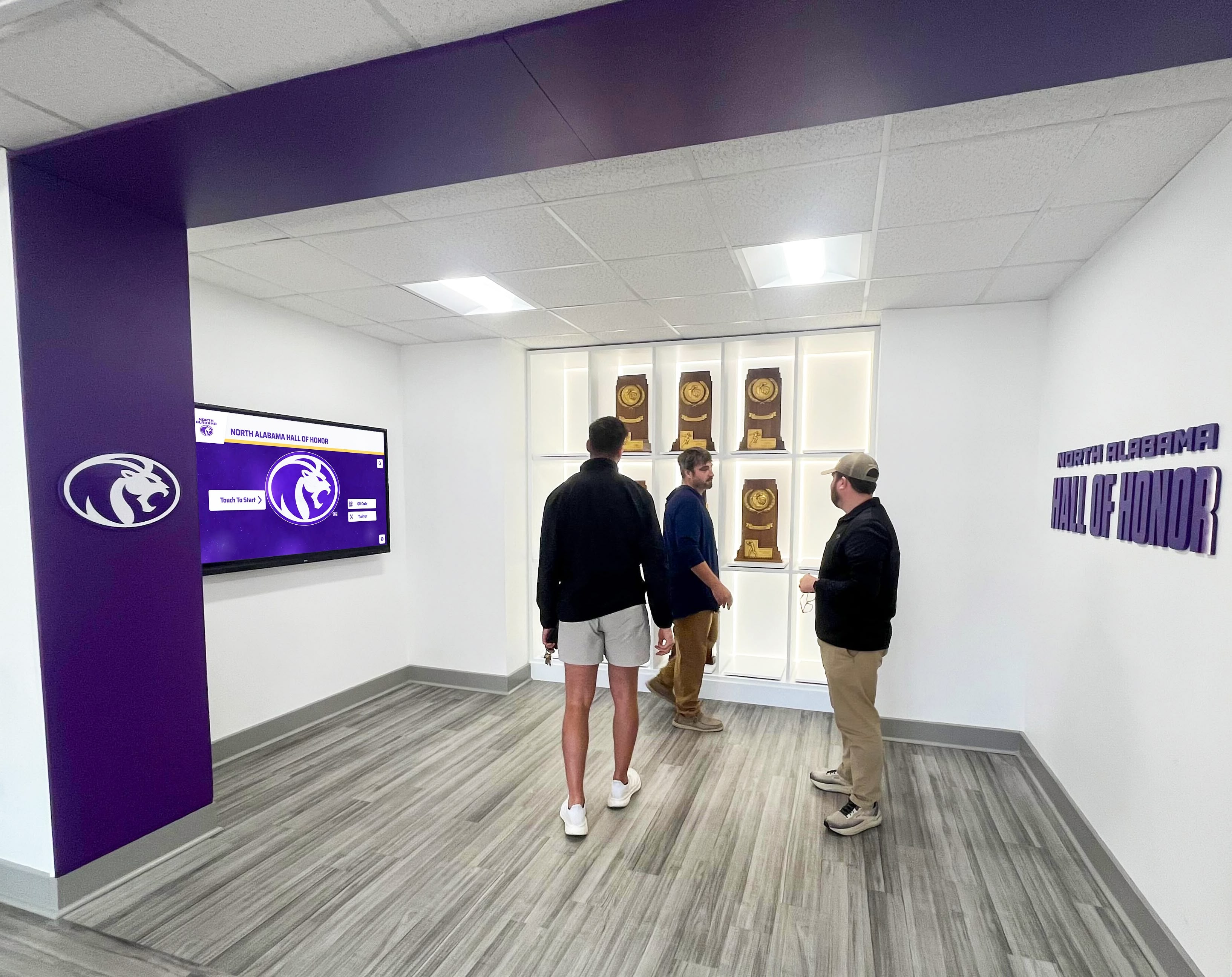
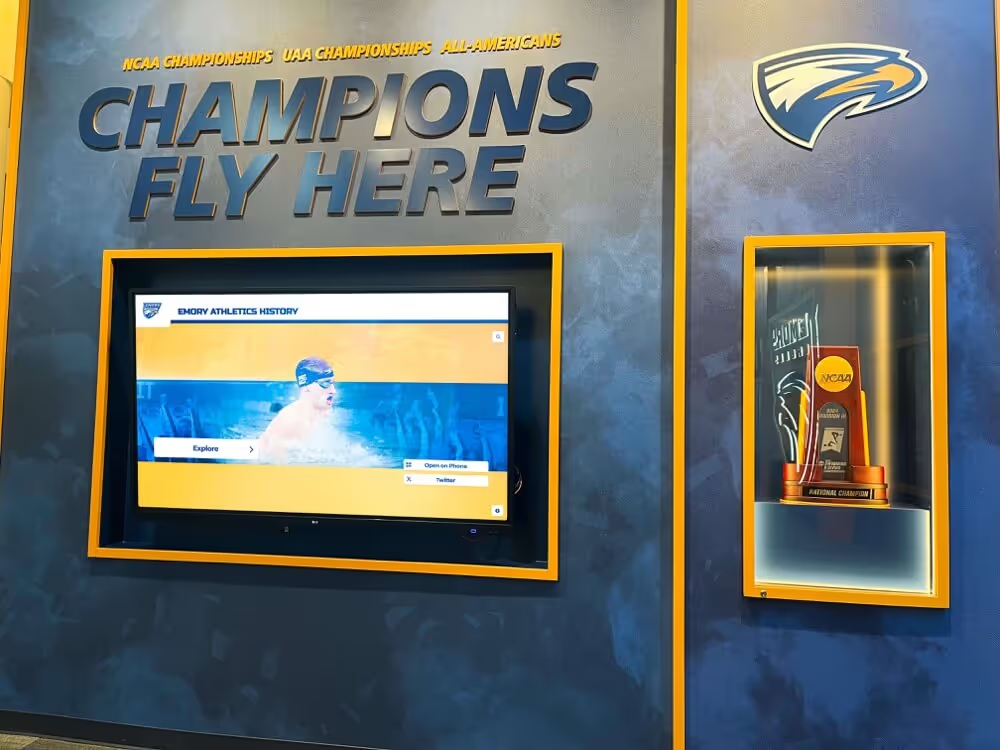
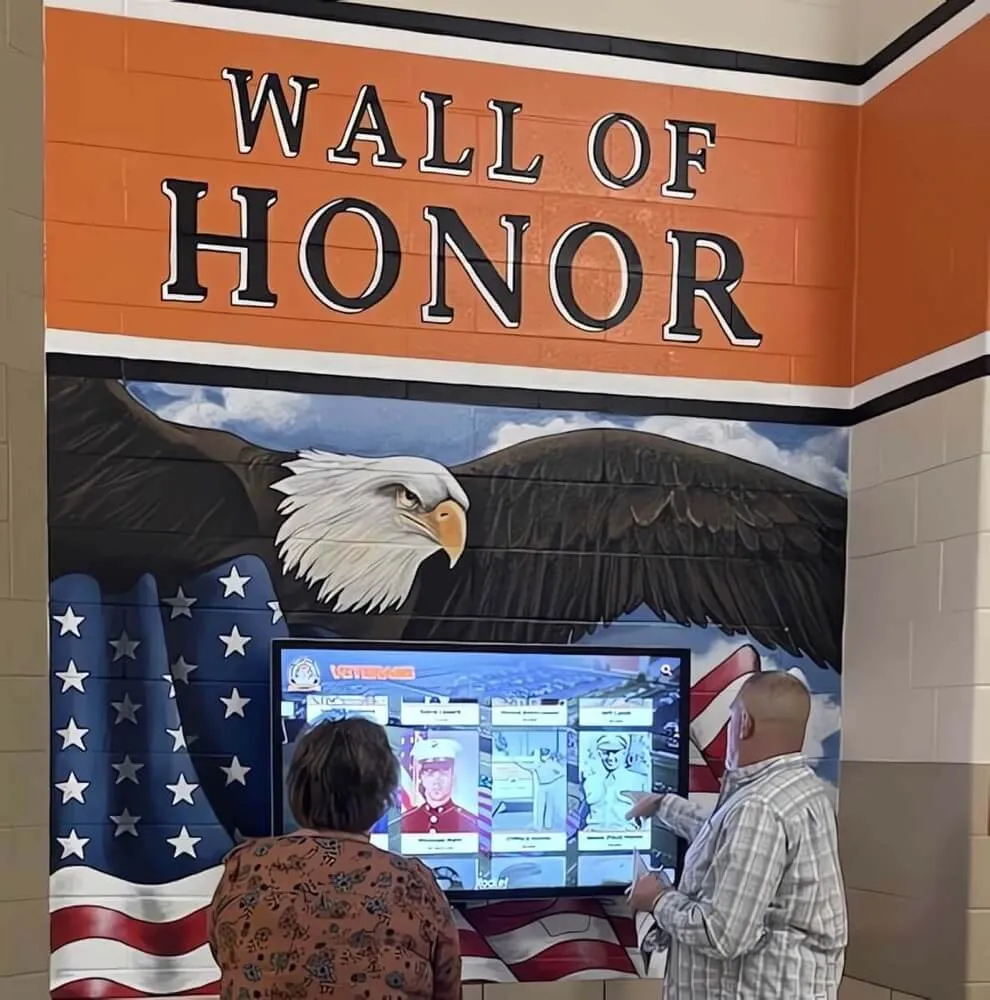
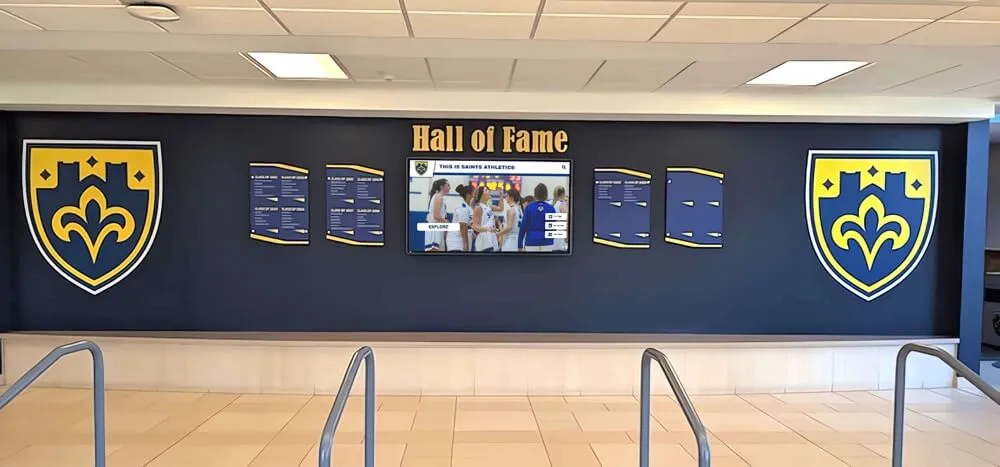
A hall of honor display becomes a credible institutional archive when every artifact behind it is backed by a complete provenance record covering ownership, history, and display authorization
Who Should Complete the Provenance Form
Provenance documentation works best when responsibility is assigned by role, not left as a committee task. Four roles share the workload:
Archivist or Records Manager — The primary form-completer for photographs, negatives, and printed materials. The archivist coordinates with rights holders for media-specific fields (Section 4) and maintains the master storage index. Programs connecting digital recognition systems to historical archives often route all new artifact intake through the archivist to ensure consistent documentation before anything reaches a display.
Athletic Director — Signs off on ownership documentation and display authorizations (Sections 3 and 4), coordinates with the board or administration for artifacts that require formal resolution, and validates that condition concerns are escalated to a conservator rather than addressed informally.
Hall of Fame Committee Archivist — Completes the historical significance statement and associated individuals fields (Section 5) for inducted athletes’ personal memorabilia. Committee archivists often have the deepest knowledge of the achievement context and can connect artifacts to existing inductee profiles. Programs with structured committee governance workflows benefit from assigning this role explicitly in their committee charter.
Booster Club Representative — Completes donor fields (Section 2) for artifacts acquired through booster fundraising or individual donations. The booster representative maintains the relationship with original donors and can often locate signed gift agreements or correspondence that documents the acquisition.
Facilities Manager — Provides accurate storage location data and condition notes for large items—records boards, permanent trophies, banners—that are physically managed outside the archivist’s direct control.
Content Architecture: Connecting Provenance to Digital Display
A provenance form is the input layer for a digital recognition program. Every field maps to a display module that makes the artifact’s history visible and searchable:
| Provenance Field Group | Display Module | Rocket Platform Capability |
|---|---|---|
| Artifact name, category, sport, year | Searchable artifact index | Unlimited entries; filter by sport, decade, category |
| Associated individuals (names, years, roles) | Inductee profile cross-links | Bidirectional linking: artifact ↔ athlete profile |
| Historical significance statement | Narrative display panel | Rich-text field supports formatted summaries |
| Photographs (with authorization confirmed) | Image gallery within artifact record | Cloud-hosted with WCAG 2.1 AA contrast compliance |
| Associated records and milestones | Auto-ranking record boards | Updated via CMS without hardware replacement |
| Oral history recordings | Video embed within artifact profile | Cloud video integration with scheduled publishing |
| Donor acknowledgment | Donor recognition ribbon | Automated display of donor name alongside artifact |
| Display and digitization authorization | Publishing gatekeeper | Role-based CMS: unpublished until authorization confirmed |
Schools managing recognition programs with digital display systems for newly renovated spaces report that the connection between a documented provenance form and the display record eliminates the most common audit problem: content appearing on a public system without a traceable authorization behind it.

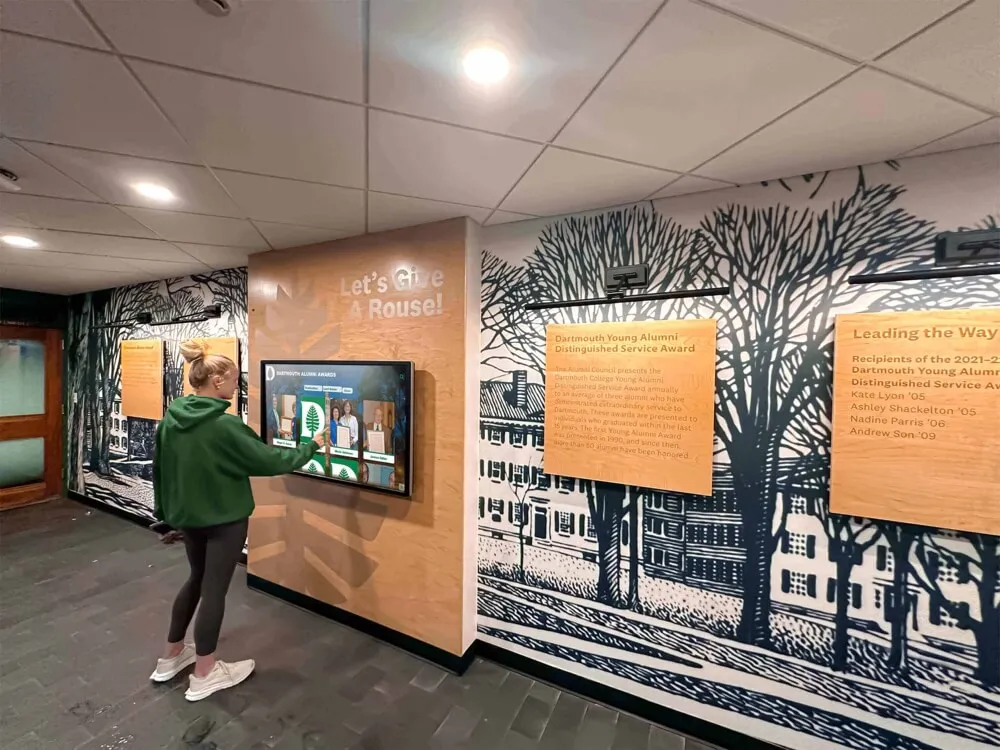
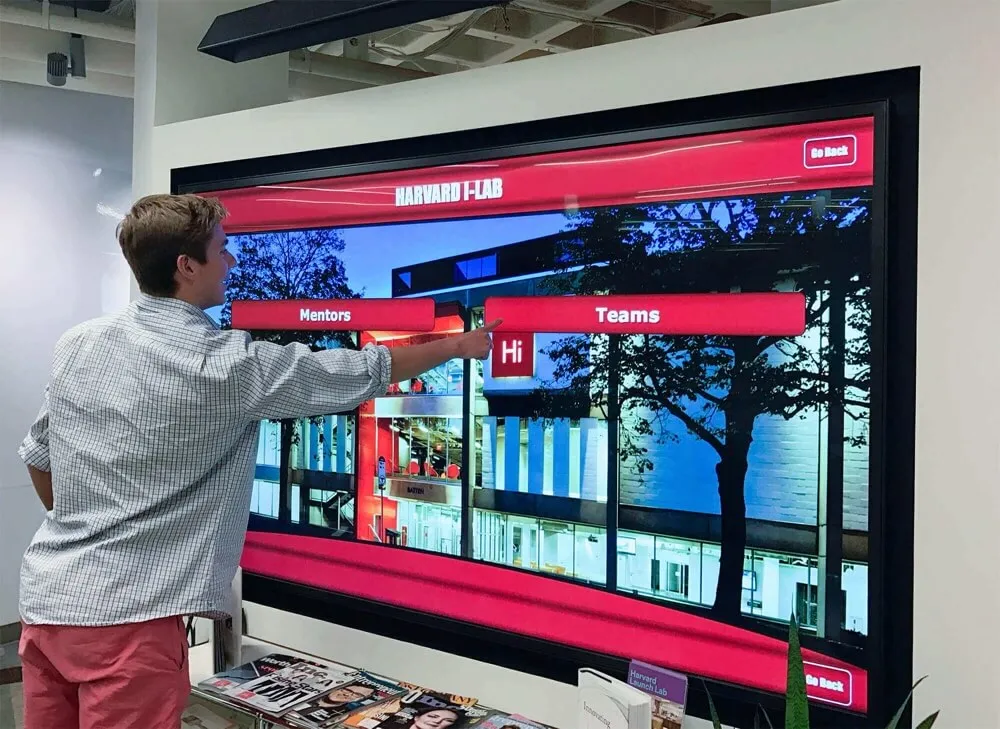
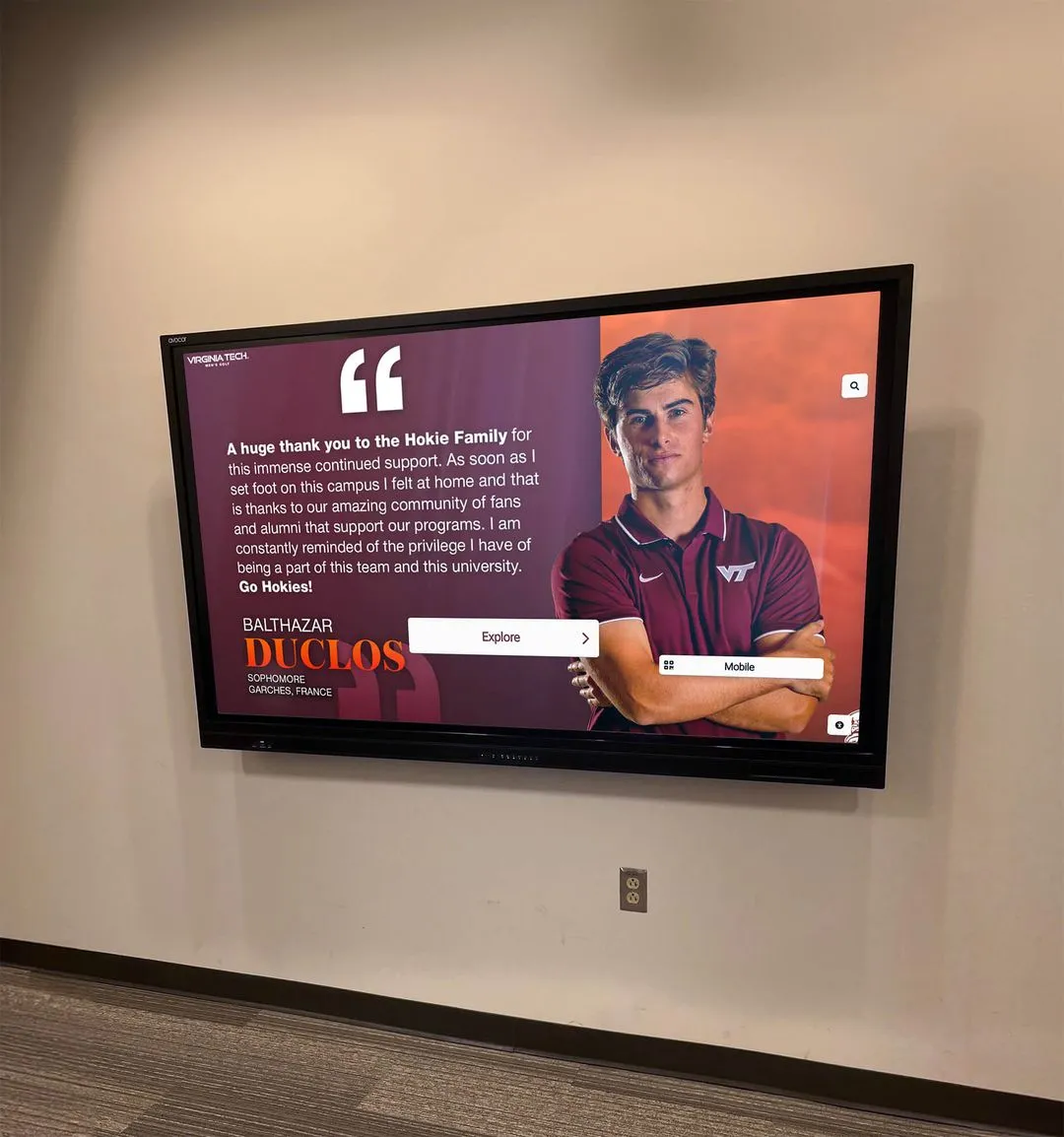
Each artifact displayed on a touchscreen recognition system can link directly to its provenance record—so staff, visitors, and administrators can trace the documentation behind every item on screen
Execution Timeline
Implementing an athletic memorabilia provenance system has four phases. The timeline below assumes a school starting from scratch; programs with partial documentation can compress the early phases.
Phase 1: Inventory (Weeks 1–6)
Goal: A complete list of every artifact in the school’s possession, regardless of documentation status.
- Designate an archivist or records lead and assign access to all storage locations
- Walk every display case, storage room, closet, and administrative office with a camera and notebook
- Record a working description, approximate date, and physical location for each artifact
- Assign a temporary ID to every item regardless of whether provenance can be established
- Flag artifacts with unknown origin, unclear ownership, or conservation concerns
Committees reviewing best practices for student and athlete accomplishment display consistently identify inventory as the non-negotiable first step—a provenance program built on an incomplete inventory misses the artifacts that most need documentation.
Phase 2: Documentation (Weeks 7–20)
Goal: A completed provenance form for every inventoried artifact, starting with items currently on display.
- Prioritize artifacts displayed publicly or designated for digitization
- Contact known donors and associated individuals while living sources remain available
- Obtain ownership documentation (deed of gift, board resolutions, purchase records) and attach copies to each form
- Complete display authorization fields in coordination with the athletic director and administration
- Flag items with unresolved ownership or conservation issues for qualified professional review
Phase 3: Digitization and CMS Entry (Weeks 21–30)
Goal: Every documented artifact entered into the school’s digital platform with linked provenance data.
- Enter artifact records into the CMS using provenance form data as source
- Upload authorized photographs and supporting media (oral histories, video clips)
- Link artifact records to existing inductee profiles where connections exist
- Apply role-based access controls: artifacts in “Pending Review” status remain unpublished until authorization is confirmed
- Review display accuracy with the archivist before scheduling public launch
Programs integrating artifact records with digital recognition systems can reference how athletic recognition display programs manage large record volumes to ensure the CMS structure supports both current display and long-term archive growth.
Phase 4: Refresh and Maintenance (Ongoing)
Goal: Provenance records stay current as artifacts are acquired, conditions change, and display status evolves.
- New artifacts: complete provenance form before the item is accepted, displayed, or entered into the CMS
- Annual condition review: update condition notes for all displayed artifacts; trigger conservation review for flagged items
- Custody changes: update Section 3 immediately when an artifact changes custodian or leaves the premises
- Authorization changes: update Section 4 if display rights change or term-limited authorizations expire
- System export: export the artifact record database annually and store alongside physical documentation
Provenance Form Intake Checklist (Copy-Paste Template)
Use this checklist when accepting any new artifact into the school’s collection.
Before Acceptance
- Artifact described and photographed from multiple angles
- Origin and acquisition method documented (donation, purchase, transfer)
- Donor or source identified with contact information
- Ownership documentation requested (deed of gift or written transfer)
At Documentation
- Artifact ID assigned and marked on storage container (not on the artifact itself)
- All seven form sections completed to the extent possible
- Gaps in documentation noted explicitly (do not leave fields blank without explanation)
- Condition assessment completed; conservation flag applied if Fair or Poor
Before Display or Digitization
- Display authorization fields confirmed by athletic director
- Digital display and photography authorization obtained if artifact will appear on screen or website
- Rights documentation attached for any photographs, scans, or media associated with the artifact
- CMS entry completed and linked to provenance form file
Ongoing
- Annual condition review scheduled in team calendar
- Next provenance review date set (custody change trigger, authorization expiration, or three-year default)
- Export completed and filed alongside physical documentation in institutional storage
Display Integration
The provenance form’s display authorization section (Section 4) is the gateway that connects physical artifacts to digital recognition systems. Without completed authorization fields, no artifact should appear on a public touchscreen, website, or digital signage display—regardless of how significant the item is.
For schools using a platform like Rocket Alumni Solutions, the CMS enforces this through role-based publishing: an artifact record created from provenance form data stays in “Draft” status until the archivist marks the authorization fields complete and an administrator approves publication. This workflow means a committee cannot accidentally publish an artifact photograph donated without reproduction rights, or display a trophy whose ownership is disputed.
Three display integration notes for programs at different stages:
New programs starting from scratch: Build the provenance form into your intake process before accepting any artifacts. A form completed at acquisition is far more accurate than one reconstructed from memory five years later.
Programs with existing physical displays: Work backward from what is currently on display. Every artifact visible to the public—in a trophy case, on a wall, in a hallway—needs a provenance form before its image is uploaded to a digital system. Start with the most prominent or most frequently photographed items.
Programs upgrading from one digital platform to another: Use the platform migration as a forcing function. Require a completed provenance form for every artifact migrating to the new system. Items without documentation either stay off the new platform until documentation is complete, or go into a “Pending Review” category visible only to administrators.

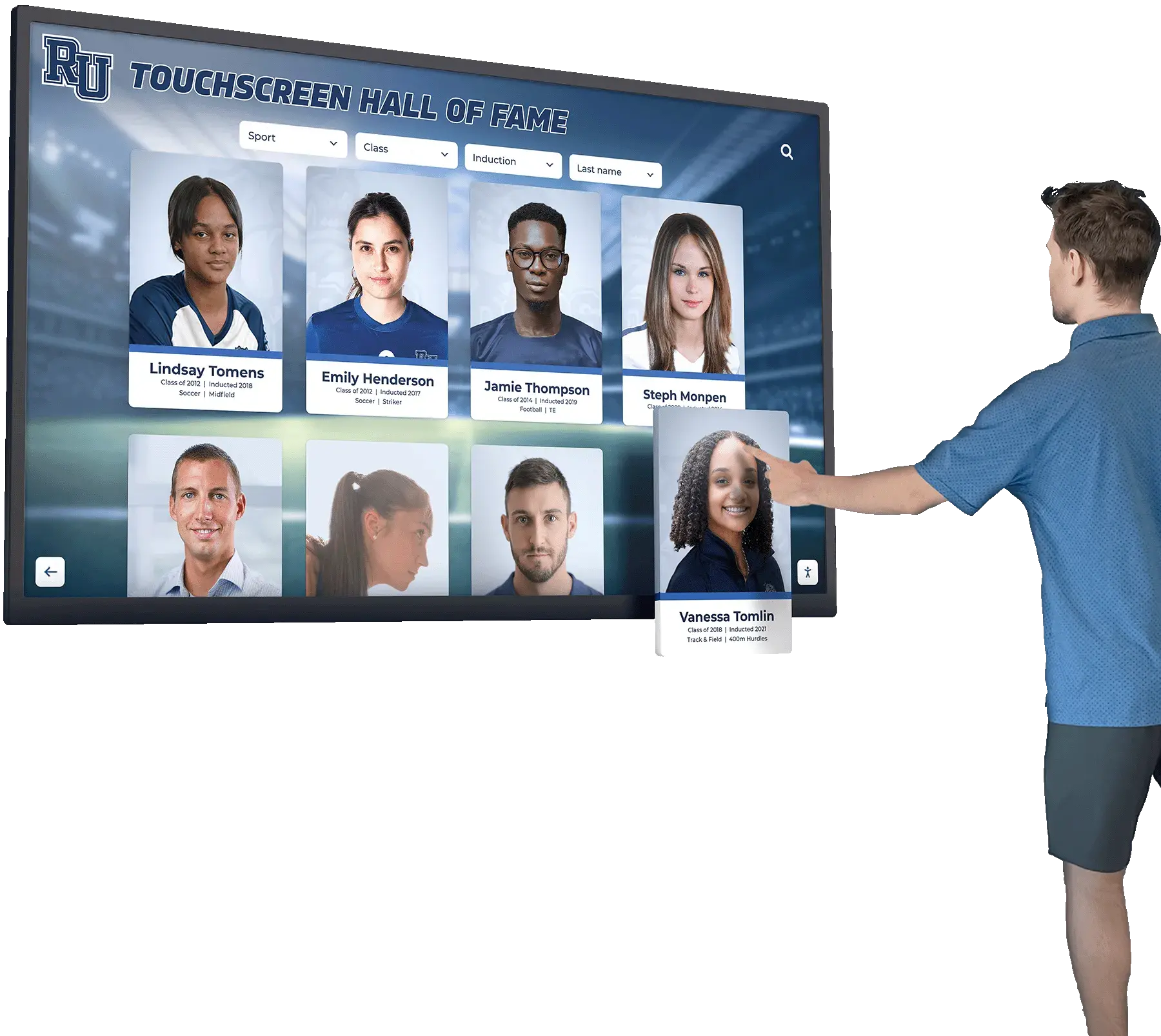
Alumni portrait cards gain institutional authority when each image traces back to a provenance record confirming display authorization and rights clearance
ADA and access considerations apply to digital artifact displays the same way they apply to inductee profiles. Text descriptions of photographed artifacts, sufficient color contrast on label panels, and reach-range-compliant touchscreen placement all contribute to a display that serves the full community—including visitors who rely on screen readers or cannot physically interact with an in-case exhibit. Rocket’s platform is built to WCAG 2.1 AA standards so every documented artifact displays accessibly from day one.
For programs weighing digital recognition wall installations in newly renovated school spaces, provenance documentation is what allows a renovation project to preserve institutional memory rather than reset it. When artifacts are inventoried, documented, and digitized before construction begins, the new display space opens with a fully searchable archive rather than an empty platform.
Measurement and Program Integrity
A provenance program’s success is not measured by the volume of forms completed—it is measured by the percentage of displayed artifacts that have defensible documentation behind them. Track these indicators:
| Metric | Baseline Target | Ongoing Standard |
|---|---|---|
| % of displayed artifacts with completed provenance forms | 100% before any artifact goes public | 100% maintained; new acquisitions documented within 30 days |
| % of forms with completed display authorization fields | 100% for publicly displayed items | 100% |
| % of forms with known ownership documentation | 80% within Year 1 | 95%+ at Year 3 |
| Artifacts with condition flags reviewed by qualified professional | 100% within 90 days of flag | Ongoing per-flag trigger |
| Annual export and backup completed | Year 1 | Every 12 months |
| % of CMS artifact records linked to provenance form file | 80% within Year 1 | 95%+ at Year 3 |
Programs building recognition systems that span athletic, academic, and community honorees—including those exploring recognition frameworks for broader categories of staff and community achievement—find that the provenance documentation approach scales naturally beyond athletic memorabilia to any category of archived institutional content.
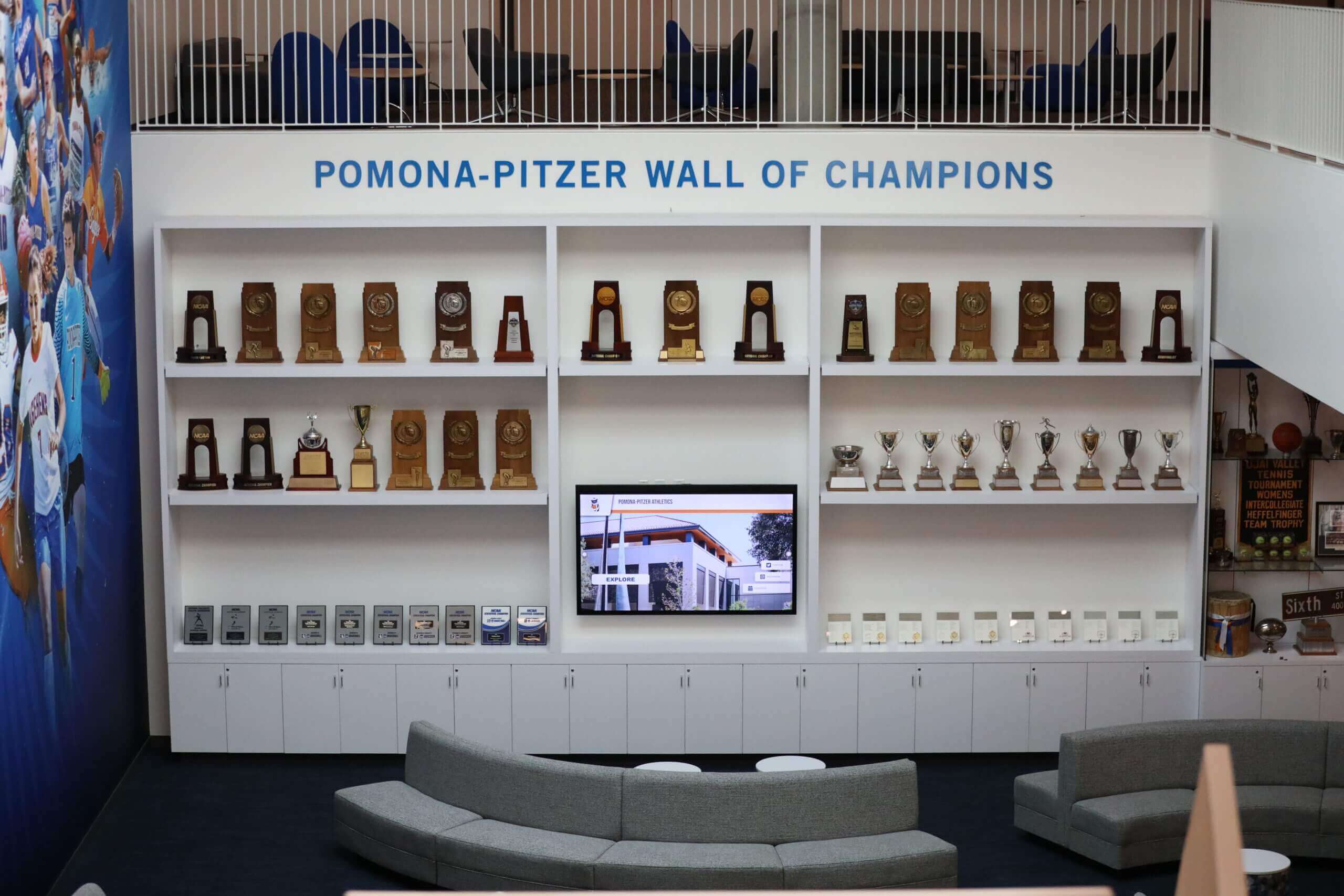
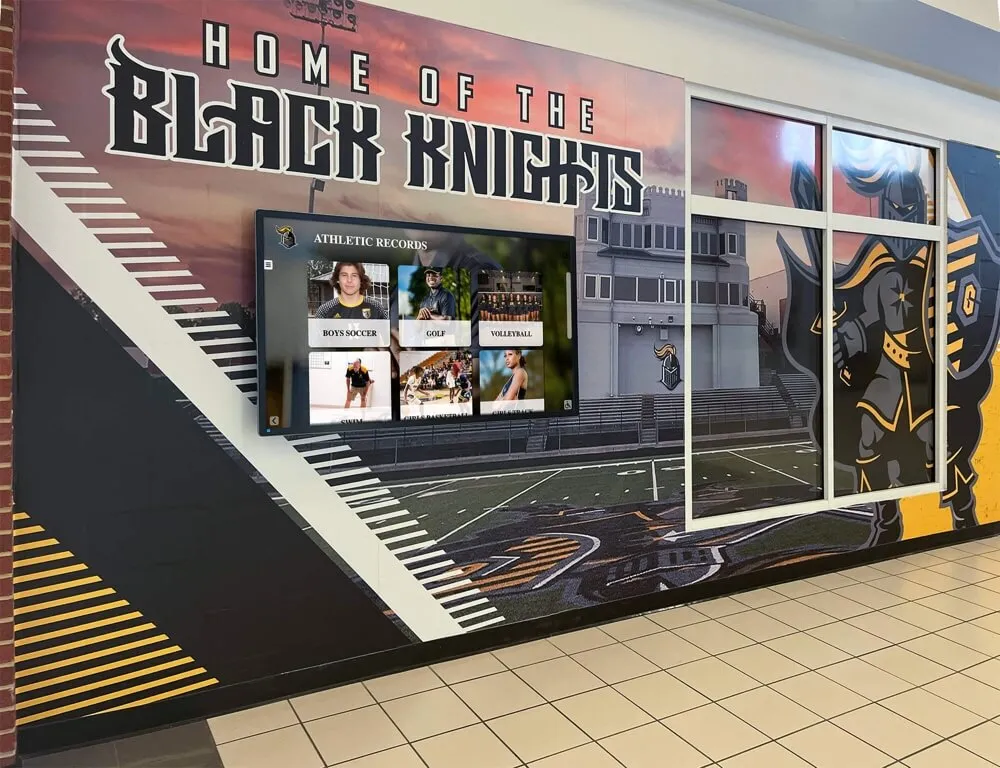
A wall of champions display backed by complete provenance records becomes a searchable institutional archive—not just a visual tribute, but a documented history that can be extended, digitized, and shared
Frequently Asked Questions
What is an athletic memorabilia provenance form?
An athletic memorabilia provenance form is a structured document that records an artifact’s origin, ownership history, condition, and display authorization. It answers the questions a committee, administrator, or archivist will need answered in any dispute, audit, or digitization project: Where did this come from? Who owns it? What condition is it in? Can we display or reproduce it?
Does provenance documentation protect ownership in a dispute?
Documented provenance is not a legal guarantee of ownership, but it is the evidence that any dispute resolution process will rely on. A form showing a signed deed of gift, a transfer resolution, or a purchase record provides far stronger grounds than an undocumented claim. Where ownership is genuinely uncertain, consult your institution’s legal counsel before completing the ownership fields or placing the artifact on display.
Who is responsible for maintaining provenance records when staff changes?
The records, not the individual, must carry the institutional memory. Provenance forms should be stored in both physical and digital formats, linked to artifact records in the CMS, and exported annually to institutional storage separate from any individual staff member’s files. When a new archivist, athletic director, or committee chair takes over, the provenance record is the briefing document—it tells the new custodian everything they need to know about each artifact without relying on oral tradition.
Can we use provenance forms for photographs, not just physical objects?
Yes. Photographs and negatives are artifacts in their own right. A photographic provenance form records the photographer (creator), the date and event photographed, the format (print, negative, digital file), the current custodian, and—critically—the rights status for display and reproduction. For schools building digital archives, photographs are often the highest-volume artifact category and the one most likely to present copyright exposure if rights are not documented before digitization.
Do we need provenance documentation for items the school clearly owns, like trophies it purchased?
Yes, though the documentation is simpler. A purchase record confirming the school acquired the trophy, a note of the associated achievement, and an authorization for public display complete the essential fields. Even straightforward ownership benefits from documentation because staff turnover, storage moves, and institutional reorganizations can sever the institutional memory that made the ownership seem self-evident. A completed form takes less than 20 minutes for an item with clear history.
Should provenance forms be publicly visible in our digital display?
The artifact record in a public-facing display should show the artifact description, historical context, associated individuals, and an authorized photograph—not the full administrative provenance form, which contains internal notes, storage locations, and condition assessments not appropriate for public display. The provenance form lives in the back-end CMS linked to the artifact record, accessible to administrators and archivists but not published to visitors.
How does a provenance form connect to a hall of fame inductee profile?
The provenance form is the artifact-level record; the inductee profile is the person-level record. The two link through the “Associated Individuals” field in Section 5. When an artifact is connected to an inductee—a game-worn jersey, a championship trophy, a signed item—the CMS creates a bidirectional link: the artifact record references the inductee profile, and the inductee profile surfaces the related artifact. This connection is what allows a touchscreen hall of fame to display not just a photograph and biography, but a curated set of documented artifacts that give the honoree’s achievements physical weight. For committees building this infrastructure, structured selection committee workflows that assign an archivist role are the most reliable way to ensure the connection is made consistently for every inductee class.
Give Every Artifact a Record It Deserves
An athletic memorabilia provenance form is the infrastructure decision that separates a managed recognition collection from a storage room full of objects with forgotten stories. When every trophy, jersey, photograph, and plaque has a completed record covering origin, ownership, condition, and display authorization, the program can move confidently—digitizing its history, publishing its archive, and connecting each artifact to the inductees and achievements it documents.
The field-by-field template in this guide covers the seven sections a complete provenance form requires. Start with the artifacts currently on display, work backward through your storage inventory, and build the intake process for new acquisitions before the next donation arrives.
Request your free custom demo to see how Rocket Alumni Solutions connects provenance documentation to searchable digital displays—role-based publishing, linked artifact records, cloud-backed archives, and ADA-compliant touchscreen layouts that turn a completed form into a publicly accessible tribute your community can explore for years.
Live Example: Rocket Alumni Solutions Touchscreen Display
Interact with a live example (16:9 scaled 1920x1080 display). All content is automatically responsive to all screen sizes and orientations.