



When a school publishes its athletic hall of fame inductees online, the decisions become permanent and publicly visible. Anyone can search a name, screenshot a profile, or notice a notable omission. Schools that publish without written bylaws in place discover the problem the moment a parent, alumni, or local reporter asks a simple question: “Who decided that, and what was the standard?”
Athletic hall of fame bylaws answer that question before it becomes a crisis. A bylaw document establishes who governs the program, what the selection committee looks like, what rules apply to every nomination, how votes are conducted, who approves content before it goes live, and what happens when records need updating or removing. Writing bylaws is not bureaucratic overhead—it is what separates programs that last from programs that generate recurring controversy.
This guide walks through every bylaw element schools need before their first inductee profile publishes online, with a checklist template to audit your program against.
Schools that build athletic recognition programs on documented bylaws create a defensible, consistent, and transferable system that survives leadership changes and public scrutiny. Those that rely on informal tradition and committee memory create programs that work fine—until the first difficult decision, then don’t.

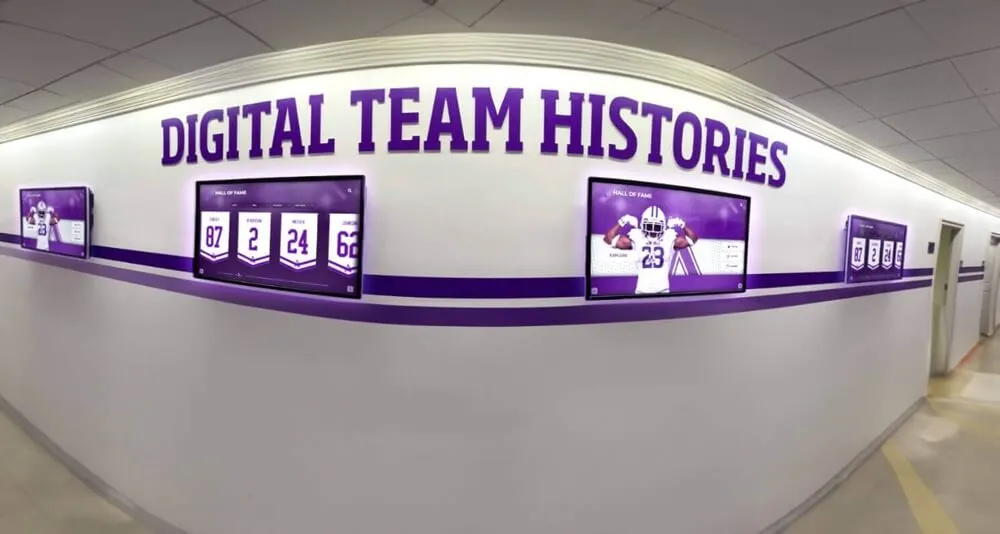
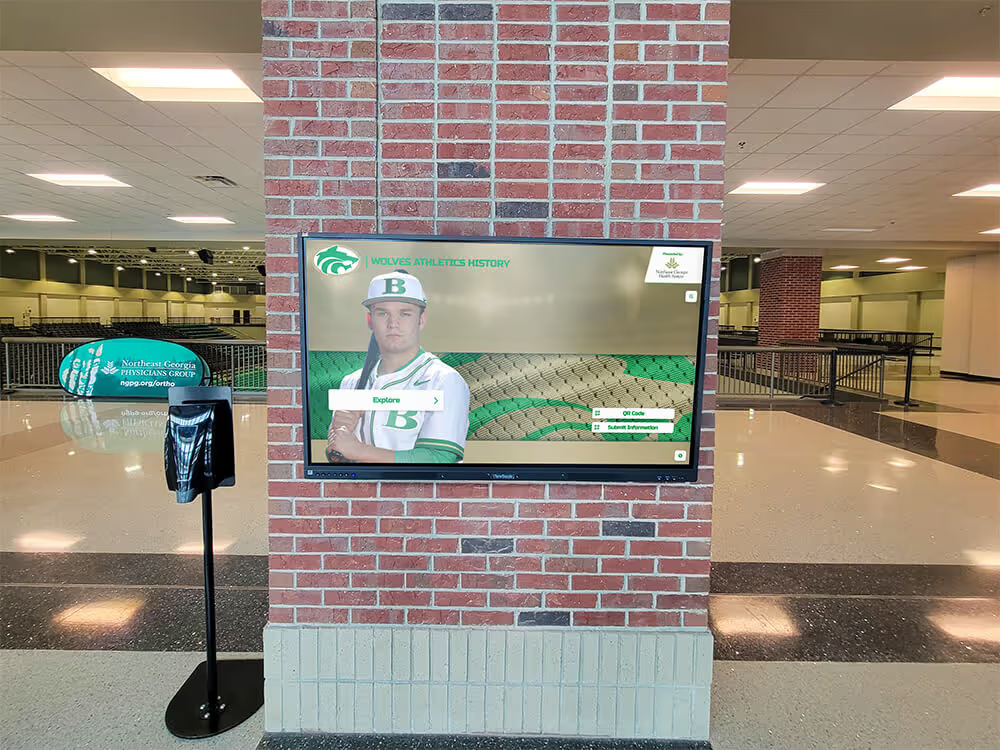
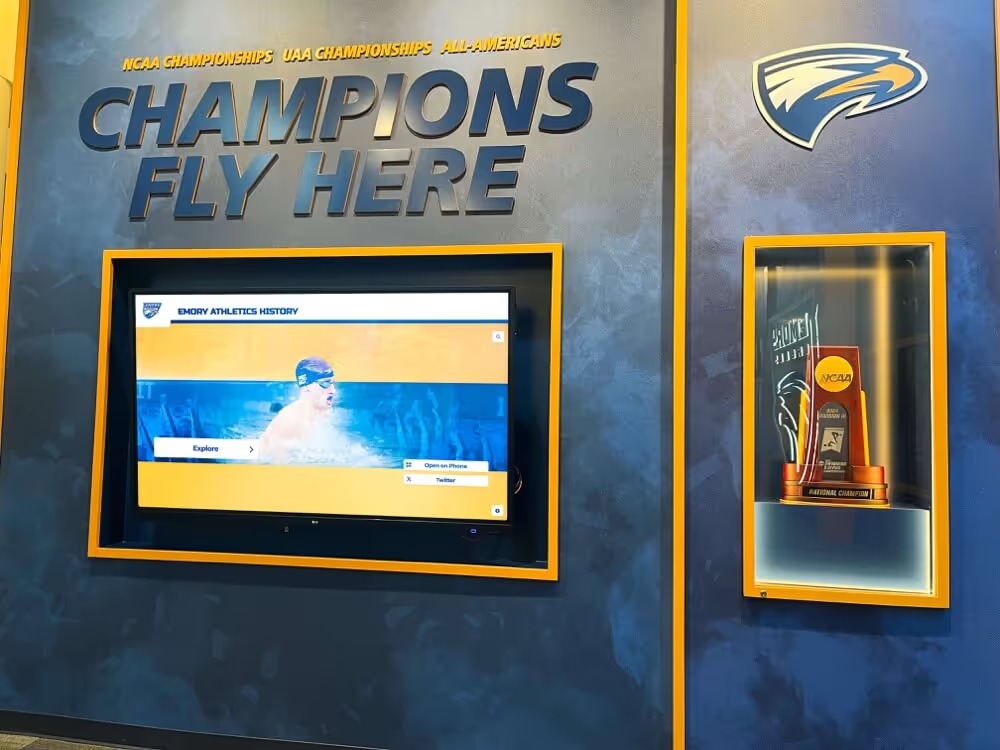
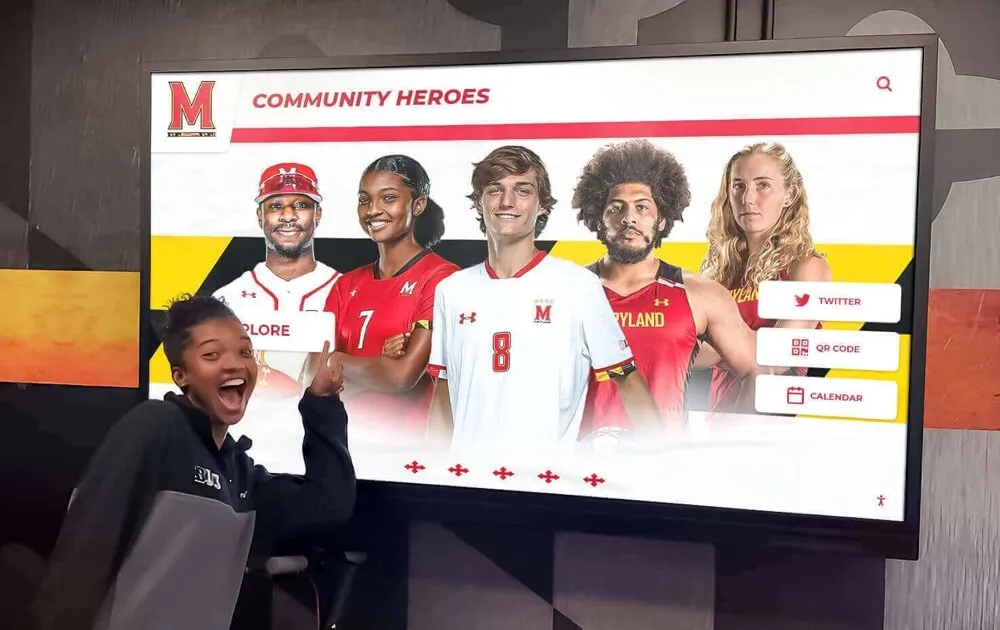
A physical sign signals the program exists—bylaws are the document that signals what the program means and how it operates
Program Snapshot
Use this table to audit your bylaws before nominations open. Each blank cell is a gap that will generate conflict.
| Bylaw Element | Minimum Standard | Risk If Missing |
|---|---|---|
| Governing authority | Named role or body that owns the program | Disputes over who can change rules mid-cycle |
| Committee composition | Fixed seat count, defined roles, staggered terms | Stacking; inconsistent perspective across years |
| Quorum and voting threshold | Minimum voters present; approval percentage required | Invalid votes; contested induction decisions |
| Recusal policy | Defined conflicts; documented recusal process | Appearance of bias; legally or politically exposed decisions |
| Eligibility rules | Six written standards (see Section 3) | No defensible basis for declining nominations |
| Nomination window | Start date, end date, how nominations carry over | Nominations submitted outside the window; perpetual backlog |
| Online publishing gate | Who approves content; what fields are required | Incomplete, inaccurate, or unauthorized profiles going live |
| Update and correction policy | Who can request changes; who approves; turnaround standard | Content rot; factual disputes with inductees or families |
| Removal and revocation process | Defined triggers, process, and vote threshold | No clear path when serious conduct issues arise |
| Appeals procedure | Formal review step; timeline; final authority | Informal escalation to leadership that bypasses the committee |
Section 1: Governing Authority
Before any selection rule matters, the bylaws must answer: who owns this program?
The governing authority is the individual or body with final approval over the bylaws themselves, the budget, and any decision the selection committee cannot resolve. Common structures include:
- Athletic director as program owner, with committee recommendations subject to AD approval
- Principal or superintendent retaining final approval on any revocation decision
- Athletic advisory board or booster board serving as a governing body with oversight but not day-to-day control
- Institutional policy designation where the program falls under the activities or alumni office
The bylaws must name the governing authority explicitly, not describe it by implication. Phrases like “the committee will determine” without identifying who resolves committee deadlocks create ambiguity that surfaces at exactly the wrong moment.
What the bylaws should state:
- The role or body that holds final program authority
- The process for amending the bylaws (who proposes, who approves, effective date)
- The review cycle for bylaw updates (annually recommended)
- How authority is transferred when key roles change
Governance structure is the foundation that everything else in the bylaws sits on. Get this section right before drafting anything else.
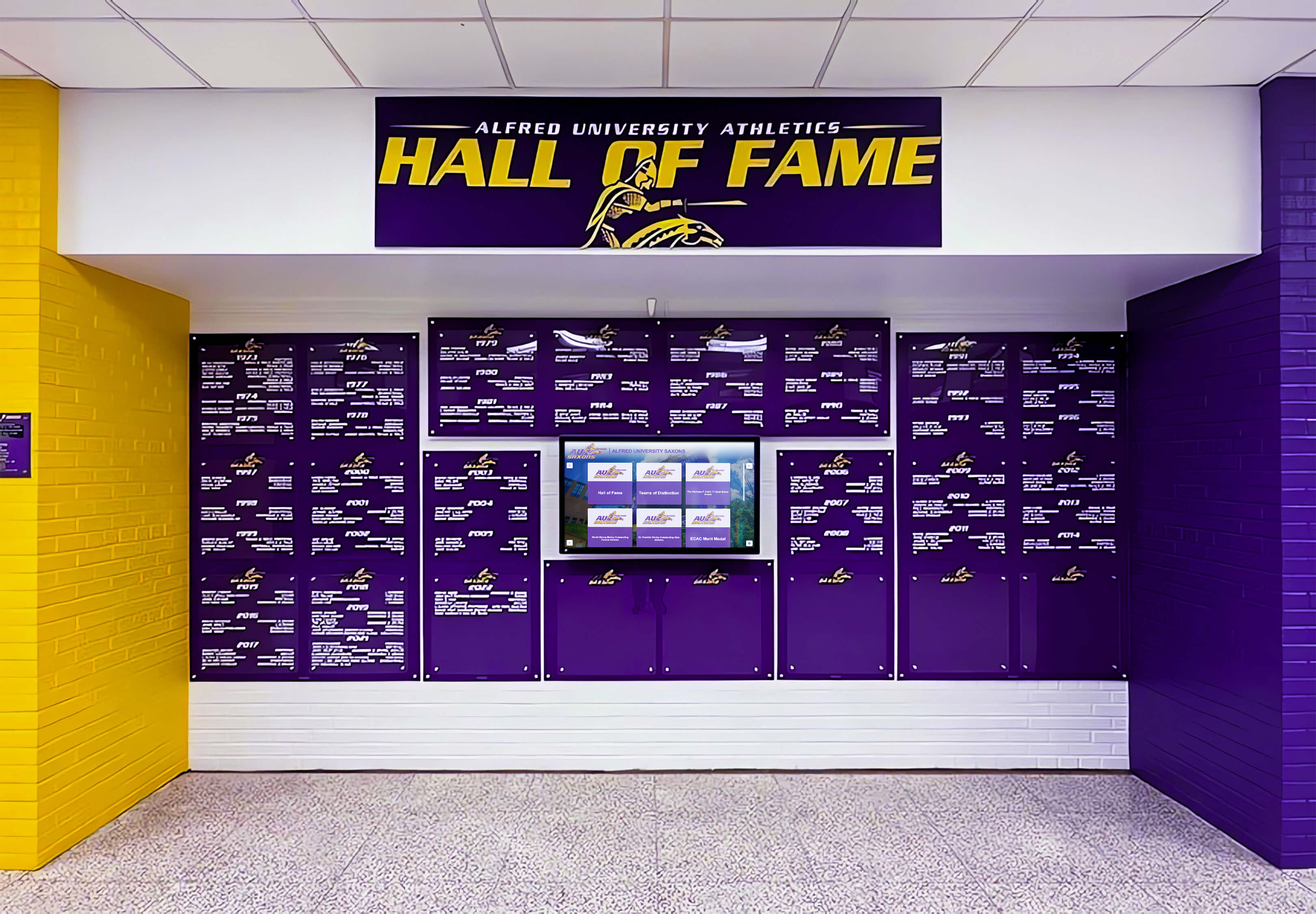
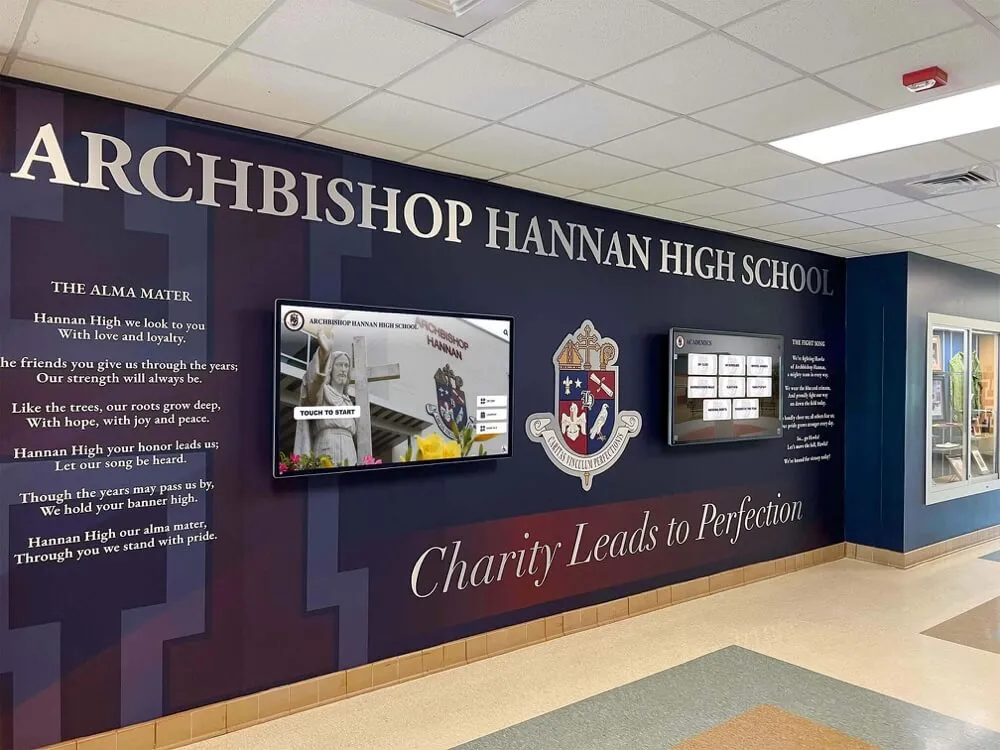
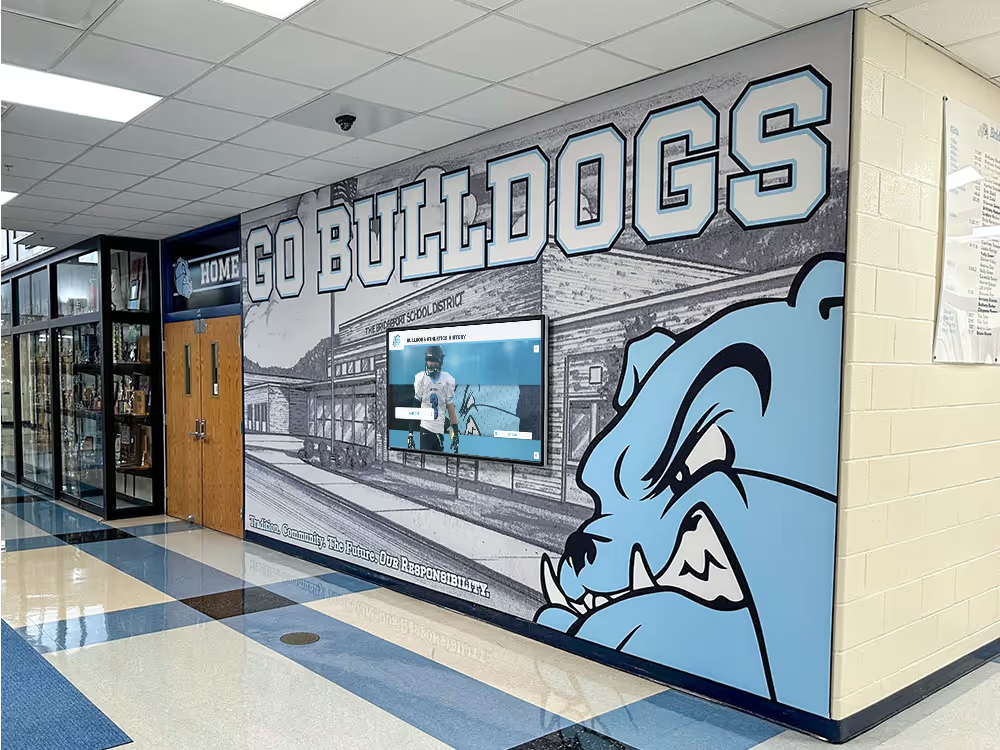
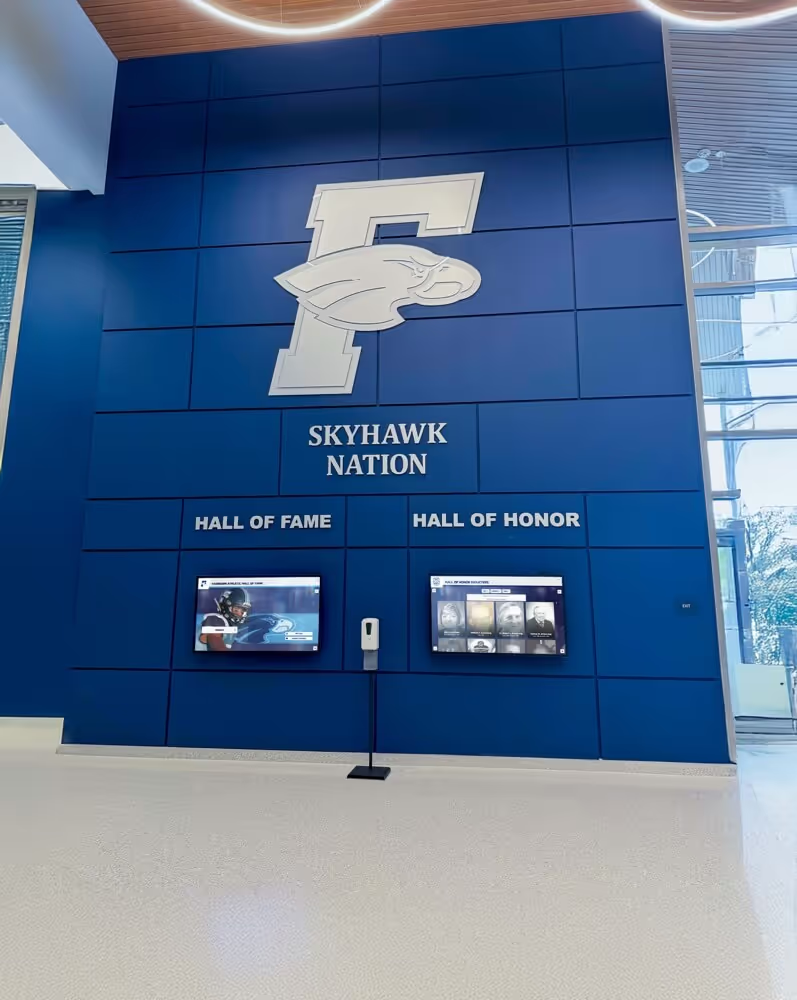
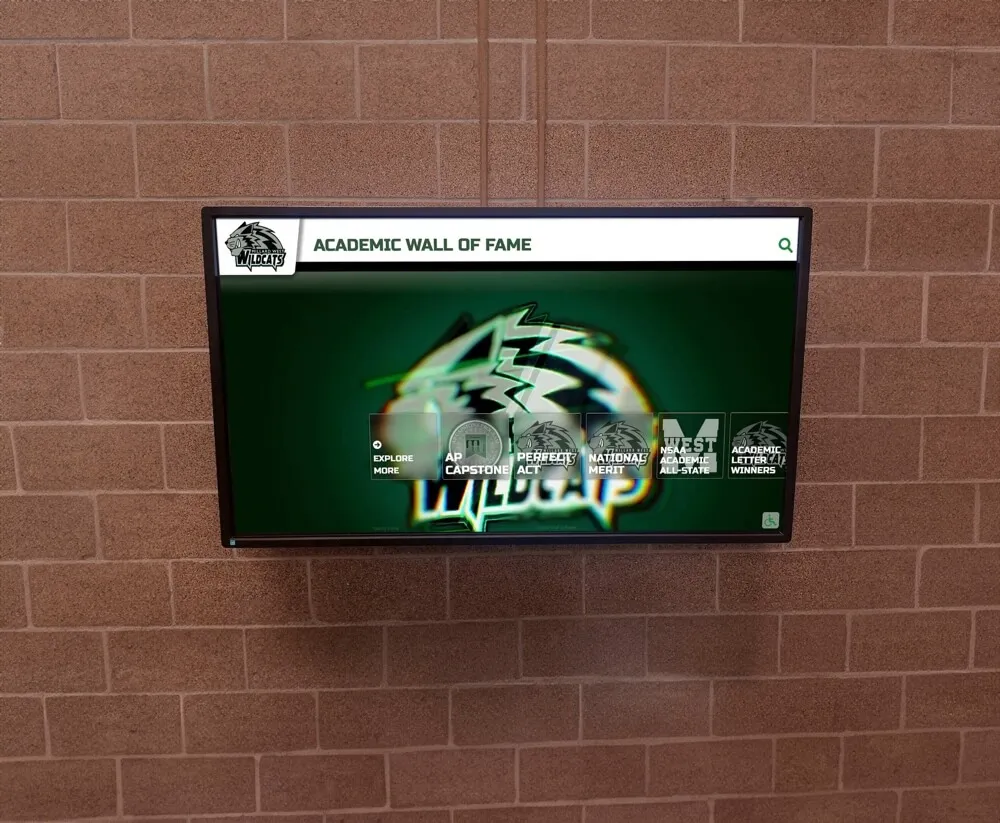
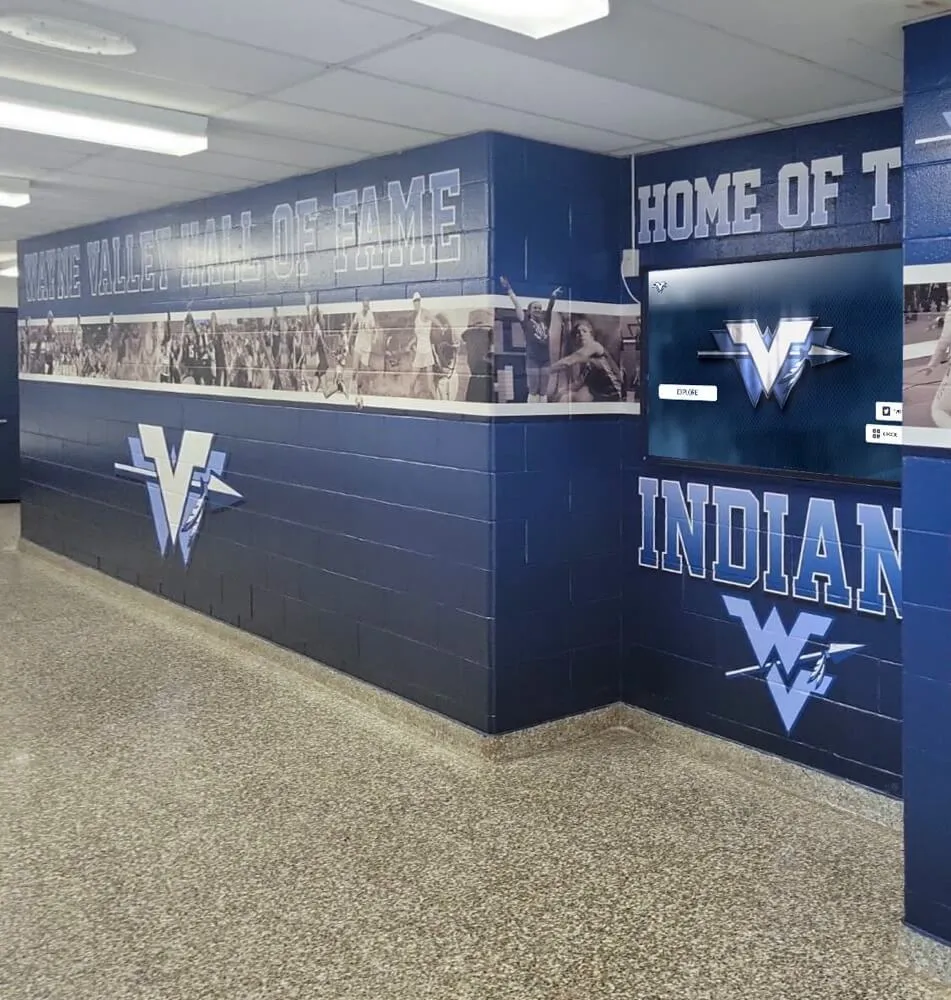
Established programs like this one reflect years of consistent governance—documented bylaws make that consistency transferable across leadership changes
Section 2: Selection Committee Bylaws
The selection committee is where induction decisions are made. Bylaws governing the committee protect both the institution and the individuals who serve on it.
Committee Composition
Define every seat by role, not by name. Naming individuals creates a document that becomes outdated; naming roles creates a structure that survives turnover.
Recommended committee structure (8–12 members):
- Athletic director (chair or co-chair)
- One or two current head coaches (rotating by sport)
- One or two retired coaches or prior athletic staff with institutional history
- One or two prior inductees (serving staggered 2–3 year terms)
- One school administrator (principal, assistant principal, or activities director)
- One or two community or alumni representatives
- One booster club representative
The bylaws should specify:
- Total seat count
- Whether seats are voting or advisory
- Who appoints each seat
- Term length and term limits
- What happens when a seat is vacant during an active nomination cycle
Staggered Terms
Staggered terms prevent full committee turnover in a single year, which would eliminate institutional memory from the selection process. A typical pattern: two-year terms with half the seats rotating annually. Document this rotation schedule in the bylaws or in an attached exhibit.
Quorum and Voting Threshold
State the minimum number of voting members required for any vote to count (quorum), and the percentage of affirmative votes required for induction (threshold).
Common standards:
- Quorum: Two-thirds of seated voting members
- Induction threshold: 75% of votes cast (not of seated members—of votes cast in a quorum-valid meeting)
- Maximum inductees per class: Optional cap (e.g., no more than five individuals and one team per year) to preserve selectivity
A supermajority threshold—not a simple majority—is the standard across well-run programs because it prevents marginal nominations from being inducted through political alignment rather than genuine consensus. Learn more about how schools define athletic hall of fame criteria and thresholds for context on why selectivity matters.
Recusal Policy
Every committee member with a personal connection to a nominee must recuse. The bylaws should define what “personal connection” means rather than leaving it to individual judgment.
Standard recusal triggers:
- Family relationship (spouse, parent, sibling, child)
- Direct coaching or supervisory relationship
- Business partnership or financial relationship
- Active personal conflict with the nominee
- Prior public advocacy for or against the nominee
The recusal process should require the committee member to notify the chair in writing before the meeting at which the nominee is discussed, and the recusal should be documented in meeting minutes. A recused member does not count toward quorum for that specific vote.
Section 3: Eligibility Rules
The eligibility section is where bylaws do the most protective work. Six written standards cover the vast majority of situations:
Rule 1: Affiliation Requirement
Nominees must have a verified connection to the institution in a defined role. Specify minimum duration and relationship type:
- Athletes: Completed at least one full varsity season while enrolled as a student
- Coaches: Served as a head or assistant coach for at least one complete academic year
- Contributors: Provided documented service to the athletic program in a defined capacity
Vague affiliations create vague decisions. Define what counts before nominations open.
Rule 2: Waiting Period
Set a minimum gap between the end of active affiliation and eligibility for nomination. Common standards:
- Athletes: 3–5 years after graduation or end of enrollment
- Coaches: 5 years after the end of their last coaching role at the institution
- Teams: 1–2 years after the season in question
The waiting period reduces recency bias and allows performance to be evaluated in historical context rather than current sentiment.
Rule 3: Active-Status Exclusion
No currently enrolled students, employed coaches, or active staff members are eligible. Hall of fame recognition is retrospective—it is not a live incentive for current program participants. This rule eliminates a category of nominations before the committee ever discusses them.
Rule 4: Achievement Threshold
Each category must have defined minimum benchmarks. Thresholds do not need to be rigid formulas, but they must be specific enough that the committee can apply them consistently:
- Athletes: Examples might include all-state recognition, record-setting performance, or specific statistical benchmarks defined per sport
- Coaches: Minimum winning percentage, championship totals, or years of service with documented impact
- Teams: Championship seasons, undefeated records, or historically significant performance markers
- Contributors: Documented programs, donations, or service contributions with defined scale or duration
For a deeper look at how achievement thresholds work across categories, see what athletic hall of fame committees look for in nominees.
Rule 5: Character Standard
The character standard is the most sensitive eligibility rule and the one most likely to be tested. Write it before it is needed.
The bylaws should:
- State that induction requires a finding of good character consistent with the institution’s values
- List specific, observable conduct categories that the committee is authorized to consider (criminal convictions, documented conduct violations, Title IX or harassment findings)
- Specify what evidence the committee may review and from what sources
- Note that the character review is not a disciplinary proceeding—the nominee’s right to contest a denial is addressed in the appeals section
A character standard that is vague (“must be a person of good character”) provides no guidance for difficult decisions. A standard that lists specific conduct categories provides defensible criteria that the committee can apply without appearing arbitrary.
Rule 6: Category Definitions
Define every category the program recognizes and what that category covers. Minimum categories:
- Individual Athlete
- Coach
- Team (championship or milestone season)
- Contributor (non-competitor service)
If the program will eventually include academic or arts recognition, define those categories now even if no nominations are expected soon. Undefined categories get invented informally, which creates inconsistency.

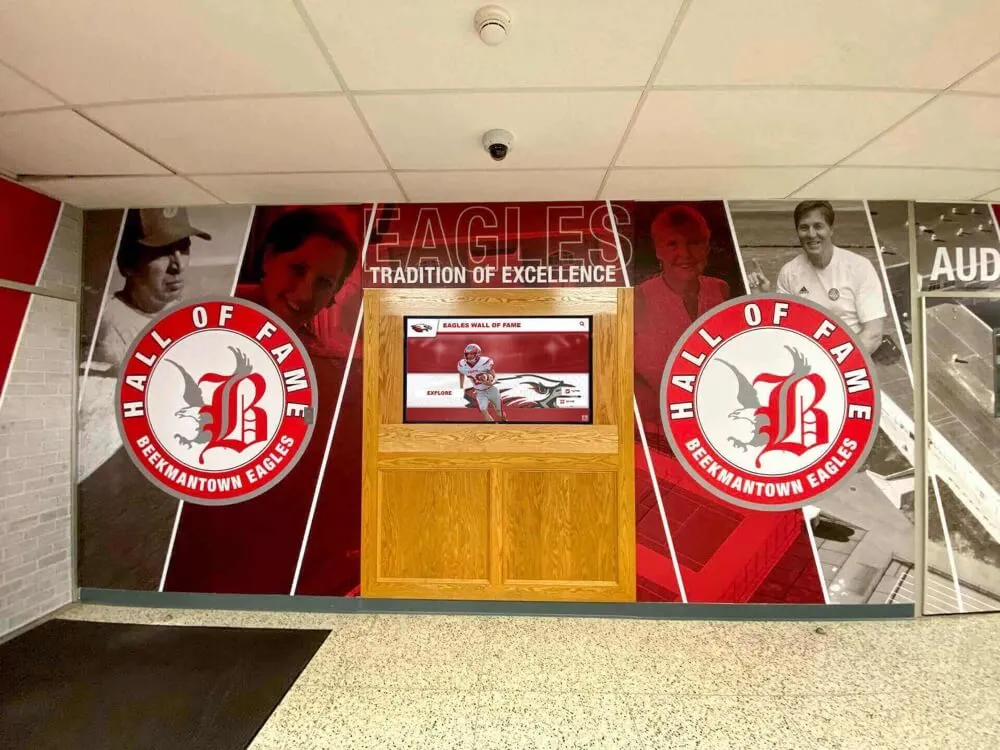
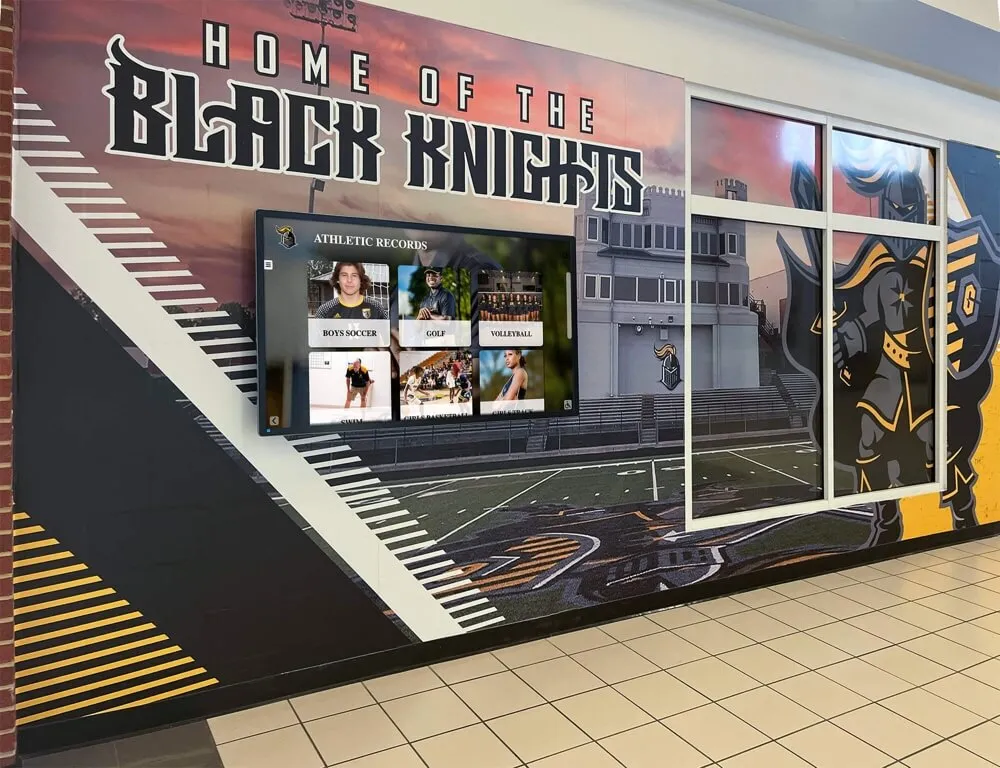
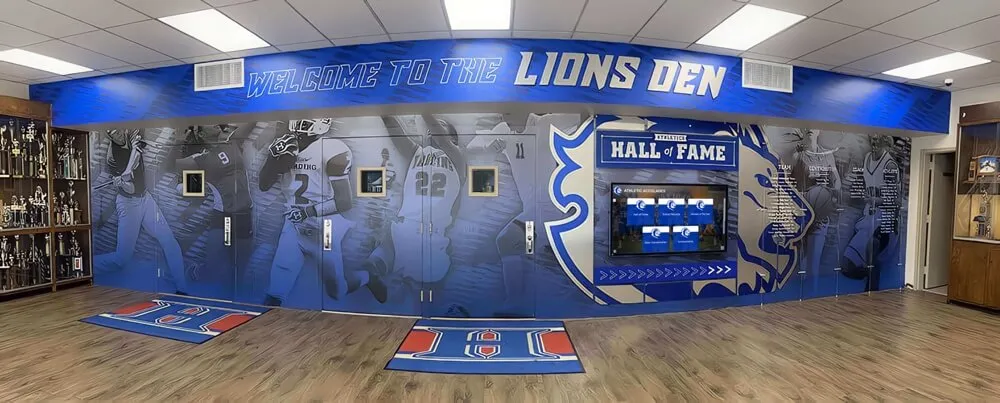
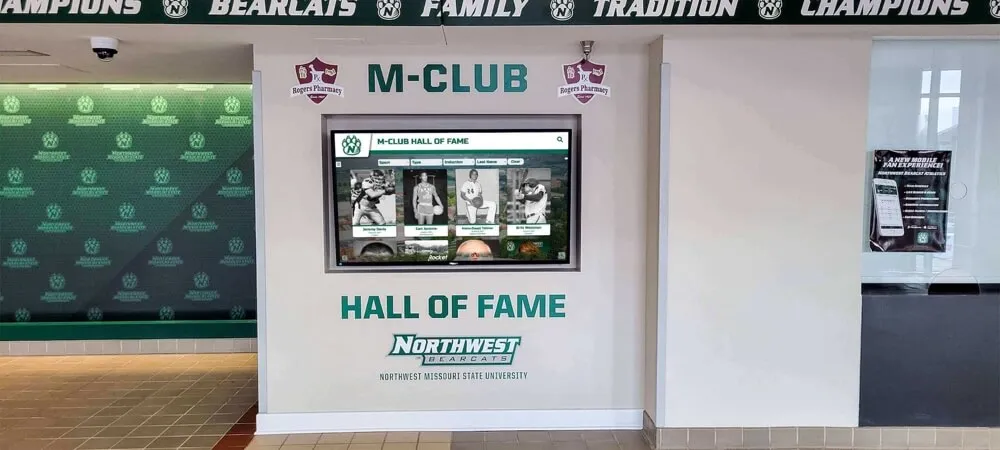
Each name on a display like this one represents a committee decision that, with written eligibility rules, is traceable and defensible
Section 4: Nomination Process Rules
Bylaws must specify the nomination process in enough detail that someone new to the committee could run the cycle correctly without institutional memory.
Who May Nominate
Most programs allow any community member to submit a nomination:
- Alumni who competed alongside candidates
- Current and former coaches
- Athletic department staff
- Family members providing biographical information
- Community members familiar with the nominee’s contributions
The bylaws should also specify whether self-nominations are permitted (most programs prohibit them for individual categories) and whether committee members may submit nominations (permitted but subject to recusal if the member also votes).
Nomination Packet Requirements
Define what a complete nomination includes:
- Completed nomination form with nominee contact information and category
- Documented achievement summary with specific accomplishments
- Supporting materials (statistics, photographs, news clippings, awards documentation)
- At least one supporting letter from someone with direct knowledge of the nominee
- Submitter’s name and contact information
Nominations missing required elements should be returned for completion, not held in pending status indefinitely.
Nomination Window and Carryover Policy
State the annual window (e.g., October 1 through December 31) and specify how long nominations remain active. Common standards:
- Active for three consecutive cycles: A nomination submitted in Year 1 is considered in Years 1, 2, and 3; if not inducted by Year 3, it must be resubmitted
- Annual deadline required: Nominations submitted outside the window are held for the next cycle, not considered in the current one
The carryover policy prevents an accumulating backlog of perpetually active nominations that never receive a final decision.
Section 5: Voting Process Bylaws
The voting section translates committee structure into a reproducible annual process. It should describe each step in enough detail that meeting minutes can verify compliance.
Standard Annual Process
- Nomination review phase: Committee chair verifies that each nomination packet is complete and the nominee meets basic eligibility (affiliation, waiting period, active-status). Nominations failing eligibility screening are returned with a written explanation.
- Deliberation meeting: Committee convenes with quorum verified. Each nominee is presented; committee members may ask clarifying questions. Discussion is recorded in minutes.
- Recusal confirmation: Chair confirms any recusals before voting begins and adjusts quorum calculation accordingly.
- Secret ballot: Each eligible committee member casts a written ballot. Ballots are collected and counted by a designated non-voting recorder (often an administrative assistant or a second administrator).
- Threshold determination: Nominees meeting the induction threshold are approved; others are returned to the active pool (per carryover policy) or marked as rejected.
- Notification: Approved nominees are notified before any public announcement. Declined nominees are not notified by default unless the program has established a courtesy notification practice—and that practice must be specified in the bylaws.
For more on structuring a transparent selection process from nomination through induction, see the complete guide to launching an athletic hall of fame for a full administrative overview.

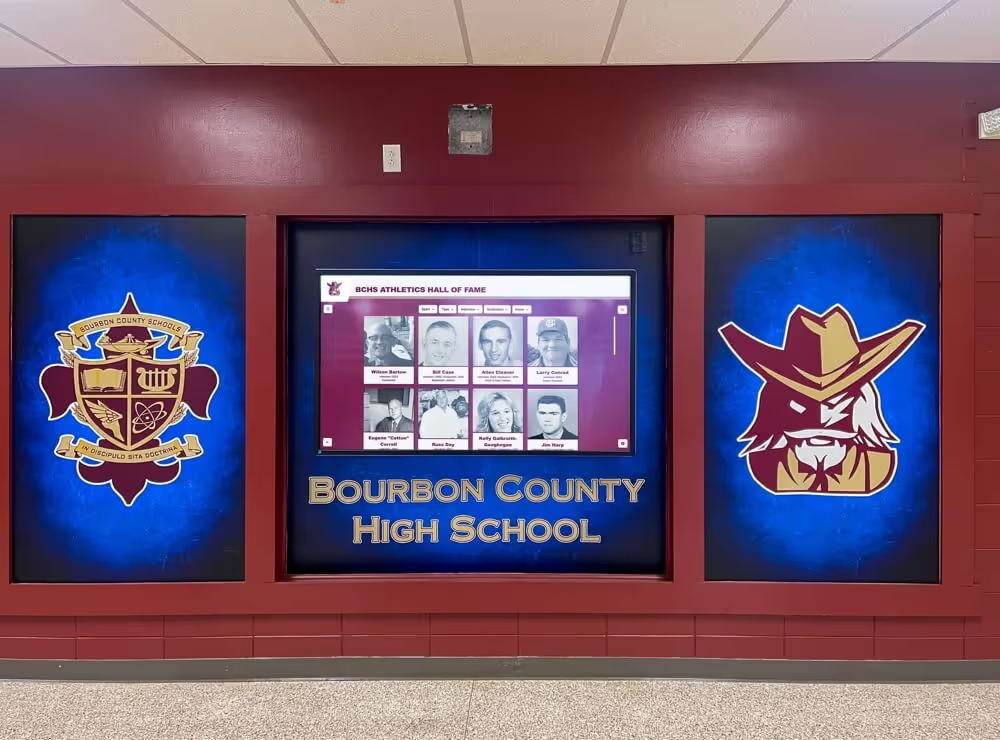
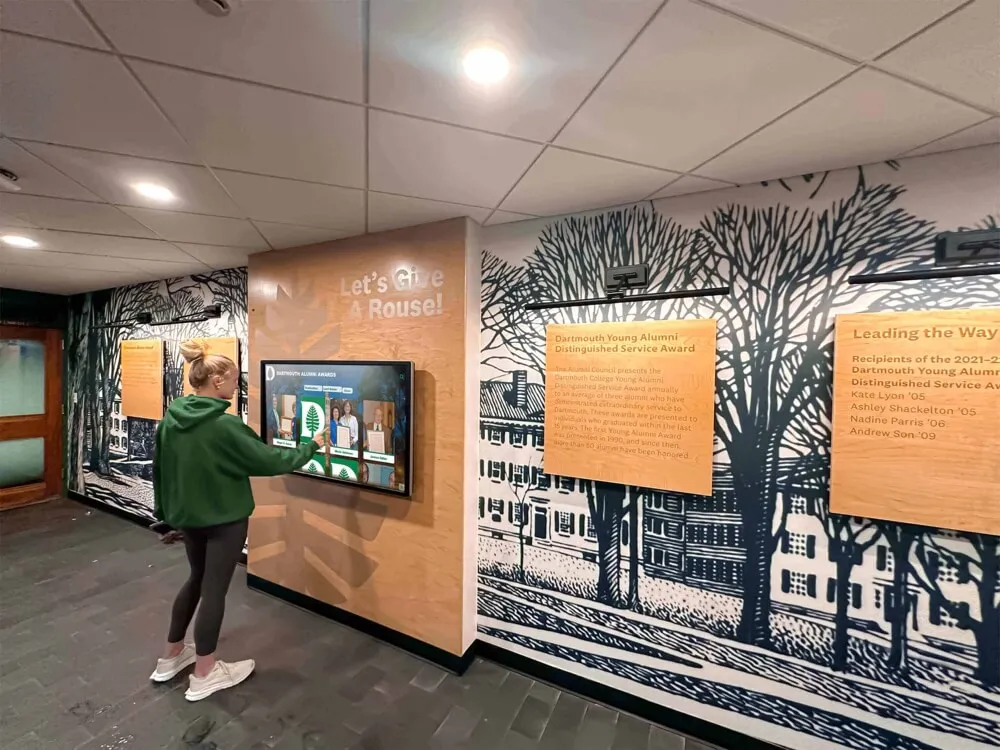
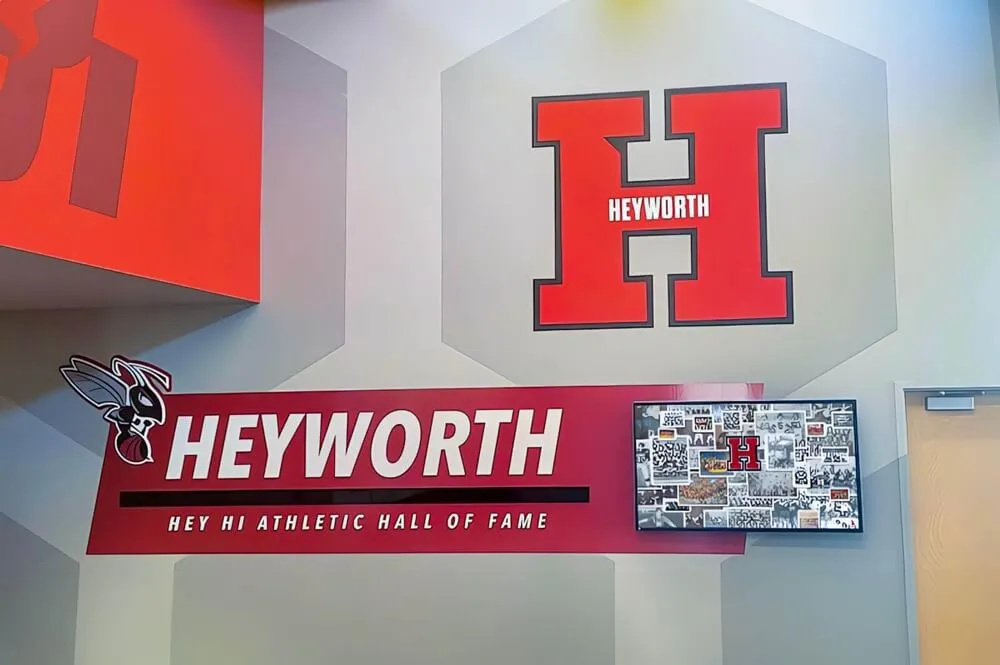
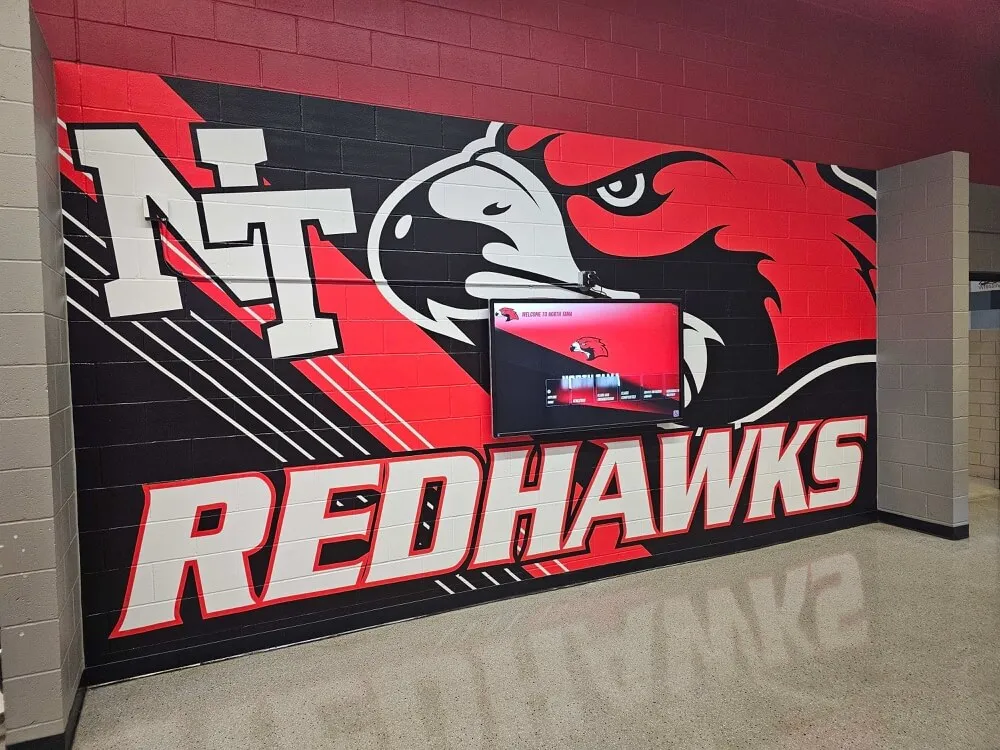
The moment profiles appear on a digital display, the selection process becomes public—bylaws are what makes that publication defensible
Section 6: Online Publishing Rules
Publishing inductee profiles online is the step that makes governance most consequential. A profile is searchable, shareable, and permanent in a way that a plaque in a hallway is not. Bylaws governing the publishing step protect both the school and the inductee.
Pre-Publication Approval Workflow
Define a mandatory approval sequence before any profile goes live:
- Content draft: Athletic department staff or a designated content manager prepares the inductee profile with required fields (name, graduation year, category, achievement summary, photo if available)
- Inductee review: The inductee or their designee reviews the profile for factual accuracy before publication (recommended 5–7 day review window)
- Committee chair or athletic director sign-off: Final approval confirming the profile is accurate, complete, and consistent with program standards
- Publication: Profile goes live on the school website, digital display, or both
The bylaws should name the role responsible for each step and set turnaround standards so the approval cycle doesn’t drag indefinitely.
Required Profile Fields
Specify what every published profile must include and what is optional:
| Required | Optional |
|---|---|
| Full name | Photograph |
| Graduation year (athletes) or years of service (coaches) | Video highlight |
| Induction year | Statistics detail |
| Category | Quote from inductee |
| Achievement summary (minimum one paragraph) | Alumni contact information |
Profiles missing required fields should not go live. A partially published profile creates a worse impression than a delayed publication.
Platform Access Controls
If the school uses a digital display or web platform, the bylaws should specify:
- Who holds administrator access to the content management system (CMS)
- Who can add new profiles (typically limited to the designated content manager and the athletic director)
- Who can edit existing profiles (same as above, with a logged audit trail)
- Who can delete or unpublish profiles (should require explicit authorization from the governing authority, not a content manager acting alone)
Platforms like Rocket Alumni Solutions provide role-based CMS access that maps directly to this governance model—different staff members can be assigned different permission levels so content managers can draft and update while only authorized administrators can publish or remove. Explore hall of fame display tools and platforms that support this kind of structured access workflow.
Section 7: Update, Correction, and Maintenance Policy
Published profiles require ongoing management. The bylaws should address how updates are handled before a question arrives from an inductee, their family, or a reporter.
Types of Updates
Factual corrections: If a published profile contains an error (misspelled name, incorrect year, wrong sport), the correction should be made within a defined turnaround (5 business days is reasonable) by the designated content manager.
Achievement additions: If an inductee achieves additional recognition after induction (professional career, national record, community award), the profile may be updated to reflect that. The bylaws should specify whether such additions require committee approval or can be made administratively.
Photograph updates: Inductees may request updated photographs. Define who approves these requests and what image standards apply (resolution, format, content).
Contact or biographical changes: If an inductee’s biographical information changes (name change, preferred pronouns), the program should have a clear, respectful process for updating profiles on request.
Content Ownership After Publication
Define who owns the content in the inductee profile. Typical standard: the institution owns the profile content and retains the right to publish it as part of the hall of fame record. The inductee may request corrections but cannot demand removal on the basis of preference alone (removal is addressed in Section 8). Documenting this ownership standard prevents future disputes about whether inductees can force profile deletions.
Annual Content Audit
Build a content audit into the program calendar. Each year, before the new induction cycle opens, the designated content manager should verify:
- All existing profiles are complete and accurate
- Photographs are current (if photos are used)
- Broken links or missing media are resolved
- Platform and CMS software are current and functional
For broader guidance on managing program records and content sustainably, see hall of fame program management best practices.

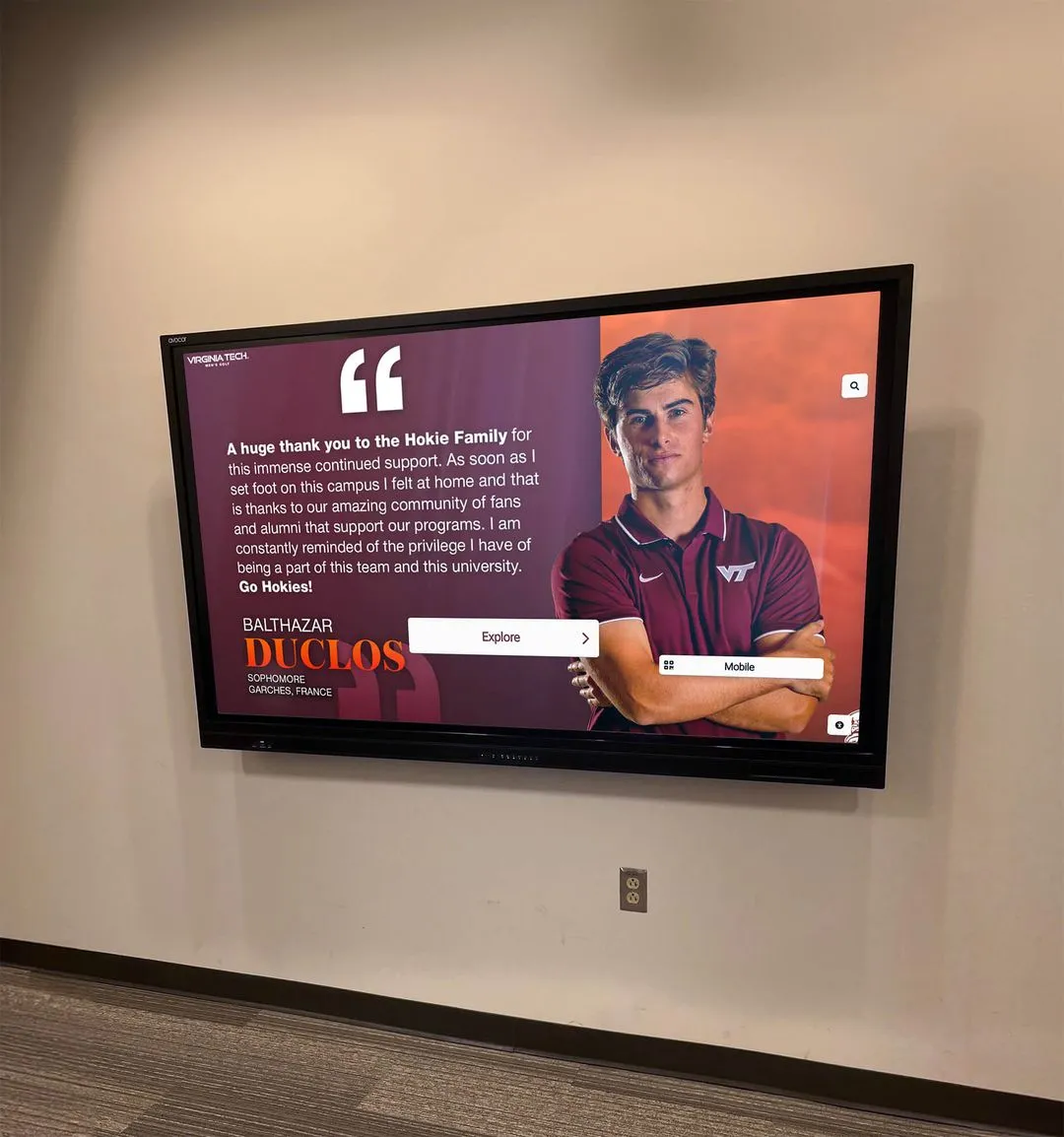
Digital platforms with structured CMS access controls make content governance practical—update roles and approval workflows are enforced by the system, not just by policy
Section 8: Removal and Revocation Policy
Revocation is rare. It is also the most consequential decision a hall of fame program makes, and the most likely to be challenged publicly. The bylaws must define the process before it is ever needed.
Grounds for Revocation
The bylaws should list specific, defined grounds rather than a general standard like “conduct unbecoming.” Examples of defensible grounds:
- Criminal conviction for a felony offense occurring after induction
- Documented finding of serious misconduct by a school, district, or judicial proceeding
- Fraudulent nomination: Induction was obtained through falsified documentation or material misrepresentation
- Written request by the inductee: Inductees may request voluntary removal; the program should have a process for honoring this
Grounds should be exhaustive, not illustrative. If the bylaws say “including but not limited to,” committees will expand the list informally—which defeats the purpose of having a written standard.
Revocation Process
- Formal trigger: A written request for revocation review, submitted to the governing authority, describing the grounds
- Initial review: The athletic director or governing body determines whether the stated grounds meet the bylaw threshold
- Committee review: If grounds are sufficient, the full selection committee convenes (with standard quorum and recusal rules applying)
- Notice to inductee: The inductee receives written notice of the review and an opportunity to submit a written response before the committee vote
- Vote: Revocation requires a supermajority vote—75% or higher is standard; some programs require unanimous consent for revocation
- Decision and documentation: The decision is recorded in minutes; the governing authority issues written notification to the inductee
- Profile update: If revocation is approved, the profile is removed or amended per the decision
Note that revocation is not a disciplinary proceeding. The inductee has no right to a hearing under this bylaw; the written response opportunity is a courtesy that also creates a record demonstrating fairness. If the conduct at issue involves ongoing legal proceedings, the program may choose to defer the revocation review until proceedings conclude.
Section 9: Appeals Process
The appeals process covers two distinct scenarios: (1) a nominee not selected for induction who believes the process was flawed; and (2) a revoked inductee contesting the decision.
Appealing a Non-Selection
The bylaws should specify whether non-selected nominees have any appeal right. Most programs do not create an appeal right for failed nominations—the selection process is the full process, and individual voting decisions are not subject to review. If this is the program’s position, the bylaws should state it explicitly: “Committee selection decisions are final and are not subject to appeal.”
If an appeal right does exist (for example, where a nominee claims they were excluded from consideration due to a process error), the scope should be narrow:
- Eligible grounds: A procedural error only (e.g., recusal rules were not followed; nomination was not presented to the full committee)
- Not eligible grounds: Disagreement with the committee’s assessment of the nomination
Appeals based on subjective disagreement with the outcome, if permitted at all, create a path to relitigating every difficult decision.
Appealing a Revocation Decision
Revoked inductees should have a defined appeal right given the severity of the decision:
- Written appeal: Submitted within 30 days of revocation notice
- Appeal body: Reviewed by the governing authority or a designated appeals panel separate from the original revocation committee
- Scope: The appeal body reviews whether the process was followed correctly and whether the stated grounds were sufficient under the bylaws—not whether the committee reached the right outcome
- Final decision: The appeal body’s decision is final
Separating the appeal body from the original decision-makers preserves the fairness of the process without creating an endless review chain.
Bylaws Readiness Checklist
Use this checklist before opening nominations or publishing any inductee profile. Each “No” answer represents a gap the program should close before proceeding.
Athletic Hall of Fame Bylaws Readiness Checklist
| Governance Element | Documented? |
|---|---|
| Governing authority is named by role | Yes / No |
| Bylaw amendment process is defined | Yes / No |
| Committee composition specifies all seats by role | Yes / No |
| Committee terms and staggered rotation are specified | Yes / No |
| Quorum requirement is defined | Yes / No |
| Induction vote threshold is defined (recommend 75%+) | Yes / No |
| Maximum inductees per class is defined (optional) | Yes / No |
| Recusal triggers and process are specified | Yes / No |
| Six eligibility rules are written (affiliation, waiting period, active-status, threshold, character, category) | Yes / No |
| Nomination packet requirements are listed | Yes / No |
| Nomination window dates are specified | Yes / No |
| Nomination carryover policy is defined | Yes / No |
| Pre-publication approval workflow is documented | Yes / No |
| Required profile fields are specified | Yes / No |
| Platform access controls are assigned by role | Yes / No |
| Update and correction turnaround standard is defined | Yes / No |
| Revocation grounds are listed (not “including but not limited to”) | Yes / No |
| Revocation process is documented with vote threshold | Yes / No |
| Appeals scope is defined for both non-selection and revocation | Yes / No |
| Bylaws version date and next review date are recorded | Yes / No |
A program with all “Yes” answers has a defensible foundation. A program with five or more “No” answers should not open nominations until those gaps are closed.
Display Integration: Connecting Bylaws to Your Online Platform
Well-written bylaws reduce management friction only when the digital platform is set up to enforce them. The technical architecture of your online display should reflect your governance structure.
Role-Based Access Controls
Map your bylaw-defined roles to platform permission levels:
- Content manager (draft access): Can create and edit draft profiles; cannot publish or delete
- Athletic director (publish access): Can approve and publish profiles; cannot delete without governing authority confirmation
- Administrator (full access): Can publish, edit, delete, and manage user permissions
This structure means that a staff turnover in the content manager role cannot accidentally result in unauthorized profile publication—the publishing step still requires a higher-permission user.
Approval Workflow Enforcement
Some platforms support multi-step approval workflows where a profile cannot go live until each required approver has confirmed. Look for this feature when evaluating recognition platforms—it enforces the pre-publication approval process defined in Section 6 without relying on manual coordination.
For a side-by-side comparison of platforms that support governance-aligned workflows, see top hall of fame recognition tools and digital hall of fame platforms comparison.
Audit Logs
Any platform used for inductee management should maintain a log of who changed what and when. Audit logs are the evidence layer that makes your governance policies enforceable—if a profile is disputed, the log shows the approval chain. If a deletion is questioned, the log shows who authorized it.
Scheduled Publishing
If your bylaws specify that inductee announcements happen at a defined date (e.g., at the induction ceremony before any online publication), use the platform’s scheduled publishing feature to prevent early release. Content prepared in advance can be scheduled to go live after the ceremony rather than relying on manual coordination under time pressure.
Web Accessibility
If profiles will be publicly accessible online, WCAG 2.1 AA accessibility compliance is not optional—it is a legal standard for school websites in most districts. Confirm that your platform meets this standard for text contrast, keyboard navigation, and screen reader compatibility before publishing profiles. See establishing athletic hall of fame programs with digital compliance standards for more on ADA and accessibility requirements in recognition contexts.
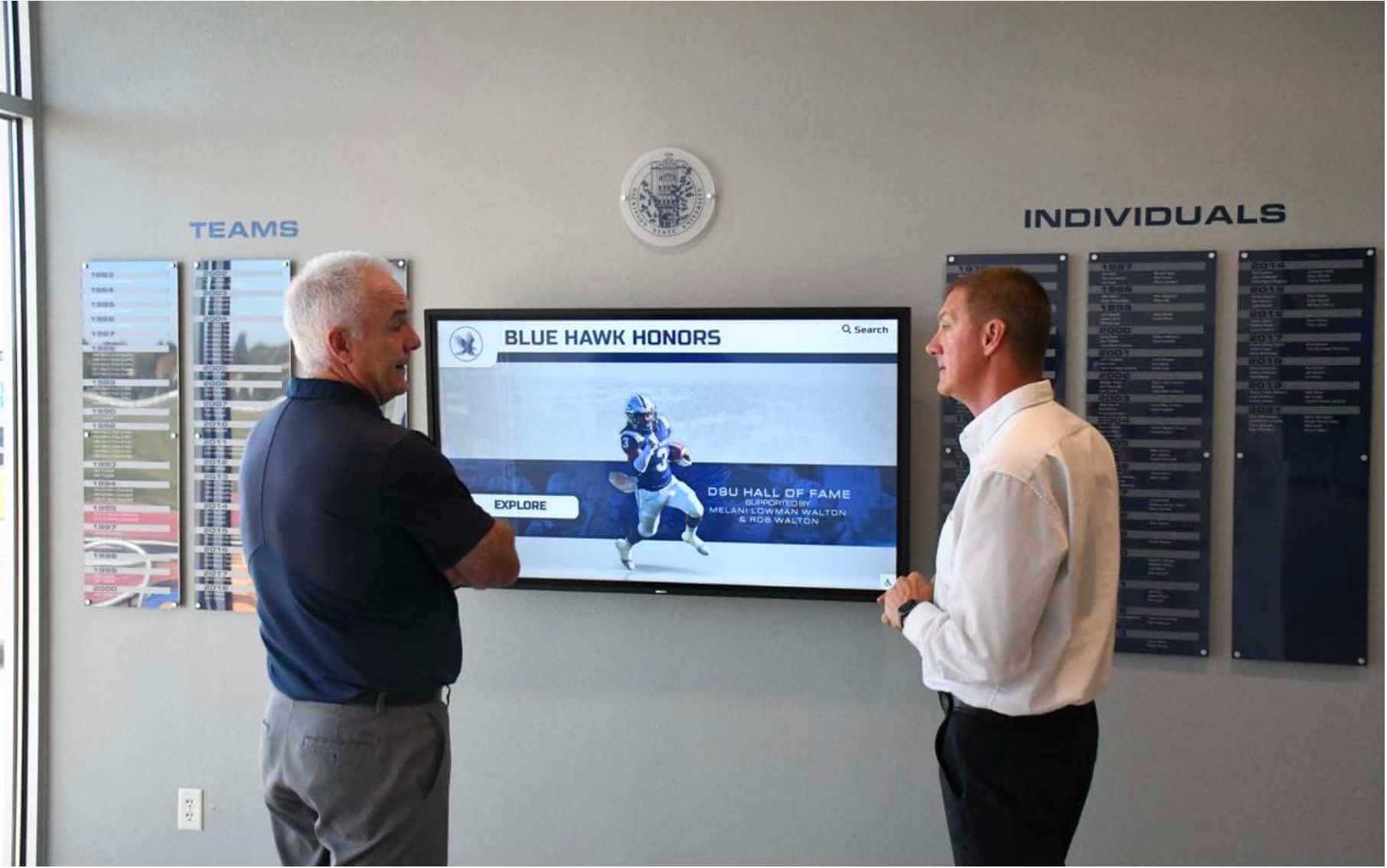
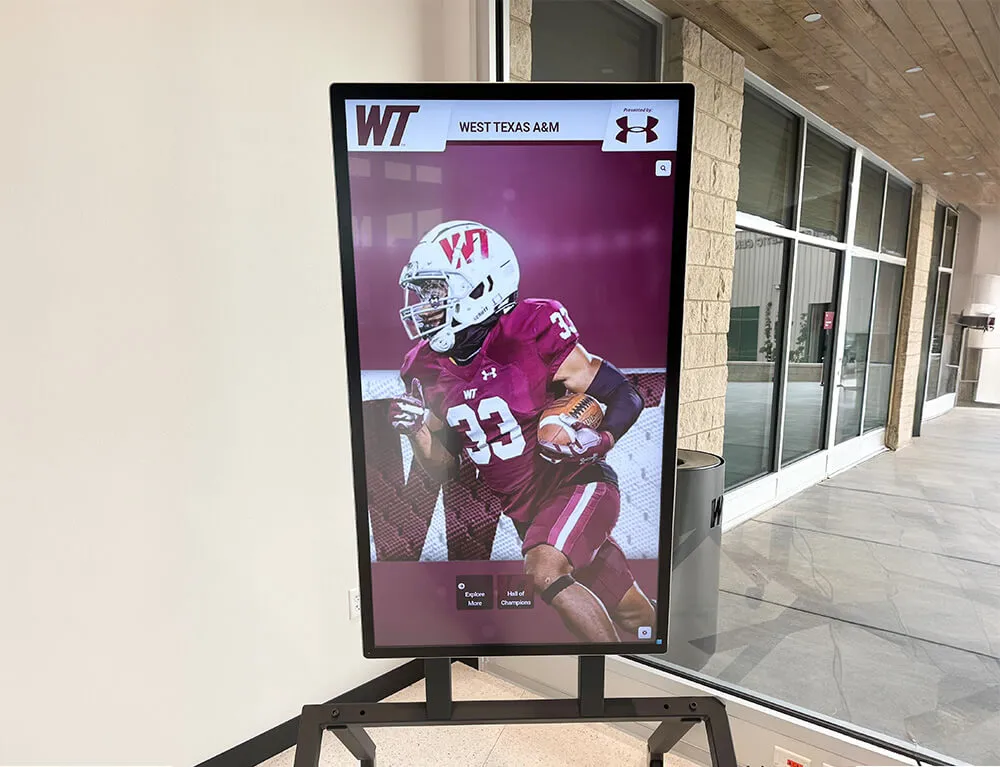
Digital hall of fame displays make recognition accessible to everyone who visits—the governance structure behind the display determines whether that recognition is trustworthy
Execution Timeline: From Bylaws to First Publication
Building the governance foundation takes time. Rushing the bylaw development step to meet a preferred launch date creates the gaps that cause problems later.
Phase 1 — Draft Bylaws (4–6 weeks)
- Convene a founding committee with the governing authority
- Draft each section using this guide as a framework
- Circulate the draft for feedback among key stakeholders (athletic director, principal, representative alumni)
- Revise based on feedback; resolve any ambiguities in writing, not through conversation
Phase 2 — Formal Approval (2–4 weeks)
- Present the final bylaws to the governing authority for approval
- Document the approval with date and approving authority
- Distribute the approved bylaws to all initial committee members
- Store a copy in a durable location (school policy manual, athletic department files, and a digital backup)
Phase 3 — Platform Setup (2–4 weeks)
- Configure CMS access controls per bylaw-defined roles
- Set up approval workflow steps (draft → review → publish)
- Prepare profile templates with required fields
- Confirm accessibility compliance
Phase 4 — First Nomination Cycle (8–12 weeks)
- Open nominations per the bylaw-defined window
- Review nominations for eligibility screening
- Convene selection committee with quorum verification and recusal confirmation
- Conduct vote; document results in minutes
Phase 5 — First Publication (2–3 weeks after induction ceremony)
- Complete inductee review of draft profiles
- Obtain governing authority sign-off
- Schedule or manually publish profiles on the platform
- Announce inductees through school communications channels
For context on how selection process design connects to the broader program structure, see athletic hall of fame selection committee practices and how recognition programs handle inductee selection at scale.
Measurement: Tracking Whether Governance Is Working
Bylaws succeed when they reduce friction and build trust over time. A few program health indicators:
| Indicator | Healthy Sign | Warning Sign |
|---|---|---|
| Selection disputes | Rare; resolved through the appeals process | Recurring; escalated to leadership outside the process |
| Nomination completion rate | Most nominations are complete at submission | Large percentage returned for missing materials |
| Profile publication timeline | Within defined turnaround standard | Profiles delayed more than 30 days post-induction |
| Committee recusal rate | Occasional, handled as routine | Rare or never—suggests conflicts aren’t being identified |
| Bylaw revision frequency | Annual review; few material changes | Bylaws unchanged for 5+ years without review |
If multiple warning signs appear, revisit the bylaw section most closely related to the issue rather than addressing the symptom.
For additional perspective on how recognition programs for athletics, donors, and arts histories approach governance across different institutional contexts, the patterns translate across program types.
Conclusion: Governance First, Publication Second
Athletic hall of fame programs generate the most institutional value when selection is viewed as fair and when recognition is trusted to reflect genuine achievement. That trust is built before the first inductee goes live—through bylaws that define who decides, how decisions are made, and what standards every decision is measured against.
The work of writing bylaws is less glamorous than designing a display or planning an induction ceremony. It is also the work that makes everything else sustainable. A school that publishes its first class of inductees on a well-governed foundation has a program that will function consistently under five different athletic directors, through decades of coaching changes, and through every difficult nomination that eventually arrives.
A school that publishes first and documents later will have a program that works—until the first difficult decision exposes the foundation that was never built.
Build Your Bylaws Framework—Then Build the Display
Rocket Alumni Solutions helps schools establish interactive digital hall of fame displays that reflect documented bylaws and governance standards. Role-based CMS access, approval workflow enforcement, scheduled publishing, and WCAG 2.1 AA compliance are built into the platform—so your governance structure is enforced by the system, not just the policy document. Request a free custom demo and see how your bylaws translate into a live, managed recognition program.
Request Your Free Custom DemoYour athletic program’s legacy deserves recognition that is trusted by every inductee, every family, every committee member, and every person who searches a name online. Bylaws are how you build that trust—before the first name goes live.