



Annual 5K fundraisers have become signature community events at schools across the nation, bringing together students, families, staff, and community members for healthy competition while raising funds for programs, facilities, and student opportunities. These events generate substantial revenue, build school spirit, strengthen community connections, and create memorable experiences that participants return to year after year. Yet many schools struggle to appropriately celebrate the runners, donors, volunteers, and sponsors who make these events successful beyond single-day recognition that fades quickly after race day.
The challenge schools face involves preserving event history, recognizing participants across multiple years, honoring diverse contribution types from race registration to major sponsorships, celebrating volunteer service that makes events possible, and creating ongoing visibility that inspires continued participation. Traditional approaches like printed programs provide temporary acknowledgment, while costly permanent plaques prove impractical for events where participants and supporters change annually.
This comprehensive guide explores recognition strategies specifically designed for annual 5K school fundraiser programs, demonstrating how schools can showcase year-over-year leaderboards from past races, preserve event history and traditions, integrate sponsor recognition delivering promised visibility, create donor recognition walls honoring financial supporters, spotlight volunteer contributions, maintain photo galleries capturing memorable moments, and build comprehensive digital archives celebrating community impact season after season.
Effective annual 5K fundraiser recognition serves strategic purposes beyond courteous acknowledgment. Systematic recognition increases participant return rates, strengthens donor retention and giving levels, improves volunteer recruitment and satisfaction, enhances sponsor value perception encouraging renewed commitments, builds institutional pride around signature community events, and creates aspirational motivation for students and families considering future participation.

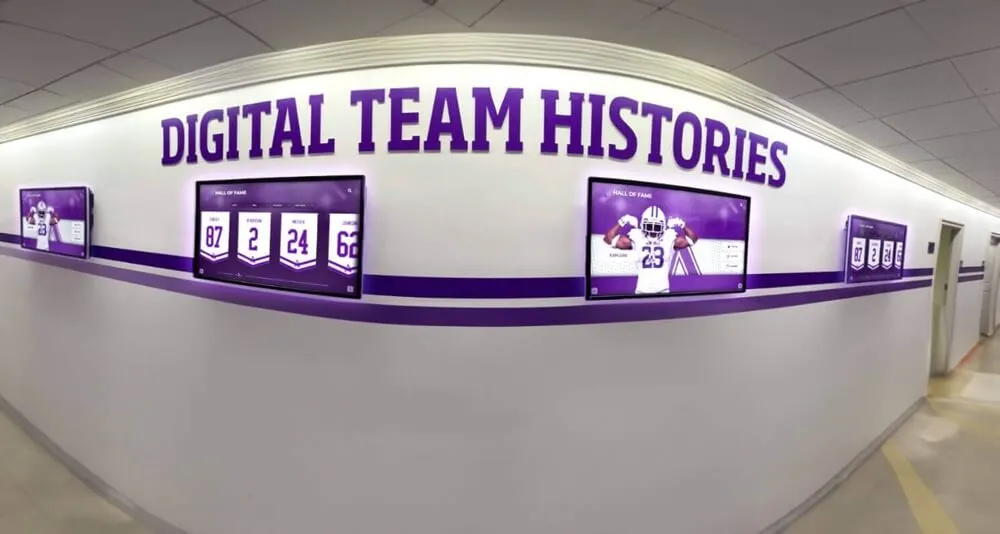
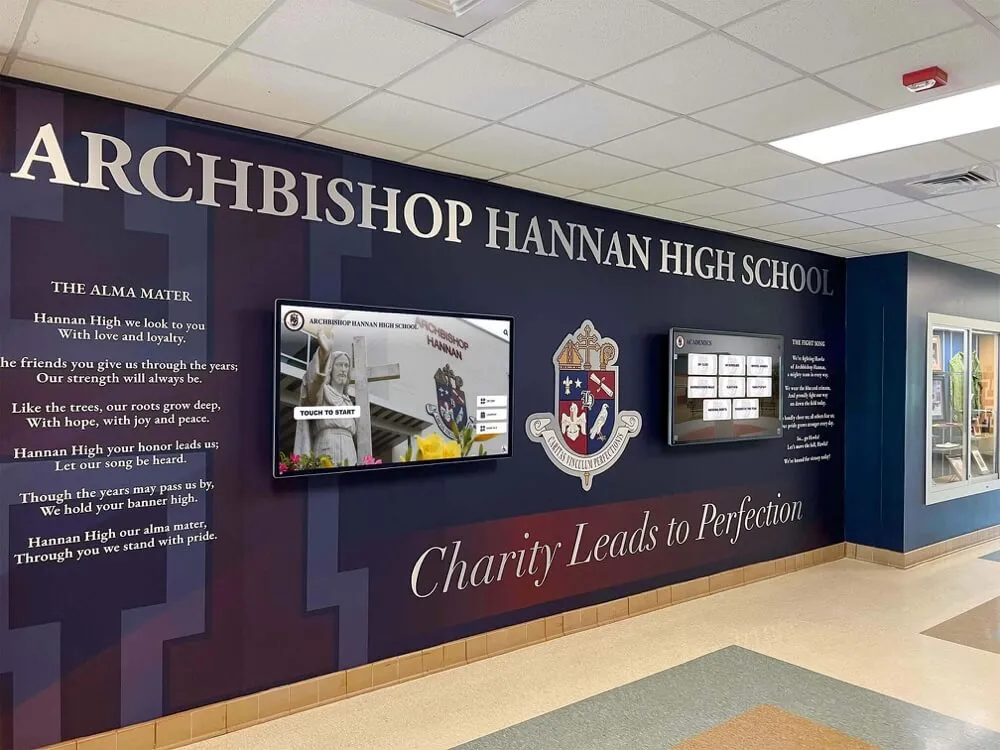
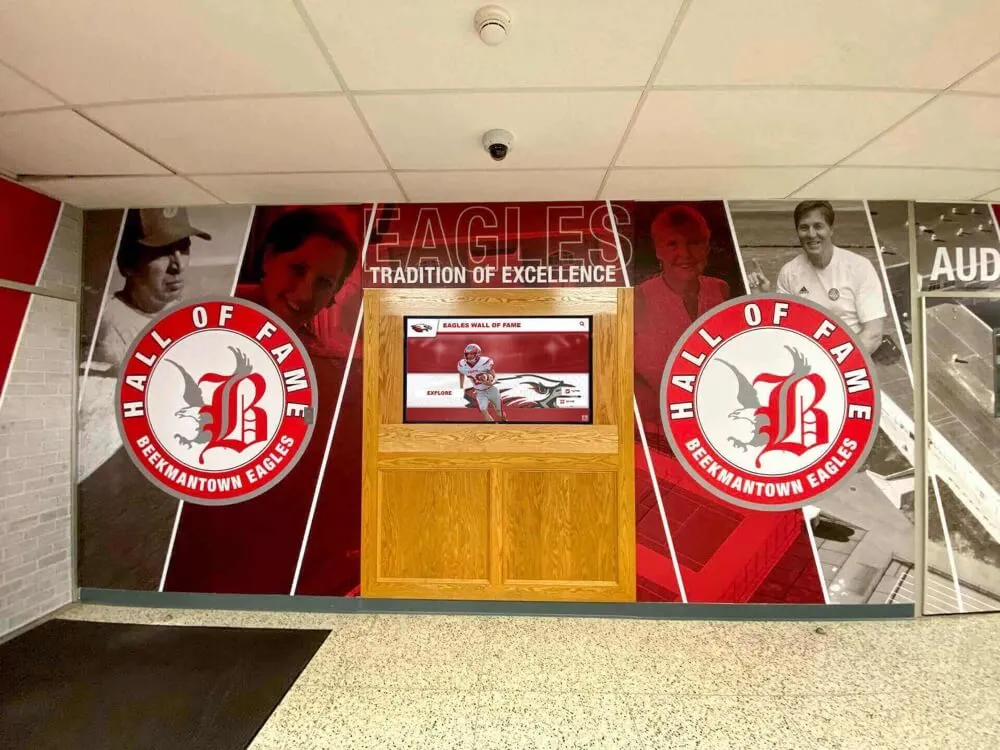
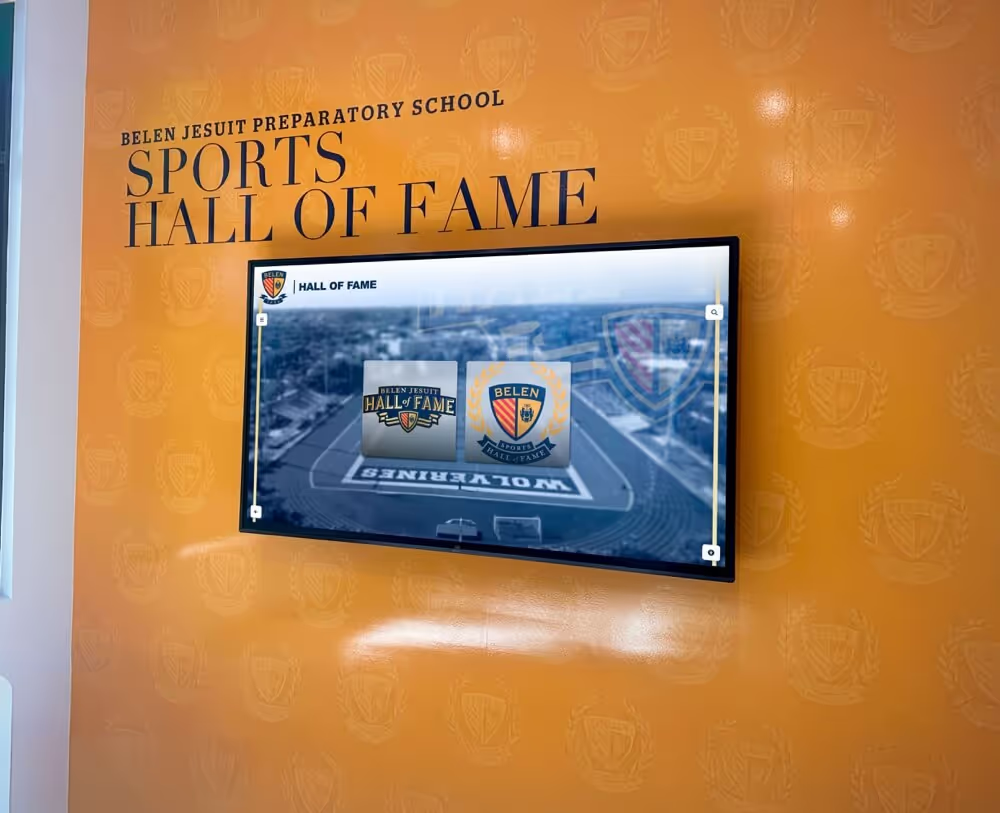
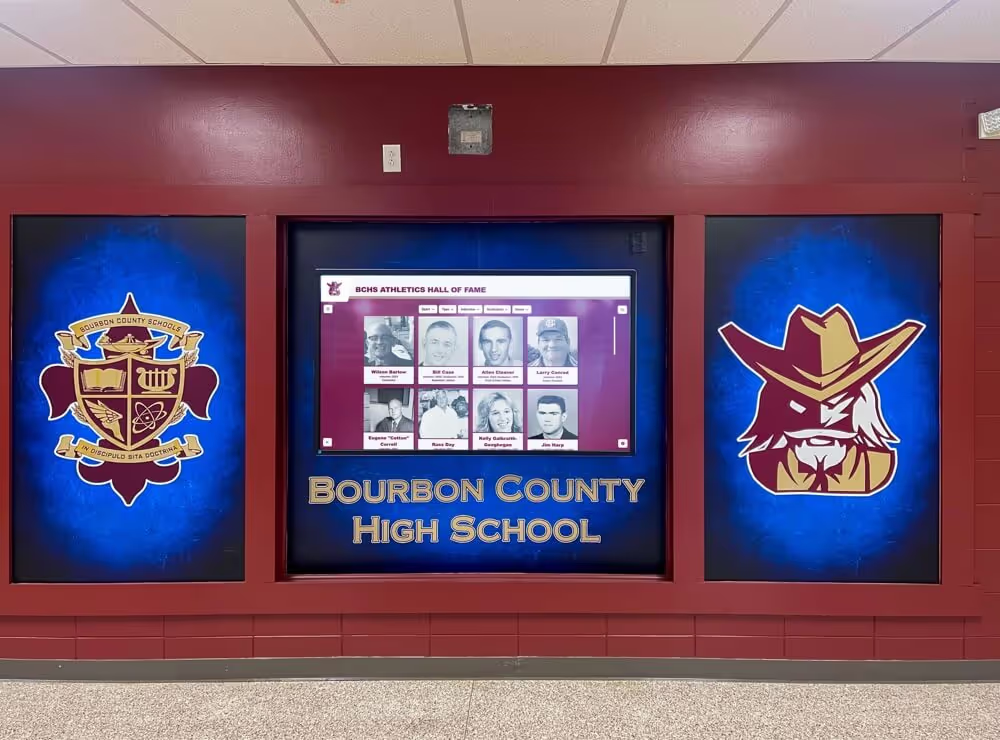
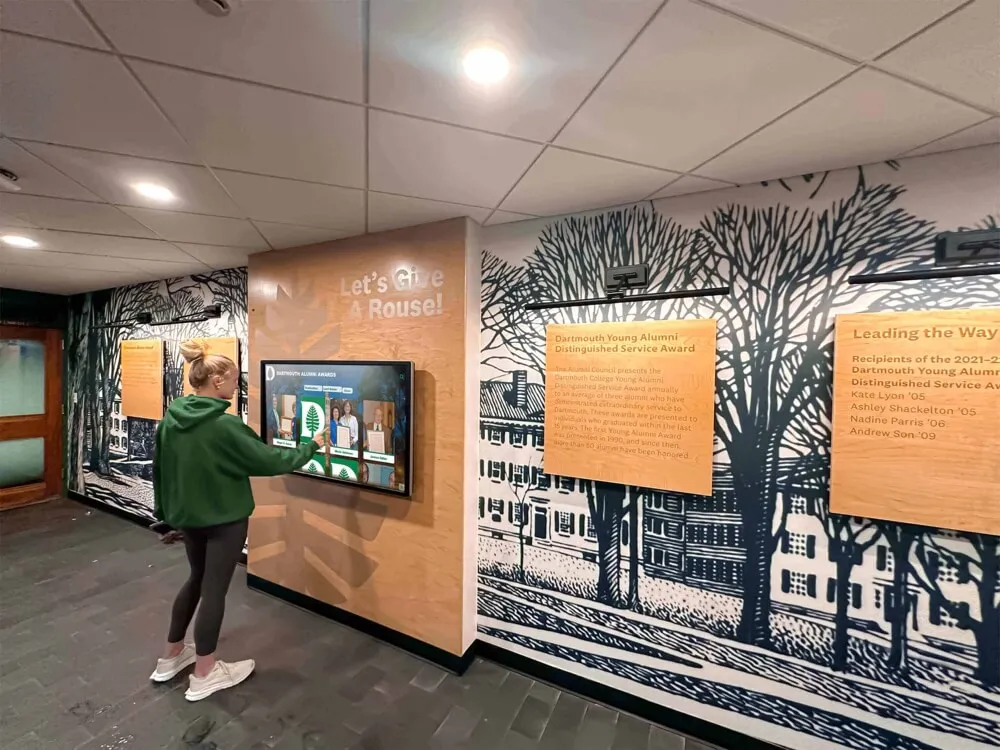
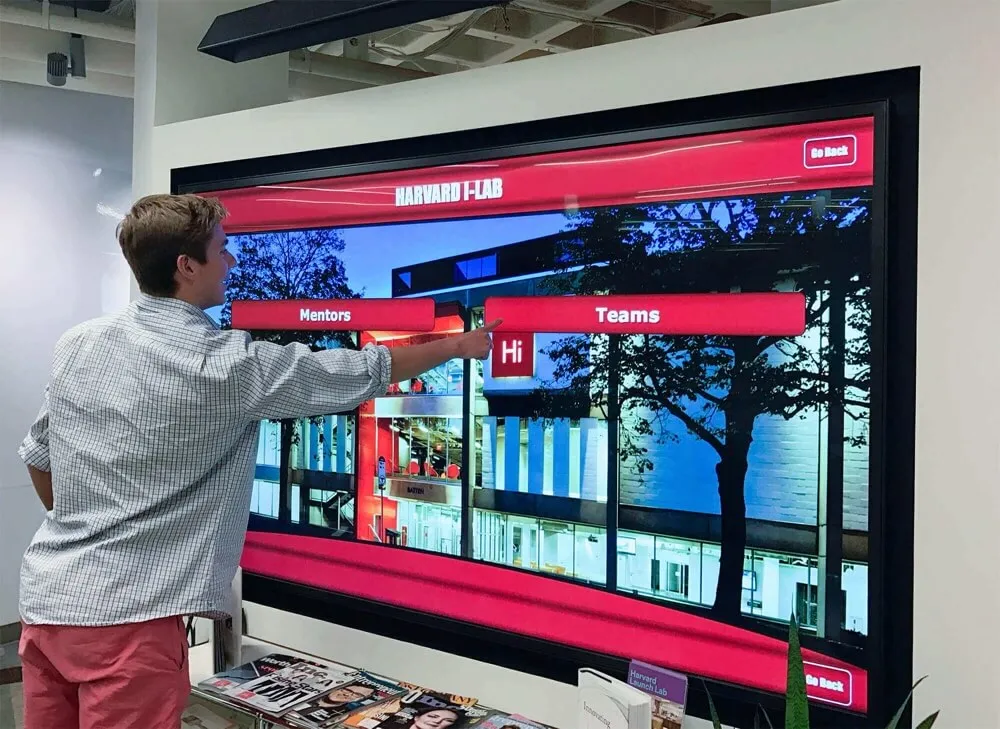
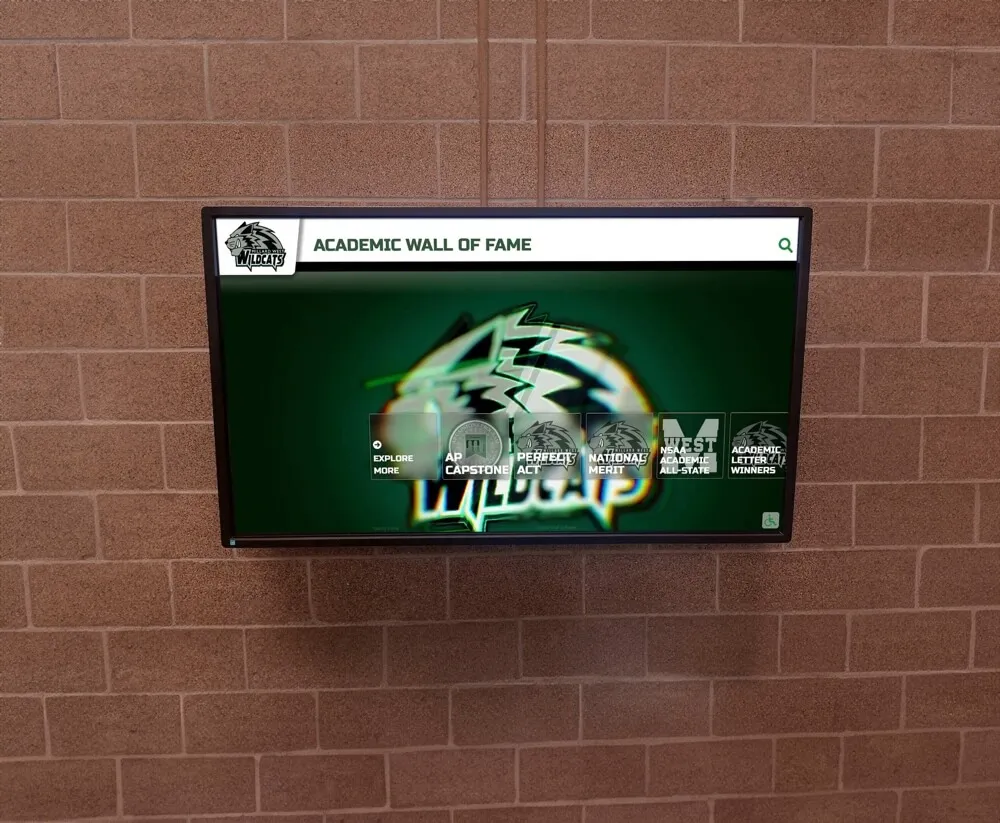
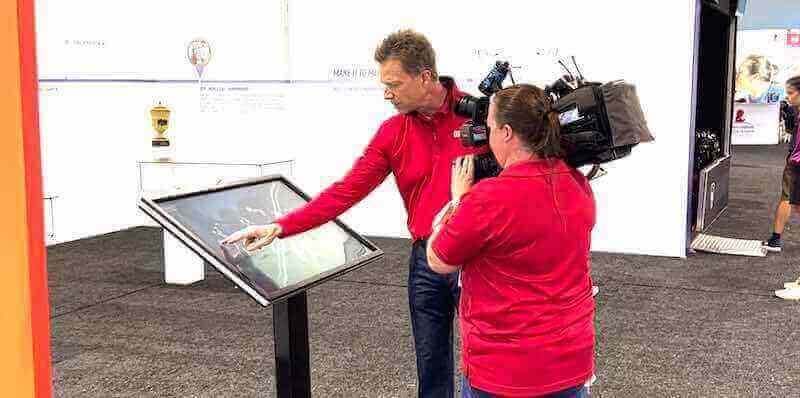
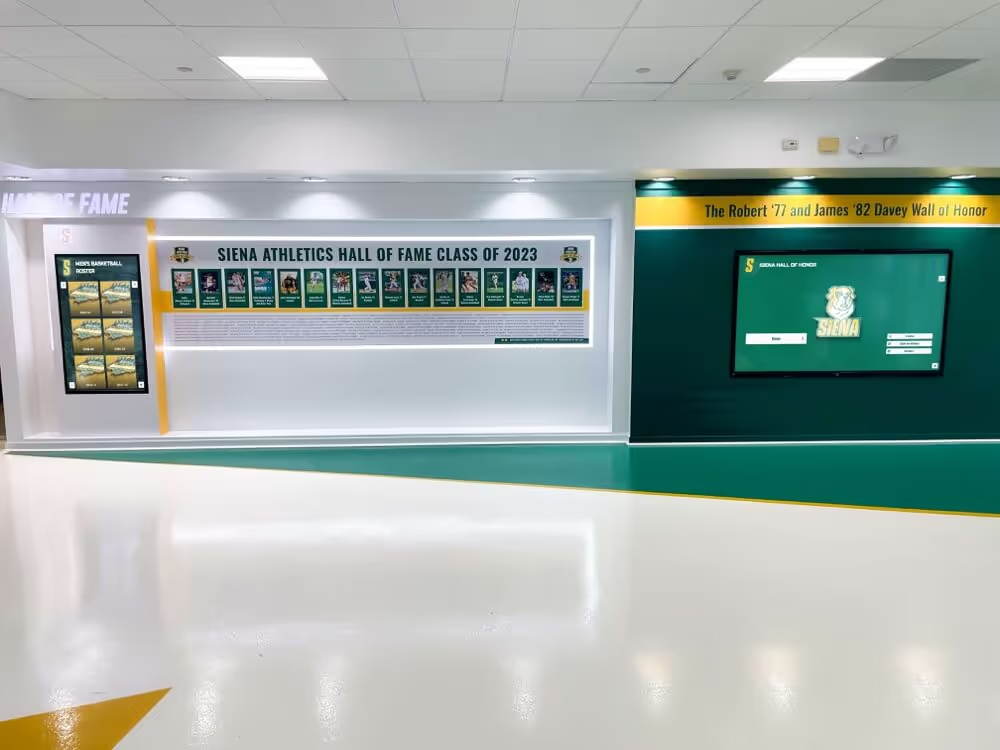
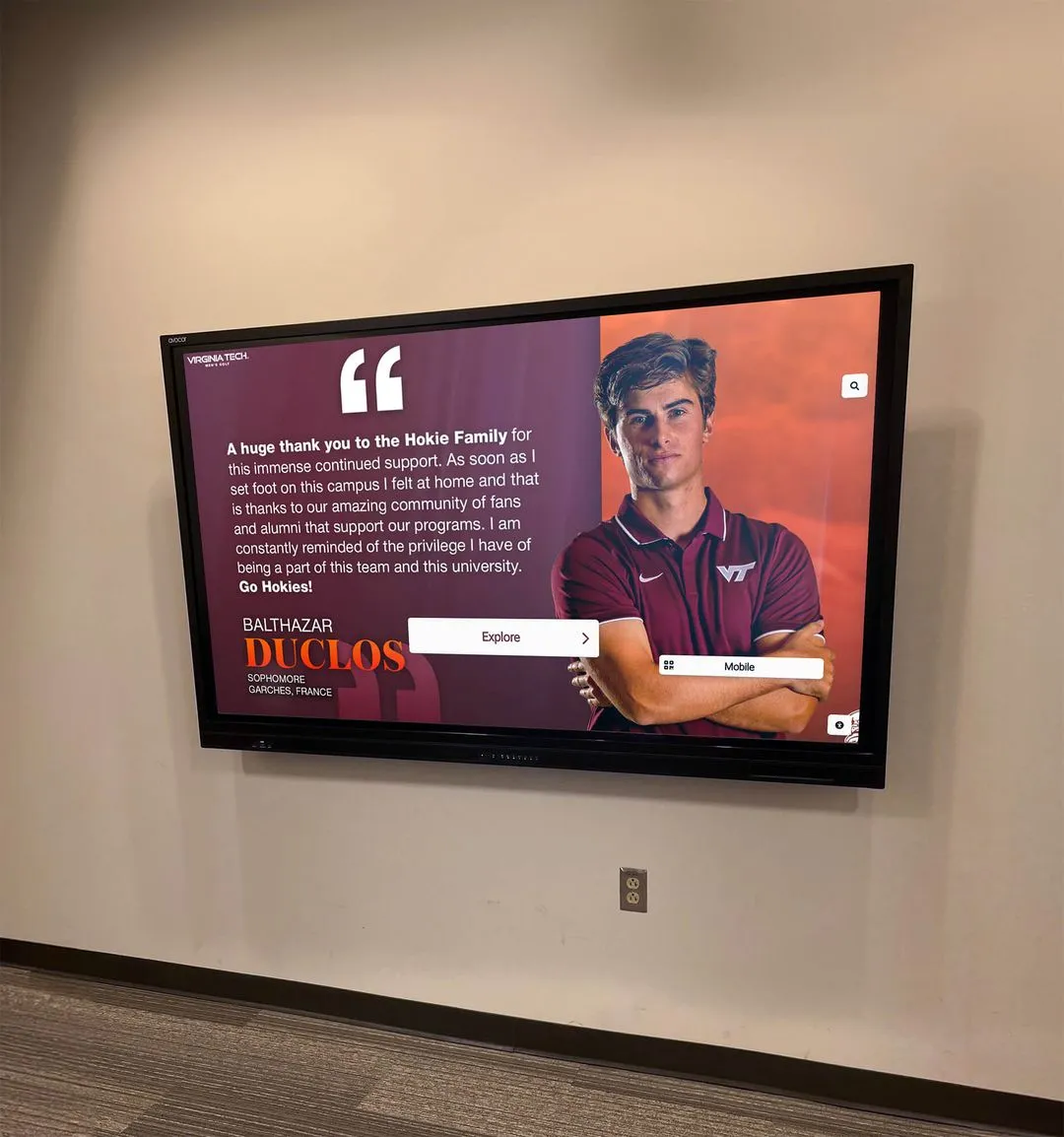
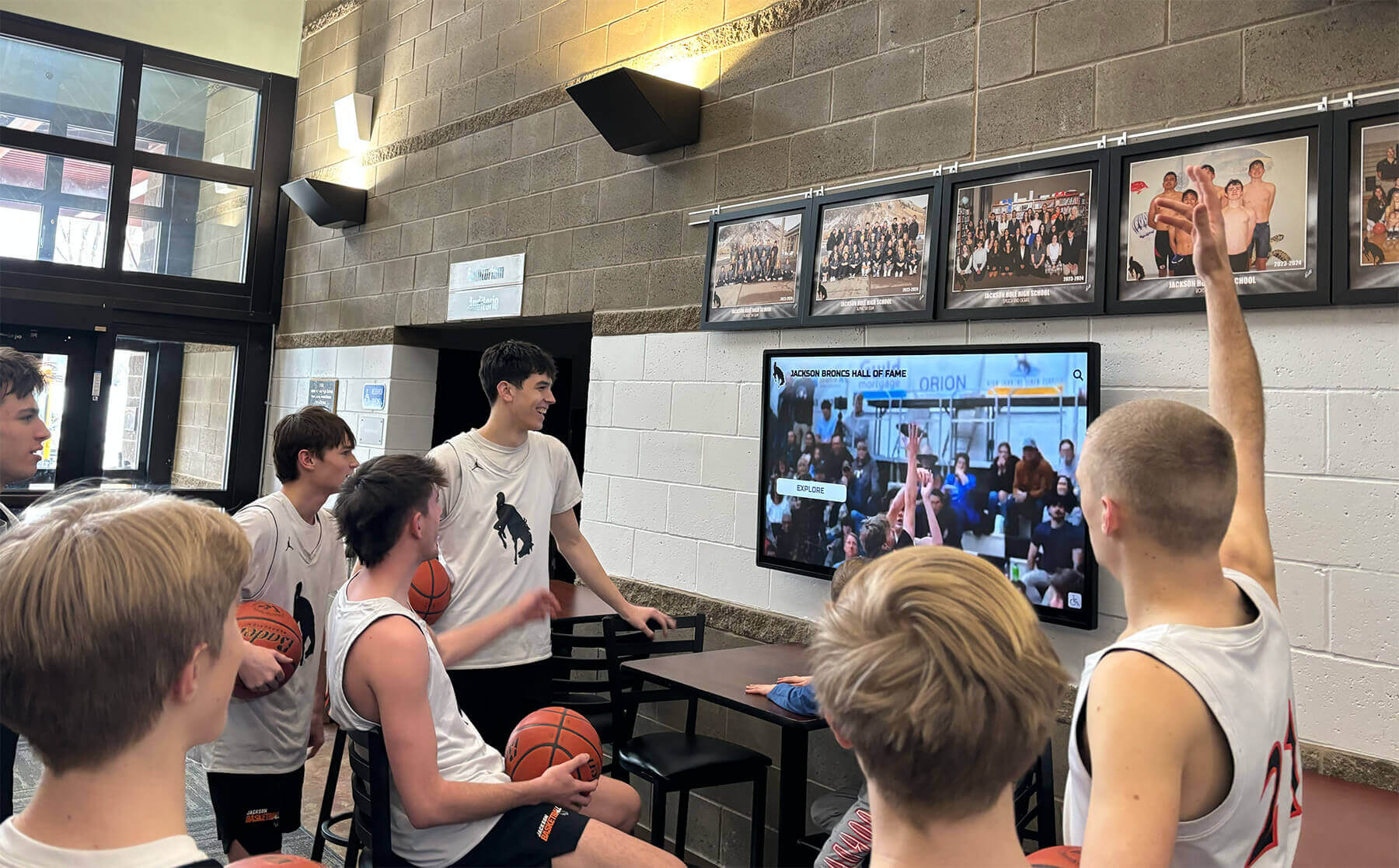
Digital displays enable schools to celebrate annual fundraising events comprehensively while preserving history for future generations
Program Snapshot: Annual 5K School Fundraiser Recognition
Understanding the complete recognition ecosystem for annual 5K events helps schools implement comprehensive approaches celebrating all forms of community support.
| Program Element | Description | Recognition Opportunities |
|---|---|---|
| Race Participants | Students, families, staff, and community members running or walking the course | Year-over-year leaderboards, age group winners, participation milestones, family team recognition |
| Financial Donors | Individual contributors, corporate sponsors, and community supporters providing funding | Tiered giving societies, sponsor visibility integration, memorial race dedications, recurring donor celebration |
| Event Volunteers | Race organizers, course monitors, registration staff, refreshment coordinators, setup crews | Service hour tracking, role-specific acknowledgment, multi-year volunteer recognition, leadership spotlights |
| Corporate Sponsors | Businesses providing financial support, in-kind donations, or promotional partnerships | Logo visibility, website integration, social media acknowledgment, facility recognition displays |
| Event History | Annual statistics, memorable moments, growth trends, milestone achievements | Historical race results, participation trends, fundraising totals, course records, photo archives |
| Program Impact | How raised funds support school programs, facilities, and student opportunities | Project showcases, scholarship recipients, equipment purchases, facility improvements funded by events |
Content Architecture: Comprehensive 5K Fundraiser Recognition
Annual 5K events generate diverse recognition needs requiring systematic organization across multiple categories.
Race Results and Athletic Achievement Recognition
Documenting competitive performance creates aspirational motivation:
Year-Over-Year Leaderboards
Historical race results enabling comparison across multiple events:
- Overall male and female winners by year showing fastest times
- Age group category champions recognizing diverse participant demographics
- Student division results celebrating school community participation
- Family team competition tracking combined household performance
- Course records highlighting all-time fastest performances
- Participation streak recognition honoring consecutive year attendance
- Personal best tracking showing individual improvement over time
Digital recognition platforms enable unlimited historical data display, allowing schools to preserve complete race archives that would be impossible with physical plaques or printed materials. Visitors can explore how event participation has grown, how performance standards have improved, and who holds various records.
Milestone Achievement Celebration
Recognizing significant participation accomplishments:
- Multi-year participant badges (5 years, 10 years, 15+ years)
- Fastest improvement awards showing dramatic time reductions
- Age group progression tracking runners across life stages
- Alumni participant recognition celebrating returning graduates
- Staff member participation acknowledgment building school culture
- Student participation awards encouraging school community involvement
- Generational participation celebrating family traditions
Schools implementing comprehensive recognition report that milestone acknowledgment significantly increases return participation rates, with runners motivated to maintain streaks and achieve next recognition levels.
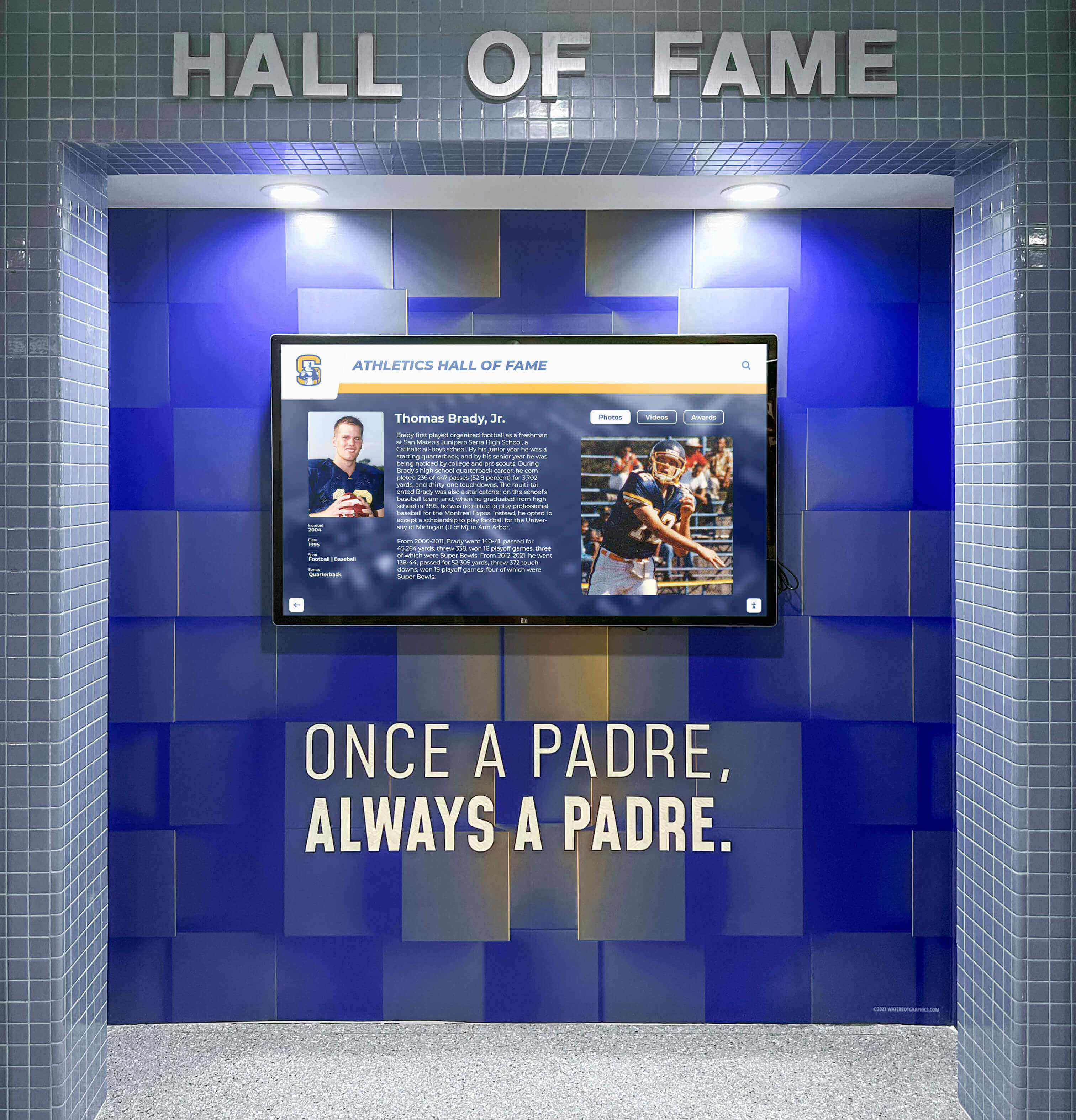
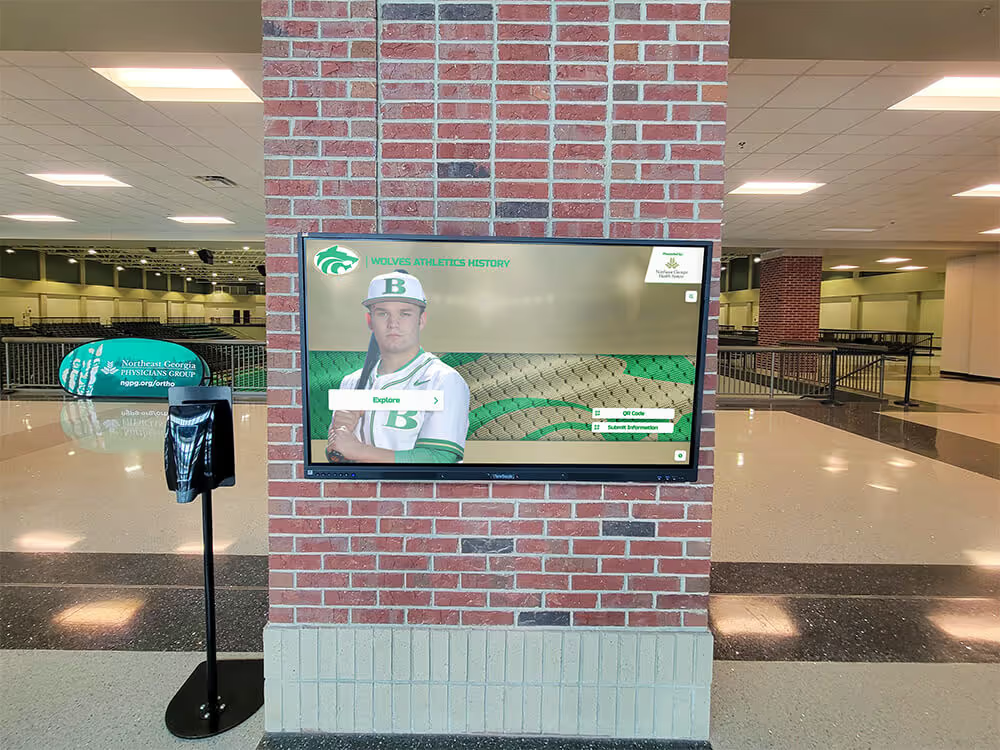
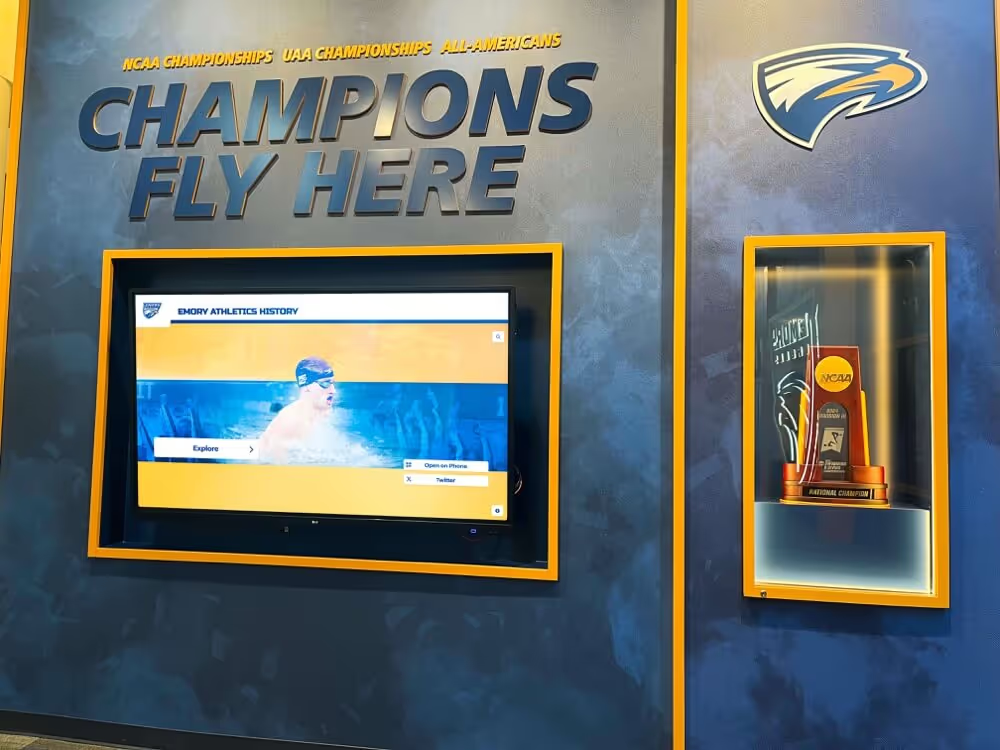
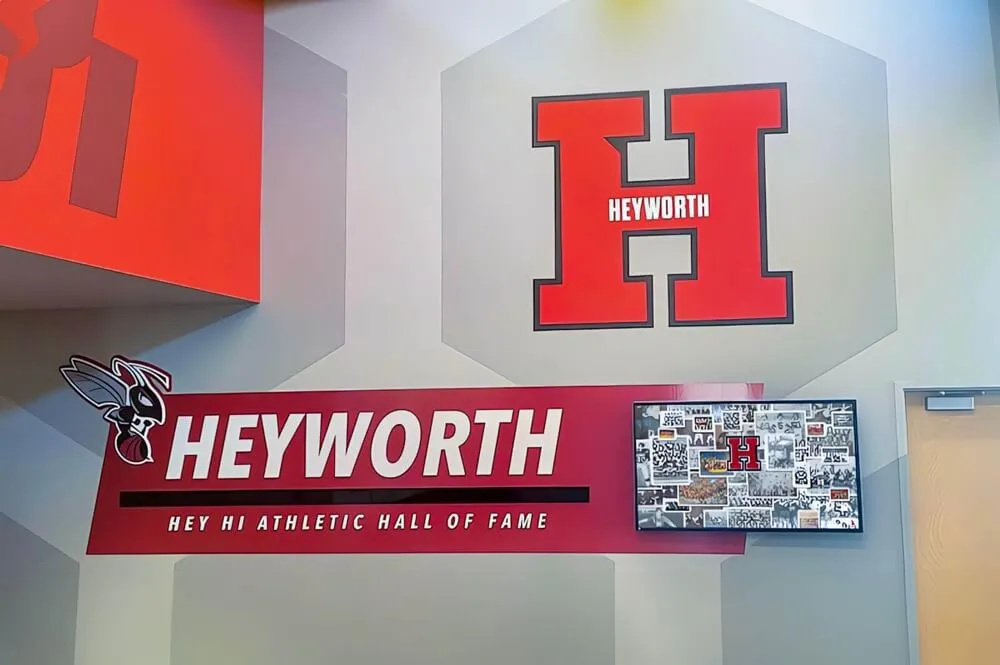
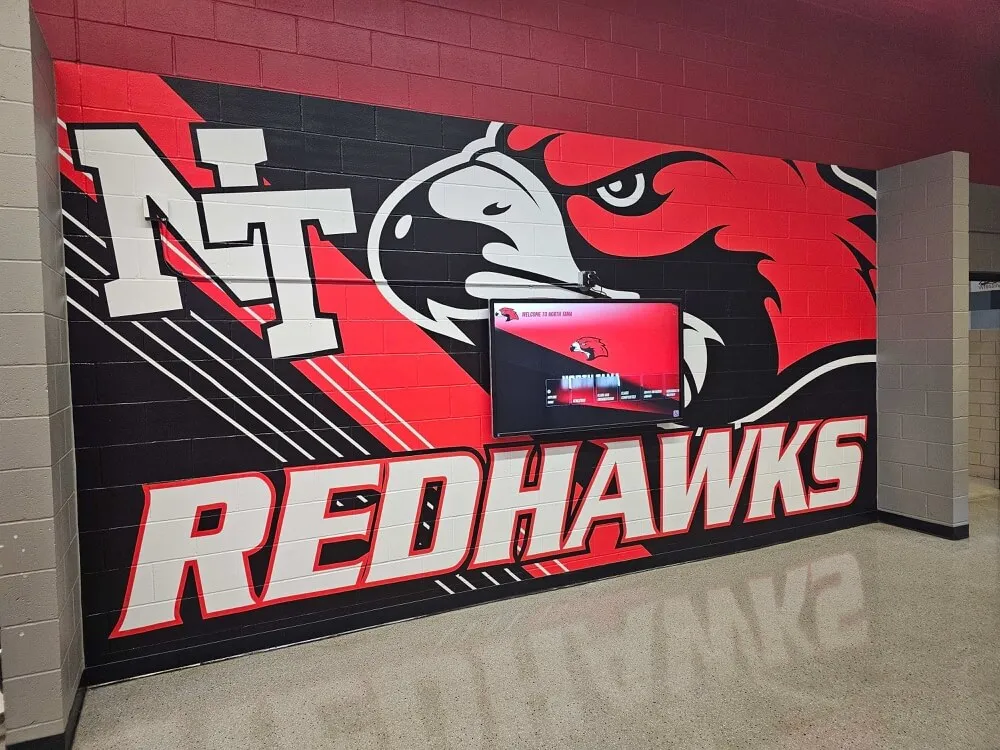
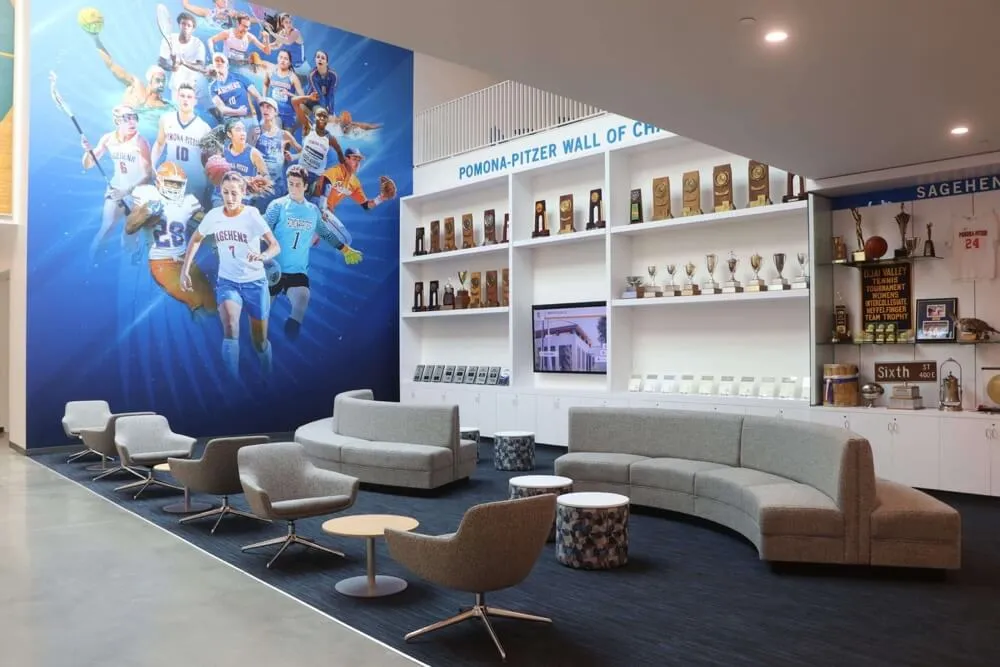
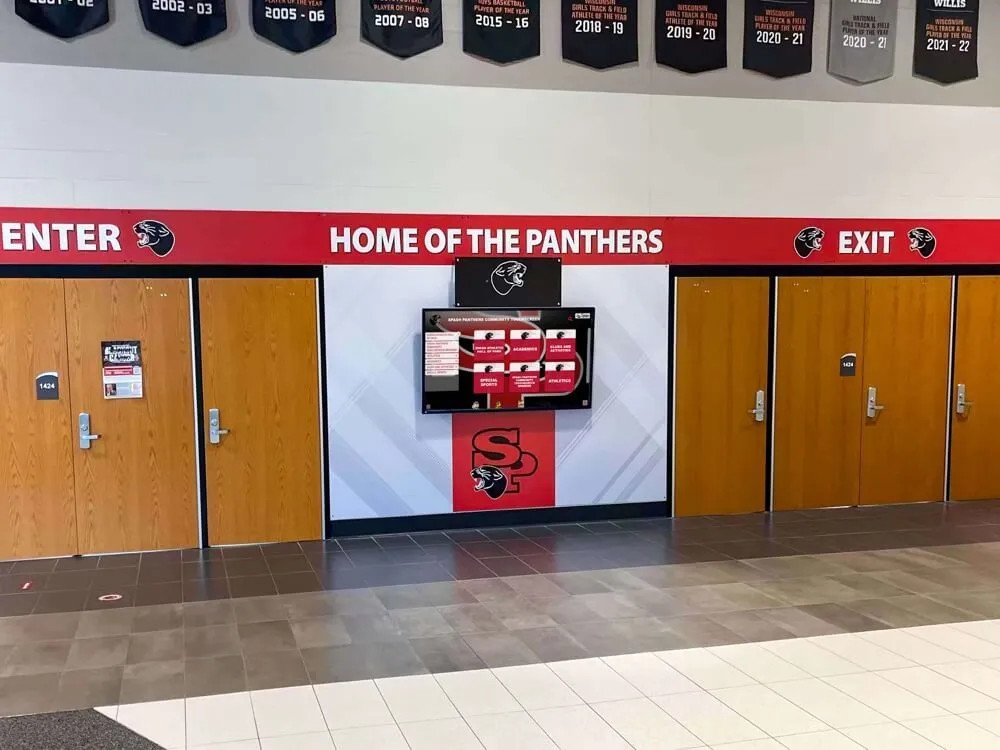
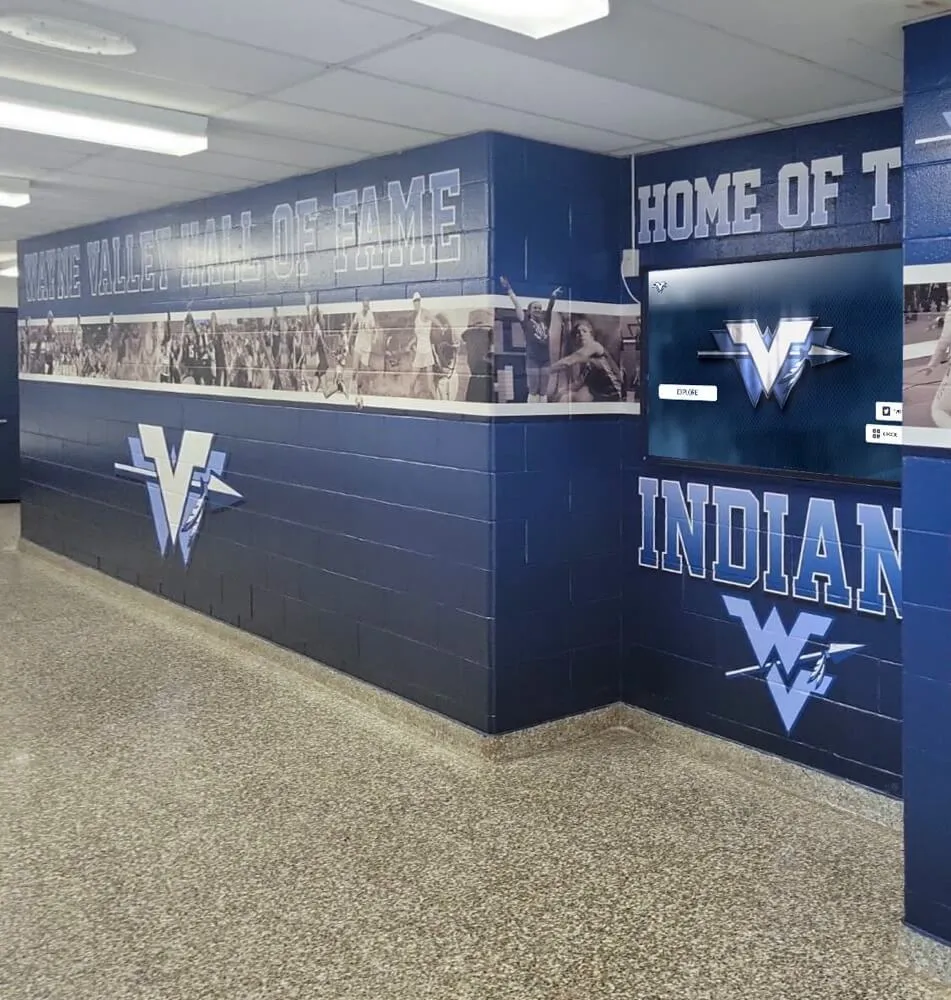
Professional displays showcase athletic achievements while creating inspiring environments celebrating participation
Donor and Sponsor Recognition Integration
Financial supporters deserve visibility reflecting their contribution levels:
Individual Donor Acknowledgment
Personal contributions funding event operations and program support:
Entry-Level Recognition ($25-$100)
- Friends of the Race listing in digital directories
- Name inclusion on event websites and digital displays
- Email acknowledgment with race day photos and results
- Social media appreciation celebrating community support
- Recognition at post-race ceremonies and announcements
Supporting Recognition ($100-$500)
- Bronze/Silver giving society membership designation
- Enhanced display placement with photo inclusion
- Event t-shirt or participant gear as tangible thank-you
- Personal communication from school leadership
- Multi-year recognition tracking sustained support
Leadership Recognition ($500-$2,500)
- Gold Circle or Leadership Society membership
- Prominent facility display featuring donor profiles
- Reserved parking or VIP area access at events
- Recognition in school newsletters and publications
- Advisory opportunities providing event planning input
Major Gift Recognition ($2,500+)
- President’s Circle or Benefactor designation
- Named race categories or awards honoring donors
- Permanent recognition in school athletic facilities
- Comprehensive benefits including lifetime event passes
- Legacy opportunities for memorial race dedications
Schools should establish giving thresholds appropriate to community demographics while ensuring all contribution levels receive meaningful acknowledgment. Solutions like Rocket Alumni Solutions provide unlimited donor recognition capacity, eliminating difficult choices about whose contributions warrant display space.
Corporate Sponsor Visibility
Business partnerships requiring deliverable fulfillment:
Sponsorship Categories and Benefits
- Title sponsors receiving event naming rights and maximum visibility
- Platinum sponsors with prominent logo placement across multiple channels
- Gold/Silver/Bronze tiers providing scaled recognition appropriate to investment
- In-kind sponsors contributing goods, services, or promotional support
- Multi-year sponsors earning enhanced recognition for sustained commitment
Integrated Visibility Strategies
- Digital display logo rotation at school facilities year-round
- Website sponsor pages with business descriptions and clickable links
- Social media acknowledgment tagging sponsors and promoting their support
- Physical signage and banners at race course and school locations
- Program recognition in printed materials and digital communications
- Verbal acknowledgment during race announcements and ceremonies
Learn about comprehensive approaches to donor recognition displays applicable to school fundraising programs.
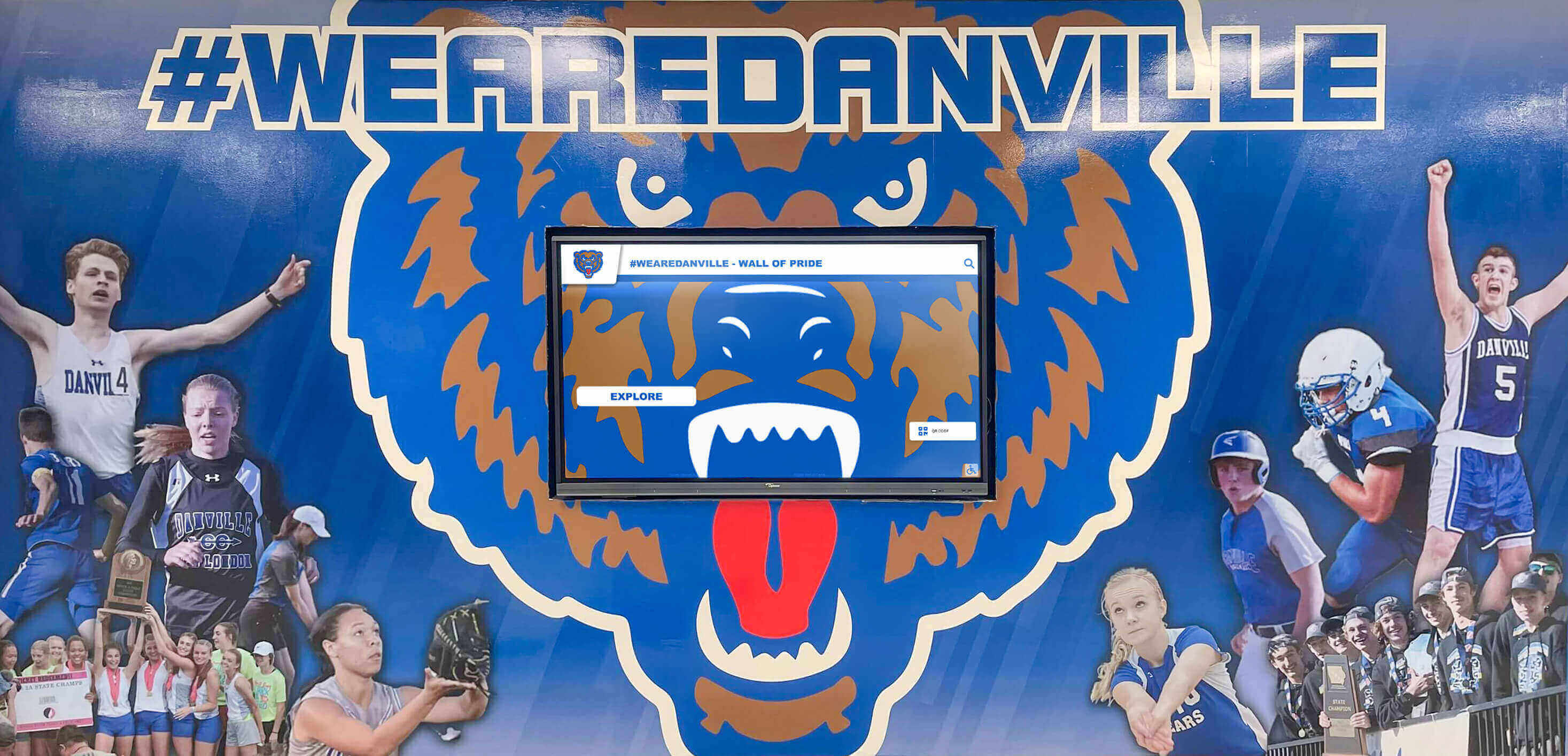
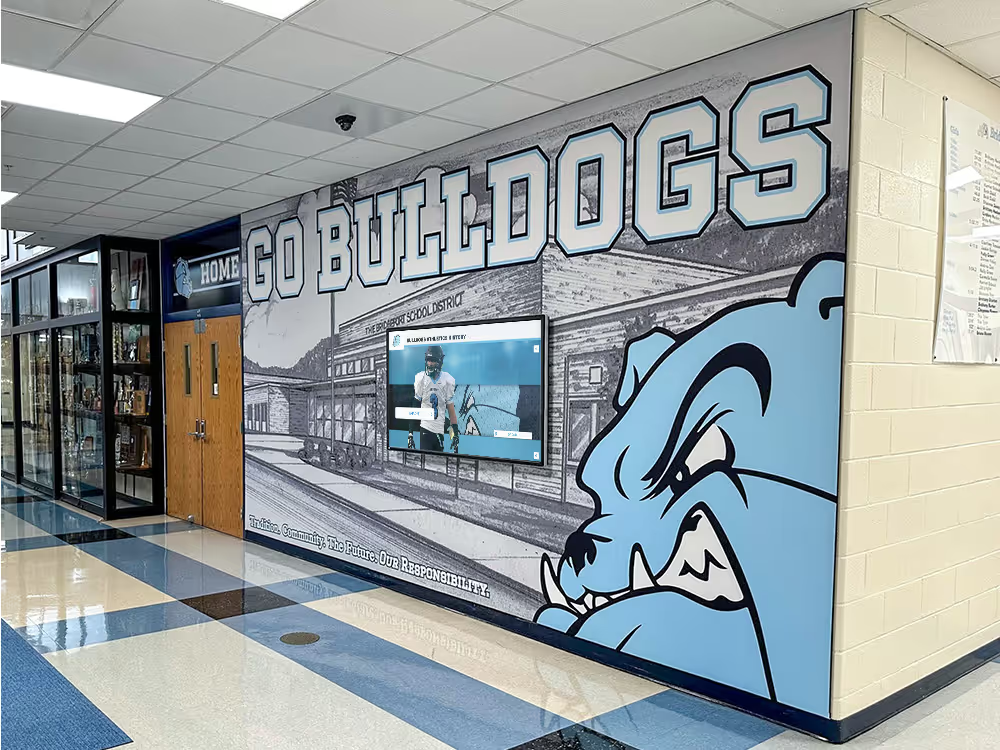
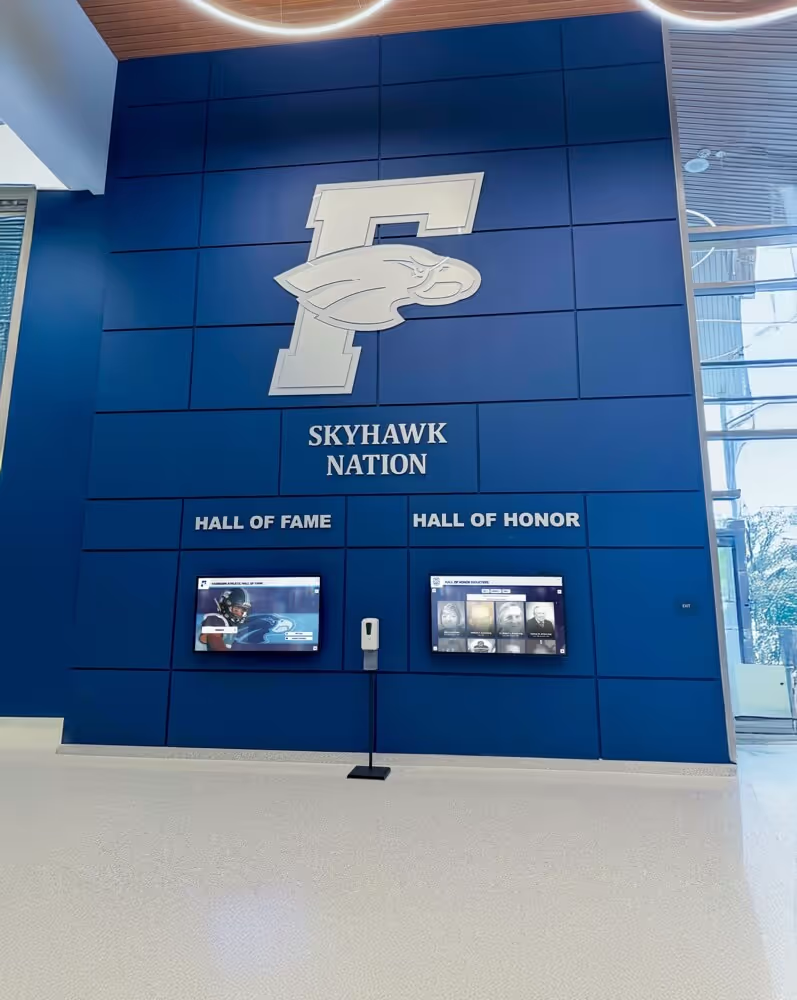
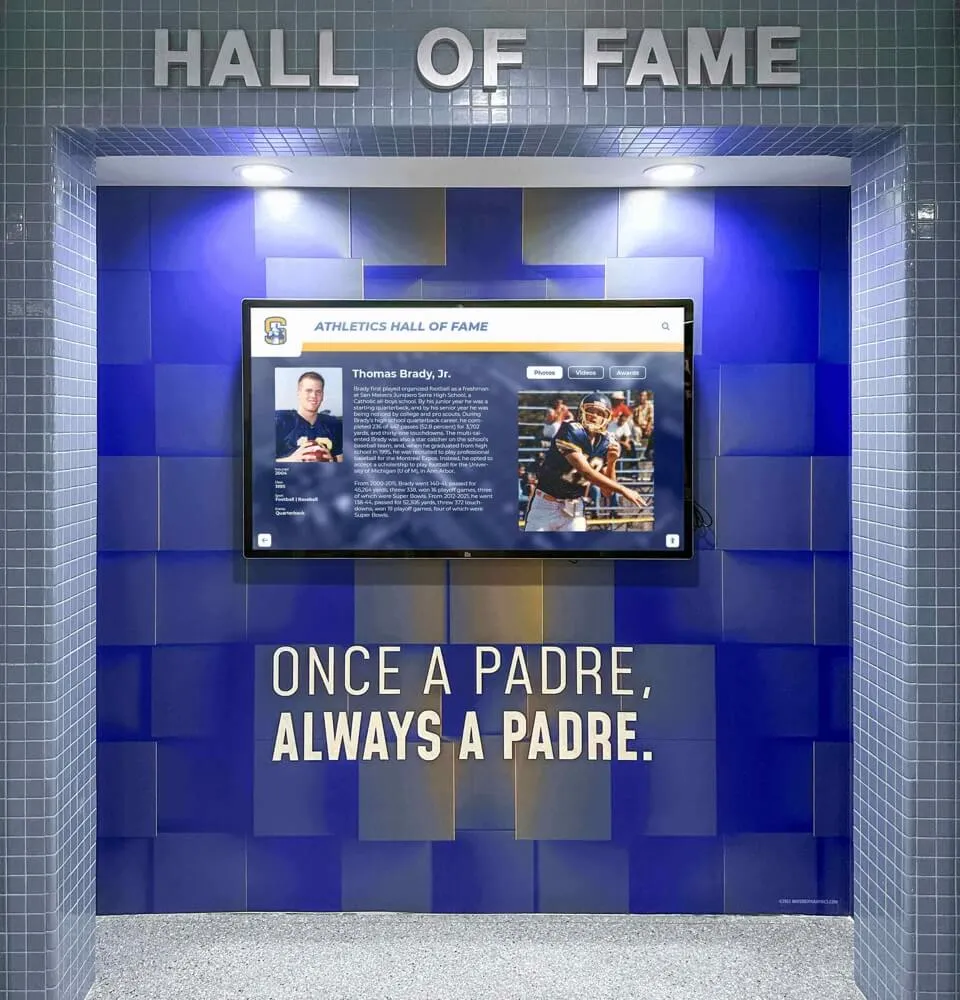
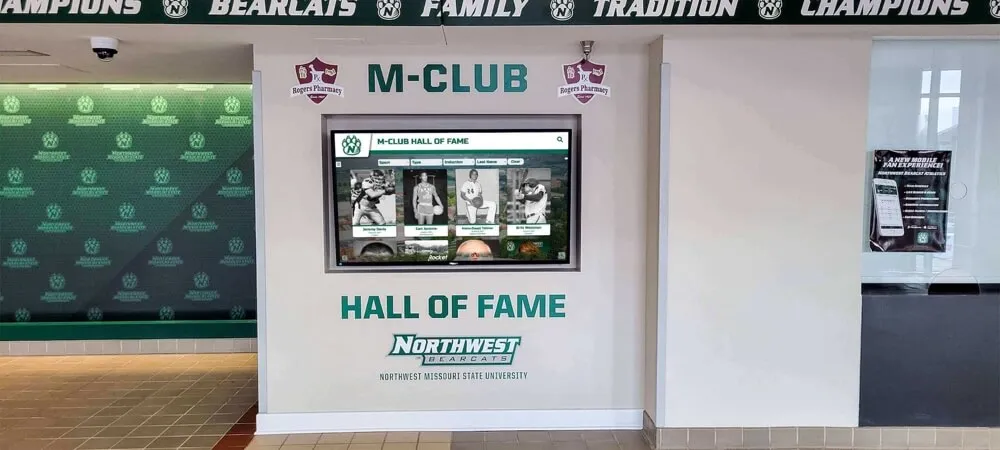
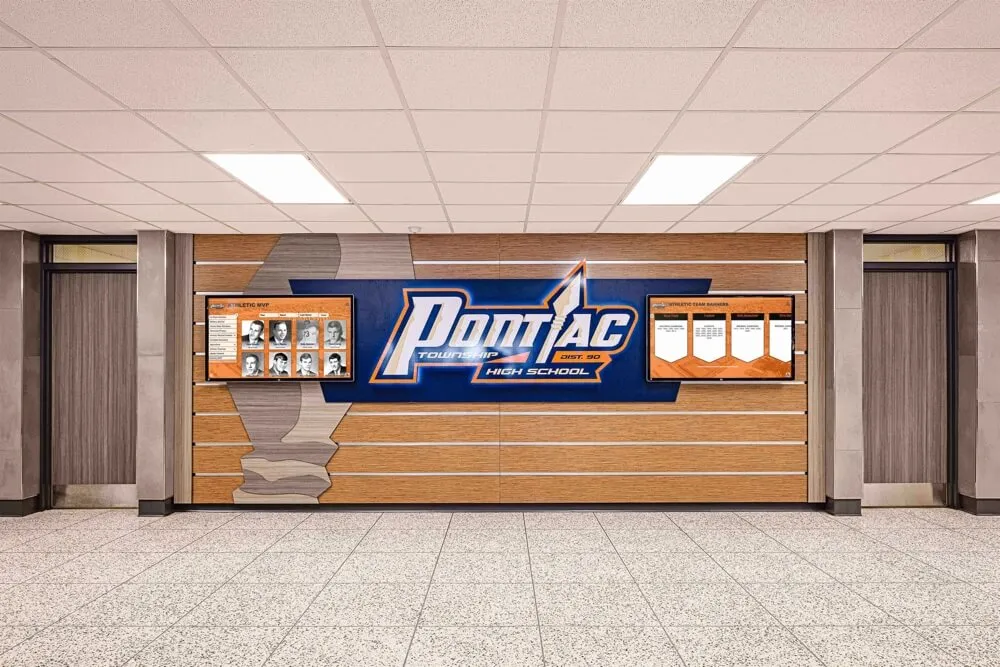
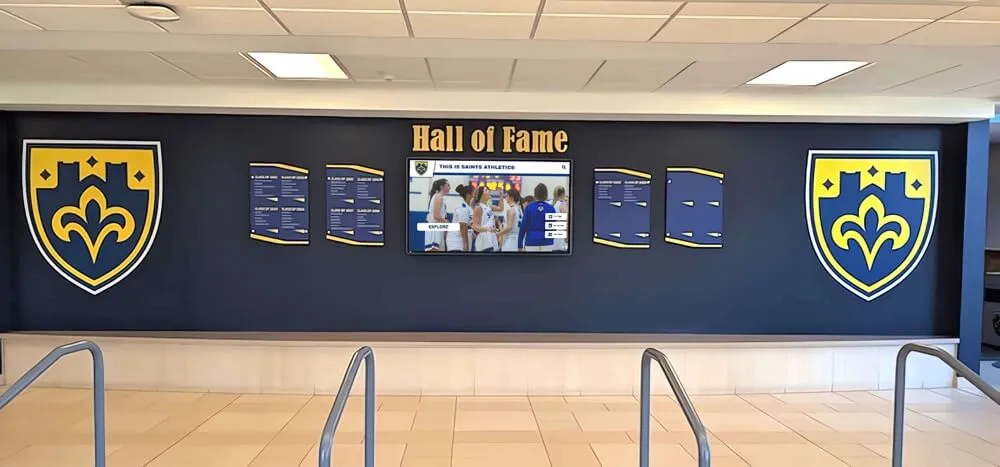
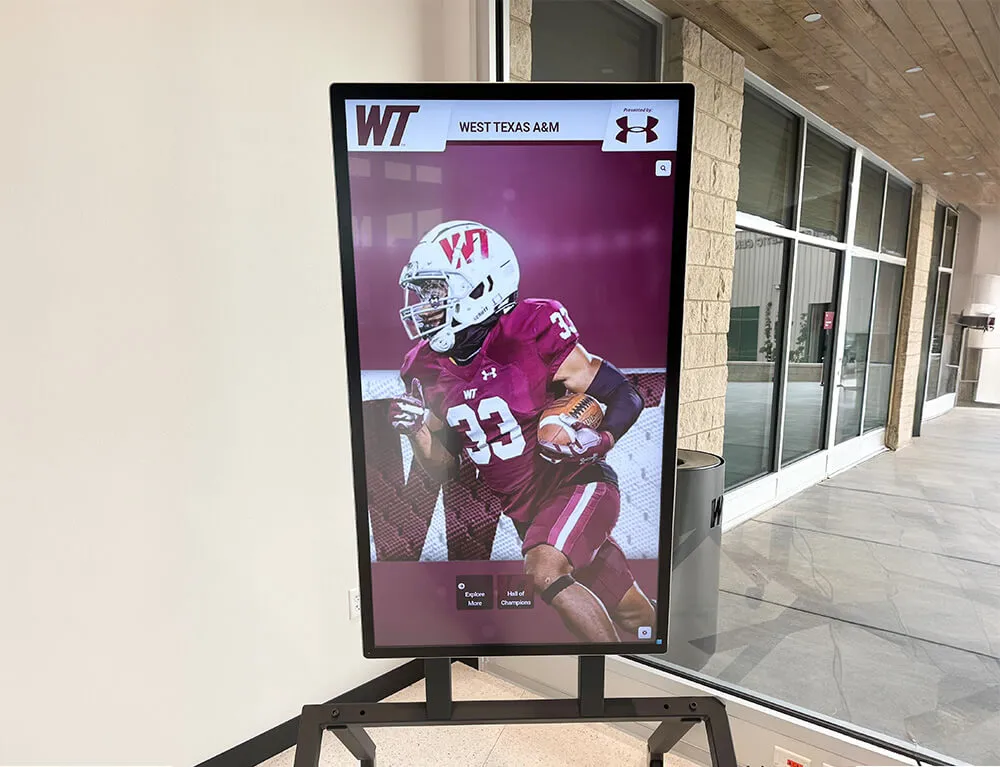
Integrated displays deliver sponsor visibility year-round while honoring community business partnerships
Volunteer Service Recognition
Event success depends on substantial volunteer contributions deserving celebration:
Race Day Volunteer Acknowledgment
Recognizing operational roles that make events possible:
- Registration desk staff processing hundreds of participants efficiently
- Course monitors ensuring runner safety and proper navigation
- Water station volunteers providing hydration support
- Timing crew documenting accurate race results
- Setup and breakdown teams preparing venues and managing logistics
- Photographer volunteers capturing memorable moments
- Announcer and entertainment coordinators creating event atmosphere
- First aid staff ensuring participant health and safety
Leadership and Planning Recognition
Celebrating volunteers driving event success:
- Race director acknowledgment honoring overall coordination responsibility
- Committee chairs leading specific functional areas
- Sponsorship coordinators securing business partnerships
- Marketing and communications volunteers promoting events
- Budget and finance volunteers managing fundraising accountability
- Course design and logistics planners ensuring safe routes
- Multi-year organizers who’ve sustained events over time
Schools implementing volunteer recognition programs report improved recruitment success and lower volunteer turnover when service receives public acknowledgment.
Service Hour Tracking and Milestone Recognition
Quantifying volunteer contributions:
- Individual volunteer hour totals across multiple years
- Milestone recognition for significant service thresholds
- Family volunteer team tracking combined household contributions
- Student volunteer acknowledgment connecting service learning
- Staff volunteer celebration building school culture
- Community volunteer spotlights featuring detailed profiles
- Year-over-year volunteer participation trends
Research demonstrates that volunteers receiving regular recognition serve longer, recruit additional supporters, and take on expanded responsibilities compared to those whose service goes unacknowledged.
Photo Gallery Archives
Visual documentation preserving memorable moments:
Annual Race Day Galleries
Comprehensive photo collections from each event:
- Race start line showing participant excitement and community gathering
- On-course action capturing runners and walkers during competition
- Finish line celebrations showing achievement and emotion
- Award ceremonies recognizing winners and special achievements
- Volunteer appreciation moments thanking service contributors
- Sponsor visibility showing community business support
- Behind-the-scenes organization documentation
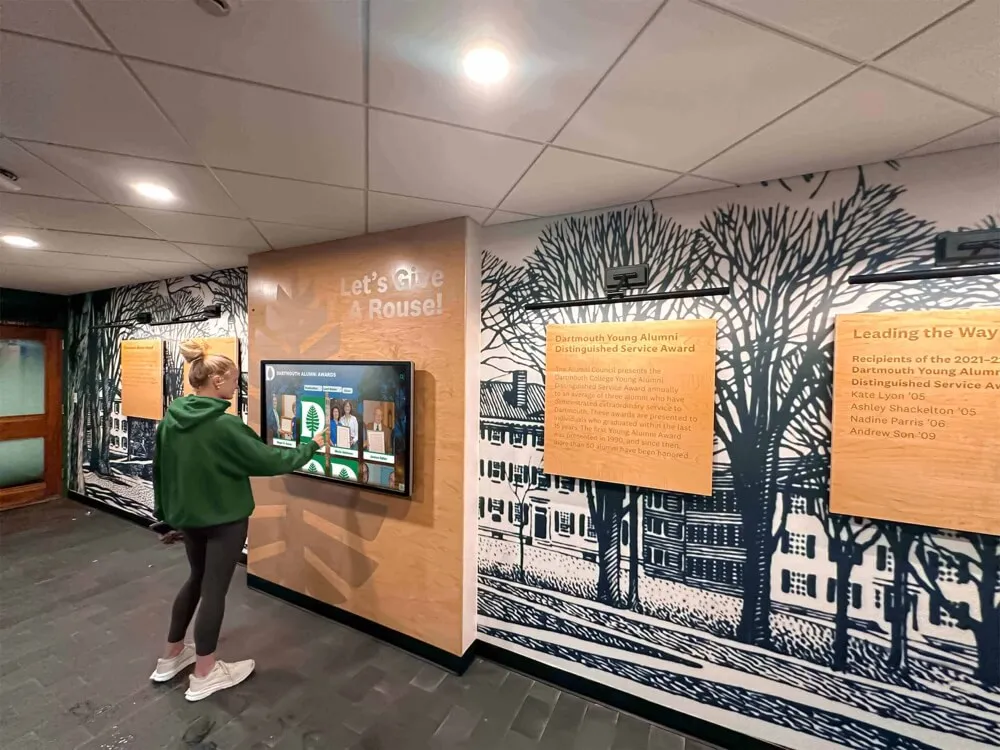
Interactive photo galleries let visitors explore event history and find personal connections
Historical Archives and Traditions
Multi-year photo collections showing event evolution:
- Year-by-year comparison galleries demonstrating growth
- Decade retrospectives celebrating long-term traditions
- Founder and early participant recognition honoring event origins
- Weather and memorable moment documentation
- Course evolution showing route changes over time
- Community participation trends visible through imagery
- Generational participation showing families across years
Digital platforms with searchable photo archives enable participants to find themselves, share photos through social media, and explore connections to events spanning multiple years. Schools report that photo galleries generate highest engagement of any recognition content type, with visitors spending 5-10 minutes exploring images compared to seconds reading text-only information.
Explore strategies for creating digital photo archives applicable to school events.
Event History and Tradition Preservation
Documenting annual 5K evolution creates institutional memory:
Comprehensive Historical Documentation
Preserving complete event heritage:
Founding and Growth Story
Context explaining how traditions began:
- Event founding year and initial motivation
- Original organizers and visionary leadership
- First-year participation numbers and fundraising results
- Evolution of event scale and community involvement
- Milestone years marking significant achievements
- Course changes and venue transitions over time
- Integration with broader school fundraising strategies
Statistical Archives
Quantitative documentation showing impact:
- Year-by-year participation numbers tracking growth
- Total fundraising revenue generated annually
- Cumulative program funding provided across all events
- Participation demographics showing community diversity
- Weather conditions and completion rates by year
- Registration trends indicating marketing effectiveness
- Comparison data benchmarking against peer school events
Schools hosting 15+ annual events commonly generate $250,000-$500,000 in cumulative fundraising revenue, representing substantial program support deserving comprehensive documentation and celebration.
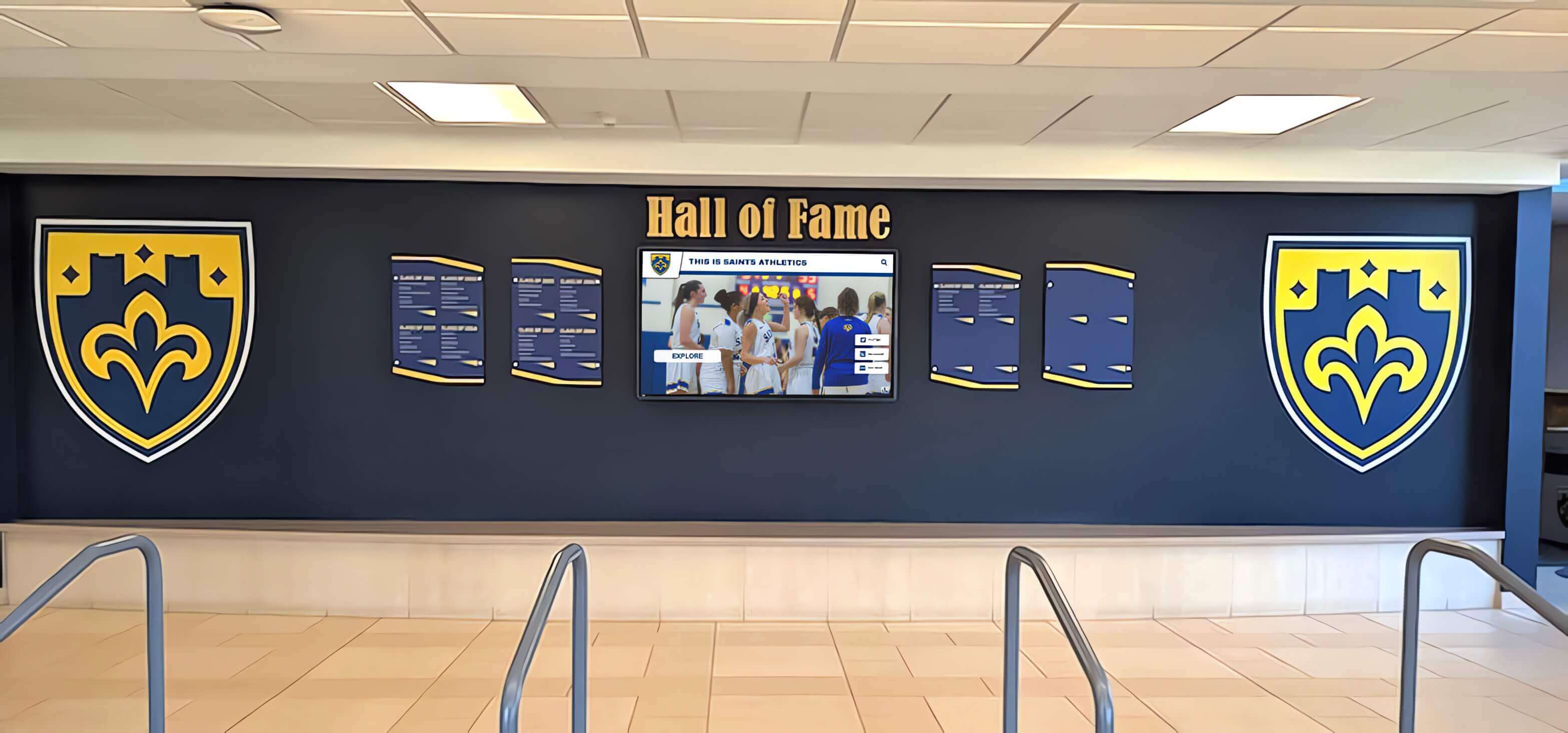
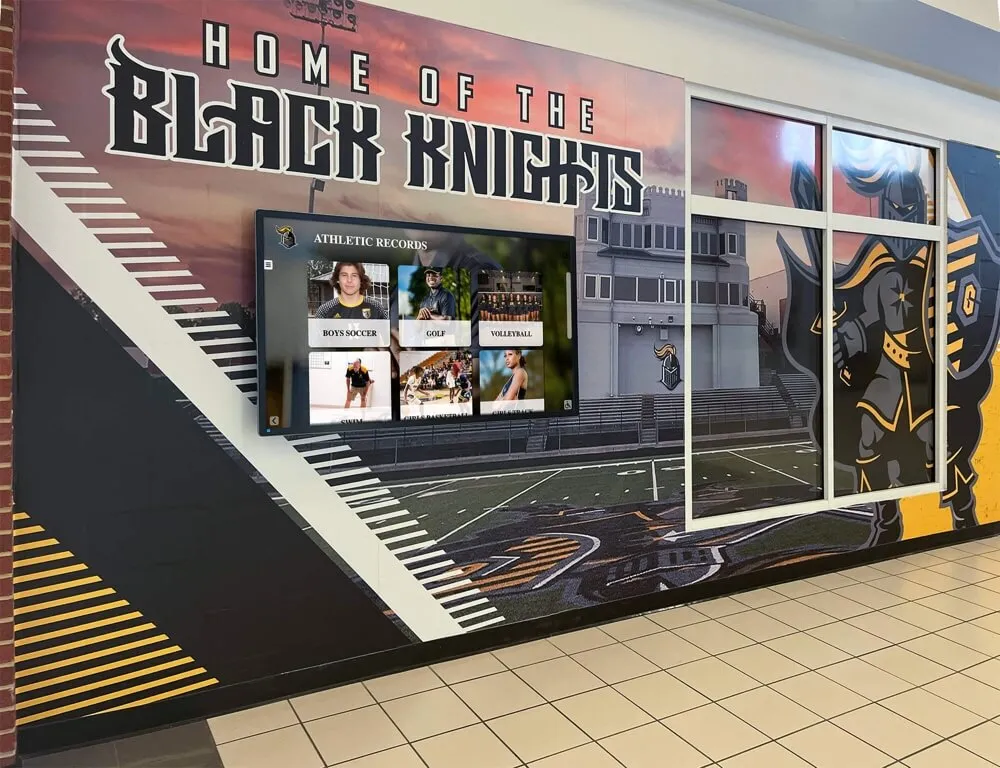
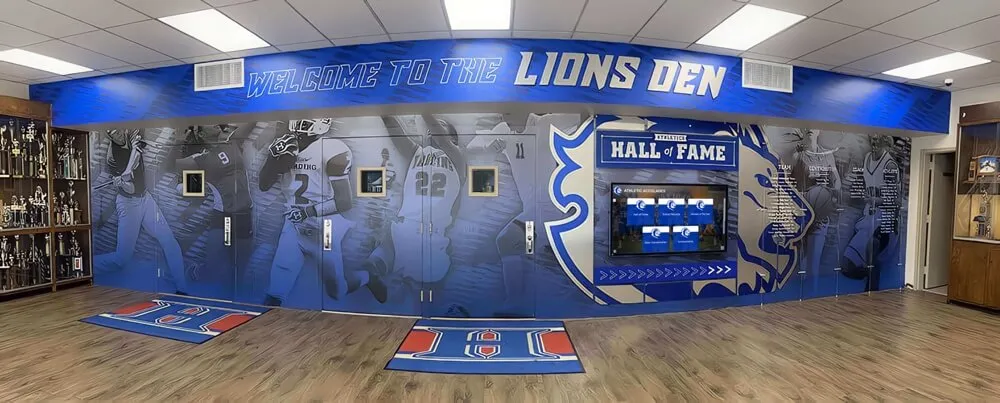
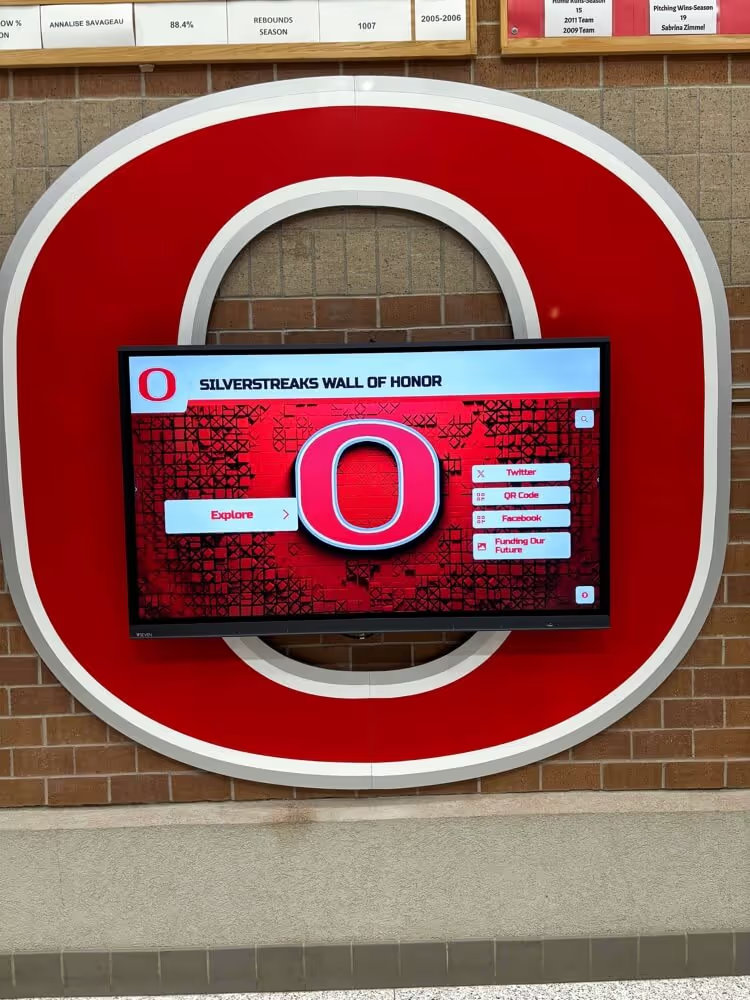
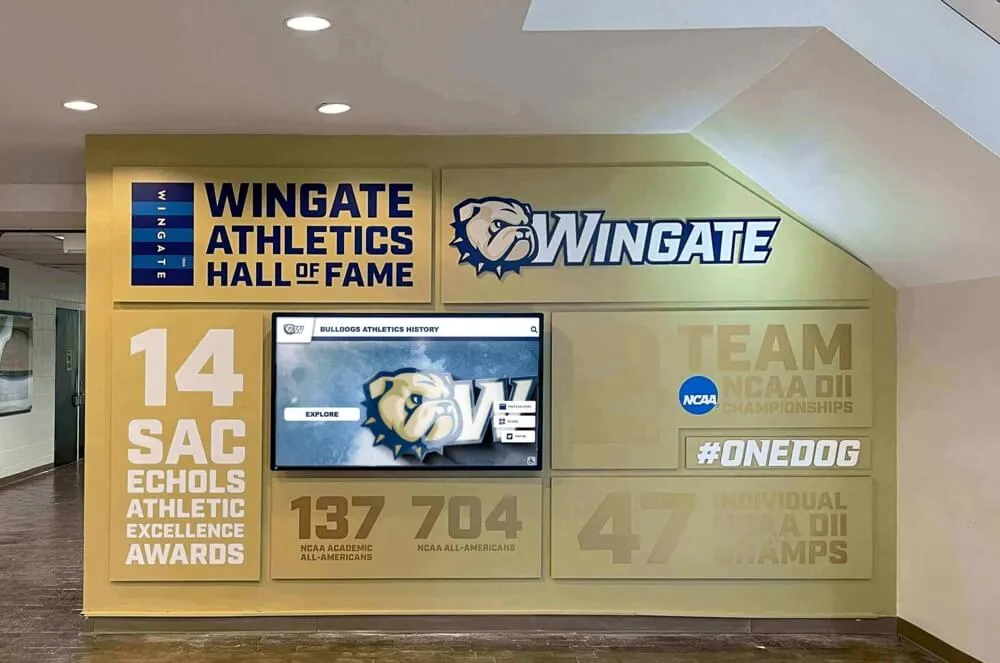
Historical displays celebrate event traditions while demonstrating sustained community investment
Memorable Moments and Stories
Narrative content bringing statistics to life:
- Weather challenges overcome through community determination
- Unexpected victories and emotional finish line moments
- Record-breaking performances and milestone achievements
- Community rallying during difficult institutional periods
- Student success stories enabled by fundraising proceeds
- Multi-generational family participation traditions
- Alumni returning to support current programs
These stories transform numerical data into emotional connections, helping current participants appreciate event significance beyond annual registration fees.
Learn about effective approaches to developing school history timelines applicable to annual events.
Program Impact Demonstration
Connecting fundraising to tangible outcomes:
Funded Project Showcases
Specific examples of event proceeds utilization:
- Athletic equipment purchases improving program quality
- Technology investments enhancing learning environments
- Scholarship support enabling student participation
- Facility improvements funded through multi-year campaigns
- Program expansion made possible through sustained fundraising
- Emergency needs addressed through available event funds
- Student opportunity creation funded by community generosity
Schools implementing impact visualization report stronger donor retention and increased giving levels when supporters see concrete results from their contributions.
Beneficiary Recognition
Acknowledging students and programs supported:
- Scholarship recipient profiles thanking community support
- Student athlete testimonials describing program impact
- Academic team members explaining competition opportunities
- Arts program participants acknowledging equipment funding
- Coach perspectives on how resources improve programs
- Family appreciation for participation opportunities enabled
Discover comprehensive approaches to showcasing program impact that strengthen donor connections.
Execution Timeline: From Planning to Launch
Implementing comprehensive 5K fundraiser recognition requires systematic phases:
Phase 1: Planning and Data Collection (Weeks 1-6)
Historical Research and Archive Development
Gathering information from past events:
- Locate historical race results from timing systems or printed materials
- Identify participant registration records showing multi-year attendance
- Compile donor and sponsor information across previous events
- Collect volunteer lists documenting service contributions
- Gather photo archives from multiple years and sources
- Research founding history through interviews and institutional records
- Document fundraising totals and program impacts over time
Recognition Categories and Structure
Organizing content systematically:
- Define giving level thresholds and recognition tiers
- Establish sponsorship categories and visibility deliverables
- Create volunteer recognition classifications by role and service
- Develop race result organization by age groups and categories
- Plan milestone achievement tracking systems
- Design photo gallery organization structure
- Outline historical timeline and narrative framework
Stakeholder Engagement
Building support for recognition programs:
- Present recognition vision to school leadership securing approval
- Engage event organizers understanding past decisions and context
- Survey previous participants about recognition preferences
- Interview long-time volunteers capturing institutional memory
- Connect with founding members documenting early history
- Communicate with sponsors clarifying visibility expectations
- Involve students in design and content development
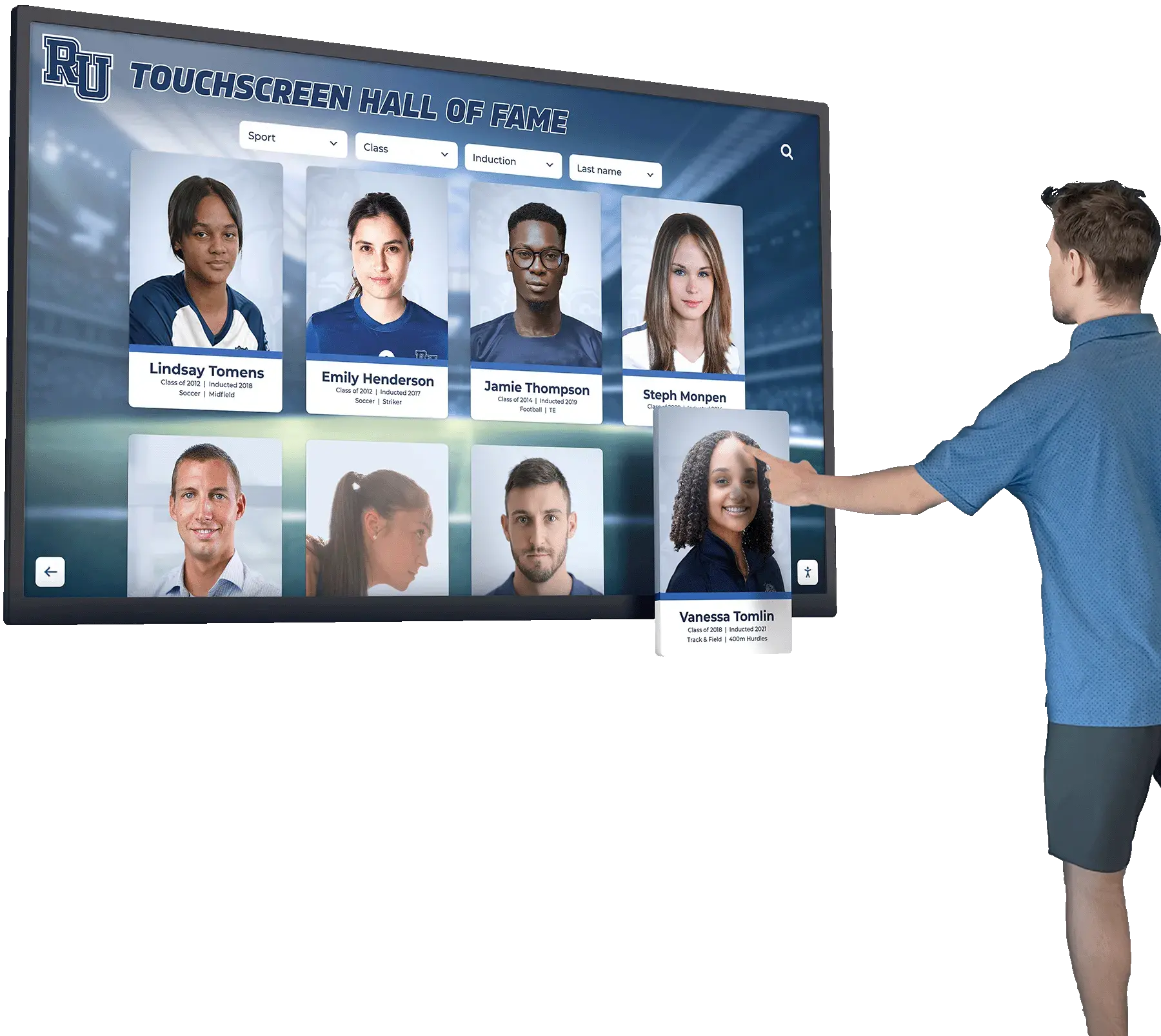
Systematic planning ensures recognition programs celebrate all community contributions appropriately
Phase 2: Technology Selection and Platform Development (Weeks 7-12)
Recognition Platform Evaluation
Identifying appropriate solutions:
- Distinguish purpose-built recognition systems from generic digital signage
- Evaluate unlimited content capacity accommodating growing archives
- Assess content management usability for volunteer administrators
- Review integration capabilities with existing school systems
- Compare total cost of ownership across multi-year timeframes
- Verify vendor support quality and training comprehensiveness
- Confirm analytics capabilities tracking engagement and interest
Solutions like Rocket Alumni Solutions provide comprehensive platforms specifically designed for school recognition applications, with features supporting diverse content types from race results and donor acknowledgment to photo galleries and historical archives—all manageable by volunteers without technical expertise.
Hardware Specification and Installation Planning
Determining physical display requirements:
- Identify optimal placement locations for maximum visibility
- Specify appropriate display sizes based on viewing distances
- Select commercial-grade touchscreen equipment rated for continuous use
- Plan professional installation with proper mounting and cabling
- Verify network connectivity supporting cloud-based platforms
- Ensure ADA accessibility compliance for all users
- Coordinate installation timing minimizing facility disruption
Learn about touchscreen technology selection for recognition applications.
Website Integration Strategy
Extending recognition beyond physical displays:
- Develop web-accessible race archives for remote exploration
- Create searchable databases enabling name and year queries
- Implement social sharing functionality encouraging viral promotion
- Design mobile-responsive interfaces supporting smartphone access
- Integrate sponsor websites delivering promised online visibility
- Enable photo gallery viewing from any internet-connected device
- Provide analytics tracking global engagement patterns
Phase 3: Content Development and Creation (Weeks 13-24)
Profile Development and Data Entry
Creating comprehensive recognition content:
Participant Profiles
- Race result entry showing times, placements, and categories
- Multi-year participation tracking showing streaks and consistency
- Personal best documentation showing improvement over time
- Age group recognition appropriate to demographic categories
- Team affiliation noting student, staff, alumni, or community status
- Photos from race day when available and with permission
- Personal statements or race reflections when contributed
Donor and Sponsor Profiles
- Contribution history across multiple years when applicable
- Recognition society designation based on giving levels
- Company affiliation and business information for sponsors
- Logo files for corporate sponsor visibility integration
- Website URLs for clickable links from digital recognition
- Biographical information for individual major donors
- Impact statements explaining contribution motivation
Volunteer Profiles
- Service roles across multiple years documenting contributions
- Hour totals quantifying volunteer time investment
- Leadership positions recognizing organizational responsibility
- Photos showing volunteers in action at events
- Quotes explaining volunteer motivation and experience
- Years of service tracking sustained commitment
- Recruitment testimonials encouraging future volunteers
Historical Content
- Year-by-year event narratives providing context
- Statistical data showing participation and fundraising trends
- Memorable moment stories bringing numbers to life
- Photo galleries organized by year and category
- Founding history explaining event origins and evolution
- Impact documentation showing funded projects and beneficiaries
- Timeline graphics visualizing event growth and achievements
Schools commonly invest 60-120 hours developing comprehensive initial recognition content for 5K events with 5-10 years of history, depending on available source material quality and desired recognition depth.
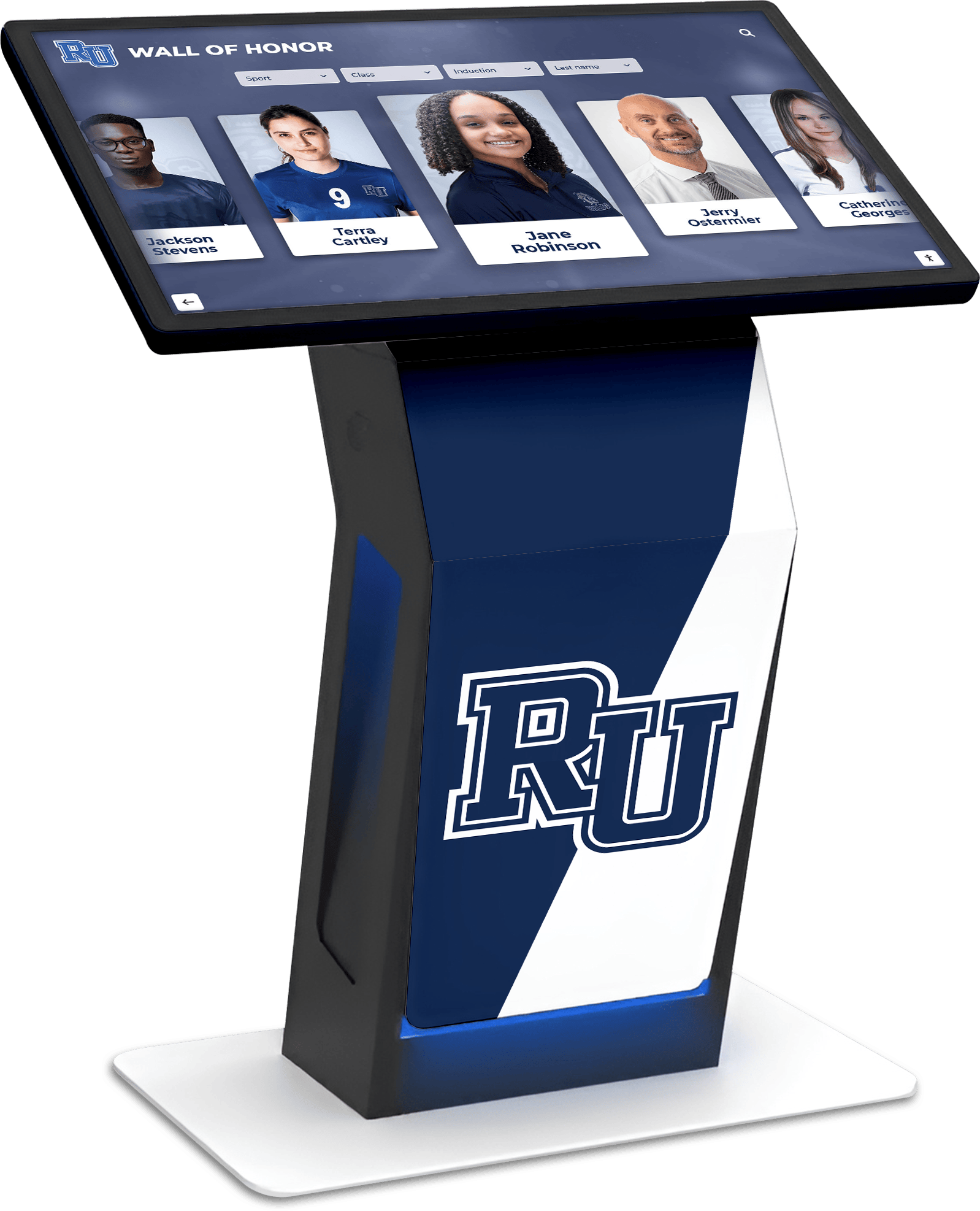
Organized content architecture enables intuitive exploration across diverse recognition categories
Phase 4: Installation, Testing, and Training (Weeks 25-28)
Professional Display Installation
Hardware setup and configuration:
- Complete electrical and network infrastructure work
- Mount displays at ADA-compliant heights with secure anchoring
- Install professional cable management creating polished appearance
- Configure displays including brightness, touch sensitivity, network connectivity
- Test all interactive functions verifying reliable responsive operation
- Integrate displays with existing facility aesthetics and branding
- Document technical specifications for future maintenance reference
Administrator Training and Documentation
Building management capabilities:
- Provide hands-on content management training
- Demonstrate adding new participants after each annual event
- Cover donor and volunteer profile creation workflows
- Train on photo upload and gallery organization
- Review analytics and engagement reporting features
- Establish ongoing support access and vendor communication
- Create written procedures for common administrative tasks
Quality Assurance and Verification
Ensuring content accuracy and system reliability:
- Conduct complete content review verifying spelling and accuracy
- Test search and filtering functions across all categories
- Verify photo permissions and appropriate image use
- Confirm sponsor logo placement and website link functionality
- Review mobile and web access ensuring cross-platform consistency
- Address any identified technical issues before public launch
- Obtain stakeholder approval before unveiling recognition
Phase 5: Launch and Ongoing Management (Week 29+)
Public Unveiling and Promotion
Introducing recognition to school community:
- Schedule launch during next annual 5K event for maximum visibility
- Invite previous participants creating connections across years
- Arrange media coverage generating community awareness
- Provide demonstrations encouraging immediate exploration
- Share recognition through social media and school communications
- Create promotional materials highlighting unique features
- Celebrate volunteer and organizer contributions making program possible
Ongoing Content Updates
Sustaining recognition currency:
- Add new participants immediately following each annual event
- Update donor recognition reflecting current year contributions
- Add photo galleries from recent race documentation
- Update volunteer profiles acknowledging continued service
- Refresh sponsor visibility honoring renewed partnerships
- Add historical narratives as additional memories emerge
- Maintain accuracy removing outdated or incorrect information
Continuous Improvement and Expansion
Enhancing recognition over time:
- Review engagement analytics identifying popular content
- Gather stakeholder feedback about recognition effectiveness
- Add enhanced features as platform capabilities evolve
- Expand historical archives through continued research
- Improve content quality with better photos and richer narratives
- Integrate recognition with other school recognition programs
- Share best practices with peer schools hosting similar events
Explore comprehensive strategies for measuring recognition program success that demonstrate institutional value.
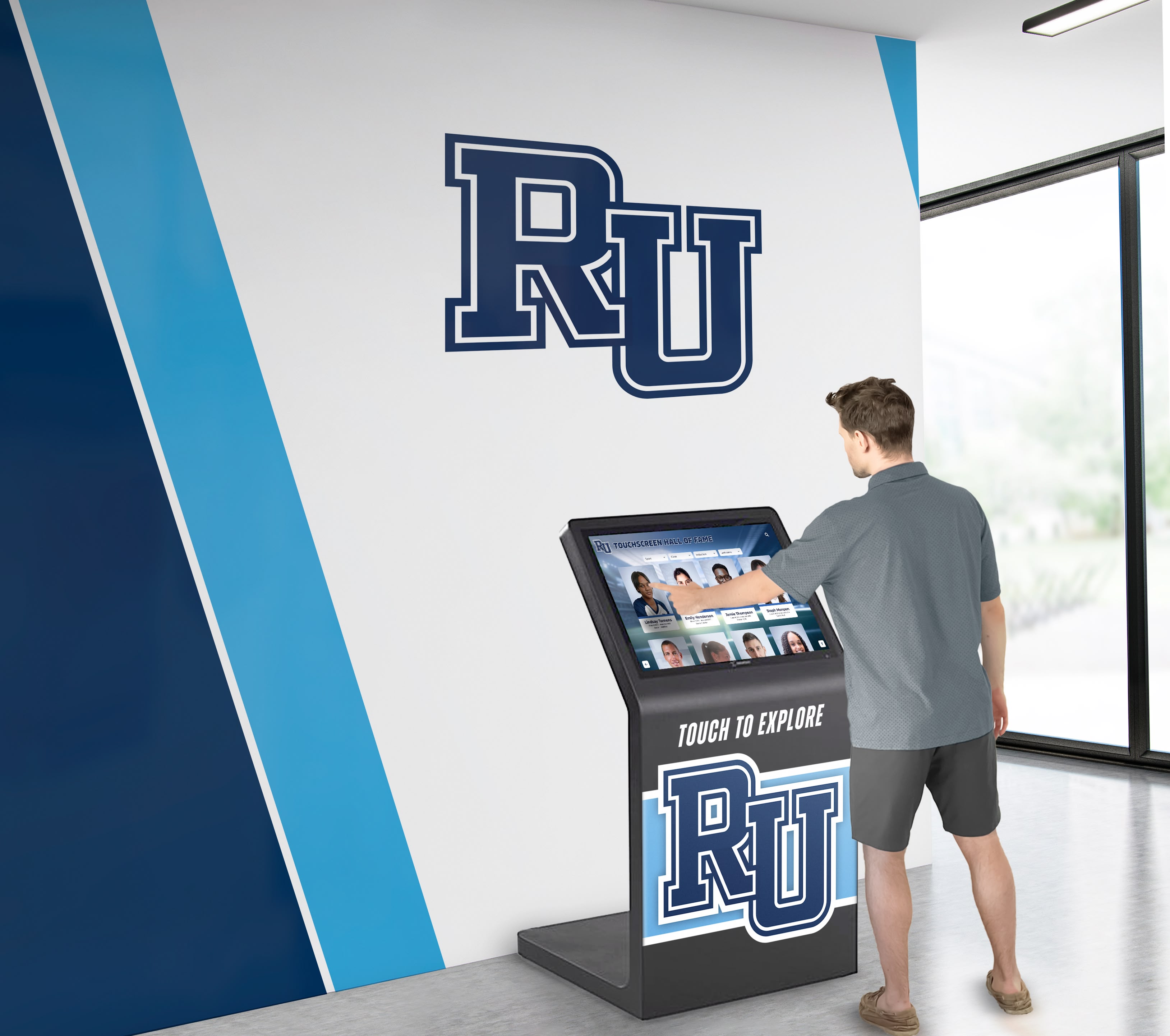
Cloud-based management enables convenient updates maintaining recognition currency and relevance
Display Integration: Multi-Channel Recognition Strategy
Effective 5K fundraiser recognition extends beyond single displays, creating comprehensive visibility:
Physical Display Placement Strategy
Strategic locations maximizing community engagement:
Primary Recognition Locations
High-visibility placement ensuring broad awareness:
- Main entrance lobbies greeting all visitors immediately
- Athletic facilities connecting recognition thematically with fitness programs
- Commons areas and cafeterias providing sustained viewing time
- Development offices engaging potential donors with visible stewardship
- Event staging areas where pre-race and post-race activities occur
- Community spaces hosting school gatherings and celebrations
Event-Day Integration
Temporary displays at race locations:
- Registration areas showcasing historical leaderboards
- Start/finish line displays celebrating course records
- Award ceremony backdrops featuring sponsor acknowledgment
- VIP areas highlighting major donor recognition
- Photo booth integrations encouraging social sharing
- Mobile displays enabling multiple simultaneous viewing points
Learn about creating effective recognition spaces that maximize community engagement.
Digital and Online Recognition Extensions
Web-accessible platforms extending geographic reach:
School Website Integration
Embedding recognition in institutional web presence:
- Dedicated 5K history pages showcasing event heritage
- Searchable race result databases enabling name queries
- Donor and sponsor directories providing deserved visibility
- Photo gallery hosting enabling remote viewing
- Volunteer appreciation pages celebrating service
- Event impact documentation showing fundraising outcomes
- Registration integration promoting upcoming races
Social Media Recognition
Amplifying acknowledgment through digital channels:
- Post-race participant spotlight features
- Volunteer appreciation posts with tagged acknowledgment
- Sponsor shoutouts fulfilling visibility commitments
- Historical throwback content during anniversary years
- Photo gallery shares encouraging participant engagement
- Milestone recognition celebrating achievement anniversaries
- Impact stories connecting fundraising to outcomes
Email and Newsletter Recognition
Direct communication with stakeholders:
- Post-event thank-you communications with result links
- Annual recognition roundups celebrating community contributions
- Donor acknowledgment messages with stewardship reporting
- Volunteer recruitment communications featuring current supporters
- Sponsor appreciation emails reinforcing partnership value
- Anniversary communications marking significant milestones
- Registration reminders highlighting recognition opportunities
Research demonstrates that multi-channel recognition generates 40-60% higher donor retention compared to single-touchpoint acknowledgment, as supporters receive repeated validation through various mediums.
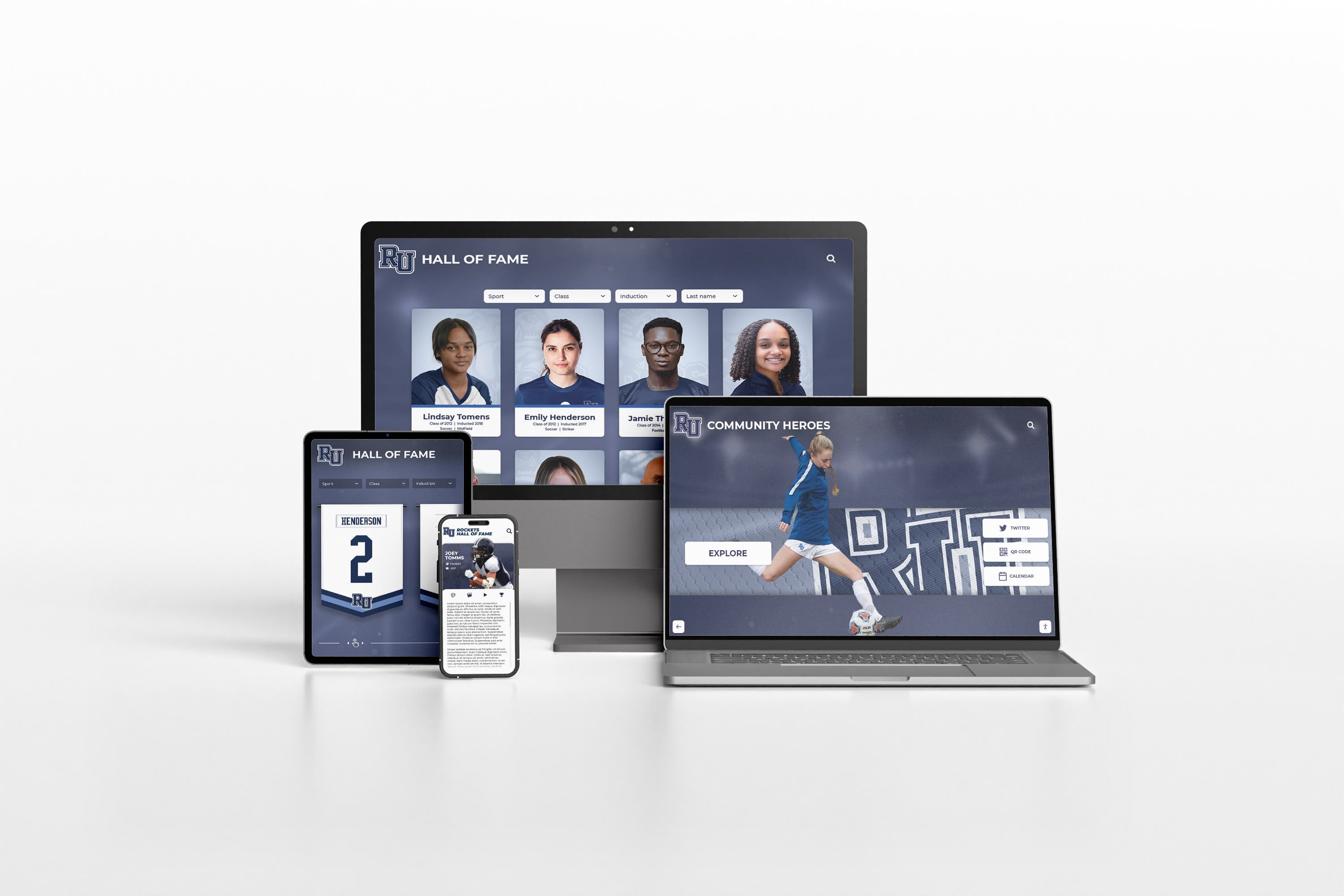
Multi-platform recognition ensures accessibility regardless of how stakeholders prefer engaging with content
Sponsor Integration and Value Enhancement
Corporate partnerships require visibility delivering promised benefits:
Sponsor Visibility Strategies
Fulfilling sponsorship agreements professionally:
Year-Round Facility Recognition
Sustained visibility extending beyond race day:
- Digital display logo rotation at school facilities
- Physical banners in athletic venues when appropriate
- Website sponsor pages with business profiles and links
- Recognition in school publications and communications
- Verbal acknowledgment at school events and activities
- Integrated displays combining multiple sponsor recognition
- Permanent acknowledgment for multi-year commitments
Event-Specific Visibility
Race day prominence honoring sponsorship investments:
- Title sponsor recognition in all event branding
- Course signage featuring sponsor logos prominently
- T-shirt and participant gear sponsor placement
- Registration materials and race bibs sponsor identification
- Award presentations with sponsor acknowledgment
- Social media event coverage tagging business partners
- Media relations mentioning sponsor support
Digital Integration and Links
Driving traffic to sponsor businesses:
- Clickable logos on digital displays connecting to websites
- QR codes enabling smartphone access to sponsor information
- Social media tags creating direct business connections
- Email communications linking to sponsor offerings
- Search-optimized sponsor pages improving online visibility
- Google My Business review encouragement supporting sponsors
- Cross-promotion opportunities between school and sponsors
Schools implementing comprehensive sponsor recognition report 75-85% annual renewal rates compared to 45-60% for those providing minimal visibility, demonstrating how systematic acknowledgment strengthens long-term partnerships.
Learn about sponsor recognition best practices applicable to school fundraising events.
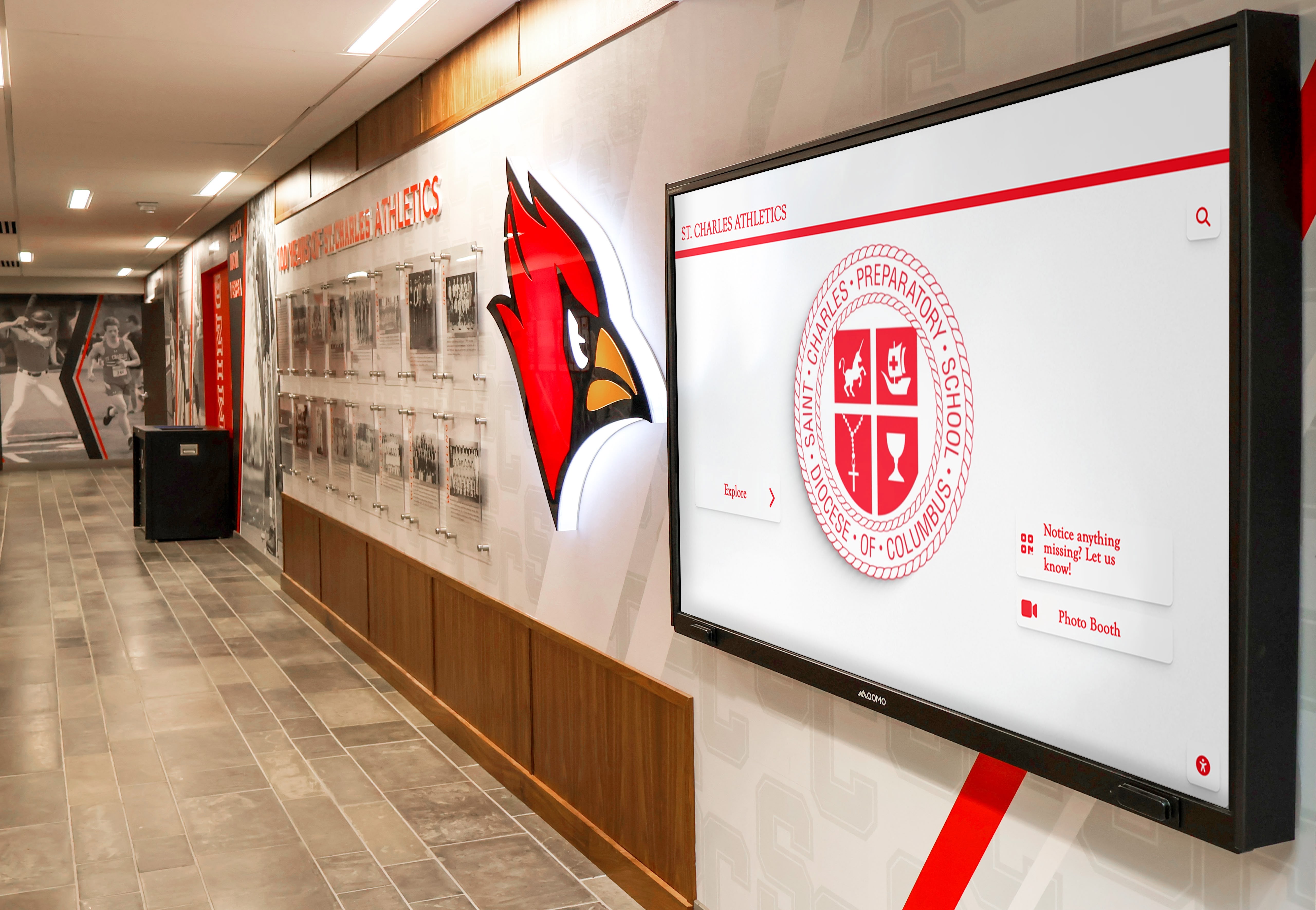
Professional sponsor integration delivers promised visibility while maintaining aesthetic quality
Sponsorship Reporting and Stewardship
Demonstrating value to business partners:
Analytics and Engagement Data
Quantifying sponsor visibility:
- Display interaction counts showing community engagement
- Website traffic to sponsor pages and external links
- Social media reach and engagement metrics
- Email open and click rates for sponsor acknowledgment
- Search visibility improvements from backlinks
- Geographic distribution showing reach beyond local market
- Demographic data describing audience characteristics
Impact Storytelling
Connecting sponsor support to outcomes:
- Student testimonials thanking business partnerships
- Program enhancement documentation showing sponsor impact
- Facility improvement photos featuring sponsored projects
- Participation growth trends enabled by sponsor support
- Scholarship recipient profiles acknowledging business generosity
- Community benefit narratives explaining broader impact
- Economic return analysis for business marketing investment
Renewal Cultivation
Strengthening multi-year partnerships:
- Annual sponsor appreciation events recognizing contributions
- Personal communication from school leadership thanking support
- Enhanced visibility opportunities for renewed commitments
- Multi-year commitment incentives encouraging sustained partnerships
- Business benefit documentation showing marketing value
- Exclusive opportunities for long-term partner recognition
- Succession planning for businesses undergoing transitions
Common Implementation Challenges and Solutions
Learning from frequent obstacles helps schools avoid mistakes:
Challenge 1: Incomplete Historical Records
The Problem: Schools discover limited documentation from early events, with missing race results, incomplete participant lists, poor quality photos, and minimal donor information creating gaps in recognition archives.
The Solution: Begin with available information rather than delaying recognition until perfect archives exist. Launch recognition featuring well-documented recent years while systematically researching and adding historical content through:
- Community memory collection asking long-time participants to share stories
- Newspaper archive research identifying coverage from early events
- Social media outreach soliciting historical photos from personal collections
- Yearbook review finding event references and imagery
- Interview projects with founding organizers documenting origins
- Acknowledgment of incomplete records with invitations to contribute missing information
Schools implementing phased historical development report that launching with partial archives generates community contributions filling gaps more effectively than attempting comprehensive research before any public recognition.
Challenge 2: Ongoing Content Management Burden
The Problem: Post-launch content updates feel overwhelming for volunteer administrators managing multiple responsibilities, leading to outdated recognition undermining credibility and participant disappointment.
The Solution: Establish realistic update schedules matching available volunteer capacity rather than aspirational standards. Implement sustainable practices including:
- Annual-only updates immediately following each race event
- Streamlined data import from race timing systems reducing manual entry
- Standardized templates minimizing custom content creation
- Photo gallery prioritization over text-heavy narratives
- Volunteer rotation distributing workload across multiple people
- Vendor support utilization for technical assistance
- Content milestone planning preventing accumulation of deferred updates
Purpose-built recognition platforms with intuitive management interfaces reduce update time by 60-75% compared to generic systems requiring technical expertise, making volunteer administration realistic and sustainable.
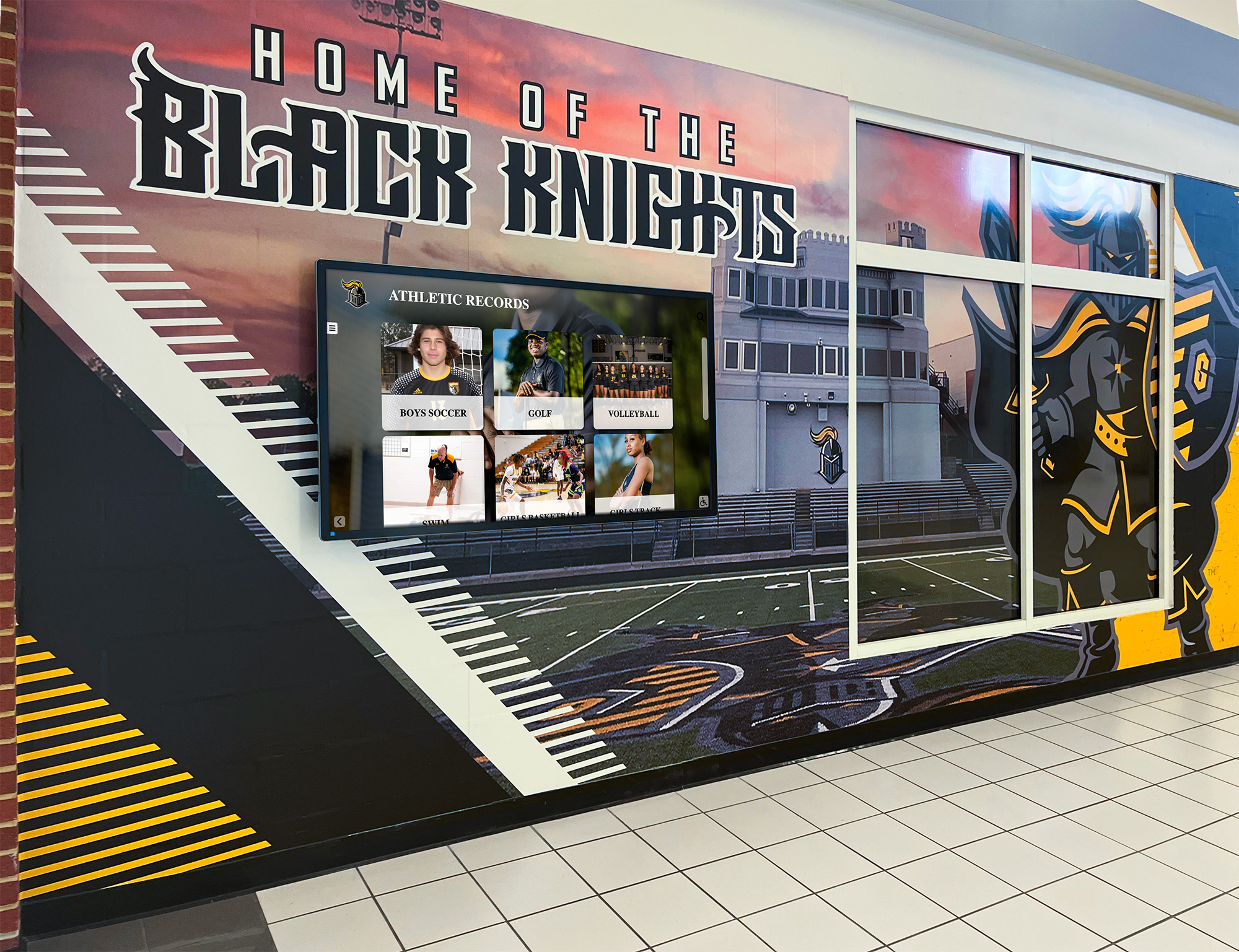
User-friendly platforms enable volunteers to maintain recognition without technical expertise requirements
Challenge 3: Balancing Recognition Across Contribution Types
The Problem: Schools struggle determining appropriate relative emphasis between race performance, financial donations, volunteer service, and sponsor contributions, risking perceptions of favoritism or inadequate acknowledgment.
The Solution: Establish clear recognition categories providing dedicated space for each contribution type rather than forcing comparisons across fundamentally different forms of support. Design navigation enabling visitors to explore categories matching their interests while ensuring comprehensive searchability connecting related content. Implement equal prominence strategies including:
- Separate recognition modules for athletic achievement, donors, volunteers, and sponsors
- Featured content rotation highlighting all contribution categories
- Navigation pathways supporting diverse exploration preferences
- Quantified representation ensuring no category dominates
- Stakeholder input validating perceived recognition equity
- Annual review processes adjusting recognition distribution
Schools implementing category-based organization report higher stakeholder satisfaction across all constituent groups compared to those mixing recognition types without clear structure.
Challenge 4: Budget Constraints and ROI Justification
The Problem: Schools question whether investing in comprehensive recognition systems represents appropriate fundraising expense allocation when dollars could directly support programs and student needs.
The Solution: Document recognition’s strategic fundraising value through quantified impact assessment demonstrating return on investment:
- Donor retention rate improvements following recognition implementation
- Average gift size increases among recognized supporters
- Volunteer recruitment success and reduced turnover
- Sponsor renewal rates and expanded partnership levels
- Participant return rates showing recognition’s motivational influence
- Administrative time savings compared to traditional recognition approaches
- Program funding growth enabled by strengthened relationships
Research across school fundraising programs demonstrates that recognition systems generating 15-25% improvements in donor retention and 10-20% increases in giving levels achieve return on investment within 2-4 years while creating lasting infrastructure supporting sustainable fundraising. Schools viewing recognition as strategic investment rather than ceremonial expense position programs for long-term success.
Explore comprehensive approaches to recognition program ROI measurement that justify investments.
Technology Solutions for 5K Fundraiser Recognition
Modern platforms address school event recognition needs specifically:
Purpose-Built Recognition Platforms
Essential capabilities serving annual events:
Comprehensive Content Management
Features supporting diverse recognition needs:
- Unlimited participant profiles accommodating growing archives
- Donor and sponsor management with tiered categorization
- Volunteer service tracking and hour documentation
- Photo gallery organization with tagging and search
- Historical timeline development showing event evolution
- Impact documentation connecting fundraising to outcomes
- Multi-user access enabling collaborative content development
- Cloud-based architecture requiring no local software installation
Solutions like Rocket Alumni Solutions provide platforms specifically designed for school recognition applications, with intuitive interfaces enabling volunteer management while supporting sophisticated features that create professional engaging experiences.
Visitor Engagement Features
Interactive capabilities encouraging exploration:
- Full-text search across all content categories
- Filtering options by year, category, and recognition type
- Related content suggestions connecting associated information
- Social sharing enabling viral promotion and participant celebration
- QR code generation linking physical signage to digital profiles
- Analytics tracking revealing popular content and visitor patterns
- Responsive design supporting smartphones, tablets, and computers
- Accessibility compliance ensuring universal access
Learn about touchscreen software capabilities that enhance recognition experiences.
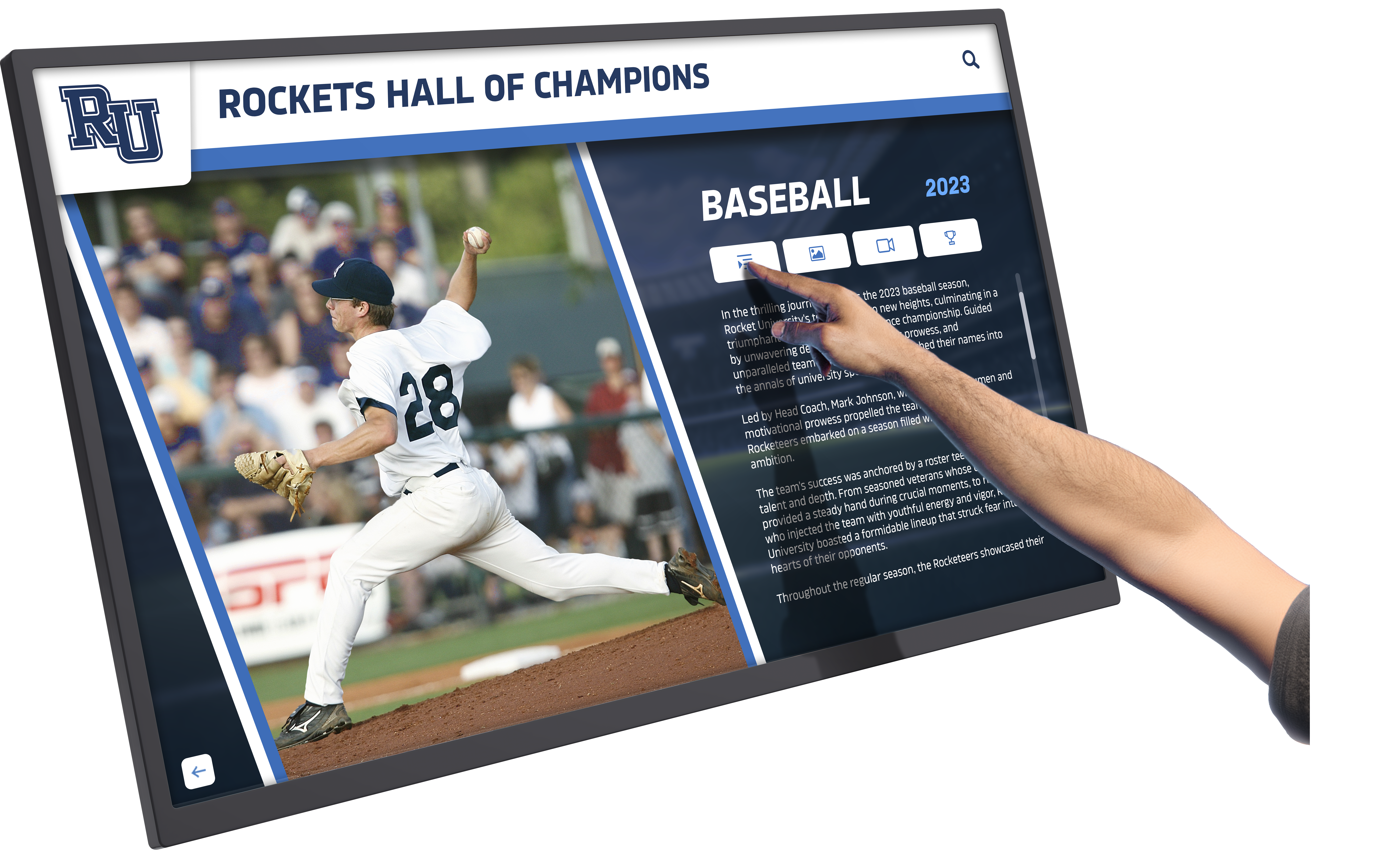
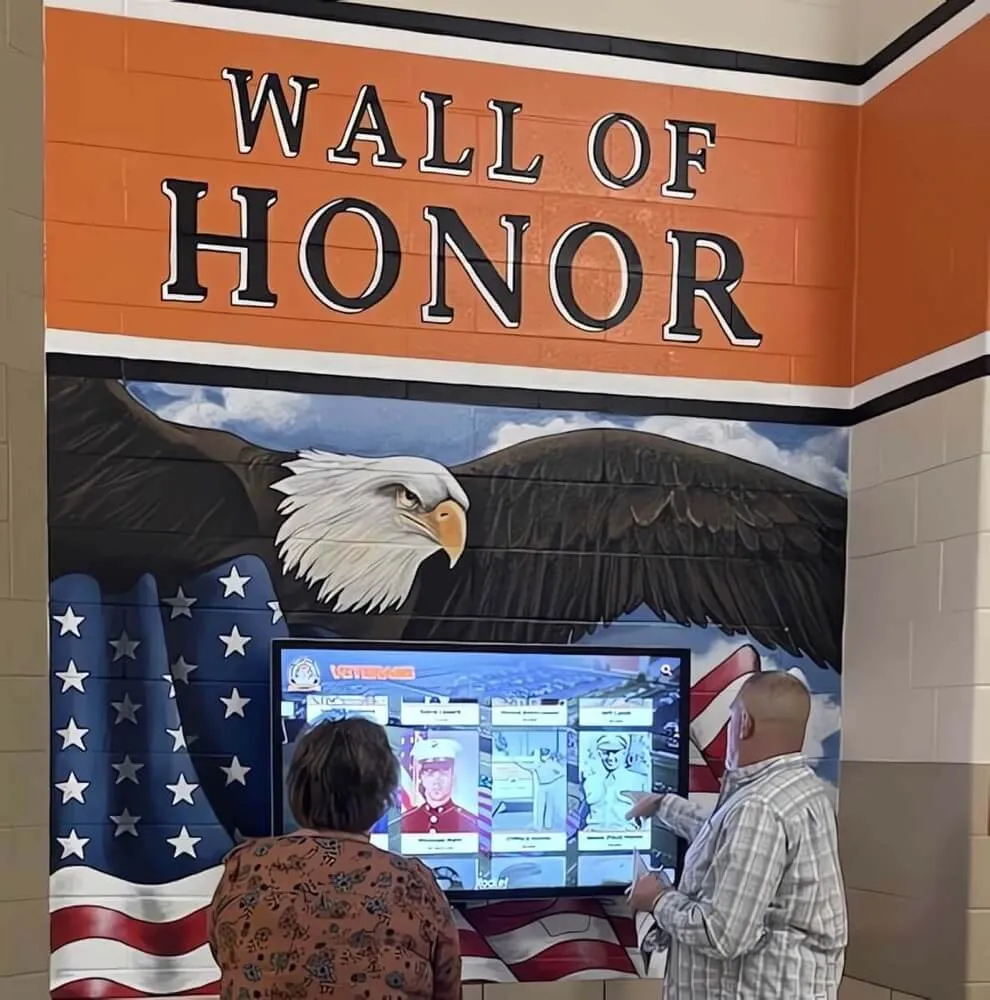
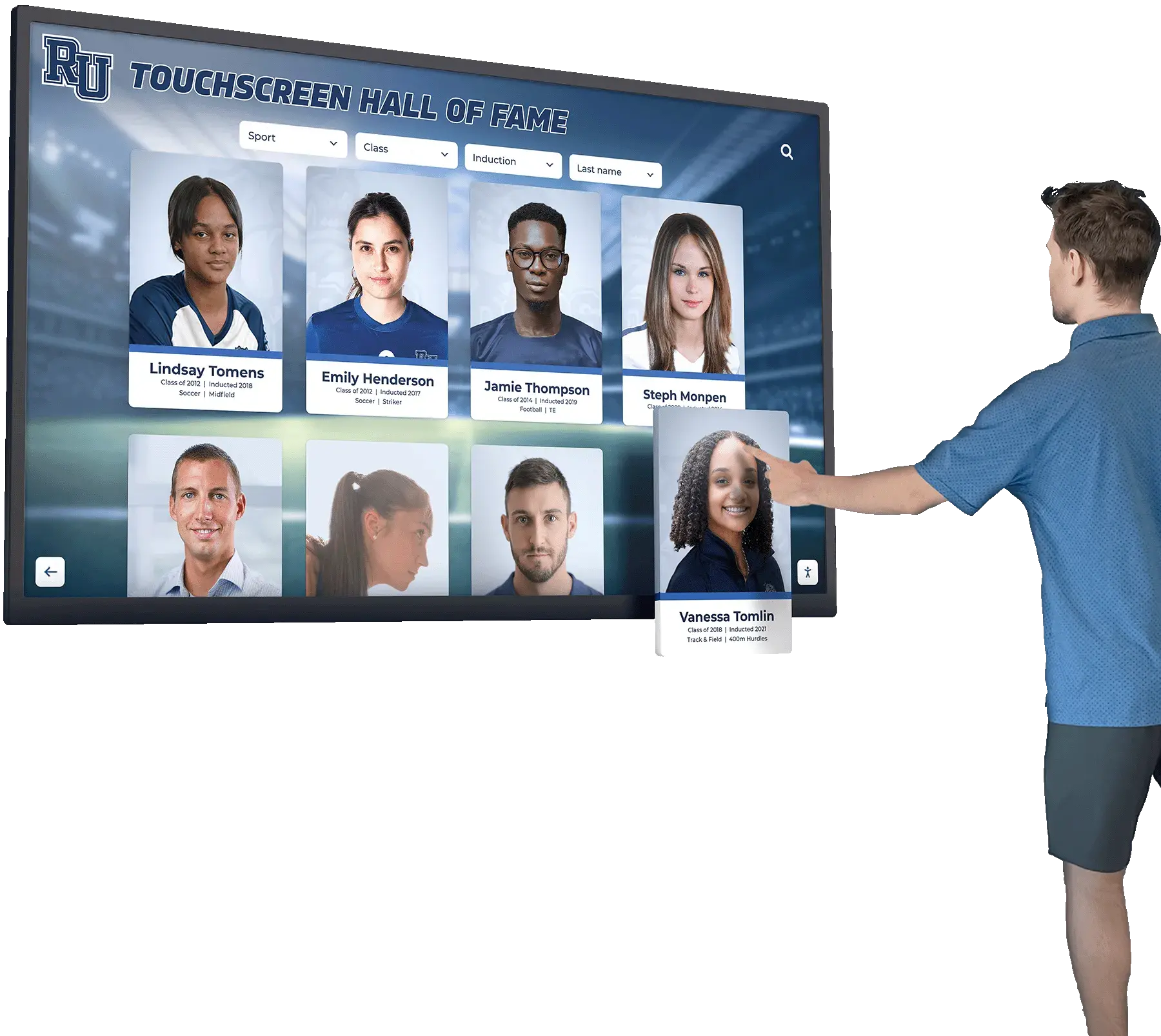
Intuitive interfaces enable independent exploration across all ages without instruction or assistance
Integration Capabilities
Connections with existing school systems:
- Race timing system import reducing manual data entry
- Student information system integration for participant verification
- Donor database synchronization for recognition accuracy
- Email system connectivity for automated communications
- Social media publishing automating acknowledgment posts
- Website content management system integration
- Analytics platforms tracking recognition engagement metrics
Hardware Recommendations
Appropriate equipment serving school installations:
Display Specifications
Commercial-grade hardware ensuring reliability:
- 43-65 inch screens appropriate to viewing distances
- Commercial displays rated for continuous operation
- Touchscreen capability enabling visitor interaction
- High brightness specifications ensuring visibility in naturally lit spaces
- Portrait or landscape orientation based on placement context
- Durable construction withstanding high-traffic school environments
- Network connectivity supporting cloud-based content management
Installation Approaches
Professional setup options:
- Wall-mounted displays integrating seamlessly with facilities
- Freestanding kiosks providing flexibility and visibility
- Portable displays enabling movement for special events
- Outdoor-rated equipment for permanent race course installations
- ADA-compliant mounting ensuring accessibility for all visitors
- Secure installation preventing theft or vandalism
- Professional cable management maintaining polished appearance
Schools commonly invest $6,000-$12,000 for complete recognition systems including commercial-grade touchscreen displays, purpose-built software platforms, professional installation, comprehensive training, and ongoing support—comparable to 20-40 traditional plaques while providing unlimited recognition capacity and superior engagement capabilities.
Best Practices for Long-Term Recognition Success
Sustainable programs require ongoing attention:
Annual Update Protocols
Maintaining recognition currency:
Post-Event Content Addition
Systematic processes following each race:
- Import race results from timing system within one week
- Add participant photos from event photographers
- Update donor recognition reflecting current year contributions
- Acknowledge new volunteers and document service hours
- Update sponsor visibility honoring renewed partnerships
- Add photo gallery from race day documentation
- Publish impact updates showing how funds will be utilized
Quality Assurance Procedures
Ensuring content accuracy:
- Verify participant name spelling and result accuracy
- Confirm donor recognition society tier calculations
- Review volunteer acknowledgment for completeness
- Test sponsor website links and logo display quality
- Proofread all new content before publication
- Obtain stakeholder approval when appropriate
- Document update completion and review date
Discover content management best practices for recognition programs.
Community Engagement Strategies
Building recognition visibility:
Promotion and Awareness
Ensuring stakeholders know recognition exists:
- Feature recognition prominently during race registration
- Provide demonstrations at events and school gatherings
- Share recognition highlights through social media regularly
- Include recognition information in participant communications
- Train student ambassadors to demonstrate features
- Integrate recognition into school tours and visits
- Celebrate recognition milestones and achievements
Continuous Feedback Collection
Understanding stakeholder perspectives:
- Survey participants about recognition satisfaction
- Solicit volunteer input on management ease
- Gather sponsor feedback about visibility value
- Request donor perspectives on acknowledgment appropriateness
- Invite suggestions for recognition enhancements
- Monitor engagement analytics identifying popular content
- Benchmark recognition against peer school programs
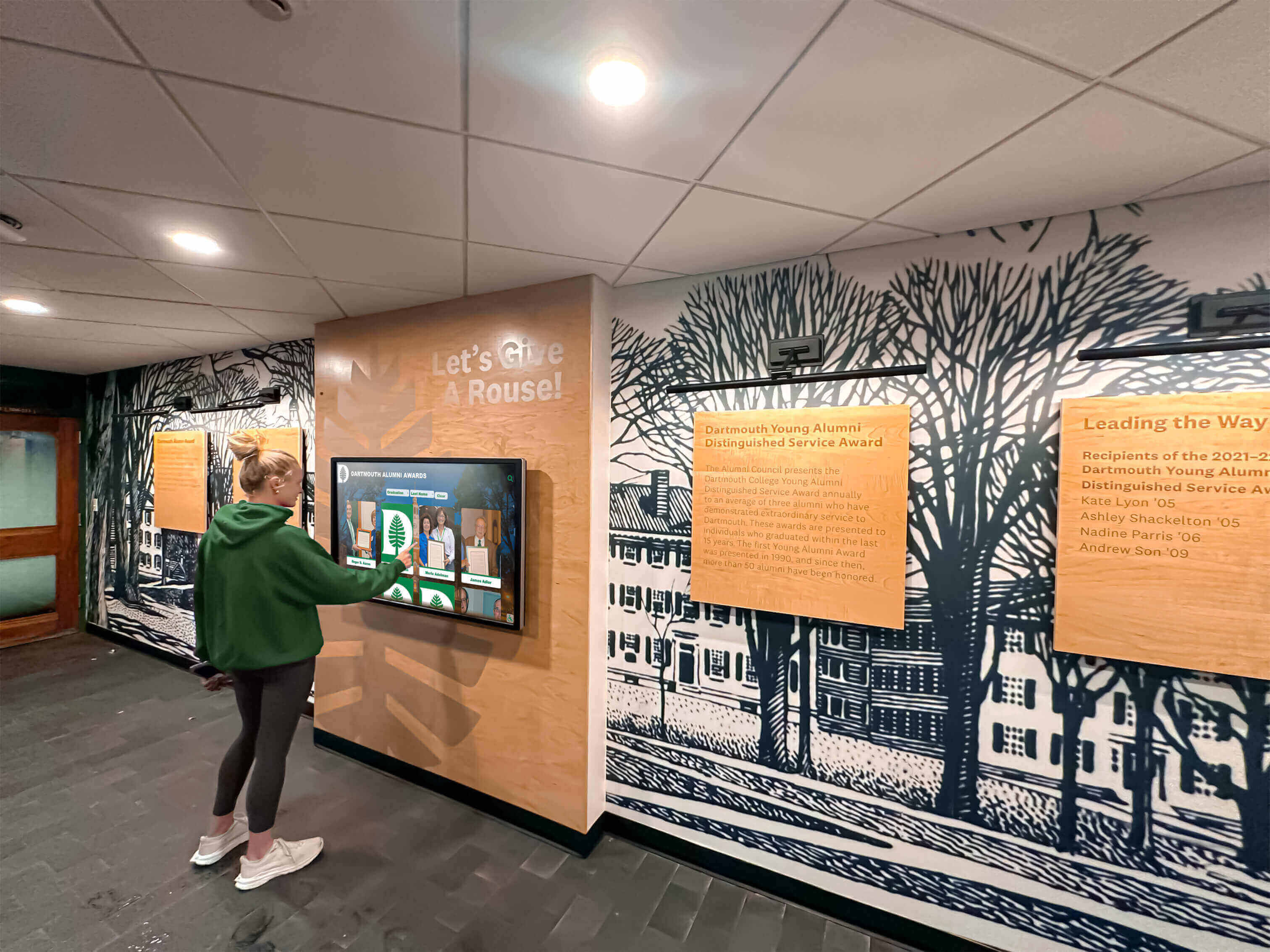
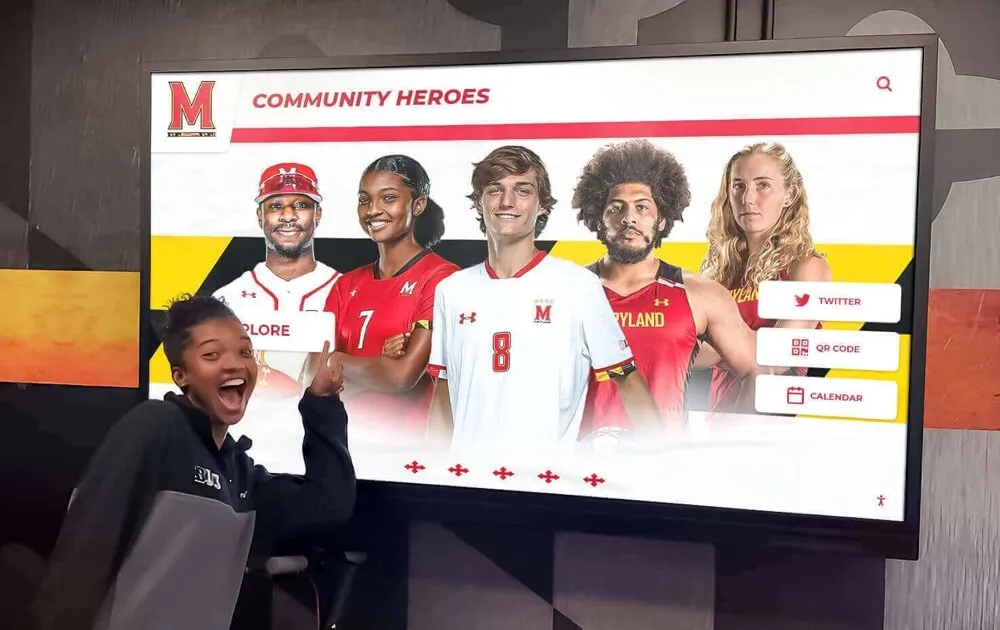
Engaging recognition creates natural gathering points where communities explore shared experiences
Program Evolution and Enhancement
Improving recognition over time:
Feature Expansion
Adding capabilities as programs mature:
- Video integration showing race highlights and finish line moments
- Audio interviews with long-time participants and organizers
- Expanded historical archives through continued research
- Enhanced donor impact documentation connecting gifts to outcomes
- Interactive comparison tools showing performance trends
- Virtual race participation integration for remote supporters
- Advanced analytics providing deeper engagement insights
Recognition Program Integration
Connecting 5K acknowledgment with broader initiatives:
- Link to athletic hall of fame recognizing student athletes
- Connect to donor recognition displays honoring school supporters
- Integrate with volunteer appreciation programs across activities
- Cross-reference alumni engagement initiatives celebrating graduates
- Coordinate with booster club recognition honoring parent supporters
- Align with annual giving campaigns creating comprehensive stewardship
- Build comprehensive school support ecosystems celebrating community
Conclusion: Building Sustainable Community Engagement Through Recognition
Annual 5K school fundraisers represent significant community investments generating substantial revenue, strengthening relationships, building school spirit, and creating traditions that connect generations. When schools implement comprehensive recognition programs celebrating runners, donors, volunteers, sponsors, and event history systematically, they strengthen participant retention, increase financial support, improve volunteer recruitment, enhance sponsor value perception, and build lasting community pride around signature events.
The strategies explored throughout this guide provide practical frameworks specifically designed for school fundraising events facing unique challenges including volunteer management, limited budgets, diverse stakeholder needs, and ongoing content maintenance requirements. From year-over-year leaderboards inspiring competitive participation to donor recognition walls honoring financial supporters, volunteer spotlights celebrating service contributions, sponsor integration delivering visibility value, and photo galleries preserving memorable moments—these comprehensive approaches transform single-day events into year-round recognition that sustains engagement and inspires continued support.
Ready to transform 5K fundraiser recognition at your school? Modern digital recognition solutions help schools celebrate unlimited participants, donors, volunteers, and sponsors while preserving event history and creating engaging experiences that strengthen community connections. Solutions like Rocket Alumni Solutions provide comprehensive platforms specifically designed for school recognition needs, combining intuitive volunteer-friendly content management with professional engagement features and affordable pricing ensuring sustainable long-term programs.
Whether you’re establishing first-ever formal 5K recognition or enhancing existing approaches, focus on creating authentic programs aligned with school values, sustainable within volunteer capabilities, and designed to serve your specific community needs effectively. Book a demo to explore how digital recognition can celebrate your annual fundraising events comprehensively.
Your participants, donors, volunteers, and sponsors deserve recognition that honors their contributions meaningfully while demonstrating event impact and validating their investment in student opportunities. With thoughtful planning, appropriate technology selection, and genuine commitment to comprehensive acknowledgment, you can implement recognition systems that increase participation, enhance fundraising performance, strengthen volunteer satisfaction, and build lasting community support sustaining programs for years to come.
The most important consideration isn’t implementing the most expensive displays or sophisticated technology—it’s creating genuine appreciation programs that resonate with your community, communicate impact authentically, and demonstrate organizational commitment to honoring all forms of support appropriately. Your annual 5K represents more than fundraising—it embodies community spirit, school pride, and collective investment in student success. Recognition celebrating these values creates foundations for sustained engagement and organizational achievement.
Ready to begin building comprehensive 5K fundraiser recognition at your school? Start by documenting historical race results and participant information, identifying all donor and volunteer contributors deserving acknowledgment, gathering photo archives from past events, and exploring recognition platforms designed specifically for school fundraising applications rather than generic digital signage failing to address educational needs appropriately. Talk to our team to discover how digital recognition can transform your annual fundraising event into year-round community celebration.