Alumni Newsletter Template Ideas to Strengthen School Community
- Home /
- Digital Hall of Fame Insights & Resources /
- Alumni Newsletter Template Ideas to Strengthen School Community
The Easiest Touchscreen Solution




Live Example: Rocket Alumni Solutions Touchscreen Display
Interact with a live example (16:9 scaled 1920x1080 display). All content is automatically responsive to all screen sizes and orientations.
An alumni newsletter template built around your school’s recognition milestones does something a generic mass email never can: it reminds graduates that the institution still knows their name. Whether you are sending a quarterly print piece to a 50-year reunion class or a weekly email digest to recent graduates who just crossed the stage, the section architecture you choose—hall-of-fame spotlight, donor acknowledgment, reunion countdown, career story—determines whether recipients click through, donate, and show up on homecoming weekend.
Schools that treat alumni communication as an afterthought leave an enormous community-building opportunity on the table. Research from the Council for Advancement and Support of Education (CASE) consistently shows that alumni who receive regular, personalized communications are significantly more likely to make first-time donations and volunteer their time. The newsletter is often the primary touchpoint between a graduate and their alma mater across the years between major events like reunions and capital campaigns.
This guide walks through practical alumni newsletter template structures, section ideas, timing strategies, and digital integration tactics that help schools of all sizes strengthen the bond between current programs and the graduates who built them.
Translating that bond into action requires more than a masthead and a class notes column. The most effective alumni newsletters read like a curated window into the school’s living legacy—connecting past achievements to present momentum and inviting graduates back into that story.

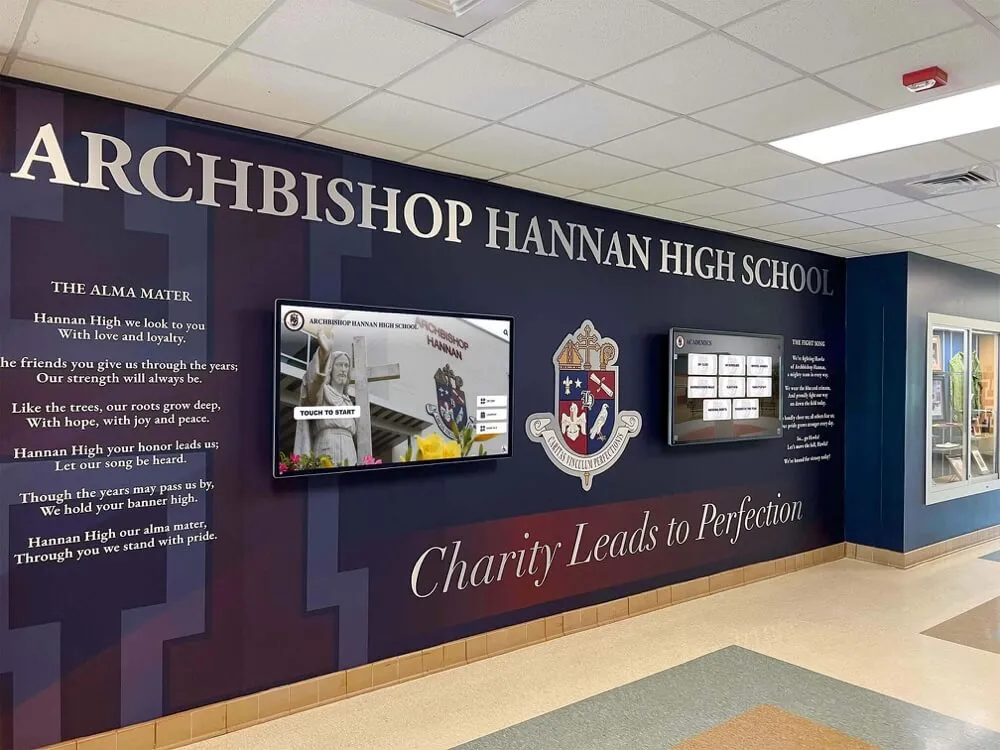
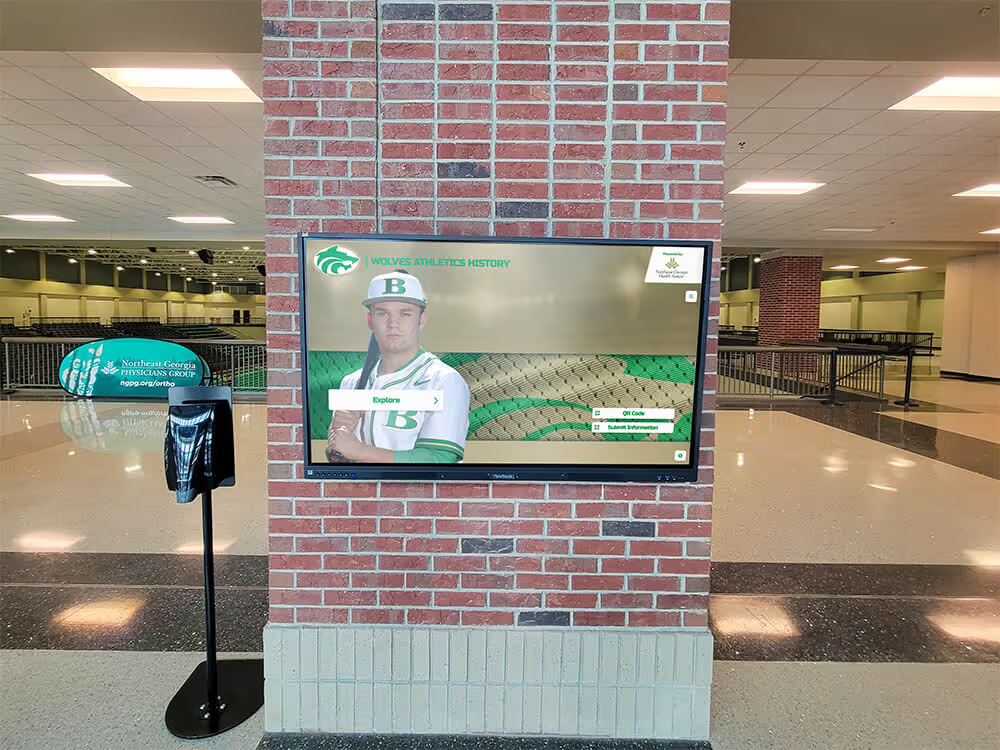
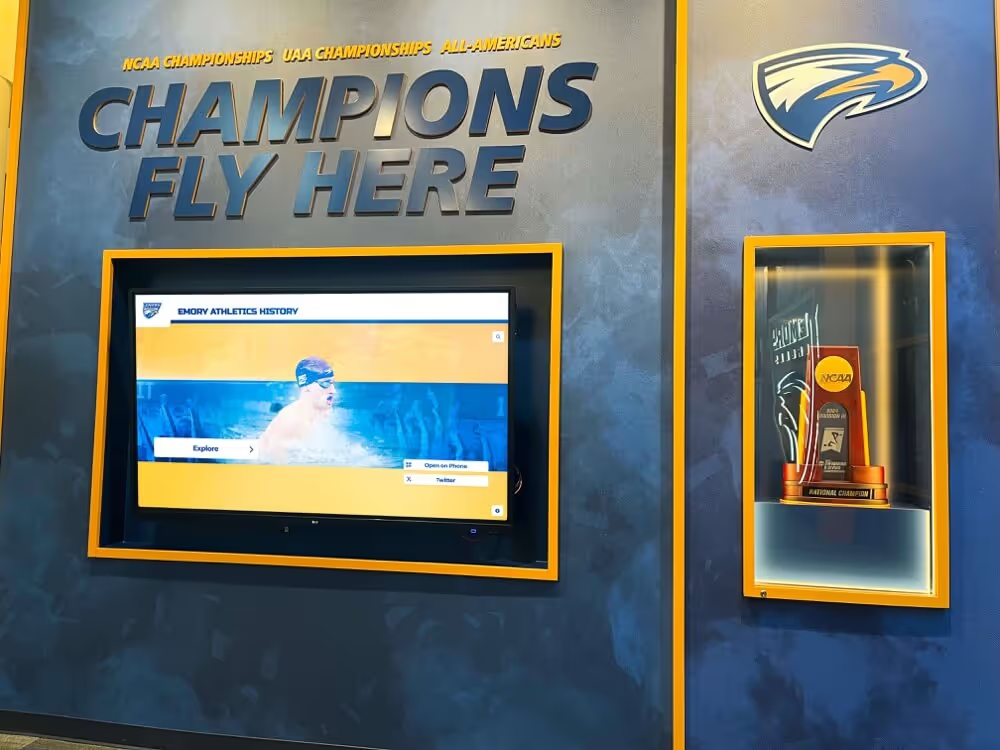
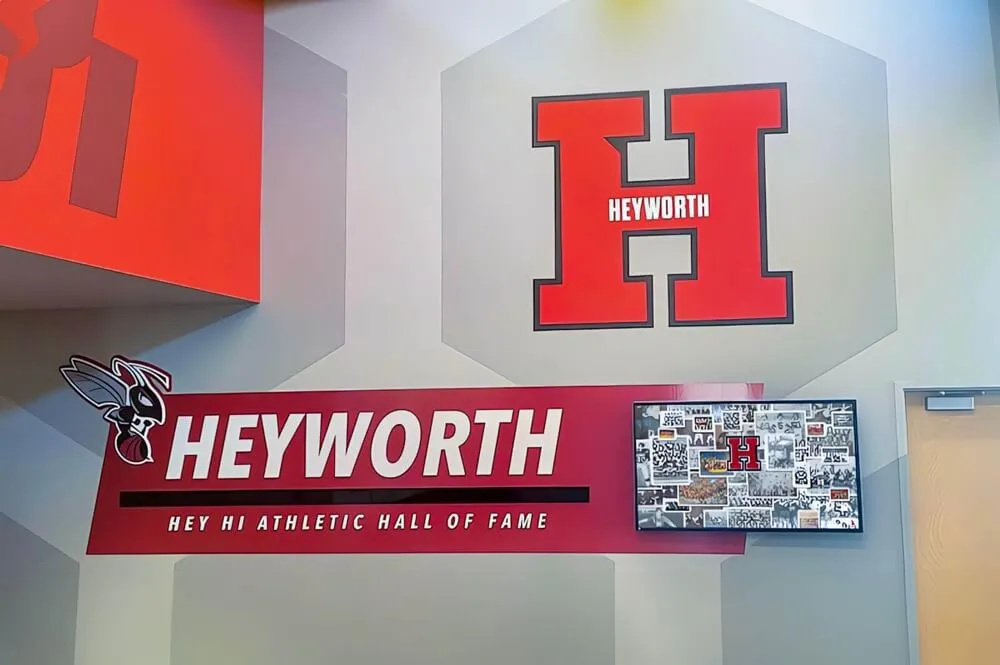
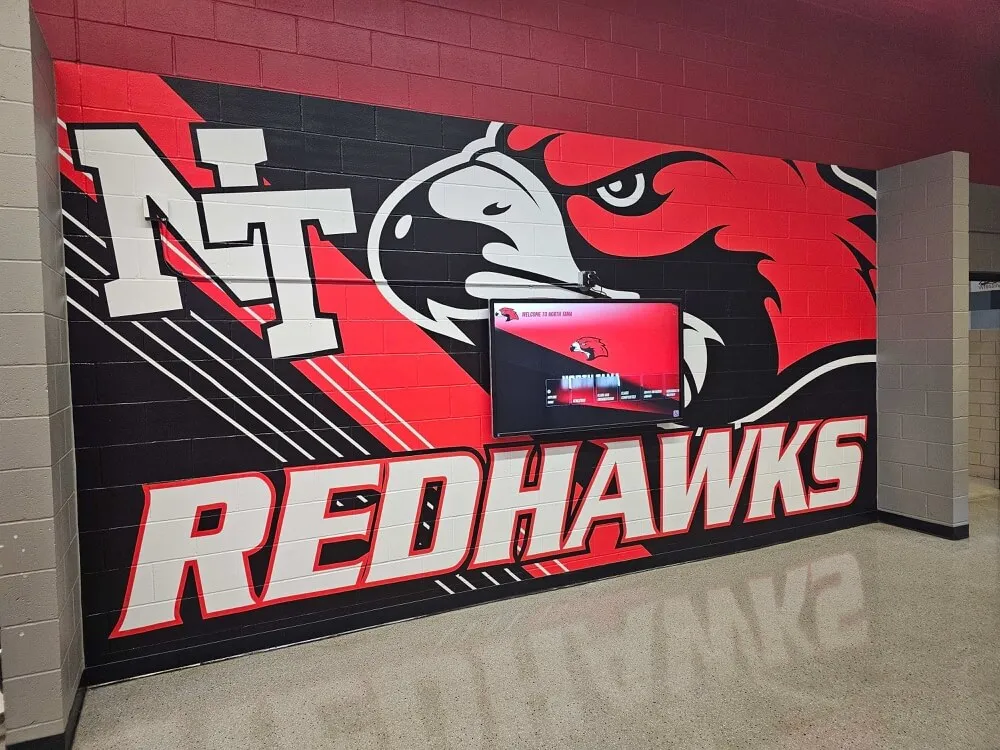
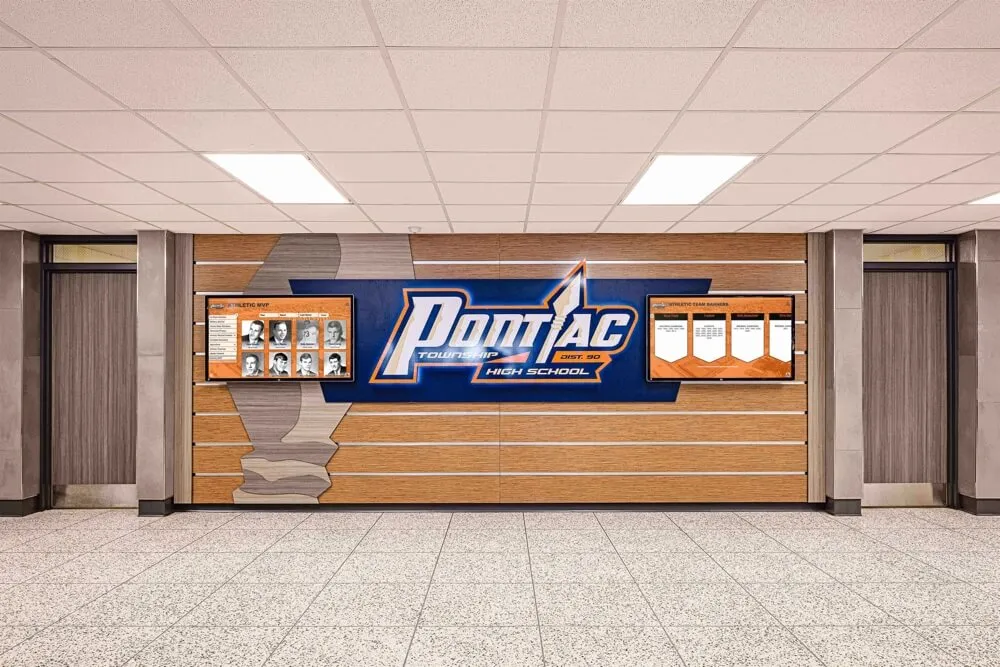
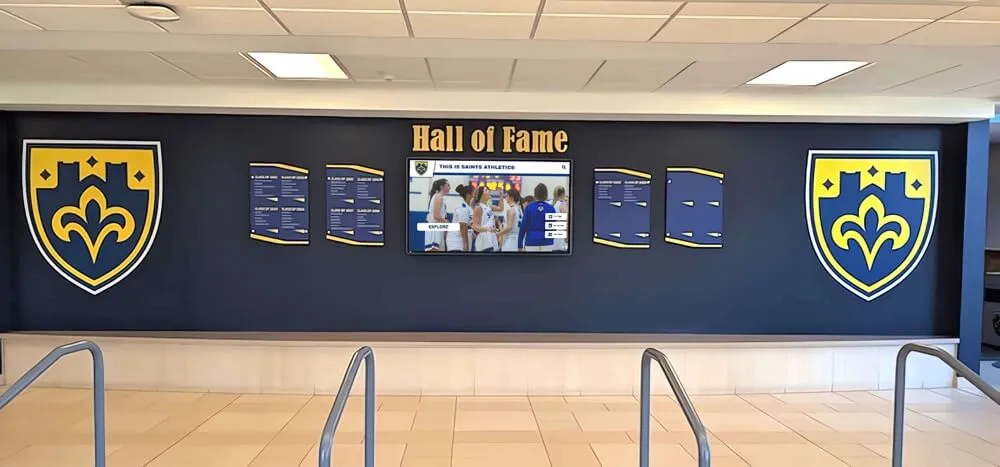
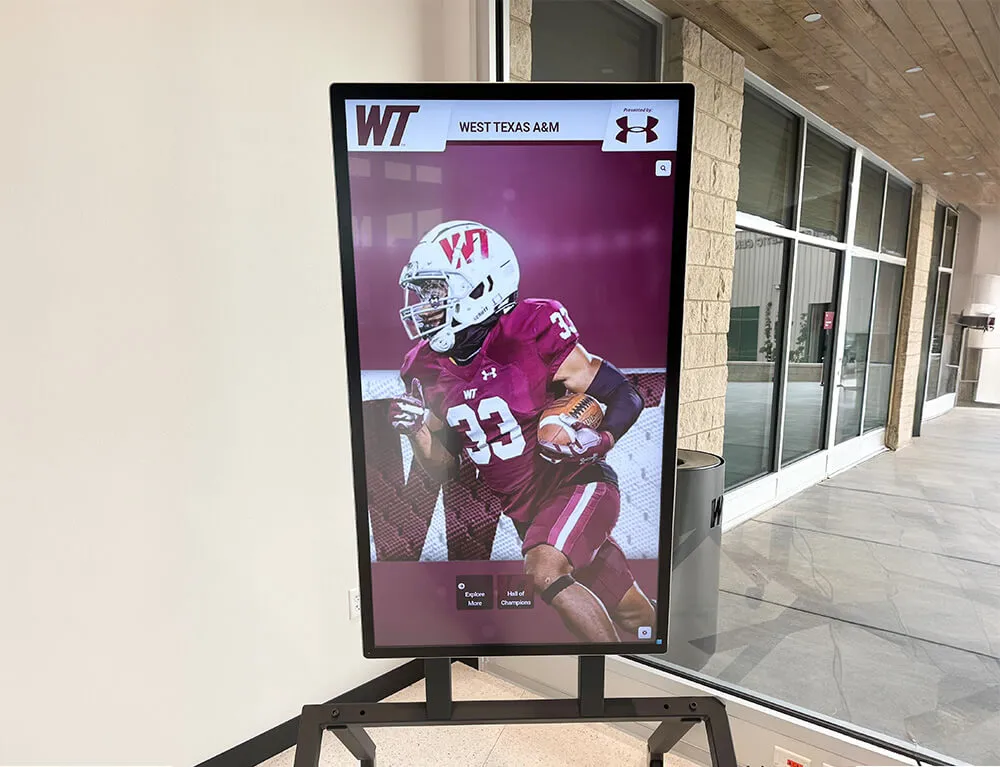
A strong alumni newsletter template begins with the same recognition data that populates hallway portrait displays—names, years, and achievements that graduates recognize and share
Why Alumni Newsletters Drive Community Outcomes
Before choosing a template structure, it helps to understand the specific community outcomes newsletters are uniquely positioned to drive. Each goal suggests different content priorities.
Hall-of-fame inductions and donor campaigns benefit from newsletters that feature honoree profiles, nomination deadlines, and giving impact stories. Reunion attendance responds to nostalgia-rich content—class composites, program histories, and “where are they now” features. Volunteer and mentorship pipelines grow when newsletters regularly spotlight alumni who returned to campus as coaches, judges, or career day speakers, as covered in depth in this career day alumni stories guide.
Knowing which outcome matters most to your program this season lets you weight your newsletter template accordingly rather than trying to accomplish everything at once.
Program Snapshot: Alumni Newsletter Framework
Understanding the core components helps communications teams build consistent issues without starting from scratch each cycle.
| Component | Details |
|---|---|
| Primary Audience | Graduates, former student-athletes, retired staff, booster members |
| Frequency Options | Monthly email, quarterly print, annual legacy edition |
| Recommended Length | 600–900 words for email; 4–8 pages for print |
| Must-Have Sections | Hall-of-fame spotlight, upcoming events, donor recognition, class notes |
| Optional Sections | Athletic records update, new facility announcement, scholarship recipient feature |
| Distribution Channels | Email list, alumni portal, social media, physical mailing |
| Content Lead Time | 3–4 weeks for email; 6–8 weeks for print |
| Measurement | Open rate, click-through, donation attribution, event RSVPs |
A template that maps these components into a reusable layout eliminates the blank-page problem every communications cycle and keeps issues visually consistent enough that alumni recognize them in a crowded inbox.
Core Sections Every Alumni Newsletter Template Needs
Regardless of audience size, publication frequency, or budget, five content blocks form the backbone of an effective alumni newsletter template.
1. Opening Letter or Message
A brief, personal note from the principal, athletic director, alumni association president, or development officer anchors each issue in the present moment. This section should not exceed 150 words and should reference something specific happening on campus right now—a team’s recent championship run, a newly funded scholarship, or an upcoming hall-of-fame induction ceremony. Personal and specific always outperforms generic and institutional.
2. Hall-of-Fame and Recognition Spotlight
This is the section alumni share on social media and save in their files. Profile one or two inductees, award recipients, or recognized alumni per issue. Include their graduation year, the achievement being recognized, and a connection to current students or programs. Schools that have migrated their recognition infrastructure to interactive displays—where alumni portraits, career stats, and legacy stories live in searchable digital formats—can pull spotlight content directly from that same database, keeping the newsletter and the physical display synchronized.
For schools exploring what a digital history archive looks like in practice, the digital archive builds the content library that feeds newsletter spotlights season after season.
3. Upcoming Events and Deadlines
List the next two or three alumni-facing events with dates, registration links, and brief descriptions. Hall-of-fame nomination windows, reunion save-the-dates, homecoming schedules, and gala invitations belong here. Alumni consistently cite event visibility as the number-one reason they attend—and the number-one reason they miss events is that they did not know about them in time.
For schools planning large-scale alumni gatherings, this alumni reunion planning guide covers the committee structure, venue logistics, and communication cadence that make multi-year reunion cycles manageable.
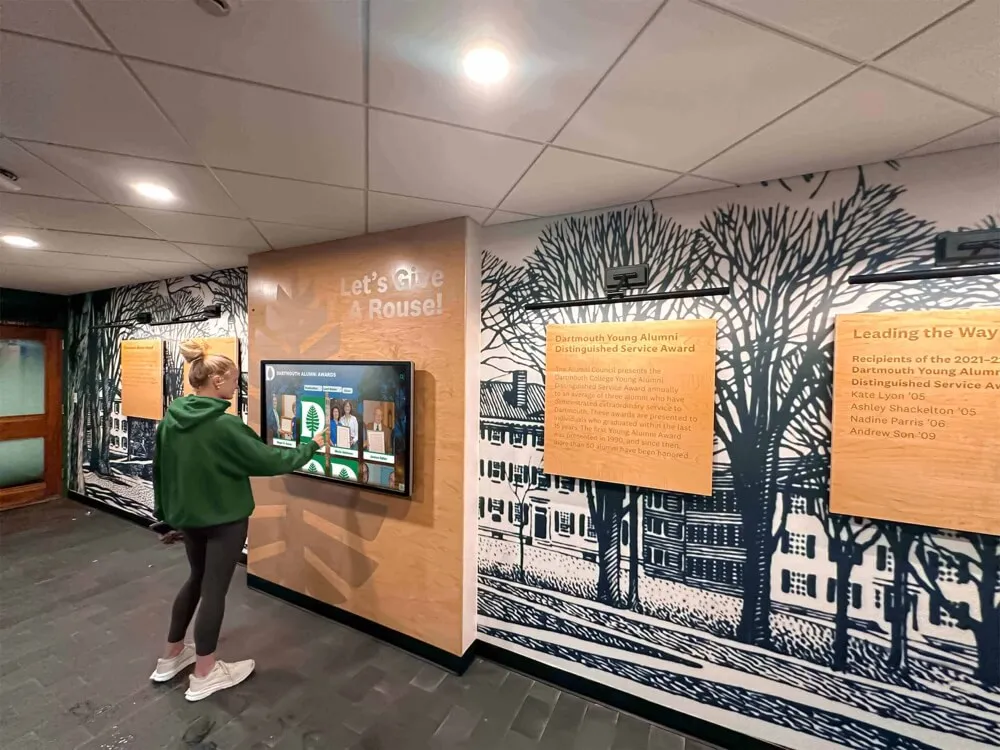
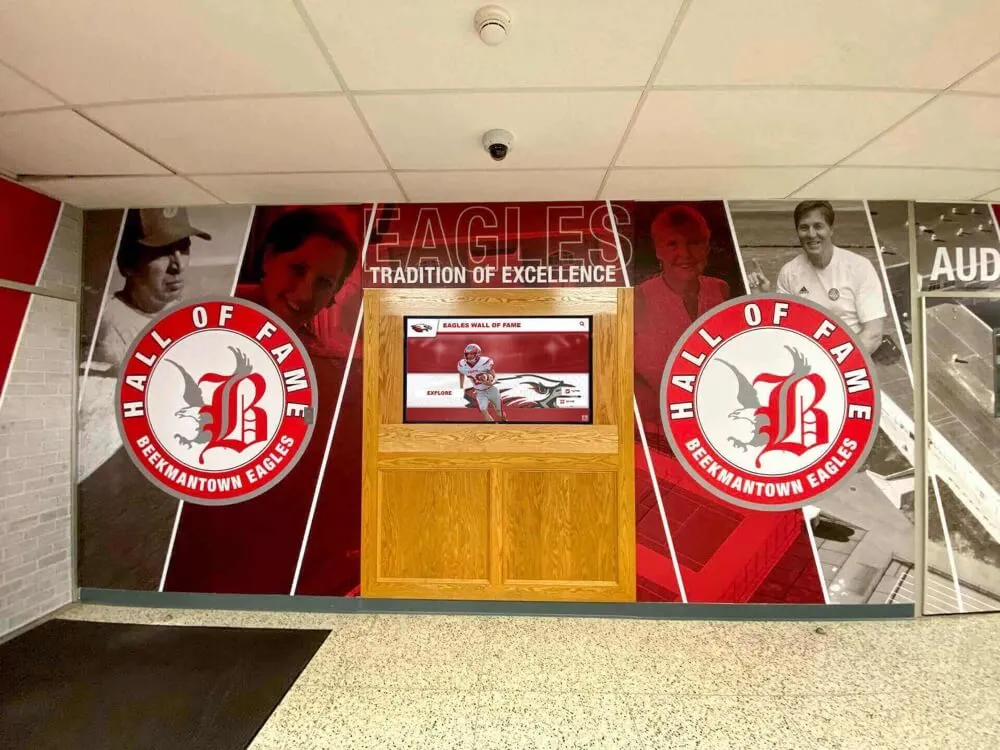
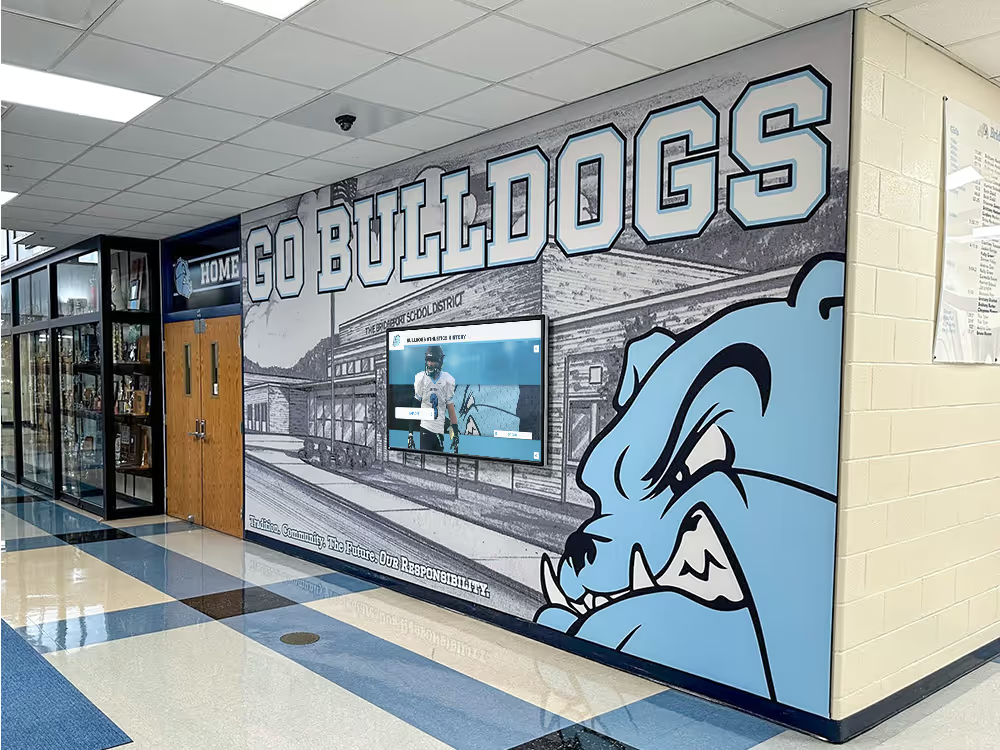
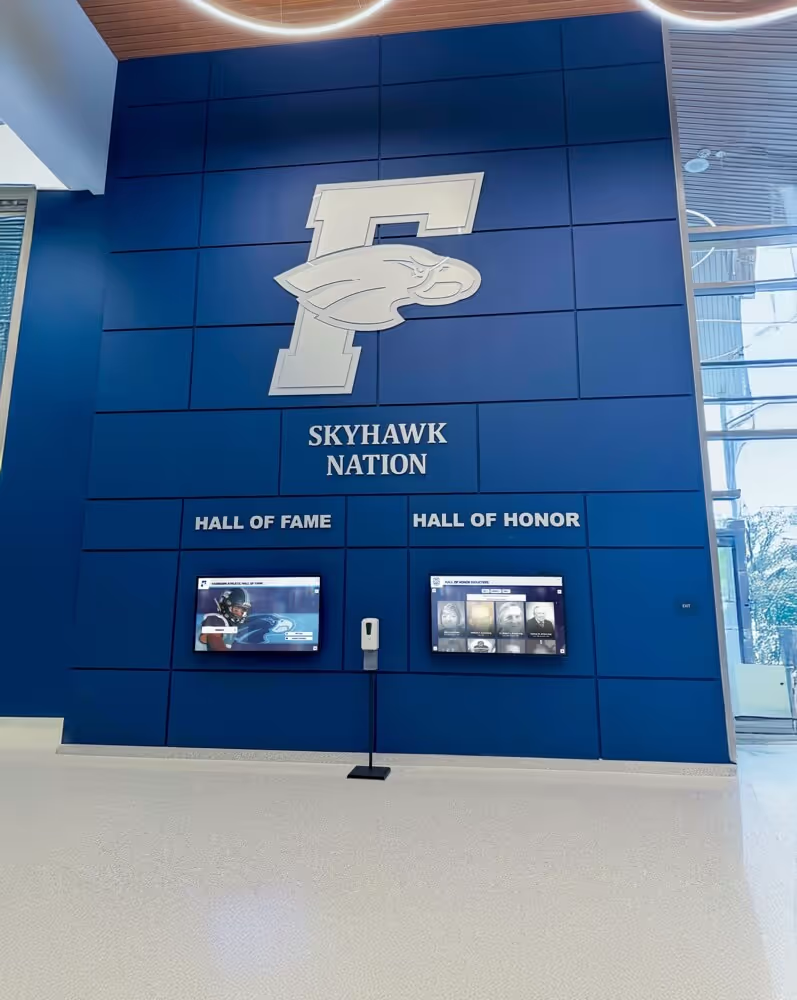
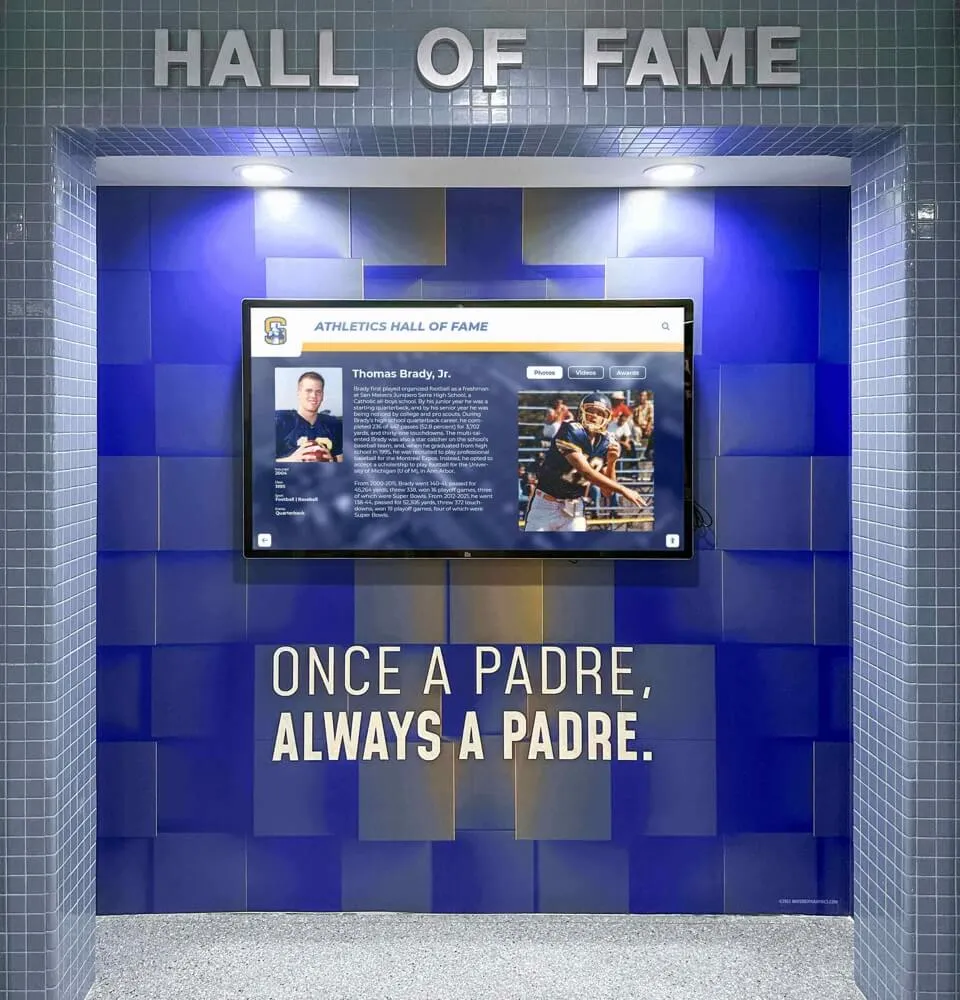
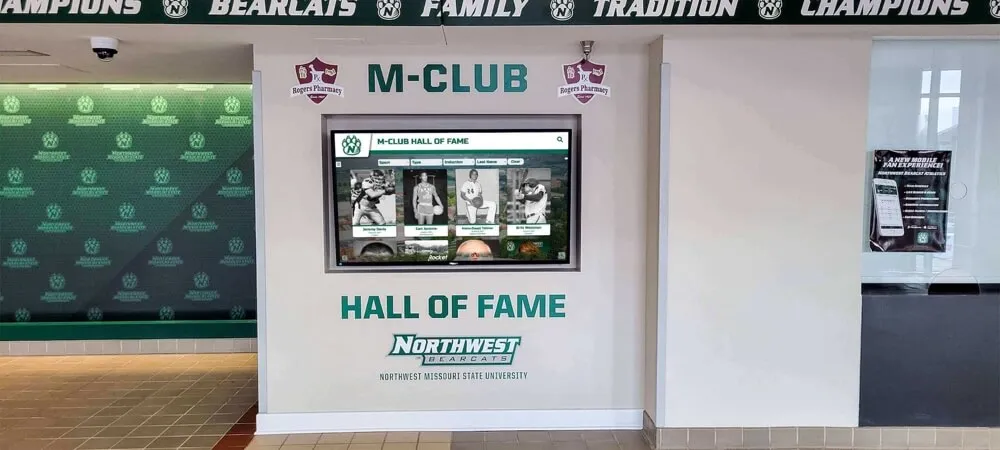
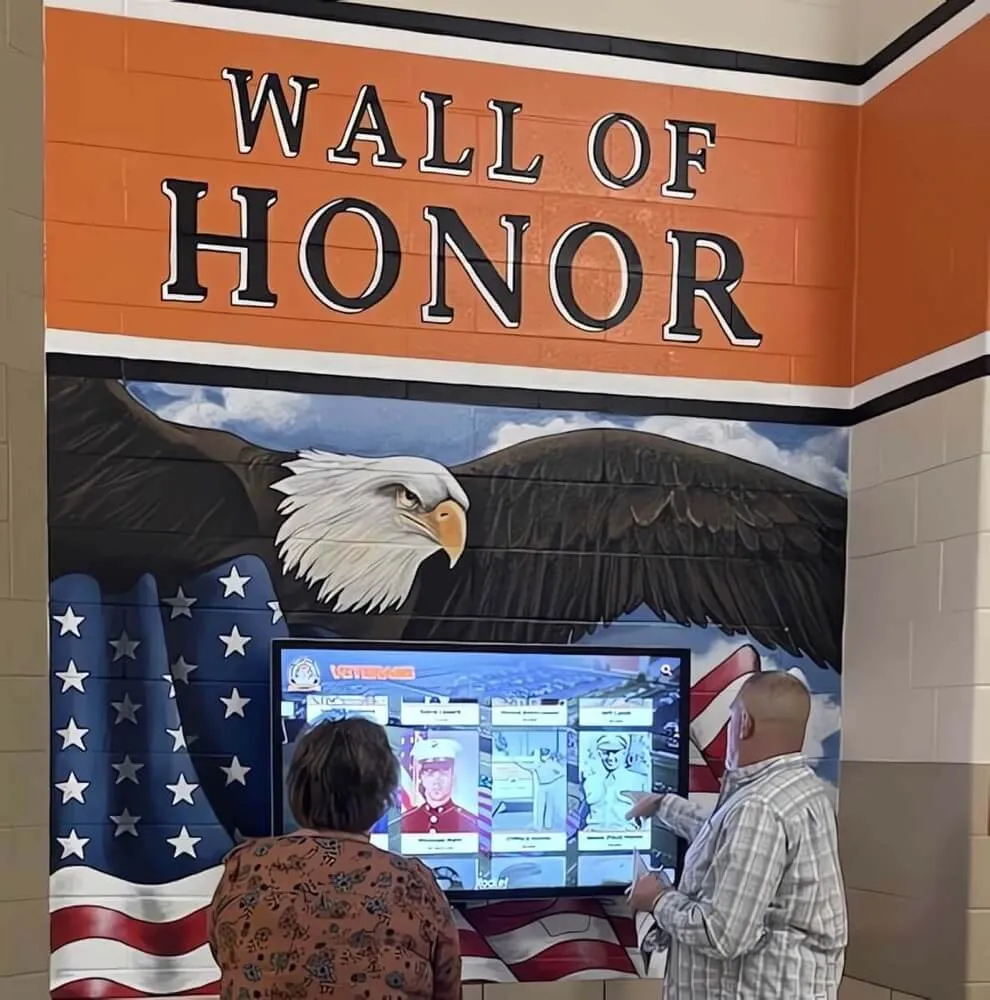
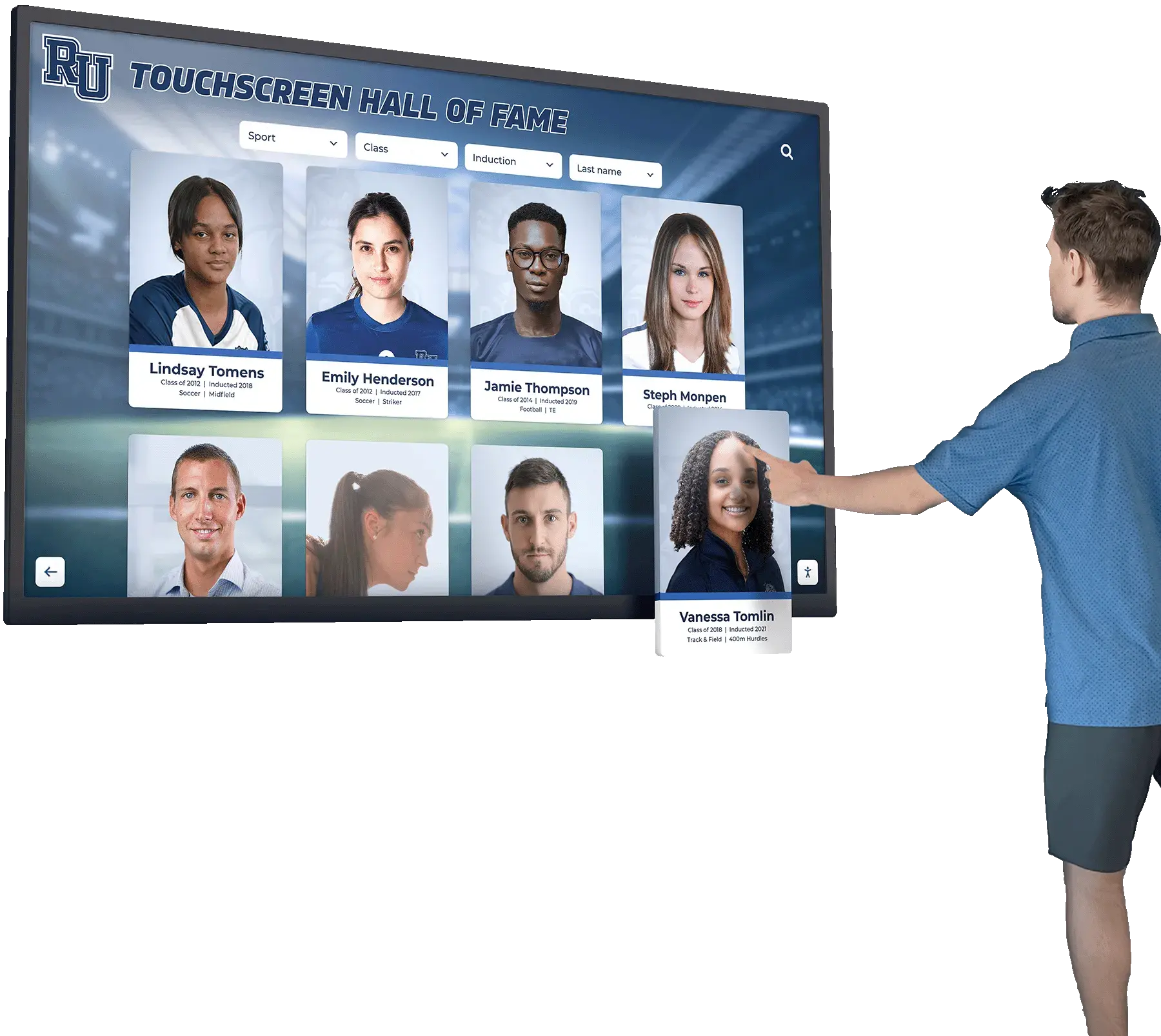
When alumni visit campus, digital displays reinforce the same recognition stories featured in newsletter spotlights—creating a unified experience across channels
4. Donor Recognition and Giving Impact
One of the clearest signals that a donation mattered is seeing it acknowledged publicly. A dedicated donor recognition section—featuring named gifts, scholarship recipients, facility enhancements, or program milestones made possible by alumni giving—closes the loop between contribution and impact. Schools running capital campaigns benefit from including giving progress updates in every issue, not just during campaign sprints.
Building a comprehensive donor stewardship program that spans newsletters, physical recognition walls, and personal outreach creates the retention-focused donor relationship that leads to multi-year commitments. For athletic fundraising specifically, donor recognition displays for booster clubs offer a model that translates directly into newsletter acknowledgment sections.
5. Class Notes and Community Updates
Short, self-submitted updates from alumni about career milestones, new families, moves, and accomplishments keep the community feeling participatory rather than broadcast-only. Even a two-sentence blurb from a class of 1988 graduate about a recent promotion tells every reader from that graduating class that their peers are still connected to this community.
Alumni Newsletter Template Ideas by Purpose
Different communication goals call for different template configurations. These four purpose-built templates address the most common scenarios schools face.
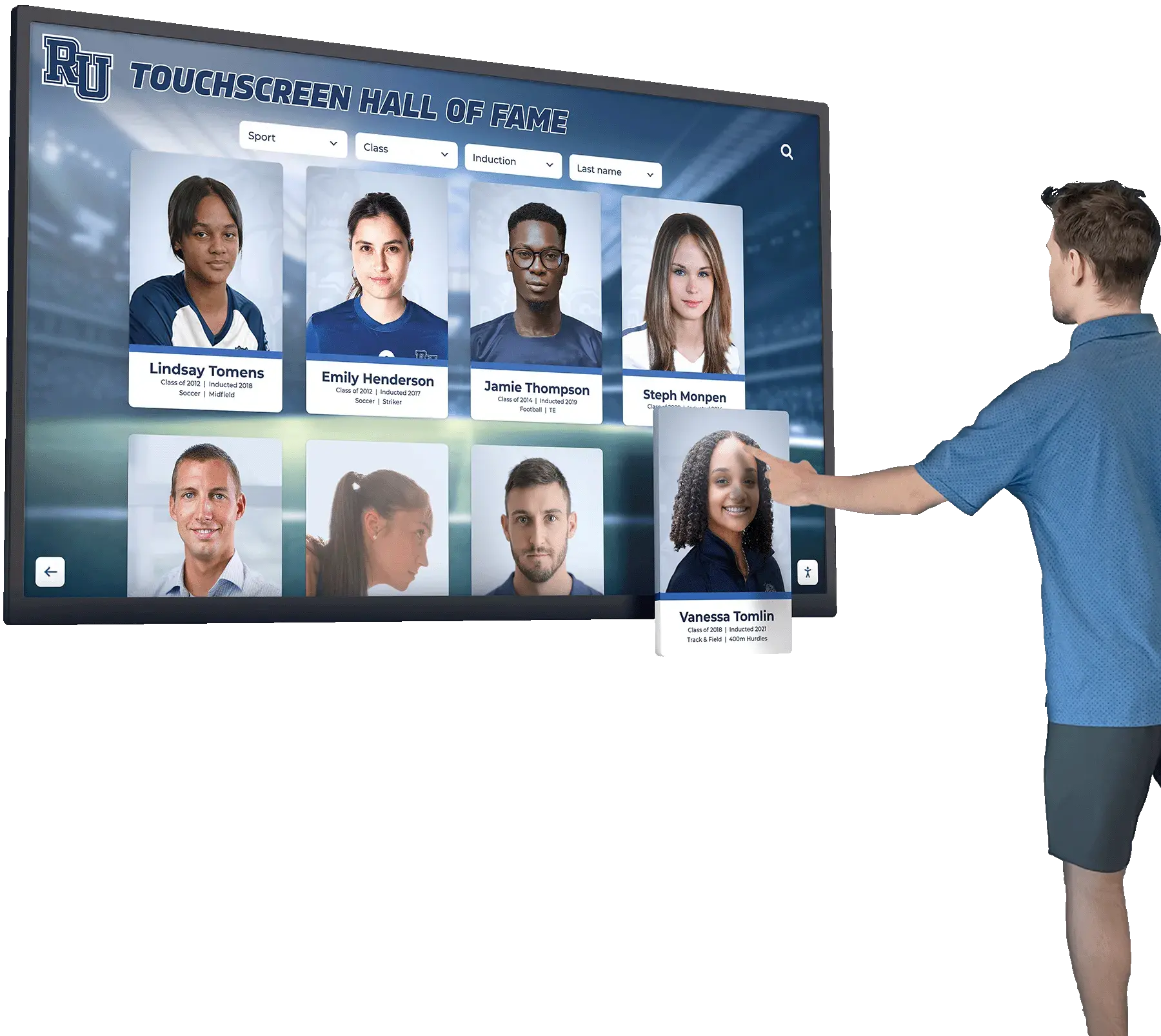
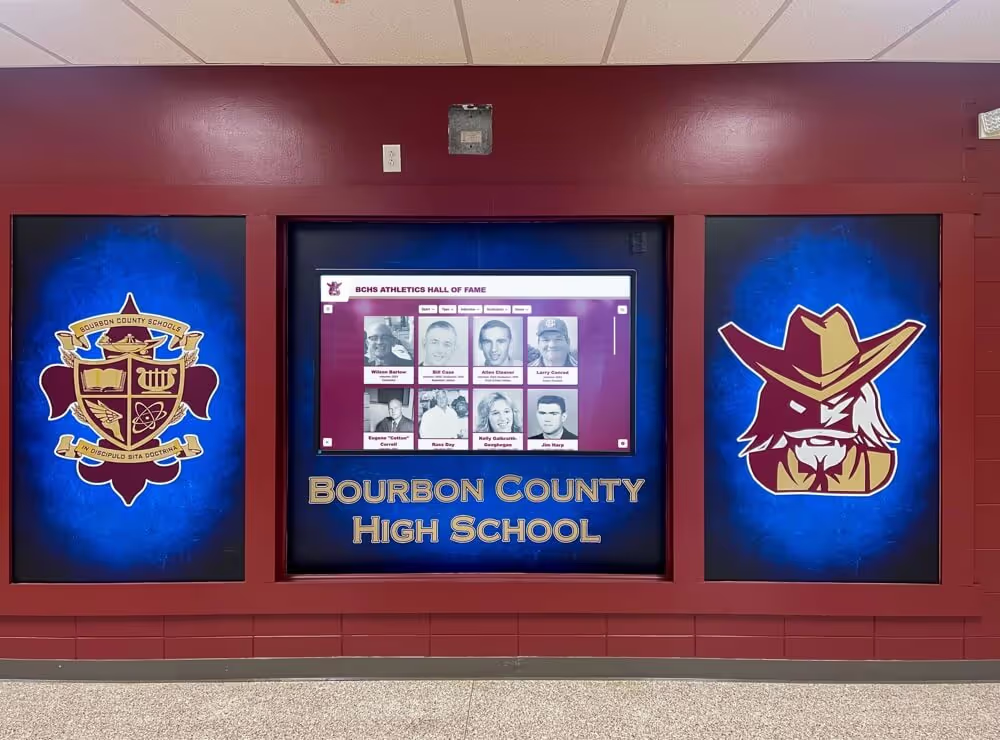
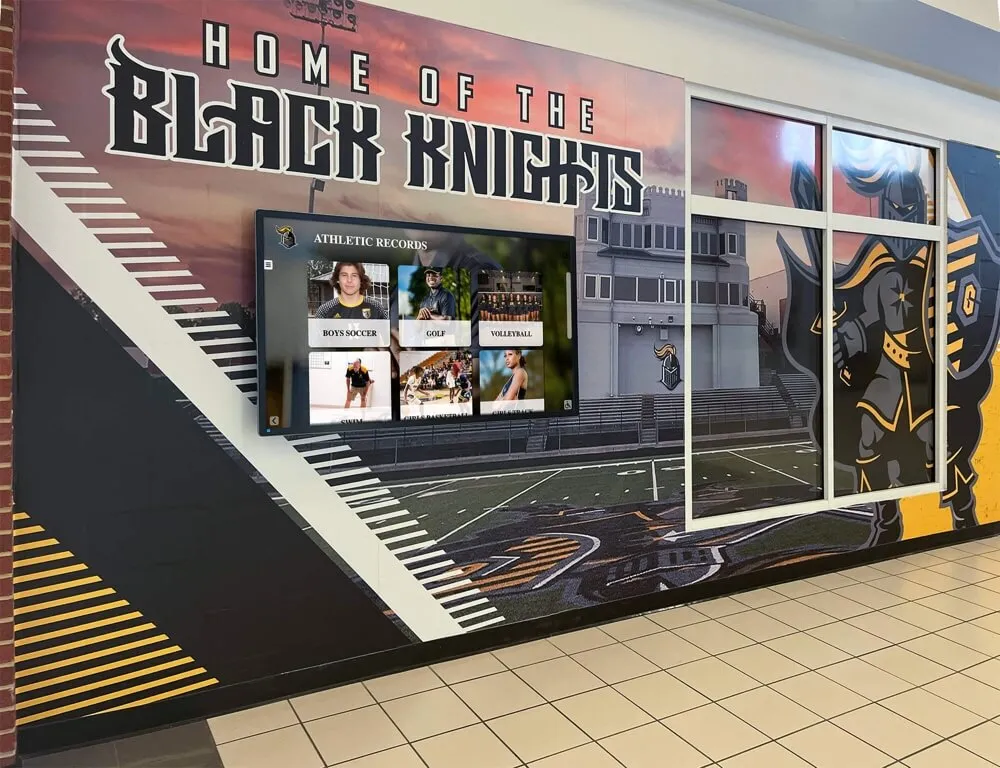
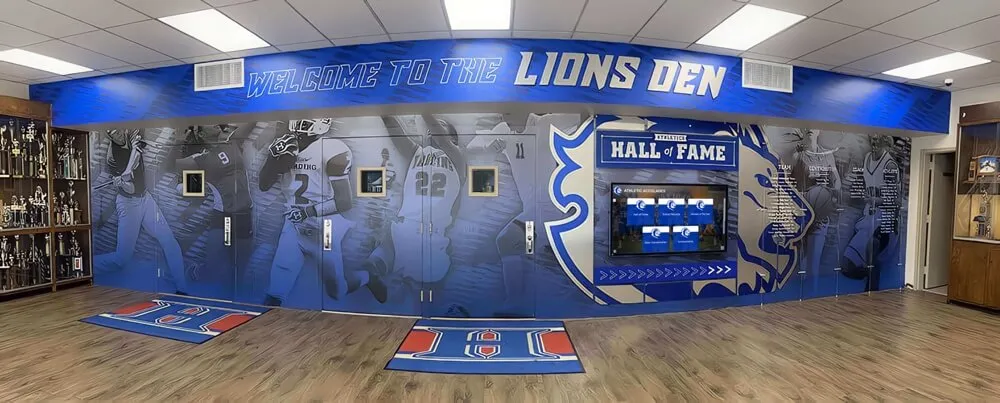
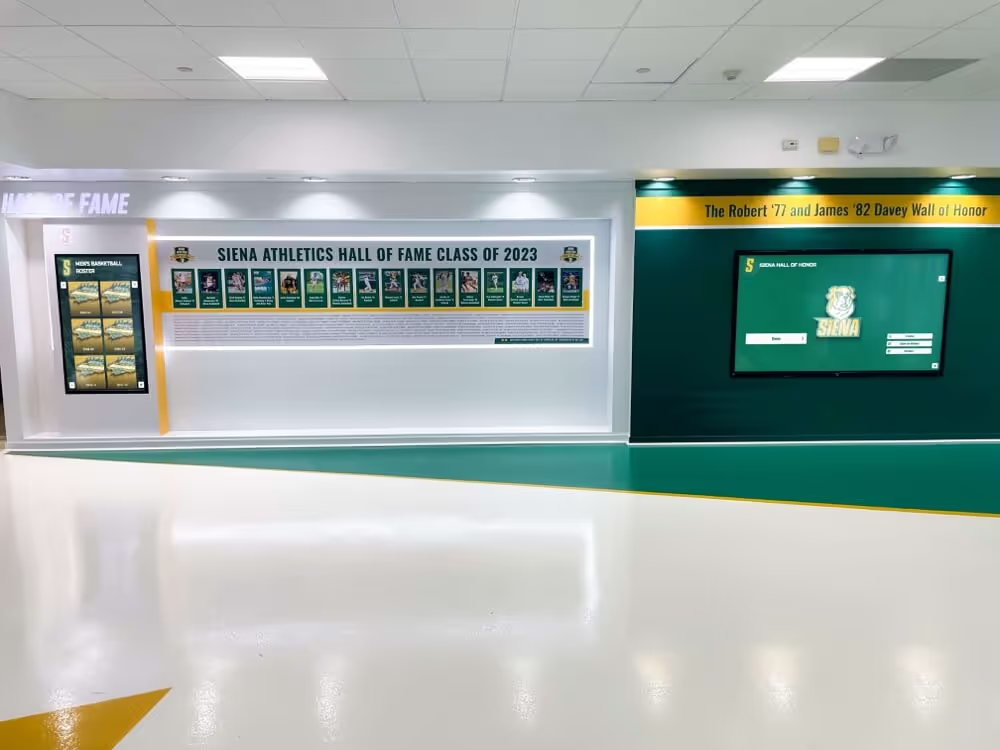
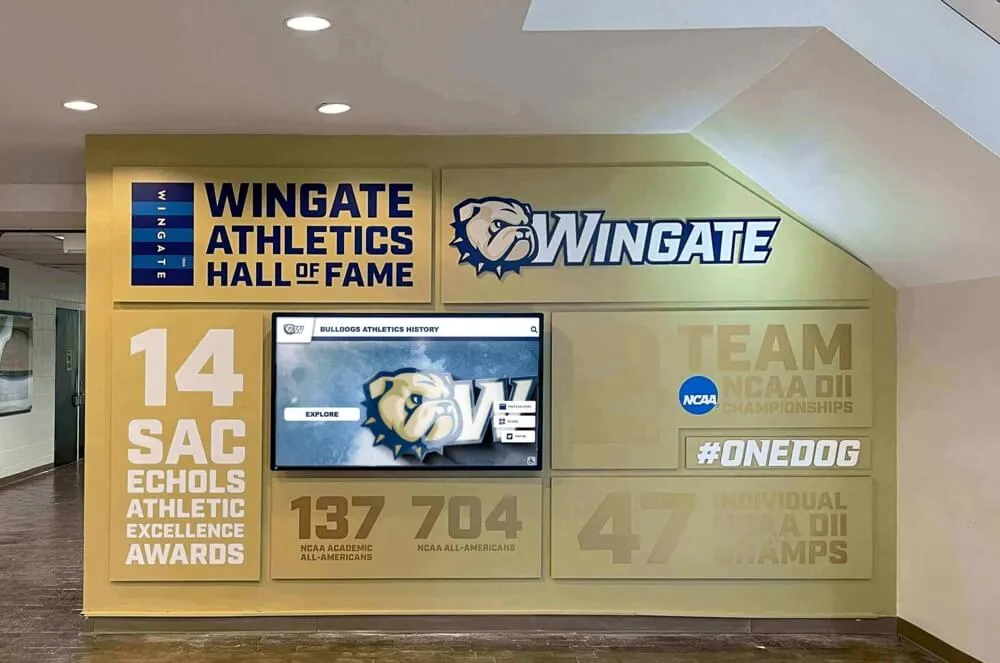
Digital hall-of-fame content provides ready-made spotlight material that transfers directly into newsletter recognition sections
Template A: Hall-of-Fame Induction Issue
This issue publishes three to four weeks before the induction ceremony and serves both as announcement and celebration.
Suggested structure:
- Opening message from athletic director or principal announcing the inductee class
- Full inductee profiles (one per page in print; one per email section in digital)
- Nomination process overview for future years
- Ceremony date, time, and RSVP information
- Photo gallery from prior induction ceremonies
- Donor acknowledgment for endowed recognition programs
Schools that display inductee portraits on digital composites walls can include a “visit campus to see your inductee displayed” call-to-action that drives foot traffic and reinforces the physical recognition investment.
Template B: Reunion Countdown Issue
Published 60, 30, and 7 days before the event, this template series builds anticipation while providing practical logistics.
Suggested structure for 60-day issue:
- Save-the-date announcement with venue and theme
- “Class of [year] By the Numbers” nostalgic facts
- Registration link and early-bird deadline
- Featured classmate profile
- Campus update—what’s changed since graduation
Suggested structure for 7-day issue:
- Final registration reminder with deadline
- Event schedule and venue details
- Parking, accessibility, and lodging information
- Social media hashtag and photo sharing instructions
- Preview of reunion-weekend recognition ceremonies
For comprehensive event planning beyond the newsletter, this gala and event planning guide for schools covers vendor coordination, program timing, and recognition moment sequencing.
Template C: Annual Legacy Edition
A larger print or digital publication sent once per year—often in fall or spring—serves as the flagship piece that reaches the broadest alumni audience.
Suggested structure:
- Year-in-review from school leadership
- Athletic hall-of-fame class profile
- Academic and arts recognition roundup
- Donor honor roll by giving level
- Scholarship recipient profiles
- Class notes from all decades
- Memorial section honoring deceased alumni
- “What’s New on Campus” facility and program updates
- Year-ahead events calendar
The legacy edition benefits from high-quality photography and design investment because it often serves as the primary campus-connection touchpoint for alumni who live far away or graduated before email became the default channel. Pairing the legacy edition with a digital yearbook archive lets recipients browse historical records after reading—schools can learn how to digitize old yearbooks to build this supplementary digital archive.
Template D: Athletic Program Update
Designed for athletic alumni associations and booster club networks, this template focuses on current program performance, coaching updates, and athletic recognition milestones.
Suggested structure:
- Season record updates for each varsity sport
- Recent athletic hall-of-fame additions
- Record board updates—new school records set
- Signing day announcements for committed seniors
- Alumni athletic achievement spotlights
- Booster club giving update and impact
The school’s spirit and tradition wall serves as a natural content source for athletic templates, providing decades of program data that contextualize current season performance against the full institutional legacy.
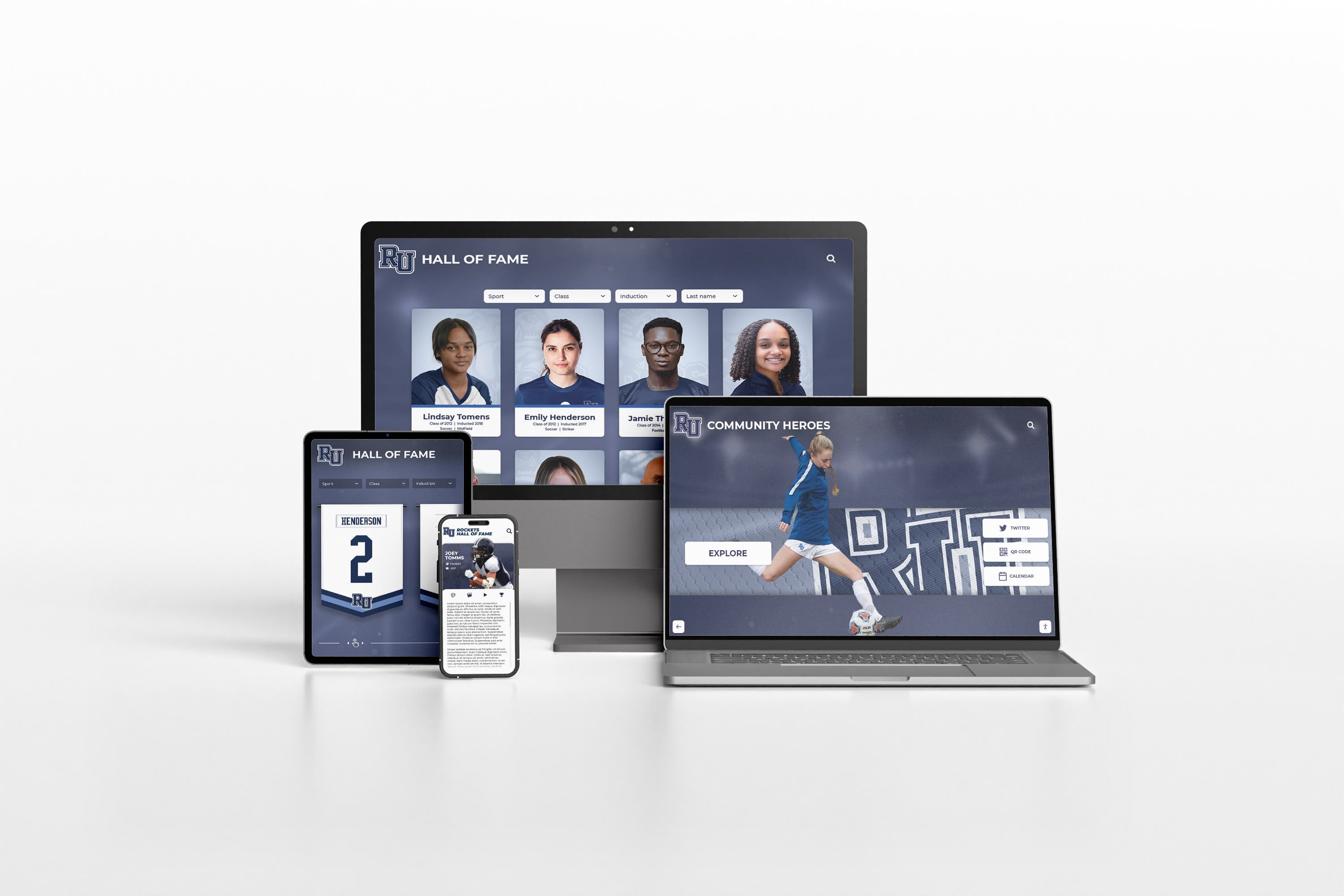
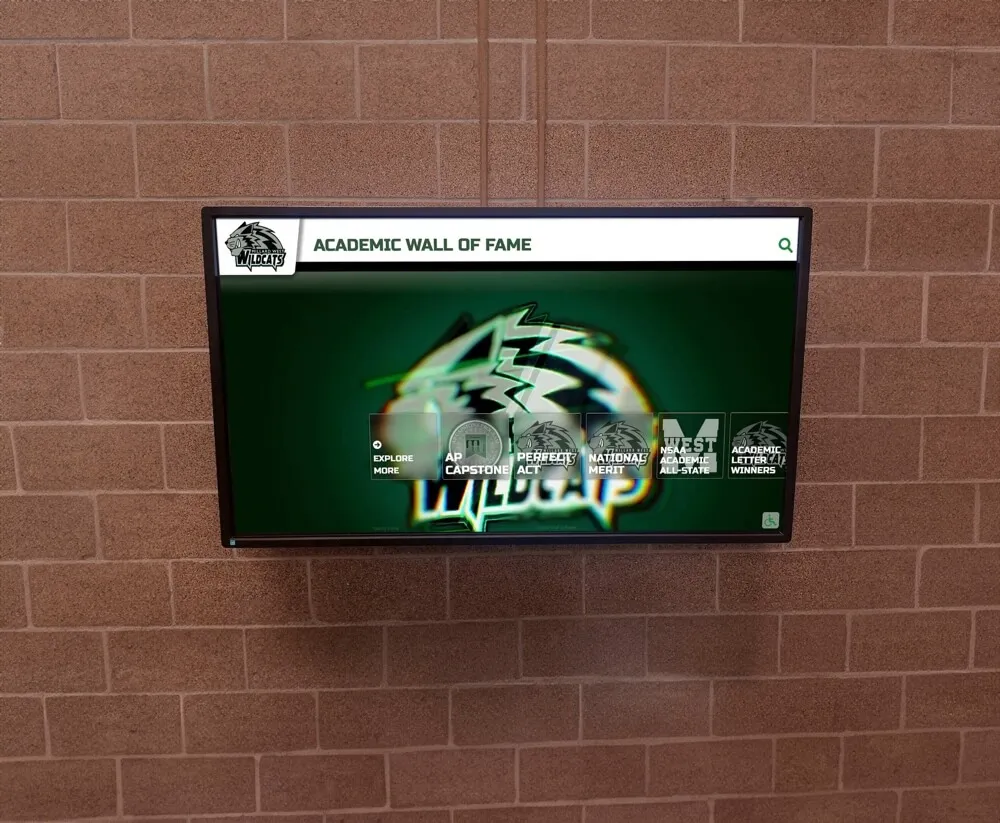
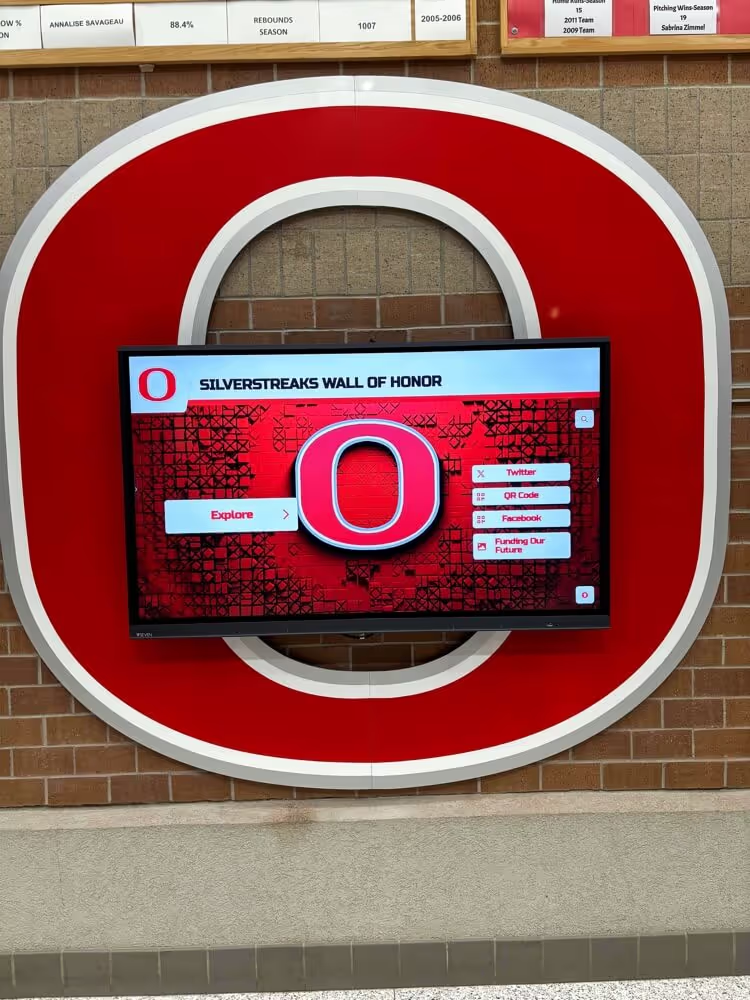
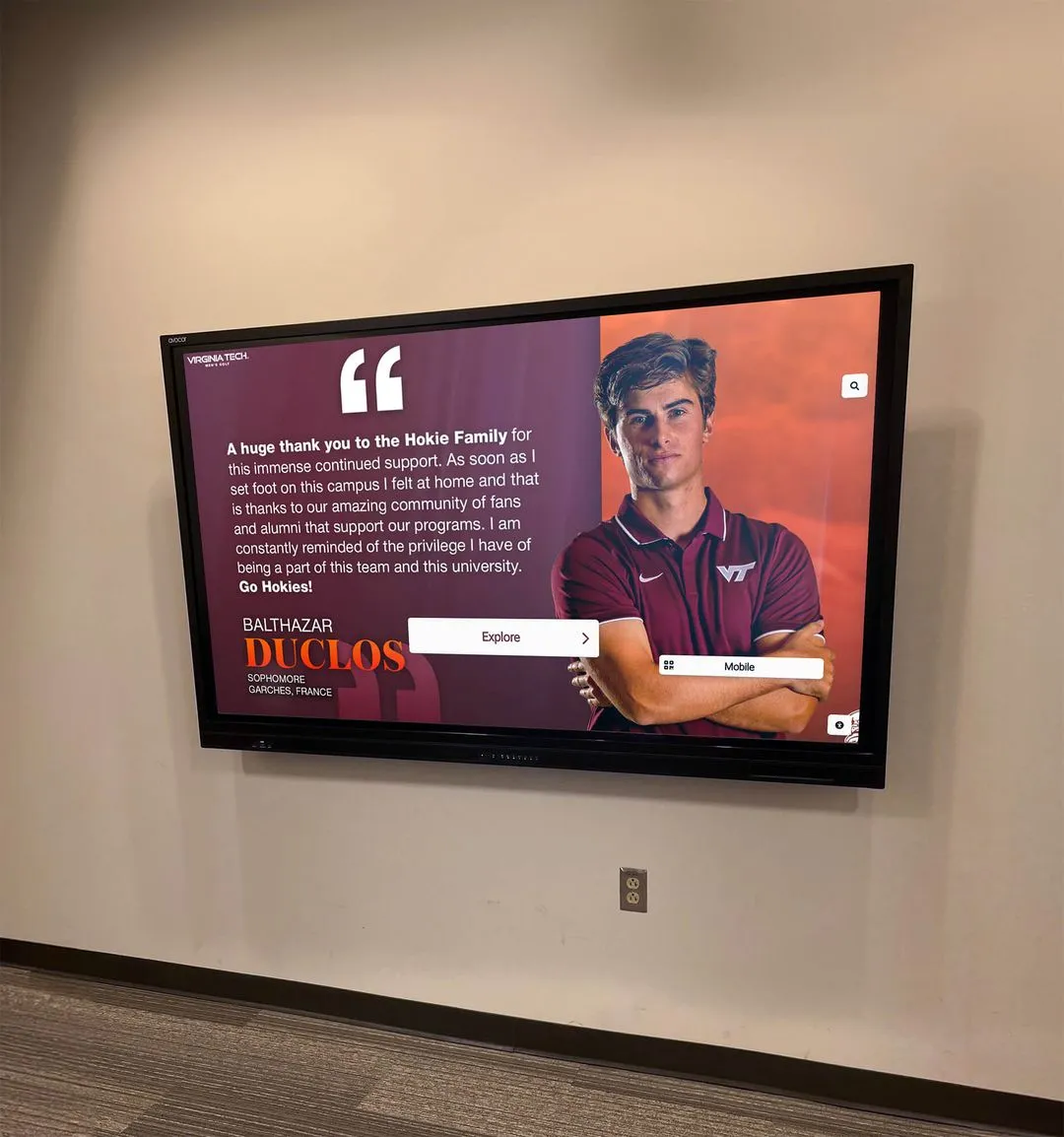
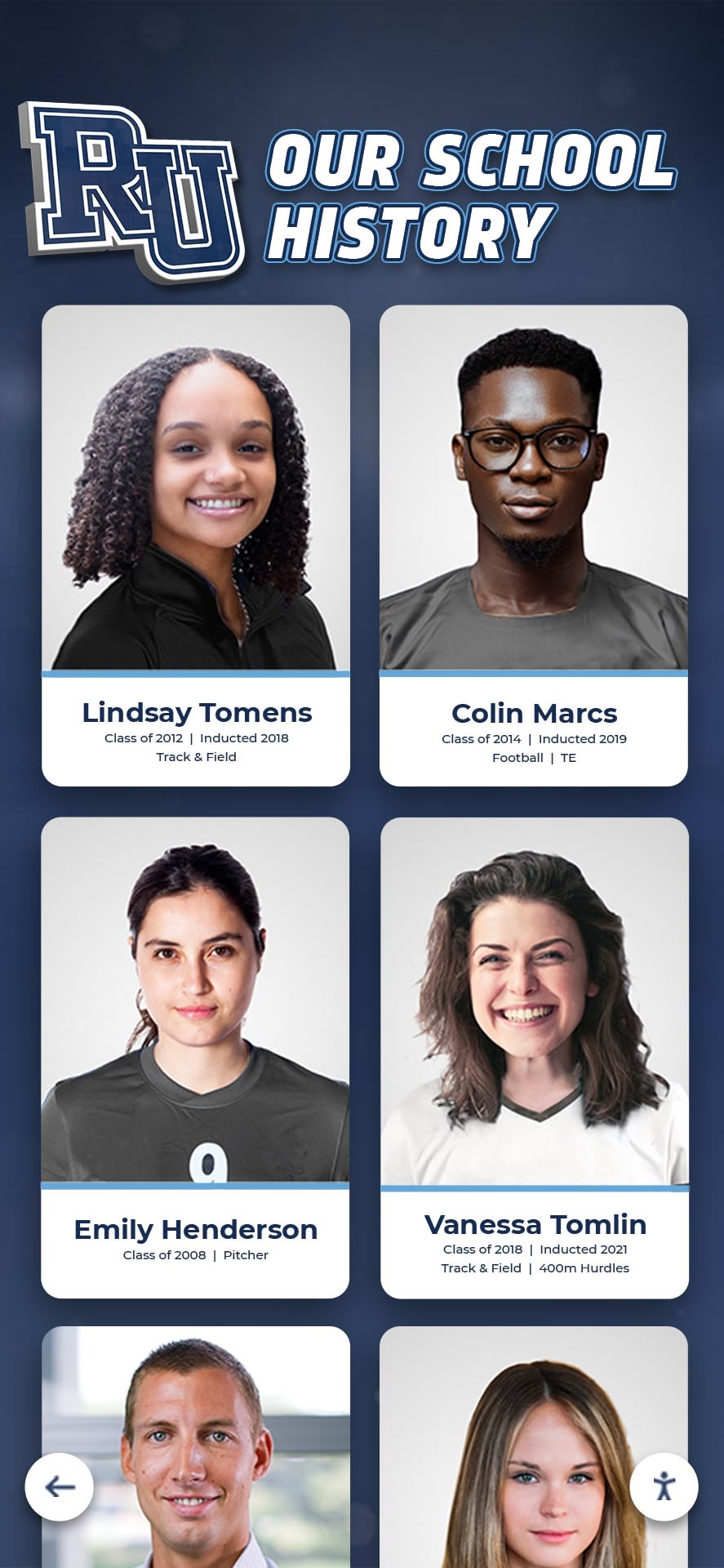
Alumni newsletter content and digital recognition displays work best when they point to the same searchable, responsive archive alumni can explore from any device
Digital Integration: Connecting Newsletter Content to Campus Displays
The most forward-thinking schools treat alumni newsletters and campus recognition displays as two channels in a single content system rather than separate communication efforts.
When a hall-of-fame inductee profile appears in the newsletter, the same portrait, bio, and achievement data populates the touchscreen display in the school lobby—so alumni who visit campus after reading the newsletter can interact with the full story. When a donor is acknowledged in the newsletter’s giving section, their name appears simultaneously on the digital donor display near the entrance to the facility they helped fund.
This synchronization matters because alumni now engage with their schools across multiple touchpoints: email newsletters, physical campus visits for games and events, social media, and mobile apps. A recognition story that appears consistently across all these surfaces carries more weight than the same story appearing in only one channel.
Rocket Alumni Solutions builds the digital display infrastructure that schools connect to this multi-channel recognition strategy—touchscreen walls of fame, digital record boards, and interactive lobby displays that make the same alumni stories visible to visitors, current students, and community members year-round, not just during the newsletter’s open window.
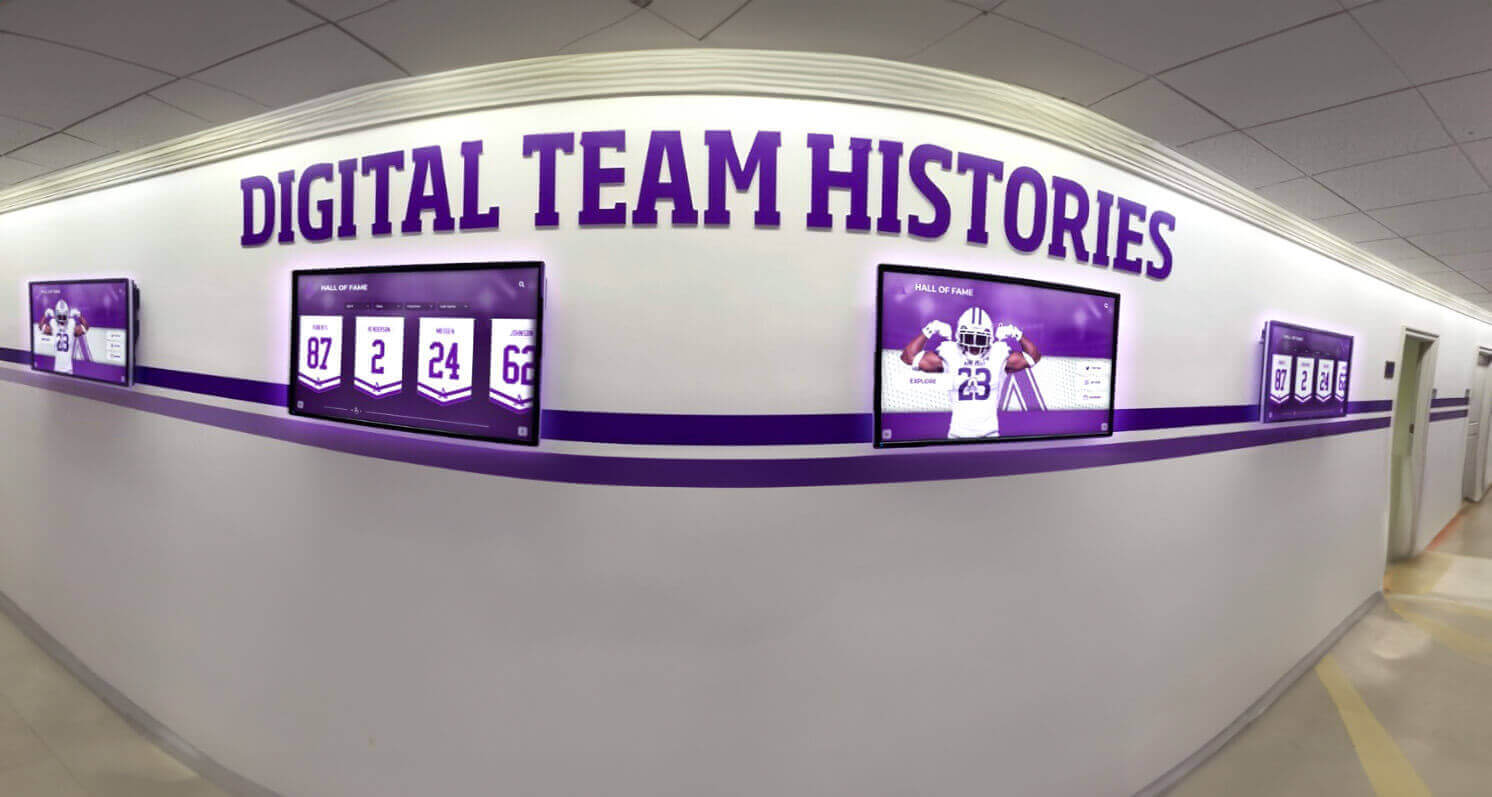
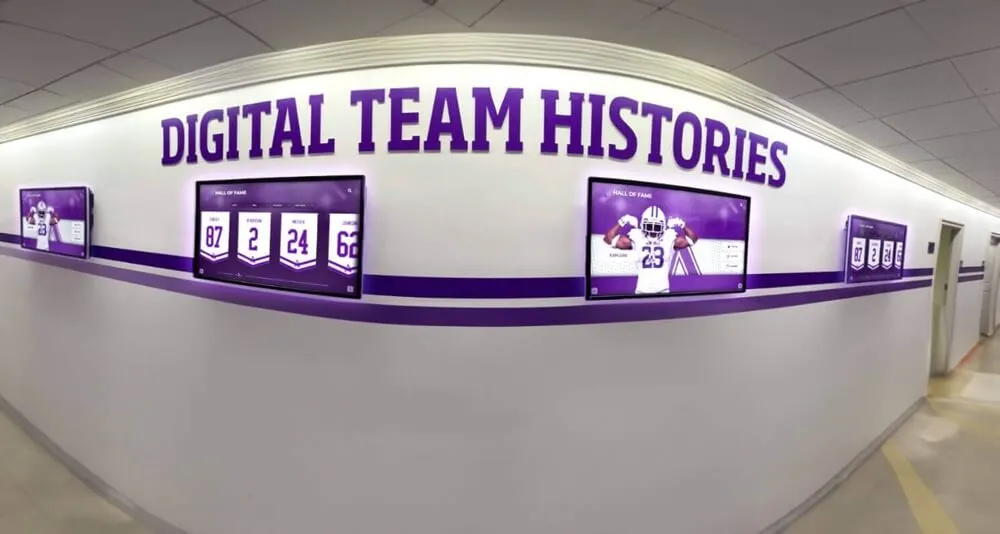
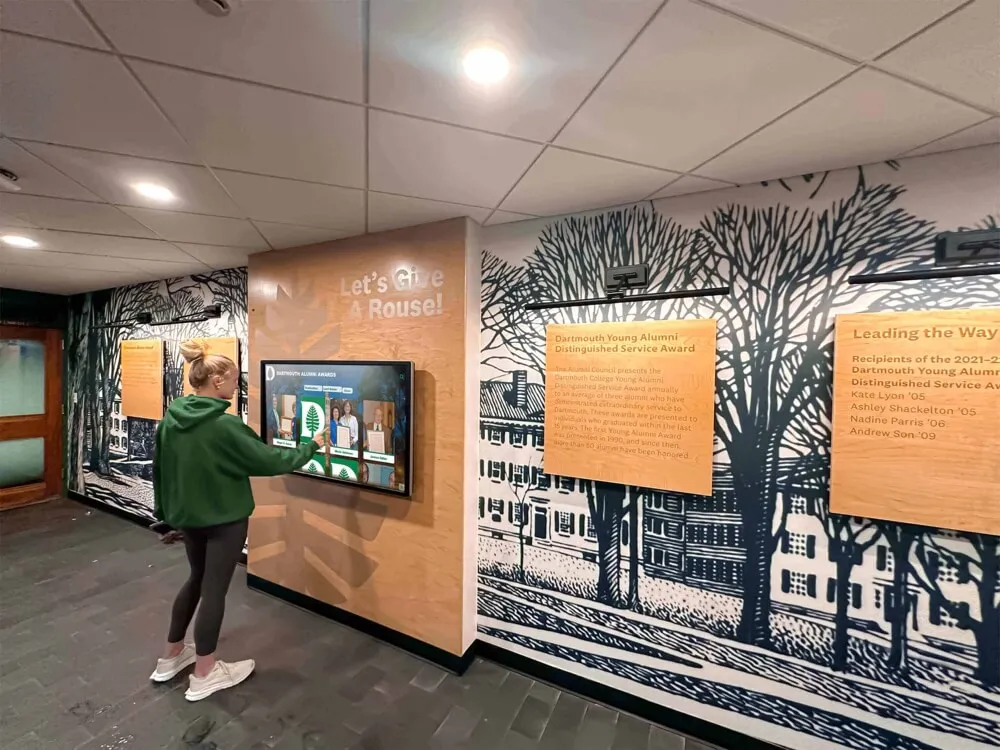
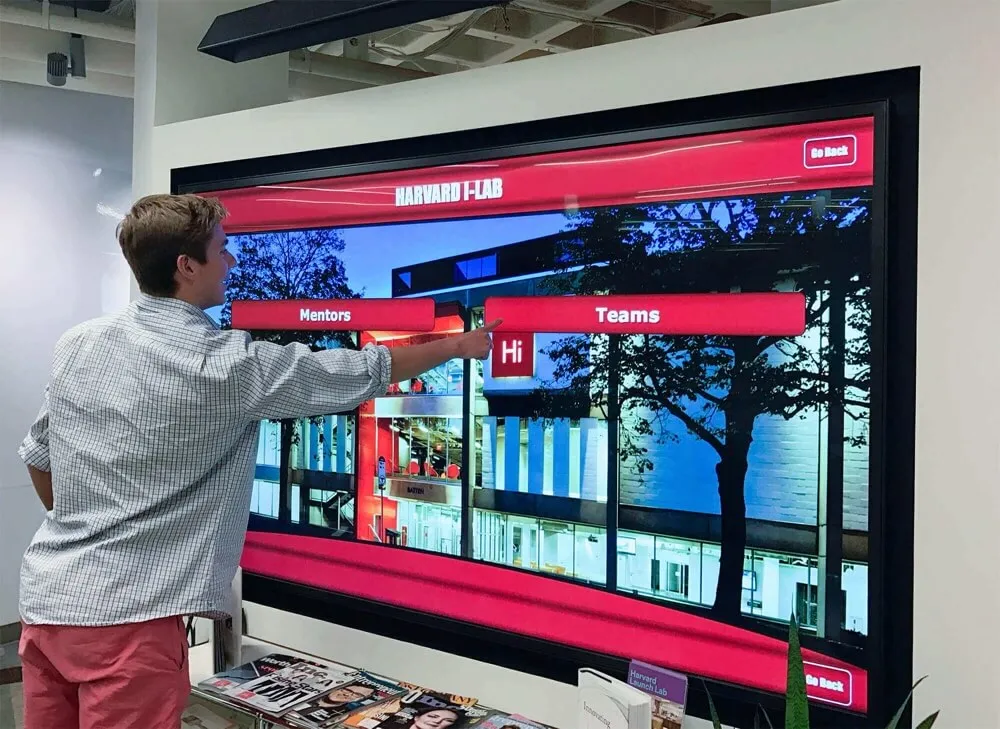
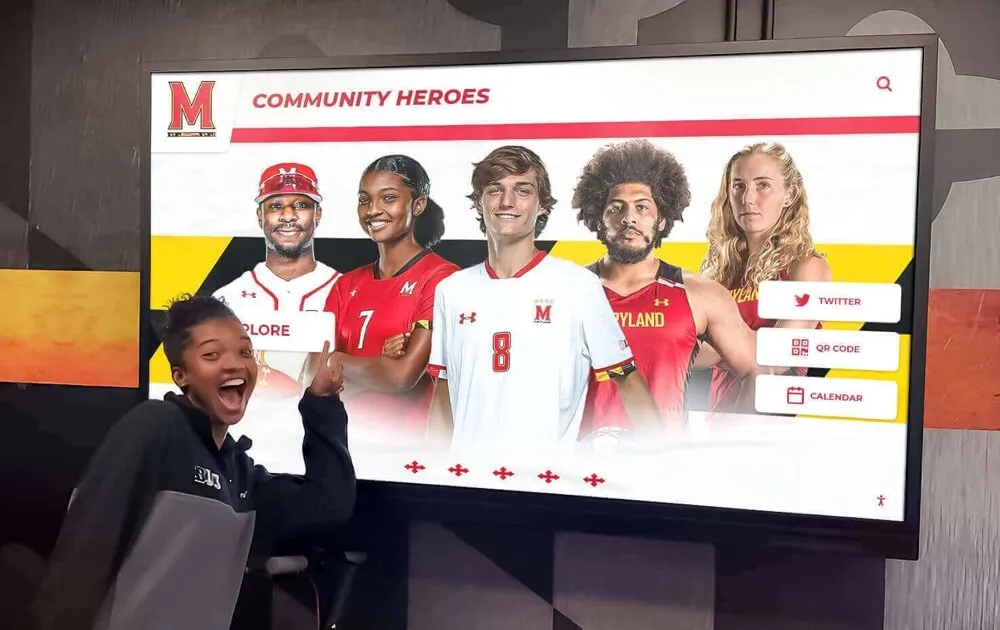
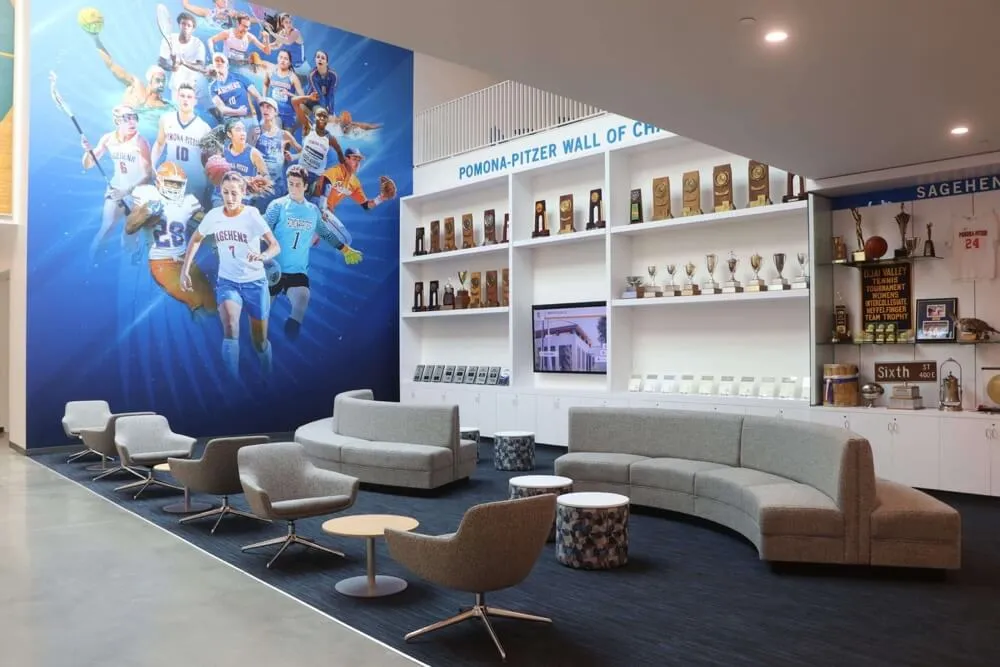
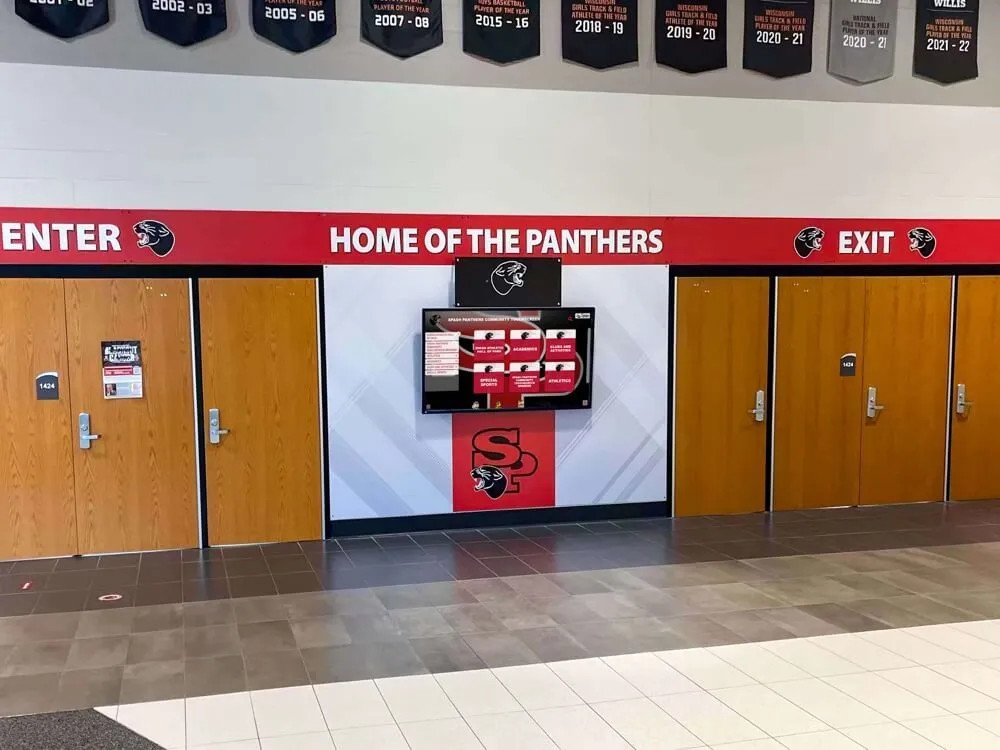
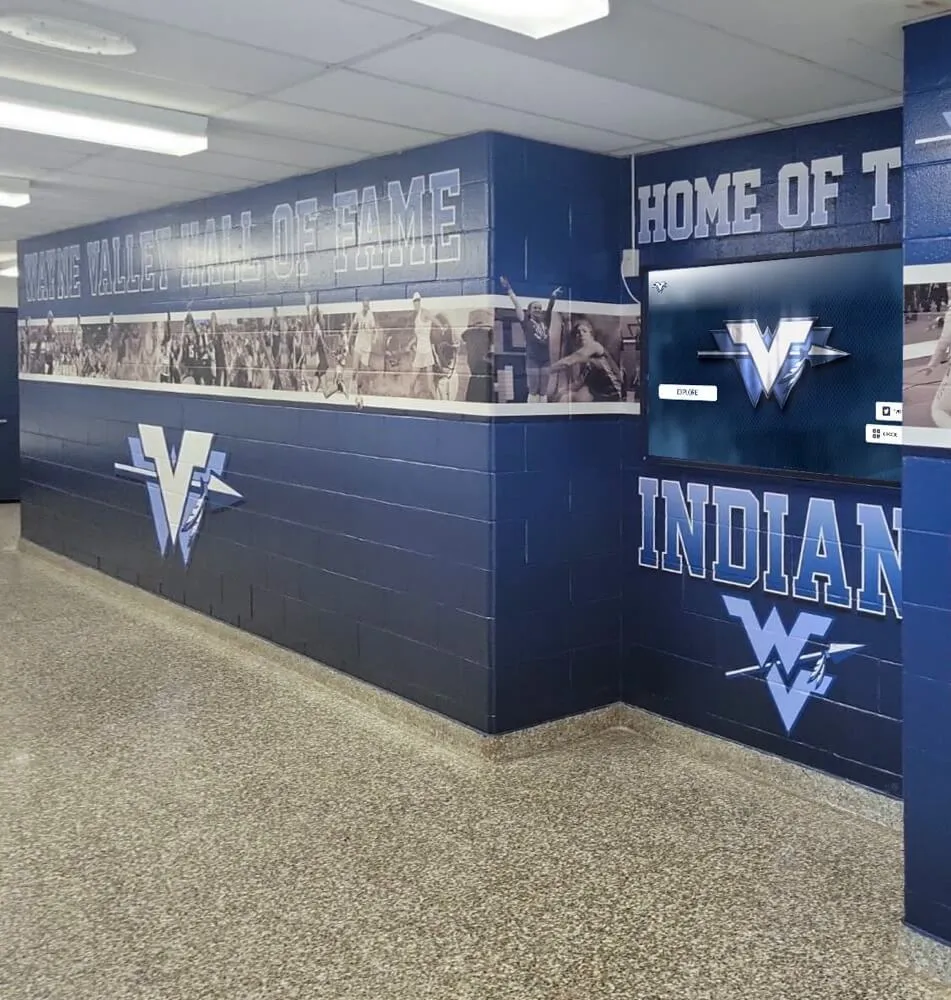
Interactive hallway displays carry the recognition stories that newsletters introduce—visitors can explore team histories, inductee profiles, and program milestones in depth
Newsletter Design Tips for School Alumni Teams
Strong templates live or die on execution. These design principles apply whether you are producing a simple email or a professionally printed annual legacy edition.
Consistent masthead and visual identity. Use school colors, mascot imagery, and typography that alumni recognize immediately. The newsletter should look like it belongs to the same institution whose hallways they walked—not a generic nonprofit email template.
Scannable hierarchy. Alumni read newsletters differently than students read textbooks. Bold subheadings, pull quotes, and bullet lists allow busy readers to extract the most important information in 90 seconds and return for deeper reading later.
Photography over stock images. Real photos from your campus, your athletes, your students, and your facilities outperform stock photography for alumni engagement. Alumni recognize faces, fields, and hallways. They respond to authenticity.
Clear, singular calls-to-action per section. Each content block should end with one specific action: register for the reunion, nominate a hall-of-fame candidate, read the full inductee profile, donate before the campaign deadline. Multiple competing CTAs in a single section reduce response to all of them.
Mobile-first email layout. The majority of newsletter opens now happen on smartphones. Single-column layouts, minimum 16px body text, and tap-friendly buttons ensure your template works for alumni reading during their commute rather than only at a desktop.
For schools that also produce print recognition pieces, this guide to school newspaper templates and recognition stories covers layout principles that translate between print and digital formats.
Sample Annual Newsletter Calendar
A publication calendar prevents the common failure mode where alumni newsletters go quiet for six months and then suddenly appear with four issues in two weeks.
| Month | Issue Theme | Primary Content Focus |
|---|---|---|
| September | Fall Kickoff | Season previews, hall-of-fame nomination window opens |
| November | Fall Recognition | Athletic and academic award announcements |
| January | Winter Update | Fall season wrap-up, winter sports preview, scholarship deadline |
| March | Legacy Edition | Annual hall-of-fame class announcement, full donor honor roll |
| May | End-of-Year | Senior recognition, signing day recap, spring award results |
| July | Reunion Season | Reunion registration push, class notes collection |
Schools with active donor programs and multiple recognition cycles may benefit from a monthly email cadence that supplements these themed anchor issues. The honor roll digital recognition guide provides a parallel framework for academic recognition timing that coordinates naturally with newsletter publication cycles.
Building Your Alumni Newsletter Template: Getting Started
The most important step in developing an alumni newsletter template is not choosing a design tool or email platform—it is auditing the recognition content your school already produces. If your institution inducts a hall-of-fame class each year, nominates academic and athletic award winners, runs an active booster program, and hosts reunion events, you already have the raw material for a rich, multi-issue newsletter calendar. The template is simply the architecture that organizes and presents that content for the alumni audience.
Schools that invest in digital recognition infrastructure—interactive displays, searchable alumni archives, and synchronized content management—find that newsletter production becomes dramatically more efficient because the content already exists in a structured, accessible format. The newsletter becomes a curated window into a living system rather than a document assembled from scratch each cycle.
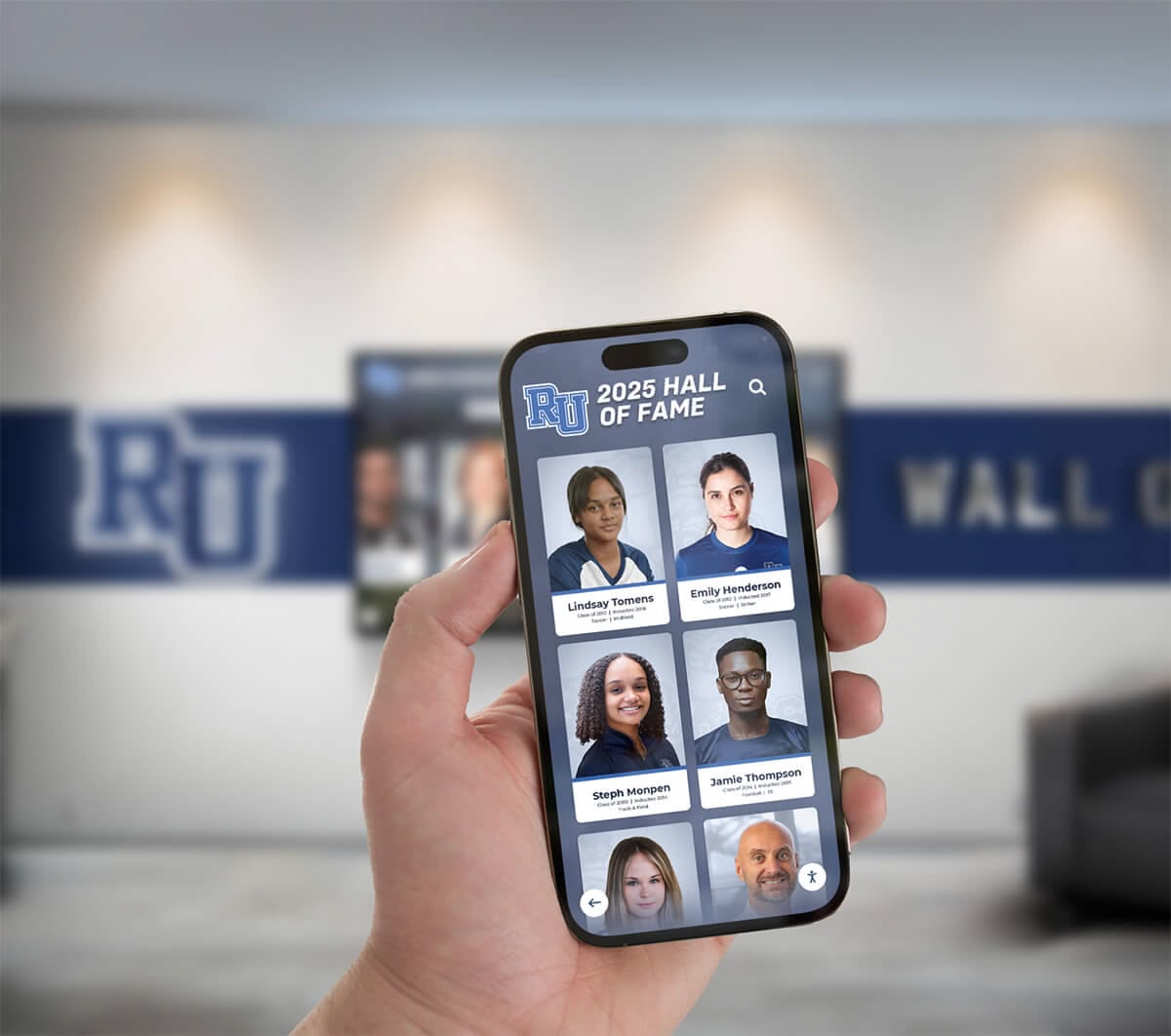
When alumni recognition lives in a connected digital system, newsletter content and mobile-accessible archives reinforce each other across every touchpoint
Alumni who feel seen—whose names appear in the newsletter’s recognition section, whose class receives a dedicated spotlight, whose donation is acknowledged publicly—become the most engaged community members over time. That engagement, compounded across graduating classes and decades, is how schools build the kind of alumni communities that fill reunion weekends, fund endowments, and send their own children back to wear the same colors.
Ready to connect your alumni newsletter content to permanent campus recognition displays? Rocket Alumni Solutions builds interactive touchscreen walls of fame, digital record boards, and alumni recognition displays that keep graduate stories visible to current students and community members year-round—not just during the newsletter’s open window.
Live Example: Rocket Alumni Solutions Touchscreen Display
Interact with a live example (16:9 scaled 1920x1080 display). All content is automatically responsive to all screen sizes and orientations.