



Intent: Define how schools can create systematic ACT 30+ Club recognition programs that celebrate exceptional standardized test achievement through digital showcase boards, formal ceremonies, and integrated communication strategies.
Every year, a select group of students achieves the remarkable milestone of scoring 30 or higher on the ACT—a standardized test achievement placing them in approximately the top 7% of all test-takers nationally. This exceptional accomplishment reflects not just academic knowledge but sustained effort, test preparation discipline, and college-ready achievement across English, mathematics, reading, and science. Yet many schools struggle to celebrate these significant achievements in ways that create lasting recognition while inspiring underclassmen to pursue similar excellence.
When ACT 30+ Club members receive only brief announcements or generic honor roll acknowledgment, their exceptional achievements lose motivational power. Students who invested hundreds of hours preparing for college entrance exams deserve recognition that appropriately honors their accomplishment while demonstrating to younger students that exceptional test performance is both achievable and celebrated.
This comprehensive blueprint provides step-by-step guidance for implementing ACT 30+ Club digital showcase board programs—from defining membership criteria through display design, ceremony planning, content architecture, and sustained recognition integration throughout school culture.
Effective ACT 30+ Club recognition extends beyond listing names and scores—it creates comprehensive programs celebrating individual achievement journeys, providing test preparation guidance for younger students, and positioning standardized test excellence as a valued institutional accomplishment worthy of prominent visibility.

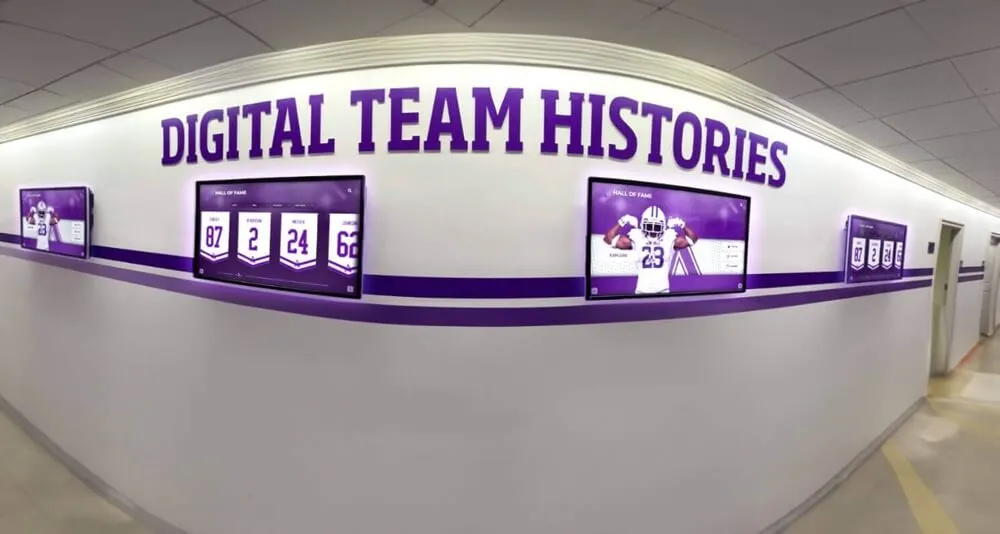
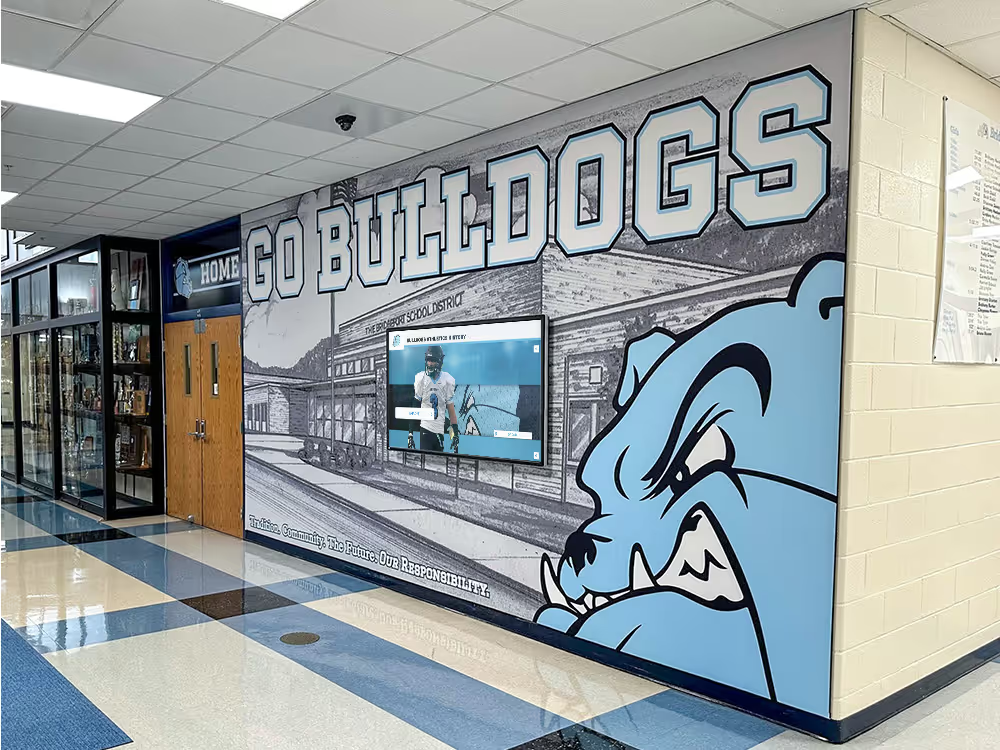
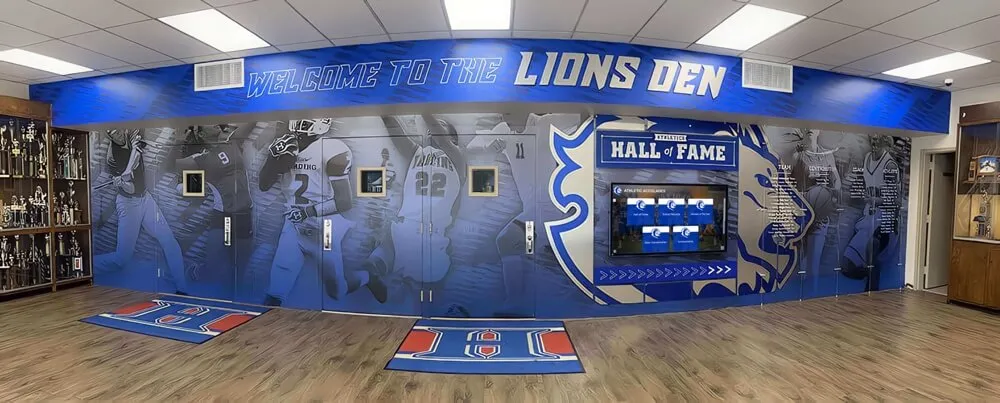
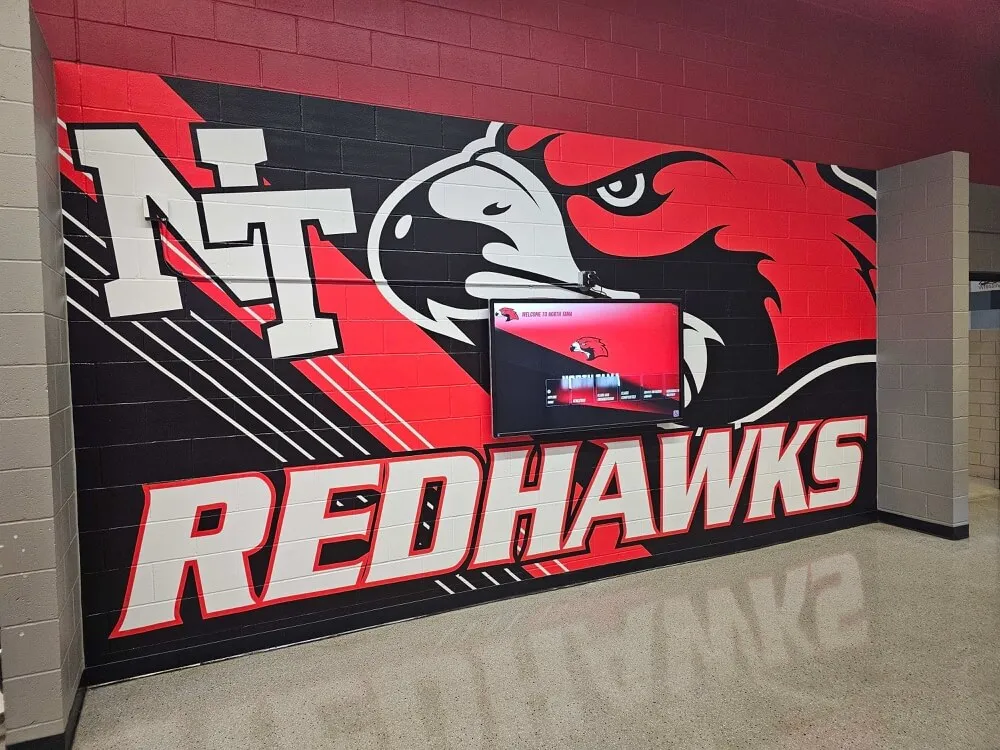
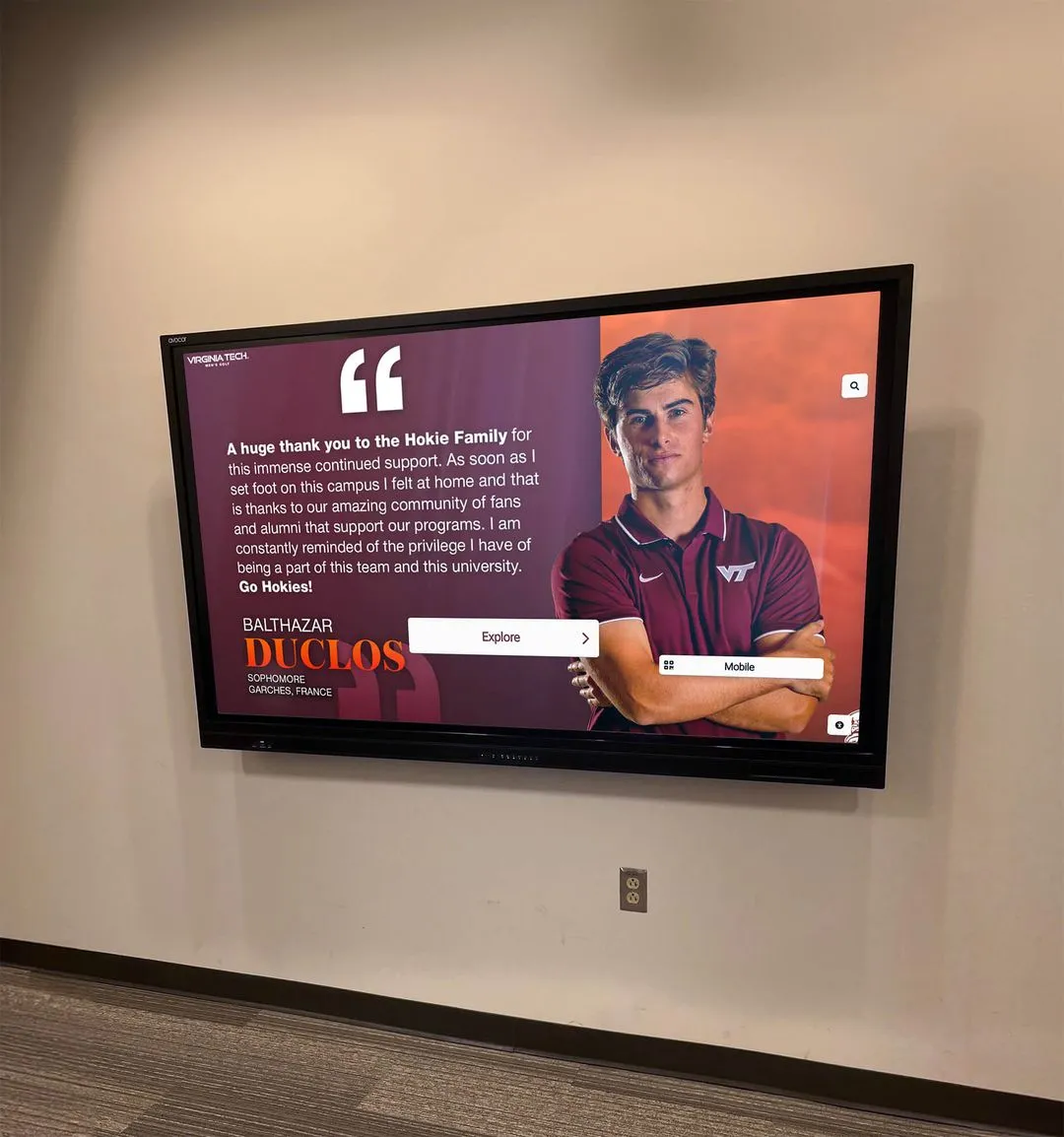
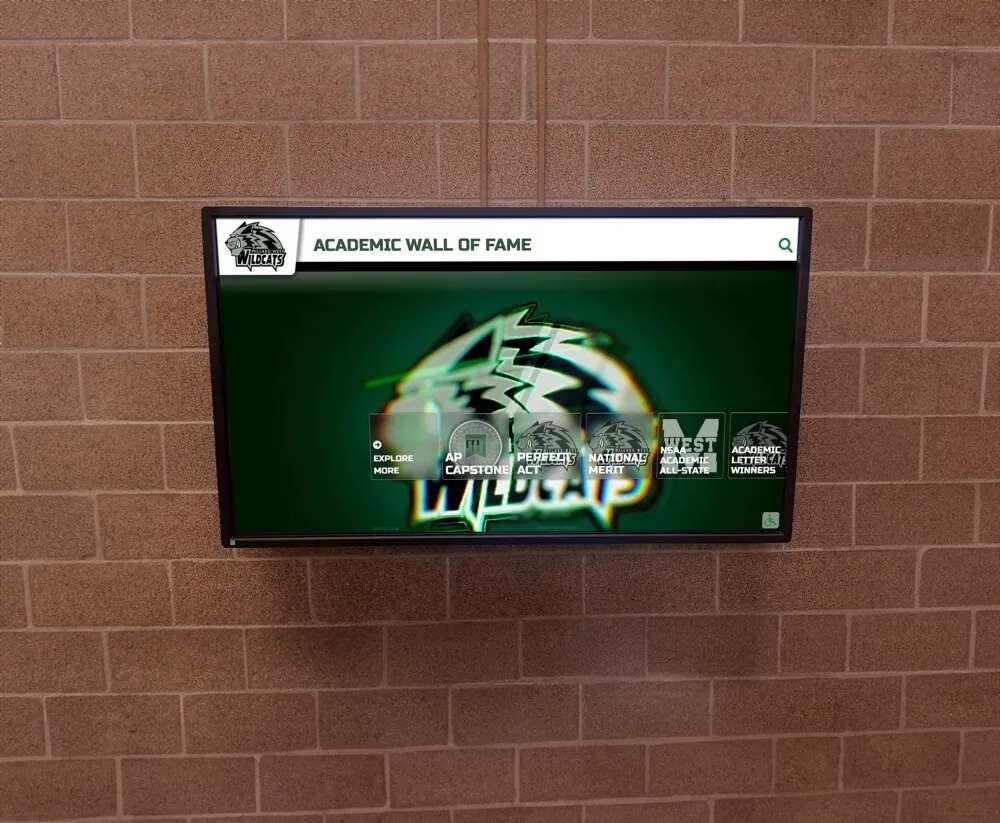
Digital showcase boards bring ACT 30+ Club achievements the prominence they deserve in high-traffic school locations
Program Snapshot: ACT 30+ Club Recognition System
Before implementing recognition displays and ceremonies, understanding complete program architecture ensures cohesive, impactful celebration.
| Program Element | Description |
|---|---|
| Target Audience | Students achieving ACT composite scores of 30 or higher (top 7% nationally) |
| Primary Outcomes | Celebrate exceptional test achievement; inspire underclassmen; provide college application credential documentation |
| Recognition Timing | Ongoing as students achieve qualifying scores; formal annual ceremony; graduation acknowledgment |
| Display Locations | Main lobby digital showcase; guidance office area; college preparation spaces; web-accessible platforms |
| Content Components | Student profiles with photos, composite scores, section breakdowns, college destinations, test prep advice |
| Ceremony Format | Annual ACT 30+ Club induction recognizing new members with certificates, medallions, family celebration |
| Integration Points | College prep programs, test preparation initiatives, academic pep rallies, graduation ceremonies, alumni engagement |
| Sustainability Plan | Quarterly updates as students achieve scores; annual ceremony planning; ongoing digital display maintenance |
Understanding ACT 30+ Club Achievement Significance
Before designing recognition programs, understanding what ACT 30+ scores represent helps schools create appropriate celebration approaches.
National Context and Statistical Significance
Scoring Distribution and Percentiles
The ACT composite score scale ranges from 1 to 36, with the national average typically around 20-21. According to ACT data, students scoring 30 or higher achieve approximately the 93rd percentile or better nationally—meaning they performed better than roughly 93% of all test-takers.
Breaking down further:
- ACT 30: 93rd percentile (top 7%)
- ACT 32: 97th percentile (top 3%)
- ACT 34: 99th percentile (top 1%)
- ACT 36: 99.9th percentile (top 0.1%)
This statistical context underscores that ACT 30+ Club membership represents truly exceptional achievement deserving systematic recognition comparable to other prestigious academic honors.
College Admissions Impact
Selective Institution Competitiveness
ACT 30+ scores position students competitively for admission to selective colleges and universities nationwide:
- Most Ivy League and similarly selective institutions report middle 50% ACT ranges beginning at 33-34
- Many flagship state universities consider ACT 30+ scores highly competitive for merit scholarships
- Selective liberal arts colleges typically report admitted student averages between 29-33
- ACT 30+ achievement often qualifies students for automatic merit scholarship consideration
Schools should emphasize these practical benefits when promoting ACT 30+ Club recognition, connecting test achievement directly to tangible college application advantages.

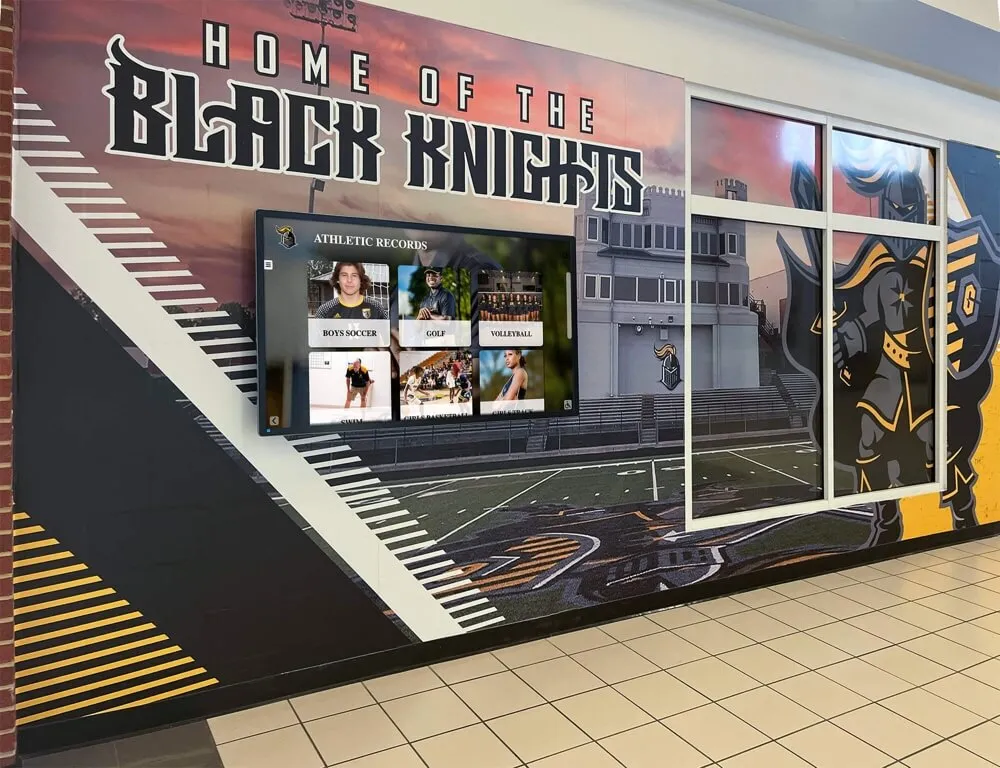
Individual student profiles celebrate specific ACT achievements and academic journeys
Scholarship Qualification
Beyond admission advantages, ACT 30+ scores frequently qualify students for significant merit-based scholarships:
- Many state flagship universities offer automatic full-tuition or substantial scholarships for ACT 30-32+
- Private institutions often provide merit awards specifically targeting high ACT achievers
- Corporate and foundation scholarships frequently establish ACT 30+ as eligibility thresholds
- National Merit consideration correlates with comparable SAT scores (approximately 1400+ SAT)
Highlighting these financial benefits increases ACT 30+ Club recognition value and motivates younger students to pursue test preparation seriously.
What ACT 30+ Achievement Demonstrates
Beyond Raw Intelligence: Skills and Preparation
ACT 30+ scores reflect multiple competencies valuable for college success:
Content Mastery
- Strong English grammar, rhetoric, and reading comprehension
- Advanced mathematical reasoning through trigonometry
- Scientific reasoning and data interpretation skills
- Integrated critical thinking across disciplines
Test-Taking Proficiency
- Time management under pressure (completing 215 questions in 175 minutes)
- Strategic question approach and answer elimination
- Sustained focus and mental endurance
- Anxiety management during high-stakes assessment
Academic Preparation and Discipline
- Investment in test preparation coursework or self-study
- Practice test completion and performance analysis
- Skill gap identification and targeted improvement
- Sustained effort over weeks or months of preparation
Schools should acknowledge these multifaceted achievement dimensions in recognition messaging, emphasizing that ACT 30+ scores result from preparation and effort—not just innate ability.
Learn more about comprehensive academic recognition programs that celebrate diverse achievements.
Program Content Architecture: Mapping Recognition Elements to Display Modules
Effective ACT 30+ Club recognition requires systematic content organization across multiple touchscreen modules, print materials, and communication channels.
Core Digital Display Components
Member Profile Module
Each ACT 30+ Club member receives dedicated profile showcasing:
Essential Information
- Professional student photograph or senior portrait
- Full name and graduation year
- ACT composite score prominently displayed
- Individual section scores (English, Math, Reading, Science)
- Test date and number of attempts (optional, student-controlled)
Extended Achievement Context
- Additional standardized test achievements (SAT, AP scores, subject tests)
- Academic GPA and class rank (if student approves)
- National Merit Scholar recognition or similar honors
- College destination or application list
- Intended major and career aspirations
Inspirational Content
- Test preparation approach and resources used
- Advice for underclassmen pursuing ACT 30+ scores
- Most challenging section and improvement strategies
- Balance strategies managing test prep with other commitments
- Reflections on what ACT achievement means personally
This comprehensive profile structure transforms basic score listing into engaging storytelling that provides genuine value for younger students while honoring individual achievement.
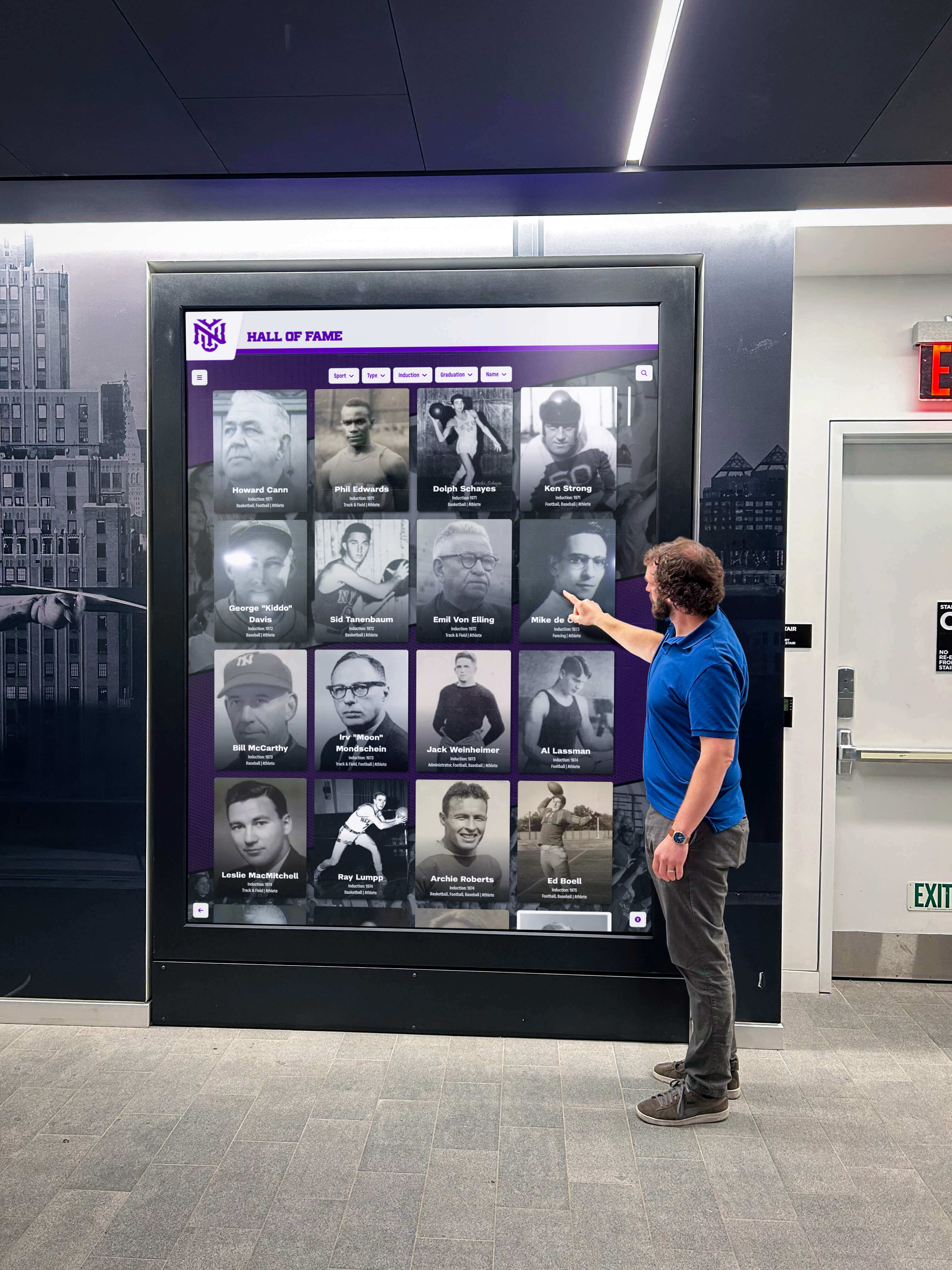
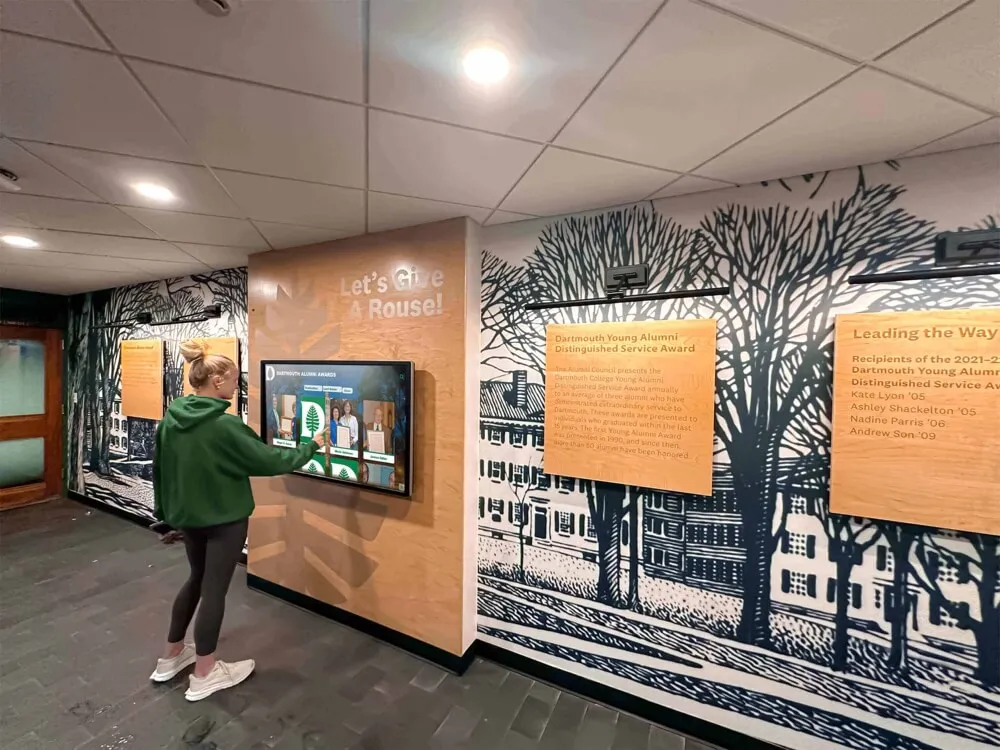
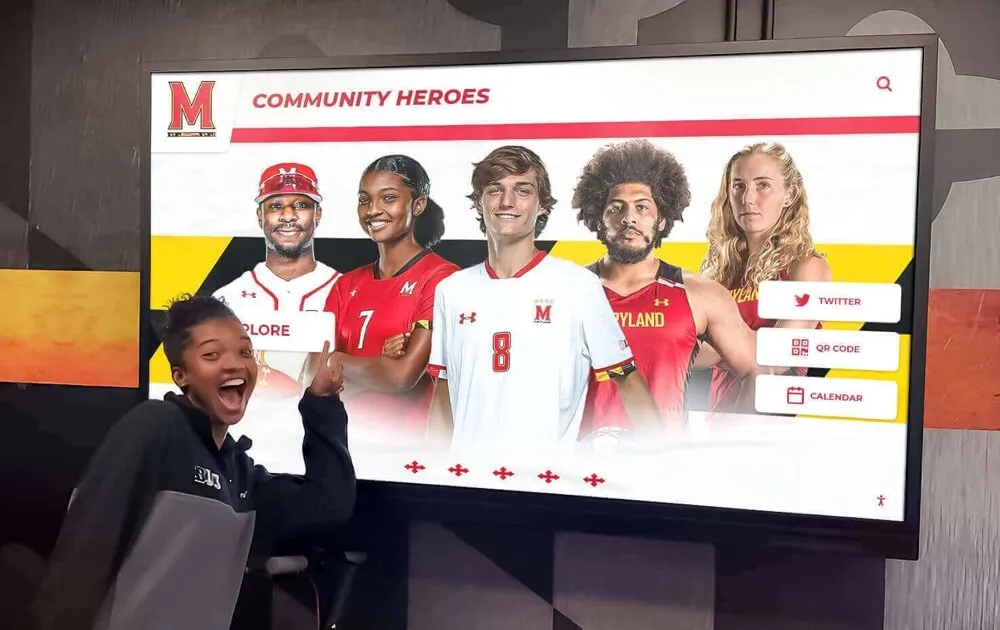
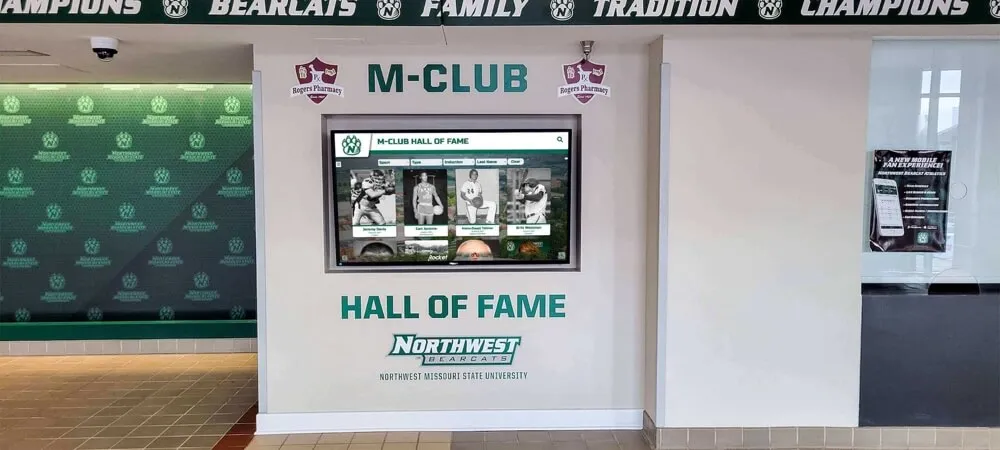
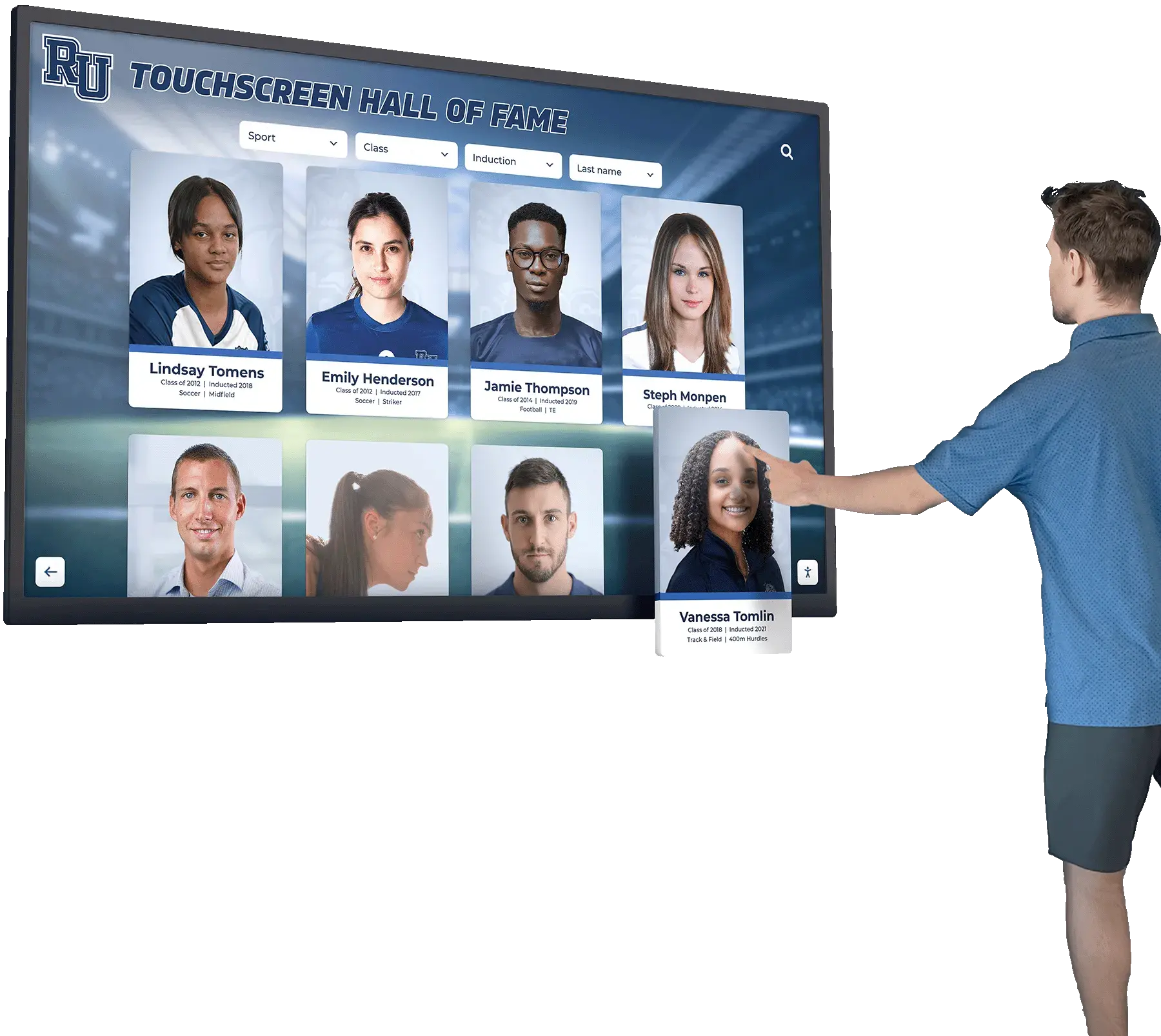
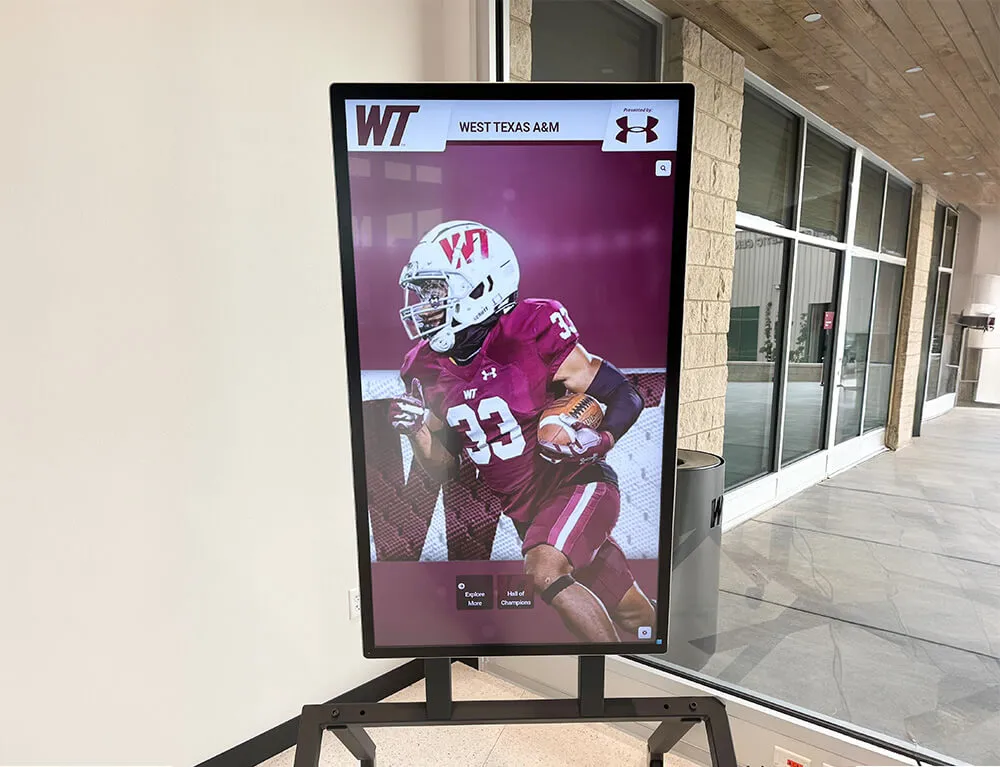
Interactive touchscreen systems enable intuitive exploration of detailed member profiles and achievement information
Auto-Ranking Board Module
Dynamic leaderboard displaying members organized by achievement level:
- Sort members by composite score (highest to lowest)
- Filter by graduation year viewing specific class cohorts
- Display cumulative club membership across school history
- Highlight perfect 36 scores in special designation
- Show section-specific high achievers (e.g., Math 36, English 36)
This competitive visualization creates aspirational targets while maintaining inclusive celebration of all 30+ achievers.
Test Preparation Resource Module
Content helping underclassmen understand ACT achievement pathways:
Recommended Resources
- Test preparation courses and programs used by members
- Free and paid study material recommendations
- Practice test sources and schedules
- Section-specific improvement strategies
- Tutoring and support options available at school or community
Timeline and Planning Guidance
- Optimal test preparation start timing
- Recommended practice test frequency
- Subject review sequencing strategies
- Multiple test attempt planning
- Score improvement case studies from current members
School Support Programs
- ACT preparation courses offered at school
- After-school study sessions and support
- Fee waiver information for income-eligible students
- Test day logistics and registration assistance
- Score reporting and college application integration
This resource integration transforms recognition displays from passive celebration into active academic support tools.
Historical Achievement Archive Module
Preserving institutional legacy across multiple graduating classes:
Longitudinal Data Visualization
- Year-by-year ACT 30+ Club membership totals
- Trend analysis showing program growth or consistency
- Composite score distribution across all members historically
- Section score patterns identifying curricular strengths
- College destination tracking for ACT 30+ achievers
Alumni Spotlight Integration
- Where are they now profiles of distinguished alumni members
- Career outcome documentation connecting ACT achievement to professional success
- Alumni testimonials about ACT preparation value
- Mentorship connection opportunities with alumni members
- Alumni advice programs leveraging test achievement connections
This historical dimension builds institutional tradition while demonstrating sustained academic excellence across multiple generations.
Explore comprehensive approaches to showcasing high ACT scores through digital recognition.
Social Media Gallery Module
Real-time integration amplifying recognition reach:
Ceremony and Celebration Photos
- Induction ceremony images with families
- Award presentation and certificate distribution
- Group photos of annual inductee cohorts
- Individual member celebration portraits
- School leader congratulation moments
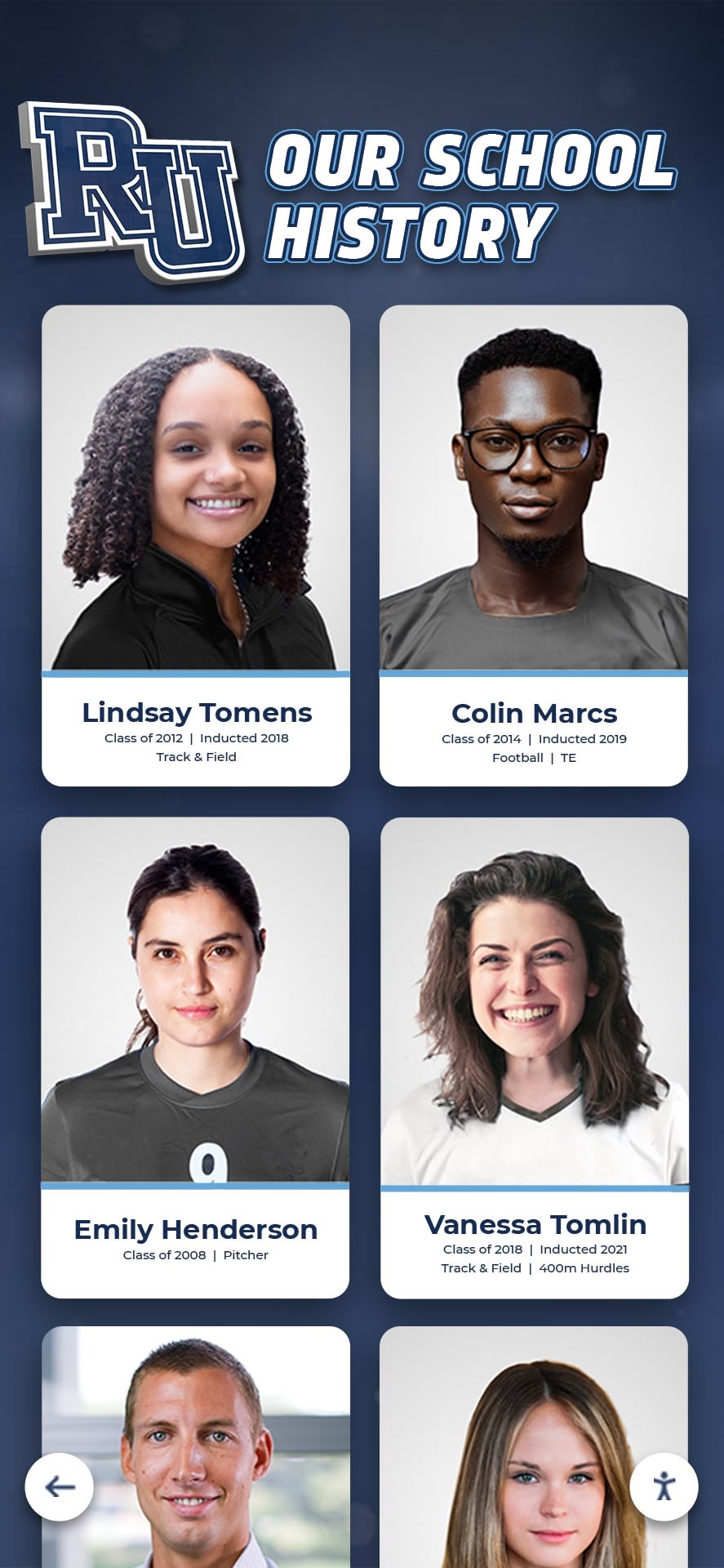
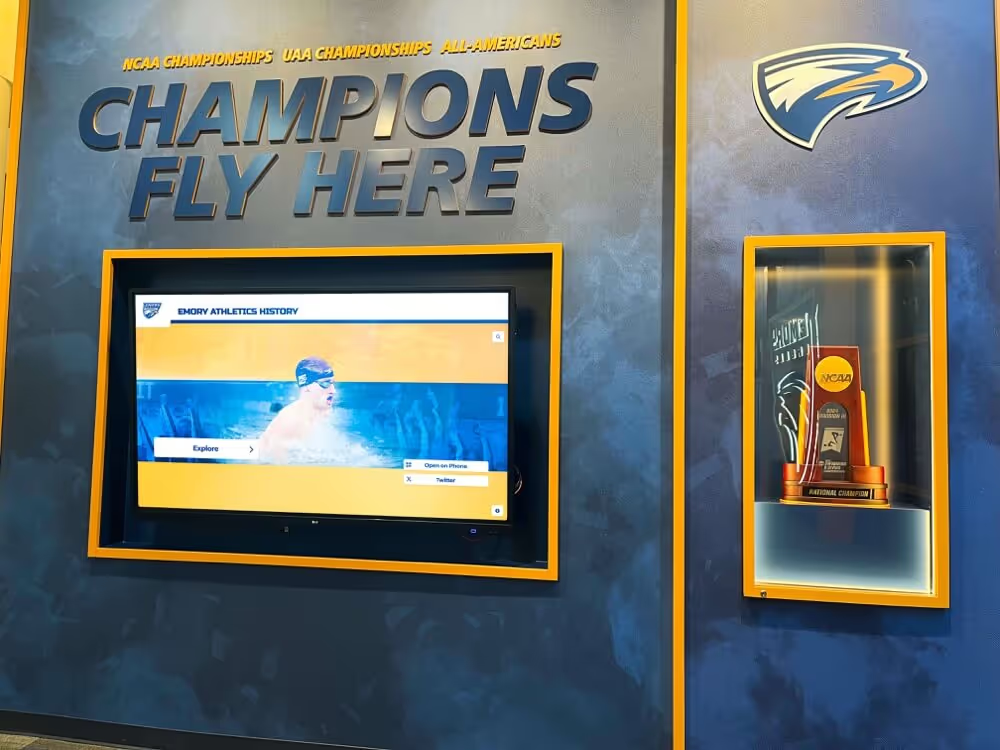
Comprehensive recognition systems preserve achievement history across multiple graduating classes
Social Celebration Integration
- Instagram posts announcing new members
- Twitter highlights of exceptional scores
- Facebook family congratulation tags
- LinkedIn professional network acknowledgment
- Parent and family celebration sharing options
This social integration extends recognition beyond physical campus to family networks, alumni communities, and prospective families evaluating school academic culture.
Sponsor Recognition Module
Connecting ACT 30+ Club recognition with community partnerships:
Corporate Partnership Acknowledgment
- Local businesses sponsoring test preparation programs
- Community organizations funding fee waivers
- Corporate scholarship programs for ACT 30+ achievers
- Professional firm partnerships providing mentorship
- Educational foundation support for recognition programs
Sponsorship Integration
- Rotating sponsor logos on recognition displays
- Ceremony sponsor acknowledgment and speaking opportunities
- Scholarship award presentation integration
- Corporate testimonials about investment in academic excellence
- Community partnership showcasing through digital platforms
This component creates sustainable funding models while connecting student achievement to broader community support systems.
Execution Timeline: Plan → Build → Launch → Refresh
Successful ACT 30+ Club recognition requires systematic phased implementation ensuring all stakeholders understand processes, timelines, and responsibilities.
Phase 1: Planning (8-12 weeks before launch)
Program Definition and Criteria Establishment
Membership Criteria Finalization
- Confirm ACT 30+ composite score as threshold
- Decide policy on multiple test attempts (best score vs. superscore)
- Establish verification procedures with guidance office
- Determine retroactive inclusion of historical graduates (if any)
- Create opt-in/opt-out consent processes respecting student privacy
Stakeholder Engagement
- Academic leadership approval and resource commitment
- Guidance office coordination for score verification and tracking
- Testing coordinator involvement for preparation program integration
- Parent organization support for ceremony and recognition funding
- Student input on meaningful recognition approaches
Budget Development
- Digital display hardware and installation costs
- Software platform selection and annual licensing
- Ceremony venue, refreshments, and materials
- Certificates, medallions, or physical awards
- Photography, videography, and promotional materials
- Marketing and communication campaign expenses
Learn about AP Scholar digital recognition for parallel academic achievement celebration.

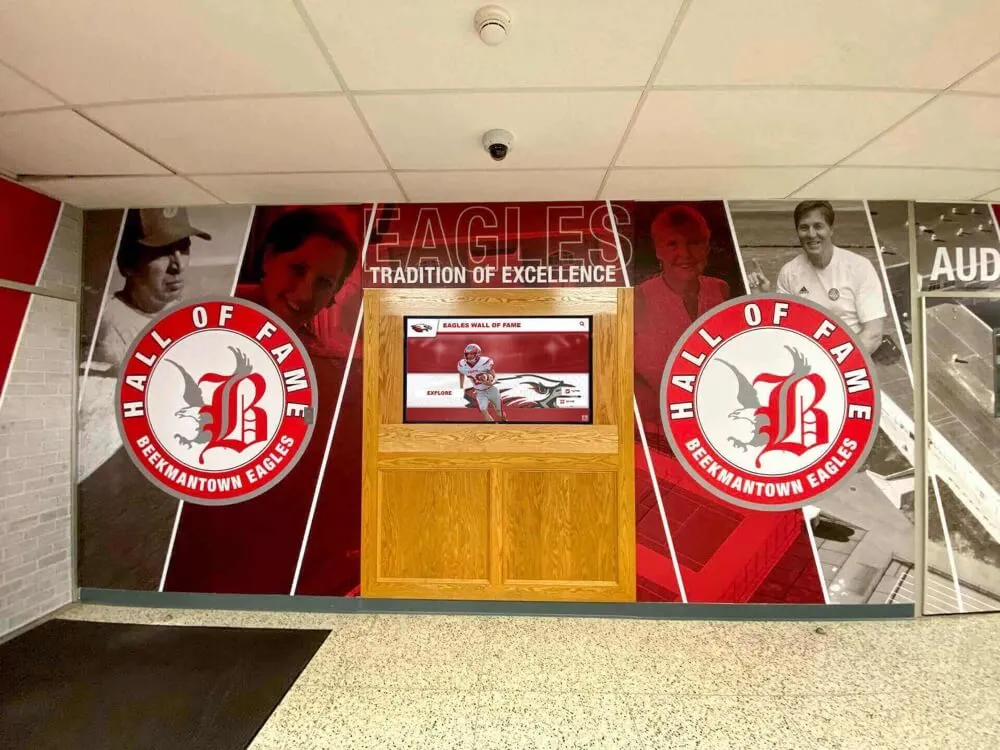
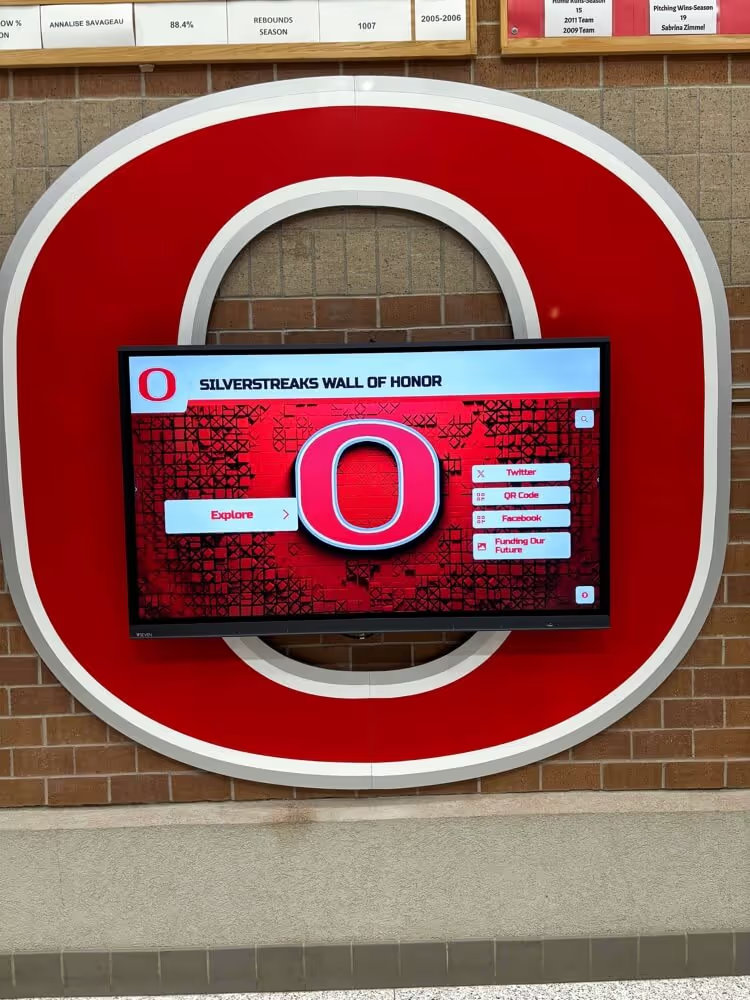
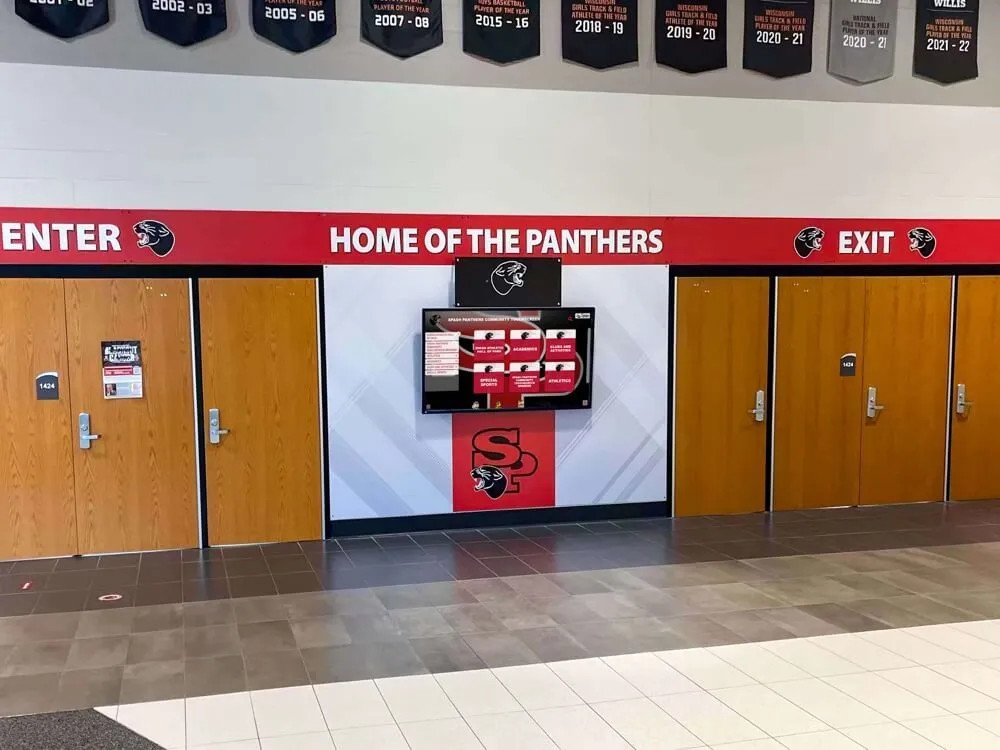
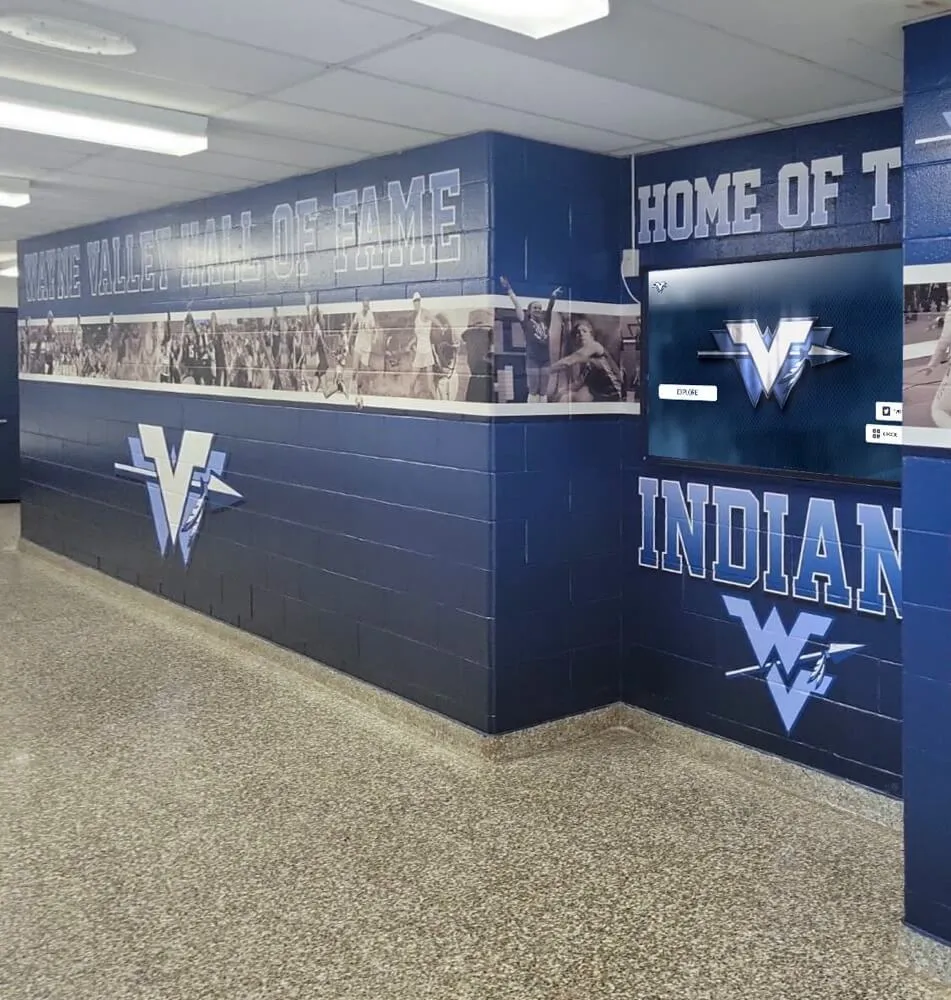
Strategic placement in high-traffic locations maximizes recognition visibility and engagement
Phase 2: Build (4-8 weeks before launch)
Technology Selection and Installation
Display Hardware Implementation
- Wall-mounted touchscreen installation in main lobby or academic commons
- Additional displays in guidance office and college preparation spaces
- Freestanding kiosk options for flexible placement
- ADA-compliant mounting ensuring accessibility for all users
- Professional installation with appropriate electrical and network infrastructure
Software Platform Configuration
- Cloud-based content management system setup
- Template design matching school branding and colors
- Navigation structure for member profiles and resources
- Search and filtering functionality enabling easy exploration
- Web accessibility extension for remote viewing
Solutions like Rocket Alumni Solutions offer comprehensive platforms specifically designed for educational achievement recognition with unlimited member capacity, intuitive content management, and integrated web accessibility.
Content Development
Member Information Collection
- Outreach to qualifying students requesting participation
- Online submission forms collecting biographical information
- Professional photo coordination or senior portrait collection
- Test preparation advice and reflection writing prompts
- College destination and major information gathering
- Permission and consent documentation
Supporting Content Creation
- Test preparation resource compilation and organization
- Historical achievement data collection and verification
- Alumni profile development for distinguished graduates
- Sponsor acknowledgment content and logo collection
- Social media content planning and scheduling
Phase 3: Launch (Ceremony and Initial Deployment)
Recognition Ceremony Planning
Event Logistics
- Venue selection accommodating members, families, and guests
- Timing coordination with school calendar and academic events
- Invitation design and distribution to families
- Program design with ceremony rundown
- Audio/visual setup for presentations and displays
- Refreshment coordination and setup
Ceremony Program Components
- Opening remarks from principal or academic leadership
- ACT 30+ Club program explanation and significance
- Individual member recognition with score announcement
- Certificate or medallion presentation to each member
- Student speaker opportunity sharing achievement journey
- Group photo opportunity with all members
- Digital display unveiling showcasing inaugural members
- Reception enabling networking and celebration
Explore academic ceremony planning for comprehensive event approaches.
Digital Display Activation
- Final content review and publishing
- Display activation and functionality testing
- Staff training on system navigation and updates
- Launch announcement across all communication channels
- Media coverage coordination with local outlets
Phase 4: Refresh (Ongoing Maintenance)
Quarterly Update Cycle
Summer (June-August)
- Collect ACT scores from spring and summer test administrations
- Outreach to newly qualifying students
- Content collection and profile development
- Digital display updates with new members
- Planning for fall ceremony or recognition event
Fall (September-November)
- Back-to-school promotion of ACT 30+ Club
- Ceremony planning and execution for new members
- Integration with college application season support
- Test preparation program promotion for juniors
- Social media campaign highlighting members
Winter (December-February)
- Mid-year test score collection from winter administrations
- Member profile updates with college acceptances
- Test preparation program intensification before spring tests
- Member mentorship matching with underclassmen
- Alumni follow-up and engagement initiatives
Spring (March-May)
- Spring test administration support and promotion
- Graduation recognition planning for senior members
- Year-end assessment and program evaluation
- Next-year planning and budget development
- Historical data updating and archiving
This systematic refresh cycle ensures ACT 30+ Club recognition remains current, relevant, and integrated throughout the academic year rather than becoming a static display.
Display Integration: Touchscreen Layouts, Remote Management, and Activation Strategies
Effective ACT 30+ Club recognition depends on thoughtful display design, accessible content management, and strategic on-site activation creating engagement opportunities.
Touchscreen Layout Zones
Homepage Landing Experience
Visitors encountering displays first see welcoming homepage establishing program significance:
Visual Hierarchy
- Bold “ACT 30+ Club” title with school branding
- Brief program description explaining achievement threshold
- Current member count and composite score average
- “Explore Members” call-to-action button
- “Test Preparation Resources” navigation option
- “Historical Achievement” access point
Engagement Elements
- Rotating member spotlight carousel
- Current composite score distribution graph
- College destination map showing where members matriculate
- Recent achievement announcements
- QR code for mobile access to web platform
This homepage creates immediate understanding of program prestige while providing clear navigation to detailed content.

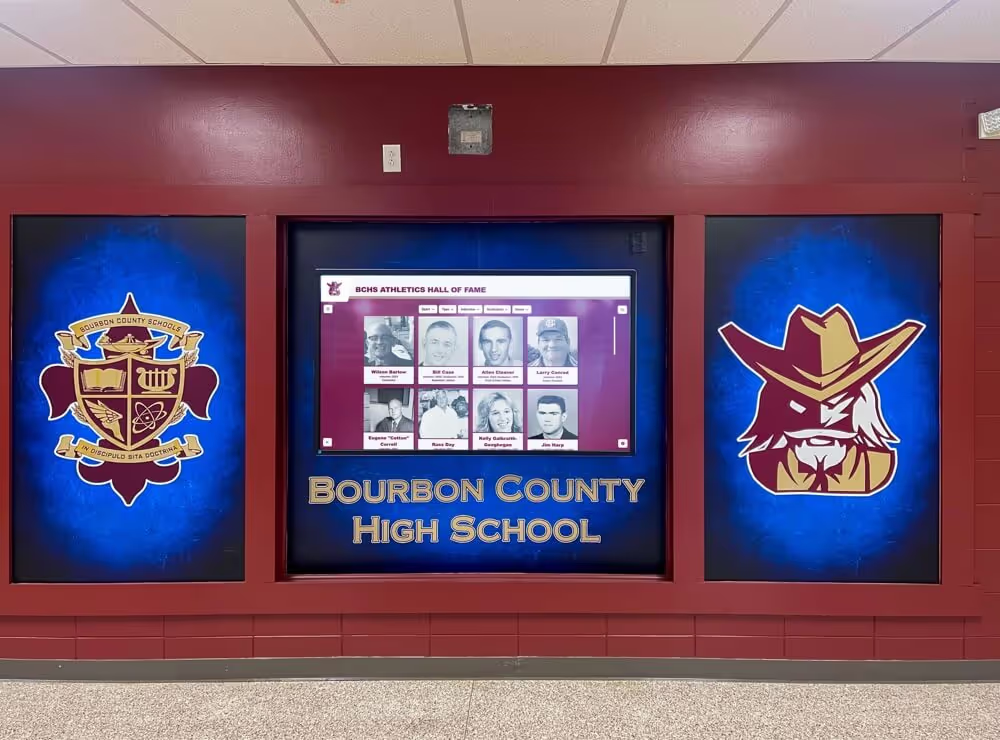
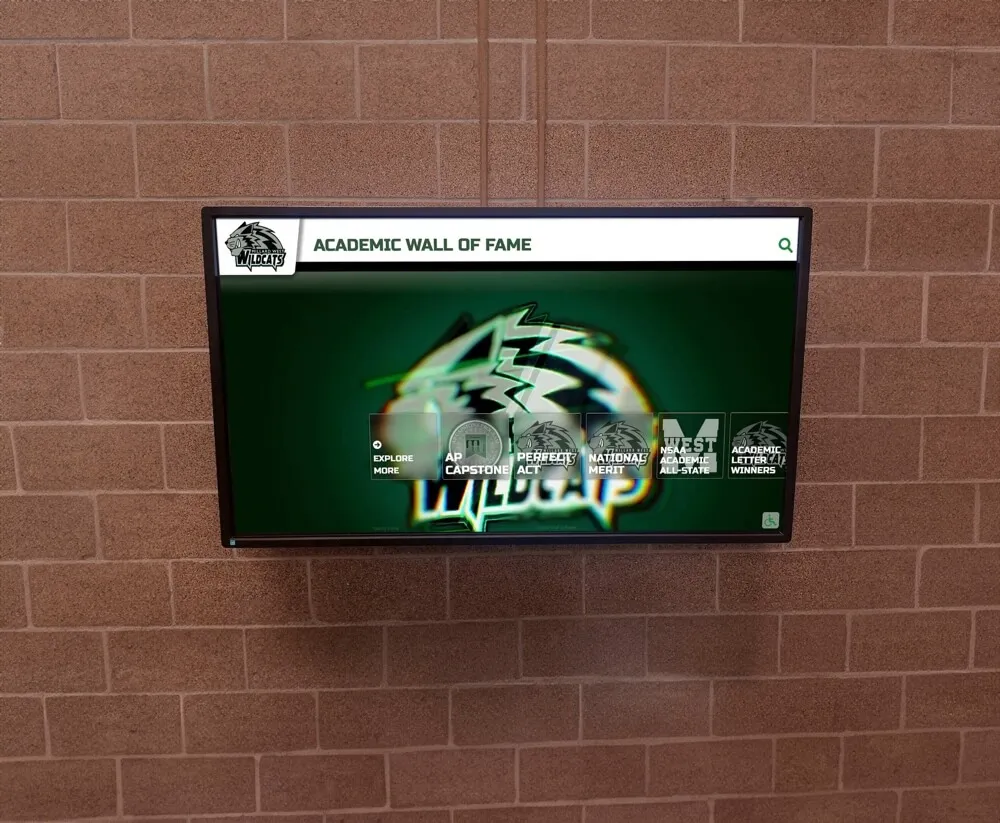
Touchscreen interfaces enable intuitive exploration of detailed achievement information
Member Exploration Interface
Grid View Display
- Thumbnail photos of all members in clean grid layout
- Name and graduation year below each photo
- Composite score prominently visible
- Color coding by score range (30-31, 32-33, 34-36)
- Touch any member photo to access detailed profile
Search and Filter Functionality
- Search bar for finding specific students by name
- Graduation year filter viewing specific classes
- Score range filter exploring highest achievers
- Section score filter (e.g., students with Math 36)
- College destination filter seeing institution patterns
Detail Profile View
- Large professional photo
- Complete achievement statistics
- Section score breakdown with visual representation
- Test preparation story and advice
- College destination and major plans
- Additional academic honors
- Back navigation to grid view
This intuitive interface makes exploring ACT 30+ Club members engaging and accessible for all visitors.
Remote Content Management System
Cloud-Based Administration
Modern recognition platforms eliminate technical barriers to ongoing maintenance:
Content Update Workflows
- Remote access from any internet-connected device
- Intuitive drag-and-drop interfaces requiring no technical expertise
- Bulk import tools for adding multiple members from spreadsheets
- Template-based profile creation ensuring consistent presentation
- Scheduled publishing coordinating with announcement timelines
- Role-based permissions enabling appropriate staff access
Collaboration Features
- Multiple administrator accounts for counselors, communications staff, technology coordinators
- Content approval workflows ensuring appropriate review before publishing
- Comment and feedback tools for collaborative content development
- Version history tracking all changes and updates
- Audit logs documenting who made what changes when
Schools report 80-90% reduction in administrative time spent maintaining academic recognition after implementing digital systems compared to traditional physical display management.
Learn about touchscreen software options for recognition display management.
ADA Compliance and Accessibility Integration
Physical Accessibility Requirements
Digital displays must accommodate all users regardless of physical ability:
Mounting and Reach Standards
- Display height positioning operable controls within ADA reach ranges (15-48 inches)
- Touchscreen sensitivity appropriate for users with limited dexterity
- Clear floor space in front of displays (30×48 inches minimum)
- Wheelchair-accessible approach and maneuvering clearance
- Protective coverings that don’t interfere with touch functionality
Visual Accessibility Features
- High-contrast viewing modes for users with visual impairments
- Text magnification options for all content areas
- Font selection optimizing readability (sans-serif, appropriate sizing)
- Color schemes meeting WCAG 2.1 AA contrast ratios
- Alternative text for all images and visual elements
Digital Accessibility Standards
- Screen reader compatibility for visually impaired users
- Keyboard navigation alternatives to touch interaction
- Audio description options for video content
- Closed captioning for all video and audio materials
- Plain language writing appropriate for diverse literacy levels
Web Platform Accessibility
- Mobile-responsive design ensuring smartphone and tablet access
- WCAG 2.1 AA compliance across all web content
- Alternative access methods for users unable to visit campus
- Downloadable content options for offline viewing
- Multi-language support for diverse family communities
Comprehensive accessibility ensures ACT 30+ Club recognition reaches all community members while demonstrating institutional commitment to inclusive celebration.
On-Site Activation and Engagement Strategies
Guided Tours and Open Houses
Maximize recognition impact during school events:
Prospective Family Tours
- Tour guides trained to discuss ACT 30+ Club significance
- Interactive demonstration of display functionality
- Student ambassador testimonials about achievement culture
- Comparison data showing school performance vs. national averages
- Connection to college preparation support programs
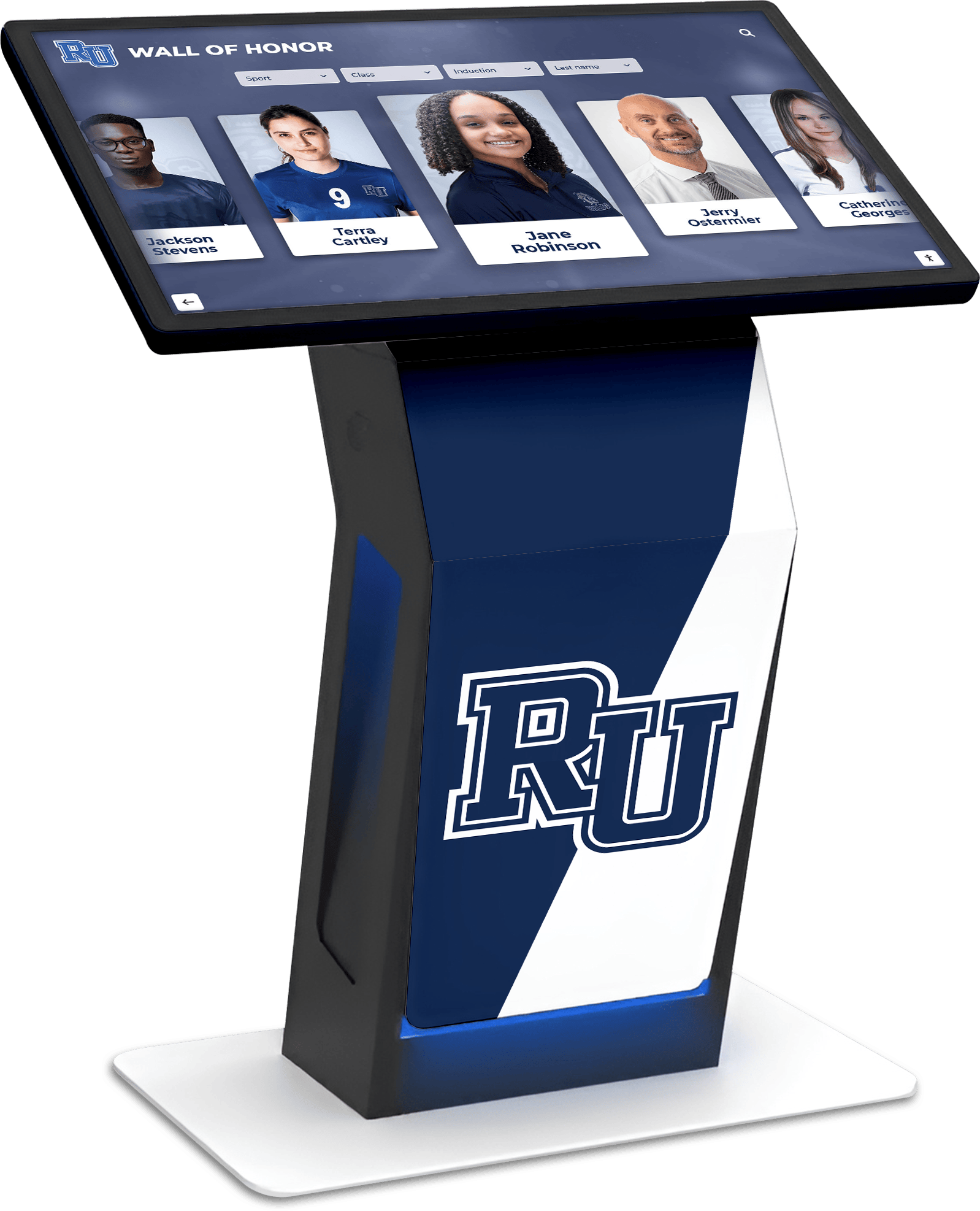
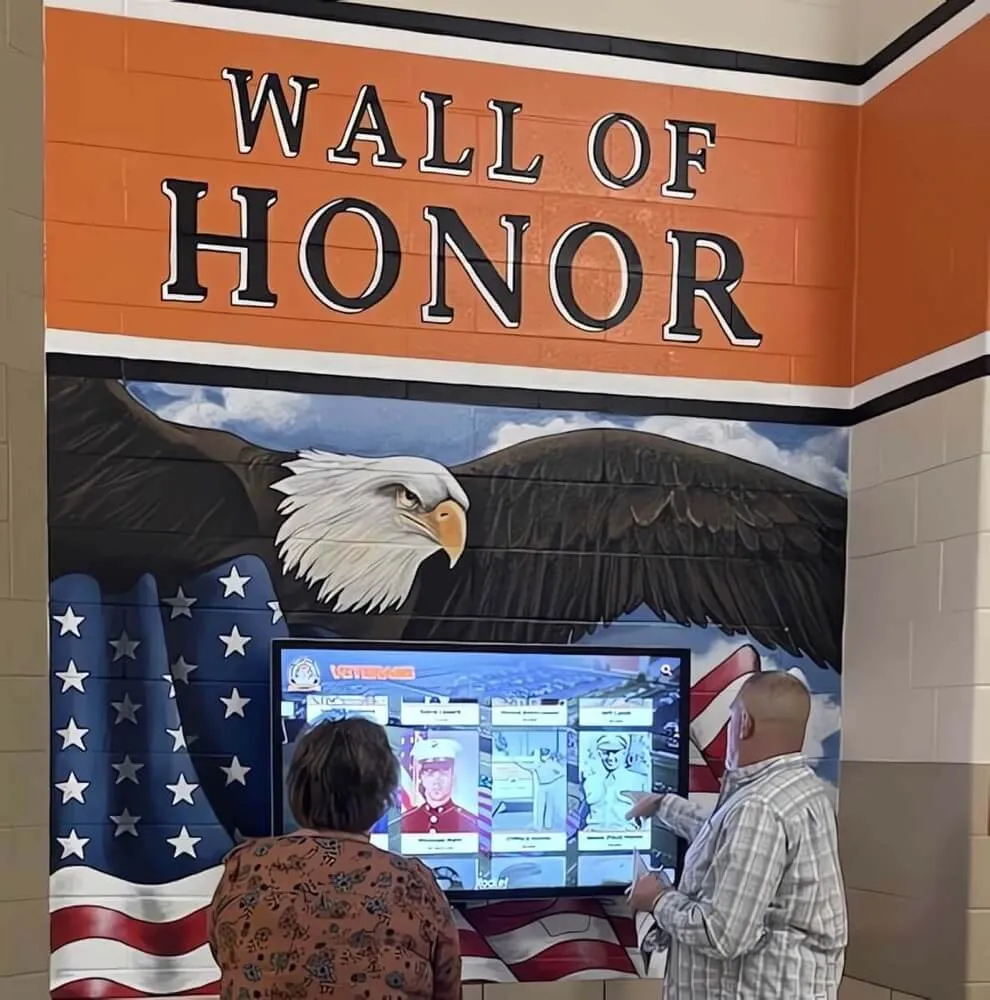
Integrated recognition systems showcase achievement across all academic disciplines and accomplishments
Open House and Back-to-School Nights
- Display positioned prominently in event traffic flow
- Staff stationed to answer questions and demonstrate features
- Current members available to share experiences
- Test preparation information distribution
- Guidance office appointment scheduling for interested families
Academic Pep Rallies and Celebrations
- Large-screen projection of recognition content
- New member announcements and celebration
- Score improvement recognition for students retesting
- Test preparation program promotion
- Alumni member video messages
College Application Season Integration
- Displays highlighting members’ college acceptances
- Application essay sharing (with permission)
- Scholarship award announcement integration
- Decision Day coordination showing college destinations
- Senior send-off recognition at graduation
These strategic activation points transform displays from passive recognition to active community engagement tools supporting academic culture development.
Measurement: Engagement KPIs, Impact Assessment, and Program Refinement
Successful ACT 30+ Club recognition requires systematic assessment ensuring programs achieve intended goals while justifying ongoing resource investment.
Quantitative Success Metrics
Participation and Achievement Tracking
Club Membership Data
- Total ACT 30+ Club members by year
- Percentage of graduating class achieving threshold
- Composite score distribution (30-31, 32-33, 34-36)
- Year-over-year growth or decline trends
- Demographic distribution ensuring equitable representation
Test Performance Indicators
- School average ACT composite score trends
- ACT participation rates among eligible students
- Multiple test attempt frequency and improvement rates
- Section-specific performance patterns
- Comparison to state and national averages
College Outcome Correlation
- College acceptance rates for ACT 30+ members
- Merit scholarship award frequency and amounts
- Selective institution admission rates
- College persistence and success data (if tracked)
- Career outcome tracking for alumni members

Professional recognition systems create lasting impressions on visitors and community members
Engagement Analytics
Digital Display Interaction Metrics
Modern touchscreen platforms provide comprehensive usage data:
Session Analytics
- Total interactions per day/week/month
- Average session duration per user
- Most viewed member profiles
- Most-used search and filter functions
- Navigation path analysis showing user behavior
- Peak usage times and traffic patterns
Content Performance
- Which member profiles receive most attention
- Test preparation resource access frequency
- Historical achievement archive exploration rates
- Video content view-through rates
- Social media integration engagement
Schools typically observe 5-10 minute average engagement durations with interactive academic displays compared to brief glances at static plaques—demonstrating dramatically increased recognition impact.
Web Platform Usage
- Total unique visitors to online recognition platform
- Geographic distribution of visitors (on-campus vs. remote)
- Page views per member profile
- Mobile vs. desktop access patterns
- Social sharing frequency and viral reach
- Alumni engagement with historical content
Qualitative Assessment Methods
Stakeholder Feedback Collection
Student Surveys
- ACT 30+ Club member satisfaction with recognition
- Underclassmen awareness of program and requirements
- Influence of recognition on test preparation motivation
- Perceived value of membership for college applications
- Suggestions for program enhancements or improvements
Family Perception Assessment
- Parent satisfaction with recognition appropriateness
- Family engagement with digital displays and web platforms
- Pride and connection to school academic culture
- Recommendations to prospective families
- Volunteer or financial support interest
Staff and Faculty Evaluation
- Counselor assessment of college preparation impact
- Teacher observation of student motivation changes
- Administrative review of program sustainability
- Technology staff evaluation of system functionality
- Communications team assessment of promotional effectiveness
College Counselor Insights
- Impact on student college list development
- Scholarship application strengthening evidence
- College admissions officer awareness of school academic strength
- Competitive positioning vs. peer schools
- Guidance office workload and efficiency impacts
Academic Culture Impact Indicators
Behavioral Change Evidence
Beyond direct metrics, observe cultural shifts suggesting recognition program effectiveness:
Test Preparation Engagement
- ACT preparation course enrollment trends
- Practice test completion rates
- After-school study session participation
- Multiple test attempt frequency
- Fee waiver utilization rates (ensuring access equity)
Academic Achievement Patterns
- Advanced coursework enrollment increases
- Overall GPA improvement trends
- Academic competition participation growth
- Honor roll recognition expansion
- College-going culture development
Student Goal-Setting
- Underclassmen setting ACT score goals
- Test preparation planning earlier in high school
- Academic rigor selection in course planning
- College aspiration expansion
- Career exploration connected to academic achievement
These qualitative indicators provide context beyond raw numbers, demonstrating broader cultural impacts of systematic ACT 30+ Club recognition.
Explore senior class awards displays for additional recognition program assessment approaches.
Advanced Recognition Strategies and Program Enhancements
Schools seeking maximum recognition impact can implement sophisticated approaches beyond foundational programs.
Multi-Score Club Recognition
Expanding Recognition Tiers
Beyond ACT 30+ Club, create tiered recognition acknowledging diverse achievement levels:
ACT 25+ Club (Bronze Level)
- Recognizing students achieving 75th percentile or higher (approximately top quarter)
- Providing encouragement for students on pathway to higher scores
- Creating aspirational milestone for broader student population
- Bronze-level medallion or certificate designation
ACT 28+ Club (Silver Level)
- Acknowledging students in approximately top 10% nationally
- Silver-level recognition with separate display section
- Intermediate achievement celebrated systematically
- Pathway recognition toward ACT 30+ membership
ACT 30+ Club (Gold Level)
- Premier recognition for top 7% national achievement
- Gold-level medallion and featured display prominence
- Primary ceremony and celebration focus
- Most comprehensive profile content and storytelling
ACT 34+ Club (Platinum Level)
- Exclusive recognition for top 1% national achievement
- Special platinum designation within ACT 30+ Club
- Additional ceremony recognition and spotlight
- Featured profiles highlighting extraordinary accomplishment
This tiered structure maintains ACT 30+ prestige while creating recognition opportunities motivating broader student populations.
Section-Specific Excellence Recognition
Subject-Area Achievement Celebration
Complement composite score recognition with section-specific achievement:
Perfect Section Score Recognition
- Students achieving 36 in any individual section
- Separate recognition category highlighting subject mastery
- Connection to related academic department achievement
- Subject-specific advice and preparation strategies
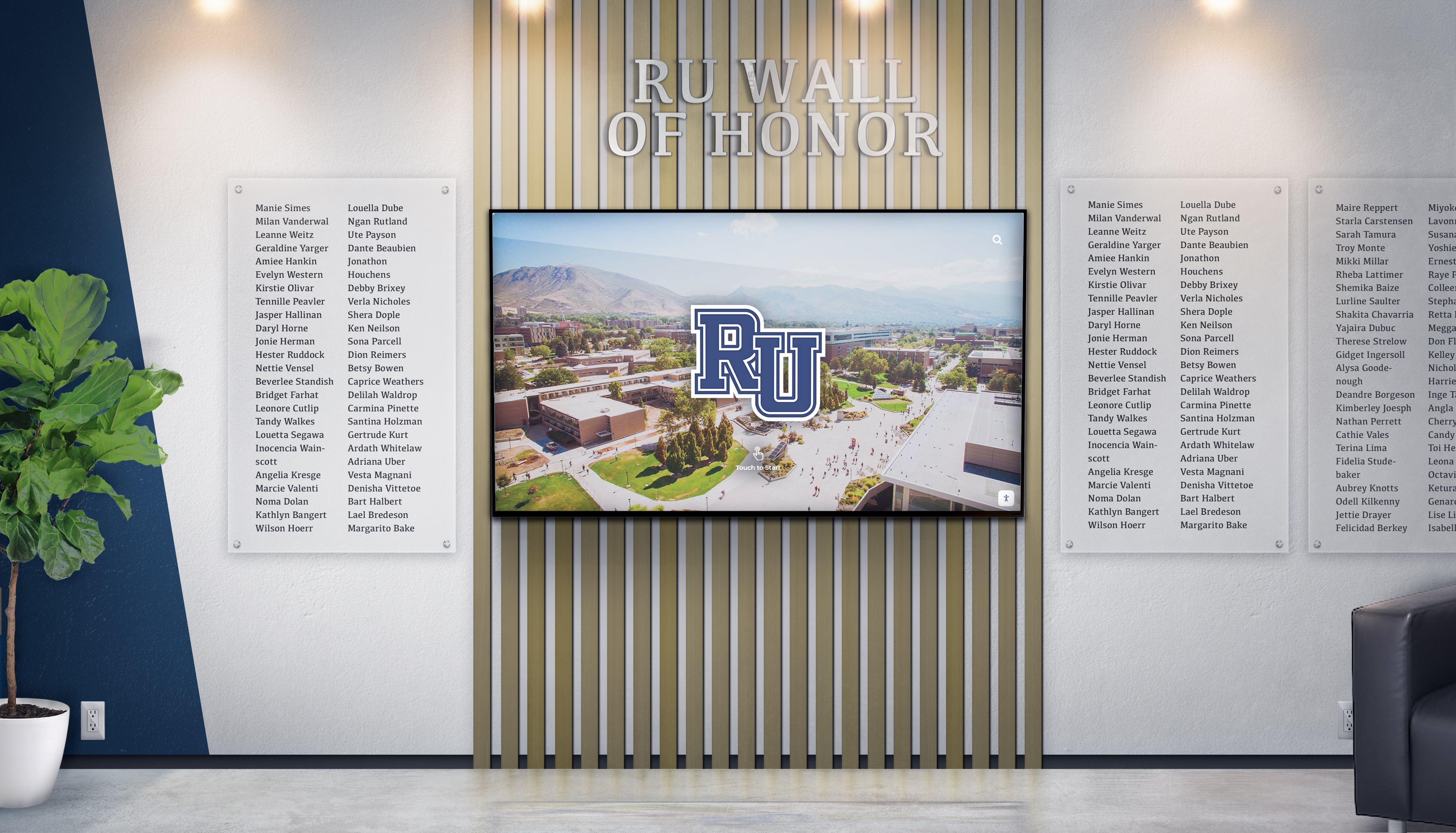
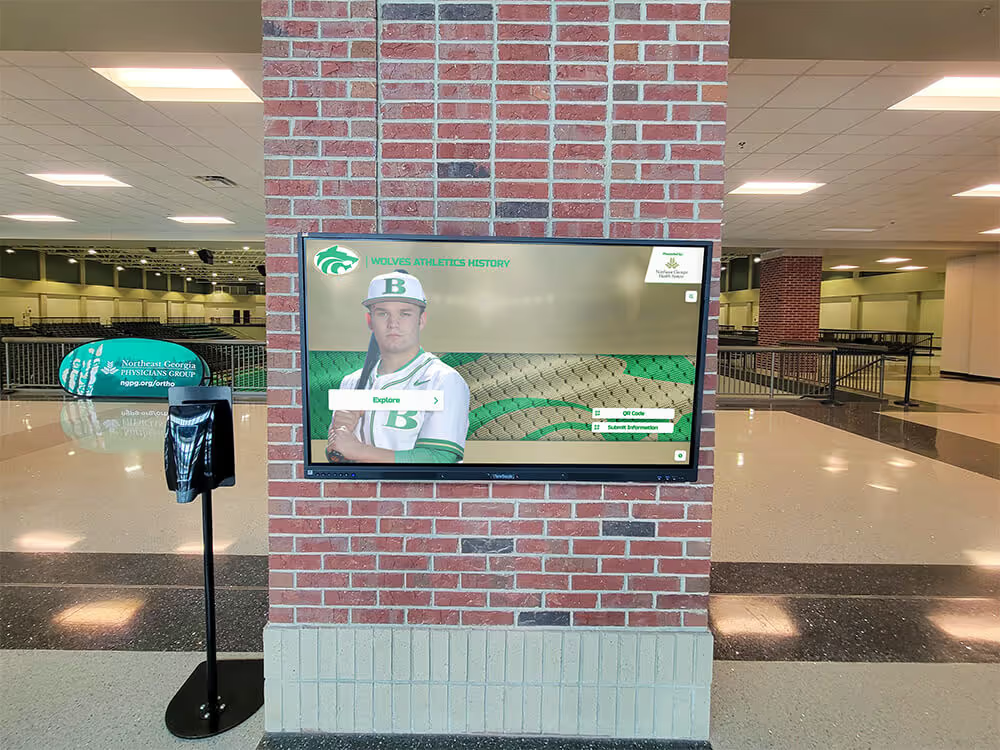
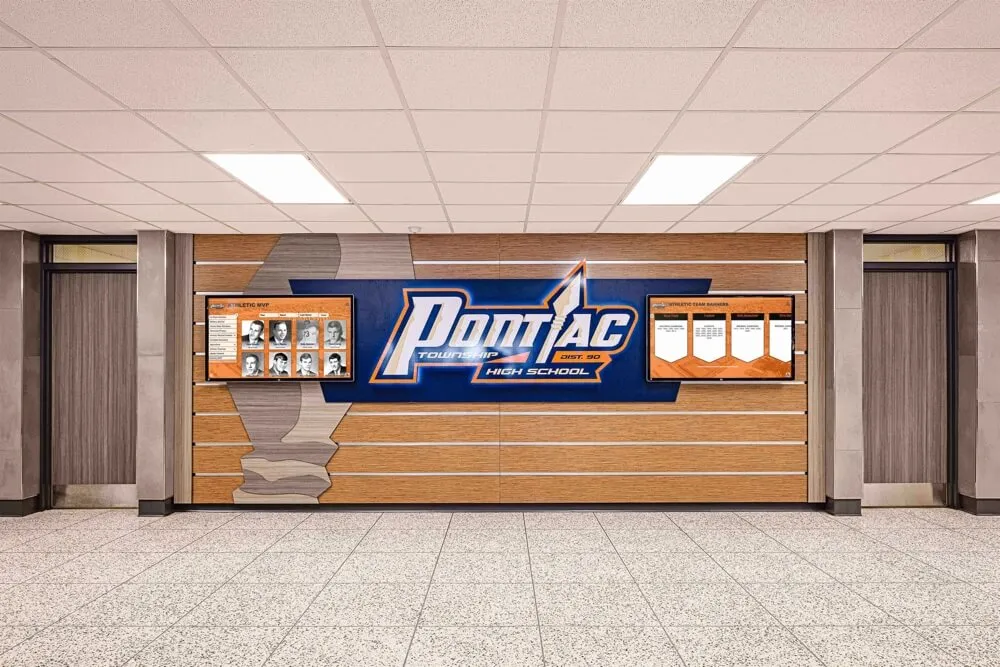
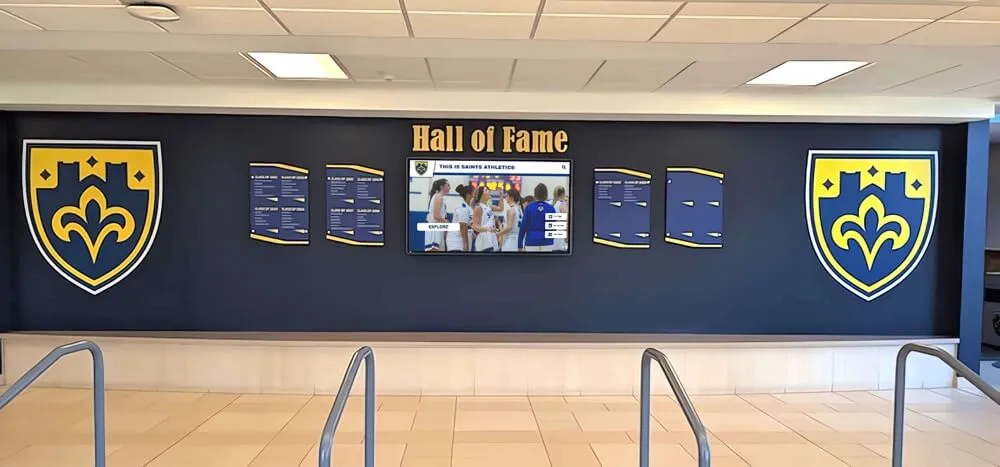
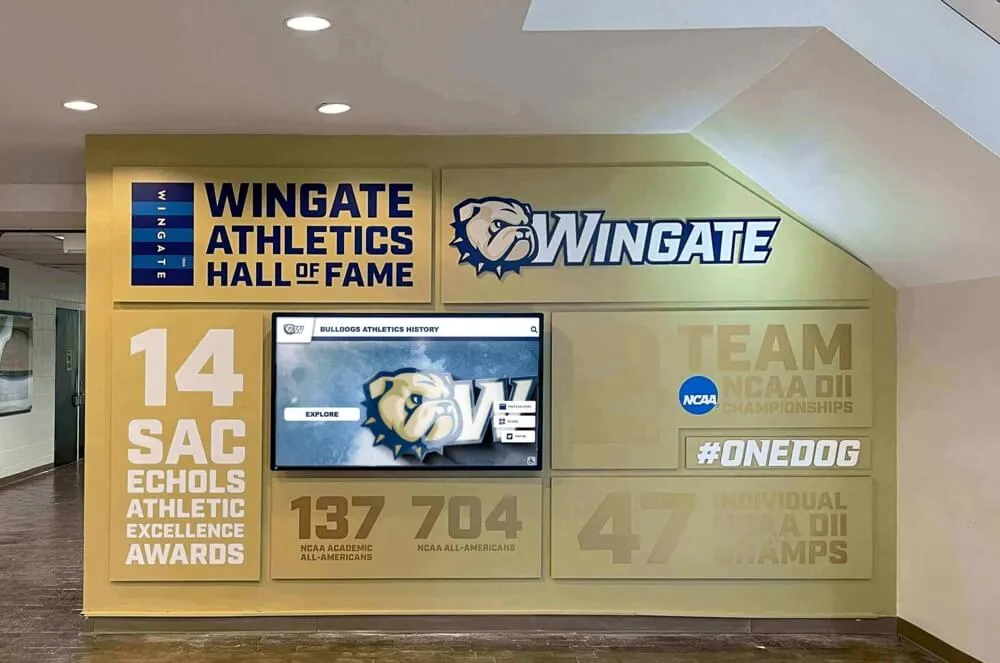
Integrated systems combine digital displays with traditional elements creating comprehensive celebration spaces
Section Score Improvement Recognition
- Students demonstrating significant section score growth (e.g., +5 points)
- Growth recognition motivating multiple test attempts
- Improvement strategy sharing helping other students
- Persistence celebration alongside absolute achievement
Balanced Score Recognition
- Students achieving consistent scores across all four sections
- Recognition for well-rounded academic preparation
- Alternative achievement dimension beyond highest scorers
- Highlighting comprehensive college readiness
This multi-dimensional recognition ensures students with different strengths receive appropriate celebration while providing diverse pathways to recognition.
Longitudinal Achievement Tracking
Multi-Test Journey Documentation
Track individual student ACT journeys comprehensively:
Progressive Score Visualization
- First test through final test score progression
- Section-by-section improvement documentation
- Preparation approach evolution between tests
- Breakthrough moment identification and celebration
- Final achievement narrative arc
Persistence and Improvement Recognition
- Special recognition for students taking 3+ tests
- Growth awards for significant composite increases
- Resilience celebration for students overcoming initial disappointment
- Effort acknowledgment regardless of final threshold achievement
Freshman-to-Senior Academic Path
- Connection between ACT achievement and earlier academic preparation
- Course selection impact on test preparedness
- Academic journey documentation from entry to graduation
- Comprehensive college readiness demonstration
This longitudinal approach celebrates not just final scores but entire academic preparation journeys—demonstrating that ACT success results from sustained effort rather than isolated performance.
Alumni Network Integration
Extending Recognition Beyond Graduation
Connect current ACT 30+ Club members with accomplished alumni:
Alumni Mentorship Programs
- Matching current members with alumni in similar career fields
- College selection guidance from alumni at target institutions
- Career pathway exploration and internship connections
- Life after high school perspective and advice
- Professional network introduction opportunities
Where Are They Now Updates
- Regular alumni profile updates on digital displays
- College academic success documentation
- Graduate school and professional achievement celebration
- Career outcome tracking demonstrating ACT preparation value
- Alumni testimonials about long-term benefits
Learn about alumni engagement strategies that build on academic recognition foundations.
Giving Back Opportunities
- Alumni funding for test preparation programs
- Alumni-sponsored scholarships for ACT 30+ achievers
- Alumni guest speaker programs sharing success stories
- Alumni career day participation
- Fundraising campaigns supporting recognition programs
This alumni integration creates sustainable ecosystems where achievement recognition continues generating value long after graduation while building lifelong school connections.
Integration with Broader Academic Recognition
Comprehensive Academic Excellence Platforms
Position ACT 30+ Club recognition within holistic academic celebration:
Multi-Recognition Digital Systems
- Combined displays featuring ACT 30+ Club alongside AP Scholars
- National Merit recognition integration
- Subject-specific academic award inclusion
- Academic competition achievement documentation
- Scholarship recipient recognition coordination
This comprehensive approach creates complete pictures of academic excellence rather than fragmented recognition across disconnected systems.
Addressing Common Implementation Challenges
Schools implementing ACT 30+ Club recognition programs encounter predictable obstacles with established solutions.
Equity and Access Considerations
Ensuring Recognition Reflects All Students
Monitor recognition distribution across student populations:
Test Access Equity
- Ensure all students receive information about ACT registration
- Provide fee waivers for income-eligible students eliminating cost barriers
- Offer test preparation programs accessible to all students regardless of ability to pay
- Address transportation barriers to test center access
- Provide clear timeline and registration support through guidance office
Preparation Resource Equity
- School-sponsored test preparation courses or after-school programs
- Free practice test access through school libraries or computer labs
- Test preparation material lending library
- Peer tutoring programs connecting ACT 30+ members with younger students
- Accommodation processes ensuring students with disabilities receive appropriate support
Recognition Inclusivity
- Celebrate multiple test achievement pathways (ACT, SAT, etc.)
- Integrate alternative academic recognitions ensuring diverse students find success
- Growth recognition alongside absolute achievement
- Demographic analysis ensuring equitable achievement opportunities
- Culturally responsive celebration avoiding assumptions about family contexts
Privacy and Consent Management
Respecting Student Preferences
Appropriate recognition respects student and family preferences:
Required Permissions
- Photo release forms authorizing public display of student images
- Score disclosure consent allowing specific achievement publication
- Social media sharing permissions for broader promotional use
- Video and multimedia release for enhanced profile content
- Annual renewal ensuring ongoing comfort with recognition
Opt-Out Accommodation
- Clear processes for students declining public recognition
- Private celebration alternatives for students with privacy concerns
- Partial participation options (internal display only, no social media)
- No academic or social penalties for students choosing privacy
- Respect for family circumstances requiring discretion
Budget Constraints and Funding Solutions
Making Recognition Financially Sustainable
Multiple approaches help schools afford recognition programs:
Initial Investment Sources
- Operating budget integration within academic department allocations
- Technology budget leveraging existing digital signage infrastructure
- PTSA or booster club support for one-time hardware purchases
- Local business sponsorship connecting community partners
- Grant applications targeting educational technology or academic recognition
- Alumni fundraising engaging accomplished graduates
Ongoing Cost Management
- Phased implementation starting with web-based recognition before physical displays
- Multi-purpose display usage beyond ACT recognition
- Volunteer coordination reducing ceremony and content development costs
- Digital platform cost-effectiveness vs. traditional physical recognition
- Shared resources across multiple academic recognition programs
Many schools find digital recognition systems offer superior long-term value compared to traditional displays requiring ongoing physical modification and expansion.
Conclusion: Building Academic Excellence Culture Through ACT 30+ Club Recognition
ACT 30+ Club digital showcase boards represent strategic investments in academic culture development—celebrating exceptional standardized test achievement while inspiring younger students to pursue similar excellence. When schools implement comprehensive recognition programs combining professional displays, systematic ceremonies, resource integration, and sustained communication, they create environments where test preparation becomes valued, celebrated, and central to college preparation culture.
The strategies explored in this blueprint provide complete frameworks for establishing ACT 30+ Club recognition that maximizes impact through interactive touchscreen displays, rich multimedia profiles, strategic ceremony celebration, and integration with broader academic excellence initiatives. From overcoming traditional display limitations to creating engaging exploration experiences to connecting members with underclassmen, these approaches transform ACT achievement acknowledgment from brief announcements to sustained celebration woven throughout school culture.
Ready to transform how your school celebrates ACT 30+ achievement? Modern digital recognition solutions help schools honor standardized test excellence comprehensively while inspiring future high achievers. Solutions like Rocket Alumni Solutions provide comprehensive platforms specifically designed for educational achievement recognition, offering unlimited capacity, rich multimedia profiles, interactive exploration, and web accessibility that extends recognition impact far beyond traditional displays.
Whether you’re launching a new ACT 30+ Club or modernizing existing approaches, start with clear criteria establishing membership thresholds, select technology matching your needs and resources, develop compelling content telling complete achievement stories, plan meaningful ceremonies celebrating members appropriately, and implement systematic processes ensuring long-term sustainability.
Request Your Free Custom Demo to explore how digital recognition displays can celebrate your students’ exceptional ACT achievements.
Your ACT 30+ Club members deserve recognition appropriately honoring their exceptional achievement while inspiring underclassmen to pursue their own test preparation excellence. With thoughtful planning, appropriate technology, meaningful ceremony design, and consistent implementation, you can create recognition systems that celebrate standardized test accomplishment as prominently as any other achievement—building college preparation cultures where test preparation is valued, rigorous academic preparation is aspirational, and every student feels motivated to reach their highest potential.
The most important elements aren’t budget size, facility quality, or program history—they’re genuine commitment to academic celebration, systematic implementation ensuring consistent execution, and sustained effort making recognition central to school culture. Your students invested hundreds of hours preparing for college entrance exams; investing in their proper recognition represents not just appropriate acknowledgment but strategic investment in academic culture benefiting students for generations to come.
Start planning your ACT 30+ Club recognition program today. Explore academic achievement recognition approaches or schedule a custom mock-up call to begin your recognition transformation.