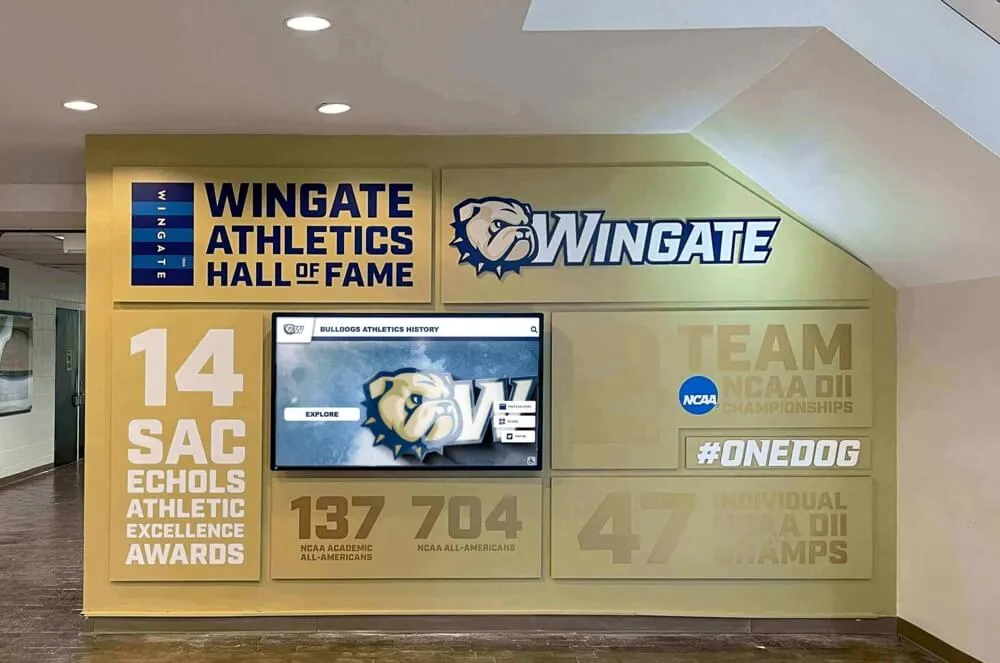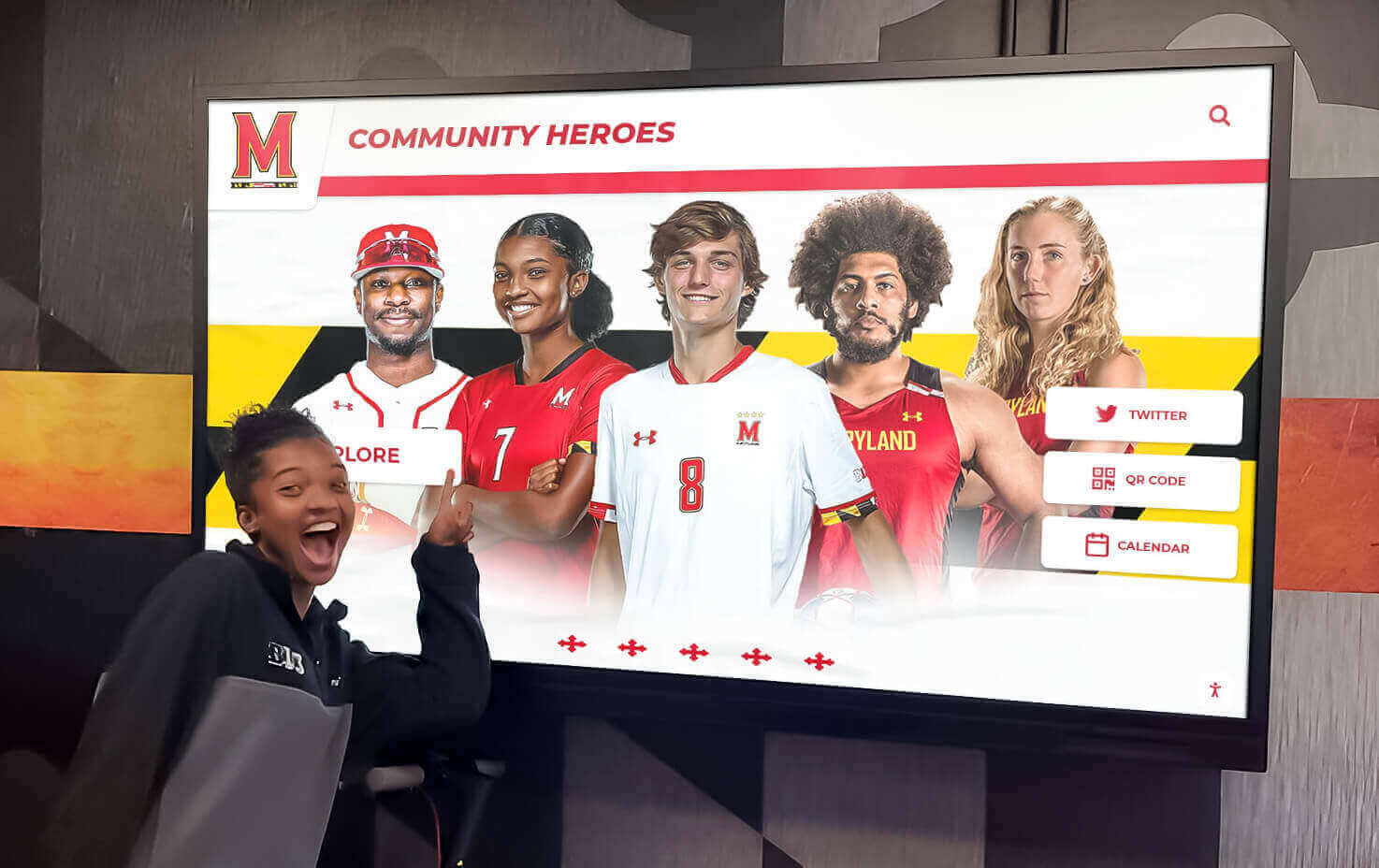




Academic signing day has emerged as a powerful recognition ceremony that celebrates ALL students—not just student-athletes—as they commit to their post-graduation paths, whether that means four-year universities, community colleges, trade schools, military service, career apprenticeships, or workforce development programs. Mirroring the energy and celebration traditionally reserved for athletic signing days, academic signing days validate the diverse paths students choose and demonstrate that every commitment deserves recognition, celebration, and community support.
Schools across the country have discovered that academic signing day ceremonies boost student morale, strengthen school culture, increase college enrollment rates, and send a powerful message to younger students that achievement comes in many forms. These celebrations typically occur in spring—often coinciding with National College Decision Day (May 1) or scheduled separately to give academic commitments their own dedicated spotlight.
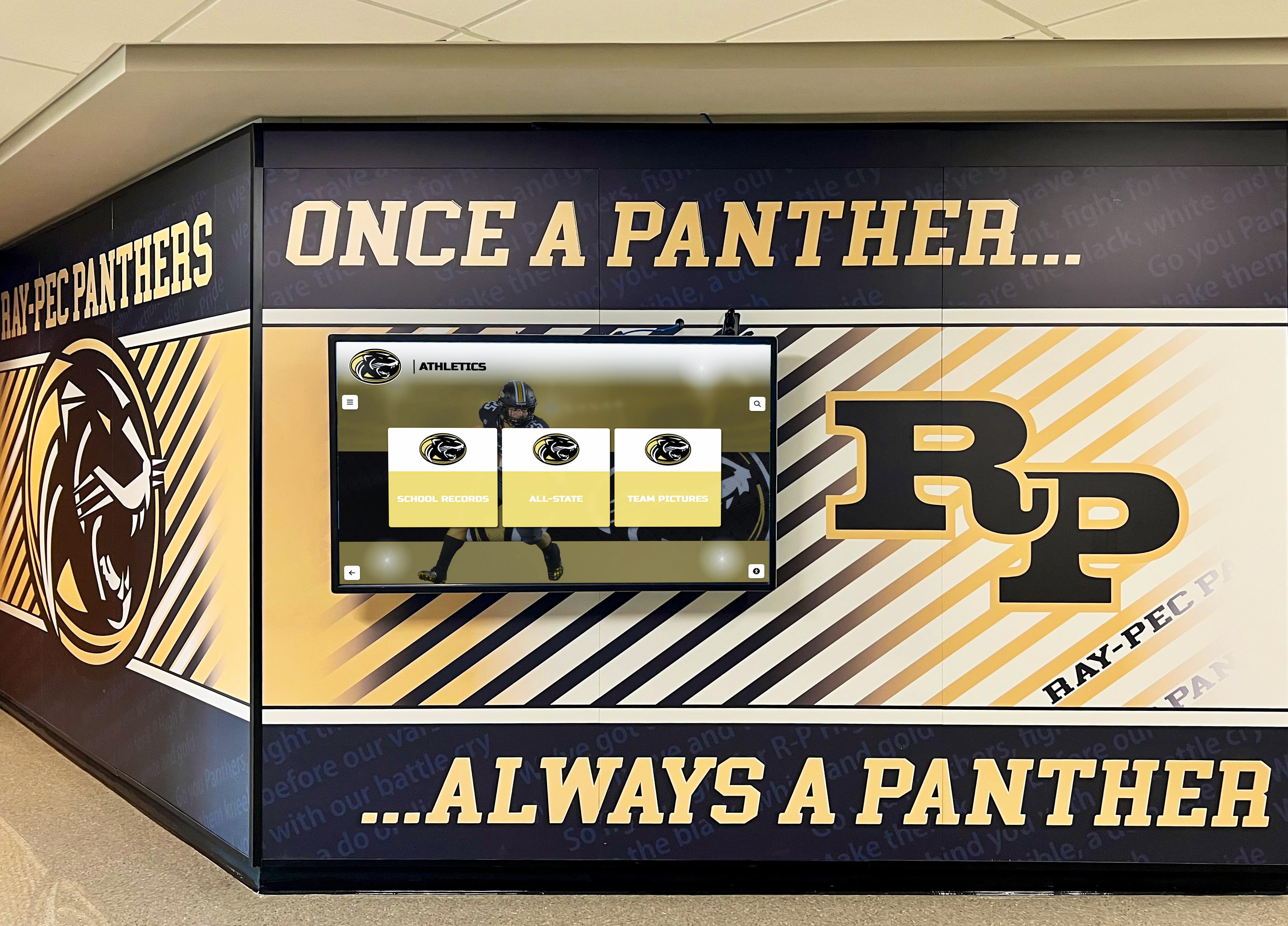
Program Snapshot: Academic Signing Day Overview
| Component | Details |
|---|---|
| Primary Audience | High school seniors committing to colleges, universities, trade schools, military service, or career programs |
| Secondary Audience | Parents, faculty, underclassmen, community members, local media |
| Typical Timing | Late April through early May (often aligned with National College Decision Day - May 1) |
| Program Duration | 45-90 minute ceremony plus photo opportunities |
| Key Outcomes | Public commitment celebration, photo documentation, permanent recognition display, inspiration for younger students |
| Featured Recognition | Individual student spotlights, institutional commitments, scholarship announcements, career pathway highlights |
| Display Integration | Digital recognition displays showcasing all commitments year-round |
The most successful academic signing day programs recognize that post-secondary success takes many forms. While some students sign letters of intent to four-year institutions, others commit to apprenticeships in skilled trades, enlist in military service, or enroll in certificate programs that lead directly to careers—all pathways deserve equal celebration and permanent recognition within your school’s legacy displays.
Why Academic Signing Day Matters
Traditional athletic signing days have long celebrated student-athletes committing to play sports at the collegiate level, complete with media coverage, signed letters of intent displayed proudly, and ceremonies attended by family and community members. Academic signing days extend this same honor and excitement to ALL students making significant post-graduation commitments.
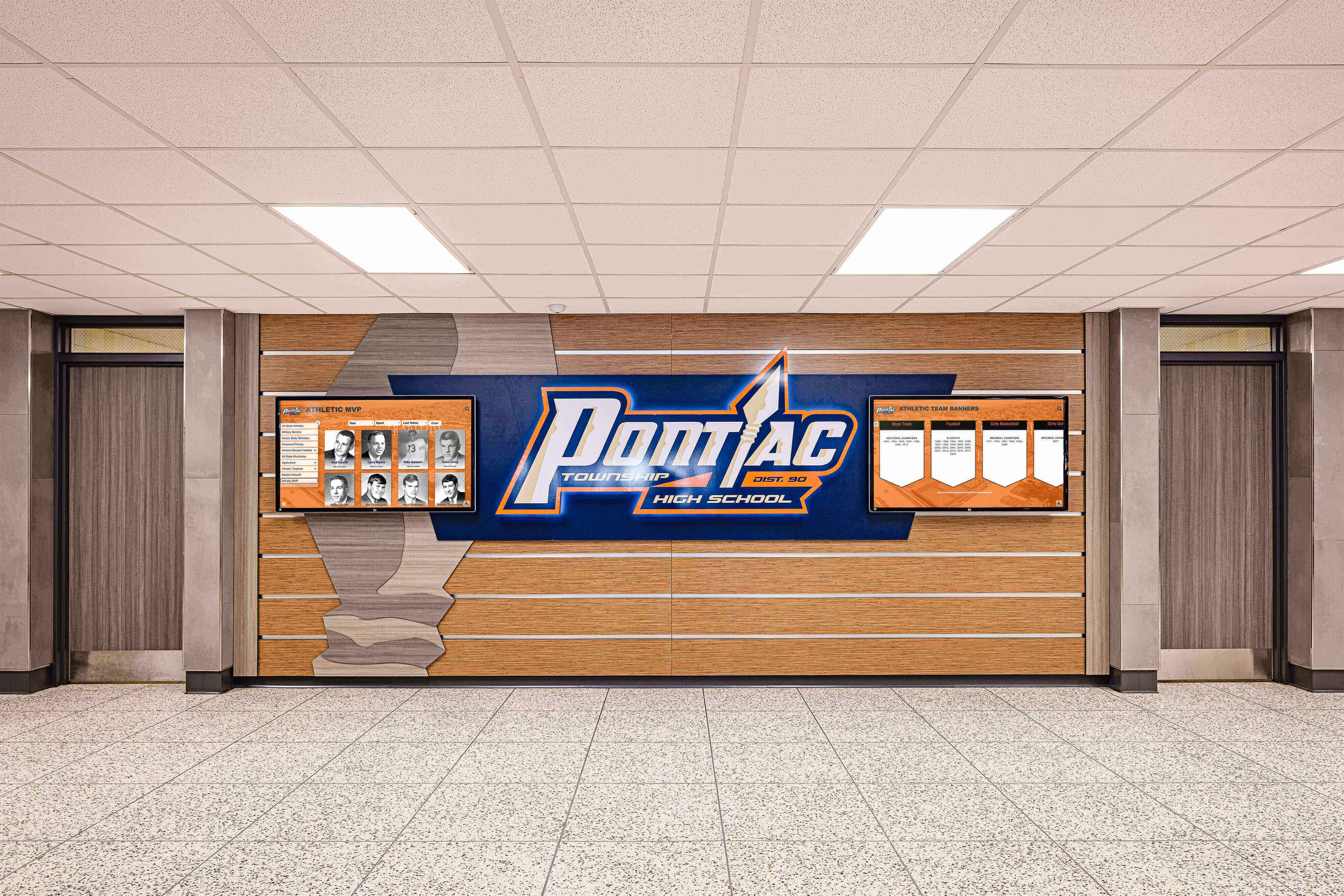
Benefits for Students
Validation and visibility. Students whose achievements happen in classrooms, laboratories, vocational shops, or community service settings rarely receive the same public celebration as athletes. Academic signing day corrects this imbalance by placing academic and career commitments center stage.
Permanent legacy. Unlike a single ceremony that exists only in memory, academic signing day creates lasting recognition through photos, displays, and digital archives that honor student commitments for years to come.
Inspiration cascade. When underclassmen see seniors celebrated for pursuing engineering degrees, nursing programs, military service, or skilled trade apprenticeships, they begin envisioning their own futures and understanding that multiple pathways lead to success.
Benefits for Schools
Culture of achievement. Schools that celebrate diverse post-graduation pathways demonstrate genuine commitment to all students, not just those excelling in traditional academic metrics or athletics. This inclusive recognition strengthens overall school culture and morale.
Increased enrollment rates. Public commitment ceremonies create positive peer pressure and accountability. Students who publicly announce their college or career pathway are more likely to follow through on those commitments.
Community engagement. Academic signing days attract parents, local media, business partners, and community leaders who see the school actively preparing students for diverse futures. These events strengthen community support and partnerships.
Recruitment tool. Prospective families touring your school see evidence that the institution values ALL student pathways and celebrates achievements beyond athletics, making your school more attractive to families prioritizing academic excellence and career preparation.
Content Architecture: What to Include in Your Academic Signing Day Program
Effective academic signing day ceremonies balance formality with celebration, recognition with inspiration, and individual spotlights with collective pride. The following content architecture creates a memorable experience that participants will treasure and observers will remember.
Pre-Ceremony Registration and Documentation
Begin planning 8-10 weeks before your target ceremony date. Create a simple registration process where seniors submit:
- Full name and expected graduation date
- Post-graduation commitment (institution name, military branch, career program, etc.)
- Field of study or career pathway
- Any scholarships, honors, or special recognition received
- Parent/guardian names for recognition during ceremony
- Student photo (formal or casual based on program tone)
- Optional: brief statement about why they chose this pathway
This information feeds both the live ceremony and permanent digital recognition displays. Similar to how schools track honor roll achievements, academic signing day commitments become part of students’ permanent recognition records.
Ceremony Structure and Run of Show
Opening remarks (5 minutes): Principal or superintendent welcomes attendees and frames the significance of the day. Emphasize that this celebration honors ALL pathways—college, military, trade schools, workforce development—because every commitment represents preparation for successful adult life.
Pathway categories (30-60 minutes): Rather than calling students alphabetically, organize recognition by pathway categories:
- Four-year colleges and universities
- Community colleges and two-year programs
- Trade schools and vocational programs
- Military service (Army, Navy, Air Force, Marines, Coast Guard, Space Force)
- Career apprenticeships and direct workforce entry
- Gap year programs with structured service or learning components
For each student:
- Announce name, commitment destination, and field of study/career pathway
- Invite student to sign commemorative document or display board
- Present certificate or program-specific gift (college pennant, career pathway recognition, military service flag, etc.)
- Photo opportunity at designated backdrop or signing table
- Optional: 30-second student statement about their choice
Guest speaker (10 minutes): Invite an alumnus who followed a non-traditional pathway to success, a community college transfer graduate now thriving professionally, or a military veteran who built a career after service. This reinforces the message that diverse pathways lead to fulfilling futures.
Closing celebration (5 minutes): Collective photo of all participants, announcement of where permanent recognition will be displayed, and invitation for attendees to view the digital recognition wall following the ceremony.
Visual Elements and Photo Opportunities
Create Instagram-worthy moments that participants will share on social media, amplifying the celebration beyond attendees:
Signing table backdrop: Design a branded backdrop featuring your school name, mascot, and “Academic Signing Day [YEAR]” messaging. This becomes the photo location where students pose while signing commemorative documents.
College/pathway display boards: Create visual displays showing which institutions students are attending. Some schools use maps with pins showing geographic distribution of college commitments, while others create categorical groupings (in-state universities, out-of-state schools, military branches, trade programs).
Parent recognition: Reserve space for parents/guardians in photos, acknowledging their support throughout students’ educational journeys.
Underclassman observers: Invite juniors, sophomores, and freshmen to attend, either as audience members or designated support roles (ushers, photographers, social media team). Seeing this ceremony plants seeds for their own future commitments.
Commemorative Elements
Signed documents: Many schools create large posters or banners that students sign during the ceremony. These become temporary displays in hallways before being photographed and archived digitally.
Individual certificates: Present each student with a formal certificate acknowledging their commitment and celebrating their achievement. Include school seal, signatures from principal and counselors, and specific pathway information.
School gifts: Consider pathway-specific gifts—college pennants, military branch flags, trade school apparel, or career pathway recognition items that students can display in their future dorm rooms, barracks, or apartments.
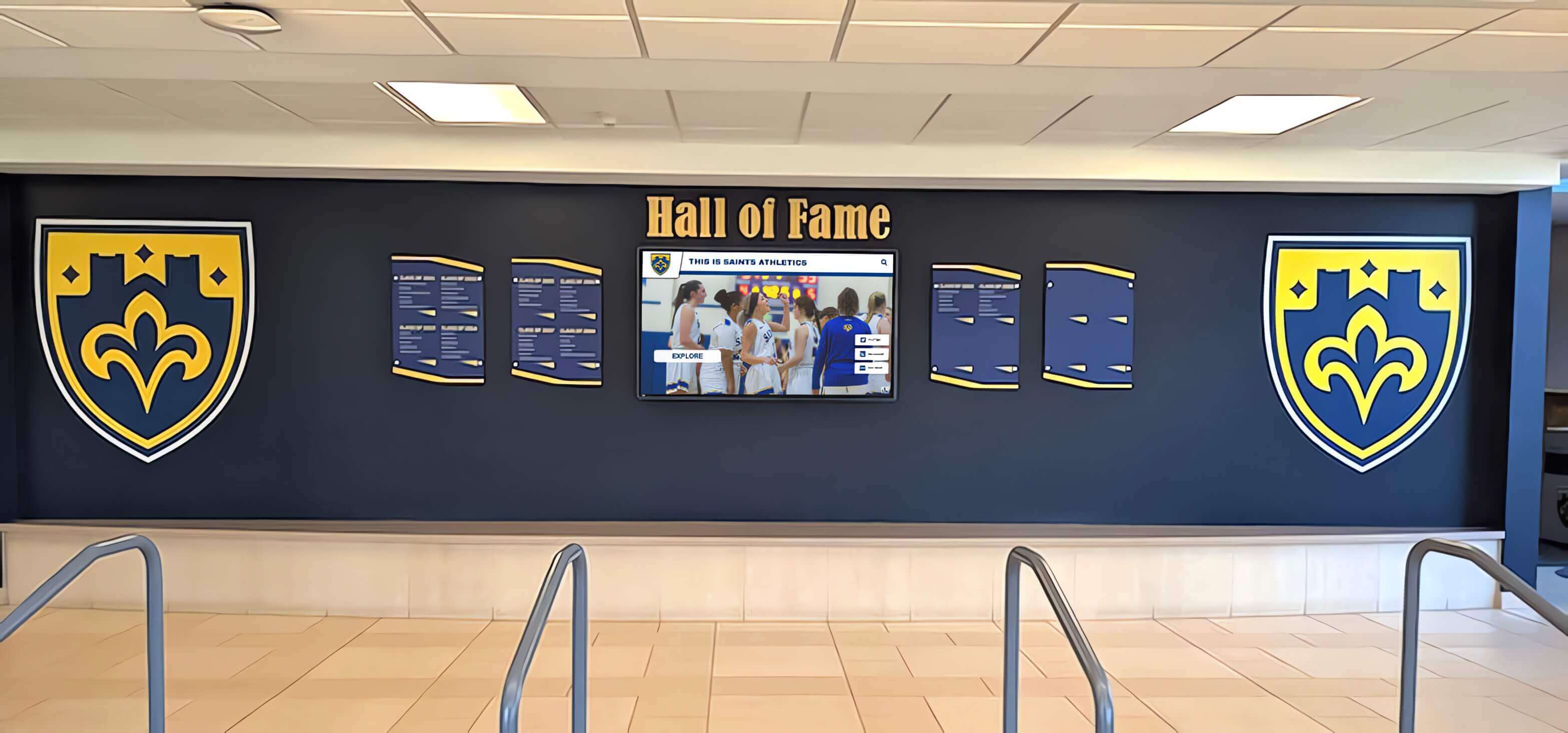
Digital legacy: The most forward-thinking schools integrate academic signing day commitments into permanent digital recognition displays where current students, alumni, and visitors can browse student achievements for years to come.
Execution Timeline: Planning Your Academic Signing Day
Successful academic signing day ceremonies require systematic planning across multiple departments. Use this timeline to ensure smooth execution.
8-10 Weeks Before: Foundation and Registration
Week 1-2: Core planning team assembly
- Designate ceremony coordinator (typically guidance counselor, college counselor, or activities director)
- Recruit support team: administrators, counselors, activities coordinator, technology staff, facilities manager
- Set ceremony date, time, and location
- Determine budget and identify funding sources (general fund, booster clubs, PTSA, local business sponsors)
Week 3-4: Registration launch
- Create registration form collecting all necessary student information
- Announce academic signing day to senior class during grade-level meetings
- Send parent communication explaining the program and encouraging participation
- Set registration deadline (typically 3-4 weeks before ceremony)
- Begin social media campaign promoting the upcoming event
Week 5-6: Content collection
- Monitor registration submissions and follow up with non-participants
- Begin organizing students into pathway categories
- Collect high-quality student photos for programs and displays
- Identify potential guest speakers (successful alumni, community partners, military representatives)
3-4 Weeks Before: Logistics and Communications
Venue preparation:
- Reserve auditorium, gymnasium, or commons area
- Arrange seating for participants and guests
- Set up signing table area with backdrop
- Test audio/visual equipment for presentations
- Coordinate with facilities team for setup and cleanup
Materials development:
- Design and print programs listing all participants and their commitments
- Create certificates for each student
- Prepare signing banner or commemorative posters
- Order or create pathway-specific gifts (pennants, flags, recognition items)
- Design social media graphics for promotion and day-of coverage
Media and documentation:
- Invite local media outlets to cover the event
- Recruit photographer and videographer (student media team or professional)
- Prepare press release highlighting ceremony scope and featured students
- Designate social media team to live-post during event
Digital display planning:
- Work with technology coordinator to design permanent digital recognition
- Prepare content architecture for ongoing academic signing day displays
- Schedule photo uploads and profile creation in recognition platform
Just as schools maintain senior night traditions for athletics, academic signing day becomes an annual cornerstone event that students anticipate throughout their high school careers.
1-2 Weeks Before: Final Details
Rehearsal and coordination:
- Conduct brief walkthrough with core team
- Confirm guest speaker participation and prepare introduction
- Finalize ceremony script and assign roles (emcee, presenters, student assistants)
- Print all materials (programs, certificates, signage)
Participant communication:
- Send reminder email to participants with ceremony logistics
- Provide arrival time, dress code recommendations, and program flow
- Remind students to bring parents/guardians for photo opportunities
- Share social media hashtag for event promotion
Technical preparation:
- Test microphones, projectors, and lighting
- Prepare any multimedia presentations (photo slideshows, video compilations)
- Charge camera batteries and prepare backup equipment
- Set up dedicated photo area with appropriate lighting
Day of Event: Execution
Pre-ceremony (60-90 minutes before start):
- Set up signing table, backdrop, and photo area
- Arrange certificates and gifts in presentation order
- Conduct final sound check
- Welcome early arrivals and direct to registration/seating
During ceremony:
- Follow prepared script and timeline
- Ensure each student receives appropriate recognition
- Capture photos and video throughout event
- Monitor time to avoid running over schedule
Post-ceremony:
- Direct attendees to view digital recognition displays
- Facilitate final group photos
- Collect signed commemorative materials for archiving
- Clean and reset venue

After the Event: Legacy Building
Immediate follow-up (1-3 days after):
- Share photos and highlights on school website and social media
- Distribute press release and photos to local media
- Send thank-you notes to guest speakers, volunteers, and sponsors
- Survey participants for feedback to improve future ceremonies
Permanent recognition (1-2 weeks after):
- Upload student commitments to digital recognition displays
- Create permanent archive of signed materials and photos
- Update school website with academic signing day highlights
- Add ceremony photos to yearbook archives
Year-round celebration:
- Feature academic signing day commitments on digital displays throughout the building
- Reference the program during admissions tours and open houses
- Use photos and testimonials in recruitment materials
- Build anticipation for next year’s ceremony among underclassmen
Display Integration: Creating Permanent Recognition
While the ceremony itself lasts only an hour or two, the impact of academic signing day extends throughout the year and across future graduating classes when you integrate commitments into permanent recognition displays.
Traditional Display Options
Hallway bulletin boards: Create dedicated academic signing day displays in high-traffic hallways showcasing photos from the ceremony, lists of student commitments organized by institution or pathway, and inspirational quotes about education and career preparation.
Guidance office displays: Position academic signing day recognition in the college counseling center where underclassmen conducting college research can see where recent graduates committed. This provides realistic models and expands students’ awareness of available options.
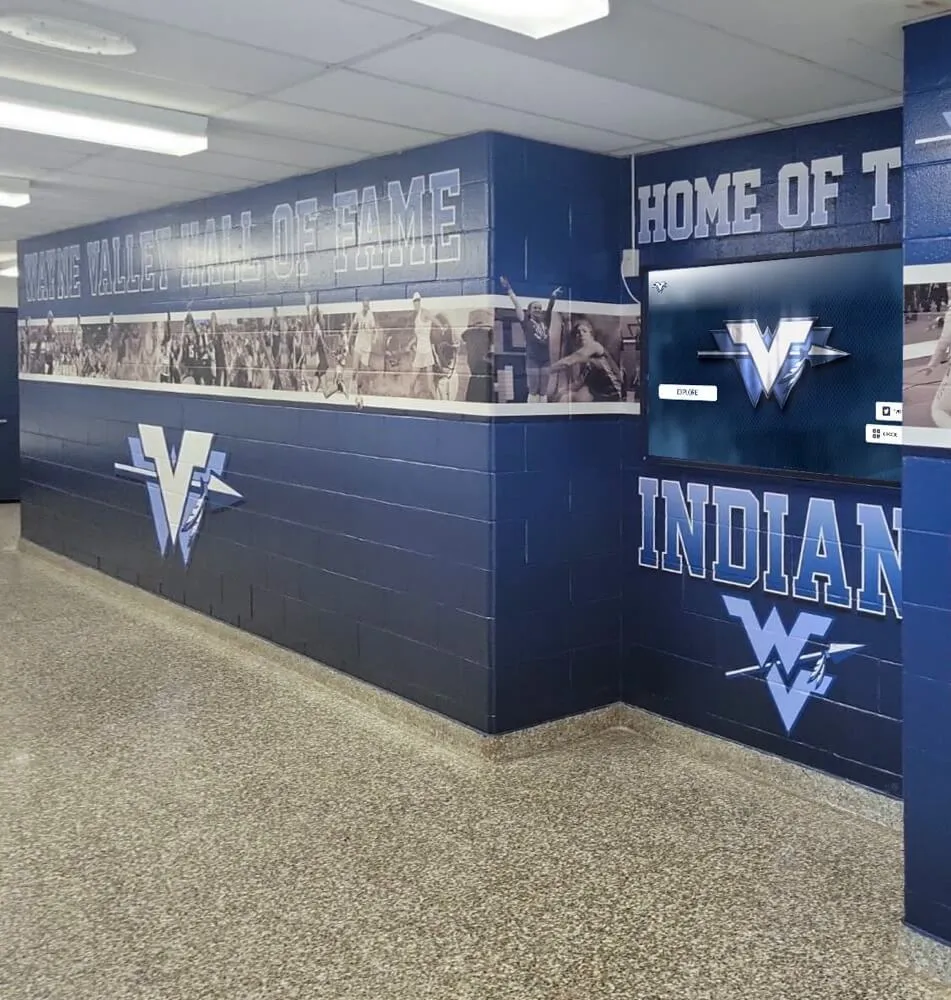
Senior hallway legacy: Many schools maintain dedicated senior recognition areas where graduating class achievements are displayed. Academic signing day commitments become a central element of these displays, alongside athletic achievements, performing arts accomplishments, and academic awards.
Digital Recognition Solutions
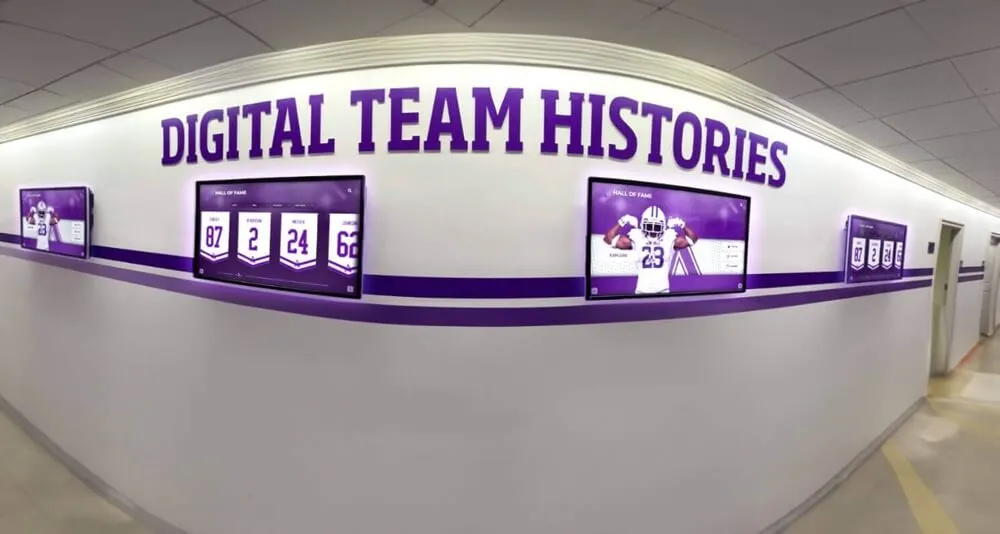
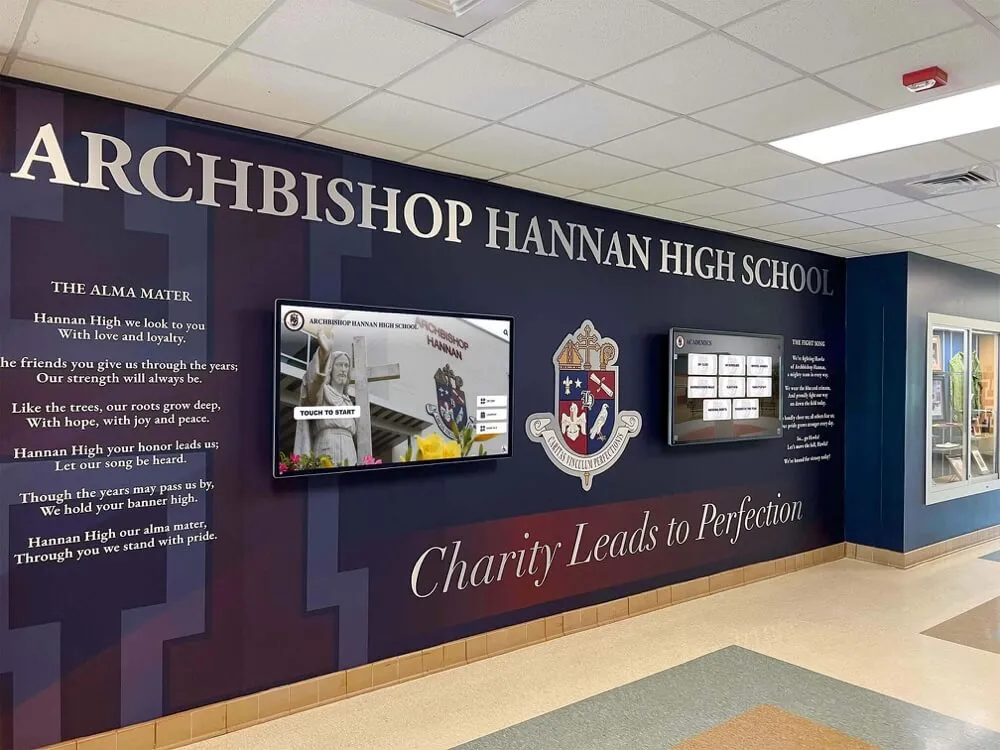
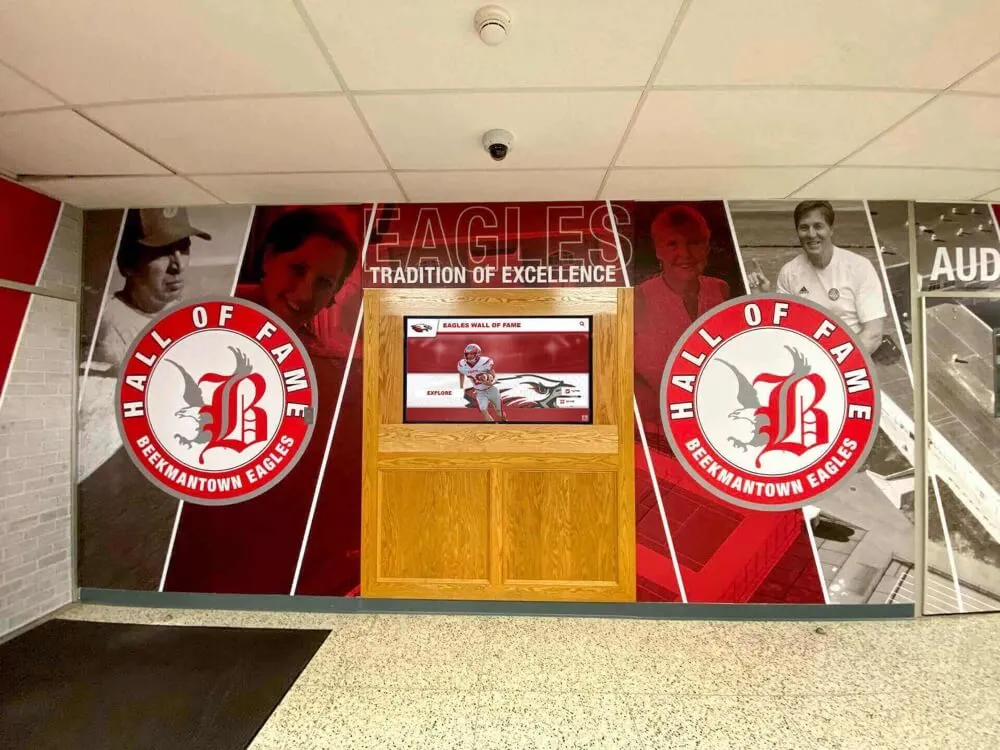
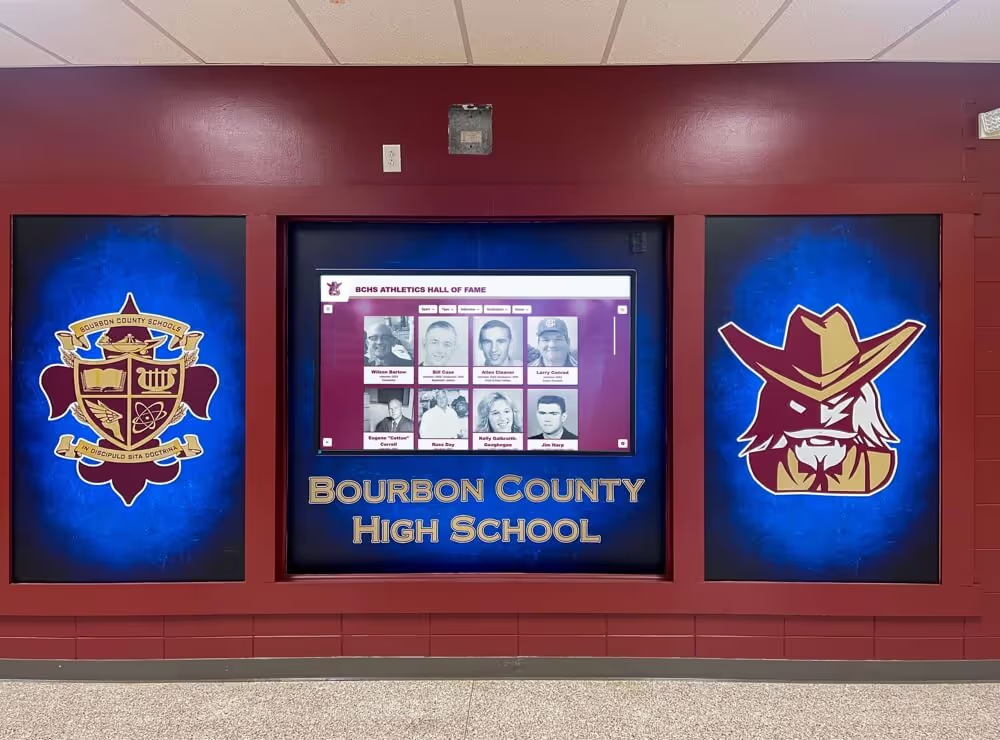
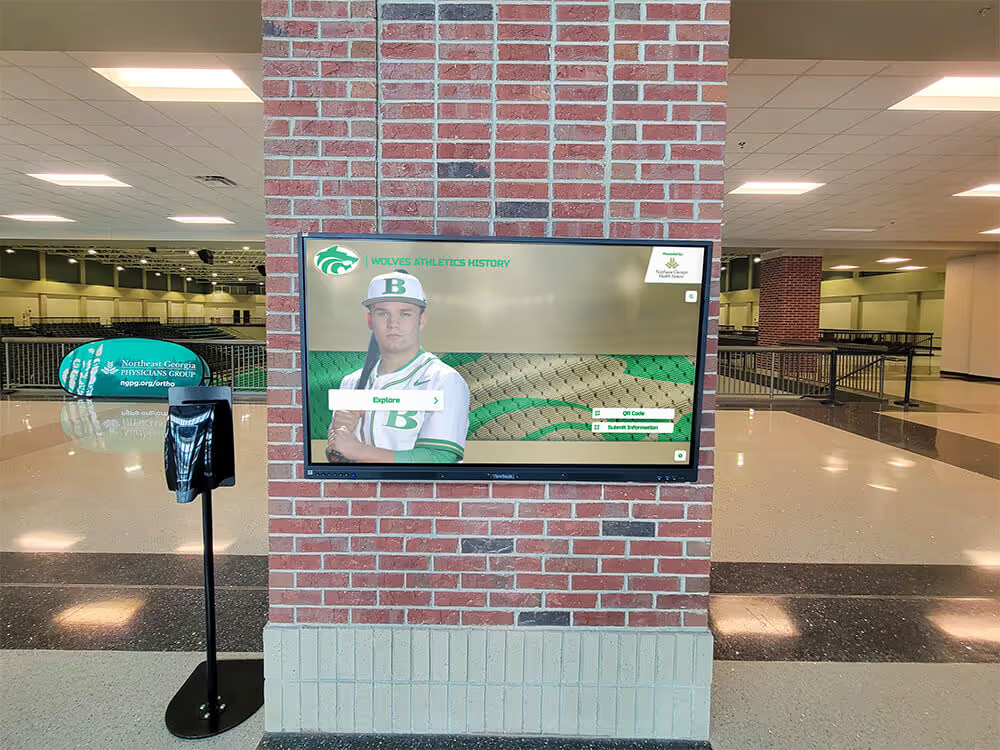
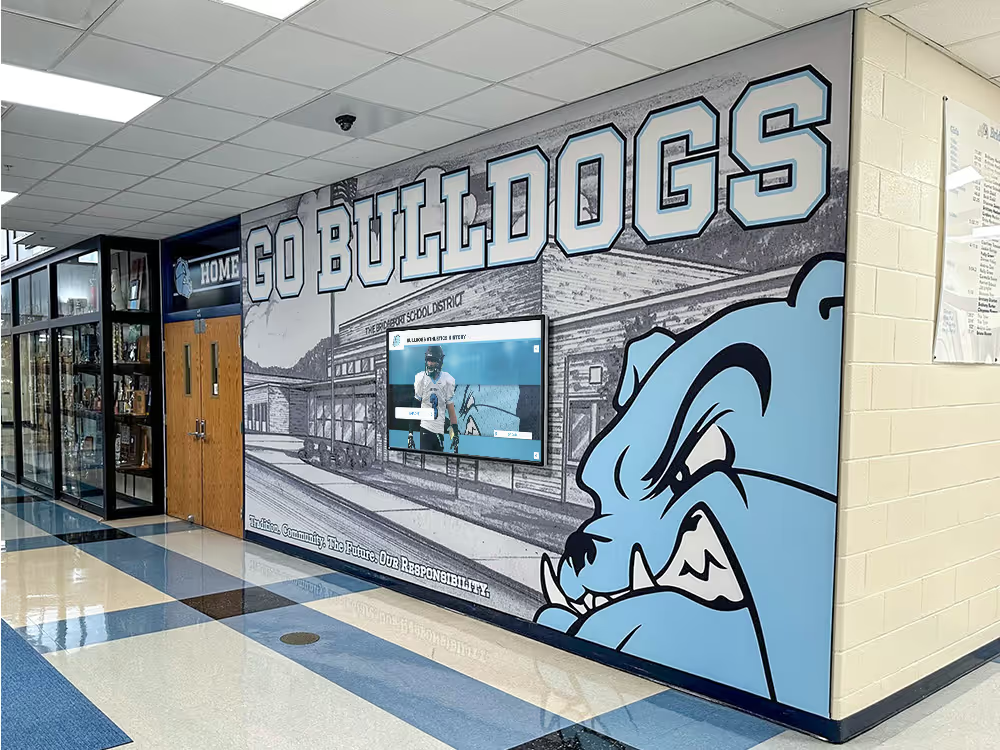
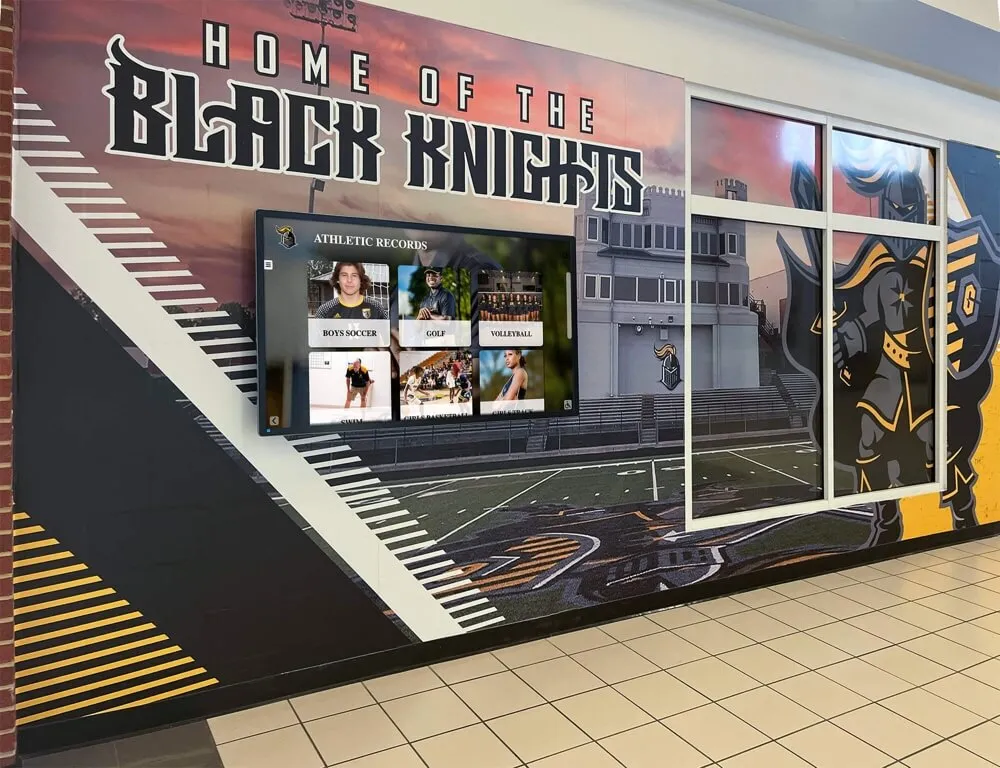
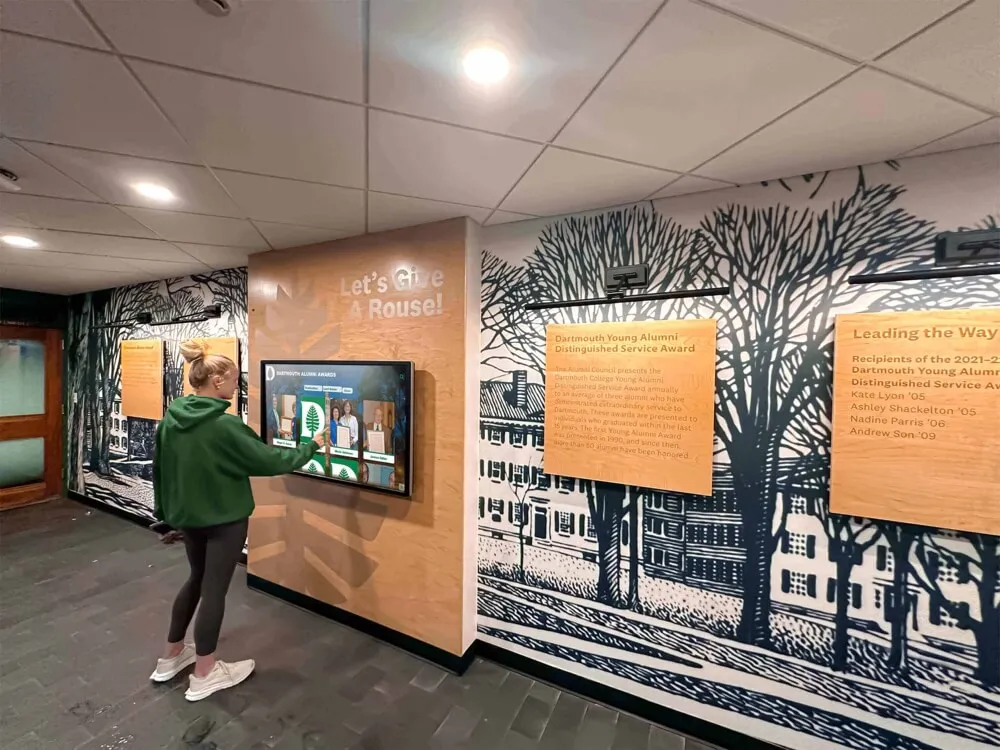
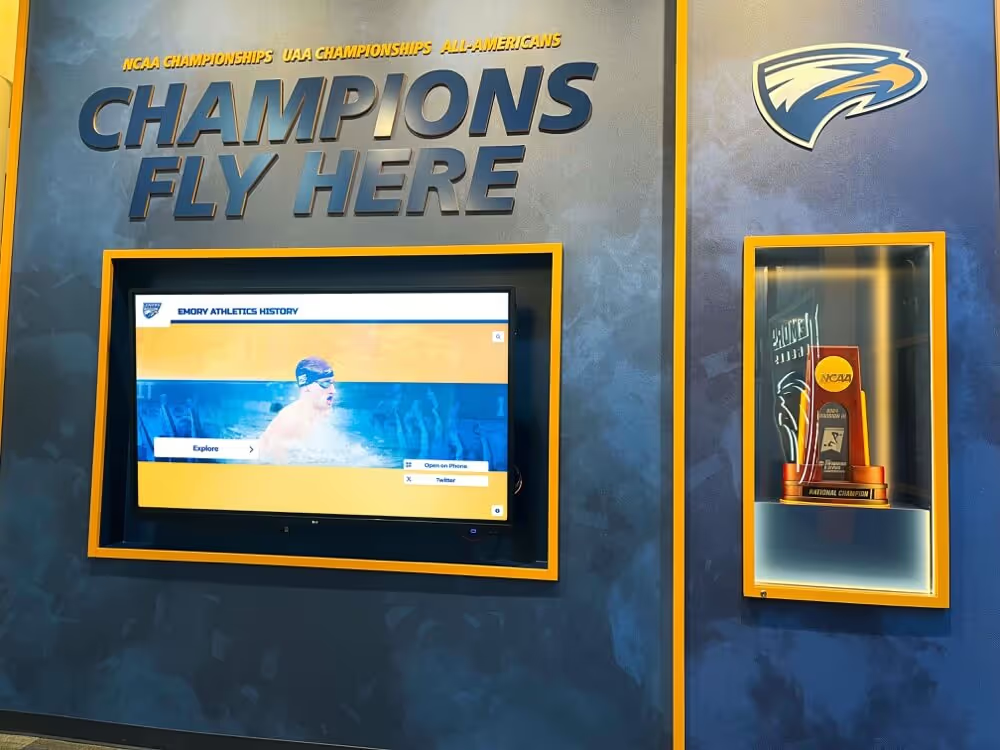
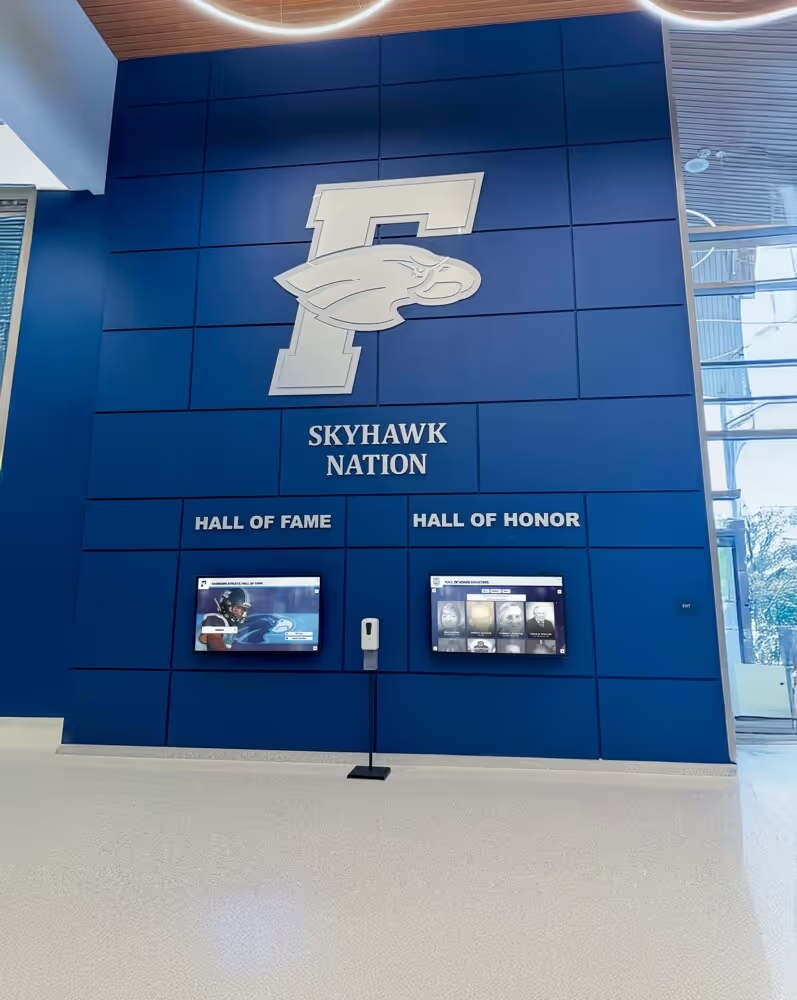
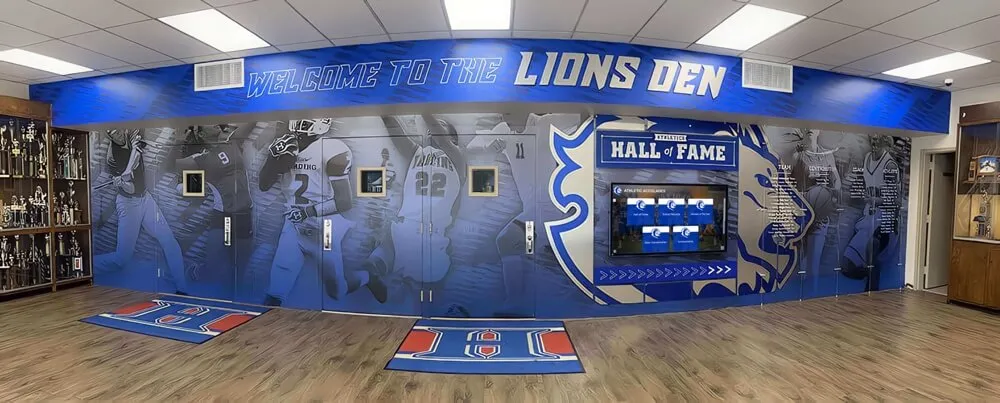
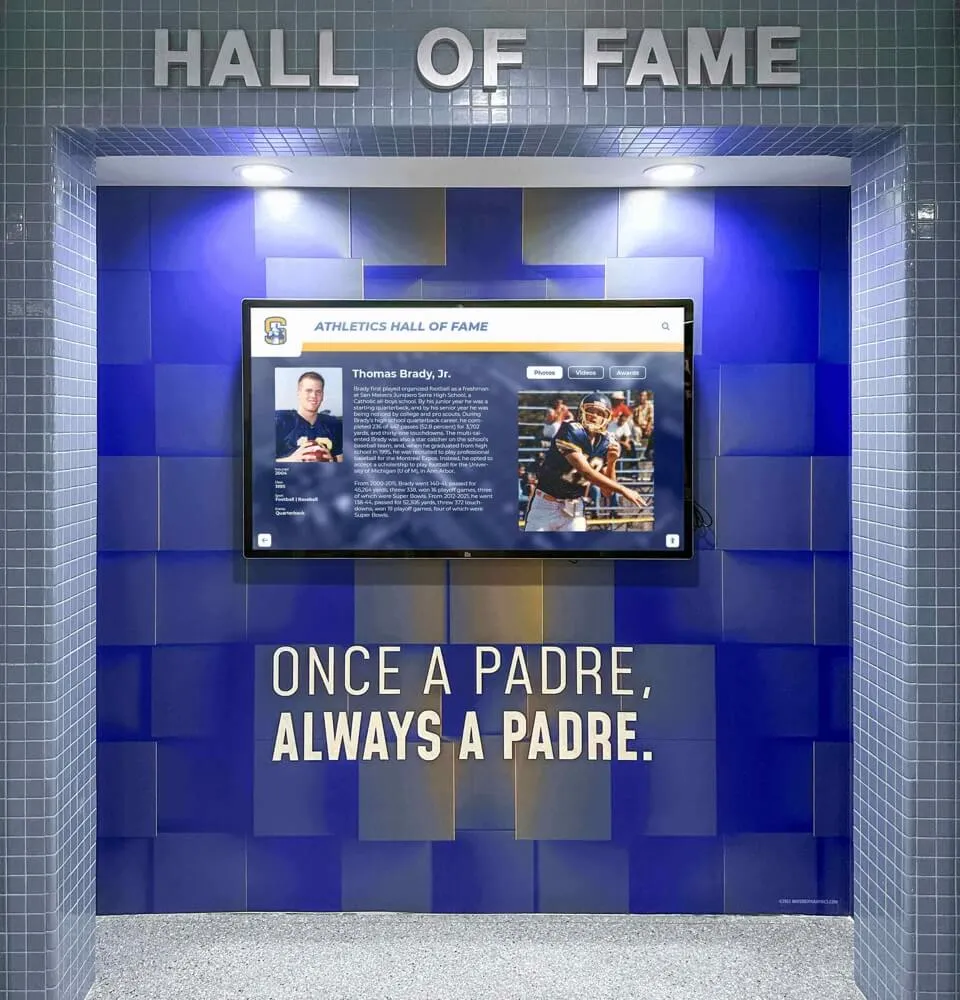
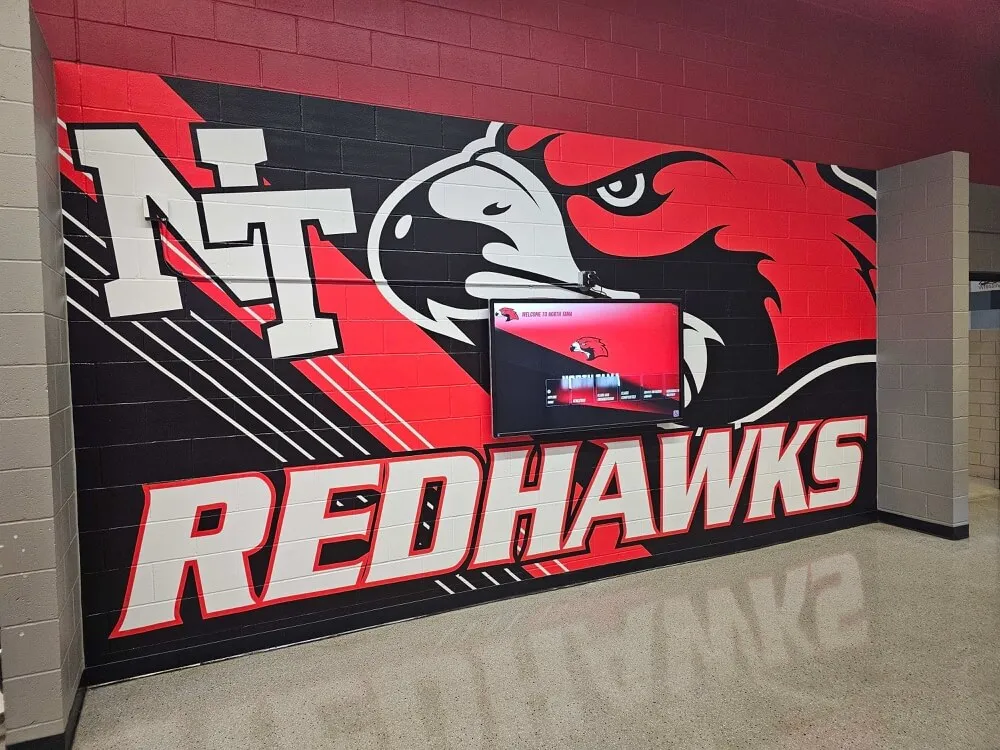
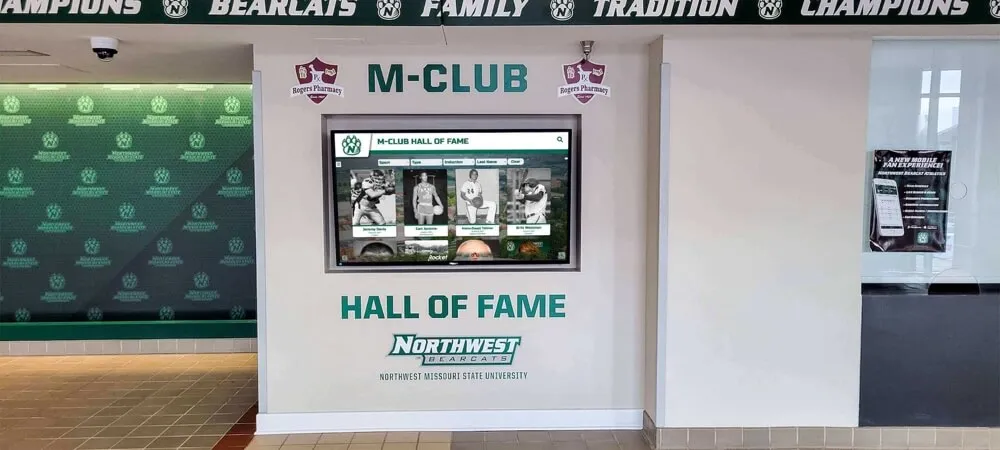
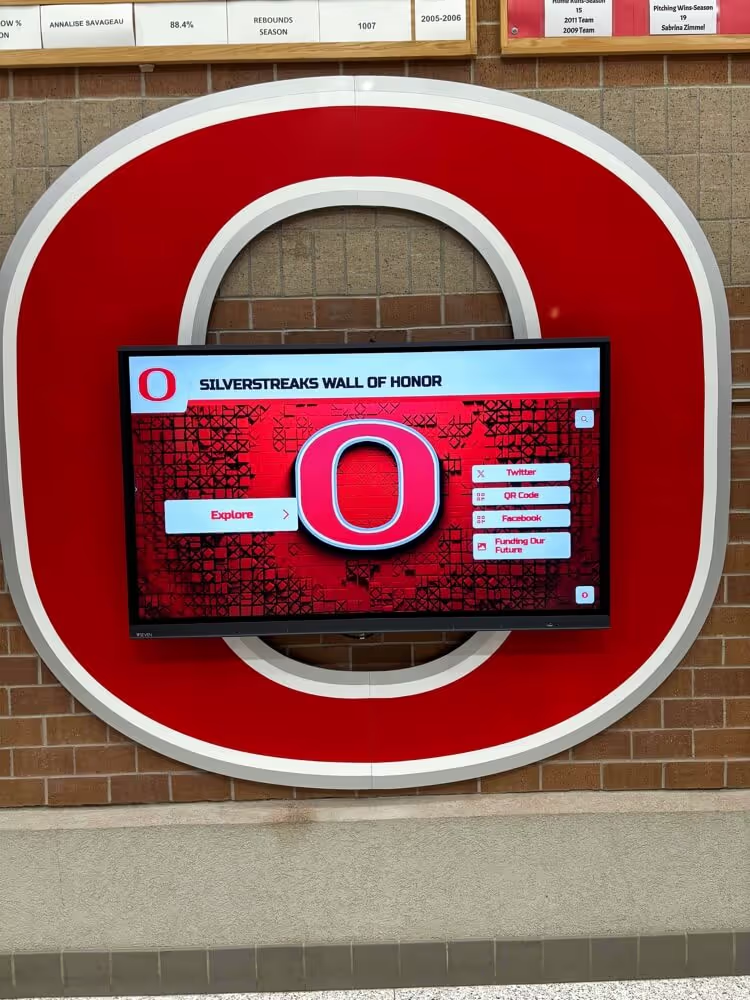
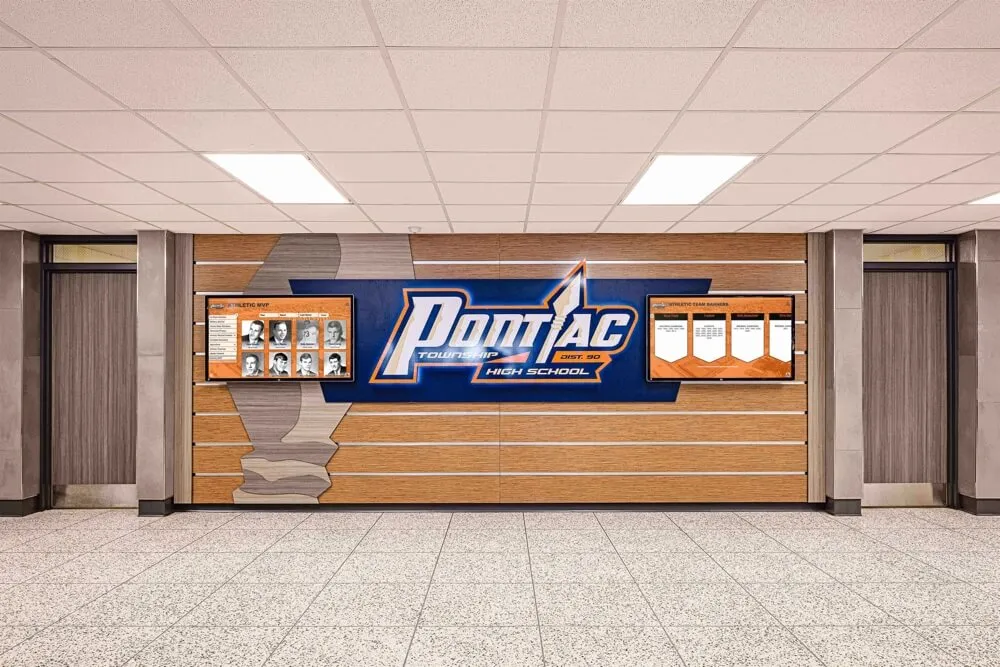
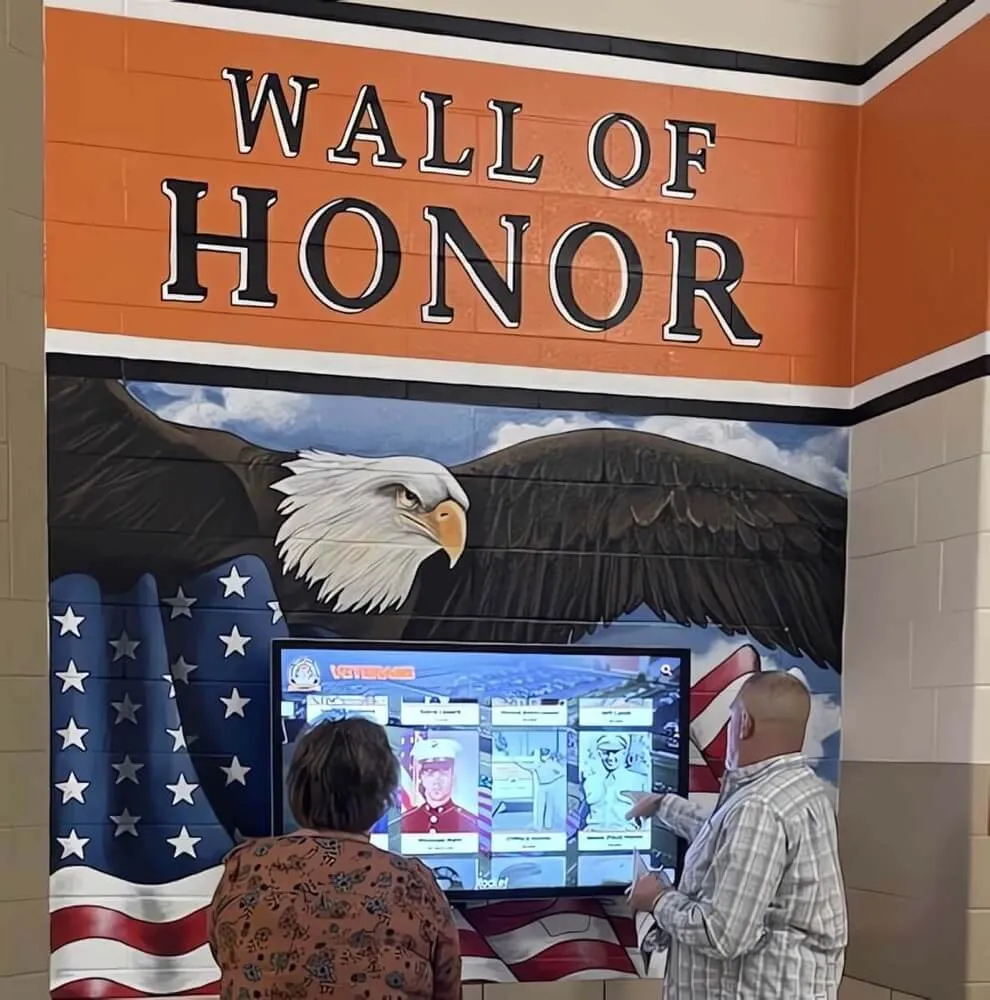
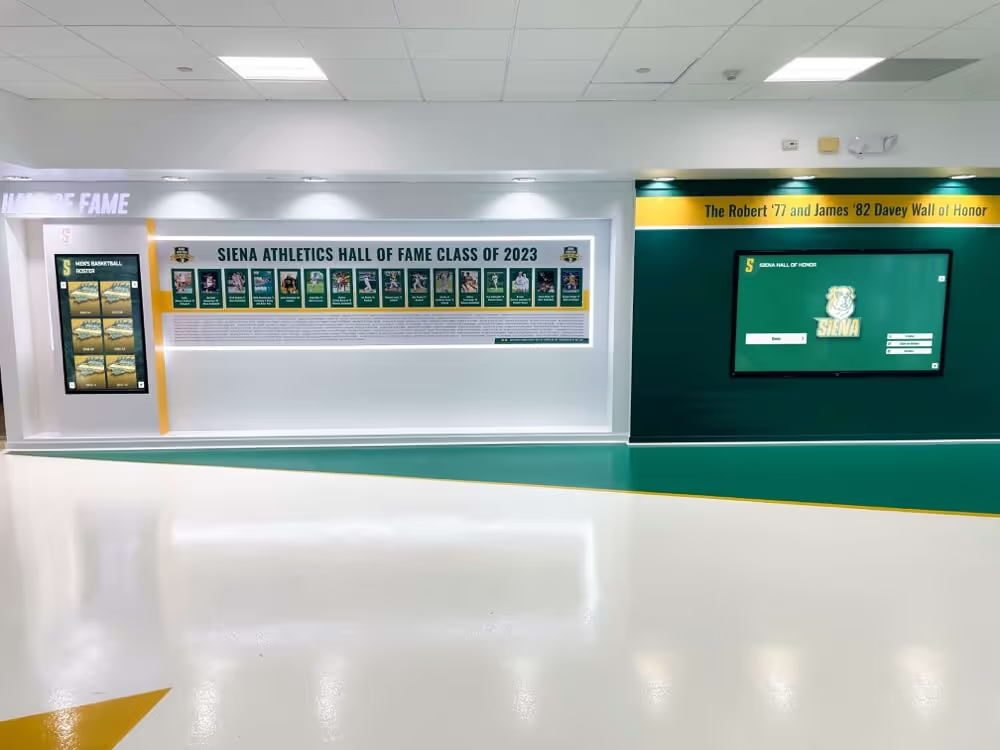
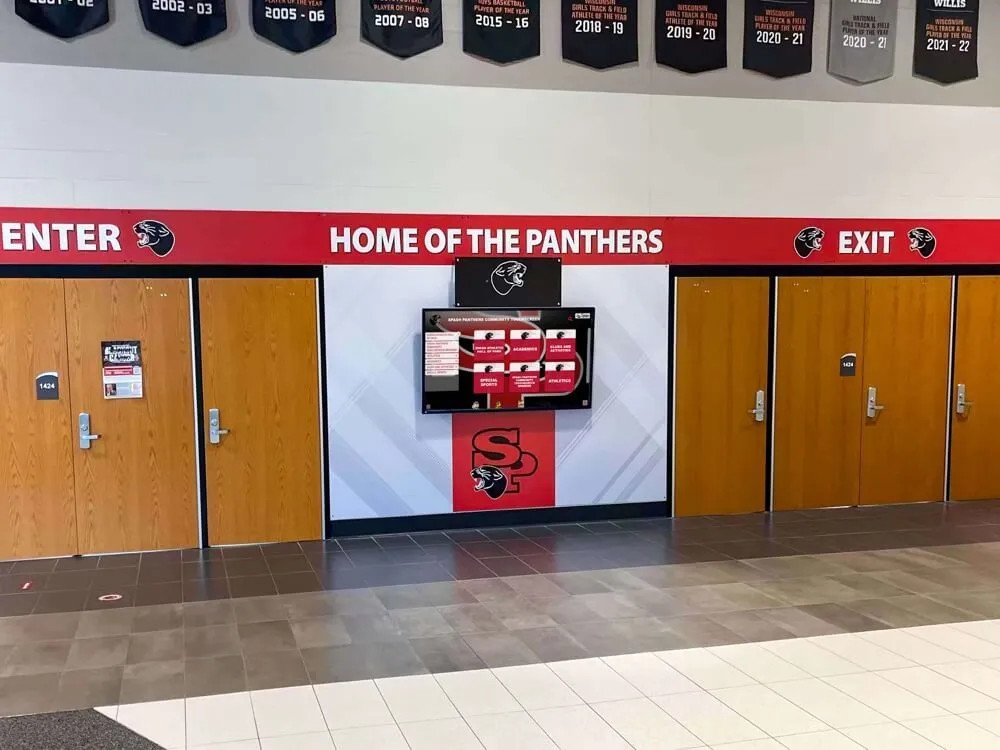
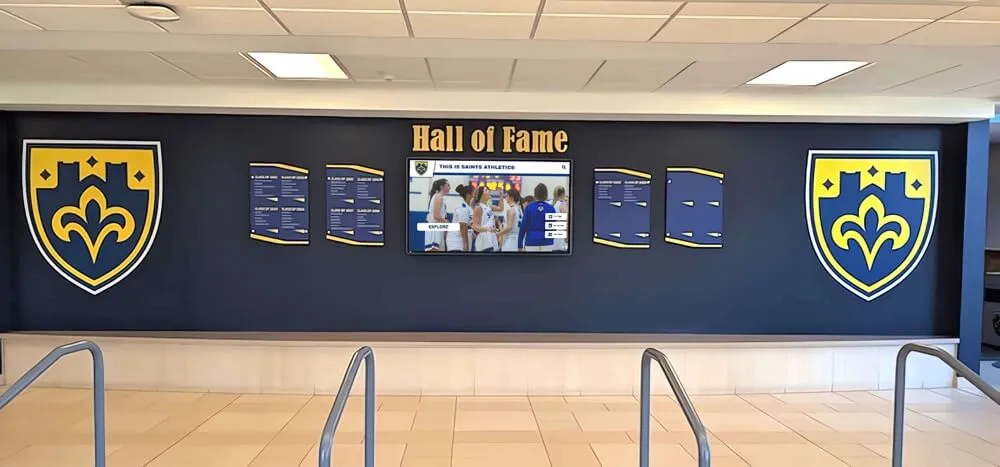
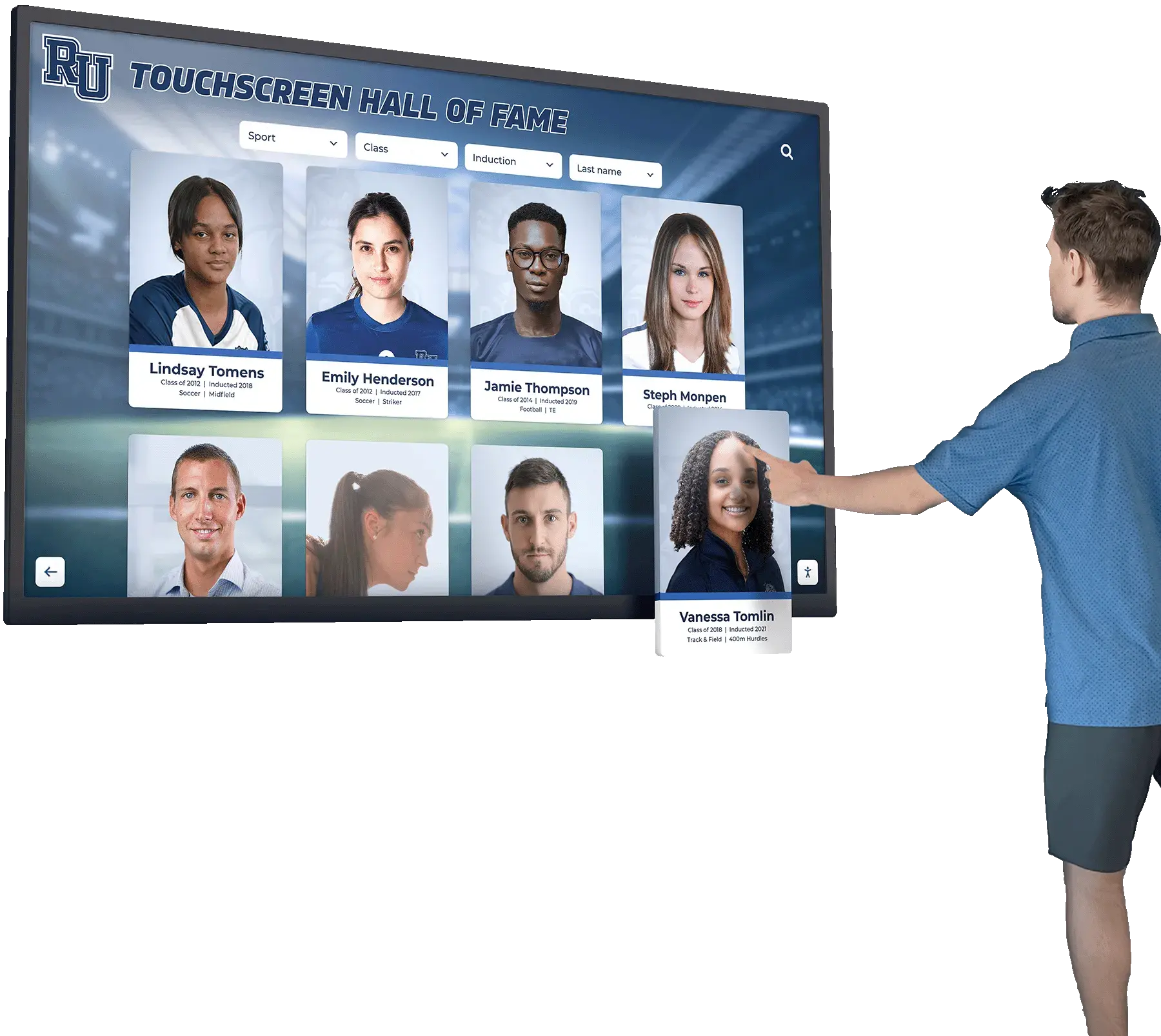
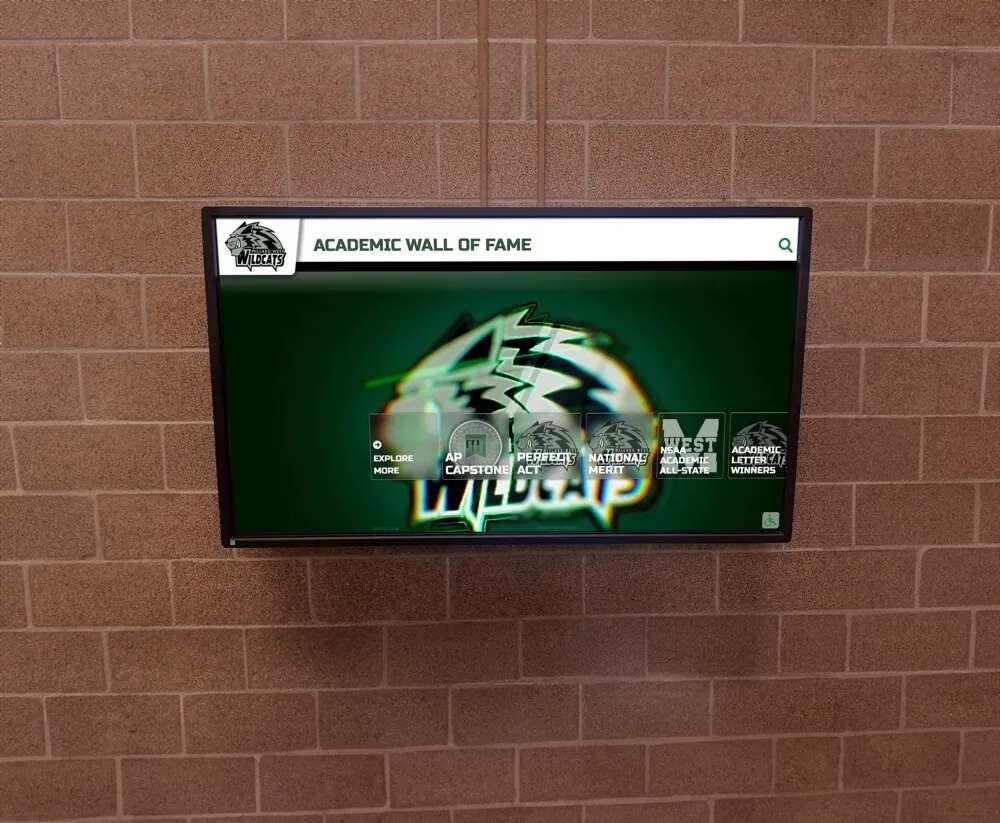
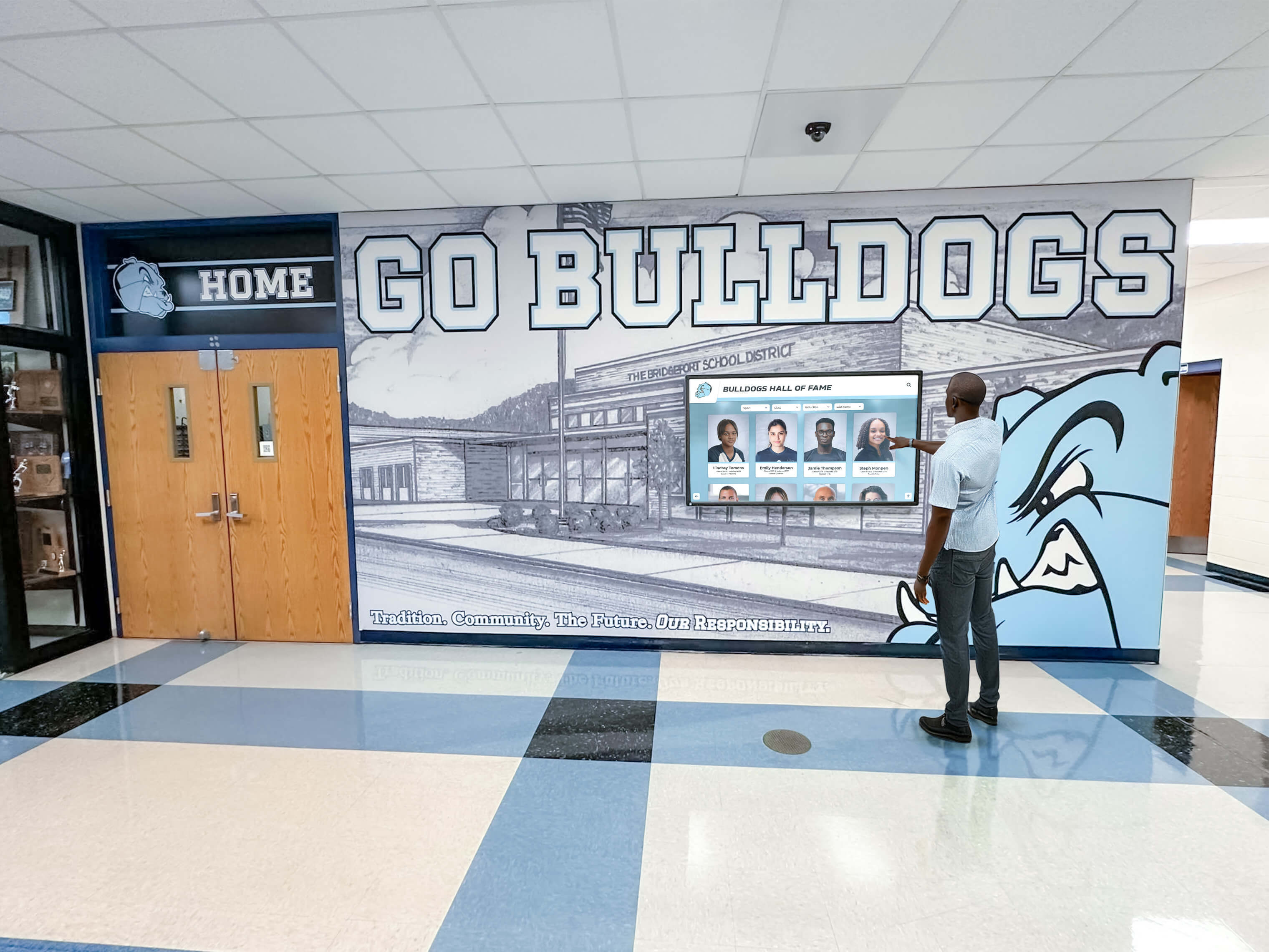
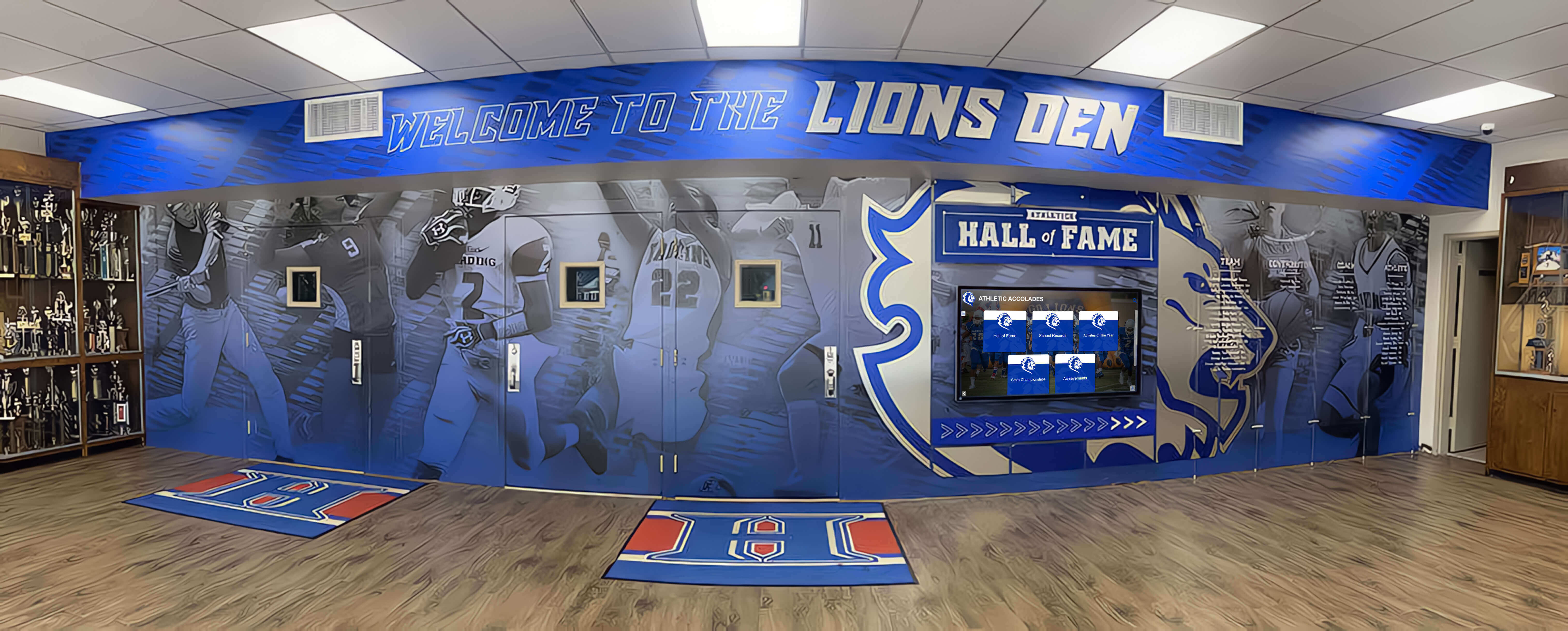
Traditional static displays have limitations—they require manual updates, consume valuable wall space, quickly become outdated, and offer limited capacity for photos and detailed information. Digital recognition displays solve these challenges while creating dynamic, engaging presentations that students actually stop to explore.
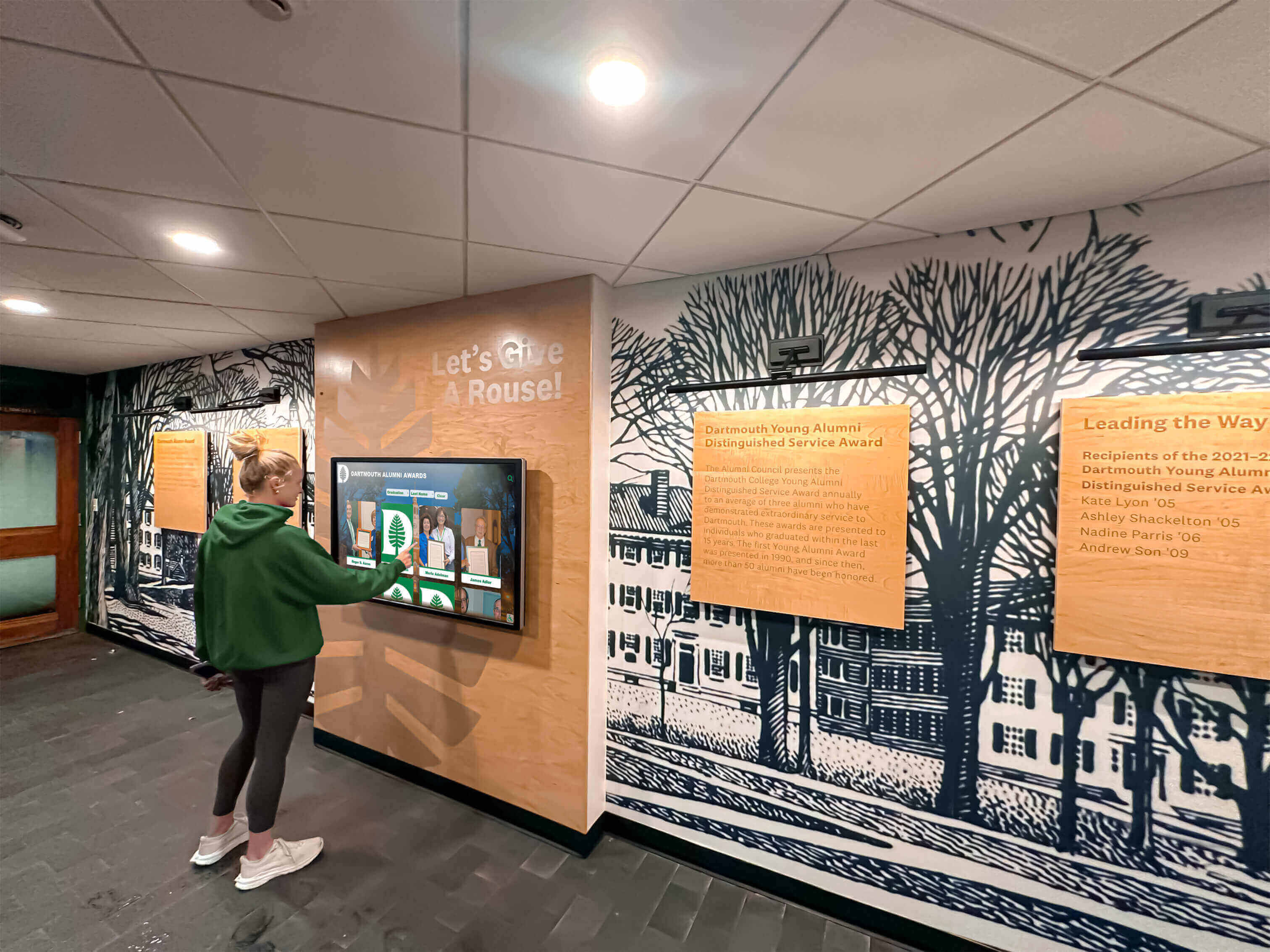
Year-round accessibility: Digital platforms showcase academic signing day commitments continuously, not just during the weeks following the ceremony. Students committed to universities appear alongside those entering military service, trade schools, or workforce development programs—all presented with equal prominence and celebration.
Searchable archives: Parents, alumni, and community members can search digital displays by graduation year, institution type, career pathway, or student name to find specific individuals and track where graduates have gone. This creates valuable historical records and demonstrates outcome patterns over time.
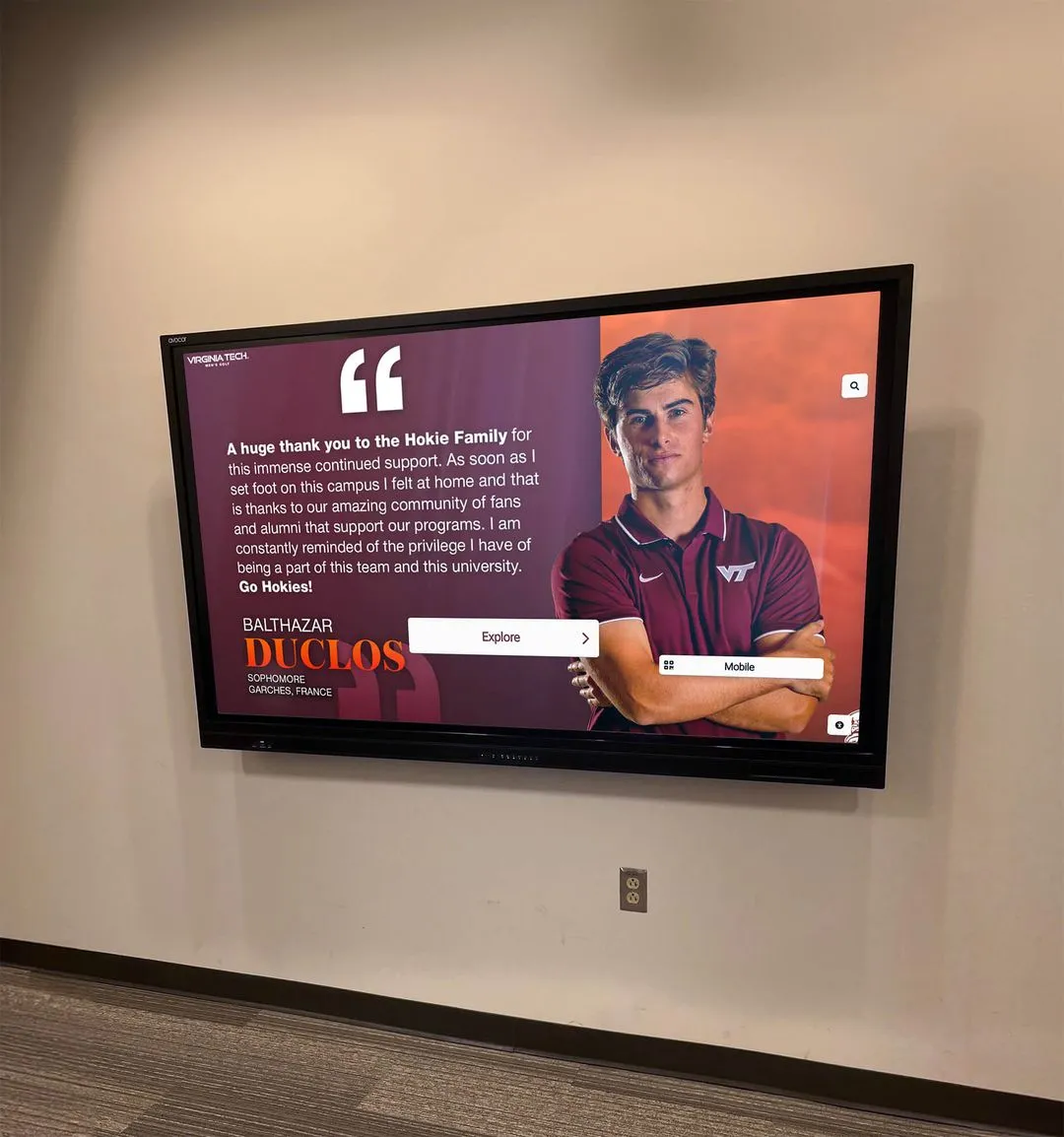
Multimedia integration: Unlike paper displays limited to text and static photos, digital recognition incorporates professional photos, student video messages explaining their pathway choices, campus imagery from destination institutions, and scholarship information that celebrates financial achievement alongside academic commitments.
Automatic updates: As students progress through their post-graduation pathways, displays can be updated to show current status—college graduations, military promotions, career advancements, or advanced degree completions. This transforms academic signing day from a single ceremony into an ongoing alumni success story.
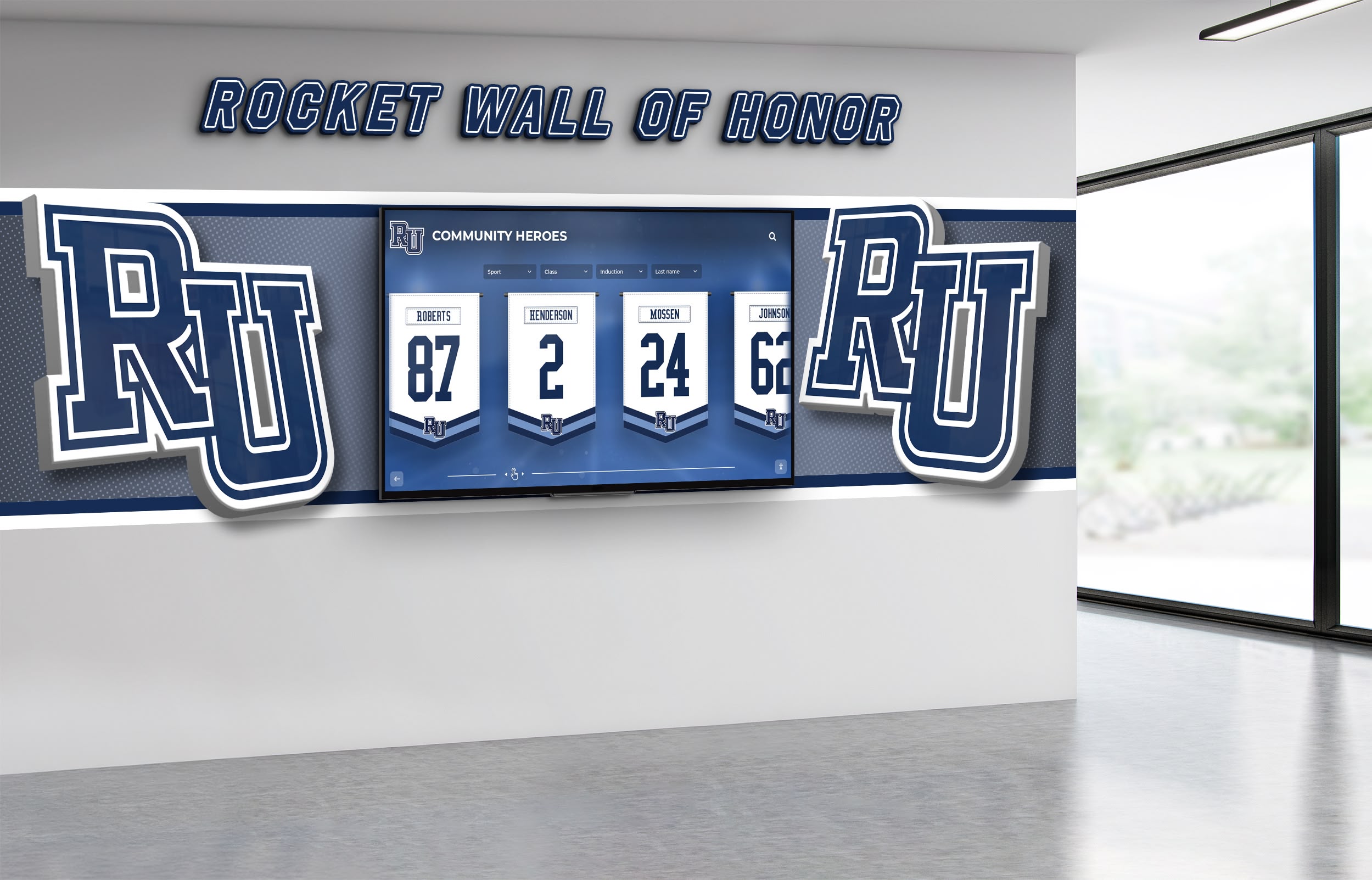
Solutions like Rocket Alumni Solutions specialize in creating turnkey digital recognition displays that schools can manage independently through cloud-based content management systems. These platforms offer:
- Unlimited inductee capacity – recognize every graduate across decades without running out of space
- WCAG 2.1 AA accessibility compliance – ensuring all visitors can access and navigate content
- Social media integration – showcase student and program social feeds alongside recognition content
- Video support – include student testimonials, ceremony highlights, and destination campus tours
- Remote content management – update displays from any device without technical expertise
- Scheduled publishing – queue academic signing day content to publish automatically after the ceremony
- Multiple layout options – present information as lists, grids, timelines, or interactive maps
These systems transform academic signing day from a single annual event into a permanent, evolving celebration of student achievement that reinforces your school’s commitment to recognizing ALL pathways to success.
Physical-Digital Integration
The most effective recognition programs combine traditional ceremony elements with modern digital platforms:
- Ceremony signing table: Students sign physical banners during the ceremony, creating tangible commemorative artifacts
- Photo documentation: Professional photos captured during the ceremony feed into digital displays
- Digital archiving: Physical materials are photographed and preserved in searchable digital formats
- Ongoing access: Digital displays provide year-round access to academic signing day content while physical artifacts are safely stored
This approach honors tradition while embracing technology, ensuring that recognition remains accessible and relevant regardless of how much time passes.
Expanding Your Program: Variations and Enhancements
Once you’ve established a foundational academic signing day ceremony, consider these program variations and enhancements:
Multi-Event Model
Some schools hold separate signing day events for different pathways:
- College Signing Day (late April/early May) for students attending two-year and four-year institutions
- Military Signing Day (any time during senior year when students formally commit) for all service branches
- Career Signing Day (spring) for students entering apprenticeships, trade schools, or direct workforce entry
This approach allows each ceremony to feature pathway-specific elements—college banners for higher education commitments, military branch representatives for service signing days, or local employers for career pathway celebrations.
Quarterly Recognition
Rather than a single annual ceremony, some schools recognize students as they make commitments throughout the year:
- Early decision/early action signing (November-December) for students admitted through early admission programs
- Regular decision signing (April-May) aligned with National College Decision Day
- Summer signing (June-August) for students finalizing plans after graduation
This model ensures timely recognition and maintains momentum throughout the academic year.
Integrated Award Ceremonies
Schools with existing award ceremonies can incorporate academic signing day recognition into broader senior celebration events. This approach combines scholarship announcements, academic honors, and college commitment recognition into a comprehensive senior achievement ceremony.
Alumni Follow-Up Recognition
Consider creating “5 Years Later” or “10 Years Later” recognition programs that showcase what academic signing day participants accomplished after their initial commitments:
- College graduation achievements and advanced degrees
- Military service accomplishments and rank progressions
- Career successes and professional certifications
- Graduate school attendance and specialized training
- Entrepreneurship and community leadership
These follow-up recognition programs demonstrate that academic signing day represents the beginning of lifelong achievement journeys, not final destinations. Similar to how schools maintain alumni spotlights, tracking academic signing day participants’ continued success creates powerful narratives about your school’s impact.
Measurement and Impact Assessment
Track these metrics to assess your academic signing day program’s effectiveness and demonstrate value to stakeholders:
Participation Metrics
- Registration rate: Percentage of graduating class participating in academic signing day
- Pathway distribution: How students distribute across college, military, trade school, and career pathways
- Year-over-year growth: Tracking participation trends as the program matures
- Diversity representation: Ensuring all student populations feel welcome and celebrated
Engagement Indicators
- Ceremony attendance: Number of parents, community members, and underclassmen attending
- Social media reach: Hashtag usage, post engagement, and organic sharing
- Media coverage: Local news coverage, newspaper articles, and community awareness
- Website traffic: Visits to digital recognition displays and ceremony highlights
Student Outcome Connections
- Enrollment verification: Following up to confirm students completed their commitments
- Scholarship totals: Aggregate scholarship dollars earned by academic signing day participants
- Pathway completion: Tracking graduation, certification, or program completion rates
- Alumni connection: Maintaining contact with participants for future recognition and networking
Cultural Impact
- Underclassman awareness: Surveys showing younger students’ awareness of pathway options
- Perception studies: Family and community perception of school’s commitment to all students
- Program replication: Other schools adopting your academic signing day model
- Recruitment influence: Prospective families citing academic signing day as enrollment factor
These measurements help justify program continuation, secure funding for enhancements, and demonstrate tangible return on investment in comprehensive student recognition.
Common Challenges and Solutions
Schools implementing academic signing day programs encounter predictable obstacles. Here’s how to address them:
Challenge: Low initial participation Solution: Lead by example with administration and counseling team actively promoting the program, sharing clear benefits, and making registration simple. Consider requiring all seniors to register regardless of post-graduation plans—even students entering the workforce directly or taking gap years deserve recognition.
Challenge: Perception that academic signing day copies athletic signing day Solution: Frame it differently—academic signing day doesn’t copy athletics; it extends the same celebration and validation to ALL pathways. Emphasize that schools should celebrate every significant student commitment with equal enthusiasm.
Challenge: Students embarrassed about non-traditional pathways Solution: Administrator messaging sets the tone. When principals, counselors, and teachers enthusiastically celebrate trade school commitments, military service, and community college enrollment alongside prestigious university acceptances, students feel validated rather than judged. Feature diverse alumni success stories showing how various pathways led to fulfilling careers.
Challenge: Limited budget for ceremony and recognition Solution: Academic signing day requires minimal investment. Essential costs include printing programs and certificates, basic decorations, and photo backdrop materials—often under $500 for schools with hundreds of participants. Partner with PTSA, booster clubs, or local businesses for sponsorship. Digital recognition displays offer cost-effective alternatives to expensive physical plaques and traditional trophy cases.
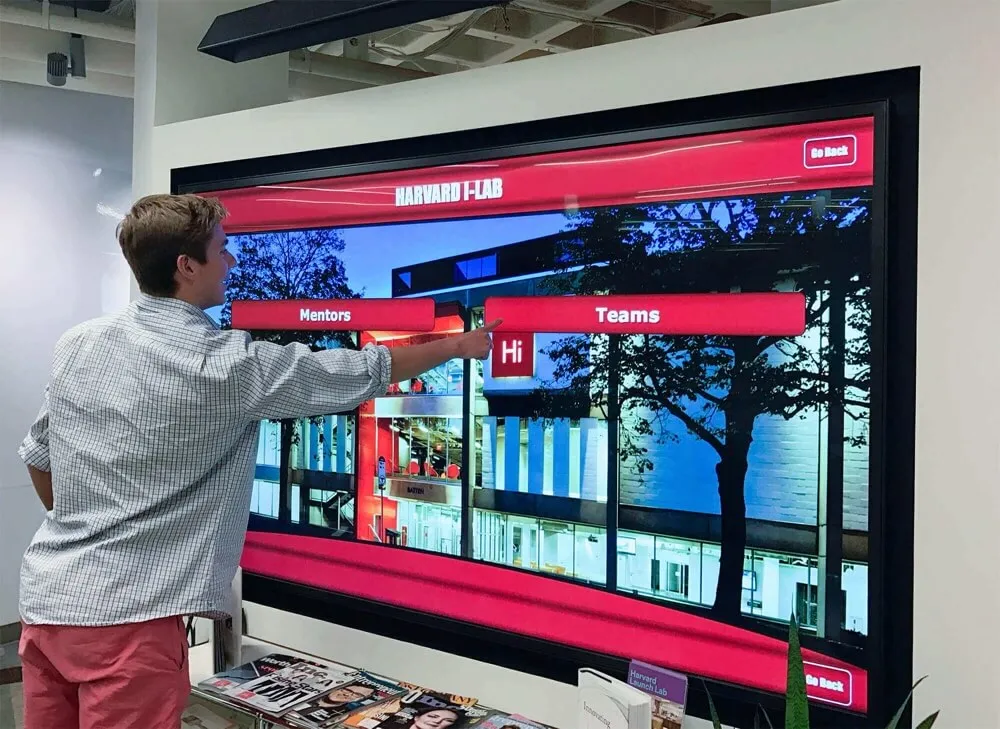
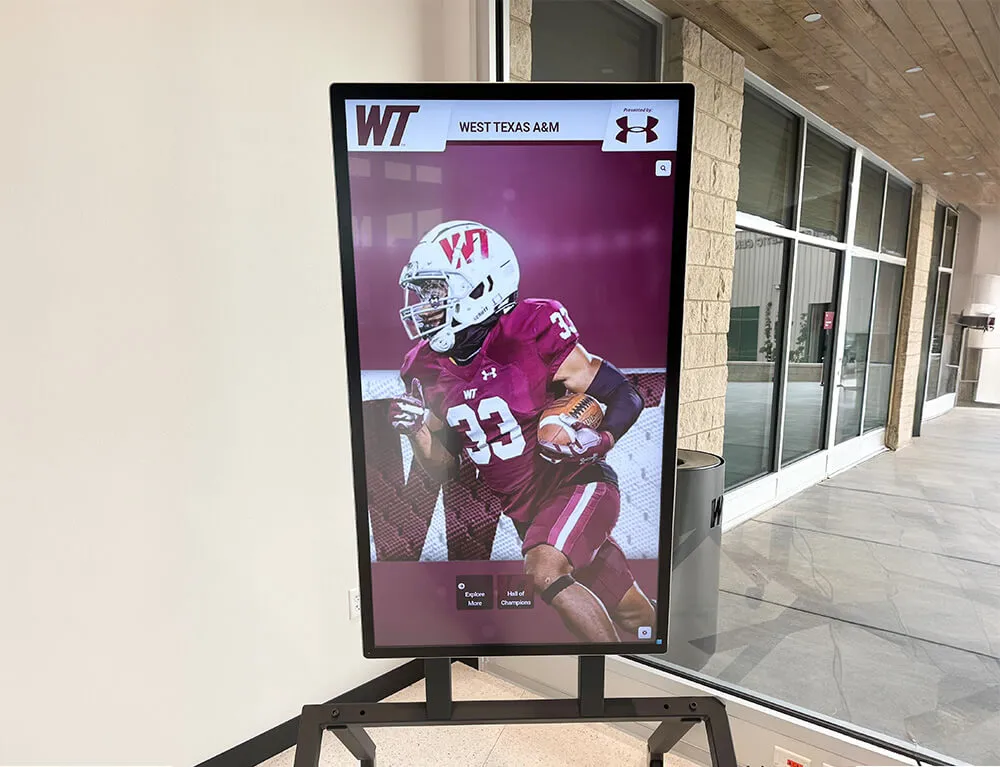
Challenge: Space limitations for permanent displays Solution: Digital recognition displays eliminate space constraints entirely. A single 55-inch touchscreen provides unlimited capacity for academic signing day participants across decades, while traditional bulletin boards accommodate only a single year’s information before requiring updates and creating storage challenges for archived materials.
Challenge: Competing with established athletic signing day traditions Solution: Schedule academic signing day at a different time (not the same day as athletic signing ceremonies) to give each event appropriate spotlight. Some schools hold academic signing day in early May while athletic signing occurs in November and February during traditional signing periods. This separation emphasizes that academic commitments deserve dedicated celebration, not secondary status.
Getting Started: Your Academic Signing Day Action Plan
Ready to launch academic signing day at your school? Follow this action plan:
Immediate Steps (This Month)
Build support: Present the academic signing day concept to administrators, counselors, and department chairs. Share examples from schools successfully running programs and emphasize cultural benefits.
Form planning team: Recruit a core team of 4-6 people representing administration, counseling, student activities, and technology. Assign clear roles and responsibilities.
Set initial date: Target a spring ceremony date for current seniors, allowing adequate planning time while building momentum for future years.
Research models: Review how other schools structure their ceremonies, what materials they produce, and how they integrate recognition into broader school culture.
Short-Term Steps (Next 2-3 Months)
Develop registration process: Create simple online forms collecting necessary student information, commitment details, and photo submissions.
Establish budget: Identify costs for programs, certificates, gifts, backdrop materials, and photography. Secure funding through general operating budgets, PTSA partnerships, or local sponsorships.
Plan ceremony structure: Draft ceremony script, select guest speakers, design backdrop and photo areas, and coordinate venue logistics.
Promote the program: Announce academic signing day to students, parents, and community through multiple channels—grade-level meetings, parent newsletters, website announcements, and social media campaigns.
Long-Term Steps (Next 6-12 Months)
Execute inaugural ceremony: Run your first academic signing day, document the experience thoroughly, and gather participant feedback.
Implement permanent recognition: Establish where and how academic signing day commitments will be recognized year-round. Explore digital recognition solutions that provide unlimited capacity, accessibility features, and professional presentation.
Build tradition: Create consistent timing, rituals, and elements that students anticipate and recognize as signature components of your school’s academic signing day program.
Expand and refine: Use feedback from year one to enhance ceremony elements, improve logistics, increase participation, and strengthen connections to your school’s broader recognition culture.
Conclusion: Celebrating Every Student’s Future
Academic signing day represents a fundamental shift in how schools recognize student achievement—moving beyond narrow definitions of success tied exclusively to test scores or athletic prowess toward comprehensive celebration of all pathways that prepare students for meaningful adult lives.
When you publicly honor the student entering a nursing program at community college alongside the student attending an Ivy League university, when you celebrate military commitments with the same enthusiasm as academic scholarships, and when you recognize skilled trade apprenticeships as valuable pathways worthy of permanent display, you send powerful messages:
- Every student matters and deserves celebration
- Success comes in diverse forms and through multiple pathways
- Your school genuinely prepares students for real-world futures, not just standardized tests
- Community support extends to all students regardless of post-graduation direction
Schools implementing comprehensive academic signing day programs report stronger school culture, increased student engagement, improved college enrollment rates, and enhanced community support. More importantly, they create memories and recognition that students carry throughout their lives—validation that their choices matter and their schools invested in celebrating their unique pathways to success.
The investment required is minimal—planning time, modest materials budget, and commitment to inclusive recognition. The returns are substantial—students who feel valued, families who feel heard, and communities that see evidence of schools preparing all young people for successful futures.
Whether your graduating class includes 50 students or 500, whether you’re a small rural district or large suburban system, academic signing day offers accessible, meaningful recognition that honors every student’s next chapter. Start planning today, celebrate comprehensively, and create traditions that future generations of students will anticipate as highlights of their senior year experience.
Ready to create a permanent recognition program that celebrates academic signing day commitments for years to come? Request your free custom demo and discover how digital recognition displays can showcase every student’s pathway with unlimited capacity, accessibility features, and professional presentation that honors all pathways to success.